SB 1074: Motor vehicle fuel: disclosure of government-imposed costs.
- Session Year: 2017-2018
- House: Senate
- Latest Version Date: 2018-02-12
Existing law prohibits a person from selling at retail to the general public any motor vehicle fuel from any place of business in the state, unless there is displayed on the dispensing apparatus in a conspicuous place at least one sign or price indicator showing the total price per gallon, liter, or other unit of measurement of all motor vehicle fuel sold from the dispensing apparatus, including applicable fuel taxes and all sales taxes. Existing law requires every service station in the state to display, at a conspicuous place on, at, or near the dispensing apparatus or at or near the point of sale, at least one clearly visible sign showing a list of applicable state and federal fuel taxes per gallon of motor vehicle fuel sold from the dispensing apparatus.
This bill would recast these provisions, requiring that every service station display, at a conspicuous place on, at, or near the dispensing apparatus or at or near the point of sale, at least one clearly visible sign showing a list of applicable state and federal fuel taxes per gallon of motor vehicle fuel sold from the dispensing apparatus, and would additionally require the sign to display the state sales tax, refinery reformatting costs, state underground storage fee costs, cap-and-trade program compliance costs, Low-Carbon Fuel Standard program compliance costs, and federal renewable fuels standard program compliance costs per gallon of motor vehicle fuel sold from the dispensing apparatus.
The Warren-Alquist State Energy Resources Conservation and Development Act establishes the State Energy Resources Conservation and Development Commission. The act requires the commission to serve as a central repository within the state government for the collection, storage, retrieval, and dissemination of data and information on all forms of energy supply, demand, conservation, public safety, research, and related subjects. The Petroleum Industry Information Reporting Act of 1980 requires refiners, among others, to provide periodic reports to the commission containing designated information regarding petroleum supplies and price.
This bill would require the commission to maintain a page on its Internet Web site that contains a concise breakdown of the following information relative motor vehicle fuel: (1) the federal fuel tax per gallon, (2) the state fuel tax per gallon, (3) the state sales tax per gallon, (4) refinery reformatting costs per gallon, (5) state underground storage fee costs per gallon, (6) cap-and-trade program compliance costs per gallon, (7) Low-Carbon Fuel Standard program compliance costs per gallon, and (8) renewable fuels standard program compliance costs per gallon. The bill would require that the costs be displayed both as a percentage, where applicable, and on a total cost per gallon basis for an average priced gallon of the type of motor vehicle fuel. The bill would require the commission to regularly update, not less than monthly, the breakdown of costs to adjust for fluctuations in the retail costs of motor vehicle fuels. The bill would authorize the commission to include any other government-imposed costs that are reflected in the price of motor vehicle fuel to the extent these may be reasonably calculated. The bill would require the commission to develop an edit ready dynamic or quick read code that is to be displayed on each dispensing apparatus at service stations that will enable a consumer with a smartphone to readily access information on the commissions Internet Web page while at the dispensing apparatus. The bill would require that the Internet Web page include a readily accessible cost calculator that enables a consumer to enter the gallons of gasoline or diesel pumped and the retail price per gallon, and obtain a calculation of the total government-imposed costs and the percentage of government-imposed costs of the total amount charged. The bill would require every service station to display, at a conspicuous place on each dispensing apparatus, a notification to consumers of the availability of information relative to government-imposed costs and the means to readily access this information on the Internet Web site of the commission. The bill would require the commission, in consultation with representatives of the motor vehicles fuel industry, to establish guidelines for service stations to comply with the signage and notification requirements of the bill.
(a)(1)On and after January 1, 2000, every service station in this state shall provide, during operating hours, and make available at no cost to customers who purchase motor vehicle fuel, water, compressed air, and a gauge for measuring air pressure, to the public for use in servicing any passenger vehicle, as defined in Section 465 of the Vehicle Code, or any commercial vehicle, as defined in Section 260 of the Vehicle Code, with an unladen weight of 6,000 pounds or less.
(2)Every service station in this state shall display, at a conspicuous place on, at, or near the dispensing apparatus, at least one clearly visible sign which shall read as follows: CALIFORNIA LAW REQUIRES THIS STATION TO PROVIDE FREE AIR AND WATER FOR AUTOMOTIVE PURPOSES TO ITS CUSTOMERS WHO PURCHASE MOTOR VEHICLE FUEL. IF YOU HAVE A COMPLAINT NOTIFY THE STATION ATTENDANT AND/OR CALL THIS TOLL-FREE TELEPHONE NUMBER: 1 (800) ___ ____. This sign shall meet the requirements of Sections 13473 and 13474 with regard to letter size and contrast. As used in this paragraph, automotive purposes does not include the washing of vehicles.
(b)(1)On and after January 1, 1990, every service station in this state located within 660 feet of an accessible right-of-way of an interstate or primary highway, as defined in Sections 5215 and 5220, shall provide, during business hours public restrooms for use by its customers. Service stations shall not charge customers separately for the use of restroom facilities.
(2)The public restroom shall not be temporary or portable but shall be permanent and shall include separate facilities for men and women, each with toilets and sinks suitable for use by disabled persons in accordance with Section 19955.5 of the Health and Safety Code and Title 24 of the California Code of Regulations. However, a service station not located along an interstate highway and in a rural area, as defined by Section 101 of Title 23 of the United States Code, and where the annualized average daily traffic count is 2,500 vehicles or less, is only required to provide a single restroom to be used by both men and women unless the local legislative body or, upon designation by the local legislative body, the local building official determines and finds, based upon traffic studies and local or seasonal tourist patterns, that a single restroom would be inadequate to serve the public. In that event, the single restroom exemption shall not apply. The single restroom shall contain a toilet, urinal, and sink suitable for use by disabled persons as required by the Americans With Disabilities Act and Title 24 of the California Code of Regulations. The single restroom shall be equipped with a locking mechanism to be operated by the user of the restroom and the restroom shall be maintained in a clean and sanitary manner.
(3)This subdivision does not apply to service stations that are operational prior to January 1, 1990, and that would be obligated to construct permanent restroom facilities to comply with this subdivision.
(4)For the purposes of this subdivision, customer means a person who purchases any product available for sale on the premises of the service station, including items not related to the repairing or servicing of a motor vehicle.
(c)Every service station in this state shall display, at a conspicuous place on, at, or near the dispensing apparatus or at or near the point of sale, at least one clearly visible sign showing a list of applicable state and federal fuel taxes per gallon of motor vehicle fuel sold from the dispensing apparatus. The sign may display the federal excise tax rate as up to $.184.(d)(c)(1)The Division of Measurement Standards of the Department of Food and Agriculture shall, no later than January 1, 2001, establish a toll-free customer complaint telephone number. The toll-free telephone number thereby established shall be printed on the sign required pursuant to paragraph (2) of subdivision (a).
(2)Notwithstanding any other provision of law, employees of the Division of Measurement Standards, upon inspection, or upon notice of a complaint forwarded pursuant to this section, are empowered to investigate a complaint against a service station for lack of free air and water and issue a citation to the station, and to collect a fine of two hundred fifty dollars ($250) per valid complaint, unless the citation is challenged in court. No citation shall be issued if the air and water equipment is in good working order upon initial inspection, or if they are repaired to the satisfaction of the inspecting entity within 10 working days of the initial inspection. In addition, no citation based on nonfunctional air and water equipment shall be issued if the service station can establish that the equipment has been the target of repeated vandalism, substantiated by three or more police reports within six months detailing the vandalism.
SEC. 2.Section 13654 is added to the Business and Professions Code, to read:13654.(a)For purposes of this section cap-and-trade program, federal fuel tax, Low-Carbon Fuel Standard, refinery reformatting costs, renewable fuels standard, state sales tax, state fuel tax, and state underground storage fee have the same meanings as defined in Section 25370 of the Public Resources Code.
(b)Every service station in this state shall display, at a conspicuous place on, at, or near the dispensing apparatus or at or near the point of sale, at least one clearly visible sign showing each of the following with respect to motor vehicle fuel sold from the dispensing apparatus:
(1)The federal fuel tax per gallon of motor vehicle fuel sold from the dispensing apparatus. The sign may display the federal excise tax rate as up to $0.184.
(2)The state fuel tax per gallon of motor vehicle fuel sold from the dispensing apparatus.
(3)The state sales tax per gallon of motor vehicle fuel sold from the dispensing apparatus.
(4)Refinery reformatting costs per gallon of motor vehicle fuel sold from the dispensing apparatus.
(5)State underground storage fee costs per gallon of motor vehicle fuel sold from the dispensing apparatus.
(6)Cap-and-trade program compliance costs per gallon of motor vehicle fuel sold from the dispensing apparatus.
(7)Low-Carbon Fuel Standard program compliance costs per gallon of motor vehicle fuel sold from the dispensing apparatus.
(8)Renewable fuels standard program compliance costs per gallon of motor vehicle fuel sold from the dispensing apparatus.
(c)The signs required by subdivision (b) shall use the percentages or costs per gallon determined by the State Energy Resources Conservation and Development Commission pursuant to Chapter 4.7 (commencing with Section 25370) of Division 15 of the Public Resources Code. For gasoline, the amounts shown shall be for regular grade gasoline. If the commission determines that costs differ for branded or unbranded service stations, a branded service station shall display the amounts determined by the commission for branded regular gasoline, while an unbranded service station shall display the amounts determined by the commission for unbranded regular gasoline.
(d)Every service station in this state shall display, at a conspicuous place on each dispensing apparatus, a notification to consumers of the availability of information relative to government-imposed costs and the means to readily access this information on the Internet Web site of the State Energy Resources Conservation and Development Commission pursuant to Chapter 4.7 (commencing with Section 25370) of Division 15 of the Public Resources Code. The notification to consumers shall include an edit ready dynamic or quick read code developed by the commission to enable a consumer with an advanced mobile telephony handset, commonly known as a smartphone, to readily access the information while at the dispensing apparatus.
SEC. 3.Chapter 4.7 (commencing with Section 25370) is added to Division 15 of the Public Resources Code, to read:4.7.Motor Vehicle Fuel Pricing25370.For purposes of this chapter, the following terms have the following meanings:
(a)Cap-and-trade program means the market-based compliance mechanism developed by the State Air Resources Board pursuant to the California Global Warming Solutions Act of 2006 (Part 5 (commencing with Section 38570) of Division 25.5 of the Health and Safety Code).
(b)Federal fuel tax means the rates of tax imposed on gasoline and diesel pursuant to Section 4081 of the Internal Revenue Code (26 U.S.C. Sec. 4081).
(c)Low-Carbon Fuel Standard means the requirements of the low-carbon fuel standard regulations adopted by the State Air Resources Board (Subarticle 7 (commencing with Section 95480) of Title 17 of the California Code of Regulations).
(d)Refinery reformatting costs means the additional cost to refine petroleum to meet the California Reformatted Gasoline Regulations adopted by the State Air Resources Board (Article 1 (commencing with Section 2250) of Chapter 5 of Division 3 of Title 13 of the California Code of Regulations).
(e)Renewable fuels standard means the federal program that requires transportation fuel sold in the United States to contain a minimum volume of renewable fuels (42 U.S.C. Sec. 7545).
(f)(1)State sales tax with respect to gasoline means the rate of tax imposed on gasoline as a motor vehicle fuel, calculated in light of subdivision (b) of Section 6357.7 of the Revenue and Taxation Code and any other applicable law.
(2)State sales tax with respect to diesel means the rate of tax imposed on diesel as a motor vehicle fuel, calculated in light of subdivision (b) of Section 6357.7 of the Revenue and Taxation Code and any other applicable law, and the tax imposed on retail sales of diesel pursuant to Section 6051.8 of the Revenue and Taxation Code.
(g)(1)State fuel tax with respect to gasoline means the rate of tax imposed on gasoline pursuant to Chapter 2 (commencing with Section 7360) of Part 2 of Division 2 of the Revenue and Taxation Code.
(2)State fuel tax with respect to diesel means the rate of tax imposed on diesel pursuant to Chapter 2 (commencing with Section 60050) of Part 31 of Division 2 of the Revenue and Taxation Code.
(h)State underground storage fee means the fee imposed upon the owner of an underground storage tank based upon each gallon of petroleum placed in the storage tank pursuant to Section 25299.41 of the Health and Safety Code and paid to the State Board of Equalization pursuant to Part 26 (commencing with Section 50101) of Division 2 of the Revenue and Taxation Code.
25371.(a)The commission shall maintain a page on its Internet Web site that contains a concise breakdown of the following information relative to government-imposed costs upon the price of motor vehicle fuel sold in California:
(1)The federal fuel tax per gallon.
(2)The state fuel tax per gallon.
(3)The state sales tax per gallon.
(4)Refinery reformatting costs per gallon.
(5)State underground storage fee costs per gallon.
(6)Cap and trade program compliance costs per gallon.
(7)Low-Carbon Fuel Standard program compliance costs per gallon.
(8)Renewable fuels standard program compliance costs per gallon.
(b)(1)The costs shall be displayed both as a percentage, where applicable, and on a total cost per gallon basis for an average priced gallon of the type of motor vehicle fuel. The commission shall regularly update, not less than monthly, the breakdown of costs to adjust for fluctuations in the retail costs of motor vehicle fuels. The commission shall include information on how each cost item was determined or calculated by the commission. The commission may make this information available through use of a Uniform Resource Locator (URL) point and click connection.
(2)The commission shall determine if there are any differences in government-imposed costs based upon the grade of gasoline for those grades that are commonly sold in California. If the commission determines that differences exist, and the commission determines that those differences may be of interest to consumers, the commissions Internet Web site page shall note those differences. If the commission determines that any differences would be of little or no interest to consumers, the costs displayed shall be for regular grade gasoline. The information displayed for diesel shall be for ultra low-sulfur diesel.
(3)The commission shall determine if there are any differences in government-imposed costs based upon whether gasoline or diesel is branded or unbranded. If the commission determines that differences exist, and the commission determines that those differences may be of interest to consumers, the commissions Internet Web site page shall note those differences. If the commission determines that any differences would be of little or no interest to consumers, the costs displayed shall be for branded gasoline and diesel.
(4)The commission may include any other government-imposed costs that are reflected in the price of motor vehicle fuel, including, but not limited to, underground storage tank fees (Sections 25287 and 25404.5 of the Health and Safety Code), expenses associated with the Lempert-Keene-Seastrand and Oil Spill Prevention and Response Act (Section 8670.1 of the Government Code), or occupational health and safety measures that are unique to the refinery industry, to the extent these costs may be reasonably calculated.
(c)The commission shall develop an edit ready dynamic or quick read code that is to be displayed on each dispensing apparatus that will enable a consumer with a smartphone to readily access information on the commissions Internet Web site page while at the dispensing apparatus. The Internet Web site page shall include a readily accessible cost calculator that enables a consumer to enter the gallons of gasoline or diesel pumped and the retail price per gallon and that will calculate the total government-imposed costs and the percentage of government-imposed costs of the total amount charged. The calculator shall enable the consumer to readily obtain a breakdown of each of the taxes (paragraphs (1), (2), and (3) of subdivision (b)), separate from the environmental-protection-related costs (paragraphs (4), (5), (6), (7), and (8) of subdivision (b)).
25372.The commission, in consultation with representatives of the motor vehicles fuel industry, shall establish guidelines for service stations to comply with the signage and notification requirements of Section 13654 of the Business and Professions Code.
|
Date
|
Status
|
|---|---|
| Apr 13, 2018 | Set for hearing April 23. |
| Apr 12, 2018 | Referred to Com. on B., P. & E.D. |
| Feb 13, 2018 | From printer. May be acted upon on or after March 15. |
| Feb 12, 2018 | Introduced. Read first time. To Com. on RLS. for assignment. To print. |
|
Date
|
Description
|
Location
|
Votes
|
|
|---|---|---|---|---|
| Apr 23, 2018 | [04-23-2018] hearing: Motion to Reconsider. [Reconsideration Granted.] | Senate Standing Committee on Business, Professions and Economic Development |
Passed |
|
| Apr 23, 2018 | Do pass, but first be re-referred to the Committee on [Appropriations] | Senate Standing Committee on Business, Professions and Economic Development |
Failed |
This list shows positions taken on this bill by organizations on the date displayed, which is linked to the original source.
Positions by individuals are not included.
SENATE COMMITTEE ON
BUSINESS, PROFESSIONS AND ECONOMIC DEVELOPMENT
Senator Jerry Hill, Chair
2017 - 2018 Regular
Bill No: SB 1074 Hearing Date: April 23, 2018
Author: | Moorlach | ||
Version: |
| ||
Urgency: | Fiscal: | ||
Consultant: | |||
Subject: Motor vehicle fuel: disclosure of government-imposed costs
SUMMARY:
Revises the existing requirement for service stations to display a sign showing a list of applicable state and federal fuel taxes per gallon of motor vehicle fuel to additionally include refinery reformatting costs per gallon, cap-and-trade program compliance costs per gallon, state underground storage fee costs per gallon, low-carbon fuel standard program compliance costs per gallon, and renewal fuels standard program compliance costs per gallon; requires the sign to use the percentages of costs per gallon as determined by the California Energy Commission (Commission); requires a service station to display an additional sign easily accessible to consumers of the availability of information related to government-imposed costs and information where to find those costs and requires that sign to have an accessible Quick Read (QR) or (edit ready dynamic code); adds definitions on certain programs to the Public Resources Code (PRC); requires the Commission to maintain a page on its internet web site that contains a concise breakdown of specified fuel tax and program costs per gallon, as specified; and requires the Commission to determine the specified information that should be included; and requires the Commission, in consultation with representatives of the motor vehicles fuel industry, to establish guidelines for service stations to comply with the posting requirements.
Existing law:
- Establishes the State Energy Resources Conservation and Development Commission within the Resources Agency. (PRC § 25200)
- Requires the Commission to; undertake a continuing assessment of trends in the consumption of electrical energy and other forms of energy and analyze the social, economic, and environmental consequences of these trends; carry out directly, or cause to be carried out specified energy conservation recommend to the Governor and the Legislature new and expanded energy conservation measures as required to meet the objectives of this division; collect from electric utilities, gas utilities, and fuel producers and wholesalers and other sources forecasts of future supplies and consumption of all forms of energy; independently analyze such forecasts in relation to statewide estimates of population, economic, and other growth factors and in terms of the availability of energy resources, costs to consumers, and other factors; and formally specify statewide and service area electrical energy demands to be utilized as a basis for planning the siting and design of electric power generating and related facilities; carry out, or cause to be carried out research and development into alternative sources of energy, improvements in energy generation, transmission, and siting, fuel substitution, and other topics related to energy supply, demand, public safety, ecology, and conservation which are of particular statewide importance. (PRC § 25216)
- Defines “service station” to mean any establishment which offers for sale, or sells, gasoline or other motor vehicle fuel to the public. (Business and Professions Code (BPC) § 13650)
- Requires every service station in California to display, at a conspicuous place, on, at, or near the dispensing apparatus, or at or near the point of sale, at least one clearly visible sign showing a list of applicable state and federal fuel taxes per gallon of motor vehicle fuel sold from the dispensing apparatus, and specifies that the sign may display federal excise tax rates as “up to $1.84”. (BPC § 13651(c))
- Prohibits a person from selling at retail to the general public, any motor vehicle fuel from any place of business in California unless there is displayed, on the dispensing apparatus in a conspicuous place, at least one sign or price indicator showing the total price per gallon, liter, or other unit of measurement adopted pursuant to BPC § 12107, 13404, or 13404.5 of all motor vehicle fuels sold. Requires the total price per gallon, liter, or other unit of measurement to include applicable fuel taxes and all sales taxes. (BPC § 13470)
- Regulates the sale of, and measures the standards for, petroleum and hydrogen fuel products, and requires the Department of Food and Agriculture to establish standards for motor vehicle fuels and other petroleum products that are offered for sale in California. Requires the Department, through the Division of Measurement Standards, to enforce regulations and standards for motor vehicle fuels and lubricants. (BPC § 13400 et seq.)
- Requires every person offering for sale, or selling, any motor vehicle fuel to the public from any place of business to display on the premises an advertising medium that complies with price sign advertising requirements and advertises the prices of the three major grades of motor vehicle fuels in a manner clearly visible from the street or highway. (BPC § 13531)
- Requires the Commission to gather, analyze, and interpret the information relating to the supply and price of petroleum products, with particular emphasis on motor vehicle fuels. (Public Resources Code (PRC) § 25356)
- Requires each refiner and major marketer to submit specified information each month to the commission. (PRC § 25354)
This bill:
- Requires every service station in this state to display, in addition to the state and federal fuel tax per gallon, at a conspicuous place on, at, or near the dispensing apparatus or at or near the point of sale, at least one clearly visible sign showing each of the following fees, costs, or taxes with respect to motor vehicle fuel sold from a dispensing apparatus:
- The state sales tax per gallon of motor vehicle fuel sold;
- Refinery reformatting costs per gallon of motor vehicle fuel sold;
- State underground storage fee costs per gallon;
- Cap-and-trade program compliance costs per gallon;
- Low-carbon Fuel standard program compliance costs; and,
- Renewable fuels standard program compliance costs
- Requires the signs for compliance with number 1) above to use the percentages or costs per gallon determined by the Commission and requires the amounts to be shown for regular grade gasoline; if the Commission determines that costs differ for branded or unbranded service stations, a branded service station must display the amounts determined by the Commission for branded regular gasoline, while an unbranded service station must display the amounts determined by the Commission for an unbranded service station.
- Requires every service station to display, at a conspicuous place on each dispensing apparatus, a notification to consumers of the availability of information related to government-imposed costs and the means to readily access this information on the Commission’s website; and, the notification to consumers must include a QR code developed by the Commission to enable a consumer with an advanced mobile telephony handset, commonly known as a smartphone, to readily assess the information while at the dispensing apparatus.
- Defines for purposes of the PRC:
- “Cap-and-Trade Program” to mean the market-based compliance mechanism developed by the State Air Resources Board, pursuant to the California Global Warming Solutions Act of 2006.
- “Federal Fuel Tax” to mean the rates of tax imposed on gasoline and diesel, as specified;
- “Low-Carbon Fuel Standard” to mean the requirements of the low –carbon fuel standard regulations adopted by the State Air Resources Board.
- “Refinery Reformatting Costs” to mean the additional cost to refine petroleum to meet the California Reformatted Gasoline Regulations adopted by the ARB;
- “Renewable Fuels Standard” to mean the federal program that requires transportation fuel sold in the United States to contain a minimum volume of renewable fuels;
- “State Sales Tax” with respect to gasoline means the rate of tax imposed on gasoline as a motor vehicle fuel, calculated, as specified.
- “State Sales Tax” with respect to diesel means the rate of tax imposed on diesel as a motor vehicle, as specified, and imposed on retail sales of diesel;
- “State fuel tax” with respect to gasoline means the rate of tax imposed on gasoline, as specified;
- “state fuel tax” with respect to diesel means the rate of tax imposed on diesel , as specified;
- “state underground storage fee” means the fee imposed upon the owner of an underground storage tank.
- Requires the Commission to maintain a page on its internet website that contains a concise breakdown of the following information relative to government-imposed costs upon the price of motor vehicle fuel sold in California:
- The federal fuel tax per gallon;
- The state fuel tax per gallon;
- The state sales tax per gallon;
- Refinery reformatting costs per gallon;
- Cap and trade program compliance costs per gallon;
- Low-carbon fuel standard program compliance costs per gallon; and
- Renewable fuels standard program compliance costs per gallon.
- Requires the cost displayed for number (directly above) to be displayed as both a percentage, where applicable, and on a total cost per gallon basis for an average priced gallon of the type of motor vehicle fuel.
- Requires the Commission to regularly update, not less than one a month, the breakdown of costs to adjust for fluctuations in the retail costs of motor vehicle fuels, and the Commission must include information on how each cost item was determined or calculated by the Commission which may be made available through use of a Uniform Resource Locator (URL) point and click connection.
- Requires the Commission to determine if there are any differences in government-imposed costs based on the grade of gasoline for those grades that are commonly sold in California, and if the Commission determines that differences exist, and the Commission determines that those differences may be of interest to consumers, the Commission website should note those differences, and if the Commission determines that any differences would be of little or no interest to consumers, the cost displayed should be for regular grade gasoline and the information for diesel, should be ultra, low-sulfur diesel.
- Authorizes the Commission to include any other government-imposed costs that are reflected in the price of motor vehicle fuel, including but not limited to, underground storage tank fees, expenses associated with the Lempert-Keene-Seastrand and Oil Spill Prevention and Response Act or occupational health and safety measures that are unique to the refinery industry or to the extend these costs may be reasonable calculated.
- Requires the Commission to develop a QR code that is to be displayed on each dispensing apparatus that will enable a customer with a smartphone to readily access information on the Commission’s website page while at the dispensing apparatus, and the website should include a readily accessible cost calculator that enables a consumer to enter the gallons of gasoline or diesel pumped and the retail price per gallon and that will calculate the total government-imposed costs and the percentage of government-imposed costs of the total amount charged and the calculator must enable consumers to readily obtain a breakdown of each of the specified taxes separate from the environmental-protection related costs.
- Requires the Commission in consultation with representatives of the motor vehicles fuel industry to establish guidelines for service stations to comply with signage requirements.
FISCAL EFFECT:
Unknown. This bill is keyed “fiscal” by the Legislative Counsel.
COMMENTS:
- Purpose. This bill is sponsored by PTS Staffing Solutions. According to the Author, “[This bill] expands transparency at the pump by creating a QR (QR) Code that directly links the consumer with updated costs of taxes and regulated costs associated with the production of each gallon of gas purchased. This QR Code will be posted by sticker near gas pumps at every station and the related information will be updated no less than on a monthly basis.” The author further notes that current law “is not sufficient to properly inform the citizens of what they are paying and where the money is going.”
- Background.
Disclosure at the Fuel Pump. Under existing law, there are various types of information required under the BPC to be disclosed to consumers when purchasing fuel, including: the actual total price per gallon or liter, including taxes and distinctions of price for cash or credit card payment; maximum lawful selling price of each grade of gasoline; gallon-to-liter conversion, if applicable; and, name, brand, trademark or tradename, if applicable. In addition, BPC § 16351, which requires service stations to have water and air available for customers, also requires service stations to display at a conspicuous location near the dispensing apparatus, a clearly visible sign showing the list of applicable state and federal fuel taxes per gallon of motor vehicle. This bill revises that current signage requirement to include in addition to the current state and federal taxes, additional costs associated with the purchase of fuel, including: refinery reformatting costs per gallon; the state underground storage fee costs per gallon; cap-and-trade program compliance costs per gallon; low-carbon fuel standard program compliance costs per gallon; and the renewable fuels standard program compliance costs per gallon. In addition, this bill will require service stations to post an additional notification to consumers of the availability of information relative to those costs and the means to readily access the information on the Commission’s website. Further, the additional signage would be required to include a QR code which would then allow the consumer to readily access the information while at the dispensing apparatus. Under the requirements of this bill the Commission would be responsible for calculating the costs associated with the additional per-gallon costs as specified above.
As proposed by this bill, the Commission’s website will also need to include a cost calculator that will allow a consumer to enter the gallons of gasoline or diesel pumped and the retail price per gallon, which will then calculate the total of “government-imposed costs” and the percentage of “government-imposed” costs of the total amount charged. This information should be included as part of the QR dynamic feature that the Commission will be required to create.
Environmental related programs. The cap and trade program is a market based regulation aimed at reducing greenhouse gases from multiple sources. The low carbon fuel standard program seeks to encourage the use of cleaner low-carbon fuels in California, and the production of those fuels to reduce greenhouse gas emissions, and utilizes a market-based credit trading system to allow providers to choose how they reduce emissions while responding to consumer demand. The renewable fuel standard program was created under the Energy Policy Act of 2005 and is a national policy which requires a certain volume of renewable fuel to replace or reduce the quantity of petroleum-based transportation fuel, heating oil or jet fuel.
California Energy Commission. The Commission was established in 1974 under the Warren-Alquist Act in response to the energy crisis of the early 1970s. The Commission has a core set of responsibilities including certifying thermal power plants, developing energy emergency response plans, and addressing transportation related energy issues. As part of its core responsibilities, the Commission is required to gather, analyze and interpret data provided by the petroleum industry to both monitor and educate the public about current petroleum fuel prices, and supply and demand issues and any risks in the market.
There is a distinction between fixed costs and those market-based costs which are charged at various points through the supply chain in the petroleum production, distribution, and sales in California. Currently, the Commission does not calculate the costs passed through to consumers. As part of the Commission’s mandate as specified in PRC § 25356, the Commission is responsible for collecting and analyzing the gasoline supply and pricing trends; but because it only tracks the data and does not internally calculate that data, it may be difficult to accurately identify the specific costs associated on a per-gallon basis for those costs which are not charged directly at the time of purchase, such as the cap-and-trade program compliance cost and the low-carbon fuel standard program compliance cost, an estimate may be a more appropriate reflection of those costs.
As noted in the Assembly Committee on Business and Profession’s analysis for AB 2066 (Lackey of 2016), which would have required service stations to display the average per-gallon cost of gasoline and diesel fuel, annually calculated by the Commission across the industry of refiners producing transportation fuels as a result of compliance with the cap-and trade-program, “In prior presentations on retail gasoline prices, the [Commission] has relied on estimates from the Oil Price Information Service (OPIS), a private petroleum pricing and news information company. OPIS is able to utilize proprietary CCA trade data to estimate a daily price for the impact of Cap-and-Trade regulations on gasoline and diesel fuel delivered at wholesale fuel racks. However, because the trade data is proprietary, it is unclear whether the estimates are independently verifiable.”
Consumers seeking information on various taxes assessed on gasoline can find the information in a variety of places, including on the Department of Tax and Fee Administration’s website, the Board of Equalization’s website, and the Commission’s website. This bill would allow consumers to find information related to taxes, fees, and costs associated with the cost of a gallon of fuel in one place, on the Commission’s website. The Commission’s website currently provides information on the 2018 estimated gasoline price breakdown and margin details. Part of that currently available information includes refinery costs and profits, the underground storage fee, state, and local taxes, in addition to crude oil costs, distribution costs, marketing costs and profits for both branded and unbranded gasoline. This bill requires the Commission to provide the cost breakdown and create a calculator for consumers to utilize in an effort to better identify the taxes and fees paid on a gallon of gasoline, and further provides discretion for the Commission to determine the grades of gasoline to include, adding any additional government-imposed costs, and how to calculate the costs for branded and unbranded gasoline.
- Prior Related Legislation. AB 2066 (Lackey) of 2016 would have required every motor fuel service station to display the average per-gallon cost of gasoline and diesel fuel, as annually calculated by the Energy Commission, across the industry of refiners producing transportation fuels as a result of their compliance with a market-based compliance mechanism adopted by the California Air Resources Board (CARB) pursuant to the California Global Warming Solutions Act of 2006. (Status: That bill was held in the Assembly Committee on Appropriations.)
AB 2656 (Jones) of 2014 would have required each motor fuel transaction in this state to contain specified information regarding the estimated cost of compliance with any market-based compliance mechanism adopted by the CARB. (Status: That bill was held in the Assembly Committee on Appropriations.)
- Policy Issues for Consideration:
Posting of Estimates. As currently drafted, this bill will revise the current requirement for a service station to display on, at, or near the pump or near the point of sale, a sign that displays the list of applicable state and federal taxes per gallon of motor vehicle fuel. This bill would require that sign to additionally include costs associated with certain environmental programs including the cap-and-trade program compliance costs, low-carbon fuels stands program compliance costs, and the renewable fuels standard program compliance costs per gallon. Because those are market-based costs passed through to consumers, and not a flat per-gallon charge or fee, these costs would then be displayed as an estimate, which could unintentionally provide an incomplete picture to the consumer in trying to ascertain the exact cost per gallon. Informing consumers that these may be estimates may be of value to the consumer.
Posting Requirement. As currently drafted, this bill requires the sign at, on, or near the pump to include calculations which fluctuate and vary, sometimes daily. However, there is no requirement to for service stations to update or revise the signage depending on fluctuations in the costs associated with the additional requirements of this bill.
Cell Phone Safety. The question of consumer safety and the use of handheld cellular devices at a gas/service station has been the topic of various articles and raised questions of safety. While there is not a prohibition on the use of a cellular phone or handheld device at the pump, the National Fire Protections Association provides important safety information about service station safety on its website. An example of the safety information includes the following: “Pay attention to what you're doing. Pumping gas is the transfer of a hazardous substance; don't engage in other activities. If you must use any electronic device, such as cell phones, computers or portable radios while refueling, follow manufacturer's instructions.” As such, this bill requires the QR to be placed on the dispensing apparatus; the question arises if this is the safest place for the information to be displayed?
Delayed Implementation. Although the Commission currently tracks, analyzes and gathers data respective to the petroleum industry, the Commission’s ability to create and make available a cost calculator that can accurately reflect the calculations required under this bill, along with the QR, could take a significant amount time to develop and implement. At the very least, to ensure that the Commission is able to consult with the appropriate representatives of the motor vehicles fuel industry to address compliance issues, the implementation of this bill should be delayed in order to allow all parties to accurately and consistently effectuate the requirements of this bill.
SUPPORT AND OPPOSITION:
Support:
None on file as of April 17, 2018
Opposition:
None on file as of April 17, 2018
-- END --
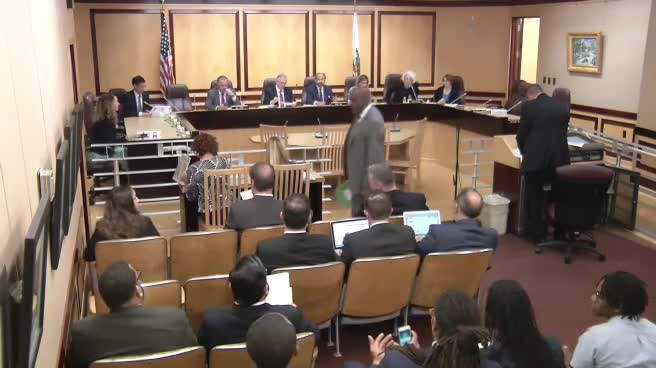
Discussed in Hearing
 20MIN
Senate Standing Committee on Business, Professions and Economic Development
Bill Author

Bill Co-Author(s):