SB 1085: Public employees: leaves of absence: exclusive bargaining representative service.
- Session Year: 2017-2018
- House: Senate
- Latest Version Date: 2018-09-28
Existing law, including the Meyers-Milias-Brown Act, the Ralph C. Dills Act, the Trial Court Employment Protection and Governance Act, the Trial Court Interpreter Employment and Labor Relations Act, the Judicial Council Employer-Employee Relations Act and the Los Angeles County Metropolitan Transportation Authority Transit Employer-Employee Relations Act, as well as provisions commonly referred to as the Educational Employment Relations Act and the Higher Education Employer-Employee Relations Act, regulates the labor relations of the state, the courts, specified local public agencies, and their employees. Existing law establishes other requirements relating to labor relations that are applicable to certain transit agencies. These acts grant specified public employees the right to form, join, and participate in the activities of employee organizations of their choosing and require public agency employers, among other things, to meet and confer with representatives of recognized employee organizations and exclusive representatives on terms and conditions of employment. Existing law requires the California State University, the governing board of a school district, and the governing board of a community college district to grant specified employees a leave of absence without loss of compensation, as specified, for the purpose of enabling the employee to serve as an elected officer of specified employee organizations.
This bill would require public employers, subject to the acts described above, and specified public employers of transit workers, upon request of the exclusive representative of an employee, to grant reasonable leaves of absence without loss of compensation or other benefits for the purpose of enabling employees to serve as stewards or officers of the exclusive representative, or of any statewide or national employee organization with which the exclusive representative is affiliated. The bill would specify that leave may be granted on a full-time, part-time, periodic, or intermittent basis, in accordance with certain procedures.
The bill would grant the steward or representative, at the conclusion or termination of the leave granted, the right of reinstatement to the same position and work location held before the leave, or, if not feasible, a substantially similar position without loss of seniority, rank, or classification. The bill would provide that the exclusive representative is not obligated to use leave under this provision and may terminate that leave at any time, for any reason. The bill would require the exclusive representative or employee organization to reimburse the public employer for all compensation paid to the employee on leave, unless otherwise agreed to, as specified. The bill would specify that compensation during leave granted is required to include retirement fund contributions, the employee is to earn full service credit during the leave, and is required to pay his or her membership contributions, unless the employer has agreed to pay the contributions on the employees behalf, as specified. The bill would also provide that a public employer is not liable for acts, omissions, or injuries suffered by employees that occur during the course and scope of the employees leave, as prescribed.
Existing law, including the Meyers-Milias-Brown Act, the Ralph C. Dills Act, the Trial Court Employment Protection and Governance Act, the Trial Court Interpreter Employment and Labor Relations Act, the Judicial Council Employer-Employee Relations Act and the Los Angeles County Metropolitan Transportation Authority Transit Employer-Employee Relations Act, as well as provisions commonly referred to as the Educational Employment Relations Act and the Higher Education Employer-Employee Relations Act, regulates the labor relations of the state, the courts, specified local public agencies, and their employees. Existing law establishes other requirements relating to labor relations that are applicable to certain transit agencies. These acts grant specified public employees the right to form, join, and participate in the activities of employee organizations of their choosing and require public agency employers, among other things, to meet and confer with representatives of recognized employee organizations and exclusive representatives on terms and conditions of employment. Existing law requires the California State University, the governing board of a school district, and the governing board of a community college district to grant specified employees a leave of absence without loss of compensation, as specified, for the purpose of enabling the employee to serve as an elected officer of specified employee organizations.
This bill would require public employers, subject to the acts described above, and specified public employers of transit workers, upon request of the exclusive representative of an employee, to grant reasonable leaves of absence without loss of compensation or other benefits for the purpose of enabling employees to serve as stewards or officers of the exclusive representative, or of any statewide or national employee organization with which the exclusive representative is affiliated. The bill would specify that leave may be granted on a full-time, part-time, periodic, or intermittent basis, in accordance with certain procedures.
The bill would grant the steward or representative, at the conclusion or termination of the leave granted, the right of reinstatement to the same position and work location held before the leave, or if not feasible, a substantially similar position without loss of seniority, rank, or classification. The bill would provide that the exclusive representative is not obligated to use leave under this provision and may terminate that leave at any time, for any reason. The bill would require the exclusive representation or employee organization to reimburse the public employer for all compensation paid to the employee on leave, unless otherwise agreed to, as specified. The bill would specify that compensation during leave granted is required to include retirement fund contributions, the employee is to earn full service credit during the leave, and is required to pay his or her membership contributions, unless the employer has agreed to pay the contributions on the employees behalf, as specified. The bill would limit the amount of service credit earned in this capacity to not more than 12 years. The bill would also provide that a public employer is not liable for acts, omissions, or injuries suffered by employees that occur during the course and scope of the employees leave, as prescribed.
Existing law, including the Meyers-Milias-Brown Act, the Ralph C. Dills Act, the Trial Court Employment Protection and Governance Act, the Trial Court Interpreter Employment and Labor Relations Act, the Judicial Council Employer-Employee Relations Act and the Los Angeles County Metropolitan Transportation Authority Transit Employer-Employee Relations Act, as well as provisions commonly referred to as the Educational Employment Relations Act and the Higher Education Employer-Employee Relations Act, regulates the labor relations of the state, the courts, specified local public agencies, and their employees. Existing law establishes other requirements relating to labor relations that are applicable to certain transit agencies. These acts grant specified public employees the right to form, join, and participate in the activities of employee organizations of their choosing and require public agency employers, among other things, to meet and confer with representatives of recognized employee organizations and exclusive representatives on terms and conditions of employment. Existing law requires the California State University, the governing board of a school district, and the governing board of a community college district to grant specified employees a leave of absence without loss of compensation, as specified, for the purpose of enabling the employee to serve as an elected officer of specified employee organizations.
This bill would require public employers, subject to the acts described above, and specified public employers of transit workers, upon request of the exclusive representative of an employee, to grant reasonable leaves of absence without loss of compensation or other benefits for the purpose of enabling employees to serve as stewards or officers of the exclusive representative, or of any statewide or national employee organization with which the exclusive representative is affiliated. The bill would specify that leave may be granted on a full-time, part-time, periodic, or intermittent basis, in accordance with certain procedures. The
The bill would grant the steward or representative, at the conclusion or termination of the leave granted, the right of reinstatement to the same position and work location held before the leave, or if not feasible, a substantially similar position without loss of seniority, rank, or classification. The bill would provide that the exclusive representative is not obligated to use leave under this provision and may terminate that leave at any time, for any reason. The bill would require the exclusive representation or employee organization to reimburse the public employer for all compensation paid to the employee on leave, unless otherwise agreed to, as specified. The bill would specify that compensation during leave granted is required to include retirement fund contributions, the employee is to earn full service credit during the leave, and is required to pay his or her membership contributions, unless the employer has agreed to pay the contributions on the employees behalf, as specified. The bill would limit the amount of service credit earned in this capacity to not more than 12 years. The bill would also provide that a public employer is not liable for acts, omissions, or injuries suffered by employees that occur during the course and scope of the employees leave, as prescribed.
Existing law, including the Meyers-Milias-Brown Act, the Ralph C. Dills Act, the Trial Court Employment Protection and Governance Act, the Trial Court Interpreter Employment and Labor Relations Act, the Judicial Council Employer-Employee Relations Act and the Los Angeles County Metropolitan Transportation Authority Transit Employer-Employee Relations Act, as well as provisions commonly referred to as the Educational Employment Relations Act and the Higher Education Employer-Employee Relations Act, regulates the labor relations of the state, the courts, specified local public agencies, and their employees. Existing law establishes other requirements relating to labor relations that are applicable to certain transit agencies. These acts grant specified public employees the right to form, join, and participate in the activities of employee organizations of their choosing and require public agency employers, among other things, to meet and confer with representatives of recognized employee organizations and exclusive representatives on terms and conditions of employment. Existing law requires the California State University, the governing board of a school district, and the governing board of a community college district to grant specified employees a leave of absence without loss of compensation, as specified, for the purpose of enabling the employee to serve as an elected officer of specified employee organizations.
This bill would require public employers, subject to the acts described above, and specified public employers of transit workers, upon request of the exclusive representative of an employee, to grant reasonable leaves of absence without loss of compensation or other benefits for the purpose of enabling employees to serve as stewards or officers of the exclusive representative, or of any statewide or national employee organization with which the exclusive representative is affiliated. The bill would specify that leave may be granted on a full-time, part-time, periodic, or intermittent basis, in accordance with certain procedures. The bill would grant the steward or representative, at the conclusion or termination of the leave granted, the right of reinstatement to the same position and work location held before the leave leave, or if not feasible, a substantially similar position without loss of seniority, rank, or classification. The bill would provide that the exclusive representative is not obligated to request use leave under this provision and may terminate that leave at any time, for any reason. The bill would require the exclusive representation or employee organization to reimburse the public employer for all compensation paid to the employee on leave, unless otherwise agreed to, as specified. The bill would specify that compensation during leave granted is required to include retirement fund contributions, the employee is to earn full service credit during the leave, and is required to pay his or her membership contributions, unless the employer has agreed to pay the contributions on the employees behalf, as specified. The bill would also provide that a public employer is not liable for acts, omissions, or injuries suffered by employees that occur during the course and scope of the employees leave, as prescribed.
Existing law, including the Meyers-Milias-Brown Act, the Ralph C. Dills Act, the Trial Court Employment Protection and Governance Act, the Trial Court Interpreter Employment and Labor Relations Act, the Judicial Council Employer-Employee Relations Act and the Los Angeles County Metropolitan Transportation Authority Transit Employer-Employee Relations Act, as well as provisions commonly referred to as the Educational Employment Relations Act and the Higher Education Employer-Employee Relations Act, regulates the labor relations of the state, the courts, specified local public agencies, and their employees. Existing law establishes other requirements relating to labor relations that are applicable to certain transit agencies. These acts grant specified public employees the right to form, join, and participate in the activities of employee organizations of their choosing and require public agency employers, among other things, to meet and confer with representatives of recognized employee organizations and exclusive representatives on terms and conditions of employment. Existing law requires the California State University, the governing board of a school district, and the governing board of a community college district to grant specified employees a leave of absence without loss of compensation, as specified, for the purpose of enabling the employee to serve as an elected officer of specified employee organizations.
This bill would require public employers, subject to the acts described above, and specified public employers of transit workers, upon request of the exclusive representative of an employee, to grant reasonable leaves of absence without loss of compensation or other benefits for the purpose of enabling employees to serve as stewards or officers of the exclusive representative, or of any statewide or national employee organization with which the exclusive representative is affiliated. The bill would specify that leave may be granted on a full-time, part-time, periodic, or intermittent basis, in accordance with certain procedures. The bill would grant the steward or representative, at the conclusion or termination of the leave granted, the right of reinstatement to the same position held before the leave without loss of seniority, rank, or classification. The bill would provide that the exclusive representative is not obligated to request leave under this provision and may terminate that leave at any time, for any reason. The bill would specify that compensation during leave granted is required to include retirement fund contributions, the employee is to earn full service credit during the leave, and is required to pay his or her membership contributions, unless the employer has agreed to pay the contributions on the employees behalf, as specified. The bill would also provide that a public employer is not liable for acts, omissions, or injuries suffered by employees that occur during the course and scope of the employees leave, as prescribed.
Existing law, the Meyers-Milias-Brown Act, authorizes local public employees, as defined, to form, join, and participate in the activities of employee organizations of their own choosing for the purpose of representation on matters of labor relations. Existing law also grants these public employees the right to refuse to join or participate in those activities and the right to represent themselves individually. Existing law permits employee organizations to establish reasonable membership restrictions to make reasonable provisions for the dismissal of individuals from membership.This bill would make nonsubstantive changes in these provisions.Existing law, the Meyers-Milias-Brown Act, authorizes local public employees, as defined, to form, join, and participate in the activities of employee organizations of their own choosing for the purpose of representation on matters of labor relations. Existing law also grants these public employees the right to refuse to join or participate in those activities and the right to represent themselves individually. Existing law permits employee organizations to establish reasonable membership restrictions to make reasonable provisions for the dismissal of individuals from membership.
This bill would make nonsubstantive changes in these provisions.
(a)A public employer shall grant to public employees, upon request of the exclusive representative of that employee, reasonable leaves of absence without loss of compensation or other benefits for the purpose of enabling employees to serve as stewards or officers of the exclusive representative, or of any statewide or national employee organization with which the exclusive representative is affiliated. Leave may be granted on a full-time, part-time, periodic, or intermittent basis.
(b)Procedures for requesting and granting leave shall be determined by mutual agreement between the employer and exclusive representative. The exclusive representative or employee organization shall reimburse the public employer for all compensation paid to the employee on leave unless otherwise provided by a collective bargaining agreement or memorandum of understanding. Reimbursement by the exclusive representative or employee organization shall be made on or before 30 days after receipt of the public employers certification of payment of compensation to the employee.
(c)At the conclusion or termination of leave granted under this section, the steward or representative shall have a right of reinstatement to the same position and work location held prior to the leave, or, if not feasible, a substantially similar position without loss of seniority, rank, or classification.
(d)The exclusive representative has no obligation to use leave under this section for an employee and may terminate that leave at any time, for any reason.
(e)Compensation during leave granted under this section shall include retirement fund contributions required of the public employer as an employer. The employee shall earn full service credit during the leave of absence and shall pay his or her member contributions unless the employer has agreed in a memorandum of understanding or collective bargaining agreement to pay the contributions on the employees behalf.
(f)A public employer shall not be liable for an act or omission of, or an injury suffered by, an employee of the public employer if that act, omission, or injury occurs during the course and scope of the employees leave under this section to work for the exclusive representative or affiliated employee organization. If a public employer is held liable for such an act, omission, or injury, the exclusive representative or affiliated employee organization shall indemnify and hold harmless the public employer.
(g)The leave provided under this section shall be in addition to any leave to which public employees may be entitled by other laws or by a memorandum of understanding or collective bargaining agreement.
(h)This section shall not serve to invalidate any provision of a memorandum of understanding or collective bargaining agreement in effect on the effective date of this section. At the request of the exclusive representative, a memorandum of understanding or collective bargaining agreement shall be reopened for negotiations to reach a mutual agreement concerning the grant of leave pursuant to this section.
(i)For purposes of this section:
(1)Public employer means, in addition to the entities described in subdivision (a) of Section 3555.5, both of the following:
(A)An employer subject to Chapter 10.4 (commencing with Section 3524.50).
(B)A public employer that employs public transit workers, the labor relations of which are regulated by provisions in the Public Utilities Code, and are not subject to the jurisdiction of the Public Employment Relations Board. Notwithstanding subdivision (c) of Section 3555.5, the Public Employment Relations Board shall not have jurisdiction to enforce this section with respect to such public transit workers.
(2)Steward means any employee designated by the exclusive representative as a representative for unit employees, whether for the unit as a whole or at a particular site, department, or other division of the employers operations, regardless of whether the employee is referred to by the exclusive representative as a steward or by a different title.
(a)A public employer shall grant to public employees, upon request of the exclusive representative of that employee, reasonable leaves of absence without loss of compensation or other benefits for the purpose of enabling employees to serve as stewards or officers of the exclusive representative, or of any statewide or national employee organization with which the exclusive representative is affiliated. Leave may be granted on a full-time, part-time, periodic, or intermittent basis.
(b) Procedures for requesting and granting leave shall be determined by mutual agreement between the employer and exclusive representative. The exclusive representative or employee organization shall reimburse the public employer for all compensation paid to the employee on leave unless otherwise provided by a collective bargaining agreement or memorandum of understanding. Reimbursement by the exclusive representative or employee organization shall be made on or before 30 days after receipt of the public employers certification of payment of compensation to the employee.
(c)At the conclusion or termination of leave granted under this section, the steward or representative shall have a right of reinstatement to the same position and work location held prior to the leave, or, if not feasible, a substantially similar position without loss of seniority, rank, or classification.
(d)The exclusive representative has no obligation to use leave under this section for an employee and may terminate that leave at any time, for any reason.
(e)Compensation during leave granted under this section shall include retirement fund contributions required of the public employer as an employer. The employee shall earn full service credit during the leave of absence and shall pay his or her member contributions unless the employer has agreed in a memorandum of understanding or collective bargaining agreement to pay the contributions on the employees behalf. The maximum amount of service credit earned in this capacity shall not exceed 12 years.
(f)A public employer shall not be liable for an act or omission of, or an injury suffered by, an employee of the public employer if that act, omission, or injury occurs during the course and scope of the employees leave under this section to work for the exclusive representative or affiliated employee organization. If a public employer is held liable for such an act, omission, or injury, the exclusive representative or affiliated employee organization shall indemnify and hold harmless the public employer.
(g)The leave provided under this section shall be in addition to any leave to which public employees may be entitled by other laws or by a memorandum of understanding or collective bargaining agreement.
(h)This section shall not serve to invalidate any provision of a memorandum of understanding or collective bargaining agreement in effect on the effective date of this section. At the request of the exclusive representative, a memorandum of understanding or collective bargaining agreement shall be reopened for negotiations to reach a mutual agreement concerning the grant of leave pursuant to this section.
(i)For purposes of this section:
(1)Public employer means, in addition to the entities described in subdivision (a) of Section 3555.5, both of the following:
(A)An employer subject to Chapter 10.4 (commencing with Section 3524.50) or Chapter 10.5 (commencing with Section 3525) of Division 4 of Title 1 of this code. 3524.50).
(B)A public employer that employs public transit workers, the labor relations of which are regulated by provisions in the Public Utilities Code, and are not subject to the jurisdiction of the Public Employment Relations Board. Notwithstanding subdivision (c) of Section 3555.5, the Public Employment Relations Board shall not have jurisdiction to enforce this section with respect to such public transit workers.
(2)Steward means any employee designated by the exclusive representative as a representative for unit employees, whether for the unit as a whole or at a particular site, department, or other division of the employers operations, regardless of whether the employee is referred to by the exclusive representative as a steward or by a different title.
(a)A public employer shall grant to public employees, upon request of the exclusive representative of that employee, reasonable leaves of absence without loss of compensation or other benefits for the purpose of enabling employees to serve as stewards or officers of the exclusive representative, or of any statewide or national employee organization with which the exclusive representative is affiliated. Such leave Leave may be granted on a full-time, part-time, periodic, or intermittent basis.
(b)The amount of leave granted pursuant to this section, procedures Procedures for requesting and granting such leave, and whether reimbursement will be made to the public employer by the exclusive representative or employee organization for the compensation paid to the employee on leave leave shall be determined by mutual agreement between the employer and exclusive representative. The exclusive representative or employee organization shall reimburse the public employer for all compensation paid to the employee on leave unless otherwise provided by a collective bargaining agreement or memorandum of understanding.
(c)At the conclusion or termination of leave granted under this section, the steward or representative shall have a right of reinstatement to the same position and work location held prior to the leave leave, or, if not feasible, a substantially similar position without loss of seniority, rank, or classification.
(d)The exclusive representative has no obligation to request use leave under this section for an employee and may terminate such that leave at any time, for any reason.
(e)Compensation during leave granted under this section shall include retirement fund contributions required of the public employer as an employer. The employee shall earn full service credit during the leave of absence and shall pay his or her member contributions unless the employer has agreed in a memorandum of understanding or collective bargaining agreement to pay the contributions on the employees behalf.
(f)A public employer shall not be liable for an act or omission of, or an injury suffered by, an employee of the public employer if that act, omission, or injury occurs during the course and scope of the employees leave under this section to work for the exclusive representative or affiliated employee organization. If a public employer is held liable for such an act, omission, or injury, the exclusive representative or affiliated employee organization shall indemnify and hold harmless the public employer.
(g)The leave provided under this section shall be in addition to any leave to which public employees may be entitled by other laws or by a memorandum of understanding or collective bargaining agreement.
(h)This section shall not serve to invalidate any provision of a memorandum of understanding or collective bargaining agreement in effect on the effective date of this section. At the request of the exclusive representative, a memorandum of understanding or collective bargaining agreement shall be reopened for negotiations to reach a mutual agreement concerning the grant of leave pursuant to this section.
(i)For purposes of this section:
(1)Public employer means, in addition to the entities described in subdivision (a) of Section 3555.5, both of the following:
(A)An employer subject to Chapter 10.4 (commencing with Section 3524.50) or Chapter 10.5 (commencing with Section 3525) of Division 4 of Title 1 of this code.
(B)A public employer that employs public transit workers, the labor relations of which are regulated by provisions in the Public Utilities Code, and are not subject to the jurisdiction of the Public Employment Relations Board. Notwithstanding subdivision (c) of Section 3555.5, the Public Employment Relations Board shall not have jurisdiction to enforce this section with respect to such public transit workers.
(2)Steward means any employee designated by the exclusive representative as a representative for unit employees, whether for the unit as a whole or at a particular site, department, or other division of the employers operations, regardless of whether the employee is referred to by the exclusive representative as a steward or by a different title.
(a)A public employer shall grant to public employees, upon request of the exclusive representative of that employee, reasonable leaves of absence without loss of compensation or other benefits for the purpose of enabling employees to serve as stewards or officers of the exclusive representative, or of any statewide or national employee organization with which the exclusive representative is affiliated. Such leave may be granted on a full-time, part-time, periodic, or intermittent basis.
(b)The amount of leave granted pursuant to this section, procedures for requesting and granting such leave, and whether reimbursement will be made to the public employer by the exclusive representative or employee organization for the compensation paid to the employee on leave shall be determined by mutual agreement between the employer and exclusive representative.
(c)At the conclusion or termination of leave granted under this section, the steward or representative shall have a right of reinstatement to the same position held prior to the leave without loss of seniority, rank, or classification.
(d)The exclusive representative has no obligation to request leave under this section for an employee and may terminate such leave at any time, for any reason.
(e)Compensation during leave granted under this section shall include retirement fund contributions required of the public employer as an employer. The employee shall earn full service credit during the leave of absence and shall pay his or her member contributions unless the employer has agreed in a memorandum of understanding or collective bargaining agreement to pay the contributions on the employees behalf.
(f)A public employer shall not be liable for an act or omission of, or an injury suffered by, an employee of the public employer if that act, omission, or injury occurs during the course and scope of the employees leave under this section to work for the exclusive representative or affiliated employee organization. If a public employer is held liable for such an act, omission, or injury, the exclusive representative or affiliated employee organization shall indemnify and hold harmless the public employer.
(g)The leave provided under this section shall be in addition to any leave to which public employees may be entitled by other laws or by a memorandum of understanding or collective bargaining agreement.
(h)This section shall not serve to invalidate any provision of a memorandum of understanding or collective bargaining agreement in effect on the effective date of this section. At the request of the exclusive representative, a memorandum of understanding or collective bargaining agreement shall be reopened for negotiations to reach a mutual agreement concerning the grant of leave pursuant to this section.
(i)For purposes of this section:
(1)Public employer means, in addition to the entities described in subdivision (a) of Section 3555.5, both of the following:
(A)An employer subject to Chapter 10.4 (commencing with Section 3524.50) or Chapter 10.5 (commencing with Section 3525) of Division 4 of Title 1 of this code.
(B)A public employer that employs public transit workers, the labor relations of which are regulated by provisions in the Public Utilities Code, and are not subject to the jurisdiction of the Public Employment Relations Board. Notwithstanding subdivision (c) of Section 3555.5, the Public Employment Relations Board shall not have jurisdiction to enforce this section with respect to such public transit workers.
(2)Steward means any employee designated by the exclusive representative as a representative for unit employees, whether for the unit as a whole or at a particular site, department, or other division of the employers operations, regardless of whether the employee is referred to by the exclusive representative as a steward or by a different title.
SECTION 1.Section 3503 of the Government Code is amended to read:3503.Recognized employee organizations shall have the right to represent their members in their employment relations with public agencies. Employee organizations may establish reasonable restrictions regarding who may join and may make reasonable provisions for the dismissal of individuals from membership. This section does not prohibit any employee from appearing in his or her own behalf in his or her employment relations with the public agency.Recognized employee organizations shall have the right to represent their members in their employment relations with public agencies. Employee organizations may establish reasonable restrictions regarding who may join and may make reasonable provisions for the dismissal of individuals from membership. Nothing in this This section shall does not prohibit any employee from appearing in his or her own behalf in his or her employment relations with the public agency.
|
Date
|
Status
|
|---|---|
| Sep 28, 2018 | Chaptered by Secretary of State. Chapter 893, Statutes of 2018. |
| Sep 28, 2018 | Approved by the Governor. |
| Sep 6, 2018 | Enrolled and presented to the Governor at 4 p.m. |
| Aug 29, 2018 | Assembly amendments concurred in. (Ayes 26. Noes 12.) Ordered to engrossing and enrolling. |
| Aug 28, 2018 | In Senate. Concurrence in Assembly amendments pending. |
| Aug 28, 2018 | Read third time. Passed. Ordered to the Senate. |
| Aug 23, 2018 | Read third time and amended. |
| Aug 20, 2018 | Read third time and amended. |
| Aug 9, 2018 | Read second time. Ordered to third reading. |
| Aug 8, 2018 | From committee: Do pass. (Ayes 12. Noes 5.) (August 8). |
| Jun 20, 2018 | From committee: Do pass and re-refer to Com. on APPR. (Ayes 5. Noes 1.) (June 20). Re-referred to Com. on APPR. |
| May 29, 2018 | From committee with author's amendments. Read second time and amended. Re-referred to Com. on P.E., R., & S.S. |
| May 17, 2018 | Referred to Com. on P.E., R., & S.S. |
| May 10, 2018 | In Assembly. Read first time. Held at Desk. |
| May 10, 2018 | Read third time. Passed. (Ayes 24. Noes 12.) Ordered to the Assembly. |
| May 8, 2018 | Read second time. Ordered to third reading. |
| May 7, 2018 | From committee: Be ordered to second reading pursuant to Senate Rule 28.8. |
| Apr 27, 2018 | Set for hearing May 7. |
| Apr 24, 2018 | From committee: Do pass and re-refer to Com. on APPR. (Ayes 3. Noes 0. Page 4788.) (April 23). Re-referred to Com. on APPR. |
| Apr 23, 2018 | From committee: Do pass and re-refer to Com. on APPR. (Ayes 3. Noes 0.) (April 23). Re-referred to Com. on APPR. |
| Apr 19, 2018 | Re-referred to Com. on P.E. & R. |
| Apr 17, 2018 | Set for hearing April 23 in P.E. & R. pending receipt. |
| Apr 10, 2018 | From committee with author's amendments. Read second time and amended. Re-referred to Com. on RLS. |
| Feb 22, 2018 | Referred to Com. on RLS. |
| Feb 13, 2018 | From printer. May be acted upon on or after March 15. |
| Feb 12, 2018 | Introduced. Read first time. To Com. on RLS. for assignment. To print. |
|
Date
|
Description
|
Location
|
Votes
|
|
|---|---|---|---|---|
| Aug 29, 2018 | Unfinished Business SB1085 Skinner Concurrence | Senate Floor |
Passed |
|
| Aug 28, 2018 | SB 1085 Skinner Senate Third Reading By CALDERON | Assembly Floor |
Passed |
|
| Aug 23, 2018 | SB 1085 Skinner Senate Third Reading By CALDERON Amend By CALDERON Set #1 | Assembly Floor |
Passed |
|
| Aug 8, 2018 | Do pass. | Assembly Standing Committee on Appropriations |
Passed |
|
| Jun 20, 2018 | Do pass and be re-referred to the Committee on [Appropriations] | Assembly Standing Committee on Public Employees, Retirement, and Social Security |
Passed |
|
| May 10, 2018 | Senate 3rd Reading SB1085 Skinner | Senate Floor |
Passed |
|
| Apr 23, 2018 | Do pass, but first be re-referred to the Committee on [Appropriations] | Senate Standing Committee on Public Employment and Retirement |
Passed |
This list shows positions taken on this bill by organizations on the date displayed, which is linked to the original source.
Positions by individuals are not included.
Office of Senate Floor Analyses (916) 651-1520 Fax: (916) 327-4478 | SB |
UNFINISHED BUSINESS
Bill No: SB 1085
:
SENATE PUBLIC EMP. & RET. COMMITTEE: 3-0, 4/23/18
AYES: Pan, Leyva, Portantino
NO VOTE RECORDED: Morrell, Moorlach
SENATE APPROPRIATIONS COMMITTEE: Senate Rule 28.8
SENATE FLOOR: 25-12, 5/10/18
AYES: Allen, Atkins, Beall, Bradford, De León, Dodd, Galgiani, Glazer, Hernandez, Hill, Hueso, Jackson, Lara, Leyva, McGuire, Mitchell, Monning, Newman, Pan, Portantino, Roth, Skinner, Stern, Wieckowski, Wiener
NOES: Anderson, Bates, Berryhill, Fuller, Gaines, Moorlach, Morrell, Nguyen, Nielsen, Stone, Vidak, Wilk
NO VOTE RECORDED: Cannella, Hertzberg
ASSEMBLY FLOOR: 55-21, 8/28/18 - See last page for vote
SOURCE: Service Employees International Union, California
DIGEST:
This bill requires public employers to provide “lost time” to employee representatives, as specified, to allow employees to serve as stewards or officers of the employee representative or its state or national affiliates.
Assembly Amendments (1) clarify that the exclusive representative or employee organization shall reimburse the public employer for all compensation paid to the employee on leave unless otherwise provided by a collective bargaining agreement or memorandum of understanding; (2) guarantee that the steward or representative shall have a right of reinstatement to the same work location, as well as same position, held prior to the leave; (3) clarify that if the reinstatement to the same position is not feasible, then the employee shall be reinstated to a substantially similar position without loss of seniority, rank, or classification; (4) clarify that the exclusive representative has no obligation to use leave under this section for an employee and may terminate that leave at any time, for any reason; and (5) make a technical revision to the definition of “employer” so as not to include therein an employer only subject to the Bill of Rights for State Excluded Employees Act.
ANALYSIS:
Existing law:
- Requires the state under the Ralph C. Dills Act, which governs labor relations between the state and state employees, to grant a reasonable number of employee representatives of recognized employee organizations reasonable time off without loss of compensation or other benefits when formally meeting and conferring with representatives of the state on matters within the scope of representation.
- Requires public agencies under the Myers-Milias-Brown Act, which governs labor relations between local public agencies and their respective employees, to allow a reasonable number of public agency employee representatives of recognized employee organizations reasonable time off without loss of compensation or other benefits when they are participating in employee representation activities, as specified.
- Provides similar provisions under various other labor relations acts to facilitate the ability of public employee representatives to engage in employee representation activities, as specified, without loss of compensation or other benefits.
- Requires the state employer, as specified, to allow a reasonable number of supervisory public employee representatives of verified supervisory employee organizations reasonable time off without loss of compensation (“lost time”) or other benefits when meeting and conferring with representatives of the state employer on matters within the scope of representation for supervisory employees.
This bill:
- Requires a public employer to grant to public employees, upon request of the exclusive representative of that employee, reasonable leaves of absence without loss of compensation or other benefits for the purpose of enabling employees to serve as stewards or officers of the exclusive representative, or of any statewide or national employee organization with which the exclusive representative is affiliated. Such leave may be granted on a full-time, part-time, periodic, or intermittent basis.
- Requires that procedures for requesting and granting leave are to be determined by mutual agreement between the employer and exclusive representative.
- Declares that the exclusive representative or employee organization shall reimburse the public employer for all compensation paid to the employee on leave
- Requires that reimbursement by the exclusive representative or employee organization is to be made on or before 30 days after receipt of the public employer’s certification of payment of compensation to the employee.
- Guarantees that at the conclusion or termination of leave granted under this bill, the steward or representative shall have a right of reinstatement to the same position held prior to the leave without loss of seniority, rank, or classification.
- Clarifies that the exclusive representative has no obligation to use leave under this bill for an employee and may terminate that leave at any time, for any reason.
- Provides that compensation during leave granted under this bill shall include retirement fund contributions required of the public employer as an employer. The employee shall earn full service credit during the leave of absence and shall pay his or her member contributions unless the employer has agreed in a memorandum of understanding or collective bargaining agreement to pay the contributions on the employee’s behalf.
- Shields a public employer from liability for an act or omission of, or an injury suffered by, an employee of the public employer if that act, omission, or injury occurs during the course and scope of the employee’s leave under this bill to work for the exclusive representative or affiliated employee organization. If a public employer is held liable for such an act, omission, or injury, the exclusive representative or affiliated employee organization shall indemnify and hold harmless the public employer.
- Provides that the leave provided under this bill is in addition to any leave to which public employees may be entitled by other laws or by a memorandum of understanding or collective bargaining agreement.
- Declares that this bill shall not serve to invalidate any provision of a memorandum of understanding or collective bargaining agreement in effect on the effective date of this bill. At the request of the exclusive representative, a memorandum of understanding or collective bargaining agreement shall be reopened for negotiations to reach a mutual agreement concerning the grant of leave pursuant to this bill.
- Makes the following definitions:
- “Public employer” means, in addition to the entities described in subdivision (a) of Section 3555.5, both of the following:
- An employer subject to Chapter 10.4 (commencing with Section 3524.50) or Chapter 10.5 (commencing with Section 3525) of Division 4 of Title 1 of this code. These provisions refer to Judicial Council Employer-Employee Relations Act and the (State) Excluded Employees Relations Act.
- A public employer that employs public transit workers, the labor relations of which are regulated by provisions in the Public Utilities Code, and are not subject to the jurisdiction of the Public Employment Relations Board. Notwithstanding subdivision (c) of Section 3555.5, the Public Employment Relations Board shall not have jurisdiction to enforce this section with respect to such public transit workers.
- “Steward” means any employee designated by the exclusive representative as a representative for unit employees, whether for the unit as a whole or at a particular site, department, or other division of the employer’s operations, regardless of whether the employee is referred to by the exclusive representative as a steward or by a different title.
- “Public employer” means, in addition to the entities described in subdivision (a) of Section 3555.5, both of the following:
Related/Prior Legislation
AB 1203 (Mendoza, Chapter 804, Statutes of 2012) expanded provisions in existing law governing union-paid leaves of absences for classified school employees who are representatives of employee organizations, as specified.
FISCAL EFFECT: Appropriation: Fiscal Com.: Local:
According to the Assembly Appropriations Committee, this bill would result in unknown, but likely modest, costs across state agencies. While typically an expansion of any type of paid leave would generate significant costs for state employers, the nature of union leave and how it is granted minimizes the fiscal impact. First, SB 1085 specifies that unions will reimburse public employers for the compensation and benefit costs of that employee who is granted leave. Second, state agencies indicate that generally, most employees on union leave are gone only temporarily and typically their workload is divvied up among other employees. Thus, it is unlikely there will be additional costs associated with backfilling a position. Third, collective bargaining agreements typically include provisions related to union leave, and in some cases the union reimbursement to employers is even more generous than what is granted by this bill.
Service Employees International Union, California (source)
American Federation of State, County and Municipal Employees, AFL-CIO
California School Employees Association, AFL-CIO
California Teachers Association
Laborers’ International Union of North America, Local 792
Los Angeles County Professional Peace Officers Association
Riverside Sheriffs’ Association
Teamsters Local 2010
United Automobile, Aerospace and Agricultural Implement Workers of America, Local 5810
United Public Employees
OPPOSITION: (Verified 8/29/18)
California Special Districts Association
California State Association of Counties
League of California Cities
Rural County Representatives of California
Urban Counties of California
ARGUMENTS IN SUPPORT: According to the author, “This bill ensures that public employees are able to take a leave of absence to represent their union without losing their job or benefits during the time they are performing union duties.”
According to the California School Employees Association, “Current law already provides this leave to school and community college employee organizations. This type of leave, sometimes referred to as “loss time”, allows employees to perform union duties without loss of pay and benefits. The union reimburses the employer for the costs of the employee’s salary and benefits while employers are permitted to utilize temporary employees to fill a union representative’s position while they are absent.
“However, other public-sector unions, including local government employees and transit employees, must negotiate this type of leave with the employer. Unfortunately, some public employers are uncooperative and deny union representatives this leave despite the fact it does not create additional costs.”
According to the American Federation of State, County and Municipal Employees, AFL-CIO, “SB 1085 builds off current law for school and community college employees to grant other public employees with similar leave to allow sufficient time off to participate in matters critical to their representation needs.”
ARGUMENTS IN OPPOSITION: The California State Association of Counties states that this bill will result in workforce burdens and additional local agency costs not provided for by the bills reimbursement provisions and that “SB 1085 moves lost time agreements away from the collective bargaining table and towards a new type of protected leave that is more comprehensive than other leaves provided for the safety and well-being of employees. SB 1085 had been offered as a solution for concerns that already have remedies under the MMBA.”
ASSEMBLY FLOOR: 55-21, 8/28/18
AYES: Aguiar-Curry, Arambula, Berman, Bloom, Bonta, Burke, Caballero, Calderon, Carrillo, Cervantes, Chau, Chiu, Chu, Cooley, Cooper, Daly, Eggman, Frazier, Friedman, Gabriel, Cristina Garcia, Eduardo Garcia, Gipson, Gloria, Gonzalez Fletcher, Gray, Grayson, Holden, Irwin, Jones-Sawyer, Kalra, Kamlager-Dove, Lackey, Levine, Limón, Low, McCarty, Medina, Mullin, Muratsuchi, Nazarian, O'Donnell, Quirk, Quirk-Silva, Reyes, Rivas, Rodriguez, Salas, Santiago, Mark Stone, Thurmond, Ting, Weber, Wood, Rendon
NOES: Acosta, Travis Allen, Baker, Bigelow, Brough, Chávez, Chen, Choi, Cunningham, Fong, Gallagher, Harper, Kiley, Maienschein, Mathis, Mayes, Melendez, Obernolte, Steinorth, Voepel, Waldron
NO VOTE RECORDED: Dahle, Flora, Patterson, Rubio
8/29/18 11:10:10
SENATE THIRD READING
STR Bill Id:SB 1085
Author:(Skinner)
As Amended Ver:August 23, 2018
Majority vote
SENATE VOTE: 25-12
Committee | Votes | Ayes | Noes |
Public Employees | 5-1 | Rodriguez, Cervantes, Cooley, Cooper, O'Donnell | Brough |
Appropriations | 12-5 | Gonzalez Fletcher, Bloom, Bonta, Calderon, Carrillo, Chau, Eggman, Friedman, Eduardo Garcia, Nazarian, Quirk, Reyes | Bigelow, Brough, Fong, Gallagher, Obernolte |
SUMMARY: Requires public employers to provide "lost time" to employee representatives to allow employees to serve as stewards or officers of the employee representative or its state or national affiliates, among other provisions. Specifically, this bill:
1) Requires, upon the request of the exclusive representative, public employers to grant reasonable leaves of absence without loss of compensation or other benefits for the purpose of enabling employees to serve as stewards or officers of the exclusive representative, or statewide or national employee organization to which the exclusive representative is affiliated. Leave may be granted on a full-time, part-time, periodic, or intermittent basis.
2) Provides that procedures for requesting and granting leave must be determined by mutual agreement between the employer and exclusive representative, and that the exclusive representative or employee organization must reimburse the public employer for all compensation paid to the employees on leave, unless otherwise provided by a collective bargaining agreement or memorandum of understanding (MOU). In addition, reimbursement by the exclusive representative or employee organization must be made on or before 30 days after receipt of the public employer's certification of payment of compensation to the employee.
3) Guarantees, at the conclusion or termination of leave, a right of reinstatement of the employee who served as a steward or representative to the same position and work location held prior to the leave, or, if not feasible, a substantially similar position, without loss of seniority, rank or classification.
4) Provides that the exclusive representative has no obligation to use "lost time" leave for an employee and may terminate such leave at any time and for any reason.
5) Provides that compensation during the leave granted must include retirement fund contributions required of the employer as an employer; that the employee must earn full service credit during the leave of absence, and that the employee pay member contributions, unless the employer has agreed to pay the contributions on the employee's behalf, as agreed in a MOU.
6) Shields a public employer from liability for acts or omissions of, or injuries suffered by an employee if the act, omission, or injury occurs during the course and scope of the employee's leave to work for the exclusive representative or affiliated employee organization. If a public employer is held liable for an act, omission, or injury, the exclusive representative or affiliated employee organization must indemnify and hold harmless the public employer.
7) Provides that leave for purposes of work for the exclusive representative or affiliated employee organization must be in addition to any leave that public employees may be entitled to by other law, MOU or collective bargaining agreement (CBA).
8) Declares that this measure must not serve to invalidate provisions of a MOU or CBA in effect on the effective date of this measure. A MOU or CBA must be reopened for negotiations for mutual agreement concerning the grant of leave at the request of the exclusive representative.
9) Defines "public employer" to mean a public employer that employs public transit workers of which labor relations are regulated by the Public Utilities Code (PUC), and who are not subject to the jurisdiction of the Public Employment Relations Board (PERB), and specifies that the PERB must not have jurisdiction over these public transit employers for purposes of enforcement of this measure.
Within this definition, a public employer is also one governed by the various collective bargaining statutes within the jurisdiction of the PERB for purposes of employer-employee relations.
10) Defines "steward" to mean any employee designated by the exclusive representative for unit employees, whether for a unit or at a particular site, department or other division of the employer's operations regardless of whether the employee is referred to by the exclusive representative as a steward or other title.
EXISTING LAW:
- Governs collective bargaining in the private sector under the federal National Relations Labor Relations Act (NLRA) but leaves it to the states to regulate collective bargaining in their respective public sectors.
While the NLRA and the decisions of its National Labor Relations Board often provide persuasive precedent in interpreting state collective bargaining law, public employees have no collective bargaining rights absent specific statutory authority establishing those rights.
2) Establishes the several statutory frameworks under California law to provide public employees collective bargaining rights, govern public employer-employee relations, and limit labor strife and economic disruption in the public sector through a reasonable method of resolving disputes regarding wages, hours and other terms and conditions of employment between public employers and recognized public employee organizations or their exclusive representatives.
3) Requires the state employer to allow a reasonable number of supervisory public employee representatives of verified supervisory employee organizations reasonable time off without loss of compensation or other benefits when meeting and conferring with representatives of the state employer on matters within the scope of representation for supervisory employees.
4) Establishes the PERB, a quasi-judicial administrative agency charged with resolving disputes and enforcing the statutory duties and rights of public agency employers and employee organizations, but provides the City and County of Los Angeles a local alternative to PERB oversight.
5) Pursuant to Sections 45120 and 88120 of the Education Code related to classified employees of K-12 public school districts and community college districts, respectively, permit the granting and usage of "lost time" for substantially similar purposes as those in the current measure; limit the amount of retirement service credit earnable to 12 years while serving as an officer of the exclusive representative, and require reimbursement by the employee organization to be made to the employer within 10 days after receipt of the K-12 public school or community college district's certification of payment of compensation to the employee.
FISCAL EFFECT: According to the Assembly Appropriations Committee, this bill would result in "[u]nknown, but likely modest, costs across state agencies. While typically an expansion of any type of paid leave would generate significant costs for state employers, the nature of union leave and how it is granted minimizes the fiscal impact. First, SB 1085 specifies that unions will reimburse public employers for the compensation and benefit costs of that employee who is granted leave. Second, state agencies indicate that generally, most employees on union leave are gone only temporarily and typically their workload is divvied up among other employees. Thus, it is unlikely there will be additional costs associated with backfilling a position. Third, collective bargaining agreements typically include provisions related to union leave, and in some cases the union reimbursement to employers is even more generous than what is granted by this bill."
COMMENTS: According to the author, "[At times], employees who are union officers or representatives of their union collective bargaining unit need to take time off from their regular job duties to perform union responsibilities. Some public employers have been less cooperative about negotiating lost-time arrangements for their employees, despite the leave causing no additional cost to the employer. This bill ensures that public employees are able to take a leave of absence to represent their union without losing their job or benefits during the time they are performing union duties."
Analysis Prepared by: Michael Bolden / P.E.,R., & S.S. / (916) 319-3957 FN: 0004621
SENATE THIRD READING
STR Bill Id:SB 1085
Author:(Skinner)
As Amended Ver:August 20, 2018
Majority vote
SENATE VOTE: 25-12
Committee | Votes | Ayes | Noes |
Public Employee | 5-1 | Rodriguez, Cervantes, Cooley, Cooper, O'Donnell | Brough |
Appropriations | 12-5 | Gonzalez Fletcher, Bloom, Bonta, Calderon, Carrillo, Chau, Eggman, Friedman, Eduardo Garcia, Nazarian, Quirk, Reyes | Bigelow, Brough, Fong, Gallagher, Obernolte |
SUMMARY: Requires public employers to provide "lost time" to employee representatives to allow employees to serve as stewards or officers of the employee representative or its state or national affiliates, among other provisions. Specifically, this bill:
- Requires, upon the request of the exclusive representative, public employers to grant reasonable leaves of absence without loss of compensation or other benefits for the purpose of enabling employees to serve as stewards or officers of the exclusive representative, or statewide or national employee organization to which the exclusive representative is affiliated. Leave may be granted on a full-time, part-time, periodic, or intermittent basis.
- Provides that procedures for requesting and granting leave must be determined by mutual agreement between the employer and exclusive representative, and that the exclusive representative or employee organization must reimburse the public employer for all compensation paid to the employees on leave, unless otherwise provided by a collective bargaining agreement or memorandum of understanding (MOU). In addition, reimbursement by the exclusive representative or employee organization must be made on or before 30 days after receipt of the public employer's certification of payment of compensation to the employee.
- Guarantees, at the conclusion or termination of leave, a right of reinstatement of the employee who served as a steward or representative to the same position and work location held prior to the leave, or, if not feasible, a substantially similar position, without loss of seniority, rank or classification.
- Provides that the exclusive representative has no obligation to use "lost time" leave for an employee and may terminate such leave at any time and for any reason.
- Provides that compensation during the leave granted must include retirement fund contributions required of the employer as an employer; that the employee must earn full service credit during the leave of absence; that the employee pay member contributions, unless the employer has agreed to pay the contributions on the employee's behalf, as agreed in a MOU; and, limits the amount of retirement service credit earnable to 12 years while serving as a steward or officer of the exclusive representative.
- Shields a public employer from liability for acts or omissions of, or injuries suffered by an employee if the act, omission, or injury occurs during the course and scope of the employee's leave to work for the exclusive representative or affiliated employee organization. If a public employer is held liable for an act, omission, or injury, the exclusive representative or affiliated employee organization must indemnify and hold harmless the public employer.
- Provides that leave for purposes of work for the exclusive representative or affiliated employee organization must be in addition to any leave that public employees may be entitled to by other law, MOU or collective bargaining agreement (CBA).
- Declares that this measure must not serve to invalidate provisions of a MOU or CBA in effect on the effective date of this measure. A MOU or CBA must be reopened for negotiations for mutual agreement concerning the grant of leave at the request of the exclusive representative.
- Defines "public employer" to mean a public employer that employs public transit workers of which labor relations are regulated by the Public Utilities Code (PUC), and who are not subject to the jurisdiction of the Public Employment Relations Board (PERB), and specifies that the PERB must not have jurisdiction over these public transit employers for purposes of enforcement of this measure.
Within this definition, a public employer is also one governed by the various collective bargaining statutes within the jurisdiction of the PERB for purposes of employer-employee relations.
- Defines "steward" to mean any employee designated by the exclusive representative for unit employees, whether for a unit or at a particular site, department or other division of the employer's operations regardless of whether the employee is referred to by the exclusive representative as a steward or other title.
EXISTING LAW:
- Governs collective bargaining in the private sector under the federal National Labor Relations Act (NLRA) but leaves it to the states to regulate collective bargaining in their respective public sectors.
While the NLRA and the decisions of its National Labor Relations Board often provide persuasive precedent in interpreting state collective bargaining law, public employees have no collective bargaining rights absent specific statutory authority establishing those rights.
- Establishes the several statutory frameworks under California law to provide public employees collective bargaining rights, govern public employer-employee relations, and limit labor strife and economic disruption in the public sector through a reasonable method of resolving disputes regarding wages, hours and other terms and conditions of employment between public employers and recognized public employee organizations or their exclusive representatives.
- Requires the state employer to allow a reasonable number of supervisory public employee representatives of verified supervisory employee organizations reasonable time off without loss of compensation or other benefits when meeting and conferring with representatives of the state employer on matters within the scope of representation for supervisory employees.
- Establishes the PERB, a quasi-judicial administrative agency charged with resolving disputes and enforcing the statutory duties and rights of public agency employers and employee organizations, but provides the City and County of Los Angeles a local alternative to PERB oversight.
- Pursuant to Education Code Sections 45120 and 88120 related to classified employees of K-12 public school districts and community college districts, respectively, permit the granting and usage of "lost time" for substantially similar purposes as those in the current measure; limit the amount of retirement service credit earnable to 12 years while serving as an officer of the exclusive representative, and require reimbursement by the employee organization to be made to the employer within 10 days after receipt of the K-12 public school or community college district's certification of payment of compensation to the employee.
FISCAL EFFECT: According to the Assembly Appropriations Committee, this bill would result in "[u]nknown, but likely modest, costs across state agencies. While typically an expansion of any type of paid leave would generate significant costs for state employers, the nature of union leave and how it is granted minimizes the fiscal impact. First, SB 1085 specifies that unions will reimburse public employers for the compensation and benefit costs of that employee who is granted leave. Second, state agencies indicate that generally, most employees on union leave are gone only temporarily and typically their workload is divvied up among other employees. Thus, it is unlikely there will be additional costs associated with backfilling a position. Third, collective bargaining agreements typically include provisions related to union leave, and in some cases the union reimbursement to employers is even more generous than what is granted by this bill."
COMMENTS: According to the author, "[At times], employees who are union officers or representatives of their union collective bargaining unit need to take time off from their regular job duties to perform union responsibilities. Some public employers have been less cooperative about negotiating lost-time arrangements for their employees, despite the leave causing no additional cost to the employer. This bill ensures that public employees are able to take a leave of absence to represent their union without losing their job or benefits during the time they are performing union duties."
Analysis Prepared by: Michael Bolden / P.E.,R., & S.S. / (916) 319-3957 FN: 0004127
SENATE THIRD READING
STR Bill Id:SB 1085
Author:(Skinner)
As Amended Ver:May 29, 2018
Majority vote
SENATE VOTE: 25-12
Committee | Votes | Ayes | Noes |
Public Employees | 5-1 | Rodriguez, Cervantes, Cooley, Cooper, O'Donnell | Brough |
Appropriations | 12-5 | Gonzalez Fletcher, Bloom, Bonta, Calderon, Carrillo, Chau, Eggman, Friedman, Eduardo Garcia, Nazarian, Quirk, Reyes | Bigelow, Brough, Fong, Gallagher, Obernolte |
SUMMARY: Requires public employers to provide "lost time" to employee representatives to allow employees to serve as stewards or officers of the employee representative or its state or national affiliates, among other provisions. Specifically, this bill:
1) Requires, upon the request of the exclusive representative, public employers to grant reasonable leaves of absence without loss of compensation or other benefits for the purpose of enabling employees to serve as stewards or officers of the exclusive representative, or statewide or national employee organization to which the exclusive representative is affiliated. Leave may be granted on a full-time, part-time, periodic, or intermittent basis.
2) Provides that procedures for requesting and granting leave must be determined by mutual agreement between the employer and exclusive representative, and that the exclusive representative or employee organization must reimburse the public employer for all compensation paid to the employees on leave, unless otherwise provided by a collective bargaining agreement or memorandum of understanding.
3) Guarantees, at the conclusion or termination of leave, a right of reinstatement of the employee who served as a steward or representative to the same position and work location held prior to the leave, or, if not feasible, a substantially similar position, without loss of seniority, rank or classification.
4) Provides that the exclusive representative has no obligation to use "lost time" leave for an employee and may terminate such leave at any time and for any reason.
5) Provides that compensation during the leave granted must include retirement fund contributions required of the employer as an employer; that the employee must earn full service credit during the leave of absence; and, that the employee pay member contributions, unless the employer has agreed to pay the contributions on the employee's behalf, as agreed in a memorandum of understanding (MOU).
6) Shields a public employer from liability for acts or omissions of, or injuries suffered by an employee if the act, omission, or injury occurs during the course and scope of the employee's leave to work for the exclusive representative or affiliated employee organization. If a public employer is held liable for an act, omission, or injury, the exclusive representative or affiliated employee organization must indemnify and hold harmless the public employer.
7) Provides that leave for purposes of work for the exclusive representative or affiliated employee organization must be in addition to any leave that public employees may be entitled to by other law, MOU or collective bargaining agreement (CBA).
8) Declares that this measure must not serve to invalidate provisions of a MOU or CBA in effect on the effective date of this measure. An MOU or CBA must be reopened for negotiations for mutual agreement concerning the grant of leave at the request of the exclusive representative.
9) Defines "public employer" to mean a public employer that employs public transit workers of which labor relations are regulated by the Public Utilities Code (PUC), and who are not subject to the jurisdiction of the Public Employment Relations Board (PERB), and specifies that the PERB must not have jurisdiction over these public transit employers for purposes of enforcement of this measure.
Within this definition, a public employer is one governed by the various collective bargaining statutes among others for purposes of employer-employee relations.
10) Defines "steward" to mean any employee designated by the exclusive representative for unit employees, whether for a unit or at a particular site, department or other division of the employer's operations regardless of whether the employee is referred to by the exclusive representative as a steward or other title.
EXISTING LAW:
- Governs collective bargaining in the private sector under the federal National Relations Labor Relations Act (NLRA) but leaves it to the states to regulate collective bargaining in their respective public sectors.
While the NLRA and the decisions of its National Labor Relations Board often provide persuasive precedent in interpreting state collective bargaining law, public employees have no collective bargaining rights absent specific statutory authority establishing those rights.
2) Establishes the several statutory frameworks under California law to provide public employees collective bargaining rights, govern public employer-employee relations, and limit labor strife and economic disruption in the public sector through a reasonable method of resolving disputes regarding wages, hours and other terms and conditions of employment between public employers and recognized public employee organizations or their exclusive representatives.
3) Requires the state employer to allow a reasonable number of supervisory public employee representatives of verified supervisory employee organizations reasonable time off without loss of compensation or other benefits when meeting and conferring with representatives of the state employer on matters within the scope of representation for supervisory employees.
4) Establishes the PERB, a quasi-judicial administrative agency charged with resolving disputes and enforcing the statutory duties and rights of public agency employers and employee organizations, but provides the City and County of Los Angeles a local alternative to PERB oversight.
FISCAL EFFECT: According to the Assembly Appropriations Committee, this bill would result in "[u]nknown, but likely modest, costs across state agencies. While typically an expansion of any type of paid leave would generate significant costs for state employers, the nature of union leave and how it is granted minimizes the fiscal impact. First, SB 1085 specifies that unions will reimburse public employers for the compensation and benefit costs of that employee who is granted leave. Second, state agencies indicate that generally, most employees on union leave are gone only temporarily and typically their workload is divvied up among other employees. Thus, it is unlikely there will be additional costs associated with backfilling a position. Third, collective bargaining agreements typically include provisions related to union leave, and in some cases the union reimbursement to employers is even more generous than what is granted by this bill."
COMMENTS: According to the author, "[At times], employees who are union officers or representatives of their union collective bargaining unit need to take time off from their regular job duties to perform union responsibilities. Some public employers have been less cooperative about negotiating lost-time arrangements for their employees, despite the leave causing no additional cost to the employer. This bill ensures that public employees are able to take a leave of absence to represent their union without losing their job or benefits during the time they are performing union duties."
Analysis Prepared by: Michael Bolden / P.E.,R., & S.S. / (916) 319-3957 FN: 0003866
Date of Hearing: August 8, 2018
ASSEMBLY COMMITTEE ON APPROPRIATIONS
Lorena Gonzalez Fletcher, Chair
SBPCA Bill Id:SB 1085
Author:(Skinner) – As Amended Ver:May 29, 2018
Policy Committee: | Public Employees, Retirement, and Social Security | Vote: | 5 - 1 |
|
| ||
|
|
Urgency: No State Mandated Local Program: No Reimbursable: No
SUMMARY:
This bill requires public employers to provide “lost time” to employee representatives, as specified, to allow employees to serve as stewards or officers of the employee representative or its state or national affiliates.
FISCAL EFFECT:
Unknown, but likely modest, costs across state agencies. While typically an expansion of any type of paid leave would generate significant costs for state employers, the nature of union leave and how it is granted minimizes the fiscal impact. First, SB 1085 specifies that unions will reimburse public employers for the compensation and benefit costs of that employee who is granted leave. Second, state agencies indicate that generally, most employees on union leave are gone only temporarily and typically their workload is divvied up among other employees. Thus, it is unlikely there will be additional costs associated with backfilling a position. Third, collective bargaining agreements typically include provisions related to union leave, and in some cases the union reimbursement to employers is even more generous than what is granted by this bill.
COMMENTS:
- Background. The Ralph C. Dills Act, which governs labor relations between the state and state employees, grants a reasonable number of employee representatives of recognized employee organizations time off without loss of compensation or other benefits when formally meeting and conferring with representatives of the state. Moreover, existing law requires state employers to allow a reasonable number of supervisory public employee representatives of a supervisory employee organization lost time when meeting and conferring.
- Union leave. In addition to the statutory protections explained above, collective bargaining agreements typically provide union leave benefits to employees when they serve as a temporary union employee or become a representative of the bargaining council, steward, or chief job steward. For example, the most recent agreement between the state and SEIU Local 1000 allows for union leave, and this agreement specifies that the union reimburses the employer for the full amount of the employee’s salary plus 35%.
- Purpose. According to the author, SB 1085 will ensure that public employees are able to take a leave of absence to represent their union without losing their job or benefits during the time they are performing union duties.
- Recent legislation. AB 1203 (Mendoza), Chapter 804, Statutes of 2012, expanded provisions in existing law governing union-paid leaves of absences for classified school employees who are representatives of employee organizations, as specified.
Analysis Prepared by: Luke Reidenbach / APPR. / (916) 319-2081
Date of Hearing: June 20, 2018
ASSEMBLY COMMITTEE ON PUBLIC EMPLOYEES, RETIREMENT, AND SOCIAL SECURITY
Freddie Rodriguez, Chair
SBPCA Bill Id:SB 1085
Author:(Skinner) – As Amended Ver:May 29, 2018
SENATE VOTE: 25-12
SUBJECT: Public employees: leaves of absence: exclusive bargaining representative service
SUMMARY: Requires public employers to provide “lost time” to employee representatives, as specified, to allow employees to serve as stewards or officers of the employee representative or its state or national affiliates, among other provisions. Specifically, this bill:
1) Requires, upon the request of the exclusive representative, public employers to grant reasonable leaves of absence without loss of compensation or other benefits for the purpose of enabling employees to serve as stewards or officers of exclusive representative, or statewide or national employee organization to which the exclusive representative is affiliated. Leave may be granted on a full-time, part-time, periodic, or intermittent basis.
2) Provides that procedures for requesting and granting leave must be determined by mutual agreement between the employer and exclusive representative, and that the exclusive representative or employee organization must reimburse the public employer for all compensation paid to the employees on leave, unless otherwise provided by a collective bargaining agreement or memorandum of understanding.
3) Guarantees, at the conclusion or termination of leave, a right of reinstatement of the employee who served as a steward or representative to the same position and work location held prior to the leave, or, if not feasible, a substantially similar position, without loss of seniority, rank or classification.
4) Provides that the exclusive representative has no obligation to use “lost time” leave for an employee and may terminate such leave at any time and for any reason.
5) Provides that compensation during the leave granted must include retirement fund contributions required of the employer as an employer; that the employee must earn full service credit during the leave of absence; and, that the employee pay member contributions, unless the employer has agreed to pay the contributions on the employee’s behalf as agreed in a memorandum of understanding (MOU).
6) Shields a public employer from liability for acts or omissions of, or injuries suffered by an employee if the act, omission, or injury occurs during the course and scope of the employee’s leave to work for the exclusive representative or affiliated employee organization. If a public employer is held liable for an act, omission, or injury, the exclusive representative or affiliated employee organization must indemnify and hold harmless the public employer.
7) Provides that leave for purposes of work for the exclusive representative or affiliated employee organization must be in addition to any leave that public employees may be entitled to by other law, MOU or collective bargaining agreement (CBA).
8) Declares that this measure must not serve to invalidate provisions of a MOU or CBA in effect on the effective date of this measure. A MOU or CBA must be reopened for negotiations for mutual agreement concerning the grant of leave at the request of the exclusive representative.
9) Defines the following terms:
a) “Public employer” to mean a public employer that employs public transit workers of which labor relations are regulated by the Public Utilities Code (PUC), and who are not subject to the jurisdiction of the Public Employment Relations Board (PERB), and specifies that the PERB must not have jurisdiction over these public transit employers for purposes of enforcement of this measure.
Within this definition, “public employer” are those employers governed by the following collective bargaining statutes for purposes of employer-employee relations:
i) The Meyers-Milias-Brown Act relating to local public agency employers.
ii) The Ralph C. Dills Act (Dills Act) relating to specified state employees.
iii) The Educational Employer-Employee Relations Act relating to public schools (K-12) and community colleges.
iv) The Higher Education Employer-Employee Relations Act relating to the California State University, University of California, and Hastings College of Law.
v) The Trial Court Employment Protection and Governance Act relating to trial court employees.
vi) The Trial Court Interpreter and Labor Relations Act relating to trial court interpreters.
vii) The Los Angeles County Metropolitan Transportation Authority (LAMTA) Transit Employer-Employee Relations Act relating to supervisory employees of the LAMTA.
viii) The Judicial Council Employer-Employee Relations Act relating to certain employees of the Judicial Council.
ix) The Bill of Rights for State Excluded Employees relating to excluded state employees.
b) “Steward” to mean any employee designated by the exclusive representative for unit employees, whether for a unit or at a particular site, department or other division of the employer’s operations regardless of whether the employee is referred to by the exclusive representative as a steward or other title.
EXISTING LAW:
- Governs collective bargaining in the private sector under the federal National Relations Labor Relations Act (NLRA) but leaves it to the states to regulate collective bargaining in their respective public sectors.
While the NLRA and the decisions of its National Labor Relations Board often provide persuasive precedent in interpreting state collective bargaining law, public employees have no collective bargaining rights absent specific statutory authority establishing those rights.
2) Establishes the several statutory frameworks under California law to provide public employees collective bargaining rights, govern public employer-employee relations, and limit labor strife and economic disruption in the public sector through a reasonable method of resolving disputes regarding wages, hours and other terms and conditions of employment between public employers and recognized public employee organizations or their exclusive representatives. These include:
a) The Ralph C. Dills Act which governs labor relations between the state and state employees, to grant a reasonable number of employee representatives of recognized employee organizations reasonable time off without loss of compensation or other benefits when formally meeting and conferring with representatives of the state on matters within the scope of representation.
b) The Myers-Milias- Brown Act which governs labor relations between local public agencies and their respective employees, to allow a reasonable number of public agency employee representatives of recognized employee organizations reasonable time off without loss of compensation or other benefits when they are participating in employee representation activities, as specified.
c) Various other labor relations acts which provide similar provisions to facilitate the ability of public employee representatives to engage in employee representation activities, as specified, without loss of compensation or other benefits.
3) Requires the state employer, as specified, to allow a reasonable number of supervisory public employee representatives of verified supervisory employee organizations reasonable time off without loss of compensation (“lost time”) or other benefits when meeting and conferring with representatives of the state employer on matters within the scope of representation for supervisory employees.
4) Establishes the PERB, a quasi-judicial administrative agency charged with resolving disputes and enforcing the statutory duties and rights of public agency employers and employee organizations, but provides the City and County of Los Angeles a local alternative to PERB oversight.
FISCAL EFFECT: None. This bill was passed by the Senate Appropriations Committee pursuant to Senate Rule 28.8.
COMMENTS: According to the author, “[At times], employees who are union officers or representatives of their union collective bargaining unit need to take time off from their regular job duties to perform union responsibilities. Some public employers have been less cooperative about negotiating lost time arrangements for their employees, despite the leave causing no additional cost to the employer. This bill ensures that public employees are able to take a leave of absence to represent their union without losing their job or benefits during the time they are performing union duties.”
1) Comments by Supporters
Supporters generally state that current law already provides “lost time” leave to members of employee organizations which allows employees to perform union duties without loss of pay or benefits because the employee organization reimburses the employer for the cost of the employee’s salary and benefits while employers are permitted to utilize temporary employees to fill a union representative’s position while they are absent. This bill would require public employers to grant this leave and allow representatives of employee organizations to fulfill their responsibilities without loss of compensation, and requires the employee organization to cover all costs that the employer incurs for the leave.
2) Comments by Opponents
Addressing the merits of the April 10, 2018, version of this bill, written communication from opponents generally state, among other things, that this bill “…takes important measures away from collective bargaining and replaces them with required employer activity to the detriment of public agencies and the communities they serve. The extensive new costs and central premise of the bill are cause for serious alarm. Public employers will continue to incur costs even if employer wages, health benefits, and workers; compensation claims are covered. Employees continue to accrue sick leave, vacation time, and pension service credits even though they are not carrying out the mission of the department or agency where they are employed.”
REGISTERED SUPPORT / OPPOSITION:
Support
American Federation of State, County and Municipal Employees, AFL-CIO
California School Employees Association, AFL-CIO
California Federation of Teachers, AFT, AFL-CIO
California Professional Firefighters
California Teachers Association
LIUNA Local 792
Los Angeles County Professional Peace Officers Association
Peace Officers Research Association of California
Service Employees International Union, California
Teamsters, Local 2010
Opposition
California Special Districts Association
California State Association of Counties
League of California Cities
Rural County Representatives of California
Urban Counties of California
Analysis Prepared by: Michael Bolden / P.E.,R., & S.S. / (916) 319-3957
Office of Senate Floor Analyses (916) 651-1520 Fax: (916) 327-4478 | SB |
THIRD READING
Bill No: SB 1085
:
SENATE PUBLIC EMP. & RET. COMMITTEE: 3-0, 4/23/18
AYES: Pan, Leyva, Portantino
NO VOTE RECORDED: Morrell, Moorlach
SENATE APPROPRIATIONS COMMITTEE: Senate Rule 28.8
SOURCE: Service Employees International Union, California
DIGEST:
This bill requires public employers to provide “lost time” to employee representatives, as specified, to allow employees to serve as stewards or officers of the employee representative or its state or national affiliates. This bill provides that the procedure for requesting and granting lost time is shall be determined by mutual agreement.
ANALYSIS:
Existing law:
- Requires the state under the Ralph C. Dills Act, which governs labor relations between the state and state employees, to grant a reasonable number of employee representatives of recognized employee organizations reasonable time off without loss of compensation or other benefits when formally meeting and conferring with representatives of the state on matters within the scope of representation.
- Requires public agencies under the Myers-Milias- Brown Act, which governs labor relations between local public agencies and their respective employees, to allow a reasonable number of public agency employee representatives of recognized employee organizations reasonable time off without loss of compensation or other benefits when they are participating in employee representation activities, as specified.
- Provides similar provisions under various other labor relations acts to facilitate the ability of public employee representatives to engage in employee representation activities, as specified, without loss of compensation or other benefits.
- Requires the state employer, as specified, to allow a reasonable number of supervisory public employee representatives of verified supervisory employee organizations reasonable time off without loss of compensation (“lost time”) or other benefits when meeting and conferring with representatives of the state employer on matters within the scope of representation for supervisory employees.
This bill:
- Requires a public employer to grant to public employees, upon request of the exclusive representative of that employee, reasonable leaves of absence without loss of compensation or other benefits for the purpose of enabling employees to serve as stewards or officers of the exclusive representative, or of any statewide or national employee organization with which the exclusive representative is affiliated. Such leave may be granted on a full-time, part-time, periodic, or intermittent basis.
- Requires that the amount of leave granted, procedures for requesting and granting such leave, and whether reimbursement will be made to the public employer by the exclusive representative or employee organization for the compensation paid to the employee on leave be determined by mutual agreement between the employer and exclusive representative.
- Guarantees that at the conclusion or termination of leave granted under this bill, the steward or representative shall have a right of reinstatement to the same position held prior to the leave without loss of seniority, rank, or classification.
- Clarifies that the exclusive representative has no obligation to request leave under this bill for an employee and may terminate such leave at any time, for any reason.
- Provides that compensation during leave granted under this bill shall include retirement fund contributions required of the public employer as an employer. The employee shall earn full service credit during the leave of absence and shall pay his or her member contributions unless the employer has agreed in a memorandum of understanding or collective bargaining agreement to pay the contributions on the employee’s behalf.
- Shields a public employer from liability for an act or omission of, or an injury suffered by, an employee of the public employer if that act, omission, or injury occurs during the course and scope of the employee’s leave under this bill to work for the exclusive representative or affiliated employee organization. If a public employer is held liable for such an act, omission, or injury, the exclusive representative or affiliated employee organization shall indemnify and hold harmless the public employer.
- Provides that the leave provided under this bill is in addition to any leave to which public employees may be entitled by other laws or by a memorandum of understanding or collective bargaining agreement.
- Declares that this bill shall not serve to invalidate any provision of a memorandum of understanding or collective bargaining agreement in effect on the effective date of this bill. At the request of the exclusive representative, a memorandum of understanding or collective bargaining agreement shall be reopened for negotiations to reach a mutual agreement concerning the grant of leave pursuant to this bill.
- Makes the following definitions:
- “Public employer” means, in addition to the entities described in subdivision (a) of Section 3555.5, both of the following:
- An employer subject to Chapter 10.4 (commencing with Section 3524.50) or Chapter 10.5 (commencing with Section 3525) of Division 4 of Title 1 of this code. These provisions refer to Judicial Council Employer-Employee Relations Act and the (State) Excluded Employees Relations Act.
- A public employer that employs public transit workers, the labor relations of which are regulated by provisions in the Public Utilities Code, and are not subject to the jurisdiction of the Public Employment Relations Board. Notwithstanding subdivision (c) of Section 3555.5, the Public Employment Relations Board shall not have jurisdiction to enforce this section with respect to such public transit workers.
- “Steward” means any employee designated by the exclusive representative as a representative for unit employees, whether for the unit as a whole or at a particular site, department, or other division of the employer’s operations, regardless of whether the employee is referred to by the exclusive representative as a steward or by a different title.
- “Public employer” means, in addition to the entities described in subdivision (a) of Section 3555.5, both of the following:
Related/Prior Legislation
AB 1203 (Mendoza, Chapter 804, Statutes of 2012) expanded provisions in existing law governing union-paid leaves of absences for classified school employees who are representatives of employee organizations, as specified.
FISCAL EFFECT: Appropriation: Fiscal Com.: Local:
Service Employees International Union, California (source)
American Federation of State, County and Municipal Employees, AFL-CIO
California School Employees Association, AFL-CIO
California Teachers Association
Laborers’ International Union of North America, Local 792
Los Angeles County Professional Peace Officers Association
Riverside Sheriffs’ Association
Teamsters Local 2010
United Automobile, Aerospace and Agricultural Implement Workers of America, Local 5810
United Public Employees
None received
ARGUMENTS IN SUPPORT: According to the author, “This bill ensures that public employees are able to take a leave of absence to represent their union without losing their job or benefits during the time they are performing union duties.”
According to the California School Employees Association, “Current law already provides this leave to school and community college employee organizations. This type of leave, sometimes referred to as “loss time”, allows employees to perform union duties without loss of pay and benefits. The union reimburses the employer for the costs of the employee’s salary and benefits while employers are permitted to utilize temporary employees to fill a union representative’s position while they are absent.”
“However, other public-sector unions, including local government employees and transit employees, must negotiate this type of leave with the employer. Unfortunately, some public employers are uncooperative and deny union representatives this leave despite the fact it does not create additional costs.”
According to the American Federation of State, County and Municipal Employees, “SB 1085 builds off current law for school and community college employees to grant other public employees with similar leave to allow sufficient time off to participate in matters critical to their representation needs.”
5/9/18 13:30:03
**** END ****
SENATE COMMITTEE ON
PUBLIC EMPLOYMENT AND RETIREMENT
Dr. Richard Pan, Chair
2017 - 2018 Regular
Bill No: SB 1085 Hearing Date: 4/23/18
Author: | Skinner | ||
Version: | 4/10/18 As amended | ||
Urgency: | No | Fiscal: | Yes |
Consultant: | Glenn Miles | ||
Subject: Public employees: leaves of absence: exclusive bargaining representative service
SOURCE: Service Employees International Union, California
DIGEST: This bill requires public employers to provide “lost time” to employee representatives, as specified, to allow employees to serve as stewards or officers of the employee representative or its state or national affiliates. Provides that the procedure for requesting and granting lost time is shall be determined by mutual agreement.
ANALYSIS:
Existing law:
- Requires the state under the Ralph C. Dills Act, which governs labor relations between the state and state employees, to grant a reasonable number of employee representatives of recognized employee organizations reasonable time off without loss of compensation or other benefits when formally meeting and conferring with representatives of the state on matters within the scope of representation.
- Requires public agencies under the Myers-Milias- Brown Act, which governs labor relations between local public agencies and their respective employees, to allow a reasonable number of public agency employee representatives of recognized employee organizations reasonable time off without loss of compensation or other benefits when they are participating in employee representation activities, as specified.
- Provides similar provisions under various other labor relations acts to facilitate the ability of public employee representatives to engage in employee representation activities, as specified, without loss of compensation or other benefits.
- Requires the state employer, as specified, to allow a reasonable number of supervisory public employee representatives of verified supervisory employee organizations reasonable time off without loss of compensation (“lost time”) or other benefits when meeting and conferring with representatives of the state employer on matters within the scope of representation for supervisory employees.
This bill:
- Requires a public employer to grant to public employees, upon request of the exclusive representative of that employee, reasonable leaves of absence without loss of compensation or other benefits for the purpose of enabling employees to serve as stewards or officers of the exclusive representative, or of any statewide or national employee organization with which the exclusive representative is affiliated. Such leave may be granted on a full-time, part-time, periodic, or intermittent basis.
- Requires that the amount of leave granted, procedures for requesting and granting such leave, and whether reimbursement will be made to the public employer by the exclusive representative or employee organization for the compensation paid to the employee on leave be determined by mutual agreement between the employer and exclusive representative.
- Guarantees that at the conclusion or termination of leave granted under this section, the steward or representative shall have a right of reinstatement to the same position held prior to the leave without loss of seniority, rank, or classification.
- Clarifies that the exclusive representative has no obligation to request leave under this section for an employee and may terminate such leave at any time, for any reason.
- Provides that compensation during leave granted under this section shall include retirement fund contributions required of the public employer as an employer. The employee shall earn full service credit during the leave of absence and shall pay his or her member contributions unless the employer has agreed in a memorandum of understanding or collective bargaining agreement to pay the contributions on the employee’s behalf.
- Shields a public employer from liability for an act or omission of, or an injury suffered by, an employee of the public employer if that act, omission, or injury occurs during the course and scope of the employee’s leave under this section to work for the exclusive representative or affiliated employee organization. If a public employer is held liable for such an act, omission, or injury, the exclusive representative or affiliated employee organization shall indemnify and hold harmless the public employer.
- Provides that the leave provided under this section is in addition to any leave to which public employees may be entitled by other laws or by a memorandum of understanding or collective bargaining agreement.
- Declares that this bill shall not serve to invalidate any provision of a memorandum of understanding or collective bargaining agreement in effect on the effective date of this section. At the request of the exclusive representative, a memorandum of understanding or collective bargaining agreement shall be reopened for negotiations to reach a mutual agreement concerning the grant of leave pursuant to this section.
- Makes the following definitions:
- “Public employer” means, in addition to the entities described in subdivision (a) of Section 3555.5, both of the following:
- An employer subject to Chapter 10.4 (commencing with Section 3524.50) or Chapter 10.5 (commencing with Section 3525) of Division 4 of Title 1 of this code. These provisions refer to Judicial Council Employer-Employee Relations Act and the (State) Excluded Employees Relations Act.
- A public employer that employs public transit workers, the labor relations of which are regulated by provisions in the Public Utilities Code, and are not subject to the jurisdiction of the Public Employment Relations Board. Notwithstanding subdivision (c) of Section 3555.5, the Public Employment Relations Board shall not have jurisdiction to enforce this section with respect to such public transit workers.
- “Steward” means any employee designated by the exclusive representative as a representative for unit employees, whether for the unit as a whole or at a particular site, department, or other division of the employer’s operations, regardless of whether the employee is referred to by the exclusive representative as a steward or by a different title.
Related/Prior Legislation
AB 1203 (Mendoza, Chapter 804, Statutes of 2012), expanded provisions in existing law governing union-paid leaves of absences for classified school employees who are representatives of employee organizations, as specified.
FISCAL EFFECT: Appropriation: No Fiscal Com.: Yes Local: No
SUPPORT:
Service Employees International Union, California (source)
American Federation of State, County and Municipal Employees, AFL-CIO
California School Employees Association, AFL-CIO
California Teachers Association
Laborers’ International Union of North America, Local 792
Los Angeles County Professional Peace Officers Association
Teamsters Local 2010
United Public Employees
OPPOSITION:
None received.
ARGUMENTS IN SUPPORT: According to the author,
This bill ensures that public employees are able to take a leave of absence to represent their union without losing their job or benefits during the time they are performing union duties.
According to the California School Employees Association,
Current law already provides this leave to school and community college employee organizations. This type of leave, sometimes referred to as “loss time”, allows employees to perform union duties without loss of pay and benefits. The union reimburses the employer for the costs of the employee’s salary and benefits while employers are permitted to utilize temporary employees to fill a union representative’s position while they are absent.
However, other public-sector unions, including local government employees and transit employees, must negotiate this type of leave with the employer. Unfortunately, some public employers are uncooperative and deny union representatives this leave despite the fact it does not create additional costs.
According to the American Federation of State, County and Municipal Employees,
SB 1085 builds off current law for school and community college employees to grant other public employees with similar leave to allow sufficient time off to participate in matters critical to their representation needs.
Discussed in Hearing
 1MIN
Senate Floor
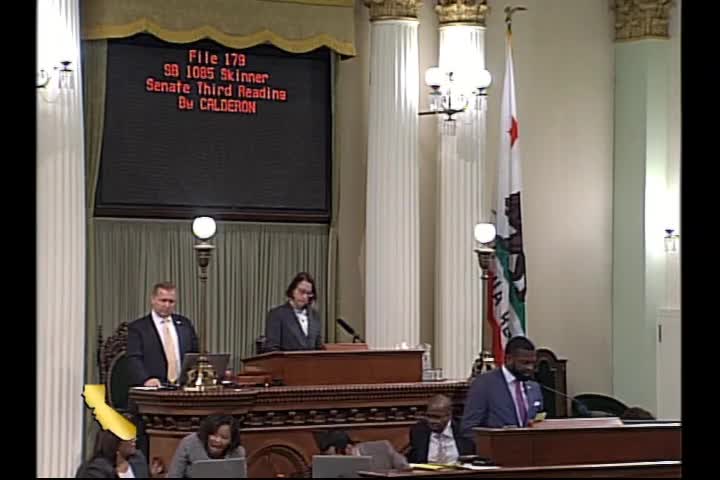 2MIN
Assembly Floor
1MIN
Assembly Floor
 2MIN
Assembly Floor
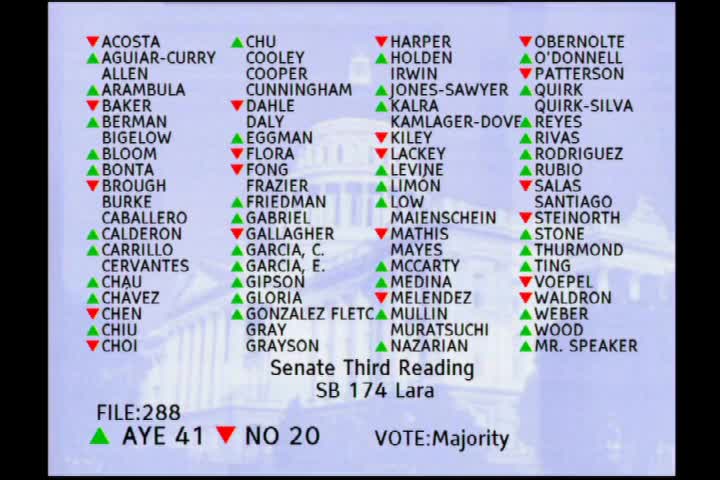 51SEC
Assembly Floor
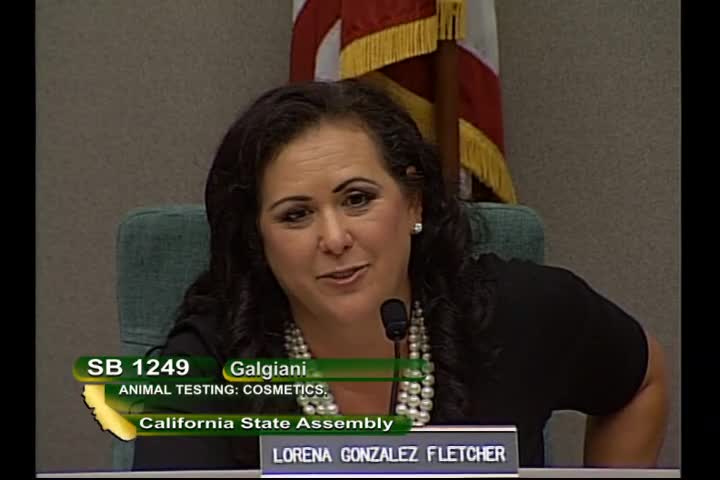 2MIN
Assembly Standing Committee on Appropriations
 9MIN
Assembly Standing Committee on Public Employees, Retirement, and Social Security
 2MIN
Senate Floor
Bill Author

Bill Co-Author(s):