SB 1090: Diablo Canyon nuclear powerplant.
- Session Year: 2017-2018
- House: Senate
- Latest Version Date: 2018-09-19
Under existing law, the Public Utilities Commission has regulatory authority over public utilities, including electrical corporations. The Diablo Canyon nuclear powerplant, composed of reactor Units 1 and 2, is operated by the Pacific Gas and Electric Company (PG&E) in the County of San Luis Obispo. The Nuclear Facility Decommissioning Act of 1985 requires each electrical corporation owning or operating nuclear facilities to establish an externally managed, segregated fund for payment of decommissioning costs of those facilities, establishes requirements for the collection of moneys for decommissioning costs in the utilitys rates and charges, and requires that the expenses associated with decommissioning nuclear facilities be paid from those funds. Pursuant to the act, the commission ordered that 2 nuclear decommissioning funds be established for the Diablo Canyon Units 1 and 2 powerplant. Existing law requires the commission to cause an assessment to be completed by no later than July 1, 2018, conducted by an independent 3rd party, selected as specified, of the adverse and beneficial economic impacts and net economic effects that could occur, and of potential ways for the state and local jurisdictions to mitigate the adverse economic impact, if the Diablo Canyon Units 1 and 2 powerplant were to temporarily or permanently shut down before the powerplants current operating licenses expire or when PG&E closes the powerplant upon the expiration of its current licenses. Existing law requires the commission to approve the withdrawal of $400,000 from the nuclear decommissioning funds established for the Diablo Canyon Units 1 and 2 powerplant for use by the commission for additional staffing to urgently effectuate the 3rd-party assessment. Pursuant to existing law, PG&E has filed an application with the commission seeking the commissions approval for the retirement of the Diablo Canyon nuclear powerplant.
This bill would require the commission to approve the full funding for the community impact mitigation settlement, and for the employee retention program, proposed by PG&E in a specified application submitted to the commission. The bill would require the commission to ensure that integrated resource plans avoid any increase in emissions of greenhouse gases as a result of the retirement of the Diablo Canyon nuclear powerplant.
Under existing law, a violation of the Public Utilities Act or any order, decision, rule, direction, demand, or requirement of the commission is a crime.
Because this bill would amend the Public Utilities Act, and the commission would be required to issue an order, decision, rule, direction, demand, or requirement to implement the bills provisions, a violation of any of which would be a crime, this bill would impose a state-mandated local program.
This bill would make legislative findings and declarations as to the necessity of a special statute for the Diablo Canyon nuclear powerplant.
The California Constitution requires the state to reimburse local agencies and school districts for certain costs mandated by the state. Statutory provisions establish procedures for making that reimbursement.
This bill would provide that no reimbursement is required by this act for a specified reason.
Under existing law, the Public Utilities Commission has regulatory authority over public utilities, including electrical corporations. The Diablo Canyon nuclear powerplant, composed of reactor Units 1 and 2, is operated by the Pacific Gas and Electric Company (PG&E) in the County of San Luis Obispo. The Nuclear Facility Decommissioning Act of 1985 requires each electrical corporation owning or operating nuclear facilities to establish an externally managed, segregated fund for payment of decommissioning costs of those facilities, establishes requirements for the collection of moneys for decommisioning decommissioning costs in the utilitys rates and charges, and requires that the expenses associated with decommissioning of nuclear facilities be paid from those funds. Pursuant to the act, the commission ordered that 2 nuclear decommissioning funds be established for the Diablo Canyon Units 1 and 2 powerplant. Existing law requires the commission to cause an assessment to be completed by no later than July 1, 2018, conducted by an independent 3rd party, selected as specified, of the adverse and beneficial economic impacts and net economic effects that could occur, and of potential ways for the state and local jurisdictions to mitigate the adverse economic impact, if the Diablo Canyon Units 1 and 2 powerplant were to temporarily or permanently shut down before the powerplants current operating licenses expire or when PG&E closes the powerplant upon the expiration of its current licenses. Existing law requires the commission to approve the withdrawal of $400,000 from the nuclear decommissioning funds established for the Diablo Canyon Units 1 and 2 powerplant for use by the commission for additional staffing to urgently effectuate the 3rd-party assessment. Pursuant to existing law, PG&E has filed an application with the commission seeking the commissions approval for the retirement of the Diablo Canyon nuclear powerplant.
This bill would state the intent of the Legislature to enact legislation providing direction and authorization to the commission with respect to the decommissioning of the Diablo Canyon Units 1 and 2 nuclear powerplant so as to minimize the economic dislocation that might otherwise occur as a result of that decommissioning.This bill would require the commission to approve the full funding for the community impact mitigation settlement, and for the employee retention program, proposed by PG&E in a specified application submitted to the commission. The bill would require the commission to ensure that integrated resource plans avoid any increase in emissions of greenhouse gases as a result of the retirement of the Diablo Canyon nuclear powerplant.
Under existing law, a violation of the Public Utilities Act or any order, decision, rule, direction, demand, or requirement of the PUC is a crime.
Because this bill would amend the Public Utilities Act, and the commission would be required to issue an order, decision, rule, direction, demand, or requirement to implement the bills provisions, a violation of any of which would be a crime, this bill would impose a state-mandated local program.
This bill would make legislative findings and declarations as to the necessity of a special statute for the Diablo Canyon nuclear powerplant.
The California Constitution requires the state to reimburse local agencies and school districts for certain costs mandated by the state. Statutory provisions establish procedures for making that reimbursement.
This bill would provide that no reimbursement is required by this act for a specified reason.
Under existing law, the Public Utilities Commission has regulatory authority over public utilities, including electrical corporations. The Diablo Canyon nuclear powerplant, composed of reactor Units 1 and 2, is operated by the Pacific Gas and Electric Company (PG&E) in the County of San Luis Obispo. The Nuclear Facility Decommissioning Act of 1985 requires each electrical corporation owning or operating nuclear facilities to establish an externally managed, segregated fund for payment of decommissioning costs of those facilities, establishes requirements for collection of moneys for decommisioning costs in the utilitys rates and charges, and requires that the expenses associated with decommissioning of nuclear facilities be paid from those funds. Pursuant to the act, the commission ordered 2 nuclear decommissioning funds be established for the Diablo Canyon Units 1 and 2 powerplant. Existing law requires the commission to cause an assessment to be completed by no later than July 1, 2018, conducted by an independent 3rd party, selected as specified, of the adverse and beneficial economic impacts and net economic effects that could occur, and of potential ways for the state and local jurisdictions to mitigate the adverse economic impact, if the Diablo Canyon Units 1 and 2 powerplant were to temporarily or permanently shut down before the powerplants current operating licenses expire or when PG&E closes the powerplant upon the expiration of its current licenses. Existing law requires the commission to approve the withdrawal of $400,000 from the nuclear decommissioning funds established for the Diablo Canyon Units 1 and 2 powerplant for use by the commission for additional staffing to urgently effectuate the 3rd-party assessment. Pursuant to existing law, PG&E has filed an application with the commission seeking the commissions approval for the retirement of the Diablo Canyon nuclear powerplant.
This bill would state the intent of the Legislature to enact legislation providing direction and authorization to the commission with respect to the decommissioning of the Diablo Canyon Units 1 and 2 nuclear powerplant so as to minimize the economic dislocation that might otherwise occur as a result of that decommissioning.
The Legislature finds and declares the following:
(a)The joint proposal entered into between PG&E and interested parties governing the retirement of the Diablo Canyon Units 1 and 2 powerplant at the expiration of its current operating license period, the replacement of electrical generation capacity lost due to the closure with a portfolio of greenhouse-gas-free resources, the retention of highly skilled nuclear powerplant workers prior to the retirement, and the mitigation of the impacts of the closure on local communities, as modified by the community impact mitigation settlement, is in the interest of utility customers.
(b)The Public Utilities Commission has invited guidance from the Legislature on the question of whether it has the legal authority to approve the community impact mitigation settlement proposed by the parties in Application 16-08-006.
(c)Operation of the powerplant through the planned retirement date of Diablo Canyon Units 1 and 2 in a safe and reliable manner requires retaining existing members of the trained workforce and for this reason the employee retention program as agreed upon in the joint proposal in Application 16-08-006 should be approved by the Public Utilities Commission without modification.
SEC. 2.Section 712.7 is added to the Public Utilities Code, to read:712.7.(a)The commission shall approve both of the following:
(1)The full funding for the community impact mitigation settlement proposed in Application 16-08-006.
(2)The full funding for the employee retention program proposed in Application 16-08-006.
(b)The commission shall ensure that integrated resource plans are designed to avoid any increase in emissions of greenhouse gases as a result of the retirement of the Diablo Canyon Units 1 and 2 powerplant.
(c)The commission shall establish an expedited advice letter process for the approval and implementation pursuant to subdivision (a) of the community impact mitigation settlement and the employee retention program.
SEC. 3.The Legislature finds and declares that a special law is necessary and that a general law cannot be made applicable within the meaning of Section 16 of Article IV of the California Constitution because, currently, the Diablo Canyon Units 1 and 2 powerplant, owned and operated by the Pacific Gas and Electric Company, is the last operating nuclear powerplant in California, and, on June 21, 2016, the Pacific Gas and Electric Company announced a joint proposal governing the retirement of Diablo Canyon Units 1 and 2, which included an orderly replacement of electricity from generating resources that do not emit greenhouse gases and an employee retention severance program, and which was signed by interested parties. Local communities were ill-prepared and given no notice after the sudden closure of the San Onofre Nuclear Generating Station was announced on June 7, 2013, and the state is still responding, at significant cost, to the sudden, permanent, and unexpected loss of greenhouse-gas-free electricity. Therefore, it is necessary to ensure: (a) that the replacement electricity for the electricity lost due to the retirement of the Diablo Canyon Units 1 and 2 powerplant does not result in an increase in the emissions of greenhouse gases and (b) that a community impact mitigation settlement and an employee retention program are approved by the Public Utilities Commission and implemented expeditiously to ensure sustainable levels of host community support, emergency preparedness, and skilled employee retention necessary to the safe operation of the powerplant through the planned retirement date.
SEC. 4.No reimbursement is required by this act pursuant to Section 6 of Article XIIIB of the California Constitution because the only costs that may be incurred by a local agency or school district will be incurred because this act creates a new crime or infraction, eliminates a crime or infraction, or changes the penalty for a crime or infraction, within the meaning of Section 17556 of the Government Code, or changes the definition of a crime within the meaning of Section 6 of Article XIIIB of the California Constitution.
SECTION 1.Section 713 is added to the Public Utilities Code, to read:713.It is the intent of the Legislature to enact legislation providing direction and authorization to the commission with respect to the decommissioning of the Diablo Canyon Units 1 and 2 nuclear powerplant so as to minimize the economic dislocation that might otherwise occur as a result of that decommissioning.It is the intent of the Legislature to enact legislation providing direction and authorization to the commission with respect to the decommissioning of the Diablo Canyon Units 1 and 2 nuclear powerplant so as to minimize the economic dislocation that might otherwise occur as a result of that decommissioning.
|
Date
|
Status
|
|---|---|
| Sep 19, 2018 | Chaptered by Secretary of State. Chapter 561, Statutes of 2018. |
| Sep 19, 2018 | Approved by the Governor. |
| Aug 28, 2018 | Enrolled and presented to the Governor at 3:30 p.m. |
| Aug 21, 2018 | In Senate. Ordered to engrossing and enrolling. |
| Aug 20, 2018 | Read third time. Passed. Ordered to the Senate. |
| Aug 9, 2018 | Read second time. Ordered to third reading. |
| Aug 8, 2018 | From committee: Do pass. (Ayes 12. Noes 1.) (August 8). |
| Jun 28, 2018 | From committee: Do pass and re-refer to Com. on APPR. (Ayes 14. Noes 0.) (June 27). Re-referred to Com. on APPR. |
| Jun 14, 2018 | Referred to Com. on U. & E. |
| May 29, 2018 | In Assembly. Read first time. Held at Desk. |
| May 29, 2018 | Read third time. Passed. (Ayes 31. Noes 4.) Ordered to the Assembly. |
| May 25, 2018 | From committee: Do pass. (Ayes 5. Noes 0.) (May 25). |
| May 18, 2018 | Set for hearing May 25. |
| May 7, 2018 | May 7 hearing: Placed on APPR. suspense file. |
| Apr 27, 2018 | Set for hearing May 7. |
| Apr 26, 2018 | April 30 hearing postponed by committee. |
| Apr 20, 2018 | Set for hearing April 30. |
| Apr 18, 2018 | From committee: Do pass and re-refer to Com. on APPR. (Ayes 6. Noes 1.) (April 18). Re-referred to Com. on APPR. |
| Apr 18, 2018 | From committee: Do pass and re-refer to Com. on EQ. (Ayes 9. Noes 1.) (April 17). Re-referred to Com. on EQ. |
| Apr 6, 2018 | Set for hearing April 18 in EQ. pending receipt. |
| Apr 6, 2018 | Set for hearing April 17. |
| Apr 4, 2018 | Re-referred to Coms. on E., U. & C. and EQ. |
| Mar 15, 2018 | From committee with author's amendments. Read second time and amended. Re-referred to Com. on RLS. |
| Feb 22, 2018 | Referred to Com. on RLS. |
| Feb 13, 2018 | From printer. May be acted upon on or after March 15. |
| Feb 12, 2018 | Introduced. Read first time. To Com. on RLS. for assignment. To print. |
|
Date
|
Description
|
Location
|
Votes
|
|
|---|---|---|---|---|
| Aug 20, 2018 | SB 1090 Monning Senate Third Reading By CUNNINGHAM | Assembly Floor |
Passed |
|
| Aug 8, 2018 | Do pass. | Assembly Standing Committee on Appropriations |
Passed |
|
| Jun 27, 2018 | Do pass and be re-referred to the Committee on [Appropriations] | Assembly Standing Committee on Utilities and Energy |
Passed |
|
| May 29, 2018 | Senate 3rd Reading SB1090 Monning et al. | Senate Floor |
Passed |
|
| May 25, 2018 | Do pass | Senate Standing Committee on Appropriations |
Passed |
|
| May 7, 2018 | Placed on suspense file | Senate Standing Committee on Appropriations |
Passed |
|
| Apr 18, 2018 | Do pass, but first be re-referred to the Committee on [Appropriations] | Senate Standing Committee on Environmental Quality |
Passed |
|
| Apr 17, 2018 | Do pass, but first be re-referred to the Committee on [Environmental Quality] | Senate Standing Committee on Energy, Utilities and Communications |
Passed |
This list shows positions taken on this bill by organizations on the date displayed, which is linked to the original source.
Positions by individuals are not included.
SENATE THIRD READING
STR Bill Id:SB 1090
Author:(Monning)
As Amended Ver:March 15, 2018
Majority vote
SENATE VOTE: 31-4
Committee | Votes | Ayes | Noes |
Utilities | 14-0 | Holden, Patterson, Burke, Chen, Cunningham, Eggman, Eduardo Garcia, Mayes, Muratsuchi, Quirk, Reyes, Santiago, Ting, Friedman | |
Appropriations | 12-1 | Gonzalez Fletcher, Bloom, Bonta, Calderon, Carrillo, Chau, Eggman, Friedman, Eduardo Garcia, Nazarian, Quirk, Reyes | Obernolte |
SUMMARY: This bill would require the California Public Utilities Commission (CPUC) to approve collection of ratepayer funds for previously denied elements of Application 16-08-006 (application) filed by Pacific, Gas & Electric (PG&E) to facilitate and support the retirement of the Diablo Canyon Nuclear Power Plant (Diablo Canyon). Specifically, this bill:
- Requires the CPUC to approve full funding for the community impact mitigation settlement and the employee retention program proposed in the initial application.
- Requires the CPUC to ensure that integrated resource plans (IRPs) are designed to avoid any increase in emissions of greenhouse gas emissions as a result of the retirement of Diablo Canyon.
- Requires the CPUC to establish an expedited advice letter process for approval and implementation the community impact mitigation settlement and the employee retention program.
- Makes findings and declarations regarding the joint proposal entered into between PG&E and interested parties concerning the retirement of Diablo Canyon, at the expiration of its current operating license period.
FISCAL EFFECT: According to Assembly Appropriations Committee, minor, absorbable costs to the CPUC to ensure IRPs are designed according to the bill's specifications and to establish an expedited advice letter process.
(PG&E ratepayers will bear the cost of this bill. The CPUC estimates those costs will range between $0.08 and $0.17 per ratepayer, on average, depending upon how rate collection is structured. The State of California, through its many, disparate metered accounts, is a customer of PG&E who will pay those increased rates. It is impractical to estimate this bill's cost to the state as a ratepayer.)
COMMENTS:
Diablo Canyon Nuclear Powerplant – Diablo Canyon is California's only remaining operating nuclear plant. The facility sits on approximately 900 acres adjacent to the Pacific Ocean between Avila Beach and Montaña de Oro State Park in San Luis Obispo County. According to PG&E, the plant produces approximately 10% of California's energy load and about 20% of PG&E's overall electricity. Diablo Canyon is a major contributor to the economies of San Luis Obispo and northern Santa Barbara counties. According to San Luis Obispo County, PG&E is both the largest taxpayer and largest private employer in the county. The plant employs roughly 1,500 employees and generates millions in property tax revenue which mainly benefits local schools. A 2011 PG&E-commissioned study concluded that operation of Diablo Canyon contributed, directly and indirectly, over $900 million to the local economy, including many of the regions high-paying, year-round jobs.
In 2016 PG&E announced its intention to retire the plant when operating permits issued by the Nuclear Regulatory Commission expire in 2024 and 2025. This announcement included a joint proposal with the International Brotherhood of Electrical Workers Local 1245, Coalition of California Utility Employees, Friends of the Earth, Natural Resources Defense Council, Environment California, and Alliance for Nuclear Responsibility to make specified renewable and energy efficiency investments, provide support to municipalities that would be impacted by the plant closure, and establish an employee retention and retraining program to ensure a skilled workforce remains until the plant closure.
CPUC Review – In August 2016, PG&E filed an application with the CPUC for approval of the joint proposal which was partially approved in the fall of 2017. The CPUC voted to approve the retirement of Diablo Canyon and partial funding of the employee retention and retraining. It denied funding for local government impacts citing a lack of statutory authority to do so. They also directed that the resource procurement elements of the proposal relating to energy efficiency and renewables be deferred and addressed in the filing of IRPs.
Bill Impact – This bill modifies the CPUC decision and fully funds the employee retention and retraining programs as well as community impact effort. According to the author the original joint proposal should be fully funded and "serves the best interest of the local communities, workers, the environment, and ratepayers." He further opines that "SB 1090 is necessary to ensure that Diablo Canyon operates safely and reliably for the remainder of its license period, and provides a bridge of predictability and security to the greater San Luis Obispo region as the transition to the closure of Diablo Canyon moves forward."
Analysis Prepared by: Kellie Smith / U. & E. / (916) 319-2083 FN: 0003936
Date of Hearing: August 8, 2018
ASSEMBLY COMMITTEE ON APPROPRIATIONS
Lorena Gonzalez Fletcher, Chair
SBPCA Bill Id:SB 1090
Author:(Monning) – As Amended Ver:March 15, 2018
Policy Committee: | Utilities and Energy | Vote: | 14 - 0 |
Urgency: No State Mandated Local Program: Yes Reimbursable: No
SUMMARY:
This bill directs the California Public Utilities Commission (CPUC) to approve the terms of a joint settlement between Pacific Gas and Electric (PG&E) and several parties regarding closure of the Diablo Canyon Nuclear Power Plant. In addition, the bill requires the CPUC to ensure the integrated resource plans (IRPs) of retail electricity providers are designed to avoid any increase in greenhouse gas emissions as a result of retirement of the powerplant. Finally, the bill requires the CPUC to establish an expedited advice letter process for approval and implementation elements of the settlement.
FISCAL EFFECT:
Minor, absorbable costs to the CPUC to ensure IRPs are designed according to the bill’s specifications and to establish an expedited advice letter process.
(PG&E ratepayers will bear the cost of this bill. The CPUC estimates those costs will range between $0.08 and $0.17 per rate payer, on average, depending upon how rate collection is structured. The State of California, through its many, disparate metered accounts, is a customer of PG&E who will pay those increased rates. It is impractical to estimate this bill’s cost to the state as a ratepayer.)
COMMENTS:
- Purpose. The author intends this bill to ensure the Diablo Canyon power plant retains the expertise of employees needed for the plant to operate safely and to provide for the economic health of the community that depends upon the powerplant.
- Background. There remains one operating nuclear powerplant in California – PG&E’s Diablo Canyon Power Plant. The power production facility and support operations sit on approximately 900 acres adjacent to the Pacific Ocean between Avila Beach and Montano del Oro State Park. According to PG&E, the plant produces approximately 10% of California’s energy load and about 20% of PG&E’s overall electricity. Future operation of the powerplant is uncertain. Diablo Canyon is licensed by the federal Nuclear Regulatory Commission (NRC) to operate until 2024 and 2025, respectively, for units 1 and 2. In 2009, PG&E filed an application with NRC to extend Diablo Canyon’s operation by 20 years.
In 2016, PG&E filed an applicant with the CPUC to retire Diablo Canyon in 2025 because the utility anticipates a significant decrease in demand for electricity from Diablo Canyon, a consequence of increased energy efficiency, distributed generation, renewable generation, and customer migration to community choice aggregation (CCA) and direct access (DA). In addition to retirement of the facility, the application included a request for the following provisions totaling $1.76 billion in costs associated with the retirement of Diablo Canyon: (a) $1.3 billion for energy efficiency procurement to partially replace the output of Diablo Canyon, (b) $363.4 million for Diablo Canyon employee retention and retraining, (c) $85 million for a Community Impacts Mitigation Program, (d) $18.6 million in costs previously incurred for federal license renewal process, and (e) an unspecified amount for cancelled capital projects. The application was supported by several environmental organizations and labor groups and was known as the “Joint Proposal.”
In January of this year, the CPUC approved PG&E’s application to close Diablo Canyon. In doing so, the CPUC accepted some elements of the Joint Proposal. Specifically, the CPUC authorized PG&E to recover in rates $241.2 million for costs associated with the retirement of Diablo Canyon, which includes $222.6 million for employee retention and retraining, and $18.6 million for its license renewal activities, plus a portion of the cost of cancelled capital projects. The CPUC indicated the procurement of replacement power would be addressed in the proceeding concerning comprehensive procurement plans (its “integrated resource plan”). It also denied the $85 million Community Impacts Mitigation Program.
In rejecting the $85 million Community Impacts Mitigation Program, the CPUC asserted, absent legislative direction, it was unable to authorize use of ratepayer funds to pay for public services. In addition, the CPUC characterized the Community Impacts Mitigation Program as a type of charitable giving that bought the PG&E good will locally. Better to have PG&E shareholders pay to burnish the utility’s image, the CPUC concluded.
In contrast to the CPUC decision, this bill requires the CPUC to approve both the $85 million Community Impacts Mitigation Program and the full amount ($363.4 million) of the employee retention program. In addition, the bill requires the CPUC to ensure IRPs are designed to avoid any increases in emissions of greenhouse gases as a result of retirement of Diablo Canyon. The author contends it is appropriate PG&E ratepayers pay these costs because (a) doing so ensures PG&E will have the expert staff needed to operate Diablo Canyon safely until its retirement and (b) PG&E ratepayers have benefitted for decades from the operation of Diablo Canyon while the communities around it have borne the risk of nuclear catastrophe.
In policy committee testimony, the author conceded it may be more appropriate to require PG&E shareholders to pay for the Community Impacts Mitigation Program. However, the author accurately noted there does not seem to be a legal way to require shareholders to do so.
Analysis Prepared by: Jay Dickenson / APPR. / (916) 319-2081
Date of Hearing: June 27, 2018
ASSEMBLY COMMITTEE ON UTILITIES AND ENERGY
Chris Holden, Chair
SBPCA Bill Id:SB 1090
Author:(Monning) – As Amended Ver:March 15, 2018
SENATE VOTE: 31-4
SUBJECT: Diablo Canyon nuclear powerplant
SUMMARY: This bill would require the California Public Utilities Commission (CPUC) to approve collection of ratepayer funds for previously denied elements of a Pacific, Gas & Electric (PG&E) application related to the retirement of the Diablo Canyon Nuclear Power Plant. Specifically, this bill:
- Makes several findings and declarations regarding the joint proposal entered into between PG&E and interested parties concerning the retirement of the Diablo Canyon nuclear powerplant, units 1 and 2, at the expiration of its current operating license period.
- Requires the CPUC to approve both the following:
- The full funding for the community impact mitigation settlement proposed in Application 16-08-006.
- The full funding for the employee retention program proposed in Application 16-08-006.
- Requires the CPUC to ensure that integrated resource plans are designed to avoid any increase in emissions of GHG as a result of the retirement of the Diablo Canyon Units 1 and 2 powerplant.
- Requires the CPUC to establish an expedited advice letter process for the approval and implementation pursuant to subdivision (a) of the community impact mitigation settlement and the employee retention program.
- Finds and declares that a special law is necessary and that a general law cannot be made applicable within the meaning of Section 16 of Article IV due to the circumstances regarding the decommissioning of the Diablo Canyon nuclear powerplant and the interest in avoiding a sudden closure.
EXISTING LAW:
- Requires that all charges demanded or received by any public utility for any product, commodity or service be just and reasonable, and that every unjust or unreasonable charge is unlawful. (Public Utilities Code § 451)
- Authorizes the collection of funds, on a nonbypassable basis, required for site restoration when an electrical corporation’s nuclear powerplant is removed from service. (Public Utilities Code § 379)
- Requires the CPUC to identify a diverse and balanced portfolio of resources needed to ensure a reliable electricity supply that provides optimal integration of renewable energy in a cost-effective manner. Requires the portfolio to rely upon zero carbon-emitting resources to the maximum extent reasonable and be designed to achieve any statewide greenhouse gas (GHG) emission limit established pursuant to California’s Global Warming Solutions Act of 2006 or any successor legislation. (Public Utilities Code § 454.51)
- Requires the CPUC to adopt a process for each load-serving entity, including each electrical corporation, to file an integrated resource plan and a schedule for periodic updates to the plan, to ensure that load-serving entities meet the GHG emission reduction targets established by the California Air Resources Board (ARB) for the electricity sector, procure at least 50 percent eligible renewable energy resources by December 31, 2030, minimize impacts on ratepayers’ bills, and other requirements. (Public Utilities Code § 454.52)
FISCAL EFFECT: According to Senate Appropriations Committee,
- Minor costs to the CPUC (Reimbursement Account) for administrative tasks.
- Potentially significant costs (General Fund and various special funds) to the state as a ratepayer, potentially offset by cost to backfill education funding due to loss of Diablo Canyon’s property tax revenue.
- Significant costs (ratepayer funds) to implement the specified provisions of the proposal (potentially $85 million for the CIMP, $100 million or more for employee retention, and unknown costs to procure GHG-free energy).
BACKGROUND:
Diablo Canyon Nuclear Powerplant – PG&E’s Diablo Canyon is California’s only remaining operating nuclear plant. The facility sits on approximately 900 acres adjacent to the Pacific Ocean between Avila Beach and Montaña de Oro State Park. According to PG&E, the plant produces approximately 10 percent of California’s energy load and about 20 percent of PG&E’s overall electricity. The Diablo Canyon plant is a major contributor to the economy of San Luis Obispo County and northern Santa Barbara County. According to San Luis Obispo County, PG&E is both the largest taxpayer and largest private employer in the county. The plant employs roughly 1,500 employees who help operate the facility. Diablo Canyon itself generates millions in property tax revenue, which mainly benefits local schools.[1] A study, commissioned by PG&E, of the economic benefits of Diablo Canyon concluded that operation of Diablo Canyon in 2011 contributed, directly and indirectly, over $900 million to the local economy, including many of the regions high-paying, year-round jobs.[2] The Diablo Canyon powerplant is licensed by the federal Nuclear Regulatory Commission (NRC) to operate until 2024 (unit 1) and 2025 (unit 2). In addition to NRC licensing, the powerplant is subject to lease requirements from the State Lands Commission, due to the location of the plant on state tideland, and additional state permitting.
Joint Proposal Announced – On June 28, 2016, the State Lands Commission voted to approve a lease extension for the plant to 2025. A week prior to the vote, PG&E announced a Joint Proposal with labor and environmental organizations that would result in the closure of the plant by 2025 and “increase investment in energy efficiency, renewables and storage beyond current state mandates.” The original parties of the Joint Proposal were the International Brotherhood of Electrical Workers Local 1245, Coalition of California Utility Employees, Friends of the Earth, Natural Resources Defense Council, Environment California, and Alliance for Nuclear Responsibility.
CPUC Application 16-08-006 – In August 2016, PG&E filed an application with the CPUC submitting the Joint Proposal to review and request for approval of the replacement power provisions, the employee retention program and other elements. The application sought over one billion dollars in ratepayer funds to pay for the costs associated with the proposal. In November, PG&E agreed to expand the Joint Proposal and secured the support of the County of San Luis Obispo, the Coalition of Cities (Arroyo Grande, Atascadero, Morro Bay, Paso Robles, Pismo Beach and San Luis Obispo) and the San Luis Coastal Unified School District. The expanded proposal included $85 million in support for the San Luis Obispo County community, compared to the $50 million in the original proposal.
CPUC Decision – In the fall of 2017, the CPUC voted to approve the retirement of the Diablo Canyon powerplant, including approval for some of the elements of the Joint Proposal. Specifically, the CPUC approved $222.6 million in rate recovery for costs associated with the employee retention ($211.3 million) and retraining ($11.3 million). The CPUC also approved $18.6 million for license renewal activities. However, the CPUC denied elements of the Joint Proposal. As it relates to the elements in this bill, the CPUC took the following action:
- Procurement of GHG-free resources. In response to the requests for replacement energy, the CPUC stated that replacement procurement issues would be better addressed in the Integrated Resources Planning (IRP) proceeding. The CPUC noted it is not clear what greenhouse gas-free procurement (if any) may be needed to offset the retirement of Diablo Canyon, they specifically cited the changing electricity market, the growth of Community Choice Aggregators (CCAs), and the time between the decision and the closure of the plant as factors that merit a thorough review in the IRP process, instead of directing specific procurement requirements outside the IRP. However, the CPUC stated its intent to “avoid any increase in GHG emissions resulting from the closure of Diablo Canyon.” The CPUC did not suggest legislative authorization was necessary for this action, only that it was better suited to address in the IRP proceeding.
- Funding for the school district, county and cities. The CPUC also denied the $85 million for the Community Impact Mitigation Program (CIMP) stating that the use of ratepayer funds for those activities is not legally allowable and would, therefore, require legislative authorization to be legal. In denying the CIMP, the CPUC stated that it could not legally authorize the use of ratepayer funds for non-utility-related activities, such as funding schools. Instead, the CPUC stated that the parties could request authorization from the Legislature to use ratepayer funds for these purposes or, alternatively, PG&E shareholders could also fund these efforts. The CPUC decision also commented on lack of fairness for a significant portion of the CIMP distribution, especially the $10 million to the school district. The CPUC decision stated that the “amount and allocation of payments appear to have more to do with PG&E’s litigation needs than the economic needs of the community.” The decision further noted that a clearer picture of the economic impacts on the community should be available upon completion of the assessment required by SB 968 (Monning, Chapter 674, Statutes of 2016).
- The CPUC also denied the full request for employee retention and training. The CPUC approved the employee retention program at an annual payment level of 15 percent bonus for each employee, instead of the requested 25 percent. The CPUC decision stated the consideration of benchmark data, the presence of significant and pre-funded severance pay, and the unique nature of the nuclear industry, as factors for approving a reduced employee retention program from what was requested in the application. Important to note that the CPUC did not suggest authorization from the legislature was needed. Instead, the CPUC ruled for employee bonuses they believed the record of the proceeding supported.
COMMENTS:
- Author’s Statement. According to the author, “the original Joint Proposal serves the best interest of the local communities, workers, the environment, and ratepayers. SB 1090 is necessary to ensure that Diablo Canyon operates safely and reliably for the remainder of its license period, and provides a bridge of predictability and security to the greater San Luis Obispo region as the transition to the closure of Diablo Canyon moves forward.”
- Precedent. The Legislature although infrequent is fully capable of overruling a CPUC decision that the Legislature believes to have been adopted improperly. The enactment of AB 1338 in 2008 (through a trailer bill), specifically overruled a CPUC Decision approving the establishment of a ratepayer-funded California Climate Institute for Climate Solutions (CPUC Decision No. 08-04-039).
The question for the Legislature is whether the Legislature should overturn a CPUC decision. The CPUC approved partial funding for the employee retention program. In the Decision the CPUC did not ask for the Legislature to weigh in on whether the approved funding was sufficient. On the other hand, when the CPUC denied the Community Impact Mitigation Program funding request under the Joint Proposal they stated they did not have the legal authority to use ratepayer funds in this way and therefore it would require legislative authorization. In the case of the CIMP, the CPUC did invite legislative action.
- Ratepayer impacts. This bill proposes to have the Legislature direct the CPUC to require the use of ratepayer funds for activities, or portion of activities, the CPUC has already denied as well as, a community benefit fund that the CPUC acknowledged would require legislative authorization in order for ratepayers to fund. The proponents of the Joint Proposal argue that the Diablo Canyon powerplant has benefitted all PG&E ratepayers and that the risks associated with the plant have been borne by San Luis County residents who will continue to live with the risks posed by the plant, even once the plant is decommissioned. They argue that the elements of the Joint Proposal that were not approved by the CPUC are necessary to ensure the continued safe operation of the plant and that the costs would be minimal to every ratepayer (PG&E’s analysis suggests perhaps $0.11 per month for all ratepayers).
The question for the Legislature is whether the costs of those activities, however laudable, should be shouldered by all other ratepayers in the service territory of the utility. The CPUC decision was explicit in noting that legislative authorization would be needed to use ratepayer funding for the CIMP, since these are not utility-related expenses. However, the CPUC decision did not note the same for the other elements of the Joint Proposal which the CPUC had reviewed and denied in full, or in part. However, this bill includes all of the elements: the CIMP, additional funding for employee retentions and direction on GHG-free resources. The CPUC also mentions that a clearer picture of the economic impacts on the community should be available upon completion of the assessment required by PUC Section 712.5, the Monning Report, also authored by the author of this bill.
- Prior Legislation.
SB 657 (Monning, 2015) would have required the CPUC to convene, or continue, until August 25, 2025, the independent peer review panel to review PG&E’s seismic studies of PG&E’s Diablo Canyon Power Plant. The bill passed the Senate on a vote of 38-0. The bill was held at the Assembly Desk.
SB 968 (Monning) Required an assessment of the regional economic effect that would result from closure of the Diablo Canyon Power Plant. Chapter 674, Statutes of 2016.
AB 3619 (Achadjian) Extended the sunset date for the Nuclear Planning Assessment Special Account (NPASA) from July 1, 2019, to August 26, 2025, to continue funding emergency service programs and planning activities for the Diablo Canyon Power Plant in San Luis Obispo County. Chapter 399, Statutes of 2015.
SB 350 (de León and Leno) Among other things, increased the Renewable Portfolio Standard and directed the CPUC to develop a process by which load-serving entities submit IRPs to the CPUC for review or for certification. Chapter 547, Statutes of 2015.
REGISTERED SUPPORT / OPPOSITION:
Support
Alliance For Nuclear Responsibility
Arroyo Grande & Grover Beach Chamber Of Commerce
California For Green Nuclear Power Incorporated
California School Boards Association
California School Boards Association
City Of Arroyo Grande
City Of Atascadero
City Of Morro Bay
City Of Paso Robles
City Of Pismo Beach
City Of San Luis Obispo
Coalition Of California Utility Employees
County Of San Luis Obispo Board Of Supervisors
County Of Santa Barbara
Cal Poly College Of Agriculture, Food & Environmental Sciences
Diablo Canyon Independent Safety Committee
E.S. Cox And Company, LLC
Economic Vitality Corporation
Engineers And Scientists Of California
French Hospital Medical Center
Friends Of The Earth
Home Builders Association Of The Central Coast
Kovesdi Consulting
Laguna Middle School PTA
Morro Bay Chamber Of Commerce
Natural Resources Defense Council
People's Safe-help Housing
Pismo Beach Chamber Of Commerce
RRM Design Group
San Luis Coastal Unified School District
San Luis Obispo Chamber Of Commerce
San Luis Obispo County Office Of Education
Softec
Valley Chamber Of Commerce
Visit SLO Cal
Women's Business Center Of San Luis Obispo
10 Individuals
Opposition
The Utility Reform Network
Analysis Prepared by: Elle Hoxworth / U. & E. /
San Luis Obispo County Comprehensive Annual Financial Report for Fiscal Year 2013-14. (http://www.slocounty.ca.gov/Assets/AC/Digital/Financial/CAFR/2013-14CAFR.pdf) ↑
Economic Benefits of Diablo Canyon Power Plant: and economic impact study. June 2013. ↑
Office of Senate Floor Analyses (916) 651-1520 Fax: (916) 327-4478 | SB |
THIRD READING
Bill No: SB 1090
:
SENATE ENERGY, U. & C. COMMITTEE: 9-1, 4/17/18
AYES: Hueso, Bradford, Cannella, Hertzberg, Hill, McGuire, Skinner, Stern, Vidak
NOES: Morrell
NO VOTE RECORDED: Wiener
SENATE ENVIRONMENTAL QUALITY COMMITTEE: 6-1, 4/18/18
AYES: Wieckowski, Stone, Hill, Lara, Skinner, Stern
NOES: Gaines
SENATE APPROPRIATIONS COMMITTEE: 5-0, 5/25/18
AYES: Lara, Beall, Bradford, Hill, Wiener
NO VOTE RECORDED: Bates, Nielsen
DIGEST:
This bill requires the California Public Utilities Commission (CPUC) to approve collection of ratepayer funds for previously denied elements of a Pacific Gas and Electric Company (PG&E) application related to the retirement of the Diablo Canyon Nuclear Power Plant. Specifically, this bill requires ratepayers to fund an augmentation to an employee retention program and funds for the local school district, cities and county. This bill also requires the CPUC to ensure that integrated resource plans (IRP) avoid any increase in emissions of greenhouse gases (GHG) as a result of the retirement of the nuclear power plant.
Existing law:
- Authorizes the CPUC to fix rates, establish rules, examine records, issue subpoenas, administer oaths, take testimony, punish for contempt, and prescribe a uniform system of accounts for all public utilities, including electrical and gas corporations, subject to its jurisdiction. (Article 12 of the California Constitution)
- Requires that all charges demanded or received by any public utility for any product, commodity or service be just and reasonable, and that every unjust or unreasonable charge is unlawful. (Public Utilities Code §451)
- Authorizes the collection of funds, on a nonbypassable basis, required for site restoration when an electrical corporation’s nuclear powerplant is removed from service. (Public Utilities Code §379)
- Requires the CPUC to identify a diverse and balanced portfolio of resources needed to ensure a reliable electricity supply that provides optimal integration of renewable energy in a cost-effective manner. Requires the portfolio to rely upon zero carbon-emitting resources to the maximum extent reasonable and be designed to achieve any statewide GHG emission limit established pursuant to California’s Global Warming Solutions Act of 2006 or any successor legislation. (Public Utilities Code §454.51)
- Requires the CPUC to adopt a process for each load-serving entity, including each electrical corporation, to file an IRP, and a schedule for periodic updates to the plan, to ensure that load-serving entities meet the GHG emission reduction targets established by the California Air Resources Board for the electricity sector, procure at least 50 percent eligible renewable energy resources by December 31, 2030, minimize impacts on ratepayers’ bills, and other requirements. (Public Utilities Code §454.52)
This bill:
- Makes several findings and declarations regarding the joint proposal entered into between PG&E and interested parties concerning the retirement of the Diablo Canyon nuclear powerplant, units 1 and 2, at the expiration of its current operating license period.
- Requires the CPUC to approve both the following:
- The full funding for the community impact mitigation settlement proposed in Application 16-08-006.
- The full funding for the employee retention program proposed in Application 16-08-006.
- Requires the CPUC to ensure that IRPs are designed to avoid any increase in emissions of GHG as a result of the retirement of the Diablo Canyon Units 1 and 2 powerplant.
- Requires the CPUC to establish an expedited advice letter process for the approval and implementation pursuant to subdivision (a) of the community impact mitigation settlement and the employee retention program.
- Finds and declares that a special law is necessary and that a general law cannot be made applicable within the meaning of Section 16 of Article IV due to the circumstances regarding the decommissioning of the Diablo Canyon nuclear powerplant and the interest in avoiding a sudden closure.
Background
Diablo Canyon Nuclear Powerplant. PG&E’s Diablo Canyon is California’s only remaining operating nuclear plant. The facility sits on approximately 900 acres adjacent to the Pacific Ocean between Avila Beach and Montaña de Oro State Park. According to PG&E, the plant produces approximately 10 percent of California’s energy load and about 20 percent of PG&E’s overall electricity. The Diablo Canyon plant is a major contributor to the economy of San Luis Obispo County and northern Santa Barbara County. According to San Luis Obispo County, PG&E is both the largest taxpayer and largest private employer in the county. The plant employs roughly 1,500 employees who help operate the facility. Diablo Canyon itself generates millions in property tax revenue, which mainly benefits local schools. A study, commissioned by PG&E, of the economic benefits of Diablo Canyon concluded that operation of Diablo Canyon in 2011 contributed, directly and indirectly, over $900 million to the local economy, including many of the regions high-paying, year-round jobs. The Diablo Canyon powerplant is licensed by the federal Nuclear Regulatory Commission (NRC) to operate until 2024 (unit 1) and 2025 (unit 2). In addition to NRC licensing, the powerplant is subject to lease requirements from the State Lands Commission, due to the location of the plant on state tideland, and additional state permitting.
Joint Proposal announced. On June 28, 2016, the State Lands Commission voted to approve a lease extension for the plant to 2025. A week prior to the vote, PG&E announced a Joint Proposal with labor and environmental organizations that would result in the closure of the plant by 2025 and “increase investment in energy efficiency, renewables and storage beyond current state mandates.” The original parties of the Joint Proposal were the International Brotherhood of Electrical Workers Local 1245, Coalition of California Utility Employees, Friends of the Earth, Natural Resources Defense Council, Environment California, and Alliance for Nuclear Responsibility.
CPUC Application 16-08-006. In August 2016, PG&E filed an application with the CPUC submitting the Joint Proposal to review and request for approval of the replacement power provisions, the employee retention program and other elements. The application sought over $1 billion in ratepayer funds to pay for the costs associated with the proposal. In November, PG&E agreed to expand the Joint Proposal and secured the support of the County of San Luis Obispo, the Coalition of Cities (Arroyo Grande, Atascadero, Morro Bay, Paso Robles, Pismo Beach and San Luis Obispo) and the San Luis Coastal Unified School District. The expanded proposal included $85 million in support for the San Luis Obispo County community, compared to the $50 million in the original proposal.
CPUC Decision. In the fall of 2017, the CPUC voted to approve the retirement of the Diablo Canyon powerplant, including approval for some of the elements of the Joint Proposal. Specifically, the CPUC approved $222.6 million in rate recovery for costs associated with the employee retention ($211.3 million) and retraining ($11.3 million). The CPUC also approved $18.6 million for license renewal activities. However, the CPUC denied elements of the Joint Proposal. As it relates to the elements in this bill, the CPUC took the following action:
- Procurement of GHG-free resources. In response to the requests for replacement energy, the CPUC stated that replacement procurement issues would be better addressed in the IRP proceeding. The CPUC noted it is not clear what greenhouse gas-free procurement (if any) may be needed to offset the retirement of Diablo Canyon, they specifically cited the changing electricity market, the growth of Community Choice Aggregators (CCAs), and the time between the decision and the closure of the plant as factors that merit a thorough review in the IRP process, instead of directing specific procurement requirements outside the IRP. However, the CPUC stated its intent to “avoid any increase in GHG emissions resulting from the closure of Diablo Canyon.” The CPUC did not suggest legislative authorization or direction was necessary for this action, only that it was better suited to address in the IRP proceeding.
- Ratepayer funding for the school district, county and cities? The CPUC also denied the $85 million for the Community Impact Mitigation Program (CIMP) stating that the use of ratepayer funds for those activities is not legally allowable. In denying the CIMP, the CPUC stated that it could not legally authorize the use of ratepayer funds for non-utility-related activities, such as funding schools. Instead, the CPUC stated that the parties would need authorization from the Legislature to use ratepayer funds for these purposes or, alternatively, PG&E shareholders could also fund these efforts. The CPUC decision also commented on lack of fairness for a significant portion of the CIMP distribution, especially the $10 million to the school district. The CPUC decision stated that the “amount and allocation of payments appear to have more to do with PG&E’s litigation needs than the economic needs of the community.” The decision further noted that a clearer picture of the economic impacts on the community should be available upon completion of the assessment required by SB 968 (Monning, Chapter 674, Statutes of 2016).
- Employee retention and training. The CPUC also denied the full request for employee retention and training. The CPUC approved the employee retention program at an annual payment level of 15 percent annual bonus for each employee, instead of the requested 25 percent. The CPUC decision stated the consideration of benchmark data, the presence of significant and pre-funded severance pay, and the unique nature of the nuclear industry, as factors for approving a 15 percent employee retention annual bonus, instead of 25 percent. It’s important to note that the CPUC did not suggest authorization from the Legislature was needed. Instead, the CPUC ruled for employee bonuses they believed the record of the proceeding supported.
Precedent – ratepayers funding the replacement of reduced local taxes? Resolution-3535 is a CPUC Resolution adopted in 1998 which also addressed Diablo Canyon. In this case, the County of San Luis Obispo and the San Luis Coastal Unified School District sought protection against the risk that Diablo Canyon-related property taxes would decrease precipitously in response to electric market restructuring, namely AB 1890 (Brulte, 1996) and jeopardize the ability of the County to provide basic public and educational services. At the time, the CPUC expressed a reluctance to require ratepayers to pay for the cost of local government services that are typically paid for by taxpayers, no matter how beneficial those services may be. The CPUC stated that authorization from the Legislature would be necessary for any such action, since the CPUC did not have the authority to use ratepayer funds for non-utility-related activities. Subsequently the Legislature passed into law Chapter 382, Statutes of 1997, a budget bill which authorized $10 million from ratepayers to fund a community mitigation fund to benefit the county and school district.
Over-riding CPUC decision. This bill proposes to have the Legislature direct the CPUC to require the use of ratepayer funds for activities, or portion of activities, the CPUC has already denied (an additional 10 percent augmentation to the already-approved 15 percent annual employee retention bonuses) and the requirement that replacement power be GHG-free, as well as, a community benefit fund that the CPUC acknowledged they could not authorize since these activities were not utility-related. The proponents of the Joint Proposal argue that the Diablo Canyon poweplant has benefitted all PG&E ratepayers and that the risks associated with the plant have been borne by San Luis Obispo County residents who will continue to live with the risks posed by the plant, even once the plant is decommissioned. They argue that the elements of the Joint Proposal that were not approved by the CPUC are necessary to ensure the continued safe operation of the plant and that the costs would be minimal to every ratepayer (PG&E’s analysis suggests perhaps $0.11 per month for all ratepayers in their service territory).
Should ratepayers shoulder these costs? While it is understandable that the local community is concerned by the loss of economic activity associated with the Diablo Canyon powerplant, the question for the Legislature is whether the costs of the activities proposed in this bill, however laudable, should be shouldered by all other ratepayers in the service territory of the utility. The CPUC decision was explicit in noting that legislative authorization would be needed to use ratepayer funding for the CIMP, since these are not utility-related expenses. However, the CPUC decision did not note the same for the other elements of the Joint Proposal which the CPUC had reviewed and denied in full, or in part, yet, this bill includes all of the elements. The CPUC decision also raises the concerns that PG&E would stand to benefit from the goodwill in the community from Joint Proposal, including the CIMP, and help in reducing opposition related to litigation needs associated to many decisions surrounding the retirement and decommissioning of the powerplant. Yet, PG&E shareholders would bear no out-of-pocket costs, as these would be borne entirely by the utility’s ratepayers – whether they are in Fresno, Humboldt, or San Luis Obispo. The CPUC also mentions that a clearer picture of the economic impacts on the community should be available upon completion of the assessment required by Public Utilities Code §712.5, the Monning Report, also authored by the author of this bill.
Greenhouse gas-free replacement power? Diablo Canyon is a baseload power plant, and nuclear and geothermal energy are the only GHG-free baseload power. Intermittent power, such as that from renewables like solar and wind, can ramp up and down depending on the conditions, such as whether the wind is blowing or the sun is shining or there is cloud cover. Load-following generation is usually powered by natural gas—there is little to no utility scale, GHG-free, load-following generation—and is necessary to match the increases and decreases in electricity demand throughout the day. Load following power plants are typically in-between baseload and peak power plants in terms of GHG emissions. Statute requires the CPUC to establish a process for each load-serving entity—meaning essentially any company in the business of providing electricity to the grid—to file with the CPUC a regularly updated IRP that ensures the load-serving entities will meet certain goals, including GHG reductions and procurement of at least 50 percent of renewable resources by the year 2030. The CPUC is currently developing the IRP process applicable to load-serving entities. Statute requires each load-serving entity to prepare and file an IRP with the CPUC, subject to CPUC review. It is important to note that IRPs are just plans. While it is possible as a paper exercise to claim that customers are receiving 100 percent GHG-free replacement energy, the truth is that the power they consume at night, when there is little wind and no solar, is largely generated by natural gas and not GHG-free.
Related/Prior Legislation
SB 968 (Monning, Chapter 674, Statutes of 2016) required an assessment of the regional economic effect that would result from closure of the Diablo Canyon Power Plant.
AB 361 (Achadjian, Chapter 399, Statutes of 2015) extended the sunset date for the Nuclear Planning Assessment Special Account from July 1, 2019, to August 26, 2025, to continue funding emergency service programs and planning activities for the Diablo Canyon Power Plant in San Luis Obispo County. The bill passed each house of the Legislature with zero “no” votes.
SB 657 (Monning, 2015) would have required the CPUC to convene, or continue, until August 25, 2025, the independent peer review panel to review PG&E’s seismic studies of PG&E’s Diablo Canyon Power Plant. The bill passed the Senate on a vote of 38-0. The bill was held at the Assembly Desk.
FISCAL EFFECT: Appropriation: Fiscal Com.: Local:
According to the Senate Appropriations Committee:
- Minor costs to the CPUC (Reimbursement Account) for administrative tasks.
- Potentially significant costs (General Fund and various special funds) to the state as a ratepayer, potentially offset by cost to backfill education funding due to loss of Diablo Canyon’s property tax revenue.
- Significant costs (ratepayer funds) to implement the specified provisions of the proposal (potentially $85 million for the CIMP, $100 million or more for employee retention, and unknown costs to procure GHG-free energy).
Alliance for Nuclear Responsibility
Arroyo Grande Grover Beach Chamber of Commerce
California School Boards Association
Cities of Arroyo Grande, Atascadero, Morro Bay, Paso Robles, Pismo Beach, and San Luis Obispo
Coalition of California Utility Employees
Economic Vitality Corporation
Engineers and Scientists of California
French Hospital Medical Center
Friends of the Earth
Kovesdi Consulting
Laguna Middle School PTA
Mission Community Services Corporation
Natural Resources Defense Council
Pacific Gas and Electric Company
Peoples’ Self-help Housing
RRM Design Group
San Luis Obispo Chamber of Commerce
San Luis Obispo County Board of Supervisors
San Luis Obispo County Office of Education
Santa Maria Valley Chamber of Commerce
Softec
Visit SLO CAL
Several individuals
OPPOSITION: (Verified 5/25/18)
Californians for Green Nuclear Power
The Utility Reform Network
ARGUMENTS IN SUPPORT: According to the author, “The original Joint Proposal serves the best interest of the local communities, workers, the environment, and ratepayers. SB 1090 is necessary to ensure that Diablo Canyon operates safely and reliably for the remainder of its license period, and provides a bridge of predictability and security to the greater San Luis Obispo region as the transition to the closure of Diablo Canyon moves forward”.
ARGUMENTS IN OPPOSITION: In opposition to SB 1090, The Utility Reform Network (TURN) takes issue with the use of ratepayer funds for the employee retention augmentation that had already been reviewed and denied by the CPUC due to its lack of reasonableness. TURN also opposes the use of ratepayer funds for the payments to the local governments and school district since it has been known the plant was likely to close at the end of its NRC license in 2025. TURN believes ratepayers should not bear those costs. They state that the decommissioning process will still provide substantial economic activity, and communities should not expect ratepayers to fund the loss of economic activity when a utility asset is retired.
5/26/18 15:20:32
**** END ****
SENATE COMMITTEE ON APPROPRIATIONS
Senator Ricardo Lara, Chair
2017 - 2018 Regular Session
SB 1090 (Monning) - Diablo Canyon nuclear powerplant
Version: March 15, 2018 | Policy Vote: E., U., & C. 9 - 1, E.Q. 6 - 1 |
Urgency: No | Mandate: Yes |
Hearing Date: May 7, 2018 | Consultant: Narisha Bonakdar |
This bill meets the criteria for referral to the Suspense File.
Bill Summary:
SB 1090 requires ratepayers to fund an augmentation to an employee retention program and funds a Community Impacts Mitigation Program (CIMP) to mitigate the impacts the closure of the Diablo Canyon Nuclear Power Plant (Diablo Canyon) will have on the local school district, cities, and the county. The bill also requires the California Public Utilities Commission (CPUC) to ensure that the Integrated Resources Planning (IRP) avoid any greenhouse gases (GHG) emissions of as a result of Diablo Canyon’s closure.
Fiscal Impact:
- Minor costs to the CPUC (Reimbursement Account) for administrative tasks.
- Potentially significant costs (General Fund and various special funds) to the state as a ratepayer, potentially offset by cost to backfill education funding due to loss of Diablo Canyon’s property tax revenue.
- Significant costs (ratepayer funds) to implement the specified provisions of the proposal (potentially $85 million for the CIMP, $100 million or more for employee retention, and unknown costs to procure GHG-free energy).
Background:
Diablo Canyon Nuclear Powerplant. Pacific Gas & Electric’s (PG&E) Diablo Canyon, California’s only operating nuclear plant, sits on approximately 900 acres of the Pacific coastline in San Luis Obispo County. According to PG&E, the plant produces approximately 10 percent of the state’s energy load and about 20 percent of PG&E’s overall electricity. The plant is also a major contributor to San Luis Obispo and northern Santa Barbara Counties’ economies.
According to San Luis Obispo County, PG&E is both the county’s largest taxpayer and, with approximately 1,500 employees, its largest private employer. The plant also generates millions of dollars in property tax revenue, which mainly benefits local schools. A PG&E study of the economic benefits of Diablo Canyon concluded that in 2011 its operations contributed, directly and indirectly, more than $900 million to the local economy.
Diablo Canyon is licensed by the federal Nuclear Regulatory Commission (NRC) to operate until 2024 (unit 1) and 2025 (unit 2). It is additionally subject to state permitting and, due to its location on state tideland, is also subject to lease requirements from the State Lands Commission (commission). The commission voted to extend the lease to 2025 in 2016.
CPUC Decision to reject certain provisions of the Joint Proposal. In fall of 2017, the CPUC voted to approve the retirement of Diablo Canyon, and approved certain components of the Joint Proposal—an agreement between PG&E, labor, and environmental organizations that retires Diablo Canyon in 2025 and details ratepayer-funded employee retention and education, economic mitigation, and administrative components. Specifically, the CPUC approved $222.6 million in rate recovery for costs associated with the employee retention ($211.3 million) and retraining ($11.3 million), and $18.6 million for license renewal activities. However, it denied the following:
- Procurement of GHG-free resources: Replace energy generated by Diablo Canyon with GHG-free resources and a voluntary 55 percent Renewables Portfolio Standard (RPS) commitment.
In rejecting this provision, the CPUC stated that replacement procurement issues would be better addressed in the IRP proceeding. In support of this decision, the CPUC noted that it is not clear how much (if any) GHG-free procurement may be needed to offset Diablo Canyon due to changing electricity market, Community Choice Aggregators (CCAs), and the time until the closure.
- Funding for the school district, county, and cities. Establish a Community Impacts Mitigation Program (CIMP) with $85 million of ratepayer funds distributed to impacted cities, counties, and the school districts to mitigate the economic impact of the plant’s retirement.
In denying the CIMP, the CPUC stated that it could not legally authorize the use of ratepayer funds for non-utility-related activities, such as funding schools. Instead, the CPUC stated that the parties could request authorization from the legislature to use ratepayer funds for these purposes or, alternatively, PG&E shareholders could also fund these efforts. The CPUC decision also commented on lack of fairness for a significant portion of the CIMP distribution, especially the $10 million to the school district. The CPUC decision stated that the “amount and allocation of payments appear to have more to do with PG&E’s litigation needs than the economic needs of the community.” The decision further noted that a clearer picture of the economic impacts on the community should be available upon completion of the assessment required by SB 968 (Monning, Chapter 674, Statutes of 2016).
- Employee retention: Establish an employee retention program using $363.4 in ratepayer funds ($352.1 million for incentives to retain the plant’s approximately 1,500 employees through 2025 by offering a 25 percent annual bonus and $11.3 million for a retraining and development program). The application also noted severance payments for employees that would be addressed in a separate proceeding specific to the decommissioning of the plant.
The CPUC approved a 15 percent annual bonus for each employee, instead of the requested 25 percent. The CPUC decision stated the consideration of benchmark data, the presence of significant and pre-funded severance pay, and the unique nature of the nuclear industry, as factors for approving a reduced employee retention program from what was requested in the application.
Proposed Law:
- This bill:
- Requires the CPUC to approve full funding for the community impact mitigation settlement and employee retention program proposed in Application 16-08-006, and to establish an expedited advice letter process for the approval and implementation of the community impact mitigation settlement and employee retention program.
- Requires the CPUC to ensure that there is no increase in GHG emissions from closing Diablo Canyon.
- Makes extensive findings and declarations.
Related Legislation:
SB 968 (Monning, Chapter 674, Statutes of 2016) required an assessment of the regional economic effect that would result from closure of the Diablo Canyon Power Plant.
Staff Comments:
Potential costs to the state as a ratepayer. Unknown, potentially significant, costs to the state as a ratepayer. This bill will result in a significant cost to ratepayers. The state represents approximately one to two percent of the state’s electricity use. As such, the state will incur costs to the extent that this bill increases rates. Energy costs are paid out of the General Fund and various special funds.
According to the author. “The original Joint Proposal serves the best interest of the local communities, workers, the environment, and ratepayers. SB 1090 is necessary to ensure that Diablo Canyon operates safely and reliably for the remainder of its license period, and provides a bridge of predictability and security to the greater San Luis Obispo region as the transition to the closure of Diablo Canyon moves forward.”
On behalf of ratepayers. The Utility Reform Network takes issue with the use of ratepayer funds for the employee retention augmentation that had already been reviewed and denied by the CPUC due to its lack of reasonableness. TURN also opposes the use of ratepayer funds for the payments to the local governments and school district since it has been known the plant was likely to close at the end of its NRC license in 2025, ratepayers should not bear those costs, the decommissioning process will still provide substantial economic activity, and communities should not expect ratepayers to fund the loss of economic activity when a utility asset is retired.
-- END --
SENATE COMMITTEE ON ENVIRONMENTAL QUALITY
Senator Wieckowski, Chair
2017 - 2018 Regular
Bill No: SB 1090
Author: | Monning | ||
Version: | 3/15/2018 | Hearing Date: |
|
Urgency: | No | Fiscal: | Yes |
Consultant: | David Ernest García | ||
SUBJECT: Diablo Canyon nuclear powerplant
ANALYSIS:
Existing law:
- Establishes the California Public Utilities Commission (CPUC) to, among other things, have regulatory authority over public utilities. (California Constitution, Article XII, §1 et seq.)
- Defines “load-serving entity” to mean an electrical corporation, electric service provider or Community Choice Aggregator. (PUC §380)
- Requires the CPUC to adopt a process for each load-serving entity to file an integrated resources plan (IRP) to ensure they each meet the greenhouse gas (GHG) emissions reduction targets for the electricity sector; procure at least 50% eligible renewable energy resources by December 31, 2030; and meet other goals and obligations. (PUC §454.52)
- Requires, under the California Global Warming Solutions Act of 2006 (also known as AB 32), ARB to (1) determine the 1990 statewide greenhouse gas (GHG) emissions level and approve a statewide GHG emissions limit that is equivalent to that level to be achieved by 2020; (2) ensure that statewide GHG emissions are reduced to at least 40% below the 1990 level by December 31, 2030 (i.e., SB 32). (HSC §38500 et seq.)
This bill:
- Requires the CPUC to approve full funding for the community impact mitigation settlement and employee retention program proposed in Application 16-08-006, and to establish an expedited advice letter process for the approval and implementation of the community impact mitigation settlement and employee retention program.
- Requires the CPUC to ensure that there is no increase in GHG emissions from closing Diablo Canyon.
- Makes extensive findings and declarations.
Background
- Diablo Canyon Power Plant (Diablo Canyon). Diablo Canyon, located in San Luis Obispo County and operated by PG&E, is the only operating nuclear power plant left in California. According to PG&E, the plant produces approximately 10% of California’s energy load and about 20% of PG&E’s overall electricity.
Diablo Canyon is licensed by the federal Nuclear Regulatory Commission (NRC) to operate until 2024 and 2025, respectively, for units 1 and 2. In 2009, PG&E filed an application with NRC to extend Diablo Canyon’s operation by 20 years. On June 21, 2016, PG&E announced that the operating licenses for Diablo Canyon would not be renewed when they expire. In February 2018, PG&E withdrew its application to the NRC for an extension.
Diablo Canyon had a long troubled history. When Diablo Canyon was proposed there were no known seismically active faults in the vicinity. Before construction was complete, however, the Hosgri fault was discovered, and since then, at least five other fault-rupture threats have been found. Diablo Canyon was not constructed to withstand these additional threats, nor has it been adequately retrofitted to withstand the threats these systems present. The lack of satisfactory seismic upgrades to Diablo Canyon was the result of the NRC allowing PG&E to introduce new terms to Ground Motion Prediction Equations (essentially, mathematical fudge factors) in order to falsely minimize the heightened risk to Diablo Canyon that these newly discovered faults pose.
The seismic risk to Diablo Canyon is more than an issue of nuclear safety; it is also an environmental issue. When the San Onofre Nuclear Generating Station (SONGS) was shut down in 2012 due to a radioactive leak, natural gas power plants were used to make up for the lost electricity generation. The increased use of natural gas power plants caused an increase in pollution and its closure led to a 35% increase in GHG emissions in California. - Application 16-08-006. When PG&E announced it would no longer seek to renew the licenses required for Diablo Canyon to operate after 2024/2025, an application was filed for the retirement of the power plant. The filing was a joint proposal from stakeholders on various sides of the issues related to the retirement of Diablo Canyon.
In application 16-08-006, PG&E wrote, “in less than ten years, the licenses issued by the Nuclear Regulatory Commission (“NRC”) for Diablo Canyon will expire. With this timing in mind, Pacific Gas and Electric Company (“PG&E”) has joined with labor, leading environmental organizations, and a community-based nuclear safety advocacy group to chart a different energy future. The Joint Parties represent diverse interests but are united in their commitment to helping California achieve its clean energy vision.
“Together, the Joint Parties developed a proposal that would increase investment in energy efficiency, renewable resources, and other GHG-free resources while phasing out nuclear power in California in 2024 and 2025.
“This broad coalition of partners with diverse points of view collectively came to a shared vision concerning the best and most responsible path forward for Diablo Canyon. A key element of this vision is the recognition of the value of carbon-free nuclear power as an important bridge strategy over the next eight to nine years … the Joint Parties also recognize the impact of the retirement of Diablo Canyon on PG&E’s employees and the community. PG&E depends upon and has been committed to its Diablo Canyon employees and the local community where the plant is situated and its employees live. Thus, the Joint Proposal includes an employee retention program to keep Diablo Canyon’s highly qualified workforce operating the plant until its retirement. The Joint Proposal also includes severance program provisions already included in decommissioning estimates and provisions to help employees transition to new positions through a retraining and development program. The proposed Employee Program provides appropriate incentives to the Diablo Canyon team to remain focused on the job of finishing the operating licenses of the plant safely, reliably, and with excellence, while knowing that they will be treated fairly when their current job is complete.” - Baseload, peak, intermittent, and load-following energy production. Baseload power is defined as electricity generation from a power plant that is designed to provide electricity at least 60% of the total hours in a year (a 60% capacity factor). Baseload power is used to meet demand night and day and throughout the year.
This is different from peak power, which is intended to be available only at those times of the day and year when demand spikes. Baseload power generally comes from more efficient power plants and tends to be cleaner and cheaper than peak power. One reason is due to inherent inefficiencies with starting and stopping electricity generation. Another reason is, because peaking plants run inconsistently and usually for short periods of time due to high electricity demand, it is less cost effective for power plant operators to finance upgrades for those plants. Diablo Canyon is a baseload power plant, and nuclear and geothermal energy are the only GHG-free baseload power.
Another type of power generation is intermittent. Typically this type of power comes from renewables like solar and wind. When the wind is blowing or the sun is shining, power generation increases; at night or when it’s not windy, these power sources fall off. Even cloud cover during the day can cause solar generation to ebb and flow. As more renewables are integrated into the grid, baseload power generation must decline, and faster ramping load-following generation must increase.
Load-following generation is usually powered by natural gas—there is little to no utility scale, GHG-free, load-following generation—and is necessary to match the increases and decreases in electricity demand throughout the day. Load following power plants are typically in-between baseload and peak power plants in terms of GHG emissions. - Integrated Resource Plans (IRP). Statute requires the CPUC to establish a process for each load-serving entity—meaning essentially any company in the business of providing electricity to the grid—to file with the CPUC a regularly updated IRP that ensures the load-serving entities will meet certain goals, including GHG reductions and procurement of at least 50% of renewable resources by the year 2030. The CPUC is currently developing the IRP process applicable to load-serving entities.
Statute requires each load-serving entity to prepare and file an IRP with the CPUC, subject to CPUC review. It is important to note that IRPs are just plans. While it is possible as a paper exercise to claim that customers are receiving 100% GHG-free replacement energy, the truth is that the power they consume at night, when there is little wind and no solar, is largely generated by natural gas and not GHG-free.
Comments
- Purpose of Bill. According to the author, “the original Joint Proposal serves the best interest of the local communities, workers, the environment, and ratepayers. SB 1090 is necessary to ensure that Diablo Canyon operates safely and reliably for the remainder of its license period, and provides a bridge of predictability and security to the greater San Luis Obispo region as the transition to the closure of Diablo Canyon moves forward.”
- GHG-free energy. As noted in the background, there are only two sources of GHG-free baseload energy: nuclear and geothermal power. Diablo Canyon is a large source of GHG-free energy that operates day or night, rain or shine. The retirement of the power plant will necessitate that the energy consumed thereafter at night be generated using natural gas, which will cause GHG emissions to rise.
However, it is possible that more GHG-free energy could be utilized during the day resulting in a net increase of zero GHGs.
That being said, the bill only requires that IRPs are designed to avoid any increase in GHG emissions, it does not require that GHG emissions not increase operationally. Furthermore, the IRP reference plan (i.e. resource planning guidance plan for all load serving entities under CPUC jurisdiction) included the assumption that Diablo Canyon would be closing in 2024/25. The resources that were modeled were constrained by the SB 32 GHG target, which should ensure that sufficient zero-carbon resources are developed and procured to replace Diablo Canyon in a manner that meets the state’s climate goals.
Related/Prior Legislation
SB 968 (Monning, Chapter 968, Statutes of 2016) requires an assessment of the regional economic effect that would result from closure of the Diablo Canyon Power Plant.
SB 657 (Monning, 2015) would have required the CPUC to convene, or continue, until August 25, 2025, the independent peer review panel to review PG&E’s seismic studies of PG&E’s Diablo Canyon Power Plant. The bill passed the Senate on a vote of 38-0. The bill was held at the Assembly Desk.
SB 350 (de León and Leno, Chapter 547, Statutes of 2015), among other things, increased the Renewable Portfolio Standard and directed the CPUC to develop a process by which load-serving entities submit IRPs to the CPUC for review or for certification.
DOUBLE REFERRAL:
This measure is set to be heard in Senate Energy, Utilities and Communications Committee on April 17, 2018.
SOURCE:
Author
SUPPORT:
Coalition of California Utility Employees
Friends of the Earth
OPPOSITION:
Californians for Green Nuclear Power
-- END --
SENATE COMMITTEE ON ENERGY, UTILITIES AND COMMUNICATIONS
Senator Ben Hueso, Chair
2017 - 2018 Regular
Bill No: Hearing Date: 4/17/2018
Author: | |||
Version: | As Amended | ||
Urgency: | Fiscal: | ||
Consultant: | |||
SUBJECT:
DIGEST: This bill would require the CPUC to approve collection of ratepayer funds for previously denied, elements of a PG&E application related to the retirement of the Diablo Canyon Nuclear Power Plant. Specifically, this bill would require ratepayers to fund an augmentation to an employee retention program and funds for the local school district, cities and county. This bill would also require the CPUC to ensure that integrated resource plans avoid any increase in emissions of greenhouse gases as a result of the retirement of the nuclear power plant.
ANALYSIS:
Existing law:
- Authorizes the California Public Utilities Commission (CPUC) to fix rates, establish rules, examine records, issue subpoenas, administer oaths, take testimony, punish for contempt, and prescribe a uniform system of accounts for all public utilities, including electrical and gas corporations, subject to its jurisdiction. (Article 12 of the California Constitution)
- Requires that all charges demanded or received by any public utility for any product, commodity or service be just and reasonable, and that every unjust or unreasonable charge is unlawful. (Public Utilities Code §451)
- Authorizes the collection of funds, on a nonbypassable basis, required for site restoration when an electrical corporation’s nuclear powerplant is removed from service. (Public Utilities Code §379)
- Requires the CPUC to identify a diverse and balanced portfolio of resources needed to ensure a reliable electricity supply that provides optimal integration of renewable energy in a cost-effective manner. Requires the portfolio to rely upon zero carbon-emitting resources to the maximum extent reasonable and be designed to achieve any statewide greenhouse gas (GHG) emission limit established pursuant to California’s Global Warming Solutions Act of 2006 or any successor legislation. (Public Utilities Code §454.51)
- Requires the CPUC to adopt a process for each load-serving entity, including each electrical corporation, to file an integrated resource plan , and a schedule for periodic updates to the plan, to ensure that load-serving entities meet the GHG emission reduction targets established by the California Air Resources Board (ARB) for the electricity sector, procure at least 50 percent eligible renewable energy resources by December 31, 2030, minimize impacts on ratepayers’ bills, and other requirements. (Public Utilities Code §454.52)
This bill:
- Makes several findings and declarations regarding the joint proposal entered into between Pacific, Gas & Electric (PG&E) and interested parties concerning the retirement of the Diablo Canyon nuclear powerplant, units 1 and 2, at the expiration of its current operating license period.
- Requires the CPUC to approve both the following:
- The full funding for the community impact mitigation settlement proposed in Application 16-08-006.
- The full funding for the employee retention program proposed in Application 16-08-006.
- Requires the CPUC to ensure that integrated resource plans are designed to avoid any increase in emissions of GHG as a result of the retirement of the Diablo Canyon Units 1 and 2 powerplant.
- Requires the CPUC to establish an expedited advice letter process for the approval and implementation pursuant to subdivision (a) of the community impact mitigation settlement and the employee retention program.
- Finds and declares that a special law is necessary and that a general law cannot be made applicable within the meaning of Section 16 of Article IV due to the circumstances regarding the decommissioning of the Diablo Canyon nuclear powerplant and the interest in avoiding a sudden closure.
Background
Diablo Canyon Nuclear Powerplant. PG&E’s Diablo Canyon is California’s only remaining operating nuclear plant. The facility sits on approximately 900 acres adjacent to the Pacific Ocean between Avila Beach and Montaña de Oro State Park. According to PG&E, the plant produces approximately 10 percent of California’s energy load and about 20 percent of PG&E’s overall electricity. The Diablo Canyon plant is a major contributor to the economy of San Luis Obispo County and northern Santa Barbara County. According to San Luis Obispo County, PG&E is both the largest taxpayer and largest private employer in the county. The plant employs roughly 1,500 employees who help operate the facility. Diablo Canyon itself generates millions in property tax revenue, which mainly benefits local schools.[1] A study, commissioned by PG&E, of the economic benefits of Diablo Canyon concluded that operation of Diablo Canyon in 2011 contributed, directly and indirectly, over $900 million to the local economy, including many of the regions high-paying, year-round jobs.[2] The Diablo Canyon powerplant is licensed by the federal Nuclear Regulatory Commission (NRC) to operate until 2024 (unit 1) and 2025 (unit 2). In addition to NRC licensing, the powerplant is subject to lease requirements from the State Lands Commission, due to the location of the plant on state tideland, and additional state permitting.
Joint Proposal announced. On June 28, 2016, the State Lands Commission voted to approve a lease extension for the plant to 2025. A week prior to the vote, PG&E announced a Joint Proposal with labor and environmental organizations that would result in the closure of the plant by 2025 and “increase investment in energy efficiency, renewables and storage beyond current state mandates.” The original parties of the Joint Proposal were the International Brotherhood of Electrical Workers Local 1245, Coalition of California Utility Employees, Friends of the Earth, Natural Resources Defense Council, Environment California, and Alliance for Nuclear Responsibility.
CPUC Application 16-08-006. In August 2016, PG&E filed an application with the CPUC submitting the Joint Proposal to review and request for approval of the replacement power provisions, the employee retention program and other elements. The application sought over one billion dollars in ratepayer funds to pay for the costs associated with the proposal. In November, PG&E agreed to expand the Joint Proposal and secured the support of the County of San Luis Obispo, the Coalition of Cities (Arroyo Grande, Atascadero, Morro Bay, Paso Robles, Pismo Beach and San Luis Obispo) and the San Luis Coastal Unified School District. The expanded proposal included $85 million in support for the San Luis Obispo County community, compared to the $50 million in the original proposal.
The key elements of the Joint Proposal are as follows:
- PG&E will retire the Diablo Canyon plant at the expiration of its NRC license in 2025.
- Parties support the orderly replacement of Diablo Canyon with GHG-free resources. The proposal included three tranches of GHG-free resources to partially replace the output of Diablo Canyon, the last two which were subsequently abandoned by PG&E:
- 2,000 gross GWh of energy efficiency at $1.3 billion
- 2,000 GWh of GHG-free energy, including energy efficiency and Renewable Portfolio Standard (RPS) eligible energy resources
- A voluntary 55 percent RPS commitment.
- PG&E would cease efforts to renew its operating license with the NRC.
- PG&E commits to several employee unions to establish an employee retention program funded by $363.4 in ratepayer funds:
- $352.1 million in ratepayer funds to provide incentives to retain the plant’s approximately 1,500 employees during the remaining operating years of the plant by providing a 25 percent annual bonus for each employee for the remaining years of the plant operation.
- $11.3 million in ratepayer funds for a retraining and development program to facilitate redeployment of a portion of plant personnel to the decommissioning project or other positions within the company.
- The application also noted severance payments for employees that would be addressed in a separate proceeding specific to the decommissioning of the plant.
- PG&E agreed to establish a Community Impacts Mitigation Program (CIMP) funded with $85 million from ratepayers for payments to San Luis Obispo County and San Luis County Unified School District to mitigate the economic impact of the plant’s retirement. The CIMP consists of:
- $75 million Essential Services Mitigation Fund created to offset the potential negative impacts to essential services provided to the community.
- Distributed to the County in nine equal installments ($8.333 million per year for nine years) through 2025.
- The County distributes to local agencies (in total 71 agencies) whose budgets are impacted by the decrease in unitary tax funding from the power plant.
- School District receives $36.8 million, including $10 million to an educational foundation designated by the School District.
- PG&E would create an Economic Development Fund to “ease the local economic impacts of the plant’s closure.”
- Each member of the Coalition of Cities would receive a portion of $5.76 million.
- The County receives $3.84 million, and shares $192,000 with the City of Grover Beach “which means that all cities in the County will receive benefits from the settlement.”
- The remaining $400,000 would be allocated for regional economic development activities.
- A third part of the agreement between PG&E and the County addresses the continuation of funding for offsite community and local emergency preparedness and planning efforts until all spent fuels are in dry cask storage and the two nuclear reactors are fully decommissioned. The agreement also reiterates PG&E’s pledge to limit its actions related to real estate and land holdings.
- $75 million Essential Services Mitigation Fund created to offset the potential negative impacts to essential services provided to the community.
CPUC Decision. In the fall of 2017, the CPUC voted to approve the retirement of the Diablo Canyon powerplant, including approval for some of the elements of the Joint Proposal. Specifically, the CPUC approved $222.6 million in rate recovery for costs associated with the employee retention ($211.3 million) and retraining ($11.3 million). The CPUC also approved $18.6 million for license renewal activities. However, the CPUC denied elements of the Joint Proposal. As it relates to the elements in this bill, the CPUC took the following action:
- Procurement of GHG-free resources. In response to the requests for replacement energy, the CPUC stated that replacement procurement issues would be better addressed in the Integrated Resources Planning (IRP) proceeding. The CPUC noted it is not clear what greenhouse gas-free procurement (if any) may be needed to offset the retirement of Diablo Canyon, they specifically cited the changing electricity market, the growth of Community Choice Aggregators (CCAs), and the time between the decision and the closure of the plant as factors that merit a thorough review in the IRP process, instead of directing specific procurement requirements outside the IRP. However, the CPUC stated its intent to “avoid any increase in GHG emissions resulting from the closure of Diablo Canyon.” The CPUC did not suggest legislative authorization was necessary for this action, only that it was better suited to address in the IRP proceeding.
- Funding for the school district, county and cities. The CPUC also denied the $85 million for the Community Impact Mitigation Program stating that the use of ratepayer funds for those activities is not legally allowable and would, therefore, require legislative authorization to be legal. In denying the CIMP, the CPUC stated that it could not legally authorize the use of ratepayer funds for non-utility-related activities, such as funding schools. Instead, the CPUC stated that the parties could request authorization from the legislature to use ratepayer funds for these purposes or, alternatively, PG&E shareholders could also fund these efforts. The CPUC decision also commented on lack of fairness for a significant portion of the CIMP distribution, especially the $10 million to the school district. The CPUC decision stated that the “amount and allocation of payments appear to have more to do with PG&E’s litigation needs than the economic needs of the community.” The decision further noted that a clearer picture of the economic impacts on the community should be available upon completion of the assessment required by SB 968 (Monning, Chapter 674, Statutes of 2016).
- The CPUC also denied the full request for employee retention and training. The CPUC approved the employee retention program at an annual payment level of 15 percent bonus for each employee, instead of the requested 25 percent. The CPUC decision stated the consideration of benchmark data, the presence of significant and pre-funded severance pay, and the unique nature of the nuclear industry, as factors for approving a reduced employee retention program from what was requested in the application. Important to note that the CPUC did not suggest authorization from the legislature was needed. Instead, the CPUC ruled for employee bonuses they believed the record of the proceeding supported.
Precedent – ratepayers funding the replacement of reduced local taxes? Resolution-3535 is a CPUC Resolution adopted in 1998 which also addressed Diablo Canyon. In this case, the County of San Luis Obispo and the San Luis Coastal Unified School District sought protection against the risk that Diablo Canyon-related property taxes would decrease precipitously in response to electric market restructuring, namely AB 1890 (Brulte, 1996) and jeopardize the ability of the County to provide basic public and educational services. At the time, the CPUC expressed a reluctance to require ratepayers to pay for the cost of local government services that are typically paid for by taxpayers, no matter how beneficial those services may be. The CPUC stated that authorization from the legislature would be necessary for any such action, since the CPUC did not have authorization to use ratepayer funds for non-utility-related activities. Subsequently the Legislature passed into law Chapter 382, Statutes of 1997, a budget bill which authorized $10 million from ratepayers to fund a community mitigation fund to benefit the County and school district.
Ratepayer impacts. This bill proposes to have the Legislature direct the CPUC to require the use of ratepayer funds for activities, or portion of activities, the CPUC has already denied (an additional 10 percent augmentation to the already-approved 15 percent annual employee retention bonuses) and the requirement that replacement power be GHG-free, as well as, a community benefit fund that the CPUC acknowledged would require legislative authorization in order for ratepayers to fund. The proponents of the Joint Proposal argue that the Diablo Canyon poweplant has benefitted all PG&E ratepayers and that the risks associated with the plant have been borne by San Luis County residents who will continue to live with the risks posed by the plant, even once the plant is decommissioned. They argue that the elements of the Joint Proposal that were not approved by the CPUC are necessary to ensure the continued safe operation of the plant and that the costs would be minimal to every ratepayer (PG&E’s analysis suggests perhaps $0.11 per month for all ratepayers).
While it is very understandable that the local community is concerned by the loss of economic activity associated with the powerplant, the question for the Legislature is whether the costs of those activities, however laudable, should be shouldered by all other ratepayers in the service territory of the utility. The CPUC decision was explicit in noting that legislative authorization would be needed to use ratepayer funding for the CIMP, since these are not utility-related expenses. However, the CPUC decision did not note the same for the other elements of the Joint Proposal which the CPUC had reviewed and denied in full, or in part. However, this bill includes all of the elements: the CIMP, additional funding for employee retentions and direction on GHG-free resources. The CPUC decision also raises the concerns that PG&E would benefit from the terms of the Joint Proposal, since it would bear no out-of-pocket costs, as these would be borne by ratepayers. Yet, PG&E would stand to benefit from the goodwill in the community from the CIMP and the help PG&E address its litigation needs related to many decisions surrounding the retirement and decommissioning of the powerplant. The CPUC also mentions that a clearer picture of the economic impacts on the community should be available upon completion of the assessment required by PUC Section 712.5, the Monning Report, also authored by the author of this bill.
Double referral. Should this bill be approved by this committee, it will be re-referred to the Senate committee on Environmental Quality for it consideration.
Prior/Related Legislation
SB 968 (Monning, Chapter 674, Statutes of 2016) required an assessment of the regional economic effect that would result from closure of the Diablo Canyon Power Plant.
AB 361 (Achadjian, Chapter 399, Statutes of 2015) extended the sunset date for the Nuclear Planning Assessment Special Account (NPASA) from July 1, 2019, to August 26, 2025, to continue funding emergency service programs and planning activities for the Diablo Canyon Power Plant in San Luis Obispo County. The bill passed each house of the Legislature with zero “no” votes.
SB 657 (Monning, 2015) would have required the CPUC to convene, or continue, until August 25, 2025, the independent peer review panel to review PG&E’s seismic studies of PG&E’s Diablo Canyon Power Plant. The bill passed the Senate on a vote of 38-0. The bill was held at the Assembly Desk.
FISCAL EFFECT: Appropriation: Fiscal Com.: Local:
SUPPORT:
Alliance for Nuclear Responsibility
City of Arroyo Grande
City of Atascadero
City of Morro Bay
City of Paso Robles
City of Pismo Beach
City San Luis Obispo
Coalition of California Utility Employees
Economic Vitality Corporation
French Hospital Medical Center
Friends of the Earth
Mission Community Services Corporation
Natural Resources Defense Council
Pacific Gas and Electric Company
Peoples’ Self-help Housing
RRM Design Group
San Luis Obispo County Board of Supervisors
San Luis Obispo Chamber of Commerce
San Luis Obispo County Office of Education
Softec
Visit SLO CAL
Several Individuals
OPPOSITION:
The Utility Reform Network (TURN)
ARGUMENTS IN SUPPORT: According to the author:
“The original Joint Proposal serves the best interest of the local communities, workers, the environment, and ratepayers. SB 1090 is necessary to ensure that Diablo Canyon operates safely and reliably for the remainder of its license period, and provides a bridge of predictability and security to the greater San Luis Obispo region as the transition to the closure of Diablo Canyon moves forward”.
ARGUMENTS IN OPPOSITION: In opposition to SB 1090, TURN takes issue with the use of ratepayer funds for the employee retention augmentation that had already been reviewed and denied by the CPUC due to its lack of reasonableness. TURN also opposes the use of ratepayer funds for the payments to the local governments and school district since it has been known the plant was likely to close at the end of its NRC license in 2025, ratepayers should not bear those costs, the decommissioning process will still provide substantial economic activity, and communities should not expect ratepayers to fund the loss of economic activity when a utility asset is retired.
-- END --
San Luis Obispo County Comprehensive Annual Financial Report for Fiscal Year 2013-14. (http://www.slocounty.ca.gov/Assets/AC/Digital/Financial/CAFR/2013-14CAFR.pdf) ↑
Economic Benefits of Diablo Canyon Power Plant: and economic impact study. June 2013. ↑
Discussed in Hearing
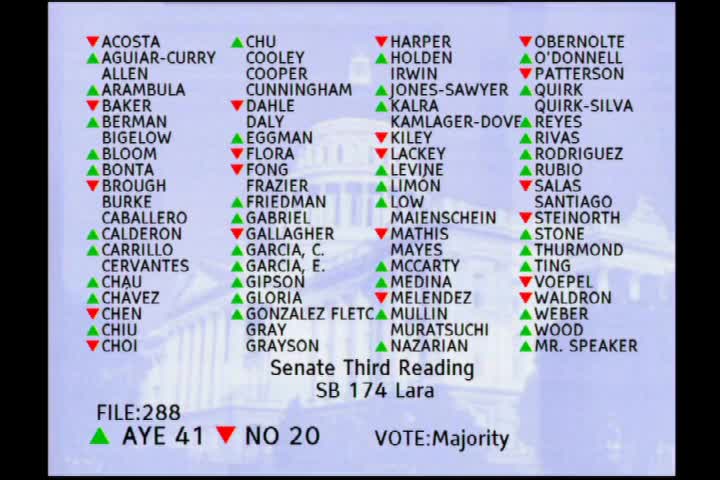 1MIN
Assembly Floor
 6MIN
Assembly Standing Committee on Appropriations
 2MIN
Senate Floor
 8MIN
Senate Standing Committee on Appropriations
 26MIN
Senate Standing Committee on Environmental Quality
 45MIN
Senate Standing Committee on Energy, Utilities and Communications
Bill Author

Bill Co-Author(s):
