SB 1103: Controlled substances: fentanyl.
- Session Year: 2017-2018
- House: Senate
- Latest Version Date: 2018-04-16
Existing law classifies controlled substances into 5 schedules and places the greatest restrictions and penalties on the use of those substances placed in Schedule I. Existing law classifies the drug fentanyl in Schedule II. Existing law prohibits a person from possessing for sale or purchasing for purposes of sale, specified controlled substances, including fentanyl, and provides for imprisonment in a county jail for 2, 3, or 4 years for a violation of this provision. Existing law also imposes an additional term, and authorizes a trial court to impose a specified fine, upon a person who is convicted of a violation of, or of a conspiracy to violate, specified provisions of law with respect to a substance containing heroin, cocaine base, and cocaine, if the substance exceeds a specified weight.
This bill would impose authorize a trial court to impose that additional term upon, and authorize a the fine against, a defendant who violates those laws with respect to a substance containing fentanyl. By imposing additional incarceration costs on local agencies, the bill would impose a state-mandated local program.
The California Constitution requires the state to reimburse local agencies and school districts for certain costs mandated by the state. Statutory provisions establish procedures for making that reimbursement.
This bill would provide that no reimbursement is required by this act for a specified reason.
Existing law classifies controlled substances into 5 schedules and places the greatest restrictions and penalties on the use of those substances placed in Schedule I. Existing law classifies the drug fentanyl in Schedule II. Existing law prohibits a person from possessing for sale or purchasing for purposes of sale, specified controlled substances, including fentanyl, and provides for imprisonment in a county jail for 2, 3, or 4 years for a violation of this provision. Existing law also imposes an additional term, and authorizes a trial court to impose a specified fine, upon a person who is convicted of a violation of, or of a conspiracy to violate, specified provisions of law with respect to a substance containing heroin, cocaine base, and cocaine, if the substance exceeds a specified weight.
This bill would impose that additional term upon, and authorize a fine against, a defendant who violates those laws with respect to a substance containing fentanyl. By imposing additional incarceration costs on local agencies, the bill would impose a state-mandated local program.
The California Constitution requires the state to reimburse local agencies and school districts for certain costs mandated by the state. Statutory provisions establish procedures for making that reimbursement.
This bill would provide that no reimbursement is required by this act for a specified reason.
(a)(1)A person convicted of a violation of, or of a conspiracy to violate, Section 11351 or 11352 with respect to a substance containing fentanyl, may receive an additional term as follows:
(A)If the substance exceeds one kilogram by weight, the person shall receive an additional term of three years.
(B)If the substance exceeds four kilograms by weight, the person shall receive an additional term of five years.
(C)If the substance exceeds 10 kilograms by weight, the person shall receive an additional term of 10 years.
(D)If the substance exceeds 20 kilograms by weight, the person shall receive an additional term of 15 years.
(E)If the substance exceeds 40 kilograms by weight, the person shall receive an additional term of 20 years.
(F)If the substance exceeds 80 kilograms by weight, the person shall receive an additional term of 25 years.
(2)The conspiracy enhancements authorized by this subdivision shall not be imposed unless the trier of fact finds that the defendant conspirator was substantially involved in the planning, direction, execution, or financing of the underlying offense.
(b)The additional terms authorized by this section shall not be imposed unless the allegation that the weight of the substance containing fentanyl exceeds the amounts provided in this section is charged in the accusatory pleading and admitted or found to be true by the trier of fact.
(c)The additional terms authorized by this section may be in addition to any other punishment provided by law.
SEC. 2.Section 11372 of the Health and Safety Code is amended to read:11372.(a) In addition to the term of imprisonment provided by law for persons convicted of violating Section 11350, 11351, 11351.5, 11352, 11353, 11355, 11359, 11360, or 11361, the trial court may impose a fine not exceeding twenty thousand dollars ($20,000) for each offense. In no event shall a A fine shall not be levied in lieu of or in substitution for the term of imprisonment provided by law for any of these offenses.
(b) Any A person receiving an additional term pursuant to paragraph (1) of subdivision (a) of Section 11370.4, 11370.4 or subparagraph (A) of paragraph (1) of subdivision (a) of Section 11370.5 may, in addition, be fined by an amount not exceeding one million dollars ($1,000,000) for each offense.
(c) Any A person receiving an additional term pursuant to paragraph (2) of subdivision (a) of Section 11370.4, 11370.4 or subparagraph (B) of paragraph (1) of subdivision (a) of Section 11370.5 may, in addition, be fined by an amount not to exceed four million dollars ($4,000,000) for each offense.
(d) Any A person receiving an additional term pursuant to paragraph (3) of subdivision (a) of Section 11370.4, 11370.4 or subparagraph (C) of paragraph (1) of subdivision (a) of Section 11370.5 may, in addition, be fined by an amount not to exceed eight million dollars ($8,000,000) for each offense.
(e) The court shall make a finding, prior to the imposition of the fines authorized by subdivisions (b) to (e), (a) to (d), inclusive, that there is a reasonable expectation that the fine, or a substantial portion thereof, could be collected within a reasonable period of time, taking into consideration the defendants income, earning capacity, and financial resources.
SEC. 3.No reimbursement is required by this act pursuant to Section 6 of Article XIIIB of the California Constitution because the only costs that may be incurred by a local agency or school district will be incurred because this act creates a new crime or infraction, eliminates a crime or infraction, or changes the penalty for a crime or infraction, within the meaning of Section 17556 of the Government Code, or changes the definition of a crime within the meaning of Section 6 of Article XIIIB of the California Constitution.
SECTION 1.Section 11370.4 of the Health and Safety Code is amended to read:11370.4.(a)(1)A person convicted of a violation of, or of a conspiracy to violate, Section 11351, 11351.5, or 11352 with respect to a substance containing heroin, fentanyl, cocaine base as specified in paragraph (1) of subdivision (f) of Section 11054, or cocaine as specified in paragraph (6) of subdivision (b) of Section 11055 shall receive an additional term as follows:(A)If the substance exceeds one kilogram by weight, the person shall receive an additional term of three years.(B)If the substance exceeds four kilograms by weight, the person shall receive an additional term of five years.(C)If the substance exceeds 10 kilograms by weight, the person shall receive an additional term of 10 years.(D)If the substance exceeds 20 kilograms by weight, the person shall receive an additional term of 15 years.(E)If the substance exceeds 40 kilograms by weight, the person shall receive an additional term of 20 years.(F)If the substance exceeds 80 kilograms by weight, the person shall receive an additional term of 25 years.(2)The conspiracy enhancements provided for in this subdivision shall not be imposed unless the trier of fact finds that the defendant conspirator was substantially involved in the planning, direction, execution, or financing of the underlying offense.(b)(1)A person convicted of a violation of, or of conspiracy to violate, Section 11378, 11378.5, 11379, or 11379.5 with respect to a substance containing methamphetamine, amphetamine, phencyclidine (PCP) and its analogs shall receive an additional term as follows:(A)If the substance exceeds one kilogram by weight, or 30 liters by liquid volume, the person shall receive an additional term of three years.(B)If the substance exceeds four kilograms by weight, or 100 liters by liquid volume, the person shall receive an additional term of five years.(C)If the substance exceeds 10 kilograms by weight, or 200 liters by liquid volume, the person shall receive an additional term of 10 years.(D)If the substance exceeds 20 kilograms by weight, or 400 liters by liquid volume, the person shall receive an additional term of 15 years.(2)In computing the quantities involved in this subdivision, plant or vegetable material seized shall not be included.(3)The conspiracy enhancements provided for in this subdivision shall not be imposed unless the trier of fact finds that the defendant conspirator was substantially involved in the planning, direction, execution, or financing of the underlying offense.(c)The additional terms provided in this section shall not be imposed unless the allegation that the weight of the substance containing heroin, fentanyl, cocaine base as specified in paragraph (1) of subdivision (f) of Section 11054, cocaine as specified in paragraph (6) of subdivision (b) of Section 11055, methamphetamine, amphetamine, or phencyclidine (PCP) and its analogs exceeds the amounts provided in this section is charged in the accusatory pleading and admitted or found to be true by the trier of fact.(d)The additional terms provided in this section shall be in addition to any other punishment provided by law.(e)Notwithstanding any other law, the court may strike the additional punishment for the enhancements provided in this section if it determines that there are circumstances in mitigation of the additional punishment and states on the record its reasons for striking the additional punishment.SEC. 2.Section 11372 of the Health and Safety Code is amended to read:11372.(a) In addition to the term of imprisonment provided by law for persons convicted of violating Section 11350, 11351, 11351.5, 11352, 11353, 11355, 11359, 11360, or 11361, the trial court may impose a fine not exceeding twenty thousand dollars ($20,000) for each offense. In no event shall a fine be levied in lieu of or in substitution for the term of imprisonment provided by law for any of these offenses.(b)A person receiving an additional term pursuant to subparagraph (A) of paragraph (1) of subdivision (a) of Section 11370.4, may, in addition, be fined by an amount not exceeding one million dollars ($1,000,000) for each offense.(c)A person receiving an additional term pursuant to subparagraph (B) of paragraph (1) of subdivision (a) of Section 11370.4, may, in addition, be fined by an amount not to exceed four million dollars ($4,000,000) for each offense.(d)A person receiving an additional term pursuant to subparagraph (C) of paragraph (1) of subdivision (a) of Section 11370.4, may, in addition, be fined by an amount not to exceed eight million dollars ($8,000,000) for each offense.(e)The court shall make a finding, prior to the imposition of the fines authorized by subdivisions (b) to (d), inclusive, that there is a reasonable expectation that the fine, or a substantial portion thereof, could be collected within a reasonable period of time, taking into consideration the defendants income, earning capacity, and financial resources.SEC. 3.No reimbursement is required by this act pursuant to Section 6 of Article XIIIB of the California Constitution because the only costs that may be incurred by a local agency or school district will be incurred because this act creates a new crime or infraction, eliminates a crime or infraction, or changes the penalty for a crime or infraction, within the meaning of Section 17556 of the Government Code, or changes the definition of a crime within the meaning of Section 6 of Article XIIIB of the California Constitution.(a)Any (1)A person convicted of a violation of, or of a conspiracy to violate, Section 11351, 11351.5, or 11352 with respect to a substance containing heroin, fentanyl, cocaine base as specified in paragraph (1) of subdivision (f) of Section 11054, or cocaine as specified in paragraph (6) of subdivision (b) of Section 11055 shall receive an additional term as follows:
(1)Where(A)If the substance exceeds one kilogram by weight, the person shall receive an additional term of three years.
(2)Where(B)If the substance exceeds four kilograms by weight, the person shall receive an additional term of five years.
(3)Where(C)If the substance exceeds 10 kilograms by weight, the person shall receive an additional term of 10 years.
(4)Where(D)If the substance exceeds 20 kilograms by weight, the person shall receive an additional term of 15 years.
(5)Where(E)If the substance exceeds 40 kilograms by weight, the person shall receive an additional term of 20 years.
(6)Where(F)If the substance exceeds 80 kilograms by weight, the person shall receive an additional term of 25 years.
The(2)The conspiracy enhancements provided for in this subdivision shall not be imposed unless the trier of fact finds that the defendant conspirator was substantially involved in the planning, direction, execution, or financing of the underlying offense.
(b)Any (1)A person convicted of a violation of, or of conspiracy to violate, Section 11378, 11378.5, 11379, or 11379.5 with respect to a substance containing methamphetamine, amphetamine, phencyclidine (PCP) and its analogs shall receive an additional term as follows:
(1)Where(A)If the substance exceeds one kilogram by weight, or 30 liters by liquid volume, the person shall receive an additional term of three years.
(2)Where(B)If the substance exceeds four kilograms by weight, or 100 liters by liquid volume, the person shall receive an additional term of five years.
(3)Where(C)If the substance exceeds 10 kilograms by weight, or 200 liters by liquid volume, the person shall receive an additional term of 10 years.
(4)Where(D)If the substance exceeds 20 kilograms by weight, or 400 liters by liquid volume, the person shall receive an additional term of 15 years.
In(2)In computing the quantities involved in this subdivision, plant or vegetable material seized shall not be included.
The(3)The conspiracy enhancements provided for in this subdivision shall not be imposed unless the trier of fact finds that the defendant conspirator was substantially involved in the planning, direction, execution, or financing of the underlying offense.
(c)The additional terms provided in this section shall not be imposed unless the allegation that the weight of the substance containing heroin, fentanyl, cocaine base as specified in paragraph (1) of subdivision (f) of Section 11054, cocaine as specified in paragraph (6) of subdivision (b) of Section 11055, methamphetamine, amphetamine, or phencyclidine (PCP) and its analogs exceeds the amounts provided in this section is charged in the accusatory pleading and admitted or found to be true by the trier of fact.
(d)The additional terms provided in this section shall be in addition to any other punishment provided by law.
(e)Notwithstanding any other provision of law, the court may strike the additional punishment for the enhancements provided in this section if it determines that there are circumstances in mitigation of the additional punishment and states on the record its reasons for striking the additional punishment.
SEC. 2.Section 11372 of the Health and Safety Code is amended to read:11372.(a) In addition to the term of imprisonment provided by law for persons convicted of violating Section 11350, 11351, 11351.5, 11352, 11353, 11355, 11359, 11360, or 11361, the trial court may impose a fine not exceeding twenty thousand dollars ($20,000) for each offense. In no event shall a fine be levied in lieu of or in substitution for the term of imprisonment provided by law for any of these offenses.
(b)Any A person receiving an additional term pursuant to subparagraph (A) of paragraph (1) of subdivision (a) of Section 11370.4, may, in addition, be fined by an amount not exceeding one million dollars ($1,000,000) for each offense.
(c)Any A person receiving an additional term pursuant to paragraph (2) subparagraph (B) of paragraph (1) of subdivision (a) of Section 11370.4, may, in addition, be fined by an amount not to exceed four million dollars ($4,000,000) for each offense.
(d)Any A person receiving an additional term pursuant to paragraph (3) subparagraph (C) of paragraph (1) of subdivision (a) of Section 11370.4, may, in addition, be fined by an amount not to exceed eight million dollars ($8,000,000) for each offense.
(e)The court shall make a finding, prior to the imposition of the fines authorized by subdivisions (b) to (e), (d), inclusive, that there is a reasonable expectation that the fine, or a substantial portion thereof, could be collected within a reasonable period of time, taking into consideration the defendants income, earning capacity, and financial resources.
SEC. 3.No reimbursement is required by this act pursuant to Section 6 of Article XIIIB of the California Constitution because the only costs that may be incurred by a local agency or school district will be incurred because this act creates a new crime or infraction, eliminates a crime or infraction, or changes the penalty for a crime or infraction, within the meaning of Section 17556 of the Government Code, or changes the definition of a crime within the meaning of Section 6 of Article XIIIB of the California Constitution.
|
Date
|
Status
|
|---|---|
| Apr 25, 2018 | April 24 set for first hearing. Failed passage in committee. (Ayes 2. Noes 4.) |
| Apr 17, 2018 | Set for hearing April 24. |
| Apr 16, 2018 | From committee with author's amendments. Read second time and amended. Re-referred to Com. on PUB. S. |
| Apr 11, 2018 | April 10 set for first hearing. Failed passage in committee. (Ayes 2. Noes 3.) Reconsideration granted. |
| Mar 13, 2018 | Set for hearing April 10. |
| Feb 22, 2018 | Referred to Com. on PUB. S. |
| Feb 14, 2018 | From printer. May be acted upon on or after March 16. |
| Feb 13, 2018 | Introduced. Read first time. To Com. on RLS. for assignment. To print. |
|
Date
|
Description
|
Location
|
Votes
|
|
|---|---|---|---|---|
| Apr 24, 2018 | Do pass, but first be re-referred to the Committee on [Appropriations] | Senate Standing Committee on Public Safety |
Failed |
|
| Apr 10, 2018 | [04-10-2018] hearing: Motion to Reconsider. [Reconsideration Granted.] | Senate Standing Committee on Public Safety |
Passed |
|
| Apr 10, 2018 | Do pass as amended, but first amend, and re-refer to the Committee on [Appropriations] | Senate Standing Committee on Public Safety |
Failed |
This list shows positions taken on this bill by organizations on the date displayed, which is linked to the original source.
Positions by individuals are not included.
SENATE COMMITTEE ON PUBLIC SAFETY
Senator Nancy Skinner, Chair
2017 - 2018 Regular
Bill No: SB 1103 Hearing Date: April 24, 2018
Author: | Bates | ||
Version: | April 16, 2018 | ||
Urgency: | No | Fiscal: | Yes |
Consultant: | SJ | ||
Subject: Controlled Substances: Fentanyl
HISTORY
Source: Orange County Sheriff’s Department
Prior Legislation: SB 176 (Bates) Failed passage in Senate Public Safety 2017
SB 1323 (Bates) Held in Assembly Appropriations 2016
Support: (support received for prior version of bill) California District Attorneys Association; California Police Chiefs Association; California Public Defenders Association; California State Sheriffs’ Association; Orange County Board of Supervisors; Riverside Sheriffs’ Association; San Diego County District Attorney’s Office; San Diego County Sheriff’s Department
Opposition: (opposition received to prior version of bill) ACLU of California; California Public Defenders Association
PURPOSE
The purpose of this bill is permit a court to impose an additional term of three to 25 years in a case in which a defendant has been convicted of one of several specified drug commerce crimes involving fentanyl.
Existing law establishes the California Uniform Controlled Substances Act which regulates controlled substances. (Health & Saf. Code § 11000 et seq.)
Existing law classifies controlled substances into five schedules according to their danger and potential for abuse. (Health & Saf. Code §§ 11054-11058.)
Existing law classifies fentanyl as a Schedule II controlled substance. (Health & Saf. Code § 11055, subd.(c).)
Existing law provides the following penalties:
- Possession for sale or purchasing for purposes of sale of heroin, cocaine, and specified opiates, including fentanyl – 1170(h) felony term of 2, 3 or 4 years (Health & Saf. Code § 11351.)
- Possession for sale or purchasing for purposes of sale of cocaine base – 1170(h) felony term of 2, 3, or 4 years (Health & Saf. Code § 11351.5.)
- Transport, import, sale, furnish, etc. of heroin, cocaine, and specified opiates, including fentanyl – 1170(h) felony term of 3, 4 or 5 years (Health & Saf. Code § 11352.)
- If between noncontiguous counties – 1170(h) felony term of 3, 6 or 9 years (Id.)
Existing law provides the following enhancements based on the weight of the heroin, cocaine, or cocaine base possessed for sale, sold, transported, etc. (Health & Saf. Code § 11370.4, subd. (a).)
1 kilogram | 3 years |
4 kilograms | 5 years |
10 kilograms | 10 years |
20 kilograms | 15 years |
40 kilograms | 20 years |
80 kilograms | 25 years |
Existing law provides enhancements based on the liquid volume of a substance containing methamphetamine, amphetamine, phencyclidine (PCP) and its analogs possessed for sale, sold, transported, etc. (Health & Saf. Code § 11370.4, subd. (b).)
Existing law provides that the above listed enhancements shall not be imposed unless the allegation that the weight of the substance containing one of the above listed drugs or its analogs exceeds the amount provided above and is charged in the accusatory pleading and admitted or found to be true by the trier of fact. (Health & Saf. Code § 11370.4, subd. (c).)
Existing law authorizes a court to impose a fine, in addition to a term of imprisonment, for specified drug offenses of between $20,000 and $8 million for each offense. (Health & Saf. Code § 11372, subd. (a)-(d).)
This bill creates a new enhancement statute that permits a court to impose an additional term of three to 25 years in a case in which a defendant has been convicted of one of several specified drug commerce crimes involving fentanyl.
COMMENTS
1. Need for This Bill
According to the author:
SB 1103 would add fentanyl to a category of dangerous drugs, such as heroin, that are subject to penalty enhancements based on the weight an individual has in his possession, for sale or distribution.
Fentanyl is a synthetic opioid. In its pharmaceutical form, fentanyl is used to treat people with severe chronic pain when other pain medicines no longer work and as an anesthetic in surgery. When abused, both pharmaceutical and clandestine fentanyl affect the brain and nervous system by producing a euphoric high 80 to 100 times stronger than morphine and 40 times stronger than heroin. Overdosing on fentanyl causes blood pressure to plummet, diminishes breathing and induces deep sleep coma, which can lead to death. Between 2013 and 2014, California was one of 25 states affected by fentanyl overdose incidents and deaths. Fentanyl produced clandestinely has no legal medical use and can be smoked, snorted, ingested or injected.
Fentanyl can serve as a direct substitute for heroin in opioid dependent individuals. However, fentanyl is a very dangerous substitute for heroin because it is much more potent and results in frequent overdoses that can lead to respiratory depression and death. Some analogues are even more potent. Particularly troubling is the fact that users are often unaware that they are using fentanyl and, therefore, ignorant to the severe risks they are being exposed to. Fentanyl is inexpensive to produce, making it a go-to heroin substitute for the drug cartels who are looking to increase their bottom line. Finally, fentanyl has proven to be a significant threat to law enforcement personnel and first responder as minute amounts—equivalent to a few grains of salt—can be lethal, and visually, can be mistaken for cocaine or white powder heroin….
SB 1103 recognizes that the danger posed by fentanyl is greater than that of other drugs with penalty enhancements based on weight. Fentanyl is not only far stronger than heroin, but also threatens the lives and safety of those who do not even use it. This bill would therefore take the commonsense step of adding the same enhancements for fentanyl, thereby protecting unknowing users, first responders, and children.
Nationwide there has been a significant increase in fentanyl-related overdose fatalities. The Centers for Disease Control and Prevention reported the sharpest increase in drug overdose deaths in 2016 to be among fentanyl and synthetic opioids with over 42,000 overdose deaths. This is an increase five times higher than the deaths in 1999. California had over 4,600 opioid related deaths in 2016. Orange County has seen an increase in Fentanyl related cases. For example, Orange County statistics show an increase in the number of deaths with fentanyl present from 23 in 2010 to 67 in 2017, seeing a 100 percent increase between 2015 and 2017. The purpose of this legislation is to provide California law enforcement with a tool for addressing the illegal sale of fentanyl before the state reaches the high level of overdose fatalities seen on the East Coast.
- Background on Fentanyl and Its Analogs
Fentanyl was synthesized in 1959 and has been used medically since the 1960s. The Centers for Disease Control and Prevention (CDC) website provides this description of fentanyl:
Fentanyl, a synthetic and short-acting opioid analgesic, is 50-100 times more potent than morphine and approved for managing acute or chronic pain associated with advanced cancer…. [M]ost cases of fentanyl-related morbidity and mortality have been linked to illicitly manufactured fentanyl and fentanyl analogs, collectively referred to as non-pharmaceutical fentanyl (NPF). NPF is sold via illicit drug markets for its heroin-like effect and often mixed with heroin and/or cocaine as a combination product—with or without the user’s knowledge—to increase its euphoric effects. While NPF-related overdoses can be reversed with naloxone, a higher dose or multiple number of doses per overdose event may be required …due to the high potency of NPF. (Internal footnotes omitted.) (<http://emergency.cdc.gov/han/han00384.asp> [as of Apr. 2, 2018].)
Legitimate fentanyl, also known as pharmaceutical fentanyl, is prescribed by a physician in a variety of forms, including lozenges, nasal sprays, and transdermal patches. While some pharmaceutical fentanyl is diverted, this is typically done on a small scale and often for personal use. Illicitly-produced fentanyl, as well as its analogs, is manufactured in laboratories in China and Mexico, and then shipped to the U.S. or smuggled across the U.S.-Mexico border. It is typically distributed in powder form, but is increasingly available in the form of counterfeit prescription pills. The Drug Enforcement Administration (DEA) reports that the fentanyl coming into the U.S. from Mexico is generally low in purity, while the fentanyl coming into the country directly from China has purity levels as high as 90 percent. (<https://www.dea.gov/docs/DIR-040-17_2017-NDTA.pdf> [as of Apr. 2, 2018].)
Illicitly-produced fentanyl is often mixed with heroin, oftentimes without the knowledge of the purchaser. The DEA reports that it is increasingly common for fentanyl to be mixed with adulterants and diluents and sold as heroin, although no heroin is present in the product. (Id.; see also <https://www.washingtonpost.com/world/national-security/at-the-new-york-division-of-fentanyl-inc-a-banner-year/2017/11/13/c3cce108-be83-11e7-af84-d3e2ee4b2af1_story.html?noredirect=on&utm_term=.8fd868ed8b2b> [as of Apr. 15, 2018].) Recent reports by law enforcement agencies and health care providers indicate that fentanyl is appearing in cocaine more frequently than had been seen previously, and it is unclear if this is being done intentionally. (<https://www.npr.org/sections/health-shots/2018/03/29/597717402/fentanyl-laced-cocaine-becoming-a-deadly-problem-among-drug-users> [as of Apr. 2, 2018].)
Many cases that are reported as involving fentanyl actually involve one of several fentanyl analogs. Fentanyl analogs are substances that are in the same chemical family as fentanyl and have similar pharmacological effects, but have slight variations in their chemical structure. In 2016, the DEA’s Special Testing and Research Laboratory found that fentanyl-related substances and other new opioids accounted for 32 percent of the substances tested. (<https://www.dea.gov/docs/DIR-040-17_2017-NDTA.pdf> [as of Apr. 2, 2018].) Fentanyl analogs are often used by drug traffickers in an attempt to circumvent existing laws regulating controlled substances. In addition, as discussed further below, fentanyl analogs are more challenging to prosecute.
3. DEA Threat Assessment
The DEA publishes an annual illicit drug “threat assessment” which reviews trends and issues concerning major drugs of abuse. The 2017 Threat Assessment of fentanyl concluded:
Fentanyl will continue to pose a grave threat to the United States while the current illicit production continues, and new forms of synthetic substances emerge. Fentanyl has penetrated mainstream illicit drug markets, and its extreme potency level means a small quantity of the drug can cause mass overdose events, relative to other drugs. The illicit fentanyl market will expand in the near term as new fentanyl products reach a wider variety of drug users. Fentanyl-related substances will continue to pose a serious threat; the majority of these varieties have never been studied in humans, and dosing levels are unclear. It is likely that illicit drug markets will also see the rise, and fall, of new fentanyl-related opioids as traffickers experiment with new compounds to the test the markets, and attempt to evade drug scheduling actions. (<https://www.dea.gov/docs/DIR-040-17_2017-NDTA.pdf> [as of Apr. 2, 2018].)
4. Many Fentanyl Commerce Crimes are Covered by the Current Drug Weight Enhancements
The existing enhancement based on the weight of the drug involved in specified drug commerce crimes includes any substance containing cocaine, cocaine base, or heroin. Illicit drug manufacturers, distributors, and sellers often mix fentanyl or one its analogs with heroin, because it is much more potent than heroin and relatively easy and cheap to manufacture. Fentanyl is also increasingly being mixed with cocaine. A defendant convicted of a drug offense involving a mixture of heroin and fentanyl or cocaine and fentanyl would be subject to the weight enhancement under current law. This bill would only be necessary where the sole drug manufactured, distributed, or sold in the underlying crime was fentanyl. However, as noted below, prosecutors will likely still need to use the analog statute as many cases involve fentanyl analogs rather than solely fentanyl.
5. Many Fentanyl Cases Involve a Fentanyl Analog
As noted above, many cases that are reported as involving fentanyl actually involve one of numerous fentanyl analogs. Fentanyl is a Schedule II drug in California. As reflected in federal law, but not specifically stated in California law, Schedule I drugs are deemed to have no medical utility and possess a high potential for abuse. Schedule II drugs have legitimate medical uses, but also a high potential for abuse. Where a defendant’s crime involved a fentanyl-related drug that is not listed in the controlled substance schedules, it appears the prosecutor must prove that the drug is an analog of fentanyl. The analog statute applies to Schedule I and Schedule II drugs. (Health & Saf. Code §§ 11054 and 11055.)
Health and Safety Code section 11401 defines an analog as follows:
1) A substance the chemical structure of which is substantially similar to the chemical structure of a controlled substance classified in Section 11054 or 11055 or a synthetic cannabinoid compound defined in Section 11357.5.
2) A substance that has, is represented as having, or is intended to have a stimulant, depressant, or hallucinogenic effect on the central nervous system that is substantially similar to, or greater than, the stimulant, depressant, or hallucinogenic effect on the central nervous system of a controlled substance classified in Section 11054 or 11055 or a synthetic cannabinoid compound defined in Section 11357.5.
Drug offenses involving fentanyl may also be prosecuted by federal prosecutors as violations of the federal Controlled Substances Act. In response to the challenges federal prosecutors faced when prosecuting crimes involving fentanyl analogs, the DEA issued a temporary scheduling order in February 2018 to schedule fentanyl-related substances that are not currently listed in any schedule of the federal Controlled Substances Act and their isomers, esters, ethers, salts and salts of isomers, esters, and ethers in Schedule I. (83 Fed.Reg. 5188 (February 6, 2018); See November 2017 DEA press release announcing the intention of the agency to issue the temporary scheduling order explaining that “[w]ithout the action announced today, prosecutors must overcome cumbersome evidentiary hurdles to secure convictions of these traffickers under the Analogue Act.” (<https://www.dea.gov/divisions/hq/2017/hq110917.shtml> [as of Apr. 3, 2018]).)
6. Research on Sentences as a Deterrent to Crime
A comprehensive report published in 2014, entitled The Growth of Incarceration in the United States, discusses the effects on crime reduction through incapacitation and deterrence, and describes general deterrence compared to specific deterrence:
A large body of research has studied the effects of incarceration and other criminal penalties on crime. Much of this research is guided by the hypothesis that incarceration reduces crime through incapacitation and deterrence. Incapacitation refers to the crimes averted by the physical isolation of convicted offenders during the period of their incarceration. Theories of deterrence distinguish between general and specific behavioral responses. General deterrence refers to the crime prevention effects of the threat of punishment, while specific deterrence concerns the aftermath of the failure of general deterrence—that is, the effect on reoffending that might result from the experience of actually being punished.
(National Research Council (2014) The Growth of Incarceration in the United States: Exploring Causes and Consequences Committee on Causes and Consequences of High Rates of Incarceration, J. Travis, B. Western, and S. Redburn, Editors. Committee on Law and Justice, Division of Behavioral and Social Sciences and Education. Washington, DC: The National Academies Press. <http://johnjay.jjay.cuny.edu/nrc/NAS_report_on_incarceration.pdf>.)
In regard to deterrence, the authors note that in “the classical theory of deterrence, crime is averted when the expected costs of punishment exceed the benefits of offending. Much of the empirical research on the deterrent power of criminal penalties has studied sentence enhancements and other shifts in penal policy.” (National Research Council, supra, The Growth of Incarceration in the United States, p. 132.)
Deterrence theory is underpinned by a rationalistic view of crime. In this view, an individual considering commission of a crime weighs the benefits of offending against the costs of punishment. Much offending, however, departs from the strict decision calculus of the rationalistic model. Robinson and Darley (2004) review the limits of deterrence through harsh punishment. They report that offenders must have some knowledge of criminal penalties to be deterred from committing a crime, but in practice often do not.
(Id. at 133.) The report concludes: “The incremental deterrent effect of increases in lengthy prison sentences is modest at best. Because recidivism rates decline markedly with age, lengthy prison sentences, unless they specifically target very high-rate or extremely dangerous offenders, are an inefficient approach to preventing crime by incapacitation.” (Id. at 5.)
7. Amendments
This bill was originally heard at the Committee’s hearing on April 10, 2018. The bill was subsequently amended. The amendments remove fentanyl from the existing weight enhancement statute and create a new enhancement statute that only pertains to drug commerce crimes involving fentanyl. In addition, the fentanyl enhancement statute this bill proposes to create would be discretionary, unlike the existing weight enhancement statute.
8. Argument in Support
According to the San Diego County District Attorney’s Office:
This bill appropriately validates the serious nature of fentanyl by putting it in the same classification as the other drugs like heroin. Fentanyl has progressed as a huge safety risk for the community and has become a major contributor in many overdose deaths in San Diego as well as all over the country.
…This bill would impose that additional term upon, and authorize a fine against, a defendant who violates those laws with respect to a substance containing fentanyl.
SB 1103 recognizes the danger posed by fentanyl is far greater than that of the other drugs with penalty enhancements based on weight. Fentanyl is not only stronger than heroin, but also threatens the lives and safety of first responders and law enforcement.
9. Argument in Opposition
According to the ACLU of California:
Under existing law, a person who possesses fentanyl for sale can be punished by up to four years in jail. (Health and Safety Code § 11351.) Likewise, a person can be punished by up to five years in jail for simply offering to give away fentanyl. (Health and Safety Code § 11352.) Adding excessive new sentence enhancements for these crimes will not make our communities safer. Rather, studies have found that certainty of punishment…has a greater deterrent effect than the severity of the punishment itself. Current law already provides significant penalties for the underlying behavior at issue in this bill.
Rather than acting as a deterrent, the new enhancements will only serve to overcrowd our jails….Unnecessarily crowding our jails and prisons is not fiscally prudent, nor safe for inmates, jail staff, or the public.
Moreover, there is a growing national consensus that the war on drugs, characterized by draconian sentences like the ones at issue in SB 1103, has been a harmful, expensive failure.
-- END --
SENATE COMMITTEE ON PUBLIC SAFETY
Senator Nancy Skinner, Chair
2017 - 2018 Regular
Bill No: SB 1103 Hearing Date: April 10, 2018
Author: | Bates | ||
Version: | February 13, 2018 | ||
Urgency: | No | Fiscal: | Yes |
Consultant: | SJ | ||
Subject: Controlled Substances: Fentanyl
HISTORY
Source: Orange County Sheriff’s Department
Prior Legislation: SB 176 (Bates) Failed passage in Senate Public Safety 2017
SB 1323 (Bates) Held in Assembly Appropriations 2016
Support: California District Attorneys Association; California Police Chiefs Association; California State Sheriffs’ Association; Orange County Board of Supervisors; Riverside Sheriffs’ Association; San Diego County District Attorney’s Office
Opposition: ACLU of California; California Public Defenders Association
PURPOSE
The purpose of this bill is to include fentanyl in an enhancement statute under which a defendant convicted of any of a list of specified drug commerce crimes involving heroin, cocaine, or cocaine base receives an additional term of three years to 25 years based on the weight of the substance containing the drug involved in the case.
Existing law establishes the California Uniform Controlled Substances Act which regulates controlled substances. (Health & Saf. Code § 11000 et seq.)
Existing law classifies controlled substances into five schedules according to their danger and potential for abuse. (Health & Saf. Code §§ 11054-11058.)
Existing law classifies fentanyl as a Schedule II controlled substance. (Health & Saf. Code § 11055, subd.(c).)
Existing law provides the following penalties:
- Possession for sale or purchasing for purposes of sale of heroin, cocaine, and specified opiates, including fentanyl –1170(h) felony term of 2, 3 or 4 years (Health & Saf. Code § 11351.)
- Possession for sale or purchasing for purposes of sale of cocaine base – 1170(h) felony term of 2, 3, or 4 years (Health & Saf. Code § 11351.5.)
- Transport, import, sale, furnish, etc. of heroin, cocaine, and specified opiates, including fentanyl – 1170(h) felony term of 3, 4 or 5 years (Health & Saf. Code § 11352.)
- If between noncontiguous counties – 1170(h) felony term of 3, 6 or 9 years (Id.)
Existing law provides the following enhancements based on the weight of the heroin, cocaine, or cocaine base possessed for sale, sold, transported, etc. (Health & Saf. Code § 11370.4, subd. (a).)
1 kilogram | 3 years |
4 kilograms | 5 years |
10 kilograms | 10 years |
20 kilograms | 15 years |
40 kilograms | 20 years |
80 kilograms | 25 years |
Existing law provides enhancements based on the liquid volume of a substance containing methamphetamine, amphetamine, phencyclidine (PCP) and its analogs possessed for sale, sold, transported, etc. (Health & Saf. Code § 11370.4, subd. (b).)
Existing law provides that the above listed enhancements shall not be imposed unless the allegation that the weight of the substance containing one of the above listed drugs or its analogs exceeds the amount provided above and is charged in the accusatory pleading and admitted or found to be true by the trier of fact. (Health & Saf. Code § 11370.4, subd. (c).)
Existing law authorizes a court to impose a fine, in addition to a term of imprisonment, for specified drug offenses of between $20,000 and $8 million for each offense. (Health & Saf. Code § 11372, subd. (a)-(d).)
This bill adds fentanyl to the list of drugs included in an enhancement statute for which a person can receive an additional term based on the weight of the substance containing the drug involved in the case, and authorizes a court to impose a fine, as specified, for drug offenses involving fentanyl.
COMMENTS
1. Need for This Bill
According to the author:
SB 1103 would add fentanyl to a category of dangerous drugs, such as heroin, that are subject to penalty enhancements based on the weight an individual has in his possession, for sale or distribution.
Fentanyl is a synthetic opioid. In its pharmaceutical form, fentanyl is used to treat people with severe chronic pain when other pain medicines no longer work and as an anesthetic in surgery. When abused, both pharmaceutical and clandestine fentanyl affect the brain and nervous system by producing a euphoric high 80 to 100 times stronger than morphine and 40 times stronger than heroin. Overdosing on fentanyl causes blood pressure to plummet, diminishes breathing and induces deep sleep coma, which can lead to death. Between 2013 and 2014, California was one of 25 states affected by fentanyl overdose incidents and deaths. Fentanyl produced clandestinely has no legal medical use and can be smoked, snorted, ingested or injected.
Fentanyl can serve as a direct substitute for heroin in opioid dependent individuals. However, fentanyl is a very dangerous substitute for heroin because it is much more potent and results in frequent overdoses that can lead to respiratory depression and death. Some analogues are even more potent. Particularly troubling is the fact that users are often unaware that they are using fentanyl and, therefore, ignorant to the severe risks they are being exposed to. Fentanyl is inexpensive to produce, making it a go-to heroin substitute for the drug cartels who are looking to increase their bottom line. Finally, fentanyl has proven to be a significant threat to law enforcement personnel and first responder as minute amounts—equivalent to a few grains of salt—can be lethal, and visually, can be mistaken for cocaine or white powder heroin.
SB 1103 amends Section 11370.4 of the Health and Safety Code to include fentanyl with heroin and cocaine in the category of drugs that are subject to enhancements by weight. By doing so, this bill targets those distributing, trafficking, and selling mass quantities of Fentanyl.
SB 1103 recognizes that the danger posed by fentanyl is greater than that of other drugs with penalty enhancements based on weight. Fentanyl is not only far stronger than heroin, but also threatens the lives and safety of those who do not even use it. This bill would therefore take the commonsense step of adding the same enhancements for fentanyl, thereby protecting unknowing users, first responders, and children.
Nationwide there has been a significant increase in fentanyl-related overdose fatalities. The Centers for Disease Control and Prevention reported the sharpest increase in drug overdose deaths in 2016 to be among fentanyl and synthetic opioids with over 42,000 overdose deaths. This is an increase five times higher than the deaths in 1999. California had over 4,600 opioid related deaths in 2016. Orange County has seen an increase in Fentanyl related cases. For example, Orange County statistics show an increase in the number of deaths with fentanyl present from 23 in 2010 to 67 in 2017, seeing a 100 percent increase between 2015 and 2017. The purpose of this legislation is to provide California law enforcement with a tool for addressing the illegal sale of fentanyl before the state reaches the high level of overdose fatalities seen on the East Coast.
- Background on Fentanyl and Its Analogs
Fentanyl was synthesized in 1959 and has been used medically since the 1960s. The Centers for Disease Control and Prevention (CDC) website provides this description of fentanyl:
Fentanyl, a synthetic and short-acting opioid analgesic, is 50-100 times more potent than morphine and approved for managing acute or chronic pain associated with advanced cancer…. [M]ost cases of fentanyl-related morbidity and mortality have been linked to illicitly manufactured fentanyl and fentanyl analogs, collectively referred to as non-pharmaceutical fentanyl (NPF). NPF is sold via illicit drug markets for its heroin-like effect and often mixed with heroin and/or cocaine as a combination product—with or without the user’s knowledge—to increase its euphoric effects. While NPF-related overdoses can be reversed with naloxone, a higher dose or multiple number of doses per overdose event may be required …due to the high potency of NPF. (Internal footnotes omitted.) (<http://emergency.cdc.gov/han/han00384.asp> [as of Apr. 2, 2018].)
Legitimate fentanyl, also known as pharmaceutical fentanyl, is prescribed by a physician in a variety of forms, including lozenges, nasal sprays, and transdermal patches. While some pharmaceutical fentanyl is diverted, this is typically done on a small scale and often for personal use. Illicitly-produced fentanyl, as well as its analogs, is manufactured in laboratories in China and Mexico, and then shipped to the U.S. or smuggled across the U.S.-Mexico border. It is typically distributed in powder form, but is increasingly available in the form of counterfeit prescription pills. The Drug Enforcement Administration (DEA) reports that the fentanyl coming into the U.S. from Mexico is generally low in purity, while the fentanyl coming into the country directly from China has purity levels as high as 90 percent. (<https://www.dea.gov/docs/DIR-040-17_2017-NDTA.pdf> [as of Apr. 2, 2018].)
Illicitly-produced fentanyl is often mixed with heroin, oftentimes without the knowledge of the purchaser. The DEA reports that it is increasingly common for fentanyl to be mixed with adulterants and diluents and sold as heroin, although no heroin is present in the product. (Id.) Recent reports by law enforcement agencies and health care providers indicate that fentanyl is appearing in cocaine more frequently than had been seen previously, and it is unclear if this is being done intentionally. (<https://www.npr.org/sections/health-shots/2018/03/29/597717402/fentanyl-laced-cocaine-becoming-a-deadly-problem-among-drug-users> [as of Apr. 2, 2018].)
Many cases that are reported as involving fentanyl actually involve one of several fentanyl analogs. Fentanyl analogs are substances that are in the same chemical family as fentanyl and have similar pharmacological effects, but have slight variations in their chemical structure. In 2016, the DEA’s Special Testing and Research Laboratory found that fentanyl-related substances and other new opioids accounted for 32 percent of the substances tested. (<https://www.dea.gov/docs/DIR-040-17_2017-NDTA.pdf> [as of Apr. 2, 2018].) Fentanyl analogs are often used by drug traffickers in an attempt to circumvent existing laws regulating controlled substances. In addition, as discussed further below, fentanyl analogs are more challenging to prosecute.
3. DEA Threat Assessment
The DEA publishes an annual illicit drug “threat assessment” which reviews trends and issues concerning major drugs of abuse. The 2017 Threat Assessment of fentanyl concluded:
Fentanyl will continue to pose a grave threat to the United States while the current illicit production continues, and new forms of synthetic substances emerge. Fentanyl has penetrated mainstream illicit drug markets, and its extreme potency level means a small quantity of the drug can cause mass overdose events, relative to other drugs. The illicit fentanyl market will expand in the near term as new fentanyl products reach a wider variety of drug users. Fentanyl-related substances will continue to pose a serious threat; the majority of these varieties have never been studied in humans, and dosing levels are unclear. It is likely that illicit drug markets will also see the rise, and fall, of new fentanyl-related opioids as traffickers experiment with new compounds to the test the markets, and attempt to evade drug scheduling actions. (<https://www.dea.gov/docs/DIR-040-17_2017-NDTA.pdf> [as of Apr. 2, 2018].)
4. Many Fentanyl Commerce Crimes are covered by the Current Drug Weight Enhancements
The existing enhancement based on the weight of the drug involved in specified drug commerce crimes includes any substance containing cocaine, cocaine base, or heroin. Illicit drug manufacturers, distributors, and sellers often mix fentanyl or one its analogs with heroin, because it is much more potent than heroin and relatively easy and cheap to manufacture. Fentanyl is also increasingly being mixed with cocaine. A defendant convicted of a drug offense involving a mixture of heroin and fentanyl or cocaine and fentanyl would be subject to the weight enhancement under current law. This bill would only be necessary where the sole drug manufactured, distributed, or sold in the underlying crime was fentanyl. However, as noted below, prosecutors will likely still need to use the analog statute as many cases involve fentanyl analogs rather than solely fentanyl.
5. Many Fentanyl Cases Involve a Fentanyl Analog
As noted above, many cases that are reported as involving fentanyl actually involve one of numerous fentanyl analogs. Fentanyl is a Schedule II drug in California. As reflected in federal law, but not specifically stated in California law, Schedule I drugs are deemed to have no medical utility and possess a high potential for abuse. Schedule II drugs have legitimate medical uses, but also a high potential for abuse. Where a defendant’s crime involved a fentanyl-related drug that is not listed in the controlled substance schedules, it appears the prosecutor must prove that the drug is an analog of fentanyl. The analog statute applies to Schedule I and Schedule II drugs. (Health & Saf. Code §§ 11054 and 11055.)
Health and Safety Code section 11401 defines an analog as follows:
1) A substance the chemical structure of which is substantially similar to the chemical structure of a controlled substance classified in Section 11054 or 11055 or a synthetic cannabinoid compound defined in Section 11357.5.
2) A substance that has, is represented as having, or is intended to have a stimulant, depressant, or hallucinogenic effect on the central nervous system that is substantially similar to, or greater than, the stimulant, depressant, or hallucinogenic effect on the central nervous system of a controlled substance classified in Section 11054 or 11055 or a synthetic cannabinoid compound defined in Section 11357.5.
Drug offenses involving fentanyl may also be prosecuted by federal prosecutors as violations of the federal Controlled Substances Act. In response to the challenges federal prosecutors faced when prosecuting crimes involving fentanyl analogs, the DEA issued a temporary scheduling order in February 2018 to schedule fentanyl-related substances that are not currently listed in any schedule of the federal Controlled Substances Act and their isomers, esters, ethers, salts and salts of isomers, esters, and ethers in Schedule I. (83 Fed.Reg. 5188 (February 6, 2018); See November 2017 DEA press release announcing the intention of the agency to issue the temporary scheduling order explaining that “[w]ithout the action announced today, prosecutors must overcome cumbersome evidentiary hurdles to secure convictions of these traffickers under the Analogue Act.” (<https://www.dea.gov/divisions/hq/2017/hq110917.shtml> [as of Apr. 3, 2018]).)
6. Research on Sentences as a Deterrent to Crime
A comprehensive report published in 2014, entitled The Growth of Incarceration in the United States, discusses the effects on crime reduction through incapacitation and deterrence, and describes general deterrence compared to specific deterrence:
A large body of research has studied the effects of incarceration and other criminal penalties on crime. Much of this research is guided by the hypothesis that incarceration reduces crime through incapacitation and deterrence. Incapacitation refers to the crimes averted by the physical isolation of convicted offenders during the period of their incarceration. Theories of deterrence distinguish between general and specific behavioral responses. General deterrence refers to the crime prevention effects of the threat of punishment, while specific deterrence concerns the aftermath of the failure of general deterrence—that is, the effect on reoffending that might result from the experience of actually being punished.
(National Research Council (2014) The Growth of Incarceration in the United States: Exploring Causes and Consequences Committee on Causes and Consequences of High Rates of Incarceration, J. Travis, B. Western, and S. Redburn, Editors. Committee on Law and Justice, Division of Behavioral and Social Sciences and Education. Washington, DC: The National Academies Press. <http://johnjay.jjay.cuny.edu/nrc/NAS_report_on_incarceration.pdf>.)
In regard to deterrence, the authors note that in “the classical theory of deterrence, crime is averted when the expected costs of punishment exceed the benefits of offending. Much of the empirical research on the deterrent power of criminal penalties has studied sentence enhancements and other shifts in penal policy.” (National Research Council, supra, The Growth of Incarceration in the United States, p. 132.)
Deterrence theory is underpinned by a rationalistic view of crime. In this view, an individual considering commission of a crime weighs the benefits of offending against the costs of punishment. Much offending, however, departs from the strict decision calculus of the rationalistic model. Robinson and Darley (2004) review the limits of deterrence through harsh punishment. They report that offenders must have some knowledge of criminal penalties to be deterred from committing a crime, but in practice often do not.
(Id. at 133.) The report concludes: “The incremental deterrent effect of increases in lengthy prison sentences is modest at best. Because recidivism rates decline markedly with age, lengthy prison sentences, unless they specifically target very high-rate or extremely dangerous offenders, are an inefficient approach to preventing crime by incapacitation.” (Id. at 5.)
7. Argument in Support
According to the San Diego County District Attorney’s Office:
This bill appropriately validates the serious nature of fentanyl by putting it in the same classification as the other drugs like heroin. Fentanyl has progressed as a huge safety risk for the community and has become a major contributor in many overdose deaths in San Diego as well as all over the country.
…This bill would impose that additional term upon, and authorize a fine against, a defendant who violates those laws with respect to a substance containing fentanyl.
SB 1103 recognizes the danger posed by fentanyl is far greater than that of the other drugs with penalty enhancements based on weight. Fentanyl is not only stronger than heroin, but also threatens the lives and safety of first responders and law enforcement.
8. Argument in Opposition
According to the ACLU of California:
Under existing law, a person who possesses fentanyl for sale can be punished by up to four years in jail. (Health and Safety Code § 11351.) Likewise, a person can be punished by up to five years in jail for simply offering to give away fentanyl. (Health and Safety Code § 11352.) Adding excessive new sentence enhancements for these crimes will not make our communities safer. Rather, studies have found that certainty of punishment…has a greater deterrent effect than the severity of the punishment itself. Current law already provides significant penalties for the underlying behavior at issue in this bill.
Rather than acting as a deterrent, the new enhancements will only serve to overcrowd our jails….Unnecessarily crowding our jails and prisons is not fiscally prudent, nor safe for inmates, jail staff, or the public.
Moreover, there is a growing national consensus that the war on drugs, characterized by draconian sentences like the ones at issue in SB 1103, has been a harmful, expensive failure.
-- END --
Discussed in Hearing
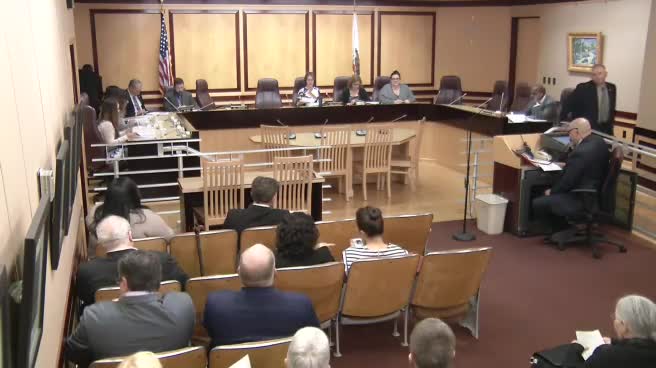 6MIN
Senate Standing Committee on Public Safety
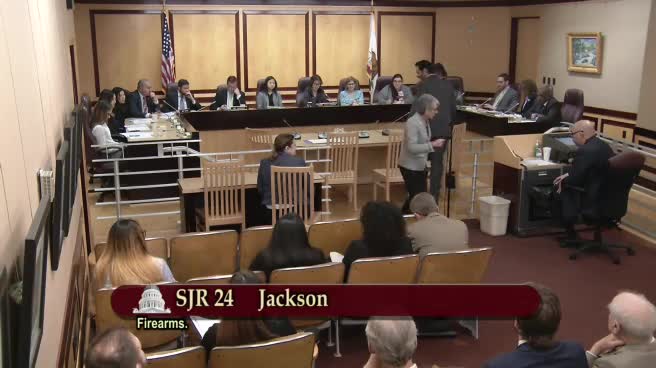 24MIN
Senate Standing Committee on Public Safety
Bill Author

Bill Co-Author(s):