SB 1108: Medi-Cal: conditions of eligibility or coverage.
- Session Year: 2017-2018
- House: Senate
- Latest Version Date: 2018-09-22
Existing law establishes the Medi-Cal program, which is administered by the State Department of Health Care Services and under which qualified low-income individuals receive health care services. The Medi-Cal program is, in part, governed and funded by federal Medicaid program provisions. Existing federal guidance authorizes the states to require, through Medicaid demonstration projects, certain adult Medicaid beneficiaries to participate in work or community engagement activities as a condition of continued Medicaid eligibility or coverage.
This bill would authorize the department to seek waivers of federal Medicaid requirements, including, but not limited to, demonstration projects that aim to either increase the number of Medi-Cal beneficiaries or enhance the medical assistance provided to beneficiaries, as specified. The bill would require a waiver proposed by the department, which offers nonmedical benefits to Medi-Cal beneficiaries, to offer these benefits on a voluntary basis, and not as a condition of receiving medical assistance.
Existing law establishes the Medi-Cal program, which is administered by the State Department of Health Care Services and under which qualified low-income individuals receive health care services. The Medi-Cal program is, in part, governed and funded by federal Medicaid program provisions. Existing federal guidance authorizes the states to require, through Medicaid demonstration projects, certain adult Medicaid beneficiaries to participate in work or community engagement activities as a condition of continued Medicaid eligibility or coverage.
This bill would prohibit the department from seeking or obtaining a Medicaid demonstration project or waiver to require work or community engagement activities as a condition of Medi-Cal eligibility or coverage, to require waiting periods, time limits, or coverage lockouts, as specified, or to require any other condition of Medi-Cal eligibility or coverage not required by any other provision of state law or federal statute or regulation. The bill would not preclude the department from establishing or maintaining additional eligibility criteria for public health benefit programs administered by the department that offer additional benefits or care coordination to Medi-Cal beneficiaries, nor would the bill limit the departments ability to establish or maintain additional eligibility criteria for the purpose of extending Medi-Cal coverage to an eligibility category or group that is otherwise ineligible for full-scope Medi-Cal benefits. authorize the department to seek waivers of federal Medicaid requirements, including, but not limited to, demonstration projects that aim to either increase the number of Medi-Cal beneficiaries or enhance the medical assistance provided to beneficiaries, as specified. The bill would require a waiver proposed by the department, which offers nonmedical benefits to Medi-Cal beneficiaries, to offer these benefits on a voluntary basis, and not as a condition of receiving medical assistance.
Existing law establishes the Medi-Cal program, which is administered by the State Department of Health Care Services and under which qualified low-income individuals receive health care services. The Medi-Cal program is, in part, governed and funded by federal Medicaid program provisions. Existing federal guidance authorizes the states to require, through Medicaid demonstration projects, certain adult Medicaid beneficiaries to participate in work or community engagement activities as a condition of continued Medicaid eligibility or coverage.
This bill would prohibit the department from seeking or obtaining a Medicaid demonstration project or waiver to require work or community engagement activities as a condition of Medi-Cal eligibility or coverage, to require waiting periods, time limits, or coverage lockouts, as specified, or to require any other condition of Medi-Cal eligibility or coverage not required by any other provision of state law or federal statute or regulation. The bill would not preclude the department from establishing or maintaining additional eligibility criteria for public health benefit programs administered by the department that offer additional benefits or care coordination to Medi-Cal beneficiaries, nor would the bill limit the departments ability to establish or maintain additional eligibility criteria for the purpose of extending Medi-Cal coverage to an eligibility category or group that is otherwise ineligible for full-scope Medi-Cal benefits.
Existing law establishes the Medi-Cal program, which is administered by the State Department of Health Care Services and under which qualified low-income individuals receive health care services. The Medi-Cal program is, in part, governed and funded by federal Medicaid program provisions. Existing federal guidance authorizes the states to require, through Medicaid demonstration projects, certain adult Medicaid beneficiaries to participate in work or community engagement activities as a condition of continued Medicaid eligibility or coverage.
This bill would prohibit the department from seeking or obtaining a Medicaid demonstration project or waiver to require work or community engagement activities as a condition of Medi-Cal eligibility or coverage, to require waiting periods, time limits, or coverage lockouts, as specified, or to require any other condition of Medi-Cal eligibility or coverage not authorized required by any other provision of state law or federal statute or regulation.
Existing law establishes the Medi-Cal program, which is administered by the State Department of Health Care Services and under which qualified low-income individuals receive health care services. The Medi-Cal program is, in part, governed and funded by federal Medicaid program provisions. Existing federal guidance authorizes the states to require, through Medicaid demonstration projects, certain adult Medicaid beneficiaries to participate in work or community engagement activities as a condition of continued Medicaid eligibility or coverage.
This bill would prohibit the department from seeking or obtaining a Medicaid demonstration project or waiver to require work or community engagement activities as a condition of Medi-Cal eligibility or coverage, to require waiting periods, time limits, or coverage lockouts, as specified, or to require any other condition of Medi-Cal eligibility or coverage not authorized by any other provision of state law or federal statute or regulation.
(a)The Legislature finds and declares that the goal of the Medi-Cal program is to provide comprehensive health care to low-income Californians who cannot afford the cost of health care.
(b)(1)The department may seek waivers of federal Medicaid requirements in furtherance of this goal, including, but not limited to, demonstration projects that aim to either increase the number of Medi-Cal beneficiaries or enhance the medical assistance provided to beneficiaries.
(2)A waiver proposed by the department, which offers nonmedical benefits to Medi-Cal beneficiaries, including, but not limited to, employment or housing assistance, shall offer these benefits on a voluntary basis, and not as a condition of receiving medical assistance.
(c)Prior to applying for a federal waiver or an extension of a federal waiver, the department shall provide a public notice and comment period pursuant to Section 431.408 of Title 42 of the Code of Federal Regulations, effective April 27, 2012, and any other subsequently developed federal requirements.
SECTION 1.Section 14012 is added to the Welfare and Institutions Code, to read:14012.The department shall neither seek nor obtain a Medicaid demonstration project or waiver to require any of the following:(a)Work or community engagement activities as a condition of Medi-Cal eligibility or coverage.(b)Waiting periods, time limits, or coverage lockouts prior or subsequent to the determination of Medi-Cal eligibility or coverage.(c)Any other condition of Medi-Cal eligibility or coverage not required by any other provision of state law or federal statute or regulation.(d)This section shall not preclude the department from establishing or maintaining additional eligibility criteria for public health benefit programs administered by the department that offer additional benefits or care coordination to Medi-Cal beneficiaries, nor shall this section limit the departments ability to establish or maintain additional eligibility criteria for the purpose of extending Medi-Cal coverage to an eligibility category or group that is otherwise ineligible for full-scope Medi-Cal benefits.The department shall not neither seek or nor obtain a Medicaid demonstration project or waiver to require any of the following:
(a)Work or community engagement activities as a condition of Medi-Cal eligibility or coverage.
(b)Waiting periods, time limits, or coverage lockouts prior or subsequent to the determination of Medi-Cal eligibility or coverage.
(c)Any other condition of Medi-Cal eligibility or coverage not required by any other provision of state law or federal statute or regulation.
(d)This section shall not preclude the department from establishing or maintaining additional eligibility criteria for public health benefit programs administered by the department that offer additional benefits or care coordination to Medi-Cal beneficiaries, nor shall this section limit the departments ability to establish or maintain additional eligibility criteria for the purpose of extending Medi-Cal coverage to an eligibility category or group that is otherwise ineligible for full-scope Medi-Cal benefits.
The department shall not seek or obtain a Medicaid demonstration project or waiver to require any of the following:
(a)Work or community engagement activities as a condition of Medi-Cal eligibility or coverage.
(b)Waiting periods, time limits, or coverage lockouts prior or subsequent to the determination of Medi-Cal eligibility or coverage.
(c)Any other condition of Medi-Cal eligibility or coverage not authorized required by any other provision of state law or federal statute or regulation.
The department shall not seek or obtain a Medicaid demonstration project or waiver to require any of the following:
(a)Work or community engagement activities as a condition of Medi-Cal eligibility or coverage.
(b)Waiting periods, time limits, or coverage lockouts prior or subsequent to the determination of Medi-Cal eligibility or coverage.
(c)Any other condition of Medi-Cal eligibility or coverage not authorized by any other provision of state law or federal statute or regulation.
|
Date
|
Status
|
|---|---|
| Sep 22, 2018 | Chaptered by Secretary of State. Chapter 692, Statutes of 2018. |
| Sep 22, 2018 | Approved by the Governor. |
| Sep 5, 2018 | Enrolled and presented to the Governor at 3:30 p.m. |
| Aug 28, 2018 | Assembly amendments concurred in. (Ayes 29. Noes 9.) Ordered to engrossing and enrolling. |
| Aug 28, 2018 | In Senate. Concurrence in Assembly amendments pending. |
| Aug 27, 2018 | Read third time. Passed. Ordered to the Senate. |
| Aug 20, 2018 | Read third time and amended. |
| Aug 16, 2018 | Read second time. Ordered to third reading. |
| Aug 15, 2018 | From committee: Do pass. (Ayes 12. Noes 5.) (August 15). |
| Jun 27, 2018 | From committee: Do pass and re-refer to Com. on APPR. (Ayes 11. Noes 3.) (June 26). Re-referred to Com. on APPR. |
| Jun 20, 2018 | From committee with author's amendments. Read second time and amended. Re-referred to Com. on HEALTH. |
| May 31, 2018 | Referred to Com. on HEALTH. |
| May 21, 2018 | In Assembly. Read first time. Held at Desk. |
| May 21, 2018 | Read third time. Passed. (Ayes 28. Noes 11.) Ordered to the Assembly. |
| May 15, 2018 | Read second time. Ordered to third reading. |
| May 14, 2018 | From committee: Be ordered to second reading pursuant to Senate Rule 28.8. |
| May 4, 2018 | Set for hearing May 14. |
| Apr 9, 2018 | Read second time and amended. Re-referred to Com. on APPR. |
| Apr 5, 2018 | From committee: Do pass as amended and re-refer to Com. on APPR. (Ayes 8. Noes 1.) (April 4). |
| Mar 12, 2018 | Set for hearing April 4. |
| Feb 22, 2018 | Referred to Com. on HEALTH. |
| Feb 14, 2018 | From printer. May be acted upon on or after March 16. |
| Feb 13, 2018 | Introduced. Read first time. To Com. on RLS. for assignment. To print. |
|
Date
|
Description
|
Location
|
Votes
|
|
|---|---|---|---|---|
| Aug 28, 2018 | Unfinished Business SB1108 Hernandez et al. Concurrence | Senate Floor |
Passed |
|
| Aug 27, 2018 | SB 1108 Hernandez Senate Third Reading By BONTA | Assembly Floor |
Passed |
|
| Aug 15, 2018 | Do pass. | Assembly Standing Committee on Appropriations |
Passed |
|
| Jun 26, 2018 | Do pass and be re-referred to the Committee on [Appropriations] | Assembly Standing Committee on Health |
Passed |
|
| May 21, 2018 | Senate 3rd Reading SB1108 Hernandez et al. | Senate Floor |
Passed |
|
| Apr 4, 2018 | Do pass as amended, but first amend, and re-refer to the Committee on [Appropriations] | Senate Standing Committee on Health |
Passed |
This list shows positions taken on this bill by organizations on the date displayed, which is linked to the original source.
Positions by individuals are not included.
Office of Senate Floor Analyses (916) 651-1520 Fax: (916) 327-4478 | SB |
UNFINISHED BUSINESS
Bill No: SB 1108
:
SENATE HEALTH COMMITTEE: 8-1, 4/4/18
AYES: Hernandez, Nguyen, Leyva, Mitchell, Monning, Newman, Pan, Roth
NOES: Nielsen
SENATE APPROPRIATIONS COMMITTEE: Senate Rule 28.8
SENATE FLOOR: 28-11, 5/21/18
AYES: Allen, Atkins, Beall, Bradford, Cannella, De León, Dodd, Galgiani, Glazer, Hernandez, Hertzberg, Hill, Hueso, Jackson, Lara, Leyva, McGuire, Mitchell, Monning, Newman, Nguyen, Pan, Portantino, Roth, Skinner, Stern, Wieckowski, Wiener
NOES: Anderson, Bates, Berryhill, Fuller, Gaines, Moorlach, Morrell, Nielsen, Stone, Vidak, Wilk
ASSEMBLY FLOOR: 57-21, 8/27/18 - See last page for vote
SUBJECT: Medi-Cal: conditions of eligibility or coverage
SOURCE: Western Center on Law & Poverty
DIGEST:
This bill makes a legislative finding and declaration that the goal of the Medi-Cal program is to provide comprehensive health care to low-income Californians who cannot afford the cost of health care, and permits the Department of Health Care Services (DHCS) to seek waivers of federal Medicaid requirements in furtherance of this goal, including, but not limited to, demonstration projects that aim to either increase the number of Medi-Cal beneficiaries or enhance the medical assistance provided to beneficiaries.
Assembly Amendments delete the prohibition against DHCS from seeking or obtaining a Medicaid demonstration project or waiver to require any work or community engagement activities as a condition of Medi-Cal eligibility or coverage, waiting periods, time limits, or coverage lockouts prior or subsequent to the determination of Medi-Cal eligibility or coverage or, any other condition of Medi-Cal eligibility or coverage not required by any other provision of state law or federal statute or regulation, and instead permit DHCS to seek Medicaid waivers that further the goal of providing comprehensive health care to low-income Californians who cannot afford the cost of health care.
Existing law:
- Establishes the Medi-Cal program, which is administered by DHCS and under which qualified low-income individuals receive health care services. (WIC §14000 et seq)
- Establishes, through state and federal law, eligibility criteria for Medicaid and Medi-Cal. Requires individuals to be state residents, to have eligibility redetermined annually, to report any changes in circumstances that may affect eligibility within 10 days following the date of the change, and to have incomes below certain threshold amounts based on the federal poverty level. (WIC §14005.37, 14007, 14005.60 and 14005.64)
- Permits, under federal Medicaid law, the federal Secretary of the Department of Health and Human Services (HHS) to waive compliance with specified provisions of federal Medicaid law in the case of any experimental, pilot, or demonstration project which, in the judgment of the Secretary, is likely to assist in promoting the objectives of the Medicaid program in a state or states. (42 U.S. Code §1315)
This bill:
- Makes a legislative finding and declaration that the goal of the Medi-Cal program is to provide comprehensive health care to low-income Californians who cannot afford the cost of health care.
- Permits DHCS to seek waivers of federal Medicaid requirements in furtherance of this goal, including, but not limited to, demonstration projects that aim to either increase the number of Medi-Cal beneficiaries or enhance the medical assistance provided to beneficiaries.
- Requires a waiver proposed by DHCS, which offers nonmedical benefits to Medi-Cal beneficiaries, including, but not limited to, employment or housing assistance, to offer these benefits on a voluntary basis, and not as a condition of receiving medical assistance.
- Requires DHCS, prior to applying for a federal waiver or an extension of a federal waiver, to provide a public notice and comment period pursuant to federal regulation, and any other subsequently developed federal requirements.
Comments
- Author’s statement. According to the author, in January, 2018, the Centers for Medicare and Medicaid Services (CMS) announced a dramatic departure from previous agency policy by allowing states to condition Medicaid coverage on work and community engagement for certain adult beneficiaries. The underlying theory behind imposing a work requirement is that people who are not working have chosen to be unemployed. However, most Medicaid beneficiaries who can work already do so. Conditioning Medi-Cal coverage on a work requirement would result in the loss of Medi-Cal coverage for people who need health coverage to work, and Medi-Cal beneficiaries who are unable to work because of their health status, school attendance or because they are primary caregivers for family members. Finally, a work requirement would reintroduce overly burdensome paperwork obligations for beneficiaries, and result in higher state and county administrative costs to administer and enforce this requirement. California has been a leader in implementing the Affordable Care Act (ACA) and taking steps to encourage enrollment in coverage. Making Medi-Cal contingent on work requirements is a step backwards. This bill puts California on record as rejecting this misguided and mean-spirited attempts by the Trump Administration to take Medi-Cal coverage away from those who need it most.
- Federal waiver authority. Medicaid (known as Medi-Cal in California) is a joint federal-state program that provides health coverage to low-income individuals. States seeking additional flexibility in design of their Medicaid programs may apply for formal waivers of some statutory requirements from the Secretary of HHS. There are three types of Medicaid waivers: Freedom of choice (Section 1915(b) waivers), home and community-based services (Section 1915(c) waivers), and Section 1115 Research and Demonstration Projects. California has all three types of these waivers.
Section 1115 of the federal Social Security Act (Act) gives the Secretary of HHS authority to waive provisions of major health and welfare programs authorized under the Act. This includes certain federal Medicaid requirements in any experimental pilot or demonstration project which, in the judgment of the Secretary, is likely to assist in promoting the objectives of Medicaid. Section 1115 waivers are approved at the discretion of the Secretary through negotiations between a state and CMS for projects that the Secretary determines promote Medicaid program objectives. Section 1115 waivers are generally approved for a five-year period and then must be renewed. Although not required by statute or regulation, longstanding federal administrative policy has required waivers to be “budget neutral” for the federal government, meaning that federal spending under a waiver must not be more than projected federal spending in the state without the waiver.
Waivers have been used in California to cover individuals not traditionally eligible for Medi-Cal, and to provide services Medicaid would not traditionally pay for (referred to as “costs not otherwise matchable”). Waivers have also been used to try to leverage policy changes. For example, the state’s 2005 Section 1115 waiver conditioned $360 million in federal funds during the first two years of the waiver (2005-06 and 2006-07) on the state expanding mandatory Medi-Cal managed care to seniors and persons with disabilities.
- CMS policy change via State Medicaid letter. On January 11, 2018, CMS announced via a State Medicaid letter it would allow states to condition Medicaid coverage, through a Section 1115 Medicaid waiver, on work and community engagement for non-elderly, non-pregnant adult beneficiaries who are eligible for Medicaid on a basis other than disability. CMS’ letter indicated it was committing to support state demonstrations that require eligible adult beneficiaries to engage in work or community engagement activities (e.g., skills training, education, job search, caregiving, volunteer service) in order to determine whether those requirements assist beneficiaries in obtaining sustainable employment or other productive community engagement, and whether sustained employment or other productive community engagement leads to improved health outcomes.
The CMS letter requires states to create exemptions for individuals determined by the state to be medically frail, individuals with acute medical conditions validated by a medical professional that would prevent them from complying with the requirement, and individuals classified as disabled. In addition, states that use this option are required to take certain steps to ensure that eligible individuals with opioid addiction and other substance use disorders have access to appropriate Medicaid coverage and treatment services. CMS indicates states will be required to evaluate the health and other outcomes of individuals that have been enrolled in and subject to the provisions of the demonstration, and states will be required to conduct robust, independent program evaluations.
- Work and community engagement issue brief. A March 2018 issue brief from the federal Medicaid and CHIP Payment and Access Commission (MACPAC) indicates a number of states formally asked for permission to impose work requirements as a condition of Medicaid eligibility. Kentucky’s Section 1115 waiver includes work requirements, premiums and multiple coverage “lock out” periods (for failure to timely renew eligibility, report a change in circumstances affecting eligibility, or for non-payment of premiums). The Kentucky waiver also eliminated retroactive eligibility for most adults, and waived non-emergency medical transportation for all services for most expansion adults. The MACPAC issue brief indicates two other states (Indiana and Arkansas) have also received approval to adopt work and community engagement requirements, with the requirements expected to take effect in June 2018 in Arkansas, July 2018 in Kentucky, and January 2019 in Indiana.
MACPAC indicates states differ in the proposed penalties for members who do not comply with the work requirements. Most states plan to disenroll Medicaid beneficiaries until they comply with work requirements. For example, Kentucky will suspend Medicaid eligibility until a member achieves compliance for one month or completes a state-approved financial or health literacy course. Individuals in suspended status at the time of their annual Medicaid redetermination will be disenrolled from Medicaid. Arkansas will disenroll members after three months of non-compliance, and bar them from reenrollment until the following coverage year. Other proposed penalties for non-compliance with work requirements include fixed lockout periods (e.g., six months), or counting any time that a member did not comply with the work requirement against a time limit on eligibility.
The number of Medicaid beneficiaries whose coverage could be affected by a work requirement depends on the design specifications, but all states proposing work requirements for current populations anticipate reductions in Medicaid enrollment over the five-year demonstration period relative to the status quo. For example, the MACPAC issue brief states Kentucky estimates that 97,000 beneficiaries will lose coverage as a result of the policies in the waiver, including work requirements. Indiana estimates that approximately 25% of the population subject to the work requirement (approximately 25,000 people) will choose not to participate and therefore will be disenrolled.
As of mid-January 2018, six other states (AZ, KS, ME, NH, UT, and WI) have pending waiver requests at CMS that would require work as a condition of eligibility for expansion adults and/or traditional populations (Mississippi has also submitted a waiver proposal to CMS, but it has not yet been certified as complete.) The Kentucky waiver has been challenged by consumer advocates in federal court as violating several provisions of federal law, including the Medicaid waiver authority.
- Work status of Medi-Cal adult beneficiaries. According to 2016 data on California from the Kaiser Family Foundation, most non-disabled non-elderly adult Medi-Cal beneficiaries are in a family with a full-time worker (69%) or a part-time worker (14%). Reasons for not working among these individuals was because of illness or disability (28%), caretaker responsibilities (36%), or attending school (18%).
FISCAL EFFECT: Appropriation: No Fiscal Com.: Yes Local: No
Unknown. This bill as amended has not been analyzed by a fiscal committee.
Western Center on Law & Poverty (source)
ACCE Action
AIDS Healthcare Foundation
Alliance of Californians for Community Empowerment
America’s Physician Groups
American Academy of Pediatrics, California
American Cancer Society Cancer Action Network
American Diabetes Association
American Federation of State, County and Municipal Employees, AFL-CIO
Asian Americans Advancing Justice-Los Angeles
Asian Law Alliance
Bay Area Legal Aid
California Association of Public Hospitals and Health Systems
California Children’s Health Coverage Coalition
California Coverage & Health Initiatives
California Health Professional Student Alliance
California Immigrant Policy Center
California Labor Federation
California Pan-Ethnic Health Network
California Partnership
California Physicians Alliance
California School Employees Association
CaliforniaHealth+ Advocates
Children Now
Children's Defense Fund – California
Community Health Councils
Congress of California Seniors
Courage Campaign
Disability Rights California
Disability Rights Education & Defense Fund
Essential Access Health
Food Bank of Contra Costa & Solano
Having Our Say!
Health Access California
Hispanas Organized for Political Equality
Jewish Family Service of Los Angeles
Justice in Aging
Law Foundation of Silicon Valley
Legal Aid Society of San Mateo County
Leukemia & Lymphoma Society
Los Angeles LGBT Center
Maternal and Child Health Access
National Health Law Program
National Immigration Law Center
Nurse-Family Partnership
Planned Parenthood Affiliates of California
Private Essential Access Community Hospitals, Inc.
San Diegans for Healthcare Coverage
San Francisco AIDS Foundation
The Children’s Partnership
United Ways of California
OPPOSITION: (Verified 8/27/18)
Department of Health Care Services
ARGUMENTS IN SUPPORT: This bill is sponsored by the Western Center on Law & Poverty and supported by health-related consumer groups. Supporters write that the Trump Administration, having failed to repeal the ACA, is now seeking to repeal the Medicaid expansion by approved state Medicaid waivers that undermine the purpose of the Medicaid statute, including work requirements and Medicaid lock-out period and is currently reviewing requests to impose time limits on receiving Medicaid and enrollment caps on state Medicaid programs. This bill prevents California from seeking such waivers, and only allows changes that restrict Medi-Cal eligibility that comply with the law. Should the Trump Administration try to impose work requirements or any other condition of eligibility on a waiver application, California would be unable to accept it absent a change in state statute approved by the Legislature. The American Cancer Society Cancer Action Network writes in support that, for those who are diagnosed with cancer, a work requirement is especially problematic as cancer treatment often causes several side effects, some of which can be serious and debilitating, and treating physicians may advise cancer patients to not attempt to work during treatment to avoid infection and to have time to heal. Finally, supporters conclude that California is proud of its efforts to implement the ACA that resulted in millions of low-income residents gaining Medi-Cal coverage, and this bill safeguards these gains made and ensure that low-income Californians do not lose their health care.
ARGUMENTS IN OPPOSITION: DHCS writes in opposition to the previous version of this bill that this measure will inappropriately restrict the ability and flexibility of DHCS to negotiate future waivers with the federal government. DHCS writes that, while it appreciates the concern raised by the advocates, California has a robust waiver stakeholder process and the past several waivers have all included statutory authorization from the Legislature. DHCS concludes that it believes this proposed prohibition in statute is both overly restrictive and unnecessary.
ASSEMBLY FLOOR: 57-21, 8/27/18
AYES: Aguiar-Curry, Arambula, Baker, Berman, Bloom, Bonta, Burke, Caballero, Calderon, Carrillo, Cervantes, Chau, Chiu, Chu, Cooley, Cooper, Daly, Eggman, Frazier, Friedman, Gabriel, Cristina Garcia, Eduardo Garcia, Gipson, Gloria, Gonzalez Fletcher, Gray, Grayson, Holden, Irwin, Jones-Sawyer, Kalra, Kamlager-Dove, Levine, Limón, Low, Maienschein, McCarty, Medina, Mullin, Muratsuchi, Nazarian, O'Donnell, Quirk, Quirk-Silva, Reyes, Rivas, Rodriguez, Rubio, Salas, Santiago, Mark Stone, Thurmond, Ting, Weber, Wood, Rendon
NOES: Acosta, Travis Allen, Bigelow, Brough, Chen, Choi, Cunningham, Dahle, Fong, Gallagher, Harper, Kiley, Lackey, Mathis, Mayes, Melendez, Obernolte, Patterson, Steinorth, Voepel, Waldron
NO VOTE RECORDED: Chávez, Flora
8/28/18 9:36:34
**** END ****
SENATE THIRD READING
STR Bill Id:SB 1108
Author:(Hernandez)
As Amended Ver:August 20, 2018
Majority vote
SENATE VOTE: 28-11
Committee | Votes | Ayes | Noes |
Health | 11-3 | Wood, Aguiar-Curry, Bonta, Burke, Carrillo, Limón, McCarty, Nazarian, Rodriguez, Santiago, Thurmond | Mayes, Bigelow, Waldron |
Appropriations | 12-5 | Gonzalez Fletcher, Bloom, Bonta, Calderon, Carrillo, Chau, Eggman, Friedman, Eduardo Garcia, Nazarian, Quirk, Reyes | Bigelow, Brough, Fong, Gallagher, Obernolte |
SUMMARY: Authorizes the Department of Health Care Services to seek federal Medicaid waivers that further the goal of Medi-Cal which is to provide comprehensive health care to low-income Californians who cannot afford the cost of health care. Specifically, this bill:
- Finds and declares that the goal of the Medi-Cal program is to provide comprehensive health care to low-income Californians who cannot afford the cost of health care.
- Authorizes the Department of Health Care Services to seek waivers of federal Medicaid requirements in furtherance of 1), above, including, but not limited to, demonstration projects that aim to either increase the number of Medi-Cal beneficiaries or enhance the medical assistance provided to beneficiaries.
- Provides that a waiver proposed by DHCS, which offers nonmedical benefits to Medi-Cal beneficiaries, including but not limited to, employment or housing assistance, must offer these benefits on a voluntary basis, and not as a condition of receiving medical assistance.
- Requires DHCS, prior to applying for a federal waiver or an extension of a federal waiver, to provide a public notice and comment period, as specified.
FISCAL EFFECT: Unknown. This bill as amended has not been analyzed by a fiscal committee.
COMMENTS: According to the author, in January, 2018, the Centers for Medicare and Medicaid Services (CMS) announced a dramatic departure from previous agency policy by allowing states to condition Medicaid coverage on work and community engagement for certain adult beneficiaries. The underlying theory behind imposing a work requirement is that people who are not working have chosen to be unemployed. However, most Medicaid beneficiaries who can work already do so. Conditioning Medi-Cal coverage on a work requirement would result in the loss of Medi-Cal coverage for people who need health coverage to work, and Medi-Cal beneficiaries who are unable to work because of their health status, school attendance or because they are primary caregivers for family members. Finally, a work requirement would reintroduce overly burdensome paperwork obligations for beneficiaries, and result in higher state and county administrative costs to administer and enforce this requirement. California has been a leader in implementing the Patient Protection and Affordable Care Act (ACA) and taking steps to encourage enrollment in coverage. Making Medi-Cal contingent on work requirements is a step backwards. This bill puts California on record as rejecting these misguided and mean-spirited attempts by the Trump Administration to take Medi-Cal coverage away from those who need it most
CMS policy change via State Medicaid letter. On January 11, 2018, CMS announced via a State Medicaid letter it would allow states to condition Medicaid coverage, through a Section 1115 Medicaid waiver, on work and community engagement for non-elderly, non-pregnant adult beneficiaries who are eligible for Medicaid on a basis other than disability. CMS' letter indicated it was committing to support state demonstrations that require eligible adult beneficiaries to engage in work or community engagement activities (e.g., skills training, education, job search, caregiving, volunteer service) in order to determine whether those requirements assist beneficiaries in obtaining sustainable employment or other productive community engagement, and whether sustained employment or other productive community engagement leads to improved health outcomes.
The CMS letter requires states to create exemptions for individuals determined by the state to be medically frail, individuals with acute medical conditions validated by a medical professional that would prevent them from complying with the requirement, and individuals classified as disabled. In addition, states that use this option are required to take certain steps to ensure that eligible individuals with opioid addiction and other substance use disorders have access to appropriate Medicaid coverage and treatment services. CMS indicates states will be required to evaluate the health and other outcomes of individuals that have been enrolled in and subject to the provisions of the demonstration, and states will be required to conduct robust, independent program evaluations.
Work and community engagement issue brief. A March 2018 issue brief from the federal Medicaid and Children's Health Insurance Program Payment and Access Commission (MACPAC) indicates a number of states formally asked for permission to impose work requirements as a condition of Medicaid eligibility. Kentucky's Section 1115 waiver includes work requirements, premiums and multiple coverage “lock out” periods (for failure to timely renew eligibility, report a change in circumstances affecting eligibility, or for non-payment of premiums). The Kentucky waiver also eliminated retroactive eligibility for most adults, and waived non-emergency medical transportation for all services for most expansion adults. The MACPAC issue brief indicates two other states (Indiana and Arkansas) have also received approval to adopt work and community engagement requirements, with the requirements expected to take effect in June 2018 in Arkansas, July 2018 in Kentucky, and January 2019 in Indiana.
MACPAC indicates states differ in the proposed penalties for members who do not comply with the work requirements. Most states plan to disenroll Medicaid beneficiaries until they comply with work requirements. For example, Kentucky will suspend Medicaid eligibility until a member achieves compliance for one month or completes a state-approved financial or health literacy course. Individuals in suspended status at the time of their annual Medicaid redetermination will be disenrolled from Medicaid. Arkansas will disenroll members after three months of non-compliance, and bar them from reenrollment until the following coverage year. Other proposed penalties for non-compliance with work requirements include fixed lockout periods (e.g., six months), or counting any time that a member did not comply with the work requirement against a time limit on eligibility.
The number of Medicaid beneficiaries whose coverage could be affected by a work requirement depends on the design specifications, but all states proposing work requirements for current populations anticipate reductions in Medicaid enrollment over the five-year demonstration period relative to the status quo. For example, the MACPAC issue brief states Kentucky estimates that 97,000 beneficiaries will lose coverage as a result of the policies in the waiver, including work requirements. Indiana estimates that approximately 25% of the population subject to the work requirement (approximately 25,000 people) will choose not to participate and therefore will be disenrolled.
Work status of Medi-Cal adult beneficiaries. According to 2016 data on California from the Kaiser Family Foundation, most non-disabled non-elderly adult Medi-Cal beneficiaries are in a family with a full-time worker (69%) or a part-time worker (14%). Reasons for not working among these individuals were because of illness or disability (28%), caretaker responsibilities (36%), or attending school (18%).
The Western Center on Law and Poverty, the sponsor of this bill, and other health-related consumer groups state that the Trump Administration, having failed to repeal the ACA, is now seeking to repeal the Medicaid expansion by approving state Medicaid waivers that undermine the purpose of the Medicaid statute, including work requirements and Medicaid lock-out period and is currently reviewing requests to impose time limits on receiving Medicaid and enrollment caps on state Medicaid programs. This bill ensures that waivers that include provisions not related to providing comprehensive health care do not jeopardize the health care of low-income Californians. In other words, should California decide to add employment assistance to its Medi-Cal program, such assistance may only be provided voluntarily, and not as a condition of continuing to receive health care.
DHCS opposes a previous version of this bill because it reduces the department's flexibility to negotiate waivers with the federal government.
Analysis Prepared by: Rosielyn Pulmano / HEALTH / (916) 319-2097 FN: 0004336
SENATE THIRD READING
STR Bill Id:SB 1108
Author:(Hernandez)
As Amended Ver:June 20, 2018
Majority vote
SENATE VOTE: 28-11
Committee | Votes | Ayes | Noes |
Health | 11-3 | Wood, Aguiar-Curry, Bonta, Burke, Carrillo, Limón, McCarty, Nazarian, Rodriguez, Santiago, Thurmond | Mayes, Bigelow, Waldron |
Appropriations | 12-5 | Gonzalez Fletcher, Bloom, Bonta, Calderon, Carrillo, Chau, Eggman, Friedman, Eduardo Garcia, Nazarian, Quirk, Reyes | Bigelow, Brough, Fong, Gallagher, Obernolte |
SUMMARY: Prohibits the Department of Health Care Services (DHCS) from seeking or obtaining a Medicaid demonstration project or waiver to require work or community engagement activities as a condition of Medi-Cal eligibility or coverage. Specifically, this bill:
- Prohibits DHCS from seeking or obtaining a Medicaid demonstration project or waiver to require any of the following as a condition of Medi-Cal eligibility or coverage:
- Work or community engagement activities;
- Waiting periods, time limits, or coverage lockouts prior or subsequent to determination of Medi-Cal eligibility; or,
- Any other condition of Medi-Cal eligibility or coverage not required by any other provision of state law or federal statute or regulation.
- Provides that this bill does not: a) preclude DHCS from establishing or maintaining additional eligibility criteria for public health benefit programs it administers that offer additional benefits or care coordination to Medi-Cal beneficiaries; or b) limit DHCS' ability to establish or maintain additional eligibility criteria for the purpose of extending Medi-Cal coverage to an eligibility category or group that is otherwise ineligible for full-scope Medi-Cal benefits.
FISCAL EFFECT: According to the Assembly Appropriations Committee, negligible costs.
COMMENTS: According to the author, in January, 2018, the Centers for Medicare and Medicaid Services (CMS) announced a dramatic departure from previous agency policy by allowing states to condition Medicaid coverage on work and community engagement for certain adult beneficiaries. The underlying theory behind imposing a work requirement is that people who are not working have chosen to be unemployed. However, most Medicaid beneficiaries who can work already do so. Conditioning Medi-Cal coverage on a work requirement would result in the loss of Medi-Cal coverage for people who need health coverage to work, and Medi-Cal beneficiaries who are unable to work because of their health status, school attendance or because they are primary caregivers for family members. Finally, a work requirement would reintroduce overly burdensome paperwork obligations for beneficiaries, and result in higher state and county administrative costs to administer and enforce this requirement. California has been a leader in implementing the Patient Protection and Affordable Care Act (ACA) and taking steps to encourage enrollment in coverage. Making Medi-Cal contingent on work requirements is a step backwards. This bill puts California on record as rejecting these misguided and mean-spirited attempts by the Trump Administration to take Medi-Cal coverage away from those who need it most
CMS policy change via State Medicaid letter. On January 11, 2018, CMS announced via a State Medicaid letter it would allow states to condition Medicaid coverage, through a Section 1115 Medicaid waiver, on work and community engagement for non-elderly, non-pregnant adult beneficiaries who are eligible for Medicaid on a basis other than disability. CMS' letter indicated it was committing to support state demonstrations that require eligible adult beneficiaries to engage in work or community engagement activities (e.g., skills training, education, job search, caregiving, volunteer service) in order to determine whether those requirements assist beneficiaries in obtaining sustainable employment or other productive community engagement, and whether sustained employment or other productive community engagement leads to improved health outcomes.
The CMS letter requires states to create exemptions for individuals determined by the state to be medically frail, individuals with acute medical conditions validated by a medical professional that would prevent them from complying with the requirement, and individuals classified as disabled. In addition, states that use this option are required to take certain steps to ensure that eligible individuals with opioid addiction and other substance use disorders have access to appropriate Medicaid coverage and treatment services. CMS indicates states will be required to evaluate the health and other outcomes of individuals that have been enrolled in and subject to the provisions of the demonstration, and states will be required to conduct robust, independent program evaluations.
Work and community engagement issue brief. A March 2018 issue brief from the federal Medicaid and Children's Health Insurance Program Payment and Access Commission (MACPAC) indicates a number of states formally asked for permission to impose work requirements as a condition of Medicaid eligibility. Kentucky's Section 1115 waiver includes work requirements, premiums and multiple coverage "lock out" periods (for failure to timely renew eligibility, report a change in circumstances affecting eligibility, or for non-payment of premiums). The Kentucky waiver also eliminated retroactive eligibility for most adults, and waived non-emergency medical transportation for all services for most expansion adults. The MACPAC issue brief indicates two other states (Indiana and Arkansas) have also received approval to adopt work and community engagement requirements, with the requirements expected to take effect in June 2018 in Arkansas, July 2018 in Kentucky, and January 2019 in Indiana.
MACPAC indicates states differ in the proposed penalties for members who do not comply with the work requirements. Most states plan to disenroll Medicaid beneficiaries until they comply with work requirements. For example, Kentucky will suspend Medicaid eligibility until a member achieves compliance for one month or completes a state-approved financial or health literacy course. Individuals in suspended status at the time of their annual Medicaid redetermination will be disenrolled from Medicaid. Arkansas will disenroll members after three months of non-compliance, and bar them from reenrollment until the following coverage year. Other proposed penalties for non-compliance with work requirements include fixed lockout periods (e.g., six months), or counting any time that a member did not comply with the work requirement against a time limit on eligibility.
The number of Medicaid beneficiaries whose coverage could be affected by a work requirement depends on the design specifications, but all states proposing work requirements for current populations anticipate reductions in Medicaid enrollment over the five-year demonstration period relative to the status quo. For example, the MACPAC issue brief states Kentucky estimates that 97,000 beneficiaries will lose coverage as a result of the policies in the waiver, including work requirements. Indiana estimates that approximately 25% of the population subject to the work requirement (approximately 25,000 people) will choose not to participate and therefore will be disenrolled.
Work status of Medi-Cal adult beneficiaries. According to 2016 data on California from the Kaiser Family Foundation, most non-disabled non-elderly adult Medi-Cal beneficiaries are in a family with a full-time worker (69%) or a part-time worker (14%). Reasons for not working among these individuals were because of illness or disability (28%), caretaker responsibilities (36%), or attending school (18%).
The Western Center on Law and Poverty, the sponsor of this bill, and other health-related consumer groups state that the Trump Administration, having failed to repeal the ACA, is now seeking to repeal the Medicaid expansion by approving state Medicaid waivers that undermine the purpose of the Medicaid statute, including work requirements and Medicaid lock-out period and is currently reviewing requests to impose time limits on receiving Medicaid and enrollment caps on state Medicaid programs. This bill prevents California from seeking such waivers, and only allows changes that restrict Medi-Cal eligibility that comply with the law. Should the Trump Administration try to impose work requirements or any other condition of eligibility on a waiver application, California would be unable to accept it absent a change in state statute approved by the Legislature.
DHCS opposes this bill because it reduces the department's flexibility to negotiate waivers with the federal government.
Analysis Prepared by: Rosielyn Pulmano / HEALTH / (916) 319-2097 FN: 0004247
Date of Hearing: August 15, 2018
ASSEMBLY COMMITTEE ON APPROPRIATIONS
Lorena Gonzalez Fletcher, Chair
SBPCA Bill Id:SB 1108
Author:(Hernandez) – As Amended Ver:June 20, 2018
Policy Committee: | Health | Vote: | 11 - 3 |
Urgency: No State Mandated Local Program: No Reimbursable: No
SUMMARY:
This bill prohibits the Department of Health Care Services (DHCS) from seeking or obtaining a Medicaid demonstration project or waiver to require work or community engagement activities as a condition of Medi-Cal eligibility or coverage.
It also prohibits DHCS from seeking waivers to impose waiting periods, time limits, or coverage lockouts or requiring any other condition that is not federally required.
FISCAL EFFECT:
Negligible.
COMMENTS:
- Purpose. This bill intends to preserve the status quo of Medi-Cal in California, which does not require work participation as a condition of eligibility for health care coverage. The author notes conditioning Medi-Cal coverage on a work requirement would result in the loss of Medi-Cal coverage for people who need health coverage to work, and Medi-Cal beneficiaries who are unable to work because of their health status, school attendance, or because they are primary caregivers for family members. A work requirement would also reintroduce overly burdensome paperwork obligations for beneficiaries, and result in higher state and county administrative costs to administer and enforce. This bill is sponsored by the Western Center on Law and Poverty (WCLP) and supported by a large coalition of labor and health advocacy groups.
- Background. On January 11, 2018, CMS announced via a state Medicaid letter it would allow states to condition Medicaid coverage, through a Section 1115 Medicaid waiver, on work and community engagement for non-elderly, non-pregnant adult beneficiaries who are eligible for Medicaid on a basis other than disability. Three states have approved plans to implement work requirements, and several other states have such waivers pending.
- Work Status of Medi-Cal Adult Beneficiaries. According to 2016 data on California from the Kaiser Family Foundation, most non-disabled non-elderly adult Medi-Cal beneficiaries are in a family with a full-time worker or a part-time worker. Reasons for not working among these individuals were: illness or disability (28%), caretaker responsibilities (36%), and attending school (18%).
- Opposition. DHCS opposes this bill because it reduces their flexibility to negotiate waivers with the federal government.
Analysis Prepared by: Lisa Murawski / APPR. / (916) 319-2081
Date of Hearing: June 26, 2018
ASSEMBLY COMMITTEE ON HEALTH
Jim Wood, Chair
SBPCA Bill Id:SB 1108
Author:(Hernandez) – As Amended Ver:June 20, 2018
SENATE VOTE: 28-11
SUBJECT: Medi-Cal: conditions of eligibility or coverage.
SUMMARY: Prohibits the Department of Health Care Services (DHCS) from seeking or obtaining a Medicaid demonstration project or waiver to require work or community engagement activities as a condition of Medi-Cal eligibility or coverage. Specifically, this bill:
- Prohibits DHCS from seeking or obtaining a Medicaid demonstration project or waiver to require any of the following as a condition of Medi-Cal eligibility or coverage:
- Work or community engagement activities;
- Waiting periods, time limits, or coverage lockouts prior or subsequent to determination of Medi-Cal eligibility; or,
- Any other condition of Medi-Cal eligibility or coverage not required by any other provision of state law or federal statute or regulation.
- Provides that this bill does not: a) preclude DHCS from establishing or maintaining additional eligibility criteria for public health benefit programs it administers that offer additional benefits or care coordination to Medi-Cal beneficiaries; or b) limit DHCS' ability to establish or maintain additional eligibility criteria for the purpose of extending Medi-Cal coverage to an eligibility category or group that is otherwise ineligible for full-scope Medi-Cal benefits.
EXISTING LAW:
- Establishes the Medi-Cal program, which is administered by DHCS and under which qualified low-income individuals receive health care services.
- Establishes, through state and federal law, eligibility criteria for Medicaid and Medi-Cal. Requires individuals to be state residents, to have eligibility redetermined annually, to report any changes in circumstances that may affect eligibility within ten days following the date of the change, and to have incomes below certain threshold amounts based on the federal poverty level (FPL).
- Permits, under federal Medicaid law, the federal Secretary of the Department of Health and Human Services to waive compliance with specified provisions of federal Medicaid law in the case of any experimental, pilot, or demonstration project which, in the judgment of the Secretary, is likely to assist in promoting the objectives of the Medicaid program in a State or States.
FISCAL EFFECT: According to the Senate Appropriations Committee, pursuant to Senate Rule 28.8 negligible costs.
COMMENTS:
- PURPOSE OF THIS BILL. According to the author, in January, 2018, the Centers for Medicare and Medicaid Services (CMS) announced a dramatic departure from previous agency policy by allowing states to condition Medicaid coverage on work and community engagement for certain adult beneficiaries. The underlying theory behind imposing a work requirement is that people who are not working have chosen to be unemployed. However, most Medicaid beneficiaries who can work already do so. Conditioning Medi-Cal coverage on a work requirement would result in the loss of Medi-Cal coverage for people who need health coverage to work, and Medi-Cal beneficiaries who are unable to work because of their health status, school attendance or because they are primary caregivers for family members. Finally, a work requirement would reintroduce overly burdensome paperwork obligations for beneficiaries, and result in higher state and county administrative costs to administer and enforce this requirement. California has been a leader in implementing the Patient Protection and Affordable Care Act (ACA) and taking steps to encourage enrollment in coverage. Making Medi-Cal contingent on work requirements is a step backwards. This bill puts California on record as rejecting this misguided and mean-spirited attempts by the Trump Administration to take Medi-Cal coverage away from those who need it most
- BACKGROUND.
- Federal section 1115 waiver authority. Medicaid (known as Medi-Cal in California) is a joint federal-state program that provides health coverage to low-income individuals. Section 1115 of the federal Social Security Act (Act) gives the Secretary of the Department of Health and Human Services (HHS) authority to waive provisions of major health and welfare programs authorized under the Act. This includes certain federal Medicaid requirements in any experimental pilot or demonstration project which, in the judgment of the Secretary, is likely to assist in promoting the objectives of Medicaid. Section 1115 waivers are approved at the discretion of the Secretary of HHS through negotiations between a state and CMS for projects that the Secretary determines promote Medicaid program objectives. Section 1115 waivers are generally approved for a five-year period and then must be renewed. Although not required by statute or regulation, longstanding federal administrative policy has required waivers to be “budget neutral” for the federal government, meaning that federal spending under a waiver must not be more than projected federal spending in the state without the waiver.
Waivers have been used in California to cover individuals not traditionally eligible for Medi-Cal, and to provide services Medicaid would not traditionally pay for (referred to as “costs not otherwise matchable”). Waivers have also been used to try to leverage policy changes. For example, the state’s 2005 Section 1115 waiver conditioned $360 million in federal funds during the first two years of the waiver (2005-06 and 2006-07) on the state expanding mandatory Medi-Cal managed care to seniors and persons with disabilities. - CMS policy change via State Medicaid letter. On January 11, 2018, CMS announced via a State Medicaid letter it would allow states to condition Medicaid coverage, through a Section 1115 Medicaid waiver, on work and community engagement for non-elderly, non-pregnant adult beneficiaries who are eligible for Medicaid on a basis other than disability. CMS’ letter indicated it was committing to support state demonstrations that require eligible adult beneficiaries to engage in work or community engagement activities (e.g., skills training, education, job search, caregiving, volunteer service) in order to determine whether those requirements assist beneficiaries in obtaining sustainable employment or other productive community engagement, and whether sustained employment or other productive community engagement leads to improved health outcomes.
The CMS letter requires states to create exemptions for individuals determined by the state to be medically frail, individuals with acute medical conditions validated by a medical professional that would prevent them from complying with the requirement, and individuals classified as disabled. In addition, states that use this option are required to take certain steps to ensure that eligible individuals with opioid addiction and other substance use disorders have access to appropriate Medicaid coverage and treatment services. CMS indicates states will be required to evaluate the health and other outcomes of individuals that have been enrolled in and subject to the provisions of the demonstration, and states will be required to conduct robust, independent program evaluations. - Work and community engagement issue brief. A March 2018 issue brief from the federal Medicaid and Children's Health Insurance Program Payment and Access Commission (MACPAC) indicates a number of states formally asked for permission to impose work requirements as a condition of Medicaid eligibility. Kentucky’s Section 1115 waiver includes work requirements, premiums and multiple coverage “lock out” periods (for failure to timely renew eligibility, report a change in circumstances affecting eligibility, or for non-payment of premiums). The Kentucky waiver also eliminated retroactive eligibility for most adults, and waived non-emergency medical transportation for all services for most expansion adults. The MACPAC issue brief indicates two other states (Indiana and Arkansas) have also received approval to adopt work and community engagement requirements, with the requirements expected to take effect in June 2018 in Arkansas, July 2018 in Kentucky, and January 2019 in Indiana.
MACPAC indicates states differ in the proposed penalties for members who do not comply with the work requirements. Most states plan to disenroll Medicaid beneficiaries until they comply with work requirements. For example, Kentucky will suspend Medicaid eligibility until a member achieves compliance for one month or completes a state-approved financial or health literacy course. Individuals in suspended status at the time of their annual Medicaid redetermination will be disenrolled from Medicaid. Arkansas will disenroll members after three months of non-compliance, and bar them from reenrollment until the following coverage year. Other proposed penalties for non-compliance with work requirements include fixed lockout periods (e.g., six months), or counting any time that a member did not comply with the work requirement against a time limit on eligibility.
The number of Medicaid beneficiaries whose coverage could be affected by a work requirement depends on the design specifications, but all states proposing work requirements for current populations anticipate reductions in Medicaid enrollment over the five-year demonstration period relative to the status quo. For example, the MACPAC issue brief states Kentucky estimates that 97,000 beneficiaries will lose coverage as a result of the policies in the waiver, including work requirements. Indiana estimates that approximately 25% of the population subject to the work requirement (approximately 25,000 people) will choose not to participate and therefore will be disenrolled. - Other states. As of mid-January 2018, six other states (AZ, KS, ME, NH, UT, and WI) have pending waiver requests at CMS that would require work as a condition of eligibility for expansion adults and/or traditional populations (Mississippi has also submitted a waiver proposal to CMS, but it has not yet been certified as complete). The Kentucky waiver has been challenged by consumer advocates in federal court as violating several provisions of federal law, including the Medicaid waiver authority.
- Work status of Medi-Cal adult beneficiaries. According to 2016 data on California from the Kaiser Family Foundation, most non-disabled non-elderly adult Medi-Cal beneficiaries are in a family with a full-time worker (69%) or a part-time worker (14%). Reasons for not working among these individuals was because of illness or disability (28%), caretaker responsibilities (36%), or attending school (18%).
- Federal section 1115 waiver authority. Medicaid (known as Medi-Cal in California) is a joint federal-state program that provides health coverage to low-income individuals. Section 1115 of the federal Social Security Act (Act) gives the Secretary of the Department of Health and Human Services (HHS) authority to waive provisions of major health and welfare programs authorized under the Act. This includes certain federal Medicaid requirements in any experimental pilot or demonstration project which, in the judgment of the Secretary, is likely to assist in promoting the objectives of Medicaid. Section 1115 waivers are approved at the discretion of the Secretary of HHS through negotiations between a state and CMS for projects that the Secretary determines promote Medicaid program objectives. Section 1115 waivers are generally approved for a five-year period and then must be renewed. Although not required by statute or regulation, longstanding federal administrative policy has required waivers to be “budget neutral” for the federal government, meaning that federal spending under a waiver must not be more than projected federal spending in the state without the waiver.
- SUPPORT. The Western Center on Law and Poverty, the sponsor of this bill, and other health-related consumer groups state that the Trump Administration, having failed to repeal the ACA, is now seeking to repeal the Medicaid expansion by approving state Medicaid waivers that undermine the purpose of the Medicaid statute, including work requirements and Medicaid lock-out period and is currently reviewing requests to impose time limits on receiving Medicaid and enrollment caps on state Medicaid programs. This bill prevents California from seeking such waivers, and only allows changes that restrict Medi-Cal eligibility that comply with the law. Should the Trump Administration try to impose work requirements or any other condition of eligibility on a waiver application, California would be unable to accept it absent a change in state statute approved by the Legislature. The American Cancer Society Cancer Action Network writes in support that, for those who are diagnosed with cancer, a work requirement is especially problematic as cancer treatment often causes several side effects, some of which can be serious and debilitating, and treating physicians may advise cancer patients to not attempt to work during treatment to avoid infection and to have time to heal. Finally, supporters conclude that California is proud of its efforts to implement the ACA that resulted in millions of low-income residents gaining Medi-Cal coverage, and this bill safeguards these gains made and ensure that low-income Californians do not lose their health care.
- PREVIOUS LEGISLATION. AB X1 1 (John A. Perez) Chapter 3, Statutes of 2013-14 First Extraordinary Session, implemented specified Medicaid provisions of the ACA, including the expansion of federal Medicaid coverage to low-income adults with incomes up to 138% of the FPL. AB X1 1 also implemented a number of the Medicaid ACA provisions to simplify the eligibility, enrollment and renewal processes for Medi-Cal.
REGISTERED SUPPORT / OPPOSITION:
Support
Western Center on Law & Poverty (sponsor)
ACCE Action
AIDS Healthcare Foundation
Alliance of Californians for Community Empowerment
American Cancer Society Cancer Action Network
American Diabetes Association
American Federation of State, County and Municipal Employees, AFL-CIO
America’s Physician Groups
Asian Americans Advancing Justice-Los Angeles
Asian Law Alliance
Bay Area Legal Aid
California Association of Public Hospitals and Health Systems
California Children’s Health Coverage Coalition
California Coverage & Health Initiatives
California Health Professional Student Alliance
California Immigrant Policy Center
California Labor Federation
California Pan-Ethnic Health Network
California Partnership
California Physician's Alliance
California School Employees Association
CaliforniaHealth+ Advocates
Children Now
Children's Defense Fund – California
Community Health Councils
Congress of California Seniors
Courage Campaign
Disability Rights California
Disability Rights Education & Defense Fund
Essential Access Health
Food Bank of Contra Costa & Solano
Having Our Say!
Health Access California
Hispanas Organized for Political Equality
Justice in Aging
Law Foundation of Silicon Valley
Leukemia & Lymphoma Society
Los Angeles LGBT Center
Maternal and Child Health Access
National Health Law Program
National Immigration Law Center
Nurse-Family Partnership
Planned Parenthood Affiliates of California
Private Essential Access Community Hospitals, Inc.
San Francisco AIDS Foundation
The Children’s Partnership
United Ways of California
Opposition
None on file.
Analysis Prepared by: Rosielyn Pulmano / HEALTH / (916) 319-2097
Office of Senate Floor Analyses (916) 651-1520 Fax: (916) 327-4478 | SB 1108 |
THIRD READING
Bill No: SB 1108
Amended: 4/9/18
SENATE HEALTH COMMITTEE: 8-1, 4/4/18
AYES: Hernandez, Nguyen, Leyva, Mitchell, Monning, Newman, Pan, Roth
NOES: Nielsen
SENATE APPROPRIATIONS COMMITTEE: Senate Rule 28.8
SUBJECT: Medi-Cal: conditions of eligibility or coverage
SOURCE: Western Center on Law & Poverty
DIGEST:
This bill prohibits the Department of Health Care Services from seeking or obtaining a Medicaid demonstration project or waiver to require work or community engagement activities as a condition of Medi-Cal eligibility or coverage, to require waiting periods, time limits, or coverage lockouts, as specified, or to require any other condition of Medi-Cal eligibility or coverage not required by any other provision of state law or federal statute or regulation.
Existing law:
- Establishes the Medi-Cal program, which is administered by the Department of Health Care Services (DHCS) and under which qualified low-income individuals receive health care services. (WIC §14000 et seq)
- Establishes, through state and federal law, eligibility criteria for Medicaid and Medi-Cal. Requires individuals to be state residents, to have eligibility redetermined annually, to report any changes in circumstances that may affect eligibility within ten days following the date of the change, and to have incomes below certain threshold amounts based on the federal poverty level. (WIC §14005.37, 14007, 14005.60 and 14005.64)
- Permits, under federal Medicaid law, the federal Secretary of the Department of Health and Human Services (HHS) to waive compliance with specified provisions of federal Medicaid law in the case of any experimental, pilot, or demonstration project which, in the judgment of the Secretary, is likely to assist in promoting the objectives of the Medicaid program in a state or states. (42 U.S. Code §1315)
This bill prohibits DHCS from seeking or obtaining a Medicaid demonstration project or waiver to require any of the following:
- Work or community engagement activities as a condition of Medi-Cal eligibility or coverage;
- Waiting periods, time limits, or coverage lockouts prior or subsequent to the determination of Medi-Cal eligibility or coverage; or,
- Any other condition of Medi-Cal eligibility or coverage not required by any other provision of state law or federal statute or regulation.
Comments
- Author’s statement. According to the author, in January, 2018, the Centers for Medicare and Medicaid Services (CMS) announced a dramatic departure from previous agency policy by allowing states to condition Medicaid coverage on work and community engagement for certain adult beneficiaries. The underlying theory behind imposing a work requirement is that people who are not working have chosen to be unemployed. However, most Medicaid beneficiaries who can work already do so. Conditioning Medi-Cal coverage on a work requirement would result in the loss of Medi-Cal coverage for people who need health coverage to work, and Medi-Cal beneficiaries who are unable to work because of their health status, school attendance or because they are primary caregivers for family members. Finally, a work requirement would reintroduce overly burdensome paperwork obligations for beneficiaries, and result in higher state and county administrative costs to administer and enforce this requirement. California has been a leader in implementing the Affordable Care Act (ACA) and taking steps to encourage enrollment in coverage. Making Medi-Cal contingent on work requirements is a step backwards. This bill puts California on record as rejecting this misguided and mean-spirited attempts by the Trump Administration to take Medi-Cal coverage away from those who need it most.
- Federal Section 1115 waiver authority. Medicaid (known as Medi-Cal in California) is a joint federal-state program that provides health coverage to low-income individuals. Section 1115 of the federal Social Security Act (Act) gives the Secretary of HHS authority to waive provisions of major health and welfare programs authorized under the Act. This includes certain federal Medicaid requirements in any experimental pilot or demonstration project which, in the judgment of the Secretary, is likely to assist in promoting the objectives of Medicaid. Section 1115 waivers are approved at the discretion of the Secretary through negotiations between a state and CMS for projects that the Secretary determines promote Medicaid program objectives. Section 1115 waivers are generally approved for a five-year period and then must be renewed. Although not required by statute or regulation, longstanding federal administrative policy has required waivers to be “budget neutral” for the federal government, meaning that federal spending under a waiver must not be more than projected federal spending in the state without the waiver.
Waivers have been used in California to cover individuals not traditionally eligible for Medi-Cal, and to provide services Medicaid would not traditionally pay for (referred to as “costs not otherwise matchable”). Waivers have also been used to try to leverage policy changes. For example, the state’s 2005 Section 1115 waiver conditioned $360 million in federal funds during the first two years of the waiver (2005-06 and 2006-07) on the state expanding mandatory Medi-Cal managed care to seniors and persons with disabilities.
- CMS policy change via State Medicaid letter. On January 11, 2018, CMS announced via a State Medicaid letter it would allow states to condition Medicaid coverage, through a Section 1115 Medicaid waiver, on work and community engagement for non-elderly, non-pregnant adult beneficiaries who are eligible for Medicaid on a basis other than disability. CMS’ letter indicated it was committing to support state demonstrations that require eligible adult beneficiaries to engage in work or community engagement activities (e.g., skills training, education, job search, caregiving, volunteer service) in order to determine whether those requirements assist beneficiaries in obtaining sustainable employment or other productive community engagement, and whether sustained employment or other productive community engagement leads to improved health outcomes.
The CMS letter requires states to create exemptions for individuals determined by the state to be medically frail, individuals with acute medical conditions validated by a medical professional that would prevent them from complying with the requirement, and individuals classified as disabled. In addition, states that use this option are required to take certain steps to ensure that eligible individuals with opioid addiction and other substance use disorders have access to appropriate Medicaid coverage and treatment services. CMS indicates states will be required to evaluate the health and other outcomes of individuals that have been enrolled in and subject to the provisions of the demonstration, and states will be required to conduct robust, independent program evaluations.
- Work and community engagement issue brief. A March 2018 issue brief from the federal Medicaid and CHIP Payment and Access Commission (MACPAC) indicates a number of states formally asked for permission to impose work requirements as a condition of Medicaid eligibility. Kentucky’s Section 1115 waiver includes work requirements, premiums and multiple coverage “lock out” periods (for failure to timely renew eligibility, report a change in circumstances affecting eligibility, or for non-payment of premiums). The Kentucky waiver also eliminated retroactive eligibility for most adults, and waived non-emergency medical transportation for all services for most expansion adults. The MACPAC issue brief indicates two other states (Indiana and Arkansas) have also received approval to adopt work and community engagement requirements, with the requirements expected to take effect in June 2018 in Arkansas, July 2018 in Kentucky, and January 2019 in Indiana.
MACPAC indicates states differ in the proposed penalties for members who do not comply with the work requirements. Most states plan to disenroll Medicaid beneficiaries until they comply with work requirements. For example, Kentucky will suspend Medicaid eligibility until a member achieves compliance for one month or completes a state-approved financial or health literacy course. Individuals in suspended status at the time of their annual Medicaid redetermination will be disenrolled from Medicaid. Arkansas will disenroll members after three months of non-compliance, and bar them from reenrollment until the following coverage year. Other proposed penalties for non-compliance with work requirements include fixed lockout periods (e.g., six months), or counting any time that a member did not comply with the work requirement against a time limit on eligibility.
The number of Medicaid beneficiaries whose coverage could be affected by a work requirement depends on the design specifications, but all states proposing work requirements for current populations anticipate reductions in Medicaid enrollment over the five-year demonstration period relative to the status quo. For example, the MACPAC issue brief states Kentucky estimates that 97,000 beneficiaries will lose coverage as a result of the policies in the waiver, including work requirements. Indiana estimates that approximately 25% of the population subject to the work requirement (approximately 25,000 people) will choose not to participate and therefore will be disenrolled
As of mid-January 2018, six other states (AZ, KS, ME, NH, UT, and WI) have pending waiver requests at CMS that would require work as a condition of eligibility for expansion adults and/or traditional populations (Mississippi has also submitted a waiver proposal to CMS, but it has not yet been certified as complete.) The Kentucky waiver has been challenged by consumer advocates in federal court as violating several provisions of federal law, including the Medicaid waiver authority.
- Work status of Medi-Cal adult beneficiaries. According to 2016 data on California from the Kaiser Family Foundation, most non-disabled non-elderly adult Medi-Cal beneficiaries are in a family with a full-time worker (69%) or a part-time worker (14%). Reasons for not working among these individuals was because of illness or disability (28%), caretaker responsibilities (36%), or attending school (18%).
FISCAL EFFECT: Appropriation: No Fiscal Com.: Yes Local: No
Western Center on Law & Poverty (source)
AIDS Healthcare Foundation
American Cancer Society Cancer Action Network
America’s Physician Groups
American Diabetes Association
Asian Law Alliance
Bay Area Legal Aid
California Immigrant Policy Center
California Labor Federation
California Pan-Ethnic Health Network
California School Employees Association
CaliforniaHealth+ Advocates
Children's Defense Fund – California
Community Health Councils
Congress of California Seniors
Disability Rights California
Health Access California
Justice in Aging
Law Foundation of Silicon Valley
National Health Law Program
Planned Parenthood Affiliates of California
San Francisco AIDS Foundation
None received
ARGUMENTS IN SUPPORT: This bill is sponsored by the Western Center on Law & Poverty and supported by health-related consumer groups. Supporters write that the Trump Administration, having failed to repeal the ACA, is now seeking to repeal the Medicaid expansion by approved state Medicaid waivers that undermine the purpose of the Medicaid statute, including work requirements and Medicaid lock-out period and is currently reviewing requests to impose time limits on receiving Medicaid and enrollment caps on state Medicaid programs. This bill prevents California from seeking such waivers, and only allows changes that restrict Medi-Cal eligibility that comply with the law. Should the Trump Administration try to impose work requirements or any other condition of eligibility on a waiver application, California would be unable to accept it absent a change in state statute approved by the Legislature. The American Cancer Society Cancer Action Network writes in support that, for those who are diagnosed with cancer, a work requirement is especially problematic as cancer treatment often causes several side effects, some of which can be serious and debilitating, and treating physicians may advise cancer patients to not attempt to work during treatment to avoid infection and to have time to heal. Finally, supporters conclude that California is proud of its efforts to implement the ACA that resulted in millions of low-income residents gaining Medi-Cal coverage, and this bill safeguards these gains made and ensure that low-income Californians do not lose their health care.
5/16/18 10:33:23
**** END ****
SENATE COMMITTEE ON HEALTH
Senator Ed Hernandez, O.D., Chair
BILL NO: SB 1108
AUTHOR: | Hernandez | ||
VERSION: | February 13, 2018 | ||
HEARING DATE: | April 4, 2018 | ||
CONSULTANT: | Scott Bain | ||
SUBJECT: Medi-Cal: conditions of eligibility or coverage
SUMMARY:
Prohibits the Department of Health Care Services from seeking or obtaining a Medicaid demonstration project or waiver to require work or community engagement activities as a condition of Medi-Cal eligibility or coverage, to require waiting periods, time limits, or coverage lockouts, as specified, or to require any other condition of Medi-Cal eligibility or coverage not authorized by any other provision of state law or federal statute or regulation.
Existing law:
- Establishes the Medi-Cal program, which is administered by the Department of Health Care Services (DHCS) and under which qualified low-income individuals receive health care services. [WIC §14000 et seq]
- Establishes, through state and federal law, eligibility criteria for Medicaid and Medi-Cal. Requires individuals to be state residents, to have eligibility redetermined annually, to report any changes in circumstances that may affect eligibility within ten days following the date of the change, and to have incomes below certain threshold amounts based on the federal poverty level (FPL). [WIC §14005.37, 14007, 14005.60 and 14005.64]
- Permits, under federal Medicaid law, the federal Secretary of the Department of Health and Human Services to waive compliance with specified provisions of federal Medicaid law in the case of any experimental, pilot, or demonstration project which, in the judgment of the Secretary, is likely to assist in promoting the objectives of the Medicaid program in a State or States. [42 U.S. Code §1315]
This bill: Prohibits DHCS from seeking or obtaining a Medicaid demonstration project or waiver to require any of the following:
- Work or community engagement activities as a condition of Medi-Cal eligibility or coverage;
- Waiting periods, time limits, or coverage lockouts prior or subsequent to the determination of Medi-Cal eligibility or coverage; or,
- Any other condition of Medi-Cal eligibility or coverage not authorized by any other provision of state law or federal statute or regulation.
FISCAL EFFECT:
This bill has not been analyzed by a fiscal committee.
COMMENTS:
- Author’s statement. According to the author, in January, 2018, the Centers for Medicare and Medicaid Services (CMS) announced a dramatic departure from previous agency policy by allowing states to condition Medicaid coverage on work and community engagement for certain adult beneficiaries. The underlying theory behind imposing a work requirement is that people who are not working have chosen to be unemployed. However, most Medicaid beneficiaries who can work already do so. Conditioning Medi-Cal coverage on a work requirement would result in the loss of Medi-Cal coverage for people who need health coverage to work, and Medi-Cal beneficiaries who are unable to work because of their health status, school attendance or because they are primary caregivers for family members. Finally, a work requirement would reintroduce overly burdensome paperwork obligations for beneficiaries, and result in higher state and county administrative costs to administer and enforce this requirement. California has been a leader in implementing the Affordable Care Act (ACA) and taking steps to encourage enrollment in coverage. Making Medi-Cal contingent on work requirements is a step backwards. This bill puts California on record as rejecting this misguided and mean-spirited attempts by the Trump Administration to take Medi-Cal coverage away from those who need it most.
- Federal section 1115 waiver authority. Medicaid (known as Medi-Cal in California) is a joint federal-state program that provides health coverage to low-income individuals. Section 1115 of the federal Social Security Act (Act) gives the Secretary of the Department of Health and Human Services (HHS) authority to waive provisions of major health and welfare programs authorized under the Act. This includes certain federal Medicaid requirements in any experimental pilot or demonstration project which, in the judgment of the Secretary, is likely to assist in promoting the objectives of Medicaid. Section 1115 waivers are approved at the discretion of the Secretary of HHS through negotiations between a state and CMS for projects that the Secretary determines promote Medicaid program objectives. Section 1115 waivers are generally approved for a five-year period and then must be renewed. Although not required by statute or regulation, longstanding federal administrative policy has required waivers to be “budget neutral” for the federal government, meaning that federal spending under a waiver must not be more than projected federal spending in the state without the waiver.
Waivers have been used in California to cover individuals not traditionally eligible for Medi-Cal, and to provide services Medicaid would not traditionally pay for (referred to as “costs not otherwise matchable”). Waivers have also been used to try to leverage policy changes. For example, the state’s 2005 Section 1115 waiver conditioned $360 million in federal funds during the first two years of the waiver (2005-06 and 2006-07) on the state expanding mandatory Medi-Cal managed care to seniors and persons with disabilities. - CMS policy change via State Medicaid letter. On January 11, 2018, CMS announced via a State Medicaid letter it would allow states to condition Medicaid coverage, through a Section 1115 Medicaid waiver, on work and community engagement for non-elderly, non-pregnant adult beneficiaries who are eligible for Medicaid on a basis other than disability. CMS’ letter indicated it was committing to support state demonstrations that require eligible adult beneficiaries to engage in work or community engagement activities (e.g., skills training, education, job search, caregiving, volunteer service) in order to determine whether those requirements assist beneficiaries in obtaining sustainable employment or other productive community engagement, and whether sustained employment or other productive community engagement leads to improved health outcomes.
The CMS letter requires states to create exemptions for individuals determined by the state to be medically frail, individuals with acute medical conditions validated by a medical professional that would prevent them from complying with the requirement, and individuals classified as disabled. In addition, states that use this option are required to take certain steps to ensure that eligible individuals with opioid addiction and other substance use disorders have access to appropriate Medicaid coverage and treatment services. CMS indicates states will be required to evaluate the health and other outcomes of individuals that have been enrolled in and subject to the provisions of the demonstration, and states will be required to conduct robust, independent program evaluations. - Work and community engagement issue brief. A March 2018 issue brief from the federal Medicaid and CHIP Payment and Access Commission (MACPAC) indicates a number of states formally asked for permission to impose work requirements as a condition of Medicaid eligibility. Kentucky’s Section 1115 waiver includes work requirements, premiums and multiple coverage “lock out” periods (for failure to timely renew eligibility, report a change in circumstances affecting eligibility, or for non-payment of premiums). The Kentucky waiver also eliminated retroactive eligibility for most adults, and waived non-emergency medical transportation for all services for most expansion adults. The MACPAC issue brief indicates two other states (Indiana and Arkansas) have also received approval to adopt work and community engagement requirements, with the requirements expected to take effect in June 2018 in Arkansas, July 2018 in Kentucky, and January 2019 in Indiana.
MACPAC indicates states differ in the proposed penalties for members who do not comply with the work requirements. Most states plan to disenroll Medicaid beneficiaries until they comply with work requirements. For example, Kentucky will suspend Medicaid eligibility until a member achieves compliance for one month or completes a state-approved financial or health literacy course. Individuals in suspended status at the time of their annual Medicaid redetermination will be disenrolled from Medicaid. Arkansas will disenroll members after three months of non-compliance, and bar them from reenrollment until the following coverage year. Other proposed penalties for non-compliance with work requirements include fixed lockout periods (e.g., six months), or counting any time that a member did not comply with the work requirement against a time limit on eligibility.
The number of Medicaid beneficiaries whose coverage could be affected by a work requirement depends on the design specifications, but all states proposing work requirements for current populations anticipate reductions in Medicaid enrollment over the five-year demonstration period relative to the status quo. For example, the MACPAC issue brief states Kentucky estimates that 97,000 beneficiaries will lose coverage as a result of the policies in the waiver, including work requirements. Indiana estimates that approximately 25% of the population subject to the work requirement (approximately 25,000 people) will choose not to participate and therefore will be disenrolled
As of mid-January 2018, six other states (AZ, KS, ME, NH, UT, and WI) have pending waiver requests at CMS that would require work as a condition of eligibility for expansion adults and/or traditional populations (Mississippi has also submitted a waiver proposal to CMS, but it has not yet been certified as complete.) The Kentucky waiver has been challenged by consumer advocates in federal court as violating several provisions of federal law, including the Medicaid waiver authority.
- Work status of Medi-Cal adult beneficiaries. According to 2016 data on California from the Kaiser Family Foundation, most non-disabled non-elderly adult Medi-Cal beneficiaries are in a family with a full-time worker (69%) or a part-time worker (14%). Reasons for not working among these individuals was because of illness or disability (28%), caretaker responsibilities (36%), or attending school (18%).
- Prior legislation. AB X1 1 (Perez, Chapter 3, Statutes of 2013-14 First Extraordinary Session) implemented specified Medicaid provisions of the ACA, including the expansion of federal Medicaid coverage to low-income adults with incomes up to 138% of the FPL. AB X1 1 also implemented a number of the Medicaid ACA provisions to simplify the eligibility, enrollment and renewal processes for Medi-Cal.
- Support. This bill is sponsored by the Western Center on Law & Poverty and supported by health-related consumer groups. Supporters write that the Trump Administration, having failed to repeal the Affordable Care Act, is now seeking to repeal the Medicaid expansion by approved state Medicaid waivers that undermine the purpose of the Medicaid statute, including work requirements and Medicaid lock-out period and is currently reviewing requests to impose time limits on receiving Medicaid and enrollment caps on state Medicaid programs. This bill would prevent California from seeking such waivers, and would only allow changes that restrict Medi-Cal eligibility that comply with the law. Should the Trump Administration try to impose work requirements or any other condition of eligibility on a waiver application, California would be unable to accept it absent a change in state statute approved by the Legislature. The American Cancer Society Cancer Action Network writes in support that, for those who are diagnosed with cancer, a work requirement is especially problematic as cancer treatment often causes several side effects, some of which can be serious and debilitating, and treating physicians may advise cancer patients to not attempt to work during treatment to avoid infection and to have time to heal. Finally, supporters conclude that California is proud of its efforts to implement the ACA that resulted in millions of low-income residents gaining Medi-Cal coverage, and this bill would safeguard these gains made and ensure that low-income Californians do not lose their health care.
- Proposed amendment. This bill prohibits DHCS from seeking or obtaining a Medicaid demonstration project or waiver to require any other condition of Medi-Cal eligibility or coverage not authorized by any other provision in state law or federal law or regulation. The intent of this language is to prevent DHCS from imposing any Medi-Cal eligibility-related condition not required (instead of authorized in the current bill language) by federal law or regulation. Staff recommends the language regarding “not authorized” instead be replaced by “not required” to reflect the author’s intent.
SUPPORT AND OPPOSITION:
Support: Western Center on Law & Poverty (sponsor)
AIDS Healthcare Foundation
American Cancer Society Cancer Action Network
America’s Physician Groups
Asian Law Alliance
Bay Area Legal Aid
CaliforniaHealth+ Advocates
California Immigrant Policy Center
California Pan-Ethnic Health Network
California School Employees Association
Children's Defense Fund – California
Disability Rights California
Health Access California
Justice in Aging
Law Foundation of Silicon Valley
National Health Law Program
San Francisco AIDS Foundation
Oppose: None received
-- END --
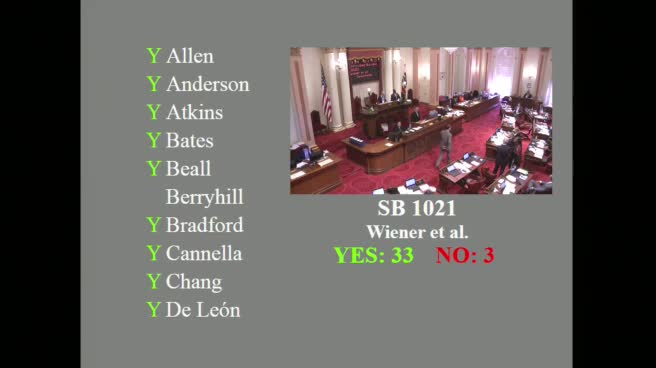
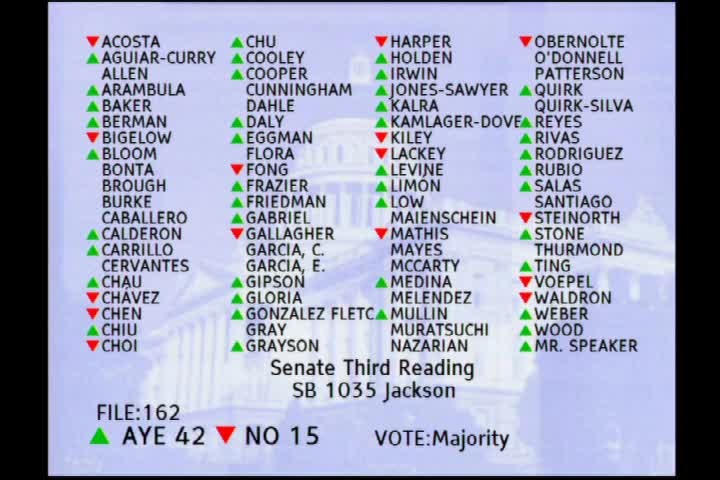
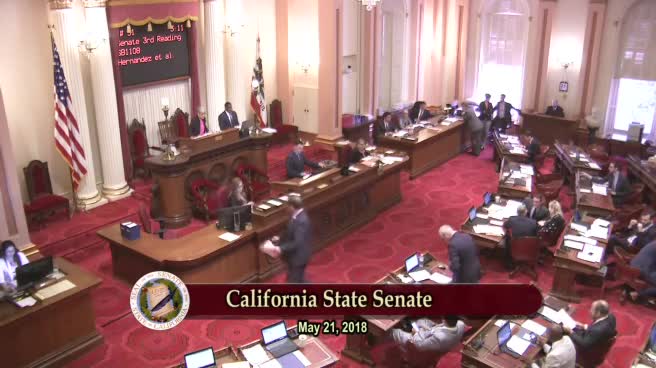
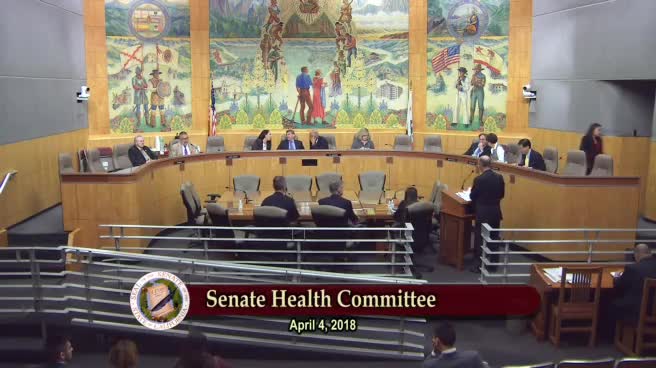
Bill Author
Bill Co-Author(s):