SB 1119: Low Carbon Transit Operations Program.
- Session Year: 2017-2018
- House: Senate
- Latest Version Date: 2018-09-20
Existing law requires all moneys, except for fines and penalties, collected by the State Air Resources Board as part of a market-based compliance mechanism to be deposited in the Greenhouse Gas Reduction Fund and to be available upon appropriation. Existing law continuously appropriates specified portions of the annual proceeds in the fund to various programs, including 5% for the Low Carbon Transit Operations Program, administered by the Department of Transportation, which provides operating and capital assistance for transit agencies to reduce greenhouse gas emissions and improve mobility.
Existing law requires, for recipient transit agencies whose service areas include disadvantaged communities, as specified, that those recipient transit agencies expend at least 50% of the total moneys they received as part of the Low Carbon Transit Operations Program on projects or services that meet specified requirements and benefit those disadvantaged communities.
This bill would waive the above requirement if the recipient transit agencies expend the funding provided on certain transit activities.
Existing law requires all moneys, except for fines and penalties, collected by the State Air Resources Board as part of a market-based compliance mechanism to be deposited in the Greenhouse Gas Reduction Fund and to be available upon appropriation. Existing law continuously appropriates specified portions of the annual proceeds in the fund to various programs, including 5% for the Low Carbon Transit Operations Program, administered by the Department of Transportation, which provides operating and capital assistance for transit agencies to reduce greenhouse gas emissions and improve mobility.
Existing law requires, for recipient transit agencies whose service areas include disadvantaged communities, as specified, that those recipient transit agencies expend at least 50% of the total moneys they received as part of the Low Carbon Transit Operations Program on projects or services that meet specified requirements and benefit those disadvantaged communities.
This bill would authorize a recipient transit agency to satisfy the above-stated requirement by expending at least 50% of program funds received on transit fare subsidies, specified transit connections, or technology improvements that reduce emissions of greenhouse gases. waive the above requirement if the recipient transit agencies expend the funding provided on certain activities.
Existing law requires all moneys, except for fines and penalties, collected by the State Air Resources Board as part of a market-based compliance mechanism to be deposited in the Greenhouse Gas Reduction Fund and to be available upon appropriation. Existing law continuously appropriates specified portions of the annual proceeds in the fund to various programs, including 5% for the Low Carbon Transit Operations Program, administered by the Department of Transportation, which provides operating and capital assistance for transit agencies to reduce greenhouse gas emissions and improve mobility.
Existing law requires, for recipient transit agencies whose service areas include disadvantaged communities, as specified, that those recipient transit agencies expend at least 50% of the total moneys they received as part of the Low Carbon Transit Operations Program on projects or services that meet specified requirements and benefit those disadvantaged communities.
This bill would authorize a recipient transit agency to satisfy the above-stated requirement by expending at least 50% of program funds received on transit fare subsidies, specified transit connections, or technology improvements that reduce emissions of greenhouse gases.
(a)The Low Carbon Transit Operations Program is hereby created to provide operating and capital assistance for transit agencies to reduce greenhouse gas emissions and improve mobility, with a priority on serving disadvantaged communities.
(b)Funding for the program is continuously appropriated pursuant to Section 39719 of the Health and Safety Code from the Greenhouse Gas Reduction Fund established pursuant to Section 16428.8 of the Government Code.
(c)Funding shall be allocated by the Controller on a formula basis consistent with the requirements of this part and with Section 39719 of the Health and Safety Code, upon a determination by the Department of Transportation that the expenditures proposed by a recipient transit agency meet the requirements of this part and guidelines developed pursuant to this section, and that the amount of funding requested is currently available.
(d)A recipient transit agency shall demonstrate that each expenditure of program moneys allocated to the agency reduces greenhouse gas emissions.
(e)A recipient transit agency shall demonstrate that each expenditure of program moneys does not supplant another source of funds.
(f)Moneys for the program shall be expended to provide transit operating or capital assistance that meets any of the following:
(1)Expenditures that directly enhance or expand transit service by supporting new or expanded bus or rail services, new or expanded water-borne transit, or expanded intermodal transit facilities, and may include equipment acquisition, fueling, and maintenance, and other costs to operate those services or facilities.
(2)Operational expenditures that increase transit mode share.
(3)Expenditures related to the purchase of zero-emission buses, including electric buses, and the installation of the necessary equipment and infrastructure to operate and support these zero-emission buses.
(g)(1)For recipient transit agencies whose service areas include disadvantaged communities, as identified pursuant to Section 39711 of the Health and Safety Code, at least 50 percent of the total moneys received pursuant to this chapter shall be expended on projects or services that meet the requirements of subdivisions (d), (e), and (f) and benefit the disadvantaged communities, as identified consistent with the guidance developed by the State Air Resources Board pursuant to Section 39715.
(2)The requirement of paragraph (1) is waived if the recipient transit agencies expend the funding provided pursuant to this section on any of the following:
(A)New or expanded transit service that connects with transit service serving disadvantaged communities, as identified in Section 39711 of, or in low-income communities, as defined in paragraph (2) of subdivision (d) of Section 39713 of, the Health and Safety Code.
(B)Transit fare subsidies and network and fare integration technology improvements, including, but not limited to, discounted or free student transit passes.
(C)The purchase of zero-emission transit buses and supporting infrastructure.
(3)Expenditures made pursuant to paragraph (2) shall be deemed to have met all applicable requirements established pursuant to Section 39713 of the Health and Safety Code.
(4)This section does not require a recipient transit agency to provide individual rider data to the Department of Transportation or the State Air Resources Board.
(h)The Department of Transportation, in coordination with the State Air Resources Board, shall develop guidelines that describe the methodologies that recipient transit agencies shall use to demonstrate that proposed expenditures will meet the criteria in subdivisions (d), (e), (f), and (g) and establish the reporting requirements for documenting ongoing compliance with those criteria.
(i)Chapter 3.5 (commencing with Section 11340) of Part 1 of Division 3 of Title 2 of the Government Code does not apply to the development of guidelines for the program pursuant to this section.
(j)A recipient transit agency shall submit the following information to the Department of Transportation before seeking a disbursement of funds pursuant to this part:
(1)A list of proposed expense types for anticipated funding levels.
(2)The documentation required by the guidelines developed pursuant to this section to demonstrate compliance with subdivisions (d), (e), (f), and (g).
(k)For capital projects, the recipient transit agency shall also do all of the following:
(1)Specify the phases of work for which the agency is seeking an allocation of moneys from the program.
(2)Identify the sources and timing of all moneys required to undertake and complete any phase of a project for which the recipient agency is seeking an allocation of moneys from the program.
(3)Describe intended sources and timing of funding to complete any subsequent phases of the project, through construction or procurement.
(l)A recipient transit agency that has used program moneys for any type of operational assistance allowed by subdivision (f) in a previous fiscal year may use program moneys to continue the same service or program in any subsequent fiscal year if the agency can demonstrate that reductions in greenhouse gas emissions can be realized.
(m)Before authorizing the disbursement of funds, the Department of Transportation, in coordination with the State Air Resources Board, shall determine the eligibility, in whole or in part, of the proposed list of expense types, based on the documentation provided by the recipient transit agency to ensure ongoing compliance with the guidelines developed pursuant to this section.
(n)The Department of Transportation shall notify the Controller of approved expenditures for each recipient transit agency, and the amount of the allocation for each agency determined to be available at that time of approval.
(o)A recipient transit agency that does not submit an expenditure for funding in a particular fiscal year may retain its funding share, and may accumulate and utilize that funding share in a subsequent fiscal year for a larger expenditure, including operating assistance. The recipient transit agency must first specify the number of fiscal years that it intends to retain its funding share and the expenditure for which the agency intends to use these moneys. A recipient transit agency may only retain its funding share for a maximum of four years.
(p)A recipient transit agency may, in any particular fiscal year, loan or transfer its funding share to another recipient transit agency within the same region for any identified eligible expenditure under the program, including operating assistance, in accordance with procedures incorporated by the Department of Transportation in the guidelines developed pursuant to this section, which procedures shall be consistent with the requirement in subdivision (g).
(q)A recipient transit agency may apply to the Department of Transportation to reassign any savings of surplus moneys allocated under this section to the agency for an expenditure that has been completed to another eligible expenditure under the program, including operating assistance. A recipient transit agency may also apply to the Department of Transportation to reassign to another eligible expenditure any moneys from the program previously allocated to the agency for an expenditure that the agency has determined is no longer a priority for the use of those moneys.
(r)The recipient transit agency shall provide annual reports to the Department of Transportation, in the format and manner prescribed by the department, consistent with the internal administrative procedures for the use of the fund proceeds developed by the State Air Resources Board.
(s)The Department of Transportation and recipient transit agencies shall comply with the guidelines developed by the State Air Resources Board pursuant to Section 39715 of the Health and Safety Code to ensure that the requirements of Section 39713 of the Health and Safety Code are met to maximize the benefits to disadvantaged communities as described in Section 39711 of the Health and Safety Code.
(t)A recipient transit agency shall comply with all applicable legal requirements, including the requirements of the California Environmental Quality Act (Division 13 (commencing with Section 21000)), and civil rights and environmental justice obligations under state and federal law. Nothing in this section shall be construed to expand or extend the applicability of those laws to recipient transit agencies.
(u)The audit of public transportation operator finances already required under the Transportation Development Act (Chapter 4 (commencing with Section 99200) of Part 11 of Division 10 of the Public Utilities Code) pursuant to Section 99245 of that code shall be expanded to include verification of receipt and appropriate expenditure of moneys from the program. Each recipient transit agency receiving moneys from the program in a fiscal year for which an audit is conducted shall transmit a copy of the audit to the Department of Transportation, and the department shall make the audits available to the Legislature and the Controller for review on request.
(a)The Low Carbon Transit Operations Program is hereby created to provide operating and capital assistance for transit agencies to reduce greenhouse gas emissions and improve mobility, with a priority on serving disadvantaged communities.
(b)Funding for the program is continuously appropriated pursuant to Section 39719 of the Health and Safety Code from the Greenhouse Gas Reduction Fund established pursuant to Section 16428.8 of the Government Code.
(c)Funding shall be allocated by the Controller on a formula basis consistent with the requirements of this part and with Section 39719 of the Health and Safety Code, upon a determination by the Department of Transportation that the expenditures proposed by a recipient transit agency meet the requirements of this part and guidelines developed pursuant to this section, and that the amount of funding requested is currently available.
(d)A recipient transit agency shall demonstrate that each expenditure of program moneys allocated to the agency reduces greenhouse gas emissions.
(e)A recipient transit agency shall demonstrate that each expenditure of program moneys does not supplant another source of funds.
(f)Moneys for the program shall be expended to provide transit operating or capital assistance that meets any of the following:
(1)Expenditures that directly enhance or expand transit service by supporting new or expanded bus or rail services, new or expanded water-borne transit, or expanded intermodal transit facilities, and may include equipment acquisition, fueling, and maintenance, and other costs to operate those services or facilities.
(2)Operational expenditures that increase transit mode share.
(3)Expenditures related to the purchase of zero-emission buses, including electric buses, and the installation of the necessary equipment and infrastructure to operate and support these zero-emission buses.
(g)(1)For recipient transit agencies whose service areas include disadvantaged communities, as identified pursuant to Section 39711 of the Health and Safety Code, at least 50 percent of the total moneys received pursuant to this chapter shall be expended on projects or services that meet the requirements of subdivisions (d), (e), and (f) and benefit the disadvantaged communities, as identified consistent with the guidance developed by the State Air Resources Board pursuant to Section 39715.
(2)The requirement of paragraph (1) is waived if the recipient transit agencies expend the funding provided pursuant to this section on any of the following:
(A)New or expanded transit service that connects with transit service serving disadvantaged communities, as identified in Section 39711 of, or in low-income communities, as defined in paragraph (2) of subdivision (d) of Section 39713 of, the Health and Safety Code.
(B)Transit fare subsidies and network and fare integration technology improvements, including, but not limited to, discounted or free student transit passes.
(C)The purchase of zero-emission transit buses and supporting infrastructure.
(3)Expenditures made pursuant to paragraph (2) shall be deemed to have met all applicable low-income requirements established pursuant to Section 39713 of the Health and Safety Code.
(4)This section does not require a recipient transit agency to provide individual rider data to the Department of Transportation or the State Air Resources Board.
(h)The Department of Transportation, in coordination with the State Air Resources Board, shall develop guidelines that describe the methodologies that recipient transit agencies shall use to demonstrate that proposed expenditures will meet the criteria in subdivisions (d), (e), (f), and (g) and establish the reporting requirements for documenting ongoing compliance with those criteria.
(i)Chapter 3.5 (commencing with Section 11340) of Part 1 of Division 3 of Title 2 of the Government Code does not apply to the development of guidelines for the program pursuant to this section.
(j)A recipient transit agency shall submit the following information to the Department of Transportation before seeking a disbursement of funds pursuant to this part:
(1)A list of proposed expense types for anticipated funding levels.
(2)The documentation required by the guidelines developed pursuant to this section to demonstrate compliance with subdivisions (d), (e), (f), and (g).
(k)For capital projects, the recipient transit agency shall also do all of the following:
(1)Specify the phases of work for which the agency is seeking an allocation of moneys from the program.
(2)Identify the sources and timing of all moneys required to undertake and complete any phase of a project for which the recipient agency is seeking an allocation of moneys from the program.
(3)Describe intended sources and timing of funding to complete any subsequent phases of the project, through construction or procurement.
(l)A recipient transit agency that has used program moneys for any type of operational assistance allowed by subdivision (f) in a previous fiscal year may use program moneys to continue the same service or program in any subsequent fiscal year if the agency can demonstrate that reductions in greenhouse gas emissions can be realized.
(m)Before authorizing the disbursement of funds, the Department of Transportation, in coordination with the State Air Resources Board, shall determine the eligibility, in whole or in part, of the proposed list of expense types, based on the documentation provided by the recipient transit agency to ensure ongoing compliance with the guidelines developed pursuant to this section.
(n)The Department of Transportation shall notify the Controller of approved expenditures for each recipient transit agency, and the amount of the allocation for each agency determined to be available at that time of approval.
(o)A recipient transit agency that does not submit an expenditure for funding in a particular fiscal year may retain its funding share, and may accumulate and utilize that funding share in a subsequent fiscal year for a larger expenditure, including operating assistance. The recipient transit agency must first specify the number of fiscal years that it intends to retain its funding share and the expenditure for which the agency intends to use these moneys. A recipient transit agency may only retain its funding share for a maximum of four years.
(p)A recipient transit agency may, in any particular fiscal year, loan or transfer its funding share to another recipient transit agency within the same region for any identified eligible expenditure under the program, including operating assistance, in accordance with procedures incorporated by the Department of Transportation in the guidelines developed pursuant to this section, which procedures shall be consistent with the requirement in subdivision (g).
(q)A recipient transit agency may apply to the Department of Transportation to reassign any savings of surplus moneys allocated under this section to the agency for an expenditure that has been completed to another eligible expenditure under the program, including operating assistance. A recipient transit agency may also apply to the Department of Transportation to reassign to another eligible expenditure any moneys from the program previously allocated to the agency for an expenditure that the agency has determined is no longer a priority for the use of those moneys.
(r)The recipient transit agency shall provide annual reports to the Department of Transportation, in the format and manner prescribed by the department, consistent with the internal administrative procedures for the use of the fund proceeds developed by the State Air Resources Board.
(s)The Department of Transportation and recipient transit agencies shall comply with the guidelines developed by the State Air Resources Board pursuant to Section 39715 of the Health and Safety Code to ensure that the requirements of Section 39713 of the Health and Safety Code are met to maximize the benefits to disadvantaged communities as described in Section 39711 of the Health and Safety Code.
(t)A recipient transit agency shall comply with all applicable legal requirements, including the requirements of the California Environmental Quality Act (Division 13 (commencing with Section 21000)), and civil rights and environmental justice obligations under state and federal law. Nothing in this section shall be construed to expand or extend the applicability of those laws to recipient transit agencies.
(u)The audit of public transportation operator finances already required under the Transportation Development Act (Chapter 4 (commencing with Section 99200) of Part 11 of Division 10 of the Public Utilities Code) pursuant to Section 99245 of that code shall be expanded to include verification of receipt and appropriate expenditure of moneys from the program. Each recipient transit agency receiving moneys from the program in a fiscal year for which an audit is conducted shall transmit a copy of the audit to the Department of Transportation, and the department shall make the audits available to the Legislature and the Controller for review on request.
(a)The Low Carbon Transit Operations Program is hereby created to provide operating and capital assistance for transit agencies to reduce greenhouse gas emissions and improve mobility, with a priority on serving disadvantaged communities.
(b)Funding for the program is continuously appropriated pursuant to Section 39719 of the Health and Safety Code from the Greenhouse Gas Reduction Fund established pursuant to Section 16428.8 of the Government Code.
(c)Funding shall be allocated by the Controller on a formula basis consistent with the requirements of this part and with Section 39719 of the Health and Safety Code, upon a determination by the Department of Transportation that the expenditures proposed by a recipient transit agency meet the requirements of this part and guidelines developed pursuant to this section, and that the amount of funding requested is currently available.
(d)A recipient transit agency shall demonstrate that each expenditure of program moneys allocated to the agency reduces greenhouse gas emissions.
(e)A recipient transit agency shall demonstrate that each expenditure of program moneys does not supplant another source of funds.
(f)Moneys for the program shall be expended to provide transit operating or capital assistance that meets any of the following:
(1)Expenditures that directly enhance or expand transit service by supporting new or expanded bus or rail services, new or expanded water-borne transit, or expanded intermodal transit facilities, and may include equipment acquisition, fueling, and maintenance, and other costs to operate those services or facilities.
(2)Operational expenditures that increase transit mode share.
(3)Expenditures related to the purchase of zero-emission buses, including electric buses, and the installation of the necessary equipment and infrastructure to operate and support these zero-emission buses.
(g)(1)For recipient transit agencies whose service areas include disadvantaged communities, as identified pursuant to Section 39711 of the Health and Safety Code, at least 50 percent of the total moneys received pursuant to this chapter shall be expended on projects or services that meet the requirements of subdivisions (d), (e), and (f) and benefit the disadvantaged communities, as identified consistent with the guidance developed by the State Air Resources Board pursuant to Section 39715.
(2)The requirement in paragraph (1) shall be met if a transit agency expends at least 50 percent of the total moneys it receives from the program to provide any of the following:(A)Transit fare subsidies, including student transit passes.(B)Transit connections to major employment areas, education centers, or medical facilities for residents of disadvantaged or low-income communities.(C)Technology improvements that reduce emissions of greenhouse gases, including the purchase of zero-emission buses and fueling infrastructure.(2)The requirement of paragraph (1) is waived if the recipient transit agencies expend the funding provided pursuant to this section on any of the following:
(A)New or expanded transit service that connects with transit service serving disadvantaged communities, as identified in Section 39711 of, or in low-income communities, as defined in paragraph (2) of subdivision (d) of Section 39713 of, the Health and Safety Code.
(B)Transit fare subsidies and network and fare integration technology improvements, including, but not limited to, discounted or free student transit passes.
(C)The purchase of zero-emission transit buses and supporting infrastructure.
(3)Expenditures made pursuant to paragraph (2) shall be deemed to have met all applicable low-income requirements established pursuant to Section 39713 of the Health and Safety Code.
(4)This section does not require a recipient transit agency to provide individual rider data to the Department of Transportation or the State Air Resources Board.
(h)The Department of Transportation, in coordination with the State Air Resources Board, shall develop guidelines that describe the methodologies that recipient transit agencies shall use to demonstrate that proposed expenditures will meet the criteria in subdivisions (d), (e), (f), and (g) and establish the reporting requirements for documenting ongoing compliance with those criteria.
(i)Chapter 3.5 (commencing with Section 11340) of Part 1 of Division 3 of Title 2 of the Government Code does not apply to the development of guidelines for the program pursuant to this section.
(j)A recipient transit agency shall submit the following information to the Department of Transportation before seeking a disbursement of funds pursuant to this part:
(1)A list of proposed expense types for anticipated funding levels.
(2)The documentation required by the guidelines developed pursuant to this section to demonstrate compliance with subdivisions (d), (e), (f), and (g).
(k)For capital projects, the recipient transit agency shall also do all of the following:
(1)Specify the phases of work for which the agency is seeking an allocation of moneys from the program.
(2)Identify the sources and timing of all moneys required to undertake and complete any phase of a project for which the recipient agency is seeking an allocation of moneys from the program.
(3)Describe intended sources and timing of funding to complete any subsequent phases of the project, through construction or procurement.
(l)A recipient transit agency that has used program moneys for any type of operational assistance allowed by subdivision (f) in a previous fiscal year may use program moneys to continue the same service or program in any subsequent fiscal year if the agency can demonstrate that reductions in greenhouse gas emissions can be realized.
(m)Before authorizing the disbursement of funds, the Department of Transportation, in coordination with the State Air Resources Board, shall determine the eligibility, in whole or in part, of the proposed list of expense types, based on the documentation provided by the recipient transit agency to ensure ongoing compliance with the guidelines developed pursuant to this section.
(n)The Department of Transportation shall notify the Controller of approved expenditures for each recipient transit agency, and the amount of the allocation for each agency determined to be available at that time of approval.
(o)A recipient transit agency that does not submit an expenditure for funding in a particular fiscal year may retain its funding share, and may accumulate and utilize that funding share in a subsequent fiscal year for a larger expenditure, including operating assistance. The recipient transit agency must first specify the number of fiscal years that it intends to retain its funding share and the expenditure for which the agency intends to use these moneys. A recipient transit agency may only retain its funding share for a maximum of four years.
(p)A recipient transit agency may, in any particular fiscal year, loan or transfer its funding share to another recipient transit agency within the same region for any identified eligible expenditure under the program, including operating assistance, in accordance with procedures incorporated by the Department of Transportation in the guidelines developed pursuant to this section, which procedures shall be consistent with the requirement in subdivision (g).
(q)A recipient transit agency may apply to the Department of Transportation to reassign any savings of surplus moneys allocated under this section to the agency for an expenditure that has been completed to another eligible expenditure under the program, including operating assistance. A recipient transit agency may also apply to the Department of Transportation to reassign to another eligible expenditure any moneys from the program previously allocated to the agency for an expenditure that the agency has determined is no longer a priority for the use of those moneys.
(r)The recipient transit agency shall provide annual reports to the Department of Transportation, in the format and manner prescribed by the department, consistent with the internal administrative procedures for the use of the fund proceeds developed by the State Air Resources Board.
(s)The Department of Transportation and recipient transit agencies shall comply with the guidelines developed by the State Air Resources Board pursuant to Section 39715 of the Health and Safety Code to ensure that the requirements of Section 39713 of the Health and Safety Code are met to maximize the benefits to disadvantaged communities as described in Section 39711 of the Health and Safety Code.
(t)A recipient transit agency shall comply with all applicable legal requirements, including the requirements of the California Environmental Quality Act (Division 13 (commencing with Section 21000)), and civil rights and environmental justice obligations under state and federal law. Nothing in this section shall be construed to expand or extend the applicability of those laws to recipient transit agencies.
(u)The audit of public transportation operator finances already required under the Transportation Development Act (Chapter 4 (commencing with Section 99200) of Part 11 of Division 10 of the Public Utilities Code) pursuant to Section 99245 of that code shall be expanded to include verification of receipt and appropriate expenditure of moneys from the program. Each recipient transit agency receiving moneys from the program in a fiscal year for which an audit is conducted shall transmit a copy of the audit to the Department of Transportation, and the department shall make the audits available to the Legislature and the Controller for review on request.
(a)The Low Carbon Transit Operations Program is hereby created to provide operating and capital assistance for transit agencies to reduce greenhouse gas emissions and improve mobility, with a priority on serving disadvantaged communities.
(b)Funding for the program is continuously appropriated pursuant to Section 39719 of the Health and Safety Code from the Greenhouse Gas Reduction Fund established pursuant to Section 16428.8 of the Government Code.
(c)Funding shall be allocated by the Controller on a formula basis consistent with the requirements of this part and with Section 39719 of the Health and Safety Code, upon a determination by the Department of Transportation that the expenditures proposed by a recipient transit agency meet the requirements of this part and guidelines developed pursuant to this section, and that the amount of funding requested is currently available.
(d)A recipient transit agency shall demonstrate that each expenditure of program moneys allocated to the agency reduces greenhouse gas emissions.
(e)A recipient transit agency shall demonstrate that each expenditure of program moneys does not supplant another source of funds.
(f)Moneys for the program shall be expended to provide transit operating or capital assistance that meets any of the following:
(1)Expenditures that directly enhance or expand transit service by supporting new or expanded bus or rail services, new or expanded water-borne transit, or expanded intermodal transit facilities, and may include equipment acquisition, fueling, and maintenance, and other costs to operate those services or facilities.
(2)Operational expenditures that increase transit mode share.
(3)Expenditures related to the purchase of zero-emission buses, including electric buses, and the installation of the necessary equipment and infrastructure to operate and support these zero-emission buses.
(g)(1)For recipient transit agencies whose service areas include disadvantaged communities, as identified pursuant to Section 39711 of the Health and Safety Code, at least 50 percent of the total moneys received pursuant to this chapter shall be expended on projects or services that meet the requirements of subdivisions (d), (e), and (f) and benefit the disadvantaged communities, as identified consistent with the guidance developed by the State Air Resources Board pursuant to Section 39715.
(2)The requirement in paragraph (1) shall be met if a transit agency expends at least 50 percent of the total moneys it receives from the program to provide any of the following:
(A)Transit fare subsidies, including student transit passes.
(B)Transit connections to major employment areas, education centers, or medical facilities for residents of disadvantaged or low-income communities.
(C)Technology improvements that reduce emissions of greenhouse gases, including the purchase of zero-emission buses and fueling infrastructure.
(h)The Department of Transportation, in coordination with the State Air Resources Board, shall develop guidelines that describe the methodologies that recipient transit agencies shall use to demonstrate that proposed expenditures will meet the criteria in subdivisions (d), (e), (f), and (g) and establish the reporting requirements for documenting ongoing compliance with those criteria.
(i)Chapter 3.5 (commencing with Section 11340) of Part 1 of Division 3 of Title 2 of the Government Code does not apply to the development of guidelines for the program pursuant to this section.
(j)A recipient transit agency shall submit the following information to the Department of Transportation before seeking a disbursement of funds pursuant to this part:
(1)A list of proposed expense types for anticipated funding levels.
(2)The documentation required by the guidelines developed pursuant to this section to demonstrate compliance with subdivisions (d), (e), (f), and (g).
(k)For capital projects, the recipient transit agency shall also do all of the following:
(1)Specify the phases of work for which the agency is seeking an allocation of moneys from the program.
(2)Identify the sources and timing of all moneys required to undertake and complete any phase of a project for which the recipient agency is seeking an allocation of moneys from the program.
(3)Describe intended sources and timing of funding to complete any subsequent phases of the project, through construction or procurement.
(l)A recipient transit agency that has used program moneys for any type of operational assistance allowed by subdivision (f) in a previous fiscal year may use program moneys to continue the same service or program in any subsequent fiscal year if the agency can demonstrate that reductions in greenhouse gas emissions can be realized.
(m)Before authorizing the disbursement of funds, the Department of Transportation, in coordination with the State Air Resources Board, shall determine the eligibility, in whole or in part, of the proposed list of expense types, based on the documentation provided by the recipient transit agency to ensure ongoing compliance with the guidelines developed pursuant to this section.
(n)The Department of Transportation shall notify the Controller of approved expenditures for each recipient transit agency, and the amount of the allocation for each agency determined to be available at that time of approval.
(o)A recipient transit agency that does not submit an expenditure for funding in a particular fiscal year may retain its funding share, and may accumulate and utilize that funding share in a subsequent fiscal year for a larger expenditure, including operating assistance. The recipient transit agency must first specify the number of fiscal years that it intends to retain its funding share and the expenditure for which the agency intends to use these moneys. A recipient transit agency may only retain its funding share for a maximum of four years.
(p)A recipient transit agency may, in any particular fiscal year, loan or transfer its funding share to another recipient transit agency within the same region for any identified eligible expenditure under the program, including operating assistance, in accordance with procedures incorporated by the Department of Transportation in the guidelines developed pursuant to this section, which procedures shall be consistent with the requirement in subdivision (g).
(q)A recipient transit agency may apply to the Department of Transportation to reassign any savings of surplus moneys allocated under this section to the agency for an expenditure that has been completed to another eligible expenditure under the program, including operating assistance. A recipient transit agency may also apply to the Department of Transportation to reassign to another eligible expenditure any moneys from the program previously allocated to the agency for an expenditure that the agency has determined is no longer a priority for the use of those moneys.
(r)The recipient transit agency shall provide annual reports to the Department of Transportation, in the format and manner prescribed by the department, consistent with the internal administrative procedures for the use of the fund proceeds developed by the State Air Resources Board.
(s)The Department of Transportation and recipient transit agencies shall comply with the guidelines developed by the State Air Resources Board pursuant to Section 39715 of the Health and Safety Code to ensure that the requirements of Section 39713 of the Health and Safety Code are met to maximize the benefits to disadvantaged communities as described in Section 39711 of the Health and Safety Code.
(t)A recipient transit agency shall comply with all applicable legal requirements, including the requirements of the California Environmental Quality Act (Division 13 (commencing with Section 21000)), and civil rights and environmental justice obligations under state and federal law. Nothing in this section shall be construed to expand or extend the applicability of those laws to recipient transit agencies.
(u)The audit of public transportation operator finances already required under the Transportation Development Act (Chapter 4 (commencing with Section 99200) of Part 11 of Division 10 of the Public Utilities Code) pursuant to Section 99245 of the Public Utilities Code that code shall be expanded to include verification of receipt and appropriate expenditure of moneys from the program. Each recipient transit agency receiving moneys from the program in a fiscal year for which an audit is conducted shall transmit a copy of the audit to the Department of Transportation, and the department shall make the audits available to the Legislature and the Controller for review on request.
|
Date
|
Status
|
|---|---|
| Sep 20, 2018 | Chaptered by Secretary of State. Chapter 606, Statutes of 2018. |
| Sep 20, 2018 | Approved by the Governor. |
| Sep 5, 2018 | Enrolled and presented to the Governor at 3:30 p.m. |
| Aug 28, 2018 | Assembly amendments concurred in. (Ayes 39. Noes 0.) Ordered to engrossing and enrolling. |
| Aug 28, 2018 | In Senate. Concurrence in Assembly amendments pending. |
| Aug 27, 2018 | Read third time. Passed. Ordered to the Senate. |
| Aug 20, 2018 | Read second time. Ordered to third reading. |
| Aug 16, 2018 | From committee: Do pass. (Ayes 17. Noes 0.) (August 16). |
| Aug 8, 2018 | August 8 set for first hearing. Placed on suspense file. |
| Aug 6, 2018 | From committee with author's amendments. Read second time and amended. Re-referred to Com. on APPR. |
| Jun 26, 2018 | From committee: Do pass and re-refer to Com. on APPR. (Ayes 13. Noes 0.) (June 25). Re-referred to Com. on APPR. |
| Jun 18, 2018 | From committee with author's amendments. Read second time and amended. Re-referred to Com. on TRANS. |
| May 17, 2018 | Referred to Com. on TRANS. |
| May 10, 2018 | In Assembly. Read first time. Held at Desk. |
| May 10, 2018 | Read third time. Passed. (Ayes 38. Noes 0.) Ordered to the Assembly. |
| May 1, 2018 | Read second time. Ordered to third reading. |
| Apr 30, 2018 | From committee: Be ordered to second reading pursuant to Senate Rule 28.8. |
| Apr 20, 2018 | Set for hearing April 30. |
| Apr 18, 2018 | From committee: Do pass and re-refer to Com. on APPR. (Ayes 7. Noes 0.) (April 18). Re-referred to Com. on APPR. |
| Apr 10, 2018 | From committee: Do pass and re-refer to Com. on EQ. with recommendation: To consent calendar. (Ayes 13. Noes 0.) (April 10). Re-referred to Com. on EQ. |
| Apr 6, 2018 | Set for hearing April 18 in EQ. pending receipt. |
| Mar 29, 2018 | Set for hearing April 10. |
| Feb 22, 2018 | Referred to Coms. on T. & H. and EQ. |
| Feb 14, 2018 | From printer. May be acted upon on or after March 16. |
| Feb 13, 2018 | Introduced. Read first time. To Com. on RLS. for assignment. To print. |
|
Date
|
Description
|
Location
|
Votes
|
|
|---|---|---|---|---|
| Aug 28, 2018 | Unfinished Business SB1119 Beall Concurrence | Senate Floor |
Passed |
|
| Aug 27, 2018 | SB 1119 Beall Senate Third Reading By BERMAN | Assembly Floor |
Passed |
|
| Aug 16, 2018 | Do pass. | Assembly Standing Committee on Appropriations |
Passed |
|
| Jun 25, 2018 | Do pass and be re-referred to the Committee on [Appropriations] | Assembly Standing Committee on Transportation |
Passed |
|
| May 10, 2018 | Senate 3rd Reading SB1119 Newman | Senate Floor |
Passed |
|
| Apr 18, 2018 | Do pass, but first be re-referred to the Committee on [Appropriations] | Senate Standing Committee on Environmental Quality |
Passed |
|
| Apr 10, 2018 | Do pass, but first be re-referred to the Committee on [Environmental Quality] with the recommendation: To Consent Calendar | Senate Standing Committee on Transportation and Housing |
Passed |
This list shows positions taken on this bill by organizations on the date displayed, which is linked to the original source.
Positions by individuals are not included.
Office of Senate Floor Analyses (916) 651-1520 Fax: (916) 327-4478 | SB |
UNFINISHED BUSINESS
Bill No: SB 1119
:
SENATE TRANS. & HOUSING COMMITTEE: 13-0, 4/10/18
AYES: Beall, Cannella, Allen, Dodd, Gaines, Galgiani, McGuire, Morrell, Roth, Skinner, Vidak, Wieckowski, Wiener
SENATE ENVIRONMENTAL QUALITY COMMITTEE: 7-0, 4/18/18
AYES: Wieckowski, Stone, Gaines, Hill, Lara, Skinner, Stern
SENATE APPROPRIATIONS COMMITTEE: Senate Rule 28.8
SENATE FLOOR: 38-0, 5/10/18
AYES: Allen, Anderson, Atkins, Bates, Beall, Berryhill, Bradford, Cannella, De León, Dodd, Fuller, Gaines, Galgiani, Glazer, Hernandez, Hill, Hueso, Jackson, Lara, Leyva, McGuire, Mitchell, Monning, Moorlach, Morrell, Newman, Nguyen, Nielsen, Pan, Portantino, Roth, Skinner, Stern, Stone, Vidak, Wieckowski, Wiener, Wilk
NO VOTE RECORDED: Hertzberg
ASSEMBLY FLOOR: 80-0, 8/27/18 - See last page for vote
SOURCE: California Transit Association
Orange County Transportation Authority
DIGEST:
This bill expands eligible expenditures under the Low Carbon Transit Operations Program (LCTOP) relative to the requirement to spend 50% of monies in disadvantaged communities (DACs).
Assembly amendments further expand the list of eligible expenditures and specify that a recipient is not required to provide individual rider data to the state Department of Transportation (Caltrans) or the Air Resources Board (ARB).
Existing law:
Greenhouse Gas Reduction Fund
- Requires, per AB 32 (Núñez and Pavley, Chapter 488, Statutes of 2006), the state Air Resources Board (ARB) to develop a plan to reduce emissions to 1990 levels by 2020. It also requires ARB to ensure programs that reduce greenhouse gas (GHG) emissions are targeted, to the extent feasible, to the most disadvantaged communities (DACs) in the state. AB 32 authorizes ARB to deposit any fees paid by GHG emission sources into the Greenhouse Gas Reduction Fund (GGRF).
- Requires, per SB 535 (De León, Chapter 830, Statutes of 2012), 25% of GGRF funds to be allocated to projects that provide benefits to DACs, and at least 10% to projects located within DACs. (This 10% share may overlap, in whole or in part, with projects funded by the minimum 25% allocation). DACs have been identified by the California Environmental Protection Agency (CalEPA) using census tract data based on geographic, socioeconomic, public health, and environmental hazard criteria.
- Revises, per AB 1550 (Gomez, Chapter 369, Statutes of 2016), the SB 535 requirements on GGRF funding allocations to DACs, as follows:
- A minimum of 25% to projects located within the boundaries of, and benefiting individuals living in, DACs.
- An additional 5% (minimum) to projects benefiting low-income households or located within the boundaries of, and benefiting individuals living in, low-income communities.
- An additional 5% (minimum) to projects benefiting low-income households outside of but within ½ mile of DACs, or to projects located within the boundaries of, and benefiting individuals living in, low-income communities that are outside of, but within ½ mile of, DACs.
LCTOP
- Establishes (SB 862, Committee on Budget, Chapter 36, Statutes of 2014) the LCTOP, which provides operating and capital assistance to reduce GHG emissions and improve mobility, with a priority on serving DACs. Eligible projects include new or expanded bus or rail services and expanded intermodal transit facilities and may include equipment acquisition, fueling, maintenance, and other costs to operate those services or facilities. All projects must reduce GHG emissions. For agencies whose service area includes a DAC, at least 50% of monies must be spent on projects that will benefit DACs. Existing law continuously appropriates 5% of annual GGRF monies to LCTOP; funds are then allocated to transit agencies pursuant to the State Transit Assistance statutory formula.
This bill:
- Provides that the 50% requirement to spend 50% of LCTOP funds to benefit DACs shall be waived if a recipient transit agency spends its funds on any of the following:
- New or expanded transit service that connects with transit service serving DACs or in low-income communities.
- Transit fare subsidies and network and fare integration technology improvements, including but not limited to discounted or free student transit passes.
- Purchase of zero-emission transit buses and supporting infrastructure.
- Provides that a recipient transit agency is not required to provide individual rider date to Caltrans or ARB.
Background
LCTOP is funded with GGRF monies. ARB provides guidance to state agencies that administer GGRF monies on how to target GGRF investments to benefit AB 1550 populations, as well as how to maximize benefits to DACs pursuant to SB 535. ARB’s draft GGRF funding guidelines, which it released in August 2017 and asked all state agencies to follow until final guidelines are approved, provide that transit projects (under any program) that maximize benefits to AB 1550 populations shall be prioritized for GGRF funding. The guidelines specify that AB 1550 populations include residents of (1) census tracts identified as DACs by CalEPA, (2) census tracts identified as low-income, or (3) a low-income household. The draft guidelines’ criteria to evaluate transit projects for AB 1550 benefits specify that for consumer-based incentives, such as vouchers, rebates, transit passes, or free-fare days, the incentive must do at least one of the following:
- Be at least partially located (e.g., at least one transit stop) within a DAC.
- Be at least partially located (e.g., at least one transit stop) within a low-income community.
- Be located outside of a DAC but within ½ mile of a DAC and within a low-income community census tract.
- Provide benefits to residents of a DAC.
- Provide benefits to residents of a low-income community.
- Provide benefits to residents of low-income households.
- Provide jobs or job training to residents of low-income households.
Comments
- Purpose. The author states that this bill would revise eligibility requirements for LCTOP funds to enable more student and other low-income residents to qualify for free or reduced transit fares. The resulting increase in ridership will reduce congestion and parking issues in areas around community colleges and state universities while also aiding those in DACs who must transfer within the transit system in order to get to their final destination.
- DAC requirement for LCTOP. According to the 2017-18 final draft guidelines for LCTOP, in order to meet the 50% DAC requirement, transit agencies must spend at least 50% of LCTOP funds on projects within a DAC that provide benefit to individuals living in the DAC. The guidelines further state that “the agency is required to provide a detailed description of the criteria used to evaluate if a project provides direct, meaningful, and assured benefit(s) to the DAC and meaningfully address an important community need(s).”
The Orange County Transportation Authority (OCTA), co-sponsor of this bill, states that if destinations require transfers within the transit system – such as a commute that begins in a DAC and includes a transfer to or through a non-DAC – ARB deems the project ineligible to count toward the 50% DAC requirement. In addition, OCTA notes that although five transit agencies funded transit pass projects last year, only OCTA was able to focus these funds to benefit a DAC because OCTA and recipient universities were willing and able to spend significant resources researching whether students could meet the stringent DAC definition.
- Reducing GHG emissions. LCTOP provides funding to transit agencies to reduce GHG emissions and improve mobility. OCTA argues that as transit agencies seek to reduce emissions through investment in zero-emission technology, LCTOP eligibility is limited because many agencies use their buses on a multitude of routes or have a fueling station outside a DAC. This bill would specifically provide that technology improvements that reduce GHG emissions, including purchase of zero-emission buses and fueling infrastructure, are eligible to meet the 50% DAC requirement under LCTOP. This bill would leave in place the requirement for agencies to quantify GHG emission reductions of LCTOP-funded projects.
- Impact on transit agencies receiving LCTOP funds. Roughly two-thirds of transit agencies in the state include one or more DACs. A DAC might be as little as a single census tract (several thousand people) or could constitute a large portion of a transit agency’s jurisdiction. Regardless, a transit agency with at least one DAC must meet the 50% DAC requirement under LCTOP. In addition, because LCTOP is funded by GGRF monies, LCTOP allocations must meet AB 1550 requirements on GGRF spending. All recipients of LCTOP funding must report to Caltrans on their compliance with all statutory requirements, including DAC requirements, and Caltrans is authorized to conduct spot audits and onsite monitoring of projects. Transit agencies that fail to meet all program requirements risk being barred from future LCTOP funds.
- How much GGRF is going to DACs? Existing law requires a significant share of total GGRF funds to spend in, or to benefit, DACs and low-income communities. According to ARB’s Annual Report to the Legislature on California Climate Investments Using Cap-and-Trade Auction Proceeds (March 2018), of the $1 billion in GGRF funds implemented to date, 51% ($1 billion) has been allocated to projects benefiting DACs; of this, 31% ($615 million) has been allocated to projects located within DACs. CalEPA has identified 25% of California census tracts as DACs. Thus, about half of GGRF funds are spent in about one-quarter of California communities, while the other half of GGRF funds are spent in the other three-quarters of the state.
Related/Prior Legislation
AB 17 (Holden, 2017) would have created a transit pass pilot program under Caltrans. The bill was vetoed by the Governor.
AB 2222 (Holden, 2017) would have created a transit pass pilot program under Caltrans. The bill was held on the suspense file in the Senate Appropriations Committee.
SB 824 (Beall, Chapter 479, Statutes of 2016) modified the LCTOP to provide enhanced flexibility to recipient transit agencies for program expenditures, as specified.
FISCAL EFFECT: Appropriation: Fiscal Com.: Local:
According to the Assembly Appropriations Committee:
- Significant costs (Greenhouse Gas Reduction Fund) for ARB to assist with project reviews, ensure compliance, and conduct other administrative functions. Specifically, ARB reports the need for one position with a cost of about $172,000 ongoing.
- Unknown costs for Caltrans to review projects, update guidelines, and perform other administrative functions. Costs are likely to be in the range of a few hundred thousand dollars, similar to ARB’s reported costs.
California Transit Association (co-source)
Orange County Transportation Authority (co-source)
Alameda-Contra Costa Transit District
Association of California Cities – Orange County
California Association of Councils of Governments
Metropolitan Transportation Commission
Monterey-Salinas Transit
Santa Cruz Metropolitan Transit District
OPPOSITION: (Verified 8/27/18)
None received
ARGUMENTS IN SUPPORT: The California Transit Association states that the flexibility provided by this bill would enable transit systems to attract and maintain more riders and improve bus service across entire trips.
ASSEMBLY FLOOR: 80-0, 8/27/18
AYES: Acosta, Aguiar-Curry, Travis Allen, Arambula, Baker, Berman, Bigelow, Bloom, Bonta, Brough, Burke, Caballero, Calderon, Carrillo, Cervantes, Chau, Chávez, Chen, Chiu, Choi, Chu, Cooley, Cooper, Cunningham, Dahle, Daly, Eggman, Flora, Fong, Frazier, Friedman, Gabriel, Gallagher, Cristina Garcia, Eduardo Garcia, Gipson, Gloria, Gonzalez Fletcher, Gray, Grayson, Harper, Holden, Irwin, Jones-Sawyer, Kalra, Kamlager-Dove, Kiley, Lackey, Levine, Limón, Low, Maienschein, Mathis, Mayes, McCarty, Medina, Melendez, Mullin, Muratsuchi, Nazarian, Obernolte, O'Donnell, Patterson, Quirk, Quirk-Silva, Reyes, Rivas, Rodriguez, Rubio, Salas, Santiago, Steinorth, Mark Stone, Thurmond, Ting, Voepel, Waldron, Weber, Wood, Rendon
8/28/18 9:36:26
**** END ****
SENATE THIRD READING
STR Bill Id:SB 1119
Author:(Beall)
As Amended Ver:August 6, 2018
Majority vote
SENATE VOTE: 38-0
Committee | Votes | Ayes | Noes |
Transportation | 13-0 | Frazier, Fong, Aguiar-Curry, Baker, Berman, Chu, Daly, Friedman, Gipson, Harper, Mathis, Medina, O'Donnell | |
Appropriations | 17-0 | Gonzalez Fletcher, Bigelow, Bloom, Bonta, Brough, Calderon, Carrillo, Chau, Eggman, Fong, Friedman, Gallagher, Eduardo Garcia, Nazarian, Obernolte, Quirk, Reyes |
|
SUMMARY: Waives the requirement for transit agencies to spend 50% of funds from the Low Carbon Transit Operations Program (LCTOP) on projects or services that benefit disadvantaged communities (DACs), and deems that all applicable DAC and low-income requirements are met, if the funding is spent on certain transit activities, such as reduced fare student transit passes. Specifically, this bill:
- Waives the requirement for transit agencies to expend 50% of total funds they receive from the LCTOP program on projects or services that benefit DACs, as defined, and deems that all applicable DAC and low-income requirements, as defined, are met if the funding provided is expended on any of the following:
- New or expanded transit service that connects with transit service serving disadvantaged communities or in low income communities, as defined;
- Transit fare subsidies and network and fare integration technology improvements, including but not limited to, discounted or free student transit passes; or,
- The purchase of zero emission transit buses and supporting infrastructure.
- Clarifies that a recipient transit agency is not required to provide individual rider data to the Department of Transportation (Caltrans) or the State Air Resources Board (ARB).
EXISTING LAW:
- Requires, pursuant to SB 535 (De León), Chapter 830, Statutes of 2012, that a minimum of 25% of the monies available in GGRF be used to benefit DACs, as defined.
- Requires, pursuant to AB 1550 (Gomez), Chapter 369, Statutes of 2016, GGRF investments allocated to DACs to be allocated as follows, a minimum of 25% to projects that are located within and benefiting individuals living in DACs; an additional 5% (minimum) to projects benefiting low income households or located within the boundaries of, and benefiting individuals living in, low-income communities; and an additional 5% (minimum) to projects benefiting low-income households outside of but within 1/2 mile of a DAC, or to projects located within the boundaries of, and benefiting individuals living in, low-income communities that are outside of, but within 1/2 mile of, DACs.
- Establishes LCTOP, administered by Caltrans, and continuously appropriates 5% of GGRF fund proceeds to the program for transit operating and capital assistance to reduce greenhouse gas (GHG) emission and improve mobility, with a priority on serving DACs.
- Requires LCTOP funding for transit operations and capital assistance to meet any of the following requirements: directly enhance or expand transit service by supporting new or expanded bus or rail services, new or expanded water-borne transit, or expanded intermodal transit facilities, and may include equipment acquisition, fueling, and maintenance, and other costs to operate those services or facilities; operations that increase transit mode share; or, purchase of zero-emission buses, including electric buses, and the installation of the necessary equipment and infrastructure to operate and support these zero-emission buses.
- Requires each transit agency receiving funding from LCTOP whose service area includes DACs, as defined by CalEnviroScreen, must expend at least 50% of the funds on projects or services that benefit those communities.
FISCAL EFFECT: According to the Assembly Appropriations Committee:
- Significant costs (Greenhouse Gas Reduction Fund (GGRF)) for ARB to assist with project reviews, ensure compliance, and conduct other administrative functions. Specifically, ARB reports the need for one position with a cost of about $172,000 ongoing.
- Unknown costs for the Department of Transportation to review projects, update guidelines, and perform other administrative functions. Costs are likely to be in the range of a few hundred thousand dollars, similar to ARB's reported costs.
COMMENTS: LCTOP was created by SB 862 (Budget and Fiscal Review Committee), Chapter 36, Statutes of 2014, as part of a comprehensive package of programs to target GHG reductions in California using funds generated by the state's cap and trade program. LCTOP is administered by Caltrans and is continuously appropriated 5% of GGRF funds. LCTOP has allocated nearly $135 million since its inception, with $97 million proposed to be allocated for the 2017-18 fiscal year.
Specifically, LCTOP was created to provide operating and capital assistance for transit agencies to reduce GHG emission and improve mobility, with a priority on serving DACs. SB 824 (Beall), Chapter 479, Statues of 2016, recast many of the provisions of LCTOP to try to make the program more flexible for transit agencies. All projects must reduce GHG emissions and must not supplant other agency funds. Prior to receiving an allocation, which is distributed by the State Controller following the STA formula, eligible transit agencies must submit a description of their proposed expenditures and demonstrate how each expenditure will reduce GHG emissions.
The LCTOP enabling legislation requires transit agencies whose service area includes a DAC, as defined by CalEnviroScreen, to expend at least 50% of the total monies received by the agency on projects that benefit DACs. As LCTOP is funded with GGRF monies, the program is also impacted by the new requirements included in AB 1550 (Gomez), Chapter 369, Statutes of 2016, which also require funds to be expended to benefit low income communities and low income households. ARB provides guidance to state agencies that administer GGRF monies on how to target GGRF investments to benefit AB 1550 populations, as well as how to maximize benefits to DACs pursuant to SB 535, now collectively referred to as “priority communities.”
Specifically, ARB's guidelines include evaluation criteria for transit projects for providing benefits to priority communities. The ARB guidelines are incorporated into the Caltrans guidelines for the LCTOP program. The guidelines specify that priority populations include residents of 1) census tracts identified as DACs by CalEPA, 2) census tracts identified as low-income, or 3) a low-income household. According to the 2017-18 final draft guidelines for LCTOP, in order to meet the 50% DAC requirement, transit agencies must spend at least 50% of LCTOP funds on projects within a DAC that provide benefit to individuals living in the DAC.
Roughly two-thirds of transit agencies in the state include one or more DACs. A DAC might be as little as a single census tract (several thousand people) or could constitute a large portion of a transit agency's jurisdiction. Regardless, a transit agency with at least one DAC must meet the 50% DAC requirement under LCTOP. In addition, as noted above, because LCTOP is funded by GGRF monies, LCTOP allocations must meet AB 1550 requirements on GGRF spending.
This bill would streamline the priority communities' requirements for transit agencies, both DAC and low income communities and households. Specifically, this bill waives the DAC requirements and deems that transit agencies have met the DAC and low income requirements if the agency spends its LCTOP funds on new or expanded transit service that connects with transit service serving disadvantaged communities or in low income communities; transit fare subsidies and network and fare integration technology improvements, including but not limited to, discounted or free student transit passes; or the purchase of zero emission transit buses and supporting infrastructure.
Committee Comments: Transit agencies continue to find it difficult to meet the stringent requirements of the LCTOP program. SB 1119 streamlines the restrictions requiring transit agencies to spend 50% of funds exclusively in DACs and additional funds in other priority communities. Transit providers spend LCTOP funds on a variety of services, including new bus routes, reduced fare or free transit passes, free ride days, ticket integration to make it easier to ride, bicycle lockers at transit stations, solar lighting and facilities, and the purchase of zero-emission buses.
Current guidelines require that new bus service funded by LCTOP operate in a DAC. Overall, this type of restriction is inherently contrary to the way transit agencies plan and operate service throughout a sometimes vast territory. For example, if a resident of a DAC travels from their home to work, they may make a transfer to complete their trip or their destination may not be in a DAC. That final connection would not be eligible for funding from LCTOP. Additionally, as transit agencies move toward purchases of zero emission buses, including ARB's proposed Innovative Clean Transit (ICT) regulation, which would require the state's entire transit bus fleet to be zero-emission by 2040, LCTOP is very limited in its eligibility since the bus must be used only on a line with stops in a DAC. Many transit agencies use their buses on multiple routes and may not have the charging infrastructure located in a DAC.
Additionally, this committee has previously approved legislation to create programs to fund reduced fare transit passes for students. Studies have shown that encouraging people to learn about and feel confident using public transportation at a young age can make a lifelong transit rider. Requiring schools and universities to prove that a certain amount of their student population reside in DACs raises some questions, including potential privacy concerns and whether the requirement is impeding a wider deployment of such popular programs.
Please see the policy committee analysis for a full discussion of this bill.
Analysis Prepared by: Melissa White / TRANS. / (916) 319-2093 FN: 0004130
Date of Hearing: August 8, 2018
ASSEMBLY COMMITTEE ON APPROPRIATIONS
Lorena Gonzalez Fletcher, Chair
SBPCA Bill Id:SB 1119
Author:(Beall) – As Amended Ver:August 6, 2018
Policy Committee: | Transportation | Vote: | 13 - 0 |
|
| ||
|
|
Urgency: No State Mandated Local Program: No Reimbursable: No
SUMMARY:
This bill waives the requirement for transit agencies to spend 50% of funds from the Low Carbon Transit Operations Program (LCTOP) on projects or services that benefit disadvantaged communities (DACs), and deems that all applicable requirements are met if the funding is spent on certain transit activities, such as reduced fare student transit passes.
FISCAL EFFECT:
- Significant costs (Greenhouse Gas Reduction Fund (GGRF)) for ARB to assist with project reviews, ensure compliance, and conduct other administrative functions. Specifically, ARB reports the need for one position with a cost of about $172,000 ongoing.
- Unknown costs for the Department of Transportation to review projects, update guidelines, and perform other administrative functions. Costs are likely to be in the range of a few hundred thousand dollars, similar to ARB’s reported costs.
COMMENTS:
- Background. LCTOP was created by SB 862 (Committee on Budget and Fiscal Review), Chapter 862, Statutes of 2014, as part of a comprehensive package of programs to target GHG reductions in California using funds generated by the state’s cap and trade program. These programs include affordable housing and sustainable communities, transit and intercity rail capital and operating projects, and high-speed rail. LCTOP is administered by the California Department of Transportation and receives 5% of the continuously appropriated GGRF funds. LCTOP has allocated nearly $135 million since its inception, with $97 million proposed to be allocated for the 2017-18 fiscal year.
Under current law, transit agencies whose service area includes a DAC, as defined by CalEnviroScreen, are required to spend at least 50% of their LCTOP funds on projects that benefit DACs. As LCTOP is funded with GGRF monies, the program is also subject to the requirements included in AB 1550 (Gomez), Chapter 369, Statutes of 2016, which requires funds to be spent to benefit low-income communities and low-income households.
- Purpose. This bill seeks to provide additional flexibility to transit agencies receiving LCTOP funds to spend funds on projects or services that may be a higher priority or more effective than currently allowed with the requirements to spend 50% of funds within DACs. The sponsors contend that transit agencies will be better able to serve DACs and their riders in general with the funding flexibility provided in this bill.
Analysis Prepared by: Jessica Peters / APPR. / (916) 319-2081
Date of Hearing: June 25, 2018
ASSEMBLY COMMITTEE ON TRANSPORTATION
Jim Frazier, Chair
SBPCA Bill Id:SB 1119
Author:(Beall) – As Amended Ver:June 18, 2018
SENATE VOTE: 38-0
SUBJECT: Low Carbon Transit Operations Program
SUMMARY: Waives the requirement for transit agencies to spend 50% of funds from the Low Carbon Transit Operations Program (LCTOP) on projects or services that benefit disadvantaged communities (DACs), and deems that all applicable low-income requirements are met, if the funding is spent on certain transit activities, such as reduced fare student transit passes. Specifically, this bill:
- Waives the requirement for transit agencies to expend 50% of total funds they receive from the LCTOP program on projects or services that benefit DACs, as defined, and deems that all applicable low-income requirements, as defined, are met if the funding provided is expended on any of the following:
- New or expanded transit service that connects with transit service serving disadvantaged communities or in low income communities, as defined;
- Transit fare subsidies and network and fare integration technology improvements, including but not limited to, discounted or free student transit passes; or,
- The purchase of zero emission transit buses and supporting infrastructure.
- Clarifies that a recipient transit agency is not required to provide individual rider data to the Department of Transportation (Caltrans) or the State Air Resources Board (ARB).
EXISTING LAW:
- Requires ARB, pursuant to AB 32 (Núñez), Chapter 488, Statutes of 2006, to develop a plan of how to reduce statewide greenhouse gas (GHG) emissions to 1990 levels by 2020. Under AB 32, ARB is authorized to include the use of market-based mechanisms to comply with these regulations (cap and trade).
- Requires ARB, pursuant to SB 32 (Pavley), Chapter 249, Statutes of 2016, ensure that statewide GHG emissions are reduced to at least 40% below the statewide GHG limit no later than December 31, 2030.
- Requires, pursuant to the SB 375 (Steinberg), Chapter 728, Statutes of 2008, regions to prepare a regional transportation plan that includes a sustainable communities strategy designed to achieve the regional targets for GHG emission reduction.
- Establishes the greenhouse gas reduction fund (GGRF) in the State Treasury and requires all money collected pursuant to cap and trade, with limited exceptions, be deposited into the fund and makes the GGRF funds available for appropriation by the Legislature.
- Requires, pursuant to SB 535 (de León), Chapter 830, Statutes of 2012, that a minimum of 25% of the monies available in GGRF be used to benefit DACs, as defined.
- Requires, pursuant to AB 1550 (Gomez), Chapter 369, Statutes of 2016, GGRF investments allocated to DACs to be allocated as follows:
- A minimum of 25% to projects that are located within and benefiting individuals living in DACs.
- An additional 5% (minimum) to projects benefiting low income households or located within the boundaries of, and benefiting individuals living in, low-income communities.
- An additional 5% (minimum) to projects benefiting low-income households outside of but within 1/2 mile of a DAC, or to projects located within the boundaries of, and benefiting individuals living in, low-income communities that are outside of, but within 1/2 mile of, DACs.
- Establishes the Transit Intercity Rail Capital Program (TIRCP), administered by the California State Transportation Agency, and continuously appropriates 10% of GGRF fund proceeds to the program for transformative transit capital projects.
- Establishes LCTOP, administered by Caltrans, and continuously appropriates 5% of GGRF fund proceeds to the program for transit operating and capital assistance to reduce GHG emission and improve mobility, with a priority on serving DACs.
- Requires LCTOP funding for transit operations and capital assistance to meet any of the following requirements:
- Directly enhance or expand transit service by supporting new or expanded bus or rail services, new or expanded water-borne transit, or expanded intermodal transit facilities, and may include equipment acquisition, fueling, and maintenance, and other costs to operate those services or facilities;
- Operations that increase transit mode share; or,
- Purchase of zero-emission buses, including electric buses, and the installation of the necessary equipment and infrastructure to operate and support these zero-emission buses.
- Requires each eligible transit agency, prior to receiving funding from LCTOP, to submit to Caltrans a list of proposed expenditures and any documentation required by guidelines.
- Requires Caltrans to determine if the proposed list of expenditures submitted by transit agencies meets requirements and program guidelines, including:
- The recipient transit agency must demonstrate that each expenditure reduces GHG emissions; and,
- The recipient transit agency must demonstrate that each expenditure does not supplant another source of funds.
- Requires that, after Caltrans determines the expenditures proposed by the transit agency will meet the requirements of the program, funding for LCTOP is allocated by the Controller through the State Transit Assistance (STA) formula with 50% being allocated according to population and 50% being allocated according to transit operator revenues from the prior fiscal year.
- Requires each transit agency receiving funding from LCTOP whose service area includes DACs, as defined by CalEnviroScreen, must expend at least 50% of the funds on projects or services that benefit those communities.
- Requires Caltrans, in consultation with ARB, to develop guidelines, methodologies, and reporting requirements for the program.
- Allows transit agencies some flexibilities to administer the funds, including retaining its annual share for up to four years for a large expenditure; loaning or transferring its share to another transit agency within the same region; applying to Caltrans to reassign any project savings to another expenditure; and applying to Caltrans for a letter of no prejudice with specified conditions.
- Requires Caltrans and the recipient transit agencies to comply with guidelines developed by ARB regarding DACs.
- Requires that recipient transit agencies comply with all applicable legal requirements, including the California Environmental Equity Act and civil rights and environmental justice.
- Requires transit agencies to include verification of recipient and expenditure of funds as part of the regular audit required by the Transportation Development Act.
- Requires transit agencies to provide annual reports to Caltrans on use of the funds from the program.
FISCAL EFFECT: Unknown
COMMENTS: LCTOP was created by SB 862 (Committee on Budget and Fiscal Review), Chapter 862, Statutes of 2014, as part of a comprehensive package of programs to target GHG reductions in California using funds generated by the state’s cap and trade program. These programs include affordable housing and sustainable communities, transit and intercity rail capital and operating projects, and high-speed rail. LCTOP is administered by Caltrans and is continuously appropriated 5% of GGRF funds. LCTOP has allocated nearly $135 million since its inception, with $97 million proposed to be allocated for the 2017-18 fiscal year.
Specifically, LCTOP was created to provide operating and capital assistance for transit agencies to reduce GHG emission and improve mobility, with a priority on serving DACs. SB 824 (Beall), Chapter 479, Statues of 2016, recast many of the provisions of LCTOP to try to make the program more flexible for transit agencies by authorizing certain financial options for projects such as banking funds for the future purchase of a zero-emission bus. Overall, LCTOP can fund projects that directly enhance or expand transit service by supporting new or expanded bus or rail services, water borne transit, or intermodal transit facilities, including equipment acquisition, fueling, maintenance, and other costs to operate those services or facilities; operational expenditures that increase transit mode share – shift new riders out of their cars; or the purchase of zero emission buses, including the installation of the necessary equipment and infrastructure to operate and support the buses. All projects must reduce GHG emissions and must not supplant other agency funds. Prior to receiving an allocation, which is distributed by the State Controller following the STA formula, eligible transit agencies must submit a description of their proposed expenditures and demonstrate how each expenditure will reduce GHG emissions.
The LCTOP enabling legislation requires transit agencies whose service area includes a DAC, as defined by CalEnviroScreen, to expend at least 50% of the total monies received by the agency on projects that benefit DACs. As LCTOP is funded with GGRF monies, the program is also impacted by the new requirements included in AB 1550 (Gomez), Chapter 369, Statutes of 2016, which also require funds to be expended to benefit low income communities and low income households. ARB provides guidance to state agencies that administer GGRF monies on how to target GGRF investments to benefit AB 1550 populations, as well as how to maximize benefits to DACs pursuant to SB 535, now collectively referred to as “priority communities.” ARB’s draft revised GGRF funding guidelines, released in April 2018, provide direction for state agencies that administer GGRF funded programs until the final guidelines are approved. The guidelines provide that state agencies must determine if a project meets the criteria for providing direct, meaningful, and assured benefits to priority populations by identifying the priority population, addressing a need, and providing a benefit. All of these evaluation factors are defined for the administering agencies.
Specifically, the guidelines include evaluation criteria for transit projects for providing benefits to priority communities. The ARB guidelines are incorporated into the Caltrans guidelines for the LCTOP program. The guidelines specify that priority populations include residents of (1) census tracts identified as DACs by CalEPA, (2) census tracts identified as low-income, or (3) a low-income household. The draft guidelines’ criteria to evaluate transit projects for priority community benefits specify that the project must do at least one of the following:
- Be at least partially located (e.g., at least one transit stop) within a DAC;
- Be at least partially located (e.g., at least one transit stop) within a low-income community;
- Be located outside of a DAC but within 1/2 mile of a DAC and within a low-income community census tract;
- Specifically for consumer-based incentives, such as vouchers, rebates, transit passes, or free-fare days, the incentive must benefit a resident of a DAC, a low income community, or of a low income household, meaning the incentive is distributed within the priority population census tracks and is made available to the community residents; or,
- Provide jobs or job training to residents of low-income households.
According to the 2017-18 final draft guidelines for LCTOP, in order to meet the 50% DAC requirement, transit agencies must spend at least 50% of LCTOP funds on projects within a DAC that provide benefit to individuals living in the DAC. The guidelines further state that “the agency is required to provide a detailed description of the criteria used to evaluate if a project provides direct, meaningful, and assured benefit(s) to the DAC and meaningfully address an important community need(s).”
Roughly two-thirds of transit agencies in the state include one or more DACs. A DAC might be as little as a single census tract (several thousand people) or could constitute a large portion of a transit agency’s jurisdiction. Regardless, a transit agency with at least one DAC must meet the 50% DAC requirement under LCTOP. In addition, as noted above, because LCTOP is funded by GGRF monies, LCTOP allocations must meet AB 1550 requirements on GGRF spending. All recipients of LCTOP funding must report to Caltrans on their compliance with all statutory requirements, including DAC requirements, and Caltrans is authorized to conduct spot audits and onsite monitoring of projects. Transit agencies that fail to meet all program requirements risk of the state recovering funds spent and being barred from future LCTOP funds.
This bill would streamline the priority communities requirements for transit agencies, both DAC and low income communities and households. Specifically, the bill waives the DAC requirements and deems that transit agencies have met the low income requirements if the agency spends its LCTOP funds on:
- New or expanded transit service that connects with transit service serving disadvantaged communities or in low income communities;
- Transit fare subsidies and network and fare integration technology improvements, including but not limited to, discounted or free student transit passes; or,
- The purchase of zero emission transit buses and supporting infrastructure.
According to one of the bill’s sponsors, the California Transit Association, “Since the creation of the LCTOP, transit agencies have found it increasingly difficult to meet the stringent disadvantaged community requirements associated with the program. In many cases, a transit agency may only have a handful of census tracts defined as disadvantaged communities and under current law, despite significant investments in these areas, must continue to invest their funds in these census tracts.”
Further, “In most instances, transit serves California’s low-income populations & disadvantaged community residents, and it serves them across the system, not just in a particular census tract. As such, this bill would allow public transit agencies to more effectively and efficiently utilize their funding shares by waiving the disadvantaged community requirements for certain types of expenditures – transit passes and expanded or improved bus service. This additional flexibility would enable transit systems to attract & maintain more riders and improve bus service across entire trips, all while meeting the LCTOP’s primary goal – reducing greenhouse gas emissions.”
For an example of the difficulties some transit agencies face in meeting the DAC requirements, the co-sponsor of the bill, the Orange County Transportation Authority (OCTA) provided information on an LCTOP project for reduced fare transit passes for students. Specifically, OCTA used LCTOP moneys to provide a transit fare subsidy for all students at Santa Ana College for one year. When it was funded, the project was expected to increase bus ridership by 0.7% and reduce GHG emissions. The subsidies benefitted DACs by providing free transit service for students attending Santa Ana College that live in a DAC. At the time, 58.6% of the students attending the college lived in a DAC identified by CalEnviroscreen 2.0.
The previous year, according to OCTA, five transit agencies funded projects that provided free or reduced transit fare passes to students from their allocation of LCTOP funds. Only OCTA—whose service territory includes DACs, and therefore was the only agency subject to the 50% spending requirement, was able to focus these funds for the benefit of a DAC. In developing the transit pass funding application, OCTA and recipient universities expended significant resources in researching whether students could meet the stringent requirements relating to DACs.
According to OCTA, the Santa Ana College program is highly popular among its student body, with 88% of students no longer parking on campus, and over 99% recommending the program. Additionally, 14% of students reported they are now riding the bus for the first time, and 77% of those that already rode the bus report riding it more. While the first year of the program was completely subsidized with the use of LCTOP, LCTOP funding may no longer be used for this purpose because LCTOP is not intended to fund ongoing operations. Fullerton College has expressed interest in a similar, one-year program funded by LCTOP, but despite the college being surrounded by DACs, it does not meet the statutory threshold.
OCTA adds, “SB 1119 will provide the needed flexibility to allow the expansion of this program, further expanding transportation choices for students and residents of DACs. This will have the dual benefit of increasing ridership while simultaneously reducing congestion on local streets and roads.”
Committee Comments: Transit agencies continue to find it difficult to meet the stringent requirements of the LCTOP program. SB 1119 streamlines the restrictions requiring transit agencies to spend 50% of funds exclusively in DACs and additional funds in other priority communities. Transit providers spend LCTOP funds on a variety of services, including new bus routes, reduced fare or free transit passes, free ride days, ticket integration to make it easier to ride, bicycle lockers at transit stations, solar lighting and facilities, and the purchase of zero-emission buses.
As noted above, current guidelines require that new bus service funded by LCTOP operate in a DAC. Overall, this type of restriction is inherently contrary to the way transit agencies plan and operate service throughout a sometimes vast territory. For example, if a resident of a DAC travels from their home to work, they may make a transfer to complete their trip or their destination may not be in a DAC. That final connection would not be eligible for funding from LCTOP. Additionally, as transit agencies move toward purchases of zero emission buses, including ARB’s proposed Innovative Clean Transit (ICT) regulation, which would require the state’s entire transit bus fleet to be zero-emission by 2040, LCTOP is very limited in its eligibility since the bus must be used only on a line with stops in a DAC. Many transit agencies use their buses on multiple routes and may not have the charging infrastructure located in a DAC.
Additionally, this committee has previously approved legislation to create programs to fund reduced fare transit passes for students. Studies have shown that encouraging people to learn about and feel confident using public transportation at a young age can make a lifelong transit rider. Requiring schools and universities to prove that a certain amount of their student population reside in DACs raises some questions, including potential privacy concerns and whether the requirement is impeding a wider deployment of such popular programs.
As the state and regions continue to work toward the goal of reducing GHG emissions, as well as cutting other forms of air pollution, as set forth in AB 32 and SB 32, increasing the mode shift from single occupant car trips to public transportation is critical for success. Making funding programs like LCTOP more flexible for transit agencies to enhance service system wide, move to cleaner fleets, and implement innovative ideas like student transit passes or fare intergradation will go a long way to entice new and permanent riders.
Related Legislation: AB 2304 (Holden) requests the University of California Institute of Transportation Studies to prepare and submit a report on reduced fare transit pass programs to the Governor and Legislature by January 1, 2020. AB 2304 is in the Senate Rules Committee awaiting referral to a policy committee.
Previous Legislation: AB 17 (Holden) of 2017, would have created a transit pass pilot program administered by Caltrans. AB 17 was vetoed by the Governor.
SB 824 (Beall), Chapter 479, Statutes of 2016, modifies the LCTOP to provide enhanced flexibility to recipient transit agencies for program expenditures, as specified.
AB 2222 (Holden) of 2016, would have created a transit pass program administered by Caltrans. AB 222 was held on the Senate Appropriations Committee suspense file.
AB 2090 (Alejo) of 2016, would have authorized transit agencies to utilize LCTOP funding to support existing transit operations if the governing board of the transit agency declares a fiscal emergency under CEQA. AB 2090 was held on the Senate Appropriations Committee suspense file.
SB 862 (Committee on Budget and Fiscal Review), Chapter 36, Statues of 2014, created and funded the Affordable Housing and Sustainable Communities, the Low Carbon Transportation, TIRCP, and LCTOP programs.
REGISTERED SUPPORT / OPPOSITION:
Support
California Transit Association (Sponsor)
Orange County Transportation Authority (Sponsor)
City of Thousand Oaks
Metropolitan Transportation Commission
Monterey –Salinas Transit
Peninsula Corridor Joint Powers Board (Caltrain)
San Mateo County Transit District
Opposition
None on file
Analysis Prepared by: Melissa White / TRANS. / (916) 319-2093
Office of Senate Floor Analyses (916) 651-1520 Fax: (916) 327-4478 | SB |
THIRD READING
Bill No: SB 1119
:
SENATE TRANS. & HOUSING COMMITTEE: 13-0, 4/10/18
AYES: Beall, Cannella, Allen, Dodd, Gaines, Galgiani, McGuire, Morrell, Roth, Skinner, Vidak, Wieckowski, Wiener
SENATE ENVIRONMENTAL QUALITY COMMITTEE: 7-0, 4/18/18
AYES: Wieckowski, Stone, Gaines, Hill, Lara, Skinner, Stern
SENATE APPROPRIATIONS COMMITTEE: Senate Rule 28.8
SOURCE: California Transit Association
Orange County Transportation Authority
DIGEST:
This bill expands eligible expenditures under the Low Carbon Transit Operations Program (LCTOP) relative to the requirement to spend 50% of monies in disadvantaged communities (DACs).
Existing law:
Greenhouse Gas Reduction Fund
- Requires, per AB 32 (Núñez and Pavley, Chapter 488, Statutes of 2006), the state Air Resources Board (ARB) to develop a plan to reduce emissions to 1990 levels by 2020. It also requires ARB to ensure programs that reduce greenhouse gas (GHG) emissions are targeted, to the extent feasible, to the most disadvantaged communities (DACs) in the state. AB 32 authorizes ARB to deposit any fees paid by GHG emission sources into the Greenhouse Gas Reduction Fund (GGRF).
- Requires, per SB 535 (De León, Chapter 830, Statutes of 2012), 25% of GGRF funds to be allocated to projects that provide benefits to DACs, and at least 10% to projects located within DACs. (This 10% share may overlap, in whole or in part, with projects funded by the minimum 25% allocation). DACs have been identified by the California Environmental Protection Agency (CalEPA) using census tract data based on geographic, socioeconomic, public health, and environmental hazard criteria.
- Revises, per AB 1550 (Gomez, Chapter 369, Statutes of 2016), the SB 535 requirements on GGRF funding allocations to DACs, as follows:
- A minimum of 25% to projects located within the boundaries of, and benefiting individuals living in, DACs.
- An additional 5% (minimum) to projects benefiting low-income households or located within the boundaries of, and benefiting individuals living in, low-income communities.
- An additional 5% (minimum) to projects benefiting low-income households outside of but within ½ mile of DACs, or to projects located within the boundaries of, and benefiting individuals living in, low-income communities that are outside of, but within ½ mile of, DACs.
LCTOP
- Establishes (SB 862, Committee on Budget, Chapter 36, Statutes of 2014) the LCTOP, which provides operating and capital assistance to reduce GHG emissions and improve mobility, with a priority on serving DACs. Eligible projects include new or expanded bus or rail services and expanded intermodal transit facilities and may include equipment acquisition, fueling, maintenance, and other costs to operate those services or facilities. All projects must reduce GHG emissions. For agencies whose service area includes a DAC, at least 50% of monies must be spent on projects that will benefit DACs. Existing law continuously appropriates 5% of annual GGRF monies to LCTOP; funds are then allocated to transit agencies pursuant to the State Transit Assistance statutory formula.
This bill provides that the following projects shall count toward the 50% requirement to spend 50% of LCTOP funds to benefit DACs:
- Transit fare subsidies, including student transit passes.
- Transit connections to major employment areas, education centers, or medical facilities for residents of DACs or low-income communities.
- Technology improvements that reduce emissions of GHGs, including the purchase of zero-emission buses and fueling infrastructure.
Background
LCTOP is funded with GGRF monies. ARB provides guidance to state agencies that administer GGRF monies on how to target GGRF investments to benefit AB 1550 populations, as well as how to maximize benefits to DACs pursuant to SB 535. ARB’s draft GGRF funding guidelines, which it released in August 2017 and asked all state agencies to follow until final guidelines are approved, provide that transit projects (under any program) that maximize benefits to AB 1550 populations shall be prioritized for GGRF funding. The guidelines specify that AB 1550 populations include residents of (1) census tracts identified as DACs by CalEPA, (2) census tracts identified as low-income, or (3) a low-income household. The draft guidelines’ criteria to evaluate transit projects for AB 1550 benefits specify that for consumer-based incentives, such as vouchers, rebates, transit passes, or free-fare days, the incentive must do at least one of the following:
- Be at least partially located (e.g., at least one transit stop) within a DAC.
- Be at least partially located (e.g., at least one transit stop) within a low-income community.
- Be located outside of a DAC but within ½ mile of a DAC and within a low-income community census tract.
- Provide benefits to residents of a DAC.
- Provide benefits to residents of a low-income community.
- Provide benefits to residents of low-income households.
- Provide jobs or job training to residents of low-income households.
Comments
- Purpose. The author states that this bill would revise eligibility requirements for LCTOP funds to enable more student and other low-income residents to qualify for free or reduced transit fares. The resulting increase in ridership will reduce congestion and parking issues in areas around community colleges and state universities while also aiding those in DACs who must transfer within the transit system in order to get to their final destination.
- DAC requirement for LCTOP. According to the 2017-18 final draft guidelines for LCTOP, in order to meet the 50% DAC requirement, transit agencies must spend at least 50% of LCTOP funds on projects within a DAC that provide benefit to individuals living in the DAC. The guidelines further state that “the agency is required to provide a detailed description of the criteria used to evaluate if a project provides direct, meaningful, and assured benefit(s) to the DAC and meaningfully address an important community need(s).”
The Orange County Transportation Authority (OCTA), co-sponsor of this bill, states that if destinations require transfers within the transit system – such as a commute that begins in a DAC and includes a transfer to or through a non-DAC – ARB deems the project ineligible to count toward the 50% DAC requirement. In addition, OCTA notes that although five transit agencies funded transit pass projects last year, only OCTA was able to focus these funds to benefit a DAC because OCTA and recipient universities were willing and able to spend significant resources researching whether students could meet the stringent DAC definition.
- Reducing GHG emissions. LCTOP provides funding to transit agencies to reduce GHG emissions and improve mobility. OCTA argues that as transit agencies seek to reduce emissions through investment in zero-emission technology, LCTOP eligibility is limited because many agencies use their buses on a multitude of routes or have a fueling station outside a DAC. This bill would specifically provide that technology improvements that reduce GHG emissions, including purchase of zero-emission buses and fueling infrastructure, are eligible to meet the 50% DAC requirement under LCTOP. This bill would leave in place the requirement for agencies to quantify GHG emission reductions of LCTOP-funded projects.
- Impact on transit agencies receiving LCTOP funds. Roughly two-thirds of transit agencies in the state include one or more DACs. A DAC might be as little as a single census tract (several thousand people) or could constitute a large portion of a transit agency’s jurisdiction. Regardless, a transit agency with at least one DAC must meet the 50% DAC requirement under LCTOP. In addition, because LCTOP is funded by GGRF monies, LCTOP allocations must meet AB 1550 requirements on GGRF spending. All recipients of LCTOP funding must report to Caltrans on their compliance with all statutory requirements, including DAC requirements, and Caltrans is authorized to conduct spot audits and onsite monitoring of projects. Transit agencies that fail to meet all program requirements risk being barred from future LCTOP funds.
- How much GGRF is going to DACs? Existing law requires a significant share of total GGRF funds to spend in, or to benefit, DACs and low-income communities. According to ARB’s Annual Report to the Legislature on California Climate Investments Using Cap-and-Trade Auction Proceeds (March 2018), of the $1 billion in GGRF funds implemented to date, 51% ($1 billion) has been allocated to projects benefiting DACs; of this, 31% ($615 million) has been allocated to projects located within DACs. CalEPA has identified 25% of California census tracts as DACs. Thus, about half of GGRF funds are spent in about one-quarter of California communities, while the other half of GGRF funds are spent in the other three-quarters of the state.
Related/Prior Legislation
AB 17 (Holden, 2017) would have created a transit pass pilot program under Caltrans. The bill was vetoed by the Governor.
AB 2222 (Holden, 2017) would have created a transit pass pilot program under Caltrans. The bill was held on the suspense file in the Senate Appropriations Committee.
SB 824 (Beall, Chapter 479, Statutes of 2016) modified the LCTOP to provide enhanced flexibility to recipient transit agencies for program expenditures, as specified.
FISCAL EFFECT: Appropriation: Fiscal Com.: Local:
California Transit Association (co-source)
Orange County Transportation Authority (co-source)
California Association of Councils of Governments
Monterey-Salinas Transit
Santa Cruz Metropolitan Transit District
OPPOSITION: (Verified 4/30/18)
None received
ARGUMENTS IN SUPPORT: The California Transit Association states that the flexibility provided by this bill would enable transit systems to attract and maintain more riders and improve bus service across entire trips.
5/2/18 16:20:34
**** END ****
SENATE COMMITTEE ON ENVIRONMENTAL QUALITY
Senator Wieckowski, Chair
2017 - 2018 Regular
Bill No: SB 1119
Author: | Newman | ||
Version: | 2/13/2018 | Hearing Date: | 4/18/2018 |
Urgency: | No | Fiscal: | Yes |
Consultant: | David Ernest García | ||
SUBJECT: Low Carbon Transit Operations Program
ANALYSIS:
Existing law:
- Establishes the Air Resources Board (ARB) as the air pollution control agency in California and requires ARB, among other things, to control emissions from a wide array of mobile sources and coordinate, encourage, and review the efforts of all levels of government as they affect air quality. (Health and Safety Code (HSC) §39500 et seq.)
- Requires, under the California Global Warming Solutions Act of 2006 (also known as AB 32), ARB to (1) determine the 1990 statewide greenhouse gas (GHG) emissions level and approve a statewide GHG emissions limit that is equivalent to that level to be achieved by 2020; (2) ensure that statewide GHG emissions are reduced to at least 40% below the 1990 level by December 31, 2030 (i.e., SB 32); and (3) adopt regulations, until December 31, 2030, that utilize market-based compliance mechanisms to reduce GHG emissions (i.e., the cap-and-trade program). (HSC §38500 et seq.)
- Establishes the Greenhouse Gas Reduction Fund (GGRF) in the State Treasury, requires all moneys, except for fines and penalties, collected pursuant to a market-based mechanism be deposited in the fund. (Government Code §16428.8)
- Defines “disadvantaged community” to mean a community identified by the CalEnviroScreen tool created pursuant to HSC §39711.
- Establishes the Low Carbon Transit Operations Program (LCTOP) to provide operating and capital assistance for transit agencies to reduce GHG emissions and improve mobility, with a priority on serving disadvantaged communities. (Public Resources Code §75230 et seq.)
This bill: changes the requirement that transit agencies whose service areas include disadvantaged communities must spend at least 50% of the total LCTOP moneys received on specified projects or services and benefit the disadvantaged communities as follows:
- Allows, without requirements relating to disadvantaged communities, the requirement to be met if 50% of the total moneys received provide any of the following:
- Transit fare subsidies, including student transit passes.
- Transit connections to major employment areas, education centers, or medical facilities for residents of disadvantaged or low-income communities.
- Technology improvements that reduce emissions of greenhouse gases, including the purchase of zero-emission buses and fueling infrastructure.
Background
- Low Carbon Transit Operations Program (LCTOP). LCTOP is one of several programs established by the Legislature in SB 862 (Committee on Budget and Fiscal Review, Chapter 36, Statutes of 2014). The legislation also continuously appropriates GGRF revenues as follows: 25% for the state’s high-speed rail project, 20% for affordable housing and sustainable communities grants, 10% to the Transit and Intercity Rail Capital Program, and 5% for LCTOP.
LCTOP was created to provide operating and capital assistance for transit agencies to reduce GHG emissions and improve mobility, with a priority on serving disadvantaged communities. LCTOP funding is not competitive, it is formula-based. As such, there are several statutory requirements placed on using LCTOP moneys. Specifically, these are that recipient transit agencies must demonstrate that (1) each expenditure reduces GHG emissions, (2) each expenditure of program moneys does not supplant another source of funds, and (3) projects directly enhance or expand transit service—including equipment acquisition, fueling, and maintenance, and other costs to operate those services or facilities—increase transit mode share, or are for purchasing zero-emission buses, including electric buses, and the installation of the necessary equipment and infrastructure to operate and support these zero-emission buses.
For transit agencies whose service territories include disadvantaged communities, statute also specifies that 50% of the money must be spent on projects or services that benefit disadvantaged communities. ARB, reasonably, has interpreted this requirement to mean that, in the case of providing transit passes for schools, each student receiving a pass must be individually verified as living in a disadvantaged community. Transit agencies have expressed that this is overly burdensome, if not impossible, to accomplish and results in privacy concerns relating to collecting and storing student data.
Finally, ARB has also reasonably interpreted the requirement that each expenditure of LCTOP moneys does not supplant another source of funds to mean that funds can only be spent on a specific project once. That is to say, LCTOP is strictly a capacity-building program that cannot fund ongoing operations.
Comments
- Purpose of Bill. According to the author, “SB 1119 will support two important steps towards reducing traffic congestion and thereby reducing greenhouse gas emissions in Orange County and across the state. By revising the eligibility requirements for transit fare subsidies, many more college students will be able to use public transit at a reduced rate. SB 1119 will also ensure that a rider eligible for subsidized fares will be able to make the complete trip to work or school, even when that trip entails a transfer outside of the current eligibility zones. This will have the dual benefit of expanding use of mass transit while simultaneously reducing the chronic strain on the streets and parking lots around California’s community colleges and public universities. Through this added clarity, additional investments can build on existing, successful programs like the student pass program put in place by the Orange County Transportation Authority and Santa Ana College, directly helping students meet their educational goals and promoting the use of transit.”
- Santa Ana College vs. Fullerton College. The sponsors of this bill, the Orange County Transportation Authority (OCTA), used LCTOP moneys to provide a fare subsidy for all students at Santa Ana College for one year. When it was funded, the project was expected to increase bus ridership by 0.7% and reduce GHG emissions.
The subsidies benefitted disadvantaged communities by providing free transit service for students attending Santa Ana College that live in disadvantaged communities. At the time, 58.6% of the students attending the college live in disadvantaged communities identified by CalEnviroscreen 2.0.
The previous year, according to OCTA, five transit agencies funded projects that provided free or reduced transit fare passes to students from their allocation of LCTOP funds. Only OCTA—whose service territory includes disadvantaged communities and was thus the only agency subject to the 50% spending requirement—was able to focus these funds for the benefit of a disadvantaged community. In developing the transit pass funding application, OCTA and recipient universities expended significant resources in researching whether students could meet the stringent requirements relating to disadvantaged communities.
According to OCTA, the Santa Ana College program is highly popular among its student body, with 88% of students no longer parking on campus, and over 99% recommending the program. While the first year of the program was completely subsidized with the use of LCTOP, LCTOP funding may no longer be used for this purpose because, as noted in the background, LCTOP is a capacity-building program that is not intended to fund ongoing operations
Fullerton College has expressed interest in a similar, one-year program funded by LCTOP, but despite the college being surrounded by disadvantaged communities, it does not meet the statutory threshold.
SB 1119 would undeniably loosen the restrictions put in place to ensure that transit agencies whose service areas include disadvantaged communities spend 50% of LCTOP funding in disadvantaged communities. However, LCTOP only receives a 5% continuous appropriation and is the smallest program funded with a continuous appropriation of GGRF. Furthermore, California already spends 51% of GGRF moneys in DACs, so giving a moderate level of flexibility to the smallest continuously appropriated program funded by GGRF does not seem inappropriate.
In fact, there are at least two reasons this flexibility may be a very good idea and worthwhile to extend to other programs, especially with regard to subsidies for student transit passes. First, getting students comfortable with public transit can catalyze a lifelong change in habits that benefit traffic congestion, air pollution, climate change, as well as other issues. Second, building the capacity within a system for students, who are often at the lower end of the economic spectrum, will provide benefits to neighboring disadvantaged communities that may want or need to travel through that area.
Related/Prior Legislation
SB 32 (Pavley, Chapter 249, Statutes of 2016) requires ARB to ensure that statewide GHG emissions are reduced to at least 40% below the 1990 level by December 31, 2030.
AB 1550 (Gomez, Chapter 369, Statutes of 2016) requires a minimum of 25% of GGRF moneys be spent on projects located within and benefiting disadvantaged communities and an additional minimum of 10% of GGRF moneys be spent on projects that benefit low-income households or are within, and benefit low-income communities.
SB 862 (Committee on Budget and Fiscal Review, Chapter 36, Statutes of 2014) established a long-term cap-and-trade expenditure plan by continuously appropriating portions of the funds for designated programs or purposes. The legislation appropriates 25% for the state’s high-speed rail project, 20% for affordable housing and sustainable communities grants, 10% to the Transit and Intercity Rail Capital Program, and 5% for low-carbon transit operations. The remaining 40% is available for annual appropriation by the Legislature.
SB 535 (de León, Chapter 830, Statutes of 2012) requires that 25% of GGRF moneys be used to benefit disadvantaged communities and requires that 10% of auction revenue be invested in disadvantaged communities.
SB 1018 (Committee on Budget and Fiscal Review, Chapter 39, Statutes of 2012) created the GGRF, into which all auction revenue is to be deposited. The legislation requires that before departments can spend moneys from the GGRF, they must prepare a record specifying: (1) how the expenditures will be used, (2) how the expenditures will further the purposes of AB 32 (Núñez and Pavley, Chapter 488, Statutes of 2006), (3) how the expenditures will achieve GHG emission reductions, (4) how the department considered other non-GHG-related objectives, and (5) how the department will document the results of the expenditures.
AB 1532 (J. Pérez, Chapter 807, Statutes of 2012) directs the Department of Finance to develop and periodically update a three-year investment plan that identifies feasible and cost-effective GHG emission reduction investments to be funded with cap-and-trade auction revenues and specifies that reduction of GHG emissions through strategic planning and development of sustainable infrastructure projects, are eligible investments of GGRF.
AB 32 (Núñez, Pavley, Chapter 488, Statutes of 2006) establishes the California Global Warming Solutions Act of 2006, which requires ARB to monitor and regulate sources of GHG emissions that cause global warming in order to reduce emissions of GHG, as specified.
DOUBLE REFERRAL:
This measure was heard in Senate Transportation and Housing Committee on April 10, 2017, and passed out of committee with a vote of 13-0.
SOURCE:
Orange County Transportation Authority
SUPPORT:
California Transit Association
Orange County Transportation Authority
Santa Cruz Metropolitan Transit District
OPPOSITION:
None on file
-- END --
SENATE COMMITTEE ON TRANSPORTATION AND HOUSING
Senator Jim Beall, Chair
2017 - 2018 Regular
Bill No: Hearing Date: 4/10/2018
Author: | Newman | ||
Version: | 2/13/2018 | ||
Urgency: | No | Fiscal: | Yes |
Consultant: | Erin Riches | ||
SUBJECT:
DIGEST: This bill expands eligible expenditures under the Low Carbon Transit Operations Program (LCTOP) relative to the requirement to spend 50% of monies in disadvantaged communities (DACs).
ANALYSIS:
Greenhouse Gas Reduction Fund
AB 32 (Núñez and Pavley, Chapter 488, Statutes of 2006) requires the state Air Resources Board (ARB) to develop a plan to reduce emissions to 1990 levels by 2020. It also requires ARB to ensure programs that reduce greenhouse gas (GHG) emissions are targeted, to the extent feasible, to the most disadvantaged communities (DACs) in the state. AB 32 authorizes ARB to deposit any fees paid by GHG emission sources into the Greenhouse Gas Reduction Fund (GGRF).
SB 535 (De León, Chapter 830, Statutes of 2012) requires 25% of GGRF funds to be allocated to projects that provide benefits to DACs, and at least 10% to projects located within DACs. (This 10% share may overlap, in whole or in part, with projects funded by the minimum 25% allocation). DACs have been identified by the California Environmental Protection Agency (CalEPA) using census tract data based on geographic, socioeconomic, public health, and environmental hazard criteria.
AB 1550 (Gomez, Chapter 369, Statutes of 2016) revises the SB 535 requirements on GGRF funding allocations to DACs, as follows:
- A minimum of 25% to projects located within the boundaries of, and benefiting individuals living in, DACs.
- An additional 5% (minimum) to projects benefiting low-income households or located within the boundaries of, and benefiting individuals living in, low-income communities.
- An additional 5% (minimum) to projects benefiting low-income households outside of but within ½ mile of DACs, or to projects located within the boundaries of, and benefiting individuals living in, low-income communities that are outside of, but within ½ mile of, DACs.
LCTOP
Existing law (SB 862, Committee on Budget, Chapter 36, Statutes of 2014) establishes the LCTOP, which provides operating and capital assistance to reduce GHG emissions and improve mobility, with a priority on serving DACs. Eligible projects include new or expanded bus or rail services and expanded intermodal transit facilities and may include equipment acquisition, fueling, maintenance, and other costs to operate those services or facilities. All projects must reduce GHG emissions. For agencies whose service area includes a DAC, at least 50% of monies must be spent on projects that will benefit DACs. Existing law continuously appropriates 5% of annual GGRF monies to LCTOP; funds are then allocated to transit agencies pursuant to the State Transit Assistance statutory formula.
This bill provides that the following projects shall count toward the 50% requirement to spend 50% of LCTOP funds to benefit DACs:
- Transit fare subsidies, including student transit passes.
- Transit connections to major employment areas, education centers, or medical facilities for residents of DACs or low-income communities.
- Technology improvements that reduce emissions of GHGs, including the purchase of zero-emission buses and fueling infrastructure.
COMMENTS
- Purpose. The author states that this bill would revise eligibility requirements for LCTOP funds to enable more student and other low-income residents to qualify for free or reduced transit fares. The resulting increase in ridership will reduce congestion and parking issues in areas around community colleges and state universities while also aiding those in DACs who must transfer within the transit system in order to get to their final destination.
- DAC requirement for GGRF spending. LCTOP is funded with GGRF monies. ARB provides guidance to state agencies that administer GGRF monies on how to target GGRF investments to benefit AB 1550 populations, as well as how to maximize benefits to DACs pursuant to SB 535. ARB’s draft GGRF funding guidelines, which it released in August 2017 and asked all state agencies to follow until final guidelines are approved, provide that transit projects (under any program) that maximize benefits to AB 1550 populations shall be prioritized for GGRF funding. The guidelines specify that AB 1550 populations include residents of (1) census tracts identified as DACs by CalEPA, (2) census tracts identified as low-income, or (3) a low-income household. The draft guidelines’ criteria to evaluate transit projects for AB 1550 benefits specify that for consumer-based incentives, such as vouchers, rebates, transit passes, or free-fare days, the incentive must do at least one of the following:
- Be at least partially located (e.g., at least one transit stop) within a DAC.
- Be at least partially located (e.g., at least one transit stop) within a low-income community
- Be located outside of a DAC but within ½ mile of a DAC and within a low-income community census tract.
- Provide benefits to residents of a DAC.
- Provide benefits to residents of a low-income community.
- Provide benefits to residents of low-income households.
- Provide jobs or job training to residents of low-income households.
- DAC requirement for LCTOP. According to the 2017-18 final draft guidelines for LCTOP, in order to meet the 50% DAC requirement, transit agencies must spend at least 50% of LCTOP funds on projects within a DAC that provide benefit to individuals living in the DAC. The guidelines further state that “the agency is required to provide a detailed description of the criteria used to evaluate if a project provides direct, meaningful, and assured benefit(s) to the DAC and meaningfully address an important community need(s).”
The Orange County Transportation Authority (OCTA), co-sponsor of this bill, states that if destinations require transfers within the transit system – such as a commute that begins in a DAC and includes a transfer to or through a non-DAC – ARB deems the project ineligible to count toward the 50% DAC requirement. In addition, OCTA notes that although five transit agencies funded transit pass projects last year, only OCTA was able to focus these funds to benefit a DAC because OCTA and recipient universities were willing and able to spend significant resources researching whether students could meet the stringent DAC definition (e.g., the “detailed description” noted above). The California Transit Association (CTA), also a co-sponsor, states that the flexibility provided by this bill would enable transit systems to attract and maintain more riders and improve bus service across entire trips.
- Reducing GHG emissions. LCTOP provides funding to transit agencies to reduce GHG emissions and improve mobility. OCTA argues that as transit agencies seek to reduce emissions through investment in zero-emission technology, LCTOP eligibility is limited because many agencies use their buses on a multitude of routes or have a fueling station outside a DAC. This bill would specifically provide that technology improvements that reduce GHG emissions, including purchase of zero-emission buses and fueling infrastructure, are eligible to meet the 50% DAC requirement under LCTOP. This bill would leave in place the requirement for agencies to quantify GHG emission reductions of LCTOP-funded projects.
- Impact on transit agencies receiving LCTOP funds. Roughly two-thirds of transit agencies in the state include one or more DACs. A DAC might be as little as a single census tract (several thousand people) or could constitute a large portion of a transit agency’s jurisdiction. Regardless, a transit agency with at least one DAC must meet the 50% DAC requirement under LCTOP. In addition, because LCTOP is funded by GGRF monies, LCTOP allocations must meet AB 1550 requirements on GGRF spending. All recipients of LCTOP funding must report to Caltrans on their compliance with all statutory requirements, including DAC requirements, and Caltrans is authorized to conduct spot audits and onsite monitoring of projects. Transit agencies that fail to meet all program requirements risk being barred from future LCTOP funds.
- How much GGRF is going to DACs? Existing law requires a significant share of total GGRF funds to spent in, or to benefit, DACs and low-income communities. According to ARB’s Annual Report to the Legislature on California Climate Investments Using Cap-and-Trade Auction Proceeds (March 2018), of the $1 billion in GGRF funds implemented to date, 51% ($1 billion) has been allocated to projects benefiting DACs; of this, 31% ($615 million) has been allocated to projects located within DACs. CalEPA has identified 25% of California census tracts as DACs. Thus, about half of GGRF funds are spent in about one-quarter of California communities, while the other half of GGRF funds are spent in the other three-quarters of the state.
- Double-referred. This bill will also be heard by the Environmental Quality Committee.
Related Legislation:
SB 824 (Beall, Chapter 479, Statutes of 2016) — Modifies the LCTOP to provide enhanced flexibility to recipient transit agencies for program expenditures, as specified.
AB 17 (Holden) of 2017 — would have created a transit pass pilot program under Caltrans. This bill was vetoed by the Governor.
AB 2222 (Holden) of 2016 — would have created a transit pass pilot program under Caltrans. This bill was held on the suspense file in the Senate Appropriations Committee.
FISCAL EFFECT: Appropriation: No Fiscal Com.: Yes Local: No
POSITIONS: (Communicated to the committee before noon on Wednesday,
April 4, 2018.)
SUPPORT:
California Transit Association (co-sponsor)
Orange County Transportation Authority (co-sponsor)
California Association of Councils of Governments
Monterey-Salinas Transit
Santa Cruz Metropolitan Transit District
OPPOSITION:
None received.
-- END --
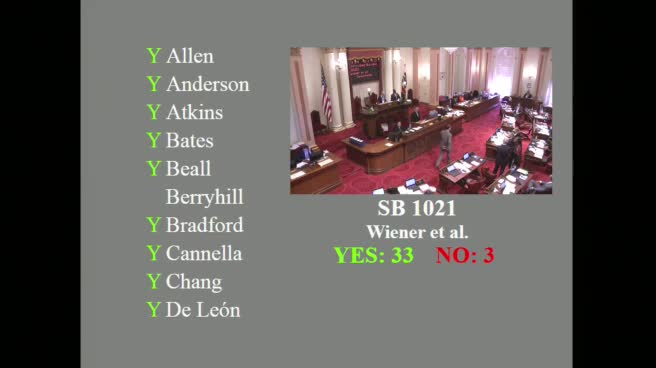
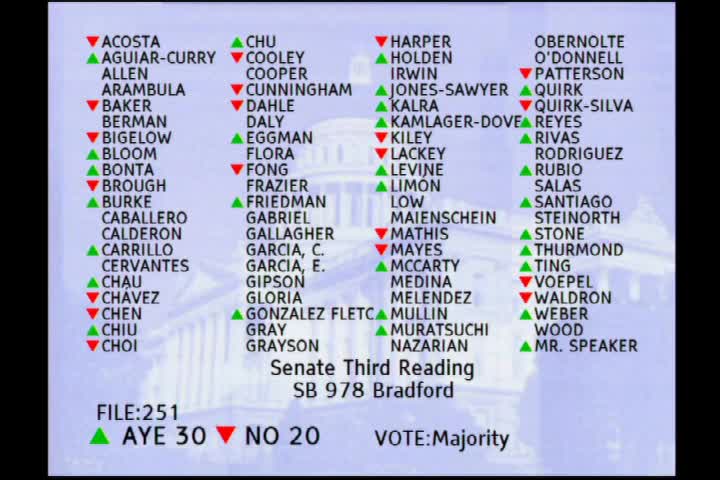



Bill Co-Author(s):