SB 1151: Neighborhood electric vehicles: County of San Diego.
- Session Year: 2017-2018
- House: Senate
- Latest Version Date: 2018-09-19
(1)Existing law authorizes, until January 1, 2022, the County of Orange (county) to establish a specified neighborhood electric vehicle (NEV) transportation plan for the Ranch Plan Planned Community in that county the purpose of which is to further the communitys vision of creating a sustainable development that reduces gasoline demand and vehicle emissions by offering a cleaner, more economical means of local transportation within the plan area. Existing law authorizes the county by ordinance or resolution to adopt the plan and requires that the plan have received a prior review and the comments of the transportation planning agency and any agency having traffic law enforcement responsibilities in the county. Existing law provides that the plan may include the use of a state highway, or any crossing of the highway, subject to the approval of the Department of Transportation.
Existing law requires the county, if it adopts an NEV plan, to establish (A) minimum general design criteria for the development, planning, and construction of separated NEV lanes, including, but not limited to, the design speed of the facility, the space requirements of the NEV, and roadway design criteria, and (B), in cooperation with the department, uniform specifications and symbols for signs, markers, and traffic control devices to control NEV traffic, to warn of dangerous conditions, obstacles, or hazards, to designate the right-of-way as between NEVs, other vehicles, and bicycles, to state the nature and destination of the NEV lane, and to warn pedestrians, bicyclists, and motorists of the presence of NEV traffic. Existing law also requires the county, if it adopts the NEV plan, to submit a report to the Legislature on or before November 1, 2020, in consultation with the department, the Department of the California Highway Patrol, and local law enforcement agencies.
This bill would, until January 1, 2029, authorize the County of San Diego or any city in the county to establish a similar NEV transportation plan, as specified. The bill would require, if the county or any city in the county adopts an NEV plan, the entity to consult with the San Diego Association of Governments (SANDAG) and any agency having traffic law enforcement responsibilities in an entity included in the plan area. The bill would require the County of San Diego or a city in the county that has adopted an NEV transportation plan to consult with SANDAG, the Department of Transportation, the Department of the California Highway Patrol, and any applicable local law enforcement agency in preparing a specified report to the Legislature. The bill would require the report to be submitted to the Legislature within 2 years of the date the NEV transportation plan is adopted.
The bill would require, among other things, as part of the plan, restrictions limiting the operation of NEVs to NEV routes identified in the NEV transportation plan and allowing only those NEVs that meet the safety equipment requirements specified in the plan to be operated on those routes. The bill would provide that a person who operates an NEV in violation of these restrictions is guilty of an infraction punishable by a fine not exceeding $100. By creating a new crime, the bill would impose a state-mandated local program.
(2)The California Constitution requires the state to reimburse local agencies and school districts for certain costs mandated by the state. Statutory provisions establish procedures for making that reimbursement.
This bill would provide that no reimbursement is required by this act for a specified reason.
(1)Existing law authorizes, until January 1, 2022, the County of Orange (county) to establish a specified neighborhood electric vehicle (NEV) transportation plan for the Ranch Plan Planned Community in that county the purpose of which is to further the communitys vision of creating a sustainable development that reduces gasoline demand and vehicle emissions by offering a cleaner, more economical means of local transportation within the plan area. Existing law authorizes the county by ordinance or resolution to adopt the plan and requires that the plan have received a prior review and the comments of the transportation planning agency and any agency having traffic law enforcement responsibilities in the county. Existing law provides that the plan may include the use of a state highway, or any crossing of the highway, subject to the approval of the Department of Transportation.
Existing law requires the county, if it adopts a an NEV plan, to establish (A) minimum general design criteria for the development, planning, and construction of separated NEV lanes, including, but not limited to, the design speed of the facility, the space requirements of the NEV, and roadway design criteria, and (B), in cooperation with the department, uniform specifications and symbols for signs, markers, and traffic control devices to control NEV traffic, to warn of dangerous conditions, obstacles, or hazards, to designate the right-of-way as between NEVs, other vehicles, and bicycles, to state the nature and destination of the NEV lane, and to warn pedestrians, bicyclists, and motorists of the presence of NEV traffic. Existing law would also require the county, if it adopts the NEV plan to submit a report to the Legislature on or before November 1, 2020, in consultation with the department, the Department of the California Highway Patrol, and local law enforcement agencies.
This bill would, until January 1, 2029, authorize the County of San Diego or any city in the county to establish a similar NEV transportation plan, as specified. The bill would require, if the county or any city in the county adopts a an NEV plan to consult with the San Diego Association of Governments (SANDAG) and any agency having traffic law enforcement responsibilities in an entity included in the plan area. The bill would require the County of San Diego or a city in the county that has adopted a an NEV transportation plan to consult with SANDAG, the Department of Transportation, the Department of the California Highway Patrol, and any applicable local law enforcement in preparing a specified report to the Legislature. The bill would require the report to be submitted to the Legislature within 2 years of the date the NEV transportation plan is adopted.
The bill would require, among other things, as part of the plan, restrictions limiting the operation of NEVs to NEV routes identified in the NEV transportation plan and allowing only those NEVs that meet the safety equipment requirements specified in the plan to be operated on those routes. The bill would provide that a person who operates a an NEV in violation of these restrictions is guilty of an infraction punishable by a fine not exceeding $100. By creating a new crime, the bill would impose a state-mandated local program.
(2)The California Constitution requires the state to reimburse local agencies and school districts for certain costs mandated by the state. Statutory provisions establish procedures for making that reimbursement.
This bill would provide that no reimbursement is required by this act for a specified reason.
(1)Existing law authorizes, until January 1, 2022, the County of Orange (county) to establish a specified neighborhood electric vehicle (NEV) transportation plan for the Ranch Plan Planned Community in that county the purpose of which is to further the communitys vision of creating a sustainable development that reduces gasoline demand and vehicle emissions by offering a cleaner, more economical means of local transportation within the plan area. Existing law authorizes the county by ordinance or resolution to adopt the plan and requires that the plan have received a prior review and the comments of the transportation planning agency and any agency having traffic law enforcement responsibilities in the county. Existing law provides that the plan may include the use of a state highway, or any crossing of the highway, subject to the approval of the Department of Transportation.
Existing law requires the county, if it adopts a NEV plan, to establish (1) (A) minimum general design criteria for the development, planning, and construction of separated NEV lanes, including, but not limited to, the design speed of the facility, the space requirements of the NEV, and roadway design criteria, and (2), (B), in cooperation with the department, uniform specifications and symbols for signs, markers, and traffic control devices to control NEV traffic, to warn of dangerous conditions, obstacles, or hazards, to designate the right-of-way as between NEVs, other vehicles, and bicycles, to state the nature and destination of the NEV lane, and to warn pedestrians, bicyclists, and motorists of the presence of NEV traffic. Existing law would also require the county, if it adopts the NEV plan to submit a report to the Legislature on or before November 1, 2020, in consultation with the department, the Department of the California Highway Patrol, and local law enforcement agencies.
This bill would, until January 1, 2029, authorize the County of San Diego or any city in the county to establish a similar NEV transportation plan, as specified. The bill would require, if the county or any city in the county adopts a NEV plan to consult with the San Diego Association of Governments (SANDAG) and any agency having traffic law enforcement responsibilities in an entity included in the plan area. The bill would require the County of San Diego or a city in the county that has adopted a NEV transportation plan to consult with SANDAG, the Department of Transportation, the Department of the California Highway Patrol, and any applicable local law enforcement in preparing a specified report to the Legislature. The bill would require the report to be submitted to the Legislature within two 2 years of the date the NEV transportation plan is adopted.
The bill would require, among other things, as part of the plan, restrictions limiting the operation of NEVs to NEV routes identified in the NEV transportation plan and allowing only those NEVs that meet the safety equipment requirements specified in the plan to be operated on those routes. The bill would provide that a person who operates an a NEV in violation of these restrictions is guilty of an infraction punishable by a fine not exceeding $100. By creating a new crime, the bill would impose a state-mandated local program.
(2)The California Constitution requires the state to reimburse local agencies and school districts for certain costs mandated by the state. Statutory provisions establish procedures for making that reimbursement.
This bill would provide that no reimbursement is required by this act for a specified reason.
(1)Existing law authorizes, until January 1, 2022, the County of Orange (county) to establish a specified neighborhood electric vehicle (NEV) transportation plan for the Ranch Plan Planned Community in that county the purpose of which is to further the communitys vision of creating a sustainable development that reduces gasoline demand and vehicle emissions by offering a cleaner, more economical means of local transportation within the plan area. Existing law authorizes the county by ordinance or resolution to adopt the plan and requires that the plan have received a prior review and the comments of the transportation planning agency and any agency having traffic law enforcement responsibilities in the county. Existing law provides that the plan may include the use of a state highway, or any crossing of the highway, subject to the approval of the Department of Transportation.
Existing law requires the county, if it adopts a NEV plan, to establish (1) minimum general design criteria for the development, planning, and construction of separated NEV lanes, including, but not limited to, the design speed of the facility, the space requirements of the NEV, and roadway design criteria, and (2), in cooperation with the department, to establish uniform specifications and symbols for signs, markers, and traffic control devices to control NEV traffic, to warn of dangerous conditions, obstacles, or hazards, to designate the right-of-way as between NEVs, other vehicles, and bicycles, to state the nature and destination of the NEV lane, and to warn pedestrians, bicyclists, and motorists of the presence of NEV traffic. Existing law would also require the county, if it adopts the NEV plan to submit a report to the Legislature on or before November 1, 2020, in consultation with the department, the Department of the California Highway Patrol, and local law enforcement agencies.
This bill would, until January 1, 2029, authorize the County of San Diego or any city in the county to establish a similar (NEV) NEV transportation plan, as specified. The bill would require, if the county or any city in the county adopts a NEV plan to consult with the San Diego Association of Governments (SANDAG) and any agency having traffic law enforcement responsibilities in an entity included in the plan area. The bill would require the County of San Diego or a city in the county that has adopted a NEV transportation plan to consult with SANDAG, the Department of Transportation, the Department of the California Highway Patrol, and any applicable local law enforcement in preparing a specified report to the Legislature. The bill would require the report to be submitted to the Legislature within two years of the date the NEV transportation plan is adopted.
The bill would require, among other things, as part of the plan, restrictions limiting the operation of NEVs to NEV routes identified in the NEV transportation plan and allowing only those NEVs that meet the safety equipment requirements specified in the plan to be operated on those routes. The bill would provide that a person who operates an NEV in violation of these restrictions is guilty of an infraction punishable by a fine not exceeding $100. By creating a new crime, the bill would impose a state-mandated local program.
(2)The California Constitution requires the state to reimburse local agencies and school districts for certain costs mandated by the state. Statutory provisions establish procedures for making that reimbursement.
This bill would provide that no reimbursement is required by this act for a specified reason.
(1)Existing law authorizes, until January 1, 2022, the County of Orange (county) to establish a specified neighborhood electric vehicle (NEV) transportation plan for the Ranch Plan Planned Community in that county the purpose of which is to further the communitys vision of creating a sustainable development that reduces gasoline demand and vehicle emissions by offering a cleaner, more economical means of local transportation within the plan area. Existing law authorizes the county by ordinance or resolution to adopt the plan and requires that the plan have received a prior review and the comments of the transportation planning agency and any agency having traffic law enforcement responsibilities in the county. Existing law provides that the plan may include the use of a state highway, or any crossing of the highway, subject to the approval of the Department of Transportation.
Existing law requires the county, if it adopts a NEV plan, to establish (1) minimum general design criteria for the development, planning, and construction of separated NEV lanes, including, but not limited to, the design speed of the facility, the space requirements of the NEV, and roadway design criteria, and (2), in cooperation with the department, to establish uniform specifications and symbols for signs, markers, and traffic control devices to control NEV traffic, to warn of dangerous conditions, obstacles, or hazards, to designate the right-of-way as between NEVs, other vehicles, and bicycles, to state the nature and destination of the NEV lane, and to warn pedestrians, bicyclists, and motorists of the presence of NEV traffic. Existing law would also require the county, if it adopts the NEV plan to submit a report to the Legislature on or before November 1, 2020, in consultation with the department, the Department of the California Highway Patrol, and local law enforcement agencies.
This bill would would, until January 1, 2029, authorize the County of San Diego or any city in the county to establish a similar (NEV) transportation plan, as specified. The bill would require, if the county or any city in the county adopts a NEV plan to consult with the San Diego Association of Governments (SANDAG) and any agency having traffic law enforcement responsibilities in an entity included in the plan area. The bill would require a report to the Legislature by January 1, 2023, in consultation the County of San Diego or a city in the county that has adopted a NEV transportation plan to consult with SANDAG, the Department of Transportation, the Department of the California Highway Patrol, and any applicable local law enforcement agency. in preparing a specified report to the Legislature. The bill would require the report to be submitted to the Legislature within two years of the date the NEV transportation plan is adopted.
The bill would require, among other things, as part of the plan, restrictions limiting the operation of NEVs to NEV routes identified in the NEV transportation plan and allowing only those NEVs that meet the safety equipment requirements specified in the plan to be operated on those routes. The bill would provide that a person who operates an NEV in violation of these restrictions is guilty of an infraction punishable by a fine not exceeding $100. By creating a new crime, the bill would impose a state-mandated local program.
(2)The California Constitution requires the state to reimburse local agencies and school districts for certain costs mandated by the state. Statutory provisions establish procedures for making that reimbursement.
This bill would provide that no reimbursement is required by this act for a specified reason.
Existing law authorizes, until January 1, 2022, the County of Orange (county) to establish a specified neighborhood electric vehicle (NEV) transportation plan for the Ranch Plan Planned Community in that county the purpose of which is to further the communitys vision of creating a sustainable development that reduces gasoline demand and vehicle emissions by offering a cleaner, more economical means of local transportation within the plan area. Existing law authorizes the county by ordinance or resolution to adopt the plan and requires that the plan have received a prior review and the comments of the transportation planning agency and any agency having traffic law enforcement responsibilities in the county. Existing law provides that the plan may include the use of a state highway, or any crossing of the highway, subject to the approval of the Department of Transportation.
Existing law requires the county, if it adopts a NEV plan, to establish (1) minimum general design criteria for the development, planning, and construction of separated NEV lanes, including, but not limited to, the design speed of the facility, the space requirements of the NEV, and roadway design criteria, and (2), in cooperation with the department, to establish uniform specifications and symbols for signs, markers, and traffic control devices to control NEV traffic, to warn of dangerous conditions, obstacles, or hazards, to designate the right-of-way as between NEVs, other vehicles, and bicycles, to state the nature and destination of the NEV lane, and to warn pedestrians, bicyclists, and motorists of the presence of NEV traffic. Existing law would also require the county, if it adopts the NEV plan to submit a report to the Legislature on or before November 1, 2020, in consultation with the department, the Department of the California Highway Patrol, and local law enforcement agencies.
This bill would authorize the County of San Diego or any city in the county to establish a similar (NEV) transportation plan, as specified. The bill would require, if the county or any city in the county adopts a NEV plan to consult with the San Diego Association of Governments (SANDAG) and any agency having traffic law enforcement responsibilities in an entity included in the plan area. The bill would require a report to the Legislature by January 1, 2023, in consultation with SANDAG, the Department of Transportation, the Department of the California Highway Patrol, and any applicable local law enforcement agency.
Existing law provides that a city is not liable for failure to maintain any road until it been accepted into the city street system by the governing body of that city.This bill would make nonsubstantive changes to this provision.Existing law provides that a city is not liable for failure to maintain any road until it been accepted into the city street system by the governing body of that city.
This bill would make nonsubstantive changes to this provision.
This article shall remain in effect only until January 1, 2022, and as of that date is repealed, unless a later enacted statute, that is enacted before January 1, 2022, deletes or extends that date.
SEC. 4.Article 2 (commencing with Section 1966) is added to Chapter 8 of Division 2.5 of the Streets and Highways Code, to read:2.County of San Diego Neighborhood Electric Vehicle Transportation Plans1966.(a)It is the intent of the Legislature, in enacting this article, to authorize the County of San Diego or any city in the county to establish a neighborhood electric vehicle (NEV) transportation plan. The purpose of this NEV transportation plan is to further the San Diego regions vision of facilitating the efficient movement of people and goods to support a sustainable and healthy region, a vibrant economy, and an outstanding quality of life for all.
(b)It is further the intent of the Legislature that if the County of San Diego or any city in the county adopts an NEV plan that this NEV transportation plan be designed and developed to provide flexible and economical travel options for residents, employees, and visitors, to best serve the functional travel needs of the plan area, to have the physical safety of the NEV driver or the passengers person and property as a major planning component, and to have the capacity to accommodate NEV drivers of every legal age and ability.
1966.1.The following definitions apply to this article:
(a)Plan area means any portion of the County of San Diego, or any portion of any city in the county, and any streets and roads under the jurisdiction of the county or city, to the extent the county or city has adopted an NEV transportation plan pursuant to Section 1966.2, including the privately owned land of any owner that consents to its inclusion in the plan.
(b)Neighborhood electric vehicle or NEV means a low-speed vehicle as defined by Section 385.5 of the Vehicle Code.
(c)NEV routes means all publicly or privately owned facilities that provide for NEV travel, including roadways designated by signs or permanent markings that are shared with pedestrians, bicyclists, and other motorists in the plan area.
1966.2.(a)The County of San Diego or any city in the county may, by ordinance or resolution, adopt an NEV transportation plan for the plan area within its jurisdiction. Two or more jurisdictions may jointly adopt an NEV transportation plan for all or a portion of the territory under their respective jurisdictions.
(b)If the County of San Diego or any city in the county adopts an NEV plan, the entity adopting the plan shall consult with the San Diego Association of Governments (SANDAG) and any agency having traffic law enforcement responsibilities in an entity included in the plan area.
(c)The NEV transportation plan may include the use of a state highway, or any crossing of the highway, subject to the approval of the department.
1966.3.If the County of San Diego or any city in the county adopts an NEV plan, the NEV transportation plan shall include, but need not be limited to, all of the following elements:
(a)Route selection, that includes a finding that the route accommodates NEVs without an adverse impact upon traffic safety and shall consider, among other things, the travel needs of commuters and other users.
(b)Transportation interfacing, that shall include, but not be limited to, coordination with other modes of transportation so that an NEV driver or passenger may employ multiple modes of transportation in reaching a destination in the plan area, including walking, biking, rideables, transit, and other vehicles.
(c)Provision for NEV-related facilities, including, but not limited to, special access points, special NEV turnouts, and NEV crossings.
(d)Provisions for NEV parking facilities at destination locations, including, but not limited to, transit stations, educational institutions, medical facilities, shopping areas, job and community centers, and public parks.
(e)Provisions for special paving, road markings, signage, and striping for NEV travel lanes, road crossings, parking, and circulation, as appropriate.
(f)Provisions for NEV electrical charging stations.
(g)Community involvement in planning.
(h)Coordination with long-range transportation planning.
(i)A map showing the NEV route network. NEV routes for the purposes of the NEV transportation plan shall be classified as follows:
(1)Class I NEV routes that provide for a completely separate right-of-way for the use of NEVs.
(2)Class II NEV routes that provide for a separately striped lane on roadways with speed limits of 55 miles per hour or less.
(3)Class III NEV routes that provide for shared use by NEVs with conventional vehicle traffic on streets with speed limits of 35 miles per hour or less.
1966.4.If the County of San Diego or any city in the county adopts an NEV transportation plan for the plan area pursuant to this article it shall do both of the following:
(a)Establish minimum general design criteria for the development, planning, and construction of separated NEV lanes, including, but not limited to, the design speed of the facility, the space requirements of the NEV lane, and roadway design criteria, if the plan envisions separated NEV lanes.
(b)In cooperation with the department and SANDAG, establish uniform specifications and symbols for signs, markers, and traffic control devices to control NEV traffic; to warn of dangerous conditions, obstacles, or hazards, to designate the right-of-way as between NEVs, other vehicles, and bicycles, as may be applicable, to state the nature and destination of the NEV lane, and to warn pedestrians, bicyclists, and motorists of the presence of NEV traffic.
1966.5.If the County of San Diego or any city in the county adopts an NEV transportation plan for the plan area pursuant to this article, it shall also adopt all of the following as part of the plan:
(a)NEVs eligible to use NEV routes shall meet the safety requirements for low-speed vehicles as set forth in Section 571.500 of Chapter V of Subtitle B of Title 49 of the Code of Federal Regulations.
(b)Minimum safety criteria for NEV operators, including, but not limited to, requirements relating to NEV maintenance and NEV safety. Operators shall be required to possess a valid California drivers license and to comply with the financial responsibility requirements established pursuant to Chapter 1 (commencing with Section 16000) of Division 7 of the Vehicle Code.
(c)(1)Restrictions limiting the operation of NEVs to NEV routes identified in the NEV transportation plan and allowing only those NEVs that meet the safety equipment requirements specified in the plan to be operated on those routes.
(2)A person who operates an NEV in the plan area in violation of this subdivision is guilty of an infraction punishable by a fine not exceeding one hundred dollars ($100).
1966.6.If the County of San Diego or any city in the county adopts an NEV transportation plan, it may acquire, by dedication, purchase, or condemnation, real property, including easements or rights-of-way, to establish NEV routes.
1966.7.(a)If the County of San Diego or any city in the county adopts an NEV transportation plan for the plan area pursuant to this article, the county or city shall submit a report, in consultation with SANDAG, the department, the Department of the California Highway Patrol, and any applicable local law enforcement agency, to the Legislature within two years of the date the NEV transportation plan is adopted.
(b)The report shall include all of the following:
(1)A description of the NEV transportation plan that has been authorized up to that time, including a description of the use of shared fleets and any charging, parking, or federal Americans with Disabilities Act of 1990 elements that have been included in the plan.
(2)An evaluation of the effectiveness of the NEV transportation plan, that may include its impact on traffic flows, vehicle miles traveled, greenhouse gas emission reductions, and safety.
(3)A recommendation as to whether this article should be terminated, continued in effect, or expanded statewide.
1966.8.(a)This article shall remain in effect only until January 1, 2029, and as of that date is repealed, unless a later enacted statute that is enacted before January 1, 2029, deletes or extends that date.
(b)Notwithstanding subdivision (a), if the County of San Diego or any city in the county adopts an NEV transportation plan for the plan area pursuant to this article within two years of January 1, 2029, the county or that city in the county shall comply with the reporting requirement provided in Section 1966.7.
SEC. 5.Section 21251 of the Vehicle Code is amended to read:21251.Except as provided in Chapter 8 (commencing with Section 1965) of Division 2.5 of the Streets and Highways Code, and Sections 4023, 21115, and 21115.1, a low-speed vehicle is subject to all the provisions applicable to a motor vehicle, and the driver of a low-speed vehicle is subject to all the provisions applicable to the driver of a motor vehicle or other vehicle, when applicable, by this code or another code, with the exception of those provisions that, by their very nature, can have no application.
SEC. 6.Section 21260 of the Vehicle Code is amended to read:21260.(a)Except as provided in paragraph (1) of subdivision (b), or in an area where a neighborhood electric vehicle transportation plan has been adopted pursuant to Chapter 8 (commencing with Section 1965) of Division 2.5 of the Streets and Highways Code, the operator of a low-speed vehicle shall not operate the vehicle on any roadway with a speed limit in excess of 35 miles per hour.
(b)(1)The operator of a low-speed vehicle may cross a roadway with a speed limit in excess of 35 miles per hour if the crossing begins and ends on a roadway with a speed limit of 35 miles per hour or less and occurs at an intersection of approximately 90 degrees.
(2)Notwithstanding paragraph (1), the operator of a low-speed vehicle shall not traverse an uncontrolled intersection with any state highway unless that intersection has been approved and authorized by the agency having primary traffic enforcement responsibilities for that crossing by a low-speed vehicle.
SEC. 7.No reimbursement is required by this act pursuant to Section 6 of Article XIIIB of the California Constitution because the only costs that may be incurred by a local agency or school district will be incurred because this act creates a new crime or infraction, eliminates a crime or infraction, or changes the penalty for a crime or infraction, within the meaning of Section 17556 of the Government Code, or changes the definition of a crime within the meaning of Section 6 of Article XIIIB of the California Constitution.
This article shall remain in effect only until January 1, 2022, and as of that date is repealed, unless a later enacted statute, that is enacted before January 1, 2022, deletes or extends that date.
SEC. 4.Article 2 (commencing with Section 1966) is added to Chapter 8 of Division 2.5 of the Streets and Highways Code, to read:2.County of San Diego Neighborhood Electric Vehicle Transportation Plans1966.(a)It is the intent of the Legislature, in enacting this article, to authorize the County of San Diego or any city in the county to establish a neighborhood electric vehicle (NEV) transportation plan. The purpose of this NEV transportation plan is to further the San Diego regions vision of facilitating the efficient movement of people and goods to support a sustainable and healthy region, a vibrant economy, and an outstanding quality of life for all.
(b)It is further the intent of the Legislature that if the County of San Diego or any city in the county adopts an NEV plan that this NEV transportation plan be designed and developed to provide flexible and economical travel options for residents, employees, and visitors, to best serve the functional travel needs of the plan area, to have the physical safety of the NEV driver or the passengers person and property as a major planning component, and to have the capacity to accommodate NEV drivers of every legal age and ability.
1966.1.The following definitions apply to this article:
(a)Plan area means any portion of the County of San Diego, or any portion of any city in the county, and any streets and roads under the jurisdiction of the county or city, to the extent the county or city has adopted a an NEV transportation plan pursuant to Section 1966.2, including the privately owned land of any owner that consents to its inclusion in the plan.
(b)Neighborhood electric vehicle or NEV means a low-speed vehicle as defined by Section 385.5 of the Vehicle Code.
(c)NEV routes means all publicly or privately owned facilities that provide for NEV travel, including roadways designated by signs or permanent markings that are shared with pedestrians, bicyclists, and other motorists in the plan area.
1966.2.(a)The County of San Diego or any city in the county may, by ordinance or resolution, adopt a an NEV transportation plan for the plan area within its jurisdiction. Two or more jurisdictions may jointly adopt a an NEV transportation plan for all or a portion of the territory under their respective jurisdictions.
(b)The County of San Diego or any city in the county adopting a NEV transportation plan If the County of San Diego or any city in the county adopts an NEV plan, the entity adopting the plan shall consult with the San Diego Association of Governments (SANDAG) and any agency having traffic law enforcement responsibilities in an entity included in the plan area.
(c)The NEV transportation plan may include the use of a state highway, or any crossing of the highway, subject to the approval of the department.
1966.3.The If the County of San Diego or any city in the county adopts an NEV plan, the NEV transportation plan shall include, but need not be limited to, all of the following elements:
(a)Route selection, that includes a finding that the route accommodates NEVs without an adverse impact upon traffic safety and shall consider, among other things, the travel needs of commuters and other users.
(b)Transportation interfacing, that shall include, but not be limited to, coordination with other modes of transportation so that a an NEV driver or passenger may employ multiple modes of transportation in reaching a destination in the plan area, including walking, biking, rideables, transit, and other vehicles.
(c)Provision for NEV-related facilities, including, but not limited to, special access points, special NEV turnouts, and NEV crossings.
(d)Provisions for NEV parking facilities at destination locations, including, but not limited to, transit stations, educational institutions, medical facilities, shopping areas, job and community centers, and public parks.
(e)Provisions for special paving, road markings, signage, and striping for NEV travel lanes, road crossings, parking, and circulation, as appropriate.
(f)Provisions for NEV electrical charging stations.
(g)Community involvement in planning.
(h)Coordination with long-range transportation planning.
(i)A map showing the NEV route network. NEV routes for the purposes of the NEV transportation plan shall be classified as follows:
(1)Class I NEV routes that provide for a completely separate right-of-way for the use of NEVs.
(2)Class II NEV routes that provide for a separately striped lane on roadways with speed limits of 55 miles per hour or less.
(3)Class III NEV routes that provide for shared use by NEVs with conventional vehicle traffic on streets with speed limits of 35 miles per hour or less.
1966.4.If the County of San Diego or any city in the county adopts a an NEV transportation plan for the plan area pursuant to this article it shall do both of the following:
(a)Establish minimum general design criteria for the development, planning, and construction of separated NEV lanes, including, but not limited to, the design speed of the facility, the space requirements of the NEV lane, and roadway design criteria, if the plan envisions separated NEV lanes.
(b)In cooperation with the department and SANDAG, establish uniform specifications and symbols for signs, markers, and traffic control devices to control NEV traffic; to warn of dangerous conditions, obstacles, or hazards, to designate the right-of-way as between NEVs, other vehicles, and bicycles, as may be applicable, to state the nature and destination of the NEV lane, and to warn pedestrians, bicyclists, and motorists of the presence of NEV traffic.
1966.5.If the County of San Diego or any city in the county adopts a an NEV transportation plan for the plan area pursuant to this article, it shall also adopt all of the following as part of the plan:
(a)NEVs eligible to use NEV routes shall meet the safety requirements for low-speed vehicles as set forth in Section 571.500 of Chapter V of Subtitle B of Title 49 of the Code of Federal Regulations.
(b)Minimum safety criteria for NEV operators, including, but not limited to, requirements relating to NEV maintenance and NEV safety. Operators shall be required to possess a valid California drivers license and to comply with the financial responsibility requirements established pursuant to Chapter 1 (commencing with Section 16000) of Division 7 of the Vehicle Code.
(c)(1)Restrictions limiting the operation of NEVs to NEV routes identified in the NEV transportation plan and allowing only those NEVs that meet the safety equipment requirements specified in the plan to be operated on those routes.
(2)A person who operates a an NEV in the plan area in violation of this subdivision is guilty of an infraction punishable by a fine not exceeding one hundred dollars ($100).
1966.6.If the County of San Diego or any city in the county adopts a an NEV transportation plan, it may acquire, by dedication, purchase, or condemnation, real property, including easements or rights-of-way, to establish NEV routes.
1966.7.(a)If the County of San Diego or any city in the county adopts a an NEV transportation plan for the plan area pursuant to this article, the county or city shall submit a report, in consultation with SANDAG, the department, the Department of the California Highway Patrol, and any applicable local law enforcement agency, to the Legislature within two years of the date the NEV transportation plan is adopted.
(b)The report shall include all of the following:
(1)A description of the NEV transportation plan that has been authorized up to that time, including a description of the use of shared fleets and any charging, parking, or federal Americans with Disabilities Act of 1990 elements that have been included in the plan.
(2)An evaluation of the effectiveness of the NEV transportation plan, that may include its impact on traffic flows, vehicle miles traveled, greenhouse gas emission reductions, and safety.
(3)A recommendation as to whether this article should be terminated, continued in effect, or expanded statewide.
1966.8.(a)This article shall remain in effect only until January 1, 2029, and as of that date is repealed, unless a later enacted statute that is enacted before January 1, 2029, deletes or extends that date.
(b)Notwithstanding subdivision (a), if the County of San Diego or any city in the county adopts a an NEV transportation plan for the plan area pursuant to this article within two years of January 1, 2029, the county or that city in the county shall comply with the reporting requirement provided in Section 1966.7.
SEC. 5.Section 21251 of the Vehicle Code is amended to read:21251.Except as provided in Chapter 8 (commencing with Section 1965) of Division 2.5 of the Streets and Highways Code, and Sections 4023, 21115, and 21115.1, a low-speed vehicle is subject to all the provisions applicable to a motor vehicle, and the driver of a low-speed vehicle is subject to all the provisions applicable to the driver of a motor vehicle or other vehicle, when applicable, by this code or another code, with the exception of those provisions that, by their very nature, can have no application.
SEC. 6.Section 21260 of the Vehicle Code is amended to read:21260.(a)Except as provided in paragraph (1) of subdivision (b), or in an area where a neighborhood electric vehicle transportation plan has been adopted pursuant to Chapter 8 (commencing with Section 1965) of Division 2.5 of the Streets and Highways Code, the operator of a low-speed vehicle shall not operate the vehicle on any roadway with a speed limit in excess of 35 miles per hour.
(b)(1)The operator of a low-speed vehicle may cross a roadway with a speed limit in excess of 35 miles per hour if the crossing begins and ends on a roadway with a speed limit of 35 miles per hour or less and occurs at an intersection of approximately 90 degrees.
(2)Notwithstanding paragraph (1), the operator of a low-speed vehicle shall not traverse an uncontrolled intersection with any state highway unless that intersection has been approved and authorized by the agency having primary traffic enforcement responsibilities for that crossing by a low-speed vehicle.
SEC. 7.No reimbursement is required by this act pursuant to Section 6 of Article XIIIB of the California Constitution because the only costs that may be incurred by a local agency or school district will be incurred because this act creates a new crime or infraction, eliminates a crime or infraction, or changes the penalty for a crime or infraction, within the meaning of Section 17556 of the Government Code, or changes the definition of a crime within the meaning of Section 6 of Article XIIIB of the California Constitution.
This article shall remain in effect only until January 1, 2022, and as of that date is repealed, unless a later enacted statute, that is enacted before January 1, 2022, deletes or extends that date.
SEC. 4.Article 2 (commencing with Section 1966) is added to Chapter 8 of Division 2.5 of the Streets and Highways Code, to read:2.County of San Diego Neighborhood Electric Vehicle Transportation Plans1966.(a)It is the intent of the Legislature, in enacting this article, to authorize the County of San Diego or any city in the county to establish a neighborhood electric vehicle (NEV) transportation plan. The purpose of this NEV transportation plan is to further the San Diego regions vision of facilitating the efficient movement of people and goods to support a sustainable and healthy region, a vibrant economy, and an outstanding quality of life for all.
(b)It is further the intent of the Legislature that this NEV transportation plan be designed and developed to provide flexible and economical travel options for residents, employees, and visitors, to best serve the functional travel needs of the plan area, to have the physical safety of the NEV driver or the passengers person and property as a major planning component, and to have the capacity to accommodate NEV drivers of every legal age and ability.
1966.1.The following definitions apply to this article:
(a)Plan area means any portion of the County of San Diego, or any portion of any city in the county, and any streets and roads under the jurisdiction of the county or city, to the extent the county or city has adopted an a NEV transportation plan pursuant to Section 1966.2, including the privately owned land of any owner that consents to its inclusion in the plan.
(b)Neighborhood electric vehicle or NEV means a low-speed vehicle as defined by Section 385.5 of the Vehicle Code.
(c)NEV lanes routes means all publicly or privately owned facilities that provide for NEV travel, including roadways designated by signs or permanent markings that are shared with pedestrians, bicyclists, and other motorists in the plan area.
1966.2.(a)The County of San Diego or any city in the county may, by ordinance or resolution, adopt an a NEV transportation plan for the plan area within its jurisdiction. Two or more jurisdictions may jointly adopt an a NEV transportation plan for all or a portion of the territory under their respective jurisdictions.
(b)The County of San Diego or any city in the county adopting an a NEV transportation plan shall consult with the San Diego Association of Governments (SANDAG) and any agency having traffic law enforcement responsibilities in an entity included in the plan area.
(c)The NEV transportation plan may include the use of a state highway, or any crossing of the highway, subject to the approval of the department.
1966.3.The NEV transportation plan shall include, but need not be limited to, all of the following elements:
(a)Route selection, that includes a finding that the route accommodates NEVs without an adverse impact upon traffic safety and shall consider, among other things, the travel needs of commuters and other users.
(b)Transportation interfacing, that shall include, but not be limited to, coordination with other modes of transportation so that an a NEV driver or passenger may employ multiple modes of transportation in reaching a destination in the plan area, including walking, biking, rideables, transit, and other vehicles.
(c)Provision for NEV-related facilities, including, but not limited to, special access points, special NEV turnouts, and NEV crossings.
(d)Provisions for NEV parking facilities at destination locations, including, but not limited to, transit stations, educational institutions, medical facilities, shopping areas, job and community centers, and public parks.
(e)Provisions for special paving, road markings, signage, and striping for NEV travel lanes, road crossings, parking, and circulation, as appropriate.
(f)Provisions for NEV electrical charging stations.
(g)Community involvement in planning.
(h)Coordination with long-range transportation planning.
(i)A map showing the NEV lane route network. NEV lanes routes for the purposes of the NEV transportation plan shall be classified as follows:
(1)Class I NEV paths routes that provide for a completely separate right-of-way for the use of NEVs that may be shared with pedestrians and bicycles while minimizing crossflow between modes. NEVs.
(2)Class II NEV lanes routes that provide for separate a separately striped lanes that may be shared with bicycles on lane on roadways with speed limits of 55 miles per hour or less.
(3)Class III NEV routes that provide for shared use by NEVs with conventional vehicle traffic on streets with speed limits of 35 miles per hour or less.
1966.4.If the County of San Diego or any city in the county adopts an a NEV transportation plan for the plan area pursuant to this article it shall do both of the following:
(a)Establish minimum general design criteria for the development, planning, and construction of separated NEV lanes, including, but not limited to, the design speed of the facility, the space requirements of the NEV lane, and roadway design criteria, if the plan envisions separated NEV lanes.
(b)In cooperation with the department and SANDAG, establish uniform specifications and symbols for signs, markers, and traffic control devices to control NEV traffic; to warn of dangerous conditions, obstacles, or hazards, to designate the right-of-way as between NEVs, other vehicles, and bicycles, as may be applicable, to state the nature and destination of the NEV lane, and to warn pedestrians, bicyclists, and motorists of the presence of NEV traffic.
1966.5.If the County of San Diego or any city in the county adopts an a NEV transportation plan for the plan area pursuant to this article, it shall also adopt all of the following as part of the plan:
(a)NEVs eligible to use NEV lanes routes shall meet the safety requirements for low-speed vehicles as set forth in Section 571.500 of Chapter V of Subtitle B of Title 49 of the Code of Federal Regulations.
(b)Minimum safety criteria for NEV operators, including, but not limited to, requirements relating to NEV maintenance and NEV safety. Operators shall be required to possess a valid California drivers license and to comply with the financial responsibility requirements established pursuant to Chapter 1 (commencing with Section 16000) of Division 7 of the Vehicle Code.
(c)(1)Restrictions limiting the operation of NEVs to NEV routes identified in the NEV transportation plan and allowing only those NEVs that meet the safety equipment requirements specified in the plan to be operated on those routes.
(2)A person who operates an a NEV in the plan area in violation of this subdivision is guilty of an infraction punishable by a fine not exceeding one hundred dollars ($100).
1966.6.If the County of San Diego or any city in the county adopts an a NEV transportation plan, it may acquire, by dedication, purchase, or condemnation, real property, including easements or rights-of-way, to establish NEV lanes. routes.
1966.7.(a)If the County of San Diego or any city in the county adopts an a NEV transportation plan for the plan area pursuant to this article, the county or city shall submit a report, in consultation with SANDAG, the department, the Department of the California Highway Patrol, and any applicable local law enforcement agency, to the Legislature within two years of the date the NEV transportation plan is adopted.
(b)The report shall include all of the following:
(1)A description of the NEV transportation plan that has been authorized up to that time, including a description of the use of shared fleets and any charging, parking, or federal Americans with Disabilities Act of 1990 elements that have been included in the plan.
(2)An evaluation of the effectiveness of the NEV transportation plan, that may include its impact on traffic flows, vehicle miles traveled, greenhouse gas emission reductions, and safety.
(3)A recommendation as to whether this article should be terminated, continued in effect, or expanded statewide.
1966.8.(a)This article shall remain in effect only until January 1, 2029, and as of that date is repealed, unless a later enacted statute that is enacted before January 1, 2029, deletes or extends that date.
(b)Notwithstanding subdivision (a), if the County of San Diego or any city in the county adopts an a NEV transportation plan for the plan area pursuant to this article within two years of January 1, 2029, the county or that city in the county shall comply with the reporting requirement provided in Section 1966.7.
SEC. 5.Section 21251 of the Vehicle Code is amended to read:21251.Except as provided in Chapter 8 (commencing with Section 1965) of Division 2.5 of the Streets and Highways Code, and Sections 4023, 21115, and 21115.1, a low-speed vehicle is subject to all the provisions applicable to a motor vehicle, and the driver of a low-speed vehicle is subject to all the provisions applicable to the driver of a motor vehicle or other vehicle, when applicable, by this code or another code, with the exception of those provisions that, by their very nature, can have no application.
SEC. 6.Section 21260 of the Vehicle Code is amended to read:21260.(a)Except as provided in paragraph (1) of subdivision (b), or in an area where a neighborhood electric vehicle transportation plan has been adopted pursuant to Chapter 8 (commencing with Section 1965) of Division 2.5 of the Streets and Highways Code, the operator of a low-speed vehicle shall not operate the vehicle on any roadway with a speed limit in excess of 35 miles per hour.
(b)(1)The operator of a low-speed vehicle may cross a roadway with a speed limit in excess of 35 miles per hour if the crossing begins and ends on a roadway with a speed limit of 35 miles per hour or less and occurs at an intersection of approximately 90 degrees.
(2)Notwithstanding paragraph (1), the operator of a low-speed vehicle shall not traverse an uncontrolled intersection with any state highway unless that intersection has been approved and authorized by the agency having primary traffic enforcement responsibilities for that crossing by a low-speed vehicle.
SEC. 7.No reimbursement is required by this act pursuant to Section 6 of Article XIIIB of the California Constitution because the only costs that may be incurred by a local agency or school district will be incurred because this act creates a new crime or infraction, eliminates a crime or infraction, or changes the penalty for a crime or infraction, within the meaning of Section 17556 of the Government Code, or changes the definition of a crime within the meaning of Section 6 of Article XIIIB of the California Constitution.
This article shall remain in effect only until January 1, 2022, and as of that date is repealed, unless a later enacted statute, that is enacted before January 1, 2022, deletes or extends that date.
SEC. 4.Article 2 (commencing with Section 1966) is added to Chapter 8 of Division 2.5 of the Streets and Highways Code, to read:2.County of San Diego Neighborhood Electric Vehicle Transportation Plans1966.(a)It is the intent of the Legislature, in enacting this article, to authorize the County of San Diego or any city in the county to establish a neighborhood electric vehicle (NEV) transportation plan. The purpose of this NEV transportation plan is to further the San Diego regions vision of facilitating the efficient movement of people and goods to support a sustainable and healthy region, a vibrant economy, and an outstanding quality of life for all.
(b)It is further the intent of the Legislature that this NEV transportation plan be designed and developed to provide flexible and economical travel options for residents, employees, and visitors, to best serve the functional travel needs of the plan area, to have the physical safety of the NEV driver or the passengers person and property as a major planning component, and to have the capacity to accommodate NEV drivers of every legal age and ability.
1966.1.The following definitions apply to this article:
(a)Plan area means any portion of the County of San Diego, or any portion of any city in the county, and any streets and roads under the jurisdiction of the county or city, to the extent the county or city has adopted an NEV transportation plan pursuant to Section 1966.2, including the privately owned land of any owner that consents to its inclusion in the plan.
(b)Neighborhood electric vehicle or NEV means a low-speed vehicle as defined by Section 385.5 of the Vehicle Code.
(c)NEV lanes means all publicly or privately owned facilities that provide for NEV travel, including roadways designated by signs or permanent markings that are shared with pedestrians, bicyclists, and other motorists in the plan area.
1966.2.(a)The County of San Diego or any city in the county may, by ordinance or resolution, adopt an NEV transportation plan for the plan area within its jurisdiction. Two or more jurisdictions may jointly adopt an NEV transportation plan for all or a portion of the territory under their respective jurisdictions.
(b)The County of San Diego or any city in the county adopting an NEV transportation plan shall consult with the San Diego Association of Governments (SANDAG) and any agency having traffic law enforcement responsibilities in an entity included in the plan area.
(c)The NEV transportation plan may include the use of a state highway, or any crossing of the highway, subject to the approval of the department.
1966.3.The NEV transportation plan shall include, but need not be limited to, all of the following elements:
(a)Route selection, that includes a finding that the route accommodates NEVs without an adverse impact upon traffic safety and shall consider, among other things, the travel needs of commuters and other users.
(b)Transportation interfacing, that shall include, but not be limited to, coordination with other modes of transportation so that an NEV driver or passenger may employ multiple modes of transportation in reaching a destination in the plan area, including walking, biking, rideables, transit, and other vehicles.
(c)Provision for NEV-related facilities, including, but not limited to, special access points, special NEV turnouts, and NEV crossings.
(d)Provisions for NEV parking facilities at destination locations, including, but not limited to, transit stations, educational institutions, medical facilities, shopping areas, job and community centers, and public parks.
(e)Provisions for special paving, road markings, signage, and striping for NEV travel lanes, road crossings, parking, and circulation, as appropriate.
(f)Provisions for NEV electrical charging stations.
(g)Community involvement in planning.
(h)Coordination with long-range transportation planning.
(i)A map showing the NEV lane network. NEV lanes for the purposes of the NEV transportation plan shall be classified as follows:
(1)Class I NEV paths that provide for a completely separate right of way right-of-way for the use of NEVs that may be shared with pedestrians and bicycles while minimizing crossflow between modes.
(2)Class II NEV lanes that provide for separate striped lanes that may be shared with bicycles on roadways with speed limits of 55 miles per hour or less.
(3)Class III NEV routes that provide for shared use by NEVs with conventional vehicle traffic on streets with speed limits of 35 miles per hour or less.
1966.4.If the County of San Diego or any city in the county adopts an NEV transportation plan for the plan area pursuant to this article it shall do both of the following:
(a)Establish minimum general design criteria for the development, planning, and construction of separated NEV lanes, including, but not limited to, the design speed of the facility, the space requirements of the NEV lane, and roadway design criteria, if the plan envisions separated NEV lanes.
(b)In cooperation with the department and SANDAG, establish uniform specifications and symbols for signs, markers, and traffic control devices to control NEV traffic; to warn of dangerous conditions, obstacles, or hazards, to designate the right of way right-of-way as between NEVs, other vehicles, and bicycles, as may be applicable, to state the nature and destination of the NEV lane, and to warn pedestrians, bicyclists, and motorists of the presence of NEV traffic.
1966.5.If the County of San Diego or any city in the county adopts an NEV transportation plan for the plan area pursuant to this article, it shall also adopt all of the following as part of the plan:
(a)NEVs eligible to use NEV lanes shall meet the safety requirements for low-speed vehicles as set forth in Section 571.500 of Chapter V of Subtitle B of Title 49 of the Code of Federal Regulations.
(b)Minimum safety criteria for NEV operators, including, but not limited to, requirements relating to NEV maintenance and NEV safety. Operators shall be required to possess a valid California drivers license and to comply with the financial responsibility requirements established pursuant to Chapter 1 (commencing with Section 16000) of Division 7 of the Vehicle Code.
(c)(1)Restrictions limiting the operation of NEVs to NEV routes identified in the NEV transportation plan and allowing only those NEVs that meet the safety equipment requirements specified in the plan to be operated on those routes.
(2)A person who operates an NEV in the plan area in violation of this subdivision is guilty of an infraction punishable by a fine not exceeding one hundred dollars ($100).
1966.6.If the County of San Diego or any city in the county adopts an NEV transportation plan, it may acquire, by dedication, purchase, or condemnation, real property, including easements or rights-of-way, to establish NEV lanes.
1966.7.(a)If the County of San Diego or any city in the county adopts an NEV transportation plan for the plan area pursuant to this article, the county or city shall submit a report, in consultation with SANDAG, the department, the Department of the California Highway Patrol, and any applicable local law enforcement agency, to the Legislature within two years of the date the NEV transportation plan is adopted.
(b)The report shall include all of the following:
(1)A description of the NEV transportation plan that has been authorized up to that time, including a description of the use of shared fleets and any charging, parking, or federal Americans with Disabilities Act of 1990 elements that have been included in the plan.
(2)An evaluation of the effectiveness of the NEV transportation plan, that may include its impact on traffic flows, vehicle miles traveled, greenhouse gas emission reductions, and safety.
(3)A recommendation as to whether this article should be terminated, continued in effect, or expanded statewide.
1966.8.(a)This article shall remain in effect only until January 1, 2029, and as of that date is repealed, unless a later enacted statute that is enacted before January 1, 2029, deletes or extends that date.
(b)Notwithstanding subdivision (a), if the County of San Diego or any city in the county adopts an NEV transportation plan for the plan area pursuant to this article within two years of January 1, 2029, the county or that city in the county shall comply with the reporting requirement provided in Section 1966.7.
SEC. 5.Section 21251 of the Vehicle Code is amended to read:21251.Except as provided in Chapter 8 (commencing with Section 1965) of Division 2.5 of the Streets and Highways Code, and Sections 4023, 21115, and 21115.1, a low-speed vehicle is subject to all the provisions applicable to a motor vehicle, and the driver of a low-speed vehicle is subject to all the provisions applicable to the driver of a motor vehicle or other vehicle, when applicable, by this code or another code, with the exception of those provisions that, by their very nature, can have no application.
SEC. 6.Section 21260 of the Vehicle Code is amended to read:21260.(a)Except as provided in paragraph (1) of subdivision (b), or in an area where a neighborhood electric vehicle transportation plan has been adopted pursuant to Chapter 8 (commencing with Section 1965) of Division 2.5 of the Streets and Highways Code, the operator of a low-speed vehicle shall not operate the vehicle on any roadway with a speed limit in excess of 35 miles per hour.
(b)(1)The operator of a low-speed vehicle may cross a roadway with a speed limit in excess of 35 miles per hour if the crossing begins and ends on a roadway with a speed limit of 35 miles per hour or less and occurs at an intersection of approximately 90 degrees.
(2)Notwithstanding paragraph (1), the operator of a low-speed vehicle shall not traverse an uncontrolled intersection with any state highway unless that intersection has been approved and authorized by the agency having primary traffic enforcement responsibilities for that crossing by a low-speed vehicle.
SEC. 7.No reimbursement is required by this act pursuant to Section 6 of Article XIIIB of the California Constitution because the only costs that may be incurred by a local agency or school district will be incurred because this act creates a new crime or infraction, eliminates a crime or infraction, or changes the penalty for a crime or infraction, within the meaning of Section 17556 of the Government Code, or changes the definition of a crime within the meaning of Section 6 of Article XIIIB of the California Constitution.
This article shall remain in effect only until January 1, 2022, and as of that date is repealed, unless a later enacted statute, that is enacted before January 1, 2022, deletes or extends that date.
SEC. 4.Article 2 (commencing with Section 1966) is added to Chapter 8 of Division 2.5 of the Streets and Highways Code, to read:2.County of San Diego Neighborhood Electric Vehicle Transportation Plans1966.(a)It is the intent of the Legislature, in enacting this article, to authorize the County of San Diego or any city in the county to establish a neighborhood electric vehicle (NEV) transportation plan. The purpose of this NEV transportation plan is to further the San Diego regions vision of facilitating the efficient movement of people and goods to support a sustainable and healthy region, a vibrant economy, and an outstanding quality of life for all.
(b)It is further the intent of the Legislature that this NEV transportation plan be designed and developed to provide flexible and economical travel options for residents, employees, and visitors, to best serve the functional travel needs of the plan area, to have the physical safety of the NEV driver or the passengers person and property as a major planning component, and to have the capacity to accommodate NEV drivers of every legal age and ability.
1966.1.The following definitions apply to this article:
(a)Plan area means any portion of the County of San Diego, or any portion of any city in the county, and any streets and roads under the jurisdiction of the county or city, to the extent the county or city has adopted an NEV transportation plan pursuant to Section 1966.2, including the privately owned land of any owner that consents to its inclusion in the plan.
(b)Neighborhood electric vehicle or NEV means a low-speed vehicle as defined by Section 385.5 of the Vehicle Code.
(c)NEV lanes means all publicly or privately owned facilities that provide for NEV travel, including roadways designated by signs or permanent markings that are shared with pedestrians, bicyclists, and other motorists in the plan area.
1966.2.(a)The County of San Diego or any city in the county may, by ordinance or resolution, adopt an NEV transportation plan for the plan area within its jurisdiction. Two or more jurisdictions may jointly adopt an NEV transportation plan for all or a portion of the territory under their respective jurisdictions.
(b)The County of San Diego or any city in the county adopting an NEV transportation plan shall consult with the San Diego Association of Governments (SANDAG) and any agency having traffic law enforcement responsibilities in an entity included in the plan area.
(c)The NEV transportation plan may include the use of a state highway, or any crossing of the highway, subject to the approval of the department.
1966.3.The NEV transportation plan shall include, but need not be limited to, all of the following elements:
(a)Route selection, that includes a finding that the route accommodates NEVs without an adverse impact upon traffic safety and shall consider, among other things, the travel needs of commuters and other users.
(b)Transportation interfacing, that shall include, but not be limited to, coordination with other modes of transportation so that an NEV driver or passenger may employ multiple modes of transportation in reaching a destination in the plan area, including walking, biking, rideables, transit, and other vehicles.
(c)Provision for NEV-related facilities, including, but not limited to, special access points, special NEV turnouts, and NEV crossings.
(d)Provisions for NEV parking facilities at destination locations, including, but not limited to, transit stations, educational institutions, medical facilities, shopping areas, job and community centers, and public parks.
(e)Provisions for special paving, road markings, signage, and striping for NEV travel lanes, road crossings, parking, and circulation, as appropriate.
(f)Provisions for NEV electrical charging stations.
(g)Community involvement in planning.
(h)Coordination with long-range transportation planning.
(i)A map showing the NEV lane network. NEV lanes for the purposes of the NEV transportation plan shall be classified as follows:
(1)Class I NEV paths that provide for a completely separate right of way for the use of NEVs that may be shared with pedestrians and bicycles while minimizing crossflow between modes.
(2)Class II NEV lanes that provide for separate striped lanes that may be shared with bicycles on roadways with speed limits of 55 miles per hour or less.
(3)Class III NEV routes that provide for shared use by NEVs with conventional vehicle traffic on streets with speed limits of 35 miles per hour or less.
1966.4.If the County of San Diego or any city in the county adopts an NEV transportation plan for the plan area pursuant to this article it shall do both of the following:
(a)Establish minimum general design criteria for the development, planning, and construction of separated NEV lanes, including, but not limited to, the design speed of the facility, the space requirements of the NEV lane, and roadway design criteria, if the plan envisions separated NEV lanes.
(b)In cooperation with the department and SANDAG, establish uniform specifications and symbols for signs, markers, and traffic control devices to control NEV traffic; to warn of dangerous conditions, obstacles, or hazards, to designate the right of way as between NEVs, other vehicles, and bicycles, as may be applicable, to state the nature and destination of the NEV lane, and to warn pedestrians, bicyclists, and motorists of the presence of NEV traffic.
1966.5.If the County of San Diego or any city in the county adopts an NEV transportation plan for the plan area pursuant to this article, it shall also adopt all of the following as part of the plan:
(a)NEVs eligible to use NEV lanes shall meet the safety requirements for low-speed vehicles as set forth in Section 571.500 of Chapter V of Subtitle B of Title 49 of the Code of Federal Regulations.
(b)Minimum safety criteria for NEV operators, including, but not limited to, requirements relating to NEV maintenance and NEV safety. Operators shall be required to possess a valid California drivers license and to comply with the financial responsibility requirements established pursuant to Chapter 1 (commencing with Section 16000) of Division 7 of the Vehicle Code.
(c)(1)Restrictions limiting the operation of NEVs to NEV routes identified in the NEV transportation plan and allowing only those NEVs that meet the safety equipment requirements specified in the plan to be operated on those routes.
(2)A person who operates an NEV in the plan area in violation of this subdivision is guilty of an infraction punishable by a fine not exceeding one hundred dollars ($100).
1966.6.If the County of San Diego or any city in the county adopts an NEV transportation plan, it may acquire, by dedication, purchase, or condemnation, real property, including easements or rights-of-way, to establish NEV lanes.
1966.7.(a)If the County of San Diego or any city in the county adopts an NEV transportation plan for the plan area pursuant to this article, the county or city shall submit a report report, in consultation with SANDAG, the department, the Department of the California Highway Patrol, and any applicable local law enforcement agency, to the Legislature on or before January 1, 2023, in consultation with SANDAG, the department, the Department of the California Highway Patrol, and any applicable local law enforcement agency. Legislature within two years of the date the NEV transportation plan is adopted.
(b)The report shall include all of the following:
(1)A description of the NEV transportation plan that has been authorized up to that time, including a description of the use of shared fleets and any charging, parking, or federal Americans with Disabilities Act elements that have been included in the plan.
(2)An evaluation of the effectiveness of the NEV transportation plan, that may include its impact on traffic flows, vehicle miles traveled, greenhouse gas emission reductions, and safety.
(3)A recommendation as to whether this article should be terminated, continued in effect, or expanded statewide.
1966.8.This article shall remain in effect only until January 1, 2029, and as of that date is repealed, unless a later enacted statute that is enacted before January 1, 2029, deletes or extends that date.
SEC. 5.Section 21251 of the Vehicle Code is amended to read:21251.Except as provided in Chapter 8 (commencing with Section 1965) of Division 2.5 of the Streets and Highways Code, and Sections 4023, 21115, and 21115.1, a low-speed vehicle is subject to all the provisions applicable to a motor vehicle, and the driver of a low-speed vehicle is subject to all the provisions applicable to the driver of a motor vehicle or other vehicle, when applicable, by this code or another code, with the exception of those provisions that, by their very nature, can have no application.
SEC. 6.Section 21260 of the Vehicle Code is amended to read:21260.(a)Except as provided in paragraph (1) of subdivision (b), or in an area where a neighborhood electric vehicle transportation plan has been adopted pursuant to Chapter 8 (commencing with Section 1965) of Division 2.5 of the Streets and Highways Code, the operator of a low-speed vehicle shall not operate the vehicle on any roadway with a speed limit in excess of 35 miles per hour.
(b)(1)The operator of a low-speed vehicle may cross a roadway with a speed limit in excess of 35 miles per hour if the crossing begins and ends on a roadway with a speed limit of 35 miles per hour or less and occurs at an intersection of approximately 90 degrees.
(2)Notwithstanding paragraph (1), the operator of a low-speed vehicle shall not traverse an uncontrolled intersection with any state highway unless that intersection has been approved and authorized by the agency having primary traffic enforcement responsibilities for that crossing by a low-speed vehicle.
SEC. 7.No reimbursement is required by this act pursuant to Section 6 of Article XIIIB of the California Constitution because the only costs that may be incurred by a local agency or school district will be incurred because this act creates a new crime or infraction, eliminates a crime or infraction, or changes the penalty for a crime or infraction, within the meaning of Section 17556 of the Government Code, or changes the definition of a crime within the meaning of Section 6 of Article XIIIB of the California Constitution.
This chapter article shall remain in effect only until January 1, 2022, and as of that date is repealed, unless a later enacted statute, that is enacted before January 1, 2022, deletes or extends that date.
SEC. 4.Article 2 (commencing with Section 1966) is added to Chapter 8 of Division 2.5 of the Streets and Highways Code, to read:2.County of San Diego Neighborhood Electric Vehicle Transportation Plans1966.(a)It is the intent of the Legislature, in enacting this article, to authorize the County of San Diego or any city in the county to establish a neighborhood electric vehicle (NEV) transportation plan. The purpose of this NEV transportation plan is to further the San Diego regions vision of facilitating the efficient movement of people and goods to support a sustainable and healthy region, a vibrant economy, and an outstanding quality of life for all.
(b)It is further the intent of the Legislature that this NEV transportation plan be designed and developed to provide flexible and economical travel options for residents, employees, and visitors, to best serve the functional travel needs of the plan area, to have the physical safety of the NEV driver or the passengers person and property as a major planning component, and to have the capacity to accommodate NEV drivers of every legal age and ability.
1966.1.The following definitions apply to this article:
(a)Plan area means any portion of the County of San Diego, or any portion of any city in the county, and any streets and roads under the jurisdiction of the county or city, to the extent the county or city has adopted an NEV transportation plan pursuant to Section 1966.2, including the privately owned land of any owner that consents to its inclusion in the plan.
(b)Neighborhood electric vehicle or NEV means a low-speed vehicle as defined by Section 385.5 of the Vehicle Code.
(c)NEV lanes means all publicly or privately owned facilities that provide for NEV travel, including roadways designated by signs or permanent markings that are shared with pedestrians, bicyclists, and other motorists in the plan area.
1966.2.(a)The County of San Diego or any city in the county may, by ordinance or resolution, adopt an NEV transportation plan for the plan area within its jurisdiction. Two or more jurisdictions may jointly adopt an NEV transportation plan for all or a portion of the territory under their respective jurisdictions.
(b)The County of San Diego or any city in the county adopting an NEV transportation plan shall consult with the San Diego Association of Governments (SANDAG) and any agency having traffic law enforcement responsibilities in an entity included in the plan area.
(c)The NEV transportation plan may include the use of a state highway, or any crossing of the highway, subject to the approval of the department.
1966.3.The NEV transportation plan shall include, but need not be limited to, all of the following elements:
(a)Route selection, that includes a finding that the route accommodates NEVs without an adverse impact upon traffic safety and shall consider, among other things, the travel needs of commuters and other users.
(b)Transportation interfacing, that shall include, but not be limited to, coordination with other modes of transportation so that an NEV driver or passenger may employ multiple modes of transportation in reaching a destination in the plan area, including walking, biking, rideables, transit, and other vehicles.
(c)Provision for NEV-related facilities, including, but not limited to, special access points, special NEV turnouts, and NEV crossings.
(d)Provisions for NEV parking facilities at destination locations, including, but not limited to, transit stations, educational institutions, medical facilities, shopping areas, job and community centers, and public parks.
(e)Provisions for special paving, road markings, signage, and striping for NEV travel lanes, road crossings, parking, and circulation, as appropriate.
(f)Provisions for NEV electrical charging stations.
(g)Community involvement in planning.
(h)Coordination with long-range transportation planning.
(i)A map showing the NEV lane network. NEV lanes for the purposes of the NEV transportation plan shall be classified as follows:
(1)Class I NEV paths that provide for a completely separate right of way for the use of NEVs that may be shared with pedestrians and bicycles while minimizing crossflow between modes.
(2)Class II NEV lanes that provide for separate striped lanes that may be shared with bicycles on roadways with speed limits of 55 miles per hour or less.
(3)Class III NEV routes that provide for shared use by NEVs with conventional vehicle traffic on streets with speed limits of 35 miles per hour or less.
1966.4.If the County of San Diego or any city in the county adopts an NEV transportation plan for the plan area pursuant to this article it shall do both of the following:
(a)Establish minimum general design criteria for the development, planning, and construction of separated NEV lanes, including, but not limited to, the design speed of the facility, the space requirements of the NEV lane, and roadway design criteria, if the plan envisions separated NEV lanes.
(b)In cooperation with the department and SANDAG, establish uniform specifications and symbols for signs, markers, and traffic control devices to control NEV traffic; to warn of dangerous conditions, obstacles, or hazards, to designate the right of way as between NEVs, other vehicles, and bicycles, as may be applicable, to state the nature and destination of the NEV lane, and to warn pedestrians, bicyclists, and motorists of the presence of NEV traffic.
1966.5.If the County of San Diego or any city in the county adopts an NEV transportation plan for the plan area pursuant to this article, it shall also adopt all of the following as part of the plan:
(a)NEVs eligible to use NEV lanes shall meet the safety requirements for low-speed vehicles as set forth in Section 571.500 of Chapter V of Subtitle B of Title 49 of the Code of Federal Regulations.
(b)Minimum safety criteria for NEV operators, including, but not limited to, requirements relating to NEV maintenance and NEV safety. Operators shall be required to possess a valid California drivers license and to comply with the financial responsibility requirements established pursuant to Chapter 1 (commencing with Section 16000) of Division 7 of the Vehicle Code.
(c)Restrictions limiting the operation of NEVs to NEV routes identified in the NEV transportation plan and allowing only those NEVs that meet the safety equipment requirements specified in the plan to be operated on those routes.
1966.6.If the County of San Diego or any city in the county adopts an NEV transportation plan, it may acquire, by dedication, purchase, or condemnation, real property, including easements or rights-of-way, to establish NEV lanes.
1966.7.(a)If the County of San Diego or any city in the county adopts an NEV transportation plan for the plan area pursuant to this article, the county or city shall submit a report to the Legislature on or before January 1, 2023, in consultation with SANDAG, the department, the Department of the California Highway Patrol, and any applicable local law enforcement agency.
(b)The report shall include all of the following:
(1)A description of the NEV transportation plan that has been authorized up to that time, including a description of the use of shared fleets and any charging, parking, or federal Americans with Disabilities Act elements that have been included in the plan.
(2)An evaluation of the effectiveness of the NEV transportation plan, that may include its impact on traffic flows, vehicle miles traveled, greenhouse gas emission reductions, and safety.
(3)A recommendation as to whether this article should be terminated, continued in effect, or expanded statewide.
SEC. 5.Section 21251 of the Vehicle Code is amended to read:21251.Except as provided in Chapter 6.2 (commencing with Section 1962), Chapter 7.1 (commencing with Section 1964), Chapter 8 (commencing with Section 1965), and Chapter 8.1 (commencing with Section 1966) 1965) of Division 2.5 of the Streets and Highways Code, and Sections 4023, 21115, and 21115.1, a low-speed vehicle is subject to all the provisions applicable to a motor vehicle, and the driver of a low-speed vehicle is subject to all the provisions applicable to the driver of a motor vehicle or other vehicle, when applicable, by this code or another code, with the exception of those provisions that, by their very nature, can have no application.
SEC. 6.Section 21260 of the Vehicle Code is amended to read:21260.(a)Except as provided in paragraph (1) of subdivision (b), or in an area where a neighborhood electric vehicle transportation plan has been adopted pursuant to Chapter 6.2 (commencing with Section 1962), Chapter 7.1 (commencing with Section 1964), Chapter 8 (commencing with Section 1965), or Chapter 8.1 (commencing with Section 1966) 1965) of Division 2.5 of the Streets and Highways Code, the operator of a low-speed vehicle shall not operate the vehicle on any roadway with a speed limit in excess of 35 miles per hour.
(b)(1)The operator of a low-speed vehicle may cross a roadway with a speed limit in excess of 35 miles per hour if the crossing begins and ends on a roadway with a speed limit of 35 miles per hour or less and occurs at an intersection of approximately 90 degrees.
(2)Notwithstanding paragraph (1), the operator of a low-speed vehicle shall not traverse an uncontrolled intersection with any state highway unless that intersection has been approved and authorized by the agency having primary traffic enforcement responsibilities for that crossing by a low-speed vehicle.
SECTION 1.Section 1806 of the Streets and Highways Code is amended to read:1806.(a)A city shall not be held liable for failure to maintain any road until it has been accepted into the city street system in accordance with subdivision (b) or (c).(b)Except as provided by Section 989, or by Section 57329 or 57385 of the Government Code, a public or private street or road shall not become a city street or road until the governing body, by resolution, has caused the street or road to be accepted into the city street system.(c)In lieu of the procedure set forth in subdivision (b), the governing body of a city may, by ordinance, designate a city officer to accept, on behalf of the governing body, streets and roads or portions thereof, into the city street system and to record conveyances to the city of real property interests for street and road uses and purposes. The designee shall, prior to recording any conveyance under this section, affix a certificate to the instrument stating the acceptance into the city street system and designating the name or number, or both, of the city street or road.(a)No A city shall not be held liable for failure to maintain any road until it has been accepted into the city street system in accordance with subdivision (b) or (c).
(b)Except as provided by Section 989, or by Section 57329 or 57385 of the Government Code, no a public or private street or road shall not become a city street or road until the governing body, by resolution, has caused the street or road to be accepted into the city street system.
(c)In lieu of the procedure set forth in subdivision (b), the governing body of a city may, by ordinance, designate a city officer to accept, on behalf of the governing body, streets and roads or portions thereof, into the city street system and to record conveyances to the city of real property interests for street and road uses and purposes. The designee shall, prior to recording any conveyance under this section, affix a certificate to the instrument stating the acceptance into the city street system and designating the name or number, or both, of the city street or road.
|
Date
|
Status
|
|---|---|
| Sep 19, 2018 | Chaptered by Secretary of State. Chapter 564, Statutes of 2018. |
| Sep 19, 2018 | Approved by the Governor. |
| Sep 12, 2018 | Enrolled and presented to the Governor at 5 p.m. |
| Aug 31, 2018 | Assembly amendments concurred in. (Ayes 38. Noes 0.) Ordered to engrossing and enrolling. |
| Aug 31, 2018 | Ordered to special consent calendar. |
| Aug 31, 2018 | In Senate. Concurrence in Assembly amendments pending. |
| Aug 31, 2018 | Read third time. Passed. Ordered to the Senate. |
| Aug 21, 2018 | Read second time. Ordered to third reading. |
| Aug 20, 2018 | Read second time and amended. Ordered to second reading. |
| Aug 16, 2018 | From committee: Do pass as amended. (Ayes 17. Noes 0.) (August 16). |
| Aug 8, 2018 | August 8 set for first hearing. Placed on suspense file. |
| Jun 26, 2018 | From committee: Do pass and re-refer to Com. on APPR. (Ayes 12. Noes 0.) (June 25). Re-referred to Com. on APPR. |
| Jun 11, 2018 | From committee with author's amendments. Read second time and amended. Re-referred to Com. on TRANS. |
| May 31, 2018 | Referred to Com. on TRANS. |
| May 17, 2018 | In Assembly. Read first time. Held at Desk. |
| May 17, 2018 | Read third time. Passed. (Ayes 37. Noes 0.) Ordered to the Assembly. |
| May 15, 2018 | Read second time. Ordered to consent calendar. |
| May 14, 2018 | From committee: Be ordered to second reading pursuant to Senate Rule 28.8 and ordered to consent calendar. |
| May 4, 2018 | Set for hearing May 14. |
| Apr 26, 2018 | Read second time and amended. Re-referred to Com. on APPR. |
| Apr 25, 2018 | From committee: Do pass as amended and re-refer to Com. on APPR. with recommendation: To consent calendar. (Ayes 11. Noes 0.) (April 24). |
| Apr 17, 2018 | From committee with author's amendments. Read second time and amended. Re-referred to Com. on T. & H. |
| Apr 11, 2018 | Set for hearing April 24. |
| Apr 4, 2018 | Re-referred to Com. on T. & H. |
| Mar 21, 2018 | From committee with author's amendments. Read second time and amended. Re-referred to Com. on RLS. |
| Feb 22, 2018 | Referred to Com. on RLS. |
| Feb 15, 2018 | From printer. May be acted upon on or after March 17. |
| Feb 14, 2018 | Introduced. Read first time. To Com. on RLS. for assignment. To print. |
|
Date
|
Description
|
Location
|
Votes
|
|
|---|---|---|---|---|
| Aug 31, 2018 | Unfinished Business SB1151 Bates et al. Concurrence | Senate Floor |
Passed |
|
| Aug 31, 2018 | SB 1151 Bates Senate Third Reading By CHÁVEZ | Assembly Floor |
Passed |
|
| Aug 16, 2018 | Do pass as amended. | Assembly Standing Committee on Appropriations |
Passed |
|
| Jun 25, 2018 | Do pass and be re-referred to the Committee on [Appropriations] | Assembly Standing Committee on Transportation |
Passed |
|
| May 17, 2018 | Consent Calendar SB1151 | Senate Floor |
Passed |
|
| Apr 24, 2018 | Do pass as amended, but first amend, and re-refer to the Committee on [Appropriations] with the recommendation: To Consent Calendar | Senate Standing Committee on Transportation and Housing |
Passed |
This list shows positions taken on this bill by organizations on the date displayed, which is linked to the original source.
Positions by individuals are not included.
Office of Senate Floor Analyses (916) 651-1520 Fax: (916) 327-4478 | SB |
UNFINISHED BUSINESS
Bill No: SB 1151
:
SENATE TRANS. & HOUSING COMMITTEE: 11-0, 4/24/18
AYES: Beall, Cannella, Allen, Dodd, Gaines, Galgiani, McGuire, Roth, Skinner, Vidak, Wiener
NO VOTE RECORDED: Morrell, Wieckowski
SENATE APPROPRIATIONS COMMITTEE: Senate Rule 28.8
SENATE FLOOR: 38-0, 5/17/18 (Consent)
AYES: Allen, Anderson, Atkins, Bates, Beall, Bradford, Cannella, De León, Dodd, Fuller, Gaines, Galgiani, Glazer, Hernandez, Hertzberg, Hill, Hueso, Jackson, Lara, Leyva, McGuire, Mitchell, Monning, Moorlach, Morrell, Newman, Nguyen, Nielsen, Pan, Portantino, Roth, Skinner, Stern, Stone, Vidak, Wieckowski, Wiener, Wilk
NO VOTE RECORDED: Berryhill
ASSEMBLY FLOOR: Not available
SOURCE: San Diego Association of Governments
DIGEST:
This bill authorizes the County of San Diego or any city in the county to establish a neighborhood electric vehicle (NEV) transportation plan until January 1, 2029.
Assembly Amendments (1) clarify that the County of San Diego or any city in the county are authorized, but not required to adopt NEV plans; and (2) make other technical changes.
Existing law:
- Defines a neighborhood electric vehicle, also known as a low-speed vehicle, as a motor vehicle that is four-wheeled, can attain a speed of at least 20 but not more than 25 miles per hour, and has a gross vehicle weight rating of less than 3,000 pounds.
- Subjects, generally, NEVs and drivers of NEVs to all the provisions applicable to motor vehicles and drivers of motor vehicles.
- Prohibits NEVs from operating on any roadway with speed limit above 35 miles per hour, unless a NEV transportation plan, as specified, has been adopted for that roadway.
- Authorizes Orange County to establish a NEV transportation plan for the Ranch Plan Planned Community, as specified. This authorization ends on January 1, 2022.
This bill:
- Authorizes the County of San Diego or any city in the county to establish, by ordinance or resolution, a NEV transportation plan, in consultation with the San Diego Association of Governments (SANDAG) and local traffic law enforcement agencies.
- Requires that the NEV transportation plan include, but not necessarily be limited to the following elements:
- Finding routes that accommodate NEVs without an adverse impact on traffic safety while considering the travel needs of other users.
- Coordinating with other modes of transportation.
- Providing for NEV-related facilities including special access points, turnouts, and crossings.
- Providing for parking facilities at destination locations.
- Providing for special paving, road markings, and signage.
- Providing for electrical charging stations.
- Community involvement in planning.
- Coordinating with long-range transportation planning.
- A map showing the NEV lane network and classifying the NEV lanes.
- Requires any jurisdiction that adopts a NEV transportation plan to do the following:
- Establish minimum design criteria for the development of separated NEV lanes.
- Establish uniform specification and symbols for signs, markers and traffic control devices to control NEV traffic, to designate the right of way, and to warn pedestrians, bicyclists, and motorists of the presence of NEV traffic.
- Requires any jurisdiction that adopts a NEV transportation plan to adopt the following, as part of the plan:
- NEVs eligible to use NEV lanes shall meet the safety requirements for low-speed vehicles as set forth in federal statutes.
- Minimum safety criteria for NEV operators, including any requirements relating to NEV maintenance and safety, requirement to possess a valid California driver’s license and to comply with state financial and responsibility requirements.
- Restrictions limiting the operation of NEVs to NEV routes identified in the NEV transportation plan and allowing only those NEVs that meet safety requirements to operate on those routes.
- Requires that the county or city, if it adopts a NEV plan, to submit a report to the Legislature within two years of the date of NEV plan adoption, in consultation with SANDAG, Department of Transportation (Caltrans), California Highway Patrol (CHP) and local law enforcement agencies:
- A description of the NEV transportation plan including any use of shared fleets, any charging, parking or Americans with Disabilities Act elements.
- An evaluation of the effectiveness of the NEV transportation plan that may include its impact on traffic flows, vehicle miles traveled, greenhouse gas emission reductions, and safety.
- A recommendation as to whether this article should be terminated, continued in effect, or expanded statewide.
- Sunsets the authorization on January 1, 2029.
Background
- What are NEVs? NEVs are small electric vehicles designed for low-speed neighborhood use, akin to a larger golf cart. According to the Department of Motor Vehicles, NEVs are differentiated from golf carts by their faster speed (can reach 20 to 25 mph within a mile), heavier weight (up to 3,000 pounds) and larger size (can be more than two seats). Unlike golf carts, NEVs require a valid California driver’s license, vehicle registration and insurance to operate.
NEVs lack many of the safety features of typical cars (e.g., doors, airbags) and are prohibited from being used on any road with a speed limit greater than 35 mph, unless a NEV transportation plan has been adopted for that roadway. They can cost anywhere from $7,000 to $20,000, depending on the model and number of seats, and have a range of 30 to 60 miles. These vehicles are typically used for short personal trips and micro-transit service.
- NEV Legislative History. Since 2004, the Legislature has passed many similar bills with widespread bipartisan support authorizing NEV transportation plans to be adopted in jurisdictions throughout California, including the cities of Fresno, Jackson, Lincoln, Rocklin, and Sutter Creek, the counties of Amador and Riverside, and a planned community in Orange County. However, only the City of Lincoln has implemented a plan. The City of Lincoln reported that its plan has “generally been successful” and recommended state-wide authorization.[1]
Comments
- Purpose. According to the author, this bill authorizes the County of San Diego, and any city therein, to establish NEV Transportation Plans. This enables the county to utilize NEVs to serve the mobility needs of their communities and further the county’s vision of supporting a sustainable and healthy region, vibrant economy, and outstanding quality of life for all.
- Why San Diego? San Diego County has experience planning for NEVs throughout its diverse region:
- Free Ride San Diego (FRED) provides free on-demand rides using a fleet of six-passenger NEV shuttles within a set operating area in downtown San Diego.
- Large employers in Carlsbad utilize NEV shuttles for transportation on their private campuses.
- The Otay Ranch master planned community in Chula Vista was designed with an extensive “Village Pathway” network that is intended to accommodate NEVs.
Due to existing law, the use of NEVs in San Diego County is limited to private roads and low speed areas. This bill gives the county the opportunity to expand the use of NEVs in more locations within the San Diego region. SANDAG has identified NEVs in their Regional Transportation Plan as an option for providing emission-free travel options, supporting the region’s transportation and sustainability goals, and improving connections between communities.
- Public Safety Issues. The main concern with NEVs is safety. In its report, the City of Lincoln raised several public safety concerns, such as conflict with bicycles, conflict with motorists in shared lanes, and the difficulty of an NEV crossing traffic from the dedicated right lane to the left lane to make a left turn on a street with a speed limit in excess of 35 mph. In recognition of these unresolved safety concerns, prior legislative authority for NEV transportation plans all had sunset dates. This bill similarly includes a sunset date of January 1, 2029.
- Another NEV Plan Authorization. While the Legislature has authorized many jurisdictions to adopt NEV transportation plans as pilot projects, only the City of Lincoln has formally implemented a plan and reported to the Legislature. There seem to be many factors (safety, cost, etc.) that are discouraging the adoption of these plans and the use of NEVs in the state. It remains to be seen whether or not NEVs can fulfill a useful niche in the state’s transportation system. Additional information is needed before making that judgment. This bill gives San Diego County and any city therein 10 years to develop, adopt and implement a NEV plan, if desired, and requires each jurisdiction adopting a plan to subsequently submit a report on the plan to the Legislature.
Related/Prior Legislation
SB 241 (Bates, Chapter 156, Statutes of 2015) extended authorization of an NEV transportation plan to be established in the Ranch Plan Planned Community in Orange County to January 1, 2022.
SB 290 (Correa, Chapter 150, Statutes of 2011) extended authorization for an NEV transportation plan to be established in the Ranch Plan Planned Community in Orange County to January 1, 2017.
AB 61 (Jeffries, Chapter 170, Statutes of 2011) authorized NEV transportation plans to be established in Riverside County until January 1, 2017.
AB 1781 (Villines, Chapter 452, Statutes of 2010) authorized NEV transportation plan to be established in the City of Fresno until January 1, 2016.
AB 584 (Huber, Chapter 437, Statutes of 2010) authorized NEV transportation plans to be established in Amador County and the cities of Jackson, Sutter Creek and Amador City until January 1, 2016.
AB 2963 (Gaines, Chapter 199, Statutes of 2008) extended authorization for NEV transportation plan to be established in the cities of Lincoln and Rocklin to January 1, 2012.
SB 956 (Correa, Chapter 422, Statutes of 2007) authorized NEV transportation plan to be established in the Ranch Plan Planned Community in Orange County until January 1, 2013.
AB 2353 (Leslie, Chapter 422, Statutes of 2004) authorized NEV transportation plans to be established in the cities of Lincoln and Rocklin until January 1, 2009.
FISCAL EFFECT: Appropriation: Fiscal Com.: Local:
According to Assembly Appropriations Committee:
- Costs (Motor Vehicle Account) in the tens of thousands of dollars for the California Highway Patrol to review plans and update training and policies.
- Costs (transportation special funds), likely in the tens of thousands of dollars for the Department of Transportation to review plans.
San Diego Association of Governments (source)
Baldwin & Sons
CalETC
Carlsbad Chamber of Commerce
Carlsbad Village Association
Center for Sustainable Energy
Chestnut Properties
Chula Vista Chamber of Commerce
City of Carlsbad
City of Chula Vista
City of Coronado
City of Del Mar
City of Encinitas
City of Escondido
City of Oceanside
City of San Diego
City of San Marcos
City of Santee
City of Solana Beach
City of Vista
Cleantech San Diego
Electric Vehicle Association of San Diego
Healthy Chula Vista
Mayor Mark Arapostathis, City of La Mesa
Meridian Development
RIDA Chula Vista, LLC
San Diego Gas & Electric Company
Sierra Club
Supervisor Bill Horn, County of San Diego
Supervisor Greg Cox, County of San Diego
Supervisor Ron Roberts, County of San Diego
The Free Ride
OPPOSITION: (Verified 8/31/18)
None received
8/31/18 14:38:04
**** END ****
http://www.dot.ca.gov/trafficops/ctcdc/docs/Lincoln-RocklinNEVEvalutionReport1-1-2011.pdf ↑
SENATE THIRD READING
STR Bill Id:SB 1151
Author:(Bates)
As Amended Ver:August 20, 2018
Majority vote
SENATE VOTE: 38-0
Committee | Votes | Ayes | Noes |
Transportation | 12-0 | Frazier, Fong, Aguiar-Curry, Baker, Berman, Chu, Daly, Friedman, Harper, Mathis, Medina, O'Donnell | |
Appropriations | 17-0 | Gonzalez Fletcher, Bigelow, Bloom, Bonta, Brough, Calderon, Carrillo, Chau, Eggman, Fong, Friedman, Gallagher, Eduardo Garcia, Nazarian, Obernolte, Quirk, Reyes |
|
SUMMARY: Authorizes the County of San Diego or any city in the county to adopt a neighborhood electric vehicle (NEV) transportation plan until January 1, 2029. Specifically, this bill:
- Authorizes San Diego County or any city in the county to adopt a NEV transportation plan within its jurisdiction, or jointly with neighboring jurisdictions, upon consultation with the San Diego Association of Governments (SANDAG) and any agency having traffic law enforcement responsibilities within the plan area.
- Requires that the NEV transportation plan include, but not be limited to, the following elements:
- A list of routes, including findings that the routes accommodating NEVs will not have an adverse impact on traffic safety and will consider the travel needs of other users.
- A transportation interfacing element, describing ways in which the NEV driver or passenger may coordinate trips with other modes of transportation.
- Provisions for NEV-related facilities including special access points, turnouts, and crossings, as well as for parking facilities at destination locations.
- Provisions for special paving, road markings, and signage, as well as for NEV electrical charging stations.
- Discussion of community involvement in planning as well as coordinating with long-range transportation planning.
- A map showing the NEV route network and classifying the NEV routes similar to the way bicycle routes are classified depending on interaction with other moving traffic.
- Requires any jurisdiction that adopts a NEV transportation plan to establish minimum design criteria for the development of separated NEV routes and uniform specification and symbols for signs, markers and traffic control devices to control NEV traffic.
- Specifies that any jurisdiction that adopts a NEV transportation plan must adopt the following requirements as part of the plan:
- NEVs eligible to use NEV routes must meet the safety requirements for low-speed vehicles as set forth in federal statutes.
- Minimum safety criteria for NEV operators, including any requirements relating to NEV maintenance and safety.
- Minimum requirements that NEV operators must possess a valid California driver's license and comply with state financial and responsibility requirements.
- Restrictions limiting the operation of NEVs to NEV routes identified in the NEV transportation plan and allowing only those NEVs that meet safety requirements to operate on those routes. A person who operates a NEV outside the identified routes in the NEV plan is guilty of an infraction punishable by a fine not exceeding $100.
- Authorizes the county or city that adopts a NEV transportation plan to acquire right of way to establish NEV routes.
- Requires either the county or any city, if it adopts a NEV plan, to submit a report to the Legislature within two years of the date of NEV plan adoption, prepared in consultation with SANDAG, Department of Transportation (Caltrans), California Highway Patrol (CHP) and local law enforcement agencies. The report must include:
- A description of the NEV transportation plan including any use of shared fleets, any charging, parking, or Americans with Disabilities Act elements.
- An evaluation of the effectiveness of the NEV transportation plan, including its impact on traffic flows, vehicle miles traveled, greenhouse gas emission reductions, and safety.
- A recommendation as to whether this article should be terminated, continued in effect, or expanded statewide.
- Sunsets on January 1, 2029.
EXISTING LAW:
- Defines a NEV, also known as a low-speed vehicle, as a motor vehicle that is four-wheeled, can attain a speed of at least 20 but not more than 25 miles per hour, and has a gross vehicle weight rating of less than 3,000 pounds.
- Subjects, generally, NEVs and drivers of NEVs to all the provisions applicable to motor vehicles and drivers of motor vehicles.
- Prohibits NEVs from operating on any roadway with a speed limit above 35 miles per hour (mph), unless a NEV transportation plan has been adopted for that roadway.
- Authorizes Orange County to establish a NEV transportation plan for the Ranch Plan Planned Community, as specified. This authorization ends on January 1, 2022.
FISCAL EFFECT: According to the Assembly Appropriations Committee,
- Costs (Motor Vehicle Account) in the tens of thousands of dollars for the California Highway Patrol to review plans and update training and policies.
- Costs (transportation special funds), likely in the tens of thousands of dollars for the Department of Transportation to review plans.
COMMENTS: NEVs are small, four-wheeled vehicles that look much like golf carts. According to the Department of Motor Vehicles, NEVs are differentiated from golf carts by their faster speed (20 to 25 mph within a mile), heavier weight (up to 3,000 pounds) and larger size (can be more than two seats). Unlike golf carts, NEVs require a valid California driver's license, vehicle registration and insurance to operate. Because these vehicles are smaller, lack important safety features, and travel at slower speeds (25 mph maximum speed), they are typically not allowed to operate on streets with posted speed limits exceeding 35 mph.
NEVs, as their name implies, can be a popular form of transportation in small communities where residents often use them for short trips to get to and from neighborhood amenities. NEVs are particularly popular in planned communities, especially retirement communities with golf courses, where roads, trails, parking, and charging facilities are specifically included in the community design to facilitate their use. The Legislature has authorized the development of NEV transportation plans which, when developed in consultation with Caltrans and CHP and adopted by ordinance, allow expanded operation of NEVs, particularly on streets and highways where NEV access might otherwise be prohibited. NEV plans have been authorized for a number of communities in California, including the cities of Fresno, Jackson, Lincoln, Rocklin, and Sutter Creek, the counties of Amador and Riverside, and a planned community in Orange County. To date, only the City of Lincoln has implemented a plan and recommended statewide authorization.
Existing law limits the use of NEVs in San Diego County to private roads and low speed areas. This bill would give the county the opportunity to expand the use of NEVs in more locations within the San Diego region. SANDAG has identified NEVs in their Regional Transportation Plan as an option for supporting the region's transportation and sustainability goals, and improving connections between communities.
The author states that this bill will enable local jurisdictions in San Diego County to realize their concepts and plans for NEV expansion as a means of providing a new emission-free travel option. The bill enables local jurisdictions to enhance mobility for residents, employees, and visitors alike while maintaining the physical safety of all NEV users. Further, in order to ensure transparency and accountability, the bill requires the county or a city adopting a NEV Transportation Plan to subsequently submit a report to the Legislature.
Committee Comments: While there may be many reasons most of the communities with NEV planning authority have not adopted NEV plans, it seems economic factors may be undermining NEV adoption. In the not too distant past, NEVs were among the only electric vehicles available for purchase. As a result, individuals who wanted to drive an electric car had no choice but to live with NEVs inherent limitations (such as reduced range, low speeds, and reduced safety features). Recent advances in zero emission vehicles, however, have resulted in the availability of a number of electric car models that are much more similar to conventional vehicles in looks and capabilities. While NEVs still fulfill a unique niche, it remains to be seen whether or not buyers will continue to purchase and use NEVs given that there is a broader range of electric vehicle options available in the marketplace.
Analysis Prepared by: Eric Thronson / TRANS. / (916) 319-2093 FN: 0004176
Date of Hearing: August 8, 2018
ASSEMBLY COMMITTEE ON APPROPRIATIONS
Lorena Gonzalez Fletcher, Chair
SBPCA Bill Id:SB 1151
Author:(Bates) – As Amended Ver:June 11, 2018
Policy Committee: | Transportation | Vote: | 12 - 0 |
Urgency: No State Mandated Local Program: Yes Reimbursable: Yes
SUMMARY:
This bill authorizes the County of San Diego or any city in the county to adopt a neighborhood electric vehicle (NEV) transportation plan until January 1, 2029.
FISCAL EFFECT:
- Costs (Motor Vehicle Account) in the tens of thousands of dollars for the California Highway Patrol to review plans and update training and policies.
- Costs (transportation special funds), likely in the tens of thousands of dollars for the Department of Transportation to review plans.
- Potential GF costs, in the hundreds of thousands of dollars, for a potentially reimbursable local mandate. While the bill is not keyed as a reimbursable mandate, some language in the bill is unclear and appears to possibly make the development of a plan a requirement.
COMMENTS:
- Background. NEVs are small, four-wheeled vehicles that appear similar to golf carts. According to the Department of Motor Vehicles, NEVs are differentiated from golf carts by their faster speed (20 to 25 mph), heavier weight (up to 3,000 pounds) and larger size. Unlike golf carts, NEVs require a valid California driver’s license, vehicle registration and insurance. Because these vehicles are smaller, lack important safety features, and travel at slower speeds (25 mph maximum speed), they are typically not allowed to operate on streets with posted speed limits exceeding 35 mph.
- Purpose. According to the author, the San Diego region has identified NEVs as part of the long-rang plan for meeting the region’s transportation and sustainability goals.
- Staff Comments. While Legislative Counsel has not keyed this bill as a reimbursable mandate, some of the language in the bill could potentially be interpreted as a mandated local program. For example, portions of the bill qualify requirements as being only if the county opts in, but the language regarding the development of the NEV plan itself does not contain similar qualifying language. In addition, intent language in the bill states legislative intent that an NEV plan be developed. The author may wish to make clarify amendments to ensure the bill clearly states throughout that communities in the San Diego region are authorized, but not required to adopt NEV plans to ensure that the planning work does not become a reimbursable mandate.
Analysis Prepared by: Jessica Peters / APPR. / (916) 319-2081
Date of Hearing: August 8, 2018
ASSEMBLY COMMITTEE ON APPROPRIATIONS
Lorena Gonzalez Fletcher, Chair
SBPCA Bill Id:SB 1151
Author:(Bates) – As Amended Ver:June 11, 2018
Policy Committee: | Transportation | Vote: | 12 - 0 |
Urgency: No State Mandated Local Program: Yes Reimbursable: Yes
SUMMARY:
This bill authorizes the County of San Diego or any city in the county to adopt a neighborhood electric vehicle (NEV) transportation plan until January 1, 2029.
FISCAL EFFECT:
- Costs (Motor Vehicle Account) in the tens of thousands of dollars for the California Highway Patrol to review plans and update training and policies.
- Costs (transportation special funds), likely in the tens of thousands of dollars for the Department of Transportation to review plans.
- Potential GF costs, in the hundreds of thousands of dollars, for a potentially reimbursable local mandate. While the bill is not keyed as a reimbursable mandate, some language in the bill is unclear and appears to possibly make the development of a plan a requirement.
COMMENTS:
- Background. NEVs are small, four-wheeled vehicles that appear similar to golf carts. According to the Department of Motor Vehicles, NEVs are differentiated from golf carts by their faster speed (20 to 25 mph), heavier weight (up to 3,000 pounds) and larger size. Unlike golf carts, NEVs require a valid California driver’s license, vehicle registration and insurance. Because these vehicles are smaller, lack important safety features, and travel at slower speeds (25 mph maximum speed), they are typically not allowed to operate on streets with posted speed limits exceeding 35 mph.
- Purpose. According to the author, the San Diego region has identified NEVs as part of the long-rang plan for meeting the region’s transportation and sustainability goals. This bill
- Staff Comments. While Legislative Counsel has not keyed this bill as a reimbursable mandate, some of the language in the bill could potentially be interpreted as a mandated local program. For example, portions of the bill qualify requirements as being only if the county opts in, but the language regarding the development of the NEV plan itself does not contain similar qualifying language. In addition, intent language in the bill states legislative intent that an NEV plan be developed. The author may wish to make clarify amendments to ensure the bill clearly states throughout that communities in the San Diego region are authorized, but not required to adopt NEV plans to ensure that the planning work does not become a reimbursable mandate.
Analysis Prepared by: Jessica Peters / APPR. / (916) 319-2081
Date of Hearing: June 25, 2018
ASSEMBLY COMMITTEE ON TRANSPORTATION
Jim Frazier, Chair
SBPCA Bill Id:SB 1151
Author:(Bates) – As Amended Ver:June 11, 2018
SENATE VOTE: 38-0
SUBJECT: Neighborhood electric vehicles: County of San Diego
SUMMARY: Authorizes the County of San Diego or any city in the county to adopt a neighborhood electric vehicle (NEV) transportation plan until January 1, 2029. Specifically, this bill:
- Authorizes San Diego County or any city in the county to adopt a NEV transportation plan within its jurisdiction, or jointly with neighboring jurisdictions, upon consultation with the San Diego Association of Governments (SANDAG) and any agency having traffic law enforcement responsibilities within the plan area.
- Requires that the NEV transportation plan include, but not be limited to, the following elements:
- A list of routes, including findings that the routes accommodating NEVs will not have an adverse impact on traffic safety and will consider the travel needs of other users.
- A transportation interfacing element, describing ways in which the NEV driver or passenger may coordinate trips with other modes of transportation.
- Provisions for NEV-related facilities including special access points, turnouts, and crossings, as well as for parking facilities at destination locations.
- Provisions for special paving, road markings, and signage, as well as for NEV electrical charging stations.
- Discussion of community involvement in planning as well as coordinating with long-range transportation planning.
- A map showing the NEV route network and classifying the NEV routes similar to the way bicycle routes are classified depending on interaction with other moving traffic.
- Requires any jurisdiction that adopts a NEV transportation plan to establish minimum design criteria for the development of separated NEV routes and uniform specification and symbols for signs, markers and traffic control devices to control NEV traffic.
- Specifies that any jurisdiction that adopts a NEV transportation plan must adopt the following requirements as part of the plan:
- NEVs eligible to use NEV routes must meet the safety requirements for low-speed vehicles as set forth in federal statutes.
- Minimum safety criteria for NEV operators, including any requirements relating to NEV maintenance and safety.
- Minimum requirements that NEV operators must possess a valid California driver’s license and comply with state financial and responsibility requirements.
- Restrictions limiting the operation of NEVs to NEV routes identified in the NEV transportation plan and allowing only those NEVs that meet safety requirements to operate on those routes. A person who operates a NEV outside the identified routes in the NEV plan is guilty of an infraction punishable by a fine not exceeding $100.
- Authorizes the county or city that adopts a NEV transportation plan to acquire right of way to establish NEV routes.
- Requires either the county or any city, if it adopts a NEV plan, to submit a report to the Legislature within two years of the date of NEV plan adoption, prepared in consultation with SANDAG, Department of Transportation (Caltrans), California Highway Patrol (CHP) and local law enforcement agencies. The report must include:
- A description of the NEV transportation plan including any use of shared fleets, any charging, parking, or Americans with Disabilities Act elements.
- An evaluation of the effectiveness of the NEV transportation plan, including its impact on traffic flows, vehicle miles traveled, greenhouse gas emission reductions, and safety.
- A recommendation as to whether this article should be terminated, continued in effect, or expanded statewide.
- A description of the NEV transportation plan including any use of shared fleets, any charging, parking, or Americans with Disabilities Act elements.
- Sunsets on January 1, 2029.
EXISTING LAW:
- Defines a NEV, also known as a low-speed vehicle, as a motor vehicle that is four-wheeled, can attain a speed of at least 20 but not more than 25 miles per hour, and has a gross vehicle weight rating of less than 3,000 pounds.
- Subjects, generally, NEVs and drivers of NEVs to all the provisions applicable to motor vehicles and drivers of motor vehicles.
- Prohibits NEVs from operating on any roadway with a speed limit above 35 mph, unless a NEV transportation plan has been adopted for that roadway.
- Authorizes Orange County to establish a NEV transportation plan for the Ranch Plan Planned Community, as specified. This authorization ends on January 1, 2022.
FISCAL EFFECT: According to the Senate Appropriations Committee, pursuant to Rule 28.8, negligible state costs.
COMMENTS: NEVs are small, 4-wheeled vehicles that look much like golf carts. According to the Department of Motor Vehicles, NEVs are differentiated from golf carts by their faster speed (20 to 25 mph within a mile), heavier weight (up to 3,000 pounds) and larger size (can be more than 2 seats). Unlike golf carts, NEVs require a valid California driver’s license, vehicle registration and insurance to operate. Because these vehicles are smaller, lack important safety features, and travel at slower speeds (25 mph maximum speed), they are typically not allowed to operate on streets with posted speed limits exceeding 35 mph.
NEVs, as their name implies, can be a popular form of transportation in small communities where residents often use them for short trips to get to and from neighborhood amenities. NEVs are particularly popular in planned communities, especially retirement communities with golf courses, where roads, trails, parking, and charging facilities are specifically included in the community design to facilitate their use. The Legislature has authorized the development of NEV transportation plans which, when developed in consultation with Caltrans and CHP and adopted by ordinance, allow expanded operation of NEVs, particularly on streets and highways where NEV access might otherwise be prohibited. NEV plans have been authorized for a number of communities in California, including the cities of Fresno, Jackson, Lincoln, Rocklin, and Sutter Creek, the counties of Amador and Riverside, and a planned community in Orange County. To date, only the City of Lincoln has implemented a plan and recommended statewide authorization.
Existing law limits the use of NEVs in San Diego County to private roads and low speed areas. This bill would give the county the opportunity to expand the use of NEVs in more locations within the San Diego region. SANDAG has identified NEVs in their Regional Transportation Plan as an option for supporting the region’s transportation and sustainability goals, and improving connections between communities.
The author states that this bill will enable local jurisdictions in San Diego County to realize their concepts and plans for NEV expansion as a means of providing a new emission-free travel option. The bill enables local jurisdictions to enhance mobility for residents, employees, and visitors alike while maintaining the physical safety of all NEV users. Further, in order to ensure transparency and accountability, the bill requires the county or a city adopting a NEV Transportation Plan to subsequently submit a report to the Legislature.
Committee Comments: While there may be many reasons most of the communities with NEV planning authority have not adopted NEV plans, it seems economic factors may be undermining NEV adoption. In the not too distant past, NEVs were among the only electric vehicles available for purchase. As a result, individuals who wanted to drive an electric car had no choice but to live with NEVs inherent limitations (such as reduced range, low speeds, and reduced safety features). Recent advances in zero emission vehicles, however, have resulted in the availability of a number of electric car models that are much more similar to conventional vehicles in looks and capabilities. While NEVs still fulfill a unique niche, it remains to be seen whether or not buyers will continue to purchase and use NEVs given that there is a broader range of electric vehicle options available in the marketplace.
Prior Legislation: SB 241 (Bates), Chapter 156, Statutes of 2015, extended authorization of a NEV transportation plan to be established in the Ranch Plan Planned Community in Orange County to January 1, 2022.
SB 290 (Correa), Chapter 150, Statutes of 2011, extended authorization for a NEV transportation plan to be established in the Ranch Plan Planned Community in Orange County to January 1, 2017.
AB 61 (Jeffries), Chapter 170, Statutes of 2011, authorized NEV transportation plans to be established in Riverside County until January 1, 2017.
AB 1781 (Villines), Chapter 452, Statutes of 2010, authorized a NEV transportation plan to be established in the City of Fresno until January 1, 2016.
AB 584 (Huber), Chapter 437, Statutes of 2010, authorized NEV transportation plans to be established in Amador County and the cities of Jackson, Sutter Creek and Amador City until January 1, 2016.
AB 2963 (Gaines), Chapter 199, Statutes of 2008, extended authorization for a NEV transportation plan to be established in the cities of Lincoln and Rocklin to January 1, 2012.
SB 956 (Correa), Chapter 422, Statutes of 2007, authorized a NEV transportation plan to be established in the Ranch Plan Planned Community in Orange County until January 1, 2013.
AB 2353 (Leslie), Chapter 422, Statutes of 2004, authorized NEV transportation plans to be established in the cities of Lincoln and Rocklin until January 1, 2009.
REGISTERED SUPPORT / OPPOSITION:
Support
Baldwin & Sons
California Electric Transportation Coalition
Carlsbad Chamber of Commerce
Carlsbad Village Association
Center for Sustainable Energy
Chestnut Properties
Chula Vista Chamber of Commerce
City of Carlsbad
City of Chula Vista
City of Coronado
City of Del Mar
City of Encinitas
City of Escondido
City of Oceanside
City of San Diego
City of San Marcos
City of Santee
City of Solana Beach
City of Vista
Cleantech San Diego
Electric Vehicle Association of San Diego
Healthy Chula Vista Advisory Commission
Honorable Mark Arapostathis, Mayor, City of La Mesa
Honorable Greg Cox, Supervisory, County of San Diego, First District
Honorable Bill Horn, Supervisor, County of San Diego, Fifth District
Honorable Ron Roberts, Supervisor, County of San Diego, Fourth District
Meridian Development
RIDA Chula Vista, LLC
San Diego Association of Governments
San Diego Gas & Electric Company
Sierra Club California
The Free Ride
Opposition
None on file
Analysis Prepared by: Eric Thronson / TRANS. / (916) 319-2093
Office of Senate Floor Analyses (916) 651-1520 Fax: (916) 327-4478 | SB |
CONSENT
Bill No: SB 1151
:
SENATE TRANS. & HOUSING COMMITTEE: 11-0, 4/24/18
AYES: Beall, Cannella, Allen, Dodd, Gaines, Galgiani, McGuire, Roth, Skinner, Vidak, Wiener
NO VOTE RECORDED: Morrell, Wieckowski
SENATE APPROPRIATIONS COMMITTEE: Senate Rule 28.8
SOURCE: San Diego Association of Governments
DIGEST:
This bill authorizes the County of San Diego or any city in the county to establish a neighborhood electric vehicle (NEV) transportation plan until January 1, 2029.
Existing law:
- Defines a neighborhood electric vehicle, also known as a low-speed vehicle, as a motor vehicle that is four-wheeled, can attain a speed of at least 20 but not more than 25 miles per hour, and has a gross vehicle weight rating of less than 3,000 pounds.
- Subjects, generally, NEVs and drivers of NEVs to all the provisions applicable to motor vehicles and drivers of motor vehicles.
- Prohibits NEVs from operating on any roadway with speed limit above 35 miles per hour, unless a NEV transportation plan, as specified, has been adopted for that roadway.
- Authorizes Orange County to establish a NEV transportation plan for the Ranch Plan Planned Community, as specified. This authorization ends on January 1, 2022.
This bill:
- Authorizes the County of San Diego or any city in the county to establish, by ordinance or resolution, a NEV transportation plan, in consultation with the San Diego Association of Governments (SANDAG) and local traffic law enforcement agencies.
- Requires that the NEV transportation plan include, but not necessarily be limited to the following elements:
- Finding routes that accommodate NEVs without an adverse impact on traffic safety while considering the travel needs of other users.
- Coordinating with other modes of transportation.
- Providing for NEV-related facilities including special access points, turnouts, and crossings.
- Providing for parking facilities at destination locations.
- Providing for special paving, road markings, and signage.
- Providing for electrical charging stations.
- Community involvement in planning.
- Coordinating with long-range transportation planning.
- A map showing the NEV lane network and classifying the NEV lanes.
- Requires any jurisdiction that adopts a NEV transportation plan to do the following:
- Establish minimum design criteria for the development of separated NEV lanes.
- Establish uniform specification and symbols for signs, markers and traffic control devices to control NEV traffic, to designate the right of way, and to warn pedestrians, bicyclists, and motorists of the presence of NEV traffic.
- Requires any jurisdiction that adopts a NEV transportation plan to adopt the following, as part of the plan:
- NEVs eligible to use NEV lanes shall meet the safety requirements for low-speed vehicles as set forth in federal statutes.
- Minimum safety criteria for NEV operators, including any requirements relating to NEV maintenance and safety, requirement to possess a valid California driver’s license and to comply with state financial and responsibility requirements.
- Restrictions limiting the operation of NEVs to NEV routes identified in the NEV transportation plan and allowing only those NEVs that meet safety requirements to operate on those routes.
- Requires that the county or city, if it adopts a NEV plan, to submit a report to the Legislature within two years of the date of NEV plan adoption, in consultation with SANDAG, Department of Transportation (Caltrans), California Highway Patrol (CHP) and local law enforcement agencies:
- A description of the NEV transportation plan including any use of shared fleets, any charging, parking or Americans with Disabilities Act elements.
- An evaluation of the effectiveness of the NEV transportation plan that may include its impact on traffic flows, vehicle miles traveled, greenhouse gas emission reductions, and safety.
- A recommendation as to whether this article should be terminated, continued in effect, or expanded statewide.
- Sunsets the authorization on January 1, 2029.
Background
- What are NEVs? NEVs are small electric vehicles designed for low-speed neighborhood use, akin to a larger golf cart. According to the Department of Motor Vehicles, NEVs are differentiated from golf carts by their faster speed (can reach 20 to 25 mph within a mile), heavier weight (up to 3,000 pounds) and larger size (can be more than 2 seats). Unlike golf carts, NEVs require a valid California driver’s license, vehicle registration and insurance to operate.
NEVs lack many of the safety features of typical cars (e.g., doors, airbags) and are prohibited from being used on any road with a speed limit greater than 35 mph, unless a NEV transportation plan has been adopted for that roadway. They can cost anywhere from $7,000 to $20,000, depending on the model and number of seats, and have a range of 30 to 60 miles. These vehicles are typically used for short personal trips and micro-transit service.
- NEV Legislative History. Since 2004, the Legislature has passed many similar bills with widespread bipartisan support authorizing NEV transportation plans to be adopted in jurisdictions throughout California, including the cities of Fresno, Jackson, Lincoln, Rocklin, and Sutter Creek, the counties of Amador and Riverside, and a planned community in Orange County. However, only the City of Lincoln has implemented a plan. The City of Lincoln reported that its plan has “generally been successful” and recommended state-wide authorization.[1]
Comments
- Purpose. According to the author, this bill would authorize the County of San Diego, and any city therein, to establish Neighborhood Electric Vehicle (NEV) Transportation Plans. This would enable the county to utilize NEVs to serve the mobility needs of their communities and further the county’s vision of supporting a sustainable and healthy region, vibrant economy, and outstanding quality of life for all.
- Why San Diego? San Diego County has experience planning for NEVs throughout its diverse region:
- Free Ride San Diego (FRED) provides free on-demand rides using a fleet of six-passenger NEV shuttles within a set operating area in downtown San Diego.
- Large employers in Carlsbad utilize NEV shuttles for transportation on their private campuses.
- The Otay Ranch master planned community in Chula Vista was designed with an extensive “Village Pathway” network that is intended to accommodate NEVs.
Due to existing law, the use of NEVs in San Diego County is limited to private roads and low speed areas. This bill would give the county the opportunity to expand the use of NEVs in more locations within the San Diego region. SANDAG has identified NEVs in their Regional Transportation Plan as an option for providing emission-free travel options, supporting the region’s transportation and sustainability goals, and improving connections between communities.
- Public Safety Issues. The main concern with NEV transportation plans is safety. In its report, the City of Lincoln raised several public safety concerns, such as conflict with bicycles, conflict with motorists in shared lanes, and the difficulty of an NEV crossing traffic from the dedicated right lane to the left lane to make a left turn on a street with a speed limit in excess of 35 mph. In recognition of these unresolved safety concerns, prior legislative authority all had sunset dates. This bill includes a sunset date of January 1, 2029 for the same reason.
- More Evaluation Needed. While the Legislature has authorized several jurisdictions to adopt NEV transportation plans as pilot projects, only the City of Lincoln has formally reported to the Legislature on an implemented NEV transportation plan. The Legislature needs more examples of NEV transportation plans to better develop state-wide policies related to NEVs. This bill provides San Diego County and any city therein 10 years to adopt and implement plans, and requires each jurisdiction to submit a report to the Legislature 2 years after adoption of their NEV plan.
Related/Prior Legislation
SB 241 (Bates, Chapter 156, Statutes of 2015) extended authorization of an NEV transportation plan to be established in the Ranch Plan Planned Community in Orange County to January 1, 2022.
SB 290 (Correa, Chapter 150, Statutes of 2011) extended authorization for an NEV transportation plan to be established in the Ranch Plan Planned Community in Orange County to January 1, 2017.
AB 61 (Jeffries, Chapter 170, Statutes of 2011) authorized NEV transportation plans to be established in Riverside County until January 1, 2017.
AB 1781 (Villines, Chapter 452, Statutes of 2010) authorized NEV transportation plan to be established in the City of Fresno until January 1, 2016.
AB 584 (Huber, Chapter 437, Statutes of 2010) authorized NEV transportation plans to be established in Amador County and the cities of Jackson, Sutter Creek and Amador City until January 1, 2016.
AB 2963 (Gaines, Chapter 199, Statutes of 2008) extended authorization for NEV transportation plan to be established in the cities of Lincoln and Rocklin to January 1, 2012.
SB 956 (Correa, Chapter 422, Statutes of 2007) authorized NEV transportation plan to be established in the Ranch Plan Planned Community in Orange County until January 1, 2013.
AB 2353 (Leslie, Chapter 422, Statutes of 2004) authorized NEV transportation plans to be established in the cities of Lincoln and Rocklin until January 1, 2009.
FISCAL EFFECT: Appropriation: Fiscal Com.: Local:
San Diego Association of Governments (source)
Baldwin & Sons
Carlsbad Chamber of Commerce
Carlsbad Village Association
Chestnut Properties
Chula Vista Chamber of Commerce
City of Carlsbad
City of Chula Vista
City of Encinitas
City of Oceanside
City of San Diego
City of Santee
Cleantech San Diego
Electric Vehicle Association of San Diego
Healthy Chula Vista
Mayor Mark Arapostathis, City of La Mesa
Meridian Development
RIDA Chula Vista, LLC
San Diego Gas & Electric Company
Supervisor Bill Horn, County of San Diego
Supervisor Greg Cox, County of San Diego
Supervisor Ron Roberts, County of San Diego
The Free Ride
OPPOSITION: (Verified 5/16/18)
None received
5/16/18 15:36:48
**** END ****
http://www.dot.ca.gov/trafficops/ctcdc/docs/Lincoln-RocklinNEVEvalutionReport1-1-2011.pdf ↑
SENATE COMMITTEE ON TRANSPORTATION AND HOUSING
Senator Jim Beall, Chair
2017 - 2018 Regular
Bill No: Hearing Date: 4/24/2018
Author: | Bates | ||
Version: | 4/17/18 Amended | ||
Urgency: | No | Fiscal: | Yes |
Consultant: | Jeffery Song | ||
SUBJECT:
DIGEST: This bill authorizes the County of San Diego or any city in the county to establish a neighborhood electric vehicle (NEV) transportation plan.
ANALYSIS:
Existing law:
- Defines a neighborhood electric vehicle, also known as a low-speed vehicle, as a motor vehicle that is four-wheeled, can attain a speed of at least 20 but not more than 25 miles per hour, and has a gross vehicle weight rating of less than 3,000 pounds.
- Generally subjects NEVs and drivers of NEVs to all the provisions applicable to motor vehicles and drivers of motor vehicles.
- Prohibits NEVs from operating on any roadway with speed limit above 35 miles per hour, unless a NEV transportation plan, as specified, has been adopted for that roadway.
- Authorizes Orange County to establish a NEV transportation plan for the Ranch Plan Planned Community, as specified. This authorization ends on January 1, 2022.
This bill:
- Authorizes the County of San Diego or any city in the county to establish, by ordinance or resolution, a NEV transportation plan, in consultation with the San Diego Association of Governments (SANDAG) and local traffic law enforcement agencies.
- Requires that the NEV transportation plan include, but not necessarily be limited to the following elements:
- Finding routes that accommodate NEVs without an adverse impact on traffic safety while considering the travel needs of other users.
- Coordinating with other modes of transportation.
- Providing for NEV-related facilities including special access points, turnouts, and crossings.
- Providing for parking facilities at destination locations.
- Providing for special paving, road markings, and signage.
- Providing for electrical charging stations.
- Community involvement in planning.
- Coordinating with long-range transportation planning.
- A map showing the NEV lane network and classifying the NEV lanes.
- Requires any jurisdiction that adopts a NEV transportation plan to do the following:
- Establish minimum design criteria for the development of separated NEV lanes.
- Establish uniform specification and symbols for signs, markers and traffic control devices to control NEV traffic, to designate the right of way, and to warn pedestrians, bicyclists, and motorists of the presence of NEV traffic.
- Requires any jurisdiction that adopts a NEV transportation to adopt the following, as part of the plan:
- NEVs eligible to use NEV lanes shall meet the safety requirements for low-speed vehicles as set forth in federal statutes.
- Minimum safety criteria for NEV operators, including any requirements relating to NEV maintenance and safety, requirement to possess a valid California driver’s license and to comply with state financial and responsibility requirements.
- Restrictions limiting the operation of NEVs to NEV routes identified in the NEV transportation plan and allowing only those NEVs that meet safety requirements to operate on those routes.
- Requires that the county or city, if it adopts a NEV plan, to submit a report to the Legislature within two years of the date of NEV plan adoption, in consultation with SANDAG, Department of Transportation (Caltrans), California Highway Patrol (CHP) and local law enforcement agencies:
- A description of the NEV transportation plan including any use of shared fleets, any charging, parking or Americans with Disabilities Act elements.
- An evaluation of the effectiveness of the NEV transportation plan that may include its impact on traffic flows, vehicle miles traveled, greenhouse gas emission reductions, and safety.
- A recommendation as to whether this article should be terminated, continued in effect, or expanded statewide.
- Sunsets the authorization on January 1, 2029.
COMMENTS
- Purpose. According to the author, this bill would authorize the County of San Diego, and any city therein, to establish Neighborhood Electric Vehicle (NEV) Transportation Plans. This would enable the county to utilize NEVs to serve the mobility needs of their communities and further the county’s vision of supporting a sustainable and healthy region, vibrant economy, and outstanding quality of life for all.
- NEV Background. NEVs are small electric vehicles designed for low-speed neighborhood use, akin to a larger golf cart. According to the DMV, NEVs are differentiated from golf carts by their faster speed (can reach 20 to 25 mph within a mile), heavier weight (up to 3,000 pounds) and larger size (can be more than 2 seats). Unlike golf carts, NEVs require a valid California driver’s license, vehicle registration and insurance to operate.
NEVs lack many of the safety features of typical cars (e.g., doors, airbags) and are prohibited from being used on any road with a speed limit greater than 35 mph, unless a NEV transportation plan has been adopted for that roadway. They can cost anywhere from $7,000 to $20,000, depending on the model and number of seats, and have a range of 30 to 60 miles. These vehicles are typically used for short personal trips and micro-transit service.
- NEV History. Since 2004, the Legislature has passed many similar bills with widespread bipartisan support authorizing NEV transportation plans to be adopted in jurisdictions throughout California, including the cities of Fresno, Jackson, Lincoln, Rocklin, and Sutter Creek, the counties of Amador and Riverside, and a planned community in Orange County. However, only the City of Lincoln has actually implemented a plan. The City of Lincoln reported that its plan has “generally been successful” and recommended state-wide authorization.[1]
- Why San Diego? San Diego County has experience planning for NEVs throughout its diverse region:
- Free Ride San Diego (FRED) provides free on-demand rides using a fleet of six-passenger NEV shuttles within a set operating area in downtown San Diego.
- Large employers in Carlsbad utilize NEV shuttles for transportation on their private campuses.
- The Otay Ranch master planned community in Chula Vista was designed with an extensive “Village Pathway” network that is intended to accommodate NEVs.
Due to existing law, the use of NEVs in San Diego County is limited to private roads and low speed areas. This bill would give the county the opportunity to expand the use of NEVs in more locations within the San Diego region. SANDAG has identified NEVs in their Regional Transportation Plan as an option for providing emission-free travel options, supporting the region’s transportation and sustainability goals, and improving connections between communities.
- Public Safety Issues. The main concern with NEV transportation plans is safety. In its report, the City of Lincoln raised several public safety concerns, such as conflict with bicycles, conflict with motorists in shared lanes, and the difficulty of an NEV crossing traffic from the dedicated right lane to the left lane to make a left turn on a street with a speed limit in excess of 35 mph. In recognition of these unresolved safety concerns, prior legislative authority all had sunset dates. This bill includes a sunset date of January 1, 2029 for the same reason.
- More Evaluation Needed. While the Legislature has authorized several jurisdictions to adopt NEV transportation plans as pilot projects, only the City of Lincoln has implemented and formally reported to the Legislature on a NEV plan. The state has limited experience and needs more examples of NEV plans, to better develop policies related to NEVs. This bill provides San Diego County and any city therein 10 years to adopt plans, and requires each jurisdiction that adopts a plan to submit a report after 2 years of adoption on their NEV plan.
The author may wish to amend the bill to ensure that the two-year reporting deadline applies to jurisdictions that adopt a NEV plan within the final two years of the bill’s authorization.
Related Legislation:
SB 241 (Bates, Chapter 156, Statutes of 2015) — extended authorization of NEV Transportation Plan in Ranch Plan Planned Community in Orange County to 2022.
SB 290 (Correa, Chapter 150, Statutes of 2011) — extended authorization for NEV Transportation Plan in Ranch Plan Planned Community in Orange County to 2017.
AB 61 (Jeffries, Chapter 170, Statutes of 2011) — authorized NEV Transportation Plan in Riverside County.
AB 1781 (Villines, Chapter 452, Statutes of 2010) — authorized NEV Transportation Plan in City of Fresno.
AB 584 (Huber, Chapter 437, Statutes of 2010) — authorized NEV Transportation Plan in Amador County and cities of Jackson, Sutter Creek and Amador City.
AB 2963 (Gaines, Chapter 199, Statutes of 2008) — extended authorization for NEV Transportation Plan in cities of Lincoln and Rocklin to 2012.
SB 956 (Correa, Chapter 422, Statutes of 2007) — authorized NEV Transportation Plan in Ranch Plan Planned Community in Orange County until 2013.
AB 2353 (Leslie, Chapter 422, Statutes of 2004) — authorized NEV Transportation plans in cities of Lincoln and Rocklin until 2009.
FISCAL EFFECT: Appropriation: No Fiscal Com.: Yes Local: No
POSITIONS: (Communicated to the committee before noon on Wednesday, April 18, 2018)
SUPPORT:
San Diego Association of Governments (Sponsor)
Carlsbad Chamber of Commerce
Carlsbad Village Association
Chestnut Properties
Chula Vista Chamber of Commerce
City of Carlsbad
City of Chula Vista
City of Oceanside
City of Santee
Cleantech San Diego
Electric Vehicle Association of San Diego
Healthy Chula Vista
Mayor Mark Arapostathis, City of La Mesa
Meridian Development
RIDA Chula Vista, LLC
San Diego Gas & Electric Company
Supervisor Bill Horn, County of San Diego
Supervisor Ron Roberts, County of San Diego
The Free Ride
OPPOSITION:
None received.
-- END --
http://www.dot.ca.gov/trafficops/ctcdc/docs/Lincoln-RocklinNEVEvalutionReport1-1-2011.pdf ↑
Discussed in Hearing
View Older Hearings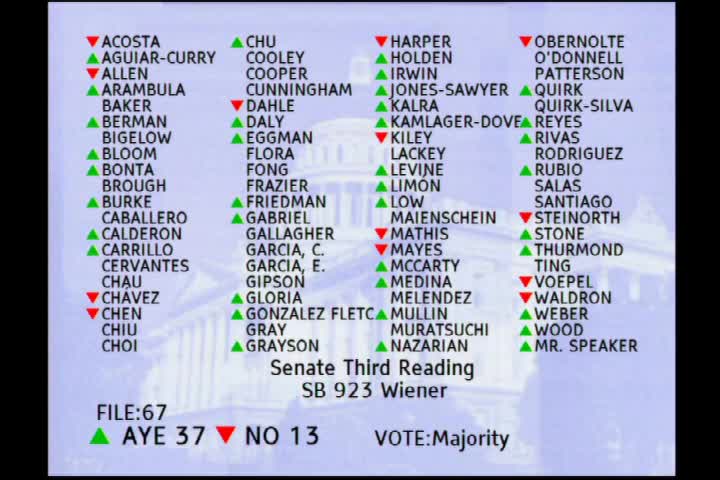
Bill Author

Bill Co-Author(s):