SB 1159: Accountancy: inactive license.
- Session Year: 2017-2018
- House: Senate
- Latest Version Date: 2018-03-19
Existing law provides for the licensure and regulation of the practice of accountancy by the California Board of Accountancy, which is within the Department of Consumer Affairs. Existing law requires all meetings of the board to be open and public, except as specified. Existing law requires the board to post, within 10 days of the boards approval, the finalized minutes from its meetings on its Internet Web site where they are required to remain for at least 3 years. the holder of an inactive license, when using the title certified public accountant or any other reference that would suggest that the person is licensed by the board, as specified, to place the term inactive immediately after that designation.
This bill would require, instead, that the board maintain minutes of its meeting on its Internet Web site for 5 years.This bill would exempt the holder of an inactive license who is a current member of the California State Legislature or of the United States Congress and who is not engaged in the practice of public accountancy from that requirement.
Existing law provides for the licensure and regulation of the practice of accountancy by the California Board of Accountancy, which is within the Department of Consumer Affairs. Existing law requires all meetings of the board to be open and public, except as specified. Existing law requires the board to post, within 10 days of the boards approval, the finalized minutes from its meetings on its Internet Web site where they are required to remain for at least 3 years.
This bill would require, instead, that the board maintain minutes of its meeting on its Internet Web site for 5 years.
The holder of an inactive license issued by the board pursuant to Section 462, when lawfully using the title certified public accountant, the CPA designation, or any other reference that would suggest that the person is licensed by the board on materials such as correspondence, Internet Web sites, business cards, nameplates, or name plaques, shall place the term inactive immediately after that designation. The holder of an inactive license who is a current member of the California State Legislature or of the United States Congress and who is not engaged in the practice of public accountancy, as defined in Section 5051, is exempt from this requirement.
SECTION 1.Section 5017.1 of the Business and Professions Code is amended to read:5017.1.The board shall post, within 10 days of board approval, the finalized minutes from meetings of the board that are open and public pursuant to Section 5017 on the boards Internet Web site. The minutes shall remain on the boards Internet Web site for at least five years. Providing a link on the Internet Web site to the minutes shall satisfy this requirement.The board shall post, within 10 days of board approval, the finalized minutes from meetings of the board that are open and public pursuant to Section 5017 on the boards Internet Web site. The minutes shall remain on the boards Internet Web site for at least three five years. Providing a link on the Internet Web site to the minutes shall satisfy this requirement.
|
Date
|
Status
|
|---|---|
| Apr 30, 2018 | In Assembly. Read first time. Held at Desk. |
| Apr 30, 2018 | Read third time. Passed. (Ayes 24. Noes 10.) Ordered to the Assembly. |
| Apr 24, 2018 | Read second time. Ordered to third reading. |
| Apr 23, 2018 | From committee: Be ordered to second reading pursuant to Senate Rule 28.8. |
| Apr 17, 2018 | Set for hearing April 23. |
| Apr 2, 2018 | From committee: Do pass and re-refer to Com. on APPR. (Ayes 6. Noes 2.) (April 2). Re-referred to Com. on APPR. |
| Mar 20, 2018 | Set for hearing April 2. |
| Mar 19, 2018 | From committee with author's amendments. Read second time and amended. Re-referred to Com. on B., P. & E.D. |
| Feb 22, 2018 | Referred to Com. on B., P. & E.D. |
| Feb 15, 2018 | From printer. May be acted upon on or after March 17. |
| Feb 14, 2018 | Introduced. Read first time. To Com. on RLS. for assignment. To print. |
|
Date
|
Description
|
Location
|
Votes
|
|
|---|---|---|---|---|
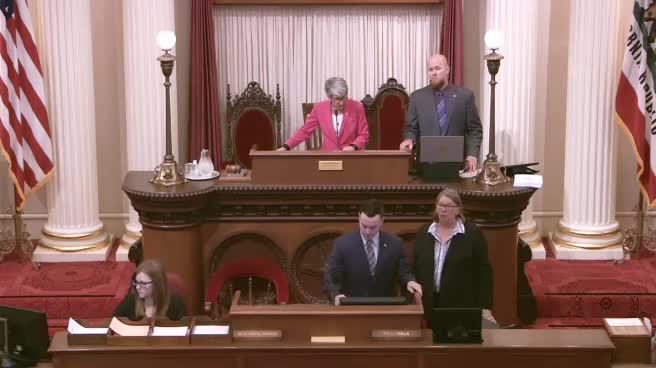
| Apr 30, 2018 | Senate 3rd Reading SB1159 Moorlach | Senate Floor |
Passed |
|
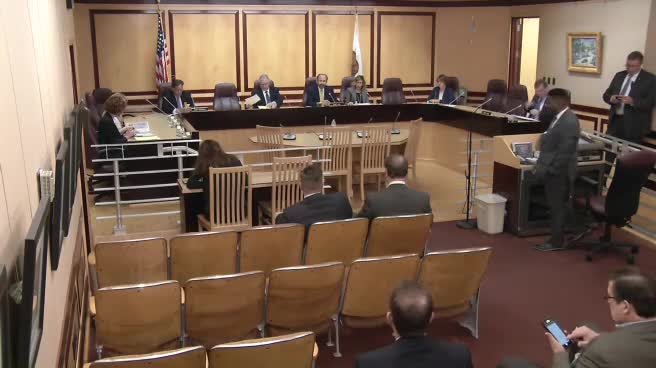
| Apr 2, 2018 | Do pass, but first be re-referred to the Committee on [Appropriations] | Senate Standing Committee on Business, Professions and Economic Development |
Passed |
This list shows positions taken on this bill by organizations on the date displayed, which is linked to the original source.
Positions by individuals are not included.
Office of Senate Floor Analyses (916) 651-1520 Fax: (916) 327-4478 | SB |
THIRD READING
Bill No: SB 1159
:
SENATE BUS., PROF. & ECON. DEV. COMMITTEE: 6-2, 4/2/18
AYES: Hill, Fuller, Galgiani, Newman, Pan, Wilk
NOES: Dodd, Glazer
NO VOTE RECORDED: Hernandez
SENATE APPROPRIATIONS COMMITTEE: Senate Rule 28.8
DIGEST:
This bill exempts certified public accountants (CPAs) who are members of the California State Legislature or the United States Congress, and who renew their license in an “inactive” status, from the requirement under current law to place the term “inactive” immediately following their CPA title.
Existing law:
- Establishes the California Board of Accountancy (Board) under the jurisdiction of the Department of Consumer Affairs, (DCA) to license and regulate CPAs, public accountants (PAs) and accounting firms. (Business and Professions Code (BPC) § 5000 et seq.)
- Requires CPAs and PAs to comply with continuing education (CE) requirements adopted by the Board as a prerequisite to the renewal of a public accountancy license. (BPC § 5027)
- Requires the holder of an inactive license, when lawfully using the title CPA, the CPA designation, or any other reference that would suggest that the person is licensed by the Board on materials such as correspondence, business cards, Web sites, or nameplates to place the term “inactive” immediately after that designation. (BPC § 5058.2)
This bill permits the holder of an inactive license who is a current member of the California State Legislature or the United States Congress and is not engaged in the practice of public accountancy, as defined, to be exempt from the requirement to place the term “inactive” immediately following their CPA title or CPA designation.
Background
Accountancy Profession. To obtain a CPA license, an individual must meet education, examination, and experience requirements as determined by the Board. Current law permits out-of-state licensees to practice under a practice privilege without any fee or notification to the Board, as long as those licensees have an active license in good standing from another state. The Accountancy Act provides that any person who has received from the Board a certificate of certified public accountant may, be titled and known as a "certified public accountant" and may also use the abbreviation "CPA." No other person, except a firm registered under the Act, may assume or use that title, designation, or abbreviation or any other title, designation, sign, card, or device tending to indicate that the person using it is a CPA.
CE Requirements. All licensees must complete CE in order to renew a license. Currently, licensees are required to complete 80 hours of CE every two years in order to renew a license (Title 16 § 87 California Code of Regulations (CCR)).
Inactive License Status. BPC § 462 permits any program within the DCA to issue an inactive license, as long as the inactive licensee is not actively engaged in the practice of that profession.
For CPA licensees who do not complete the 80-hours of required CE, or those who seek to pause practicing, they have the option of renewing their CPA license in an “inactive” status. Licensees with an “inactive” status designation are not required to complete CE, unless they are seeking to renew their license back to “active” status. The Act further provides that a person or firm may not use any title or designation in connection with the designation "certified public accountant" that is false or misleading, and authorizes the board to adopt regulations covering the use of titles or designations.
16 CCR § 80 prohibits CPAs with an “inactive” status license from engaging in the practice of public accountancy as defined in BPC § 5051. Further, as a result of AB 117 (Niello, Chapter, 409, Statutes of 2009) licensees with an “inactive” license are required to disclose the inactive license status on all materials that display the CPA designation.
This bill modifies the requirements specified in statute by AB 117 and permits licensees who are members of the California State Legislature or the United States Congress, and have renewed their license as an “inactive” license, to use the CPA designation without the term “inactive” after the CPA title designation. As currently drafted, this bill does not authorize the designated holder of an “inactive” license to practice accountancy without first complying with the requirements in existing law to reinstate their license to “active” status.
FISCAL EFFECT: Appropriation: Fiscal Com.: Local:
United States Representative, Brad Sherman, California 30th District
OPPOSITION: (Verified 4/24/18)
None received
ARGUMENTS IN SUPPORT: Congressman Brad Sherman writes in support, “…I believe that my colleagues, as well as other interested parties, would more carefully review my letters and documents if I could sign them as follows: Congressman Brad Sherman, CPA. Members of Congress from other states are able to sign their letters in that manner, either because their state does not impose a continuing education requirement on CPAs or because that state allows an inactive CPA who is a member of a legislative body to use the CPA designation.”
4/25/18 13:56:55
SENATE COMMITTEE ON
BUSINESS, PROFESSIONS AND ECONOMIC DEVELOPMENT
Senator Jerry Hill, Chair
2017 - 2018 Regular
Bill No: SB 1159 Hearing Date: April 2, 2018
Author: | Moorlach | ||
Version: |
| ||
Urgency: | Fiscal: | ||
Consultant: | |||
Subject: Accountancy: inactive license.
SUMMARY:
Exempts Certified Public Accountants (CPAs) who are members of the California State Legislature or the United States Congress and who renew their license in an “inactive” status, from the requirement under current law to place the term “inactive” immediately following their CPA title or CPA title designation.
Existing law:
- Establishes the California Board of Accountancy (Board) under the jurisdiction of the Department of Consumer Affairs, (DCA) to license and regulate certified public accountants (CPAs,) public accountants (PAs) and accounting firms. (Business and Professions Code (BPC) § 5000 et seq.)
- Deems a person to be engaged in the practice of public accountancy if he or she does any of the following:
- Holds himself or herself out to the public in any manner as one skilled in the knowledge, science, and practice of accounting and as qualified and ready to render professional services as a PA for compensation;
- Maintains an office for the transaction of business as a PA;
- Offers to prospective clients to perform for compensation professional services that involve or require an audit, examination, verification, investigation, certification, presentation, or review of financial transactions and accounting records;
- Prepares or certifies for clients reports on audits or examinations of books or records of accounting or balance sheets, and other financial, accounting and related schedules, exhibits, statements, or reports that are to be used for publication, for the purpose of obtaining credit, for filing with a court or governmental agency, or any other purpose;
- In general or as an incident to that work, renders professional services to clients for compensation in any or all matters relating to public accounting procedure and to the recording, presentation, or certification of financial information or data;
- Keeps books, makes trial balances, or prepares statements, makes audits, or prepares reports as part of bookkeeping for clients;
- Prepares or signs as the preparer, tax returns for a client;
- Prepares personal financial or investment plans or provides to clients products or services of others in implementation of personal financial or investment plans; or,
- Provides management consulting services to clients. (BPC § 5051(a-i))
- Requires CPAs and PAs comply with continuing education (CE) requirements adopted by the Board as a prerequisite to the renewal of a public accountancy license. (BPC § 5027)
- Authorizes the Board to make exceptions from CE requirements for licensees not engaged in public practice, or for reasons of health, military service, or other good cause; provided that if the licensee returns to the practice of public accounting he or she meets continuing education requirements determined by the Board.
(BPC § 5028) - Prohibits a person or firm from using the title or designation in connection with the designation CPA or PA that is false or misleading. (BPC § 5058.1)
- Requires the holder of an inactive license, when lawfully using the title CPA, the CPA designation, or any other reference that would suggest that the person is licensed by the Board on materials such as correspondence, business cards, websites, or nameplates to place the term “inactive” immediately after that designation. (BPC § 5058.2)
- Requires the holder of a retired license, when lawfully using the title CPA, the CPA designation, or any other reference that would suggest that the person is licensed by the Board on materials such as correspondence, business cards, websites, or nameplates to place the term “retired” immediately after that designation.
(BPC § 5058.3)
This bill permits the holder of an inactive license who is a current member of the California State Legislature or the United States Congress and is not engaged in the practice of public accountancy, as defined, to be exempt from the requirement to place the term “inactive” immediately following their CPA title or CPA designation.
FISCAL EFFECT:
Unknown. This bill is keyed “fiscal” by the Legislative Counsel.
COMMENTS:
- Purpose. The Author is the Sponsor of this bill. According to the Author, “…By exempting the term “inactive” [this bill] will likely increase much needed CPA representation in the Legislature and Congress. [This bill] serves in the best interest of the public by increasing the likelihood of CPA’s contributing their knowledge and expertise in the Legislatures or Congress, while giving ample protections to the public.”
- Background.
- Accountancy Profession. The Board enforces the Accountancy Act which defines the practice of public accountancy as the process of recording classifying, reporting and interpreting the financial data of an individual or an organization. In California, the accounting profession’s licensed practitioners are CPAs and PAs. A CPA is a person who has met the requirements of California state law, including education, examination, and experience, and has been issued a license to practice public accountancy by the Board. Only persons who are licensed can legally be called a CPA or a PA. Additionally, the Board exercises regulatory authority over accountancy firms. As accounting practitioners, CPAs and PAs are proprietors, partners, shareholders and staff employees of public accounting firms. They provide professional services to individuals, private and public companies, financial institutions, nonprofit organizations, and local, state and federal government entities. The Board’s statutory mandate is to protect the public. The accountancy profession in California has been regulated since the early 1900’s, and seeks to ensure both the integrity of the accounting practice and protection of public interests given the wide breadth of entities receiving accounting services.
To obtain a CPA license, an individual must meet education, examination, and experience requirements as determined by the Board. Education requirements include the completion of a baccalaureate or higher degree, or foreign equivalency, in any subject, including a minimum of 24 semester units of accounting subjects, 24 semester units of business related subjects, a minimum of 20 semester units of accounting study, and 10 semester units of ethics study. In addition, an applicant must take and pass the Uniform Certified Public Accountant Examination, which is a national examination developed by the American Institute of CPAs. Applicants must also take and pass a state ethics examination. The Board requires the satisfactory completion of two-years of qualifying experience-as determined by the Board-and must be completed under the supervision of a state-licensed CPA. Current law permits out-of-state licensees to practice under a practice privilege without any fee or notification to the Board, as long as those licensees have an active license in good standing from another state. The Accountancy Act provides that any person who has received from the Board a certificate of certified public accountant may, be titled and known as a "certified public accountant" and may also use the abbreviation "CPA." No other person, except a firm registered under the Act, may assume or use that title, designation, or abbreviation or any other title, designation, sign, card, or device tending to indicate that the person using it is a certified public accountant.
- Continuing Education Requirements. All licensees must complete CE in order to renew a license as determined by the Board. Currently, licensees are required to complete 80 hours of CE every two years in order to renew a license (Title 16 § 87 California Code of Regulations (CCR)). The regulations, as specified by the Board, establish the subject areas and the minimum number of hours that must be completed in order to renew. For example, a minimum of 20 hours must be completed in each year, meaning licensees cannot obtain all 80 hours in one year.
- Inactive License Status. BPC § 462 permits any program within the DCA to issue an inactive license as long as the inactive licensee is not actively engaged in the practice of that profession. For CPA and PA licensees who do not complete the 80-hours of required CE, or those who seek to pause practicing, they have the option of renewing their CPA or PA license in an “inactive” status. Licensees with an “inactive” status designation are not required to complete CE, unless they are seeking to renew their license back to “active” status.
The Act further provides that a person or firm may not use any title or designation in connection with the designation "certified public accountant" that is false or misleading, and authorizes the board to adopt regulations covering the use of titles or designations.
16 CCR § 80 prohibits CPAs with an “inactive” status license from engaging in the practice of public accountancy as defined in BPC § 5051. Further, as a result of AB 117 (Niello, Chapter, 409, Statutes of 2009) licensees with an “inactive” license are required to disclose the inactive license status on all materials that display the CPA designation. The analysis for that bill prepared by staff of this committee noted that it was necessary because “…accountants can represent themselves as Certified Public Accountants even if they are not current on their continuing education.” In addition, it was noted that requiring the “inactive” designation was consistent, at that time, with the Uniform Accountancy Act. According to the American Association of CPAs (AICPA), “the Uniform Accountancy Act is an "evergreen" model licensing law developed to provide a uniform approach to regulation of the accounting profession.”
This bill would modify the requirements specified in statute as a result of AB 117 by permitting licensees who are members of the California State Legislature or the United States Congress and have renewed their license as an “inactive” license to use the CPA designation without the term “inactive” after the CPA title designation. As currently drafted, this bill would not authorize the designated holder of an “inactive” license to practice accountancy without first complying with the requirements in existing law to reinstate their license to “active” status. This bill would permit state legislators and congressional members to use the term CPA without “inactive” after the CPA title designation, if they have renewed a license as inactive.
- Current Related Legislation This Year. SB 795 (Galgiani) extends the sunset date for the current practice privilege requirements for out-of-state licensees who currently are authorized to practice public accountancy in California by one year until January 1, 2020, and makes other technical and conforming changes. (Status: This bill is pending in the Assembly Rules Committee.)
- Prior Related Legislation. AB 117 (Niello, Chapter, 409, Statutes of 2009) required the holder of an inactive CPA license to disclose the inactive license status on all materials that display the CPA designation.
AB 431 (Ma, Chapter 395, Statutes of 2011) authorized the Board to establish a retired status license for CPAs and PAs.
SUPPORT AND OPPOSITION:
Support:
None on file as of March 26, 2018.
Opposition:
None on file as of March 26, 2018.
-- END --
Discussed in Hearing
 8MIN
Senate Floor
 26MIN
Senate Standing Committee on Business, Professions and Economic Development
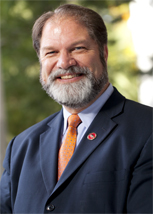
Bill Author
Bill Co-Author(s):