SB 1170: Private Investigator Act: license: assignment.
- Session Year: 2017-2018
- House: Senate
- Latest Version Date: 2018-04-05
Existing law, the Private Investigator Act, provides for the licensure and regulation of private investigators by the Bureau of Security and Investigative Services. Existing law authorizes a licensee to apply for consent to assign a license to another business entity and, upon consent and payment of a processing fee, assign that license to another business entity as long as the direct and indirect owners of the assignor own all of the assignee immediately after the assignment. Existing law also provides that a license under that act is not assignable.
This bill would delete the provision of law that provides a license under that act is not assignable.
This bill would declare that it is to take effect immediately as an urgency statute.
Existing law, the Private Investigator Act, provides for the licensure and regulation of private investigators by the Bureau of Security and Investigative Services. Existing law authorizes a licensee to apply for consent to assign a license to another business entity and, upon consent and payment of a processing fee, assign that license to another business entity as long as the direct and indirect owners of the assignor own all of the assignee immediately after the assignment. Existing law also provides that a license under that act is not assignable.
This bill would delete the provision of law that provides a license under that act is not assignable.
This act is an urgency statute necessary for the immediate preservation of the public peace, health, or safety within the meaning of Article IV of the California Constitution and shall go into immediate effect. The facts constituting the necessity are:
In order to avoid any possible ambiguity under existing law and to allow the Bureau of Security and Investigative Services to better process license applications for assignment currently being received, it is necessary for this act to take effect immediately.
|
Date
|
Status
|
|---|---|
| Apr 23, 2018 | In Assembly. Read first time. Held at Desk. |
| Apr 23, 2018 | Read third time. Urgency clause adopted. Passed. (Ayes 38. Noes 0.) Ordered to the Assembly. |
| Apr 18, 2018 | Read second time. Ordered to consent calendar. |
| Apr 17, 2018 | From committee: Do pass. Ordered to consent calendar. (Ayes 7. Noes 0.) (April 16). |
| Apr 10, 2018 | Set for hearing April 16. |
| Apr 5, 2018 | From committee with author's amendments. Read second time and amended. Re-referred to Com. on B., P. & E.D. |
| Feb 22, 2018 | Referred to Com. on B., P. & E.D. |
| Feb 15, 2018 | From printer. May be acted upon on or after March 17. |
| Feb 14, 2018 | Introduced. Read first time. To Com. on RLS. for assignment. To print. |
|
Date
|
Description
|
Location
|
Votes
|
|
|---|---|---|---|---|
| Apr 23, 2018 | Consent Calendar SB1170 Morrell Urgency Clause | Senate Floor |
Passed |
|
| Apr 16, 2018 | Do pass and be ordered to the Consent Calendar | Senate Standing Committee on Business, Professions and Economic Development |
Passed |
This list shows positions taken on this bill by organizations on the date displayed, which is linked to the original source.
Positions by individuals are not included.
Office of Senate Floor Analyses (916) 651-1520 Fax: (916) 327-4478 | SB |
CONSENT
Bill No: SB 1170
:
SENATE BUS., PROF. & ECON. DEV. COMMITTEE: 7-0, 4/16/18
AYES: Hill, Galgiani, Glazer, Hernandez, Newman, Pan, Wilk
NO VOTE RECORDED: Fuller, Dodd
DIGEST:
This bill, an urgency measure, repeals a conflicting and duplicative section in the Business and Professions Code (BPC) related to a non-assignable private investigator license.
Existing law:
- Establishes the Bureau of Security and Investigative Services (Bureau) within the Department of Consumer Affairs, which licenses and regulates private investigators. (BPC § 7512 et seq.)
- Authorizes a Limited Liability Company (LLC) to provide certain professional services subject to licensure, including private investigative services under the Private Investigator Act (Act), until January 1, 2021. (BPC § 7512.3)
- Defines “Member” to mean an individual who is a member of a LLC, as specified. (BPC § 7512.14)
- Defines “Manager” to mean an individual designated under an operating agreement of a manager-managed LLC who is responsible for performing the management functions for the LLC, as specified, until January 1, 2021.
- States that a license issued under the Act is not assignable, except as provided, and authorizes a licensee to apply to the Bureau Chief for consent, and upon receipt of the consent and payment of the processing fee, may assign a license to another business entity as long the direct and indirect owners of the assignor own all of the assignee immediately after the assignment. (BPC § 7530 (a)(b))
- States that a license issued under the Act is not assignable. (BPC § 7530(a))
This bill repeals a duplicative section of the BPC related to the strict prohibition on the assignment of a private investigator license and states that this bill is an urgency in order to avoid any possible ambiguity under existing law and to allow the Bureau to better process license application for assignment currently being received.
Background
SB 599. This bill is a clean-up measure to SB 599 (Morell, Chapter 569, Statutes of 2017). This bill made numerous changes to the Act, including reauthorizing the Bureau’s authority to issue a private investigator license to an LLC until January 1, 2021. Additionally, SB 559 also revised the law to permit, under certain circumstances, a private investigator license to be assignable. Prior to 2017, the Act strictly prohibited a license from being assignable.
In drafting SB 559, the prior law, which strictly prohibited a license from being assignable, was inadvertently left in statute. As a result, there are two conflicting sections of law. BPC Section 7530 authorizes a license to be assignable, if the licensee meets specified criteria, and a duplicative code section which states that a license is not assignable. Specifically, BPC Section 7530 states that “except as provided, a private investigator license is not assignable” and the duplicative BPC Section 7530 states that “a private investigator license is not assignable.”
According to the author of this bill and SB 599, “the intent of SB 559 was for the new language in BPC Section 7530 to replace the previous language in that section.” As a result, this bill simply deletes the duplicative and conflicting code Section 7530 which strictly prohibits a license from being assignable. This bill contains an urgency clause in order to allow the Bureau to assign a license, if authorized, as the provisions of law in SB 559 pertaining to the assignable license went into effect on January 1, 2018.
Assignable license. Only under limited circumstance can a license be assignable. An assignable license allows a current private investigator license holder to change their business structure by assigning the license to a new business without having to reapply to the Bureau for a new license which is required for changing business names or structures. In order to meet the criteria to assign a license, the licensee must first apply to and receive approval from the Bureau Chief and pay the required fee. A license may be assigned to another business entity as long as the direct and indirect owners of the assignor own all of the assignee immediately after the assignment.
FISCAL EFFECT: Appropriation: Fiscal Com.: Local:
None received
OPPOSITION: (Verified 4/17/18)
None received
4/18/18 11:48:26
**** END ****
SENATE COMMITTEE ON
BUSINESS, PROFESSIONS AND ECONOMIC DEVELOPMENT
Senator Jerry Hill, Chair
2017 - 2018 Regular
Bill No: Hearing Date: April 16, 2018
Author: | |||
Version: |
| ||
Urgency: | Yes | Fiscal: | No |
Consultant: | Elissa Silva | ||
Subject:
SUMMARY:
An urgency measure that repeals a conflicting and duplicative section in the Business and Professions Code (BPC) related to a non-assignable private investigator license.
Existing law:
- Establishes the Bureau of Security and Investigative Services (Bureau) within the Department of Consumer Affairs (DCA), which licenses and regulates private investigators. (BPC § 7512 et seq.)
- Authorizes a Limited Liability Company (LLC) to provide certain professional services subject to licensure, including private investigative services under the Private Investigator Act (Act), until January 1, 2021. (BPC § 7512.3)
- Defines “Member” to mean an individual who is a member of a Limited Liability Company (LLC), as specified. (BPC § 7512.14)
- Defines “Manager” to mean an individual designated under an operating agreement of a manager-managed LLC who is responsible for performing the management functions for the LLC, as specified, until January 1, 2021.
- States that a license issued under the Act is not assignable, except as provided, and authorizes a licensee to apply to the Bureau Chief for consent, and upon receipt of the consent and payment of the processing fee, may assign a license to another business entity as long the direct and indirect owners of the assignor own all of the assignee immediately after the assignment. (BPC § 7530 (a)(b))
- States that a license issued under the Act is not assignable. (BPC § 7530(a))
This bill:
- Repeals a duplicative section of the BPC related to the strict prohibition on the assignment of a private investigator license.
- States that this bill is an urgency in order to avoid any possible ambiguity under existing law and to allow the Bureau to better process license application for assignment currently being received.
FISCAL EFFECT:
None. This bill is keyed “non-fiscal” by the Legislative Counsel.
COMMENTS:
- Purpose. The Author is the sponsor of this bill. According to the Author, “There are currently two different versions of BPC Section 7530 in existence. One enacted in 2014 that says that private investigator licenses are not assignable, and the other enacted by SB 559 (2017) that says that they are assignable under certain circumstances. The intent of SB 559 was for the new language in BPC Section 7530 to replace the previous language in that section. However, there was a drafting error, and the language previously included in that section was never removed. As a result, there are now two conflicting versions of this section of [the] BPC.”
- Background.
SB 599 (Morell, Chapter 569, Statutes of 2017). This bill is a clean-up measure to SB 599 from 2017. This bill made numerous changes to the Act, including reauthorizing the Bureau’s authority to issue a private investigator license to an LLC until January 1, 2021. Additionally, SB 559 also revised the law to permit, under certain circumstances, a private investigator license to be assignable. Prior to 2017, the Act strictly prohibited a license from being assignable.
In drafting SB 559, the prior law, which strictly prohibited a license from being assignable, was inadvertently left in statute. As a result, there are two conflicting sections of law. BPC § 7530 authorizes a license to be assignable, if the licensee meets specified criteria, and a duplicative code section which states that a license is not assignable. Specifically, BPC § 7530 states that “except as provided, a private investigator license is not assignable” and the duplicative BPC § 7530 states that “a private investigator license is not assignable.”
According to the Author of this bill and SB 599, “the intent of SB 559 was for the new language in BPC Section 7530 to replace the previous language in that section.” As a result, this bill simply deletes the duplicative and conflicting code Section 7530 which strictly prohibits a license from being assignable. This bill contains an urgency clause in order to allow the Bureau to assign a license, if authorized, as the provisions of law in SB 559 pertaining to the assignable license went into effect on January 1, 2018.
Assignable License. Only under limited circumstance can a license be assignable. An assignable license allows a current private investigator license holder to change their business structure by assigning the license to a new business without having to reapply to the Bureau for a new license which is required for changing business names or structures. In order to meet the criteria to assign a license, the licensee must first apply to and receive approval from the Bureau Chief and pay the required fee. A license may be assigned to another business entity as long as the direct and indirect owners of the assignor own all of the assignee immediately after the assignment.
- Prior Related Legislation. SB 599 (Morell, Chapter 569, Statutes of 2017), authorized a licensed private investigator to continue to organize as a LLC until January 1, 2021; required the licensee to report claims against its liability insurance or if they will become a LLC to the BSIS; recast and revised hourly credits a candidate for licensure may receive with a specified educational degree; prohibited the total amount of time credited to an applicant for these degrees from exceeding 2,000 hours of experience in investigation work; revised and recast the definition of a “qualified manager”; and made other technical, updating, conforming and clarifying changes.
AB 1608 (Olsen, Chapter 669, Statutes of 2014) authorized a licensed private investigator to organize as a LLC until January 1, 2018; requires a private investigator that is an LLC to maintain liability insurance, as specified; and makes technical, updating and conforming changes.
SUPPORT AND OPPOSITION:
Support:
None on file as of April 10, 2018.
Opposition:
None on file as of April 10, 2018.
-- END --
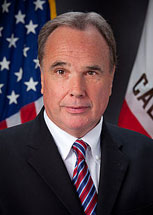
Bill Author
Bill Co-Author(s):