SB 1174: Commercial real estate: disclosures.
- Session Year: 2017-2018
- House: Senate
- Latest Version Date: 2018-04-02
The Real Estate Law provides for the licensure and regulation of real estate brokers by the Real Estate Commissioner and makes a willful violation of that law a crime. Existing law requires the commissioner to enforce all provisions of that law and authorizes the commissioner to adopt, amend, or repeal rules and regulations that are reasonably necessary for the enforcement of that law.
Existing law authorizes the commissioner to temporarily suspend or permanently revoke the license of a real estate licensee who has committed specified acts, including making any substantial misrepresentation.
This bill would specify that a substantial misrepresentation for purposes of that provision includes, but is not limited to, the inaccurate reporting of, or failure to report, among other things, any and all dues related to ownership of the property, taxes associated with the property, liens on the property, or all ongoing or pending litigation affecting the property.
Existing law governing disclosures upon the transfer of residential property requires the transferor of any real property to deliver to the prospective transferee a specified written statement disclosure subject to specified requirements. If any disclosure, or any material amendment of any disclosure, is delivered after the execution of an offer to purchase, existing law requires the transferee to have a specified period of time to terminate his or her offer by delivery of a written notice of termination to the transferor or the transferors agent. Existing law requires these disclosures to be made on a specified form.
This bill would provide for a voluntary certified commercial real property disclosure to be provided by the transferor of commercial real property, as defined, to a prospective transferee. The bill would require any transferor that elects to provide that disclosure to include within the contract for the transfer of the property a provision allowing the transferee to have a specified period of time to terminate his or her offer following receipt of the disclosure. The bill would require the disclosure to be made in good faith and to include specified information regarding the property, and would make any person who willfully or negligently violates or fails to perform any duty imposed by these provisions liable in the amount of actual damages suffered by a transferee, and for any other civil fines or penalties allowed by law. The bill would provide that a violation of these provisions is not punishable as a crime.
This bill would require a real estate broker who offers underwriting on a commercial real estate transaction to his or her client to offer either a certified underwriting of the commercial real estate transaction or an uncertified underwriting of the commercial real estate transaction. The bill would define underwriting on a commercial real estate transaction for these purposes as any type of analysis provided by the real estate broker to his or her client regarding the clients potential investment in the commercial real estate at issue in the transaction, regardless of whether the commercial real estate transaction is being secured by a loan. The bill would require a real estate broker that offers a certified underwriting of a commercial real estate transaction to verify the accuracy, to the best of his or her ability, of all information and conclusions given to the real estate brokers client regarding the commercial real estate transaction. The bill would authorize the client to file a cause of action against the real estate broker to recover his or her financial losses and would make the real estate broker liable for those losses if the real estate broker fails to verify the accuracy of the information given to the client in a certified underwriting of the commercial real estate transaction.The bill would exempt a violation of this provision from being punished as a crime.The Real Estate Law provides for the licensure and regulation of real estate brokers by the Real Estate Commissioner and makes a willful violation of that law a crime. Existing law requires the commissioner to enforce all provisions of that law and authorizes the commissioner to adopt, amend, or repeal rules and regulations that are reasonably necessary for the enforcement of that law.
This bill would require a real estate broker who offers underwriting on a commercial real estate transaction to his or her client to offer either a certified underwriting of the commercial real estate transaction or an uncertified underwriting of the commercial real estate transaction. The bill would define underwriting on a commercial real estate transaction for these purposes as any type of analysis provided by the real estate broker to his or her client regarding the clients potential investment in the commercial real estate at issue in the transaction, regardless of whether the commercial real estate transaction is being secured by a loan. The bill would require a real estate broker that offers a certified underwriting of a commercial real estate transaction to verify the accuracy, to the best of his or her ability, of all information and conclusions given to the real estate brokers client regarding the commercial real estate transaction. The bill would authorize the client to file a cause of action against the real estate broker to recover his or her financial losses and would make the real estate broker liable for those losses if the real estate broker fails to verify the accuracy of the information given to the client in a certified underwriting of the commercial real estate transaction.
The bill would exempt a violation of this provision from being punished as a crime.
The commissioner may, upon his or her own motion, and shall, upon the verified complaint in writing of any person, investigate the actions of any person engaged in the business or acting in the capacity of a real estate licensee within this state, and he or she may temporarily suspend or permanently revoke a real estate license at any time where the licensee, while a real estate licensee, in performing or attempting to perform any of the acts within the scope of this chapter has been guilty of any of the following:
(a)Making any substantial misrepresentation. A substantial misrepresentation includes, but is not limited to, the inaccurate reporting of, or failure to report, any of the following:
(1)Any and all dues associated with the property, including, but not limited to, dues charged by a common interest development, including a commercial common interest development.
(2)Taxes imposed on the property, including, but not limited to, special taxes.
(3)Fees associated with the property.
(4)Liens on the property.
(5)Environmental issues on the property.
(6)Health concerns or issues on the property.
(7)Any obligations or agreements with associations that create a financial impact on the property.
(8)All active and current reports regarding the property that affect the value of the property.
(9)All ongoing or pending litigation affecting the property.
(b)Making any false promises of a character likely to influence, persuade, or induce.
(c)A continued and flagrant course of misrepresentation or making of false promises through real estate agents or salespersons.
(d)Acting for more than one party in a transaction without the knowledge or consent of all parties thereto.
(e)Commingling with his or her own money or property the money or other property of others which is received and held by him or her.
(f)Claiming, demanding, or receiving a fee, compensation, or commission under any exclusive agreement authorizing or employing a licensee to perform any acts set forth in Section 10131 for compensation or commission where the agreement does not contain a definite, specified date of final and complete termination.
(g)The claiming or taking by a licensee of any secret or undisclosed amount of compensation, commission, or profit or the failure of a licensee to reveal to the employer of the licensee the full amount of the licensees compensation, commission, or profit under any agreement authorizing or employing the licensee to do any acts for which a license is required under this chapter for compensation or commission prior to or coincident with the signing of an agreement evidencing the meeting of the minds of the contracting parties, regardless of the form of the agreement, whether evidenced by documents in an escrow or by any other or different procedure.
(h)The use by a licensee of any provision allowing the licensee an option to purchase in an agreement authorizing or employing the licensee to sell, buy, or exchange real estate or a business opportunity for compensation or commission, except when the licensee prior to or coincident with election to exercise the option to purchase reveals in writing to the employer the full amount of the licensees profit and obtains the written consent of the employer approving the amount of the profit.
(i)Any other conduct, whether of the same or a different character than specified in this section, which constitutes fraud or dishonest dealing.
(j)Obtaining the signature of a prospective purchaser to an agreement which provides that the prospective purchaser shall either transact the purchasing, leasing, renting, or exchanging of a business opportunity property through the broker obtaining the signature, or pay a compensation to the broker if the property is purchased, leased, rented, or exchanged without the broker first having obtained the written authorization of the owner of the property concerned to offer the property for sale, lease, exchange, or rent.
(k)Failing to disburse funds in accordance with a commitment to make a mortgage loan that is accepted by the applicant when the real estate broker represents to the applicant that the broker is either of the following:
(1)The lender.
(2)Authorized to issue the commitment on behalf of the lender or lenders in the mortgage loan transaction.
(l)Intentionally delaying the closing of a mortgage loan for the sole purpose of increasing interest, costs, fees, or charges payable by the borrower.
(m)Violating any section, division, or article of law which provides that a violation of that section, division, or article of law by a licensed person is a violation of that persons licensing law, if it occurs within the scope of that persons duties as a licensee.
SEC. 2.Article 1.6 (commencing with Section 1102.25) is added to Chapter 2 of Title 4 of Part 4 of Division 2 of the Civil Code, to read:1.6.Disclosures Upon Transfer of Commercial Real Property1102.25.(a)This article applies to any transfer by sale, exchange, installment land sale contract, as defined in Section 2985, lease with an option to purchase, any other option to purchase, or ground lease coupled with improvements, of commercial real property.
(b)For purposes of this article, the term commercial real property means real estate improved with other than a one-to-four family residence.
1102.26.(a)The transferor may elect, but is not required, to provide to a prospective transferee, either voluntarily or by request of the prospective transferee, a certified commercial real property disclosure in writing pursuant to this article.
(b)If the transferor elects to provide a certified commercial real property disclosure pursuant to subdivision (a), all of the following requirements shall apply:
(1)The transferor shall provide the disclosure without charge to the prospective transferee.
(2)The transferor shall provide the disclosure to the prospective transferee by personal delivery or by certified mail.
(3)The contract for the transfer of the property shall include an option for the prospective transferee to rescind the contract, without financial loss or punitive action, within three days if the certified commercial real property disclosure is delivered personally, or five days if the certified commercial real property disclosure is delivered by certified mail.
(4)The disclosure shall include all of the following:
(A)Any and all dues associated with the property, including, but not limited to, dues charged by a common interest development, including a commercial common interest development.
(B)Taxes imposed on the property, including, but not limited to, special taxes.
(C)Fees associated with the property.
(D)Liens on the property.
(E)Environmental issues on the property.
(F)Health concerns or issues on the property.
(G)Any obligations or agreements with associations that create a financial impact on the property.
(H)All active and current reports regarding the property that affect the value of the property.
(I)All ongoing or pending litigation affecting the property.
1102.27.Each certified commercial real property disclosure made pursuant to this article, and each act that may be performed in making the disclosure, shall be made in good faith. For purposes of this article, good faith means honesty in fact in the conduct of the transaction.
1102.28.The specification of items for inclusion in a certified commercial real property disclosure in this article does not limit or abridge any obligation for disclosure created by any other provision of law or that may exist in order to avoid fraud, misrepresentation, or deceit in the transfer transaction.
1102.29.If information included in a commercial real property disclosure in accordance with this article is subsequently rendered inaccurate as a result of any act, occurrence, or agreement subsequent to the delivery of the certified commercial real property disclosure, the inaccuracy resulting therefrom shall not constitute a violation of this article. If at the time the certified commercial real property disclosure is made, an item of information required to be disclosed is unknown or not available to the transferor, and the transferor or his or her agent has made a reasonable effort to ascertain it, the transferor may use an approximation of the information, provided the approximation is clearly identified as such, is reasonable, is based on the best information available to the transferor or his or her agent or broker, and is not used for the purpose of circumventing or evading this article.
1102.30.Neither the transferor nor any listing or selling agent or broker shall be liable for any error, inaccuracy, or omission of any information delivered pursuant to this article if the error, inaccuracy, or omission was not within the personal knowledge of the transferor or that listing or selling agent or broker, was based on information timely provided by public agencies or by other persons providing information that is required to be included in a certified commercial real property disclosure pursuant to this article, and ordinary care was exercised in obtaining and transmitting it.
1102.31.A transfer subject to this article shall not be invalidated solely because of the failure of any person to comply with any provision of this article. However, any person who willfully or negligently violates or fails to perform any duty prescribed by any provision of this article shall be liable in the amount of actual damages suffered by a transferee and shall be subject to any other civil fines or penalties allowed by law. However, a violation of this article shall not be punishable as a crime.
SECTION 1.Section 10131.8 is added to the Business and Professions Code, to read:10131.8.(a)A real estate broker that offers underwriting on a commercial real estate transaction to his or her client shall offer either of the following:(1)A certified underwriting of the commercial real estate transaction.(2)An uncertified underwriting of the commercial real estate transaction.(b)A real estate broker that offers a client a certified underwriting of a commercial real estate transaction shall verify the accuracy, to the best of his or her ability, of all information and conclusions given to the real estate brokers client regarding the commercial real estate transaction, including, but not limited to, taxes, maintenance costs, and any association fees or dues.(c)If a real estate broker fails to verify the accuracy of the information given to the client pursuant to subdivision (b), the client may file a cause of action against the real estate broker to recover his or her financial losses and the real estate broker shall be liable for those losses.(d)For purposes of this section, underwriting on a commercial real estate transaction means any type of analysis provided by the real estate broker to his or her client regarding the clients potential investment in the commercial real estate at issue in the transaction, regardless of whether the commercial real estate transaction is being secured by a loan.(e)The remedy offered under this section is in addition to any other remedy available under the law.(f)A violation of this section shall not be punishable as a crime pursuant to Section 10185.(a)A real estate broker that offers underwriting on a commercial real estate transaction to his or her client shall offer either of the following:
(1)A certified underwriting of the commercial real estate transaction.
(2)An uncertified underwriting of the commercial real estate transaction.
(b)A real estate broker that offers a client a certified underwriting of a commercial real estate transaction shall verify the accuracy, to the best of his or her ability, of all information and conclusions given to the real estate brokers client regarding the commercial real estate transaction, including, but not limited to, taxes, maintenance costs, and any association fees or dues.
(c)If a real estate broker fails to verify the accuracy of the information given to the client pursuant to subdivision (b), the client may file a cause of action against the real estate broker to recover his or her financial losses and the real estate broker shall be liable for those losses.
(d)For purposes of this section, underwriting on a commercial real estate transaction means any type of analysis provided by the real estate broker to his or her client regarding the clients potential investment in the commercial real estate at issue in the transaction, regardless of whether the commercial real estate transaction is being secured by a loan.
(e)The remedy offered under this section is in addition to any other remedy available under the law.
(f)A violation of this section shall not be punishable as a crime pursuant to Section 10185.
|
Date
|
Status
|
|---|---|
| Apr 19, 2018 | April 18 set for first hearing. Failed passage in committee. (Ayes 2. Noes 0.) |
| Apr 2, 2018 | From committee with author's amendments. Read second time and amended. Re-referred to Com. on B. & F.I. |
| Mar 29, 2018 | Set for hearing April 18. |
| Mar 15, 2018 | Re-referred to Coms. on B. & F.I. and JUD. |
| Mar 15, 2018 | Withdrawn from committee. |
| Feb 22, 2018 | Referred to Coms. on I., B. & F.I. and JUD. |
| Feb 15, 2018 | From printer. May be acted upon on or after March 17. |
| Feb 14, 2018 | Introduced. Read first time. To Com. on RLS. for assignment. To print. |
|
Date
|
Description
|
Location
|
Votes
|
|
|---|---|---|---|---|
| Apr 18, 2018 | Do pass, but first be re-referred to the Committee on [Judiciary] | Senate Standing Committee on Banking and Financial Institutions |
Passed |
This list shows positions taken on this bill by organizations on the date displayed, which is linked to the original source.
Positions by individuals are not included.
SENATE COMMITTEE ON
BANKING AND FINANCIAL INSTITUTIONS
Senator Steven Bradford, Chair
2017 - 2018 Regular
Bill No: SB 1174 Hearing Date: April 18, 2018
Author: | Stone | ||
Version: | April 2, 2018 Amended | ||
Urgency: | No | Fiscal: | Yes |
Consultant: | Eileen Newhall | ||
Subject: Commercial real estate: disclosures
SUMMARY
This bill expands the definition of substantial misrepresentation under the Real Estate Law and authorizes the provision of certified commercial real property disclosures, as specified.
EXISTING LAW
- Provides that if a person engaged in the business or acting in the capacity of a real estate licensee engages in any one or more of thirteen enumerated bad acts, he or she may have his or her real estate license temporarily suspended or permanently revoked (Business and Professions Code Section 10176). One of these thirteen enumerated bad acts is “making any substantial misrepresentation.”
- Requires specified disclosures to be provided in connection with the transfer of residential real property containing one to four dwelling units (Civil Code Section 1102 et seq.). The form and content of the Real Estate Transfer Disclosure Statement is specified in Section 1102.6 and includes, before its final signature block, a statement that “BUYER(S) AND SELLERS(S) MAY WISH TO OBTAIN PROFESSIONAL ADVICE AND/OR INSPECTIONS OF THE PROPERTY AND TO PROVIDE FOR APPROPRIATE PROVISIONS IN A CONTRACT BETWEEN BUYERS(S) AND SELLER(S) WITH RESPECT TO ANY ADVICE/INSPECTIONS/DEFECTS.”
- Provides that neither the transferor nor any listing or selling agent or broker is liable for any error or inaccuracy of information in, or omission of any information from a real estate transfer disclosure statement, if the error, inaccuracy, or omission was not within the personal knowledge of the transferor or that listing or selling agent or broker, was based on information timely provided by public agencies or by other persons providing information required to be included in the disclosure, and ordinary care was exercised in obtaining and transmitting it (Civil Code Section 1102.4).
- Further provides that if information disclosed in a real estate transfer disclosure statement is subsequently rendered inaccurate by an act, occurrence, or agreement that occurs following delivery of that statement, the inaccuracy does not constitute a violation of the disclosure requirement (Civil Code Section 1102.5).
THIS BILL
- Provides that a substantial misrepresentation, for purposes of the provision of the Real Estate Law that subjects licensees to license suspension or revocation for making any substantial misrepresentation, includes, but is not limited to the inaccurate reporting of, or the failure to report, any of the following:
- Any and all dues associated with the property, including but not limited to, dues charged by a common interest development.
- Taxes imposed on the property, including but not limited to special taxes.
- Fees associated with the property.
- Liens on the property.
- Environmental issues on the property.
- Health concerns or issues on the property.
- Any obligations or agreements with associations that create a financial impact on the property.
- All active and current reports regarding the property that affect the value of the property.
- All ongoing or pending litigation affecting the property.
- Any and all dues associated with the property, including but not limited to, dues charged by a common interest development.
- Authorizes a new type of disclosure in connection with the sale, exchange, installment land sale contract, lease, or other option to purchase commercial real estate. Defines commercial real estate, for purposes of this disclosure, as real estate improved with other than a one-to-four family residence.
- Authorizes, but does not require, a transferor (the person selling or leasing the property) to provide a prospective transferee (the person interested in purchasing or leasing the property) a certified commercial real property disclosure in writing.
- If the transferor elects to provide a certified commercial real property disclosure to a prospective transferee, all of the following requirements apply:
- The transferor must provide the disclosure without charge to the prospective transferee, by personal delivery or certified mail.
- The contract for the transfer of the property must include an option for the prospective transferee to rescind the contract, without financial loss or punitive action, within three days, if the disclosure is provided by personal delivery, or within five days, if the disclosure is provided via certified mail.
- The disclosure must include any and all dues associated with the property, including but not limited to, dues charged by a common interest development; taxes imposed on the property, including but not limited to special taxes; fees associated with the property; liens on the property; environmental issues on the property; health concerns or issues on the property; any obligations or agreements with associations that create a financial impact on the property; all active and current reports regarding the property that affect the value of the property; and all ongoing or pending litigation affecting the property.
- The transferor must provide the disclosure without charge to the prospective transferee, by personal delivery or certified mail.
- Requires each certified commercial real property disclosure made, and each act performed in making it, to be made in good faith, as specified.
- Contains the following caveats to the requirements to disclose information in a certified commercial real property disclosure statement:
- Provides that if information included in a commercial real property disclosure is subsequently rendered inaccurate by an act, occurrence, or agreement that occurs following delivery of the disclosure, the inaccuracy does not constitute a violation of the provisions of the bill.
- If, at the time the certified commercial real property disclosure is made, an item of information required to be disclosed is unknown or not available to the transferor, and the transferor or his or her agent has made a reasonable effort to ascertain it, the transferor may use an approximation of the information, provided the approximation is clearly identified as such, is reasonable, is based on the best information available to the transferor or his or her agent or broker, and is not used for the purpose of circumventing the requirements of the bill.
- Provides that neither the transferor nor any listing or selling agent or broker is liable for any error or inaccuracy of information in, or omission of any information from a commercial real property disclosure document, if the error, inaccuracy, or omission was not within the personal knowledge of the transferor or that listing or selling agent or broker, was based on information timely provided by public agencies or by other persons providing information required to be included in the disclosure, and ordinary care was exercises in obtaining and transmitting it.
- Provides that if information included in a commercial real property disclosure is subsequently rendered inaccurate by an act, occurrence, or agreement that occurs following delivery of the disclosure, the inaccuracy does not constitute a violation of the provisions of the bill.
- Provides that a transfer of commercial real property may not be invalidated solely because of the failure of any person to comply with the requirements applicable to certified commercial real property disclosures, but provides that any person who willfully or negligently violates or fails to perform any duty required under the bill is liable for actual damages suffered by a transferee, as well as to any other civil fines or penalties allowed by law.
- Authorizes, but does not require, a transferor (the person selling or leasing the property) to provide a prospective transferee (the person interested in purchasing or leasing the property) a certified commercial real property disclosure in writing.
COMMENTS
- Purpose: This bill is sponsored by the author to provide persons seeking to purchase or lease commercial real property the option to request, and persons seeking to sell or let commercial real property the option to provide, certified disclosures in connection with those transfers. In authorizing certified commercial real property disclosures, the author is seeking to better protect purchasers of commercial real property.
- Author’s Statement: According to the author, the Real Estate Settlement Procedures Act does not cover commercial real estate transactions. “Due to this lack of coverage or guidance, commercial property transactions require increased due diligence on both the seller and buyer. This also opens up the ability of the parties to use different structuring when creating these deals and the documents they use. This can lead to misrepresentation of the property on the sellers half, and the misrepresentation of commitment to buying on the buyers behalf. While current law does protect the buyer if the agent of the seller causes substantial inaccuracies in the purchasing process, the law does not specifically give a civil case for financial loss in the situations of escrow before final purchase. The problem this bill seeks to fix is in protecting the buyer from the seller’s inaccurate disclosures on the property investment’s current financial value...This bill seeks to fix the purposeful misrepresentation or neglectful disclosures done for commercial property transactions.”
- Discussion: This bill raises numerous policy questions and concerns. Some examples include the following:
- The first part of the bill, relating to grounds for license suspension and revocation, is extremely broad and vague. For example, what is an “environmental issue” or a “health concern or issue” on a property? How is it possible to identify “all active and current reports regarding the property that affect the value of the property”? Even if these requirements were made “specific to the property” instead of “on” or “regarding” the property, they would still require the compilation of enormous amounts of information. Furthermore, how can one be expected to know about pending litigation?
Yet, despite the vague language, failure to completely comply with any one of the aforementioned requirements could subject a real estate licensee to license suspension or revocation. It is unclear how any real estate licensee could afford to remain in business if held to the all-knowing and all-seeing standard proposed in the first half of the bill. It is further unclear what a prospective purchaser would do with the reams of information he or she would receive, if this provision of the bill is enacted, and real estate licensees attempt to comply with it. - The second part of this bill, relating to commercial real property disclosures, is in conflict with the first part. While the first part of the bill, relating to grounds for license suspension or revocation, imposes absolute liability, the second part of the bill includes language intended to acknowledge that the all-knowing and all-seeing standard in the first part is unworkable. Yet, the existence of the first part of the bill renders the language in the second part of the bill moot.
- Even if the first part of the bill were deleted, leaving only the second part, related to provision of certified commercial real property disclosures, it is unclear why any transferor would ever provide such a disclosure to a transferee. Not only would the transferor have to provide copious amounts of information to the prospective transferee – information that is likely to be costly and time-consuming to compile – but the transferor would have to do so free of charge. Further, a decision to provide that information would trigger a new right for the prospective transferee to rescind the contract – a right that goes beyond existing law rights available to prospective transferees. Finally, a decision to provide a commercial real property disclosure would subject the transferor to civil liability in the amount of actual damages, over and above any other civil fines or penalties allowed under the law.
There is, in short, no upside to a transferor to providing such a disclosure document, but a significant number of downsides.
- The first part of the bill, relating to grounds for license suspension and revocation, is extremely broad and vague. For example, what is an “environmental issue” or a “health concern or issue” on a property? How is it possible to identify “all active and current reports regarding the property that affect the value of the property”? Even if these requirements were made “specific to the property” instead of “on” or “regarding” the property, they would still require the compilation of enormous amounts of information. Furthermore, how can one be expected to know about pending litigation?
- Support: None received.
- Opposition: The California Association of Realtors (CAR) opposes the bill on several grounds. CAR writes, SB 1174 “would impose a remarkable expansion of a real estate licensee’s duties. Furthermore, it imposes a draconian penalty of a loss of license for the failure to perform such duties and creates a strict liability standard for the duties. These new duties, which exceed those of most professions, would result in substantially higher transaction costs in all real estate transactions at a time where housing costs are already high and [in] delays in transactions as real estate professionals attempt to comply with these standards.”
CAR asserts that SB 1174 creates a new duty to disclose and investigate, creates standards that are unclear and unworkable, imposes an absolute liability standard, and destroys the meaning of substantial misrepresentation. “There is nothing in the language” of the bill “which creates a disclosure obligation based upon knowledge. Nor does it differentiate between innocent, negligent, or willful failures to disclose. Therefore, the licensee could lose his or her license for basically any failure, no matter how it occurs.” CAR concludes by stating that the section of law that this bill would amend (Business and Professions Code Section 10176) has been in the code for years and provided guidance allowing the department to act against true bad actors. There is no need to complicate or change it.
LIST OF REGISTERED SUPPORT/OPPOSITION
Support
None received
Opposition
California Association of Realtors
-- END --
Discussed in Hearing
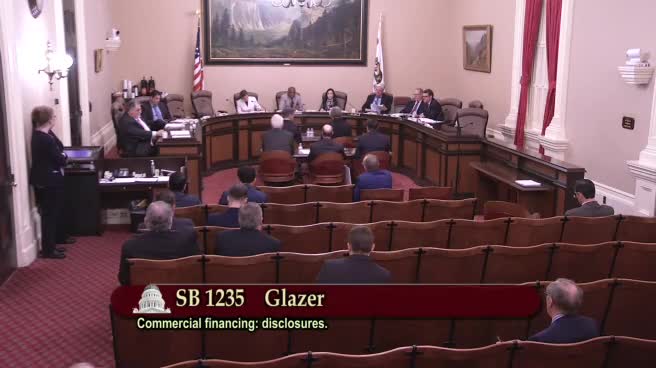 19MIN
Senate Standing Committee on Banking and Financial Institutions
Bill Author

Bill Co-Author(s):