SB 1194: Privacy: lodging and common carriers.
- Session Year: 2017-2018
- House: Senate
- Latest Version Date: 2018-09-27
Existing law requires a business to take all reasonable steps to dispose of customer records within its custody or control containing personal information, including information that identifies a particular individual, such as his or her name, address, physical characteristics, or description, when the records are no longer to be retained by the business.
Existing law also prohibits a public or private employer from providing voluntary consent to an immigration enforcement agent to access, review, or obtain the employers employee records without a subpoena or judicial warrant.
This bill would, except as specified, prohibit specified entities that offer lodging, or any employee or agent thereof, from disclosing, producing, providing, releasing, transferring, disseminating, or otherwise communicating all or any part of a guest record, as defined, orally, in writing, or by electronic or any other means to a 3rd party, other than a California peace officer, without a court-issued subpoena, warrant, or order, as specified. The bill would also similarly prohibit an owner or operator of a private or charter bus transportation company, or any employee or agent thereof, from disclosing, producing, providing, releasing, transferring, disseminating, or otherwise communicating all or any part of a passenger manifest, as defined, orally, in writing, or by electronic or any other means to a 3rd party, other than a California peace officer, without a court-issued subpoena, warrant, or order, as specified.
Existing law requires a business to take all reasonable steps to dispose of customer records within its custody or control containing personal information, including information that identifies a particular individual, such as his or her name, address, physical characteristics, or description, when the records are no longer to be retained by the business.
Existing law also prohibits a public or private employer from providing voluntary consent to an immigration enforcement agent to access, review, or obtain the employers employee records without a subpoena or judicial warrant.
This bill would, except as specified, prohibit specified entities that offer lodging, or any employee or agent thereof, from disclosing, producing, providing, releasing, transferring, disseminating, or otherwise communicating all or any part of a guest record, as defined, orally, in writing, or by electronic or any other means to a 3rd party, other than a California peace officer, without a court-issued subpoena, warrant, or order, as specified. The bill would also similarly prohibit an owner or operator of a private or charter bus transportation company, or any employee or agent thereof, from disclosing, producing, providing, releasing, transferring, disseminating, or otherwise communicating all or any part of a passenger manifest, as defined, orally, in writing, or by electronic or any other means to a 3rd party, other than a California peace officer, without a court-issued subpoena, warrant, or order, as specified. The bill would authorize a person who is identified or described in a guest record or a passenger manifest that is disclosed in violation of these provisions to bring a civil action for damages, including, but not limited to, injunctive relief, other appropriate equitable relief, and declaratory relief, to eliminate a pattern or practice of conduct prohibited by these provisions.
Existing law requires a business to take all reasonable steps to dispose of customer records within its custody or control containing personal information, including information that identifies a particular individual, such as his or her name, address, physical characteristics, or description, when the records are no longer to be retained by the business.
Existing law also prohibits a public or private employer from providing voluntary consent to an immigration enforcement agent to access, review, or obtain the employers employee records without a subpoena or judicial warrant.
This bill would would, except as specified, prohibit specified entities that offer lodging, or an owner or operator of a movie theater, athletic or sporting venue, or performance or concert venue, or any employee or agent thereof, from disclosing, producing, providing, releasing, transferring, disseminating, or otherwise communicating all or any part of a guest record, as defined, orally, in writing, or by electronic or any other means to a 3rd party, other than a California peace officer, without a court-issued subpoena, warrant, or order, as specified. The bill would also similarly prohibit an owner or operator of a private or charter bus transportation company, or any employee or agent thereof, from disclosing, producing, providing, releasing, transferring, disseminating, or otherwise communicating all or any part of a passenger manifest, as defined, orally, in writing, or by electronic or any other means to a 3rd party, other than a California peace officer, without a court-issued subpoena, warrant, or order, as specified. The bill would authorize a person who is identified or described in a guest record or a passenger manifest that is disclosed in violation of these provisions to bring a civil action for damages, including, but not limited to, injunctive relief, other appropriate equitable relief, and declaratory relief, to eliminate a pattern or practice of conduct prohibited by these provisions.
Existing law requires a business to take all reasonable steps to dispose of customer records within its custody or control containing personal information, including information that identifies a particular individual, such as his or her name, address, physical characteristics, or description, when the records are no longer to be retained by the business.
Existing law also prohibits a public or private employer from providing voluntary consent to an immigration enforcement agent to access, review, or obtain the employers employee records without a subpoena or judicial warrant.
This bill would prohibit specified entities that offer lodging, or an owner or operator of a movie theater, athletic or sporting venue, or performance or concert venue, or any employee or agent thereof, from disclosing, producing, providing, releasing, transferring, disseminating, or otherwise communicating all or any part of a guest record, as defined, orally, in writing, or by electronic or any other means to a 3rd party, other than a California peace officer, without a court-issued subpoena, warrant, or order, as specified. The bill would also prohibit an owner or operator of a private or charter bus transportation company, or any employee or agent thereof, from disclosing, producing, providing, releasing, transferring, disseminating, or otherwise communicating all or any part of a passenger manifest, as defined, orally, in writing, or by electronic or any other means to a 3rd party, other than a California peace officer, without a court-issued subpoena, warrant, or order, as specified. The bill would authorize a person who is identified or described in a guest record or a passenger manifest that is disclosed in violation of these provisions to bring a civil action for damages, including, but not limited to, injunctive relief, other appropriate equitable relief, and declaratory relief, to eliminate a pattern or practice of conduct prohibited by these provisions.
Existing law requires a business to take all reasonable steps to dispose of customer records within its custody or control containing personal information, including information that identifies a particular individual, such as his or her name, address, physical characteristics, or description, when the records are no longer to be retained by the business.
Existing law also prohibits a public or private employer from providing voluntary consent to an immigration enforcement agent to access, review, or obtain the employers employee records without a subpoena or judicial warrant.
This bill would prohibit specified entities that offer lodging, transportation, or other accommodation to the public or an owner or operator of a movie theater, athletic or sporting venue, or performance or concert venue, or any employee or agent thereof, from disclosing, producing, providing, releasing, transferring, disseminating, or otherwise communicating all or any part of any a guest record, as defined, orally, in writing, or by electronic or any other means to a 3rd party, other than a California peace officer, without a court-issued subpoena, warrant, or order, as specified. The bill would also prohibit an owner or operator of a private or charter bus transportation company, or any employee or agent thereof, from disclosing, producing, providing, releasing, transferring, disseminating, or otherwise communicating all or any part of a passenger manifest, as defined, orally, in writing, or by electronic or any other means to a 3rd party, other than a California peace officer, without a court-issued subpoena, warrant, or order, as specified. The bill would also authorize a person who is identified or described in a guest record or a passenger manifest that is disclosed in violation of these provisions to bring a civil action for damages, including, but not limited to, injunctive relief, other appropriate equitable relief, and declaratory relief, to eliminate a pattern or practice of conduct prohibited by these provisions.
Existing law requires a business to take all reasonable steps to dispose of customer records within its custody or control containing personal information, including information that identifies a particular individual, such as his or her name, address, physical characteristics, or description, when the records are no longer to be retained by the business.
Existing law prohibits a public or private employer from providing voluntary consent to an immigration enforcement agent to access, review, or obtain the employers employee records without a subpoena or judicial warrant.
This bill would prohibit specified entities that offer lodging, transportation, or other accommodation to the public from disclosing, producing, providing, releasing, transferring, disseminating, or otherwise communicating all or any part of any guest record, as defined, orally, in writing, or by electronic or any other means to a 3rd party, other than a California peace officer, without a court-issued subpoena, warrant, or order, as specified. The bill would also authorize a person who is identified or described in a guest record that is disclosed in violation of these provisions to bring a civil action for damages, including, but not limited to, injunctive relief, other appropriate equitable relief, and declaratory relief, to eliminate a pattern or practice of conduct prohibited by these provisions.
This bill would state the intent of the Legislature to enact legislation to protect guests privacy at hotels, motels, inns, boardinghouses, and lodginghouses.Existing law requires a business to take all reasonable steps to dispose of customer records within its custody or control containing personal information, including information that identifies a particular individual, such as his or her name, address, physical characteristics, or description, when the records are no longer to be retained by the business.
This bill would state the intent of the Legislature to enact legislation to protect guests privacy at hotels, motels, inns, boardinghouses, and lodginghouses.
The Legislature finds and declares all of the following:
(a)In 1972, California voters amended the California Constitution to include the right of privacy among the inalienable rights of all people. The amendment established a legal and enforceable right of privacy for every Californian. Fundamental to this right of privacy is the ability of individuals to control the use of their personal information.
(b)Since California voters approved the right of privacy, the California Legislature has adopted specific mechanisms to safeguard consumer privacy, including the California Consumer Privacy Act of 2018, the Online Privacy Protection Act, the Reader Privacy Act, the Privacy Rights for California Minors in the Digital World Act, and Shine the Light, a California law intended to give Californians the who, what, where, and when of how businesses handle consumers personal information.
(c)Californians frequently have to disclose their sensitive personal information to third parties in order to accomplish routine activities: apply for a job; apply for housing; raise a child; drive a car or take transportation; or stay at a hotel or motel.
(d)California law has not kept pace with these developments and the personal privacy implications surrounding the collection, use, and protection of personal information by third parties.
(e)Many businesses collect personal information from California consumers. They may know where a consumer lives, how many children a consumer has, where a consumer lives and works, where a consumer travels and where they stay on their trip, how fast a consumer drives, a consumers personality, sleep habits, biometric and health information, financial information, precise geolocation information, and social networks, to name a few categories.
(f)The unauthorized disclosure of personal information and the loss of privacy can have devastating effects for individuals, including financial fraud, identity theft, unnecessary costs to personal time and finances, destruction of property, harassment, reputational damage, emotional stress, and even potential physical harm.
(g)When Californians leave their homes to travel via bus or stay at lodging establishments throughout their state, they desire assurances that these businesses will respect their privacy and safeguard their personal information from improper disclosure.
(h)Protecting the privacy of personal information promotes consumer confidence and encourages both residents and visitors to travel to and within California and to patronize California businesses.
(i)Therefore, it is the intent of the Legislature to further Californians right to privacy by ensuring that the personal information disclosed by patrons of lodging establishments and bus companies is used for the intended business purposes and not improperly disclosed.
SEC. 2.Section 53.5 is added to the Civil Code, to read:53.5.(a)Notwithstanding any other law, except as specified in this section, an innkeeper, hotelkeeper, motelkeeper, lodginghouse keeper, or owner or operator of an inn, hotel, motel, lodginghouse, or other similar accommodations, or any employee or agent thereof, who offers or accepts payment for rooms, sleeping accommodations, or board and lodging, or other similar accommodation, shall not disclose, produce, provide, release, transfer, disseminate, or otherwise communicate, except to a California peace officer, all or any part of a guest record orally, in writing, or by electronic or any other means to a third party without a court-issued subpoena, warrant, or order.
(b)Notwithstanding any other law, except as specified in this section, an owner or operator of a private or charter bus transportation company, or any employee or agent thereof, shall not disclose, produce, provide, release, transfer, disseminate, or otherwise communicate, except to a California peace officer, all or any part of a passenger manifest record orally, in writing, or by electronic or any other means to a third party without a court-issued subpoena, warrant, or order.
(c)Guest record for purposes of this section includes any record that identifies an individual guest, boarder, occupant, lodger, customer, or invitee, including, but not limited to, his or her name, social security number or other unique identifying number, date of birth, location of birth, address, telephone number, drivers license number, other official form of identification, credit card number, or automobile license plate number.
(d)Passenger manifest record for purposes of this section includes any record that identifies an individual guest, passenger, customer, or invitee, including, but not limited to, his or her name, social security number or other unique identifying number, date of birth, location of birth, address, telephone number, drivers license number, other official form of identification, credit card number, or automobile license plate number.
(e)Court issued subpoena, warrant, or order for purposes of this section is limited to subpoenas, warrants, or orders issued by a judicial officer. An administrative subpoena, warrant, or order is not sufficient for purposes of this section.
(f)Third-party service provider, for the purposes of this section, means an entity contracted to provide services outlined in the contract that has no independent right to use or share the data beyond the terms of the contract. Records shared with a third-party service provider shall be subject to limitations on further disclosure as described in subdivisions (a) and (b), except as otherwise permitted by this section.
(g)This section shall not be construed to prevent a government entity from requiring a private business to provide business records during an audit or inspection if those records omit the personal information described in subdivisions (c) and (d).
(h)This section shall not be construed to prevent a private business from providing business records containing a guests or passengers name, address, credit card number, or drivers license number to a third-party service provider, if required, for the sole purpose of effectuating financial payment, including, approving or processing negotiable instruments, electronic fund transfers, or similar methods of payment, from a guest or passenger to the private business for a good or service, or from providing business records to a third-party service provider that the private business contracts with for business-related services.
(i)This section shall not be construed to prevent a private business from providing, where required, business records to a government entity in order to comply with state and federal laws regarding financial oversight and privacy, including, but not limited to, the federal Gramm-Leach-Bliley Act (12 U.S.C. Sec. 6801). Records shared with a government entity or in compliance with the federal Gramm-Leach-Bliley Act shall be subject to the limitations on further disclosure as described in subdivisions (a) and (b), except as otherwise permitted by this section.
(j)This section shall not be construed to prevent a private business from disclosing records in a criminal investigation if a law enforcement officer in good faith believes that an emergency involving imminent danger of death or serious bodily injury to a person requires a warrantless search, to the extent permitted by law.
(k)This section shall not be construed to compel disclosure of a guest record or passenger manifest record by an inkeeper, motelkeeper, lodginghouse keeper, or owner or operator of an inn, hotel, motel, lodginghouse, or other similar accommodation, or an owner or operator of a private or charter bus transportation company, in the absence of a court-issued subpoena, warrant, or order.
The Legislature finds and declares all of the following:
(a)In 1972, California voters amended the California Constitution to include the right of privacy among the inalienable rights of all people. The amendment established a legal and enforceable right of privacy for every Californian. Fundamental to this right of privacy is the ability of individuals to control the use of their personal information.
(b)Since California voters approved the right of privacy, the California Legislature has adopted specific mechanisms to safeguard consumer privacy, including the California Consumer Privacy Act of 2018, the Online Privacy Protection Act, the Reader Privacy Act, the Privacy Rights for California Minors in the Digital World Act, and Shine the Light, a California law intended to give Californians the who, what, where, and when of how businesses handle consumers personal information.
(c)Californians frequently have to disclose their sensitive personal information to third parties in order to accomplish routine activities: apply for a job; apply for housing; raise a child; drive a car or take transportation; or stay at a hotel or motel.
(d)California law has not kept pace with these developments and the personal privacy implications surrounding the collection, use, and protection of personal information by third parties.
(e)Many businesses collect personal information from California consumers. They may know where a consumer lives, how many children a consumer has, where a consumer lives and works, where a consumer travels and where they stay on their trip, how fast a consumer drives, a consumers personality, sleep habits, biometric and health information, financial information, precise geolocation information, and social networks, to name a few categories.
(f)The unauthorized disclosure of personal information and the loss of privacy can have devastating effects for individuals, including financial fraud, identity theft, unnecessary costs to personal time and finances, destruction of property, harassment, reputational damage, emotional stress, and even potential physical harm.
(g)When Californians leave their homes to travel via bus or stay at lodging establishments throughout their state, they desire assurances that these businesses will respect their privacy and safeguard their personal information from improper disclosure.
(h)Protecting the privacy of personal information promotes consumer confidence and encourages both residents and visitors to travel to and within California and to patronize California businesses.
(i)Therefore, it is the intent of the Legislature to further Californians right to privacy by ensuring that the personal information disclosed by patrons of lodging establishments and bus companies is used for the intended business purposes and not improperly disclosed.
SECTION 1.SEC. 2.Section 53.5 is added to the Civil Code, to read:53.5.(a)Notwithstanding any other law, except as specified in this section, an innkeeper, hotelkeeper, motelkeeper, lodginghouse keeper, or owner or operator of an inn, hotel, motel, lodginghouse, or other similar accommodations, or any employee or agent thereof, who offers or accepts payment for rooms, sleeping accommodations, or board and lodging, or other similar accommodation, shall not disclose, produce, provide, release, transfer, disseminate, or otherwise communicate, except to a California peace officer, all or any part of a guest record orally, in writing, or by electronic or any other means to a third party without a court-issued subpoena, warrant, or order.
(b)Notwithstanding any other law, except as specified in this section, an owner or operator of a private or charter bus transportation company, or any employee or agent thereof, shall not disclose, produce, provide, release, transfer, disseminate, or otherwise communicate, except to a California peace officer, all or any part of a passenger manifest record orally, in writing, or by electronic or any other means to a third party without a court-issued subpoena, warrant, or order.
(c)Any person who is identified or described in a guest record or passenger manifest that is disclosed in violation of subdivision (a) or (b) may bring a civil action for damages, including, but not limited to, damages under Section 52, injunctive relief, other appropriate equitable relief, and declaratory relief, to eliminate a pattern or practice of conduct prohibited by subdivision (a) or (b). (d)(c)Guest record for purposes of this section includes any record that identifies an individual guest, boarder, occupant, lodger, customer, or invitee, including, but not limited to, his or her name, social security number or other unique identifying number, date of birth, location of birth, address, telephone number, drivers license number, other official form of identification, credit card number, or automobile license plate number.
(e)(d)Passenger manifest record for purposes of this section includes any record that identifies an individual guest, passenger, customer, or invitee, including, but not limited to, his or her name, social security number or other unique identifying number, date of birth, location of birth, address, telephone number, drivers license number, other official form of identification, credit card number, or automobile license plate number.
(f)(e)Court issued subpoena, warrant, or order for purposes of this section is limited to subpoenas, warrants, or orders issued by a judicial officer. An administrative subpoena, warrant, or order is not sufficient for purposes of this section.
(g)Third party(f)Third-party service provider, for the purposes of this section, means an entity contracted to provide services outlined in the contract that has no independent right to use or share the data beyond the terms of the contract. Records shared with a third-party service provider shall be subject to limitations on further disclosure as described in subdivisions (a) and (b), except as otherwise permitted by this section.
(h)(g)This section shall not be construed to prevent a government entity from requiring a private business to provide business records during an audit or inspection if those records omit the personal information described in subdivisions (d) and (e). (c) and (d).
(i)(h)This section shall not be construed to prevent a private business from providing business records containing a guests or passengers name, address, credit card number, or drivers license number to a third-party service provider, if required, for the sole purpose of effectuating financial payment, including, approving or processing negotiable instruments, electronic fund transfers, or similar methods of payment, from a guest or passenger to the private business for a good or service, or from providing business records to a third-party service provider that the private business contracts with for business-related services.
(j)(i)This section shall not be construed to prevent a private business from providing, where required, business records to a government entity in order to comply with state and federal laws regarding financial oversight and privacy, including, but not limited to, the federal Gramm-Leach-Bliley Act (12 U.S.C. Sec. 6801). Records shared with a government entity or in compliance with the federal Gramm-Leach-Bliley Act shall be subject to the limitations on further disclosure as described in subdivisions (a) and (b), except as otherwise permitted by this section.
(k)(j)This section shall not be construed to prevent a private business from disclosing records in a criminal investigation if a law enforcement officer in good faith believes that an emergency involving imminent danger of death or serious bodily injury to a person requires a warrantless search, to the extent permitted by law.
(l)(k)This section shall not be construed to compel disclosure of a guest record or passenger manifest record by an inkeeper, motelkeeper, lodginghouse keeper, or owner or operator of an inn, hotel, motel, lodginghouse, or other similar accommodation, or an owner or operator of a private or charter bus transportation company, in the absence of a court-issued subpoena, warrant, or order.
(a)Notwithstanding any other law, except as specified in this section, an innkeeper, hotelkeeper, motelkeeper, lodginghouse keeper, or owner or operator of an inn, hotel, motel, lodginghouse, or other similar accommodations, or any employee or agent thereof, who offers or accepts payment for rooms, sleeping accommodations, or board and lodging, or other similar accommodation, shall not disclose, produce, provide, release, transfer, disseminate, or otherwise communicate, except to a California peace officer, all or any part of a guest record orally, in writing, or by electronic or any other means to a third party without a court-issued subpoena, warrant, or order.
(b)Notwithstanding any other law, except as specified in this section, an owner or operator of a private or charter bus transportation company, or any employee or agent thereof, shall not disclose, produce, provide, release, transfer, disseminate, or otherwise communicate, except to a California peace officer, all or any part of a passenger manifest record orally, in writing, or by electronic or any other means to a third party without a court-issued subpoena, warrant, or order.
(c)Any person who is identified or described in a guest record or passenger manifest that is disclosed in violation of subdivision (a) or (b) may bring a civil action for damages, including, but not limited to, damages under Section 52, injunctive relief, other appropriate equitable relief, and declaratory relief, to eliminate a pattern or practice of conduct prohibited by subdivision (a) or (b).
(d)Guest record for purposes of this section includes any record that identifies an individual guest, boarder, occupant, lodger, customer, or invitee, including, but not limited to, his or her name, social security number or other unique identifying number, date of birth, location of birth, address, telephone number, drivers license number, other official form of identification, credit card number, or automobile license plate number.
(e)Passenger manifest record for purposes of this section includes any record that identifies an individual guest, passenger, customer, or invitee, including, but not limited to, his or her name, social security number or other unique identifying number, date of birth, location of birth, address, telephone number, drivers license number, other official form of identification, credit card number, or automobile license plate number.
(f)Court issued subpoena, warrant, or order for purposes of this section is limited to subpoenas, warrants, or orders issued by a judicial officer. An administrative subpoena, warrant, or order is not sufficient for purposes of this section.
(g)Third party service provider, for the purposes of this section, means an entity contracted to provide services outlined in the contract that has no independent right to use or share the data beyond the terms of the contract. Records shared with a third party third-party service provider shall be subject to limitations on further disclosure as described in subdivisions (a) and (b), except as otherwise permitted by this section.
(h)This section shall not be construed to prevent a government entity from requiring a private business to provide business records during an audit or inspection if those records omit the personal information described in subdivisions (d) and (e).
(i)This section shall not be construed to prevent a private business from providing business records containing a guests or passengers name, address, credit card number, or drivers license number to a third party third-party service provider, if required, for the sole purpose of effectuating financial payment, including, approving or processing negotiable instruments, electronic fund transfers, or similar methods of payment, from a guest or passenger to the private business for a good or service, or from providing business records to a third party third-party service provider that the private business contracts with for business-related services.
(j)This section shall not be construed to prevent a private business from providing, where required, business records to a government entity in order to comply with state and federal laws regarding financial oversight and privacy, including, but not limited to, the federal Gramm-Leach-Bliley Act (12 U.S.C. Sec. 6801). Records shared with a government entity or in compliance with the federal Gramm-Leach-Bliley Act shall be subject to the limitations on further disclosure as described in subdivisions (a) and (b), except as otherwise permitted by this section.
(k)This section shall not be construed to prevent a private business from disclosing records in a criminal investigation if a law enforcement officer in good faith believes that an emergency involving imminent danger of death or serious bodily injury to a person requires a warrantless search, to the extent permitted by law.
(l)This section shall not be construed to compel disclosure of a guest record or passenger manifest record by an inkeeper, motelkeeper, lodginghouse keeper, or owner or operator of an inn, hotel, motel, lodginghouse, or other similar accommodation, or an owner or operator of a private or charter bus transportation company, in the absence of a court-issued subpoena, warrant, or order.
(a)An Notwithstanding any other law, except as specified in this section, an innkeeper, hotelkeeper, motelkeeper, lodginghouse keeper, or owner or operator of an inn, hotel, motel, lodginghouse, or other similar accommodations, or any employee or agent thereof, who offers and or accepts payment for rooms, sleeping accommodations, or board and lodging, or other similar accommodation, shall not disclose, produce, provide, release, transfer, disseminate, or otherwise communicate, except to a California peace officer, all or any part of a guest record orally, in writing, or by electronic or any other means to a third party without a court-issued subpoena, warrant, or order.
(b)An Notwithstanding any other law, except as specified in this section, an owner or operator of a private or charter bus transportation company, or any employee or agent thereof, shall not disclose, produce, provide, release, transfer, disseminate, or otherwise communicate, except to a California peace officer, all or any part of a passenger manifest record orally, in writing, or by electronic or any other means to a third party without a court-issued subpoena, warrant, or order.
(c)An owner or operator of a movie theater, athletic or sporting venue, or performance or concert venue, or any employee or agent thereof, shall not disclose, produce, provide, release, transfer, disseminate, or otherwise communicate, except to a California peace officer, all or any part of a guest record orally, in writing, or by electronic or any other means to a third party without a court-issued subpoena, warrant, or order. (d)(c)Any person who is identified or described in a guest record or passenger manifest that is disclosed in violation of subdivision (a), (b), or (c) (a) or (b) may bring a civil action for damages, including, but not limited to, damages under Section 52, injunctive relief, other appropriate equitable relief, and declaratory relief, to eliminate a pattern or practice of conduct prohibited by subdivision (a), (b), or (c). (a) or (b).
(e)(d)Guest record for purposes of this section includes any record that identifies an individual guest, boarder, occupant, lodger, customer, or invitee, including, but not limited to, his or her name, social security number or other unique identifying number, date of birth, location of birth, address, telephone number, drivers license number, other official form of identification, credit card number, or automobile license plate number.
(f)(e)Passenger manifest record for purposes of this section includes any record that identifies an individual guest, passenger, customer, or invitee, including, but not limited to, his or her name, social security number or other unique identifying number, date of birth, location of birth, address, telephone number, drivers license number, other official form of identification, credit card number, or automobile license plate number.
(g)(f)Court issued subpoena, warrant, or order for purposes of this section is limited to subpoenas, warrants, or orders issued by a judicial officer. An administrative subpoena, warrant, or order is not sufficient for purposes of this section.
(h)(g)Third party service provider, for the purposes of this section, means an entity contracted to provide services outlined in the contract that has no independent right to use or share the data beyond the terms of the contract. Records shared with a third party service provider shall be subject to the limitations on further disclosure as described in subdivisions (a) to (c), inclusive. and (b), except as otherwise permitted by this section.
(i)(h)This section shall not be construed to prevent a government entity from requiring a private business to provide business records during an audit or inspection if those records omit the personal information described in subdivisions (e) and (f). (d) and (e).
(j)(i)This section shall not be construed to prevent a private business from providing, where required, providing business records containing a guests, clients, guests or passengers name, address, or credit card number number, or drivers license number to a third party service provider provider, if required, for the sole purpose of effectuating financial payment payment, including, approving or processing negotiable instruments, electronic fund transfers, or similar methods of payment, from a guest, client, guest or passenger to the private business for a good or service, or from providing business records to a third party service provider that the private business contracts with for business-related services.
(k)(j)This section shall not be construed to prevent a private business from providing, where required, business records to a government entity in order to comply with state and federal laws regarding financial oversight and privacy regulations. privacy, including, but not limited to, the federal Gramm-Leach-Bliley Act (12 U.S.C. Sec. 6801). Records shared with a government entity or in compliance with the federal Gramm-Leach-Bliley Act shall be subject to the limitations on further disclosure as described in subdivisions (a) to (c), inclusive. and (b), except as otherwise permitted by this section.
(l)(k)This section shall not be construed to prevent a private business from disclosing records in a criminal investigation if a law enforcement officer in good faith believes that an emergency involving imminent danger of death or serious bodily injury to a person requires a warrantless search, to the extent permitted by law.
(a)An innkeeper, hotelkeeper, motelkeeper, lodginghouse keeper, or owner or operator of an inn, hotel, motel, lodginghouse, or other similar accommodations, or any employee or agent thereof, who offers and accepts payment for rooms, sleeping accommodations, or board and lodging, or other similar accommodation, shall not disclose, produce, provide, release, transfer, disseminate, or otherwise communicate, except to a California peace officer, all or any part of a guest record orally, in writing, or by electronic or any other means to a third party without a court-issued subpoena, warrant, or order.
(b)An owner or operator of a private or charter bus transportation company, or any employee or agent thereof, shall not disclose, produce, provide, release, transfer, disseminate, or otherwise communicate, except to a California peace officer, all or any part of a passenger manifest record orally, in writing, or by electronic or any other means to a third party without a court-issued subpoena, warrant, or order.
(c)An owner or operator of a movie theater, athletic or sporting venue, or performance or concert venue, or any employee or agent thereof, shall not disclose, produce, provide, release, transfer, disseminate, or otherwise communicate, except to a California peace officer, all or any part of a guest record orally, in writing, or by electronic or any other means to a third party without a court-issued subpoena, warrant, or order.
(d)Any person who is identified or described in a guest record or passenger manifest that is disclosed in violation of subdivision (a), (b), or (c) may bring a civil action for damages, including, but not limited to, damages under Section 52, injunctive relief, other appropriate equitable relief, and declaratory relief, to eliminate a pattern or practice of conduct prohibited by subdivision (a), (b), or (c).
(e)Guest record for purposes of this section includes any record that identifies an individual guest, boarder, occupant, lodger, customer, or invitee, including, but not limited to, his or her name, social security number or other unique identifying number, date of birth, location of birth, address, telephone number, drivers license number, other official form of identification, credit card number, or automobile license plate number.
(f)Passenger manifest record for purposes of this section includes any record that identifies an individual guest, passenger, customer, or invitee, including, but not limited to, his or her name, social security number or other unique identifying number, date of birth, location of birth, address, telephone number, drivers license number, other official form of identification, credit card number, or automobile license plate number.
(g)Court issued subpoena, warrant, or order for purposes of this section is limited to subpoenas, warrants, or orders issued by a judicial officer. An administrative subpoena, warrant, or order is not sufficient for purposes of this section.
(h)Third party service provider, for the purposes of this section, means an entity contracted to provide services outlined in the contract that has no independent right to use or share the data beyond the terms of the contract. Records shared with a third party service provider shall be subject to the limitations on disclosure described in subdivisions (a) to (c), inclusive.
(h)(i)This section shall not be construed to prevent a government entity from requiring a private business to provide business records during an audit or inspection if those records omit the personal information described in subdivisions (e) and (f).
(i)(j)This section shall not be construed to prevent a private business from providing, where required, business records containing a guests, clients, or passengers name, address, or credit card number to a third party service provider for the sole purpose of effectuating financial payment from a guest, client, or passenger to the private business for a good or service. service, or from providing business records to a third party service provider that the private business contracts with for business-related services.
(k)This section shall not be construed to prevent a private business from providing, where required, business records to a government entity in order to comply with state and federal laws regarding financial oversight and privacy regulations. Records shared with a government entity shall be subject to the limitations on disclosure in subdivisions (a) to (c), inclusive.
(j)(l)This section shall not be construed to prevent a private business from disclosing records in a criminal investigation if a law enforcement officer in good faith believes that an emergency involving imminent danger of death or serious bodily injury to a person requires a warrantless search, to the extent permitted by law.
(a)An innkeeper, hotelkeeper, motelkeeper, lodginghouse keeper, or owner or operator of an inn, hotel, motel, lodginghouse, or other similar accommodations, a common carrier, a place of public accommodation, amusement or resort, or other place to which the public is invited, or any employee or agent of any thereof, who offers and accepts payment for rooms, sleeping accommodations, or board and lodging, transportation, or other similar accommodation, shall not disclose, produce, provide, release, transfer, disseminate, or otherwise communicate, except to a California peace officer, all or any part of any a guest record orally, in writing, or by electronic or any other means to a third party without a court-issued subpoena, warrant, or order.
(b)An owner or operator of a private or charter bus transportation company, or any employee or agent thereof, shall not disclose, produce, provide, release, transfer, disseminate, or otherwise communicate, except to a California peace officer, all or any part of a passenger manifest record orally, in writing, or by electronic or any other means to a third party without a court-issued subpoena, warrant, or order.
(c)An owner or operator of a movie theater, athletic or sporting venue, or performance or concert venue, or any employee or agent thereof, shall not disclose, produce, provide, release, transfer, disseminate, or otherwise communicate, except to a California peace officer, all or any part of a guest record orally, in writing, or by electronic or any other means to a third party without a court-issued subpoena, warrant, or order.
(b)(d)Any person who is identified or described in a guest record or passenger manifest that is disclosed in violation of subdivision (a) (a), (b), or (c) may bring a civil action for damages, including, but not limited to, damages under Section 52, injunctive relief, other appropriate equitable relief, and declaratory relief, to eliminate a pattern or practice of conduct prohibited by subdivision (a). (a), (b), or (c).
(c)(e)Guest record for purposes of this section includes any record that identifies or describes an individual guest, boarder, occupant, lodger, passenger, customer, or invitee, including, but not limited to, his or her name, social security number or other unique identifying number, date of birth, location of birth, home address, home telephone number, cellular telephone number, drivers license number, other official form of identification, credit card number, or automobile license plate number.
(f)Passenger manifest record for purposes of this section includes any record that identifies an individual guest, passenger, customer, or invitee, including, but not limited to, his or her name, social security number or other unique identifying number, date of birth, location of birth, address, telephone number, drivers license number, other official form of identification, credit card number, or automobile license plate number.
(d)(g)Court issued subpoena, warrant, or order for purposes of this section is limited to subpoenas, warrants, or orders issued by a judicial officer. An administrative subpoena, warrant, or order is not sufficient for purposes of this section.
(h)This section shall not be construed to prevent a government entity from requiring a private business to provide business records during an audit or inspection if those records omit the personal information described in subdivisions (e) and (f).
(i)This section shall not be construed to prevent a private business from providing, where required, business records containing a guests, clients, or passengers name, address, or credit card number to a third party for the sole purpose of effectuating financial payment from a guest, client, or passenger to the private business for a good or service.
(j)This section shall not be construed to prevent a private business from disclosing records in a criminal investigation if a law enforcement officer in good faith believes that an emergency involving imminent danger of death or serious bodily injury to a person requires a warrantless search, to the extent permitted by law.
(a)An innkeeper, hotelkeeper, motelkeeper, lodginghouse keeper, or owner or operator of an inn, hotel, motel, lodginghouse, or other similar accommodations, a common carrier, a place of public accommodation, amusement or resort, or other place to which the public is invited, or any employee or agent of any thereof, who offers and accepts payment for rooms, sleeping accommodations, or board and lodging, transportation, or other accommodation, shall not disclose, produce, provide, release, transfer, disseminate, or otherwise communicate, except to a California peace officer, all or any part of any guest record orally, in writing, or by electronic or any other means to a third party without a court-issued subpoena, warrant, or order.
(b)Any person who is identified or described in a guest record that is disclosed in violation of subdivision (a) may bring a civil action for damages, including, but not limited to, damages under Section 52, injunctive relief, other appropriate equitable relief, and declaratory relief, to eliminate a pattern or practice of conduct prohibited by subdivision (a).
(c)Guest record for purposes of this section includes any record that identifies or describes an individual guest, boarder, occupant, lodger, passenger, customer, or invitee, including, but not limited to, his or her name, social security number or other unique identifying number, date of birth, location of birth, home address, home telephone number, cellular telephone number, drivers license number, other official form of identification, credit card number, or automobile license plate number.
(d)Court issued subpoena, warrant, or order for purposes of this section is limited to subpoenas, warrants, or orders issued by a judicial officer. An administrative subpoena, warrant, or order is not sufficient for purposes of this section.
SECTION 1.It is the intent of the Legislature to enact legislation to protect guests privacy at hotels, motels, inns, boardinghouses, and lodginghouses.It is the intent of the Legislature to enact legislation to protect guests privacy at hotels, motels, inns, boardinghouses, and lodginghouses.
|
Date
|
Status
|
|---|---|
| Sep 27, 2018 | Chaptered by Secretary of State. Chapter 853, Statutes of 2018. |
| Sep 27, 2018 | Approved by the Governor. |
| Sep 6, 2018 | Enrolled and presented to the Governor at 4 p.m. |
| Aug 29, 2018 | Assembly amendments concurred in. (Ayes 27. Noes 12.) Ordered to engrossing and enrolling. |
| Aug 28, 2018 | In Senate. Concurrence in Assembly amendments pending. |
| Aug 28, 2018 | Read third time. Passed. Ordered to the Senate. |
| Aug 24, 2018 | Read third time and amended. |
| Aug 7, 2018 | Read second time. Ordered to third reading. |
| Aug 6, 2018 | Read second time and amended. Ordered to second reading. |
| Jul 5, 2018 | From committee: Do pass as amended. (Ayes 7. Noes 2.) (July 3). |
| Jun 20, 2018 | Read second time and amended. Re-referred to Com. on P. & C.P. |
| Jun 19, 2018 | From committee: Do pass as amended and re-refer to Com. on P. & C.P. (Ayes 8. Noes 1.) (June 19). |
| Jun 11, 2018 | Referred to Coms. on JUD. and P. & C.P. |
| May 31, 2018 | In Assembly. Read first time. Held at Desk. |
| May 30, 2018 | Read third time. Passed. (Ayes 25. Noes 12.) Ordered to the Assembly. |
| May 29, 2018 | Read second time. Ordered to third reading. |
| May 25, 2018 | From committee: Do pass as amended. (Ayes 5. Noes 2.) (May 25). |
| May 18, 2018 | Set for hearing May 25. |
| May 14, 2018 | May 14 hearing: Placed on APPR. suspense file. |
| May 8, 2018 | Set for hearing May 14. |
| May 3, 2018 | Read second time and amended. Re-referred to Com. on APPR. |
| May 2, 2018 | From committee: Do pass as amended and re-refer to Com. on APPR. (Ayes 5. Noes 1.) (May 1). |
| Apr 19, 2018 | Set for hearing May 1. |
| Apr 4, 2018 | Re-referred to Coms. on JUD. and APPR. |
| Mar 21, 2018 | From committee with author's amendments. Read second time and amended. Re-referred to Com. on RLS. |
| Mar 1, 2018 | Referred to Com. on RLS. |
| Feb 16, 2018 | From printer. May be acted upon on or after March 18. |
| Feb 15, 2018 | Introduced. Read first time. To Com. on RLS. for assignment. To print. |
|
Date
|
Description
|
Location
|
Votes
|
|
|---|---|---|---|---|
| Aug 29, 2018 | Unfinished Business SB1194 Lara Concurrence | Senate Floor |
Passed |
|
| Aug 28, 2018 | SB 1194 Lara Senate Third Reading By STONE | Assembly Floor |
Passed |
|
| Jul 3, 2018 | Do pass as amended. | Assembly Standing Committee on Privacy and Consumer Protection |
Passed |
|
| Jun 19, 2018 | Do pass as amended and be re-referred to the Committee on [Privacy and Consumer Protection] | Assembly Standing Committee on Judiciary |
Passed |
|
| May 30, 2018 | Senate 3rd Reading SB1194 Lara | Senate Floor |
Passed |
|
| May 25, 2018 | Do pass as amended | Senate Standing Committee on Appropriations |
Passed |
|
| May 14, 2018 | Placed on suspense file | Senate Standing Committee on Appropriations |
Passed |
|
| May 1, 2018 | Do pass as amended, but first amend, and re-refer to the Committee on [Appropriations] | Senate Standing Committee on Judiciary |
Passed |
This list shows positions taken on this bill by organizations on the date displayed, which is linked to the original source.
Positions by individuals are not included.
Office of Senate Floor Analyses (916) 651-1520 Fax: (916) 327-4478 | SB |
UNFINISHED BUSINESS
Bill No: SB 1194
:
SENATE JUDICIARY COMMITTEE: 5-1, 5/1/18
AYES: Jackson, Hertzberg, Monning, Stern, Wieckowski
NOES: Anderson
NO VOTE RECORDED: Moorlach
SENATE APPROPRIATIONS COMMITTEE: 5-2, 5/25/18
AYES: Lara, Beall, Bradford, Hill, Wiener
NOES: Bates, Nielsen
SENATE FLOOR: 25-12, 5/30/18
AYES: Allen, Atkins, Beall, Bradford, Dodd, Galgiani, Glazer, Hernandez, Hertzberg, Hill, Hueso, Jackson, Lara, Leyva, McGuire, Mitchell, Monning, Newman, Pan, Portantino, Roth, Skinner, Stern, Wieckowski, Wiener
NOES: Anderson, Bates, Berryhill, Fuller, Gaines, Moorlach, Morrell, Nguyen, Nielsen, Stone, Vidak, Wilk
NO VOTE RECORDED: Cannella, De León
ASSEMBLY FLOOR: 56-24, 8/28/18 - See last page for vote
SUBJECT: Privacy: lodging and common carriers
SOURCE: American Civil Liberties Union of California
DIGEST:
This bill protects the privacy of Californians by prohibiting places of lodging, bus companies, movie theaters, sports arenas, and performance venues from handing over the name or identifying information of guests, passengers, or audience members, except to California peace officers or in response to a court-issued subpoena, warrant, or order.
Assembly Amendments (1) remove the private right of action to enforce the provisions of the bill; (2) add a series of legislative findings regarding the history of the right to privacy in California and expressing legislative intent to further the right to privacy through enactment of this bill; (3) remove provisions that would have applied this bill to movie theaters, athletic or sporting venues, and performance or concert venues; and (4) make other technical and clarifying amendments.
Existing law:
- Establishes a state constitutional right to privacy. (Cal. Const., art. I, Sec. 1.)
- Holds that the state constitutional right to privacy applies to both the government and private parties. (White v. Davis (1975) 13 Cal.3d 757, 775.)
- Provides that “the right of the people to be secure in their persons, houses, papers, and effects, against unreasonable searches and seizures, shall not be violated, and no warrants shall issue, but upon probable cause, supported by Oath or affirmation, and particularly describing the place to be searched and the persons or things to be seized.” (U.S. Const., amend IV.)
- Provides that “the right of the people to be secure in their persons, houses, papers and effects against unreasonable seizures and searches may not be violated; and a warrant may not issue except on probable cause, supported by oath or affirmation, particularly describing the place to be searched and the persons and things to be seized.” (Cal. Const., art. I, Sec. 13.)
- Limits the authority of an employee of the Immigration and Customs Enforcement Agency to conduct a search without a warrant to any person, and to the personal effects in the possession of any person seeking admission to the United States, concerning whom such officer or employee may have reasonable cause to suspect that grounds exist for denial of admission to the United States which would be disclosed by such search. (8 U.S.C. Sec. 1357(e).)
- Requires a business to take all reasonable steps to dispose of customer records within its custody or control containing personal information, including information that identifies a particular individual, such as his or her name, address, physical characteristics, or description, when the records are no longer to be retained by the business. (Civ. Code Sec. 1798.81.)
- Prohibits a public or private employer from providing voluntary consent to an immigration enforcement agent to access, review, or obtain the employer’s employee records without a subpoena or judicial warrant. (Gov. Code Sec. 7285.1.)
- Makes a series of findings and declarations regarding the history of the right to privacy in California and expressing legislative intent to further the right to privacy through enactment of this bill.
- Prohibits owners, operators, and agents of a place of lodging from disclosing a guest record, except to a California peace officer or in response to a court-issued subpoena, warrant, or order.
- Prohibits owners, operators, and agents of a private or charter bus company from disclosing a passenger manifest, except to a California peace officer or in response to a court-issued subpoena, warrant, or order.
- Defines “guest record” for purposes of this bill, to include any record that identifies an individual guest, boarder, occupant, lodger, customer, or invitee, including, but not limited to, his or her name, social security number or other unique identifying number, date of birth, location of birth, home address, home telephone number, cellular telephone number, driver’s license number, other official form of identification, credit card number, or automobile license plate number.
- Defines “passenger manifest record” for purposes of this bill, to include any record that identifies an individual guest, passenger, customer, or invitee, including, but not limited to, his or her name, social security number or other unique identifying number, date of birth, location of birth, home address, home telephone number, cellular telephone number, driver’s license number, other official form of identification, credit card number, or automobile license plate number.
- Limits the meaning of “court issued subpoena, warrant, or order” for purposes of this bill, to subpoenas, warrants, or orders issued by a judicial officer and specify that an administrative subpoena, warrant, or order does not qualify as a “court issued subpoena, warrant, or order.”
- Defines “third party service provider” for purposes of this bill, to mean an entity contracted to provide services outlined in the contract that has no independent right to use or share the data beyond the terms of the contract.
- Provides that the terms of this bill shall not be construed to prevent a government entity from requiring a private business to provide business records during an audit, if those records omit guest records and passenger manifests.
- Provides that the terms of this bill shall not be construed to prevent a private business from:
- Providing, where required, business records containing a guest’s, client’s, or passenger’s name, address or credit card number for the sole purpose of effectuating payments, or to a third party service provider with whom the business contracts;
- Providing, where required, business records to a government entity in order to comply with laws regarding financial oversight and privacy regulation; and
- Disclosing records to a law enforcement officer in a criminal investigation if the officer has a good faith belief that an emergency involving imminent danger of death or serious bodily injury requires a warrantless search.
- Provides that nothing in this bill compels disclosure of guest or passenger records in the absence of a court-issued subpoena, warrant, or order.
Background
California law is strongly protective of the right to privacy. Unlike the text of the federal constitution, from which a right to privacy right has been implied (Griswold v. Connecticut (1965) 381 U.S. 479), our State Constitution contains an explicit right to privacy: “[a]ll people are by nature free and independent and have inalienable rights. Among these are… pursuing and obtaining… privacy.” (Cal. Const., art. I, Sec. 1.)
Individual Californians do not always possess complete control over their private information, however. When they engage in certain types of commerce, people must turn over personally identifying information to the business they are patronizing. To stay at a motel, for example, a guest must generally register their stay. Similarly, a passenger frequently has to show some form of identification to ride a bus traveling long distance. With regard to motel guest lists, the U.S. Supreme Court has held that businesses have a Fourth Amendment in the privacy of the registry. (City of Los Angeles v. Patel (2015) 135 S.Ct. 2443.) In general, therefore, law enforcement must have a warrant to access that list.
Still, if the business voluntarily discloses this information to law enforcement or other third parties, the business may violate the customer’s privacy without the customer’s knowledge or consent. Recent events in Arizona and Washington State illustrate how such voluntary disclosure of otherwise private customer records can facilitate invasions of privacy that would not be possible but for the cooperation of the private company. To prevent this problem from taking place in California, this bill prohibits businesses that offer and accept payment for lodging, as well as private businesses providing private or charter bus transportation, to disclose who is staying or traveling, except to a California peace officer or in response to a court-issued subpoena, warrant, or order.
Comments
As evidence of the need for this bill, the author points to a number of recent incidents in which private businesses have voluntarily provided federal immigration enforcement officers with access to customers or customer records.
- Lodging
According to media reports originating in Arizona, until as recently as September 2017, the national lodging chain Motel 6 regularly provided federal immigration enforcement officers with lists of the guests staying at their facilities.
“We send a report every morning to ICE — all the names of everybody that comes in,” one article quoted a Motel 6 front desk clerk as saying. “Every morning at about 5 o’clock, we do the audit and we push a button and it sends it to ICE.”[1]
Picking up on these allegations, Washington State Attorney General Bob Ferguson announced in January 2018, that his office had investigated the matter and believed Motel 6’s practice of turning over guest lists to ICE was “methodical” and that “many thousands” of Washington State residents’ privacy and civil rights had been violated as a result.[2] Ferguson reported that investigators had learned from Motel 6 employees that ICE agents would review the guest lists, circle any Latino sounding surnames, and run background checks on them. (Ibid.)
Motel 6 put out a statement in September 2017 indicating that it has instructed all of its facilities to refrain from providing guest lists to ICE except in response to a warrant.[3]
- Long distance bus service
In a similar, though not precisely analogous situation, the Greyhound Lines long distance bus company has repeatedly allowed immigration enforcement officers to gain access to its passengers aboard the company’s private coaches.[4] Greyhound argues that it is legally obligated to allow law enforcement to board its buses when asked.[5] Arguably, however, Greyhound has constitutional grounds on which to refuse such a search of a non-public area. The Fourth Amendment to the U.S. Constitution allows private entities to refuse a search in the absence of a warrant. (U.S. Const., amend. IV.)
In California, moreover, searches of this nature may violate the terms of Government Code Section 7285.1(a), which prohibits employers voluntarily consenting to a search by immigration enforcement officers of non-public places of labor. The bus, which requires a ticket to board, is non-public, and the presence of the driver, a company employee, arguably makes it a place of labor.
The sponsors of this bill assert that Greyhound is facilitating constitutional violations by giving immigration enforcement officers access to its passengers in this way. They cite a January 2018, incident in Indio, California, where, according to media accounts, immigration enforcement agents boarded a Greyhound bus and asked every passenger for their citizenship and immigration status and identification.[6] A Latino citizen then began filming the incident, including CBP’s removal and arrest of one person from the bus, a CBP agent demanded to know the witness’ citizenship and asked him for two forms of identification.
The sponsors also point to a February 2018 incident in which immigration enforcement agents allegedly stopped a Los Angeles resident as he boarded a Greyhound bus in Indio. According to the sponsor of this bill, the immigration enforcement agents detained the man without any reasonable suspicion they questioned him about his immigration status. As a result, he missed his bus. In justifying the stop, the agents apparently told the man that his “shoes looked suspicious,” like those of someone who had recently crossed the border.
This bill does not address these practices directly, since its scope is limited to passenger lists, rather than to physical access to the bus itself. Nonetheless, the two issues are related, since ICE could ask to review bus passenger manifests and may be especially inclined to do so if Greyhound stops voluntarily providing access to its customers.
FISCAL EFFECT: Appropriation: Fiscal Com.: Local:
American Civil Liberties Union of California (source)
California Immigrant Policy Center
Council on American-Islamic Relations
Courage Campaign
Immigrant Legal Resource Center
Oakland Privacy
OPPOSITION: (Verified 8/28/18)
None received
ARGUMENTS IN SUPPORT: According to the author:
SB 1194 protects the personal information of customers that is collected when paying for goods and services in a variety of our state’s industries. In Arizona and Washington State, at several Motel 6 locations employees illegally released the personal information of their guests to U.S. Immigration and Customs Enforcement (ICE) officials who did not possess a warrant or court order. Under the Trump Administration, immigration agents have broadened their enforcement efforts to sweep up even those who have lived in the U.S. for years, have U.S.-born children, and who have a valid immigration claim. Businesses face legal liability and need clear guidelines about their obligations to protect the private information of people. SB 1194 prohibits private businesses from releasing the personal information of their customers to a third party, other than a California peace officer, without a court-issued subpoena, warrant, or order. This bill seeks to protect the privacy of costumers when choosing to stay at a hotel or ride a bus.
As sponsor of this bill, the American Civil Liberties Union of California writes:
SB 1194 aligns with California longstanding privacy protections. […] Recent incidents highlight the need for the targeted, additional privacy protections in this bill. Investigations have shown that lodging establishments in Washington and Arizona have disclosed guest records to federal immigration enforcement officers. Private bus companies have also drawn criticism for providing federal immigration enforcement officers with access to their passengers. Californians should not have to suffer unnecessary intrusions into their privacy when they entrust themselves to a place of lodging for the night or travel to visit loved ones.
ASSEMBLY FLOOR: 56-24, 8/28/18
AYES: Aguiar-Curry, Arambula, Berman, Bloom, Bonta, Burke, Caballero, Calderon, Carrillo, Cervantes, Chau, Chiu, Chu, Cooley, Cooper, Daly, Eggman, Frazier, Friedman, Gabriel, Cristina Garcia, Eduardo Garcia, Gipson, Gloria, Gonzalez Fletcher, Gray, Grayson, Holden, Irwin, Jones-Sawyer, Kalra, Kamlager-Dove, Levine, Limón, Low, Maienschein, McCarty, Medina, Mullin, Muratsuchi, Nazarian, O'Donnell, Quirk, Quirk-Silva, Reyes, Rivas, Rodriguez, Rubio, Salas, Santiago, Mark Stone, Thurmond, Ting, Weber, Wood, Rendon
NOES: Acosta, Travis Allen, Baker, Bigelow, Brough, Chávez, Chen, Choi, Cunningham, Dahle, Flora, Fong, Gallagher, Harper, Kiley, Lackey, Mathis, Mayes, Melendez, Obernolte, Patterson, Steinorth, Voepel, Waldron
8/28/18 21:35:57
**** END ****
Farzan and Flaherty, Attorneys Suspect Motel 6 Calling ICE on Undocumented Guests (Sept. 13, 2017) Phoenix New Times <http://www.phoenixnewtimes.com/news/motel-6-calling-ice-undocumented-guests-phoenix-immigration-lawyers-9683244> (as of Apr. 26, 2018.) ↑
Pearce, Motel 6 Routinely Gave Guests' Information to Immigration Officials, Washington Attorney General Says (Jan. 3, 2018) Los Angeles Times <http://www.latimes.com/nation/la-na-motel-6-immigration-20180103-story.html> (as of Apr. 24, 2018). ↑
Schmidt, Motel 6 Says Employees Will Be Prohibited from Sharing Guest Lists with ICE (Sept. 15, 2017) Washington Post <https://www.washingtonpost.com/news/morning-mix/wp/2017/09/14/leave-the-light-on-for-ice-motel-6-employees-reported-guests-to-immigration-officials/?noredirect=on&utm_term=.7f8e1292d211> (as of Apr. 26, 2018.) ↑
Nixon, Under Trump, Border Patrol Steps Up Searches Far From the Border (Feb. 21, 2018) New York Times <https://www.nytimes.com/2018/02/21/us/politics/trump-border-patrol-searches.html> (as of Apr. 26, 2018). ↑
Statement Regarding Incident in Ft. Lauderdale (Jan. 22, 2018) Greyhound <http://bloggreyhound.com/news/statement-regarding-incident-in-ft-lauderdale/> (as of Apr. 26, 2018). ↑
Coronado and Reyes, Bermuda Dunes Man Says He Was Discriminated Against by Border Patrol
Agents (Jan. 18, 2018) CBS Local 2 <http://www.kesq.com/news/bermuda-dunes-man-claims-he-was-discriminatedagainst-by-border-patrol-agents/687718557> (as of Apr. 26, 2018). ↑
SENATE THIRD READING
STR Bill Id:SB 1194
Author:(Lara)
As Amended Ver:August 24, 2018
Majority vote
SENATE VOTE: 25-12
Committee | Votes | Ayes | Noes |
Judiciary | 8-1 | Mark Stone, Chau, Chiu, Holden, Kalra, Maienschein, Reyes, Gonzalez Fletcher | Kiley |
Privacy | 7-2 | Chau, Berman, Calderon, Gabriel, Irwin, Mullin, Reyes | Kiley, Obernolte |
SUMMARY: Prohibits places of lodging and bus companies from disclosing information about guests and customers to third parties without a court-issued warrant, subpoena, or order, except as specified. Specifically, this bill:
- Prohibits the owner or operator, or agent thereof, of any hotel, motel, or other place of lodging from disclosing, except to a California peace officer, all or any part of a guest record, by any means, to a third party without a court-issued subpoena, warrant, or order.
- Prohibits the owner or operator, or agent thereof, of a private or charter bus company from disclosing, except to a California peace officer, all or any part of a passenger manifest record, by any means, to a third party without a court-issued subpoena, warrant, or order.
- Defines "guest record" and "passenger manifest record" to include a record that includes, among other things, a person's name, social security number, other unique identifying number, date of birth, location of birth, address, telephone number, driver's license or other official identification number, credit card number, or automobile license plate number.
- Specifies that "court-issued subpoena, warrant, or order" for the purposes of 1) and 2), above, are limited to subpoenas, warrants, or orders issued by a judicial officer, and that an administrative subpoena, warrant, or order is not sufficient for purposes of the above provisions.
- Specifies that the restrictions in 1) and 2), above, shall not be construed to do any of the following:
- Prevent a government entity from requiring a private business to provide business records for purposes of an audit or inspection, so long as those records omit personal information, as specified.
- Prevent a private business from providing business records to a third party service provider, as defined, for the sole purpose of effectuating a financial payment, as specified, or pursuant to a contract for business-related services.
- Prevent a private business from disclosing business records to a government entity in order to comply with state and federal laws, as specified.
- Prevent a private business from disclosing records in a criminal investigation if a law enforcement officer in good faith believes that an emergency presents an imminent danger of death or serious bodily injury.
- Compel disclosures of guest or passenger records in the absence of a court-issued subpoena, warrant, or order.
EXISTING LAW:
- Establishes a state constitutional right to privacy that applies to both government and private actors. (California Constitution, Article I, Section 1; White v. Davis (1975) 13 Cal 3d 757.)
- Protects the right of the people to be secure in their persons, houses, papers, and effects from unreasonable searches and seizures; provides that a warrant may not be issued without probable cause, supported by oath or affirmation, particularly describing the place to be searched and the persons and things to be seized. (California Constitution Article I, Section 13.)
- Requires a business that owns, licenses, or maintains personal information about a California resident, or any nonaffiliated third party with whom the business contracts, to implement and maintain reasonable security procedures and practices appropriate to the nature of the information, to protect the personal information from unauthorized access, destruction, use, modification or disclosure. Requires further that a business take all reasonable steps to dispose of personal information in customer records when they are no longer needed by shredding, erasing, or otherwise modifying the personal information in these records so that it is no longer readable or decipherable by any means. (Civil Code Sections (CIV) 1798.81 and 1798.81.5.)
- Requires a business that has an established relationship with a customer and has, within the last year, shared personal information with a third party for the third party's direct marketing purposes, to disclose to the customer the categories of information shared and the names, addresses, and types of entities with whom the personal information was shared. (CIV 1798.83.)
- Prohibits a person, business, or entity from publicly posting or displaying in any manner a person's social security number and requires the person, business, or entity to take other steps to prevent disclosing the social security number, as specified. Provides further that any documents presented for recording, as specified, must display only the last four digits of the social security number, unless the full number is required by state or federal law. (CIV 1798.85 to 1789.89.)
- Provides, under the California Reader Privacy Act, that no bookseller or book service provider shall disclose the personal information, as defined, of a customer or user of the service to any government entity, including law enforcement, unless pursuant to a court order, as specified. (CIV 1798.90.)
FISCAL EFFECT: None
COMMENTS: In support of this bill the author highlights recent instances of immigration enforcement officers obtaining access to motel guest records or direct access to commercial bus passengers. Specifically, in Arizona and Washington State, several Motel-6 employees released the personal information of guests to United States (U.S.) Immigration and Customs Enforcement (ICE) officials, even though those officers did not possess a warrant. In a similar vein, reports that Customs and Border Protection (CPB) agents have boarded Greyhound buses and questioned passengers prompted the American Civil Liberties Union (ACLU) – the bill's sponsor – to write a letter urging Greyhound to deny CPB permission to board and search busses without a judicial warrant. This bill seeks to protect lodging guests and bus passengers from intrusions upon their privacy by prohibiting places of lodging and bus companies from sharing information about their guests and passengers to third parties without a warrant. The bill provides reasonable exceptions to this rule. For example, the guest or passenger information could be provided to a California peace officer (but not a federal officer) without a court order, and it could be provided to any other law enforcement officer if necessary to prevent an imminent danger to life or limb. The bill would also allow the disclosure of guest and passenger records to third parties for limited business-related purposes, or to a government agency for regulatory purposes. The straightforward intent of the measure is to protect the reasonable expectations of privacy of persons staying in hotels and motels, or traveling on commercial bus lines. Although the bill as amended does not contain an express private right of action for a person whose information is released in the violation of the bill's provision, this omission does not affect any existing enforcement mechanisms in place for the violation of obligations by a business, including Business & Professions Code Section 17200 or Civil Code Sections 3523 and 1428.
Analysis Prepared by: Thomas Clark / JUD. / (916) 319-2334 FN: 0004710
SENATE THIRD READING
STR Bill Id:SB 1194
Author:(Lara)
As Amended Ver:August 6, 2018
Majority vote
SENATE VOTE: 25-12
Committee | Votes | Ayes | Noes |
Judiciary | 8-1 | Mark Stone, Chau, Chiu, Holden, Kalra, Maienschein, Reyes, Gonzalez Fletcher | Kiley |
Privacy | 7-2 | Chau, Berman, Calderon, Gabriel, Irwin, Mullin, Reyes | Kiley, Obernolte |
SUMMARY: Prohibits places of lodging and bus companies from disclosing information about guests and customers to third parties without a court-issued warrant, subpoena, or order, except as specified. Specifically, this bill:
- Prohibits the owner or operator, or agent thereof, of any hotel, motel, or other place of lodging from disclosing, except to a California peace officer, all or any part of a guest record, by any means, to a third party without a court-issued subpoena, warrant, or order.
- Prohibits the owner or operator, or agent thereof, of a private or charter bus company from disclosing, except to a California peace officer, all or any part of a passenger manifest record, by any means, to a third party without a court-issued subpoena, warrant, or order.
- Permits a guest or passenger whose information is disclosed in violation of 1) and 2), above, to bring a civil action for damages, injunctive relief, or any other appropriate relief.
- Defines "guest record" and "passenger manifest record" to include a record that includes, among other things, a person's name, social security number, other unique identifying number, date of birth, location of birth, address, telephone number, driver's license or other official identification number, credit card number, or automobile license plate number.
- Specifies that "court-issued subpoena, warrant, or order" for the purposes of 1) and 2), above, are limited to subpoenas, warrants, or orders issued by a judicial officer, and that an administrative subpoena, warrant, or order is not sufficient for purposes of the above provisions.
- Specifies that the restrictions in 1) and 2), above, shall not be construed to do any of the following:
- Prevent a government entity from requiring a private business to provide business records for purposes of an audit or inspection, so long as those records omit personal information, as specified.
- Prevent a private business from providing business records to a third party service provider, as defined, for the sole purpose of effectuating a financial payment, as specified, or pursuant to a contract for business-related services.
- Prevent a private business from disclosing business records to a government entity in order to comply with state and federal laws, as specified.
- Prevent a private business from disclosing records in a criminal investigation if a law enforcement officer in good faith believes that an emergency presents an imminent danger of death or serious bodily injury.
- Compel disclosures of guest or passenger records in the absence of a court-issued subpoena, warrant, or order.
EXISTING LAW:
- Establishes a state constitutional right to privacy that applies to both government and private actors. (California Constitution, Article I, Section 1; White v. Davis (1975) 13 Cal 3d 757.)
- Protects the right of the people to be secure in their persons, houses, papers, and effects from unreasonable searches and seizures; provides that a warrant may not be issued without probable cause, supported by oath or affirmation, particularly describing the place to be searched and the persons and things to be seized. (California Constitution Article I, Section 13.)
- Requires a business that owns, licenses, or maintains personal information about a California resident, or any nonaffiliated third party with whom the business contracts, to implement and maintain reasonable security procedures and practices appropriate to the nature of the information, to protect the personal information from unauthorized access, destruction, use, modification or disclosure. Requires further that a business take all reasonable steps to dispose of personal information in customer records when they are no longer needed by shredding, erasing, or otherwise modifying the personal information in these records so that it is no longer readable or decipherable by any means. (Civil Code Sections (CIV) 1798.81 and 1798.81.5.)
- Requires a business that has an established relationship with a customer and has, within the last year, shared personal information with a third party for the third party's direct marketing purposes, to disclose to the customer the categories of information shared and the names, addresses, and types of entities with whom the personal information was shared. (CIV 1798.83.)
- Prohibits a person, business, or entity from publicly posting or displaying in any manner a person's social security number and requires the person, business, or entity to take other steps to prevent disclosing the social security number, as specified. Provides further that any documents presented for recording, as specified, must display only the last four digits of the social security number, unless the full number is required by state or federal law. (CIV 1798.85 to 1789.89.)
- Provides, under the California Reader Privacy Act, that no bookseller or book service provider shall disclose the personal information, as defined, of a customer or user of the service to any government entity, including law enforcement, unless pursuant to a court order, as specified. (CIV 1798.90.)
FISCAL EFFECT: None
COMMENTS: In support of this bill the author highlights recent instances of immigration enforcement officers obtaining access to motel guest records or direct access to commercial bus passengers. Specifically, in Arizona and Washington State, several Motel-6 employees released the personal information of guests to United States (U.S.) Immigration and Customs Enforcement (ICE) officials, even though those officers did not possess a warrant. In a similar vein, reports that Customs and Border Protection (CPB) agents have boarded Greyhound buses and questioned passengers prompted the American Civil Liberties Union (ACLU) – the bill's sponsor – to write a letter urging Greyhound to deny CPB permission to board and search busses without a judicial warrant. This bill seeks to protect lodging guests and bus passengers from intrusions upon their privacy by prohibiting places of lodging and bus companies from sharing information about their guests and passengers to third parties without a warrant. The bill provides reasonable exceptions to this rule. For example, the guest or passenger information could be provided to a California peace officer (but not a federal officer) without a court order, and it could be provided to any other law enforcement officer if necessary to prevent an imminent danger to life or limb. The bill would also allow the disclosure of guest and passenger records to third parties for limited business-related purposes, or to a government agency for regulatory purposes. The straightforward intent of the measure is to protect the reasonable expectations of privacy of persons staying in hotels and motels, or traveling on commercial bus lines.
The author believes that the protections provided by this measure are especially necessary at a time when, under the current presidential administration, "immigration agents have broadened their enforcement efforts to sweep up even those who have lived in the U.S. for years, have U.S.-born children, and who have a valid immigration claim." The author also notes that this measure will not only protect guests and passengers, it will also provide businesses with "clear guidelines about their obligations to protect the private information of [their customers]."
Analysis Prepared by: Thomas Clark / JUD. / (916) 319-2334 FN: 0003721
Date of Hearing: July 3, 2018
ASSEMBLY COMMITTEE ON PRIVACY AND CONSUMER PROTECTION
Ed Chau, Chair
SBPCA Bill Id:SB 1194
Author:(Lara) – As Amended Ver:June 20, 2018
SENATE VOTE: 25-12
SUBJECT: Privacy: lodging and common carriers
SUMMARY: This bill would prohibit places of lodging and charter bus companies from disclosing information about guests and customers to third parties without a court-issued warrant, subpoena, or order, except to California peace officers. Specifically, this bill would:
- Notwithstanding any other law, prohibit the owner or operator, or agent thereof, of any hotel, motel, or other place of lodging from disclosing, except to a California peace officer, all or any part of a guest record, by any means, to a third party without a court-issued subpoena, warrant, or order.
- Notwithstanding any other law, prohibit the owner or operator, or agent thereof, of a private or charter bus company from disclosing, except to a California peace officer, all or any part of a passenger manifest record, by any means, to a third party without a court-issued subpoena, warrant, or order.
- Authorize a guest or passenger whose information is disclosed in violation of the provisions above, to bring a civil action for damages including for damages under the Unruh Civil Rights Act, injunctive relief, or any other appropriate relief.
- Specify that “court-issued subpoena, warrant, or order” for the purposes this bill are limited to subpoenas, warrants, or orders issued by a judicial officer, and that an administrative subpoena, warrant, or order is not sufficient.
- Specify that the provisions of this bill shall not be construed to do any of the following:
- Prevent a government entity from requiring a private business to provide business records for purposes of an audit or inspection, so long as those records omit personal information, as specified.
- Prevent a private business from providing business records to a third party service provider, as defined, for the sole purpose of effectuating a financial payment, as specified, or pursuant to a contract for business-related services.
- Prevent a private business from disclosing business records to a government entity in order to comply with state and federal laws, as specified.
- Prevent a private business from disclosing records in a criminal investigation if a law enforcement officer in good faith believes that an emergency presents an imminent danger of death or serious bodily injury.
- Define “guest record” and “passenger manifest record” to mean a record that includes, among other things, a person’s name, social security number, other unique identifying number, date of birth, location of birth, address, telephone number, driver’s license or other official identification number, credit card number, or automobile license plate number.
- Define “third party service provider,” to mean an entity contracted to provide services outlined in the contract that has no independent right to use or share the data beyond the terms of the contract. Records shared with a third party would be subject to limitations on further disclosure as described above.
EXISTING LAW:
- Provides that, among other rights, all people have an inalienable right to pursue and obtain privacy, and applies this right to both government and private actors. (Cal. Const., art. 1, Sec. 1.); White v. Davis (1975) 13 Cal. 3d 757.)
- Protects the right of the people to be secure in their persons, houses, papers, and effects from unreasonable searches and seizures; provides that a warrant may not be issued without probable cause, supported by oath or affirmation, particularly describing the place to be searched and the persons and things to be seized. (Cal. Const., art. 1, Sec. 13.)
- Requires a business that owns, licenses, or maintains personal information about a California resident, or any nonaffiliated third party with whom the business contracts, to implement and maintain reasonable security procedures and practices appropriate to the nature of the information, to protect the personal information from unauthorized access, destruction, use, modification or disclosure. Requires further that a business take all reasonable steps to dispose of personal information in customer records when they are no longer needed by shredding, erasing, or otherwise modifying the personal information in these records so that it is no longer readable or decipherable by any means. (Civ. Code Secs. 1798.81 and 1798.81.5.)
- Requires a business that has an established relationship with a customer and has, within the last year, shared personal information with a third party for the third party’s direct marketing purposes, to disclose to the customer the categories of information shared and the names, addresses, and types of entities with whom the personal information was shared. (Civ. Code Sec. 1798.83.)
- Prohibits a person, business, or entity from publicly posting or displaying in any manner a person’s social security number and requires the person, business, or entity to take other steps to prevent disclosing the social security number, as specified. Provides further that any documents presented for recording, as specified, must display only the last four digits of the social security number, unless the full number is required by state or federal law. (Civ. Code Secs. 1798.85-1789.89.)
FISCAL EFFECT: None. This bill has been keyed nonfiscal by the Legislative Counsel.
COMMENTS:
- Purpose of this bill: This bill seeks to protect all California visitors and residents from certain immigration policies of the federal government, and particularly the current presidential administration by prohibiting a place of lodging (hotel, motel, inn, etc.) or a charter bus company from disclosing, except to a California peace officer, information about guests or passengers to a third party without a court-issued subpoena, warrant, or order. This bill is sponsored by the American Civil Liberties Union of California.
- Author’s statement: According to the author, “[r]ecent incidents highlight the need for the targeted, additional privacy protections in this bill. Investigations have shown that lodging establishments in Washington and Arizona have disclosed guest records to federal immigration enforcement officers. Private bus companies have also drawn criticism for providing federal immigration enforcement officers with access to their passengers. Californians should not have to suffer unnecessary intrusions into their privacy when they entrust themselves to a place of lodging for the night and travel to visit loved ones.
SB 1194 ensures that the guest and passenger records of California patrons of lodging establishments and private bus companies are not disclosed to third parties, with limited exceptions, without a court-issued subpoena, warrant, or order. SB 1194 does not prevent these private companies from sharing these guest and passenger records where required to process financial payment for provided services or to third party service providers they contract with for business-related services.”
- Prohibits disclosure of guest records and manifests to third parties without a warrant, subpoena, or court-order: Californians have an inalienable right to privacy under the State constitution. That right of privacy is impacted, as a practical matter, anytime a person interacts and exchanges personal information with others, including businesses from which the person seeks services. A question invariably arises as to how a person can feasibly maintain their privacy while availing themselves of those often necessary services. This is particularly true when it comes to housing or transportation.
This bill would prohibit a place of lodging or the operator of a private or charter bus transportation company from disclosing to a third party any guest record or passenger manifest unless that request for disclosure is accompanied by a court-issued subpoena, warrant, or order. For the purposes of this prohibition, the bill would clarify that an administrative subpoena, warrant, or order is not sufficient to authorize disclosure of a manifest or guest record, and would define “guest record” and “passenger manifest record” broadly to cover any information that identifies a guest or passenger including name, social security number, address, telephone number, birthdate, driver’s license number, or license plate number. Notably, as discussed in Comment 4, below, the bill would not prohibit the disclosure of these records to California peace officers, even in cases where the officers do not have a warrant, subpoena, or court order.
This prohibition is designed to target practices in which private businesses have voluntarily provided federal immigration enforcement officers with access to customers or customer records. Specifically, the author points to an Arizona news story which described how the national lodging chain Motel 6 regularly provided federal immigration enforcement officers with lists of the guests staying at their facilities. “We send a report every morning to ICE — all the names of everybody that comes in,” one article quoted a Motel 6 front desk clerk as saying. “Every morning at about 5 o’clock, we do the audit and we push a button and it sends it to [Immigration and Customs Enforcement] ICE.” (Farzan and Flaherty, Phoenix New Times, Attorneys Suspect Motel 6 Calling ICE on Undocumented Guests (Sept. 13, 2017) <http://www.phoenixnewtimes.com/news /motel-6-calling-ice-undocumented-guests-phoenix-immigration-lawyers-9683244> [as of June 27, 2018].)
Earlier this year, Washington State Attorney General Bob Ferguson announced that his office had investigated the matter and believed Motel 6’s practice of turning over guest lists to ICE was “methodical” and that “many thousands” of Washington State residents’ privacy and civil rights had been violated as a result. Ferguson reported that investigators had learned from Motel 6 employees that ICE agents would review the guest lists, circle any Latino sounding surnames, and run background checks on them. (Pearce, Los Angeles Times, Motel 6 Routinely Gave Guests' Information to Immigration Officials, Washington Attorney General Says (Jan. 3, 2018) <http://www.latimes.com/nation/la-na-motel-6-immigration-20180103-story.html> [as of June 27, 2018].)
The sponsors of this bill additionally assert that Greyhound is facilitating constitutional violations by giving immigration enforcement officers access to its passengers. They cite a January 2018, incident in Indio, California, where, according to media accounts, immigration enforcement agents boarded a Greyhound bus and asked every passenger for their citizenship and immigration status and identification.
While SB 1194 would not address the Greyhound incident cited by the sponsor directly, it would limit the sharing of specified customer information with third parties generally, which will arguably curb the practice of federal officers using this type of information in random and unwarranted searches. Put another way, because this bill classifies as a “third party” any person, business, agency, or entity that is not either a California peace officer or a service provider (discussed in Comment 5, below), federal immigration enforcement officers would be a third party and thus required to produce a court-ordered warrant, subpoena, or order before being granted access to the records of a place of lodging or charter bus company. This should arguably ensure that these sensitive business records are disclosed only after their utility in a targeted search or investigation has been carefully considered by a court.
The California Immigrant Policy Center writes in support, “SB 1194 aligns with California’s longstanding privacy protections. Article I, Section 1 of the California Constitution, guarantees an inalienable right to privacy. Placed in the Constitution by ballot proposition in 1972, this provision establishes “a legal and enforceable right of privacy for every Californian,” enforceable against both the government and private parties. […] California has extended similar protections in other contexts. […]This bill provides an important protection against the increasing use of techniques that target immigrant communities, producing widespread fear and distress among immigrant families and people of color.”
- SB 1194 authorizes, but does not require, innkeepers and charter bus operators to disclose guest records and manifests to California peace officers: This bill would authorize, but not require, places of lodging and charter bus companies to disclose guest and passenger manifest information to California peace officers. California peace officers, under this bill, would not have to provide a court issued warrant, subpoena, or court order prior to being given the requested information. Consistent with the author’s stated intention, the exemption of peace officers from the warrant requirement of the bill, works to curb the disclosure of this information to federal immigration enforcement officials, as California law provides that United States Immigration and Customs Enforcement officers and United States Customs and Border Protection officers are not California peace officers. (Pen. Code Sec. 830.5.)
Further, authorizing the disclosure of private business records but not requiring disclosure is consistent with Fourth Amendment protections which protect persons (and businesses) against unreasonable searches and seizures. (See City of Los Angeles v. Patel (2015) 135 S. Ct. 2443 which held that a local ordinance requiring hotel operators to make their registries available to police on demand was facially unconstitutional because it penalized hotel operators for declining to run over their records without any opportunity for pre-compliance review.)
Staff notes, however, that the list of persons who are “peace officers” under California law is extensive and includes a number of persons and/or departments that arguably would never need access to this type of guest and passenger information absent a criminal investigation (at which point they would be able to secure a warrant, subpoena, or court order) and may not share the author and sponsor’s perspective on the federal government’s handling of immigration issues. (See Pen. Code Sec. 830 et seq.) Additionally, this bill recognizes that California peace officers could secure such records in the absence of a court ordered warrant, subpoena, or court order, under the “exigent circumstance” carve out for law enforcement in the bill. Specifically, the bill provides that it should “not be construed to prevent a private business from disclosing records in a criminal investigation if a law enforcement officer in good faith believes that an emergency involving imminent danger of death or serious bodily injury to a person requires a warrantless search, to the extent permitted by law.”
To be clear, the concern here is not one of constitutionality; it is that business owners subject to this bill may misread the proposed law to require them to provide a peace officer access to their guest records or passenger manifests, even if the peace officer does not have sufficient grounds to obtain a warrant, subpoena, or court order, or if the situation does not rise to the level to qualify as an “exigent circumstance”. Under the Fourth Amendment, a business owner has the ability to consent to sharing of those records voluntarily, but also the right to refuse access to their private property to law enforcement in the absence of such circumstances. Admittedly, if such a situation was to arise as a result of this bill, existing law arguably ensures that the information will not be shared with federal immigration authorities even if law enforcement seeks this information for an improper purpose because recently enacted legislation separately prohibits law enforcement agencies from assisting federal immigration authorities, performing the functions of an immigration officer, or inquiring into an individual’s immigration status. (See SB 54 (De León, Ch. 495, Stats. 2017).)
That being said, in order to ensure that these businesses and peace officers are aware that such disclosure is optional if no warrant, subpoena or court order is provided, or if no exigent circumstances are present, the author offers the following amendment to clarify that disclosure in this circumstance is permissible, but not required.
Author’s amendment:
On page 4, line 38 insert “(l) This section shall not be construed to compel disclosure of guest records or passenger manifest records by a innkeeper, hotelkeeper, motelkeeper, lodginghouse keeper, or owner or operator of an inn, hotel, motel, lodginghouse, or other similar accommodations, or an owner or operator of a private or charter bus transportation company, in the absence of a court-issued subpoena, warrant, or order.”
- Third party service providers: This bill would define “third party service provider” to mean an entity contracted to provide services outlined in the contract that has no independent right to use or share the data beyond the terms of the contract. The bill would apply the prohibition from disclosure to third party service providers, which would restrict such providers from disclosing guest records or passenger manifest information with additional third parties, absent a court ordered warrant, subpoena or order. Third party service providers would be able to disclose this information to California peace officers. Staff notes that this bill’s definition of third party service provider is consistent with the definition of “service provider” in AB 375 (Chau), in that it prohibits a third party service provider from further disclosing personal information, as specified.
As a matter of public policy, ensuring that all persons and businesses that are in receipt of sensitive information, and not just the initial person or business that receives the information, are similarly restricted in its disclosure, is imperative to protecting the fundamental right to privacy of all Californians. At the same time, this bill includes an important recognition that at times, information must be shared between a business and a third party service provider to ensure a business to render services requested by the consumer.
- Related legislation: SB 244 (Lara, 2017) would prohibit government agencies from disclosing personal information obtained in the process of administering government programs and services, except in furtherance of the purpose of the program or in response to a court-issued warrant or subpoena. SB 244 is on the inactive file in the Assembly.
SB 183 (Lara, 2017) would prohibit federal immigration enforcement agents, officers, or personnel from entering a building owned and occupied, or leased and occupied, by the state, a public school, or a campus of the California Community Colleges, to perform surveillance, effectuate an arrest, or question an individual therein, without a valid federal warrant. SB 183 is pending referral in the Assembly.
SB 54 (De León, Ch. 495, Stats. 2017) established the California Values Act barring state or local resources from being used for immigration enforcement, with limited exceptions, and prohibiting state or local law enforcement agencies from detaining or transferring anyone for deportation without a judicial warrant, except in specified circumstances involving violent criminal activity.
AB 450 (Chiu, Ch. 492, Stats. 2017) prohibited employers from allowing immigration enforcement officers from conducting a search of non-public areas of labor except in response to a judicial warrant.
- Double-referral: This bill was double-referred to the Assembly Judiciary Committee where it was heard on June 19, 2018, and passed out on a vote of 8-1.
REGISTERED SUPPORT / OPPOSITION:
Support
ACLU of California (sponsor)
California Immigrant Policy Center
California Rural Legal Assistance Foundation
Courage Campaign
NextGen
Oakland Privacy
Opposition
None on file
Analysis Prepared by: Nichole Rapier/ P. & C.P. / (916) 319-2200
Date of Hearing:
ASSEMBLY COMMITTEE ON
, Chair
SBPCA Bill Id:
Author:() – As Ver:
As Proposed to be Amended
SENATE VOTE:
SUBJECT:
KEY ISSUE: should lodging establishments and bus companies be prohibited from disclosing the names and personal information of their guests or passengers to third parties, unless it is for a limited business purpose, or pursuant to a court order?
SYNOPSIS
This bill seeks to protect all California visitors and residents from the increasingly aggressive immigration policies of the current presidential administration. In particular, this bill responds to reports from around the country that motels and bus companies have given U.S. Immigration and Customs Enforcement (ICE) access to guest and passenger records in order for ICE to search for allegedly undocumented persons. Existing law requires businesses to take reasonable steps to ensure the privacy of a customer's personal information; however existing law only limits disclosure of a customer's personal information to third parties in a few limited circumstances. This bill would prohibit a place of lodging (hotel, motel, inn, etc.) or a bus company from disclosing, except to a California peace officer, information about guests or passengers to a third party without a court-issued subpoena, warrant, or order. The bill, as proposed to be amended, appropriately clarifies that the bill will not prevent businesses from disclosing records for necessary business-related or regulatory purposes, or where disclosure is necessary to prevent an imminent danger to life or limb. The amendments also eliminate a subdivision that applied to movie theatres and other entertainment venues, as those businesses do not generally collect the personal information of attendees. The bill is sponsored by the ACLU. The Chamber of Commerce and other business groups previously opposed this bill, unless amended to allow businesses to share information for certain business-related purposes. The author will take amendments in this Committee that address those concerns and apparently remove all remaining opposition. The bill summary below reflects those amendments. If the bill passes out of this Committee, it will be referred to the Assembly Committee on Privacy and Consumer Protection.
SUMMARY: Prohibits places of lodging and bus companies from disclosing information about guests and customers to third parties without a court-issued warrant, subpoena, or order, except as specified. Specifically, this bill:
- Prohibits the owner or operator, or agent thereof, of any hotel, motel, or other place of lodging from disclosing, except to a California peace officer, all or any part of a guest record, by any means, to a third party without a court-issued subpoena, warrant, or order.
- Prohibits the owner or operator, or agent thereof, of a private or charter bus company from disclosing, except to a California peace officer, all or any part of a passenger manifest record, by any means, to a third party without a court-issued subpoena, warrant, or order.
- Permits a guest or passenger whose information is disclosed in violation of 1) and 2), above, to bring a civil action for damages, injunctive relief, or any other appropriate relief.
- Defines "guest record" and "passenger manifest record" to include a record that includes, among other things, a person's name, social security number, other unique identifying number, date of birth, location of birth, address, telephone number, driver's license or other official identification number, credit card number, or automobile license plate number.
- Specifies that "court-issued subpoena, warrant, or order" for the purposes of 1) and 2), above, are limited to subpoenas, warrants, or orders issued by a judicial officer, and that an administrative subpoena, warrant, or order is not sufficient for purposes of the above provisions.
- Specifies that the restrictions in 1) and 2), above, shall not be construed to do any of the following:
- Prevent a government entity from requiring a private business to provide business records for purposes of an audit or inspection, so long as those records omit personal information, as specified.
- Prevent a private business from providing business records to a third party service provider, as defined, for the sole purpose of effectuating a financial payment, as specified, or pursuant to a contract for business-related services.
- Prevent a private business from disclosing business records to a government entity in order to comply with state and federal laws, as specified.
- Prevent a private business from disclosing records in a criminal investigation if a law enforcement officer in good faith believes that an emergency presents an imminent danger of death or serious bodily injury.
EXISTING LAW:
- Establishes a state constitutional right to privacy that applies to both government and private actors. (California Constitution, Article I, Section 1; White v. Davis (1975) 13 Cal 3d 757.)
- Protects the right of the people to be secure in their persons, houses, papers, and effects from unreasonable searches and seizures; provides that a warrant may not be issued without probable cause, supported by oath or affirmation, particularly describing the place to be searched and the persons and things to be seized. (California Constitution Article I, Section 13.)
- Requires a business that owns, licenses, or maintains personal information about a California resident, or any nonaffiliated third party with whom the business contracts, to implement and maintain reasonable security procedures and practices appropriate to the nature of the information, to protect the personal information from unauthorized access, destruction, use, modification or disclosure. Requires further that a business take all reasonable steps to dispose of personal information in customer records when they are no longer needed by shredding, erasing, or otherwise modifying the personal information in these records so that it is no longer readable or decipherable by any means. (Civil Code Sections 1798.81 and 1798.81.5.)
- Requires a business that has an established relationship with a customer and has, within the last year, shared personal information with a third party for the third party's direct marketing purposes, to disclose to the customer the categories of information shared and the names, addresses, and types of entities with whom the personal information was shared. (Civil Code Section 1798.83.)
- Prohibits a person, business, or entity from publicly posting or displaying in any manner a person's social security number and requires the person, business, or entity to take other steps to prevent disclosing the social security number, as specified. Provides further that any documents presented for recording, as specified, must display only the last four digits of the social security number, unless the full number is required by state or federal law. (Civil Code Section 1798.85-1789.89.)
- Provides, under the California Reader Privacy Act, that no bookseller or book service provider shall disclose the personal information, as defined, of a customer or user of the service to any government entity, including law enforcement, unless pursuant to a court order, as specified. (Civil Code Section 1798.90.)
FISCAL EFFECT: As currently in print this bill is keyed non-fiscal.
COMMENTS: In support of this bill the author highlights recent instances of immigration enforcement officers obtaining access to motel guest records or direct access to commercial bus passengers. Specifically, in Arizona and Washington State, several Motel-6 employees released the personal information of guests to U.S. Immigration and Customs Enforcement (ICE) officials, even though those officers did not possess a warrant. In a similar vein, reports that Customs and Border Protection (CPB) agents have boarded Greyhound buses and questioned passengers prompted the American Civil Liberties Union (ACLU) – the bill's sponsor – to write a letter urging Greyhound to deny CPB permission to board and search busses without a judicial warrant. This bill seeks to protect lodging guests and bus passengers from intrusions upon their privacy by prohibiting places of lodging and bus companies from sharing information about their guests and passengers to third parties without a warrant. The bill provides reasonable exceptions to this rule. For example, the guest or passenger information could be provided to a California peace officer (but not a federal officer) without a court order, and it could be provided to any other law enforcement officer if necessary to prevent an imminent danger to life or limb. The bill would also allow the disclosure of guest and passenger records to third parties for limited business-related purposes, or to a government agency for regulatory purposes. The straightforward intent of the measure is to protect the reasonable expectations of privacy of persons staying in hotels and motels, or traveling on commercial bus lines.
The author believes that the protections provided by this measure are especially necessary at a time when, under the current presidential administration, "immigration agents have broadened their enforcement efforts to sweep up even those who have lived in the U.S. for years, have U.S.-born children, and who have a valid immigration claim." The author also notes that this measure will not only protect guests and passengers, it will also provide businesses with "clear guidelines about their obligations to protect the private information of [their customers]."
Existing privacy protections for business customers: The protections provided by this bill are not unprecedented and are fully consistent with previous legislation. The California Civil Code already contains several provisions that require businesses to protect the privacy of customer records and limit the ability of a business to disclose information in customer records to third parties. (See Civil Code Section 1798.80 et seq., Titles 1.81 to 1.82.) In addition to a general obligation to maintain and implement reasonable security measures to protect personal information from unauthorized disclosure, existing law also prohibits or greatly limits the display or disclosure of social security numbers and, for certain businesses, the disclosure of personal medical information. A business that shares a customer's personal information with a third party for the marketing purposes of the third party must, upon request, disclose the categories of information shared and with whom it was shared. Perhaps most similar to this bill, the Reader Privacy Act protects a person's reading habits by prohibiting a book seller (or other book service provider) from disclosing personal information, including purchase and borrowing records, to third parties without a warrant or other court order. However, there is no existing law that prohibits a business from sharing customer information with third parties more generally, and many businesses do, in fact, share customer lists with other business, mostly for marketing purposes. This bill, consistent with those prohibitions in existing law, narrowly targets two types of businesses that have reportedly been all too willing to turn over personal information to immigration agents, without a warrant, subpoena, or court order.
Relationship to AB 450: Last year, this Committee heard and passed AB 450 (Chap. 495, Stat. 2017). That measure, which was signed by the Governor and became law, prohibits employers from allowing immigration enforcement officers to conduct a search in any non-public places of labor, unless the officers have obtained a judicial warrant. (An "administrative warrant" issued by ICE is not sufficient.) Under existing federal law, a private employer may grant immigration officers consent to conduct a search of non-public places of labor, or it may demand that the officers produce a warrant. AB 450 effectively required employers to take the latter option and demand a warrant, as they are authorized to do by federal law. Whether AB 450 would prohibit immigration officers, without a warrant, from entering a bus to question passengers remains to be seen (and would depend on whether lodging premises, or the inside of a bus, were considered to be a non-public place of labor). This bill does not address the right (or lack thereof) of immigration officers to board a bus. Rather, in order to protect passenger privacy, this bill would prohibit the bus company from providing the passenger list or manifest records to any third party, other than a California peace office, unless that third party obtains a judicial warrant. In short, the bill would prevent anyone other than a California peace officer who boards a bus from obtaining the names and personal information of passengers (without a warrant) and then using that information as a pretext for boarding the bus.
Proposed Amendments Address Remaining Concerns: The author will take amendments listed below in this committee. These amendments address several concerns raised by the Chamber of Commerce and other business groups. For the most part, these amendments are technical in nature and ensure that businesses will still be permitted to share customer information with third party services providers in order to perform necessary business-related services and financial transactions. The proposed amendments also remove a provision of the bill that would have prohibited movie theaters and other entertainment venues from sharing personal information of attendees and ticket holders, since the author apparently determined that these establishments generally do not collect or maintain personal information.
Proposed Author Amendments: The author will take the following amendments in this Committee:
- On page 2, line 2 after (a) insert: Notwithstanding any other law, except as specified in this section,
- On page 2, line 12, after (b) insert: Notwithstanding any other law, except as specified in this section,
- On page 2 delete lines 19 to 23, and on page 3, delete lines 1-2.
- On page 3, line 3, change (d) to (c)
- On page 3, line 5, change "(a), (b), or (c)" to (a) or (b)
- On page 3, line 10, change (e) to (d); on line 17, change (f) to (e); on line 24, change (g) to (f); and on line 28, change (h) to (g)
- On page 3, line 32, delete "the" and after "on" insert: further
- On page 3, line 33, change (c) to (b) and after "inclusive" insert: except as otherwise permitted by this section.
- On page 3, line 35, change (i) to (h)
- On page 3, line 38 change (e) to (d) and change (f) to (e)
- On page 4, line 1, change (j) to (i) and amend this subdivision, starting on line 1, as follows: This section shall not be construed to prevent a private business from providing
,where required, business records containing a guest’s, client’s,or passenger’s name, address,orcredit card number or driver's license number to a third party service provider, where required, for the sole purpose of effectuating financial payment, which shall include approving or processing negotiable instruments, electronic fund transfers, or similar methods offrompayment from a guest,client,or passenger to the private business for a good or service, or from providing business records to a third party service provider that the private business contracts with for business-related services. - On page 4, line 10, change (k) to (j)
- On page 4, line 13, delete "regulations" in insert: including but not limited to, the Gramm-Leach-Bliley Act, 15 USC Section 6801.
- On page 4, line 15, after "on" insert: further
- On page 4, line 15, after "disclosure" insert: as described
- On page 4, line 15, change (c) to (b) and after "inclusive" insert: except as otherwise permitted by this section.
ARGUMENTS IN SUPPORT: ACLU of California, the sponsor, argues that "AB 1194 ensures that the guest and passenger records of California patrons of lodging establishments and private bus companies are not disclosed to third parties, with limited exceptions, without a court-issued subpoena, warrant, or order." ACLU points out that this measure "aligns with California's longstanding privacy protections," noting in particular that the privacy provisions in the California constitution are "enforceable against both the government and private parties." ACLU points to recent incidents in which lodging establishments and bus companies have provided immigration enforcement officers with access to customers. "Californians," ACLU concludes, "should not have to suffer unnecessary intrusions into their privacy when they entrust themselves to a place of lodging for the night or travel to visit loved ones." Several other organizations support this bill for substantially the same reasons.
REGISTERED SUPPORT / OPPOSITION:
Support
ACLU of California (sponsor)
California Immigrant Policy Center
California Rural Legal Assistance Foundation
Courage Campaign
Oakland Privacy
Opposition (unless amended)
California Chamber of Commerce (to pre-amended bill only)
Analysis Prepared by:
Office of Senate Floor Analyses (916) 651-1520 Fax: (916) 327-4478 | SB |
THIRD READING
Bill No: SB 1194
:
SENATE JUDICIARY COMMITTEE: 5-1, 5/1/18
AYES: Jackson, Hertzberg, Monning, Stern, Wieckowski
NOES: Anderson
NO VOTE RECORDED: Moorlach
SENATE APPROPRIATIONS COMMITTEE: 5-2, 5/25/18
AYES: Lara, Beall, Bradford, Hill, Wiener
NOES: Bates, Nielsen
SOURCE: American Civil Liberties Union of California
DIGEST:
This bill protects the privacy of Californians by prohibiting places of lodging, bus companies, movie theaters, sports arenas, and performance venues from handing over the name or identifying information of guests, passengers, or audience members, except to California peace officers or in response to a court-issued subpoena, warrant, or order.
Existing law:
- Establishes a state constitutional right to privacy. (Cal. Const., art. I, Sec. 1.)
- Holds that the state constitutional right to privacy applies to both the government and private parties. (White v. Davis (1975) 13 Cal.3d 757, 775.)
- Provides that “the right of the people to be secure in their persons, houses, papers, and effects, against unreasonable searches and seizures, shall not be violated, and no warrants shall issue, but upon probable cause, supported by Oath or affirmation, and particularly describing the place to be searched and the persons or things to be seized.” (U.S. Const., amend IV.)
- Provides that “the right of the people to be secure in their persons, houses, papers and effects against unreasonable seizures and searches may not be violated; and a warrant may not issue except on probable cause, supported by oath or affirmation, particularly describing the place to be searched and the persons and things to be seized.” (Cal. Const., art. I, Sec. 13.)
- Limits the authority of an employee of the Immigration and Customs Enforcement Agency to conduct a search without a warrant to any person, and to the personal effects in the possession of any person seeking admission to the United States, concerning whom such officer or employee may have reasonable cause to suspect that grounds exist for denial of admission to the United States which would be disclosed by such search. (8 U.S.C. Sec. 1357(e).)
- Requires a business to take all reasonable steps to dispose of customer records within its custody or control containing personal information, including information that identifies a particular individual, such as his or her name, address, physical characteristics, or description, when the records are no longer to be retained by the business. (Civ. Code Sec. 1798.81.)
- Prohibits a public or private employer from providing voluntary consent to an immigration enforcement agent to access, review, or obtain the employer’s employee records without a subpoena or judicial warrant. (Gov. Code Sec. 7285.1.)
- Prohibits owners, operators, and agents of a place of lodging from disclosing a guest record, except to a California peace officer or in response to a court-issued subpoena, warrant, or order.
- Prohibits owners, operators, and agents of a private or charter bus company from disclosing a passenger manifest, except to a California peace officer or in response to a court-issued subpoena, warrant, or order.
- Prohibits owners, operators, and agents of a movie theater, athletic or sporting venue, or performance or concert venue from disclosing any part of a guest record, except to a California peace officer or in response to a court-issued subpoena, warrant, or order.
- Establishes a private right of action for any person identified or described in a guest record or passenger manifest that is disclosed in violation of the terms of the bill, may bring a civil action for damages, including, but not limited to, treble damages, attorney’s fees, injunctive relief, other appropriate equitable relief, and declaratory relief as may be needed to eliminate a pattern or practice of conduct prohibited by this bill.
- Defines “guest record” for purposes of this bill, to include any record that identifies an individual guest, boarder, occupant, lodger, customer, or invitee, including, but not limited to, his or her name, social security number or other unique identifying number, date of birth, location of birth, home address, home telephone number, cellular telephone number, driver’s license number, other official form of identification, credit card number, or automobile license plate number.
- Defines “passenger manifest record” for purposes of this bill, to include any record that identifies an individual guest, passenger, customer, or invitee, including, but not limited to, his or her name, social security number or other unique identifying number, date of birth, location of birth, home address, home telephone number, cellular telephone number, driver’s license number, other official form of identification, credit card number, or automobile license plate number.
- Limits the meaning of “court issued subpoena, warrant, or order” for purposes of this bill, to subpoenas, warrants, or orders issued by a judicial officer and specify that an administrative subpoena, warrant, or order does not qualify as a “court issued subpoena, warrant, or order.”
- Defines “third party service provider” for purposes of this bill, to mean an entity contracted to provide services outlined in the contract that has no independent right to use or share the data beyond the terms of the contract.
- Provides that the terms of this bill shall not be construed to prevent a government entity from requiring a private business to provide business records during an audit, if those records omit guest records and passenger manifests.
- Provides that the terms of this bill shall not be construed to prevent a private business from:
- Providing, where required, business records containing a guest’s, client’s, or passenger’s name, address or credit card number for the sole purpose of receiving payment or to a third party service provider with whom the business contracts;
- Providing, where required, business records to a government entity in order to comply with laws regarding financial oversight and privacy regulation; and
- Disclosing records to a law enforcement officer in a criminal investigation if the officer has a good faith belief that an emergency involving imminent danger of death or serious bodily injury requires a warrantless search.
Background
California law is strongly protective of the right to privacy. Unlike the text of the federal constitution, from which a right to privacy right has been implied (Griswold v. Connecticut (1965) 381 U.S. 479), our State Constitution contains an explicit right to privacy: “[a]ll people are by nature free and independent and have inalienable rights. Among these are… pursuing and obtaining… privacy.” (Cal. Const., art. I, Sec. 1.)
Individual Californians do not always possess complete control over their private information, however. When they engage in certain types of commerce, people must turn over personally identifying information to the business they are patronizing. To stay at a motel, for example, a guest must generally register their stay. Similarly, a passenger frequently has to show some form of identification to ride a bus traveling long distance. With regard to motel guest lists, the U.S. Supreme Court has held that businesses have a Fourth Amendment in the privacy of the registry. (City of Los Angeles v. Patel (2015) 135 S.Ct. 2443.) In general, therefore, law enforcement must have a warrant to access that list.
Still, if the business voluntarily discloses this information to law enforcement or other third parties, the business may violate the customer’s privacy without the customer’s knowledge or consent. Recent events in Arizona and Washington State illustrate how such voluntary disclosure of otherwise private customer records can facilitate invasions of privacy that would not be possible but for the cooperation of the private company. To prevent this problem from taking place in California, this bill prohibits businesses that offer and accept payment for lodging, transportation, or other public accommodations to disclose who is staying, traveling, or otherwise using the public accommodation, except to a California peace officer or in response to a court-issued subpoena, warrant, or order. To increase the likelihood of compliance, this bill also enables aggrieved individuals to bring a private right of action to enforce their privacy rights under this bill’s provisions.
Comments
As evidence of the need for this bill, the author points to a number of recent incidents in which private businesses have voluntarily provided federal immigration enforcement officers with access to customers or customer records.
- Lodging
According to media reports originating in Arizona, until as recently as September 2017, the national lodging chain Motel 6 regularly provided federal immigration enforcement officers with lists of the guests staying at their facilities.
“We send a report every morning to ICE — all the names of everybody that comes in,” one article quoted a Motel 6 front desk clerk as saying. “Every morning at about 5 o’clock, we do the audit and we push a button and it sends it to ICE.”[1]
Picking up on these allegations, Washington State Attorney General Bob Ferguson announced in January 2018, that his office had investigated the matter and believed Motel 6’s practice of turning over guest lists to ICE was “methodical” and that “many thousands” of Washington State residents’ privacy and civil rights had been violated as a result.[2] Ferguson reported that investigators had learned from Motel 6 employees that ICE agents would review the guest lists, circle any Latino sounding surnames, and run background checks on them. (Ibid.)
Motel 6 put out a statement in September 2017 indicating that it has instructed all of its facilities to refrain from providing guest lists to ICE except in response to a warrant.[3]
- Long distance bus service
In a similar, though not precisely analogous situation, the Greyhound Lines long distance bus company has repeatedly allowed immigration enforcement officers to gain access to its passengers aboard the company’s private coaches.[4] Greyhound argues that it is legally obligated to allow law enforcement to board its buses when asked.[5] Arguably, however, Greyhound has constitutional grounds on which to refuse such a search of a non-public area. The Fourth Amendment to the U.S. Constitution allows private entities to refuse a search in the absence of a warrant. (U.S. Const., amend. IV.)
In California, moreover, searches of this nature may violate the terms of Government Code Section 7285.1(a), which prohibits employers voluntarily consenting to a search by immigration enforcement officers of non-public places of labor. The bus, which requires a ticket to board, is non-public, and the presence of the driver, a company employee, arguably makes it a place of labor.
The sponsors of this bill assert that Greyhound is facilitating constitutional violations by giving immigration enforcement officers access to its passengers in this way. They cite a January 2018, incident in Indio, California, where, according to media accounts, immigration enforcement agents boarded a Greyhound bus and asked every passenger for their citizenship and immigration status and identification.[6] A Latino citizen then began filming the incident, including CBP’s removal and arrest of one person from the bus, a CBP agent demanded to know the witness’ citizenship and asked him for two forms of identification.
The sponsors also point to a February 2018 incident in which immigration enforcement agents allegedly stopped a Los Angeles resident as he boarded a Greyhound bus in Indio. According to the sponsor of this bill, the immigration enforcement agents detained the man without any reasonable suspicion they questioned him about his immigration status. As a result, he missed his bus. In justifying the stop, the agents apparently told the man that his “shoes looked suspicious,” like those of someone who had recently crossed the border.
This bill does not address these practices directly, since its scope is limited to passenger lists, rather than to physical access to the bus itself. Nonetheless, the two issues are related, since ICE could ask to review bus passenger manifests and may be especially inclined to do so if Greyhound stops voluntarily providing access to its customers.
FISCAL EFFECT: Appropriation: Fiscal Com.: Local:
According to the Senate Appropriations Committee, this bill has unknown, potentially-significant cost pressures to the court to adjudicate lawsuits filed by individuals who are identified or described in a guest record or a passenger manifest record in violation of this bill that otherwise would not have been filed absent the ability to seek actual or statutory damages or equitable relief as provided by this bill. While the superior courts are not funded on a workload basis, an increase in workload could result in delayed court services and would put pressure on the General Fund to fund additional staff and resources. (General Fund*)
*Trial Court Trust Fund
American Civil Liberties Union of California (source)
California Immigrant Policy Center
Council on American-Islamic Relations
Courage Campaign
Immigrant Legal Resource Center
Oakland Privacy
OPPOSITION: (Verified 5/25/18)
California Chamber of Commerce
ARGUMENTS IN SUPPORT: According to the author:
SB 1194 protects the personal information of customers that is collected when paying for goods and services in a variety of our state’s industries. In Arizona and Washington State, at several Motel 6 locations employees illegally released the personal information of their guests to U.S. Immigration and Customs Enforcement (ICE) officials who did not possess a warrant or court order. Under the Trump Administration, immigration agents have broadened their enforcement efforts to sweep up even those who have lived in the U.S. for years, have U.S.-born children, and who have a valid immigration claim. Businesses face legal liability and need clear guidelines about their obligations to protect the private information of people. SB 1194 prohibits private businesses from releasing the personal information of their customers to a third party, other than a California peace officer, without a court-issued subpoena, warrant, or order. This bill seeks to protect the privacy of costumers when choosing to stay at a hotel, ride a bus, or go to a movie theater and sporting event.
As sponsor of the bill, the American Civil Liberties Union of California writes:
SB 1194 aligns with California longstanding privacy protections. […] Recent incidents highlight the need for the targeted, additional privacy protections in this bill. Investigations have shown that lodging establishments in Washington and Arizona have disclosed guest records to federal immigration enforcement officers. Private bus companies have also drawn criticism for providing federal immigration enforcement officers with access to their passengers. Californians should not have to suffer unnecessary intrusions into their privacy when they entrust themselves to a place of lodging for the night, travel to visit loves ones, or take in a concert, sporting event, or movie.
ARGUMENTS IN OPPOSITION: In opposition to this bill unless amended, the California Chamber of Commerce writes:
We understand the problem the author is trying to address with SB 1194. However, in its current form, the language of SB 1194 is not narrowly tailored to do so without having a significant, negative impact on many different types of businesses.
5/29/18 8:56:11
**** END ****
Farzan and Flaherty, Attorneys Suspect Motel 6 Calling ICE on Undocumented Guests (Sept. 13, 2017) Phoenix New Times <http://www.phoenixnewtimes.com/news/motel-6-calling-ice-undocumented-guests-phoenix-immigration-lawyers-9683244> (as of Apr. 26, 2018.) ↑
Pearce, Motel 6 Routinely Gave Guests' Information to Immigration Officials, Washington Attorney General Says (Jan. 3, 2018) Los Angeles Times <http://www.latimes.com/nation/la-na-motel-6-immigration-20180103-story.html> (as of Apr. 24, 2018). ↑
Schmidt, Motel 6 Says Employees Will Be Prohibited from Sharing Guest Lists with ICE (Sept. 15, 2017) Washington Post <https://www.washingtonpost.com/news/morning-mix/wp/2017/09/14/leave-the-light-on-for-ice-motel-6-employees-reported-guests-to-immigration-officials/?noredirect=on&utm_term=.7f8e1292d211> (as of Apr. 26, 2018.) ↑
Nixon, Under Trump, Border Patrol Steps Up Searches Far From the Border (Feb. 21, 2018) New York Times <https://www.nytimes.com/2018/02/21/us/politics/trump-border-patrol-searches.html> (as of Apr. 26, 2018). ↑
Statement Regarding Incident in Ft. Lauderdale (Jan. 22, 2018) Greyhound <http://bloggreyhound.com/news/statement-regarding-incident-in-ft-lauderdale/> (as of Apr. 26, 2018). ↑
Coronado and Reyes, Bermuda Dunes Man Says He Was Discriminated Against by Border Patrol
Agents (Jan. 18, 2018) CBS Local 2 <http://www.kesq.com/news/bermuda-dunes-man-claims-he-was-discriminatedagainst-by-border-patrol-agents/687718557> (as of Apr. 26, 2018). ↑
SENATE COMMITTEE ON APPROPRIATIONS
Senator Ricardo Lara, Chair
2017 - 2018 Regular Session
SB 1194 (Lara) - Privacy: lodging, common carriers, and places of public accommodation
Version: May 3, 2018 | Policy Vote: JUD. 5 - 1 |
Urgency: No | Mandate: No |
Hearing Date: May 25, 2018 | Consultant: Shaun Naidu |
*********** ANALYSIS ADDENDUM – SUSPENSE FILE ***********
The following information is revised to reflect amendments
adopted by the committee on May 25, 2018
Bill Summary:
SB 1194 would prohibit places of lodging, movie theaters, sporting venues, and concert venues from disclosing or otherwise communicating a guest record or passenger manifest record, as those terms are defined, to a third party, except as specified.
Fiscal Impact:
Unknown, potentially-significant cost pressures to the court to adjudicate lawsuits filed by individuals who are identified or described in a guest record or a passenger manifest record in violation of this bill that otherwise would not have been filed absent the ability to seek actual or statutory damages or equitable relief as provided by this bill. While the superior courts are not funded on a workload basis, an increase in workload could result in delayed court services and would put pressure on the General Fund to fund additional staff and resources. (General Fund*)
*Trial Court Trust Fund
Author Amendments:
Allow sharing of information with a governmental entity to comply with state or federal laws, as specified, and with a contracted-third party service provider, as specified.
-- END --
SENATE COMMITTEE ON APPROPRIATIONS
Senator Ricardo Lara, Chair
2017 - 2018 Regular Session
SB 1194 (Lara) - Privacy: lodging, common carriers, and places of public accommodation
Version: May 3, 2018 | Policy Vote: JUD. 5 - 1 |
Urgency: No | Mandate: No |
Hearing Date: May 14, 2018 | Consultant: Shaun Naidu |
This bill meets the criteria for referral to the Suspense File.
Bill Summary:
SB 1194 would prohibit places of lodging, movie theaters, sporting venues, and concert venues from disclosing or otherwise communicating a guest record or passenger manifest record, as those terms are defined, to a third party, except as specified.
Fiscal Impact:
Unknown, potentially-significant cost pressures to the court to adjudicate lawsuits filed by individuals who are identified or described in a guest record or a passenger manifest record in violation of this bill that otherwise would not have been filed absent the ability to seek actual or statutory damages or equitable relief as provided by this bill. While the superior courts are not funded on a workload basis, an increase in workload could result in delayed court services and would put pressure on the General Fund to fund additional staff and resources. Case in point, the governor’s proposed 2018-19 budget includes an additional $150 million appropriation from the General Fund to the judicial branch, $47.8 million of which would be earmarked specifically for trial courts to help bring courts to the statewide average funding levels that reflect workload. (General Fund*)
*Trial Court Trust Fund
Background:
The California Constitution provides that all people are by nature free and independent and have inalienable rights. Among these are enjoying and defending life and liberty, acquiring, possessing, and protecting property, and pursuing and obtaining safety, happiness, and privacy. It additionally provides that the right of the people to be secure in their persons, houses, papers, and effects against unreasonable seizures and searches may not be violated and that a warrant may not issue except on probable cause, supported by oath or affirmation, particularly describing the place to be searched and the persons and things to be seized. Similar protections are afforded to the people in the U.S. Constitution.
Additionally, a business is statutorily required to take all reasonable steps to dispose of customer records within its custody or control containing personal information, including information that identifies a particular individual, such as his or her name, address, physical characteristics, or description, when the records are no longer to be retained by the business. Also, public or private employers are prohibited from providing voluntary consent to an immigration enforcement agent to access, review, or obtain the employer’s employee records without a subpoena or judicial warrant.
Existing law provides for damages to whoever is sexually harassed, retaliated against because of political affiliation, or discriminated against based on a characteristic, or perceived characteristic, protected by the Unruh Civil Rights Act. In addition to actual damages, the person is entitled to the following:
- Exemplary damages, as determined by a jury or the court;
- A civil penalty of $25,000; and
- Attorney’s fees, as determined by the court.
Proposed Law:
This bill would:
- Prohibit specified entities that offer lodging, or an owner or operator of a movie theater, athletic or sporting venue, or performance or concert venue, or any employee or agent thereof, from disclosing, producing, providing, releasing, transferring, disseminating, or otherwise communicating all or any part of a guest record, as defined, orally, in writing, or by electronic or any other means to a third party, other than a California peace officer, without a court-issued subpoena, warrant, or order, as specified.
- Prohibit an owner or operator of a private or charter bus transportation company, or any employee or agent thereof, from disclosing, producing, providing, releasing, transferring, disseminating, or otherwise communicating all or any part of a passenger manifest, as defined, orally, in writing, or by electronic or any other means to a third party, other than a California peace officer, without a court-issued subpoena, warrant, or order, as specified.
- Allow a person who is identified or described in a guest record or a passenger manifest that is disclosed in violation of the provisions of this bill to bring a civil action for actual and statutory damages, as specified, injunctive relief, other appropriate equitable relief, and declaratory relief, to eliminate a pattern or practice of conduct prohibited by these provisions.
Related Legislation:
SB 244 (Lara, 2017) would prohibit government agencies from disclosing personal information obtained in the process of administering government programs and services, except in furtherance of the purpose of the program or in response to a court-issued warrant or subpoena. SB 244 is on the inactive file on the Assembly floor.
SB 183 (Lara, 2018) would prohibit federal immigration enforcement agents, officers, or personnel from entering a building owned and occupied, or leased and occupied, by the state, a public school, or a campus of the California Community Colleges, to perform surveillance, effectuate an arrest, or question an individual therein, without a valid federal warrant. SB 183 is pending referral in the Assembly.
AB 450 (Chiu, Ch. 492, Stats. 2017) prohibited employers from allowing immigration enforcement officers from conducting a search of non-public areas of labor except in under the authority of a judicial warrant.
Staff Comments:
The actual fiscal impact of this measure will depend on many factors, including the number of unauthorized disclosures that occur, if a consumer chooses to pursue legal recourse, if there are alternative remedies available to the party, and the factors unique to each case. While it is unknown how many complaints would be filed ultimately, it costs the court $7,010 in personnel and resources to operate a courtroom for one day. This cost takes into consideration the time from when a petition or complaint is received by the court, processing and calendaring by the clerks, any hearings presided over by a judicial officer, and the finalizing of the outcome by the clerk. Additionally, it costs the court, on average, a little over $11,600 in personnel and resources to adjudicate an unlimited civil case, which likely would be the type of case an action filed pursuant to the cause of action created by this bill would be, taking into account just the $25,000 civil penalty. While the focus of the bill, as stated in the author and supporters’ statements in the analysis of this bill by the Senate Committee on Judiciary, appears to be to require immigration enforcement personnel to obtain judicial authorization, its provisions prevent the sharing of guest and passenger information to any third party without a court-issued subpoena, warrant, or order, other than to California peace officers. This prohibition would cover a wide array of parties including third parties vendors seeking to advertise to hotel patrons, moviegoers, and sports or music fans. If, because of the action created by this bill, disclosures to any of these or other non-exempted entities led to the filing of more than four new large cases, or a few complex cases that took longer than seven days to adjudicate, the cost pressures to the court would surpass the Suspense File threshold. As indicated above, while the court is not funded on a workload basis, an increase in workload could result in delayed court services and would put pressure on the General Fund to fund additional staff and resources.
-- END --
Senator Hannah-Beth Jackson, Chair
2017-2018 Regular Session
Bill No: SB 1194 (Author:Lara)
Version: March 21, 2018
Hearing Date: May 1, 2018
Fiscal: No
Urgency: No
Consultant: TSG
SUBJECT
Privacy: lodging, common carriers, and places of public accommodation
DESCRIPTION
This bill would protect the privacy of Californians by prohibiting places of lodging, bus companies, movie theaters, sports arenas, and performance venues from handing over the name or identifying information of guests, passengers, or audience members, except to California peace officers or in response to a court-issued subpoena, warrant, or order.
BACKGROUND
California law is strongly protective of the right to privacy. Unlike the text of the federal constitution, from which a right to privacy right has been implied (Griswold v. Connecticut (1965) 381 U.S. 479), our State Constitution contains an explicit right to privacy: “[a]ll people are by nature free and independent and have inalienable rights. Among these are… pursuing and obtaining… privacy.” (Cal. Const., art. I, Sec. 1.)
Individual Californians do not always possess complete control over their private information, however. When they engage in certain types of commerce, people must turn over personally identifying information to the business they are patronizing. To stay at a motel, for example, a guest must generally register their stay. Similarly, a passenger frequently has to show some form of identification to ride a bus traveling long distance. With regard to motel guest lists, the U.S. Supreme Court has held that businesses have a Fourth Amendment in the privacy of the registry. (City of Los Angeles v. Patel (2015) 135 S.Ct. 2443.) In general, therefore, law enforcement must have a warrant to access that list.
Still, if the business voluntarily discloses this information to law enforcement or other third parties, the business may violate the customer’s privacy without the customer’s knowledge or consent. Recent events in Arizona and Washington State illustrate how such voluntary disclosure of otherwise private customer records can facilitate invasions of privacy that would not be possible but for the cooperation of the private company. (See Comment 3, below, for details on these incidents.)
To prevent this problem from taking place in California, this bill would prohibit businesses that offer and accept payment for lodging, transportation, or other public accommodations to disclose who is staying, traveling, or otherwise using the public accommodation, except to a California peace officer or in response to a court-issued subpoena, warrant, or order. To increase the likelihood of compliance, the bill would also enable aggrieved individuals to bring a private right of action to enforce their privacy rights under the bill’s provisions.
CHANGES TO EXISTING LAW
Existing law establishes a state constitutional right to privacy. (Cal. Const., art. I, Sec. 1.)
Existing law, holds that the state constitutional right to privacy applies to both the government and private parties. (White v. Davis (1975) 13 Cal.3d 757, 775.)
Existing law provides that “the right of the people to be secure in their persons, houses, papers, and effects, against unreasonable searches and seizures, shall not be violated, and no warrants shall issue, but upon probable cause, supported by Oath or affirmation, and particularly describing the place to be searched and the persons or things to be seized.” (U.S. Const., amend IV.)
Existing law provides that “the right of the people to be secure in their persons, houses, papers and effects against unreasonable seizures and searches may not be violated; and a warrant may not issue except on probable cause, supported by oath or affirmation, particularly describing the place to be searched and the persons and things to be seized.” (Cal. Const., art. I, Sec. 13.)
Existing law limits the authority of an employee of the Immigration and Customs Enforcement Agency to conduct a search without a warrant to any person, and to the personal effects in the possession of any person seeking admission to the United States, concerning whom such officer or employee may have reasonable cause to suspect that grounds exist for denial of admission to the United States which would be disclosed by such search. (8 U.S.C. Sec. 1357(e).)
Existing law requires a business to take all reasonable steps to dispose of customer records within its custody or control containing personal information, including information that identifies a particular individual, such as his or her name, address, physical characteristics, or description, when the records are no longer to be retained by the business. (Civ. Code Sec. 1798.81.)
Existing law prohibits a public or private employer from providing voluntary consent to an immigration enforcement agent to access, review, or obtain the employer’s employee records without a subpoena or judicial warrant. (Gov. Code Sec. 7285.1.)
This bill would prohibit the owners, operators, employees, and agents of businesses offering lodging, transportation or other public accommodations, from disclosing all or any part of any guest record, except to a California peace officer or in response to a court-issued subpoena, warrant, or order.
This bill would define “guest record” for purposes of the bill, to include any record that identifies or describes an individual guest, boarder, occupant, lodger, passenger, customer, or invitee, including, but not limited to, his or her name, social security number or other unique identifying number, date of birth, location of birth, home address, home telephone number, cellular telephone number, driver’s license number, other official form of identification, credit card number, or automobile license plate number.
This bill would limit the meaning of “court issued subpoena, warrant, or order” for purposes of the bill, to subpoenas, warrants, or orders issued by a judicial officer and specify that an administrative subpoena, warrant, or order does not qualify as a “court issued subpoena, warrant, or order.”
This bill would provide that any person who is identified or described in a guest record that is disclosed in violation of the terms of the bill, may bring a civil action for damages, including, but not limited to, treble damages, attorney’s fees, injunctive relief, other appropriate equitable relief, and declaratory relief as may be needed to eliminate a pattern or practice of conduct prohibited by this bill.
COMMENT
1. Stated need for the bill
According to the author:
SB 1194 protects the personal information of customers that is collected when paying for goods and services in a variety of our state’s industries. In Arizona and Washington State, at several Motel 6 locations employees illegally released the personal information of their guests to U.S. Immigration and Customs Enforcement (ICE) officials who did not possess a warrant or court order. Under the Trump Administration, immigration agents have broadened their enforcement efforts to sweep up even those who have lived in the U.S. for years, have U.S.-born children, and who have a valid immigration claim. Businesses face legal liability and need clear guidelines about their obligations to protect the private information of people. SB 1194 prohibits private businesses from releasing the personal information of their customers to a third party, other than a California peace officer, without a court-issued subpoena, warrant, or order. This bill seeks to protect the privacy of costumers when choosing to stay at a hotel, ride a bus, or go to a movie theater and sporting event.
As sponsor of the bill, the American Civil Liberties Union of California writes:
SB 1194 aligns with California longstanding privacy protections. […] Recent incidents highlight the need for the targeted, additional privacy protections in this bill. Investigations have shown that lodging establishments in Washington and Arizona have disclosed guest records to federal immigration enforcement officers. Private bus companies have also drawn criticism for providing federal immigration enforcement officers with access to their passengers. Californians should not have to suffer unnecessary intrusions into their privacy when they entrust themselves to a place of lodging for the night, travel to visit loves ones, or take in a concert, sporting event, or movie.
In support of the bill, Oakland Privacy writes:
Senate Bill 1194 does not interfere with the operations of local peace officers, who maintain their capabilities under this bill to address matters of disturbances or unlawful behavior. But the bill prevents the wholesale vacuuming of guest lists in an ICE fishing expedition, and correctly differentiates between a judicial warrant based on probable cause that a crime may have occurred and an administrative warrant issued without evidentiary support.
2. Concerns expressed about the bill
In opposition to the bill unless amended, the California Chamber of Commerce writes:
We understand the problem the author is trying to address with SB 1194. However, in its current form, the language of SB 1194 is not narrowly tailored to do so without having a significant, negative impact on many different types of businesses. Businesses have legitimate contractual relationships with third parties of all kinds where they share information (mail houses, cloud computing services, warranty companies, etc.). This bill as drafted would prohibit all of that sharing. […] We look forward to continuing to work with the author to find language that will address the concerns of all sides.
3. Evidence of the problem the bill is intended to address
As evidence of the need for this bill, the author points to a number of recent incidents in which private businesses have voluntarily provided federal immigration enforcement officers with access to customers or customer records.
- Lodging
According to media reports originating in Arizona, until as recently as September 2017, the national lodging chain Motel 6 regularly provided federal immigration enforcement officers with lists of the guests staying at their facilities.
“We send a report every morning to ICE — all the names of everybody that comes in,” one article quoted a Motel 6 front desk clerk as saying. “Every morning at about 5 o’clock, we do the audit and we push a button and it sends it to ICE.”[1]
Picking up on these allegations, Washington State Attorney General Bob Ferguson announced in January 2018, that his office had investigated the matter and believed Motel 6’s practice of turning over guest lists to ICE was “methodical” and that “many thousands” of Washington State residents’ privacy and civil rights had been violated as a result.[2] Ferguson reported that investigators had learned from Motel 6 employees that ICE agents would review the guest lists, circle any Latino sounding surnames, and run background checks on them. (Ibid.)
Motel 6 put out a statement in September 2017 indicating that it has instructed all of its facilities to refrain from providing guest lists to ICE except in response to a warrant.[3]
- Long distance bus service
In a similar, though not precisely analogous situation, the Greyhound Lines long distance bus company has repeatedly allowed immigration enforcement officers to gain access to its passengers aboard the company’s private coaches.[4] Greyhound argues that it is legally obligated to allow law enforcement to board its buses when asked.[5] Arguably, however, Greyhound has constitutional grounds on which to refuse such a search of a non-public area. The Fourth Amendment to the U.S. Constitution allows private entities to refuse a search in the absence of a warrant. (U.S. Const., amend. IV.)
In California, moreover, searches of this nature may violate the terms of Government Code Section 7285.1(a), which prohibits employers voluntarily consenting to a search by immigration enforcement officers of non-public places of labor. The bus, which requires a ticket to board, is non-public, and the presence of the driver, a company employee, arguably makes it a place of labor.
The sponsors of this bill assert that Greyhound is facilitating constitutional violations by giving immigration enforcement officers access to its passengers in this way. They cite a January 2018, incident in Indio, California, where, according to media accounts, immigration enforcement agents boarded a Greyhound bus and asked every passenger for their citizenship and immigration status and identification.[6] A Latino citizen then began filming the incident, including CBP’s removal and arrest of one person from the bus, a CBP agent demanded to know the witness’ citizenship and asked him for two forms of identification.
The sponsors also point to a February 2018 incident in which immigration enforcement agents allegedly stopped a Los Angeles resident as he boarded a Greyhound bus in Indio. According to the sponsor of this bill, the immigration enforcement agents detained the man without any reasonable suspicion they questioned him about his immigration status. As a result, he missed his bus. In justifying the stop, the agents apparently told the man that his “shoes looked suspicious,” like those of someone who had recently crossed the border.
This bill would not address these practices directly, since its scope is limited to passenger lists, rather than to physical access to the bus itself. Nonetheless, the two issues are related, since ICE could ask to review bus passenger manifests and may be especially inclined to do so if Greyhound stops voluntarily providing access to its customers.
4. Current broad scope of the bill may reach unintended parties
The bill in print prohibits certain businesses from disclosing “all or any part of a guest record.” As some trade association representatives have pointed out, this could be interpreted as preventing a business from giving a financial institution the information required to process electronic payments, such as a payment by credit card. Such a rule would have enormous disruptive effects on the retail economy, as electronic payments of this variety are the modern norm. In order to address this concern, the author proposes to take amendments in Committee that would clarify that private businesses may provide a passenger, guest, or client’s name, address, or credit card number for purposes of effectuating payment only.
Companies that contract with local governments to audit their collection of the Transient Occupancy Tax have also pointed out that the bill in print could interfere with their ability to obtain the guest records they need to carry out that task. To address this concern, the author proposes to take amendments in Committee that would permit private businesses to disclose guest records in response to an audit or inspection for a regulatory entity, provided that the records are scrubbed of personally identifiable information.
More generally, the bill in print sweeps quite broadly. The current language includes common carriers, places of public accommodations, and any “other place to which the public is invited” among the entities that would be subject to the bill. The phrase “common carrier” alone is used in a wide variety of contexts and can encompass shipping companies, transportation services, and telecommunications utilities, among others. Since some of these sectors contain their own privacy regulations and the author’s stated intent for the legislation is more focused, the author proposes to offer amendments in Committee that will narrow the sectors affected to lodging, bus service, and entertainment venues like movie theaters, sporting arenas, and concert halls.
5. Allowing for disclosure in exigent circumstances
When emergency, or “exigent” circumstances make it impossible for law enforcement to obtain a warrant in a timely fashion, the law allows for an exception to the usual warrant requirement. This bill would prevent businesses from providing guest or passenger lists to third parties, except California peace officers or in response to a judicially-issued warrant, regardless of the circumstances. Even under exigent circumstances, therefore, a motel owner or bus company would have to refuse to provide the list if this bill were enacted in its present form. To ensure that federal law enforcement could obtain these lists without a warrant in these rare and genuine emergencies, the author proposes to amend the bill to provide an exception for exigent circumstances.
6. Proposed Amendments
In order to address the issues set forth in the analysis, above, the author has offered to incorporate amendments into the bill that would:
- narrow and clarify the specific types of businesses that would be subject to the bill’s non-disclosure provisions;
- provide additional clarification about the records that may not be disclosed;
- ensure that the non-disclosure provisions do not interfere with legitimate financial transactions or regulatory audits; and
- authorize disclosure of records in exigent circumstances.
The specific amendments are as follows:
Amendment 1
On page 2, in line 4, strike out “a common carrier, a place of”, strike out line 5 and in line 6, strike out “which the public is invited,”
Amendment 2
On page 2, in line 6, strike out “of any”
Amendment 3
On page 2, in line 8, strike out “transportation,”
Amendment 4
On page 2, in line 8, after “other” insert:
similar
Amendment 5
On page 2, in line 11, strike out the second “any” and insert:
a
Amendment 6
On page 2, between lines 13 and 14, insert:
(b) An owner or operator of a private or charter bus transportation company, or any employee or agent thereof, shall not disclose, produce, provide, release, transfer, disseminate, or otherwise communicate, except to a California peace officer, all or any part of a passenger manifest record orally, in writing, or by electronic or any other means to a third party without a court-issued subpoena, warrant, or order.
(c) An owner or operator of a movie theater, athletic or sporting venue, or performance or concert venue, or any employee or agent thereof, shall not disclose, produce, provide, release, transfer, disseminate, or otherwise communicate, except to a California peace officer, all or any part of a guest record orally, in writing, or by electronic or any other means to a third party without a court-issued subpoena, warrant, or order.
Amendment 7
On page 2, in line 14, strike out “(b)” and insert:
(d)
Amendment 8
On page 2, in line 14, after “record” insert:
or passenger manifest
Amendment 9
On page 2, in line 15, strike out “(a)” and insert:
(a), (b), or (c).
Amendment 10
On page 2, in line 19, strike out “(a)” and insert:
(a), (b), or (c).
Amendment 11
On page 2, in line 20, strike out “(c)” and insert:
(e)
Amendment 12
On page 2, in line 21, strike out “or describes”
Amendment 13
On page 2, in line 22, strike out “passenger,”
Amendment 14
On page 2, in line 24, strike out “home”
Amendment 15
On page 2, in line 25, strike out “home”
Amendment 16
On page 2, in line 25, strike out “cellular telephone number,”
Amendment 17
On page 2, between lines 27 and 28, insert:
(f) “Passenger manifest record” for purposes of this section includes any record that identifies an individual guest, passenger, customer, or invitee, including, but not limited to, his or her name, social security number or other unique identifying number, date of birth, location of birth, address, telephone number, driver’s license number, other official form of identification, credit card number, or automobile license plate number.
Amendment 18
On page 2, in line 28, strike out “(d)” and insert:
(g)
Amendment 19
On page 3, between lines 2 and 3, insert:
(h) This section shall not be construed to prevent a government entity from requiring a private business to provide business records during an audit or inspection if those records omit the personal information described in subdivisions (e) and (f).
(i) This section shall not be construed to prevent a private business from providing, where required, business records containing a guest’s, client’s, or passenger’s name, address, or credit card number to a third party for the sole purpose of effectuating financial payment from a guest, client, or passenger to the private business for a good or service.
(j) This section shall not be construed to prevent a private business from disclosing records in a criminal investigation where the officer in good faith believes that an emergency involving imminent danger of death or serious physical injury to a person requires a warrantless search to the extent permitted by law.
Support: California Immigrant Policy Center; Council on American-Islamic Relations; Courage Campaign; Immigrant Legal Resource Center; Oakland Privacy
Opposition: California Chamber of Commerce
HISTORY
Source: American Civil Liberties Union of California
Related Pending Legislation:
SB 244 (Lara, 2017) would prohibit government agencies from disclosing personal information obtained in the process of administering government programs and services, except in furtherance of the purpose of the program or in response to a court-issued warrant or subpoena. SB 244 is on the inactive file in the Assembly.
SB 183 (Lara, 2017) would prohibit federal immigration enforcement agents, officers, or personnel from entering a building owned and occupied, or leased and occupied, by the state, a public school, or a campus of the California Community Colleges, to perform surveillance, effectuate an arrest, or question an individual therein, without a valid federal warrant. SB 183 is pending referral in the Assembly.
Prior Legislation:
SB 54 (De León, Ch. 495, Stats. 2017) established the California Values Act barring state or local resources from being used for immigration enforcement, with limited exceptions, and prohibiting state or local law enforcement agencies from detaining or transferring anyone for deportation without a judicial warrant, except in specified circumstances involving violent criminal activity.
AB 450 (Chiu, Ch. 492, Stats. 2017) prohibited employers from allowing immigration enforcement officers from conducting a search of non-public areas of labor except in response to a judicial warrant.
**************
Farzan and Flaherty, Attorneys Suspect Motel 6 Calling ICE on Undocumented Guests (Sept. 13, 2017) Phoenix New Times <http://www.phoenixnewtimes.com/news/motel-6-calling-ice-undocumented-guests-phoenix-immigration-lawyers-9683244> (as of Apr. 26, 2018.) ↑
Pearce, Motel 6 Routinely Gave Guests' Information to Immigration Officials, Washington Attorney General Says (Jan. 3, 2018) Los Angeles Times <http://www.latimes.com/nation/la-na-motel-6-immigration-20180103-story.html> (as of Apr. 24, 2018). ↑
Schmidt, Motel 6 Says Employees Will Be Prohibited from Sharing Guest Lists with ICE (Sept. 15, 2017) Washington Post <https://www.washingtonpost.com/news/morning-mix/wp/2017/09/14/leave-the-light-on-for-ice-motel-6-employees-reported-guests-to-immigration-officials/?noredirect=on&utm_term=.7f8e1292d211> (as of Apr. 26, 2018.) ↑
Nixon, Under Trump, Border Patrol Steps Up Searches Far From the Border (Feb. 21, 2018) New York Times <https://www.nytimes.com/2018/02/21/us/politics/trump-border-patrol-searches.html> (as of Apr. 26, 2018). ↑
Statement Regarding Incident in Ft. Lauderdale (Jan. 22, 2018) Greyhound <http://bloggreyhound.com/news/statement-regarding-incident-in-ft-lauderdale/> (as of Apr. 26, 2018). ↑
Coronado and Reyes, Bermuda Dunes Man Says He Was Discriminated Against by Border Patrol
Agents (Jan. 18, 2018) CBS Local 2 <http://www.kesq.com/news/bermuda-dunes-man-claims-he-was-discriminatedagainst-by-border-patrol-agents/687718557> (as of Apr. 26, 2018). ↑
Discussed in Hearing
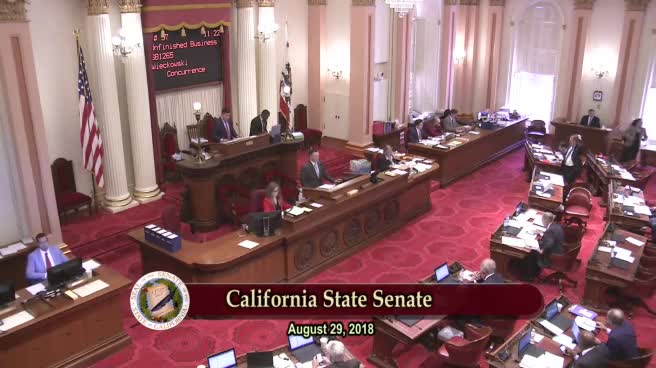 1MIN
Senate Floor
 3MIN
Assembly Floor
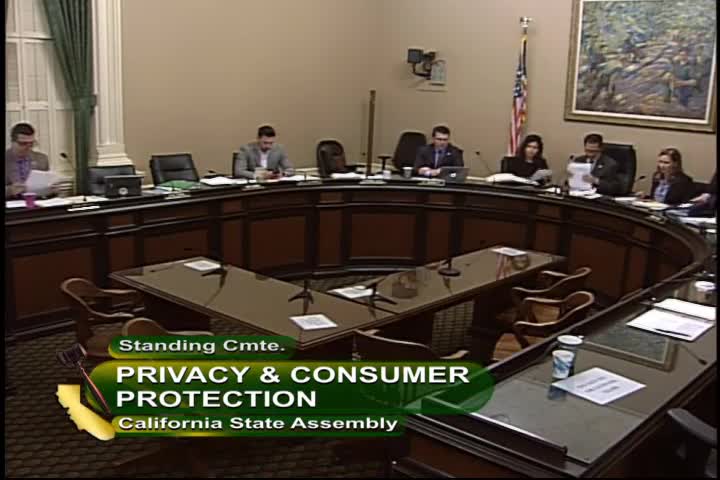 18MIN
Assembly Standing Committee on Privacy and Consumer Protection
 7MIN
Assembly Standing Committee on Judiciary
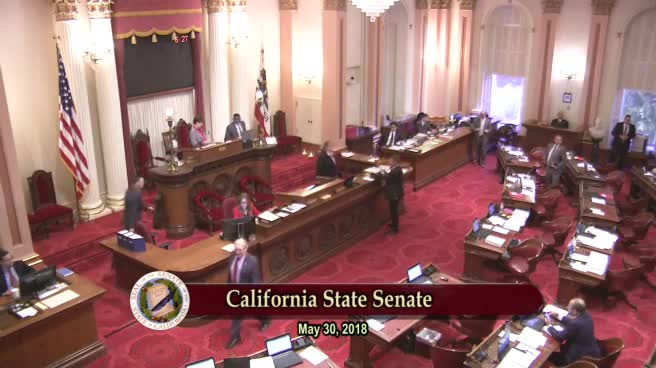 2MIN
Senate Floor
 21MIN
Senate Standing Committee on Judiciary
Bill Author

Bill Co-Author(s):