SB 1205: Fire protection services: inspections: compliance reporting.
- Session Year: 2017-2018
- House: Senate
- Latest Version Date: 2018-09-27
Existing law requires the chief of any city or county fire department or district providing fire protection services and his or her authorized representatives to inspect every building used as a public or private school within his or her jurisdiction, for the purpose of enforcing specified building standards, not less than once each year, as provided. Existing law requires every city or county fire department or district providing fire protection services that is required to enforce specified building standards to annually inspect certain structures, including hotels, motels, lodging houses, and apartment houses, for compliance with building standards, as provided.
This bill would require every city or county fire department, city and county fire department, or district required to perform the above-described inspections to report annually to its administering authority, as defined, on the departments or districts compliance with the above-described inspection requirements, as provided. The bill would require the administering authority to acknowledge receipt of the report in a resolution or a similar formal document. To the extent this bill would expand the responsibility of a local agency, the bill would create a state-mandated local program.
The California Constitution requires the state to reimburse local agencies and school districts for certain costs mandated by the state. Statutory provisions establish procedures for making that reimbursement.
This bill would provide that, if the Commission on State Mandates determines that the bill contains costs mandated by the state, reimbursement for those costs shall be made pursuant to the statutory provisions noted above.
Existing law requires the chief of any city or county fire department or district providing fire protection services and his or her authorized representatives to inspect every building used as a public or private school within his or her jurisdiction, for the purpose of enforcing specified building standards, not less than once each year, as provided. Existing law requires every city or county fire department or district providing fire protection services that is required to enforce specified building standards to annually inspect all structures certain structures, including hotels, motels, lodging houses, and apartment houses, for compliance with building standards, as provided.
This bill would require every city or county fire department department, city and county fire department, or district required to perform the above-described annual inspections to report annually to its respective city council or county board of supervisors, as the case may be, administering authority, as defined, on its the departments, or districts, compliance with the above-described inspection requirements, as provided. The bill would require the administering authority to acknowledge receipt of the report in a resolution or a similar formal document. To the extent this bill would expand the responsibility of a local agency, the bill would create a state-mandated local program.
The California Constitution requires the state to reimburse local agencies and school districts for certain costs mandated by the state. Statutory provisions establish procedures for making that reimbursement.
This bill would provide that, if the Commission on State Mandates determines that the bill contains costs mandated by the state, reimbursement for those costs shall be made pursuant to the statutory provisions noted above.
Existing law requires the chief of any city or county fire department or district providing fire protection services and his or her authorized representatives to inspect every building used as a public or private school within his or her jurisdiction, for the purpose of enforcing building standards, not less than once each year, as provided. Existing law requires every city or county fire department or district providing fire protection services that is required to enforce building standards to annually inspect all structures for compliance with building standards, as provided.
This bill would require every city or county fire department or district required to perform the above-described annual inspections to report annually to its respective city council or county board of supervisors, as the case may be, on its compliance with the inspection requirements, as provided. To the extent this bill would expand the responsibility of a local agency, the bill would create a state-mandated local program.
The California Constitution requires the state to reimburse local agencies and school districts for certain costs mandated by the state. Statutory provisions establish procedures for making that reimbursement.
This bill would provide that, if the Commission on State Mandates determines that the bill contains costs mandated by the state, reimbursement for those costs shall be made pursuant to the statutory provisions noted above.
(1)Under existing law, the Public Utilities Commission has regulatory authority over public utilities, including gas and electrical corporations. The Public Utilities Act requires the commission to investigate the cause of all accidents occurring upon the property of any public utility or directly or indirectly arising from or connected with its maintenance or operation, resulting in loss of life or injury to person or property and requiring, in the judgment of the commission, investigation by it. Existing law authorizes the commission to make any order or recommendation with respect to the investigation that it determines to be just and reasonable. Existing law requires the commission to develop and implement a safety enforcement program that is applicable to gas and electrical corporations and that includes procedures for monitoring, data tracking and analysis, and investigations, as well as issuance of citations by commission staff, under the direction of the executive director of the commission. Existing law requires gas and electrical corporations to report various information to the commission.This bill would require gas and electrical corporations to report to the commission any self-identified violation of an applicable law, or order or rule of the commission, that poses a significant safety threat, causes a systemwide impact, affects a large geographic region, or involves fraud, sabotage, falsification of records, or any other instance of deception by a gas or electrical corporations agent, employee, contractor, or subcontractor, as specified.(2)Under existing law, a violation of the Public Utilities Act or any order, decision, rule, direction, demand, or requirement of the commission is a crime.Because a commission order or other action would be required to implement the provisions of this bill and because a violation of that commission order or action would be a crime, this bill would impose a state-mandated local program by creating a new crime.The California Constitution requires the state to reimburse local agencies and school districts for certain costs mandated by the state. Statutory provisions establish procedures for making that reimbursement.This bill would provide that no reimbursement is required by this act for a specified reason.(1)Under existing law, the Public Utilities Commission has regulatory authority over public utilities, including gas and electrical corporations. The Public Utilities Act requires the commission to investigate the cause of all accidents occurring upon the property of any public utility or directly or indirectly arising from or connected with its maintenance or operation, resulting in loss of life or injury to person or property and requiring, in the judgment of the commission, investigation by it. Existing law authorizes the commission to make any order or recommendation with respect to the investigation that it determines to be just and reasonable. Existing law requires the commission to develop and implement a safety enforcement program that is applicable to gas and electrical corporations and that includes procedures for monitoring, data tracking and analysis, and investigations, as well as issuance of citations by commission staff, under the direction of the executive director of the commission. Existing law requires gas and electrical corporations to report various information to the commission.
This bill would require gas and electrical corporations to expeditiously report to the commission, upon discovery, commission any self-identified violation of an applicable law, or order or rule of the commission, that poses a significant safety threat, causes a systemwide impact, affects a large geographic region, or involves fraud, sabotage, falsification of records, or any other instance of deception by a gas or electrical corporations agent, employee, contractor, or subcontractor, as specified.
(2)Under existing law, a violation of the Public Utilities Act or any order, decision, rule, direction, demand, or requirement of the commission is a crime.
Because a commission order or other action would be required to implement the provisions of this bill and because a violation of that commission order or action would be a crime, this bill would impose a state-mandated local program by creating a new crime.
The California Constitution requires the state to reimburse local agencies and school districts for certain costs mandated by the state. Statutory provisions establish procedures for making that reimbursement.
This bill would provide that no reimbursement is required by this act for a specified reason.
(1)Under existing law, the Public Utilities Commission has regulatory authority over public utilities, including gas and electrical corporations. The Public Utilities Act requires the commission to investigate the cause of all accidents occurring upon the property of any public utility or directly or indirectly arising from or connected with its maintenance or operation, resulting in loss of life or injury to person or property and requiring, in the judgment of the commission, investigation by it. Existing law authorizes the commission to make any order or recommendation with respect to the investigation that it determines to be just and reasonable. Existing law requires the commission to develop and implement a safety enforcement program that is applicable to gas and electrical corporations and that includes procedures for monitoring, data tracking and analysis, and investigations, as well as issuance of citations by commission staff, under the direction of the executive director of the commission. Existing law requires gas and electrical corporations to report various information to the commission.
This bill would require gas and electrical corporations to expeditiously report to the commission, upon discovery, any potential self-identified violation of an applicable law, or order or rule of the commission, that poses a significant safety threat, causes a systemwide impact, affects a large geographic region, or involves fraud, sabotage, falsification of records, or any other instance of deception by a gas or electrical corporations agent, employee, contractor, or subcontractor, as specified.
(2)Under existing law, a violation of the Public Utilities Act or any order, decision, rule, direction, demand, or requirement of the commission is a crime.
Because a commission order or other action would be required to implement the provisions of this bill and because a violation of that commission order or action would be a crime, this bill would impose a state-mandated local program by creating a new crime.
The California Constitution requires the state to reimburse local agencies and school districts for certain costs mandated by the state. Statutory provisions establish procedures for making that reimbursement.
This bill would provide that no reimbursement is required by this act for a specified reason.
(1)Under existing law, the Public Utilities Commission has regulatory authority over public utilities, including gas and electrical corporations. The Public Utilities Act requires the commission to investigate the cause of all accidents occurring upon the property of any public utility or directly or indirectly arising from or connected with its maintenance or operation, resulting in loss of life or injury to person or property and requiring, in the judgment of the commission, investigation by it. Existing law authorizes the commission to make any order or recommendation with respect to the investigation that it determines to be just and reasonable. Existing law requires the commission to develop and implement a safety enforcement program that is applicable to gas and electrical corporations and that includes procedures for monitoring, data tracking and analysis, and investigations, as well as issuance of citations by commission staff, under the direction of the executive director of the commission. Existing law requires gas and electrical corporations to report various information to the commission.
This bill would require gas and electrical corporations to expeditiously report to the commission, upon discovery, any potential violation of an applicable law, or order or rule of the commission, that poses a significant safety threat, causes a systemwide impact, affects a large geographic region, or involves fraud, sabotage, falsification of records, or any other instance of deception by a gas or electrical corporations agent, employee, contractor, or subcontractor, as specified.
(2)Under existing law, a violation of the Public Utilities Act or any order, decision, rule, direction, demand, or requirement of the commission is a crime.
Because a commission order or other action would be required to implement the provisions of this bill and because a violation of that commission order or action would be a crime, this bill would impose a state-mandated local program by creating a new crime.
The California Constitution requires the state to reimburse local agencies and school districts for certain costs mandated by the state. Statutory provisions establish procedures for making that reimbursement.
This bill would provide that no reimbursement is required by this act for a specified reason.
(a)Every city or county fire department, city and county fire department, or district required to perform an annual inspection pursuant to Sections 13146.2 and 13146.3 shall report annually to its administering authority on its compliance with Sections 13146.2 and 13146.3.
(b)The report made pursuant to subdivision (a) shall occur when the administering authority discusses its annual budget, or at another time determined by the administering authority.
(c)The administering authority shall acknowledge receipt of the report made pursuant to subdivision (a) in a resolution or a similar formal document.
(d)For purposes of this section, administering authority means a city council, county board of supervisors, or district board, as the case may be.
SEC. 2.If the Commission on State Mandates determines that this act contains costs mandated by the state, reimbursement to local agencies and school districts for those costs shall be made pursuant to Part 7 (commencing with Section 17500) of Division 4 of Title 2 of the Government Code.
(a)Every city or county fire department department, city and county fire department, or district required to perform an annual inspection pursuant to Sections 13146.2 and 13146.3 shall report annually to its respective city council or county board of supervisors, as the case may be, administering authority on its compliance with Sections 13146.2 and 13146.3.
(b)The reporting report made pursuant to subdivision (a) shall occur during the period of time used by the respective city or county to discuss the annual city or county budget. when the administering authority discusses its annual budget, or at another time determined by the administering authority.
(c)The administering authority shall acknowledge receipt of the report made pursuant to subdivision (a) in a resolution or a similar formal document.
(d)For purposes of this section, administering authority means a city council, county board of supervisors, or district board, as the case may be.
SEC. 2.If the Commission on State Mandates determines that this act contains costs mandated by the state, reimbursement to local agencies and school districts for those costs shall be made pursuant to Part 7 (commencing with Section 17500) of Division 4 of Title 2 of the Government Code.
(a)Every city or county fire department or district required to perform an annual inspection pursuant to Sections 13146.2 and 13146.3 shall report annually to its respective city council or county board of supervisors, as the case may be, on its compliance with Sections 13146.2 and 13146.3.
(b)The reporting made pursuant to subdivision (a) shall occur during the period of time used by the respective city or county to discuss the annual city or county budget.
SEC. 2.If the Commission on State Mandates determines that this act contains costs mandated by the state, reimbursement to local agencies and school districts for those costs shall be made pursuant to Part 7 (commencing with Section 17500) of Division 4 of Title 2 of the Government Code.
SECTION 1.Section 592 is added to the Public Utilities Code, to read:592.The commission shall require, at minimum, each gas or electrical corporation to report to the commission before the 15th of each month a self-identified violation of an applicable law, or order or rule of the commission, that was identified in the prior calendar month and that does any of the following:(a)Poses a significant safety threat to the public or its staff, contractors, or subcontractors.(b)Causes a systemwide impact or affects a large geographic region.(c)Involves any instance of fraud, sabotage, falsification of records, or any other instance of deception by a gas or electrical corporations agent, employee, contractor, or subcontractor.SEC. 2.No reimbursement is required by this act pursuant to Section 6 of Article XIIIB of the California Constitution because the only costs that may be incurred by a local agency or school district will be incurred because this act creates a new crime or infraction, eliminates a crime or infraction, or changes the penalty for a crime or infraction, within the meaning of Section 17556 of the Government Code, or changes the definition of a crime within the meaning of Section 6 of Article XIIIB of the California Constitution.The commission shall require, at minimum, each gas or electrical corporation to expeditiously report to the commission, upon discovery, commission before the 15th of each month a self-identified violation of an applicable law, or order or rule of the commission, that was identified in the prior calendar month and that does any of the following:
(a)Poses a significant safety threat to the public or its staff, contractors, or subcontractors.
(b)Causes a systemwide impact or affects a large geographic region.
(c)Involves any instance of fraud, sabotage, falsification of records, or any other instance of deception by a gas or electrical corporations agent, employee, contractor, or subcontractor.
SEC. 2.No reimbursement is required by this act pursuant to Section 6 of Article XIIIB of the California Constitution because the only costs that may be incurred by a local agency or school district will be incurred because this act creates a new crime or infraction, eliminates a crime or infraction, or changes the penalty for a crime or infraction, within the meaning of Section 17556 of the Government Code, or changes the definition of a crime within the meaning of Section 6 of Article XIIIB of the California Constitution.
The commission shall require, at minimum, each gas or electrical corporation to expeditiously report to the commission, upon discovery, a potential self-identified violation of an applicable law, or order or rule of the commission, that does any of the following:
(a)Poses a significant safety threat to the public or its staff, contractors, or subcontractors.
(b)Causes a systemwide impact or affects a large geographic region.
(c)Involves any instance of fraud, sabotage, falsification of records, or any other instance of deception by a gas or electrical corporations agent, employee, contractor, or subcontractor.
SEC. 2.No reimbursement is required by this act pursuant to Section 6 of Article XIIIB of the California Constitution because the only costs that may be incurred by a local agency or school district will be incurred because this act creates a new crime or infraction, eliminates a crime or infraction, or changes the penalty for a crime or infraction, within the meaning of Section 17556 of the Government Code, or changes the definition of a crime within the meaning of Section 6 of Article XIIIB of the California Constitution.
The commission shall require, at minimum, each gas or electrical corporation to expeditiously report to the commission, upon discovery, a potential violation of an applicable law, or order or rule of the commission, that does any of the following:
(a)Poses a significant safety threat to the public or its staff, contractors, or subcontractors.
(b)Causes a systemwide impact or affects a large geographic region.
(c)Involves any instance of fraud, sabotage, falsification of records, or any other instance of deception by a gas or electrical corporations agent, employee, contractor, or subcontractor.
SEC. 2.No reimbursement is required by this act pursuant to Section 6 of Article XIIIB of the California Constitution because the only costs that may be incurred by a local agency or school district will be incurred because this act creates a new crime or infraction, eliminates a crime or infraction, or changes the penalty for a crime or infraction, within the meaning of Section 17556 of the Government Code, or changes the definition of a crime within the meaning of Section 6 of Article XIIIB of the California Constitution.
|
Date
|
Status
|
|---|---|
| Sep 27, 2018 | Chaptered by Secretary of State. Chapter 854, Statutes of 2018. |
| Sep 27, 2018 | Approved by the Governor. |
| Sep 12, 2018 | Enrolled and presented to the Governor at 5 p.m. |
| Aug 31, 2018 | Assembly amendments concurred in. (Ayes 39. Noes 0.) Ordered to engrossing and enrolling. |
| Aug 31, 2018 | Ordered to special consent calendar. |
| Aug 30, 2018 | From committee: That the Assembly amendments be concurred in. (Ayes 13. Noes 0.) |
| Aug 29, 2018 | From committee: Be re-referred to Com. on T. & H. pursuant to Senate Rule 29.10(d). (Ayes 5. Noes 0.) Re-referred to Com. on T. & H. |
| Aug 29, 2018 | Re-referred to Com. on RLS. pursuant to Senate Rule 29.10(d). |
| Aug 28, 2018 | In Senate. Concurrence in Assembly amendments pending. |
| Aug 28, 2018 | Read third time. Passed. Ordered to the Senate. |
| Aug 20, 2018 | Read second time. Ordered to third reading. |
| Aug 16, 2018 | From committee: Do pass. (Ayes 17. Noes 0.) (August 16). |
| Aug 8, 2018 | August 8 set for first hearing. Placed on suspense file. |
| Jul 2, 2018 | From committee: Do pass and re-refer to Com. on APPR. (Ayes 21. Noes 0.) (June 28). Re-referred to Com. on APPR. |
| Jun 20, 2018 | From committee with author's amendments. Read second time and amended. Re-referred to Com. on G.O. |
| Jun 14, 2018 | From committee: Be re-referred to Com. on G.O. (Ayes 7. Noes 0.) (June 14). Re-referred to Com. on G.O. |
| Jun 11, 2018 | Re-referred to Com. on RLS. pursuant to Assembly Rule 96. |
| Jun 7, 2018 | From committee with author's amendments. Read second time and amended. Re-referred to Com. on U. & E. |
| May 17, 2018 | Referred to Com. on U. & E. |
| May 10, 2018 | In Assembly. Read first time. Held at Desk. |
| May 10, 2018 | Read third time. Passed. (Ayes 35. Noes 0.) Ordered to the Assembly. |
| May 8, 2018 | Read second time. Ordered to third reading. |
| May 7, 2018 | From committee: Be ordered to second reading pursuant to Senate Rule 28.8. |
| May 1, 2018 | From committee with author's amendments. Read second time and amended. Re-referred to Com. on APPR. |
| Apr 27, 2018 | Set for hearing May 7. |
| Apr 23, 2018 | April 23 hearing postponed by committee. |
| Apr 17, 2018 | Set for hearing April 23. |
| Apr 16, 2018 | Read second time and amended. Re-referred to Com. on APPR. |
| Apr 12, 2018 | From committee: Do pass as amended and re-refer to Com. on APPR. (Ayes 10. Noes 0.) (April 3). |
| Mar 15, 2018 | Set for hearing April 3. |
| Mar 1, 2018 | Referred to Com. on E., U. & C. |
| Feb 16, 2018 | From printer. May be acted upon on or after March 18. |
| Feb 15, 2018 | Introduced. Read first time. To Com. on RLS. for assignment. To print. |
|
Date
|
Description
|
Location
|
Votes
|
|
|---|---|---|---|---|
| Aug 31, 2018 | Unfinished Business SB1205 Hill Concurrence | Senate Floor |
Passed |
|
| Aug 30, 2018 | That the Assembly amendments be concurred in | Senate Standing Committee on Transportation and Housing |
Passed |
|
| Aug 28, 2018 | SB 1205 Hill Senate Third Reading By BONTA | Assembly Floor |
Passed |
|
| Aug 16, 2018 | Do pass. | Assembly Standing Committee on Appropriations |
Passed |
|
| Jun 28, 2018 | Do pass and be re-referred to the Committee on [Appropriations] | Assembly Standing Committee on Governmental Organization |
Passed |
|
| Jun 14, 2018 | Be re-referred to the Committee on [Governmental Organization] | Assembly Standing Committee on Rules |
Passed |
|
| May 10, 2018 | Senate 3rd Reading SB1205 Hill | Senate Floor |
Passed |
|
| Apr 3, 2018 | Do pass as amended, but first amend, and re-refer to the Committee on [Appropriations] | Senate Standing Committee on Energy, Utilities and Communications |
Passed |
This list shows positions taken on this bill by organizations on the date displayed, which is linked to the original source.
Positions by individuals are not included.
Office of Senate Floor Analyses (916) 651-1520 Fax: (916) 327-4478 | SB |
UNFINISHED BUSINESS
Bill No: SB 1205
:
SENATE TRANS. & HOUSING COMMITTEE: 13-0, 8/30/18 (Pursuant to Senate Rule 29.10)
AYES: Beall, Cannella, Allen, Dodd, Gaines, Galgiani, McGuire, Morrell, Roth, Skinner, Vidak, Wieckowski, Wiener
ASSEMBLY FLOOR: 80-0, 8/28/18 - See last page for vote
DIGEST:
This bill requires local fire departments to annually report on their compliance with their currently statutorily required inspections.
Assembly Amendments
create a new bill. As this bill left the Senate it dealt with public utilities.
Existing law:
- Requires the State Fire Marshall (SFM), the chief fire official of any city, county, or fire protection district and their authorized representatives to enforce regulations and building standards relating to fire and panic safety published in the California Building Standards Code in all state-owned buildings, state-occupied buildings, and state institutions throughout the state.
- Requires every city or county fire department or district providing fire protection services to enforce building standards and other regulations adopted by the SFM to, annually, inspect all structures subject to HSC Section 17921(b) (hotels, motels, lodging houses, apartment houses and dwellings, buildings, and structures), except dwellings, for compliance with building standards and other regulations of the SFM. (HSC Sec. 13146.2)
- Requires the chief of any city or county fire department or district providing fire protection services to inspect every building used as a public or private school within his or her jurisdiction, for the purpose of enforcing regulations promulgated pursuant to Section 13143, not less than once each year. The SFM and his or her authorized representatives shall make these inspections not less than once each year in areas outside of corporate cities and districts providing fire protection services. (HSC Sec. 13146.3)
This bill requires local fire departments to annually report on their compliance with inspections currently mandated in statute. Specifically, this bill:
- Requires every city, county or district fire department required to perform annual inspections (pursuant to HSC Sec. 13146.2 and 13146.3) to annually report to administrative authority on its compliance of said inspections.
- Requires the report to occur when the administering authority discusses its annual budget, or at another time determined by the administering authority.
- Requires the administering authority acknowledge receipt of the report in a resolution or a similar formal document.
- Defines “administering authority” as a city council, county board of supervisors, or district board, as the case may be.
Comments
- New Bill. As approved by the Senate on May 10, 2018, this bill dealt with public utilities.
- Ghost Ship Fire. In December 2016, a deadly fire at an Oakland warehouse, known as the Ghost Ship, killed 36 people, the highest death toll for a structural fire in the United States in over 10 years. The Ghost Ship was a two-story warehouse that had been leased to artists who lived and worked in the building, periodically using it for events. Zoned as a warehouse, neither residential nor assembly uses were permitted by the city. Issues with the Ghost Ship had surfaced prior to the fire: The City of Oakland documented 39 code enforcement inspections and 10 code enforcement complaints of the warehouse and the adjacent vacant lot between 2004 and 2016. Media reports suggest that the Ghost Ship hadn’t been inspected in 30 years. Had an inspection occurred, officials could have raised concerns about the safety and occupancy of the building.[1] Two people, including the property manager, have been criminally charged because of the deaths. The Senate Committee on Governance and Finance (G&F) convened two informational hearings to understand the issues around this fire.
- More Than One Way to Skin a Cat. This bill deals with the issue of some local fire departments failing to keep up with the statutorily-required annual building inspections. By requiring annual reporting of their compliance to the local city council or board of supervisors, the bill is intended to apply local pressure to comply. Earlier this year the Senate passed SB 1415 (McGuire, 2018), a comprehensive bill dealing with many of the shortcomings that were exposed by the Senate Governance & Finance Committee’s hearings on the Ghost Ship fire. That bill deals with the failure to inspect issue by requiring local fire departments to report on their compliance to the State Fire Marshall, who shall publish the information on its website. This is a stronger accountability measure as it requires reporting to an external party, the SFM, rather than the local governing board of the fire department. Most notably, SB 1415 makes the information public and easily accessible. SB 1205 and SB 1415 do not conflict, but they represent two different ways of dealing with the same problem.
FISCAL EFFECT: Appropriation: Fiscal Com.: Local:
According to the Assembly Appropriations Committee:
- Unknown, and potentially reimbursable, costs for local fire agencies to comply with the reporting requirements of this bill. The recordkeeping infrastructure varies significantly across approximately 900 local fire agencies, and some agencies may incur significant costs to retrieve and organize the necessary information to submit to the administering authority. In the aggregate, these costs are unlikely to exceed the low hundreds of thousands of dollars.
- Additional cost pressures for local governments – possibly in the millions of dollars statewide – to ensure greater compliance with state inspection requirements. In many cases, local fire agencies will cite inadequate funds as a major obstacle to complying with annual inspection requirements.
California Fire Chiefs Association
California School Boards Association
City of Sunnyvale
Fire Districts Association of California
OPPOSITION: (Verified 8/28/18)
None received
ASSEMBLY FLOOR: 80-0, 8/28/18
AYES: Acosta, Aguiar-Curry, Travis Allen, Arambula, Baker, Berman, Bigelow, Bloom, Bonta, Brough, Burke, Caballero, Calderon, Carrillo, Cervantes, Chau, Chávez, Chen, Chiu, Choi, Chu, Cooley, Cooper, Cunningham, Dahle, Daly, Eggman, Flora, Fong, Frazier, Friedman, Gabriel, Gallagher, Cristina Garcia, Eduardo Garcia, Gipson, Gloria, Gonzalez Fletcher, Gray, Grayson, Harper, Holden, Irwin, Jones-Sawyer, Kalra, Kamlager-Dove, Kiley, Lackey, Levine, Limón, Low, Maienschein, Mathis, Mayes, McCarty, Medina, Melendez, Mullin, Muratsuchi, Nazarian, Obernolte, O'Donnell, Patterson, Quirk, Quirk-Silva, Reyes, Rivas, Rodriguez, Rubio, Salas, Santiago, Steinorth, Mark Stone, Thurmond, Ting, Voepel, Waldron, Weber, Wood, Rendon
8/30/18 18:45:56
**** END ****
The Oakland Fire Department’s Origin and Cause Report, Incident # 2016-085231, showed pictures of an eclectic and crowded interior with non-standard multi-story construction and apparently unpermitted occupancy. ↑
SENATE COMMITTEE ON TRANSPORTATION AND HOUSING
Senator Jim Beall, Chair
2017 - 2018 Regular
Bill No: SB 1205 Hearing Date: 8/30/2018
Author: | Hill | ||
Version: | 6/20/2018 | ||
Urgency: | No | Fiscal: | Yes |
Consultant: | Randy Chinn | ||
SUBJECT: Fire protection services: inspections: compliance reporting
DIGEST: This bill requires local fire departments to annually report on their compliance with their currently statutorily required inspections.
ANALYSIS:
Existing law:
- Requires the State Fire Marshall (SFM), the chief fire official of any city, county, or fire protection district and their authorized representatives to enforce regulations and building standards relating to fire and panic safety published in the California Building Standards Code in all state-owned buildings, state-occupied buildings, and state institutions throughout the state.
- Requires every city or county fire department or district providing fire protection services to enforce building standards and other regulations adopted by the SFM to, annually, inspect all structures subject to HSC Section 17921(b) (hotels, motels, lodging houses, apartment houses and dwellings, buildings, and structures), except dwellings, for compliance with building standards and other regulations of the SFM.
- Requires the chief of any city or county fire department or district providing fire protection services to inspect every building used as a public or private school within his or her jurisdiction, for the purpose of enforcing regulations promulgated pursuant to Section 13143, not less than once each year. The SFM and his or her authorized representatives shall make these inspections not less than once each year in areas outside of corporate cities and districts providing fire protection services.
This bill requires local fire departments to annually report on their compliance with inspections currently mandated in statute. Specifically, this bill:
- Requires every city, county or district fire department to annually report to its administering authority on its compliance with the inspection requirement.
- Requires the report to occur when the administering authority discusses its annual budget, or at another time determined by the administering authority.
- Requires the administering authority acknowledge receipt of the report in a resolution or a similar formal document.
- Defines “administering authority” as a city council, county board of supervisors, or district board, as the case may be.
COMMENTS
- New Bill. As approved by the Senate on May 10, 2018, this bill dealt with public utilities. This bill has been referred to this committee pursuant to Senate Rule 29.10(d). The committee may either hold the bill or return the bill to the Senate floor for consideration. Amendments are not permitted.
- Ghost Ship Fire. In December 2016, a deadly fire at an Oakland warehouse, known as the Ghost Ship, killed 36 people, the highest death toll for a structural fire in the United States in over 10 years. The Ghost Ship was a two-story warehouse that had been leased to artists who lived and worked in the building, periodically using it for events. Zoned as a warehouse, neither residential nor assembly uses were permitted by the city. Issues with the Ghost Ship had surfaced prior to the fire: The City of Oakland documented 39 code enforcement inspections and 10 code enforcement complaints of the warehouse and the adjacent vacant lot between 2004 and 2016. Media reports suggest that the Ghost Ship hadn’t been inspected in 30 years. Had an inspection occurred, officials could have raised concerns about the safety and occupancy of the building.[1] A recent investigation by The Mercury News/East Bay Times indicates that the failure to perform mandated annual inspections is commonplace, at least in the Bay Area[2]. For instance, that investigation found that 72% of apartment buildings in Oakland were not inspected in 2017; neither were 78% of schools in Redwood City. The Senate Committee on Governance and Finance (G&F) convened two informational hearings to understand the issues around the Ghost Ship fire.
- More than One Way to Skin a Cat. This bill deals with the issue of some local fire departments failing to keep up with the statutorily-required annual building inspections. By requiring annual reporting of their compliance to the local city council or board of supervisors, the bill is intended to apply local pressure to comply. Earlier this year this committee heard SB 1415 (McGuire), a comprehensive bill dealing with many of the shortcomings that were exposed by the Senate G&F Committee’s hearings on the Ghost Ship fire. That bill deals with the failure to inspect issue by requiring local fire departments to report on their compliance to the State Fire Marshall, who shall publish the information on its website. This is a stronger accountability measure as it requires reporting to an external party, the SFM, rather than the local governing board of the fire department. Notably, SB 1415 makes the information public and easily accessible. SB 1205 and SB 1415 do not conflict, but they represent two different ways of dealing with the same problem.
Related Legislation:
SB 1415 (McGuire, 2017) — requires local fire departments to report their compliance with annual inspection requirements to the State Fire Marshall, who shall post that information on its website. This bill has been approved by the Legislature and is awaiting action from the Governor.
FISCAL EFFECT: Appropriation: Fiscal Com.: Local:
POSITIONS: (Communicated to the committee before noon on Wednesday,
August 29, 2018.)
SUPPORT:
California Fire Chiefs Association
California School Boards Association
City of Sunnyvale
Fire Districts Association of California
OPPOSITION:
None received.
-- END --
SENATE THIRD READING
STR Bill Id:SB 1205
Author:(Hill)
As Amended Ver:June 20, 2018
Majority vote
SENATE VOTE: 36-0
Committee | Votes | Ayes | Noes |
Governmental Organization | 21-0 | Gray, Bigelow, Acosta, Aguiar-Curry, Berman, Bonta, Cooley, Cooper, Daly, Gallagher, Eduardo Garcia, Gipson, Gloria, Jones-Sawyer, Kiley, Lackey, Levine, Low, Rubio, Salas, Waldron | |
Appropriations | 17-0 | Gonzalez Fletcher, Bigelow, Bloom, Bonta, Brough, Calderon, Carrillo, Chau, Eggman, Fong, Friedman, Gallagher, Eduardo Garcia, Nazarian, Obernolte, Quirk, Reyes |
SUMMARY: Requires local fire departments to annually report on its compliance with inspections currently mandated in statute. Specifically, this bill:
- Requires every city, county or district fire department required to perform annual inspections (pursuant to Health and Safety Code Section (HSC) 13146.2 and 13146.3) to annually report to administrative authority on its compliance of said inspections.
- Requires the report to occur when the administering authority discusses its annual budget, or at another time determined by the administering authority.
- Requires the administering authority acknowledge receipt of the report in a resolution or a similar formal document.
- Defines "administering authority" as a city council, county board of supervisors, or district board, as the case may be.
EXISTING LAW:
- Requires the State Fire Marshall (SFM), the chief fire official of any city, county, or fire protection district and their authorized representatives to enforce regulations and building standards relating to fire and panic safety published in the California Building Standards Code in all state-owned buildings, state-occupied buildings, and state institutions throughout the state.
- Establishes the California Building Standards Code under California Code of Regulations Title 24.
- Establishes the building design and construction standards for the SFM under California Code of Regulations, Title 19.
- Requires every city or county fire department or district providing fire protection services to enforce building standards and other regulations adopted by the SFM to, annually, inspect all structures subject to HSC Section 17921(b) (hotels, motels, lodging houses, apartment houses and dwellings, buildings, and structures), except dwellings, for compliance with building standards and other regulations of the SFM. (HSC 13146.2)
- Requires the chief of any city or county fire department or district providing fire protection services to inspect every building used as a public or private school within his or her jurisdiction, for the purpose of enforcing regulations promulgated pursuant to HSC 13143, not less than once each year. The SFM and his or her authorized representatives shall make these inspections not less than once each year in areas outside of corporate cities and districts providing fire protection services. (HSC 13146.3)
- The California Constitution requires the state to reimburse local agencies and school districts for certain costs mandated by the state; statutory provisions establish the procedures for making that reimbursement.
FISCAL EFFECT: According to Assembly Appropriations Committee:
- Unknown, and potentially reimbursable, costs for local fire agencies to comply with the reporting requirements of this bill. The recordkeeping infrastructure varies significantly across approximately 900 local fire agencies, and some agencies may incur significant costs to retrieve and organize the necessary information to submit to the administering authority. In the aggregate, these costs are unlikely to exceed the low hundreds of thousands of dollars.
- Additional cost pressures for local governments – possibly in the millions of dollars statewide – to ensure greater compliance with state inspection requirements. In many cases, local fire agencies will cite inadequate funds as a major obstacle to complying with annual inspection requirements.
COMMENTS:
Purpose of the bill: According to the author, "SB 1205 ensures that fire departments are communicating with their governing authority about their compliance with state mandated safety inspections they're required to conduct on schools, apartments and hotels. This dialogue will ensure that fire departments are complying with their inspection mandates and increase the likelihood that they are receiving the resources they need to appropriately staff and carry out state mandated inspections."
Background: On December 2, 2016, a fire broke out in a warehouse, known as Ghost Ship, that had been converted into an artist collective, including dwelling units, in the Fruitvale neighborhood of Oakland. A total of 36 people were killed in the fire, and it became the deadliest in the history of the city. It was also the deadliest building fire in the United States since The Station nightclub fire in 2003, and the deadliest in California since the 1906 San Francisco earthquake. The tragedy at Ghost Ship brought national attention and put a spotlight on fire safety laws and inspection in California.
A series of investigative articles and editorials have been published highlighting the inadequacies of building inspections, specifically around the Bay Area. An article published June 1, 2018, by The Mercury News and the East Bay Times, titled: "Burned Out", outlines an investigation done by the news group into inspection practices from the 11 of the Bay Area's largest fire agencies. Below are some of the findings of the investigation:
- Nearly one-quarter of the 17,000 apartment buildings in the review weren't inspected in 2017, and, more than 400 hadn't been inspected since 2013.
- Fire inspectors failed to inspect 271 schools – more than 30% of the total in the review – in 2017.
- Oakland performed no inspections on 72% of apartment buildings in 2017; Fremont, 48%; and Berkeley, Hayward and Sunnyvale, all 28%.
- School inspections: Redwood City failed to inspect 78% last year; Oakland, 77%; Berkeley, 66%; Contra Costa, 43%; Fremont, 26%; and Santa Clara County, 22%.
- Nearly all of the schools – 96% – went more than a year without an inspection at least once during the eight-year period analyzed.
Current Law: Current statute requires that fire departments inspect apartment buildings, hotels and motels and K-12 schools once every 12 months (HSC Sec. 13146.2 and 13146.3). Current law, however, does not require any reporting or accountability to demonstrate compliance with this inspection mandate.
This bill requires every city, county or district fire department required to perform annual inspections on apartment buildings, hotels and motels and K-12 schools to annually report to administrative authority on its compliance of said inspections. It is important to note, this bill requires the report to be given when the administering authority discusses its annual budget. Ostensibly, reporting during annual budget discussions will give fire departments the opportunity to discuss the resources they need to achieve better inspection compliance.
Prior/Related Legislation: SB 1112 (Hueso), Chapter 118, Statutes of 2013. Requires a public or private school to submit a copy of the maintenance, inspection, and testing records of the fire alarm system to the chief of any city or county fire department or district, providing fire services, as specified. This bill further requires the review of these records by the chief of any city or county fire department or district, providing fire protection services, as specified, within a reasonable time. (Held on Senate Appropriations Suspense File)
AB 2021 (Fletcher), Chapter 370, Statutes of 2010. Allows the SFM to designate a Campus Fire Marshal for the inspecting and enforcing fire and life safety standards on University of California Campuses.
Analysis Prepared by: Kenton Stanhope / G.O. / (916) 319-2531 FN: 0004112
Date of Hearing: August 8, 2018
ASSEMBLY COMMITTEE ON APPROPRIATIONS
Lorena Gonzalez Fletcher, Chair
SBPCA Bill Id:SB 1205
Author:(Hill) – As Amended Ver:June 20, 2018
Policy Committee: | Governmental Organization | Vote: | 21 - 0 |
Urgency: No State Mandated Local Program: Yes Reimbursable: Yes
SUMMARY:
This bill requires each local fire department to annually report on its compliance with mandated annual inspections. Fire departments must report this information when the administering authority – which is defined as a city council, county board of supervisors, or a district board – discusses its annual budget or at another time determined by the administering authority.
FISCAL EFFECT:
- Unknown, and potentially reimbursable, costs for local fire agencies to comply with the reporting requirements of this bill. The recordkeeping infrastructure varies significantly across approximately 900 local fire agencies, and some agencies may incur significant costs to retrieve and organize the necessary information to submit to the administering authority. In the aggregate, these costs are unlikely to exceed the low hundreds of thousands of dollars.
- Additional cost pressures for local governments – possibly in the millions of dollars statewide – to ensure greater compliance with state inspection requirements. In many cases, local fire agencies will cite inadequate funds as a major obstacle to complying with annual inspection requirements. (See Comment #3.)
COMMENTS:
- Background. Existing law requires fire departments to inspect apartment buildings, hotels and motels, and K-12 schools once every 12 months. Current law, however, does not require any reporting or accountability to demonstrate compliance with this inspection mandate. Recent reports and investigations have highlighted gaps in these inspections. According to a June 1, 2018, investigation by The Mercury News and the East Bay Times into the inspection practices from 11 of the Bay Area’s largest fire agencies, nearly 25% of the 17,000 apartment buildings were not inspected in 2017 and more than 30% of schools were not inspected in the same year.
- Purpose. According to the author, SB 1205 will ensure that fire departments are communicating with their governing authorities about their compliance with state-mandated safety inspections.
- Why are fire districts falling behind? SB 1205 aims to increase fire departments’ compliance with state-mandated annual inspections by using local governments’ budget process to highlight possible compliance issues. This framework implies the primary obstacle to compliance is a lack of financial resources. Indeed, inspection requirements can be quite significant for local agencies. In some areas of California, fire departments are required to inspect tens of thousands of building per year, and fire departments face trade-offs between inspecting each building and responding to real-time events and emergencies. While some fire departments collect cost-recovery fees to offset the costs of inspections, not all departments do and often these fees do not fully pay for these inspections.
Analysis Prepared by: Luke Reidenbach / APPR. / (916) 319-2081
Date of Hearing: June 28, 2018
ASSEMBLY COMMITTEE ON GOVERNMENTAL ORGANIZATION
Adam Gray, Chair
SBPCA Bill Id:SB 1205
Author:(Hill) – As Amended Ver:June 20, 2018
SENATE VOTE: Not Relevant
SUBJECT: Fire protection services: inspections: compliance reporting
SUMMARY: Requires local fire departments to annually report on its compliance with inspections currently mandated in statute. Specifically, this bill:
- Requires every city, county or district fire department required to perform annual inspections (pursuant to HSC Sec. 13146.2 and 13146.3) to annually report to administrative authority on its compliance of said inspections.
- Requires the report to occur when the administering authority discusses its annual budget, or at another time determined by the administering authority.
- Requires the administering authority acknowledge receipt of the report in a resolution or a similar formal document.
- Defines “administering authority” as a city council, county board of supervisors, or district board, as the case may be.
EXISTING LAW:
- Requires the State Fire Marshall (SFM), the chief fire official of any city, county, or fire protection district and their authorized representatives to enforce regulations and building standards relating to fire and panic safety published in the California Building Standards Code in all state-owned buildings, state-occupied buildings, and state institutions throughout the state.
- Establishes the California Building Standards Code under Title 24 of the California Code of Regulations.
- Establishes the building design and construction standards for the SFM under Title 19 of the California Code of Regulations.
- Requires every city or county fire department or district providing fire protection services to enforce building standards and other regulations adopted by the SFM to, annually, inspect all structures subject to HSC Section 17921(b) (hotels, motels, lodging houses, apartment houses and dwellings, buildings, and structures), except dwellings, for compliance with building standards and other regulations of the SFM. (HSC Sec. 13146.2)
- Requires the chief of any city or county fire department or district providing fire protection services to inspect every building used as a public or private school within his or her jurisdiction, for the purpose of enforcing regulations promulgated pursuant to Section 13143, not less than once each year. The SFM and his or her authorized representatives shall make these inspections not less than once each year in areas outside of corporate cities and districts providing fire protection services. (HSC Sec. 13146.3)
- The California Constitution requires the state to reimburse local agencies and school districts for certain costs mandated by the state; statutory provisions establish the procedures for making that reimbursement.
FISCAL EFFECT: Unknown
COMMENTS:
Purpose of the bill: According to the author, “SB 1205 ensures that fire departments are communicating with their governing authority about their compliance with state mandated safety inspections they’re required to conduct on schools, apartments and hotels. This dialogue will ensure that fire departments are complying with their inspection mandates and increase the likelihood that they are receiving the resources they need to appropriately staff and carry out state mandated inspections.”
Background: On December 2, 2016, a fire broke out in a warehouse, known as Ghost Ship, that had been converted into an artist collective, including dwelling units, in the Fruitvale neighborhood of Oakland. A total of 36 people were killed in the fire, and it became the deadliest in the history of the city. It was also the deadliest building fire in the United States since The Station nightclub fire in 2003, and the deadliest in California since the 1906 San Francisco earthquake. The tragedy at Ghost Ship brought national attention and put a spotlight on fire safety laws and inspection in California.
A series of investigative articles and editorials have been published highlighting the inadequacies of building inspections, specifically around the Bay Area. An article published June 1, 2018, by The Mercury News and the East Bay Times, titled: “Burned Out”, outlines an investigation done by the news group into inspection practices from the 11 of the Bay Area’s largest fire agencies. Below are some of the findings of the investigation:
- Nearly one-quarter of the 17,000 apartment buildings in the review weren't inspected in 2017, and, more than 400 hadn’t been inspected since 2013.
- Fire inspectors failed to inspect 271 schools — more than 30 percent of the total in the review — in 2017.
- Oakland performed no inspections on 72 percent of apartment buildings in 2017; Fremont, 48 percent; and Berkeley, Hayward and Sunnyvale, all 28 percent.
- School inspections: Redwood City failed to inspect 78 percent last year; Oakland, 77 percent; Berkeley, 66 percent; Contra Costa, 43 percent; Fremont, 26 percent; and Santa Clara County, 22 percent.
- Nearly all of the schools — 96 percent — went more than a year without an inspection at least once during the eight-year period analyzed.
Current Law: Current statute requires that fire departments inspect apartment buildings, hotels and motels and K-12 schools once every 12 months (HSC Sec. 13146.2 and 13146.3). Current law, however, does not require any reporting or accountability to demonstrate compliance with this inspection mandate.
This bill requires every city, county or district fire department required to perform annual inspections on apartment buildings, hotels and motels and K-12 schools to annually report to administrative authority on its compliance of said inspections. It is important to note, this bill requires the report to be given when the administering authority discusses its annual budget. Ostensibly, reporting during annual budget discussions will give fire departments the opportunity to discuss the resources they need to achieve better inspection compliance.
Support: The California Fire Chiefs Association (CFCA) and the Fire Districts Association of California (FDAC) write in support, “We agree with the author to improve accountability of fire departments’ mandated inspection requirements through this bill. The original charge of Health and Safety Code § 13146.2 and § 13146.3 requires a fire department to perform mandated inspections annually of multi-family dwellings and schools. The statute does not provide clarity, consequence, or direction when a fire department fails to perform these inspections. The bill, as amended, provides a level of transparency for fire departments whereas the bill recognizes each jurisdiction’s budgetary process through their respective administrative authority. Our hope is that an administrating authority recognizes the charge of every fire department to perform inspections and provide support and resources to ensure the level of public safety intended by the state mandates are met.”
The California School Boards Association (CSBA) writes in support, “Local educational agencies depend on fire departments to conduct annual inspections of school facilities per HSC 13146.3, to ensure that our facilities meet the standards set by the State Fire Marshal for building standards, and fire and life safety. Unfortunately, some agencies have fallen behind their inspection schedule, leaving schools—and ultimately, students—at risk. SB 1205 would improve the transparency and accountability of fire departments with respect to these important inspections, and would allow the governing boards of their respective agencies to address any barriers to meeting the statutory requirement of annual inspection of school sites.”
Prior/Related Legislation: SB 1112 (Hueso) of 2013-2014 Legislative Session. Requires a public or private school to submit a copy of the maintenance, inspection, and testing records of the fire alarm system to the chief of any city or county fire department or district, providing fire services, as specified. This bill further requires the review of these records by the chief of any city or county fire department or district, providing fire protection services, as specified, within a reasonable time. (Held on Senate Appropriations Suspense File)
AB 2021 (Fletcher), Chapter 370, Statutes of 2010. Allows the SFM to designate a Campus Fire Marshal for the inspecting and enforcing fire and life safety standards on University of California Campuses.
REGISTERED SUPPORT / OPPOSITION:
Support
California Fire Chiefs Association
California School Boards Association
City of Sunnyvale
Fire Districts Association of California
Opposition
None on file
Analysis Prepared by: Kenton Stanhope / G.O. / (916) 319-2531
Office of Senate Floor Analyses (916) 651-1520 Fax: (916) 327-4478 | SB |
THIRD READING
Bill No: SB 1205
:
SENATE ENERGY, U. & C. COMMITTEE: 10-0, 4/3/18
AYES: Hueso, Morrell, Cannella, Hertzberg, Hill, McGuire, Skinner, Stern, Vidak, Wiener
NO VOTE RECORDED: Bradford
SENATE APPROPRIATIONS COMMITTEE: Senate Rule 28.8
DIGEST:
This bill requires gas and electrical corporations to report to the California Public Utilities Commission (CPUC) any self-identified violation of an applicable law, or order or rule of the CPUC, that poses a significant safety threat, affects a large geographic region, or involves fraud or deception, or meets other specified criteria.
Existing law:
- Authorizes powers and duties of public officers of the CPUC to be delegated to deputies of the officers of authorized personnel unless expressly prohibited by law. (Public Utilities Code §7)
- Declares that any public utility that violates or fails to comply with any part or provision of any order, decision, decree, rule, direction, demand, or requirement of the CPUC is subject to a penalty between $500 and $50,000 for each offense. (Public Utilities Code §2107)
- Requires the CPUC to develop and implement a safety enforcement program applicable to gas corporations and electrical corporations which includes procedures for investigations and issuance of citations. Provides that when considering the issuance of citations and assessment of penalties, the CPUC must take into account voluntary reporting of potential violations. (Public Utilities Code §1702.5) settling
This bill requires each gas or electrical corporation to report to the CPUC, before the 15th of each month, a self-identified violation of an applicable law, or order or rule of the CPUC, that does any of the following:
- Poses a significant safety threat to the public or its staff, contractors, or subcontractors.
- Causes a system-wide impact or affects a large geographic region.
- Involves any instance of fraud, sabotage, falsification of records, or any other instance of deception by a gas or electrical corporation’s agent, employee, contractor, or subcontractor.
Comments
Intended as a statement, not a bill. Among many of the new laws adopted after the deadly and catastrophic San Bruno explosion, Senator Hill authored SB 291 (Chapter 601, Statutes of 2013) which required the CPUC to develop and implement a safety enforcement program for gas and electrical corporations. The bill proposed recommendations from the third-party safety investigations and assessments of the San Bruno explosion by the National Transportation Safety Board (NTSB) and Independent Review Panel (IRP) which recommended that staff at the then-safety and reliability branches (now- Safety and Enforcement Division (SED)) within the CPUC be delegated authority to issue citations to regulated entities. That specific recommendation was instituted by the CPUC in December 2011 when the CPUC adopted Resolution ALJ-274 which created a citation program for gas corporations. SB 291 expanded the citation program to include electric corporations and additional program parameters. Once SB 291was signed into law, the CPUC opened Rulemaking 14-05-013 to determine several of the program parameters included in the legislation. The CPUC has since adopted the two phases of the rulemaking which made changes to the self-reporting requirements included in ALJ-274. Specifically, ALJ-274 explicitly required gas utilities to notify the CPUC of any self-identified and self-corrected violations. The resolution also required gas corporations to notify local cities or counties within 10 days of a violation. However, these provisions were amended in the adopted decisions in Rulemaking 14-05-013 by removing the requirement to notify local governments and no longer requiring self-reporting violations. As a result of the changes in the decision, Senator Hill filed with the CPUC a petition to modify the decision in February 2017. Some of the parties have contested the petition.
CPUC proposes decision on Hill petition. Perhaps as a response to SB 1205, on April 18th, the CPUC issued a proposed decision on the Hill petition for modification. The CPUC proposed decision requires utilities to report self-identified potential violations that pose a significant safety threat and report this information in a monthly report to the CPUC’s SED by the 15th of each month, or earlier if the utility believes the potential violation warrants more immediate attention. The recent amendments of this bill in the Senate Committee on Appropriations align with the CPUC’s proposed decision. As this bill was intended as a statement and seems to have resulted in promulgating the CPUC to issue a decision. Should the CPUC’s proposed decision be adopted, it would seem this bill may no longer be necessary.
Related/Prior Legislation
SB 291 (Hill, Chapter 601, Statutes of 2013) required the CPUC to develop and implement a safety enforcement program for gas and electrical corporations by July 1, 2014, and January 1, 2015, respectively.
FISCAL EFFECT: Appropriation: No Fiscal Com.: Yes Local: Yes
Consumer Attorneys of California
Office of Ratepayer Advocates
None received
ARGUMENTS IN SUPPORT: According to the author:
“SB 1205 clarifies the intent and application of an existing utility safety reporting program, passed by the Legislature in 2013 (SB 291, Hill). The bill mandates certain violations must be reported to the CPUC. SB 1205 enables the CPUC and the utilities they regulate to form a more transparent relationship; one which values safety in the years to come.”
5/9/18 15:00:39
SENATE COMMITTEE ON ENERGY, UTILITIES AND COMMUNICATIONS
Senator Ben Hueso, Chair
2017 - 2018 Regular
Bill No: Hearing Date: 4/3/2018
Author: | |||
Version: | As Introduced | ||
Urgency: | Fiscal: | ||
Consultant: | |||
SUBJECT:
DIGEST: This bill would require gas and electrical corporations to expeditiously report to the California Public Utilities Commission (CPUC) any potential violation of an applicable law, or order or rule of the CPUC, that poses a significant safety threat, affects a large geographic region, or involves fraud or deception, or meets other specified criteria.
ANALYSIS:
Existing law:
- Authorizes powers and duties of public officers of the CPUC to be delegated to deputies of the officers of authorized personnel unless expressly prohibited by law. (Public Utilities Code §7)
- Declares that any public utility that violates or fails to comply with any part or provision of any order, decision, decree, rule, direction, demand, or requirement of the CPUC is subject to a penalty between $500 and $50,000 for each offense. (Public Utilities Code §2107)
- Requires the CPUC to develop and implement a safety enforcement program applicable to gas corporations and electrical corporations which includes procedures for investigations and issuance of citations. Provides that when considering the issuance of citations and assessment of penalties, the CPUC must take into account voluntary reporting of potential violations. (Public Utilities Code §1702.5)
This bill:
- Requires each gas or electrical corporation to expeditiously report to the CPUC, upon discovery, a potential violation of an applicable law, or order or rule of the CPUC, that does any of the following:
- Poses a significant safety threat to the public or its staff, contractors, or subcontractors.
- Causes a system-wide impact or affects a large geographic region.
- Involves any instance of fraud, sabotage, falsification of records, or any other instance of deception by a gas or electrical corporation’s agent, employee, contractor, or subcontractor.
Background
Intended as a statement, not a bill. Among many of the new laws adopted after the deadly and catastrophic San Bruno explosion, Senator Hill authored SB 291 (Chapter 601, Statutes of 2013) which required the CPUC to develop and implement a safety enforcement program for gas and electrical corporations. The bill proposed recommendations from the third-party safety investigations and assessments of the San Bruno explosion by the National Transportation Safety Board (NTSB) and Independent Review Panel (IRP) which recommended that staff at the then-safety and reliability branches (now- Safety and Enforcement Division (SED)) within the CPUC be delegated authority to issue citations to regulated entities. That specific recommendation was instituted by the CPUC in December 2011 when the CPUC adopted Resolution ALJ-274 which created a citation program for gas corporations. SB 291 expanded the citation program to include electric corporations and additional program parameters. Once SB 291was signed into law, the CPUC opened Rulemaking 14-05-013 to determine several of the program parameters included in the legislation. The CPUC has since adopted the two phases of the rulemaking which made changes to the self-reporting requirements included in ALJ-274. Specifically, ALJ-274 explicitly required gas utilities to notify the CPUC of any self-identified and self-corrected violations. The resolution also required gas corporations to notify local cities or counties within 10 days of a violation. However, these provisions were amended in the adopted decisions in Rulemaking 14-05-013 by removing the requirement to notify local governments and no longer requiring self-reporting violations.
As a result of the changes in the decision, Senator Hill filed with the CPUC a petition to modify the decision in February 2017. Some of the parties have contested the petition. However, the CPUC has yet to issue a decision. Although, we understand a decision may be forthcoming. Nonetheless, Senator Hill has authored this legislation to clarify the intent of SB 291 and also to promulgate the CPUC to issue a decision.
Potential violation? Since it is unclear what might constitute a potential violation, the author may wish to use the language in the original resolution of “self-identified” violations.
Prior/Related Legislation
SB 291 (Hill, Chapter 601, Statutes of 2013) requires the CPUC to develop and implement a safety enforcement program for gas and electrical corporations by July 1, 2014, and January 1, 2015, respectively.
FISCAL EFFECT: Appropriation: Fiscal Com.: Local:
SUPPORT:
Consumer Attorneys of California
Office of Ratepayer Advocates
OPPOSITION:
None received
ARGUMENTS IN SUPPORT: According to the author:
“SB 1205 clarifies the intent and application of an existing utility safety reporting program, passed by the Legislature in 2013 (SB 291, Hill). The bill mandates certain violations must be reported to the CPUC. SB 1205 enables the CPUC and the utilities they regulate to form a more transparent relationship; one which values safety in the years to come.”
-- END --
Discussed in Hearing
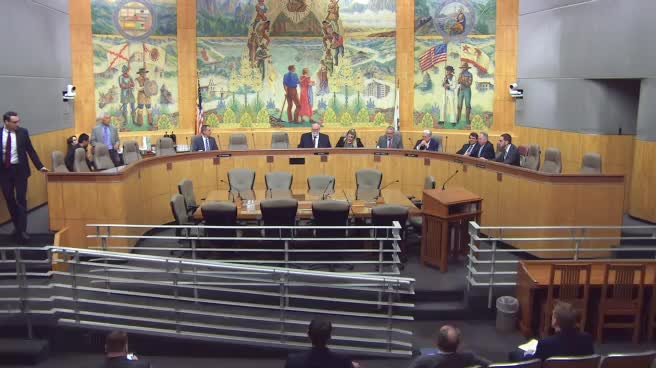 24MIN
Senate Standing Committee on Transportation and Housing
 1MIN
Assembly Floor
 1H
Assembly Standing Committee on Appropriations
 2MIN
Senate Floor
 3MIN
Senate Standing Committee on Energy, Utilities and Communications
Bill Author

Bill Co-Author(s):