SB 1218: Personal income taxes: deduction: 529 college savings plans: contributions.
- Session Year: 2017-2018
- House: Senate
- Latest Version Date: 2018-05-10
The Personal Income Tax Law, in modified conformity with federal income tax laws, excludes from the gross income distributions or earnings of a beneficiary of, or a contributor to, a qualified tuition program, as provided, and contributions to a plan are not deductible in computing the income that is subject to the taxes imposed by that law.
This bill, for taxable years beginning on or after January 1, 2018, would allow as a deduction under that law the lesser of (1) the amount contributed by a qualified taxpayer, as defined, to a qualified tuition program, as specified, or (2) $20,000, $6,000 for spouses filing joint returns, heads of households, and surviving spouses, as defined, or $3,000 for a single individual or a spouse filing separately, as indexed for inflation.
This bill would take effect immediately as a tax levy.
The Personal Income Tax Law, in modified conformity with federal income tax laws, excludes from the gross income distributions or earnings of a beneficiary of, or a contributor to, a qualified tuition program, as provided, and contributions to a plan are not deductible in computing the income that is subject to the taxes imposed by that law.
This bill, for taxable years beginning on or after January 1, 2018, would allow as a deduction under that law the lesser of (1) the amount contributed by a qualified taxpayer, as defined, to a qualified tuition program, as specified, or (2) $20,000, as indexed for inflation.
This bill would take effect immediately as a tax levy.
(a)For taxable years beginning on or after January 1, 2018, there shall be allowed as a deduction the lesser of the amount contributed by a qualified taxpayer during the taxable year to a qualified tuition program under Section 529 of the Internal Revenue Code, relating to qualified tuition programs, as modified by Section 17140.3, or the applicable amount determined under subdivision (d).
(b)For purposes of this section, qualified taxpayer means an individual who, on behalf of a beneficiary, contributes money to a qualified tuition program and meets all of the other applicable requirements of Section 529 of the Internal Revenue Code, relating to qualified tuition programs, as modified by Section 17140.3.
(c)Section 67(b) of the Internal Revenue Code, relating to miscellaneous itemized deductions, is modified to additionally provide that the deduction allowed under this section is an itemized deduction that is not subject to the 2-percent floor on itemized deductions under Section 67(a) of the Internal Revenue Code, relating to general rule.
(d)(1)The amount allowed as a deduction under subdivision (a) shall not exceed twenty thousand dollars ($20,000). the following amounts:
(A)For spouses filing joint returns, heads of households, and surviving spouses, as defined in Section 17046, six thousand dollars ($6,000).
(B)For a single individual or a spouse filing separately, three thousand dollars ($3,000).
(2)For each taxable year beginning on or after January 1, 2019, the Franchise Tax Board shall recompute the deduction amount prescribed in paragraph (1) in the manner described in subdivision (h) of Section 17041.
SEC. 2.This act provides for a tax levy within the meaning of Article IV of the California Constitution and shall go into immediate effect.
(a)For taxable years beginning on or after January 1, 2018, there shall be allowed as a deduction the lesser of the amount contributed by a qualified taxpayer during the taxable year to a qualified tuition program under Section 529 of the Internal Revenue Code, relating to qualified tuition programs, as modified by Section 17140.3, or the applicable amount determined under subdivision (d).
(b)For purposes of this section, qualified taxpayer means an individual who, on behalf of a beneficiary, contributes money to a qualified tuition program and meets all of the other applicable requirements of Section 529 of the Internal Revenue Code, relating to qualified tuition programs, as modified by Section 17140.3.
(c)Section 67(b) of the Internal Revenue Code, relating to miscellaneous itemized deductions, is modified to additionally provide that the deduction allowed under this section is an itemized deduction that is not subject to the 2-percent floor on itemized deductions under Section 67(a) of the Internal Revenue Code, relating to general rule.
(d)(1)The amount allowed as a deduction under subdivision (a) shall not exceed twenty thousand dollars ($20,000).
(2)For each taxable year beginning on or after January 1, 2019, the Franchise Tax Board shall recompute the deduction amount prescribed in paragraph (1) in the manner described in subdivision (h) of Section 17041.
SEC. 2.This act provides for a tax levy within the meaning of Article IV of the California Constitution and shall go into immediate effect.
|
Date
|
Status
|
|---|---|
| May 25, 2018 | May 25 hearing: Held in committee and under submission. |
| May 23, 2018 | Set for hearing May 25. |
| May 22, 2018 | May 22 hearing: Placed on APPR. suspense file. |
| May 15, 2018 | Set for hearing May 22. |
| May 10, 2018 | Read second time and amended. Re-referred to Com. on APPR. |
| May 9, 2018 | From committee: Do pass as amended and re-refer to Com. on APPR. (Ayes 5. Noes 0.) (May 9). |
| May 2, 2018 | Set for hearing May 9. |
| Mar 1, 2018 | Referred to Com. on GOV. & F. |
| Feb 16, 2018 | From printer. May be acted upon on or after March 18. |
| Feb 15, 2018 | Introduced. Read first time. To Com. on RLS. for assignment. To print. |
|
Date
|
Description
|
Location
|
Votes
|
|
|---|---|---|---|---|
| May 22, 2018 | Placed on suspense file | Senate Standing Committee on Appropriations |
Passed |
|
| May 9, 2018 | Do pass as amended, but first amend, and re-refer to the Committee on [Appropriations] | Senate Standing Committee on Governance and Finance |
Passed |
This list shows positions taken on this bill by organizations on the date displayed, which is linked to the original source.
Positions by individuals are not included.
SENATE COMMITTEE ON APPROPRIATIONS
Senator Ricardo Lara, Chair
2017 - 2018 Regular Session
SB 1218 (Gaines) - Personal income taxes: deduction: 529 college savings plans: contributions
Version: May 10, 2018 | Policy Vote: GOV. & F. 5 - 0 |
Urgency: No | Mandate: No |
Hearing Date: May 22, 2018 | Consultant: Robert Ingenito |
This bill meets the criteria for referral to the Suspense File.
Bill Summary:
SB 1218 would allow a deduction for contributions to 529 plans (qualified tuition programs).
Fiscal Impact:
The Franchise Tax Board (FTB) estimates that the bill would result in General Fund revenue losses of $150 million in 2018-19, $100 million in 2019-20, and $100 million in 2020-21. FTB’s costs to implement the bill have yet to be determined.
Background:
Tax expenditure programs (TEPs) are special tax provisions that reduce the amount of revenues the “basic” tax system would otherwise generate in order to provide (1) benefits to certain groups of taxpayers, and/or (2) incentives to encourage certain types of behavior and activities, such as charitable giving. Specifically, current law provides for, among other things, various income and corporation tax credits and deductions, as well as exemptions from the sales and use tax. The Department of Finance is required to publish a list of TEPs (currently totaling several hundred), which currently $61 billion annually.
A “qualified tuition program” (also known as a “529 plan”) is a tax-advantaged savings plan designed to encourage saving for future college costs. There are two types of 529 plans: prepaid tuition plans and college savings plans. All fifty states and the District of Columbia administer at least one of the two types.
Prepaid tuition plans let taxpayers purchase units or credits at participating colleges and universities for future tuition at current prices for the designated beneficiary. College savings plans let taxpayers open an investment account to save for the designated beneficiary’s future qualified higher education expenses, such as tuition, mandatory fees, and room and board. Neither plan is subject to a specific dollar limit on either the amount of contributions made to the account, the amount of the account’s balance, or the amount of benefits incurred. The State Treasurer administers California’s 529 college savings plan; the State does not have a prepaid tuition plan.
Under federal tax law, contributions are not tax deductible, but the interest earned in the account accumulates tax-free. In other words, distributions from the fund are tax free if they are used for the designated beneficiary’s qualified higher education expenses. If money is withdrawn from an account for something other than qualified higher education expenses than the beneficiary is subject to additional taxes: an income tax on the portion of the withdrawal that is not considered principle, and an additional 10 percent penalty tax.
State tax law is in modified conformity with qualified tuition programs as of January 1st, 2015. Similar to federal law, state law provides that contributions made to a qualified tuition program are not deductible for state income tax purposes. However, the additional penalty tax is modified from 10 percent to 2.5 percent.
Proposed Law:
This bill would, beginning in taxable 2018, allow as a deduction the lesser of (1) the amount contributed by a qualified taxpayer, as defined, to a qualified tuition program, as specified, or (2) $6,000 for spouses filing joint returns, heads of households, and surviving spouses, as defined, or $3,000 for a single individual or a spouse filing separately, as indexed for inflation.
Related Legislation:
- AB 209 (Patterson 2015) would have allowed a deduction for contributions made to a qualified tuition program. The bill was held under submission on the Suspense File of the Assembly Revenue and Taxation Committee.
- AB 675 (Gilmore, 2009) would have allowed a deduction for contributions made to a qualified tuition program. The bill was held under submission on the Suspense File of the Assembly Revenue and Taxation Committee.
- SB 643 (Florez, 2007) would have allowed a deduction for contributions made by a qualified taxpayer to certain qualified tuition programs. The bill was never hear in the Senate Revenue and Taxation Committee.
Staff Comments:
FTB’s revenue estimate for the bill utilizes data from the College Savings Plan Network, which notes that there were 12.9 million Section 529 Plan accounts nationwide in 2016. FTB estimates that approximately 10 percent (1.4 million), of these accounts are held by California taxpayers, and assumes that this number grew to 1.5 million accounts in 2018.
Based on TIAA-CREF Financial Services data, approximately 50 percent of account holders make regular annual contributions. This percentage rises to 58 percent in states with deductions or nonrefundable tax credits for contributions. FTB assumes that 60 percent (or 900,000) of the qualifying account holders would make regular contributions. The department additionally assumes (1) that 60 percent (or 550,000) of the regular contributors would be able to claim the itemized deduction, and (2) an average contribution of $2,200 per account. This results in an estimated $1.3 billion in contribution deductions in taxable year 2018. FTB next applied an average tax rate of 7.4 percent, resulting in an estimated revenue loss of $96 million in 2018.
-- END --
SENATE COMMITTEE ON GOVERNANCE AND FINANCE
Senator Mike McGuire, Chair
2017 - 2018 Regular
Bill No: | SB 1218 | Hearing Date: | 5/9/18 |
Author: | Gaines | Tax Levy: | Yes |
Version: | 2/15/18 | Fiscal: | Yes |
Consultant: | Brown | ||
Personal income taxes: deduction: 529 college savings plans: contributions
Allows a deduction for contributions to qualified tuition programs, also known as 529 plans.
Background
Qualified tuition programs. A “qualified tuition program” — also known as a “529 plan” — is a tax-advantaged savings plan designed to encourage saving for future college costs. There are two types of 529 plans: prepaid tuition plans and college savings plans. All fifty states and the District of Columbia administer at least one type of 529 plan.
Prepaid tuition plans let taxpayers purchase units or credits at participating colleges and universities for future tuition at current prices for the designated beneficiary. College savings plans let taxpayers open an investment account to save for the designated beneficiary’s future qualified higher education expenses such as tuition, mandatory fees, as well as room and board. Neither plan is subject to a specific dollar limit on either the amount of contributions made to the account, the amount of the account’s balance, or the amount of benefits incurred. The State Treasurer administers California’s 529 college savings plan, but the state does not have a prepaid tuition plan.
Under federal tax law, contributions are not tax deductible, but the interest earned in the account accumulates tax-free. In other words, distributions from the fund are tax free if they are used for the designated beneficiary’s qualified higher education expenses. If money is withdrawn from an account for something other than qualified higher education expenses than the beneficiary is subject to additional taxes: an income tax on the portion of the withdrawal that is not considered principle, and an additional 10 percent penalty tax.
State tax law conforms — with modifications — to qualified tuition programs as of January 1st, 2015. Similar to federal law, state law provides that contributions made to a qualified tuition program are not deductible for state income tax purposes. However, the additional penalty tax is modified from 10 percent to 2.5 percent.
Standard and itemized deduction. Both federal and state laws allow taxpayers to claim either the standard deduction or the itemized deduction when calculating taxable income.
The standard deduction is the government’s built in deduction that taxpayers can take to decrease their taxable income. The amount depends on the taxpayer’s filing status and it’s indexed to inflation annually.
The federal standard deduction amounts for the 2017 taxable year are as follows:
- $6,350 for a taxpayer who is single or married filing separately;
- $9,350 for a taxpayer who is a head of household; and
- $12,700 for a taxpayer who is married filing jointly or a surviving spouse.
On December 22nd, 2017, President Trump signed HR 1, which enacted fundamental changes to the federal income tax. One of these changes includes doubling the standard deduction for taxable years beginning after December 30th, 2017, and before January 1st, 2026.
The state standard deduction amounts for the 2017 taxable year are as follows:
- $4,236 for a taxpayer who is single or married filing separately; and
- $8,472 for a taxpayer who is married filing jointly, a head of household, or a surviving spouse.
A taxpayer can further reduce taxable income when his or her itemized deduction exceeds the standard deduction. The most common itemized deductions include the mortgage interest deduction and the charitable contributions deduction. Certain itemized deductions — such as employee business income expenses — are considered miscellaneous itemized deductions, in which the portion of the expense that exceeds two percent of the taxpayer’s adjusted gross income (AGI) is deductible. Additionally, itemized deductions are phased out for taxpayers above a certain income threshold.
Taxpayers add together all their itemized deductions, compare this total to the standard deduction, and then generally claim the larger deduction to decrease their overall tax liability. The author would like to make contributions to a college savings plan deductible for state tax purposes.
Proposed Law
Senate Bill 1218 allows taxpayers to deduct — up to $20,000 — the amount of contributions made to qualified tuition programs. The deduction is an itemized deduction that is not subject to the two percent floor limitation. It is available for taxable years beginning on or after January 1st, 2018.
State Revenue Impact
According to the Franchise Tax Board (FTB), SB 1218 results in a revenue loss of $150 million in 2018-19, $100 million in 2019-20, and $100 million in 2020-21.
Comments
1. Purpose of the bill. According to the author, “Higher education costs in California are rapidly increasing, moving away from the spirit of the Master Plan and making it more difficult for students to attend college, as well as increasing student debt. Making contributions to 529 plans California state-tax deductible would give 529 donors a discount on their contributions, which would increase the amount that families could save and increase the amount of private money available for college expenses.”
2. Revenue loss. Existing tax law provides various credits, deductions, exclusions, and exemptions for certain taxpayers. Since these items are enacted to accomplish some governmental purpose and have a cost — in the form of foregone revenues — state law refers to them as "tax expenditures." This bill would create a new tax expenditure, costing the General Fund millions in foregone revenue in the first year alone. As a result, the state will have to reduce spending or increase taxes to match the foregone revenue. The Committee may wish to consider weather SB 1218 is a cost-effective way to help California families pay for college and is worth the spending cuts and/or tax increases. To reduce revenue loss from the bill, the Committee may wish to consider amending SB 1218 to limit the deduction to:
- $3,000 deduction limit for taxpayers who are single or married filing separately; and
- $6,000 deduction limit for taxpayers who are married filing jointly, a head of household, or a surviving spouse.
3. Conformity issues. In general, state conformity with federal law promotes greater simplicity and eases the burden of administering complex tax law. However, SB 1218 would create a difference between federal and state tax treatment of contributions to qualified tuition programs. While this specific type of expense would be deductible for state purposes, it would not be deductible for federal purposes. The Committee may wish to consider whether the burden on taxpayers created by a lack of conformity is worth the tax benefit provided.
4. Equitable? Paying for college is becoming more challenging — mostly due to rising tuition rates — and qualified tuition programs can be a helpful way for families to save. However, the Government Accountability Office (GAO) reported that in 2012, less than three percent of families have qualified tuition programs, and those who did tended to be wealthier. [1] For example, families who have qualified tuition programs have a median financial asset value of $413,500 and a median income of $142,400. [2] Families without qualified tuition programs have a median financial asset value of $15,400 and a median income of $45,100. [3] When taxpayers without qualified tuition programs were asked why they didn’t have them, 68 percent cited a lack of money as a major reason. [4] It’s difficult to encourage families to save for college when they already have little or no disposable income. The Committee may wish to consider whether SB 1218’s benefits are equitable.
5. Right way? SB 1214 enacts a new tax expenditure to help California families save for college. However, tax expenditures are not the only strategy the Legislature can use to help families pay for college. For example, the state could increase funding for higher education. According to the Public Policy Institute of California’s Higher Education Funding in California report, funding per full-time-equivalent student has declined over the past 40 years. At the University of California (UC), funding per full-time-equivalent has fallen from more than $23,000 in the 1976-77 state budget to about $8,000 in the 2016-17 state budget. At the California State University (CSU) funding per full-time-equivalent has also fallen from slightly more than $11,000 in the 1976-77 state budget to slightly less than $9,000 in the 2016-17 state budget. As a result, tuition at both UC and CSU has tripled.
SB 1218 attempts to help families prepare for the high cost of college by giving them a tax advantaged savings program. However, instead of forgoing General Fund revenues that predominantly favor high-income earners, these funds may be better utilized if directly appropriated to higher education. While qualified tuition programs mainly help wealthy taxpayers save for college, increases in higher education funding help all families.
6. Federal tax reform. HR 1 reduces the top tax rate from 39.6 percent to 37 percent for the nation’s highest taxpayers. Since many families who currently have qualified tuition programs tend to be wealthier, and wealthier taxpayers have already received a 2.6 percent decrease in their overall federal tax rate, is another tax expenditure necessary? Additionally, HR 1 also doubled the standard deduction making it more difficult for taxpayers to qualify for the itemized deduction. SB 1218 makes contributions to a qualified tuition program an itemized deduction. Since many fewer taxpayers will be itemizing their deductions, is SB 1218 relevant?
Support and Opposition
(5/3/18)
Support: Unknown.
Opposition: California State PTA.
-- END --
Discussed in Hearing
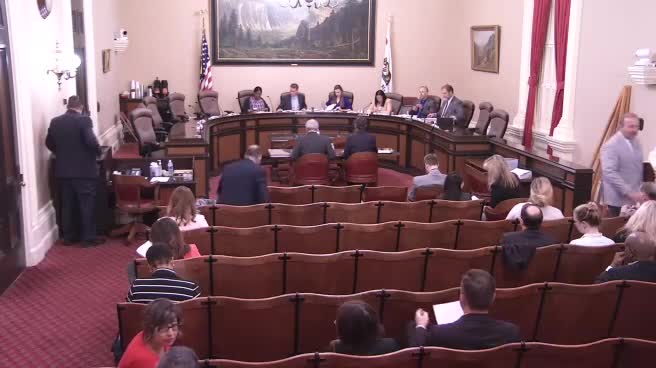 11MIN
Senate Standing Committee on Governance and Finance
Bill Author

Bill Co-Author(s):