SB 1226: Building standards: building permits.
- Session Year: 2017-2018
- House: Senate
- Latest Version Date: 2018-09-30
Existing law, the Planning and Zoning Law, provides for the adoption and administration of zoning laws, ordinances, rules, and regulations by counties and cities.
The State Housing Law requires the housing or building department or, if there is no building department, the health department, of every city, county, or city and county, or a specified environmental agency to enforce within its jurisdiction all of the State Housing Law, the building standards published in the California Building Standards Code, and other specified rules and regulations. The State Housing Law prohibits the application of rules and regulations promulgated pursuant to the State Housing Law and building standards published in the State Building Standards Code, relating to the erection or construction of buildings or structures, to existing buildings or structures, or to buildings or structures as to which construction is commenced or approved prior to the effective date of the rules, regulations, or building standards, except by act of the Legislature. If there is a violation of these provisions or any order or notice that gives a reasonable time to correct that violation, or if a nuisance exists, an enforcement agency is required, after 30 days notice to abate the nuisance, to institute appropriate action or proceedings to prevent, restrain, correct, or abate the violation or nuisance.
The State Housing Law requires local ordinances or regulations governing alterations and repair of existing buildings to permit the replacement, retention, and extension of original materials and the use of original methods of construction for any building or accessory structure subject to this law, including a dwelling or portions thereof, as long as the portion of the building and structure subject to the replacement, retention, or extension of original materials and the use of original methods of construction complies with the building code provisions governing that portion of the building or accessory structure at the time of construction, and the other rules and regulations of the department or alternative local standards governing that portion at the time of its construction and adopted pursuant to provisions of existing law regarding fire safety, and the building or accessory structure does not become or continue to be a substandard building, as defined.
The California Building Standards Law requires that only those building standards approved by the California Building Standards Commission, and that are effective at the local level at the time an application for a building permit is submitted, apply to the construction performed under that building permit.
This bill would require the department to propose the adoption of a building standard to the California Building Standards Commission pursuant to existing law that would authorize, when a record of the issuance of a building permit for the construction of an existing residential unit does not exist, the above-described enforcement officials to determine when the residential unit was constructed and then apply the State Housing Law, the building standards published in the California Building Standards Code, and other specified rules and regulations in effect on that date and issue a retroactive building permit for that construction. This bill would declare that the provisions of the bill are declaratory of existing law.
Existing law, the Planning and Zoning Law, authorizes a local agency to provide by ordinance for the creation of accessory dwelling units in single-family and multifamily residential zones, as specified. provides for the adoption and administration of zoning laws, ordinances, rules, and regulations by counties and cities.
The State Housing Law requires the housing or building department or, if there is no building department, the health department, of every city, county, or city and county, or a specified environmental agency to enforce within its jurisdiction all of the State Housing Law, the building standards published in the California Building Standards Code, and other specified rules and regulations. The State Housing Law prohibits the application of rules and regulations promulgated pursuant to the State Housing Law and building standards published in the State Building Standards Code, relating to the erection or construction of buildings or structures, to existing buildings or structures, or to buildings or structures as to which construction is commenced or approved prior to the effective date of the rules, regulations, or building standards, except by act of the Legislature. If there is a violation of these provisions or any order or notice that gives a reasonable time to correct that violation, or if a nuisance exists, an enforcement agency is required, after 30 days notice to abate the nuisance, to institute appropriate action or proceedings to prevent, restrain, correct, or abate the violation or nuisance.
The State Housing Law requires local ordinances or regulations governing alterations and repair of existing buildings to permit the replacement, retention, and extension of original materials and the use of original methods of construction for any building or accessory structure subject to this law, including a dwelling or portions thereof, as long as the portion of the building and structure subject to the replacement, retention, or extension of original materials and the use of original methods of construction complies with the building code provisions governing that portion of the building or accessory structure at the time of construction, and the other rules and regulations of the department or alternative local standards governing that portion at the time of its construction and adopted pursuant to provisions of existing law regarding fire safety, and the building or accessory structure does not become or continue to be a substandard building, as defined.
The California Building Standards Law requires that only those building standards approved by the California Building Standards Commission, and that are effective at the local level at the time an application for a building permit is submitted, apply to the construction performed under that building permit.
This bill would, notwithstanding other provisions of law, authorize, when a record of the issuance of a building permit for an accessory dwelling unit does not exist, would require the department to propose the adoption of a building standard to the California Building Standards Commission pursuant to existing law that would authorize, when a record of the issuance of a building permit for the construction of an existing residential unit does not exist, the above-described enforcement officials to make a determination of determine when the accessory dwelling unit residential unit was constructed and then apply the State Housing Law, the building standards published in the California Building Standards Code, and other specified rules and regulations in effect when the accessory dwelling unit was determined to be constructed for purposes of issuing a building permit for the accessory dwelling unit. on that date and issue a retroactive building permit for that construction. This bill would declare that the provisions of the bill are declaratory of existing law.
Existing law, the Planning and Zoning Law, authorizes a local agency to provide by ordinance for the creation of accessory dwelling units in single-family and multifamily residential zones, as specified.
The State Housing Law requires the housing or building department or, if there is no building department, the health department, of every city, county, or city and county, or a specified environmental agency to enforce within its jurisdiction all of the State Housing Law, the building standards published in the California Building Standards Code, and other specified rules and regulations. The State Housing Law prohibits the application of rules and regulations promulgated pursuant to the State Housing Law and building standards published in the State Building Standards Code, relating to the erection or construction of buildings or structures, to existing buildings or structures, or to buildings or structures as to which construction is commenced or approved prior to the effective date of the rules, regulations, or building standards, except by act of the Legislature. If there is a violation of these provisions or any order or notice that gives a reasonable time to correct that violation, or if a nuisance exists, an enforcement agency is required, after 30 days notice to abate the nuisance, to institute appropriate action or proceedings to prevent, restrain, correct, or abate the violation or nuisance.
The State Housing Law requires local ordinances or regulations governing alterations and repair of existing buildings to permit the replacement, retention, and extension of original materials and the use of original methods of construction for any building or accessory structure subject to this law, including a dwelling or portions thereof, as long as the portion of the building and structure subject to the replacement, retention, or extension of original materials and the use of original methods of construction complies with the building code provisions governing that portion of the building or accessory structure at the time of construction, and the other rules and regulations of the department or alternative local standards governing that portion at the time of its construction and adopted pursuant to provisions of existing law regarding fire safety, and the building or accessory structure does not become or continue to be a substandard building, as defined.
This bill would, notwithstanding other provisions of law, authorize the enactment of a local ordinance to authorize, when a record of the issuance of a building permit for an accessory dwelling unit does not exist, the above-described enforcement officials to make a determination of when the accessory dwelling unit was constructed and then apply the State Housing Law, the building standards published in the California Building Standards Code, and other specified rules and regulations in effect when the accessory dwelling unit was determined to be constructed in order to issue for purposes of issuing a building permit for the accessory dwelling unit. This bill would declare that the provisions of the bill are declaratory of existing law.
Existing law, the Planning and Zoning Law, authorizes a local agency to provide by ordinance for the creation of accessory dwelling units in single-family and multifamily residential zones, as specified.
The State Housing Law requires the housing or building department or, if there is no building department, the health department, of every city, county, or city and county, or a specified environmental agency to enforce within its jurisdiction all of the State Housing Law, the building standards published in the California Building Standards Code, and other specified rules and regulations. The State Housing Law prohibits the application of rules and regulations promulgated pursuant to the State Housing Law and building standards published in the State Building Standards Code, relating to the erection or construction of buildings or structures, to existing buildings or structures, or to buildings or structures as to which construction is commenced or approved prior to the effective date of the rules, regulations, or building standards, except by act of the Legislature. If there is a violation of these provisions or any order or notice that gives a reasonable time to correct that violation, or if a nuisance exists, an enforcement agency is required, after 30 days notice to abate the nuisance, to institute appropriate action or proceedings to prevent, restrain, correct, or abate the violation or nuisance.
The State Housing Law requires local ordinances or regulations governing alterations and repair of existing buildings to permit the replacement, retention, and extension of original materials and the use of original methods of construction for any building or accessory structure subject to this law, including a dwelling or portions thereof, as long as the portion of the building and structure subject to the replacement, retention, or extension of original materials and the use of original methods of construction complies with the building code provisions governing that portion of the building or accessory structure at the time of construction, and the other rules and regulations of the department or alternative local standards governing that portion at the time of its construction and adopted pursuant to provisions of existing law regarding fire safety, and the building or accessory structure does not become or continue to be a substandard building, as defined.
This bill would, notwithstanding other provisions of law, authorize the enactment of a local ordinance to authorize, when a record of the issuance of a building permit for an accessory dwelling unit does not exist, the above-described enforcement officials to make a determination of when the accessory dwelling unit was constructed and apply the State Housing Law, the building standards published in the California Building Standards Code, and other specified rules and regulations in effect when the accessory dwelling unit was determined to be constructed in order to issue a building permit for the accessory dwelling unit.
(a)The Legislature hereby finds and declares the following:
(1)Building officials, pursuant to this code and the California Building Standards Code, have broad authority as part of their enforcement authority to render interpretations of the code and to adopt policies and procedures to clarify the application of its provisions.
(2)A building official has the discretion to apply the building standards that were in effect at the time a residential unit was constructed. This is permissible under the authority to grant modifications on a case-by-case basis and the authority of a building department to approve a material, appliance, installation, device, arrangement, or method if it finds that the design is satisfactory and equivalent to the building standards code. Several jurisdictions were not aware of this existing authority.
(3)It is the intent of the Legislature to clarify that when a building permit for a residential unit does not exist, the appropriate enforcement official may make a determination of when a residential unit was constructed and then apply the California Building Standards Code and other specified rules and regulations in effect when the residential unit was determined to be constructed for purposes of issuing a building permit for the residential unit.
(b)The department shall propose the adoption of a building standard to the California Building Standards Commission pursuant to Chapter 4 (commencing with Section 18935) of Part 2.5 of Division 13 to authorize, when a record of the issuance of a building permit for the construction of an existing residential unit does not exist, a local enforcement official to determine the date of construction of that residential unit, apply this part, the building standards in the California Building Standards Code, and other specified rules and regulations in effect on that date of construction to that residential unit, and issue a retroactive building permit for that construction. This authorization shall be consistent with the findings and declarations of subdivision (a).
(c)This section is declaratory of existing law.
REVISIONS: HeadingLine 2.Notwithstanding any other law, a city, county, or city and county may enact a local ordinance to authorize, when a record of the issuance of a building permit for an accessory dwelling unit, as defined in Section 65852.2 of the Government Code, does not exist, the appropriate enforcement official to may make a determination of when the accessory dwelling unit was constructed and then apply the provisions of this part, the building standards published in the California Building Standards Code, and other specified rules and regulations in effect when the accessory dwelling unit was determined to be constructed in order to issue for purposes of issuing a building permit for that accessory dwelling unit. This section is declaratory of existing law.
Notwithstanding any other law, a city, county, or city and county may enact a local ordinance to authorize, when a record of the issuance of a building permit for an accessory dwelling unit, as defined in Section 65852.2 of the Government Code, does not exist, the appropriate enforcement official to make a determination of when the accessory dwelling unit was constructed and apply the provisions of this part, the building standards published in the California Building Standards Code, and other specified rules and regulations in effect when the accessory dwelling unit was determined to be constructed in order to issue a building permit for that accessory dwelling unit.
|
Date
|
Status
|
|---|---|
| Sep 30, 2018 | Chaptered by Secretary of State. Chapter 1010, Statutes of 2018. |
| Sep 30, 2018 | Approved by the Governor. |
| Sep 12, 2018 | Enrolled and presented to the Governor at 5 p.m. |
| Aug 31, 2018 | In Senate. Ordered to engrossing and enrolling. |
| Aug 31, 2018 | Read third time. Passed. Ordered to the Senate. |
| Aug 20, 2018 | Read second time. Ordered to third reading. |
| Aug 16, 2018 | From committee: Do pass. (Ayes 17. Noes 0.) (August 16). |
| Jun 27, 2018 | June 27 set for first hearing. Placed on APPR. suspense file. |
| Jun 20, 2018 | From committee: Do pass and re-refer to Com. on APPR. (Ayes 7. Noes 0.) (June 20). Re-referred to Com. on APPR. |
| Jun 11, 2018 | Referred to Com. on H. & C.D. |
| May 31, 2018 | In Assembly. Read first time. Held at Desk. |
| May 31, 2018 | Read third time. Passed. (Ayes 39. Noes 0.) Ordered to the Assembly. |
| May 29, 2018 | Ordered to special consent calendar. |
| May 25, 2018 | From committee: Do pass. (Ayes 7. Noes 0.) (May 25). |
| May 18, 2018 | Set for hearing May 25. |
| May 14, 2018 | May 14 hearing: Placed on APPR. suspense file. |
| May 8, 2018 | Set for hearing May 14. |
| May 7, 2018 | Re-referred to Com. on APPR. pursuant to Joint Rule 10.5. |
| May 3, 2018 | Read second time and amended. Ordered to third reading. |
| May 2, 2018 | From committee: Do pass as amended. (Ayes 13. Noes 0.) (May 1). |
| Apr 25, 2018 | Set for hearing May 1. |
| Apr 24, 2018 | From committee with author's amendments. Read second time and amended. Re-referred to Com. on T. & H. |
| Mar 1, 2018 | Referred to Com. on T. & H. |
| Feb 16, 2018 | From printer. May be acted upon on or after March 18. |
| Feb 15, 2018 | Introduced. Read first time. To Com. on RLS. for assignment. To print. |
|
Date
|
Description
|
Location
|
Votes
|
|
|---|---|---|---|---|
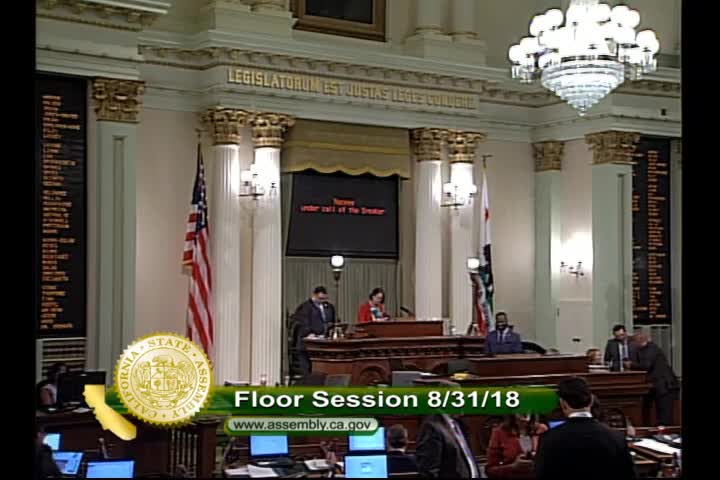
| Aug 31, 2018 | SB 1226 Bates Senate Third Reading By GLORIA | Assembly Floor |
Passed |
|
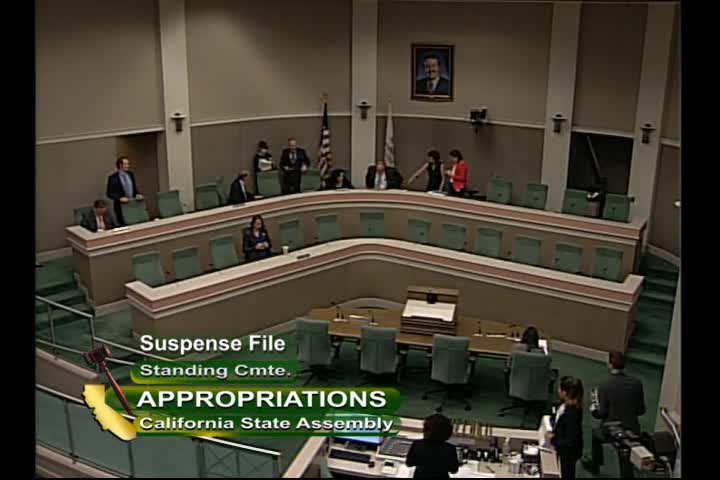
| Aug 16, 2018 | Do pass. | Assembly Standing Committee on Appropriations |
Passed |
|
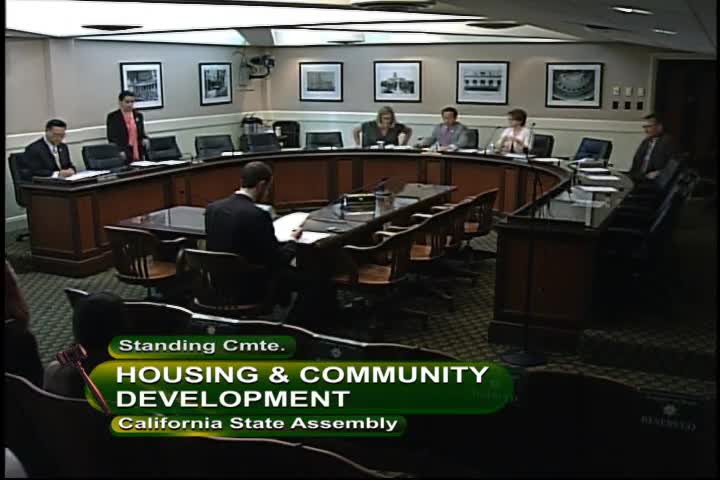
| Jun 20, 2018 | Do pass and be re-referred to the Committee on [Appropriations] | Assembly Standing Committee on Housing and Community Development |
Passed |
|
| May 31, 2018 | Special Consent SB1226 | Senate Floor |
Passed |
|
| May 25, 2018 | Do pass | Senate Standing Committee on Appropriations |
Passed |
|
| May 14, 2018 | Placed on suspense file | Senate Standing Committee on Appropriations |
Passed |
|
| May 1, 2018 | Do pass as amended | Senate Standing Committee on Transportation and Housing |
Passed |
This list shows positions taken on this bill by organizations on the date displayed, which is linked to the original source.
Positions by individuals are not included.
SENATE THIRD READING
STR Bill Id:SB 1226
Author:(Bates)
As Amended Ver:May 3, 2018
Majority vote
SENATE VOTE: 39-0
Committee | Votes | Ayes | Noes |
Housing | 7-0 | Chiu, Maienschein, Chau, Choi, Gloria, Limón, Wood | |
Appropriations | 17-0 | Gonzalez Fletcher, Bigelow, Bloom, Bonta, Brough, Calderon, Carrillo, Chau, Eggman, Fong, Friedman, Gallagher, Eduardo Garcia, Nazarian, Obernolte, Quirk, Reyes |
|
SUMMARY: Requires the Department of Housing and Community Development (HCD) to propose the adoption of a building standard to authorize a local enforcement official to determine the date of construction of a residential unit, apply the building standards in effect of that date of construction, and issue a retroactive building permit when a record of the issuance of a building permit for the construction of an existing residential unit does not exist. Specifically, this bill:
- States that the Legislature finds and declares the following:
- Pursuant to existing law and the California Building Standards Code (CBSC), building officials have broad authority, as part of their enforcement authority to render interpretations of the code and to adopt policies and procedures to clarify the application of its provisions; and
- A building official has the discretion to apply the building standards that were in effect at the time a residential unit was constructed.
- State that it is the intent of the Legislature, to clarify that when a building permit for a residential unit does not exist the building office may make a determination of when a residential unit was constructed and then apply the CBSC and other specified rules and regulations in effect when the residential unit was determined to be constructed for purposes of issuing a building permit for the residential unit.
- Requires the HCD to propose the adoption of a building standard to authorize a local enforcement official to determine the date of construction of a residential unit, apply the building standards in effect of that date of construction, and issue a retroactive building permit when a record of the issuance of a building permit for the construction of an existing residential unit does not exist
FISCAL EFFECT: According to the Assembly Appropriations Committee:
- HCD estimates one-time costs of approximately $189,000 (General Fund) in the first year and $174,000 in the second year for annual staff time to research, develop, and propose a building standard for permitting existing residential units to the Building Standards Commission (BSC) for adoption.
- Minor and absorbable costs for BSC to adopt the building standard. (Building Standards Administration Revolving Fund)
COMMENTS:
Background: Last year, Senator Bates introduced SB 431, which sought to assist with permitting unpermitted ADUs. That bill would have permitted a locality to waive, for five years following the enactment of an ordinance, some or all requirements of an applicable building code for the purpose of issuing a building permit for an unpermitted ADU that was constructed prior to 2008. Out of a concern for public safety, the author opted to hold the bill in the Senate Transportation and Housing Committee to continue a longer discussion for how to address the issue.
Over the last year, the author and sponsor learned that building officials — through provisions in the California Health and Safety Code and the California Building Code — have broad authority as part of his or her enforcement authority to render interpretations of the code and to adopt policies and procedures to clarify the application of its provisions. While generally, the building standards in place at the time a permit is issued apply, a building official may, at their discretion, apply the building standards that were in effect at the time a residential unit was constructed. This is permissible under authority to grant modifications on a case-by-case basis and that a building department may approve a material, appliance, installation, device, arrangement, or method if it finds that the design is satisfactory and equivalent to the building standards code. The sponsor believes this authority is not clear, and learned that other jurisdictions, including Poway, Santee, Lemon Grove, Del Mar, Solana Beach, Oceanside, and Pismo Beach, were similarly unaware or feel that the authority is not clear.
This bill would clarify, in statute, that when a building permit for a residential unit does not exist, the appropriate enforcement official may make a determination of when the unit was constructed and then apply the California Building Standards Code and other specified rules and regulations in effect when the unit was determined to be constructed for purposes of issuing a building permit for that unit.
Opponents believe that this authority already exists in the California Building Code and Health and Safety Code. They believe the problem is a lack of education of the existing authority.
Analysis Prepared by: Lisa Engel / H. & C.D. / (916) 319-2085 FN: 0004077
Date of Hearing: June 27, 2018
ASSEMBLY COMMITTEE ON APPROPRIATIONS
Lorena Gonzalez Fletcher, Chair
SBPCA Bill Id:SB 1226
Author:(Bates) – As Amended Ver:May 3, 2018
Policy Committee: | Housing and Community Development | Vote: | 7 - 0 |
Urgency: No State Mandated Local Program: No Reimbursable: No
SUMMARY:
This bill requires the Department of Housing and Community Development (HCD) to propose a building standard that permits local building officials to issue a retroactive building permit for an existing residential unit for which a permit does not exist, and apply the building standards that were in place when the unit was constructed.
FISCAL EFFECT:
- HCD estimates one-time costs of approximately $189,000 (GF) in the first year and $174,000 in the second year for annual staff time to research, develop, and propose a building standard for permitting existing residential units to the Building Standards Commission (BSC) for adoption.
- Minor and absorbable costs for BSC to adopt the building standard. (Building Standards Administration Revolving Fund)
COMMENTS:
- Purpose. This bill seeks to clarify that when a building permit for a residential unit does not exist, the appropriate enforcement official may make a determination of when the unit was constructed and then apply the California Building Standards Code and other specified rules and regulations in effect at the time of construction for purposes of issuing a building permit for that unit.
- Background. The State Housing Law sets forth statewide construction and occupancy standards for buildings used for human habitation. The California Building Standards Law authorizes the BSC to approve and adopt building standards through a triennial rulemaking process to revise and update the California Building Standards Code. HCD is responsible for proposing building standards to the BSC for residential buildings including, hotels, motels, lodging houses, apartment houses, dwellings, buildings and structures. Building standards generally take effect 180 days after they are published. The most recent update to the Building Standards Code went into effect on January 1, 2017. Local governments are authorized to modify building standards based on findings of local climatic, geological, or topographical conditions, but any findings and modifications of standards must be filed with the BSC.
Existing law and regulations require a person who intends to construct or modify a building or structure to apply to local building officials to obtain a permit. Existing law specifies that only those building standards that are in effect at the time that an application for a building permit is submitted apply to the plans, specifications, and construction performed under that permit. However, building officials have the discretion to grant modifications to the Building Standards Code and alternative approvals of permits on a case-by-case basis, as long as the modifications do not lessen health, accessibility, life, and fire safety or structural requirements.
Existing law authorizes a local agency to adopt an ordinance providing for the creation of accessory dwelling units (ADUs), which are attached or detached dwelling units. Among other requirements, the ADU ordinance must require a unit to comply with local building code requirements that apply to a detached dwelling, as appropriate.
Research by multiple groups has found that ADUs are a key strategy for increasing affordable housing stock. Several bills have been enacted in recent years to remove barriers to the development of new ADUs, and permit applications for those structures have increased substantially following the enactment of these changes. However, many existing ADUs were constructed without a building permit. When “unpermitted” ADUs are discovered, some local building officials are interpreting existing law to require the structure to meet standards in the current California Building Code, rather than the codes that were in place when the ADU was constructed.
Related Legislation.
SB 831 (Wieckowski), of this legislative session, makes several changes to the law governing ADUs and creates a 10-year amnesty program for substandard ADUs. That bill is pending in the Assembly Local Government Committee.
SB 1469 (Skinner), of this legislative session, makes several changes to the law governing ADUs and junior accessory dwelling units (JADUs), and requires HCD to create small-home building standards for ADUs that are similar or more cost-effective than standards in the 2007 edition of the California Building Standards Code. That bill was held on the Suspense File in the Senate Appropriations Committee.
SB 431 (Bates), which was referred to the Senate Transportation and Housing Committee last year, but never heard, would have permitted a local agency to waive, for five years following the enactment of an ordinance, some or all requirements of an applicable building code for the purpose of issuing a building permit for an otherwise unauthorized ADU that was constructed prior to 2008.
Analysis Prepared by: Jennifer Swenson / APPR. / (916) 319-2081
Date of Hearing: June 20, 2018
ASSEMBLY COMMITTEE ON HOUSING AND COMMUNITY DEVELOPMENT
David Chiu, Chair
SBPCA Bill Id:SB 1226
Author:(Bates) – As Amended Ver:May 3, 2018
SENATE VOTE: 39-0
SUBJECT: Building standards: building permits
SUMMARY: Requires the Department of Housing and Community Development (HCD) to propose the adoption of a building standard to authorize a local enforcement official to determine the date of construction of a residential unit, apply the building standards in effect of that date of construction, and issue a retroactive building permit when a record of the issuance of a building permit for the construction of an existing residential unit does not exist. Specifically, this bill:
- States that the Legislature finds and declares the following:
- Pursuant to existing law and the California Building Standards Code (CBSC), building officials have broad authority, as part of their enforcement authority to render interpretations of the code and to adopt policies and procedures to clarify the application of its provisions; and
- A building official has the discretion to apply the building standards that were in effect at the time a residential unit was constructed.
- State that it is the intent of the Legislature, to clarify that when a building permit for a residential unit does not exist the building office may make a determination of when a residential unit was constructed and then apply the CBSC and other specified rules and regulations in effect when the residential unit was determined to be constructed for purposes of issuing a building permit for the residential unit.
- Requires the HCD to propose the adoption of a building standard to authorize a local enforcement official to determine the date of construction of a residential unit, apply the building standards in effect of that date of construction, and issue a retroactive building permit when a record of the issuance of a building permit for the construction of an existing residential unit does not exist
EXISTING LAW:
- Authorizes a local agency to adopt an ordinance providing for the creation of accessory dwelling units (ADUs).
- Establishes the State Housing Law, which sets forth construction and occupancy standards for buildings used for human habitation.
- Requires HCD to propose the adoption, amendment, or repeal of building standards to the Building Standards Commission (BSC) and to adopt, amend, and repeal other rules and regulations to protect the health, safety, and welfare of occupants and to the public. These regulations become part of the California Building Standards Code.
- Authorizes local governments to modify building standards based on findings of local climatic, geological, or topographical conditions. The local government must first make an express finding that the change or modification is necessary and must be filed with the BSC.
- Authorizes a building department of any local government to approve an alternate material, appliance, installation, device, arrangement, method, or work on a case-by-case basis if it finds that the proposed design is satisfactory and the alternative used is the equivalent of that prescribed in the Building Standards Code or in the State Housing Law in performance and safety.
- Authorizes, under the Building Standards Code, a building official, as part of his or her enforcement authority to render interpretations of the code and to adopt policies and procedures to clarify the application of its provisions. Such interpretations, policies and procedures shall be in compliance with the intent and purpose of the code and shall not have the effect of waiving requirements in the code.
- Authorizes, under the Building Standards Code, a building official, where there are practical difficulties involved in carrying out the provisions of the building standards code, to grant modifications for individual cases provided the building official first find that special individual reasons makes the strict letter of the law impractical, the modification is in compliance with the intent of the code, and that the modification does not lessen health, accessibility, life, and fire safety or structural requirements.
FISCAL EFFECT: Unknown.
COMMENTS:
Background: Last year, Senator Bates introduced SB 431, which sought to assist with bringing unpermitted ADUs out of the shadows. That bill would have permitted a locality to waive, for five years following the enactment of an ordinance, some or all requirements of an applicable building code for the purpose of issuing a building permit for an otherwise unauthorized accessory dwelling unit (ADU) that was constructed prior to 2008. Out of a concern for public safety, the author opted to hold the bill in the Senate Transportation and Housing Committee to continue a longer discussion for how to address the issue.
Over the last year, the author and sponsor learned that building officials — through provisions in the California Health and Safety Code and the California Building Code — have broad authority as part of his or her enforcement authority to render interpretations of the code and to adopt policies and procedures to clarify the application of its provisions. While generally, the building standards in place at the time a permit is issued apply, a building official may, at their discretion, apply the building standards that were in effect at the time a residential unit was constructed. This is permissible under authority to grant modifications on a case-by-case basis and that a building department may approve a material, appliance, installation, device, arrangement, or method if it finds that the design is satisfactory and equivalent to the building standards code. The sponsor believes this authority is not clear, and learned that other jurisdictions, including Poway, Santee, Lemon Grove, Del Mar, Solana Beach, Oceanside, and Pismo Beach, were similarly unaware or feel that the authority is not clear.
This bill would clarify, in statute, that when a building permit for a residential unit does not exist, the appropriate enforcement official may make a determination of when the unit was constructed and then apply the California Building Standards Code and other specified rules and regulations in effect when the unit was determined to be constructed for purposes of issuing a building permit for that unit.
Arguments in opposition: The California Building Officials are opposed because they think this authority already exists in the California Building Code and Health and Safety Code. They believe the problem is a lack of education of the existing authority.
REGISTERED SUPPORT / OPPOSITION:
Support
City of Encinitas (sponsor)
American Planning Association, California Chapter
Bay Area Council
Opposition
California Building Officials
California Fire Chiefs Association
Fire Districts Association of California
Analysis Prepared by: Lisa Engel / H. & C.D. / (916) 319-2085
Office of Senate Floor Analyses (916) 651-1520 Fax: (916) 327-4478 | SB |
THIRD READING
Bill No: SB 1226
:
SENATE TRANS. & HOUSING COMMITTEE: 13-0, 5/1/18
AYES: Beall, Cannella, Allen, Dodd, Gaines, Galgiani, McGuire, Morrell, Roth, Skinner, Vidak, Wieckowski, Wiener
SENATE APPROPRIATIONS COMMITTEE: 7-0, 5/25/18
AYES: Lara, Bates, Beall, Bradford, Hill, Nielsen, Wiener
DIGEST:
This bill requires the Department of Housing and Community Development (HCD) to propose the adoption of a building standard to authorize a local enforcement official to determine the date of construction of a residential unit, apply the building standards in effect of that date of construction, and issue a retroactive building permit when a record of the issuance of a building permit for the construction of an existing residential unit does not exist.
Existing law:
- Authorizes a local agency to adopt an ordinance providing for the creation of accessory dwelling units (ADUs).
- Establishes the State Housing Law, which sets forth construction and occupancy standards for buildings used for human habitation.
- Requires HCD to propose the adoption, amendment, or repeal of building standards to the Building Standards Commission (BSC) and to adopt, amend, and repeal other rules and regulations to protect the health, safety, and welfare of occupants and to the public. These regulations become part of the California Building Standards Code.
- Authorizes local governments to modify building standards based on findings of local climatic, geological, or topographical conditions. The local government must first make an express finding that the change or modification is necessary and must be filed with the BSC.
- Authorizes a building department of any local government to approve an alternate material, appliance, installation, device, arrangement, method, or work on a case-by-case basis if it finds that the proposed design is satisfactory and the alternative used is the equivalent of that prescribed in the Building Standards Code or in the State Housing Law in performance and safety.
- Authorizes, under the Building Standards Code, a building official, as part of his or her enforcement authority to render interpretations of the code and to adopt policies and procedures to clarify the application of its provisions. Such interpretations, policies and procedures shall be in compliance with the intent and purpose of the code and shall not have the effect of waiving requirements in the code.
- Authorizes, under the Building Standards Code, a building official, where there are practical difficulties involved in carrying out the provisions of the building standards code, to grant modifications for individual cases provided the building official first find that special individual reasons makes the strict letter of the law impractical, the modification is in compliance with the intent of the code, and that the modification does not lessen health, accessibility, life, and fire safety or structural requirements.
This bill:
- Requires HCD to propose the adoption of a building standard to authorize a local enforcement official to determine the date of construction of a residential unit, apply the building standards and other specified rules and regulations in effect of that date of construction, and issue a retroactive building permit for that construction, when a record of the issuance of a building permit for the construction of an existing residential unit does not exist.
- Provides that this is declaratory of existing law and makes specified findings and declarations.
Comments
- Unpermitted ADUs. According to a 2016 report by McKinsey and Company entitled A Took Kit to Close California’s Housing Gap: 3.5 Million Homes by 2025, one way to encourage homeowners to add ADUs is to create an amnesty path for ADUs that are not property permitted. According to the report, as many as 8% of the ADUs in San Francisco are illegal. The report concludes that legitimizing these units would boost building compliance and raise property tax revenue.
- Existing authority for building officials. Last year, Senator Bates introduced SB 431, which sought to assist with bringing unpermitted ADUs out of the shadows. That bill would have permitted a locality to waive, for five years following the enactment of an ordinance, some or all requirements of an applicable building code for the purpose of issuing a building permit for an otherwise unauthorized accessory dwelling unit (ADU) that was constructed prior to 2008. Out of a concern for public safety, the author opted to hold the bill to continue a longer discussion for how to address the issue.
Over the last year, the author and sponsor learned that building officials — through provisions in the California Health and Safety Code and the California Building Code — have broad authority as part of his or her enforcement authority to render interpretations of the code and to adopt policies and procedures to clarify the application of its provisions. While generally, the building standards in place at the time a permit is issued apply, a building official may, at their discretion, apply the building standards that were in effect at the time a residential unit was constructed. This is permissible under authority to grant modifications on a case-by-case basis and that a building department may approve a material, appliance, installation, device, arrangement, or method if it finds that the design is satisfactory and equivalent to the building standards code. The sponsor believes this authority is not clear, and learned that other jurisdictions, including Poway, Santee, Lemon Grove, Del Mar, Solana Beach, Oceanside, and Pismo Beach, were similarly unaware or feel that the authority is not clear.
This bill would clarify, in statute, that when a building permit for a residential unit does not exist, the appropriate enforcement official may make a determination of when the unit was constructed and then apply the California Building Standards Code and other specified rules and regulations in effect when the unit was determined to be constructed for purposes of issuing a building permit for that unit.
- Need for a bill? California Building Officials Association (CalBO) has concerns about this bill. Building officials have long believed that this authority exists without necessitating explicit authority in statute; the problem here is a lack of education about existing authority rather than a need for a bill.
FISCAL EFFECT: Appropriation: Fiscal Com.: Local:
According to the Senate Appropriations Committee:
- HCD estimates one-time costs of approximately $175,000 in annual staff time to research, develop, and propose a building standard for permitting existing residential units to the Building Standards Commission (BSC) for adoption. (General Fund)
- Minor and absorbable costs for BSC to adopt the building standard. (Building Standards Administration Revolving Fund)
City of Encinitas (source)
American Planning Association – California Chapter
Bay Area Council
OPPOSITION: (Verified 5/25/18)
California Building Officials
California Fire Chiefs Association
Fire Districts Association of California
ARGUMENTS IN SUPPORT: According to the author, “sometimes called ‘in-law quarters’ or ‘granny flats,’ accessory dwelling units are often considered a second small dwelling on the same grounds as another house. Located on the same property as the main home, these two units are tied together and cannot be bought or sold separately. As a result, ADUs provide a creative and flexible option for allowing additional residents to live with or near family or caregivers. However, not all accessory dwelling units have been permitted. In the City of Encinitas, there have been multiple programs initiated over the years to try and bring these units into compliance, but these programs were not successful. [This bill] seeks to bring these unpermitted accessory dwelling units out from the shadows. These units need to be inspected for basic life safety standards to ensure protection for those individuals who live there. [This bill] would allow a local government to regulate this process and provide them with flexibility to bring these ADUs into compliance. [This bill] is needed to find out where these unpermitted existing ADUs are and to bring them up to a suitable level in the code, ensuring basic health and safety standards.”
ARGUMENTS IN OPPOSITION: The California Fire Chiefs Association and the Fire Districts Association of California are opposed because they maintain this bill radically departs from the law that applies existing building code standards to issue building permits for residential units. These organizations argue that fire protection and the application of updated building code standards is essential to provide the appropriate level of fire and life safety. Fire protection officials must be able to inspect residential units based on the current building code.
5/26/18 14:39:42
**** END ****
SENATE COMMITTEE ON APPROPRIATIONS
Senator Ricardo Lara, Chair
2017 - 2018 Regular Session
SB 1226 (Bates) - Building standards: building permits
Version: May 3, 2018 | Policy Vote: T. & H. 13 - 0 |
Urgency: No | Mandate: No |
Hearing Date: May 14, 2018 | Consultant: Mark McKenzie |
This bill meets the criteria for referral to the Suspense File.
Bill Summary:
SB 1226 would require the Department of Housing and Community Development (HCD) to propose a building standard that permits local building officials to issue a retroactive building permit for an existing residential unit for which a permit does not exist, and apply the building standards that were in place when the unit was constructed.
Fiscal Impact:
- HCD estimates one-time costs of approximately $175,000 in annual staff time to research, develop, and propose a building standard for permitting existing residential units to the Building Standards Commission (BSC) for adoption. (General Fund)
- Minor and absorbable costs for BSC to adopt the building standard. (Building Standards Administration Revolving Fund)
Background:
Existing law, the State Housing Law, sets forth statewide construction and occupancy standards for buildings used for human habitation. The California Building Standards Law authorizes the BSC to approve and adopt building standards through a triennial rulemaking process to revise and update the California Building Standards Code. HCD is responsible for proposing building standards to the BSC for residential buildings including, hotels, motels, lodging houses, apartment houses, dwellings, buildings and structures. Building standards generally take effect 180 days after they are published. The most recent update to the Building Standards Code went into effect on January 1, 2017. Local governments are authorized to modify building standards based on findings of local climatic, geological, or topographical conditions, but any findings and modifications of standards must be filed with the BSC.
Existing Building Code and regulations require a person who intends to construct or modify a building or structure to apply to local building officials to obtain a permit. Existing law specifies that only those building standards that are in effect at the time that an application for a building permit is submitted apply to the plans, specifications, and construction performed under that permit. However, building officials have the discretion to grant modifications to the Building Standards Code and alternative approvals of permits on a case-by-case basis, as long as the modifications do not lessen health, accessibility, life, and fire safety or structural requirements.
Existing law authorizes a local agency to adopt an ordinance providing for the creation of accessory dwelling units (ADUs), which are attached or detached dwelling units. Among other requirements, the ADU ordinance must require a unit to comply with local building code requirements that apply to a detached dwelling, as appropriate.
Research by multiple groups has found that ADUs are a key strategy for increasing affordable housing stock. Several bills have been enacted in recent years to remove barriers to the development of new ADUs, and permit applications for those structures have increased substantially following the enactment of these changes. However, many existing ADUs were constructed without a building permit. When “illegal” ADUs are discovered, some local building officials are interpreting existing law in such a way that requires the structure to meet standards in the current California Building Code, rather than the codes that were in place when the ADU was constructed.
Proposed Law:
SB 1226 would require HCD to propose the adoption of a building standard to the BSC to authorize a local enforcement official, when a record of the issuance of a building permit for a residential structure does not exist, to determine the unit’s date of construction, and apply the building standards in the Building Standards Code and applicable rules and regulations that were in effect on the date of the unit’s construction, and issue a retroactive building permit.
The bill also includes legislative findings and declarations, including a statement that building officials have the discretion to apply the building standards that were in effect at the time that a residential unit was constructed.
Related Legislation:
SB 831 (Wieckowski), which is currently pending in this Committee, would make several changes to the law governing ADUs and create a 10-year amnesty program for substandard ADUs.
SB 1469 (Skinner), which is currently pending in this Committee, would make several changes to the law governing ADUs and junior accessory dwelling units (JADUs), and require HCD to create small home building standards for ADUs, as specified, to achieve similar or more cost-effective than standards in the 2007 edition of the California Building Standards Code.
SB 431 (Bates), which was referred to the Senate Transportation and Housing Committee last year, but never heard, would have permitted a local agency to waive, for five years following the enactment of an ordinance, some or all requirements of an applicable building code for the purpose of issuing a building permit for an otherwise unauthorized ADU that was constructed prior to 2008.
Staff Comments:
This bill is intended to provide a building standard to clarify that local building officials, under their broad authority to render interpretations of the Building Standards Code and adopt local modifications on a case-by-case basis, may determine the date of construction for an unpermitted unit, and apply the building standards that were in effect as of that date in order to issue a retroactive building permit for that unit. HCD indicates that it would incur approximately $175,000 in costs for 1 PY of staff time to develop the building standard and manage the proposal through the adoption by BSC during the 2019 Intervening Code Cycle.
-- END --
SENATE COMMITTEE ON TRANSPORTATION AND HOUSING
Senator Jim Beall, Chair
2017 - 2018 Regular
Bill No: Hearing Date: 5/1/2018
Author: | Bates | ||
Version: | 4/24/2018 Amended | ||
Urgency: | No | Fiscal: | No |
Consultant: | Alison Hughes | ||
SUBJECT:
DIGEST: This bill provides that when a building permit for an ADU does not exist, the appropriate enforcement official may make a determination of when the ADU was constructed and then apply the California Building Standards Code and other specified rules and regulations in effect when the ADU was determined to be constructed for purposes of issuing a building permit for that ADU. It also provides that this is declaratory of existing law.
ANALYSIS:
Existing law:
- Authorizes a local agency to adopt an ordinance providing for the creation of ADUs.
- Establishes the State Housing Law, which sets forth construction and occupancy standards for buildings used for human habitation.
- Requires the Department of Housing and Community Development (HCD) to propose the adoption, amendment, or repeal of building standards to the Building Standards Commission (BSC) and to adopt, amend, and repeal other rules and regulations to protect the health, safety, and welfare of occupants and to the public. These regulations become part of the California Building Standards Code.
- Authorizes local governments to modify building standards based on findings of local climatic, geological, or topographical conditions. The local government must first make an express finding that the change or modification is necessary and must be filed with the BSC.
- Authorizes a building department of any local government to approve an alternate material, appliance, installation, device, arrangement, method, or work on a case-by-case basis if it finds that the proposed design is satisfactory and the alternative used is the equivalent of that prescribed in the Building Standards Code or in the State Housing Law in performance and safety.
- Authorizes, under the Building Standards Code, a building official, as part of his or her enforcement authority to render interpretations of the code and to adopt policies and procedures to clarify the application of its provisions. Such interpretations, policies and procedures shall be in compliance with the intent and purpose of the code and shall not have the effect of waiving requirements in the code.
- Authorizes, under the Building Standards Code, a building official, where there are practical difficulties involved in carrying out the provisions of the building standards code, to grant modifications for individual cases provided the building official first find that special individual reasons makes the strict letter of the law impractical, the modification is in compliance with the intent of the code, and that the modification does not lessen health, accessibility, life, and fire safety or structural requirements.
This bill:
- Provides that when a building permit for an ADU does not exist, the appropriate enforcement official may make a determination of when the ADU was constructed and then apply the California Building Standards Code and other specified rules and regulations in effect when the ADU was determined to be constructed for purposes of issuing a building permit for that ADU.
- Provides that this is declaratory of existing law.
COMMENTS
- Purpose. According to the author, “sometimes called ‘in-law quarters’ or ‘granny flats,’ accessory dwelling units are often considered a second small dwelling on the same grounds as another house. Located on the same property as the main home, these two units are tied together and cannot be bought or sold separately. As a result, ADUs provide a creative and flexible option for allowing additional residents to live with or near family or caregivers. However, not all accessory dwelling units have been permitted. In the City of Encinitas, there have been multiple programs initiated over the years to try and bring these units into compliance, but these programs were not successful. [This bill] seeks to bring these unpermitted accessory dwelling units out from the shadows. These units need to be inspected for basic life safety standards to ensure protection for those individuals who live there. [This bill] would allow a local government to regulate this process and provide them with flexibility to bring these ADUs into compliance. [This bill] is needed to find out where these unpermitted existing ADUs are and to bring them up to a suitable level in the code, ensuring basic health and safety standards.”
- Unpermitted ADUs. According to a 2016 report by McKinsey and Company entitled A Took Kit to Close California’s Housing Gap: 3.5 Million Homes by 2025, one way to encourage homeowners to add ADUs is to create an amnesty path for ADUs that are not property permitted. According to the report, as many as 8% of the ADUs in San Francisco are illegal. The report concludes that legitimizing these units would boost building compliance and raise property tax revenue.
- Existing authority for building officials. Last year, Senator Bates introduced SB 431, which sought to assist with bringing unpermitted ADUs out of the shadows. That bill would have permitted a locality to waive, for five years following the enactment of an ordinance, some or all requirements of an applicable building code for the purpose of issuing a building permit for an otherwise unauthorized accessory dwelling unit (ADU) that was constructed prior to 2008. Out of a concern for public safety, the author opted to hold the bill to continue a longer discussion for how to address the issue.
Over the last year, the author and sponsor learned that building officials — through provisions in the California Health and Safety Code and the California Building Code — have broad authority as part of his or her enforcement authority to render interpretations of the code and to adopt policies and procedures to clarify the application of its provisions. While generally, the building standards in place at the time a permit is issued apply, a building official may, at their discretion, apply the building standards that were in effect at the time a residential unit was constructed. This is permissible under authority to grant modifications on a case-by-case basis and that a building department may approve a material, appliance, installation, device, arrangement, or method if it finds that the design is satisfactory and equivalent to the building standards code. The sponsor was not aware of this authority, and learned that other jurisdictions, including Poway, Santee, Lemon Grove, Del Mar, Solana Beach, Oceanside, and Pismo Beach, were similarly unaware.
This bill would clarify, in statute, that when a building permit for an ADU does not exist, the appropriate enforcement official may make a determination of when the ADU was constructed and then apply the California Building Standards Code and other specified rules and regulations in effect when the ADU was determined to be constructed for purposes of issuing a building permit for that ADU.
As noted above, this authority is not limited to ADUs but rather all residential construction. The committee may wish to consider expanding this bill to apply to all residential construction, to maintain consistency with existing law.
- Need for a bill? The committee did not receive a letter in time, but it is aware that the California Building Officials Association has concerns about this bill. Building officials have long believed that this authority exists without necessitating explicit authority in statute; the problem here is a lack of education about existing authority rather than a need for a bill. Further, building officials do not look to statute for direction for their authority, but rather to the building code. The committee may wish to consider whether there is a need for this bill, or if it could be addressed by providing additional educational opportunities to building officials unfamiliar with existing law. The committee may also wish to consider instead directing HCD to propose regulations to the BSC.
Related Legislation:
SB 831 (Wieckowski, 2018) — makes several changes to the law governing accessory dwelling units (ADUs) and creates a 10-year amnesty program for substandard ADUSs. This bill is pending in the Senate Appropriations Committee.
SB 1469 (Skinner, 2018) — makes several changes to the law governing accessory dwelling units (ADUs) and junior accessory dwelling units (JADUs) and requires HCD to create small home building standards to apply to ADUs, which shall be drafted to achieve the most cost-efficient construction standards possible, similar or more cost-effective than standards in the 2007 edition of the California Building Standards Code. These small building standards shall be submitted to the Building Standards Commission for consideration on or before January 1, 2020. This bill is pending in the Senate Appropriations Committee.
AB 494 (Bloom, Chapter 602, Statutes of 2017) — made technical, clarifying changes to ADU law.
SB 229 (Wieckowski, Chapter 594, Statutes of 2017) — made several changes to ADU law.
SB 431 (Bates, 2017) — would have permitted a locality to waive, for five years following the enactment of an ordinance, some or all requirements of an applicable building code for the purpose of issuing a building permit for an otherwise unauthorized accessory dwelling unit (ADU) that was constructed prior to 2008. This bill was not taken up in the Senate Transportation and Housing Committee.
AB 2299 (Bloom, Chapter 735, Statutes of 2016) — made several changes to the ADU law.
SB 1069 (Wieckowski, chapter 720, Statutes of 2016) — made several changes to ADU law.
FISCAL EFFECT: Appropriation: No Fiscal Com.: No Local: No
POSITIONS: (Communicated to the committee before noon on Wednesday,
April 25, 2018.)
SUPPORT:
City of Encinitas (sponsor)
OPPOSITION:
None received.
-- END --
Discussed in Hearing
 1MIN
Assembly Floor
 1H
Assembly Standing Committee on Appropriations
 13MIN
Assembly Standing Committee on Housing and Community Development
 9MIN
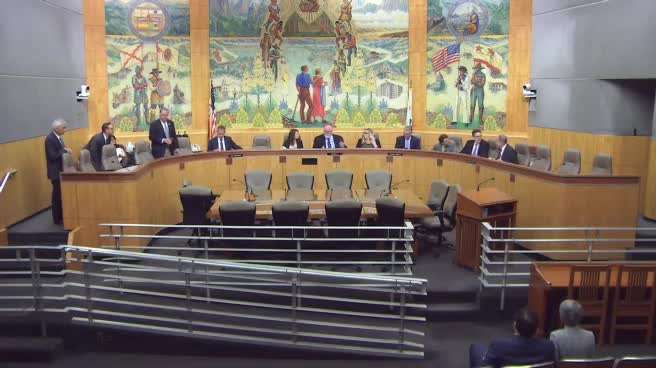
Senate Standing Committee on Transportation and Housing
Bill Author

Bill Co-Author(s):