SB 1234: Employee wages: payment.
- Session Year: 2017-2018
- House: Senate
- Latest Version Date: 2018-04-12
Existing law, with certain exceptions, requires that employers pay wages to their employees twice per calendar month on days designated in advance as regular paydays. A violation of that requirement is a crime. Existing law exempts the payment of wages of employees directly employed by the State of California from that requirement.
This bill would repeal that exemption, exemption as of January 1, 2020, thereby subjecting the payment of wages of employees directly employed by the State of California to the twice-per-month requirement. By changing the definition of a crime, this bill would impose a state-mandated local program.
The California Constitution requires the state to reimburse local agencies and school districts for certain costs mandated by the state. Statutory provisions establish procedures for making that reimbursement.
This bill would provide that no reimbursement is required by this act for a specified reason.
Existing law, with certain exceptions, requires that employers pay wages to their employees twice per calendar month on days designated in advance as regular paydays. A violation of that requirement is a crime. Existing law exempts the payment of wages of employees directly employed by the State of California from that requirement.
This bill would repeal that exemption, thereby subjecting the payment of wages of employees directly employed by the State of California to the twice-per-month requirement. By changing the definition of a crime, this bill would impose a state-mandated local program.
The California Constitution requires the state to reimburse local agencies and school districts for certain costs mandated by the state. Statutory provisions establish procedures for making that reimbursement.
This bill would provide that no reimbursement is required by this act for a specified reason.
(a)Sections 201.3, 201.5, 201.7, 203.1, 203.5, 204, 204a, 204b, 204c, 204.1, 205, and 205.5 do not apply to the payment of wages of employees directly employed by the State of California. Except as provided in subdivision (b), all other employment is subject to these provisions.
(b)Sections 200 to 211, inclusive, and Sections 215 to 219, inclusive, do not apply to the payment of wages of employees directly employed by any county, incorporated city, or town or other municipal corporation. All other employments are subject to these provisions.
(c)This section shall remain in effect only until January 1, 2020, and as of that date is repealed.
SEC. 2.Section 220 is added to the Labor Code, to read:220.(a)Sections 201.3, 201.5, 201.7, 203.1, 203.5, 204a, 204b, 204c, 204.1, 205, and 205.5 do not apply to the payment of wages of employees directly employed by the State of California. Except as provided in subdivision (b), all other employment is subject to these provisions.
(b)Sections 200 to 211, inclusive, and Sections 215 to 219, inclusive, do not apply to the payment of wages of employees directly employed by any county, incorporated city, or town or other municipal corporation. All other employments are subject to these provisions.
(c)This section shall become operative on January 1, 2020.
SEC. 2.SEC. 3.No reimbursement is required by this act pursuant to Section 6 of Article XIIIB of the California Constitution because the only costs that may be incurred by a local agency or school district will be incurred because this act creates a new crime or infraction, eliminates a crime or infraction, or changes the penalty for a crime or infraction, within the meaning of Section 17556 of the Government Code, or changes the definition of a crime within the meaning of Section 6 of Article XIIIB of the California Constitution.
(a)Sections 201.3, 201.5, 201.7, 203.1, 203.5, 204, 204a, 204b, 204c, 204.1, 205, and 205.5 do not apply to the payment of wages of employees directly employed by the State of California. Except as provided in subdivision (b), all other employment is subject to these provisions.
(b)Sections 200 to 211, inclusive, and Sections 215 to 219, inclusive, do not apply to the payment of wages of employees directly employed by any county, incorporated city, or town or other municipal corporation. All other employments are subject to these provisions.
SEC. 2.No reimbursement is required by this act pursuant to Section 6 of Article XIIIB of the California Constitution because the only costs that may be incurred by a local agency or school district will be incurred because this act creates a new crime or infraction, eliminates a crime or infraction, or changes the penalty for a crime or infraction, within the meaning of Section 17556 of the Government Code, or changes the definition of a crime within the meaning of Section 6 of Article XIIIB of the California Constitution.
|
Date
|
Status
|
|---|---|
| Apr 24, 2018 | April 23 set for second hearing. Failed passage in committee. (Ayes 1. Noes 3.) Reconsideration granted. |
| Apr 12, 2018 | From committee with author's amendments. Read second time and amended. Re-referred to Com. on P.E. & R. |
| Apr 11, 2018 | Set for hearing April 23. |
| Apr 5, 2018 | April 9 set for first hearing canceled at the request of author. |
| Mar 15, 2018 | Set for hearing April 9. |
| Mar 1, 2018 | Referred to Com. on P.E. & R. |
| Feb 16, 2018 | From printer. May be acted upon on or after March 18. |
| Feb 15, 2018 | Introduced. Read first time. To Com. on RLS. for assignment. To print. |
|
Date
|
Description
|
Location
|
Votes
|
|
|---|---|---|---|---|
| Apr 23, 2018 | [Second] hearing set for [04-23-2018]: Failed passage in Committee. Reconsideration granted | Senate Standing Committee on Public Employment and Retirement |
Passed |
|
| Apr 23, 2018 | Do pass, but first be re-referred to the Committee on [Appropriations] | Senate Standing Committee on Public Employment and Retirement |
Failed |
This list shows positions taken on this bill by organizations on the date displayed, which is linked to the original source.
Positions by individuals are not included.
SENATE COMMITTEE ON
PUBLIC EMPLOYMENT AND RETIREMENT
Dr. Richard Pan, Chair
2017 - 2018 Regular
Bill No: SB 1234 Hearing Date: 4/23/18
Author: | Vidak | ||
Version: | 4/12/18 As amended | ||
Urgency: | No | Fiscal: | Yes |
Consultant: | Korinne Sugasawara | ||
Subject: Employee wages: payment
SOURCE: Author
DIGEST: This bill would require on January 1, 2020, that the State of California pay all directly employed employees twice each calendar month, on days designated in advance by the employer as regular paydays.
ANALYSIS:
Existing law:
- Mandates that wages earned are due and payable twice during each calendar month, on days designated in advance by the employer as regular paydays.
- States that labor performed between the 1st and 15th days, inclusive, of any calendar month shall be paid for between the 16th and 26th day of the month during which labor was performed. Labor performed between the 16th and last day of the month, inclusive, shall be paid for between the 1st and 10th day of the following month.
- Exempts the following categories of employees from being paid twice each calendar month on days designated in advance as regular paydays by the employer:
- Employees directly employed by the State of California.
- Employees directly employed by any county, incorporated city, town, or municipal corporation.
- Employees covered by a collective bargaining agreement that provides for different pay arrangements.
- Executive, administrative, and professionals of employers covered by the Fair Labor Standards Act (FLSA), as specified, may be paid once a month on or before the 26th day of the month during which labor was performed, as specified.
- Executive, administrative, and professionals who are not covered by any collective bargaining agreement, are not subject to FLSA, whose monthly remuneration does not include overtime pay, and who are paid within seven days of the close of their monthly payroll period.
- Employees paid on a weekly basis on a regular day designated by the employer in advance of the rendition of services as a regular payday.
- Commission wages for persons employed by a licensed vehicle dealer shall be due and payable once each calendar month, on a day designated in advance as a regular payday, unless covered by a collective bargaining agreement that provides for the date on which wages shall be paid.
- Employees in the agriculture, horticulture, viticulture, stock or poultry raising fields, and household domestic service who are boarded and housed by their employer. These employees must be paid once each calendar month on a day designated in advance by the employer as a regular payday, as specified.
- Workers employed by a farm labor contractor, who must be paid on payroll periods at least once every week on a business day designated in advance, as specified.
- States that failure to pay wages in good funds on the regular designated payday is a misdemeanor.
- States that no reimbursement to a local agency or school district is required pursuant to Section 6 of Article XIII B of the California Constitution.
This bill:
- Removes employees directly employed by the State of California from those exempt from the mandate that wages earned are payable twice each calendar month.
- Requires the State of California to pay all directly employed employees twice each calendar month, on days designated in advance by the employer as regular paydays.
- States that the bill shall not take effect until January 1, 2020.
Background
Because employee pay schedules are subject to collective bargaining and because the bill may result in significant penalties if the Controller is unable to implement the necessary changes before the bill’s provisions become operative, this bill is premature.
According to the author’s office, “many lower-paid individuals find it difficult to budget for an entire month on the one paycheck they will receive… [and] a larger percentage of an employee’s annual income taxes will be deducted out of each paycheck if they are being paid monthly.” For low-income employees in particular, the challenge of making a paycheck last an entire month can prove daunting, especially if the employee continually incurs late charges, interest penalties, and administrative charges when juggling competing claims on their wages. Receiving a paycheck twice a month may help alleviate some of those obstacles to financial stability and ease economic pressure on the employee, resulting in less stress and improved performance at work. However, the committee notes that no additional wages are provided by this bill whether an employee is paid monthly or semi-monthly and effective budgeting may also help alleviate those obstacles.
Though represented state employees could collective bargain for an alternative pay schedule agreement with the state, it may be unlikely that the issue rises to a level of importance among most state employees that they would bargain away other, key terms and conditions such as higher pay. In turn, the state employer may be unwilling to forgo the monthly payment schedule for anything less than key concessions given the cost to implement and maintain a semi-monthly payroll for an employer as large, diverse, and complicated as the state. This impasse could leave the most vulnerable state employees in a condition of perpetual economic stress. Nevertheless, at least one unit, Bargaining Unit 18, has negotiated for a semi-monthly pay schedule.
With respect to the disparate treatment of private sector employers and the state in terms of the requirement to pay employees twice a month, there is less risk of non-payment of wages when the employer is an entity such as the state designed to exist in perpetuity rather than one that may suffer financial setbacks that prevent it from meeting its obligations, or one that may intentionally engage in simple wage theft.
Another reason the state is exempt is its size and specialized payroll systems which are predicated on complicated control processes designed, among other things, to protect public funds. New technology should alleviate this problem in the future. However, prior efforts such as the 21st Century Project to reform the state payroll processing systems have in the past exceeded cost projections and implementation schedules. Efforts are still underway to begin updating the 1970s-era information technology infrastructure. As such, to the extent this bill would increase demands on state administration, there will likely be associated increased costs to update existing technology and implement the semi-monthly paycheck schedule.
According to the Controller’s Office, the time estimate for re-designing and re-programming their payroll processing systems to shift state employees to a semi-monthly payment schedule would take at least one year. Also prioritizing the conversion to a semi-monthly pay schedule would divert resources from and delay several other projects. As SB 1234 would take effect January 1, 2020, it is possible that the Controller’s Office could still incur penalties for failure to pay employees in a timely manner, as mandated by current law, because system upgrades may take longer than anticipated to complete.
Because the bill specifies all employees directly employed by the State of California, it would cover both exempt and rank and file public state employees.
Related/Prior Legislation
None found.
FISCAL EFFECT: Appropriation: No Fiscal Com.: Yes Local: Yes
SUPPORT:
None received.
OPPOSITION:
None received.
ARGUMENTS IN SUPPORT:
According to the author’s office, “this bill will level the playing field for state employees by…requiring State Agencies to pay their employees at least twice-per-month.”
Discussed in Hearing
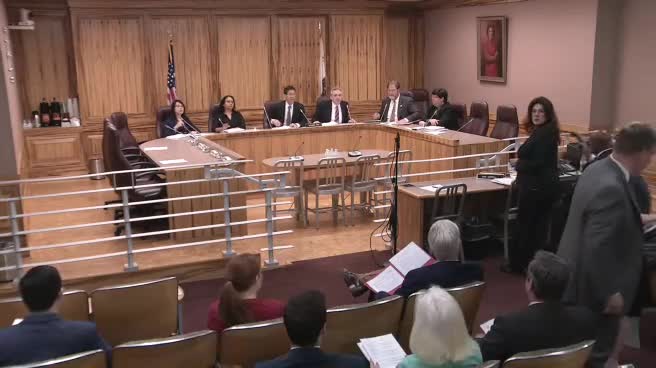 4MIN
Senate Standing Committee on Public Employment and Retirement
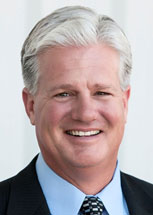
Bill Author
Bill Co-Author(s):