SB 1246: Property tax: claims for refund.
- Session Year: 2017-2018
- House: Senate
- Latest Version Date: 2018-09-11
Existing property tax law requires property taxes to be refunded to the taxpayer or last recorded owner, as provided, under specified circumstances and requires that a refund only be made pursuant to a claim for refund. Existing law requires the claim to be verified by the person who paid the tax, including his or her guardian, executor, or administrator.
This bill would additionally provide for verification of a claim by the trustee of the person who paid the tax. The bill would also authorize, pursuant to the board of supervisors of a county adopting a resolution or ordinance that so provides, a refund of property taxes or assessments without a verified claim if there has been no transfer of the property in the fiscal year that the taxes were levied and if the refund amount is less than $5,000.
Existing property tax law requires property taxes to be refunded to the taxpayer or last recorded owner, as provided, under specified circumstances and requires that a refund only be made pursuant to a claim for refund. Existing law requires the claim to be verified by the person who paid the tax, including his or her guardian, executor, or administrator.
This bill would additionally provide for verification of a claim by the trustee of the person who paid the tax. The bill would also authorize, pursuant to the board of supervisors of a county adopting a resolution or ordinance that so provides, a refund of property taxes or assessments without a verified claim if there has been no transfer of the property in the fiscal year that the taxes were levied and if the refund amount is less than $5,000.
Existing property tax law requires property taxes to be refunded to the taxpayer or last recorded owner, as provided, under specified circumstances and requires that a refund only be made pursuant to a claim for refund. Existing law requires the claim to be verified by the person who paid the tax, including his or her guardian, executor, or administrator. Existing law requires the payment of interest on those refunds at the greater of 3% per annum or the county pool apportioned rate, as provided.
This bill would additionally provide for verification of a claim by the trustee of the person who paid the tax. The bill would also authorize, pursuant to the board of supervisors of a county adopting a resolution or ordinance that so provides, a refund of property taxes or assessments without a verified claim if there has been no transfer of the property in the fiscal year that the taxes were levied and if the refund amount is less than $5,000. This bill would exempt these provisions from the payment of interest on those refunds, as provided.
The bill would also authorize an order for a refund to be paid to, and would permit a claim for a refund to be verified by, the assessee of the property as shown on the tax roll if there has been no transfer of the property in the fiscal year that the taxes were levied and if the refund amount is less than $5,000.(1)Existing property tax law defines taxes for purposes of property tax corrections, cancellations, and refunds to include assessments collected at the same time and in the same manner as county taxes.
This bill would define assessments for purposes of these provisions to mean any non-ad valorem levies collected at the same time and in the same manner as county taxes.
(2)Existing property tax law requires property taxes to be refunded to the taxpayer or last recorded owner, as provided, under specified circumstances and requires that a refund only be made pursuant to a claim for refund. Existing law requires the claim to be verified by the person who paid the tax, including his or her guardian, executor, or administrator. Existing law requires the payment of interest on those refunds at the greater of 3% per annum or the county pool apportioned rate, as provided.
This bill would authorize authorize, pursuant to the board of supervisors of a county adopting a resolution or ordinance that so provides, a refund of property taxes or assessments without a verified claim if there has been no transfer of the property in the fiscal year that the taxes were levied and if the refund amount is less than $5,000. This bill would exempt these provisions from the payment of interest on those refunds, as provided.
The bill would also authorize an order for a refund to be paid to, and would permit a claim for a refund to be verified by, the assessee of the property as shown on the tax roll if there has been no transfer of the property in the fiscal year that the taxes were levied and if the refund amount is less than $5,000.
By changing the manner in which local county officials administer property tax refunds, this bill would impose a state-mandated local program.
The California Constitution requires the state to reimburse local agencies and school districts for certain costs mandated by the state. Statutory provisions establish procedures for making that reimbursement.This bill would provide that, if the Commission on State Mandates determines that the bill contains costs mandated by the state, reimbursement for those costs shall be made pursuant to the statutory provisions noted above.(1)Existing property tax law defines taxes for purposes of property tax corrections, cancellations, and refunds to include assessments collected at the same time and in the same manner as county taxes.
This bill would define assessments for purposes of these provisions to mean any non-ad valorem levies collected at the same time and in the same manner as county taxes.
(2)Existing property tax law requires property taxes to be refunded to the taxpayer or last recorded owner, as provided, under specified circumstances and requires that a refund only be made pursuant to a claim for refund. Existing law requires the claim to be verified by the person who paid the tax, including his or her guardian, executor, or administrator. Existing law requires the payment of interest on those refunds at the greater of 3% per annum or the county pool apportioned rate, as provided.
This bill would authorize a refund of property taxes or assessments without a verified claim if there has been no transfer of the property in the fiscal year that the taxes were levied and if the refund amount is less than $5,000. This bill would exempt these provisions from the payment of interest on those refunds, as provided.
The bill would also authorize an order for a refund to be paid to, and would permit a claim for a refund to be verified by, the assessee of the property as shown on the tax roll if there has been no transfer of the property in the fiscal year that the taxes were levied and if the refund amount is less than $5,000.
By changing the manner in which local county officials administer property tax refunds, this bill would impose a state-mandated local program.
The California Constitution requires the state to reimburse local agencies and school districts for certain costs mandated by the state. Statutory provisions establish procedures for making that reimbursement.
This bill would provide that, if the Commission on State Mandates determines that the bill contains costs mandated by the state, reimbursement for those costs shall be made pursuant to the statutory provisions noted above.
Existing property tax law requires the tax collector, when the amount of taxes paid exceeds the amount due by more than $10, to send notice of the overpayment to the taxpayer stating the amount of the overpayment and that a refund claim may be filed. This bill would make a nonsubstantive change to that provision.Existing property tax law requires the tax collector, when the amount of taxes paid exceeds the amount due by more than $10, to send notice of the overpayment to the taxpayer stating the amount of the overpayment and that a refund claim may be filed.
This bill would make a nonsubstantive change to that provision.
(a)An order for a refund under this article shall not be made, except on a claim:
(1)Verified by the person who paid the tax, his or her guardian, executor, trustee, or administrator.
(2)Except as provided in paragraph (3) or (4), filed within four years after making the payment sought to be refunded, or within one year after the mailing of notice as prescribed in Section 2635, or the period agreed to as provided in Section 532.1, or within 60 days of the date of the notice prescribed by subdivision (a) of Section 4836, whichever is later.
(3)(A)Filed within one year, if an application for a reduction in an assessment or an application for equalization of an assessment has been filed pursuant to Section 1603 and the applicant does not state in the application that the application is intended to constitute a claim for a refund, of either of the following events, whichever occurs first:
(i)After the county assessment appeals board makes a final determination on the application for reduction in assessment or on the application for equalization of an escape assessment of the property, and mails a written notice of its determination to the applicant and the notice does not advise the applicant to file a claim for refund.
(ii)After the expiration of the time period specified in subdivision (c) of Section 1604 if the county assessment appeals board fails to hear evidence and fails to make a final determination on the application for reduction in assessment or on the application for equalization of an escape assessment of the property.
(B)Filed within six months, if an application for a reduction in an assessment or an application for equalization of an assessment has been filed pursuant to Section 1603 and the applicant does not state in the application that the application is intended to constitute a claim for a refund, after the county assessment appeals board makes a final determination on the application for reduction in assessment or on the application for equalization of an escape assessment, and mails a written notice of its determination to the applicant and the notice advises the applicant to file a claim for refund within six months of the date of the county assessment appeals boards final determination.
(4)Filed within eight years after making the payment sought to be refunded, or within 60 days of the notice prescribed by subdivision (a) of Section 4836, whichever is later, if the claim for refund is filed on or after January 1, 2015, and relates to the disabled veterans exemption described in Section 205.5.
(b)An application for a reduction in an assessment filed pursuant to Section 1603 shall also constitute a sufficient claim for refund under this section if the applicant states in the application that the application is intended to constitute a claim for refund. If the applicant does not so state, he or she may thereafter and within the period provided in paragraph (3) of subdivision (a) file a separate claim for refund of taxes extended on the assessment which the applicant applied to have reduced pursuant to Section 1603 or 1604.
(c)If an application for equalization of an escape assessment is filed pursuant to Section 1603, a claim may be filed on any taxes resulting from the escape assessment or the original assessment to which the escape relates within the period provided in paragraph (3) of subdivision (a).
(d)Notwithstanding subdivision (a), an order for a refund under this article may be made without a claim pursuant to Section 5105.
(e)The amendments made to this section by Chapter 656 of the Statutes of 2014 apply to claims for refund filed on or after January 1, 2015.
SEC. 2.Section 5105 is added to the Revenue and Taxation Code, to read:5105.(a)Notwithstanding Section 5097, an order for refund of taxes or assessments authorized pursuant to this article may be paid to the assessee of that property, or to the latest recorded owner of that property, as shown on the tax roll, without a claim for refund filed, if both of the following conditions are met:
(1)There has been no transfer of the property during or since the fiscal year for which the taxes subject to refund were levied.
(2)The amount of the refund is less than five thousand dollars ($5,000).
(b)This section shall become operative in a county only if the board of supervisors of the county adopts a resolution or ordinance approving the operation of this section.
(a)An order for a refund under this article shall not be made, except on a claim:
(1)Verified by the person who paid the tax, his or her guardian, executor, trustee, or administrator.
(2)Except as provided in paragraph (3) or (4), filed within four years after making the payment sought to be refunded, or within one year after the mailing of notice as prescribed in Section 2635, or the period agreed to as provided in Section 532.1, or within 60 days of the date of the notice prescribed by subdivision (a) of Section 4836, whichever is later.
(3)(A)Filed within one year, if an application for a reduction in an assessment or an application for equalization of an assessment has been filed pursuant to Section 1603 and the applicant does not state in the application that the application is intended to constitute a claim for a refund, of either of the following events, whichever occurs first:
(i)After the county assessment appeals board makes a final determination on the application for reduction in assessment or on the application for equalization of an escape assessment of the property, and mails a written notice of its determination to the applicant and the notice does not advise the applicant to file a claim for refund.
(ii)After the expiration of the time period specified in subdivision (c) of Section 1604 if the county assessment appeals board fails to hear evidence and fails to make a final determination on the application for reduction in assessment or on the application for equalization of an escape assessment of the property.
(B)Filed within six months, if an application for a reduction in an assessment or an application for equalization of an assessment has been filed pursuant to Section 1603 and the applicant does not state in the application that the application is intended to constitute a claim for a refund, after the county assessment appeals board makes a final determination on the application for reduction in assessment or on the application for equalization of an escape assessment, and mails a written notice of its determination to the applicant and the notice advises the applicant to file a claim for refund within six months of the date of the county assessment appeals boards final determination.
(4)Filed within eight years after making the payment sought to be refunded, or within 60 days of the notice prescribed by subdivision (a) of Section 4836, whichever is later, if the claim for refund is filed on or after January 1, 2015, and relates to the disabled veterans exemption described in Section 205.5.
(b)An application for a reduction in an assessment filed pursuant to Section 1603 shall also constitute a sufficient claim for refund under this section if the applicant states in the application that the application is intended to constitute a claim for refund. If the applicant does not so state, he or she may thereafter and within the period provided in paragraph (3) of subdivision (a) file a separate claim for refund of taxes extended on the assessment which the applicant applied to have reduced pursuant to Section 1603 or 1604.
(c)If an application for equalization of an escape assessment is filed pursuant to Section 1603, a claim may be filed on any taxes resulting from the escape assessment or the original assessment to which the escape relates within the period provided in paragraph (3) of subdivision (a).
(d)Notwithstanding subdivision (a), an order for a refund under this article may be made without a claim pursuant to Section 5105.
(e)The amendments made to this section by Chapter 656 of the Statutes of 2014 apply to claims for refund filed on or after January 1, 2015.
SEC. 2.Section 5105 is added to the Revenue and Taxation Code, to read:5105.(a)Notwithstanding Section 5097, an order for refund of taxes or assessments authorized pursuant to this article may be paid to the assessee of that property, or to the latest recorded owner of that property, as shown on the tax roll, without a claim for refund filed, if both of the following conditions are met:
(1)There has been no transfer of the property during or since the fiscal year for which the taxes subject to refund were levied.
(2)The amount of the refund is less than five thousand dollars ($5,000).
(b)This section shall become operative in a county only if the board of supervisors of the county adopts a resolution or ordinance approving the operation of this section.
(a)An order for a refund under this article shall not be made, except on a claim:
(1)(A)Verified by the person who paid the tax, his or her guardian, executor, trustee, or administrator.
(B)The claim may be verified by, and paid to, the assessee of that property as shown on the tax roll at the address available to the county tax collector or the assessor, or another address, if known, if both of the following conditions are met:(i)There has been no transfer of the property during or since the fiscal year for which the taxes subject to refund were levied.(ii)The amount of the refund is less than five thousand dollars ($5,000).(2)Except as provided in paragraph (3) or (4), filed within four years after making the payment sought to be refunded, or within one year after the mailing of notice as prescribed in Section 2635, or the period agreed to as provided in Section 532.1, or within 60 days of the date of the notice prescribed by subdivision (a) of Section 4836, whichever is later.
(3)(A)Filed within one year, if an application for a reduction in an assessment or an application for equalization of an assessment has been filed pursuant to Section 1603 and the applicant does not state in the application that the application is intended to constitute a claim for a refund, of either of the following events, whichever occurs first:
(i)After the county assessment appeals board makes a final determination on the application for reduction in assessment or on the application for equalization of an escape assessment of the property, and mails a written notice of its determination to the applicant and the notice does not advise the applicant to file a claim for refund.
(ii)After the expiration of the time period specified in subdivision (c) of Section 1604 if the county assessment appeals board fails to hear evidence and fails to make a final determination on the application for reduction in assessment or on the application for equalization of an escape assessment of the property.
(B)Filed within six months, if an application for a reduction in an assessment or an application for equalization of an assessment has been filed pursuant to Section 1603 and the applicant does not state in the application that the application is intended to constitute a claim for a refund, after the county assessment appeals board makes a final determination on the application for reduction in assessment or on the application for equalization of an escape assessment, and mails a written notice of its determination to the applicant and the notice advises the applicant to file a claim for refund within six months of the date of the county assessment appeals boards final determination.
(4)Filed within eight years after making the payment sought to be refunded, or within 60 days of the notice prescribed by subdivision (a) of Section 4836, whichever is later, if the claim for refund is filed on or after January 1, 2015, and relates to the disabled veterans exemption described in Section 205.5.
(b)An application for a reduction in an assessment filed pursuant to Section 1603 shall also constitute a sufficient claim for refund under this section if the applicant states in the application that the application is intended to constitute a claim for refund. If the applicant does not so state, he or she may thereafter and within the period provided in paragraph (3) of subdivision (a) file a separate claim for refund of taxes extended on the assessment which the applicant applied to have reduced pursuant to Section 1603 or 1604.
(c)If an application for equalization of an escape assessment is filed pursuant to Section 1603, a claim may be filed on any taxes resulting from the escape assessment or the original assessment to which the escape relates within the period provided in paragraph (3) of subdivision (a).
(d)Notwithstanding subdivision (a), an order for a refund under this article may be made without a claim pursuant to Section 5105.
(e)The amendments made to this section by Chapter 656 of the Statutes of 2014 apply to claims for refund filed on or after January 1, 2015.
SEC. 5.Section 5097.2 of the Revenue and Taxation Code is amended to read:5097.2.Notwithstanding Sections 5096 and 5097, any taxes paid before or after delinquency may be ordered for refund by the county tax collector or the county auditor, within four years after the date of payment, if:(a)Paid more than once.(b)The amount paid exceeds the amount due on the property as shown on the roll by an amount greater than ten dollars ($10).(c)The amount paid exceeds the amount due on the property as the result of corrections to the roll or cancellations after those taxes were paid.(d)In any other case, where a claim for refund is made under penalty of perjury and is for an amount less than ten dollars ($10).(e)The amount paid exceeds the amount due on the property as the result of a reduction attributable to a hearing before an assessment appeals board or an assessment hearing officer.SEC. 6.Section 5104 of the Revenue and Taxation Code is amended to read:5104.Any order for refund of taxes, assessments, penalties, interest, or costs authorized pursuant to this article as a result of a reduction in the value of taxable property, as the result of corrections or cancellations to the tax roll after taxes or assessments were paid, or due to the overpayment of taxes, may be paid to the latest recorded owner of that property, or to the assessee of that property, as shown on the tax roll, rather than to the person who paid the amount of tax or assessment to be refunded, if both of the following conditions are met:(a)There has been no transfer of the property during or since the fiscal year for which the taxes subject to refund were levied.(b)The amount of the refund is less than five thousand dollars ($5,000).SEC. 7.SEC. 2.Section 5105 is added to the Revenue and Taxation Code, to read:5105.(a)Notwithstanding Section 5097, an order for refund of taxes or assessments authorized pursuant to this article may be paid to the assessee of that property, or to the latest recorded owner of that property, as shown on the tax roll, without a claim for refund filed, if both of the following conditions are met:
(1)There has been no transfer of the property during or since the fiscal year for which the taxes subject to refund were levied.
(2)The amount of the refund is less than five thousand dollars ($5,000).
(b)This section shall become operative in a county only if the board of supervisors of the county adopts a resolution or ordinance approving the operation of this section.
SEC. 8.Section 5151 of the Revenue and Taxation Code is amended to read:5151.(a)Interest at the greater of 3 percent per annum or the county pool apportioned rate shall be paid, when that interest is ten dollars ($10) or more, on any amount refunded under Section 5096.7, or refunded to a taxpayer for any reason whatsoever. However, no interest shall be paid under the provisions of this section if the taxpayer has been given the notice required by Section 2635 and has failed to apply for the refund within 30 days after the mailing of that notice, or if the tax collector orders a refund pursuant to Section 5105 within 30 days of the taxpayers payment. For purposes of this section, county pool apportioned rate means the annualized rate of interest earned on the total amount of pooled idle funds from all accounts held by the county treasurer, in excess of the county treasurers administrative costs with respect to that amount, as of June 30 of the fiscal year preceding the date the refund is calculated by the auditor. For each fiscal year, the county treasurer shall advise the Controller of the county pool apportioned rate, and of computations made in deriving that rate, no later than 90 days after the end of that fiscal year. Any interest paid on a refund at a rate provided for by this subdivision as it read prior to January 1, 2009, shall be deemed to be correct.(b)The interest rate provided for in subdivision (a) does not apply to interest on refunds of those amounts of tax that became due and payable before March 1, 1993. Interest on refunds of amounts of a qualified tax shall be paid at that rate provided for by this section as it read prior to January 1, 1993. As used in this section, a qualified tax means a tax that became due and payable before March 1, 1993, and had not been refunded as of April 6, 1995. This subdivision shall not be construed to affect the interest paid on refunds of those amounts of tax that became due and payable before March 1, 1993, and have been refunded as of April 6, 1995.(c)(1)The interest computation period shall commence with the date of payment of the tax when any of the following applies:(A)A timely application for reduction in an assessment was filed, without regard to whether the refund ultimately results from a judgment or order of a court, an order of a board of equalization or assessment appeals board, or an assessors correction to the assessment roll.(B)The refund is pursuant to a roll correction resulting from the determination or adjustment by the assessor or a local assessment appeals board of a base year value.(C)The refund results from a correction to the assessment roll pursuant to Section 4831 or 4876.(2)Interest on refunds of taxes on property acquired by a public agency in eminent domain shall accrue from the date of recordation of the deed.(3)In all other cases the interest computation period shall commence on the date of filing a claim for refund or payment of the tax, whichever is later. However, in the event of the granting of property tax relief pursuant to Section 69, 69.3, or 170, interest is not payable on any resulting refund of taxes, provided that payment of that refund of taxes is made within 120 days after the county assessor has sent authorization for the reduction to the county auditor.(d)The computation of interest shall terminate as of a date within 30 days of the date of mailing or personal delivery of the refund payment.(e)The interest charged shall be apportioned to the appropriate funds, as determined by the county auditor.(f)The amendments made to this section by Section 4 of Chapter 801 of the Statutes of 1996 shall apply to all refunds made after January 1, 1997.When the amount of taxes paid exceeds the amount due, as shown on the bill, by more than ten dollars ($10), the tax collector shall either order a refund pursuant to Section 5105 or shall send notice of the overpayment to the taxpayer. The notice shall be mailed to the taxpayers last known address and shall state the amount of the overpayment and that a refund claim may be filed pursuant to Chapter 5 (commencing with Section 5096) of Part 9.
SEC. 2.Section 4801 of the Revenue and Taxation Code is amended to read:4801.(a)As used in this part, taxes includes assessments collected at the same time and in the same manner as county taxes.
(b)As used in this part, assessment assessments means a non-ad valorem levy collected at the same time and in the same manner as county taxes.
SEC. 3.Section 4836 of the Revenue and Taxation Code is amended to read:4836.(a)If the correction will result in a reduction of an assessment that would entitle the assessee, or person who paid the tax, to a refund, the auditor shall either process the order for refund pursuant to Section 5105 or notify the assessee, or person who paid the tax, in writing at the address available to the county tax collector or the assessor, or another address, if known, of the requirements for obtaining a refund pursuant to Section 5097. The notice shall state that the assessee, or person who paid the tax, is entitled to a refund and that a claim for a refund shall be filed, pursuant to Section 5097, within 60 days of the date of the notice or four years after making the payment, whichever is later. Notwithstanding Section 5097, a claim for a refund shall be deemed timely filed if it is filed within 60 days of the date of the notice.
(b)If the correction will increase the amount of unpaid taxes, the assessor shall notify the assessee of the procedure for obtaining review by the county board under Section 1605 and the procedure for applying for cancellation under Section 4986.
SEC. 4.Section 5097 of the Revenue and Taxation Code is amended to read:5097.(a)An order for a refund under this article shall not be made, except on a claim:
(1)(A)Verified by the person who paid the tax, his or her guardian, executor, trustee, or administrator.
(B)The claim may be verified by, and paid to, the assessee of that property as shown on the tax roll at the address available to the county tax collector or the assessor, or another address, if known, if both of the following conditions are met:
(i)There has been no transfer of the property during or since the fiscal year for which the taxes subject to refunded refund were levied.
(ii)The amount of the refund is less than five thousand dollars ($5,000).
(2)Except as provided in paragraph (3) or (4), filed within four years after making the payment sought to be refunded, or within one year after the mailing of notice as prescribed in Section 2635, or the period agreed to as provided in Section 532.1, or within 60 days of the date of the notice prescribed by subdivision (a) of Section 4836, whichever is later.
(3)(A)Filed within one year, if an application for a reduction in an assessment or an application for equalization of an assessment has been filed pursuant to Section 1603 and the applicant does not state in the application that the application is intended to constitute a claim for a refund, of either of the following events, whichever occurs first:
(i)After the county assessment appeals board makes a final determination on the application for reduction in assessment or on the application for equalization of an escape assessment of the property, and mails a written notice of its determination to the applicant and the notice does not advise the applicant to file a claim for refund.
(ii)After the expiration of the time period specified in subdivision (c) of Section 1604 if the county assessment appeals board fails to hear evidence and fails to make a final determination on the application for reduction in assessment or on the application for equalization of an escape assessment of the property.
(B)Filed within six months, if an application for a reduction in an assessment or an application for equalization of an assessment has been filed pursuant to Section 1603 and the applicant does not state in the application that the application is intended to constitute a claim for a refund, after the county assessment appeals board makes a final determination on the application for reduction in assessment or on the application for equalization of an escape assessment, and mails a written notice of its determination to the applicant and the notice advises the applicant to file a claim for refund within six months of the date of the county assessment appeals boards final determination.
(4)Filed within eight years after making the payment sought to be refunded, or within 60 days of the notice prescribed by subdivision (a) of Section 4836, whichever is later, if the claim for refund is filed on or after January 1, 2015, and relates to the disabled veterans exemption described in Section 205.5.
(b)An application for a reduction in an assessment filed pursuant to Section 1603 shall also constitute a sufficient claim for refund under this section if the applicant states in the application that the application is intended to constitute a claim for refund. If the applicant does not so state, he or she may thereafter and within the period provided in paragraph (3) of subdivision (a) file a separate claim for refund of taxes extended on the assessment which the applicant applied to have reduced pursuant to Section 1603 or 1604.
(c)If an application for equalization of an escape assessment is filed pursuant to Section 1603, a claim may be filed on any taxes resulting from the escape assessment or the original assessment to which the escape relates within the period provided in paragraph (3) of subdivision (a).
(d)Notwithstanding subdivision (a), an order for a refund under this article may be made without a claim pursuant to Section 5015. 5105.
(e)The amendments made to this section by Chapter 656 of the Statutes of 2014 apply to claims for refund filed on or after January 1, 2015.
SEC. 5.Section 5097.2 of the Revenue and Taxation Code is amended to read:5097.2.Notwithstanding Sections 5096 and 5097, any taxes paid before or after delinquency may be ordered for refund by the county tax collector or the county auditor, within four years after the date of payment, if:
(a)Paid more than once.
(b)The amount paid exceeds the amount due on the property as shown on the roll by an amount greater than ten dollars ($10).
(c)The amount paid exceeds the amount due on the property as the result of corrections to the roll or cancellations after those taxes were paid.
(d)In any other case, where a claim for refund is made under penalty of perjury and is for an amount less than ten dollars ($10).
(e)The amount paid exceeds the amount due on the property as the result of a reduction attributable to a hearing before an assessment appeals board or an assessment hearing officer.
SEC. 6.Section 5104 of the Revenue and Taxation Code is amended to read:5104.Any order for refund of taxes, assessments, penalties, interest, or costs authorized pursuant to this article as a result of a reduction in the value of taxable property, as the result of corrections or cancellations to the tax roll after taxes or assessments were paid, or due to the overpayment of taxes, may be paid to the latest recorded owner of that property, or to the assessee of that property, as shown on the tax roll, rather than to the person who paid the amount of tax or assessment to be refunded, if both of the following conditions are met:
(a)There has been no transfer of the property during or since the fiscal year for which the taxes subject to refund were levied.
(b)The amount of the refund is less than five thousand dollars ($5,000).
SEC. 7.Section 5105 is added to the Revenue and Taxation Code, to read:5105.(a)Notwithstanding Section 5097, an order for refund of taxes or assessments authorized pursuant to this article may be paid to the assessee of that property, or to the latest recorded owner of that property, as shown on the tax roll roll, without a claim for refund filed, if both of the following conditions are met:
(a)(1)There has been no transfer of the property during or since the fiscal year for which the taxes subject to refund were levied.
(b)(2)The amount of the refund is less than five thousand dollars ($5,000).
(b)This section shall become operative in a county only if the board of supervisors of the county adopts a resolution or ordinance approving the operation of this section.
SEC. 8.Section 5151 of the Revenue and Taxation Code is amended to read:5151.(a)Interest at the greater of 3 percent per annum or the county pool apportioned rate shall be paid, when that interest is ten dollars ($10) or more, on any amount refunded under Section 5096.7, or refunded to a taxpayer for any reason whatsoever. However, no interest shall be paid under the provisions of this section if the taxpayer has been given the notice required by Section 2635 and has failed to apply for the refund within 30 days after the mailing of that notice, or if the tax collector orders a refund pursuant to Section 5105 within 30 days of the taxpayers payment. For purposes of this section, county pool apportioned rate means the annualized rate of interest earned on the total amount of pooled idle funds from all accounts held by the county treasurer, in excess of the county treasurers administrative costs with respect to that amount, as of June 30 of the fiscal year preceding the date the refund is calculated by the auditor. For each fiscal year, the county treasurer shall advise the Controller of the county pool apportioned rate, and of computations made in deriving that rate, no later than 90 days after the end of that fiscal year. Any interest paid on a refund at a rate provided for by this subdivision as it read prior to January 1, 2009, shall be deemed to be correct.
(b)The interest rate provided for in subdivision (a) does not apply to interest on refunds of those amounts of tax that became due and payable before March 1, 1993. Interest on refunds of amounts of a qualified tax shall be paid at that rate provided for by this section as it read prior to January 1, 1993. As used in this section, a qualified tax means a tax that became due and payable before March 1, 1993, and had not been refunded as of April 6, 1995. This subdivision shall not be construed to affect the interest paid on refunds of those amounts of tax that became due and payable before March 1, 1993, and have been refunded as of April 6, 1995.
(c)(1)The interest computation period shall commence with the date of payment of the tax when any of the following applies:
(A)A timely application for reduction in an assessment was filed, without regard to whether the refund ultimately results from a judgment or order of a court, an order of a board of equalization or assessment appeals board, or an assessors correction to the assessment roll.
(B)The refund is pursuant to a roll correction resulting from the determination or adjustment by the assessor or a local assessment appeals board of a base year value.
(C)The refund results from a correction to the assessment roll pursuant to Section 4831 or 4876.
(2)Interest on refunds of taxes on property acquired by a public agency in eminent domain shall accrue from the date of recordation of the deed.
(3)In all other cases the interest computation period shall commence on the date of filing a claim for refund or payment of the tax, whichever is later. However, in the event of the granting of property tax relief pursuant to Section 69, 69.3, or 170, interest is not payable on any resulting refund of taxes, provided that payment of that refund of taxes is made within 120 days after the county assessor has sent authorization for the reduction to the county auditor.
(d)The computation of interest shall terminate as of a date within 30 days of the date of mailing or personal delivery of the refund payment.
(e)The interest charged shall be apportioned to the appropriate funds, as determined by the county auditor.
(f)The amendments made to this section by Section 4 of Chapter 801 of the Statutes of 1996 shall apply to all refunds made after January 1, 1997.
SEC. 9.If the Commission on State Mandates determines that this act contains costs mandated by the state, reimbursement to local agencies and school districts for those costs shall be made pursuant to Part 7 (commencing with Section 17500) of Division 4 of Title 2 of the Government Code.When the amount of taxes paid exceeds the amount due due, as shown on the bill, by more than ten dollars ($10), the tax collector shall either order a refund pursuant to Section 5105 or shall send notice of the overpayment to the taxpayer. The notice shall be mailed to the taxpayers last known address and shall state the amount of the overpayment and that a refund claim may be filed pursuant to Chapter 5 (commencing with Section 5096) of Part 9.
SEC. 2.Section 4801 of the Revenue and Taxation Code is amended to read:4801.(a)As used in this part, taxes includes assessments collected at the same time and in the same manner as county taxes.
(b)As used in this part, assessment means a non-ad valorem levy collected at the same time and in the same manner as county taxes.
SEC. 3.Section 4836 of the Revenue and Taxation Code is amended to read:4836.(a)If the correction will result in a reduction of an assessment that would entitle the assessee assessee, or person who paid the tax, to a refund, the auditor shall either process the order for refund pursuant to Section 5105 or notify the assessee assessee, or person who paid the tax, in writing at the address available to the county tax collector or the assessor, or another address, if known, of the requirements for obtaining a refund pursuant to Section 5097. The notice shall state that the assessee assessee, or person who paid the tax, is entitled to a refund and that a claim for a refund shall be filed, pursuant to Section 5097, within 60 days of the date of the notice. notice or four years after making the payment, whichever is later. Notwithstanding Section 5097, a claim for a refund shall be deemed timely filed if it is filed within 60 days of the date of the notice.
(b)If the correction will increase the amount of unpaid taxes, the assessor shall notify the assessee of the procedure for obtaining review by the county board under Section 1605 and the procedure for applying for cancellation under Section 4986.
SEC. 4.Section 5097 of the Revenue and Taxation Code is amended to read:5097.(a)An order for a refund under this article shall not be made, except on a claim:
(1)(A)Verified by the person who paid the tax, his or her guardian, executor, trustee, or administrator.
(B)The claim may be verified by, and paid to, the assessee of that property as shown on the tax roll at the address available to the county tax collector or the assessor, or another address, if known, if both of the following conditions are met:
(i)There has been no transfer of the property during or since the fiscal year for which the taxes subject to refunded were levied.
(ii)The amount of the refund is less than five thousand dollars ($5,000).
(2)Except as provided in paragraph (3) or (4), filed within four years after making the payment sought to be refunded, or within one year after the mailing of notice as prescribed in Section 2635, or the period agreed to as provided in Section 532.1, or within 60 days of the date of the notice prescribed by subdivision (a) of Section 4836, whichever is later.
(3)(A)Filed within one year, if an application for a reduction in an assessment or an application for equalization of an assessment has been filed pursuant to Section 1603 and the applicant does not state in the application that the application is intended to constitute a claim for a refund, of either of the following events, whichever occurs first:
(i)After the county assessment appeals board makes a final determination on the application for reduction in assessment or on the application for equalization of an escape assessment of the property, and mails a written notice of its determination to the applicant and the notice does not advise the applicant to file a claim for refund.
(ii)After the expiration of the time period specified in subdivision (c) of Section 1604 if the county assessment appeals board fails to hear evidence and fails to make a final determination on the application for reduction in assessment or on the application for equalization of an escape assessment of the property.
(B)Filed within six months, if an application for a reduction in an assessment or an application for equalization of an assessment has been filed pursuant to Section 1603 and the applicant does not state in the application that the application is intended to constitute a claim for a refund, after the county assessment appeals board makes a final determination on the application for reduction in assessment or on the application for equalization of an escape assessment, and mails a written notice of its determination to the applicant and the notice advises the applicant to file a claim for refund within six months of the date of the county assessment appeals boards final determination.
(4)Filed within eight years after making the payment sought to be refunded, or within 60 days of the notice prescribed by subdivision (a) of Section 4836, whichever is later, if the claim for refund is filed on or after January 1, 2015, and relates to the disabled veterans exemption described in Section 205.5.
(b)An application for a reduction in an assessment filed pursuant to Section 1603 shall also constitute a sufficient claim for refund under this section if the applicant states in the application that the application is intended to constitute a claim for refund. If the applicant does not so state, he or she may thereafter and within the period provided in paragraph (3) of subdivision (a) file a separate claim for refund of taxes extended on the assessment which the applicant applied to have reduced pursuant to Section 1603 or 1604.
(c)If an application for equalization of an escape assessment is filed pursuant to Section 1603, a claim may be filed on any taxes resulting from the escape assessment or the original assessment to which the escape relates within the period provided in paragraph (3) of subdivision (a).
(d)Notwithstanding subdivision (a), an order for a refund under this article may be made without a claim pursuant to Section 5015.
(d)(e)The amendments made to this section by Chapter 656 of the Statutes of 2014 apply to claims for refund filed on or after January 1, 2015.
SEC. 5.Section 5097.2 of the Revenue and Taxation Code is amended to read:5097.2.Notwithstanding Sections 5096 and 5097, any taxes paid before or after delinquency may be refunded ordered for refund by the county tax collector or the county auditor, within four years after the date of payment, if:
(a)Paid more than once.
(b)The amount paid exceeds the amount due on the property as shown on the roll by an amount greater than ten dollars ($10).
(c)The amount paid exceeds the amount due on the property as the result of corrections to the roll or cancellations after those taxes were paid.
(d)In any other case, where a claim for refund is made under penalty of perjury and is for an amount less than ten dollars ($10).
(e)The amount paid exceeds the amount due on the property as the result of a reduction attributable to a hearing before an assessment appeals board or an assessment hearing officer.
SEC. 6.Section 5104 of the Revenue and Taxation Code is amended to read:5104.Any order for refund of taxes or assessments taxes, assessments, penalties, interest, or costs authorized pursuant to this article as a result of a reduction in the value of taxable property or property, as the result of corrections to the roll or cancellations to the tax roll after taxes or assessments were paid, or due to the overpayment of taxes, may be paid to the latest recorded owner of that property property, or to the assessee of that property, as shown on the tax roll, rather than to the individual or entity person who paid the amount of tax or assessment to be refunded, if both of the following conditions are met:
(a)There has been no transfer of the property during or since the fiscal year for which the taxes subject to refund were levied.
(b)The amount of the refund is less than five thousand dollars ($5,000).
SEC. 7.Section 5105 is added to the Revenue and Taxation Code, to read:5105.Notwithstanding Section 5097, an order for refund of taxes or assessments authorized pursuant to this article may be paid to the assessee of that property, or to the latest recorded owner of that property, as shown on the tax roll without a claim for refund filed, if both of the following conditions are met:
(a)There has been no transfer of the property during or since the fiscal year for which the taxes subject to refund were levied.
(b)The amount of the refund is less than five thousand dollars ($5,000).
SEC. 8.Section 5151 of the Revenue and Taxation Code is amended to read:5151.(a)Interest at the greater of 3 percent per annum or the county pool apportioned rate shall be paid, when that interest is ten dollars ($10) or more, on any amount refunded under Section 5096.7, or refunded to a taxpayer for any reason whatsoever. However, no interest shall be paid under the provisions of this section if the taxpayer has been given the notice required by Section 2635 and has failed to apply for the refund within 30 days after the mailing of that notice. notice, or if the tax collector orders a refund pursuant to Section 5105 within 30 days of the taxpayers payment. For purposes of this section, county pool apportioned rate means the annualized rate of interest earned on the total amount of pooled idle funds from all accounts held by the county treasurer, in excess of the county treasurers administrative costs with respect to that amount, as of June 30 of the fiscal year preceding the date the refund is calculated by the auditor. For each fiscal year, the county treasurer shall advise the Controller of the county pool apportioned rate, and of computations made in deriving that rate, no later than 90 days after the end of that fiscal year. Any interest paid on a refund at a rate provided for by this subdivision as it read prior to January 1, 2009, shall be deemed to be correct.
(b)The interest rate provided for in subdivision (a) does not apply to interest on refunds of those amounts of tax that became due and payable before March 1, 1993. Interest on refunds of amounts of a qualified tax shall be paid at that rate provided for by this section as it read prior to January 1, 1993. As used in this section, a qualified tax means a tax that became due and payable before March 1, 1993, and had not been refunded as of April 6, 1995. This subdivision shall not be construed to affect the interest paid on refunds of those amounts of tax that became due and payable before March 1, 1993, and have been refunded as of April 6, 1995.
(c)(1)The interest computation period shall commence with the date of payment of the tax when any of the following applies:
(A)A timely application for reduction in an assessment was filed, without regard to whether the refund ultimately results from a judgment or order of a court, an order of a board of equalization or assessment appeals board, or an assessors correction to the assessment roll.
(B)The refund is pursuant to a roll correction resulting from the determination or adjustment by the assessor or a local assessment appeals board of a base year value.
(C)The refund results from a correction to the assessment roll pursuant to Section 4831 or 4876.
(2)Interest on refunds of taxes on property acquired by a public agency in eminent domain shall accrue from the date of recordation of the deed.
(3)In all other cases the interest computation period shall commence on the date of filing a claim for refund or payment of the tax, whichever is later. However, in the event of the granting of property tax relief pursuant to Section 69, 69.3, or 170, interest is not payable on any resulting refund of taxes, provided that payment of that refund of taxes is made within 120 days after the county assessor has sent authorization for the reduction to the county auditor.
(d)The computation of interest shall terminate as of a date within 30 days of the date of mailing or personal delivery of the refund payment.
(e)The interest charged shall be apportioned to the appropriate funds, as determined by the county auditor.
(f)The amendments made to this section by Section 4 of Chapter 801 of the Statutes of 1996 shall apply to all refunds made after January 1, 1997.
SEC. 9.If the Commission on State Mandates determines that this act contains costs mandated by the state, reimbursement to local agencies and school districts for those costs shall be made pursuant to Part 7 (commencing with Section 17500) of Division 4 of Title 2 of the Government Code.
When the amount of taxes paid exceeds the amount due by more than ten dollars ($10), the tax collector shall send notice of the overpayment to the taxpayer. The notice shall be mailed to the taxpayers last known address and shall state the amount of the overpayment and that a refund claim may be filed pursuant to Chapter 5 (commencing with Section 5096) of Part 9.
|
Date
|
Status
|
|---|---|
| Sep 11, 2018 | Chaptered by Secretary of State. Chapter 358, Statutes of 2018. |
| Sep 11, 2018 | Approved by the Governor. |
| Aug 24, 2018 | Enrolled and presented to the Governor at 4 p.m. |
| Aug 20, 2018 | Assembly amendments concurred in. (Ayes 38. Noes 0.) Ordered to engrossing and enrolling. |
| Aug 16, 2018 | In Senate. Concurrence in Assembly amendments pending. |
| Aug 16, 2018 | Read third time. Passed. Ordered to the Senate. |
| Jul 5, 2018 | Read second time. Ordered to third reading. |
| Jul 3, 2018 | From committee: Do pass. (Ayes 9. Noes 0.) (July 2). |
| Jun 27, 2018 | From committee with author's amendments. Read second time and amended. Re-referred to Com. on REV. & TAX. |
| Jun 25, 2018 | June 25 set for second hearing canceled at the request of author. |
| Jun 18, 2018 | June 18 set for first hearing canceled at the request of author. |
| Jun 4, 2018 | Referred to Com. on REV. & TAX. |
| May 29, 2018 | In Assembly. Read first time. Held at Desk. |
| May 29, 2018 | Read third time. Passed. (Ayes 38. Noes 0.) Ordered to the Assembly. |
| May 21, 2018 | Read second time. Ordered to third reading. |
| May 17, 2018 | Withdrawn from committee. |
| May 16, 2018 | Read second time and amended. Re-referred to Com. on APPR. |
| May 15, 2018 | From committee: Do pass as amended and re-refer to Com. on APPR. (Ayes 6. Noes 0.) (May 9). |
| May 4, 2018 | Set for hearing May 9. |
| May 3, 2018 | Re-referred to Com. on GOV. & F. |
| Apr 30, 2018 | From committee with author's amendments. Read second time and amended. Re-referred to Com. on RLS. |
| Mar 1, 2018 | Referred to Com. on RLS. |
| Feb 16, 2018 | From printer. May be acted upon on or after March 18. |
| Feb 15, 2018 | Introduced. Read first time. To Com. on RLS. for assignment. To print. |
|
Date
|
Description
|
Location
|
Votes
|
|
|---|---|---|---|---|
| Aug 20, 2018 | Unfinished Business SB1246 Gaines Concurrence | Senate Floor |
Passed |
|
| Aug 16, 2018 | SB 1246 Gaines Senate Third Reading By KILEY | Assembly Floor |
Passed |
|
| Jul 2, 2018 | Do pass. | Assembly Standing Committee on Revenue and Taxation |
Passed |
|
| May 29, 2018 | Senate 3rd Reading SB1246 Gaines | Senate Floor |
Passed |
|
| May 9, 2018 | Do pass as amended, but first amend, and re-refer to the Committee on [Appropriations] | Senate Standing Committee on Governance and Finance |
Passed |
This list shows positions taken on this bill by organizations on the date displayed, which is linked to the original source.
Positions by individuals are not included.
Office of Senate Floor Analyses (916) 651-1520 Fax: (916) 327-4478 | SB |
UNFINISHED BUSINESS
Bill No: SB 1246
:
SENATE GOVERNANCE & FIN. COMMITTEE: 6-0, 5/9/18
AYES: McGuire, Nguyen, Beall, Hernandez, Hertzberg, Moorlach
NO VOTE RECORDED: Lara
SENATE FLOOR: 38-0, 5/29/18
AYES: Allen, Anderson, Atkins, Bates, Beall, Bradford, Cannella, De León, Dodd, Fuller, Gaines, Galgiani, Glazer, Hernandez, Hertzberg, Hill, Hueso, Jackson, Lara, Leyva, McGuire, Mitchell, Monning, Moorlach, Morrell, Newman, Nguyen, Nielsen, Pan, Portantino, Roth, Skinner, Stern, Stone, Vidak, Wieckowski, Wiener, Wilk
NO VOTE RECORDED: Berryhill
ASSEMBLY FLOOR: 77-0, 8/16/18 - See last page for vote
SUBJECT: Property tax: claims for refund
SOURCE: State Association of County Auditors
DIGEST:
This bill alters the current claim for refund process for property taxes to allow counties to order refunds without the taxpayer filing a claim, contingent on the county board of supervisors enacting an ordinance making this bill operative.
Assembly Amendments
delete several provisions of the bill, including clarifying that refunds of non-ad valorem levies collected at the same time and in the same manner as county taxes, such as parcel taxes and Mello-Roos special taxes, can be refunded; stating that taxpayers, not just assessees, can receive refunds from roll corrections, and refunds should be sent to the address available to the tax collector or the assessor, or another address if known; providing that taxpayers, not just assessees, can be notified by the tax collector of the role correction and their entitlement to a refund; clarifying that taxpayers and assessees have four years to claim a refund due to a roll correction, not just 60 days from the notice, whichever is later, excluding refunds issued within 30 days from interest calculation; and other technical and conforming changes.
Existing law:
- Directs the Legislature to create a process for actions to recover illegally assessed taxes, with interest. (California Constitution, Article XIII, Section 32).
- Allows counties to issue refunds of property taxes that are:
- Paid more than once,
- Collected erroneously or illegally,
- Assessed or levied illegally,
- Paid on an assessment in excess of the amount owed by reason of the assessor's clerical error or excessive or improper assessments attributable to erroneous property information supplied by the taxpayer,
- Paid on an assessment of improvements when the improvements did not exist on the lien date,
- Paid on an assessment in excess of the value of the property as determined by the county assessment appeals board, or
- Paid on an assessment in excess of the value of the property.
- Allows taxpayers to file a claim for refund, generally within four years after making the payment, with some different periods for overpayments, assessment appeals, and claims for the disabled veterans’ exemption, among others.
- Permits taxpayers, or their guardians, executors, or administrators can file a claim for refund, but does not explicitly mention trustees.
This bill:
- Alters the current claim for refund process for property taxes to allow refunds without the filing of a claim if there has been no transfer of the property during or since the fiscal year for which the taxes subject to the refund have been levied, and the amount of the refund is less than $5,000. However, all these provisions only become operative if the board of supervisors of the county enacts an ordinance approving this bill’s operation.
- Clarifies that trustees may file a claim for refund.
- Makes a conforming change.
Background
Generally, county tax collectors collect all taxes, including real and personal property taxes, school and special district taxes, and taxes on business licenses. As part of these duties, tax collectors administer the billing and collections process for property taxes. However, when the assessor makes a change to the assessed value on the property tax roll, he or she notifies both the taxpayer and the auditor, who then recalculates the value. The auditor then reconciles the taxpayer’s recalculated tax with the tax collector to determine if the taxpayer has a liability, or is entitled to a refund. The State Association of County Auditors wants to allow for a process to order refunds without a claim for refund in specified circumstances, and make clarifying changes to the current refund process.
FISCAL EFFECT: Appropriation: Fiscal Com.: Local:
State Association of County Auditors (source)
OPPOSITION: (Verified 8/17/18)
None received
ARGUMENTS IN SUPPORT: According to the author, “Senate Bill 1246 will streamline and modernize the process for expediting property tax refunds to California taxpayers. Under current law, an outdated and archaic ‘refund claim form’ is required to be mailed to a member of the public who is owed money due to an overpayment of taxes, penalties, assessments, interest or other costs associated with local taxes. The claim form must be signed and returned by the taxpayer before the county can refund what is rightfully theirs. This bill will speed up the process to allow the county to simply pay the taxpayer what is owed when an overpayment or refund is discovered without the time consuming paperwork required under current law. Local governments want to make sure that their constituents do not overpay their taxes, and we want to make sure that we resolve these issues as efficiently and quickly as possible.”
ASSEMBLY FLOOR: 77-0, 8/16/18
AYES: Acosta, Aguiar-Curry, Travis Allen, Arambula, Baker, Berman, Bigelow, Bloom, Bonta, Brough, Burke, Caballero, Calderon, Carrillo, Cervantes, Chau, Chávez, Chen, Chiu, Choi, Chu, Cooley, Cooper, Cunningham, Dahle, Daly, Eggman, Flora, Fong, Frazier, Friedman, Gabriel, Gallagher, Eduardo Garcia, Gipson, Gloria, Gonzalez Fletcher, Gray, Grayson, Harper, Holden, Irwin, Jones-Sawyer, Kalra, Kamlager-Dove, Kiley, Lackey, Levine, Limón, Maienschein, Mathis, Mayes, Medina, Melendez, Mullin, Muratsuchi, Nazarian, Obernolte, O'Donnell, Patterson, Quirk, Quirk-Silva, Reyes, Rivas, Rodriguez, Rubio, Salas, Santiago, Steinorth, Mark Stone, Thurmond, Ting, Voepel, Waldron, Weber, Wood, Rendon
NO VOTE RECORDED: Cristina Garcia, Low, McCarty
8/18/18 13:29:19
**** END ****
SENATE THIRD READING
STR Bill Id:SB 1246
Author:(Gaines)
As Amended Ver:June 27, 2018
Majority vote
SENATE VOTE: 38-0
Committee | Votes | Ayes | Noes |
Revenue & Taxation | 9-0 | Burke, Chu, Gray, Melendez, Mullin, Quirk, Rivas, Ting, Voepel |
SUMMARY: Allows county boards of supervisors to enact an ordinance or resolution to allow the county to pay specified refunds under $5,000 without the filing of a claim for refund. Specifically, this bill:
- Permits counties, that enact an ordinance or resolution, to pay an order for refund of taxes or assessments without a claim for refund being filed by the person who paid the tax if:
- The property has not transferred during or since the fiscal year for which the taxes subject to refund were levied; and,
- The refund amount is less than $5,000.
- Allows the county to pay the refund to either the assessee of that property, or to the latest recorded owner of that property, as shown on the tax roll.
- Requires the board of supervisors of the county to adopt a resolution or ordinance approving this exception.
- Makes conforming changes to add a cross reference to the county optional exception.
- Adds a trustee to the list of persons who may file a claim for refund on behalf of a person who paid the tax.
EXISTING LAW:
- Prohibits refunds pursuant to Revenue and Taxation Code (R&TC) Section 5096 et seq. except upon a claim filed by the person who paid the tax, his or her guardian, executor, or administrator.
- Provides that certain refunds of taxes or assessments, as specified, may be paid to the latest recorded owner of that property as shown on the tax roll, rather than to the individual or entity who paid the amount of tax or assessment to be refunded, if:
- The property has not transferred during or since the fiscal year for which the taxes subject to refund were levied; and,
- The refund amount is less than $5,000.
- Allows refunds noted above as a result of the following actions:
- Reduction in taxable value;
- Corrections to the assessment roll; or,
- Cancellations after taxes or assessments were paid.
- Limits these refunds to those that are authorized pursuant to R&TC Section 5096 et seq.
FISCAL EFFECT: Unknown
COMMENTS:
- The State Association of County Auditors is the sponsor of this measure, stating in support:
Under current law, a "refund claim form" is required to be sent to a taxpayer who is owed a refund and it must be signed and returned prior to the issuance of the refund. This time-consuming [process] results in delayed refunds and extra effort undertaken by the county in order to balance its books.
If the refund claim forms aren't used, then the refund may be mailed directly to the "taxpayer" using the existing criteria established by law. Some counties have already opted out of refund claim forms, but are [relying] on county counsel opinions [instead] of via express statutory authority.
SB 1246 would allow a county Board of Supervisors to "opt in" to the process to eliminate the refund claim form and allow the county auditor to expedite tax refunds to ensure that taxpayers receive what they are owed as quickly and efficiently as possible.
- Committee Staff Comments:
- County-optional: For counties that choose to opt in, this bill would allow refunds less than $5,000 to be issued faster. Counties have different administrative processes and needs depending on a variety of issues specific to each county. The county opt-in allows each county to determine its individual risk-benefit analysis to decide whether to forgo a signed claim for refund so that checks can be issued more quickly based on information in the county's possession.
- The assessment roll is updated annually: This bill allows a check to be mailed to the person and address listed on the assessment roll. This data, however, can be dated. Transfers of property may have occurred that the assessor has yet to process. Additionally, persons may have died and the assessor may not have been notified. Without requiring a claim for refund, this could result in refund checks being mailed with the name of an incorrect person or to an incorrect address, which would require resolution.
Allows a trustee to sign and file a claim for refund: This bill expands the list of persons who may file a claim for refund on behalf of the person who paid the tax to include trustees, providing more options for fulfilling the requirement to file a signed claim for refund with the county so the county may issue the check.
Analysis Prepared by: Rose Marie Kinnee / REV. & TAX. / (916) 319-2098 FN: 0003741
Date of Hearing: July 2, 2018
ASSEMBLY COMMITTEE ON REVENUE AND TAXATION
Autumn R. Burke, Chairwoman
SBPCA Bill Id:SB 1246
Author:(Gaines) – As Amended Ver:June 27, 2018
Majority vote.
SENATE VOTE: 38-0
SUBJECT: Property tax: claims for refund
SUMMARY: Allows county boards of supervisors to enact an ordinance or resolution to allow the county to pay specified refunds under $5,000 without the filing of a claim for refund. Specifically, this bill:
- Permits counties, that enact an ordinance or resolution, to pay an order for refund of taxes or assessments without a claim for refund being filed by the person who paid the tax if:
- The property has not transferred during or since the fiscal year for which the taxes subject to refund were levied; and,
- The refund amount is less than $5,000.
- Allows the county to pay the refund to either the assessee of that property, or to the latest recorded owner of that property, as shown on the tax roll.
- Requires the board of supervisors of the county to adopt a resolution or ordinance approving this exception.
- Makes conforming changes to add a cross reference to the county optional exception.
- Adds a trustee to the list of persons who may file a claim for refund on behalf of a person who paid the tax.
EXISTING LAW:
- Prohibits refunds pursuant to Revenue and Taxation Code (R&TC) Section 5096 et seq. except upon a claim filed by the person who paid the tax, his or her guardian, executor, or administrator.
- Provides that certain refunds of taxes or assessments, as specified, may be paid to the latest recorded owner of that property as shown on the tax roll, rather than to the individual or entity who paid the amount of tax or assessment to be refunded, if:
- The property has not transferred during or since the fiscal year for which the taxes subject to refund were levied; and,
- The refund amount is less than $5,000.
- Allows refunds noted above as a result of the following actions:
- Reduction in taxable value;
- Corrections to the assessment roll; or,
- Cancellations after taxes or assessments were paid.
- Limits these refunds to those that are authorized pursuant to R&TC Section 5096 et seq.
FISCAL EFFECT: Unknown
COMMENTS:
- The State Association of County Auditors is the sponsor of this measure, stating in support:
Under current law, a "refund claim form" is required to be sent to a taxpayer who is owed a refund and it must be signed and returned prior to the issuance of the refund. This time-consuming [process] results in delayed refunds and extra effort undertaken by the county in order to balance its books.
If the refund claim forms aren't used, then the refund may be mailed directly to the "taxpayer" using the existing criteria established by law. Some counties have already opted out of refund claim forms, but are [relying] on county counsel opinions [instead] of via express statutory authority.
SB 1246 would allow a county Board of Supervisors to "opt in" to the process to eliminate the refund claim form and allow the county auditor to expedite tax refunds to ensure that taxpayers receive what they are owed as quickly and efficiently as possible.
- Committee Staff Comments:
- County-optional: For counties that choose to opt in, this bill would allow refunds less than $5,000 to be issued faster. Counties have different administrative processes and needs depending on a variety of issues specific to each county. The county opt-in allows each county to determine its individual risk-benefit analysis to decide whether to forgo a signed claim for refund so that checks can be issued more quickly based on information in the county's possession.
- The assessment roll is updated annually: This bill allows a check to be mailed to the person and address listed on the assessment roll. This data, however, can be dated. Transfers of property may have occurred that the assessor has yet to process. Additionally, persons may have died and the assessor may not have been notified. Without requiring a claim for refund, this could result in refund checks being mailed with the name of an incorrect person or to an incorrect address, which would require resolution.
- Allows a trustee to sign and file a claim for refund: This bill expands the list of persons who may file a claim for refund on behalf of the person who paid the tax to include trustees, providing more options for fulfilling the requirement to file a signed claim for refund with the county so the county may issue the check.
REGISTERED SUPPORT / OPPOSITION:
Support
State Association of County Auditors (Source)
Opposition
None on file
Analysis Prepared by: Rose Marie Kinnee / REV. & TAX. / (916) 319-2098
Office of Senate Floor Analyses (916) 651-1520 Fax: (916) 327-4478 | SB |
THIRD READING
Bill No: SB 1246
:
SENATE GOVERNANCE & FIN. COMMITTEE: 6-0, 5/9/18
AYES: McGuire, Nguyen, Beall, Hernandez, Hertzberg, Moorlach
NO VOTE RECORDED: Lara
SOURCE: State Association of County Auditors
DIGEST:
This bill alters the current claim for refund process for property taxes to allow counties to order refunds without the taxpayer filing a claim, contingent on the county board of supervisors enacting an ordinance making this bill operative.
Existing law:
- Directs the Legislature to create a process for actions to recover illegally assessed taxes, with interest. (California Constitution, Article XIII, Section 32).
- Allows counties to issue refunds of property taxes that are:
- Paid more than once,
- Collected erroneously or illegally,
- Assessed or levied illegally,
- Paid on an assessment in excess of the amount owed by reason of the assessor's clerical error or excessive or improper assessments attributable to erroneous property information supplied by the taxpayer,
- Paid on an assessment of improvements when the improvements did not exist on the lien date,
- Paid on an assessment in excess of the value of the property as determined by the county assessment appeals board, or
- Paid on an assessment in excess of the value of the property.
- Allows taxpayers to file a claim for refund, generally within four years after making the payment, with some different periods for overpayments, assessment appeals, and claims for the disabled veterans’ exemption, among others.
- Provides that the person who paid the tax may bring an action only in the superior court against a county to recover the tax if the claim is denied.
- Sets several limits on the ability of counties to issue refunds, including:
- Tax collectors cannot directly order refunds of overpayments; instead, they must send a notice stating the overpayment amount to the taxpayer at their last known address, who can then file a claim for refund.
- Current law only explicitly allows refunds of assessments collected at the same time and in the same manner as county taxes, and doesn’t expressly include a non-ad valorem levy.
- Auditors can correct the assessment roll under specified circumstances, which can result in an assessment reduction. In such a case, auditors can either process the refund or notify the taxpayer in writing of the requirements for obtaining a refund. The taxpayer has 60 days to file a claim for refund from the date they receive the notice.
- Taxpayers, or their guardians, executors, or administrators can file a claim for refund, but does not explicitly mention trustees.
- Provides for refunds of taxes or assessments, but does not explicitly authorize refunds of penalties, interest, or costs resulting from corrections or cancellations to the tax roll or overpayments.
This bill:
- Alters the current claim for refund process for property taxes to allow refunds without the filing of a claim if there has been no transfer of the property during or since the fiscal year for which the taxes subject to the refund have been levied, and the amount of the refund is less than $5,000. However, all these provisions only become operative if the board of supervisors of the county enacts an ordinance approving this bill’s operation.
- Revises other provisions of the existing refund issuance process to allow for orders for refund without a claim for refund, including to:
- Allow tax collectors to order refunds for overpayments, instead of sending the taxpayer a notice explaining the claim for refund process,
- Clarify that refunds of non-ad valorem levies collected at the same time and in the same manner as county taxes, such as parcel taxes and Mello-Roos special taxes, can be refunded,
- State that taxpayers, not just assessees, can receive refunds from roll corrections, and refunds should be sent to the address available to the tax collector or the assessor, or another address if known,
- Provide that taxpayers, not just assessees, can be notified by the tax collector of the role correction and their entitlement to a refund,
- Clarify that taxpayers and assessees have four years to claim a refund due to a roll correction, not just 60 days from the notice, whichever is later, and
- Exclude refunds issued within 30 days from interest calculation.
- Makes technical and conforming changes.
Background
Generally, county tax collectors collect all taxes, including real and personal property taxes, school and special district taxes, and taxes on business licenses. As part of these duties, tax collectors administer the billing and collections process for property taxes. However, when the assessor makes a change to the assessed value on the property tax roll, he or she notifies both the taxpayer and the auditor, who then recalculates the value. The auditor then reconciles the taxpayer’s recalculated tax with the tax collector to determine if the taxpayer has a liability, or is entitled to a refund. The State Association of County Auditors wants to allow for a process to order refunds without a claim for refund in specified circumstances, and make clarifying changes to the current refund process.
FISCAL EFFECT: Appropriation: Fiscal Com.: Local:
State Association of County Auditors (source)
OPPOSITION: (Verified 5/24/18)
None received
ARGUMENTS IN SUPPORT: According to the author, “Senate Bill 1246 will streamline and modernize the process for expediting property tax refunds to California taxpayers. Under current law, an outdated and archaic ‘refund claim form’ is required to be mailed to a member of the public who is owed money due to an overpayment of taxes, penalties, assessments, interest or other costs associated with local taxes. The claim form must be signed and returned by the taxpayer before the county can refund what is rightfully theirs. This bill will speed up the process to allow the county to simply pay the taxpayer what is owed when an overpayment or refund is discovered without the time consuming paperwork required under current law. Local governments want to make sure that their constituents do not overpay their taxes, and we want to make sure that we resolve these issues as efficiently and quickly as possible.”
5/24/18 13:41:58
**** END ****
SENATE COMMITTEE ON GOVERNANCE AND FINANCE
Senator Mike McGuire, Chair
2017 - 2018 Regular
Bill No: | SB 1246 | Hearing Date: | 5/9/18 |
Author: | Gaines | Tax Levy: | No |
Version: | 4/30/18 > | Fiscal: | Yes |
Consultant: | Grinnell | ||
Property tax: order for refund: claims
Alters the current claim for refund process for property taxes to allow refunds without the filing of a claim.
Background
Section 32 of Article XIII of the California Constitution directs the Legislature to create a process for actions to recover illegally assessed taxes, with interest. State law allows counties to issue refunds of property taxes that are:
- Paid more than once,
- Collected erroneously or illegally,
- Assessed or levied illegally,
- Paid on an assessment in excess of the amount owed by reason of the assessor's clerical error or excessive or improper assessments attributable to erroneous property information supplied by the taxpayer,
- Paid on an assessment of improvements when the improvements did not exist on the lien date,
- Paid on an assessment in excess of the value of the property as determined by the county assessment appeals board, or
- Paid on an assessment in excess of the value of the property.
Currently, taxpayers, or their guardians, executors, or administrators can file a claim for refund, generally within four years after making the payment, with some different periods for overpayments, assessment appeals, and claims for the disabled veterans’ exemption, among others. If the county denies the refund claim, the person who paid the tax may bring an action only in the superior court against a county to recover the tax. Prior to 1976, taxpayers could avoid filing a claim for refunds by paying taxes “under protest;” however, the Legislature repealed this authority, defaulting to the claim for refund process (AB 1985, Boatwright).
State law sets several limits on the ability of counties to issue refunds, including:
- Tax collectors cannot directly order refunds of overpayments; instead, they must send a notice stating the overpayment amount to the taxpayer at their last known address, who can then file a claim for refund.
- Current law only explicitly allows refunds of assessments collected at the same time and in the same manner as county taxes, and doesn’t expressly include a non-ad valorem levy.
- Auditors can correct the assessment roll under specified circumstances, which can result in an assessment reduction. In such a case, auditors can either process the refund or notify the taxpayer in writing of the requirements for obtaining a refund. The taxpayer has 60 days to file a claim for refund from the date they receive the notice.
- Taxpayers, or their guardians, executors, or administrators can file a claim for refund, but does not explicitly mention trustees.
- Provides for refunds of taxes or assessments, but does not explicitly authorize refunds of penalties, interest, or costs resulting from corrections or cancellations to the tax roll or overpayments.
Generally, county tax collectors collect all taxes, including real and personal property taxes, school and special district taxes, and taxes on business licenses. As part of these duties, tax collectors administer the billing and collections process for property taxes. However, when the assessor makes a change to the assessed value on the property tax roll, he or she notifies both the taxpayer and the auditor, who then recalculates the value. The auditor then reconciles the taxpayer’s recalculated tax with the tax collector to determine if the taxpayer has a liability, or is entitled to a refund.
The State Association of County Auditors wants to allow for a process to order refunds without a claim for refund in specified circumstances, and make clarifying changes to the current refund process.
Proposed Law
Senate Bill 1246 alters the current claim for refund process for property taxes to allow refunds without the filing of a claim. Specifically, the measure allows an order for refund or taxes or assessments to be paid to the assessee of the property, or to its last recorded owner as shown on the tax roll, if:
- There has been no transfer of the property during or since the fiscal year for which the taxes subject to the refund have been levied, and
- The amount of the refund is less than $5,000.
SB 1246 revises other provisions of the existing refund issuance process to allow for orders for refund without a claim for refund, including to:
- Allow tax collectors to order refunds for overpayments, instead of sending the taxpayer a notice explaining the claim for refund process,
- Clarify that refunds of non-ad valorem levies collected at the same time and in the same manner as county taxes, such as parcel taxes and Mello-Roos special taxes,
- State that taxpayers, not just assessees, can receive refunds from roll corrections, and refunds should be sent to the address available to the tax collector or the assessor, or another address if known.
- Provide that taxpayers, not just assessees, can be notified by the tax collector of the role correction and their entitlement to a refund,
- Clarify that taxpayers and assessees have four years to claim a refund due to a roll correction, not just 60 days from the notice, whichever is later, and
- Exclude refunds issued within 30 days from interest calculation.
The bill also makes technical and conforming changes.
State Revenue Impact
No estimate.
Comments
1. Purpose of the bill. According to the author, “Senate Bill 1246 will streamline and modernize the process for expediting property tax refunds to California taxpayers. Under current law, an outdated and archaic "refund claim form" is required to be mailed to a member of the public who is owed money due to an overpayment of taxes, penalties, assessments, interest or other costs associated with local taxes. The claim form must be signed and returned by the taxpayer before the county can refund what is rightfully theirs. This bill will speed up the process to allow the county to simply pay the taxpayer what is owed when an overpayment or refund is discovered without the time consuming paperwork required under current law. Local governments want to make sure that their constituents do not overpay their taxes, and we want to make sure that we resolve these issues as efficiently and quickly as possible.”
2. Local control. SB 1246 enacts a process for county auditors to order refunds without a claim for refund process. As such, the measure would allow county auditors and tax collectors significant legal authority to accelerate refunds taxpayers are entitled to receive. County boards of supervisors currently have to approve tax sales, reduce the minimum price at a tax sale, and authorize means of advertising tax sales. County boards of supervisors may want similar discretion to approve SB 1246’s refund authority before it becomes effective. The Committee may wish to consider requiring county boards of supervisors to enact an ordinance prior to making SB 1246 effective in each county.
3. Mandate. The California Constitution requires the state to reimburse local governments for the costs of new or expanded state mandated local programs. Because SB 1246 changes the duties of local officials, Legislative Counsel says that it imposes a new state mandate. The measure states that should the Commission on State Mandates determine that the bill imposes a reimbursable mandate, reimbursement must be made pursuant to existing statutory provisions.
4. Technicals. Committee staff recommends substituting “assessments” for “assessment” on P.3, L.3., and correcting the cross reference from §5015 to §5105 on P.5, L.16.
Support and Opposition
(5/4/18)
Support: State Association of County Auditors.
Opposition: Unknown.
-- END --
Discussed in Hearing
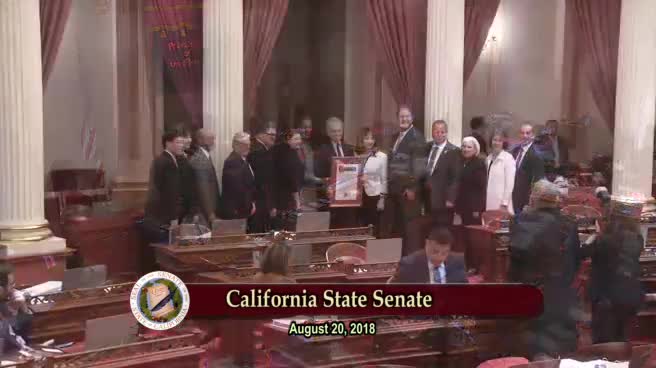 46SEC
Senate Floor
 1MIN
Assembly Floor
 1MIN
Senate Floor
 2MIN
Senate Standing Committee on Governance and Finance
Bill Author

Bill Co-Author(s):