SB 1248: California Partnership for Long-Term Care Program.
- Session Year: 2017-2018
- House: Senate
- Latest Version Date: 2018-09-19
Existing law establishes the California Partnership for Long-Term Care Program, which is administered by the State Department of Health Care Services. The purpose of the program is to link private long-term care insurance and health care service plan contracts that cover long-term care with the In-Home Supportive Services (IHSS) program and the Medi-Cal program, and to provide IHSS and Medi-Cal program benefits to certain individuals who have income and resources above the eligibility levels for receipt of medical assistance, but who have purchased certified private long-term care insurance policies. Existing law prescribes specified criteria for certification of a long-term care insurance policy under the program, including a requirement that the policy provide levels and durations of benefits that meet minimum standards set by the department.
Existing law requires a policy, certificate, or rider in which benefits are limited to the provision of all care settings, except nursing facility care, and that is offered under the California Partnership for Long-Term Care Program to be called a home care and community-based services policy, certificate, or rider. A long-term care policy, certificate, or rider that purports to provide benefits of home and community-based services under the California Partnership for Long-Term Care Program is required to provide specified minimum services, including assisted living facility services and residential care facility services. Existing law includes minimum policy definitions of those facilities. Existing law also requires the department to adopt regulations requiring that a long-term care insurance policy or health care service plan contract that includes long-term care services include, among other specified coverage categories, home care and community-based care coverage only.
This bill would require a policy, certificate, or rider as described above to instead be called a home care, community-based services, and residential care facility only policy, certificate, or rider. The bill would delete assisted living facility services from the list of required minimum services to be provided, clarify that those required minimum services include care in a residential care facility, and delete the policy definitions. The bill also would make conforming name changes.
This bill would authorize the department to certify a policy with a per diem benefit of at least $100 per day for a nursing facility, residential care facility, and home care and community-based services, if the policy provides a lifetime maximum benefit of not less than $73,000. The bill would authorize an insurer to offer a policy with those benefits only if the insurer also offers the applicant policy benefits that provide at least a lifetime maximum benefit that, at the time of purchase, is equivalent in dollars to at least 365 times 70% of the average daily private pay rate for a nursing facility and a nursing facility per diem benefit of no less than 70% of the average daily private pay rate for a nursing facility.
Existing law requires an insurer or producer, at the time of application, to provide to an applicant a graph that illustrates the difference in premium rates and policy benefits payable in accordance with specified inflation protection provisions.
This bill would also require the insurer or producer to provide to the applicant, an illustration of the differences in benefits between the 2 policies described above and a description of the available lower-cost options and the advantages and disadvantages of each option.
Existing law establishes the California Partnership for Long-Term Care Program, which is administered by the State Department of Health Care Services. The purpose of the program is to link private long-term care insurance and health care service plan contracts that cover long-term care with the In-Home Supportive Services (IHSS) program and the Medi-Cal program, and to provide IHSS and Medi-Cal program benefits to certain individuals who have income and resources above the eligibility levels for receipt of medical assistance, but who have purchased certified private long-term care insurance policies. Existing law prescribes specified criteria for certification of a long-term care insurance policy under the program, including a requirement that the policy provide levels and durations of benefits that meet minimum standards set by the department.
Existing law requires a policy, certificate, or rider in which benefits are limited to the provision of all care settings, except nursing facility care, and that is offered under the California Partnership for Long-Term Care Program to be called a home care and community-based services policy, certificate, or rider. A long-term care policy, certificate, or rider that purports to provide benefits of home and community-based services under the California Partnership for Long-Term Care Program is required to provide specified minimum services, including assisted living facility services and residential care facility services. Existing law includes minimum policy definitions of those facilities. Existing law also requires the department to adopt regulations requiring that a long-term care insurance policy or health care service plan contract that includes long-term care services include, among other specified coverage categories, home care and community-based care coverage only.
This bill would require a policy, certificate, or rider as described above to instead be called a home care, community-based services, and residential care facility only policy, certificate, or rider. The bill would delete assisted living facility services from the list of required minimum services to be provided, clarify that those required minimum services include care in a residential care facility, and delete the policy definitions. The bill also would make conforming name changes.
This bill would authorize the department to certify a policy with a per diem benefit of at least $100 per day for a nursing facility, residential care facility, and home care and community-based services, if the policy provides a lifetime maximum benefit of not less than $73,000. The bill would authorize an insurer to offer a policy with those benefits only if the insurer also offers the applicant policy benefits that provide at least a lifetime maximum benefit that, at the time of purchase, is equivalent in dollars to at least 365 times 70% of the average daily private pay rate for a nursing facility and a nursing facility per diem benefit of no less than 70% of the average daily private pay rate for a nursing facility.
Existing law requires an insurer or producer, at the time of application, to provide to an applicant a graph that illustrates the difference in premium rates and policy benefits payable in accordance with specified inflation protection provisions.
This bill would also require the insurer or producer to provide to the applicant, an illustration of the differences in benefits between the 2 policies described above and a description of the available lower-cost options and the advantages and disadvantages of each option.
Existing law establishes the California Partnership for Long-Term Care Program, which is administered by the State Department of Health Care Services. The purpose of the program is to link private long-term care insurance and health care service plan contracts that cover long-term care with the In-Home Supportive Services (IHSS) program and the Medi-Cal program, and to provide IHSS and Medi-Cal program benefits to certain individuals who have income and resources above the eligibility levels for receipt of medical assistance, but who have purchased certified private long-term care insurance policies. Existing law prescribes specified criteria for certification of a long-term care insurance policy under the program, including a requirement that the policy provide levels and durations of benefits that meet minimum standards set by the department.
Existing law requires a policy, certificate, or rider in which benefits are limited to the provision of all care settings, except nursing facility care, and that is offered under the California Partnership for Long-Term Care Program to be called a home care and community-based services policy, certificate, or rider. A long-term care policy, certificate, or rider that purports to provide benefits of home and community-based services under the California Partnership for Long-Term Care Program is required to provide specified minimum services, including assisted living facility services and residential care facility services. Existing law includes minimum policy definitions of those facilities. Existing law also requires the department to adopt regulations requiring that a long-term care insurance policy or health care service plan contract that includes long-term care services include, among other specified coverage categories, home care and community-based care coverage only.
This bill would require a policy, certificate, or rider as described above to instead be called a home care, community-based services, and residential care facility only policy, certificate, or rider. The bill would delete assisted living facility services from the list of required minimum services to be provided, and clarify that those required minimum services include care in a residential care facility, and delete the policy definitions. The bill also would make conforming name changes.
This bill would require an insurer to offer an applicant, at the time of purchase of a long-term care insurance policy, a lifetime maximum benefit that, at the time of purchase, is equivalent in dollars to at least 365 times 70% of the average daily private pay rate for a nursing facility. The bill would also authorize an insurer to offer an applicant at least one lower cost option that provides authorize the department to certify a policy with a per diem benefit of at least $100 per day for a nursing facility, a residential care facility, or and home care and community-based services, if the policy provides a lifetime maximum benefit of not less than $73,000. The bill would authorize an insurer to offer a policy with those benefits only if the insurer also offers the applicant policy benefits that provide at least a lifetime maximum benefit that, at the time of purchase, is equivalent in dollars to at least 365 times 70% of the average daily private pay rate for a nursing facility and a nursing facility per diem benefit of no less than 70% of the average daily private pay rate for a nursing facility.
Existing law requires an insurer or producer, at the time of application, to provide to an applicant a graph that illustrates the difference in premium rates and policy benefits payable in accordance with specified inflation protection provisions.
This bill would also require the insurer or producer to provide to the applicant, an illustration of the differences in benefits between the 2 policies described above and a description of the available lower-cost options and the advantages and disadvantages of each option.
Existing law establishes the California Partnership for Long-Term Care Program, which is administered by the State Department of Health Care Services. The purpose of the program is to link private long-term care insurance and health care service plan contracts that cover long-term care with the In-Home Supportive Services (IHSS) program and the Medi-Cal program, and to provide IHSS and Medi-Cal program benefits to certain individuals who have income and resources above the eligibility levels for receipt of medical assistance, but who have purchased certified private long-term care insurance policies. Existing law prescribes specified criteria for certification of a long-term care insurance policy under the program, including a requirement that the policy provide levels and durations of benefits that meet minimum standards set by the department.
Existing law requires a policy, certificate, or rider in which benefits are limited to the provision of all care settings, except nursing facility care, and that is offered under the California Partnership for Long-Term Care Program to be called a home care and community-based services policy, certificate, or rider. A long-term care policy, certificate, or rider that purports to provide benefits of home and community-based services under the California Partnership for Long-Term Care Program is required to provide specified minimum services, including assisted living facility services and residential care facility services. Existing law includes minimum policy definitions of those facilities. Existing law also requires the department to adopt regulations requiring that a long-term care insurance policy or health care service plan contract that includes long-term care services include, among other specified coverage categories, home care and community-based care coverage only.
This bill would require a policy, certificate, or rider as described above to instead be called a home care, community-based services, and residential care facility only policy, certificate, or rider. The bill would delete assisted living facility services from the list of required minimum services to be provided, and clarify that those required minimum services include care in a residential care facility, and delete the policy definitions. The bill also would make conforming name changes.
This bill would require an insurer to offer an applicant, at the time of purchase, purchase of a long-term care insurance policy, a lifetime maximum benefit that, at the time of purchase, is equivalent in dollars to at least 365 times 70% of the average daily private pay rate for a nursing facility. The bill would also authorize an insurer to offer an applicant at least one lower cost option that provides a per diem benefit of at least $100 per day for a nursing facility, a residential care facility, or home- home care and community-based services, if the policy provides a lifetime maximum benefit of not less than $73,000.
Existing law establishes the California Partnership for Long-Term Care Program, which is administered by the State Department of Health Care Services. The purpose of the program is to link private long-term care insurance and health care service plan contracts that cover long-term care with the In-Home Supportive Services (IHSS) program and the Medi-Cal program, and to provide IHSS and Medi-Cal program benefits to certain individuals who have income and resources above the eligibility levels for receipt of medical assistance, but who have purchased certified private long-term care insurance policies. Existing law prescribes specified criteria for certification of a long-term care insurance policy under the program, including a requirement that the policy provide levels and durations of benefits that meet minimum standards set by the department.
This bill would require an insurer to offer an applicant, at the time of purchase, a lifetime maximum benefit that, at the time of purchase, is equivalent in dollars to at least 365 times 70% of the average daily private pay rate for a nursing facility. The bill would also authorize an insurer to offer an applicant at least one lower cost option that provides a per diem benefit of at least $100 per day for a nursing facility, a residential care facility, or home- and community-based services, if the policy provides a lifetime maximum benefit of not less than $73,000.
Existing law provides that family expense disability insurance is, among other things, a form of disability insurance that insures more than one person and is issued to the head of a family or his or her spouse indemnifying him or her, or the spouse, or both, against loss due to disability of one or more persons dependent at the time of issuance upon him or her, or the spouse, or both, and may include indemnification on account of his or her own disability and disability of his or her spouse whether or not either is dependent on the other.This bill would make technical, nonsubstantive changes to that provision.Existing law provides that family expense disability insurance is, among other things, a form of disability insurance that insures more than one person and is issued to the head of a family or his or her spouse indemnifying him or her, or the spouse, or both, against loss due to disability of one or more persons dependent at the time of issuance upon him or her, or the spouse, or both, and may include indemnification on account of his or her own disability and disability of his or her spouse whether or not either is dependent on the other.
This bill would make technical, nonsubstantive changes to that provision.
(a)Every policy that is intended to be a qualified long-term care insurance contract as provided by Public Law 104-191 shall be identified as such by prominently displaying and printing on page one of the policy form and the outline of coverage and in the application the following words: This contract for long-term care insurance is intended to be a federally qualified long-term care insurance contract and may qualify you for federal and state tax benefits. Every policy that is not intended to be a qualified long-term care insurance contract as provided by Public Law 104-191 shall be identified as such by prominently displaying and printing on page one of the policy form and the outline of coverage and in the application the following words: This contract for long-term care insurance is not intended to be a federally qualified long-term care insurance contract.
(b)Any policy or certificate in which benefits are limited to the provision of institutional care shall be called a nursing facility and residential care facility only policy or certificate and the words Nursing Facility and Residential Care Facility Only shall be prominently displayed on page one of the form and the outline of coverage. The commissioner may approve alternative wording if it is more descriptive of the benefits.
(c)Any policy or certificate in which benefits are limited to the provision of home care services, including community-based services, shall be called a home care only policy or certificate and the words Home Care Only shall be prominently displayed on page one of the form and the outline of coverage. The commissioner may approve alternative wording if it is more descriptive of the benefits.
(d)Any policy, certificate, or rider in which benefits are limited to the provision of all care settings, except nursing facility care, and that is offered under the California Partnership for Long-Term Care Program established by Section 22000 of the Welfare and Institutions Code shall be called a home care, community-based services, and residential care facility only policy, certificate, or rider and the words Home Care, Community-Based Services, and Residential Care Facility Only shall be prominently displayed on the first page of the form and the outline of coverage. The commissioner may approve an alternative version of those words if the alternative version is more descriptive of the benefits provided.
(e)Only those policies or certificates providing benefits for both institutional care and home care may be called comprehensive long-term care insurance.
SEC. 2.Section 10232.81 of the Insurance Code is amended to read:10232.81.Every long-term care policy, certificate, or rider that purports to provide benefits of home care, community-based services, and residential care facility services under the California Partnership for Long-Term Care Program established by Section 22000 of the Welfare and Institutions Code shall provide at least the following:
(a)Care in a residential care facility.
(b)Home health care.
(c)Adult day care.
(d)Personal care.
(e)Homemaker services.
(f)Hospice services.
(g)Respite care.
SEC. 3.Section 22005.1 of the Welfare and Institutions Code is amended to read:22005.1.(a)The State Department of Health Care Services shall only certify a long-term care insurance policy that substantially meets the requirements of Chapter 2.6 (commencing with Section 10231) of Part 2 of Division 2 of the Insurance Code, except the requirements of Sections 10232.1, 10232.2, 10232.8, 10232.9, and 10232.92 of the Insurance Code, and that provides all of the items specified in subdivision (b). The State Department of Health Care Services shall only certify a health care service plan contract that has been approved by the Department of Managed Health Care pursuant to Chapter 2.2 (commencing with Section 1340) of Division 2 of the Health and Safety Code as providing substantially equivalent coverage to that required by Chapter 2.6 (commencing with Section 10231) of Part 2 of Division 2 of the Insurance Code, and that provides all of the items specified in subdivision (b). Policies issued by organizations subject to the Insurance Code and regulated by the Department of Insurance shall also be approved by the Department of Insurance.
(b)Only policies and contracts that provide all of the following items shall be certified by the department:
(1)Individual assessment and case management by a coordinating entity designated and approved by the department.
(2)Levels and durations of benefits that meet minimum standards set by the department pursuant to Section 22009.
(3)Protection against loss of benefits due to inflation. An applicant shall be offered, at the time of purchase, the following options:
(A)One option that provides, at a minimum, protection against inflation that automatically increases benefit levels by 5 percent each year over the previous year, up to an age specified by the program.
(B)At least one lower cost option.
(4)A periodic record issued to the insured including an explanation of insurance payments or benefits paid that count toward Medi-Cal asset protection under this division.
(5)Compliance with any other requirements imposed by regulations adopted by the State Department of Health Care Services or the State Department of Social Services and consistent with the purposes of this division.
(c)(1)The State Department of Health Care Services may also certify a policy with a per diem benefit of at least one hundred dollars ($100) per day for a nursing facility, residential care facility, and home care and community-based services, if the policy provides a lifetime maximum benefit of not less than seventy-three thousand dollars ($73,000).
(2)An insurer may offer a policy with the benefits described in paragraph (1) only if the insurer also offers the applicant policy benefits that provide at least a lifetime maximum benefit that, at the time of purchase, is equivalent in dollars to at least 365 times 70 percent of the average daily private pay rate for a nursing facility and a nursing facility per diem benefit of no less than 70 percent of the average daily private pay rate for a nursing facility.
(3)Except for the lifetime maximum benefit and the nursing facility per diem benefit levels required by paragraphs (1) and (2), policies authorized by this subdivision shall comply with the standards described in paragraph (2) of subdivision (b).
SEC. 4.Section 22005.3 of the Welfare and Institutions Code is amended to read:22005.3.(a)The insurer or producer shall, at the time of application, provide all of the following to the applicant:
(1)A graph that illustrates the difference in premium rates and policy benefits payable in accordance with the inflation protection provisions described in Section 22005.1.
(2)An illustration of the differences in benefits between the policies described in paragraphs (1) and (2) of subdivision (c) of Section 22005.1.
(3)A description of the available lower-cost options and the advantages and disadvantages of each option, including the differences between lower and higher minimum benefits, lower and higher inflation protection options, the types of services covered, and how these options compare to the anticipated costs of home, community-based, and institutional care.
(b)The State Department of Health Care Services shall prepare the materials described in subdivision (a) on behalf of issuers as provided in Section 22005.2 and shall require that the materials be incorporated into producer training curriculum.
SEC. 5.Section 22009 of the Welfare and Institutions Code is amended to read:22009.(a)The State Department of Health Care Services shall adopt regulations to implement this division, including, but not limited to, regulations that establish:
(1)The population and age groups that are eligible to participate in the program.
(2)The minimum level of long-term care insurance or long-term care coverage included in health care service plan contracts that must be purchased to meet the requirement of subdivision (b) of Section 22003.
(3)(A) The amount and types of services that a long-term care insurance policy or health care service plan contract that includes long-term care services must cover to meet the requirements of this division. The types of policies or plans shall include nursing and residential care facility coverage only, home care, community-based services, and residential care facility coverage only, and comprehensive coverage.
(B)Policies that provide only home care benefits shall include coverage for electronic or other devices intended to assist in monitoring the health and safety of an insured.
(4)Which coordinating entities are designated and approved to deliver individual assessment and case management services to individuals at home or in a community setting, as required by subdivision (b) of Section 22006.
(b)The State Department of Health Care Services shall also adopt regulations to implement this division, including, but not limited to, regulations that establish:
(1)The disability criteria for eligibility for long-term care benefits as required by subdivision (c) of Section 22006.
(2)The specific eligibility requirements for receipt of the Medi-Cal benefits provided for by the program, and those Medi-Cal benefits for which participants in the program shall be eligible.
(c)The State Department of Social Services shall also adopt regulations to implement this division, including, but not limited to, regulations that establish:
(1)The specific eligibility requirements for in-home supportive services benefits.
(2)Those in-home supportive services benefits for which participants in the program shall be eligible.
(d)The State Department of Health Care Services and the State Department of Social Services shall also jointly adopt regulations that provide for the following:
(1)Continuation of benefits pursuant to Section 22008.5.
(2)The protection of a participants resources pursuant to Section 22004, and the ratio of resources to long-term care benefit payments as described in subdivision (c) of Section 22004.
(e)(1)The departments shall adopt emergency regulations pursuant to Chapter 3.5 (commencing with Section 11340) of Part 1 of Division 3 of Title 2 of the Government Code to implement this division. The adoption of regulations pursuant to this section in order to implement this division shall be deemed to be an emergency and necessary for the immediate preservation of the public peace, health, or safety.
(2)Notwithstanding Chapter 3.5 (commencing with Section 11340) of Part 1 of Division 3 of Title 2 of the Government Code, emergency regulations adopted pursuant to this section shall not be subject to the review and approval of the Office of Administrative Law. The regulations shall become effective immediately upon filing with the Secretary of State. The regulations shall not remain in effect more than 120 days unless the adopting agency complies with all of the provisions of Chapter 3.5 (commencing with Section 11340) as required by subdivision (c) of Section 11346.1 of the Government Code.
(a)Every policy that is intended to be a qualified long-term care insurance contract as provided by Public Law 104-191 shall be identified as such by prominently displaying and printing on page one of the policy form and the outline of coverage and in the application the following words: This contract for long-term care insurance is intended to be a federally qualified long-term care insurance contract and may qualify you for federal and state tax benefits. Every policy that is not intended to be a qualified long-term care insurance contract as provided by Public Law 104-191 shall be identified as such by prominently displaying and printing on page one of the policy form and the outline of coverage and in the application the following words: This contract for long-term care insurance is not intended to be a federally qualified long-term care insurance contract.
(b)Any policy or certificate in which benefits are limited to the provision of institutional care shall be called a nursing facility and residential care facility only policy or certificate and the words Nursing Facility and Residential Care Facility Only shall be prominently displayed on page one of the form and the outline of coverage. The commissioner may approve alternative wording if it is more descriptive of the benefits.
(c)Any policy or certificate in which benefits are limited to the provision of home care services, including community-based services, shall be called a home care only policy or certificate and the words Home Care Only shall be prominently displayed on page one of the form and the outline of coverage. The commissioner may approve alternative wording if it is more descriptive of the benefits.
(d)Any policy, certificate, or rider in which benefits are limited to the provision of all care settings, except nursing facility care, and that is offered under the California Partnership for Long-Term Care Program established by Section 22000 of the Welfare and Institutions Code shall be called a home care, community-based services, and residential care facility only policy, certificate, or rider and the words Home Care, Community-Based Services, and Residential Care Facility Only shall be prominently displayed on the first page of the form and the outline of coverage. The commissioner may approve an alternative version of those words if the alternative version is more descriptive of the benefits provided.
(e)Only those policies or certificates providing benefits for both institutional care and home care may be called comprehensive long-term care insurance.
SEC. 2.Section 10232.81 of the Insurance Code is amended to read:10232.81.Every long-term care policy, certificate, or rider that purports to provide benefits of home care, community-based services, and residential care facility services under the California Partnership for Long-Term Care Program established by Section 22000 of the Welfare and Institutions Code shall provide at least the following:
(a)Care in a residential care facility.
(b)Home health care.
(c)Adult day care.
(d)Personal care.
(e)Homemaker services.
(f)Hospice services.
(g)Respite care.
SEC. 3.Section 22005.1 of the Welfare and Institutions Code is amended to read:22005.1.(a)The State Department of Health Care Services shall only certify a long-term care insurance policy that substantially meets the requirements of Chapter 2.6 (commencing with Section 10231) of Part 2 of Division 2 of the Insurance Code, except the requirements of Sections 10232.1, 10232.2, 10232.8, 10232.9, and 10232.92 of the Insurance Code, and that provides all of the items specified in subdivision (b). The State Department of Health Care Services shall only certify a health care service plan contract that has been approved by the Department of Managed Health Care pursuant to Chapter 2.2 (commencing with Section 1340) of Division 2 of the Health and Safety Code as providing substantially equivalent coverage to that required by Chapter 2.6 (commencing with Section 10231) of Part 2 of Division 2 of the Insurance Code, and that provides all of the items specified in subdivision (b). Policies issued by organizations subject to the Insurance Code and regulated by the Department of Insurance shall also be approved by the Department of Insurance.
(b)Only policies and contracts that provide all of the following items shall be certified by the department:
(1)Individual assessment and case management by a coordinating entity designated and approved by the department.
(2)Levels and durations of benefits that meet minimum standards set by the department pursuant to Section 22009.
(3)Protection against loss of benefits due to inflation. An applicant shall be offered, at the time of purchase, the following options:
(A)One option that provides, at a minimum, protection against inflation that automatically increases benefit levels by 5 percent each year over the previous year, up to an age specified by the program.
(B)At least one lower cost option.
(4)A periodic record issued to the insured including an explanation of insurance payments or benefits paid that count toward Medi-Cal asset protection under this division.
(5)Compliance with any other requirements imposed by regulations adopted by the State Department of Health Care Services or the State Department of Social Services and consistent with the purposes of this division.
(c)(1)The State Department of Health Care Services may also certify a policy with a per diem benefit of at least one hundred dollars ($100) per day for a nursing facility, residential care facility, and home care and community-based services, if the policy provides a lifetime maximum benefit of not less than seventy-three thousand dollars ($73,000).
(2)An insurer may offer a policy with the benefits described in paragraph (1) only if the insurer also offers the applicant policy benefits that provide at least a lifetime maximum benefit that, at the time of purchase, is equivalent in dollars to at least 365 times 70 percent of the average daily private pay rate for a nursing facility and a nursing facility per diem benefit of no less than 70 percent of the average daily private pay rate for a nursing facility.
(3)Except for the lifetime maximum benefit and the nursing facility per diem benefit levels required by paragraphs (1) and (2), policies authorized by this subdivision shall comply with the standards described in paragraph (2) of subdivision (b).
SEC. 4.Section 22005.3 of the Welfare and Institutions Code is amended to read:22005.3.(a)The insurer or producer shall, at the time of application, provide all of the following to the applicant:
(1)A graph that illustrates the difference in premium rates and policy benefits payable in accordance with the inflation protection provisions described in Section 22005.1.
(2)An illustration of the differences in benefits between the policies described in paragraphs (1) and (2) of subdivision (c) of Section 22005.1.
(3)A description of the available lower-cost options and the advantages and disadvantages of each option, including the differences between lower and higher minimum benefits, lower and higher inflation protection options, the types of services covered, and how these options compare to the anticipated costs of home, community-based, and institutional care.
(b)The State Department of Health Care Services shall prepare the materials described in subdivision (a) on behalf of issuers as provided in Section 22005.2 and shall require that the materials be incorporated into producer training curriculum.
SEC. 5.Section 22009 of the Welfare and Institutions Code is amended to read:22009.(a)The State Department of Health Care Services shall adopt regulations to implement this division, including, but not limited to, regulations that establish:
(1)The population and age groups that are eligible to participate in the program.
(2)The minimum level of long-term care insurance or long-term care coverage included in health care service plan contracts that must be purchased to meet the requirement of subdivision (b) of Section 22003.
(3)(A) The amount and types of services that a long-term care insurance policy or health care service plan contract that includes long-term care services must cover to meet the requirements of this division. The types of policies or plans shall include nursing and residential care facility coverage only, home care, community-based services, and residential care facility coverage only, and comprehensive coverage.
(B)Policies that provide only home care benefits shall include coverage for electronic or other devices intended to assist in monitoring the health and safety of an insured.
(4)Which coordinating entities are designated and approved to deliver individual assessment and case management services to individuals at home or in a community setting, as required by subdivision (b) of Section 22006.
(b)The State Department of Health Care Services shall also adopt regulations to implement this division, including, but not limited to, regulations that establish:
(1)The disability criteria for eligibility for long-term care benefits as required by subdivision (c) of Section 22006.
(2)The specific eligibility requirements for receipt of the Medi-Cal benefits provided for by the program, and those Medi-Cal benefits for which participants in the program shall be eligible.
(c)The State Department of Social Services shall also adopt regulations to implement this division, including, but not limited to, regulations that establish:
(1)The specific eligibility requirements for in-home supportive services benefits.
(2)Those in-home supportive services benefits for which participants in the program shall be eligible.
(d)The State Department of Health Care Services and the State Department of Social Services shall also jointly adopt regulations that provide for the following:
(1)Continuation of benefits pursuant to Section 22008.5.
(2)The protection of a participants resources pursuant to Section 22004, and the ratio of resources to long-term care benefit payments as described in subdivision (c) of Section 22004.
(e)(1)The departments shall adopt emergency regulations pursuant to Chapter 3.5 (commencing with Section 11340) of Part 1 of Division 3 of Title 2 of the Government Code to implement this division. The adoption of regulations pursuant to this section in order to implement this division shall be deemed to be an emergency and necessary for the immediate preservation of the public peace, health, or safety.
(2)Notwithstanding Chapter 3.5 (commencing with Section 11340) of Part 1 of Division 3 of Title 2 of the Government Code, emergency regulations adopted pursuant to this section shall not be subject to the review and approval of the Office of Administrative Law. The regulations shall become effective immediately upon filing with the Secretary of State. The regulations shall not remain in effect more than 120 days unless the adopting agency complies with all of the provisions of Chapter 3.5 (commencing with Section 11340) as required by subdivision (c) of Section 11346.1 of the Government Code.
(a)Every policy that is intended to be a qualified long-term care insurance contract as provided by Public Law 104-191 shall be identified as such by prominently displaying and printing on page one of the policy form and the outline of coverage and in the application the following words: This contract for long-term care insurance is intended to be a federally qualified long-term care insurance contract and may qualify you for federal and state tax benefits. Every policy that is not intended to be a qualified long-term care insurance contract as provided by Public Law 104-191 shall be identified as such by prominently displaying and printing on page one of the policy form and the outline of coverage and in the application the following words: This contract for long-term care insurance is not intended to be a federally qualified long-term care insurance contract.
(b)Any policy or certificate in which benefits are limited to the provision of institutional care shall be called a nursing facility and residential care facility only policy or certificate and the words Nursing Facility and Residential Care Facility Only shall be prominently displayed on page one of the form and the outline of coverage. The commissioner may approve alternative wording if it is more descriptive of the benefits.
(c)Any policy or certificate in which benefits are limited to the provision of home care services, including community-based services, shall be called a home care only policy or certificate and the words Home Care Only shall be prominently displayed on page one of the form and the outline of coverage. The commissioner may approve alternative wording if it is more descriptive of the benefits.
(d)Any policy, certificate, or rider in which benefits are limited to the provision of all care settings, except nursing facility care, and that is offered under the California Partnership for Long-Term Care Program established by Section 22000 of the Welfare and Institutions Code shall be called a home care, community-based services, and residential care facility only policy, certificate, or rider and the words Home Care, Community-Based Services, and Residential Care Facility Only shall be prominently displayed on the first page of the form and the outline of coverage. The commissioner may approve an alternative version of those words if the alternative version is more descriptive of the benefits provided.
(e)Only those policies or certificates providing benefits for both institutional care and home care may be called comprehensive long-term care insurance.
SEC. 2.Section 10232.81 of the Insurance Code is amended to read:10232.81.Every long-term care policy, certificate, or rider that purports to provide benefits of home care, community-based services, and residential care facility services under the California Partnership for Long-Term Care Program established by Section 22000 of the Welfare and Institutions Code shall provide at least the following:
(a)Care in a residential care facility.
(b)Home health care.
(c)Adult day care.
(d)Personal care.
(e)Homemaker services.
(f)Hospice services.
(g)Respite care.
SEC. 3.Section 22005.1 of the Welfare and Institutions Code is amended to read:22005.1.(a)The State Department of Health Care Services shall only certify a long-term care insurance policy that substantially meets the requirements of Chapter 2.6 (commencing with Section 10231) of Part 2 of Division 2 of the Insurance Code, except the requirements of Sections 10232.1, 10232.2, 10232.8, 10232.9, and 10232.92 of the Insurance Code, and that provides all of the items specified in subdivision (b). The State Department of Health Care Services shall only certify a health care service plan contract that has been approved by the Department of Managed Health Care pursuant to Chapter 2.2 (commencing with Section 1340) of Division 2 of the Health and Safety Code as providing substantially equivalent coverage to that required by Chapter 2.6 (commencing with Section 10231) of Part 2 of Division 2 of the Insurance Code, and that provides all of the items specified in subdivision (b). Policies issued by organizations subject to the Insurance Code and regulated by the Department of Insurance shall also be approved by the Department of Insurance.
(b)Only policies and contracts that provide all of the following items shall be certified by the department:
(1)Individual assessment and case management by a coordinating entity designated and approved by the department.
(2)Levels and durations of benefits that meet minimum standards set by the department pursuant to Section 22009.
(A)An applicant shall be offered, at the time of purchase, a lifetime maximum benefit that, at the time of purchase, is equivalent in dollars to at least 365 times 70 percent of the average daily private pay rate for a nursing facility.(B)In addition to subparagraph (A), an applicant may be offered at least one lower cost option that provides a per diem benefit of at least one hundred dollars ($100) per day for a nursing facility, residential care facility, or home care and community-based services, if the policy provides a lifetime maximum benefit of not less than seventy-three thousand dollars ($73,000).(3)Protection against loss of benefits due to inflation. An applicant shall be offered, at the time of purchase, the following options:
(A)One option that provides, at a minimum, protection against inflation that automatically increases benefit levels by 5 percent each year over the previous year, up to an age specified by the program.
(B)At least one lower cost option.
(4)A periodic record issued to the insured including an explanation of insurance payments or benefits paid that count toward Medi-Cal asset protection under this division.
(5)Compliance with any other requirements imposed by regulations adopted by the State Department of Health Care Services or the State Department of Social Services and consistent with the purposes of this division.
(c)(1)The State Department of Health Care Services may also certify a policy with a per diem benefit of at least one hundred dollars ($100) per day for a nursing facility, residential care facility, and home care and community-based services, if the policy provides a lifetime maximum benefit of not less than seventy-three thousand dollars ($73,000).
(2)An insurer may offer a policy with the benefits described in paragraph (1) only if the insurer also offers the applicant policy benefits that provide at least a lifetime maximum benefit that, at the time of purchase, is equivalent in dollars to at least 365 times 70 percent of the average daily private pay rate for a nursing facility and a nursing facility per diem benefit of no less than 70 percent of the average daily private pay rate for a nursing facility.
(3)Except for the lifetime maximum benefit and the nursing facility per diem benefit levels required by paragraphs (1) and (2), policies authorized by this subdivision shall comply with the standards described in paragraph (2) of subdivision (b).
SEC. 4.Section 22005.3 of the Welfare and Institutions Code is amended to read:22005.3.(a)The insurer or producer shall, at the time of application, provide to the individual a all of the following to the applicant:
(1)A graph that illustrates the difference in premium rates and policy benefits payable in accordance with the inflation protection provisions described in Section 22005.1.
(2)An illustration of the differences in benefits between the policies described in paragraphs (1) and (2) of subdivision (c) of Section 22005.1.
(3)A description of the available lower-cost options and the advantages and disadvantages of each option, including the differences between lower and higher minimum benefits, lower and higher inflation protection options, the types of services covered, and how these options compare to the anticipated costs of home, community-based, and institutional care.
(b)The State Department of Health Care Services shall prepare the materials described in subdivision (a) on behalf of issuers as provided in Section 22005.2 and shall require that the materials be incorporated into producer training curriculum.
SEC. 4.SEC. 5.Section 22009 of the Welfare and Institutions Code is amended to read:22009.(a)The State Department of Health Care Services shall adopt regulations to implement this division, including, but not limited to, regulations that establish:
(1)The population and age groups that are eligible to participate in the program.
(2)The minimum level of long-term care insurance or long-term care coverage included in health care service plan contracts that must be purchased to meet the requirement of subdivision (b) of Section 22003.
(3)(A) The amount and types of services that a long-term care insurance policy or health care service plan contract that includes long-term care services must cover to meet the requirements of this division. The types of policies or plans shall include nursing and residential care facility coverage only, home care, community-based services, and residential care facility coverage only, and comprehensive coverage.
(B)Policies that provide only home care benefits shall include coverage for electronic or other devices intended to assist in monitoring the health and safety of an insured.
(4)Which coordinating entities are designated and approved to deliver individual assessment and case management services to individuals at home or in a community setting, as required by subdivision (b) of Section 22006.
(b)The State Department of Health Care Services shall also adopt regulations to implement this division, including, but not limited to, regulations that establish:
(1)The disability criteria for eligibility for long-term care benefits as required by subdivision (c) of Section 22006.
(2)The specific eligibility requirements for receipt of the Medi-Cal benefits provided for by the program, and those Medi-Cal benefits for which participants in the program shall be eligible.
(c)The State Department of Social Services shall also adopt regulations to implement this division, including, but not limited to, regulations that establish:
(1)The specific eligibility requirements for in-home supportive services benefits.
(2)Those in-home supportive services benefits for which participants in the program shall be eligible.
(d)The State Department of Health Care Services and the State Department of Social Services shall also jointly adopt regulations that provide for the following:
(1)Continuation of benefits pursuant to Section 22008.5.
(2)The protection of a participants resources pursuant to Section 22004, and the ratio of resources to long-term care benefit payments as described in subdivision (c) of Section 22004.
(e)(1)The departments shall adopt emergency regulations pursuant to Chapter 3.5 (commencing with Section 11340) of Part 1 of Division 3 of Title 2 of the Government Code to implement this division. The adoption of regulations pursuant to this section in order to implement this division shall be deemed to be an emergency and necessary for the immediate preservation of the public peace, health, or safety.
(2)Notwithstanding Chapter 3.5 (commencing with Section 11340) of Part 1 of Division 3 of Title 2 of the Government Code, emergency regulations adopted pursuant to this section shall not be subject to the review and approval of the Office of Administrative Law. The regulations shall become effective immediately upon filing with the Secretary of State. The regulations shall not remain in effect more than 120 days unless the adopting agency complies with all of the provisions of Chapter 3.5 (commencing with Section 11340) as required by subdivision (c) of Section 11346.1 of the Government Code.
(a)Every policy that is intended to be a qualified long-term care insurance contract as provided by Public Law 104-191 shall be identified as such by prominently displaying and printing on page one of the policy form and the outline of coverage and in the application the following words: This contract for long-term care insurance is intended to be a federally qualified long-term care insurance contract and may qualify you for federal and state tax benefits. Every policy that is not intended to be a qualified long-term care insurance contract as provided by Public Law 104-191 shall be identified as such by prominently displaying and printing on page one of the policy form and the outline of coverage and in the application the following words: This contract for long-term care insurance is not intended to be a federally qualified long-term care insurance contract.
(b)Any policy or certificate in which benefits are limited to the provision of institutional care shall be called a nursing facility and residential care facility only policy or certificate and the words Nursing Facility and Residential Care Facility Only shall be prominently displayed on page one of the form and the outline of coverage. The commissioner may approve alternative wording if it is more descriptive of the benefits.
(c)Any policy or certificate in which benefits are limited to the provision of home care services, including community-based services, shall be called a home care only policy or certificate and the words Home Care Only shall be prominently displayed on page one of the form and the outline of coverage. The commissioner may approve alternative wording if it is more descriptive of the benefits.
(d)Any policy, certificate, or rider in which benefits are limited to the provision of all care settings, except nursing facility care, and that is offered under the California Partnership for Long-Term Care Program established by Section 22000 of the Welfare and Institutions Code shall be called a home and care, community-based services services, and residential care facility only policy, certificate, or rider and the words Home and Home Care, Community-Based Services Services, and Residential Care Facility Only shall be prominently displayed on the first page of the form and the outline of coverage. The commissioner may approve an alternative version of those words if the alternative version is more descriptive of the benefits provided.
(e)Only those policies or certificates providing benefits for both institutional care and home care may be called comprehensive long-term care insurance.
SEC. 2.Section 10232.81 of the Insurance Code is amended to read:10232.81.(a)Every long-term care policy, certificate, or rider that purports to provide benefits of home and care, community-based services services, and residential care facility services under the California Partnership for Long-Term Care Program established by Section 22000 of the Welfare and Institutions Code shall provide at least the following:
(1)Residential care facility.(2)Assisted living facility.(a)Care in residential care facility.
(3)(b)Home health care.
(4)(c)Adult day care.
(5)(d)Personal care.
(6)(e)Homemaker services.
(7)(f)Hospice services.
(8)(g)Respite care.
(b)For purposes of this section, policy definitions of the benefits described in subdivision (a) may be no more restrictive than the following:(1)Residential care facility means a facility that is licensed as a residential care facility for the elderly or a residential care facility as defined in the Health and Safety Code. Outside California, an eligible provider is a facility that meets licensure standards applicable to the facility, if any, and is engaged primarily in providing ongoing care and related services sufficient to support needs resulting from impairment in activities of daily living or impairment in cognitive ability and which also provides care and services on a 24-hour basis, has a trained and ready-to-respond employee on duty in the facility at all times to provide care and services, provides three meals per day and accommodates special dietary needs, has agreements to ensure that residents receive the medical care services of a physician or nurse in case of emergency, and has appropriate methods and procedures to provide necessary assistance to residents in the management of prescribed medications.(2)Assisted living facility means a facility licensed as an assisted living facility as defined in the Health and Safety Code. Outside California, an eligible provider is a facility that meets licensure standards applicable to the facility, if any, and is engaged primarily in providing food and shelter and providing personal care services, or in administering medication by a person licensed or otherwise authorized to administer the medication.SECTION 1.SEC. 3.Section 22005.1 of the Welfare and Institutions Code is amended to read:22005.1.(a)The State Department of Health Care Services shall only certify a long-term care insurance policy that substantially meets the requirements of Chapter 2.6 (commencing with Section 10231) of Part 2 of Division 2 of the Insurance Code, except the requirements of Sections 10232.1, 10232.2, 10232.8, 10232.9, and 10232.92 of the Insurance Code, and that provides all of the items specified in subdivision (b). The State Department of Health Care Services shall only certify a health care service plan contract that has been approved by the Department of Managed Health Care pursuant to Chapter 2.2 (commencing with Section 1340) of Division 2 of the Health and Safety Code as providing substantially equivalent coverage to that required by Chapter 2.6 (commencing with Section 10231) of Part 2 of Division 2 of the Insurance Code, and that provides all of the items specified in subdivision (b). Policies issued by organizations subject to the Insurance Code and regulated by the Department of Insurance shall also be approved by the Department of Insurance.
(b)Only policies and contracts that provide all of the following items shall be certified by the department:
(1)Individual assessment and case management by a coordinating entity designated and approved by the department.
(2)Levels and durations of benefits that meet minimum standards set by the department pursuant to Section 22009.
(A)An applicant shall be offered, at the time of purchase, a lifetime maximum benefit that, at the time of purchase, is equivalent in dollars to at least 365 times 70 percent of the average daily private pay rate for a nursing facility.
(B)Notwithstanding any other law, and in In addition to subparagraph (A), an applicant may be offered at least one lower cost option that provides a per diem benefit of at least one hundred dollars ($100) per day for a nursing facility, residential care facility, or home- home care and community-based services, if the policy provides a lifetime maximum benefit of not less than seventy-three thousand dollars ($73,000).
(3)Protection against loss of benefits due to inflation. An applicant shall be offered, at the time of purchase, the following options:
(A)One option that provides, at a minimum, protection against inflation that automatically increases benefit levels by 5 percent each year over the previous year, up to an age specified by the program.
(B)At least one lower cost option.
(4)A periodic record issued to the insured including an explanation of insurance payments or benefits paid that count toward Medi-Cal asset protection under this division.
(5)Compliance with any other requirements imposed by regulations adopted by the State Department of Health Care Services or the State Department of Social Services and consistent with the purposes of this division.
SEC. 4.Section 22009 of the Welfare and Institutions Code is amended to read:22009.(a)The State Department of Health Care Services shall adopt regulations to implement this division, including, but not limited to, regulations that establish:
(1)The population and age groups that are eligible to participate in the program.
(2)The minimum level of long-term care insurance or long-term care coverage included in health care service plan contracts that must be purchased to meet the requirement of subdivision (b) of Section 22003.
(3)(A) The amount and types of services that a long-term care insurance policy or health care service plan contract that includes long-term care services must cover to meet the requirements of this division. The types of policies or plans shall include nursing and residential care facility coverage only, home care and care, community-based care services, and residential care facility coverage only, and comprehensive coverage.
(B)Policies that provide only home care benefits shall include coverage for electronic or other devices intended to assist in monitoring the health and safety of an insured.
(4)Which coordinating entities are designated and approved to deliver individual assessment and case management services to individuals at home or in a community setting, as required by subdivision (b) of Section 22006.
(b)The State Department of Health Care Services shall also adopt regulations to implement this division, including, but not limited to, regulations that establish:
(1)The disability criteria for eligibility for long-term care benefits as required by subdivision (c) of Section 22006.
(2)The specific eligibility requirements for receipt of the Medi-Cal benefits provided for by the program, and those Medi-Cal benefits for which participants in the program shall be eligible.
(c)The State Department of Social Services shall also adopt regulations to implement this division, including, but not limited to, regulations that establish:
(1)The specific eligibility requirements for in-home supportive services benefits.
(2)Those in-home supportive services benefits for which participants in the program shall be eligible.
(d)The State Department of Health Care Services and the State Department of Social Services shall also jointly adopt regulations that provide for the following:
(1)Continuation of benefits pursuant to Section 22008.5.
(2)The protection of a participants resources pursuant to Section 22004, and the ratio of resources to long-term care benefit payments as described in subdivision (c) of Section 22004.
(e)(1)The departments shall adopt emergency regulations pursuant to Chapter 3.5 (commencing with Section 11340) of Part 1 of Division 3 of Title 2 of the Government Code to implement this division. The adoption of regulations pursuant to this section in order to implement this division shall be deemed to be an emergency and necessary for the immediate preservation of the public peace, health, or safety.
(2)Notwithstanding Chapter 3.5 (commencing with Section 11340) of Part 1 of Division 3 of Title 2 of the Government Code, emergency regulations adopted pursuant to this section shall not be subject to the review and approval of the Office of Administrative Law. The regulations shall become effective immediately upon filing with the Secretary of State. The regulations shall not remain in effect more than 120 days unless the adopting agency complies with all of the provisions of Chapter 3.5 (commencing with Section 11340) as required by subdivision (c) of Section 11346.1 of the Government Code.
(a)The State Department of Health Care Services shall only certify a long-term care insurance policy that substantially meets the requirements of Chapter 2.6 (commencing with Section 10230) 10231) of Part 2 of Division 2 of the Insurance Code, except the requirements of Sections 10232.1, 10232.2, 10232.8, 10232.9, and 10232.92 of the Insurance Code, and that provides all of the items specified in subdivision (b). The State Department of Health Care Services shall only certify a health care service plan contract that has been approved by the Department of Managed Health Care pursuant to Chapter 2.2 (commencing with Section 1340) of Division 2 of the Health and Safety Code as providing substantially equivalent coverage to that required by Chapter 2.6 (commencing with Section 10230) 10231) of Part 2 of Division 2 of the Insurance Code, and that provides all of the items specified in subdivision (b). Policies issued by organizations subject to the Insurance Code and regulated by the Department of Insurance shall also be approved by the Department of Insurance.
(b)Only policies and contracts that provide all of the following items shall be certified by the department:
(1)Individual assessment and case management by a coordinating entity designated and approved by the department.
(2)Levels and durations of benefits that meet minimum standards set by the State Department of Health Care Services department pursuant to Section 22009.
(A)An applicant shall be offered, at the time of purchase, a lifetime maximum benefit that, at the time of purchase, is equivalent in dollars to at least 365 times 70 percent of the average daily private pay rate for a nursing facility.
(B)Notwithstanding any other law, and in addition to subparagraph (A), an applicant may be offered at least one lower cost option that provides a per diem benefit of at least one hundred dollars ($100) per day for a nursing facility, residential care facility, or home- and community-based services, if the policy provides a lifetime maximum benefit of not less than seventy-three thousand dollars ($73,000).
(3)Protection against loss of benefits due to inflation. An applicant shall be offered, at the time of purchase, the following options:
(A)One option that provides, at a minimum, protection against inflation that automatically increases benefit levels by 5 percent each year over the previous year, up to an age specified by the program.
(B)At least one lower cost option.
(4)A periodic record issued to the insured including an explanation of insurance payments or benefits paid that count toward Medi-Cal asset protection under this division.
(5)Compliance with any other requirements imposed by regulations adopted by the State Department of Health Care Services or the State Department of Social Services and consistent with the purposes of this division.
SECTION 1.Section 10270.7 of the Insurance Code is amended to read:10270.7.(a)Family expense disability insurance is a form of disability insurance that insures more than one person and is issued to the head of a family or his or her spouse indemnifying him or her, or the spouse, or both, against loss due to disability of one or more persons dependent at the time of issuance upon him or her, or the spouse, or both, and may include indemnification on account of his or her own disability and disability of his or her spouse whether or not either is dependent on the other.(b)When a policy provides for payment for expenses incurred, expenses incurred by, or upon behalf of, any person covered by the policy shall be deemed incurred by the person to whom, or at whose direction, benefits are payable under the policy.(c)A question as to whether or not a person is the head of the family or his or her spouse, or is a child or dependent of either shall not relieve the insurer of any liability it otherwise would have under the policy.(d)When a policy indemnifies a spouse alone or a spouse and the head of the family, references in the policy to the head of the family shall be deemed to refer to or include the spouse.(a)Family expense disability insurance is that a form of disability insurance insuring that insures more than one person and is issued to the head of a family or his or her spouse indemnifying him, or his spouse, him or her, or the spouse, or both, against loss due to disability of one or more persons dependent at the time of issuance upon him, or his spouse, him or her, or the spouse, or both, and may include indemnification on account of his or her own disability and disability of his or her spouse whether or not either is dependent on the other.
Where such(b)When a policy provides for payment for expenses incurred, expenses incurred by by, or upon behalf of of, any person covered by the policy shall be deemed incurred by the person to whom whom, or at whose direction direction, benefits are payable under the policy.
No(c)A question as to whether or not any a person is the head of the family or his or her spouse, or is a child or dependent of either shall not relieve the insurer of any liability it otherwise would have under the policy.
Where such(d)When a policy indemnifies a spouse alone or a spouse and the head of the family, references in the policy to the head of the family shall be deemed to refer to or include the spouse.
|
Date
|
Status
|
|---|---|
| Sep 19, 2018 | Chaptered by Secretary of State. Chapter 565, Statutes of 2018. |
| Sep 19, 2018 | Approved by the Governor. |
| Aug 30, 2018 | Enrolled and presented to the Governor at 5 p.m. |
| Aug 24, 2018 | Assembly amendments concurred in. (Ayes 39. Noes 0.) Ordered to engrossing and enrolling. |
| Aug 23, 2018 | In Senate. Concurrence in Assembly amendments pending. |
| Aug 23, 2018 | Read third time. Passed. Ordered to the Senate. |
| Aug 16, 2018 | Read second time. Ordered to consent calendar. |
| Aug 15, 2018 | From committee: Do pass. Ordered to consent calendar. (Ayes 17. Noes 0.) (August 15). |
| Jun 28, 2018 | From committee: Do pass and re-refer to Com. on APPR. (Ayes 8. Noes 0.) (June 28). Re-referred to Com. on APPR. |
| Jun 28, 2018 | Joint Rule 62(a) suspended. |
| Jun 20, 2018 | From committee: Do pass and re-refer to Com. on INS. (Ayes 6. Noes 0.) (June 19). Re-referred to Com. on INS. |
| Jun 12, 2018 | From committee with author's amendments. Read second time and amended. Re-referred to Com. on AGING & L.T.C. |
| Jun 11, 2018 | From committee with author's amendments. Read second time and amended. Re-referred to Com. on AGING & L.T.C. |
| Jun 11, 2018 | Referred to Coms. on AGING & L.T.C. and INS. |
| May 29, 2018 | In Assembly. Read first time. Held at Desk. |
| May 29, 2018 | Read third time. Passed. (Ayes 38. Noes 0.) Ordered to the Assembly. |
| May 23, 2018 | Read second time. Ordered to third reading. |
| May 22, 2018 | From committee: Be ordered to second reading pursuant to Senate Rule 28.8. |
| May 14, 2018 | Set for hearing May 22. |
| Apr 30, 2018 | Read second time and amended. Re-referred to Com. on APPR. |
| Apr 26, 2018 | From committee: Do pass as amended and re-refer to Com. on APPR. with recommendation: To consent calendar. (Ayes 11. Noes 0.) (April 25). |
| Apr 20, 2018 | Set for hearing April 25. |
| Apr 19, 2018 | From committee: Do pass and re-refer to Com. on INS. (Ayes 9. Noes 0.) (April 18). Re-referred to Com. on INS. |
| Apr 10, 2018 | Set for hearing April 18. |
| Apr 4, 2018 | Re-referred to Coms. on HEALTH and INS. |
| Apr 2, 2018 | From committee with author's amendments. Read second time and amended. Re-referred to Com. on RLS. |
| Mar 1, 2018 | Referred to Com. on RLS. |
| Feb 16, 2018 | From printer. May be acted upon on or after March 18. |
| Feb 15, 2018 | Introduced. Read first time. To Com. on RLS. for assignment. To print. |
|
Date
|
Description
|
Location
|
Votes
|
|
|---|---|---|---|---|
| Aug 24, 2018 | Unfinished Business SB1248 Gaines et al. Concurrence | Senate Floor |
Passed |
|
| Aug 23, 2018 | SB 1248 Gaines Consent Calendar Second Day Regular Session | Assembly Floor |
Passed |
|
| Aug 15, 2018 | Do pass. To Consent Calendar. | Assembly Standing Committee on Appropriations |
Passed |
|
| Jun 28, 2018 | Do pass and be re-referred to the Committee on [Appropriations] | Assembly Standing Committee on Insurance |
Passed |
|
| Jun 19, 2018 | Do pass and be re-referred to the Committee on [Insurance] | Assembly Standing Committee on Aging and Long-Term Care |
Passed |
|
| May 29, 2018 | Senate 3rd Reading SB1248 Gaines et al. | Senate Floor |
Passed |
|
| Apr 25, 2018 | Do pass as amended, but first amend, and re-refer to the Committee on [Appropriations] with the recommendation: To Consent Calendar | Senate Standing Committee on Insurance |
Passed |
|
| Apr 18, 2018 | Do pass, but first be re-referred to the Committee on [Insurance] | Senate Standing Committee on Health |
Passed |
This list shows positions taken on this bill by organizations on the date displayed, which is linked to the original source.
Positions by individuals are not included.
Office of Senate Floor Analyses (916) 651-1520 Fax: (916) 327-4478 | SB |
UNFINISHED BUSINESS
Bill No: SB 1248
:
SENATE HEALTH COMMITTEE: 9-0, 4/18/18
AYES: Hernandez, Nguyen, Leyva, Mitchell, Monning, Newman, Nielsen, Pan, Roth
SENATE INSURANCE COMMITTEE: 11-0, 4/25/18
AYES: Glazer, Gaines, Galgiani, Hernandez, Hueso, Lara, Mitchell, Moorlach, Newman, Portantino, Roth
NO VOTE RECORDED: Berryhill, Morrell
SENATE APPROPRIATIONS COMMITTEE: Senate Rule 28.8
SENATE FLOOR: 38-0, 5/29/18
AYES: Allen, Anderson, Atkins, Bates, Beall, Bradford, Cannella, De León, Dodd, Fuller, Gaines, Galgiani, Glazer, Hernandez, Hertzberg, Hill, Hueso, Jackson, Lara, Leyva, McGuire, Mitchell, Monning, Moorlach, Morrell, Newman, Nguyen, Nielsen, Pan, Portantino, Roth, Skinner, Stern, Stone, Vidak, Wieckowski, Wiener, Wilk
NO VOTE RECORDED: Berryhill
ASSEMBLY FLOOR: 75-0, 8/23/18 (Consent) - See last page for vote
DIGEST:
This bill permits the Department of Health Care Services (DHCS) to certify a California Partnership for Long-Term Care policy with a reduced per diem benefit of at least $100 per day for a nursing facility, residential care facility, and home care and community-based services, if the policy provides a lifetime maximum benefit of not less than $73,000. Permits an insurer to offer a Partnership policy with these reduced benefits only if the insurer also offers the applicant policy benefits that provide at least a lifetime maximum benefit that, at the time of purchase, is equivalent in dollars to at least 365 times 70% of the average daily private pay rate for a nursing facility and a nursing facility per diem benefit of no less than 70% of the average daily private pay rate for a nursing facility.
Assembly Amendments
- recast the language in the Senate-approved version of this bill, and additionally require insurers and agents to provide a DHCS-prepared illustration of the differences in benefits between the Partnership policies described in this bill, with a description of the available lower-cost options and the advantages and disadvantages of each option.
ANALYSIS:
Existing law:
- Establishes the California Partnership for Long-Term Care Program (Partnership), which is administered by DHCS. [WIC §22000 et seq.]
- Requires DHCS, through the Partnership, to only certify a long-term care (LTC) insurance policy or a health care service plan contract that meets Medi-Cal asset protection requirements. [WIC §20005]
- Requires, pursuant to Partnership regulations, a Partnership policy to contain the following benefits and features:
- Coverage for either Nursing Facility and Residential Care Facility only, or Comprehensive benefits.
- A lifetime maximum benefit which at the time of purchase is equivalent in dollars to at least 365 times 70% of the average daily private pay rate (ADPPR) for nursing facilities;
- Upon the issue date, a nursing facility per diem benefit of no less than 70% of the ADPPR for nursing facilities, rounded to the nearest multiple of $10; and,
- Upon the issue date, a Residential Care Facility Benefit that is not less than 70% and not more than 100% of the nursing facility per diem benefit contained in the Partnership policy. [22 CCR, §58059]
- Requires Partnership policies to have protection against loss of benefits due to inflation, by requiring the offering of two options at the time of purchase. [WIC §22005.01]
- Requires DHCS to adopt regulations to implement the Partnership body of law, including, but not limited to, regulations that establish:
- The population and age groups who are eligible to participate in the Partnership;
- The minimum level of LTC insurance or LTC care coverage included in health care service plan contracts that must be purchased to meet Partnership requirements; and,
- The amount and types of services that a LTC insurance policy or health care service plan contract that includes LTC services must cover to meet Partnership requirements. [WIC §22009]
- Requires any Partnership policy, certificate, or rider in which benefits are limited to the provision of all care settings, except nursing facility care, to be called a home and community-based services policy, and requires the words “Home and Community-Based Services Only” to be prominently displayed on the first page of the form and the outline of coverage. [IC §10232.1]
- Requires every Partnership LTC policy, certificate, or rider that purports to provide home and community-based services to provide specified benefits, including residential care facility and assisted living facility benefits. [IC §10232.81]
This bill:
- Permits DHCS to also certify a Partnership LTC policy with a per diem benefit of at least $100 per day for a nursing facility, residential care facility, and home care and community-based services, if the policy provides a lifetime maximum benefit of not less than $73,000.
- Permits an insurer to offer a Partnership policy with the benefits described in 1) above only if the insurer also offers the applicant policy benefits that provide at least a lifetime maximum benefit that, at the time of purchase, is equivalent in dollars to at least 365 times 70% of the average daily private pay rate for a nursing facility and a nursing facility per diem benefit of no less than 70% of the average daily private pay rate for a nursing facility.
- Requires LTC policies, except for the lifetime maximum benefit and the nursing facility per diem benefit levels authorized by this bill, to comply with the standards described in a specified provision of existing law.
- Requires a LTC insurer or agent, at the time of application to provide:
- An illustration of the differences in benefits between the Partnership policies described this bill; and,
- A description of the available lower-cost Partnership options and the advantages and disadvantages of each option, including the differences between lower and higher minimum benefits, lower and higher inflation protection options, the types of services covered, and how these options compare to the anticipated costs of home, community-based, and institutional care.
- Requires DHCS to prepare the materials described in 4) on behalf of LTC insurers, and to require that the materials be incorporated into agent training curriculum.
- Deletes the requirement that every Partnership LTC policy, certificate, or rider that purports to provides home and community-based services provide residential care facility and assisted living facility benefits, deletes the definitions of those two phrases, and instead requires such a policy provide the benefit of “care in a residential facility.”
- Requires a Partnership policy, certificate, or rider in 6) above to be called a “Home Care, Community-Based Services, and Residential Care Facility” only policy, certificate, or rider, instead of a “Home and Community-Based Services.
Comments
- Author’s statement. According to the author, the Partnership within DHCS certifies special LTC insurance policies intended for middle-income consumers who may need long-term services and supports provided through the Medi-Cal program when they exhaust their policy benefits. The program brings together private insurers and state agencies to offer LTC insurance products with benefits that coordinate with Medi-Cal’s LTC and offer a unique “asset protection” feature. For every dollar of benefit received under a Partnership policy, a dollar is disregarded for the purposes of determining Medi-Cal eligibility and protected from Medi-Cal’s estate recovery program. The insured is able to enroll in Medi-Cal’s LTC program and keep some assets that would normally be “spent down.” But Partnership standards, adopted in 1993, have not kept up with market trends and the policies have grown too expensive for its target population. This bill gives middle-income consumers more affordable options and greater access to Partnership policies.
- LTC insurance, the Partnership and Medi-Cal. LTC insurance primarily pays for supervision or assistance with activities of daily living (ADLs, such as bathing, dressing, transferring, eating, toileting and continence) whether at home, in a community program, in an assisted living facility or in a nursing home. LTC policies require that a person’s physical or mental condition meet certain standards before benefits will be paid. These standards are often called “benefit triggers.” For example, a person must have either an impairment in cognitive ability or an impairment in two of six ADLs before nursing home, residential care for the facility or home care will be paid. Most LTC services do not require a licensed health care professional to provide care. Some LTC policies only pay benefits for care in institutional settings such as nursing homes and assisted living facilities, while others only pay for home and community-based care such as adult day care facilities. Comprehensive policies include benefits for all of the places listed above. In 2016, approximately 631,000 Californians had LTC insurance, 61% of which were individually purchased, according to a November 2017 National Association of Insurance Commissioners report. Sales of LTC insurance have declined nationally from the market’s peak in 2002 and the number of people nationally with policies has not changed in a decade even as the population of those age 55 and older has grown by 30 million, according to an industry survey.
The Partnership is administered by DHCS and is a partnership between consumers, the state, and participating insurance companies. The Partnership seeks to increase LTC insurance coverage among modest and middle income Californians between the ages of 55 and 74 with incomes between the 25th and 75th percentile for the state.
- Lower benefit LTC insurance option. This bill allows the sale of a lower benefit (and presumably lower cost) LTC insurance option through the Partnership. The bill does this by allowing an applicant to be offered a LTC policy that provides a lower lifetime maximum benefit of not less than $73,000 and lower per diem (daily) benefits of $100 per day for a nursing facility, residential care facility or home-and-community based services.
Under current regulation, a Partnership policy must have a lifetime maximum benefit of at least $80,300 in 2018 based on the existing formula in regulation, which is tied to the ADPPR for nursing facilities. The dollar amount of the lifetime maximum benefit of a Partnership LTC policy is 70% of ADPPR multiplied by 365. This ADPPR amount is adjusted each year by DHCS, and has increased on average by 4.8% annually over the 20 years from 1999 to 2018.
Under current Partnership regulation, the amount of the Nursing Home Benefit is linked to the ADPPR amount, and the Residential Care Benefit and Home and Community-Based Care Benefit are in turn linked to Nursing Home Benefit amount. For example, the Nursing Facility per diem benefit must be at least 70% of the ADPPR. The Residential Care Facility benefit must be not less than 70% and not more than 100% of the Nursing Facility per diem benefit, and the Home and Community-Based Care Benefit must be at least 50% and not more than 100% of the Nursing Facility per diem benefit.
The chart below shows the current minimum coverage levels for calendar year 2018, as compared to the lower benefit option which could be offered under this bill:
Minimum Coverage Limits | Nursing Home Care Benefit (daily benefit amount) | Residential Care Benefit (daily benefit amount) | Home and Community Based Care Benefit (monthly benefit amount) | Lifetime Maximum Benefit Payment |
Minimum Coverage Limits in 2018 (existing law) | $ 220 | $ 154 | $ 3,300 | $ 80,300 |
SB 1248 Minimum | $ 100 | $ 100 | $ 3,000 | $ 73,000 |
FISCAL EFFECT: Appropriation: No Fiscal Com.: Yes Local: No
According to the Assembly Appropriations Committee:
- Costs to DHCS are expected to be minor and absorbable.
- Costs to the California Department of Insurance of $20,000 for two years to review policy filings for the new policies.
SUPPORT: (Verified 8/23/18)
Association of California Life and Health Insurance Companies
California Association of Health Underwriters
California Health Advocates
California Long-Term Care Insurance Services, Inc.
National Association of Insurance and Financial Advisors of California
Senior Insurance Training Services
OPPOSITION: (Verified 8/23/18)
None received
ARGUMENTS IN SUPPORT: Senior Insurance Training Services (SITS), a company specializing in LTC insurance and the California Partnership for Long-Term Care Continuing Education training program, writes in support that the Partnership has reached a crisis stage. Very few insurers are participating and very few consumers are buying due to the antiquated and outdated realities of the current product. SITS states available evidence suggests that the policies are inaccessible or unattractive to the market. SITS argues this bill establishes standards that would make Partnership policies far more affordable as well as address the regulatory impediments that have slowed the release of new Partnership products and companies participating in the program. SITS concludes that this bill will help over 12 million Californians and ultimately California in protecting those individuals from those catastrophic costs associated with LTC.
The California Association of Health Underwriters and the National Association of Insurance and Financial Advisors of California write in support, stating this bill establishes a new minimum floor for benefit levels for Partnership policies. They argue this bill will improve the marketplace by providing insurers the needed flexibility to offer additional LTC insurance policy options to their customers.
California Health Advocates (CHA), a not-for-profit organization dedicated to providing Medicare, Medicare Supplement, and long-term care insurance information, training, and education which also supports the local Health Insurance Counseling and Advocacy Programs with training, materials and technical assistance, writes in support of this bill. CHA writes that, since the beginning of the Partnership program in 1994 the market for LTC insurance has changed dramatically, and the Partnership program has not kept up with those changes. The administrative and regulatory process of making substantive changes to the program has hindered the ability of the Partnership to keep up with fast moving changes to LTC insurance products. As a result, the Partnership has fallen further and further behind the private market, causing companies to drop out of the program and leaving few options for Californians who might want a Partnership policy. This bill will allow companies to sell a minimum benefit package at much lower cost that is similar in many respects to newer products on the market today. Companies may be more willing to join or rejoin the Partnership program with a minimum threshold of benefits that will result in lower premiums and greater affordability. CHA concludes that it thinks it will be important as the bill moves through the process to have specific language to ensure that the Partnership program develops new public education and marketing materials, and new consumer materials to adequately explain the new product design, strategies for financing long-term care costs, and specifics of Partnership products.
ASSEMBLY FLOOR: 75-0, 8/23/18
AYES: Acosta, Aguiar-Curry, Arambula, Baker, Berman, Bigelow, Bloom, Bonta, Brough, Burke, Caballero, Calderon, Carrillo, Cervantes, Chau, Chávez, Chen, Chiu, Choi, Chu, Cooley, Cooper, Dahle, Daly, Eggman, Flora, Fong, Frazier, Friedman, Gabriel, Gallagher, Cristina Garcia, Eduardo Garcia, Gipson, Gloria, Gonzalez Fletcher, Gray, Grayson, Harper, Holden, Irwin, Jones-Sawyer, Kalra, Kamlager-Dove, Kiley, Lackey, Levine, Limón, Maienschein, Mathis, Mayes, Medina, Melendez, Mullin, Muratsuchi, Nazarian, Obernolte, O'Donnell, Patterson, Quirk, Quirk-Silva, Reyes, Rivas, Rodriguez, Rubio, Salas, Santiago, Steinorth, Mark Stone, Ting, Voepel, Waldron, Weber, Wood, Rendon
NO VOTE RECORDED: Travis Allen, Cunningham, Low, McCarty, Thurmond
8/23/18 17:15:58
**** END ****
Date of Hearing: August 15, 2018
ASSEMBLY COMMITTEE ON APPROPRIATIONS
Lorena Gonzalez Fletcher, Chair
SBPCA Bill Id:SB 1248
Author:(Gaines) – As Amended Ver:June 12, 2018
Policy Committee: | Aging and Long Term Care | Vote: | 6 - 0 |
Insurance | 8 - 0 |
Urgency: No State Mandated Local Program: No Reimbursable: >
SUMMARY:
This bill allows the California Partnership for Long-Term Care Program (partnership) to approve new types of long-term care (LTC) insurance. Specifically, this bill:
- Permits an insurer to offer a policy with lower benefit levels than currently authorized, if the policy meets specified criteria and provides the following minimum benefit levels:
- A daily benefit of at least $100 for any of the three categories of services (home care, care in a residential care facility, or nursing home care).
- A lifetime benefit of at least $73,000.
- Makes minor technical and clarifying changes to the Insurance Code and Welfare and Institutions Code sections governing the partnership.
FISCAL EFFECT:
- Costs to the Department of Health Care Services (DHCS) are expected to be minor and absorbable.
- Costs to the California Department of Insurance (CDI) of $20,000 for two years to review policy filings for the new policies.
COMMENTS:
- Purpose. According to the author, current regulations significantly drive up the cost of partnership policies because they can force some consumers to purchase more benefits than they need making the policies unaffordable. This puts the product out of reach for many who would struggle to afford an already expensive product. This bill provides flexibility to offer a more modest product that could potentially be offered more cheaply.
- LTC Partnership. Early in the 1990s, four states joined with the federal government to establish the partnership programs. In California, the program is jointly administered by CDI and DHCS. CDI reviews and approves policies in accordance with the Insurance Code, and DHCS establishes minimum standards and certifies that the policies meet program requirements in the Welfare and Institutions Code.
Partnership policies were intended to target middle-class consumers whose pension and savings are adequate for retirement so long as they do not experience a serious chronic disability. This approach was intended to encourage financial planning and gave consumers a way to preserve some assets if their LTC insurance coverage runs out and the consumer becomes impoverished and qualifies for Medi-Cal. Unfortunately, the middle class consumers that the program was intended to help can’t afford the policies under current rules.
Analysis Prepared by: Lisa Murawski / APPR. / (916) 319-2081
Date of Hearing: June 27, 2018
ASSEMBLY COMMITTEE ON INSURANCE
Tom Daly, Chair
SBPCA Bill Id:SB 1248
Author:(Gaines) – As Amended Ver:June 12, 2018
SENATE VOTE: 38-0
SUBJECT: California Partnership for Long-Term Care Program.
SUMMARY: Allows the California Partnership for Long-Term Care Program (partnership) to approve new types of long-term care (LTC) insurance. Specifically, this bill:
- Requires an insurer offering a partnership policy to offer a policy that includes a lifetime maximum benefit that covers at least 70% of the “Average Daily Pay” rate (ADPR) for nursing home care for one year.
- Requires an insurer offering a partnership policy to offer a daily nursing home benefit of at least 70% of the ADPR.
- Permits an insurer to also offer a policy with lower benefit levels so long as the policy provides the following minimum benefit levels:
- A daily benefit of at least $100 for any of the three categories of services (home care, care in a residential care facility, or nursing home care).
- A lifetime benefit of at least $73,000.
- Makes minor technical and clarifying changes to the Insurance Code and Welfare and Institutions Code sections governing the partnership.
EXISTING LAW:
- Provides for the regulation of LTC insurance by the Department of Insurance (DOI) and prescribes various requirements and conditions governing the delivery of individual or group LTC insurance in the state.
- Establishes the Medi-Cal program, administered by the Department of Health Care Services (DHCS), under which low income individuals are eligible for long-term care services.
- Establishes the partnership within the DHCS to link private LTC insurance with Medi-Cal and In-Home Supportive Services (IHSS) program eligibility requirements and Medi-Cal estate recovery.
- Requires that policies certified by the partnership program be approved by DOI as compliant with most, but not all, provisions the Insurance Code applicable to LTC insurance.
- Requires that policies and plans certified by the partnership also contain the following benefits or features:
- Individual assessment and case management by a coordinating entity designated and approved by DHCS.
- Inflation protection (existing regulations require a minimum 5% annual compound inflation escalator).
- A periodic explanation of insurance payments or benefits paid that count toward Medi-Cal asset protection.
- Compliance with applicable regulations adopted by DHCS or DSS.
- Disregards an equivalent value of qualified benefits received under a certified partnership policy for the purposes of determining eligibility in the Medi-Cal or IHSS programs and in determining the amount subject to estate recovery (the benefit is referred to as “asset protection”).
FISCAL EFFECT: The bill was referred from the Senate Appropriations Committee pursuant to Senate Rule 28.8.
COMMENTS:
- Purpose. According to the author, current regulations significantly drive up the cost of partnership policies because they can force some consumers to purchase more benefits than they need making the policies unaffordable. This is more often the case in counties with lower nursing home costs. For, example, Tehama and Imperial Counties have ADPRs less than the $220 minimum. On the other hand, the minimum might also provide a false sense of security where the minimum only covers 50% of the cost of care in Siskiyou County or 60% in Santa Clara. Current regulations and statutory standards also require what can be excessive coverage for a residential care facility by virtue of the mandatory nursing home minimums. The current median daily cost for care in an assisted living facility is $141, but current regulations require an minimum daily benefit of $154. Put simply, current partnership rules make some consumers to buy too much coverage, which puts the product out of reach for many who would struggle to afford an already expensive product.
- Long Term Care. LTC services provide individuals who, because of illness or disability, are generally unable to perform activities of daily living, such as bathing, dressing, toileting, and getting around the house, or suffer from cognitive impairments. LTC services are provided in a variety of settings, such as nursing homes, assisted living facilities, and private residences. Only about 20 percent of the elderly who need LTC services live in an institutional setting. The roughly 80 percent living in the community primarily live in private homes, but a small number live in residential communities catering to the needs of elderly people. For those living at home, most receive assistance from unpaid family members and friends (referred to as informal care) while some pay for assistance (referred to as formal care) from home health aides. Elderly people with severe functional and cognitive limitations who require around-the clock assistance often live in institutional settings. According to data from the Medicare Current Beneficiary Survey, the elderly nursing home population has declined over the past 10 years as more elderly people are living in residential care facilities, community-based housing with supportive services, and in their homes.
- How is LTC Paid For? More than half of LTC services are provided as informal care. The Congressional Budget Office estimates that the value of informal care provided in 2011 was approximately $234 billion. Of the $192 billion spent on formal LTC services in 2011 roughly two-thirds is paid by Medicare and Medicaid (with the remainder paid out-of-pocket by consumers or by private insurance). Medi-Cal (sometimes with a little Medicare added in) is the de facto LTC insurance policy for those who aren't wealthy enough to afford LTC insurance premiums or to pay LTC costs out-of-pocket. Creating a public LTC insurance product as envisioned by the bill would be protective of the state General Fund (which pays for 50% of Medi-Cal costs for most recipients) to the extent that consumers elect to buy the insurance. However, given that a reasonably affordable LTC policy will cover only a part of the LTC expenses for most people, it is likely that a great many of those who buy the policy will spend down their assets and become Medi-Cal eligible at some point. For most Californians, buying an LTC insurance policy shifts the financial burden for the LTC services away from the General Fund and onto the individual.
- LTC Partnership. Early in the 1990s, four states joined with the federal government to establish the four original partnership programs. The federal Deficit Reduction Act of 2005 (DRA) opened the door for more states to establish their own programs and some 40 states operate partnership programs. In California, the program is jointly administered by DOI and DHCS. DOI reviews and approves policies in accordance with the Insurance Code, and DHCS establishes minimum standards and certifies that the policies meet program requirements in the Welfare and Institutions Code.
Partnership policies were intended to target middle-class consumers whose pension and savings are adequate for retirement so long as they do not experience a serious chronic disability. This approach was intended to encourage financial planning and gave consumers a way to preserve some assets if their LTC insurance coverage runs out and the consumer becomes impoverished and qualifies for Medi-Cal. Unfortunately, the middle class consumers that the program was intended to help can’t afford the policies. The inflation protection standards required by DHCS regulations make partnership policies unaffordable to all but the most affluent retirees. In 2007, the US Government Accountability Office released a study of the original partnership states and concluded that many of the consumers who could afford to purchase a partnership policy would never qualify for or use Medi-Cal, which undermines the purpose of the partnership. The bill intends to overcome some of these structural barriers.
REGISTERED SUPPORT / OPPOSITION:
Support
None received
Opposition
None received
Analysis Prepared by: Paul Riches / INS. / (916) 319-2086
Date of Hearing: June 28, 2018
ASSEMBLY COMMITTEE ON INSURANCE
Tom Daly, Chair
SBPCA Bill Id:SB 1248
Author:(Gaines) – As Amended Ver:June 12, 2018
SENATE VOTE: 38-0
SUBJECT: California Partnership for Long-Term Care Program.
SUMMARY: Allows the California Partnership for Long-Term Care Program (partnership) to approve new types of long-term care (LTC) insurance. Specifically, this bill:
- Requires an insurer offering a partnership policy to offer a policy that includes a lifetime maximum benefit that covers at least 70% of the “Average Daily Pay” rate (ADPR) for nursing home care for one year.
- Requires an insurer offering a partnership policy to offer a daily nursing home benefit of at least 70% of the ADPR.
- Permits an insurer to also offer a policy with lower benefit levels so long as the policy provides the following minimum benefit levels:
- A daily benefit of at least $100 for any of the three categories of services (home care, care in a residential care facility, or nursing home care).
- A lifetime benefit of at least $73,000.
- Makes minor technical and clarifying changes to the Insurance Code and Welfare and Institutions Code sections governing the partnership.
EXISTING LAW:
- Provides for the regulation of LTC insurance by the Department of Insurance (DOI) and prescribes various requirements and conditions governing the delivery of individual or group LTC insurance in the state.
- Establishes the Medi-Cal program, administered by the Department of Health Care Services (DHCS), under which low income individuals are eligible for long-term care services.
- Establishes the partnership within the DHCS to link private LTC insurance with Medi-Cal and In-Home Supportive Services (IHSS) program eligibility requirements and Medi-Cal estate recovery.
- Requires that policies certified by the partnership program be approved by DOI as compliant with most, but not all, provisions the Insurance Code applicable to LTC insurance.
- Requires that policies and plans certified by the partnership also contain the following benefits or features:
- Individual assessment and case management by a coordinating entity designated and approved by DHCS.
- Inflation protection (existing regulations require a minimum 5% annual compound inflation escalator).
- A periodic explanation of insurance payments or benefits paid that count toward Medi-Cal asset protection.
- Compliance with applicable regulations adopted by DHCS or DSS.
- Disregards an equivalent value of qualified benefits received under a certified partnership policy for the purposes of determining eligibility in the Medi-Cal or IHSS programs and in determining the amount subject to estate recovery (the benefit is referred to as “asset protection”).
FISCAL EFFECT: The bill was referred from the Senate Appropriations Committee pursuant to Senate Rule 28.8.
COMMENTS:
- Purpose. According to the author, current regulations significantly drive up the cost of partnership policies because they can force some consumers to purchase more benefits than they need making the policies unaffordable. This is more often the case in counties with lower nursing home costs. For, example, Tehama and Imperial Counties have ADPRs less than the $220 minimum. On the other hand, the minimum might also provide a false sense of security where the minimum only covers 50% of the cost of care in Siskiyou County or 60% in Santa Clara. Current regulations and statutory standards also require what can be excessive coverage for a residential care facility by virtue of the mandatory nursing home minimums. The current median daily cost for care in an assisted living facility is $141, but current regulations require an minimum daily benefit of $154. Put simply, current partnership rules make some consumers to buy too much coverage, which puts the product out of reach for many who would struggle to afford an already expensive product.
- Long Term Care. LTC services provide individuals who, because of illness or disability, are generally unable to perform activities of daily living, such as bathing, dressing, toileting, and getting around the house, or suffer from cognitive impairments. LTC services are provided in a variety of settings, such as nursing homes, assisted living facilities, and private residences. Only about 20 percent of the elderly who need LTC services live in an institutional setting. The roughly 80 percent living in the community primarily live in private homes, but a small number live in residential communities catering to the needs of elderly people. For those living at home, most receive assistance from unpaid family members and friends (referred to as informal care) while some pay for assistance (referred to as formal care) from home health aides. Elderly people with severe functional and cognitive limitations who require around-the clock assistance often live in institutional settings. According to data from the Medicare Current Beneficiary Survey, the elderly nursing home population has declined over the past 10 years as more elderly people are living in residential care facilities, community-based housing with supportive services, and in their homes.
- How is LTC Paid For? More than half of LTC services are provided as informal care. The Congressional Budget Office estimates that the value of informal care provided in 2011 was approximately $234 billion. Of the $192 billion spent on formal LTC services in 2011 roughly two-thirds is paid by Medicare and Medicaid (with the remainder paid out-of-pocket by consumers or by private insurance). Medi-Cal (sometimes with a little Medicare added in) is the de facto LTC insurance policy for those who aren't wealthy enough to afford LTC insurance premiums or to pay LTC costs out-of-pocket. Creating a public LTC insurance product as envisioned by the bill would be protective of the state General Fund (which pays for 50% of Medi-Cal costs for most recipients) to the extent that consumers elect to buy the insurance. However, given that a reasonably affordable LTC policy will cover only a part of the LTC expenses for most people, it is likely that a great many of those who buy the policy will spend down their assets and become Medi-Cal eligible at some point. For most Californians, buying an LTC insurance policy shifts the financial burden for the LTC services away from the General Fund and onto the individual.
- LTC Partnership. Early in the 1990s, four states joined with the federal government to establish the four original partnership programs. The federal Deficit Reduction Act of 2005 (DRA) opened the door for more states to establish their own programs and some 40 states operate partnership programs. In California, the program is jointly administered by DOI and DHCS. DOI reviews and approves policies in accordance with the Insurance Code, and DHCS establishes minimum standards and certifies that the policies meet program requirements in the Welfare and Institutions Code.
Partnership policies were intended to target middle-class consumers whose pension and savings are adequate for retirement so long as they do not experience a serious chronic disability. This approach was intended to encourage financial planning and gave consumers a way to preserve some assets if their LTC insurance coverage runs out and the consumer becomes impoverished and qualifies for Medi-Cal. Unfortunately, the middle class consumers that the program was intended to help can’t afford the policies. The inflation protection standards required by DHCS regulations make partnership policies unaffordable to all but the most affluent retirees. In 2007, the US Government Accountability Office released a study of the original partnership states and concluded that many of the consumers who could afford to purchase a partnership policy would never qualify for or use Medi-Cal, which undermines the purpose of the partnership. The bill intends to overcome some of these structural barriers.
REGISTERED SUPPORT / OPPOSITION:
Support
None received
Opposition
None received
Analysis Prepared by: Paul Riches / INS. / (916) 319-2086
Date of Hearing: June 19, 2018
ASSEMBLY COMMITTEE ON AGING AND LONG-TERM CARE
Ash Kalra, Chair
SBPCA Bill Id:SB 1248
Author:(Gaines) – As Amended Ver:June 12, 2018
SENATE VOTE: 38-0
SUBJECT: California Partnership for Long-Term Care Program
SUMMARY: Authorizes the Department of Health Care Services to certify a policy to allow an insurer to offer an applicant a lower cost option that provides a benefit of at least $100 per day for a nursing facility, a residential care facility, and home care and community-based services, if the policy provides a lifetime maximum benefit of not less than $73,000. Specifically, this bill:
- Authorizes insurers to offer a policy with lower benefit levels so long as the alternative meets the following minimum benefit levels:
- A daily benefit of at least $100 for any services for a nursing facility, a residential care facility, homecare and community-based services, for home care, care in a residential care facility, or nursing home care.
- A lifetime benefit of at least $73,000 (enough to provide for at least two years with a $100 a day benefit).
- Other life time maximum benefit standards required by the Department of Health Care Services (DHCS).
- Requires the Partnership program to prepare educational materials explaining the lower cost options, requires the program to incorporate them into producer training, and requires insurers to provide them to applicants.
- Deletes assisted living facility services from the list of required minimum services to be provided and clarifies that those required minimum services include care in a residential care facility.
EXISTING LAW:
- Establishes the California Partnership for Long-Term Care Program, which is administered by the State Department of Health Care Services. The purpose of the program is to link private long-term care insurance and health care service plan contracts that cover long-term care with the In-Home Supportive Services (IHSS) program and the Medi-Cal program, and to provide IHSS and Medi-Cal program benefits to certain individuals who have income and resources above the eligibility levels for receipt of medical assistance, but who have purchased certified private long-term care insurance policies.
- Prescribes specified criteria for certification of a long-term care insurance policy under the program, including a requirement that the policy provide levels and durations of benefits that meet minimum standards set by the department.
- Requires a policy, certificate, or rider in which benefits are limited to the provision of all care settings, except nursing facility care, and that is offered under the California Partnership for Long-Term Care Program to be called a home care and community-based services policy, certificate, or rider. A long-term care policy, certificate, or rider that purports to provide benefits of home and community-based services under the California Partnership for Long-Term Care Program is required to provide specified minimum services, including assisted living facility services and residential care facility services.
- Includes minimum policy definitions of those facilities.
- Also requires the DHCS to adopt regulations requiring that a long-term care insurance policy or health care service plan contract that includes long-term care services include, among other specified coverage categories, home care and community-based care coverage only.
- Requires an insurer or producer, at the time of application, to provide to an applicant a graph that illustrates the difference in premium rates and policy benefits payable in accordance with specified inflation protection provisions.
FISCAL EFFECT: Pursuant to Senate Rule 28.8, this bill was not heard in Senate Appropriations Committee, it was ordered to the Consent Calendar.
COMMENTS:
According to the author, “…Partnership standards, adopted in 1993, have not kept up with market trends and the policies have grown too expensive for its target population. SB 1248 would give middle-income consumers more affordable options and greater access to Partnership policies.”
BACKGROUND:
The Partnership certifies special Long Term Care Insurance (LTCI) policies intended for middle-income consumers. The program brings together private insurers and state agencies to offer LTCI products with benefits that coordinate with Medi-Cal’s long-term care program.
Partnership policies were originally designed for middle-income consumers whose pensions and savings are adequate for retirement so long as they do not experience a serious chronic disability. These policies offer a unique “asset protection” feature triggered when they apply for Medi-Cal’s nursing home benefit (which, unlike Medi-Cal’s healthcare benefits, still involves an asset test). For every dollar of benefit received under a Partnership policy, a dollar is disregarded for the purposes of determining Medi-Cal eligibility and protected from Medi-Cal’s estate recovery program. The insured is able to enroll in Medi-Cal’s long-term care program and keep some assets that would normally be “spent down” or recovered from their estate.
But the Partnership’s high standards, combined with the market-wide increases in LTCI costs, have driven these policies out of reach of the intended market. Sales have dwindled and insurers have left the program.
Most LTCI policies cover the cost of many long-term services and supports provided at home, residential care facility, or nursing homes. Benefits are usually capped at a dollar value as a per diem or monthly limit, as well as a lifetime limit. For example, a $150,000 lifetime policy may pay $125 a day for home care benefits and $250 a day for nursing home stays. The lower the benefit limits, the lower the cost of the policy.
Partnership standards require policies issued in 2018 to include at least a $220 a day nursing home benefit, $154 residential care facility benefit and, a $110 home care benefit. The $220 nursing home benefit significantly drives up the cost and may be more than some people need. For example, the average daily pay rate in Imperial County is estimated at $206. Consumers need more flexibility.
Argument in Support: California Health Advocates writes, “Since the beginning of the Partnership program in 1994 the market for long-term care insurance has changed dramatically. The Partnership program has not kept up with those changes. The administrative and regulatory process of making substantive changes to the program has hindered the ability of the Partnership to keep up with fast moving changes to long-term care insurance products. As a result the Partnership has fallen further and further behind the private market, causing companies to drop out of the program and leaving few options for Californians who might want a Partnership policy.”
Argument in Opposition: None.
REGISTERED SUPPORT / OPPOSITION:
Support
Association of California Life & Health Insurance Companies
California Health Advocates
National Association of Insurance and Financial Advisors of California (NAIFA-California) and
California Association of Health Underwriters (CAHU)
Opposition
None on file.
Analysis Prepared by: Barry Brewer / AGING & L.T.C. / (916) 319-3990
Office of Senate Floor Analyses (916) 651-1520 Fax: (916) 327-4478 | SB 1248 |
THIRD READING
Bill No: SB 1248
Author: Gaines (R) and Glazer (D)
Amended: 4/30/18
SENATE HEALTH COMMITTEE: 9-0, 4/18/18
AYES: Hernandez, Nguyen, Leyva, Mitchell, Monning, Newman, Nielsen, Pan, Roth
SENATE INSURANCE COMMITTEE: 11-0, 4/25/18
AYES: Glazer, Gaines, Galgiani, Hernandez, Hueso, Lara, Mitchell, Moorlach, Newman, Portantino, Roth
NO VOTE RECORDED: Berryhill, Morrell
SENATE APPROPRIATIONS COMMITTEE: Senate Rule 28.8
SUBJECT: California Partnership for Long-Term Care Program
DIGEST:
This bill permits an applicant for a California Partnership for Long-Term Care policy to be offered a policy that provides a lower per diem benefit option of at least $100 per day for a nursing facility, residential care facility, or home- and community-based services if the policy provides a lifetime maximum benefit of not less than $73,000.
Existing law:
- Establishes the California Partnership for Long-Term Care Program (Partnership), which is administered by the Department of Health Care Services (DHCS). [WIC §22000 et seq.]
- Requires DHCS, through the Partnership, to only certify a long-term care (LTC) insurance policy or a health care service plan contract that meets Medi-Cal asset
protection requirements. [WIC §20005]
- Requires, pursuant to Partnership regulations, a Partnership policy to contain the following benefits and features:
- Coverage for either Nursing Facility and Residential Care Facility only, or Comprehensive benefits.
- A lifetime maximum benefit which at the time of purchase is equivalent in dollars to at least 365 times 70% of the average daily private pay rate (ADPPR) for nursing facilities;
- Upon the issue date, a nursing facility per diem benefit of no less than 70% of the ADPPR for nursing facilities, rounded to the nearest multiple of $10; and,
- Upon the issue date, a Residential Care Facility Benefit that is not less than 70% and not more than 100% of the nursing facility per diem benefit contained in the Partnership policy. [22 CCR, §58059]
- Requires Partnership policies to have protection against loss of benefits due to inflation, by requiring the offering of two options at the time of purchase. [WIC §22005.01]
- Requires DHCS to adopt regulations to implement the Partnership body of law, including, but not limited to, regulations that establish:
- The population and age groups who are eligible to participate in the Partnership;
- The minimum level of LTC insurance or LTC care coverage included in health care service plan contracts that must be purchased to meet Partnership requirements; and,
- The amount and types of services that a LTC insurance policy or health care service plan contract that includes LTC services must cover to meet Partnership requirements. [WIC §22009]
- Requires any Partnership policy, certificate, or rider in which benefits are limited to the provision of all care settings, except nursing facility care, to be called a home and community-based services policy, and requires the words “Home and Community-Based Services Only” to be prominently displayed on the first page of the form and the outline of coverage. [IC §10232.1]
- Requires every Partnership LTC policy, certificate, or rider that purports to provide home and community-based services to provide specified benefits, including residential care facility and assisted living facility benefits. [IC §10232.81]
This bill:
- Requires an applicant for a Partnership policy to be offered, at the time of purchase, a lifetime maximum benefit that, at the time of purchase, is equivalent in dollars to at least 365 times 70% of the ADPPR for a nursing facility.
- Permits an applicant for a Partnership policy to be offered at least one lower cost option that provides a per diem benefit of at least $100 per day for a nursing facility, residential care facility, or home- and community-based services, if the policy provides a lifetime maximum benefit of not less than $73,000.
- Deletes the requirement that every Partnership LTC policy, certificate, or rider that purports to provides home and community-based services provide residential care facility and assisted living facility benefits, deletes the definitions of those two phrases, and instead requires such a policy provide the benefit of “care in a residential facility.”
- Requires a Partnership policy, certificate, or rider in 3) above to be called a “Home Care, Community-Based Services, and Residential Care Facility” only policy, certificate, or rider, instead of a “Home and Community-Based Services Only” policy under existing law.
Comments
- Author’s statement. According to the author, the Partnership within DHCS certifies special LTC insurance policies intended for middle-income consumers who may need long-term services and supports provided through the Medi-Cal program when they exhaust their policy benefits. The program brings together private insurers and state agencies to offer LTC insurance products with benefits that coordinate with Medi-Cal’s LTC and offer a unique “asset protection” feature. For every dollar of benefit received under a Partnership policy, a dollar is disregarded for the purposes of determining Medi-Cal eligibility and protected from Medi-Cal’s estate recovery program. The insured is able to enroll in Medi-Cal’s LTC program and keep some assets that would normally be “spent down.” But Partnership standards, adopted in 1993, have not kept up with market trends and the policies have grown too expensive for its target population. This bill gives middle-income consumers more affordable options and greater access to Partnership policies.
- LTC insurance, the Partnership and Medi-Cal. LTC insurance primarily pays for supervision or assistance with activities of daily living (ADLs, such as bathing, dressing, transferring, eating, toileting and continence) whether at home, in a community program, in an assisted living facility or in a nursing home. LTC policies require that a person’s physical or mental condition meet certain standards before benefits will be paid. These standards are often called “benefit triggers.” For example, a person must have either an impairment in cognitive ability or an impairment in two of six ADLs before nursing home, residential care for the facility or home care will be paid. Most LTC services do not require a licensed health care professional to provide care. Some LTC policies only pay benefits for care in institutional settings such as nursing homes and assisted living facilities, while others only pay for home and community-based care such as adult day care facilities. Comprehensive policies include benefits for all of the places listed above. In 2016, approximately 631,000 Californians had LTC insurance, 61% of which were individually purchased, according to a November 2017 National Association of Insurance Commissioners report. Sales of LTC insurance have declined nationally from the market’s peak in 2002 and the number of people nationally with policies has not changed in a decade even as the population of those age 55 and older has grown by 30 million, according to an industry survey.
The Partnership is administered by DHCS and is a partnership between consumers, the state, and participating insurance companies. The Partnership seeks to increase LTC insurance coverage among modest and middle income Californians between the ages of 55 and 74 with incomes between the 25th and 75th percentile for the state. This range is based on individuals whose income is capable of supporting the average annual premium for a one-year policy so that their premiums do not exceed seven percent of their income, but who at risk of impoverishing themselves and spending down to Medi-Cal eligibility levels should they incur LTC expenses and have no private LTC insurance. Partnership coverage is underwritten (meaning individuals can be denied a policy based on their health status). The median age of Partnership policyholders is 59, and in 2017, nearly all individuals were enrolled in comprehensive policies (97%) as opposed to facility-only policies (3%). The 2018 premium of one of the two Partnership policies for a 57-year-old with a monthly benefit limit of $220, a benefit limit of $160,600 with a 5% compound inflation provision and a 30-day elimination period costs $9,615 for a male, $14,504 for a woman and $15,099 for a couple. Sales of Partnership policies have declined significantly in recent years (20 policies were sold in 2016 as compared to 533 in 2015, and a high of 16,146 policies sold in 2002). As of the second quarter in 2017, there were 129,371 policies in force. The number of participating LTC insurers offering insurance through the Partnership has declined from eight to a current two, one of which is CalPERS.
- Lower benefit LTC insurance option. This bill allows the sale of a lower benefit (and presumably lower cost) LTC insurance option through the Partnership. The bill does this by allowing an applicant to be offered a LTC policy that provides a lower lifetime maximum benefit of not less than $73,000 and lower per diem (daily) benefits of $100 per day for a nursing facility, residential care facility or home-and-community based services.
Under current regulation, a Partnership policy must have a lifetime maximum benefit of at least $80,300 in 2018 based on the existing formula in regulation, which is tied to the ADPPR for nursing facilities. The dollar amount of the lifetime maximum benefit of a Partnership LTC policy is 70% of ADPPR multiplied by 365. This ADPPR amount is adjusted each year by DHCS, and has increased on average by 4.8% annually over the 20 years from 1999 to 2018.
Under current Partnership regulation, the amount of the Nursing Home Benefit is linked to the ADPPR amount, and the Residential Care Benefit and Home and Community-Based Care Benefit are in turn linked to Nursing Home Benefit amount. For example, the Nursing Facility per diem benefit must be at least 70% of the ADPPR. The Residential Care Facility benefit must be not less than 70% and not more than 100% of the Nursing Facility per diem benefit, and the Home and Community-Based Care Benefit must be at least 50% and not more than 100% of the Nursing Facility per diem benefit.
The chart below shows the current minimum coverage levels for calendar year 2018, as compared to the lower benefit option which could be offered under this bill:
Minimum Coverage Limits | Nursing Home Care Benefit (daily benefit amount) | Residential Care Benefit (daily benefit amount) | Home and Community Based Care Benefit (monthly benefit amount) | Lifetime Maximum Benefit Payment |
Minimum Coverage Limits in 2018 (existing law) | $ 220 | $ 154 | $ 3,300 | $ 80,300 |
SB 1248 Minimum | $ 100 | $ 100 | $ 3,000 | $ 73,000 |
FISCAL EFFECT: Appropriation: No Fiscal Com.: Yes Local: No
Association of California Life and Health Insurance Companies
California Association of Health Underwriters
California Health Advocates
California Long-Term Care Insurance Services, Inc.
National Association of Insurance and Financial Advisors of California
Senior Insurance Training Services
OPPOSITION: (Verified 5/17/18)
None received
ARGUMENTS IN SUPPORT: Senior Insurance Training Services (SITS), a company specializing in LTC insurance and the California Partnership for Long-Term Care Continuing Education training program, writes in support that the Partnership has reached a crisis stage. Very few insurers are participating and very few consumers are buying due to the antiquated and outdated realities of the current product. SITS states available evidence suggests that the policies are inaccessible or unattractive to the market. SITS argues this bill establishes standards that would make Partnership policies far more affordable as well as address the regulatory impediments that have slowed the release of new Partnership products and companies participating in the program. SITS concludes that this bill will help over 12 million Californians and ultimately California in protecting those individuals from those catastrophic costs associated with LTC.
The California Association of Health Underwriters and the National Association of Insurance and Financial Advisors of California write in support, stating this bill establishes a new minimum floor for benefit levels for Partnership policies. They argue this bill will improve the marketplace by providing insurers the needed flexibility to offer additional LTC insurance policy options to their customers.
California Health Advocates (CHA), a not-for-profit organization dedicated to providing Medicare, Medicare Supplement, and long-term care insurance information, training, and education which also supports the local Health Insurance Counseling and Advocacy Programs with training, materials and technical assistance, writes in support of this bill. CHA writes that, since the beginning of the Partnership program in 1994 the market for LTC insurance has changed dramatically, and the Partnership program has not kept up with those changes. The administrative and regulatory process of making substantive changes to the program has hindered the ability of the Partnership to keep up with fast moving changes to LTC insurance products. As a result, the Partnership has fallen further and further behind the private market, causing companies to drop out of the program and leaving few options for Californians who might want a Partnership policy. This bill will allow companies to sell a minimum benefit package at much lower cost that is similar in many respects to newer products on the market today. Companies may be more willing to join or rejoin the Partnership program with a minimum threshold of benefits that will result in lower premiums and greater affordability. CHA concludes that it thinks it will be important as the bill moves through the process to have specific language to ensure that the Partnership program develops new public education and marketing materials, and new consumer materials to adequately explain the new product design, strategies for financing long-term care costs, and specifics of Partnership products.
5/24/18 14:43:11
**** END ****
SENATE COMMITTEE ON INSURANCE
Senator Steven Glazer, Chair
2017 - 2018 Regular
Bill No: SB 1248 Hearing Date: April 25, 2018
Author: | Gaines | ||
Version: | April 2, 2018 Amended | ||
Urgency: | No | Fiscal: | Yes |
Consultant: | Hugh Slayden | ||
Subject: California Partnership for Long-Term Care Program
SUMMARY
Revises the minimum benefit levels for long-term care insurance (LTCI) policies certified by the California Partnership for Long-term Care Program (“Partnership”).
DIGEST
Existing law
- Provides for the regulation of LTCI by the California Department of Insurance (CDI) and prescribes various requirements and conditions governing the delivery of individual and group LTCI in the state.
- Establishes the Medi-Cal program, administered by the Department of Health Care Services (DHCS), under which low income individuals are eligible for long-term care services.
- Requires DHCS to claim against the estate of a deceased Medi-Cal beneficiary an amount equal to the payments for care provided in a nursing home up to the value of the estate (“estate recovery”).
- Establishes the Partnership within the DHCS to link private LTCI with Medi-Cal and In-Home Supportive Services (IHSS) program eligibility requirements and Medi-Cal estate recovery.
- Disregards an equivalent value of qualified benefits received from a Partnership policy for the purposes of determining eligibility in the Medi-Cal or IHSS programs and in determining the amount subject to estate recovery (the benefit is referred to as “asset protection”).
- Requires that policies certified by the Partnership program be approved by CDI as compliant with applicable provisions of the Insurance Code.
- Authorizes DHCS to establish, by adopting regulations, the minimum level of coverage required for certification including the amount and types of services that a policy must cover. Existing regulations require all policies to include a lifetime maximum benefit of at least 70% of the Average Daily Pay Rate (ADPR) for nursing home care multiplied by 365 and a daily nursing home benefit of at least 70% of the ADPR (70% of the average costs of a nursing home for one year).
- Requires that policies certified by the Partnership also provide the following minimum benefit levels:
- A residential care facility benefit of at least 70% of the nursing home benefit.
- A home and community-based services benefit of least 50% of the nursing home benefit.
This bill
- Requires insurers, when offering a Partnership policy, to offer a policy that include a lifetime maximum benefit of at least 70% of the ADPR for nursing home care multiplied by 365 and a daily nursing home benefit of at least 70% of the ADPR.
- Authorizes the insurer to also offer a policy with lower benefit levels so long as the alternative meets the following minimum benefit levels:
- A daily benefit of at least $100 for any of the three categories of services (home care, care in a residential care facility, or nursing home care).
- A lifetime benefit of at least $73,000 (enough to provide for at least two years with a $100 a day benefit).
COMMENTS
- Purpose of the bill According to the author, the Partnership certifies special LTCI policies intended for middle-income consumers who may need long-term services and supports provided through the Medi-Cal program when they exhaust their policy benefits. The program brings together private insurers and state agencies to offer LTCI products with benefits that coordinate with Medi-Cal’s long-term care program. Certified policies offer a unique “asset protection” feature; for every dollar of benefit received under a Partnership policy, a dollar is disregarded for the purposes of determining Medi-Cal eligibility and protected from Medi-Cal’s estate recovery program. The insured is able to enroll in Medi-Cal’s long-term care program and keep some assets that would normally be “spent down.” But Partnership standards, adopted in 1993, have not kept up with market trends and the policies have grown too expensive for its target population. SB 1248 would give middle-income consumers more affordable options and greater access to Partnership policies.
- Background Early in the 1990s, four states joined with the federal government to establish the original Partnership programs. About 40 states now operate Partnership programs. DHCS administers the program, establishes minimum standards, and certifies compliant policies. CDI also reviews and approves policies for compliance with the Insurance Code.
Partnership policies were intended to target middle-income consumers whose pension and savings are adequate for retirement so long as they do not experience a serious chronic disability. This approach encouraged responsible financial planning and gave those consumers a way to preserve some of assets if their LTCI coverage runs out. For every dollar of benefit received under a Partnership policy, a dollar is disregarded for the purposes of determining Medi-Cal eligibility (for applicants subject to an asset test) and Medi-Cal’s estate recovery action.
LTCI policies cover services required when a person is unable to take care of themselves. Coverage is triggered when an insured develops a “chronic illness” typically defined as an inability to perform a set number of "activities of daily living" such as feeding, dressing, and bathing themselves, or develops a severe cognitive impairment (such as Alzheimer’s Disease). LTCI also covers homemaker, hospice, home health care, and respite care services.
- Home care and community-based services are provided in the home or in some types of facilities, such as an adult day care facility.
- Residential care facility (RCF) services are provided in a 24-hour, nonmedical facility, such as an assisted living facility or a board and care home.
- Nursing home care services are provided in a 24-hour facility that also provides medical care. Generally, an LTCI policy that offers nursing home coverage must also cover RCF care. When services are provided one of these facilities, LTCI covers room and board, and related expenses.
Consumers may purchase home care only and nursing home care only policies, but overwhelmingly chooses comprehensive policies that provide all three.
Benefit Limits. LTCI benefits are set as a daily or monthly amount based on the type of care. For example, a policy may have a lifetime $100,000 benefit that pays $100 a day for home care and $200 a day for nursing home stays. Selecting lower benefits lowers the cost, but leaves more of the burden on the insured. Using the $100 a day example, if needed services actually cost $175 dollars a day the insured will have to pay the $75 out-of-pocket.
DHCS regulations require all Partnership policies to provide benefits above those required for non-Partnership policies. Partnership policies sold in 2018 must provide a minimum per diem benefit of $220 for nursing home care, $154 for care in residential care facility, $110 for home care, and a lifetime maximum benefit of at least $80,300.
These standards are intended to ensure that policy benefits are meaningful. And, because the program is intended to be at least revenue neutral, these levels were probably designed to defer Medi-Cal enrollment long enough to balance the aggregate savings of deferred enrollment against aggregate costs of restricted asset recovery and expanded eligibility. However, since the Partnership was first established, the asset recovery program has been severely restricted and Medi-Cal eligibility greatly expanded (except for the nursing home program).
Additionally, standards drive up the costs of these policies so that consumers in the target market can’t afford them. In 2007, the US Government Accountability Office released a study of the original Partnership states and concluded that many of the consumers who could afford to purchase a Partnership policy would never use the asset protection benefit or qualify for Medicaid/Medi-Cal.
For some consumers, the additional costs are needless. Local nursing home costs can vary dramatically and by applying a statewide-standard average, the standard forces some consumers to purchase inappropriate levels of coverage. For, example, Tehama and Imperial Counties have ADPRs less than the $220 minimum. On the other hand, the minimum only covers 50% of the costs in Siskiyou County and 60% in Santa Clara.
SB 1248 converts the statewide minimum to a “mandatory offer” rather than a mandatory minimum and allows the insurer to offer lower benefit levels based on a new floor. The lower-cost option must provide at least $100 a day for any type of benefit (whether nursing home, residential facility care, or home care) and must provide a lifetime benefit of at $73,000 ($100 a day for two years). According to an LTCI broker advising the Partnership, this proposal could cut the premium by a third up to a half.
This bill follows SB 1384 (Liu, 2016) that required insurers to offer more affordable inflation protection options. California Long Term Care Insurance Services (CLTCIS) points out that a typical Partnership plan for a fifty-seven year-old couple with a 5% compound inflation costs $15,099 per year; with lower inflation protection of 3% compound, that premium drops to $7,312 dollars. CLTCIS notes that this price is still fairly high for most people. Based on the changes made in this bill and SB 1384, CLTCIS estimates that premiums might be reduced to as low as $2,817, less than $120 per person.
This bill uses a “bucket of money” approach found in some popular LTCI polices that does not limit daily benefits based on the type of care, the daily benefit remains the same regardless of the category of service. The following chart compares the current lifetime and per diem benefits offer in Partnership policies to those proposed in this bill.
Policy | Lifetime | Home | RCF | NH |
Current | $80,300 | $110 | $154 | $220 |
SB 1284 | $73,000 | $100 | $100 | $100 |
The challenge is to get the appropriate level of coverage for each consumer. By lowering the benefit levels, there is a greater risk that the purchaser will be underinsured. California Health Advocates (CHA) supports this bill but on the condition that the new benefit floors be accompanied with specific language to ensure that the Partnership program develops new public education and marketing materials, and new consumer materials to adequately explain the new product design, strategies for financing long-term care costs, and specifics of Partnership products. CHA also notes that agents will also need new materials and updated training and education to explain the new benefit thresholds to counsel buyers on the most appropriate benefit package. The Partnership already produces disclosures, educational materials, and data; it will be necessary to work with stakeholders to develop the most appropriate approach to address this issue. The author has committed to work with CHA, the Partnership program, and other stakeholders, including experts in agent training, to address these issues.
Partnership Task Force. SB 1384 (Liu, 2016) established a Task Force to consider reforms to the program and includes representatives from DHCS and the Departments of Aging, Health Care Services, Insurance, Managed Health Care, and Social Services, as well as the Senate and the Assembly. A variety of stakeholders serve as advisors. This proposal was first submitted to the Task Force by way of a working group of advisors. The Task Force adopted a motion to recognize the proposal as consistent with the discussions but has deferred final consideration. Nevertheless, stakeholders generally agree that policy affordability is an urgent issue and should be addressed immediately. It will take time for insurers to join the program and develop, obtain approval, and market new products based on the revised standards. This bill is the last major component to address affordability; the Task Force will soon be considering proposals to improve the asset protection feature and the Medi-Cal interface, as well as expansion of its role in connecting consumers with appropriate services.
- Support Senior Insurance Training Services writes that the Partnership has reached a crisis stage. Very few insurers are participating and very few consumers are buying due to the antiquated and outdated realities of the current product. Available evidence suggests that the policies are inaccessible or unattractive to the market. SB1248 would establish standards that would make Partnership policies far more affordable as well as address the regulatory impediments that have slowed the release of new Partnership products and companies participating in the program.
- Opposition
None received
- Suggested Amendments
Senate Health Committee. This bill was heard last week in the Senate Committee on Health. The Health Committee analysis explains that the bill is drafted to “notwithstand any other law” and that the provision is intended to provide an exception from the requirements of a Partnership regulation. The author agreed to take an amendment to make clear that the other requirements for Partnership policies continue to exist apart from the changes made by this bill by deleting the phrase “notwithstanding any other provision of law.”
SB 1384 Cleanup. SB 1384 also authorized the sale of a new type of policy, available only through the Partnership, which combines home and RCF care, but excludes nursing home care. These types of policies are called “Home and Community-Based Services Only” policies. This amendments would add language that would change the name to “Home Care, Community-Based Services and Residential Care Facility Only” to make it clear they cover RCF care.
Amendments also eliminate an unnecessary definition of “assisted living facility” because those facilities are a form of RCF care and it is not necessary to distinguish between assisted living facilities and other forms of RCFs in the Insurance Code. It also eliminates a redundant definition of RCF care.
This language is also proposed in SB 255 (Mendoza) pending in the Assembly Insurance Committee and was heard last year by this committee.
- Prior and Related Legislation
AB 4212 (Connelly), Chapter 1290, Statutes of 1990, established the Partnership as pilot program; set a period in which qualified policies may be issued between July 1, 1991, and June 30, 1996, and created a task force to provide advice and assistance in designing and implementing the program.
AB 2039 (Connelly) Chapter 1147, Statutes of 1991, revised the criteria for qualified policies and extended the period in which qualified policies may be issued to June 30, 2000.
SB 738 (Senate Insurance Committee), Chapter 802, Statutes of 1999, extended the period in which qualified policies may be issued to January 1, 2005, and required CDI approval of policies prior to certification by the program.
SB 1103 (Senate Budget and Fiscal Review Committee), Chapter 228, Statutes of 2004, required Partnership-certified insurance issuers to reimburse the state $20,000 annually to the state for common educational and outreach activities and eliminated the closing date for the period in which qualified policies may be issued.
SB 1384 (Liu), Chapter 487, Statutes of 2016.
SB 255 (Mendoza, 2017), pending in the Assembly Insurance Committee.
POSITIONS
Support
Association of California Life and Health Insurance Companies
California Association of Health Underwriters
California Health Advocates
California Long Term Care Insurance Services
National Association of Insurance and Financial Advisors of California
Senior Insurance Training Services
Oppose
None received
-- END --
SENATE COMMITTEE ON HEALTH
Senator Ed Hernandez, O.D., Chair
BILL NO: SB 1248
AUTHOR: | Gaines and Glazer | ||
VERSION: | April 2, 2018 | ||
HEARING DATE: | April 18, 2018 | ||
CONSULTANT: | Scott Bain | ||
SUBJECT: California Partnership for Long-Term Care Program.
SUMMARY:
Permits an applicant for a California Partnership for Long-Term Care policy to be offered a policy that provides a lower per diem benefit option of at least $100 per day for a nursing facility, residential care facility, or home- and community-based services if the policy provides a lifetime maximum benefit of not less than $73,000.
Existing law:
- Establishes the California Partnership for Long-Term Care Program (Partnership), which is administered by the Department of Health Care Services (DHCS). [WIC §22000 et seq.]
- Requires DHCS, through the Partnership, to only certify a long term care (LTC) insurance policy or a health care service plan contract that meets Medi-Cal asset protection requirements. [WIC §20005]
- Requires, pursuant to Partnership regulations, a Partnership policy to contain the following benefits and features:
- Coverage for either Nursing Facility and Residential Care Facility only, or Comprehensive Benefits.
- A lifetime maximum benefit which at the time of purchase is equivalent in dollars to at least 365 times 70% of the Average Daily Private Pay Rate (ADPPR) for Nursing Facilities;
- Upon the issue date, a nursing facility per diem benefit of no less than 70% of the ADPPR for Nursing Facilities, rounded to the nearest multiple of $10; and,
- Upon the issue date, a Residential Care Facility benefit that is not less than 70% and not more than 100% of the nursing facility per diem benefit contained in the Partnership policy. [22 CCR, §58059]
- Requires Partnership policies to have protection against loss of benefits due to inflation, by requiring the offering of two options at the time of purchase. [WIC §22005.01]
- Requires DHCS to adopt regulations to implement the Partnership body of law, including, but not limited to, regulations that establish:
- The population and age groups who are eligible to participate in the Partnership;
- The minimum level of LTC insurance or LTC care coverage included in health care service plan contracts that must be purchased to meet Partnership requirements; and,
- The amount and types of services that a LTC insurance policy or health care service plan contract that includes LTC services must cover to meet Partnership requirements. [WIC §22009]
This bill:
- Requires an applicant for a Partnership policy to be offered, at the time of purchase, a lifetime maximum benefit that, at the time of purchase, is equivalent in dollars to at least 365 times 70% of the average daily private pay rate for a nursing facility.
- Permits an applicant for a Partnership policy to be offered at least one lower cost option that provides a per diem benefit of at least $100 per day for a nursing facility, residential care facility, or home- and community-based services, if the policy provides a lifetime maximum benefit of not less than $73,000.
FISCAL EFFECT:
This bill has not been analyzed by a fiscal committee.
COMMENTS:
- Author’s statement. According to the author, the Partnership within DHCS certifies special LTC insurance policies intended for middle-income consumers who may need long-term services and supports provided through the Medi-Cal program when they exhaust their policy benefits. The program brings together private insurers and state agencies to offer LTC insurance products with benefits that coordinate with Medi-Cal’s LTC and offer a unique “asset protection” feature. For every dollar of benefit received under a Partnership policy, a dollar is disregarded for the purposes of determining Medi-Cal eligibility and protected from Medi-Cal’s estate recovery program. The insured is able to enroll in Medi-Cal’s LTC program and keep some assets that would normally be “spent down.” But Partnership standards, adopted in 1993, have not kept up with market trends and the policies have grown too expensive for its target population. This bill would give middle-income consumers more affordable options and greater access to Partnership policies.
- LTC insurance, the Partnership and Medi-Cal. LTC insurance primarily pays for supervision or assistance with activities of daily living (ADLs, such as bathing, dressing, transferring, eating, toileting and continence) whether at home, in a community program, in an assisted living facility or in a nursing home. LTC policies require that a person’s physical or mental condition meet certain standards before benefits will be paid. These standards are often called “benefit triggers.” For example, a person must have either an impairment in cognitive ability or an impairment in two of six ADLs before nursing home, residential care for the facility or home care will be paid. Most LTC services do not require a licensed health care professional to provide care. Some LTC policies only pay benefits for care in institutional settings such as nursing homes and assisted living facilities, while others only pay for home and community-based care such as adult day care facilities. Comprehensive policies include benefits for all of the places listed above. In 2016, approximately 631,000 Californians had LTC insurance, 61% of which were individually purchased, according to a November 2017 National Association of Insurance Commissioners report. Sales of LTC insurance have declined nationally from the market’s peak in 2002 and the number of people nationally with policies has not changed in a decade even as the population of those age 55 and older has grown by 30 million, according to an industry survey
The Partnership is administered by DHCS and is a partnership between consumers, the state, and participating insurance companies. The Partnership seeks to increase LTC insurance coverage among modest and middle income Californians between the ages of 55 and 74 with incomes between the 25th and 75th percentile for the state. This range is based on individuals whose income is capable of supporting the average annual premium for a one-year policy so that their premiums do not exceed seven percent of their income, but who at risk of impoverishing themselves and spending down to Medi-Cal eligibility levels should they incur long-term care expenses and have no private LTC insurance. Partnership coverage is underwritten (meaning individuals can be denied a policy based on their health status). The median age of Partnership policyholders is 59, and in 2017, nearly all individuals were enrolled in comprehensive policies (97%) as opposed to facility-only policies (3%). The 2018 premium of one of the two Partnership policies for a 57 year old with a monthly benefit limit of $220, a benefit limit of $160,600 with a 5% compound inflation provision and a 30 day elimination period costs $9,615 for a male, $14,504 for a woman and $15,099 for a couple. Sales of Partnership policies have declined significantly in recent years (20 policies were sold in 2016 as compared to 533 in 2015, and a high of 16,146 policies sold in 2002). As of the second quarter in 2017, there were 129,371 policies in force. The number of participating LTC insurers offering insurance through the Partnership has declined from eight to a current two, one of which is CalPERS. - Lower benefit LTC insurance option. This bill allows the sale of a lower benefit (and presumably lower cost) LTC insurance option through the Partnership. The bill does this by allowing an applicant to be offered a LTC policy that provides a lower lifetime maximum benefit of not less than $73,000 and lower per diem (daily) benefits of $100 per day for a Nursing Facility, Residential Care Facility or Home-and-Community Based Services.
Under current regulation, a Partnership policy must have a lifetime maximum benefit of at least $80,300 in 2018 based on the existing formula in regulation, which is tied to the ADPPR for nursing facilities. The dollar amount of the lifetime maximum benefit of a Partnership LTC policy is 70% of ADPPR multiplied by 365. This ADPPR amount is adjusted each year by DHCS, and has increased on average by 4.8% annually over the 20 years from 1999 to 2018.
Under current Partnership regulation, the amount of the Nursing Home Benefit is linked to the ADPPR amount, and the Residential Care Benefit and Home and Community-Based Care Benefit are in turn linked to Nursing Home Benefit amount. For example, the Nursing Facility per diem benefit must be at least 70% of the ADPPR. The Residential Care Facility benefit must be not less than 70% and not more than 100% of the Nursing Facility per diem benefit, and the Home and Community-Based Care Benefit must be at least 50% and not more than 100% of the Nursing Facility per diem benefit.
The chart below shows the current minimum coverage levels for calendar year 2018, as compared to the lower benefit option which could be offered under this bill:
- Partnership policies and asset and estate recovery protection. Under current law, Partnership policies have two unique Medi-Cal asset protection and Medi-Cal estate recovery protection features. The Partnership policy asset protection feature allows a policyholder to keep a dollar’s worth of assets for each dollar the Partnership insurance policy pays out for LTC services. If an individual with a Partnership policy exhausts his or her LTC insurance coverage and still needs LTC, he or she can apply for Medi-Cal. When qualifying for Medi-Cal, he or she is entitled to keep assets above the limits Medi-Cal normally disallows for an individual age 65 and over (the asset test limit is $2,000 for an individual, $3,000 for a couple). An individual with a Partnership policy can retain the regular Medi-Cal asset limit amounts, plus any assets equal to the amount the Partnership policy has paid out in benefits.
To illustrate how asset protection feature works, a person who buys a Partnership policy with $100,000 in benefits can apply to Medi-Cal after his or her Partnership LTC benefit is exhausted. When the individual applies for Medi-Cal, he or she can keep the $100,000 in assets (the amount the Partnership policy paid out), plus the regular asset exemption amount ($2,000 for a single person). A person over age 65 with identical assets without a Partnership policy would have to “spend down” $98,000 in assets to quality for Medi-Cal ($100,000 minus the existing asset cap of $2,000).
An additional benefit provided to Partnership policyholders deals with an exemption from Medi-Cal estate recovery for amounts paid by the Partnership policy. In the example above, a person with $200,000 in assets upon his or her death would have $100,000 exempt (the amount paid out by the Partnership policy) from recovery by DHCS when it makes a claim through Medi-Cal estate recovery. Under Medi-Cal estate recovery, DHCS recovers for long-term service and supports expenses paid by Medi-Cal for services received on and after the age of 55 upon the death of the policyholder.
- Double referral. This bill is double referred. Should it pass out of this committee, it will be referred to the Senate Insurance Committee.
- Support. Senior Insurance Training Services (SITS), a company specializing in LTC insurance and the California Partnership for Long-Term Care Continuing Education training program, writes in support that the Partnership has reached a crisis stage. Very few insurers are participating and very few consumers are buying due to the antiquated and outdated realities of the current product. SITS states available evidence suggests that the policies are inaccessible or unattractive to the market. SITS argues this bill would establish standards that would make Partnership policies far more affordable as well as address the regulatory impediments that have slowed the release of new Partnership products and companies participating in the program. SITS concludes this bill will help over 12 million Californians and ultimately California in protecting those individuals from those catastrophic costs associated with LTC.
The California Association of Health Underwriters and the National Association of Insurance and Financial Advisors of California write in support, stating this bill would establish a new minimum floor for benefit levels for Partnership policies. They argue this bill will improve the marketplace by providing insurers the needed flexibility to offer additional LTC insurance policy options to their customers.
California Health Advocates (CHA), a not-for-profit organization dedicated to providing Medicare, Medicare Supplement, and long-term care insurance information, training, and education which also supports the local Health Insurance Counseling and Advocacy Programs (HICAP) with training, materials and technical assistance, writes in support of this measure. CHA writes that, since the beginning of the Partnership program in 1994 the market for LTC care insurance has changed dramatically, and the Partnership program has not kept up with those changes. The administrative and regulatory process of making substantive changes to the program has hindered the ability of the Partnership to keep up with fast moving changes to long-term care insurance products. As a result the Partnership has fallen further and further behind the private market, causing companies to drop out of the program and leaving few options for Californians who might want a Partnership policy. This bill will allow companies to sell a minimum benefit package at much lower cost that is similar in many respects to newer products on the market today. Companies may be more willing to join or rejoin the Partnership program with a minimum threshold of benefits that will result in lower premiums and greater affordability. CHA concludes that it thinks it will be important as the bill moves through the process to have specific language to ensure that the Partnership program develops new public education and marketing materials, and new consumer materials to adequately explain the new product design, strategies for financing long-term care costs, and specifics of Partnership products.
- Related legislation. SB 254 (Mendoza) would rename LTC insurance coverage that includes the policy or rider of “home and community-based services” as the “home care, community-based services, and residential care facility services,” would delete the a specific requirement that LTC cover “assisted living facility” and “residential care facility” and the definition of those phrases, and would instead require LTC insurers to cover “care in a residential facility.” SB 254 is pending in the Assembly Insurance Committee.
- Prior legislation. SB 1384 (Liu, Chapter 487, Statutes of 2016) made changes to the certification standards and policy design options for LTC insurance policies certified by the Partnership, and established a task force to consider further reforms.
- Amendments. This bill is drafted to “notwithstand any other law.” This provision is intended to provide an exception for the provisions of this bill from the requirements of a Partnership regulation. To make clear that the other requirements for Partnership policies continue to exist apart from the changes made by this bill, staff recommends an amendment to delete the phrase “notwithstanding any other provision of law.”
SUPPORT AND OPPOSITION:
Support: Association of California Life and Health Insurance Companies
California Health Advocates
National Association of Insurance and Financial Advisors of California
California Association of Health Underwriters
Senior Insurance Training Services
Oppose: None received
-- END --
Discussed in Hearing
 57SEC
Senate Floor
 6MIN
Assembly Standing Committee on Aging and Long-Term Care
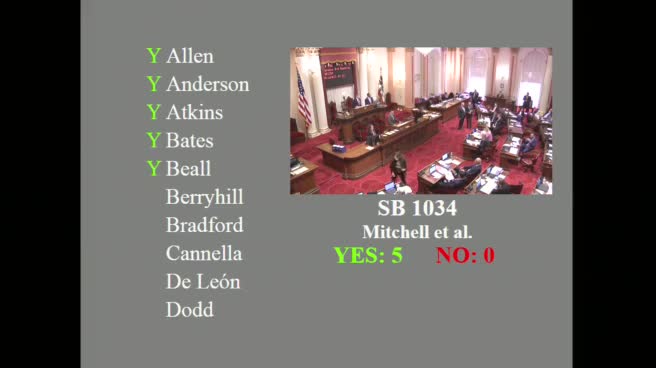 57SEC
Senate Floor
 7MIN
Senate Standing Committee on Health


Bill Co-Author(s):