SB 1255: Health insurance market: financial assistance.
- Session Year: 2017-2018
- House: Senate
- Latest Version Date: 2018-03-21
Existing federal law, the Patient Protection and Affordable Care Act (PPACA), requires each state to establish an American Health Benefit Exchange that facilitates the purchase of qualified health plans by qualified individuals and qualified small employers and that meets certain other requirements. Existing law creates the California Health Benefit Exchange, also known as Covered California, for the purpose of facilitating the enrollment of qualified individuals and qualified small employers in qualified health plans as required under the PPACA. Existing law specifies the powers of the Covered California executive board, including the power to assist in the administration of subsidies for individuals with coverage made available through Covered California.
This bill would state the intent of the Legislature to enact legislation to ensure a stable health insurance market in California. require Covered California to administer financial assistance to help low- and middle-income Californians access affordable coverage, as specified, if the Legislature appropriates funds for that purpose. The bill would provide that priority for financial assistance shall be given to an individual whose premium payment is equal to or greater than 8% of his or her annual household income, as specified, or an individual whose annual household income is equal to or greater than 200% of the federal poverty level, as specified.
Existing federal law, the Patient Protection and Affordable Care Act (PPACA), requires each state to establish an American Health Benefit Exchange that facilitates the purchase of qualified health plans by qualified individuals and qualified small employers and that meets certain other requirements. Existing law creates the California Health Benefit Exchange, also known as Covered California, for the purpose of facilitating the enrollment of qualified individuals and qualified small employers in qualified health plans as required under the PPACA.
This bill would state the intent of the Legislature to enact legislation to ensure a stable health insurance market in California.
(a)The board may do the following:
(1)With respect to individual coverage made available in the Exchange, collect premiums and assist in the administration of subsidies.
(2)Enter into contracts.
(3)Sue and be sued.
(4)Receive and accept gifts, grants, or donations of moneys from any an agency of the United States, any an agency of the state, and any a municipality, county, or other political subdivision of the state.
(5)Receive and accept gifts, grants, or donations from individuals, associations, private foundations, and corporations, in compliance with the conflict of interest provisions to be adopted by the board at a public meeting.
(6)Adopt rules and regulations, as necessary. Until January 1, 2017, any necessary rules and regulations may be adopted as emergency regulations in accordance with the Administrative Procedure Act (Chapter 3.5 (commencing with Section 11340) of Part 1 of Division 3 of Title 2). Until January 1, 2019, any necessary rules and regulations to implement the eligibility, enrollment, and appeals processes for the individual and small business exchanges, changes to the small business exchange, or any an act in effect that amends this title that is operative on or before December 31, 2016, may be adopted as emergency regulations in accordance with the Administrative Procedure Act (Chapter 3.5 (commencing with Section 11340) of Part 1 of Division 3 of Title 2). The adoption of emergency regulations pursuant to this section shall be deemed to be an emergency and necessary for the immediate preservation of the public peace, health and safety, or general welfare. Notwithstanding Chapter 3.5 (commencing with Section 11340) of Part 1 of Division 3 of Title 2, including subdivisions (e) and (h) of Section 11346.1, any an emergency regulation adopted pursuant to this section shall be repealed by operation of law unless the adoption, amendment, or repeal of the regulation is promulgated by the board pursuant to Chapter 3.5 (commencing with Section 11340) of Part 1 of Division 3 of Title 2 of the Government Code within five years of the initial adoption of the emergency regulation. Notwithstanding subdivision (h) of Section 11346.1, until January 1, 2020, the Office of Administrative Law may approve more than two readoptions of an emergency regulation adopted pursuant to this section. The amendments made to this paragraph by the act adding this sentence shall apply to any an emergency regulation adopted pursuant to this section prior to before the effective date of the Budget Act of 2015.
(7)Collaborate with the State Department of Health Care Services and the Managed Risk Medical Insurance Board, to the extent possible, to allow an individual the option to remain enrolled with his or her carrier and provider network in the event the individual experiences a loss of eligibility of premium tax credits and becomes eligible for the Medi-Cal program or the Healthy Families Program, or loses eligibility for the Medi-Cal program or the Healthy Families Program and becomes eligible for premium tax credits through the Exchange.
(8)Share information with relevant state departments, consistent with the confidentiality provisions in Section 1411 of the federal act, necessary for the administration of the Exchange.
(9)Require carriers participating in the Exchange to make available to the Exchange and regularly update an electronic directory of contracting health care providers so that individuals seeking coverage through the Exchange can search by health care provider name to determine which health plans in the Exchange include that health care provider in their network. The board may also require a carrier to provide regularly updated information to the Exchange as to whether a health care provider is accepting new patients for a particular health plan. The Exchange may provide an integrated and uniform consumer directory of health care providers indicating which carriers the providers contract with and whether the providers are currently accepting new patients. The Exchange may also establish methods by which health care providers may transmit relevant information directly to the Exchange, rather than through a carrier.
(10)Make available supplemental coverage for enrollees of the Exchange to the extent permitted by the federal act, provided that no General Fund money is not used to pay the cost of that coverage. Any supplemental Supplemental coverage offered in the Exchange shall be subject to the charge imposed under subdivision (n) of Section 100503.
(b)The Exchange shall only collect information from individuals or designees of individuals necessary to administer the Exchange and consistent with the federal act.
(c)(1)The board shall have the authority to standardize products to be offered through the Exchange. Any products A product standardized by the board pursuant to this subdivision shall be discussed by the board during at least one properly noticed board meeting prior to before the board meeting at which the board adopts the standardized products to be offered through the Exchange.
(2)The adoption, amendment, or repeal of a regulation by the board to implement this subdivision is exempt from the rulemaking provisions of the Administrative Procedure Act (Chapter 3.5 (commencing with Section 11340) of Part 1 of Division 3 of Title 2).
(d)The Exchange shall administer financial assistance to help low- and middle-income Californians access affordable health care coverage, with respect to individual coverage made available in the Exchange as follows:
(1)The Exchange shall give priority for financial assistance to an individual whose premium payment is equal to or greater than 8 percent of his or her annual household income. Those individuals shall include an individual whose household income is less than 400 percent of the federal poverty level and who is not eligible for Medi-Cal, or an individual whose annual household income is greater than 400 percent of the federal poverty level.
(2)The Exchange shall also give priority for financial assistance to an individual with an annual income that is equal to or greater than 200 percent of the federal poverty level, but not more than 400 percent of the federal poverty level, who is subject to significant cost-sharing expenses.
(3)The Exchange shall administer financial assistance in a manner that maximizes federally funded subsidies for Californians to the greatest extent possible.
(4)For purposes of this subdivision, financial assistance includes, but is not limited to, direct premium assistance through an advanced or refundable credit toward premium payment or assistance with cost sharing.
(5)Notwithstanding Section 100520, the Exchange shall implement this subdivision only to the extent that the Legislature appropriates funding for this purpose.
SECTION 1.It is the intent of the Legislature to enact legislation to ensure a stable health insurance market in California.It is the intent of the Legislature to enact legislation to ensure a stable health insurance market in California.
|
Date
|
Status
|
|---|---|
| Aug 16, 2018 | August 16 hearing: Held in committee and under submission. |
| Aug 8, 2018 | August 8 set for first hearing. Placed on suspense file. |
| Jun 27, 2018 | From committee: Do pass and re-refer to Com. on APPR. (Ayes 13. Noes 2.) (June 26). Re-referred to Com. on APPR. |
| Jun 4, 2018 | Referred to Com. on HEALTH. |
| May 29, 2018 | In Assembly. Read first time. Held at Desk. |
| May 29, 2018 | Read third time. Passed. (Ayes 27. Noes 10.) Ordered to the Assembly. |
| May 25, 2018 | From committee: Do pass. (Ayes 5. Noes 2.) (May 25). |
| May 23, 2018 | Set for hearing May 25. |
| May 22, 2018 | May 22 hearing: Placed on APPR. suspense file. |
| May 14, 2018 | Set for hearing May 22. |
| Apr 12, 2018 | From committee: Do pass and re-refer to Com. on APPR. (Ayes 8. Noes 1.) (April 11). Re-referred to Com. on APPR. |
| Apr 6, 2018 | Set for hearing April 11. |
| Apr 4, 2018 | Re-referred to Com. on HEALTH. |
| Mar 21, 2018 | From committee with author's amendments. Read second time and amended. Re-referred to Com. on RLS. |
| Mar 1, 2018 | Referred to Com. on RLS. |
| Feb 16, 2018 | From printer. May be acted upon on or after March 18. |
| Feb 15, 2018 | Introduced. Read first time. To Com. on RLS. for assignment. To print. |
|
Date
|
Description
|
Location
|
Votes
|
|
|---|---|---|---|---|
| Jun 26, 2018 | Do pass and be re-referred to the Committee on [Appropriations] | Assembly Standing Committee on Health |
Passed |
|
| May 29, 2018 | Senate 3rd Reading SB1255 Hernandez et al. | Senate Floor |
Passed |
|
| May 25, 2018 | Do pass | Senate Standing Committee on Appropriations |
Passed |
|
| May 22, 2018 | Placed on suspense file | Senate Standing Committee on Appropriations |
Passed |
|
| Apr 11, 2018 | Do pass, but first be re-referred to the Committee on [Appropriations] | Senate Standing Committee on Health |
Passed |
This list shows positions taken on this bill by organizations on the date displayed, which is linked to the original source.
Positions by individuals are not included.
Date of Hearing: August 8, 2018
ASSEMBLY COMMITTEE ON APPROPRIATIONS
Lorena Gonzalez Fletcher, Chair
SBPCA Bill Id:SB 1255
Author:(Hernandez) – As Amended Ver:March 21, 2018
Policy Committee: | Health | Vote: | 13 - 2 |
Urgency: No State Mandated Local Program: No Reimbursable: No
SUMMARY:
Subject to appropriation of funds for the purpose, this bill requires the California Health Benefits Exchange (Covered California) to administer financial assistance to help low-income and middle-income Californians afford health care coverage, establishes priorities for income groups requiring assistance, and directs Covered California to administer assistance in a manner that maximizes federally funded subsidies.
FISCAL EFFECT:
- Indeterminate cost pressure in the tens of millions or hundreds of millions of dollars annually to fund subsidies, subject to GF appropriation.
- Costs of California Healthcare Eligibility, Enrollment, and Retention System automation changes, estimated in the millions to tens of millions of dollars, depending on the timing of the current re-procurement, the cost for a new change order to implement this bill, and other system changes, such as change management training for staff or eligibility workers (California Health Trust Fund).
COMMENTS:
- Purpose. This bill is intended to assist low- and middle-income individuals purchase health insurance. According to the author, the federal Affordable Care Act (ACA) helped many Californians pay for health care coverage, but some still struggle to afford it. Today, individuals who make less than $50,000 (under 400% of the federal poverty level (FPL)) are able to get some federal financial assistance for coverage but still must spend a percentage of their income on premiums, which often presents financial hardship. Individuals who make slightly more than this amount get no financial help at all and many end up spending a substantial portion of their income (more than 8%) on premiums for coverage with deductibles over $6,000. This bill is supported by health advocacy and labor groups and has no opposition.
- Subsidized Health Insurance. The federal Affordable Care Act (ACA) created a structure to provide subsidized comprehensive health insurance coverage to most people with income under 400% of the FPL. Generally, in states that expanded Medicaid, such as California, qualified individuals with incomes under 138% of poverty are eligible for Medicaid (Medi-Cal in California). Qualified individuals with incomes higher than 138% FPL but below 400% FPL who lack access to job-based or other coverage may be eligible for premium tax credits. These are federal, refundable and advanceable tax credits to help purchase coverage. The credits must be accessed through the state's "health benefits exchange," or Covered California in this state.
- Related Legislation. AB 3148 (Arambula), which was held on the Suspense File of this committee, requires Covered California to offer additional cost-sharing financial assistance to persons with incomes under 400% of the FPL who are otherwise eligible for premium subsidies.
AB 2565 (Chiu), pending in the Senate Appropriations Committee, requires Covered California to offer enhanced premium assistance to individuals with income under 400% of the FPL and who would be eligible for premium tax subsidies, as specified. AB 2565 is currently pending in the Assembly Health Committee.
AB 2459 (Friedman), pending in the Senate Governance and Finance Committee, creates a new refundable "health care affordability" tax credit.
Analysis Prepared by: Lisa Murawski / APPR. / (916) 319-2081
Date of Hearing: June 26, 2018
ASSEMBLY COMMITTEE ON HEALTH
Jim Wood, Chair
SBPCA Bill Id:SB 1255
Author:(Hernandez) – As Amended Ver:March 21, 2018
SENATE VOTE: 28-10
SUBJECT: Health insurance market: financial assistance.
SUMMARY: Requires California’s Health Benefits Exchange (Exchange), also known as Covered California, to administer financial assistance to help low- and middle-income Californians access affordable health care coverage with respect to individual coverage made available in Covered California, with priority given to any individual whose premium payment is equal to or greater than eight percent of his or her annual household income. Specifically, this bill:
- Requires Covered California to give priority for financial assistance to an individual whose premium payment is equal to or greater than eight percent of his or her annual household income, including an individual whose household income is less than 400% of the federal poverty level (FPL) and who is not eligible for Medi-Cal, or an individual whose annual household income is greater than 400% FPL.
- Requires Covered California to also give priority for financial assistance to an individual with an annual income that is equal to or greater than 200% FPL, but not more than 400% FPL, who is subject to significant cost-sharing expenses.
- Requires Covered California to administer financial assistance in a manner that maximizes federally funded subsidies for Californians to the greatest extent possible.
- Defines financial assistance to include, but not limited to, direct premium assistance through an advanced or refundable credit toward premium payment or assistance with cost sharing.
- Requires Covered California to implement this bill only to the extent that the Legislature appropriates funding for this purpose.
- Makes other technical and non-substantive changes.
EXISTING LAW:
- Establishes the federal Patient Protection and Affordable Care Act (ACA), which enacts various health care coverage market reforms including the availability of health insurance exchanges.
- Establishes, in state government, the Exchange, as an independent public entity not affiliated with an agency or department, and requires the Exchange to compare and make available through selective contracting health insurance for individual and small business purchasers as authorized under the ACA. Specifies the powers and duties of the board governing the Exchange, and requires the board to facilitate the purchase of qualified health plans though the Exchange by qualified individuals and small employers.
- Requires the board governing Covered California to determine the criteria and process for eligibility, enrollment, and disenrollment of enrollees and potential enrollees in the Exchange and coordinate that process with state and local government entities administering other specified health care coverage programs, as specified.
- Describes individual market to include health benefit plans defined as any individual health care service plan contract that provides medical, hospital, and surgical benefits. Requires a health plan to fairly and affirmatively offer, market, and sell all of the health plan’s health benefit plans that are sold in the individual market for policy years on and after January 1, 2014, to all individuals and dependents in each service area in which the plan provides or arranges for the provision of health care services.
FISCAL EFFECT: According to the Senate Appropriations Committee, indeterminate (likely in the low-mid hundreds of millions) assuming the following:
- Costs of California Healthcare Eligibility, Enrollment, and Retention System automation changes, estimated in the low-mid tens of millions, depending on the timing of the current re-procurement, the cost for a new change order (if applicable) to implement this bill, and other system changes, such as change management training for staff or eligibility workers.
- Significant costs (likely in the low hundreds of millions) in order to: (1) identify eligible individuals that the Exchange will prioritize financial assistance (e.g., whose premium payment is equal to or greater than eight percent of his/her annual income; an individual with an annual income that is equal to or greater than 200% of the FPL but not more than 400% of FPL) and administer financial assistance; and, (2) to administer the financial assistance, which could be in either advanced or refundable credit toward the premium payment, or through cost-sharing.
- Possible changes to the amount received in federal credit depending on how financial assistance is provided, whether by subsidy or cost-sharing.
COMMENTS:
- PURPOSE OF THIS BILL. According to the author, state level subsidies will help support those who are having difficulty affording health care coverage and promote broad participation in the health insurance marketplace during these uncertain times. California has achieved significant success in lowering the rate of people without insurance. Currently, only 6.8% of the state’s population is uninsured, or nearly three million people. This is down significantly from 2013 when California’s uninsured rate was 17 %. Instability in the individual health insurance market brought about by the Trump Administration’s policy changes that undermine the ACA has led to even higher premiums and forced people out of health insurance. Insurance significantly increases patients’ access to care and use of preventive care, primary care, chronic illness treatment, medications, and surgery. Policies that result in reductions in coverage will produce significant harms to patient health. State financial assistance will help maintain stability in California’s individual insurance market and maintain and encourage access to health coverage and health care.
- BACKGROUND.
- ACA. Enacted in March 2010, the ACA provides the framework, policies, regulations and guidelines for the implementation of comprehensive health care reform by the states. The ACA expanded access to quality, affordable insurance and health care. As of January 1, 2014, insurers are no longer able to deny coverage or charge higher premiums based on preexisting conditions (under rules referred to as guaranteed issue and modified community rating, respectively). These aspects of the ACA, along with tax credits for low and middle income people buying insurance on their own in new health benefit exchanges, make it easier for people with preexisting conditions to gain insurance coverage.
A consumer is exempt from the ACA penalty for not having insurance if he or she lacks access to affordable coverage (defined as costing less than 8.16% of household income in 2018). In 2018, the penalty is $695/adult, $347.50/child under 18 (up to $2,085/family) or 2.5% of annual household income over an individual’s tax filing threshold, whichever is higher. A March 8, 2018 Covered California report indicated that recent health care actions taken by Congress and the federal administration, such as the elimination of the insurance mandate penalty, proposing greater flexibility to allow for association and short-term, limited-duration plans, are expected to draw consumers out of the individual market, sowing market instability and raising the specter of large premium increases in 2019 and beyond. The effects of these policies will vary by state. However, absent federal policies to stabilize the individual marketplace, a previous Covered California report found the statewide average premium increases in 2019 could range from 12% to 32%, with some carriers in certain states having even higher rate increases, depending on state factors. - Federal financial assistance. Under the ACA, qualified individuals are able to obtain financial assistance to help pay for health insurance premiums (also known as advance premium tax credits or APTC) and cost-sharing if health insurance is purchased through a health benefit exchange (in California this is Covered California). A person must be a citizen or lawfully present, must have qualifying income (between 138% and 400% FPL, which is approximately $34,948 and $98,400 for a family of four), and not be eligible for government programs or have affordable coverage through an employer (which is considered affordable if the premium for the employee only, not including dependents, is less than 9.5% of the employee’s household income).
UC Berkeley Labor Center, in a March 2018 report (UC Labor Report), analyzed “California Policy Options for Improving Individual Market Affordability and Enrollment.” The UC Labor Report states that the percentage of Californians with health insurance has grown dramatically under the ACA, from 83% in 2013 to 93% in 2016, the largest increase in coverage of any state. These coverage gains were due in part to substantial growth in the state’s individual market, in which individuals without job-based coverage purchase private insurance either through Covered California, or directly from an insurer. Enrollment in the individual market grew from 1.5 million in 2013 to 2.3 million in 2016 due to several provisions in the ACA as well as California’s extensive and effective implementation of the law.
The UC Labor Report contends that states can play a role in further improving affordability of individual market coverage beyond the standards set by the ACA. Five state policy options were explored in the UC Labor Report, including, state premium subsidies provided to all Californians currently eligible for APTC. Under this policy option, affordability would improve for the 1.2 million Californians already enrolled in subsidized coverage. The projected increase in enrollment would depend on the size of the reductions in premium contributions. A 15% decrease in net premium contributions would be estimated to increase individual market enrollment by tens of thousands, and a 50% decrease in net premiums would result in an increase in enrollment that is in the low hundreds of thousands. The UC Labor Report notes that these estimates do not take into account the elimination of the ACA individual mandate penalty, which is expected to reduce enrollment. - Select Committee. In March 2017, California Assembly Speaker Anthony Rendon appointed a Select Committee on Health Care Delivery Systems and Universal Coverage (Select Committee) to identify the best and quickest path to universal coverage for California and to explore strategies for improving the health care system. The California State Assembly contracted with the University of California San Francisco in order to provide a report (UC report) to the Select Committee summarizing the Select Committee's hearings, including any findings and potential options.
The UC report states that California has made great progress in reducing the number of uninsured but has not yet achieved universal coverage. In high-performing health care systems around the globe, universal coverage is essential for ensuring access to care, improving outcomes and controlling costs. A strong primary care system, a comprehensive basic benefit package, provider payments that reward better health outcomes, a strong social safety net, and administrative simplicity are other important ingredients for high performance. The UC report contends that California could take short-term steps and establish a longer term roadmap for system transformation. The report identified short term steps California can take within our current health care system as a potential path towards universal coverage, including to address affordability and participation for those already eligible for Medi-Cal and Covered California. - Assembly Budget Committee Health Care Action. On May 7, 2018, the Assembly Budget Committee’s Subcommittee No. 1 on Health and Human Services approved several proposals totaling over $1 billion to reform California’s health care system. The proposals included providing enhanced premium assistance to low-income individuals and families enrolled in Covered California and establishing a refundable tax credit for people with income levels between 400% and 600% of FPL for enrollees in the individual market. These proposals were not adopted in the final budget that was approved by the Legislature on May 14, 2018.
- ACA. Enacted in March 2010, the ACA provides the framework, policies, regulations and guidelines for the implementation of comprehensive health care reform by the states. The ACA expanded access to quality, affordable insurance and health care. As of January 1, 2014, insurers are no longer able to deny coverage or charge higher premiums based on preexisting conditions (under rules referred to as guaranteed issue and modified community rating, respectively). These aspects of the ACA, along with tax credits for low and middle income people buying insurance on their own in new health benefit exchanges, make it easier for people with preexisting conditions to gain insurance coverage.
- SUPPORT. Health Access California writes that this bill is an integral part of reducing California’s uninsured rate below 7% and moving the state towards universal coverage without the need for federal waivers or federal approval.
- RELATED LEGISLATION.
- AB 2459 (Friedman) would allow a credit under the Personal Income Tax Law in an amount equal to the cost of health insurance premiums, as specified. AB 2459 is currently pending in Senate Governance and Finance Committee.
- AB 2565 (Chiu) would require Covered California’s board to subsidize the premium payments of individuals who enroll in health care coverage through the Exchange and who, under federal law, would be eligible for premium tax subsidies, as specified. AB 2565 is currently pending in Senate Health Committee.
- AB 3148 (Arambula) of 2018 would have required Covered California’s board to offer additional cost sharing financial assistance to those who are otherwise eligible for premium tax credits and who have incomes determined to be below 400% of the FPL, as specified. AB 3148 was held on the Assembly Appropriations Committee suspense file.
- PREVIOUS LEGISLATION.
- AB 1602 (John A Pérez), Chapter 655, Statutes of 2010, and SB 900 (Alquist), Chapter 659, Statutes of 2010, established California’s Exchange and its powers and duties.
- ABX1 2 (Pan), Chapter 1, Statutes of 2013-14 First Extraordinary Session and SBX1 2 (Hernandez), Chapter 2, Statutes of 2013-14 First Extraordinary Session, established the health insurance market reforms contained in the ACA specific to individual purchasers, such as prohibiting insurers from denying coverage based on preexisting conditions; and, make conforming changes to small employer health insurance laws resulting from final federal regulations.
REGISTERED SUPPORT / OPPOSITION:
Support
ACCE Action
American Academy of Pediatrics, California
American Cancer Society Cancer Action Network
American Federation of State, County and Municipal Employees, AFL-CIO
APLA Health
Asian Law Alliance
California Children’s Health Coverage Coalition (Children’s Defense Fund – California, United Ways of California, The Children’s Partnership, California Coverage and Health Initiatives, Children Now)
California Health Professional Student Alliance
CaliforniaHealth + Advocates
California Immigrant Policy Center
California Labor Federation
California Pan-Ethnic Health Network
California Physicians Alliance
Clinicia Monsenor Oscar A. Romero
Community Health Councils
Congress of California Seniors
Courage Campaign
Health Access California
Lutheran Office of Public Policy - California
National Multiple Sclerosis Society
Western Center on Law and Poverty
Opposition
None on file.
Analysis Prepared by: Kristene Mapile / HEALTH / (916) 319-2097
Date of Hearing: June 26, 2018
ASSEMBLY COMMITTEE ON HEALTH
Jim Wood, Chair
SBPCA Bill Id:SB 1255
Author:(Hernandez) – As Amended Ver:March 21, 2018
SENATE VOTE: 28-10
SUBJECT: Health insurance market: financial assistance.
SUMMARY: Requires California’s Health Benefits Exchange (Exchange), also known as Covered California, to administer financial assistance to help low- and middle-income Californians access affordable health care coverage with respect to individual coverage made available in Covered California, with priority given to any individual whose premium payment is equal to or greater than eight percent of his or her annual household income. Specifically, this bill:
- Requires Covered California to give priority for financial assistance to an individual whose premium payment is equal to or greater than eight percent of his or her annual household income, including an individual whose household income is less than 400% of the federal poverty level (FPL) and who is not eligible for Medi-Cal, or an individual whose annual household income is greater than 400% FPL.
- Requires Covered California to also give priority for financial assistance to an individual with an annual income that is equal to or greater than 200% FPL, but not more than 400% FPL, who is subject to significant cost-sharing expenses.
- Requires Covered California to administer financial assistance in a manner that maximizes federally funded subsidies for Californians to the greatest extent possible.
- Defines financial assistance to include, but not limited to, direct premium assistance through an advanced or refundable credit toward premium payment or assistance with cost sharing.
- Requires Covered California to implement this bill only to the extent that the Legislature appropriates funding for this purpose.
- Makes other technical and non-substantive changes.
EXISTING LAW:
- Establishes the federal Patient Protection and Affordable Care Act (ACA), which enacts various health care coverage market reforms including the availability of health insurance exchanges.
- Establishes, in state government, the Exchange, as an independent public entity not affiliated with an agency or department, and requires the Exchange to compare and make available through selective contracting health insurance for individual and small business purchasers as authorized under the ACA. Specifies the powers and duties of the board governing the Exchange, and requires the board to facilitate the purchase of qualified health plans though the Exchange by qualified individuals and small employers.
- Requires the board governing Covered California to determine the criteria and process for eligibility, enrollment, and disenrollment of enrollees and potential enrollees in the Exchange and coordinate that process with state and local government entities administering other specified health care coverage programs, as specified.
- Describes individual market to include health benefit plans defined as any individual health care service plan contract that provides medical, hospital, and surgical benefits. Requires a health plan to fairly and affirmatively offer, market, and sell all of the health plan’s health benefit plans that are sold in the individual market for policy years on and after January 1, 2014, to all individuals and dependents in each service area in which the plan provides or arranges for the provision of health care services.
FISCAL EFFECT: According to the Senate Appropriations Committee, indeterminate (likely in the low-mid hundreds of millions) assuming the following:
- Costs of California Healthcare Eligibility, Enrollment, and Retention System automation changes, estimated in the low-mid tens of millions, depending on the timing of the current re-procurement, the cost for a new change order (if applicable) to implement this bill, and other system changes, such as change management training for staff or eligibility workers.
- Significant costs (likely in the low hundreds of millions) in order to: (1) identify eligible individuals that the Exchange will prioritize financial assistance (e.g., whose premium payment is equal to or greater than eight percent of his/her annual income; an individual with an annual income that is equal to or greater than 200% of the FPL but not more than 400% of FPL) and administer financial assistance; and, (2) to administer the financial assistance, which could be in either advanced or refundable credit toward the premium payment, or through cost-sharing.
- Possible changes to the amount received in federal credit depending on how financial assistance is provided, whether by subsidy or cost-sharing.
COMMENTS:
- PURPOSE OF THIS BILL. According to the author, state level subsidies will help support those who are having difficulty affording health care coverage and promote broad participation in the health insurance marketplace during these uncertain times. California has achieved significant success in lowering the rate of people without insurance. Currently, only 6.8% of the state’s population is uninsured, or nearly three million people. This is down significantly from 2013 when California’s uninsured rate was 17 %. Instability in the individual health insurance market brought about by the Trump Administration’s policy changes that undermine the ACA has led to even higher premiums and forced people out of health insurance. Insurance significantly increases patients’ access to care and use of preventive care, primary care, chronic illness treatment, medications, and surgery. Policies that result in reductions in coverage will produce significant harms to patient health. State financial assistance will help maintain stability in California’s individual insurance market and maintain and encourage access to health coverage and health care.
- BACKGROUND.
- ACA. Enacted in March 2010, the ACA provides the framework, policies, regulations and guidelines for the implementation of comprehensive health care reform by the states. The ACA expanded access to quality, affordable insurance and health care. As of January 1, 2014, insurers are no longer able to deny coverage or charge higher premiums based on preexisting conditions (under rules referred to as guaranteed issue and modified community rating, respectively). These aspects of the ACA, along with tax credits for low and middle income people buying insurance on their own in new health benefit exchanges, make it easier for people with preexisting conditions to gain insurance coverage.
A consumer is exempt from the ACA penalty for not having insurance if he or she lacks access to affordable coverage (defined as costing less than 8.16% of household income in 2018). In 2018, the penalty is $695/adult, $347.50/child under 18 (up to $2,085/family) or 2.5% of annual household income over an individual’s tax filing threshold, whichever is higher. A March 8, 2018 Covered California report indicated that recent health care actions taken by Congress and the federal administration, such as the elimination of the insurance mandate penalty, proposing greater flexibility to allow for association and short-term, limited-duration plans, are expected to draw consumers out of the individual market, sowing market instability and raising the specter of large premium increases in 2019 and beyond. The effects of these policies will vary by state. However, absent federal policies to stabilize the individual marketplace, a previous Covered California report found the statewide average premium increases in 2019 could range from 12% to 32%, with some carriers in certain states having even higher rate increases, depending on state factors. - Federal financial assistance. Under the ACA, qualified individuals are able to obtain financial assistance to help pay for health insurance premiums (also known as advance premium tax credits or APTC) and cost-sharing if health insurance is purchased through a health benefit exchange (in California this is Covered California). A person must be a citizen or lawfully present, must have qualifying income (between 138% and 400% FPL, which is approximately $34,948 and $98,400 for a family of four), and not be eligible for government programs or have affordable coverage through an employer (which is considered affordable if the premium for the employee only, not including dependents, is less than 9.5% of the employee’s household income).
UC Berkeley Labor Center, in a March 2018 report (UC Labor Report), analyzed “California Policy Options for Improving Individual Market Affordability and Enrollment.” The UC Labor Report states that the percentage of Californians with health insurance has grown dramatically under the ACA, from 83% in 2013 to 93% in 2016, the largest increase in coverage of any state. These coverage gains were due in part to substantial growth in the state’s individual market, in which individuals without job-based coverage purchase private insurance either through Covered California, or directly from an insurer. Enrollment in the individual market grew from 1.5 million in 2013 to 2.3 million in 2016 due to several provisions in the ACA as well as California’s extensive and effective implementation of the law.
The UC Labor Report contends that states can play a role in further improving affordability of individual market coverage beyond the standards set by the ACA. Five state policy options were explored in the UC Labor Report, including, state premium subsidies provided to all Californians currently eligible for APTC. Under this policy option, affordability would improve for the 1.2 million Californians already enrolled in subsidized coverage. The projected increase in enrollment would depend on the size of the reductions in premium contributions. A 15% decrease in net premium contributions would be estimated to increase individual market enrollment by tens of thousands, and a 50% decrease in net premiums would result in an increase in enrollment that is in the low hundreds of thousands. The UC Labor Report notes that these estimates do not take into account the elimination of the ACA individual mandate penalty, which is expected to reduce enrollment. - Select Committee. In March 2017, California Assembly Speaker Anthony Rendon appointed a Select Committee on Health Care Delivery Systems and Universal Coverage (Select Committee) to identify the best and quickest path to universal coverage for California and to explore strategies for improving the health care system. The California State Assembly contracted with the University of California San Francisco in order to provide a report (UC report) to the Select Committee summarizing the Select Committee's hearings, including any findings and potential options.
The UC report states that California has made great progress in reducing the number of uninsured but has not yet achieved universal coverage. In high-performing health care systems around the globe, universal coverage is essential for ensuring access to care, improving outcomes and controlling costs. A strong primary care system, a comprehensive basic benefit package, provider payments that reward better health outcomes, a strong social safety net, and administrative simplicity are other important ingredients for high performance. The UC report contends that California could take short-term steps and establish a longer term roadmap for system transformation. The report identified short term steps California can take within our current health care system as a potential path towards universal coverage, including to address affordability and participation for those already eligible for Medi-Cal and Covered California. - Assembly Budget Committee Health Care Action. On May 7, 2018, the Assembly Budget Committee’s Subcommittee No. 1 on Health and Human Services approved several proposals totaling over $1 billion to reform California’s health care system. The proposals included providing enhanced premium assistance to low-income individuals and families enrolled in Covered California and establishing a refundable tax credit for people with income levels between 400% and 600% of FPL for enrollees in the individual market. These proposals were not adopted in the final budget that was approved by the Legislature on May 14, 2018.
- ACA. Enacted in March 2010, the ACA provides the framework, policies, regulations and guidelines for the implementation of comprehensive health care reform by the states. The ACA expanded access to quality, affordable insurance and health care. As of January 1, 2014, insurers are no longer able to deny coverage or charge higher premiums based on preexisting conditions (under rules referred to as guaranteed issue and modified community rating, respectively). These aspects of the ACA, along with tax credits for low and middle income people buying insurance on their own in new health benefit exchanges, make it easier for people with preexisting conditions to gain insurance coverage.
- SUPPORT. Health Access California writes that this bill is an integral part of reducing California’s uninsured rate below 7% and moving the state towards universal coverage without the need for federal waivers or federal approval.
- RELATED LEGISLATION.
- AB 2459 (Friedman) would allow a credit under the Personal Income Tax Law in an amount equal to the cost of health insurance premiums, as specified. AB 2459 is currently pending in Senate Governance and Finance Committee.
- AB 2565 (Chiu) would require Covered California’s board to subsidize the premium payments of individuals who enroll in health care coverage through the Exchange and who, under federal law, would be eligible for premium tax subsidies, as specified. AB 2565 is currently pending in Senate Health Committee.
- AB 3148 (Arambula) of 2018 would have required Covered California’s board to offer additional cost sharing financial assistance to those who are otherwise eligible for premium tax credits and who have incomes determined to be below 400% of the FPL, as specified. AB 3148 was held on the Assembly Appropriations Committee suspense file.
- PREVIOUS LEGISLATION.
- AB 1602 (John A Pérez), Chapter 655, Statutes of 2010, and SB 900 (Alquist), Chapter 659, Statutes of 2010, established California’s Exchange and its powers and duties.
- ABX1 2 (Pan), Chapter 1, Statutes of 2013-14 First Extraordinary Session and SBX1 2 (Hernandez), Chapter 2, Statutes of 2013-14 First Extraordinary Session, established the health insurance market reforms contained in the ACA specific to individual purchasers, such as prohibiting insurers from denying coverage based on preexisting conditions; and, make conforming changes to small employer health insurance laws resulting from final federal regulations.
REGISTERED SUPPORT / OPPOSITION:
Support
ACCE Action
American Academy of Pediatrics, California
American Federation of State, County and Municipal Employees, AFL-CIO
APLA Health
Asian Law Alliance
California Children’s Health Coverage Coalition (Children’s Defense Fund – California, United Ways of California, The Children’s Partnership, California Coverage and Health Initiatives, Children Now)
California Health Professional Student Alliance
CaliforniaHealth + Advocates
California Immigrant Policy Center
California Labor Federation
California Pan-Ethnic Health Network
California Physicians Alliance
Clinicia Monsenor Oscar A. Romero
Community Health Councils
Congress of California Seniors
Courage Campaign
Health Access California
Lutheran Office of Public Policy - California
National Multiple Sclerosis Society
Western Center on Law and Poverty
Opposition
None on file.
Analysis Prepared by: Kristene Mapile / HEALTH / (916) 319-2097
Office of Senate Floor Analyses (916) 651-1520 Fax: (916) 327-4478 | SB |
THIRD READING
Bill No: SB 1255
:
SENATE HEALTH COMMITTEE: 8-1, 4/11/18
AYES: Hernandez, Nguyen, Leyva, Mitchell, Monning, Newman, Pan, Roth
NOES: Nielsen
SENATE APPROPRIATIONS COMMITTEE: 5-2, 5/25/18
AYES: Lara, Beall, Bradford, Hill, Wiener
NOES: Bates, Nielsen
DIGEST:
This bill requires California’s Health Benefit Exchange (Covered California) to administer financial assistance to help low- and middle-income Californians access affordable health care coverage with respect to individual coverage made available in Covered California, with priority given to any individual whose premium payment is equal to or greater than eight percent of his or her annual household income.
Existing law:
- Establishes, under the Affordable Care Act (ACA), an advanced and refundable tax credit for qualified individuals who purchase a qualified health plan through a health benefit exchange and cost sharing reductions for qualified individuals who choose specified plans. [26 U.S.C. 36B §1402 and 42 U.S.C. §18071]
- Establishes Covered California as an independent entity in state government not affiliated with any state agency or department, governed by a five-member board. Requires the Covered California Executive Board to establish and use a competitive process to select participating carriers and other contractors. [GOV §100500 -100522]
- Authorizes the Covered California Executive Board, with respect to individual coverage made available through Covered California, to collect premiums and assist in administration of subsidies. [GOV§ 100504]
This bill requires Covered California to administer financial assistance to help low- and middle-income Californians access affordable health care coverage, with respect to individual coverage made available through Covered California, as follows:
- Requires Covered California to give priority for financial assistance to an individual whose premium payment is equal to or greater than eight percent of his or her annual household income, including an individual whose household income is less than 400% of the federal poverty level (FPL) and who is not eligible for Medi-Cal, or an individual whose annual household income is greater than 400% FPL;
- Requires Covered California to also give priority for financial assistance to an individual with an annual income that is equal to or greater than 200% FPL, but not more than 400% FPL, who is subject to significant cost-sharing expenses;
- Requires Covered California to administer financial assistance in a manner that maximizes federally funded subsidies for Californians to the greatest extent possible;
- Defines “financial assistance” to include, but not be limited to, direct premium assistance through an advanced or refundable credit toward premium payment or assistance with cost sharing; and,
- Requires Covered California to implement this bill only to the extent that the Legislature appropriates funding for this purpose.
Background
- Implementation of the ACA. Under the ACA, most people are required by law to have health insurance or pay a tax penalty. An individual is exempt from the ACA penalty if he or she lacks access to affordable coverage (defined as costing less than 8.16% of household income in 2018). In 2018, the penalty is $695/adult, $347.50/child under 18 (up to $2,085/family) or 2.5% of annual household income over an individual’s tax filing threshold, whichever is higher. The 2017 federal tax overhaul law makes the tax penalty zero beginning in 2019. Covered California recently released a report on premium hike projections that indicates that 378,000 Californians could drop coverage without the penalty which would create at least a seven percent increase in premiums in 2019. Other federal policy changes propose to allow less comprehensive coverage options that would not be available for all (guaranteed issue) as are current ACA policies. In total, California could see rates increase in 2019 in the range of 12% to 32%.
- Federal financial assistance. Under the ACA, qualified individuals are able to obtain financial assistance to help pay for health insurance premiums and cost-sharing if health insurance is purchased through a health benefit exchange (in California this is Covered California). A person must be a citizen or lawfully present, must have qualifying income (between 138% and 400% FPL, which is approximately $34,948 and $98,400 for a family of four), and not be eligible for government programs or have affordable coverage through an employer (which is considered affordable if the premium for the employee only, not including dependents, is less than 9.5% of the employee’s household income).
There are two main types of help to pay for coverage: premium assistance and cost-sharing subsidies. Premium assistance is a tax credit (formally called the Advanced Premium Tax Credit, or APTC) to reduce a person’s monthly premium cost. This subsidy works to cap the amount people who receive this subsidy pay for their premiums to an amount that can be no more than 9.56% of household income. The government either pays the tax credit directly to an insurance company each month, and the insurer bills the individual for the rest of the premium cost; or, an individual can choose to pay the full price of the health insurance premium payment each month and then receive the entire premium assistance amount in the form of a tax refund when the individual’s tax return is completed for the year. APTCs are funded by the federal government.
Cost-sharing reductions are subsidies to reduce an individual’s out-of-pocket costs (copays, coinsurance, deductible and out-of-pocket maximum). Individuals are eligible if he or she has an annual household income up to 250% FPL ($61,500 for a family of four) and chooses a “silver” level plan (silver refers to the actuarial value level of the plan). The cost sharing subsidies are automatically applied. Cost-sharing reductions are required to be applied under the ACA and were funded by the federal government until 2018. Many states (including California) have developed work-arounds to limit the impacts of this policy change on premium increases for most enrollees.
- University of California Berkeley Labor Center study. A study by the University of California, Berkeley Center for Labor Research and Education was published on March 2018 on individual market affordability and enrollment. The study concludes that at least 1.2 million Californians eligible for Covered California, with or without subsidies, remain uninsured, with affordability concerns being the leading reason for lacking insurance. Many of the 2.3 million Californians enrolled in individual market coverage struggle to afford premiums, causing financial problems and putting retention of coverage at risk. Many Californians also face high out-of-pocket costs, which can cause financial hardship, result in delay or avoidance of necessary care, and potentially serve as a deterrent to enrollment. The evidence from California indicates that affordability is a concern for both those already eligible for ACA premium subsidies and those who earn too much to qualify.
- Other states. The UC Berkeley study indicates that Massachusetts and Vermont provide state level premium and cost-sharing assistance, and Covered San Francisco provides financial assistance for qualified individuals so that the individual pays only 40% of net premium (after ACA subsidies when applicable). Alaska, Minnesota, and Oregon have received federal approval for state reinsurance programs that also reduce premiums.
Comments
Author’s statement. According to the author, state level subsidies will help support those who are having difficulty affording health care coverage and promote broad participation in the health insurance marketplace during these uncertain times. California has achieved significant success in lowering the rate of people without insurance. Currently, only 6.8% of the state’s population is uninsured, or nearly three million people. This is down significantly from 2013 when California’s uninsured rate was 17%. Instability in the individual health insurance market brought about by the Trump Administration’s policy changes that undermine the ACA lead to even higher premiums and force people out of health insurance. Insurance significantly increases patients’ access to care and use of preventive care, primary care, chronic illness treatment, medications, and surgery. Policies that result in reductions in coverage will produce significant harms to patient health. State financial assistance will help maintain stability in California’s individual insurance market and maintain and encourage access to health coverage and health care.
Related/Prior Legislation
AB 2459 (Friedman, 2018) establishes a tax credit in an amount equal to the cost of health insurance premiums for the lowest cost bronze plan for the qualified individual or the qualified individual’s dependent that exceeds an unspecified percentage of the qualified individual’s modified adjusted gross income, as specified.
AB 2565 (Chiu, 2018) requires Covered California to offer enhanced premium assistance to individuals who enroll in health care coverage through Covered California and who, under federal law, would be eligible for premium tax subsidies, as specified.
AB 3148 (Arambula, 2018) requires Covered California to ensure that no one with income below 250% FPL enrolls in bronze level coverage, as defined, and requires Covered California to offer additional cost sharing financial assistance to those who are otherwise eligible for premium tax credits and who have incomes determined to be below 400% FPL, as specified.
SB 900 (Alquist, Chapter 659, Statutes of 2010) and AB 1602 (Perez, Chapter 655, Statutes of 2010) established Covered California.
FISCAL EFFECT: Appropriation: Fiscal Com.: Local:
According to the Senate Appropriations Committee, indeterminate (likely in the low-mid hundreds of millions) assuming the following:
- Costs of California Healthcare Eligibility, Enrollment, and Retention System automation changes, estimated in the low-mid tens of millions, depending on the timing of the current re-procurement, the cost for a new change order (if applicable) to implement the bill, and other system changes, such as change management training for staff or eligibility workers.
- Significant costs (likely in the low hundreds of millions) in order to (1) identify eligible individuals that the Exchange will prioritize financial assistance (e.g., whose premium payment is equal to or greater than eight percent of his/her annual income; an individual with an annual income that is equal to or greater than 200 percent of the FPL but not more than 400 percent of FPL) and administer financial assistance; and (2) to administer the financial assistance, which could be in either advanced or refundable credit toward the premium payment, or through cost-sharing.
- Possible changes to the amount received in federal credit depending on how financial assistance is provided – whether by subsidy or cost-sharing.
AIDS Project Los Angeles Health
California Health Professional Student Alliance
CaliforniaHealth+ Advocates
California Immigrant Policy Center
California Labor Federation
California Pan-Ethnic Health Network
California Physicians Alliance
Children Now
Clinica Monseñor Oscar A. Romero
Consumers Union
Health Access California
Lutheran Office of Public Policy-California
Maternal and Child Health Access
National Association of Social Workers, California Chapter
National Health Law Program
Project Inform
San Francisco AIDS Foundation
SEIU California
Western Center on Law and Poverty
OPPOSITION: (Verified 5/24/18)
None received
ARGUMENTS IN SUPPORT: Health Access California writes that improvements in affordability increase take-up of coverage, move California closer to universal coverage and are an integral part of reducing California’s uninsured rate below seven percent moving our state towards universal coverage without the need for federal waivers or federal approval. Today, individuals who make about $35,000 to $50,000 are asked to pay 9.6% of their income for premiums, individuals who make more than $50,000 get no financial help, and some spend far more than 8% on premiums for coverage. Over 40% of those on Covered California in the $35,000 to $50,000 income range buy bronze level coverage that has a $6,300 deductible. A deductible of over $6,000 is 13% to 18% of income on top of premiums of as much as 9.6% of income so that people with significant health needs can spend as much as 20-30% of income on care and coverage. This bill builds on the success of California’s implementation of the ACA by making care and coverage more affordable for consumers who buy coverage as individuals. The California Labor Federation writes that this bill will make more Californians eligible for financial help, while at the same time provide additional financial help to middle-class Californians. Consumers Union writes that by making coverage more affordable, this important bill is key to helping California move closer to universal coverage.
SENATE COMMITTEE ON
Senator Ricardo Lara, Chair
2017 - 2018 Regular Session
SB 1255 (Hernandez) - Health insurance market: financial assistance
Version: | Policy Vote: |
Urgency: | Mandate: |
Hearing Date: | Consultant: |
This bill does not meet the criteria for referral to the Suspense File.
Bill Summary:
Senate Bill 1255 requires California’s Health Benefit Exchange (Covered California) to administer financial assistance to help low- and middle-income Californians access affordable health coverage with respect to individual coverage made available in Covered California, with priority given to any premium payment equal to, or greater than, eight percent of his or her annual household income.
Fiscal Impact:
Indeterminate (likely in the low-mid hundreds of millions) assuming the following:
- Costs of California Healthcare Eligibility, Enrollment, and Retention System (CalHEERS) automation changes, estimated in the low-mid tens of millions, depending on the timing of the current re-procurement, the cost for a new change order (if applicable) to implement the bill, and other system changes, such as change management training for staff or eligibility workers.
- Significant costs (likely in the low hundreds of millions) in order to (1) identify eligible individuals that the Exchange will prioritize financial assistance (e.g., whose premium payment is equal to or greater than eight percent of his/her annual income; an individual with an annual income that is equal to or greater than 200 percent of the federal poverty level (FPL) but not more than 400 percent of FPL) and administer financial assistance; and (2) to administer the financial assistance, which could be in either advanced or refundable credit toward the premium payment, or through cost-sharing.
- Possible changes to the amount received in federal credit depending on how financial assistance is provided – whether by subsidy or cost-sharing.
For more information, please see staff comments.
Background:
Under the federal Affordable Care Act states are required to establish American Health Benefit Exchanges. If a state does not create an Exchange, the federal government will do so. Within the Exchanges, individuals will be able to purchase health care coverage with standardized benefit packages and actuarial values. In addition, individuals with incomes between 100 percent and 400 percent of the federal poverty level will be eligible for subsidies for coverage purchased in the Exchanges. California has established its own California Health Benefit Exchange (referred to as “Covered California”). In order to establish eligibility for subsidies, Covered California operates call centers, contracts with counties, and utilizes certified insurance agents and certified enrollment counsellors to help consumers navigate the eligibility and enrollment process.
Senate Bill 900 (Alquist, Chapter 659, Statutes of 2010) and Assembly Bill 1602 (Perez, Chapter 655, Statutes of 2010) established Covered California. Under the Patient Protection and Affordable Care Act (ACA), most people are required by law to have health insurance or pay a tax penalty. An individual is exempt from the ACA penalty if he or she lacks access to affordable coverage (defined as costing less than 8.16% of household income in 2018). In 2018, the penalty is $695/adult, $347.50/child under 18 (up to $2,085/family) or 2.5% of annual household income over an individual’s tax filing threshold, whichever is higher. The 2017 federal tax overhaul law makes the tax penalty zero beginning in 2019.
A March 2018 Covered California report and analysis estimated that premium increases in the individual market, absent any federal policy action, premium increases for every state could range from 12 to 32 percent in 2019, and cumulative increases from 2012021 will range from 35 percent to more than 90 percent.
There are two main types of help to pay for coverage: premium assistance and cost-sharing subsidies. Premium assistance is a tax credit (formerly called the Advanced Premium Tax Credit, or APTC) to reduce a person’s monthly premium cost. This subsidy works to cap the amount people who receive this subsidy pay for their premiums to an amount that can be no more than 9.56% of household income. The government either pays the tax credit directly to an insurance company each month, and the insurer bills the individual for the rest of the premium cost; or, an individual can choose to pay the full price of the health insurance premium payment each month and then receive the entire premium assistance amount in the form of a tax refund when the individual’s tax return is completed for the year. APTCs are funded by the federal government.
Cost-sharing reductions are subsidies to reduce an individual’s out-of-pocket costs (copays, coinsurance, deductible and out-of-pocket maximum). Individuals are eligible if he or she has an annual household income up to 250 percent federal poverty level (FPL) ($61,500 for a family of four) and chooses a “silver” level plan (silver refers to the actuarial value level of the plan). The cost sharing subsidies are automatically applied. Cost-sharing reductions are required to be applied under the ACA and were funded by the federal government until 2018. Many states (including California) have developed work-arounds to limit the impacts of this policy change on premium increases for most enrollees.
Proposed Law:
The bill requires the Exchange to administer financial assistance to help low- and middle-income Californians access affordable health care coverage pertaining to individual coverage made available in the Exchange. Specifically, the bill requires the Exchange to:
- Give priority for financial assistance to an individual whose premium payment is equal to or greater than 8 percent of his or her annual household income. Those individuals must include an individual whose household income is less than 400 percent of the federal poverty level and who is not eligible for Medi-Cal, or an individual whose annual household income is greater than 400 percent of the federal poverty level.
- Give priority for financial assistance to an individual with an annual income that is equal to or greater than 200 percent of the federal poverty level, but not more than 400 percent of the federal poverty level, who is subject to significant cost-sharing expenses.
- Administer financial assistance in a manner that maximizes federally funded subsidies for Californians to the greatest extent possible.
The bill defines “financial assistance” to include, but is not limited to, direct premium assistance through an advanced or refundable credit toward premium payment or assistance with cost sharing.
The bill also provides that implementation of the bill’s financial assistance program must only be implemented to the extent the Legislature appropriates funding for this purpose.
Related Legislation:
- AB 2459 (Friedman) establishes a tax credit in an amount equal to the cost of health insurance premiums for the lowest cost bronze plan for the qualified individual or the qualified individual’s dependent that exceeds an unspecified percentage of the qualified individual’s modified adjusted gross income, as specified. AB 2459 is pending in the Assembly Appropriations Committee.
- AB 2565 (Chiu) requires Covered California to offer enhanced premium assistance to individuals who enroll in health care coverage through Covered California and who, under federal law, would be eligible for premium tax subsidies, as specified. AB 2565 is pending in the Assembly Appropriations Committee.
- AB 3148 (Arambula) requires Covered California to ensure that no one with income below 250% FPL enrolls in bronze level coverage, as defined, and requires Covered California to offer additional cost sharing financial assistance to those who are otherwise eligible for premium tax credits and who have incomes determined to be below 400% FPL, as specified. AB 3148 is pending in the Assembly Appropriations Committee.
Staff Comments:
CalHEERS is the automated and consolidated system that supports eligibility, enrollment, and retention for the Exchange and the California Medical Expansion Program (also known as Modified Adjusted Gross Income [MAGI] Medi-Cal). CalHEERS streamlines how Californians can research, compare, check their eligibility for, and purchase health coverage for the Exchange. CalHEERS also interfaces with the Electronic Health Information Transfer under the Statewide Automated Welfare Systems and serves more than 1.7 million Californians enrolled in Covered California. On March 19, 2018, the Office of Systems Integration released a pre-solicitation request for proposal for the California Healthcare Eligibility, Enrollment, and Retention System (CalHEERS) re-preocurement. To the extent the bill requires automation re-configuration and programming to implement provisions of the bill, staff notes a potential timing issue. If the Request for Proposal (RFP) is issued and a contract is let prior to the bill’s implementation date (January 1, 2019), there may be additional costs for a contract amendment or additional change order.
-- END --
SENATE COMMITTEE ON HEALTH
Senator Ed Hernandez, O.D., Chair
BILL NO: SB 1255
AUTHOR: | Hernandez | ||
VERSION: | March 21, 2018 | ||
HEARING DATE: | April 11, 2018 | ||
CONSULTANT: | Teri Boughton | ||
SUBJECT: Health insurance market: financial assistance
SUMMARY:
Requires California’s Health Benefit Exchange (Covered California) to administer financial assistance to help low- and middle-income Californians access affordable health care coverage with respect to individual coverage made available in Covered California, with priority given to any individual whose premium payment is equal to or greater than eight percent of his or her annual household income.
Existing law:
- Establishes, under the Affordable Care Act (ACA), an advanced and refundable tax credit for qualified individuals who purchase a qualified health plan through a health benefit exchange and cost sharing reductions for qualified individuals who choose specified plans. [26 U.S.C. 36B §1402 and 42 U.S.C. §18071]
- Establishes Covered California as an independent entity in state government not affiliated with any state agency or department, governed by a five member board. Requires the Covered California Executive Board to establish and use a competitive process to select participating carriers and other contractors. [GC §100500 -100522]
- Authorizes the Covered California Executive Board, with respect to individual coverage made available through Covered California, to collect premiums and assist in administration of subsidies. [GC§ 100504]
This bill:
- Requires Covered California to administer financial assistance to help low- and middle-income Californians access affordable health care coverage, with respect to individual coverage made available through Covered California, as follows:
- Requires Covered California to give priority for financial assistance to an individual whose premium payment is equal to or greater than eight percent of his or her annual household income, including an individual whose household income is less than 400% of the federal poverty level (FPL) and who is not eligible for Medi-Cal, or an individual whose annual household income is greater than 400% FPL;
- Requires Covered California to also give priority for financial assistance to an individual with an annual income that is equal to or greater than 200% FPL, but not more than 400% FPL, who is subject to significant cost-sharing expenses;
- Requires Covered California to administer financial assistance in a manner that maximizes federally funded subsidies for Californians to the greatest extent possible;
- Defines “financial assistance” to include, but not be limited to, direct premium assistance through an advanced or refundable credit toward premium payment or assistance with cost sharing; and,
- Requires Covered California to implement this bill only to the extent that the Legislature appropriates funding for this purpose.
FISCAL EFFECT:
This bill has not been analyzed by a fiscal committee.
COMMENTS:
- Author’s statement. According to the author, state level subsidies will help support those who are having difficulty affording health care coverage and promote broad participation in the health insurance marketplace during these uncertain times. California has achieved significant success in lowering the rate of people without insurance. Currently, only 6.8% of the state’s population is uninsured, or nearly three million people. This is down significantly from 2013 when California’s uninsured rate was 17%. Instability in the individual health insurance market brought about by the Trump Administration’s policy changes that undermine the ACA lead to even higher premiums and force people out of health insurance. Insurance significantly increases patients’ access to care and use of preventive care, primary care, chronic illness treatment, medications, and surgery. Policies that result in reductions in coverage will produce significant harms to patient health. State financial assistance will help maintain stability in California’s individual insurance market and maintain and encourage access to health coverage and health care.
- Implementation of the ACA. Under the ACA, most people are required by law to have health insurance or pay a tax penalty. An individual is exempt from the ACA penalty if he or she lacks access to affordable coverage (defined as costing less than 8.16% of household income in 2018). In 2018, the penalty is $695/adult, $347.50/child under 18 (up to $2,085/family) or 2.5% of annual household income over an individual’s tax filing threshold, whichever is higher. The 2017 federal tax overhaul law makes the tax penalty zero beginning in 2019. Covered California recently released a report on premium hike projections that indicates that 378,000 Californians could drop coverage without the penalty which would create at least a seven percent increase in premiums in 2019. Other federal policy changes propose to allow less comprehensive coverage options that would not be available for all (guaranteed issue) as are current ACA policies. In total, California could see rates increase in 2019 in the range of 12% to 32%.
- Federal financial assistance. Under the ACA, qualified individuals are able to obtain financial assistance to help pay for health insurance premiums and cost-sharing if health insurance is purchased through a health benefit exchange (in California this is Covered California). A person must be a citizen or lawfully present, must have qualifying income (between 138% and 400% FPL, which is approximately $34,948 and $98,400 for a family of four), and not be eligible for government programs or have affordable coverage through an employer (which is considered affordable if the premium for the employee only, not including dependents, is less than 9.5% of the employee’s household income).
There are two main types of help to pay for coverage: premium assistance and cost-sharing subsidies. Premium assistance is a tax credit (formally called the Advanced Premium Tax Credit, or APTC) to reduce a person’s monthly premium cost. This subsidy works to cap the amount people who receive this subsidy pay for their premiums to an amount that can be no more than 9.56% of household income. The government either pays the tax credit directly to an insurance company each month, and the insurer bills the individual for the rest of the premium cost; or, an individual can choose to pay the full price of the health insurance premium payment each month and then receive the entire premium assistance amount in the form of a tax refund when the individual’s tax return is completed for the year. APTCs are funded by the federal government.
Cost-sharing reductions are subsidies to reduce an individual’s out-of-pocket costs (copays, coinsurance, deductible and out-of-pocket maximum). Individuals are eligible if he or she has an annual household income up to 250% FPL ($61,500 for a family of four) and chooses a “silver” level plan (silver refers to the actuarial value level of the plan). The cost sharing subsidies are automatically applied. Cost-sharing reductions are required to be applied under the ACA and were funded by the federal government until 2018. Many states (including California) have developed work-arounds to limit the impacts of this policy change on premium increases for most enrollees.
- UC Berkeley Labor Center study. A study by the University of California, Berkeley Center for Labor Research and Education was published on March 2018 on individual market affordability and enrollment. The study concludes that at least 1.2 million Californians eligible for Covered California, with or without subsidies, remain uninsured, with affordability concerns being the leading reason for lacking insurance. Many of the 2.3 million Californians enrolled in individual market coverage struggle to afford premiums, causing financial problems and putting retention of coverage at risk. Many Californians also face high out-of-pocket costs, which can cause financial hardship, result in delay or avoidance of necessary care, and potentially serve as a deterrent to enrollment. The evidence from California indicates that affordability is a concern for both those already eligible for ACA premium subsidies and those who earn too much to qualify.
- Other states. The UC Berkeley study indicates that Massachusetts and Vermont provide state level premium and cost-sharing assistance, and Covered San Francisco provides financial assistance for qualified individuals so that the individual pays only 40% of net premium (after ACA subsidies when applicable). Alaska, Minnesota, and Oregon have received federal approval for state reinsurance programs that also reduce premiums.
- Related legislation. AB 2459 (Friedman) establishes a tax credit in an amount equal to the cost of health insurance premiums for the lowest cost bronze plan for the qualified individual or the qualified individual’s dependent that exceeds an unspecified percentage of the qualified individual’s modified adjusted gross income, as specified. AB 2459 is set for hearing in Assembly Health Committee on April 17, 2018.
AB 2565 (Chiu) requires Covered California to offer enhanced premium assistance to individuals who enroll in health care coverage through Covered California and who, under federal law, would be eligible for premium tax subsidies, as specified. AB 2565 is set for hearing in Assembly Health Committee on April 17, 2018.
AB 3148 (Arambula) requires Covered California to ensure that no one with income below 250% FPL enrolls in bronze level coverage, as defined, and requires Covered California to offer additional cost sharing financial assistance to those who are otherwise eligible for premium tax credits and who have incomes determined to be below 400% FPL, as specified. AB 3148 is set for hearing in Assembly Health Committee on April 17, 2018.
- Prior legislation. SB 900 (Alquist, Chapter 659, Statutes of 2010) and AB 1602 (Perez, Chapter 655, Statutes of 2010) established Covered California.
- Support. Health Access California writes that improvements in affordability increase take-up of coverage, move California closer to universal coverage and are an integral part of reducing California’s uninsured rate below seven percent moving our state towards universal coverage without the need for federal waivers or federal approval. Today, individuals who make about $35,000 to $50,000 are asked to pay 9.6% of their income for premiums, individuals who make more than $50,000 get no financial help, and some spend far more than 8% on premiums for coverage. Over 40% of those on Covered California in the $35,000 to $50,000 income range buy bronze level coverage that has a $6,300 deductible. A deductible of over $6,000 is 13% to 18% of income on top of premiums of as much as 9.6% of income so that people with significant health needs can spend as much as 20-30% of income on care and coverage. This bill builds on the success of California’s implementation of the ACA by making care and coverage more affordable for consumers who buy coverage as individuals. The California Labor Federation writes that this bill will make more Californians eligible for financial help, while at the same time provide additional financial help to middle-class Californians. Consumers Union writes that by making coverage more affordable, this important bill is key to helping California move closer to universal coverage.
SUPPORT AND OPPOSITION:
Support: AIDS Project Los Angeles (APLA) Health
CaliforniaHealth+ Advocates
California Immigrant Policy Center
California Labor Federation
California Pan-Ethnic Health Network
Children Now
Consumers Union
Health Access California
Lutheran Office of Public Policy-California
Maternal and Child Health Access
National Association of Social Workers, California Chapter
National Health Law Program
Project Inform
San Francisco AIDS Foundation
SEIU California
Western Center on Law and Poverty
Oppose: None received
-- END --
Discussed in Hearing
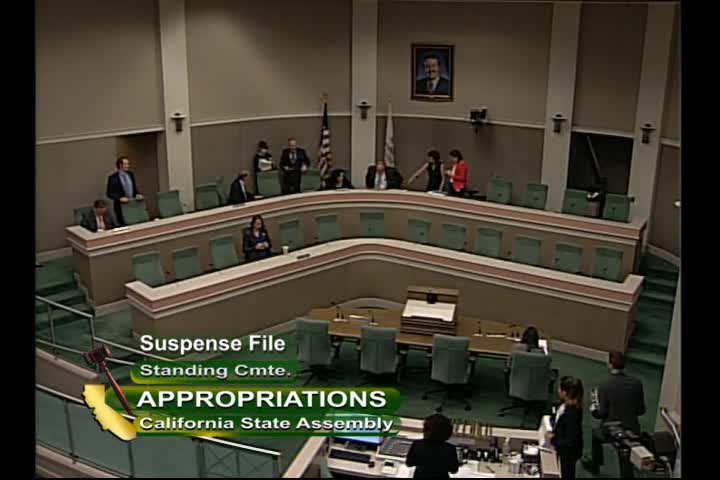 1H
Assembly Standing Committee on Appropriations
 5MIN
Senate Floor
 11MIN
Senate Standing Committee on Health
Bill Author

Bill Co-Author(s):