SB 1294: Cannabis: state and local equity programs.
- Session Year: 2017-2018
- House: Senate
- Latest Version Date: 2018-09-26
The Control, Regulate and Tax Adult Use of Marijuana Act (AUMA), an initiative measure approved as Proposition 64 at the November 8, 2016, statewide general election, authorizes a person who obtains a state license under AUMA to engage in commercial adult-use cannabis activity pursuant to that license and applicable local ordinances. The Medicinal and Adult-Use Cannabis Regulation and Safety Act (MAUCRSA), among other things, consolidates the licensure and regulation of commercial medicinal and adult-use cannabis activities.
This bill would enact the California Cannabis Equity Act of 2018. The bill would authorize the Bureau of Cannabis Control, upon request by a local jurisdiction, to provide technical assistance, as defined, to a local equity program that helps local equity applicants or local equity licensees. The bill would, upon appropriation of funds by the Legislature, authorize an eligible local jurisdiction to submit an application to the bureau for a grant to assist local equity applicants and local equity licensees through that local jurisdictions equity program. The bill would require the bureau to review an application, and to grant funding to an eligible local jurisdiction, based on specified factors. The bill would require an eligible local jurisdiction that receives grant funds pursuant to these provisions to use the grant funds to assist local equity licensees in that local jurisdiction to gain entry to, and to successfully operate in, the states regulated cannabis marketplace. The bill would require an eligible local jurisdiction that receives grant funds pursuant to these provisions to, on or before a specified date, submit an annual report to the bureau that contains specified information on the use of the grant funds and specified demographic data.
This bill would require, on or before July 1, 2019, the bureau to, among other things, publish approved local equity ordinances and model equity ordinances created by advocacy groups and experts, as specified, and to submit a report to the Legislature regarding the progress of local equity programs that receive funding pursuant to these provisions.
The Control, Regulate and Tax Adult Use of Marijuana Act, an initiative measure, authorizes the Legislature to amend the act to further the purposes and intent of the act with a 2/3 vote of the membership of both houses of the Legislature, except as provided.
This bill would declare that its provisions further the purposes and intent of the Control, Regulate and Tax Adult Use of Marijuana Act.
The Control, Regulate and Tax Adult Use of Marijuana Act (AUMA), an initiative measure approved as Proposition 64 at the November 8, 2016, statewide general election, authorizes a person who obtains a state license under AUMA to engage in commercial adult-use cannabis activity pursuant to that license and applicable local ordinances. The Medicinal and Adult-Use Cannabis Regulation and Safety Act (MAUCRSA), among other things, consolidates the licensure and regulation of commercial medicinal and adult-use cannabis activities.
This bill would enact the California Cannabis Collaboration and Inclusion Act. Equity Act of 2018. The bill would authorize the Bureau of Cannabis Control, upon request by a local equity applicant or local equity licensee, jurisdiction, to provide technical assistance, as defined, to the a local equity program that helps local equity applicant applicants or local equity licensee. licensees. The bill would, upon appropriation of funds by the Legislature, authorize an eligible local jurisdiction to submit an application to the bureau for a grant to assist local equity applicants and local equity licensees identified by through that local jurisdiction. jurisdictions equity program. The bill would require the bureau to review an application, and to grant funding to the an eligible local jurisdiction, as provided, if the bureau determines the local jurisdiction meets specified criteria. based on specified factors. The bill would require an eligible local jurisdiction that receives grant funds pursuant to these provisions to use the grant funds to assist local equity licensees identified by in that local jurisdiction to gain entry to, and to successfully operate in, the states regulated cannabis marketplace. The bill would require an eligible local jurisdiction that receives grant funds pursuant to these provisions to, by on or before a specified date, submit an annual report to the bureau that contains specified information on the use of the grant funds. funds and specified demographic data.
This bill would require require, on or before July 1, 2019, the bureau to, among other things, provide reduced, or waived, state licensing fees and other assistance to local equity applicants and licensees, and to develop a model local equity program and a model publish approved local equity ordinance. The bill would require the bureau to annually report, beginning on January 1, 2020, to the Legislature on local equity programs, data on cannabis-related convictions, and areas negatively and disproportionately impacted by the criminalization of cannabis. ordinances and model equity ordinances created by advocacy groups and experts, as specified, and to submit a report to the Legislature regarding the progress of local equity programs that receive funding pursuant to these provisions.
The bill would also require, beginning July 1, 2019, state and local cannabis license or permit applications to include a voluntary question relating to the demographics of the applicant, as provided. By requiring local jurisdictions to include specified questions in their cannabis license or permit application, this bill would impose a state-mandated local program.The California Constitution requires the state to reimburse local agencies and school districts for certain costs mandated by the state. Statutory provisions establish procedures for making that reimbursement.This bill would provide that, if the Commission on State Mandates determines that the bill contains costs mandated by the state, reimbursement for those costs shall be made pursuant to the statutory provisions noted above.The Control, Regulate and Tax Adult Use of Marijuana Act, an initiative measure, authorizes the Legislature to amend the act to further the purposes and intent of the act with a 2/3 vote of the membership of both houses of the Legislature, except as provided.
This bill would declare that its provisions further the purposes and intent of the Control, Regulate and Tax Adult Use of Marijuana Act.
The Control, Regulate and Tax Adult Use of Marijuana Act of 2016 (AUMA), an initiative measure approved as Proposition 64 at the November 8, 2016, statewide general election, authorizes a person who obtains a state license under AUMA to engage in commercial adult-use cannabis activity pursuant to that license and applicable local ordinances. The Medicinal and Adult-Use Cannabis Regulation and Safety Act (MAUCRSA), among other things, consolidates the licensure and regulation of commercial medicinal and adult-use cannabis activities.
This bill would enact the Cannabis Collaboration and Inclusion Act. The bill would require authorize the bureau, Bureau of Cannabis Control, upon request by a local equity applicant or local equity licensee, to provide technical assistance, as defined, to the local equity applicant or local equity licensee. The bill would, upon appropriation of funds by the Legislature, authorize an eligible local jurisdiction to submit an application to the bureau for a grant to assist local equity applicants and local equity licensees identified by that local jurisdiction. The bill would require the bureau to review an application so submitted, application, and to grant the application funding to the local jurisdiction, as provided, if the bureau determines the eligible local jurisdiction meets specified requirements. criteria. The bill would require an eligible local jurisdiction that receives grant funds pursuant to these provisions to use the grant funds to assist local equity licensees identified by that jurisdiction to gain entry to, and to successfully operate in, the states regulated cannabis marketplace. The bill would require an eligible local jurisdiction that receives grant funds pursuant to these provisions to, by a specified date, submit an annual report to the bureau that contains specified information on the use of the grant funds.
The bill would also require the Bureau of Cannabis Control to establish a cannabis equity task force to advise the bureau on the development and implementation of a state equity program. Beginning on January 1, 2020, theThis bill would require the bureau to establish a state equity program to ease the burdens associated with obtaining a state license and participating in the cannabis industry for state applicants and licensees who meet certain criteria. The state equity program would, to, among other things, provide reduced, or waived, state licensing fees and other assistance to those local equity applicants and licensees, would develop incentives to encourage state cannabis licensees to lease to, contract with, and hire equity applicants and licensees, as specified, and would and to develop a model local equity program and a model local equity ordinance. The bill would require the bureau to annually report, beginning on January 1, 2020, to the Legislature on state and local equity programs, data on cannabis-related convictions, and areas negatively and disproportionately impacted by the criminalization of cannabis.
(2)MAUCRSA requires an applicant for a cannabis license to provide specified documents with his or her application for licensure, including, among other things, a detailed diagram of the proposed premises wherein the license privileges will be exercised, showing, among other things, common or shared entryways. MAUCRSA defines premises for the purposes of the act to mean the designated structure or structures and land specified in the application for the license, as provided.The bill would also require, beginning July 1, 2019, state and local cannabis license or permit applications to include a voluntary question relating to the demographics of the applicant, as provided. By requiring local jurisdictions to include specified questions in their cannabis license or permit application, this bill would impose a state-mandated local program.
The bill would also define premises as the area specified in the application wherein the license privileges are, or will be, exercised, as provided. The bill would require that provisions of MAUCRSA not be construed to prohibit 2 or more licensed premises from sharing common use areas wherein no license privileges will be exercised so long as all licensees comply with the requirements of the act, as specified.The California Constitution requires the state to reimburse local agencies and school districts for certain costs mandated by the state. Statutory provisions establish procedures for making that reimbursement.
This bill would provide that, if the Commission on State Mandates determines that the bill contains costs mandated by the state, reimbursement for those costs shall be made pursuant to the statutory provisions noted above.
(3)TheThe Control, Regulate and Tax Adult Use of Marijuana Act, an initiative measure, authorizes the Legislature to amend the act to further the purposes and intent of the act with a 2/3 vote of the membership of both houses of the Legislature, except as provided.
This bill would declare that its provisions further the purposes and intent of the Control, Regulate and Tax Adult Use of Marijuana Act.
(1)The Control, Regulate and Tax Adult Use of Marijuana Act of 2016 (AUMA), an initiative measure approved as Proposition 64 at the November 8, 2016, statewide general election, authorizes a person who obtains a state license under AUMA to engage in commercial adult-use cannabis activity pursuant to that license and applicable local ordinances. The Medicinal and Adult-Use Cannabis Regulation and Safety Act (MAUCRSA), among other things, consolidates the licensure and regulation of commercial medicinal and adult-use cannabis activities.
This bill would enact the Cannabis Collaboration and Inclusion Act. The bill would require the Bureau of Cannabis Control to establish a cannabis equity task force. The bill would require, beginning January 1, 2019, the bureau to provide technical support to state and local equity applicants and assistance in securing business locations, and would require the Governors Office of Business and Economic Development, known as GO-Biz, to assist state and local equity applicants and licensees with gaining access to reduced interest and interest-free loans, and grants. The bill would require the bureau to annually report, beginning on January 1, 2020, to the Legislature on state and local equity programs, data on cannabis-related convictions, and areas negatively and disproportionately impacted by the criminalization of cannabis. The bill would require the bureau, upon request by a local equity applicant or local equity licensee, to provide technical assistance, as defined, to the local equity applicant or local equity licensee. The bill would, upon appropriation of funds by the Legislature, authorize an eligible local jurisdiction to submit an application to the bureau for a grant to assist local equity applicants and local equity licensees identified by that local jurisdiction. The bill would require the bureau to review an application so submitted, and to grant the application if the bureau determines the eligible local jurisdiction meets specified requirements. The bill would require an eligible local jurisdiction that receives grant funds pursuant to these provisions to use grant funds to assist local equity licensees identified by that jurisdiction to gain entry to, and to successfully operate in, the states regulated cannabis marketplace. The bill would require an eligible local jurisdiction that receives grant funds pursuant to these provisions to, by a specified date, submit an annual report to the bureau that contains specified information on the use of the grant funds.
The bill would also require the Bureau of Cannabis Control to establish a cannabis equity task force to advise the bureau on the development and implementation of a state equity program. Beginning on January 1, 2020, the bill would require the bureau to establish a state equity program to ease the burdens associated with obtaining a state license and participating in the cannabis industry for state applicants and licensees who meet certain criteria. The state equity program would, among other things, provide reduced, or waived, licensing fees and other assistance to those applicants and licensees, would develop incentives to encourage state cannabis licensees to lease to, contract with, and hire equity applicants and licensees, as specified, and would develop a model local equity ordinance. The bill would require the bureau to annually report, beginning on January 1, 2020, to the Legislature on state and local equity programs, data on cannabis-related convictions, and areas negatively and disproportionately impacted by the criminalization of cannabis.
(2)MAUCRSA requires an applicant for a cannabis license to provide specified documents with his or her application for licensure, including, among other things, a detailed diagram of the proposed premises wherein the license privileges will be exercised, showing, among other things, common or shared entryways. MAUCRSA defines premises for the purposes of the act to mean the designated structure or structures and land specified in the application for the license, as provided.
The bill would require, beginning July 1, 2019, state cannabis applications to include a voluntary question relating to the demographics of the applicant, as provided.
The bill would also define premises as the area specified in the application wherein the license privileges are, or will be, exercised, as provided. The bill would require that provisions of MAUCRSA not be construed to prohibit 2 or more licensed premises from sharing common use areas wherein no license privileges will be exercised so long as all licensees comply with the requirements of the act, as specified.
(3)The Control, Regulate and Tax Adult Use of Marijuana Act, an initiative measure, authorizes the Legislature to amend the act to further the purposes and intent of the act with a 2/3 vote of the membership of both houses of the Legislature, except as provided.
This bill would declare that its provisions further the purposes and intent of the Control, Regulate and Tax Adult Use of Marijuana Act.
(1)The Control, Regulate and Tax Adult Use of Marijuana Act of 2016 (AUMA), an initiative measure approved as Proposition 64 at the November 8, 2016, statewide general election, authorizes a person who obtains a state license under AUMA to engage in commercial adult-use cannabis activity pursuant to that license and applicable local ordinances. The Medicinal and Adult-Use Cannabis Regulation and Safety Act (MAUCRSA), among other things, consolidates the licensure and regulation of commercial medicinal and adult-use cannabis activities.
This bill would enact the Cannabis Collaboration and Inclusion Act. The bill would require the Bureau of Cannabis Control to establish a cannabis equity task force and create, by January 1, 2020, and regularly update thereafter, a state equity plan based on, among other things, recommendations of the task force and areas disproportionately and negatively impacted by cannabis-related convictions. Beginning force. The bill would require, beginning January 1, 2019, the bureau to provide technical support to state and local equity applicants and assistance in securing business locations, and would require the Governors Office of Business and Economic Development, known as GO-Biz, to assist state and local equity applicants and licensees with gaining access to reduced interest and interest-free loans, and grants. The bill would require the bureau to annually report, beginning on January 1, 2020, to the Legislature on state and local equity programs, data on cannabis-related convictions, and areas negatively and disproportionately impacted by the criminalization of cannabis.
Beginning on January 1, 2019, 2020, the bill would require the bureau to establish a state equity program to ease the burdens associated with obtaining a state license and participating in the cannabis industry for state applicants and licensees who meet certain criteria. The state equity program would, among other things, provide technical support, fee waivers, reduced, or waived, licensing fees and other assistance to those applicants and licensees, would develop incentives to encourage state and local cannabis licensees to lease to, contract with, and hire equity applicants and licensees, as specified, and would assist local jurisdictions in implementing local equity programs. develop a model local equity ordinance.
The bill would require the bureau to annually report, beginning on January 1, 2020, to the Legislature on state and local equity programs, as specified.(2)MAUCRSA requires an applicant for a cannabis license to provide specified documents with his or her application for licensure, including, among other things, a detailed diagram of the proposed premises wherein the license privileges will be exercised, showing, among other things, common or shared entryways. MAUCRSA defines premises for the purposes of the act to mean the designated structure or structures and land specified in the application for the license, as provided.
The bill would require require, beginning July 1, 2019, state cannabis applications to include a voluntary question relating to the demographics of the applicant, as provided.
The bill would also define premises as the area specified in the application wherein the license privileges are, or will be, exercised, as provided. The bill would require that provisions of MAUCRSA not be construed to prohibit 2 or more licensed premises from sharing common use areas wherein no license privileges will be exercised so long as all licensees comply with the requirements of the act, as specified.
(3)The Control, Regulate and Tax Adult Use of Marijuana Act, an initiative measure, authorizes the Legislature to amend the act to further the purposes and intent of the act with a 2/3 vote of the membership of both houses of the Legislature, except as provided.
This bill would declare that its provisions further the purposes and intent of the Control, Regulate and Tax Adult Use of Marijuana Act.
(1)The Control, Regulate and Tax Adult Use of Marijuana Act of 2016 (AUMA), an initiative measure approved as Proposition 64 at the November 8, 2016, statewide general election, authorizes a person who obtains a state license under AUMA to engage in commercial adult-use cannabis activity pursuant to that license and applicable local ordinances. The Medicinal and Adult-Use Cannabis Regulation and Safety Act (MAUCRSA), among other things, consolidates the licensure and regulation of commercial medicinal and adult-use cannabis activities.
This bill would enact the Cannabis Collaboration and Inclusion Act. The bill would require the Bureau of Cannabis Control to establish a cannabis equity task force and create, by January 1, 2020, and regularly update thereafter, a state equity plan based on, among other things, recommendations of the task force and areas disproportionately and negatively impacted by cannabis-related convictions. Beginning on January 1, 2019, the bill would require the bureau to establish a state equity program to ease the burdens associated with obtaining a state license and participating in the cannabis industry for applicants and licensees who meet certain criteria. The state equity program would, among other things, provide technical support, fee waivers, and other assistance to those applicants and licensees, would encourage state and local cannabis licensees to lease to, contract with, and hire equity applicants and licensees, as specified, and would assist local jurisdictions in implementing local equity programs.
The bill would require the bureau to annually report, beginning on January 1, 2020, to the Legislature on state and local equity programs, as specified.
(2)MAUCRSA requires an applicant for a cannabis license to provide specified documents with his or her application for licensure, including, among other things, a detailed diagram of the proposed premises wherein the license privileges will be exercised, showing, among other things, common or shared entryways. MAUCRSA defines premises for the purposes of the act to mean the designated structure or structures and land specified in the application for the license, as provided.
The bill would require state cannabis applications to include a voluntary question relating to the demographics of the applicant, as provided.
The bill would also define premises as the area specified in the application wherein the license privileges are, or will be, exercised, as provided. The bill would require that provisions of MAUCRSA not be construed to prohibit 2 or more licensed premises from sharing common use areas wherein no license privileges will be exercised so long as all licensees comply with the requirements of the act, as specified.
(3)The Control, Regulate and Tax Adult Use of Marijuana Act, an initiative measure, authorizes the Legislature to amend the act to further the purposes and intent of the act with a 2/3 vote of the membership of both houses of the Legislature, except as provided.
This bill would declare that its provisions further the purposes and intent of the Control, Regulate and Tax Adult Use of Marijuana Act.
Existing law requires each prison to have a citizens advisory committee consisting of not more than 15 members appointed by the warden of the prison, as specified.This bill would require that one member be a person that has been previously incarcerated in a state prison and meets other qualifications, as specified.Existing law requires each prison to have a citizens advisory committee consisting of not more than 15 members appointed by the warden of the prison, as specified.
This bill would require that one member be a person that has been previously incarcerated in a state prison and meets other qualifications, as specified.
This act shall be known and may be cited as the California Cannabis Equity Act of 2018.
SEC. 2.The Legislature finds and declares the following:
(a)In 2016, California voters approved Proposition 64, the Control, Regulate and Tax Adult Use of Marijuana Act (AUMA). In its statement of purpose and intent, AUMA calls for regulating cannabis in a way that reduce[s] barriers to entry into the legal, regulated market.
(b)Cannabis prohibition had a devastating impact on communities across California and across the United States. Persons convicted of a cannabis offense and their families suffer the long-term consequences of prohibition. These individuals have a more difficult time entering the newly created adult-use cannabis industry due, in part, to a lack of access to capital, business space, technical support, and regulatory compliance assistance.
(c)During the era of cannabis prohibition in California, the burdens of arrests, convictions, and long-term collateral consequences arising from a conviction fell disproportionately on Black and Latinx people, even though people of all races used and sold cannabis at nearly identical rates. The California Department of Justice data shows that from 2006 to 2015, inclusive, Black Californians were two times more likely to be arrested for cannabis misdemeanors and five times more likely to be arrested for cannabis felonies than White Californians. During the same period, Latinx Californians were 35 percent more likely to be arrested for cannabis crimes than White Californians. The collateral consequences associated with cannabis law violations, coupled with generational poverty and a lack of access to resources, make it extraordinarily difficult for persons with convictions to enter the newly regulated industry.
(d)Offering technical support, regulatory compliance assistance, and assistance with securing the capital necessary to begin a business will further the stated intent of the AUMA by reducing barriers to licensure and employment in the regulated industry.
(e)Offering these supports will also aid the state in its goal of eliminating or reducing the illicit cannabis market by bringing more people into the legal marketplace.
(f)It is the intent of the Legislature in enacting this act to ensure that persons most harmed by cannabis criminalization and poverty be offered assistance to enter the multibillion dollar cannabis industry as entrepreneurs or as employees with high quality, well-paying jobs.
(g)It is the intent of the Legislature in enacting this act that the cannabis industry be representative of the states population, and that barriers to entering the industry are reduced through support to localities that have created local equity programs in their jurisdictions.
(h)The Legislature finds and declares that this act furthers the purposes and intent of the Control, Regulate and Tax Adult Use of Marijuana Act, enacted as Proposition 64 of 2016.
SEC. 3.Chapter 23 (commencing with Section 26240) is added to Division 10 of the Business and Professions Code, to read:23.The California Cannabis Equity Act26240.For purposes of this chapter, the following definitions apply:
(a)Eligible local jurisdiction means a local jurisdiction that has adopted or operates a local equity program.
(b)Local equity applicant means an applicant who has submitted, or will submit, an application to a local jurisdiction to engage in commercial cannabis activity within the jurisdictional boundaries of that jurisdiction and who meets the requirements of that jurisdictions local equity program.
(c)Local equity licensee means a person who has obtained a license from a local jurisdiction to engage in commercial cannabis activity within the jurisdictional boundaries of that jurisdiction and who meets the requirements of that jurisdictions local equity program.
(d)Local equity program means a program adopted or operated by a local jurisdiction that focuses on inclusion and support of individuals and communities in Californias cannabis industry who are linked to populations or neighborhoods that were negatively or disproportionately impacted by cannabis criminalization. Local equity programs may include, but are not limited to, the following types of services:
(1)Small business support services offering technical assistance to those persons from economically disadvantaged communities that experience high rates of poverty or communities most harmed by cannabis prohibition, determined by historically high rates of arrests or convictions for cannabis law violations.
(2)Tiered fees or fee waivers for cannabis-related permits and licenses.
(3)Assistance in paying state regulatory and licensing fees.
(4)Assistance securing business locations prior to or during the application process.
(5)Assistance securing capital investments.
(6)Assistance with regulatory compliance.
(7)Assistance in recruitment, training, and retention of a qualified and diverse workforce, including transitional workers.
(e)Transitional worker means a person who, at the time of starting employment at the business premises, resides in a ZIP Code or census track area with higher than average unemployment, crime, or child death rates, and faces at least one of the following barriers to employment: (1) is homeless; (2) is a custodial single parent; (3) is receiving public assistance; (4) lacks a GED or high school diploma; (5) has a criminal record or other involvement with the criminal justice system; (6) suffers from chronic unemployment; (7) is emancipated from the foster care system; (8) is a veteran; or (9) is over 65 years of age and is financially compromised.
26242.(a)The bureau may, upon request by a local jurisdiction, provide technical assistance to a local equity program that helps local equity applicants or local equity licensees. When determining whether to provide technical assistance, the bureau shall make individual determinations based on the reasonableness of the request and available resources.
(b)Technical assistance includes providing training and educational sessions regarding state cannabis licensing processes and requirements to equity applicants or equity licensees that are coordinated with the local equity program.
26244.(a)(1)Upon appropriation of funds by the Legislature, an eligible local jurisdiction may, in the form and manner prescribed by the bureau, submit an application to the bureau for a grant to assist local equity applicants and local equity licensees through that local jurisdictions equity program.
(2)The bureau shall review an application based on the following factors:
(A)Whether the local jurisdiction is an eligible local jurisdiction.
(B)Whether the local jurisdiction has adopted or operates a local equity program.
(C)Whether the local jurisdiction has identified a local equity applicant or a local equity licensee that the local jurisdiction could assist, as defined in subdivision (b), through use of the grant funding.
(D)Whether the local jurisdiction has demonstrated the ability to provide, or created a plan to provide, the services identified in subdivision (b).
(E)The number of existing and potential local equity applicants and local equity licensees in the local jurisdiction.
(F)Any additional relevant and reasonable criteria the bureau deems necessary.
(3)The bureau shall grant funding to an eligible local jurisdiction based on its review of the factors in paragraph (2). If applications for funding are greater than the amount appropriated for this grant program, the bureau shall prorate the funding as necessary.
(b)An eligible local jurisdiction that receives a grant pursuant to subdivision (a) shall use grant funds to assist local equity applicants and local equity licensees in that local jurisdiction to gain entry to, and to successfully operate in, the states regulated cannabis marketplace. For purposes of this subdivision, assist includes, but is not limited to, any of the following methods:
(1)To provide a loan or a grant to a local equity applicant or local equity licensee to assist the applicant or licensee with startup and ongoing costs. For purposes of this paragraph, startup and ongoing costs include, but are not limited to, rent, leases, local and state application and licensing fees, regulatory adherence, testing of cannabis, equipment, capital improvements, and training and retention of a qualified and diverse workforce.
(2)To support local equity program efforts to provide sources of capital to local equity applicants and local equity licensees.
(3)To provide direct technical assistance to local equity applicants and local equity licensees.
(4)To assist in the administration of local equity programs.
(c)An eligible local jurisdiction that receives a grant pursuant to subdivision (a) shall, on or before January 1 of the year following receipt of the grant and annually thereafter for each year that grant funds are expended, submit an annual report to the bureau that includes all of the following information:
(1)How the local jurisdiction disbursed grant funds.
(2)How the local jurisdiction identified local equity applicants or local equity licensees, including how the local jurisdiction determines who qualifies as a local equity applicant or local equity licensee.
(3)The number of local equity applicants and local equity licensees that were served by the grant funds.
(4)Demographic data on equity applicants, equity licensees, and other applicants and licensees in the jurisdiction, including, but not limited to, race, ethnicity, gender, sexual orientation, income level, prior convictions, and veteran status. This information will be consolidated and reported without the individuals identifying information.
(d)An eligible local jurisdiction that receives a grant pursuant to this section shall use no more than 10 percent of the state grant for administration, including employing staff or hiring consultants to administer grants and the program.
26246.To facilitate greater equity in business ownership and employment in the cannabis market, the bureau shall do all of the following:
(a)Serve as a point of contact for local equity programs.
(b)On or before July 1, 2019, publish approved local equity ordinances and model local equity ordinances created by advocacy groups and experts to the bureaus Internet Web site. Advocacy groups and experts may include, but are not limited to, minority business owners and entrepreneurs, organizations with expertise in addressing barriers to employment and licensure for low-income communities or persons with prior arrests or convictions, and unions representing cannabis workers.
(c)To the extent feasible, coordinate with the relevant local jurisdictions to carry out the responsibilities described in this section.
26248.(a)On or before July 1, 2020, the bureau shall submit a report to the Legislature regarding the progress of local equity programs that have received funding pursuant to Section 26244.
(b)The report shall include, but is not limited to, the following information:
(1)The cities, counties, and cities and counties that have enacted local equity programs.
(2)The number of local equity applicants and general applicants applying for and receiving licenses in the jurisdictions that received grants.
(3)Information collected pursuant to subdivision (c) of Section 26244.
(c)The bureau shall post the report required by this section on its Internet Web site.
(d)The report required by this section shall be submitted in compliance with Section 9795 of the Government Code, and shall apply notwithstanding Section 10231.5 of the Government Code.
26250.The provisions of this chapter are severable. If any provision of this chapter or its application is held invalid, that invalidity shall not affect other provisions or applications that can be given effect without the invalid provision or application.
SEC. 4.The Legislature finds and declares that this act furthers the purposes and intent of the Control, Regulate and Tax Adult Use of Marijuana Act.
This act shall be known and may be cited as The the California Cannabis Collaboration and Inclusion Act. Equity Act of 2018.
SEC. 2.The Legislature finds and declares the following:
(a)In 2016, California voters approved Proposition 64, the Control, Regulate and Tax Adult Use of Marijuana Act (AUMA). (AUMA). In its statement of purpose and intent, AUMA calls for regulating cannabis in a way that reduce[s] barriers to entry into the legal, regulated market.
(b)Cannabis prohibition had a devastating impact on communities across California and across the United States. Persons convicted of a cannabis offense and their families suffer the long-term consequences of prohibition. These individuals have a more difficult time entering the newly created adult-use cannabis industry due, in part, to a lack of access to capital, business space, technical support, and regulatory compliance assistance.
(c)Under prohibition, During the era of cannabis prohibition in California, the burdens of arrests, convictions, and long-term collateral consequences arising from a conviction fell disproportionately on black Black and Latino youth, adults, and their families. Latinx people, even though people of all races used and sold cannabis at nearly identical rates. The California Department of Justice data shows that from 2006 to 2015, inclusive, Black Californians were two times more likely to be arrested for cannabis misdemeanors and five times more likely to be arrested for cannabis felonies than White Californians. During the same period, Latinx Californians were 35 percent more likely to be arrested for cannabis crimes than White Californians. The collateral consequences associated with cannabis law violations, coupled with generational poverty and a lack of access to resources, make it extraordinarily difficult for persons with convictions to enter the newly regulated industry.
(d)Offering technical support, regulatory compliance assistance, and assistance with securing the capital necessary to begin a business will further the stated intent of the AUMA by reducing barriers to licensure and employment in the regulated industry.
(e)Offering these supports will also aid the state in its goal of eliminating or reducing the illicit cannabis market by bringing more people into the legal marketplace.
(f)It is the intent of the Legislature in enacting this act to ensure that persons most harmed by cannabis criminalization and poverty be offered assistance to enter the multi-billion multibillion dollar cannabis industry as entrepreneurs or as employees with high quality, well-paying jobs.
(g)It is the intent of the Legislature in enacting this act that the cannabis industry be representative of the states population, and that barriers to entering the industry are reduced through support to localities that have created local equity programs in their jurisdictions.
(h)It is the intent of the Legislature in enacting this act that more information be collected to fully assess the cannabis industry and the persons who participate in it. This will better inform decisions on how to create a more equitable industry.(i)(h)The Legislature finds and declares that this act furthers the purposes and intent of the Control, Regulate and Tax Adult Use of Marijuana Act, enacted as Proposition 64 of 2016.
SEC. 3.Section 26051.7 is added to the Business and Professions Code, to read:26051.7.(a)Beginning July 1, 2019, applications for a state or local license or permit shall include voluntary questions relating to the demographics of the applicant, including, but not limited to, race, ethnicity, gender, sexual orientation, income level, veteran status, and prior convictions.(b)The information collected in subdivision (a) shall be consolidated without individual identifying information. That consolidated information shall be made publicly available on the bureaus Internet Web site.SEC. 4.SEC. 3.Chapter 23 (commencing with Section 26240) is added to Division 10 of the Business and Professions Code, to read:23.The California Cannabis Collaboration and Inclusion Equity Act26240.For purposes of this chapter, the following definitions apply:
(a)Eligible local jurisdiction means a local jurisdiction that has adopted or operates a local equity program.
(b)Local equity applicant means an applicant who has submitted, or will submit, an application to a local jurisdiction to engage in commercial cannabis activity within the jurisdictional boundaries of that jurisdiction and who meets the requirements of that jurisdictions local equity program.
(c)Local equity licensee means a person who has obtained a license from a local jurisdiction to engage in commercial cannabis activity within the jurisdictional boundaries of that jurisdiction and who meets the requirements of that jurisdictions local equity program.
(d)Local equity program means a program adopted or operated by a local jurisdiction that focuses on inclusion and support of individuals and communities in Californias cannabis industry who are linked to populations and or neighborhoods that were negatively and or disproportionately impacted by cannabis criminalization. Local equity programs may include, but are not limited to, the following types of services:
(1)Small business support services offering technical assistance to those persons from economically disadvantaged communities and that experience high rates of poverty or communities most harmed by cannabis prohibition. prohibition, determined by historically high rates of arrests or convictions for cannabis law violations.
(2)Tiered fees or fee waivers for cannabis-related permits and licenses.
(3)Assistance in paying state regulatory and licensing fees.
(3)(4)Assistance securing business locations prior to or during the application process.
(4)(5)Assistance securing capital investments.
(5)(6)Assistance with regulatory compliance.
(6)(7)Assistance in recruitment, training, and retention of a qualified and diverse workforce, including transitional workers.
(e)Transitional worker means a person who, at the time of starting employment at the business premises, resides in a ZIP code Code or census track area with higher than average unemployment, crime, or child death rates, and faces at least one of the following barriers to employment: (1) is homeless; (2) is a custodial single parent; (3) is receiving public assistance; (4) lacks a GED or high school diploma; (5) has a criminal record or other involvement with the criminal justice system; (6) suffers from chronic unemployment; (7) is emancipated from the foster care system; (8) is a veteran; or (9) is over the age of 65 years of age and is financially compromised.
26242.(a)The bureau may, upon request by a local equity applicant or local equity licensee, jurisdiction, provide technical assistance to the a local equity program that helps local equity applicant applicants or local equity licensee. licensees. When determining whether to provide technical assistance, the bureau shall make individual determinations based on the reasonableness of the request and available resources.
(b)Technical assistance includes conducting providing training and educational sessions regarding state cannabis licensing processes and requirements, which could be requirements to equity applicants or equity licensees that are coordinated with the local training sessions, and providing assistance to help applicants and licensees navigate the state licensing process. equity program.
26244.(a)(1)Upon appropriation of funds by the Legislature, an eligible local jurisdiction may, in the form and manner prescribed by the bureau, submit an application to the bureau for a grant to assist local equity applicants and local equity licensees identified by through that local jurisdictions equity program.
(2)The bureau shall review an application based on the following criteria: factors:
(A)Whether the local jurisdiction is an eligible local jurisdiction.
(B)Whether the local jurisdiction has adopted or operates a local equity program.
(C)Whether the local jurisdiction has identified a local equity applicant or a local equity licensee that the local jurisdiction could assist, as defined in subdivision (b), through use of the grant funding.
(D)Whether the local jurisdiction has demonstrated the ability to provide, or created a plan to provide, the services identified in subdivision (b).
(E)The number of existing and potential local equity applicants and local equity licensees in the local jurisdiction.
(E)(F)Any additional relevant and reasonable criteria the bureau deems necessary.
(3)If the bureau finds that the local jurisdictions application meets the criteria in paragraph (2), the The bureau shall grant funding to that jurisdiction. an eligible local jurisdiction based on its review of the factors in paragraph (2). If applications for funding are greater than the amount appropriated for this grant program, the bureau shall prorate the funding as necessary.
(b)An eligible local jurisdiction that receives a grant pursuant to subdivision (a) shall use grant funds to assist local equity applicants and local equity licensees identified by in that local jurisdiction to gain entry into, to, and to successfully operate in, the states regulated cannabis marketplace. For purposes of this subdivision, assist includes, but is not limited to, any of the following methods:
(1)To provide a loan or a grant to a local equity applicant or local equity licensee to assist the applicant or licensee with startup and ongoing costs. For purposes of this paragraph, startup and ongoing costs include, but are not limited to, rent, leases, local and state application and licensing fees, regulatory adherence, testing of cannabis, equipment, capital improvements, and training and retention of a qualified and diverse workforce.
(2)To support local equity program efforts to provide sources of capital to local equity applicants and local equity licensees.
(3)To provide direct technical assistance to local equity applicants and local equity licensees.
(4)To assist in the establishment administration of local equity programs.
(c)An eligible local jurisdiction that receives a grant pursuant to subdivision (a) shall, by on or before January 1 of the year following receipt of the grant and annually thereafter until all funds have been for each year that grant funds are expended, submit an annual report to the bureau that includes all of the following information:
(1)How the local jurisdiction disbursed grant funds.
(2)How the local jurisdiction identified local equity applicants or local equity licensees, including how the local jurisdiction determines who qualifies as a local equity applicant or local equity licensee.
(3)The number of local equity applicants and local equity licensees that were served by the grant funds.
(4)Demographic data on equity applicants, equity licensees, and other applicants and licensees in the jurisdiction, including, but not limited to, race, ethnicity, gender, sexual orientation, income level, prior convictions, and veteran status. This information will be consolidated and reported without the individuals identifying information.
(d)An eligible local jurisdiction that receives a grant pursuant to this section shall use no more than 10 percent of the state grant for administration, including employing staff or hiring consultants to administer grants and the program.
26246.To facilitate greater equity in business ownership and employment in the cannabis market, the bureau shall, at a minimum, shall do all of the following:
(a)Serve as a point of contact for local equity applicants and licensees, and provide technical assistance to local equity applicants and licensees as described in Section 26242. programs.
(b)On or before January July 1, 2020, develop guidelines and principals for a model local equity program and a 2019, publish approved local equity ordinances and model local ordinance used to adopt a local equity program. This shall be done in consultation with local governments, including those with equity programs, equity ordinances created by advocacy groups and experts to the bureaus Internet Web site. Advocacy groups and experts may include, but are not limited to, minority business owners and entrepreneurs, organizations with expertise in addressing barriers to employment and licensure for low-income communities and or persons with prior arrests or convictions, and unions representing cannabis workers. The bureau may contract with local entities to administer a local equity program.
(c)Notwithstanding Section 26012, provide local equity applicants with a waiver of a state licensing fee, or portion of a state licensing fee, required to obtain a license under this division. (d)Provide grants and assistance to local equity programs pursuant to Section 26244.(e)Provide small business support services to local equity applicants.(f)Provide assistance in regulatory compliance for local equity licensees.(g)Provide assistance to all state licensees in recruitment, training, and retention of a qualified and diverse workforce that includes transitional workers, and incentivize licensees to provide that workforce with high quality, well-paying jobs.(h)(c)To the extent feasible, coordinate with the relevant local jurisdictions to carrying carry out the responsibilities described in this section.
26248.(a)On or before July 1, 2020, and each year thereafter, the bureau shall submit a report to the Legislature regarding local equity programs. regarding the progress of local equity programs that have received funding pursuant to Section 26244.
(b)The report shall include, but is not limited to, the following information:
(1)The cities, counties, and cities and counties that have enacted local equity programs.
(2)The number of local equity applicants and general applicants applying for and receiving licenses. licenses in the jurisdictions that received grants.
(3)Information collected pursuant to subdivision (c) of Section 26051.7. 26244.
(4)Data on cannabis-related convictions and the local impacts of those convictions.(5)Areas negatively and disproportionately impacted by cannabis-related convictions.(c)The bureau shall post the report required by this section on its Internet Web site.
(d)The report required by this section shall be submitted in compliance with Section 9795 of the Government Code, and shall apply notwithstanding Section 10231.5 of the Government Code.
26250.The provisions of this chapter are severable. If any provision of this chapter or its application is held invalid, that invalidity shall not affect other provisions or applications that can be given effect without the invalid provision or application.
SEC. 5.If the Commission on State Mandates determines that this act contains costs mandated by the state, reimbursement to local agencies and school districts for those costs shall be made pursuant to Part 7 (commencing with Section 17500) of Division 4 of Title 2 of the Government Code.SEC. 6.SEC. 4.The Legislature finds and declares that this act furthers the purposes and intent of the Control, Regulate and Tax Adult Use of Marijuana Act.
This act shall be known and may be cited as The Cannabis Collaboration and Inclusion Act.
SEC. 2.The Legislature finds and declares the following:
(a)In 2016, California voters approved Proposition 64, the Control, Regulate and Tax Adult Use of Marijuana Act (AUMA). In its statement of purpose and intent, AUMA calls for regulating cannabis in a way that reduce[s] barriers to entry into the legal, regulated market.
(b)Cannabis prohibition had a devastating impact on communities across California and across the United States. Persons convicted of a cannabis offense and their families suffer the long-term consequences of prohibition. These individuals have a more difficult time entering the newly created adult-use cannabis industry due, in part, to a lack of access to capital, business space, technical support, and regulatory compliance assistance.
(c)Under prohibition, the burdens of arrests, convictions, and long-term collateral consequences arising from a conviction fell disproportionately on black and Latino youth, adults, and their families.
(d)Offering technical support, regulatory compliance assistance, and assistance with securing the capital necessary to begin a business will further the stated intent of the AUMA by reducing barriers to licensure and employment in the regulated industry.
(e)Offering these supports will also aid the state in its goal of eliminating or reducing the illicit cannabis market by bringing more people into the legal marketplace.
(f)It is the intent of the Legislature in enacting this act to ensure that persons most harmed by cannabis criminalization and poverty be offered assistance to enter the multi-billion dollar cannabis industry as entrepreneurs or as employees with high quality, well-paying jobs.
(g)It is the intent of the Legislature in enacting this act that the cannabis industry be representative of the states population, and that barriers to entering the industry are reduced through support to localities that have created local equity programs in their jurisdictions.
(h)It is the intent of the Legislature in enacting this act that more information be collected to fully assess the cannabis industry and the persons who participate in it. This will better inform decisions on how to create a more equitable industry.
(i)The Legislature finds and declares that this act furthers the purposes and intent of the Control, Regulate and Tax Adult Use of Marijuana Act, enacted as Proposition 64 of 2016.
SEC. 3.Section 26051.7 is added to the Business and Professions Code, to read:26051.7.(a)Beginning July 1, 2019, application applications for a state or local license or permit shall include a voluntary question questions relating to the demographics of the applicant, including, but not limited to, race, ethnicity, gender, sexual orientation, income level, veteran status, and prior convictions.
(b)The information collected in subdivision (a) shall be consolidated without individual identifying information. That consolidated information shall be made publicly available on the bureaus Internet Web site.
SEC. 4.Chapter 23 (commencing with Section 26240) is added to Division 10 of the Business and Professions Code, to read:23.Cannabis Collaboration and Inclusion Act26240.For purposes of this chapter, the following definitions apply:
(a)Eligible local jurisdiction means a local jurisdiction that has adopted or operates a local equity program.
(b)Local equity applicant means an applicant who has submitted, or will submit, an application to a local jurisdiction to engage in commercial cannabis activity within the jurisdictional boundaries of that jurisdiction and who meets the requirements of that jurisdictions local equity program.
(c)Local equity licensee means a person who has obtained a license from a local jurisdiction to engage in commercial cannabis activity within the jurisdictional boundaries of that jurisdiction and who meets the requirements of that jurisdictions local equity program.
(d)Local equity program means a program adopted or operated by a local jurisdiction that focuses on inclusion and support of individuals and communities in Californias cannabis industry who are linked to populations and neighborhoods that were negatively and disproportionately impacted by cannabis criminalization. Local equity programs may include, but are not limited to, the following types of services:
(1)Small business support services offering technical assistance and mentoring to those persons from communities of color and economically disadvantaged communities. communities and communities most harmed by cannabis prohibition.
(2)Assistance with expungement for drug-related convictions. (3)(2)Tiered fees or fee waivers for cannabis-related permits and licenses.
(3)Assistance securing business locations prior to or during the application process.
(4)Assistance securing capital investments.
(5)Assistance with regulatory compliance.
(6)Assistance in recruitment, training, and retention of a qualified and diverse workforce, including transitional workers.
(e)Transitional worker means a person who, at the time of starting employment at the business premises, resides in a ZIP code or census track area with higher than average unemployment, crime, or child death rates, and faces at least one of the following barriers to employment: (1) is homeless; (2) is a custodial single parent; (3) is receiving public assistance; (4) lacks a GED or high school diploma; (5) has a criminal record or other involvement with the criminal justice system; (6) suffers from chronic unemployment; (7) is emancipated from the foster care system; (8) is a veteran; or (9) is over the age of 65 and is financially compromised.
(e)State equity applicant means an applicant for a state license to engage in commercial cannabis activity who owns at least 51 percent of the business seeking licensure and who meets at least one of the following requirements, as determined by the bureau: (1)Is demonstrably linked to populations and neighborhoods that were negatively and disproportionately impacted by cannabis-related criminalization.(2)Was previously arrested or convicted of a cannabis-related charge.(3)Resides in a ZIP Code or census track area with higher than average unemployment, crime, or child death rates.(4)Attended a low performing K-12 school in or near a federal poverty area for at least four grade levels.(5)Is economically disadvantaged with an income below 200 percent of the federal poverty level, as defined in Section 127400 of the Health and Safety Code, and a net worth below two hundred fifty thousand dollars ($250,000).(6)Any other related criteria adopted by the bureau by regulation.(f)State equity licensee means a person who has obtained a license from the state to engage in commercial cannabis activity and who meets at least one of the requirements of subdivision (e). 26242.(a)The bureau shall, may, upon request by a local equity applicant or local equity licensee, provide technical assistance to the local equity applicant or local equity licensee. When determining whether to provide technical assistance, the bureau shall make individual determinations based on the reasonableness of the request and available resources.
(b)Technical assistance includes conducting training and educational sessions regarding state and local cannabis licensing processes and requirements, which could be coordinated with local training sessions, and requirements and providing assistance in securing business locations. to help applicants and licensees navigate the state licensing process.
26244.(a)(1)Upon appropriation of funds by the Legislature, an eligible local jurisdiction may, in the form and manner prescribed by the bureau, submit an application to the bureau for a grant to assist local equity applicants and local equity licensees identified by that local jurisdiction. The jurisdictions equity program.
(2)The bureau shall review an application so submitted, and shall grant the application if the bureau determines the eligible local jurisdiction meets the requirements of this chapter. based on the following criteria:
(A)Whether the local jurisdiction is an eligible local jurisdiction.
(B)Whether the local jurisdiction has adopted or operates a local equity program.
(C)Whether the local jurisdiction has identified a local equity applicant or a local equity licensee that the local jurisdiction could assist, as defined in subdivision (b), through use of the grant funding.
(D)Whether the local jurisdiction has demonstrated the ability to provide, or created a plan to provide, the services identified in subdivision (b).
(E)Any additional relevant and reasonable criteria the bureau deems necessary.
(3)If the bureau finds that the local jurisdictions application meets the criteria in paragraph (2), the bureau shall grant funding to that jurisdiction. If applications for funding are greater than the amount appropriated for this grant program, the bureau shall prorate the funding as necessary.
(b)An eligible local jurisdiction that receives a grant pursuant to subdivision (a) shall use grant funds to assist local equity applicants and local equity licensees identified by that local jurisdiction to gain entry into, and to successfully operate in, the states regulated cannabis marketplace. For purposes of this subdivision, assist includes, but is not limited to, any of the following methods:
(1)To provide a loan or a grant to a local equity applicant or local equity licensee to assist the applicant or licensee with startup and ongoing costs. For purposes of this paragraph, startup and ongoing costs include, but are not limited to, rent, leases, application and licensing fees, regulatory adherence, testing of cannabis, and training and retention of a qualified and diverse workforce.
(2)To support local equity program efforts to provide sources of capital to local equity applicants and local equity licensees.
(3)To provide direct technical assistance to local equity applicants and local equity licensees.
(4)To assist in the establishment of local equity programs.
(c)An eligible local jurisdiction that receives a grant pursuant to subdivision (a) shall, by January 1 of the year following receipt of the grant and annually thereafter until all funds have been expended, submit an annual report to the bureau that includes all of the following information:
(1)How the local jurisdiction disbursed grant funds.
(2)How the local jurisdiction identified local equity applicants or local equity licensees, including how the local jurisdiction determines who qualifies as a local equity applicant or local equity licensee.
(3)The number of local equity applicants and local equity licensees that were served by the grant funds.
26246.(a)The bureau shall establish a cannabis equity task force to advise the bureau on the development and implementation of a state equity program.(b)The task force shall include individuals from communities harmed by drug prohibition and formerly incarcerated individuals.(c)The task force shall provide the bureau with recommendations for a state equity program, including developing incentives for licensees to partner with state equity applicants and licensees and establishing programs to assist state and local equity applicants and licensees, such as cannabis industry job training, assistance with technical and regulatory compliance, reduction in fees and taxes, and support to obtain loans or secure capital investments.26248.(a)Beginning January 1, 2020, 26246.To facilitate greater equity in business ownership and employment in the cannabis market, the bureau shall establish, in consultation with the cannabis equity task force and other stakeholders, a state equity program to help ease the burdens associated with obtaining a license under this division and participating in the cannabis industry, including removing barriers to entry such as lack of business opportunities, generational wealth, access to capital, and expertise in the cannabis supply chain. shall, at a minimum, do all of the following:
(b)The state equity program shall, at a minimum, do all of the following:(1)(a)Serve as a point of contact for state local equity applicants and licensees. licensees, and provide technical assistance to local equity applicants and licensees as described in Section 26242.
(2)Develop a model local equity ordinance.
(b)On or before January 1, 2020, develop guidelines and principals for a model local equity program and a model local ordinance used to adopt a local equity program. This shall be done in consultation with local governments, including those with equity programs, minority business owners and entrepreneurs, organizations with expertise in addressing barriers to employment and licensure for low-income communities and persons with prior arrests or convictions, and unions representing cannabis workers. The bureau may contract with local entities to administer a local equity program.
(3)(c)Notwithstanding Section 26012, provide state local equity applicants with a waiver of the a state licensing fee, or portion of the a state licensing fee, required to obtain a license under this division.
(4)Develop incentives, tax or otherwise, to encourage state applicants and licensees to partner with state equity applicants and licensees, including through business leasing arrangements and agreements to fill employment positions with previously incarcerated individuals, and to partner with investors who are demonstrably linked to populations and neighborhoods that were negatively and disproportionately impacted by cannabis criminalization.(c)The bureau shall evaluate, and may adjust, the state equity program every three years based on the recommendations of the cannabis equity task force established under Section 26246, and the report prepared by the bureau pursuant to Section 26250.(d)Provide grants and assistance to local equity programs pursuant to Section 26244.
(e)Provide small business support services to local equity applicants.
(f)Provide assistance in regulatory compliance for local equity licensees.
(g)Provide assistance to all state licensees in recruitment, training, and retention of a qualified and diverse workforce that includes transitional workers, and incentivize licensees to provide that workforce with high quality, well-paying jobs.
(h)To the extent feasible, coordinate with the relevant local jurisdictions to carrying out the responsibilities described in this section.
26250.26248.(a)On or before January July 1, 2020, and each year thereafter, the bureau shall submit a report to the Legislature regarding state and local equity programs.
(b)The report shall include, but is not limited to, the following information:
(1)The cities, counties, and cities and counties that have enacted local equity programs.
(2)The number of local equity applicants applying for and receiving licenses.
(3)The number of state equity applicants applying for and receiving licenses.(4)The number of equity employees working in the cannabis industry. (5)(3)Information collected pursuant to Section 26051.7.
(6)(4)Data on cannabis-related convictions and the local impacts of those convictions.
(7)(5)Areas negatively and disproportionately impacted by cannabis-related convictions.
(c)The bureau shall post the report required by this section on its Internet Web site.
(d)The report required by this section shall be submitted in compliance with Section 9795 of the Government Code, and shall apply notwithstanding Section 10231.5 of the Government Code.
26250.The provisions of this chapter are severable. If any provision of this chapter or its application is held invalid, that invalidity shall not affect other provisions or applications that can be given effect without the invalid provision or application.
SEC. 5.If the Commission on State Mandates determines that this act contains costs mandated by the state, reimbursement to local agencies and school districts for those costs shall be made pursuant to Part 7 (commencing with Section 17500) of Division 4 of Title 2 of the Government Code.
SEC. 5.SEC. 6.The Legislature finds and declares that this act furthers the purposes and intent of the Control, Regulate and Tax Adult Use of Marijuana Act.
For purposes of this division, the following definitions shall apply:
(a)A-license means a state license issued under this division for cannabis or cannabis products that are intended for adults who are 21 years of age and older and who do not possess a physicians recommendation.
(b)A-licensee means any person holding a license under this division for cannabis or cannabis products that are intended for adults who are 21 years of age and older and who do not possess a physicians recommendation.
(c)Applicant means an owner applying for a state license pursuant to this division.
(d)Batch means a specific quantity of homogeneous cannabis or cannabis product that is one of the following types:
(1)Harvest batch. Harvest batch means a specifically identified quantity of dried flower or trim, leaves, and other cannabis plant matter that is uniform in strain, harvested at the same time, and, if applicable, cultivated using the same pesticides and other agricultural chemicals, and harvested at the same time.
(2)Manufactured cannabis batch. Manufactured cannabis batch means either of the following:
(A)An amount of cannabis concentrate or extract that is produced in one production cycle using the same extraction methods and standard operating procedures.
(B)An amount of a type of manufactured cannabis produced in one production cycle using the same formulation and standard operating procedures.
(e)Bureau means the Bureau of Cannabis Control within the Department of Consumer Affairs, formerly named the Bureau of Marijuana Control, the Bureau of Medical Cannabis Regulation, and the Bureau of Medical Marijuana Regulation.
(f)Cannabis means all parts of the plant Cannabis sativa Linnaeus, Cannabis indica, or Cannabis ruderalis, whether growing or not; the seeds thereof; the resin, whether crude or purified, extracted from any part of the plant; and every compound, manufacture, salt, derivative, mixture, or preparation of the plant, its seeds, or resin. Cannabis also means the separated resin, whether crude or purified, obtained from cannabis. Cannabis does not include the mature stalks of the plant, fiber produced from the stalks, oil or cake made from the seeds of the plant, any other compound, manufacture, salt, derivative, mixture, or preparation of the mature stalks (except the resin extracted therefrom), fiber, oil, or cake, or the sterilized seed of the plant which is incapable of germination. For the purpose of this division, cannabis does not mean industrial hemp as defined by Section 11018.5 of the Health and Safety Code.
(g)Cannabis accessories has the same meaning as in Section 11018.2 of the Health and Safety Code.
(h)Cannabis concentrate means cannabis that has undergone a process to concentrate one or more active cannabinoids, thereby increasing the products potency. Resin from granular trichomes from a cannabis plant is a concentrate for purposes of this division. A cannabis concentrate is not considered food, as defined by Section 109935 of the Health and Safety Code, or a drug, as defined by Section 109925 of the Health and Safety Code.
(i)Cannabis products has the same meaning as in Section 11018.1 of the Health and Safety Code.
(j)Child resistant means designed or constructed to be significantly difficult for children under five years of age to open, and not difficult for normal adults to use properly.
(k)Commercial cannabis activity includes the cultivation, possession, manufacture, distribution, processing, storing, laboratory testing, packaging, labeling, transportation, delivery, or sale of cannabis and cannabis products as provided for in this division.
(l)Cultivation means any activity involving the planting, growing, harvesting, drying, curing, grading, or trimming of cannabis.
(m)Cultivation site means a location where cannabis is planted, grown, harvested, dried, cured, graded, or trimmed, or a location where any combination of those activities occurs.
(n)Customer means a natural person 21 years of age or older or a natural person 18 years of age or older who possesses a physicians recommendation, or a primary caregiver.
(o)Day care center has the same meaning as in Section 1596.76 of the Health and Safety Code.
(p)Delivery means the commercial transfer of cannabis or cannabis products to a customer. Delivery also includes the use by a retailer of any technology platform.
(q)Director means the Director of Consumer Affairs.
(r)Distribution means the procurement, sale, and transport of cannabis and cannabis products between licensees.
(s)Dried flower means all dead cannabis that has been harvested, dried, cured, or otherwise processed, excluding leaves and stems.
(t)Edible cannabis product means cannabis product that is intended to be used, in whole or in part, for human consumption, including, but not limited to, chewing gum, but excluding products set forth in Division 15 (commencing with Section 32501) of the Food and Agricultural Code. An edible cannabis product is not considered food, as defined by Section 109935 of the Health and Safety Code, or a drug, as defined by Section 109925 of the Health and Safety Code.
(u)Fund means the Cannabis Control Fund established pursuant to Section 26210.
(v)Kind means applicable type or designation regarding a particular cannabis variant or cannabis product type, including, but not limited to, strain name or other grower trademark, or growing area designation.
(w)Labeling means any label or other written, printed, or graphic matter upon a cannabis product, upon its container or wrapper, or that accompanies any cannabis product.
(x)Labor peace agreement means an agreement between a licensee and any bona fide labor organization that, at a minimum, protects the states proprietary interests by prohibiting labor organizations and members from engaging in picketing, work stoppages, boycotts, and any other economic interference with the applicants business. This agreement means that the applicant has agreed not to disrupt efforts by the bona fide labor organization to communicate with, and attempt to organize and represent, the applicants employees. The agreement shall provide a bona fide labor organization access at reasonable times to areas in which the applicants employees work, for the purpose of meeting with employees to discuss their right to representation, employment rights under state law, and terms and conditions of employment. This type of agreement shall not mandate a particular method of election or certification of the bona fide labor organization.
(y)License means a state license issued under this division, and includes both an A-license and an M-license, as well as a testing laboratory license.
(z)Licensee means any person holding a license under this division, regardless of whether the license held is an A-license or an M-license, and includes the holder of a testing laboratory license.
(aa)Licensing authority means the state agency responsible for the issuance, renewal, or reinstatement of the license, or the state agency authorized to take disciplinary action against the licensee.
(ab)Live plants means living cannabis flowers and plants, including seeds, immature plants, and vegetative stage plants.
(ac)Local jurisdiction means a city, county, or city and county.
(ad)Lot means a batch or a specifically identified portion of a batch.
(ae)M-license means a state license issued under this division for commercial cannabis activity involving medicinal cannabis.
(af)M-licensee means any person holding a license under this division for commercial cannabis activity involving medicinal cannabis.
(ag)Manufacture means to compound, blend, extract, infuse, or otherwise make or prepare a cannabis product.
(ah)Manufacturer means a licensee that conducts the production, preparation, propagation, or compounding of cannabis or cannabis products either directly or indirectly or by extraction methods, or independently by means of chemical synthesis, or by a combination of extraction and chemical synthesis at a fixed location that packages or repackages cannabis or cannabis products or labels or relabels its container.
(ai)Medicinal cannabis or medicinal cannabis product means cannabis or a cannabis product, respectively, intended to be sold for use pursuant to the Compassionate Use Act of 1996 (Proposition 215), found at Section 11362.5 of the Health and Safety Code, by a medicinal cannabis patient in California who possesses a physicians recommendation.
(aj)Nursery means a licensee that produces only clones, immature plants, seeds, and other agricultural products used specifically for the propagation and cultivation of cannabis.
(ak)Operation means any act for which licensure is required under the provisions of this division, or any commercial transfer of cannabis or cannabis products.
(al)Owner means any of the following:
(1)A person with an aggregate ownership interest of 20 percent or more in the person applying for a license or a licensee, unless the interest is solely a security, lien, or encumbrance.
(2)The chief executive officer of a nonprofit or other entity.
(3)A member of the board of directors of a nonprofit.
(4)An individual who will be participating in the direction, control, or management of the person applying for a license.
(am)Package means any container or receptacle used for holding cannabis or cannabis products.
(an)Person includes any individual, firm, partnership, joint venture, association, corporation, limited liability company, estate, trust, business trust, receiver, syndicate, or any other group or combination acting as a unit, and the plural as well as the singular.
(ao)Physicians recommendation means a recommendation by a physician and surgeon that a patient use cannabis provided in accordance with the Compassionate Use Act of 1996 (Proposition 215), found at Section 11362.5 of the Health and Safety Code.
(ap)Premises means the contiguous area wherein the license privileges are, or will be, exercised, as diagrammed in the application for licensure and for which a separate license is required. Nothing in this subdivision shall be construed to prohibit two or more licensed premises from sharing common use areas, such as a bathroom, breakroom, locker room, or hallway, wherein no license privileges will be exercised so long as all licensees comply with the requirements of this division.
(aq)Primary caregiver has the same meaning as in Section 11362.7 of the Health and Safety Code.
(ar)Purchaser means the customer who is engaged in a transaction with a licensee for purposes of obtaining cannabis or cannabis products.
(as)Sell, sale, and to sell include any transaction whereby, for any consideration, title to cannabis or cannabis products is transferred from one person to another, and includes the delivery of cannabis or cannabis products pursuant to an order placed for the purchase of the same and soliciting or receiving an order for the same, but does not include the return of cannabis or cannabis products by a licensee to the licensee from whom the cannabis or cannabis product was purchased.
(at)Testing laboratory means a laboratory, facility, or entity in the state that offers or performs tests of cannabis or cannabis products and that is both of the following:
(1)Accredited by an accrediting body that is independent from all other persons involved in commercial cannabis activity in the state.
(2)Licensed by the bureau.
(au)Unique identifier means an alphanumeric code or designation used for reference to a specific plant on a licensed premises and any cannabis or cannabis product derived or manufactured from that plant.
(av)Youth center has the same meaning as in Section 11353.1 of the Health and Safety Code.
SEC. 2.Section 26051.5 of the Business and Professions Code is amended to read:26051.5.(a)An applicant for any type of state license issued pursuant to this division shall do all of the following:
(1)Require that each owner of the applicant electronically submit to the Department of Justice fingerprint images and related information required by the Department of Justice for the purpose of obtaining information as to the existence and content of a record of state or federal convictions and arrests, and information as to the existence and content of a record of state or federal convictions and arrests for which the Department of Justice establishes that the person is free on bail or on his or her own recognizance, pending trial or appeal.
(A)Notwithstanding any other law, the Bureau of Cannabis Control, the Department of Food and Agriculture, and the State Department of Public Health may obtain and receive, at their discretion, criminal history information from the Department of Justice and the United States Federal Bureau of Investigation for an applicant for any state license under this division, including any license established by a licensing authority by regulation pursuant to subdivision (b) of Section 26012.
(B)The Department of Justice shall forward to the United States Federal Bureau of Investigation all requests for federal criminal history record information received pursuant to this section. The Department of Justice shall review the information returned from the United States Federal Bureau of Investigation and compile and disseminate a response to the licensing authority.
(C)The Department of Justice shall provide a response to the licensing authority pursuant to paragraph (1) of subdivision (p) of Section 11105 of the Penal Code.
(D)The licensing authority shall request from the Department of Justice subsequent notification service, as provided pursuant to Section 11105.2 of the Penal Code, for applicants.
(E)The Department of Justice shall charge the applicant a fee sufficient to cover the reasonable cost of processing the requests described in this paragraph.
(2)Provide evidence of the legal right to occupy and use the proposed location and provide a statement from the landowner of real property or that landowners agent where the commercial cannabis activity will occur, as proof to demonstrate the landowner has acknowledged and consented to permit commercial cannabis activities to be conducted on the property by the tenant applicant.
(3)Provide evidence that the proposed location is in compliance with subdivision (b) of Section 26054.
(4)Provide a statement, signed by the applicant under penalty of perjury, that the information provided is complete, true, and accurate.
(5)(A)For an applicant with 20 or more employees, provide a statement that the applicant will enter into, or demonstrate that it has already entered into, and abide by the terms of a labor peace agreement.
(B)For the purposes of this paragraph, employee does not include a supervisor.
(C)For the purposes of this paragraph, supervisor means an individual having authority, in the interest of the applicant, to hire, transfer, suspend, lay off, recall, promote, discharge, assign, reward, or discipline other employees, or responsibility to direct them or to adjust their grievances, or effectively to recommend such action, if, in connection with the foregoing, the exercise of that authority is not of a merely routine or clerical nature, but requires the use of independent judgment.
(6)Provide the applicants valid sellers permit number issued pursuant to Article 2 (commencing with Section 6066) of Chapter 2 of Part 1 of Division 2 of the Revenue and Taxation Code or indicate that the applicant is currently applying for a sellers permit.
(7)Provide any other information required by the licensing authority.
(8)For an applicant seeking a cultivation license, provide a statement declaring the applicant is an agricultural employer, as defined in the Alatorre-Zenovich-Dunlap-Berman Agricultural Labor Relations Act of 1975 (Part 3.5 (commencing with Section 1140) of Division 2 of the Labor Code), to the extent not prohibited by law.
(9)Pay all applicable fees required for licensure by the licensing authority.
(10)Provide proof of a bond to cover the costs of destruction of cannabis or cannabis products if necessitated by a violation of licensing requirements.
(b)An applicant shall also include in the application a detailed description of the applicants operating procedures for all of the following, as required by the licensing authority:
(1)Cultivation.
(2)Extraction and infusion methods.
(3)The transportation process.
(4)Inventory procedures.
(5)Quality control procedures.
(6)Security protocols.
(7)For applicants seeking licensure to cultivate, the source or sources of water the applicant will use for cultivation, as provided in subdivisions (a) to (c), inclusive, of Section 26060.1. For purposes of this paragraph, cultivation as used in Section 26060.1 shall have the same meaning as defined in Section 26001. The Department of Food and Agriculture shall consult with the State Water Resources Control Board and the Department of Fish and Wildlife in the implementation of this paragraph.
(c)(1)The applicant shall also provide a complete detailed diagram of the proposed premises wherein the license privileges will be exercised, with sufficient particularity to enable ready determination of the bounds of the premises, showing all boundaries, dimensions, entrances and exits, interior partitions, walls, rooms, and common or shared entryways, and include a brief statement or description of the principal activity to be conducted therein, and, for licenses permitting cultivation, measurements of the planned canopy, including aggregate square footage and individual square footage of separate cultivation areas, if any, roads, water crossings, points of diversion, water storage, and all other facilities and infrastructure related to the cultivation.
(2)Nothing in paragraph (1) shall be construed to prohibit two or more licensed premises from sharing common use areas, such as a bathroom, breakroom, locker room, or hallway, wherein no license privileges will be exercised so long as all licensees comply with the requirements of this division.
(d)Provide a complete list of every person with a financial interest in the person applying for the license as required by the licensing authority. For purposes of this subdivision, persons with a financial interest does not include persons whose only interest in a licensee is an interest in a diversified mutual fund, blind trust, or similar instrument.
SEC. 3.Section 26051.7 is added to the Business and Professions Code, to read:26051.7.(a)Beginning July 1, 2019, application for a state license shall include a voluntary question relating to the demographics of the applicant, including, but not limited to, race, ethnicity, gender, sexual orientation, income level, veteran status, and prior convictions.
(b)The information collected in subdivision (a) shall be consolidated without individual identifying information. That consolidated information shall be made publicly available on the bureaus Internet Web site.
SEC. 4.Chapter 23 (commencing with Section 26240) is added to Division 10 of the Business and Professions Code, to read:23.Cannabis Collaboration and Inclusion Act26240.For purposes of this chapter, the following definitions apply:
(a)Local equity applicant and local equity licensee mean an applicant for a local cannabis license, or a local cannabis licensee, who meets the requirements of that jurisdictions local equity program.(a)Eligible local jurisdiction means a local jurisdiction that has adopted or operates a local equity program.
(b)Local equity applicant means an applicant who has submitted, or will submit, an application to a local jurisdiction to engage in commercial cannabis activity within the jurisdictional boundaries of that jurisdiction and who meets the requirements of that jurisdictions local equity program.
(c)Local equity licensee means a person who has obtained a license from a local jurisdiction to engage in commercial cannabis activity within the jurisdictional boundaries of that jurisdiction and who meets the requirements of that jurisdictions local equity program.
(b)(d)Local equity program means a program enacted adopted or operated by a local jurisdiction that focuses on inclusion and support of individuals and communities in Californias cannabis industry who are linked to populations and neighborhoods that were negatively and disproportionately impacted by cannabis criminalization. Local equity programs include, but are not limited to, the following types of services:
(1)Small business support services offering technical assistance and mentoring to those persons from communities of color and economically disadvantaged communities.
(2)Assistance with expungement for drug-related convictions.
(3)Tiered fees for cannabis-related permits and licenses.
(c)(e)State equity applicant and state equity licensee mean means an applicant for a state cannabis license, or a state cannabis licensee, license to engage in commercial cannabis activity who owns at least 51 percent of the business seeking licensure and who meets at least one of the following criteria, requirements, as determined by the bureau:
(1)Is demonstrably linked to populations and neighborhoods that were negatively and disproportionately impacted by cannabis-related criminalization.
(2)Was previously arrested or convicted of a cannabis-related charge.
(3)Resides in a ZIP Code or census track area with higher than average unemployment, crime, or child death rates.
(4)Attended a low performing K-12 school in or near a federal poverty area for at least four grade levels.
(5)Is economically disadvantaged with an income below 200 percent of the federal poverty level, as defined in Section 127400 of the Health and Safety Code, and a net worth below two hundred fifty thousand dollars ($250,000).
(6)Any other related criteria adopted by the bureau by regulation.
(f)State equity licensee means a person who has obtained a license from the state to engage in commercial cannabis activity and who meets at least one of the requirements of subdivision (e).
26242.(a)Beginning January 1, 2019, the bureau shall provide technical support to state and local equity applicants and licensees, including conducting training and informational sessions regarding state and local licensing processes and requirements and providing assistance in securing business locations.The bureau shall, upon request by a local equity applicant or local equity licensee, provide technical assistance to the local equity applicant or local equity licensee.
(b)Technical assistance includes conducting training and educational sessions regarding state and local cannabis licensing processes and requirements, and requirements and providing assistance in securing business locations.
(b)Beginning January 1, 2019, the Governors Office of Business and Economic Development (GO-Biz) shall assist state and local equity applicants and licensees with gaining access to reduced interest and interest-free loans and grants. Ten million dollars ($10,000,000) may be made available, upon appropriation by the Legislature, for the purpose of low-interest loans and grants to support small businesses within state and local equity programs.26244.(a)Upon appropriation of funds by the Legislature, an eligible local jurisdiction may, in the form and manner prescribed by the bureau, submit an application to the bureau for a grant to assist local equity applicants and local equity licensees identified by that local jurisdiction. The bureau shall review an application so submitted, and shall grant the application if the bureau determines the eligible local jurisdiction meets the requirements of this chapter.
(b)An eligible local jurisdiction that receives a grant pursuant to subdivision (a) shall use grant funds to assist local equity applicants and local equity licensees identified by that local jurisdiction to gain entry into, and to successfully operate in, the states regulated cannabis marketplace. For purposes of this subdivision, assist includes, but is not limited to, any of the following methods:
(1)To provide a loan or a grant to a local equity applicant or local equity licensee to assist the applicant or licensee with startup and ongoing costs. For purposes of this paragraph, startup and ongoing costs include, but are not limited to, rent, leases, application and licensing fees, regulatory adherence, testing of cannabis, and training and retention of a qualified and diverse workforce.
(2)To support local equity program efforts to provide sources of capital to local equity applicants and local equity licensees.
(3)To provide direct technical assistance to local equity applicants and local equity licensees.
(4)To assist in the establishment of local equity programs.
(c)An eligible local jurisdiction that receives a grant pursuant to subdivision (a) shall, by January 1 of the year following receipt of the grant and annually thereafter until all funds have been expended, submit an annual report to the bureau that includes all of the following information:
(1)How the local jurisdiction disbursed grant funds.
(2)How the local jurisdiction identified local equity applicants or local equity licensees, including how the local jurisdiction determines who qualifies as a local equity applicant or local equity licensee.
(3)The number of local equity applicants and local equity licensees that were served by the grant funds.
26244. 26246.(a)The bureau shall establish a cannabis equity task force to advise the bureau on the development and implementation of a state equity program.
(b)The task force shall include individuals from communities harmed by drug prohibition and formerly incarcerated individuals.
(c)The task force shall provide the bureau with recommendations for a state equity program, including developing incentives for licensees to partner with state equity applicants and licensees and establishing programs to assist state and local equity applicants and licensees, such as cannabis industry job training, assistance with technical and regulatory compliance, reduction in fees and taxes, and support to obtain loans or secure capital investments.
26246. 26248.(a)Beginning January 1, 2020, the bureau shall establish, in consultation with the cannabis equity task force and other stakeholders, a state equity program to help ease the burdens associated with obtaining a license under this division and participating in the cannabis industry, including removing barriers to entry such as lack of business opportunities, generational wealth, access to capital, and expertise in the cannabis supply chain.
(b)The state equity program shall, at a minimum, do all of the following:
(1)Serve as a point of contact for state equity applicants and licensees.
(2) Develop a model local equity ordinance. The bureau may contract with local entities to administer a local equity program.
(3)Notwithstanding Section 26012, provide state equity applicants with a waiver of the fee, or portion of the fee, required to obtain a license under this division.
(4)Develop incentives, tax or otherwise, to encourage state applicants and licensees to partner with state equity applicants and licensees, including through business leasing arrangements and agreements to fill employment positions with previously incarcerated individuals, and to partner with investors who are demonstrably linked to populations and neighborhoods that were negatively and disproportionately impacted by cannabis criminalization.
(c)The bureau shall evaluate, and may adjust, the state equity program every three years based on the recommendations of the cannabis equity task force established under Section 26244, 26246, and the report prepared by the bureau pursuant to Section 26248. 26250.
26248. 26250.(a)On or before January 1, 2020, and each year thereafter, the bureau shall submit a report to the Legislature regarding state and local equity programs.
(b)The report shall include, but is not limited to, the following information:
(1)The cities, counties, and cities and counties that have enacted local equity programs.
(2)The number of local equity applicants applying for and receiving licenses.
(3)The number of state equity applicants applying for and receiving licenses.
(4)The number of equity employees working in the cannabis industry.
(5)Information collected pursuant to Section 26051.7.
(6)Data on cannabis-related convictions and the local impacts of those convictions.
(7)Areas negatively and disproportionately impacted by cannabis-related convictions.
(c)The bureau shall post the report required by this section on its Internet Web site.
(d)The report required by this section shall be submitted in compliance with Section 9795 of the Government Code, and shall apply notwithstanding Section 10231.5 of the Government Code.
SEC. 5.The Legislature finds and declares that this act furthers the purposes and intent of the Control, Regulate and Tax Adult Use of Marijuana Act.
REVISIONS: HeadingLine 2.For purposes of this division, the following definitions shall apply:
(a)A-license means a state license issued under this division for cannabis or cannabis products that are intended for adults who are 21 years of age and older and who do not possess a physicians recommendation.
(b)A-licensee means any person holding a license under this division for cannabis or cannabis products that are intended for adults who are 21 years of age and older and who do not possess a physicians recommendation.
(c)Applicant means an owner applying for a state license pursuant to this division.
(d)Batch means a specific quantity of homogeneous cannabis or cannabis product that is one of the following types:
(1)Harvest batch. Harvest batch means a specifically identified quantity of dried flower or trim, leaves, and other cannabis plant matter that is uniform in strain, harvested at the same time, and, if applicable, cultivated using the same pesticides and other agricultural chemicals, and harvested at the same time.
(2)Manufactured cannabis batch. Manufactured cannabis batch means either of the following:
(A)An amount of cannabis concentrate or extract that is produced in one production cycle using the same extraction methods and standard operating procedures.
(B)An amount of a type of manufactured cannabis produced in one production cycle using the same formulation and standard operating procedures.
(e)Bureau means the Bureau of Cannabis Control within the Department of Consumer Affairs, formerly named the Bureau of Marijuana Control, the Bureau of Medical Cannabis Regulation, and the Bureau of Medical Marijuana Regulation.
(f)Cannabis means all parts of the plant Cannabis sativa Linnaeus, Cannabis indica, or Cannabis ruderalis, whether growing or not; the seeds thereof; the resin, whether crude or purified, extracted from any part of the plant; and every compound, manufacture, salt, derivative, mixture, or preparation of the plant, its seeds, or resin. Cannabis also means the separated resin, whether crude or purified, obtained from cannabis. Cannabis does not include the mature stalks of the plant, fiber produced from the stalks, oil or cake made from the seeds of the plant, any other compound, manufacture, salt, derivative, mixture, or preparation of the mature stalks (except the resin extracted therefrom), fiber, oil, or cake, or the sterilized seed of the plant which is incapable of germination. For the purpose of this division, cannabis does not mean industrial hemp as defined by Section 11018.5 of the Health and Safety Code.
(g)Cannabis accessories has the same meaning as in Section 11018.2 of the Health and Safety Code.
(h)Cannabis concentrate means cannabis that has undergone a process to concentrate one or more active cannabinoids, thereby increasing the products potency. Resin from granular trichomes from a cannabis plant is a concentrate for purposes of this division. A cannabis concentrate is not considered food, as defined by Section 109935 of the Health and Safety Code, or a drug, as defined by Section 109925 of the Health and Safety Code.
(i)Cannabis products has the same meaning as in Section 11018.1 of the Health and Safety Code.
(j)Child resistant means designed or constructed to be significantly difficult for children under five years of age to open, and not difficult for normal adults to use properly.
(k)Commercial cannabis activity includes the cultivation, possession, manufacture, distribution, processing, storing, laboratory testing, packaging, labeling, transportation, delivery, or sale of cannabis and cannabis products as provided for in this division.
(l)Cultivation means any activity involving the planting, growing, harvesting, drying, curing, grading, or trimming of cannabis.
(m)Cultivation site means a location where cannabis is planted, grown, harvested, dried, cured, graded, or trimmed, or a location where any combination of those activities occurs.
(n)Customer means a natural person 21 years of age or older or a natural person 18 years of age or older who possesses a physicians recommendation, or a primary caregiver.
(o)Day care center has the same meaning as in Section 1596.76 of the Health and Safety Code.
(p)Delivery means the commercial transfer of cannabis or cannabis products to a customer. Delivery also includes the use by a retailer of any technology platform.
(q)Director means the Director of Consumer Affairs.
(r)Distribution means the procurement, sale, and transport of cannabis and cannabis products between licensees.
(s)Dried flower means all dead cannabis that has been harvested, dried, cured, or otherwise processed, excluding leaves and stems.
(t)Edible cannabis product means cannabis product that is intended to be used, in whole or in part, for human consumption, including, but not limited to, chewing gum, but excluding products set forth in Division 15 (commencing with Section 32501) of the Food and Agricultural Code. An edible cannabis product is not considered food, as defined by Section 109935 of the Health and Safety Code, or a drug, as defined by Section 109925 of the Health and Safety Code.
(u)Fund means the Cannabis Control Fund established pursuant to Section 26210.
(v)Kind means applicable type or designation regarding a particular cannabis variant or cannabis product type, including, but not limited to, strain name or other grower trademark, or growing area designation.
(w)Labeling means any label or other written, printed, or graphic matter upon a cannabis product, upon its container or wrapper, or that accompanies any cannabis product.
(x)Labor peace agreement means an agreement between a licensee and any bona fide labor organization that, at a minimum, protects the states proprietary interests by prohibiting labor organizations and members from engaging in picketing, work stoppages, boycotts, and any other economic interference with the applicants business. This agreement means that the applicant has agreed not to disrupt efforts by the bona fide labor organization to communicate with, and attempt to organize and represent, the applicants employees. The agreement shall provide a bona fide labor organization access at reasonable times to areas in which the applicants employees work, for the purpose of meeting with employees to discuss their right to representation, employment rights under state law, and terms and conditions of employment. This type of agreement shall not mandate a particular method of election or certification of the bona fide labor organization.
(y)License means a state license issued under this division, and includes both an A-license and an M-license, as well as a testing laboratory license.
(z)Licensee means any person holding a license under this division, regardless of whether the license held is an A-license or an M-license, and includes the holder of a testing laboratory license.
(aa)Licensing authority means the state agency responsible for the issuance, renewal, or reinstatement of the license, or the state agency authorized to take disciplinary action against the licensee.
(ab)Live plants means living cannabis flowers and plants, including seeds, immature plants, and vegetative stage plants.
(ac)Local jurisdiction means a city, county, or city and county.
(ad)Lot means a batch or a specifically identified portion of a batch.
(ae)M-license means a state license issued under this division for commercial cannabis activity involving medicinal cannabis.
(af)M-licensee means any person holding a license under this division for commercial cannabis activity involving medicinal cannabis.
(ag)Manufacture means to compound, blend, extract, infuse, or otherwise make or prepare a cannabis product.
(ah)Manufacturer means a licensee that conducts the production, preparation, propagation, or compounding of cannabis or cannabis products either directly or indirectly or by extraction methods, or independently by means of chemical synthesis, or by a combination of extraction and chemical synthesis at a fixed location that packages or repackages cannabis or cannabis products or labels or relabels its container.
(ai)Medicinal cannabis or medicinal cannabis product means cannabis or a cannabis product, respectively, intended to be sold for use pursuant to the Compassionate Use Act of 1996 (Proposition 215), found at Section 11362.5 of the Health and Safety Code, by a medicinal cannabis patient in California who possesses a physicians recommendation.
(aj)Nursery means a licensee that produces only clones, immature plants, seeds, and other agricultural products used specifically for the propagation and cultivation of cannabis.
(ak)Operation means any act for which licensure is required under the provisions of this division, or any commercial transfer of cannabis or cannabis products.
(al)Owner means any of the following:
(1)A person with an aggregate ownership interest of 20 percent or more in the person applying for a license or a licensee, unless the interest is solely a security, lien, or encumbrance.
(2)The chief executive officer of a nonprofit or other entity.
(3)A member of the board of directors of a nonprofit.
(4)An individual who will be participating in the direction, control, or management of the person applying for a license.
(am)Package means any container or receptacle used for holding cannabis or cannabis products.
(an)Person includes any individual, firm, partnership, joint venture, association, corporation, limited liability company, estate, trust, business trust, receiver, syndicate, or any other group or combination acting as a unit, and the plural as well as the singular.
(ao)Physicians recommendation means a recommendation by a physician and surgeon that a patient use cannabis provided in accordance with the Compassionate Use Act of 1996 (Proposition 215), found at Section 11362.5 of the Health and Safety Code.
(ap)Premises means the contiguous area wherein the license privileges are, or will be, exercised, as diagrammed in the application for licensure and for which a separate license is required. Nothing in this subdivision shall be construed to prohibit two or more licensed premises from sharing common use areas, such as a bathroom, breakroom, locker room, or hallway, wherein no license privileges will be exercised so long as all licensees comply with the requirements of this division.
(aq)Primary caregiver has the same meaning as in Section 11362.7 of the Health and Safety Code.
(ar)Purchaser means the customer who is engaged in a transaction with a licensee for purposes of obtaining cannabis or cannabis products.
(as)Sell, sale, and to sell include any transaction whereby, for any consideration, title to cannabis or cannabis products is transferred from one person to another, and includes the delivery of cannabis or cannabis products pursuant to an order placed for the purchase of the same and soliciting or receiving an order for the same, but does not include the return of cannabis or cannabis products by a licensee to the licensee from whom the cannabis or cannabis product was purchased.
(at)Testing laboratory means a laboratory, facility, or entity in the state that offers or performs tests of cannabis or cannabis products and that is both of the following:
(1)Accredited by an accrediting body that is independent from all other persons involved in commercial cannabis activity in the state.
(2)Licensed by the bureau.
(au)Unique identifier means an alphanumeric code or designation used for reference to a specific plant on a licensed premises and any cannabis or cannabis product derived or manufactured from that plant.
(av)Youth center has the same meaning as in Section 11353.1 of the Health and Safety Code.
SEC. 2.Section 26051.5 of the Business and Professions Code is amended to read:26051.5.(a)An applicant for any type of state license issued pursuant to this division shall do all of the following:
(1)Require that each owner of the applicant electronically submit to the Department of Justice fingerprint images and related information required by the Department of Justice for the purpose of obtaining information as to the existence and content of a record of state or federal convictions and arrests, and information as to the existence and content of a record of state or federal convictions and arrests for which the Department of Justice establishes that the person is free on bail or on his or her own recognizance, pending trial or appeal.
(A)Notwithstanding any other law, the Bureau of Cannabis Control, the Department of Food and Agriculture, and the State Department of Public Health may obtain and receive, at their discretion, criminal history information from the Department of Justice and the United States Federal Bureau of Investigation for an applicant for any state license under this division, including any license established by a licensing authority by regulation pursuant to subdivision (b) of Section 26012.
(B)The Department of Justice shall forward to the United States Federal Bureau of Investigation all requests for federal criminal history record information received pursuant to this section. The Department of Justice shall review the information returned from the United States Federal Bureau of Investigation and compile and disseminate a response to the licensing authority.
(C)The Department of Justice shall provide a response to the licensing authority pursuant to paragraph (1) of subdivision (p) of Section 11105 of the Penal Code.
(D)The licensing authority shall request from the Department of Justice subsequent notification service, as provided pursuant to Section 11105.2 of the Penal Code, for applicants.
(E)The Department of Justice shall charge the applicant a fee sufficient to cover the reasonable cost of processing the requests described in this paragraph.
(2)Provide evidence of the legal right to occupy and use the proposed location and provide a statement from the landowner of real property or that landowners agent where the commercial cannabis activity will occur, as proof to demonstrate the landowner has acknowledged and consented to permit commercial cannabis activities to be conducted on the property by the tenant applicant.
(3)Provide evidence that the proposed location is in compliance with subdivision (b) of Section 26054.
(4)Provide a statement, signed by the applicant under penalty of perjury, that the information provided is complete, true, and accurate.
(5)(A)For an applicant with 20 or more employees, provide a statement that the applicant will enter into, or demonstrate that it has already entered into, and abide by the terms of a labor peace agreement.
(B)For the purposes of this paragraph, employee does not include a supervisor.
(C)For the purposes of this paragraph, supervisor means an individual having authority, in the interest of the applicant, to hire, transfer, suspend, lay off, recall, promote, discharge, assign, reward, or discipline other employees, or responsibility to direct them or to adjust their grievances, or effectively to recommend such action, if, in connection with the foregoing, the exercise of that authority is not of a merely routine or clerical nature, but requires the use of independent judgment.
(6)Provide the applicants valid sellers permit number issued pursuant to Article 2 (commencing with Section 6066) of Chapter 2 of Part 1 of Division 2 of the Revenue and Taxation Code or indicate that the applicant is currently applying for a sellers permit.
(7)Provide any other information required by the licensing authority.
(8)For an applicant seeking a cultivation license, provide a statement declaring the applicant is an agricultural employer, as defined in the Alatorre-Zenovich-Dunlap-Berman Agricultural Labor Relations Act of 1975 (Part 3.5 (commencing with Section 1140) of Division 2 of the Labor Code), to the extent not prohibited by law.
(9)Pay all applicable fees required for licensure by the licensing authority.
(10)Provide proof of a bond to cover the costs of destruction of cannabis or cannabis products if necessitated by a violation of licensing requirements.
(b)An applicant shall also include in the application a detailed description of the applicants operating procedures for all of the following, as required by the licensing authority:
(1)Cultivation.
(2)Extraction and infusion methods.
(3)The transportation process.
(4)Inventory procedures.
(5)Quality control procedures.
(6)Security protocols.
(7)For applicants seeking licensure to cultivate, the source or sources of water the applicant will use for cultivation, as provided in subdivisions (a) to (c), inclusive, of Section 26060.1. For purposes of this paragraph, cultivation as used in Section 26060.1 shall have the same meaning as defined in Section 26001. The Department of Food and Agriculture shall consult with the State Water Resources Control Board and the Department of Fish and Wildlife in the implementation of this paragraph.
(c)(1)The applicant shall also provide a complete detailed diagram of the proposed premises wherein the license privileges will be exercised, with sufficient particularity to enable ready determination of the bounds of the premises, showing all boundaries, dimensions, entrances and exits, interior partitions, walls, rooms, and common or shared entryways, and include a brief statement or description of the principal activity to be conducted therein, and, for licenses permitting cultivation, measurements of the planned canopy, including aggregate square footage and individual square footage of separate cultivation areas, if any, roads, water crossings, points of diversion, water storage, and all other facilities and infrastructure related to the cultivation.
(2)Nothing in paragraph (1) shall be construed to prohibit two or more licensed premises from sharing common use areas, such as a bathroom, breakroom, locker room, or hallway, wherein no license privileges will be exercised so long as all licensees comply with the requirements of this division.
(d)Provide a complete list of every person with a financial interest in the person applying for the license as required by the licensing authority. For purposes of this subdivision, persons with a financial interest does not include persons whose only interest in a licensee is an interest in a diversified mutual fund, blind trust, or similar instrument.
SEC. 3.Section 26051.7 is added to the Business and Professions Code, to read:26051.7.(a)An Beginning July 1, 2019, application for a state license shall include a voluntary question relating to the demographics of the applicant, including, but not limited to, race, ethnicity, gender, sexual orientation, income level, veteran status, and prior convictions.
(b)The information collected in subdivision (a) shall be consolidated without individual identifying information. That consolidated information shall be made publicly available on the bureaus Internet Web site.
SEC. 4.Chapter 23 (commencing with Section 26240) is added to Division 10 of the Business and Professions Code, to read:23.Cannabis Collaboration and Inclusion Act26240.For purposes of this chapter, the following definitions apply:
(a)Local equity applicant and local equity licensee mean an applicant for a local cannabis license, or a local cannabis licensee, who meets the requirements of that jurisdictions local equity program.
(b)Local equity program means a program enacted or operated by a local jurisdiction that focuses on inclusion and support of individuals and communities in Californias cannabis industry who are linked to populations and neighborhoods that were negatively and disproportionately impacted by cannabis criminalization. Local equity programs include, but are not limited to, the following types of services:
(1)Small business support services offering technical assistance and mentoring to those persons from communities of color and economically disadvantaged communities.
(2)Assistance with expungement for drug-related convictions.
(3)Tiered fees for cannabis-related permits and licenses.
(c)State equity applicant and state equity licensee mean an applicant for a state cannabis license, or a state cannabis licensee, who owns at least 51 percent of the business seeking licensure and meets at least one of the following criteria, as determined by the bureau:
(1)Is demonstrably linked to populations and neighborhoods that were negatively and disproportionately impacted by cannabis-related criminalization.
(2)Was previously arrested or convicted of a cannabis-related charge.
(3)Resides in a ZIP Code or census track area with higher than average unemployment, crime, or child death rates.
(4)Attended a low performing K-12 school in or near a federal poverty area for at least four grade levels.
(5)Is economically disadvantaged with an income below 200 percent of the federal poverty level, as defined in Section 127400 of the Health and Safety Code, and a net worth below two hundred fifty thousand dollars ($250,000).
(6)Any other related criteria adopted by the bureau by regulation.
26242.(a)Beginning January 1, 2019, the bureau shall provide technical support to state and local equity applicants and licensees, including conducting training and informational sessions regarding state and local licensing processes and requirements and providing assistance in securing business locations.
(b)Beginning January 1, 2019, the Governors Office of Business and Economic Development (GO-Biz) shall assist state and local equity applicants and licensees with gaining access to reduced interest and interest-free loans and grants. Ten million dollars ($10,000,000) may be made available, upon appropriation by the Legislature, for the purpose of low-interest loans and grants to support small businesses within state and local equity programs.
26242.26244.(a)The bureau shall establish a cannabis equity task force to advise the bureau on the development and implementation of a state equity plan and program.
(b)The task force shall include individuals from communities harmed by drug prohibition and formerly incarcerated individuals.
(c)The task force shall provide the bureau with recommendations for a state equity plan, including the following:
(1)State equity applicant criteria for individuals residing in localities with no local equity program.(2)Benefits that would program, including developing incentives for licensees to partner with state equity applicants and licensees and establishing programs to assist equity applicants and licensees, such as cannabis industry job training, assistance with technical and regulatory compliance, reduction in fees and taxes, and support to obtain loans or secure capital investments.
26244.(a)On or before January 1, 2020, the bureau shall, in consultation with relevant stakeholder groups, create a state equity plan based on, but not limited to, all of the following:(1)The annual report prepared by the bureau pursuant to Section 26248.(2)Data on cannabis-related convictions and the local impacts of those convictions.(3)Areas disproportionately and negatively impacted by cannabis-related convictions.(4)The recommendations from the cannabis equity task force established under Section 26242.(5)State equity applicant criteria for individuals residing in localities with no local equity program.(b)The bureau shall update the state equity plan every three years.26246.(a)Beginning January 1, 2019, 2020, the bureau shall establish establish, in consultation with the cannabis equity task force and other stakeholders, a state equity program to help ease the burdens associated with obtaining a license under this division and participating in the cannabis industry for state and local equity applicants and licensees. industry, including removing barriers to entry such as lack of business opportunities, generational wealth, access to capital, and expertise in the cannabis supply chain.
(b)The state equity program shall, at a minimum, do all of the following:
(1)Serve as a point of contact for state and local equity applicants and licensees and for local equity programs. licensees.
(2)Assist local jurisdictions in implementing local equity programs that create multiple pathways for impacted entrepreneurs, communities, and individuals to participate in the cannabis industry and remove barriers to entry into the cannabis industry, such as lack of business opportunities, generational wealth, access to capital, and expertise in the entire supply chain. Develop a model local equity ordinance. The bureau may contract with local entities to administer a local equity program.
(3)Provide technical support to state and local equity applicants and licensees and local equity programs, including conducting training and informational sessions regarding state and local licensing processes and requirements.(4)(3)Notwithstanding Section 26012, provide state equity applicants with a waiver of the fee fee, or portion of the fee, required to obtain a license under this division.
(5)Assist state and local equity applicants and licensees with gaining access to interest-free loans or grants.(6)Provide a state equity applicant with a conditional license while the applicants license is being processed, to assist the applicant in securing a business location. Notwithstanding Section 26051.5, to qualify for a conditional license under this paragraph, the applicant shall have received a local cannabis permit or license, qualify for his or her localitys equity program or meet the requirements of a state equity applicant, as defined in Section 26240, complete a business plan and a background check, and submit an application for a license under this division. (7)Encourage state and local cannabis applicants and licensees to lease up to 25 percent of their commercial operating space or vacant land to state or local equity applicants or licensees at no charge for a period of two years, and with reduced rates thereafter, to contract with local or state equity applicants and licensees with respect to at least 51 percent of their cannabis business, to fill at least 51 percent of employment positions with previously incarcerated individuals, and to partner with investors that are demonstrably linked to populations and neighborhoods that were negatively and disproportionately impacted by cannabis criminalization.(4)Develop incentives, tax or otherwise, to encourage state applicants and licensees to partner with state equity applicants and licensees, including through business leasing arrangements and agreements to fill employment positions with previously incarcerated individuals, and to partner with investors who are demonstrably linked to populations and neighborhoods that were negatively and disproportionately impacted by cannabis criminalization.
(c)The bureau may adjust shall evaluate, and may adjust, the state equity program every three years based on the recommendations of the cannabis equity task force established under Section 26242, the state equity plan created under Section 26244, and the report prepared by the bureau pursuant to Section 26248.
26248.(a)On or before January 1, 2020, and each year thereafter, the bureau shall submit a report to the Legislature regarding state and local equity programs.
(b)The report shall include, but is not limited to, the following information:
(1)The cities, counties, and cities and counties that have enacted local equity programs.
(2)The number of local equity applicants applying for and receiving licenses.
(3)The number of local state equity applicants applying for and receiving licenses.
(4)The number of equity employees working in the cannabis industry.
(5)Information collected pursuant to Section 26051.7.
(6)Data on cannabis-related convictions and the local impacts of those convictions.
(7)Areas negatively and disproportionately impacted by cannabis-related convictions.
(c)The bureau shall post the report required by this section on its Internet Web site.
(d)The report required by this section shall be submitted in compliance with Section 9795 of the Government Code, and shall apply notwithstanding Section 10231.5 of the Government Code.
SEC. 5.The Legislature finds and declares that this act furthers the purposes and intent of the Control, Regulate and Tax Adult Use of Marijuana Act.
For purposes of this division, the following definitions shall apply:
(a)A-license means a state license issued under this division for cannabis or cannabis products that are intended for adults who are 21 years of age and older and who do not possess a physicians recommendation.
(b)A-licensee means any person holding a license under this division for cannabis or cannabis products that are intended for adults who are 21 years of age and older and who do not possess a physicians recommendation.
(c)Applicant means an owner applying for a state license pursuant to this division.
(d)Batch means a specific quantity of homogeneous cannabis or cannabis product that is one of the following types:
(1)Harvest batch. Harvest batch means a specifically identified quantity of dried flower or trim, leaves, and other cannabis plant matter that is uniform in strain, harvested at the same time, and, if applicable, cultivated using the same pesticides and other agricultural chemicals, and harvested at the same time.
(2)Manufactured cannabis batch. Manufactured cannabis batch means either of the following:
(A)An amount of cannabis concentrate or extract that is produced in one production cycle using the same extraction methods and standard operating procedures.
(B)An amount of a type of manufactured cannabis produced in one production cycle using the same formulation and standard operating procedures.
(e)Bureau means the Bureau of Cannabis Control within the Department of Consumer Affairs, formerly named the Bureau of Marijuana Control, the Bureau of Medical Cannabis Regulation, and the Bureau of Medical Marijuana Regulation.
(f)Cannabis means all parts of the plant Cannabis sativa Linnaeus, Cannabis indica, or Cannabis ruderalis, whether growing or not; the seeds thereof; the resin, whether crude or purified, extracted from any part of the plant; and every compound, manufacture, salt, derivative, mixture, or preparation of the plant, its seeds, or resin. Cannabis also means the separated resin, whether crude or purified, obtained from cannabis. Cannabis does not include the mature stalks of the plant, fiber produced from the stalks, oil or cake made from the seeds of the plant, any other compound, manufacture, salt, derivative, mixture, or preparation of the mature stalks (except the resin extracted therefrom), fiber, oil, or cake, or the sterilized seed of the plant which is incapable of germination. For the purpose of this division, cannabis does not mean industrial hemp as defined by Section 11018.5 of the Health and Safety Code.
(g)Cannabis accessories has the same meaning as in Section 11018.2 of the Health and Safety Code.
(h)Cannabis concentrate means cannabis that has undergone a process to concentrate one or more active cannabinoids, thereby increasing the products potency. Resin from granular trichomes from a cannabis plant is a concentrate for purposes of this division. A cannabis concentrate is not considered food, as defined by Section 109935 of the Health and Safety Code, or a drug, as defined by Section 109925 of the Health and Safety Code.
(i)Cannabis products has the same meaning as in Section 11018.1 of the Health and Safety Code.
(j)Child resistant means designed or constructed to be significantly difficult for children under five years of age to open, and not difficult for normal adults to use properly.
(k)Commercial cannabis activity includes the cultivation, possession, manufacture, distribution, processing, storing, laboratory testing, packaging, labeling, transportation, delivery delivery, or sale of cannabis and cannabis products as provided for in this division.
(l)Cultivation means any activity involving the planting, growing, harvesting, drying, curing, grading, or trimming of cannabis.
(m)Cultivation site means a location where cannabis is planted, grown, harvested, dried, cured, graded, or trimmed, or a location where any combination of those activities occurs.
(n)Customer means a natural person 21 years of age or older or a natural person 18 years of age or older who possesses a physicians recommendation, or a primary caregiver.
(o)Day care center has the same meaning as in Section 1596.76 of the Health and Safety Code.
(p)Delivery means the commercial transfer of cannabis or cannabis products to a customer. Delivery also includes the use by a retailer of any technology platform.
(q)Director means the Director of Consumer Affairs.
(r)Distribution means the procurement, sale, and transport of cannabis and cannabis products between licensees.
(s)Dried flower means all dead cannabis that has been harvested, dried, cured, or otherwise processed, excluding leaves and stems.
(t)Edible cannabis product means cannabis product that is intended to be used, in whole or in part, for human consumption, including, but not limited to, chewing gum, but excluding products set forth in Division 15 (commencing with Section 32501) of the Food and Agricultural Code. An edible cannabis product is not considered food, as defined by Section 109935 of the Health and Safety Code, or a drug, as defined by Section 109925 of the Health and Safety Code.
(u)Fund means the Cannabis Control Fund established pursuant to Section 26210.
(v)Kind means applicable type or designation regarding a particular cannabis variant or cannabis product type, including, but not limited to, strain name or other grower trademark, or growing area designation.
(w)Labeling means any label or other written, printed, or graphic matter upon a cannabis product, upon its container or wrapper, or that accompanies any cannabis product.
(x)Labor peace agreement means an agreement between a licensee and any bona fide labor organization that, at a minimum, protects the states proprietary interests by prohibiting labor organizations and members from engaging in picketing, work stoppages, boycotts, and any other economic interference with the applicants business. This agreement means that the applicant has agreed not to disrupt efforts by the bona fide labor organization to communicate with, and attempt to organize and represent, the applicants employees. The agreement shall provide a bona fide labor organization access at reasonable times to areas in which the applicants employees work, for the purpose of meeting with employees to discuss their right to representation, employment rights under state law, and terms and conditions of employment. This type of agreement shall not mandate a particular method of election or certification of the bona fide labor organization.
(y)License means a state license issued under this division, and includes both an A-license and an M-license, as well as a testing laboratory license.
(z)Licensee means any person holding a license under this division, regardless of whether the license held is an A-license or an M-license, and includes the holder of a testing laboratory license.
(aa)Licensing authority means the state agency responsible for the issuance, renewal, or reinstatement of the license, or the state agency authorized to take disciplinary action against the licensee.
(ab)Live plants means living cannabis flowers and plants, including seeds, immature plants, and vegetative stage plants.
(ac)Local jurisdiction means a city, county, or city and county.
(ad)Lot means a batch or a specifically identified portion of a batch.
(ae)M-license means a state license issued under this division for commercial cannabis activity involving medicinal cannabis.
(af)M-licensee means any person holding a license under this division for commercial cannabis activity involving medicinal cannabis.
(ag)Manufacture means to compound, blend, extract, infuse, or otherwise make or prepare a cannabis product.
(ah)Manufacturer means a licensee that conducts the production, preparation, propagation, or compounding of cannabis or cannabis products either directly or indirectly or by extraction methods, or independently by means of chemical synthesis, or by a combination of extraction and chemical synthesis at a fixed location that packages or repackages cannabis or cannabis products or labels or relabels its container.
(ai)Medicinal cannabis or medicinal cannabis product means cannabis or a cannabis product, respectively, intended to be sold for use pursuant to the Compassionate Use Act of 1996 (Proposition 215), found at Section 11362.5 of the Health and Safety Code, by a medicinal cannabis patient in California who possesses a physicians recommendation.
(aj)Nursery means a licensee that produces only clones, immature plants, seeds, and other agricultural products used specifically for the propagation and cultivation of cannabis.
(ak)Operation means any act for which licensure is required under the provisions of this division, or any commercial transfer of cannabis or cannabis products.
(al)Owner means any of the following:
(1)A person with an aggregate ownership interest of 20 percent or more in the person applying for a license or a licensee, unless the interest is solely a security, lien, or encumbrance.
(2)The chief executive officer of a nonprofit or other entity.
(3)A member of the board of directors of a nonprofit.
(4)An individual who will be participating in the direction, control, or management of the person applying for a license.
(am)Package means any container or receptacle used for holding cannabis or cannabis products.
(an)Person includes any individual, firm, partnership, joint venture, association, corporation, limited liability company, estate, trust, business trust, receiver, syndicate, or any other group or combination acting as a unit, and the plural as well as the singular.
(ao)Physicians recommendation means a recommendation by a physician and surgeon that a patient use cannabis provided in accordance with the Compassionate Use Act of 1996 (Proposition 215), found at Section 11362.5 of the Health and Safety Code.
(ap)Premises means the designated structure or structures and land specified in the application that is owned, leased, or otherwise held under the control of the applicant or licensee where the commercial cannabis activity will be or is conducted. The premises shall be a contiguous area and shall only be occupied by one licensee. contiguous area wherein the license privileges are, or will be, exercised, as diagrammed in the application for licensure and for which a separate license is required. Nothing in this subdivision shall be construed to prohibit two or more licensed premises from sharing common use areas, such as a bathroom, breakroom, locker room, or hallway, wherein no license privileges will be exercised so long as all licensees comply with the requirements of this division.
(aq)Primary caregiver has the same meaning as in Section 11362.7 of the Health and Safety Code.
(ar)Purchaser means the customer who is engaged in a transaction with a licensee for purposes of obtaining cannabis or cannabis products.
(as)Sell, sale, and to sell include any transaction whereby, for any consideration, title to cannabis or cannabis products is transferred from one person to another, and includes the delivery of cannabis or cannabis products pursuant to an order placed for the purchase of the same and soliciting or receiving an order for the same, but does not include the return of cannabis or cannabis products by a licensee to the licensee from whom the cannabis or cannabis product was purchased.
(at)Testing laboratory means a laboratory, facility, or entity in the state that offers or performs tests of cannabis or cannabis products and that is both of the following:
(1)Accredited by an accrediting body that is independent from all other persons involved in commercial cannabis activity in the state.
(2)Licensed by the bureau.
(au)Unique identifier means an alphanumeric code or designation used for reference to a specific plant on a licensed premises and any cannabis or cannabis product derived or manufactured from that plant.
(av)Youth center has the same meaning as in Section 11353.1 of the Health and Safety Code.
SEC. 2.Section 26051.5 of the Business and Professions Code is amended to read:26051.5.(a)An applicant for any type of state license issued pursuant to this division shall do all of the following:
(1)Require that each owner of the applicant electronically submit to the Department of Justice fingerprint images and related information required by the Department of Justice for the purpose of obtaining information as to the existence and content of a record of state or federal convictions and arrests, and information as to the existence and content of a record of state or federal convictions and arrests for which the Department of Justice establishes that the person is free on bail or on his or her own recognizance, pending trial or appeal.
(A)Notwithstanding any other law, the Bureau of Cannabis Control, the Department of Food and Agriculture, and the State Department of Public Health may obtain and receive, at their discretion, criminal history information from the Department of Justice and the United States Federal Bureau of Investigation for an applicant for any state license under this division, including any license established by a licensing authority by regulation pursuant to subdivision (b) of Section 26012.
(B)The Department of Justice shall forward to the United States Federal Bureau of Investigation all requests for federal criminal history record information received pursuant to this section. The Department of Justice shall review the information returned from the United States Federal Bureau of Investigation and compile and disseminate a response to the licensing authority.
(C)The Department of Justice shall provide a response to the licensing authority pursuant to paragraph (1) of subdivision (p) of Section 11105 of the Penal Code.
(D)The licensing authority shall request from the Department of Justice subsequent notification service, as provided pursuant to Section 11105.2 of the Penal Code, for applicants.
(E)The Department of Justice shall charge the applicant a fee sufficient to cover the reasonable cost of processing the requests described in this paragraph.
(2)Provide evidence of the legal right to occupy and use the proposed location and provide a statement from the landowner of real property or that landowners agent where the commercial cannabis activity will occur, as proof to demonstrate the landowner has acknowledged and consented to permit commercial cannabis activities to be conducted on the property by the tenant applicant.
(3)Provide evidence that the proposed location is in compliance with subdivision (b) of Section 26054.
(4)Provide a statement, signed by the applicant under penalty of perjury, that the information provided is complete, true, and accurate.
(5)(A)For an applicant with 20 or more employees, provide a statement that the applicant will enter into, or demonstrate that it has already entered into, and abide by the terms of a labor peace agreement.
(B)For the purposes of this paragraph, employee does not include a supervisor.
(C)For the purposes of this paragraph, supervisor means an individual having authority, in the interest of the applicant, to hire, transfer, suspend, lay off, recall, promote, discharge, assign, reward, or discipline other employees, or responsibility to direct them or to adjust their grievances, or effectively to recommend such action, if, in connection with the foregoing, the exercise of that authority is not of a merely routine or clerical nature, but requires the use of independent judgment.
(6)Provide the applicants valid sellers permit number issued pursuant to Part 1 Article 2 (commencing with Section 6001) 6066) of Chapter 2 of Part 1 of Division 2 of the Revenue and Taxation Code or indicate that the applicant is currently applying for a sellers permit.
(7)Provide any other information required by the licensing authority.
(8)For an applicant seeking a cultivation license, provide a statement declaring the applicant is an agricultural employer, as defined in the Alatorre-Zenovich-Dunlap-Berman Agricultural Labor Relations Act of 1975 (Part 3.5 (commencing with Section 1140) of Division 2 of the Labor Code), to the extent not prohibited by law.
(9)Pay all applicable fees required for licensure by the licensing authority.
(10)Provide proof of a bond to cover the costs of destruction of cannabis or cannabis products if necessitated by a violation of licensing requirements.
(b)An applicant shall also include in the application a detailed description of the applicants operating procedures for all of the following, as required by the licensing authority:
(1)Cultivation.
(2)Extraction and infusion methods.
(3)The transportation process.
(4)Inventory procedures.
(5)Quality control procedures.
(6)Security protocols.
(7)For applicants seeking licensure to cultivate, the source or sources of water the applicant will use for cultivation, as provided in subdivisions (a) to (c), inclusive, of Section 26060.1. For purposes of this paragraph, cultivation as used in Section 26060.1 shall have the same meaning as defined in Section 26001. The Department of Food and Agriculture shall consult with the State Water Resources Control Board and the Department of Fish and Wildlife in the implementation of this paragraph.
(c)(1)The applicant shall also provide a complete detailed diagram of the proposed premises wherein the license privileges will be exercised, with sufficient particularity to enable ready determination of the bounds of the premises, showing all boundaries, dimensions, entrances and exits, interior partitions, walls, rooms, and common or shared entryways, and include a brief statement or description of the principal activity to be conducted therein, and, for licenses permitting cultivation, measurements of the planned canopy, including aggregate square footage and individual square footage of separate cultivation areas, if any, roads, water crossings, points of diversion, water storage, and all other facilities and infrastructure related to the cultivation.
(2)Nothing in paragraph (1) shall be construed to prohibit two or more licensed premises from sharing common use areas, such as a bathroom, breakroom, locker room, or hallway, wherein no license privileges will be exercised so long as all licensees comply with the requirements of this division.
(d)Provide a complete list of every person with a financial interest in the person applying for the license as required by the licensing authority. For purposes of this subdivision, persons with a financial interest does not include persons whose only interest in a licensee is an interest in a diversified mutual fund, blind trust, or similar instrument.
SEC. 3.Section 26051.7 is added to the Business and Professions Code, to read:26051.7.(a)An application for a license shall include a voluntary question relating to the demographics of the applicant, including, but not limited to, race, ethnicity, gender, sexual orientation, income level, veteran status, and prior convictions.
(b)The information collected in subdivision (a) shall be consolidated without individual identifying information. That consolidated information shall be made publicly available on the bureaus Internet Web site.
SEC. 4.Chapter 23 (commencing with Section 26240) is added to Division 10 of the Business and Professions Code, to read:23.Cannabis Collaboration and Inclusion Act26240.For purposes of this chapter, the following definitions apply:
(a)Local equity applicant and local equity licensee mean an applicant for a local cannabis license, or a local cannabis licensee, who meets the requirements of that jurisdictions local equity program.
(b)Local equity program means a program enacted or operated by a local jurisdiction that focuses on inclusion and support of individuals and communities in Californias cannabis industry who are linked to populations and neighborhoods that were negatively and disproportionately impacted by cannabis criminalization. Local equity programs include, but are not limited to, the following types of services:
(1)Small business support services offering technical assistance and mentoring to those persons from communities of color and economically disadvantaged communities.
(2)Assistance with expungement for drug-related convictions.
(3)Tiered fees for cannabis-related permits and licenses.
(c)State equity applicant and state equity licensee mean an applicant for a state cannabis license, or a state cannabis licensee, who owns at least 51 percent of the business seeking licensure and meets at least one of the following criteria, as determined by the bureau:
(1)Is demonstrably linked to populations and neighborhoods that were negatively and disproportionately impacted by cannabis-related criminalization.
(2)Was previously arrested or convicted of a cannabis-related charge.
(3)Resides in a ZIP Code or census track area with higher than average unemployment, crime, or child death rates.
(4)Attended a low performing K-12 school in or near a federal poverty area for at least four grade levels.
(5)Is economically disadvantaged with an income below 200 percent of the federal poverty level, as defined in Section 127400 of the Health and Safety Code, and a net worth below two hundred fifty thousand dollars ($250,000).
(6)Any other related criteria adopted by the bureau by regulation.
26242.(a)The bureau shall establish a cannabis equity task force to advise the bureau on the development and implementation of a state equity plan and program.
(b)The task force shall include individuals from communities harmed by drug prohibition and formerly incarcerated individuals.
(c)The task force shall provide the bureau with recommendations for a state equity plan, including the following:
(1)State equity applicant criteria for individuals residing in localities with no local equity program.
(2)Benefits that would assist equity applicants and licensees, such as cannabis industry job training, assistance with technical and regulatory compliance, reduction in fees and taxes, and support to obtain loans or secure capital investments.
26244.(a)On or before January 1, 2020, the bureau shall, in consultation with relevant stakeholder groups, create a state equity plan based on, but not limited to, all of the following:
(1)The annual report prepared by the bureau pursuant to Section 26248.
(2)Data on cannabis-related convictions and the local impacts of those convictions.
(3)Areas disproportionately and negatively impacted by cannabis-related convictions.
(4)The recommendations from the cannabis equity task force established under Section 26242.
(5)State equity applicant criteria for individuals residing in localities with no local equity program.
(b)The bureau shall update the state equity plan every three years.
26246.(a)Beginning January 1, 2019, the bureau shall establish a state equity program to help ease the burdens associated with obtaining a license under this division and participating in the cannabis industry for state and local equity applicants and licensees.
(b)The state equity program shall, at a minimum, do all of the following:
(1)Serve as a point of contact for state and local equity applicants and licensees and for local equity programs.
(2)Assist local jurisdictions in implementing local equity programs that create multiple pathways for impacted entrepreneurs, communities, and individuals to participate in the cannabis industry and remove barriers to entry into the cannabis industry, such as lack of business opportunities, generational wealth, access to capital, and expertise in the entire supply chain.
(3)Provide technical support to state and local equity applicants and licensees and local equity programs, including conducting training and informational sessions regarding state and local licensing processes and requirements.
(4)Notwithstanding Section 26012, provide state equity applicants with a waiver of the fee required to obtain a license under this division.
(5)Assist state and local equity applicants and licensees with gaining access to interest-free loans or grants.
(6)Provide a state equity applicant with a conditional license while the applicants license is being processed, to assist the applicant in securing a business location. Notwithstanding Section 26051.5, to qualify for a conditional license under this paragraph, the applicant shall have received a local cannabis permit or license, qualify for his or her localitys equity program or meet the requirements of a state equity applicant, as defined in Section 26240, complete a business plan and a background check, and submit an application for a license under this division.
(7)Encourage state and local cannabis applicants and licensees to lease up to 25 percent of their commercial operating space or vacant land to state or local equity applicants or licensees at no charge for a period of two years, and with reduced rates thereafter, to contract with local or state equity applicants and licensees with respect to at least 51 percent of their cannabis business, to fill at least 51 percent of employment positions with previously incarcerated individuals, and to partner with investors that are demonstrably linked to populations and neighborhoods that were negatively and disproportionately impacted by cannabis criminalization.
(c)The bureau may adjust the state equity program based on the recommendations of the cannabis equity task force established under Section 26242, the state equity plan created under Section 26244, and the report prepared by the bureau pursuant to Section 26248.
26248.(a)On or before January 1, 2020, and each year thereafter, the bureau shall submit a report to the Legislature regarding state and local equity programs.
(b)The report shall include, but is not limited to, the following information:
(1)The cities, counties, and cities and counties that have enacted local equity programs.
(2)The number of applicants applying for and receiving licenses.
(3)The number of local equity applicants applying for and receiving licenses.
(4)The number of equity employees working in the cannabis industry.
(5)Information collected pursuant to Section 26051.7.
(c)The bureau shall post the report required by this section on its Internet Web site.
(d)The report required by this section shall be submitted in compliance with Section 9795 of the Government Code, and shall apply notwithstanding Section 10231.5 of the Government Code.
SEC. 5.The Legislature finds and declares that this act furthers the purposes and intent of the Control, Regulate and Tax Adult Use of Marijuana Act.
SECTION 1.Section 5056 of the Penal Code is amended to read:5056.(a)Each state prison under the jurisdiction of the department shall have a citizens advisory committee except that one committee may serve every prison located in the same city or community. Each committee shall consist of not more than 15 members appointed by the institutions warden, 10 of whom shall be appointed as follows:(1)Two persons from a list of nominations submitted by the Assembly Member in whose district the prison is located.(2)Two persons from a list of nominations submitted by the Senator in whose district the prison is located.(3)Two persons from a list of nominations submitted by the city council of the city containing or nearest to the institution.(4)Two persons from a list of nominations submitted by the county board of supervisors of the county containing the institution.(5)One person from a list of nominations submitted by the chief of police of the city containing or nearest to the institution and the county sheriff of the county containing the institution.(6)One person residing in the city or community who has previously been incarcerated in a state prison, who was released not less than 10 years before appointment to the committee and who, following his or her initial release, has not been subsequently arrested or charged with any crime and has clearly demonstrated his or her ability to be law-abiding.(b)Where a citizens advisory committee serves more than one prison, the warden of each prison served by this committee shall collaborate with every other warden of a prison served by the committee for the purpose of appointing committee members.(c)Each committee shall select its own chairperson by a majority vote of its members. The term of office of all members shall be two years. In the event of a vacancy due to resignation, death, or absence from three consecutive meetings, the appointing power shall fill the vacancy following receipt of written notification that a vacancy has occurred.(d)Each committee shall meet at least once every two months or as often, on the call of the chairperson, as necessary to carry out the purposes and duties of the committee. Meetings of the committee shall be open to the public. The warden of each institution shall meet with the committee at least four times each year.The advisory committees of the several institutions shall have the power of visitation of prison facilities and personnel in furtherance of the goals of this section.(e)Nothing in this section shall be construed to require the disclosure by the department of information which may threaten the security of an institution or the safety of the surrounding community, nor shall the power of visitation specified in subdivision (d) extend to situations where institutional security would be jeopardized.(a)Each state prison under the jurisdiction of the department shall have a citizens advisory committee except that one committee may serve every prison located in the same city or community. Each committee shall consist of not more than 15 members appointed by the institutions warden, nine 10 of whom shall be appointed from a list of nominations submitted to him or her as follows:
(1)Two persons from a list of nominations submitted by the Assembly Member in whose district the prison is located.
(2)Two persons from a list of nominations submitted by the Senator in whose district the prison is located.
(3)Two persons from a list of nominations submitted by the city council of the city containing or nearest to the institution.
(4)Two persons from a list of nominations submitted by the county board of supervisors of the county containing the institution.
(5)One person from a list of nominations submitted by the chief of police of the city containing or nearest to the institution and the county sheriff of the county containing the institution.
(6)One person residing in the city or community who has previously been incarcerated in a state prison, who was released not less than 10 years before appointment to the committee and who, following his or her initial release, has not been subsequently arrested or charged with any crime and has clearly demonstrated his or her ability to be law-abiding.
(b)Where a citizens advisory committee serves more than one prison, the warden of each prison served by this committee shall collaborate with every other warden of a prison served by the committee for the purpose of appointing committee members.
(c)Each committee shall select its own chairperson by a majority vote of its members. The term of office of all members shall be two years. In the event of a vacancy due to resignation, death, or absence from three consecutive meetings, the appointing power shall fill the vacancy following receipt of written notification that a vacancy has occurred.
(d)Each committee shall meet at least once every two months or as often, on the call of the chairperson, as necessary to carry out the purposes and duties of the committee. Meetings of the committee shall be open to the public. The warden of each institution shall meet with the committee at least four times each year.
The advisory committees of the several institutions shall have the power of visitation of prison facilities and personnel in furtherance of the goals of this section.
(e)Nothing in this section shall be construed to require the disclosure by the department of information which may threaten the security of an institution or the safety of the surrounding community, nor shall the power of visitation specified in subdivision (d) extend to situations where institutional security would be jeopardized.
|
Date
|
Status
|
|---|---|
| Sep 26, 2018 | Chaptered by Secretary of State. Chapter 794, Statutes of 2018. |
| Sep 26, 2018 | Approved by the Governor. |
| Sep 12, 2018 | Enrolled and presented to the Governor at 5 p.m. |
| Aug 31, 2018 | Assembly amendments concurred in. (Ayes 28. Noes 10.) Ordered to engrossing and enrolling. |
| Aug 31, 2018 | In Senate. Concurrence in Assembly amendments pending. |
| Aug 31, 2018 | Read third time. Passed. Ordered to the Senate. |
| Aug 23, 2018 | Read third time and amended. |
| Aug 20, 2018 | Read second time. Ordered to third reading. |
| Aug 16, 2018 | From committee: Do pass. (Ayes 12. Noes 4.) (August 16). |
| Aug 16, 2018 | Joint Rule 62(a) suspended. |
| Aug 15, 2018 | August 15 set for first hearing. Placed on suspense file. |
| Aug 6, 2018 | From committee with author's amendments. Read second time and amended. Re-referred to Com. on APPR. |
| Jun 26, 2018 | Coauthors revised. |
| Jun 20, 2018 | From committee with author's amendments. Read second time and amended. Re-referred to Com. on B. & P. |
| Jun 7, 2018 | Referred to Com. on B. & P. |
| May 29, 2018 | In Assembly. Read first time. Held at Desk. |
| May 29, 2018 | Read third time. Passed. (Ayes 27. Noes 9.) Ordered to the Assembly. |
| May 25, 2018 | From committee: Do pass. (Ayes 5. Noes 2.) (May 25). |
| May 18, 2018 | Set for hearing May 25. |
| May 14, 2018 | May 14 hearing: Placed on APPR. suspense file. |
| May 9, 2018 | Set for hearing May 14. |
| Apr 24, 2018 | From committee: Do pass and re-refer to Com. on APPR. (Ayes 8. Noes 1.) (April 23). Re-referred to Com. on APPR. |
| Apr 19, 2018 | From committee with author's amendments. Read second time and amended. Re-referred to Com. on B., P. & E.D. |
| Apr 13, 2018 | Set for hearing April 23. |
| Apr 12, 2018 | Re-referred to Com. on B., P. & E.D. |
| Apr 5, 2018 | Withdrawn from committee. |
| Apr 4, 2018 | From committee with author's amendments. Read second time and amended. Re-referred to Com. on PUB. S. |
| Mar 1, 2018 | Referred to Com. on PUB. S. |
| Feb 20, 2018 | From printer. May be acted upon on or after March 22. |
| Feb 16, 2018 | Introduced. Read first time. To Com. on RLS. for assignment. To print. |
|
Date
|
Description
|
Location
|
Votes
|
|
|---|---|---|---|---|
| Aug 31, 2018 | Unfinished Business SB1294 Bradford et al. Concurrence | Senate Floor |
Passed |
|
| Aug 31, 2018 | SB 1294 Bradford Senate Third Reading By COOLEY | Assembly Floor |
Passed |
|
| Aug 16, 2018 | Do pass. | Assembly Standing Committee on Appropriations |
Passed |
|
| Jun 26, 2018 | Do pass and be re-referred to the Committee on [Appropriations] | Assembly Standing Committee on Business and Professions |
Passed |
|
| May 29, 2018 | Senate 3rd Reading SB1294 Bradford | Senate Floor |
Passed |
|
| May 25, 2018 | Do pass | Senate Standing Committee on Appropriations |
Passed |
|
| May 14, 2018 | Placed on suspense file | Senate Standing Committee on Appropriations |
Passed |
|
| Apr 23, 2018 | Do pass, but first be re-referred to the Committee on [Appropriations] | Senate Standing Committee on Business, Professions and Economic Development |
Passed |
This list shows positions taken on this bill by organizations on the date displayed, which is linked to the original source.
Positions by individuals are not included.
Office of Senate Floor Analyses (916) 651-1520 Fax: (916) 327-4478 | SB |
UNFINISHED BUSINESS
Bill No: SB 1294
:
SENATE BUS., PROF. & ECON. DEV. COMMITTEE: 8-1, 4/23/18
AYES: Hill, Dodd, Galgiani, Glazer, Hernandez, Newman, Pan, Wilk
NOES: Fuller
SENATE APPROPRIATIONS COMMITTEE: 5-2, 5/25/18
AYES: Lara, Beall, Bradford, Hill, Wiener
NOES: Bates, Nielsen
SENATE FLOOR: 28-9, 5/29/18
AYES: Allen, Atkins, Beall, Bradford, Cannella, De León, Dodd, Galgiani, Glazer, Hernandez, Hertzberg, Hill, Hueso, Jackson, Lara, Leyva, McGuire, Mitchell, Monning, Newman, Pan, Portantino, Roth, Skinner, Stern, Wieckowski, Wiener, Wilk
NOES: Anderson, Bates, Fuller, Gaines, Moorlach, Morrell, Nguyen, Stone, Vidak
NO VOTE RECORDED: Berryhill, Nielsen
ASSEMBLY FLOOR: Not available
DIGEST:
This bill establishes the California Cannabis Equity Act of 2018, which will allow, upon appropriations by the Legislature, a local jurisdiction to submit an application to the Bureau of Cannabis Control (Bureau) for a grant to assist local equity applicants and local equity licensees through that local jurisdiction’s equity program; requires the Bureau to post model ordinances; and requires the Bureau to publish a report on local jurisdiction equity programs, as specified.
Assembly Amendments
substantially rewrites this bill but retain the general intent of the version passed by the Senate.
Existing law:
- Establishes the Medicinal and Adult-Use Cannabis Regulation and Safety Act (Act). (Business and Professions Code (BPC) § 26000)
- Establishes the Bureau within the Department of Consumer Affairs (DCA) as the lead agency to administer the Act. (BPC § 26010)
This bill:
- Declares itself as the California Cannabis Equity Act of 2018.
- Makes Legislative findings and declarations.
- Defines the following:
- “Eligible local jurisdiction” means a local jurisdiction that has adopted or operates a local equity program.
- “Local equity applicant” means an applicant who has submitted, or will submit, an application to a local jurisdiction to engage in commercial cannabis activity within the jurisdictional boundaries of that jurisdiction and who meets the requirements of that jurisdiction’s local equity program.
- “Local equity licensee” means a person who has obtained a license from a local jurisdiction to engage in commercial cannabis activity within the jurisdictional boundaries of that jurisdiction and who meets the requirements of that jurisdiction’s local equity program.
- “Local equity program” means a program adopted or operated by a local jurisdiction that focuses on inclusion and support of individuals and communities in California’s cannabis industry who are linked to populations or neighborhoods that were negatively or disproportionately impacted by cannabis criminalization. Local equity programs may include, but are not limited to, the following types of services:
- Small business support services offering technical assistance to those persons from economically disadvantaged communities that experience high rates of poverty or communities most harmed by cannabis prohibition, determined by historically high rates of arrests or convictions for cannabis law violations.
- Tiered fees or fee waivers for cannabis-related permits and licenses.
- Assistance in paying state regulatory and licensing fees.
- Assistance securing business locations prior to or during the application process, securing capital investments, and with regulatory compliance.
- Assistance in recruitment, training, and retention of a qualified and diverse workforce, including transitional workers.
- “Transitional worker” means a person who, at the time of starting employment at the business premises, resides in a ZIP Code or census track area with higher than average unemployment, crime, or child death rates, and faces at least one of the following barriers to employment: (1) is homeless; (2) is a custodial single parent; (3) is receiving public assistance; (4) lacks a GED or high school diploma; (5) has a criminal record or other involvement with the criminal justice system; (6) suffers from chronic unemployment; (7) is emancipated from the foster care system; (8) is a veteran; or (9) is over 65 years of age and is financially compromised.
- Authorizes the Bureau, upon request by a local jurisdiction, to provide technical assistance to a local equity program that helps local equity applicants or local equity licensees. When determining whether to provide technical assistance, the Bureau shall make individual determinations based on the reasonableness of the request and available resources.
- Defines “technical assistance” to include providing training and educational sessions regarding state cannabis licensing processes and requirements to equity applicants or equity licensees that are coordinated with the local equity program.
- States that, upon appropriation of funds by the Legislature, an eligible local jurisdiction may, in the form and manner prescribed by the Bureau, submit an application to the Bureau for a grant to assist local equity applicants and local equity licensees through that local jurisdiction’s equity program.
- Requires the Bureau to review an application based on the following factors:
- Whether the local jurisdiction is an eligible local jurisdiction and has adopted or operates a local equity program.
- Whether the local jurisdiction has identified a local equity applicant or a local equity licensee that the local jurisdiction could assist through use of the grant funding.
- Whether the local jurisdiction has demonstrated the ability to provide, or created a plan to provide, appropriate services.
- The number of existing and potential local equity applicants and local equity licensees in the local jurisdiction.
- Any additional relevant and reasonable criteria the Bureau deems necessary.
- Authorizes the Bureau to grant funding to an eligible local jurisdiction, and states that if applications for funding are greater than the amount appropriated by the Legislature, the Bureau shall prorate the funding as necessary.
- Requires an eligible local jurisdiction that receives a grant to use grant funds to assist local equity applicants and local equity licensees to gain entry to, and to successfully operate in, the state’s regulated cannabis marketplace. For purposes of this subdivision, “assist” includes, but is not limited to, any of the following methods:
- To provide a loan or a grant to a local equity applicant or local equity licensee to assist the applicant or licensee with startup and ongoing costs.
- To support local equity program efforts to provide sources of capital to local equity applicants and local equity licensees.
- To provide direct technical assistance to local equity applicants and local equity licensees.
- Requires an eligible local jurisdiction that receives a grant to, on or before January 1 of the year following receipt of the grant and annually thereafter for each year that grant funds are expended, submit a report to the Bureau that includes all of the following information:
- How the local jurisdiction disbursed grant funds.
- How the local jurisdiction identified local equity applicants or local equity licensees, including how the local jurisdiction determines who qualifies as a local equity applicant or local equity licensee.
- The number of local equity applicants and local equity licensees that were served by the grant funds.
- Demographic data on equity applicants, equity licensees, and other applicants and licensees in the jurisdiction, including, but not limited to, race, ethnicity, gender, sexual orientation, income level, prior convictions, and veteran status. This information will be consolidated and reported without the individual’s identifying information.
- Requires an eligible local jurisdiction that receives a grant to use no more than 10 percent of the state grant for administration, including employing staff or hiring consultants to administer grants and the program.
- Requires the Bureau to do the following to facilitate greater equity in business ownership and employment in the cannabis market:
- Serve as a point of contact for local equity programs.
- On or before July 1, 2019, publish approved local equity ordinances and model local equity ordinances created by advocacy groups and experts to the Bureau’s Internet Web site. Advocacy groups and experts may include, but are not limited to, minority business owners and entrepreneurs, organizations with expertise in addressing barriers to employment and licensure for low-income communities or persons with prior arrests or convictions, and unions representing cannabis workers.
- To the extent feasible, coordinate with the relevant local jurisdictions to carry out the responsibilities described in this section.
- Requires the Bureau to submit a report to the Legislature regarding the progress of local equity programs that have received funding or before July 1, 2020 a report that shall include, but is not limited to, the following information:
- The cities, counties, and cities and counties that have enacted local equity programs.
- The number of local equity applicants and general applicants applying for and receiving licenses in the jurisdictions that received grants.
- Information collected pursuant to this bill.
- Requires the Bureau to post the report on its Internet Web site.
- Declares that this bill furthers the purposes and intent of the Control, Regulate and Tax Adult Use of Marijuana Act.
Background
Minorities have been disproportionately affected by the nation’s War on Drugs. This bill seeks to create opportunities and assistance to enter California’s cannabis industry for those who have been most negatively affected by its criminalization.
FISCAL EFFECT: Appropriation: Fiscal Com.: Local:
According to the Assembly Appropriations Committee analysis dated August 15, 2018, $10 million from the General Fund was included for this bill in the 2018-19 Budget Act, contingent on enactment. The Bureau will create an "Equity Unit" to administer the grant program and provide technical assistance. Assuming 10% administrative costs, about $1 million of the funds will be allocated to the Bureau to administer the program. Authority for four positions was also included in the 2018-19 budget for this purpose. Administrative costs will be ongoing through the grant period and include one-time costs to the Bureau to submit a report by July 1, 2020.
Drug Policy Alliance (source)
Amenta Systems
American Civil Liberties Union
Black American Political Association of California
California Asian Pacific Chamber of Commerce
California Cannabis Industry Association
California Growers Association
California NORML
California State Conference of the NAACP
City and County of San Francisco
City of Los Angeles, Mayor Eric Garcetti
City of Oakland
City of Palm Springs
City of Sacramento
Community Gardens
Minority Cannabis Business Association
Southern California Coalition
United Food & Commercial Workers, Western States Council
WeDrop
Weedmaps
OPPOSITION: (Verified 8/27/18)
None received
ARGUMENTS IN SUPPORT: The American Civil Liberties Union of California writes, “Currently, people impacted by the state’s history of aggressive and overly punitive drug policies have difficulties accessing capital, receiving technical support, and benefitting from workforce development in the cannabis industry. Four cities – Los Angeles, Oakland, Sacramento, and San Francisco – have created equity programs that support inclusion of this population, providing technical support, giving priority license processing, and connecting people with larger scale cannabis businesses for support. However, people in the majority of the state remain underserved….
“Ultimately, SB 1294 will reduce barriers to entry and ensure that all Californians
have a fair chance at becoming successful in the rapidly growing cannabis marketplace.”
8/31/18 17:45:43
**** END ****
SENATE THIRD READING
STR Bill Id:SB 1294
Author:(Bradford)
As Amended Ver:August 23, 2018
2/3 vote
SENATE VOTE: 28-9
Committee | Votes | Ayes | Noes |
Business & Professions | 13-5 | Low, Arambula, Bloom, Chen, Chiu, Eggman, Gipson, Grayson, Holden, McCarty, Medina, Mullin, Ting | Baker, Voepel, Cunningham, Fong, Obernolte |
Appropriations | 12-4 | Gonzalez Fletcher, Bloom, Bonta, Calderon, Carrillo, Chau, Eggman, Friedman, Eduardo Garcia, Nazarian, Quirk, Reyes | Bigelow, Brough, Fong, Obernolte |
SUMMARY: Requires the Bureau of Cannabis Control (Bureau) to create a cannabis equity task force, to provide assistance to state and local equity applicants and licensees in finding business locations, and to report annually on cannabis-related convictions and on areas negatively and disproportionately affected by the criminalization of cannabis. Specifically, this bill:
- Establishes the Cannabis Collaboration and Inclusion Act.
- Requires the Bureau to provide technical assistance to local equity applicants.
- Authorizes local jurisdictions to apply for grants to assist equity applicants and licensees for the purpose of supporting the efforts of equity applicants to enter the state's regulated cannabis marketplace.
- Requires local jurisdictions receiving grant funding to annually report on its use of grant funds to the bureau.
- Beginning January 1, 2020, requires the Bureau to establish a cannabis equity task force.
- Requires the cannabis equity task force to advise the Bureau on the burdens of licensure and participating in the cannabis industry for state applicants and licensees who meet certain criteria and to provide reduced or waived licensing fees and other assistance.
- Requires the Bureau to report annually on state and local equity programs, data on cannabis related convictions, and areas negatively and disproportionately affected by the criminalization of cannabis.
- Beginning July 1, 2019, state cannabis applications to include a voluntary question relating to the demographics of the applicant.
- Substantively amends the definition of "Premises" to allow for the shared use of common space areas.
- Establishes that "communities most harmed by cannabis prohibition" will be determined by historically high rates of arrests or convictions for cannabis law violations.
- Includes assistance in paying state regulatory and licensing fees in the list of "local equity programs."
- Establishes that the bureau may provide assistance to a local equity program upon request by a local jurisdiction.
- Allows the bureau to evaluate the number of existing and potential local equity applicants and licensees in the local jurisdiction when considering new applications.
- Adds "equipment, capital improvements" to the list of eligible costs that may be paid with loans or grants as part of this program.
- Allows local jurisdictions to provide demographic data without identifying information during administration of programs.
- Allows local jurisdictions to provide narrative descriptions of changes to equity programs and the reasons for those changes.
- Stipulates that a local jurisdiction that receives a grant pursuant to this section may use no more than 10% of the grant for administration, including staff or consultants to administer the program.
- Requires that on or before July 1, 2019, the bureau must publish local equity ordinances and model equity ordinances created by advocacy groups and experts.
- Clarifies specific information that must be included in July 1, 2020 report by the bureau.
- Make various other minor technical, clarifying, and grammatical changes
FISCAL EFFECT: According to the Senate Committee on Appropriations:
- GO-Biz estimates minimum costs for personnel at one staff services manager I at $140,000. However, GO-Biz notes that additional resources may be required if the bill's intent is for the Office to administer the low-interest loan and grant program, as well as unknown costs for the volume of applicants and licensees seeking assistance on the newly established equity program.
(NOTE: This language has been amended out of the bill after Appropriations Committee)
- The Department of Consumer Affairs notes the following personnel and information technology costs needed to implement the bill:
- The total fiscal impact for the requested positions is estimated to be $2.9 million in 2019-20 and $5.1 million in 2020-21 and ongoing. Specifically, the department estimates personnel expenditures (salaries, wages, and benefits) of $2.4 million in 2019-20 and $4.8 million in 2020-21.
- Absorbable total IT costs to create the questionnaire and configure the corresponding reports ($366,000 in 2019-20 and $13,000 in 2020-21 and ongoing). These costs will be absorbed by the redirection of existing maintenance resources. Staff notes to the extent that ongoing additional maintenance and IT programming functionalities will be added to the system, there may be fiscal pressures to ensure sensitive and protected information.
COMMENTS:
Purpose. This bill is sponsored by Drug Policy Alliance. According to the author,
This bill establishes the Cannabis Collaboration and Inclusion Act, which (1) requires the Bureau of Cannabis Control (Bureau) to establish an equity program beginning January 1, 2020; (2) requires the Bureau to provide technical support to state and local equity applicants and licensees; and (3) requires Governor's Office of Business and Economic Development (GO-Biz) to assist state and local equity applicants with business functions.
Background. According to the Drug Policy Alliance, President Nixon temporarily placed cannabis on Schedule I in 1971, pending the results of a Presidential commission to determine its fate. However, the commission unanimously recommended decriminalizing the possession and distribution of cannabis for personal use, which Nixon ignored. Cannabis remains a Schedule I drug.
Although 30 states and the District of Columbia currently have some version of cannabis legalization, it remains illegal at the federal level, making access to banking nearly impossible.
This barrier to traditional funding places individuals without access to capital at a disadvantage. Starting a business is made even more difficult for individuals with a criminal record. Minorities have been disproportionately affected by the nation's War on Drugs. Further data from the Drug Policy Alliance and the ACLU of California indicate that people of color are more likely to be stopped, searched, arrested, and convicted for cannabis related crimes. Additionally, individuals identifying as White consume marijuana at similar rates to African Americans and more than Latinos in the U.S., yet African Americans and Latinos are disproportionately targeted by law enforcement for low-level marijuana possession infractions. In 2010, African Americans were 3.73 times more likely to be arrested for marijuana possession than white people nationwide. (Data on Latinos was not available.) In California that year, 16.38% of people arrested for marijuana possession were African American, 41.5% were Latino, and only 35.7% were white, even though California's population is only 6.6% African American, 38.4% Latino, and 39% white.
Local Equity Programs. Currently, only San Francisco, Los Angeles, and Oakland operate equity assistance programs that offer technical assistance, criminal record expungement, reduced rent or fees, and other incentives to disadvantaged populations. Sacramento has approved the creation of an equity program, but has yet to implement it.
2018-19 Budget Negotiations. Funding to implement this bill was included in the 2018-19 Budget Agreement but will not be funded unless this bill is signed into law.
Analysis Prepared by: Jimmy Fremgen / B. & P. / (916) 319-3301 FN: 0004742
SENATE THIRD READING
STR Bill Id:SB 1294
Author:(Bradford)
As Amended Ver:August 6, 2018
2/3 vote
SENATE VOTE: 28-9
Committee | Votes | Ayes | Noes |
Business & Professions | 13-5 | Low, Arambula, Bloom, Chen, Chiu, Eggman, Gipson, Grayson, Holden, McCarty, Medina, Mullin, Ting | Baker, Voepel, Cunningham, Fong, Obernolte |
Appropriations | 12-4 | Gonzalez Fletcher, Bloom, Bonta, Calderon, Carrillo, Chau, Eggman, Friedman, Eduardo Garcia, Nazarian, Quirk, Reyes | Bigelow, Brough, Fong, Obernolte |
SUMMARY: Requires the Bureau of Cannabis Control (Bureau) to create a cannabis equity task force, to provide assistance to state and local equity applicants and licensees in finding business locations, and to report annually on cannabis-related convictions and on areas negatively and disproportionately affected by the criminalization of cannabis.
EXISTING LAW:
- Establishes the Medicinal and Adult-Use Cannabis Regulation and Safety Act (Act). (Business and Professions Code (BPC) Section 26000)
- Establishes the Bureau of Cannabis Control (Bureau) within the Department of Consumer Affairs to administer the Act. (BPC Section 26010)
- Delegates the following activities to the respective licensing authorities:
- The Bureau has the authority to create, issue deny, renew, discipline, suspend, or revoke licenses for microbusinesses, transportation, storage unrelated to manufacturing activities, distribution, testing, and the sale of cannabis and cannabis products.
- The Department of Food and Agriculture has the authority to create, issue, deny, and suspend or revoke cultivation licenses.
- The State Department of Public Health has the authority to create, issue, deny, and suspend or revoke manufacturing licenses. (BPC Section 26012)
- Requires the Bureau to convene an advisory committee to advise the licensing authorities on the development of standards and regulations, including best practices and guidelines that protect public health and safety while ensuring a regulated environment for commercial cannabis activity that does not impose such barriers so as to perpetuate, rather than reduce and eliminate, the illicit market for cannabis. (BPC Section 26014 (a))
- Requires the advisory committee members to include, but not be limited to: representatives of the cannabis industry, including medicinal cannabis; representatives of labor organizations; appropriate state and local agencies; persons who work directly with racially, ethnically, and economically diverse populations; public health experts; and other subject matter experts, including representatives from the Department of Alcoholic Beverage Control, with expertise in regulating commercial activity for adult-use intoxicating substances. (BPC Section 26014 (b))
- Defines the "federal poverty level" to mean the poverty guidelines updated periodically in the Federal Register by the United States Department of Health and Human Services. (Health and Safety Code Section 127400)
- Establishes application fees for cannabis licenses between $500 and $1,000 and license fees between $1,200 and $120,000. (Chapter 16, California Code of Regulations Section 5014)
THIS BILL:
- Establishes the Cannabis Collaboration and Inclusion Act.
- Requires the Bureau to provide technical assistance to local equity applicants.
- Authorizes local jurisdictions to apply for grants to assist equity applicants and licensees for the purpose of supporting the efforts of equity applicants to enter the state's regulated cannabis marketplace.
- Requires local jurisdictions receiving grant funding to annually report on its use of grant funds to the bureau.
- Beginning January 1, 2020, requires the Bureau to establish a cannabis equity task force.
- Requires the cannabis equity task force to advise the Bureau on the burdens of licensure and participating in the cannabis industry for state applicants and licensees who meet certain criteria and to provide reduced or waived licensing fees and other assistance.
- Requires the Bureau to report annually on state and local equity programs, data on cannabis related convictions, and areas negatively and disproportionately affected by the criminalization of cannabis.
- Beginning July 1, 2019, state cannabis applications to include a voluntary question relating to the demographics of the applicant.
- Substantively amends the definition of "Premises" to allow for the shared use of common space areas.
FISCAL EFFECT: According to the Senate Committee on Appropriations:
- The Governor's Office of Business and Economic Development (GO-Biz) estimates minimum costs for personnel at one staff services manager I at $140,000. However, GO-Biz notes that additional resources may be required if the bill's intent is for the Office to administer the low-interest loan and grant program, as well as unknown costs for the volume of applicants and licensees seeking assistance on the newly established equity program.
(NOTE: This language has been amended out of the bill after Appropriations Committee)
- The Department of Consumer Affairs notes the following personnel and information technology costs needed to implement the bill:
- The total fiscal impact for the requested positions is estimated to be $2.9 million in 2019-20 and $5.1 million in 2020-21 and ongoing. Specifically, the department estimates personnel expenditures (salaries, wages, and benefits) of $2.4 million in 2019-20 and $4.8 million in 2020-21.
- Absorbable total IT costs to create the questionnaire and configure the corresponding reports ($366,000 in 2019-20 and $13,000 in 2020-21 and ongoing). These costs will be absorbed by the redirection of existing maintenance resources. Staff notes to the extent that ongoing additional maintenance and IT programming functionalities will be added to the system, there may be fiscal pressures to ensure sensitive and protected information.
COMMENTS:
Purpose. This bill is sponsored by Drug Policy Alliance. According to the author,
This bill establishes the Cannabis Collaboration and Inclusion Act, which (1) requires the Bureau of Cannabis Control (Bureau) to establish an equity program beginning January 1, 2020; (2) requires the Bureau to provide technical support to state and local equity applicants and licensees; and (3) requires Governor's Office of Business and Economic Development (GO-Biz) to assist state and local equity applicants with business functions.
Background. According to the Drug Policy Alliance, President Nixon temporarily placed cannabis on Schedule I in 1971, pending the results of a Presidential commission to determine its fate. However, the commission unanimously recommended decriminalizing the possession and distribution of cannabis for personal use, which Nixon ignored. Cannabis remains a Schedule I drug.
Although 30 states and the District of Columbia currently have some version of cannabis legalization, it remains illegal at the federal level, making access to banking nearly impossible.
This barrier to traditional funding places individuals without access to capital at a disadvantage. Starting a business is made even more difficult for individuals with a criminal record. Minorities have been disproportionately affected by the nation's War on Drugs. Further data from the Drug Policy Alliance and the American Civil Liberties Union (ACLU) of California indicate that people of color are more likely to be stopped, searched, arrested, and convicted for cannabis related crimes. Additionally, individuals identifying as White consume marijuana at similar rates to African Americans and more than Latinos in the United States, yet African Americans and Latinos are disproportionately targeted by law enforcement for low-level marijuana possession infractions. In 2010, African Americans were 3.73 times more likely to be arrested for marijuana possession than white people nationwide. (Data on Latinos was not available.) In California that year, 16.38% of people arrested for marijuana possession were African American, 41.5% were Latino, and only 35.7% were white, even though California's population is only 6.6% African American, 38.4% Latino, and 39% white.
Local Equity Programs. Currently, only San Francisco, Los Angeles, and Oakland operate equity assistance programs that offer technical assistance, criminal record expungement, reduced rent or fees, and other incentives to disadvantaged populations. Sacramento has approved the creation of an equity program, but has yet to implement it.
2018-19 Budget Negotiations. Funding to implement this bill was included in the 2018-19 Budget Agreement but will not be funded unless this bill is signed into law.
Analysis Prepared by: Jimmy Fremgen / B. & P. / (916) 319-3301 FN: 0004153
Date of Hearing: August 15, 2018
ASSEMBLY COMMITTEE ON APPROPRIATIONS
Lorena Gonzalez Fletcher, Chair
SBPCA Bill Id:SB 1294
Author:(Bradford) – As Amended Ver:August 6, 2018
Policy Committee: | Business and Professions | Vote: | 13 - 5 |
Urgency: No State Mandated Local Program: Yes Reimbursable: Yes
SUMMARY:
This bill requires the Bureau of Cannabis Control (Bureau) to assist local jurisdictions with local equity programs. Specifically, this bill requires the bureau to:
- Develop a grant program to provide grants to local equity programs, upon appropriation of funds for the purpose by the Legislature.
- Develop guidelines and principles for a model local equity program and a model local ordinance used to adopt a local equity program.
- Provide assistance to local equity applicants, as specified.
- On or before July 1, 2020, submit a report to the Legislature regarding local equity programs.
FISCAL EFFECT:
$10 million GF was included for this bill in the 2018-19 Budget Act, contingent on enactment. The Bureau of Cannabis Control will create an "Equity Unit" to administer the grant program and provide technical assistance.
Assuming 10% administrative costs, about $1 million of the funds will be allocated to the BCC to administer the program. Authority for four positions was also included in the 2018-19 budget for this purpose. Administrative costs will be ongoing through the grant period and include one-time costs to the Bureau to submit a report by July 1, 2020.
COMMENTS:
- Purpose. This bill establishes the Cannabis Collaboration and Inclusion Act, which (a) requires the Bureau to establish an equity program beginning January 1, 2020; (b) requires the Bureau to provide technical support to state and local equity applicants and licensees. This bill will support the development and administration of local equity programs, which seek to promote opportunities for areas and individuals negatively and disproportionately affected by the criminalization of cannabis. This bill is sponsored by the Drug Policy Alliance and supported by the American Civil Liberties Union, cannabis industry groups, cities, and groups dedicated to the advancement of minority groups.
- Background. In 1996, California voters passed Proposition 215, legalizing the use of medical cannabis in the state. SB 847 (Vasconcellos), Chapter 750, Statutes of 1999, established the UC Center for Medical Cannabis Research, which this bill renames to the California Cannabis Research Program. The state began regulating cannabis in 2016 and later that year California voters passed Proposition 64, which legalized the recreational use of cannabis beginning this year.
Many people harmed by enforcement of marijuana laws prior to state legalization have found it difficult to participate in the burgeoning state cannabis marketplace. One barrier is a lack of access to traditional capital, while starting a business is made even more difficult for individuals with a criminal record. Data show people of color have been disproportionately affected by enforcement of marijuana laws even though drug use is similar across racial lines. Specifically, people of color have been more likely to be stopped, searched, arrested, and convicted for cannabis-related crimes. In 2010, African Americans were over 3.5 times more likely to be arrested for marijuana possession than white people nationwide.
- Local Equity Programs. Currently, only San Francisco, Los Angeles, and Oakland operate equity assistance programs that offer technical assistance, criminal record expungement, reduced rent or fees, and other incentives to disadvantaged populations. Sacramento has approved the creation of an equity program, but has yet to implement it.
Analysis Prepared by: Lisa Murawski / APPR. / (916) 319-2081
Date of Hearing: June 26, 2018
ASSEMBLY COMMITTEE ON BUSINESS AND PROFESSIONS
Evan Low, Chair
SBPCA Bill Id:SB 1294
Author:(Bradford) – As Amended Ver:June 20, 2018
SENATE VOTE: 28-9
SUBJECT: Cannabis: state and local equity programs
SUMMARY: Requires the Bureau of Cannabis Control (Bureau) to create a cannabis equity task force, to provide assistance to state and local equity applicants and licensees in finding business locations, and to report annually on cannabis-related convictions and on areas negatively and disproportionately affected by the criminalization of cannabis.
EXISTING LAW:
- Establishes the Medicinal and Adult-Use Cannabis Regulation and Safety Act (Act). (Business and Professions Code (BPC) Section 26000)
- Establishes the Bureau of Cannabis Control (Bureau) within the Department of Consumer Affairs to administer the Act. (BPC Section 26010)
- Delegates the following activities to the respective licensing authorities:
- The Bureau has the authority to create, issue deny, renew, discipline, suspend, or revoke licenses for microbusinesses, transportation, storage unrelated to manufacturing activities, distribution, testing, and the sale of cannabis and cannabis products.
- The Department of Food and Agriculture has the authority to create, issue, deny, and suspend or revoke cultivation licenses.
- The State Department of Public Health has the authority to create, issue, deny, and suspend or revoke manufacturing licenses. (BPC Section 26012)
- Requires the Bureau to convene an advisory committee to advise the licensing authorities on the development of standards and regulations, including best practices and guidelines that protect public health and safety while ensuring a regulated environment for commercial cannabis activity that does not impose such barriers so as to perpetuate, rather than reduce and eliminate, the illicit market for cannabis. (BPC Section 26014 (a))
- Requires the advisory committee members to include, but not be limited to: representatives of the cannabis industry, including medicinal cannabis; representatives of labor organizations; appropriate state and local agencies; persons who work directly with racially, ethnically, and economically diverse populations; public health experts; and other subject matter experts, including representatives from the Department of Alcoholic Beverage Control, with expertise in regulating commercial activity for adult-use intoxicating substances. (BPC Section 26014 (b))
- Defines the “federal poverty level” to mean the poverty guidelines updated periodically in the Federal Register by the United States Department of Health and Human Services. (Health and Safety Code Section 127400)
- Establishes application fees for cannabis licenses between $500 and $1,000 and license fees between $1,200 and $120,000. (Chapter 16, California Code of Regulations Section 5014)
THIS BILL:
- Establishes the Cannabis Collaboration and Inclusion Act.
- Requires the Bureau to provide technical assistance to local equity applicants.
- Authorizes local jurisdictions to apply for grants to assist equity applicants and licensees for the purpose of supporting the efforts of equity applicants to enter the state’s regulated cannabis marketplace.
- Requires local jurisdictions receiving grant funding to annually report on its use of grant funds to the bureau.
- Beginning January 1, 2020, requires the Bureau to establish a cannabis equity task force.
- Requires the cannabis equity task force to advise the Bureau on the burdens of licensure and participating in the cannabis industry for state applicants and licensees who meet certain criteria and to provide reduced or waived licensing fees and other assistance.
- Requires the Bureau to report annually on state and local equity programs, data on cannabis related convictions, and areas negatively and disproportionately affected by the criminalization of cannabis.
- Beginning July 1, 2019, state cannabis applications to include a voluntary question relating to the demographics of the applicant.
- Substantively amends the definition of “Premises” to allow for the shared use of common space areas.
FISCAL EFFECT: According to the Senate Committee on Appropriations:
- GO-Biz estimates minimum costs for personnel at one staff services manager I at $140,000. However, GO-Biz notes that additional resources may be required if the bill’s intent is for the Office to administer the low-interest loan and grant program, as well as unknown costs for the volume of applicants and licensees seeking assistance on the newly established equity program.
(NOTE: This language has been amended out of the bill after Appropriations Committee)
- The Department of Consumer Affairs notes the following personnel and information technology costs needed to implement the bill:
- The total fiscal impact for the requested positions is estimated to be $2.9 million in 2019-20 and $5.1 million in 2020-21 and ongoing. Specifically, the department estimates personnel expenditures (salaries, wages, and benefits) of $2.4 million in 2019-20 and $4.8 million in 2020-21.
- Absorbable total IT costs to create the questionnaire and configure the corresponding reports ($366,000 in 2019-20 and $13,000 in 2020-21 and ongoing). These costs will be absorbed by the redirection of existing maintenance resources. Staff notes to the extent that ongoing additional maintenance and IT programming functionalities will be added to the system, there may be fiscal pressures to ensure sensitive and protected information.
COMMENTS:
Purpose. This bill is sponsored by Drug Policy Alliance. According to the author,
This bill establishes the Cannabis Collaboration and Inclusion Act, which (1) requires the Bureau of Cannabis Control (Bureau) to establish an equity program beginning January 1, 2020; (2) requires the Bureau to provide technical support to state and local equity applicants and licensees; and (3) requires Governor’s Office of Business and Economic Development (GO-Biz) to assist state and local equity applicants with business functions.
Background. According to the Drug Policy Alliance, President Nixon temporarily placed cannabis on Schedule I in 1971, pending the results of a Presidential commission to determine its fate. However, the commission unanimously recommended decriminalizing the possession and distribution of cannabis for personal use, which Nixon ignored. Cannabis remains a Schedule I drug.
Although 30 states and the District of Columbia currently have some version of cannabis legalization, it remains illegal at the federal level, making access to banking nearly impossible.
This barrier to traditional funding places individuals without access to capital at a disadvantage. Starting a business is made even more difficult for individuals with a criminal record. Minorities have been disproportionately affected by the nation’s War on Drugs. Further data from the Drug Policy Alliance and the ACLU of California indicate that people of color are more likely to be stopped, searched, arrested, and convicted for cannabis related crimes. Additionally, individuals identifying as White consume marijuana at similar rates to African Americans and more than Latinos in the U.S., yet African Americans and Latinos are disproportionately targeted by law enforcement for low-level marijuana possession infractions. In 2010, African Americans were 3.73 times more likely to be arrested for marijuana possession than white people nationwide. (Data on Latinos was not available.) In California that year, 16.38 percent of people arrested for marijuana possession were African American, 41.5 percent were Latino, and only 35.7 percent were white, even though California’s population is only 6.6 percent African American, 38.4 percent Latino, and 39 percent white.
Local Equity Programs. Currently, only San Francisco, Los Angeles, and Oakland operate equity assistance programs that offer technical assistance, criminal record expungement, reduced rent or fees, and other incentives to disadvantaged populations. Sacramento has approved the creation of an equity program, but has yet to implement it.
2018-19 Budget Negotiations. Funding to implement this bill was included in the 2018-19 Budget Agreement but will not be funded unless this bill is signed into law.
RELATED CURRENT LEGISLATION
AB 2980 (Gipson): Includes language amending the use of a common premises between cannabis licensees. STATUS: This bill is pending hearing in the Senate Committee on Business, Professions, and Economic Develeopment.
ARGUMENTS IN SUPPORT:
The Drug Policy Alliance writes in support, “At present, individuals from communities most harmed by cannabis prohibition have a difficult time entering and succeeding in the newly legalized industry. Many of these difficulties involve accessing capital, access to real estate, a lack of technical and administrative support, and limited opportunities for workforce development and training. Individuals most harmed should be offered opportunities for ownership and employment in this new emerging industry and support ensure their success. One of the stated intents of Prop. 64 was to reduce barriers to entering the legal, regulated market. SB 1294 (Bradford) will ensure that the intent of Prop. 64 is not undermined.”
The California Growers Association writes in support, “SB 1294 will remove barriers to entry and provides that all Californians have a chance at becoming successful in the burgeoning cannabis marketplace. On behalf of Cal Growers, we respectfully support SB 1294 and are pleased to assist in securing its legislative passage.”
The City and County of San Francisco writes in support, “I am pleased to write in support of your SB 1294, which would require the Bureau of Cannabis Control to establish an equity program for individuals that were negatively impacted by California’s drug policies.”
Los Angeles Mayor Eric Garcetti writes in support, “The City of Los Angeles has enacted a similar Social Equity Program that provides opportunities and access to people who were disproportionately impacted by the War on Drugs. This program provides benefits including business, licensing and compliance assistance, and expedited renewal processing.”
The Black American Association of California writes in support, “Senator Bradford’s SB 1294 is bold and enterprising in opening doors that would otherwise be shut.”
The City of Oakland writes in support, “The City of Oakland was the first jurisdiction to conduct a race and equity analysis of the cannabis industry and implement an Equity Permit Program within its cannabis regulations and we commend you for proposing the State of California do the same.”
The Minority Cannabis Business Association writes in support, “The Minority Cannabis Business Association (MCBA) is the first national trade association for regulated cannabis business operators from minority communities. MCBA strongly supports SB 1294 (Bradford), the Cannabis Collaboration and Inclusion Act.”
The American Civil Liberties Union writes in support, “SB 1294 will reduce barriers to entry and ensure that all Californians have a fair chance at becoming successful in the rapidly growing cannabis marketplace.”
The California State Conference of the NAACP writes in support, “SB 1294 will ensure that individuals with diverse backgrounds, from underserved communities, or who have been disproportionately impacted by the war on drugs are able to participate in California’s burgeoning, legalized cannabis industry.”
WeDrop writes in support, “SB 1294 will remove barriers to entry and ensure that all Californians have a fair chance at becoming successful in the rapidly growing cannabis marketplace.”
Community Gardens writes in support, “SB 1294 will help alleviate the challenges and hurdles for diverse individuals by first, establishing a position within the Bureau of Cannabis Control to support local equity licensees who have qualified to participate in their localities equity licensing program.”
Amenta Systems writes in support, “On behalf of Amenta Systems, we respectfully urge your support of SB 1294.”
ARGUMENTS IN OPPOSITION:
None on file
REGISTERED SUPPORT:
Drug Policy Alliance (Sponsor)
California Growers Association
City and County of San Francisco
Los Angeles Mayor Eric Garcetti
Black American Association of California
City of Oakland
Minority Cannabis Business Association
American Civil Liberties Union
California State Conference of the NAACP
WeDrop
Community Gardens
Amenta Systems
REGISTERED OPPOSITION:
None on file
Analysis Prepared by: Jimmy Fremgen / B. & P. / (916) 319-3301
Office of Senate Floor Analyses (916) 651-1520 Fax: (916) 327-4478 | SB |
THIRD READING
Bill No: SB 1294
:
SENATE BUS., PROF. & ECON. DEV. COMMITTEE: 8-1, 4/23/18
AYES: Hill, Dodd, Galgiani, Glazer, Hernandez, Newman, Pan, Wilk
NOES: Fuller
SENATE APPROPRIATIONS COMMITTEE: 5-2, 5/25/18
AYES: Lara, Beall, Bradford, Hill, Wiener
NOES: Bates, Nielsen
DIGEST:
This bill establishes the Cannabis Collaboration and Inclusion Act, which (1) requires the Bureau of Cannabis Control (Bureau) to establish an equity program beginning January 1, 2020; (2) requires the Bureau to provide technical support to state and local equity applicants and licensees; and (3) requires Governor’s Office of Business and Economic Development (GO-Biz) to assist state and local equity applicants with business functions.
Existing law:
- Establishes the Medicinal and Adult-Use Cannabis Regulation and Safety Act (Act). (Business and Professions Code (BPC) § 26000)
- Establishes the Bureau within the Department of Consumer Affairs (DCA) to administer the Act. (BPC § 26010)
- Designates the following activities to the respective licensing authorities:
- The Bureau has the authority to create, issue deny, renew, discipline, suspend, or revoke licenses for microbusinesses, transportation, storage unrelated to manufacturing activities, distribution, testing, and the sale of cannabis and cannabis products.
- The Department of Food and Agriculture has the authority to create, issue, deny, and suspend or revoke cultivation licenses.
- The State Department of Public Health has the authority to create, issue, deny, and suspend or revoke manufacturing licenses. (BPC § 26012)
- Establishes application fees for cannabis licenses between $500 and $1,000 and license fees between $1,200 and $120,000. (Chapter 16, California Code of Regulations § 5014)
- Requires the Bureau to convene an advisory committee to advise the licensing authorities on the development of standards and regulations, including best practices and guidelines that protect public health and safety while ensuring a regulated environment for commercial cannabis activity that does not impose such barriers so as to perpetuate, rather than reduce and eliminate, the illicit market for cannabis. (BPC § 26014 (a))
- Establishes GO-Biz within the Governor's Office for the purpose of serving as the lead state entity for economic strategy and marketing of California on issues relating to business development, private sector investment and economic growth. (Government Code (GC) §§ 12096 – 12098.5)
- Establishes the Office of Small Business Advocate (OSBA) within GO-Biz. (GC §§ 12098-12098.9)
- Requires the State Controller to disburse monies to GO-Biz ($10 million in the 2018–19 fiscal year (FY) and increasing $10 million each FY thereafter until the 2022–23 FY, at which time the disbursement is $50 million each year thereafter) based on sales tax revenue estimates from cannabis sales for GO-Biz to administer a community reinvestments grants program (Grants Program). (Revenue and Taxation Code § 34019 (d))
This bill:
- Redefines “premises” to mean the contiguous area wherein the license privileges are, or will be, exercised, as diagrammed in the application for licensure and for which a separate license is required. Allows two or more licensed premises to share common use areas, such as a bathroom, breakroom, locker room, or hallway, wherein no license privileges will be exercised so long as all licensees comply with the requirements of law.
- Requires a state license application to include a voluntary question relating to the demographics of the applicant, including, but not limited to, race, ethnicity, gender, sexual orientation, income level, veteran status, and prior convictions beginning July 1, 2019.
- Requires the voluntary demographic information to be consolidated without individual identifying information and made publicly available on the Bureau’s Internet Web site.
- Defines the following terms:
- “Local equity applicant” and “local equity licensee” mean an applicant for a local cannabis license, or a local cannabis licensee, who meets the requirements of that jurisdiction’s local equity program.
- “Local equity program” means a program enacted or operated by a local jurisdiction that focuses on inclusion and support of individuals and communities in California’s cannabis industry who are linked to populations and neighborhoods that were negatively and disproportionately impacted by cannabis criminalization. Local equity programs include, but are not limited to, the following types of services:
- Small business support services offering technical assistance and mentoring to those persons from communities of color and economically disadvantaged communities.
- Assistance with expungement for drug-related convictions.
- Tiered fees for cannabis-related permits and licenses.
- “State equity applicant” and “state equity licensee” mean an applicant for a state cannabis license, or a state cannabis licensee, who owns at least
51 percent of the business seeking licensure and meets at least one of the following criteria, as determined by the Bureau:- Is demonstrably linked to populations and neighborhoods that were negatively and disproportionately impacted by cannabis-related criminalization.
- Was previously arrested or convicted of a cannabis-related charge.
- Resides in a ZIP Code or census track area with higher than average unemployment, crime, or child death rates.
- Attended a low performing K-12 school in or near a federal poverty area for at least four grade levels.
- Is economically disadvantaged with an income below 200 percent of the federal poverty level, and has a net worth below $250,000.
- Any other related criteria adopted by the Bureau by regulation.
- Requires the Bureau to provide technical support to state and local equity applicants and licensees, including conducting training and informational sessions regarding state and local licensing processes and requirements, and assistance in securing business locations beginning January 1, 2019.
- Requires GO-Biz to assist state and local equity applicants and licensees with gaining access to reduced interest, interest-free loans, or grants. Upon appropriation of general funds, $10 million annually may be made available for the purpose of low-interest loans and grants to support small businesses within state and local equity programs.
- Requires the Bureau to establish a cannabis equity task force (Task Force) to advise the Bureau on the development and implementation of a state equity program.
- Requires the Task Force to include individuals from communities harmed by drug prohibition and formerly incarcerated individuals.
- Requires the Task Force to provide the Bureau with recommendations for a state equity program, including developing incentives for licensees to partner with state equity applicants and equity licensees, and establishing programs to assist equity applicants and licensees, such as cannabis industry job training, assistance with technical and regulatory compliance, reduction in fees and taxes, and support to obtain loans or secure capital investments.
- Requires the Bureau to establish, beginning January 1, 2021, in consultation with the Task Force and other stakeholders, a state equity program to help ease the burdens associated with obtaining a cannabis license and participating in the cannabis industry. The program shall include efforts to remove barriers to entry, such as lack of business opportunities, generational wealth, access to capital, and expertise in the cannabis supply chain.
- Requires the state equity program to, at a minimum, do all of the following:
- Serve as a point of contact for state equity applicants and licensees.
- Develop a model local equity ordinance. The Bureau may contract with local entities to administer a local equity program.
- Provide state equity applicants with a waiver of the fee, or a portion of the fee, required to obtain a cannabis license.
- Develop incentives, tax and otherwise, to encourage state cannabis applicants and licensees to partner with state equity applicants and licensees, including through business leasing arrangements, agreements to fill employment positions with previously incarcerated individuals, and to partner with investors who are demonstrably linked to populations and neighborhoods that were negatively and disproportionately impacted by cannabis criminalization.
- Requires the Bureau to evaluate the program every three years and authorizes it to adjust the state equity program based on the recommendations of the Task Force and the report prepared by the Bureau, as specified.
- Requires the Bureau, on or before January 1, 2020, and each year thereafter, to submit to the Legislature and post on its Internet Web site a report regarding state and local equity programs including, but not limited to, the following information:
- The cities, counties, and cities and counties that have enacted local equity programs.
- The number of local equity applicants applying for and receiving licenses.
- The number of state equity applicants applying for and receiving licenses.
- The number of equity employees working in the cannabis industry.
- Demographic information collected via license applications.
- Data on cannabis-related convictions and the local impacts of those convictions.
- Areas disproportionately and negatively impacted by cannabis-related convictions.
- States that the Legislature finds and declares that this bill furthers the purposes and intent of the Control, Regulate and Tax Adult Use of Marijuana Act.
Minorities have been disproportionately affected by the nation’s War on Drugs. This bill seeks to create opportunities and assistance to enter California’s cannabis industry for those who have been most negatively affected by its criminalization.
The Task Force established by this bill will advise the Bureau in designing an equity program, which is mandated to provide a variety of business assistance functions, including developing a model local equity program designed to facilitate the adoption of similar programs throughout the state.
Local equity programs. Currently, only San Francisco, Los Angeles, and Oakland operate equity assistance programs that offer technical assistance, criminal records expungement, reduced rent or fees, and other incentives to disadvantaged populations. Sacramento has approved the creation of an equity program, but has yet to implement it.
GO-Biz and existing business assistance programs. Since its inception in 2012, GO-Biz has served thousands of businesses, 95 percent of which are small businesses. The most frequent types of assistance include help with permit streamlining, starting a business, relocation and expansion of businesses, and regulatory challenges.
Among other initiatives, GO-Biz administers the California Competes Tax Credit Program, which administers tax credits to “businesses who want to come, stay, or grow in California.” Allocations are based on certain specified factors, but mainly focus on the amount of investment, the impact of a project, and the number of jobs the taxpayer will create or retain in California.
However, because of the unique quasi-legal nature of cannabis, traditional small business assistance may not be seamlessly translated.
FISCAL EFFECT: Appropriation: Fiscal Com.: Local:
According to the Senate Appropriations Committee:
- GO-Biz estimates minimum costs for personnel at one staff services manager I at $140,000. However, GO-Biz notes that additional resources may be required if the bill’s intent is for the Office to administer the low-interest loan and grant program, as well as unknown costs for the volume of applicants and licensees seeking assistance on the newly established equity program.
- The DCA notes the following personnel and information technology costs needed to implement this bill:
- The total fiscal impact for the requested positions is estimated to be $2.9 million in 2019-20 and $5.1 million in 2020-21 and ongoing. Specifically, the Department estimates personnel expenditures (salaries, wages, and benefits) of $2.4 million in 2019-20 and $4.8 million in 2020-21.
- Absorbable total IT costs to create the questionnaire and configure the corresponding reports ($366,000 in 2019-20 and $13,000 in 2020-21 and ongoing). These costs will be absorbed by the redirection of existing maintenance resources. Senate Appropriations Committee staff notes to the extent that ongoing additional maintenance and IT programming functionalities will be added to the system, there may be fiscal pressures to ensure sensitive and protected information.
Amenta Systems
American Civil Liberties Union of California
California State Conference of the National Association for the Advancement of Colored People
City of Los Angeles
Community Gardens Delivery
The Hood Incubator
OPPOSITION: (Verified 5/25/18)
None received
ARGUMENTS IN SUPPORT: The American Civil Liberties Union of California writes, “Currently, people impacted by the state’s history of aggressive and overly punitive drug policies have difficulties accessing capital, receiving technical support, and benefitting from workforce development in the cannabis industry. Four cities – Los Angeles, Oakland, Sacramento, and San Francisco – have created equity programs that support inclusion of this population, providing technical support, giving priority license processing, and connecting people with larger scale cannabis businesses for support. However, people in the majority of the state remain underserved….
“Ultimately, SB 1294 will reduce barriers to entry and ensure that all Californians have a fair chance at becoming successful in the rapidly growing cannabis marketplace.”
5/26/18 15:14:40
**** END ****
SENATE COMMITTEE ON APPROPRIATIONS
Senator Ricardo Lara, Chair
2017 - 2018 Regular Session
SB 1294 (Bradford) - Cannabis: state and local equity programs
Version: April 19, 2018 | Policy Vote: B., P. & E.D. 8 - 1 |
Urgency: No | Mandate: No |
Hearing Date: May 14, 2018 | Consultant: Samantha Lui |
This bill meets the criteria for referral to the Suspense File.
Bill Summary:
The bill establishes the Cannabis Collaboration and Inclusion Act, which requires, among other provisions, by January 1, 2020, the Bureau of Cannabis Control (Bureau) to establish, in consultation with stakeholders and the cannabis equity task force, as specified, a state equity program to remove barriers to enter the cannabis industry. In addition, the bill requires the Bureau to assist state and local equity applicants with business functions, and the Governor’s Office of Business and Economic Development (GO-Biz) to assist state and local equity applicants with business functions.
Fiscal Impact:
- GO-Biz estimates minimum costs for personnel at one staff services manager I at $140,000. However, GO-Biz notes that additional resources may be required if the bill’s intent is for the Office to administer the low-interest loan and grant program, as well as unknown costs for the volume of applicants and licensees seeking assistance on the newly established equity program.
- The Department of Consumer Affairs notes the following personnel and information technology costs needed to implement the bill:
- The total fiscal impact for the requested positions is estimated to be $2.9 million in 2019-20 and $5.1 million in 2020-21 and ongoing. Specifically, the department estimates personnel expenditures (salaries, wages, and benefits) of $2.4 million in 2019-20 and $4.8 million in 2020-21.
- Absorbable total IT costs to create the questionnaire and configure the corresponding reports ($366,000 in 2019-20 and $13,000 in 2020-21 and ongoing). These costs will be absorbed by the redirection of existing maintenance resources. Staff notes to the extent that ongoing additional maintenance and IT programming functionalities will be added to the system, there may be fiscal pressures to ensure sensitive and protected information.
Background:
- The Medicinal and Adult-Use Cannabis Regulation and Safety Act (Act). establishes the Bureau of Cannabis Control (Bureau) within the Department of Consumer Affairs to create, issue deny, renew, discipline, suspend, or revoke licenses for microbusinesses, transportation, storage unrelated to manufacturing activities, distribution, testing, and the sale of cannabis and cannabis products; the Department of Food and Agriculture has the authority to create, issue, deny, and suspend or revoke cultivation licenses; the State Department of Public Health has the authority to create, issue, deny, and suspend or revoke manufacturing licenses. (BPC § 26012)
Establishes application fees for cannabis licenses between $500 and $1,000 and license fees between $1,200 and $120,000. (Chapter 16, California Code of Regulations § 5014)
GO-Biz administers the California Competes Tax Credit Program under which “businesses who want to come, stay, or grow in California”, as noted on the GO-Biz website, can receive and income tax credit. Allocations are based on certain specified factors, but mainly focus on the amount of investment, the impact of a project, and the number of jobs the taxpayer will create or retain in California. The program is open to taxpayers of all sizes but creates preferential treatment for “small businesses”, defined as those making less than $2 million in revenue per year.
With the passage of Proposition 64 in 2016, GO-Biz also now administers the Grants Program noted above which provides grants to local health departments, and at least 50 percent to qualified community-based nonprofit organizations to support job placement, mental health treatment, substance use disorder treatment, system navigation services, legal services to address barriers to reentry, and linkages to medical care for communities disproportionately affected by past federal and state drug policies.
Because of the unique quasi-legal nature of cannabis, traditional small business assistance may not be easily translated to this new industry.
Currently, only the cities of San Francisco, Los Angeles, and Oakland operate equity assistance programs that offer technical assistance, criminal records expungement, reduced rent or fees, and other incentives to disadvantaged populations.
Proposed Law:
SB 1294 adds additional licensing and enforcement responsibilities by requiring the Bureau to develop a state equity program. The specific responsibilities include:
- Beginning July 1, 2019, the Bureau is to include on an application for licensure a voluntary question relating to the demographics of the applicant, including race, ethnicity, gender, sexual orientation, income level, veteran status, and prior convictions.
- Requires that an equity applicant own at least 51 percent of the business and meet at least one of the following criteria:
- Is demonstrably linked to populations and neighborhoods that were negatively and disproportionately impacted by cannabis-related criminalization.
- Was previously arrested or convicted of a cannabis-related charge.
- Resides in a zip code or census track area with higher than average unemployment, crime, or child death rates.
- Attended a low performing K-12 school in or near a federal poverty area for at least four grade levels.
- Is economically disadvantaged with an income below 200 percent of the federal poverty level, as defined in Section 127400 of the Health and Safety Code, and a net worth below $250,000.
- Beginning January 1, 2019 require the Bureau to provide technical support to state and local equity applicants and licensees, including:
- Conducting training and information sessions regarding state and local licensing processes and requirements; and
- Providing assistance in securing business locations.
- Requires the establishment of an Equity Task Force which shall include individuals from communities harmed by drug prohibition and formerly incarcerated individuals.
- The Equity Task Force shall provide the Bureau with recommendations for a state equity program which includes:
- Developing incentives for licensees to partner with state equity applicants and licensees; and
- Establishing programs to assist equity applicants and licensees such as:
- Cannabis industry job training;
- Assistance with technical and regulatory compliance;
- Reduction in fees and taxes; and
- Support to obtain loans or secure capital investments.
- Beginning January 1, 2020, the Bureau is to establish, in consultation with the Equity Task Force and other stakeholders, a state equity program that includes:
- Removing barriers to entry such as lack of business opportunities;
- Generational wealth;
- Access to capital; and
- Expertise in the cannabis supply chain.
- The state equity program shall at a minimum do the following:
- Serve as a point of contact for equity applicants and licensees;
- Develop a model local equity ordinance;
- Provide state equity applicants with a waiver of the licensing fee, or portion of the licensing fee; and
- Develop incentives, tax or otherwise, to encourage state applicants and licensees to partner with state equity applicants and licensees including through the following:
- Business leasing arrangements;
- Agreements to fill employment positions with previously incarcerated individuals; and
- To partner with investors who are demonstrably linked to populations and neighborhoods that were negatively and disproportionately impacted by cannabis criminalization.
- On or before January 1, 2020, and each year after, the Bureau shall submit a report to the legislature regarding state and local equity programs that contains the following:
- The cities, counties, and cities and counties that have enacted equity programs;
- The number of local equity applicants applying for and receiving licenses;
- The number of state equity applicants applying for and receiving licenses;
- The number of equity employees working in the cannabis industry;
- Information collected pursuant to paragraph 1;
- Data on cannabis related convictions and the local impacts of those convictions; and
- Areas negatively and disproportionately impacted by cannabis-related convictions.
Based on the above requirements associated with the establishment of a state equity program, the Bureau will need to establish an Equity Unit within the Bureau. The Equity Unit would need to be comprised of licensing staff, enforcement staff, and legal staff.
In addition, the bill would require GO-Biz to assist state and local equity applicants and licensees identified through the Bureau of Cannabis Control with gaining access to reduced interest and interest-free loans and grants. The bill also references that $10,000,000 may be made available, upon appropriation by the Legislature, for the purpose of low-interest loans and grants to support small businesses within state and local equity programs.
Related Legislation:
- AB 2164 (Cooley) authorizes a local agency to provide a reasonable time for a person responsible for a continuing violation to correct or otherwise remedy the violation prior to the imposition of administrative fines or penalties, when the violation both pertains to building, plumbing, electrical, or other similar structural or zoning issues, that do not create an immediate danger to health or safety, and the violation exists as a result of, or to facilitate, the cultivation of cannabis.
- SB 930 (Hertzberg) authorizes the creation of limited charter banks and credit unions to service the cannabis industry, as specified, and authorizes the use of special purpose checks issued by these institutions for specified purposes, including the payment of state and local taxes, rent, goods and services, and the purchase of state and local securities, as specified. (Status: This bill is currently pending in Senate Committee on Banking and Financial Institutions.)
Staff Comments:
The department notes that as currently drafted, the bill is unclear whether GO-Biz would be responsible for administering a low-interest loan and grant program. If the role of GO-Biz is limited to providing information and technical assistance on loans and grants administered by an entity other than GO-Biz, estimated costs would be $140,000 for one staff services manager I, inclusive of salary, benefits, operating expenses and equipment. Depending on the volume of equity applicants and licensees seeking assistance from GO-Biz, resource could increase. Further, if GO-Biz is required to administer a new loan or grant program, additional (amount unknown at this time) resources would be needed. GO-Biz will provide an updated cost estimate as the bill moves through the legislative process and additional clarity is amended into the bill.
The Department of Consumer Affairs estimates new ongoing personnel need in the licensing, enforcement and legal divisions, as well as an absorbable information technology (IT) impact for creating and collecting the demographic questionnaire.
Information Technology. The proposed legislation requires that a new optional demographic questionnaire be included on every application. Reports containing the collected demographic information will then be provided to the legislature and posted on the Bureau’s website. The total estimated IT cost for the efforts of creating the questionnaire and configuring the corresponding reports is $366,000 in 2019-20 and $13,000 in 2020-21 and ongoing. These costs will be absorbed by the redirection of existing maintenance resources.
Licensing
Licensing staff will need to be increased to meet the requirements of a state equity program. Licensing staff will need to travel throughout the state to assist applicants with securing business space, provide training on licensing requirements and regulatory issues, and assistance with completing applications including assisting with CEQA compliance.
Staff needed:
- 12 Associate Governmental Program Analysts to assist with applications, training, securing business location, reviewing documentation that evidences equity eligibility. For FY 18-19, the department would require six AGPAs for $394,272, and six additional AGPAs in FY 19-20 for a total cost of $788,544.
- 3 Staff Service Manager I to supervise for a FY 18-19 cost of $114,813 and FY 19-20 cost of 229,626.
- 1 Staff Service Manager II to supervise and provide final direction for a cost of FY 18-19 42,015 and annualized cost of FY 19-20 of $84,030.
- 2 Environmental Scientists (CEQA, Labs) for $122,064 in FY 18-19.
Enforcement
Enforcement is expected to increase with an equity program. One reason for this is that a waiver or partial waiver of licensing fees for equity applicants will increase fees for non-equity applicants. This makes the possibility of applicants falsifying records in order to be eligible for an equity license more likely. Further, enforcement will need to train and work with local law enforcement regarding the unique requirements and provisions that apply to equity licensees. Lastly, enforcement will need to assist licensees with compliance issues.
Staff needed:
- 6 Auditors (Compliance assistance, auditing of records to verify eligibility as equity applicant or licensee). The department notes three auditors would be hired in the budget year (FY 18-19) for $174,024, and three additional auditors in FY 19-20, for a total cost of $348,048.
- 8 Special Investigators (Training of local law enforcement on equity issues, investigations, compliance checks, data gathering) for budget year cost of $261,672 and FY 19-20 cost of $523,344.
- 2 Supervising Special Investigator Is for FY 18-19 at $83,154 and annualized cost in FY 19-20 for $166,308.
- 2 Environmental Scientists (Compliance and enforcement of labs and distributors) for $122,064 in FY 18-19.
Legal
The Equity Program will significantly increase the workload for the legal division. The Equity Program will require a great deal of research and development of new regulations. Legal will need to provide training to staff, local jurisdictions, and stakeholders regarding the Equity Program. Legal may need to request data and information from other federal and state agencies through PRA and FOIA requests. Legal will also likely see an increase in PRAs for information relating to equity applications. Legal will advise licensing and enforcement on complex issues surrounding the Equity Program, including potential constitutional issues, and will assist with the management of highly sensitive information that the Bureau will be receiving in developing and administering an Equity Program. Legal will also review local equity programs and develop a model local ordinance.
Staff needed:
- 2 Attorney IIIs for research, regulation development and promulgation, responses to Public Record Act requests, and licensing and enforcement advice. The department assumes one attorney to be hired in budget year for a cost of $121,302 and one addition attorney in FY 19-20 for an annualized cost of $242,604.
- 2 Attorney IVs for the Equity Task force, manage issues related to licensing and enforcement of equity applicants, coordinate with city and county attorneys re: local equity program, develop model local ordinance. The department assumes one attorney to be hired in FY 18-19 for $121,302 and another to be hired in FY 19-20,
- 2 Legal Secretaries to manage records, including all data required to obtain, regulation assistance, correspondence with task force members, assist with travel arrangements for task force, set up meetings for task force.
- 2 Senior Legal Analysts to assist in responses to Public Record Act requests, regulations support, and issuing the annual report to legislature.
-- END --
SENATE COMMITTEE ON
BUSINESS, PROFESSIONS AND ECONOMIC DEVELOPMENT
Senator Jerry Hill, Chair
2017 - 2018 Regular
Bill No: Hearing Date: April 23, 2018
Author: | |||
Version: | April 19, 2018 | ||
Urgency: | No | Fiscal: | Yes |
Consultant: | Sarah Huchel | ||
Subject:
SUMMARY:
- Establishes the Cannabis Collaboration and Inclusion Act, which requires
the Bureau of Cannabis Control (Bureau) to establish an equity program beginning January 1, 2020, requires the Bureau to provide technical support to state and local equity applicants and licensees, and requires Governor’s Office of Business and Economic Development (GO-Biz) to assist state and local equity applicants with business functions.
Existing law:
- Establishes the Medicinal and Adult-Use Cannabis Regulation and Safety Act (Act). (Business and Professions Code (BPC) § 26000)
- Establishes the Bureau of Cannabis Control (Bureau) within the Department of Consumer Affairs to administer the Act. (BPC § 26010)
- Designates the following activities to the respective licensing authorities:
- The Bureau has the authority to create, issue deny, renew, discipline, suspend, or revoke licenses for microbusinesses, transportation, storage unrelated to manufacturing activities, distribution, testing, and the sale of cannabis and cannabis products.
- The Department of Food and Agriculture has the authority to create, issue, deny, and suspend or revoke cultivation licenses.
- The State Department of Public Health has the authority to create, issue, deny, and suspend or revoke manufacturing licenses. (BPC § 26012)
- Establishes application fees for cannabis licenses between $500 and $1,000 and license fees between $1,200 and $120,000. (Chapter 16, California Code of Regulations § 5014)
- Requires the Bureau to convene an advisory committee to advise the licensing authorities on the development of standards and regulations, including best practices and guidelines that protect public health and safety while ensuring a regulated environment for commercial cannabis activity that does not impose such barriers so as to perpetuate, rather than reduce and eliminate, the illicit market for cannabis. (BPC § 26014 (a))
- Requires the advisory committee members to include, but not be limited to, representatives of the cannabis industry, including medicinal cannabis; representatives of labor organizations; appropriate state and local agencies; persons who work directly with racially, ethnically, and economically diverse populations; public health experts; and other subject matter experts, including representatives from the Department of Alcoholic Beverage Control, with expertise in regulating commercial activity for adult-use intoxicating substances. (BPC §26014 (b))
- Defines the “federal poverty level” to mean the poverty guidelines updated periodically in the Federal Register by the United States Department of Health and Human Services. (Health and Safety Code § 127400)
- Establishes GO-Biz within the Governor's Office for the purpose of serving as the lead state entity for economic strategy and marketing of California on issues relating to business development, private sector investment and economic growth.
(Government Code (GC) §§ 12096 – 12098.5) - Establishes the Office of Small Business Advocate (OSBA) within GO-Biz and establishes the duties and functions of the Director of OSBA including representing the views and interests of small businesses before other state agencies whose policies and activities may affect small businesses. (GC §§ 12098-12098.9)
- Requires the Controller to disburse monies to GO-Biz ($10 million in the 2018–19 fiscal year (FY) and increasing $10 million each FY thereafter until the 2022–23 FY, at which time the disbursement is $50 million each year thereafter) based on sales tax revenue estimates from cannabis sales for GO-Biz to administer a community reinvestments grants program (Grants Program) to local health departments, and at least 50 percent to qualified community-based nonprofit organizations to support job placement, mental health treatment, substance use disorder treatment, system navigation services, legal services to address barriers to reentry, and linkages to medical care for communities disproportionately affected by past federal and state drug policies, in consultation with the Labor and Workforce Development Agency and the State Department of Social Services. (Revenue and Taxation Code § 34019 (d))
This bill:
- Redefines “premises” to mean the contiguous area wherein the license privileges are, or will be, exercised, as diagrammed in the application for licensure and for which a separate license is required. Allows two or more licensed premises to share common use areas, such as a bathroom, breakroom, locker room, or hallway, wherein no license privileges will be exercised so long as all licensees comply with the requirements of law.
- Requires a state license application to include a voluntary question relating to the demographics of the applicant, including, but not limited to, race, ethnicity, gender, sexual orientation, income level, veteran status, and prior convictions beginning July 1, 2019.
- Requires the voluntary demographic information to be consolidated without individual identifying information and made publicly available on the Bureau’s Internet Web site.
- Defines the following terms:
- “Local equity applicant” and “local equity licensee” mean an applicant for a local cannabis license, or a local cannabis licensee, who meets the requirements of that jurisdiction’s local equity program.
- “Local equity program” means a program enacted or operated by a local jurisdiction that focuses on inclusion and support of individuals and communities in California’s cannabis industry who are linked to populations and neighborhoods that were negatively and disproportionately impacted by cannabis criminalization. Local equity programs include, but are not limited to, the following types of services:
- Small business support services offering technical assistance and mentoring to those persons from communities of color and economically disadvantaged communities.
- Assistance with expungement for drug-related convictions.
- Tiered fees for cannabis-related permits and licenses.
- “State equity applicant” and “state equity licensee” mean an applicant for a state cannabis license, or a state cannabis licensee, who owns at least 51 percent of the business seeking licensure and meets at least one of the following criteria, as determined by the Bureau:
- Is demonstrably linked to populations and neighborhoods that were negatively and disproportionately impacted by cannabis-related criminalization.
- Was previously arrested or convicted of a cannabis-related charge.
- Resides in a ZIP Code or census track area with higher than average unemployment, crime, or child death rates.
- Attended a low performing K-12 school in or near a federal poverty area for at least four grade levels.
- Is economically disadvantaged with an income below 200 percent of the federal poverty level, and has a net worth below $250,000.
- Any other related criteria adopted by the Bureau by regulation.
- Requires the Bureau to provide technical support to state and local equity applicants and licensees, including conducting training and informational sessions regarding state and local licensing processes and requirements, and assistance in securing business locations beginning January 1, 2019.
- Requires GO-Biz to assist state and local equity applicants and licensees with gaining access to reduced interest, interest-free loans, or grants. Upon appropriation of general funds, 10 million dollars annually may be made available for the purpose of low-interest loans and grants to support small businesses within state and local equity programs.
- Requires the Bureau to establish a cannabis equity task force (Task Force) to advise the Bureau on the development and implementation of a state equity program.
- Requires the Task Force to include individuals from communities harmed by drug prohibition and formerly incarcerated individuals.
- Requires the Task Force to provide the Bureau with recommendations for a state equity program, including developing incentives for licensees to partner with state equity applicants and equity licensees, and establishing programs to assist equity applicants and licensees, such as cannabis industry job training, assistance with technical and regulatory compliance, reduction in fees and taxes, and support to obtain loans or secure capital investments.
- Requires the Bureau to establish, beginning January 1, 2021, in consultation with the Task Force and other stakeholders, a state equity program to help ease the burdens associated with obtaining a cannabis license and participating in the cannabis industry. The program shall include efforts to remove barriers to entry, such as lack of business opportunities, generational wealth, access to capital, and expertise in the cannabis supply chain.
- Requires the state equity program to, at a minimum, do all of the following:
- Serve as a point of contact for state equity applicants and licensees.
- Develop a model local equity ordinance. The Bureau may contract with local entities to administer a local equity program.
- Provide state equity applicants with a waiver of the fee, or a portion of the fee, required to obtain a cannabis license.
- Develop incentives, tax and otherwise, to encourage state cannabis applicants and licensees to partner with state equity applicants and licensees, including through business leasing arrangements, agreements to fill employment positions with previously incarcerated individuals, and to partner with investors who are demonstrably linked to populations and neighborhoods that were negatively and disproportionately impacted by cannabis criminalization.
- Requires the Bureau to evaluate the program every three years and authorizes it to adjust the state equity program based on the recommendations of the Task Force and the report prepared by the Bureau, as specified.
- Requires the Bureau, on or before January 1, 2020, and each year thereafter, to submit to the Legislature and post on its Internet Web site a report regarding state and local equity programs including, but not limited to, the following information:
- The cities, counties, and cities and counties that have enacted local equity programs.
- The number of local equity applicants applying for and receiving licenses.
- The number of state equity applicants applying for and receiving licenses.
- The number of equity employees working in the cannabis industry.
- Demographic information collected via license applications.
- Data on cannabis-related convictions and the local impacts of those convictions.
- Areas disproportionately and negatively impacted by cannabis-related convictions.
- States that the Legislature finds and declares that this act furthers the purposes and intent of the Control, Regulate and Tax Adult Use of Marijuana Act.
FISCAL EFFECT:
Unknown. This bill is keyed “fiscal” by the Legislative Counsel.
COMMENTS:
- Purpose. This bill is Author sponsored. According to the Author’s office, “At present, equity-qualifying individuals who are interested in entering the cannabis industry have a difficult time accessing capital, receiving technical support, and benefiting from workforce development. This is because so few of the state’s equity-qualifying applicants live in localities with existing equity programs. In addition, collaboration between existing cannabis businesses and equity-qualifying newcomers has been minimal. There is no program within the Bureau that addresses these issues. SB 1294 would remove barriers to entry and ensure that all Californians have a fair chance at becoming successful in the rapidly growing cannabis industry.”
- Background. According to the Drug Policy Alliance, President Nixon temporarily placed cannabis on Schedule I in 1971, pending the results of a Presidential commission to determine its fate. However, the commission unanimously recommended decriminalizing the possession and distribution of cannabis for personal use, which Nixon ignored. Cannabis remains a Schedule I drug.
Although 30 states and the District of Columbia currently have some version of cannabis legalization, it remains illegal at the federal level, making access to banking nearly impossible.
This barrier to traditional funding places individuals without access to capital at a disadvantage. Starting a business is made even more difficult for individuals with a criminal record. Minorities have been disproportionately affected by the nation’s War on Drugs. Further data from the Drug Policy Alliance and the ACLU of California indicate:
- People of color experience discrimination at every stage of the criminal justice system and are more likely to be stopped, searched, arrested, convicted, harshly sentenced and saddled with a lifelong criminal record. This is particularly the case for drug law violations.
- White people consume marijuana at similar rates to black people and more than Latinos in the U.S., yet black and Latino people are disproportionately targeted by law enforcement for low-level marijuana possession infractions. In 2010, black people were 3.73 times more likely to be arrested for marijuana possession than white people nationwide. (Data on Latinos were not available.) In California that year, 16.38 percent of people arrested for marijuana possession were black, 41.5 percent were Latino, and only 35.7 percent were white, even though California’s population is only 6.6 percent black, 38.4 percent Latino, and 39 percent white.
This bill seeks to create opportunities and assistance to enter California’s cannabis industry for those who have been most negatively affected by its criminalization. Based on qualifications for local equity programs throughout the state, this bill proposes that the Bureau assist applicants meeting the following qualifications:
- The individual is demonstrably linked to populations and neighborhoods that were negatively and disproportionately impacted by cannabis-related criminalization.
- The individual was previously arrested or convicted of a cannabis-related charge.
- The individual resides in a ZIP Code or census track area with higher than average unemployment, crime, or child death rates.
- The individual attended a low performing K-12 school in or near a federal poverty area for at least four grade levels.
- The individual is economically disadvantaged with an income below 200 percent of the federal poverty level, and has a net worth below $250,000.
- The individual meets other criteria as may be determined by the Bureau.
The Task Force established by this bill will advise the Bureau in designing its equity program, which is mandated to provide a variety of business assistance functions, including developing a model local equity program designed to facilitate the adoption of similar programs throughout the state.
- Local Equity Programs. Currently, only San Francisco, Los Angeles, and Oakland operate equity assistance programs that offer technical assistance, criminal records expungement, reduced rent or fees, and other incentives to disadvantaged populations. Sacramento has approved the creation of an equity program, but has yet to implement it.
- GO-Biz and Existing Business Assistance Programs. Since its inception in 2012, GO-Biz has served thousands of businesses, 95 percent of which are small businesses. The most frequent types of assistance include help with permit streamlining, starting a business, relocation and expansion of businesses, and regulatory challenges.
GO-Biz is responsible for specialized assistance to small businesses through the Office of Small Business Advocate (OSBA). OSBA has four primary focus areas: Advocacy, Information Gathering/Dissemination, Agency Coordination and Business Assistance. OSBA directly engages with the small business community through email communication, the GO-Biz website, social media, live events, webinars, radio shows, and teleconferences, among other methods. OSBA also manages an Interagency Working Group, in partnership with the Permit Assistance Unit at GO-Biz, which convenes small business officers and advocates from various state agencies to discuss new or changed regulations or to discuss small business programmatic concerns. OSBA oversees the Capital Infusion Program, which enables the California Small Business Development Center (SBDC) Networks to expand their one-to-one, no-cost, confidential consulting to small business owners. In its first year, the Capital Infusion Program resulted in roughly $202.6 million in documented capital infusion and served just over 9,700 small business owners across the state.
GO-Biz has a Permit Assistance Unit (Unit) established based on the agency’s statutory authority to provide assistance to businesses in obtaining state and local permits and support small businesses in complying with regulatory requirements, which may include permitting. The Unit provides businesses with comprehensive permit, regulatory, and compliance assistance. The Unit is also responsible for maintaining the California Government Online to Desktops (CalGOLD) website. On this site, businesses can obtain a list of the required federal, state, and local permits, as well as webpage links, addresses, application forms, and other contact information. In July 2015, GO-Biz launched the California Business Portal which expanded on the utility and availability of a searchable online application that can provide individualized information to businesses and offers resources for free mentoring and training programs, as well as information on selling to government, finding access to capital, and expanding a business internationally.
Among a number of other programs, GO-Biz administers the California Competes Tax Credit Program under which “businesses who want to come, stay, or grow in California”, as noted on the GO-Biz website, can receive and income tax credit. Allocations are based on certain specified factors, but mainly focus on the amount of investment, the impact of a project, and the number of jobs the taxpayer will create or retain in California. The program is open to taxpayers of all sizes but creates preferential treatment for “small businesses”, defined as those making less than $2 million in revenue per year.
With the passage of Proposition 64 in 2016, GO-Biz also now administers the Grants Program noted above which provides grants to local health departments, and at least 50 percent to qualified community-based nonprofit organizations to support job placement, mental health treatment, substance use disorder treatment, system navigation services, legal services to address barriers to reentry, and linkages to medical care for communities disproportionately affected by past federal and state drug policies.
Because of the unique quasi-legal nature of cannabis, traditional small business assistance may not be easily translated to this new industry.
- Related Legislation This Year. AB 2164 (Cooley) authorizes a local agency to provide a reasonable time for a person responsible for a continuing violation to correct or otherwise remedy the violation prior to the imposition of administrative fines or penalties, when the violation both pertains to building, plumbing, electrical, or other similar structural or zoning issues, that do not create an immediate danger to health or safety, and the violation exists as a result of, or to facilitate, the cultivation of cannabis. (Status: This bill is currently pending in Assembly Local Government Committee.)
SB 930 (Hertzberg) authorizes the creation of limited charter banks and credit unions to service the cannabis industry, as specified, and authorizes the use of special purpose checks issued by these institutions for specified purposes, including the payment of state and local taxes, rent, goods and services, and the purchase of state and local securities, as specified. (Status: This bill is currently pending in Senate Committee on Banking and Financial Institutions.)
- Arguments in Support. The American Civil Liberties Union of California writes, “Currently, people impacted by the state’s history of aggressive and overly punitive drug policies have difficulties accessing capital, receiving technical support, and benefitting from workforce development in the cannabis industry. Four cities – Los Angeles, Oakland, Sacramento, and San Francisco – have created equity programs that support inclusion of this population, providing technical support, giving priority license processing, and connecting people with larger scale cannabis businesses for support. However, people in the majority of the state remain underserved….
“Ultimately, SB 1294 will reduce barriers to entry and ensure that all Californians have a fair chance at becoming successful in the rapidly growing cannabis marketplace.”
SUPPORT AND OPPOSITION:
Support:
Amenta Systems
American Civil Liberties Union of California
California State Conference of the National Association for the Advancement of Colored
People
Community Gardens Delivery
Opposition:
None on file as of April 17, 2018
-- END --
Discussed in Hearing
 2MIN
Senate Floor
 3MIN
Assembly Floor
 1H
Assembly Standing Committee on Appropriations
 6MIN
Senate Floor
 4MIN
Senate Standing Committee on Appropriations
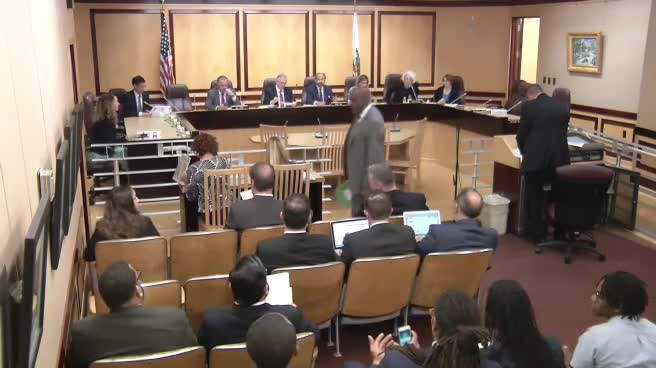 11MIN
Senate Standing Committee on Business, Professions and Economic Development
Bill Author


