SB 1302: Cannabis: local jurisdiction: prohibitions on delivery.
- Session Year: 2017-2018
- House: Senate
- Latest Version Date: 2018-04-26
The Control, Regulate and Tax Adult Use of Marijuana Act of 2016 (AUMA), an initiative measure approved as Proposition 64 at the November 8, 2016, statewide general election, authorizes a person who obtains a state license under AUMA to engage in commercial adult-use cannabis activity pursuant to that license and applicable local ordinances. The Medicinal and Adult-Use Cannabis Regulation and Safety Act (MAUCRSA), among other things, consolidates the licensure and regulation of commercial medicinal and adult-use cannabis activities. MAUCRSA authorizes a licensee who obtains a retailer, microbusiness, or a specified type of nonprofit to deliver cannabis or cannabis products, and imposes requirements on the delivery of cannabis or cannabis products. MAUCRSA prohibits a local jurisdiction from preventing the delivery of cannabis or cannabis products on public roads by a licensee who is acting in compliance with MAUCRSA as well as any local law adopted pursuant to MAUCRSA. MAUCRSA generally authorizes a local jurisdiction to adopt and enforce local ordinances to regulate licensed businesses located within the local jurisdiction.
This bill would prohibit a local government from adopting or enforcing any ordinance that would prohibit a licensee from delivering cannabis within or outside of the jurisdictional boundaries of the local jurisdiction.
The bill would include findings that the changes proposed by this bill address a matter of statewide concern, rather than a municipal affair and, therefore, apply to all cities, including charter cities.
The Control, Regulate and Tax Adult Use of Marijuana Act, an initiative measure, authorizes the Legislature to amend the act to further the purposes and intent of the act with a 2/3 vote of the membership of both houses of the Legislature.
This bill would declare that its provisions further specified purposes and intent of the Control, Regulate and Tax Adult Use of Marijuana Act.
The Control, Regulate and Tax Adult Use of Marijuana Act of 2016 (AUMA), an initiative measure approved as Proposition 64 at the November 8, 2016, statewide general election, authorizes a person who obtains a state license under AUMA to engage in commercial adult-use cannabis activity pursuant to that license and applicable local ordinances. The Medicinal and Adult-Use Cannabis Regulation and Safety Act (MAUCRSA), among other things, consolidates the licensure and regulation of commercial medicinal and adult-use cannabis activities. MAUCRSA authorizes a licensee who obtains a retailer, microbusiness, or a specified type of nonprofit to deliver cannabis or cannabis products, and imposes requirements on the delivery of cannabis or cannabis products. MAUCRSA prohibits a local jurisdiction from preventing the delivery of cannabis or cannabis products on public roads by a licensee who is acting in compliance with MAUCRSA as well as any local law adopted pursuant to MAUCRSA. MAUCRSA generally authorizes a local jurisdiction to adopt and enforce local ordinances to regulate licensed businesses located within the local jurisdiction.
This bill would, instead, prohibit a local jurisdiction from preventing delivery of cannabis or cannabis products on public roads, or to an address that is located within the jurisdictional boundaries of that local jurisdiction, by a licensee who is acting in compliance with MAUCRSA and who is acting in compliance with any license, permit, or other authorization obtained from another local jurisdiction. would prohibit a local government from adopting or enforcing any ordinance that would prohibit a licensee from delivering cannabis within or outside of the jurisdictional boundaries of the local jurisdiction.
The bill would include findings that the changes proposed by this bill address a matter of statewide concern, rather than a municipal affair and, therefore, apply to all cities, including charter cities.
The Control, Regulate and Tax Adult Use of Marijuana Act, an initiative measure, authorizes the Legislature to amend the act to further the purposes and intent of the act with a 2/3 vote of the membership of both houses of the Legislature.
This bill would declare that its provisions further specified purposes and intent of the Control, Regulate and Tax Adult Use of Marijuana Act.
The Control, Regulate and Tax Adult Use of Marijuana Act of 2016 (AUMA), an initiative measure approved as Proposition 64 at the November 8, 2016, statewide general election, authorizes a person who obtains a state license under AUMA to engage in commercial adult-use cannabis activity pursuant to that license and applicable local ordinances. The Medicinal and Adult-Use Cannabis Regulation and Safety Act (MAUCRSA), among other things, consolidates the licensure and regulation of commercial medicinal and adult-use cannabis activities. MAUCRSA authorizes a licensee who obtains a retailer, microbusiness, or a specified type of nonprofit to deliver cannabis or cannabis products, and imposes requirements on the delivery of cannabis or cannabis products. MAUCRSA prohibits a local jurisdiction from preventing the delivery of cannabis or cannabis products on public roads by a licensee who is acting in compliance with MAUCRSA as well as any local law adopted pursuant to MAUCRSA. MAUCRSA generally authorizes a local jurisdiction to adopt and enforce local ordinances to regulate licensed businesses located within the local jurisdiction.
This bill would, instead, prohibit a local jurisdiction from preventing delivery of cannabis or cannabis products on public roads, or to an address that is located within the jurisdictional boundaries of that local jurisdiction, by a licensee who is acting in compliance with MAUCRSA and who is acting in compliance with any license, permit, or other authorization obtained from another local jurisdiction.
The bill would include findings that the changes proposed by this bill address a matter of statewide concern, rather than a municipal affair and, therefore, apply to all cities, including charter cities.
The Control, Regulate and Tax Adult Use of Marijuana Act, an initiative measure, authorizes the Legislature to amend the act to further the purposes and intent of the act with a 2/3 vote of the membership of both houses of the Legislature.
This bill would declare that its provisions further specified purposes and intent of the Control, Regulate and Tax Adult Use of Marijuana Act.
(a)(1)This division shall not be interpreted to supersede or limit the authority of a local jurisdiction to adopt and enforce local ordinances to regulate businesses licensed under this division, including, but not limited to, local zoning and land use requirements, business license requirements, and requirements related to reducing exposure to secondhand smoke, or to completely prohibit the establishment or operation of one or more types of businesses licensed under this division within the local jurisdiction.
(2)This division shall not be interpreted to supersede or limit existing local authority for law enforcement activity, enforcement of local zoning requirements or local ordinances, or enforcement of local license, permit, or other authorization requirements.
(b)This division shall not be interpreted to does not require a licensing authority to undertake local law enforcement responsibilities, enforce local zoning requirements, or enforce local licensing, permitting, or other authorization requirements.
(c)A local jurisdiction shall notify the bureau upon revocation of any local license, permit, or authorization for a licensee to engage in commercial cannabis activity within the local jurisdiction. Within 10 days of notification, the bureau shall inform the relevant licensing authorities. Within 60 days of being so informed by the bureau, the relevant licensing authorities shall begin the process to determine whether a license issued to the licensee should be suspended or revoked pursuant to Chapter 3 (commencing with Section 26030).
(d)For facilities issued a state license that are located within the incorporated area of a city, the city shall have full power and authority to enforce this division and the regulations promulgated by the bureau or any licensing authority, if delegated by the state. Notwithstanding Sections 101375, 101400, and 101405 of the Health and Safety Code or any contract entered into pursuant thereto, or any other law, the city shall assume complete responsibility for any regulatory function pursuant to this division within the city limits that would otherwise be performed by the county or any county officer or employee, including a county health officer, without liability, cost, or expense to the county.
(e)This division does not prohibit the issuance of a state temporary event license to a licensee authorizing onsite cannabis sales to, and consumption by, persons 21 years of age or older at a county fair or district agricultural association event, provided that the activities, at a minimum, comply with the requirements of paragraphs (1) to (3), inclusive, of subdivision (g), that all participants are licensed under this division, and that the activities are otherwise consistent with regulations promulgated and adopted by the bureau governing state temporary event licenses. These temporary event licenses shall only be issued in local jurisdictions that authorize such events.
(f)This division, or any regulations promulgated thereunder, shall not be deemed to limit the authority or remedies of a city, county, or city and county under any provision of law, including, but not limited to, Section 7 of Article XI of the California Constitution.
(g)Notwithstanding paragraph (1) of subdivision (a) of Section 11362.3 of the Health and Safety Code, a local jurisdiction may allow for the smoking, vaporizing, and ingesting of cannabis or cannabis products on the premises of a retailer or microbusiness licensed under this division if all of the following are met:
(1)Access to the area where cannabis consumption is allowed is restricted to persons 21 years of age and older.
(2)Cannabis consumption is not visible from any public place or nonage-restricted area.
(3)Sale or consumption of alcohol or tobacco is not allowed on the premises.
(h)A local jurisdiction shall not adopt or enforce any ordinance that would prohibit a licensee from delivering cannabis within or outside of the jurisdictional boundaries of that local jurisdiction.
SEC. 2.The Legislature finds and declares that Section 1 of this act amending Section 26200 of the Business and Professions Code addresses a matter of statewide concern, rather than a municipal affair as that term is used in Section 5 of Article XI of the California Constitution. Therefore, Section 1 of this act applies to all cities, including charter cities.
SEC. 3.The Legislature finds and declares that Section 1 of this act amending Section 26200 of the Business and Professions Code furthers the purposes and intent of the Control, Regulate and Tax Adult Use of Marijuana Act.
(a)(1)This division shall not be interpreted to supersede or limit the authority of a local jurisdiction to adopt and enforce local ordinances to regulate businesses licensed under this division, including, but not limited to, local zoning and land use requirements, business license requirements, and requirements related to reducing exposure to secondhand smoke, or to completely prohibit the establishment or operation of one or more types of businesses licensed under this division within the local jurisdiction.
(2)This division shall not be interpreted to supersede or limit existing local authority for law enforcement activity, enforcement of local zoning requirements or local ordinances, or enforcement of local license, permit, or other authorization requirements.
(b)This division shall not be interpreted to require a licensing authority to undertake local law enforcement responsibilities, enforce local zoning requirements, or enforce local licensing, permitting, or other authorization requirements.
(c)A local jurisdiction shall notify the bureau upon revocation of any local license, permit, or authorization for a licensee to engage in commercial cannabis activity within the local jurisdiction. Within 10 days of notification, the bureau shall inform the relevant licensing authorities. Within 60 days of being so informed by the bureau, the relevant licensing authorities shall begin the process to determine whether a license issued to the licensee should be suspended or revoked pursuant to Chapter 3 (commencing with Section 26030).
(d)For facilities issued a state license that are located within the incorporated area of a city, the city shall have full power and authority to enforce this division and the regulations promulgated by the bureau or any licensing authority, if delegated by the state. Notwithstanding Sections 101375, 101400, and 101405 of the Health and Safety Code or any contract entered into pursuant thereto, or any other law, the city shall assume complete responsibility for any regulatory function pursuant to this division within the city limits that would otherwise be performed by the county or any county officer or employee, including a county health officer, without liability, cost, or expense to the county.
(e)This division does not prohibit the issuance of a state temporary event license to a licensee authorizing onsite cannabis sales to, and consumption by, persons 21 years of age or older at a county fair or district agricultural association event, provided that the activities, at a minimum, comply with the requirements of paragraphs (1) to (3), inclusive, of subdivision (g), that all participants are licensed under this division, and that the activities are otherwise consistent with regulations promulgated and adopted by the bureau governing state temporary event licenses. These temporary event licenses shall only be issued in local jurisdictions that authorize such events.
(f)This division, or any regulations promulgated thereunder, shall not be deemed to limit the authority or remedies of a city, county, or city and county under any provision of law, including, but not limited to, Section 7 of Article XI of the California Constitution.
(g)Notwithstanding paragraph (1) of subdivision (a) of Section 11362.3 of the Health and Safety Code, a local jurisdiction may allow for the smoking, vaporizing, and ingesting of cannabis or cannabis products on the premises of a retailer or microbusiness licensed under this division if all of the following are met:
(1)Access to the area where cannabis consumption is allowed is restricted to persons 21 years of age and older.
(2)Cannabis consumption is not visible from any public place or nonage-restricted area.
(3)Sale or consumption of alcohol or tobacco is not allowed on the premises.
(h)A local jurisdiction shall not adopt or enforce any ordinance that would prohibit a licensee from delivering cannabis within or outside of the jurisdictional boundaries of that local jurisdiction.
SEC. 2.The Legislature finds and declares that Section 1 of this act amending Section 26090 26200 of the Business and Professions Code addresses a matter of statewide concern, rather than a municipal affair as that term is used in Section 5 of Article XI of the California Constitution. Therefore, Section 1 of this act applies to all cities, including charter cities.
SEC. 3.The Legislature finds and declares that Section 1 of this act amending Section 26090 26200 of the Business and Professions Code furthers the purposes and intent of the Control, Regulate and Tax Adult Use of Marijuana Act.
(a)Deliveries, as defined in this division, may only be made by a licensed retailer or microbusiness, or a licensed nonprofit under Section 26070.5.
(b)All employees of a retailer, microbusiness, or nonprofit delivering cannabis or cannabis products shall carry a copy of the licensees current license and a government-issued identification with a photo of the employee, such as a drivers license. The employee shall present that license and identification upon request to state and local law enforcement, employees of regulatory authorities, and other state and local agencies enforcing this division.
(c)During delivery, the licensee shall maintain a copy of the delivery request and shall make it available upon request of the licensing authority and law enforcement officers. The delivery request documentation shall comply with state and federal law regarding the protection of confidential medical information.
(d)A customer requesting delivery shall maintain a physical or electronic copy of the delivery request and shall make it available upon request by the licensing authority and law enforcement officers.
(e)A local jurisdiction shall not prevent delivery of cannabis or cannabis products on public roads roads, or to an address that is located within the jurisdictional boundaries of the local jurisdiction, by a licensee who is acting in compliance with this division and local law as adopted who is acting in compliance with a license, permit, or other authorization obtained from another local jurisdiction, pursuant to the authority granted by that other local jurisdiction under Section 26200.
SEC. 2.The Legislature finds and declares that Section 1 of this act amending Section 26090 of the Business and Professions Code addresses a matter of statewide concern, rather than a municipal affair as that term is used in Section 5 of Article XI of the California Constitution. Therefore, Section 1 of this act applies to all cities, including charter cities.
SEC. 3.The Legislature finds and declares that Section 1 of this act amending Section 26090 of the Business and Professions Code furthers the purposes and intent of the Control, Regulate and Tax Adult Use of Marijuana Act.
|
Date
|
Status
|
|---|---|
| May 31, 2018 | Ordered to inactive file on request of Senator Lara. |
| May 29, 2018 | Read second time. Ordered to third reading. |
| May 25, 2018 | From inactive file on motion of Senator Lara. |
| May 10, 2018 | Ordered to inactive file on request of Senator Lara. |
| May 3, 2018 | Read second time. Ordered to third reading. |
| May 2, 2018 | From committee: Do pass. (Ayes 4. Noes 1.) (May 2). |
| Apr 27, 2018 | Set for hearing May 2. |
| Apr 26, 2018 | From committee with author's amendments. Read second time and amended. Re-referred to Com. on GOV. & F. |
| Apr 9, 2018 | From committee with author's amendments. Read second time and amended. Re-referred to Com. on GOV. & F. |
| Mar 1, 2018 | Referred to Com. on GOV. & F. |
| Feb 20, 2018 | From printer. May be acted upon on or after March 22. |
| Feb 16, 2018 | Introduced. Read first time. To Com. on RLS. for assignment. To print. |
|
Date
|
Description
|
Location
|
Votes
|
|
|---|---|---|---|---|
| May 2, 2018 | Do pass | Senate Standing Committee on Governance and Finance |
Passed |
This list shows positions taken on this bill by organizations on the date displayed, which is linked to the original source.
Positions by individuals are not included.
Office of Senate Floor Analyses (916) 651-1520 Fax: (916) 327-4478 | SB |
THIRD READING
Bill No: SB 1302
:
SENATE GOVERNANCE & FIN. COMMITTEE: 4-1, 5/2/18
AYES: Beall, Hernandez, Hertzberg, Lara
NOES: Nguyen
NO VOTE RECORDED: McGuire, Moorlach
SOURCE: WeDrop Cannabis Delivery
DIGEST:
This bill prohibits a local government from banning delivery of cannabis within or outside of its jurisdiction.
Existing law:
- Allows, under the California Constitution, a city or county to “make and enforce within its limits, all local, police, sanitary and other ordinances and regulations not in conflict with general laws, known as the police power.”
- Prohibits, under federal law, the manufacture, possession, sale, or distribution of cannabis.
- Prohibits, under state law as enacted by Proposition 215 (1996), prosecution of qualified patients and their primary caregivers for possessing or cultivating medical cannabis upon the written or oral recommendation or approval of an attending physician.
- Legalizes recreational use of recreational cannabis and establishes a regulatory program over commercial cannabis activity, under Proposition 64 (2016)—the Control, Regulate and Tax Adult Use of Marijuana Act (AUMA).
- Grants local governments wide latitude to regulate commercial cannabis activity within their jurisdictions. Specifically, AUMA:
- Allows cities and counties to regulate or entirely prohibit commercial cannabis activity within their boundaries;
- Prohibits state licensing authorities from approving an application for a license if the application would violate a local ordinance, and allows local governments to review applications for state licenses and to deny those applications if they are in conflict with local laws; and
- States that its provisions shall not be interpreted to supersede or limit the authority of a local jurisdiction to adopt and enforce local ordinances to regulate cannabis businesses, including local zoning and land use ordinances and business license requirements, or limit any law enforcement or local permitting activities.
- Prohibits local governments from preventing delivery of cannabis or cannabis products on public roads by a licensee that complies with state laws and local laws that are authorized under AUMA.
This bill:
- Prohibits a county or city, including a charter city, from adopting or enforcing any ordinance that would prohibit a licensee from delivering cannabis within or outside of the jurisdiction.
- Makes a technical change.
- Contains findings and declarations to support its purposes.
Background
In 1970, Congress enacted the Controlled Substances Act (CSA) which sets forth five schedules of specified drugs. For a drug to be designated a Schedule I controlled substance, CSA states the substance must have “a high potential for abuse," and have "no currently accepted medical use” in the United States. Federal law lists cannabis as a Schedule I controlled substance.
In 1996, California voters approved Proposition 215, known as the Compassionate Use Act of 1996 (CUA). CUA allowed qualified patients and primary caregivers to obtain and use medical cannabis. The Legislature clarified CUA by enacting SB 420 (Vasconcellos, Chapter 875, Statutes of 2003). SB 420 exempts qualified patients and caregivers from prosecution for using or cultivating medical cannabis. It also protects patients with valid identification cards from both arrest and criminal liability for possession, transportation, delivery, or cultivation of cannabis. The industry remained largely unregulated at the state level until 2015, when the Legislature enacted the Medical Marijuana Regulation and Safety Act (MMRSA). MMRSA comprised a package of legislation that comprehensively regulated many aspects of medical cannabis including cultivation, manufacturing, transportation, distribution, sale, and product safety. In 2016, several bills made slight changes to MMRSA, including renaming the Act the Medical Cannabis Regulation and Safety Act.
AUMA. On November 8, 2016, California voters approved Proposition 64—the Control, Regulate and Tax Adult Use of Marijuana Act (AUMA)—which legalized the recreational use of cannabis by adults age 21 and older. AUMA provides for the licensure and regulation of commercial adult cannabis activities by various state agencies and imposes an excise tax and a cultivation tax on cannabis and cannabis products. Proposition 64 was subsequently amended by SB 94 (Committee on Budget and Fiscal Review, Chapter 27, Statutes of 2017) and AB 133 (Committee on Budget, Chapter 253, Statutes of 2017), which clarified certain provisions of Proposition 64 and established a single regulatory scheme for both medical and recreational cannabis activity and commerce.
AUMA establishes a three-tier system of licensing for commercial cannabis activity, including production, distribution, and retail sale. Entities engaged in commercial cannabis activity must possess licenses to conduct particular types of activities, issued by one of three state licensing authorities:
- The Bureau of Cannabis Control within the Department of Consumer Affairs (Bureau), which licenses retail sale, delivery, transportation, distribution, and testing;
- The Department of Public Health, which licenses manufacturing; and
- The California Department of Food and Agriculture, which licenses cultivation.
AUMA allows a retailer to conduct sales entirely by delivery. Under regulations adopted by the Bureau, a licensed retailer must have a physical location from which cannabis products are sent out for delivery, and must meet all the same requirements of storefront retail sites, except that the retailer’s physical location must be closed to the public.
Local bans and regulations on delivery. Using the authority granted by AUMA, most local governments in the state have banned the delivery of either medical cannabis or recreational cannabis. Specifically, according to CannaRegs.com, a company that tracks local cannabis ordinances across the United States, 333 cities and counties in California ban the delivery of both medical and recreational cannabis, and an additional 72 ban one or the other—totaling 75% of all municipalities in California.
Cannabis delivery businesses want to ensure that delivery is allowed in cities and counties throughout the state.
Comments
- Purpose of the bill. Voters overwhelmingly approved Proposition 64, AUMA with 57% of the votes cast. Proposition 64 legalized the production, sale, and use of cannabis in the state of California. Voters clearly intended for the use of cannabis to be legal. But local bans on delivery substantially undermine this goal, particularly as delivery becomes the method of choice for customers. These bans have even greater consequences for patients who are too unwell to grow their own medical cannabis or travel outside of their city or county to purchase it. In addition, local delivery bans encourage the continuance of a black market, to the detriment of licensed—and taxpaying—cannabis businesses. Banning delivery does not prevent delivery from occurring; it merely sends it underground, depriving the state of revenue and putting unregulated and potentially unsafe products on the market. SB 1302 solves these problems by making it clear that delivery cannot be prohibited by local ordinances. It resolves equity concerns over access to medication and inhibits the black market from developing by allowing a legal, licensed market to flourish. And it protects public safety by ensuring the regulated products are tracked from seed to sale, ensuring that no cannabis is illegally diverted.
- What voters want. A core goal of AUMA was to preserve local control over the cannabis businesses that operate within local jurisdictions. Among the declared purposes contained within Proposition 64 was to “allow local governments to ban nonmedical marijuana businesses, as set forth in this Act.” SB 1302 proposes to allow delivery into and out of all local jurisdictions in the state, no matter what local officials say. Critics of the bill argue that by removing local authority over whether delivery may occur, SB 1302 cuts against the main thrust of Proposition 64, which was to allow local governments to ban commercial activity within their jurisdictions. Supporters of SB 1302 argue that Proposition 64’s intent was to provide for a regulated market for cannabis, and local bans on delivery only frustrate that intent by encouraging black market activity and hindering the ability of individuals to use cannabis. Ultimately, the courts may decide if SB 1302 is consistent with Proposition 64.
- Home rule. Local governments have an interest in controlling what type of activity occurs within their jurisdiction in order to protect public health, safety, and welfare. It is unclear whether SB 1302 allows local governments to impose their own licensing conditions on a cannabis delivery company that operates from outside of their jurisdiction, or if a delivery company could get a state license, to locate within a jurisdiction that doesn’t impose any additional rules, and then deliver to communities that have more stringent regulations. This dynamic could create a race to the bottom, where delivery companies flock those jurisdictions that provide minimal licensing requirements, with the goal of, for example, avoiding labor protections or local taxes.
- Two-thirds vote. Proposition 64 allows the Legislature to amend it with either a simple majority or two-thirds vote, depending on the specific nature of the amendments. If the amendments implement the substantive provisions of the medical cannabis portions or the commercial cannabis regulatory framework of the proposition, or if the amendments further reduce penalties contained in the Act, the Legislature can enact changes by majority vote. Any other amendments require a two-thirds vote. In all cases, legislative amendments must further the purposes and intent of the Act. Because SB 1302’s amendments to the Act go beyond simply implementing AUMA, Legislative Counsel assigned the bill a two-thirds vote key.
FISCAL EFFECT: Appropriation: Fiscal Com.: Local:
WeDrop Cannabis Delivery (source)
420 Central
420 Stock
A Therapeutic Alternative
A+ Collective
Alchemist
Americans for Safe Access
Americans for Safe Access, Oakland
Americans for Safe Access, San Diego
Americans for Safe Access, San Francisco
Around My Way Delivery
Bay Area Delivery Alliance
Blackbird
Board of Equalization Member Fiona Ma
Brownie Mary Democrats of Sacramento County
C.A.R.E.
CA Labs
California Asian Chamber of Commerce
California Cannabis Courier Association
California Cannabis Delivery Alliance
California Cannabis Industry Association
California Cannabis Manufacturers Association
California High Society, Seniors Seeking Cannabis
California NORML
Cannabis Industry Association of Marin County
Cannagram
CannaWagon
CBD Power Bars
CMG/Caliva
Cold Creek Organics
Conference of California Bar Associations
Cosmic Courier
COVA
Covelo Cannabis Advocacy Group
Delta Roots Collective
Driven
Drug Policy Alliance
Elite Care California
Far Out Farm, Inc.
Fiddler’s Greens
Fire Farms
Fire Pharmaceuticals
Grannie Chris Edibles
Green Rush Consulting
Greenspoon Marder
Hueneme Patient Consumer Co-Op
Ijasun
International Cannabis Farmers Association
JWC Deliveries, Inc.
Kanna, Inc.
Kannibox
Karyn Cooks Modern Marketing
Kin Slips
Kind Deliveries
Kind Farms
Los Angeles Delivery Alliance
Lucky Box Club
Marin County Courier Association
Marygold Delivery
Meadow
MendoRoyal
Nevada County Cannabis Alliance
North Coast Cannabis Nursery Group
Peace of Mind Health & Wellness
Reverence Vegan Gardens
San Diego Cannabis Delivery Alliance
SAVA
Sespe Creek Collective
Shale Peak Horticulture
Sierra County Growers Association
SIVA Enterprises
Southern California Coalition
SpeedWeed
Students for Sensible Drug Policy, Golden Gate University School of Law
Sunnabis: Humboldt’s Full Sun Farms
Taproot Business Consulting
Teamsters
The Emerald Cup
The Emerald Exchange
The Farmers Flower
The National Alliance of Mental-Illness-California
The Way Home
Thrive Society
Tōdem
Treat Yourself
TryLeaf, Inc.
Vertiza Properties
220 individuals
California Police Chiefs Association
California State Association of Counties
City of Moorpark
City of Thousand Oaks
County of Sacramento
League of California Cities
Long Beach Collectives Association
Rural County Representatives of California
Santa Ana Cannabis Association
UFCW Western States Council
United Cannabis Business Association
Urban Counties of California
Verdant Distribution
5/23/18 10:56:25
**** END ****
SENATE COMMITTEE ON GOVERNANCE AND FINANCE
Senator Mike McGuire, Chair
2017 - 2018 Regular
Bill No: | SB 1302 | Hearing Date: | 5/2/18 |
Author: | Lara | Tax Levy: | No |
Version: | 4/26/18 | Fiscal: | No |
Consultant: | Favorini-Csorba | ||
Cannabis: local jurisdiction: prohibitions on delivery
Prohibits a local government from banning delivery of cannabis within or outside of its jurisdiction.
Background
Police power. The California Constitution allows a city or county to “make and enforce within its limits, all local, police, sanitary and other ordinances and regulations not in conflict with general laws, known as the police power.” It is from this fundamental power that local governments derive their authority to regulate land uses through planning, zoning ordinances, and use permits. Local agencies also use this police power to abate nuisances and protect public health, safety, and welfare.
Federal law relating to cannabis. Federal law prohibits the manufacture, possession, sale, or distribution of cannabis. In 1970, Congress enacted the Controlled Substances Act (CSA) which sets forth five schedules of specified drugs. For a drug to be designated a Schedule I controlled substance, CSA states the substance must have “a high potential for abuse," and have "no currently accepted medical use” in the United States. Federal law lists cannabis as a Schedule I controlled substance.
State law relating to cannabis. In 1996, California voters approved Proposition 215, known as the Compassionate Use Act of 1996 (CUA). Under CUA, qualified patients with specified illnesses, and their primary caregivers, cannot be prosecuted for possessing or cultivating medical cannabis upon the written or oral recommendation or approval of an attending physician. In other words, CUA allowed qualified patients and primary caregivers to obtain and use medical cannabis.
The Legislature clarified CUA by enacting SB 420 (Vasconcellos, 2003). SB 420 exempts qualified patients and caregivers from prosecution for using or cultivating medical cannabis. It also protects patients with valid identification cards from both arrest and criminal liability for possession, transportation, delivery, or cultivation of cannabis. The industry remained largely unregulated at the state level until 2015, when the Legislature enacted the Medical Marijuana Regulation and Safety Act (MMRSA). MMRSA comprised a package of legislation that comprehensively regulated many aspects of medical cannabis including cultivation, manufacturing, transportation, distribution, sale, and product safety. In 2016, several bills made slight changes to MMRSA, including renaming the Act the Medical Cannabis Regulation and Safety Act.
Adult Use of Marijuana Act. On November 8th, 2016, California voters approved Proposition 64—the Control, Regulate and Tax Adult Use of Marijuana Act (AUMA)—which legalized the recreational use of cannabis by adults age 21 and older. AUMA provides for the licensure and regulation of commercial adult cannabis activities by various state agencies and imposes an excise tax and a cultivation tax on cannabis and cannabis products. Proposition 64 was subsequently amended by SB 94 (Committee on Budget and Fiscal Review, 2017) and AB 133 (Committee on Budget), which clarified certain provisions of Proposition 64 and established a single regulatory scheme for both medical and recreational cannabis activity and commerce.
AUMA establishes a three-tier system of licensing for commercial cannabis activity, including production, distribution, and retail sale. Entities engaged in commercial cannabis activity must possess licenses to conduct particular types of activities, issued by one of three state licensing authorities:
- The Bureau of Cannabis Control within the Department of Consumer Affairs (Bureau), which licenses retail sale, delivery, transportation, distribution, and testing;
- The Department of Public Health, which licenses manufacturing; and
- The California Department of Food and Agriculture, which licenses cultivation.
Delivery. AUMA allows a retailer to conduct sales entirely by delivery. Under regulations adopted by the Bureau, a licensed retailer must have a physical location from which cannabis products are sent out for delivery, and must meet all the same requirements of storefront retail sites, except that the retailer’s physical location must be closed to the public. The Bureau’s regulations require delivery to be made during business hours and impose other requirements, such as GPS tracking installation on the delivery vehicle that is capable of tracking upon request by the Bureau. Delivery businesses must also maintain logs of customers, delivery locations, and products delivered, among other data.
AUMA prohibits a city or county from preventing delivery of cannabis or cannabis products on public roads by a licensee that complies with state laws, as well as local laws that are authorized under AUMA.
Local control under AUMA. AUMA grants local governments wide latitude to regulate commercial cannabis activity within their jurisdictions. Specifically, AUMA:
- Allows cities and counties to regulate or entirely prohibit commercial cannabis activity within their boundaries;
- Prohibits state licensing authorities from approving an application for a license if the application would violate a local ordinance, and allows local governments to review applications for state licenses and to deny those applications if they are in conflict with local laws; and
- States that its provisions shall not be interpreted to supersede or limit the authority of a local jurisdiction to adopt and enforce local ordinances to regulate cannabis businesses, including local zoning and land use ordinances and business license requirements, or limit any law enforcement or local permitting activities.
AUMA also states that its provisions, and any regulations promulgated by state licensing agencies, shall not be deemed to limit the authority or remedies of a city or county under any law, including local governments’ police powers.
Local bans and regulations on delivery. Using the authority granted by AUMA, most local governments in the state have banned the delivery of either medical cannabis or recreational cannabis. Specifically, according to CannaRegs.com, a company that tracks local cannabis ordinances across the United States, 333 cities and counties in California ban the delivery of both medical and recreational cannabis, and an additional 72 ban one or the other—totaling 75% of all municipalities in California.
Cannabis delivery businesses want to ensure that delivery is allowed in cities and counties throughout the state.
Proposed Law
Senate Bill 1302 prohibits a county or city, including a charter city, from adopting or enforcing any ordinance that would prohibit a licensee from delivering cannabis within or outside of the jurisdiction.
SB 1302 makes a technical change and contains findings and declarations to support its purposes.
State Revenue Impact
No estimate.
Comments
1. Purpose of the bill. Voters overwhelmingly approved Proposition 64, the Control, Regulate, and Tax Adult Use of Marijuana Act with 57% of the votes cast. Proposition 64 legalized the production, sale, and use of cannabis in the state of California. Voters clearly intended for the use of cannabis to be legal. But local bans on delivery substantially undermine this goal, particularly as delivery becomes the method of choice for customers. These bans have even greater consequences for patients who are too unwell to grow their own medical cannabis or travel outside of their city or county to purchase it. Without delivery, it is much more challenging for these patients to access their needed medication; many Californians cannot afford qualified caregivers to procure cannabis on their behalf. California’s rural residents are especially burdened by having to drive long distances if their home jurisdiction bans delivery. In addition, local delivery bans encourage the continuance of a black market, to the detriment of licensed—and taxpaying—cannabis businesses. Banning delivery does not prevent delivery from occurring; it merely sends it underground, depriving the state of revenue and putting unregulated and potentially unsafe products on the market. Moreover, differing policies from one jurisdiction to the next makes compliance even more difficult for legal businesses. Finally, ambiguity about the existing language has led to the arrest of credentialed employees of licensed cannabis delivery businesses who were in fact operating within the law in all relevant jurisdictions. SB 1302 solves these problems by making it clear that delivery cannot be prohibited by local ordinances. It resolves equity concerns over access to medication and inhibits the black market from developing by allowing a legal, licensed market to flourish. And it protects public safety by ensuring the regulated products are tracked from seed to sale, ensuring that no cannabis is illegally diverted.
2. What voters want. A core goal of AUMA was to preserve local control over the cannabis businesses that operate within local jurisdictions. AUMA unambiguously declares that local governments have the right to ban all commercial cannabis activity, which is defined by the measure to include delivery. In addition, among the declared purposes contained within Proposition 64 was to “allow local governments to ban nonmedical marijuana businesses, as set forth in this Act.” SB 1302 proposes to allow delivery into and out of all local jurisdictions in the state, no matter what local officials say. Proposition 64 allows the Legislature to amend it with either a simple majority or two-thirds vote, depending on the specific nature of the amendments—but only if the measure furthers the purposes and intent of the Act. Otherwise, local voters must weigh in. SB 1302 says that it furthers the purposes and intent of the Act. But critics of the bill argue that by removing local authority over whether delivery may occur, SB 1302 cuts against the main thrust of Proposition 64, which was to allow local governments to ban commercial activity within their jurisdictions. Supporters of SB 1302 argue that Proposition 64’s intent was to provide for a regulated market for cannabis, and local bans on delivery only frustrate that intent by encouraging black market activity and hindering the ability of individuals to use cannabis. Ultimately, the courts may decide if SB 1302 is consistent with Proposition 64. A bill that more clearly strikes a balance between local control and furthering access may better withstand scrutiny.
3. Home rule. Local governments have an interest in controlling what type of activity occurs within their jurisdiction in order to protect public health, safety, and welfare. It is unclear whether SB 1302 allows local governments to impose their own licensing conditions on a cannabis delivery company that operates from outside of their jurisdiction, or if a delivery company could get a state license, to locate within a jurisdiction that doesn’t impose any additional rules, and then deliver to communities that have more stringent regulations. This dynamic could create a race to the bottom, where delivery companies flock those jurisdictions that provide minimal licensing requirements, with the goal of, for example, avoiding labor protections or local taxes. To prevent this from occurring, the Committee may wish to consider amending SB 1302 to clarify which local regulations may apply. For example, the bill could prohibit local ordinances that entirely ban delivery that occurs within that local jurisdiction and is performed by a licensee in accordance with the laws of the jurisdiction where the delivery occurs. Such a system would enable delivery throughout the state while still allowing local ordinances that ban delivery to areas outside of their jurisdiction and allowing local governments to impose additional regulations on delivery companies and the time, manner, and place of delivery. Alternatively, to allow local control while ensuring that bans are not arbitrary, the Committee may wish to consider amending SB 1302 to prohibit bans that are in force as of the effective date of the bill, but allow local governments to re-adopt (or adopt, if they hadn’t banned previously) their bans if they make findings as to the necessity of protecting public health, safety, and welfare.
4. 2/3rds vote. Proposition 64 allows the Legislature to amend it with either a simple majority or two-thirds vote, depending on the specific nature of the amendments. If the amendments implement the substantive provisions of the medical cannabis portions or the commercial cannabis regulatory framework of the proposition, or if the amendments further reduce penalties contained in the Act, the Legislature can enact changes by majority vote. Any other amendments require a 2/3rds vote. In all cases, legislative amendments must further the purposes and intent of the Act. Because SB 1302’s amendments to the Act go beyond simply implementing AUMA, Legislative Counsel assigned the bill a 2/3 vote key.
5. Charter city. The California Constitution allows cities that adopt charters to control their own “municipal affairs.” In all other matters, charter cities must follow the general, statewide laws. Because the Constitution doesn’t define “municipal affairs,” the courts determine whether a topic is a municipal affair or whether it’s an issue of statewide concern. SB 1302 says it applies to all cities, including charter cities. To support this assertion, the bill includes a legislative finding and declaration that its subject is a matter of statewide concern, but does not include a justification as to the statewide concern that is being furthered by the bill. Ultimately, the courts may determine whether SB 1302 constitutes a municipal affair.
Support and Opposition
(4/27/18)
Support: WeDrop Cannabis Delivery (sponsor); 420 Central; 420 Stock; A+ Collective; Alchemist; Americans for Safe Access; Americans for Safe Access, Oakland; Americans for Safe Access, San Diego; Americans for Safe Access, San Francisco; Around My Way Delivery; A Therapeutic Alternative; Bay Area Delivery Alliance; Blackbird; Board of Equalization Member Fiona Ma; Brownie Mary Democrats of Sacramento County; California Cannabis Courier Association; California Cannabis Delivery Alliance; California Cannabis Industry Association; California Cannabis Manufacturers Association; California High Society, Seniors Seeking Cannabis; CA Labs; California NORML; California Teamsters Public Affairs Council; Cannagram; CannaWagon; Cannabis Industry Association of Marin County; C.A.R.E.; CBD Power Bars; CMG/Caliva; Cold Creek Organics; Conference of California Bar Associations; Cosmic Courier; Courage Campaign; COVA; Covelo Cannabis Advocacy Group; Delta Roots Collective; Driven; Elite Care California; Far Out Farm, Inc.; Fiddler’s Greens; Fire Farms; Fire Pharmaceuticals; Grannie Chris Edibles; Green Rush Consulting; Greenspoon Marder; Hueneme Patient Consumer Co-Op; Ijasun; International Cannabis Farmers Association; JWC Deliveries, Inc.; Kanna, Inc.; Kannibox; Karyn Cooks I Modern Marketing; Kin Slips; Kind Deliveries; Kind Farms; Los Angeles Delivery Alliance; Lucky Box Club; Marin County Courier Association; Marygold Delivery; Meadow; MendoRoyal; North Coast Cannabis Nursery Group; Nevada County Cannabis Alliance; Peace of Mind Health & Wellness; Reverence Vegan Gardens; San Diego Cannabis Delivery Alliance; SAVA; Sespe Creek Collective; Shale Peak Horticulture; Sierra County Growers Association; SIVA Enterprises; Southern California Coalition; SpeedWeed; Students for Sensible Drug Policy, Golden Gate University School of Law; Sunnabis: Humboldt’s Full Sun Farms; Taproot Business Consulting; The Emerald Cup; The Emerald Exchange; The Farmers Flower; The National Alliance of Mental-Illness-California; The Way Home; Thrive Society; Tōdem; Treat Yourself; TryLeaf, Inc.; Vertiza Properties; 220 individuals.
Opposition: California Police Chiefs Association; California State Association of Counties; County of Sacramento; League of California Cities; Long Beach Collectives Association; Rural County Representatives of California; Santa Ana Cannabis Association; UFCW Western States Council; United Cannabis Business Association; Urban Counties of California; Verdant Distribution.
-- END --
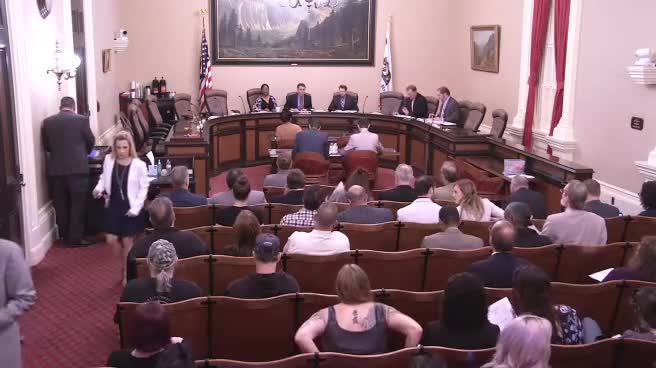
Discussed in Hearing
 47MIN
Senate Standing Committee on Governance and Finance
Bill Author


