SB 1303: Coroner: county office of the medical examiner.
- Session Year: 2017-2018
- House: Senate
- Latest Version Date: 2018-09-07
Existing law specifies the officers of a county, including, but not limited to, the coroner. The California Constitution requires that certain county officers, other than the coroner, be elected. Existing statutory law requires that certain other county officers are to be elected, but establishes a process by which those offices that are required by statute to be elected may be converted to offices appointed by the board of supervisors.
Existing law authorizes the board of supervisors to abolish the office of coroner and provide instead for the office of medical examiner, to be appointed by the board and to exercise the powers and perform the duties of the coroner and requires that the medical examiner be a licensed physician and surgeon duly qualified as a specialist in pathology.
Commencing July 1, 2020, this bill would, for counties with a population of 500,000 or greater, excluding a county that has adopted a charter, require that the office of the coroner or the sheriff-coroners office, as applicable, either be replaced with an office of the medical examiner to exercise the powers and perform the duties of the coroner without a public vote or election, or adopt a policy requiring referral of death investigations to a county that has implemented an office of medical examiner for any case when there is a potential conflict of interest for the office of the coroner or the sheriff-coroners office, as specified. By requiring that counties comply with these requirements, this bill would impose a state-mandated local program. The bill would require that the office of medical examiner operate independently from any other county agency or official in the conduct of autopsies.
The California Constitution requires the state to reimburse local agencies and school districts for certain costs mandated by the state. Statutory provisions establish procedures for making that reimbursement.
This bill would provide that, if the Commission on State Mandates determines that the bill contains costs mandated by the state, reimbursement for those costs shall be made pursuant to the statutory provisions noted above.
Existing law specifies the officers of a county, including, but not limited to, the coroner. The California Constitution requires that certain county officers, other than the coroner, be elected. Existing statutory law requires that certain other county officers are to be elected, but establishes a process by which those offices that are required by statute to be elected may be converted to offices appointed by the board of supervisors.
Existing law authorizes the board of supervisors to abolish the office of coroner and provide instead for the office of medical examiner, to be appointed by the board and to exercise the powers and perform the duties of the coroner and requires that the medical examiner be a licensed physician and surgeon duly qualified as a specialist in pathology.
Commencing January July 1, 2020, this bill would, for counties with a population of 500,000 or greater, excluding a county that has adopted a charter, require that the office of the coroner or the sheriffs coroners sheriff-coroners office, as applicable, either be replaced with an office of the medical examiner to exercise the powers and perform the duties of the coroner without a public vote or election. election, or adopt a policy requiring referral of death investigations to a county that has implemented an office of medical examiner for any case when there is a potential conflict of interest for the office of the coroner or the sheriff-coroners office, as specified. By requiring that counties comply with these requirements, this bill would impose a state-mandated local program. The bill would require that the office of medical examiner operate independently from any other county agency or official in the conduct of autopsies.
The California Constitution requires the state to reimburse local agencies and school districts for certain costs mandated by the state. Statutory provisions establish procedures for making that reimbursement.
This bill would provide that, if the Commission on State Mandates determines that the bill contains costs mandated by the state, reimbursement for those costs shall be made pursuant to the statutory provisions noted above.
Existing law specifies the officers of a county, including, but not limited to, the coroner. The California Constitution requires that certain county officers, other than the coroner, be elected. Existing statutory law requires that certain other county officers are to be elected, but establishes a process by which those offices that are required by statute to be elected may be converted to offices appointed by the board of supervisors.
Existing law authorizes the board of supervisors to abolish the office of coroner and provide instead for the office of medical examiner, to be appointed by the board and to exercise the powers and perform the duties of the coroner and requires that the medical examiner be a licensed physician and surgeon duly qualified as a specialist in pathology.
This Commencing January 1, 2020, this bill would, for counties with a population of 500,000 or greater, excluding a county that has adopted a charter, require that the office of the coroner or the sheriffs coroners office, as applicable, be replaced with an office of the medical examiner to exercise the powers and perform the duties of the coroner without a public vote or election. By requiring that counties comply with these requirements, this bill would impose a state-mandated local program. The bill would require that the office of medical examiner operate independently from any other county agency or official in the conduct of autopsies.
The California Constitution requires the state to reimburse local agencies and school districts for certain costs mandated by the state. Statutory provisions establish procedures for making that reimbursement.
This bill would provide that, if the Commission on State Mandates determines that the bill contains costs mandated by the state, reimbursement for those costs shall be made pursuant to the statutory provisions noted above.
Existing law specifies the officers of a county, including, but not limited to to, the coroner. The California Constitution requires that certain county officers, other than the coroner, be elected. Existing statutory law requires that certain other county officers are to be elected, but establishes a process by which those offices that are required by statute to be elected may be converted to offices appointed by the board of supervisors.
Existing law authorizes the board of supervisors to abolish the office of coroner and provide instead for the office of medical examiner, to be appointed by the board and to exercise the powers and perform the duties of the coroner and requires that the medical examiner be a licensed physician and surgeon duly qualified as a specialist in pathology.
This bill would, for counties with a population of 500,000 or greater, require that the office of the coroner or the sheriffs coroners office, as applicable, be replaced with an office of the medical examiner without a public vote or election. By requiring that counties comply with these requirements, this bill would impose a state-mandated local program. The bill would require that the office of medical examiner operate independently from any other county agency or official in the conduct of autopsies.
The California Constitution requires the state to reimburse local agencies and school districts for certain costs mandated by the state. Statutory provisions establish procedures for making that reimbursement.
This bill would provide that, if the Commission on State Mandates determines that the bill contains costs mandated by the state, reimbursement for those costs shall be made pursuant to the statutory provisions noted above.
Existing law specifies the officers of a county, including, but not limited to the coroner. The California Constitution requires that certain county officers, other than the coroner, be elected. Existing statutory law requires that certain other county officers are to be elected, but establishes a process by which those offices that are required by statute to be elected may be converted to offices appointed by the board of supervisors.
Existing law authorizes the board of supervisors to abolish the office of coroner and provide instead for the office of medical examiner, to be appointed by the board and to exercise the powers and perform the duties of the coroner and requires that the medical examiner be a licensed physician and surgeon duly qualified as a specialist in pathology.
This bill would, for counties with a population of 500,000 or greater, require that the office of the coroner or the sheriffs coroners office, as applicable, be replaced with an office of the medical examiner without a public vote or election. By requiring that counties comply with these requirements, this bill would impose a state-mandated local program.
The California Constitution requires the state to reimburse local agencies and school districts for certain costs mandated by the state. Statutory provisions establish procedures for making that reimbursement.
This bill would provide that, if the Commission on State Mandates determines that the bill contains costs mandated by the state, reimbursement for those costs shall be made pursuant to the statutory provisions noted above.
The officers of a county are:
(a)A district attorney.
(b)A sheriff.
(c)A county clerk.
(d)A controller.
(e)An auditor, who shall be ex officio controller.
(f)A treasurer.
(g)A recorder.
(h)A license collector.
(i)A tax collector, who shall be ex officio license collector.
(j)An assessor.
(k)A superintendent of schools.
(l)A public administrator.
(m)A coroner or medical examiner.
(n)A surveyor.
(o)Members of the board of supervisors.
(p)A county veterinarian.
(q)A fish and game warden.
(r)A county librarian.
(s)A county health officer.
(t)An administrative officer.
(u)A director of finance.
(v)A road commissioner.
(w)A public guardian.
(x)A chief probation officer.
(y)Those other officers as are provided by law.
SEC. 2.Section 24009 of the Government Code is amended to read:24009.(a)Except as provided in subdivision (b), the county officers to be elected by the people are the treasurer, county clerk, auditor, sheriff, tax collector, district attorney, recorder, assessor, public administrator, and coroner.
(b)Except for those officers named in subdivision (b) of Section 1 of Article XI of the California Constitution, any county office that is required to be elective may become an appointive office pursuant to this subdivision. In order to change an office from elective to appointive, a proposal shall be presented to the voters of the county and approved by a majority of the votes cast on the proposition. A proposal shall be submitted to the voters by the county board of supervisors or it may be submitted to the voters pursuant to the qualification of an initiative petition as provided in Chapter 2 (commencing with Section 9100) of Division 9 of the Elections Code. Any county office changed from elective to appointive in accordance with this subdivision may be changed back from appointive to elective in the same manner.
(c)In counties that have a medical examiner in lieu of a coroner pursuant to Section 24010, the medical examiner shall be appointed as set forth in Section 24010.
SEC. 3.Section 24010 of the Government Code is amended to read:24010.(a)Notwithstanding any law, in counties with a population of less than 500,000, or in a county of any population that has adopted a charter, the board of supervisors may by ordinance abolish the office of coroner and provide instead for the office of medical examiner, to be appointed by the board and to exercise the powers and perform the duties of the coroner. The medical examiner shall be a licensed physician and surgeon duly qualified as a specialist in pathology.
(b)(1)Notwithstanding any law, in counties with a population of 500,000 or greater, but excluding a county that has adopted a charter, the office of the coroner or the sheriff-coroners office, as applicable, shall, commencing July 1, 2020, either be replaced with an office of medical examiner to exercise the powers and perform the duties of the coroner without a public vote or election, or adopt a policy requiring referral of death investigations to a county that has implemented an office of medical examiner for any case when there is a potential conflict of interest for the office of the coroner or the sheriff-coroners office, including, but not limited to, law enforcement officer-related deaths, deaths of family members of law enforcement officers, deaths related to the coroners or sheriff-coroners family, or deaths related to employees of those offices or family members of those employees.
(2)The office of medical examiner shall be headed by a chief medical examiner appointed by the board of supervisors of the county or by the county executive officer. The chief medical examiner shall meet all of the following requirements:
(A)He or she shall be a physician and surgeon licensed to practice medicine in this state, or an osteopathic physician and surgeon licensed to practice osteopathic medicine in this state.
(B)He or she shall be in good standing with the Medical Board of California or the Osteopathic Medical Board of California.
(C)He or she shall be a board-certified forensic pathologist certified by the American Board of Pathology.
(D)He or she shall have practiced forensic pathology for at least three years following board certification.
(3)The chief medical examiner shall hire and supervise deputy medical examiners and other support staff as necessary to administer the office.
(c)Notwithstanding any law, whenever the term coroner is used, it shall be deemed to include the medical examiner for counties that have a medical examiner pursuant to this section.
(d)Notwithstanding any law, the office of medical examiner shall operate independently from any other county agency or official in the conduct of autopsies, including, but not limited to, exercising professional judgment to make determinations of cause and manner of death. This subdivision does not limit the authority of the board to supervise the conduct of the chief medical examiner pursuant to Section 25303.
SEC. 4.If the Commission on State Mandates determines that this act contains costs mandated by the state, reimbursement to local agencies and school districts for those costs shall be made pursuant to Part 7 (commencing with Section 17500) of Division 4 of Title 2 of the Government Code.
The officers of a county are:
(a)A district attorney.
(b)A sheriff.
(c)A county clerk.
(d)A controller.
(e)An auditor, who shall be ex officio controller.
(f)A treasurer.
(g)A recorder.
(h)A license collector.
(i)A tax collector, who shall be ex officio license collector.
(j)An assessor.
(k)A superintendent of schools.
(l)A public administrator.
(m)A coroner or medical examiner.
(n)A surveyor.
(o)Members of the board of supervisors.
(p)A county veterinarian.
(q)A fish and game warden.
(r)A county librarian.
(s)A county health officer.
(t)An administrative officer.
(u)A director of finance.
(v)A road commissioner.
(w)A public guardian.
(x)A chief probation officer.
(y)Such Those other officers as are provided by law.
SEC. 2.Section 24009 of the Government Code is amended to read:24009.(a)Except as provided in subdivision (b), the county officers to be elected by the people are the treasurer, county clerk, auditor, sheriff, tax collector, district attorney, recorder, assessor, public administrator, and coroner.
(b)Except for those officers named in subdivision (b) of Section 1 of Article XI of the California Constitution, any county office that is required to be elective may become an appointive office pursuant to this subdivision. In order to change an office from elective to appointive, a proposal shall be presented to the voters of the county and approved by a majority of the votes cast on the proposition. A proposal shall be submitted to the voters by the county board of supervisors or it may be submitted to the voters pursuant to the qualification of an initiative petition as provided in Chapter 2 (commencing with Section 9100) of Division 9 of the Elections Code. Any county office changed from elective to appointive in accordance with this subdivision may be changed back from appointive to elective in the same manner.
(c)In counties that have a medical examiner in lieu of a coroner pursuant to Section 24010, the medical examiner shall be appointed as set forth in Section 24010.
SEC. 3.Section 24010 of the Government Code is amended to read:24010.(a)Notwithstanding any law, in counties with a population of less than 500,000 500,000, or in a county of any population that has adopted a charter, the board of supervisors may by ordinance abolish the office of coroner and provide instead for the office of medical examiner, to be appointed by the said board and to exercise the powers and perform the duties of the coroner. The medical examiner shall be a licensed physician and surgeon duly qualified as a specialist in pathology.
(b)(1)Notwithstanding any law, in counties with a population of 500,000 or greater, but excluding a county that has adopted a charter, the office of the coroner or the sheriffs coroners sheriff-coroners office, as applicable, shall, commencing January July 1, 2020, either be replaced with an office of medical examiner to exercise the powers and perform the duties of the coroner without a public vote or election. election, or adopt a policy requiring referral of death investigations to a county that has implemented an office of medical examiner for any case when there is a potential conflict of interest for the office of the coroner or the sheriff-coroners office, including, but not limited to, law enforcement officer-related deaths, deaths of family members of law enforcement officers, deaths related to the coroners or sheriff-coroners family, or deaths related to employees of those offices or family members of those employees.
(2)The office of medical examiner shall be headed by a chief medical examiner appointed by the board of supervisors of the county or by the county executive officer. The chief medical examiner shall meet all of the following requirements:
(A)He or she shall be a physician and surgeon licensed to practice medicine in this state, or an osteopathic physician and surgeon licensed to practice osteopathic medicine in this state.
(B)He or she shall be in good standing with the Medical Board of California or the Osteopathic Medical Board of California.
(C)He or she shall be a board-certified forensic pathologist certified by the American Board of Pathology.
(D)He or she shall have practiced forensic pathology for at least three years following board certification.
(3)The chief medical examiner shall hire and supervise deputy medical examiners and other support staff as necessary to administer the office.
(c)Notwithstanding any law, whenever the term coroner is used, it shall be deemed to include the medical examiner for counties that have a medical examiner pursuant to this section.
(d)Notwithstanding any law, the office of medical examiner shall operate independently from any other county agency or official in the conduct of autopsies, including, but not limited to, exercising professional judgment to make determinations of cause and manner of death. This subdivision does not limit the authority of the board to supervise the conduct of the chief medical examiner pursuant to Section 25303.
SEC. 4.If the Commission on State Mandates determines that this act contains costs mandated by the state, reimbursement to local agencies and school districts for those costs shall be made pursuant to Part 7 (commencing with Section 17500) of Division 4 of Title 2 of the Government Code.
The officers of a county are:
(a)A district attorney.
(b)A sheriff.
(c)A county clerk.
(d)A controller.
(e)An auditor, who shall be ex officio controller.
(f)A treasurer.
(g)A recorder.
(h)A license collector.
(i)A tax collector, who shall be ex officio license collector.
(j)An assessor.
(k)A superintendent of schools.
(l)A public administrator.
(m)A coroner, coroner or medical examiner.
(n)A surveyor.
(o)Members of the board of supervisors.
(p)A county veterinarian.
(q)A fish and game warden.
(r)A county librarian.
(s)A county health officer.
(t)An administrative officer.
(u)A director of finance.
(v)A road commissioner.
(w)A public guardian.
(x)A chief probation officer.
(y)Such other officers as are provided by law.
SEC. 2.Section 24009 of the Government Code is amended to read:24009.(a)Except as provided in subdivision (b), the county officers to be elected by the people are the treasurer, county clerk, auditor, sheriff, tax collector, district attorney, recorder, assessor, public administrator, and coroner.
(b)Except for those officers named in subdivision (b) of Section 1 of Article XI of the California Constitution, any county office that is required to be elective may become an appointive office pursuant to this subdivision. In order to change an office from elective to appointive, a proposal shall be presented to the voters of the county and approved by a majority of the votes cast on the proposition. A proposal shall be submitted to the voters by the county board of supervisors or it may be submitted to the voters pursuant to the qualification of an initiative petition as provided in Chapter 2 (commencing with Section 9100) of Division 9 of the Elections Code. Any county office changed from elective to appointive in accordance with this subdivision may be changed back from appointive to elective in the same manner.
(c)In counties that have a medical examiner in lieu of a coroner pursuant to Section 24010, the medical examiner shall be appointed as set forth in Section 24010.
SEC. 3.Section 24010 of the Government Code is amended to read:24010.(a)Notwithstanding any law, in counties with a population of less than 500,000, 500,000 or in a county of any population that has adopted a charter, the board of supervisors may by ordinance abolish the office of coroner and provide instead for the office of medical examiner, to be appointed by the said board and to exercise the powers and perform the duties of the coroner. The medical examiner shall be a licensed physician and surgeon duly qualified as a specialist in pathology.
(b)(1)Notwithstanding any law, in counties with a population of 500,000 or greater, but excluding a county that has adopted a charter, the office of the coroner or the sheriffs coroners office, as applicable, shall, commencing January 1, 2019, 2020, be replaced with an office of medical examiner to exercise the powers and perform the duties of the coroner without a public vote or election.
(2)The office of medical examiner shall be headed by a chief medical examiner appointed by the board of supervisors of the county or by the county executive officer. The chief medical examiner shall meet all of the following requirements:
(A)He or she shall be a physician and surgeon licensed to practice medicine in this state, or an osteopathic physician and surgeon licensed to practice osteopathic medicine in this state.
(B)He or she shall be in good standing with the Medical Board of California or the Osteopathic Medical Board of California.
(C)He or she shall be a board-certified forensic pathologist certified by the American Board of Pathology.
(D)He or she shall have practiced forensic pathology for at least three years following board certification.
(3)The chief medical examiner shall hire and supervise deputy medical examiners and other support staff as necessary to administer the office.
(c)Notwithstanding any law, whenever the term coroner is used used, it shall be deemed to refer to include the medical examiner for counties that have a medical examiner pursuant to this section.
(d)Notwithstanding any law, the office of medical examiner shall operate independently from any other county agency or official in the conduct of autopsies, including, but not limited to, exercising professional judgment to make determinations of cause and manner of death. This subdivision does not limit the authority of the board to supervise the conduct of the chief medical examiner pursuant to Section 25303.
SEC. 4.If the Commission on State Mandates determines that this act contains costs mandated by the state, reimbursement to local agencies and school districts for those costs shall be made pursuant to Part 7 (commencing with Section 17500) of Division 4 of Title 2 of the Government Code.
The officers of a county are:
(a)A district attorney.
(b)A sheriff.
(c)A county clerk.
(d)A controller.
(e)An auditor, who shall be ex officio controller.
(f)A treasurer.
(g)A recorder.
(h)A license collector.
(i)A tax collector, who shall be ex officio license collector.
(j)An assessor.
(k)A superintendent of schools.
(l)A public administrator.
(m)A coroner, or medical examiner.
(n)A surveyor.
(o)Members of the board of supervisors.
(p)A county veterinarian.
(q)A fish and game warden.
(r)A county librarian.
(s)A county health officer.
(t)An administrative officer.
(u)A director of finance.
(v)A road commissioner.
(w)A public guardian.
(x)A chief probation officer.
(y)Such other officers as are provided by law.
SEC. 2.Section 24009 of the Government Code is amended to read:24009.(a)Except as provided in subdivision (b), the county officers to be elected by the people are the treasurer, county clerk, auditor, sheriff, tax collector, district attorney, recorder, assessor, public administrator, and coroner.
(b)Except for those officers named in subdivision (b) of Section 1 of Article XI of the California Constitution, any county office that is required to be elective may become an appointive office pursuant to this subdivision. In order to change an office from elective to appointive, a proposal shall be presented to the voters of the county and approved by a majority of the votes cast on the proposition. A proposal shall be submitted to the voters by the county board of supervisors or it may be submitted to the voters pursuant to the qualification of an initiative petition as provided in Chapter 2 (commencing with Section 9100) of Division 9 of the Elections Code. Any county office changed from elective to appointive in accordance with this subdivision may be changed back from appointive to elective in the same manner.
(c)In counties that have a medical examiner in lieu of a coroner pursuant to Section 24010, the medical examiner shall be appointed as set forth in Section 24010.
SEC. 3.Section 24010 of the Government Code is amended to read:24010.(a)Notwithstanding any law, in counties with a population of less than 500,000, the board of supervisors may by ordinance abolish the office of coroner and provide instead for the office of medical examiner, to be appointed by the said board and to exercise the powers and perform the duties of the coroner. The medical examiner shall be a licensed physician and surgeon duly qualified as a specialist in pathology.
(b)(1)Notwithstanding any law, in counties with a population of 500,000 or greater, the office of the coroner or the sheriffs coroners office, as applicable, shall, commencing January 1, 2019, be replaced with an office of medical examiner without a public vote or election.
(2)The office of medical examiner shall be headed by a chief medical examiner appointed by the board of supervisors of the county. county or by the county executive officer. The chief medical examiner shall meet all of the following requirements:
(A)He or she shall be a physician and surgeon licensed to practice medicine in this state, or an osteopathic physician and surgeon licensed to practice osteopathic medicine in this state.
(B)He or she shall be in good standing with the Medical Board of California or the Osteopathic Medical Board of California.
(C)He or she shall be a board-certified forensic pathologist certified by the American Board of Pathology.
(D)He or she shall have practiced forensic pathology for at least three years following board certification.
(3)The chief medical examiner shall hire and supervise deputy medical examiners and other support staff as necessary to administer the office.
(c)Notwithstanding any law, whenever the term coroner is used it shall be deemed to refer to the medical examiner for counties that have a medical examiner pursuant to this section.
(d)Notwithstanding any law, the office of medical examiner shall operate independently from any other county agency or official in the conduct of autopsies, including, but not limited to, exercising professional judgment to make determinations of cause and manner of death.
SEC. 4.The Legislature finds that the qualifications and appointment of a county coroner or medical examiner are of significant statewide concern. The provisions of this act, therefore, shall supersede all local ordinances or provisions on this subject in any city, county, or city and county charter.SEC. 5.SEC. 4.If the Commission on State Mandates determines that this act contains costs mandated by the state, reimbursement to local agencies and school districts for those costs shall be made pursuant to Part 7 (commencing with Section 17500) of Division 4 of Title 2 of the Government Code.
The officers of a county are:
(a)A district attorney.
(b)A sheriff.
(c)A county clerk.
(d)A controller.
(e)An auditor, who shall be ex officio controller.
(f)A treasurer.
(g)A recorder.
(h)A license collector.
(i)A tax collector, who shall be ex officio license collector.
(j)An assessor.
(k)A superintendent of schools.
(l)A public administrator.
(m)A coroner. coroner, or medical examiner.
(n)A surveyor.
(o)Members of the board of supervisors.
(p)A county veterinarian.
(q)A fish and game warden.
(r)A county librarian.
(s)A county health officer.
(t)An administrative officer.
(u)A director of finance.
(v)A road commissioner.
(w)A public guardian.
(x)A chief probation officer.
(y)Such other officers as are provided by law.
SEC. 2.Section 24009 of the Government Code is amended to read:24009.(a)Except as provided in subdivision (b), the county officers to be elected by the people are the treasurer, county clerk, auditor, sheriff, tax collector, district attorney, recorder, assessor, public administrator, and coroner.
(b)Except for those officers named in subdivision (b) of Section 1 of Article XI of the California Constitution, any county office that is required to be elective may become an appointive office pursuant to this subdivision. In order to change an office from elective to appointive, a proposal shall be presented to the voters of the county and approved by a majority of the votes cast on the proposition. A proposal shall be submitted to the voters by the county board of supervisors or it may be submitted to the voters pursuant to the qualification of an initiative petition as provided in Chapter 2 (commencing with Section 9100) of Division 9 of the Elections Code. Any county office changed from elective to appointive in accordance with this subdivision may be changed back from appointive to elective in the same manner.
(c)In counties that have a medical examiner in lieu of a coroner pursuant to Section 24010, the medical examiner shall be appointed as set forth in Section 24010.
SEC. 3.Section 24010 of the Government Code is amended to read:24010.(a)Notwithstanding any other provision of law, in counties with a population of less than 500,000, the board of supervisors may by ordinance abolish the office of coroner and provide instead for the office of medical examiner, to be appointed by the said board and to exercise the powers and perform the duties of the coroner. The medical examiner shall be a licensed physician and surgeon duly qualified as a specialist in pathology.
(b)(1)Notwithstanding any law, in counties with a population of 500,000 or greater, the office of the coroner or the sheriffs coroners office, as applicable, shall, commencing January 1, 2019, be replaced with an office of medical examiner without a public vote or election.
(2)The office of medical examiner shall be headed by a chief medical examiner appointed by the board of supervisors of the county. The chief medical examiner shall meet all of the following requirements:
(A)He or she shall be a physician and surgeon licensed to practice medicine in this state.
(B)He or she shall be in good standing with the Medical Board of California.
(C)He or she shall be a board-certified forensic pathologist certified by the American Board of Pathology.
(D)He or she shall have practiced forensic pathology for at least three years following board certification.
(3)The chief medical examiner shall hire and supervise deputy medical examiners and other support staff as necessary to administer the office.
(c)Notwithstanding any law, whenever the term coroner is used it shall be deemed to refer to the medical examiner for counties that have a medical examiner pursuant to this section.
SEC. 4.The Legislature finds that the qualifications and appointment of a county coroner or medical examiner are of significant statewide concern. The provisions of this act, therefore, shall supersede all local ordinances or provisions on this subject in any city, county, or city and county charter.
SEC. 5.If the Commission on State Mandates determines that this act contains costs mandated by the state, reimbursement to local agencies and school districts for those costs shall be made pursuant to Part 7 (commencing with Section 17500) of Division 4 of Title 2 of the Government Code.
|
Date
|
Status
|
|---|---|
| Sep 18, 2018 | In Senate. Consideration of Governor's item veto pending. |
| Sep 18, 2018 | Vetoed by the Governor. |
| Sep 12, 2018 | Enrolled and presented to the Governor at 5 p.m. |
| Aug 31, 2018 | Assembly amendments concurred in. (Ayes 26. Noes 11.) Ordered to engrossing and enrolling. |
| Aug 30, 2018 | In Senate. Concurrence in Assembly amendments pending. |
| Aug 30, 2018 | Read third time. Passed. Ordered to the Senate. |
| Aug 22, 2018 | Read second time. Ordered to third reading. |
| Aug 21, 2018 | Read second time and amended. Ordered to second reading. |
| Aug 20, 2018 | From committee: Do pass as amended. (Ayes 11. Noes 0.) (August 16). |
| Aug 8, 2018 | August 8 set for first hearing. Placed on suspense file. |
| Jun 26, 2018 | From committee: Do pass and re-refer to Com. on APPR. (Ayes 5. Noes 1.) (June 26). Re-referred to Com. on APPR. |
| Jun 21, 2018 | From committee: Do pass and re-refer to Com. on PUB. S. (Ayes 5. Noes 2.) (June 20). Re-referred to Com. on PUB. S. |
| Jun 11, 2018 | Referred to Coms. on L. GOV. and PUB. S. |
| May 31, 2018 | In Assembly. Read first time. Held at Desk. |
| May 31, 2018 | Read third time. Passed. (Ayes 23. Noes 9.) Ordered to the Assembly. |
| May 25, 2018 | From committee: Do pass. (Ayes 5. Noes 2.) (May 25). |
| May 18, 2018 | Set for hearing May 25. |
| May 14, 2018 | May 14 hearing: Placed on APPR. suspense file. |
| May 4, 2018 | Set for hearing May 14. |
| Apr 25, 2018 | From committee: Do pass and re-refer to Com. on APPR. (Ayes 5. Noes 2.) (April 24). Re-referred to Com. on APPR. |
| Apr 16, 2018 | Read second time and amended. Re-referred to Com. on PUB. S. |
| Apr 12, 2018 | From committee: Do pass as amended and re-refer to Com. on PUB. S. (Ayes 4. Noes 0.) (April 11). |
| Apr 12, 2018 | Set for hearing April 24. |
| Apr 6, 2018 | Set for hearing April 11. |
| Mar 22, 2018 | From committee with author's amendments. Read second time and amended. Re-referred to Com. on GOV. & F. |
| Mar 1, 2018 | Referred to Coms. on GOV. & F. and PUB. S. |
| Feb 20, 2018 | From printer. May be acted upon on or after March 22. |
| Feb 16, 2018 | Introduced. Read first time. To Com. on RLS. for assignment. To print. |
|
Date
|
Description
|
Location
|
Votes
|
|
|---|---|---|---|---|
| Aug 31, 2018 | Unfinished Business SB1303 Pan et al. Concurrence | Senate Floor |
Passed |
|
| Aug 30, 2018 | SB 1303 Pan Senate Third Reading By KAMLAGER-DOVE | Assembly Floor |
Passed |
|
| Aug 16, 2018 | Do pass as amended. | Assembly Standing Committee on Appropriations |
Passed |
|
| Jun 26, 2018 | Do pass and be re-referred to the Committee on [Appropriations] | Assembly Standing Committee on Public Safety |
Passed |
|
| Jun 20, 2018 | Do pass and be re-referred to the Committee on [Public Safety] | Assembly Standing Committee on Local Government |
Passed |
|
| May 31, 2018 | Senate 3rd Reading SB1303 Pan et al. | Senate Floor |
Passed |
|
| May 25, 2018 | Do pass | Senate Standing Committee on Appropriations |
Passed |
|
| May 14, 2018 | Placed on suspense file | Senate Standing Committee on Appropriations |
Passed |
|
| Apr 24, 2018 | Do pass, but first be re-referred to the Committee on [Appropriations] | Senate Standing Committee on Public Safety |
Passed |
|
| Apr 11, 2018 | Do pass as amended, but first amend, and re-refer to the Committee on [Public Safety] | Senate Standing Committee on Governance and Finance |
Passed |
This list shows positions taken on this bill by organizations on the date displayed, which is linked to the original source.
Positions by individuals are not included.
Office of Senate Floor Analyses (916) 651-1520 Fax: (916) 327-4478 | SB |
VETO
Bill No: SB 1303
:
SENATE GOVERNANCE & FIN. COMMITTEE: 4-0, 4/11/18
AYES: McGuire, Beall, Hernandez, Hertzberg
NO VOTE RECORDED: Nguyen, Lara, Moorlach
SENATE PUBLIC SAFETY COMMITTEE: 5-2, 4/24/18
AYES: Skinner, Bradford, Jackson, Mitchell, Wiener
NOES: Anderson, Stone
SENATE APPROPRIATIONS COMMITTEE: 5-2, 5/25/18
AYES: Lara, Beall, Bradford, Hill, Wiener
NOES: Bates, Nielsen
SENATE FLOOR: 26-9, 5/31/18
AYES: Allen, Atkins, Beall, Bradford, De León, Dodd, Galgiani, Glazer, Hernandez, Hertzberg, Hill, Hueso, Jackson, Lara, Leyva, McGuire, Mitchell, Monning, Moorlach, Newman, Pan, Portantino, Skinner, Stern, Wieckowski, Wiener
NOES: Anderson, Bates, Berryhill, Fuller, Morrell, Nguyen, Stone, Vidak, Wilk
NO VOTE RECORDED: Cannella, Gaines, Nielsen, Roth
SENATE FLOOR: 26-11, 8/31/18
AYES: Allen, Atkins, Beall, Bradford, De León, Delgado, Dodd, Galgiani, Glazer, Hernandez, Hertzberg, Hill, Hueso, Jackson, Lara, Leyva, McGuire, Mitchell, Monning, Moorlach, Pan, Portantino, Skinner, Stern, Wieckowski, Wiener
NOES: Anderson, Bates, Chang, Fuller, Gaines, Morrell, Nguyen, Nielsen, Stone, Vidak, Wilk
NO VOTE RECORDED: Berryhill, Cannella, Roth
ASSEMBLY FLOOR: 44-30, 8/30/18 - See last page for vote
SOURCE: California Medical Association
Union of American Physicians and Dentists
DIGEST:
This bill replaces the coroner with an independent office of the medical examiner in counties with 500,000 or more residents or allows counties to retain the sheriff-coroner position and adopt a policy to refer cases where the sheriff-coroner may have a conflict to a county that has an independent medical examiner.
Existing law:
- Establishes the number, appointment, and election procedures for county officials, including the board of supervisors.
- Requires, under the California Constitution, all counties to elect a sheriff, district attorney, assessor, and board of supervisors.
- Establishes in statute additional offices, including the sheriff and coroner.
- Tasks the coroner with determining the circumstances, cause, and manner of certain deaths, such as deaths that are violent, sudden, or unusual, or potentially stem from criminal activity.
- Allows the board of supervisors to enact an ordinance to consolidate the sheriff and coroner into a single elected office or abolish the office of coroner and instead appoint a medical examiner to carry out the coroner's duties.
- Requires a medical examiner to be a licensed physician and surgeon specializing in pathology, and requires any forensic autopsy to determine the cause of death to be done by a medical professional.
- Prohibits, where an individual dies as a result of law enforcement activity, law enforcement involved in the death from entering the autopsy suite or having any involvement in the examination.
- Allows counties to adopt charters to specify their own governance structure, including electing additional supervisors and appointing or electing additional officers.
This bill:
- Requires, by July 1, 2020, counties with population of 500,000 or greater that have not adopted a charter to either:
- Replace the office of the coroner or sheriff's coroner's office with an office of medical examiner to exercise the powers and perform the duties of the coroner without a public vote or election; or,
- Adopt a policy requiring referral of death investigations to a county that has implemented an office of medical examiner in cases where there is a potential conflict of interest for the office of the coroner or the sheriff-coroner’s office, including, but not limited to, law enforcement officer-related deaths, deaths of family members of law enforcement officers, deaths related to the coroner’s or sheriff-coroner’s family, or deaths related to employees of those offices or family members of those employees.
- Requires the office of the medical examiner to be headed by a chief medical examiner appointed by the county board of supervisors or the county executive officer. The chief medical examiner must be:
- A physician and surgeon or an osteopathic physician and surgeon;
- Licensed to practice medicine in California and in good standing with the Medical Board of California or the Osteopathic Medical Board of California; and,
- A board-certified forensic pathologist certified by the American Board of Pathology who has practiced forensic pathology for at least three years following board certification.
- Requires the chief medical examiner to hire and supervise deputies and other staff as needed.
- Provides that the medical examiner shall operate independently from any other county agency or official in the conduct of autopsies, including, but not limited to, exercising professional judgment to make determinations of cause and manner of death, but allows the board of supervisors to supervise the conduct of the medical examiner.
- Applies its provisions notwithstanding any other law and makes related technical and conforming changes.
- Provides that, if the Commission on State Mandates determines that this bill contains costs mandated by the state, reimbursement to local agencies for those costs shall be made pursuant to current law governing state mandated local costs.
Background
Duties of sheriff and coroner. The board of supervisors in a county can enact an ordinance to consolidate the sheriff and coroner into a single elected office. Whether combined or separate offices, the sheriff and coroner must both be elected unless voters in that county say otherwise. However, the board can, by ordinance, abolish the office of coroner and instead appoint a medical examiner to carry out the coroner’s duties.
Regardless of whether a county has a medical examiner, separate coroner, or sheriff-coroner, a medical professional always performs the forensic autopsy to determine the cause of death. While SB 1189 (Pan, Chapter 787, Statutes of 2016) required forensic autopsies to be performed by a licensed physician and surgeon, the measure still required the coroner—who may not be a medical professional—to determine the manner of death.
The sheriff performs the duties of the coroner in 49 of the state’s 58 counties. Many populous counties currently have independent medical examiners to perform the coroner’s functions, including Los Angeles, Sacramento, San Bernardino, San Diego, and San Francisco.
San Joaquin County Sheriff controversy. San Joaquin County’s coroner is consolidated under the Sheriff’s Office. In December 2017, the chief medical examiner in San Joaquin County resigned after documenting numerous incidents of alleged interference by the Sheriff in their death investigations, including changing the manner of death from “homicide” to “accident” in three cases of law enforcement-involved deaths. Medical professionals argue that the consolidated sheriff-coroner system presents an inherent conflict. In order to address this potential conflict, on April 24, 2018, the San Joaquin County Board of Supervisors voted to create an independent Office of the Medical Examiner.
Comments
- Purpose of the bill. Recent allegations of abuses in San Joaquin County have highlighted an inherent conflict of interest: in many counties, the sheriff serves as the coroner and is in charge of investigating deaths, including those deaths that occurred at the hands of law enforcement. Sheriffs are not medical professionals, yet under the sheriff-coroner system, they are able to influence the results of a process that is foundationally medical in nature. SB 1303 guarantees the right of the public to objective and science-based autopsies by requiring an independent office of the medical examiner, run by a board-certified pathologist and free from undue influence, in several counties. At the same time, this bill strikes an appropriate balance by leaving out charter counties, where voters have opted to have greater control over their governance, and small counties, for which the cost of an independent office might be more burdensome. SB 1303 also gives counties a choice to retain the sheriff-coroner model if they adopt a policy to refer cases where the sheriff-coroner has specified conflicts to a county with an independent medical examiner.
- Home rule. Every county sheriff is elected. Voters evaluate the performance of their elected officials at the ballot box—if they don’t like how things are running, they can vote them out of office. The board of supervisors can also create an independent medical examiner of its own volition, as San Joaquin recently voted to do. If the problems are systemic, voters can adopt a charter to change how their county is governed, without state interference. SB 1303 tells seven counties—San Joaquin, Orange, Riverside, Contra Costa, Kern, Stanislaus, and Sonoma—that they must change how their sheriff runs investigations into suspicious deaths without giving the board or voters in those counties a say, even in counties where no issues have been reported. Further, opponents argue that SB 1303 will be costly and upends a system of checks and balances where a doctor appropriately performs the medical functions and the sheriff determines the manner of death. Local governments must balance these considerations, and where county officials or voters think there’s a problem based on local conditions, they can change it without interference from the state.
- Sure, but will it work? Amendments taken in the Assembly gave counties a choice between creating an independent medical examiner office or adopting a policy whereby the sheriff or sheriff-coroner would refer cases where the sheriff-coroner has a conflict to a county with an independent medical examiner. However, the language regarding what constitutes a conflict of interest is broad and could result in counties having to refer many cases to another county for review. For example, while this bill specifies that a conflict of interest can occur in the event of a death of a law enforcement family member, this bill does not define who is included in the definition of law enforcement officers or family members that constitute a conflict. In addition, this bill does not require the counties that do have an independent medical examiner to review cases from other counties, raising concerns about whether this provision can be implemented.
FISCAL EFFECT: Appropriation: Fiscal Com.: Local:
According to the Assembly Appropriations Committee, unknown reimbursable mandate costs, potentially in excess of $5 million annually (GF), for qualifying counties to establish and operate a separate office of medical examiner. Actual costs would be subject to a determination by the Commission on State Mandates regarding what local expenditures are deemed reimbursable, to the extent a successful reimbursement claim is filed. This bill applies to six non-charter counties each with a population of 500,000 or more: Contra Costa, Kern, Riverside, San Joaquin, Sonoma, and Stanislaus. There are currently three other non-charter counties that have a population greater than 450,000: Santa Barbara, Solano, and Tulare. State-reimbursable mandate costs may increase significantly in the future, to the extent the populations in these other three counties eventually grow to exceed 500,000 and they do not have an independent medical examiner’s office at that time.
California Medical Association (co-source)
Union of American Physicians and Dentists (co-source)
American Civil Liberties Union
American Society for Clinical Pathology
California Society of Pathologists
College of American Pathologists
Consumer Attorneys of California
National Association for the Advancement of Colored People
Oakland Privacy
R Street Institute
OPPOSITION: (Verified 9/21/18)
California State Association of Counties
California State Coroners’ Association
California State Sheriffs’ Association
Kern County Board of Supervisors
Riverside County Board of Supervisors
San Joaquin County Board of Supervisors
Urban Counties of California
GOVERNOR'S VETO MESSAGE:
I am returning Senate Bill 1303 without my signature.
This bill requires certain counties to establish a medical examiner's office in lieu of a sheriff coroner office. In cases where the sheriff-coroner has a potential conflict of interest, this bill requires death investigations to be referred to another county that uses a medical examiner model of investigation.
Counties have several options when delivering coroner services to the public. This decision is best left to the discretion of local elected officials who are in the best position to determine how their county offices are organized.
ASSEMBLY FLOOR: 44-30, 8/30/18
AYES: Aguiar-Curry, Arambula, Berman, Bloom, Bonta, Burke, Caballero, Calderon, Carrillo, Cervantes, Chau, Chiu, Chu, Cooley, Friedman, Gabriel, Cristina Garcia, Gipson, Gloria, Gonzalez Fletcher, Holden, Irwin, Jones-Sawyer, Kalra, Kamlager-Dove, Levine, Low, Maienschein, McCarty, Mullin, Muratsuchi, Nazarian, O'Donnell, Quirk, Quirk-Silva, Rivas, Rubio, Santiago, Mark Stone, Thurmond, Ting, Weber, Wood, Rendon
NOES: Acosta, Travis Allen, Baker, Bigelow, Brough, Chávez, Chen, Choi, Cooper, Cunningham, Dahle, Daly, Eggman, Flora, Fong, Frazier, Gallagher, Gray, Grayson, Harper, Kiley, Lackey, Mathis, Melendez, Obernolte, Patterson, Salas, Steinorth, Voepel, Waldron
NO VOTE RECORDED: Eduardo Garcia, Limón, Mayes, Medina, Reyes, Rodriguez
10/2/18 14:32:26
**** END ****
Office of Senate Floor Analyses (916) 651-1520 Fax: (916) 327-4478 | SB |
UNFINISHED BUSINESS
Bill No: SB 1303
:
SENATE GOVERNANCE & FIN. COMMITTEE: 4-0, 4/11/18
AYES: McGuire, Beall, Hernandez, Hertzberg
NO VOTE RECORDED: Nguyen, Lara, Moorlach
SENATE PUBLIC SAFETY COMMITTEE: 5-2, 4/24/18
AYES: Skinner, Bradford, Jackson, Mitchell, Wiener
NOES: Anderson, Stone
SENATE APPROPRIATIONS COMMITTEE: 5-2, 5/25/18
AYES: Lara, Beall, Bradford, Hill, Wiener
NOES: Bates, Nielsen
SENATE FLOOR: 26-9, 5/31/18
AYES: Allen, Atkins, Beall, Bradford, De León, Dodd, Galgiani, Glazer, Hernandez, Hertzberg, Hill, Hueso, Jackson, Lara, Leyva, McGuire, Mitchell, Monning, Moorlach, Newman, Pan, Portantino, Skinner, Stern, Wieckowski, Wiener
NOES: Anderson, Bates, Berryhill, Fuller, Morrell, Nguyen, Stone, Vidak, Wilk
NO VOTE RECORDED: Cannella, Gaines, Nielsen, Roth
ASSEMBLY FLOOR: 44-30, 8/30/18 - See last page for vote
SOURCE: California Medical Association
Union of American Physicians and Dentists
DIGEST:
This bill replaces the coroner with an independent office of the medical examiner in counties with 500,000 or more residents.
Assembly Amendments
give counties with 500,000 or more residents the choice whether to create an independent office of the medical examiner or retain the sheriff-coroner position and adopt a policy to refer cases where the sheriff-coroner may have a conflict to a county that has an independent medical examiner.
Existing law:
- Establishes the number, appointment, and election procedures for county officials, including the board of supervisors.
- Requires, under the California Constitution, all counties to elect a sheriff, district attorney, assessor, and board of supervisors.
- Establishes in statute additional offices, including the sheriff and coroner.
- Tasks the coroner with determining the circumstances, cause, and manner of certain deaths, such as deaths that are violent, sudden, or unusual, or potentially stem from criminal activity.
- Allows the board of supervisors to enact an ordinance to consolidate the sheriff and coroner into a single elected office or abolish the office of coroner and instead appoint a medical examiner to carry out the coroner's duties.
- Requires a medical examiner to be a licensed physician and surgeon specializing in pathology, and requires any forensic autopsy to determine the cause of death to be done by a medical professional.
- Prohibits, where an individual dies as a result of law enforcement activity, law enforcement involved in the death from entering the autopsy suite or having any involvement in the examination.
- Allows counties to adopt charters to specify their own governance structure, including electing additional supervisors and appointing or electing additional officers.
This bill:
- Requires, by July 1, 2020, counties with population of 500,000 or greater that have not adopted a charter to either:
- Replace the office of the coroner or sheriff's coroner's office with an office of medical examiner to exercise the powers and perform the duties of the coroner without a public vote or election; or,
- Adopt a policy requiring referral of death investigations to a county that has implemented an office of medical examiner in cases where there is a potential conflict of interest for the office of the coroner or the sheriff-coroner’s office, including, but not limited to, law enforcement officer-related deaths, deaths of family members of law enforcement officers, deaths related to the coroner’s or sheriff-coroner’s family, or deaths related to employees of those offices or family members of those employees.
- Requires the office of the medical examiner to be headed by a chief medical examiner appointed by the county board of supervisors or the county executive officer. The chief medical examiner must be:
- A physician and surgeon or an osteopathic physician and surgeon;
- Licensed to practice medicine in California and in good standing with the Medical Board of California or the Osteopathic Medical Board of California; and,
- A board-certified forensic pathologist certified by the American Board of Pathology who has practiced forensic pathology for at least three years following board certification.
- Requires the chief medical examiner to hire and supervise deputies and other staff as needed.
- Provides that the medical examiner shall operate independently from any other county agency or official in the conduct of autopsies, including, but not limited to, exercising professional judgment to make determinations of cause and manner of death, but allows the board of supervisors to supervise the conduct of the medical examiner.
- Applies its provisions notwithstanding any other law and makes related technical and conforming changes.
- Provides that, if the Commission on State Mandates determines that this bill contains costs mandated by the state, reimbursement to local agencies for those costs shall be made pursuant to current law governing state mandated local costs.
Background
Duties of sheriff and coroner. The board of supervisors in a county can enact an ordinance to consolidate the sheriff and coroner into a single elected office. Whether combined or separate offices, the sheriff and coroner must both be elected unless voters in that county say otherwise. However, the board can, by ordinance, abolish the office of coroner and instead appoint a medical examiner to carry out the coroner’s duties.
Regardless of whether a county has a medical examiner, separate coroner, or sheriff-coroner, a medical professional always performs the forensic autopsy to determine the cause of death. While SB 1189 (Pan, Chapter 787, Statutes of 2016) required forensic autopsies to be performed by a licensed physician and surgeon, the measure still required the coroner—who may not be a medical professional—to determine the manner of death.
The sheriff performs the duties of the coroner in 49 of the state’s 58 counties. Many populous counties currently have independent medical examiners to perform the coroner’s functions, including Los Angeles, Sacramento, San Bernardino, San Diego, and San Francisco.
San Joaquin County Sheriff controversy. San Joaquin County’s coroner is consolidated under the Sheriff’s Office. In December 2017, the chief medical examiner in San Joaquin County resigned after documenting numerous incidents of alleged interference by the Sheriff in their death investigations, including changing the manner of death from “homicide” to “accident” in three cases of law enforcement-involved deaths. Medical professionals argue that the consolidated sheriff-coroner system presents an inherent conflict. In order to address this potential conflict, on April 24, 2018, the San Joaquin County Board of Supervisors voted to create an independent Office of the Medical Examiner.
Comments
- Purpose of the bill. Recent allegations of abuses in San Joaquin County have highlighted an inherent conflict of interest: in many counties, the sheriff serves as the coroner and is in charge of investigating deaths, including those deaths that occurred at the hands of law enforcement. Sheriffs are not medical professionals, yet under the sheriff-coroner system, they are able to influence the results of a process that is foundationally medical in nature. SB 1303 guarantees the right of the public to objective and science-based autopsies by requiring an independent office of the medical examiner, run by a board-certified pathologist and free from undue influence, in several counties. At the same time, this bill strikes an appropriate balance by leaving out charter counties, where voters have opted to have greater control over their governance, and small counties, for which the cost of an independent office might be more burdensome. SB 1303 also gives counties a choice to retain the sheriff-coroner model if they adopt a policy to refer cases where the sheriff-coroner has specified conflicts to a county with an independent medical examiner.
- Home rule. Every county sheriff is elected. Voters evaluate the performance of their elected officials at the ballot box—if they don’t like how things are running, they can vote them out of office. The board of supervisors can also create an independent medical examiner of its own volition, as San Joaquin recently voted to do. If the problems are systemic, voters can adopt a charter to change how their county is governed, without state interference. SB 1303 tells seven counties—San Joaquin, Orange, Riverside, Contra Costa, Kern, Stanislaus, and Sonoma—that they must change how their sheriff runs investigations into suspicious deaths without giving the board or voters in those counties a say, even in counties where no issues have been reported. Further, opponents argue that SB 1303 will be costly and upends a system of checks and balances where a doctor appropriately performs the medical functions and the sheriff determines the manner of death. Local governments must balance these considerations, and where county officials or voters think there’s a problem based on local conditions, they can change it without interference from the state.
- Sure, but will it work? Amendments taken in the Assembly gave counties a choice between creating an independent medical examiner office or adopting a policy whereby the sheriff or sheriff-coroner would refer cases where the sheriff-coroner has a conflict to a county with an independent medical examiner. However, the language regarding what constitutes a conflict of interest is broad and could result in counties having to refer many cases to another county for review. For example, while this bill specifies that a conflict of interest can occur in the event of a death of a law enforcement family member, this bill does not define who is included in the definition of law enforcement officers or family members that constitute a conflict. In addition, this bill does not require the counties that do have an independent medical examiner to review cases from other counties, raising concerns about whether this provision can be implemented.
FISCAL EFFECT: Appropriation: Fiscal Com.: Local:
According to the Assembly Appropriations Committee, unknown reimbursable mandate costs, potentially in excess of $5 million annually (GF), for qualifying counties to establish and operate a separate office of medical examiner. Actual costs would be subject to a determination by the Commission on State Mandates regarding what local expenditures are deemed reimbursable, to the extent a successful reimbursement claim is filed. This bill applies to six non-charter counties each with a population of 500,000 or more: Contra Costa, Kern, Riverside, San Joaquin, Sonoma, and Stanislaus. There are currently three other non-charter counties that have a population greater than 450,000: Santa Barbara, Solano, and Tulare. State-reimbursable mandate costs may increase significantly in the future, to the extent the populations in these other three counties eventually grow to exceed 500,000 and they do not have an independent medical examiner’s office at that time.
California Medical Association (co-source)
Union of American Physicians and Dentists (co-source)
American Civil Liberties Union
American Society for Clinical Pathology
California Society of Pathologists
College of American Pathologists
Consumer Attorneys of California
National Association for the Advancement of Colored People
Oakland Privacy
R Street Institute
OPPOSITION: (Verified 8/30/18)
California State Association of Counties
California State Coroners’ Association
California State Sheriffs’ Association
Kern County Board of Supervisors
Riverside County Board of Supervisors
San Joaquin County Board of Supervisors
Urban Counties of California
ASSEMBLY FLOOR: 44-30, 8/30/18
AYES: Aguiar-Curry, Arambula, Berman, Bloom, Bonta, Burke, Caballero, Calderon, Carrillo, Cervantes, Chau, Chiu, Chu, Cooley, Friedman, Gabriel, Cristina Garcia, Gipson, Gloria, Gonzalez Fletcher, Holden, Irwin, Jones-Sawyer, Kalra, Kamlager-Dove, Levine, Low, Maienschein, McCarty, Mullin, Muratsuchi, Nazarian, O'Donnell, Quirk, Quirk-Silva, Rivas, Rubio, Santiago, Mark Stone, Thurmond, Ting, Weber, Wood, Rendon
NOES: Acosta, Travis Allen, Baker, Bigelow, Brough, Chávez, Chen, Choi, Cooper, Cunningham, Dahle, Daly, Eggman, Flora, Fong, Frazier, Gallagher, Gray, Grayson, Harper, Kiley, Lackey, Mathis, Melendez, Obernolte, Patterson, Salas, Steinorth, Voepel, Waldron
NO VOTE RECORDED: Eduardo Garcia, Limón, Mayes, Medina, Reyes, Rodriguez
8/30/18 20:45:46
**** END ****
SENATE THIRD READING
STR Bill Id:SB 1303
Author:(Pan)
As Amended Ver:August 21, 2018
Majority vote
SENATE VOTE: 26-9
Committee | Votes | Ayes | Noes |
Local Government | 5-2 | Aguiar-Curry, Bloom, Caballero, Gabriel, Rivas | Waldron, Voepel |
Public Safety | 5-1 | Jones-Sawyer, Carrillo, Kamlager-Dove, Quirk, Santiago | Lackey |
Appropriations | 11-0 | Gonzalez Fletcher, Bloom, Bonta, Calderon, Carrillo, Chau, Friedman, Eduardo Garcia, Nazarian, Quirk, Reyes |
|
SUMMARY: Replaces the county office of the coroner or the sheriff-coroner's office with an office of medical examiner in counties that have not adopted a charter and have 500,000 or more residents, or requires these counties to adopt a policy requiring referral of death investigations to a county with a medical examiner's office for any case representing a potential conflict of interest. Specifically, this bill:
- Requires, by July 1, 2020, in counties that have not adopted a charter and have 500,000 or more residents, either of the following:
- The office of the coroner or the sheriff-coroner's office to be replaced with an office of medical examiner to exercise the powers and perform the duties of the coroner without a public vote or election; or,
- The office of the coroner or the sheriff-coroner's office to adopt a policy requiring referral of death investigations to a county that has implemented an office of medical examiner for any case when there is a potential conflict of interest for the office of the coroner or the sheriff-coroner's office, including, but not limited to, law enforcement officer-related deaths, deaths of family members of law enforcement officers, deaths related to the coroner's or sheriff-coroner's family, or deaths related to employees of those offices or family members of those employees.
- Requires an office of medical examiner established pursuant to this bill to be headed by a chief medical examiner appointed by the county board of supervisors or the county executive officer. The chief medical examiner must be:
- A physician and surgeon or an osteopathic physician and surgeon;
- Licensed to practice medicine in California and in good standing with the Medical Board of California or the Osteopathic Medical Board of California; and,
- A board-certified forensic pathologist certified by the American Board of Pathology who has practiced forensic pathology for at least three years following board certification.
- Requires the chief medical examiner to hire and supervise deputies and other staff as needed.
- Provides that the medical examiner shall operate independently from any other county agency or official in the conduct of autopsies, including, but not limited to, exercising professional judgment to make determinations of cause and manner of death, but allows the board of supervisors to supervise the conduct of the medical examiner.
- Applies its provisions notwithstanding any other law and makes related technical and conforming changes.
- Provides that, if the Commission on State Mandates determines that this bill contains costs mandated by the state, reimbursement to local agencies for those costs shall be made pursuant to current law governing state mandated local costs.
EXISTING LAW:
- Establishes the number, appointment, and election procedures for county officials, including the board of supervisors.
- Requires, under the California Constitution, all counties to elect a sheriff, district attorney, assessor, and board of supervisors.
- Establishes in statute additional offices, including the sheriff and coroner.
- Tasks the coroner with determining the circumstances, cause, and manner of certain deaths, such as deaths that are violent, sudden, or unusual, or potentially stem from criminal activity.
- Allows the board of supervisors to enact an ordinance to consolidate the sheriff and coroner into a single elected office or abolish the office of coroner and instead appoint a medical examiner to carry out the coroner's duties.
- Requires a medical examiner to be a licensed physician and surgeon specializing in pathology, and requires any forensic autopsy to determine the cause of death to be done by a medical professional.
- Prohibits, where an individual dies as a result of law enforcement activity, law enforcement involved in the death from entering the autopsy suite or having any involvement in the examination.
- Allows counties to adopt charters to specify their own governance structure.
FISCAL EFFECT: According to the Assembly Appropriations Committee:
- Unknown reimbursable mandate costs, potentially in excess of $5 million annually (General Fund), for qualifying counties to establish and operate a separate office of medical examiner or to refer conflict cases to other counties. Actual costs will depend on which option each county chooses and would be subject to a determination by the Commission on State Mandates regarding what local expenditures are deemed reimbursable, to the extent a successful reimbursement claim is filed.
This bill applies to six non-charter counties with a population of 500,000 or more: Contra Costa, Kern, Riverside, San Joaquin, Sonoma, and Stanislaus. There are currently three other non-charter counties that have a population greater than 450,000: Santa Barbara, Solano, and Tulare. State-reimbursable mandate costs may increase significantly in the future, to the extent the population in these counties eventually grows to exceed 500,000, and they do not have an independent medical examiner's office at that time.
COMMENTS:
- Bill Summary. This bill requires non-charter counties with a population of 500,000 or more to replace the office of the coroner or with an office of medical examiner by July 1, 2020. The office of medical examiner must be headed by a chief medical examiner appointed by the county board of supervisors or the county executive officer. The chief medical examiner must be:
- A physician and surgeon or an osteopathic physician and surgeon;
- Licensed to practice medicine in California and in good standing with the Medical Board of California or the Osteopathic Medical Board of California; and,
- A board-certified forensic pathologist certified by the American Board of Pathology who has practiced forensic pathology for at least three years following board certification.
The medical examiner must operate independently from any other county agency or official in the conduct of autopsies, including exercising professional judgment to make determinations of cause and manner of death. The board of supervisors retains the authority to supervise the conduct of the medical examiner.
As an alternative to establishing a medical examiner's office as outlined above, this bill allows the office of the coroner or the sheriff-coroner's office in these counties to adopt a policy requiring referral of death investigations to a county that has implemented an office of medical examiner for any case when there is a potential conflict of interest for the office of the coroner or the sheriff-coroner's office. Potential conflicts of interest would include, but not be limited to, the following circumstances: law enforcement officer-related deaths; deaths of family members of law enforcement officers; deaths related to the coroner's or sheriff-coroner's family; or, deaths related to employees of those offices or family members of those employees. This bill presently applies to Contra Costa, Kern, Riverside, San Joaquin, Sonoma, and Stanislaus Counties.
This bill is sponsored by the American Federation of State, County, and Municipal Employees, AFL-CIO, the California Medical Association, and the Union of American Physicians and Dentists.
- Author's Statement. According to the author, "SB 1303 is a vital bill that safeguards our criminal justice system by insulating physicians from undue pressure and intrusion by individuals with no medical training. Ensuring that autopsies are done in an ethical and equitable manner is essential in ensuring confidence in our criminal justice system. These autopsies are often the basis for criminal charges and it is imperative that the public gains the necessary facts to determine fault and deliver justice. Additionally, clinical determinations made by physicians must be free from undue influences."
- Background. Counties fall into two types: general law and charter. General law counties are organized according to the generally applicable laws for county governance established by the Legislature that set the number, appointment, and election procedures for county officials, including the board of supervisors.
All counties elect or appoint a variety of county officials. The California Constitution requires all counties to elect a sheriff, district attorney, assessor, and board of supervisors, and state law lists the officers that general law counties must have. Charter counties have greater leeway to determine their own governance structure, including the power to elect additional supervisors and appoint or elect additional officers. A new charter, or the amendment of an existing charter, may be proposed by the board of supervisors, a charter commission, or an initiative petition.
There are 14 charter counties: Alameda, Butte, El Dorado, Fresno, Los Angeles, Orange, Placer, Sacramento, San Bernardino, San Diego, San Francisco, San Mateo, Santa Clara, and Tehama. Most large counties are charter counties: eight of the 10 largest counties by population have adopted charters.
Among the officers of a county are the sheriff and coroner. The board of supervisors in a county can enact an ordinance to consolidate the sheriff and coroner into a single elected office. Whether they are combined or in separate offices, the sheriff and coroner must both be elected, unless voters in that county say otherwise. However, the board can, by ordinance, abolish the office of coroner and instead appoint a medical examiner to carry out the coroner's duties. A medical examiner must be a licensed physician and surgeon specializing in pathology.
The county coroner is tasked with determining the circumstances, cause, and manner of certain deaths, such as deaths that are violent, sudden, or unusual, or potentially stem from criminal activity. Regardless of whether a county has a medical examiner, separate coroner, or sheriff-coroner, a medical professional always performs the forensic autopsy to determine the cause of death. This requirement is a recent development. The Legislature enacted
SB 1189 (Pan), Chapter 787, Statutes of 2016, to address concerns about interference in autopsies where the death involves law enforcement. This new law requires forensic autopsies to be performed by a licensed physician and surgeon and, when an individual dies as a result of law enforcement activity, prohibits law enforcement personnel involved in the death from entering the autopsy suite or having any involvement in the examination. However, the coroner – who may not be a medical professional – still determines the manner of death. While the circumstances and causes of death can vary widely, there are only five manners of death: natural, accidental, homicide, suicide, or undetermined.
The Sheriff performs the duties of the coroner in 49 of the state's 58 counties. Many populous counties currently have independent medical examiners to perform the coroner's functions, including Los Angeles, Sacramento, San Bernardino, San Diego, and San Francisco.
- San Joaquin County Controversy. In December 2017, two pathologists in San Joaquin County – Dr. Bennet Omalu and Dr. Susan Parson – resigned after documenting numerous incidents of alleged interference by the Sheriff in their death investigations, including changing the manner of death from "homicide" to "accident" in three cases of law enforcement-involved deaths. Since then, the county board of supervisors voted to create an independent medical examiner's office and voters in the county elected a new Sheriff.
- State Mandate. This bill is keyed a state mandate, which means the state could be required to reimburse local agencies and school districts for implementing the bill's provisions if the Commission on State Mandates determines that the bill contains costs mandated by the state.
- Arguments in Support. The California Medical Association, co-sponsor of this bill, writes, "Under our current systems coroners and medical examiners are often construed as the same profession when in fact they are quite different. The Sheriff-Coroner is an elected position that doesn't require any medical or police training. CMA is unaware of any currently elected sheriff-coroner who holds a medical license and is a practicing physician. A medical examiner is a licensed physician who performs medical autopsies after suspicious deaths. In Sheriff-Coroner models, a medical examiner conducts the autopsy and determines the cause of death (cardiac failure, drowning, blunt force trauma, etc.), but the Sheriff retains the final say over manner of death (homicide, accident, natural causes, etc.), even if the medical examiner disputes the Sheriff's finding.
"In states where the Sheriff-Coroner model has been abolished, the Medical Examiner retains the right to determine manner and cause of death and no elected official is involved in this determination. Both determinations – manner and cause of death – are closely intertwined and involve scientific and medical judgments that are based on the sort of training and experience that physicians have. Lay sheriff-coroners, by contrast, do not have the expertise to conduct autopsies and draw medical conclusions from them…CMA believes (the Sheriff-Coroner model) presents an inherent conflict of interest to officer-related deaths; the Sheriff's Office would be investigating and determining the manner of death involving one of its own law enforcement officers. The recent examples in San Joaquin show the downside of the Sheriff-Coroner model. The role of the Coroner or Medical Examiner in our criminal justice system requires that these individuals ethically carry out their job to ensure that we have the necessary facts to determine fault and deliver justice. It has become clear to us that the Sheriff-Coroner model frustrates this goal by placing the Sheriff in a conflicted position of investigating one of their own members. Switching to a Medical Examiner model in counties with the resources to do so ensures that physicians' professional judgment is never compromised and Californians are presented with the truth, whatever that may be."
- Arguments in Opposition. The California State Association of Counties and the Urban Counties of California, in opposition, state, "This bill would have a significant fiscal impact on at least five counties – including Riverside, Contra Costa, Kern, Stanislaus and Sonoma. On April 24, 2018, the San Joaquin County Board of Supervisors voted to create an independent Office of the Medical Examiner. The initial estimated cost to create this new office is an additional $1.3 million in ongoing costs to their current budget. An expenditure of this size could prove to be detrimental to a county's budget and the county board of supervisors is in the best position to determine if their county has the fiscal ability to absorb such an expense.
"Finally, there is a nationwide shortage of forensic pathologists. A Department of Justice study estimated that there are only 500 Board Certified forensic pathologists in the United States that are currently practicing forensic pathology fulltime. Senate Bill 1303 requires that the office of the medical examiner be led by a forensic pathologist – this could not only lead to recruitment issues, but it also puts these professionals in an administrative function, instead of performing exams."
Analysis Prepared by: Angela Mapp / L. GOV. / (916) 319-3958 FN: 0004260
Date of Hearing: August 8, 2018
ASSEMBLY COMMITTEE ON APPROPRIATIONS
Lorena Gonzalez Fletcher, Chair
SBPCA Bill Id:SB 1303
Author:(Pan) – As Amended Ver:April 16, 2018
Policy Committee: | Local Government | Vote: | 5 - 2 |
Public Safety | 5 - 1 | ||
|
|
Urgency: No State Mandated Local Program: Yes Reimbursable: Yes
SUMMARY:
This bill requires non-charter counties with a population of 500,000 or greater to replace the office of coroner or sheriff-coroner with a separate office of medical examiner to exercise the powers and duties of the coroner by January 1, 2020, as specified.
- Requires counties with population of 500,000 or greater that have not adopted a charter to replace the office of the coroner or sheriff's coroner's office with an office of medical examiner to exercise the powers and perform the duties of the coroner without a public vote or election by January 1, 2020.
- Requires the office of the medical examiner to be headed by a chief medical examiner, as specified, appointed by the county board of supervisors or the county executive officer.
- Requires the chief medical examiner to hire and supervise deputies and other staff as needed.
- Requires the medical examiner to operate independently from any other county agency or official in the conduct of autopsies, including exercising professional judgment to make determinations of cause and manner of death, but allows the board of supervisors to supervise the conduct of the medical examiner.
FISCAL EFFECT:
Unknown reimbursable mandate costs, potentially in excess of $5 million annually (GF), for qualifying counties to establish and operate a separate office of medical examiner. Actual costs would be subject to a determination by the Commission on State Mandates regarding what local expenditures are deemed reimbursable, to the extent a successful reimbursement claim is filed.
This bill applies to six non-charter counties each with a population of 500,000 or more: Contra Costa, Kern, Riverside, San Joaquin, Sonoma, and Stanislaus. There are currently three other non-charter counties that have a population greater than 450,000: Santa Barbara, Solano, and Tulare. State-reimbursable mandate costs may increase significantly in the future, to the extent the populations in these other three counties eventually grow to exceed 500,000 and they do not have an independent medical examiner’s office at that time.
COMMENTS:
- Purpose. According to the author:
SB 1303 is a vital bill that safeguards our criminal justice system by insulating physicians from undue pressure and intrusion by individuals with no medical training. Additionally, clinical determinations made by physicians must be free from undue influences.
- Background. Existing law specifies a number of county officers, including a sheriff and coroner. While existing law requires both of these officers to be elected, they can be changed from elective to appointed with voter approval. Existing law authorizes a board of supervisors, by ordinance, to consolidate the sheriff and coroner into a single elected office, or abolish the office of coroner and instead appoint a medical examiner to exercise the powers and perform the duties of the coroner. A medical examiner must be a licensed physician and surgeon qualified as a specialist in pathology.
The county coroner is responsible for determining the circumstances, cause, and manner of deaths that are violent, sudden, or unusual, or potentially stem from criminal activity. Regardless of whether a county has a medical examiner, separate coroner, or sheriff-coroner, a medical professional always performs the forensic autopsy to determine the cause of death. The manner of death, however, must be determined by the coroner, who may or may not be a medical professional. While the circumstances and causes of death can vary widely, there are only five manners of death: natural, accidental, homicide, suicide, or undetermined.
The vast majority of counties in California have a combined sheriff-coroner structure. The primary reasons for consolidating the offices are financial, because the maintenance and operation of separate offices is expensive (and especially burdensome for smaller counties), and functional, because many deaths that must be investigated by a coroner have criminal or law enforcement components. Many populous counties currently have independent medical examiners that perform the functions of the coroner, including Los Angeles, Sacramento, San Bernardino, San Diego, and San Francisco.
- San Joaquin County. San Joaquin County’s coroner is currently consolidated under the Sheriff’s office. In December 2017, the chief medical examiner in San Joaquin County and another forensic pathologist working under the sheriff-coroner resigned after documenting numerous incidents of alleged interference by the sheriff in their death investigations, including changing the manner of death from “homicide” to “accident” in three cases of law enforcement-involved deaths. Medical professionals argue that the consolidated sheriff-coroner system presents an inherent conflict.
The board of supervisors in San Joaquin County voted on April 24, 2018 to create an independent office of medical examiner. Prior to the vote, the county hired an independent consultant to evaluate the operations of the coroner’s office against a set of objective standards and best practices. The consultant report also compared and contrasted the sheriff-coroner and medical examiner models, including staffing, training, operations, and costs. The report noted that the creation of an independent medical examiner’s office for San Joaquin County would result in the transfer of 13 existing staff from the current sheriff-coroner’s office, and require the addition of 10 new staff, including a chief medical examiner. Initial costs to establish the new office have been estimated at approximately $1.3 million. It is unclear how soon the new office of medical examiner will be established and operational in San Joaquin County.
Analysis Prepared by: Jennifer Swenson / APPR. / (916) 319-2081
Date of Hearing: June 26, 2018
Chief Counsel: Gregory Pagan
ASSEMBLY COMMITTEE ON PUBLIC SAFETY
Reginald Byron Jones-Sawyer, Sr., Chair
SBPCA Bill Id:SB 1303
Author:(Pan) – As Amended Ver:April 16, 2018
SUMMARY: Replaces the coroner with an independent office of the medical examiner in counties that have not adopted a charter and have 500,000 or more residents. Specifically, this bill:
- Requires counties with population of 500,000 or greater that have not adopted a charter to replace the office of the coroner or sheriff’s coroner’s office with an office of medical examiner without a public vote or election by January 1, 2020.
- Requires the office of the medical examiner to be led by a chief medical examiner appointed by the board or county executive officer. The chief medical examiner must be:
- A physician and surgeon or an osteopathic physician and surgeon;
- Licensed to practice medicine in California and in good standing with the Medical Board of California or the Osteopathic Medical Board of California; and
- A board-certified forensic pathologist certified by the American Board of Pathology and has practiced forensic pathology for at least three years following board certification.
- A physician and surgeon or an osteopathic physician and surgeon;
- Requires the chief medical examiner to hire and supervise deputies and other staff as needed.
- Provides that the medical examiner shall operate independently from any other county agency or official in the conduct of autopsies, including, but not limited to, exercising professional judgment to make determinations of cause and manner of death, but allows the board of supervisors to supervise the conduct of the medical examiner.
- Applies its provisions notwithstanding any other law and makes related technical and conforming changes.
EXISTING LAW:
- States that a coroner is an officer of a county. (Gov. Code § 24000 subd. (m).)
- Provides that as county officers, coroners must be elected by the people, except as specified. (Gov. Code § 24009 subd. (a).)
- Provides that, notwithstanding any other provision of law, the board of supervisors may by ordinance abolish the office of coroner and provide instead for the office of medical examiner, to be appointed by the said board and to exercise the powers and perform the duties of the coroner. The medical examiner shall be a licensed physician and surgeon duly qualified as a specialist in pathology. (Gov. Code § 24010)
- Requires coroners to determine the manner, circumstances and cause of death in the following circumstances:
- Violent, sudden or unusual deaths;
- Unattended deaths;
- When the deceased was not attended by a physician, or registered nurse who is part of a hospice care interdisciplinary team, in the 20 days before death;
- When the death is related to known or suspected self-induced or criminal abortion;
- Known or suspected homicide, suicide or accidental poisoning;
- Deaths suspected as a result of an accident or injury either old or recent;
- Drowning, fire, hanging, gunshot, stabbing, cutting, exposure, starvation, acute alcoholism, drug addiction, strangulation, aspiration, or sudden infant death syndrome;
- Deaths in whole or in part occasioned by criminal means;
- Deaths associated with a known or alleged rape or crime against nature;
- Deaths in prison or while under sentence;
- Deaths known or suspected as due to contagious disease and constituting a public hazard;
- Deaths from occupational diseases or occupational hazards;
- Deaths of patients in state mental hospitals operated by the State Department of State Hospitals;
- Deaths of patients in state hospitals serving the developmentally disabled operated by the State Department of Development Services;
- Deaths where a reasonable ground exists to suspect the death was caused by the criminal act of another; and,
- Deaths reported for inquiry by physicians and other persons having knowledge of the death. (Gov. Code, § 27491.)
- Violent, sudden or unusual deaths;
- Requires the coroner or medical examiner to sign the certificate of death when they perform a mandatory inquiry. (Gov. Code, § 27491, subd. (a).)
- Allows the coroner or medical examiner discretion when determining the extent of the inquiry required to determine the manner, circumstances and cause of death. (Gov. Code, § 27491, subd. (b).)
- Requires the coroner or medical examiner to conduct an autopsy at the request of the surviving spouse or other specified persons when an autopsy has not already been performed. (Gov. Code, § 27520, subd. (a).)
- Allows the coroner or medical examiner discretion to conduct an autopsy at the request of the surviving spouse or other specified persons when an autopsy has already been performed. (Gov. Code, § 27520, subd. (b).)
- Specifies that the cost of autopsies requested by the surviving spouse or other specified persons are borne by the requestor. (Gov. Code, § 27520, subd. (c).)
- Provides that postmortem examination or autopsy by a coroner, medical examiner or other agency upon an unidentified body or human remains is subject to specified requirements. (Pen. Code, § 27521, subd. (a).)
- Requires that a post mortem examination or autopsy on an unidentified body or human remains shall but not be limited to the following procedures:
- All available finger and palm prints;
- Dental examination;
- Collection of tissue including hair sample and DNA sample, if necessary;
- Notation and photographs of significant marks, scars, tattoos and personal effects;
- Notation of observations pertinent to the time of death; and,
- Documentation of the location of the remains. (Gov. Code, § 27521, subd. (b).)
- All available finger and palm prints;
- Provides that a forensic autopsy shall only be conducted by a licensed physician and surgeon, and the results of a forensic autopsy only be determined by a licensed physician and surgeon. (Pen. Code, § 27522 (subd. (a).)
- Defines a "forensic autopsy" to mean an examination of a body of a decedent to generate medical evidence for which the cause and manner of death is determined. (Pen. Code, § 27522 (subd. (b).)
- Defines "postmortem examination" to mean the external examination of the body where no manner of death is determined. (Pen. Code, § 27522 (subd. (c).)
- States that the manner of death shall be determined by the coroner or medical examiner of a county. If a forensic autopsy is conducted by a licensed physician and surgeon, the coroner shall consult with the physician in determining the cause of death. (Pen. Code, § 27522 (subd. (d).)
- Provides that for health and safety purposes, all persons in the autopsy suite shall be informed of the risks presented by blood borne pathogens and that they should wear personal protective equipment, as specified. (Pen. Code, § 27522 (subd. (e).)
- States that only persons directly involved in the investigation of the death of the decedent shall be allowed into the autopsy suite. (Pen. Code, § 27522 (subd. (f)(1).)
- Provides that if an individual dies due to the involvement of law enforcement activity, law enforcement directly involved with the death of that individual shall not be involved with any portion of the post mortem examination, nor allowed into the autopsy suite during the performance of the autopsy. (Pen. Code, § 27522 (subd. (f)(2).)
- States that at the discretion of the coroner and in consultation with the licensed physician and surgeon conducting the autopsy, individuals may be permitted in the autopsy suite for educational and research purposes. (Pen. Code, § 27522 (subd. (f)(3).)
- Requires that any police reports, crime scene or other information, videos, or laboratory test that are in the possession of law enforcement and are related to a death that is incident to law enforcement activity be made available to the forensic pathologist prior to the completion of the investigation of the death. (Pen. Code, § 27522 (subd. (g).)
- States that the above autopsy protocol shall not be construed to limit the practice of an autopsy for educational or research purposes. (Pen. Code, § 27522 (subd. (h).)
FISCAL EFFECT:
COMMENTS:
- Author's Statement: According to the author, "SB 1303 is in response to allegations of improper influence into the medical determinations of physicians conducting autopsies for San Joaquin County. Two qualified forensic pathologists resigned in late 2017 alleging the Sheriff pressured them into changing their findings in reports outlining the cause and manner of death of individuals involved in officer related deaths. The physicians also allege that critical information was withheld for the purpose of frustrating their ability to accurately determine the type and manner of an individual’s death.
"Ensuring that autopsies are done in an ethical and equitable manner is essential in ensuring confidence in our criminal justice system. These autopsies are often the basis for criminal charges and it is imperative that the public gains the necessary facts to determine fault and deliver justice. Additionally, clinical determinations made by physicians must be free from undue influences from political officials."
- County Governance: All counties elect or appoint a variety of county officials. The California Constitution requires all counties to elect a sheriff, district attorney, assessor, and board of supervisors, and state law lists the officers that general law counties must have. Counties are categorized as “general law” or “charter.” General law counties adhere to state law as to the number and duties of county elected officials. Charter counties have greater leeway to determine their own governance structure to elect additional supervisors and appoint or elect additional officers.
There are 14 charter counties that are exempt from this bill: Alameda, Butte, El Dorado, Fresno, Los Angeles, Orange, Placer, Sacramento, San Bernardino, San Diego, San Francisco, San Mateo, Santa Clara, and Tehama. Most large counties are charter counties: eight of the ten largest counties by population have adopted charters.
This bill exempts counties over 500,000 people, charter counties, and counties which already have a medical examiner or coroner officer separate from the sheriff’s system. Thus, SB 1303 impact six counties specifically: Contra Costa, Kern, Riverside, San Joaquin, Sonoma, and Stanislaus.
- Sheriff-Coroner: California has 41 Sheriff-Coroner offices meaning the two offices are consolidated and the sheriff also serves as the coroner. The consolidation occurs for two reasons: (1) the maintenance and function of two separate officers is more expensive, especially for smaller counties, and (2) many of the deaths that a coroner investigates have criminal or other law enforcement components. This dual position inquiries into and determines the circumstance, manner, and cause of all violent, sudden, or unusual deaths. While the circumstances and cause of death can vary widely, there are only five manners of death: natural, accidental, homicide, suicide, or undetermined. Sheriff-Coroners’ responsibilities involve conducting autopsies to determine cause of death in cases which fall within its jurisdiction, transport and remove bodies, verify cause of death and sign death certifications, appear at all unattended deaths unless the deceased has been by a physician within a specified period of time.[1] With the exception of a few states, coroners may not have medical training. One-third of the U.S. still has coroners or medical examiners that are housed within public safety or law enforcement agencies.
The duality of Sheriff-Coroner’s may present a conflict of interest. Medical examiners determine a subject’s cause of death however, the sheriff, as an elected official, possesses final say in determining a subject’s manner of death.
- Medical Examiner: Unlike coroners, medical examiners must possess medical backgrounds. A medical examiner is a medical doctor responsible for examining bodies post mortem to determine cause of death. Coroners have the authority to convene a county to determine a cause of death, and often consult medical examiners to complete examinations. Medical examiners responsibilities may include investigating sudden or unnatural deaths, performing forensic medicine and pathology consultations, counseling families regarding manners and cause of death, testifying in courts, conducting physical examinations and laboratory tests, conducting inquests and serving subpoenas for witnesses.
Currently, the Board of Supervisors can create an independent medical examiner of its own volition. This bill provides that the medical examiner must be allowed to operate independently from any other county agency or official in the conduct of autopsies however, the board may still supervise the conduct of the medical examiner. SB 1303 requires six counties to change their sheriff-coroner investigations including San Joaquin, Riverside, Contra Costa, Kern, Stanislaus, and Sonoma.
- Argument in Support: According to the American Civil Liberties Union, "Under our current systems, coroners and medical examiners are often construed as the same profession when in fact they are quite different. The sheriff-coroner is an elected position that does that does not require any medical training. A medical examiner is a licensed physician who performs medical autopsies after suspicious deaths. In sheriff-coroner models, a medical examiner conducts the autopsy and determines the cause of death (cardiac failure, drowning, blunt force trauma, etc.), but the sheriff retains the final say over manner of death (homicide, accident, natural causes, etc.), even if the medical examiner disputes the sheriff's finding. In states where the sheriff-coroner model has been abolished, the medical examiner retains the right to determine manner and cause of death and no elected official is involved in this determination. Both determinations – manner and cause of death – are closely intertwined and involve scientific and medical judgments that are based on the sort of training and experience that physicians have. Lay sheriff-coroners, by contrast, do not have the experience to conduct and draw medical conclusions from them.
"Currently, San Joaquin County operates a sheriff-coroner model, as do 41 of California's 58 counties for investigating deaths. This presents an inherent conflict of interest in officer-related deaths – the sheriff's office would be investigating and determining the manner of death involving one of its own law enforcement officers. The recent examples in San Joaquin shows the downside of the sheriff-coroner model.
"Drs. Bennet Omalu and Susan Parson resigned late last year as San Joaquin County medical examiners alleging that Sheriff Steve Moore unduly pressured the physicians to change their medical determinations into the causes of deaths of individuals involved in officer-related shootings to ''accidents.'' The physicians kept hundreds of pages of memos detailing the alleged abuses committed by the Sheriff's office, which include pressure from the Sheriff to change "homicide" determinations to "accident," inadequate investigations, withholding of information, and body dismemberment without physician approval. These allegations call into question the integrity of the fundamental checks and balances of our criminal justice system, as these medical determinations are often the basis for whether criminal investigations are conducted and charges filed.
"The physicians also allege that the Sheriff withheld pertinent evidence and investigatory reports making it impossible for them to carry out their roles in death investigations. In one instance, Daniel Lee Humphreys was tasered 31 times and died after a high-speed chase, but it was reported to the physician that he was only tasered twice. The death was ruled an accident and Dr. Omalu believes that relevant information was intentionally withheld from him to mislead and prevent him from determining the case to be a homicide. In another bizarre instance, the Sheriff additionally cut off the hands of five corpses for "identification purposes" even though the bodies had already been properly identified.
"The role of the coroner or medical examiner in our criminal justice system requires that these individuals ethically carry out their job to ensure that we have the necessary facts to determine fault and deliver justice. It has become clear to us that the sheriff-coroner model frustrates this goal by placing the sheriff in a conflicted position of investigating one of their own members."
- Argument in Opposition: According to the California State Coroner's Association, "Existing law already authorizes a County Board of Supervisors to abolish the office of the coroner and replace it with a medical examiner's office. As such, a county that currently uses a coroner model, but elects to no longer exercise that power may, through a county ordinance, choose a model as proposed by SB 1303 and appoint a medical examiner.
''Furthermore, should a county be required to move away from its current coroner model to a medical examiner system, the unintended consequences will likely be a lack of resources and delays in case work completion. Currently, not every county has access to a trained, full-time, in-house forensic pathologist, which translates into many jurisdictions contracting for a forensic pathologist. Also, as proposed by SB 1303, a pathologist would be required to take on the administrative portion of a coroner's responsibility which includes the identification of the body, notifying the next of kin, collecting and returning any personal costs and lead to further shortage of qualified individuals who can perform this work.
"We believe each county already has in place a proper assessment of death investigation, determining needs and compliance with current professional standards and guidelines. CSCA appreciated the continued dialogue with your office, but for the reasons stated above, we must oppose SB 1303." - Related Legislation: SB 1163 (Galgiani) requires that an autopsy of unidentified human remains be conducted by a board certified pathologist. SB 1163 is pending hearing in the Assembly Appropriations Committee.
- Prior Legislation: SB 1189 (Pan), Chapter 787, Statutes of 2017, required that a forensic autopsy be conducted by a licensed physician or surgeon.
REGISTERED SUPPORT / OPPOSITION:
Support
California Medical Association
American Civil Liberties Union of California
American Society for Clinical Psychology
College of American Pathologists
California Society of Pathologists
Consumer Attorneys of California
Oakland Privacy
Opposition
California State Association of Counties
Urban Counties of California
California State Sheriffs' Association
California State Coroners' Association
San Joaquin County Board of Supervisors
Kern County Board of Supervisors
Riverside County Board of Supervisors
Analysis Prepared by: Gregory Pagan / PUB. S. / (916) 319-3744
Date of Hearing: June 20, 2018
ASSEMBLY COMMITTEE ON LOCAL GOVERNMENT
Cecilia Aguiar-Curry, Chair
SBPCA Bill Id:SB 1303
Author:(Pan) – As Amended Ver:April 16, 2018
SENATE VOTE: 26-9
SUBJECT: Coroner: county office of the medical examiner.
SUMMARY: Replaces the county office of the coroner with an independent office of the medical examiner in counties that have not adopted a charter and have 500,000 or more residents. Specifically, this bill:
- Requires counties with population of 500,000 or greater that have not adopted a charter to replace the office of the coroner or sheriff's coroner's office with an office of medical examiner to exercise the powers and perform the duties of the coroner without a public vote or election by January 1, 2020.
- Requires the office of the medical examiner to be headed by a chief medical examiner appointed by the county board of supervisors or the county executive officer. The chief medical examiner must be:
- A physician and surgeon or an osteopathic physician and surgeon;
- Licensed to practice medicine in California and in good standing with the Medical Board of California or the Osteopathic Medical Board of California; and,
- A board-certified forensic pathologist certified by the American Board of Pathology who has practiced forensic pathology for at least three years following board certification.
- Requires the chief medical examiner to hire and supervise deputies and other staff as needed.
- Provides that the medical examiner shall operate independently from any other county agency or official in the conduct of autopsies, including, but not limited to, exercising professional judgment to make determinations of cause and manner of death, but allows the board of supervisors to supervise the conduct of the medical examiner.
- Applies its provisions notwithstanding any other law and makes related technical and conforming changes.
- Provides that, if the Commission on State Mandates determines that this bill contains costs mandated by the state, reimbursement to local agencies for those costs shall be made pursuant to current law governing state mandated local costs.
EXISTING LAW:
- Establishes the number, appointment, and election procedures for county officials, including the board of supervisors.
- Requires, under the California Constitution, all counties to elect a sheriff, district attorney, assessor, and board of supervisors.
- Establishes in statute additional offices, including the sheriff and coroner.
- Tasks the coroner with determining the circumstances, cause, and manner of certain deaths, such as deaths that are violent, sudden, or unusual, or potentially stem from criminal activity.
- Allows the board of supervisors to enact an ordinance to consolidate the sheriff and coroner into a single elected office or abolish the office of coroner and instead appoint a medical examiner to carry out the coroner's duties.
- Requires a medical examiner to be a licensed physician and surgeon specializing in pathology, and requires any forensic autopsy to determine the cause of death to be done by a medical professional.
- Prohibits, where an individual dies as a result of law enforcement activity, law enforcement involved in the death from entering the autopsy suite or having any involvement in the examination.
- Allows counties to adopt charters to specify their own governance structure.
FISCAL EFFECT: According to the Senate Appropriations Committee, unknown reimbursable mandate costs, potentially in excess of $5 million annually (General Fund), for qualifying counties to establish and operate a separate office of medical examiner. Actual costs would be subject to a determination by the Commission on State Mandates regarding what local expenditures are deemed reimbursable, to the extent a successful reimbursement claim is filed.
COMMENTS:
- Bill Summary. This bill requires non-charter counties with a population of 500,000 or more to replace the office of the coroner or with an office of medical examiner by January 1, 2020. This bill would apply to Contra Costa, Kern, Riverside, San Joaquin, Sonoma, and Stanislaus Counties.
The office of the medical examiner must be headed by a chief medical examiner appointed by the county board of supervisors or the county executive officer. The chief medical examiner must be:
- A physician and surgeon or an osteopathic physician and surgeon;
- Licensed to practice medicine in California and in good standing with the Medical Board of California or the Osteopathic Medical Board of California; and,
- A board-certified forensic pathologist certified by the American Board of Pathology who has practiced forensic pathology for at least three years following board certification.
The medical examiner must operate independently from any other county agency or official in the conduct of autopsies, including exercising professional judgment to make determinations of cause and manner of death. The board of supervisors retains the authority to supervise the conduct of the medical examiner.
This bill is sponsored by the American Federation of State, County, and Municipal Employees, AFL-CIO, the California Medical Association, and the Union of American Physicians and Dentists.
- Author's Statement. According to the author, "SB 1303 is a vital bill that safeguards our criminal justice system by insulating physicians from undue pressure and intrusion by individuals with no medical training. Ensuring that autopsies are done in an ethical and equitable manner is essential in ensuring confidence in our criminal justice system. These autopsies are often the basis for criminal charges and it is imperative that the public gains the necessary facts to determine fault and deliver justice. Additionally, clinical determinations made by physicians must be free from undue influences."
- Background. Counties fall into two types: general law and charter. General law counties are organized according to the generally applicable laws for county governance established by the Legislature that set the number, appointment, and election procedures for county officials, including the board of supervisors.
All counties elect or appoint a variety of county officials. The California Constitution requires all counties to elect a sheriff, district attorney, assessor, and board of supervisors, and state law lists the officers that general law counties must have. Charter counties have greater leeway to determine their own governance structure, including the power to elect additional supervisors and appoint or elect additional officers. A new charter, or the amendment of an existing charter, may be proposed by the board of supervisors, a charter commission, or an initiative petition.
There are 14 charter counties: Alameda, Butte, El Dorado, Fresno, Los Angeles, Orange, Placer, Sacramento, San Bernardino, San Diego, San Francisco, San Mateo, Santa Clara, and Tehama. Most large counties are charter counties: eight of the 10 largest counties by population have adopted charters.
Among the officers of a county are the sheriff and coroner. The board of supervisors in a county can enact an ordinance to consolidate the sheriff and coroner into a single elected office. Whether they are combined or in separate offices, the sheriff and coroner must both be elected, unless voters in that county say otherwise. However, the board can, by ordinance, abolish the office of coroner and instead appoint a medical examiner to carry out the coroner’s duties. A medical examiner must be a licensed physician and surgeon specializing in pathology.
The county coroner is tasked with determining the circumstances, cause, and manner of certain deaths, such as deaths that are violent, sudden, or unusual, or potentially stem from criminal activity. Regardless of whether a county has a medical examiner, separate coroner, or sheriff-coroner, a medical professional always performs the forensic autopsy to determine the cause of death. This requirement is a recent development. The Legislature enacted
SB 1189 (Pan), Chapter 787, Statutes of 2016, to address concerns about interference in autopsies where the death involves law enforcement. This new law requires forensic autopsies to be performed by a licensed physician and surgeon and, when an individual dies as a result of law enforcement activity, prohibits law enforcement personnel involved in the death from entering the autopsy suite or having any involvement in the examination. However, the coroner – who may not be a medical professional – still determines the manner of death. While the circumstances and causes of death can vary widely, there are only five manners of death: natural, accidental, homicide, suicide, or undetermined.
The Sheriff performs the duties of the coroner in 49 of the state's 58 counties. Many populous counties currently have independent medical examiners to perform the coroner’s functions, including Los Angeles, Sacramento, San Bernardino, San Diego, and San Francisco.
- San Joaquin County Controversy. In December 2017, two pathologists in San Joaquin County – Dr. Bennet Omalu and Dr. Susan Parson – resigned after documenting numerous incidents of alleged interference by the Sheriff in their death investigations, including changing the manner of death from "homicide" to "accident" in three cases of law enforcement-involved deaths. Since then, the county board of supervisors voted to create an independent medical examiner's office and voters in the county elected a new Sheriff.
- Alternative Approach. This bill is limited to six counties, although the conflicts of interest it seeks to address could occur in any county. One possible alternative for counties without an independent medical examiner's office is to establish cooperative agreements with another county to perform the coroner's functions – including the manner of death determination – for death investigations that present an actual or apparent conflict of interest.
- Arguments in Support. The California Medical Association, co-sponsor of this bill, writes, "Under our current systems coroners and medical examiners are often construed as the same profession when in fact they are quite different. The Sheriff-Coroner is an elected position that doesn't require any medical or police training. CMA is unaware of any currently elected sheriff-coroner who holds a medical license and is a practicing physician. A medical examiner is a licensed physician who performs medical autopsies after suspicious deaths. In Sheriff-Coroner models, a medical examiner conducts the autopsy and determines the cause of death (cardiac failure, drowning, blunt force trauma, etc.), but the Sheriff retains the final say over manner of death (homicide, accident, natural causes, etc.), even if the medical examiner disputes the Sheriff's finding.
"In states where the Sheriff-Coroner model has been abolished, the Medical Examiner retains the right to determine manner and cause of death and no elected official is involved in this determination. Both determinations – manner and cause of death – are closely intertwined and involve scientific and medical judgments that are based on the sort of training and experience that physicians have. Lay sheriff-coroners, by contrast, do not have the expertise to conduct autopsies and draw medical conclusions from them…CMA believes (the Sheriff-Coroner model) presents an inherent conflict of interest to officer-related deaths; the Sheriff's Office would be investigating and determining the manner of death involving one of its own law enforcement officers. The recent examples in San Joaquin show the downside of the Sheriff-Coroner model. The role of the Coroner or Medical Examiner in our criminal justice system requires that these individuals ethically carry out their job to ensure that we have the necessary facts to determine fault and deliver justice. It has become clear to us that the Sheriff-Coroner model frustrates this goal by placing the Sheriff in a conflicted position of investigating one of their own members. Switching to a Medical Examiner model in counties with the resources to do so ensures that physicians' professional judgment is never compromised and Californians are presented with the truth, whatever that may be."
- Arguments in Opposition. The California State Association of Counties and the Urban Counties of California, in opposition, state, "This bill would have a significant fiscal impact on at least five counties – including Riverside, Contra Costa, Kern, Stanislaus and Sonoma. On April 24, 2018, the San Joaquin County Board of Supervisors voted to create an independent Office of the Medical Examiner. The initial estimated cost to create this new office is an additional $1.3 million in ongoing costs to their current budget. An expenditure of this size could prove to be detrimental to a county's budget and the county board of supervisors is in the best position to determine if their county has the fiscal ability to absorb such an expense.
"Finally, there is a nationwide shortage of forensic pathologists. A Department of Justice study estimated that there are only 500 Board Certified forensic pathologists in the United States that are currently practicing forensic pathology fulltime. Senate Bill 1303 requires that the office of the medical examiner be led by a forensic pathologist – this could not only lead to recruitment issues, but it also puts these professionals in an administrative function, instead of performing exams."
- Double-Referral. This bill is double-referred to the Public Safety Committee.
REGISTERED SUPPORT / OPPOSITION:
Support
American Federation of State, County, and Municipal Employees, AFL-CIO [CO-SPONSOR]
California Medical Association [CO-SPONSOR]
Union of American Physicians and Dentists [CO-SPONSOR]
American Civil Liberties Union of California
American Society for Clinical Pathology
California Society of Pathologists
College of American Pathologists
Consumer Attorneys of California
Oakland Privacy
Santa Clara County
Opposition
California State Association of Counties
California State Coroners' Association
California State Sheriffs' Association
Kern County Board of Supervisors
Riverside County Board of Supervisors
San Joaquin County Board of Supervisors
Urban Counties of California
Analysis Prepared by: Angela Mapp / L. GOV. / (916) 319-3958
Office of Senate Floor Analyses (916) 651-1520 Fax: (916) 327-4478 | SB |
THIRD READING
Bill No: SB 1303
:
SENATE GOVERNANCE & FIN. COMMITTEE: 4-0, 4/11/18
AYES: McGuire, Beall, Hernandez, Hertzberg
NO VOTE RECORDED: Nguyen, Lara, Moorlach
SENATE PUBLIC SAFETY COMMITTEE: 5-2, 4/24/18
AYES: Skinner, Bradford, Jackson, Mitchell, Wiener
NOES: Anderson, Stone
SENATE APPROPRIATIONS COMMITTEE: 5-2, 5/25/18
AYES: Lara, Beall, Bradford, Hill, Wiener
NOES: Bates, Nielsen
SOURCE: California Medical Association
Union of American Physicians and Dentists, AFSCME, AFL-CIO
DIGEST:
This bill replaces the coroner with an independent office of the medical examiner in counties that have not adopted a charter and have 500,000 or more residents.
Existing law:
- Establishes the number, appointment, and election procedures for county officials, including the board of supervisors.
- Requires, under the California Constitution, all counties to elect a sheriff, district attorney, assessor, and board of supervisors.
- Establishes in statute additional offices, including the sheriff and coroner.
- Tasks the coroner with determining the circumstances, cause, and manner of certain deaths—such as deaths that are violent, sudden, or unusual, or potentially stem from criminal activity.
- Allows the board of supervisors to enact an ordinance to consolidate the sheriff and coroner into a single elected office or abolish the office of coroner and instead appoint a medical examiner to carry out the coroner’s duties.
- Requires a medical examiner to be a licensed physician and surgeon specializing in pathology, and requires any forensic autopsy to determine the cause of death to be done by a medical professional.
- Prohibits, where an individual dies as a result of law enforcement activity, law enforcement involved in the death from entering the autopsy suite or having any involvement in the examination.
- Allows counties to adopt charters to specify their own governance structure.
This bill:
- Requires counties with population of 500,000 or greater that have not adopted a charter to replace the office of the coroner or sheriff’s coroner’s office with an office of medical examiner without a public vote or election by January 1, 2020.
- Requires the office of the medical examiner to be led by a chief medical examiner appointed by the board or county executive officer. The chief medical examiner must be:
- A physician and surgeon or an osteopathic physician and surgeon;
- Licensed to practice medicine in California and in good standing with the Medical Board of California or Osteopathic Medical Board of California; and
- A board-certified forensic pathologist certified by the American Board of Pathology and have practiced forensic pathology for at least three years following board certification.
- Requires the chief medical examiner to hire and supervise deputies and other staff as needed.
- Provides that the medical examiner shall operate independently from any other county agency or official in the conduct of autopsies, including, but not limited to, exercising professional judgment to make determinations of cause and manner of death, but allows the board of supervisors to supervise the conduct of the medical examiner.
- Applies its provisions notwithstanding any other law and makes related technical and conforming changes.
Background
There are 14 charter counties: Alameda, Butte, El Dorado, Fresno, Los Angeles, Orange, Placer, Sacramento, San Bernardino, San Diego, San Francisco, San Mateo, Santa Clara, and Tehama. Most large counties are charter counties: eight of the 10 largest counties by population have adopted charters.
The sheriff performs the duties of the coroner in 49 of the state’s 58 counties. Many populous counties currently have independent medical examiners to perform the coroner’s functions, including Los Angeles, Sacramento, San Bernardino, San Diego, and San Francisco.
San Joaquin County’s coroner is consolidated under the Sheriff’s office. In December 2017, the chief medical examiner in San Joaquin County—Dr. Bennet Omalu, known for his research into concussions in the National Football League—resigned after documenting numerous incidents of alleged interference by the Sheriff in their death investigations, including changing the manner of death from “homicide” to “accident” in three cases of law enforcement-involved deaths.
Medical professionals argue that the consolidated sheriff-coroner system presents an inherent conflict. They want the Legislature to create an independent office.
Comments
- Purpose of the bill. Recent allegations of abuses in San Joaquin County have highlighted an inherent conflict of interest: in many counties, the sheriff serves as the coroner and is in charge of investigating deaths, including those deaths that occurred at the hands of law enforcement. Sheriffs are not medical professionals, yet under the sheriff-coroner system, they are able to influence the results of a process that is foundationally medical in nature. SB 1303 guarantees the right of the public to objective and science-based autopsies by requiring an independent office of the medical examiner, run by a board-certified pathologist and free from undue influence, in several counties. At the same time, the bill strikes an appropriate balance by leaving out charter counties, where voters have opted to have greater control over their governance, and small counties, for which the cost of an independent office might be more burdensome. Many large counties already see the value in having an independent medical examiner; SB 1303 extends this to six others and provides a model that all counties throughout the state would do well to follow.
- Home rule. Every county sheriff is elected. Voters evaluate the performance of their elected officials at the ballot box—if they don’t like how things are running, they can vote them out of office. The board of supervisors can also create an independent medical examiner of its own volition. If the problems are systemic, voters can adopt a charter to change how their county is governed, without state interference. SB 1303 tells six counties—San Joaquin, Riverside, Contra Costa, Kern, Stanislaus, and Sonoma—that they must change how their sheriff runs investigations into suspicious deaths without giving the board or voters in those counties a say, even in counties where no issues have been reported. San Joaquin County also notes that it has since separated the office of coroner and sheriff to address the concerns raised in that county. Local governments have the tools necessary to address this issue: where county officials or voters think there’s a problem based on local conditions, they can change it. Should the Legislature act before counties have had a chance to respond?
- How does this work? The sheriff and coroner are often consolidated for two reasons: (a) it’s expensive to establish a separate office, especially for smaller counties, and (b) many of the deaths that a coroner must investigate may have a criminal or other law enforcement connection. Opponents argue that SB 1303 will be costly and upends a system of checks and balances where a doctor appropriately performs the medical functions and the sheriff determines the manner of death, which is relevant to criminal investigations. They also argue that there is a shortage of pathologists that SB 1303 will only worsen by increasing demand for their services, further increasing county costs. Is SB 1303 worth the cost and disruption it may cause to county operations?
Related/Prior Legislation
SB 1189 (Pan, Chapter 787, Statutes of 2016) required forensic autopsies to be performed by a licensed physician and surgeon, and, where an individual dies as a result of law enforcement activity, prohibited law enforcement involved in the death from entering the autopsy suite or having any involvement in the examination. However, SB 1189 still required the coroner—who may not be a medical professional—to determine the manner of death.
FISCAL EFFECT: Appropriation: Fiscal Com.: Local:
According to the Senate Appropriations Committee, unknown reimbursable mandate costs, potentially in excess of $5 million annually (General Fund), for qualifying counties to establish and operate a separate office of medical examiner. Actual costs would be subject to a determination by the Commission on State Mandates regarding what local expenditures are deemed reimbursable, to the extent a successful reimbursement claim is filed.
California Medical Association (co-source)
Union of American Physicians and Dentists, AFSCME, AFL-CIO (co-source)
American Federation of State, County and Municipal Employees, AFL-CIO
California Public Defenders Association
California Society of Pathologists
College of American Pathologists
Consumer Attorneys of California
County of Santa Clara
Oakland Privacy
OPPOSITION: (Verified 5/25/18)
California State Association of Counties
California State Coroners’ Association
California State Sheriffs’ Association
County of Orange
County of San Joaquin
Riverside County Board of Supervisors
Riverside Sheriffs’ Association
San Joaquin County Board of Supervisors
Urban Counties of California
5/26/18 15:14:40
**** END ****
SENATE COMMITTEE ON APPROPRIATIONS
Senator Ricardo Lara, Chair
2017 - 2018 Regular Session
SB 1303 (Pan) - Coroner: county office of the medical examiner
Version: April 16, 2018 | Policy Vote: GOV. & F. 4 - 0, PUB. S. 5 - 2 |
Urgency: No | Mandate: Yes |
Hearing Date: May 14, 2018 | Consultant: Mark McKenzie |
This bill meets the criteria for referral to the Suspense File.
Bill Summary:
SB 1303 requires non-charter counties with a population of 500,000 or greater to replace the office of coroner or sheriff-coroner with a separate office of medical examiner to exercise the powers and duties of the coroner by January 1, 2020, as specified.
Fiscal Impact:
Unknown reimbursable mandate costs, potentially in excess of $5 million annually (General Fund), for qualifying counties to establish and operate a separate office of medical examiner. Actual costs would be subject to a determination by the Commission on State Mandates regarding what local expenditures are deemed reimbursable, to the extent a successful reimbursement claim is filed. (See Staff Comments)
Background:
Existing law specifies a number of county officers, including a sheriff and coroner. While existing law requires both of these officers to be elected, they can be changed from elective to appointed if the voters approve such a proposal submitted by the board of supervisors. Existing law authorizes a board of supervisors, by ordinance, to consolidate the sheriff and coroner into a single elected office, or abolish the office of coroner and instead appoint a medical examiner to exercise the powers and perform the duties of the coroner. A medical examiner must be a licensed physician and surgeon qualified as a specialist in pathology.
The county coroner is responsible for determining the circumstances, cause, and manner of deaths that are violent, sudden, or unusual, or potentially stem from criminal activity. Regardless of whether a county has a medical examiner, separate coroner, or sheriff-coroner, a medical professional always performs the forensic autopsy to determine the cause of death. The manner of death, however, must be determined by the coroner, who may or may not be a medical professional. While the circumstances and causes of death can vary widely, there are only five manners of death: natural, accidental, homicide, suicide, or undetermined.
The vast majority of counties in California have a combined sheriff-coroner structure. The primary reasons for consolidating the offices are financial, because the maintenance and operation of separate offices is expensive (and especially burdensome for smaller counties), and functional, because many deaths that must be investigated by a coroner have a criminal or law enforcement components. Many populous counties currently have independent medical examiners that perform the functions of the coroner, including Los Angeles, Sacramento, San Bernardino, San Diego, and San Francisco.
San Joaquin County’s coroner is currently consolidated under the Sheriff’s office. In December 2017, the chief medical examiner in San Joaquin County and another forensic pathologist working under the Sheriff-Coroner resigned after documenting numerous incidents of alleged interference by the Sheriff in their death investigations, including changing the manner of death from “homicide” to “accident” in three cases of law enforcement-involved deaths. Medical professionals argue that the consolidated sheriff-coroner system presents an inherent conflict.
Proposed Law:
SB 1303 would require counties with a population of 500,000 or greater, excluding charter counties, to replace the office of the coroner or sheriff’s coroner’s office with an office of medical examiner without a public vote or election by January 1, 2020. The office of the medical examiner must be led by a chief medical examiner appointed by the board of supervisors or county executive officer, and he or she must be:
- A physician and surgeon or an osteopathic physician and surgeon;
- Licensed to practice medicine in California and in good standing with the Medical Board of California or Osteopathic Medical Board of California; and
- A board-certified forensic pathologist certified by the American Board of Pathology who has practiced forensic pathology for at least three years following board certification.
The bill would require the chief medical examiner to hire and supervise deputy medical examiners and other staff as needed. The bill also requires the office of medical examiner to operate independently from any other county agency or official in the conduct of autopsies, including exercising professional judgment to make determinations of cause and manner of death.
Staff Comments:
This bill would currently apply to six non-charter counties with a population of 500,000 or more: Contra Costa, Kern, Riverside, San Joaquin, Sonoma, and Stanislaus. Staff notes, however, that the board of supervisors in San Joaquin County voted on April 24, 2018 to create an independent office of medical examiner. Prior to the vote, the County hired an independent consultant to evaluate the operations of the coroner’s office against a set of objective standards and best practices. The consultant report also compared and contrasted the sheriff-coroner and medical examiner models, including staffing, training, operations, and costs. The report noted that the creation of an independent medical examiner’s office for San Joaquin County would result in the transfer of 13 existing staff from the current Sheriff-Coroner’s Office, and require the addition of 10 new staff, including a chief medical examiner. Initial costs to establish the new office have been estimated at approximately $1.3 million. It is unclear how soon the new office of medical examiner will be established and operational in San Joaquin County.
This bill imposes a state-mandate on specified counties who currently have an office of coroner or sheriff-coroner by requiring that they establish an independent office of medical examiner. To the extent an affected county or counties file a mandate reimbursement claim that is approved by the Commission on State Mandates, the state General Fund would reimburse counties for costs to establish and operate an independent medical examiner’s office, as specified. While actual costs would depend upon a determination by the Commission regarding what specific county claimed expenditures are deemed reimbursable, staff estimates that state costs to reimburse affected counties could exceed $5 million annually. Counties would incur one-time costs to develop and establish an administrative structure, develop and adopt policies and procedures, hire new staff, conduct staff training and certifications, and purchase any necessary equipment, as well as ongoing costs for staff and operating expenses of the new office.
Staff notes that there are currently three other non-charter counties that have a population greater than 450,000: Santa Barbara, Solano, and Tulare. State-reimbursable mandate costs may increase significantly in the future, to the extent the population in these counties eventually grows to exceed 500,000, and they do not have an independent medical examiner’s office at that time.
-- END --
SENATE COMMITTEE ON PUBLIC SAFETY
Senator Nancy Skinner, Chair
2017 - 2018 Regular
Bill No: SB 1303 Hearing Date: April 24, 2018
Author: | Pan | ||
Version: | April 16, 2018 | ||
Urgency: | No | Fiscal: | Yes |
Consultant: | EC | ||
Subject: Coroner: county office of the medical examiner
HISTORY
Source: California Medical Association
Union of American Physicians and Dentists
Prior Legislation: SB 1189 (Pan), Chapter 787, Statutes of 2016
Support: American Federation of State, County and Municipal Employees, AFL-CIO; California Public Defenders Association; California Society of Pathologists; College of American Pathologists; Consumer Attorneys of California; County of Santa Clara
Opposition: California State Association of Counties; California State Sheriffs’ Association; Riverside County Board of Supervisors; San Joaquin County Board of Supervisors
PURPOSE
The purpose of this bill is to require that the coroner or sheriff-coroner’s office in counties with a population of 500,000 or greater, be replaced with an independent medical examiner’s office.
Existing law states that a coroner is an officer of a county. (Gov. Code § 24000 subd. (m).)
Existing law states that, except as provided in subdivision (b), as a county officers, coroners that must be elected by the people. (Gov. Code § 24009 subd. (a).)
This bill makes a coroner or medical examiner an officer of a county.
This bill requires that in counties that have a medical examiner in lieu of a coroner that the medical examiner shall be appointed.
Existing law states that, notwithstanding any other provision of law, the board of supervisors may by ordinance abolish the office of coroner and provide instead for the office of medical examiner, to be appointed by the said board and to exercise the powers and perform the duties of the coroner. The medical examiner shall be a licensed physician and surgeon duly qualified as a specialist in pathology. (Gov. Code § 24010)
This bill specifies that the requirement of the appointed medical examiner shall only apply in counties with a population of less than 500,000 or in a county of any population that has adopted a charter.
This bill states that, notwithstanding any law, in counties with a population of 500,000 or greater, but excluding counties with a charter, the office of the coroner or the sheriff-coroner’s office shall be replaced with an office of medical examiner to perform the duties of the coroner without a public vote or election. This provision shall become operable on January 1, 2020.
This bill states that the office of medical examiner shall be headed by a chief medical examiner appointed by the board of supervisors of the county or by the county executive officer. The chief medical examiner shall meet all of the following requirements:
- They shall be a physician and surgeon licensed to practice medicine in this state, or an osteopathic physician and surgeon licensed to practice osteopathic medicine in this state.
- They shall be in good standing with the Medical Board of California or the Osteopathic Medical Board of California.
- They shall be a board-certified forensic pathologist certified by the American Board of Pathology.
- They shall have practiced forensic pathology for at least three years following board certification.
- The chief medical examiner shall hire and supervise deputy medical examiners and other support staff as necessary to administer the office.
- Notwithstanding any law, whenever the term “coroner” is used it shall be deemed to include the medical examiner for counties that have a medical examiner pursuant to this section.
- Notwithstanding any law, the office of medical examiner shall operate independently from any other county agency or official in the conduct of autopsies, including, but not limited to, exercising professional judgment to make determinations of cause and manner of death. This subdivision shall not be construed to limit the authority of the board to supervise the conduct of the chief medical examiner pursuant to Section 25303.
COMMENTS
1. Need for this Bill
SB 1303 is in response to allegations of improper influence into the medical determinations of physicians conducting autopsies for San Joaquin County. Two qualified forensic pathologists resigned in late 2017 alleging the Sheriff pressured them into changing their findings in reports outlining the cause and manner of death of individuals involved in officer related deaths. The physicians also allege that critical information was withheld for the purpose of frustrating their ability to accurately determine the type and manner of an individual’s death.
Ensuring that autopsies are done in an ethical and equitable manner is essential in ensuring confidence in our criminal justice system. These autopsies are often the basis for criminal charges and it is imperative that the public gains the necessary facts to determine fault and deliver justice. Additionally, clinical determinations made by physicians must be free from undue influences from political officials.
Only three states with Sheriff-Coroners are California, Nevada and Montana.
- Among all states with a population of 4 million or more, California is the only state with a Sheriff-Coroner’s system, and majority of the counties in California have Sheriff-Coroner.
- Amongst the ten largest states in the United States in population, California which has the largest population, has the most primitive death investigation system. It is the only state amongst these ten most populated states with the Sheriff-Coroner system.
- The only two states with Sheriff-Coroner are Nevada [3 million population] and Montana [1 million population], and in these two states, their largest population centers, cities and counties do not have Sheriff-Coroner systems. Sheriff-Coroner systems in these two states are predominantly in rural counties with small populations of people. In fact the State of Montana has a state medical examiner system that was under the State Attorney General’s office.
- In Nevada, the two largest counties, Washoe and Clark counties with about 83% of the population of Nevada both have a coroner-medical examiner system and not a Sheriff-Coroner system. The Sheriff-Coroner is found only in rural and small counties, just like the bill proposes.
- As a city or county becomes bigger, there becomes a greater need for police to do police work and doctors to do what doctors do best, study diseases and make disease diagnosis and treatments. If a doctor cannot become a district attorney or a sheriff, why then would a district attorney or sheriff be allowed to do what doctors do? It is not in the best interest of the public; it is not a best practice and is primitive dating back thousands of years ago.
2. County Governance
All counties elect or appoint a variety of county officials. The California Constitution requires all counties to elect a sheriff, district attorney, assessor, and board of supervisors, and state law lists the officers that general law counties must have. Counties are categorized as “general law” or “charter.” General law counties adhere to state law as to the number and duties of county elected officials. Charter counties have greater leeway to determine their own governance structure to elect additional supervisors and appoint or elect additional officers.
There are 14 charter counties that are exempt from this bill: Alameda, Butte, El Dorado, Fresno, Los Angeles, Orange, Placer, Sacramento, San Bernardino, San Diego, San Francisco, San Mateo, Santa Clara, and Tehama. Most large counties are charter counties: eight of the ten largest counties by population have adopted charters.
This bill exempts counties over 500,000 people, charter counties, and counties which already have a medical examiner or coroner officer separate from the sheriff’s system. Thus, SB 1303 impact six counties specifically: Contra Costa, Kern, Riverside, San Joaquin, Sonoma, and Stanislaus.
3. Sheriff-Coroner
California has 41 Sheriff-Coroner offices meaning the two offices are consolidated and the sheriff also serves as the coroner. The consolidation occurs for two reasons: (1) the maintenance and function of two separate officers is more expensive, especially for smaller counties, and (2) many of the deaths that a coroner investigates have criminal or other law enforcement components.
This dual position inquiries into and determines the circumstance, manner, and cause of all violent, sudden, or unusual deaths. While the circumstances and cause of death can vary widely, there are only five manners of death: natural, accidental, homicide, suicide, or undetermined. Sheriff-Coroners’ responsibilities involve conducting autopsies to determine cause of death in cases which fall within its jurisdiction, transport and remove bodies, verify cause of death and sign death certifications, appear at all unattended deaths unless the deceased has been by a physician within a specified period of time.[1] With the exception of a few states, coroners may not have medical training. One-third of the U.S. still has coroners or medical examiners that are housed within public safety or law enforcement agencies.[2]
The duality of Sheriff-Coroner’s may present a conflict of interest. Medical examiners determine a subject’s cause of death however, the sheriff, as an elected official, possesses final say in determining a subject’s manner of death.
4. Medical Examiner
Unlike coroners, medical examiners must possess medical backgrounds. A medical examiner is a medical doctor responsible for examining bodies post mortem to determine cause of death. Coroners have the authority to convene a county to determine a cause of death, and often consult medical examiners to complete examinations. Medical examiners responsibilities may include investigating sudden or unnatural deaths, performing forensic medicine and pathology consultations, counseling families regarding manners and cause of death, testifying in courts, conducting physical examinations and laboratory tests, conducting inquests and serving subpoenas for witnesses.
Currently, the Board of Supervisors can create an independent medical examiner of its own volition. This bill provides that the medical examiner must be allowed to operate independently from any other county agency or official in the conduct of autopsies however, the board may still supervise the conduct of the medical examiner. SB 1303 requires six counties to change their sheriff-coroner investigations including San Joaquin, Riverside, Contra Costa, Kern, Stanislaus, and Sonoma.
5. Shortage of Forensic Pathologists
According to the National Commission on Forensic Science, there are less than 600 forensic pathologists currently in the U.S., with a need of as many as 1,200.[3] In August of 2015, the commission voted to adopt a recommendation to increase the number, retention, and quality of board-certified forensic pathologists. In response, the National Institute of Justice released a new grant solicitation entitled “Strengthening the Medical Examiner Coroner System” which supports forensic pathology fellowships and provides resources necessary to achieve accreditation.[4] It is unclear if the number of forensic pathologists has increased since efforts in 2015.
6. Argument in Support
According to California Medical Association:
Under our current systems coroners and medical examiners are often construed as the same profession when in fact they are quite different. The Sheriff-Coroner is an elected position that doesn’t require any medical or police training. CMA is unaware of any currently elected sheriff-coroner who holds a medical license and is a practicing physician. A medical examiner is a licensed physician who performs medical autopsies after suspicious deaths. In Sheriff-Coroner models, a medical examiner conducts the autopsy and determines the cause of death (cardiac failure, drowning, blunt force trauma, etc.), but the Sheriff retains the final say over manner of death (homicide, accident, natural causes, etc.), even if the medical examiner disputes the Sheriff’s finding. In states where the Sheriff-Coroner model has been abolished, the Medical Examiner retains the right to determine manner and cause of death and no elected official is involved in this determination. Both determinations – manner and cause of death – are closely intertwined and involve scientific and medical judgments that are based on the sort of training and experience that physicians have. Lay sheriff-coroners, by contrast, do not have the expertise to conduct autopsies and draw medical conclusions from them.
7. Argument in Opposition
According to the California State Sheriffs’ Association:
The current sheriff-coroner approach utilized by a vast majority of California’s counties enjoys the benefit of a bifurcated system that allows for crucial checks and balances not necessarily present in other systems…The physician and the coroner work together to determine the facts behind a death, but recognize the utility of having clearly defined roles. This arrangement allows different types of professionals to do their distinct jobs and then come together in a unified manner to make appropriate findings reflecting the work of both physicians and forensic investigators. From a governance perspective, this bill is heavy-handed, unnecessary, and costly. Existing law already permits counties to abolish the office of the coroner and replace it with a medical examiner. This is a decision best left to the sound discretion of local officials who have budget authority and relevant local experience.
-- END –
“Sheriff-Coroner,” California State Association of Counties, accessed April 6, 2018, http://www.counties.org/county-office/sheriff-coroner. ↑
National Research Council (U.S.), National Research Council (U.S.), and National Research Council (U.S.), eds., Strengthening Forensic Science in the United States: A Path Forward (Washington, D.C: National Academies Press, 2009). ↑
“National Commission on Forensic Science,” 2017, 180. ↑
National Research Council (U.S.), National Research Council (U.S.), and National Research Council (U.S.), Strengthening Forensic Science in the United States. ↑
SENATE COMMITTEE ON GOVERNANCE AND FINANCE
Senator Mike McGuire, Chair
2017 - 2018 Regular
Bill No: | SB 1303 | Hearing Date: | 4/11/18 |
Author: | Pan | Tax Levy: | No |
Version: | 3/22/18 | Fiscal: | Yes |
Consultant: | Favorini-Csorba | ||
Coroner: county office of the medical examiner
Replaces the coroner with an independent office of the medical examiner in counties with 500,000 or more residents.
Background
County governance. Counties fall into two types: “general law” and “charter.” General law counties are organized according to the generally applicable laws for county governance established by the Legislature that set the number, appointment, and election procedures for county officials, including the board of supervisors.
All counties elect or appoint a variety of county officials. The California Constitution requires all counties to elect a sheriff, district attorney, assessor, and board of supervisors, and state law lists the officers that general law counties must have. Charter counties have greater leeway to determine their own governance structure, including to elect additional supervisors and appoint or elect additional officers. A new charter, or the amendment of an existing charter, may be proposed by the Board of Supervisors, a charter commission, or an initiative petition.
There are 14 charter counties: Alameda, Butte, El Dorado, Fresno, Los Angeles, Orange, Placer, Sacramento, San Bernardino, San Diego, San Francisco, San Mateo, Santa Clara, and Tehama. Most large counties are charter counties: eight of the ten largest counties by population have adopted charters.
Duties of sheriff and coroner. Among the officers of a county are the sheriff and coroner. The board of supervisors in a county can enact an ordinance to consolidate the sheriff and coroner into a single elected office. Whether combined or separate offices, the sheriff and coroner must both be elected unless voters in that county say otherwise. However, the board can, by ordinance, abolish the office of coroner and instead appoint a medical examiner to carry out the coroner’s duties. A medical examiner must be a licensed physician and surgeon specializing in pathology.
The county coroner is tasked with determine the circumstances, cause, and manner of certain deaths—such as deaths that are violent, sudden, or unusual, or potentially stem from criminal activity. Regardless of whether a county has a medical examiner, separate coroner, or sheriff-coroner, a medical professional always performs the forensic autopsy to determine the cause of death. This requirement is a recent development; responding to concern over interference in autopsies of deaths that involved law enforcement, the Legislature enacted SB 1189 (Pan, 2016). SB 1189 required forensic autopsies to be performed by a licensed physician and surgeon, and, where an individual dies as a result of law enforcement activity, prohibited law enforcement involved in the death from entering the autopsy suite or having any involvement in the examination. However, SB 1189 still required the coroner—who may not be a medical professional—to determine the manner of death. While the circumstances and causes of death can vary widely, there are only five manners of death: natural, accidental, homicide, suicide, or undetermined.
The Sheriff performs the duties of the coroner in 49 of the state’s 58 counties. Many populous counties currently have independent medical examiners to perform the coroner’s functions, including Los Angeles, Sacramento, San Bernardino, San Diego, and San Francisco.
San Joaquin County Sheriff Controversy. San Joaquin County’s coroner is consolidated under the Sheriff’s office. In December 2017, the chief medical examiner in San Joaquin County—Dr. Bennet Omalu, known for his research into concussions in the National Football League—resigned after documenting numerous incidents of alleged interference by the Sheriff in their death investigations, including changing the manner of death from “homicide” to “accident” in three cases of law enforcement-involved deaths. Medical professionals argue that the consolidated sheriff-coroner system presents an inherent conflict. They want the Legislature to create an independent office
Proposed Law
Senate Bill 1303 requires counties with population of 500,000 or greater to replace the office of the coroner or sheriff’s coroner’s office with an office of medical examiner without a public vote or election by January 1, 2019. The office of the medical examiner must be led by a chief medical examiner appointed by the board or county executive officer. The chief medical examiner must be:
- A physician and surgeon or an osteopathic physician and surgeon;
- Licensed to practice medicine in California and in good standing with the Medical Board of California or Osteopathic Medical Board of California; and
- A board-certified forensic pathologist certified by the American Board of Pathology and have practiced forensic pathology for at least three years following board certification.
SB 1303 requires the chief medical examiner to hire and supervise deputies and other staff as needed. The bill also provides that the medical examiner shall operate independently from any other county agency or official in the conduct of autopsies, including, but not limited to, exercising professional judgment to make determinations of cause and manner of death.
SB 1303 applies its provisions notwithstanding any other law and makes related technical and conforming changes.
State Revenue Impact
No estimate.
Comments
1. Purpose of the bill. Recent allegations of abuses in San Joaquin County have highlighted an inherent conflict of interest: in many counties, the sheriff serves as the coroner and is in charge of investigating deaths, including those deaths that occurred at the hands of law enforcement. Sheriffs are not medical professionals, yet under the sheriff-coroner system, they are able to influence the results of a process that is foundationally medical in nature. SB 1303 guarantees the right of the public to objective and science-based autopsies by requiring an independent office of the medical examiner, run by a board-certified pathologist and free from undue influence, in several counties. At the same time, the bill strikes an appropriate balance by leaving out charter counties, where voters have opted to have greater control over their governance, and small counties, for which the cost of an independent office might be more burdensome. Many large counties already see the value in having an independent medical examiner; SB 1303 extends this to several others and provides a model that all counties throughout the state would do well to follow.
2. Home rule. Every county sheriff is elected. Voters evaluate the performance of their elected officials at the ballot box—if they don’t like how things are running, they can vote them out of office. The Board of Supervisors can also create an independent medical examiner of its own volition. If the problems are systemic, voters can adopt a charter to change how their county is governed, without state interference. SB 1303 tells seven counties—San Joaquin, Orange, Riverside, Contra Costa, Kern, Stanislaus, and Sonoma—that they must change how their sheriff runs investigations into suspicious deaths without giving the board or voters in those counties a say, even in counties where no issues have been reported. San Joaquin County also notes that the County has contracted with an outside consultant to evaluate the performance of their coroner’s office and compare the sheriff-coroner model to the medical examiner, to the end of considering changes to their sheriff-coroner system. Local governments have the tools necessary to address this issue: where county officials or voters think there’s a problem based on local conditions, they can change it. Should the Legislature act before counties have had a chance to respond?
3. How does this work? The sheriff and coroner are often consolidated for two reasons: (1) it’s expensive to establish a separate office, especially for smaller counties, and (2) many of the deaths that a coroner must investigate may have a criminal or other law enforcement connection. Opponents argue that SB 1303 will be costly and upends a system of checks and balances where a doctor appropriately performs the medical functions and the sheriff determines the manner of death, which is relevant to criminal investigations. They also argue that there is a shortage of pathologists that SB 1303 will only worsen by increasing demand for their services, further increasing county costs. Is SB 1303 worth the cost and disruption it may cause to county operations?
4. Timing is everything. SB 1303 requires counties subject to the bill to comply on the date that the bill becomes effective. But it can take time to conduct a search and hire a new county official; if SB 1303 is signed into law, counties will only have a few months to find a qualified candidate. The Committee may wish to consider amending SB 1303 to grant counties an additional year to comply with the law.
5. Charter counties. Article XI, Section Four of the California Constitution provides that when a county has adopted a charter, the charter overrides general law on issues that the charter speaks to; otherwise, general law applies. Orange County has adopted a charter, but its charter is silent on the organization of the coroner’s office and specifically states that general law applies. In order to align with the author’s intent of excluding charter counties from the bill, the Committee may wish to consider amending the bill to specifically exclude counties that have adopted a charter.
6. Let’s be clear. SB 1303 provides that the medical examiner must be allowed to operate independently from any other county agency or official in the conduct of autopsies. The bill provides an example of what this independence entails—exercising professional judgment to make determinations of cause and manner of death—but otherwise leaves it open to interpretation. For other county officials, the board supervises their conduct. To ensure that the bill doesn’t unintentionally exempt medical examiners from this sort of supervision, the Committee may wish to consider amending SB 1303 to clarify that the board may still supervise the conduct of the medical examiner.
7. Let’s get technical. The Committee may wish to consider the following technical amendments:
- On p. 3, line 38, after “medical examiner” insert “to exercise the powers and perform the duties of the coroner”.
- On p. 4, line 18, strike, “refer to” and insert, “include”.
8. Double-referral. The Senate Rules Committee has ordered a double-referral of SB 1303—first to the Senate Governance & Finance Committee which has policy jurisdiction over county governments, and then to the Senate Public Safety Committee.
9. Mandate. The California Constitution requires the state to reimburse local governments for the costs of new or expanded state mandated local programs. Because SB 1303 imposes additional duties on counties, Legislative Counsel says that it creates a new state mandate. SB 1303 requires the state to reimburse local agencies if the Commission on State Mandates determines that the bill imposes a reimbursable mandate.
Support and Opposition
(4/4/18)
Support: California Medical Association (co-sponsor); Union of American Physicians and Dentists, AFSCME, AFL-CIO (sponsor); California Society of Pathologists.
Opposition: California State Association of Counties; California State Coroners’ Association; California State Sheriffs’ Association; County of Orange; County of San Joaquin; Urban Counties of California.
-- END --
Discussed in Hearing
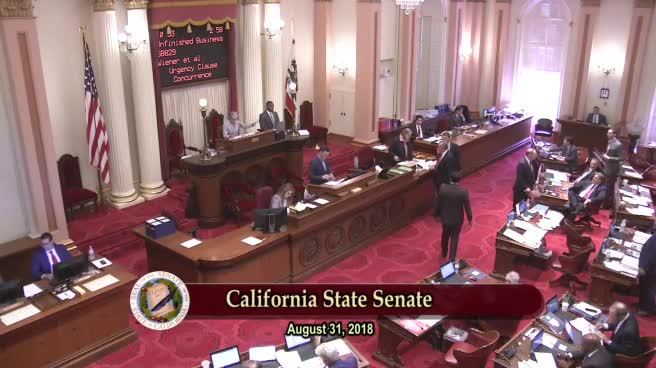 2MIN
Senate Floor
 8MIN
Assembly Floor
 1H
Assembly Standing Committee on Appropriations
 27MIN
Assembly Standing Committee on Local Government
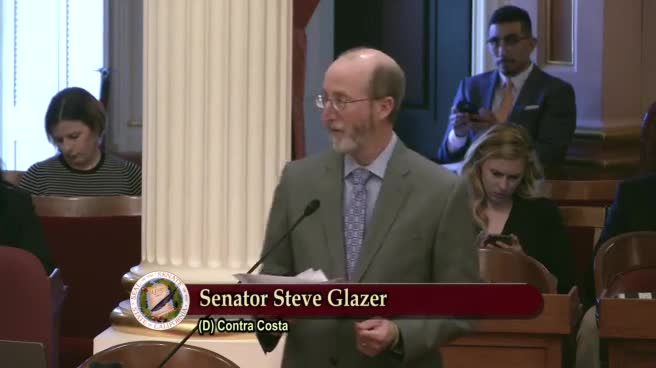 7MIN
Senate Floor
 21MIN
Senate Standing Committee on Public Safety
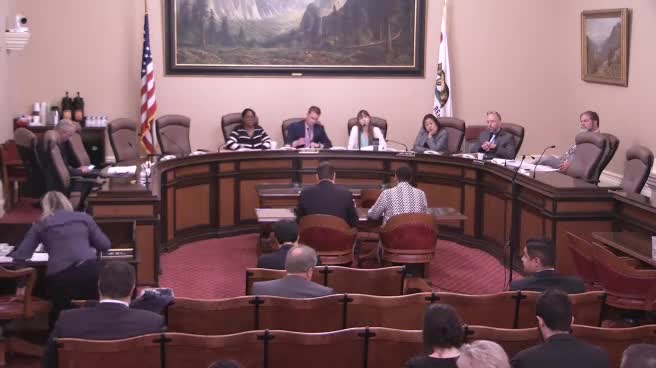 50MIN
Senate Standing Committee on Governance and Finance
Bill Author


