SB 1365: Salton Sea: Office of Salton Sea Restoration: design-build contract: reorganization.
- Session Year: 2017-2018
- House: Senate
- Latest Version Date: 2018-08-16
The Salton Sea Restoration Act requires the Secretary of the Natural Resources Agency, in consultation and coordination with the Salton Sea Authority, to lead Salton Sea restoration efforts. Existing law, including the act, specifies various sources of funding for Salton Sea restoration and mitigation projects, and provides for the allocation of various responsibilities among state agencies and regional water agencies for implementation and administration of those projects. Under the act, the states comprehensive management plan for the Salton Sea is known as the John J. Benoit Salton Sea Restoration Plan.
This bill would establish in the Department of Water Resources the Office of Salton Sea Restoration, which would be under the administration and direction of the Director of Salton Sea Restoration. The bill would also provide for the establishment, within the office, of the Salton Sea Restoration Board, as provided. The bill would reorganize existing responsibilities of state agencies under the Salton Sea Restoration Act by requiring, on or before June 30, 2020, that projects under the supervision, direction, or control of those agencies, and associated authorities, responsibilities, and functions of those agencies, be transferred to the office. Pursuant to this reorganization, the bill would require the director, in consultation with the board, to implement the John J. Benoit Salton Sea Restoration Plan and to carry out other activities relating to restoration of the Salton Sea, as specified.
The bill would require, on or before June 30, 2019, the Department of Water Resources to enter into a design-build contract, as provided, to undertake specified Salton Sea restoration projects.
Existing law establishes the State Coastal Conservancy, and prescribes the membership and functions and duties of the conservancy with regard to the protection, preservation, and enhancement of specified coastal lands in the state. Existing law authorizes the conservancy to award various grants in furtherance of its duties, including, but not limited to, grants to public agencies and nonprofit organizations for activities to address the impacts of climate change and grants to nonprofit organizations, educational institutions, and public agencies for the purpose of educational projects and programs for pupils in kindergarten and grades 1 to 12, inclusive, relating to the preservation, protection, enhancement, and maintenance of coastal resources.This bill would authorize the conservancy to award mitigation funds not otherwise restricted to fund grants for nonprofit organizations that offer scientific, educational, cultural, or heritage programs that focus on the history and stewardship of the ocean and coastal resources.Existing law establishes the State Coastal Conservancy, and prescribes the membership and functions and duties of the conservancy with regard to the protection, preservation, and enhancement of specified coastal lands in the state. Existing law authorizes the conservancy to award various grants in furtherance of its duties, including, but not limited to, grants to public agencies and nonprofit organizations for activities to address the impacts of climate change and grants to nonprofit organizations, educational institutions, and public agencies for the purpose of educational projects and programs for pupils in kindergarten and grades 1 to 12, inclusive, relating to the preservation, protection, enhancement, and maintenance of coastal resources.
This bill would require authorize the conservancy to award mitigation funds not otherwise restricted to fund grants for nonprofit organizations that offer scientific, educational, cultural, or heritage programs that focus on the history and stewardship of the ocean and coastal resources.
Existing law establishes the State Coastal Conservancy, and prescribes the membership and functions and duties of the conservancy with regard to the protection, preservation, and enhancement of specified coastal lands in the state. Existing law authorizes the conservancy to award various grants in furtherance of its duties, including, but not limited to, grants to public agencies and nonprofit organizations for activities to address the impacts of climate change and grants to nonprofit organizations, educational institutions, and public agencies for the purpose of educational projects and programs for pupils in kindergarten to grade and grades 1 to 12, inclusive, relating to the preservation, protection, enhancement, and maintenance of coastal resources.
This bill, to the extent permitted by law, would require, for any mitigation funds awarded to the conservancy on and after January 1, 2019, priority to be given to funding grants This bill would require the conservancy to award mitigation funds not otherwise restricted to fund grants for nonprofit organizations that offer scientific, educational, cultural, or heritage programs that focus on the history and stewardship of the ocean and coastal resources.
Existing law establishes the State Coastal Conservancy, and prescribes the membership, functions, membership and functions and duties of the conservancy with regard to the protection, preservation, and enhancement of specified coastal lands in the state. Existing law authorizes the conservancy to award various grants in furtherance of its duties, including, but not limited to, grants to public agencies and nonprofit organizations for activities to address the impacts of climate change and grants to nonprofit organizations, educational institutions, and public agencies for the purpose of educational projects and programs for pupils in kindergarten to grade 12, inclusive, relating to the preservation, protection, enhancement, and maintenance of coastal resources.
This bill, to the extent permitted by law, would require 50% of require, for any mitigation funds awarded to the conservancy on and after January 1, 2019, to be used for priority to be given to funding grants to for nonprofit organizations that offer scientific, educational, or maritime history programs about the California coastline. educational, cultural, or heritage programs that focus on the history and stewardship of the ocean and coastal resources.
Existing law establishes the State Coastal Conservancy, and prescribes the membership, functions, and duties of the conservancy with regard to the protection, preservation, and enhancement of specified coastal lands in the state. Existing law authorizes the conservancy to award various grants in furtherance of its duties, including, but not limited to, grants to public agencies and nonprofit organizations for activities to address the impacts of climate change and grants to nonprofit organizations, educational institutions, and public agencies for the purpose of educational projects and programs for pupils in kindergarten to grade 12, inclusive, relating to the preservation, protection, enhancement, and maintenance of coastal resources.
This bill, to the extent permitted by law, would require 50% of any mitigation funds awarded to the conservancy on and after January 1, 2019, to be used for grants to nonprofit organizations that offer scientific, educational, or maritime history programs about the California coastline.
Unless the context requires otherwise, the definitions set forth in this section govern the construction of this article.
(a)Agency means the Natural Resources Agency.
(b)Design-build means a project delivery process in which both the design and construction of a project are procured from a single entity.
(b)(c)Habitat mosaics means two or more proximate habitat types, such as saltwater shoreline abutting riverine deltas and irrigated farmland.
(d)Local governmental entity means any city, county, city and county, district, joint powers authority, other political subdivision of the state, or Indian tribe in the Salton Sea area.
(c)(e)Quantification Settlement Agreement has the same meaning as defined in subdivision (a) of Section 1 of Chapter 617 of the Statutes of 2002.
(d)(f)Salton Sea Authority or authority means the joint powers authority comprised of the County of Imperial, the County of Riverside, the Imperial Irrigation District, the Coachella Valley Water District, and the Torres Martinez Desert Cahuilla Indian Tribe.
(g)Salton Sea Management Program means the program for implementation of the John J. Benoit Salton Sea Restoration Plan, as described in Section 2930.
(e)(h)Secretary means the Secretary of the Natural Resources Agency.
(f)(i)Vector management means services that eliminate or reduce the risk of illness caused by any organism transporting a pathogen.
SEC. 2.Section 2941.5 is added to the Fish and Game Code, to read:2941.5.(a)There is established in the Department of Water Resources an Office of Salton Sea Restoration.
(b)The Governor shall appoint, subject to confirmation by a majority of the Senate, a Director of Salton Sea Restoration who shall administer and direct the Office of Salton Sea Restoration.
(c)Pursuant to the reorganization required by Section 2946, the Director of Salton Sea Restoration, in consultation with the Salton Sea Restoration Board established pursuant to subdivision (d), shall do all of the following:
(1)Implement the Salton Sea Management Program to protect public health, wildlife, and the environment in the Salton Sea area.
(2)Implement Order WR 2017-0134, issued by the State Water Resources Control Board on November 7, 2017, or a subsequent revision of that order.
(3)Determine the steps necessary for creation of an enhanced infrastructure financing district in the Salton Sea area, as provided in the Memorandum of Understanding Between the County of Imperial and the County of Riverside Concerning Unified Support on the Salton Sea entered into on June 26, 2018, and assist in the creation of the district.
(4)Identify the highest priority projects and initiatives for which funding is needed.
(5)Undertake efforts to enhance public use and enjoyment of lands owned by the public in the Salton Sea area.
(6)Support efforts that advance environmental preservation and the economic well-being of residents of the Salton Sea area in ways that complement one another.
(d)(1)There shall be in the Office of Salton Sea Restoration a Salton Sea Restoration Board.
(2)The membership of the board shall consist of the following:
(A)Representatives of appropriate state agencies.
(B)Representatives of local governmental entities, to be appointed by the governing bodies of those entities.
SEC. 3.Section 2944 is added to the Fish and Game Code, to read:2944.(a)The Legislature finds and declares that the design-build method of project delivery is necessary to ensure the immediate implementation of restoration projects for protection of public health, wildlife, and the environment in the Salton Sea area.
(b)On or before June 30, 2019, the Department of Water Resources shall enter into a design-build contract to undertake projects identified in the following documents:
(1)The Salton Sea Management Program Phase I: 10-Year Plan, dated March 2017, or a subsequent revision of that Phase I plan.
(2)Order WR 2017-0134, issued by the State Water Resources Control Board on November 7, 2017, or a subsequent revision of that order.
(c)Notwithstanding Article 6 (commencing with Section 10187) of Chapter 1 of Part 2 of Division 2 of the Public Contract Code, the Department of Water Resources shall expedite the procurement process otherwise applicable pursuant to subdivision (c) of Section 2942 to address the urgency of initiating and completing projects specified in subdivision (b) of this section.
(d)A design-build entity shall carry out a design-build contract entered into pursuant to subdivision (b) under the supervision, direction, and control of the Department of Water Resources or the agency, as appropriate.
SEC. 4.Section 2946 is added to the Fish and Game Code, to read:2946.Notwithstanding any other provision of this article, on or before June 30, 2020, projects undertaken pursuant to this article that are under the supervision, direction, or control of the agency, the Department of Water Resources, or the department, and the authorities, responsibilities, and functions conferred on those agencies by this article to undertake those projects, shall be transferred to the Office of Salton Sea Restoration.
SECTION 1.Section 31121 is added to the Public Resources Code, to read:31121.Mitigation funds not otherwise restricted may be awarded by the conservancy for funding grants to nonprofit organizations that offer scientific, educational, cultural, or heritage programs that focus on the history and stewardship of the ocean and coastal resources.Mitigation funds not otherwise restricted shall may be awarded by the conservancy for funding grants to nonprofit organizations that offer scientific, educational, cultural, or heritage programs that focus on the history and stewardship of the ocean and coastal resources.
Mitigation funds not otherwise restricted shall be awarded by the conservancy for funding grants to nonprofit organizations that offer scientific, educational, cultural, or heritage programs that focus on the history and stewardship of the ocean and coastal resources.
SECTION 1.Section 31121 is added to the Public Resources Code, to read:31121.To the extent permitted by law, for mitigation funds awarded to the conservancy on and after January 1, 2019, priority shall be given to funding grants for nonprofit organizations that offer scientific, educational, cultural, or heritage programs that focus on the history and stewardship of the ocean and coastal resources. To the extent permitted by law, a nonprofit organization awarded a grant, or its offered program, may be located near the California coastline.To the extent permitted by law, 50 percent of any for mitigation funds awarded to the conservancy on and after January 1, 2019, priority shall be used for given to funding grants to for nonprofit organizations that offer scientific, educational, or maritime history programs about the California coastline. educational, cultural, or heritage programs that focus on the history and stewardship of the ocean and coastal resources. To the extent permitted by law, a nonprofit organization awarded a grant, or its offered program, may be located near the California coastline.
To the extent permitted by law, 50 percent of any mitigation funds awarded to the conservancy on and after January 1, 2019, shall be used for grants to nonprofit organizations that offer scientific, educational, or maritime history programs about the California coastline. To the extent permitted by law, a nonprofit organization awarded a grant, or its offered program, may be located near the California coastline.
|
Date
|
Status
|
|---|---|
| Aug 16, 2018 | Re-referred to Com. on W.,P., & W. pursuant to Assembly Rule 77.2. |
| Aug 16, 2018 | Read third time and amended. |
| Aug 13, 2018 | From consent calendar. |
| Aug 9, 2018 | Read second time. Ordered to consent calendar. |
| Aug 8, 2018 | From committee: Do pass. Ordered to consent calendar. (Ayes 17. Noes 0.) (August 8). |
| Jul 5, 2018 | Read second time and amended. Re-referred to Com. on APPR. |
| Jul 3, 2018 | From committee: Do pass as amended and re-refer to Com. on APPR. (Ayes 10. Noes 0.) (June 25). |
| Jun 25, 2018 | June 25 hearing postponed by committee. |
| Jun 25, 2018 | Joint Rule 62(a) suspended. |
| Jun 11, 2018 | Referred to Com. on NAT. RES. |
| May 29, 2018 | In Assembly. Read first time. Held at Desk. |
| May 29, 2018 | Read third time. Passed. (Ayes 37. Noes 0.) Ordered to the Assembly. |
| May 23, 2018 | Read second time. Ordered to consent calendar. |
| May 22, 2018 | From committee: Be ordered to second reading pursuant to Senate Rule 28.8 and ordered to consent calendar. |
| May 15, 2018 | Set for hearing May 22. |
| May 14, 2018 | May 14 hearing postponed by committee. |
| May 4, 2018 | Set for hearing May 14. |
| Apr 30, 2018 | Read second time and amended. Re-referred to Com. on APPR. |
| Apr 26, 2018 | From committee: Do pass as amended and re-refer to Com. on APPR. with recommendation: To consent calendar. (Ayes 9. Noes 0.) (April 24). |
| Apr 2, 2018 | From committee with author's amendments. Read second time and amended. Re-referred to Com. on N.R. & W. |
| Mar 29, 2018 | Set for hearing April 24. |
| Mar 8, 2018 | Referred to Com. on N.R. & W. |
| Feb 20, 2018 | From printer. May be acted upon on or after March 22. |
| Feb 16, 2018 | Introduced. Read first time. To Com. on RLS. for assignment. To print. |
|
Date
|
Description
|
Location
|
Votes
|
|
|---|---|---|---|---|
| Aug 8, 2018 | Do pass. To Consent Calendar. | Assembly Standing Committee on Appropriations |
Passed |
|
| Jun 25, 2018 | Do pass as amended and be re-referred to the Committee on [Appropriations] | Assembly Standing Committee on Natural Resources |
Passed |
|
| May 29, 2018 | Consent Calendar SB1365 | Senate Floor |
Passed |
|
| Apr 24, 2018 | Do pass as amended, but first amend, and re-refer to the Committee on [Appropriations] with the recommendation: To Consent Calendar | Senate Standing Committee on Natural Resources and Water |
Passed |
This list shows positions taken on this bill by organizations on the date displayed, which is linked to the original source.
Positions by individuals are not included.
SENATE THIRD READING
STR Bill Id:SB 1365
Author:(Hueso)
As Amended Ver:July 5, 2018
Majority vote
SENATE VOTE: 37-0
Committee | Votes | Ayes | Noes |
Natural Resources | 10-0 | Muratsuchi, Acosta, Chau, Eggman, Flora, Limón, McCarty, Melendez, Mark Stone, Reyes | |
Appropriations | 17-0 | Gonzalez Fletcher, Bigelow, Bloom, Bonta, Brough, Calderon, Carrillo, Chau, Eggman, Fong, Friedman, Gallagher, Eduardo Garcia, Nazarian, Obernolte, Quirk, Reyes |
SUMMARY: This bill allows unrestricted mitigation funds held by the State Coastal Conservancy (SCC) to be awarded to fund grants to nonprofit organizations that offer scientific, educational, cultural, or heritage programs that focus on the history and stewardship of the ocean and coastal resources.
EXISTING LAW:
- Requires mitigation funds paid to the SCC to be deposited in the Coastal Trust Fund and used only for the specific purposes for which they were provided.
- Requires, pursuant to the Mitigation Fee Act, that mitigation fees imposed by local governments may be used solely for the purposes for which the fees were imposed.
BACKGROUND: The SCC is tasked with protecting and improving natural lands and waterways, helping people access the outdoors, and sustain local economies along the state’s coast and around San Francisco Bay. Statewide, the SCC is involved with hundreds of projects with major implications for the future of the state including, but not limited to, public access, wetland and watershed restoration, urban greening, sea level rise adaptation, rangeland and agricultural climate adaptation, and carbon sequestration. Grants to nonprofit organizations that offer scientific, educational, cultural, or heritage programs that focus on the ocean and coastal resources have the potential to help further the SCC's mission.
FISCAL EFFECT: According to the Senate Appropriations Committee, pursuant to Senate Rule 28.8, negligible state costs.
Analysis Prepared by: Dylan Chapple / NAT. RES. / (916) 319-2092 FN: 0004028
Date of Hearing: August 8, 2018
ASSEMBLY COMMITTEE ON APPROPRIATIONS
Lorena Gonzalez Fletcher, Chair
SBPCA Bill Id:SB 1365
Author:(Hueso) – As Amended Ver:July 5, 2018
Policy Committee: | Natural Resources | Vote: | 10 - 0 |
|
| ||
|
|
Urgency: No State Mandated Local Program: No Reimbursable: No
SUMMARY:
This bill allows the State Coastal Conservancy (SCC) to award unrestricted mitigation to fund grants to nonprofit organizations that offer scientific, educational, cultural, or heritage programs that focus on the history and stewardship of the ocean and coastal resources.
FISCAL EFFECT:
No additional state costs.
COMMENTS:
- Purpose. The author contends there is a need to increase funding for programs that focus on the history and stewardship of ocean and coastal resources. This bill is intended to provide that funding.
- Background. Existing law requires mitigation funds paid to the SCC be deposited in the Coastal Trust Fund and used only for the specific purposes for which they were provided. The Mitigation Fee Act provides that mitigation fees imposed by local governments may be used solely for the purposes for which the fees were imposed.
Existing law allows the SCC to undertake educational projects and programs for pupils in kindergarten to grade 12, relating to the preservation, protection, enhancement, and maintenance of coastal resources, and to award grants to nonprofit organizations, educational institutions, and public agencies for those purposes. Within urban coastal watershed areas, the SCC may undertake projects and award grants for activities that are compatible with the preservation, restoration, or enhancement of ocean, coastal, or watershed resources, or that facilitate environmental education related to these resources.
The Conservancy may also undertake or fund historical or cultural programs or projects in the context of education about the coast or in connection with an urban waterfront. Activities may include, but are not limited to, exhibits or events emphasizing coastal, watershed, or ocean resource education, or maritime history. It is unclear if unrestricted mitigation funds are available, but if they are, the SCC currently has the authority to award them for the purposes of the bill.
Analysis Prepared by: Jennifer Galehouse / APPR. / (916) 319-2081
Date of Hearing: June 25, 2018
ASSEMBLY COMMITTEE ON NATURAL RESOURCES
Al Muratsuchi, Acting Chair
SBPCA Bill Id:SB 1365
Author:(Hueso) – As Amended Ver:April 30, 2018
SENATE VOTE: 37-0
SUBJECT: State Coastal Conservancy: grants for nonprofit organizations
SUMMARY: This bill requires unrestricted mitigation funds held by the State Coastal Conservancy (SCC) to be awarded to fund grants to nonprofit organizations that offer scientific, educational, cultural, or heritage programs that focus on the history and stewardship of the ocean and coastal resources.
EXISTING LAW:
- Requires mitigation funds paid to the SCC to be deposited in the Coastal Trust Fund and used only for the specific purposes for which they were provided.
- Requires, pursuant to the Mitigation Fee Act, that mitigation fees imposed by local governments may be used solely for the purposes for which the fees were imposed.
FISCAL EFFECT: According to the Senate Appropriations Committee, pursuant to Senate Rule 28.8, negligible state costs.
COMMENTS:
- Author’s statement:
Research commissioned by The Conservancy found that 89.3% of Californian adults agree that the coast is important and 68.9% wish they could visit more often. While Californians understand that the coast is important, access and knowledge about the coast and its resources is a growing problem. The Conservancy reported that barriers to coastal access disproportionately impact low-income populations and populations away from the coast. “Californians who reported that they go to the coast less than once a year (18%) were more likely to live more than 10 miles inland from the coast (with about 1 out of 5 of such respondents living in the Central Valley) and were likely to come from low income households (about half of such respondents come from families earning less than $50,000 a year).” Similarly, Californians who said they never go to the coast (7%) are more likely to be Hispanic, foreign born, or low-income (about half of such respondents).
As the state moves forward in enhancing our ocean and coastal resources, improving coastal access will play an especially important role in increasing public awareness about the threats to our coast. A recent study conducted by UCLA which focused on the next generation of challenges to coastal access supports an increase in recreational and educational opportunities as a solution to these challenges. This is because educational programs can have multiple societal benefits, among them, exposing people to the need for conservation and encouraging the public to be active participants in mitigating and reversing the impacts of human activity on climate change and the environment.
By requiring that the Conservancy prioritize the usage of any mitigation funds received for grants to nonprofits that offer scientific, educational, cultural, or heritage programs that focus on the history and stewardship of the ocean and coastal resources, we can increase public awareness about issues affecting our coast and spread knowledge about the need to mitigate our impact. In this way, we can ensure that all Californians, in the coast and inland, are active stewards of the coast.
- Does it make sense to restrict the Coastal Conservancy’s use of mitigation funds? The author’s statement highlights the need to increase funding for programs that focus on the history and stewardship of ocean and coastal resources. While there is undoubtedly a pressing need to support programs that increase educational experiences on the coast, this bill is overly restrictive in its approach. The SCC is tasked with protecting and improving natural lands and waterways, helping people access and enjoy the outdoors, and sustain local economies along the state’s coast and around San Francisco Bay. Statewide, the SCC is involved with hundreds of projects with major implications for the future of the state including, but not limited to, public access, wetland and watershed restoration, urban greening, sea level rise adaptation, rangeland and agricultural climate adaptation, and carbon sequestration. Given the wide range of potential uses for mitigation funds, the committee may wish to adopt an amendment that removes the language limiting the SCC’s use of mitigation funding and re-draft to declare that grants to nonprofit organizations shall be one priority for the SCC’s use of mitigation funds.
REGISTERED SUPPORT / OPPOSITION:
SUPPORT
Ocean Institute (sponsor)
City of Santa Monica
Maritime Museum of San Diego
OPPOSITION
None on file
Analysis Prepared by: Dylan Chapple / NAT. RES. /
Office of Senate Floor Analyses (916) 651-1520 Fax: (916) 327-4478 | SB |
CONSENT
Bill No: SB 1365
:
SENATE NATURAL RES. & WATER COMMITTEE: 9-0, 4/24/18
AYES: Hertzberg, Stone, Allen, Hueso, Jackson, McGuire, Monning, Stern, Vidak
SENATE APPROPRIATIONS COMMITTEE: Senate Rule 28.8
SOURCE: Maritime Museum of San Diego
DIGEST:
This bill requires unrestricted mitigation funds held by the State Coastal Conservancy (SCC) to be awarded to fund grants to nonprofit organizations that offer scientific, educational, cultural, or heritage programs that focus on the history and stewardship of the ocean and coastal resources.
Existing law:
- Requires mitigation funds paid to the SCC to be deposited in the Coastal Trust Fund and used only for the specific purposes for which they were provided.
- Requires, pursuant to the Mitigation Fee Act, that mitigation fees imposed by local governments may be used solely for the purposes for which the fees were imposed.
This bill requires mitigation funds that are unrestricted to fund the specified programs that focus on the history and stewardship of the ocean and coastal resources.
FISCAL EFFECT: Appropriation: Fiscal Com.: Local:
Maritime Museum of San Diego (source)
Channel Islands Maritime Museum
City of Santa Monica
Crystal Cove Conservancy
Friends of the Los Angeles Maritime Museum
Ocean Institute
Santa Barbara Maritime Museum
OPPOSITION: (Verified 5/22/18)
None received
ARGUMENTS IN SUPPORT: According to the author, as the state moves forward in enhancing our coastal and ocean resources, improving coastal access will play an especially important role in increasing public awareness about the threats to our coasts. He points to a recent UCLA study that found an increase in recreational and educational programs can have multiple societal benefits: exposing people to the need for conservation and encouraging the public to be active participants in mitigating and reversing the impacts of human activity on climate change and the environment. By requiring the SCC to prioritize funding these types of programs, we can increase public awareness about issues affecting our coast and ensure that all Californians are active stewards of the coast.
Several museums, a related association, and the sponsor, the Maritime Museum of San Diego, as well as the Crystal Cove Conservancy, support this bill because they believe that grants to nonprofits that offer scientific and educational grants should be required when the law authorizes the use of mitigation funds for these purposes.
5/24/18 14:43:09
**** END ****
SENATE COMMITTEE ON NATURAL RESOURCES AND WATER
Senator Robert Hertzberg, Chair
2017 - 2018 Regular
Bill No: SB Hearing Date: April 24, 2018
Author: | Hueso | ||
Version: | April 2, 2018 | ||
Urgency: | No | Fiscal: | Yes |
Consultant: | William Craven | ||
Subject: State Coastal Conservancy: grants for nonprofit organizations
BACKGROUND AND EXISTING LAW
Existing law establishes the State Coastal Conservancy (SCC) and requires that mitigation funds paid to the SCC be deposited in the Coastal Trust Fund and used only for the specific purposes for which they were provided. Public Resources Code section 31012(c).
The Mitigation Fee Act, Government Code section 66006, provides that mitigation fees imposed by local governments may be used solely for the purposes for which the fees were imposed.
PROPOSED LAW
This bill requires, to the extent permitted by law, for a priority to be established to fund grants for nonprofit organizations that offer scientific, educational, cultural, or heritage programs that focus on the history and stewardship of the ocean and coastal resources. It also states that to the extent permitted by law, such nonprofit or its program may be located near the California coastline.
ARGUMENTS IN SUPPORT
According to the author, as the state moves forward in enhancing our coastal and ocean resources, improving coastal access will play an especially important role in increasing public awareness about the threats to our coasts. He points to a recent UCLA study that found an increase in recreational and educational programs can have multiple societal benefits: exposing people to the need for conservation and encouraging the public to be active participants in mitigating and reversing the impacts of human activity on climate change and the environment. By requiring the SCC to prioritize funding these types of programs, we can increase public awareness about issues affecting our coast and ensure that all Californians are active stewards of the coast.
Several museums, a related association, and the sponsor, the Maritime Museum of San Diego, as well as the Crystal Cove Conservancy, support the bill because they believe that grants to nonprofits that offer scientific and educational grants should be required when the law authorizes the use of mitigation funds for these purposes.
ARGUMENTS IN OPPOSITION
None received
COMMENTS
Staff has discussed the bill with the author’s staff and the sponsor, and proposes a more direct draft that is acceptable to those parties that avoids the complications of existing law as described earlier. (Amendment 1).
SUGGESTED AMENDMENTS
AMENDMENT 1
Delete the contents of the bill and substitute: Mitigation funds not otherwise restricted shall be awarded by the conservancy for funding grants to nonprofit organizations that offer scientific, educational, cultural, or heritage programs that focus on the history and stewardship of the ocean and coastal resources.
SUPPORT
Channel Islands Maritime Museum
City of Santa Monica
Crystal Cove Conservancy
Friends of the Los Angeles Maritime Museum
Maritime Museum of San Diego
Santa Barbara Maritime Museum
OPPOSITION
None Received
-- END --
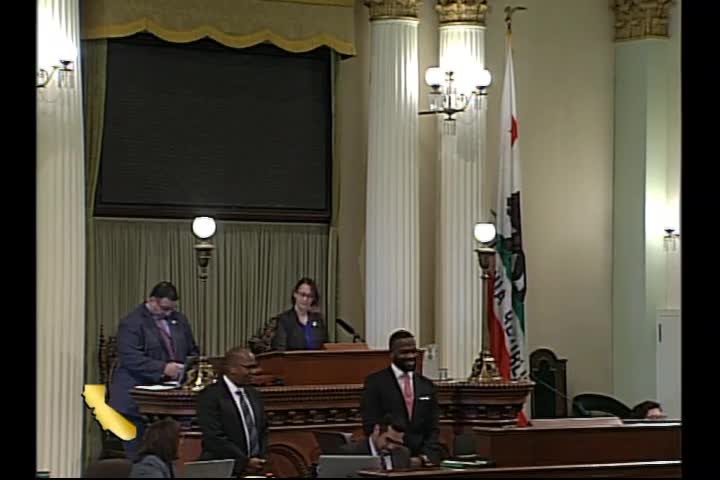
Bill Author

Bill Co-Author(s):
