SB 1397: Automated external defibrillators: requirement: modifications to existing buildings.
- Session Year: 2017-2018
- House: Senate
- Latest Version Date: 2018-09-30
Existing law requires certain occupied structures that are not owned or operated by any local government entity and are constructed on or after January 1, 2017, to have an automated external defibrillator (AED) on the premises.
This bill would apply the AED requirements to certain structures that are constructed prior to January 1, 2017, and subject to subsequent modifications, renovations, or tenant improvements, as specified.
Existing law requires certain occupied structures that are not owned or operated by any local government entity and are constructed on or after January 1, 2017, to have an automated external defibrillator (AED) on the premises.
This bill would apply the AED requirements to certain structures that are constructed prior to January 1, 2017, and subject to subsequent modifications, renovations, or tenant improvements, as specified.
Existing law requires certain occupied structures that are not owned or operated by any local government entity and are constructed on or after January 1, 2017, to have an automated external defibrillator (AED) on the premises.
This bill would apply the AED requirements to certain structures that are constructed prior to January 1, 2017, and subject to subsequent modifications, renovations, or tenant improvements, as specified.
Existing law requires certain occupied structures that are not owned or operated by any local government entity and are constructed on or after January 1, 2017, to have an automated external defibrillator (AED) on the premises.
This bill would apply the AED requirements to certain structures that are constructed prior to January 1, 2017, and subject to subsequent modifications, renovations, or tenant improvements, as specified.
Existing law requires certain occupied structures that are not owned or operated by any local government entity and are constructed on or after January 1, 2017, to have an automated external defibrillator (AED) on the premises.
This bill would apply the AED requirements to certain existing structures that obtain a building permit for are constructed prior to January 1, 2017, and subject to subsequent modifications, renovations, or tenant improvements, as specified.
Existing law requires certain occupied structures that are not owned or operated by any local government entity and are constructed on or after January 1, 2017, to have an automated external defibrillator (AED) on the premises.
This bill would apply the AED requirements to certain existing structures that obtain a building permit for modifications, renovations, or tenant improvements, as specified.
(a)This chapter applies to all of the following structures, as defined in Chapter 3 (commencing with Section 301.1) of Part 2, the California Building Code, of Title 24, the California Building Standards Code, of the California Code of Regulations, that are constructed on or after January 1, 2017, or are constructed prior to January 1, 2017, and modified, renovated, or tenant improved, as described in subdivision (b), subsequent to that date:
(1)Group A assembly buildings with an occupancy of greater than 300.
(2)Group B business buildings with an occupancy of 200 or more.
(3)Group E educational buildings with an occupancy of 200 or more.
(4)Group F factory buildings with an occupancy of 200 or more.
(5)Group I institutional buildings with an occupancy of 200 or more.
(6)Group M mercantile buildings with an occupancy of 200 or more.
(7)Group R residential buildings with an occupancy of 200 or more, excluding single-family and multifamily dwelling units.
(b)A structure shall be considered modified, renovated, or tenant improved for purposes of subdivision (a) if the structure is subject to any of the following on or after January 1, 2020:
(1)One hundred thousand dollars ($100,000) of tenant improvements in one calendar year.
(2)One hundred thousand dollars ($100,000) of building renovations in one calendar year.
(3)Any tenant improvement for places of assembly, including auditoriums and performing arts and movie theaters.
(c)A structure described in subdivision (a) or (b) that is an occupied structure shall have an automated external defibrillator (AED) on the premises subject to the requirements in Section 1797.196. A person or entity that acquires an AED for emergency care pursuant to this section shall not be liable for any civil damages resulting from any acts or omissions in the rendering of the emergency care by use of an AED if that person or entity has complied with subdivision (b) of Section 1797.196.
(d)(1)This chapter shall not apply to a structure in subdivision (a) or (b) that is owned or operated by any local government entity.
(2)This chapter shall not apply to a health facility licensed under subdivision (a), (b), (c), or (f) of Section 1250 of the Health and Safety Code.
(e)If there is an existing AED in the common area of the structure, the requirements of this section are met without the installation of another AED.
(f)Except for structures specified in subdivision (b), this chapter shall not be construed to apply to a structure that is vacant or under construction or renovation.
(a)This chapter applies to all of the following structures, as defined in Chapter 3 (commencing with Section 301.1) of Part 2, the California Building Code, of Title 24, the California Building Standards Code, of the California Code of Regulations, that are constructed on or after January 1, 2017, or are constructed prior to January 1, 2017, and modified, renovated, or tenant improved, as described in subdivision (b), subsequent to that date:
(1)Group A assembly buildings with an occupancy of greater than 300.
(2)Group B business buildings with an occupancy of 200 or more.
(3)Group E educational buildings with an occupancy of 200 or more.
(4)Group F factory buildings with an occupancy of 200 or more.
(5)Group I institutional buildings with an occupancy of 200 or more.
(6)Group M mercantile buildings with an occupancy of 200 or more.
(7)Group R residential buildings with an occupancy of 200 or more, excluding single-family and multifamily dwelling units.
(b)A structure shall be considered modified, renovated, or tenant improved for purposes of subdivision (a) if the structure is subject to any of the following on or after January 1, 2020:
(1)One hundred thousand dollars ($100,000) of tenant improvements in one calendar year.
(2)One hundred thousand dollars ($100,000) of building renovations in one calendar year.
(3)Any tenant improvement for places of assembly, including auditoriums and performing arts and movie theaters.
(c)A structure described in subdivision (a) or (b) that is an occupied structure shall have an automated external defibrillator (AED) on the premises subject to the requirements in Section 1797.196. A person or entity that acquires an AED for emergency care pursuant to this section shall not be liable for any civil damages resulting from any acts or omissions in the rendering of the emergency care by use of an AED if that person or entity has complied with subdivision (b) of Section 1797.196.
(d)(1)This chapter shall not apply to a structure in subdivision (a) or (b) that is owned or operated by any local government entity.
(2)This chapter shall not apply to a health facility licensed under subdivision (a), (b), (c), or (f) of Section 1250 of the Health and Safety Code.
(e)If there is an existing AED in the common area of the structure, the requirements of this section are met without the installation of another AED.
(f)Except for structures specified in subdivision (b), this chapter shall not be construed to apply to a structure that is vacant or under construction or renovation.
(a)This chapter applies to all of the following structures, as defined in Chapter 3 (commencing with Section 301.1) of Part 2, the California Building Code, of Title 24, the California Building Standards Code, of the California Code of Regulations, that are constructed on or after January 1, 2017 2017, or are constructed prior to January 1, 2017, and modified, renovated, or tenant improved, as described in subdivision (b), subsequent to that date:
(1)Group A assembly buildings with an occupancy of greater than 300.
(2)Group B business buildings with an occupancy of 200 or more.
(3)Group E educational buildings with an occupancy of 200 or more.
(4)Group F factory buildings with an occupancy of 200 or more.
(5)Group I institutional buildings with an occupancy of 200 or more.
(6)Group M mercantile buildings with an occupancy of 200 or more.
(7)Group R residential buildings with an occupancy of 200 or more, excluding single-family and multifamily dwelling units.
(b)A structure shall be considered modified, renovated, or tenant improved for purposes of subdivision (a) if the structure is subject to any of the following on or after January 1, 2019: 2020:
(1)Fifty One hundred thousand dollars ($50,000) ($100,000) of tenant improvements in one calendar year.
(2)Fifty One hundred thousand dollars ($50,000) ($100,000) of building renovations in one calendar year.
(3)Any tenant improvement of more than 3,000 square feet.(4)A tenant improvement of more than 2,000 square feet in a restaurant or retail establishment.(5)(3)Any tenant improvement for places of assembly, including auditoriums and performing arts and movie theaters.
(c)A structure described in subdivision (a) or (b) that is an occupied structure shall have an automated external defibrillator (AED) on the premises subject to the requirements in Section 1797.196. A person or entity that acquires an AED for emergency care pursuant to this section shall not be liable for any civil damages resulting from any acts or omissions in the rendering of the emergency care by use of an AED if that person or entity has complied with subdivision (b) of Section 1797.196.
(d)(1)This chapter shall not apply to a structure in subdivision (a) or (b) that is owned or operated by any local government entity.
(2)This chapter shall not apply to a health facility licensed under subdivision (a), (b), (c), or (f) of Section 1250 of the Health and Safety Code.
(e)If there is an existing AED in the common area of the structure, the requirements of this section are met without the installation of another AED.
(f)Except for structures specified in subdivision (b), this chapter shall not be construed to apply to a structure that is vacant or under construction or renovation.
(a)This chapter applies to all of the following structures, as defined in Chapter 3 (commencing with Section 301.1) of Part 2, the California Building Code, of Title 24, the California Building Standards Code, of the California Code of Regulations, that are constructed on or after January 1, 2017 or are constructed prior to January 1, 2017, and modified, renovated, or tenant improved, as described in subdivision (b), subsequent to that date:
(1)Group A assembly buildings with an occupancy of greater than 300.
(2)Group B business buildings with an occupancy of 200 or more.
(3)Group E educational buildings with an occupancy of 200 or more.
(4)Group F factory buildings with an occupancy of 200 or more.
(5)Group I institutional buildings with an occupancy of 200 or more.
(6)Group M mercantile buildings with an occupancy of 200 or more.
(7)Group R residential buildings with an occupancy of 200 or more, excluding single-family and multifamily dwelling units.
(b)A structure shall be considered modified, renovated, or tenant improved for purposes of subdivision (a) if the structure is subject to any of the following on or after January 1, 2019:
(1)Fifty thousand dollars ($50,000) of tenant improvements in one calendar year.
(2)Fifty thousand dollars ($50,000) of building renovations in one calendar year.
(3)Any tenant improvement of more than 3,000 square feet.
(4)A tenant improvement of more than 2,000 square feet in a restaurant or retail establishment.
(5)Any tenant improvement for places of assembly, including auditoriums and performing arts and movie theaters.
(c)A structure described in subdivision (a) or (b) that is an occupied structure shall have an automated external defibrillator (AED) on the premises subject to the requirements in Section 1797.196. A person or entity that acquires an AED for emergency care pursuant to this section shall not be liable for any civil damages resulting from any acts or omissions in the rendering of the emergency care by use of an AED if that person or entity has complied with subdivision (b) of Section 1797.196.
(d)(1)This chapter shall not apply to a structure in subdivision (a) or (b) that is owned or operated by any local government entity.
(2)This chapter shall not apply to a health facility licensed under subdivision (a), (b), (c), or (f) of Section 1250 of the Health and Safety Code.
(e)If there is an existing AED in the common area of the structure, the requirements of this section are met without the installation of another AED.
(f)This chapter shall not be construed to apply to a structure that is vacant or under construction or renovation.(a)This chapter applies to all of the following structures, as defined in Chapter 3 (commencing with Section 301.1) of Part 2, the California Building Code, of Title 24, the California Building Standards Code, of the California Code of Regulations, that are constructed on or after January 1, 2017: 2017 or are constructed prior to January 1, 2017, and modified, renovated, or tenant improved, as described in subdivision (b), subsequent to that date:
(1)Group A assembly buildings with an occupancy of greater than 300.
(2)Group B business buildings with an occupancy of 200 or more.
(3)Group E educational buildings with an occupancy of 200 or more.
(4)Group F factory buildings with an occupancy of 200 or more.
(5)Group I institutional buildings with an occupancy of 200 or more.
(6)Group M mercantile buildings with an occupancy of 200 or more.
(7)Group R residential buildings with an occupancy of 200 or more, excluding single-family and multifamily dwelling units.
(b)A structure shall be considered modified, renovated, or tenant improved for purposes of subdivision (a) if the structure is subject to any of the following on or after January 1, 2019:
(1)Fifty thousand dollars ($50,000) of tenant improvements in one calendar year.
(2)Fifty thousand dollars ($50,000) of building renovations in one calendar year.
(3)Any tenant improvement of more than 3,000 square feet.
(4)A tenant improvement of more than 2,000 square feet in a restaurant or retail establishment.
(5)Any tenant improvement for places of assembly, including auditoriums and performing arts and movie theaters.
(b)(c)A structure described in subdivision (a) or (b) that is an occupied structure shall have an automated external defibrillator (AED) on the premises subject to the requirements in Section 1797.196. A person or entity that acquires an AED for emergency care pursuant to this section shall not be liable for any civil damages resulting from any acts or omissions in the rendering of the emergency care by use of an AED if that person or entity has complied with subdivision (b) of Section 1797.196.
(c)(d)(1)This chapter shall not apply to a structure in subdivision (a) or (b) that is owned or operated by any local government entity.
(2)This chapter shall not apply to a health facility licensed under subdivision (a), (b), (c), or (f) of Section 1250 of the Health and Safety Code.
(e)If there is an existing AED in the common area of the structure, the requirements of this section are met without the installation of another AED.
(d)(f)This chapter shall not be construed to apply to a structure that is vacant or under construction or renovation.
(e)This chapter shall become operative on January 1, 2017.SECTION 1.Section 19301 is added to the Health and Safety Code, to read:19301.(a)Whenever a building permit is obtained for modifications, renovations, or tenant improvements to an existing building listed in Section 19300, an automated external defibrillator (AED) shall be required if the modification, renovation, or tenant improvement involves any of the following criteria:(1)Fifty thousand dollars ($50,000) of tenant improvements in one calendar year.(2)Fifty thousand dollars ($50,000) of building renovations in one calendar year.(3)Any tenant improvement of more than 3,000 square feet.(4)A tenant improvement of more than 2,000 square feet in a restaurant or retail establishment.(5)Any tenant improvement for places of assembly, including auditoriums and performing arts and movie theaters.(b)If there is an existing AED in the common area of the building, the requirements of this section are met without the installation of another AED.(c)This section shall not apply to a structure that is owned or operated by any local government entity.(a)Whenever a building permit is obtained for modifications, renovations, or tenant improvements to an existing building listed in Section 19300, an automated external defibrillator (AED) shall be required if the modification, renovation, or tenant improvement involves any of the following criteria:
(1)Fifty thousand dollars ($50,000) of tenant improvements in one calendar year.
(2)Fifty thousand dollars ($50,000) of building renovations in one calendar year.
(3)Any tenant improvement of more than 3,000 square feet.
(4)A tenant improvement of more than 2,000 square feet in a restaurant or retail establishment.
(5)Any tenant improvement for places of assembly, including auditoriums and performing arts and movie theaters.
(b)If there is an existing AED in the common area of the building, the requirements of this section are met without the installation of another AED.
(c)This section shall not apply to a structure that is owned or operated by any local government entity.
|
Date
|
Status
|
|---|---|
| Sep 30, 2018 | Chaptered by Secretary of State. Chapter 1014, Statutes of 2018. |
| Sep 30, 2018 | Approved by the Governor. |
| Sep 10, 2018 | Enrolled and presented to the Governor at 4 p.m. |
| Aug 28, 2018 | In Senate. Ordered to engrossing and enrolling. |
| Aug 28, 2018 | Read third time. Passed. Ordered to the Senate. |
| Aug 20, 2018 | Read second time. Ordered to third reading. |
| Aug 16, 2018 | From committee: Do pass. (Ayes 16. Noes 1.) (August 16). |
| Aug 8, 2018 | August 8 set for first hearing. Placed on suspense file. |
| Jun 26, 2018 | From committee: Do pass and re-refer to Com. on APPR. (Ayes 10. Noes 0.) (June 26). Re-referred to Com. on APPR. |
| Jun 19, 2018 | From committee: Do pass and re-refer to Com. on JUD. (Ayes 15. Noes 1.) (June 19). Re-referred to Com. on JUD. |
| Jun 11, 2018 | Referred to Coms. on B. & P. and JUD. |
| May 31, 2018 | In Assembly. Read first time. Held at Desk. |
| May 31, 2018 | Read third time. Passed. (Ayes 39. Noes 0.) Ordered to the Assembly. |
| May 29, 2018 | Ordered to special consent calendar. |
| May 25, 2018 | From committee: Do pass. (Ayes 7. Noes 0.) (May 25). |
| May 18, 2018 | Set for hearing May 25. |
| May 7, 2018 | May 7 hearing: Placed on APPR. suspense file. |
| May 1, 2018 | From committee with author's amendments. Read second time and amended. Re-referred to Com. on APPR. |
| May 1, 2018 | Set for hearing May 7. |
| Apr 30, 2018 | April 30 set for first hearing canceled at the request of author. |
| Apr 20, 2018 | Set for hearing April 30. |
| Apr 17, 2018 | Read second time and amended. Re-referred to Com. on APPR. |
| Apr 16, 2018 | From committee: Do pass as amended and re-refer to Com. on APPR. (Ayes 13. Noes 0.) (April 10). |
| Apr 2, 2018 | From committee with author's amendments. Read second time and amended. Re-referred to Com. on T. & H. |
| Mar 29, 2018 | Set for hearing April 10. |
| Mar 8, 2018 | Referred to Com. on T. & H. |
| Feb 20, 2018 | From printer. May be acted upon on or after March 22. |
| Feb 16, 2018 | Introduced. Read first time. To Com. on RLS. for assignment. To print. |
|
Date
|
Description
|
Location
|
Votes
|
|
|---|---|---|---|---|
| Aug 28, 2018 | SB 1397 Hill Senate Third Reading By BERMAN | Assembly Floor |
Passed |
|
| Aug 16, 2018 | Do pass. | Assembly Standing Committee on Appropriations |
Passed |
|
| Jun 26, 2018 | Do pass and be re-referred to the Committee on [Appropriations] | Assembly Standing Committee on Judiciary |
Passed |
|
| Jun 19, 2018 | Do pass and be re-referred to the Committee on [Judiciary] | Assembly Standing Committee on Business and Professions |
Passed |
|
| May 31, 2018 | Special Consent SB1397 | Senate Floor |
Passed |
|
| May 25, 2018 | Do pass | Senate Standing Committee on Appropriations |
Passed |
|
| May 7, 2018 | Placed on suspense file | Senate Standing Committee on Appropriations |
Passed |
|
| Apr 10, 2018 | Do pass as amended, but first amend, and re-refer to the Committee on [Appropriations] | Senate Standing Committee on Transportation and Housing |
Passed |
This list shows positions taken on this bill by organizations on the date displayed, which is linked to the original source.
Positions by individuals are not included.
SENATE THIRD READING
STR Bill Id:SB 1397
Author:(Hill)
As Amended Ver:May 1, 2018
Majority vote
SENATE VOTE: 39-0
Committee | Votes | Ayes | Noes |
Business & Professions | 15-1 | Low, Brough, Baker, Bloom, Chiu, Cunningham, Eggman, Fong, Gipson, Grayson, Irwin, McCarty, Medina, Mullin, Ting | Obernolte |
Judiciary | 10-0 | Mark Stone, Cunningham, Chau, Chiu, Holden, Kalra, Kiley, Maienschein, Reyes, Gabriel | |
Appropriations | 16-1 | Gonzalez Fletcher, Bigelow, Bloom, Bonta, Brough, Calderon, Carrillo, Chau, Eggman, Fong, Friedman, Gallagher, Eduardo Garcia, Nazarian, Quirk, Reyes | Obernolte |
SUMMARY: Requires automated external defibrillators (AED) to be installed in certain buildings that undergo significant modification. Effective January 1, 2020, extends the requirement to buildings if the building is renovated with more than $100,000 of improvements or any improvements in places of assembly such as auditoriums or theaters. Exempts buildings with AEDs already present in common areas.
THIS BILL:
- Requires the placement and maintenance of AEDs in buildings that have received any of the following:
- $100,000 or more in tenant improvements in one calendar year;
- $100,000 or more in building renovations in one calendar year;
- Tenant improvements for places of assembly, including but not limited to, auditoriums and theaters.
- Exempts structures except those listed in 1), above, that are vacant, under construction, or under renovation, from current law requirements for installation of an AED.
FISCAL EFFECT: According to the Senate Committee on Appropriations:
- Unknown, potentially significant costs to both the University of California (UC) and California State University (CSU) systems in a given year. (General Fund) Staff notes that both university systems have significant deferred maintenance and capital improvement needs. Staff estimates that costs could be over $100,000. (General Fund, bond funds)
- Costs to install AEDs in state-owned buildings are currently unknown. (General Fund, various special funds) The Department of General Services (DGS) indicates that overall costs are undeterminable as data on the number of state buildings that have an AED installed is currently unavailable, and the number of buildings that will be renovated, modified, or tenant improved in the future is unknown. Costs for AED installation would be charged to the state department or agency that occupies a particular building. As such, staff estimates that the impact to individual state funds to be relatively minor in a given year.
- Likely minor costs to the California Department of Corrections and Rehabilitation (CDCR) in a given year. CDCR indicates that AEDs are currently installed in most facilities that would be subject to the bill's requirements.
COMMENTS:
Purpose. This bill is sponsored by Racing Hearts. According to the author, "Sudden cardiac arrest kills nearly 1,000 people per day in the United States and ends the lives of 350,000 people annually. It can happen to anyone, anytime, anywhere and at any age. The single most effective intervention during sudden cardiac arrest is the use of an automated external defibrillator (AED). Existing law requires most newly-constructed large-occupancy buildings to have an AED on the premise. However, AEDs are not required in large-occupancy buildings that undergo substantial modifications, renovations, or tenant improvements. SB 1397 will require high occupancy buildings that undergo renovations to be equipped with an automated external defibrillator (AED). Installing more AEDS throughout the state means that more lives will likely be saved from those suffering sudden cardiac arrest."
Background. An AED is a medical device, usually portable, approximately briefcase sized, that contains built-in software to evaluate a patient for cardiac arrest and, if appropriate, to deliver an electric shock cardioversion. AEDs are designed to guide users through use in a life-threatening situation with audio and visual guides.
Existing law requires certain occupied buildings, except for specified health facilities and structures owned or operated by a local government entity, that are constructed on or after January 1, 2017 to have an AED on the premises. The requirement applies to the following building types, as defined in the California Building Standards Code: 1) assembly buildings with an occupancy of greater than 300; 2) business, educational, factory, institutional, and mercantile buildings with an occupancy of 200 or more; and 3) residential buildings with an occupancy of 200 or more, excluding single-family and multifamily dwelling units. Existing law relieves a person or entity that acquires an AED pursuant to these requirements from liability for civil damages related to the rendering of emergency care by use of an AED, as specified.
This requirement would apply to a large number of state buildings, including the University of California and California State University systems.
Analysis Prepared by: Jimmy Fremgen / B. & P. / (916) 319-3301 FN: 0004154
Date of Hearing: August 8, 2018
ASSEMBLY COMMITTEE ON APPROPRIATIONS
Lorena Gonzalez Fletcher, Chair
SBPCA Bill Id:SB 1397
Author:(Hill) – As Amended Ver:May 1, 2018
Policy Committee: | Business and Professions | Vote: | 15 - 1 |
Judiciary | 10 - 0 | ||
|
|
Urgency: No State Mandated Local Program: No Reimbursable: No
SUMMARY:
This bill requires certain renovated buildings with an occupancy of 200 or more to have an Automated External Defibrillator (AED) installed in those buildings and provides immunity from civil liability for a person or entity that complies with the requirement. Specifically, this bill:
- Extends the mandate in existing law, which applies to certain buildings with an occupancy of at least 200 people that are newly constructed as of January 1, 2017, to those same buildings which are modified, renovated, or tenant improved, as described in 2), below, subsequent to that date.
- States, for purposes of the bill, a structure is considered modified, renovated, or tenant improved for any of the following reasons on or after January 1, 2020:
- $100,000 of tenant improvements in one calendar year.
- $100,000 of building renovations in one calendar year.
- Any tenant improvement for places of assembly, including auditoriums and performing arts and movie theaters.
- Provides that if there is an existing AED in the common area of the structure, the requirements of bill are satisfied.
FISCAL EFFECT:
- Estimated one-time costs to the Department of General Services (DGS) in the range of $10,000 to $15,000 (GF) annually to install one AED unit per building in each of five DGS-owned buildings per year. Total costs to DGS for its 25 buildings currently affected by this bill would be approximately $63,000 (GF) over five years.
Estimated ongoing costs to DGS, beginning in 2025, of $15,000 (GF) for replacement and maintenance of the AEDs.
Although not required by the bill, DGS indicates it will likely install one AED unit per floor in each building to best achieve the purpose of AED availability. In that case, total one-time costs would be closer to $350,000 (GF) for installation and maintenance, and $68,000 (GF) for ongoing maintenance.
- Estimated costs to the California State University System (CSUS) of $115,000 annually to purchase and install 46 AEDs, assuming CSUS renovates two large buildings per year at each of its 23 campuses, assuming $2,000 to purchase and $500 to install each AED. This cost would vary depending on the number of large buildings actually renovated at each campus each year. CSUS indicates it has an average of 25 large buildings at each of the 23 campuses. Total one-time costs, over time, would be approximately $1.4 million to purchase and install 575 AEDs at all 25 large buildings at each of the 23 campuses.
CSUS indicates minor costs to annually inspect and maintain the AEDs.
- Likely minor costs to the California Department of Corrections and Rehabilitation (CDCR) in a given year. CDCR indicates that AEDs are currently installed in most facilities that would be subject to the bill’s requirements.
COMMENTS:
- Purpose. This bill seeks to increase the supply and availability of AEDs by requiring the installation of AEDs on newly renovated buildings with an occupancy of 200 or more, and providing qualified immunity for the person who acquires an AED for installation on the premises. According to the author:
Existing law requires most newly-constructed large-occupancy buildings to have an AED on the premise. However, AEDs are not required in large-occupancy buildings that undergo substantial modifications, renovations, or tenant improvements. SB 1397 will require high occupancy buildings that undergo renovations to be equipped with an automated external defibrillator (AED). Installing more AEDs throughout the state means that more lives will likely be saved from those suffering sudden cardiac arrest.
- Background. An AED is a medical device used to administer an electric shock to a person who has suffered cardiac arrest, and restore a regular heart rhythm. Built-in computers in an AED assess a patient’s heart rhythm, determine whether the person is in cardiac arrest, and signal whether to administer the shock. Audible cues guide the user through the process of using the AED. According to the author, “Sudden cardiac arrest kills nearly 1,000 people per day in the United States and ends the lives of 350,000 people annually. The single most effective intervention during sudden cardiac arrest is the use of an AED.”
In 1999, in an effort to encourage the installation and use of AEDs in commercial buildings, the Legislature provided qualified immunity to commercial property owners who installed AEDs in their buildings. That legislation (SB 911 (Figueroa), Chapter 163, Statutes of 1999) put in place a number of requirements for property owners who installed AEDs to obtain qualified immunity for civil liability associated with the installation or use of the AED. In 2015, those requirements were revised and simplified by SB 658 (Hill), Chapter 264, Statutes of 2015. That same year, the requirements were applied, as of January 1, 2017, to a number of newly constructed buildings with occupancy of 200 or more pursuant to SB 287 (Hueso), Chapter 449, Statutes of 2015.
This bill seeks to mandate AEDs be installed in private and public buildings with occupancy of 200 or more that are renovated after January 1, 2020.
Analysis Prepared by: Jennifer Swenson / APPR. / (916) 319-2081
Date of Hearing: June 26, 2018
ASSEMBLY COMMITTEE ON JUDICIARY
Mark Stone, Chair
SBPCA Bill Id:SB 1397
Author:(Hill) – As Amended Ver:May 1, 2018
SENATE VOTE: 39-0
SUBJECT: AUTOMATED EXTERNAL DEFIBRILLATORS: REQUIREMENT: MODIFICATIONS TO EXISTING BUILDINGS
KEY ISSUES:
- SHOULD BUILDINGS WITH an OCCUPANCY of 200 or more that are modifiEd, renovated, or improved after january 1, 2020 be required to Have An automated external defibrillator, or AED, installed on their premises?
- Should a person who acquires an AED for installation in such a building be given qualified immunity for acquiring the AED?
SYNOPSIS
An automated external defibrillator, or AED, is a medical device that is used to administer an electric shock to the heart of a person who has suffered cardiac arrest through the person’s chest wall. Built-in computers in an AED assess the patient’s heart rhythm, determine whether the person is in cardiac arrest, and signal whether to administer the shock. Audible cues guide the user through the process of using the AED. In 1999, in an effort to encourage the installation and use of AEDs in commercial buildings, the Legislature provided qualified immunity to commercial property owners who installed AEDs in their buildings. That legislation (SB 911 (Figueroa), Ch. 163, Stats. 1999) put in place a number of requirements for property owners who installed AEDs in order to obtain qualified immunity for civil liability associated with the installation or use of the AED. Legislation enacted in 2015 simplified those requirements and mandated that AEDs be installed in certain newly constructed private and public buildings with occupancy of 200 or more. This bill seeks to mandate that AEDs be installed in private and public buildings with occupancy of 200 or more that are renovated after January 1, 2020.
Although state law provides extensive regulation of the installation of AEDs in business properties, the California Supreme Court has held that it was appropriate under these circumstances to leave to the Legislature the policy decision whether a business should be required to acquire and make available an AED for the protection of its patrons. By requiring the installation of AEDs on newly renovated buildings with an occupancy of 200 or more, and providing qualified immunity for the person who acquires an AED for installation on the premises, this bill seeks to increase the supply and availability of AEDs. This bill, which passed off the Senate Floor on Consent and recently passed the Assembly Business and Professions Committee by a vote of 15-1, is sponsored by Racing Hearts and supported by the American Heart Association, American Red Cross, California Medical Association, Santa Clara County, and the Silicon Valley Leadership Group. It has no opposition on file.
SUMMARY: Requires certain renovated buildings with an occupancy of 200 or more to have an Automated External Defibrillator (AED) installed in those buildings and provides immunity from civil liability for a person or entity that complies with the requirement. Specifically, this bill:
- Extends the mandate in existing law, which applies to certain buildings with an occupancy of at least 200 people that are newly constructed as of January 1, 2017, to those same buildings which modified, renovated, or tenant improved, as described in 2), below, subsequent to that date.
- States that for purposes of the bill, a structure shall be considered modified, renovated, or tenant improved if the structure is subject to any of the following on or after January 1, 2020:
- One hundred thousand dollars ($100,000) of tenant improvements in one calendar year.
- One hundred thousand dollars ($100,000) of building renovations in one calendar year.
- Any tenant improvement for places of assembly, including auditoriums and performing arts and movie theaters.
- Provides that if there is an existing AED in the common area of the structure, the requirements of bill are satisfied without the installation of another AED.
EXISTING LAW:
- Provides that any person who, in good faith and not for compensation, renders emergency care or treatment by the use of an AED at the scene of an emergency is not liable for any civil damages resulting from any acts or omissions when the AED is used to render emergency care. (Civil Code Section 1714.21 (b).)
- Provides that any person or entity who provides CPR and AED training to a person who renders emergency care is not liable for any civil damages resulting from any acts or omissions of the person rendering the emergency care. (Id., at (c).)
- Provides that a person or entity that acquires an AED for emergency use is not liable for any civil damages resulting from any acts or omissions in the rendering of the emergency care by use of an AED if that person or entity has complied with the training and maintenance requirements of Section 1797.196 of the Health and Safety Code. (Id., at (d)(1).)
- Provides that a physician and surgeon or other health care professional that is involved in the selection, placement, or installation of an AED pursuant to Section 1797.196 of the Health and Safety Code is not liable for civil damages resulting from acts or omissions in the rendering of emergency care by use of that AED. (Id., at (d)(2).)
- Provides that the protections specified above do not apply in the case of personal injury or wrongful death that results from the gross negligence or willful or wanton misconduct of the person who renders emergency care or treatment by the use of an AED. (Id., at (e).)
- Provides that the above provisions do not relieve a manufacturer, designer, developer, distributor, installer, or supplier of an AED or defibrillator of any liability under any applicable statute or rule of law. (Id., at (f).)
- As of January 1, 2017, requires various newly constructed buildings to have an AED on the premises, specifically the following:
- Assembly Group A buildings (those used for the gathering of persons for purposes such as civic, social, or religious functions with an occupancy of greater than 300, such as banquet halls, auditoriums, and theaters).
- Business Group B buildings (those used for office, professional, or service-type transactions, including storage of records and accounts with an occupancy of 200 or more, such as banks, salons, professional services offices, some colleges).
- Educational Group E buildings (schools) with an occupancy of 200 or more;
- Factory Industrial Group F buildings (used for assembling, disassembling, fabricating, finishing, manufacturing, packaging, repair, or processing) with an occupancy of 200 or more, including a building or structure, or portion thereof that are not classified as a Group H hazardous or Group S storage occupancy.
- High-hazard Group H buildings with an occupancy of 200 or more, including a building or structure, or portion thereof, that involves the manufacturing processing, generation, or storage of materials that constitute a physical or health hazard in quantities in excess of those allowed in control areas, as further defined.
- Institutional Group I buildings with an occupancy of 200 or more, including a building or structure, or portion thereof, in which care or supervision is provided to persons who are or are not capable of self-preservation without physical assistance or in which persons are detained for penal or correctional purposes or in which the liberty of the occupants is restricted (e.g. custodial care facilities, hospitals, jails, prisons, nursing homes).
- Mercantile Group M buildings with an occupancy of 200 or more, including a building or structure, or portion thereof, used for the display and sale of merchandise and involving stocks of goods, wares, or merchandise incidental to such purposes and accessible to the public (e.g. department stores, markets, retail stores).
- Residential Group R buildings with an occupancy of 200 or more, including a building or structure, or portion thereof, used for sleeping purposes when not classified as Group I occupancy or when not regulated by the California Residential Code (e.g. boarding houses, hotels, assisted living facilities, social rehabilitation facilities, group homes).
- Storage Group S buildings, other than parking garages, with an occupancy of 200 or more, including a building or structure, or portion thereof, used for storage that is not classified as a hazardous occupancy.
- Excludes single-family and multi-family dwelling units, parking garages, and structures owned or operated by the state or any local government entity from the above requirement. (Health and Safety Code Section 19300 (a). All further statutory references are to the Health and Safety Code, unless otherwise indicated.)
- Provides that any person or entity that acquires an AED shall do all of the following:
- Comply with all regulations governing the placement of an AED.
- Notify an agent of the local EMS agency of the existence, location, and type of AED acquired.
- Ensure that the AED is maintained and tested according to the operation and maintenance guidelines set forth by the manufacturer.
- Ensure that the AED is tested at least biannually and after each use.
- Ensure that an inspection is made of all AEDs on the premises at least every 90 days for potential issues related to operability of the device, including a blinking light or other obvious defect that may suggest tampering or that another problem has arisen with the functionality of the AED.
- Ensure that records of the maintenance and testing required pursuant to this paragraph are maintained. (Section 1797.196 (b)(1).)
- Requires, when an AED is placed in a building, the building owner to do all of the following:
- At least once a year, notify the tenants as to the location of the AED units and provide information to tenants about who they can contact if they want to voluntarily take AED or CPR training.
- At least once a year, offer a demonstration to at least one person associated with the building so that the person can be walked through how to use an AED properly in an emergency. The building owner may arrange for the demonstration or partner with a nonprofit organization to do so.
- Next to the AED, post instructions, in no less than 14-point type, on how to use the AED. (Section 1797.196 (b)(2).)
- Defines “’wanton’ or ‘reckless’ misconduct” as conduct by a person who may have no intent to cause harm, but who intentionally performs an act so unreasonable and dangerous that he or she knows or should know it is highly probable that harm will result.” (City of Santa Barbara v. Superior Court (2007) 41 Cal.4th 747, 753 [emphasis added].)
- Defines "gross negligence" as an "exercise of so slight a degree of care as to justify the belief there was indifference to the interest and welfare of others." (46 Cal. Jur. 3d Negligence § 100.)
FISCAL EFFECT: As currently in print the bill is keyed fiscal.
COMMENTS: An automated external defibrillator, or AED, is a medical device that is used to administer an electric shock to the heart of a person who has suffered cardiac arrest through the person’s chest wall. Built-in computers in an AED assess the patient’s heart rhythm, determine whether the person is in cardiac arrest, and signal whether to administer the shock. Audible cues guide the user through the process of using the AED.
In 1999, in an effort to encourage the installation and use of AEDs in commercial buildings, the Legislature provided qualified immunity to commercial property owners who installed AEDs in their buildings. That legislation (SB 911 (Figueroa), Chap. 163, Stats. 1999) required property owners who installed AEDs to meet certain requirements in order to obtain qualified immunity for civil liability associated with the installation or use of the AED. In 2015, those requirements were revised and simplified by SB 658 (Hill), Chap 264. Stats. 2015. That same year, the requirements were applied, as of January 1, 2017, to a number of newly constructed buildings with occupancy of 200 or more pursuant to SB 287 (Hueso), Chap. 449, Stats. 2015.
This bill, sponsored by Racing Hearts, would extend SB 287’s provisions to buildings that are renovated after January 1, 2020. According to the author:
Sudden cardiac arrest kills nearly 1,000 people per day in the United States and ends the lives of 350,000 people annually. It can happen to anyone, anytime, anywhere and at any age. The single most effective intervention during sudden cardiac arrest is the use of an automated external defibrillator (AED). Existing law requires most newly-constructed large-occupancy buildings to have an AED on the premise. However, AEDs are not required in large-occupancy buildings that undergo substantial modifications, renovations, or tenant improvements. SB 1397 will require high occupancy buildings that undergo renovations to be equipped with an automated external defibrillator (AED). Installing more AEDS throughout the state means that more lives will likely be saved from those suffering sudden cardiac arrest.
No Duty to Rescue – Special Relationship Exception. As a general rule, California law provides that persons are responsible, not only for the result of their willful acts, but also for an injury occasioned to another by their want of ordinary care or skill in the management of their property or person, except so far as the latter has, willfully or by want of ordinary care, brought the injury upon themselves. (Civil Code Sec. 1714 (a).) Along those same lines, there is generally ‘no duty to rescue” (meaning that one person cannot be held liable for failing to render aid to another person in peril, even in situations where there would be no risk of harm to the rescuer). But courts have held that there are exceptions to that rule. For example, if the defendant’s negligence created the peril, the defendant has a duty to rescue. Also, once a person begins to render aid, they cannot unreasonably and negligently abandon the giving of aid. Courts have also found a duty to rescue when there is a “special relationship” between the parties, including relationships between the following: common carrier-passenger, innkeeper-guest, employer-employee, school-student, and, most notably for this bill, the business-customer relationship.
The special relationship exists when one party relies upon another to provide the care or supervision for which they (or their parent/caregiver) would normally be responsible. As the Restatement on Torts puts it, “One who . . . voluntarily takes the custody of another under circumstances such as to deprive the other of his normal opportunities for protection [such as providing one’s own transportation, housing, or parental supervision, for example] is under a similar duty to the other.” (Restat. 2d of Torts, Section 314A (2nd 1979).) The law has been moving steadily “toward a recognition of the duty to aid or protect in any relation of dependence or of mutual dependence.” (Ibid., Comment b.)
Statutes to Encourage Lay Persons to be Good Samaritans and Render Emergency Care. While there is generally no duty to come to the aid of another, the law--in common law, as well as statutory law--ensures that a “Good Samaritan” who undertakes action to rescue another person, even when he has no obligation to do so (like the “lowly Samaritan” in the Gospel of Luke who came to the aid of a stranger left for dead while supposedly more upstanding citizens ignored the cries of the dying man) is not punished for any harm that they cause as a result of the voluntary rescue, unless they act in a grossly negligent manner. This principle is intended to encourage would-be rescuers to take action that they otherwise would have no duty to undertake. In 2009, California codified a so-called "Good Samaritan" rule: Health & Safety Code Section 1799.102, which grants qualified immunity to any person who renders medical or non-medical aid in an emergency, so long as that person acts in good faith and not for compensation, and so long as that person's conduct is not grossly negligent or willful or wanton.
The Good Samaritan law has been expanded to apply to specific conduct that the Legislature intended to encourage (even though such specificity is not necessary, given the broad and general reach of Health & Safety Code Section 1799.102 regarding all “medical or non-medical aid in an emergency,” and arguably weakens the impact of Section 1799.102 because any type of emergency aid which is not specifically listed arguable is not covered). Thus, California law provides qualified immunity to those who administer specific types of medical aid in emergencies, including the administration of opioid antagonists (Education Code Section 49414.3) and epinephrine via auto-injector (Civil Code Section 1714.23), and the use of AEDs.
Special Relationship Between Businesses and Customers and Schools and Students – Possible Common Law Duty to Acquire AEDs and Use Them. In Rotolo v. San Jose Sports and Entertainment (2007) 151 Cal.App.4th 307, a lawsuit was brought by the parents of a 17-year-old who experienced sudden cardiac arrest and collapsed on the ice while participating in a hockey tournament game on the south rink at Logitech Ice. Two event bystanders, mothers of other participants in the event, responded to the medical emergency. While they provided CPR to the teen, 911 was called to report the incident to the appropriate emergency responders. Sometime prior to this incident one or more AEDs had been acquired and installed at the Logitech Ice facility. "Respondents had placed one AED on the wall in the area near the penalty box of the south rink where the teenager had collapsed. No one was aware that an AED was installed and available for use close to the south rink. Neither one of the referees officiating the game was aware of the AED. Both [the mothers who performed CPR on Rotolo] had been trained and certified in the use of AEDs. However, no one informed them that there was an AED nearby." The teenager did not survive. (Id. at pp. 316-317.)
In that case, the Appellate Court ruled in favor of the defendants, holding that the Legislature had “occupied the field” by enacting a number of detailed and comprehensive statutes governing the acquisition and use of AEDs, which reflected legislative policy to encourage the availability of AEDs by providing immunity from liability for those who acquired the devices, when they were used in an attempt to save a life.
Those who do install AEDs in their buildings will not be liable for damages resulting from the rendering of emergency care with an AED, so long as certain requirements are met, including maintenance, testing, posting and notice. [Citations omitted.] The notice that is required is specifically limited to tenants of the building where the AED is located. [Citations omitted.] The only other notice requirement set forth in these statutes is that the person or entity that supplies an AED must notify the local emergency services agency of its location. [Citations omitted.] Nothing in these statutes requires that a building owner or manager give notice to particular members of the public expected to use the building. Furthermore, we believe the imposition of such duties that are not clearly outlined in the statutes would tend to discourage, rather than to encourage, the voluntary acquisition of AED’s, and would thus defeat the underlying legislative purpose of promoting the widespread use of these devices. (Rotolo v. San Jose Sports and Entertainment, supra, at p. 314.)
The court also held that, under the common law, the duty of care of a landlord (based on the special relationship to tenants and invitees) had never been extended to impose an affirmative duty like the parents sought to impose: to give notice to prospective invitees about the existence and location of a medical device. (Id. at pp. 314-315.)
In 2014, at the request of the federal Ninth Circuit Court of Appeal, the California Supreme Court addressed the following certified question: whether, under California law, the common law duty of reasonable care that the defendant retailer owed to its business customers included an obligation to obtain and make available on its business premises an AED for use in a medical emergency. That case, Verdugo v. Target Corporation (2014) 59 Cal.4th 312, arose after a customer at a Target store suffered sudden cardiac arrest and collapsed while shopping. In response to a 911 call, paramedics were dispatched from a nearby fire station. It took the paramedics several minutes to reach the store and a few additional minutes to reach Verdugo inside the store and in the meantime, she died. Target did not have an AED in its store. The deceased’s mother and brother filed the underlying lawsuit against Target, maintaining that Target breached the duty of care that it owed to Verdugo, a business customer, by failing to have on hand within its department store an AED for use in a medical emergency.
There, the California Supreme Court held that the existing state statutes on AEDs does not preclude a court from determining that a business has a common law duty to exercise reasonable care with regard to the health and safety of its customers that includes, either in general or in particular circumstances, an obligation to acquire and make available an AED for use in a medical emergency. (Verdugo v. Target Corporation, supra, at p. 321.) While ultimately finding that Target Corporation did not breach such a duty (Id. at p. 317), the California Supreme Court explained that a common law duty could exist, despite California’s qualified immunity statutes. The court explained that because California law states that a building owner is not required to install an AED and provides that the owner has qualified immunity for using one, it “does not state categorically or explicitly, for example, that no building owner or manager (or business establishment) shall be held liable for failing to acquire or install an AED (or owes no duty to acquire an AED)” and therefore common law liability is possible for failure to provide one. (Id. at p. 327.) The Court held that the statutory scheme cannot properly be interpreted to preclude courts from determining, under generally applicable common law principles, whether, and if so under what circumstances, an individual's or entity's common law duty of reasonable care may include a duty to provide an AED for use in the event of a medical emergency. (Ibid.)
Therefore, despite the fact that existing schools and commercial buildings that accommodate 200 or more people are not required under current statutory law to acquire, install, and make available AEDs, they may have a common law duty to do so, given their special relationship with students and business customers. Likewise, because of that special relationship, school personnel and commercial employees may have corresponding common law duty to take action and act with reasonable care in relation to students during medical emergencies. If an AED were reasonably available and a student or customer experienced an apparent sudden cardiac arrest, employees would likely be under a duty to use it (or at least attempt to do so) in order to attempt to revive the student or customer. This bill, which requires renovated “educational Group E buildings” (i.e. schools) with an occupancy of 200 or more to have AEDs is consistent with, and in furtherance of, this duty.
Immunity May be Unnecessary, Given Lack of Injuries Caused by AEDs. The purpose of an immunity provision is to protect an entity from civil liability and when no necessity for immunity where no risk of liability reasonably exists. According to information provided by the author:
Studies have shown that 90 percent of the time, AEDs are able to detect a rhythm that should be defibrillated. And 95 percent of the time they are able to recommend not shocking when the computer shows defibrillation is not indicated. According to the National Heart, Lung and Blood Institute, there have been no reports of AEDs harming users or bystanders.
Just as there do not appear to be any reports of persons who have been injured by an AED, the Committee staff is not aware of any parties who have installed, used, or trained others to use an AED who have been found liable (or even been sued) for injuries caused by the AED. Therefore, the immunity provision in this bill may be unnecessary. In an abundance of caution, however, the bill provides express immunity—applicable under existing law to persons and entities who install AEDs in newly constructed buildings—applicable to those who install AEDs in newly renovated buildings, as well.
REGISTERED SUPPORT / OPPOSITION:
Support
Racing Hearts (sponsor)
American Heart Association/American Stroke Association
American Red Cross
California Business Properties Association
California Medical Association
Santa Clara County Board of Supervisors
Silicon Valley Leadership Group
Opposition
None on file
Analysis Prepared by: Alison Merrilees / JUD. / (916) 319-2334
Date of Hearing: June 19, 2018
ASSEMBLY COMMITTEE ON BUSINESS AND PROFESSIONS
Evan Low, Chair
SBPCA Bill Id:SB 1397
Author:(Hill) – As Amended Ver:May 1, 2018
SENATE VOTE: 39-0
SUBJECT: Automated external defibrillators: requirement: modifications to existing buildings
SUMMARY: Requires automated external defibrillators (AED) to be installed in certain buildings that undergo significant modification. Effective January 1, 2020, extends the requirement to buildings if the building is renovated with more than $100,000 of improvements or any improvements in places of assembly such as auditoriums or theaters. Exempts buildings with AEDs already present in common areas.
EXISTING LAW:
- Establishes the types of buildings that are required to maintain AED’s on property. This includes:
- Group A assembly buildings with an occupancy of greater than 300.
- Group B business buildings with an occupancy of 200 or more.
- Group E educational buildings with an occupancy of 200 or more.
- Group F factory buildings with an occupancy of 200 or more.
- Group I institutional buildings with an occupancy of 200 or more.
- Group M mercantile buildings with an occupancy of 200 or more.
- Group R residential buildings with an occupancy of 200 or more, excluding single-family and multifamily dwelling units. (Health and Safety Code (HSC) Section 19300 et seq.)
- Exempts buildings owned or operated by local government entities, certain health facilities, and vacant buildings. (HSC Section 19300(2))
THIS BILL:
- Requires the placement and maintenance of AEDs in buildings that have received any of the following:
- $100,000 or more in tenant improvements in one calendar year;
- $100,000 or more in building renovations in one calendar year;
- Tenant improvements for places of assembly, including but not limited to, auditoriums and theaters.
- Exempts structures except those listed in (1) that are vacant, under construction, or under renovation, from current law requirements for installation of an AED.
FISCAL EFFECT: According to the Senate Committee on Appropriations:
- Unknown, potentially significant costs to both the University of California (UC) and California State University (CSU) systems in a given year. (General Fund) Staff notes that both university systems have significant deferred maintenance and capital improvement needs. Staff estimates that costs could be over $100,000. (General Fund, bond funds)
- Costs to install AEDs in state-owned buildings are currently unknown. (General Fund, various special funds) The Department of General Services (DGS) indicates that overall costs are undeterminable as data on the number of state buildings that have an AED installed is currently unavailable, and the number of buildings that will be renovated, modified, or tenant improved in the future is unknown. Costs for AED installation would be charged to the state department or agency that occupies a particular building. As such, staff estimates that the impact to individual state funds to be relatively minor in a given year.
- Likely minor costs to the California Department of Corrections and Rehabilitation (CDCR) in a given year. CDCR indicates that AEDs are currently installed in most facilities that would be subject to the bill’s requirements.
COMMENTS:
Purpose. This bill is sponsored by Racing Hearts. According to the author, “Sudden cardiac arrest kills nearly 1,000 people per day in the United States and ends the lives of 350,000 people annually. It can happen to anyone, anytime, anywhere and at any age. The single most effective intervention during sudden cardiac arrest is the use of an automated external defibrillator (AED). Existing law requires most newly-constructed large-occupancy buildings to have an AED on the premise. However, AEDs are not required in large-occupancy buildings that undergo substantial modifications, renovations, or tenant improvements. SB 1397 will require high occupancy buildings that undergo renovations to be equipped with an automated external defibrillator (AED). Installing more AEDS throughout the state means that more lives will likely be saved from those suffering sudden cardiac arrest.”
Background. An AED is a medical device, usually portable, approximately briefcase sized, that contains built-in software to evaluate a patient for cardiac arrest and, if appropriate, to deliver an electric shock cardioversion. AEDs are designed to guide users through use in a life-threatening situation with audio and visual guides.
Existing law requires certain occupied buildings, except for specified health facilities and structures owned or operated by a local government entity, that are constructed on or after January 1, 2017 to have an AED on the premises. The requirement applies to the following building types, as defined in the California Building Standards Code: (1) assembly buildings with an occupancy of greater than 300; (2) business, educational, factory, institutional, and mercantile buildings with an occupancy of 200 or more; and (3) residential buildings with an occupancy of 200 or more, excluding single-family and multifamily dwelling units. Existing law relieves a person or entity that acquires an AED pursuant to these requirements from liability for civil damages related to the rendering of emergency care by use of an AED, as specified.
This requirement would apply to a large number of state buildings, including the University of California and California State University systems.
Prior Related Legislation. SB 287 (Hueso), Chapter 449, Statutes of 2015. Requires certain buildings with capacities of 200 persons or greater, as specified, constructed on or after January 1, 2017, to have an AED on the premises.
SB 658 (Hill), Chapter 264, Statutes of 2015. Repealed various requirements relating to persons or entities who acquire AEDs, including requirements that employees complete training and that the AEDs be checked every 30 days, and makes the civil liability immunity in existing law for persons or entities who acquire an AED no longer conditional upon meeting specified requirements.
SB 1436 (Lowenthal), Chapter 71, Statutes of 2012, removed the sunset date, thereby making permanent, the existing protections that provide immunity from civil damages in connection with the use of AEDs.
ARGUMENTS IN SUPPORT:
Racing Hearts writes in support, “I am writing on behalf of Racing Hearts to express our nonprofit’s support for SB 1397, which would require large-occupancy buildings to install an Automated External Defibrillator (AED) whenever a permit is obtained for modifications, renovations, or tenant improvements to an existing building.”
The American Red Cross writes in support, “AEDs are simple and effective devices that can save lives. In 2015, Red Cross supported SB 658 (Hill), ultimately signed into law, which modernized AED installation and immunity laws to encourage placement of these devices in buildings. SB 1397 continues this overarching policy.”
The American Heart Association writes in support, “We support placing AEDs in targeted public areas such as sports arenas, gated communities, office complexes, doctor's offices, shopping malls and other public venues. When AEDs are placed in the community or a business or facility, the AHA strongly encourages that they be part of a public access to defibrillation program.”
The California Medical Association writes in support, “The single most effective intervention during a sudden cardiac arrest, or other heart related emergency, is the use of an AED which can safely monitor and, if necessary, restore the heart’s normal rhythm. CMA has long been supportive of increasing public access to and availability of AEDs.”
S. Joseph Simitian, President of the Santa Clara County Board of Supervisors, writes in support, “The County of Santa Clara supports your SB 1397 related to the availability of automated external defibrillators.”
The Silicon Valley Leadership Group writes in support, “express the organization’s support for SB 1397, which would require large-occupancy buildings to install an Automated External Defibrillator (AED) whenever a permit is obtained for modifications, renovations, or tenant improvements to an existing building.”
ARGUMENTS IN OPPOSITION:
None on file
REGISTERED SUPPORT:
California Medical Association
Racing Hearts
Santa Clara County
Silicon Valley Leadership Group
REGISTERED OPPOSITION:
None on file
Analysis Prepared by: Jimmy Fremgen / B. & P. / (916) 319-3301
Office of Senate Floor Analyses (916) 651-1520 Fax: (916) 327-4478 | SB |
THIRD READING
Bill No: SB 1397
:
SENATE TRANS. & HOUSING COMMITTEE: 13-0, 4/10/18
AYES: Beall, Cannella, Allen, Dodd, Gaines, Galgiani, McGuire, Morrell, Roth, Skinner, Vidak, Wieckowski, Wiener
SENATE APPROPRIATIONS COMMITTEE: 7-0, 5/25/18
AYES: Lara, Bates, Beall, Bradford, Hill, Nielsen, Wiener
DIGEST:
This bill requires automated external defibrillators (AED) to be installed in certain buildings that undergo significant modification.
ANALYSIS: Existing law requires certain buildings with capacities of 200 persons or greater, as specified, constructed on or after January 1, 2017, to have an AED on the premises. The building owner is required to test the AED at least biannually and inspect the AED at least every 90 days, among other things.
This bill:
- Extends the AED requirement to those same buildings beginning January 1, 2020 if the building is renovated in any of the following ways:
- $100,000 of tenant improvements or building renovations in any calendar year;
- any tenant improvement in places of assembly, such as auditoriums and movie theatres.
- Provides, if an AED already exists in a common area of a building, this bill does not require the installation of an additional AED.
Comments
- Author’s Statement. Sudden cardiac arrest kills nearly 1000 people per day in the United States. It can happen to anyone, anytime, anywhere and at any age. The single most effective intervention during sudden cardiac arrest is the use of an AED. Existing law requires most newly-constructed large-occupancy buildings to have an AED on the premise. However, AEDs are not required in large-occupancy buildings that undergo substantial modifications, renovations, or tenant improvements. SB 1397 will require high occupancy buildings that undergo renovations to be equipped with an AED.
- Shocking. According to the American Heart Association (AHA), an AED is a computerized medical device. An AED can check a person’s heart rhythm, recognize a rhythm that requires a shock, and advise the rescuer when a shock is needed and provide the shock. The AED uses voice prompts, lights and text messages to tell the rescuer the steps to take. The AHA believes that AEDs are very accurate and easy to use. With a few hours of training, anyone can learn to operate one safely. The AHA supports placing AEDs in targeted public areas such as sports arenas, gated communities, office complexes, doctor's offices, shopping malls, etc. When AEDs are placed in the community or a business or facility, the AHA strongly encourages that they be part of a defibrillation program in which:
- Persons that acquire an AED notify the local EMS office.
- A licensed physical or medical authority provides medical oversight to ensure quality control
- Persons responsible for using the AED are trained in CPR and how to use an AED.
- It Works. Evidence seems to support the public safety value of improved access to AEDs. The author has cited six examples in 2017 where an on-site AED in California was used to revive an individual. The American Red Cross believes that improved training and access to AEDs could save 50,000 lives each year, and that all Americans should be within four minutes of an AED and someone trained to use it. The U.S. Department of Labor has urged employers to consider the use of AEDs at their worksites.[1] An online search indicates that AEDs are available for less than $2000, which doesn’t include the cost of ongoing testing and inspection. The cost of installing and maintaining the AEDs will generally be recovered from the building tenants.
- Local Government Exempt. The bill exempts local governments from its requirements.
FISCAL EFFECT: Appropriation: Fiscal Com.: Local:
According to the Senate Appropriations Committee:
- Unknown, potentially significant costs to both the University of California (UC) and California State University (CSU) systems in a given year. (General Fund) Staff notes that both university systems have significant deferred maintenance and capital improvement needs. Staff estimates that costs could be over $100,000. (General Fund, bond funds)
- Costs to install AEDs in state-owned buildings are currently unknown. (General Fund, various special funds) The Department of General Services (DGS) indicates that overall costs are undeterminable as data on the number of state buildings that have an AED installed is currently unavailable, and the number of buildings that will be renovated, modified, or tenant improved in the future is unknown. Costs for AED installation would be charged to the state department or agency that occupies a particular building. As such, staff estimates that the impact to individual state funds to be relatively minor in a given year.
- Likely minor costs to the California Department of Corrections and Rehabilitation (CDCR) in a given year. CDCR indicates that AEDs are currently installed in most facilities that would be subject to the bill’s requirements.
California Medical Association
Racing Hearts
Santa Clara County
Silicon Valley Leadership Group
OPPOSITION: (Verified 5/25/18)
None received
5/26/18 14:56:06
**** END ****
Technical Information Bulletin 01-12-17; Occupational Safety and Health Administration. ↑
SENATE COMMITTEE ON APPROPRIATIONS
Senator Ricardo Lara, Chair
2017 - 2018 Regular Session
SB 1397 (Hill) - Automated external defibrillators: requirement: modifications to existing buildings
Version: May 1, 2018 | Policy Vote: T. & H. 13 - 0 |
Urgency: No | Mandate: No |
Hearing Date: May 7, 2018 | Consultant: Mark McKenzie |
This bill meets the criteria for referral to the Suspense File.
Bill Summary:
SB 1397 would require certain occupied buildings that are modified, renovated, or tenant improved on or after January 1, 2020 to have an automated external defibrillator (AED) on the premises, as specified.
Fiscal Impact:
- Unknown, potentially significant costs to both the University of California (UC) and California State University (CSU) systems in a given year. (General Fund) Staff notes that both university systems have significant deferred maintenance and capital improvement needs. Staff estimates that costs could be over $100,000. (General Fund, bond funds) ---see staff comments---
- Costs to install AEDs in state-owned buildings are currently unknown. (General Fund, various special funds) The Department of General Services (DGS) indicates that overall costs are undeterminable as data on the number of state buildings that have an AED installed is currently unavailable, and the number of buildings that will be renovated, modified, or tenant improved in the future is unknown. Costs for AED installation would be charged to the state department or agency that occupies a particular building. As such, staff estimates that the impact to individual state funds to be relatively minor in a given year.
- Likely minor costs to the California Department of Corrections and Rehabilitation (CDCR) in a given year. CDCR indicates that AEDs are currently installed in most facilities that would be subject to the bill’s requirements.
Background:
An AED is a medical device that is used to administer an electric shock to a person who has suffered cardiac arrest, and restore a regular heart rhythm. Built-in computers in an AED assess a patient’s heart rhythm, determine whether the person is in cardiac arrest, and signal whether to administer the shock. Audible cues guide the user through the process of using the AED.
Existing law requires certain occupied buildings, except for specified health facilities and structures owned or operated by a local government entity, that are constructed on or after January 1, 2017 to have an AED on the premises. The requirement applies to the following building types, as defined in the California Building Standards Code: (1) assembly buildings with an occupancy of greater than 300; (2) business, educational, factory, institutional, and mercantile buildings with an occupancy of 200 or more; and (3) residential buildings with an occupancy of 200 or more, excluding single-family and multifamily dwelling units. Existing law relieves a person or entity that acquires an AED pursuant to these requirements from liability for civil damages related to the rendering of emergency care by use of an AED, as specified.
Proposed Law:
SB 1397 would require an AED to be installed on the premises of certain buildings that are modified, renovated, or tenant improved on or after January 1, 2020, if the structure is subject to any of the following:
- $100,000 of tenant improvements or building renovations in one calendar year.
- Any tenant improvement for places of assembly, such as auditoriums and performing arts and movie theaters.
The requirement would be applicable to the following building types, as defined in the California Building Standards Code, except for certain health facilities and structures owned or operated by a local government entity: (1) assembly buildings with an occupancy of greater than 300; (2) business, educational, factory, institutional, and mercantile buildings with an occupancy of 200 or more; and (3) residential buildings with an occupancy of 200 or more, excluding single-family and multifamily dwelling units.
If there is an existing AED in the common area of a structure, the bill does not require the installation of another AED.
Related Legislation:
SB 287 (Hueso), Chap. 449/2015, required certain buildings constructed after January 1, 2017, except for certain health facilities and structures owned or operated by a local government entity, to have an AED on the premises.
SB 658 (Hill), Chap. 264/2015, revised the maintenance and training requirements for placement of AEDs in commercial buildings and K-12 schools that are conditions for obtaining qualified immunity from civil liability for the selection, installation, placement, and use of AEDs in those facilities.
Staff Comments:
DGS indicates that AEDs cost approximately $2,000 per unit of equipment, not including design, installation, inspection, testing, or maintenance. The UC system is comprised of 10 campuses and the CSU system has 23 campuses, with each campus having dozens of buildings of varying age. There are no system-wide policies regarding the installation of AEDs, and no immediate data is available regarding how many campus buildings currently have an AED. Considering the significant backlog of deferred maintenance and improvement needs, with each system having billions of dollars of identified capital needs over the next five years, it is reasonable to assume that the bill could have significant impacts to the UC and CSU systems. While actual costs in a given year are unknown, and dependent on a number of variables, if the bill required the UC and CSU to install AEDs in 15 buildings that are being improved or renovated in a given year, costs could be over $100,000.
-- END --
SENATE COMMITTEE ON TRANSPORTATION AND HOUSING
Senator Jim Beall, Chair
2017 - 2018 Regular
Bill No: SB 1397 Hearing Date: 4/10/2018
Author: | Hill | ||
Version: | 4/2/2018 Amended | ||
Urgency: | No | Fiscal: | Yes |
Consultant: | Randy Chinn | ||
SUBJECT: Automated external defibrillators: requirement: modifications to existing buildings
DIGEST: This bill requires automated external defibrillators (AED) to be installed in certain buildings that undergo significant modification.
ANALYSIS:
Existing law requires certain buildings with capacities of 200 persons or greater, as specified, constructed on or after January 1, 2017, to have an AED on the premises. The building owner is required to test the AED at least biannually and inspect the AED at least every 90 days, among other things.
This bill extends the AED requirement to those same buildings if the building is renovated in any of the following ways:
- $50,000 of tenant improvements or building renovations in any calendar year;
- a tenant improvement of more than 3000 square feet
- a tenant improvement of more than 2000 square feet in a restaurant or retail establishment
- any tenant improvement in places of assembly, such as auditoriums and movie theatres.
If an AED already exists in a common area of a building, this bill does not require the installation of an additional AED.
COMMENTS:
- Author’s Statement. Sudden cardiac arrest kills nearly 1000 people per day in the United States. It can happen to anyone, anytime, anywhere and at any age. The single most effective intervention during sudden cardiac arrest is the use of an AED. Existing law requires most newly-constructed large-occupancy buildings to have an AED on the premise. However, AEDs are not required in large-occupancy buildings that undergo substantial modifications, renovations, or tenant improvements. SB 1397 will require high occupancy buildings that undergo renovations to be equipped with an AED.
- Shocking. According to the American Heart Association (AHA), an AED is a computerized medical device. An AED can check a person’s heart rhythm, recognize a rhythm that requires a shock, and advise the rescuer when a shock is needed and provide the shock. The AED uses voice prompts, lights and text messages to tell the rescuer the steps to take. The AHA believes that AEDs are very accurate and easy to use. With a few hours of training, anyone can learn to operate one safely. The AHA supports placing AEDs in targeted public areas such as sports arenas, gated communities, office complexes, doctor's offices, shopping malls, etc. When AEDs are placed in the community or a business or facility, the AHA strongly encourages that they be part of a defibrillation program in which:
- Persons that acquire an AED notify the local EMS office.
- A licensed physical or medical authority provides medical oversight to ensure quality control
- Persons responsible for using the AED are trained in CPR and how to use an AED.
- It Works. Evidence seems to support the public safety value of improved access to AEDs. The author has cited six examples in 2017 where an on-site AED in California was used to revive an individual. The American Red Cross believes that improved training and access to AEDs could save 50,000 lives each year, and that all Americans should be within four minutes of an AED and someone trained to use it. The U.S. Department of Labor has urged employers to consider the use of AEDs at their worksites.[1] An online search indicates that AEDs are available for less than $2000, which doesn’t include the cost of ongoing testing and inspection. The cost of installing and maintaining the AEDs will generally be recovered from the building tenants.
- Stringent Application. The threshold for requiring the installation of an AED is relatively low. Most tenant improvements will meet the threshold for requiring the installation of an AED.[2] The bill also applies to buildings that were renovated after January 1, 2017, which will retroactively capture some buildings in which the renovations have been completed.
- Local Government Exempt. The bill exempts local governments from its requirements.
- Conforming Amendment. Subdivision (f) is no longer necessary as this bill extends current AED requirements to renovated buildings. The author and committee may wish to delete this subdivision (page 3, lines 10-11).
Related Legislation:
SB 287 (Hueso, Chapter 449 of 2015) — requires certain buildings constructed on or after January 1, 2017 to have an AED on the premises.
SB 658 (Hill, Chapter 264 of 2015) — revises the maintenance and training requirements for placement of AEDs in commercial buildings and K-12 schools that are conditions for obtaining qualified immunity from civil liability for the selection, installation, placement, and use of AEDs in those facilities.
FISCAL EFFECT: Appropriation: Fiscal Com.: Local:
POSITIONS: (Communicated to the committee before noon on Wednesday,
April 4, 2018.)
SUPPORT:
Racing Hearts (sponsor)
Silicon Valley Leadership Group
OPPOSITION:
None received.
-- END --
Technical Information Bulletin 01-12-17; Occupational Safety and Health Administration. ↑
The $50,000 threshold for renovations is cumulative for a building over one year. The reference to square footage is intended to refer to the size of the tenant space being improved, not the size of the actual improvements themselves. ↑
Discussed in Hearing
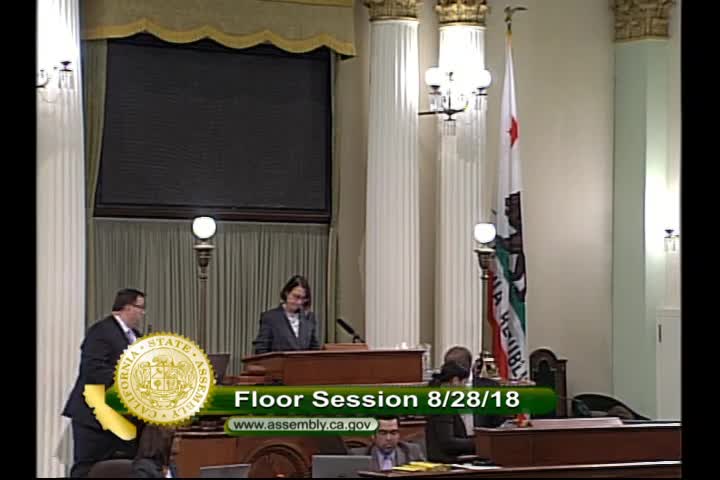 1MIN
Assembly Floor
 1H
Assembly Standing Committee on Appropriations
 8MIN
Assembly Standing Committee on Judiciary
 1MIN
Assembly Standing Committee on Business and Professions
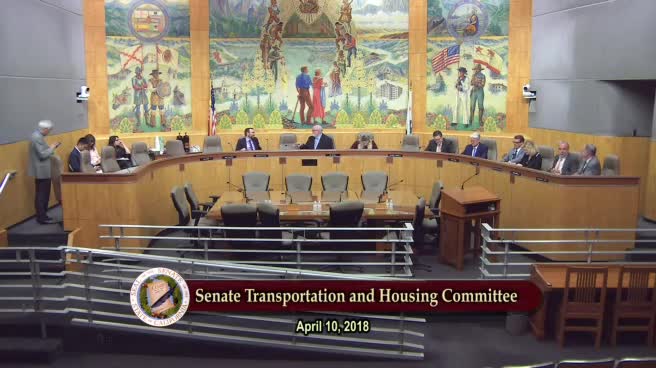 6MIN
Senate Standing Committee on Transportation and Housing
 7MIN
Senate Standing Committee on Veterans Affairs
Bill Author

Bill Co-Author(s):