SB 1422: California Safe Drinking Water Act: microplastics.
- Session Year: 2017-2018
- House: Senate
- Latest Version Date: 2018-09-28
Existing law, the California Safe Drinking Water Act, requires the State Water Resources Control Board to administer provisions relating to the regulation of drinking water to protect public health, including, but not limited to, conducting research, studies, and demonstration programs relating to the provision of a dependable, safe supply of drinking water, enforcing the federal Safe Drinking Water Act, adopting implementing regulations, and conducting studies and investigations to assess the quality of water in private domestic water supplies. Under the act, the implementing regulations are required to include, but are not limited to, monitoring of contaminants and requirements for notifying the public of the quality of the water delivered to customers.
This bill would require the state board, on or before July 1, 2020, to adopt a definition of microplastics in drinking water, and on or before July 1, 2021, to adopt a standard methodology to be used in the testing of drinking water for microplastics and requirements for 4 years of testing and reporting of microplastics in drinking water, including public disclosure of those results.
Existing law, the California Safe Drinking Water Act, requires the State Water Resources Control Board to administer provisions relating to the regulation of drinking water to protect public health, including, but not limited to, conducting research, studies, and demonstration programs relating to the provision of a dependable, safe supply of drinking water, enforcing the federal Safe Drinking Water Act, adopting implementing regulations, and conducting studies and investigations to assess the quality of water in private domestic water supplies. Under the act, the implementing regulations are required to include, but are not limited to including, to, monitoring of contaminants and requirements for notifying the public of the quality of the water delivered to customers.
This bill would require the state board, on or before July 1, 2020, to adopt requirements for 3 consecutive years of testing and reporting of the amount a definition of microplastics in drinking water, including public disclosure of those results, as provided. water, and on or before July 1, 2021, to adopt a standard methodology to be used in the testing of drinking water for microplastics and requirements for 4 years of testing and reporting of microplastics in drinking water, including public disclosure of those results.
Existing law, the California Safe Drinking Water Act, requires the State Water Resources Control Board to administer provisions relating to the regulation of drinking water to protect public health, including, but not limited to, conducting research, studies, and demonstration programs relating to the provision of a dependable, safe supply of drinking water, enforcing the federal Safe Drinking Water Act, adopting implementing regulations, and conducting studies and investigations to assess the quality of water in private domestic water supplies. Under the act, the implementing regulations are required to include, but are not limited to including, monitoring of contaminants and requirements for notifying the public of the quality of the water delivered to customers.
This bill would require the state board board, on or before July 1, 2020, to adopt requirements for the 3 consecutive years of testing and reporting of the amount of microplastics in drinking water, including public disclosure of those results. results, as provided.
Existing law, the California Safe Drinking Water Act, requires the State Water Resources Control Board to administer provisions relating to the regulation of drinking water to protect public health, including, but not limited to, conducting research, studies, and demonstration programs relating to the provision of a dependable, safe supply of drinking water, enforcing the federal Safe Drinking Water Act, adopting implementing regulations, and conducting studies and investigations to assess the quality of water in private domestic water supplies. Under the act, the implementing regulations are required to include, but are not limited to including, monitoring of contaminants and requirements for notifying the public of the quality of the water delivered to customers.
This bill would require the state board to adopt requirements for the annual testing and reporting of the amount of microplastics in drinking water, including public disclosure of those results.
Existing law, the California Safe Drinking Water Act, requires the State Water Resources Control Board to administer provisions relating to the regulation of drinking water to protect public health, including, but not limited to, conducting research, studies, and demonstration programs relating to the provision of a dependable, safe supply of drinking water, enforcing the federal Safe Drinking Water Act, adopting implementing regulations, and conducting studies and investigations to assess the quality of water in private domestic water supplies. Under the act, the implementing regulations are required to include, but are not limited to including, monitoring of contaminants and requirements for notifying the public of the quality of the water delivered to customers.
This bill would require the state board to adopt regulations requiring requirements for the annual testing for, and reporting of, of the amount of microplastics in drinking water, including public disclosure of those results.
Existing law, the California Safe Drinking Water Act, requires the State Water Resources Control Board to administer provisions relating to the regulation of drinking water to protect public health, including, but not limited to, conducting research, studies, and demonstration programs relating to the provision of a dependable, safe supply of drinking water, enforcing the federal Safe Drinking Water Act, adopting implementing regulations, and conducting studies and investigations to assess the quality of water in private domestic water supplies. Under the act, the implementing regulations are required to include, but are not limited to including, monitoring of contaminants and requirements for notifying the public of the quality of the water delivered to customers.
This bill would require the state board to adopt regulations requiring annual testing for, and reporting of, the amount of microplastics in drinking water, including public disclosure of those results.
Under the Porter-Cologne Water Quality Control Act, the State Water Resources Control Board and the California regional water quality control boards are the principal state agencies with authority over matters relating to water quality. The state board and the regional boards prescribe waste discharge requirements for the discharge of waste in accordance with the federal National Pollutant Discharge Elimination System (NPDES) permit program established by the federal Clean Water Act and the Porter-Cologne Water Quality Control Act. Under the act, the state board and the regional boards are required to implement a program to control discharges of preproduction plastic, which includes plastic resin pellets and powdered coloring for plastics, from point and nonpoint sources.This bill would declare the intent of the Legislature to enact legislation relating to levels of plastic that are found in water and the impacts of those levels on human health.Under the Porter-Cologne Water Quality Control Act, the State Water Resources Control Board and the California regional water quality control boards are the principal state agencies with authority over matters relating to water quality. The state board and the regional boards prescribe waste discharge requirements for the discharge of waste in accordance with the federal National Pollutant Discharge Elimination System (NPDES) permit program established by the federal Clean Water Act and the Porter-Cologne Water Quality Control Act. Under the act, the state board and the regional boards are required to implement a program to control discharges of preproduction plastic, which includes plastic resin pellets and powdered coloring for plastics, from point and nonpoint sources.
This bill would declare the intent of the Legislature to enact legislation relating to levels of plastic that are found in water and the impacts of those levels on human health.
(a)The state board, on or before July 1, 2020, shall adopt a definition of microplastics in drinking water.
(b)The state board, on or before July 1, 2021, shall do all of the following:
(1)Adopt a standard methodology to be used in the testing of drinking water for microplastics.
(2)Adopt requirements for four years of testing and reporting of microplastics in drinking water, including public disclosure of those results.
(3)If appropriate, consider issuing a notification level or other guidance to aid consumer interpretations of the results of the testing required pursuant to this section.
(4)Accredit qualified laboratories in California to analyze microplastics.
(c)The state board may implement this section through the adoption of a policy handbook that is not subject to the requirements of Chapter 3.5 (commencing with Section 11340) of Part 1 of Division 3 of Title 2 of the Government Code.
(a)(1)The state board, on or before July 1, 2020, shall adopt requirements for three consecutive years of testing and reporting of the amount a definition of microplastics in drinking water, including public disclosure of those results. water.
(2)Before adopting the requirements described in paragraph (1), the state board(b)The state board, on or before July 1, 2021, shall do all of the following:
(A)(1)Adopt a standard methodology to be used in the testing of drinking water for microplastics.
(2)Adopt requirements for four years of testing and reporting of microplastics in drinking water, including public disclosure of those results.
(B)Adopt(3)If appropriate, consider issuing a notification level or other guidance to aid consumer interpretations of the results of the testing described in paragraph (1). required pursuant to this section.
(C)Adopt a detection limit or other guidance for purposes of the reporting requirements described in paragraph (1).(D)Approve at least one laboratory in California to analyze samples used in the testing of drinking water for microplastics.(4)Accredit qualified laboratories in California to analyze microplastics.
(b)(c)The state board may implement subdivision (a) this section through the adoption of a policy handbook that is not subject to the requirements of Chapter 3.5 (commencing with Section 11340) of Part 1 of Division 3 of Title 2 of the Government Code.
(a)(1)The state board board, on or before July 1, 2020, shall adopt requirements for the three consecutive years of testing and reporting of the amount of microplastics in drinking water, including public disclosure of those results.
(2)Before adopting the requirements described in paragraph (1), the state board shall adopt do all of the following:
(A)Adopt a standard methodology to be used in the testing of drinking water for microplastics.
(B)Adopt a notification level or other guidance to aid consumer interpretations of the results of the testing described in paragraph (1).
(C)Adopt a detection limit or other guidance for purposes of the reporting requirements described in paragraph (1).
(D)Approve at least one laboratory in California to analyze samples used in the testing of drinking water for microplastics.
(b)The state board may implement subdivision (a) through the adoption of a policy handbook that is not subject to the requirements of Chapter 3.5 (commencing with Section 11340) of Part 1 of Division 3 of Title 2 of the Government Code.
(a)(1)The state board shall adopt requirements for the annual testing for, and reporting of, of the amount of microplastics in drinking water, including public disclosure of those results.
(2)Before adopting the requirements described in paragraph (1), the state board shall adopt a standard methodology to be used in the testing of drinking water for microplastics.
(b)The state board may implement subdivision (a) through the adoption of a policy handbook that is not subject to the requirements of Chapter 3.5 (commencing with Section 11340) of Part 1 of Division 3 of Title 2 of the Government Code.
(a)(1)The state board shall adopt regulations requiring requirements for the annual testing for, and reporting of, the amount of microplastics in drinking water, including public disclosure of those results.
(2)Before adopting the requirements described in paragraph (1), the state board shall adopt a standard methodology to be used in the testing of drinking water for microplastics.
(b)The state board may implement subdivision (a) through the adoption of a policy handbook that is not subject to the requirements of Chapter 3.5 (commencing with Section 11340) of Part 1 of Division 3 of Title 2 of the Government Code.
The state board shall adopt regulations requiring annual testing for, and reporting of, the amount of microplastics in drinking water, including public disclosure of those results.
SECTION 1.It is the intent of the Legislature to enact legislation relating to levels of plastic that are found in water and the impacts of those levels on human health.It is the intent of the Legislature to enact legislation relating to levels of plastic that are found in water and the impacts of those levels on human health.
|
Date
|
Status
|
|---|---|
| Sep 28, 2018 | Chaptered by Secretary of State. Chapter 902, Statutes of 2018. |
| Sep 28, 2018 | Approved by the Governor. |
| Sep 12, 2018 | Enrolled and presented to the Governor at 5 p.m. |
| Aug 31, 2018 | Assembly amendments concurred in. (Ayes 34. Noes 2.) Ordered to engrossing and enrolling. |
| Aug 30, 2018 | In Senate. Concurrence in Assembly amendments pending. |
| Aug 30, 2018 | Read third time. Passed. Ordered to the Senate. |
| Aug 23, 2018 | Read third time and amended. |
| Aug 20, 2018 | Read second time. Ordered to third reading. |
| Aug 16, 2018 | From committee: Do pass. (Ayes 15. Noes 0.) (August 16). |
| Aug 16, 2018 | Joint Rule 62(a) suspended. |
| Aug 15, 2018 | August 15 set for first hearing. Placed on suspense file. |
| Aug 9, 2018 | From committee with author's amendments. Read second time and amended. Re-referred to Com. on APPR. |
| Jun 27, 2018 | From committee: Do pass and re-refer to Com. on APPR. (Ayes 6. Noes 0.) (June 26). Re-referred to Com. on APPR. |
| Jun 19, 2018 | From committee with author's amendments. Read second time and amended. Re-referred to Com. on E.S. & T.M. |
| Jun 11, 2018 | Referred to Com. on E.S. & T.M. |
| May 31, 2018 | In Assembly. Read first time. Held at Desk. |
| May 31, 2018 | Read third time. Passed. (Ayes 39. Noes 0.) Ordered to the Assembly. |
| May 29, 2018 | Ordered to special consent calendar. |
| May 25, 2018 | From committee: Do pass. (Ayes 7. Noes 0.) (May 25). |
| May 23, 2018 | Set for hearing May 25. |
| May 22, 2018 | May 22 hearing: Placed on APPR. suspense file. |
| May 14, 2018 | Set for hearing May 22. |
| May 10, 2018 | May 14 hearing postponed by committee. |
| May 4, 2018 | Set for hearing May 14. |
| Apr 26, 2018 | Read second time and amended. Re-referred to Com. on APPR. |
| Apr 25, 2018 | From committee: Do pass as amended and re-refer to Com. on APPR. (Ayes 5. Noes 0.) (April 18). |
| Apr 6, 2018 | Set for hearing April 18. |
| Apr 4, 2018 | Re-referred to Com. on EQ. |
| Apr 2, 2018 | From committee with author's amendments. Read second time and amended. Re-referred to Com. on RLS. |
| Mar 8, 2018 | Referred to Com. on RLS. |
| Feb 20, 2018 | From printer. May be acted upon on or after March 22. |
| Feb 16, 2018 | Introduced. Read first time. To Com. on RLS. for assignment. To print. |
|
Date
|
Description
|
Location
|
Votes
|
|
|---|---|---|---|---|
| Aug 31, 2018 | Unfinished Business SB1422 Portantino Concurrence | Senate Floor |
Passed |
|
| Aug 30, 2018 | SB 1422 Portantino Senate Third Reading By QUIRK | Assembly Floor |
Passed |
|
| Aug 16, 2018 | Do pass. | Assembly Standing Committee on Appropriations |
Passed |
|
| Jun 26, 2018 | Do pass and be re-referred to the Committee on [Appropriations] | Assembly Standing Committee on Environmental Safety and Toxic Materials |
Passed |
|
| May 31, 2018 | Special Consent SB1422 | Senate Floor |
Passed |
|
| May 25, 2018 | Do pass | Senate Standing Committee on Appropriations |
Passed |
|
| May 22, 2018 | Placed on suspense file | Senate Standing Committee on Appropriations |
Passed |
|
| Apr 18, 2018 | Do pass as amended, but first amend, and re-refer to the Committee on [Appropriations] | Senate Standing Committee on Environmental Quality |
Passed |
This list shows positions taken on this bill by organizations on the date displayed, which is linked to the original source.
Positions by individuals are not included.
Office of Senate Floor Analyses (916) 651-1520 Fax: (916) 327-4478 | SB |
UNFINISHED BUSINESS
Bill No: SB 1422
:
SENATE ENVIRONMENTAL QUALITY COMMITTEE: 5-0, 4/18/18
AYES: Wieckowski, Hill, Lara, Skinner, Stern
NO VOTE RECORDED: Stone, Gaines
SENATE APPROPRIATIONS COMMITTEE: 7-0, 5/25/18
AYES: Lara, Bates, Beall, Bradford, Hill, Nielsen, Wiener
SENATE FLOOR: 39-0, 5/31/18
AYES: Allen, Anderson, Atkins, Bates, Beall, Berryhill, Bradford, Cannella, De León, Dodd, Fuller, Gaines, Galgiani, Glazer, Hernandez, Hertzberg, Hill, Hueso, Jackson, Lara, Leyva, McGuire, Mitchell, Monning, Moorlach, Morrell, Newman, Nguyen, Nielsen, Pan, Portantino, Roth, Skinner, Stern, Stone, Vidak, Wieckowski, Wiener, Wilk
ASSEMBLY FLOOR: 74-1, 8/30/18 - See last page for vote
DIGEST:
This bill requires the State Water Resources Control Board (SWRCB) to adopt requirements for the testing and reporting of the amount of microplastics in drinking water for four years.
Assembly Amendments
require SWRCB, instead of adopting requirements for annual testing and reporting, to adopt requirements for testing and reporting for four years and to adopt a definition of microplastics in drinking water.
Existing law:
- Requires, under the California Safe Drinking Water Act (act), the SWRCB to administer provisions relating to the regulation of drinking water to protect public health, including, but not limited to, conducting research, studies, and demonstration programs relating to the provision of a dependable, safe supply of drinking water, enforcing the federal Safe Drinking Water Act, adoption of enforcement regulations, and conducting studies and investigations to assess the quality of water in domestic water supplies (HSC §116350).
- Requires the implementing regulations to include, among others, monitoring of contaminants and requirements for notifying the public of the quality of the water delivered to customers (HSC §116350).
- Requires the implementing regulations to include, among others, monitoring of contaminants and requirements for notifying the public of the quality of the water delivered to customers (HSC §116350).
- Authorizes SWRCB to conduct studies and investigations as it deems necessary to assess the quality of private domestic water wells (HSC §116350).
- Requires SWRCB to issue permits to public water systems and ensure that all public water systems are operating in compliance with the act and regulations adopted under the act (HSC §§116325, 116525).
- Defines “public water system” as a system for the provision of water for human consumption through pipes or other constructed conveyances that has 15 or more service connections or regularly serves at least 25 individuals daily at least 60 days out of the year (HSC §116275).
- Defines “public water system” as a system for the provision of water for human consumption through pipes or other constructed conveyances that has 15 or more service connections or regularly serves at least 25 individuals daily at least 60 days out of the year (HSC §116275).
- Prohibits the sale of a plastic product labeled as “compostable,” “home compostable,” or “marine degradable” unless the product meets a certain standard, specification, or certification (PRC §42357).
- Prohibits the sale of a plastic product that is labeled as “biodegradable,” “degradable,” “decomposable,” or in any way implies that the plastic product will break down, fragment, biodegrade, or decompose in a landfill or other environment (PRC §42357).
This bill requires the SWRCB to adopt requirements for the testing and reporting of the amount of microplastics in drinking water for four years and to adopt a definition of microplastics in drinking water.
Background
- Plastics: Use, Environmental Presence and Impact. Since the beginning of commercial production of plastics 80 years ago, plastic has become a common component of daily living. The annual global plastic production has risen from 1.9 million tons in the 1950s to 317 million tons in 2012. In addition, some of the properties that make plastics a versatile material also make them convenient to discard.
Although plastic represents a relatively small fraction of the overall waste stream in California, plastic waste is the predominate form of marine debris. Plastics are estimated to compose 60-80% of all marine debris and 90% of all floating debris. By 2050, plastics in the ocean will outweigh fish per pound if society keeps producing and failing to properly manage plastics at predicted rates, according to a January 2016 report by the World Economic Forum, The New Plastics Economy: Rethinking the Future of Plastics. According to the California Coastal Commission, the primary source of marine debris is urban runoff. Due to the interplay of ocean currents, marine debris preferentially accumulates in certain areas throughout the ocean. The North Pacific Central Gyre is the ultimate destination for much of the marine debris originating from the California coast and, on March 22, 2018, Scientific Reports published a study, Evidence that the Great Pacific Garbage Patch is Rapidly Accumulating Plastic, that found approximately 46% of the material in the North Pacific Central Gyre by weight was comprised of abandoned fish nets. Microplastics accounted for 94% of the estimated 1.8 trillion pieces of plastic floating in the area. The study also found that the plastic pollution in the North Pacific Central Gyre is increasing exponentially and at a faster rate than surrounding waters.
All plastic in the ocean will eventually become microplastic as large pieces of plastic break down into smaller and smaller particles due to excessive UV radiation exposure and subsequent photo-degradation. These plastic pieces are confused with small fish, plankton, or krill and are ingested by other aquatic organisms. Worldwide, over 600 marine animal species have been negatively affected by ingesting plastic. In 2017, scientists at the ARC Centre of Excellence for Coral Reef Studies at James Cook University found that corals are also ingesting small plastic particles, which remain in their stomach cavities and impede their ability to consume and digest food.
- Fish with a side of plastic. Microplastics consumed by marine organisms make their way into animals’ tissues and are beginning to show up in the fish that humans eat. In a recent study by UC Davis and Hasunuddin University of Indonesia, researchers sampled fish from markets in Makassar, Indonesia, Half Moon Bay, California, and Princeton, New Jersey. One-quarter of the fish sampled in all locations contained plastic.
- Microplastics in tap water. Plastic is also prevalent in tap water. Researchers at the State University of New York and the University of Minnesota tested 159 drinking water samples from cities and towns across five continents. Eighty-three percent of those samples worldwide contained microplastics. In the United States, 94% of the samples contained microplastics, including a sample collected from the United States Environmental Protection Agency headquarters. People, therefore, are ingesting the microplastics when they drink and eat foods prepared by using tap water.
Comments
- Purpose of Bill. According to the author:
“It is crucial that the public be made aware of the extent of microplastics present in drinking water because of the potential dangers they pose to human health and the environment. Greater knowledge of the contaminants in drinking water can lead to increased efforts at recycling, decreased use of plastics, decreased pollution, and an overall healthier public and planet.
“Under the California Safe Drinking Water Act, the State Water Resources Control Board adopts implementing regulations and conducts studies to determine the quality of water. This bill would add microplastics to the list of contaminants monitored, given the high levels present and their potential effects on public health.”
- Drinking water sources. There are two main sources from which California residents receive their drinking water. Over 95% of the 38 million California residents get their drinking water from a public water system or municipal source. These sources are regulated by the Division of Drinking Water within the SWRCB. Up to two million California residents, however, are served either by private domestic wells or by water systems serving less than 15 service connections. These sources of drinking water are not regulated by the Division of Drinking Water.
FISCAL EFFECT: Appropriation: Fiscal Com.: Local:
According to the Assembly Appropriations Committee, this bill may result in total costs of approximately $2.45 million from the Safe Drinking Water Account or GF over three years to implement its provisions. Costs include one-time contract costs of $2 million, along with ongoing staff costs of $150,000 (1 PY) annually.
5 Gyres Institute
Azul
Breast Cancer Prevention Partners
California Coastal Protection Network
California Coastkeeper Alliance
Californians Against Waste
California Product Stewardship Council
Center for Biological Diversity
Center for Oceanic Awareness, Research, and Education
Clean Water Action
Educate. Advocate.
Empower Family California
Environmental Working Group
Greenpeace
Heal the Bay
National Stewardship Action Council
Plastic Pollution Coalition
Seventh Generation Advisors
Sierra Club California
StopWaste
Surfrider Foundation
Team Marine
The Trust for Public Land
UPSTREAM Policy
WILDCOAST
Wishtoyo Chumash Foundation
OPPOSITION: (Verified 8/30/18)
Association of California Water Agencies
California Council for Environmental & Economic Balance
California Municipal Utilities Association
California Water Association
Metropolitan Water District of Southern California
ASSEMBLY FLOOR: 74-1, 8/30/18
AYES: Acosta, Aguiar-Curry, Travis Allen, Arambula, Baker, Berman, Bigelow, Bloom, Bonta, Burke, Caballero, Calderon, Carrillo, Cervantes, Chau, Chávez, Chen, Chiu, Choi, Chu, Cooley, Cunningham, Dahle, Daly, Eggman, Flora, Frazier, Friedman, Gabriel, Gallagher, Cristina Garcia, Eduardo Garcia, Gipson, Gloria, Gonzalez Fletcher, Grayson, Harper, Holden, Irwin, Jones-Sawyer, Kalra, Kamlager-Dove, Lackey, Levine, Limón, Low, Maienschein, Mathis, Mayes, McCarty, Medina, Melendez, Mullin, Muratsuchi, Nazarian, Obernolte, O'Donnell, Patterson, Quirk, Quirk-Silva, Reyes, Rivas, Rodriguez, Rubio, Salas, Santiago, Steinorth, Mark Stone, Thurmond, Ting, Waldron, Weber, Wood, Rendon
NOES: Brough
NO VOTE RECORDED: Cooper, Fong, Gray, Kiley, Voepel
8/30/18 20:54:24
SENATE THIRD READING
STR Bill Id:SB 1422
Author:(Portantino)
As Amended Ver:August 23, 2018
Majority vote
SENATE VOTE: 39-0
Committee | Votes | Ayes | Noes |
Environmental Safety | 6-0 | Quirk, Arambula, Lackey, Holden, Mathis, Muratsuchi |
|
Appropriations | 15-0 | Gonzalez Fletcher, Bloom, Bonta, Brough, Calderon, Carrillo, Chau, Eggman, Friedman, Gallagher, Eduardo Garcia, Nazarian, Obernolte, Quirk, Reyes |
|
SUMMARY: Requires the State Water Resources Control Board (State Water Board) to adopt requirements for the testing and reporting of the amount of microplastics in drinking water for four years. Specifically, this bill:
- Requires the State Water Board to, on or before July 1, 2020, adopt a definition of microplastics in drinking water.
- Requires the State Water Board to do all of the following on or before July 1, 2021.
- Adopt a standard methodology to be used in the testing of drinking water for microplastics;
- Adopt requirements for four years of testing and reporting of microplastics in drinking water, including public disclosure of those results;
- If appropriate, consider issuing a notification level or other guidance to aid consumer interpretation of the result of the testing; and,
- Accredit qualified laboratories in California to analyze microplastics.
- Authorizes the State Water Board to implement the requirements of the bill through the adoption of a policy handbook.
FISCAL EFFECT: This bill may result in total costs of approximately $2.45 million (Safe Drinking Water Account or General Fund (GF)) over three years to implement its provisions.
Costs include one-time contract costs of $2 million, along with ongoing staff costs of $150,000 (one program year (PY) annually.
COMMENTS:
What is microplastic pollution? Microplastic pollution is tiny particles of plastics, smaller than five millimeters, that are common in oceans and fresh waterways. They are released from synthetic clothing in the form of fibers and are also the result of plastic litter's breakdown by ultraviolet radiation and the water's motion. A 2017 study by the International Union for Conservation of Nature found that 9.5 million tons of plastic waste flow into the ocean each year and, according to the US EPA, microplastics are commonly found in freshwater systems as well. Plastics are not biodegradable; they persist for hundreds or thousands of years.
Microplastics in drinking water: Earlier this year, scientists at Fredonia State University of New York and other academic institutions, in collaboration with Orb Media, published what appears to be the first study testing for microplastics in drinking water. In this preliminary work, they found that 81% of 159 drinking water (i.e. tap) samples from around the world tested positive for likely microplastics. Likely microplastics were found in two of the three samples taken in California.
Is drinking microplastics harmful? There do not appear to be any studies directly assessing potential human health impacts of microplastics in drinking water. However, there is a broad knowledge base on the toxicity of some plastic materials and on the toxicity of chemicals that plastics can absorb. For example, the microplastics that slough off plastic medical implants, such as replacement knee or hip joints, can disrupt cellular processes and degrade tissues. Furthermore, health effects of a constituent in animals is widely used as evidence that it may be toxic to humans (for example, animal testing for toxicity is required before human trials for a new medication) and there is a significant body of evidence evaluating toxic effects of microplastics on fish and other aquatic creatures. According to the 2016 US Environmental Protection Agency (US EPA) Toxicity Report, "Key contaminants detected in plastics in the aquatic environment include: phthalates, polychlorinated biphenyls (PCBs), polycyclic aromatic hydrocarbons (PAHs), organochlorine pesticides (OCPs), polybrominated diphenyl ethers (PBDEs), alkylphenols, bisphenol A (BPA), and metals (e.g., cadmium, zinc, aluminum)."
Drinking water regulation: Water quality policies may be categorized into four categories of roughly decreasing stringency. A constituent can fall into one of the tiers as follows: 1) Public water systems (PWSs) must monitor for containments regulated via maximum contaminant levels (MCLs) and ensure contaminants do not exceed the regulated levels. MCLs have been established by the US EPA or the State Water Board for about 100 chemicals, for example, arsenic, lead, and benzene. 2) PWSs must monitor for constituents regulated via Unregulated Contaminant Monitoring Rule (UCMR) for a limited amount of time in order to collect data on contaminant occurrence in water systems. 3) PWSs are recommended, but not required, to monitor for 29 additional chemicals that have notification levels, but do not have MCLs. 4) "Constituents of emerging concern" (CEC) is a catch-all term used for the vast array of unregulated constituents that are concerning, but new, difficult to detect, or poorly understood.
The requirements that would be developed under this bill would likely most closely resemble a UCMR.
Analysis Prepared by: Amy Gilson / E.S. & T.M. / (916) 319-3965 FN: 0004421
SENATE THIRD READING
STR Bill Id:SB 1422
Author:(Portantino)
As Amended Ver:August 9, 2018
Majority vote
SENATE VOTE: 39-0
Committee | Votes | Ayes | Noes |
Environmental Safety | 6-0 | Quirk, Arambula, Lackey, Holden, Mathis, Muratsuchi | |
Appropriations | 15-0 | Gonzalez Fletcher, Bloom, Bonta, Brough, Calderon, Carrillo, Chau, Eggman, Friedman, Gallagher, Eduardo Garcia, Nazarian, Obernolte, Quirk, Reyes |
|
SUMMARY: Requires the State Water Resources Control Board (State Water Board) to adopt requirements for the testing and reporting of the amount of microplastics in drinking water for three consecutive years. Specifically, this bill:
- Requires the State Water Board to, on or before July 1, 2020, adopt requirements for the testing and reporting of the amount of microplastics in drinking water for three consecutive years.
- Requires the State Water Board to do all of the following before adopting the above requirements:
- Adopt a standard methodology to be used in the testing of drinking water for microplastics;
- Adopt a notification level, or other guidance, to aid consumer interpretations of the results of the testing;
- Adopt a detection limit, or other guidance, for purposes of reporting the testing results; and,
- Approve at least one laboratory in California to analyze samples used in the testing of drinking water for microplastics.
- Authorizes the State Water Board to implement the requirements of the bill through the adoption of a policy handbook.
FISCAL EFFECT: This bill may result in total costs of approximately $2.45 million (Safe Drinking Water Account or GF) over three years to implement its provisions.
Costs include one-time contract costs of $2 million, along with ongoing staff costs of $150,000 (1 PY) annually.
COMMENTS:
What is microplastic pollution? Microplastic pollution is tiny particles of plastics, smaller than five millimeters, that are common in oceans and fresh waterways. They are released from synthetic clothing in the form of fibers and are also the result of plastic litter's breakdown by ultraviolet radiation and the water's motion. A 2017 study by the International Union for Conservation of Nature found that 9.5 million tons of plastic waste flow into the ocean each year and, according to the United States Environmental Protection Agency (US EPA), microplastics are commonly found in freshwater systems as well. Plastics are not biodegradable; they persist for hundreds or thousands of years.
Microplastics in drinking water: Earlier this year, scientists at Fredonia State University of New York and other academic institutions, in collaboration with Orb Media, published what appears to be the first study testing for microplastics in drinking water. In this preliminary work, they found that 81% of 159 drinking water (i.e. tap) samples from around the world tested positive for likely microplastics. Likely microplastics were found in two of the three samples taken in California.
Is drinking microplastics harmful? There do not appear to be any studies directly assessing potential human health impacts of microplastics in drinking water. However, there is a broad knowledge base on the toxicity of some plastic materials and on the toxicity of chemicals that plastics can absorb. For example, the microplastics that slough off plastic medical implants, such as replacement knee or hip joints, can disrupt cellular processes and degrade tissues. Furthermore, health effects of a constituent in animals is widely used as evidence that it may be toxic to humans (for example, animal testing for toxicity is required before human trials for a new medication) and there is a significant body of evidence evaluating toxic effects of microplastics on fish and other aquatic creatures. According to the 2016 US EPA Toxicity Report, "Key contaminants detected in plastics in the aquatic environment include: phthalates, polychlorinated biphenyls (PCBs), polycyclic aromatic hydrocarbons (PAHs), organochlorine pesticides (OCPs), polybrominated diphenyl ethers (PBDEs), alkylphenols, bisphenol A (BPA), and metals (e.g., cadmium, zinc, aluminum)."
Drinking water regulation: Water quality policies may be categorized into four categories of roughly decreasing stringency. A constituent can fall into one of the tiers as follows: (1) Public water systems (PWSs) must monitor for containments regulated via maximum contaminant levels (MCLs) and ensure contaminants do not exceed the regulated levels. MCLs have been established by the US EPA or the State Water Board for about 100 chemicals, for example, arsenic, lead, and benzene. (2) PWSs must monitor for constituents regulated via Unregulated Contaminant Monitoring Rule (UCMR) for a limited amount of time in order to collect data on contaminant occurrence in water systems. (3) PWSs are recommended, but not required, to monitor for 29 additional chemicals that have notification levels, but do not have MCLs. (4) "Constituents of emerging concern" (CEC) is a catch-all term used for the vast array of unregulated constituents that are concerning, but new, difficult to detect, or poorly understood.
The requirements that would be developed under SB 1422 would likely most closely resemble a UCMR.
Analysis Prepared by: Amy Gilson / E.S. & T.M. / (916) 319-3965 FN: 0004200
Date of Hearing: August 15, 2018
ASSEMBLY COMMITTEE ON APPROPRIATIONS
Lorena Gonzalez Fletcher, Chair
SBPCA Bill Id:SB 1422
Author:(Portantino) – As Amended Ver:August 9, 2018
Policy Committee: | Environmental Safety and Toxic Materials | Vote: | 6 - 0 |
|
| ||
|
|
Urgency: No State Mandated Local Program: No Reimbursable: No
SUMMARY:
This bill requires the State Water Resource Control Board (State Water Board), on or before July 1, 2020, to adopt requirements for three consecutive years of testing and reporting of the amount of microplastics in drinking water, including public disclosure of those results.
Prior to adopting the requirements, the State Water Board shall:
- Adopt a standard methodology to be used in the testing of drinking water for microplastics.
- Adopt a notification level or other guidance to aid consumer interpretations of the results of the testing.
- Adopt a detection limit or other guidance for reporting requirments.
- Approve at least one laboratory to analyze drinking water for microplastics.
Lastly, this bill allows the State Water Board to adopt the requirements in a policy handbook.
FISCAL EFFECT:
This bill may result in total costs of approximately $2.45 million (Safe Drinking Water Account or GF) over three years to implement its provisions.
Costs include one-time contract costs of $2 million, along with ongoing staff costs of $150,000 (1 PY) annually.
COMMENTS:
- Background. Microplastics are small pieces of plastic, less than five millimeters long, that can be harmful to ocean and aquatic life. Microplastics can come from a variety of sources such as broken down debris from larger plastic pieces or microbeads found in health and beauty products.
Plastic is prevalent in tap water. According to a study from State University of New York and University of Minnesota that tested 159 drinking water samples, 83% of the worldwide samples contained microplastics and 94% of the samples within the United States contained microplastics. Consequently, people are ingesting microplastics when they drink tap water and eat foods prepared by using tap water.
There do not appear to be any studies directly assessing potential human health impacts of microplastics in drinking water most likely because microplastics were only discovered in drinking water in 2017. However, there is broad knowledge on the toxicity to humans of plastic materials themselves and of the toxicity to humans of chemicals that these plastics can absorb. Furthermore, the microplastics that slough off plastic medical implants, such as replacement knee or hip joints can disrupt cellular processes and degrade tissues.
- Purpose. According to the author, "It is crucial that the public be made aware of the extent of microplastics present in drinking water because of the potential dangers they pose to human health and the environment.”
- Opposition. The California Municipal Utilities Association and others argue that this bill is premature because research about the presence and impact of microplastics in drinking water is in its infancy as evidenced by the fact that there is no standard methodology for testing and there are no health standards for the presence of microplastics in drinking water. Without studying the effect exposure to microplastics has on the human body, there is no way to determine the impact of the varying levels of microplastics found in drinking water.
The Association of Water Agencies and others are concerned that disclosing this information to consumers without any context for what it means to their health will cause confusion and unnecessary alarm regarding the water supply.
Analysis Prepared by: Jennifer Galehouse / APPR. / (916) 319-2081
Date of Hearing: June 26, 2018
ASSEMBLY COMMITTEE ON ENVIRONMENTAL SAFETY AND TOXIC MATERIALS
Bill Quirk, Chair
SBPCA Bill Id:SB 1422
Author:(Portantino) – As Amended Ver:June 19, 2018
SENATE VOTE: 39-0
SUBJECT: California Safe Drinking Water Act: microplastics
SUMMARY: Requires the State Water Resources Control Board (State Water Board) to adopt requirements for the testing of microplastics in drinking water. Specifically, this bill:
- Requires the State Water Board to adopt requirements for the testing and public disclosure of the amount of microplastics in drinking water.
- Requires the State Water Board to adopt a standard method for testing drinking water for microplastics before adopting the testing and reporting requirements described in (1).
- Authorizes the State Water Board to implement (1) and (2) through the adoption of a policy handbook.
EXISTING LAW:
- Requires the State Water Board to administer provisions relating to the regulation of drinking water to protect public health, including, but not limited to, conducting research, studies, and demonstration programs relating to the provision of a dependable, safe supply of drinking water, enforcing the federal Safe Drinking Water Act (SDWA), adoption of enforcement regulations, and conducting studies and investigations to assess the quality of water in domestic water supplies (Health and Safety Code (HSC) §116350).
- Requires, pursuant to the federal SDWA and California SDWA, that contaminant levels in drinking water not exceed specified maximum contaminant levels (MCLs) as set by the United States Environmental Protection Agency (US EPA) or the State Water Board. (HSC § 116270, et seq.)
- Requires the State Water Board to adopt regulations it determines to be necessary to carry out the purposes of the California SDWA including, but not limited to:
- The monitoring of contaminants, including the type of contaminant, frequency, and method of sampling and testing, and the reporting of results;
- The monitoring of unregulated contaminants for which drinking water standards have not been established by the department; and,
- Requirements for notifying the public of the quality of the water it delivered to consumers. (HSC § 116375)
- Requires State Water Board to issue permits to public water systems and ensure that all public water systems are operating in compliance with the act and regulations adopted under the act (HSC §§116325, 116525).
- Defines "public water system" (PWS) as a system for the provision of water for human consumption through pipes or other constructed conveyances that has 15 or more service connections or regularly serves at least 25 individuals daily at least 60 days out of the year. (HSC §116275)
- Requires PWS to annually prepare a consumer confidence report notifying consumers about contaminants found in their water and to mail or deliver a copy of that report to each customer. (HSC § 116470)
- Establishes the policy of the state that every human being has the right to safe, clean, affordable, and accessible water adequate for human consumption, cooking, and sanitary purposes. (Water Code (WC) § 106.3)
- Prohibits the sale of a plastic product labeled as "compostable," "home compostable," or "marine degradable" unless the product meets a certain standard, specification, or certification. (Public Resources Code (PRC) §42357)
- Prohibits the sale of a plastic product that is labeled as "biodegradable," "degradable," "decomposable," or in any way implies that the plastic product will break down, fragment, biodegrade, or decompose in a landfill or other environment. (PRC §42357)
FISCAL EFFECT: Unknown
COMMENTS:
Need for the bill: According to the author, "It is crucial that the public be made aware of the extent of microplastics present in drinking water because of the potential dangers they pose to human health and the environment. Greater knowledge of the contaminants in drinking water can lead to increased efforts at recycling, decreased use of plastics, decreased pollution, and an overall healthier public and planet.
Under the California Safe Drinking Water Act, the State Water Resources Control Board adopts implementing regulations and conducts studies to determine the quality of water. This bill would add microplastics to the list of contaminants monitored, given the high levels present and their potential effects on public health."
Introducing microplastics: When plastic bags, bottles, take-out boxes, wrappers, and other plastic items enter waterways, they are broken down into tiny particles by ultraviolet radiation and the water’s motion. When clothes made from synthetic materials, such as polyester and nylon, are washed, they shed tiny fibers that evade capture by wastewater treatment facilities at rates up to 40% and are released into surface waters, according to a review of available data by the outdoor clothing and gear company, Patagonia, and the Bren School of Environmental Science and Management at the University of California at Santa Barbara. These tiny bits of plastic are called microplastics when they are smaller than five millimeters. Microplastics come in different shapes (fragments, films, and fibers), sizes, and materials (such as polystyrene and polyester). For example, single use plastic water bottles are commonly made from polyethylene and break-down into microplastic fragments, while clothes made from polyester, nylon, and other synthetics shed microplastic fibers. A 2017 study by the International Union for Conservation of Nature found that 9.5 million tons of plastic waste flow into the ocean each year and, according to the US EPA, microplastics are commonly found in freshwater systems as well. Plastics are not biodegradable; they persist for hundreds or thousands of years.
How microplastics are detected: Standard methods adopted by the US EPA or State Water Board are used to test drinking water for required contaminants in order to ensure reliable results that are comparable across tests. There are many different methods to detect microplastics. A method developed by the National Oceanic and Atmospheric Administration (NOAA) in 2015 uses chemicals to break down natural particles, leaving behind plastic particles which can be counted under a microscope. Other methods employ dyes that generally color only natural or only plastic materials in order to identify likely microplastics. None of these methods distinguish among types of plastic materials. In order to identify specific resins, spectroscopy such as FTIR or Raman must be used. According to a 2017 US EPA Microplastics Expert Workshop Report, quantifying the smallest microplastics, "nanoplastics" (<100nm, smaller than the length of a bacterium), is extremely challenging and there are very few methods available. Current, more widely used technologies could still detect a meaningful range of microplastics sizes.
SB 1422 requires the State Water Board to develop a standard method for testing microplastics in drinking water, but does not make any more specific requirements, for example, that the microplastics testing methodology distinguish among microplastics by size, shape, and type of plastic material.
Microplastics in drinking water: In the last two years, the publication of two reports by Orb Media in collaboration with scientists at Fredonia State University of New York and other academic institutions brought the prospect of human exposure to microplastics via drinking water to wide attention. In their 2017 analysis and follow-up peer reviewed publication, 81% of 159 drinking water (i.e. tap) samples from around the world tested positive for likely microplastics using the dye method described above. Close to 100% of those particles were microfibers. An average of about nine particles per liter was found in the 33 US samples; however, results varied widely, from zero to 70 per liter. Using this average, Americans who get all their water from tap water ingest about 6,000 microplastic particles per year. Their follow-up study testing for microplastics in bottled water is discussed below.
Is drinking microplastics harmful? There do not appear to be any studies directly assessing potential human health impacts of microplastics in drinking water because probable microplastics were only discovered in drinking water in 2017. However, there is a broad knowledge base on the toxicity to humans of plastic materials themselves and on the toxicity to humans of chemicals that these plastics can absorb. Furthermore, the microplastics that slough off plastic medical implants, such as replacement knee or hip joints can disrupt cellular processes and degrade tissues. Finally, health effects of constituents in animals are widely used as evidence that a constituent may be toxic to humans (for example, animal testing for toxicity is required before human trials for a new medication) and there is a significant body of evidence evaluating toxic effects of microplastics on fish and other aquatic creatures. These are reviewed in a 2016 US EPA State of the Science Report on the chemical toxicity (2016 US EPA Toxicity Report) of plastics pollution to aquatic life.
Chemical toxicity of plastics pollution: According to the 2016 US EPA Toxicity Report, "Key contaminants detected in plastics in the aquatic environment include: phthalates, polychlorinated biphenyls (PCBs), polycyclic aromatic hydrocarbons (PAHs), organochlorine pesticides (OCPs), polybrominated diphenyl ethers (PBDEs), alkylphenols, bisphenol A (BPA), and metals (e.g., cadmium, zinc, aluminum)."
Plastics typically contain additives to improve their properties. Phthalates and BPA are two of the most common additives; they are plasticizers that impart pliability and prevent shattering and can comprise up to 50% of finished plastic material. BPA and five phthalates are on California’s Proposition 65 list as chemicals known to the state to cause reproductive harm. Flame retardants, such as PBDEs are also commonly used in plastics. According to the US EPA, "Toxicological studies with both animals and humans have demonstrated that PBDEs are potential carcinogens, neurotoxins, and endocrine disruptors." Responding to this evidence of flame retardant toxicity, AB 2998 (Bloom, 2018) would ban the sale of many products containing flame retardant materials. Plastics can also accumulate chemicals from the surrounding water, including chemicals such as such as PCBs, PAHs, and dichlorodiphenyltrichloroethane (DDT) which are categorized as persistent, bioaccumulative, and toxic by the US EPA. The 2016 US EPA Toxicity Report also raises concerns that nanoplastics carry especially high concentrations of toxins and, because of their small size, are able to migrate through tissues and cells.
Several studies have directly assessed toxic effects of microplastics on fish and invertebrates and found that chemicals associated with the plastic, as well as the plastic itself, was associated with health affects including liver damage. According to the 2016 US EPA Toxicity Report, "Further research is needed to gain knowledge of the extent to which plastics transfer contaminants to organisms compared to other sources, as well as the toxicological impacts of plastic ingestion compared to other environmental stressors."
Drinking water regulation and study: Consider water quality regulation as roughly categorized into four categories, roughly of decreasing stringency. A constituent can fall into one of the tiers as follows:
- Regulated via maximum contaminant levels (MCL): PWSs must monitor for constituents with MCLs and ensure that their concentrations do not exceed the MCL, which is the legal threshold at which a constituent is permitted in drinking water. MCLs have been established by the US EPA or the State Water Board for about 100 chemicals, for example, arsenic, lead, and benzene. Instituting an MCL is a lengthy process. First, the Office of Environment Health and Hazard and Assessment (OEHHA) establishes the level of a chemical contaminant in drinking water that does not pose a significant risk to health by reviewing the scientific literature and performing a health risk assessment. This level as set as the public health goal (PHG) that the State Water Board will aim for when establishing the MCL. Then, the State Water Board assesses the constituent’s detectability and treatability, as well as costs of treatment to determine the final, regulatory binding MCL. Current law requires a contaminant's MCL to be established at a level as close to its PHG as is technologically and economically feasible (HSC §116365(a)). As an example, the PHG for lead is 0.0002mg/L, but the MCL is 0.015 mg/L. PWS send consumer confidence reports (CCR) annually to their customer base, detailing any contaminants found in their water along with their MCL and PHG.
- Unregulated but monitored
- Monitored with notification and response levels: PWS are recommended, but not required, to monitor for 29 additional chemicals that do not have MCLs. Examples of chemicals that have notification levels include boron, ethylene glycol, formaldehyde, and 2,4,6-trinitrotoluene (TNT). For these constituents, notification and response levels are set based on information about the constituents’ toxicity and a risk assessment of the health threats they pose. Should a chemical be detected over its notification level, the PWS must notify the local agency (e.g. city council) in which users of the drinking water reside and is recommended to notify consumers as well. If a chemical is present in drinking water at concentrations considerably greater than the notification level, the State Water Board’s Division of Drinking Water (DDW) recommends that the drinking water system take the source out of service. MCLs are eventually established for some of these constituents, for example, perchlorate (rocket fuel).
- Unregulated Constituents with Required Monitoring (UCRMs), typically two year of monitoring: PWSs must monitor for constituents with UCRMs and include the data in their CCR. The US EPA’s fourth and current UCMR is being used to collect occurrence data between 2018 and 2020 for about 30 contaminants. These include cyanotoxics produced by harmful algal blooms, chlorpyrofos, and several other pesticides. The State Water Board had statewide UCMRs from 2001-2003, collecting data on constituents including perchlorate and chromium-6, now both regulated contaminants. The US EPA and State Water Board use the Unregulated Contaminant Monitoring Rule to collect data for contaminants that are suspected to be present in drinking water and do not have health-based standards set under the SDWA. Occurrence data support US EPA or State Water Board determinations of whether to regulate particular contaminants in the interest of protecting public health. Similar to notification levels, UCMRs have health-based "reference concentrations" that provide context for detection of a UCMR contaminant.
The US EPA maintains a Contaminant Candidate List (CCL) of unregulated contaminants that are known or anticipated to occur in drinking water and which may warrant regulation (MCLs). Selection of contaminants for a particular UCMR cycle is largely based on a review of the CCL. Contaminants with more extensive health effect information are prioritized for UCRMs, but the US EPA notes that there is limited information about health effects and treatment techniques to address some of these unregulated contaminants. Contaminants that do not have a standard method of detection ready for use are typically removed from consideration. The US EPA pays for the analysis of all samples from systems serving 10,000 or fewer people and coordinates an approval program for laboratories that wish to analyze public water system samples.
- Unregulated constituents of concern: "Constituent of emerging concern" (CEC) is a catch-all term used for the vast array of unregulated constituents that are concerning, but new, difficult to detect or possible to detect only recently. The category of CECs is amorphous and sometimes used to include constituents with UCMRs and notification levels, as well as their less thoroughly characterized counterparts. Current CECs include some pharmaceuticals, flame retardants, newly registered pesticides, and perfluorooctane sulfonate (PFOS)/ perfluorooctanoic acid (PFOA). Constituents on the US EPA’s CCL list would typically be referred to as CECs. In addition, microplastics are currently consisted CECs by the State Water Board. The State Water Board can prioritize CECs for special studies of toxicity, development of monitoring methods, and treatment methods. CEC projects include environmental studies as well as efforts geared more directly towards drinking water. Eventually, this work may lead to development of notification levels or MCLs.
AB 2072 (Quirk, 2018, held in Assembly Appropriations) would have created a CEC research program at the State Water Board. CEC efforts have been largely geared towards developing monitoring strategies for recycled water. While microplastics are clearly on the State Water Board’s radar, they do not seem to have been a major focus of their CEC work to date.
SB 1422 would require the State Water Board to develop a standard method for testing microplastics, then "upgrade" microplastics from a CEC to a constituent with testing and reporting requirements that most closely resemble a UCMR. The three main distinctions are that UCMRs last two years while the microplastics testing would be permanent, the US EPA pays for UCMR monitoring for small water systems, and each UCMR is accompanied by a reference concentration that provide health-based context for local agencies and consumers interpreting UCMR levels.
Bottled water contains microplastics too: A 2018 report (as yet unpublished in a peer-reviewed scientific journal) commissioned by Orb Media and carried out by some of the same scientists as the drinking water study described above, found nearly twice as much microplastic in bottled water than tap water. While microfibers were the most common type of likely microplastic in tap water, fragments were most common in bottled water and the type of plastics in the bottled water matched those used to make the bottle cap. Therefore, they speculate that the fragments were introduced during the bottling process.
Regulation of bottled water quality: Bottled water is regulated by the Department of Public Health at the state level and the Department of Food and Agriculture at the federal level. Bottled water must meet MCLs but are not subject to notification requirements or UCMRs.
What may be learned from testing microplastics in drinking water: Better understanding of microplastics in drinking water’s potential health effects on humans requires three components: standard methods for detecting microplastics, more information about the toxicology of microplastics, and more information and human exposure to microplastics through drinking water. Research specifically into the toxicity effects of microplastics on humans appears to be in its infancy, so ongoing research will be extremely useful. However, there are substantial bodies of research supporting toxicity for a wide variety of microplastics’ constituents. SB 1422 takes care of two of the three components. Testing for microplastics would create a dataset that, it appears, would be unique in the country. These data could potentially be used in epidemiological studies examining whether or not areas with relatively more microplastics in their drinking water have higher instances of certain illnesses. Furthermore, because drinking water sources vary greatly throughout the state, these data could also help determine sources of microplastics pollution, which may include wastewater effluent and litter.
Another approach to consider: At present, the testing requirements prescribed in SB 1422 do not fit neatly into any of the typical regulatory frameworks used by the US EPA or State Water Board to regulate drinking water, though a permanent UCMR may satisfy the bills requirements. To place microplastics squarely within the existing drinking water regulatory framework, the author and Committee may wish to consider amendments that would require the State Water Board to develop a UCMR for microplastics.
Arguments in support: According to a coalition of environmental groups, "In a survey that compared 150 tap water samples from both large cities and small towns on five continents, microscopic plastic fibers were found in nearly every sample. 94% of the water samples from the United States contained plastic microfibers. Microfiber pollution isn't unique to just tap water, two recent studies have shown that microplastics are present in bottled water as well. One study found that 19 out of 20 bottled water brands analyzed were contaminated with microplastics mostly consisting of fibers, and another study done by the University of New York at Fredonia found that 93% of bottled water is contaminated with microplastics.
Consumers have a right to know what they are ingesting and SB 1422 will provide useful data on the presence of microplastics in drinking water."
Arguments in opposition: According to the California Municipal Utilities Association, "In its current form, SB 1422 requires the State Water Resources Control Board (State Board) to adopt requirements for the annual testing and reporting of the amount of microplastics in drinking water. These requirements are premature for a number of reasons. Research about the presence and impact of microplastics in drinking water is in its infancy as evidenced by the fact that there is no standard methodology for testing for microplastics. There are also no accredited environmental laboratories in the state which can provide analysis for the presence of microplastics in drinking water. Finally, there are no health standards for the presence of microplastics in drinking water. Without studying the effect exposure to microplastics has on the human body, there is no way to determine the impact of the varying levels of microplastics found in drinking water. Nevertheless, SB 1422 would require disclosure of this information to consumers without any context for what it does or does not mean to their health and without the research having been done to provide that context." Other opposition groups make similar arguments and propose amendments that would provide for an expert panel that would make recommendations to the Legislature.
Related legislation:
SB 1263 (Portantino, 2018). This bill would require the Ocean Protection Council to adopt and implement a Statewide Microplastics Strategy to address microplastic materials that pose an emerging concern for ocean health. SB 1263 is set for hearing in this committee on June 26, 2018.
AB 2379 (Bloom, 2018). This bill would have required that clothing made from fabric that is composed of more than 50% synthetic material bear a conspicuous label that is visible to the consumer at the point of sale, as specified, including a statement that the garment sheds plastic microfibers when washed. AB 2379 is currently on the Assembly inactive file.
AB 2072 (Quirk, 2018). This bill would have created dedicated program to research the potential effects of constituents of emerging concern (CEC) in water sources on human and ecosystem health. AB 2072 was held on suspense in the Assembly Appropriations Committee.
AB 888 (Bloom, Chapter 594, Statutes of 2015). This bill prohibits a person from selling or offering for promotional purposes a personal care product containing plastic microbeads that are used to exfoliate or cleanse in a rinse-off product.
SB 351 (Ortiz, Chapter 602, Statutes of 2001). This bill directed Department of Health Service to adopt a primary MCL for Chromium-6.
REGISTERED SUPPORT / OPPOSITION:
Support
Azul
Breast Cancer Prevention Partners
Californians Against Waste
California Coastkeeper Alliance
California Coastal Protection Network
California Product Stewardship Council
Center for Biological Diversity
Clean Water Action
Empower Family California
Environmental Working Group
Greenpeace
Heal the Bay
National Stewardship Action Council
Northern California Recycling Association
Plastic Pollution Coalition
Seventh Generation Advisors
Sierra Club of California
StopWaste
Surfrider Foundation
Team Marine
The 5 Gyres Institute
The Center for Oceanic Awareness, Research, and Education (COARE)
The Trust for Public Land
UPSTREAM Policy
WILDCOAST
Wishtoyo Chumash Foundation
Opposition
Association of California Water Agencies
California Council for Environmental and Economic Balance
California Municipal Utilities Association
California Water Association
Analysis Prepared by: Amy Gilson / E.S. & T.M. /
Office of Senate Floor Analyses (916) 651-1520 Fax: (916) 327-4478 | SB |
THIRD READING
Bill No: SB 1422
:
SENATE ENVIRONMENTAL QUALITY COMMITTEE: 5-0, 4/18/18
AYES: Wieckowski, Hill, Lara, Skinner, Stern
NO VOTE RECORDED: Stone, Gaines
SENATE APPROPRIATIONS COMMITTEE: 7-0, 5/25/18
AYES: Lara, Bates, Beall, Bradford, Hill, Nielsen, Wiener
DIGEST:
This bill requires the State Water Resources Control Board to adopt requirements for the annual testing and report of the amount of microplastics in drinking water, including public disclosure of those results.
ANALYSIS:
Existing law:
- Requires, under the California Safe Drinking Water Act (act), the State Water Resources Control Board (SWRCB) to administer provisions relating to the regulation of drinking water to protect public health, including, but not limited to, conducting research, studies, and demonstration programs relating to the provision of a dependable, safe supply of drinking water, enforcing the federal Safe Drinking Water Act, adoption of enforcement regulations, and conducting studies and investigations to assess the quality of water in domestic water supplies (HSC §116350).
- Requires the implementing regulations to include, among others, monitoring of contaminants and requirements for notifying the public of the quality of the water delivered to customers (HSC §116350).
- Authorizes SWRCB to conduct studies and investigations as it deems necessary to assess the quality of private domestic water wells (HSC §116350).
- Requires SWRCB to issue permits to public water systems and ensure that all public water systems are operating in compliance with the act and regulations adopted under the act (HSC §§116325, 116525).
- Defines “public water system” as a system for the provision of water for human consumption through pipes or other constructed conveyances that has 15 or more service connections or regularly serves at least 25 individuals daily at least 60 days out of the year (HSC §116275).
- Prohibits the sale of a plastic product labeled as “compostable,” “home compostable,” or “marine degradable” unless the product meets a certain standard, specification, or certification (PRC §42357).
- Prohibits the sale of a plastic product that is labeled as “biodegradable,” “degradable,” “decomposable,” or in any way implies that the plastic product will break down, fragment, biodegrade, or decompose in a landfill or other environment (PRC §42357).
This bill requires SWRCB to adopt requirements for the annual testing and reporting of, the amount of microplastics in drinking water, including public disclosure of those results.
Background
- Plastics: Use, Environmental Presence and Impact. Since the beginning of commercial production of plastics 80 years ago, plastic has become a common component of daily living. The annual global plastic production has risen from 1.9 million tons in the 1950s to 317 million tons in 2012. In addition, some of the properties that make plastics a versatile material also make them convenient to discard.
Although plastic represents a relatively small fraction of the overall waste stream in California, plastic waste is the predominate form of marine debris. Plastics are estimated to compose 60-80% of all marine debris and 90% of all floating debris. By 2050, plastics in the ocean will outweigh fish per pound if society keeps producing and failing to properly manage plastics at predicted rates, according to a January 2016 report by the World Economic Forum, The New Plastics Economy: Rethinking the Future of Plastics. According to the California Coastal Commission, the primary source of marine debris is urban runoff. Due to the interplay of ocean currents, marine debris preferentially accumulates in certain areas throughout the ocean. The North Pacific Central Gyre is the ultimate destination for much of the marine debris originating from the California coast and, on March 22, 2018, Scientific Reports published a study, Evidence that the Great Pacific Garbage Patch is Rapidly Accumulating Plastic, that found approximately 46% of the material in the North Pacific Central Gyre by weight was comprised of abandoned fish nets. Microplastics accounted for 94% of the estimated 1.8 trillion pieces of plastic floating in the area. The study also found that the plastic pollution in the North Pacific Central Gyre is increasing exponentially and at a faster rate than surrounding waters.
All plastic in the ocean will eventually become microplastic as large pieces of plastic break down into smaller and smaller particles due to excessive UV radiation exposure and subsequent photo-degradation. These plastic pieces are confused with small fish, plankton, or krill and are ingested by other aquatic organisms. Worldwide, over 600 marine animal species have been negatively affected by ingesting plastic. In 2017, scientists at the ARC Centre of Excellence for Coral Reef Studies at James Cook University found that corals are also ingesting small plastic particles, which remain in their stomach cavities and impede their ability to consume and digest food.
- Fish with a side of plastic. Microplastics consumed by marine organisms make their way into animals’ tissues and are beginning to show up in the fish that humans eat. In a recent study by UC Davis and Hasunuddin University of Indonesia, researchers sampled fish from markets in Makassar, Indonesia, Half Moon Bay, California, and Princeton, New Jersey. One-quarter of the fish sampled in all locations contained plastic.
- Microplastics in tap water. Plastic is also prevalent in tap water. Researchers at the State University of New York and the University of Minnesota tested 159 drinking water samples from cities and towns across five continents. Eighty-three percent of those samples worldwide contained microplastics. In the United States, 94% of the samples contained microplastics, including a sample collected from the United States Environmental Protection Agency headquarters. People, therefore, are ingesting the microplastics when they drink and eat foods prepared by using tap water.
Comments
- Purpose of Bill. According to the author:
“It is crucial that the public be made aware of the extent of microplastics present in drinking water because of the potential dangers they pose to human health and the environment. Greater knowledge of the contaminants in drinking water can lead to increased efforts at recycling, decreased use of plastics, decreased pollution, and an overall healthier public and planet.
“Under the California Safe Drinking Water Act, the State Water Resources Control Board adopts implementing regulations and conducts studies to determine the quality of water. This bill would add microplastics to the list of contaminants monitored, given the high levels present and their potential effects on public health.”
- Drinking water sources. There are two main sources from which California residents receive their drinking water. Over 95% of the 38 million California residents get their drinking water from a public water system or municipal source. These sources are regulated by the Division of Drinking Water within the SWRCB. Up to two million California residents, however, are served either by private domestic wells or by water systems serving less than 15 service connections. These sources of drinking water are not regulated by the Division of Drinking Water.
FISCAL EFFECT: Appropriation: Fiscal Com.: Local:
According to the Senate Appropriations Committee, the SWRCB estimates costs of $150,000 for three years to adopt methodology and regulations requiring annual testing and reporting of the amounts of microplastics in drinking water.
Californians Against Waste
Sierra Club California
OPPOSITION: (Verified 5/25/18)
None received
5/26/18 16:44:34
**** END ****
SENATE COMMITTEE ON APPROPRIATIONS
Senator Ricardo Lara, Chair
2017 - 2018 Regular Session
SB 1422 (Portantino) - California Safe Drinking Water Act: microplastics
Version: April 26, 2018 | Policy Vote: E.Q. 5 - 0 |
Urgency: No | Mandate: No |
Hearing Date: May 22, 2018 | Consultant: Samantha Lui |
This bill meets the criteria for referral to the Suspense File.
Bill Summary:
Senate Bill 1422 requires the State Water Resources Control Board to adopt requirements for the annual testing for, and reporting of, the amount of microplastics in drinking water, including the public disclosure of those results.
Fiscal Impact:
The State Water Resources Control Board estimates costs of $150,000 for three years to adopt methodology and regulations requiring annual testing and reporting of the amounts of microplastics in drinking water.
Background:
Under the California Safe Drinking Water Act (act), the State Water Resources Control Board (SWRCB) must administer provisions relating to the regulation of drinking water to protect public health, including, but not limited to, conducting research, studies, and demonstration programs relating to the provision of a dependable, safe supply of drinking water, enforcing the federal Safe Drinking Water Act, adoption of enforcement regulations, and conducting studies and investigations to assess the quality of water in domestic water supplies (HSC §116350). Existing law also prohibits the sale of a plastic product labeled as “compostable,” “home compostable,” or “marine degradable” unless the product meets a certain standard, specification, or certification (PRC §42357). Existing law prohibits the sale of a plastic product that is labeled as “biodegradable,” “degradable,” “decomposable,” or in any way implies that the plastic product will break down, fragment, biodegrade, or decompose in a landfill or other environment (PRC §42357).
In a recent study by UC Davis and Hasunuddin University of Indonesia, researchers sampled fish from markets in Makassar, Indonesia, Half Moon Bay, California, and Princeton, New Jersey. One-quarter of the fish sampled in all locations contained plastic. Plastic is also prevalent in tap water. Researchers at the State University of New York and the University of Minnesota tested 159 drinking water samples from cities and towns across five continents. Eighty-three percent of those samples worldwide contained microplastics.
Proposed Law:
The bill:
- Requires the State Water Resources Control Board (Water Board) to adopt requirements for the annual testing for, and reporting of, the amount of microplastics in drinking water, including public disclosure of those results.
- Requires the Water Board to adopt a standard methodology to be used in the testing of drinking water for microplastics before adopting the requirements.
- Authorizes the Water Board to implement requirements through the adoption of a policy handbook that is not subject to the California Administrative Procedures Act.
Related Legislation:
Senate Bill 1263 (Portantino, 2018) requires the Oceans Protection Council to develop a statewide microplastics program. The bill is set to be heard at the Senate Appropriations Committee hearing on May 22.
-- END --
SENATE COMMITTEE ON ENVIRONMENTAL QUALITY
Senator Wieckowski, Chair
2017 - 2018 Regular
Bill No: SB 1422
Author: | Portantino | ||
Version: | 4/2/2018 | Hearing Date: | 4/18/2018 |
Urgency: | No | Fiscal: | Yes |
Consultant: | Genevieve Wong | ||
SUBJECT: California Safe Drinking Water Act: microplastics
ANALYSIS:
Existing law:
- Under the California Safe Drinking Water Act (act), requires the State Water Resources Control Board (SWRCB) to administer provisions relating to the regulation of drinking water to protect public health, including, but not limited to, conducting research, studies, and demonstration programs relating to the provision of a dependable, safe supply of drinking water, enforcing the federal Safe Drinking Water Act, adoption of enforcement regulations, and conducting studies and investigations to assess the quality of water in domestic water supplies (HSC §116350).
- Requires the implementing regulations to include, among others, monitoring of contaminants and requirements for notifying the public of the quality of the water delivered to customers (HSC §116350).
- Authorizes SWRCB to conduct studies and investigations as it deems necessary to assess the quality of private domestic water wells (HSC §116350).
- Requires SWRCB to issue permits to public water systems and ensure that all public water systems are operating in compliance with the act and regulations adopted under the act (HSC §§116325, 116525).
- Defines “public water system” as a system for the provision of water for human consumption through pipes or other constructed conveyances that has 15 or more service connections or regularly serves at least 25 individuals daily at least 60 days out of the year (HSC §116275).
- Defines “public water system” as a system for the provision of water for human consumption through pipes or other constructed conveyances that has 15 or more service connections or regularly serves at least 25 individuals daily at least 60 days out of the year (HSC §116275).
- Prohibits the sale of a plastic product labeled as “compostable,” “home compostable,” or “marine degradable” unless the product meets a certain standard, specification, or certification (PRC §42357).
- Prohibits the sale of a plastic product that is labeled as “biodegradable,” “degradable,” “decomposable,” or in any way implies that the plastic product will break down, fragment, biodegrade, or decompose in a landfill or other environment (PRC §42357).
This Bill: requires SWRCB to adopt regulations requiring annual testing for, and reporting of, the amount of microplastics in drinking water, including public disclosure of those results.
Background
- Plastics: Use, Environmental Presence and Impact. Since the beginning of commercial production of plastics 80 years ago, plastic has become a common component of daily living. The annual global plastic production has risen from 1.9 million tons in the 1950s to 317 million tons in 2012. In addition, some of the properties that make plastics a versatile material also make them convenient to discard.
Although plastic represents a relatively small fraction of the overall waste stream in California, plastic waste is the predominate form of marine debris. Plastics are estimated to compose 60-80% of all marine debris and 90% of all floating debris. By 2050 plastics in the ocean will outweigh fish per pound if society keeps producing and failing to properly manage plastics at predicted rates, according to a January 2016 report by the World Economic Forum, The New Plastics Economy: Rethinking the Future of Plastics. According to the California Coastal Commission, the primary source of marine debris is urban runoff. Due to the interplay of ocean currents, marine debris preferentially accumulates in certain areas throughout the ocean. The North Pacific Central Gyre is the ultimate destination for much of the marine debris originating from the California coast and, on March 22, 2018, Scientific Reports published a study, Evidence that the Great Pacific Garbage Patch is Rapidly Accumulating Plastic, that found approximately 46% of the material in the North Pacific Central Gyre by weight was comprised of abandoned fish nets. Microplastics accounted for 94% of the estimated 1.8 trillion pieces of plastic floating in the area. The study also found that the plastic pollution in the North Pacific Central Gyre is increasing exponentially and at a faster rate than surrounding waters.
All plastic in the ocean will eventually become microplastic as large pieces of plastic break down into smaller and smaller particles due to excessive UV radiation exposure and subsequent photo-degradation. These plastic pieces are confused with small fish, plankton, or krill and are ingested by other aquatic organisms. Worldwide, over 600 marine animal species have been negatively affected by ingesting plastic. In 2017, scientists at the ARC Centre of Excellence for Coral Reef Studies at James Cook University found that corals are also ingesting small plastic particles, which remain in their stomach cavities and impede their ability to consume and digest food.
- Fish with a side of plastic. Microplastics consumed by marine organisms make their way into animals’ tissues and are beginning to show up in the fish that humans eat. In a recent study by UC Davis and Hasunuddin University of Indonesia, researchers sampled fish from markets in Makassar, Indonesia, Half Moon Bay, California, and Princeton, New Jersey. One-quarter of the fish sampled in all locations contained plastic.
- Mircoplastics in tap water. Plastic is also prevalent in tap water. Researchers at the State University of New York and the University of Minnesota tested 159 drinking water samples from cities and towns across five continents. Eighty-three percent of those samples worldwide contained microplastics. In the United States, 94% of the samples contained microplastics, including a sample collected from the United States Environmental Protection Agency headquarters. People, therefore, are ingesting the microplastics when they drink and eat foods prepared by using tap water.
Comments
- Purpose of Bill. According to the author:
“It is crucial that the public be made aware of the extent of microplastics present in drinking water because of the potential dangers they pose to human health and the environment. Greater knowledge of the contaminants in drinking water can lead to increased efforts at recycling, decreased use of plastics, decreased pollution, and an overall healthier public and planet.
“Under the California Safe Drinking Water Act, the State Water Resources Control Board adopts implementing regulations and conducts studies to determine the quality of water. This bill would add microplastics to the list of contaminants monitored, given the high levels present and their potential effects on public health.”
- Drinking water sources. There are two main sources from which California residents receive their drinking water. Over 95% of the 38 million California residents get their drinking water from a public water system or municipal source. These sources are regulated by the Division of Drinking Water within the SWRCB. Up to 2 million California residents, however, are served either by private domestic wells or by water systems serving less than 15 service connections. These sources of drinking water are not regulated by the Division of Drinking Water.
- Methodology for testing. While SB 1422 requires SWRCB to adopt regulations for annual testing and reporting of microplastics in drinking water, it is equally important to ensure that the testing procedures reflect a methodology that is consistent with, and furthers, the author’s intent and provides SWRCB and the public with accurate and consistent information. As discussed above, Californians receive their drinking water from different sources. With different sources of drinking water, environmental variations are likely. A standard methodology to be used by those testing drinking water is needed and should be developed by SWRCB to ensure those environmental variations during testing are minimized to the greatest extent possible.
Additionally, it is not clear who exactly would be the most appropriately situated party to test drinking water, whether it be SWRCB, operators of public water systems, or a different entity. It is assumed that this is something that will be determined by SWRCB as it develops the testing process.
An amendment is needed to require that SWRCB, prior to adopting requirements for the testing of microplastics in drinking water, adopts a standard methodology to be used by those testing the drinking water. Further, in the interest of minimizing state costs that are associated with adopting regulations through the formal rulemaking process, an amendment is needed to authorize the SWRCB to adopt the methodology, testing requirements, and public disclosure requirements, through the adoption of a policy handbook that is not subject to the requirements of the Administrative Procedures Act.
Related/Prior Legislation
AB 2379 (Bloom, 2017) would require that clothing made from fabric that is composed of more than 50% synthetic material bear a conspicuous label that is visible to the consumer at the point of sale, as specified, including a statement that the garment sheds plastic microfibers when washed. AB 2379 passed out of the Assembly Natural Resources Committee with a vote of 6 to 4 and has been re-referred to the Assembly Committee on Environmental Safety and Toxic Substances.
SB 1263 (Portantino, 2017) would require the Ocean Protection Council to adopt and implement a Statewide Microplastics Strategy to address microplastic materials that pose an emerging concern for ocean health. AB 1263 is currently in this committee.
AB 888 (Bloom, 2017) prohibits a person from selling or offering for promotional purposes a personal care product containing plastic microbeads that are used to exfoliate or cleanse in a rinse-off product. AB 888 was enacted as Chapter 594 of Statutes of 2015.
SOURCE:
author.
SUPPORT:
Azul
Californians Against Waste
Heal the Bay
Plastic Pollution Coalition
Seventh Generation Advisors
Sierra Club California
Stop Waste
Surfrider Foundation
The 5 Gyres Institute
The Center for Oceanic Awareness, Research, and Education (COARE)
UPSTREAM Policy
WILDCOAST
Wishtoyo Chumash Foundation
OPPOSITION:
None received
-- END --
Discussed in Hearing
 1MIN
Senate Floor
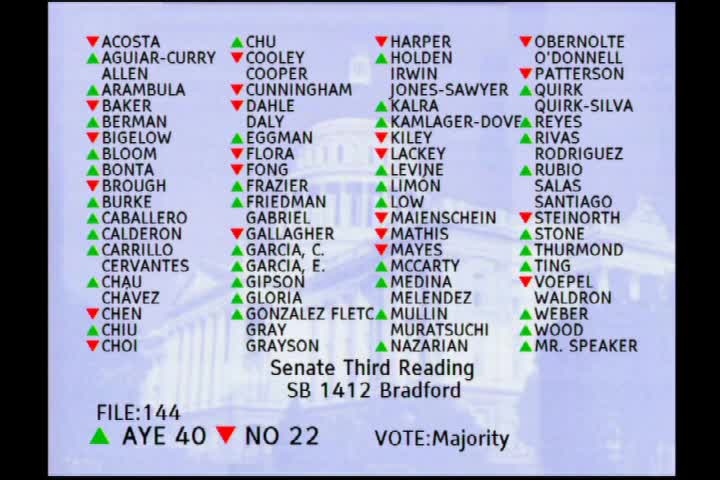 1MIN
Assembly Floor
 1H
Assembly Standing Committee on Appropriations
 9MIN
Assembly Standing Committee on Environmental Safety and Toxic Materials
 5MIN
Senate Standing Committee on Environmental Quality
Bill Author

Bill Co-Author(s):