SB 1424: Internet: social media: advisory group.
- Session Year: 2017-2018
- House: Senate
- Latest Version Date: 2018-08-31
Existing law prohibits a person, among others, from making or disseminating in any advertising device, or in any manner or means whatever, including over the Internet, any statement concerning real or personal property or services that is untrue or misleading, as specified.
This bill would require the Attorney General, subject to receipt of sufficient private funds, as specified, to establish an advisory group consisting of at least one member of the Department of Justice, as well as Internet-based social media providers, civil liberties advocates, and First Amendment scholars to study the problem of the spread of false information through Internet-based social media platforms, and draft a model strategic plan for Internet-based social media platforms to use to mitigate this problem. The bill would require the Attorney General, by December 31, 2019, to present the results of the study and the model strategic plan to the Legislature and specified legislative committees. The bill would repeal its provisions, if sufficient private funds are not received by December 31, 2021.
Existing law prohibits a person, among others, from making or disseminating in any advertising device, or in any manner or means whatever, including over the Internet, any statement concerning real or personal property or services that is untrue or misleading, as specified.
This bill would require the Attorney General, not later than April 1, 2019, General, subject to receipt of sufficient private funds, as specified, to establish an advisory group consisting of at least one member of the Department of Justice, as well as Internet-based social media providers, civil liberties advocates, and First Amendment scholars to study the problem of the spread of false information through Internet-based social media platforms, and draft a model strategic plan for Internet-based social media platforms to use to mitigate this problem. The bill would require the Attorney General, by December 31, 2019, to present the results of the study and the model strategic plan to the Legislature and specified legislative committees. The bill would repeal its provisions, if sufficient private funds are not received by December 31, 2021.
Existing law prohibits a person, among others, from making or disseminating in any advertising device, or in any manner or means whatever, including over the Internet, any statement concerning real or personal property or services that is untrue or misleading, as specified.
This bill would require the Attorney General, not later than April 1, 2019, to establish an advisory group consisting of at least one member of the Department of Justice, as well as Internet-based social media providers, civil liberties advocates, and First Amendment scholars to study the problem of the spread of false information through Internet-based social media platforms, and draft a model strategic plan for Internet-based social media platforms to use to mitigate this problem. The bill would also require the Attorney General to draft potential legislation for mitigating the spread of false information through social media, if the advisory group deems it appropriate, and would authorize the advisory group to consult with the Legislative Counsel and the California Law Revision Commission, among others, for this purpose. The bill would require the Attorney General, by December 31, 2019, to present the results of the study, study and the model strategic plan, and the proposed legislation, if any, plan to the Legislature and specified legislative committees.
Existing law prohibits a person, among others, from making or disseminating in any advertising device, or in any manner or means whatever, including over the Internet, any statement concerning real or personal property or services that is untrue or misleading, as specified.
This bill would require any person who operates a social media, as defined, Internet Web site with a physical presence in California to prominently display a link on the site to a disclosure informing users how the site determines what content to display to the user, the order in which content is displayed, and the format in which contentis displayed, and to inform users of the sites strategic plan to mitigate the spread of false information, among other things. With respect to a social media Internet Web site that utilizes factcheckers to verify the accuracy of news stories, the bill would require the disclosure to state what policies and practices the factcheckers use to determine whether news stories are accurate and what the site does with the content that the factcheckers determine is not accurate. the Attorney General, not later than April 1, 2019, to establish an advisory group consisting of at least one member of the Department of Justice, as well as Internet-based social media providers, civil liberties advocates, and First Amendment scholars to study the problem of the spread of false information through Internet-based social media platforms, and draft a model strategic plan for Internet-based social media platforms to use to mitigate this problem. The bill would also require the Attorney General to draft potential legislation for mitigating the spread of false information through social media, if the advisory group deems it appropriate, and would authorize the advisory group to consult with the Legislative Counsel and the California Law Revision Commission, among others, for this purpose. The bill would require the Attorney General, by December 31, 2019, to present the results of the study, the model strategic plan, and the proposed legislation, if any, to the Legislature and specified legislative committees.
Existing law prohibits a person, among others, from making or disseminating in any advertising device, or in any manner or means whatever, including over the Internet, any statement concerning real or personal property or services that is untrue or misleading, as specified.
This bill would require any person who operates a social media, as defined, Internet Web site with a physical presence in California to develop a strategic plan to verify news stories shared on its Web site. The bill would require the plan to include, among other things, a plan to mitigate the spread of false information through news stories, the utilization of fact-checkers to verify news stories, providing outreach to social media users, and placing a warning on a news story containing false information. prominently display a link on the site to a disclosure informing users how the site determines what content to display to the user, the order in which content is displayed, and the format in which contentis displayed, and to inform users of the sites strategic plan to mitigate the spread of false information, among other things. With respect to a social media Internet Web site that utilizes factcheckers to verify the accuracy of news stories, the bill would require the disclosure to state what policies and practices the factcheckers use to determine whether news stories are accurate and what the site does with the content that the factcheckers determine is not accurate.
Existing law prohibits a person, among others, from making or disseminating in any advertising device, or in any manner or means whatever, including over the Internet, any statement concerning real or personal property or services that is untrue or misleading, as specified.
This bill would require any person who operates a social media, as defined, Internet Web site with a physical presence in California to develop a strategic plan to verify news stories shared on its Web site. The bill would require the plan to include, among other things, a plan to mitigate the spread of false information through news stories, the utilization of fact-checkers to verify news stories, providing outreach to social media users, and placing a warning on a news story containing false information.
The Uniform Commercial Code generally regulates commercial transactions, and is intended to be liberally construed and applied to promote its underlying purposes and policies, which include simplifying, clarifying, and modernizing the law governing commercial transactions.This bill would make nonsubstantive changes to that law.The Uniform Commercial Code generally regulates commercial transactions, and is intended to be liberally construed and applied to promote its underlying purposes and policies, which include simplifying, clarifying, and modernizing the law governing commercial transactions.
This bill would make nonsubstantive changes to that law.
The Attorney General shall, subject to the limitations of subdivision (d), establish an advisory group consisting of at least one member of the Department of Justice, Internet-based social media providers, civil liberties advocates, and First Amendment scholars, to do both of the following:
(a)Study the problem of the spread of false information through Internet-based social media platforms.
(b)Draft a model strategic plan for Internet-based social media platforms to use to mitigate the spread of false information through their platforms.
(c)Not later than one year after the notice required by paragraph (1) of subdivision (d) has been published, present the results of the study and the model strategic plan to the Legislature, pursuant to Section 9795 of the Government Code, and to the Assembly and Senate Committees on Judiciary.
(d)(1)The performance of the duties imposed on the Attorney General by subdivisions (a) to (c), inclusive, is contingent on the receipt of sufficient private funding to complete them. Funding shall be submitted to the Attorney General for deposit in the False Information Strategic Plans Fund which is hereby created in the State Treasury and any moneys deposited in this fund shall be subject to appropriation by the Legislature. The Department of Finance shall determine the amount necessary to fund the advisory group and its operations. Upon a determination that sufficient funds have been received, the Attorney General shall publish notice of this fact on its Internet Web site.
(2)If the funds required under paragraph (1) have not been received, and the necessary notice published, by December 31, 2021, this title, as of that date, is repealed
The Attorney General shall, not later than April 1, 2019, subject to the limitations of subdivision (d), establish an advisory group consisting of at least one member of the Department of Justice, Internet-based social media providers, civil liberties advocates, and First Amendment scholars, to do both of the following:
(a)Study the problem of the spread of false information through Internet-based social media platforms.
(b)Draft a model strategic plan for Internet-based social media platforms to use to mitigate the spread of false information through their platforms.
(c)Not later than December 31, 2019, one year after the notice required by paragraph (1) of subdivision (d) has been published, present the results of the study and the model strategic plan to the Legislature, pursuant to Section 9795 of the Government Code, and to the Assembly and Senate Committees on Judiciary.
(d)(1)The performance of the duties imposed on the Attorney General by subdivisions (a) to (c), inclusive, is contingent on the receipt of sufficient private funding to complete them. Funding shall be submitted to the Attorney General for deposit in the False Information Strategic Plans Fund which is hereby created in the State Treasury and any moneys deposited in this fund shall be subject to appropriation by the Legislature. The Department of Finance shall determine the amount necessary to fund the advisory group and its operations. Upon a determination that sufficient funds have been received, the Attorney General shall publish notice of this fact on its Internet Web site.
(2)If the funds required under paragraph (1) have not been received, and the necessary notice published, by December 31, 2021, this title, as of that date, is repealed
The Attorney General shall, not later than April 1, 2019, establish an advisory group consisting of at least one member of the Department of Justice, Internet-based social media providers, civil liberties advocates, and First Amendment scholars, to do all both of the following:
(a)Study the problem of the spread of false information through Internet-based social media platforms.
(b)Draft a model strategic plan for Internet-based social media platforms to use to mitigate the spread of false information through their platforms.
(c)Draft potential legislation for mitigating the spread of false information through social media, if the advisory group deems it appropriate. The advisory group may consult with the Legislative Counsel and the California Law Revision Commission, among others, for this purpose.(d)(c)Not later than December 31, 2019, present the results of the study, study and the model strategic plan, and the proposed legislation, if any, plan to the Legislature, pursuant to Section 9795 of the Government Code, and to the Assembly and Senate Committees on Judiciary.
The Attorney General shall, not later than April 1, 2019, establish an advisory group consisting of at least one member of the Department of Justice, Internet-based social media providers, civil liberties advocates, and First Amendment scholars, to do all of the following:
(a)Study the problem of the spread of false information through Internet-based social media platforms.
(b)Draft a model strategic plan for Internet-based social media platforms to use to mitigate the spread of false information through their platforms.
(c)Draft potential legislation for mitigating the spread of false information through social media, if the advisory group deems it appropriate. The advisory group may consult with the Legislative Counsel and the California Law Revision Commission, among others, for this purpose.
(d)Not later than December 31, 2019, present the results of the study, the model strategic plan, and the proposed legislation, if any, to the Legislature, pursuant to Section 9795 of the Government Code, and to the Assembly and Senate Committees on Judiciary.
(a)As used in this section, social media means an electronic service or account, or electronic content, including, but not limited to, videos, still photographs, blogs, video blogs, podcasts, instant and text messages, e-mail, online services or accounts, or Internet Web site profiles or locations.
(b)Any person who operates a social media Internet Web site with a physical presence in California shall prominently display a link on the site to a disclosure informing users, in plain language, of all of the following:
(1)How, and on what basis, the social media Internet Web site determines what content to display to the user, the order in which content is displayed, and the format in which content is displayed.
(2) Whether the social media Internet Web site enables other parties to influence, through payment or the use of automated accounts, what content is displayed to a user, the order in which content is displayed, or the format in which content is displayed, and specifically how such influence may be exerted by the other party on the content displayed.
(3)Whether the social media Internet Web site allows the user to alter the settings that determine what content is displayed to the user, the order in which the content is displayed, or the format in which content is displayed, and how the user can alter these settings.
(4)Whether the social media Internet Web site utilizes factcheckers to verify the accuracy of news stories. If the social media Internet Web site utilizes factcheckers for that purpose, the disclosure shall state both of the following:
(A)What policies and practices the factcheckers use to determine whether news stories are accurate.
(B)What the social media Internet Web site does with content that its factcheckers determine is not accurate.
(5)The social media Internet Web site with physical presence in California shall develop a sites strategic plan to verify news stories shared on its Internet Web site. mitigate the spread of false information.
(b)The strategic plan shall include, but is not limited to, all of the following:(1)A plan to mitigate the spread of false information through news stories.(2)The utilization of fact-checkers to verify news stories.(3)Providing outreach to social media users regarding news stories containing false information.(4)Placing a warning on a news story containing false information.(c)As used in this section, social media means an electronic service or account, or electronic content, including, but not limited to, videos, still photographs, blogs, video blogs, podcasts, instant and text messages, email, online services or accounts, or Internet Web site profiles or locations.(a)Any person who operates a social media Internet Web site with physical presence in California shall develop a strategic plan to verify news stories shared on its Internet Web site.
(b)The strategic plan shall include, but is not limited to, all of the following:
(1)A plan to mitigate the spread of false information through news stories.
(2)The utilization of fact-checkers to verify news stories.
(3)Providing outreach to social media users regarding news stories containing false information.
(4)Placing a warning on a news story containing false information.
(c)As used in this section, social media means an electronic service or account, or electronic content, including, but not limited to, videos, still photographs, blogs, video blogs, podcasts, instant and text messages, email, online services or accounts, or Internet Web site profiles or locations.
SECTION 1.Section 1103 of the Commercial Code is amended to read:1103.(a)This code shall be liberally construed and applied to promote its underlying purposes and policies, which are all of the following:(1)To simplify, clarify, and modernize the law governing commercial transactions.(2)To permit the continued expansion of commercial practices through custom, usage, and agreement of the parties.(3)To make uniform the law among the various jurisdictions.(b)Unless displaced by the particular provisions of this code, the principles of law and equity, including the law merchant and the law relative to capacity to contract, principal and agent, estoppel, fraud, misrepresentation, duress, coercion, mistake, bankruptcy, and other validating or invalidating cause supplement its provisions.(a)This code shall be liberally construed and applied to promote its underlying purposes and policies, which are all of the following:
(1)to To simplify, clarify, and modernize the law governing commercial transactions; transactions.
(2)to To permit the continued expansion of commercial practices through custom, usage, and agreement of the parties; and parties.
(3)to To make uniform the law among the various jurisdictions.
(b)Unless displaced by the particular provisions of this code, the principles of law and equity, including the law merchant and the law relative to capacity to contract, principal and agent, estoppel, fraud, misrepresentation, duress, coercion, mistake, bankruptcy, and other validating or invalidating cause supplement its provisions.
|
Date
|
Status
|
|---|---|
| Sep 20, 2018 | In Senate. Consideration of Governor's item veto pending. |
| Sep 20, 2018 | Vetoed by the Governor. |
| Sep 10, 2018 | Enrolled and presented to the Governor at 4 p.m. |
| Aug 28, 2018 | Assembly amendments concurred in. (Ayes 25. Noes 11.) Ordered to engrossing and enrolling. |
| Aug 28, 2018 | In Senate. Concurrence in Assembly amendments pending. |
| Aug 27, 2018 | Read third time. Passed. Ordered to the Senate. |
| Aug 23, 2018 | Read third time and amended. |
| Aug 9, 2018 | Read second time. Ordered to third reading. |
| Aug 8, 2018 | From committee: Do pass. (Ayes 12. Noes 5.) (August 8). |
| Jun 26, 2018 | From committee: Do pass and re-refer to Com. on APPR. (Ayes 5. Noes 2.) (June 26). Re-referred to Com. on APPR. |
| Jun 19, 2018 | From committee: Do pass and re-refer to Com. on A.,E.,S.,T., & I.M. (Ayes 8. Noes 2.) (June 19). Re-referred to Com. on A.,E.,S.,T., & I.M. |
| Jun 11, 2018 | Referred to Coms. on JUD. and A.,E.,S.,T., & I.M. |
| May 31, 2018 | In Assembly. Read first time. Held at Desk. |
| May 30, 2018 | Read third time. Passed. (Ayes 25. Noes 11.) Ordered to the Assembly. |
| May 29, 2018 | Read second time. Ordered to third reading. |
| May 25, 2018 | From committee: Do pass as amended. (Ayes 5. Noes 2.) (May 25). |
| May 23, 2018 | Set for hearing May 25. |
| May 22, 2018 | May 22 hearing: Placed on APPR. suspense file. |
| May 16, 2018 | Set for hearing May 22. |
| May 14, 2018 | Re-referred to Com. on APPR. pursuant to Joint Rule 10.5. |
| May 10, 2018 | Read second time and amended. Ordered to third reading. |
| May 9, 2018 | From committee: Do pass as amended. (Ayes 5. Noes 1.) (May 8). |
| Apr 26, 2018 | From committee with author's amendments. Read second time and amended. Re-referred to Com. on JUD. |
| Apr 19, 2018 | Set for hearing May 8. |
| Apr 4, 2018 | Re-referred to Com. on JUD. |
| Mar 22, 2018 | From committee with author's amendments. Read second time and amended. Re-referred to Com. on RLS. |
| Mar 8, 2018 | Referred to Com. on RLS. |
| Feb 20, 2018 | From printer. May be acted upon on or after March 22. |
| Feb 16, 2018 | Introduced. Read first time. To Com. on RLS. for assignment. To print. |
|
Date
|
Description
|
Location
|
Votes
|
|
|---|---|---|---|---|
| Aug 28, 2018 | Unfinished Business SB1424 Pan Concurrence | Senate Floor |
Passed |
|
| Aug 27, 2018 | SB 1424 Pan Senate Third Reading By CHAU | Assembly Floor |
Passed |
|
| Aug 23, 2018 | SB 1424 Pan Senate Third Reading Amend By CHAU Set #1 | Assembly Floor |
Passed |
|
| Aug 8, 2018 | Do pass. | Assembly Standing Committee on Appropriations |
Passed |
|
| Jun 26, 2018 | Do pass and be re-referred to the Committee on [Appropriations] | Assembly Standing Committee on Arts, Entertainment, Sports, Tourism, and Internet Media |
Passed |
|
| Jun 19, 2018 | Do pass and be re-referred to the Committee on [Arts, Entertainment, Sports, Tourism, and Internet Media] | Assembly Standing Committee on Judiciary |
Passed |
|
| May 30, 2018 | Senate 3rd Reading SB1424 Pan | Senate Floor |
Passed |
|
| May 25, 2018 | Do pass as amended | Senate Standing Committee on Appropriations |
Passed |
|
| May 22, 2018 | Placed on suspense file | Senate Standing Committee on Appropriations |
Passed |
|
| May 8, 2018 | Do pass as amended | Senate Standing Committee on Judiciary |
Passed |
This list shows positions taken on this bill by organizations on the date displayed, which is linked to the original source.
Positions by individuals are not included.
Office of Senate Floor Analyses (916) 651-1520 Fax: (916) 327-4478 | SB |
VETO
Bill No: SB 1424
:
SENATE JUDICIARY COMMITTEE: 5-1, 5/8/18
AYES: Jackson, Hertzberg, Monning, Stern, Wieckowski
NOES: Anderson
NO VOTE RECORDED: Moorlach
SENATE APPROPRIATIONS COMMITTEE: 5-2, 5/25/18
AYES: Lara, Beall, Bradford, Hill, Wiener
NOES: Bates, Nielsen
SENATE FLOOR: 25-11, 5/30/18
AYES: Allen, Atkins, Beall, Bradford, Dodd, Galgiani, Glazer, Hernandez, Hertzberg, Hill, Hueso, Jackson, Lara, Leyva, McGuire, Mitchell, Monning, Newman, Pan, Portantino, Roth, Skinner, Stern, Wieckowski, Wiener
NOES: Anderson, Bates, Berryhill, Gaines, Moorlach, Morrell, Nguyen, Nielsen, Stone, Vidak, Wilk
NO VOTE RECORDED: Cannella, De León, Fuller
SENATE FLOOR: 25-11, 8/28/18
AYES: Atkins, Beall, Bradford, De León, Delgado, Dodd, Galgiani, Glazer, Hernandez, Hertzberg, Hill, Hueso, Jackson, Lara, Leyva, McGuire, Mitchell, Monning, Pan, Portantino, Roth, Skinner, Stern, Wieckowski, Wiener
NOES: Anderson, Bates, Fuller, Gaines, Moorlach, Morrell, Nguyen, Nielsen, Stone, Vidak, Wilk
NO VOTE RECORDED: Allen, Berryhill, Cannella, Chang
ASSEMBLY FLOOR: 52-26, 8/27/18 - See last page for vote
DIGEST:
This bill directs the Attorney General, upon the provision of the necessary private funding, to establish an advisory group to study the problem of the spread of false information through Internet-based social media platforms and to draft a model strategic plan for such platforms to mitigate the spread of false information through their platforms.
ANALYSIS: Existing federal law prohibits Congress from enacting any law abridging the freedom of speech and association. (U.S. Const., amend. I.)
Existing state law:
- Provides that every person may freely speak, write and publish his or her sentiments on all subjects, being responsible for the abuse of this right. A law may not restrain or abridge liberty of speech or press. (Cal. Const., art. I, Sec. 2(a).)
- Mandates that an operator of a commercial Web site or online service that collects personally identifiable information through the Internet about individual consumers residing in California who use or visit its commercial Web site or online service conspicuously post its privacy policy on its Web site. (Bus. & Prof. Code Sec. 225759(a).)
This bill:
- Directs the Attorney General to establish an advisory group consisting of at least one member of the Department of Justice, Internet-based social media providers, civil liberties advocates, and First Amendment scholars to:
- Study the problem of the spread of false information through Internet-based social media platforms; and
- Draft a model strategic plan for Internet-based social media platforms to sue to mitigate the spread of false information through their platforms
- Makes formation of the advisory group and instigation of its work contingent on receipt of sufficient private funding, as determined by the Department of Finance, to complete them. Provides for the creation of financial accounts for the purpose of collecting such funds. Directs the Attorney General to publish notice upon a determination that sufficient funds have been received. Provides for repeal of the law on December 31, 2021 if sufficient funds have not been received.
- Directs the Attorney General to present the results of the study and the model strategic plan to the Legislature and to the Assembly and Senate Committees on Judiciary, by no later than one year after publication of the notice that there are sufficient funds to pay for completion of the advisory group’s tasks.
The problem of “fake news” has been around at least as long as the printing press. Publishers have produced “fake news,” readers have believed “fake news,” and, as a result, “fake news” has repeatedly altered the course of history. Nonetheless, the advent of social media brings renewed attention to the issue.
Social media is nearly ubiquitous in modern California life. It delivers content to users in a rapid, relentless stream to devices many Californians carry everywhere and check often. Perhaps most significantly, social media comes with the power to target content to the particular users who may be most susceptible to seeing or hearing it.
There is evidence to suggest that the dissemination of “fake news” through social media influenced the outcome of the 2016 U.S. Presidential election. On the other hand, the Electoral College winner of that election regularly insists, on social media, that such evidence is itself “fake news.” The only clear takeaway is that what constitutes “fake news” is in the mind of the beholder.
This bill seeks to rein in the spread of false information through social media. Putting the government in the position of determining what is or is not “false information,” could raise significant constitutional concerns around censorship, however. The bill therefore directs the Attorney General, contingent on the collection of sufficient private financial underwriting, to form an advisory group to study the problem of the spread of false information through Internet-based social media platforms and to come up with a model strategic plan for how those platforms can mitigate the spread of false information.
Comments
There is broad consensus that the spread of “false information” through social media is a significant concern. There are tremendous practical and constitutional complexities to addressing the problem, however. The author is fully aware of these concerns and, at the same time, determined to find a solution. The size, importance, and complexity of the issue may lend itself most appropriately to stepping back and consulting with stakeholders and experts at greater length, so as to be able to craft a careful and effective remedy to this important problem.
Related/Prior Legislation
AB 155 (Gomez, 2017) would have required the development and adoption of a media literacy curriculum in public schools with the goal, among other things, of training pupils to distinguish between “real news” and “fake news.” AB 155 died in the Assembly Committee on Appropriations.
FISCAL EFFECT: Appropriation: Fiscal Com.: Local:
According to the Assembly Appropriations Committee, minor one-time costs, likely no more than tens of thousands of dollars (General Fund) in staff time and resources, to the Department Of Justice to establish the advisory group, participate in its activities, and prepare a report to the Legislature.
None received
OPPOSITION: (Verified 9/24/18)
Electronic Frontier Foundation
Department of Finance
ARGUMENTS IN SUPPORT: ---
ARGUMENTS IN OPPOSITION: The Electronic Frontier Foundation writes:
Established case law prevents the government from positioning itself as the arbiter of which statements are fictional and which are truthful. Indeed, false statements are often constitutionally protected speech. In United States v. Alvarez, 132 S. Ct. 2537 (2012), the Supreme Court struck down the Stolen Valor Act, which banned the unauthorized use of military medals. Even where the government had a strong interest in preventing false statements, and the defendant admitted that his claim to have been awarded the Medal of Honor was “an intended, undoubted lie,” the Court held that “some false statements are inevitable if there is to be an open and vigorous expression of views in public and private conversation, expression the First Amendment seeks to guarantee.” Id. at 2554.
The study group that SB 1424 creates may invite private parties to increase online censorship. Government-sponsored recommendations about how to discriminate among Internet speakers are harmful in and of themselves.
GOVERNOR'S VETO MESSAGE:
I am returning Senate Bill 1424 without my signature.
This bill directs the Attorney General to establish an advisory group to study the problem of the spread of false information through Internet-based social media platforms.
As evidenced by the numerous studies by academic and policy groups on the spread of false information, the creation of a statutory advisory group to examine this issue is not necessary.
ASSEMBLY FLOOR: 52-26, 8/27/18
AYES: Aguiar-Curry, Arambula, Berman, Bloom, Bonta, Burke, Calderon, Carrillo, Cervantes, Chau, Chiu, Chu, Cooper, Daly, Eggman, Flora, Frazier, Friedman, Gabriel, Cristina Garcia, Eduardo Garcia, Gipson, Gloria, Gonzalez Fletcher, Gray, Grayson, Holden, Irwin, Jones-Sawyer, Kalra, Levine, Limón, Low, McCarty, Medina, Mullin, Muratsuchi, Nazarian, O'Donnell, Quirk-Silva, Reyes, Rivas, Rodriguez, Rubio, Salas, Santiago, Mark Stone, Thurmond, Ting, Weber, Wood, Rendon
NOES: Acosta, Travis Allen, Baker, Bigelow, Brough, Caballero, Chávez, Chen, Choi, Cunningham, Dahle, Fong, Gallagher, Harper, Kiley, Lackey, Maienschein, Mathis, Mayes, Melendez, Obernolte, Patterson, Quirk, Steinorth, Voepel, Waldron
NO VOTE RECORDED: Cooley, Kamlager-Dove
10/4/18 12:41:09
**** END ****
Office of Senate Floor Analyses (916) 651-1520 Fax: (916) 327-4478 | SB |
UNFINISHED BUSINESS
Bill No: SB 1424
:
SENATE JUDICIARY COMMITTEE: 5-1, 5/8/18
AYES: Jackson, Hertzberg, Monning, Stern, Wieckowski
NOES: Anderson
NO VOTE RECORDED: Moorlach
SENATE APPROPRIATIONS COMMITTEE: 5-2, 5/25/18
AYES: Lara, Beall, Bradford, Hill, Wiener
NOES: Bates, Nielsen
SENATE FLOOR: 25-11, 5/30/18
AYES: Allen, Atkins, Beall, Bradford, Dodd, Galgiani, Glazer, Hernandez, Hertzberg, Hill, Hueso, Jackson, Lara, Leyva, McGuire, Mitchell, Monning, Newman, Pan, Portantino, Roth, Skinner, Stern, Wieckowski, Wiener
NOES: Anderson, Bates, Berryhill, Gaines, Moorlach, Morrell, Nguyen, Nielsen, Stone, Vidak, Wilk
NO VOTE RECORDED: Cannella, De León, Fuller
ASSEMBLY FLOOR: 53-23, 8/23/18 - See last page for vote
DIGEST:
This bill directs the Attorney General to establish an advisory group to study the problem of the spread of false information through Internet-based social media platforms and draft a model strategic plan for such platforms to mitigate the spread of false information through their platforms.
Assembly Amendments make the establishment of the advisory group contingent upon the provision of private funding to underwrite it, and establish the necessary accounts for receipt of such funds.
ANALYSIS: Existing federal law prohibits Congress from enacting any law abridging the freedom of speech and association. (U.S. Const., amend. I.)
Existing state law:
- Provides that every person may freely speak, write and publish his or her sentiments on all subjects, being responsible for the abuse of this right. A law may not restrain or abridge liberty of speech or press. (Cal. Const., art. I, Sec. 2(a).)
- Mandates that an operator of a commercial Web site or online service that collects personally identifiable information through the Internet about individual consumers residing in California who use or visit its commercial Web site or online service conspicuously post its privacy policy on its Web site. (Bus. & Prof. Code Sec. 225759(a).)
This bill:
- Directs the Attorney General to establish an advisory group consisting of at least one member of the Department of Justice, Internet-based social media providers, civil liberties advocates, and First Amendment scholars to:
- Study the problem of the spread of false information through Internet-based social media platforms; and
- Draft a model strategic plan for Internet-based social media platforms to sue to mitigate the spread of false information through their platforms
- Makes formation of the advisory group and instigation of its work contingent on receipt of sufficient private funding, as determined by the Department of Finance, to complete them. Provides for the creation of financial accounts for the purpose of collecting such funds. Directs the Attorney General to publish notice upon a determination that sufficient funds have been received. Provides for repeal of the law on December 31, 2021 if sufficient funds have not been received.
- Directs the Attorney General to present the results of the study and the model strategic plan to the Legislature and to the Assembly and Senate Committees on Judiciary, by no later than one year after publication of the notice that there are sufficient funds to pay for completion of the advisory group’s tasks.
The problem of “fake news” has been around at least as long as the printing press. Publishers have produced “fake news,” readers have believed “fake news,” and, as a result, “fake news” has repeatedly altered the course of history. Nonetheless, the advent of social media brings renewed attention to the issue.
Social media is nearly ubiquitous in modern California life. It delivers content to users in a rapid, relentless stream to devices many Californians carry everywhere and check often. Perhaps most significantly, social media comes with the power to target content to the particular users who may be most susceptible to seeing or hearing it.
There is evidence to suggest that the dissemination of “fake news” through social media influenced the outcome of the 2016 U.S. Presidential election. On the other hand, the Electoral College winner of that election regularly insists, on social media, that such evidence is itself “fake news.” The only clear takeaway is that what constitutes “fake news” is in the mind of the beholder.
This bill seeks to rein in the spread of false information through social media. Putting the government in the position of determining what is or is not “false information,” could raise significant constitutional concerns around censorship, however. The bill therefore directs the Attorney General, contingent on the collection of sufficient private financial underwriting, to form an advisory group to study the problem of the spread of false information through Internet-based social media platforms and to come up with a model strategic plan for how those platforms can mitigate the spread of false information.
Comments
There is broad consensus that the spread of “false information” through social media is a significant concern. There are tremendous practical and constitutional complexities to addressing the problem, however. The author is fully aware of these concerns and, at the same time, determined to find a solution. The size, importance, and complexity of the issue may lend itself most appropriately to stepping back and consulting with stakeholders and experts at greater length, so as to be able to craft a careful and effective remedy to this important problem.
Related/Prior Legislation
AB 155 (Gomez, 2017) would have required the development and adoption of a media literacy curriculum in public schools with the goal, among other things, of training pupils to distinguish between “real news” and “fake news.” AB 155 died in the Assembly Committee on Appropriations.
FISCAL EFFECT: Appropriation: Fiscal Com.: Local:
According to the Assembly Appropriations Committee, minor one-time costs, likely no more than tens of thousands of dollars (General Fund) in staff time and resources, to the Department Of Justice to establish the advisory group, participate in its activities, and prepare a report to the Legislature.
None received
OPPOSITION: (Verified 8/27/18)
Electronic Frontier Foundation
Department of Finance
ARGUMENTS IN SUPPORT: ---
ARGUMENTS IN OPPOSITION: The Electronic Frontier Foundation writes:
Established case law prevents the government from positioning itself as the arbiter of which statements are fictional and which are truthful. Indeed, false statements are often constitutionally protected speech. In United States v. Alvarez, 132 S. Ct. 2537 (2012), the Supreme Court struck down the Stolen Valor Act, which banned the unauthorized use of military medals. Even where the government had a strong interest in preventing false statements, and the defendant admitted that his claim to have been awarded the Medal of Honor was “an intended, undoubted lie,” the Court held that “some false statements are inevitable if there is to be an open and vigorous expression of views in public and private conversation, expression the First Amendment seeks to guarantee.” Id. at 2554.
The study group that SB 1424 creates may invite private parties to increase online censorship. Government-sponsored recommendations about how to discriminate among Internet speakers are harmful in and of themselves.
ASSEMBLY FLOOR: 52-26, 8/27/18
AYES: Aguiar-Curry, Arambula, Berman, Bloom, Bonta, Burke, Calderon, Carrillo, Cervantes, Chau, Chiu, Chu, Cooper, Daly, Eggman, Flora, Frazier, Friedman, Gabriel, Cristina Garcia, Eduardo Garcia, Gipson, Gloria, Gonzalez Fletcher, Gray, Grayson, Holden, Irwin, Jones-Sawyer, Kalra, Levine, Limón, Low, McCarty, Medina, Mullin, Muratsuchi, Nazarian, O'Donnell, Quirk-Silva, Reyes, Rivas, Rodriguez, Rubio, Salas, Santiago, Mark Stone, Thurmond, Ting, Weber, Wood, Rendon
NOES: Acosta, Travis Allen, Baker, Bigelow, Brough, Caballero, Chávez, Chen, Choi, Cunningham, Dahle, Fong, Gallagher, Harper, Kiley, Lackey, Maienschein, Mathis, Mayes, Melendez, Obernolte, Patterson, Quirk, Steinorth, Voepel, Waldron
NO VOTE RECORDED: Cooley, Kamlager-Dove
Prepared by: Timothy Griffiths / JUD. / (916) 651-4113
8/28/18 13:06:11
**** END ****
SENATE THIRD READING
STR Bill Id:SB 1424
Author:(Pan)
As Amended Ver:August 23, 2018
Majority vote
SENATE VOTE: 25-11
Committee | Votes | Ayes | Noes |
Judiciary | 8-2 | Mark Stone, Chau, Chiu, Holden, Kalra, Maienschein, Reyes, Gonzalez Fletcher | Cunningham, Kiley |
Arts | 5-2 | Chu, Chiu, Friedman, Kamlager-Dove, Nazarian | Waldron, Acosta |
Appropriations | 12-5 | Gonzalez Fletcher, Bloom, Bonta, Calderon, Carrillo, Chau, Eggman, Friedman, Eduardo Garcia, Nazarian, Quirk, Reyes | Bigelow, Brough, Fong, Gallagher, Obernolte |
SUMMARY: Requires the Attorney General, not later than April 1, 2019, to establish an advisory committee to study the problem of false information on Internet-based social media platforms and to make recommendations, as specified. Specifically, this bill:
- Requires the Attorney General, contingent upon the receipt of sufficient funds, to establish an advisory group consisting of at least one member of the Department of Justice, Internet-based social media providers, civil liberties advocates, and First Amendment scholars, to do both of the following:
- Study the problem of the spread of false information through Internet-based social media platforms.
- Draft a model strategic plan for Internet-based social media platforms to use to mitigate the spread of false information through their platforms.
- Requires the Attorney General, within one year of posting notice of the receipt of sufficient funds, to present the results of the above-mentioned study and the model strategic plan to the Legislature, pursuant to Government Code Section 9795, and to the Assembly and Senate Committees on Judiciary. Specifies that if sufficient funds are not received by December 31, 2021, then the provisions of this bill will be repealed as of that date.
EXISTING LAW:
- Prohibits government from enacting any law abridging freedom of speech and association. (United States (U.S.) Constitution Amendment I; applied to states through Amendment 14.)
- Provides that all persons may freely speak, write, and publish their sentiments on all subjects, being responsible for the abuse of this right. A law may not restrain or abridge liberty of speech or press. (California Constitution, Article I, Section 2.)
- Requires the operator of a commercial Website or online service that collects personally identifiable information through the Internet to post a privacy policy, as specified. (Business and Professions Code Section 22575.)
FISCAL EFFECT: According to the Assembly Appropriations Committee, minor one-time costs, likely no more than tens of thousands of dollars (General Fund) in staff time and resources, to the Department Of Justice to establish the advisory group, participate in its activities, and prepare a report to the Legislature.
COMMENTS: According to the author, this bill will "convene a working group of stakeholders and experts to study and make recommendations regarding model strategic plans and possible legislation designed to mitigate the spread of false information." In support of the measure, the author cites the results of a study reported in Science Magazine in March of 2018. The study concluded that "verified false" stories distributed by Twitter spread farther and faster than "verified true" stories. The author believes that the proliferation of false information is particularly troublesome given that people increasingly rely upon social media platforms as news sources. An earlier version of this bill would have required social media platforms to make various disclosures about the steps they take, if any, to control the spread of false information. However, the current bill requires the Attorney General to establish an advisory group to study the problem and make recommendations to address it. The Attorney General's obligation to establish the advisory group is contingent upon receipt of sufficient funds. Upon determination that sufficient funds have been received, the Attorney General will post notice of this fact on its Internet website and will be required to submit the advisory group's report to the Legislature and designated committees within one year of posting the notice of sufficient funds. If sufficient funds are not received by December 31, 2021, then the provisions of this bill will be repealed as of that date.
Potential Constitutional Issues: While this bill only authorizes the creation of an advisory group and the development of a "model" plan, the requirement that the group reports its findings and plan to the Legislature suggests that the study could lead to future legislation. Presumably, this legislation would either compel social media platforms to mitigate the spread of false information or disclose to users how, if at all, the platform evaluates the veracity of its content.
As the Electronic Frontier Foundation points out in its letter of opposition, the First Amendment prevents content-based restrictions, even if the statements are admittedly false. To be sure, false statements may not be protected from a civil suit for defamation and the government certainly may prohibit false or misleading statements in commercial speech and advertising. Nonetheless, the U.S. Supreme Court has held that, outside of those contexts, false statements are an "inevitable" part of open and vigorous expression on public issues. Therefore, false statements are not beyond constitutional protection. (U.S. v. Alvarez (2012) 132 S. Ct. 2537; rejecting Geertz v. Robert Welch, Inc. (1974) 418 U.S. 323 to the extent that it expressed a contrary view.) Indeed, courts have held that false statements contribute to public discourse because, in the "market place of ideas," false statements bring forth truthful rebuttals. [See e.g. Whitney v. California (1927) 274 U.S. at 375, 377 (Brandies, J. concurring); U.S. v. Alvarez at 2553 (Breyer, J., concurring)].
As Professor Erwin Chemerinsky has pointed out, even if we reject the "market place of ideas" metaphor and do not believe that false statements will always (or even mostly) bring forth truth, "the alternative – government determination of truth and censorship of falsehoods – is worse." (Chemerinsky, Constitutional Law: Principles and Policies, pp. 927-928.) Moreover, in most cases, it will be difficult to determine whether information posted on a social media platform is "fact" or "opinion," providing a further reason why governments should not be empowered to censor statements that a government body deems to be false. For example, in Rickert v. Public Disclosure Commission, the Washington State Supreme Court considered whether a political candidate who lied about her opponent could be fined under a state law prohibiting deliberately false statements in campaign literature. While the political opponent might have had grounds for a libel action, the Court ruled that the candidate could not be fined directly by the government under the statute. The Court opined that the state law "naively assumes that the government is capable of correctly and consistently negotiating the thin line between fact and opinion in political speech." (Rickert v. Public Disclosure Commission (2007) 168 P.3d 826, 829-830.) This bill assumes – naively or otherwise – that government can determine, either directly by legislation or through dissemination of a "model" plan, truth from falsehood and factual statements from opinions. Whether the advisory group will be able to devise a model plan or legislation that negotiates those thin lines in a constitutional and workable manner – or should even attempt to do so – remain to be seen.
Analysis Prepared by: Thomas Clark / JUD. / (916) 319-2334 FN: 0004624
SENATE THIRD READING
STR Bill Id:SB 1424
Author:(Pan)
As Amended Ver:May 25, 2018
Majority vote
SENATE VOTE: 25-11
Committee | Votes | Ayes | Noes |
Judiciary | 8-2 | Mark Stone, Chau, Chiu, Holden, Kalra, Maienschein, Reyes, Gonzalez Fletcher | Cunningham, Kiley |
Arts | 5-2 | Chu, Chiu, Friedman, Kamlager-Dove, Nazarian | Waldron, Acosta |
Appropriations | 12-5 | Gonzalez Fletcher, Bloom, Bonta, Calderon, Carrillo, Chau, Eggman, Friedman, Eduardo Garcia, Nazarian, Quirk, Reyes | Bigelow, Brough, Fong, Gallagher, Obernolte |
SUMMARY: Requires the Attorney General, not later than April 1, 2019, to establish an advisory committee to study the problem of false information on Internet-based social media platforms and to make recommendations, as specified. Specifically, this bill:
- Requires the Attorney General not later than April 1, 2019, to establish an advisory group consisting of at least one member of the Department of Justice, Internet-based social media providers, civil liberties advocates, and First Amendment scholars, to do both of the following:
- Study the problem of the spread of false information through Internet-based social media platforms.
- Draft a model strategic plan for Internet-based social media platforms to use to mitigate the spread of false information through their platforms.
- Requires the Attorney General, not later than December 31, 2019, to present the results of the above-mentioned study and the model strategic plan to the Legislature, pursuant to Section 9795 of the Government Code, and to the Assembly and Senate Committees on Judiciary.
EXISTING LAW:
- Prohibits government from enacting any law abridging freedom of speech and association. (United States (U.S.) Constitution Amendment I; applied to states through Amendment 14.)
- Provides that all persons may freely speak, write, and publish their sentiments on all subjects, being responsible for the abuse of this right. A law may not restrain or abridge liberty of speech or press. (California Constitution, Article I, Secton 2.)
- Requires the operator of a commercial Website or online service that collects personally identifiable information through the Internet to post a privacy policy, as specified. (Business and Professions Code Section 225759.)
FISCAL EFFECT: According to the Assembly Appropriations Committee, minor one-time costs, likely no more than tens of thousands of dollars (General Fund) in staff time and resources, to the Department Of Justice to establish the advisory group, participate in its activities, and prepare a report to the Legislature.
COMMENTS: According to the author, this bill will "convene a working group of stakeholders and experts to study and make recommendations regarding model strategic plans and possible legislation designed to mitigate the spread of false information." In support of the measure, the author cites the results of a study reported in Science Magazine in March of 2018. The study concluded that "verified false" stories distributed by Twitter spread farther and faster than "verified true" stories. The author believes that the proliferation of false information is particularly troublesome given that people increasingly rely upon social media platforms as news sources. An earlier version of this bill would have required social media platforms to make various disclosures about the steps they take, if any, to control the spread of false information. However, the current bill requires the Attorney General to establish an advisory group to study the problem and make recommendations to address it. Because this bill only requires that the problem be studied, the constitutional and policy issues are not as pressing as they would be if the bill were proposing specific legislative remedies to the problem (assuming there is a problem) of false information on social media platforms. However, because the author's background material indicates that the study could lead to "possible legislation" at some point in the future, the constitutional and policy issues are worth considering.
Who determines what is true or false, and by what means? While the desire to rid social media of false information may be well-intended, it may also be impractical and naïve. For example, the Science Magazine report cited by the author was based on a study of about 126,000 stories posted and reposted on Twitter between 2006 and 2017. While the study used a large sample and presented evidence suggesting that "false" stories spread faster and farther than "true" stories, as a preliminary matter the study had to first determine which stories were "true" and which were "false." While the researchers apparently used "independent fact checkers" to make the determination, the fact checkers themselves must have employed some criteria to make this determination. Epistemology, an entire subfield within the academic discipline of philosophy, grapples with the question of "how we know what we know" and what it means to say that a statement is true or false. More than two thousand years of study appear to have left the epistemologists greatly divided, pitting rationalists against empiricists, idealists against realists, objectivists against relativists. (See e.g. Goldman and McGrath, Epistemology: A Contemporary Introduction, Oxford U. Press, 2015.) The only consensus appears to be that there is little comfort for those who seek certitude. Like Justice Potter Stewart's view of obscenity, it may be that "we know it [fake news] when we see it," but most of us would be hard-pressed to articulate the specific criteria by which we evaluate information as "true" or "false."
In short, the advisory group will confront a difficult task to say the least. Before it can develop a model strategic plan for mitigating the spread of false information through social media – including developing feasible technological mechanisms of regulation – the group will first need to establish criteria for identifying what constitutes "false information." For example, the author states that he is concerned about the impact of false information on our political process. One of the most cited examples of "fake news" or "false information" interfering with our political democracy involved the Facebook postings allegedly made by agents of the Russian government during the 2016 election. But many of the examples released to the press were not factually inaccurate so much as they were inflammatory, one-sided, or wildly out of context. Similarly, if one examines the Washington Post's list of lies uttered by the current occupant of the White House, it appears that many of the statements are based upon some set of verifiable "facts;" however, the statements are so inconsistent with past statements, so logically inconsistent, or so shorn of context that many, if not most, people would find them to be untruthful. But undoubtedly, others would disagree. Evaluating such statements is not a matter of "fact checking," but of discerning whether the facts presented logically support the claims put forward.
Potential Constitutional Issues: While this bill only authorizes the creation of an advisory group and the development of a "model" plan, the requirement that the group reports its findings and plan to the Legislature suggests that the study could lead to future legislation. Presumably, this legislation would either compel social media platforms to mitigate the spread of false information or disclose to users how, if at all, the platform evaluates the veracity of its content.
As the Electronic Frontier Foundation points out in its letter of opposition, the First Amendment prevents content-based restrictions, even if the statements are admittedly false. To be sure, false statements may not be protected from a civil suit for defamation and the government certainly may prohibit false or misleading statements in commercial speech and advertising. Nonetheless, the U.S. Supreme Court has held that, outside of those contexts, false statements are an "inevitable" part of open and vigorous expression on public issues. Therefore, false statements are not beyond constitutional protection. (U.S. v. Alvarez (2012) 132 S. Ct. 2537; rejecting Geertz v. Robert Welch, Inc. (1974) 418 U.S. 323 to the extent that it expressed a contrary view.) Indeed, courts have held that false statements contribute to public discourse because, in the "market place of ideas," false statements bring forth truthful rebuttals. [See e.g. Whitney v. California (1927) 274 U.S. at 375, 377 (Brandies, J. concurring); U.S. v. Alvarez at 2553 (Breyer, J., concurring)].
As Professor Erwin Chemerinsky has pointed out, even if we reject the "market place of ideas" metaphor and do not believe that false statements will always (or even mostly) bring forth truth, "the alternative – government determination of truth and censorship of falsehoods – is worse." (Chemerinsky, Constitutional Law: Principles and Policies, pp. 927-928.) Moreover, in most cases, it will be difficult to determine whether information posted on a social media platform is "fact" or "opinion," providing a further reason why governments should not be empowered to censor statements that a government body deems to be false. For example, in Rickert v. Public Disclosure Commission, the Washington State Supreme Court considered whether a political candidate who lied about her opponent could be fined under a state law prohibiting deliberately false statements in campaign literature. While the political opponent might have had grounds for a libel action, the Court ruled that the candidate could not be fined directly by the government under the statute. The Court opined that the state law "naively assumes that the government is capable of correctly and consistently negotiating the thin line between fact and opinion in political speech." (Rickert v. Public Disclosure Commission (2007) 168 P.3d 826, 829-830.) This bill assumes – naively or otherwise – that government can determine, either directly by legislation or through dissemination of a "model" plan, truth from falsehood and factual statements from opinions. Whether the advisory group will be able to devise a model plan or legislation that negotiates those thin lines in a constitutional and workable manner – or should even attempt to do so – remain to be seen.
Analysis Prepared by: Thomas Clark / JUD. / (916) 319-2334 FN: 0003828
Date of Hearing: August 8, 2018
ASSEMBLY COMMITTEE ON APPROPRIATIONS
Lorena Gonzalez Fletcher, Chair
SBPCA Bill Id:SB 1424
Author:(Pan) – As Amended Ver:May 25, 2018
Policy Committee: | Judiciary | Vote: | 8 - 2 |
Arts, Entertainment, Sports, Tourism, and Internet Media | 5 - 2 | ||
|
|
Urgency: No State Mandated Local Program: No Reimbursable: No
SUMMARY:
This bill requires the California Attorney General (AG), no later than April 1, 2019, to establish and advisory group—consisting of at least one member of the Department of Justice (DOJ), internet-based social media providers, civil liberties advocates, and First Amendment scholars, to (1) study the problem of the spread of false information through social media and (2) draft a model strategic plan for social media platforms to use to mitigate the spread of false information through their platforms. The AG is to present the results of the study and the model plan to the Legislature and the judiciary committees of both legislative houses.
FISCAL EFFECT:
Minor one-time costs, likely no more than tens of thousands of dollars (General Fund) in staff time and resources, to the DOJ to establish the advisory group, participate in its activities, and prepare a report to the Legislature.
COMMENTS:
- Purpose. According to the author:
The current climate of social media platforms being used as news sources consumers are constantly having information pushed towards them. It has been shown in some cases misinformation is likely to spread twice as fast as that of true information. Consumers have the right to know how this information is being presented to them.
- Related Legislation. AB 155 (Gomez) would have required the development and adoption of a media literacy curriculum in public schools with the goal of, among other things, training pupils to distinguish between “real news” and “fake news.” AB 155 was held on the Suspense File of the this committee.
Analysis Prepared by: Jay Dickenson / APPR. / (916) 319-2081
Date of Hearing:
ASSEMBLY COMMITTEE ON ARTS, ENTERTAINMENT, SPORTS, TOURISM, AND INTERNET MEDIA
Kansen Chu, Chair
SBPCA Bill Id:SB 1424
Author:(Pan) – As Amended Ver:May 25, 2018
SENATE VOTE: 25-11
SUBJECT: Internet: social media: advisory group.
SUMMARY: Would require the Attorney General, not later than April 1, 2019, to establish an advisory committee to study the problem of false information on Internet-based social media platforms and to make recommendations, as specified. Specifically, this bill:
- Requires the Attorney General not later than April 1, 2019, to establish an advisory group consisting of at least one member of the Department of Justice, Internet-based social media providers, civil liberties advocates, and First Amendment scholars, to do both of the following:
- Study the problem of the spread of false information through Internet-based social media platforms.
- Draft a model strategic plan for Internet-based social media platforms to use to mitigate the spread of false information through their platforms.
- Requires the Attorney General, not later than December 31, 2019, to present the results of the above-mentioned study and the model strategic plan to the Legislature, pursuant to Section 9795 of the Government Code, and to the Assembly and Senate Committees on Judiciary.
EXISTING LAW:
- Prohibits government from enacting any law abridging freedom of speech and association. (U.S. Constitution Amendment I; applied to states through Amendment 14.)
- Provides that all persons may freely speak, write, and publish their sentiments on all subjects, being responsible for the abuse of this right. A law may not restrain or abridge liberty of speech or press. (California Constitution, Article I, Secton 2.)
- Requires the operator of a commercial Website or online service that collects personally identifiable information through the Internet to post a privacy policy, as specified. (Business & Professions Code Section 225759.)
FISCAL EFFECT: Unknown. This measure has been keyed fiscal by the Legislative Counsel.
COMMENTS:
- Author's statement of need for legislation: According to author, "the current climate of social media platforms being used as news sources consumers are constantly having information pushed towards them. It has been shown in some cases misinformation is likely to spread twice as fast as that of true information. Consumers have the right to know how this information is being presented to them." Therefore, the author explains, "SB 1424 would convene a working group of stakeholders and experts to study and make recommendations regarding model strategic plans and possible legislation designed to mitigate the spread of false information through social media."
- Fake news has a long history, complicated by difficulty in discerning what is "true" from "false." This bill arises in an environment where "fake news" has been attributed with infecting our social and political discourse to the point of altering outcomes of elections. The recent focus on "fake news" and outcry against its dissemination has drawn many calls for reform – from Facebook self-policing, to this legislation; which faces a daunting foe. The problem of “fake news” has been around at least as long as the printing press. Publishers have produced “fake news,” readers have believed “fake news,” and, as a result, “fake news” has repeatedly altered the course of history. Nonetheless, the advent of social media brings renewed attention to the issue.
As Politico points out, "Fake news took off at the same time that news began to circulate widely, after Johannes Gutenberg invented the printing press in 1439. 'Real' news was hard to verify in that era. There were plenty of news sources—from official publications by political and religious authorities, to eyewitness accounts from sailors and merchants—but no concept of journalistic ethics or objectivity. … But as printing expanded, so flowed fake news, from spectacular stories of sea monsters and witches to claims that sinners were responsible for natural disasters. (See Soll, The Long and Brutal History of Fake News (Dec. 18, 2016) Politico, accessed at: https://www.politico.com/magazine/story/2016/12/fake-news-history-long-violent-214535)
The antidote to fake news has traditionally been objective "real" news. However, the Pew Research Center’s “State of the Media 2016” paints a grim picture for most serious news organizations, concluding, "Real news is not coming back in any tangible way on a competitive local level, or as a driver of opinion in a world where the majority of the population does not rely on professionally reported news sources and so much news is filtered via social media, and by governments. And as real news recedes, fake news will grow. We’ve seen the terrifying results this has had in the past—and our biggest challenge will be to find a new way to combat the rising tide." (Id)
Of note is the fact that even those who study the "truth" have a hard time agreeing on what is true. Epistemology, an entire subfield within the academic discipline of philosophy, grapples with the question of "how we know what we know" and what it means to say that a statement is true or false. More than two thousand years of study appear to have left the epistemologists greatly divided, pitting rationalists against empiricists, idealists against realists, objectivists against relativists. (See e.g. Goldman and McGrath, Epistemology: A Contemporary Introduction, Oxford U. Press, 2015.) The only consensus appears to be that there is little comfort for those who seek certitude. Like Justice Potter Stewart's view of obscenity, it may be that "we know it [fake news] when we see it," but most of us would be hard-pressed to articulate the specific criteria by which we evaluate information as "true" or "false."
- Potential Constitutional Issues raised in Judiciary Committee remain: According to the analysis of this measure by the Assembly Judiciary Committee, "While this bill only authorizes the creation of an advisory group and the development of a 'model' plan, the requirement that the group reports its findings and plan to the Legislature suggests that the study could lead to future legislation. Presumably, this legislation would either compel social media platforms to mitigate the spread of false information or disclose to users how, if at all, the platform evaluates the veracity of its content.
"(However) the First Amendment prevents content-based restrictions, even if the statements are admittedly false. To be sure, false statements may not be protected from a civil suit for defamation and the government certainly may prohibit false or misleading statements in commercial speech and advertising. Nonetheless, the U.S. Supreme Court has held that, outside of those contexts, false statements are an "inevitable" part of open and vigorous expression on public issues. Therefore, false statements are not beyond constitutional protection. (U.S. v. Alvarez (2012) 132 S. Ct. 2537; rejecting Geertz v. Robert Welch, Inc. (1974) 418 U.S. 323 to the extent that it expressed a contrary view.) Indeed, courts have held that false statements contribute to public discourse because, in the "market place of ideas," false statements bring forth truthful rebuttals. [See e.g. Whitney v. California (1927) 274 U.S. at 375, 377 (Brandies, J. concurring); U.S. v. Alvarez at 2553 (Breyer, J., concurring)].
As Professor Erwin Chemerinsky has pointed out, even if we reject the 'market place of ideas' metaphor and do not believe that false statements will always (or even mostly) bring forth truth, "the alternative – government determination of truth and censorship of falsehoods – is worse." (Chemerinsky, Constitutional Law: Principles and Policies, pp. 927-928.) Moreover, in most cases, it will be difficult to determine whether information posted on a social media platform is 'fact' or 'opinion,' providing a further reason why governments should not be empowered to censor statements that a government body deems to be false. For example, in Rickert v. Public Disclosure Commission, the Washington State Supreme Court considered whether a political candidate who lied about her opponent could be fined under a state law prohibiting deliberately false statements in campaign literature. While the political opponent might have had grounds for a libel action, the Court ruled that the candidate could not be fined directly by the government under the statute. The Court opined that the state law 'naively assumes that the government is capable of correctly and consistently negotiating the thin line between fact and opinion in political speech.' (Rickert v. Public Disclosure Commission (2007) 168 P.3d 826, 829-830.) This bill assumes – naively or otherwise – that government can determine, either directly by legislation or through dissemination of a 'model' plan, truth from falsehood and factual statements from opinions. Whether the advisory group will be able to devise a model plan or legislation that negotiates those thin lines in a constitutional and workable manner—or should even attempt to do so--remain to be seen."
- Prior related Legislation: AB 155 (Gomez, 2017) would have required the development and adoption of a media literacy curriculum in public schools with the goal, among other things, of training pupils to distinguish between “real news” and “fake news.” Status: AB 155 died in the Assembly Committee on Appropriations.
REGISTERED SUPPORT / OPPOSITION:
Support
There is no support on file.
Opposition
There is no opposition on file.
Analysis Prepared by: Dana Mitchell / A.,E.,S.,T., & I.M. / (916) 319-3450
Date of Hearing: June 19, 2018
ASSEMBLY COMMITTEE ON JUDICIARY
Mark Stone, Chair
SBPCA Bill Id:SB 1424
Author:(Pan) – As Amended Ver:May 25, 2018
SENATE VOTE: 25-11
SUBJECT: Internet: social media: advisory group
KEY ISSUE: should the attorney general establish an advisory group to study the problem of false information on internet-based social media PLATFORMS; draft a model strategic plan for platforms to use to mitigate the problem; and report the results of its study and model plan to the legislature?
SYNOPSIS
This author-sponsored bill attempts to combat the spread of "fake news" and "false information" via Internet-based social media platforms. As introduced, the bill would have required social media websites to make certain disclosures to users about the reliability of content, including, among other things, the sources of platform content, the means by which content is ordered and displayed, whether the platform allows third parties to influence content, and whether the platform utilizes fact checkers or takes other steps to mitigate the posting of false information. However, because the bill as introduced raised substantial constitutional and policy concerns, the author deleted those requirements. Therefore, as recently amended, the bill would simply create an advisory group to study the problem. Specifically, the bill requires the Attorney General, not later than April 1, 2019, to establish an advisory group consisting of at least one member of the Department of Justice, Internet-based social media providers, civil liberties advocates, and First Amendment scholars. The advisory group would study the problem of "false information" spread through Internet-based social media platforms and draft a model strategic plan for platforms to use to mitigate the spread of false information. The group would submit the results of its study and model strategic plan to the Legislature not later than December 31, 2019. The Electronic Frontier Foundation opposes even this bill as a "flawed" and "misguided" measure that would make government (and the private members of the advisory group) the arbiter of what is true or false. Should the bill pass out of this Committee, it would be referred to the Assembly Committee on Arts, Entertainment, Sports, Tourism, and Internet Media.
SUMMARY: Requires the Attorney General, not later than April 1, 2019, to establish an advisory committee to study the problem of false information on Internet-based social media platforms and to make recommendations, as specified. Specifically, this bill:
- Requires the Attorney General not later than April 1, 2019, to establish an advisory group consisting of at least one member of the Department of Justice, Internet-based social media providers, civil liberties advocates, and First Amendment scholars, to do both of the following:
- Study the problem of the spread of false information through Internet-based social media platforms.
- Draft a model strategic plan for Internet-based social media platforms to use to mitigate the spread of false information through their platforms.
- Requires the Attorney General, not later than December 31, 2019, to present the results of the above-mentioned study and the model strategic plan to the Legislature, pursuant to Section 9795 of the Government Code, and to the Assembly and Senate Committees on Judiciary.
EXISTING LAW:
- Prohibits government from enacting any law abridging freedom of speech and association. (U.S. Constitution Amendment I; applied to states through Amendment 14.)
- Provides that all persons may freely speak, write, and publish their sentiments on all subjects, being responsible for the abuse of this right. A law may not restrain or abridge liberty of speech or press. (California Constitution, Article I, Secton 2.)
- Requires the operator of a commercial Website or online service that collects personally identifiable information through the Internet to post a privacy policy, as specified. (Business & Professions Code Section 225759.)
FISCAL EFFECT: As currently in print this bill is keyed fiscal.
COMMENTS: According to the author, this bill will "convene a working group of stakeholders and experts to study and make recommendations regarding model strategic plans and possible legislation designed to mitigate the spread of false information." In support of the measure, the author cites the results of a study reported in Science Magazine in March of 2018. The study concluded that "verified false" stories distributed by Twitter spread farther and faster than "verified true" stories. The author believes that the proliferation of false information is particularly troublesome given that people increasingly rely upon social media platforms as news sources. An earlier version of this bill would have required social media platforms to make various disclosures about the steps they take, if any, to control the spread of false information. However, the current bill requires the Attorney General to establish an advisory group to study the problem and make recommendations to address it. Because this bill only requires that the problem be studied, the constitutional and policy issues are not as pressing as they would be if the bill were proposing specific legislative remedies to the problem (assuming there is a problem) of false information on social media platforms. However, because the author's background material indicates that the study could lead to "possible legislation" at some point in the future, the constitutional and policy issues are worth considering.
Who determines what is true or false, and by what means? While the desire to rid social media of false information may be well-intended, it may also be impractical and naïve. For example, the Science Magazine report cited by the author was based on a study of about 126,000 stories posted and reposted on Twitter between 2006 and 2017. While the study used a large sample and presented evidence suggesting that "false" stories spread faster and farther than "true" stories, as a preliminary matter the study had to first determine which stories were "true" and which were "false." While the researchers apparently used "independent fact checkers" to make the determination, the fact checkers themselves must have employed some criteria to make this determination. Epistemology, an entire subfield within the academic discipline of philosophy, grapples with the question of "how we know what we know" and what it means to say that a statement is true or false. More than two thousand years of study appear to have left the epistemologists greatly divided, pitting rationalists against empiricists, idealists against realists, objectivists against relativists. (See e.g. Goldman and McGrath, Epistemology: A Contemporary Introduction, Oxford U. Press, 2015.) The only consensus appears to be that there is little comfort for those who seek certitude. Like Justice Potter Stewart's view of obscenity, it may be that "we know it [fake news] when we see it," but most of us would be hard-pressed to articulate the specific criteria by which we evaluate information as "true" or "false."
In short, the advisory group will confront a difficult task to say the least. Before it can develop a model strategic plan for mitigating the spread of false information through social media – including developing feasible technological mechanisms of regulation – the group will first need to establish criteria for identifying what constitutes "false information." For example, the author states that he is concerned about the impact of false information on our political process. One of the most cited examples of "fake news" or "false information" interfering with our political democracy involved the Facebook postings allegedly made by agents of the Russian government during the 2016 election. But many of the examples released to the press were not factually inaccurate so much as they were inflammatory, one-sided, or wildly out of context. Similarly, if one examines the Washington Post's list of lies uttered by the current occupant of the White House, it appears that many of the statements are based upon some set of verifiable "facts;" however, the statements are so inconsistent with past statements, so logically inconsistent, or so shorn of context that many, if not most, people would find them to be untruthful. But undoubtedly, others would disagree. Evaluating such statements is not a matter of "fact checking," but of discerning whether the facts presented logically support the claims put forward.
Potential Constitutional Issues: While this bill only authorizes the creation of an advisory group and the development of a "model" plan, the requirement that the group reports its findings and plan to the Legislature suggests that the study could lead to future legislation. Presumably, this legislation would either compel social media platforms to mitigate the spread of false information or disclose to users how, if at all, the platform evaluates the veracity of its content.
As the Electronic Frontier Foundation points out in its letter of opposition, the First Amendment prevents content-based restrictions, even if the statements are admittedly false. To be sure, false statements may not be protected from a civil suit for defamation and the government certainly may prohibit false or misleading statements in commercial speech and advertising. Nonetheless, the U.S. Supreme Court has held that, outside of those contexts, false statements are an "inevitable" part of open and vigorous expression on public issues. Therefore, false statements are not beyond constitutional protection. (U.S. v. Alvarez (2012) 132 S. Ct. 2537; rejecting Geertz v. Robert Welch, Inc. (1974) 418 U.S. 323 to the extent that it expressed a contrary view.) Indeed, courts have held that false statements contribute to public discourse because, in the "market place of ideas," false statements bring forth truthful rebuttals. [See e.g. Whitney v. California (1927) 274 U.S. at 375, 377 (Brandies, J. concurring); U.S. v. Alvarez at 2553 (Breyer, J., concurring)].
As Professor Erwin Chemerinsky has pointed out, even if we reject the "market place of ideas" metaphor and do not believe that false statements will always (or even mostly) bring forth truth, "the alternative – government determination of truth and censorship of falsehoods – is worse." (Chemerinsky, Constitutional Law: Principles and Policies, pp. 927-928.) Moreover, in most cases, it will be difficult to determine whether information posted on a social media platform is "fact" or "opinion," providing a further reason why governments should not be empowered to censor statements that a government body deems to be false. For example, in Rickert v. Public Disclosure Commission, the Washington State Supreme Court considered whether a political candidate who lied about her opponent could be fined under a state law prohibiting deliberately false statements in campaign literature. While the political opponent might have had grounds for a libel action, the Court ruled that the candidate could not be fined directly by the government under the statute. The Court opined that the state law "naively assumes that the government is capable of correctly and consistently negotiating the thin line between fact and opinion in political speech." (Rickert v. Public Disclosure Commission (2007) 168 P.3d 826, 829-830.) This bill assumes – naively or otherwise – that government can determine, either directly by legislation or through dissemination of a "model" plan, truth from falsehood and factual statements from opinions. Whether the advisory group will be able to devise a model plan or legislation that negotiates those thin lines in a constitutional and workable manner—or should even attempt to do so--remain to be seen.
Arguments in Support: The author believes that in "the current climate of social media platforms being used as news sources consumers are constantly having information pushed towards them. It has been shown in some cases misinformation is likely to spread twice as fast as that of true information. Consumers have the right to know how this information is being presented to them." Therefore, the author explains, "SB 1424 would convene a working group of stakeholders and experts to study and make recommendations regarding model strategic plans and possible legislation designed to mitigate the spread of false information through social media."
Arguments in Opposition: The Electronic Frontier Foundation (EFF) opposes SB 1424 because it is "a flawed attempt to limit false information on the Internet." EFF notes that "'fake news' predates the Internet by centuries, and is at least as old as the printing press. There is not, and will not be, agreement on what constitutes false information." EFF argues that "case law prevents the government from positioning itself as the arbiter of which statements are fictional and which are truthful. Indeed, false statements are often constitutionally protected speech," citing U.S. v Alvarez (2012). EFF concludes that the "study group that SB 1424 creates may invite private parties to increase online censorship. Government-sponsored recommendations about how to discriminate among Internet speakers are harmful in and of themselves." Thus EFF urges opposition to "this misguided bill, which can only lead to endangerment of Californians' free speech rights."
REGISTERED SUPPORT / OPPOSITION:
Support
None on file
Opposition
The Electronic Frontier Foundation
Analysis Prepared by: Thomas Clark / JUD. / (916) 319-2334
Office of Senate Floor Analyses (916) 651-1520 Fax: (916) 327-4478 | SB 1424 |
THIRD READING
Bill No: SB 1424
Amended: 5/25/18
SENATE JUDICIARY COMMITTEE: 5-1, 5/8/18
AYES: Jackson, Hertzberg, Monning, Stern, Wieckowski
NOES: Anderson
NO VOTE RECORDED: Moorlach
SENATE APPROPRIATIONS COMMITTEE: 5-2, 5/25/18
AYES: Lara, Beall, Bradford, Hill, Wiener
NOES: Bates, Nielsen
SUBJECT: Internet: social media: false information
DIGEST:
This bill directs the Attorney General to establish an advisory group to study the problem of the spread of false information through Internet-based social media platforms and draft a model strategic plan for such platforms to mitigate the spread of false information through their platforms.
ANALYSIS: Existing federal law prohibits Congress from enacting any law abridging the freedom of speech and association. (U.S. Const., amend. I.)
Existing state law:
- Provides that every person may freely speak, write and publish his or her sentiments on all subjects, being responsible for the abuse of this right. A law may not restrain or abridge liberty of speech or press. (Cal. Const., art. I, Sec. 2(a).)
- Mandates that an operator of a commercial Web site or online service that collects personally identifiable information through the Internet about individual consumers residing in California who use or visit its commercial Web site or online service conspicuously post its privacy policy on its Web site. (Bus. & Prof. Code Sec. 225759(a).)
This bill:
- Directs the Attorney General, not later than April 1, 2019, to establish an advisory group consisting of at least one member of the Department of Justice, Internet-based social media providers, civil liberties advocates, and First Amendment scholars to:
- Study the problem of the spread of false information through Internet-based social media platforms; and
- Draft a model strategic plan for Internet-based social media platforms to sue to mitigate the spread of false information through their platforms
- Direct the Attorney General to present the results of the study and the model strategic plan to the Legislature and to the Assembly and Senate Committees on Judiciary, by no later than December 1, 2019.
The problem of “fake news” has been around at least as long as the printing press. Publishers have produced “fake news,” readers have believed “fake news,” and, as a result, “fake news” has repeatedly altered the course of history. Nonetheless, the advent of social media brings renewed attention to the issue.
Social media is nearly ubiquitous in modern California life. It delivers content to users in a rapid, relentless stream to devices many Californians carry everywhere and check often. Perhaps most significantly, social media comes with the power to target content to the particular users who may be most susceptible to seeing or hearing it.
There is evidence to suggest that the dissemination of “fake news” through social media influenced the outcome of the 2016 U.S. Presidential election. On the other hand, the Electoral College winner of that election regularly insists, on social media, that such evidence is itself “fake news.” The only clear takeaway is that what constitutes “fake news” is in the mind of the beholder.
This bill seeks to rein in the spread of false information through social media. Putting the government in the position of determining what is or is not “false information,” could raise significant constitutional concerns around censorship, however. The bill therefore directs the Attorney General to form an advisory group to study the problem of the spread of false information through Internet-based social media platforms and to come up with a model strategic plan for how those platforms can mitigate the spread of false information.
Comments
There is broad consensus that the spread of “false information” through social media is a significant concern. There are tremendous practical and constitutional complexities to addressing the problem, however. The author is fully aware of these concerns and, at the same time, determined to find a solution. The size, importance, and complexity of the issue lends itself most appropriately to stepping back and consulting with stakeholders and experts at greater length, so as to be able to craft a careful and effective remedy to this important problem.
Prior Legislation
AB 155 (Gomez, 2017) would have required the development and adoption of a media literacy curriculum in public schools with the goal, among other things, of training pupils to distinguish between “real news” and “fake news.” AB 155 died in the Assembly Committee on Appropriations.
FISCAL EFFECT: Appropriation: Fiscal Com.: Local:
According to the Senate Appropriations Committee, the bill would have unknown, potentially-significant one-time costs resulting from workload redirection of staff at DOJ to assist in selecting advisory group members, convening the advisory group for an unspecified number of meetings, and helping the group draft a model plan within the timeline required. Costs also would include travel expenses of about $80,000 for advisory group members to attend the meetings, which is expected to be once per month for six months. (General Fund)
None received
OPPOSITION: (Verified 5/25/18)
None received
Prepared by: Timothy Griffiths / JUD. / (916) 651-4113
5/28/18 9:02:01
**** END ****
SENATE COMMITTEE ON APPROPRIATIONS
Senator Ricardo Lara, Chair
2017 - 2018 Regular Session
SB 1424 (Pan) - Internet: social media: advisory group
Version: May 10, 2018 | Policy Vote: JUD. 5 - 1 |
Urgency: No | Mandate: No |
Hearing Date: May 25, 2018 | Consultant: Shaun Naidu |
*********** ANALYSIS ADDENDUM – SUSPENSE FILE ***********
The following information is revised to reflect amendments
adopted by the committee on May 25, 2018
Bill Summary:
SB 1424 would require the Department of Justice (DOJ) to establish an advisory group to study the spread of false information through social media platforms and to draft a model strategy plan for platforms to adopt to mitigate the spread of false information.
Fiscal Impact:
Unknown, potentially-significant one-time costs resulting in workload redirection of staff at DOJ to assist in selecting advisory group members, convening the advisory group for an unspecified number of meetings, and helping the group draft a model plan within the timeline required. Costs also would include travel expenses of about $80,000 for advisory group members to attend the meetings, which is expected to be once per month for six months. (General Fund)
Committee Amendments:
Strike the requirement that the group, if appropriate, draft potential legislation.
-- END --
SENATE COMMITTEE ON APPROPRIATIONS
Senator Ricardo Lara, Chair
2017 - 2018 Regular Session
SB 1424 (Pan) - Internet: social media: advisory group
Version: May 10, 2018 | Policy Vote: JUD. 5 - 1 |
Urgency: No | Mandate: No |
Hearing Date: May 22, 2018 | Consultant: Shaun Naidu |
This bill meets the criteria for referral to the Suspense File.
Bill Summary:
SB 1424 would require the Department of Justice (DOJ) to establish an advisory group to study the spread of false information through social media platforms, to draft a model strategy plan for platforms to adopt to mitigate the spread of false information, and, if appropriate, to draft potential legislation for mitigating the spread of false information.
Fiscal Impact:
Unknown, potentially-significant one-time costs resulting in workload redirection of staff at DOJ to assist in selecting advisory group members, convening the advisory group for an unspecified number of meetings, and helping the group draft a model plan and potential legislation within the timeline required. Much of the workload expense would be attributable to the use of attorneys in the department’s Public Rights Division assisting with drafting proposed legislation. Costs also would include travel expenses of about $80,000 for advisory group members to attend the meetings, which is expected to be once per month for six months. (General Fund)
Background:
As stated in the analysis of this bill by the Senate Committee on Judiciary:
The problem of “fake news” has been around at least as long as the printing press. Publishers have produced “fake news,” readers have believed “fake news,” and, as a result, “fake news” has repeatedly altered the course of history. Nonetheless, the advent of social media brings renewed attention to the issue.
Social media is nearly ubiquitous in modern California life. It delivers content to users in a rapid, relentless stream to devices many Californians carry everywhere and check often. Perhaps most significantly, social media comes with the power to target content to the particular users who may be most susceptible to seeing or hearing it.
There is evidence to suggest that the dissemination of “fake news” through social media influenced the outcome of the 2016 U.S. Presidential election. On the other hand, the Electoral College winner of that election regularly insists, on social media, that such evidence is itself “fake news.” The only clear takeaway is that what constitutes “fake news” is in the mind of the beholder.
(Citation omitted.)
Proposed Law: This bill would require the Attorney General, before April 1, 2019, to establish an advisory group that has at least one member of DOJ, online social media providers, civil liberty advocates, and First Amendment scholars. The advisory group would be required to do all of the following:
- Study the problem of the spread of false information through Internet-based social media platforms.
- Draft a model strategic plan for Internet-based social media platforms to use to mitigate the spread of false information through their platforms.
- Draft potential legislation for mitigating the spread of false information through social media, if the advisory group deems it appropriate. It would allow the advisory group to consult with the Legislative Counsel and the California Law Revision Commission, among others, for this purpose.
Additionally, by December 31, 2019, the advisory group would be required to present the results of its study, the model strategic plan, and any proposed legislation to the Legislature, as specified.
Related Legislation:
AB 155 (Gomez, 2017) would have required the development and adoption of a media literacy curriculum in public schools with the goal of, among other things, training pupils to distinguish between “real news” and “fake news.” AB 155 was held on the Suspense File of the Assembly Committee on Appropriations.
-- END --
Senator Hannah-Beth Jackson, Chair
2017-2018 Regular Session
Bill No: SB 1424 (Author:Pan)
Version: April 26, 2018
Hearing Date: May 8, 2018
Fiscal: No
Urgency: No
Consultant: TSG
SUBJECT
Internet: social media: false information
DESCRIPTION
This bill would require social media Web sites to disclose to users: (1) how the site determines what content to display to the user, the order in which content is displayed, and the format in which it is displayed; (2) whether the site allows third parties to influence what content the user sees and, if so, how that influence may be exerted; (3) whether the user can alter the settings that determine what content is displayed and, if so, how; (4) whether the site utilizes fact-checkers and, if so, how they operate; and (5) the site’s strategic plan to mitigate the spread of false information.
BACKGROUND
The problem of “fake news” has been around at least as long as the printing press. Publishers have produced “fake news,” readers have believed “fake news,” and, as a result, “fake news” has repeatedly altered the course of history.[1] Nonetheless, the advent of social media brings renewed attention to the issue.
Social media is nearly ubiquitous in modern California life. It delivers content to users in a rapid, relentless stream to devices many Californians carry everywhere and check often. Perhaps most significantly, social media comes with the power to target content to the particular users who may be most susceptible to seeing or hearing it.
There is evidence to suggest that the dissemination of “fake news” through social media influenced the outcome of the 2016 U.S. Presidential election. On the other hand, the Electoral College winner of that election regularly insists, on social media, that such evidence is itself “fake news.” The only clear takeaway is that what constitutes “fake news” is in the mind of the beholder.
This bill seeks to rein in the spread of false information through social media. Putting the government in the position of determining what is or is not “false information,” could raise significant constitutional concerns around censorship. Instead, this bill would leave that role in the hands of the social media Web site itself. At the same time, however, the bill would require social media Web sites to inform users how those sites determine what content a user sees, including whether or not the sites utilize fact-checkers and what strategic plan the site has to mitigate the spread of “false information.” As envisioned by the author, social media consumers would then have a better basis on which to decide for themselves whether the social media Web site they use is adequately monitoring for and weeding out “false information.” If not, those users could presumably elect to take their social media business elsewhere.
CHANGES TO EXISTING LAW
Existing federal law prohibits Congress from enacting any law abridging the freedom of speech and association. (U.S. Const., amend. I.)
Existing California law provides that every person may freely speak, write and publish his or her sentiments on all subjects, being responsible for the abuse of this right. A law may not restrain or abridge liberty of speech or press. (Cal. Const., art. I, Sec. 2(a).)
Existing California law mandates that an operator of a commercial Web site or online service that collects personally identifiable information through the Internet about individual consumers residing in California who use or visit its commercial Web site or online service conspicuously post its privacy policy on its Web site. (Bus. & Prof. Code Sec. 225759(a).)
This bill would define “social media” as an electronic service or account, or electronic content, including, but not limited to, videos, still photographs, blogs, video blogs, podcasts, instant and text messages, e-mail, online services or accounts, or Internet Web site profiles or locations.
This bill would require any person who operates a social media Internet Web site with a physical presence in California to display prominently a link on the site to a disclosure informing users, in plain language, of all of the following:
- how, and on what basis, the social media Internet Web site determines what content to display to the user, the order in which content is displayed, and the format in which content is displayed;
- whether the social media Internet Web site enables other parties to influence, through payment or the use of automated accounts, what content is displayed to a user, the order in which content is displayed, or the format in which content is displayed, and specifically how such influence may be exerted by the other party on the content displayed;
- whether the social media Internet Web site allows the user to alter the settings that determine what content is displayed to the user, the order in which the content is displayed, or the format in which content is displayed, and how the user can alter these settings;
- whether the social media Internet Web site utilizes factcheckers to verify the accuracy of news stories. If the social media Internet Web site utilizes factcheckers for that purpose, the disclosure shall state both of the following:
- what policies and practices the factcheckers use to determine whether news stories are accurate;
- what the social media Internet Web site does with content that its factcheckers determine is not accurate; and
- the social media Internet Web site’s strategic plan to mitigate the spread of false information.
COMMENT
1. Stated need for the bill
According to the author:
In the current climate of social media platforms being used as news sources consumers are constantly having information pushed towards them. It has been shown in some cases misinformation is likely to spread twice as fast as that of true information. Consumers have the right to know how this information is being presented to them. SB 1424 would have social media platforms inform users of the site’s strategic plan to mitigate the spread of false information and share those plans with the Legislature.
2. Concerns expressed about the bill
In opposition to the bill, the California Newspaper Publishers Association (CNPA) writes:
Whether or not intentioned, [SB 1424’s definition of “social media internet website”] would capture most California newspapers, which, in addition to their print product, also operate websites that contain the type of electronic content to which SB 1424 would apply.
CNPA points to the U.S. Supreme Court’s holding in Miami Herald Pub. Co. v. Tornillo (1974) 418 U.S. 241. In that case, the high court ruled that the government cannot compel a newspaper to publish content by requiring the newspaper to provide political candidates with equal space to respond to criticism from the newspaper. In striking down the statute, the Tornillo court held that “the statute fails to clear the First Amendment’s barriers because of its intrusion into the function of editors in choosing what material goes into a newspaper and in deciding on the size and content of the paper.” (Id. at 258.)
With regard to the bill’s requirement that social media Web sites reveal whether or not they employ fact-checkers, CNPA writes:
As a practical matter, it would be nearly impossible to identify all of the practices used in a newsroom to verify facts. Moreover, weeding factual information from false or inaccurate material is the essence of the editorial discretion protected from government interference…
CNPA is also concerned that requiring a newspaper that operates online to disclose what it does with content it determines to be inaccurate would violate the protections of California’s Shield Law found in Article I, Section 2 of the California Constitution. This constitutional protection safeguards a newspaper against being forced to identify a source or disclose unpublished information.
In further opposition to the bill, the Firearms Policy Coalition writes:
Reducing factually-suspect information may be a well-intentioned goal. But the government’s proper response – if any should be undertaken at all – is to promote better, more factual speech. The government may not substitute a less-restrictive means of addressing information it believes to be factually wrong, such as it might through its own counter-speech, with these highly-burdensome proposed statutes that unquestionably violate rights protected under the California and United States constitutions, respectively.
3. Constitutional considerations
This bill in print would require social media Web sites to post a series of disclosures in a prominent location on their Web sites.
To critics of the bill, such a provision represents a clear violation of the First Amendment, since the right to free speech also includes the right not to be compelled to speak. (Riley v. National Federation of the Blind of North Carolina, Inc. (1988) 487 U.S. 781.)
In the context of disclosure requirements, however, First Amendment law is arguably far more nuanced than this, and, in fact, courts have upheld disclosure requirements in a number of circumstances. (See, e.g. Nat’l Ass’n of Mfrs. v. SEC (D.D.C. 2013) 956 F. Supp.2d 43 (upholding a requirement to disclose the use of conflict minerals by manufacturers); Am. Meat Inst. v. U.S. Dep’t of Agric. (D.D.C. Sept. 11, 2013) No. 13-CV-1033 (KBJ) (upholding a regulation requiring separate disclosure of the country of birth, raising, and slaughter for each animal utilized in the manufacture of various meat products).) Relatedly, California law currently requires Web sites that collect personally identifiable information to disclose their privacy policy. There is no case law indicating a challenge to that mandatory disclosure.
As these cases make clear, a disclosure required by the government does not, in itself, constitute a violation of the First Amendment. Rather, much depends on the content and context of the compelled disclosure. Unfortunately, it is not crystal clear what standard a reviewing court would use to measure the constitutionality of the disclosures this bill would require. [2] Moreover, the First Amendment status of compelled disclosures appears to be an evolving area of constitutional doctrine.
In instances in which the government has required private employers to post the government’s message, using specific words and format, at least one court has applied strict scrutiny. (National Association of Manufacturers v. NLRB (D.C. Cir. 2013) 717 F.3d 947.) In circumstances in which the government has required businesses to disclose factual, uncontroversial information about the origins of their products, some courts have utilized a modified version of intermediate scrutiny, requiring only that the government have a legitimate interest and that the disclosures are not unduly burdensome. (Cent. Hudson Gas & Elec. Corp. v. Public Serv. Comm’n (1980) 447 U.S. 557.) In reviewing disclosure requirements relating to the advertisement of products or services, other courts have gone no further than to require a reasonable relationship between the required disclosure and protecting consumers against deception. (Zauderer v. Office of Disciplinary Counsel of Supreme Court (1985) 471 U.S. 626.)
Thus, if a court viewed the disclosures required by this bill as largely factual in nature and highly related to preventing the deception of consumers, then a reviewing court might well uphold them. If, on the other hand, a reviewing court viewed the disclosures as requiring social media Web site to carry the government’s message or interfering with political speech, then the courts would almost certainly employ strict scrutiny, which the late scholar Gerald Gunther famously described as “strict in theory, fatal in fact.”
4. Intellectual property concerns
The bill in print would require social media Web sites to inform consumers how the sites determine what content is displayed to users, in what order, and in what format. Such information is arguably essential to a social media consumer’s ability to determine whether and how they may be getting “steered” to certain products or ideas, and whether they should or should not lend much credence to the content they see as a result.
At the same time, that very process of targeting content to consumers is central to the business models of many modern Web sites and forcing internet based companies to lift the curtain on how they go about that process is arguably akin to demanding that Coke reveal the secret recipe for its cola. As the Chamber of Commerce writes in opposition to the bill:
The way in which these web operators determine how content will be shown to its users is extremely sensitive and competitive proprietary information. In some cases, this intellectual property consists of lengthy algorithms that have been developed over decades, which can determine the success or failure of a website. As written, this bill would require exposure of this sensitive and complicated information to not only consumers and bad actors, but the competition as well.
Still, the strength of this argument may depend on how much specificity is required in the disclosure. The bill in print does not say. Asking social media websites to reveal their algorithm would almost certainly tread on intellectual property rights, but merely requiring the site to state whether payment or the use of “bots” can influence what a user sees probably would not. To return to the cola analogy, Coke does not risk disclosing its secret recipe through the requirement that it print the ingredient list on the can.
5. To what entities would the bill apply?
The bill states that it would apply to a “social media Internet Web site with a physical presence in California.” It further defines social media as “an electronic service or account, or electronic content, including, but not limited to, videos, still photographs, blogs, video blogs, podcasts, instant and text messages, e-mail, online services or accounts, or Internet Web site profiles or locations.”
This definition raises a number of questions about the scope of the bill.
First, the definition of “social media” provided in the bill describes nearly every Web site in existence. If the bill were enacted, would raleys.com, say, be required to disclose a strategic plan for mitigating the spread of false information or how it selects content to display? How about the Los Angeles Times’ Web site? Or that of the American Civil Liberties Union? The California Democratic or Republic party Web sites? The author may intend this bill to apply more narrowly to better known “social media” sites such as Twitter, Facebook, or Instagram, but the Web contains myriad variations on these social media platforms, making a definition of “social media” particularly challenging.
Second, the bill refers to a “Web site,” but embedded within the bill’s definition of “social media” are “an electronic… account.” Would individual account-holders be required to disclose the basis on which they choose to upload content? Would these individuals have to disclose a strategic plan to mitigate the spread of false information?
In regard to this issue and in opposition to the bill, the California Chamber of Commerce writes: “[t]his expansive bill touches almost every corner of the internet – ensnaring companies big and small, as well as non-profits, individuals, organizations, and more. SB 1424’s definition of ‘social media Internet web site’ is staggeringly broad.”
The author is aware of these concerns and is undertaking to find a more precise definition of social media for purposes of this bill. As of the time of publishing this analysis, however, the author had not yet settled upon a proposal for specific amendments.
6. The strategic plan to mitigate the spread of false information
This bill would require social media Web sites to disclose their “strategic plan to mitigate the spread of false information.” It is unclear from the bill in print whether this mandates social media Web sites to have such a plan. The bill only says that such a plan must be disclosed. Furthermore, it is not clear from the bill in print what, if anything, the strategic plan must contain.
From a constitutional point of view, it may be better if the bill does not require any specific content in the strategic plan, since any particular requirement for how a social media Web site should mitigate the spread of false information arguably veers into government-mandated censorship. Government censorship does not appear to be the author’s intent. Rather, the author’s goal seems to be to have social media Web sites disclose if and how they mitigate against the spread of false information, leaving the definition of “false information” and the proper steps for mitigating against its spread up to the social media Web site. That presumably includes not doing anything at all. It would then be up to social media consumers to decide whether they are satisfied by whatever it is the social media site is, or is not, doing to mitigate against the spread of whatever the social media Web site considers to be false information.
In its current form, however, the bill’s requirement for social media Web sites to disclose its strategic plan for mitigating the spread of false information could be interpreted to mandate the existence of such a plan. A social media Web site – or a reviewing court – might also interpret the language in the bill in print to imply that the strategic plan must be calculated to indeed mitigate the spread of false information in some fashion. To hedge against either possible interpretation, the author may wish to amend the bill to clarify that no specific content is required for the strategic plan and that the disclosure requirement can be met by indicating that the social media Web site has no strategic plan for mitigating the spread of false information. Such clarification might help insulate the bill somewhat against constitutional and policy criticism that it is putting the government in the role of determining what is false information and mandating censorship of it. Instead, the bill would come closer to the sorts of simple, factual, consumer product disclosures that courts have ruled need only have a reasonable relationship to protecting consumers against deception.
7. The complexity of the issues raised may warrant more study before legislation
There is broad consensus that the spread of “false information” through social media is a significant concern. As the Comments above suggest, however, there are tremendous practical and constitutional complexities to addressing the problem. The author is fully aware of these concerns and, at the same time, determined to find a solution. While it is always less satisfying than pressing forward with legislation, this may be an instance in which the size, importance, and complexity of the issue lends itself most appropriately to stepping back and consulting with stakeholders and experts at greater length, so as to be able to craft a careful and effective remedy to this important problem.
8. Proposed Amendments
In light of the concerns set forth in this analysis, the Committee may wish to consider amending the bill so as to:
- convene a working group of stakeholders and experts to study and make recommendations regarding model strategic plans and possible legislation designed to mitigate the spread of false information through social media.
The specific amendment is as follows:
Amendment 1
On page 2, strike out lines 7 through 31, inclusive, strike out page 3, and insert:
The Attorney General shall, not later than April 1, 2019, establish an advisory group consisting of at least one member of the Department of Justice, internet-based social media providers, civil liberties advocates, and First Amendment scholars, to do all of the following:
(a) Study the problem of the spread of false information through internet-based social media platforms.
(b) Draft a model strategic plan for internet-based social media platforms to use to mitigate against the spread of false information through their platforms.
(c) Draft potential legislation for mitigating the spread of false information through social media, if the advisory group deems it appropriate. The advisory group may consult with the Legislative Counsel and the California Law Revision Commission, among others, for this purpose.
(d) Not later than December 31, 2019, present the results of the study, the model strategic plan, and the proposed legislation, if any, to the Legislature, pursuant to Section 9795 of the Government Code, and to the Assembly and Senate Committees on Judiciary.
Support: None known
Opposition: California Chamber of Commerce; California Newspaper Publishers’ Association; Firearms Policy Coalition; Internet Association; 4 individuals
HISTORY
Source: Author
Related Pending Legislation: None known
Prior Legislation: AB 155 (Gomez, 2017) would have required the development and adoption of a media literacy curriculum in public schools with the goal, among other things, of training pupils to distinguish between “real news” and “fake news.” AB 155 died in the Assembly Committee on Appropriations.
**************
See Soll, The Long and Brutal History of Fake News (Dec. 18, 2016) Politico <https://www.politico.com/magazine/story/2016/12/fake-news-history-long-violent-214535> (as of May 2, 2018). ↑
See, Dhooge, The First Amendment and Disclosure Regulations: Compelled Speech or Corporate Opportunism? 51 Am. Bus. L.J. 559, 601. ↑
Discussed in Hearing
 1MIN
Senate Floor
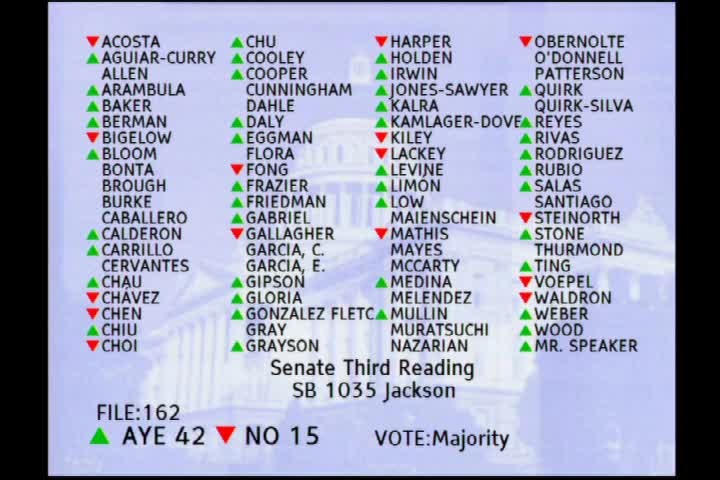 11MIN
Assembly Floor
 1MIN
Assembly Floor
 1MIN
Assembly Standing Committee on Appropriations
 6MIN
Assembly Standing Committee on Judiciary
 3MIN
Senate Floor
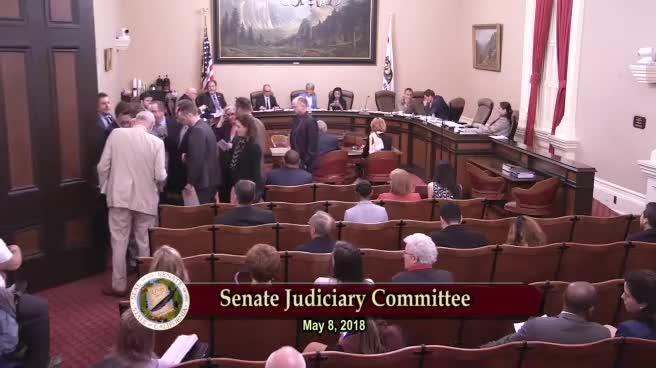 7MIN
Senate Standing Committee on Judiciary
Bill Author

Bill Co-Author(s):