SB 1443: School safety: the County of Riverside school metal detector pilot program.
- Session Year: 2017-2018
- House: Senate
- Latest Version Date: 2018-06-11
Existing law expresses the intent of the Legislature for all public schools teaching kindergarten or any of grades 1 to 12, inclusive, operated by a school district, to develop, in cooperation with specified community partners, a comprehensive school safety plan, as defined. Existing law requires each school district and county office of education to be responsible for the overall development of all comprehensive school safety plans for its schools operating kindergarten or any of grades 1 to 12, inclusive.
This bill would establish the County of Riverside school metal detector pilot program, and would authorize, as part of the pilot program, the Riverside County Office of Education to accept donations from private individuals and entities for the purpose of assisting public schools, as defined, located within the County of Riverside to purchase metal detectors through monetary grants. The bill would provide for the application for those grants by public schools located within the County of Riverside and the review of those applications and awarding of those grants to applicant public schools by the Riverside County Office of Education, as specified. If the amount donated under the pilot program reaches $900,000, the bill would appropriate $100,000 from the General Fund to the Riverside County Office of Education for the purpose of awarding those grants. The bill would require the State Department of Education to review the implementation of the pilot program and determine whether the pilot program was successful, and, if the department determines that the pilot program was successful, to submit a recommendation to the Legislature to enact legislation to expand the pilot program to other counties. The bill would repeal its provisions 6 years after the effective date of the bill.
Funds appropriated by this bill would be applied toward the minimum funding requirements for school districts and community college districts imposed by Section 8 of Article XVI of the California Constitution.
This bill would make legislative findings and declarations as to the necessity of a special statute for the County of Riverside.
This bill would declare that it is to take effect immediately as an urgency statute.
Existing law, the Labor Code Private Attorneys General Act of 2004, authorizes an aggrieved employee to bring a civil action to recover specified civil penalties that would otherwise be assessed and collected by the Labor and Workforce Development Agency on behalf of the employee and other current or former employees for the violation of certain provisions affecting employees. This bill would make nonsubstantive changes to those provisions.Existing law, the Labor Code Private Attorneys General Act of 2004, authorizes an aggrieved employee to bring a civil action to recover specified civil penalties that would otherwise be assessed and collected by the Labor and Workforce Development Agency on behalf of the employee and other current or former employees for the violation of certain provisions affecting employees.
This bill would make nonsubstantive changes to those provisions.
(a)The County of Riverside school metal detector pilot program is hereby established.
(b)If the Riverside County Office of Education chooses to undertake the pilot program, all of the following shall apply:
(1)The Riverside County Office of Education may accept donations from private individuals and entities for the purpose of assisting public schools located within the County of Riverside to purchase metal detectors in accordance with this article.
(2)A public school located within the County of Riverside may apply to the Riverside County Office of Education for a grant to purchase metal detectors for the public school.
(3)The Riverside County Office of Education shall review applications submitted in accordance with paragraph (2), and award grants to applicant public schools with the moneys donated in accordance with paragraph (1) and appropriated pursuant to subdivision (c) based on criteria that it shall establish.
(c)(1)If the amount donated to the Riverside County Office of Education in accordance with paragraph (1) of subdivision (b) reaches nine hundred thousand dollars ($900,000), then one hundred thousand dollars ($100,000) shall be appropriated from the General Fund to the Riverside County Office of Education for the purpose of assisting public schools located within the County of Riverside purchase metal detectors in accordance with this article.
(2)For purposes of making the computations required by Section 8 of Article XVI of the California Constitution, the appropriation made by paragraph (1) shall be deemed to be General Fund revenues appropriated for school districts, as defined in subdivision (c) of Section 41202, for the fiscal year in which it is appropriated, and included within the total allocations to school districts and community college districts from General Fund proceeds of taxes appropriated pursuant to Article XIII B, as defined in subdivision (e) of Section 41202, for the fiscal year in which it is appropriated.
(d)On or before two years after the effective date of this section, the department shall do both of the following:
(1)Review the implementation of the pilot program and determine whether the pilot program was successful.
(2)If the department determines pursuant to paragraph (1) that the pilot program was successful, it shall submit a recommendation to the Legislature to enact legislation to expand the pilot program to other counties.
(e)(1)A recommendation to be submitted pursuant to subdivision (d) shall be submitted in compliance with Section 9795 of the Government Code.
(2)Pursuant to Section 10231.5 of the Government Code, this article is repealed six years after the effective date of this section.
(f)For purposes of this section, public school means a school of a school district, a school of a county office of education, and a charter school that operates kindergarten or any of grades 1 to 12, inclusive.
SEC. 2.The Legislature finds and declares that a special statute is necessary and that a general statute cannot be made applicable within the meaning of Section 16 of Article IV of the California Constitution because of the unique security needs of public schools in the County of Riverside.
SEC. 3.This act is an urgency statute necessary for the immediate preservation of the public peace, health, or safety within the meaning of Article IV of the California Constitution and shall go into immediate effect. The facts constituting the necessity are:
In order to ensure the safety of schoolchildren in the County of Riverside as soon as possible, it is necessary that this act take effect immediately.
SECTION 1.Section 2699 of the Labor Code is amended to read:2699.(a)Notwithstanding any other law, any provision of this code that provides for a civil penalty to be assessed and collected by the Labor and Workforce Development Agency or any of its departments, divisions, commissions, boards, agencies, or employees, for a violation of this code, may, as an alternative, be recovered through a civil action brought by an aggrieved employee on behalf of himself or herself and other current or former employees pursuant to the procedures specified in Section 2699.3.(b)For purposes of this part, person has the same meaning as defined in Section 18.(c)For purposes of this part, aggrieved employee means any person who was employed by the alleged violator and against whom one or more of the alleged violations was committed.(d)For purposes of this part, cure means that the employer abates each violation alleged by any aggrieved employee, the employer is in compliance with the underlying statutes as specified in the notice required by this part, and any aggrieved employee is made whole. A violation of paragraph (6) or (8) of subdivision (a) of Section 226 shall only be considered cured upon a showing that the employer has provided a fully compliant itemized wage statement to each aggrieved employee for each pay period for the three-year period before the date of the written notice sent pursuant to paragraph (1) of subdivision (c) of Section 2699.3.(e)(1)For purposes of this part, whenever the Labor and Workforce Development Agency, or any of its departments, divisions, commissions, boards, agencies, or employees, has discretion to assess a civil penalty, a court is authorized to exercise the same discretion, subject to the same limitations and conditions, to assess a civil penalty.(2)In any action by an aggrieved employee seeking recovery of a civil penalty available under subdivision (a) or (f), a court may award a lesser amount than the maximum civil penalty amount specified by this part if, based on the facts and circumstances of the particular case, to do otherwise would result in an award that is unjust, arbitrary and oppressive, or confiscatory.(f)For all provisions of this code, except those for which a civil penalty is specifically provided, there is established a civil penalty for a violation of these provisions, as follows:(1)If, at the time of the alleged violation, the person does not employ one or more employees, the civil penalty is five hundred dollars ($500).(2)If, at the time of the alleged violation, the person employs one or more employees, the civil penalty is one hundred dollars ($100) for each aggrieved employee per pay period for the initial violation and two hundred dollars ($200) for each aggrieved employee per pay period for each subsequent violation.(3)If the alleged violation is a failure to act by the Labor and Workplace Development Agency, or any of its departments, divisions, commissions, boards, agencies, or employees, there shall be no civil penalty.(g)(1)Except as provided in paragraph (2), an aggrieved employee may recover the civil penalty described in subdivision (f) in a civil action pursuant to the procedures specified in Section 2699.3 filed on behalf of himself or herself and other current or former employees against whom one or more of the alleged violations was committed. Any employee who prevails in any action shall be entitled to an award of reasonable attorneys fees and costs, including any filing fee paid pursuant to subparagraph (B) of paragraph (1) of subdivision (a) or subparagraph (B) of paragraph (1) of subdivision (c) of Section 2699.3. This part shall not limit an employees right to pursue or recover other remedies available under state or federal law, either separately or concurrently with an action taken under this part.(2)An action shall not be brought under this part for any violation of a posting, notice, agency reporting, or filing requirement of this code, except where the filing or reporting requirement involves mandatory payroll or workplace injury reporting.(h)An action shall not be brought under this section by an aggrieved employee if the agency or any of its departments, divisions, commissions, boards, agencies, or employees, on the same facts and theories, cites a person within the timeframes set forth in Section 2699.3 for a violation of the same section or sections of the Labor Code under which the aggrieved employee is attempting to recover a civil penalty on behalf of himself or herself or others or initiates a proceeding pursuant to Section 98.3.(i)Except as provided in subdivision (j), civil penalties recovered by aggrieved employees shall be distributed as follows:(1)75 percent to the Labor and Workforce Development Agency for enforcement of labor laws, including the administration of this part, and for education of employers and employees about their rights and responsibilities under this code, to be continuously appropriated to supplement and not supplant the funding to the agency for those purposes.(2)25 percent to the aggrieved employees.(j)Civil penalties recovered under paragraph (1) of subdivision (f) shall be distributed to the Labor and Workforce Development Agency for enforcement of labor laws, including the administration of this part, and for education of employers and employees about their rights and responsibilities under this code, to be continuously appropriated to supplement and not supplant the funding to the agency for those purposes.(k)This part is not intended to alter or otherwise affect the exclusive remedy provided by the workers compensation provisions of this code for liability against an employer for the compensation for any injury to or death of an employee arising out of and in the course of employment.(l)(1)In a case that is filed on or after July 1, 2016, the aggrieved employee or representative shall, within 10 days following commencement of a civil action pursuant to this part, provide the Labor and Workforce Development Agency with a file-stamped copy of the complaint that includes the case number assigned by the court.(2)The superior court shall review and approve any settlement of any civil action filed pursuant to this part. The proposed settlement shall be submitted to the agency at the same time that it is submitted to the court.(3)A copy of the superior courts judgment in any civil action filed pursuant to this part and any other order in that action that either provides for or denies an award of civil penalties under this code shall be submitted to the agency within 10 days after entry of the judgment or order.(4)Items required to be submitted to the Labor and Workforce Development Agency under this subdivision or to the Division of Occupational Safety and Health pursuant to paragraph (4) of subdivision (b) of Section 2699.3, shall be transmitted online through the same system established for the filing of notices and requests under subdivisions (a) and (c) of Section 2699.3.(m)This section does not apply to the recovery of administrative and civil penalties in connection with the workers compensation law as contained in Division 1 (commencing with Section 50) and Division 4 (commencing with Section 3200), including, but not limited to, Sections 129.5 and 132a.(n)The agency or any of its departments, divisions, commissions, boards, or agencies may promulgate regulations to implement the provisions of this part.(a)Notwithstanding any other provision of law, any provision of this code that provides for a civil penalty to be assessed and collected by the Labor and Workforce Development Agency or any of its departments, divisions, commissions, boards, agencies, or employees, for a violation of this code, may, as an alternative, be recovered through a civil action brought by an aggrieved employee on behalf of himself or herself and other current or former employees pursuant to the procedures specified in Section 2699.3.
(b)For purposes of this part, person has the same meaning as defined in Section 18.
(c)For purposes of this part, aggrieved employee means any person who was employed by the alleged violator and against whom one or more of the alleged violations was committed.
(d)For purposes of this part, cure means that the employer abates each violation alleged by any aggrieved employee, the employer is in compliance with the underlying statutes as specified in the notice required by this part, and any aggrieved employee is made whole. A violation of paragraph (6) or (8) of subdivision (a) of Section 226 shall only be considered cured upon a showing that the employer has provided a fully compliant, compliant itemized wage statement to each aggrieved employee for each pay period for the three-year period prior to before the date of the written notice sent pursuant to paragraph (1) of subdivision (c) of Section 2699.3.
(e)(1)For purposes of this part, whenever the Labor and Workforce Development Agency, or any of its departments, divisions, commissions, boards, agencies, or employees, has discretion to assess a civil penalty, a court is authorized to exercise the same discretion, subject to the same limitations and conditions, to assess a civil penalty.
(2)In any action by an aggrieved employee seeking recovery of a civil penalty available under subdivision (a) or (f), a court may award a lesser amount than the maximum civil penalty amount specified by this part if, based on the facts and circumstances of the particular case, to do otherwise would result in an award that is unjust, arbitrary and oppressive, or confiscatory.
(f)For all provisions of this code code, except those for which a civil penalty is specifically provided, there is established a civil penalty for a violation of these provisions, as follows:
(1)If, at the time of the alleged violation, the person does not employ one or more employees, the civil penalty is five hundred dollars ($500).
(2)If, at the time of the alleged violation, the person employs one or more employees, the civil penalty is one hundred dollars ($100) for each aggrieved employee per pay period for the initial violation and two hundred dollars ($200) for each aggrieved employee per pay period for each subsequent violation.
(3)If the alleged violation is a failure to act by the Labor and Workplace Development Agency, or any of its departments, divisions, commissions, boards, agencies, or employees, there shall be no civil penalty.
(g)(1)Except as provided in paragraph (2), an aggrieved employee may recover the civil penalty described in subdivision (f) in a civil action pursuant to the procedures specified in Section 2699.3 filed on behalf of himself or herself and other current or former employees against whom one or more of the alleged violations was committed. Any employee who prevails in any action shall be entitled to an award of reasonable attorneys fees and costs, including any filing fee paid pursuant to subparagraph (B) of paragraph (1) of subdivision (a) or subparagraph (B) of paragraph (1) of subdivision (c) of Section 2699.3. Nothing in this This part shall operate to not limit an employees right to pursue or recover other remedies available under state or federal law, either separately or concurrently with an action taken under this part.
(2)No An action shall not be brought under this part for any violation of a posting, notice, agency reporting, or filing requirement of this code, except where the filing or reporting requirement involves mandatory payroll or workplace injury reporting.
(h)No An action may shall not be brought under this section by an aggrieved employee if the agency or any of its departments, divisions, commissions, boards, agencies, or employees, on the same facts and theories, cites a person within the timeframes set forth in Section 2699.3 for a violation of the same section or sections of the Labor Code under which the aggrieved employee is attempting to recover a civil penalty on behalf of himself or herself or others or initiates a proceeding pursuant to Section 98.3.
(i)Except as provided in subdivision (j), civil penalties recovered by aggrieved employees shall be distributed as follows: 75
(1)75 percent to the Labor and Workforce Development Agency for enforcement of labor laws, including the administration of this part, and for education of employers and employees about their rights and responsibilities under this code, to be continuously appropriated to supplement and not supplant the funding to the agency for those purposes; and 25 purposes.
(2)25 percent to the aggrieved employees.
(j)Civil penalties recovered under paragraph (1) of subdivision (f) shall be distributed to the Labor and Workforce Development Agency for enforcement of labor laws, including the administration of this part, and for education of employers and employees about their rights and responsibilities under this code, to be continuously appropriated to supplement and not supplant the funding to the agency for those purposes.
(k)Nothing contained in this This part is not intended to alter or otherwise affect the exclusive remedy provided by the workers compensation provisions of this code for liability against an employer for the compensation for any injury to or death of an employee arising out of and in the course of employment.
(l)(1)For cases In a case that is filed on or after July 1, 2016, the aggrieved employee or representative shall, within 10 days following commencement of a civil action pursuant to this part, provide the Labor and Workforce Development Agency with a file-stamped copy of the complaint that includes the case number assigned by the court.
(2)The superior court shall review and approve any settlement of any civil action filed pursuant to this part. The proposed settlement shall be submitted to the agency at the same time that it is submitted to the court.
(3)A copy of the superior courts judgment in any civil action filed pursuant to this part and any other order in that action that either provides for or denies an award of civil penalties under this code shall be submitted to the agency within 10 days after entry of the judgment or order.
(4)Items required to be submitted to the Labor and Workforce Development Agency under this subdivision or to the Division of Occupational Safety and Health pursuant to paragraph (4) of subdivision (b) of Section 2699.3, shall be transmitted online through the same system established for the filing of notices and requests under subdivisions (a) and (c) of Section 2699.3.
(m)This section shall does not apply to the recovery of administrative and civil penalties in connection with the workers compensation law as contained in Division 1 (commencing with Section 50) and Division 4 (commencing with Section 3200), including, but not limited to, Sections 129.5 and 132a.
(n)The agency or any of its departments, divisions, commissions, boards, or agencies may promulgate regulations to implement the provisions of this part.
|
Date
|
Status
|
|---|---|
| Aug 16, 2018 | August 16 hearing: Held in committee and under submission. |
| Aug 14, 2018 | Set for hearing August 16. |
| Aug 13, 2018 | August 13 hearing: Placed on APPR. suspense file. |
| Aug 7, 2018 | From committee: Do pass and re-refer to Com. on APPR. (Ayes 6. Noes 0.) (August 7). Re-referred to Com. on APPR. |
| Jun 20, 2018 | Re-referred to Com. on ED. |
| Jun 11, 2018 | From committee with author's amendments. Read second time and amended. Re-referred to Com. on RLS. |
| Mar 8, 2018 | Referred to Com. on RLS. |
| Feb 20, 2018 | From printer. May be acted upon on or after March 22. |
| Feb 16, 2018 | Introduced. Read first time. To Com. on RLS. for assignment. To print. |
|
Date
|
Description
|
Location
|
Votes
|
|
|---|---|---|---|---|
| Aug 13, 2018 | Placed on suspense file | Senate Standing Committee on Appropriations |
Passed |
|
| Aug 7, 2018 | Do pass, but first be re-referred to the Committee on [Appropriations] | Senate Standing Committee on Education |
Passed |
This list shows positions taken on this bill by organizations on the date displayed, which is linked to the original source.
Positions by individuals are not included.
SENATE COMMITTEE ON
Senator Anthony Portantino, Chair
2017 - 2018 Regular Session
SB 1443 (Stone) - School safety: the County of Riverside school metal detector pilot program
Version: | Policy Vote: |
Urgency: | Mandate: |
Hearing Date: | Consultant: |
This bill meets the criteria for referral to the Suspense File.
Bill Summary:
This bill, an urgency measure, establishes the County of Riverside school metal detector pilot program for purposes of assisting public schools within the county to purchase metal detectors.
Fiscal Impact:
- This bill appropriates $100,000 from the General Fund to the extent that the county of Riverside receives $900,000 in donations to purchase metal detectors. It is unclear whether the county will be able to receive this amount.
- While the pilot program is limited to the county of Riverside, this bill could lead to cost pressure for the state to provide metal detectors to other schools throughout the state. Assuming an average cost of between $5,000 and $10,000, the Proposition 98 cost to purchase a metal detector for every school would be approximately $75 million.
- The California Department of Education (CDE) anticipates one-time General Fund costs of about $200,000 over a two-year period and $400,000 for a two-year evaluator contract to review the pilot program and submit a recommendation to the Legislature on whether to expand the program statewide.
Background:
Existing law requires each school district and county office of education to be responsible for the overall development of all comprehensive school safety plans for its schools operating kindergarten or any of grades 1 through 12. The schoolsite council or a school safety planning committee is responsible for developing the comprehensive school safety plan. School safety plans are required to include, among other things, an assessment of the current status of school crime committed on school campuses and at school-related functions and the identification of appropriate strategies and programs that will provide or maintain a high level of school safety and address the school’s procedures for complying with existing laws related to school safety. Each school is required to adopt its school safety plan by March 1 and review and update its plan annually by March 1.
Existing law authorizes the portions of a school safety plan that include tactical responses to criminal incidents to be developed by school district or county office administrators in consultation with law enforcement officials and with a representative of the employee bargaining unit, if he or she chooses to participate.
Proposed Law:
This bill, an urgency measure, establishes the County of Riverside school metal detector pilot program for purposes of assisting public schools within the county to purchase metal detectors. Specifically, this bill:
This bill, an urgency measure, establishes the County of Riverside school metal detector pilot program, which would be voluntary on the part of the Riverside County Office of Education. If the Riverside County Office of Education chooses to undertake the pilot program, this bill:
- Authorizes Riverside to accept donations from private individuals and entities for the purpose of assisting public schools located within the County of Riverside to purchase metal detectors.
- Authorizes a public school located within the County of Riverside to apply to the Riverside County Office of Education for a grant to purchase metal detectors for the public school.
- Requires the Riverside County Office of Education to review submitted applications and award grants to applicant public schools with the moneys donated from private individuals or entities and appropriated by the state.
This bill appropriates one hundred thousand dollars ($100,000) from the General Fund to the Riverside County Office of Education for the purpose of assisting public schools located within the County of Riverside purchase metal detectors if the county receives nine hundred thousand dollars ($900,000) in donations for that purpose. This bill specifies that the $100,000 appropriation shall count toward the Proposition 98 guarantee.
This bill requires the California Department of Education (CDE), within two years after the effective date of the bill, review the implementation of the pilot program and determine whether the pilot program was successful. If CDE determines that the pilot program was successful, they would be required to submit a recommendation, as specified, to the Legislature to enact legislation to expand the pilot program to other counties.
The bill’s provisions would sunset six years after its effective date.
Related Legislation:
SB 1203 (Bates, 2018) would require all public and private schools to have procedures for conducting lockdown training. SB 1203 is pending in the Assembly Appropriations Committee.
AB 1747 (Rodriquez, 2018) would, among other things, require local educational agencies, including charter schools, to conduct drills, not less than once per year, on their tactical responses to criminal incidents. This measure is currently on the Suspense File in this Committee.
-- END --
SENATE COMMITTEE ON EDUCATION
Senator Benjamin Allen, Chair
2017 - 2018 Regular
Bill No: SB 1443 Hearing Date: August 7, 2018
Author: | Stone | ||
Version: | June 11, 2018 | ||
Urgency: | Yes | Fiscal: | Yes |
Consultant: | Brandon Darnell | ||
Subject: School safety: the County of Riverside school metal detector pilot program.
SUMMARY
This bill, an urgency measure, establishes the County of Riverside school metal detector pilot program for purposes of assisting public schools within the county to purchase metal detectors.
BACKGROUND
Existing law:
1) Requires a petition for the establishment of a charter school to include the procedures that the school will follow to ensure the health and safety of students and staff. (Education Code § 47605)
2) Requires each school district and county office of education to be responsible for the overall development of all comprehensive school safety plans for its schools operating kindergarten or any of grades 1 through 12. The schoolsite council or a school safety planning committee is responsible for developing the comprehensive school safety plan. (EC § 32281)
3) Requires school safety plans to include, among other things:
a) An assessment of the current status of school crime committed on school campuses and at school-related functions.
b) Identification of appropriate strategies and programs that will provide or maintain a high level of school safety and address the school’s procedures for complying with existing laws related to school safety, including, among other things:
i) Procedures to notify teachers of dangerous students.
ii) Procedures for safe ingress and egress of students, parents, and school employees to and from school.
iii) A safe and orderly environment conducive to learning.
iv) The rules and procedures on school discipline. (EC § 32282)
4) Authorizes the portions of a school safety plan that include tactical responses to criminal incidents to be developed by school district or county office administrators in consultation with law enforcement officials and with a representative of the employee bargaining unit, if he or she chooses to participate. (EC § 32281)
5) Requires each school to adopt its school safety plan by March 1 and review and update its plan annually by March 1. Each school is required to annually report, in July, on the status of its school safety plan, including a description of key elements of the school safety plan in the annual school accountability report card. (EC § 32286)
6) Requires the schoolsite council or school safety planning committee to hold a public meeting before adopting the school safety plan. Each school is required to forward its school safety plan to the school district or county office for approval, and school districts or county offices are required to annually notify the California Department of Education, by October 15, of any school that is not in compliance. (EC § 32288)
7) Authorizes a student to be suspended from school or recommendation for expulsion if the principle of the school or the superintendent of the school district determines, among other things, that the student possessed, sold, or otherwise furnished a firearm, knife, explosive, or other dangerous object. (EC § 48900)
ANALYSIS
This bill, an urgency measure, establishes the County of Riverside school metal detector pilot program for purposes of assisting public schools within the county to purchase metal detectors. Specifically, this bill:
- Establishes the County of Riverside school metal detector pilot program, which would be voluntary on the part of the Riverside County Office of Education.
- If the County of Riverside County Office of Education chooses to undertake the pilot program:
a) Authorizes the Riverside County Office of Education to accept donations from private individuals and entities for the purpose of assisting public schools located within the County of Riverside to purchase metal detectors.
b) Authorizes a public school located within the County of Riverside to apply to the Riverside County Office of Education for a grant to purchase metal detectors for the public school.
c) Requires the Riverside County Office of Education to review submitted applications and award grants to applicant public schools with the moneys donated from private individuals or entities and appropriated by the state.
3) Appropriates one hundred thousand dollars ($100,000) from the General Fund to the Riverside County Office of Education for the purpose of assisting public schools located within the County of Riverside purchase metal detectors if county office of education receives nine hundred thousand dollars ($900,000) in donations for that purpose.
4) Specifies that the $100,000 appropriation described above shall count toward the Proposition 98 guarantee.
5) Require the California Department of Education (CDE), within two years after the effective date of the bill, to do both of the following:
a) Review the implementation of the pilot program and determine whether the pilot program was successful.
b) If CDE determines that the pilot program was successful, to submit a recommendation, as specified, to the Legislature to enact legislation to expand the pilot program to other counties.
6) Defines “public school” for purposes of the bill to mean “a school of a school district, a school of a county office of education, and a charter school that operates kindergarten or any of grades 1 to 12, inclusive.”
7) Sunsets these provisions six years after the effective date of the bill.
8) States Legislative findings and declarations that a special statute is necessary because of the unique security needs of public schools in the County of Riverside.
STAFF COMMENTS
- Need for the bill. According to the author, “keeping our kids safe in school is paramount. One such way would be to install metal detectors in schools. While the Senator realizes that local school districts already have the capability to raise funds to put metal detectors in schools, there does not seem to be a mechanism to leverage state assistance.”
While it is true that there is no mechanism for state funding specific to metal detectors, the local control funding formula (LCFF) does afford local educational agencies flexibility to allocate their state funding as they see fit, consistent with the goals and actions specified in their local control and accountability plans, which are tied to the eight state priorities, including the school climate priority. The committee may wish to consider whether the LCFF provides sufficient flexibility to local educational agencies to fund this activity, if they so choose.
- Do metal detectors have the intended effect? In 2005, the CDE published its fourth Getting Results update, Violence Prevention and Safe Schools, which presented recently published research about youth violence and efforts to create safe schools. It was intended to “provide schools with up-to-date information about effective, research-proven violence prevention programs and strategies so that students and staff can feel safe at school and focus on academic and social tasks.” According to the that report, “it appears that procedures that focus primarily on altering physical aspects on the school campus, such as locking doors, installing metal detectors, and so forth, seem to have the opposite effect of increasing adverse student behaviors.”
- Research on metal detectors in schools indeterminate? A 2010 research article published in the Journal of School Health, “Impacts of Metal Detector Use in Schools: Insights From 15 Years of Research,” concluded that “there is insufficient data in the literature to determine whether the presence of metal detectors in schools reduces the risk of violent behavior among students, and some research suggests that the presence of metal detectors may detrimentally impact student perceptions of safety.”
- Current metal detector practices. At least some schools in California use metal detectors. The Los Angeles Unified School District (LAUSD), in Policy Bulletin 5424.2, requires “all secondary schools must conduct daily random metal detector searches of students. That bulletin specifies that “search operations should be conducted at various hours of the school day to avoid predictability” and applies to all secondary schools operated by LAUSD or on behalf of LAUSD or located on LAUSD property, including affiliated and independent charter schools.
- School violence prevention audit. An audit by the California State Auditor, released in 2017, cites FBI data showing that active shooter incidents became more common between 2000 and 2015, and kindergarten through grade 12 facilities and higher education institutions have been the second most common location for these shootings to occur, both nationally and within California. The report notes that state law does not require schools to include procedures for responding to active shooter events in their school safety plans and that state law could improve these plans by requiring the inclusion of procedures to respond to active shooter incidents.
- Related legislation. SB 1203 (Bates, 2018) would require all public and private schools to have procedures for conducting lockdown training. SB 1203 is pending in the Assembly Appropriations Committee.
AB 1747 (Rodriquez, 2018) would, among other things, require local educational agencies, including charter schools, to conduct drills, not less than once per year, on their tactical responses to criminal incidents.
SUPPORT
None received
OPPOSITION
None received
-- END --
Discussed in Hearing
 1H
Senate Standing Committee on Appropriations
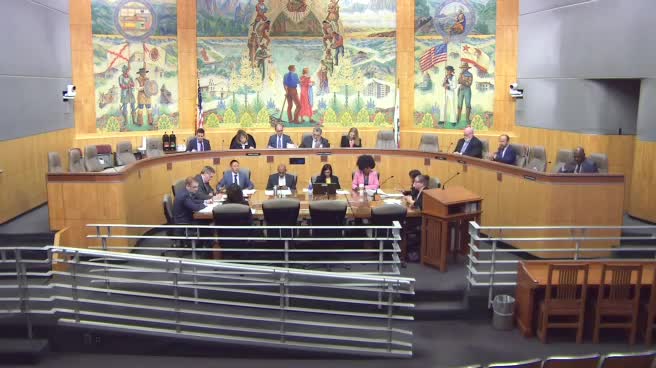 1MIN
Senate Standing Committee on Appropriations
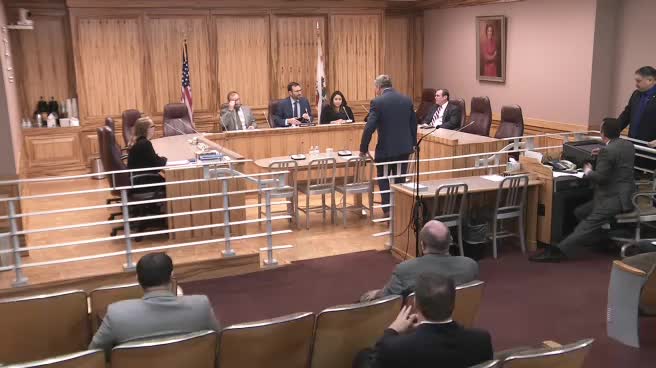 22MIN
Senate Standing Committee on Education
Bill Author

Bill Co-Author(s):