SB 1449: Rape kits: testing.
- Session Year: 2017-2018
- House: Senate
- Latest Version Date: 2018-09-07
Existing law declares that timely DNA analysis of rape kit evidence is a core public safety issue affecting men, women, and children in the State of California. Existing law encourages law enforcement agencies to either submit sexual assault forensic evidence received on or after January 1, 2016, to a crime lab within 20 days after it is booked into evidence or to ensure that a rapid turnaround DNA program is in place, as specified. Existing law also encourages a crime lab that receives sexual assault forensic evidence on or after January 1, 2016, to either process the evidence, create DNA profiles when able, and upload qualifying DNA profiles into the Combined DNA Index System, as specified, or transmit the sexual assault forensic evidence to another crime lab as soon as practically possible, but no later than 30 days after receiving the evidence, for processing of the evidence for the presence of DNA.
This bill would instead require a law enforcement agency to either submit sexual assault forensic evidence to a crime lab or ensure that a rapid turnaround DNA program is in place, as specified, and require a crime lab to either process the evidence or transmit the evidence to another crime lab for processing, as specified. Because this bill would impose a higher level of service on local law enforcement agencies in processing that evidence, it would impose a state-mandated local program.
This bill would incorporate additional changes to Section 680 of the Penal Code proposed by SB 1494 to be operative only if this bill and SB 1494 are enacted and this bill is enacted last.
The California Constitution requires the state to reimburse local agencies and school districts for certain costs mandated by the state. Statutory provisions establish procedures for making that reimbursement.
This bill would provide that, if the Commission on State Mandates determines that the bill contains costs mandated by the state, reimbursement for those costs shall be made pursuant to the statutory provisions noted above.
Existing law declares that timely DNA analysis of rape kit evidence is a core public safety issue affecting men, women, and children in the State of California. Existing law encourages law enforcement agencies to either submit sexual assault forensic evidence received on or after January 1, 2016, to a crime lab within 20 days after it is booked into evidence or to ensure that a rapid turnaround DNA program is in place, as specified. Existing law also encourages a crime lab that receives sexual assault forensic evidence on or after January 1, 2016, to either process the evidence, create DNA profiles when able, and upload qualifying DNA profiles into the Combined DNA Index System, as specified, or transmit the sexual assault forensic evidence to another crime lab as soon as practically possible, but no later than 30 days after receiving the evidence, for processing of the evidence for the presence of DNA.
This bill would instead require a law enforcement agency to either submit sexual assault forensic evidence to a crime lab or ensure that a rapid turnaround DNA program is in place, as specified, and require a crime lab to either process the evidence or transmit the evidence to another crime lab for processing, as specified. Because this bill would impose a higher level of service on local law enforcement agencies in processing that evidence, it would impose a state-mandated local program. The bill would appropriate $2,000,000 from the General Fund to the Department of Justice to allocate to local law enforcement agencies to assist them with complying with that requirement.
The bill would also require the department to conduct a statewide audit of each local law enforcement agency to determine the number of rape kits that remain untested in law enforcement facilities across the state. The bill would require the department to complete the audit and submit a report of its findings to the Legislature on or before July 1, 2019.The California Constitution requires the state to reimburse local agencies and school districts for certain costs mandated by the state. Statutory provisions establish procedures for making that reimbursement.
This bill would provide that, if the Commission on State Mandates determines that the bill contains costs mandated by the state, reimbursement for those costs shall be made pursuant to the statutory provisions noted above.
Existing law declares that timely DNA analysis of rape kit evidence is a core public safety issue affecting men, women, and children in the State of California. Existing law encourages law enforcement agencies to either submit sexual assault forensic evidence received on or after January 1, 2016, to a crime lab within 20 days after it is booked into evidence or to ensure that a rapid turnaround DNA program is in place, as specified. Existing law also encourages a crime lab that receives sexual assault forensic evidence on or after January 1, 2016, to either process the evidence, create DNA profiles when able, and upload qualifying DNA profiles into the Combined DNA Index System, as specified, or transmit the sexual assault forensic evidence to another crime lab as soon as practically possible, but no later than 30 days after receiving the evidence, for processing of the evidence for the presence of DNA.
This bill would instead require a law enforcement to either submit sexual assault forensic evidence to a crime lab or ensure that a rapid turnaround DNA program is in place, as specified, and require a crime lab to either process the evidence or transmit the evidence to another crime lab for processing, as specified. Because this bill would impose a higher level of service on local law enforcement agencies in processing that evidence, it would impose a state-mandated local program. The bill would appropriate $2,000,000 from the General Fund to the Department of Justice to allocate to local law enforcement agencies to assist them with complying with that requirement.
The bill would also require the department to conduct a statewide audit of each local law enforcement agency to determine the number of rape kits that remain untested in law enforcement facilities across the state. The bill would require the department to complete the audit and submit a report of its findings to the Legislature on or before July 1, 2019.
The California Constitution requires the state to reimburse local agencies and school districts for certain costs mandated by the state. Statutory provisions establish procedures for making that reimbursement.
This bill would provide that, if the Commission on State Mandates determines that the bill contains costs mandated by the state, reimbursement for those costs shall be made pursuant to the statutory provisions noted above.
(a)This section shall be known as and may be cited as the Sexual Assault Victims DNA Bill of Rights.
(b)The Legislature finds and declares all of the following:
(1)Deoxyribonucleic acid (DNA) and forensic identification analysis is a powerful law enforcement tool for identifying and prosecuting sexual assault offenders.
(2)Existing law requires an adult arrested for or charged with a felony and a juvenile adjudicated for a felony to submit DNA samples as a result of that arrest, charge, or adjudication.
(3)Victims of sexual assaults have a strong interest in the investigation and prosecution of their cases.
(4)Law enforcement agencies have an obligation to victims of sexual assaults in the proper handling, retention, and timely DNA testing of rape kit evidence or other crime scene evidence and to be responsive to victims concerning the developments of forensic testing and the investigation of their cases.
(5)The growth of the Department of Justices CAL-DNA Data Bank and the national data bank through the Combined DNA Index System (CODIS) makes it possible for many sexual assault perpetrators to be identified after their first offense, provided that rape kit evidence is analyzed in a timely manner.
(6)Timely DNA analysis of rape kit evidence is a core public safety issue affecting men, women, and children in the State of California. It is the intent of the Legislature, in order to further public safety, to encourage DNA analysis of rape kit evidence within the time limits imposed by subparagraphs (A) and (B) of paragraph (1) of subdivision (g) of Section 803.
(7)In order to ensure that sexual assault forensic evidence is analyzed within the two-year timeframe required by subparagraphs (A) and (B) of paragraph (1) of subdivision (g) of Section 803 and to ensure the longest possible statute of limitations for sex offenses, including sex offenses designated pursuant to those subparagraphs, the following shall occur:
(A)A law enforcement agency in whose jurisdiction a sex offense specified in Section 261, 261.5, 262, 286, 288a, or 289 occurred shall do one of the following for any sexual assault forensic evidence received by the law enforcement agency on or after January 1, 2016:
(i)Submit sexual assault forensic evidence to the crime lab within 20 days after it is booked into evidence.
(ii)Ensure that a rapid turnaround DNA program is in place to submit forensic evidence collected from the victim of a sexual assault directly from the medical facility where the victim is examined to the crime lab within five days after the evidence is obtained from the victim.
(B)The crime lab shall do one of the following for any sexual assault forensic evidence received by the crime lab on or after January 1, 2016.
(i)Process sexual assault forensic evidence, create DNA profiles when able, and upload qualifying DNA profiles into CODIS as soon as practically possible, but no later than 120 days after initially receiving the evidence.
(ii)Transmit the sexual assault forensic evidence to another crime lab as soon as practically possible, but no later than 30 days after initially receiving the evidence, for processing of the evidence for the presence of DNA. If a DNA profile is created, the transmitting crime lab shall upload the profile into CODIS as soon as practically possible, but no longer than 30 days after being notified about the presence of DNA.
(C)This subdivision does not require a lab to test all items of forensic evidence obtained in a sexual assault forensic evidence examination. A lab is considered to be in compliance with the guidelines of this section when representative samples of the evidence are processed by the lab in an effort to detect the foreign DNA of the perpetrator.
(D)This section does not require a DNA profile to be uploaded into CODIS if the DNA profile does not meet federal guidelines regarding the uploading of DNA profiles into CODIS.
(E)For purposes of this section, a rapid turnaround DNA program is a program for the training of sexual assault team personnel in the selection of representative samples of forensic evidence from the victim to be the best evidence, based on the medical evaluation and patient history, the collection and preservation of that evidence, and the transfer of the evidence directly from the medical facility to the crime lab, which is adopted pursuant to a written agreement between the law enforcement agency, the crime lab, and the medical facility where the sexual assault team is based.
(8)For the purpose of this section, law enforcement means the law enforcement agency with the primary responsibility for investigating an alleged sexual assault.
(c)(1)Upon the request of a sexual assault victim, the law enforcement agency investigating a violation of Section 261, 261.5, 262, 286, 288a, or 289 shall inform the victim of the status of the DNA testing of the rape kit evidence or other crime scene evidence from the victims case. The law enforcement agency may, at its discretion, require that the victims request be in writing. The law enforcement agency shall respond to the victims request with either an oral or written communication, or by email, if an email address is available. Nothing in this subdivision requires that the law enforcement agency communicate with the victim or the victims designee regarding the status of DNA testing absent a specific request from the victim or the victims designee.
(2)Subject to the commitment of sufficient resources to respond to requests for information, sexual assault victims have the following rights:
(A)The right to be informed whether or not a DNA profile of the assailant was obtained from the testing of the rape kit evidence or other crime scene evidence from their case.
(B)The right to be informed whether or not the DNA profile of the assailant developed from the rape kit evidence or other crime scene evidence has been entered into the Department of Justices CAL-DNA Data Bank of case evidence.
(C)The right to be informed whether or not there is a match between the DNA profile of the assailant developed from the rape kit evidence or other crime scene evidence and a DNA profile contained in the Department of Justice Convicted Offender DNA Data Base, provided that disclosure would not impede or compromise an ongoing investigation.
(3)This subdivision is intended to encourage law enforcement agencies to notify victims of information which is in their possession. It is not intended to affect the manner of or frequency with which the Department of Justice provides this information to law enforcement agencies.
(d)If the law enforcement agency does not analyze DNA evidence within six months prior to the time limits established by subparagraphs (A) and (B) of paragraph (1) of subdivision (g) of Section 803, a victim of a sexual assault offense specified in Section 261, 261.5, 262, 286, 288a, or 289 shall be informed, either orally or in writing, of that fact by the law enforcement agency.
(e)(1)If the law enforcement agency intends to destroy or dispose of rape kit evidence or other crime scene evidence from an unsolved sexual assault case, a victim of a violation of Section 261, 261.5, 262, 286, 288a, or 289 shall be given written notification by the law enforcement agency of that intention.
(2)A law enforcement agency shall not destroy or dispose of rape kit evidence or other crime scene evidence from an unsolved sexual assault case before at least 20 years, or if the victim was under 18 years of age at the time of the alleged offense, before the victims 40th birthday.
(f)Written notification under subdivision (d) or (e) shall be made at least 60 days prior to the destruction or disposal of the rape kit evidence or other crime scene evidence from an unsolved sexual assault case.
(g)A sexual assault victim may designate a sexual assault victim advocate, or other support person of the victims choosing, to act as a recipient of the above information required to be provided by this section.
(h)It is the intent of the Legislature that a law enforcement agency responsible for providing information under subdivision (c) do so in a timely manner and, upon request of the victim or the victims designee, advise the victim or the victims designee of any significant changes in the information of which the law enforcement agency is aware. In order to be entitled to receive notice under this section, the victim or the victims designee shall keep appropriate authorities informed of the name, address, telephone number, and email address of the person to whom the information should be provided, and any changes of the name, address, telephone number, and email address, if an email address is available.
(i)A defendant or person accused or convicted of a crime against the victim shall have no standing to object to any failure to comply with this section. The failure to provide a right or notice to a sexual assault victim under this section may not be used by a defendant to seek to have the conviction or sentence set aside.
(j)The sole civil or criminal remedy available to a sexual assault victim for a law enforcement agencys failure to fulfill its responsibilities under this section is standing to file a writ of mandamus to require compliance with subdivision (d) or (e).
SEC. 1.5.Section 680 of the Penal Code is amended to read:680.(a)This section shall be known as and may be cited as the Sexual Assault Victims DNA Bill of Rights.
(b)The Legislature finds and declares all of the following:
(1)Deoxyribonucleic acid (DNA) and forensic identification analysis is a powerful law enforcement tool for identifying and prosecuting sexual assault offenders.
(2)Existing law requires an adult arrested for or charged with a felony and a juvenile adjudicated for a felony to submit DNA samples as a result of that arrest, charge, or adjudication.
(3)Victims of sexual assaults have a strong interest in the investigation and prosecution of their cases.
(4)Law enforcement agencies have an obligation to victims of sexual assaults in the proper handling, retention, and timely DNA testing of rape kit evidence or other crime scene evidence and to be responsive to victims concerning the developments of forensic testing and the investigation of their cases.
(5)The growth of the Department of Justices CAL-DNA Data Bank and the national data bank through the Combined DNA Index System (CODIS) makes it possible for many sexual assault perpetrators to be identified after their first offense, provided that rape kit evidence is analyzed in a timely manner.
(6)Timely DNA analysis of rape kit evidence is a core public safety issue affecting men, women, and children in the State of California. It is the intent of the Legislature, in order to further public safety, to encourage DNA analysis of rape kit evidence within the time limits imposed by subparagraphs (A) and (B) of paragraph (1) of subdivision (g) of Section 803.
(7)In order to ensure that sexual assault forensic evidence is analyzed within the two-year timeframe required by subparagraphs (A) and (B) of paragraph (1) of subdivision (g) of Section 803 and to ensure the longest possible statute of limitations for sex offenses, including sex offenses designated pursuant to those subparagraphs, the following shall occur:
(A)A law enforcement agency in whose jurisdiction a sex offense specified in Section 261, 261.5, 262, 286, 287, or 289 or former Section 288a occurred shall do one of the following for any sexual assault forensic evidence received by the law enforcement agency on or after January 1, 2016:
(i)Submit sexual assault forensic evidence to the crime lab within 20 days after it is booked into evidence.
(ii)Ensure that a rapid turnaround DNA program is in place to submit forensic evidence collected from the victim of a sexual assault directly from the medical facility where the victim is examined to the crime lab within five days after the evidence is obtained from the victim.
(B)The crime lab shall do one of the following for any sexual assault forensic evidence received by the crime lab on or after January 1, 2016.
(i)Process sexual assault forensic evidence, create DNA profiles when able, and upload qualifying DNA profiles into CODIS as soon as practically possible, but no later than 120 days after initially receiving the evidence.
(ii)Transmit the sexual assault forensic evidence to another crime lab as soon as practically possible, but no later than 30 days after initially receiving the evidence, for processing of the evidence for the presence of DNA. If a DNA profile is created, the transmitting crime lab shall upload the profile into CODIS as soon as practically possible, but no longer than 30 days after being notified about the presence of DNA.
(C)This subdivision does not require a lab to test all items of forensic evidence obtained in a sexual assault forensic evidence examination. A lab is considered to be in compliance with the guidelines of this section when representative samples of the evidence are processed by the lab in an effort to detect the foreign DNA of the perpetrator.
(D)This section does not require a DNA profile to be uploaded into CODIS if the DNA profile does not meet federal guidelines regarding the uploading of DNA profiles into CODIS.
(E)For purposes of this section, a rapid turnaround DNA program is a program for the training of sexual assault team personnel in the selection of representative samples of forensic evidence from the victim to be the best evidence, based on the medical evaluation and patient history, the collection and preservation of that evidence, and the transfer of the evidence directly from the medical facility to the crime lab, which is adopted pursuant to a written agreement between the law enforcement agency, the crime lab, and the medical facility where the sexual assault team is based.
(8)For the purpose of this section, law enforcement means the law enforcement agency with the primary responsibility for investigating an alleged sexual assault.
(c)(1)Upon the request of a sexual assault victim, the law enforcement agency investigating a violation of Section 261, 261.5, 262, 286, 287, or 289 or of former Section 288a shall inform the victim of the status of the DNA testing of the rape kit evidence or other crime scene evidence from the victims case. The law enforcement agency may, at its discretion, require that the victims request be in writing. The law enforcement agency shall respond to the victims request with either an oral or written communication, or by email, if an email address is available. Nothing in this subdivision requires that the law enforcement agency communicate with the victim or the victims designee regarding the status of DNA testing absent a specific request from the victim or the victims designee.
(2)Subject to the commitment of sufficient resources to respond to requests for information, sexual assault victims have the following rights:
(A)The right to be informed whether or not a DNA profile of the assailant was obtained from the testing of the rape kit evidence or other crime scene evidence from their case.
(B)The right to be informed whether or not the DNA profile of the assailant developed from the rape kit evidence or other crime scene evidence has been entered into the Department of Justices CAL-DNA Data Bank of case evidence.
(C)The right to be informed whether or not there is a match between the DNA profile of the assailant developed from the rape kit evidence or other crime scene evidence and a DNA profile contained in the Department of Justice Convicted Offender DNA Data Base, provided that disclosure would not impede or compromise an ongoing investigation.
(3)This subdivision is intended to encourage law enforcement agencies to notify victims of information which is in their possession. It is not intended to affect the manner of or frequency with which the Department of Justice provides this information to law enforcement agencies.
(d)If the law enforcement agency does not analyze DNA evidence within six months prior to the time limits established by subparagraphs (A) and (B) of paragraph (1) of subdivision (g) of Section 803, a victim of a sexual assault offense specified in Section 261, 261.5, 262, 286, 287, or 289 or former Section 288a shall be informed, either orally or in writing, of that fact by the law enforcement agency.
(e)(1)If the law enforcement agency intends to destroy or dispose of rape kit evidence or other crime scene evidence from an unsolved sexual assault case, a victim of a violation of Section 261, 261.5, 262, 286, 287, or 289 or former Section 288a shall be given written notification by the law enforcement agency of that intention.
(2)A law enforcement agency shall not destroy or dispose of rape kit evidence or other crime scene evidence from an unsolved sexual assault case before at least 20 years, or if the victim was under 18 years of age at the time of the alleged offense, before the victims 40th birthday.
(f)Written notification under subdivision (d) or (e) shall be made at least 60 days prior to the destruction or disposal of the rape kit evidence or other crime scene evidence from an unsolved sexual assault case.
(g)A sexual assault victim may designate a sexual assault victim advocate, or other support person of the victims choosing, to act as a recipient of the above information required to be provided by this section.
(h)It is the intent of the Legislature that a law enforcement agency responsible for providing information under subdivision (c) do so in a timely manner and, upon request of the victim or the victims designee, advise the victim or the victims designee of any significant changes in the information of which the law enforcement agency is aware. In order to be entitled to receive notice under this section, the victim or the victims designee shall keep appropriate authorities informed of the name, address, telephone number, and email address of the person to whom the information should be provided, and any changes of the name, address, telephone number, and email address, if an email address is available.
(i)A defendant or person accused or convicted of a crime against the victim shall have no standing to object to any failure to comply with this section. The failure to provide a right or notice to a sexual assault victim under this section may not be used by a defendant to seek to have the conviction or sentence set aside.
(j)The sole civil or criminal remedy available to a sexual assault victim for a law enforcement agencys failure to fulfill its responsibilities under this section is standing to file a writ of mandamus to require compliance with subdivision (d) or (e).
SEC. 2.Section 1.5 of this bill incorporates amendments to Section 680 of the Penal Code proposed by both this bill and Senate Bill 1494. That section of this bill shall only become operative if (1) both bills are enacted and become effective on or before January 1, 2019, (2) each bill amends Section 680 of the Penal Code, and (3) this bill is enacted after Senate Bill 1494, in which case Section 1 of this bill shall not become operative.
SEC. 3.If the Commission on State Mandates determines that this act contains costs mandated by the state, reimbursement to local agencies and school districts for those costs shall be made pursuant to Part 7 (commencing with Section 17500) of Division 4 of Title 2 of the Government Code.
(a)This section shall be known as and may be cited as the Sexual Assault Victims DNA Bill of Rights.
(b)The Legislature finds and declares all of the following:
(1)Deoxyribonucleic acid (DNA) and forensic identification analysis is a powerful law enforcement tool for identifying and prosecuting sexual assault offenders.
(2)Existing law requires an adult arrested for or charged with a felony and a juvenile adjudicated for a felony to submit DNA samples as a result of that arrest, charge, or adjudication.
(3)Victims of sexual assaults have a strong interest in the investigation and prosecution of their cases.
(4)Law enforcement agencies have an obligation to victims of sexual assaults in the proper handling, retention, and timely DNA testing of rape kit evidence or other crime scene evidence and to be responsive to victims concerning the developments of forensic testing and the investigation of their cases.
(5)The growth of the Department of Justices CAL-DNA Data Bank and the national databank data bank through the Combined DNA Index System (CODIS) makes it possible for many sexual assault perpetrators to be identified after their first offense, provided that rape kit evidence is analyzed in a timely manner.
(6)Timely DNA analysis of rape kit evidence is a core public safety issue affecting men, women, and children in the State of California. It is the intent of the Legislature, in order to further public safety, to encourage DNA analysis of rape kit evidence within the time limits imposed by subparagraphs (A) and (B) of paragraph (1) of subdivision (g) of Section 803.
(7)In order to ensure that sexual assault forensic evidence is analyzed within the two-year timeframe required by subparagraphs (A) and (B) of paragraph (1) of subdivision (g) of Section 803 and to ensure the longest possible statute of limitations for sex offenses, including sex offenses designated pursuant to those subparagraphs, the following shall occur:
(A)A law enforcement agency in whose jurisdiction a sex offense specified in Section 261, 261.5, 262, 286, 288a, or 289 occurred shall do one of the following for any sexual assault forensic evidence received by the law enforcement agency on or after January 1, 2016:
(i)Submit sexual assault forensic evidence to the crime lab within 20 days after it is booked into evidence.
(ii)Ensure that a rapid turnaround DNA program is in place to submit forensic evidence collected from the victim of a sexual assault directly from the medical facility where the victim is examined to the crime lab within five days after the evidence is obtained from the victim.
(B)The crime lab shall do one of the following for any sexual assault forensic evidence received by the crime lab on or after January 1, 2016.
(i)Process sexual assault forensic evidence, create DNA profiles when able, and upload qualifying DNA profiles into CODIS as soon as practically possible, but no later than 120 days after initially receiving the evidence.
(ii)Transmit the sexual assault forensic evidence to another crime lab as soon as practically possible, but no later than 30 days after initially receiving the evidence, for processing of the evidence for the presence of DNA. If a DNA profile is created, the transmitting crime lab shall upload the profile into CODIS as soon as practically possible, but no longer than 30 days after being notified about the presence of DNA.
(C)This subdivision does not require a lab to test all items of forensic evidence obtained in a sexual assault forensic evidence examination. A lab is considered to be in compliance with the guidelines of this section when representative samples of the evidence are processed by the lab in an effort to detect the foreign DNA of the perpetrator.
(D)This section does not require a DNA profile to be uploaded into CODIS if the DNA profile does not meet federal guidelines regarding the uploading of DNA profiles into CODIS.
(E)For purposes of this section, a rapid turnaround DNA program is a program for the training of sexual assault team personnel in the selection of representative samples of forensic evidence from the victim to be the best evidence, based on the medical evaluation and patient history, the collection and preservation of that evidence, and the transfer of the evidence directly from the medical facility to the crime lab, which is adopted pursuant to a written agreement between the law enforcement agency, the crime lab, and the medical facility where the sexual assault team is based.
(8)For the purpose of this section, law enforcement means the law enforcement agency with the primary responsibility for investigating an alleged sexual assault.
(c)(1)Upon the request of a sexual assault victim, the law enforcement agency investigating a violation of Section 261, 261.5, 262, 286, 288a, or 289 shall inform the victim of the status of the DNA testing of the rape kit evidence or other crime scene evidence from the victims case. The law enforcement agency may, at its discretion, require that the victims request be in writing. The law enforcement agency shall respond to the victims request with either an oral or written communication, or by email, if an email address is available. Nothing in this subdivision requires that the law enforcement agency communicate with the victim or the victims designee regarding the status of DNA testing absent a specific request from the victim or the victims designee.
(2)Subject to the commitment of sufficient resources to respond to requests for information, sexual assault victims have the following rights:
(A)The right to be informed whether or not a DNA profile of the assailant was obtained from the testing of the rape kit evidence or other crime scene evidence from their case.
(B)The right to be informed whether or not the DNA profile of the assailant developed from the rape kit evidence or other crime scene evidence has been entered into the Department of Justices CAL-DNA Data Bank of case evidence.
(C)The right to be informed whether or not there is a match between the DNA profile of the assailant developed from the rape kit evidence or other crime scene evidence and a DNA profile contained in the Department of Justice Convicted Offender DNA Data Base, provided that disclosure would not impede or compromise an ongoing investigation.
(3)This subdivision is intended to encourage law enforcement agencies to notify victims of information which is in their possession. It is not intended to affect the manner of or frequency with which the Department of Justice provides this information to law enforcement agencies.
(d)If the law enforcement agency does not analyze DNA evidence within six months prior to the time limits established by subparagraphs (A) and (B) of paragraph (1) of subdivision (g) of Section 803, a victim of a sexual assault offense specified in Section 261, 261.5, 262, 286, 288a, or 289 shall be informed, either orally or in writing, of that fact by the law enforcement agency.
(e)(1)If the law enforcement agency intends to destroy or dispose of rape kit evidence or other crime scene evidence from an unsolved sexual assault case, a victim of a violation of Section 261, 261.5, 262, 286, 288a, or 289 shall be given written notification by the law enforcement agency of that intention.
(2)A law enforcement agency shall not destroy or dispose of rape kit evidence or other crime scene evidence from an unsolved sexual assault case before at least 20 years, or if the victim was under 18 years of age at the time of the alleged offense, before the victims 40th birthday.
(f)Written notification under subdivision (d) or (e) shall be made at least 60 days prior to the destruction or disposal of the rape kit evidence or other crime scene evidence from an unsolved sexual assault case.
(g)A sexual assault victim may designate a sexual assault victim advocate, or other support person of the victims choosing, to act as a recipient of the above information required to be provided by this section.
(h)It is the intent of the Legislature that a law enforcement agency responsible for providing information under subdivision (c) do so in a timely manner and, upon request of the victim or the victims designee, advise the victim or the victims designee of any significant changes in the information of which the law enforcement agency is aware. In order to be entitled to receive notice under this section, the victim or the victims designee shall keep appropriate authorities informed of the name, address, telephone number, and email address of the person to whom the information should be provided, and any changes of the name, address, telephone number, and email address, if an email address is available.
(i)A defendant or person accused or convicted of a crime against the victim shall have no standing to object to any failure to comply with this section. The failure to provide a right or notice to a sexual assault victim under this section may not be used by a defendant to seek to have the conviction or sentence set aside.
(j)The sole civil or criminal remedy available to a sexual assault victim for a law enforcement agencys failure to fulfill its responsibilities under this section is standing to file a writ of mandamus to require compliance with subdivision (d) or (e).
SEC. 1.5.Section 680 of the Penal Code is amended to read:680.(a)This section shall be known as and may be cited as the Sexual Assault Victims DNA Bill of Rights.
(b)The Legislature finds and declares all of the following:
(1)Deoxyribonucleic acid (DNA) and forensic identification analysis is a powerful law enforcement tool for identifying and prosecuting sexual assault offenders.
(2)Existing law requires an adult arrested for or charged with a felony and a juvenile adjudicated for a felony to submit DNA samples as a result of that arrest, charge, or adjudication.
(3)Victims of sexual assaults have a strong interest in the investigation and prosecution of their cases.
(4)Law enforcement agencies have an obligation to victims of sexual assaults in the proper handling, retention, and timely DNA testing of rape kit evidence or other crime scene evidence and to be responsive to victims concerning the developments of forensic testing and the investigation of their cases.
(5)The growth of the Department of Justices Cal-DNA databank CAL-DNA Data Bank and the national databank data bank through the Combined DNA Index System (CODIS) makes it possible for many sexual assault perpetrators to be identified after their first offense, provided that rape kit evidence is analyzed in a timely manner.
(6)Timely DNA analysis of rape kit evidence is a core public safety issue affecting men, women, and children in the State of California. It is the intent of the Legislature, in order to further public safety, to encourage DNA analysis of rape kit evidence within the time limits imposed by subparagraphs (A) and (B) of paragraph (1) of subdivision (g) of Section 803.
(7)In order to ensure that sexual assault forensic evidence is analyzed within the two-year timeframe required by subparagraphs (A) and (B) of paragraph (1) of subdivision (g) of Section 803 and to ensure the longest possible statute of limitations for sex offenses, including sex offenses designated pursuant to those subparagraphs, the following should shall occur:
(A)A law enforcement agency in whose jurisdiction a sex offense specified in Section 261, 261.5, 262, 286, 288a, 287, or 289 or former Section 288a occurred should shall do one of the following for any sexual assault forensic evidence received by the law enforcement agency on or after January 1, 2016:
(i)Submit sexual assault forensic evidence to the crime lab within 20 days after it is booked into evidence.
(ii)Ensure that a rapid turnaround DNA program is in place to submit forensic evidence collected from the victim of a sexual assault directly from the medical facility where the victim is examined to the crime lab within five days after the evidence is obtained from the victim.
(B)The crime lab should shall do one of the following for any sexual assault forensic evidence received by the crime lab on or after January 1, 2016.
(i)Process sexual assault forensic evidence, create DNA profiles when able, and upload qualifying DNA profiles into CODIS as soon as practically possible, but no later than 120 days after initially receiving the evidence.
(ii)Transmit the sexual assault forensic evidence to another crime lab as soon as practically possible, but no later than 30 days after initially receiving the evidence, for processing of the evidence for the presence of DNA. If a DNA profile is created, the transmitting crime lab should shall upload the profile into CODIS as soon as practically possible, but no longer than 30 days after being notified about the presence of DNA.
(C)This subdivision does not require a lab to test all items of forensic evidence obtained in a sexual assault forensic evidence examination. A lab is considered to be in compliance with the guidelines of this section when representative samples of the evidence are processed by the lab in an effort to detect the foreign DNA of the perpetrator.
(D)This section does not require a DNA profile to be uploaded into CODIS if the DNA profile does not meet federal guidelines regarding the uploading of DNA profiles into CODIS.
(E)For purposes of this section, a rapid turnaround DNA program is a program for the training of sexual assault team personnel in the selection of representative samples of forensic evidence from the victim to be the best evidence, based on the medical evaluation and patient history, the collection and preservation of that evidence, and the transfer of the evidence directly from the medical facility to the crime lab, which is adopted pursuant to a written agreement between the law enforcement agency, the crime lab, and the medical facility where the sexual assault team is based.
(8)For the purpose of this section, law enforcement means the law enforcement agency with the primary responsibility for investigating an alleged sexual assault.
(c)(1)Upon the request of a sexual assault victim, the law enforcement agency investigating a violation of Section 261, 261.5, 262, 286, 288a, 287, or 289 or of former Section 288a shall inform the victim of the status of the DNA testing of the rape kit evidence or other crime scene evidence from the victims case. The law enforcement agency may, at its discretion, require that the victims request be in writing. The law enforcement agency shall respond to the victims request with either an oral or written communication, or by email, if an email address is available. Nothing in this subdivision requires that the law enforcement agency communicate with the victim or the victims designee regarding the status of DNA testing absent a specific request from the victim or the victims designee.
(2)Subject to the commitment of sufficient resources to respond to requests for information, sexual assault victims have the following rights:
(A)The right to be informed whether or not a DNA profile of the assailant was obtained from the testing of the rape kit evidence or other crime scene evidence from their case.
(B)The right to be informed whether or not the DNA profile of the assailant developed from the rape kit evidence or other crime scene evidence has been entered into the Department of Justice Justices CAL-DNA Data Bank of case evidence.
(C)The right to be informed whether or not there is a match between the DNA profile of the assailant developed from the rape kit evidence or other crime scene evidence and a DNA profile contained in the Department of Justice Convicted Offender DNA Data Base, provided that disclosure would not impede or compromise an ongoing investigation.
(3)This subdivision is intended to encourage law enforcement agencies to notify victims of information which is in their possession. It is not intended to affect the manner of or frequency with which the Department of Justice provides this information to law enforcement agencies.
(d)If the law enforcement agency does not analyze DNA evidence within six months prior to the time limits established by subparagraphs (A) and (B) of paragraph (1) of subdivision (g) of Section 803, a victim of a sexual assault offense specified in Section 261, 261.5, 262, 286, 288a, 287, or 289 or former Section 288a shall be informed, either orally or in writing, of that fact by the law enforcement agency.
(e)(1)If the law enforcement agency intends to destroy or dispose of rape kit evidence or other crime scene evidence from an unsolved sexual assault case, a victim of a violation of Section 261, 261.5, 262, 286, 288a, 287, or 289 or former Section 288a shall be given written notification by the law enforcement agency of that intention.
(2)A law enforcement agency shall not destroy or dispose of rape kit evidence or other crime scene evidence from an unsolved sexual assault case before at least 20 years, or if the victim was under 18 years of age at the time of the alleged offense, before the victims 40th birthday.
(f)Written notification under subdivision (d) or (e) shall be made at least 60 days prior to the destruction or disposal of the rape kit evidence or other crime scene evidence from an unsolved sexual assault case.
(g)A sexual assault victim may designate a sexual assault victim advocate, or other support person of the victims choosing, to act as a recipient of the above information required to be provided by this section.
(h)It is the intent of the Legislature that a law enforcement agency responsible for providing information under subdivision (c) do so in a timely manner and, upon request of the victim or the victims designee, advise the victim or the victims designee of any significant changes in the information of which the law enforcement agency is aware. In order to be entitled to receive notice under this section, the victim or the victims designee shall keep appropriate authorities informed of the name, address, telephone number, and email address of the person to whom the information should be provided, and any changes of the name, address, telephone number, and email address, if an email address is available.
(i)A defendant or person accused or convicted of a crime against the victim shall have no standing to object to any failure to comply with this section. The failure to provide a right or notice to a sexual assault victim under this section may not be used by a defendant to seek to have the conviction or sentence set aside.
(j)The sole civil or criminal remedy available to a sexual assault victim for a law enforcement agencys failure to fulfill its responsibilities under this section is standing to file a writ of mandamus to require compliance with subdivision (d) or (e).
SEC. 2.Section 1.5 of this bill incorporates amendments to Section 680 of the Penal Code proposed by both this bill and Senate Bill 1494. That section of this bill shall only become operative if (1) both bills are enacted and become effective on or before January 1, 2019, (2) each bill amends Section 680 of the Penal Code, and (3) this bill is enacted after Senate Bill 1494, in which case Section 1 of this bill shall not become operative.
SEC. 2.SEC. 3.If the Commission on State Mandates determines that this act contains costs mandated by the state, reimbursement to local agencies and school districts for those costs shall be made pursuant to Part 7 (commencing with Section 17500) of Division 4 of Title 2 of the Government Code.
(a)This section shall be known as and may be cited as the Sexual Assault Victims DNA Bill of Rights.
(b)The Legislature finds and declares all of the following:
(1)Deoxyribonucleic acid (DNA) and forensic identification analysis is a powerful law enforcement tool for identifying and prosecuting sexual assault offenders.
(2)Existing law requires an adult arrested for or charged with a felony and a juvenile adjudicated for a felony to submit DNA samples as a result of that arrest, charge, or adjudication.
(3)Victims of sexual assaults have a strong interest in the investigation and prosecution of their cases.
(4)Law enforcement agencies have an obligation to victims of sexual assaults in the proper handling, retention, and timely DNA testing of rape kit evidence or other crime scene evidence and to be responsive to victims concerning the developments of forensic testing and the investigation of their cases.
(5)The growth of the Department of Justices Cal-DNA databank CAL-DNA Data Bank and the national databank through the Combined DNA Index System (CODIS) makes it possible for many sexual assault perpetrators to be identified after their first offense, provided that rape kit evidence is analyzed in a timely manner.
(6)Timely DNA analysis of rape kit evidence is a core public safety issue affecting men, women, and children in the State of California. It is the intent of the Legislature, in order to further public safety, to encourage DNA analysis of rape kit evidence within the time limits imposed by subparagraphs (A) and (B) of paragraph (1) of subdivision (g) of Section 803.
(7)In order to ensure that sexual assault forensic evidence is analyzed within the two-year timeframe required by subparagraphs (A) and (B) of paragraph (1) of subdivision (g) of Section 803 and to ensure the longest possible statute of limitations for sex offenses, including sex offenses designated pursuant to those subparagraphs, the following shall occur:
(A)A law enforcement agency in whose jurisdiction a sex offense specified in Section 261, 261.5, 262, 286, 288a, or 289 occurred shall do one of the following for any sexual assault forensic evidence received by the law enforcement agency on or after January 1, 2016:
(i)Submit sexual assault forensic evidence to the crime lab within 20 days after it is booked into evidence.
(ii)Ensure that a rapid turnaround DNA program is in place to submit forensic evidence collected from the victim of a sexual assault directly from the medical facility where the victim is examined to the crime lab within five days after the evidence is obtained from the victim.
(B)The crime lab shall do one of the following for any sexual assault forensic evidence received by the crime lab on or after January 1, 2016.
(i)Process sexual assault forensic evidence, create DNA profiles when able, and upload qualifying DNA profiles into CODIS as soon as practically possible, but no later than 120 days after initially receiving the evidence.
(ii)Transmit the sexual assault forensic evidence to another crime lab as soon as practically possible, but no later than 30 days after initially receiving the evidence, for processing of the evidence for the presence of DNA. If a DNA profile is created, the transmitting crime lab shall upload the profile into CODIS as soon as practically possible, but no longer than 30 days after being notified about the presence of DNA.
(C)This subdivision does not require a lab to test all items of forensic evidence obtained in a sexual assault forensic evidence examination. A lab is considered to be in compliance with the guidelines of this section when representative samples of the evidence are processed by the lab in an effort to detect the foreign DNA of the perpetrator.
(D)This section does not require a DNA profile to be uploaded into CODIS if the DNA profile does not meet federal guidelines regarding the uploading of DNA profiles into CODIS.
(E)For purposes of this section, a rapid turnaround DNA program is a program for the training of sexual assault team personnel in the selection of representative samples of forensic evidence from the victim to be the best evidence, based on the medical evaluation and patient history, the collection and preservation of that evidence, and the transfer of the evidence directly from the medical facility to the crime lab, which is adopted pursuant to a written agreement between the law enforcement agency, the crime lab, and the medical facility where the sexual assault team is based.
(8)For the purpose of this section, law enforcement means the law enforcement agency with the primary responsibility for investigating an alleged sexual assault.
(c)(c)(1)Upon the request of a sexual assault victim, the law enforcement agency investigating a violation of Section 261, 261.5, 262, 286, 288a, or 289 shall inform the victim of the status of the DNA testing of the rape kit evidence or other crime scene evidence from the victims case. The law enforcement agency may, at its discretion, require that the victims request be in writing. The law enforcement agency shall respond to the victims request with either an oral or written communication, or by email, if an email address is available. Nothing in this subdivision requires that the law enforcement agency communicate with the victim or the victims designee regarding the status of DNA testing absent a specific request from the victim or the victims designee.
(2)Subject to the commitment of sufficient resources to respond to requests for information, sexual assault victims have the following rights:
(A)The right to be informed whether or not a DNA profile of the assailant was obtained from the testing of the rape kit evidence or other crime scene evidence from their case.
(B)The right to be informed whether or not the DNA profile of the assailant developed from the rape kit evidence or other crime scene evidence has been entered into the Department of Justice Justices CAL-DNA Data Bank of case evidence.
(C)The right to be informed whether or not there is a match between the DNA profile of the assailant developed from the rape kit evidence or other crime scene evidence and a DNA profile contained in the Department of Justice Convicted Offender DNA Data Base, provided that disclosure would not impede or compromise an ongoing investigation.
(3)This subdivision is intended to encourage law enforcement agencies to notify victims of information which is in their possession. It is not intended to affect the manner of or frequency with which the Department of Justice provides this information to law enforcement agencies.
(d)If the law enforcement agency does not analyze DNA evidence within six months prior to the time limits established by subparagraphs (A) and (B) of paragraph (1) of subdivision (g) of Section 803, a victim of a sexual assault offense specified in Section 261, 261.5, 262, 286, 288a, or 289 shall be informed, either orally or in writing, of that fact by the law enforcement agency.
(e)(1)If the law enforcement agency intends to destroy or dispose of rape kit evidence or other crime scene evidence from an unsolved sexual assault case, a victim of a violation of Section 261, 261.5, 262, 286, 288a, or 289 shall be given written notification by the law enforcement agency of that intention.
(2)A law enforcement agency shall not destroy or dispose of rape kit evidence or other crime scene evidence from an unsolved sexual assault case before at least 20 years, or if the victim was under 18 years of age at the time of the alleged offense, before the victims 40th birthday.
(f)Written notification under subdivision (d) or (e) shall be made at least 60 days prior to the destruction or disposal of the rape kit evidence or other crime scene evidence from an unsolved sexual assault case.
(g)A sexual assault victim may designate a sexual assault victim advocate, or other support person of the victims choosing, to act as a recipient of the above information required to be provided by this section.
(h)It is the intent of the Legislature that a law enforcement agency responsible for providing information under subdivision (c) do so in a timely manner and, upon request of the victim or the victims designee, advise the victim or the victims designee of any significant changes in the information of which the law enforcement agency is aware. In order to be entitled to receive notice under this section, the victim or the victims designee shall keep appropriate authorities informed of the name, address, telephone number, and email address of the person to whom the information should be provided, and any changes of the name, address, telephone number, and email address, if an email address is available.
(i)A defendant or person accused or convicted of a crime against the victim shall have no standing to object to any failure to comply with this section. The failure to provide a right or notice to a sexual assault victim under this section may not be used by a defendant to seek to have the conviction or sentence set aside.
(j)The sole civil or criminal remedy available to a sexual assault victim for a law enforcement agencys failure to fulfill its responsibilities under this section is standing to file a writ of mandamus to require compliance with subdivision (d) or (e).
SEC. 3.SEC. 2.If the Commission on State Mandates determines that this act contains costs mandated by the state, reimbursement to local agencies and school districts for those costs shall be made pursuant to Part 7 (commencing with Section 17500) of Division 4 of Title 2 of the Government Code.
REVISIONS: HeadingLine 2.The sum of two million dollars ($2,000,000) is hereby appropriated from the General Fund to the Department of Justice to allocate to local law enforcement agencies to assist them with complying with the amendments to Section 680 of the Penal Code made by this act.
SEC. 2.Section 680 of the Penal Code is amended to read:680.(a)This section shall be known as and may be cited as the Sexual Assault Victims DNA Bill of Rights.
(b)The Legislature finds and declares all of the following:
(1)Deoxyribonucleic acid (DNA) and forensic identification analysis is a powerful law enforcement tool for identifying and prosecuting sexual assault offenders.
(2)Existing law requires an adult arrested for or charged with a felony and a juvenile adjudicated for a felony to submit DNA samples as a result of that arrest, charge, or adjudication.
(3)Victims of sexual assaults have a strong interest in the investigation and prosecution of their cases.
(4)Law enforcement agencies have an obligation to victims of sexual assaults in the proper handling, retention, and timely DNA testing of rape kit evidence or other crime scene evidence and to be responsive to victims concerning the developments of forensic testing and the investigation of their cases.
(5)The growth of the Department of Justices Cal-DNA databank and the national databank through the Combined DNA Index System (CODIS) makes it possible for many sexual assault perpetrators to be identified after their first offense, provided that rape kit evidence is analyzed in a timely manner.
(6)Timely DNA analysis of rape kit evidence is a core public safety issue affecting men, women, and children in the State of California. It is the intent of the Legislature, in order to further public safety, to encourage DNA analysis of rape kit evidence within the time limits imposed by subparagraphs (A) and (B) of paragraph (1) of subdivision (g) of Section 803.
(7)In order to ensure that sexual assault forensic evidence is analyzed within the two-year timeframe required by subparagraphs (A) and (B) of paragraph (1) of subdivision (g) of Section 803 and to ensure the longest possible statute of limitations for sex offenses, including sex offenses designated pursuant to those subparagraphs, the following shall occur:
(A)A law enforcement agency in whose jurisdiction a sex offense specified in Section 261, 261.5, 262, 286, 288a, or 289 occurred shall do one of the following for any sexual assault forensic evidence received by the law enforcement agency on or after January 1, 2016:
(i)Submit sexual assault forensic evidence to the crime lab within 20 days after it is booked into evidence.
(ii)Ensure that a rapid turnaround DNA program is in place to submit forensic evidence collected from the victim of a sexual assault directly from the medical facility where the victim is examined to the crime lab within five days after the evidence is obtained from the victim.
(B)The crime lab shall do one of the following for any sexual assault forensic evidence received by the crime lab on or after January 1, 2016.
(i)Process sexual assault forensic evidence, create DNA profiles when able, and upload qualifying DNA profiles into CODIS as soon as practically possible, but no later than 120 days after initially receiving the evidence.
(ii)Transmit the sexual assault forensic evidence to another crime lab as soon as practically possible, but no later than 30 days after initially receiving the evidence, for processing of the evidence for the presence of DNA. If a DNA profile is created, the transmitting crime lab shall upload the profile into CODIS as soon as practically possible, but no longer than 30 days after being notified about the presence of DNA.
(C)This subdivision does not require a lab to test all items of forensic evidence obtained in a sexual assault forensic evidence examination. A lab is considered to be in compliance with the guidelines of this section when representative samples of the evidence are processed by the lab in an effort to detect the foreign DNA of the perpetrator.
(D)This section does not require a DNA profile to be uploaded into CODIS if the DNA profile does not meet federal guidelines regarding the uploading of DNA profiles into CODIS.
(E)For purposes of this section, a rapid turnaround DNA program is a program for the training of sexual assault team personnel in the selection of representative samples of forensic evidence from the victim to be the best evidence, based on the medical evaluation and patient history, the collection and preservation of that evidence, and the transfer of the evidence directly from the medical facility to the crime lab, which is adopted pursuant to a written agreement between the law enforcement agency, the crime lab, and the medical facility where the sexual assault team is based.
(8)For the purpose of this section, law enforcement means the law enforcement agency with the primary responsibility for investigating an alleged sexual assault.
(c)(1)Upon the request of a sexual assault victim, the law enforcement agency investigating a violation of Section 261, 261.5, 262, 286, 288a, or 289 shall inform the victim of the status of the DNA testing of the rape kit evidence or other crime scene evidence from the victims case. The law enforcement agency may, at its discretion, require that the victims request be in writing. The law enforcement agency shall respond to the victims request with either an oral or written communication, or by email, if an email address is available. Nothing in this subdivision requires that the law enforcement agency communicate with the victim or the victims designee regarding the status of DNA testing absent a specific request from the victim or the victims designee.
(2)Subject to the commitment of sufficient resources to respond to requests for information, sexual assault victims have the following rights:
(A)The right to be informed whether or not a DNA profile of the assailant was obtained from the testing of the rape kit evidence or other crime scene evidence from their case.
(B)The right to be informed whether or not the DNA profile of the assailant developed from the rape kit evidence or other crime scene evidence has been entered into the Department of Justice Data Bank of case evidence.
(C)The right to be informed whether or not there is a match between the DNA profile of the assailant developed from the rape kit evidence or other crime scene evidence and a DNA profile contained in the Department of Justice Convicted Offender DNA Data Base, provided that disclosure would not impede or compromise an ongoing investigation.
(3)This subdivision is intended to encourage law enforcement agencies to notify victims of information which is in their possession. It is not intended to affect the manner of or frequency with which the Department of Justice provides this information to law enforcement agencies.
(d)If the law enforcement agency does not analyze DNA evidence within six months prior to the time limits established by subparagraphs (A) and (B) of paragraph (1) of subdivision (g) of Section 803, a victim of a sexual assault offense specified in Section 261, 261.5, 262, 286, 288a, or 289 shall be informed, either orally or in writing, of that fact by the law enforcement agency.
(e)(1)If the law enforcement agency intends to destroy or dispose of rape kit evidence or other crime scene evidence from an unsolved sexual assault case, a victim of a violation of Section 261, 261.5, 262, 286, 288a, or 289 shall be given written notification by the law enforcement agency of that intention.
(2)A law enforcement agency shall not destroy or dispose of rape kit evidence or other crime scene evidence from an unsolved sexual assault case before at least 20 years, or if the victim was under 18 years of age at the time of the alleged offense, before the victims 40th birthday.
(f)Written notification under subdivision (d) or (e) shall be made at least 60 days prior to the destruction or disposal of the rape kit evidence or other crime scene evidence from an unsolved sexual assault case.
(g)A sexual assault victim may designate a sexual assault victim advocate, or other support person of the victims choosing, to act as a recipient of the above information required to be provided by this section.
(h)It is the intent of the Legislature that a law enforcement agency responsible for providing information under subdivision (c) do so in a timely manner and, upon request of the victim or the victims designee, advise the victim or the victims designee of any significant changes in the information of which the law enforcement agency is aware. In order to be entitled to receive notice under this section, the victim or the victims designee shall keep appropriate authorities informed of the name, address, telephone number, and email address of the person to whom the information should be provided, and any changes of the name, address, telephone number, and email address, if an email address is available.
(i)A defendant or person accused or convicted of a crime against the victim shall have no standing to object to any failure to comply with this section. The failure to provide a right or notice to a sexual assault victim under this section may not be used by a defendant to seek to have the conviction or sentence set aside.
(j)The sole civil or criminal remedy available to a sexual assault victim for a law enforcement agencys failure to fulfill its responsibilities under this section is standing to file a writ of mandamus to require compliance with subdivision (d) or (e).
SEC. 3.Section 680.4 is added to the Penal Code, to read:680.4.(a)The Department of Justice shall conduct a statewide audit of each local law enforcement agency to determine the number of rape kits that remain untested in law enforcement facilities across the state.(b)(1)The Department of Justice shall complete the audit described in subdivision (a) and submit a report of its findings to the Legislature on or before July 1, 2019.(2)A report to be submitted pursuant to paragraph (1) shall be submitted in compliance with Section 9795 of the Government Code.(c)This section shall remain in effect only until January 1, 2020, and as of that date is repealed.SEC. 4.SEC. 3.If the Commission on State Mandates determines that this act contains costs mandated by the state, reimbursement to local agencies and school districts for those costs shall be made pursuant to Part 7 (commencing with Section 17500) of Division 4 of Title 2 of the Government Code.
The sum of two million dollars ($2,000,000) is hereby appropriated from the General Fund to the Department of Justice to allocate to local law enforcement agencies to assist them with complying with the amendments to Section 680 of the Penal Code made by this act.
SEC. 2.Section 680 of the Penal Code is amended to read:680.(a)This section shall be known as and may be cited as the Sexual Assault Victims DNA Bill of Rights.
(b)The Legislature finds and declares all of the following:
(1)Deoxyribonucleic acid (DNA) and forensic identification analysis is a powerful law enforcement tool for identifying and prosecuting sexual assault offenders.
(2)Existing law requires an adult arrested for or charged with a felony and a juvenile adjudicated for a felony to submit DNA samples as a result of that arrest, charge, or adjudication.
(3)Victims of sexual assaults have a strong interest in the investigation and prosecution of their cases.
(4)Law enforcement agencies have an obligation to victims of sexual assaults in the proper handling, retention, and timely DNA testing of rape kit evidence or other crime scene evidence and to be responsive to victims concerning the developments of forensic testing and the investigation of their cases.
(5)The growth of the Department of Justices Cal-DNA databank and the national databank through the Combined DNA Index System (CODIS) makes it possible for many sexual assault perpetrators to be identified after their first offense, provided that rape kit evidence is analyzed in a timely manner.
(6)Timely DNA analysis of rape kit evidence is a core public safety issue affecting men, women, and children in the State of California. It is the intent of the Legislature, in order to further public safety, to encourage DNA analysis of rape kit evidence within the time limits imposed by subparagraphs (A) and (B) of paragraph (1) of subdivision (g) of Section 803.
(7)In order to ensure that sexual assault forensic evidence is analyzed within the two-year timeframe required by subparagraphs (A) and (B) of paragraph (1) of subdivision (g) of Section 803 and to ensure the longest possible statute of limitations for sex offenses, including sex offenses designated pursuant to those subparagraphs, the following should shall occur:
(A)A law enforcement agency in whose jurisdiction a sex offense specified in Section 261, 261.5, 262, 286, 288a, or 289 occurred should shall do one of the following for any sexual assault forensic evidence received by the law enforcement agency on or after January 1, 2016:
(i)Submit sexual assault forensic evidence to the crime lab within 20 days after it is booked into evidence.
(ii)Ensure that a rapid turnaround DNA program is in place to submit forensic evidence collected from the victim of a sexual assault directly from the medical facility where the victim is examined to the crime lab within five days after the evidence is obtained from the victim.
(B)The crime lab should shall do one of the following for any sexual assault forensic evidence received by the crime lab on or after January 1, 2016.
(i)Process sexual assault forensic evidence, create DNA profiles when able, and upload qualifying DNA profiles into CODIS as soon as practically possible, but no later than 120 days after initially receiving the evidence.
(ii)Transmit the sexual assault forensic evidence to another crime lab as soon as practically possible, but no later than 30 days after initially receiving the evidence, for processing of the evidence for the presence of DNA. If a DNA profile is created, the transmitting crime lab should shall upload the profile into CODIS as soon as practically possible, but no longer than 30 days after being notified about the presence of DNA.
(C)This subdivision does not require a lab to test all items of forensic evidence obtained in a sexual assault forensic evidence examination. A lab is considered to be in compliance with the guidelines of this section when representative samples of the evidence are processed by the lab in an effort to detect the foreign DNA of the perpetrator.
(D)This section does not require a DNA profile to be uploaded into CODIS if the DNA profile does not meet federal guidelines regarding the uploading of DNA profiles into CODIS.
(E)For purposes of this section, a rapid turnaround DNA program is a program for the training of sexual assault team personnel in the selection of representative samples of forensic evidence from the victim to be the best evidence, based on the medical evaluation and patient history, the collection and preservation of that evidence, and the transfer of the evidence directly from the medical facility to the crime lab, which is adopted pursuant to a written agreement between the law enforcement agency, the crime lab, and the medical facility where the sexual assault team is based.
(8)For the purpose of this section, law enforcement means the law enforcement agency with the primary responsibility for investigating an alleged sexual assault.
(c)(1)Upon the request of a sexual assault victim, the law enforcement agency investigating a violation of Section 261, 261.5, 262, 286, 288a, or 289 shall inform the victim of the status of the DNA testing of the rape kit evidence or other crime scene evidence from the victims case. The law enforcement agency may, at its discretion, require that the victims request be in writing. The law enforcement agency shall respond to the victims request with either an oral or written communication, or by email, if an email address is available. Nothing in this subdivision requires that the law enforcement agency communicate with the victim or the victims designee regarding the status of DNA testing absent a specific request from the victim or the victims designee.
(2)Subject to the commitment of sufficient resources to respond to requests for information, sexual assault victims have the following rights:
(A)The right to be informed whether or not a DNA profile of the assailant was obtained from the testing of the rape kit evidence or other crime scene evidence from their case.
(B)The right to be informed whether or not the DNA profile of the assailant developed from the rape kit evidence or other crime scene evidence has been entered into the Department of Justice Data Bank of case evidence.
(C)The right to be informed whether or not there is a match between the DNA profile of the assailant developed from the rape kit evidence or other crime scene evidence and a DNA profile contained in the Department of Justice Convicted Offender DNA Data Base, provided that disclosure would not impede or compromise an ongoing investigation.
(3)This subdivision is intended to encourage law enforcement agencies to notify victims of information which is in their possession. It is not intended to affect the manner of or frequency with which the Department of Justice provides this information to law enforcement agencies.
(d)If the law enforcement agency does not analyze DNA evidence within six months prior to the time limits established by subparagraphs (A) and (B) of paragraph (1) of subdivision (g) of Section 803, a victim of a sexual assault offense specified in Section 261, 261.5, 262, 286, 288a, or 289 shall be informed, either orally or in writing, of that fact by the law enforcement agency.
(e)(1)If the law enforcement agency intends to destroy or dispose of rape kit evidence or other crime scene evidence from an unsolved sexual assault case, a victim of a violation of Section 261, 261.5, 262, 286, 288a, or 289 shall be given written notification by the law enforcement agency of that intention.
(2)A law enforcement agency shall not destroy or dispose of rape kit evidence or other crime scene evidence from an unsolved sexual assault case before at least 20 years, or if the victim was under 18 years of age at the time of the alleged offense, before the victims 40th birthday.
(f)Written notification under subdivision (d) or (e) shall be made at least 60 days prior to the destruction or disposal of the rape kit evidence or other crime scene evidence from an unsolved sexual assault case.
(g)A sexual assault victim may designate a sexual assault victim advocate, or other support person of the victims choosing, to act as a recipient of the above information required to be provided by this section.
(h)It is the intent of the Legislature that a law enforcement agency responsible for providing information under subdivision (c) do so in a timely manner and, upon request of the victim or the victims designee, advise the victim or the victims designee of any significant changes in the information of which the law enforcement agency is aware. In order to be entitled to receive notice under this section, the victim or the victims designee shall keep appropriate authorities informed of the name, address, telephone number, and email address of the person to whom the information should be provided, and any changes of the name, address, telephone number, and email address, if an email address is available.
(i)A defendant or person accused or convicted of a crime against the victim shall have no standing to object to any failure to comply with this section. The failure to provide a right or notice to a sexual assault victim under this section may not be used by a defendant to seek to have the conviction or sentence set aside.
(j)The sole civil or criminal remedy available to a sexual assault victim for a law enforcement agencys failure to fulfill its responsibilities under this section is standing to file a writ of mandamus to require compliance with subdivision (d) or (e).
SEC. 3.Section 680.4 is added to the Penal Code, to read:680.4.(a)The Department of Justice shall conduct a statewide audit of each local law enforcement agency to determine the number of rape kits that remain untested in law enforcement facilities across the state.
(b)(1)The Department of Justice shall complete the audit described in subdivision (a) and submit a report of its findings to the Legislature on or before July 1, 2019.
(2)A report to be submitted pursuant to paragraph (1) shall be submitted in compliance with Section 9795 of the Government Code.
(c)This section shall remain in effect only until January 1, 2020, and as of that date is repealed.
SEC. 4.If the Commission on State Mandates determines that this act contains costs mandated by the state, reimbursement to local agencies and school districts for those costs shall be made pursuant to Part 7 (commencing with Section 17500) of Division 4 of Title 2 of the Government Code.
|
Date
|
Status
|
|---|---|
| Sep 30, 2018 | In Senate. Consideration of Governor's veto pending. |
| Sep 30, 2018 | Vetoed by the Governor. |
| Sep 12, 2018 | Enrolled and presented to the Governor at 5 p.m. |
| Aug 31, 2018 | Assembly amendments concurred in. (Ayes 39. Noes 0.) Ordered to engrossing and enrolling. |
| Aug 30, 2018 | In Senate. Concurrence in Assembly amendments pending. |
| Aug 30, 2018 | Read third time. Passed. Ordered to the Senate. |
| Aug 23, 2018 | Read third time and amended. |
| Aug 20, 2018 | Read second time. Ordered to third reading. |
| Aug 16, 2018 | From committee: Do pass. (Ayes 17. Noes 0.) (August 16). |
| Aug 8, 2018 | August 8 set for first hearing. Placed on suspense file. |
| Jun 26, 2018 | From committee: Do pass and re-refer to Com. on APPR. (Ayes 7. Noes 0.) (June 26). Re-referred to Com. on APPR. |
| Jun 11, 2018 | Referred to Com. on PUB. S. |
| May 31, 2018 | In Assembly. Read first time. Held at Desk. |
| May 30, 2018 | Read third time. Passed. (Ayes 37. Noes 0.) Ordered to the Assembly. |
| May 29, 2018 | Read second time. Ordered to third reading. |
| May 25, 2018 | From committee: Do pass as amended. (Ayes 7. Noes 0.) (May 25). |
| May 18, 2018 | Set for hearing May 25. |
| Apr 16, 2018 | April 16 hearing: Placed on APPR. suspense file. |
| Apr 9, 2018 | Set for hearing April 16. |
| Apr 3, 2018 | From committee: Do pass and re-refer to Com. on APPR. (Ayes 6. Noes 0.) (April 3). Re-referred to Com. on APPR. |
| Mar 22, 2018 | From committee with author's amendments. Read second time and amended. Re-referred to Com. on PUB. S. |
| Mar 21, 2018 | Set for hearing April 3. |
| Mar 8, 2018 | Referred to Com. on PUB. S. |
| Feb 20, 2018 | From printer. May be acted upon on or after March 22. |
| Feb 16, 2018 | Introduced. Read first time. To Com. on RLS. for assignment. To print. |
|
Date
|
Description
|
Location
|
Votes
|
|
|---|---|---|---|---|
| Aug 31, 2018 | Unfinished Business SB1449 Leyva et al. Concurrence | Senate Floor |
Passed |
|
| Aug 30, 2018 | SB 1449 Leyva Senate Third Reading By CHIU | Assembly Floor |
Passed |
|
| Aug 16, 2018 | Do pass. | Assembly Standing Committee on Appropriations |
Passed |
|
| Jun 26, 2018 | Do pass and be re-referred to the Committee on [Appropriations] | Assembly Standing Committee on Public Safety |
Passed |
|
| May 30, 2018 | Senate 3rd Reading SB1449 Leyva et al. | Senate Floor |
Passed |
|
| May 25, 2018 | Do pass as amended | Senate Standing Committee on Appropriations |
Passed |
|
| Apr 16, 2018 | Placed on suspense file | Senate Standing Committee on Appropriations |
Passed |
|
| Apr 3, 2018 | Do pass, but first be re-referred to the Committee on [Appropriations] | Senate Standing Committee on Public Safety |
Passed |
This list shows positions taken on this bill by organizations on the date displayed, which is linked to the original source.
Positions by individuals are not included.
Office of Senate Floor Analyses (916) 651-1520 Fax: (916) 327-4478 | SB 1449 |
VETO
Bill No: SB 1449
Amended: 8/23/18
SENATE PUBLIC SAFETY COMMITTEE: 6-0, 4/3/18
AYES: Skinner, Bradford, Jackson, Mitchell, Stone, Wiener
NO VOTE RECORDED: Anderson
SENATE APPROPRIATIONS COMMITTEE: 7-0, 5/25/18
AYES: Lara, Bates, Beall, Bradford, Hill, Nielsen, Wiener
SENATE FLOOR: 38-0, 5/30/18
AYES: Allen, Anderson, Atkins, Bates, Beall, Berryhill, Bradford, Cannella, Dodd, Fuller, Gaines, Galgiani, Glazer, Hernandez, Hertzberg, Hill, Hueso, Jackson, Lara, Leyva, McGuire, Mitchell, Monning, Moorlach, Morrell, Newman, Nguyen, Nielsen, Pan, Portantino, Roth, Skinner, Stern, Stone, Vidak, Wieckowski, Wiener, Wilk
NO VOTE RECORDED: De León
SENATE FLOOR: 39-0, 8/31/18
AYES: Allen, Anderson, Atkins, Bates, Beall, Bradford, Cannella, Chang, De León, Delgado, Dodd, Fuller, Gaines, Galgiani, Glazer, Hernandez, Hertzberg, Hill, Hueso, Jackson, Lara, Leyva, McGuire, Mitchell, Monning, Moorlach, Morrell, Nguyen, Nielsen, Pan, Portantino, Roth, Skinner, Stern, Stone, Vidak, Wieckowski, Wiener, Wilk
NO VOTE RECORDED: Berryhill
ASSEMBLY FLOOR: 80-0, 8/30/18 - See last page for vote
SOURCE: Alameda County District Attorney
Joyful Heart Foundation
DIGEST:
This bill requires a law enforcement agency to either submit sexual assault forensic evidence to a crime lab or ensure a rapid turnaround DNA program is in place and require a crime lab to either process the evidence or transmit the evidence to another crime lab for processing within existing specified timeframes.
Existing law:
- Provides that notwithstanding any other limitation of the time described in this chapter, a criminal complaint may be filed within one year of the date on which the identity of the suspect is conclusively established by DNA if specified conditions are met. (Penal Code § 803(g))
- Encourages DNA analysis of rape kits within the statute of limitations, which states that a criminal complaint must be filed within one year after the identification of the suspect by DNA evidence, and that DNA evidence must be analyzed within two years of the offense for which it was collected. (Penal Code § 680 (b)(6).)
- Encourages law enforcement agencies to submit rape kits to crime labs within 20 days after the kit is booked into evidence. (Penal Code § 680 (b)(7)(A)(i).)
- Encourages the establishment of rapid turnaround DNA programs, where the rape kit is sent directly from the facility where it was collected to the lab for testing within five days. (Penal Code § 680 (b)(7)(A)(ii) and (E).)
- Encourages crime labs to do one of the following:
- Process rape kits, create DNA profiles when possible, and upload qualifying DNA profiles into CODIS within 120 days of receipt of the rape kit; or
- Transmit the rape kit to another crime lab within 30 days to create a DNA profile, and then upload the profile into CODIS within 30 days of being notified about the presence of DNA. (Penal Code § 680 (b)(7)(B).)
- Process rape kits, create DNA profiles when possible, and upload qualifying DNA profiles into CODIS within 120 days of receipt of the rape kit; or
- Provides that upon the request of a sexual assault victim, the law enforcement agency investigation a specified sex offense shall inform the victim of the status of the DNA testing of the rape kit evidence or other crime scene evidence form the victim’s case. (Penal Code § 680(c)(1))
- Establishes the Sexual Assault Victims' DNA Bill of Rights which provides victims of sexual assault with the following rights:
- The right to be informed whether or not a DNA profile of the assailant was obtained from the testing of the rape kit evidence or other crime scene evidence from their case;
- The right to be informed whether or not the DNA profile of the assailant developed from the rape kit evidence or other crime scene evidence has been entered into the Department of Justice (DOJ) Data Bank of case evidence; and,
- The right to be informed whether or not there is a match between the DNA profile of the assailant developed from the rape kit evidence or other crime scene evidence and a DNA profile contained in the DOJ Convicted Offender DNA Data Base, provided that disclosure would not impede or compromise an ongoing investigation. (Penal Code § 680 (c)(2).)
- Requires law enforcement agencies to inform victims in writing if they intend to destroy a rape kit 60 days prior to the destruction of the rape kit, when the case is unsolved and the statute of limitations has not run out. (Penal Code §§ 680 (e) and (f), 803.)
- Provides that in order to ensure that sexual assault forensic evidence is analyzed within the two-year timeframe required and to ensure the longest possible statute of limitations for sex offenses the following should occur:
- A law enforcement agency in whose jurisdiction a specified sex offense occurred should do one of the following for any sexual assault forensic evidence received by the law enforcement agency on or after January 1, 2016:
- Submit sexual assault forensic evidence to the crime lab within 20 days after it is booked into evidence.
- Ensure that a rapid turnaround DNA program is in place to submit forensic evidence collected from the victim of a sexual assault directly from the medical facility where the victim is examined to the crime lab within five days after the evidence is obtained from the victim.
- The crime lab should do one of the following for any sexual assault forensic evidence received by the crime lab on or after January 1, 2016:
- Process sexual assault forensic evidence, create DNA profiles when able, and upload qualifying DNA profiles into CODIS as soon as practically possible, but no later than 120 days after initially receiving the evidence.
- Transmit the sexual assault forensic evidence to another crime lab as soon as practically possible, but no later than 30 days after initially receiving the evidence, for processing of the evidence for the presence of DNA. If a DNA profile is created, the transmitting crime lab should upload the profile into CODIS as soon as practically possible, but no longer than 30 days after being notified.
- This subdivision does not require a lab to test all items of forensic evidence obtained in a sexual assault forensic evidence examination.
- This section does not require a DNA profile to be uploaded into CODIS if it does not meet the federal guidelines.
- A rapid turnaround DNA program is a program for training of sexual assault team personnel in the selection of a representative samples of forensic evidence from the victim to be the best evidence based on the medical evaluation and patient history, the collection and preservation of that evidence, and the transfer of the evidence directly from the medical facility to the crime lab, which is adopted pursuant to a written agreement between the law enforcement agency, the crime lab, and the medical facility where the sexual assault team is based. (Penal Code § 680 (b)(7))
- A law enforcement agency in whose jurisdiction a specified sex offense occurred should do one of the following for any sexual assault forensic evidence received by the law enforcement agency on or after January 1, 2016:
This bill provides instead that in order to ensure that sexual assault forensic evidence is analyzed within the two-year timeframe required and to ensure the longest possible statute of limitations for sex offenses the following shall occur:
- A law enforcement agency in whose jurisdiction a specified sex offense occurred shall do one of the following for any sexual assault forensic evidence received by the law enforcement agency on or after January 1, 2016:
- Submit sexual assault forensic evidence to the crime lab within 20 days after it is booked into evidence.
- Ensure that a rapid turnaround DNA program is in place to submit forensic evidence collected form the victim of a sexual assault directly from the medical facility where the victim is examined to the crime lab within five days after the evidence is obtained from the victim.
- The crime lab shall do one of the following for any sexual assault forensic evidence received by the crime lab on or after January 1, 2016:
- Process sexual assault forensic evidence, create DNA profiles when able, and upload qualifying DNA profiles into CODIS as soon as practically possible, but no later than 120 days after initially receiving the evidence.
- Transmit the sexual assault forensic evidence to another crime lab as soon as practically possible, but no later than 30 days after initially receiving the evidence, for processing of the evidence for the presence of DNA. If a DNA profile is created, the transmitting crime lab shall upload the profile into CODIS as soon as practically possible, but no longer than 30 days after being notified.
Background
California established the Sexual Assault Victims' Bill of Rights in 2003. (AB 898 (Chu, Chapter 537, Statutes of 2003). In passing that law, the Legislature found and declared that "[l]aw enforcement agencies have an obligation to victims of sexual assaults in the proper handling, retention and timely DNA testing of rape kit evidence or other crime scene evidence and to be responsive to victims concerning the developments of forensic testing and the investigation of their cases." Upon the request of the survivor, law enforcement agencies investigating the sexual assault may inform the survivor of the status of the DNA testing. Specifically, the California DNA Bill of Rights provides that subject to sufficient resources to respond to requests, survivors have a right to be informed whether or not the assailant's DNA profile was developed from the rape kit evidence, whether or not that profile was uploaded to the DNA database and whether or not a hit resulted from the upload.
The Sexual Assault Victims' Bill of Rights was amended by AB 1517 (Skinner, Chapter 874, Statutes of 2014). Those amendments encouraged law enforcement and crime labs to handle and process sexual assault forensic evidence within specific time frame.
Specifically, existing law provides that law enforcement agencies should either submit sexual assault forensic evidence to a crime lab within 20 days after it is booked into or evidence or insure that rapid turnaround DNA program in in place. This bill provides instead that law enforcement shall take one of these actions.
Existing law also encourages a crime lab that receives sexual assault forensic evidence to either process the evidence, create DNA profiles and upload qualifying DNA profiles into CODIS or transmit the sexual assault forensic evidence to another crime lab as soon as practically possible but no later than 30 days after receiving the evidence. This bill instead provides that these actions shall be taken.
FISCAL EFFECT: Appropriation: No Fiscal Com.: Yes Local: Yes
According to the Assembly Appropriations Committee:
- GF costs of $6.6 million in 2018-19, $4.6 million in 2019-20, and $4.7 million in 2020-21 and ongoing for the DOJ to handle an increase in the number of sexual assault kits tested at crime labs.
- Unknown reimbursable ongoing mandated local costs, potentially in the hundreds of thousands to low millions of dollars, for local law enforcement to submit all sexual assault kits for testing or to adopt a rapid turnaround DNA program, or for local agencies with their own crime labs to test kits within the specified timeframes.
Alameda County District Attorney (co-source)
Joyful Heart Foundation (co-source)
California District Attorneys Association
City of Sacramento
Crime Victims United
Fiona Ma, State Board of Equalization Member
Investigative Lead, LLC
Los Angeles Professional Peace Officers Association
San Diego County District Attorney
OPPOSITION: (Verified 10/2/18)
None received
GOVERNOR'S VETO MESSAGE:
I am returning Senate Bill 1449 without my signature.
This bill would require the testing of all sexual assault forensic evidence kits within a specified period of time.
The state budget that I signed this year includes a one-time total of $7.5 million General Fund to test rape kits-$1 million to begin conducting an audit of untested kits and $6.5 million to help test the existing known backlog.
While I fully support the goal of this bill, I believe that we should allow for the completion of the audit mandated by AB 3118 (Chiu)-which I am signing today-as well as for the Department of Justice to further reduce the existing backlog using the recently approved significant funding increase. I would like to allow time for this year's legislative actions to take effect so we can gauge the appropriate next steps and budget accordingly.
ASSEMBLY FLOOR: 80-0, 8/30/18
AYES: Acosta, Aguiar-Curry, Travis Allen, Arambula, Baker, Berman, Bigelow, Bloom, Bonta, Brough, Burke, Caballero, Calderon, Carrillo, Cervantes, Chau, Chávez, Chen, Chiu, Choi, Chu, Cooley, Cooper, Cunningham, Dahle, Daly, Eggman, Flora, Fong, Frazier, Friedman, Gabriel, Gallagher, Cristina Garcia, Eduardo Garcia, Gipson, Gloria, Gonzalez Fletcher, Gray, Grayson, Harper, Holden, Irwin, Jones-Sawyer, Kalra, Kamlager-Dove, Kiley, Lackey, Levine, Limón, Low, Maienschein, Mathis, Mayes, McCarty, Medina, Melendez, Mullin, Muratsuchi, Nazarian, Obernolte, O'Donnell, Patterson, Quirk, Quirk-Silva, Reyes, Rivas, Rodriguez, Rubio, Salas, Santiago, Steinorth, Mark Stone, Thurmond, Ting, Voepel, Waldron, Weber, Wood, Rendon
Prepared by: Mary Kennedy / PUB. S. /
10/4/18 12:41:10
**** END ****
Office of Senate Floor Analyses (916) 651-1520 Fax: (916) 327-4478 | SB |
UNFINISHED BUSINESS
Bill No: SB 1449
:
SENATE PUBLIC SAFETY COMMITTEE: 6-0, 4/3/18
AYES: Skinner, Bradford, Jackson, Mitchell, Stone, Wiener
NO VOTE RECORDED: Anderson
SENATE APPROPRIATIONS COMMITTEE: 7-0, 5/25/18
AYES: Lara, Bates, Beall, Bradford, Hill, Nielsen, Wiener
SENATE FLOOR: 38-0, 5/30/18
AYES: Allen, Anderson, Atkins, Bates, Beall, Berryhill, Bradford, Cannella, Dodd, Fuller, Gaines, Galgiani, Glazer, Hernandez, Hertzberg, Hill, Hueso, Jackson, Lara, Leyva, McGuire, Mitchell, Monning, Moorlach, Morrell, Newman, Nguyen, Nielsen, Pan, Portantino, Roth, Skinner, Stern, Stone, Vidak, Wieckowski, Wiener, Wilk
NO VOTE RECORDED: De León
ASSEMBLY FLOOR: 80-0, 8/30/18 - See last page for vote
SOURCE: Alameda County District Attorney
Joyful Heart Foundation
DIGEST:
This bill requires a law enforcement agency to either submit sexual assault forensic evidence to a crime lab or ensure a rapid turnaround DNA program is in place and require a crime lab to either process the evidence or transmit the evidence to another crime lab for processing within existing specified timeframes.
Assembly Amendments
add chaptering language and coauthors.
Existing law:
- Provides that notwithstanding any other limitation of the time described in this chapter, a criminal complaint may be filed within one year of the date on which the identity of the suspect is conclusively established by DNA if specified conditions are met. (Penal Code § 803(g))
- Encourages DNA analysis of rape kits within the statute of limitations, which states that a criminal complaint must be filed within one year after the identification of the suspect by DNA evidence, and that DNA evidence must be analyzed within two years of the offense for which it was collected. (Penal Code § 680 (b)(6).)
- Encourages law enforcement agencies to submit rape kits to crime labs within 20 days after the kit is booked into evidence. (Penal Code § 680 (b)(7)(A)(i).)
- Encourages the establishment of rapid turnaround DNA programs, where the rape kit is sent directly from the facility where it was collected to the lab for testing within five days. (Penal Code § 680 (b)(7)(A)(ii) and (E).)
- Encourages crime labs to do one of the following:
- Process rape kits, create DNA profiles when possible, and upload qualifying DNA profiles into CODIS within 120 days of receipt of the rape kit; or
- Transmit the rape kit to another crime lab within 30 days to create a DNA profile, and then upload the profile into CODIS within 30 days of being notified about the presence of DNA. (Penal Code § 680 (b)(7)(B).)
- Process rape kits, create DNA profiles when possible, and upload qualifying DNA profiles into CODIS within 120 days of receipt of the rape kit; or
- Provides that upon the request of a sexual assault victim, the law enforcement agency investigation a specified sex offense shall inform the victim of the status of the DNA testing of the rape kit evidence or other crime scene evidence form the victim’s case. (Penal Code § 680(c)(1))
- Establishes the Sexual Assault Victims' DNA Bill of Rights which provides victims of sexual assault with the following rights:
- The right to be informed whether or not a DNA profile of the assailant was obtained from the testing of the rape kit evidence or other crime scene evidence from their case;
- The right to be informed whether or not the DNA profile of the assailant developed from the rape kit evidence or other crime scene evidence has been entered into the Department of Justice (DOJ) Data Bank of case evidence; and,
- The right to be informed whether or not there is a match between the DNA profile of the assailant developed from the rape kit evidence or other crime scene evidence and a DNA profile contained in the DOJ Convicted Offender DNA Data Base, provided that disclosure would not impede or compromise an ongoing investigation. (Penal Code § 680 (c)(2).)
- Requires law enforcement agencies to inform victims in writing if they intend to destroy a rape kit 60 days prior to the destruction of the rape kit, when the case is unsolved and the statute of limitations has not run out. (Penal Code §§ 680 (e) and (f), 803.)
- Provides that in order to ensure that sexual assault forensic evidence is analyzed within the two-year timeframe required and to ensure the longest possible statute of limitations for sex offenses the following should occur:
- A law enforcement agency in whose jurisdiction a specified sex offense occurred should do one of the following for any sexual assault forensic evidence received by the law enforcement agency on or after January 1, 2016:
- Submit sexual assault forensic evidence to the crime lab within 20 days after it is booked into evidence.
- Ensure that a rapid turnaround DNA program is in place to submit forensic evidence collected from the victim of a sexual assault directly from the medical facility where the victim is examined to the crime lab within five days after the evidence is obtained from the victim.
- The crime lab should do one of the following for any sexual assault forensic evidence received by the crime lab on or after January 1, 2016:
- Process sexual assault forensic evidence, create DNA profiles when able, and upload qualifying DNA profiles into CODIS as soon as practically possible, but no later than 120 days after initially receiving the evidence.
- Transmit the sexual assault forensic evidence to another crime lab as soon as practically possible, but no later than 30 days after initially receiving the evidence, for processing of the evidence for the presence of DNA. If a DNA profile is created, the transmitting crime lab should upload the profile into CODIS as soon as practically possible, but no longer than 30 days after being notified.
- This subdivision does not require a lab to test all items of forensic evidence obtained in a sexual assault forensic evidence examination.
- This section does not require a DNA profile to be uploaded into CODIS if it does not meet the federal guidelines.
- A rapid turnaround DNA program is a program for training of sexual assault team personnel in the selection of a representative samples of forensic evidence from the victim to be the best evidence based on the medical evaluation and patient history, the collection and preservation of that evidence, and the transfer of the evidence directly from the medical facility to the crime lab, which is adopted pursuant to a written agreement between the law enforcement agency, the crime lab, and the medical facility where the sexual assault team is based. (Penal Code § 680 (b)(7))
- A law enforcement agency in whose jurisdiction a specified sex offense occurred should do one of the following for any sexual assault forensic evidence received by the law enforcement agency on or after January 1, 2016:
This bill provides instead that in order to ensure that sexual assault forensic evidence is analyzed within the two-year timeframe required and to ensure the longest possible statute of limitations for sex offenses the following shall occur:
- A law enforcement agency in whose jurisdiction a specified sex offense occurred shall do one of the following for any sexual assault forensic evidence received by the law enforcement agency on or after January 1, 2016:
- Submit sexual assault forensic evidence to the crime lab within 20 days after it is booked into evidence.
- Ensure that a rapid turnaround DNA program is in place to submit forensic evidence collected form the victim of a sexual assault directly from the medical facility where the victim is examined to the crime lab within five days after the evidence is obtained from the victim.
- The crime lab shall do one of the following for any sexual assault forensic evidence received by the crime lab on or after January 1, 2016:
- Process sexual assault forensic evidence, create DNA profiles when able, and upload qualifying DNA profiles into CODIS as soon as practically possible, but no later than 120 days after initially receiving the evidence.
- Transmit the sexual assault forensic evidence to another crime lab as soon as practically possible, but no later than 30 days after initially receiving the evidence, for processing of the evidence for the presence of DNA. If a DNA profile is created, the transmitting crime lab shall upload the profile into CODIS as soon as practically possible, but no longer than 30 days after being notified.
Background
California established the Sexual Assault Victims' Bill of Rights in 2003. (AB 898 (Chu, Chapter 537, Statutes of 2003). In passing that law, the Legislature found and declared that "[l]aw enforcement agencies have an obligation to victims of sexual assaults in the proper handling, retention and timely DNA testing of rape kit evidence or other crime scene evidence and to be responsive to victims concerning the developments of forensic testing and the investigation of their cases." Upon the request of the survivor, law enforcement agencies investigating the sexual assault may inform the survivor of the status of the DNA testing. Specifically, the California DNA Bill of Rights provides that subject to sufficient resources to respond to requests, survivors have a right to be informed whether or not the assailant's DNA profile was developed from the rape kit evidence, whether or not that profile was uploaded to the DNA database and whether or not a hit resulted from the upload.
The Sexual Assault Victims' Bill of Rights was amended by AB 1517 (Skinner, Chapter 874, Statutes of 2014). Those amendments encouraged law enforcement and crime labs to handle and process sexual assault forensic evidence within specific time frame.
Specifically, existing law provides that law enforcement agencies should either submit sexual assault forensic evidence to a crime lab within 20 days after it is booked into or evidence or insure that rapid turnaround DNA program in in place. This bill provides instead that law enforcement shall take one of these actions.
Existing law also encourages a crime lab that receives sexual assault forensic evidence to either process the evidence, create DNA profiles and upload qualifying DNA profiles into CODIS or transmit the sexual assault forensic evidence to another crime lab as soon as practically possible but no later than 30 days after receiving the evidence. This bill instead provides that these actions shall be taken.
FISCAL EFFECT: Appropriation: Fiscal Com.: Local:
According to the Assembly Appropriations Committee:
- GF costs of $6.6 million in 2018-19, $4.6 million in 2019-20, and $4.7 million in 2020-21 and ongoing for the DOJ to handle an increase in the number of sexual assault kits tested at crime labs.
- Unknown reimbursable ongoing mandated local costs, potentially in the hundreds of thousands to low millions of dollars, for local law enforcement to submit all sexual assault kits for testing or to adopt a rapid turnaround DNA program, or for local agencies with their own crime labs to test kits within the specified timeframes.
Alameda County District Attorney (co-source)
Joyful Heart Foundation (co-source)
California District Attorneys Association
City of Sacramento
Crime Victims United
Fiona Ma, State Board of Equalization Member
Investigative Lead, LLC
Los Angeles Professional Peace Officers Association
San Diego County District Attorney
OPPOSITION: (Verified 8/27/18)
None received
ASSEMBLY FLOOR: 80-0, 8/30/18
AYES: Acosta, Aguiar-Curry, Travis Allen, Arambula, Baker, Berman, Bigelow, Bloom, Bonta, Brough, Burke, Caballero, Calderon, Carrillo, Cervantes, Chau, Chávez, Chen, Chiu, Choi, Chu, Cooley, Cooper, Cunningham, Dahle, Daly, Eggman, Flora, Fong, Frazier, Friedman, Gabriel, Gallagher, Cristina Garcia, Eduardo Garcia, Gipson, Gloria, Gonzalez Fletcher, Gray, Grayson, Harper, Holden, Irwin, Jones-Sawyer, Kalra, Kamlager-Dove, Kiley, Lackey, Levine, Limón, Low, Maienschein, Mathis, Mayes, McCarty, Medina, Melendez, Mullin, Muratsuchi, Nazarian, Obernolte, O'Donnell, Patterson, Quirk, Quirk-Silva, Reyes, Rivas, Rodriguez, Rubio, Salas, Santiago, Steinorth, Mark Stone, Thurmond, Ting, Voepel, Waldron, Weber, Wood, Rendon
8/30/18 20:54:24
**** END ****
SENATE THIRD READING
STR Bill Id:SB 1449
Author:(Leyva)
As Amended Ver:August 23, 2018
Majority vote
SENATE VOTE: 38-0
Committee | Votes | Ayes | Noes |
Public Safety | 7-0 | Jones-Sawyer, Lackey, Carrillo, Kamlager-Dove, Kiley, Quirk, Santiago |
|
Appropriations | 17-0 | Gonzalez Fletcher, Bigelow, Bloom, Bonta, Brough, Calderon, Carrillo, Chau, Eggman, Fong, Friedman, Gallagher, Eduardo Garcia, Nazarian, Obernolte, Quirk, Reyes |
|
SUMMARY: Requires law enforcement agencies to either submit sexual assault forensic evidence to a crime lab or ensure that a rapid turnaround DNA program is in place, and requires crime labs to either process the evidence for deoxyribonucleic acid (DNA) profiles and upload them into the Combined DNA Index System (CODIS) or transmit the evidence to another crime lab for processing and uploading. Specifically, this bill:
- States that a law enforcement agency in whose jurisdiction a specified sex offense occurred shall do one of the following for any sexual assault forensic evidence received by the law enforcement agency on or after January 1, 2016:
- Submit sexual assault forensic evidence to the crime lab within 20 days after it is booked into evidence; or
- Ensure that a rapid turnaround DNA program is in place to submit forensic evidence collected from the victim of a sexual assault directly from the medical facility where the victim is examined to the crime lab within five days after the evidence is obtained from the victim.
- States that a crime lab shall do one of the following for any sexual assault forensic evidence received by the crime lab on or after January 1, 2016:
- Process sexual assault forensic evidence, create DNA profiles when able, and upload qualifying DNA profiles into the Combined DNA Index System (CODIS) as soon as practically possible, but no later than 120 days after initially receiving the evidence; or
- Transmit the sexual assault forensic evidence to another crime lab as soon as practically possible, but no later than 30 days after initially receiving the evidence, for processing of the evidence for the presence of DNA. If a DNA profile is created, the transmitting crime lab shall upload the profile into CODIS as soon as practically possible, but no longer than 30 days after being notified.
- Double joints this bill with SB 1494 (Senate Committee on Public Safety) of the current legislative session to avoid chaptering issues.
EXISTING LAW:
- Provides that in order to ensure that sexual assault forensic evidence is analyzed within the two-year timeframe required and to ensure the longest possible statute of limitations for sex offenses the following should occur:
- A law enforcement agency in whose jurisdiction a specified sex offense occurred should do one of the following for any sexual assault forensic evidence received by the law enforcement agency on or after January 1, 2016:
- Submit sexual assault forensic evidence to the crime lab within 20 days after it is booked into evidence.
- Ensure that a rapid turnaround DNA program is in place to submit forensic evidence collected from the victim of a sexual assault directly from the medical facility where the victim is examined to the crime lab within five days after the evidence is obtained from the victim.
- The crime lab should do one of the following for any sexual assault forensic evidence received by the crime lab on or after January 1, 2016:
- Process sexual assault forensic evidence, create DNA profiles when able, and upload qualifying DNA profiles into CODIS as soon as practically possible, but no later than 120 days after initially receiving the evidence.
- Transmit the sexual assault forensic evidence to another crime lab as soon as practically possible, but no later than 30 days after initially receiving the evidence, for processing of the evidence for the presence of DNA. If a DNA profile is created, the transmitting crime lab should upload the profile into CODIS as soon as practically possible, but no longer than 30 days after being notified.
- A law enforcement agency in whose jurisdiction a specified sex offense occurred should do one of the following for any sexual assault forensic evidence received by the law enforcement agency on or after January 1, 2016:
- Defines "rapid turnaround DNA program" as a program for training of sexual assault team personnel in the selection of a representative samples of forensic evidence from the victim to be the best evidence based on the medical evaluation and patient history, the collection and preservation of that evidence, and the transfer of the evidence directly from the medical facility to the crime lab, which is adopted pursuant to a written agreement between the law enforcement agency, the crime lab, and the medical facility where the sexual assault team is based.
- Provides that a criminal complaint for a registerable sex offense may be filed within one year of the date on which the identity of the suspect is conclusively established by DNA testing as specified.
- Encourages DNA analysis of rape kit evidence within the statute of limitations, which states that a criminal complaint must be filed within one year after the identification of the suspect by DNA evidence, and that DNA evidence must be analyzed within two years of the offense for which it was collected.
- Provides that upon the request of a sexual assault victim, the law enforcement agency investigation a specified sex offense shall inform the victim of the status of the DNA testing of the rape kit evidence or other crime scene evidence form the victim’s case.
- Establishes the Sexual Assault Victims' DNA Bill of Rights which provides victims of sexual assault with the following rights:
- The right to be informed whether or not a DNA profile of the assailant was obtained from the testing of the rape kit evidence or other crime scene evidence from their case;
- The right to be informed whether or not the DNA profile of the assailant developed from the rape kit evidence or other crime scene evidence has been entered into the Department of Justice (DOJ) Data Bank of case evidence; and,
- The right to be informed whether or not there is a match between the DNA profile of the assailant developed from the rape kit evidence or other crime scene evidence and a DNA profile contained in the DOJ Convicted Offender DNA Data Base, provided that disclosure would not impede or compromise an ongoing investigation.
- Requires law enforcement agencies to inform victims in writing if they intend to destroy a rape kit 60 days prior to the destruction of the rape kit, when the case is unsolved and the statute of limitations has not run out.
FISCAL EFFECT: According to the Assembly Appropriations Committee:
- General Fund costs of $6.6 million in 2018-19, $4.6 million in 2019-20, and $4.7 million in 2020-21 and ongoing for the Department of Justice to handle an increase in the number of sexual assault kits tested at crime labs.
- Unknown reimbursable ongoing mandated local costs, potentially in the hundreds of thousands to low millions of dollars, for local law enforcement to submit all sexual assault kits for testing or to adopt a rapid turnaround DNA program, or for local agencies with their own crime labs to test kits within the specified timeframes.
COMMENTS: According to the author, "Senate Bill 1449 will help to ensure that survivors of rape have equal access to justice by promptly testing all rape kits collected after an assault. It is critically important that any DNA evidence left behind by the attacker is processed quickly so that law enforcement authorities can identify and prosecute rapists and we can put them behind bars—where they belong. It is unacceptable for a rape kit to ever sit on a shelf somewhere untested, since that rape kit represents a person and testing that kit can also help keep potential victims safe."
Please see the policy committee analysis for a full discussion of this bill.
Analysis Prepared by: Matthew Fleming / PUB. S. / (916) 319-3744 FN: 0004674
SENATE THIRD READING
STR Bill Id:SB 1449
Author:(Leyva)
As Amended Ver:August 20, 2018
Majority vote
SENATE VOTE: 38-0
Committee | Votes | Ayes | Noes |
Public Safety | 7-0 | Jones-Sawyer, Lackey, Carrillo, Kamlager-Dove, Kiley, Quirk, Santiago | |
Appropriations | 17-0 | Gonzalez Fletcher, Bigelow, Bloom, Bonta, Brough, Calderon, Carrillo, Chau, Eggman, Fong, Friedman, Gallagher, Eduardo Garcia, Nazarian, Obernolte, Quirk, Reyes |
|
SUMMARY: Requires law enforcement agencies to either submit sexual assault forensic evidence to a crime lab or ensure that a rapid turnaround DNA program is in place, and requires crime labs to either process the evidence for deoxyribonucleic acid (DNA) profiles and upload them into the Combined DNA Index System (CODIS) or transmit the evidence to another crime lab for processing and uploading. Specifically, this bill:
- States that a law enforcement agency in whose jurisdiction a specified sex offense occurred shall do one of the following for any sexual assault forensic evidence received by the law enforcement agency on or after January 1, 2016:
- Submit sexual assault forensic evidence to the crime lab within 20 days after it is booked into evidence; or
- Ensure that a rapid turnaround DNA program is in place to submit forensic evidence collected from the victim of a sexual assault directly from the medical facility where the victim is examined to the crime lab within five days after the evidence is obtained from the victim.
- States that a crime lab shall do one of the following for any sexual assault forensic evidence received by the crime lab on or after January 1, 2016:
- Process sexual assault forensic evidence, create DNA profiles when able, and upload qualifying DNA profiles into the Combined DNA Index System (CODIS) as soon as practically possible, but no later than 120 days after initially receiving the evidence; or
- Transmit the sexual assault forensic evidence to another crime lab as soon as practically possible, but no later than 30 days after initially receiving the evidence, for processing of the evidence for the presence of DNA. If a DNA profile is created, the transmitting crime lab shall upload the profile into CODIS as soon as practically possible, but no longer than 30 days after being notified.
EXISTING LAW:
- Provides that in order to ensure that sexual assault forensic evidence is analyzed within the two-year timeframe required and to ensure the longest possible statute of limitations for sex offenses the following should occur:
- A law enforcement agency in whose jurisdiction a specified sex offense occurred should do one of the following for any sexual assault forensic evidence received by the law enforcement agency on or after January 1, 2016:
- Submit sexual assault forensic evidence to the crime lab within 20 days after it is booked into evidence.
- Ensure that a rapid turnaround DNA program is in place to submit forensic evidence collected from the victim of a sexual assault directly from the medical facility where the victim is examined to the crime lab within five days after the evidence is obtained from the victim.
- The crime lab should do one of the following for any sexual assault forensic evidence received by the crime lab on or after January 1, 2016:
- Process sexual assault forensic evidence, create DNA profiles when able, and upload qualifying DNA profiles into CODIS as soon as practically possible, but no later than 120 days after initially receiving the evidence.
- Transmit the sexual assault forensic evidence to another crime lab as soon as practically possible, but no later than 30 days after initially receiving the evidence, for processing of the evidence for the presence of DNA. If a DNA profile is created, the transmitting crime lab should upload the profile into CODIS as soon as practically possible, but no longer than 30 days after being notified.
- A law enforcement agency in whose jurisdiction a specified sex offense occurred should do one of the following for any sexual assault forensic evidence received by the law enforcement agency on or after January 1, 2016:
- Defines "rapid turnaround DNA program" as a program for training of sexual assault team personnel in the selection of a representative samples of forensic evidence from the victim to be the best evidence based on the medical evaluation and patient history, the collection and preservation of that evidence, and the transfer of the evidence directly from the medical facility to the crime lab, which is adopted pursuant to a written agreement between the law enforcement agency, the crime lab, and the medical facility where the sexual assault team is based.
- Provides that a criminal complaint for a registerable sex offense may be filed within one year of the date on which the identity of the suspect is conclusively established by DNA testing as specified.
- Encourages DNA analysis of rape kit evidence within the statute of limitations, which states that a criminal complaint must be filed within one year after the identification of the suspect by DNA evidence, and that DNA evidence must be analyzed within two years of the offense for which it was collected.
- Provides that upon the request of a sexual assault victim, the law enforcement agency investigation a specified sex offense shall inform the victim of the status of the DNA testing of the rape kit evidence or other crime scene evidence form the victim’s case.
- Establishes the Sexual Assault Victims' DNA Bill of Rights which provides victims of sexual assault with the following rights:
- The right to be informed whether or not a DNA profile of the assailant was obtained from the testing of the rape kit evidence or other crime scene evidence from their case;
- The right to be informed whether or not the DNA profile of the assailant developed from the rape kit evidence or other crime scene evidence has been entered into the Department of Justice (DOJ) Data Bank of case evidence; and,
- The right to be informed whether or not there is a match between the DNA profile of the assailant developed from the rape kit evidence or other crime scene evidence and a DNA profile contained in the DOJ Convicted Offender DNA Data Base, provided that disclosure would not impede or compromise an ongoing investigation.
- Requires law enforcement agencies to inform victims in writing if they intend to destroy a rape kit 60 days prior to the destruction of the rape kit, when the case is unsolved and the statute of limitations has not run out.
FISCAL EFFECT: According to the Assembly Appropriations Committee:
- General Fund costs of $6.6 million in 2018-19, $4.6 million in 2019-20, and $4.7 million in 2020-21 and ongoing for the Department of Justice to handle an increase in the number of sexual assault kits tested at crime labs.
- Unknown reimbursable ongoing mandated local costs, potentially in the hundreds of thousands to low millions of dollars, for local law enforcement to submit all sexual assault kits for testing or to adopt a rapid turnaround DNA program, or for local agencies with their own crime labs to test kits within the specified timeframes.
COMMENTS: According to the author, "Senate Bill 1449 will help to ensure that survivors of rape have equal access to justice by promptly testing all rape kits collected after an assault. It is critically important that any DNA evidence left behind by the attacker is processed quickly so that law enforcement authorities can identify and prosecute rapists and we can put them behind bars—where they belong. It is unacceptable for a rape kit to ever sit on a shelf somewhere untested, since that rape kit represents a person and testing that kit can also help keep potential victims safe."
Please see the policy committee analysis for a full discussion of this bill.
Analysis Prepared by: Matthew Fleming / PUB. S. / (916) 319-3744 FN: 0004081
Date of Hearing: August 8, 2018
ASSEMBLY COMMITTEE ON APPROPRIATIONS
Lorena Gonzalez Fletcher, Chair
SBPCA Bill Id:SB 1449
Author:(Leyva) – As Amended Ver:May 25, 2018
Policy Committee: | Public Safety | Vote: | 7 - 0 |
|
| ||
|
|
Urgency: No State Mandated Local Program: Yes Reimbursable: Yes
SUMMARY:
This bill requires law enforcement agencies to either submit sexual assault forensic evidence to a crime lab or ensure that a rapid turnaround DNA program is in place, and requires crime labs to either process the evidence for DNA profiles and upload them into the Combined DNA Index System (CODIS) or transmit the evidence to another crime lab for processing and uploading. This bill applies these requirements to all sexual assault forensic evidence received by law enforcement agencies on or after January 1, 2016.
FISCAL EFFECT:
- GF costs of $6.6 million in 2018-19, $4.6 million in 2019-20, and $4.7 million in 2020-21 and ongoing for the Department of Justice to handle an increase in the number of sexual assault kits tested at crime labs.
- Unknown reimbursable ongoing mandated local costs, potentially in the hundreds of thousands to low millions of dollars, for local law enforcement to submit all sexual assault kits for testing or to adopt a rapid turnaround DNA program, or for local agencies with their own crime labs to test kits within the specified timeframes.
COMMENTS:
- Background and purpose. Existing law encourages, but does not require law enforcement agencies to either submit sexual assault forensic evidence to a crime lab within 20 days after it is booked into evidence or insure a rapid turnaround DNA program is in place. Existing law also encourages a crime lab that receives sexual assault forensic evidence to either process the evidence, create DNA profiles and upload qualifying DNA profiles into CODIS or transmit the sexual assault forensic evidence to another crime lab as soon as practically possible but no later than 30 days after receiving the evidence. This bill requires law enforcement agencies send sexual assault kits to crime labs or utilize a rapid turnaround DNA program and requires the crime lab to process the evidence or send it to another lab for processing. According to the author:
Senate Bill 1449 will help to ensure that survivors of rape have equal access to justice by promptly testing all rape kits collected after an assault. It is critically important that any DNA evidence left behind by the attacker is processed quickly so that law enforcement authorities can identify and prosecute rapists and we can put them behind bars—where they belong. It is unacceptable for a rape kit to ever sit on a shelf somewhere untested, since that rape kit represents a person and testing that kit can also help keep potential victims safe.
- Related legislation. AB 3118 (Chiu) requires facilities in possession of sexual assault kits to report specific information on each kit to DOJ by July 1, 2019. AB 3118 is pending hearing in the Senate Appropriations Committee.
Analysis Prepared by: Jessica Peters / APPR. / (916) 319-2081
Date of Hearing: June 26, 2018
Counsel: Matthew Fleming
ASSEMBLY COMMITTEE ON PUBLIC SAFETY
Reginald Byron Jones-Sawyer, Sr., Chair
SBPCA Bill Id:SB 1449
Author:(Leyva) – As Amended Ver:May 25, 2018
SUMMARY: Requires law enforcement agencies to either submit sexual assault forensic evidence to a crime lab or ensure that a rapid turnaround DNA program is in place, and requires crime labs to either process the evidence for DNA profiles and upload them into the Combined DNA Index System (CODIS) or transmit the evidence to another crime lab for processing and uploading. Specifically, this bill:
- States that a law enforcement agency in whose jurisdiction a specified sex offense occurred shall do one of the following for any sexual assault forensic evidence received by the law enforcement agency on or after January 1, 2016:
- Submit sexual assault forensic evidence to the crime lab within 20 days after it is booked into evidence; or
- Ensure that a rapid turnaround DNA program is in place to submit forensic evidence collected from the victim of a sexual assault directly from the medical facility where the victim is examined to the crime lab within five days after the evidence is obtained from the victim.
- Submit sexual assault forensic evidence to the crime lab within 20 days after it is booked into evidence; or
- States that a crime lab shall do one of the following for any sexual assault forensic evidence received by the crime lab on or after January 1, 2016:
- Process sexual assault forensic evidence, create DNA profiles when able, and upload qualifying DNA profiles into the Combined DNA Index System (CODIS) as soon as practically possible, but no later than 120 days after initially receiving the evidence; or
- Transmit the sexual assault forensic evidence to another crime lab as soon as practically possible, but no later than 30 days after initially receiving the evidence, for processing of the evidence for the presence of DNA. If a DNA profile is created, the transmitting crime lab shall upload the profile into CODIS as soon as practically possible, but no longer than 30 days after being notified.
- Process sexual assault forensic evidence, create DNA profiles when able, and upload qualifying DNA profiles into the Combined DNA Index System (CODIS) as soon as practically possible, but no later than 120 days after initially receiving the evidence; or
EXISTING LAW:
- Provides that in order to ensure that sexual assault forensic evidence is analyzed within the two-year timeframe required and to ensure the longest possible statute of limitations for sex offenses the following should occur:
- A law enforcement agency in whose jurisdiction a specified sex offense occurred should do one of the following for any sexual assault forensic evidence received by the law enforcement agency on or after January 1, 2016:
- Submit sexual assault forensic evidence to the crime lab within 20 days after it is booked into evidence.
- Ensure that a rapid turnaround DNA program is in place to submit forensic evidence collected from the victim of a sexual assault directly from the medical facility where the victim is examined to the crime lab within five days after the evidence is obtained from the victim.
- The crime lab should do one of the following for any sexual assault forensic evidence received by the crime lab on or after January 1, 2016:
- Process sexual assault forensic evidence, create DNA profiles when able, and upload qualifying DNA profiles into CODIS as soon as practically possible, but no later than 120 days after initially receiving the evidence.
- Transmit the sexual assault forensic evidence to another crime lab as soon as practically possible, but no later than 30 days after initially receiving the evidence, for processing of the evidence for the presence of DNA. If a DNA profile is created, the transmitting crime lab should upload the profile into CODIS as soon as practically possible, but no longer than 30 days after being notified. (Pen. Code, § 680, subds. (b)(7)(A) and (B).)
- A law enforcement agency in whose jurisdiction a specified sex offense occurred should do one of the following for any sexual assault forensic evidence received by the law enforcement agency on or after January 1, 2016:
- Specifies that crime labs do not need to test all items of forensic evidence obtained in a sexual assault forensic evidence examination. (Pen. Code, § 680, subd. (b)(7)(C).)
- Specifies that a DNA profile need not be uploaded into CODIS if it does not meet the federal guidelines. (Pen. Code, § 680, subd. (b)(7)(D).)
- Defines “rapid turnaround DNA program” as a program for training of sexual assault team personnel in the selection of a representative samples of forensic evidence from the victim to be the best evidence based on the medical evaluation and patient history, the collection and preservation of that evidence, and the transfer of the evidence directly from the medical facility to the crime lab, which is adopted pursuant to a written agreement between the law enforcement agency, the crime lab, and the medical facility where the sexual assault team is based.
- Provides that a criminal complaint for a registerable sex offense may be filed within one year of the date on which the identity of the suspect is conclusively established by DNA testing as specified. (Pen. Code, § 803, subd. (g).)
- Encourages DNA analysis of rape kit evidence within the statute of limitations, which states that a criminal complaint must be filed within one year after the identification of the suspect by DNA evidence, and that DNA evidence must be analyzed within two years of the offense for which it was collected. (Penal Code § 680 (b)(6).)
- Encourages law enforcement agencies to submit rape kits to crime labs within 20 days after the kit is booked into evidence. (Penal Code § 680 (b)(7)(A)(i).)
- Encourages the establishment of rapid turnaround DNA programs, where the rape kit is sent directly from the facility where it was collected to the lab for testing within five days. (Penal Code § 680 (b)(7)(A)(ii) and (E).)
- Encourages crime labs to do one of the following:
- Process rape kits, create DNA profiles when possible, and upload qualifying DNA profiles into CODIS within 120 days of receipt of the rape kit; or
- Transmit the rape kit to another crime lab within 30 days to create a DNA profile, and then upload the profile into CODIS within 30 days of being notified about the presence of DNA. (Penal Code § 680 (b)(7)(B).)
- Process rape kits, create DNA profiles when possible, and upload qualifying DNA profiles into CODIS within 120 days of receipt of the rape kit; or
- Provides that upon the request of a sexual assault victim, the law enforcement agency investigation a specified sex offense shall inform the victim of the status of the DNA testing of the rape kit evidence or other crime scene evidence form the victim’s case. (Penal Code § 680(c)(1))
- Establishes the Sexual Assault Victims' DNA Bill of Rights which provides victims of sexual assault with the following rights:
- The right to be informed whether or not a DNA profile of the assailant was obtained from the testing of the rape kit evidence or other crime scene evidence from their case;
- The right to be informed whether or not the DNA profile of the assailant developed from the rape kit evidence or other crime scene evidence has been entered into the Department of Justice (DOJ) Data Bank of case evidence; and,
- The right to be informed whether or not there is a match between the DNA profile of the assailant developed from the rape kit evidence or other crime scene evidence and a DNA profile contained in the DOJ Convicted Offender DNA Data Base, provided that disclosure would not impede or compromise an ongoing investigation. (Penal Code § 680 (c)(2).)
- The right to be informed whether or not a DNA profile of the assailant was obtained from the testing of the rape kit evidence or other crime scene evidence from their case;
- Requires law enforcement agencies to inform victims in writing if they intend to destroy a rape kit 60 days prior to the destruction of the rape kit, when the case is unsolved and the statute of limitations has not run out. (Penal Code §§ 680 (e) and (f), 803.)
FISCAL EFFECT: Unknown.
COMMENTS:
- Author's Statement: According to the author, “Senate Bill 1449 will help to ensure that survivors of rape have equal access to justice by promptly testing all rape kits collected after an assault. It is critically important that any DNA evidence left behind by the attacker is processed quickly so that law enforcement authorities can identify and prosecute rapists and we can put them behind bars—where they belong. It is unacceptable for a rape kit to ever sit on a shelf somewhere untested, since that rape kit represents a person and testing that kit can also help keep potential victims safe.”
- Sexual Assault Kits: After a sexual assault has occurred, victims of the crime may choose to be seen by a medical professional, who then conducts an examination to collect any possible biological evidence left by the perpetrator. To collect forensic evidence, many jurisdictions provide what is called a “sexual assault kit.” Sexual assault kits often contain a range of scientific instruments designed to collect forensic evidence such as swabs, test tubes, microscopic slides, and evidence collection envelopes for hairs and fibers. (U.S. DOJ’s National Institute of Justice. (2015). Sexual Assault Kits: Using Science to Find Solutions. https://nij.gov/unsubmitted-kits/Pages/default.aspx [as of June 19, 2018].)
The composition of sexual assault kits vary depending on jurisdiction. For example, the police and sheriff’s department in Los Angeles use identically arranged sexual assault kits, however, the rest of California does not. (United States Department of Justice (USDOJ) National Institute of Justice (2011), The Road Ahead: Unanalyzed Evidence in Sexual Assault Cases <https://www.ncjrs.gov/pdffiles1/nij/233279.pdf> [as of June 19, 2018].) - Combined DNA Index System (CODIS): Analyzing forensic evidence from sexual assault kits assists in linking the perpetrator to the sexual assault. Generally, once a hospital or clinic has conducted a sexual assault kit examination, it transfers the kit to a local law enforcement agency. From here, the law enforcement agency may send the kit to a forensic laboratory. Evidence collected from a kit can be analyzed by crime laboratories and could provide the DNA profile of the offender. Once law enforcement authorities have that genetic profile, they could then upload the information onto CODIS.
Created by the FBI in 1990, CODIS is a national database that stores the genetic profiles of sexual assault offenders onto a software program. By exchanging, testing, and comparing genetic profiles through CODIS, law enforcement agencies can discover the name of an unknown suspect who was in the system or link together cases that still have an unknown offender. The efficacy of CODIS depends on the volume of genetic profiles that law enforcement agencies submit. (FBI, Combined DNA Index System (CODIS), https://www.fbi.gov/services/laboratory/biometric-analysis/codis,[as of June 19, 2018].) At present, more than 190 law enforcement agencies use CODIS. (Id.) - Unsubmitted Sexual Assault Kits: California law does not currently require any agency to send a sexual assault kit to a crime lab. Recently, however, legislation has been enacted that encourages such transfers. (Pen. Code, § 680, subd. (b)(7)(A).) There are a number of reasons why law enforcement authorities do not submit a kit to a crime lab. For example, identity of the suspect may never have been at issue. Often times, whether or not the victim consented to the sexual activity is the most important issue in the case, not the identity of the suspect. In other cases, charges may be dropped for a variety for reasons, or a guilty plea may be entered rendering further investigation moot. (USDOJ’s National Institute of Justice, supra.)
A recent report by the California State Auditor found that law enforcement agencies rarely document reasons for not analyzing sexual assault evidence kits. (California State Auditor. (2014) Sexual Assault Evidence Kits. <https://www.bsa.ca.gov/pdfs/reports/2014-109.pdf> [as of June 19, 2018].) Specifically, the report found that “[i]n 45 cases . . . reviewed in which investigators at the three agencies we visited did not request a kit analysis, the investigators rarely documented their decisions. As a result, we often could not determine with certainty why investigators decided that kit analysis was not needed.” (Id.)
Upon a more in-depth review of the individual cases, the report found that analysis of the kits would not have been likely to further the investigation of those cases. The “decisions not to request sexual assault evidence kit analysis in the individual cases we reviewed appeared reasonable because kit analysis would be unlikely to further the investigation of those cases. We reviewed specific cases at each agency in which investigators did not request analysis. Our review included 15 cases from each of the three agencies we visited with offenses that occurred from 2011 through 2013, for a total of 45 cases. In those cases, we did not identify any negative effects on the investigations as a result of decisions not to request analysis. We based our conclusions on the circumstances present in the individual cases we reviewed, as documented in the files for the 45 cases and as discussed with the investigative supervisors.” (Id.)
Although the audit found the explanations for not submitting the sexual assault kits to be reasonable, testing those kits may have identified offenders who had committed another crime for which they were never previously identified. The National Institute of Justice funded Detroit, Michigan and Houston, Texas to test their unsubmitted sexual assault kits. The results revealed that testing unsubmitted kits can lead to convicting hundreds to thousands of serial offenders; such testing identified over 400 serial rapists in Detroit alone. (National Institute of Justice. (2016). National Sexual Assault Kit Initiative (SAKI): FY 2017 Competitive Grant Announcement. <https://www.bja.gov/funding/SAKI17.pdf> [as of June 19, 2018].)
Testing unsubmitted kits may be particularly effective in California, which passed Proposition 69 in 2004, requiring all persons arrested or charged of a felony to submit DNA samples. (Pen. Code, § 296.) For example, a serial offender is currently “awaiting trial in Alameda County Superior Court for sexual assaults against five women ranging in age from 15 to 46, and for the 2015 killing of one rape victim, Randhir Kaur, who was a UCSF dental student. All of the cases are linked by DNA evidence.” In one of his earlier cases from 2008, the law enforcement agency did not get the sexual assault kit tested, which, if they had, could have identified him as he was in the national DNA database for a 2005 felony gun conviction. (San Francisco Chronicle. (2018). Efforts to Clear California’s Rape Kit Testing Backlog Fall Short. <https://www.sfchronicle.com/news/article/Efforts-to-clear-California-s-rape-kit-testing-12760627.php> [Apr. 5, 2018].) - The Effect of this Bill: Existing law provides that law enforcement agencies should either submit sexual assault forensic evidence to a crime lab within 20 days after it is booked into evidence or insure that rapid turnaround DNA program in in place. This bill would require law enforcement to take one of these actions.
Existing law also encourages a crime lab that receives sexual assault forensic evidence to either process the evidence, create DNA profiles and upload qualifying DNA profiles into CODIS or transmit the sexual assault forensic evidence to another crime lab as soon as practically possible but no later than 30 days after receiving the evidence. This bill instead provides that these actions shall be taken.
Although this bill will not undo the backlog of untested kits – estimated to be more than ten thousand by the sponsor of the bill (http://www.endthebacklog.org/california) – it should prevent additional backlog provided that law enforcement agencies and crime labs have the resource to keep up with the influx of new kits.
- Argument in Support: According to the bill’s sponsor, the Joyful Heart Foundation, “In 2017, Joyful Heart submitted eight open records requests to jurisdictions across the state to bring the handling of rape kits to light. Out of these eight jurisdictions, six are either not following the encouragement of the law or have no way of knowing whether they are—that is, 75% of jurisdictions in our current round of records requests either are not complying with the intent of the law or have no means through which they can count how many kits they are receiving into evidence and submitting for testing. This inconsistency in rape kit handling across the state demonstrates the inadequacy of the current statute.
“S.B. 1449 replaces ‘should’ with ‘shall’ in Section 680 of the penal code in order to ensure the swift submission and testing of sexual assault forensic evidence … These critical provisions ensure consistent application of the law across the state, offering a path to justice for survivors of sexual assault, taking violent offenders off the streets, and strengthening public safety statewide.
“By mandating testing deadlines and dedicating resources to ensure that all rape kits submitted to laboratories are swiftly tested, S.B. 1449 is a critical step toward comprehensive rape kit reform in California.”
- Argument in Opposition: According to the California Public Defender Association, “How crime laboratories allocate there limited resources should not be micromanaged by the state legislature. While the testing of DNA evidence from sexual assault cases is important, it is not more important than DNA testing on items of evidence collected in the investigation of other types of violent crime such as homicides, kidnapping or assaults. Moreover, because this bill would prioritize the testing of evidence from any sexual assault cases over testing from any other serious and violent crimes, regardless of the relative importance of those test results in prosecuting the charged offense, it might actually jeopardize successful prosecutions for serious crimes. Additionally, the need to meet the stringent and categorical time limits imposed by this bill will delay DNA testing which could lead to an incarcerated or imprisoned person’s exoneration and freedom.
“The bill does permit laboratories to send biological evidence samples to other facilities, if they cannot test the evidence within the time proscribed; however, this does not eliminate the problems this bill will cause. Most accredited DNA testing laboratories in this country are in high demand. A busy private laboratory will charge a premium to test an item of evidence in a short time frame. Thus, the state will be spending considerably more money to test an item of evidence in these circumstances, even, as mentioned above, when that DNA testing result is not needed for successful prosecution of the crime. And, if a DNA result is obtained by the private lab, the public crime laboratory must upload the DNA profile into CODIS with 30 days of notification, once again requiring the public laboratory to set aside other pressing work to comply with the statute.
“This is a poorly conceived bill. Crime laboratories in this state should be permitted to prioritize their work with the guidance from local prosecutor agencies. And the state should not be expending taxpayer resources treating biological evidence from one type of violent crime as more important, in every case, than such evidence related to other types of violent crimes.”
- Related Legislation: AB 3118 (Chiu), of the 2017–2018 Legislative Session, would require each law enforcement agency, crime lab, medical facility, or any other facility that possesses sexual assault evidence kits to conduct an audit of all kits in their possession and report the findings to the DOJ. AB 3118 is pending in the Senate Public Safety Committee.
- Prior Legislation:
- AB 41 (Chiu), Chapter 694, Statutes of 2017, required all local law enforcement agencies investigating a case involving sexual assault to input specified information relating to the administration of a sexual assault kit into the DOJ’s SAFE-T database within 120 days of collection. It also required public laboratories to input an explanation onto SAFE-T if they had not completed DNA testing of a sexual assault kit within 120 days of acquiring the kit.
- AB 1312 (Gonzalez Fletcher), Chapter 692, Statutes of 2017, required law enforcement and medical professionals to provide victims of sexual assault with written notification of their rights. Provides additional rights to sexual assault victims, and mandates law enforcement and crime labs to complete tasks related to rape kit evidence.
- AB 1848 (Chiu), of the 2015-2016 Legislative Session, would have required local law enforcement agencies to conduct an audit of sexual assault kits collected during a period of time, as specified by the DOJ, and to submit data regarding the total number of kits, the amount of kits submitted for DNA testing, the amount not submitted and other information, as specified. AB 1848 was held in the Senate Appropriations Committee.
- AB 2499 (Maienschein), Chapter 884, Statutes of 2016, required the DOJ to, in consultation with law enforcement agencies and crime victims groups, establish a process giving location and other information to victims of sexual assault upon inquiry.
- SB 1079 (Glazer), of the 2015-2016 Legislative Session, would have required the DOJ to maintain a restricted access repository for tracking DNA database hits that local law enforcement agencies could use to share investigative information. SB 1079 was held in the Senate Appropriations Committee.
- AB 1517 (Skinner), Chapter 874, Statutes of 2014, provided preferred timelines that law enforcement agencies and crime labs should follow when dealing with sexual assault forensic evidence.
- AB 322 (Salt), of the 2011-2012 Legislative Session, would have established a pilot project administered by the DOJ. The project would have required ten counties to open and test all rape kits collected from July 1, 2012, to December 31, 2014. AB 322 was vetoed by the Governor.
- AB 41 (Chiu), Chapter 694, Statutes of 2017, required all local law enforcement agencies investigating a case involving sexual assault to input specified information relating to the administration of a sexual assault kit into the DOJ’s SAFE-T database within 120 days of collection. It also required public laboratories to input an explanation onto SAFE-T if they had not completed DNA testing of a sexual assault kit within 120 days of acquiring the kit.
REGISTERED SUPPORT / OPPOSITION:
Support
Alameda County District Attorney (Co-Sponsor)
Joyful Heart Foundation (Co-Sponsor)
Natasha’s Justice Project (Co-Sponsor)
California District Attorneys Association
California Sexual Assault and Forensic Examiners
California Statewide Law Enforcement Association
Center for Community Solutions
City and County of San Francisco
City of Sacramento
Congressman Adam Schiff
Congressman Alan Lowenthal
Congressman Brad Sherman
Congressman Edward Royce
Congressman Eric Swalwell
Congressman Jimmy Gomez
Congressman John Garamendi
Congressman Mark DeSaulnier
Congressman Mark Takano
Congressman Mike Thompson
Congressman Ro Khanna
Congressman Steve Knight
Congressman Ted W. Lieu
Congressman Tony Cardenas
Congresswoman Anna Eshoo
Congresswoman Grace Napolitano
Congresswoman Jackie Speier
Congresswoman Judy Chu
Congresswoman Julia Brownley
Congresswoman Karen Bass
Congresswoman Lucille Roybal-Allard
Congresswoman Mimi Walters
Congresswoman Norma Torres
Congresswoman Zoe Lofgren
Courage Campaign
Crime Victims United of California
Equal Rights Advocates
Fiona Ma
Investigative Lead, LLC
Los Angeles County Professional Peace Officers Association
National Association of Social Workers
National Organization for Women
Peace Officers Research Association of California
Peace Over Violence
Riverside Sheriffs’ Association
San Diego District Attorney
San Francisco Department on the Status of Women
Senator Dianne Feinstein
Services Employees International Union
Village Family Services
Women’s Foundation of California
Opposition
California Public Defender’s Association
Analysis Prepared by: Matthew Fleming / PUB. S. / (916) 319-3744
Office of Senate Floor Analyses (916) 651-1520 Fax: (916) 327-4478 | SB |
THIRD READING
Bill No: SB 1449
: 5/25/18
SENATE PUBLIC SAFETY COMMITTEE: 6-0, 4/3/18
AYES: Skinner, Bradford, Jackson, Mitchell, Stone, Wiener
NO VOTE RECORDED: Anderson
SENATE APPROPRIATIONS COMMITTEE: 7-0, 5/25/18
AYES: Lara, Bates, Beall, Bradford, Hill, Nielsen, Wiener
SOURCE: Alameda County District Attorney
Joyful Heart Foundation
DIGEST:
This bill requires a law enforcement agency to either submit sexual assault forensic evidence to a crime lab or ensure a rapid turnaround DNA program is in place and require a crime lab to either process the evidence or transmit the evidence to another crime lab for processing within existing specified timeframes.
Existing law:
- Provides that notwithstanding any other limitation of the time described in this chapter, a criminal complaint may be filed within one year of the date on which the identity of the suspect is conclusively established by DNA if specified conditions are met. (Penal Code § 803(g))
- Encourages DNA analysis of rape kits within the statute of limitations, which states that a criminal complaint must be filed within one year after the identification of the suspect by DNA evidence, and that DNA evidence must be analyzed within two years of the offense for which it was collected. (Penal Code § 680 (b)(6).)
- Encourages law enforcement agencies to submit rape kits to crime labs within 20 days after the kit is booked into evidence. (Penal Code § 680 (b)(7)(A)(i).)
- Encourages the establishment of rapid turnaround DNA programs, where the rape kit is sent directly from the facility where it was collected to the lab for testing within five days. (Penal Code § 680 (b)(7)(A)(ii) and (E).)
- Encourages crime labs to do one of the following:
- Process rape kits, create DNA profiles when possible, and upload qualifying DNA profiles into CODIS within 120 days of receipt of the rape kit; or
- Transmit the rape kit to another crime lab within 30 days to create a DNA profile, and then upload the profile into CODIS within 30 days of being notified about the presence of DNA. (Penal Code § 680 (b)(7)(B).)
- Process rape kits, create DNA profiles when possible, and upload qualifying DNA profiles into CODIS within 120 days of receipt of the rape kit; or
- Provides that upon the request of a sexual assault victim, the law enforcement agency investigation a specified sex offense shall inform the victim of the status of the DNA testing of the rape kit evidence or other crime scene evidence form the victim’s case. (Penal Code § 680(c)(1))
- Establishes the Sexual Assault Victims' DNA Bill of Rights which provides victims of sexual assault with the following rights:
- The right to be informed whether or not a DNA profile of the assailant was obtained from the testing of the rape kit evidence or other crime scene evidence from their case;
- The right to be informed whether or not the DNA profile of the assailant developed from the rape kit evidence or other crime scene evidence has been entered into the Department of Justice (DOJ) Data Bank of case evidence; and,
- The right to be informed whether or not there is a match between the DNA profile of the assailant developed from the rape kit evidence or other crime scene evidence and a DNA profile contained in the DOJ Convicted Offender DNA Data Base, provided that disclosure would not impede or compromise an ongoing investigation. (Penal Code § 680 (c)(2).)
- Requires law enforcement agencies to inform victims in writing if they intend to destroy a rape kit 60 days prior to the destruction of the rape kit, when the case is unsolved and the statute of limitations has not run out. (Penal Code §§ 680 (e) and (f), 803.)
- Provides that in order to ensure that sexual assault forensic evidence is analyzed within the two-year timeframe required and to ensure the longest possible statute of limitations for sex offenses the following should occur:
- A law enforcement agency in whose jurisdiction a specified sex offense occurred should do one of the following for any sexual assault forensic evidence received by the law enforcement agency on or after January 1, 2016:
- Submit sexual assault forensic evidence to the crime lab within 20 days after it is booked into evidence.
- Ensure that a rapid turnaround DNA program is in place to submit forensic evidence collected from the victim of a sexual assault directly from the medical facility where the victim is examined to the crime lab within five days after the evidence is obtained from the victim.
- The crime lab should do one of the following for any sexual assault forensic evidence received by the crime lab on or after January 1, 2016:
- Process sexual assault forensic evidence, create DNA profiles when able, and upload qualifying DNA profiles into CODIS as soon as practically possible, but no later than 120 days after initially receiving the evidence.
- Transmit the sexual assault forensic evidence to another crime lab as soon as practically possible, but no later than 30 days after initially receiving the evidence, for processing of the evidence for the presence of DNA. If a DNA profile is created, the transmitting crime lab should upload the profile into CODIS as soon as practically possible, but no longer than 30 days after being notified.
- This subdivision does not require a lab to test all items of forensic evidence obtained in a sexual assault forensic evidence examination.
- This section does not require a DNA profile to be uploaded into CODIS if it does not meet the federal guidelines.
- A rapid turnaround DNA program is a program for training of sexual assault team personnel in the selection of a representative samples of forensic evidence from the victim to be the best evidence based on the medical evaluation and patient history, the collection and preservation of that evidence, and the transfer of the evidence directly from the medical facility to the crime lab, which is adopted pursuant to a written agreement between the law enforcement agency, the crime lab, and the medical facility where the sexual assault team is based. (Penal Code § 680 (b)(7))
- A law enforcement agency in whose jurisdiction a specified sex offense occurred should do one of the following for any sexual assault forensic evidence received by the law enforcement agency on or after January 1, 2016:
This bill provides instead that in order to ensure that sexual assault forensic evidence is analyzed within the two-year timeframe required and to ensure the longest possible statute of limitations for sex offenses the following shall occur:
- A law enforcement agency in whose jurisdiction a specified sex offense occurred shall do one of the following for any sexual assault forensic evidence received by the law enforcement agency on or after January 1, 2016:
- Submit sexual assault forensic evidence to the crime lab within 20 days after it is booked into evidence.
- Ensure that a rapid turnaround DNA program is in place to submit forensic evidence collected form the victim of a sexual assault directly from the medical facility where the victim is examined to the crime lab within five days after the evidence is obtained from the victim.
- The crime lab shall do one of the following for any sexual assault forensic evidence received by the crime lab on or after January 1, 2016:
- Process sexual assault forensic evidence, create DNA profiles when able, and upload qualifying DNA profiles into CODIS as soon as practically possible, but no later than 120 days after initially receiving the evidence.
- Transmit the sexual assault forensic evidence to another crime lab as soon as practically possible, but no later than 30 days after initially receiving the evidence, for processing of the evidence for the presence of DNA. If a DNA profile is created, the transmitting crime lab shall upload the profile into CODIS as soon as practically possible, but no longer than 30 days after being notified.
Background
California established the Sexual Assault Victims' Bill of Rights in 2003. (AB 898 (Chu, Chapter 537, Statutes of 2003). In passing that law, the Legislature found and declared that "[l]aw enforcement agencies have an obligation to victims of sexual assaults in the proper handling, retention and timely DNA testing of rape kit evidence or other crime scene evidence and to be responsive to victims concerning the developments of forensic testing and the investigation of their cases." Upon the request of the survivor, law enforcement agencies investigating the sexual assault may inform the survivor of the status of the DNA testing. Specifically, the California DNA Bill of Rights provides that subject to sufficient resources to respond to requests, survivors have a right to be informed whether or not the assailant's DNA profile was developed from the rape kit evidence, whether or not that profile was uploaded to the DNA database and whether or not a hit resulted from the upload.
The Sexual Assault Victims' Bill of Rights was amended by AB 1517 (Skinner, Chapter 874, Statutes of 2014). Those amendments encouraged law enforcement and crime labs to handle and process sexual assault forensic evidence within specific time frame.
Specifically, existing law provides that law enforcement agencies should either submit sexual assault forensic evidence to a crime lab within 20 days after it is booked into or evidence or insure that rapid turnaround DNA program in in place. This bill provides instead that law enforcement shall take one of these actions.
Existing law also encourages a crime lab that receives sexual assault forensic evidence to either process the evidence, create DNA profiles and upload qualifying DNA profiles into CODIS or transmit the sexual assault forensic evidence to another crime lab as soon as practically possible but no later than 30 days after receiving the evidence. This bill instead provides that these actions shall be taken.
FISCAL EFFECT: Appropriation: No Fiscal Com.: Local:
According to the Senate Appropriations Committee:
- Crime labs: DOJ reports initial costs of $6.5 million and about $4.5 to $4.6 million in ongoing costs for personnel, operating expenses, and equipment (special funds*, General Fund).
- The Los Angeles County Sheriff’s Department anticipates additional personnel costs of about $450,000 (local funds, General Fund) to process the evidence within the timeframe required. Local costs to comply with this bill will be subject to reimbursement by the state to the extent that the Commission on State Mandates determines that this bill imposes a state-mandated local program.
- Local law enforcement agencies: Costs to local law enforcement agencies to comply with this measure vary depending on each agency’s current practice. For agencies that already submit the evidence within the currently-encouraged timeframe, no new costs are anticipated from SB 1449. Other agencies anticipate costs of around $1,000 annually (local funds, General Fund).
*DNA Identification Fund and the Legal Services Revolving Fund
Alameda County District Attorney (co-source)
Joyful Heart Foundation (co-source)
California District Attorneys Association
City of Sacramento
Crime Victims United
Fiona Ma, State Board of Equalization Member
Investigative Lead, LLC
Los Angeles Professional Peace Officers Association
San Diego County District Attorney
OPPOSITION: (Verified 5/25/18)
None received
Prepared by: Mary Kennedy / PUB. S. /
5/29/18 19:08:35
SENATE COMMITTEE ON APPROPRIATIONS
Senator Ricardo Lara, Chair
2017 - 2018 Regular Session
SB 1449 (Leyva) - Rape kits: testing
Version: March 22, 2018 | Policy Vote: PUB. S. 6 - 0 |
Urgency: No | Mandate: Yes |
Hearing Date: May 25, 2018 | Consultant: Shaun Naidu |
*********** ANALYSIS ADDENDUM – SUSPENSE FILE ***********
The following information is revised to reflect amendments
adopted by the committee on May 25, 2018
Bill Summary:
SB 1449 would require a law enforcement agency to submit sexual assault forensic evidence to a crime lab, as specified, and would require the lab to process the evidence and upload DNA profiles into a national DNA database, as specified.
Fiscal Impact:
- Crime labs: The Department of Justice (DOJ) reports initial costs of $6.5 million and about $4.5 to $4.6 million in ongoing costs for personnel, operating expenses, and equipment (special funds*, General Fund).
The Los Angeles County Sheriff’s Department anticipates additional personnel costs of about $450,000 (local funds, General Fund) to process the evidence within the timeframe required. Local costs to comply with this measure would be subject to reimbursement by the state to the extent that the Commission on State Mandates determines that this bill imposes a state-mandated local program.
- Local law enforcement agencies: Costs to local law enforcement agencies to comply with this measure vary depending on each agency’s current practice. For agencies that already submit the evidence within the currently-encouraged timeframe, no new costs are anticipated from SB 1449. Other agencies anticipate costs of around $1,000 annually (local funds, General Fund).
*DNA Identification Fund and the Legal Services Revolving Fund
Committee Amendments:
Strike the direct appropriation of $2 million to assist local law enforcement agencies.
-- END --
SENATE COMMITTEE ON
Senator Ricardo Lara, Chair
2017 - 2018 Regular Session
SB 1449 (Leyva) - Rape kits: testing
Version: | Policy Vote: |
Urgency: | Mandate: |
Hearing Date: | Consultant: |
This bill meets the criteria for referral to the Suspense File.
Bill Summary:
SB 1449 would require a law enforcement agency to submit sexual assault forensic evidence to a crime lab, as specified, and would require the lab to process the evidence and upload DNA profiles into a national DNA database, as specified. It also would directly appropriate $2 million to assist local law enforcement agencies to comply with the requirements of this bill.
Fiscal Impact:
- Crime labs: The Department of Justice (DOJ) reports initial costs of $6.5 million and about $4.5 to $4.6 million in ongoing costs for personnel, operating expenses, and equipment (special funds*, General Fund).
The Los Angeles County Sheriff’s Department anticipates additional personnel costs of about $450,000 (local funds, General Fund) to process the evidence within the timeframe required. Local costs to comply with this measure would be subject to reimbursement by the state to the extent that the Commission on State Mandates determines that this bill imposes a state-mandated local program.
- Local law enforcement agencies: Costs to local law enforcement agencies to comply with this measure vary depending on each agency’s current practice. For agencies that already submit the evidence within the currently-encouraged timeframe, no new costs are anticipated from SB 1449. Other agencies anticipate costs of around $1,000 annually (local funds, General Fund).
- Appropriation: This bill includes a direct appropriation of $2 million from the General Fund to DOJ to allocate to local law enforcement agencies for assistance to comply with this measure.
*DNA Identification Fund and the Legal Services Revolving Fund
Background:
California established the Sexual Assault Victims' Bill of Rights in 2003. In passing that law, the Legislature found and declared that "[l]aw enforcement agencies have an obligation to victims of sexual assaults in the proper handling, retention and timely DNA testing of rape kit evidence or other crime scene evidence and to be responsive to victims concerning the developments of forensic testing and the investigation of their cases." Upon the request of the survivor, law enforcement agencies investigating the sexual assault may inform the survivor of the status of the DNA testing. Specifically, the California DNA Bill of Rights provides that subject to sufficient resources to respond to requests, survivors have a right to be informed whether the assailant's DNA profile was developed from the evidence, whether that profile was uploaded to the DNA database, and whether a hit resulted from the upload.
The Sexual Assault Victims' Bill of Rights was amended in 2014. Those amendments encouraged law enforcement and crime labs to handle and process sexual assault forensic evidence within specific time frame. Specifically, law enforcement agencies should either submit sexual assault forensic evidence to a crime lab within twenty days after it is booked into evidence or insure that a rapid turnaround DNA program is in place.
Existing law also encourages a crime lab that receives sexual assault forensic evidence to either process the evidence, create DNA profiles, and upload qualifying DNA profiles into the national database or transmit the sexual assault forensic evidence to another crime lab as soon as practically possible but no later than thirty days after receiving the evidence.
Proposed Law:
This bill would:
- Require a law enforcement agency to either
- Submit sexual assault forensic evidence to a crime lab, or
- Ensure that a rapid turnaround DNA program is in place, as specified.
- Require a crime lab to either
- Process the evidence or
- Transmit the evidence to another crime lab for processing, as specified.
- Appropriate $2 million from the General Fund to DOJ to allocate to local law enforcement agencies to assist them with complying with the requirements of this measure.
Related Legislation:
AB 41 (Chiu, Ch. 694, Stats. 2017) requires law enforcement agencies to report specified information, and update such information, regarding the collection and processing of sexual assault forensic evidence, as specified.
AB 1848 (Chiu, 2016) was substantially similar to AB 41 (Chiu, 2017). AB 1848 was held on the Suspense File of this Committee.
AB 1517 (Skinner, Ch. 874, Stats. 2014) set the recommended timelines, that are the subject of this bill, within which both law enforcement agencies and crime laboratories are to perform DNA testing of sexual assault forensic evidence, as specified.
Staff Comments:
To complete the workload associated with this bill within the timeframe required, DOJ anticipates that it would need to hire 9.0 new Criminalists in FY 2018-19 and 2019-20 and 9.0 Sr. Criminalists in FY 2020-21 and ongoing. This staff would be funded from the DNA Identification Fund, which has experienced significant revenue decreases in recent years. From 2013-14 to 2016-17, revenue has decreased by approximately 23 percent. To fully fund the positions that DOJ anticipates needing to meet the requirements of this bill, another funding source likely will be needed to supplement the DNA Identification Fund, thereby creating pressure on the General Fund to backfill any shortage. Additionally, to support the additional staff and workload, the department would need to purchase IT software, equipment, and DNA kits and would incur additional training and travel expenses.
The Los Angeles County Sheriff’s Department, which processes forensic evidence for its own cases and from those of other law enforcement agencies, anticipates the need of 3.0 additional analysts to process the workload anticipated from other agencies sending in all of their forensic evidence for processing to comply with the requirements of SB 1449. Currently, the department uses contract labs on occasion to process sexual assault forensic evidence. It anticipates that, under this bill, it would need to send out even more evidence to the contract labs than it does currently. Once the evidence is processed by the contract lab, it is returned to the Sheriff’s Department to upload the DNA profile into the national database, which requires the use of additional department resources.
-- END --
SENATE COMMITTEE ON PUBLIC SAFETY
Senator Nancy Skinner, Chair
2017 - 2018 Regular
Bill No: SB 1449 Hearing Date: April 3, 2018
Author: | Leyva | ||
Version: | March 22, 2018 | ||
Urgency: | No | Fiscal: | Yes |
Consultant: | MK | ||
Subject: Rape Kits: Testing
HISTORY
Source: Alameda County District Attorney
Joyful Heart Foundation
Natasha’s Justice Project
Prior Legislation: AB 1312 (Gonzalez Fletcher) Chapter 692, Stats. 2017
AB 1517 (Skinner) Chapter 874, Stats. 2014
AB 322 (Portantino) Vetoed 2011
AB 558 (Portantino) Vetoed 2010
AB 1017 (Portantino) Vetoed 2009
AB 898 (Chu) Chapter 537, Stats. 2003
Support: California District Attorneys Association; Crime Victims United; Fiona Ma, State Board of Equalization Member; Los Angeles Professional Peace Officers Association; San Diego County District Attorney
Opposition: None known
PURPOSE
The purpose of this bill is to require a law enforcement agency to either submit sexual assault forensic evidence to a crime lab or ensure a rapid turnaround DNA program is in place and require a crime lab to either process the evidence or transmit the evidence to another crime lab for processing within existing specified time frames and to appropriate $2,000,000 from the General Fund to the Department of Justice to allocate to local law enforcement agencies to assist them in complying with the requirement.
Existing law provides that notwithstanding any other limitation of the time described in this chapter, a criminal complaint may be filed within one year of the date on which the identity of the suspect is conclusively established by DNA if specified conditions are met. (Penal Code § 803(g))
Existing law encourages DNA analysis of rape kits within the statute of limitations, which states that a criminal complaint must be filed within one year after the identification of the suspect by DNA evidence, and that DNA evidence must be analyzed within two years of the offense for which it was collected. (Penal Code § 680 (b)(6).)
Existing law encourages law enforcement agencies to submit rape kits to crime labs within 20 days after the kit is booked into evidence. (Penal Code § 680 (b)(7)(A)(i).)
Existing law encourages the establishment of rapid turnaround DNA programs, where the rape kit is sent directly from the facility where it was collected to the lab for testing within five days. (Penal Code § 680 (b)(7)(A)(ii) and (E).)
Existing law encourages crime labs to do one of the following:
- Process rape kits, create DNA profiles when possible, and upload qualifying DNA profiles into CODIS within 120 days of receipt of the rape kit; or
- Transmit the rape kit to another crime lab within 30 days to create a DNA profile, and then upload the profile into CODIS within 30 days of being notified about the presence of DNA. (Penal Code§ 680 (b)(7)(B).)
Existing law provides that upon the request of a sexual assault victim, the law enforcement agency investigation a specified sex offense shall inform the victim of the status of the DNA testing of the rape kit evidence or other crime scene evidence form the victim’s case. (Penal Code §680(c)(1))
Existing law establishes the Sexual Assault Victims' DNA Bill of Rights which provides victims of sexual assault with the following rights:
- The right to be informed whether or not a DNA profile of the assailant was obtained from the testing of the rape kit evidence or other crime scene evidence from their case;
- The right to be informed whether or not the DNA profile of the assailant developed from the rape kit evidence or other crime scene evidence has been entered into the Department of Justice (DOJ) Data Bank of case evidence; and,
- The right to be informed whether or not there is a match between the DNA profile of the assailant developed from the rape kit evidence or other crime scene evidence and a DNA profile contained in the DOJ Convicted Offender DNA Data Base, provided that disclosure would not impede or compromise an ongoing investigation. (Penal Code, § 680 (c)(2).)
Existing law requires law enforcement agencies to inform victims in writing if they intend to destroy a rape kit 60 days prior to the destruction of the rape kit, when the case is unsolved and the statute of limitations has not run out. (Penal Code §§ 680 (e) and (f), 803.)
Existing law provides that in order to ensure that sexual assault forensic evidence is analyzed within the two year time frame required and to ensure the longest possible statute of limitations for sex offenses the following should occur:
- A law enforcement agency in whose jurisdiction a specified sex offense occurred should do one of the following for any sexual assault forensic evidence received by the law enforcement agency on or after January 1, 2016:
- Submit sexual assault forensic evidence to the crime lab within 20 days after it is booked into evidence.
- Ensure that a rapid turnaround DNA program is in place to submit forensic evidence collected form the victim of a sexual assault directly from the medical facility where the victim is examined to the crime lab within five days after the evidence is obtained from the victim.
- The crime lab should do one of the following for any sexual assault forensic evidence received by the crime lab on or after January 1, 2016.
- Process sexual assault forensic evidence, create DNA profiles when able, and upload qualifying DNA profiles into CODIS as soon as practically possible, but no later than 120 days after initially receiving the evidence.
- Transmit the sexual assault forensic evidence to another crime lab as soon as practically possible, but no later than 30 days after initially receiving the evidence, for processing of the evidence for the presence of DNA. If a DNA profile is created, the transmitting crime lab should upload the profile into CODIS as soon as practically possible, but no longer than 30 days after being notified.
- This subdivision does not require a lab to test all items of forensic evidence obtained in a sexual assault forensic evidence examination.
- This section does not require a DNA profile to be uploaded into CODIS if it does not meet the federal guidelines.
- A rapid turnaround DNA program is a program for training of sexual assault team personnel in the selection of a representative samples of forensic evidence from the victim to be the best evidence based on the medical evaluation and patient history, the collection and preservation of that evidence, and the transfer of the evidence directly from the medical facility to the crime lab, which is adopted pursuant to a written agreement between the law enforcement agency, the crime lab, and the medical facility where the sexual assault team is based. (Penal Code § 680 (b)(7))
This bill provides instead that in order to ensure that sexual assault forensic evidence is analyzed within the two year time frame required and to ensure the longest possible statute of limitations for sex offenses the following shall occur:
- A law enforcement agency in whose jurisdiction a specified sex offense occurred shall do one of the following for any sexual assault forensic evidence received by the law enforcement agency on or after January 1, 2016:
- Submit sexual assault forensic evidence to the crime lab within 20 days after it is booked into evidence.
- Ensure that a rapid turnaround DNA program is in place to submit forensic evidence collected form the victim of a sexual assault directly from the medical facility where the victim is examined to the crime lab within five days after the evidence is obtained from the victim.
- The crime lab shall do one of the following for any sexual assault forensic evidence received by the crime lab on or after January 1, 2016.
- Process sexual assault forensic evidence, create DNA profiles when able, and upload qualifying DNA profiles into CODIS as soon as practically possible, but no later than 120 days after initially receiving the evidence.
- Transmit the sexual assault forensic evidence to another crime lab as soon as practically possible, but no later than 30 days after initially receiving the evidence, for processing of the evidence for the presence of DNA. If a DNA profile is created, the transmitting crime lab shall upload the profile into CODIS as soon as practically possible, but no longer than 30 days after being notified.
This bill provides that the sum of two million dollars is hereby appropriated form the General Fund to the Department of Justice to allocate to local law enforcement agencies to assist them with complying with Penal Code Section 680.
COMMENTS
1. Need for This Bill
According to the author:
Following a sexual assault, survivors in California may elect to undergo a forensic medical examination to collect evidence in a rape kit. If the survivor chooses to report the crime, the law enforcement agency with jurisdiction over the offense will take the kit into custody and submit it to a forensic laboratory for DNA analysis.
To maximize evidentiary value and standardize investigation of sexual assault crimes, federal best practices issued by the United States Department of Justice Bureau of Justice Assistance recommend that all rape kits connected to reported crimes be swiftly submitted to laboratories and tested for DNA. Testing DNA evidence in rape kits can identify an unknown assailant, link crimes together, identify serial perpetrators, and exonerate the wrongfully convicted.
As amended by Chapter 874, Statutes of 2014, California law states that law enforcement agencies “should” transfer rape kit evidence to the appropriate forensic laboratory within 20 days and that laboratories “should” process such evidence as soon as possible, but no later than 120 days, following the receipt. Due to the current language of the law, this guidance is not currently being followed by a number of law enforcement agencies in the state.
Findings from public records requests filed by the Joyful Heart Foundation demonstrate significant variation in how law enforcement agencies have interpreted and implemented this legislative guidance. Only two jurisdictions of eight surveyed in 2017 reported full compliance with the intent of the law.
Across California, sexual assault survivors are not receiving equal access to justice. Depending on the jurisdiction in which the crime occurred, the timeframe for submission and analysis of their rape kits may vary widely, slowing the criminal justice process.
By amending the language of Penal Code Section 680 from “should” to “shall,” Senate Bill 1449 will require all law enforcement agencies and crime labs across the state to follow federal best practices and the intent of existing law. With this change, victims reporting sexual assault across California will have equal access to the swift submission and analysis of forensic evidence associated with their cases. Rape kits must be submitted within 20 days and tested no later than 120 days after the receipt, preventing the development of rape kit backlogs in evidence rooms or laboratories throughout California.
2. Should to Shall
California established the Sexual Assault Victims' Bill of Rights in 2003. (AB 898 (Chu), Chapter 537, Statutes of 2003.) In passing that law, the Legislature found and declared that "[l]aw enforcement agencies have an obligation to victims of sexual assaults in the proper handling, retention and timely DNA testing of rape kit evidence or other crime scene evidence and to be responsive to victims concerning the developments of forensic testing and the investigation of their cases." Upon the request of the survivor, law enforcement agencies investigating the sexual assault may inform the survivor of the status of the DNA testing. Specifically, the California DNA Bill of Rights provides that subject to sufficient resources to respond to requests, survivors have a right to be informed whether or not the assailant's DNA profile was developed from the rape kit evidence, whether or not that profile was uploaded to the DNA database and whether or not a hit resulted from the upload.
The Sexual Assault Victims' Bill of Rights was amended by AB 1517 (Skinner), Chapter 874, Statutes of 2014. Those amendments encouraged law enforcement and crime labs to handle and process sexual assault forensic evidence within specific time frame.
Specifically, existing law provides that law enforcement agencies should either submit sexual assault forensic evidence to a crime lab within 20 days after it is booked into or evidence or insure that rapid turnaround DNA program in in place. This bill would provide instead that law enforcement shall take one of these actions.
Existing law also encourages a crime lab that receives sexual assault forensic evidence to either process the evidence, create DNA profiles and upload qualifying DNA profiles into CODIS or transmit the sexual assault forensic evidence to another crime lab as soon as practically possible but no later than 30 days after receiving the evidence. This bill instead provides that these actions shall be taken.
What is the real impact of changing should to shall? If entities are not currently able to do cases in these time frames, or prioritize other DNA cases over some rape kits, such as those where the perpetrator is known, will changing should to shall result in cases being done more quickly?
3. 2 Million General Fund Dollars
This bill provides that the sum of $2,000,000 is appropriated to the General Fund to the Department of Justice to allocate to local law enforcement agencies to assist them with complying with the rape kit testing requirements.
Should this more appropriately be done in the Budget? Is the Attorney General the appropriate entity to be distributing the money? Would Office of Emergency Services (OES) or Board of State and Community Corrections (BSCC), who routinely deal with grants be more appropriate for distributing these funds?
-- END –
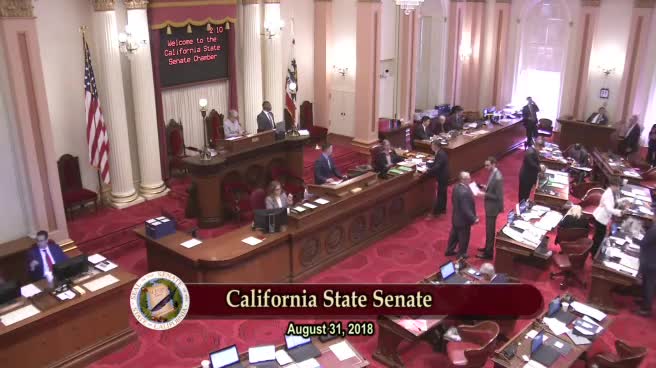
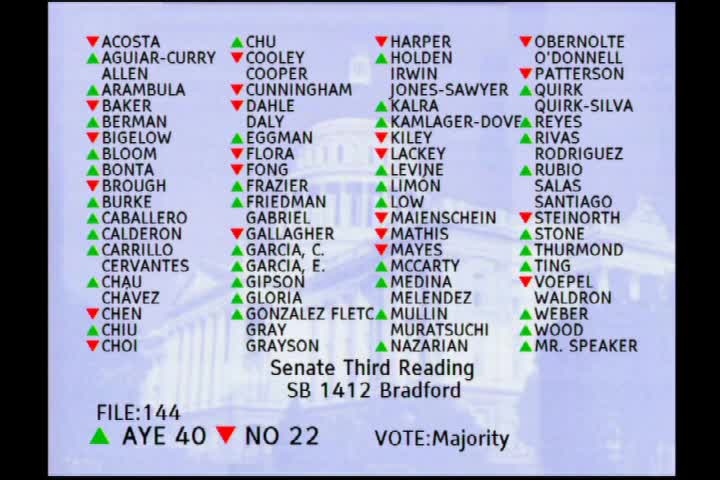

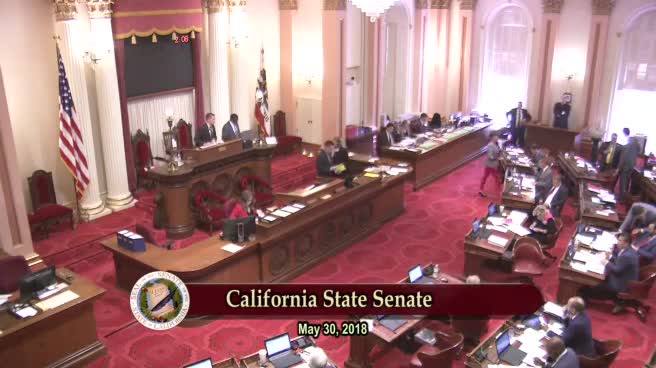
Bill Author








