SB 1456: School employment: Sexual Abuse-Free Education (SAFE) Act.
- Session Year: 2017-2018
- House: Senate
- Latest Version Date: 2018-04-18
(1)Existing law establishes a system of public elementary and secondary schools in this state and authorizes local educational agencies throughout the state to operate schools and provide instruction to pupils in kindergarten and grades 1 to 12, inclusive. Existing law prohibits a person who has been convicted of a violent or serious felony from being hired by a school district in a position requiring certification qualifications or supervising positions requiring certification qualifications. Existing law also prohibits a school district from employing or retaining in employment a person who has been convicted, or who has been convicted following a plea of nolo contendere, of any sex offense, as defined.
This bill, the Sexual Abuse-Free Education (SAFE) Act, would prohibit a school entity, defined as a school district, county office of education, charter school, or private or parochial school, from knowingly hiring a person as an a certificated employee or independent contractor in a position involving direct contact with children, as defined, children, if the person was determined by a current or former employer, as the result of an investigation, to be responsible for an act of child abuse or sexual misconduct with a child, as defined. The bill would require an applicant to provide, on a standard form developed by the State Department of Education, specified information about the applicants employment history and allegations, investigations, or findings of child abuse or sexual misconduct with a child by the applicant to the school entity before the school entity makes an offer of employment with direct contact with children. pupil, unless the allegations of child abuse or sexual misconduct with a pupil were subsequently determined to be false.
The bill would require a school entity to obtain from the current and former employers of the applicant specified information, including, among other things, whether the applicant was the subject of an investigation concerning child abuse or sexual misconduct with a child by an employer, state licensing agency, law enforcement agency, or child protective services agency. The bill would immunize a school entity, school entity official, or other employer from require, when a school entity makes an offer of employment to an applicant for a certificated position involving direct contact with children, and before the applicant may accept the offer, the school entity to contact the superintendent of a school district, or his or her designee, or the equivalent chief executive officer of a charter school or private school, for each of the school entities by which the applicant has been employed, and obtain specified information about the applicant in writing. The bill would provide that school entities and school entity officials would not be subject to civil or criminal liability for the disclosure of information pursuant to these provisions unless the information was disclosed with the knowledge that it was false. The bill
The bill, pursuant to specified statutes, would authorize the Commission on Teacher Credentialing to suspend or revoke the credential of discipline, or take an adverse action against, a certificated school administrator who willfully fails to disclose the information required pursuant to these provisions. The bill would also require, when a school entity makes an offer of employment to an applicant for a certificated position involving direct contact with children, and before the applicant may accept the offer, the school entity to require the applicant to provide a declaration in writing that he or she has not been determined by a current or former employer, as the result of a voluntary resignation or investigation, to be responsible for an act of child abuse or sexual misconduct with a pupil.
The bill would authorize a school entity to hire an applicant for a position involving direct contact with children on a provisional basis for up to 90 days while the disclosure process established by these provisions is pending, provided that specified requirements are met. The bill would prohibit a collective bargaining agreement, termination agreement, severance agreement, or other contract entered into after January 1, 2019, from preventing the disclosure of any information related to child abuse or sexual misconduct with a child, affecting the ability of the school entity to report child abuse or sexual misconduct with a child, or requiring the school entity to expunge information relating to child abuse or sexual misconduct with a child from any document, unless the allegations of child abuse or sexual misconduct with a child are determined to be false.
Because the bill would require school districts, county offices of education, and charter schools to comply with additional requirements before hiring new employees, and to disclose information about former employees who are applicants for certificated positions at other school entities, the bill would impose a state-mandated local program.
(2)The California Constitution requires the state to reimburse local agencies and school districts for certain costs mandated by the state. Statutory provisions establish procedures for making that reimbursement.
This bill would provide that, if the Commission on State Mandates determines that the bill contains costs mandated by the state, reimbursement for those costs shall be made pursuant to the statutory provisions noted above.
(1)Existing law establishes a system of public elementary and secondary schools in this state and authorizes local educational agencies throughout the state to operate schools and provide instruction to pupils in kindergarten and grades 1 to 12, inclusive. Existing law prohibits a person who has been convicted of a violent or serious felony from being hired by a school district in a position requiring certification qualifications or supervising positions requiring certification qualifications. Existing law also prohibits a school district from employing or retaining in employment a person who has been convicted, or who has been convicted following a plea of nolo contendere, of any sex offense, as defined.
This bill, the Providing Safe Schools Act of 2018, Sexual Abuse-Free Education (SAFE) Act, would prohibit a local educational agency school entity, defined as a school district, county office of education, charter school, or private or parochial school, from hiring a person as an employee or independent contractor in a position involving direct contact with children, as defined, if the person was determined by a current or former employer, as the result of an investigation, to be responsible for an act of child abuse or sexual misconduct with a child, as defined. The bill would require, before a local educational agency makes an offer of employment to an applicant for a position involving direct contact with children, the require an applicant to provide, on a standard form developed by the State Department of Education, the local educational agency with specified information about the applicants employment history and allegations, investigations, or findings of child abuse or sexual misconduct with a child by the applicant. applicant to the school entity before the school entity makes an offer of employment with direct contact with children.
The bill would require, when a local educational agency receives that information from the applicant, the local educational agency require a school entity to obtain from the current and former employers of the applicant specified information, including, among other things, whether the applicant was the subject of an investigation concerning child abuse or sexual misconduct with a child by an employer, state licensing agency, law enforcement agency, or child protective services agency. The bill would prohibit a local educational agency, local educational agency immunize a school entity, school entity official, or other employer from being subject to civil or criminal liability for the disclosure of information pursuant to these provisions unless the information was disclosed with the knowledge that it was false. The bill would authorize the Commission on Teacher Credentialing to suspend or revoke the credential of a certificated school administrator who willfully fails to disclose the information required pursuant to these provisions.
The bill would authorize a local educational agency school entity to hire an applicant for a position involving direct contact with children on a provisional basis for up to 90 days while the disclosure process established by these provisions is pending, provided that specified requirements are met. The bill would prohibit a collective bargaining agreement, termination agreement, severance agreement, or other contract entered into after January 1, 2019, from preventing the disclosure of any information related to child abuse or sexual misconduct with a child, affecting the ability of the local educational agency school entity to report child abuse or sexual misconduct with a child, or requiring the local educational agency school entity to expunge information relating to child abuse or sexual misconduct with a child from any document, unless the allegations of child abuse or sexual misconduct with a child are determined to be false.
Because the bill would require local educational agencies school districts, county offices of education, and charter schools to comply with additional requirements before hiring new employees, the bill would impose a state-mandated local program.
(2)The California Constitution requires the state to reimburse local agencies and school districts for certain costs mandated by the state. Statutory provisions establish procedures for making that reimbursement.
This bill would provide that, if the Commission on State Mandates determines that the bill contains costs mandated by the state, reimbursement for those costs shall be made pursuant to the statutory provisions noted above.
(1)Existing law establishes a system of public elementary and secondary schools in this state and authorizes local educational agencies throughout the state to operate schools and provide instruction to pupils in kindergarten and grades 1 to 12, inclusive. Existing law prohibits a person who has been convicted of a violent or serious felony from being hired by a school district in a position requiring certification qualifications or supervising positions requiring certification qualifications. Existing law also prohibits a school district from employing or retaining in employment a person who has been convicted, or who has been convicted following a plea of nolo contendere, of any sex offense, as defined.
This bill, the Providing Safe Schools Act of 2018, would prohibit a local educational agency from hiring a person as an employee or independent contractor in a position involving direct contact with children, as defined, if the person was determined by a current or former employer, as the result of an investigation, to be responsible for an act of child abuse or sexual misconduct with a child, as defined. The bill would require, before a local educational agency makes an offer of employment to an applicant for a position involving direct contact with children, the applicant to provide, on a standard form developed by the State Department of Education, the local educational agency with specified information about the applicants employment history and allegations, investigations, or findings of child abuse or sexual misconduct with a child by the applicant.
The bill would require, when a local educational agency receives that information from the applicant, the local educational agency to obtain from the current and former employers of the applicant specified information, including, among other things, whether the applicant was the subject of an investigation concerning child abuse or sexual misconduct with a child by an employer, state licensing agency, law enforcement agency, or child protective services agency. The bill would prohibit a local educational agency, local educational agency official, or other employer from being subject to civil or criminal liability for the disclosure of information pursuant to these provisions unless the information was disclosed with the knowledge that it was false. The bill would authorize the Commission on Teacher Credentialing to suspend or revoke the credential of a certificated school administrator who willfully fails to disclose the information required pursuant to these provisions.
The bill would authorize a local educational agency to hire an applicant for a position involving direct contact with children on a provisional basis for up to 90 days while the disclosure process established by these provisions is pending, provided that specified requirements are met. The bill would prohibit a collective bargaining agreement, termination agreement, severance agreement, or other contract entered into after January 1, 2019, from preventing the disclosure of any information related to child abuse or sexual misconduct with a child, affecting the ability of the local educational agency to report child abuse or sexual misconduct with a child, or requiring the local educational agency to expunge information relating to child abuse or sexual misconduct with a child from any document, unless the allegations of child abuse or sexual misconduct with a child are determined to be false.
Because the bill would require local educational agencies to comply with additional requirements before hiring new employees, the bill would impose a state-mandated local program.
(2)The California Constitution requires the state to reimburse local agencies and school districts for certain costs mandated by the state. Statutory provisions establish procedures for making that reimbursement.
This bill would provide that, if the Commission on State Mandates determines that the bill contains costs mandated by the state, reimbursement for those costs shall be made pursuant to the statutory provisions noted above.
This chapter shall be known, and may be cited, as the Sexual Abuse-Free Education (SAFE) Act.
45601.(a)(1)A school entity shall not knowingly hire a person as an a certificated employee or independent contractor in a position involving direct contact with children if the person was determined by a current or former employer, as the result of an investigation, to be responsible for an act of child abuse or sexual misconduct with a child. pupil, unless the allegations of child abuse or sexual misconduct with a pupil were subsequently determined to be false.
(2)Notwithstanding any other law, a school entity shall comply with the disclosure requirements described in this section before hiring an employee or independent contractor in a position involving direct contact with children.(b)Before (1)When a school entity makes an offer of employment to an applicant for a certificated position involving direct contact with children, and before the applicant may accept the offer, the school entity shall require the applicant to provide, on a standard form developed by the department, all of the following information: contact the superintendent of the school district, or his or her designee, or the equivalent chief executive officer of a charter school or private school, for each of the school entities by which the applicant has been employed, and obtain all of the following information in writing:
(A)The dates of employment of the applicant.
(B)Whether the applicant was the subject of a substantiated investigation concerning child abuse or sexual misconduct with a pupil and the allegations were not determined to be false.
(C)Whether the applicant was accused of child abuse or sexual misconduct with a pupil and a substantiated investigation was not initiated or completed.
(D)Whether the applicant had a license or certification suspended or revoked while allegations of child abuse or sexual misconduct with a pupil were pending or due to a finding of child abuse or sexual misconduct with a pupil.
(2)If a school entity contacted pursuant to this subdivision possesses information related to the subject matter of subparagraphs (A) to (D), inclusive, of paragraph (1), that school entity shall share it with the requesting school employer.
(3)A school entity or school entity official shall not be subject to civil or criminal liability for the disclosure of information pursuant to this chapter unless the information was disclosed with the knowledge that it was false.
(4)Notwithstanding paragraph (3), a certificated school administrator who willfully fails to disclose information as required pursuant to this chapter may be disciplined by the Commission on Teacher Credentialing pursuant to Section 44421 or may be subject to an adverse action pursuant to Section 44242.5.
(c)When a school entity makes an offer of employment to an applicant for a certificated position involving direct contact with children, and before the applicant may accept the offer, the school entity shall require the applicant to provide a declaration in writing that he or she has not been determined by a current or former employer, as the result of a voluntary resignation or investigation, to be responsible for an act of child abuse or sexual misconduct with a pupil.
(d)For purposes of this chapter:
(1)A school entity is a school district, a county office of education, a charter school, or a private or parochial school.
(2)A substantiated investigation means a fair and objective inquiry consistent with the principles of due process, which will include the right to specific notice of the charges against the accused, an explanation of the employers evidence, and an opportunity to respond to the charges before being deprived of the property interest of his or her employment.
(1)The name, address, telephone number, and other relevant contact information for the applicants current employer, all school entities where the applicant was formerly employed, and all former employers where the applicant had direct contact with children.(2)A written authorization for the current and former employers of the applicant to disclose information and release records about allegations, investigations, or findings of child abuse or sexual misconduct with a child by the applicant. The authorization shall release the current and former employers from liability for disclosing that information or releasing those records.(3)A written statement that includes all of the following:(A)Whether the applicant was the subject of an investigation concerning child abuse or sexual misconduct with a child by an employer, state licensing agency, law enforcement agency, or child protective services agency. An investigation of child abuse or sexual misconduct with a child where the allegations were determined to be false is not required to be reported by this subparagraph.(B)Whether the applicant was disciplined, was discharged, was asked to resign, resigned, did not have his or her employment renewed, or was separated from employment while under investigation for child abuse or sexual misconduct with a child.(C)Whether the applicant had a license or certification suspended or revoked while allegations of child abuse or sexual misconduct with a child were pending or due to a finding of child abuse or sexual misconduct with a child.(c)(1)When a school entity receives the information described in subdivision (b), the school entity shall conduct a review of the employers identified by the applicant and obtain the following information from those employers:(A)The dates of employment of the applicant.(B)A written statement that includes all of the following:(i)Whether the applicant was the subject of an investigation concerning child abuse or sexual misconduct with a child by an employer, state licensing agency, law enforcement agency, or child protective services agency. An investigation of child abuse or sexual misconduct with a child where the allegations were determined to be false is not required to be reported by this subparagraph.(ii)Whether the applicant was disciplined, was discharged, was asked to resign, resigned, did not have his or her employment renewed, or was separated from employment while under investigation for child abuse or sexual misconduct with a child.(iii)Whether the applicant had a license or certification suspended or revoked while allegations of child abuse or sexual misconduct with a child were pending or due to a finding of child abuse or sexual misconduct with a child.(2)(A)A current or former employer of an applicant shall disclose to the school entity that is considering employment of the applicant, on a standard form developed by the department, all of the information described in paragraph (1) no later than 20 days after it receives the request from the school entity. The completed form shall be made available to the public.(B)If the information received from a current or former employer of the applicant indicates that the applicant was subject to an allegation, investigation, or disciplinary action relating to child abuse or sexual misconduct with a child, the school entity shall request the current or former employer to provide additional information and all relevant records relating to the incident. The current or former employer shall provide the requested information to the school entity no later than 60 days after it receives the request.(d)For purposes of a substitute employee, the requirements described in this section shall apply only to the initial hiring of the substitute employee by a school entity.(e)Nothing in this chapter shall be construed to require a school entity to comply with the requirements described in this section when an existing employee of the school entity transfers to a different position within the school entity.(f)For purposes of this chapter, the following terms have the following meanings:(1)Child abuse or sexual misconduct with a child means both of the following:(A)Child abuse or neglect, as defined in Section 11165.6 of the Penal Code.(B)A sex offense, as defined in Section 44010, committed against a pupil.(2)Direct contact with children means the possibility of care, supervision, guidance, or control of children, or routine interaction with children.(3)School entity means a school district, county office of education, charter school, or private or parochial school.45602.(a)A school entity, school entity official, or other employer shall not be subject to civil or criminal liability for the disclosure of information pursuant to this chapter unless the information was disclosed with the knowledge that it was false.(b)Pursuant to Article 1 (commencing with Section 44420) of Chapter 3, the Commission on Teacher Credentialing may suspend or revoke the credential of a certificated school administrator who willfully fails to disclose the information required pursuant to this chapter.45603.While the disclosure process established in Section 45601 is pending, a school entity may hire an applicant for a position involving direct contact with children on a provisional basis for up to 90 days, provided that all of the following requirements are satisfied:(a)The applicant provides the school entity with the information described in subdivision (b) of Section 45601.(b)The school entity has no knowledge of any information that would make the applicant ineligible for employment.(c)The applicant affirms that he or she is not ineligible for employment.(d)The applicant is prohibited from working alone with children and works in the immediate vicinity of a regular employee of the school entity.45604.45602.A collective bargaining agreement, termination agreement, severance agreement, or other contract entered into after January 1, 2019, shall not prevent the disclosure of any information related to child abuse or sexual misconduct with a child, affect the ability of the school entity to report child abuse or sexual misconduct with a child, or require the school entity to expunge information relating to child abuse or sexual misconduct with a child from any document, unless the allegations of child abuse or sexual misconduct with a child are determined to be false.
SEC. 2.If the Commission on State Mandates determines that this act contains costs mandated by the state, reimbursement to local agencies and school districts for those costs shall be made pursuant to Part 7 (commencing with Section 17500) of Division 4 of Title 2 of the Government Code.
This chapter shall be known, and may be cited, as the Providing Safe Schools Act of 2018. Sexual Abuse-Free Education (SAFE) Act.
45601.(a)(1)A local educational agency school entity shall not hire a person as an employee or independent contractor in a position involving direct contact with children if the person was determined by a current or former employer, as the result of an investigation, to be responsible for an act of child abuse or sexual misconduct with a child.
(2)Notwithstanding any other law, a local educational agency school entity shall comply with the disclosure requirements described in this section before hiring an employee or independent contractor in a position involving direct contact with children.
(b)Before a local educational agency school entity makes an offer of employment to an applicant for a position involving direct contact with children, the local educational agency school entity shall require the applicant to provide, on a standard form developed by the department, all of the following information:
(1)The name, address, telephone number, and other relevant contact information for the applicants current employer, all local educational agencies school entities where the applicant was formerly employed, and all former employers where the applicant had direct contact with children.
(2)A written authorization for the current and former employers of the applicant to disclose information and release records about allegations, investigations, or findings of child abuse or sexual misconduct with a child by the applicant. The authorization shall release the current and former employers from liability for disclosing that information or releasing those records.
(3)A written statement that includes all of the following:
(A)Whether the applicant was the subject of an investigation concerning child abuse or sexual misconduct with a child by an employer, state licensing agency, law enforcement agency, or child protective services agency. An investigation of child abuse or sexual misconduct with a child where the allegations were determined to be false is not required to be reported by this subparagraph.
(B)Whether the applicant was disciplined, was discharged, was asked to resign, resigned, did not have his or her employment renewed, or was separated from employment while under investigation for child abuse or sexual misconduct with a child.
(C)Whether the applicant had a license or certification suspended or revoked while allegations of child abuse or sexual misconduct with a child were pending or due to a finding of child abuse or sexual misconduct with a child.
(c)(1)When a local educational agency school entity receives the information described in subdivision (b), the local educational agency school entity shall conduct a review of the employers identified by the applicant and obtain the following information from those employers:
(A)The dates of employment of the applicant.
(B)A written statement that includes all of the following:
(i)Whether the applicant was the subject of an investigation concerning child abuse or sexual misconduct with a child by an employer, state licensing agency, law enforcement agency, or child protective services agency. An investigation of child abuse or sexual misconduct with a child where the allegations were determined to be false is not required to be reported by this subparagraph.
(ii)Whether the applicant was disciplined, was discharged, was asked to resign, resigned, did not have his or her employment renewed, or was separated from employment while under investigation for child abuse or sexual misconduct with a child.
(iii)Whether the applicant had a license or certification suspended or revoked while allegations of child abuse or sexual misconduct with a child were pending or due to a finding of child abuse or sexual misconduct with a child.
(2)(A)A current or former employer of an applicant shall disclose to the local educational agency school entity that is considering employment of the applicant, on a standard form developed by the department, all of the information described in paragraph (1) no later than 20 days after it receives the request from the local educational agency. school entity. The completed form shall be made available to the public.
(B)If the information received from a current or former employer of the applicant indicates that the applicant was subject to an allegation, investigation, or disciplinary action relating to child abuse or sexual misconduct with a child, the local educational agency school entity shall request the current or former employer to provide additional information and all relevant records relating to the incident. The current or former employer shall provide the requested information to the local educational agency school entity no later than 60 days after it receives the request.
(d)For purposes of a substitute employee, the requirements described in this section shall apply only to the initial hiring of the substitute employee by a local educational agency. school entity.
(e)Nothing in this chapter shall be construed to require a local educational agency school entity to comply with the requirements described in this section when an existing employee of the local educational agency school entity transfers to a different position within the local educational agency. school entity.
(f)For purposes of this chapter, the following terms have the following meanings:
(1)Child abuse or sexual misconduct with a child has the same meaning as the term child abuse or neglect, as that term is defined in Section 11165.6 of the Penal Code. means both of the following:
(A)Child abuse or neglect, as defined in Section 11165.6 of the Penal Code.
(B)A sex offense, as defined in Section 44010, committed against a pupil.
(2)Direct contact with children means the possibility of care, supervision, guidance, or control of children, or routine interaction with children.
(3)Local educational agency School entity means a school district, county office of education, or charter school. school, or private or parochial school.
45602.(a)A local educational agency, local educational agency school entity, school entity official, or other employer shall not be subject to civil or criminal liability for the disclosure of information pursuant to this chapter unless the information was disclosed with the knowledge that it was false.
(b)Pursuant to Article 1 (commencing with Section 44420) of Chapter 3, the Commission on Teacher Credentialing may suspend or revoke the credential of a certificated school administrator who willfully fails to disclose the information required pursuant to this chapter.
45603.While the disclosure process established in Section 45601 is pending, a local educational agency school entity may hire an applicant for a position involving direct contact with children on a provisional basis for up to 90 days, provided that all of the following requirements are satisfied:
(a)The applicant provides the local educational agency school entity with the information described in subdivision (b) of Section 45601.
(b)The local educational agency school entity has no knowledge of any information that would make the applicant ineligible for employment.
(c)The applicant affirms that he or she is not ineligible for employment.
(d)The applicant is prohibited from working alone with children and works in the immediate vicinity of a regular employee of the local educational agency. school entity.
45604.A collective bargaining agreement, termination agreement, severance agreement, or other contract entered into after January 1, 2019, shall not prevent the disclosure of any information related to child abuse or sexual misconduct with a child, affect the ability of the local educational agency school entity to report child abuse or sexual misconduct with a child, or require the local educational agency school entity to expunge information relating to child abuse or sexual misconduct with a child from any document, unless the allegations of child abuse or sexual misconduct with a child are determined to be false.
SEC. 2.If the Commission on State Mandates determines that this act contains costs mandated by the state, reimbursement to local agencies and school districts for those costs shall be made pursuant to Part 7 (commencing with Section 17500) of Division 4 of Title 2 of the Government Code.
This chapter shall be known, and may be cited, as the Providing Safe Schools Act of 2018.
45601.(a)(1)A local educational agency shall not hire a person as an employee or independent contractor in a position involving direct contact with children if the person was determined by a current or former employer, as the result of an investigation, to be responsible for an act of child abuse or sexual misconduct with a child.
(2)Notwithstanding any other law, a local educational agency shall comply with the disclosure requirements described in this section before hiring an employee or independent contractor in a position involving direct contact with children.
(b)Before a local educational agency makes an offer of employment to an applicant for a position involving direct contact with children, the local educational agency shall require the applicant to provide, on a standard form developed by the department, all of the following information:
(1)The name, address, telephone number, and other relevant contact information for the applicants current employer, all local educational agencies where the applicant was formerly employed, and all former employers where the applicant had direct contact with children.
(2)A written authorization for the current and former employers of the applicant to disclose information and release records about allegations, investigations, or findings of child abuse or sexual misconduct with a child by the applicant. The authorization shall release the current and former employers from liability for disclosing that information or releasing those records.
(3)A written statement that includes all of the following:
(A)Whether the applicant was the subject of an investigation concerning child abuse or sexual misconduct with a child by an employer, state licensing agency, law enforcement agency, or child protective services agency. An investigation of child abuse or sexual misconduct with a child where the allegations were determined to be false is not required to be reported by this subparagraph.
(B)Whether the applicant was disciplined, was discharged, was asked to resign, resigned, did not have his or her employment renewed, or was separated from employment while under investigation for child abuse or sexual misconduct with a child.
(C)Whether the applicant had a license or certification suspended or revoked while allegations of child abuse or sexual misconduct with a child were pending or due to a finding of child abuse or sexual misconduct with a child.
(c)(1)When a local educational agency receives the information described in subdivision (b), the local educational agency shall conduct a review of the employers identified by the applicant and obtain the following information from those employers:
(A)The dates of employment of the applicant.
(B)A written statement that includes all of the following:
(i)Whether the applicant was the subject of an investigation concerning child abuse or sexual misconduct with a child by an employer, state licensing agency, law enforcement agency, or child protective services agency. An investigation of child abuse or sexual misconduct with a child where the allegations were determined to be false is not required to be reported by this subparagraph.
(ii)Whether the applicant was disciplined, was discharged, was asked to resign, resigned, did not have his or her employment renewed, or was separated from employment while under investigation for child abuse or sexual misconduct with a child.
(iii)Whether the applicant had a license or certification suspended or revoked while allegations of child abuse or sexual misconduct with a child were pending or due to a finding of child abuse or sexual misconduct with a child.
(2)(A)A current or former employer of an applicant shall disclose to the local educational agency that is considering employment of the applicant, on a standard form developed by the department, all of the information described in paragraph (1) no later than 20 days after it receives the request from the local educational agency. The completed form shall be made available to the public.
(B)If the information received from a current or former employer of the applicant indicates that the applicant was subject to an allegation, investigation, or disciplinary action relating to child abuse or sexual misconduct with a child, the local educational agency shall request the current or former employer to provide additional information and all relevant records relating to the incident. The current or former employer shall provide the requested information to the local educational agency no later than 60 days after it receives the request.
(d)For purposes of a substitute employee, the requirements described in this section shall apply only to the initial hiring of the substitute employee by a local educational agency.
(e)Nothing in this chapter shall be construed to require a local educational agency to comply with the requirements described in this section when an existing employee of the local educational agency transfers to a different position within the local educational agency.
(f)For purposes of this chapter, the following terms have the following meanings:
(1)Child abuse or sexual misconduct with a child has the same meaning as the term child abuse or neglect, as that term is defined in Section 11165.6 of the Penal Code.
(2)Direct contact with children means the possibility of care, supervision, guidance, or control of children, or routine interaction with children.
(3)Local educational agency means a school district, county office of education, or charter school.
45602.(a)A local educational agency, local educational agency official, or other employer shall not be subject to civil or criminal liability for the disclosure of information pursuant to this chapter unless the information was disclosed with the knowledge that it was false.
(b)Pursuant to Article 1 (commencing with Section 44420) of Chapter 3, the Commission on Teacher Credentialing may suspend or revoke the credential of a certificated school administrator who willfully fails to disclose the information required pursuant to this chapter.
45603.While the disclosure process established in Section 45601 is pending, a local educational agency may hire an applicant for a position involving direct contact with children on a provisional basis for up to 90 days, provided that all of the following requirements are satisfied:
(a)The applicant provides the local educational agency with the information described in subdivision (b) of Section 45601.
(b)The local educational agency has no knowledge of any information that would make the applicant ineligible for employment.
(c)The applicant affirms that he or she is not ineligible for employment.
(d)The applicant is prohibited from working alone with children and works in the immediate vicinity of a regular employee of the local educational agency.
45604.A collective bargaining agreement, termination agreement, severance agreement, or other contract entered into after January 1, 2019, shall not prevent the disclosure of any information related to child abuse or sexual misconduct with a child, affect the ability of the local educational agency to report child abuse or sexual misconduct with a child, or require the local educational agency to expunge information relating to child abuse or sexual misconduct with a child from any document, unless the allegations of child abuse or sexual misconduct with a child are determined to be false.
SEC. 2.If the Commission on State Mandates determines that this act contains costs mandated by the state, reimbursement to local agencies and school districts for those costs shall be made pursuant to Part 7 (commencing with Section 17500) of Division 4 of Title 2 of the Government Code.
|
Date
|
Status
|
|---|---|
| Apr 18, 2018 | Read second time and amended. Re-referred to Com. on JUD. |
| Apr 17, 2018 | From committee: Do pass as amended and re-refer to Com. on JUD. (Ayes 6. Noes 0.) (April 11). |
| Apr 3, 2018 | From committee with author's amendments. Read second time and amended. Re-referred to Com. on ED. |
| Mar 23, 2018 | Set for hearing April 11. |
| Mar 22, 2018 | April 4 set for first hearing canceled at the request of author. |
| Mar 13, 2018 | Set for hearing April 4. |
| Mar 8, 2018 | Referred to Coms. on ED. and JUD. |
| Feb 20, 2018 | From printer. May be acted upon on or after March 22. |
| Feb 16, 2018 | Introduced. Read first time. To Com. on RLS. for assignment. To print. |
|
Date
|
Description
|
Location
|
Votes
|
|
|---|---|---|---|---|
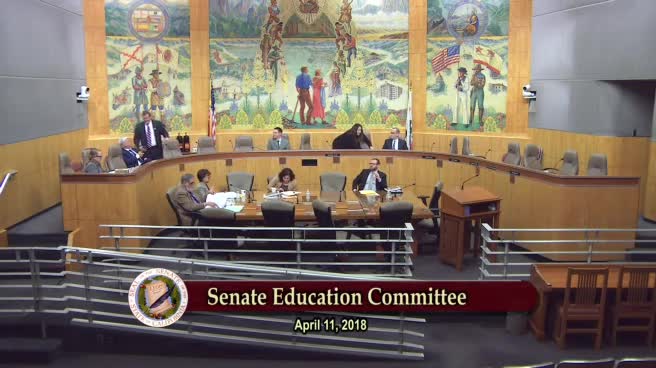
| Apr 11, 2018 | Do pass as amended, but first amend, and re-refer to the Committee on [Judiciary] | Senate Standing Committee on Education |
Passed |
This list shows positions taken on this bill by organizations on the date displayed, which is linked to the original source.
Positions by individuals are not included.
SENATE COMMITTEE ON EDUCATION
Senator Benjamin Allen, Chair
2017 - 2018 Regular
Bill No: SB 1456 Hearing Date: April 4, 2018
Author: | Morrell | ||
Version: | February 16, 2018 | ||
Urgency: | No | Fiscal: | Yes |
Consultant: | Ian Johnson | ||
Subject: School employment: Providing Safe Schools Act of 2018
NOTE: This bill has been referred to the Committees on Education and Judiciary. A "do pass" motion should include referral to the Committee on Judiciary.
SUMMARY
This bill establishes the Sexual Abuse-Free Education Act, which would: (1) prohibit public and private school entities from hiring individuals that would have direct contact with children if they were previously convicted of child abuse or sexual misconduct with a child, (2) require applicants for school entity positions that would have direct contact with children to provide specified information about whether the applicant has ever been the subject of an investigation concerning child abuse or sexual misconduct with a child, and (3) require school entities to conduct reviews of the information provided by the applicants, including obtaining specified information from the current and each former employer.
BACKGROUND
Existing law prohibits the governing board of a school district from employing or retaining employment of the following persons:
- Persons who have been convicted of a violent or serious felony unless the person has obtained a certificate of rehabilitation and pardon.
- Persons who have been convicted of specified sex offenses unless the conviction was reversed, the person was acquitted, or the conviction was dismissed pursuant to Section 1203.4 of the Penal Code.
- Persons who have been convicted of specified drug offenses unless the conviction is reversed, the person is acquitted, or the charges are dismissed.
Existing law related to certificated school employees:
- Defines which sex offenses require immediate suspension and revocation of a teaching credential or denial of a credential application by the Commission on Teacher Credentialing (CTC).
- Requires the CTC to immediately suspend a credential when the holder has been charged with certain sex or controlled substance offenses and to revoke the credential upon conviction.
- Requires the Commission on Teacher Credentialing (CTC) to revoke a credential when the holder has been convicted of certain sex offenses or controlled substance offenses and prohibits reinstatement of the credential for certain felony offenses.
- Establishes the Committee of Credentials for the purpose of reviewing allegations that may be grounds for the denial, suspension, or revocation of a teaching or services credential issued by the CTC.
Existing law related to non-certificated employees:
- Requires all schools to conduct criminal background checks before employing individuals in non-certificated positions and before contracting with an entity for employees that may interact with pupils.
- Requires any agency that receives criminal history information from the Department of Justice (DOJ) to designate at least one custodian of records, confirmed by a state and federal level criminal background check.
- Specifies that any person who, knowing he or she is not authorized by law to receive criminal history information, knowingly receives or possesses the record or information is guilty of a misdemeanor.
- Authorizes a school district or county office of education to request from the DOJ any records involving criminal offenses committed by a prospective volunteer and arrest notification services.
- Prohibits school districts from employing persons convicted of a violent or serious felony, a specified sex offense, or a specified drug offense, unless the conviction is reversed, the person is acquitted, or the charges are dismissed.
Under existing Penal Code, sex offender registrants, whose sex crime was against a victim under age 16, are prohibited from working as an employee or volunteer with minors if the registrants would be working with minors directly and in an unaccompanied setting on more than an incidental or occasional basis or would have supervisory or disciplinary power over the child. If a registrant’s crime was not against a victim under age 16, the registrant must notify the employer or volunteer organization of his status as a registrant. Failure to comply with this law is a misdemeanor offense.
Existing law specifies that school districts, county offices of education, and charter schools are prohibited from entering into an agreement that would authorize expunging from a school employee’s personnel file credible complaints of, substantiated investigations into, or discipline for, egregious misconduct. Egregious misconduct includes sex offenses, controlled substance offenses, and child abuse and neglect offenses. However, this prohibition does not preclude any agreement to remove documents containing allegations that have been the subject of a hearing before an arbitrator, school board, personnel commission, Commission on Professional Competence, or administrative law judge, in which the employee prevailed, the allegations were determined to be false, not credible, or unsubstantiated, or a determination was made that the discipline was not warranted.
ANALYSIS
This bill establishes the Sexual Abuse-Free Education Act, which would: (1) prohibit public and private school entities from hiring individuals that would have direct contact with children if they were previously convicted of child abuse or sexual misconduct with a child, (2) require applicants for school entity positions that would have direct contact with children to provide specified information about whether the applicant has ever been the subject of an investigation concerning child abuse or sexual misconduct with a child, and (3) require school entities to conduct reviews of the information provided by the applicants, including obtaining specified information from the current and each former employer.
Specifically, this bill:
- Prohibits a school entity, defined as a school district, county office of education, charter school, or private or parochial school, from hiring an employee or independent contractor in a position involving direct contact with children if the person was determined by a current or former employer, as the result of an investigation, to be responsible for an act of child abuse or sexual misconduct with a child.
- Requires school entities, before making an offer of employment to an applicant for a position involving direct contact with children, to require the applicant to provide, on a standard form developed by the California Department of Education, all of the following information:
- The name, address, telephone number, and other relevant contact information for the applicant’s current employer, all school entities where the applicant was formerly employed, and all former employers where the applicant had direct contact with children.
- A written authorization for the current and former employers of the applicant to disclose information and release records about allegations, investigations, or findings of child abuse or sexual misconduct with a child by the applicant. The authorization shall release the current and former employers from liability for disclosing that information or releasing those records.
- A written statement that includes all of the following:
- Whether the applicant was the subject of an investigation concerning child abuse or sexual misconduct with a child by an employer, state licensing agency, law enforcement agency, or child protective services agency. An investigation of child abuse or sexual misconduct with a child where the allegations were determined to be false is not required to be reported by this subparagraph.
- Whether the applicant was disciplined, was discharged, was asked to resign, resigned, did not have his or her employment renewed, or was separated from employment while under investigation for child abuse or sexual misconduct with a child.
- Whether the applicant had a license or certification suspended or revoked while allegations of child abuse or sexual misconduct with a child were pending or due to a finding of child abuse or sexual misconduct with a child.
- Specifies that when a school entity receives the information described above, the entity shall conduct a review of the employers identified by the applicant and obtain the following information from those employers:
- The dates of employment of the applicant.
- A written statement that includes all of the following:
- Whether the applicant was the subject of an investigation concerning child abuse or sexual misconduct with a child by an employer, state licensing agency, law enforcement agency, or child protective services agency. An investigation of child abuse or sexual misconduct with a child where the allegations were determined to be false is not required to be reported.
- Whether the applicant was disciplined, was discharged, was asked to resign, resigned, did not have his or her employment renewed, or was separated from employment while under investigation for child abuse or sexual misconduct with a child.
- Whether the applicant had a license or certification suspended or revoked while allegations of child abuse or sexual misconduct with a child were pending or due to a finding of child abuse or sexual misconduct with a child.
- Requires a current or former employer of an applicant to disclose to the school entity that is considering employment of the applicant, on a standard form developed by the California Department of Education, all of the information described above no later than 20 days after it receives the request from the entity with the completed form made available to the public.
- Specifies that if the information received from a current or former employer of the applicant indicates that the applicant was subject to an allegation, investigation, or disciplinary action relating to child abuse or sexual misconduct with a child, the school entity shall request the current or former employer to provide additional information and all relevant records relating to the incident. The current or former employer shall provide the requested information to the school entity no later than 60 days after it receives the request.
- Applies the requirements described above to only the initial hiring of a substitute employee by a school entity.
- Specifies that nothing in the bill shall be construed to require a school entity to comply with the requirements described above when an existing employee of the school entity transfers to a different position within the entity.
- Defines “child abuse or sexual misconduct with a child” as both of the following:
- “Child abuse or neglect,” as defined in Section 11165.6 of the Penal Code.
- A “sex offense,” as defined in Section 44010, committed against a pupil.
- Defines “direct contact with children” as the possibility of care, supervision, guidance, or control of children, or routine interaction with children.
- Defines a “school entity” as a school district, county office of education, charter school, or private or parochial school.
- Specifies that a school entity, school entity official, or other employee shall not be subject to civil or criminal liability for the disclosure of information described above unless the information was disclosed with the knowledge that it was false.
- Allows the Commission on Teacher Credentialing to suspend or revoke the credential of a certificated school administrator who willfully fails to disclose the information described above.
- Allows a school entity, while the disclosure process required by this bill is pending, to hire an applicant for a position involving direct contact with children on a provisional basis for up to 90 days, provided that all of the following requirements are satisfied:
- The applicant provides the school entity with the information described above.
- The school entity has no knowledge of any information that would make the applicant ineligible for employment.
- The applicant affirms that he or she is not ineligible for employment.
- The applicant is prohibited from working alone with children and works in the immediate vicinity of a regular employee of the school entity.
- Specifies that a collective bargaining, termination, or severance agreement, or other contract, entered into after January 1, 2019, shall not prevent the disclosure of any information related to child abuse or sexual misconduct with a child, affect the ability of the school entity to report child abuse or sexual misconduct with a child, or require the school entity to expunge information relating to child abuse or sexual misconduct with a child from any document, unless the allegations of child abuse or sexual misconduct with a child are determined to be false.
STAFF COMMENTS
- Need for the bill. According to the author, “The vast majority of teachers and other school employees are dedicated and caring professionals who commit their lives to educating our children. However, as in any profession, there are bad actors. The actions of these individuals need to be dealt with swiftly and appropriately - especially in the education system where these perpetrators are spending time with our children. There have been a number of high profile cases involving educators who have acted inappropriately- taking advantage of their students.
However, too often, school employees who are sexually molesting students are allowed to resign from one school district and simply move on to another without proper reporting –a practice cynically referred to in the education community as “passing the trash.”
Even though mandated reporters failing to make a required report are guilty of a misdemeanor punishable by up to six months in jail and/or up to a $1,000 fine, we continue to see these tragic cases.
The current system, which should quite obviously stop abuse and prevent employees from preying on students, is failing. It is unbelievably irresponsible to actively conceal a predator by simply allowing them to quietly resign only to pick up in another district and continue on with the abuse.”
“Strengthening oversight needs to become a priority–preventing predatory teachers from getting back into the classroom and continuing to have access to our children. SB 1456 will help ensure the protection of our children by requiring information sharing between employers in instances of sexual misconduct and violence.”
- Employer references and defamation liability. When employers are asked to give references for former, or soon to be former, employees, their safest approach from a liability perspective is to simply confirm employment, the date of hire and termination, and the position held. Unfortunately, this approach completely undermines the purpose and value of a referral. School districts in particular have a duty to reasonably investigate prospective employees to ensure the safety of their students. A school district that accepts a neutral referral, and takes no further action to investigate a prospective employee's background and history, may find itself subject to a negligent hiring lawsuit in the event that the employee has a history of sexual abuse, physical abuse, or similar misconduct.
Conversely, there is an incentive for all employers, including school districts, to not provide full and complete disclosure of an employee's work history for fear of a defamation lawsuit. Legal experts with experience in the time and expenses associated with these suits routinely advise employers to share as little as possible.
Ultimately, this bill seeks to address the most difficult situations. Specifically, those instances when an employee is accused of misconduct for which there is some proof, but not enough to convincingly establish that the employee did or did not commit an offense. Moreover, there are instances when amidst such an investigation, the employee changes employers. Should a letter of reference be given for a teacher who has an outstanding work history, but who has been accused by a student of inappropriate sexual misconduct, which the teacher denies, and for which there is little corroborating evidence one way or the other?
- A high standard for school employees is a good thing. The Legislature has repeatedly established high “fitness” standards for individuals who work near and around vulnerable populations, including children. Several sections of existing education law prohibit individuals convicted of certain crimes from being employed by school districts. However, supporters of this measure state that children are victimized by a loophole allowing school employees accused of sexual misconduct to quietly move from school to school before investigations into the allegations are completed and without the new employer being made aware.
- School districts must report teacher employment changes due to allegations of misconduct to the state. Under current law, the superintendent of an employing school district must report a change in employment status to the Commission on Teacher Credentialing (CTC) not later than 30 days after the final employment action whenever a credential holder, working in a position requiring a credential, as a result of an allegation of misconduct or while an allegation of misconduct is pending, is dismissed, resigns, is suspended or placed on administrative leave, retires, or is otherwise terminated. Among the information that must be reported for these individuals is an explanation of the allegation of misconduct, contact information for all persons who may have information relating to the alleged misconduct, and all documentation related to the case.
While the requirement for school districts to report teacher employment changes due to allegations of misconduct is intended to help protect students, not all school districts have access to this information. After accounting for the amendments outlined below, this bill could be used as a means to facilitate better communication among local school entities about school teacher misconduct.
- Amendments proposed by Education Committee staff. Several issues have been raised by school district administrators and school employee representatives about this bill as currently drafted. To address each of these issues, staff recommends that the bill be amended as follows:
- Limit the bill to certificated employees only, for now. The bill currently applies to all employees, including classified employees and independent contractors. The CTC receives and monitors allegations and investigations of misconduct by certificated teachers, with its Committee on Credentials making recommendations about any adverse actions. Further, the Department of Justice notifies the CTC when credential holders are arrested for or convicted of crimes. There is no such state-level clearinghouse for classified employees, which could result in unintended consequences related to rumors or unsubstantiated allegations barring education employment for certain individuals. Until the state develops some sort of an employee monitoring system for its classified school employees, this bill should be limited to certificated employees only.
- Limit the entities that employers must contact for reference checks to public and private schools only. The bill’s requirement for potential employers to contact every former employer of an applicant, whether public or private, and for the former employers to be required to share any allegations of sexual misconduct or child abuse, has raised concerns. Specifically, it is unclear how the provisions of this bill could compel a private entity to share this information. For example, it is common for individuals working for private health care providers to apply for school nursing positions, and for those health care providers to only confirm employment and positions held when asked for a reference.
- Limit the sharing of unsubstantiated allegations to instances when a teacher ends employment before an investigation concerning sexual misconduct with a child or child abuse is completed. Currently, this bill would result in the sharing of any allegations related to sexual misconduct with a child or child abuse brought against an employee, requiring the allegations to follow the employee indefinitely like a scarlet letter. The only exception would be those allegations that, after a full investigation, are found to be false. While well intentioned, requiring this level of sharing by current and former employers of applicants could be negatively exploited. Because the stated goal of this bill is to protect against teachers that leave districts while under a cloud of suspicion, the reference check requirements of this bill should be limited to those instances.
- Place the reference sharing requirements on district superintendents or their designees. The bill would currently allow the Commission on Teacher Credentialing to suspend or revoke a teacher credential if, when providing a reference, the individual does not share all information related to sexual misconduct with a child or child abuse. This could be problematic when school employees such as principals, or other non-legal expert individuals, are used as references for school employees. For sensitive information related to sexual misconduct and child abuse, the reference sharing requirement should be elevated to the district superintendent or his or her designee, presumably a human resource or personnel director.
- Clear reference providers from civil or criminal liability. Concerns have been raised about the liability that school administrators and other employees that currently provide references would be subject to under this bill. To address these concerns, the bill should be amended to limit civil or criminal liability to only those individuals that knowingly provide false information.
- Amendments to be developed by Judiciary Committee staff. Concerns have also been raised by those representing school employees related to the procedural rights of accused employees. Specifically, there is concern that employees with allegations against them will have no mechanism through which to defend themselves because no such process is built into the bill. Allegations of sexual misconduct with a child and child abuse are some of the most powerful allegations that can be made against a school employee, even when no abuse has occurred. If it is the will of the Committee to pass this measure, staff recommends that the author work with the Senate Judiciary Committee to amend the bill to ensure that applicants who have previously been accused of sexual misconduct with a child or child abuse have a meaningful opportunity to respond to those allegations before the employer rescinds its offer of employment. The author should also work with Judiciary Committee to consider whether it is appropriate for school entities to cease investigations of employee misconduct upon the employee ending his or her employment with the district.
SUPPORT
Stop Educator Sexual Abuse Misconduct & Exploitation
OPPOSITION
American Civil Liberties Union
California School Employees Association
-- END --
Bill Author