SB 1484: Sales and use taxes: exemption: charitable thrift stores.
- Session Year: 2017-2018
- House: Senate
- Latest Version Date: 2018-09-23
Existing sales and use tax laws impose taxes on retailers measured by gross receipts from the sale of tangible personal property sold at retail in this state, or on the storage, use, or other consumption in this state of tangible personal property purchased from a retailer for storage, use, or other consumption in this state. The Sales and Use Tax Law provides various exemptions from this tax, including an exemption for retail items sold by thrift stores operated by nonprofit organizations, if the purpose of that thrift store is to obtain funding for medical, hospice, or social services provided to individuals with HIV or AIDS by the nonprofit organization, as provided. This exemption will be repealed January 1, 2019.
This bill would extend the operation of this exemption until January 1, 2029.
The Bradley-Burns Uniform Local Sales and Use Tax Law authorizes counties and cities to impose local sales and use taxes in conformity with the Sales and Use Tax Law, and existing laws authorize districts, as specified, to impose transactions and use taxes in accordance with the Transactions and Use Tax Law, which generally conforms to the Sales and Use Tax Law. Amendments to the Sales and Use Tax Law are automatically incorporated into the local tax laws.
Existing law requires the state to reimburse counties and cities for revenue losses caused by the enactment of sales and use tax exemptions.
This bill, by automatically incorporating the amendments made to the Sales and Use Tax Law by the bill, would also extend the operation of the exemption indefinitely for those local sales and use taxes and transactions and use taxes.
This bill would provide that, notwithstanding Section 2230 of the Revenue and Taxation Code, no appropriation is made and the state shall not reimburse any local agencies for sales and use tax revenues lost by them pursuant to this bill.
This bill would take effect immediately as a tax levy.
Existing sales and use tax laws impose taxes on retailers measured by gross receipts from the sale of tangible personal property sold at retail in this state, or on the storage, use, or other consumption in this state of tangible personal property purchased from a retailer for storage, use, or other consumption in this state. The Sales and Use Tax Law provides various exemptions from this tax, including an exemption for retail items sold by thrift stores operated by nonprofit organizations, if the purpose of that thrift store is to obtain funding for medical, hospice, or social services provided to individuals with HIV or AIDS by the nonprofit organization, as provided. This exemption will be repealed January 1, 2019.
This bill would delete that January 1, 2019, repeal date, thereby extending the operation of that exemption indefinitely. extend the operation of this exemption until January 1, 2029.
The Bradley-Burns Uniform Local Sales and Use Tax Law authorizes counties and cities to impose local sales and use taxes in conformity with the Sales and Use Tax Law, and existing laws authorize districts, as specified, to impose transactions and use taxes in accordance with the Transactions and Use Tax Law, which generally conforms to the Sales and Use Tax Law. Amendments to the Sales and Use Tax Law are automatically incorporated into the local tax laws.
Existing law requires the state to reimburse counties and cities for revenue losses caused by the enactment of sales and use tax exemptions.
This bill, by automatically incorporating the amendments made to the Sales and Use Tax Law by the bill, would also extend the operation of the exemption indefinitely for those local sales and use taxes and transactions and use taxes.
This bill would provide that, notwithstanding Section 2230 of the Revenue and Taxation Code, no appropriation is made and the state shall not reimburse any local agencies for sales and use tax revenues lost by them pursuant to this bill.
This bill would take effect immediately as a tax levy.
Existing sales and use tax laws impose taxes on retailers measured by gross receipts from the sale of tangible personal property sold at retail in this state, or on the storage, use, or other consumption in this state of tangible personal property purchased from a retailer for storage, use, or other consumption in this state. The Sales and Use Tax Law provides various exemptions from this tax, including an exemption for retail items sold by thrift stores operated by nonprofit organizations, if the purpose of that thrift store is to obtain funding for medical, hospice, or social services provided to individuals with HIV or AIDS by the nonprofit organization, as provided. This exemption will be repealed January 1, 2019.
This bill would delete that January 1, 2019, repeal date, thereby extending the operation of that exemption indefinitely.
The Bradley-Burns Uniform Local Sales and Use Tax Law authorizes counties and cities to impose local sales and use taxes in conformity with the Sales and Use Tax Law, and existing laws authorize districts, as specified, to impose transactions and use taxes in accordance with the Transactions and Use Tax Law, which generally conforms to the Sales and Use Tax Law. Amendments to the Sales and Use Tax Law are automatically incorporated into the local tax laws.
Existing law requires the state to reimburse counties and cities for revenue losses caused by the enactment of sales and use tax exemptions.
This bill, by automatically incorporating the amendments made to the Sales and Use Tax Law by the bill, would also extend the operation of the exemption indefinitely for those local sales and use taxes and transactions and use taxes.
This bill would provide that, notwithstanding Section 2230 of the Revenue and Taxation Code, no appropriation is made and the state shall not reimburse any local agencies for sales and use tax revenues lost by them pursuant to this bill.
This bill would take effect immediately as a tax levy.
(a)There are exempted from the taxes imposed by this part, the gross receipts from the sale in this state of, and the storage, use, or other consumption in this state of, used pieces of clothing, household items, or other retail items sold by thrift stores operated by a nonprofit organization if the purpose of that thrift store is to obtain revenue for the funding of medical, hospice, or social services to chronically ill individuals, and at least 75 percent of the net income derived from operations of the thrift store are actually expended for the purpose of providing medical, hospice, or social services to the chronically ill.
(b)For purposes of this section, nonprofit organization means an organization that provides medical, hospice, or social services to individuals with a chronic, life-threatening illness, as defined in subdivision (c) of Section 1568.01 of the Health and Safety Code, and is exempt from taxation under Section 23701d.
(c)This section shall remain in effect only until January 1, 2029, and as of that date is repealed.
SEC. 2.Notwithstanding Section 2230 of the Revenue and Taxation Code, no appropriation is made by this act and the state shall not reimburse any local agency for any sales and use tax revenues lost by it under this act.
SEC. 3.This act provides for a tax levy within the meaning of Article IV of the California Constitution and shall go into immediate effect.
(a)There are exempted from the taxes imposed by this part, the gross receipts from the sale in this state of, and the storage, use, or other consumption in this state of, used pieces of clothing, household items, or other retail items sold by thrift stores operated by a nonprofit organization if the purpose of that thrift store is to obtain revenue for the funding of medical, hospice, or social services to chronically ill individuals, and at least 75 percent of the net income derived from operations of the thrift store are actually expended for the purpose of providing medical, hospice, or social services to the chronically ill.
(b)For purposes of this section, nonprofit organization means an organization that provides medical, hospice, or social services to individuals with a chronic, life-threatening illness, as defined in subdivision (c) of Section 1568.01 of the Health and Safety Code, and is exempt from taxation under Section 23701d.
(c)This section shall remain in effect only until January 1, 2019, and as of that date is repealed.SEC. 2.Notwithstanding Section 2230 of the Revenue and Taxation Code, no appropriation is made by this act and the state shall not reimburse any local agency for any sales and use tax revenues lost by it under this act.
SEC. 3.This act provides for a tax levy within the meaning of Article IV of the California Constitution and shall go into immediate effect.
|
Date
|
Status
|
|---|---|
| Sep 23, 2018 | Chaptered by Secretary of State. Chapter 741, Statutes of 2018. |
| Sep 23, 2018 | Approved by the Governor. |
| Sep 12, 2018 | Enrolled and presented to the Governor at 5 p.m. |
| Aug 31, 2018 | Assembly amendments concurred in. (Ayes 39. Noes 0.) Ordered to engrossing and enrolling. |
| Aug 31, 2018 | Ordered to special consent calendar. |
| Aug 30, 2018 | In Senate. Concurrence in Assembly amendments pending. |
| Aug 30, 2018 | Read third time. Passed. Ordered to the Senate. |
| Aug 20, 2018 | Read second time. Ordered to third reading. |
| Aug 16, 2018 | From committee: Do pass. (Ayes 17. Noes 0.) (August 16). |
| Aug 16, 2018 | Joint Rule 62(a) suspended. |
| Aug 15, 2018 | August 15 set for first hearing. Placed on suspense file. |
| Aug 7, 2018 | Read second time and amended. Re-referred to Com. on APPR. |
| Aug 6, 2018 | From committee: Do pass as amended and re-refer to Com. on APPR. (Ayes 9. Noes 0.) (July 2). |
| Jun 11, 2018 | Referred to Com. on REV. & TAX. |
| May 31, 2018 | In Assembly. Read first time. Held at Desk. |
| May 31, 2018 | Read third time. Passed. (Ayes 39. Noes 0.) Ordered to the Assembly. |
| May 29, 2018 | Ordered to special consent calendar. |
| May 25, 2018 | From committee: Do pass. (Ayes 7. Noes 0.) (May 25). |
| May 23, 2018 | Set for hearing May 25. |
| May 22, 2018 | May 22 hearing: Placed on APPR. suspense file. |
| May 14, 2018 | Set for hearing May 22. |
| May 9, 2018 | From committee: Do pass and re-refer to Com. on APPR. (Ayes 7. Noes 0.) (May 9). Re-referred to Com. on APPR. |
| Apr 17, 2018 | Set for hearing May 9. |
| Mar 8, 2018 | Referred to Com. on GOV. & F. |
| Feb 20, 2018 | From printer. May be acted upon on or after March 22. |
| Feb 16, 2018 | Introduced. Read first time. To Com. on RLS. for assignment. To print. |
|
Date
|
Description
|
Location
|
Votes
|
|
|---|---|---|---|---|
| Aug 31, 2018 | Unfinished Business SB1484 Hernandez et al. Concurrence | Senate Floor |
Passed |
|
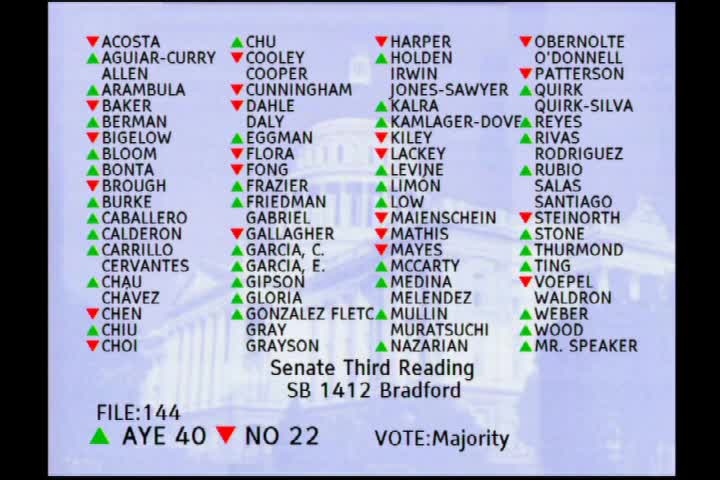
| Aug 30, 2018 | SB 1484 Hernandez Senate Third Reading By CHEN | Assembly Floor |
Passed |
|
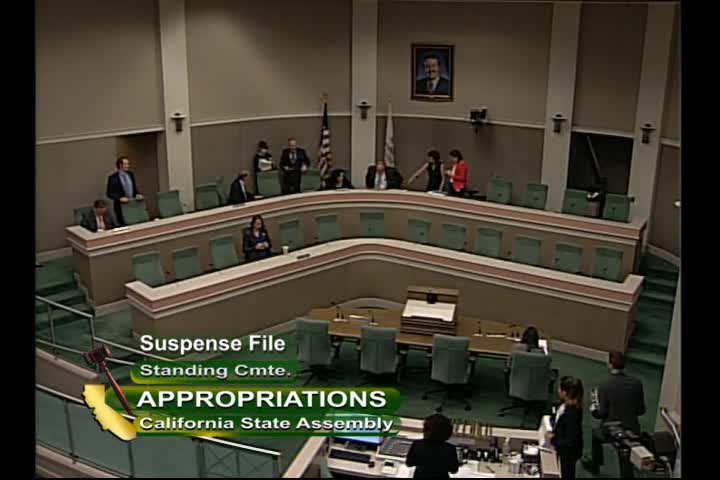
| Aug 16, 2018 | Do pass. | Assembly Standing Committee on Appropriations |
Passed |
|
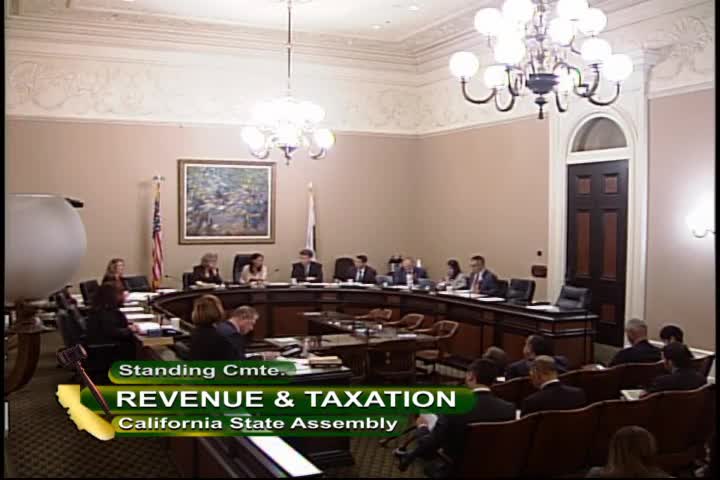
| Jul 2, 2018 | Do pass as amended and be re-referred to the Committee on [Appropriations] | Assembly Standing Committee on Revenue and Taxation |
Passed |
|
| May 31, 2018 | Special Consent SB1484 | Senate Floor |
Passed |
|
| May 25, 2018 | Do pass | Senate Standing Committee on Appropriations |
Passed |
|
| May 22, 2018 | Placed on suspense file | Senate Standing Committee on Appropriations |
Passed |
|
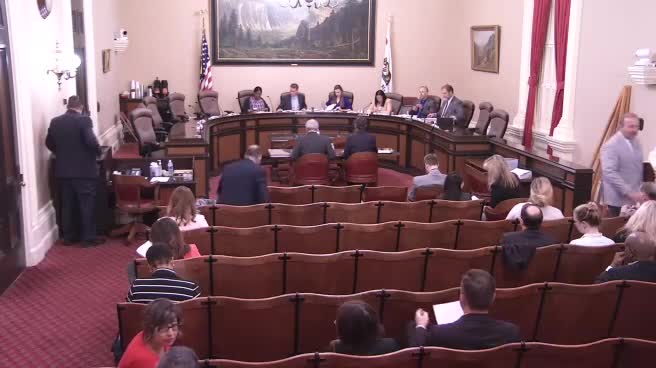
| May 9, 2018 | Do pass, but first be re-referred to the Committee on [Appropriations] | Senate Standing Committee on Governance and Finance |
Passed |
This list shows positions taken on this bill by organizations on the date displayed, which is linked to the original source.
Positions by individuals are not included.
Office of Senate Floor Analyses (916) 651-1520 Fax: (916) 327-4478 | SB |
UNFINISHED BUSINESS
Bill No: SB 1484
:
SENATE GOVERNANCE & FIN. COMMITTEE: 7-0, 5/9/18
AYES: McGuire, Nguyen, Beall, Hernandez, Hertzberg, Lara, Moorlach
SENATE APPROPRIATIONS COMMITTEE: 7-0, 5/25/18
AYES: Lara, Bates, Beall, Bradford, Hill, Nielsen, Wiener
SENATE FLOOR: 39-0, 5/31/18
AYES: Allen, Anderson, Atkins, Bates, Beall, Berryhill, Bradford, Cannella, De León, Dodd, Fuller, Gaines, Galgiani, Glazer, Hernandez, Hertzberg, Hill, Hueso, Jackson, Lara, Leyva, McGuire, Mitchell, Monning, Moorlach, Morrell, Newman, Nguyen, Nielsen, Pan, Portantino, Roth, Skinner, Stern, Stone, Vidak, Wieckowski, Wiener, Wilk
ASSEMBLY FLOOR: 80-0, 8/30/18 - See last page for vote
SOURCE: AIDS Healthcare Foundation
DIGEST:
This bill extends from January 1, 2019, to January 1, 2029, the sunset date for the state and local sales and use tax exemption for retail items sold by stores operated by nonprofit organizations assisting persons with HIV or AIDS.
Assembly Amendments
delete the repeal of the sunset date and instead extend it to January 1, 2029.
Existing law:
- Imposes the sales tax on every retailer engaged in business in this state that sells tangible personal property, and requires them to collect the appropriate tax from the purchaser, and remit the amount to the California Department of Tax and Fee Administration (CDTFA).
- Provides that sales tax applies whenever a retail sale is made, which is basically any sale other than one for resale in the regular course of business.
- Exempts from the sales and use tax used pieces of clothing, household items, or other retail items sold by specified thrift stores operated by a qualified nonprofit organization.
This bill:
- Extends from January 1, 2019, to January 1, 2029, the sunset date for the sales and use tax exemption for retail items sold by thrift stores operated by nonprofit organizations to assist individuals with HIV or AIDS.
- Provides that the state shall not reimburse any local agency for lost sales and use tax revenues.
Background
In 1996, the Legislature first enacted the exemption for used pieces of clothing, household items, or other retail items sold by specified thrift stores operated by a qualified nonprofit organization (AB 3187, Martinez, Chapter 781, Statutes of 1996). AB 3187 was set to sunset on January 1, 2002, but the Legislature extended it until January 1, 2007 (AB 180, Cedillo, Chapter 383, Statutes of 2001), again until January 1, 2012 (SB 1341, Cedillo, Chapter 373, Statutes of 2006), and once more until January 1, 2019 (AB 289, Cedillo, Chapter 352, Statutes of 2011). To qualify for the exemption, the thrift store's purpose must be to generate revenue for the funding of medical, hospice, or social services for chronically ill individuals, and at least 75% of the thrift store's net income must be so used. Under the exemption, a "nonprofit organization," provides medical, hospice, or social services to individuals with a chronic, life-threatening illness, including with human immunodeficiency virus or acquired immune deficiency syndrome.
FISCAL EFFECT: Appropriation: Fiscal Com.: Local:
According to the Assembly Appropriations Committee, annual General Fund revenue loss of approximately $490,000.
AIDS Healthcare Foundation (source)
Board of Equalization Member Fiona Ma
California Association for Health Services at Home
Goodwill Industries
OPPOSITION: (Verified 8/30/18)
None received
ARGUMENTS IN SUPPORT: According to the author, “California has made positive strides to prevent the spread of HIV/AIDS and extend the lives of those infected, but there are still approximately 137,000 individuals living with HIV/AIDS in the state. These steps are the result of improved treatment and medical care. However, long-term specialized care can be expensive and ultimately prevent some individuals from seeking treatment. Various non-profits organizations, like AIDS Healthcare Foundation, have opened thrift stores to generate revenue to help alleviate these cost burdens. In recognition of these efforts, California has continuously granted these thrift stores a sales tax exemption to provide much-needed funds. By removing the sunset on this tax exemption, SB 1484 will ensure these non-profit organizations can continue to provide access to necessary medical services and treatments for these needy individuals.”
ASSEMBLY FLOOR: 80-0, 8/30/18
AYES: Acosta, Aguiar-Curry, Travis Allen, Arambula, Baker, Berman, Bigelow, Bloom, Bonta, Brough, Burke, Caballero, Calderon, Carrillo, Cervantes, Chau, Chávez, Chen, Chiu, Choi, Chu, Cooley, Cooper, Cunningham, Dahle, Daly, Eggman, Flora, Fong, Frazier, Friedman, Gabriel, Gallagher, Cristina Garcia, Eduardo Garcia, Gipson, Gloria, Gonzalez Fletcher, Gray, Grayson, Harper, Holden, Irwin, Jones-Sawyer, Kalra, Kamlager-Dove, Kiley, Lackey, Levine, Limón, Low, Maienschein, Mathis, Mayes, McCarty, Medina, Melendez, Mullin, Muratsuchi, Nazarian, Obernolte, O'Donnell, Patterson, Quirk, Quirk-Silva, Reyes, Rivas, Rodriguez, Rubio, Salas, Santiago, Steinorth, Mark Stone, Thurmond, Ting, Voepel, Waldron, Weber, Wood, Rendon
8/30/18 20:45:52
**** END ****
SENATE THIRD READING
STR Bill Id:SB 1484
Author:(Hernandez)
As Amended Ver:August 7, 2018
Majority vote. Tax levy
SENATE VOTE: 39-0
Committee | Votes | Ayes | Noes |
Revenue & Taxation | 9-0 | Burke, Chu, Gray, Melendez, Mullin, Quirk, Rivas, Ting, Voepel | |
Appropriations | 17-0 | Gonzalez Fletcher, Bigelow, Bloom, Bonta, Brough, Calderon, Carrillo, Chau, Eggman, Fong, Friedman, Gallagher, Eduardo Garcia, Nazarian, Obernolte, Quirk, Reyes |
|
SUMMARY: Extends the sunset date for the current sales and use tax (SUT) exemption for retail items sold by thrift stores operated by nonprofit organizations to assist individuals with human immunodeficiency virus (HIV) or acquired immune deficiency syndrome (AIDS). Specifically, this bill:
- Extends the current sunset date from January 1, 2019, to January 1, 2029.
- Provides that, notwithstanding existing law, the state shall not reimburse any local agency for any SUT revenues lost as a result of this bill.
- Takes immediate effect as a tax levy.
EXISTING LAW:
- Imposes a sales tax on retailers for the privilege of selling tangible personal property (TPP), absent a specific exemption. The tax is based upon the retailer's gross receipts from TPP sales in this state.
- Imposes a complimentary use tax on the storage, use, or other consumption of TPP purchased out-of-state and brought into California. The use tax is imposed on the purchaser; and unless the purchaser pays the use tax to an out-of-state retailer registered to collect California's use tax, the purchaser remains liable for the tax. The use tax is set at the same rate as the state's sales tax and must generally be remitted to the California Department of Tax and Fee Administration (CDTFA).
- Provides a SUT exemption for used pieces of clothing, household items, or other retail items sold by specified thrift stores operated by a "nonprofit organization." To qualify for the exemption, the thrift store's purpose must be to generate revenue for the funding of medical, hospice, or social services for chronically ill individuals, and at least 75% of the thrift store's net income must be so used.
- Defines a "nonprofit organization," for purposes of the exemption, as a nonprofit organization that provides medical, hospice, or social services to individuals with a chronic, life-threatening illness, as defined in Health and Safety Code Section 1568.01(c). Section 1568.01(c), in turn, defines a chronic, life-threatening illness as HIV disease or AIDS.
FISCAL EFFECT: According to the Assembly Appropriations Committee, annual General Fund revenue loss of approximately $490,000.
COMMENTS:
- The author notes the following in support of this bill:
California has made positive strides to prevent the spread of HIV/AIDS and extend the lives of those infected, but there are still approximately 137,000 individuals living with HIV/AIDS in the state. These steps are the result of improved treatment and medical care. However, long-term specialized care can be expensive and ultimately prevent some individuals from seeking treatment. Various [non-profit] organizations, like AIDS Healthcare Foundation, have opened thrift stores to generate revenue to help alleviate these cost burdens. In recognition of these efforts, California has continuously granted these thrift stores a sales tax exemption to provide much-needed funds. By [extending] the sunset on this tax exemption, SB 1484 will ensure these non-profit organizations can continue to provide access to necessary medical services and treatments for these needy individuals.
- Revenue and Taxation Committee Staff Comments:
- An overview of existing law: Existing law imposes a sales tax on retailers for the privilege of selling TPP, absent a specific exemption. The SUT Law does not generally exempt TPP sales merely because the retailer or the purchaser is a nonprofit organization engaged in charitable activities. Therefore, unless the law provides a specific exemption or exclusion, tax generally applies to TPP sales by nonprofit organizations. The law, however, is sprinkled with specific nonprofit or charitable organization-related exemptions. For example, a charitable organization's thrift store sales are exempt from tax when, among other conditions, the organization is engaged in the relief of poverty and distress. As a result, thrift store sales by Goodwill Industries, the Salvation Army, and St. Vincent de Paul qualify for this exemption. Existing law also provides for the specific SUT exemption at issue in this bill – namely, the exemption for used clothing, household items, and other retail goods sold by specified thrift stores dedicated to raising revenue to care for individuals with HIV and AIDS.
- What does this bill do? This bill extends for an additional 10 years the SUT exemption for used clothing, household items, and other retail items sold by specified thrift stores dedicated to raising revenue for the provision of medical, hospice, or social services for individuals with HIV or AIDS. This exemption is currently due to sunset on January 1, 2019.
Analysis Prepared by: M. David Ruff / REV. & TAX. / (916) 319-2098 FN: 0004157
Date of Hearing: August 15, 2018
ASSEMBLY COMMITTEE ON APPROPRIATIONS
Lorena Gonzalez Fletcher, Chair
SBPCA Bill Id:SB 1484
Author:(Hernandez) – As Amended Ver:August 7, 2018
Policy Committee: | Revenue and Taxation | Vote: | 9 - 0 |
|
| ||
|
|
Urgency: No State Mandated Local Program: No Reimbursable: No
SUMMARY:
This bill extends the sunset date, from January 1, 2019, to January 1, 2029, for the current sales and use tax (SUT) exemption for retail items sold by thrift stores operated by nonprofit organizations to assist individuals with human immunodeficiency virus (HIV) or acquired immune deficiency syndrome (AIDS).
FISCAL EFFECT:
Annual General Fund revenue loss of approximately $490,000.
COMMENTS:
- Background. Existing law provides for an SUT exemption for used clothing, household items, and other retail goods sold by specified thrift stores dedicated to raising revenue to care for individuals with HIV or AIDS. AB 3187 (Martinez), Chapter 781, Statutes of 1996, established the exemption and the Legislature has since extended its sunset three times. Most recently, AB 289 (Cedillo), Chapter 289, Statutes of 2011, extended the sunset date to its current date of January 1, 2019.
- Purpose. According to the author, SB 1484 will ensure certain nonprofit organizations can provide access to necessary medical services and treatment of individuals with HIV/AIDS.
- Fiscal implications of tax expenditures. Existing law allows for various tax expenditures such as credits, deductions, exclusions, and exemptions for particular taxpayer groups. These features of the tax code can result in significant state costs through foregone tax revenue and, in many cases, policymakers have little control over the revenue loss that occurs in any given year. As a result, many tax expenditure bills now include provisions designed to give the Legislature more control over costs. Examples of such provisions include placing a sunset date or making a bill’s provisions contingent upon a separate budget appropriation. SB 1484 contains a sunset.
Analysis Prepared by: Luke Reidenbach / APPR. / (916) 319-2081
Date of Hearing: July 2, 2018
ASSEMBLY COMMITTEE ON REVENUE AND TAXATION
Autumn R. Burke, Chairwoman
SBPCA Bill Id:SB 1484
Author:(Hernandez) – As Introduced Ver:February 16, 2018
Majority vote. Tax levy. Fiscal committee.
SENATE VOTE: 39-0
SUBJECT: Sales and use taxes: exemption: charitable thrift stores
SUMMARY: Repeals the sunset date for the current sales and use tax (SUT) exemption for retail items sold by thrift stores operated by nonprofit organizations to assist individuals with human immunodeficiency virus (HIV) or acquired immune deficiency syndrome (AIDS). Specifically, this bill:
- Deletes the current sunset date of January 1, 2019, thereby extending the SUT exemption indefinitely.
- Provides that, notwithstanding existing law, the state shall not reimburse any local agency for any SUT revenues lost as a result of this bill.
- Takes immediate effect as a tax levy.
EXISTING LAW:
- Imposes a sales tax on retailers for the privilege of selling tangible personal property (TPP), absent a specific exemption. The tax is based upon the retailer's gross receipts from TPP sales in this state.
- Imposes a complimentary use tax on the storage, use, or other consumption of TPP purchased out-of-state and brought into California. The use tax is imposed on the purchaser; and unless the purchaser pays the use tax to an out-of-state retailer registered to collect California's use tax, the purchaser remains liable for the tax. The use tax is set at the same rate as the state's sales tax and must generally be remitted to the California Department of Tax and Fee Administration (CDTFA).
- Provides a SUT exemption for used pieces of clothing, household items, or other retail items sold by specified thrift stores operated by a "nonprofit organization." To qualify for the exemption, the thrift store's purpose must be to generate revenue for the funding of medical, hospice, or social services for chronically ill individuals, and at least 75% of the thrift store's net income must be so used.
- Defines a "nonprofit organization," for purposes of the exemption, as a nonprofit organization that provides medical, hospice, or social services to individuals with a chronic, life-threatening illness, as defined in Health and Safety Code Section 1568.01(c). Section 1568.01(c), in turn, defines a chronic, life-threatening illness as HIV disease or AIDS.
FISCAL EFFECT: Staff estimates annual revenue losses of roughly $1 million.
COMMENTS:
- The author notes the following in support of this bill:
California has made positive strides to prevent the spread of HIV/AIDS and extend the lives of those infected, but there are still approximately 137,000 individuals living with HIV/AIDS in the state. These steps are the result of improved treatment and medical care. However, long-term specialized care can be expensive and ultimately prevent some individuals from seeking treatment. Various [non-profit] organizations, like AIDS Healthcare Foundation, have opened thrift stores to generate revenue to help alleviate these cost burdens. In recognition of these efforts, California has continuously granted these thrift stores a sales tax exemption to provide much-needed funds. By removing the sunset on this tax exemption, SB 1484 will ensure these non-profit organizations can continue to provide access to necessary medical services and treatments for these needy individuals.
- This bill is being co-sponsored by the AIDS Healthcare Foundation, which notes the following:
AHF is the largest nonprofit provider of medical care to people with HIV/AIDS in the state and operates a number of thrift stores that generate revenue to support services for people with HIV/AIDS. AHF provides its services to people "regardless of the ability to pay." As a result, AHF allocates private resources to cover direct services that are not covered by other payors.
A primary source for these additional resources is our Out of the Closet Thrift stores, of which there are 11 in Los Angeles and the San Francisco Bay Area.
The proceeds from this exemption cover essential medical care for many indigent patients who otherwise would be compelled to seek medical care at county emergency rooms. In addition, through the thrift store revenue, AHF subsidizes the cost of prescription drugs that have skyrocketed in recent years, especially for people with HIV/AIDS.
This sales tax exemption means a cost savings to AHF and other eligible thrift stores of approximately $1 million, most of which will be directed to indigent medical services. AHF faces an annual deficit exceeding $15 million in medical care, managed care and public health; the sales tax savings has made a significant dent in that deficit every year.
- This bill is supported by the California Association for Health Services at Home, which notes:
While hospice services are reimbursed by Medicare, Medicaid and private insurance, some services do not have traditional reimbursement sources and hospices spend vital resources to meet the unique needs of their community. In particular, the care of those with HIV or AIDS is extremely costly and it is important that hospices can maximize their fundraising efforts. Extending this specific tax exemption indefinitely is the right thing to do and will enhance the ability of hospices to remain charitable with their services.
- Committee Staff Comments:
- An overview of existing law: Existing law imposes a sales tax on retailers for the privilege of selling TPP, absent a specific exemption. The SUT Law does not generally exempt TPP sales merely because the retailer or the purchaser is a nonprofit organization engaged in charitable activities. Therefore, unless the law provides a specific exemption or exclusion, tax generally applies to TPP sales by nonprofit organizations. The law, however, is sprinkled with specific nonprofit or charitable organization-related exemptions. For example, a charitable organization's thrift store sales are exempt from tax when, among other conditions, the organization is engaged in the relief of poverty and distress. As a result, thrift store sales by Goodwill Industries, the Salvation Army, and St. Vincent de Paul qualify for this exemption. Existing law also provides for the specific SUT exemption at issue in this bill – namely, the exemption for used clothing, household items, and other retail goods sold by specified thrift stores dedicated to raising revenue to care for individuals with HIV and AIDS.
- What does this bill do? This bill indefinitely extends the SUT exemption for used clothing, household items, and other retail items sold by specified thrift stores dedicated to raising revenue for the provision of medical, hospice, or social services for individuals with HIV or AIDS. This exemption is currently due to sunset on January 1, 2019.
- The function of sunsets: By all accounts, the beneficiaries of this SUT exemption engage in vital work assisting individuals with HIV and AIDS. That said, this Committee has a longstanding practice of including sunset dates for nearly all tax expenditure programs, irrespective of the intended beneficiary. Without a sunset date, tax expenditures can remain a part of the code with no legislative oversight – either of the tax expenditure's operation or the attendant revenue losses. For the sake of consistency, the Committee may wish to include an appropriate sunset date extension for this bill in lieu of an outright repeal of the sunset date.
- The legislative history: The current SUT exemption was established by AB 3187 (Martinez), Chapter 781, Statutes of 1996. As originally enacted, the exemption provisions included a sunset date of January 1, 2002.
In 2001, legislation was introduced [AB 180 (Cedillo), Chapter 383, Statutes of 2001] to permanently delete the exemption's sunset date. Prior to enactment, however, AB 180 was amended in the Senate to instead extend the sunset date to January 1, 2007.
In 2006, legislation was again introduced [SB 1341 (Cedillo), Chapter 373, Statutes of 2006] to delete the sunset date outright. SB 1341 was subsequently amended to extend the sunset date to January 1, 2012.
In 2011, legislation was again introduced [AB 289 (Cedillo), Chapter 289, Statutes of 2011] to delete the sunset date outright. AB 289 was subsequently amended by this Committee to delay the sunset date to the current date of January 1, 2019.
REGISTERED SUPPORT / OPPOSITION:
Support
AIDS Healthcare Foundation (Co-Sponsor)
BOE Member Fiona Ma (Co-Sponsor)
California Association for Health Services at Home
Council of California Goodwill Industries
Opposition
None on file
Analysis Prepared by: M. David Ruff / REV. & TAX. / (916) 319-2098
Office of Senate Floor Analyses (916) 651-1520 Fax: (916) 327-4478 | SB |
THIRD READING
Bill No: SB 1484
:
SENATE GOVERNANCE & FIN. COMMITTEE: 7-0, 5/9/18
AYES: McGuire, Nguyen, Beall, Hernandez, Hertzberg, Lara, Moorlach
SENATE APPROPRIATIONS COMMITTEE: 7-0, 5/25/18
AYES: Lara, Bates, Beall, Bradford, Hill, Nielsen, Wiener
SOURCE: AIDS Health Care Foundation
DIGEST:
This bill repeals the current January 1, 2019, sunset date for the state and local sales and use tax exemption for retail items sold by stores operated by nonprofit organizations assisting persons with HIV or AIDS.
Existing law:
- Imposes the sales tax on every retailer engaged in business in this state that sells tangible personal property, and requires them to collect the appropriate tax from the purchaser, and remit the amount to the California Department of Tax and Fee Administration (CDTFA).
- Provides that sales tax applies whenever a retail sale is made, which is basically any sale other than one for resale in the regular course of business.
- Exempts from the sales and use tax used pieces of clothing, household items, or other retail items sold by specified thrift stores operated by a qualified nonprofit organization.
This bill:
- Repeals the current January 1, 2019, sunset date for the sales and use tax exemption for retail items sold by thrift stores operated by nonprofit organizations to assist individuals with HIV or AIDS.
- Provides that the state shall not reimburse any local agency for lost sales and use tax revenues.
Background
In 1996, the Legislature first enacted the exemption for used pieces of clothing, household items, or other retail items sold by specified thrift stores operated by a qualified nonprofit organization (AB 3187, Martinez, Chapter 781, Statutes of 1996). AB 3187 was set to sunset on January 1, 2002, but the Legislature extended it until January 1, 2007 (AB 180, Cedillo, Chapter 383, Statutes of 2001), again until January 1, 2012 (SB 1341, Cedillo, Chapter 373, Statutes of 2006), and once more until January 1, 2019 (AB 289, Cedillo, Chapter 352, Statutes of 2011). To qualify for the exemption, the thrift store's purpose must be to generate revenue for the funding of medical, hospice, or social services for chronically ill individuals, and at least 75% of the thrift store's net income must be so used. Under the exemption, a "nonprofit organization," provides medical, hospice, or social services to individuals with a chronic, life-threatening illness, including with human immunodeficiency virus or acquired immune deficiency syndrome.
FISCAL EFFECT: Appropriation: Fiscal Com.: Local:
According to the Senate Appropriations Committee, “CDFTA data indicates that this bill would result in an annual revenue loss of $1.1 million, $493,000 of which would be from the General Fund. CDTFA would incur absorbable administrative costs to notify potential suppliers, process refund claims, and respond to inquiries.
AIDS Healthcare Foundation (source)
BOE Member Fiona Ma
California Association for Health Services at Home
Goodwill Industries
OPPOSITION: (Verified 5/25/18)
None received
ARGUMENTS IN SUPPORT: According to the author, “California has made positive strides to prevent the spread of HIV/AIDS and extend the lives of those infected, but there are still approximately 137,000 individuals living with HIV/AIDS in the state. These steps are the result of improved treatment and medical care. However, long-term specialized care can be expensive and ultimately prevent some individuals from seeking treatment. Various non-profits organizations, like AIDS Healthcare Foundation, have opened thrift stores to generate revenue to help alleviate these cost burdens. In recognition of these efforts, California has continuously granted these thrift stores a sales tax exemption to provide much-needed funds. By removing the sunset on this tax exemption, SB 1484 will ensure these non-profit organizations can continue to provide access to necessary medical services and treatments for these needy individuals.”
5/26/18 15:01:17
**** END ****
SENATE COMMITTEE ON APPROPRIATIONS
Senator Ricardo Lara, Chair
2017 - 2018 Regular Session
SB 1484 (Hernandez) - Sales and use taxes: exemption: charitable thrift stores
Version: February 16, 2018 | Policy Vote: GOV. & F. 7 - 0 |
Urgency: No | Mandate: No |
Hearing Date: May 22, 2018 | Consultant: Robert Ingenito |
This bill meets the criteria for referral to the Suspense File.
Bill Summary:
SB 1484 would repeal the current January 1, 2019, sunset date of the sales and use tax (SUT) exemption for sales of used clothing, household items, or other retail items by thrift stores operated for purposes of raising funds to provide medical, hospice, or social services for individuals with Human Immunodeficiency Virus (HIV) or Acquired Immunodeficiency Syndrome (AIDS).
Fiscal Impact:
California Department of Tax and Fee Administration (CDTFA) data indicate that this bill would result in an annual revenue loss of $1.1 million, $493,000 of which would be from the General Fund. CDTFA would incur absorbable administrative costs to notify potential suppliers, process refund claims, and respond to inquiries.
Background:
Except where a specific exemption or exclusion is provided, current law imposes SUT on all retailers for the privilege of selling tangible personal property (TPP) at retail in California, or on the storage, use, or other consumption in this state of TPP purchased from a retailer.
After CDTFA collects SUT revenue ($54 billion in 2015-16), it allocates the money to various state and local funds. Roughly half—collected from an approximately 3.9 percent rate—goes to the General Fund and can be spent on any state program, such as education, health care, and criminal justice. Another 1.25 percent, known as the Bradley-Burns rate, goes to cities and counties for general purposes. Three sales tax funds have uniform state rates and support specified programs—an approximately 1.1 percent rate for 2011 realignment (county-administered criminal justice, mental health, and social service programs); a 0.5 percent rate for 1991 realignment (county-administered health and social services programs); and a 0.5 percent rate for city and county public safety programs pursuant to Proposition 172 (1993). Additionally, some local governments levy optional local rates—known as Transactions and Use Taxes (TUTs)—and a small portion of these funds are used for general purposes. As of January 1, 2018, the average statewide SUT rate was 8.50 percent.
State law fully exempts many items from SUT (such as prescription drugs, food, electricity, and poultry litter), while other items are exempted from the state sales tax, but not the local share, such as farm equipment and machinery, diesel fuel used for farming and food processing, teleproduction and postproduction equipment, timber harvesting equipment and machinery, and racehorse breeding stock. Partial SUT exemptions are difficult for both retailers and the CDTFA, and complicate return preparation and processing. Moreover, errors attributable to these partial exemptions occur frequently, resulting in additional return processing workload for CDTFA.
State law provides a SUT exemption for used pieces of clothing, household items, or other retail items sold by specified thrift stores operated by a qualified nonprofit organization. The sunset on the original legislation was extended three times (see Related Legislation). To qualify for the exemption, the thrift store's purpose must be to generate revenue for the funding of medical, hospice, or social services for chronically ill individuals, and at least 75 percent of the thrift store's net income must be so used. Current defines a "nonprofit organization," for purposes of the exemption, as a nonprofit organization that provides medical, hospice, or social services to individuals with a chronic, life-threatening illness, including HIV or AIDS.
Proposed Law:
This bill would repeal the current January 1, 2019, sunset date of the SUT exemption for retail items sold by thrift stores operated by nonprofit organizations to assist individuals with HIV or AIDS. This bill would provide that the State shall not reimburse any local agency for lost sales and use tax revenues.
Related Legislation:
- AB 289 (Cedillo, Chapter 289, Statutes of 2011) extended the sunset date for another 7 years to January 1, 2019.
- SB 1341 (Cedillo, Chapter 373, Statutes of 2006) extended the sunset date for another 5 years to January 1, 2012.
- AB 180 (Cedillo, Chapter 383, Statutes of 2001) extended the sunset date for another 5 years to January 1, 2007.
- AB 3187 (Martinez, Chapter 781, Statutes of 1996) added the exemption for these thrift store sales, with a 5-year sunset date of January 1, 2002.
Staff Comments:
When the revenue estimate for AB 289 was prepared in 2011, tax agency staff identified three nonprofit organizations operating thrift stores that qualified for this exemption and for which letters of eligibility has been issued. These qualified organizations’ taxable sales in 2009 totaled $12.5 million. Assuming no change in taxable sales since then, at current tax rates, the total revenue loss resulting from the bill would be $1.1 million, of which $493,000 would come from the General Fund. To the extent that relevant sales are higher today than they were in 2009, the cited revenue losses would be higher.
-- END --
SENATE COMMITTEE ON GOVERNANCE AND FINANCE
Senator Mike McGuire, Chair
2017 - 2018 Regular
Bill No: | SB 1484 | Hearing Date: | 5/9/18 |
Author: | Hernandez | Tax Levy: | Yes |
Version: | 2/16/18 | Fiscal: | Yes |
Consultant: | Grinnell | ||
Sales and use taxes: exemption: charitable thrift stores
Repeals the current January 1, 2019, sunset date for the sales and use tax exemption for retail items sold by stores operated by nonprofit organizations assisting persons with HIV or AIDS.
Background
State law imposes the sales tax on every retailer engaged in business in this state that sells tangible personal property, and requires them to collect the appropriate tax from the purchaser, and remit the amount to the California Department of Tax and Fee Administration. Sales tax applies whenever a retail sale is made, which is basically any sale other than one for resale in the regular course of business. Unless the person pays the sales tax to the retailer, he or she is liable for the use tax, which is imposed on any person consuming tangible personal property in the state. The use tax rate is the same rate as the sales tax rate, and must be remitted on or before the last day of the month following the quarterly period in which the person made the purchase. The current rate is 7.25% as shown in the table below.
Rate | Jurisdiction | Purpose/Authority | |
|---|---|---|---|
3.9375% | State (General Fund) | State general purposes | |
1.0625% |
| Local governments to fund local public safety services | |
0.50% | State (1991 Realignment) | Local governments to fund health and welfare programs | |
0.50% | State (1993) | Local governments to fund public safety services | |
1.25% | Local (City/County) 1.00% City and County | City and county general operations. Dedicated to county transportation purposes | |
7.25% | Total Statewide Rate |
State law also allows cities, counties, and special districts to impose their own transactions and use tax within its jurisdiction subject to voter approval, known as “local add-ons” or “district taxes,” so long as they relied on the same base and procedures as the sales and use tax
State law provides a sales and use tax exemption for used pieces of clothing, household items, or other retail items sold by specified thrift stores operated by a qualified nonprofit organization (AB 3187, Martinez, 1996). AB 3187 was set to sunset on January 1, 2002, but the Legislature extended it until January 1, 2007 (AB 180, Cedillo, 2001), again until January 1, 2012 (SB 1341, Cedillo, 2006), and once more until January 1, 2019 (AB 289, Cedillo, 2011). To qualify for the exemption, the thrift store's purpose must be to generate revenue for the funding of medical, hospice, or social services for chronically ill individuals, and at least 75% of the thrift store's net income must be so used. Existing law defines a "nonprofit organization," for purposes of the exemption, as a nonprofit organization that provides medical, hospice, or social services to individuals with a chronic, life-threatening illness, including with human immunodeficiency virus (HIV) or acquired immune deficiency syndrome (AIDS).
The AIDS Healthcare Foundation wants to repeal the sunset date on the sales and use tax exemption for used pieces of clothing, household items, or other retail items sold by specified thrift stores operated by a qualified nonprofit organization.
Proposed Law
Senate Bill 1484 repeals the current January 1, 2019, sunset date for the sales and use tax exemption for retail items sold by thrift stores operated by nonprofit organizations to assist individuals with HIV or AIDS.
This bill provides that the state shall not reimburse any local agency for lost sales and use tax revenues.
State Revenue Impact
Pending.
Comments
1. Purpose of the bill. According to the author, “California has made positive strides to prevent the spread of HIV/AIDS and extend the lives of those infected, but there are still approximately 137,000 individuals living with HIV/AIDS in the state. These steps are the result of improved treatment and medical care. However, long-term specialized care can be expensive and ultimately prevent some individuals from seeking treatment. Various non-profits organizations, like AIDS Healthcare Foundation, have opened thrift stores to generate revenue to help alleviate these cost burdens. In recognition of these efforts, California has continuously granted these thrift stores a sales tax exemption to provide much-needed funds. By removing the sunset on this tax exemption, SB 1484 will ensure these non-profit organizations can continue to provide access to necessary medical services and treatments for these needy individuals.”
2. Revenue loss. While not a significant amount of revenue, SB 1484 extends a current sales and use tax exemption, resulting in state and local revenue losses as sales that are due to become subject to tax after January 1, 2019 would be exempt under the bill. As a result, state and local agencies will have to reduce spending or increase taxes to match the foregone revenue. The Committee may wish to consider whether the bill is worth the tradeoff of spending cuts or raising taxes, or both.
3. State and local. In recent years, most new sales and use tax exemptions have included only the state share of the sales tax, such as equipment used in research and manufacturing, and equipment and fuel used in agriculture. SB 1484 extends an exemption which has always applied to both the state and local shares of the sales tax. Because the measure precludes the state from reimbursing local agencies revenue losses from the measure, the bill would not only affect the state budget, but any local agency that would have otherwise received sales and use tax revenue as well.
Support and Opposition
(5/4/18)
Support: BOE Member Fiona Ma, AIDS Healthcare Foundation, California Association for Health Services at Home, Goodwill Industries.
Opposition: Unknown.
-- END --
Discussed in Hearing
 1MIN
Assembly Floor
 1H
Assembly Standing Committee on Appropriations
 4MIN
Assembly Standing Committee on Revenue and Taxation
 2MIN
Senate Standing Committee on Governance and Finance
Bill Author