SB 1485: Personal income tax: credits: charitable contributions.
- Session Year: 2017-2018
- House: Senate
- Latest Version Date: 2018-04-30
The Personal Income Tax Law allows various credits against the tax imposed by that law. Existing law requires any bill authorizing a new tax credit to contain, among other things, specific goals, purposes, and objectives that the tax credit will achieve, detailed performance indicators, and data collection requirements.
This bill would allow a credit against that tax for each taxable year beginning on or after January 1, 2018, in an amount equal to the amount donated to a qualified charitable organization, as defined, not to exceed a specified amount per taxable year. This The bill would require the Franchise Tax Board to post on a new page on its Internet Web site a list of the certified the names of each qualified charitable organizations on its Internet Web site. organization. The bill would provide that these provisions are severable. The bill would also include additional information required for any bill authorizing a new income tax credit.
This bill would take effect immediately as a tax levy.
The Personal Income Tax Law allows various credits against the tax imposed by that law. Existing law requires any bill authorizing a new tax credit to contain, among other things, specific goals, purposes, and objectives that the tax credit will achieve, detailed performance indicators, and data collection requirements.
This bill would allow a credit against that tax for each taxable year beginning on or after January 1, 2018, in an amount equal to the amount donated to a qualified charitable organization, as defined, not to exceed a specified amount per taxable year. This bill would require the Franchise Tax Board to post a list of the certified qualified charitable organizations on its Internet Web site. The bill would also include additional information required for any bill authorizing a new income tax credit.
This bill would take effect immediately as a tax levy.
Existing property tax law requires assessees to report change in ownership information to the assessor, as provided.This bill would make a nonsubstantive change to that provision.Existing property tax law requires assessees to report change in ownership information to the assessor, as provided.
This bill would make a nonsubstantive change to that provision.
(a)(1)For taxable years beginning on or after January 1, 2018, there shall be allowed as a credit against the net tax, as defined by Section 17039, an amount equal to the amount donated by the taxpayer during the taxable year to a qualified charitable organization, subject to paragraph (2).
(2)In the case of a single individual, a head of household, or a married individual filing a separate return, a credit allowed under this section for a taxable year shall not exceed five hundred dollars ($500). In the case of a surviving spouse, as defined in Section 17046, or a married couple filing a joint return, a credit allowed under this section for a taxable year shall not exceed one thousand dollars ($1,000).
(b)For purposes of this section, a qualified charitable organization means an organization that meets all of the following requirements:
(1)Is an organization that is exempt from federal income taxes as an organization described in Section 501(c)(3) of the Internal Revenue Code.
(2)Is incorporated located in the State of California.
(3)Is At the time of donation, is not under suspension or revocation. by the Franchise Tax Board or the Secretary of State.
(c)In order to claim a credit under this section for section, both of the following shall apply:
(1)For a donation made to a charitable organization that collects donations on behalf of other charitable organizations, a taxpayer shall designate that the donation be directed only to a qualified charitable organization.
(2)A taxpayer shall provide the Franchise Tax Board with the name of the qualified charitable organization, the date of the donation, and the amount of the donation on forms provided by the Franchise Tax Board.
(d)The Franchise Tax Board shall post on a new page on its Internet Web site a list of the names of the certified each qualified charitable organizations. organization as found on its Exempt Organizations List.
(e)In the case where the credit allowed by this section exceeds the net tax, the excess may be carried over to reduce the net tax in the following year, and succeeding five years if necessary, until the credit is exhausted.
(f)A credit allowed by this section shall be in lieu of any charitable deduction otherwise allowed by this part.
(g)The credit allowed by this section shall be known as the California Universal Charitable Credit.
(h)The provisions of this section are severable. If any provision of this section or its application is held invalid, that invalidity shall not affect other provisions or applications that can be given effect without the invalid provision or application.
SEC. 2.(a)It is the intent of the Legislature to comply with Section 41 of the Revenue and Taxation Code.
(b)For the purposes of complying with Section 41 of the Revenue and Taxation Code, with respect to Section 17052.7 of the Revenue and Taxation Code as added by this act, the Legislature finds and declares as follows:
(1)The goal of this bill is to ensure California creates a robust and efficient tax incentive program that helps guarantee all Californians will receive the best and most effective public services possible, coupled with accountability and transparency measures. encourages all Californians to contribute to the charitable organizations serving their communities, coupled with accountability and transparency measures. Towards this end, Californias tax credit for charitable donations ensures that California taxpayers receive the maximum possible economic return on their investment in public services and creates overall positive and sustained economic impacts for the entire state.
(2)The effectiveness of the credit shall be measured by the number of taxpayers claiming the credit.
SEC. 3.This act provides for a tax levy within the meaning of Article IV of the California Constitution and shall go into immediate effect.
(a)(1)For taxable years beginning on or after January 1, 2018, there shall be allowed as a credit against the net tax, as defined by Section 17039, an amount equal to the amount donated by the taxpayer during the taxable year to a qualified charitable organization, subject to paragraph (2).
(2)In the case of a single individual, a head of household, or a married individual filing a separate return, a credit allowed under this section for a taxable year shall not exceed five hundred dollars ($500). In the case of a surviving spouse, as defined in Section 17046, or a married couple filing a joint return, a credit allowed under this section for a taxable year shall not exceed one thousand dollars ($1,000).
(b)For purposes of this section, a qualified charitable organization means an organization that meets all of the following requirements:
(1)Is an organization that is exempt from federal income taxes as an organization described in Section 501(c)(3) of the Internal Revenue Code.
(2)Is incorporated in the State of California.
(3)Is not under suspension or revocation.
(c)In order to claim a credit under this section for a donation made to a charitable organization that collects donations on behalf of other charitable organizations, a taxpayer shall designate that the donation be directed only to a qualified charitable organization.
(d)The Franchise Tax Board shall post on its Internet Web site the names of the certified qualified charitable organizations.
(e)In the case where the credit allowed by this section exceeds the net tax, the excess may be carried over to reduce the net tax in the following year, and succeeding five years if necessary, until the credit is exhausted.
(f)A credit allowed by this section shall be in lieu of any charitable deduction otherwise allowed by this part.
(g)The credit allowed by this section shall be known as the California Universal Charitable Credit.
SEC. 2.(a)It is the intent of the Legislature to comply with Section 41 of the Revenue and Taxation Code.
(b)For the purposes of complying with Section 41 of the Revenue and Taxation Code, with respect to Section 17052.7 of the Revenue and Taxation Code as added by this act, the Legislature finds and declares as follows:
(1)The goal of this bill is to ensure California creates a robust and efficient tax incentive program that helps guarantee all Californians will receive the best and most effective public services possible, coupled with accountability and transparency measures. Towards this end, Californias tax credit for charitable donations ensures that California taxpayers receive the maximum possible economic return on their investment in public services and creates overall positive and sustained economic impacts for the entire state.
(2)The effectiveness of the credit shall be measured by the number of taxpayers claiming the credit.
SEC. 3.This act provides for a tax levy within the meaning of Article IV of the California Constitution and shall go into immediate effect.
SECTION 1.Section 90 of the Revenue and Taxation Code is amended to read:90.An assessee shall report change in ownership information to the assessor as provided in Article 2.5 (commencing with Section 480) of Chapter 3 of Part 2.Assessees An assessee shall report change in ownership information to the assessor as provided in Article 2.5 (commencing with Section 480) of Chapter 3 of Part 2.
|
Date
|
Status
|
|---|---|
| May 16, 2018 | May 16 set for first hearing. Failed passage in committee. (Ayes 1. Noes 3.) Reconsideration granted. |
| May 9, 2018 | Set for hearing May 16. |
| May 8, 2018 | May 9 hearing postponed by committee. |
| Apr 30, 2018 | From committee with author's amendments. Read second time and amended. Re-referred to Com. on GOV. & F. |
| Apr 17, 2018 | Set for hearing May 9. |
| Apr 4, 2018 | Re-referred to Com. on GOV. & F. |
| Apr 2, 2018 | From committee with author's amendments. Read second time and amended. Re-referred to Com. on RLS. |
| Mar 8, 2018 | Referred to Com. on RLS. |
| Feb 20, 2018 | From printer. May be acted upon on or after March 22. |
| Feb 16, 2018 | Introduced. Read first time. To Com. on RLS. for assignment. To print. |
|
Date
|
Description
|
Location
|
Votes
|
|
|---|---|---|---|---|
| May 16, 2018 | [05-16-2018] hearing: Motion to Reconsider. [Reconsideration Granted.] | Senate Standing Committee on Governance and Finance |
Passed |
|
| May 16, 2018 | Do pass, but first be re-referred to the Committee on [Appropriations] | Senate Standing Committee on Governance and Finance |
Failed |
This list shows positions taken on this bill by organizations on the date displayed, which is linked to the original source.
Positions by individuals are not included.
SENATE COMMITTEE ON GOVERNANCE AND FINANCE
Senator Mike McGuire, Chair
2017 - 2018 Regular
Bill No: | SB 1485 | Hearing Date: | 5/16/18 |
Author: | Morrell | Tax Levy: | Yes |
Version: | 4/30/18 | Fiscal: | Yes |
Consultant: | Brown | ||
Personal income tax: credits: charitable contributions
Creates the California Universal Charitable Credit for contributions made to qualified charitable organizations.
Background
Tax credits. California law allows various income tax credits, deductions, exemptions, and exclusions. The Legislature enacts such tax incentives to either compensate taxpayers for incurring certain expenses, such as child adoption, or to influence certain behavior, such as charitable giving. The Legislature uses tax incentives to encourage taxpayers to do something that but for the tax credit, they would otherwise not do. The Department of Finance is required to annually publish a list of tax expenditures, currently totaling around $61.3 billion per year.
Unlike deductions and exemptions, which reduce the amount of earnings that are taxed, tax credits are applied after the taxable income is calculated. Tax credits reduce — dollar for dollar — the amount of taxes owed.
Charitable contributions deduction. Both federal and state laws allow an itemized deduction for contributions made to a qualified organization — including nonprofits known as 501(c)(3)s — equal to the fair market value of the donation contributed. Taxpayers can deduct an amount not greater than a certain percentage of their federal adjusted gross income (AGI). The percentage is determined by the type of contribution, such as cash or property, and the type of entity that receives it, such as public charities or nonoperating private foundations.
Additionally, both federal and state law limits the deduction when the donor receives consideration in exchange for the contribution. If the benefits received by a donor are greater than those to the charity, then the donor has received a quid pro quo as sufficient to deny the deduction. Both federal and state law also clarify that any consideration the taxpayer receives limits the amount of the charitable deduction. For example, a taxpayer donating $100 to the Public Broadcasting Service can claim a $100 deduction, but only an $80 deduction if he or she received a $20 tote bag as a result of the donation. Any contribution made in excess of the allowable amount can be carried forward and deducted in future years.
Itemized deductions are a collection of deductions — such as the mortgage interest deduction and the medical expense deduction — that reduce a taxpayer’s taxable income. Itemized deductions are taken in lieu of the standard deduction, which is the government’s built-in deduction that taxpayers can take to decrease their taxable income. The 2017 standard deduction for state tax purposes was $4,236 for taxpayers who were filing single and $8,472 for taxpayers who file jointly. Taxpayers compare their total itemized deductions to the standard deduction, and generally claim the larger of the two to decrease their overall tax liability.
In addition to the charitable contributions deduction, the author would like to create a tax credit for donations made to charities.
Proposed Law
Senate Bill 1485 creates a tax credit — known as the California Universal Charitable Credit (CUCC) — for contributions made to a qualified charitable organization. The amount of CUCC would be limited to:
- $500 for taxpayers who are single, a head of household, or married filing separately; and
- $1,000 for taxpayers who are married filing jointly or a surviving spouse.
A qualified charitable organization is one that meets all of the following requirements:
- Exempt from paying federal income taxes under Internal Revenue Code section 501(c)(3);
- Located in California; and
- Is not under suspension by FTB or the Secretary of State.
SB 1485 requires taxpayers to provide the Franchise Tax Board (FTB) with the name of the qualified charitable organization, the date of the donation, and the amount of the donation. The bill also requires FTB to post on its Internet Web site the names of the qualified charitable organizations, as found on its exempt organizations list.
SB 1485 provides that CUCC is in lieu of any charitable contributions deduction, is available for taxable years beginning on or after January 1st, 2018, and includes findings as well as declarations to support its purposes.
State Revenue Impact
According to the FTB, SB 1485 results in revenue losses of $4.5 billion in 2018-19, $3 billion in 2019-20, and $3.1 billion in 2020-21.
Comments
1. Purpose of the bill. According to the author “SB 1485 will provide a tax credit (not a deduction) for voluntary cash contributions made to charities within California. Individuals will be able to claim donations up to $500 and married couples filing jointly will be able to claim donations up to $1,000. Charities in California serve many needs that government cannot provide and bridge the gaps in government assistance. SB 1485 will incentivize giving to these worthy causes. For those that itemize their tax deductions, SB 1485 continues to provide an incentive for making donations to charities and other qualified nonprofits making a difference in the lives of individuals in our communities.”
2. Revenue loss. Existing tax law provides various credits, deductions, exclusions, and exemptions for certain taxpayers. Since these items are enacted to accomplish some governmental purpose and has a cost — in the form of foregone revenues — state law refers to them as "tax expenditures." This bill would create a new tax expenditure resulting in $4.5 billion in foregone General Fund revenue in the first year. As a result, the state will have to reduce spending or increase taxes to match the foregone revenue. To mitigate the impact on the General Fund, the Committee may wish to consider amending SB 1485 to add an AGI limit to qualify for the tax credit.
3. How generous. Tax credits are generally provided as a percentage of actual amounts paid. For example, some of California’s most generous credits are the state’s College Access Tax Credit (CATC), the Natural Heritage Preservation Credit, and the Child Adoption Costs Credit. CATC is available to individuals and businesses that contribute to the CATC Fund, which provides financial aid to California undergraduates. In the 2017 taxable year, the credit is equal to 50 percent of the amount taxpayers contribute. The Natural Heritage Preservation Credit is equal to 55 percent of the fair market value of any qualified contribution or property donated to the government. The Child Adoption Costs Credit is equal to 50 percent of the costs paid to adopt a child. SB 1485 creates a dollar for dollar tax credit, which substantially exceeds the benefit provided by even the most generous existing tax credits and could set a precedent for future tax credits, with significant consequences for the state’s fiscal health.
When combined with the federal charitable contributions deduction, CUCC becomes even more valuable. For example, the Smiths donate $1,000 to their church. For state tax purposes, they claim CUCC and receive a $1,000 tax credit. For federal tax purposes, they claim a $1,000 charitable contributions deduction. Assuming the Smiths are in the highest income tax bracket — 37 percent — they get a federal tax benefit of $370. Thus, the Smiths will give $1,000 and receive $1,370 in combined federal and state tax benefits leaving them economically better off. While SB 1485 precludes taxpayers from claiming a state charitable deduction for any amount used to calculate CUCC, thereby negating any double benefit for state tax purposes, there is no limit on claiming a federal charitable deduction for the amount used to calculate CUCC. The Committee may wish to consider whether SB 1485’s credit percentage is appropriate.
4. Fact or fiction? SB 1485 stems from the premise that charity, not government programs, more effectively helps the needy. Proponents of this approach argue that, compared with government relief, private charity is more responsive to individual need, less bureaucratic, and ultimately a helping hand rather than a “hammock.” However, much academic research has found the opposite to be true.
Philanthropic giving is not synonymous with helping the needy. In fact, in the U.S, most charitable giving is structured to increase inequality. A 2007 study by Indiana University’s Center on Philanthropy entitled Patterns of Household Charitable Giving found that only 30 percent of individual giving in 2005 was aimed at the needs of the poor. Specifically, a large category for philanthropic giving is religion and religious organizations, which totals about 32 percent of all charitable giving.[1] However, only a small portion of those funds are actually spent on the needy. Instead, more than three-quarters of donations to religious organizations are spent on congregational operations, such as facilities upkeep.[2]
Another large category of philanthropic giving is education and educational institutions. However, some of the educational institutions that receive these donations are those educating the donors’ children. For example, the Woodside School Foundation in the heart of Silicon Valley collected more than $11 million in donations from 2007 to 2011, according to its public filings.[3] The money went to a single elementary/middle school serving fewer than 500 children, many of them the children of successful tech entrepreneurs and engineers.[4] A few miles away, in East Palo Alto, the Ravenswood school district raised about one-third as much in the same period, to serve eight schools with 3,500 students, 90 percent of whom were from low-income families.[5] While nothing is wrong with parents donating to their children’s schools, lower-income parents may effectively subsidize these donations by experiencing a reduction in services necessitated by the foregone revenue of a tax credit.
Community giving and faith-based organizations play an important role in the state as evident by the charitable contributions deduction allowed for state tax purposes. However, a credit as generous as SB 1485’s will be heavily used. As a result, funds that would have been paid in taxes will flow to private charities. The Committee may wish to consider the effect SB 1485’s CUCC would have on inequality.
5. Who takes the itemized deduction? Taxpayers are allowed to take either the standard deduction or the itemized deduction. They cannot take both. Typically, most taxpayers take the standard deduction. In 2014, California taxpayers claimed just under $60 billion in state standard deductions, of which 98 percent were claimed by taxpayers with an adjusted gross income of $150,000 or less. [6] Unless a taxpayer claims the itemized deduction, he or she does not get a tax benefit for donating to charities. SB 1485 would allow many taxpayers — generally lower income — to get a tax benefit for the contributions they make to charities.
6. Discouraging? SB 1485 states that the credit is in lieu of a charitable deduction which has the effect of denying all charitable deductions, not just the deduction for this contribution, including a deduction amount that is above the tax credit cap. SB 1485 can have the unintended consequence of discouraging charitable donations in excess of the cap if a taxpayer is not able to deduct the rest of his or her donation.
7. Legality. Article 1, Section 8, Clause 3 of the U.S Constitution gives Congress the power “to regulate commerce…among the states” which is known as the Commerce Clause. Even if Congress fails to regulate interstate commerce, the United States Supreme Court has asserted that the Constitution still precludes states from doing so which is known as the “Dormant” Commerce Clause.
Many states have tried to shift the tax burden from firms with lots of business operations inside their states to ones that don’t. The United States Supreme Court ruled in West Lynn Creamery Inc. v. Healty — West Lynn Creamery, Inc., 512 U.S 186 (1994) — that a Massachusetts’s state tax on milk products combined with its subsidy program for in-state dairy farmers functionally violated the Dormant Commerce Clause because it discriminated against interstate commerce.
SB 1485 raises constitutional concerns by providing taxpayers must donate to a non-profit located in California to qualify for the tax credit. An argument can be made that encouraging taxpayers to donate to organizations located in California treats in-state nonprofits more favorably than out-of-state nonprofits. SB 1485 includes a severability clause, which means that if this provision was found unconstitutional, it would not affect the other provisions in the bill. However, if that provision was removed, taxpayers would then get a tax credit for donations to any charity, either in or outside California.
Support and Opposition
(5/3/18)
Support: General Hope, Verde Valley Sanctuary, We Do Better (sponsor)
Opposition: Unknown.
-- END --
Hiltzik, Michael. “Private Charity Can't Replace Government Social Programs.” Los Angeles Times, Los Angeles Times, 30 Mar. 2014, articles.latimes.com/2014/mar/30/business/la-fi-hiltzik-20140330. ↑
Ibid. ↑
Ibid. ↑
Ibid. ↑
Ibid. ↑
Taylor, Mac. “Volatility of California' Personal Income Tax Structure.” Legislative Analyst's Office, Sept. 2017, www.lao.ca.gov/reports/2017/3703/volatility-Cal-PIT-structure-092817.pdf. ↑
SENATE COMMITTEE ON GOVERNANCE AND FINANCE
Senator Mike McGuire, Chair
2017 - 2018 Regular
Bill No: | SB 1485 | Hearing Date: | 5/9/18 |
Author: | Morrell | Tax Levy: | Yes |
Version: | 4/30/18 | Fiscal: | Yes |
Consultant: | Brown | ||
Personal income tax: credits: charitable contributions
Creates the California Universal Charitable Credit for contributions made to qualified charitable organizations.
Background
Tax credits. California law allows various income tax credits, deductions, exemptions, and exclusions. The Legislature enacts such tax incentives to either compensate taxpayers for incurring certain expenses, such as child adoption, or to influence certain behavior, such as charitable giving. The Legislature uses tax incentives to encourage taxpayers to do something that but for the tax credit, they would otherwise not do. The Department of Finance is required to annually publish a list of tax expenditures, currently totaling around $61.3 billion per year.
Unlike deductions and exemptions, which reduce the amount of earnings that are taxed, tax credits are applied after the taxable income is calculated. Tax credits reduce — dollar for dollar — the amount of taxes owed.
Charitable contributions deduction. Both federal and state laws allow an itemized deduction for contributions made to a qualified organization — including nonprofits known as 501(c)(3)s — equal to the fair market value of the donation contributed. Taxpayers can deduct an amount not greater than a certain percentage of their federal adjusted gross income (AGI). The percentage is determined by the type of contribution, such as cash or property, and the type of entity that receives it, such as public charities or nonoperating private foundations.
Additionally, both federal and state law limits the deduction when the donor receives consideration in exchange for the contribution. If the benefits received by a donor are greater than those to the charity, then the donor has received a quid pro quo as sufficient to deny the deduction. Both federal and state law also clarify that any consideration the taxpayer receives limits the amount of the charitable deduction. For example, a taxpayer donating $100 to the Public Broadcasting Service can claim a $100 deduction, but only an $80 deduction if he or she received a $20 tote bag as a result of the donation. Any contribution made in excess of the allowable amount can be carried forward and deducted in future years.
Itemized deductions are a collection of deductions — such as the mortgage interest deduction and the medical expense deduction — that reduce a taxpayer’s taxable income. Itemized deductions are taken in lieu of the standard deduction, which is the government’s built-in deduction that taxpayers can take to decrease their taxable income. The 2017 standard deduction for state tax purposes was $4,236 for taxpayers who were filing single and $8,472 for taxpayers who file jointly. Taxpayers compare their total itemized deductions to the standard deduction, and generally claim the larger of the two to decrease their overall tax liability.
In addition to the charitable contributions deduction, the author would like to create a tax credit for donations made to charities.
Proposed Law
Senate Bill 1485 creates a tax credit — known as the California Universal Charitable Credit (CUCC) — for contributions made to a qualified charitable organization. The amount of CUCC would be limited to:
- $500 for taxpayers who are single, a head of household, or married filing separately; and
- $1,000 for taxpayers who are married filing jointly or a surviving spouse.
A qualified charitable organization is one that meets all of the following requirements:
- Exempt from paying federal income taxes under Internal Revenue Code section 501(c)(3);
- Located in California; and
- Is not under suspension by FTB or the Secretary of State.
SB 1485 requires taxpayers to provide the Franchise Tax Board (FTB) with the name of the qualified charitable organization, the date of the donation, and the amount of the donation. The bill also requires FTB to post on its Internet Web site the names of the qualified charitable organizations, as found on its exempt organizations list.
SB 1485 provides that CUCC is in lieu of any charitable contributions deduction, is available for taxable years beginning on or after January 1st, 2018, and includes findings as well as declarations to support its purposes.
State Revenue Impact
According to the FTB, the April 2nd version of SB 1485 results in revenue losses of $4 billion in 2018-19, $2.7 billion in 2019-20, and $2.8 billion in 2020-21.
Comments
1. Purpose of the bill. According to the author “SB 1485 will provide a tax credit (not a deduction) for voluntary cash contributions made to charities within California. Individuals will be able to claim donations up to $500 and married couples filing jointly will be able to claim donations up to $1,000. Charities in California serve many needs that government cannot provide and bridge the gaps in government assistance. SB 1485 will incentivize giving to these worthy causes. For those that itemize their tax deductions, SB 1485 continues to provide an incentive for making donations to charities and other qualified nonprofits making a difference in the lives of individuals in our communities.”
2. Revenue loss. Existing tax law provides various credits, deductions, exclusions, and exemptions for certain taxpayers. Since these items are enacted to accomplish some governmental purpose and has a cost — in the form of foregone revenues — state law refers to them as "tax expenditures." This bill would increase an existing tax expenditure resulting in $4 billion in foregone General Fund revenue in the first year. As a result, the state will have to reduce spending or increase taxes to match the foregone revenue. To mitigate the impact on the General Fund, the Committee may wish to consider amending SB 1485 to add an AGI limit of to qualify for the tax credit.
3. Who takes the itemized deduction? Taxpayers are allowed to take either the standard deduction or the itemized deduction. They cannot take both. Typically, most taxpayers take the standard deduction. In 2014, California taxpayers claimed just under $60 billion in state standard deductions, of which 98 percent were claimed by taxpayers with an adjusted gross income of $150,000 or less. [1] Unless a taxpayer claims the itemized deduction, he or she does not get a tax benefit for donating to charities. SB 1485 would allow many taxpayers — generally lower income — to get at tax benefit for the contributions they make to charities.
4. How generous. Tax credits are generally provided as a percentage of actual amounts paid. For example, some of California’s most generous credits are the state’s College Access Tax Credit (CATC), the Natural Heritage Preservation Credit, and the Child Adoption Costs Credit. CATC is available to individuals and businesses that contribute to the CATC Fund, which provides financial aid to California undergraduates. In the 2017 taxable year, the credit is equal to 50 percent of the amount taxpayers contribute. The Natural Heritage Preservation Credit is equal to 55 percent of the fair market value of any qualified contribution or property donated to the government. The Child Adoption Costs Credit, which allows taxpayers a credit equal to 50 percent of the costs paid to adopt a child. SB 1485 creates a dollar for dollar tax credit which could set a precedent for future tax credits. The Committee may wish to consider amending the bill to equate the credit to 20 percent of the amount donated.
5. Discouraging? SB 1485 states that the credit is in lieu of a charitable deduction which has the effect of denying all charitable deductions, not just the deduction for this contribution, including a deduction amount that is above the tax credit cap. SB 1485 can have the unintended consequence of discouraging charitable donations in excess of the cap if a taxpayer is not able to deduct the rest of his or her donation.
6. Legality. Article 1, Section 8, Clause 3 of the U.S Constitution gives Congress the power “to regulate commerce…among the states” which is known as the Commerce Clause. Even if Congress fails to regulate interstate commerce, the United States Supreme Court has asserted that the Constitution still precludes states from doing so which is known as the “Dormant” Commerce Clause.
Many states have tried to shift the tax burden from firms with lots of business operations inside their states to ones that don’t. The United States Supreme Court ruled in West Lynn Creamery Inc. v. Healty — West Lynn Creamery, Inc., 512 U.S 186 (1994) — that a Massachusetts’s state tax on milk products combined with its subsidy program for in-state dairy farmers functionally violated the Dormant Commerce Clause because it discriminated against interstate commerce.
SB 1485 raises constitutional concerns by providing taxpayers must donate to a non-profit located in California to qualify for the tax credit. An argument can be made that encouraging taxpayers to donate to organizations located in California treats in-state nonprofits more favorably than out-of-state nonprofits. SB 1485 includes a severability clause, which means that if this provision was found unconstitutional, it would not affect other provisions in the bill. However, if that provision was removed, taxpayers would then get a tax credit for donations to any charity, either in or outside California.
Support and Opposition
(5/3/18)
Support: We Do Better (sponsor).
Opposition: Unknown.
-- END --
Taylor, Mac. “Volatility of California' Personal Income Tax Structure.” Legislative Analyst's Office, Sept. 2017, www.lao.ca.gov/reports/2017/3703/volatility-Cal-PIT-structure-092817.pdf. ↑
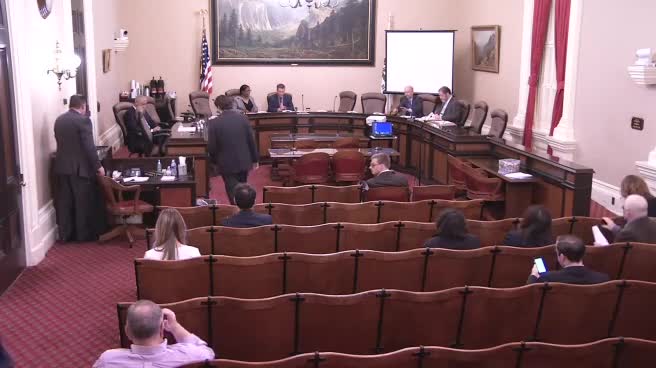
Discussed in Hearing
 31MIN
Senate Standing Committee on Governance and Finance
Bill Author
Bill Co-Author(s):