SB 152: Transactions and use taxes: County of Sonoma.
- Session Year: 2017-2018
- House: Senate
- Latest Version Date: 2018-09-23
Existing law authorizes cities and counties, subject to certain limitations and approval requirements, to levy a transactions and use tax for general or specific purposes, in accordance with the procedures and requirements set forth in the Transactions and Use Tax Law, including a requirement that the combined rate of all taxes that may be imposed in accordance with that law in the county not exceed 2%.
This bill would authorize the County of Sonoma or any city within the county to impose a transactions and use tax for general purposes, and the county, any city within the county, or the Sonoma County Transportation Authority to impose a transactions and use tax for specific purposes, at a rate of no more than 1% that, in combination with other transactions and use taxes, would exceed the above-described combined rate limit of 2%, if certain requirements are met. The bill would repeal this authorization on January 1, 2026, if an ordinance proposing the tax has not been approved by that date.
This bill would make legislative findings and declarations as to the necessity of a special statute for the County of Sonoma.
Existing law establishes the Medi-Cal program, which is administered by the State Department of Health Care Services, under which qualified low-income individuals receive health care services. The Medi-Cal program is, in part, governed and funded by federal Medicaid program provisions. Existing law requires the department to develop and prepare one or more reports issued on at least a quarterly basis and make the reports public within 30 days for the purpose of informing the California Health and Human Services Agency, the California Health Benefit Exchange, the Legislature, and the public about the enrollment process for all insurance affordability programs. Existing law further requires the department to collect the data for these reports pursuant to specified administrative procedures.This bill would instead require these ongoing reports to be issued on at least a biannual basis and be made public within 90, rather than 30, days. The bill would further require the data within the reports to be aggregated and calculated on at least a quarterly basis. The bill would delete the requirement for the department to collect the data pursuant to the specified administrative procedures.Existing law provides for the California Childrens Services (CCS) program, which is a statewide program that provides medically necessary services for physically handicapped children whose parents are unable to pay for those services. Existing law authorizes the department to establish, no sooner than July 1, 2017, a Whole Child Model program, under which managed care plans served by a county organized health system or Regional Health Authority in designated counties would provide CCS program services to Medi-Cal-eligible CCS children and youth. Existing law requires the department to contract with an independent entity that has experience in performing robust program evaluations to conduct an evaluation to assess Medi-Cal managed care plan performance and the outcomes and experience of CCS-eligible children and youth participating in the Whole Child Model program. Existing law requires the department to provide a report on the results of that evaluation by January 1, 2021.This bill would instead require the department to provide that report by January 1, 2021, or 3 years from the date when all counties in which the department is authorized to establish the Whole Child Model program are fully operational under the program, whichever is later.Existing law establishes the Medi-Cal program, which is administered by the State Department of Health Care Services, under which qualified low-income individuals receive health care services. The Medi-Cal program is, in part, governed and funded by federal Medicaid program provisions. Existing law requires the department to develop and prepare one or more reports issued on at least a quarterly basis and make the reports public within 30 days for the purpose of informing the California Health and Human Services Agency, the California Health Benefit Exchange, the Legislature, and the public about the enrollment process for all insurance affordability programs. Existing law further requires the department to collect the data for these reports pursuant to specified administrative procedures.
This bill would instead require this report these ongoing reports to be issued on at least a biannual basis and would make a conforming change. be made public within 90, rather than 30, days. The bill would further require the data within the reports to be aggregated and calculated on at least a quarterly basis. The bill would delete the requirement for the department to collect the data pursuant to the specified administrative procedures.
Existing law provides for the California Childrens Services (CCS) program, which is a statewide program that provides medically necessary services for physically handicapped children whose parents are unable to pay for those services. Existing law authorizes the department to establish, no sooner than July 1, 2017, a Whole Child Model program, under which managed care plans served by a county organized health system or Regional Health Authority in designated counties would provide CCS program services to Medi-Cal-eligible CCS children and youth. Existing law requires the department to contract with an independent entity that has experience in performing robust program evaluations to conduct an evaluation to assess Medi-Cal managed care plan performance and the outcomes and experience of CCS-eligible children and youth participating in the Whole Child Model program. Existing law requires the department to provide a report on the results of that evaluation by January 1, 2021.
This bill would instead require the department to provide that report by the later of January 1, 2021, or 3 years from the date when all counties in which the department is authorized to establish the Whole Child Model program are fully operational under the program, whichever is later.
Existing law provides for establishes the Medi-Cal program, which is administered by the State Department of Health Care Services, under which qualified low-income individuals receive health care services. The Medi-Cal program is, in part, governed and funded by federal Medicaid program provisions. Existing law requires the department to develop and prepare one or more reports issued on at least a quarterly basis for the purpose of informing the California Health and Human Services Agency, the California Health Benefit Exchange, the Legislature, and the public about the enrollment process for all insurance affordability programs.
This bill would instead require this report to be issued on at least a biannual basis and would make a conforming change.
Existing law provides for the California Childrens Services (CCS) program, which is a statewide program that provides medically necessary services for physically handicapped children whose parents are unable to pay for those services. Existing law authorizes the department to establish, no sooner than July 1, 2017, a Whole Child Model program, under which managed care plans served by a county organized health system or Regional Health Authority in designated counties would provide CCS program services to Medi-Cal-eligible CCS children and youth. Existing law requires the department to contract with an independent entity that has experience in performing robust program evaluations to conduct an evaluation to assess Medi-Cal managed care plan performance and the outcomes and experience of CCS-eligible children and youth participating in the Whole Child Model program. Existing law requires the department to provide a report on the results of that evaluation by January 1, 2021.
This bill would instead require the department to provide that report by the later of January 1, 2021, or 3 years from the date when all counties in which the department is authorized to establish the Whole Child Model program are fully operational under the program, whichever is later.
Existing law provides for the Medi-Cal program, which is administered by the State Department of Health Care Services, under which qualified low-income individuals receive health care services. The Medi-Cal program is, in part, governed and funded by federal Medicaid program provisions. Existing law requires the department to develop and prepare one or more reports issued on at least a quarterly basis for the purpose of informing the California Health and Human Services Agency, the California Health Benefit Exchange, the Legislature, and the public about the enrollment process for all insurance affordability programs.
This bill would instead require this report to be issued on at least a biannual basis and would make a conforming change.
Notwithstanding any other law, the County of Sonoma or any city within the county may impose a transactions and use tax for general purposes, and the county, any city within the county, or the Sonoma County Transportation Authority may impose a transactions and use tax for specific purposes, at a rate of no more than 1 percent that would, in combination with all taxes imposed in accordance with the Transactions and Use Tax Law (Part 1.6 (commencing with Section 7251)), exceed the limit established by Section 7251.1, if all of the following requirements are met:
(a)The County of Sonoma, a city within the county, or the Sonoma County Transportation Authority adopts an ordinance proposing the transactions and use tax by any applicable voting approval requirement.
(b)The ordinance proposing the transactions and use tax is approved by the voters voting on the ordinance in accordance with Article XIIIC of the California Constitution. The election on the ordinance proposing the transactions and use tax may occur on or after November 6, 2018.
(c)The transactions and use tax conforms to the Transactions and Use Tax Law (Part 1.6 (commencing with Section 7251)), other than Section 7251.1.
7292.9.If, as of January 1, 2026, an ordinance proposing a transactions and use tax has not been approved as required by subdivision (b) of Section 7292.8, this chapter shall be repealed as of that same date.
SEC. 2.The Legislature finds and declares that a special statute is necessary and that a general statute cannot be made applicable within the meaning of Section 16 of Article IV of the California Constitution because of the unique fiscal pressures being experienced in the County of Sonoma in providing essential programs and services.
Notwithstanding any other law, the County of Sonoma or any city within the county may impose a transactions and use tax for general purposes, and the county, any city within the county, or the Sonoma County Transportation Authority may impose a transactions and use tax for specific purposes, at a rate of no more than 1 percent that would, in combination with all taxes imposed in accordance with the Transactions and Use Tax Law (Part 1.6 (commencing with Section 7251)), exceed the limit established in by Section 7251.1, if all of the following requirements are met:
(a)The County of Sonoma, a city within the county, or the Sonoma County Transportation Authority adopts an ordinance proposing the transactions and use tax by any applicable voting approval requirement.
(b)The ordinance proposing the transactions and use tax is approved by the voters voting on the ordinance in accordance with Article XIII C of the California Constitution. The election on the ordinance proposing the transactions and use tax may occur on or after November 6, 2018.
(c)The transactions and use tax conforms to the Transactions and Use Tax Law (Part 1.6 (commencing with Section 7251)), other than Section 7251.1.
7292.9.If, as of January 1, 2026, an ordinance proposing a transactions and use tax has not been approved as required by subdivision (b) of Section 7292.8, this chapter shall be repealed as of that same date.
SEC. 2.The Legislature finds and declares that a special statute is necessary and that a general statute cannot be made applicable within the meaning of Section 16 of Article IV of the California Constitution because of the unique fiscal pressures being experienced in the County of Sonoma in providing essential programs and services.
Notwithstanding any other law, the County of Sonoma or any city within the county may impose a transactions and use tax for general purposes, and the county, any city within the county, or the Sonoma County Transportation Authority may impose a transactions and use tax for specific purposes, at a rate of no more than 1 percent that would, in combination with all taxes imposed in accordance with the Transactions and Use Tax Law (Part 1.6 (commencing with Section 7251)), exceed the limit established in Section 7251.1, if all of the following requirements are met:
(a)The County of Sonoma, a city within the county, or the Sonoma County Transportation Authority adopts an ordinance proposing the transactions and use tax by any applicable voting approval requirement.
(b)The ordinance proposing the transactions and use tax is approved by the voters voting on the ordinance in accordance with Article XIII C of the California Constitution. The election on the ordinance proposing the transactions and use tax may occur on or after November 6, 2018.
(c)The transactions and use tax conforms to the Transactions and Use Tax Law (Part 1.6 (commencing with Section 7251)), other than Section 7251.1.
7292.9.If, as of January 1, 2026, an ordinance proposing a transactions and use tax has not been approved as required by subdivision (b) of Section 7292.8, this chapter shall be repealed as of that same date.
SEC. 2.The Legislature finds and declares that a special statute is necessary and that a general statute cannot be made applicable within the meaning of Section 16 of Article IV of the California Constitution because of the unique fiscal pressures being experienced in the County of Sonoma in providing essential programs and services.
SECTION 1.Section 14094.18 of the Welfare and Institutions Code is amended to read:14094.18.(a)(1)The department shall contract with an independent entity that has experience in performing robust program evaluations to conduct an evaluation to assess Medi-Cal managed care plan performance and the outcomes and the experience of CCS-eligible children and youth participating in the Whole Child Model program, including access to primary and specialty care, and youth transitions from Whole Child Model program to adult Medi-Cal coverage.(2)The department shall provide a report on the results of this evaluation required pursuant to this section to the Legislature by January 1, 2021, or three years from the date when all counties described in Section 14094.5 are fully operational under the Whole Child Model program pursuant to this article, whichever is later. A report submitted to the Legislature pursuant to this subdivision shall be submitted in compliance with Section 9795 of the Government Code.(b)The evaluation required by this section, at a minimum, shall evaluate the performance of the plans participating in the Whole Child Model program as compared to the performance of the CCS program prior to the implementation of the Whole Child Model program in those same counties. The evaluation shall evaluate whether the inclusion of CCS services in a managed care delivery system improves access to care, quality of care, and the patient experience by analyzing all of the following, and when possible, disaggregating the results, based on the childs or youths race, ethnicity, and primary language spoken at home:(1)Access to specialty and primary care, and in particular, utilization of CCS-paneled providers.(2)The type and location of CCS services and the extent to which CCS services are provided in-network compared to out of network.(3)Utilization rates of inpatient admissions, outpatient services, durable medical equipment, behavioral health services, home health, pharmacy, and other ancillary services.(4)Patient and family satisfaction.(5)Appeals and grievances, including the number of petitions to the plan to extend the continuity of care period for durable medical equipment and CCS providers, the results of those appeals, whether any subsequent appeals were made to the department, and the results of those appeals to the department.(6)Authorization of CCS-eligible services.(7)Network and provider participation, including participation of pediatricians, pediatric specialists, and pediatric subspecialists, by specialty and subspecialty.(8)The ability of a child or youth who ages out of CCS and remains in the same Medi-Cal managed care plan to retain his or her existing providers, to the extent possible or known.(c)The evaluation required by this section shall also evaluate managed care plans participating in the Whole Child Model program as compared to the CCS program in counties where CCS services are not incorporated into managed care, and collect appropriate data to evaluate all of the following:(1)The rate of new CCS enrollment in each county.(2)The percentage of CCS-eligible children and youth with a diagnosis requiring a referral to a CCS special care center who have been seen by a CCS special care center.(3)The percentage of CCS children and youth discharged from a hospital who had at least one followup contact or visit within 28 days after discharge.(4)Appeals and grievances.(d)The department shall consult with stakeholders, including, but not limited to, the Whole Child Model program stakeholder advisory group, regarding the scope and structure of the review.SEC. 2.Section 14102.5 of the Welfare and Institutions Code is amended to read:14102.5.(a)The department shall, in collaboration with the Exchange, the counties, consumer advocates, and the Statewide Automated Welfare System consortia, develop and prepare one or more reports that shall be issued on at least a biannual basis and shall be made publicly available within 90 days following the end of each reporting period, for the purpose of informing the California Health and Human Services Agency, the Exchange, the Legislature, and the public about the enrollment process for all insurance affordability programs. The data within the reports shall be aggregated and calculated on at least a quarterly basis. The reports shall comply with federal reporting requirements and shall, at a minimum, include the following information, to be derived from, as appropriate depending on the data element, CalHEERS, MEDS, or the Statewide Automated Welfare System:(1)For applications received for insurance affordability programs through any venue, all of the following:(A)The number of applications received through each venue.(B)The number of applicants included on those applications.(C)Applicant demographics, including, but not limited to, gender, age, race, ethnicity, and primary language.(D)The disposition of applications, including all of the following:(i)The number of eligibility determinations that resulted in an approval for coverage.(ii)The program or programs for which the individuals in clause (i) were determined eligible.(iii)The number of applications that were denied for any coverage and the reason or reasons for the denials.(E)The number of days for eligibility determinations to be completed.(2)With regard to health plan selection, all of the following:(A)The health plans that are selected by applicants enrolled in an insurance affordability program, reported by the program.(B)The number of Medi-Cal enrollees who do not select a health plan but are defaulted into a plan.(3)For annual redeterminations conducted for beneficiaries, all of the following:(A)The number of redeterminations processed.(B)The number of redeterminations that resulted in continued eligibility for the same insurance affordability program.(C)The number of redeterminations that resulted in a change in eligibility to a different insurance affordability program.(D)The number of redeterminations that resulted in a finding of ineligibility for any program and the reason or reasons for the findings of ineligibility.(E)The number of days for redeterminations to be completed.(4)With regard to disenrollments not related to a redetermination of eligibility, all of the following:(A)The number of beneficiary disenrollments.(B)The reasons for the disenrollments.(C)The number of disenrollments that are caused by an individual disenrolling from one insurance affordability program and enrolling into another.(5)The number of applications for insurance affordability programs that were filed with the help of an assister or navigator.(6)The total number of grievances and appeals filed by applicants and enrollees regarding eligibility for insurance affordability programs, the basis for the grievance, and the outcomes of the appeals.(b)The department shall collect the information necessary for these reports and develop these reports using data obtained from the Statewide Automated Welfare System, CalHEERS, MEDS, and any other appropriate state information management systems.(c)For purposes of this section, the following definitions shall apply:(1)CalHEERS means the California Healthcare Eligibility, Enrollment, and Retention System developed under Section 15926.(2)Exchange means the California Health Benefit Exchange established pursuant to Title 22 (commencing with Section 100500) of the Government Code.(3)Statewide Automated Welfare System means the system developed pursuant to Section 10823.(4)MEDS means the Medi-Cal Eligibility Data System that is maintained by the department.(a)(1)The department shall contract with an independent entity that has experience in performing robust program evaluations to conduct an evaluation to assess Medi-Cal managed care plan performance and the outcomes and the experience of CCS-eligible children and youth participating in the Whole Child Model program, including access to primary and specialty care, and youth transitions from Whole Child Model program to adult Medi-Cal coverage.
(2)The department shall provide a report on the results of this evaluation required pursuant to this section to the Legislature by January 1, 2021, or three years from the date when all counties described in Section 14094.5 are fully operational under the Whole Child Model program pursuant to this article, whichever is later. A report submitted to the Legislature pursuant to this subdivision shall be submitted in compliance with Section 9795 of the Government Code.
(b)The evaluation required by this section, at a minimum, shall evaluate the performance of the plans participating in the Whole Child Model program as compared to the performance of the CCS program prior to the implementation of the Whole Child Model program in those same counties. The evaluation shall evaluate whether the inclusion of CCS services in a managed care delivery system improves access to care, quality of care, and the patient experience by analyzing all of the following, and when possible, disaggregating the results, based on the childs or youths race, ethnicity, and primary language spoken at home:
(1)Access to specialty and primary care, and in particular, utilization of CCS-paneled providers.
(2)The type and location of CCS services and the extent to which CCS services are provided in-network compared to out of network.
(3)Utilization rates of inpatient admissions, outpatient services, durable medical equipment, behavioral health services, home health, pharmacy, and other ancillary services.
(4)Patient and family satisfaction.
(5)Appeals and grievances, including the number of petitions to the plan to extend the continuity of care period for durable medical equipment and CCS providers, the results of those appeals, whether any subsequent appeals were made to the department, and the results of those appeals to the department.
(6)Authorization of CCS-eligible services.
(7)Network and provider participation, including participation of pediatricians, pediatric specialists, and pediatric subspecialists, by specialty and subspecialty.
(8)The ability of a child or youth who ages out of CCS and remains in the same Medi-Cal managed care plan to retain his or her existing providers, to the extent possible or known.
(c)The evaluation required by this section shall also evaluate managed care plans participating in the Whole Child Model program as compared to the CCS program in counties where CCS services are not incorporated into managed care, and collect appropriate data to evaluate all of the following:
(1)The rate of new CCS enrollment in each county.
(2)The percentage of CCS-eligible children and youth with a diagnosis requiring a referral to a CCS special care center who have been seen by a CCS special care center.
(3)The percentage of CCS children and youth discharged from a hospital who had at least one followup contact or visit within 28 days after discharge.
(4)Appeals and grievances.
(d)The department shall consult with stakeholders, including, but not limited to, the Whole Child Model program stakeholder advisory group, regarding the scope and structure of the review.
SEC. 2.Section 14102.5 of the Welfare and Institutions Code is amended to read:14102.5.(a)The department shall, in collaboration with the Exchange, the counties, consumer advocates, and the Statewide Automated Welfare System consortia, develop and prepare one or more reports that shall be issued on at least a biannual basis and shall be made publicly available within 30 90 days following the end of each reporting period, for the purpose of informing the California Health and Human Services Agency, the Exchange, the Legislature, and the public about the enrollment process for all insurance affordability programs. The data within the reports shall be aggregated and calculated on at least a quarterly basis. The reports shall comply with federal reporting requirements and shall, at a minimum, include the following information, to be derived from, as appropriate depending on the data element, CalHEERS, MEDS, or the Statewide Automated Welfare System:
(1)For applications received for insurance affordability programs through any venue, all of the following:
(A)The number of applications received through each venue.
(B)The number of applicants included on those applications.
(C)Applicant demographics, including, but not limited to, gender, age, race, ethnicity, and primary language.
(D)The disposition of applications, including all of the following:
(i)The number of eligibility determinations that resulted in an approval for coverage.
(ii)The program or programs for which the individuals in clause (i) were determined eligible.
(iii)The number of applications that were denied for any coverage and the reason or reasons for the denials.
(E)The number of days for eligibility determinations to be completed.
(2)With regard to health plan selection, all of the following:
(A)The health plans that are selected by applicants enrolled in an insurance affordability program, reported by the program.
(B)The number of Medi-Cal enrollees who do not select a health plan but are defaulted into a plan.
(3)For annual redeterminations conducted for beneficiaries, all of the following:
(A)The number of redeterminations processed.
(B)The number of redeterminations that resulted in continued eligibility for the same insurance affordability program.
(C)The number of redeterminations that resulted in a change in eligibility to a different insurance affordability program.
(D)The number of redeterminations that resulted in a finding of ineligibility for any program and the reason or reasons for the findings of ineligibility.
(E)The number of days for redeterminations to be completed.
(4)With regard to disenrollments not related to a redetermination of eligibility, all of the following:
(A)The number of beneficiary disenrollments.
(B)The reasons for the disenrollments.
(C)The number of disenrollments that are caused by an individual disenrolling from one insurance affordability program and enrolling into another.
(5)The number of applications for insurance affordability programs that were filed with the help of an assister or navigator.
(6)The total number of grievances and appeals filed by applicants and enrollees regarding eligibility for insurance affordability programs, the basis for the grievance, and the outcomes of the appeals.
(b)The department shall collect the information necessary for these reports and develop these reports using data obtained from the Statewide Automated Welfare System, CalHEERS, MEDS, and any other appropriate state information management systems.
(c)For purposes of this section, the following definitions shall apply:
(1)CalHEERS means the California Healthcare Eligibility, Enrollment, and Retention System developed under Section 15926.
(2)Exchange means the California Health Benefit Exchange established pursuant to Title 22 (commencing with Section 100500) of the Government Code.
(3)Statewide Automated Welfare System means the system developed pursuant to Section 10823.
(4)MEDS means the Medi-Cal Eligibility Data System that is maintained by the department.
(d)Notwithstanding Chapter 3.5 (commencing with Section 11340) of Part 1 of Division 3 of Title 2 of the Government Code, the department, without taking any further regulatory action, shall implement, interpret, or make specific this section by means of all-county letters, plan letters, plan or provider bulletins, or similar instructions until the time regulations are adopted. Thereafter, the department shall adopt regulations in accordance with the requirements of Chapter 3.5 (commencing with Section 11340) of Part 1 of Division 3 of Title 2 of the Government Code. Beginning six months after the effective date of this section, and notwithstanding Section 10231.5 of the Government Code, the department shall provide a status report to the Legislature on a semiannual basis until regulations have been adopted.(a)(1)The department shall contract with an independent entity that has experience in performing robust program evaluations to conduct an evaluation to assess Medi-Cal managed care plan performance and the outcomes and the experience of CCS-eligible children and youth participating in the Whole Child Model program, including access to primary and specialty care, and youth transitions from Whole Child Model program to adult Medi-Cal coverage.
(2)The department shall provide a report on the results of this evaluation required pursuant to this section to the Legislature by no later than January 1, 2021. January 1, 2021, or three years from the date when all counties described in Section 14094.5 are fully operational under the Whole Child Model program pursuant to this article, whichever is later. A report submitted to the Legislature pursuant to this subdivision shall be submitted in compliance with Section 9795 of the Government Code.
(b)The evaluation required by this section, at a minimum, shall evaluate the performance of the plans participating in the Whole Child Model program as compared to the performance of the CCS program prior to the implementation of the Whole Child Model program in those same counties. The evaluation shall evaluate whether the inclusion of CCS services in a managed care delivery system improves access to care, quality of care, and the patient experience by analyzing all of the following, and when possible, disaggregating the results, based on the childs or youths race, ethnicity, and primary language spoken at home:
(1)Access to specialty and primary care, and in particular, utilization of CCS-paneled providers.
(2)The type and location of CCS services and the extent to which CCS services are provided in-network compared to out of network.
(3)Utilization rates of inpatient admissions, outpatient services, durable medical equipment, behavioral health services, home health, pharmacy, and other ancillary services.
(4)Patient and family satisfaction.
(5)Appeals and grievances, including the number of petitions to the plan to extend the continuity of care period for durable medical equipment and CCS providers, the results of those appeals, whether any subsequent appeals were made to the department, and the results of those appeals to the department.
(6)Authorization of CCS-eligible services.
(7)Network and provider participation, including participation of pediatricians, pediatric specialists, and pediatric subspecialists, by specialty and subspecialty.
(8)The ability of a child or youth who ages out of CCS and remains in the same Medi-Cal managed care plan to retain his or her existing providers, to the extent possible or known.
(c)The evaluation required by this section shall also evaluate managed care plans participating in the Whole Child Model program as compared to the CCS program in counties where CCS services are not incorporated into managed care, and collect appropriate data to evaluate all of the following:
(1)The rate of new CCS enrollment in each county.
(2)The percentage of CCS-eligible children and youth with a diagnosis requiring a referral to a CCS special care center who have been seen by a CCS special care center.
(3)The percentage of CCS children and youth discharged from a hospital who had at least one followup contact or visit within 28 days after discharge.
(4)Appeals and grievances.
(d)The department shall consult with stakeholders, including, but not limited to, the Whole Child Model program stakeholder advisory group, regarding the scope and structure of the review.
SECTION 1.SEC. 2.Section 14102.5 of the Welfare and Institutions Code is amended to read:14102.5.(a)The department shall, in collaboration with the Exchange, the counties, consumer advocates, and the Statewide Automated Welfare System consortia, develop and prepare one or more reports that shall be issued on at least a biannual basis and shall be made publicly available within 30 days following the end of each reporting period, for the purpose of informing the California Health and Human Services Agency, the Exchange, the Legislature, and the public about the enrollment process for all insurance affordability programs. The reports shall comply with federal reporting requirements and shall, at a minimum, include the following information, to be derived from, as appropriate depending on the data element, CalHEERS, MEDS, or the Statewide Automated Welfare System:
(1)For applications received for insurance affordability programs through any venue, all of the following:
(A)The number of applications received through each venue.
(B)The number of applicants included on those applications.
(C)Applicant demographics, including, but not limited to, gender, age, race, ethnicity, and primary language.
(D)The disposition of applications, including all of the following:
(i)The number of eligibility determinations that resulted in an approval for coverage.
(ii)The program or programs for which the individuals in clause (i) were determined eligible.
(iii)The number of applications that were denied for any coverage and the reason or reasons for the denials.
(E)The number of days for eligibility determinations to be completed.
(2)With regard to health plan selection, all of the following:
(A)The health plans that are selected by applicants enrolled in an insurance affordability program, reported by the program.
(B)The number of Medi-Cal enrollees who do not select a health plan but are defaulted into a plan.
(3)For annual redeterminations conducted for beneficiaries, all of the following:
(A)The number of redeterminations processed.
(B)The number of redeterminations that resulted in continued eligibility for the same insurance affordability program.
(C)The number of redeterminations that resulted in a change in eligibility to a different insurance affordability program.
(D)The number of redeterminations that resulted in a finding of ineligibility for any program and the reason or reasons for the findings of ineligibility.
(E)The number of days for redeterminations to be completed.
(4)With regard to disenrollments not related to a redetermination of eligibility, all of the following:
(A)The number of beneficiary disenrollments.
(B)The reasons for the disenrollments.
(C)The number of disenrollments that are caused by an individual disenrolling from one insurance affordability program and enrolling into another.
(5)The number of applications for insurance affordability programs that were filed with the help of an assister or navigator.
(6)The total number of grievances and appeals filed by applicants and enrollees regarding eligibility for insurance affordability programs, the basis for the grievance, and the outcomes of the appeals.
(b)The department shall collect the information necessary for these reports and develop these reports using data obtained from the Statewide Automated Welfare System, CalHEERS, MEDS, and any other appropriate state information management systems.
(c)For purposes of this section, the following definitions shall apply:
(1)CalHEERS means the California Healthcare Eligibility, Enrollment, and Retention System developed under Section 15926.
(2)Exchange means the California Health Benefit Exchange established pursuant to Title 22 (commencing with Section 100500) of the Government Code.
(3)Statewide Automated Welfare System means the system developed pursuant to Section 10823.
(4)MEDS means the Medi-Cal Eligibility Data System that is maintained by the department.
(d)Notwithstanding Chapter 3.5 (commencing with Section 11340) of Part 1 of Division 3 of Title 2 of the Government Code, the department, without taking any further regulatory action, shall implement, interpret, or make specific this section by means of all-county letters, plan letters, plan or provider bulletins, or similar instructions until the time regulations are adopted. Thereafter, the department shall adopt regulations in accordance with the requirements of Chapter 3.5 (commencing with Section 11340) of Part 1 of Division 3 of Title 2 of the Government Code. Beginning six months after the effective date of this section, and notwithstanding Section 10231.5 of the Government Code, the department shall provide a status report to the Legislature on a semiannual basis until regulations have been adopted.
(a)The department shall, in collaboration with the Exchange, the counties, consumer advocates, and the Statewide Automated Welfare System consortia, develop and prepare one or more reports that shall be issued on at least a quarterly biannual basis and shall be made publicly available within 30 days following the end of each quarter, reporting period, for the purpose of informing the California Health and Human Services Agency, the Exchange, the Legislature, and the public about the enrollment process for all insurance affordability programs. The reports shall comply with federal reporting requirements and shall, at a minimum, include the following information, to be derived from, as appropriate depending on the data element, CalHEERS, MEDS, or the Statewide Automated Welfare System:
(1)For applications received for insurance affordability programs through any venue, all of the following:
(A)The number of applications received through each venue.
(B)The number of applicants included on those applications.
(C)Applicant demographics, including, but not limited to, gender, age, race, ethnicity, and primary language.
(D)The disposition of applications, including all of the following:
(i)The number of eligibility determinations that resulted in an approval for coverage.
(ii)The program or programs for which the individuals in clause (i) were determined eligible.
(iii)The number of applications that were denied for any coverage and the reason or reasons for the denials.
(E)The number of days for eligibility determinations to be completed.
(2)With regard to health plan selection, all of the following:
(A)The health plans that are selected by applicants enrolled in an insurance affordability program, reported by the program.
(B)The number of Medi-Cal enrollees who do not select a health plan but are defaulted into a plan.
(3)For annual redeterminations conducted for beneficiaries, all of the following:
(A)The number of redeterminations processed.
(B)The number of redeterminations that resulted in continued eligibility for the same insurance affordability program.
(C)The number of redeterminations that resulted in a change in eligibility to a different insurance affordability program.
(D)The number of redeterminations that resulted in a finding of ineligibility for any program and the reason or reasons for the findings of ineligibility.
(E)The number of days for redeterminations to be completed.
(4)With regard to disenrollments not related to a redetermination of eligibility, all of the following:
(A)The number of beneficiary disenrollments.
(B)The reasons for the disenrollments.
(C)The number of disenrollments that are caused by an individual disenrolling from one insurance affordability program and enrolling into another.
(5)The number of applications for insurance affordability programs that were filed with the help of an assister or navigator.
(6)The total number of grievances and appeals filed by applicants and enrollees regarding eligibility for insurance affordability programs, the basis for the grievance, and the outcomes of the appeals.
(b)The department shall collect the information necessary for these reports and develop these reports using data obtained from the Statewide Automated Welfare System, CalHEERS, MEDS, and any other appropriate state information management systems.
(c)For purposes of this section, the following definitions shall apply:
(1)CalHEERS means the California Healthcare Eligibility, Enrollment, and Retention System developed under Section 15926.
(2)Exchange means the California Health Benefit Exchange established pursuant to Title 22 (commencing with Section 100500) of the Government Code.
(3)Statewide Automated Welfare System means the system developed pursuant to Section 10823.
(4)MEDS means the Medi-Cal Eligibility Data System that is maintained by the department.
(d)Notwithstanding Chapter 3.5 (commencing with Section 11340) of Part 1 of Division 3 of Title 2 of the Government Code, the department, without taking any further regulatory action, shall implement, interpret, or make specific this section by means of all-county letters, plan letters, plan or provider bulletins, or similar instructions until the time regulations are adopted. Thereafter, the department shall adopt regulations in accordance with the requirements of Chapter 3.5 (commencing with Section 11340) of Part 1 of Division 3 of Title 2 of the Government Code. Beginning six months after the effective date of this section, and notwithstanding Section 10231.5 of the Government Code, the department shall provide a status report to the Legislature on a semiannual basis until regulations have been adopted.
(e)This section shall become operative on January 1, 2014.|
Date
|
Status
|
|---|---|
| Sep 23, 2018 | Chaptered by Secretary of State. Chapter 728, Statutes of 2018. |
| Sep 23, 2018 | Approved by the Governor. |
| Sep 12, 2018 | Enrolled and presented to the Governor at 5 p.m. |
| Aug 31, 2018 | Assembly amendments concurred in. (Ayes 26. Noes 13.) Ordered to engrossing and enrolling. |
| Aug 31, 2018 | From committee: That the Assembly amendments be concurred in. (Ayes 5. Noes 2.) |
| Aug 31, 2018 | From committee: Be re-referred to Com. on GOV. & F. pursuant to Senate Rule 29.10(d). (Ayes 5. Noes 0.) Re-referred to Com. on GOV. & F. |
| Aug 31, 2018 | Re-referred to Com. on RLS. pursuant to Senate Rule 29.10(d). |
| Aug 31, 2018 | In Senate. Concurrence in Assembly amendments pending. |
| Aug 31, 2018 | Read third time. Passed. Ordered to the Senate. |
| Aug 29, 2018 | Read second time. Ordered to third reading. |
| Aug 28, 2018 | From committee: Do pass. (Ayes 6. Noes 3.) (August 28). |
| Aug 27, 2018 | Joint Rule 62(a) suspended. |
| Aug 27, 2018 | From committee with author's amendments. Read second time and amended. Re-referred to Com. on L. GOV. |
| Aug 24, 2018 | Re-referred to Com. on L. GOV. pursuant to Assembly Rule 77.2. |
| Aug 24, 2018 | Read third time and amended. |
| Aug 23, 2018 | Assembly Rule 78 suspended. |
| Jul 17, 2017 | Action rescinded whereby the bill was read a third time, passed, and ordered to the Senate. |
| Jul 13, 2017 | In Assembly. Held at Desk. |
| Jul 13, 2017 | Ordered to the Assembly. |
| Jul 6, 2017 | In Senate. Concurrence in Assembly amendments pending. |
| Jul 6, 2017 | Read third time. Passed. Ordered to the Senate. |
| Jun 29, 2017 | Read second time. Ordered to consent calendar. |
| Jun 28, 2017 | From committee: Do pass. Ordered to consent calendar. (Ayes 14. Noes 0.) (June 28). |
| Jun 27, 2017 | June 27 hearing postponed by committee. |
| Jun 21, 2017 | From committee: Do pass and re-refer to Com. on APPR. (Ayes 15. Noes 0.) (June 20). Re-referred to Com. on APPR. |
| Jun 5, 2017 | From committee with author's amendments. Read second time and amended. Re-referred to Com. on HEALTH. |
| May 18, 2017 | Referred to Com. on HEALTH. |
| May 1, 2017 | In Assembly. Read first time. Held at Desk. |
| May 1, 2017 | Read third time. Passed. (Ayes 37. Noes 0. Page 904.) Ordered to the Assembly. |
| Apr 25, 2017 | Read second time. Ordered to third reading. |
| Apr 24, 2017 | From committee: Be ordered to second reading pursuant to Senate Rule 28.8. |
| Apr 13, 2017 | Set for hearing April 24. |
| Apr 5, 2017 | From committee: Do pass and re-refer to Com. on APPR. (Ayes 9. Noes 0. Page 623.) (April 5). Re-referred to Com. on APPR. |
| Mar 31, 2017 | Set for hearing April 5. |
| Mar 29, 2017 | Re-referred to Com. on HEALTH. |
| Mar 23, 2017 | From committee with author's amendments. Read second time and amended. Re-referred to Com. on RLS. |
| Mar 2, 2017 | Referred to Com. on RLS. |
| Jan 19, 2017 | From printer. May be acted upon on or after February 18. |
| Jan 18, 2017 | Introduced. Read first time. To Com. on RLS. for assignment. To print. |
|
Date
|
Description
|
Location
|
Votes
|
|
|---|---|---|---|---|
| Aug 31, 2018 | Unfinished Business SB152 McGuire Concurrence | Senate Floor |
Passed |
|
| Aug 31, 2018 | SB 152 McGuire Senate Third Reading By WOOD | Assembly Floor |
Passed |
|
| Aug 31, 2018 | That the Assembly amendments be concurred in | Senate Standing Committee on Governance and Finance |
Passed |
|
| Aug 28, 2018 | Do pass. | Assembly Standing Committee on Local Government |
Passed |
|
| Aug 24, 2018 | SB 152 Hernandez Senate Third Reading Amend By WOOD Set #1 | Assembly Floor |
Passed |
|
| Jul 6, 2017 | SB 152 Hernandez Consent Calendar Second Day Regular Session | Assembly Floor |
Passed |
|
| Jun 28, 2017 | Do pass. To Consent Calendar. | Assembly Standing Committee on Appropriations |
Passed |
|
| Jun 20, 2017 | Do pass and be re-referred to the Committee on [Appropriations] | Assembly Standing Committee on Health |
Passed |
|
| May 1, 2017 | Senate 3rd Reading SB152 Hernandez et al. | Senate Floor |
Passed |
|
| Apr 5, 2017 | Do pass, but first be re-referred to the Committee on [Appropriations] | Senate Standing Committee on Health |
Passed |
This list shows positions taken on this bill by organizations on the date displayed, which is linked to the original source.
Positions by individuals are not included.
Office of Senate Floor Analyses (916) 651-1520 Fax: (916) 327-4478 | SB |
UNFINISHED BUSINESS
Bill No: SB 152
:
PRIOR SENATE VOTES NOT RELEVANT
SENATE GOVERNANCE & FIN. COMMITTEE: 5-2, 8/31/18 (Pursuant to Senate Rule 29.10)
AYES: McGuire, Beall, Hernandez, Hertzberg, Lara
NOES: Nguyen, Moorlach
ASSEMBLY FLOOR: Not available
DIGEST:
This bill authorizes Sonoma County, any of its cities, and the Sonoma County Transportation Authority to impose transactions and use taxes above the 2% cap.
Assembly Amendments
delete the previous contents of the bill relating to Medi-Cal, and insert provisions authorizing Sonoma County, any of its cities, and the Sonoma County Transportation Authority to impose transactions and use taxes above the 2% cap.
Existing law:
- Imposes the sales tax on every retailer engaged in business in this state that sells tangible personal property, and requires them to collect the appropriate tax from the purchase and remit the amount to the California Department of Tax and Fee Administration.
- Applies whenever a retail sale is made, which is basically any sale other than one for resale in the regular course of business.
- Provides that unless the person pays the sales tax to the retailer, he or she is liable for the use tax, which is imposed on any person consuming tangible personal property in the state. The use tax rate is the same rate as the sales tax rate, and must be remitted on or before the last day of the month following the quarterly period in which the person made the purchase.
- Levies the sales and use tax at a current rate of 7.25%.
- States that taxes levied by local governments are either general taxes, subject to majority approval of its voters, or special taxes, subject to 2/3 vote (California Constitution, Article XIII C).
- Allows cities and counties to increase the sales and use tax applied within their jurisdictions, also known as district or transactions and use taxes (TUTs), in increments of .125% for either specific or general purposes pursuant to the California Constitution’s voter approval requirements.
- Caps the maximum TUT rate at 2% within the county; however, allows exceptions from the cap for the Cities of El Cerrito and Santa Fe Springs, Alameda County, Contra Costa County, San Mateo County, the Transportation Agency for Monterey County, and the Los Angeles Metropolitan Transportation Authority.
This bill:
- Allows the County of Sonoma, or any city within the County, to impose a transactions and use tax for general purposes at a rate of up to 1%, above the 2% cap.
- Authorizes the same agencies and the Sonoma County Transportation Authority to impose a special tax up to 1% above the 2% cap.
- Requires any tax imposed under the bill to conform with TUT law.
- Directs any agency imposing a tax under the bill to first adopt an ordinance proposing the tax, and specifying the applicable voting requirement.
- Provides that voters must approve the tax according the appropriate voter approval threshold at an election on or after November 6, 2018.
- Repeals its authority on January 1, 2026, if the tax is not imposed.
- Contains a legislative finding and declaration explaining the need for legislation that applies only to Sonoma County.
FISCAL EFFECT: Appropriation: Fiscal Com.: Local:
None.
Sonoma County Board of Supervisors
OPPOSITION: (Verified 8/31/18)
Howard Jarvis Taxpayers Association
ARGUMENTS IN SUPPORT: According to the author, “SB 152 would allow the voters within Sonoma County to decide whether they want to increase sales taxes to address local needs. Last year, Sonoma County experienced the most destructive and deadly wild land fire in modern American History during the depths of a housing crisis – 5,300 homes were lost countywide and in Santa Rosa, an astounding five percent of their total housing stock was destroyed. Fragile watersheds were decimated, infrastructure must be rebuilt, and the real fabric of community must be re-sewn. The Fires have put tremendous strain on the County and the largest City between the Golden Gate and Oregon border, The City of Santa Rosa. This bill would advance an increasing of the current sales tax cap, but it’s the voters of Sonoma County who will be the ultimate deciders on if they want to increase taxes on important issues such as making the local fire service more resilient, disaster recovery, housing, critical mental health services among other important issues. SB 152 would authorize the County of Sonoma or any city within the county to impose a sales tax increase by no more than one cent. This legislative authority has a sunset embedded – It would be repealed if it’s not used by January 1, 2026. The Legislature has granted several similar exemptions to localities, and SB 152 is consistent with those prior exemptions. SB 152 will give local residents an additional tool they may need to help lift themselves up to move forward on their long road to recovery.”
ARGUMENTS IN OPPOSITION: According to the Howard Jarvis Taxpayers Association, “SB 152, in a gut-and-amend maneuver, (the bill was amended on Friday) would allow the Legislature to authorize an additional one cent sales tax for the County of Sonoma, or any city within the county, that would exceed the existing two percent Bradley-Burns sales tax cap imposed upon local municipalities. This would set Sonoma County’s overall sales tax rate at 9.125 percent. While the measure appears to abide by all local voting requirements, it sets a dangerous precedent to begin to allow counties to increase taxes beyond existing law. Counties need to learn to balance their budgets and control pension excesses. We simply cannot justify increased regressive taxation upon hard working families when California already has the highest state sales tax rate in the nation. The existing two percent Bradley-Burns threshold for local sales taxes has been in place for decades with good reason. It promotes uniformity and keeps taxes reasonable. Tax compliance is already a concern with multiple tax rates across a county already in place, as well as many municipalities already having a double-digit sales tax rate.”
8/31/18 19:40:28
**** END ****
SENATE THIRD READING
STR Bill Id:SB 152
Author:(McGuire)
As Amended Ver:August 27, 2018
Majority vote
SENATE VOTE: 37-0
Committee | Votes | Ayes | Noes |
Health | 15-0 | Wood, Maienschein, Bonta, Burke, Gallagher, Limón, McCarty, Nazarian, Patterson, Quirk-Silva, Ridley-Thomas, Rodriguez, Santiago, Thurmond, Waldron | |
Appropriations | 14-0 | Gonzalez Fletcher, Bigelow, Bloom, Bocanegra, Bonta, Limón, Chau, Eggman, Fong, Friedman, Gallagher, Muratsuchi, Obernolte, Reyes | |
Local Government | 6-3 | Aguiar-Curry, Bloom, Caballero, Gabriel, Grayson, Rivas | Waldron, Lackey, Voepel |
SUMMARY: Allows Sonoma County or any city within the county to impose a transactions and use tax (TUT) for general or specific purposes, and the Sonoma County Transportation Authority (SCTA) to impose a TUT for specific purposes, at a rate of no more than 1% above the 2% limit allowed by existing law. Specifically, this bill:
- Allows Sonoma County or any city within the county to impose a TUT for general or specific purposes, and the SCTA to impose a TUT for specific purposes, at a rate of no more than 1% that would, in combination with all other taxes imposed in accordance with TUT Law, exceed the 2% limit allowed by existing law, if all of the following requirements are met:
- Sonoma County, a city within the county, or the SCTA adopts an ordinance proposing the TUT by any applicable voting approval requirement;
- The ordinance proposing the TUT is approved by the voters voting on the ordinance in accordance with Article XIII C of the California Constitution; and,
- The TUT conforms to TUT Law, as specified.
- Allows the election on an ordinance proposing a TUT to occur on or after November 6, 2018.
- Repeals the provisions of this bill on January 1, 2026, if an ordinance proposing a TUT has not been approved by that date.
- Finds and declares that a special statute is necessary because of the unique fiscal pressures being experienced in Sonoma County in providing essential programs and services.
EXISTING LAW:
- Allows counties and cities to impose TUTs for general or specific purposes via ordinance approved by the required percentage of voters, as specified.
- Allows, pursuant to the Local Transportation Authority and Improvement Act (Transportation Authority Act), a county to establish a transportation authority.
- Allows a transportation authority to impose a TUT in accordance with the Transportation Authority Act and TUT Law, as specified.
- Prohibits the combined rate of all taxes imposed in accordance with TUT Law in any county from exceeding 2%, with specified exemptions.
FISCAL EFFECT: None
COMMENTS:
- Transactions and Use Taxes. Existing law authorizes cities and counties to impose TUTs in 0.125% increments, in addition to the state's 7.5% sales tax, provided that the combined rate in the county does not exceed 2%. TUTs are taxes imposed on the total retail price of any tangible personal property and the use or storage of such property when sales tax is not paid. These types of taxes may be levied as general taxes (majority vote required), which are unrestricted, or special taxes (two-thirds vote required), which are restricted for a specified use. Local transportation authorities may also impose TUTs in accordance with TUT Law and the Transportation Authority Act, which allows a TUT rate in 0.25% increments with a 1% maximum.
Prior to 2003, cities lacked the ability to place TUTs before their voters without first obtaining approval from the Legislature to bring an ordinance before the city council and, if approved at the council level, to the voters. This was remedied by SB 566 (Scott), Chapter 709, Statutes of 2003. SB 566 also contained provisions to increase a county's TUT cap because of the possibility that certain counties were going to run out of room under their caps if cities within those counties approved TUTs.
Because of the interaction between city-imposed and county-imposed TUTs, the concern that counties will run into the 2% cap still applies today. Currently, the Counties of Alameda, Contra Costa, Los Angeles, Santa Clara, and San Mateo have reached the 2% limit, and the Counties of Marin, Santa Cruz, and Sonoma are near the 2% limit. The Legislature has granted several exemptions to the 2% cap, including to several counties to allow an additional countywide TUT for transportation purposes.
According to the State Board of Equalization, 257 local agencies were imposing their own TUTs as of April 1, 2017. Six of the 54 county-imposed TUTs are for general purposes and 48 are for special purposes, with 35 dedicated for transportation purposes. Of the 203 city-imposed TUTs, 163 are for general purposes and 40 are for special purposes.
- Sonoma County Transportation Authority. According to its website, "The Sonoma County Transportation Authority (SCTA) was created in 1990 and is governed by a twelve-member Board of Directors representing each of the nine cities - Cloverdale, Cotati, Healdsburg, Petaluma, Rohnert Park, Santa Rosa, Sebastopol, Sonoma and Windsor - and the Sonoma County Board of Supervisors. The SCTA acts as the countywide planning and fund programming agency for transportation and performs a variety of important functions related to advocacy, project management, planning, finance, grant administration and research.
"The SCTA was formed as a result of federal and State legislation to address regional planning and funding matters. In 2004, the SCTA responsibilities expanded to include management of the Measure M sales tax program – a voter approved ¼ cent sales tax that generates about $20M annually for transportation purposes. The SCTA is responsible for managing Measure M funds and prioritizing most state and federal funds available to Sonoma County for roadway, transit, bicycle and pedestrian projects. The SCTA serves as the entity responsible for planning and prioritizing transportation improvement projects at a countywide level and provides project management in partnership with Caltrans on the State Highway system. The same Board of Directors also coordinates countywide climate protection activities through its other role as the Sonoma County Regional Climate Protection Authority (RCPA)."
- Bill Summary. This bill allows Sonoma County, any city in the county, and the SCTA to impose a TUT that would exceed the countywide 2% limit by up to 1%. A TUT for the county or the cities can be for general or specific purposes, while the SCTA would be limited to a special purpose TUT.
All agencies must first adopt an ordinance and obtain the appropriate voter approval pursuant to the California Constitution in order before imposing a TUT, which must conform to TUT Law. The bill allows the election on the ordinance to take place on or after November 6, 2018. If an ordinance has not been approved by January 1, 2026, the provisions of this bill are repealed as of that date.
This bill is sponsored by the author.
- Author's Statement. According to the author, "SB 152 would allow the voters within Sonoma County to decide whether they want to increase sales taxes to address local needs. Last year, Sonoma County experienced the most destructive and deadly wild land fire in modern American History during the depths of a housing crisis – 5,300 homes were lost countywide and in Santa Rosa, an astounding five percent of their total housing stock was destroyed. Fragile watersheds were decimated, infrastructure must be rebuilt, and the real fabric of community must be re-sewn. The Fires have put tremendous strain on the County and the largest City between the Golden Gate and Oregon border, The City of Santa Rosa.
"This bill would advance an increasing of the current sales tax cap, but it's the voters of Sonoma County who will be the ultimate deciders on if they want to increase taxes on important issues such as making the local fire service more resilient, disaster recovery, housing, critical mental health services among other important issues. SB 152 would authorize the County of Sonoma or any city within the county to impose a sales tax increase by no more than one cent. This legislative authority has a sunset embedded – It would be repealed if it’s not used by January 1, 2026. The Legislature has granted several similar exemptions to localities, and SB 152 is consistent with those prior exemptions. SB 152 will give local residents an additional tool they may need to help lift themselves up to move forward on their long road to recovery."
- Exemptions to the 2% Cap. The Legislature has previously granted exemptions to the 2% statutory cap, including the following:
- Alameda County. In 2010, voters in Union City in Alameda County approved a TUT of 0.5%, which, in addition to three other county 0.5% taxes, crowded out the county from imposing any additional taxes under the 2% combined rate. In 2011, the Legislature provided a one-time exemption for Alameda County from the 2% TUT combined rate cap [AB 1086 (Wieckowski), Chapter 327, Statutes of 2011]. However, while 66.53% of Alameda County voters approved the tax, it was not enacted as it fell short of the two-thirds vote required (Measure B1). The Legislature extended the authority for Alameda County to adopt an ordinance imposing a TUT from January 1, 2014, to December 31, 2020, and authorized Contra Costa County to adopt an ordinance imposing a TUT in the same manner as Alameda County [AB 210 (Wieckowski), Chapter 194, Statutes of 2013].
In November of 2014, voters in Alameda County passed Measure BB, a TUT at 0.5% to fund transportation improvements for 30 years. AB 1665 (Bonilla), Chapter 45, Statutes of 2016, removed the existing authority granted to Alameda County and Contra Costa County to impose an additional TUT, subject to voter approval, and instead, granted Contra Costa County's existing authority to the Contra Costa Transportation Authority. That tax also fell short, garnering 63.45% (Measure X). More recently, AB 366 (Bonta), Chapter 502, Statutes of 2016, provided an exemption to the City of Alameda from the 2% combined rate cap, until January 1, 2025, and SB 703 (Skinner), Chapter 651, Statutes of 2017, revived Alameda County's authority to impose TUTs outside the current 2% countywide cap.
- Los Angeles County. SB 314 (Murray), Chapter 785, Statutes of 2003, originally enacted provisions that authorized the Los Angeles County Metropolitan Transportation Authority (LA Metro) to impose a 0.5% transactions and use tax, not subject to the 2% cap for no more than six and one-half years, for specific transportation projects and programs. The authority to put a tax measure on the ballot was never used. AB 2321 (Feuer), Chapter 302, Statutes of 2008, modified those provisions to allow LA Metro to impose a transactions and use tax for 30 years. In November 2008, more than 67% of Los Angeles County voters approved this tax in a ballot measure known as Measure R.
AB 1446 (Feuer), Chapter 806, Statutes of 2012, authorized LA Metro, subject to voter approval, to extend the existing transactions and use tax (Measure R) for an unlimited amount of time, allowing LA Metro to determine a sunset date, if any. However, Measure J put before Los Angeles County voters in November 2012, narrowly failed to achieve the two-thirds threshold necessary for passage. SB 767 (De León), Chapter 580, Statutes of 2015, authorized LA Metro to impose an additional countywide 0.5% TUT. In November of 2016, Los Angeles County voters passed Measure M with 71.15% of the vote.
- Santa Clara County and Santa Fe Springs. As mentioned above, SB 703 re-authorized Alameda County to impose a TUT above the 2% limit and extended this authority to anta Clara County and the City of Santa Fe Springs.
- Additional Previous Legislation. AB 464 (Mullin) of 2015 would have increased the countywide TUT combined cap from 2% to 3% statewide, but was vetoed with the following message: "This bill would raise, on a blanket basis, the limit on local transactions and use tax for all counties and cities from two percent to three percent. Although I have approved raising the limit for individual counties, I am reluctant to approve this measure in view of all the taxes being discussed and proposed for the 2016 ballot."
SB 33 (Wolk) of 2014 was nearly identical to this bill. SB 33 was referred to the Assembly Rules Committee but was never heard.
- Arguments in Support. The Sonoma County Board of Supervisors, in support, states, "The October 2017 wildfires left a devastating impact on our local community which prompted local governments to prioritize efforts to invest in recovery and resiliency efforts. Wildfires have become increasingly destructive and are a lasting threat to California. Wildfires not only endanger life and property, but they have devastating financial impacts in the community. In the aftermath of the worst fires in Sonoma County history, issues involving disaster response and recovery, safety net services, and road infrastructure require increased options to fund critical projects.
"SB 152 would increase the cap on local sales tax, allowing voters with increased options to fund local needs. Recent priorities include disaster response and recovery infrastructure such as increasing the number of fire and emergency medical first responders to improve emergency coverage throughout the County; the construction of new fire stations and improvements to existing stations; county-wide apparatus replacement program improving the safety and reliability of vehicles; and the improvement of fire prevention efforts such as vegetation management and forest health initiatives. Safety net services have also been prioritized which include improvements to programs supporting those with mental illness and substance use disorders, in addition to increased homelessness services. The restoration and maintenance of local roads and community transportation programs would also continue to be prioritized.
"Key priorities of the Sonoma County Legislative Platform are to support legislation that seeks funding for disaster response and recovery infrastructure, safety net services, and local roads infrastructure. SB 152 would allow the community increased options to fund critical programs to further the local recovery and resiliency efforts."
- Arguments in Opposition. None on file.
Analysis Prepared by: Angela Mapp / L. GOV. / (916) 319-3958 FN: 0005008
Date of Hearing: August 28, 2018
ASSEMBLY COMMITTEE ON LOCAL GOVERNMENT
Cecilia Aguiar-Curry, Chair
SBPCA Bill Id:SB 152
Author:(McGuire) – As Amended Ver:August 27, 2018
SENATE VOTE: Vote not relevant
SUBJECT: Transactions and use taxes: County of Sonoma.
SUMMARY: Allows Sonoma County or any city within the county to impose a transactions and use tax (TUT) for general or specific purposes, and the Sonoma County Transportation Authority (SCTA) to impose a TUT for specific purposes, at a rate of no more than 1% above the 2% limit allowed by existing law. Specifically, this bill:
- Allows Sonoma County or any city within the county to impose a TUT for general or specific purposes, and the SCTA to impose a TUT for specific purposes, at a rate of no more than 1% that would, in combination with all other taxes imposed in accordance with TUT Law, exceed the 2% limit allowed by existing law, if all of the following requirements are met:
- Sonoma County, a city within the county, or the SCTA adopts an ordinance proposing the TUT by any applicable voting approval requirement;
- The ordinance proposing the TUT is approved by the voters voting on the ordinance in accordance with Article XIII C of the California Constitution; and,
- The TUT conforms to TUT Law, as specified.
- Allows the election on an ordinance proposing a TUT to occur on or after November 6, 2018.
- Repeals the provisions of this bill on January 1, 2026, if an ordinance proposing a TUT has not been approved by that date.
- Finds and declares that a special statute is necessary because of the unique fiscal pressures being experienced in Sonoma County in providing essential programs and services.
EXISTING LAW:
- Allows counties and cities to impose TUTs for general or specific purposes via ordinance approved by the required percentage of voters, as specified.
- Allows, pursuant to the Local Transportation Authority and Improvement Act (Transportation Authority Act), a county to establish a transportation authority.
- Allows a transportation authority to impose a TUT in accordance with the Transportation Authority Act and TUT Law, as specified.
- Prohibits the combined rate of all taxes imposed in accordance with TUT Law in any county from exceeding 2%, with specified exemptions.
FISCAL EFFECT: None
COMMENTS:
- Transactions and Use Taxes. Existing law authorizes cities and counties to impose TUTs in 0.125% increments, in addition to the state's 7.5% sales tax, provided that the combined rate in the county does not exceed 2%. TUTs are taxes imposed on the total retail price of any tangible personal property and the use or storage of such property when sales tax is not paid. These types of taxes may be levied as general taxes (majority vote required), which are unrestricted, or special taxes (two-thirds vote required), which are restricted for a specified use. Local transportation authorities may also impose TUTs in accordance with TUT Law and the Transportation Authority Act, which allows a TUT rate in 0.25% increments with a 1% maximum.
Prior to 2003, cities lacked the ability to place TUTs before their voters without first obtaining approval from the Legislature to bring an ordinance before the city council and, if approved at the council level, to the voters. This was remedied by SB 566 (Scott), Chapter 709, Statutes of 2003. SB 566 also contained provisions to increase a county's TUT cap because of the possibility that certain counties were going to run out of room under their caps if cities within those counties approved TUTs.
Because of the interaction between city-imposed and county-imposed TUTs, the concern that counties will run into the 2% cap still applies today. Currently, the Counties of Alameda, Contra Costa, Los Angeles, Santa Clara, and San Mateo have reached the 2% limit, and the Counties of Marin, Santa Cruz, and Sonoma are near the 2% limit. The Legislature has granted several exemptions to the 2% cap, including to several counties to allow an additional countywide TUT for transportation purposes.
According to the State Board of Equalization, 257 local agencies were imposing their own TUTs as of April 1, 2017. Six of the 54 county-imposed TUTs are for general purposes and 48 are for special purposes, with 35 dedicated for transportation purposes. Of the 203 city-imposed TUTs, 163 are for general purposes and 40 are for special purposes.
- Sonoma County Transportation Authority. According to its website, "The Sonoma County Transportation Authority (SCTA) was created in 1990 and is governed by a twelve-member Board of Directors representing each of the nine cities - Cloverdale, Cotati, Healdsburg, Petaluma, Rohnert Park, Santa Rosa, Sebastopol, Sonoma and Windsor - and the Sonoma County Board of Supervisors. The SCTA acts as the countywide planning and fund programming agency for transportation and performs a variety of important functions related to advocacy, project management, planning, finance, grant administration and research.
"The SCTA was formed as a result of federal and State legislation to address regional planning and funding matters. In 2004, the SCTA responsibilities expanded to include management of the Measure M sales tax program – a voter approved ¼ cent sales tax that generates about $20M annually for transportation purposes. The SCTA is responsible for managing Measure M funds and prioritizing most state and federal funds available to Sonoma County for roadway, transit, bicycle and pedestrian projects. The SCTA serves as the entity responsible for planning and prioritizing transportation improvement projects at a countywide level and provides project management in partnership with Caltrans on the State Highway system. The same Board of Directors also coordinates countywide climate protection activities through its other role as the Sonoma County Regional Climate Protection Authority (RCPA)."
- Bill Summary. This bill allows Sonoma County, any city in the county, and the SCTA to impose a TUT that would exceed the countywide 2% limit by up to 1%. A TUT for the county or the cities can be for general or specific purposes, while the SCTA would be limited to a special purpose TUT.
All agencies must first adopt an ordinance and obtain the appropriate voter approval pursuant to the California Constitution in order before imposing a TUT, which must conform to TUT Law. The bill allows the election on the ordinance to take place on or after November 6, 2018. If an ordinance has not been approved by January 1, 2026, the provisions of this bill are repealed as of that date.
This bill is sponsored by the author.
- Author's Statement. According to the author, "SB 152 would allow the voters within Sonoma County to decide whether they want to increase sales taxes to address local needs. Last year, Sonoma County experienced the most destructive and deadly wild land fire in modern American History during the depths of a housing crisis – 5,300 homes were lost countywide and in Santa Rosa, an astounding five percent of their total housing stock was destroyed. Fragile watersheds were decimated, infrastructure must be rebuilt, and the real fabric of community must be re-sewn. The Fires have put tremendous strain on the County and the largest City between the Golden Gate and Oregon border, The City of Santa Rosa.
"This bill would advance an increasing of the current sales tax cap, but it’s the voters of Sonoma County who will be the ultimate deciders on if they want to increase taxes on important issues such as making the local fire service more resilient, disaster recovery, housing, critical mental health services among other important issues. SB 152 would authorize the County of Sonoma or any city within the county to impose a sales tax increase by no more than one cent. This legislative authority has a sunset embedded – It would be repealed if it’s not used by January 1, 2026. The Legislature has granted several similar exemptions to localities, and SB 152 is consistent with those prior exemptions. SB 152 will give local residents an additional tool they may need to help lift themselves up to move forward on their long road to recovery."
- Exemptions to the 2% Cap. The Legislature has previously granted exemptions to the 2% statutory cap, including the following:
- Alameda County. In 2010, voters in Union City in Alameda County approved a TUT of 0.5%, which, in addition to three other county 0.5% taxes, crowded out the county from imposing any additional taxes under the 2% combined rate. In 2011, the Legislature provided a one-time exemption for Alameda County from the 2% TUT combined rate cap [AB 1086 (Wieckowski), Chapter 327, Statutes of 2011]. However, while 66.53% of Alameda County voters approved the tax, it was not enacted as it fell short of the two-thirds vote required (Measure B1). The Legislature extended the authority for Alameda County to adopt an ordinance imposing a TUT from January 1, 2014, to December 31, 2020, and authorized Contra Costa County to adopt an ordinance imposing a TUT in the same manner as Alameda County [AB 210 (Wieckowski), Chapter 194, Statutes of 2013].
In November of 2014, voters in Alameda County passed Measure BB, a TUT at 0.5% to fund transportation improvements for 30 years. AB 1665 (Bonilla), Chapter 45, Statutes of 2016, removed the existing authority granted to Alameda County and Contra Costa County to impose an additional TUT, subject to voter approval, and instead, granted Contra Costa County's existing authority to the Contra Costa Transportation Authority. That tax also fell short, garnering 63.45% (Measure X). More recently, AB 366 (Bonta), Chapter 502, Statutes of 2016, provided an exemption to the City of Alameda from the 2% combined rate cap, until January 1, 2025, and SB 703 (Skinner), Chapter 651, Statutes of 2017, revived Alameda County's authority to impose TUTs outside the current 2% countywide cap.
- Los Angeles County. SB 314 (Murray), Chapter 785, Statutes of 2003, originally enacted provisions that authorized the Los Angeles County Metropolitan Transportation Authority (LA Metro) to impose a 0.5% transactions and use tax, not subject to the 2% cap for no more than six and one-half years, for specific transportation projects and programs. The authority to put a tax measure on the ballot was never used. AB 2321 (Feuer), Chapter 302, Statutes of 2008, modified those provisions to allow LA Metro to impose a transactions and use tax for 30 years. In November 2008, more than 67% of Los Angeles County voters approved this tax in a ballot measure known as Measure R.
AB 1446 (Feuer), Chapter 806, Statutes of 2012, authorized LA Metro, subject to voter approval, to extend the existing transactions and use tax (Measure R) for an unlimited amount of time, allowing LA Metro to determine a sunset date, if any. However, Measure J put before Los Angeles County voters in November 2012, narrowly failed to achieve the two-thirds threshold necessary for passage. SB 767 (De León), Chapter 580, Statutes of 2015, authorized LA Metro to impose an additional countywide 0.5% TUT. In November of 2016, Los Angeles County voters passed Measure M with 71.15% of the vote.
- Santa Clara County and Santa Fe Springs. As mentioned above, SB 703 re-authorized Alameda County to impose a TUT above the 2% limit and extended this authority to anta Clara County and the City of Santa Fe Springs.
- Additional Previous Legislation. AB 464 (Mullin) of 2015 would have increased the countywide TUT combined cap from 2% to 3% statewide, but was vetoed with the following message: "This bill would raise, on a blanket basis, the limit on local transactions and use tax for all counties and cities from two percent to three percent. Although I have approved raising the limit for individual counties, I am reluctant to approve this measure in view of all the taxes being discussed and proposed for the 2016 ballot."
SB 33 (Wolk) of 2014 was nearly identical to this bill. SB 33 was referred to the Assembly Rules Committee but was never heard.
- Arguments in Support. The Sonoma County Board of Supervisors, in support, states, "The October 2017 wildfires left a devastating impact on our local community which prompted local governments to prioritize efforts to invest in recovery and resiliency efforts. Wildfires have become increasingly destructive and are a lasting threat to California. Wildfires not only endanger life and property, but they have devastating financial impacts in the community. In the aftermath of the worst fires in Sonoma County history, issues involving disaster response and recovery, safety net services, and road infrastructure require increased options to fund critical projects.
"SB 152 would increase the cap on local sales tax, allowing voters with increased options to fund local needs. Recent priorities include disaster response and recovery infrastructure such as increasing the number of fire and emergency medical first responders to improve emergency coverage throughout the County; the construction of new fire stations and improvements to existing stations; county-wide apparatus replacement program improving the safety and reliability of vehicles; and the improvement of fire prevention efforts such as vegetation management and forest health initiatives. Safety net services have also been prioritized which include improvements to programs supporting those with mental illness and substance use disorders, in addition to increased homelessness services. The restoration and maintenance of local roads and community transportation programs would also continue to be prioritized.
"Key priorities of the Sonoma County Legislative Platform are to support legislation that seeks funding for disaster response and recovery infrastructure, safety net services, and local roads infrastructure. SB 152 would allow the community increased options to fund critical programs to further the local recovery and resiliency efforts."
- Arguments in Opposition. None on file.
REGISTERED SUPPORT / OPPOSITION:
Support
Sonoma County Board of Supervisors
Opposition
None on file
Analysis Prepared by: Angela Mapp / L. GOV. / (916) 319-3958
SENATE THIRD READING
STR Bill Id:SB 152
Author:(Hernandez)
As Amended Ver:June 5, 2017
Majority vote
SENATE VOTE: 37-0
Committee | Votes | Ayes | Noes |
Health | 15-0 | Wood, Maienschein, Bonta, Burke, Gallagher, Limón, McCarty, Nazarian, Patterson, Quirk-Silva, Ridley-Thomas, Rodriguez, Santiago, Thurmond, Waldron | |
Appropriations | 14-0 | Gonzalez Fletcher, Bigelow, Bloom, Bocanegra, Bonta, Limón, Chau, Eggman, Fong, Friedman, Gallagher, Muratsuchi, Obernolte, Reyes |
SUMMARY: Requires the Department of Health Care Services (DHCS) to report semi-annually regarding the enrollment process for Medi-Cal and Covered California, instead of quarterly as in existing law. Revises the existing timeline for DHCS to provide a report on the California Children's Services (CCS) Whole Child Model (WCM) from January 1, 2021, to instead by the later of January 1, 2021, or three years from the date when all counties in which DHCS is authorized to establish the WCM program are fully operational. Specifically, this bill:
- Requires DHCS to report semi-annually regarding the enrollment process for Medi-Cal and Covered California, instead of quarterly as in existing law. Continues to require data within the reports to be aggregated and calculated on at least a quarterly basis.
- Requires the DHCS report to be issued 90 days following the end of each reporting period, instead of 30 days following the end of the quarter as in existing law.
- Repeals the authority for DHCS to implement the reporting requirements through the use of all plan letters, all county letters or similar instructions without having to adopt regulations pursuant to the Administrative Procedures Act.
- Requires DHCS to provide a report on the CCS WCM by the later of January 1, 2021, or three years from the date when all counties in which DHCS is authorized to establish the WCM program are fully operational, instead of by January 1, 2021, under existing law.
EXISTING LAW:
- Requires DHCS, in collaboration with Covered California and other entities, to develop and prepare one or more reports issued on at least a quarterly basis and made publicly available within 30 days following the end of each reporting period, about the enrollment process for all insurance affordability programs such as Medi-Cal and Covered California.
- Establishes the CCS Program to provide specified medical care and therapy services to children with eligible conditions.
- Allows DHCS to establish a WCM for children enrolled in both CCS and Medi-Cal in 21 counties served by four county organized health systems (COHS), instead of the existing arrangement in most counties where CCS services are "carved out" from the Medi-Cal managed care plan. Continues the CCS carve out in the remaining 37 counties until January 1, 2022, and when the evaluation required in 4) below has been completed.
- Requires DHCS to contract with an independent entity to conduct an evaluation to assess Medi-Cal managed care plan performance and the outcomes and the experience of CCS-eligible children and youth participating in the WCM program. Requires DHCS to provide a report on the results of this evaluation to the Legislature by January 1, 2021.
FISCAL EFFECT: According to the Assembly Appropriations Committee, this bill makes two minor changes to DHCS reporting requirements. Specifically, this bill:
- Changes the frequency of an enrollment report for health insurance affordability programs published by DHCS from quarterly to biannual.
- Adjusts a reporting date relevant to the Whole Child Model program, a CCS pilot program, to reflect an implementation delay.
COMMENTS: According to the author, this bill consists of two parts dealing with existing DHCS reporting requirements. The first provision changes the frequency of DHCS reporting regarding the enrollment process for Medi-Cal and Covered California from quarterly to semi-annually. This change is at the request of DHCS as it indicates the quarterly reporting requirement has not provided sufficient time for it to validate data for inclusion in the report, and this workload has led to the reports being provided past their statutorily required due date.
The second provision is in response to DHCS' 2017-18 budget proposal to delay implementation of the CCS WCM from July 1, 2017, to July 1, 2018. The required start date for the WCM had a "no sooner than" start date but a specific date by when the required evaluation is due (January 1, 2021). The required report was intended to include three years of data from all existing WCM counties for inclusion in the report. The change proposed by this bill delays the reporting requirement deadline by one year (to January 1, 2022) and ensures the required evaluation includes three years of data from all WCM counties.
Analysis Prepared by: Rosielyn Pulmano / HEALTH / (916) 319-2097 FN: 0004707
Office of Senate Floor Analyses (916) 651-1520 Fax: (916) 327-4478 | SB |
UNFINISHED BUSINESS
Bill No: SB 152
:
SENATE HEALTH COMMITTEE: 9-0, 4/5/17
AYES: Hernandez, Nguyen, Atkins, Leyva, Mitchell, Monning, Newman, Nielsen, Roth
SENATE APPROPRIATIONS COMMITTEE: Senate Rule 28.8
SENATE FLOOR: 37-0, 5/1/17
AYES: Allen, Anderson, Atkins, Bates, Beall, Bradford, Cannella, De León, Dodd, Fuller, Gaines, Galgiani, Glazer, Hernandez, Hertzberg, Hill, Hueso, Jackson, Lara, McGuire, Mendoza, Mitchell, Monning, Moorlach, Morrell, Newman, Nguyen, Nielsen, Pan, Portantino, Skinner, Stern, Stone, Vidak, Wieckowski, Wiener, Wilk
NO VOTE RECORDED: Berryhill, Leyva, Roth
ASSEMBLY FLOOR: 74-0, 7/6/17 (Consent) - See last page for vote
DIGEST:
This bill requires the Department of Health Care Services (DHCS) to report semi-annually regarding the enrollment process for Medi-Cal and Covered California, instead of quarterly in existing law. This bill requires DHCS to provide a report on the California Children’s Services (CCS) Whole Child Model (WCM) by the later of January 1, 2021, or three years from the date when all counties in which DHCS is authorized to establish the WCM program are fully operational, instead of by January 1, 2021, under existing law.
Assembly Amendments
require the enrollment process reports to be made available 90 days (instead of 30 days in existing law) following the end of each reporting period, but continue to require the data in the reports to be calculated and aggregated at least on a quarterly basis.
Existing law:
- Requires DHCS, in collaboration with Covered California and other entities, to develop and prepare one or more reports issued on at least a quarterly basis and made publicly available within 30 days following the end of each reporting period, about the enrollment process for all insurance affordability programs such as Medi-Cal and Covered California.
- Establishes the CCS Program to provide specified medical care and therapy services to children with eligible conditions.
- Allows DHCS to establish a WCM for children enrolled in both CCS and Medi-Cal in 21 counties served by four county organized health systems, instead of the existing arrangement in most counties where CCS services are “carved out” from the Medi-Cal managed care plan. Continues the CCS carve out in the remaining 37 counties until January 1, 2022, and when the evaluation required by 4) below has been completed.
- Requires DHCS to contract with an independent entity to conduct an evaluation to assess Medi-Cal managed care plan performance and the outcomes and the experience of CCS-eligible children and youth participating in the WCM program. Requires DHCS to provide a report on the results of this evaluation to the Legislature by January 1, 2021.
This bill:
- Requires DHCS to report semi-annually regarding the enrollment process for Medi-Cal and Covered California, instead of quarterly in existing law.
- Require the reports in 1) to be made available 90 days (instead of 30 days in existing law) following the end of each reporting period, but continues to require the data in the reports to be calculated and aggregated at least on a quarterly basis.
- Deletes language allowing DHCS to implement the above-described reporting requirements through the use of provider bulletins or other similar means without having to adopt regulations.
- Requires DHCS to provide a report on the CCS WCM by the later of January 1, 2021, or three years from the date when all counties in which DHCS is authorized to establish the WCM program are fully operational, instead of by January 1, 2021, under existing law.
Comments
Author’s statement. According to the author, this bill consists of two parts dealing with existing DHCS reporting requirements. The first provision changes the frequency of DHCS reporting regarding the enrollment process for Medi-Cal and Covered California from quarterly to semi-annually. This change is at the request of DHCS as it indicates the quarterly reporting requirement has not provided sufficient time for it to validate data for inclusion in the report, and this workload has led to the reports being provided past their statutorily required due date.
The second provision is in response to DHCS’ 2017-18 Budget proposal to delay implementation of the CCS WCM from July 1, 2017, to July 1, 2018. The required start date for the WCM had a “no sooner than” start date but a specific date by when the required evaluation is due (January 1, 2021). The required report was intended to include three years of data from all existing WCM counties for inclusion in the report. The change proposed by this bill delays the reporting requirement deadline by one year (to January 1, 2022) and ensures the required evaluation includes three year of data from all WCM counties.
FISCAL EFFECT: Appropriation: Fiscal Com.: Local:
According to the Assembly Appropriations Committee, this bill has negligible state costs.
Apoyo de Padres Para Padres
California Children’s Hospital Association
California Chronic Care Coalition
California Down Syndrome Advocacy Coalition
California Hepatitis C Task Force
Children Now
Cystic Fibrosis Foundation
Down Syndrome Information Alliance
Epilepsy California
Hemophilia Council of California
International Foundation for Autoimmune Arthritis
March of Dimes
Western Center on Law & Poverty
None received
ARGUMENTS IN SUPPORT: The California Children’s Hospital Association (CCHA) writes in support of the change proposed by this bill affecting CCS. CCHA states this provision is necessary in order to ensure that DHCS has adequate data to evaluate the effectiveness of the model by ensuring that the evaluation of the model is synchronized with the implementation timetable so that there is sufficient data available to allow the Legislature to determine whether the approach should be expanded statewide.
Western Center on Law & Poverty (WCLP) writes in support of the CCS changes and the changes to the ABX1 1 (J. Perez, Chapter 3, Statutes of 2013) report made by this bill. WCLP writes it has worked with DHCS on the evaluation of every report, and WCLP is aware that the report requires considerably more resources than was envisioned when the enabling legislation was drafted, and it has discussed with DHCS ways that the underlying data could be made available on an on-going basis through the California Health and Human Services Open Data Portal.
ASSEMBLY FLOOR: 74-0, 7/6/17
AYES: Acosta, Aguiar-Curry, Travis Allen, Arambula, Baker, Berman, Bigelow, Bloom, Bonta, Brough, Burke, Caballero, Cervantes, Chau, Chávez, Chen, Chiu, Choi, Chu, Cooley, Cooper, Cunningham, Dahle, Daly, Eggman, Flora, Fong, Frazier, Friedman, Gallagher, Cristina Garcia, Eduardo Garcia, Gipson, Gloria, Gomez, Gonzalez Fletcher, Grayson, Harper, Holden, Irwin, Jones-Sawyer, Kalra, Kiley, Levine, Limón, Low, Maienschein, Mathis, Mayes, Medina, Melendez, Mullin, Muratsuchi, Nazarian, Obernolte, O'Donnell, Patterson, Quirk, Quirk-Silva, Reyes, Ridley-Thomas, Rodriguez, Rubio, Salas, Santiago, Steinorth, Mark Stone, Thurmond, Ting, Voepel, Waldron, Weber, Wood, Rendon
NO VOTE RECORDED: Bocanegra, Calderon, Dababneh, Gray, Lackey, McCarty
7/7/17 14:28:10
Date of Hearing: June 28, 2017
ASSEMBLY COMMITTEE ON APPROPRIATIONS
Lorena Gonzalez Fletcher, Chair
SBPCA Bill Id:SB 152
Author:(Hernandez) – As Amended Ver:June 5, 2017
Policy Committee: | Health | Vote: | 15 - 0 |
Urgency: No State Mandated Local Program: No Reimbursable: No
SUMMARY:
This bill makes two minor changes to Department of Health Care Services (DHCS) reporting requirements. Specifically, this bill:
- Changes the frequency of an enrollment report for health insurance affordability programs published by DHCS from quarterly to biannual.
- Adjusts a reporting date relevant to the Whole Child Model program, a California Children's Services (CCS) pilot program, to reflect an implementation delay.
FISCAL EFFECT:
Negligible state costs.
COMMENTS:
- Purpose and Background. This bill changes the frequency of DHCS reporting on eligibility and enrollment for Medi-Cal and Covered California from quarterly to biannual. The author explains DHCS requested the change, indicating quarterly reporting leaves insufficient time to validate data, leading to late reports. The reports include data on applications for health insurance affordability programs, demographics of applicants, disposition of applications, processing times, disenrollments, and grievances and appeals for eligibility issues.
SB 152 also changes the due date of a DHCS evaluation report of a "Whole Child Model" pilot project in the CCS program. CCS provides specialty health care to medically fragile children with eligible medical conditions, and the Whole Child Model is being developed to integrate CCS services with other health services delivered through managed care plans. This bill delays the reporting deadline to reflect a delay in implementation.
- Related Legislation. AB 180 (Wood), pending in Senate Health Committee, is identical to this bill.
Analysis Prepared by: Lisa Murawski / APPR. / (916) 319-2081
Date of Hearing: June 20, 2017
ASSEMBLY COMMITTEE ON HEALTH
Jim Wood, Chair
SBPCA Bill Id:SB 152
Author:(Hernandez) – As Amended Ver:June 5, 2017
SENATE VOTE: 37-0
SUBJECT: Medi-Cal.
SUMMARY: Requires the Department of Health Care Services (DHCS) to report semi-annually regarding the enrollment process for Medi-Cal and Covered California, instead of quarterly as in existing law. Revises the existing timeline for DHCS to provide a report on the California Children’s Services (CCS) Whole Child Model (WCM) from January 1, 2021, to instead by the later of January 1, 2021, or three years from the date when all counties in which DHCS is authorized to establish the WCM program are fully operational. Specifically, this bill:
- Requires DHCS to report semi-annually regarding the enrollment process for Medi-Cal and Covered California, instead of quarterly as in existing law. Continues to require data within the reports to be aggregated and calculated on at least a quarterly basis.
- Requires the DHCS report to be issued 90 days following the end of each reporting period, instead of 30 days following the end of the quarter as in existing law.
- Repeals the authority for DHCS to implement the reporting requirements through the use of all plan letters, all county letters or similar instructions without having to adopt regulations pursuant to the Administrative Procedures Act.
- Requires DHCS to provide a report on the CCS WCM by the later of January 1, 2021, or three years from the date when all counties in which DHCS is authorized to establish the WCM program are fully operational, instead of by January 1, 2021, under existing law.
EXISTING LAW:
- Requires DHCS, in collaboration with Covered California and other entities, to develop and prepare one or more reports issued on at least a quarterly basis and made publicly available within 30 days following the end of each reporting period, about the enrollment process for all insurance affordability programs such as Medi-Cal and Covered California.
- Establishes the CCS Program to provide specified medical care and therapy services to children with eligible conditions.
- Allows DHCS to establish a WCM for children enrolled in both CCS and Medi-Cal in 21 counties served by four county organized health systems (COHS), instead of the existing arrangement in most counties where CCS services are “carved out” from the Medi-Cal managed care plan. Continues the CCS carve out in the remaining 37 counties until January 1, 2022, and when the evaluation required in 4) below has been completed.
- Requires DHCS to contract with an independent entity to conduct an evaluation to assess Medi-Cal managed care plan performance and the outcomes and the experience of CCS-eligible children and youth participating in the WCM program. Requires DHCS to provide a report on the results of this evaluation to the Legislature by January 1, 2021.
FISCAL EFFECT: According to the Senate Appropriations Committee, pursuant to Senate Rule 28.8, negligible state costs.
COMMENTS:
- PURPOSE OF THIS BILL. According to the author, this bill consists of two parts dealing with existing DHCS reporting requirements. The first provision changes the frequency of DHCS reporting regarding the enrollment process for Medi-Cal and Covered California from quarterly to semi-annually. This change is at the request of DHCS as it indicates the quarterly reporting requirement has not provided sufficient time for it to validate data for inclusion in the report, and this workload has led to the reports being provided past their statutorily required due date.
The second provision is in response to DHCS’ 2017-18 budget proposal to delay implementation of the CCS WCM from July 1, 2017, to July 1, 2018. The required start date for the WCM had a “no sooner than” start date but a specific date by when the required evaluation is due (January 1, 2021). The required report was intended to include three years of data from all existing WCM counties for inclusion in the report. The change proposed by this bill delays the reporting requirement deadline by one year (to January 1, 2022) and ensures the required evaluation includes three years of data from all WCM counties. - BACKGROUND.
- Quarterly Reports. SB X1 1 (Hernandez and Steinberg), Chapter 4, Statutes of 2013-14 First Extraordinary Session, and AB X1 1 (John A. Perez), Chapter 3, Statutes of 2013-14 First Extraordinary Session, implements the Medi-Cal expansion, benefit and enrollment changes necessary to implement the Medicaid expansion under the federal Patient Protection and Affordable Care Act (ACA). In addition to expanding Medi-Cal eligibility to additional low-income adults and parents, the ACA made a number of changes that made it easier to enroll and remain enrolled in Medicaid. AB X1 1 requires quarterly reports to the Legislature on ACA-related enrollment from DHCS, due 30 days after the end of the quarter. The reports are required to include all the following:
- Data on the number of applicants and individuals applying for coverage through Covered California and Medi-Cal, applicant demographics, and the disposition of the applications;
- Data on the number of individuals whose coverage is being redetermined (coverage must generally be redetermined annually), whose coverage continues, and how long redetermination took for completion;
- Data and information on individuals disenrolling from coverage, or switching from Medi-Cal to Covered California, or vice versa;
- Data on the number of individuals selecting a Medi-Cal managed care plan;
- Data on the number of applications for Medi-Cal and Covered California that were filed with the help of an assister or navigator; and,
- Data on the total number of grievances and appeals filed by applicants and enrollees regarding eligibility for Medi-Cal and Covered California, the basis for the grievance, and the outcomes of the appeals.
- Quarterly Reports. SB X1 1 (Hernandez and Steinberg), Chapter 4, Statutes of 2013-14 First Extraordinary Session, and AB X1 1 (John A. Perez), Chapter 3, Statutes of 2013-14 First Extraordinary Session, implements the Medi-Cal expansion, benefit and enrollment changes necessary to implement the Medicaid expansion under the federal Patient Protection and Affordable Care Act (ACA). In addition to expanding Medi-Cal eligibility to additional low-income adults and parents, the ACA made a number of changes that made it easier to enroll and remain enrolled in Medicaid. AB X1 1 requires quarterly reports to the Legislature on ACA-related enrollment from DHCS, due 30 days after the end of the quarter. The reports are required to include all the following:
DHCS indicates the quarterly reporting requirement has not provided sufficient time for it to validate data for inclusion in the report. DHCS indicates staff working to pull the data reports do not have sufficient time to perform due diligence to ensure data quality, identify root causes of data anomalies, and resolve problems in their respective systems within the current reporting timeframes, and that this workload has led to the reports being provided past their statutorily required due date.
- CCS WCM evaluation. SB 586 (Hernandez), Chapter 625, Statutes of 2016, requires an evaluation of the WCM that, at a minimum, evaluates the performance of the Medi-Cal managed care plans participating in the WCM program, as compared to the performance of the CCS program prior to the implementation of the WCM in those same counties. This evaluation is tied to the “carve out” date in existing law in that the carve out continues until January 1, 2022, and when the required evaluation is furnished. The evaluation must also assess whether the inclusion of CCS services in a managed care delivery system improves access to care, quality of care, and the patient experience by analyzing all of the following, and when possible, disaggregating the results, based on the child’s or youth’s race, ethnicity, and primary language spoken at home:
- Access to specialty and primary care, and in particular, utilization of CCS-paneled providers;
- The type and location of CCS services and the extent to which CCS services are provided in-network compared to out of network;
- Utilization rates of inpatient admissions, outpatient services, durable medical equipment (DME), behavioral health services, home health, pharmacy, and other ancillary services;
- Patient and family satisfaction;
- Appeals and grievances, including the number of petitions to the plan to extend the continuity of care period for DME and CCS providers, the results of those appeals, whether any subsequent appeals were made to the department, and the results of those appeals to DHCS;
- Authorization of CCS-eligible services;
- Network and provider participation, including participation of pediatricians, pediatric specialists, and pediatric subspecialists, by specialty and subspecialty; and,
- The ability of a child or youth who ages out of CCS and remains in the same Medi-Cal managed care plan to retain his or her existing providers, to the extent possible or known.
- CCS WCM evaluation. SB 586 (Hernandez), Chapter 625, Statutes of 2016, requires an evaluation of the WCM that, at a minimum, evaluates the performance of the Medi-Cal managed care plans participating in the WCM program, as compared to the performance of the CCS program prior to the implementation of the WCM in those same counties. This evaluation is tied to the “carve out” date in existing law in that the carve out continues until January 1, 2022, and when the required evaluation is furnished. The evaluation must also assess whether the inclusion of CCS services in a managed care delivery system improves access to care, quality of care, and the patient experience by analyzing all of the following, and when possible, disaggregating the results, based on the child’s or youth’s race, ethnicity, and primary language spoken at home:
The required evaluation must also include a comparison of managed care plans participating in the WMC program to the CCS program in counties where CCS services are “carved out,” and collect appropriate data to evaluate all of the following:
- The rate of new CCS enrollment in each county;
- The percentage of CCS-eligible children and youth with a diagnosis requiring a referral to a CCS special care center who have been seen by a CCS special care center;
- The percentage of CCS children and youth discharged from a hospital who had at least one follow-up contact or visit within 28 days after discharge; and,
- Appeals and grievances.
- SUPPORT. The California Children’s Hospital Associates (CCHA) writes in support of the change proposed by this bill affecting CCS. CCHA states this provision is necessary in order to ensure that DHCS has adequate data to evaluate the effectiveness of the WCM by ensuring that the evaluation of the WCM is synchronized with the implementation timetable so that there is sufficient data available to allow the Legislature to determine whether the approach should be expanded statewide.
Western Center on Law & Poverty writes in support of the CCS changes and the changes made by this bill to decrease how frequently DHCS is required to provide the report. WCLP writes it has worked with DHCS on the evaluation of every report, and WCLP is aware that the report requires considerably more resources than was envisioned when the enabling legislation was drafted, and it has discussed with DHCS ways that the underlying data could be made available on an on-going basis through the California Health and Human Services Open Data Portal.
- RELATED LEGISLATION. AB 180 (Wood), pending in Senate Health Committee, is identical to this bill.
- PREVIOUS LEGISLATION. SB 586 (Hernandez), Chapter 625, Statutes of 2016, allows DHCS to establish a WCM for children enrolled in both Medi-Cal and CCS Program in 21 counties served by four COHS, instead of the existing arrangement in most counties where CCS services are “carved out” from the Medi-Cal managed care plan. SB 586 continues the carve out in the remaining 37 counties until January 1, 2022 and when the required evaluation has been completed.
REGISTERED SUPPORT / OPPOSITION:
Support
California Children’s Hospital Association
California Down Syndrome Advocacy Coalition
Children Now
Cystic Fibrosis Foundation
Down Syndrome Information Alliance
Health Access California
International Foundation of Autoimmune Arthritis
March of Dimes
Western Center on Law and Poverty
Opposition
None on file.
Analysis Prepared by: Rosielyn Pulmano / HEALTH / (916) 319-2097
Office of Senate Floor Analyses (916) 651-1520 Fax: (916) 327-4478 | SB |
THIRD READING
Bill No: SB 152
:
SENATE HEALTH COMMITTEE: 9-0, 4/5/17
AYES: Hernandez, Nguyen, Atkins, Leyva, Mitchell, Monning, Newman, Nielsen, Roth
SENATE APPROPRIATIONS COMMITTEE: Senate Rule 28.8
DIGEST: This bill requires the Department of Health Care Services (DHCS) to report semi-annually regarding the enrollment process for Medi-Cal and Covered California, instead of quarterly in existing law. This bill requires DHCS to provide a report on the California Children’s Services (CCS) Whole Child Model (WCM) by the later of January 1, 2021, or three years from the date when all counties in which DHCS is authorized to establish the WCM program are fully operational, instead of by January 1, 2021, under existing law.
Existing law:
- Requires DHCS, in collaboration with Covered California and other entities, to develop and prepare one or more reports issued on at least a quarterly basis and made publicly available within 30 days following the end of each reporting period, about the enrollment process for all insurance affordability programs such as Medi-Cal and Covered California.
- Establishes the CCS Program to provide specified medical care and therapy services to children with eligible conditions.
- Allows DHCS to establish a WCM for children enrolled in both CCS and Medi-Cal in 21 counties served by four county organized health systems, instead of the existing arrangement in most counties where CCS services are “carved out” from the Medi-Cal managed care plan. Continues the CCS carve out in the remaining 37 counties until January 1, 2022, and when the evaluation required by 4) below has been completed.
- Requires DHCS to contract with an independent entity to conduct an evaluation to assess Medi-Cal managed care plan performance and the outcomes and the experience of CCS-eligible children and youth participating in the WCM program. Requires DHCS to provide a report on the results of this evaluation to the Legislature by January 1, 2021.
This bill:
- Requires DHCS to report semi-annually regarding the enrollment process for Medi-Cal and Covered California, instead of quarterly in existing law.
- Requires DHCS to provide a report on the CCS WCM by the later of January 1, 2021, or three years from the date when all counties in which DHCS is authorized to establish the WCM program are fully operational, instead of by January 1, 2021, under existing law.
Comments
- Author’s statement. According to the author, this bill consists of two parts dealing with existing DHCS reporting requirements. The first provision changes the frequency of DHCS reporting regarding the enrollment process for Medi-Cal and Covered California from quarterly to semi-annually. This change is at the request of DHCS as it indicates the quarterly reporting requirement has not provided sufficient time for it to validate data for inclusion in the report, and this workload has led to the reports being provided past their statutorily required due date.
The second provision is in response to DHCS’ 2017-18 budget proposal to delay implementation of the CCS WCM from July 1, 2017, to July 1, 2018. The required start date for the WCM had a “no sooner than” start date but a specific date by when the required evaluation is due (January 1, 2021). The required report was intended to include three years of data from all existing WCM counties for inclusion in the report. The change proposed by this bill delays the reporting requirement deadline by one year (to January 1, 2022) and ensures the required evaluation includes three year of data from all WCM counties. - ABX1 1 quarterly report. SBX1 1 (Hernandez and Steinberg, Chapter 4, Statutes of 2013-14 First Extraordinary Session) and ABX1 1 (J. Perez, Chapter 3, Statutes of 2013-14 First Extraordinary Session), implemented the Medi-Cal expansion, benefit and enrollment changes necessary to implement the Medicaid expansion under the federal Affordable Care Act (ACA). In addition to expanding Medi-Cal eligibility to additional low-income adults and parents, the ACA made a number of changes that made it easier to enroll and remain enrolled in Medicaid. ABX1 1 required a quarterly report to the Legislature on ACA-related enrollment from DHCS. The report is due 30 days after the end of the quarter. The reports are required to include all the following:
- Data on the number of applicants and individuals applying for coverage through Covered California and Medi-Cal, applicant demographics, and the disposition of the applications;
- Data on the number of individuals whose coverage is being redetermined (coverage must generally be redetermined annually), whose coverage continues, and how long redetermination took for completion;
- Data and information on individuals disenrolling from coverage, or switching from Medi-Cal to Covered California, or vice versa;
- Data on the number of individuals selecting a Medi-Cal managed care plan;
- Data on the number of applications for Medi-Cal and Covered California that were filed with the help of an assister or navigator; and,
- Data on the total number of grievances and appeals filed by applicants and enrollees regarding eligibility for Medi-Cal and Covered California, the basis for the grievance, and the outcomes of the appeals.
DHCS indicates the quarterly reporting requirement has not provided sufficient time for it to validate data for inclusion in the report. DHCS indicates staff working to pull the data reports do not have sufficient time to perform due diligence to ensure data quality, identify root causes of data anomalies, and resolve problems in their respective systems within the current reporting timeframes, and that this workload has led to the reports being provided past their statutorily required due date.
- CCS WCM evaluation. SB 586 (Hernandez, Chapter 625, Statutes of 2016) required an evaluation of the WCM that, at a minimum, evaluates the performance of the Medi-Cal managed care plans participating in the WCM program, as compared to the performance of the CCS program prior to the implementation of the WCM in those same counties. This evaluation is tied to the “carve out” date in existing law in that the carve out continues until January 1, 2022, and when the required evaluation is furnished. The evaluation must also evaluate whether the inclusion of CCS services in a managed care delivery system improves access to care, quality of care, and the patient experience by analyzing all of the following, and when possible, disaggregating the results, based on the child’s or youth’s race, ethnicity, and primary language spoken at home:
- Access to specialty and primary care, and in particular, utilization of CCS-paneled providers;
- The type and location of CCS services and the extent to which CCS services are provided in-network compared to out of network;
- Utilization rates of inpatient admissions, outpatient services, durable medical equipment, behavioral health services, home health, pharmacy, and other ancillary services;
- Patient and family satisfaction;
- Appeals and grievances, including the number of petitions to the plan to extend the continuity of care period for durable medical equipment and CCS providers, the results of those appeals, whether any subsequent appeals were made to the department, and the results of those appeals to DHCS;
- Authorization of CCS-eligible services;
- Network and provider participation, including participation of pediatricians, pediatric specialists, and pediatric subspecialists, by specialty and subspecialty; and,
- The ability of a child or youth who ages out of CCS and remains in the same Medi-Cal managed care plan to retain his or her existing providers, to the extent possible or known.
The required evaluation must also evaluate managed care plans participating in the WMC program as compared to the CCS program in counties where CCS services are “carved out,” and collect appropriate data to evaluate all of the following:
- The rate of new CCS enrollment in each county;
- The percentage of CCS-eligible children and youth with a diagnosis requiring a referral to a CCS special care center who have been seen by a CCS special care center;
- The percentage of CCS children and youth discharged from a hospital who had at least one follow-up contact or visit within 28 days after discharge; and,
- Appeals and grievances.
FISCAL EFFECT: Appropriation: No Fiscal Com.: Yes Local: No
Apoyo de Padres Para Padres
California Children’s Hospital Association
California Chronic Care Coalition
California Down Syndrome Advocacy Coalition
California Hepatitis C Task Force
Children Now
Cystic Fibrosis Foundation
Down Syndrome Information Alliance
Epilepsy California
Hemophilia Council of California
International Foundation for Autoimmune Arthritis
March of Dimes
Western Center on Law & Poverty
OPPOSITION: (Verified 4/24/17)
None received
ARGUMENTS IN SUPPORT: The California Children’s Hospital Association (CCHA) writes in support of the change proposed by this bill affecting CCS. CCHA states this provision is necessary in order to ensure that DHCS has adequate data to evaluate the effectiveness of the model by ensuring that the evaluation of the model is synchronized with the implementation timetable so that there is sufficient data available to allow the Legislature to determine whether the approach should be expanded statewide.
Western Center on Law & Poverty (WCLP) writes in support of the CCS changes and the changes to the ABX1 1 report made by this bill. WCLP writes it has worked with DHCS on the evaluation of every report, and WCLP is aware that the report requires considerably more resources than was envisioned when the enabling legislation was drafted, and it has discussed with DHCS ways that the underlying data could be made available on an on-going basis through the California Health and Human Services Open Data Portal.
4/26/17 14:15:45
**** END ****
SENATE COMMITTEE ON HEALTH
Senator Ed Hernandez, O.D., Chair
BILL NO: SB 152
AUTHOR: | Hernandez | ||
VERSION: | March 23, 2017 | ||
HEARING DATE: | April 5, 2017 | ||
CONSULTANT: | Scott Bain | ||
SUBJECT: Medi-Cal
SUMMARY:
Requires the Department of Health Care Services (DHCS) to report semi-annually regarding the enrollment process for Medi-Cal and Covered California, instead of quarterly in existing law. Requires DHCS to provide a report on the California Childrens Services’ Whole Child Model by the later of January 1, 2021, or three years from the date when all counties in which DHCS is authorized to establish the Whole Child Model program are fully operational, instead of by January 1, 2021 under existing law.
Existing law:
- Requires DHCS, in collaboration with Covered California and other entities, to develop and prepare one or more reports issued on at least a quarterly basis and made publicly available within 30 days following the end of each reporting period, about the enrollment process for all insurance affordability programs such as Medi-Cal and Covered California.
- Establishes the California Children’s Services (CCS) Program to provide specified medical care and therapy services to children with eligible conditions.
- Allows DHCS to establish a Whole Child Model (WCM) for children enrolled in both CCS and Medi-Cal in 21 counties served by four county organized health systems, instead of the existing arrangement in most counties where CCS services are “carved out” from the Medi-Cal managed care plan. Continues the CCS carve out in the remaining 37 counties until January 1, 2022 and when the evaluation required by 4) below has been completed.
- Requires DHCS to contract with an independent entity to conduct an evaluation to assess Medi-Cal managed care plan performance and the outcomes and the experience of CCS-eligible children and youth participating in the WCM program. Requires DHCS to provide a report on the results of this evaluation to the Legislature by January 1, 2021.
This bill:
- Requires DHCS to report semi-annually regarding the enrollment process for Medi-Cal and Covered California, instead of quarterly in existing law.
- Requires DHCS to provide a report on the CCS WCM by the later of January 1, 2021, or 3 years from the date when all counties in which DHCS is authorized to establish the Whole Child Model program are fully operational, instead of by January 1, 2021 under existing law.
FISCAL EFFECT:
This bill has not been analyzed by a fiscal committee.
COMMENTS:
- Author’s statement. According to the author, this bill consists of two parts dealing with existing DHCS reporting requirements. The first provision changes the frequency of DHCS reporting regarding the enrollment process for Medi-Cal and Covered California from quarterly to semi-annually. This change is at the request of DHCS as it indicates the quarterly reporting requirement has not provided sufficient time for it to validate data for inclusion in the report, and this workload has led to the reports being provided past their statutorily required due date.
The second provision is in response to DHCS’ 2017-18 budget proposal to delay implementation of the California Childrens Services Whole Child Model from July 1, 2017 to July 1, 2018. The required start date for the WCM had a “no sooner than” start date but a specific date by when the required evaluation is due (January 1, 2021). The required report was intended to include three years of data from all existing WCM counties for inclusion in the report. The change proposed by this bill delays the reporting requirement deadline by one year (to January 1, 2022) and ensures the required evaluation includes three year of data from all WCM counties. - AB X1 1 Quarterly Report. SB X1 1 (Hernandez and Steinberg, Chapter 4, Statutes of 2013) and AB X1 1 (J. Perez, Chapter 3, Statutes of 2013), implemented the Medi-Cal expansion, benefit and enrollment changes necessary to implement the Medicaid expansion under the federal Affordable Care Act (ACA). In addition to expanding Medi-Cal eligibility to additional low-income adults and parents, the ACA made a number of changes that made it easier to enroll and remain enrolled in Medicaid. AB X1 1 required a quarterly report to the Legislature on ACA-related enrollment from DHCS. The report is due 30 days after the end of the quarter. The reports are required to include all the following:
- Data on the number of applicants and individuals applying for coverage through Covered California and Medi-Cal, applicant demographics, and the disposition of the applications;
- Data on the number of individuals whose coverage is being redetermined (coverage must generally be redetermined annually), whose coverage continues, and how long redetermination took for completion;
- Data and information on individuals disenrolling from coverage, or switching from Medi-Cal to Covered California, or vice versa;
- Data on the number of individuals selecting a Medi-Cal managed care plan;
- Data on the number of applications for Medi-Cal and Covered California that were filed with the help of an assister or navigator; and,
- Data on the total number of grievances and appeals filed by applicants and enrollees regarding eligibility for Medi-Cal and Covered California, the basis for the grievance, and the outcomes of the appeals.
DHCS indicates the quarterly reporting requirement has not provided sufficient time for it to validate data for inclusion in the report. DHCS indicates staff working to pull the data reports do not have sufficient time to perform due diligence to ensure data quality, identify root causes of data anomalies, and resolve problems in their respective systems within the current reporting timeframes, and that this workload has led to the reports being provided past their statutorily required due date.
- CCS WCM evaluation. SB 586 required an evaluation of the WCM that, at a minimum, evaluates the performance of the Medi-Cal managed care plans participating in the WCM program, as compared to the performance of the CCS program prior to the implementation of the WCM in those same counties. This evaluation is tied to the “carve out” date in existing law in that the carve out continues until January 1, 2022 and when the required evaluation is furnished. The evaluation must also evaluate whether the inclusion of CCS services in a managed care delivery system improves access to care, quality of care, and the patient experience by analyzing all of the following, and when possible, disaggregating the results, based on the child’s or youth’s race, ethnicity, and primary language spoken at home:
- Access to specialty and primary care, and in particular, utilization of CCS-paneled providers;
- The type and location of CCS services and the extent to which CCS services are provided in-network compared to out of network;
- Utilization rates of inpatient admissions, outpatient services, durable medical equipment, behavioral health services, home health, pharmacy, and other ancillary services;
- Patient and family satisfaction;
- Appeals and grievances, including the number of petitions to the plan to extend the continuity of care period for durable medical equipment and CCS providers, the results of those appeals, whether any subsequent appeals were made to the department, and the results of those appeals to DHCS;
- Authorization of CCS-eligible services;
- Network and provider participation, including participation of pediatricians, pediatric specialists, and pediatric subspecialists, by specialty and subspecialty; and,
- The ability of a child or youth who ages out of CCS and remains in the same Medi-Cal managed care plan to retain his or her existing providers, to the extent possible or known.
The required evaluation must also evaluate managed care plans participating in the WMC program as compared to the CCS program in counties where CCS services are “carved out,” and collect appropriate data to evaluate all of the following:
- The rate of new CCS enrollment in each county;
- The percentage of CCS-eligible children and youth with a diagnosis requiring a referral to a CCS special care center who have been seen by a CCS special care center;
- The percentage of CCS children and youth discharged from a hospital who had at least one follow-up contact or visit within 28 days after discharge; and,
- Appeals and grievances.
- Related legislation. AB 180 (Wood) would also require the DHCS to report semi-annually regarding the enrollment process for Medi-Cal and Covered California, instead of quarterly in existing law.
- Prior legislation. SB 586 (Hernandez, Chapter 625, Statutes of 2016) allows DHCS to establish a WCM model for children enrolled in both Medi-Cal and CCS Program in 21 counties served by four county organized health systems, instead of the existing arrangement in most counties where CCS services are “carved out” from the Medi-Cal managed care plan. SB 586 continues the CCS carve out in the remaining 37 counties until January 1, 2022 and when the required evaluation has been completed.
- Support. The California Children’s Hospital Associates (CCHA) writes in support of the change proposed by this bill affecting CCS. CCHA states this provision is necessary in order to ensure that DHCS has adequate data to evaluate the effectiveness of the model by ensuring that the evaluation of the model is synchronized with the implementation timetable so that there is sufficient data available to allow the Legislature to determine whether the approach should be expanded statewide.
Western Center on Law & Poverty writes in support of the CCS changes and the changes to the AB X1 1 report made by this bill. WCLP writes it has worked with DHCS on the evaluation of every report, and WCLP is aware that the report requires considerably more resources than was envisioned when the enabling legislation was drafted, and it has discussed with DHCS ways that the underlying data could be made available on an on-going basis through the California Health and Human Services Open Data Portal.
SUPPORT AND OPPOSITION:
Support: California Children’s Hospital Association
California Down Syndrome Advocacy Coalition
Children Now
Cystic Fibrosis Foundation
Down Syndrome Information Alliance
International Foundation for Autoimmune Arthritis
March of Dimes
Western Center on Law and Poverty
Oppose: None received
-- END --
Discussed in Hearing
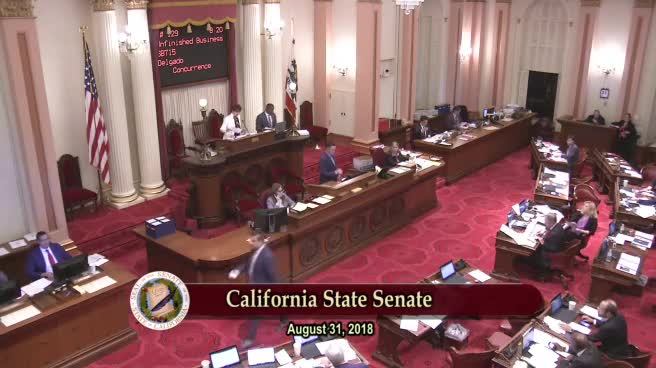 2MIN
Senate Floor
 5MIN
Senate Standing Committee on Governance and Finance
 3MIN
Assembly Floor
 5MIN
Assembly Standing Committee on Local Government
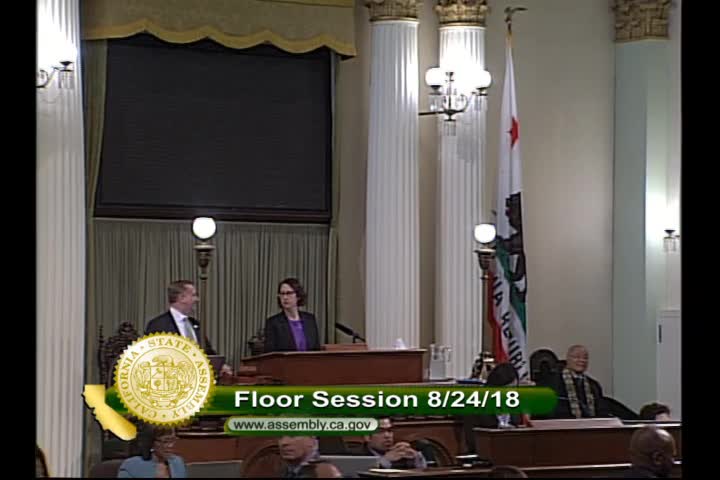 1MIN
Assembly Floor
 1MIN
Assembly Standing Committee on Health
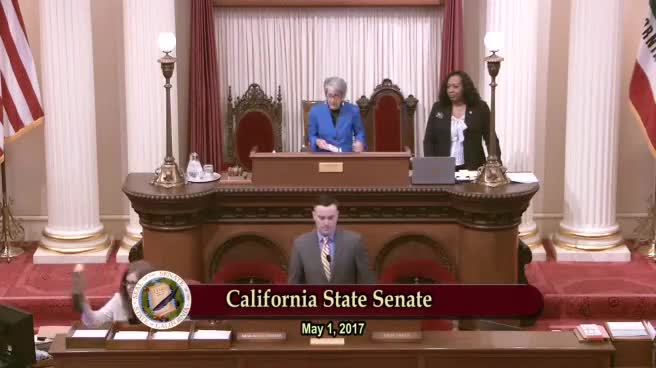 2MIN
Senate Floor
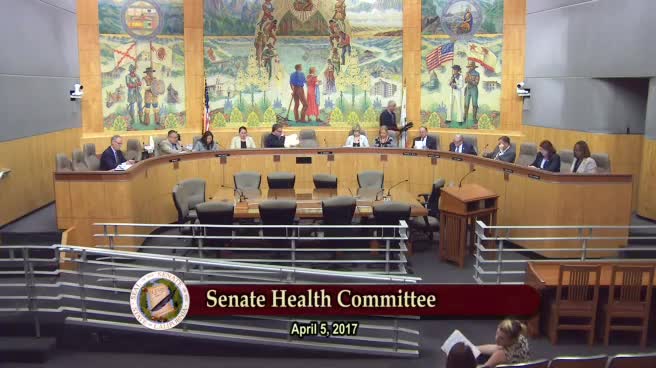 3MIN
Senate Standing Committee on Health

Bill Co-Author(s):
