AB 1887: State government: discrimination: travel.
- Session Year: 2015-2016
- House: Assembly
- Latest Version Date: 2016-09-27
Existing law prohibits discrimination on the basis of race, national origin, ethnic group identification, religion, age, sex, sexual orientation, color, genetic information, or disability under any state program or activity. Existing law provides for officers and employees of the state, when away from their headquarters for state business, to receive travel expenses.
This bill would prohibit a state agency and the Legislature from requiring any of its employees, officers, or members to travel to, or approving a request for state-funded or state-sponsored travel to, any state that, after June 26, 2015, has enacted a law that voids or repeals, or has the effect of voiding or repealing, existing state or local protections against discrimination on the basis of sexual orientation, gender identity, or gender expression or has enacted a law that authorizes or requires discrimination against same-sex couples or their families or on the basis of sexual orientation, gender identity, or gender expression, as specified, subject to certain exceptions. The bill would require the Attorney General to develop, maintain, and post on his or her Internet Web site a current list of states that, after June 26, 2015, have enacted such a law. The bill would make it the responsibility of specified state entities to consult the list in order to comply with the travel and funding restrictions imposed by the bill.
Existing law prohibits discrimination on the basis of race, national origin, ethnic group identification, religion, age, sex, sexual orientation, color, genetic information, or disability under any state program or activity. Existing law provides for officers and employees of the state, when away from their headquarters for state business, to receive travel expenses.
This bill would prohibit a state agency and the Legislature from requiring any of its employees, officers, or members to travel to, or approving a request for state-funded or state-sponsored travel to, any state that, after June 26, 2015, has enacted a law that voids or repeals repeals, or has the effect of voiding or repealing, existing state or local protections against discrimination on the basis of sexual orientation, gender identity, or gender expression or has enacted a law that authorizes or requires discrimination against same-sex couples or their families or on the basis of sexual orientation, gender identity, or gender expression, as specified, subject to specified certain exceptions. The bill would require the Attorney General to develop, maintain, and post on his or her Internet Web site a current list of states that, after June 26, 2015, have enacted such a law. The bill would make it the responsibility of specified state entities to consult the list in order to comply with the travel and funding restrictions imposed by the bill.
Existing law prohibits discrimination on the basis of race, national origin, ethnic group identification, religion, age, sex, sexual orientation, color, genetic information, or disability under any state program or activity. Existing law provides for officers and employees of the state, when away from their headquarters for state business, to receive travel expenses.
This bill would prohibit a state agency and the Legislature from requiring any of its employees, officers, or members to travel to any state with a law in effect that sanctions or requires discrimination on the basis of sexual orientation, gender identity, or gender expression, to, or approving a request for state-funded or state-sponsored travel to to, any state with a law in effect that sanctions that, after June 26, 2015, has enacted a law that voids or repeals existing state or local protections against discrimination on the basis of sexual orientation, gender identity, or gender expression or has enacted a law that authorizes or requires discrimination against same-sex couples or their families or on the basis of sexual orientation, gender identity, or gender expression, as specified, subject to specified exceptions.
Existing law prohibits discrimination on the basis of race, national origin, ethnic group identification, religion, age, sex, sexual orientation, color, genetic information, or disability under any state program or activity. Existing law provides for officers and employees of the state, when away from their headquarters for state business, to receive travel expenses.
This bill would prohibit state-funded or state-sponsored a state agency from requiring any of its employees, officers, or members to travel to any state with a law in effect that sanctions or requires discrimination on the basis of sexual orientation, gender identity, or gender expression, or approving a request for state-funded or state-sponsored travel to any state with a law in effect that sanctions or requires discrimination on the basis of sexual orientation, gender identity, or gender expression, subject to specified exceptions.
Existing law prohibits discrimination on the basis of race, national origin, ethnic group identification, religion, age, sex, sexual orientation, color, genetic information, or disability under any state program or activity. Existing law provides for officers and employees of the state, when away from their headquarters for state business, to receive travel expenses.
This bill would prohibit state-funded or state-sponsored travel to any state with a law in effect that sanctions or requires discrimination on the basis of sexual orientation, gender identity, or gender expression, subject to specified exceptions.
(a)The Legislature finds and declares all of the following:
(1)California is a leader in protecting civil rights and preventing discrimination.
(2)Californias robust nondiscrimination laws include protections on the basis of sexual orientation, gender identity, and gender expression, among other characteristics.
(3)Religious freedom is a cornerstone of law and public policy in the United States, and the Legislature strongly supports and affirms this important freedom.
(4)The exercise of religious freedom should not be a justification for discrimination.
(5)California must take action to avoid supporting or financing discrimination against lesbian, gay, bisexual, and transgender people.
(6)It is the policy of the State of California to promote fairness and equality and to combat discrimination.
(b)A state agency, department, board, authority, or commission, including an agency, department, board, authority, or commission of the University of California, the Board of Regents of the University of California, or the California State University, and the Legislature shall not do either of the following:
(1)Require any of its employees, officers, or members to travel to a state that, after June 26, 2015, has enacted a law that voids or repeals, or has the effect of voiding or repealing, existing state or local protections against discrimination on the basis of sexual orientation, gender identity, or gender expression or has enacted a law that authorizes or requires discrimination against same-sex couples or their families or on the basis of sexual orientation, gender identity, or gender expression, including any law that creates an exemption to antidiscrimination laws in order to permit discrimination against same-sex couples or their families or on the basis of sexual orientation, gender identity, or gender expression.
(2)Approve a request for state-funded or state-sponsored travel to a state that, after June 26, 2015, has enacted a law that voids or repeals, or has the effect of voiding or repealing, existing state or local protections against discrimination on the basis of sexual orientation, gender identity, or gender expression, or has enacted a law that authorizes or requires discrimination against same-sex couples or their families or on the basis of sexual orientation, gender identity, or gender expression, including any law that creates an exemption to antidiscrimination laws in order to permit discrimination against same-sex couples or their families or on the basis of sexual orientation, gender identity, or gender expression.
(c)Subdivision (b) shall not apply to travel that is required for any of the following purposes:
(1)Enforcement of California law, including auditing and revenue collection.
(2)Litigation.
(3)To meet contractual obligations incurred before January 1, 2017.
(4)To comply with requests by the federal government to appear before committees.
(5)To participate in meetings or training required by a grant or required to maintain grant funding.
(6)To complete job-required training necessary to maintain licensure or similar standards required for holding a position, in the event that comparable training cannot be obtained in California or a different state not affected by subdivision (b).
(7)For the protection of public health, welfare, or safety, as determined by the affected agency, department, board, authority, or commission, or by the affected legislative office, as described in subdivision (b).
(d)The prohibition on state-funded travel described in this section shall continue while any law specified in subdivision (b) remains in effect.
(e)(1)The Attorney General shall develop, maintain, and post on his or her Internet Web site a current list of states that, after June 26, 2015, have enacted a law that voids or repeals, or has the effect of voiding or repealing, an existing state or local protection against discrimination on the basis of sexual orientation, gender identity, or gender expression, or have enacted a law that authorizes or requires discrimination against same-sex couples or their families or on the basis of sexual orientation, gender identity, or gender expression, including any law that creates an exemption to antidiscrimination laws in order to permit discrimination against same-sex couples or their families or on the basis of sexual orientation, gender identity, or gender expression.
(2)It shall be the responsibility of an agency, department, board, authority, or commission described in subdivision (b) to consult the list on the Internet Web site of the Attorney General in order to comply with the travel and funding restrictions imposed by this section.
(a)The Legislature finds and declares all of the following:
(1)California is a leader in protecting civil rights and preventing discrimination.
(2)Californias robust nondiscrimination laws include protections on the basis of sexual orientation, gender identity, and gender expression, among other characteristics.
(3)Religious freedom is a cornerstone of law and public policy in the United States, and the Legislature strongly supports and affirms this important freedom.
(4)The exercise of religious freedom should not be a justification for discrimination.
(5)California must take action to avoid supporting or financing discrimination against lesbian, gay, bisexual, and transgender people.
(6)It is the policy of the State of California to promote fairness and equality and to combat discrimination.
(b)A state agency, department, board, authority, or commission, including an agency, department, board, authority, or commission of the University of California, the Board of Regents of the University of California, or the California State University, and the Legislature shall not do either of the following:
(1)Require any of its employees, officers, or members to travel to a state that, after June 26, 2015, has enacted a law that voids or repeals, or has the effect of voiding or repealing, existing state or local protections against discrimination on the basis of sexual orientation, gender identity, or gender expression or has enacted a law that authorizes or requires discrimination against same-sex couples or their families or on the basis of sexual orientation, gender identity, or gender expression, including any law that creates an exemption to antidiscrimination laws in order to permit discrimination against same-sex couples or their families or on the basis of sexual orientation, gender identity, or gender expression.
(2)Approve a request for state-funded or state-sponsored travel to a state that, after June 26, 2015, has enacted a law that voids or repeals, or has the effect of voiding or repealing, existing state or local protections against discrimination on the basis of sexual orientation, gender identity, or gender expression, or has enacted a law that authorizes or requires discrimination against same-sex couples or their families or on the basis of sexual orientation, gender identity, or gender expression, including any law that creates an exemption to antidiscrimination laws in order to permit discrimination against same-sex couples or their families or on the basis of sexual orientation, gender identity, or gender expression.
(c)Subdivision (b) shall not apply to travel that is necessary for the enforcement of California law, to meet contractual obligations incurred before January 1, 2017, or for the protection of public health, welfare, or safety, as determined by the affected agency, department, board, authority, or commission, or the affected legislative office, as described in subdivision (b). required for any of the following purposes:
(1)Enforcement of California law, including auditing and revenue collection.
(2)Litigation.
(3)To meet contractual obligations incurred before January 1, 2017.
(4)To comply with requests by the federal government to appear before committees.
(5)To participate in meetings or training required by a grant or required to maintain grant funding.
(6)To complete job-required training necessary to maintain licensure or similar standards required for holding a position, in the event that comparable training cannot be obtained in California or a different state not affected by subdivision (b).
(7)For the protection of public health, welfare, or safety, as determined by the affected agency, department, board, authority, or commission, or by the affected legislative office, as described in subdivision (b).
(d)The prohibition on state-funded travel described in this section shall continue while any law specified in subdivision (b) remains in effect.
(e)(1)The Attorney General shall develop, maintain, and post on his or her Internet Web site a current list of states that, after June 26, 2015, have enacted a law that voids or repeals, or has the effect of voiding or repealing, an existing state or local protection against discrimination on the basis of sexual orientation, gender identity, or gender expression, or have enacted a law that authorizes or requires discrimination against same-sex couples or their families or on the basis of sexual orientation, gender identity, or gender expression, including any law that creates an exemption to antidiscrimination laws in order to permit discrimination against same-sex couples or their families or on the basis of sexual orientation, gender identity, or gender expression.
(2)It shall be the responsibility of an agency, department, board, authority, or commission described in subdivision (b) to consult the list on the Internet Web site of the Attorney General in order to comply with the travel and funding restrictions imposed by this section.
(a)The Legislature finds and declares all of the following:
(1)California is a leader in protecting civil rights and preventing discrimination.
(2)Californias robust nondiscrimination laws include protections on the basis of sexual orientation, gender identity, and gender expression, among other characteristics.
(3)Religious freedom is a cornerstone of law and public policy in the United States, and the Legislature strongly supports and affirms this important freedom.
(4)The exercise of religious freedom should not be a justification for discrimination.
(5)California must take action to avoid supporting or financing discrimination against lesbian, gay, bisexual, and transgender people.
(6)It is the policy of the State of California to promote fairness and equality and to combat discrimination.
(b)A state agency, department, board, authority, or commission, including an agency, department, board, authority, or commission of the University of California, the Board of Regents of the University of California, or the California State University, and the Legislature shall not do either of the following:
(1)Require any of its employees, officers, or members to travel to a state that, after June 26, 2015, has enacted a law that voids or repeals, or has the effect of voiding or repealing, existing state or local protections against discrimination on the basis of sexual orientation, gender identity, or gender expression or has enacted a law that authorizes or requires discrimination against same-sex couples or their families or on the basis of sexual orientation, gender identity, or gender expression, including any law that creates an exemption to antidiscrimination laws in order to permit discrimination against same-sex couples or their families or on the basis of sexual orientation, gender identity, or gender expression.
(2)Approve a request for state-funded or state-sponsored travel to a state that, after June 26, 2015, has enacted a law that voids or repeals, or has the effect of voiding or repealing, existing state or local protections against discrimination on the basis of sexual orientation, gender identity, or gender expression, or has enacted a law that authorizes or requires discrimination against same-sex couples or their families or on the basis of sexual orientation, gender identity, or gender expression, including any law that creates an exemption to antidiscrimination laws in order to permit discrimination against same-sex couples or their families or on the basis of sexual orientation, gender identity, or gender expression.
(c)Subdivision (b) shall not apply to travel that is necessary for the enforcement of California law, to meet contractual obligations incurred before January 1, 2017, or for the protection of public health, welfare, or safety. safety, as determined by the affected agency, department, board, authority, or commission, or the affected legislative office, as described in subdivision (b).
(d)The prohibition on state-funded travel described in this section shall continue while any law specified in subdivision (b) remains in effect.
(e)(1)The Attorney General shall develop, maintain, and post on his or her Internet Web site his or her a current list of states that, after June 26, 2015, have enacted a law that voids or repeals, or has the effect of voiding or repealing, an existing state or local protection against discrimination on the basis of sexual orientation, gender identity, or gender expression, or have enacted a law that authorizes or requires discrimination against same-sex couples or their families or on the basis of sexual orientation, gender identity, or gender expression, including any law that creates an exemption to antidiscrimination laws in order to permit discrimination against same-sex couples or their families or on the basis of sexual orientation, gender identity, or gender expression.
(2)It shall be the responsibility of an agency, department, board, authority, or commission described in subdivision (b) to consult the list on the Internet Web site of the Attorney General in order to comply with the travel and funding restrictions imposed by this section.
(a)The Legislature finds and declares all of the following:
(1)California is a leader in protecting civil rights and preventing discrimination.
(2)Californias robust nondiscrimination laws include protections on the basis of sexual orientation, gender identity, and gender expression, among other characteristics.
(3)Religious freedom is a cornerstone of law and public policy in the United States, and the Legislature strongly supports and affirms this important freedom.
(4)The exercise of religious freedom should not be a justification for discrimination.
(5)California must take action to avoid supporting or financing discrimination against lesbian, gay, bisexual, and transgender people.
(6)It is the policy of the State of California to promote fairness and equality and to combat discrimination.
(b)A state agency, department, board, authority, or commission, including an agency, department, board, authority, or commission of the University of California, the Board of Regents of the University of California, or the California State University, and the Legislature shall not do either of the following:
(1)Require any of its employees, officers, or members to travel to a state that, after June 26, 2015, has enacted a law that voids or repeals repeals, or has the effect of voiding or repealing, existing state or local protections against discrimination on the basis of sexual orientation, gender identity, or gender expression or has enacted a law that authorizes or requires discrimination against same-sex couples or their families or on the basis of sexual orientation, gender identity, or gender expression, including any law that creates an exemption to antidiscrimination laws in order to permit discrimination against same-sex couples or their families or on the basis of sexual orientation, gender identity, or gender expression.
(2)Approve a request for state-funded or state-sponsored travel to a state that, after June 26, 2015, has enacted a law that voids or repeals repeals, or has the effect of voiding or repealing, existing state or local protections against discrimination on the basis of sexual orientation, gender identity, or gender expression, or has enacted a law that authorizes or requires discrimination against same-sex couples or their families or on the basis of sexual orientation, gender identity, or gender expression, including any law that creates an exemption to antidiscrimination laws in order to permit discrimination against same-sex couples or their families or on the basis of sexual orientation, gender identity, or gender expression.
(c)Subdivision (b) shall not apply to travel that is necessary for the enforcement of California law, to meet contractual obligations incurred before January 1, 2017, or for the protection of public health, welfare, or safety.
(d)The prohibition on state-funded travel described in this section shall continue while any law specified in subdivision (b) remains in effect.
(e)(1)The Attorney General shall develop, maintain, and post on his or her Internet Web site his or her a current list of states that, after June 26, 2015, have enacted a law that voids or repeals, or has the effect of voiding or repealing, an existing state or local protection against discrimination on the basis of sexual orientation, gender identity, or gender expression, or have enacted a law that authorizes or requires discrimination against same-sex couples or their families or on the basis of sexual orientation, gender identity, or gender expression, including any law that creates an exemption to antidiscrimination laws in order to permit discrimination against same-sex couples or their families or on the basis of sexual orientation, gender identity, or gender expression.
(2)It shall be the responsibility of an agency, department, board, authority, or commission described in subdivision (b) to consult the list on the Internet Web site of the Attorney General in order to comply with the travel and funding restrictions imposed by this section.
(a)The Legislature finds and declares all of the following:
(1)California is a leader in protecting civil rights and preventing discrimination.
(2)Californias robust nondiscrimination laws include protections on the basis of sexual orientation, gender identity, and gender expression, among other characteristics.
(3)Religious freedom is a cornerstone of law and public policy in the United States, and the Legislature strongly supports and affirms this important freedom.
(4)The exercise of religious freedom should not be a justification for discrimination.
(5)California must take action to avoid supporting or financing discrimination against lesbian, gay, bisexual, and transgender people.
(6)It is the policy of the State of California to promote fairness and equality and to combat discrimination.
(b)An A state agency, department, board, authority, or commission, including an agency, department, board, authority, or commission of the University of California, the Board of Regents of the University of California, or the California State University University, and the Legislature shall not do either of the following:
(1)Require any of its employees, officers, or members to travel to a state with a law in effect that sanctions that, after June 26, 2015, has enacted a law that voids or repeals existing state or local protections against discrimination on the basis of sexual orientation, gender identity, or gender expression or has enacted a law that authorizes or requires discrimination against same-sex couples or their families or on the basis of sexual orientation, gender identity, or gender expression. expression, including any law that creates an exemption to antidiscrimination laws in order to permit discrimination against same-sex couples or their families or on the basis of sexual orientation, gender identity, or gender expression.
(2)Approve a request for state-funded or state-sponsored travel to a state with a law in effect that sanctions that, after June 26, 2015, has enacted a law that voids or repeals existing state or local protections against discrimination on the basis of sexual orientation, gender identity, or gender expression, or has enacted a law that authorizes or requires discrimination against same-sex couples or their families or on the basis of sexual orientation, gender identity, or gender expression. expression, including any law that creates an exemption to antidiscrimination laws in order to permit discrimination against same-sex couples or their families or on the basis of sexual orientation, gender identity, or gender expression.
(c)Subdivision (b) shall not apply to travel that is necessary for the enforcement of California law, to meet prior contractual obligations, obligations incurred before January 1, 2017, or for the protection of public health, welfare, or safety.
(d)The prohibition on state-funded travel described in this section shall continue while any law specified in subdivision (b) remains in effect.
(a)The Legislature finds and declares all of the following:
(1)California is a leader in protecting civil rights and preventing discrimination.
(2)Californias robust nondiscrimination laws include protections on the basis of sexual orientation, gender identity, and gender expression, among other characteristics.
(3)Religious freedom is a cornerstone of law and public policy in the United States, and the Legislature strongly supports and affirms this important freedom.
(4)The exercise of religious freedom should not be a justification for discrimination.
(5)California must take action to avoid supporting or financing discrimination against lesbian, gay, bisexual, and transgender people.
(6)It is the policy of the State of California to promote fairness and equality and to combat discrimination.
(b)All agencies, departments, boards, authorities, commissions, An agency, department, board, authority, or commission, including an agency, department, board, authority, or commission of the University of California, the Board of Regents, Regents of the University of California and California, or the California State University shall review all requests for state-funded or state-sponsored travel to any not do either of the following:
(1)Require any of its employees, officers, or members to travel to a state with a law in effect that sanctions or requires discrimination on the basis of sexual orientation, gender identity, or gender expression.
(2)Approve a request for state-funded or state-sponsored travel to a state with a law in effect that sanctions or requires discrimination on the basis of sexual orientation, gender identity, or gender expression.
(c)Any state-funded or state-sponsored travel to locations described in subdivision (b) is prohibited, unless that travel Subdivision (b) shall not apply to travel that is necessary for the enforcement of California law, to meet prior contractual obligations, or for the protection of public health, welfare, or safety.
(d)The prohibition on state-funded travel described in this section shall continue while any law specified in subdivision (b) remains in effect.
(a)The Legislature finds and declares all of the following:
(1)California is a leader in protecting civil rights and preventing discrimination.
(2)Californias robust nondiscrimination laws include protections on the basis of sexual orientation, gender identity, and gender expression, among other characteristics.
(3)Religious freedom is a cornerstone of law and public policy in the United States, and the Legislature strongly supports and affirms this important freedom.
(4)The exercise of religious freedom should not be a justification for discrimination.
(5)California must take action to avoid supporting or financing discrimination against lesbian, gay, bisexual, and transgender people.
(6)It is the policy of the State of California to promote fairness and equality and to combat discrimination.
(b)All agencies, departments, boards, authorities, commissions, the University of California, the Board of Regents, of the University of California and the California State University shall review all requests for state-funded or state-sponsored travel to any state with a law in effect that sanctions or requires discrimination on the basis of sexual orientation, gender identity, or gender expression.
(c)Any state-funded or state-sponsored travel to locations described in subdivision (b) is prohibited, unless that travel is necessary for the enforcement of California law, to meet prior contractual obligations, or for the protection of public health, welfare, or safety.
(d)The prohibition on state-funded travel described in this section shall continue while any law specified in subdivision (b) remains in effect.
|
Date
|
Status
|
|---|---|
| Aug 30, 2016 | Enrolled and presented to the Governor at 4 p.m. |
| Aug 23, 2016 | Senate amendments concurred in. To Engrossing and Enrolling. (Ayes 56. Noes 21. Page 6143.). |
| Aug 23, 2016 | Senate amendments concurred in. To Engrossing and Enrolling. |
| Aug 17, 2016 | Read third time. Passed. Ordered to the Assembly. (Ayes 26. Noes 12. Page 5065.). |
| Aug 17, 2016 | Read third time. Passed. Ordered to the Assembly. (Ayes 26. Noes 12.). |
| Aug 17, 2016 | In Assembly. Concurrence in Senate amendments pending. May be considered on or after August 19 pursuant to Assembly Rule 77. |
| Aug 17, 2016 | Read third time. Passed. Ordered to the Assembly. |
| Aug 16, 2016 | Read second time. Ordered to third reading. |
| Aug 15, 2016 | Read third time and amended. Ordered to second reading. |
| Aug 2, 2016 | Read second time. Ordered to third reading. |
| Aug 1, 2016 | From committee: Be placed on second reading file pursuant to Senate Rule 28.8. |
| Jun 29, 2016 | From committee: Do pass and re-refer to Com. on APPR. (Ayes 5. Noes 2.) (June 28). Re-referred to Com. on APPR. |
| Jun 20, 2016 | Read second time and amended. Re-referred to Com. on JUD. |
| Jun 16, 2016 | From committee: Amend, and do pass as amended and re-refer to Com. on JUD. (Ayes 9. Noes 0.) (June 14). |
| May 19, 2016 | Referred to Coms. on G.O. and JUD. |
| May 9, 2016 | Read third time. Passed. Ordered to the Senate. (Ayes 54. Noes 21. Page 4723.) |
| May 9, 2016 | In Senate. Read first time. To Com. on RLS. for assignment. |
| May 9, 2016 | Read third time. Passed. Ordered to the Senate. |
| May 5, 2016 | Read second time. Ordered to third reading. |
| May 4, 2016 | From committee: Do pass. (Ayes 15. Noes 5.) (May 4). |
| Apr 13, 2016 | From committee: Do pass and re-refer to Com. on APPR. (Ayes 6. Noes 3.) (April 13). Re-referred to Com. on APPR. |
| Apr 11, 2016 | Joint Rule 62(a), file notice suspended. (Page 4255.) |
| Apr 11, 2016 | Joint Rule 62(a), file notice suspended. |
| Apr 11, 2016 | Re-referred to Com. on A. & A.R. |
| Apr 7, 2016 | Read second time and amended. |
| Apr 6, 2016 | From committee: Amend, and do pass as amended and re-refer to Com. on A. & A.R. (Ayes 8. Noes 2.) (April 5). |
| Mar 31, 2016 | Re-referred to Com. on JUD. |
| Mar 30, 2016 | From committee chair, with author's amendments: Amend, and re-refer to Com. on JUD. Read second time and amended. |
| Mar 29, 2016 | In committee: Set, second hearing. Hearing canceled at the request of author. |
| Mar 15, 2016 | In committee: Set, first hearing. Testimony taken. |
| Mar 14, 2016 | Re-referred to Com. on JUD. |
| Mar 10, 2016 | From committee chair, with author's amendments: Amend, and re-refer to Com. on JUD. Read second time and amended. |
| Feb 25, 2016 | Referred to Coms. on JUD. and A. & A.R. |
| Feb 12, 2016 | From printer. May be heard in committee March 13. |
| Feb 11, 2016 | Read first time. To print. |
|
Date
|
Description
|
Location
|
Votes
|
|
|---|---|---|---|---|
| Aug 23, 2016 | AB 1887 LOW Concurrence in Senate Amendments | Assembly Floor |
Passed |
|
| Aug 17, 2016 | Assembly 3rd Reading AB1887 Low By Lara | Senate Floor |
Passed |
|
| Jun 28, 2016 | Do pass, but first be re-referred to the Committee on [Appropriations] | Senate Standing Committee on Judiciary |
Passed |
|
| Jun 14, 2016 | Do pass as amended, but first amend, and re-refer to the Committee on [Judiciary] | Senate Standing Committee on Governmental Organization |
Passed |
|
| May 9, 2016 | AB 1887 LOW Assembly Third Reading | Assembly Floor |
Passed |
|
| May 4, 2016 | Do pass. | Assembly Standing Committee on Appropriations |
Passed |
|
| Apr 13, 2016 | Do pass and be re-referred to the Committee on [Appropriations] | Assembly Standing Committee on Accountability and Administrative Review |
Passed |
|
| Apr 5, 2016 | Do pass as amended and be re-referred to the Committee on [Accountability and Administrative Review] | Assembly Standing Committee on Judiciary |
Passed |
This list shows positions taken on this bill by organizations on the date displayed, which is linked to the original source.
Positions by individuals are not included.
CONCURRENCE IN SENATE AMENDMENTS
CSA1 Bill Id:AB 1887
Author:(Low)
As Amended Ver:August 15, 2016
Majority vote
ASSEMBLY: | 54-21 | (May 9, 2016) | SENATE: | 26-12 | (August 17, 2016) |
Original Committee Reference: JUD.
SUMMARY: Prohibits a state agency and the Legislature from requiring its employees to travel to states that discriminate on the basis of sexual orientation, gender identity, or gender expressions, or approving state-funded travel to such states, except as provided. Specifically, this bill:
- Prohibits any state agency, department, board, authority, or commission, including an agency, department, board, authority, or commission of the University of California (UC) or the California State University (CSU), from doing either of the following:
- Require any of its employees, officers, or members to travel to a state that, after June 26, 2015, has enacted a law that voids or repeals, or has the effect of voiding or repealing, existing state or local protections against discrimination on the basis of sexual orientation, gender identity, or gender expression or has enacted a law that authorizes or requires discrimination against same-sex couples or their families or on the basis of sexual orientation, gender identity, or gender expression, including any law that creates an exemption to antidiscrimination laws in order to permit discrimination against same-sex couples or their families or on the basis of sexual orientation, gender identity, or gender expression.
- Approve a request for state-funded or state-sponsored travel to a state that, after June 26, 2015, has enacted a law that voids or repeals, or has the effect of voiding or repealing, existing state or local protections against discrimination on the basis of sexual orientation, gender identity, or gender expression, or has enacted a law that authorizes or requires discrimination against same-sex couples or their families or on the basis of sexual orientation, gender identity, or gender expression, including any law that creates an exemption to antidiscrimination laws in order to permit discrimination against same-sex couples or their families or on the basis of sexual orientation, gender identity, or gender expression.
- Specifies that the prohibition created by this bill does not apply to travel that is required for any of the following purposes:
- Enforcement of California law, including auditing and revenue collection.
- Litigation.
- To meet contractual obligations incurred before January 1, 2017.
- To comply with requests by the federal government to appear before committees.
- To participate in meetings or training required by a grant or required to maintain grant funding.
- To complete job-required training necessary to maintain licensure or similar standards required for holding a position, in the event that comparable training cannot be obtained in California or a different state not affected by subdivision (b).
- For the protection of public health, welfare, or safety, as determined by the affected agency, department, board, authority, or commission, or by the affected legislative office, as described in subdivision (b).
- Requires the California Attorney General to develop, maintain, and post on his or her Internet Web site a current list of states that, after June 26, 2015, have enacted a law that voids or repeals, or has the effect of voiding or repealing, existing state or local protections against discrimination on the basis of sexual orientation, gender identity, or gender expression or has enacted a law that authorizes or requires discrimination against same-sex couples or their families or on the basis of sexual orientation, gender identity, or gender expression, including any law that creates an exemption to antidiscrimination laws in order to permit discrimination against same-sex couples or their families or on the basis of sexual orientation, gender identity, or gender expression.
The Senate amendments:
- Extend the application of the bill to the state Legislature.
- Expand the types of travel exempted from the bill's provisions and clarify the affected agency shall determine whether the travel is necessary for the public health, welfare, or safety.
EXISTING LAW:
- Provides that any state officer or employee of any state agency may confer with other persons, associations, or organizations outside of the state wherever it may be of assistance in the conduct of state business. Permits, to the extent that funds are authorized and available, reimbursement for actual and necessary expenses for travel outside of the state as authorized. Specifies that this section does not apply to legislators or their staff. (Government Code Section 11032.)
- Provides, under the Unruh Civil Rights Act, that all persons within this state are free and equal, and no matter what their sex, race, color, religion, ancestry, national origin, disability, medical condition, genetic information, marital status, sexual orientation, citizenship, primary language, or immigration status, are entitled to the full and equal accommodations, advantages, facilities, or services of all business establishments of every kind whatsoever. Defines "sex" to include gender identity and gender expression. (Civil Code Section 51.)
FISCAL EFFECT: According to the Senate Appropriations Committee, pursuant to Senate Rule 28.8, negligible state costs.
COMMENTS: According to the National Conference of State Legislatures (NCLS) Web site, as of late 2015, 21 states had enacted some form of Religious Freedom Restoration Act (RFRA), at least some of which were passed in response to recent court cases recognizing same-sex marriage or other rights affecting the LGBT (Lesbian, Gay, Bisexual, Transgender) community. For example, North Carolina recently enacted an anti-discrimination measure that pre-empts any local anti-discrimination ordinance; because some of the local ordinances bar discrimination on the basis of sexual orientation and gender identity, while the state law does not, the impact of the law is to overturn local measures enacted to protect LGBT rights. The author and sponsors believe that such laws and inconsistent are inconsistent with California values, and that the state should make a statement against such laws by refusing to require or fund employee travel to such states.
California Anti-Discrimination Laws: California's two most significant anti-discrimination laws – the Unruh Civil Rights Act (Civil Code Section 51) and the California Fair Employment and Housing Act (Government Code Sections 12900-12996) – prohibit discrimination on a number of grounds, including most significantly for purposes of this bill, sexual orientation, gender identity, and gender expression. According to the author and sponsors, California has been a leader in protecting the civil rights of, and preventing discrimination against, the LGBT community. California's Unruh Civil Rights Act, for example, prohibits all business establishments "of any kind whatsoever" from discriminating on the basis of sexual orientation, gender identity, and gender expression. The author and sponsors believe it would be inappropriate, given the values expressed in our laws, to allow state funds to support states with discriminatory laws. As a step in this direction, therefore, this bill would prohibit state agencies from requiring employees to travel to states that discriminate against the LGBT community, as defined.
Specifically, this bill would prevent any state agency or the Legislature from requiring any of its employees or officers to travel to a state with discriminatory laws, or from approving any state funding for travel to such states. For purposes of this bill, required travel or travel-funding would prohibited to any state that, after June 26, 2015, has enacted a law that voids or repeals, or has the effect of voiding or repealing, existing state or local protections against discrimination on the basis of sexual orientation, gender identity, or gender expression or has enacted a law that authorizes or requires discrimination against same-sex couples or their families or on the basis of sexual orientation, gender identity, or gender expression, including any law that creates an exemption to antidiscrimination laws in order to permit discrimination against same-sex couples or their families or on the basis of sexual orientation, gender identity, or gender expression. In addition, the bill would require the Attorney General to develop, maintain, and post on his or her Internet website a current list of states that have enacted such laws.
The purpose of the bill is apparently twofold: 1) to prevent a state agency or legislative office from compelling an employee to travel to an environment in which he or she may feel uncomfortable; and 2) to prevent the use of state funds to benefit a state that does not adequately protect the civil rights of certain classes of people. However, the bill would not apply to any travel that is necessary for purposes of law enforcement or litigation; to meet prior contractual obligations; to meet specified training or grant obligations; or to protect public health, welfare, or safety, as determined by the affected agency or legislative office.
Analysis Prepared by: Thomas Clark / JUD. / (916) 319-2334 FN: 0004285
Office of Senate Floor Analyses (916) 651-1520 Fax: (916) 327-4478 | AB |
THIRD READING
Bill No: AB 1887
:
SENATE GOVERNMENTAL ORG. COMMITTEE: 9-0, 6/14/16
AYES: Hall, Block, Galgiani, Glazer, Hernandez, Hill, Hueso, Lara, McGuire
NO VOTE RECORDED: Berryhill, Bates, Gaines, Vidak
SENATE JUDICIARY COMMITTEE: 5-2, 6/28/16
AYES: Jackson, Hertzberg, Leno, Monning, Wieckowski
NOES: Moorlach, Anderson
SENATE APPROPRIATIONS COMMITTEE: Senate Rule 28.8
ASSEMBLY FLOOR: 54-21, 5/9/16 - See last page for vote
National Center for Lesbian Rights
DIGEST: This bill prohibits state agencies from requiring state employees to travel to states that discriminate on the basis of sexual orientation, gender identity, or gender expression, and prohibits state agencies from approving state-funded travel to such state, except as provided.
Senate Floor Amendments of 8/15/16 clarify the types of travel that would be allowed by the provisions of this bill.
ANALYSIS:
Existing law:
- Provides that any state officer or employee of any state agency may confer with other persons, associations, or organizations outside of the state wherever it may be of assistance in the conduct of state business. Permits, to the extent that funds are authorized and available, reimbursement for actual and necessary expenses for travel outside of the state as authorized.
- Provides, under the Unruh Civil Rights Act, that all persons within this state are free and equal, and no matter what their sex, race, color, religion, ancestry, national origin, disability, medical condition, genetic information, marital status, sexual orientation, citizenship, primary language, or immigration status, are entitled to the full and equal accommodations, advantages, facilities, or services, of all business establishments of every kind whatsoever.
This bill:
- Prohibits any state agency, department, board, authority, or commission, including an agency, department, board, authority, or commission of the University of California or the California State University, from doing either of the following:
- Requiring any of its employees, officers, or members to travel to a state that, after June 26, 2015, has enacted a law that voids or repeals, or has the effect of voiding or repealing, existing state or local protections against discrimination on the basis of sexual orientation, gender identity, or gender expression or has enacted a law that authorizes or requires discrimination against same-sex couples or their families or on the basis of sexual orientation, gender identity, or gender expression.
- Approving a request for state-funded or state-sponsored travel to a state that, after June 26, 2015, has enacted a law that voids or repeals, or has the effect of voiding or repealing, existing state or local protections against discrimination on the basis of sexual orientation, gender identity, or gender expression, or has enacted a law that authorizes or requires discrimination against same-sex couple or their families or on the basis of sexual orientation, gender identity, or gender expression.
- Specifies that the prohibition created by this bill does not apply to travel that is required by any of the following:
- Enforcement of California law, including auditing and revenue collection.
- Litigation.
- To meet contractual obligations incurred before January 1, 2017.
- To comply with request by the federal government to appear before committees.
- To participate in meetings or training required by a grant or required to maintain grant funding.
- To complete job-required training necessary to maintain licensure or similar standards required for holding a position, in the event that comparable training cannot be obtained in California or a different state.
- For the protection of public health, welfare, or safety, as determined by the affected agency, department, board, authority, or commission, or by the affected legislative office.
- Requires the Attorney General to develop, maintain, and post on his or her Internet Web site a current list of states that, after June 26, 2015, have enacted a law that voids or repeals, or has the effect of voiding or repealing, an existing state or local protection against discrimination on the basis of sexual orientation, gender identity, or gender expression.
- Specifies that it shall be the responsibility of an agency, department, board, authority, or commission to consult the list on the Internet Web site of the Attorney General in order to comply with the travel and funding restrictions imposed by this bill.
- Makes various legislative findings pertaining to the role of California in promoting fairness and equality and combating discrimination.
Background
Purpose of the bill. According to the author, “California has one of the strongest civil protection laws in the country, the Fair Employment and Housing Act and the Unruh Civil Rights Act. Our laws do not allow government entities or organizations that offer services to the public to discriminate or treat people differently. AB 1887 will send a strong message to states with laws that discriminate on the basis of sexual orientation, gender identity, or gender expression that such laws are not acceptable to the State of California. By banning state-funded travel to such states, it sends a signal that we do not tolerate discrimination in our state and beyond our borders.”
Religious Freedom Restoration Act. In 1993, the Religious Freedom Restoration Act (RFRA) was signed into law by President Bill Clinton in order to “ensure that interests in religious freedom were protected.” Unfortunately, according to the author, “some states have used RFRA laws to allow discrimination laws to allow discrimination towards certain individuals.”
According to the National Conference of State Legislatures’ Web site, as of late 2015, 21 states have enacted some form of RFRA. Some of these bills were in response to the Supreme Court decision in Obergefell v. Hodges, where the Supreme Court ruled that the fundamental right to marry is guaranteed to same-sex couples by both the Due Process Clause and the Equal Protection Clause or the Fourteenth Amendment to the United States Constitution. Since then, numerous states have introduced bills that, according to the author, “are designed to allow discrimination against LGBT people in virtually all aspects of their lives.”
For example, North Carolina recently enacted an anti-discrimination law that pre-empts any local anti-discrimination ordinance; because some of the local ordinances bar discrimination on the basis of sexual orientation and gender identity, while the state law does not, the impact of the law is to overturn local measures enacted to protect LGBT rights.
Related/Prior Legislation
AB 1732 (Ting, 2016) requires, commencing on March 1, 2017, businesses, places of public accommodation, or state or local government agencies that offer a single-user toilet facility to be designated as an all-gender toilet facility, as specified. (Pending in Senate Transportation and Housing Committee)
FISCAL EFFECT: Appropriation: Fiscal Com.: Local:
SUPPORT: (Verified 8/15/16)
Equality California (co-source)
National Center for Lesbian Rights (co-source)
California Attorney General Kamala D. Harris
California Secretary of State Alex Padilla
American Civil Liberties Union of California
BAYMEC
Berkeley City Council
California Teachers Association
City of West Hollywood
Consumer Attorneys of California
Courage Campaign
Fiona Ma, State Board of Equalization
Los Angeles County Board of Supervisors
Los Angeles LGBT Center
Porterville Democratic Club
Rainbow Chamber of Silicon Valley
Santa Clara County Board of Supervisors
Santa Cruz County Board of Supervisors
Secular Coalition for California
Stonewall Democrats of Tulare County
OPPOSITION: (Verified 8/15/16)
None received
ARGUMENTS IN SUPPORT: Equality California states that “as states like North Carolina and Mississippi seek to target and jeopardize the lives of the LGBT citizens, others have just as forcefully opposed these efforts. Businesses, cities, and other states are taking a firm stand against this dangerous scapegoating of and backlash against LGBT people and their families. AB 1887 would ensure that California is part of that nationwide effort.”
ASSEMBLY FLOOR: 54-21, 5/9/16
AYES: Alejo, Arambula, Atkins, Baker, Bloom, Bonilla, Bonta, Brown, Burke, Calderon, Campos, Chang, Chau, Chiu, Chu, Cooley, Cooper, Dababneh, Daly, Dodd, Eggman, Frazier, Cristina Garcia, Gatto, Gipson, Gomez, Gonzalez, Gordon, Gray, Roger Hernández, Holden, Irwin, Jones-Sawyer, Levine, Lopez, Low, Maienschein, McCarty, Medina, Mullin, Nazarian, O'Donnell, Quirk, Ridley-Thomas, Rodriguez, Salas, Santiago, Mark Stone, Thurmond, Ting, Weber, Williams, Wood, Rendon
NOES: Achadjian, Travis Allen, Bigelow, Brough, Chávez, Dahle, Gallagher, Grove, Harper, Jones, Kim, Lackey, Mathis, Melendez, Obernolte, Olsen, Patterson, Steinorth, Wagner, Waldron, Wilk
NO VOTE RECORDED: Beth Gaines, Eduardo Garcia, Hadley, Linder, Mayes
8/16/16 17:57:13
Office of Senate Floor Analyses (916) 651-1520 Fax: (916) 327-4478 | AB |
THIRD READING
Bill No: AB 1887
:
SENATE GOVERNMENTAL ORG. COMMITTEE: 9-0, 6/14/16
AYES: Hall, Block, Galgiani, Glazer, Hernandez, Hill, Hueso, Lara, McGuire
NO VOTE RECORDED: Berryhill, Bates, Gaines, Vidak
SENATE JUDICIARY COMMITTEE: 5-2, 6/28/16
AYES: Jackson, Hertzberg, Leno, Monning, Wieckowski
NOES: Moorlach, Anderson
SENATE APPROPRIATIONS COMMITTEE: Senate Rule 28.8
ASSEMBLY FLOOR: 54-21, 5/9/16 - See last page for vote
National Center for Lesbian Rights
DIGEST: This bill prohibits state agencies from requiring state employees to travel to states that discriminate on the basis of sexual orientation, gender identity, or gender expression, and prohibits state agencies from approving state-funded travel to such state, except as provided.
ANALYSIS:
Existing law:
- Provides that any state officer or employee of any state agency may confer with other persons, associations, or organizations outside of the state wherever it may be of assistance in the conduct of state business. Permits, to the extent that funds are authorized and available, reimbursement for actual and necessary expenses for travel outside of the state as authorized.
- Provides, under the Unruh Civil Rights Act, that all persons within this state are free and equal, and no matter what their sex, race, color, religion, ancestry, national origin, disability, medical condition, genetic information, marital status, sexual orientation, citizenship, primary language, or immigration status, are entitled to the full and equal accommodations, advantages, facilities, or services, of all business establishments of every kind whatsoever.
This bill:
- Prohibits any state agency, department, board, authority, or commission, including an agency, department, board, authority, or commission of the University of California or the California State University, from doing either of the following:
- Requiring any of its employees, officers, or members to travel to a state that, after June 26, 2015, has enacted a law that voids or repeals, or has the effect of voiding or repealing, existing state or local protections against discrimination on the basis of sexual orientation, gender identity, or gender expression or has enacted a law that authorizes or requires discrimination against same-sex couples or their families or on the basis of sexual orientation, gender identity, or gender expression.
- Approving a request for state-funded or state-sponsored travel to a state that, after June 26, 2015, has enacted a law that voids or repeals, or has the effect of voiding or repealing, existing state or local protections against discrimination on the basis of sexual orientation, gender identity, or gender expression, or has enacted a law that authorizes or requires discrimination against same-sex couple or their families or on the basis of sexual orientation, gender identity, or gender expression.
- Specifies that the prohibition created by this bill does not apply to travel that is necessary for the enforcement of California law, to meet prior contractual obligations incurred before January 1, 2017, or for the protection of public health, welfare, or safety, as determined by the affected agency, department, board, authority, or commission or the affected legislative office.
- Requires the Attorney General to develop, maintain, and post on his or her Internet Web site a current list of states that, after June 26, 2015, have enacted a law that voids or repeals, or has the effect of voiding or repealing, an existing state or local protection against discrimination on the basis of sexual orientation, gender identity, or gender expression.
- Specifies that it shall be the responsibility of an agency, department, board, authority, or commission to consult the list on the Internet Web site of the Attorney General in order to comply with the travel and funding restrictions imposed by this bill.
- Makes various legislative findings pertaining to the role of California in promoting fairness and equality and combating discrimination.
Background
Purpose of the bill. According to the author, “California has one of the strongest civil protection laws in the country, the Fair Employment and Housing Act and the Unruh Civil Rights Act. Our laws do not allow government entities or organizations that offer services to the public to discriminate or treat people differently. AB 1887 will send a strong message to states with laws that discriminate on the basis of sexual orientation, gender identity, or gender expression that such laws are not acceptable to the State of California. By banning state-funded travel to such states, it sends a signal that we do not tolerate discrimination in our state and beyond our borders.”
Religious Freedom Restoration Act. In 1993, the Religious Freedom Restoration Act (RFRA) was signed into law by President Bill Clinton in order to “ensure that interests in religious freedom were protected.” Unfortunately, according to the author, “some states have used RFRA laws to allow discrimination laws to allow discrimination towards certain individuals.”
According to the National Conference of State Legislatures’ Web site, as of late 2015, 21 states have enacted some form of RFRA. Some of these bills were in response to the Supreme Court decision in Obergefell v. Hodges, where the Supreme Court ruled that the fundamental right to marry is guaranteed to same-sex couples by both the Due Process Clause and the Equal Protection Clause or the Fourteenth Amendment to the United States Constitution. Since then, numerous states have introduced bills that, according to the author, “are designed to allow discrimination against LGBT people in virtually all aspects of their lives.”
For example, North Carolina recently enacted an anti-discrimination law that pre-empts any local anti-discrimination ordinance; because some of the local ordinances bar discrimination on the basis of sexual orientation and gender identity, while the state law does not, the impact of the law is to overturn local measures enacted to protect LGBT rights.
Related/Prior Legislation
AB 229 (Chang, Chapter 770, Statutes of 2015) prevented state agencies from prohibiting state employees traveling on official state business from using transportation network companies or lodging in a short-term rental.
AB 1732 (Ting, 2016) requires, commencing on March 1, 2017, businesses, places of public accommodation, or state or local government agencies that offer a single-user toilet facility to be designated as an all-gender toilet facility, as specified. (Pending in Senate Transportation and Housing Committee)
FISCAL EFFECT: Appropriation: Fiscal Com.: Local:
Equality California (co-source)
National Center for Lesbian Rights (co-source)
California Attorney General Kamala D. Harris
California Secretary of State Alex Padilla
American Civil Liberties Union of California
BAYMEC
Berkeley City Council
California Teachers Association
City of West Hollywood
Consumer Attorneys of California
Courage Campaign
Fiona Ma, State Board of Equalization
Los Angeles County Board of Supervisors
Los Angeles LGBT Center
Porterville Democratic Club
Rainbow Chamber of Silicon Valley
Santa Clara County Board of Supervisors
Santa Cruz County Board of Supervisors
Secular Coalition for California
Stonewall Democrats of Tulare County
OPPOSITION: (Verified 8/1/16)
None received
ARGUMENTS IN SUPPORT: Equality California states that “as states like North Carolina and Mississippi seek to target and jeopardize the lives of the LGBT citizens, others have just as forcefully opposed these efforts. Businesses, cities, and other states are taking a firm stand against this dangerous scapegoating of and backlash against LGBT people and their families. AB 1887 would ensure that California is part of that nationwide effort. California is a leader when it comes to protecting the rights of its LGBT citizens and their families. The laws targeted by AB 1887 are completely out of step with California’s values and laws.”
ASSEMBLY FLOOR: 54-21, 5/9/16
AYES: Alejo, Arambula, Atkins, Baker, Bloom, Bonilla, Bonta, Brown, Burke, Calderon, Campos, Chang, Chau, Chiu, Chu, Cooley, Cooper, Dababneh, Daly, Dodd, Eggman, Frazier, Cristina Garcia, Gatto, Gipson, Gomez, Gonzalez, Gordon, Gray, Roger Hernández, Holden, Irwin, Jones-Sawyer, Levine, Lopez, Low, Maienschein, McCarty, Medina, Mullin, Nazarian, O'Donnell, Quirk, Ridley-Thomas, Rodriguez, Salas, Santiago, Mark Stone, Thurmond, Ting, Weber, Williams, Wood, Rendon
NOES: Achadjian, Travis Allen, Bigelow, Brough, Chávez, Dahle, Gallagher, Grove, Harper, Jones, Kim, Lackey, Mathis, Melendez, Obernolte, Olsen, Patterson, Steinorth, Wagner, Waldron, Wilk
NO VOTE RECORDED: Beth Gaines, Eduardo Garcia, Hadley, Linder, Mayes
8/3/16 18:54:25
**** END ****
Senator Hannah-Beth Jackson, Chair
2015-2016 Regular Session
Bill No: AB 1887 (Author:Low)
Version: June 20, 2016
Hearing Date: June 28, 2016
Fiscal: Yes
Urgency: No
Consultant: RD
SUBJECT
State government: discrimination: travel
DESCRIPTION
This bill would prohibit a state agency, department, board, authority, or commission, as specified, from requiring or approving a request for its employees, officers, or members to travel to a state that, after June 26, 2015, has enacted a law that: (1) voids or repeals, or has the effect of voiding or repealing, existing state or local protections against discrimination on the basis of sexual orientation, gender identity, or gender expression; or (2) authorizes or requires discrimination against same-sex couples or their families or on the basis of sexual orientation, gender identity, or gender expression. This bill would specify that such laws include any law that creates an exemption to anti-discrimination laws in order to permit discrimination against same-sex couples or their families or on the basis of sexual orientation, gender identity, or gender expression.
This bill would require the Attorney General (AG) to develop, maintain, and post on the AG’s Web site a current list of states that, after June 26, 2015, have enacted such laws, and would require state agencies, departments, boards, authorities, and commissions to consult with this list in order to comply with this bill. This bill would also codify various legislative findings and declarations relating to the California’s anti-discrimination laws and religious freedom, more generally.
BACKGROUND
According to the National Conference of State Legislatures, as of September 3, 2015, 21 states have religious freedom laws known as “Religious Freedom Restoration Acts” (RFRA laws). (See Comment 3 for more on RFRA.) In that one year alone, 17 states reportedly introduced legislation regarding the creation of, or alteration to, a state RFRA law. According to NCSL, “[t]hese laws are intended to echo the federal RFRA, but are not necessarily identical to the federal law. Arkansas and Indiana are the most recent states to enact a RFRA, doing so this year [in April 2015].” One of the most noted of these bills was enacted in North Carolina in March of this year. That controversial bill, House Bill 2, the Public Facilities Privacy & Security Act, reportedly blocked cities from allowing transgender individuals to use public bathrooms that match their gender identity, and also restricted cities from passing nondiscrimination laws more broadly. (See Kopan and Scott, North Carolina Governor Signs Controversial Transgender Bill, CNN (Mar. 24, 2015) < http://www.cnn.com/2016/03/23/politics/north-carolina-gender-bathrooms-bill/> [as of Jun. 13, 2016].) As reported by a major news outlet, CNN, in April of this year, there appears to be an “onslaught” of religious freedom bills throughout the United States, citing legislation in other states, such as Mississippi (which already had enacted a RFRA law in 2014[1]) and Georgia:
It’s the season of so-called religious freedom bills: statewide proposals that, depending on the point of view, ensure that individuals and businesses may operate in keeping with their faith or fling the door open to discrimination in the name of religion.
In Mississippi, Gov. Phil Bryant signed a bill [HB 1523, the “Protecting Freedom of Conscience from Government Discrimination Act”] this week that protects businesses and religious groups from punishment if they deny services such as counseling, wedding planning and adoption support to lesbian, gay, bisexual and transgender people when it’s based on “sincerely held religious beliefs or convictions.”
In Georgia last month, HB 757 gave faith-based organizations the option to deny services to gays and lesbians [though Republican Gov. Nathan Deal cited vetoed the bill in response to opposition]. (Sanchez, Why the Onslaught of Religious Freedom Laws, CNN (Apr. 7, 2016) <http://www.cnn.com/2016/04/06/us/religious-freedom-laws-why-now/> [as of Jun. 13, 2016].)
While recognizing that such religious freedom laws have “actually been growing since the U.S. Religious Freedom Restoration Act became [federal] law in 1993,” the article specifically pointed to the United State Supreme Court’s landmark decision in upholding the marriage rights of same-sex couples Obergefell et al. v. Hodges (2015) 135 S. Ct. 2584 under the Due Process and Equal Protection clauses of the Fourteenth Amendment. (See Comment 3 for a discussion of Obergefell.) “The Obergefell ruling energized a growing movement to expand the coverage of laws prohibiting discrimination based on sexual orientation or gender identity, according to Ira Lupu, a constitutional law expert at George Washington University School of Law. But it also invigorated religious resistance against that movement. ‘Rise of LGBT rights in general, and especially the court’s same-sex marriage decision, are the only explanation for their resurgence in political salience,’ he said, referring to religious freedom laws.” (Id.) As further noted in that CNN article, real world examples following the Obergefell decision only fuel the debate over the right of individuals and businesses to object to general applicable laws on the basis of their religious beliefs: from the county clerk who refused to issue marriage licenses to same-sex couples, to the bakery owners who refuse to make wedding cakes for same-sex couples, to the U.S. Supreme Court’s ruling allowing some family-owned businesses to opt out of a federal requirement to pay for contraceptives in health care coverage for their workers in Burwell v. Hobby Lobby in July, 2015. (Id.; see Comment 3 for more on Hobby Lobby).
Accordingly, this bill seeks to respond to these and other states’ actions over the last year to enact RFRA laws, by enacting travel and funding restrictions for state employees, as specified.
This bill was heard in the Senate Governmental Organization Committee on June 13, 2016, and passed out on a vote of 9-0.
CHANGES TO EXISTING LAW
Existing law authorizes any state officer or employee of any state agency to confer with other persons, associations, or organizations outside of the state whenever it may be of assistance in the conduct of state business. Actual and necessary expenses for travel outside of the state as authorized by this section shall be allowed when approved by the Governor. This section shall not apply to employees of any legislative committee or to the Legislative Counsel or his or her employees. (Gov. Code Sec. 11032.)
Existing law, Section 11135 of the Government Code, prohibits any person in this state from being unlawfully denied, on the basis of race, national origin, ethnic group identification, religion, age, sex, sexual orientation, color, genetic information, or disability, full and equal access to the benefits of, or the unlawful discrimination under, any program or activity that is conducted, operated, or administered by the state or by any state agency, is funded directly by the state, or receives any financial assistance from the state. (Gov. Code Sec. 11135(a).)
Existing law, Section 11135, imports various definitions from FEHA and the Unruh Civil Rights Act for certain protected bases, including “disability,” “sex or sexual orientation,” and “genetic information.” (Gov. Code Sec. 11135(c)(1), (e), (g).) Existing law provides, for these purposes, that “race, national origin, ethnic group identification, religion, age, sex, sexual orientation, color, or disability” includes a perception that a person has any of those characteristics or that the person is associated with a person who has, or is perceived to have, any of those characteristics. (Gov. Code Sec. 11135(f).)
Existing law, the Unruh Civil Rights Act, provides that all persons in California are free and equal, and regardless of a person’s sex, race, color, religion, ancestry, national origin, disability, medical condition, genetic information, marital status, sexual orientation, citizenship, primary language, or immigration status, everyone is entitled to the full and equal accommodations, advantages, facilities, privileges, or services in all business establishments. (Civ. Code Sec. 51.) Existing law defines “sex” to include, but not be limited to, a person’s gender, which, in turn, includes a person’s gender identity and gender expression, as specified. (Civ. Code Sec. 51(e)(5).)
Existing law, the Unruh Civil Rights Act, provides definitions for various protected bases and imports certain definitions from FEHA. (Civ. Code Sec. 51(e).) The Unruh Civil Rights Act, further provides that “sex, race, color, religion, ancestry, national origin, disability, medical condition, genetic information, marital status, sexual orientation, citizenship, primary language, or immigration status” includes a perception that the person has any particular characteristic or characteristics within the listed categories or that the person is associated with a person who has, or is perceived to have, any particular characteristic or characteristics within the listed categories. (Civ. Code Sec. 51(e)(6).)
Existing law, the Fair Employment and Housing Act (FEHA), prohibits discrimination in housing and employment on the basis of race, religious creed, color, national origin, ancestry, physical disability, mental disability, medical condition, genetic information, marital status, sex, gender, gender identity, gender expression, age, sexual orientation, or military and veteran status. (Gov. Code Sec. 12920 et seq.)
Existing law, FEHA, provides specific definitions for various protected bases (Gov. Code Sec. 12926) and further provides that “race, religious creed, color, national origin, ancestry, physical disability, mental disability, medical condition, genetic information, marital status, sex, age, sexual orientation, or military and veteran status” includes a perception that the person has any of those characteristics or that the person is associated with a person who has, or is perceived to have, any of those characteristics. (Gov. Code Sec. 12926(o).)
This bill would prohibit a state agency, department, board, authority, or commission, including an agency, department, board, authority, or commission of the University of California, the Board of Regents of the University of California, or the California State University, and the Legislature from doing either of the following:
- requiring any of its employees, officers, or members to travel to a state that, after June 26, 2015, has enacted a law that voids or repeals, or has the effect of voiding or repealing, existing state or local protections against discrimination on the basis of sexual orientation, gender identity, or gender expression or has enacted a law that authorizes or requires discrimination against same-sex couples or their families or on the basis of sexual orientation, gender identity, or gender expression, including any law that creates an exemption to antidiscrimination laws in order to permit discrimination against same-sex couples or their families or on the basis of sexual orientation, gender identity, or gender expression; or
- approving a request for state-funded or state-sponsored travel to a state that, after June 26, 2015, has enacted a law that voids or repeals, or has the effect of voiding or repealing, existing state or local protections against discrimination on the basis of sexual orientation, gender identity, or gender expression, or has enacted a law that authorizes or requires discrimination against same-sex couples or their families or on the basis of sexual orientation, gender identity, or gender expression, including any law that creates an exemption to antidiscrimination laws in order to permit discrimination against same-sex couples or their families or on the basis of sexual orientation, gender identity, or gender expression.
This bill would exempt, from the prohibitions above, any travel that is necessary for the enforcement of California law, to meet contractual obligations incurred before January 1, 2017, or for the protection of public health, welfare, or safety as determined by the affected agency, department, board, authority, or commission described above.
This bill would provide that the prohibition on state-funded travel described in this section shall continue while any law described in the provisions above remains in effect.
This bill would require the Attorney General to develop, maintain, and post on his or her Internet Web site a current list of states that, after June 26, 2015, have enacted a law that voids or repeals, or has the effect of voiding or repealing, an existing state or local protection against discrimination on the basis of sexual orientation, gender identity, or gender expression, or have enacted a law that authorizes or requires discrimination against same-sex couples or their families or on the basis of sexual orientation, gender identity, or gender expression, including any law that creates an exemption to antidiscrimination laws in order to permit discrimination against same-sex couples or their families or on the basis of sexual orientation, gender identity, or gender expression.
This bill would provide that it shall be the responsibility of an agency, department, board, authority, or commission described above to consult the list on the Internet Web site of the Attorney General in order to comply with the travel and funding restrictions imposed by this bill.
This bill would codify the following findings and declarations:
- California is a leader in protecting civil rights and preventing discrimination;
- California’s robust nondiscrimination laws include protections on the basis of sexual orientation, gender identity, and gender expression, among other characteristics;
- religious freedom is a cornerstone of law and public policy in the United States, and the Legislature strongly supports and affirms this important freedom;
- the exercise of religious freedom should not be a justification for discrimination;
- California must take action to avoid supporting or financing discrimination against lesbian, gay, bisexual, and transgender people; and
- it is the policy of the State of California to promote fairness and equality and to combat discrimination.
COMMENT
1. Stated need for the bill
According to the author:
Since the Supreme Court’s decision in Obergefell v. Hodges last summer, legislation has been introduced in multiple states that were designed to allow discrimination against LGBT people in virtually all aspects of their lives. Earlier this year, in North Carolina, their legislature convened in a special session solely to prevent the city of Charlotte’s LGBT non-discrimination ordinance from taking effect. Mississippi’s Governor has also signed legislation that would expressly permit discrimination against LGBT people. Similar bills were vetoed by the Governors of Georgia, South Dakota, and Virginia.
AB 1887 would prohibit state agencies from approving state funded or sponsored travel to a state that, after June 26, 2015, has enacted a law that voids or repeals existing state or local protections against discrimination on the basis of sexual orientation, gender identity, or gender expression, or has enacted a law that authorizes or requires discrimination against same-sex couples or their families on these bases.
In support, the Log Cabin Republicans of California write:
Religious freedom is an important value in our state and across the nation, but religious protections should not be used as a justification for discrimination. In direct response to the Supreme Court’s decision in Obergefell v. Hodges, states across the country have introduced legislation that are designed to allow discrimination against LGBT people in virtually all aspects of their lives. North Carolina and Mississippi each enacted laws that essentially provide a license to discriminate against LGBT[ individuals], particularly toward transgender individuals by prohibiting them from using bathrooms that align with their gender identity.
California has one of the strongest civil protection laws in the country. Our laws do not allow government entities or organizations that offer services to the public to discriminate or treat people differently.
AB 1887 will send a strong message to states with laws that discriminate on the basis of sexual orientation, gender identity, or gender expression that such laws are not acceptable to the State of California. By banning state-funded travel to such states, it sends a signal that we do not tolerate discrimination.
Also in support, Attorney General Kamala Harris writes that, unfortunately, “institutionalized inequality continues to be a way of life for LGBTQ citizens living in other parts of the country. Some state legislatures have recently sought to pass legislation that would discriminate against residents based on their sexual orientation, gender identity, or gender expression, or condone such discrimination on the local level. If California hopes to remain a national leader on behalf of LGBTQ communities, action must be taken to recognize that discriminatory laws are unacceptable anywhere in the nation. By banning state-funded travel to such states, AB 1887 will clearly and coherently convey that message.”
2. Obergefell et al. v. Hodges
The Supreme Court has interpreted the due process clause as “a promise of the Constitution that there is a realm of personal liberty which the government may not enter,” such as, for example, the right of parents to direct the upbringing of their children. (Planned Parenthood v. Casey (1992) 505 U.S. 833, 847; see also Truxel v. Granville (2000) 530 U.S. 57, 65: “We have long recognized that the Amendment’s Due Process Clause . . . ‘guarantees more than fair process.’ [Citation omitted.] The Clause also includes a substantive component that ‘provides heightened protection against government interference with certain fundamental rights and liberty interests.’”)
On June 26, 2015, the Supreme Court rendered its decision in the case of Obergefell et al. v. Hodges (2015) 135 S.Ct. 2584, confirming that the Due Process, as well as the Equal Protection Clause of the Fourteenth Amendment also protects yet another fundamental right: the fundamental right to marry a person of the same sex. Once again, the Court emphasized that under the Due Process Clause of the Fourteenth Amendment, no State shall deprive any person of life, liberty, or property, without due process of law. The fundamental liberties protected by this Clause include most of the rights enumerated in the Bill of Rights, but also extend to certain personal choices central to individual dignity and autonomy, including intimate choices that define personal identity and beliefs. (Obergefell, 135 S.Ct. at 2597-8, citing Eisenstadt v. Baird (1972) 405 U.S. 438, 453; Griswold v. Connecticut (1965) 381 U.S. 479, 484-486.)
“The nature of injustice,” the Court wrote, “is that one may not always see it in one’s own time. The generations that wrote and ratified the Bill of Rights and the Fourteenth Amendment did not presume to know the extent of freedom in all of its dimensions, and so they entrusted to future generations a charter protecting the right of all persons to enjoy liberty as they learn its meaning.” It is by these established tenets that the Court has long held that the right to marry is protected by the Constitution, and that the Court has reiterated time and again, in different contexts, that the right to marry is fundamental under the Due Process Clause (Id. at 2598-9, citing Loving v. Virginia (1967) 388 U.S. 1, 12, Zablocki v. Redhail (1978) 434 U.S. 374, 384.) The Court applied the four principles and traditions that demonstrate the reasons marriage is fundamental under the Constitution and found that they “apply with equal force to same-sex couples.” (Id.)
Moreover, as stated by the Court:
The right of same-sex couples to marry that is part of the liberty promised by the Fourteenth Amendment is derived, too, from that Amendment’s guarantee of the equal protection of the laws. The Due Process Clause and the Equal Protection Clause are connected in a profound way, though they set forth independent principles. [ . . . ] This interrelation of the two principles furthers our understanding of what freedom is and must become. [ . . . ]
It is now clear that the challenged laws burden the liberty of same-sex couples, and it must be further acknowledged that they abridge central precepts of equality. Here the marriage laws enforced by the respondents are in essence unequal: same-sex couples are denied all the benefits afforded to opposite-sex couples and are barred from exercising a fundamental right. Especially against a long history of disapproval of their relationships, this denial to same-sex couples of the right to marry works a grave and continuing harm. The imposition of this disability on gays and lesbians serves to disrespect and subordinate them. And the Equal Protection Clause, like the Due Process Clause, prohibits this unjustified infringement of the fundamental right to marry. (Id. at 2602-4 (internal citations omitted).)
Accordingly, the Court held, “the right to marry is a fundamental right inherent in the liberty of the person, and under the Due Process and Equal Protection Clauses of the Fourteenth Amendment, couples of the same-sex may not be deprived of that right and that liberty. The Court now holds that same-sex couples may exercise the fundamental right to marry. No longer may this liberty be denied to them. Baker v. Nelson [(1972) 409 U.S. 810] must be and now is overruled, and the State laws challenged by Petitioners in these cases are now held invalid to the extent they exclude same-sex couples from civil marriage on the same terms and conditions as opposite-sex couples.” (Id. at 2604-5.)
3. Religious Freedom Restoration Act and state counterparts
Prior to 1990, Supreme Court jurisprudence on the First Amendment’s free exercise clause reflected a general rule that government actions burdening religions would only be upheld if they were necessary to achieve a compelling governmental purpose. Then, in 1990, the Court expressly changed the law in Employment Division v. Smith (1990) 474 U.S. 772, holding that the free exercise clause cannot be used to challenge neutral laws of general applicability. As interpreted in more recent Supreme Court cases, Smith “largely repudiated the method of analysis used in prior free exercise cases like Wisconsin v. Yoder [(1972) 406 U.S. 205] and Sherbert v. Verner [(1963) 374 U.S. 398]” where the Court previously “employed a balancing test that considered whether a challenged government action that substantially burdened the exercise of religion was necessary to further a compelling state interest.” (Holt v. Hobbs (2015) 135 S. Ct. 853, 859; see also Burwell v. Hobby Lobby Inc. (2014) 134 S.Ct. 2751, 2760.)
Three years after Smith, Congress enacted the Religious Freedom Restoration Act (RFRA) in an attempt to negate that decision and ensure that strict scrutiny is applied when the law substantially burdens religion. Specifically, under RFRA, federal law provides that “Government shall not substantially burden a person’s exercise of religion even if the burden results from a rule of general applicability.” (42 U.S.C. Sec. 2000bb-1(a).) If it does, the person is entitled to an exemption from the rule unless the government “demonstrates that the application of the burden to the person – (1) is in furtherance of a compelling governmental interest; and (2) is the least restrictive means of furthering that compelling governmental interest.” (42 U.S.C. Sec. 2000bb-1(b).)
For RFRA purposes, as amended by the Religious Land Use and Institutionalized Persons Act of 2000 (RLUIPA), “exercise of religion” means “any exercise of religion, whether or not compelled by, or central to a system of religious belief”— which the Supreme Court, in Burwell v. Hobby Lobby, Inc. (2014) 134 S.Ct. 2751, 2767 interpreted to give the term a distinct meaning for RFRA-purposes, “designed to provide very broad protection for religious liberty. By enacting RFRA, Congress went far beyond what the U.S. Supreme Court has held is constitutionally required.” Indeed, as argued by the Hobby Lobby dissent, the company would not have a valid free exercise claim under the pre-Smith First Amendment jurisprudence, which had previously made it clear that accommodations for religious beliefs or observances must not significantly impinge upon the interests of third parties. (Id. at 2790 (J. Ginsberg, dissenting).) As interpreted by the majority, however, RFRA protects the right of “men and women who wish to run their businesses as for-profit corporations in the manner required by their religious beliefs,” ultimately holding that federal regulations to the Affordable Care Act violate RFRA by imposing on companies the obligation to provide health insurance coverage for these four contraception methods, despite their religious objections. (Id. at 2759.) While the majority clarified that it does “not hold or suggest that ‘RFRA demands accommodation of a for-profit corporation’s religious beliefs no matter the impact that accommodation may have on . . . thousands of women employed by Hobby Lobby,’” it essentially felt a less restrictive means was available by which the government could achieve the same compelling interest (providing access to all contraceptives), without infringing upon Hobby Lobby’s “free exercise of religion.” (Id at 2560.)
Notably, despite the congressional effort to make strict scrutiny the test for all free exercise clause claims, in City of Boerne v. Flores (1997) 521 U.S. 507, the Supreme Court invalidated RFRA as applied to state and local governments.[2] Thus, ultimately, for state and local governments that do not have a RFRA-counterpart as a matter of state law, Smith remains the controlling precedent and the free exercise clause cannot be used to challenge neutral laws of general applicability, except that decisions burdening religion concerning land use and institutionalized persons have to meet strict scrutiny (pursuant to RLUIPA). Of import to this bill, however, and as reflected in the Background, numerous states have begun to enact RFRA-like laws, essentially allowing businesses to discriminate against LGBT individuals in accordance with religious beliefs. Such laws do not necessarily authorize or require discrimination against same-sex couples or their families or on the basis of sexual orientation, gender identity, or gender expression, but they may grant individuals exemptions from otherwise generally applicable anti-discrimination laws, thus having the same effect as voiding or repealing those protections for LGBT individuals. Staff notes that California—a state with strong anti-discrimination statutes protecting individuals from discrimination on protected bases such as race, sex, sexual orientation, religion, and nationality, in every context from business, to employment, to schools, and government funded programs and activities—has no such RFRA-counterpart. This bill seeks to generally ensure that State of California neither supports, nor requires its employees, to travel to states that have enacted such laws, which have seemingly increased since the Supreme Court’s rendered the Obergefell decision.
4. State-funded travel to states that allow for discrimination against them on otherwise protected bases would appear contrary to this state’s strong public policy against discrimination
As noted in the Background, at least 21 states as of 2015 have enacted state counterparts to the federal RFRA law discussed in Comment 3 above. While many of those laws were enacted in the 1990s after the enactment of RFRA or after the City of Boerne decision invaliding the application of RFRA to the states, of particular relevance to this bill are those laws enacted following the Supreme Court rendered its decision in Obergefell, confirming that the fundamental right of marriage also applies to same sex individuals. (See Comment 2 for more on Obergefell.) Of the current states, only, a small number appear to have been enacted after June 26, 2015 and thus subject to this bill. As stated by co-sponsors Equality California and the National Center for Lesbian Rights:
In direct response to the Supreme Court’s decision in Obergefell v. Hodges, there are bills pending in state legislatures across the country that are designed to allow discrimination against LGBT people in virtually all aspects of their lives. For example, the North Carolina legislature convened in special session solely to prevent Charlotte’s LGBT non-discrimination ordinance from taking effect. The sweeping piece of legislation passed as a result of that session targeted transgender people in particular, voided Charlotte’s city ordinance, and would prevent any similar ordinance form being enacted in the future. The Governor of North Carolina signed the bill on March 23, 2016. A similar bill that would expressly permit discrimination against transgender people is pending in Mississippi [which has since been signed] and yet another bill was recently vetoed in Virginia.
As states like North Carolina and Mississippi seek to target and jeopardize the lives of their LGBT citizens, others have just as forcefully opposed these efforts. Businesses, cities, and other states are taking a firm stand against this dangerous scapegoating of and backlash against LGBT people and their families. AB 1887 would ensure that California is part of that nationwide effort.
Staff notes that not only is California a state that does not have a RFRA counterpart, but California law, in actuality, reflects a strong public policy protecting individuals against discrimination under numerous statutes, covering a variety of contexts. The Fair Employment and Housing Act (FEHA) and the Unruh Civil Rights Act, for example, prohibit discrimination in employment, housing, public accommodation, and services provided by business establishments on the basis of specified personal characteristics, such as sex, race, color, religion, ancestry, national origin, age, disability, medical condition, genetic information, marital status, or sexual orientation. (See Gov. Code Sec. 12920 et seq. for FEHA; Civ. Code Sec. 51 for Unruh Civil Rights Act). Separately, Section 11135 of the Government Code specifically prohibits discrimination on the basis of many of these same characteristics in the conduct, operation, or administration of any program or activity that is by the state or by any state agency, funded directly by the state, or receives any financial assistance from the state. Indeed, California has in many respects led the nation in laws that seek to protect the LGBT community from discrimination. As such, to allow, if not require, individuals to travel to other states with RFRA laws allowing for discrimination against LGBT individuals not only sends a contradictory message, but it potentially subjects public employees to the very types of discriminatory acts that California law seeks to prevent. Moreover, the act of funding such travel with taxpayer money would seem further contrary to state public policy against discrimination. (See Gov. Code Sec. 11135, in particular.)
In support, the American Civil Liberties Union of California (ACLU) similarly notes while California law does not allow government entities or organizations to offer services to the public to treat people differently, providing services to some and turning others away, “supporting this unequal treatment is out of step with California’s values and should not be undertaken inadvertently. Currently, however, California funds could be benefitting states that discriminate because there is no review of requests for state-funded travel to determine whether the law of the state in question runs counter to California public policy and allows discrimination.” ACLU emphasizes that “[r]eligious freedom is a very important value, but religious protections should not be used as a justification for unlawful discrimination that goes against California public policy and should not be supported with California funds.”
Accordingly, this bill seeks to generally prohibit any state agency, department, board, authority, or commission of the University of California, the Board of Regents of the University of California, or the California State University, and the Legislature from approving a request for state-funded or state-sponsored travel or otherwise requiring its employees, officers, or members to travel to a state that, after June 26, 2015, has enacted a law that: (1) voids or repeals, or has the effect of voiding or repealing, existing state or local protections against discrimination on the basis of sexual orientation, gender identity, or gender expression; or (2) authorizes or requires discrimination against same-sex couples or their families or on the basis of sexual orientation, gender identity, or gender expression. Such laws would include any law that creates an exemption to anti-discrimination laws in order to permit discrimination against same-sex couples or their families or on the basis of sexual orientation, gender identity, or gender expression. At the same time, however, the bill provides for a reasonable exception to these travel prohibitions for any travel that is necessary for the enforcement of California law, to meet contractual obligations incurred before January 1, 2017, or for the protection of public health, welfare, or safety as determined by the affected agency, department, board, authority, or commission.
Notably, in response to concerns by the Assembly Judiciary Committee regarding the research and analysis that a state entity would have to undergo each time they make a decision on whether to send an employee out-of-state or to approve an employee’s request for out-of-state travel funding, and the possibility that different entities could come to different conclusions about whether a state law discriminates in the manner described by this bill, this bill was amended to require that the Attorney General create and maintain a list of states that, after June 26, 2015, have enacted such laws so that state agencies, departments, boards, authorities, and commissions can consult with this list in order to comply with this bill. As a practical matter, such a list should not only greatly assist entities in ensuring compliance with this bill, but it will ensure that these entities apply the law uniformly throughout the state and its various agencies, departments, boards, authorities, and commissions.
Support: American Civil Liberties Union of California; Attorney General Kamala Harris; Bay Area Municipal Elections Committee; Berkeley City Council; California Teachers Association; City of West Hollywood; Consumer Attorneys of California; Log Cabin Republicans of California; Los Angeles County Board of Supervisors; Los Angeles LGBT Center; Porterville Democratic Club; Rainbow Chamber Silicon Valley; Santa Clara County Board of Supervisors; Santa Cruz County Board of Supervisors; Secretary of State, Alex Padilla; State Board of Equalization Member, Second District- Fiona Ma; Stonewall Democrats of Tulare County
Opposition: None Known
HISTORY
Source: Equality California; National Center for Lesbian Rights
Related Pending Legislation: None Known
Prior Legislation: None Known
Prior Vote:
Assembly Floor (Ayes 54, Noes 21)
Assembly Appropriations Committee (Ayes 15, Noes 5)
Assembly Accountability and Administrative Review Committee (Ayes 6, Noes 3)
Assembly Judiciary Committee (Ayes 8, Noes 2)
**************
That prior bill was SB 2681; see Wilson, Mississippi Passes Arizona-Style Religious Freedom Bill, Washington Post (Apr. 1, 2014) <https://www.washingtonpost.com/blogs/govbeat/wp/2014/04/01/mississippi-passes-arizona-style-religious-freedom-bill/> [as of Jun. 13, 2016].) ↑
Still, three years later after City of Boerne, Congress enacted the Religious Land Use and Institutionalized Persons Act of 2000 (RLUIPA), requiring states, pursuant to Congress’s commerce power and spending power as a condition on federal funds, to meet strict scrutiny when they significantly burden religion in two areas: land use decisions and institutionalized persons. (See 42 U.S.C. Sec. 2000cc, 2000cc-1.) ↑
SENATE COMMITTEE ON GOVERNMENTAL ORGANIZATION
Senator Isadore Hall, III
Chair
2015 - 2016 Regular
Bill No: 1887 Hearing Date: 6/14/2016
Author: | |||
Version: | 4/7/2016 Amended | ||
Urgency: | No | Fiscal: | Yes |
Consultant: | Felipe Lopez | ||
SUBJECT: State government: discrimination: travel
DIGEST: This bill prohibits state agencies from requiring state employees to travel to states that discriminate on the basis of sexual orientation, gender identity, or gender expression, and prohibits state agencies from approving state-funded travel to such state, except as provided.
ANALYSIS:
Existing law:
- Provides that any state officer or employee of any state agency may confer with other persons, associations, or organizations outside of the state wherever it may be of assistance in the conduct of state business. Permits, to the extent that funds are authorized and available, reimbursement for actual and necessary expenses for travel outside of the state as authorized.
- Provides, under the Unruh Civil Rights Act, that all persons within this state are free and equal, an no matter what their sex, race, color, religion, ancestry, national origin, disability, medical condition, genetic information, marital status, sexual orientation, citizenship, primary language, or immigration status, are entitled to the full and equal accommodations, advantages, facilities, or services, of all business establishments of every kind whatsoever.
This bill:
- Prohibits any state agency, department, board, authority, or commission, including an agency, department, board, authority, or commission of the University of California (UC) or the California State University (CSU), from doing either of the following:
- Requiring any of its employees, officers, or members to travel to a state that, after June 26, 2015, has enacted a law that voids or repeals, or has the effect of voiding or repealing, existing state or local protections against discrimination on the basis of sexual orientation, gender identity, or gender expression or has enacted a law that authorizes or requires discrimination against same-sex couples or their families or on the basis of sexual orientation, gender identity, or gender expression, including any law that creates an exemption to antidiscrimination laws in order to permit discrimination against same-sex couples or their families or on the basis of sexual orientation, gender identity, or gender expression.
- Approving a request for state-funded or state-sponsored travel to a state that, after June 26, 2015, has enacted a law that voids or repeals, or has the effect of voiding or repealing, existing state or local protections against discrimination on the basis of sexual orientation, gender identity, or gender expression, or has enacted a law that authorizes or requires discrimination against same-sex couple or their families or on the basis of sexual orientation, gender identity, or gender expression, including any law that creates an exemption to antidiscrimination laws in order to permit discrimination against same-sex couples or their families or on the basis of sexual orientation, gender identity, or gender.
- Specifies that the prohibition created by this bill does not apply to travel that is necessary for the enforcement of California law, to meet prior contractual obligations incurred before January 1, 2017, or for the protection of public health, welfare, or safety.
- Requires the Attorney General to develop, maintain, and post on his or her Internet Web site a current list of states that, after June 26, 2015, have enacted a law that voids or repeals, or has the effect of voiding or repealing, an existing state or local protection against discrimination on the basis of sexual orientation, gender identity, or gender expression, or have enacted a law that authorizes or requires discrimination against same-sex couples or their families or on the basis of sexual orientation, gender identity, or gender expression, or have enacted a law that authorizes or requires discrimination against same-sex couples or their families or on the basis of sexual orientation, gender identity, or gender expression, including any law that creates an exemption to antidiscrimination laws in order to permit discrimination against same-sex couples or their families or on the basis of sexual orientation, gender identity, or gender expression.
- Specifies that it shall be the responsibility of an agency, department, board, authority, or commission described in subdivision (b) to consult the list on the Internet Web site of the Attorney General in order to comply with the travel and funding restrictions imposed by this bill.
- Makes various legislative findings pertaining to the role of California in promoting fairness and equality and combating discrimination.
Background
Purpose of the bill. According to the author, “California has one of the strongest civil protection laws in the country, the Fair Employment and Housing Act and the Unruh Civil Rights Act. Our laws do not allow government entities or organizations that offer services to the public to discriminate or treat people differently. AB 1887 will send a strong message to states with laws that discriminate on the basis of sexual orientation, gender identity, or gender expression that such laws are not acceptable to the State of California. By banning state-funded travel to such states, it sends a signal that we do not tolerate discrimination in our state and beyond our borders.”
Religious Freedom Restoration Act. In 1993, the Religious Freedom Restoration Act (RFRA) was signed into law by President Bill Clinton in order to “ensure that interests in religious freedom were protected.” Unfortunately, according to the author, “some states have used RFRA laws to allow discrimination laws to allow discrimination towards certain individuals.”
According to the National Conference of State Legislatures’ Web site, as of late 2015, 21 states have enacted some form of RFRA. Some of these bills were in response to the Supreme Court decision in Obergefell v. Hodges, where the Supreme Court ruled that the fundamental right to marry is guaranteed to same-sex couples by both the Due Process Clause and the Equal Protection Clause or of the Fourteenth Amendment to the United States Constitution. Since then, numerous states have introduced bills that, according to the author, “are designed to allow discrimination against LGBT people in virtually all aspects of their lives.”
For example, North Carolina recently enacted an anti-discrimination law that pre-empts any local anti-discrimination ordinance; because some of the local ordinances bar discrimination on the basis of sexual orientation and gender identity, while the state law does not, the impact of the law is to overturn local measures enacted to protect LGBT rights.
Impact. It is not clear how often state agencies require state employees to travel to other states as part of their employment, or how often boards or commissions require their appointed or elected members to travel to other states as part of their duties. Many agencies, particularly in the executive branch, occasionally send employees to other states. For example, DGS reports that its air travel database shows there were over 10,000 out of state travel "person trips" in 2015. Each employee who travels is counted as a separate trip, even if multiple employees are traveling to the same location. Therefore, a group of employees traveling on a single trip would be recorded as multiple person-trips. Since the DGS database does not indicate the reason for each trip, it is unknown how many of these trips would have been exempt from the prohibition in this bill.
Suggested amendment. The bill currently specifies that the prohibition shall not apply to travel that is necessary for the protection of public health, welfare, or safety. However the bill is not specific about who shall make that determination. Therefore the author might wish to amend the bill to add the following language on page 3, line 23, “as determined by the affected agency, department, board, authority, commission of the affected Legislative office described in subdivision (b).”
Prior/Related Legislation
AB 229 (Chang, Chapter 770, Statutes of 2015) prevented state agencies from prohibiting state employees traveling on official state business from using transportation network companies or lodging in a short-term rental.
AB 1732 (Ting, 2016) requires, commencing on March 1, 2017, businesses, places of public accommodation, or state or local government agencies that offer a single-user toilet facility to be designated as an all-gender toilet facility, as specified. (Pending in Senate Transportation and Housing Committee)
FISCAL EFFECT: Appropriation: Fiscal Com.: Local:
SUPPORT:
Equality California (Co-source)
National Center for Lesbian Rights (Co-source)
American Civil Liberties Union of California
Attorney General, Kamala D. Harris
BAYMEC
Berkeley City Council
California Secretary of State, Alex Padilla
California Teachers Association
City of West Hollywood
Consumer Attorneys of California
Fiona Ma, State Board of Equalization
Los Angeles County Board of Supervisors
Los Angeles LGBT Center
Porterville Democratic Club
Rainbow Chamber of Silicon Valley
Santa Clara County Board of Supervisors
Santa Cruz County Board of Supervisors
Secular Coalition for California
Stonewall Democrats of Tulare County
OPPOSITION:
None received
ARGUMENTS IN SUPPORT: Equality of California states that “as states like North Carolina and Mississippi seek to target and jeopardize the lives of the LGBT citizens, others have just as forcefully opposed these efforts. Businesses, cities, and other states are taking a firm stand against this dangerous scapegoating of and backlash against LGBT people and their families. AB 1887 would ensure that California is part of that nationwide effort. California is a leader when it comes to protecting the rights of its LGBT citizens and their families. The laws targeted by AB 1887 are completely out of step with California’s values and laws.”
DUAL REFERRAL: Senate Judiciary Committee
ASSEMBLY THIRD READING
ATR Bill Id:AB 1887
Author:(Low)
As Amended Ver:
Majority vote
Committee | Votes | Ayes | Noes |
Judiciary | 8-2 | Mark Stone, Alejo, Chau, Chiu, Weber, Holden, Maienschein, Ting | Wagner, Gallagher |
Accountability | 6-3 | Cristina Garcia, Burke, Frazier, Irwin, Medina, Rodriguez | Lackey, Brough, Beth Gaines |
Appropriations | 15-5 | Gonzalez, Bloom, Bonilla, Bonta, Calderon, Chang, Daly, Eggman, Eduardo Garcia, McCarty, Holden, Quirk, Santiago, Weber, Wood | Bigelow, Gallagher, Jones, Obernolte, Wagner |
SUMMARY: Prohibits state agencies from requiring state employees to travel to states that discriminate on the basis of sexual orientation, gender identity, or gender expressions, and prohibits state agencies from approving state-funded travel to such states, except as provided. Specifically, this bill:
- Prohibits any state agency, department, board, authority, or commission, including an agency, department, board, authority, or commission of the University of California (UC) or the California State University (CSU), from doing either of the following:
- Require any of its employees, officers, or members to travel to a state that, after June 26, 2015, has enacted a law that voids or repeals, or has the effect of voiding or repealing, existing state or local protections against discrimination on the basis of sexual orientation, gender identity, or gender expression or has enacted a law that authorizes or requires discrimination against same-sex couples or their families or on the basis of sexual orientation, gender identity, or gender expression, including any law that creates an exemption to antidiscrimination laws in order to permit discrimination against same-sex couples or their families or on the basis of sexual orientation, gender identity, or gender expression.
- Approve a request for state-funded or state-sponsored travel to a state that, after June 26, 2015, has enacted a law that voids or repeals, or has the effect of voiding or repealing, existing state or local protections against discrimination on the basis of sexual orientation, gender identity, or gender expression, or has enacted a law that authorizes or requires discrimination against same-sex couples or their families or on the basis of sexual orientation, gender identity, or gender expression, including any law that creates an exemption to antidiscrimination laws in order to permit discrimination against same-sex couples or their families or on the basis of sexual orientation, gender identity, or gender.
- Specifies that the prohibition created by this bill does not apply to travel that is necessary for the enforcement of California law, to meet prior contractual obligations, or for the protection of public health, welfare, or safety.
- Requires the California Attorney General (AG) to develop, and keep current, a list of states that, after June 26, 2015, enacts a law that voids or repeals, or has the effect of voiding or repealing, an existing state or local protection against discrimination on the basis of sexual orientation, gender identity, or gender expression, or enacts a law that authorizes or requires discrimination on the basis of sexual orientation, gender identity, or gender expression, including any law that creates an exemption to anti-discrimination laws in order to permit discrimination against same-sex couples or their families or on the basis of sexual orientation, gender identity, or gender expression. It shall be the responsibility of an agency, department, board, authority, or commission as described, to consult this list on the Attorney General's Web site in order to comply with the travel and funding restrictions imposed by this bill.
EXISTING LAW:
- Provides that any state officer or employee of any state agency may confer with other persons, associations, or organizations outside of the state wherever it may be of assistance in the conduct of state business. Permits, to the extent that funds are authorized and available, reimbursement for actual and necessary expenses for travel outside of the state as authorized. Specifies that this section does not apply to legislators or their staff. (Government Code Section 11032.)
- Provides, under the Unruh Civil Rights Act, that all persons within this state are free and equal, and no matter what their sex, race, color, religion, ancestry, national origin, disability, medical condition, genetic information, marital status, sexual orientation, citizenship, primary language, or immigration status, are entitled to the full and equal accommodations, advantages, facilities, or services of all business establishments of every kind whatsoever. Defines "sex" to include gender identity and gender expression. (Civil Code Section 51.)
FISCAL EFFECT: According to the Assembly Appropriation Committee, costs would involve communicating the new travel policy throughout state government, including UC and CSU, and regular monitoring the AG's list of states subject to the travel ban by state agencies when employees plan out-of-state travel. For any agency, these costs should be minor and absorbable. Costs to the AG will also be minor and absorbable.
COMMENTS: According to the National Conference of State Legislatures (NCLS) Web site, as of late 2015, 21 states had enacted some form of Religious Freedom Restoration Act (RFRA), at least some of which were passed in response to recent court cases recognizing same-sex marriage or other rights affecting the LGBT community. For example, North Carolina recently enacted an anti-discrimination measure that pre-empts any local anti-discrimination ordinance; because some of the local ordinances bar discrimination on the basis of sexual orientation and gender identity, while the state law does not, the impact of the law is to overturn local measures enacted to protect LGBT rights. The author and sponsors believe that such laws and inconsistent are inconsistent with California values, and that the state should make a statement against such laws by refusing to require or fund employee travel to such states.
California Anti-Discrimination Laws: California's two most significant anti-discrimination laws – the Unruh Civil Rights Act (Civil Code Section 51) and the California Fair Employment and Housing Act (Government Code Sections 12900-12996) – prohibit discrimination on a number of grounds, including most significantly for purposes of this bill, sexual orientation, gender identity, and gender expression. According to the author and sponsors, California has been a leader in protecting the civil rights of, and preventing discrimination against, the LGBT community. California's Unruh Civil Rights Act, for example, prohibits all business establishments "of any kind whatsoever" from discriminating on the basis of sexual orientation, gender identity, and gender expression. The author and sponsors believe it would be inappropriate, given the values expressed in our laws, to allow state funds to support states with discriminatory laws. As a step in this direction, therefore, this bill would prohibit state agencies from requiring employees to travel to states that discriminate against the LGBT community, or to any state that permits such discrimination by private entities.
Specifically, this bill does two things. First, this bill would prevent any state agency, department, board, or commission – including those of the University of California and the California State University – from requiring an employee, officer, or member to travel to a state with discriminatory laws, or from approving any state funding for travel to such states. The purpose of the bill is apparently twofold: 1) to prevent a state agency from compelling an employee to travel to an environment in which he or she may feel uncomfortable; and 2) to prevent the use of state funds to benefit a state that does not adequately protect the civil rights of certain classes of people. This bill exempts from the above restrictions any travel that is necessary for the enforcement of California law, to meet prior contractual obligations, or for the protection of public health, welfare, or safety.
Second, this bill will require the AG to use its expertise to develop, and update, a list of states to which the bill reasonably applies. Not only will assigning this task to a single agency create uniformity across state agencies, a single agency with considerable legal expertise will be able to examine both the text and, if necessary, the legislative history. The AG will be required to post this list on its Web site, and state agencies shall be responsible for consulting this list in establishing policies concerning state-funded travel.
Likely Impact: It is not clear how often state agencies require state employees to travel to other states as a condition of their employment, or how often boards or commissions require their appointed or elected members to travel to other states as part of their prescribed duties. According to a preliminary response from the Department of General Services (DGS), however, many agencies, especially in the executive branch, occasionally send employees to other states. However, because the DGS database does not indicate the reason for each trip, it is impossible to say how many of these trips would have been covered by the exemptions in this bill – that is, how many of the trips were necessary for the enforcement of California law, to meet prior contractual agreements, or for the protection of public health, welfare, or safety. But whatever the exact number, and however many of the trips would be covered by exemptions, travel expenses would seem to constitute a small portion of the total amount of money that California spends or invests in other states – thereby greatly limiting the impact of the bill. For example, employees of the Department of Transportation visit other states, including Indiana, where certain goods purchased by California are manufactured, including buses. Employees apparently travel in order to inspect production sites and meet with manufacturers in developing manufacturing specifications. But if the premise of this bill is that state funds should not be spent in states that discriminate against LGBT persons, why would California ban state-funded travel but still spend a presumably much greater amount on procuring goods from that same state?
Analysis Prepared by: Thomas Clark / JUD. / (916) 319-2334 FN: 0002881
Date of Hearing: May 4, 2016
ASSEMBLY COMMITTEE ON APPROPRIATIONS
Lorena Gonzalez, Chair
ABPCA Bill Id:AB 1887
Author:(Low) – As Amended Ver:April 7, 2016
Policy Committee: | Judiciary | Vote: | 8 - 2 |
Accountability and Administrative Review | 6 - 3 |
Urgency: No State Mandated Local Program: No Reimbursable: No
SUMMARY:
This bill:
- Prohibits any state agency, department, board, authority, or commission, including the University of California (UC) and the California State University (CSU), from requiring its employees to travel, or approving a request for state-funded travel, to a state that, after June 26, 2015, has enacted a law that voids or repeals, or has the effect of voiding or repealing, existing state or local protections against discrimination on the basis of sexual orientation, gender identity, or gender expression or has enacted a law that authorizes or requires discrimination against same-sex couples or their families or on the basis of sexual orientation, gender identity, or gender expression, including any law that creates an exemption to antidiscrimination laws in order to permit discrimination against same-sex couples or their families, or on the basis of sexual orientation, gender identity, or gender expression.
- Specifies that the prohibition created by this bill does not apply to travel that is necessary for the enforcement of California law, to meet prior contractual obligations, or for the protection of public health, welfare, or safety.
- Requires the California Attorney General (AG) to develop, and keep current on his or her website, a list of states that that have enacted laws as described in (1). State agencies are to consult this website in order to comply with (1).
FISCAL EFFECT:
Costs would involve communicating the new travel policy throughout state government, including UC and CSU, and regular monitoring the AG's list of states subject to the travel ban by state agencies when employees plan out-of-state travel. For any agency, these costs should be minor and absorbable. Costs to the AG will also be minor and absorbable.
[For Executive Branch agencies, current law permits out-of-state travel upon approval from the Governor's office. State entities are required to submit their annual travel plans to the Department of Finance. The plans describe an entity's trips for that year, including both mission critical trips and discretionary trips that have supporting documentation showing they are a benefit to the state. Upon approval, entities must work through DGS when making travel arrangements.]
COMMENTS:
Background and Purpose. Since the United States Supreme Court's 2015 ruling upholding marriage equality, a number of states, at least partly in reaction to that decision, have passed laws with the intent or effect, or both, of rolling back laws that protect same-sex couples and LGBT persons more generally from discrimination. Last year, the Governor of Indiana signed a law that would have permitted businesses, in the name of religious freedom, to deny services to same-sex couples or other LGBT persons. Most recently, North Carolina adopted a law that effectively overturned local ordinances prohibiting discrimination on the basis of gender identity and gender expression. Mississippi has also recently enacted a similarly discriminatory law.
The author and co-sponsors of this bill believe that California, a leader in preventing discrimination against the LGBT community, should register its opposition to these laws by effectively imposing a ban on state-funded travel to states that have recently enacted discriminatory laws, or undid anti-discrimination laws.
Analysis Prepared by: Chuck Nicol / APPR. / (916) 319-2081
Date of Hearing: April 13, 2016
ASSEMBLY COMMITTEE ON ACCOUNTABILITY AND ADMINISTRATIVE REVIEW
Cristina Garcia, Chair
ABPCA Bill Id:AB 1887 (
Author:Low) – As Amended Ver:April 7, 2016
SUBJECT: State government: discrimination: travel
SUMMARY: Bans state entities from requiring or funding state employee travel to states with laws that discriminate on the basis of sexual orientation, gender identity, or gender expression, and directs the California Attorney General to create, maintain, and post a current list of such states on its Internet Web site. Specifically, this bill:
- Prohibits any state agency, department, board, authority, or commission, including the University of California (UC) or the California State University (CSU), from doing either of the following:
- Requiring any of its employees, officers, or members to travel to a state that has enacted a law that discriminates on the basis of sexual orientation, gender identity, or gender expression, as specified; or,
- Approving a request for state-funded or state-sponsored travel to a state that has enacted a law that discriminates on the basis of sexual orientation, gender identity, or gender expression, as specified.
- Specifies that the prohibition created by this bill does not apply to travel that is necessary for the enforcement of California law, to meet prior contractual obligations, or for the protection of public health, welfare, or safety.
- Requires the California Attorney General to develop, and keep current, a list of such states to post to its Internet Web site.
- Makes state entities responsible for consulting the list on the Attorney General’s Web site in order to comply with the travel and funding restrictions imposed by this bill.
EXISTING LAW:
- Authorizes, under Government Code Section 11032, out-of-state (OST) travel for any state agency officer or employee upon approval by the Governor. Exempts legislators or their staff.
- Prohibits, under the Unruh Civil Rights Act, all business establishments of any kind whatsoever from discriminating on the basis of sexual orientation, gender identity, gender expression, and a number of other grounds.
FISCAL EFFECT: Unknown
COMMENTS: This bill prohibits any state agency, department, board, or commission, including those of the UC and CSU, from requiring an employee, officer, or member to travel to a state with discriminatory laws, or approving any state funding for travel to such states. Exemptions are provided for any OST travel that is necessary for the enforcement of California law, to meet prior contractual obligations, or for the protection of public health, welfare, or safety.
Existing law permits OST travel upon approval from the Governor's office. State entities are required to submit their annual travel plans to the Department of Finance. The plans describe an entity's trips for that year, including both mission critical trips and discretionary trips that have supporting documentation showing they are a benefit to the state. Upon approval, entities must work through the Department of General Services (DGS) when making travel arrangements.
Many agencies, particularly in the executive branch, occasionally send employees to other states. For example, DGS reports that its air travel database shows there were over 10,000 OST "person trips" in 2015. Each employee who travels is counted as a separate trip, even if multiple employees are traveling to the same location. Therefore, a group of employees traveling on a single trip would be recorded as multiple person-trips. Since the DGS database does not indicate the reason for each trip, it is unknown how many of these trips would have been exempt from the prohibition in this bill.
Recently, North Carolina and Mississippi enacted discriminatory laws relating to sexual orientation, gender identity, and gender expression. In response, other states have banned non-essential travel to North Carolina and Mississippi via gubernatorial or administrative, rather than legislative, action.
The author states, "As a leader in protecting civil rights and preventing discrimination, California should not be funding states with discriminatory state laws." The author contends that the ban in this bill will "send a strong message that such laws are not acceptable to the State of California."
By assigning the Attorney General's office the task of compiling and maintaining a current list of states with such laws, a single agency with considerable legal expertise will be able to examine both the text and, if necessary, the legislative history of these states' laws. However, it remains unclear what impact a California state employee travel ban, with exemptions for essential functions, will have on these states.
DOUBLE REFERRAL: This bill has been double referred. It was previously heard in the Assembly Judiciary Committee on April 5, 2016, and passed with a vote of 8-2.
REGISTERED SUPPORT / OPPOSITION:
Support
Equality California (sponsor)
National Center for Lesbian Rights (sponsor)
American Civil Liberties Union of California
Bay Area Municipal Elections Committee
Consumer Attorneys of California
Los Angeles LGBT Center
Rainbow Chamber Silicon Valley
Opposition
None on file
Analysis Prepared by: Cassie Royce / A. & A.R. / (916) 319-3600
Date of Hearing: April 5, 2016
ASSEMBLY COMMITTEE ON JUDICIARY
Mark Stone, Chair
ABPCA Bill Id:AB 1887
Author:(Low) – As Amended Ver:March 30, 2016
As Proposed to be Amended
SUBJECT: State government: discrimination: travel
KEY ISSUES:
- Should state agencies, subject to certain exceptions, be prohibited from requiring, or funding, state employee travel to states with laws discriminate, as specified, on the basis of sexual orientation, gender identity, or gender expression?
- Should the California Attorney GEneral create, maintain, and update a list of states that discriminate on the basis of sexual orientation, gender identity, or gender expression, so that state agencies may consult that list in order to comply with the requirements of this bill?
SYNOPSIS
Since the United States Supreme Court's 2015 ruling upholding marriage equality, a number of states, at least partly in reaction to that decision, have passed laws with the intent or effect, or both, of rolling back laws that protect same-sex couples and LGBT persons more generally from discrimination. Last year the Governor of Indiana signed a law that would have permitted businesses, in the name of religious freedom, to deny services to same-sex couples or other LGBT persons. Most recently, North Carolina adopted a law that effectively overturned local ordinances prohibiting discrimination on the basis of gender identity and gender expression. These laws have faced stiff and immediate opposition, not only from the LBGT community, but also from substantial sectors of the business and corporate community. Indiana amended its law in response to such business pressure; Georgia's Governor vetoed an anti-LGBT law; and most recently, although the North Carolina Governor signed anti-LGBT legislation, the North Carolina Attorney General announced that his office would not defend the legislation if challenged. Several major businesses and professional sports associations have condemned these laws for discriminating against their LGBT managers and employees. Whether these state laws represent a future trend or the last gasp of a decrepit worldview remains to be seen. The author and co-sponsors of this bill believe that California, a leader in preventing discrimination against the LGBT community, should register its opposition to these laws by effectively imposing a ban on state-funded travel to states that have recently enacted discriminatory laws, or undid anti-discrimination laws. When this bill was initially presented to the Committee, some members expressed concern that the bill did not clearly identify the states to which the bill would apply, and that it would be unrealistic for an individual state agency to make a determination each time that it had to make a travel decision. As proposed to be amended today in Committee, the bill will require the Attorney General to create and update a list of states to which the measure will apply. The bill is co-sponsored by Equality California and the National Center for Lesbian Rights. There is no registered opposition.
SUMMARY: Prohibits state agencies from requiring state employees to travel to states that discriminate on the basis of sexual orientation, gender identity, or gender expressions, and prohibits state agencies from approving state-funded travel to such states, except as provided. Specifically, this bill:
- Prohibits any state agency, department, board, authority, or commission, including an agency, department, board, authority, or commission of the University of California or the California State University, from doing either of the following:
- Require any of its employees, officers, or members to travel to a state that, after June 26, 2015, has enacted a law that voids or repeals, or has the effect of voiding or repealing, existing state or local protections against discrimination on the basis of sexual orientation, gender identity, or gender expression or has enacted a law that authorizes or requires discrimination against same-sex couples or their families or on the basis of sexual orientation, gender identity, or gender expression, including any law that creates an exemption to antidiscrimination laws in order to permit discrimination against same-sex couples or their families or on the basis of sexual orientation, gender identity, or gender expression.
- Approve a request for state-funded or state-sponsored travel to a state that, after June 26, 2015, has enacted a law that voids or repeals, or has the effect of voiding or repealing, existing state or local protections against discrimination on the basis of sexual orientation, gender identity, or gender expression, or has enacted a law that authorizes or requires discrimination against same-sex couples or their families or on the basis of sexual orientation, gender identity, or gender expression, including any law that creates an exemption to antidiscrimination laws in order to permit discrimination against same-sex couples or their families or on the basis of sexual orientation, gender identity, or gender
- Specifies that the prohibition created by this bill does not apply to travel that is necessary for the enforcement of California law, to meet prior contractual obligations, or for the protection of public health, welfare, or safety.
- Requires the California Attorney General to develop, and keep current, a list of states that, after June 26, 2015, enacts a law that voids or repeals, or has the effect of voiding or repealing, an existing state or local protection against discrimination on the basis of sexual orientation, gender identity, or gender expression, or enacts a law that authorizes or requires discrimination on the basis of sexual orientation, gender identity, or gender expression, including any law that creates an exemption to anti-discrimination laws in order to permit discrimination against same-sex couples or their families or on the basis of sexual orientation, gender identity, or gender expression. It shall be the responsibility of an agency, department, board, authority, or commission as described, to consult this list on the Attorney General’s website in order to comply with the travel and funding restrictions imposed by this bill.
EXISTING LAW:
- Provides that any state officer or employee of any state agency may confer with other persons, associations, or organizations outside of the state wherever it may be of assistance in the conduct of state business. Permits, to the extent that funds are authorized and available, reimbursement for actual and necessary expenses for travel outside of the state as authorized. Specifies that this section does not apply to legislators or their staff. (Government Code Section 11032.)
- Provides, under the Unruh Civil Rights Act, that all persons within this state are free and equal, and no matter what their sex, race, color, religion, ancestry, national origin, disability, medical condition, genetic information, marital status, sexual orientation, citizenship, primary language, or immigration status, are entitled to the full and equal accommodations, advantages, facilities, or services of all business establishments of every kind whatsoever. Defines "sex" to include gender identity and gender expression. (Civil Code Section 51.)
FISCAL EFFECT: As currently in print this bill is keyed fiscal.
COMMENTS: According to the National Conference of State Legislatures (NCLS) website, as of late 2015, twenty-one states had enacted some form of Religious Freedom Restoration Act (RFRA), with Indiana and Arkansas being the most recent. Some legal commentators contend that the U.S. Supreme Court decision in Burwell v. Hobby Lobby (2014), which permitted a for-profit business to deny contraception coverage on religious grounds, may have paved the way for such laws. These laws, some of which were modeled on the 1993 federal RFRA – which was held not to apply to the states in 1997 – vary in many respects. While some appear to implicitly authorize businesses to discriminate on religious grounds, others simply declare that any law that infringes upon a person's religious liberty must be held to a "strict scrutiny" standard of review. (http://www.ncsl.org/research/civil-and-criminal-justice/state-rfra-statutes.aspx; see also "How Hobby Lobby Paved the Way for Indiana's 'Religious Freedom' Bill," Washington Post March 27, 2015; "Reading Hobby Lobby in Context, New York Times July 19, 2104.) However, whatever variations may exist in the several state RFRA laws, they would all seem to be at odds with California's strong anti-discrimination laws. The anti-discrimination measures are not only set forth in the Unruh Civil Rights Acts; a number of other statutes prohibit various forms of discrimination based on any of the classifications set forth in the Unruh Civil Rights. The author and sponsors believe that California's commitment to anti-discrimination laws should extend to its relationship with other states.
Recent Historical Background: As noted, the state laws to which this bill responds were originally modeled after the federal Religious Freedom Restoration Act (RFRA) in 1993. The federal RFRA was itself a response to the U.S. Supreme Court's decision in Employment Division v. Smith (1990) 494 U.S. 872. Prior to the Smith decision, the Supreme Court had issued a number of decisions holding that, under the Free Exercise clause of the First Amendment, government policies would need to accommodate the rights of religious observant persons, unless there was a "compelling state interest" for not accommodating religious concerns. Most of the cases that came before the Court considered questions like the following: Could a state agency require an employee to take work on his or her Sabbath as a condition of obtaining unemployment benefits. Could a state, under its compulsory education law, require the Amish to send their children to school beyond the eighth grade when their religion enjoined against it? Could a military dress code prevent a Jewish soldier from wearing a yarmulke? Although the Court did not always rule in favor of religious freedom, it only upheld restrictions on religious freedom where it found a "compelling state interest." (Sherbert v. Verner (1963) 374 U.S. 398; Wisconsin v. Yoder (1972) 406 U.S. 205; Goldman v. Weinberg (1986) 475 U.S. 503.) However, the Smith decision, written by the late Justice Scalia, reversed this trend, holding that the state did not need to show a compelling interest in denying unemployment benefits to two drug counselors who were fired for ingesting peyote as part of a religious ritual. Justice Scalia held that the religiously observant must comply with all "laws of general applicability" and, seemingly at odds with prior case law, held that the government did not need to show a compelling state interest so long as the law applied generally and was not animated by hostility to religion. (Justice O'Connor wrote a concurring opinion. She would have continued to require a compelling state interest, but found that in this case enforcing state drug laws was indeed a compelling state interest.) Congress responded to the Smith decision with the federal RFRA. The "restoration" in its title referred to restoration of "strict scrutiny" in Free Exercise cases – that is, a state must show a compelling state interest in order to infringe upon a religious practice, even if that practice would otherwise violate a law of general applicability or disqualify the religiously observant from a state benefit.
City of Boerne and the Evolution of State RFRA laws: In 1997, the U.S. Supreme Court held, among other things, that the federal RFRA did not apply to actions of the several states. (City of Boerne v. Flores (1997) 521 U.S. 507.) Several states responded by enacting their own versions of RFRA. While the Smith ruling may have held that the Free Exercise clause of the First Amendment does not require a compelling state interest to compel compliance with laws of general applicability, the state RFRA laws go beyond the First Amendment, offering more protection for religious freedom, as they are entitled to do, than the First Amendment requires. Specifically, these laws provide that no state law, ordinance, or rule shall "substantially burden" a person's exercise of religion – even if the burden results from a rule of general applicability – unless the government can demonstrate that the law, ordinance, or rule is "in furtherance of a compelling government interest" and "is the least restrictive means of furthering that compelling government interest." (See e.g. Indiana SB 101, enacting Section 1.IC 34-13-9 of the Indiana Code.) However, the recent statutes enacted in Indiana and Arkansas go beyond past laws by defining the "person" protected to include, not only an individual or a non-profit religious organization, but to also include "a partnership, a limited liability company, a corporation, a company, a firm, a society, a joint-stock company, or an unincorporated association." (Id., Section 7, paragraph 3.)
One implication of laws like those in Indiana, therefore, is that a private business could invoke religious reasons in order to refuse service to any person, notwithstanding laws of general applicability that prohibit business establishments from discriminating against people on the basis of certain protected characteristics, including race, gender, disability, or sexual orientation, among others. The genesis of the recent spate of state RFRA legislation has apparently been in response to recent rulings, including most notably by the U.S. Supreme Court, that prohibit states from banning same-sex marriage. Supporters of the state RFRA laws contend that even though the state may not ban same-sex marriage, private businesses should not be required to participate in ways that they find religiously objectionable. Although the favorite example cited by supporters of such laws is the wedding photographer, the language of the Indiana statute is potentially much broader than that, depending upon how a court construes a "substantial burden." Requiring a photographer to not only attend, but play a significant role in, a wedding that he or she finds objectionable might constitute such a burden. Some supporters of the Indiana law contend that other examples, such as a restaurant refusing to serve a gay couple, would not likely satisfy "substantial burden" requirement. However, the exact reach and limits of recent state RFRA laws is necessarily speculative, given that the Indiana law, for example, has only been in effect for about one year.
California Anti-Discrimination Laws: Whatever the scope of state RFRA laws, the most recent of them appear contrary to values expressed in California law. California's two most significant anti-discrimination laws – the Unruh Civil Rights Act (Civil Code Section 51) and the California Fair Employment and Housing Act (Government Code Sections 12900-12996) – prohibit discrimination on a number of grounds, including most significantly for purposes of this bill, sexual orientation, gender identity, and gender expression. According to the author and sponsors, California has been a leader in protecting the civil rights of, and preventing discrimination against, the LGBT community. California's Unruh Civil Rights Act, for example, prohibits all business establishments "of any kind whatsoever" from discriminating on the basis of sexual orientation, gender identity, and gender expression.
The author and sponsors believe it would be inappropriate, given the values expressed in our laws, to allow state funds to support states with discriminatory laws. As a step in this direction, therefore, this bill would prohibit state agencies from requiring employees to travel to states that discriminate against the LGBT community, or to any state that permits such discrimination by private entities.
Specifically, this bill does two things. First, this bill would prevent any state agency, department, board, or commission – including those of the University of California and the California State University – from requiring an employee, officer, or member to travel to a state with discriminatory laws, or from approving any state funding for travel to such states. The purpose of the bill is apparently twofold: (1) to prevent a state agency from compelling an employee to travel to an environment in which he or she may feel uncomfortable; and (2) to prevent the use of state funds to benefit a state that does not adequately protect the civil rights of certain classes of people. The bill exempts from the above restrictions any travel that is necessary for the enforcement of California law, to meet prior contractual obligations, or for the protection of public health, welfare, or safety. Finally, due to the bill's placement in Government Code, the "state agencies" subject to this bill would not include the Legislature, Legislative members, or legislative staff, who presumably could travel to objectionable states at public expense. However, the author has indicated to the Committee that he is willing to extend these travel restrictions to legislators and legislative staff as well.
Proposed Amendments Address Committee's Prior Concerns: The Committee originally heard a presentation of this bill on March 15. At that time, several Committee members raised questions about how the bill would work in practice, especially as to how an agency would determine which states would be subject to the ban. As a result of this discussion, a vote and any further discussion on the matter was postponed. Although the intended targets of this bill seem fairly straightforward when one has the luxury of watching media reports on legislation as it is unfolding, the author and sponsors agree that not all state laws are the same and their intent is not always immediately apparent from the text. In other words, determining the states to which the bill applies will require at least some consideration of context and legislative history. The Committee believes that it would be highly impractical to expect state agencies to conduct this kind of research and analysis each time they must make a decision on whether to send an employee out-of-state or approve an employee's request for out-of-state travel funding. Moreover, it is quite possible that different state agencies could come to different conclusions as to which states discriminated in a manner described by the bill. North Carolina, which preempts local ordinances that prohibit LGBT discrimination with a state law that fails to prohibit LGBT discrimination, would seem a likely candidate. But would the amendments made to the Indiana law be sufficient to take it off the list? In other words, attorneys employed by the different state agencies might reasonably come to different legal conclusions, as attorneys are wont to do.
Therefore, as proposed to be amended, this bill will require the California Attorney General to use its expertise to develop, and update, a list of states to which the bill reasonably applies. Not only will assigning this task to a single agency create uniformity across state agencies, a single agency with considerable legal expertise will be able to examine both the text and, if necessary, the legislative history. The Attorney General will be required to post this list on its website, and state agencies shall be responsible for consulting this list in establishing policies concerning state-funded travel.
A Bigger Question: Why Limit to Travel? It is not clear to the Committee how often state agencies require state employees to travel to other states as a condition of their employment, or how often boards or commissions require their appointed or elected members to travel to other states as part of their prescribed duties. According to a preliminary response from the Department of General Services (DGS), however, many agencies, especially in the executive branch, occasionally send employees to other states. For example, according to DGS, there were over 10,000 "out-of-state person trips" in 2015. This does not mean that 10,000 employees traveled out of state on official state business last year. Rather, each day that an employee spends out-of-state is one "person trip," so a group of employees traveling on a single trip for several days would be recorded as multiple person-trips. Because the DGS database does not indicate the reason for each trip, it is impossible to say how many of these trips would have been covered by the exemptions in this bill – that is, how many of the trips were necessary for the enforcement of California law, to meet prior contractual agreements, or for the protection of public health, welfare, or safety. Many of the executive orders issued by mayors and governors have called for a ban on "non-essential" travel. Such bans might not prohibit any travel at all if the mere fact of the government's willingness to subsidize the travel with taxpayer dollars is an indication that the travel is somehow "essential."
But whatever the exact number, and however many of the trips would be covered by exemptions, travel expenses would seem to constitute a small portion of the total amount of money that California spends or invests in other states – thereby greatly limiting the impact of the bill. For example, the Committee learned that employees of the Department of Transportation visit other states, including Indiana, where certain goods purchased by California are manufactured, including buses. Employees apparently travel in order to inspect production sites and meet with manufacturers in developing manufacturing specifications. Some of this travel is apparently funded by the federal government when the state purchases are linked to a federal program. Yet, however funded, this bill would prohibit the Department of Transportation from requiring employees to travel to the covered states, unless the travel is deemed an obligation of the contract that the state has with the manufacturer.
The above example, however, raises a more fundamental question. If the premise of this bill is that state funds should not be spent in states that discriminate against LGBT persons, why would California ban state-funded travel but still spend a presumably much greater amount on procuring goods from that same state? If the purpose of the bill is truly to have a meaningful economic compact, why not prohibit CalPERS and CalSTRS from investing in those states? One of the co-sponsors has indicated to the Committee that prohibiting these larger investments would mostly harm business enterprises operating within the state, not the governments of those states. And the co-sponsors contend that those businesses are often their allies in bringing pressure to bear upon the government to change its policies. However, the same could be said of restrictions on state-funded travel. State-funded travel benefits hotels, restaurants, taxicab companies, and airlines more than it benefits the state, with the state reaping only the tax revenues associated with those activities. So both large and small expenditures affect the businesses operating within those states, and only secondarily affect the state governments by the tax revenue that the business activities create. But by any reckoning, the bill seems designed to have the least, not the most, economic impact on the targeted states.
The Committee certainly recognizes political reality, and that more substantial measures, like prohibiting CalPERS investments, would create more controversy and opposition that could likely lead to the bill's defeat. However, the author and co-sponsors, and indeed the Legislature, may at some point need to evaluate how much it is worth to take a principled stand. Prohibiting travel, with exemptions for essential functions, is easier than a more comprehensive economic boycott. But a principled stand with negligible sacrifice is not much of a principled stand.
ARGUMENTS IN SUPPORT: While the author concedes that religious freedom "is a very important value in our state and across the nation," protection of religious freedom should not be a justification for allowing discrimination. Specifically, the author notes the passing and signing of Indiana's Religious Freedom Restoration Act (RFRA). The author notes that the act "received national backlash from LBGTQ and civil liberties groups because the bill allowed individuals or businesses to discriminate based on sexual orientation, gender identity and gender expression." The author writes that:
California has one of the strongest civil protection laws in the country, the Fair Employment and Housing Act and the Unruh Civil Rights Act. Our laws do not allow government entities or organizations that offer services to the public to discriminate or treat people differently. As a leader in protecting civil rights and preventing discrimination, California should not be funding states with discriminatory state laws. States with RFRA equivalent laws put LGBTQ individuals at great risk. AB 1887 will ban state-funded travel to states with laws that discriminate on the basis of sexual orientation, gender identity, or gender expression, sending a strong message that such laws are not acceptable to the State of California.
The Consumer Attorneys of California (CAOC) argue that recent RFRA laws in states like Indiana allow "individuals and businesses to discriminate based on sexual orientation, gender identity, and gender expression." Such laws, CAOC contends, "put LGBTQ individuals at risk." CAOC believes that AB 1887 will send a message that laws such as those enacted in Indiana and elsewhere "are not acceptable to California."
REGISTERED SUPPORT / OPPOSITION:
Support
Equality California (co-sponsor)
National Center for Lesbian Rights (co-sponsor)
ACLU
BAYMEC
Consumer Attorneys of California
Rainbow Chamber
Opposition
None on file
Analysis Prepared by: Thomas Clark / JUD. / (916) 319-2334
Date of Hearing: March 15, 2016
ASSEMBLY COMMITTEE ON JUDICIARY
Mark Stone, Chair
ABPCA Bill Id:AB 1887
Author:(Low) – As Amended Ver:March 10, 2016
SUBJECT: State government: discrimination: travel
KEY ISSUES:
- Should state agencies be prohibited, except as provided, from requiring employees to travel to states that discriminate or permit discrimination on the basis of sexual orientation, gender identity, or gender expression?
- Should state agencies be prohibited, except as provided, from approving requestS for state-funded or state-sponsored travel to states that discriminate or permit discrimination on the basis of sexual orientation, gender identity, or gender expression?
SYNOPSIS
Last year Indiana Governor Mike Pence signed a Religious Freedom Restoration Act (RFRA), which would potentially allow businesses to refuse service to persons on the basis of sexual orientation, if to do so would offend the religious scruples of the individual or business. To use a much cited example, a wedding photographer who objected to same-sex marriage could under Indiana Law refuse to provide photographic services for a same-sex wedding. According to the National Conference of State Legislatures, 21 states have enacted some form of RFRA legislation, with Indiana and Arkansas being the most recent. Although there is some debate over how widely these laws are actually invoked, some legal commentators contend that the U.S. Supreme Court decision in Burwell v. Hobby Lobby (2014), which permitted a for-profit business to deny contraception coverage on religious grounds, could lead to more laws and more people invoking them. Yet, however extensive or effective such laws may be, the author and sponsors contend that California, a leader in preventing discrimination against the LGBT community, should not support such states. California's Unruh Civil Rights Act prohibits all business establishments "of any kind whatsoever" from discriminating on the basis of sexual orientation, gender identity, and gender expression. Given the values expressed in California law, the author and sponsors believe it would be inappropriate to allow state funds to support states with discriminatory laws that are contrary to those codified values. As a step in this direction, this bill would prohibit state agencies from requiring employees to travel to states that discriminate against the LGBT community, or that permit such discrimination by private entities. In addition, the bill would prohibit state agencies from approving requests for travel funds to such states, meaning that if employees, or commission or board members, voluntarily travel to such states on professional or work-related matters, they could not receive reimbursement for that travel. The bill is co-sponsored by Equality California and the National Center for Lesbian Rights. There is no registered opposition. As noted in the analysis, however, there a number of practical questions that still need to be addressed, and the author may wish to consider further amendments should the bill pass out of this Committee.
SUMMARY: Prohibits state agencies from requiring state employees to travel to states that discriminate, as specified, and prohibits state agencies from approving state-funded travel to such states, except as provided. Specifically, this bill:
- Prohibits any state agency, department, board, authority, or commission, including an agency, department, board, authority, or commission of the University of California or the California State University, from doing either of the following:
- Require its employees, officers, or members to travel to any state having laws that sanction or require discrimination on the basis of sexual orientation, gender identity, or gender expression.
- Approve a request for state-funded or state-sponsored travel to a state having laws that sanction or require discrimination on the basis of sexual orientation, gender identity, or gender expression.
- Specifies that the prohibition created by this bill does not apply to travel that is necessary for the enforcement of California law, to meet prior contractual obligations, or for the protection of public health, welfare, or safety.
EXISTING LAW:
- Provides that any state officer or employee of any state agency may confer with other persons, associations, or organizations outside of the state wherever it may be of assistance in the conduct of state business. Permits, to the extent that funds are authorized and available, reimbursement for actual and necessary expenses for travel outside of the state as authorized. Specifies that this section does not apply to legislators or their staff. (Government Code Section 11032.)
- Provides, under the Unruh Civil Rights Act, that all persons within this state are free and equal, and no matter what their sex, race, color, religion, ancestry, national origin, disability, medical condition, genetic information, marital status, sexual orientation, citizenship, primary language, or immigration status, are entitled to the full and equal accommodations, advantages, facilities, or services of all business establishments of every kind whatsoever. Defines "sex" to include gender identity and gender expression. (Civil Code Section 51.)
FISCAL EFFECT: As currently in print this bill is keyed fiscal.
COMMENTS: According to the National Conference of State Legislatures (NCLS) website, as of late 2015, twenty-one states had enacted some form of Religious Freedom Restoration Act (RFRA), with Indiana and Arkansas being the most recent. Some legal commentators contend that the U.S. Supreme Court decision in Burwell v. Hobby Lobby (2014), which permitted a for-profit business to deny contraception coverage on religious grounds, may have paved the way for such laws. These laws, some of which were modeled on the 1993 federal RFRA – which was held not to apply to the states in 1997 – vary in many respects. While some appear to implicitly authorize businesses to discriminate on religious grounds, others simply declare that any law that infringes upon a person's religious liberty must be held to a "strict scrutiny" standard of review. (http://www.ncsl.org/research/civil-and-criminal-justice/state-rfra-statutes.aspx; see also "How Hobby Lobby Paved the Way for Indiana's 'Religious Freedom' Bill," Washington Post March 27, 2015; "Reading Hobby Lobby in Context, New York Times July 19, 2104.) However, whatever variations may exist in the several state RFRA laws, they would all seem to be at odds with California's strong anti-discrimination laws. The anti-discrimination measures are not only set forth in the Unruh Civil Rights Acts; a number of other statutes prohibit various forms of discrimination based on any of the classifications set forth in the Unruh Civil Rights. The author and sponsors believe that California's commitment to anti-discrimination laws should extend to its relationship with other states.
Recent Historical Background: As noted, the state laws to which this bill responds were originally modeled after the federal Religious Freedom Restoration Act (RFRA) in 1993. The federal RFRA was itself a response to the U.S. Supreme Court's decision in Employment Division v. Smith (1990) 494 U.S. 872. Prior to the Smith decision, the Supreme Court had issued a number of decisions holding that, under the Free Exercise clause of the First Amendment, government policies would need to accommodate the rights of religious observant persons, unless there was a "compelling state interest" for not accommodating religious concerns. Most of the cases that came before the Court considered questions like the following: Could a state agency require an employee to take work on his or her Sabbath as a condition of obtaining unemployment benefits. Could a state, under its compulsory education law, require the Amish to send their children to school beyond the eighth grade when their religion enjoined against it? Could a military dress code prevent a Jewish soldier from wearing a yarmulke? Although the Court did not always rule in favor of religious freedom, it only upheld restrictions on religious freedom where it found a "compelling state interest." (Sherbert v. Verner (1963) 374 U.S. 398; Wisconsin v. Yoder (1972) 406 U.S. 205; Goldman v. Weinberg (1986) 475 U.S. 503.) However, the Smith decision, written by the late Justice Scalia, reversed this trend, holding that the state did not need to show a compelling interest in denying unemployment benefits to two drug counselors who were fired for ingesting peyote as part of a religious ritual. Justice Scalia held that the religiously observant must comply with all "laws of general applicability" and, seemingly at odds with prior case law, held that the government did not need to show a compelling state interest so long as the law applied generally and was not animated by hostility to religion. (Justice O'Connor wrote a concurring opinion. She would have continued to require a compelling state interest, but found that in this case enforcing state drug laws was indeed a compelling state interest.) Congress responded to the Smith decision with the federal RFRA. The "restoration" in its title referred to restoration of "strict scrutiny" in Free Exercise cases – that is, a state must show a compelling state interest in order to infringe upon a religious practice, even if that practice would otherwise violate a law of general applicability or disqualify the religiously observant from a state benefit.
City of Boerne and the Evolution of State RFRA laws: In 1997, the U.S. Supreme Court held, among other things, that the federal RFRA did not apply to actions of the several states. (City of Boerne v. Flores (1997) 521 U.S. 507.) Several states responded by enacting their own versions of RFRA. While the Smith ruling may have held that the Free Exercise clause of the First Amendment does not require a compelling state interest to compel compliance with laws of general applicability, the state RFRA laws go beyond the First Amendment, offering more protection for religious freedom, as they are entitled to do, than the First Amendment requires. Specifically, these laws provide that no state law, ordinance, or rule shall "substantially burden" a person's exercise of religion – even if the burden results from a rule of general applicability – unless the government can demonstrate that the law, ordinance, or rule is "in furtherance of a compelling government interest" and "is the least restrictive means of furthering that compelling government interest." (See e.g. Indiana SB 101, enacting Section 1.IC 34-13-9 of the Indiana Code.) However, the recent statutes enacted in Indiana and Arkansas go beyond past laws by defining the "person" protected to include, not only an individual or a non-profit religious organization, but to also include "a partnership, a limited liability company, a corporation, a company, a firm, a society, a joint-stock company, or an unincorporated association." (Id., Section 7, paragraph 3.)
One implication of laws like those in Indiana, therefore, is that a private business could invoke religious reasons in order to refuse service to any person, notwithstanding laws of general applicability that prohibit business establishments from discriminating against people on the basis of certain protected characteristics, including race, gender, disability, or sexual orientation, among others. The genesis of the recent spate of state RFRA legislation has apparently been in response to recent rulings, including most notably by the U.S. Supreme Court, that prohibit states from banning same-sex marriage. Supporters of the state RFRA laws contend that even though the state may not ban same-sex marriage, private businesses should not be required to participate in ways that they find religiously objectionable. Although the favorite example cited by supporters of such laws is the wedding photographer, the language of the Indiana statute is potentially much broader than that, depending upon how a court construes a "substantial burden." Requiring a photographer to not only attend, but play a significant role in, a wedding that he or she finds objectionable might constitute such a burden. Some supporters of the Indiana law contend that other examples, such as a restaurant refusing to serve a gay couple, would not likely satisfy "substantial burden" requirement. However, the exact reach and limits of recent state RFRA laws is necessarily speculative, given that the Indiana law, for example, has only been in effect for about one year.
California Anti-Discrimination Laws: Whatever the scope of state RFRA laws, the most recent of them appear contrary to values expressed in California law. California's two most significant anti-discrimination laws – the Unruh Civil Rights Act (Civil Code Section 51) and the California Fair Employment and Housing Act (Government Code Sections 12900-12996) – prohibit discrimination on a number of grounds, including most significantly for purposes of this bill, sexual orientation, gender identity, and gender expression. According to the author and sponsors, California has been a leader in protecting the civil rights of, and preventing discrimination against, the LGBT community. California's Unruh Civil Rights Act, for example, prohibits all business establishments "of any kind whatsoever" from discriminating on the basis of sexual orientation, gender identity, and gender expression.
The author and sponsors believe it would be inappropriate, given the values expressed in our laws, to allow state funds to support states with discriminatory laws. As a step in this direction, therefore, this bill would prohibit state agencies from requiring employees to travel to states that discriminate against the LGBT community, or to any state that permits such discrimination by private entities. Specifically, this bill does two things. First, this bill would prevent any state agency, department, board, or commission – including those of the University of California and the California State University – from requiring any employee to travel to any state "with a law in effect that sanctions or requires discrimination on the basis of sexual orientation, gender identity, or gender expression." Second, this bill would also prohibit any state agency from approving a request for travel to any such state. While the first provision aims to prevent a state agency from requiring a state employee to travel to an objectionable state, the second provision would prevent a state agency from funding travel where an employee may have voluntarily traveled to an objectionable state for a work-related, but not necessarily required, activity. The latter example would affect, for example, academics that voluntarily travel to another state to present a paper at a conference but are not actually required to attend a conference, let alone attend a conference in that particular state. The academic could, of course, attend this conference; but he or she would not be reimbursed for it.
In sum, the purpose of the bill is apparently twofold: (1) to prevent compelling an employee to travel to an environment in which he or she may feel uncomfortable; and (2) to prevent the use of state funds to benefit a state that does not adequately protect the civil rights of certain classes of people. The bill exempts from the above restrictions any travel that is necessary for the enforcement of California law, to meet prior contractual obligations, or for the protection of public health, welfare, or safety. Presumably, the last exemption would permit the state, for example, to send first responders in the event of some natural or manmade disaster. Finally, due to the bill's placement in Government Code, the "state agencies" subject to this bill would not include the Legislature, Legislative members, or legislative staff, who presumably could travel to objectionable states at public expense.
Other State and Local Actions: Although the Committee is not aware of legislation in other states that has bans on state-funded travel, a number of states and localities have, by executive order, taken such steps. For example, shortly after Governor Pence signed the Indiana law, the Governors of Connecticut, New York, and Washington banned state-funding for travel to Indiana by executive order. Similarly, at about the same time, the mayors of San Francisco and Seattle banned city-funded travel to Indiana.
Potential Problems of Scope and Implementation: While the Committee supports the author's intent to prevent the use of state funds to enrich states that tolerate discrimination against the LGBT community, the bill raises considerable questions about its potential scope and practical implementation.
Why Limit to Travel? It is not clear to the Committee how often state agencies require state employees to travel to other states as a condition of their employment, or how often boards or commissions require their appointed or elected members to travel to other states as part of their prescribed duties. For example, the Committee learned that employees of the Department of Transportation visit other states, including Indiana, that build certain goods that are purchased by the state, including vehicles and material used to build the state's transportation infrastructure. It is not entirely clear whether federal, state, or private money is used to fund these trips. Yet, however funded, this bill would prohibit the Department of Transportation from requiring employees to travel to Indiana and other states with RFRA laws. Presumably the employee could voluntarily to travel to that state, but that employee would not be entitled to reimbursement for travel expenses from the state. This example, however, raises a more fundamental question. If the premise of this bill is that state funds should not be spent in states that deny civil rights, why would the state ban state-funded travel but still spend a presumably much greater amount spent on procuring goods from that same state?
How Will a State Agency Determine which States are covered? Although the author's background materials make it clear that the bill is intended to target states with RFRA laws – and NCSL has identified 21 such states – the language of the bill is less precise. The bill instead prohibits state-funded travel to any state "with a law in effect that sanctions or requires discrimination on the basis of sexual orientation, or gender identity, or gender expression." Will the enactment of a RFRA statute be sufficient evidence that the state sanctions or requires discrimination against LGBT persons? Is it possible that a state could lack a RFRA statute but still have other laws (or a lack of laws) that tolerate discrimination? Will the state agency be required to investigate a state's policies beyond the existence or non-existence of a RFRA statute, or will some state authority, such as the Attorney General, be required to maintain an up-to-date list that state agencies, boards, and commissions would consult? Oddly, a literal reading of this bill would allow a state agency to approve travel funds to a state that discriminates on some other basis, such as race, religion, disability, language, marital status, or immigration status – all of which are nonetheless protected categories under California law.
Must the Objectionable State be the Final Destination? The Committee received an inquiry from a state entity as to whether an employee could fly to an objectionable state even though that state was not the final destination. Specifically, how would this bill affect an employee who must travel to Washington D.C. but who flies to Washington Dulles International Airport, which is in Virginia – a state with a RFRA statute? Would this flight be reimbursable? Would the employee be reimbursed for money spent at the airport, at a Virginia gas station, or at any establishment in Virginia on the way to the District of Columbia? (Incidentally, the District of Columbia, as a federal entity, is subject to the federal RFRA; but since it is not a state, it would not be subject to this bill.) To be sure, these specific issues could be easily resolved, but they illustrate how a seemingly simple restriction might create many practical, and unanticipated, problems of implementation.
Is Restricting Travel the Best Way to Facilitate Change? This bill is apparently premised on the assumption that allowing state-funded travel to states with discriminatory laws is somehow a reflection of our state's support for those laws. But is this necessarily the case? For example, suppose a law professor at the University of California presented a paper at the Indiana University Law School, and assume further that the paper advocated for the expansion of LGBT rights. Under this bill that professor could not be reimbursed for his or her travel. One could argue that this is as it should be, as there is no reason to extend to professors funds that are not available to other state employees. And it would be inappropriate, and quite possibly unconstitutional, to condition travel funds on the content of a presentation. But this example illustrates a larger question: Is preventing travel to other states, and the accompanying interactions with the residents of those states, the best way to encourage those states to change their laws? Is it possible that creating more opportunities for interaction and the exchange of ideas will be a more effective means of bringing about change than prohibiting those interactions and exchanges?
Should this bill pass out of this Committee, the author may wish to consider these issues as the bill moves forward.
ARGUMENTS IN SUPPORT: While the author concedes that religious freedom "is a very important value in our state and across the nation," protection of religious freedom should not be a justification for allowing discrimination. Specifically, the author notes the passing and signing of Indiana's Religious Freedom Restoration Act (RFRA). The author notes that the act "received national backlash from LBGTQ and civil liberties groups because the bill allowed individuals or businesses to discriminate based on sexual orientation, gender identity and gender expression." The author writes that:
California has one of the strongest civil protection laws in the country, the Fair Employment and Housing Act and the Unruh Civil Rights Act. Our laws do not allow government entities or organizations that offer services to the public to discriminate or treat people differently. As a leader in protecting civil rights and preventing discrimination, California should not be funding states with discriminatory state laws. States with RFRA equivalent laws put LGBTQ individuals at great risk. AB 1887 will ban state-funded travel to states with laws that discriminate on the basis of sexual orientation, gender identity, or gender expression, sending a strong message that such laws are not acceptable to the State of California.
The Consumer Attorneys of California (CAOC) argue that recent RFRA laws in states like Indiana allow "individuals and businesses to discriminate based on sexual orientation, gender identity, and gender expression." Such laws, CAOC contends, "put LGBTQ individuals at risk." CAOC believes that AB 1887 will send a message that laws such as those enacted in Indiana and elsewhere "are not acceptable to California."
REGISTERED SUPPORT / OPPOSITION:
Support
Equality California (co-sponsor)
National Center for Lesbian Rights (co-sponsor)
Consumer Attorneys of California
Opposition
None on file
Analysis Prepared by: Thomas Clark / JUD. / (916) 319-2334
Discussed in Hearing
 49SEC
Assembly Floor
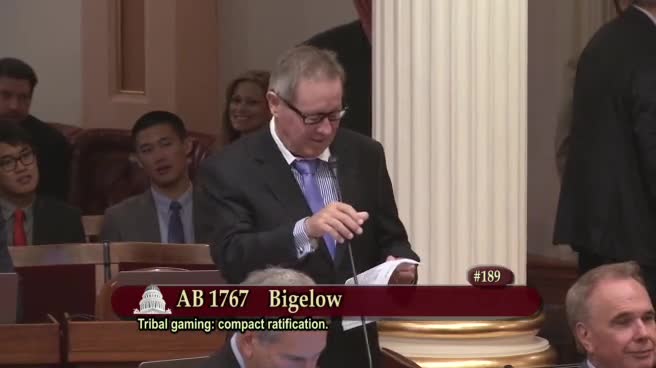 2MIN
Senate Floor
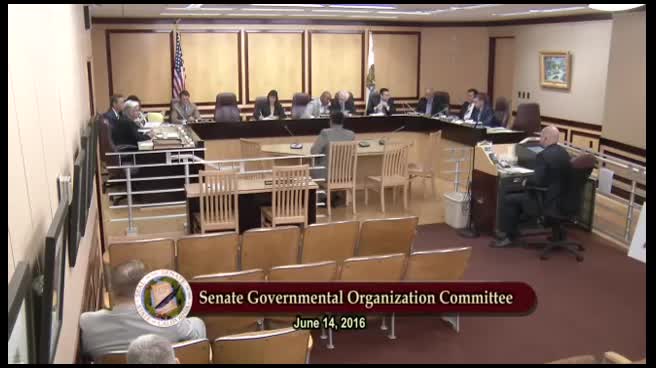 7MIN
Senate Standing Committee on Governmental Organization
 1MIN
Assembly Floor
 1MIN
Assembly Standing Committee on Appropriations
 11MIN
Assembly Standing Committee on Judiciary
Bill Author