SB 187: Sport fishing licenses: duration.
- Session Year: 2017-2018
- House: Senate
- Latest Version Date: 2017-05-03
Existing law requires every person 16 years of age or older who takes any fish, reptile, or amphibian for any purpose other than profit to first obtain a sport fishing license for that purpose, with specified exceptions, and to have that license on his or her person or in his or her immediate possession when engaged in carrying out any activity authorized by the license. Existing law requires a resident or a nonresident, 16 years of age or older, upon payment of a specified fee, to be issued a sport fishing license for the period of a calendar year, or, if issued after the beginning of the year, for the remainder thereof. Existing law also requires the issuance of shorter term licenses upon payment of a specified lesser fee. Existing law requires the Fish and Game Commission to adjust the amount of the fees, as prescribed, to fully recover, but not exceed, all reasonable administrative and implementation costs of the Department of Fish and Wildlife and the commission relating to those licenses. Existing law specifies that the requirements for issuance of a license only apply to licenses, permits, reservations, tags, and other entitlements issued through the Automated License Data System.
This bill would instead require a resident or a nonresident, 16 years of age or older, upon payment of the a specified fee, to be issued a sport fishing license for the period of 12 consecutive months beginning on the date specified on the license. license, instead of for the period of a calendar year, or the remainder thereof. The bill would require the commission to include, among the costs required to be recovered by an adjustment of the fee amount, transition costs related to the new licensing period. The bill would require the Department of Fish and Wildlife to collect all relevant and appropriate information necessary to justify the amount of the sport fishing license fees, including information about enforcement costs. The bill would require the department to submit to the Legislature a written report on the implementation of the new licensing period that also includes the information collected to justify the amount of the fees for licenses issued for the new licensing period. The bill would delete the provision specifying that the license issuance requirements only apply to licenses, permits, reservations, tags, and other entitlements issued through the Automated License Data System. The provisions of this bill would be operative beginning January 1, 2020, until January 1, 2025, except for the change regarding the Automated License Data System, which would be operative on January 1, 2018.
Existing law requires every person 16 years of age or older who takes any fish, reptile, or amphibian for any purpose other than profit to first obtain a sport fishing license for that purpose, with specified exceptions, and to have that license on his or her person or in his or her immediate possession when engaged in carrying out any activity authorized by the license. Existing law requires the Department of Fish and Wildlife and authorized license agents to issue sport fishing licenses that are valid for various periods of time upon payment of the fee applicable to the particular license. a resident or a nonresident, 16 years of age or older, upon payment of a specified fee, to be issued a sport fishing license for the period of a calendar year, or, if issued after the beginning of the year, for the remainder thereof.
This bill would make nonsubstantive changes to this provision. instead require a resident or a nonresident, 16 years of age or older, upon payment of the fee, to be issued a sport fishing license for the period of 12 consecutive months beginning on the date specified on the license.
Existing law requires every person 16 years of age or older who takes any fish, reptile, or amphibian for any purpose other than profit to first obtain a sport fishing license for that purpose, with specified exceptions, and to have that license on his or her person or in his or her immediate possession when engaged in carrying out any activity authorized by the license. Existing law requires the Department of Fish and Wildlife and authorized license agents to issue sport fishing licenses that are valid for various periods of time upon payment of the fee applicable to the particular license.
This bill would make nonsubstantive changes to this provision.
(a)A sport fishing license granting the privilege to take any fish, reptile, or amphibia amphibian anywhere in this state for purposes other than profit shall be issued to any of the following:
(1)A resident, 16 years of age or older, for the period of a calendar year, or, if issued after the beginning of the year, for the remainder thereof, upon payment of a base fee of thirty-one dollars and twenty-five cents ($31.25).
(2)A nonresident, 16 years of age or older, for the period of a calendar year, or, if issued after the beginning of the year, for the remainder thereof, upon payment of a base fee of eighty-four dollars ($84).
(3)A nonresident, 16 years of age or older older, for the period of 10 consecutive days beginning on the date specified on the license upon payment of the fee set forth in paragraph (1).
(4)A resident or nonresident, 16 years of age or older, for two designated days, upon payment of one-half the fee set forth in paragraph (1). Notwithstanding Section 1053, 1053.1, more than one single day license issued for different days may be issued to, or possessed by, a person at one time.
(5)A resident or nonresident, 16 years of age or older, for one designated day upon payment of a base fee of ten dollars ($10).
(b)California sport fishing license validations shall be issued by authorized license agents in the same manner as sport fishing licenses, and no compensation shall be paid to the authorized license agent for issuing the validations except as provided in Section 1055.1.
(c)This section applies only to licenses, permits, reservations, tags, and other entitlements issued through the Automated License Data System.(d)(c)The base fees specified in this section are applicable to the 2004 license year, and shall be adjusted annually thereafter pursuant to Section 713.
(e)(d)The commission shall adjust the amount of the fees specified in subdivision (d), (c), as necessary, to fully recover, but not exceed, all reasonable administrative and implementation costs of the department and the commission relating to those licenses.
(e)This section shall become inoperative beginning January 1, 2020, through January 1, 2025.
SEC. 2.Section 7149.05 is added to the Fish and Game Code, to read:7149.05.(a)A sport fishing license granting the privilege to take any fish, reptile, or amphibian anywhere in this state for purposes other than profit shall be issued to any of the following:
(1)A resident, 16 years of age or older, for the period of 12 consecutive months beginning on the date specified on the license, upon payment of a base fee of thirty-one dollars and twenty-five cents ($31.25).
(2)A nonresident, 16 years of age or older, for the period of 12 consecutive months beginning on the date specified on the license, upon payment of a base fee of eighty-four dollars ($84).
(3)A nonresident, 16 years of age or older, for the period of 10 consecutive days beginning on the date specified on the license upon payment of the fee set forth in paragraph (1).
(4)A resident or nonresident, 16 years of age or older, for two designated days, upon payment of one-half the fee set forth in paragraph (1). Notwithstanding Section 1053.1, more than one single day license issued for different days may be issued to, or possessed by, a person at one time.
(5)A resident or nonresident, 16 years of age or older, for one designated day upon payment of a base fee of ten dollars ($10).
(b)California sport fishing license validations shall be issued by authorized license agents in the same manner as sport fishing licenses, and no compensation shall be paid to the authorized license agent for issuing the validations except as provided in Section 1055.1.
(c)The base fees specified in this section are applicable to the 2004 license year, and shall be adjusted annually thereafter pursuant to Section 713.
(d)(1)The commission shall adjust the amount of the fees specified in subdivision (c), as necessary, to fully recover, but not exceed, all reasonable administrative and implementation costs of the department and the commission relating to those licenses. For licenses issued under paragraphs (1) and (2) of subdivision (a), administrative and implementation costs shall include all transition costs related to the new licensing periods that are reflected in those paragraphs as of the operative date of this section.
(2)The department shall collect all relevant and appropriate information necessary to justify the amount of the fees assessed pursuant to this section, including information about enforcement costs relating to licenses issued pursuant to this section.
(e)This section shall become operative on January 1, 2020.
(f)(1)On or before December 1, 2023, the department shall submit to the Legislature a written report on the implementation of the new licensing periods that are reflected in paragraphs (1) and (2) of subdivision (a). The report shall also include the information collected pursuant to paragraph (2) of subdivision (d) regarding fees assessed for licenses issued for the new licensing periods.
(2)A report to be submitted pursuant to paragraph (1) shall be submitted in compliance with Section 9795 of the Government Code.
(g)This section shall remain in effect only until January 1, 2025, and as of that date is repealed.
SECTION 1.Section 7149.05 of the Fish and Game Code is amended to read:7149.05.(a)A sport fishing license granting the privilege to take any fish, reptile, or amphibian anywhere in this state for purposes other than profit shall be issued to any of the following:(1)A resident, 16 years of age or older, for the period of 12 consecutive months beginning on the date specified on the license, upon payment of a base fee of thirty-one dollars and twenty-five cents ($31.25).(2)A nonresident, 16 years of age or older, for the period of 12 consecutive months beginning on the date specified on the license, upon payment of a base fee of eighty-four dollars ($84).(3)A nonresident, 16 years of age or older for the period of 10 consecutive days beginning on the date specified on the license upon payment of the fee set forth in paragraph (1).(4)A resident or nonresident, 16 years of age or older, for two designated days, upon payment of one-half the fee set forth in paragraph (1). Notwithstanding Section 1053.1, more than one single day license issued for different days may be issued to, or possessed by, a person at one time.(5)A resident or nonresident, 16 years of age or older, for one designated day upon payment of a base fee of ten dollars ($10).(b)California sport fishing license validations shall be issued by authorized license agents in the same manner as sport fishing licenses, and no compensation shall be paid to the authorized license agent for issuing the validations except as provided in Section 1055.1.(c)The base fees specified in this section are applicable to the 2004 license year, and shall be adjusted annually thereafter pursuant to Section 713.(d)The commission shall adjust the amount of the fees specified in subdivision (c), as necessary, to fully recover, but not exceed, all reasonable administrative and implementation costs of the department and the commission relating to those licenses.(a)A sport fishing license granting the privilege to take any fish, reptile, or amphibian anywhere in this state for purposes other than profit shall be issued to any of the following:
(1)A resident, 16 years of age or older, for the period of a calendar year, or, if issued after the beginning of the year, for the remainder thereof, 12 consecutive months beginning on the date specified on the license, upon payment of a base fee of thirty-one dollars and twenty-five cents ($31.25).
(2)A nonresident, 16 years of age or older, for the period of a calendar year, or, if issued after the beginning of the year, for the remainder thereof, 12 consecutive months beginning on the date specified on the license, upon payment of a base fee of eighty-four dollars ($84).
(3)A nonresident, 16 years of age or older for the period of 10 consecutive days beginning on the date specified on the license upon payment of the fee set forth in paragraph (1).
(4)A resident or nonresident, 16 years of age or older, for two designated days, upon payment of one-half the fee set forth in paragraph (1). Notwithstanding Section 1053.1, more than one single day license issued for different days may be issued to, or possessed by, a person at one time.
(5)A resident or nonresident, 16 years of age or older, for one designated day upon payment of a base fee of ten dollars ($10).
(b)California sport fishing license validations shall be issued by authorized license agents in the same manner as sport fishing licenses, and no compensation shall be paid to the authorized license agent for issuing the validations except as provided in Section 1055.1.
(c)The base fees specified in this section are applicable to the 2004 license year, and shall be adjusted annually thereafter pursuant to Section 713.
(d)The commission shall adjust the amount of the fees specified in subdivision (c), as necessary, to fully recover, but not exceed, all reasonable administrative and implementation costs of the department and the commission relating to those licenses.
(a)A sport fishing license granting the privilege to take any fish, reptile, or amphibia amphibian anywhere in this state for purposes other than profit shall be issued to any of the following:
(1)A resident, 16 years of age or older, for the period of a calendar year, or, if issued after the beginning of the year, for the remainder thereof, upon payment of a base fee of thirty-one dollars and twenty-five cents ($31.25).
(2)A nonresident, 16 years of age or older, for the period of a calendar year, or, if issued after the beginning of the year, for the remainder thereof, upon payment of a base fee of eighty-four dollars ($84).
(3)A nonresident, 16 years of age or older for the period of 10 consecutive days beginning on the date specified on the license upon payment of the fee set forth in paragraph (1).
(4)A resident or nonresident, 16 years of age or older, for two designated days, upon payment of one-half the fee set forth in paragraph (1). Notwithstanding Section 1053, 1053.1, more than one single day license issued for different days may be issued to, or possessed by, a person at one time.
(5)A resident or nonresident, 16 years of age or older, for one designated day upon payment of a base fee of ten dollars ($10).
(b)California sport fishing license validations shall be issued by authorized license agents in the same manner as sport fishing licenses, and no compensation shall be paid to the authorized license agent for issuing the validations except as provided in Section 1055.1.
(c)This section applies only to licenses, permits, reservations, tags, and other entitlements issued through the Automated License Data System.(d)(c)The base fees specified in this section are applicable to the 2004 license year, and shall be adjusted annually thereafter pursuant to Section 713.
(e)(d)The commission shall adjust the amount of the fees specified in subdivision (d), (c), as necessary, to fully recover, but not exceed, all reasonable administrative and implementation costs of the department and the commission relating to those licenses.
|
Date
|
Status
|
|---|---|
| Sep 1, 2017 | September 1 hearing: Held in committee and under submission. |
| Jul 19, 2017 | July 19 set for first hearing. Placed on APPR. suspense file. |
| Jun 27, 2017 | From committee: Do pass and re-refer to Com. on APPR. (Ayes 15. Noes 0.) (June 27). Re-referred to Com. on APPR. |
| Jun 12, 2017 | Referred to Com. on W.,P., & W. |
| Jun 1, 2017 | In Assembly. Read first time. Held at Desk. |
| May 31, 2017 | Read third time. Passed. (Ayes 40. Noes 0. Page 1354.) Ordered to the Assembly. |
| May 26, 2017 | Ordered to special consent calendar. |
| May 26, 2017 | Read second time. Ordered to third reading. |
| May 25, 2017 | From committee: Do pass. (Ayes 7. Noes 0. Page 1179.) (May 25). |
| May 19, 2017 | Set for hearing May 25. |
| May 15, 2017 | May 15 hearing: Placed on APPR. suspense file. |
| May 5, 2017 | Set for hearing May 15. |
| May 3, 2017 | Read second time and amended. Re-referred to Com. on APPR. |
| May 2, 2017 | From committee: Do pass as amended and re-refer to Com. on APPR. with recommendation: To consent calendar. (Ayes 9. Noes 0. Page 828.) (April 25). |
| Mar 14, 2017 | Set for hearing April 25. |
| Mar 8, 2017 | Re-referred to Com. on N.R. & W. |
| Feb 27, 2017 | From committee with author's amendments. Read second time and amended. Re-referred to Com. on RLS. |
| Feb 2, 2017 | Referred to Com. on RLS. |
| Jan 26, 2017 | From printer. May be acted upon on or after February 25. |
| Jan 25, 2017 | Introduced. Read first time. To Com. on RLS. for assignment. To print. |
|
Date
|
Description
|
Location
|
Votes
|
|
|---|---|---|---|---|
| Jun 27, 2017 | Do pass and be re-referred to the Committee on [Appropriations] | Assembly Standing Committee on Water, Parks, and Wildlife |
Passed |
|
| May 31, 2017 | Special Consent Calendar # SB187 | Senate Floor |
Passed |
|
| May 25, 2017 | Do pass | Senate Standing Committee on Appropriations |
Passed |
|
| May 15, 2017 | Placed on suspense file | Senate Standing Committee on Appropriations |
Passed |
|
| Apr 25, 2017 | Do pass as amended, but first amend, and re-refer to the Committee on [Appropriations] with the recommendation: To Consent Calendar | Senate Standing Committee on Natural Resources and Water |
Passed |
This list shows positions taken on this bill by organizations on the date displayed, which is linked to the original source.
Positions by individuals are not included.
Date of Hearing: July 19, 2017
ASSEMBLY COMMITTEE ON APPROPRIATIONS
Lorena Gonzalez Fletcher, Chair
SBPCA Bill Id:SB 187
Author:(Berryhill) – As Amended Ver:May 3, 2017
Policy Committee: | Water, Parks and Wildlife | Vote: | 15 - 0 |
|
| ||
|
|
Urgency: No State Mandated Local Program: No Reimbursable: No
SUMMARY:
This bill, beginning January 1, 2020, requires a resident or a nonresident, 16 years of age or older, to be issued a sport fishing license for 12 consecutive months from the date of purchase. Additionally, this bill:
- Requires new 12 consecutive month licenses to have the same base fee of $31.25 (resident) and $84 (nonresident) applicable to the 2004 license year, as existing licenses.
- Requires the Fish and Game Commission (Commission) to justify the costs and adjust sport fishing license fees to fully recover, but not exceed, all reasonable administrative and implementation costs to the Department of Fish and Wildlife (DFW) and the Commission relating to the change in sport fishing licenses.
- Requires DFW to report to the Legislature by December 1, 2023, on the new licensing period.
- Sunsets the 12 consecutive month sport fishing license provision on January 1, 2025.
FISCAL EFFECT:
- Unknown potential DFW annual revenue losses, estimated to be in from $3.4 to $14.8 million annually (Fish and Game Preservation Fund) potentially offset by increases in the sale of fishing licenses.
- Up to $166,000 (Fish and Game Preservation Fund) in one-time costs to update the licenses system, regulations and other materials.
COMMENTS:
- Purpose. According to the author, this bill seeks to increase fishing participation rates and license sales by replacing the current calendar year license with one that is valid for a full 12 months from the date of purchase.
- Background. DFW manages California's fish, wildlife, and plant resources. It also regulates hunting and sport fishing within the state. Each year the Commission sets license fees and take restrictions, as well as other regulations that DFW implements and enforces. California law requires that most license and other DFW program fees are set at a level sufficient to cover administrative costs.
Any person who attempts to take fish, mollusks, crustaceans, invertebrates, amphibians, or reptiles in inland or ocean waters must carry a valid fishing license. In 2017, a resident sport fishing license cost $47.01; a nonresident fishing license cost $162.62. Additional validations and report cards are required for certain species and areas. All fishing licenses, validations, and report cards are valid for the calendar year.
- Potential Revenue Impacts Debated. According to DFW, who surveyed states that implement a year-to-date fishing license structure, each state experienced a significant decline in license sales. The decline was attributed to changes in license purchasing behavior. Anglers in these states tended to wait to purchase a fishing license until right before they went fishing. After each license expired, they often waited to renew their license until they fished again. This delay in purchasing results in fewer license purchases. This change in purchasing behavior was most pronounced in states that have relatively high sport fishing license fees. California sport fishing license fees are among the highest in the nation and would likely experience a large decline in sales.
The States of Alabama, Georgia, and Virginia experienced license sales reductions of 7, 11, and 31% respectively when they changed to a year-to-date license. The State of Virginia, which has license fees comparable to California, experienced the highest reduction in license sales (31%). The State of Texas, also saw a reduction in full-fee annual fishing license sales, but experienced an increase in revenue due to annual license fee increases that ranged from 22 to 96% (depending on the license type). If California has results similar to those in Virginia, then annual sport fishing license sales would decline by approximately 332,000 licenses each year and revenue would be reduced by approximately $14.8 million annually. If California’s results are similar to the State of Alabama, then sport fishing license sales would decline by approximately 75,000 licenses each year and revenue would be reduced by approximately $3.4 million annually.
However, the author and supporters of the bill believe the value added by the year-to-date structure will encourage sales and result in an increase in revenue. They note that each of the states’ declines in sales can be attributed to other factors such as hurricanes and droughts. They further assert that previous amendments delay implementation of the new license structure to allow DFW to update the licensing during a regularly scheduled update, thus reducing the costs.
- Related Legislation. AB 986 (Gallagher) requires every person 16 years of age or older, to be issued a sport fishing license for 12 consecutive months. This two-year bill is currently in the Assembly Appropriations Committee.
Analysis Prepared by: Jennifer Galehouse / APPR. / (916) 319-2081
Date of Hearing: June 27, 2017
ASSEMBLY COMMITTEE ON WATER, PARKS, AND WILDLIFE
Eduardo Garcia, Chair
SBPCA Bill Id:SB 187
Author:(Berryhill) – As Amended Ver:May 3, 2017
SENATE VOTE:
SUBJECT: Sport fishing licenses: duration
SUMMARY: Changes the calendar year sport fishing license required for a person 16 years or older, to one that is valid for 12 consecutive months from the date of purchase for five years starting January 1, 2020. Specifically, this bill:
- Requires that the new 12 consecutive month licenses have the same base fee of $31.25 applicable to the 2004 license year, as the existing licenses.
- Requires the Fish and Game Commission (FGC) to justify the costs and adjust sport fishing license fees to fully recover, but not exceed, all reasonable administrative and implementation costs to the Department of Fish and Wildlife (DFW) and the FGC relating to the change in sport fishing licenses.
- Requires the DFW to report to the Legislature on or before December 1, 2023, on the new licensing period.
EXISTING LAW:
- Requires every person 16 years of age and older who takes any fish, reptile, or amphibian for any purpose other than profit to first purchase and be able to present a sport fishing license to fish. Makes available for purchase an annual sport fishing license valid for the January to December calendar year, a 10-day license for nonresidents only, 2-day licenses and 1-day licenses.
- Requires a sport fishing license to be issued to a resident, 16 years of age or older, for a base fee of $31.25, and to a nonresident for a base fee of $84. The base fees were placed in statute in 2004 and are adjusted annually based on inflation. With annual adjustments, the current license fee for a resident adult sport fishing license is $47.01, and for nonresidents is $126.62.
- Requires the FGC to adjust the amount of fees, as necessary, to fully recover but not exceed, all reasonable administrative and implementation costs of the DFW and the FGC, relating to those licenses.
- Requires the purchase of certain sport fishing report cards, and validations, in addition to a sport fishing license, to fish for certain species of fish or in certain locations. Examples of sport fishing report cards include a sport fishing ocean enhancement stamp, a steelhead trout report card, a second rod sport fishing validation, and a salmon punch card. All report cards, and validations are valid for the calendar year.
FISCAL EFFECT: Unknown.
COMMENTS: Changes the calendar year sport fishing license required for a person 16 years or older to one that is valid for 12 consecutive months from the date of purchase for five years starting January 1, 2020.
Author’s Statement:
California’s annual fishing license expires December 31st of every year, providing little value to anglers who purchase their licenses late in the year. In addition, with permits, it is the costliest annual license in the nation, and at its base price of $47.01, it is 76% more costly than the national average of $26.73. As a consequence, the number of price conscientious anglers purchasing annual licenses is declining at an astonishing rate. Over the past 35 years sales have declined over 55%; meanwhile the cost of an annual license has increased 840%. Despite having one of the nation’s largest coastlines and thousands of lakes and rivers, California’s fishing participation rate has declined to dead-last (per capita) in the nation.
As sales continue to decline at the current rate, the state stands to lose funding for conservation, fish stocking and wildlife programs, and millions of dollars in federal grants allocated based on the number of licenses sold. In addition, sportfishing’s $4.6 billion economic contribution to outdoor tourism and jobs is threatened. This bill seeks to increase fishing participation rates and license sales by replacing the current calendar year license with one that is valid for a full 12-months from the date of purchase. 12-month licenses are available in anglers in 11 states, and Mexico. Where states have maintained a calendar based system, their licenses can cost up to 50% less than California.
Background: Moving from Calendar Year to 12 Consecutive Months. This bill would shift the issuance of a sport fishing license from the calendar year to 12 consecutive months which has been attempted several times before. The issues raised in the past have been questions about an implementation challenge with the transition to an Automated License Data System (ALDS) for hunting and fishing licenses; how fishery report cards, and validations would be tracked; and what the impacts of this change would mean for DFW revenue.
The ALDS is now in place as opposed to when previous efforts to shift to a 12 consecutive month license occurred. As far as the ALDS system is concerned, the question moving forward with this policy is, how long it would take to transition the ALDS to a 12 consecutive month license and what the cost of that shift would be. According to the DFW it would take approximately one year. The bill would allow for two years for the DFW to transition to a 12 consecutive month license.
In order to ensure the long term viability of certain fisheries, specific report cards and validations limiting take are required for particular species. To date, those have been synced with the sport fishing license and have been issued on a calendar year basis. If the 12 consecutive month license policy were to move forward, additional statutory or regulatory changes to conform the report card and validation time periods would be necessary. This will create some enforcement and angler education challenges, with likely increased license, report card, and or validation violations.
Demand for Annual Calendar Year Sport Fishing Licenses Is Strong Into the Summer. According to data obtained from the DFW, sport fishing licenses and gift voucher sales are strong into the summer. About 25% of all annual calendar year sales are completed by the end of January (including presales). Typically, license sales fall off somewhat in February, but April – June have stronger sales and about 90% of annual sales are completed by July. Based upon the pricing, the annual resident license is approximately equivalent to three one-day passes or two two-days passes. If an angler does not purchase an annual sport fishing license until December, it may still make financial sense to purchase an annual license.
Fishing License Revenue. California issues more than one million annual sport fishing licenses each year. In 2016, annual sport fishing license sales generated more than $48 million in revenue.
There have been 12 other states that have moved from a calendar year sport fishing license to a 12 consecutive month license. These states are Arizona, Arkansas, Florida, Georgia, Maryland, Mississippi, North Carolina, New York, South Carolina, Texas, Utah, and Virginia.
In attempting to determine the fiscal impact of this bill, the DFW surveyed the states that had implemented a 12 month consecutive fishing license structure and found that many experienced a significant decline in license sales. The decline was attributed to changes in license purchasing behavior. Anglers in these states tended to wait to purchase a fishing license until right before they went fishing. After each license expired, they often waited to renew their license until they fished again. This delay in purchasing results in fewer license purchases. This change in purchasing behavior was most pronounced in states that have relatively high sport fishing license fees. California sport fishing license fees are among the highest in the nation and would likely experience a large decline in sales.
The states of Alabama, Texas, Georgia, New York, and Virginia experienced license sales reductions between 7 and 31%, when they changed to a 12 consecutive month license. The state of Virginia, which has license fees comparable to California, experienced the highest reduction in license sales. The states of North Carolina and Utah saw some increases in revenue, but changes in other factors made it hard to determine if the increase in revenue was attributable to the 12 consecutive month license. Statistics were not available from Arizona, Arkansas, South Carolina, Maryland, and Mississippi.
It is worth noting that, according to its website, Texas sells both calendar year and twelve consecutive month sport fishing licenses to residents. The twelve consecutive month license is $7 more (at $47) then the calendar year license (at $40) and includes appropriate endorsements valid for the same time period as the license.
It is unclear how relevant the experience of these states are to California where fishing participation (at 6%) is less than half the national mean (14%) based on 2011 national data. Additionally, the 2011 national data suggests that the fraction of overall sport fishing costs a license represents is less than 2% ($600 million of a total of $41.8 billion spent).
Implementation Costs. This bill would require substantial programming changes to the Automated License Data System that would be billable to the DFW. The system’s entire license structure is based on an annual license. As a result, significant hours and time must be allocated for this effort. Initial estimates of more than 1,000 hours of programmer time would be required to make the changes necessary to implement this bill. Under the current vendor contract, the estimated one-time cost for programming changes is approximately $166,800, with a 20 percent allowance for unanticipated changes.
The DFW will also incur costs for: education and outreach to license sales staff and license customers; for training of license agents; and, updating license sales manuals, printed regulation booklets and web page information. It will also require staff time to conduct a review for any statutory and regulatory changes necessary to fully implement this change without conflicts or unnecessary regulatory complexity.
The Fish and Game Preservation Fund (FGPF). If the DFW analysis is accurate, this bill would result in increased pressure on the FGPF. According to the Legislative Analyst’s Office (LAO), expenditures from the fund currently exceed annual revenues by more than $20 million. The 2017 budget addresses the short fall by increasing commercial landing fees by $900,000 and transferring funds from the lifetime license trust account. According to the LAO, the budgetary actions will sustain the current level of service, but more permanent measures must be implemented in 2018‑19 to address the deficit. The LAO also expressed concern about the increase to landing fees being too large for the industry to sustain, and recommended a lower increase in fees. If this recommendation is adopted by the Legislature, the fund may not be brought into balance. It is not currently known what, if any action, will be taken to address the imbalance in the FGPF.
Prior and Related Legislation:
AB 986 (Gallagher), 2017, would require every person 16 years of age or older, to be issued a sport fishing license for 12 consecutive months. The bill is currently in the Assembly Appropriations Committee.
SB 345 (Berryhill), 2015, would have created a junior sport fishing license for those 16 and 17 years of age. SB 345 was held in the Assembly Appropriations Committee.
SB 583 (Berryhill), 2013, would have required a five year pilot program, for a sport fishing license to be issued for 12 consecutive months. SB 583 was held on suspense in the Senate Appropriations Committee.
AB 1786 (Mansoor), 2011, would have required sport fishing licenses to be issued for 12 consecutive months. Was substantially amended to a different subject after passing the Senate Natural Resources Committee.
Supporting Arguments:
California’s fishing license program has proven too costly and antiquated for consumers, and this is evident by an unprecedented decline in fishing license sales. It is time to embrace change and adopt policies that aim to stimulate greater license sales, participation and economic activity. Fish and wildlife management agencies across the country – including western states such as Arizona and Utah- have successfully transitioned to 365-day fishing licenses with great success. This legislation aims to increase fishing participation rates, license sales and increased revenue to the DFW.
REGISTERED SUPPORT / OPPOSITION:
Support
Abu Garcia
Berkley Fishing
CalAsian Chamber of Commerce
California Aquaculture Association
California Association Boutique & Breakfast Inns
California Association for Recreational Fishing
California Association of Harbor Masters and Port Captains
California Association of RV Parks & Campgrounds
California Chamber of Commerce
California Hotel & Lodging Association
California Independent Lodging Association
California Lodging Industry Association
California Parks Company
California Parks Hospitality Association
California Sportfishing League (Sponsor)
California Travel Association
California Waterfowl Association
California Yacht Brokers Association
California-Nevada Conference of Operating Engineers
CityPASS
Congressional Sportsmen’s Foundation
County of Mariposa
Dogtrekker.com
Fred Hall Shows, Inc.
Greater Stockton Chamber of Commerce, The
Los Angeles County Business Federation
Mammoth Lakes Tourism
Marina Recreation Association
Mono County Fisheries Commission
National Federation of Independent Business
National Marine Manufacturers Association
Orange County Business Council
Orange County Visitors Association
Oxnard Chamber of Commerce
Penn Fishing
Pure Fishing
Rural County Representatives of California
Sacramento Metropolitan Chamber of Commerce
San Diego Regional Chamber
San Diego Tourism Authority
San Francisco Chamber of Commerce
San Jose Silicon Valley Chamber of Commerce
Santa Monica Travel & Tourism
Service Employees International Union, Local 1000
Sportfishing Association of California
Team San Jose
Trout Unlimited
Visit Huntington Beach
Western Outdoor News
Worldwide Boaters Safety Group
Yosemite/Mariposa County Tourism Bureau
3211 Individuals
Opposition
None on file
Analysis Prepared by: Ryan Ojakian / W., P., & W. /
Office of Senate Floor Analyses (916) 651-1520 Fax: (916) 327-4478 | SB |
THIRD READING
Bill No: SB 187
:
SENATE NATURAL RES. & WATER COMMITTEE: 9-0, 4/25/17
AYES: Hertzberg, Stone, Allen, Atkins, Hueso, Jackson, Monning, Stern, Vidak
SENATE APPROPRIATIONS COMMITTEE: 7-0, 5/25/17
AYES: Lara, Bates, Beall, Bradford, Hill, Nielsen, Wiener
SOURCE: California Sportfishing League
DIGEST:
This bill changes the calendar year sport fishing license required for a person 16 years or older to one that is valid for 12 consecutive months from the date of purchase for five years starting January 1, 2020.
Existing law:
- Declares legislative intent that the costs of hunting and sport fishing programs shall be provided out of hunting and sport fishing revenues and reimbursements and federal funds received for hunting and sport fishing programs, and other funds appropriated by the Legislature for this purpose, as specified.
- Requires the Fish and Game Commission (commission) to adjust the amount of fees, as prescribed, to fully recover, but not exceed, all reasonable administrative and implementation costs to the Department of Fish and Wildlife (department) and the commission related to those licenses.
- Requires every person 16 years of age or older who takes any fish, reptile, or amphibian for any purposes other than profit to first obtain a sport fishing license for that purpose, with specified exceptions, and to have that license on his or her person or in his or her immediate possession when engaged in carrying out any activity authorized by the license.
- Requires a resident or a nonresident, 16 years of age or older, upon payment of a specified fee, to be issued a sport fishing license for the period of a calendar year, or, if issued after the beginning of the year, for the remainder thereof.
- Sport fishing licenses for shorter periods (e.g. one and two days (residents) and 10 days (nonresidents), among others) are also available.
- Requires the purchase of certain sport fishing validations, stamps and cards for specified areas and circumstances which are only good for a calendar year. These include, for example, an ocean enhancement validation, and a second rod validation, among others. In addition certain bag limits, such as for abalone, are reported annually. Most, but not all, recreational fisheries are open year round.
This bill:
- Changes the calendar year sport fishing license required for a person 16 years or older to one that is valid for 12 consecutive months from the date of purchase for five years starting January 1, 2020.
- Requires the commission to adjust the fee charged for the license to fully recover, but not exceed, all reasonable administrative and implementation costs including for the transition to the 12 consecutive month license, as specified.
- Requires the department to collect specified information to justify the fee charged, and to prepare a legislative report regarding the 12 consecutive month license, as specified, on or before December 1, 2023.
- Makes additional technical changes.
Background
The department manages the state's fish, wildlife, and plant resources. It also regulates hunting and sport fishing within the state. The commission sets license fees and take restrictions, and establishes regulations that the department implements and enforces.
The number of annual sport fishing license sales sold by department is about one million. These licenses are almost entirely purchased by residents. The number sold has been reasonably stable since 2011. In the 1970s and into the early 1980s, resident sportfishing license sales averaged about 2.1 – 2.2 million, but have declined since, despite the state’s increasing population. The cost of a resident calendar year sport fishing license is currently $47.01 including fees. As noted above, additional stamps or validations may also be required. All fishing licenses, validations, and report cards are purchased through the Automated License Data System.
Comments
Experience in other states. Eleven states, according to the department, currently sell 12 consecutive month sport fishing licenses. These states are Arizona, Arkansas, Florida, Georgia, Mississippi, New York, North Carolina, South Carolina, Texas, Utah, and Virginia. According to the Senate Appropriations Committee’s analysis, the department, in attempting to determine the fiscal impact of this bill, surveyed states that had implemented 12 consecutive month fishing license sales. Each state reported a significant decline in license sales, due to induced changes in license purchasing behavior. The behavioral change was most pronounced in states that have relatively high sport fishing license fees. California sport fishing license fees are among the highest in the nation and could potentially experience a large decline in sales and revenues (the Senate Appropriations Committee suggests the revenue loss could be on the order of $3 million – 15 million if declines similar to those in other states are observed, as noted below).
Changes in license sales and other related department activities. This bill necessitates structural and programming changes in the Automated License Date System. The Senate Appropriations Committee analysis indicates up to 1,000 hours of programmer time would be required. In addition the department would have to train and educate license sales staff and customers about the new license and put in place a program to track the necessary information to comply with this bill’s reporting requirements.
Structural issues in the non-dedicated Fish and Game Preservation Fund (fund). This bill will result in a cost to the fund. According to the Brown Administration and the Legislative Analyst’s Office, expenditures from the fund currently exceed annual revenues by more than $20 million. To address this deficit, the Governor’s proposed 2017 Budget includes an increase in commercial fishing landing fees and a one‑time redirection of fees generated by the sale of lifetime licenses kept in a separate account. The Senate and Assembly Budget Subcommittees with jurisdiction have rejected the Governor’s proposal and addressing the fund’s structural budget imbalance in the budget process currently underway remains unresolved. Additionally, while sport fishing and sport fishing-related revenues are thought to currently cover the costs associated with the sport fishing program, the recent Senate Appropriations Committee analysis for SB 144 (McGuire) indicates General Fund support for the steelhead report card program. Background information provided by the author raised the issue of sport fishing revenues being allocated by the department for other purposes.
Related/Prior Legislation
SB 345 (Berryhill, 2015) would have instituted a 12 consecutive month sport fishing license with a five year sunset and a two year phase-in, among other things (Held on suspense in the Assembly Appropriations Committee).
SB 583 (Berryhill, 2013) would have instituted a 12 consecutive month sport fishing license with a five year sunset, a phase-in and cost recovery language (Held on suspense in the Senate Appropriations Committee).
AB 1786 (Mansour, 2012) would have instituted a 12 consecutive month sport fishing license with a phase-in (later amended into another subject area).
FISCAL EFFECT: Appropriation: Fiscal Com.: Local:
According to the Senate Appropriations Committee, this bill could result in a significant annual revenue loss and significant one-time expenses to the department, as indicated below.
- Approximately $3.4 million to $14.8 million annually (Fish and Game Preservation Fund) in lost sport fishing license revenue.
- Up to $866,000 one-time (Fish and Game Preservation Fund) to make changes to licensing system and update regulations and other materials.
Abu Garcia
Berkeley Fishing
CalAsian Chamber of Commerce
California Aquaculture Association
California Association Boutique & Breakfast Inns
California Association for Recreational Fishing
California Association of Harbor Masters and Port Captains
California Association of RV Parks & Campgrounds
California Chamber of Commerce
California Hotel & Lodging Association
California Independent Lodging Association
California Lodging Industry Association
California-Nevada Conference of Operating Engineers
California Parks Company
California Parks Hospitality Association
California Sportfishing League
California Travel Association
California Waterfowl Association
California Yacht Brokers Association
California-Nevada Conference of Operating Engineers
CityPASS
Dogtrekker.com
Fred Hall Shows, Inc.
Inyo County
Inyo County Fish and Wildlife Commission
Greater Stockton Chamber of Commerce
Los Angeles County Business Federation
Mammoth Lakes Tourism
Marine Recreation Association
Mariposa County
Mono County Fisheries Commission
National Federation of Independent Business
National Marine Manufacturers Association
Orange County Business Council
Orange County Visitors Association
Oxnard Chamber of Commerce
Penn Fishing
Pure Fishing
Rural County Representatives of California
Sacramento Metropolitan Chamber of Commerce
San Diego Regional Chamber
San Diego Tourism Authority
San Francisco Chamber of Commerce
San Jose Silicon Valley Chamber of Commerce
Santa Monica Travel & Tourism
Service Employees Union International, Local 1000
Sportfishing Association of California
Team San Jose
Visit Huntington Beach
Western Outdoor News
Worldwide Boaters Safety Group
OPPOSITION: (Verified 5/26/17)
None received
ARGUMENTS IN SUPPORT: According to the author, “California’s annual fishing license expires December 31st of every year, providing little value to anglers who purchase their licenses late in the year. In addition, with permits, it is the costliest annual license in the nation, and at its base price of $47.01, it is 76% more costly than the national average of $26.73. As a consequence, the number of price conscientious anglers purchasing annual licenses is declining at an astonishing rate. Over the past 35 years, sales have declined over 55%; meanwhile the cost of an annual license has increased 840%. Despite having one of the nation’s largest coastlines and thousands of lakes and rivers, California’s fishing participation rate has declined to dead-last (per capita) in the nation.
“As sales continue to decline at the current rate, the state stands to lose funding for conservation, fish stocking and wildlife programs, and millions of dollars in federal grants allocated based on the number of licenses sold. In addition, sport fishing’s $4.6 billion economic contribution to outdoor tourism and jobs is threatened. SB 187 seeks to increase fishing participation rates and license sales by replacing the current calendar year license with one that is valid for a full 12-months from the date of purchase. Twelve-month licenses are available to anglers in 11 states, and Mexico. Where states have maintained a calendar-based system, their licenses can cost up to 50% less than California.”
5/27/17 17:52:26
**** END ****
SENATE COMMITTEE ON APPROPRIATIONS
Senator Ricardo Lara, Chair
2017 - 2018 Regular Session
SB 187 (Berryhill) - Sport fishing licenses: duration
Version: May 3, 2017 | Policy Vote: N.R. & W. 9 - 0 |
Urgency: No | Mandate: No |
Hearing Date: May 15, 2017 | Consultant: Narisha Bonakdar |
This bill meets the criteria for referral to the Suspense File.
Bill Summary:
SB 187 changes the calendar year sport fishing license required for a person 16 years or older to one that is valid for 12 consecutive months from the date of purchase (year-to-date license). The year-to-date license must be implemented by January 1, 2020 and sunsets in 2025.
Fiscal Impact:
This bill could result in a significant annual revenue loss and significant one-time expenses to the California Department of Fish and Wildlife (CDFW), as indicated below. (See staff comments)
- Approximately $3.4 million to $14.8 million annually (Fish and Game Preservation Fund) in lost sport fishing license revenue.
- Up to $866,000 one-time (Fish and Game Preservation Fund) to make changes to licensing system and update regulations and other materials.
Background:
The California Department of Fish and Wildlife. The CDFW manages California's fish, wildlife, and plant resources. It also regulates hunting and sport fishing within the state. Each year the Fish and Game Commission sets license fees and take restrictions, as well as other regulations that the CDFW implements and enforces. California law requires that most license and other CDFW) program fees are set at a level sufficient to cover administrative costs.
State Sport Fishing Licenses. Any person who attempts to take fish, mollusks, crustaceans, invertebrates, amphibians, or reptiles in inland or ocean waters must carry a valid fishing license. In 2017, a resident sport fishing license is $47.01; a nonresident fishing license is $162.62. Additional validations and report cards are required for certain species and areas. All fishing licenses, validations, and report cards are valid for the calendar year.
Experience in other states. According to the CDFW, eleven states currently sell year-to-date sport fishing licenses. These states include Arizona, Arkansas, Florida, Georgia, Mississippi, New York, North Carolina, South Carolina, Texas, Utah and Virginia. According to the Senate Natural Resources and Water Committee analysis for SB 583 (2013), some of the states that switched from calendar year to year-to-date annual sport fishing licenses experienced a decline in sport fishing license revenues at least in part attributable to the change. Some states have increased revenues. Alabama tried a year-to-date license, according to this same bill analysis, and switched back. Texas sells both calendar year and year-to-date sport fishing licenses to residents. The year-to-date license is $7 more (at $47) than the calendar year license (at $40) and includes appropriate endorsements valid for the same time period as the license.
Proposed Law:
This bill:
- Changes the calendar year sport fishing license required for a person 16 years or older to a year-to-date license.
- Specifies that the year-to-date must be available from January 1, 2020 to December 31, 2025.
- Requires the CDFW to provide a report to the Legislature on or before December 1, 2023.
Related Legislation:
SB 345 (Berryhill, 2015) would have instituted a year-to-date sport fishing license with a 5 year sunset and a 2 year phase-in, among other things. Died in the Assembly Appropriations Committee.
SB 583 (Berryhill, 2013) would have instituted a year-to-date sport fishing license with a 5 year sunset, a phase-in and cost recovery language. Died in the Senate Appropriations Committee).
Staff Comments:
Fiscal impact. The CDFW estimates that this bill will result in a significant financial loss due to decreased fishing license sale revenues, and increased costs to revise regulations and outreach materials, conduct training and update its licensing system to reflect changes to the licensing structure. These are discussed in detail below.
Fishing License Revenue
California issues more than one million annual sport fishing licenses each year. In 2016 annual sport fishing license sales generated more than $48 million in revenue.
In attempting to determine the fiscal impact of this bill, the CDFW surveyed states that had implement a year-to-date fishing license structure and found that each experienced a significant decline in license sales. The decline was attributed to changes in license purchasing behavior. Anglers in these states tended to wait to purchase a fishing license until right before they went fishing. After each license expired, they often waited to renew their license until they fished again. This delay in purchasing results in fewer license purchases. This change in purchasing behavior was most pronounced in states that have relatively high sport fishing license fees. California sport fishing license fees are among the highest in the nation and would likely experience a large decline in sales.
The States of Alabama, Georgia, and Virginia experienced license sales reductions of 7, 11, and 31 percent respectively when they changed to a year-to-date license. The State of Virginia, which has license fees comparable to California, experienced the highest reduction in license sales (31 percent). The State of Texas, also saw a reduction in full-fee annual fishing license sales, but experienced an increase in revenue due to annual license fee increases that ranged from 22 to 96 percent (depending on the license type). If California has results similar to those in Virginia, then annual sport fishing license sales would decline by approximately 332,000 licenses each year and revenue would be reduced approximately $14.8 million annually. If California’s results are similar to the State of Alabama, then sport fishing license sales would decline by approximately 75,000 licenses each year and revenue would be reduced approximately $3.4 million annually.
Automated License Data System Development Costs
This bill would require substantial programming changes to the Automated License Data System that would be billable to the CDFW. The system’s entire license structure is based on an annual license. As a result, significant hours and time must be allocated for this effort. Initial estimates of more than 1,000 hours of programmer time would be required to make the changes necessary to implement this bill. Under the current vendor contract, the estimated one time cost for programming changes is approximately $166,800, with a 20 percent allowance for unanticipated changes.
Education, Outreach and Training Costs
The CDFW will incur costs for education and outreach to license sales staff and license customers; for training of license agents; and updating license sales manuals, printed regulation booklets and web page information. It will also require staff time to conduct a review for any statutory and regulatory changes necessary to fully implement this change without conflicts or unnecessary regulatory complexity.
The Fish and Game Preservation Fund (FGPF). This bill would result in a cost to the FGPF. According to the Legislative Analyst Office (LAO), expenditures from the fund currently exceed annual revenues by more than $20 million. To address this deficit, the Governor’s proposed 2017 budget includes an increase in commercial fishing landing fees and a one‑time redirection of $10.6 million from the Lifetime License Account. According to the LAO, the proposed budgetary actions will sustain the current level of service, but more permanent measures must be implemented in 2018‑19 to address the deficit. The LAO also expressed concern about the increase to landing fees being too large for the industry to sustain, and recommended a lower increase in fees. If this recommendation is adopted by the Legislature, the fund may not be brought into balance.
But it could be a good thing! The author and supporters of the bill believe that the value added by the year-to-date structure will encourage sales and result in an increase in revenue. They note that each of the states’ declines in sales can be attributed to other factors such as hurricanes and droughts. They further assert that amendments taken in policy committee delay implementation of the new license structure to allow the CDFW to update the licensing system during a regularly scheduled update, thus reducing the costs.
-- END --
SENATE COMMITTEE ON NATURAL RESOURCES AND WATER
Senator Robert Hertzberg, Chair
2017 - 2018 Regular
Bill No: SB 187 Hearing Date: April 25, 2017
Author: | |||
Version: |
| ||
Urgency: | Fiscal: | ||
Consultant: | |||
Subject: Sport fishing licenses: duration
BACKGROUND AND EXISTING LAW
Existing law declares the legislative intent that the costs of hunting and sport fishing programs shall be provided out of hunting and sport fishing revenues and reimbursements and federal funds received for hunting and sport fishing programs, and other funds appropriated by the Legislature for this purpose, as specified.
Existing law requires every person 16 years of age or older who takes any fish, reptile, or amphibian for any purposes other than profit to first obtain a sport fishing license for that purpose, with specified exceptions, and to have that license on his or her person or in his or her immediate possession when engaged in carrying out any activity authorized by the license.
Existing law requires a resident or a nonresident, 16 years of age or older, upon payment of a specified fee, to be issued a sport fishing license for the period of a calendar year, or, if issued after the beginning of the year, for the remainder thereof. Sport fishing licenses for shorter periods (e.g. 1 and 2 days (residents) and 10 days (nonresidents), among others) are also available.
Existing law requires the purchase of certain sport fishing validations, stamps and cards for specified areas and circumstances which are only good for a calendar year. These include, for example, an ocean enhancement validation, a steelhead report card, a second rod validation and a Colorado River validation. In addition certain bag limits, such as for abalone, are reported annually. Most, but not all, recreational fisheries are open year round.
The number of annual sport fishing license sales sold by the Department of Fish and Wildlife (Department) in the state is about 1 million and are almost entirely purchased by residents. This has been reasonably stable since 2011. In the last 40 plus years there has been a steady decline in annual sport fishing license sales. In the 1970s and into the early 1980s, resident annual sport fishing license sales averaged about 2.1 – 2.2 million. By 1990, sales were reduced to about 1.5 million. From 2000 – 2010 approximately 1.1 – 1.2 million licenses were sold annually. The sport fishing license sales have declined despite increasing population over the time period. The cost of a resident calendar year sport fishing license is currently $47.01 including fees. As noted above, additional stamps or validations may also be required.
There has been an attempt in each of the last three legislative sessions to require the department to switch from issuing an annual calendar year-based sport fishing license to one valid for twelve consecutive months from the date of issuance. None have passed.
PROPOSED LAW
This bill would change the resident or nonresident calendar year sport fishing license required for a person 16 years or older, as specified, to one valid for 12 consecutive months from the date of purchase.
ARGUMENTS IN SUPPORT
According to the author, “California’s annual fishing license expires December 31st of every year, providing little value to anglers who purchase their licenses late in the year. In addition, with permits, it is the costliest annual license in the nation, and at its base price of $47.01, it is 76% more costly than the national average of $26.73. As a consequence, the number of price conscientious anglers purchasing annual licenses is declining at an astonishing rate. Over the past 35 years, sales have declined over 55%; meanwhile the cost of an annual license has increased 840%. Despite having one of the nation’s largest coastlines and thousands of lakes and rivers, California’s fishing participation rate has declined to dead-last (per capita) in the nation.
As sales continue to decline at the current rate, the state stands to lose funding for conservation, fish stocking and wildlife programs, and millions of dollars in federal grants allocated based on the number of licenses sold. In addition, sport fishing’s $4.6 billion economic contribution to outdoor tourism and jobs is threatened. SB 187 seeks to increase fishing participation rates and license sales by replacing the current calendar year license with one that is valid for a full 12-months from the date of purchase. Twelve-month licenses are available to anglers in 11 states, and Mexico. Where states have maintained a calendar-based system, their licenses can cost up to 50% less than California.”
ARGUMENTS IN OPPOSITION
None received
COMMENTS
Phase-in implementation, sunset, cost recovery and reporting. The department’s Automated License Data System (ALDS) is used to issue all licenses, stamps and cards. As currently drafted, there is no time allowed for implementation of the required change in law, and reconfiguring appropriately ALDS may be complex. Further, previous bill analyses on this topic have all pointed out the importance of assessing the impact of this proposed change on the sport fishing program, and, in the last two sessions, five year sunset provisions have been added. Previous bill analyses have raised concerns about potential enforcement issues that may accompany a switch away from a calendar year-based system, and noted that stamps and cards remain issued on a calendar year-basis. These issues remained unchanged from previous Legislative sessions. In the last few months, the importance of ensuring department funding stability have become even more apparent (discussed below), and background information provided by the author raised the issue of sport fishing revenues being allocated for other purposes. In view of this, the Committee may wish to phase-in the switch to a twelve consecutive month license, add a five year sunset, and ensure department cost recovery and appropriate cost tracking in order to inform the Legislative debate about a potential sunset extension in future years [Amendment 1].
Non-dedicated Fish and Game Preservation Fund structural issues. While budgetary considerations are outside this committee’s jurisdiction, the following discussion provides context to some of the issues raised by this bill. In the FY 2017/2018 budget, the Brown Administration has proposed a budget change proposal to address the roughly $20 million annual structural deficit in the non-dedicated Fish and Game Preservation Fund [non-dedicated Fund]. The non-dedicated Fund is the department’s largest single fund source and supports “a multitude of program activities.” While Fund revenues have been generally stable the last ten years, the General Fund has not always been available to help fund the imbalance (largely attributed by the department to expenses related to commercial fishing, although the department has numerous mandates which are not fully funded ). The department has maintained program activities by using the non-dedicated Fund balance and reducing expenditures. In general, sport fishing and sport fishing-related revenues are thought to currently cover the costs associated with the sport fishing program, although the data necessary to do a thorough assessment may not be tracked every year.
Demand for annual calendar year sport fishing licenses is strong into the summer. According to data obtained from the department, sport fishing license and gift voucher sales are strong into the summer. About 25% of all annual calendar year sales are completed by the end of January (including presales). Typically license sales fall off somewhat in February, but April – June have stronger sales and about 90% of annual sales are completed by July. Based upon the pricing, the annual resident license is approximately equivalent to three one-day passes or two two-days passes. If an angler does not purchase an annual sport fishing license until December, it may still make financial sense to purchase an annual license.
Experience in other states. Eleven states, according to the department, currently sell twelve consecutive month sport fishing licenses. These states are Arizona, Arkansas, Florida, Georgia, Mississippi, New York, North Carolina, South Carolina, Texas, Utah and Virginia. According to the Senate Natural Resources and Water Committee analysis for SB 583 (2013), some of the states that switched from calendar year to twelve consecutive month annual sport fishing licenses experienced a decline in sport fishing license revenues at least in part attributable to the change. Some states have increased revenues. Alabama tried a twelve consecutive month license, according to this same bill analysis, and switched back.
It is worth noting that, according to its website, Texas sells both calendar year and twelve consecutive month sport fishing licenses to residents. The twelve consecutive month license is $7 more (at $47) then the calendar year license (at $40) and includes appropriate endorsements valid for the same time period as the license.
It is unclear how relevant the experience of these states are to California where fishing participation (at 6%) is less than half the national mean (14%) based on 2011 national data. Additionally, the 2011 national data suggest that the fraction of overall sport fishing costs a license represents is less than 2% ($600 million of a total of $41.8 billion spent). It is a fair point that California’s resident sport fishing license costs more than the national average, but committee staff were unable to find similar data broken out for California. The bill sponsors in background material supplied to the committee acknowledge that “… it is important to underscore that restructuring California’s fishing fees alone may not stop fishing’s declining participation rate” and suggest that regulatory restrictions (such as Marine Protected Areas) are also responsible.
Recent related bills
SB 345 (Berryhill, 2015) would have instituted a twelve consecutive month sport fishing license with a 5 year sunset and a 2 year phase-in, among other things (held on suspense in the Assembly Appropriations Committee).
SB 583 (Berryhill, 2013) would have instituted a twelve consecutive month sport fishing license with a 5 year sunset, a phase-in and cost recovery language (held on suspense in the Senate Appropriations Committee).
AB 1786 (Mansour, 2012) would have instituted a twelve consecutive month sport fishing license with a phase-in (later amended into another subject area).
SUGGESTED AMENDMENTS
AMENDMENT 1
Add a five-year sunset data and provide 2 years of lead time for the department to implement the bill. (In other words, the twelve consecutive month license will be available from January 1, 2020 – January 1, 2025.)
Revise FGC §7149.05(d) in effect from January 1, 2020 – January 1, 2025 as follows:
(d)(1) The commission shall adjust the amount of the fees specified in subdivision (c), as necessary, to fully recover, but not exceed, all reasonable administrative and implementation costs of the department and the commission relating to those licenses.
(2) For the twelve consecutive month license, the fee pursuant to paragraph (1) shall recover all costs to the department related to the conversion from the calendar year license. The department shall collect sufficient relevant and appropriate information, including enforcement, to justify the total sport fishing license fees assessed pursuant to this section. Pursuant to Government Code section 9795, on or before December 1, 2023, the department shall provide a written report to the Legislature reviewing the implementation of the twelve consecutive month license including the information collected to determine the fee.
SUPPORT
California Sportfishing League (sponsor)
Abu Garcia
Berkeley Fishing
CalAsian Chamber of Commerce
California Aquaculture Association
California Association Boutique & Breakfast Inns
California Association for Recreational Fishing
California Association of Harbor Masters and Port Captains
California Association of RV Parks & Campgrounds
California Chamber of Commerce
California Hotel & Lodging Association
California Independent Lodging Association
California Lodging Industry Association
California Parks Company
California Parks Hospitality Association
California Travel Association
California Waterfowl Association
California Yacht Brokers Association
California-Nevada Conference of Operating Engineers
CityPASS
Dogtrekker.com
Fred Hall Shows, Inc.
Greater Stockton Chamber of Commerce
Mammoth Lakes Tourism
Marina Recreation Association
National Federation of Independent Business
National Marine Manufacturers Association
Orange County Business Council
Orange County Visitors Association
Oxnard Chamber of Commerce
Penn Fishing
Pure Fishing
Rural County Representatives of California
Sacramento Metropolitan Chamber of Commerce
San Diego Tourism Authority
San Francisco Chamber of Commerce
San Jose Silicon Valley Chamber of Commerce
Santa Monica Travel & Tourism
Service Employees Union International, Local 1000
Sportfishing Association of California
Team San Jose
Visit Huntington Beach
Western Outdoor News
Worldwide Boaters Safety Group
OPPOSITION
None Received
-- END --
Discussed in Hearing
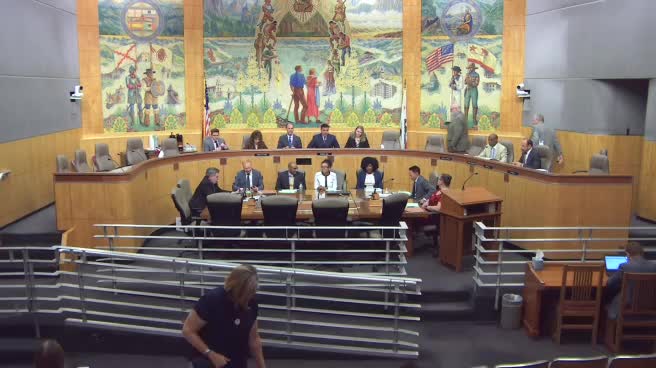 48MIN
Senate Standing Committee on Appropriations
Bill Author

Bill Co-Author(s):