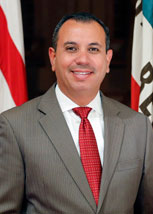
SB 2: Building Homes and Jobs Act.
- Session Year: 2017-2018
- House: Senate
- Latest Version Date: 2017-09-29
Under existing law, there are programs providing assistance for, among other things, emergency housing, multifamily housing, farmworker housing, home ownership for very low and low-income households, and downpayment assistance for first-time home buyers. Existing law also authorizes the issuance of bonds in specified amounts pursuant to the State General Obligation Bond Law. Existing law requires that proceeds from the sale of these bonds be used to finance various existing housing programs, capital outlay related to infill development, brownfield cleanup that promotes infill development, and housing-related parks.
This bill would enact the Building Homes and Jobs Act. The bill would make legislative findings and declarations relating to the need to establish permanent, ongoing sources of funding dedicated to affordable housing development. The bill would impose a fee, except as provided, of $75 to be paid at the time of the recording of every real estate instrument, paper, or notice required or permitted by law to be recorded, per each single transaction per single parcel of real property, not to exceed $225. By imposing new duties on counties with respect to the imposition of the recording fee, the bill would create a state-mandated local program. The bill would require that a county recorder quarterly send revenues from this fee, after deduction of any actual and necessary administrative costs incurred by the county recorder, to the Controller for deposit in the Building Homes and Jobs Fund, which the bill would create within the State Treasury.
The bill would, upon appropriation by the Legislature, except as provided, require (1) for moneys collected on and after January 1, 2018, and until December 31, 2018, that 50% of the moneys deposited in the fund be made available to local governments for specified purposes, and 50% made available to the Department of Housing and Community Development to assist persons experiencing or at risk of homelessness, and (2) for moneys collected on and after January 1, 2019, that 70% of the moneys deposited in the fund be provided to local governments in accordance with a specified formula and 30% made available to the department for specified purposes, including a continuous appropriation of moneys to the California Housing Finance Agency for the purpose of creating mixed income multifamily residential housing for lower to moderate income households, as provided. The bill would also provide that funds allocated to a local government that does not have a documented plan to expend certain moneys allocated to it within 5 years would revert and be deposited in the Housing Rehabilitation Loan Fund, to be used for specified purposes. By continuously appropriating moneys for use by the California Housing Finance Agency, this bill would make an appropriation. The bill would require that 20% of all moneys in the fund be expended for affordable owner-occupied workforce housing, and that moneys in the fund allocated to local governments be expended to support affordable housing, home ownership opportunities, and other housing-related programs, as specified. The bill would impose certain auditing and reporting requirements.
The California Constitution requires the state to reimburse local agencies and school districts for certain costs mandated by the state. Statutory provisions establish procedures for making that reimbursement.
This bill would provide that no reimbursement is required by this act for a specified reason.
This bill would declare that it is to take effect immediately as an urgency statute.
Under existing law, there are programs providing assistance for, among other things, emergency housing, multifamily housing, farmworker housing, home ownership for very low and low-income households, and downpayment assistance for first-time home buyers. Existing law also authorizes the issuance of bonds in specified amounts pursuant to the State General Obligation Bond Law. Existing law requires that proceeds from the sale of these bonds be used to finance various existing housing programs, capital outlay related to infill development, brownfield cleanup that promotes infill development, and housing-related parks.
This bill would enact the Building Homes and Jobs Act. The bill would make legislative findings and declarations relating to the need for establishing permanent, ongoing sources of funding dedicated to affordable housing development. The bill would impose a fee, except as provided, of $75 to be paid at the time of the recording of every real estate instrument, paper, or notice required or permitted by law to be recorded, per each single transaction per single parcel of real property, not to exceed $225. By imposing new duties on counties with respect to the imposition of the recording fee, the bill would create a state-mandated local program. The bill would require that a county recorder quarterly send revenues from this fee, after deduction of any actual and necessary administrative costs incurred by the county recorder, to the Controller for deposit in the Building Homes and Jobs Fund, which the bill would create within the State Treasury. The
The bill would, upon appropriation by the Legislature, require except as provided, require (1) for moneys collected on and after January 1, 2018, and until December 31, 2018, that 50% of the moneys deposited in the fund be made available to local governments for specified purposes, and 50% made available to the Department of Housing and Community Development to assist persons experiencing or at risk of homelessness, and (2) for moneys collected on and after January 1, 2019, that 70% of the moneys deposited in the fund be provided to local governments in accordance with a specified formula and 30% made available to the department for specified purposes, including a continuous appropriation of moneys to the California Housing Finance Agency for the purpose of creating mixed income multifamily residential housing for lower to moderate income households, as provided. The bill would also provide that funds allocated to a local government that does not have a documented plan to expend certain moneys allocated to it within 5 years would revert and be deposited in the Housing Rehabilitation Loan Fund, to be used for specified purposes. By continuously appropriating moneys for use by the California Housing Finance Agency, this bill would make an appropriation. The bill would require that 20% of the all moneys in the fund be expended for affordable owner-occupied workforce housing housing, and 10% of the moneys for housing purposes related to agricultural workers and their families, and would authorize the remainder of the that moneys in the fund to allocated to local governments be expended to support affordable housing, home ownership opportunities, and other housing-related programs, as specified. The bill would impose certain auditing and reporting requirements and would establish the Building Homes and Jobs Trust Fund Governing Board that would, among other things, review and approve recommendations made by the Department of Housing and Community Development for the distribution of moneys from the fund. requirements.
The California Constitution requires the state to reimburse local agencies and school districts for certain costs mandated by the state. Statutory provisions establish procedures for making that reimbursement.
This bill would provide that no reimbursement is required by this act for a specified reason.
This bill would declare that it is to take effect immediately as an urgency statute.
Under existing law, there are programs providing assistance for, among other things, emergency housing, multifamily housing, farmworker housing, home ownership for very low and low-income households, and downpayment assistance for first-time home buyers. Existing law also authorizes the issuance of bonds in specified amounts pursuant to the State General Obligation Bond Law. Existing law requires that proceeds from the sale of these bonds be used to finance various existing housing programs, capital outlay related to infill development, brownfield cleanup that promotes infill development, and housing-related parks.
This bill would enact the Building Homes and Jobs Act. The bill would make legislative findings and declarations relating to the need for establishing permanent, ongoing sources of funding dedicated to affordable housing development. The bill would impose a fee, except as provided, of $75 to be paid at the time of the recording of every real estate instrument, paper, or notice required or permitted by law to be recorded, per each single transaction per single parcel of real property, not to exceed $225. By imposing new duties on counties with respect to the imposition of the recording fee, the bill would create a state-mandated local program. The bill would require that a county recorder quarterly send revenues from this fee, after deduction of any actual and necessary administrative costs incurred by the county recorder, to the Controller for deposit in the Building Homes and Jobs Fund, which the bill would create within the State Treasury. The bill would, upon appropriation by the Legislature, require that 20% of the moneys in the fund be expended for affordable owner-occupied workforce housing and 10% of the moneys for housing purposes related to agricultural workers and their families, and would authorize the remainder of the moneys in the fund to be expended to support affordable housing, home ownership opportunities, and other housing-related programs, as specified. The bill would impose certain auditing and reporting requirements and would establish the Building Homes and Jobs Trust Fund Governing Board that would, among other things, review and approve recommendations made by the Department of Housing and Community Development for the distribution of moneys from the fund.
The California Constitution requires the state to reimburse local agencies and school districts for certain costs mandated by the state. Statutory provisions establish procedures for making that reimbursement.
This bill would provide that no reimbursement is required by this act for a specified reason.
This bill would declare that it is to take effect immediately as an urgency statute.
Under existing law, there are programs providing assistance for, among other things, emergency housing, multifamily housing, farmworker housing, home ownership for very low and low-income households, and downpayment assistance for first-time home buyers. Existing law also authorizes the issuance of bonds in specified amounts pursuant to the State General Obligation Bond Law. Existing law requires that proceeds from the sale of these bonds be used to finance various existing housing programs, capital outlay related to infill development, brownfield cleanup that promotes infill development, and housing-related parks.
This bill would enact the Building Homes and Jobs Act. The bill would make legislative findings and declarations relating to the need for establishing permanent, ongoing sources of funding dedicated to affordable housing development. The bill would impose a fee, except as provided, of $75 to be paid at the time of the recording of every real estate instrument, paper, or notice required or permitted by law to be recorded, per each single transaction per single parcel of real property, not to exceed $225. By imposing new duties on counties with respect to the imposition of the recording fee, the bill would create a state-mandated local program. The bill would require that a county recorder quarterly send revenues from this fee, after deduction of any actual and necessary administrative costs incurred by the county recorder, be sent quarterly to the Department of Housing and Community Development to the Controller for deposit in the Building Homes and Jobs Fund, which the bill would create within the State Treasury. The bill would, upon appropriation by the Legislature, require that 20% of the moneys in the fund be expended for affordable owner-occupied workforce housing and 10% of the moneys for housing purposes related to agricultural workers and their families, and would authorize the remainder of the moneys in the fund to be expended to support affordable housing, home ownership opportunities, and other housing-related programs, as specified. The bill would impose certain auditing and reporting requirements and would establish the Building Homes and Jobs Trust Fund Governing Board that would, among other things, review and approve recommendations made by the Department of Housing and Community Development for the distribution of moneys from the fund.
The California Constitution requires the state to reimburse local agencies and school districts for certain costs mandated by the state. Statutory provisions establish procedures for making that reimbursement.
This bill would provide that no reimbursement is required by this act for a specified reason.
This bill would declare that it is to take effect immediately as an urgency statute.
Under existing law, there are programs providing assistance for, among other things, emergency housing, multifamily housing, farmworker housing, home ownership for very low and low-income households, and downpayment assistance for first-time home buyers. Existing law also authorizes the issuance of bonds in specified amounts pursuant to the State General Obligation Bond Law. Existing law requires that proceeds from the sale of these bonds be used to finance various existing housing programs, capital outlay related to infill development, brownfield cleanup that promotes infill development, and housing-related parks.
This bill would enact the Building Homes and Jobs Act. The bill would make legislative findings and declarations relating to the need for establishing permanent, ongoing sources of funding dedicated to affordable housing development. The bill would impose a fee, except as provided, of $75 to be paid at the time of the recording of every real estate instrument, paper, or notice required or permitted by law to be recorded, per each single transaction per single parcel of real property, not to exceed $225. By imposing new duties on counties with respect to the imposition of the recording fee, the bill would create a state-mandated local program. The bill would require that revenues from this fee, after deduction of any actual and necessary administrative costs incurred by the county recorder, be sent quarterly to the Department of Housing and Community Development for deposit in the Building Homes and Jobs Fund, which the bill would create within the State Treasury. The bill would, upon appropriation by the Legislature, require that 20% of the moneys in the fund be expended for affordable owner-occupied workforce housing and 10% of the moneys for housing purposes related to agricultural workers and their families, and would authorize the remainder of the moneys in the fund to be expended to support affordable housing, home ownership opportunities, and other housing-related programs, as specified. The bill would impose certain auditing and reporting requirements and would establish the Building Homes and Jobs Trust Fund Governing Board that would, among other things, review and approve recommendations made by the Department of Housing and Community Development for the distribution of moneys from the fund.
This bill would state the intent of the Legislature to enact legislation that would create the Secretary of Housing within state government to oversee all activities related to housing in the state.The California Constitution requires the state to reimburse local agencies and school districts for certain costs mandated by the state. Statutory provisions establish procedures for making that reimbursement.
This bill would provide that no reimbursement is required by this act for a specified reason.
This bill would declare that it is to take effect immediately as an urgency statute.
Under existing law, there are programs providing assistance for, among other things, emergency housing, multifamily housing, farmworker housing, homeownership for very low and low-income households, and downpayment assistance for first-time homebuyers. Existing law also authorizes the issuance of bonds in specified amounts pursuant to the State General Obligation Bond Law. Existing law requires that proceeds from the sale of these bonds be used to finance various existing housing programs, capital outlay related to infill development, brownfield cleanup that promotes infill development, and housing-related parks.
This bill would enact the Building Homes and Jobs Act. The bill would make legislative findings and declarations relating to the need for establishing permanent, ongoing sources of funding dedicated to affordable housing development. The bill would impose a fee, except as provided, of $75 to be paid at the time of the recording of every real estate instrument, paper, or notice required or permitted by law to be recorded, per each single transaction per single parcel of real property, not to exceed $225. By imposing new duties on counties with respect to the imposition of the recording fee, the bill would create a state-mandated local program. The bill would require that revenues from this fee, after deduction of any actual and necessary administrative costs incurred by the county recorder, be sent quarterly to the Department of Housing and Community Development for deposit in the Building Homes and Jobs Fund, which the bill would create within the State Treasury. The bill would, upon appropriation by the Legislature, require that 20% of the moneys in the fund be expended for affordable owner-occupied workforce housing and 10% of the moneys for housing purposes related to agricultural workers and their families, and would authorize the remainder of the moneys in the fund to be expended to support affordable housing, homeownership opportunities, and other housing-related programs, as specified. The bill would impose certain auditing and reporting requirements and would establish the Building Homes and Jobs Trust Fund Governing Board that would, among other things, review and approve recommendations made by the Department of Housing and Community Development for the distribution of moneys from the fund.
This bill would state the intent of the Legislature to enact legislation that would create the Secretary of Housing within state government to oversee all activities related to housing in the state.
The California Constitution requires the state to reimburse local agencies and school districts for certain costs mandated by the state. Statutory provisions establish procedures for making that reimbursement.
This bill would provide that no reimbursement is required by this act for a specified reason.
This bill would declare that it is to take effect immediately as an urgency statute.
This act shall be known as the Building Homes and Jobs Act.
SEC. 2.(a)The Legislature finds and declares that having a healthy housing market that provides an adequate supply of homes affordable to Californians at all income levels is critical to the economic prosperity and quality of life in the state.
(b)The Legislature further finds and declares all of the following:
(1)Funding approved by the states voters in 2002 and 2006, as of June 2015, has financed the construction, rehabilitation, and preservation of over 14,000 shelter spaces and 245,000 affordable homes. These numbers include thousands of supportive homes for people experiencing homelessness. In addition, these funds have helped tens of thousands of families become or remain homeowners. Nearly all of the voter-approved funding for affordable housing has been awarded.
(2)The requirement in the Community Redevelopment Law that redevelopment agencies set aside 20 percent of tax increment for affordable housing generated roughly $1 billion per year. With the elimination of redevelopment agencies, this funding stream has disappeared.
(3)In 2014, the Legislature committed 10 percent of ongoing cap-and-trade funds for affordable housing that reduces greenhouse gas emissions and dedicated $100 million in one-time funding for affordable multifamily and permanent supportive housing. In addition, the people of California thoughtfully approved the repurposing of $600 million in already committed bond funds for the creation of affordable rental and permanent supportive housing for veterans through the passage of Proposition 41.
(4)In 2015, the Legislature approved $2 billion in revenue bonds for the construction and rehabilitation of permanent supportive housing for homeless individuals with mental illness through the No Place Like Home initiative and increased funding for the CalWORKs Housing Support Program to $47 million per year. Another $45 million was directed to Emergency Solutions Grants to fund rapid rehousing, outreach, shelters, and homeless prevention and $10 million was provided to reduce homelessness among families who are part of the child welfare system.
(5)Despite these investments, the need for affordable housing in the State of California greatly exceeds the available resources, demonstrated by the Public Policy Institute of California finding that, as of January 2016, 31.5 percent of mortgaged homeowners and 47 percent of all renters are spending more than 35 percent of their household incomes on housing.
(6)California has 12 percent of the United States population, but 20 percent of its homeless population. California has the highest percentage of unsheltered homeless in the nation, with 64 percent of homeless Californians not having shelter. California has 24 percent of the nations homeless veterans population and one-third of the nations chronically homeless population. California also has the largest population of unaccompanied homeless children and youth, with 28 percent of the national total.
(7)Furthermore, four of the top 10 metropolitan areas in the country with the highest rate of homelessness are in the following metropolitan areas in California: San Jose-Sunnyvale-Santa Clara, Los Angeles-Long Beach-Santa Ana, Fresno, and Stockton.
(8)California continues to have the second lowest homeownership rate in the nation, and the Los Angeles metropolitan area is now a majority renter area. In fact, five of the eight lowest homeownership rates are in metropolitan areas in California.
(9)Los Angeles and Orange Counties have been identified as the epicenter of overcrowded housing, and numerous studies have shown that children in crowded homes have poorer health, worse scores on mathematics and reading tests, and higher rates of depression and behavioral problemseven when poverty is taken into account.
(10)Millions of Californians are affected by the states chronic housing shortage, including seniors, veterans, people experiencing chronic homelessness, working families, people with mental, physical, or developmental disabilities, agricultural workers, people exiting jails, prisons, and other state institutions, survivors of domestic violence, and former foster and transition-aged youth.
(11)California has 109 federally recognized tribes and 723,000 residents with Native American ancestry, the largest number of tribes and residents in the United States. Due to historic dislocation and lack of housing choices, most do not live on tribal lands and those who do live in severely substandard, overcrowded homes lacking quality water and sewer services at rates greater than the general population.
(12)Low rates of teacher recruitment and retention have been exacerbated by many factors, including housing. In high housing cost areas, low teacher recruitment and retention rates are largely a consequence of salaries insufficient to cover housing costs. In rural areas, rental housing is often unavailable. In both instances, the long commute faced by teachers and other classified employees further pushes school employees to leave their position or the profession entirely. School employee housing provides a tool that school districts can use to recruit and retain qualified teachers.
(13)Eight of the top 10 hardest hit cities by the foreclosure crisis in the nation were in California. They include the Cities of Stockton, Modesto, Vallejo, Riverside, San Bernardino, Merced, Bakersfield, and Sacramento.
(14)Californias workforce continues to experience longer commute times as persons in the workforce seek affordable housing outside the areas in which they work. If California is unable to support the construction of affordable housing in these areas, congestion problems will strain the states transportation system and exacerbate greenhouse gas emissions.
(15)Many economists agree that the states higher than average unemployment rate is due in large part to massive shrinkage in the construction industry from 2005 to 2009, including losses of nearly 700,000 construction-related jobs, a 60-percent decline in construction spending, and an 83-percent reduction in residential permits. Restoration of a healthy construction sector will significantly reduce the states unemployment rate.
(16)The lack of sufficient housing impedes economic growth and development by making it difficult for California employers to attract and retain employees.
(17)To keep pace with continuing demand, the state should identify and establish a permanent, ongoing source or sources of funding dedicated to affordable housing development. Without a reliable source of funding for housing affordable to the states workforce and most vulnerable residents, the state and its local and private housing development partners will not be able to continue increasing the supply of housing after existing housing bond resources are depleted.
(18)The investment will leverage billions of dollars in private investment, lessen demands on law enforcement and dwindling health care resources as fewer people are forced to live on the streets or in dangerous substandard buildings, and increase businesses ability to attract and retain skilled workers.
(19)In order to promote housing and homeownership opportunities, the recording fee imposed by this act shall not be applied to any recording made in connection with a sale of real property. Purchasing a home is likely the largest purchase made by Californians, and it is the intent of this act to not increase transaction costs associated with these transfers.
SEC. 3.Section 27388.1 is added to the Government Code, to read:27388.1.(a)(1)Commencing January 1, 2018, and except as provided in paragraph (2), in addition to any other recording fees specified in this code, a fee of seventy-five dollars ($75) shall be paid at the time of recording of every real estate instrument, paper, or notice required or permitted by law to be recorded, except those expressly exempted from payment of recording fees, per each single transaction per parcel of real property. The fee imposed by this section shall not exceed two hundred twenty-five dollars ($225). Real estate instrument, paper, or notice means a document relating to real property, including, but not limited to, the following: deed, grant deed, trustees deed, deed of trust, reconveyance, quit claim deed, fictitious deed of trust, assignment of deed of trust, request for notice of default, abstract of judgment, subordination agreement, declaration of homestead, abandonment of homestead, notice of default, release or discharge, easement, notice of trustee sale, notice of completion, UCC financing statement, mechanics lien, maps, and covenants, conditions, and restrictions.
(2)The fee described in paragraph (1) shall not be imposed on any real estate instrument, paper, or notice recorded in connection with a transfer subject to the imposition of a documentary transfer tax as defined in Section 11911 of the Revenue and Taxation Code or on any real estate instrument, paper, or notice recorded in connection with a transfer of real property that is a residential dwelling to an owner-occupier.
(b)The county recorder shall remit quarterly, on or before the last day of the month next succeeding each calendar quarterly period, the fees, after deduction of any actual and necessary administrative costs incurred by the county recorder in carrying out this section, to the Controller for deposit in the Building Homes and Jobs Trust Fund established by Section 50470 of the Health and Safety Code, to be expended for the purposes set forth in that section. In addition, the county shall pay to the Controller interest, at the legal rate, on any funds not paid to the Controller before the last day of the month next succeeding each quarterly period.
(c)If the Department of Housing and Community Development determines that any moneys derived from fees collected are being allocated by the state for a purpose not authorized by Section 50470 of the Health and Safety Code, the county recorder shall, upon notice of the determination, immediately cease collection of the fees, and shall resume collection of those fees only upon notice that the moneys derived from the fees collected are being allocated by the state only for a purpose authorized by Section 50470 of the Health and Safety Code.
SEC. 4.Chapter 2.5 (commencing with Section 50470) is added to Part 2 of Division 31 of the Health and Safety Code, to read:2.5.Building Homes and Jobs Act1.General Provisions50470.(a)(1)There is hereby created in the State Treasury the Building Homes and Jobs Trust Fund. All interest or other increments resulting from the investment of moneys in the fund shall be deposited in the fund, notwithstanding Section 16305.7 of the Government Code.
(2)Moneys in the Building Homes and Jobs Trust Fund shall not be subject to transfer to any other fund pursuant to any provision of Part 2 (commencing with Section 16300) of Division 4 of Title 2 of the Government Code, except to the Surplus Money Investment Fund.
(b)Moneys in the Building Homes and Jobs Trust Fund shall be appropriated either through the annual Budget Act, or as provided in this subdivision, in accordance with the following:
(1)Moneys collected on and after January 1, 2018, and until December 31, 2018, shall, upon appropriation by the Legislature, be allocated as follows:
(A)Fifty percent of deposits into the fund shall be made available for local governments to update planning documents and zoning ordinances in order to streamline housing production, including, but not limited to, general plans, community plans, specific plans, sustainable communities strategies, and local coastal programs. Eligible uses also include new environmental analyses that eliminate the need for project-specific review and local process updates that improve and expedite local permitting.
(i)Five percent of the funds specified by this subparagraph shall be available for technical assistance to jurisdictions updating specified planning documents. Technical assistance shall be provided by the department and the Governors Office of Planning and Research.
(ii)The funds to be allocated pursuant to this subparagraph shall be held by the department until a local government submits a request for use. The request shall include a description of the proposed use of the funds in the interest of accelerating housing production. The proposed use of these funds shall be included in the local governments funding plan and annual reports pursuant to subclauses (II) and (III) of clause (ii) of subparagraph (B) of paragraph (2). Any of these funds not allocated by the department within the first two years that those funds are available shall be made available by the department for the Multifamily Housing Program (Chapter 6.7 (commencing with Section 50675)).
(B)Fifty percent of deposits into the fund shall be made available to the department to assist persons experiencing or at risk of homelessness, including, but not limited to, providing rapid rehousing, rental assistance, navigation centers, and the new construction, rehabilitation, and preservation of permanent and transitional rental housing.
(C)The department shall ensure geographic equity in the distribution and expenditure of funds allocated pursuant to this paragraph.
(2)Moneys collected on and after January 1, 2019, shall be allocated as follows:
(A)Twenty percent of all moneys in the fund shall, upon appropriation by the Legislature, be expended for affordable owner-occupied workforce housing.
(B)(i)Seventy percent of moneys deposited in the fund shall, upon appropriation by the Legislature, be made available to local governments as follows:
(I)Ninety percent of the moneys specified in this subparagraph shall be allocated based on the formula specified in Section 5306 of Title 42 of the United States Code, in accordance with the distribution of funds pursuant to that formula for the federal Fiscal Year 2017, except that the portion allocated to nonentitlement areas pursuant to that section shall be distributed through a competitive grant program, administered by the department, as follows:
(ia)The department shall award priority points to a county that has a population of 200,000 or less within the unincorporated areas of the county, to a local government that did not receive an award based on the formula specified in Section 5306 of Title 42 of the United States Code in 2016, and to a local government that pledges to use the money awarded pursuant to a competitive grant under this subclause to assist persons experiencing or at risk of homelessness, including, but not limited to, providing rapid rehousing, rental assistance, navigation centers, and the new construction, rehabilitation, and preservation of permanent and transitional rental housing.
(ib)Moneys awarded to a local government pursuant to the competitive grant program shall be used for the purposes specified in subparagraph (D).
(II)The remaining 10 percent of the moneys specified in this subparagraph shall be allocated equitably among local jurisdictions that are nonentitlement areas pursuant to the formula specified in Section 5306 of Title 42 of the United States Code for federal Fiscal Year 2017.
(ii)To receive moneys pursuant to this subparagraph, local governments shall document minimum standards including the following:
(I)Submit a plan to the department detailing the manner in which allocated funds will be used by the local government in a manner consistent with this paragraph and to meet the local governments unmet share of the regional housing needs allocation.
(II)Have a compliant housing element with the state and submit a current annual report pursuant to Section 65400 of the Government Code.
(III)Submit an annual report to the department that provides ongoing tracking of the uses and expenditures of any allocated funds.
(IV)Funds may be expended for the uses listed in subparagraph (D). Two or more local governments that receive an allocation pursuant to this subparagraph may expend those moneys on a joint project that is an authorized use under subparagraph (D).
(V)Prioritize investments that increase the supply of housing to households that are at or below 60 percent of area median income, adjusted for household size.
(VI)If a local government does not have a documented plan to expend the moneys allocated to it pursuant to this subparagraph within five years of that allocation, those moneys shall be exempt from the allocation requirements in this paragraph and shall revert to, and be paid and deposited in, the Housing Rehabilitation Loan Fund established pursuant to Section 50661 to be used for the Multifamily Housing Program (Chapter 6.7 (commencing with Section 50675)) or for technical assistance for local governments.
(VII)A local government may petition the department to return any moneys allocated to it pursuant to this subparagraph. Any moneys returned pursuant to this clause shall be used for the Multifamily Housing Program (Chapter 6.7 (commencing with Section 50675)).
(C)Thirty percent of moneys deposited in the fund shall be made available to the department for use as follows:
(i)Five percent of the moneys deposited in the fund shall, upon appropriation by the Legislature, be used for state incentive programs, including loans and grants administered by the department. If the department receives insufficient funding applications for incentive programs financed pursuant to this clause, the department shall make those funds available for the Multifamily Housing Program (Chapter 6.7 (commencing with Section 50675)).
(ii)Ten percent of the moneys deposited in the fund shall, upon appropriation by the Legislature, be used to address affordable homeownership and rental housing opportunities for agricultural workers and their families.
(iii)Fifteen percent of the moneys deposited in the fund shall, notwithstanding any other provision of this section or Section 13340 of the Government Code, be continuously appropriated to the California Housing Finance Agency for the purpose of creating mixed income multifamily residential housing for lower to moderate income households pursuant to Chapter 6.7 (commencing with Section 51325) of Part 3.
(D)The moneys in the fund allocated to local governments may be expended for the following purposes:
(i)The predevelopment, development, acquisition, rehabilitation, and preservation of multifamily, residential live-work, rental housing that is affordable to extremely low, very low, low-, and moderate-income households, including necessary operating subsidies.
(ii)Affordable rental and ownership housing that meets the needs of a growing workforce earning up to 120 percent of area median income, or 150 percent of area median income in high-cost areas.
(iii)Matching portions of funds placed into local or regional housing trust funds.
(iv)Matching portions of funds available through the Low and Moderate Income Housing Asset Fund pursuant to subdivision (d) of Section 34176 of the Health and Safety Code.
(v)Capitalized reserves for services connected to the creation of new permanent supportive housing, including, but not limited to, developments funded through the Veterans Housing and Homelessness Prevention Bond Act of 2014.
(vi)Assisting persons who are experiencing or at risk of homelessness, including providing rapid rehousing, rental assistance, navigation centers, emergency shelters, and the new construction, rehabilitation, and preservation of permanent and transitional housing.
(vii)Accessibility modifications.
(viii)Efforts to acquire and rehabilitate foreclosed or vacant homes.
(ix)Homeownership opportunities, including, but not limited to, downpayment assistance.(x)Fiscal incentives or matching funds to local agencies that approve new housing for extremely low, very low, low-, and moderate-income households.
(3)A state or local entity that receives an appropriation or allocation pursuant to this chapter shall use no more than 5 percent of that appropriation or allocation for costs related to the administration of the housing program for which the appropriation or allocation was made.
(c)Both of the following shall be paid and deposited in the fund:
(1)Any moneys appropriated and made available by the Legislature for purposes of the fund.
(2)Any other moneys that may be made available to the department for the purposes of the fund from any other source or sources.
(d)In consultation with stakeholders, the department may adopt guidelines to implement this section, including to determine allocation methodologies. Any guideline, rule, policy, or standard of general application employed by the department in implementing this chapter shall not be subject to the requirements of the Administrative Procedure Act (Chapter 3.5 (commencing with Section 11340) of Part 1 of Division 3 of Title 2 of the Government Code).
50470.5.For purposes of this chapter:
(a)Department means the Department of Housing and Community Development.
(b)Local government means any city, county, or city and county.
50471.The department and the California Housing Finance Agency shall report on the expenditure of funds pursuant to this chapter in accordance with Sections 50408 and 51005, respectively.
2.Audits and Reporting50475.(a)The Office of State Audits and Evaluation may conduct periodic audits to ensure that the annual allocation to individual programs is awarded by the department in a timely fashion consistent with the requirements of this chapter.
(b)The department shall reimburse the Office of State Audits and Evaluation for the actual costs of audit work performed pursuant to this section.
SEC. 5.No reimbursement is required by this act pursuant to Section 6 of Article XIIIB of the California Constitution because a local agency or school district has the authority to levy service charges, fees, or assessments sufficient to pay for the program or level of service mandated by this act, within the meaning of Section 17556 of the Government Code.
SEC. 6.This act is an urgency statute necessary for the immediate preservation of the public peace, health, or safety within the meaning of Article IV of the California Constitution and shall go into immediate effect. The facts constituting the necessity are:
In order to provide affordable housing opportunities at the earliest possible time, it is necessary for this act to take effect immediately.
This act shall be known as the Building Homes and Jobs Act.
SEC. 2.(a)The Legislature finds and declares that having a healthy housing market that provides an adequate supply of homes affordable to Californians at all income levels is critical to the economic prosperity and quality of life in the state.
(b)The Legislature further finds and declares all of the following:
(1)Funding approved by the states voters in 2002 and 2006, as of June 2015, has financed the construction, rehabilitation, and preservation of over 14,000 shelter spaces and 245,000 affordable homes. These numbers include thousands of supportive homes for people experiencing homelessness. In addition, these funds have helped tens of thousands of families become or remain homeowners. Nearly all of the voter-approved funding for affordable housing has been awarded.
(2)The requirement in the Community Redevelopment Law that redevelopment agencies set aside 20 percent of tax increment for affordable housing generated roughly $1 billion per year. With the elimination of redevelopment agencies, this funding stream has disappeared.
(3)In 2014, the Legislature committed 10 percent of ongoing cap-and-trade funds for affordable housing that reduces greenhouse gas emissions and dedicated $100 million in one-time funding for affordable multifamily and permanent supportive housing. In addition, the people of California thoughtfully approved the repurposing of $600 million in already committed bond funds for the creation of affordable rental and permanent supportive housing for veterans through the passage of Proposition 41.
(4)In 2015, the Legislature approved $2 billion in revenue bonds for the construction and rehabilitation of permanent supportive housing for homeless individuals with mental illness through the No Place Like Home initiative and increased funding for the CalWORKs Housing Support Program to $47 million per year. Another $45 million was directed to Emergency Solutions Grants to fund rapid rehousing, outreach, shelters, and homeless prevention and $10 million was provided to reduce homelessness among families who are part of the child welfare system.
(5)Despite these investments, the need for affordable housing in the State of California greatly exceeds the available resources, demonstrated by the Public Policy Institute of California finding that, as of January 2016, 31.5 percent of mortgaged homeowners and 47 percent of all renters are spending more than 35 percent of their household incomes on housing.
(6)California has 12 percent of the United States population, but 20 percent of its homeless population. California has the highest percentage of unsheltered homeless in the nation, with 64 percent of homeless Californians not having shelter. California has 24 percent of the nations homeless veterans population and one-third of the nations chronically homeless population. California also has the largest population of unaccompanied homeless children and youth, with 28 percent of the national total.
(7)Furthermore, four of the top 10 metropolitan areas in the country with the highest rate of homelessness are in the following metropolitan areas in California: San Jose-Sunnyvale-Santa Clara, Los Angeles-Long Beach-Santa Ana, Fresno, and Stockton.
(8)California continues to have the second lowest homeownership rate in the nation, and the Los Angeles metropolitan area is now a majority renter area. In fact, five of the eight lowest homeownership rates are in metropolitan areas in California.
(9)Los Angeles and Orange Counties have been identified as the epicenter of overcrowded housing, and numerous studies have shown that children in crowded homes have poorer health, worse scores on mathematics and reading tests, and higher rates of depression and behavioral problemseven when poverty is taken into account.
(10)Millions of Californians are affected by the states chronic housing shortage, including seniors, veterans, people experiencing chronic homelessness, working families, people with mental, physical, or developmental disabilities, agricultural workers, people exiting jails, prisons, and other state institutions, survivors of domestic violence, and former foster and transition-aged youth.
(11)California has 109 federally recognized tribes and 723,000 residents with Native American ancestry, the largest number of tribes and residents in the United States. Due to historic dislocation and lack of housing choices, most do not live on tribal lands and those who do live in severely substandard, overcrowded homes lacking quality water and sewer services at rates greater than the general population.
(12)Low rates of teacher recruitment and retention have been exacerbated by many factors, including housing. In high housing cost areas, low teacher recruitment and retention rates are largely a consequence of salaries insufficient to cover housing costs. In rural areas, rental housing is often unavailable. In both instances, the long commute faced by teachers and other classified employees further pushes school employees to leave their position or the profession entirely. School employee housing provides a tool that school districts can use to recruit and retain qualified teachers.
(12)(13)Eight of the top 10 hardest hit cities by the foreclosure crisis in the nation were in California. They include the Cities of Stockton, Modesto, Vallejo, Riverside, San Bernardino, Merced, Bakersfield, and Sacramento.
(13)(14)Californias workforce continues to experience longer commute times as persons in the workforce seek affordable housing outside the areas in which they work. If California is unable to support the construction of affordable housing in these areas, congestion problems will strain the states transportation system and exacerbate greenhouse gas emissions.
(14)(15)Many economists agree that the states higher than average unemployment rate is due in large part to massive shrinkage in the construction industry from 2005 to 2009, including losses of nearly 700,000 construction-related jobs, a 60-percent decline in construction spending, and an 83-percent reduction in residential permits. Restoration of a healthy construction sector will significantly reduce the states unemployment rate.
(15)(16)The lack of sufficient housing impedes economic growth and development by making it difficult for California employers to attract and retain employees.
(16)(17)To keep pace with continuing demand, the state should identify and establish a permanent, ongoing source or sources of funding dedicated to affordable housing development. Without a reliable source of funding for housing affordable to the states workforce and most vulnerable residents, the state and its local and private housing development partners will not be able to continue increasing the supply of housing after existing housing bond resources are depleted.
(17)(18)The investment will leverage billions of dollars in private investment, lessen demands on law enforcement and dwindling health care resources as fewer people are forced to live on the streets or in dangerous substandard buildings, and increase businesses ability to attract and retain skilled workers.
(18)(19)In order to promote housing and homeownership opportunities, the recording fee imposed by this act shall not be applied to any recording made in connection with a sale of real property. Purchasing a home is likely the largest purchase made by Californians, and it is the intent of this act to not increase transaction costs associated with these transfers.
SEC. 3.Section 27388.1 is added to the Government Code, to read:27388.1.(a)(1)Commencing January 1, 2018, and except as provided in paragraph (2), in addition to any other recording fees specified in this code, a fee of seventy-five dollars ($75) shall be paid at the time of recording of every real estate instrument, paper, or notice required or permitted by law to be recorded, except those expressly exempted from payment of recording fees, per each single transaction per parcel of real property. The fee imposed by this section shall not exceed two hundred twenty-five dollars ($225). Real estate instrument, paper, or notice means a document relating to real property, including, but not limited to, the following: deed, grant deed, trustees deed, deed of trust, reconveyance, quit claim deed, fictitious deed of trust, assignment of deed of trust, request for notice of default, abstract of judgment, subordination agreement, declaration of homestead, abandonment of homestead, notice of default, release or discharge, easement, notice of trustee sale, notice of completion, UCC financing statement, mechanics lien, maps, and covenants, conditions, and restrictions.
(2)The fee described in paragraph (1) shall not be imposed on any real estate instrument, paper, or notice recorded in connection with a transfer subject to the imposition of a documentary transfer tax as defined in Section 11911 of the Revenue and Taxation Code or on any real estate instrument, paper, or notice recorded in connection with a transfer of real property that is a residential dwelling to an owner-occupier.
(b)The county recorder shall remit quarterly, on or before the last day of the month next succeeding each calendar quarterly period, the fees, after deduction of any actual and necessary administrative costs incurred by the county recorder in carrying out this section, to the Controller for deposit in the Building Homes and Jobs Trust Fund established by Section 50470 of the Health and Safety Code, to be expended for the purposes set forth in that section. In addition, the county shall pay to the Controller interest, at the legal rate, on any funds not paid to the Controller before the last day of the month next succeeding each quarterly period.
(c)If the Department of Housing and Community Development determines that any moneys derived from fees collected are being allocated by the state for a purpose not authorized by Section 50470 of the Health and Safety Code, the county recorder shall, upon notice of the determination, immediately cease collection of the fees, and shall resume collection of those fees only upon notice that the moneys derived from the fees collected are being allocated by the state only for a purpose authorized by Section 50470 of the Health and Safety Code.
SEC. 4.Section 50408 of the Health and Safety Code is amended to read:50408.(a)On or before December 31 of each year, the department shall submit an annual report to the Governor and both houses of the Legislature on the operations and accomplishments during the previous fiscal year of the housing programs administered by the department, including, but not limited to, the Emergency Housing and Assistance Program and Community Development Block Grant activity.(b)The report shall include all of the following information:(1)The number of units assisted by those programs.(2)The number of individuals and households served and their income levels.(3)The distribution of units among various areas of the state.(4)The amount of other public and private funds leveraged by the assistance provided by those programs.(5)Information detailing the assistance provided to various groups of persons by programs that are targeted to assist those groups.(6)The information required to be reported pursuant to Section 17031.8.(7)(A)An evaluation, in collaboration with the Department of Veterans Affairs, of any program established by the department pursuant to Article 3.2 (commencing with Section 987.001) of Chapter 6 of Division 4 of the Military and Veterans Code, including information relating to the effectiveness of assisted projects in helping veterans occupying any supportive housing or transitional housing development that was issued funds pursuant to that article.(B)The evaluation shall include, but is not limited to, the following information:(i)Performance outcome data including, but not limited to, housing stability, housing exit information, and tenant satisfaction, which may be measured by a survey, and changes in income, benefits, and education.(I)For purposes of this paragraph, the term housing stability includes, but is not limited to, how many tenants exit transitional housing to permanent housing or maintain permanent housing, and the length of time those tenants spent in assisted units.(II)For purposes of this paragraph, the term housing exit information includes, but is not limited to, the following:(ia)How many tenants left assisted units.(ib)The length of tenancy in assisted units.(ic)The reason those tenants left assisted units, when that information is readily obtainable.(id)The housing status of a tenant exiting an assisted unit upon exit when that information is readily available.(ii)Client data, which may include, but is not limited to, demographic characteristics of the veteran and his or her family, educational and employment status of the veteran, and veteran-specific information including, but not limited to, disability ratings, type of discharge, branch, era of service, and veterans affairs health care eligibility.(8)An evaluation of any program established by the department to meet the legal requirements of the Federal Housing Trust Fund program guidelines.(9)(A)The manner in which the funds were made available pursuant to Chapter 2.5 (commencing with Section 50470) and allocated in the prior year were expended, including efforts to promote a geographically balanced distribution of funds. The report shall also assess the impact of the investment on job creation and the economy. With respect to any awards made specifically to house or support persons who are homeless or at risk of homelessness, the report shall include an analysis of the effectiveness of the funding in allowing these households to retain permanent housing. The department shall make the report available to the public on its Internet Web site.(B)In the report required by this paragraph, the department shall make a determination of whether any of the moneys derived from fees collected pursuant to Section 27388.1 of the Government Code are being allocated by the state for any purpose not authorized by Section 50470 and shall share the information with county recorders.(C)The report required by this paragraph shall be submitted to the Senate Committee on Transportation and Housing and to the Assembly Committee on Housing and Community Development.SEC. 5.SEC. 4.Chapter 2.5 (commencing with Section 50470) is added to Part 2 of Division 31 of the Health and Safety Code, to read:2.5.Building Homes and Jobs Act1.General Provisions50470.(a)(1)There is hereby created in the State Treasury the Building Homes and Jobs Trust Fund. All interest or other increments resulting from the investment of moneys in the fund shall be deposited in the fund, notwithstanding Section 16305.7 of the Government Code.
(2)Moneys in the Building Homes and Jobs Trust Fund shall not be subject to transfer to any other fund pursuant to any provision of Part 2 (commencing with Section 16300) of Division 4 of Title 2 of the Government Code, except to the Surplus Money Investment Fund. Moneys
(b)Moneys in the Building Homes and Jobs Trust Fund shall be appropriated either through the annual Budget Act. Upon appropriation by the Legislature: Act, or as provided in this subdivision, in accordance with the following:
(1)Moneys collected on and after January 1, 2018, and until December 31, 2018, shall, upon appropriation by the Legislature, be allocated as follows:
(A)Fifty percent of deposits into the fund shall be made available for local governments to update planning documents and zoning ordinances in order to streamline housing production, including, but not limited to, general plans, community plans, specific plans, sustainable communities strategies, and local coastal programs. Eligible uses also include new environmental analyses that eliminate the need for project-specific review and local process updates that improve and expedite local permitting.
(i)Five percent of the funds specified by this subparagraph shall be available for technical assistance to jurisdictions updating specified planning documents. Technical assistance shall be provided by the department and the Governors Office of Planning and Research.
(ii)The funds to be allocated pursuant to this subparagraph shall be held by the department until a local government submits a request for use. The request shall include a description of the proposed use of the funds in the interest of accelerating housing production. The proposed use of these funds shall be included in the local governments funding plan and annual reports pursuant to subclauses (II) and (III) of clause (ii) of subparagraph (B) of paragraph (2). Any of these funds not allocated by the department within the first two years that those funds are available shall be made available by the department for the Multifamily Housing Program (Chapter 6.7 (commencing with Section 50675)).
(B)Fifty percent of deposits into the fund shall be made available to the department to assist persons experiencing or at risk of homelessness, including, but not limited to, providing rapid rehousing, rental assistance, navigation centers, and the new construction, rehabilitation, and preservation of permanent and transitional rental housing.
(C)The department shall ensure geographic equity in the distribution and expenditure of funds allocated pursuant to this paragraph.
(2)Moneys collected on and after January 1, 2019, shall be allocated as follows:
(A)Twenty percent of all moneys in the fund shall, upon appropriation by the Legislature, be expended for affordable owner-occupied workforce housing.
(B)(i)Seventy percent of moneys deposited in the fund shall, upon appropriation by the Legislature, be made available to local governments as follows:
(I)Ninety percent of the moneys specified in this subparagraph shall be allocated based on the formula specified in Section 5306 of Title 42 of the United States Code, in accordance with the distribution of funds pursuant to that formula for the federal Fiscal Year 2017, except that the portion allocated to nonentitlement areas pursuant to that section shall be distributed through a competitive grant program, administered by the department, as follows:
(ia)The department shall award priority points to a county that has a population of 200,000 or less within the unincorporated areas of the county, to a local government that did not receive an award based on the formula specified in Section 5306 of Title 42 of the United States Code in 2016, and to a local government that pledges to use the money awarded pursuant to a competitive grant under this subclause to assist persons experiencing or at risk of homelessness, including, but not limited to, providing rapid rehousing, rental assistance, navigation centers, and the new construction, rehabilitation, and preservation of permanent and transitional rental housing.
(ib)Moneys awarded to a local government pursuant to the competitive grant program shall be used for the purposes specified in subparagraph (D).
(II)The remaining 10 percent of the moneys specified in this subparagraph shall be allocated equitably among local jurisdictions that are nonentitlement areas pursuant to the formula specified in Section 5306 of Title 42 of the United States Code for federal Fiscal Year 2017.
(ii)To receive moneys pursuant to this subparagraph, local governments shall document minimum standards including the following:
(I)Submit a plan to the department detailing the manner in which allocated funds will be used by the local government in a manner consistent with this paragraph and to meet the local governments unmet share of the regional housing needs allocation.
(II)Have a compliant housing element with the state and submit a current annual report pursuant to Section 65400 of the Government Code.
(III)Submit an annual report to the department that provides ongoing tracking of the uses and expenditures of any allocated funds.
(IV)Funds may be expended for the uses listed in subparagraph (D). Two or more local governments that receive an allocation pursuant to this subparagraph may expend those moneys on a joint project that is an authorized use under subparagraph (D).
(V)Prioritize investments that increase the supply of housing to households that are at or below 60 percent of area median income, adjusted for household size.
(VI)If a local government does not have a documented plan to expend the moneys allocated to it pursuant to this subparagraph within five years of that allocation, those moneys shall be exempt from the allocation requirements in this paragraph and shall revert to, and be paid and deposited in, the Housing Rehabilitation Loan Fund established pursuant to Section 50661 to be used for the Multifamily Housing Program (Chapter 6.7 (commencing with Section 50675)) or for technical assistance for local governments.
(VII)A local government may petition the department to return any moneys allocated to it pursuant to this subparagraph. Any moneys returned pursuant to this clause shall be used for the Multifamily Housing Program (Chapter 6.7 (commencing with Section 50675)).
(C)Thirty percent of moneys deposited in the fund shall be made available to the department for use as follows:
(i)Five percent of the moneys deposited in the fund shall, upon appropriation by the Legislature, be used for state incentive programs, including loans and grants administered by the department. If the department receives insufficient funding applications for incentive programs financed pursuant to this clause, the department shall make those funds available for the Multifamily Housing Program (Chapter 6.7 (commencing with Section 50675)).
(ii)Ten percent of the moneys deposited in the fund shall, upon appropriation by the Legislature, be used to address affordable homeownership and rental housing opportunities for agricultural workers and their families.
(iii)Fifteen percent of the moneys deposited in the fund shall, notwithstanding any other provision of this section or Section 13340 of the Government Code, be continuously appropriated to the California Housing Finance Agency for the purpose of creating mixed income multifamily residential housing for lower to moderate income households pursuant to Chapter 6.7 (commencing with Section 51325) of Part 3.
(A)Twenty percent of moneys in the fund shall be expended for affordable owner-occupied workforce housing.(B)Ten percent of the moneys in the fund shall be expended to address affordable homeownership and rental housing opportunities for agricultural workers and their families.(C)(D)The remainder of the moneys in the fund allocated to local governments may be expended for the following purposes:
(i)The predevelopment, development, acquisition, rehabilitation, and preservation of multifamily, residential live-work, rental housing that is affordable to extremely low, very low, low-, and moderate-income households, including necessary operating subsidies.
(ii)Affordable rental and ownership housing that meets the needs of a growing workforce earning up to 120 percent of area median income. income, or 150 percent of area median income in high-cost areas.
(iii)Matching portions of funds placed into local or regional housing trust funds.
(iv)Matching portions of funds available through the Low and Moderate Income Housing Asset Fund pursuant to subdivision (d) of Section 34176 of the Health and Safety Code.
(v)Capitalized reserves for services connected to the creation of new permanent supportive housing, including, but not limited to, developments funded through the Veterans Housing and Homelessness Prevention Bond Act of 2014.
(vi)Emergency shelters, transitional housing, and rapid rehousing.(vi)Assisting persons who are experiencing or at risk of homelessness, including providing rapid rehousing, rental assistance, navigation centers, emergency shelters, and the new construction, rehabilitation, and preservation of permanent and transitional housing.
(vii)Accessibility modifications.
(viii)Efforts to acquire and rehabilitate foreclosed or vacant homes.
(ix)Homeownership opportunities, including, but not limited to, downpayment assistance.(x)Grants to local and regional agencies to assist in the development and updating of planning documents and zoning ordinances in order to accelerate housing production, including, but not limited to, general plans, community plans, specific plans, sustainable communities strategies, and local coastal programs.(xi)(x)Fiscal incentives or matching funds to local agencies that approve new housing for extremely low, very low, low-, and moderate-income households.
(xii)The cost of the periodic audits required by Section 50475.(3)A state or local entity that receives an appropriation or allocation pursuant to this chapter shall use no more than 5 percent of that appropriation or allocation for costs related to the administration of the housing program for which the appropriation or allocation was made.
(b)(c)Both of the following shall be paid and deposited in the fund:
(1)Any moneys appropriated and made available by the Legislature for purposes of the fund.
(2)Any other moneys that may be made available to the department for the purposes of the fund from any other source or sources.
(c)If a local government does not expend the moneys allocated to it, pursuant to this chapter, within five years of that allocation, those moneys shall revert to, and be paid and deposited in, the fund.(d)In consultation with stakeholders, the department may adopt guidelines to implement this section, including to determine allocation methodologies. Any guideline, rule, policy, or standard of general application employed by the department in implementing this chapter shall not be subject to the requirements of the Administrative Procedure Act (Chapter 3.5 (commencing with Section 11340) of Part 1 of Division 3 of Title 2 of the Government Code).
50470.5.For purposes of this chapter:
(a)Department means the Department of Housing and Community Development.
(b)Governing board means the Building Homes and Jobs Trust Fund Governing Board.(b)Local government means any city, county, or city and county.
50470.7.The Building Homes and Jobs Trust Fund Governing Board is hereby established. The governing board shall include:(a)The Treasurer, or his or her designee.(b)The Director of Housing and Community Development, or his or her designee.(c)The Executive Director of the California Housing Finance Agency, or his or her designee.(d)Six members appointed by the Governor, as follows:(1)Two real estate licensees, each with not less than 10 years of experience, and membership in a real estate trade organization with no less than 20,000 licensees as members.(2)Two members who are local government officials.(3)Two members who represent the home building industry.(4)For any members appointed pursuant to this subdivision, the Governor shall appoint one member who resides in northern California, and one member who resides in southern California. Each member shall serve without compensation, but shall be reimbursed for travel and necessary expenses incurred in the performance of the members duties.(e)Three public members appointed by the Senate Committee on Rules, as follows:(1)One member who represents the nonprofit affordable housing development sector.(2)One member who represents the for-profit affordable housing development sector.(3)One member who represents or has experience in private sector lending, for-profit affordable housing development, nonprofit affordable housing development, working with special needs populations, including persons experiencing homelessness, architecture, housing development consultation, or academia related to housing issues.(f)Three public members appointed by the Speaker of the Assembly:(1)One member who represents the nonprofit affordable housing development sector.(2)One member who represents the for-profit affordable housing development sector.(3)One member who represents or has experience in private sector lending, for-profit affordable housing development, nonprofit affordable housing development, working with special needs populations, including persons experiencing homelessness, architecture, housing development consultation, or academia related to housing issues.(4)Members appointed pursuant to this subdivision or subdivision (e) shall contribute to a balance among geographic areas and between rural and urban interests.50471.(a)In order to maximize efficiency and address comprehensive needs, the department, in consultation with the California Housing Finance Agency, the California Tax Credit Allocation Committee, and the California Debt Limit Allocation Committee, shall develop and submit to the Legislature, at the time of the Department of Finances adjustments to the proposed 201819 fiscal year budget pursuant to subdivision (e) of Section 13308 of the Government Code, the Building Homes and Jobs Investment Strategy. Notwithstanding Section 10231.5 of the Government Code, commencing with the 202324 fiscal year, and every five years thereafter, concurrent with the release of the Governors proposed budget, the department shall update the investment strategy and submit it to the Legislature. The governing board shall review and advise the department regarding the investment strategy prior to its submission to the Legislature. The investment strategy shall do all of the following:(1)Identify the statewide needs, goals, objectives, and outcomes for housing for a five-year time period. Goals should include targets of the total number for affordable homes created and preserved with the funds.(2)Meet the following minimum objectives:(A)Encourage economic development and job creation by helping to meet the housing needs of a growing workforce earning up to 120 percent of area median income.(B)Identify opportunities for coordination among state departments and agencies to achieve greater efficiencies, increase the amount of federal investment in production, services, and operating costs of housing, and promote energy efficiency in housing produced.(C)Incentivize the use and coordination of nontraditional funding sources including philanthropic funds, local realignment funds, nonhousing tax increment, the federal Patient Protection and Affordable Care Act, and other resources.(D)Incentivize innovative approaches that produce cost savings to local and state services by reducing the instability of housing for frequent, high-cost users of hospitals, jails, detoxification facilities, psychiatric hospitals, and emergency shelters.(3)Provide for a geographically balanced distribution of funds, including a 50 percent direct allocation of funds to local governments.(4)In order to receive an allocation a local government shall:(A)Submit a plan to the department detailing the manner in which allocated funds will be used by the local government in a manner consistent with paragraph (2) of subdivision (a) of Section 50470.(B)Have a compliant housing element with the state, submit annual reports pursuant to Section 65400 of the Government Code, and submit an annual report to the department that provides ongoing tracking of the uses and expenditures of any allocated funds.(C)Emphasize investments that serve households that are at or below 60 percent of area median income.(b)Before submitting the Building Homes and Jobs Investment Strategy to the Legislature, the department shall hold at least four public workshops in different regions of the state to further inform the development of the investment strategy.(c)Expenditure requests contained in the Governors proposed budget shall be consistent with the Building Homes and Jobs Investment Strategy developed and submitted pursuant to this part.(d)The Building Homes and Jobs Investment Strategy and updates required by this section shall be submitted pursuant to Section 9795 of the Government Code.(e)The governing board shall have the authority to review and approve department recommendations for all funds distributed from the Building Homes and Jobs Trust Fund.50471.The department and the California Housing Finance Agency shall report on the expenditure of funds pursuant to this chapter in accordance with Sections 50408 and 51005, respectively.
2.Audits and Reporting50475.(a)The California State Auditors Office shall of State Audits and Evaluation may conduct periodic audits to ensure that the annual allocation to individual programs is awarded by the department in a timely fashion consistent with the requirements of this chapter. The first audit shall be conducted no later than 24 months from the effective date of this section.
(b)The department shall reimburse the California State Auditors Office of State Audits and Evaluation for the actual costs of audit work performed pursuant to this section.
SEC. 6.SEC. 5.No reimbursement is required by this act pursuant to Section 6 of Article XIIIB of the California Constitution because a local agency or school district has the authority to levy service charges, fees, or assessments sufficient to pay for the program or level of service mandated by this act, within the meaning of Section 17556 of the Government Code.
SEC. 7.SEC. 6.This act is an urgency statute necessary for the immediate preservation of the public peace, health, or safety within the meaning of Article IV of the California Constitution and shall go into immediate effect. The facts constituting the necessity are:
In order to provide affordable housing opportunities at the earliest possible time, it is necessary for this act to take effect immediately.
This act shall be known as the Building Homes and Jobs Act.
SEC. 2.(a)The Legislature finds and declares that having a healthy housing market that provides an adequate supply of homes affordable to Californians at all income levels is critical to the economic prosperity and quality of life in the state.
(b)The Legislature further finds and declares all of the following:
(1)Funding approved by the states voters in 2002 and 2006, as of June 2015, has financed the construction, rehabilitation, and preservation of over 14,000 shelter spaces and 245,000 affordable homes. These numbers include thousands of supportive homes for people experiencing homelessness. In addition, these funds have helped tens of thousands of families become or remain homeowners. Nearly all of the voter-approved funding for affordable housing has been awarded.
(2)The requirement in the Community Redevelopment Law that redevelopment agencies set aside 20 percent of tax increment for affordable housing generated roughly $1 billion per year. With the elimination of redevelopment agencies, this funding stream has disappeared.
(3)In 2014, the Legislature committed 10 percent of ongoing cap-and-trade funds for affordable housing that reduces greenhouse gas emissions and dedicated $100 million in one-time funding for affordable multifamily and permanent supportive housing. In addition, the people of California thoughtfully approved the repurposing of $600 million in already committed bond funds for the creation of affordable rental and permanent supportive housing for veterans through the passage of Proposition 41.
(4)In 2015, the Legislature approved $2 billion in revenue bonds for the construction and rehabilitation of permanent supportive housing for homeless individuals with mental illness through the No Place Like Home initiative and increased funding for the CalWORKs Housing Support Program to $47 million per year. Another $45 million was directed to Emergency Solutions Grants to fund rapid rehousing, outreach, shelters, and homeless prevention and $10 million was provided to reduce homelessness among families who are part of the child welfare system.
(5)Despite these investments, the need for affordable housing in the State of California greatly exceeds the available resources, demonstrated by the Public Policy Institute of California finding that, as of January 2016, 31.5 percent of mortgaged homeowners and 47 percent of all renters are spending more than 35 percent of their household incomes on housing.
(6)California has 12 percent of the United States population, but 20 percent of its homeless population. California has the highest percentage of unsheltered homeless in the nation, with 64 percent of homeless Californians not having shelter. California has 24 percent of the nations homeless veterans population and one-third of the nations chronically homeless population. California also has the largest population of unaccompanied homeless children and youth, with 28 percent of the national total.
(7)Furthermore, four of the top 10 metropolitan areas in the country with the highest rate of homelessness are in the following metropolitan areas in California: San Jose-Sunnyvale-Santa Clara, Los Angeles-Long Beach-Santa Ana, Fresno, and Stockton.
(8)California continues to have the second lowest homeownership rate in the nation, and the Los Angeles metropolitan area is now a majority renter area. In fact, five of the eight lowest homeownership rates are in metropolitan areas in California.
(9)Los Angeles and Orange Counties have been identified as the epicenter of overcrowded housing, and numerous studies have shown that children in crowded homes have poorer health, worse scores on mathematics and reading tests, and higher rates of depression and behavioral problemseven when poverty is taken into account.
(10)Millions of Californians are affected by the states chronic housing shortage, including seniors, veterans, people experiencing chronic homelessness, working families, people with mental, physical, or developmental disabilities, agricultural workers, people exiting jails, prisons, and other state institutions, survivors of domestic violence, and former foster and transition-aged youth.
(11)California has 109 federally recognized tribes and 723,000 residents with Native American ancestry, the largest number of tribes and residents in the United States. Due to historic dislocation and lack of housing choices, most do not live on tribal lands and those who do live in severely substandard, overcrowded homes lacking quality water and sewer services at rates greater than the general population.
(11)(12)Eight of the top 10 hardest hit cities by the foreclosure crisis in the nation were in California. They include the Cities of Stockton, Modesto, Vallejo, Riverside, San Bernardino, Merced, Bakersfield, and Sacramento.
(12)(13)Californias workforce continues to experience longer commute times as persons in the workforce seek affordable housing outside the areas in which they work. If California is unable to support the construction of affordable housing in these areas, congestion problems will strain the states transportation system and exacerbate greenhouse gas emissions.
(13)(14)Many economists agree that the states higher than average unemployment rate is due in large part to massive shrinkage in the construction industry from 2005 to 2009, including losses of nearly 700,000 construction-related jobs, a 60-percent decline in construction spending, and an 83-percent reduction in residential permits. Restoration of a healthy construction sector will significantly reduce the states unemployment rate.
(14)(15)The lack of sufficient housing impedes economic growth and development by making it difficult for California employers to attract and retain employees.
(15)(16)To keep pace with continuing demand, the state should identify and establish a permanent, ongoing source or sources of funding dedicated to affordable housing development. Without a reliable source of funding for housing affordable to the states workforce and most vulnerable residents, the state and its local and private housing development partners will not be able to continue increasing the supply of housing after existing housing bond resources are depleted.
(16)(17)The investment will leverage billions of dollars in private investment, lessen demands on law enforcement and dwindling health care resources as fewer people are forced to live on the streets or in dangerous substandard buildings, and increase businesses ability to attract and retain skilled workers.
(17)(18)In order to promote housing and homeownership opportunities, the recording fee imposed by this act shall not be applied to any recording made in connection with a sale of real property. Purchasing a home is likely the largest purchase made by Californians, and it is the intent of this act to not increase transaction costs associated with these transfers.
SEC. 3.Section 27388.1 is added to the Government Code, to read:27388.1.(a)(1)Commencing January 1, 2018, and except as provided in paragraph (2), in addition to any other recording fees specified in this code, a fee of seventy-five dollars ($75) shall be paid at the time of recording of every real estate instrument, paper, or notice required or permitted by law to be recorded, except those expressly exempted from payment of recording fees, per each single transaction per parcel of real property. The fee imposed by this section shall not exceed two hundred twenty-five dollars ($225). Real estate instrument, paper, or notice means a document relating to real property, including, but not limited to, the following: deed, grant deed, trustees deed, deed of trust, reconveyance, quit claim deed, fictitious deed of trust, assignment of deed of trust, request for notice of default, abstract of judgment, subordination agreement, declaration of homestead, abandonment of homestead, notice of default, release or discharge, easement, notice of trustee sale, notice of completion, UCC financing statement, mechanics lien, maps, and covenants, conditions, and restrictions.
(2)The fee described in paragraph (1) shall not be imposed on any real estate instrument, paper, or notice recorded in connection with a transfer subject to the imposition of a documentary transfer tax as defined in Section 11911 of the Revenue and Taxation Code or on any real estate instrument, paper, or notice recorded in connection with a transfer of real property that is a residential dwelling to an owner-occupier.
(b)The county recorder shall remit quarterly, on or before the last day of the month next succeeding each calendar quarterly period, the fees, after deduction of any actual and necessary administrative costs incurred by the county recorder in carrying out this section, to the Controller for deposit in the Building Homes and Jobs Trust Fund established by Section 50470 of the Health and Safety Code, to be expended for the purposes set forth in that section. In addition, the county shall pay to the Controller interest, at the legal rate, on any funds not paid to the Controller before the last day of the month next succeeding each quarterly period.
(c)If the Department of Housing and Community Development determines that any moneys derived from fees collected are being allocated by the state for a purpose not authorized by Section 50470 of the Health and Safety Code, the county recorder shall, upon notice of the determination, immediately cease collection of the fees, and shall resume collection of those fees only upon notice that the moneys derived from the fees collected are being allocated by the state only for a purpose authorized by Section 50470 of the Health and Safety Code.
SEC. 4.Section 50408 of the Health and Safety Code is amended to read:50408.(a)On or before December 31 of each year, the department shall submit an annual report to the Governor and both houses of the Legislature on the operations and accomplishments during the previous fiscal year of the housing programs administered by the department, including, but not limited to, the Emergency Housing and Assistance Program and Community Development Block Grant activity.
(b)The report shall include all of the following information:
(1)The number of units assisted by those programs.
(2)The number of individuals and households served and their income levels.
(3)The distribution of units among various areas of the state.
(4)The amount of other public and private funds leveraged by the assistance provided by those programs.
(5)Information detailing the assistance provided to various groups of persons by programs that are targeted to assist those groups.
(6)The information required to be reported pursuant to Section 17031.8.
(7)(A)An evaluation, in collaboration with the Department of Veterans Affairs, of any program established by the department pursuant to Article 3.2 (commencing with Section 987.001) of Chapter 6 of Division 4 of the Military and Veterans Code, including information relating to the effectiveness of assisted projects in helping veterans occupying any supportive housing or transitional housing development that was issued funds pursuant to that article.
(B)The evaluation shall include, but is not limited to, the following information:
(i)Performance outcome data including, but not limited to, housing stability, housing exit information, and tenant satisfaction, which may be measured by a survey, and changes in income, benefits, and education.
(I)For purposes of this paragraph, the term housing stability includes, but is not limited to, how many tenants exit transitional housing to permanent housing or maintain permanent housing, and the length of time those tenants spent in assisted units.
(II)For purposes of this paragraph, the term housing exit information includes, but is not limited to, the following:
(ia)How many tenants left assisted units.
(ib)The length of tenancy in assisted units.
(ic)The reason those tenants left assisted units, when that information is readily obtainable.
(id)The housing status of a tenant exiting an assisted unit upon exit when that information is readily available.
(ii)Client data, which may include, but is not limited to, demographic characteristics of the veteran and his or her family, educational and employment status of the veteran, and veteran-specific information including, but not limited to, disability ratings, type of discharge, branch, era of service, and veterans affairs health care eligibility.
(8)An evaluation of any program established by the department to meet the legal requirements of the Federal Housing Trust Fund program guidelines.
(9)(A)The manner in which the funds were made available pursuant to Chapter 2.5 (commencing with Section 50470) and allocated in the prior year were expended, including efforts to promote a geographically balanced distribution of funds. The report shall also assess the impact of the investment on job creation and the economy. With respect to any awards made specifically to house or support persons who are homeless or at risk of homelessness, the report shall include an analysis of the effectiveness of the funding in allowing these households to retain permanent housing. The department shall make the report available to the public on its Internet Web site.
(B)In the report required by this paragraph, the department shall make a determination of whether any of the moneys derived from fees collected pursuant to Section 27388.1 of the Government Code are being allocated by the state for any purpose not authorized by Section 50470 and shall share the information with county recorders.
(C)The report required by this paragraph shall be submitted to the Senate Committee on Transportation and Housing and to the Assembly Committee on Housing and Community Development.
SEC. 5.Chapter 2.5 (commencing with Section 50470) is added to Part 2 of Division 31 of the Health and Safety Code, to read:2.5.Building Homes and Jobs Act1.General Provisions50470.(a)(1)There is hereby created in the State Treasury the Building Homes and Jobs Trust Fund. All interest or other increments resulting from the investment of moneys in the fund shall be deposited in the fund, notwithstanding Section 16305.7 of the Government Code.
(2)Moneys in the Building Homes and Jobs Trust Fund shall not be subject to transfer to any other fund pursuant to any provision of Part 2 (commencing with Section 16300) of Division 4 of Title 2 of the Government Code, except to the Surplus Money Investment Fund. Moneys in the Building Homes and Jobs Trust Fund shall be appropriated through the annual Budget Act. Upon appropriation by the Legislature:
(A)Twenty percent of moneys in the fund shall be expended for affordable owner-occupied workforce housing.
(B)Ten percent of the moneys in the fund shall be expended to address affordable homeownership and rental housing opportunities for agricultural workers and their families.
(C)The remainder of the moneys in the fund may be expended for the following purposes:
(i)The development, acquisition, rehabilitation, and preservation of rental housing that is affordable to extremely low, very low, low-, and moderate-income households, including necessary operating subsidies.
(ii)Affordable rental and ownership housing that meets the needs of a growing workforce earning up to 120 percent of area median income.
(iii)Matching portions of funds placed into local or regional housing trust funds.
(iv)Matching portions of funds available through the Low and Moderate Income Housing Asset Fund pursuant to subdivision (d) of Section 34176 of the Health and Safety Code.
(v)Capitalized reserves for services connected to the creation of new permanent supportive housing, including, but not limited to, developments funded through the Veterans Housing and Homelessness Prevention Bond Act of 2014.
(vi)Emergency shelters, transitional housing, and rapid rehousing.
(vii)Accessibility modifications.
(viii)Efforts to acquire and rehabilitate foreclosed or vacant homes.
(ix)Homeownership opportunities, including, but not limited to, downpayment assistance.
(x)Grants to local and regional agencies to assist in the development and updating of planning documents and zoning ordinances in order to accelerate housing production, including, but not limited to, general plans, community plans, specific plans, sustainable communities strategies, and local coastal programs.
(xi)Fiscal incentives or matching funds to local agencies that approve new housing for extremely low, very low, low-, and moderate-income households.
(xii)The cost of the periodic audits required by Section 50475.
(3)A state or local entity that receives an appropriation or allocation pursuant to this chapter shall use no more than 5 percent of that appropriation or allocation for costs related to the administration of the housing program for which the appropriation or allocation was made.
(b)Both of the following shall be paid and deposited in the fund:
(1)Any moneys appropriated and made available by the Legislature for purposes of the fund.
(2)Any other moneys that may be made available to the department for the purposes of the fund from any other source or sources.
(c)If a local government does not expend the moneys allocated to it, pursuant to this chapter, within five years of that allocation, those moneys shall revert to, and be paid and deposited in, the fund.
50470.5.For purposes of this chapter:
(a)Department means the Department of Housing and Community Development.
(b)Governing board means the Building Homes and Jobs Trust Fund Governing Board.
50470.7.The Building Homes and Jobs Trust Fund Governing Board is hereby established. The governing board shall include:
(a)The Treasurer, or his or her designee.
(b)The Director of Housing and Community Development, or his or her designee.
(c)The Executive Director of the California Housing Finance Agency, or his or her designee.
(d)Six members appointed by the Governor, as follows:
(1)Two real estate licensees, each with not less than 10 years of experience, and membership in a real estate trade organization with no less than 20,000 licensees as members.
(2)Two members who are local government officials.
(3)Two members who represent the home building industry.
(4)For any members appointed pursuant to this subdivision, the Governor shall appoint one member who resides in northern California, and one member who resides in southern California. Each member shall serve without compensation, but shall be reimbursed for travel and necessary expenses incurred in the performance of the members duties.
(e)Three public members appointed by the Senate Committee on Rules, as follows:
(1)One member who represents the nonprofit affordable housing development sector.
(2)One member who represents the for-profit affordable housing development sector.
(3)One member who represents or has experience in private sector lending, for-profit affordable housing development, nonprofit affordable housing development, working with special needs populations, including persons experiencing homelessness, architecture, housing development consultation, or academia related to housing issues.
(f)Three public members appointed by the Speaker of the Assembly:
(1)One member who represents the nonprofit affordable housing development sector.
(2)One member who represents the for-profit affordable housing development sector.
(3)One member who represents or has experience in private sector lending, for-profit affordable housing development, nonprofit affordable housing development, working with special needs populations, including persons experiencing homelessness, architecture, housing development consultation, or academia related to housing issues.
(4)Members appointed pursuant to this subdivision or subdivision (e) shall contribute to a balance among geographic areas and between rural and urban interests.
50471.(a)In order to maximize efficiency and address comprehensive needs, the department, in consultation with the California Housing Finance Agency, the California Tax Credit Allocation Committee, and the California Debt Limit Allocation Committee, shall develop and submit to the Legislature, at the time of the Department of Finances adjustments to the proposed 201819 fiscal year budget pursuant to subdivision (e) of Section 13308 of the Government Code, the Building Homes and Jobs Investment Strategy. Notwithstanding Section 10231.5 of the Government Code, commencing with the 202324 fiscal year, and every five years thereafter, concurrent with the release of the Governors proposed budget, the department shall update the investment strategy and submit it to the Legislature. The governing board shall review and advise the department regarding the investment strategy prior to its submission to the Legislature. The investment strategy shall do all of the following:
(1)Identify the statewide needs, goals, objectives, and outcomes for housing for a five-year time period. Goals should include targets of the total number for affordable homes created and preserved with the funds.
(2)Meet the following minimum objectives:
(A)Encourage economic development and job creation by helping to meet the housing needs of a growing workforce earning up to 120 percent of area median income.
(B)Identify opportunities for coordination among state departments and agencies to achieve greater efficiencies, increase the amount of federal investment in production, services, and operating costs of housing, and promote energy efficiency in housing produced.
(C)Incentivize the use and coordination of nontraditional funding sources including philanthropic funds, local realignment funds, nonhousing tax increment, the federal Patient Protection and Affordable Care Act, and other resources.
(D)Incentivize innovative approaches that produce cost savings to local and state services by reducing the instability of housing for frequent, high-cost users of hospitals, jails, detoxification facilities, psychiatric hospitals, and emergency shelters.
(3)Provide for a geographically balanced distribution of funds, including a 50 percent direct allocation of funds to local governments.
(4)In order to receive an allocation a local government shall:
(A)Submit a plan to the department detailing the manner in which allocated funds will be used by the local government in a manner consistent with paragraph (2) of subdivision (a) of Section 50470.
(B)Have a compliant housing element with the state, submit annual reports pursuant to Section 65400 of the Government Code, and submit an annual report to the department that provides ongoing tracking of the uses and expenditures of any allocated funds.
(C)Emphasize investments that serve households that are at or below 60 percent of area median income.
(b)Before submitting the Building Homes and Jobs Investment Strategy to the Legislature, the department shall hold at least four public workshops in different regions of the state to further inform the development of the investment strategy.
(c)Expenditure requests contained in the Governors proposed budget shall be consistent with the Building Homes and Jobs Investment Strategy developed and submitted pursuant to this part.
(d)The Building Homes and Jobs Investment Strategy and updates required by this section shall be submitted pursuant to Section 9795 of the Government Code.
(e)The governing board shall have the authority to review and approve department recommendations for all funds distributed from the Building Homes and Jobs Trust Fund.
2.Audits and Reporting50475.(a)The California State Auditors Office shall conduct periodic audits to ensure that the annual allocation to individual programs is awarded by the department in a timely fashion consistent with the requirements of this chapter. The first audit shall be conducted no later than 24 months from the effective date of this section.
(b)The department shall reimburse the California State Auditors Office for the actual costs of audit work performed pursuant to this section.
SEC. 6.No reimbursement is required by this act pursuant to Section 6 of Article XIIIB of the California Constitution because a local agency or school district has the authority to levy service charges, fees, or assessments sufficient to pay for the program or level of service mandated by this act, within the meaning of Section 17556 of the Government Code.
SEC. 7.This act is an urgency statute necessary for the immediate preservation of the public peace, health, or safety within the meaning of Article IV of the California Constitution and shall go into immediate effect. The facts constituting the necessity are:
In order to provide affordable housing opportunities at the earliest possible time, it is necessary for this act to take effect immediately.
This act shall be known as the Building Homes and Jobs Act.
SEC. 2.(a)The Legislature finds and declares that having a healthy housing market that provides an adequate supply of homes affordable to Californians at all income levels is critical to the economic prosperity and quality of life in the state.
(b)The Legislature further finds and declares all of the following:
(1)Funding approved by the states voters in 2002 and 2006, as of June 2015, has financed the construction, rehabilitation, and preservation of over 14,000 shelter spaces and 245,000 affordable homes. These numbers include thousands of supportive homes for people experiencing homelessness. In addition, these funds have helped tens of thousands of families become or remain homeowners. Nearly all of the voter-approved funding for affordable housing has been awarded.
(2)The requirement in the Community Redevelopment Law that redevelopment agencies set aside 20 percent of tax increment for affordable housing generated roughly $1 billion per year. With the elimination of redevelopment agencies, this funding stream has disappeared.
(3)In 2014, the Legislature committed 10 percent of ongoing cap-and-trade funds for affordable housing that reduces greenhouse gas emissions and dedicated $100 million in one-time funding for affordable multifamily and permanent supportive housing. In addition, the people of California thoughtfully approved the repurposing of $600 million in already committed bond funds for the creation of affordable rental and permanent supportive housing for veterans through the passage of Proposition 41.
(4)In 2015, the Legislature approved $2 billion in revenue bonds for the construction and rehabilitation of permanent supportive housing for homeless individuals with mental illness through the No Place Like Home initiative and increased funding for the CalWORKs Housing Support Program to $47 million per year. Another $45 million was directed to Emergency Solutions Grants to fund rapid rehousing, outreach, shelters, and homeless prevention and $10 million was provided to reduce homelessness among families who are part of the child welfare system.
(5)Despite these investments, the need for affordable housing in the State of California greatly exceeds the available resources, demonstrated by the Public Policy Institute of California finding that, as of January 2016, 31.5 percent of mortgaged homeowners and 47 percent of all renters are spending more than 35 percent of their household incomes on housing.
(6)California has 12 percent of the United States population, but 20 percent of its homeless population. California has the highest percentage of unsheltered homeless in the nation, with 64 percent of homeless Californians not having shelter. California has 24 percent of the nations homeless veterans population and one-third of the nations chronically homeless population. California also has the largest population of unaccompanied homeless children and youth, with 28 percent of the national total.
(7)Furthermore, four of the top 10 metropolitan areas in the country with the highest rate of homelessness are in the following metropolitan areas in California: San Jose-Sunnyvale-Santa Clara, Los Angeles-Long Beach-Santa Ana, Fresno, and Stockton.
(8)California continues to have the second lowest homeownership rate in the nation, and the Los Angeles metropolitan area is now a majority renter area. In fact, five of the eight lowest homeownership rates are in metropolitan areas in California.
(9)Los Angeles and Orange Counties have been identified as the epicenter of overcrowded housing, and numerous studies have shown that children in crowded homes have poorer health, worse scores on mathematics and reading tests, and higher rates of depression and behavioral problemseven when poverty is taken into account.
(10)Millions of Californians are affected by the states chronic housing shortage, including seniors, veterans, people experiencing chronic homelessness, working families, people with mental, physical, or developmental disabilities, agricultural workers, people exiting jails, prisons, and other state institutions, survivors of domestic violence, and former foster and transition-aged youth.
(11)Eight of the top 10 hardest hit cities by the foreclosure crisis in the nation were in California. They include the Cities of Stockton, Modesto, Vallejo, Riverside, San Bernardino, Merced, Bakersfield, and Sacramento.
(12)Californias workforce continues to experience longer commute times as persons in the workforce seek affordable housing outside the areas in which they work. If California is unable to support the construction of affordable housing in these areas, congestion problems will strain the states transportation system and exacerbate greenhouse gas emissions.
(13)Many economists agree that the states higher than average unemployment rate is due in large part to massive shrinkage in the construction industry from 2005 to 2009, including losses of nearly 700,000 construction-related jobs, a 60-percent decline in construction spending, and an 83-percent reduction in residential permits. Restoration of a healthy construction sector will significantly reduce the states unemployment rate.
(14)The lack of sufficient housing impedes economic growth and development by making it difficult for California employers to attract and retain employees.
(15)To keep pace with continuing demand, the state should identify and establish a permanent, ongoing source or sources of funding dedicated to affordable housing development. Without a reliable source of funding for housing affordable to the states workforce and most vulnerable residents, the state and its local and private housing development partners will not be able to continue increasing the supply of housing after existing housing bond resources are depleted.
(16)The investment will leverage billions of dollars in private investment, lessen demands on law enforcement and dwindling health care resources as fewer people are forced to live on the streets or in dangerous substandard buildings, and increase businesses ability to attract and retain skilled workers.
(17)In order to promote housing and homeownership opportunities, the recording fee imposed by this act shall not be applied to any recording made in connection with a sale of real property. Purchasing a home is likely the largest purchase made by Californians, and it is the intent of this act to not increase transaction costs associated with these transfers.
SEC. 3.Section 27388.1 is added to the Government Code, to read:27388.1.(a)(1)Commencing January 1, 2018, and except as provided in paragraph (2), in addition to any other recording fees specified in this code, a fee of seventy-five dollars ($75) shall be paid at the time of recording of every real estate instrument, paper, or notice required or permitted by law to be recorded, except those expressly exempted from payment of recording fees, per each single transaction per parcel of real property. The fee imposed by this section shall not exceed two hundred twenty-five dollars ($225). Real estate instrument, paper, or notice means a document relating to real property, including, but not limited to, the following: deed, grant deed, trustees deed, deed of trust, reconveyance, quit claim deed, fictitious deed of trust, assignment of deed of trust, request for notice of default, abstract of judgment, subordination agreement, declaration of homestead, abandonment of homestead, notice of default, release or discharge, easement, notice of trustee sale, notice of completion, UCC financing statement, mechanics lien, maps, and covenants, conditions, and restrictions.
(2)The fee described in paragraph (1) shall not be imposed on any real estate instrument, paper, or notice recorded in connection with a transfer subject to the imposition of a documentary transfer tax as defined in Section 11911 of the Revenue and Taxation Code or on any real estate instrument, paper, or notice recorded in connection with a transfer of real property that is a residential dwelling to an owner-occupier.
(b)The county recorder shall remit quarterly, on or before the last day of the month next succeeding each calendar quarterly period, the fees, after deduction of any actual and necessary administrative costs incurred by the county recorder in carrying out this section, to the Controller for deposit in the Building Homes and Jobs Trust Fund established by Section 50470 of the Health and Safety Code, to be expended for the purposes set forth in that section. In addition, the county shall pay to the Controller interest, at the legal rate, on any funds not paid to the Controller before the last day of the month next succeeding each quarterly period.
(c)If the Department of Housing and Community Development determines that any moneys derived from fees collected are being allocated by the state for a purpose not authorized by Section 50470 of the Health and Safety Code, the county recorder shall, upon notice of the determination, immediately cease collection of the fees, and shall resume collection of those fees only upon notice that the moneys derived from the fees collected are being allocated by the state only for a purpose authorized by Section 50470 of the Health and Safety Code.
SEC. 4.Section 50408 of the Health and Safety Code is amended to read:50408.(a)On or before December 31 of each year, the department shall submit an annual report to the Governor and both houses of the Legislature on the operations and accomplishments during the previous fiscal year of the housing programs administered by the department, including, but not limited to, the Emergency Housing and Assistance Program and Community Development Block Grant activity.
(b)The report shall include all of the following information:
(1)The number of units assisted by those programs.
(2)The number of individuals and households served and their income levels.
(3)The distribution of units among various areas of the state.
(4)The amount of other public and private funds leveraged by the assistance provided by those programs.
(5)Information detailing the assistance provided to various groups of persons by programs that are targeted to assist those groups.
(6)The information required to be reported pursuant to Section 17031.8.
(7)(A)An evaluation, in collaboration with the Department of Veterans Affairs, of any program established by the department pursuant to Article 3.2 (commencing with Section 987.001) of Chapter 6 of Division 4 of the Military and Veterans Code, including information relating to the effectiveness of assisted projects in helping veterans occupying any supportive housing or transitional housing development that was issued funds pursuant to that article.
(B)The evaluation shall include, but is not limited to, the following information:
(i)Performance outcome data including, but not limited to, housing stability, housing exit information, and tenant satisfaction, which may be measured by a survey, and changes in income, benefits, and education.
(I)For purposes of this paragraph, the term housing stability includes, but is not limited to, how many tenants exit transitional housing to permanent housing or maintain permanent housing, and the length of time those tenants spent in assisted units.
(II)For purposes of this paragraph, the term housing exit information includes, but is not limited to, the following:
(ia)How many tenants left assisted units.
(ib)The length of tenancy in assisted units.
(ic)The reason those tenants left assisted units, when that information is readily obtainable.
(id)The housing status of a tenant exiting an assisted unit upon exit when that information is readily available.
(ii)Client data, which may include, but is not limited to, demographic characteristics of the veteran and his or her family, educational and employment status of the veteran, and veteran-specific information including, but not limited to, disability ratings, type of discharge, branch, era of service, and veterans affairs health care eligibility.
(8)An evaluation of any program established by the department to meet the legal requirements of the Federal Housing Trust Fund program guidelines.
(9)(A)The manner in which the funds were made available pursuant to Chapter 2.5 (commencing with Section 50470) and allocated in the prior year were expended, including efforts to promote a geographically balanced distribution of funds. The report shall also assess the impact of the investment on job creation and the economy. With respect to any awards made specifically to house or support persons who are homeless or at risk of homelessness, the report shall include an analysis of the effectiveness of the funding in allowing these households to retain permanent housing. The department shall make the report available to the public on its Internet Web site.
(B)In the report required by this paragraph, the department shall make a determination of whether any of the moneys derived from fees collected pursuant to Section 27388.1 of the Government Code are being allocated by the state for any purpose not authorized by Section 50470 and shall share the information with county recorders.
(C)The report required by this paragraph shall be submitted to the Senate Committee on Transportation and Housing and to the Assembly Committee on Housing and Community Development.
SEC. 5.Chapter 2.5 (commencing with Section 50470) is added to Part 2 of Division 31 of the Health and Safety Code, to read:2.5.Building Homes and Jobs Act1.General Provisions50470.(a)(1)There is hereby created in the State Treasury the Building Homes and Jobs Trust Fund. All interest or other increments resulting from the investment of moneys in the fund shall be deposited in the fund, notwithstanding Section 16305.7 of the Government Code.
(2)Moneys in the Building Homes and Jobs Trust Fund shall not be subject to transfer to any other fund pursuant to any provision of Part 2 (commencing with Section 16300) of Division 4 of Title 2 of the Government Code, except to the Surplus Money Investment Fund. Moneys in the Building Homes and Jobs Trust Fund shall be appropriated through the annual Budget Act. Upon appropriation by the Legislature:
(A)Twenty percent of moneys in the fund shall be expended for affordable owner-occupied workforce housing.
(B)Ten percent of the moneys in the fund shall be expended to address affordable homeownership and rental housing opportunities for agricultural workers and their families.
(C)The remainder of the moneys in the fund may be expended for the following purposes:
(i)The development, acquisition, rehabilitation, and preservation of rental housing that is affordable to extremely low, very low, low-, and moderate-income households, including necessary operating subsidies.
(ii)Affordable rental and ownership housing that meets the needs of a growing workforce earning up to 120 percent of area median income.
(iii)Matching portions of funds placed into local or regional housing trust funds.
(iv)Matching portions of funds available through the Low and Moderate Income Housing Asset Fund pursuant to subdivision (d) of Section 34176 of the Health and Safety Code.
(v)Capitalized reserves for services connected to the creation of new permanent supportive housing, including, but not limited to, developments funded through the Veterans Housing and Homelessness Prevention Bond Act of 2014.
(vi)Emergency shelters, transitional housing, and rapid rehousing.
(vii)Accessibility modifications.
(viii)Efforts to acquire and rehabilitate foreclosed or vacant homes.
(ix)Homeownership opportunities, including, but not limited to, downpayment assistance.
(x)Grants to local and regional agencies to assist in the development and updating of planning documents and zoning ordinances in order to accelerate housing production, including, but not limited to, general plans, community plans, specific plans, sustainable communities strategies, and local coastal programs.
(xi)Fiscal incentives or matching funds to local agencies that approve new housing for extremely low, very low, low-, and moderate-income households.
(3)A state or local entity that receives an appropriation or allocation pursuant to this chapter shall use no more than 5 percent of that appropriation or allocation for costs related to the administration of the housing program for which the appropriation or allocation was made.
(b)Both of the following shall be paid and deposited in the fund:
(1)Any moneys appropriated and made available by the Legislature for purposes of the fund.
(2)Any other moneys that may be made available to the department for the purposes of the fund from any other source or sources.
(c)If a local government does not expend the moneys allocated to it, pursuant to this chapter, within five years of that allocation, those moneys shall revert to, and be paid and deposited in, the fund.
50470.5.For purposes of this chapter:
(a)Department means the Department of Housing and Community Development.
(b)Governing board means the Building Homes and Jobs Trust Fund Governing Board.
50470.7.(a)The Building Homes and Jobs Trust Fund Governing Board is hereby established. The governing board shall include:
(1)(a)The Treasurer, or his or her designee.
(2)(b)The Director of Housing and Community Development, or his or her designee.
(3)(c)The Executive Director of the California Housing Finance Agency, or his or her designee.
(4)(d)Six members appointed by the Governor, as follows:
(A)(1)Two real estate licensees, each with not less than 10 years of experience, and membership in a real estate trade organization with no less than 20,000 licensees as members.
(B)(2)Two member members who are local government officials.
(C)(3)Two members who represent the home building industry.
(D)(4)For any members appointed pursuant to this paragraph, subdivision, the Governor shall appoint one member who resides in northern California, and one member who resides in southern California.
(5)(e)Three public members appointed by the Senate Committee on Rules, as follows:
(A)(1)One member who represents the nonprofit affordable housing development sector.
(B)(2)One member who represents the for-profit affordable housing development sector.
(C)(3)One member who represents or has experience in private sector lending, for-profit affordable housing development, nonprofit affordable housing development, working with special needs populations, including persons experiencing homelessness, architecture, housing development consultation, or academia related to housing issues.
(6)(f)Three public members appointed by the Speaker of the Assembly:
(A)(1)One member who represents the nonprofit affordable housing development sector.
(B)(2)One member who represents the for-profit affordable housing development sector.
(C)(3)One member who represents or has experience in private sector lending, for-profit affordable housing development, nonprofit affordable housing development, working with special needs populations, including persons experiencing homelessness, architecture, housing development consultation, or academia related to housing issues.
(D)(4)Members appointed pursuant to this paragraph subdivision or paragraph (5) subdivision (e) shall contribute to a balance among geographic areas and between rural and urban interests.
(b)(1)The governing board also shall include six public members. Two of the public members must be representative of nonprofit affordable housing development, one appointed by the Speaker of the Assembly and one appointed by the Senate Committee on Rules. Two of the public members must be representative of for-profit affordable housing development, one appointed by the Speaker of the Assembly and one appointed by the Senate Committee on Rules. The Speaker of the Assembly and the Senate Committee on Rules shall each appoint one additional public member who shall be representative of, or have experience in, one or more of the following areas: (A)Private sector lending.(B)For-profit affordable housing development.(C)Nonprofit affordable housing development.(D)Working with special needs populations, including persons experiencing homelessness.(E)Architecture.(F)Housing development consultation.(G)Academia related to housing issues.(2)Overall public membership shall contribute to a balance among geographic areas and between rural and urban interests.50471.(a)In order to maximize efficiency and address comprehensive needs, the department, in consultation with the California Housing Finance Agency, the California Tax Credit Allocation Committee, and the California Debt Limit Allocation Committee, shall develop and submit to the Legislature, at the time of the Department of Finances adjustments to the proposed 201819 fiscal year budget pursuant to subdivision (e) of Section 13308 of the Government Code, the Building Homes and Jobs Investment Strategy. Notwithstanding Section 10231.5 of the Government Code, commencing with the 202324 fiscal year, and every five years thereafter, concurrent with the release of the Governors proposed budget, the department shall update the investment strategy and submit it to the Legislature. The governing board shall review and advise the department regarding the investment strategy prior to its submission to the Legislature. The investment strategy shall do all of the following:
(1)Identify the statewide needs, goals, objectives, and outcomes for housing for a five-year time period. Goals should include targets of the total number for affordable homes created and preserved with the funds.
(2)Meet the following minimum objectives:
(A)Encourage economic development and job creation by helping to meet the housing needs of a growing workforce earning up to 120 percent of area median income.
(B)Identify opportunities for coordination among state departments and agencies to achieve greater efficiencies, increase the amount of federal investment in production, services, and operating costs of housing, and promote energy efficiency in housing produced.
(C)Incentivize the use and coordination of nontraditional funding sources including philanthropic funds, local realignment funds, nonhousing tax increment, the federal Patient Protection and Affordable Care Act, and other resources.
(D)Incentivize innovative approaches that produce cost savings to local and state services by reducing the instability of housing for frequent, high-cost users of hospitals, jails, detoxification facilities, psychiatric hospitals, and emergency shelters.
(3)Provide for a geographically balanced distribution of funds, including a 50 percent direct allocation of funds to local governments.
(4)In order to receive an allocation a local government shall:
(A)Submit a plan to the department detailing the manner in which allocated funds will be used by the local government in a manner consistent with paragraph (2) of subdivision (a) of Section 50470.
(B)Have a compliant housing element with the state, submit annual reports pursuant to Section 65400 of the Government Code, and submit an annual report to the department that provides ongoing tracking of the uses and expenditures of any allocated funds.
(C)Emphasize investments that serve households that are at or below 60 percent of area median income.
(b)Before submitting the Building Homes and Jobs Investment Strategy to the Legislature, the department shall hold at least four public workshops in different regions of the state to further inform the development of the investment strategy.
(c)Expenditure requests contained in the Governors proposed budget shall be consistent with the Building Homes and Jobs Investment Strategy developed and submitted pursuant to this part.
(d)The Building Homes and Jobs Investment Strategy and updates required by this section shall be submitted pursuant to Section 9795 of the Government Code.
(e)The governing board shall have the authority to review and approve department recommendations for all funds distributed from the Building Homes and Jobs Trust Fund.
2.Audits and Reporting50475.The California State Auditors Office shall conduct periodic audits to ensure that the annual allocation to individual programs is awarded by the department in a timely fashion consistent with the requirements of this chapter. The first audit shall be conducted no later than 24 months from the effective date of this section.
SEC. 6.No reimbursement is required by this act pursuant to Section 6 of Article XIIIB of the California Constitution because a local agency or school district has the authority to levy service charges, fees, or assessments sufficient to pay for the program or level of service mandated by this act, within the meaning of Section 17556 of the Government Code.
SEC. 7.This act is an urgency statute necessary for the immediate preservation of the public peace, health, or safety within the meaning of Article IV of the California Constitution and shall go into immediate effect. The facts constituting the necessity are:
In order to provide affordable housing opportunities at the earliest possible time, it is necessary for this act to take effect immediately.
This act shall be known as the Building Homes and Jobs Act.
SEC. 2.(a)The Legislature finds and declares that having a healthy housing market that provides an adequate supply of homes affordable to Californians at all income levels is critical to the economic prosperity and quality of life in the state.
(b)The Legislature further finds and declares all of the following:
(1)Funding approved by the states voters in 2002 and 2006, as of June 2015, has financed the construction, rehabilitation, and preservation of over 14,000 shelter spaces and 245,000 affordable homes. These numbers include thousands of supportive homes for people experiencing homelessness. In addition, these funds have helped tens of thousands of families become or remain homeowners. Nearly all of the voter-approved funding for affordable housing has been awarded.
(2)The requirement in the Community Redevelopment Law that redevelopment agencies set aside 20 percent of tax increment for affordable housing generated roughly $1 billion per year. With the elimination of redevelopment agencies, this funding stream has disappeared.
(3)In 2014, the Legislature committed 10 percent of ongoing cap-and-trade funds for affordable housing that reduces greenhouse gas emissions and dedicated $100 million in one-time funding for affordable multifamily and permanent supportive housing. In addition, the people of California thoughtfully approved the repurposing of $600 million in already committed bond funds for the creation of affordable rental and permanent supportive housing for veterans through the passage of Proposition 41.
(4)In 2015, the Legislature approved $2 billion in revenue bonds for the construction and rehabilitation of permanent supportive housing for homeless individuals with mental illness through the No Place Like Home initiative and increased funding for the CalWORKs Housing Support Program to $47 million per year. Another $45 million was directed to Emergency Solutions Grants to fund rapid rehousing, outreach, shelters, and homeless prevention and $10 million was provided to reduce homelessness among families who are part of the child welfare system.
(5)Despite these investments, the need for affordable housing in the State of California greatly exceeds the available resources, demonstrated by the Public Policy Institute of California finding that, as of January 2016, 31.5 percent of mortgaged homeowners and 47 percent of all renters are spending more than 35 percent of their household incomes on housing.
(6)California has 12 percent of the United States population, but 20 percent of its homeless population. California has the highest percentage of unsheltered homeless in the nation, with 64 percent of homeless Californians not having shelter. California has 24 percent of the nations homeless veterans population and one-third of the nations chronically homeless population. California also has the largest population of unaccompanied homeless children and youth, with 28 percent of the national total.
(7)Furthermore, four of the top 10 metropolitan areas in the country with the highest rate of homelessness are in the following metropolitan areas in California: San Jose-Sunnyvale-Santa Clara, Los Angeles-Long Beach-Santa Ana, Fresno, and Stockton.
(8)California continues to have the second lowest homeownership rate in the nation, and the Los Angeles metropolitan area is now a majority renter area. In fact, five of the eight lowest homeownership rates are in metropolitan areas in California.
(9)Los Angeles and Orange Counties have been identified as the epicenter of overcrowded housing, and numerous studies have shown that children in crowded homes have poorer health, worse scores on mathematics and reading tests, and higher rates of depression and behavioral problemseven when poverty is taken into account.
(10)Millions of Californians are affected by the states chronic housing shortage, including seniors, veterans, people experiencing chronic homelessness, working families, people with mental, physical, or developmental disabilities, agricultural workers, people exiting jails, prisons, and other state institutions, survivors of domestic violence, and former foster and transition-aged youth.
(11)Eight of the top 10 hardest hit cities by the foreclosure crisis in the nation were in California. They include the Cities of Stockton, Modesto, Vallejo, Riverside, San Bernardino, Merced, Bakersfield, and Sacramento.
(12)Californias workforce continues to experience longer commute times as persons in the workforce seek affordable housing outside the areas in which they work. If California is unable to support the construction of affordable housing in these areas, congestion problems will strain the states transportation system and exacerbate greenhouse gas emissions.
(13)Many economists agree that the states higher than average unemployment rate is due in large part to massive shrinkage in the construction industry from 2005 to 2009, including losses of nearly 700,000 construction-related jobs, a 60-percent decline in construction spending, and an 83-percent reduction in residential permits. Restoration of a healthy construction sector will significantly reduce the states unemployment rate.
(14)The lack of sufficient housing impedes economic growth and development by making it difficult for California employers to attract and retain employees.
(15)To keep pace with continuing demand, the state should identify and establish a permanent, ongoing source or sources of funding dedicated to affordable housing development. Without a reliable source of funding for housing affordable to the states workforce and most vulnerable residents, the state and its local and private housing development partners will not be able to continue increasing the supply of housing after existing housing bond resources are depleted.
(16)The investment will leverage billions of dollars in private investment, lessen demands on law enforcement and dwindling health care resources as fewer people are forced to live on the streets or in dangerous substandard buildings, and increase businesses ability to attract and retain skilled workers.
(17)In order to promote housing and homeownership opportunities, the recording fee imposed by this act shall not be applied to any recording made in connection with a sale of real property. Purchasing a home is likely the largest purchase made by Californians, and it is the intent of this act to not increase transaction costs associated with these transfers.
SEC. 3.Section 27388.1 is added to the Government Code, to read:27388.1.(a)(1)Commencing January 1, 2018, and except as provided in paragraph (2), in addition to any other recording fees specified in this code, a fee of seventy-five dollars ($75) shall be paid at the time of recording of every real estate instrument, paper, or notice required or permitted by law to be recorded, except those expressly exempted from payment of recording fees, per each single transaction per parcel of real property. The fee imposed by this section shall not exceed two hundred twenty-five dollars ($225). Real estate instrument, paper, or notice means a document relating to real property, including, but not limited to, the following: deed, grant deed, trustees deed, deed of trust, reconveyance, quit claim deed, fictitious deed of trust, assignment of deed of trust, request for notice of default, abstract of judgment, subordination agreement, declaration of homestead, abandonment of homestead, notice of default, release or discharge, easement, notice of trustee sale, notice of completion, UCC financing statement, mechanics lien, maps, and covenants, conditions, and restrictions.
(2)The fee described in paragraph (1) shall not be imposed on any real estate instrument, paper, or notice recorded in connection with a transfer subject to the imposition of a documentary transfer tax as defined in Section 11911 of the Revenue and Taxation Code or on any real estate instrument, paper, or notice recorded in connection with a transfer of real property that is a residential dwelling to an owner-occupier.
(b)The county recorder shall remit quarterly, on or before the last day of the month next succeeding each calendar quarterly period, the fees, after deduction of any actual and necessary administrative costs incurred by the county recorder in carrying out this section, shall be remitted quarterly, on or before the last day of the month next succeeding each calendar quarterly period, to the Department of Housing and Community Development to the Controller for deposit in the Building Homes and Jobs Trust Fund established by Section 50470 of the Health and Safety Code, to be expended for the purposes set forth in that section. In addition, the county shall pay to the Department of Housing and Community Development Controller interest, at the legal rate, on any funds not paid to the Controller before the last day of the month next succeeding each quarterly period.
(c)If the Department of Housing and Community Development determines that any moneys derived from fees collected are being allocated by the state for a purpose not authorized by Section 50470 of the Health and Safety Code, the county recorder shall, upon notice of the determination, immediately cease collection of the fees, and shall resume collection of those fees only upon notice that the moneys derived from the fees collected are being allocated by the state only for a purpose authorized by Section 50470 of the Health and Safety Code.
SEC. 4.Section 50408 of the Health and Safety Code is amended to read:50408.(a)On or before December 31 of each year, the department shall submit an annual report to the Governor and both houses of the Legislature on the operations and accomplishments during the previous fiscal year of the housing programs administered by the department, including, but not limited to, the Emergency Housing and Assistance Program and Community Development Block Grant activity.
(b)The report shall include all of the following information:
(1)The number of units assisted by those programs.
(2)The number of individuals and households served and their income levels.
(3)The distribution of units among various areas of the state.
(4)The amount of other public and private funds leveraged by the assistance provided by those programs.
(5)Information detailing the assistance provided to various groups of persons by programs that are targeted to assist those groups.
(6)The information required to be reported pursuant to Section 17031.8.
(7)(A)An evaluation, in collaboration with the Department of Veterans Affairs, of any program established by the department pursuant to Article 3.2 (commencing with Section 987.001) of Chapter 6 of Division 4 of the Military and Veterans Code, including information relating to the effectiveness of assisted projects in helping veterans occupying any supportive housing or transitional housing development that was issued funds pursuant to that article.
(B)The evaluation shall include, but is not limited to, the following information:
(i)Performance outcome data including, but not limited to, housing stability, housing exit information, and tenant satisfaction, which may be measured by a survey, and changes in income, benefits, and education.
(I)For purposes of this paragraph, the term housing stability includes, but is not limited to, how many tenants exit transitional housing to permanent housing or maintain permanent housing, and the length of time those tenants spent in assisted units.
(II)For purposes of this paragraph, the term housing exit information includes, but is not limited to, the following:
(ia)How many tenants left assisted units.
(ib)The length of tenancy in assisted units.
(ic)The reason those tenants left assisted units, when that information is readily obtainable.
(id)The housing status of a tenant exiting an assisted unit upon exit when that information is readily available.
(ii)Client data, which may include, but is not limited to, demographic characteristics of the veteran and his or her family, educational and employment status of the veteran, and veteran-specific information including, but not limited to, disability ratings, type of discharge, branch, era of service, and veterans affairs health care eligibility.
(8)An evaluation of any program established by the department to meet the legal requirements of the Federal Housing Trust Fund program guidelines.
(9)(A)The manner in which the funds were made available pursuant to Chapter 2.5 (commencing with Section 50470) and allocated in the prior year were expended, including efforts to promote a geographically balanced distribution of funds. The report shall also assess the impact of the investment on job creation and the economy. With respect to any awards made specifically to house or support persons who are homeless or at risk of homelessness, the report shall include an analysis of the effectiveness of the funding in allowing these households to retain permanent housing. The department shall make the report available to the public on its Internet Web site.
(B)In the report required by this paragraph, the department shall make a determination of whether any of the moneys derived from fees collected pursuant to Section 27388.1 of the Government Code are being allocated by the state for any purpose not authorized by Section 50470 and shall share the information with county recorders.
(C)The report required by this paragraph shall be submitted to the Senate Committee on Transportation and Housing and to the Assembly Committee on Housing and Community Development.
SEC. 4.SEC. 5.Chapter 2.5 (commencing with Section 50470) is added to Part 2 of Division 31 of the Health and Safety Code, to read:2.5.Building Homes and Jobs Act1.General Provisions50470.(a)(1)There is hereby created in the State Treasury the Building Homes and Jobs Trust Fund. All interest or other increments resulting from the investment of moneys in the fund shall be deposited in the fund, notwithstanding Section 16305.7 of the Government Code.
(2)Moneys in the Building Homes and Jobs Trust Fund shall not be subject to transfer to any other fund pursuant to any provision of Part 2 (commencing with Section 16300) of Division 4 of Title 2 of the Government Code, except to the Surplus Money Investment Fund. Moneys in the Building Homes and Jobs Trust Fund shall be appropriated through the annual Budget Act. Upon appropriation by the Legislature:
(A)Twenty percent of moneys in the fund shall be expended for affordable owner-occupied workforce housing.
(B)Ten percent of the moneys in the fund shall be expended to address affordable homeownership and rental housing opportunities for agricultural workers and their families.
(C)The remainder of the moneys in the fund may be expended for the following purposes:
(i)The development, acquisition, rehabilitation, and preservation of rental housing that is affordable to extremely low, very low, low-, and moderate-income households, including necessary operating subsidies.
(ii)Affordable rental and ownership housing that meets the needs of a growing workforce earning up to 120 percent of area median income.
(iii)Matching portions of funds placed into local or regional housing trust funds.
(iv)Matching portions of funds available through the Low and Moderate Income Housing Asset Fund pursuant to subdivision (d) of Section 34176 of the Health and Safety Code.
(v)Capitalized reserves for services connected to the creation of new permanent supportive housing, including, but not limited to, developments funded through the Veterans Housing and Homelessness Prevention Bond Act of 2014.
(vi)Emergency shelters, transitional housing, and rapid rehousing.
(vii)Accessibility modifications.
(viii)Efforts to acquire and rehabilitate foreclosed or vacant homes.
(ix)Homeownership opportunities, including, but not limited to, downpayment assistance.
(x)Grants to local and regional agencies to assist in the development and updating of planning documents and zoning ordinances in order to accelerate housing production, including, but not limited to, general plans, community plans, specific plans, sustainable communities strategies, and local coastal programs.
(xi)Fiscal incentives or matching funds to local agencies that approve new housing for extremely low, very low, low-, and moderate-income households.
(3)A state or local entity that receives an appropriation or allocation pursuant to this chapter shall use no more than 5 percent of that appropriation or allocation for costs related to the administration of the housing program for which the appropriation or allocation was made.
(b)Both of the following shall be paid and deposited in the fund:
(1)Any moneys appropriated and made available by the Legislature for purposes of the fund.
(2)Any other moneys that may be made available to the department for the purposes of the fund from any other source or sources.
(c)If a local government does not expend the moneys allocated to it, pursuant to this chapter, within five years of that allocation, those moneys shall revert to, and be paid and deposited in, the fund.
50470.5.For purposes of this chapter:
(a)Department means the Department of Housing and Community Development.
(b)Governing board means the Building Homes and Jobs Trust Fund Governing Board.
50470.7.(a)The Building Homes and Jobs Trust Fund Governing Board is hereby established. The governing board shall include one representative from the department, one representative from the California Housing Finance Agency, and one representative from the office of the Treasurer. The governing board shall also include no fewer than two real estate licensees, one from northern California and one from southern California, each with not less than 10 years of real estate experience and membership in a real estate trade organization with not less than 20,000 licensees. The governing board shall include a local government official from northern and southern California, and a representative from the northern and southern California home building industry, all of whom shall be appointed by the Governor. include:
(1)The Treasurer, or his or her designee.
(2)The Director of Housing and Community Development, or his or her designee.
(3)The Executive Director of the California Housing Finance Agency, or his or her designee.
(4)Six members appointed by the Governor, as follows:
(A)Two real estate licensees, each with not less than 10 years of experience, and membership in a real estate trade organization with no less than 20,000 licensees as members.
(B)Two member who are local government officials.
(C)Two members who represent the home building industry.
(D)For any members appointed pursuant to this paragraph, the Governor shall appoint one member who resides in northern California, and one member who resides in southern California.
(5)Three public members appointed by the Senate Committee on Rules, as follows:
(A)One member who represents the nonprofit affordable housing development sector.
(B)One member who represents the for-profit affordable housing development sector.
(C)One member who represents or has experience in private sector lending, for-profit affordable housing development, nonprofit affordable housing development, working with special needs populations, including persons experiencing homelessness, architecture, housing development consultation, or academia related to housing issues.
(6)Three public members appointed by the Speaker of the Assembly:
(A)One member who represents the nonprofit affordable housing development sector.
(B)One member who represents the for-profit affordable housing development sector.
(C)One member who represents or has experience in private sector lending, for-profit affordable housing development, nonprofit affordable housing development, working with special needs populations, including persons experiencing homelessness, architecture, housing development consultation, or academia related to housing issues.
(D)Members appointed pursuant to this paragraph or paragraph (5) shall contribute to a balance among geographic areas and between rural and urban interests.
(b)(1)The governing board also shall include six public members. Two of the public members must be representative of nonprofit affordable housing development, one appointed by the Speaker of the Assembly and one appointed by the Senate Committee on Rules. Two of the public members must be representative of for-profit affordable housing development, one appointed by the Speaker of the Assembly and one appointed by the Senate Committee on Rules. The Speaker of the Assembly and the Senate Committee on Rules shall each appoint one additional public member who shall be representative of, or have experience in, one or more of the following areas:
(A)Private sector lending.
(B)For-profit affordable housing development.
(C)Nonprofit affordable housing development.
(D)Working with special needs populations, including persons experiencing homelessness.
(E)Architecture.
(F)Housing development consultation.
(G)Academia related to housing issues.
(2)Overall public membership shall contribute to a balance among geographic areas and between rural and urban interests.
50471.(a)In order to maximize efficiency and address comprehensive needs, the department, in consultation with the California Housing Finance Agency, the California Tax Credit Allocation Committee, and the California Debt Limit Allocation Committee, shall develop and submit to the Legislature, at the time of the Department of Finances adjustments to the proposed 201819 fiscal year budget pursuant to subdivision (e) of Section 13308 of the Government Code, the Building Homes and Jobs Investment Strategy. Notwithstanding Section 10231.5 of the Government Code, commencing with the 202324 fiscal year, and every five years thereafter, concurrent with the release of the Governors proposed budget, the department shall update the investment strategy and submit it to the Legislature. The governing board shall review and advise the department regarding the investment strategy prior to its submission to the Legislature. The investment strategy shall do all of the following:
(1)Identify the statewide needs, goals, objectives, and outcomes for housing for a five-year time period. Goals should include targets of the total number for affordable homes created and preserved with the funds.
(2)Meet the following minimum objectives:
(A)Encourage economic development and job creation by helping to meet the housing needs of a growing workforce earning up to 120 percent of area median income.
(B)Identify opportunities for coordination among state departments and agencies to achieve greater efficiencies, increase the amount of federal investment in production, services, and operating costs of housing, and promote energy efficiency in housing produced.
(C)Incentivize the use and coordination of nontraditional funding sources including philanthropic funds, local realignment funds, nonhousing tax increment, the federal Patient Protection and Affordable Care Act, and other resources.
(D)Incentivize innovative approaches that produce cost savings to local and state services by reducing the instability of housing for frequent, high-cost users of hospitals, jails, detoxification facilities, psychiatric hospitals, and emergency shelters.
(3)Provide for a geographically balanced distribution of funds, including a 50 percent direct allocation of funds to local governments.
(4)In order to receive an allocation a local government shall:
(A)Submit a plan to the department detailing how the manner in which allocated funds will be used by the local government in a manner consistent with paragraph (2) of subdivision (a) of Section 50470.
(B)Have a compliant housing element with the state, submit annual reports pursuant to Section 65400 of the Government Code, and submit an annual report to the department that provides ongoing tracking of the uses and expenditures of any allocated funds.
(C)Emphasize investments that serve households that are at or below 60 percent of area median income.
(b)Before submitting the Building Homes and Jobs Investment Strategy to the Legislature, the department shall hold at least four public workshops in different regions of the state to further inform the development of the investment strategy.
(c)Expenditure requests contained in the Governors proposed budget shall be consistent with the Building Homes and Jobs Investment Strategy developed and submitted pursuant to this part. Moneys in the Building Homes and Jobs Trust Fund shall be appropriated through the annual Budget Act.
(d)The Building Homes and Jobs Investment Strategy and updates required by this section shall be submitted pursuant to Section 9795 of the Government Code.
(e)The governing board shall have the authority to review and approve department recommendations for all funds distributed from the Building Homes and Jobs Trust Fund.
2.Audits and Reporting50475.The California State Auditors Office shall conduct periodic audits to ensure that the annual allocation to individual programs is awarded by the department in a timely fashion consistent with the requirements of this chapter. The first audit shall be conducted no later than 24 months from the effective date of this section.
50476.(a)In its annual report to the Legislature pursuant to Section 50408, the department shall report how funds that were made available pursuant to this chapter and allocated in the prior year were expended, including efforts to promote a geographically balanced distribution of funds. The report shall also assess the impact of the investment on job creation and the economy. With respect to any awards made specifically to house or support persons who are homeless or at risk of homelessness, the report shall include an analysis of the effectiveness of the funding in allowing these households to retain permanent housing. The department shall make the report available to the public on its Internet Web site.(b)(1)In the report, the department shall make a determination of whether any of the moneys derived from fees collected pursuant to Section 27388.1 of the Government Code are being allocated by the state for any purpose not authorized by Section 50470 and shall share the information with the county recorders.(2)If the department determines that any moneys derived from fees collected pursuant to Section 27388.1 of the Government Code are being allocated by the state for a purpose not authorized by Section 50470, the county recorders shall, upon notice of the determination, immediately cease collection of the fees imposed by Section 27388.1 of the Government Code, and shall resume collection of those fees only upon notice that the moneys derived from fees collected pursuant to Section 23788.1 of the Government Code are being allocated by the state only for a purpose authorized by Section 50470.SEC. 5.SEC. 6.No reimbursement is required by this act pursuant to Section 6 of Article XIIIB of the California Constitution because a local agency or school district has the authority to levy service charges, fees, or assessments sufficient to pay for the program or level of service mandated by this act, within the meaning of Section 17556 of the Government Code.
SEC. 6.SEC. 7.This act is an urgency statute necessary for the immediate preservation of the public peace, health, or safety within the meaning of Article IV of the California Constitution and shall go into immediate effect. The facts constituting the necessity are:
In order to provide affordable housing opportunities at the earliest possible time, it is necessary for this act to take effect immediately.
This act shall be known as the Building Homes and Jobs Act.
SEC. 2.(a)The Legislature finds and declares that having a healthy housing market that provides an adequate supply of homes affordable to Californians at all income levels is critical to the economic prosperity and quality of life in the state.
(b)The Legislature further finds and declares all of the following:
(1)Funding approved by the states voters in 2002 and 2006, as of June 2015, has financed the construction, rehabilitation, and preservation of over 14,000 shelter spaces and 245,000 affordable homes. These numbers include thousands of supportive homes for people experiencing homelessness. In addition, these funds have helped tens of thousands of families become or remain homeowners. Nearly all of the voter-approved funding for affordable housing has been awarded.
(2)The requirement in the Community Redevelopment Law that redevelopment agencies set aside 20 percent of tax increment for affordable housing generated roughly $1 billion per year. With the elimination of redevelopment agencies, this funding stream has disappeared.
(3)In 2014, the Legislature committed 10 percent of ongoing cap-and-trade funds for affordable housing that reduces greenhouse gas emissions and dedicated $100 million in one-time funding for affordable multifamily and permanent supportive housing. In addition, the people of California thoughtfully approved the repurposing of $600 million in already committed bond funds for the creation of affordable rental and permanent supportive housing for veterans through the passage of Proposition 41.
(4)In 2015, the Legislature approved $2 billion in revenue bonds for the construction and rehabilitation of permanent supportive housing for homeless individuals with mental illness through the No Place Like Home initiative and increased funding for the CalWORKs Housing Support Program to $47 million per year. Another $45 million was directed to Emergency Solutions Grants to fund rapid rehousing, outreach, shelters, and homeless prevention and $10 million was provided to reduce homelessness among families who are part of the child welfare system.
(5)Despite these investments, the need for affordable housing in the State of California greatly exceeds the available resources, demonstrated by the Public Policy Institute of California finding that, as of January 2016, 31.5 percent of mortgaged homeowners and 47 percent of all renters are spending more than 35 percent of their household incomes on housing.
(6)California has 12 percent of the United States population, but 20 percent of its homeless population. California has the highest percentage of unsheltered homeless in the nation, with 64 percent of homeless Californians not having shelter. California has 24 percent of the nations homeless veterans population and one-third of the nations chronically homeless population. California also has the largest population of unaccompanied homeless children and youth, with 28 percent of the national total.
(7)Furthermore, four of the top 10 metropolitan areas in the country with the highest rate of homelessness are in the following metropolitan areas in California: San Jose-Sunnyvale-Santa Clara, Los Angeles-Long Beach-Santa Ana, Fresno, and Stockton.
(8)California continues to have the second lowest homeownership rate in the nation, and the Los Angeles metropolitan area is now a majority renter area. In fact, five of the eight lowest homeownership rates are in metropolitan areas in California.
(9)Los Angeles and Orange Counties have been identified as the epicenter of overcrowded housing, and numerous studies have shown that children in crowded homes have poorer health, worse scores on mathematics and reading tests, and higher rates of depression and behavioral problemseven when poverty is taken into account.
(10)Millions of Californians are affected by the states chronic housing shortage, including seniors, veterans, people experiencing chronic homelessness, working families, people with mental, physical, or developmental disabilities, agricultural workers, people exiting jails, prisons, and other state institutions, survivors of domestic violence, and former foster and transition-aged youth.
(11)Eight of the top 10 hardest hit cities by the foreclosure crisis in the nation were in California. They include the Cities of Stockton, Modesto, Vallejo, Riverside, San Bernardino, Merced, Bakersfield, and Sacramento.
(12)Californias workforce continues to experience longer commute times as persons in the workforce seek affordable housing outside the areas in which they work. If California is unable to support the construction of affordable housing in these areas, congestion problems will strain the states transportation system and exacerbate greenhouse gas emissions.
(13)Many economists agree that the states higher than average unemployment rate is due in large part to massive shrinkage in the construction industry from 2005 to 2009, including losses of nearly 700,000 construction-related jobs, a 60-percent decline in construction spending, and an 83-percent reduction in residential permits. Restoration of a healthy construction sector will significantly reduce the states unemployment rate.
(14)The lack of sufficient housing impedes economic growth and development by making it difficult for California employers to attract and retain employees.
(15)To keep pace with continuing demand, the state should identify and establish a permanent, ongoing source or sources of funding dedicated to affordable housing development. Without a reliable source of funding for housing affordable to the states workforce and most vulnerable residents, the state and its local and private housing development partners will not be able to continue increasing the supply of housing after existing housing bond resources are depleted.
(16)The investment will leverage billions of dollars in private investment, lessen demands on law enforcement and dwindling health care resources as fewer people are forced to live on the streets or in dangerous substandard buildings, and increase businesses ability to attract and retain skilled workers.
(17)In order to promote housing and homeownership opportunities, the recording fee imposed by this act shall not be applied to any recording made in connection with a sale of real property. Purchasing a home is likely the largest purchase made by Californians, and it is the intent of this act to not increase transaction costs associated with these transfers.
SEC. 3.Section 27388.1 is added to the Government Code, to read:27388.1.(a)(1)Commencing January 1, 2018, and except as provided in paragraph (2), in addition to any other recording fees specified in this code, a fee of seventy-five dollars ($75) shall be paid at the time of recording of every real estate instrument, paper, or notice required or permitted by law to be recorded, except those expressly exempted from payment of recording fees, per each single transaction per parcel of real property. The fee imposed by this section shall not exceed two hundred twenty-five dollars ($225). Real estate instrument, paper, or notice means a document relating to real property, including, but not limited to, the following: deed, grant deed, trustees deed, deed of trust, reconveyance, quit claim deed, fictitious deed of trust, assignment of deed of trust, request for notice of default, abstract of judgment, subordination agreement, declaration of homestead, abandonment of homestead, notice of default, release or discharge, easement, notice of trustee sale, notice of completion, UCC financing statement, mechanics lien, maps, and covenants, conditions, and restrictions.
(2)The fee described in paragraph (1) shall not be imposed on any real estate instrument, paper, or notice recorded in connection with a transfer subject to the imposition of a documentary transfer tax as defined in Section 11911 of the Revenue and Taxation Code or on any real estate instrument, paper, or notice recorded in connection with a transfer of real property that is a residential dwelling to an owner-occupier.
(b)The fees, after deduction of any actual and necessary administrative costs incurred by the county recorder in carrying out this section, shall be remitted quarterly, on or before the last day of the month next succeeding each calendar quarterly period, to the Department of Housing and Community Development for deposit in the Building Homes and Jobs Trust Fund established by Section 50470 of the Health and Safety Code, to be expended for the purposes set forth in that section. In addition, the county shall pay to the Department of Housing and Community Development interest, at the legal rate, on any funds not paid to the Controller before the last day of the month next succeeding each quarterly period.
SEC. 4.Chapter 2.5 (commencing with Section 50470) is added to Part 2 of Division 31 of the Health and Safety Code, to read:2.5.Building Homes and Jobs Act1.General Provisions50470.(a)(1)There is hereby created in the State Treasury the Building Homes and Jobs Trust Fund. All interest or other increments resulting from the investment of moneys in the fund shall be deposited in the fund, notwithstanding Section 16305.7 of the Government Code.
(2)Moneys in the Building Homes and Jobs Trust Fund shall not be subject to transfer to any other fund pursuant to any provision of Part 2 (commencing with Section 16300) of Division 4 of Title 2 of the Government Code, except to the Surplus Money Investment Fund. Upon appropriation by the Legislature:
(A)Twenty percent of moneys in the fund shall be expended for affordable owner-occupied workforce housing.
(B)Ten percent of the moneys in the fund shall be expended to address affordable homeownership and rental housing opportunities for agricultural workers and their families.
(C)The remainder of the moneys in the fund may be expended for the following purposes:
(i)The development, acquisition, rehabilitation, and preservation of rental housing that is affordable to extremely low, very low, low-, and moderate-income households, including necessary operating subsidies.
(ii)Affordable rental and ownership housing that meets the needs of a growing workforce earning up to 120 percent of area median income.
(iii)Matching portions of funds placed into local or regional housing trust funds.
(iv)Matching portions of funds available through the Low and Moderate Income Housing Asset Fund pursuant to subdivision (d) of Section 34176 of the Health and Safety Code.
(v)Capitalized reserves for services connected to the creation of new permanent supportive housing, including, but not limited to, developments funded through the Veterans Housing and Homelessness Prevention Bond Act of 2014.
(vi)Emergency shelters, transitional housing, and rapid rehousing.
(vii)Accessibility modifications.
(viii)Efforts to acquire and rehabilitate foreclosed or vacant homes.
(ix)Homeownership opportunities, including, but not limited to, downpayment assistance.
(x)Grants to local and regional agencies to assist in the development and updating of planning documents and zoning ordinances in order to accelerate housing production, including, but not limited to, general plans, community plans, specific plans, sustainable communities strategies, and local coastal programs.
(xi)Fiscal incentives or matching funds to local agencies that approve new housing for extremely low, very low, low-, and moderate-income households.
(3)A state or local entity that receives an appropriation or allocation pursuant to this chapter shall use no more than 5 percent of that appropriation or allocation for costs related to the administration of the housing program for which the appropriation or allocation was made.
(b)Both of the following shall be paid and deposited in the fund:
(1)Any moneys appropriated and made available by the Legislature for purposes of the fund.
(2)Any other moneys that may be made available to the department for the purposes of the fund from any other source or sources.
(c)If a local government does not expend the moneys allocated to it, pursuant to this chapter, within five years of that allocation, those moneys shall revert to, and be paid and deposited in, the fund.
50470.5.For purposes of this chapter:
(a)Department means the Department of Housing and Community Development.
(b)Governing board means the Building Homes and Jobs Trust Fund Governing Board.
50470.7.(a)The Building Homes and Jobs Trust Fund Governing Board is hereby established. The governing board shall include one representative from the department, one representative from the California Housing Finance Agency, and one representative from the office of the Treasurer. The governing board shall also include no fewer than two real estate licensees, one from northern California and one from southern California, each with not less than 10 years of real estate experience and membership in a real estate trade organization with not less than 20,000 licensees. The governing board shall include a local government official from northern and southern California, and a representative from the northern and southern California home building industry, all of whom shall be appointed by the Governor.
(b)(1)The governing board also shall include six public members. Two of the public members must be representative of nonprofit affordable housing development, one appointed by the Speaker of the Assembly and one appointed by the Senate Committee on Rules. Two of the public members must be representative of for-profit affordable housing development, one appointed by the Speaker of the Assembly and one appointed by the Senate Committee on Rules. The Speaker of the Assembly and the Senate Committee on Rules shall each appoint one additional public member who shall be representative of, or have experience in, one or more of the following areas:
(A)Private sector lending.
(B)For-profit affordable housing development.
(C)Nonprofit affordable housing development.
(D)Working with special needs populations, including persons experiencing homelessness.
(E)Architecture.
(F)Housing development consultation.
(G)Academia related to housing issues.
(2)Overall public membership shall contribute to a balance among geographic areas and between rural and urban interests.
50471.(a)In order to maximize efficiency and address comprehensive needs, the department, in consultation with the California Housing Finance Agency, the California Tax Credit Allocation Committee, and the California Debt Limit Allocation Committee, shall develop and submit to the Legislature, at the time of the Department of Finances adjustments to the proposed 201819 fiscal year budget pursuant to subdivision (e) of Section 13308 of the Government Code, the Building Homes and Jobs Investment Strategy. Notwithstanding Section 10231.5 of the Government Code, commencing with the 202324 fiscal year, and every five years thereafter, concurrent with the release of the Governors proposed budget, the department shall update the investment strategy and submit it to the Legislature. The governing board shall review and advise the department regarding the investment strategy prior to its submission to the Legislature. The investment strategy shall do all of the following:
(1)Identify the statewide needs, goals, objectives, and outcomes for housing for a five-year time period. Goals should include targets of the total number for affordable homes created and preserved with the funds.
(2)Meet the following minimum objectives:
(A)Encourage economic development and job creation by helping to meet the housing needs of a growing workforce earning up to 120 percent of area median income.
(B)Identify opportunities for coordination among state departments and agencies to achieve greater efficiencies, increase the amount of federal investment in production, services, and operating costs of housing, and promote energy efficiency in housing produced.
(C)Incentivize the use and coordination of nontraditional funding sources including philanthropic funds, local realignment funds, nonhousing tax increment, the federal Patient Protection and Affordable Care Act, and other resources.
(D)Incentivize innovative approaches that produce cost savings to local and state services by reducing the instability of housing for frequent, high-cost users of hospitals, jails, detoxification facilities, psychiatric hospitals, and emergency shelters.
(3)Provide for a geographically balanced distribution of funds, including a 50 percent direct allocation of funds to local governments.
(4)In order to receive an allocation a local government shall:
(A)Submit a plan to the department detailing how allocated funds will be used by the local government in a manner consistent with paragraph (2) of subdivision (a) of Section 50470.
(B)Have a compliant housing element with the state, submit annual reports pursuant to Section 65400 of the Government Code, and submit an annual report to the department that provides ongoing tracking of the uses and expenditures of any allocated funds.
(C)Emphasize investments that serve households that are at or below 60 percent of area median income.
(b)Before submitting the Building Homes and Jobs Investment Strategy to the Legislature, the department shall hold at least four public workshops in different regions of the state to further inform the development of the investment strategy.
(c)Expenditure requests contained in the Governors proposed budget shall be consistent with the Building Homes and Jobs Investment Strategy developed and submitted pursuant to this part. Moneys in the Building Homes and Jobs Trust Fund shall be appropriated through the annual Budget Act.
(d)The Building Homes and Jobs Investment Strategy and updates required by this section shall be submitted pursuant to Section 9795 of the Government Code.
(e)The governing board shall have the authority to review and approve department recommendations for all funds distributed from the Building Homes and Jobs Trust Fund.
2.Audits and Reporting50475.The California State Auditors Office shall conduct periodic audits to ensure that the annual allocation to individual programs is awarded by the department in a timely fashion consistent with the requirements of this chapter. The first audit shall be conducted no later than 24 months from the effective date of this section.
50476.(a)In its annual report to the Legislature pursuant to Section 50408, the department shall report how funds that were made available pursuant to this chapter and allocated in the prior year were expended, including efforts to promote a geographically balanced distribution of funds. The report shall also assess the impact of the investment on job creation and the economy. With respect to any awards made specifically to house or support persons who are homeless or at risk of homelessness, the report shall include an analysis of the effectiveness of the funding in allowing these households to retain permanent housing. The department shall make the report available to the public on its Internet Web site.
(b)(1)In the report, the department shall make a determination of whether any of the moneys derived from fees collected pursuant to Section 27388.1 of the Government Code are being allocated by the state for any purpose not authorized by Section 50470 and shall share the information with the county recorders.
(2)If the department determines that any moneys derived from fees collected pursuant to Section 27388.1 of the Government Code are being allocated by the state for a purpose not authorized by Section 50470, the county recorders shall, upon notice of the determination, immediately cease collection of the fees imposed by Section 27388.1 of the Government Code, and shall resume collection of those fees only upon notice that the moneys derived from fees collected pursuant to Section 23788.1 of the Government Code are being allocated by the state only for a purpose authorized by Section 50470.
SEC. 5.(a)The Legislature finds and declares that the housing market plays a critical role in the functioning of the California economy.(b)The Legislature further finds and declares all of the following:(1)The need for housing is something every Californian encounters.(2)Adequate and stable housing is a crucial component of all Californians quality of life.(3)The expenditure for housing is one of the largest expenses all Californians undertake in their day-to-day lives.(4)Housing and housing-related activities are of such significant importance to the state that it warrants a clear and unified voice in state government.(c)It is the intent of the Legislature to enact legislation that would create a Secretary of Housing within state government to oversee all activities related to housing in the state. In creating this position, it is the intent of the Legislature that all professional entities that play a role in the housing market would be authorized to be incorporated in order to have a clearer and more unified approach to housing in California.SEC. 6.SEC. 5.No reimbursement is required by this act pursuant to Section 6 of Article XIIIB of the California Constitution because a local agency or school district has the authority to levy service charges, fees, or assessments sufficient to pay for the program or level of service mandated by this act, within the meaning of Section 17556 of the Government Code.
SEC. 7.SEC. 6.This act is an urgency statute necessary for the immediate preservation of the public peace, health, or safety within the meaning of Article IV of the California Constitution and shall go into immediate effect. The facts constituting the necessity are:
In order to provide affordable housing opportunities at the earliest possible time, it is necessary for this act to take effect immediately.
This act shall be known as the Building Homes and Jobs Act.
SEC. 2.(a)The Legislature finds and declares that having a healthy housing market that provides an adequate supply of homes affordable to Californians at all income levels is critical to the economic prosperity and quality of life in the state.
(b)The Legislature further finds and declares all of the following:
(1)Funding approved by the states voters in 2002 and 2006, as of June 2015, has financed the construction, rehabilitation, and preservation of over 14,000 shelter spaces and 245,000 affordable homes. These numbers include thousands of supportive homes for people experiencing homelessness. In addition, these funds have helped tens of thousands of families become or remain homeowners. Nearly all of the voter-approved funding for affordable housing has been awarded.
(2)The requirement in the Community Redevelopment Law that redevelopment agencies set aside 20 percent of tax increment for affordable housing generated roughly $1 billion per year. With the elimination of redevelopment agencies, this funding stream has disappeared.
(3)In 2014, the Legislature committed 10 percent of ongoing cap-and-trade funds for affordable housing that reduces greenhouse gas emissions and dedicated $100 million in one-time funding for affordable multifamily and permanent supportive housing. In addition, the people of California thoughtfully approved the repurposing of $600 million in already committed bond funds for the creation of affordable rental and permanent supportive housing for veterans through the passage of Proposition 41.
(4)In 2015, the Legislature approved $2 billion in revenue bonds for the construction and rehabilitation of permanent supportive housing for homeless individuals with mental illness through the No Place Like Home initiative and increased funding for the CalWORKs Housing Support Program to $47 million per year. Another $45 million was directed to Emergency Solutions Grants to fund rapid rehousing, outreach, shelters, and homeless prevention and $10 million was provided to reduce homelessness among families who are part of the child welfare system.
(5)Despite these investments, the need for affordable housing in the State of California greatly exceeds the available resources, demonstrated by the Public Policy Institute of California finding that, as of January 2016, 31.5 percent of mortgaged homeowners and 47 percent of all renters are spending more than 35 percent of their household incomes on housing.
(6)California has 12 percent of the United States population, but 20 percent of its homeless population. California has the highest percentage of unsheltered homeless in the nation, with 64 percent of homeless Californians not having shelter. California has 24 percent of the nations homeless veterans population and one-third of the nations chronically homeless population. California also has the largest populations population of unaccompanied homeless children and youth, with 28 percent of the national total.
(7)Furthermore, four of the top 10 metropolitan areas in the country with the highest rate of homelessness are in the following metropolitan areas in California: San Jose-Sunnyvale-Santa Clara, Los Angeles-Long Beach-Santa Ana, Fresno, and Stockton.
(8)California continues to have the second lowest homeownership rate in the nation, and the Los Angeles metropolitan area is now a majority renter area. In fact, five of the eight lowest homeownership rates are in metropolitan areas in California.
(9)Los Angeles and Orange Counties have been identified as the epicenter of overcrowded housing, and numerous studies have shown that children in crowded homes have poorer health, worse scores on mathematics and reading tests, and higher rates of depression and behavioral problemseven when poverty is taken into account.
(10)Millions of Californians are affected by the states chronic housing shortage, including seniors, veterans, people experiencing chronic homelessness, working families, people with mental, physical, or developmental disabilities, agricultural workers, people exiting jails, prisons, and other state institutions, survivors of domestic violence, and former foster and transition-aged youth.
(11)Eight of the top 10 hardest hit cities by the foreclosure crisis in the nation were in California. They include the Cities of Stockton, Modesto, Vallejo, Riverside, San Bernardino, Merced, Bakersfield, and Sacramento.
(12)Californias workforce continues to experience longer commute times as persons in the workforce seek affordable housing outside the areas in which they work. If California is unable to support the construction of affordable housing in these areas, congestion problems will strain the states transportation system and exacerbate greenhouse gas emissions.
(13)Many economists agree that the states higher than average unemployment rate is due in large part to massive shrinkage in the construction industry from 2005 to 2009, including losses of nearly 700,000 construction-related jobs, a 60-percent decline in construction spending, and an 83-percent reduction in residential permits. Restoration of a healthy construction sector will significantly reduce the states unemployment rate.
(14)The lack of sufficient housing impedes economic growth and development by making it difficult for California employers to attract and retain employees.
(15)To keep pace with continuing demand, the state should identify and establish a permanent, ongoing source or sources of funding dedicated to affordable housing development. Without a reliable source of funding for housing affordable to the states workforce and most vulnerable residents, the state and its local and private housing development partners will not be able to continue increasing the supply of housing after existing housing bond resources are depleted.
(16)The investment will leverage billions of dollars in private investment, lessen demands on law enforcement and dwindling health care resources as fewer people are forced to live on the streets or in dangerous substandard buildings, and increase businesses ability to attract and retain skilled workers.
(17)In order to promote housing and homeownership opportunities, the recording fee imposed by this act shall not be applied to any recording made in connection with a sale of real property. Purchasing a home is likely the largest purchase made by Californians, and it is the intent of this act to not increase transaction costs associated with these transfers.
SEC. 3.Section 27388.1 is added to the Government Code, to read:27388.1.(a)(1)Commencing January 1, 2018, and except as provided in paragraph (2), in addition to any other recording fees specified in this code, a fee of seventy-five dollars ($75) shall be paid at the time of recording of every real estate instrument, paper, or notice required or permitted by law to be recorded, except those expressly exempted from payment of recording fees, per each single transaction per parcel of real property. The fee imposed by this section shall not exceed two hundred twenty-five dollars ($225). Real estate instrument, paper, or notice means a document relating to real property, including, but not limited to, the following: deed, grant deed, trustees deed, deed of trust, reconveyance, quit claim deed, fictitious deed of trust, assignment of deed of trust, request for notice of default, abstract of judgment, subordination agreement, declaration of homestead, abandonment of homestead, notice of default, release or discharge, easement, notice of trustee sale, notice of completion, UCC financing statement, mechanics lien, maps, and covenants, conditions, and restrictions.
(2)The fee described in paragraph (1) shall not be imposed on any real estate instrument, paper, or notice recorded in connection with a transfer subject to the imposition of a documentary transfer tax as defined in Section 11911 of the Revenue and Taxation Code or on any real estate instrument, paper, or notice recorded in connection with a transfer of real property that is a residential dwelling to an owner-occupier.
(b)The fees, after deduction of any actual and necessary administrative costs incurred by the county recorder in carrying out this section, shall be remitted quarterly, on or before the last day of the month next succeeding each calendar quarterly period, to the Department of Housing and Community Development for deposit in the California Building Homes and Jobs Trust Fund established by Section 50470 of the Health and Safety Code, to be expended for the purposes set forth in that section. In addition, the county shall pay to the Department of Housing and Community Development interest, at the legal rate, on any funds not paid to the Controller before the last day of the month next succeeding each quarterly period.
SEC. 4.Chapter 2.5 (commencing with Section 50470) is added to Part 2 of Division 31 of the Health and Safety Code, to read:2.5.Building Homes and Jobs Act1.General Provisions50470.(a)(1)There is hereby created in the State Treasury the Building Homes and Jobs Trust Fund. All interest or other increments resulting from the investment of moneys in the fund shall be deposited in the fund, notwithstanding Section 16305.7 of the Government Code.
(2)Moneys in the Building Homes and Jobs Trust Fund shall not be subject to transfer to any other fund pursuant to any provision of Part 2 (commencing with Section 16300) of Division 4 of Title 2 of the Government Code, except to the Surplus Money Investment Fund. Upon appropriation by the Legislature:
(A)Twenty percent of moneys in the fund shall be expended for affordable owner-occupied workforce housing.
(B)Ten percent of the moneys in the fund shall be expended to address affordable homeownership and rental housing opportunities for agricultural workers and their families.
(C)The remainder of the moneys in the fund may be expended for the following purposes:
(i)The development, acquisition, rehabilitation, and preservation of rental housing that is affordable to extremely low, very low, low-, and moderate-income households, including necessary operating subsidies.
(ii)Affordable rental and ownership housing that meets the needs of a growing workforce earning up to 120 percent of area median income.
(iii)Matching portions of funds placed into local or regional housing trust funds.
(iv)Matching portions of funds available through the Low and Moderate Income Housing Asset Fund pursuant to subdivision (d) of Section 34176 of the Health and Safety Code.
(v)Capitalized reserves for services connected to the creation of new permanent supportive housing, including, but not limited to, developments funded through the Veterans Housing and Homelessness Prevention Program. Bond Act of 2014.
(vi)Emergency shelters, transitional housing, and rapid rehousing.
(vii)Accessibility modifications.
(viii)Efforts to acquire and rehabilitate foreclosed or vacant homes.
(ix)Homeownership opportunities, including, but not limited to, down payment downpayment assistance.
(x)Grants to local and regional agencies to assist in the development and updating of planning documents and zoning ordinances in order to accelerate housing production, including, but not limited to, General Plans, general plans, community plans, specific plans, sustainable communities strategies, and local coastal programs.
(xi)Fiscal incentives or matching funds to local agencies that approve new housing for extremely low, very low, low-, and moderate-income households.
(3)A state or local entity that receives an appropriation or allocation pursuant to this chapter shall use no more than 5 percent of that appropriation or allocation for costs related to the administration of the housing program for which the appropriation or allocation was made.
(b)Both of the following shall be paid and deposited in the fund:
(1)Any moneys appropriated and made available by the Legislature for purposes of the fund.
(2)Any other moneys that may be made available to the department for the purposes of the fund from any other source or sources.
(c)If a local government does not expend the moneys allocated to it, pursuant to this chapter, within five years of that allocation, those moneys shall revert to, and be paid and deposited in, the fund.
50470.5.For purposes of this chapter:
(a)Department means the Department of Housing and Community Development.
(b)Governing Board board means the Building Homes and Jobs Trust Fund Governing Board.
50470.7.(a)The Building Homes and Jobs Trust Fund Governing Board is hereby established. The governing board shall include one representative from the department, one representative from the California Housing Finance Agency, and one representative from the Office office of the Treasurer. The governing board shall consist also include no fewer than two real estate licensees, one from northern California and one from southern California, each with not less than 10 years of real estate experience and membership in a real estate trade organization with not less than 20,000 licensees. The governing board shall include a local government official from northern and southern California, and a representative from the northern and southern California home building industry, all of whom shall be appointed by the Governor.
(b)(1)The governing board also shall include six public members. Two of the public members must be representative of nonprofit affordable housing development, one appointed by the Speaker of the Assembly and one appointed by the Senate Rules Committee. Committee on Rules. Two of the public members must be representative of for-profit affordable housing development, one appointed by the Speaker of the Assembly and one appointed by the Senate Rules Committee. Committee on Rules. The Speaker of the Assembly and the Senate Rules Committee Committee on Rules shall each appoint one additional public member who shall be representative of, or have experience in, one or more of the following areas:
(A)Private sector lending.
(B)For-profit affordable housing development.
(C)Nonprofit affordable housing development.
(D)Working with special needs populations, including persons experiencing homelessness.
(E)Architecture.
(F)Housing development consultation.
(G)Academia related to housing issues.
(2)Overall public membership shall contribute to a balance among geographic areas and between rural and urban interests.
50471.(a)In order to maximize efficiency and address comprehensive needs, the department, in consultation with the California Housing Finance Agency, the California Tax Credit Allocation Committee, and the California Debt Limit Allocation Committee, shall develop and submit to the Legislature, at the time of the Department of Finances adjustments to the proposed 201819 fiscal year budget pursuant to subdivision (e) of Section 13308 of the Government Code, the Building Homes and Jobs Investment Strategy. Notwithstanding Section 10231.5 of the Government Code, commencing with the 202324 fiscal year, and every five years thereafter, concurrent with the release of the Governors proposed budget, the department shall update the investment strategy and submit it to the Legislature. The governing board shall review and advise the department regarding the investment strategy prior to its submission to the Legislature. The investment strategy shall do all of the following:
(1)Identify the statewide needs, goals, objectives, and outcomes for housing for a five-year time period. Goals should include targets of the total number for affordable homes created and preserved with the funds.
(2)Meet the following minimum objectives:
(A)Encourage economic development and job creation by helping to meet the housing needs of a growing workforce earning up to 120 percent of area median income.
(B)Identify opportunities for coordination among state departments and agencies to achieve greater efficiencies, increase the amount of federal investment in production, services, and operating costs of housing, and promote energy efficiency in housing produced.
(C)Incentivize the use and coordination of nontraditional funding sources including philanthropic funds, local realignment funds, nonhousing tax increment, the federal Patient Protection and Affordable Care Act, and other resources.
(D)Incentivize innovative approaches that produce cost savings to local and state services by reducing the instability of housing for frequent, high-cost users of hospitals, jails, detoxification facilities, psychiatric hospitals, and emergency shelters.
(3)Provide for a geographically balanced distribution of funds, including a 50 percent direct allocation of funds to local governments.
(4)In order to receive an allocation a local government shall:
(A)Submit a plan to the department detailing how allocated funds will be used by the local government in a manner consistent with paragraph (2) of subdivision (a) of Section 50470.
(B)Have a compliant housing element with the state, submit annual reports pursuant to Section 65400 of the Government Code, and submit an annual report to the department that provides ongoing tracking of the uses and expenditures of any allocated funds.
(C)Emphasize investments that serve households that are at or below 60 percent of area median income.
(b)Before submitting the Building Homes and Jobs Investment Strategy to the Legislature, the department shall hold at least four public workshops in different regions of the state to further inform the development of the investment strategy.
(c)Expenditure requests contained in the Governors proposed budget shall be consistent with the Building Homes and Jobs Investment Strategy developed and submitted pursuant to this part. Moneys in the Building Homes and Jobs Trust Fund shall be appropriated through the annual Budget Act.
(d)The Building Homes and Jobs Investment Strategy and updates required by this section shall be submitted pursuant to Section 9795 of the Government Code.
(e)The governing board shall have the authority to review and approve department recommendations for all funds distributed from the Building Homes and Jobs Trust Fund.
2.Audits and Reporting50475.The California State Auditors Office shall conduct periodic audits to ensure that the annual allocation to individual programs is awarded by the department in a timely fashion consistent with the requirements of this chapter. The first audit shall be conducted no later than 24 months from the effective date of this section.
50476.(a)In its annual report to the Legislature pursuant to Section 50408, the department shall report how funds that were made available pursuant to this chapter and allocated in the prior year were expended, including efforts to promote a geographically balanced distribution of funds. The report shall also assess the impact of the investment on job creation and the economy. With respect to any awards made specifically to house or support persons who are homeless or at risk of homelessness, the report shall include an analysis of the effectiveness of the funding in allowing these households to retain permanent housing. The department shall make the report available to the public on its Internet Web site.
(b)(1)In the report, the department shall make a determination of whether any of the moneys derived from fees collected pursuant to Section 27388.1 of the Government Code are being allocated by the state for any purpose not authorized by Section 50470 and shall share the information with the county recorders.
(2)If the department determines that any moneys derived from fees collected pursuant to Section 27388.1 of the Government Code are being allocated by the state for a purpose not authorized by Section 50470, the county recorders shall, upon notice of the determination, immediately cease collection of the fees imposed by Section 27388.1 of the Government Code, and shall resume collection of those fees only upon notice that the moneys derived from fees collected pursuant to Section 23788.1 of the Government Code are being allocated by the state only for a purpose authorized by Section 50470.
SEC. 5.(a)The Legislature finds and declares that the housing market plays a critical role in the functioning of the California economy.
(b)The Legislature further finds and declares all of the following:
(1)The need for housing is something every Californian encounters.
(2)Adequate and stable housing is a crucial component of all Californians quality of life.
(3)The expenditure for housing is one of the largest expenses all Californians undertake in their day-to-day lives.
(4)Housing and housing-related activities are of such significant importance to the state that it warrants a clear and unified voice in state government.
(c)It is the intent of the Legislature to enact legislation that would create a Secretary of Housing within state government to oversee all activities related to housing in the state. In creating this position, it is the intent of the Legislature that all professional entities that play a role in the housing market would be authorized to be incorporated in order to have a clearer and more unified approach to housing in California.
SEC. 6.No reimbursement is required by this act pursuant to Section 6 of Article XIIIB of the California Constitution because a local agency or school district has the authority to levy service charges, fees, or assessments sufficient to pay for the program or level of service mandated by this act, within the meaning of Section 17556 of the Government Code.
SEC. 7.This act is an urgency statute necessary for the immediate preservation of the public peace, health, or safety within the meaning of Article IV of the California Constitution and shall go into immediate effect. The facts constituting the necessity are:
In order to provide affordable housing opportunities at the earliest possible time, it is necessary for this act to take effect immediately.
This act shall be known as the Building Homes and Jobs Act.
SEC. 2.(a)The Legislature finds and declares that having a healthy housing market that provides an adequate supply of homes affordable to Californians at all income levels is critical to the economic prosperity and quality of life in the state.
(b)The Legislature further finds and declares all of the following:
(1)Funding approved by the states voters in 2002 and 2006, as of June 2015, has financed the construction, rehabilitation, and preservation of over 14,000 shelter spaces and 245,000 affordable homes. These numbers include thousands of supportive homes for people experiencing homelessness. In addition, these funds have helped tens of thousands of families become or remain homeowners. Nearly all of the voter-approved funding for affordable housing has been awarded.
(2)The requirement in the Community Redevelopment Law that redevelopment agencies set aside 20 percent of tax increment for affordable housing generated roughly $1 billion per year. With the elimination of redevelopment agencies, this funding stream has disappeared.
(3)In 2014, the Legislature committed 10 percent of ongoing cap-and-trade funds for affordable housing that reduces greenhouse gas emissions and dedicated $100 million in one-time funding for affordable multifamily and permanent supportive housing. In addition, the people of California thoughtfully approved the repurposing of $600 million in already committed bond funds for the creation of affordable rental and permanent supportive housing for veterans through the passage of Proposition 41.
(4)In 2015, the Legislature approved $2 billion in revenue bonds for the construction and rehabilitation of permanent supportive housing for homeless individuals with mental illness through the No Place Like Home initiative and increased funding for the CalWORKs Housing Support Program to $47 million per year. Another $45 million was directed to Emergency Solutions Grants to fund rapid rehousing, outreach, shelters, and homeless prevention and $10 million was provided to reduce homelessness among families who are part of the child welfare system.
(5)Despite these investments, the need for affordable housing in the state of California greatly exceeds the available resources, demonstrated by the Public Policy Institute of California finding that, as of January 2016, 31.5 percent of mortgaged homeowners and 47 percent of all renters are spending more than 35 percent of their household incomes on housing.
(6)California has 12 percent of the United States population, but 20 percent of its homeless population. California has the highest percentage of unsheltered homeless in the nation, with 64 percent of homeless Californians not having shelter. California has 24 percent of the nations homeless veterans population and one-third of the nations chronically homeless population. California also has the largest populations of unaccompanied homeless children and youth, with 28 percent of the national total.
(7)Furthermore, four of the top 10 metropolitan areas in the country with the highest rate of homelessness are in the following metropolitan areas in California: San Jose-Sunnyvale-Santa Clara, Los Angeles-Long Beach-Santa Ana, Fresno, and Stockton.
(8)California continues to have the second lowest homeownership rate in the nation, and the Los Angeles metropolitan area is now a majority renter area. In fact, five of the eight lowest homeownership rates are in metropolitan areas in California.
(9)Los Angeles and Orange Counties have been identified as the epicenter of overcrowded housing, and numerous studies have shown that children in crowded homes have poorer health, worse scores on mathematics and reading tests, and higher rates of depression and behavioral problemseven when poverty is taken into account.
(10)Millions of Californians are affected by the states chronic housing shortage, including seniors, veterans, people experiencing chronic homelessness, working families, people with mental, physical, or developmental disabilities, agricultural workers, people exiting jails, prisons, and other state institutions, survivors of domestic violence, and former foster and transition-aged youth.
(11)Eight of the top 10 hardest hit cities by the foreclosure crisis in the nation were in California. They include the Cities of Stockton, Modesto, Vallejo, Riverside, San Bernardino, Merced, Bakersfield, and Sacramento.
(12)Californias workforce continues to experience longer commute times as persons in the workforce seek affordable housing outside the areas in which they work. If California is unable to support the construction of affordable housing in these areas, congestion problems will strain the states transportation system and exacerbate greenhouse gas emissions.
(13)Many economists agree that the states higher than average unemployment rate is due in large part to massive shrinkage in the construction industry from 2005 to 2009, including losses of nearly 700,000 construction-related jobs, a 60-percent decline in construction spending, and an 83-percent reduction in residential permits. Restoration of a healthy construction sector will significantly reduce the states unemployment rate.
(14)The lack of sufficient housing impedes economic growth and development by making it difficult for California employers to attract and retain employees.
(15)To keep pace with continuing demand, the state should identify and establish a permanent, ongoing source or sources of funding dedicated to affordable housing development. Without a reliable source of funding for housing affordable to the states workforce and most vulnerable residents, the state and its local and private housing development partners will not be able to continue increasing the supply of housing after existing housing bond resources are depleted.
(16)The investment will leverage billions of dollars in private investment, lessen demands on law enforcement and dwindling health care resources as fewer people are forced to live on the streets or in dangerous substandard buildings, and increase businesses ability to attract and retain skilled workers.
(17)In order to promote housing and homeownership opportunities, the recording fee imposed by this act shall not be applied to any recording made in connection with a sale of real property. Purchasing a home is likely the largest purchase made by Californians, and it is the intent of this act to not increase transaction costs associated with these transfers.
SEC. 3.Section 27388.1 is added to the Government Code, to read:27388.1.(a)(1)Commencing January 1, 2018, and except as provided in paragraph (2), in addition to any other recording fees specified in this code, a fee of seventy-five dollars ($75) shall be paid at the time of recording of every real estate instrument, paper, or notice required or permitted by law to be recorded, except those expressly exempted from payment of recording fees, per each single transaction per parcel of real property. The fee imposed by this section shall not exceed two hundred twenty-five dollars ($225). Real estate instrument, paper, or notice means a document relating to real property, including, but not limited to, the following: deed, grant deed, trustees deed, deed of trust, reconveyance, quit claim deed, fictitious deed of trust, assignment of deed of trust, request for notice of default, abstract of judgment, subordination agreement, declaration of homestead, abandonment of homestead, notice of default, release or discharge, easement, notice of trustee sale, notice of completion, UCC financing statement, mechanics lien, maps, and covenants, conditions, and restrictions.
(2)The fee described in paragraph (1) shall not be imposed on any real estate instrument, paper, or notice recorded in connection with a transfer subject to the imposition of a documentary transfer tax as defined in Section 11911 of the Revenue and Taxation Code or on any real estate instrument, paper, or notice recorded in connection with a transfer of real property that is a residential dwelling to an owner-occupier.
(b)The fees, after deduction of any actual and necessary administrative costs incurred by the county recorder in carrying out this section, shall be remitted quarterly, on or before the last day of the month next succeeding each calendar quarterly period, to the Department of Housing and Community Development for deposit in the California Homes and Jobs Trust Fund established by Section 50470 of the Health and Safety Code, to be expended for the purposes set forth in that section. In addition, the county shall pay to the Department of Housing and Community Development interest, at the legal rate, on any funds not paid to the Controller before the last day of the month next succeeding each quarterly period.
SEC. 4.Chapter 2.5 (commencing with Section 50470) is added to Part 2 of Division 31 of the Health and Safety Code, to read:2.5.Building Homes and Jobs Act1.General Provisions50470.(a)(1)There is hereby created in the State Treasury the Building Homes and Jobs Trust Fund. All interest or other increments resulting from the investment of moneys in the fund shall be deposited in the fund, notwithstanding Section 16305.7 of the Government Code.
(2)Moneys in the Building Homes and Jobs Trust Fund shall not be subject to transfer to any other fund pursuant to any provision of Part 2 (commencing with Section 16300) of Division 4 of Title 2 of the Government Code, except to the Surplus Money Investment Fund. Upon appropriation by the Legislature:
(A)Twenty percent of moneys in the fund shall be expended for affordable owner-occupied workforce housing.
(B)Ten percent of the moneys in the fund shall be expended to address affordable homeownership and rental housing opportunities for agricultural workers and their families.
(C)The remainder of the moneys in the fund may be expended for the following purposes:
(i)The development, acquisition, rehabilitation, and preservation of rental housing that is affordable to extremely low, very low, low-, and moderate-income households, including necessary operating subsidies.
(ii)Affordable rental and ownership housing that meets the needs of a growing workforce earning up to 120 percent of area median income.
(iii)Matching portions of funds placed into local or regional housing trust funds.
(iv)Matching portions of funds available through the Low and Moderate Income Housing Asset Fund pursuant to subdivision (d) of Section 34176 of the Health and Safety Code.
(v)Capitalized reserves for services connected to the creation of new permanent supportive housing, including, but not limited to, developments funded through the Veterans Housing and Homelessness Prevention Program.
(vi)Emergency shelters, transitional housing, and rapid rehousing.
(vii)Accessibility modifications.
(viii)Efforts to acquire and rehabilitate foreclosed or vacant homes.
(ix)Homeownership opportunities, including, but not limited to, down payment assistance.
(x)Grants to local and regional agencies to assist in the development and updating of planning documents and zoning ordinances in order to accelerate housing production, including, but not limited to, General Plans, community plans, specific plans, sustainable communities strategies, and local coastal programs.
(xi)Fiscal incentives or matching funds to local agencies that approve new housing for extremely low, very low, low-, and moderate-income households.
(3)A state or local entity that receives an appropriation or allocation pursuant to this chapter shall use no more than 5 percent of that appropriation or allocation for costs related to the administration of the housing program for which the appropriation or allocation was made.
(b)Both of the following shall be paid and deposited in the fund:
(1)Any moneys appropriated and made available by the Legislature for purposes of the fund.
(2)Any other moneys that may be made available to the department for the purposes of the fund from any other source or sources.
(c)If a local government does not expend the moneys allocated to it, pursuant to this chapter, within five years of that allocation, those moneys shall revert to, and be paid and deposited in, the fund.
50470.5.For purposes of this chapter:
(a)Department means the Department of Housing and Community Development.
(b)Governing Board means the Building Homes and Jobs Trust Fund Governing Board.
50470.7.(a)The Building Homes and Jobs Trust Fund Governing Board is hereby established. The governing board shall include one representative from the department, one representative from the California Housing Finance Agency, and one representative from the Office of the Treasurer. The governing board shall consist also include no fewer than two real estate licensees, one from northern California and one from southern California, each with not less than 10 years of real estate experience and membership in a real estate trade organization with not less than 20,000 licensees. The governing board shall include a local government official from northern and southern California, and a representative from the northern and southern California home building industry, all of whom shall be appointed by the Governor.
(b)(1)The governing board also shall include six public members. Two of the public members must be representative of nonprofit affordable housing development, one appointed by the Speaker of the Assembly and one appointed by the Senate Rules Committee. Two of the public members must be representative of for-profit affordable housing development, one appointed by the Speaker of the Assembly and one appointed by the Senate Rules Committee. The Speaker of the Assembly and the Senate Rules Committee shall each appoint one additional public member who shall be representative of, or have experience in, one or more of the following areas:
(A)Private sector lending.
(B)For-profit affordable housing development.
(C)Nonprofit affordable housing development.
(D)Working with special needs populations, including persons experiencing homelessness.
(E)Architecture.
(F)Housing development consultation.
(G)Academia related to housing issues.
(2)Overall public membership shall contribute to a balance among geographic areas and between rural and urban interests.
50471.(a)In order to maximize efficiency and address comprehensive needs, the department, in consultation with the California Housing Finance Agency, the California Tax Credit Allocation Committee, and the California Debt Limit Allocation Committee, shall develop and submit to the Legislature, at the time of the Department of Finances adjustments to the proposed 201819 fiscal year budget pursuant to subdivision (e) of Section 13308 of the Government Code, the Building Homes and Jobs Investment Strategy. Notwithstanding Section 10231.5 of the Government Code, commencing with the 202324 fiscal year, and every five years thereafter, concurrent with the release of the Governors proposed budget, the department shall update the investment strategy and submit it to the Legislature. The governing board shall review and advise the department regarding the investment strategy prior to its submission to the Legislature. The investment strategy shall do all of the following:
(1)Identify the statewide needs, goals, objectives, and outcomes for housing for a five-year time period. Goals should include targets of the total number for affordable homes created and preserved with the funds.
(2)Meet the following minimum objectives:
(A)Encourage economic development and job creation by helping to meet the housing needs of a growing workforce earning up to 120 percent of area median income.
(B)Identify opportunities for coordination among state departments and agencies to achieve greater efficiencies, increase the amount of federal investment in production, services, and operating costs of housing, and promote energy efficiency in housing produced.
(C)Incentivize the use and coordination of nontraditional funding sources including philanthropic funds, local realignment funds, nonhousing tax increment, the federal Patient Protection and Affordable Care Act, and other resources.
(D)Incentivize innovative approaches that produce cost savings to local and state services by reducing the instability of housing for frequent, high-cost users of hospitals, jails, detoxification facilities, psychiatric hospitals, and emergency shelters.
(3)Provide for a geographically balanced distribution of funds, including a 50 percent direct allocation of funds to local governments.
(4)In order to receive an allocation a local government shall:
(A)Submit a plan to the department detailing how allocated funds will be used by the local government in manner consistent with paragraph (2) of subdivision (a) of Section 50470.
(B)Have a compliant housing element with the state, submit annual reports pursuant to Section 65400 of the Government Code, and submit an annual report to the department that provides ongoing tracking of the uses and expenditures of any allocated funds.
(C)Emphasize investments that serve households that are at or below 60 percent of area median income.
(b)Before submitting the Building Homes and Jobs Investment Strategy to the Legislature, the department shall hold at least four public workshops in different regions of the state to further inform the development of the investment strategy.
(c)Expenditure requests contained in the Governors proposed budget shall be consistent with the Building Homes and Jobs Investment Strategy developed and submitted pursuant to this part. Moneys in the Building Homes and Jobs Trust Fund shall be appropriated through the annual Budget Act.
(d)The Building Homes and Jobs Investment Strategy and updates required by this section shall be submitted pursuant to Section 9795 of the Government Code.
(e)The governing board shall have the authority to review and approve department recommendations for all funds distributed from the Building Homes and Jobs Trust Fund.
2.Audits and Reporting50475.The California State Auditors Office shall conduct periodic audits to ensure that the annual allocation to individual programs is awarded by the department in a timely fashion consistent with the requirements of this chapter. The first audit shall be conducted no later than 24 months from the effective date of this section.
50476.(a)In its annual report to the Legislature pursuant to Section 50408, the department shall report how funds that were made available pursuant to this chapter and allocated in the prior year were expended, including efforts to promote a geographically balanced distribution of funds. The report shall also assess the impact of the investment on job creation and the economy. With respect to any awards made specifically to house or support persons who are homeless or at risk of homelessness, the report shall include an analysis of the effectiveness of the funding in allowing these households to retain permanent housing. The department shall make the report available to the public on its Internet Web site.
(b)(1)In the report, the department shall make a determination of whether any of the moneys derived from fees collected pursuant to Section 27388.1 of the Government Code are being allocated by the state for any purpose not authorized by Section 50470 and shall share the information with the county recorders.
(2)If the department determines that any moneys derived from fees collected pursuant to Section 27388.1 of the Government Code are being allocated by the state for a purpose not authorized by Section 50470, the county recorders shall, upon notice of the determination, immediately cease collection of the fees imposed by Section 27388.1 of the Government Code, and shall resume collection of those fees only upon notice that the moneys derived from fees collected pursuant to Section 23788.1 of the Government Code are being allocated by the state only for a purpose authorized by Section 50470.
SEC. 5.(a)The Legislature finds and declares that the housing market plays a critical role in the functioning of the California economy.
(b)The Legislature further finds and declares all of the following:
(1)The need for housing is something every Californian encounters.
(2)Adequate and stable housing is a crucial component of all Californians quality of life.
(3)The expenditure for housing is one of the largest expenses all Californians undertake in their day-to-day lives.
(4)Housing and housing-related activities are of such significant importance to the state that it warrants a clear and unified voice in state government.
(c)It is the intent of the Legislature to enact legislation that would create a Secretary of Housing within state government to oversee all activities related to housing in the state. In creating this position, it is the intent of the Legislature that all professional entities that play a role in the housing market would be authorized to be incorporated in order to have a clearer and more unified approach to housing in California.
SEC. 6.No reimbursement is required by this act pursuant to Section 6 of Article XIIIB of the California Constitution because a local agency or school district has the authority to levy service charges, fees, or assessments sufficient to pay for the program or level of service mandated by this act, within the meaning of Section 17556 of the Government Code.
SEC. 7.This act is an urgency statute necessary for the immediate preservation of the public peace, health, or safety within the meaning of Article IV of the California Constitution and shall go into immediate effect. The facts constituting the necessity are:
In order to provide affordable housing opportunities at the earliest possible time, it is necessary for this act to take effect immediately.
|
Date
|
Status
|
|---|---|
| Sep 29, 2017 | Chaptered by Secretary of State. Chapter 364, Statutes of 2017. |
| Sep 29, 2017 | Approved by the Governor. |
| Sep 21, 2017 | Enrolled and presented to the Governor at 5:30 p.m. |
| Sep 15, 2017 | Assembly amendments concurred in. (Ayes 27. Noes 11.) Ordered to engrossing and enrolling. |
| Sep 15, 2017 | In Senate. Concurrence in Assembly amendments pending. |
| Sep 14, 2017 | Read third time. Urgency clause adopted. Passed. Ordered to the Senate. |
| Sep 14, 2017 | Read third time. Urgency clause adopted. Passed. (Ayes 54. Noes 25. Page 3415.) Ordered to the Senate. |
| Aug 31, 2017 | Assembly Rule 96 suspended. |
| Aug 31, 2017 | Assembly Rule 96 suspended. (Ayes 51. Noes 23. Page 2826.) |
| Aug 29, 2017 | From committee with author's amendments. Read second time and amended. Re-referred to Com. on RLS. |
| Jul 12, 2017 | From committee: Do pass and re-refer to Com. on RLS. (Ayes 5. Noes 2.) (July 12). Re-referred to Com. on RLS. |
| Jul 10, 2017 | Joint Rule 62(a) suspended. |
| Jul 10, 2017 | Referred to Com. on H. & C.D. |
| Jul 6, 2017 | In Assembly. Read first time. Held at Desk. |
| Jul 6, 2017 | Read third time. Urgency clause adopted. Passed. (Ayes 27. Noes 12.) Ordered to the Assembly. |
| Jul 6, 2017 | Read third time. Urgency clause adopted. Passed. (Ayes 27. Noes 12. Page 1894.) Ordered to the Assembly. |
| May 26, 2017 | Read second time and amended. Ordered to third reading. |
| May 25, 2017 | From committee: Do pass as amended. (Ayes 5. Noes 2. Page 1175.) (May 25). |
| May 19, 2017 | Set for hearing May 25. |
| Apr 3, 2017 | April 3 hearing: Placed on APPR. suspense file. |
| Mar 24, 2017 | Set for hearing April 3. |
| Mar 23, 2017 | From committee with author's amendments. Read second time and amended. Re-referred to Com. on APPR. |
| Mar 21, 2017 | Read second time and amended. Re-referred to Com. on APPR. |
| Mar 20, 2017 | From committee: Do pass as amended and re-refer to Com. on APPR. (Ayes 5. Noes 2. Page 371.) (March 15). |
| Mar 9, 2017 | Set for hearing March 15. |
| Mar 7, 2017 | From committee with author's amendments. Read second time and amended. Re-referred to Com. on GOV. & F. |
| Mar 7, 2017 | Set for hearing March 15. |
| Mar 1, 2017 | From committee: Do pass and re-refer to Com. on GOV. & F. (Ayes 9. Noes 3. Page 288.) (February 28). Re-referred to Com. on GOV. & F. |
| Feb 22, 2017 | From committee with author's amendments. Read second time and amended. Re-referred to Com. on T. & H. |
| Feb 22, 2017 | Set for hearing February 28. |
| Jan 12, 2017 | Referred to Coms. on T. & H. and GOV. & F. |
| Dec 6, 2016 | From printer. May be acted upon on or after January 5. |
| Dec 5, 2016 | Introduced. Read first time. To Com. on RLS. for assignment. To print. |
|
Date
|
Description
|
Location
|
Votes
|
|
|---|---|---|---|---|
| Sep 15, 2017 | Unfinished Business SB2 Atkins et al. Urgency Clause Concurrence | Senate Floor |
Passed |
|
| Sep 14, 2017 | SB 2 Atkins Third Reading Urgency By GRAY | Assembly Floor |
Passed |
|
| Jul 12, 2017 | Do pass and be re-referred to the Committee on [Rules] | Assembly Standing Committee on Housing and Community Development |
Passed |
|
| Jul 6, 2017 | Favorable with 3 amendments | Senate Floor |
Passed |
|
| May 25, 2017 | Do pass as amended | Senate Standing Committee on Appropriations |
Passed |
|
| Apr 3, 2017 | Placed on suspense file | Senate Standing Committee on Appropriations |
Passed |
|
| Mar 15, 2017 | Do pass as amended, but first amend, and re-refer to the Committee on [Appropriations] | Senate Standing Committee on Governance and Finance |
Passed |
|
| Feb 28, 2017 | Do pass, but first be re-referred to the Committee on [Governance and Finance] | Senate Standing Committee on Transportation and Housing |
Passed |
This list shows positions taken on this bill by organizations on the date displayed, which is linked to the original source.
Positions by individuals are not included.
Office of Senate Floor Analyses (916) 651-1520 Fax: (916) 327-4478 | SB |
UNFINISHED BUSINESS
Bill No: SB 2
:
SENATE TRANS. & HOUSING COMMITTEE: 9-3, 2/28/17
AYES: Beall, Allen, Atkins, McGuire, Mendoza, Roth, Skinner, Wieckowski, Wiener
NOES: Bates, Gaines, Morrell
NO VOTE RECORDED: Cannella
SENATE GOVERNANCE & FIN. COMMITTEE: 5-2, 3/15/17
AYES: McGuire, Beall, Hernandez, Hertzberg, Lara
NOES: Nguyen, Moorlach
SENATE APPROPRIATIONS COMMITTEE: 5-2, 5/25/17
AYES: Lara, Beall, Bradford, Hill, Wiener
NOES: Bates, Nielsen
SENATE FLOOR: 27-12, 7/6/17
AYES: Allen, Atkins, Beall, Bradford, De León, Dodd, Galgiani, Glazer, Hernandez, Hertzberg, Hill, Hueso, Jackson, Lara, Leyva, McGuire, Mendoza, Mitchell, Monning, Newman, Pan, Portantino, Roth, Skinner, Stern, Wieckowski, Wiener
NOES: Anderson, Bates, Berryhill, Fuller, Gaines, Moorlach, Morrell, Nguyen, Nielsen, Stone, Vidak, Wilk
NO VOTE RECORDED: Cannella
ASSEMBLY FLOOR: 54-25, 9/14/17 - See last page for vote
SOURCE: California Housing Consortium
Housing California
DIGEST:
This urgency bill establishes the Building Homes and Jobs Act and imposes a $75 fee on real estate transaction documents, excluding commercial and residential real estate sales, to provide funding for affordable housing.
Assembly Amendments
require half of the funds collected in the first year to be spent towards persons experiencing homelessness and the remaining half to be made available to localities to update planning document and zoning ordinances. In year two and beyond, 70% of the funds shall be distributed directly to locals and 30% shall go to the state to be spent for the following purposes: farmworker housing, state incentive programs, and mixed income multifamily residential housing affordable to lower and moderate income housing.
Existing law:
- Establishes a number of programs at the Department of Housing and Community Development (HCD) and the California Housing Finance Agency (CalHFA) to make housing more affordable to California families and individuals.
- Authorizes a county to adopt an ordinance authorizing a fee for recording and indexing every instrument, paper, or notice required or permitted by law to be recorded. The base rate of the fee is $10 for recording the first page and $3 for each additional page.
This bill:
- Establishes the Building Homes and Jobs Trust Fund (the Trust Fund) within the State Treasury.
- Imposes, beginning January 1, 2018, a $75 fee on every real estate instrument, paper, or notice, that is required or permitted by law per each single transaction per parcel of real property, excluding real estate instruments, papers, or notices recorded in connection with a transfer subject to a documentary transfer tax or with a transfer of real property that is a residential dwelling to an owner-occupier. The fee imposed by this section shall not exceed $225.
- Defines real estate instrument, paper, or notice as a document relating to real property, including but not limited to the following: deed, grant deed, trustee's deed, deed of trust, conveyance, quit claim deed, fictitious deed of trust, assignment of deed of trust, request for notice of default, abstract of judgment, subordination agreement, declaration of homestead, abandonment of homestead, notice of default, release or discharge, easement, notice of trustee sale, notice of completion, UCC financing statement, mechanic's lien maps, and covenants, conditions, and restrictions.
- Requires the fee, minus any administrative cost to the county recorder for collection, to be transferred quarterly to the HCD and deposited into the Trust Fund.
- Requires moneys collected on and after January 1, 2018 and until December 31, 2018, to be allocated as follows:
- Fifty percent of the money shall be available to local governments to update planning documents and zoning ordinances in order to streamline housing production including but not limited to general plans, community plans, specific plans, sustainable communities strategies, and local coastal programs. In addition, funds may be used for new environmental analysis that eliminates the need for project-specific review and local process updates that improve and expedite local permitting. The following shall apply to this funding:
- Five percent of the funding shall be made available for technical assistance from HCD and the Governor's Office of Planning and Research (OPR) to jurisdictions updating specified planning documents;
- Funds shall be held by HCD until a local government submits a request for use that includes a description of the proposed use of the funds that result in an acceleration of housing production.
- Any funds not allocated with in the first two years that they are made available by HCD shall be made available through the Multifamily Housing Program (MHP).
- Fifty percent of money shall be available to HCD to assist persons experiencing or at risk of homelessness including, but not limited to, providing rapid rehousing, rental assistance, navigation centers, and the new construction, rehabilitation, and preservation of permanent and transitional rental housing.
- Requires HCD to ensure geographic equity in the distribution and allocation of funds for these purposes.
- Requires moneys collected on or after January 1, 2019, to be allocated as follows:
- Twenty percent of all the money in the Trust Fund shall be expended for affordable owner-occupied workforce housing.
- Seventy percent of moneys in the Trust Fund shall be made available to local governments as follows:
- Ninety percent of the moneys shall be allocated based on a formula, as specified, except that the portion allocated for nonentitlement areas shall be distributed through a competitive grant administered by HCD.
- Within the competitive grant program priority points shall be given to: 1) a county with a population of 200,000 or less within the unincorporated areas of the county, 2) a local government that did not receive an award based on a formula, as specified, and 3) to a local government that pledges to use funds to assist persons experiencing or at risk of homelessness, including but not limited to providing rapid rehousing, rental assistance, navigation centers, and the new construction, rehabilitation, and preservation of permanent and transitional rental housing.
- Requires moneys in the competitive grant program to be used for the purposes specified under (vi) below.
- Ten percent of the money shall be allocated equitably amount local jurisdictions that are nonentitelment areas pursuant to a formula, as specified.
- Requires local governments to document the following minimum standards to receive moneys:
- Submit a plan to HCD detailing the manner in which funds will be used by the local government consistent with the eligible uses and to meet the local government's unmet share of the regional housing needs allocation (RNHA);
- Have a compliant housing element and have submitted a current housing element annual report;
- Submit an annual report to HCD detailing the uses and expenditures of any allocated funds;
- Expend funds for the purposes allowed under the Act. Two or more local governments may expend moneys on a joint project that is authorized under the eligible uses; and
- Prioritize investments that increase the supply of housing to households that are at or below 60% of area median income, adjusted for household size.
- Provides that if a local government does not have a documented plan to expend the money within five years of an allocation than moneys shall be exempt from the allocation requirements and shall revert to HCD to be used for MHP or for technical assistance.
- Allows local governments to petition HCD to return any funds that are allocated to it. Any funds returned by a local government shall be deposited into MHP.
- Allows money allocated to local governments to be expended for the following purposes:
- Predevelopment, development, acquisition, rehabilitation, and preservation of multifamily, residential live-work, rental housing affordable to extremely low-, very low, low and moderate-income households including necessary operating subsidies;
- Affordable rental and ownership housing that meets the needs of a growing workforce up to 120% of AMI, or 150% of AMI in high-cost areas.
- Matching portions of funds placed into local or regional housing trust funds;
- Matching portions of funds placed in the Low- and Moderate-Income Housing Asset Funds of former redevelopment agencies retained by successor agencies;
- Capitalized reserves for services connected to the creation of new permanent supportive housing
- Assisting persons who are experiencing or at risk of homelessness
- Accessibility modifications;
- Efforts to acquire and rehabilitate foreclosed, vacant, or blighted homes;
- Homeownership opportunities
- Fiscal incentives or matching funds to local agencies that approve new housing for extremely-low, very-low, low- and moderate-income households; and
- Ninety percent of the moneys shall be allocated based on a formula, as specified, except that the portion allocated for nonentitlement areas shall be distributed through a competitive grant administered by HCD.
- Thirty percent of moneys deposited in the fund shall be made available to HCD as follows:
- Five percent shall be used for state incentive programs including loan and grant programs administered by HCD. If HCD received insufficient applications for incentive programs the funds shall be made available for MHP.
- Ten percent shall be used to address affordable homeownership and rental housing opportunities for agricultural workers and their families.
- Fifteen percent shall be continuously appropriated to the CalHFA for the purpose of creating mixed income multifamily residential housing for lower or moderate income households.
Background
- Historically, the state has funded housing programs through the sale of general obligations bonds and from redevelopment funds. Most recently, the voters approved a $2.1 billion bond through Proposition 46 in 2002 and then a $2.85 billion bond through Proposition 1C in 2006. These funds financed the construction, rehabilitation, and preservation of 183,000 units, including shelter spaces and permanent supportive housing for the homeless. HCD has awarded almost all of the funds made available under these propositions, particularly in its main programs. Additionally, with the elimination of redevelopment agencies, this source of funding for affordable housing is no longer available.
According to the Department of Finance and US Department of Housing and Urban Development, California receives about $627 million/year in funding. Over the last ten years, these programs have been reduced by 34%. According to the Department of Finance, two programs are at risk of being cut by 2/3 or cut completely, which means significant cuts in funding for low-income and homeless Californians.
A recent report by HCD highlighted the depths of the resulting housing shortage, showing that statewide for very low-, and extremely low- households, California is short about 1.5 million rental units.[1] That same report showed that for low-, moderate-, and above moderate-income levels, there was a sufficient number of rental housing, at least on a statewide average basis, indicating that the focus should be on the poorest households. In a March 2016 informational hearing, this committee heard that California’s 2.2 million extremely low-income and very low-income renter households are competing for only 664,000 affordable rental units.
The Act would create a permanent and ongoing source of funding for housing to fill the gap in funding lost from the loss of redevelopment agencies and the exhaustion of prior bond funds.
Comments
- Purpose. According to the author, California is facing a housing affordability crisis. The state ranks 49th nationwide in housing units per capita. Due to this housing shortage, 50% of moderate-income and 100% of low-income families in our state struggle to afford the cost of housing in their local communities. The most vulnerable of them risk joining the 118,000 Californians who are already homeless on any given night. This crisis affects more than just residents: the state also loses $140 billion per year in output (or 6 percent of state GDP) due to the lack of affordable housing. Prominent business groups across the state agree that California needs to increase the supply of housing options affordable to workers, so companies can compete for the talent that drives California’s economy.
An ongoing funding source for affordable housing is critical to stabilize the state’s housing development and construction marketplace. With a sustainable source of funding in place, more affordable housing developers will take on the risk that comes with development and, in the process, create a reliable pipeline of well-paying construction jobs. The Building Homes and Jobs Act establishes a permanent funding source that will increase California’s supply of affordable homes, creates jobs, and spur economic growth without incurring additional debt. The act imposes a $75 fee on real estate transaction documents, excluding residential and commercial property sales, and is estimated to generate hundreds of millions of dollars annually at a time when the need for this increased and ongoing funding source in California has never been more urgent. Failure to act now will leave too many Californians without an affordable place to call home and make it difficult for California businesses to remain competitive.
FISCAL EFFECT: Appropriation: Yes Fiscal Com.: Local:
According to the Senate Appropriations Committee:
- Unknown fee revenue gains, likely in the range of $200 million to $300 million annually depending on the volume of recorded documents (Building Homes and Jobs Trust Fund – BHJ Trust Fund).
- Unknown ongoing costs, likely in the millions annually beginning in 2018-19, for the HCD and CalHFA to administer the programs funded by new fee revenues deposited into the BHJ Trust Fund. The bill authorizes up to 5% of any funds allocated to state agencies to administer programs supported by the fee revenues, which could be as high as $10 million to $15 million annually using the revenue estimates noted above. All HCD and CalHFA administrative costs would be fully covered by fee revenues deposited into the BHJ Trust Fund.
- HCD costs of approximately $228,000 and 1.5 PY of staff time in 2017-18 to develop the Building Jobs and Homes Investment Strategy, as specified. HCD would incur similar costs every five years for periodic updates of the investment strategy. Initial costs would be a General Fund obligation, while ongoing costs would be supported by BHJ Trust Fund revenues.
- Unknown costs, potentially in the low hundreds of thousands annually beginning in 2017-18, to support the activities of the 15-member Building Homes and Jobs Trust Fund Governing Board, including administrative staff support and expenses related to board meetings. (General Fund)
- Costs in the range of $250,000 to $350,000 (BHJ Trust Fund) in 2019-20 to the State Auditor’s Office to conduct an initial audit. Ongoing periodic audit costs in the range of $150,000 to $250,000 (BHJ Trust Fund).
- Unknown local mandate costs, not state-reimbursable. This bill authorizes the county recorder to deduct actual and necessary costs to administer to collection of recordation fees prior to transmitting the balance to the state.
California Housing Consortium (co-source)
Housing California (co-source)
State Controller Betty Yee
AARP
Abode Communities
Affirmed Housing
Affordable Housing NOW!
American Federation of State County, and Municipal Employees, AFL-CIO
American Planning Association, California Chapter
Alliance of Californians for Community Empowerment
Allied Argenta
Aspiranet
Association of Regional Center Agencies
Bay Area Business Roundtable
Bay Area Council
Bishop Paiute Tribe
Burbank Housing Development Corporation
California Apartment Association
California Asset Building Association
California Association of Realtors
California Association of Veteran Service Agencies
California Bicycle Coalition
California Building Industry Association
California Catholic Conference
California Church IMPACT
California Coalition for Rural Housing
California Coalition for Youth
California Collaborative for Long Term Services & Supports
California Community Economic Development Association
California Council for Affordable Housing
California Downtown Association
California Faculty Association
California Federation of Teachers
California Housing Partnership Corporation
California Infill Federation
California Labor Federation
California League of Conservation Voters
California PACE Association
California Partnership to End Domestic Violence
California Police Chiefs Association
California Reinvestment Coalition
California School Employees Association
California State Association of Counties
California State Council of Laborers
California-Nevada Conference of Operating Engineers
Center for Sustainable Neighborhoods
Central City Association of Los Angeles
Century Housing Corporation
Charities Housing
Children’s Defense Fund – California
Christian Church Homes
Cities Association of Santa Clara County
Cities of Alameda, American Canyon, Belmont, Carpinteria, Cloverdale, Daly City, Duarte, East Palo Alto, Fort Bragg, Glendale, Goleta, Hayward, Indio, of Lake Elsinore, Los Angeles, Mill Valley, Napa, Oakland, Sacramento, San Diego, San Jose, San Mateo, San Rafael, Santa Monica, Santa Rosa, Sebastopol, Simi Valley, Ukiah, Union City, Vallejo, Walnut Creek, and West Hollywood
Community Corporation of Santa Monica
Community Development Commission of Mendocino County
Community Economics, Inc.
Community Housing Improvement Program
Community Housing Improvement Systems & Planning Association, Inc.
Community Housing Opportunities Corporation
Community Housing Partnership
Congress of California Seniors
Corporation for Supportive Housing
Council of Community Housing Organizations
Council of Infill Builders
Democratic Party of Contra Costa County
Dignity Health
Downtown Sacramento Partnership
Downtown Women’s Center
EAH Housing
East Bay Asian Local Development Corporation
East Bay Developmental Disabilities Legislative Coalition
Easy Bay Housing Organizations
Eden Housing
ElderFocus
Enterprise Community Partners
Family Care Network, Inc.
First Place for Youth
Greenbelt Alliance
Guidiville Indian Rancheria
Habitat for Humanity, California
Heffernan Insurance Brokers
Highridge Costa Companies
Hopland Band of Pomo Indians
Housing Authority of the County of Santa Barbara
Housing California
Housing Consortium of the East Bay
Housing Trust Silicon Valley
Innovative Housing Opportunities
The John Stewart Company
The Kennedy Commission
LeadingAge California
League of California Cities
League of Women Voters of California
Life Skills Training & Educational Programs, Inc.
LINC Housing
Little Tokyo Service Center
Los Angeles Business Council
Los Angeles Area Chamber of Commerce
Mammoth Lakes Housing, Inc.
Manzanita Services, Inc.
Marin County Council of Mayors and Councilmembers
Mayor, City of Long Beach - Robert Garcia
Mayor, City of Los Angeles - Eric Garcetti
Mayor, City of Oakland - Libby Schaaf
Mayor, City of San Francisco - Edwin M. Lee
Mayor, City of San Jose - Sam T. Liccardo
Mayor, City of Santa Ana - Miguel Pulido
Mayor, City of Santa Barbara - Helene Schneider
Mental Health America of California
Mental Health Association of San Mateo County
Mercy Housing Management Group
Metropolitan Transportation Commission
MidPen Housing Corporation
Modac Lassen Indian Housing Authority
Monterey Bay Economic Partnership
Move LA
Mutual Housing California
Napa Valley Community Housing
National Association of Social Workers – California Chapter
Natural Resources Defense Council
NextGen California
Nonprofit Housing Association of Northern California
North Bay Leadership Council
North Orange County Chamber of Commerce
Northern California Community Loan Fund
Northern California Land Trust
Northern Circle Indian Housing Authority
Orange County Business Council
Planning & Conservation League
PolicyLink
Promise Energy, Inc.
Public Advocates
Public Law Center
Resources for Community Development
RISE
Rise Together
ROEM Corporation
Rural Community Assistance Corporation
San Diego and Imperial Counties Labor Council, AFL-CIO
San Diego Housing Federation
San Francisco Bay Area Planning and Urban Research Association
San Francisco Bay Area Rapid Transit District
San Francisco Chamber of Commerce
San Francisco Council of Community Housing Organizations
San Francisco Housing Action Coalition
San Diego Housing Commission
San Diego Regional Chamber of Commerce
San Luis Obispo County Housing Trust Fund
San Mateo County Board of Supervisors
Santa Clara County Board of Supervisors
Satellite Affordable Housing Associates
Self-Help Enterprises
Sierra Business Council
Sierra Club California
Silicon Valley Bank
Silicon Valley Leadership Group
Small Businesses for Affordable Housing in Petaluma
Sonoma County Community Development Commission
Southern California Association of Nonprofit Housing
State Building and Construction Trades Council, AFL-CIO
SV@Home
Tenants Together
Tenderloin Neighborhood Development
The Arc California
The Pacific Companies
Town of Danville
Tule River Indian Housing Authority
Tuolumne County Board of Supervisors
United Cerebral Palsy California
U.S. Green Building Council
Vallerie Chiappone, Individual
Valley Economic Development Center
Ventura Council of Governments
Wakeland Housing and Development Corporation
Western Center on Law & Poverty
Five individuals
OPPOSITION: (Verified 9/15/17)
American Resort Development Association
Butte County Board of Supervisors
Calaveras County Board of Supervisors
California Business Properties Association
California Escrow Association
California Land Title Association
California Mortgage Association
California Pool & Spa Association
California Taxpayer Association
Community Associations InstituteCounty Recorders’ Association of CaliforniaFirst American Financial Corporation
Howard Jarvis Taxpayers Association
Humboldt County Clerk-Recorder
Inyo County Board of Supervisors
National Federation of Independent Business
Orange County Board of Supervisors
Sierra County Board of Supervisors
Sutter County Board of Supervisors
Tehama County Board of Supervisors
United Trustees Association
ASSEMBLY FLOOR: 54-25, 9/14/17
AYES: Aguiar-Curry, Arambula, Berman, Bloom, Bocanegra, Bonta, Burke, Caballero, Calderon, Chau, Chiu, Chu, Cooley, Cooper, Dababneh, Daly, Eggman, Frazier, Friedman, Cristina Garcia, Eduardo Garcia, Gipson, Gloria, Gonzalez Fletcher, Gray, Grayson, Holden, Irwin, Jones-Sawyer, Kalra, Levine, Limón, Low, Maienschein, McCarty, Medina, Mullin, Muratsuchi, Nazarian, O'Donnell, Quirk, Quirk-Silva, Reyes, Ridley-Thomas, Rodriguez, Rubio, Salas, Santiago, Mark Stone, Thurmond, Ting, Weber, Wood, Rendon
NOES: Acosta, Travis Allen, Baker, Bigelow, Brough, Cervantes, Chávez, Chen, Choi, Cunningham, Dahle, Flora, Fong, Gallagher, Harper, Kiley, Lackey, Mathis, Mayes, Melendez, Obernolte, Patterson, Steinorth, Voepel, Waldron
9/15/17 10:35:10
**** END ****
California’s Housing Future: Challenges and Opportunities (Public Draft) – op cit. Extremely low income households earn less than 30% of the area median income (AMI); very low income households earn between 30%-50% of AMI. ↑
SENATE THIRD READING
STR Bill Id:SB 2
Author:(Atkins)
As Amended Ver:August 29, 2017
2/3 vote. Urgency
SENATE VOTE: 27-12
Committee | Votes | Ayes | Noes |
Housing | 5-2 | Chiu, Bocanegra, Chau, Kalra, Limón | Choi, Lackey |
SUMMARY: Establishes the Building Homes and Jobs Act (the Act) to provide funding for affordable housing. Specifically, this bill:
- Includes legislative findings.
- Defines "department" to mean the Department of Housing and Community Development (HCD).
- Defines "local government" to mean any city, county, or city and county.
- Establishes the Building Homes and Jobs Trust Fund (the Trust Fund) within the State Treasury.
- Beginning January 1, 2018, imposes a $75 fee on every real estate instrument, paper, or notice, that is required or permitted by law per each single transaction per parcel of real property, excluding real estate instruments, papers, or notices recorded in connection with a transfer subject to a documentary transfer tax or with a transfer of real property that is a residential dwelling to an owner-occupier. The fee imposed by this section shall not exceed $225.
- Defines real estate instrument, paper, or notice as a document relating to real property, including but not limited to the following: deed, grant deed, trustee's deed, deed of trust, conveyance, quit claim deed, fictitious deed of trust, assignment of deed of trust, request for notice of default, abstract of judgment, subordination agreement, declaration of homestead, abandonment of homestead, notice of default, release or discharge, easement, notice of trustee sale, notice of completion, Uniform Commercial Code (UCC) financing statement, mechanic's lien maps, and covenants, conditions, and restrictions.
- Requires the fee, minus any administrative cost to the county recorder for collection, to be transferred quarterly to HCD and deposited into the Trust Fund.
- Requires any moneys appropriated by the Legislature, as well as any other moneys made available to HCD for the purposes of the Trust Fund from any other sources, to be deposited into the Trust Fund.
- Requires a county to pay HCD interest, at the legal rate, on any funds that are not transferred within 30 days of the end of a quarter.
- Requires any interest or other increment resulting from the investment of money in the Trust Fund to be deposited into the Trust Fund.
- Prohibits the transfer of any money in the Trust Fund to any other fund except for the Surplus Money Investment Fund.
- Requires moneys deposited in the Trust Fund to be appropriated either through the annual Budget Act or as provide for in the Act.
- Requires moneys collected on and after January 1, 2018, and until December 31, 2018, to be allocated as follows:
- Fifty percent of the money shall be available to local governments to update planning documents and zoning ordinances in order to streamline housing production including but not limited to general plans, community plans, specific plans, sustainable communities strategies, and local coastal programs. In addition, funds may be used for new environmental analyses that eliminate the need for project-specific review and local process updates that improve and expedite local permitting. The following shall apply to this funding:
- Five percent of the funding shall be made available for technical assistance from HCD and the Governor's Office of Planning and Research (OPR) to jurisdictions updating specified planning documents;
- Funds shall be held by HCD until a local government submits a request for use that includes a description of the proposed use of the funds that result in an acceleration of housing production; and
- Any funds not allocated within the first two years that they are made available by HCD shall be made available to the Multifamily Housing Program (MHP).
- Fifty percent of the money shall be available to HCD to assist persons experiencing or at risk of homelessness including, but not limited to, providing rapid rehousing, rental assistance, navigation centers, and the new construction, rehabilitation, and preservation of permanent and transitional rental housing.
- Requires HCD to ensure geographic equity in the distribution and allocation of funds for these purposes.
- Requires moneys collected on or after January 1, 2019, to be allocated as follows:
- Twenty percent of all the money in the Trust Fund shall be expended for affordable owner-occupied workforce housing.
- Seventy percent of moneys in the Trust Fund shall be made available to local governments as follows:
- Ninety percent of the moneys shall be allocated based on the formula specified in Section 5306 of Title 42 of the United States Code, for Federal Fiscal Year 2017 directly to entitlement jurisdictions except that the portion allocated for nonentitlement areas shall be distributed through a competitive grant administered by HCD.
- Within the competitive grant program priority points shall be given to: 1) a county with a population of 200,000 or less within the unincorporated areas of the county, 2) a local government that did not receive an award based on the formula specified in Section 5306 of Title 42 of the United States Code in 2016, and 3) to a local government that pledges to use funds to assist persons experiencing or at risk of homelessness, including but not limited to providing rapid rehousing, rental assistance, navigation centers, and the new construction, rehabilitation, and preservation of permanent and transitional rental housing.
- Ten percent of the money shall be allocated equitably to local jurisdictions that are nonentitelment areas pursuant to the formula specified in Section 5306 of Title 42 of the United States Code for Federal Fiscal Year 2017.
- Allows money allocated to local governments to be expended for the following purposes:
- Predevelopment, development, acquisition, rehabilitation, and preservation of multifamily, residential live-work, and rental housing affordable to extremely low-, very-low, low- and moderate-income households including necessary operating subsidies;
- Affordable rental and ownership housing that meets the needs of a growing workforce up to 120% of AMI, or 150% of AMI in high-cost areas;
- Matching portions of funds placed into local or regional housing trust funds;
- Matching portions of funds placed in the Low- and Moderate-Income Housing Asset Funds of former redevelopment agencies retained by successor agencies;
- Capitalized reserves for services connected to the creation of new permanent supportive housing, including, but not limited to, developments funded through the Veterans Housing and Homelessness Prevention Program;
- Assisting persons who are experiencing or at risk of homelessness, including providing rapid rehousing, rental assistance, navigation centers, emergency shelters, and the new construction, rehabilitation, and preservation of permanent and transitional housing;
- Accessibility modifications;
- Efforts to acquire and rehabilitate foreclosed, vacant, or blighted homes;
- Homeownership opportunities, including but not limited to down payment assistance; and
- Fiscal incentives or matching funds to local agencies that approve new housing for extremely-low, very-low, low- and moderate-income households.
- Ninety percent of the moneys shall be allocated based on the formula specified in Section 5306 of Title 42 of the United States Code, for Federal Fiscal Year 2017 directly to entitlement jurisdictions except that the portion allocated for nonentitlement areas shall be distributed through a competitive grant administered by HCD.
- Require local governments to document the following minimum standards to receive moneys:
- Submit a plan to HCD detailing the manner in which funds will be used by the local government consistent with the eligible uses and to meet the local government's unmet share of the regional housing needs allocation (RNHA);
- Have a compliant housing element and have submitted a current housing element annual report;
- Submit an annual report to HCD detailing the uses and expenditures of any allocated funds;
- Expend funds for the purposes allowed under the Act. Two or more local governments may expend moneys on a joint project that is authorized under the eligible uses; and
- Prioritize investments that increase the supply of housing to households that are at or below 60% of area median income, adjusted for household size.
- Provides that if a local government does not have a documented plan to expend the money within five years of an allocation then moneys shall be exempt from the allocation requirements and shall revert to HCD to be used for MHP or for technical assistance.
- Allows local governments to petition HCD to return any funds that are allocated to it. Any funds returned by a local government shall be deposited into MHP.
- Thirty percent of moneys deposited in the Trust Fund shall be made available to HCD as follows:
- Five percent shall be used for state incentive programs including loan and grant programs administered by HCD. If HCD receives insufficient applications for incentive programs the funds shall be made available for MHP.
- Ten percent shall be used to address affordable homeownership and rental housing opportunities for agricultural workers and their families.
- Fifteen percent shall be continuously appropriated to the California Housing Finance Agency (CalHFA) for the purpose of creating mixed income multifamily residential housing for lower or moderate income households.
- Provides that a state or local entity that receives an appropriation or allocation from the Trust Fund shall use no more than 5% for administrative costs.
- Provides that if HCD determines that any moneys collected from the recording fee are being allocated by the state for any purpose not authorized by the Act, the county recorders will immediately cease collection of the fees and only resume collection of the recording fee after receiving notice that the fees are being allocated by the state for the purposes of the Act.
- Allows HCD, in consultation with stakeholders to adopt guidelines to implement the Act including to determine allocation methodologies.
- Exempts any guideline, rule, policy or standard of general application employed by HCD in implementing the Act from the Administrative Procedure Act.
- Requires HCD and CalHFA to report on the expenditure of funds under the Act in accordance with their existing reporting requirements.
- Authorizes the Office of State Audits and Evaluation to conduct periodic audits to ensure that the annual allocation to individual programs is awarded by HCD in a timely fashion consistent with the requirements of this Act.
- Includes an urgency clause.
FISCAL EFFECT: According to the Senate Appropriations Committee, unknown fee revenue gains, likely in the range of $200 million to $300 million annually depending on the volume of recorded documents (Building Homes and Jobs Trust Fund – BHJ Trust Fund.
Unknown ongoing costs, likely in the millions annually beginning in 2018-19, for the Department of Housing and Community Development (HCD) and California Housing Finance Agency (CalHFA) to administer the programs funded by new fee revenues deposited into the BHJ Trust Fund. This bill authorizes up to 5% of any funds allocated to state agencies to administer programs supported by the fee revenues, which could be as high as $10 million to $15 million annually using the revenue estimates noted above. All HCD and CalHFA administrative costs would be fully covered by fee revenues deposited into the BHJ Trust Fund.
HCD costs of approximately $228,000 and 1.5 Personnel Year of staff time in 2017-18 to develop the Building Jobs and Homes Investment Strategy, as specified. HCD would incur similar costs every five years for periodic updates of the investment strategy. Initial costs would be a General Fund obligation, while ongoing costs would be supported by BHJ Trust Fund revenues.
Unknown costs, potentially in the low hundreds of thousands annually beginning in 2017-18, to support the activities of the 15-member Building Homes and Jobs Trust Fund Governing Board, including administrative staff support and expenses related to board meetings. (General Fund)
Costs in the range of $250,000 to $350,000 (General Fund) in 2019-20 to the State Auditor's Office (CSA) to conduct an initial audit. Ongoing periodic audit costs in the range of $150,000 to $250,000 (General Fund). Staff notes that the bill does not currently provide funding for CSA audits, as required by Joint Rule 37.4(b). See staff comments.
Unknown local mandate costs, not state-reimbursable. The bill authorizes the county recorder to deduct actual and necessary costs to administer to collection of recordation fees prior to transmitting the balance to the state.
COMMENTS:
Background: California has reduced its funding for the creation of affordable homes by 79%, from approximately $1.7 billion a year to nearly nothing. According to the California Housing Consortium, California has a shortfall of 1.5 million affordable units for extremely-low and very-low income renter households. The Public Policy Institute of California reports that 32% of mortgaged homeowners and 47% of renters spend more than one-third of their total household income on housing and that while California has 12% of the nation's population, it has 20% of the nation's homeless.
HCD's California's Housing Future: Challenges and Opportunities Draft Statewide Housing Assessment 2025 (Assessment) finds, "unstable funding for affordable home development is impeding our ability to meet California's housing needs, particularly for lower-income households." In the options to address the state's lack of affordable housing the Assessment proposes identifying "an ongoing source of funding for affordable housing that does not add new costs or cost pressures to the state's General Fund, but that does align with other state policy goals." The report further states "California needs both public and private investment, as well as land use solutions to address critical housing challenges. Funding programs cannot address California's housing need alone and land use policy changes…are critical. However, even with drastic changes in land use policy to increase supply, the needs of certain populations cannot be met by the private market alone. Funding programs allow the state to target resources to these populations."
Purpose of this bill: According to the author, "California is facing a housing affordability crisis. The state ranks 49th nationwide in housing units per capita. Due to this housing shortage, 50% of moderate-income and 100% of low-income families in our state struggle to afford the cost of housing in their local communities. The most vulnerable of them risk joining the 118,000 Californians who are already homeless on any given night. This crisis affects more than just residents: the state also loses $140 billion per year in output (or 6% of state GDP) due to the lack of affordable housing. Prominent business groups across the state agree that California needs to increase the supply of housing options affordable to workers, so companies can compete for the talent that drives California's economy.
An ongoing funding source for affordable housing is critical to stabilize the state's housing development and construction marketplace. With a sustainable source of funding in place, more affordable housing developers will take on the risk that comes with development and, in the process, create a reliable pipeline of well-paying construction jobs. The Building Homes and Jobs Act establishes a permanent funding source that will increase California's supply of affordable homes, creates jobs, and spur economic growth without incurring additional debt. The Act imposes a $75 fee on real estate transaction documents, excluding residential and commercial property sales, and is estimated to generate hundreds of millions of dollars annually at a time when the need for this increased and ongoing funding source in California has never been more urgent. Failure to act now will leave too many Californians without an affordable place to call home and make it difficult for California businesses to remain competitive.
Previous state funding for housing: Historically, the state has invested in low- and moderate-income housing primarily by providing funding for construction. Because of the high cost of land and construction and the subsidy needed to keep housing affordable to residents, affordable housing is challenging to build. Developers typically use multiple sources of financing, including voter-approved housing bonds, state and federal low-income housing tax credits, private bank financing, and local matching dollars.
Voter-approved bonds have been an important source of funding to support the construction of affordable housing. Proposition 46 of 2002 and Proposition 1C of 2006 together provided $4.95 billion for affordable housing. These funds financed the construction, rehabilitation, and preservation of 57,220 affordable apartments, including 2,500 supportive homes for people experiencing homelessness, and over 11,600 shelter spaces. In addition, these funds have helped 57,290 families become or remain homeowners. Nearly all of these funds have been awarded.
Until 2011, the Community Redevelopment Law required redevelopment agencies (RDAs) to set aside 20% of all tax increment revenue to increase, improve, and preserve the community's supply of low- and moderate-income housing. In fiscal year 2009-10, redevelopment agencies collectively deposited $1.075 billion of property tax increment revenues into their low- and moderate-income housing funds. With the elimination of RDAs, this source of funding for affordable housing is no longer available.
California has reduced its funding for the development and preservation of affordable homes by 79% -- from approximately $1.7 billion a year to nearly nothing. According to the California Housing Partnership, California has a shortfall of 1,465,884 affordable units for extremely low- and very-low income households.
Funding mechanism: Although an important source of funding in the past for affordable housing, voter-approved bonds are not a permanent or reliable source. To provide for a stable and permanent source of funding for affordable housing, several states have set up state housing trust funds funded by a document recording fee. This bill would establish the Building Homes and Jobs Act, to be funded by a $75 fee on recorded real estate documents, excluding those recorded in connection with the sale of a property. This bill caps the amount of fees that could be charged per single transaction to $225. The fee would be charged on a "real estate instrument, paper, or notice." This bill includes a list of possible documents on which the fee could be charged, however, this is not an exhaustive list and there may be others.
How the Trust Fund can be used: In the first year that funds are collected, this bill requires half of the money to go to local governments to update their general plans, zoning ordinances, and other planning documents to increase the production of housing. The other half of the funds in the first year will go to assist people who are homeless or at-risk of homelessness. In all subsequent years, this bill requires 70% of funds deposited into the Trust Fund to be distributed via a formula to cities and counties to be used in a variety of ways to address the unmet housing needs of the jurisdiction. Thirty percent of the funds will go to the state to fund programs to construct farmworker housing, incentive programs for local governments, and loans to support the construction of mixed-used affordable projects that include units to address workforce housing, including the "missing middle" or those making between 80% and 120% of the area median income.
Analysis Prepared by: Lisa Engel / H. & C.D. / (916) 319-2085 FN: 0001600
Date of Hearing: July 12, 2017
ASSEMBLY COMMITTEE ON HOUSING AND COMMUNITY DEVELOPMENT
David Chiu, Chair
SBPCA Bill Id:SB 2
Author:(Atkins) – As Amended Ver:May 26, 2017
SENATE VOTE: 27-12
SUBJECT: Building Homes and Jobs Act
SUMMARY: Establishes the Building Homes and Jobs Act (the Act) to provide funding for affordable housing. Specifically, this bill:
- Incudes legislative findings.
- Establishes the Building Homes and Jobs Trust Fund (the Trust Fund) within the State Treasury.
- Beginning January 1, 2018, imposes a $75 fee on every real estate instrument, paper, or notice, that is required or permitted by law per each single transaction per parcel of real property, excluding real estate instruments, papers, or notices recorded in connection with a transfer subject to a documentary transfer tax or with a transfer of real property that is a residential dwelling to an owner-occupier. The fee imposed by this section shall not exceed $225.
- Defines real estate instrument, paper, or notice as a document relating to real property, including but not limited to the following: deed, grant deed, trustee's deed, deed of trust, conveyance, quit claim deed, fictitious deed of trust, assignment of deed of trust, request for notice of default, abstract of judgment, subordination agreement, declaration of homestead, abandonment of homestead, notice of default, release or discharge, easement, notice of trustee sale, notice of completion, UCC financing statement, mechanic's lien maps, and covenants, conditions, and restrictions.
- Requires the fee, minus any administrative cost to the county recorder for collection, to be transferred quarterly to the Department of Housing and Community Development (HCD) and deposited into the Trust Fund.
- Requires any moneys appropriated by the Legislature to be deposited into the Trust Fund as well as any other moneys made available to HCD for the purposes of the Trust Fund from any other sources.
- Requires a county to pay HCD any interest, at the legal rate, on any funds that are not transferred within 30 days of the end of a quarter.
- Requires any interest or other increment resulting from the investment of money in the Trust Fund to be deposited into the Trust Fund.
- Prohibits the transfer of any money in the Trust Fund to any other fund except for the Surplus Money Investment Fund.
- Requires 20% of the money deposited into the Trust Fund to be used for affordable owner-occupied workforce housing.
- Requires 10% of the money deposited in the Trust Fund to be used to address affordable homeownership and rental housing opportunities for agricultural workers and their families.
- Allows the remaining 70% of the money in the Trust Fund, upon appropriation by the Legislature, to be expended for the following purposes:
- Development, acquisition, rehabilitation, and preservation of housing affordable to extremely low-, very low, low and moderate-income households including necessary operating subsidies;
- Affordable rental and ownership housing that meets the needs of a growing workforce up to 120% of area median income (AMI);
- Matching portions of funds placed into local or regional housing trust funds;
- Matching portions of funds placed in the Low- and Moderate-Income Housing Asset Funds of former redevelopment agencies retained by successor agencies;
- Capitalized reserves for services connected to the creation of new permanent supportive housing, including, but not limited to, developments funded through the Veterans Housing and Homelessness Prevention Program;
- Emergency shelters, transitional housing, and rapid re-housing services;
- Accessibility modifications;
- Efforts to acquire and rehabilitate foreclosed, vacant, or blighted homes;
- Homeownership opportunities, including but not limited to down payment assistance;
- Grants to local and regional agencies to assist in the development and updating of planning documents and zoning ordinances in order to accelerate housing production including but not limited to general plans, community plans, specific plans, sustainable communities strategies, and local coastal programs;
- Fiscal incentives or matching funds to local agencies that approve new housing for extremely-low, very-low, low- and moderate-income households; and
- The cost of periodic audits.
- Provides that a state or local entity that receives an appropriation or allocation from the Trust Fund shall use no more than 5% for administrative costs.
- Requires any moneys allocated to but not spent by a local government within five years of the allocation to revert back to the Trust Fund.
- Establishes the Governing Board made up of the following members:
- A representative from the California Housing Finance Agency (CalHFA);
- A representative from HCD;
- A representative from the Treasurer's Office;
- Six members appointed by the Governor as follows:
- Two real estate licensees, one from northern California and one from southern California with not less than 10 years of real estate experience and membership in a real estate trade organization with not less than 20,000 licensees;
- Two members who are local government officials; and
- Two representative from the home building industry.
e) Three members appointed by the Senate Rules Committee as follows:
- One member who represents the nonprofit affordable housing sector;
- One member who represents the for-profit affordable housing sector; and
- One member who has experience in private sector lending, for-profit affordable housing development, nonprofit affordable housing development, working with special needs populations, including persons experiencing homelessness, architecture, housing development consultation, or academia related to housing issues.
f) Three members appointed by the Speaker of the Assembly:
- One member who represents the nonprofit affordable housing sector;
- One member who represents the for-profit affordable housing sector; and
- One member who has experience in private sector lending, for-profit affordable housing development, nonprofit affordable housing development, working with special needs populations, including persons experiencing homelessness, architecture, housing development consultation, or academia related to housing issues.
- Requires members of the Governing Board to contribute to a balance among geographic areas, between rural and urban interests.
- Requires HCD, in consultation with CalHFA, the California Tax Credit Allocation Committee (TCAC), and the California Debt Limit Allocation Committee (CDLAC), to develop a Building Homes and Jobs Investment Strategy (investment strategy).
- Requires HCD to submit the first investment strategy to the Legislature as part of the Governor's May Revise of the Budget Act in 2018-19 and every five years thereafter as part of the Budget Act beginning in 2023-24.
- Requires the investment strategy to do all of the following:
- Identify the statewide needs, goals, objectives, and outcomes for housing for a five-year time period;
- Require the goals to include targets of the total number of affordable homes created and preserved with the Trust Fund;
- Meet the following minimum objectives:
- Encourage economic development and job creation by meeting the housing needs of a growing workforce up to 120% of AMI;
- Identify opportunities to coordinate among state departments and agencies to achieve greater efficiencies; increase the amount of federal investment in housing production, services, and operating costs; and promote energy efficiency in housing produced;
- Incentivize the use and coordination of nontraditional funding sources, including philanthropic funds, local realignment funds, non-housing tax increment, the federal Patient Protection and Affordable Care Act funds, and other resources; and
- Incentivize innovative approaches that produce savings to local and state services by reducing the instability of housing for frequent high-cost users of institutions such as hospitals, jails, detoxification facilities, psychiatric hospitals, and emergency shelters.
- Promote a geographically balanced distribution of funds, including 50% direct allocation of funds to local governments.
21) Requires local governments to do the follow to receive an allocation of funds:
- Submit a plan to HCD detailing the manner in which the allocated funds will be used by the local government consistent with uses allowed under the Act;
- Have a compliant housing element including submitting the housing element annual report and submit annual reports to HCD that provide ongoing tracking of the uses and expenditures of any allocated funds; and
- Emphasize investments that serve households that are at or below 60% of AMI.
- Requires HCD to hold at least four public workshops in different regions of the state to inform development of the investment strategy.
- Requires expenditure requests contained in the Governor's proposed budget to be consistent with the investment strategy.
- Provides the Governing Board authority to review and approve HCD recommendations for all funds distributed from the Trust Fund.
- Requires the State Auditor to conduct periodic audits to determine if HCD is awarding the annual allocation to individual programs in a timely manner and consistent with the Act.
- Requires HCD to provide the following information in its annual report to the Legislature:
- How funds were allocated in the prior year;
- Efforts to promote geographic balance when distributing the funds;
- An assessment of the impact of the Trust Fund on job creation and the economy;
- The effectiveness of programs directed toward persons who are homeless or at risk of homelessness at keeping those persons housed; and
- A determination as to whether any moneys derived from the recording fee are being allocated by the state for any purpose not authorized by the Act. This information must be provided to the county recorders.
- Provides that if HCD determines that any moneys collected from the recording fee are being allocated by the state for any purpose not authorized by the Act, the county recorders will immediately cease collection of the fees and only resume collection of the recording fee after receiving notice that the fees are being allocated by the state for the purposes of the Act.
- Includes an urgency clause.
EXISTING LAW:
- Establishes a number of programs at HCD and CalHFA to make housing more affordable to California families and individuals, including the following main programs:
- The Multifamily Housing Program, which funds the new construction, rehabilitation, and preservation of permanent and transitional rental homes for lower-income households through loans to local governments, non-profit developers, and for-profit developers.
- The Joe Serna, Jr., Farmworker Housing Program, which funds the development of ownership or rental homes for agricultural workers through grants to local governments and non-profit organizations.
- The Emergency Housing and Assistance Program, which funds emergency shelters and transitional homes for homeless individuals and families through grants to counties and non-profit entities for rehabilitation, renovation, expansion, site acquisition, and equipment.
- The CalHome Program, which funds downpayment assistance, home rehabilitation, counseling, self-help mortgage assistance, and technical assistance for self-help and shared housing through grants and loans.
- The California Homebuyer Downpayment Assistance Program, which aids first-time homebuyers with downpayments and/or closing costs.
- Authorizes a county to adopt an ordinance authorizing a fee for recording and indexing every instrument, paper, or notice required or permitted by law to be recorded. The base rate of the fee is $10 for recording the first page and $3 for each additional page. The recorder has discretion to charge additional fees including:
- Three dollars ($3) per page on every extra page or sheet of the document if the document does not conform to the dimension requirements in statute;
- One dollar ($1) for recording the first page on every instrument, paper, or notice required or permitted by law to be recorded to fund a social security truncation program. (Government Code Section 27361)
- Exempts public agencies from paying a fee for filing any document or paper in the performance of any official service or for the filing of any stipulation or agreement that may constitute an appearance in any court by any other party to the stipulation or agreement. (Government Code Section 6103)
FISCAL EFFECT: Unknown.
COMMENTS:
Background: California has reduced its funding for the creation of affordable homes by 79%, from approximately $1.7 billion a year to nearly nothing. According to the California Housing Consortium, California has a shortfall of 1.5 million affordable units for extremely-low and very-low income renter households. The Public Policy Institute of California reports that 32% of mortgaged homeowners and 47% of renters spend more than one-third of their total household income on housing and that while California has 12% of the nation’s population, it has 20% of the nation’s homeless.
HCD's California's Housing Future: Challenges and Opportunities Draft Statewide Housing Assessment 2025 (Assessment) finds, "unstable funding for affordable home development is impeding our ability to meet California's housing needs, particularly for lower-income households." In the options to address the state's lack of affordable housing the Assessment proposes identifying "an ongoing source of funding for affordable housing that does not add new costs or cost pressures to the state's General Fund, but that does align with other state policy goals." The report further states "California needs both public and private investment, as well as land use solutions to address critical housing challenges. Funding programs cannot address California’s housing need alone and land use policy changes…are critical. However, even with drastic changes in land use policy to increase supply, the needs of certain populations cannot be met by the private market alone. Funding programs allow the state to target resources to these populations."
Purpose of this bill: According to the author, "California is facing a housing affordability crisis. The state ranks 49th nationwide in housing units per capita. Due to this housing shortage, 50% of moderate-income and 100% of low-income families in our state struggle to afford the cost of housing in their local communities. The most vulnerable of them risk joining the 118,000 Californians who are already homeless on any given night. This crisis affects more than just residents: the state also loses $140 billion per year in output (or 6 percent of state GDP) due to the lack of affordable housing. Prominent business groups across the state agree that California needs to increase the supply of housing options affordable to workers, so companies can compete for the talent that drives California’s economy.
An ongoing funding source for affordable housing is critical to stabilize the state’s housing development and construction marketplace. With a sustainable source of funding in place, more affordable housing developers will take on the risk that comes with development and, in the process, create a reliable pipeline of well-paying construction jobs. The Building Homes and Jobs Act establishes a permanent funding source that will increase California’s supply of affordable homes, creates jobs, and spur economic growth without incurring additional debt. The Act imposes a $75 fee on real estate transaction documents, excluding residential and commercial property sales, and is estimated to generate hundreds of millions of dollars annually at a time when the need for this increased and ongoing funding source in California has never been more urgent. Failure to act now will leave too many Californians without an affordable place to call home and make it difficult for California businesses to remain competitive.
Previous state funding for housing: Historically, the state has invested in low- and moderate-income housing primarily by providing funding for construction. Because of the high cost of land and construction and the subsidy needed to keep housing affordable to residents, affordable housing is challenging to build. Developers typically use multiple sources of financing, including voter-approved housing bonds, state and federal low-income housing tax credits, private bank financing, and local matching dollars.
Voter-approved bonds have been an important source of funding to support the construction of affordable housing. Proposition 46 of 2002 and Proposition 1C of 2006 together provided $4.95 billion for affordable housing. These funds financed the construction, rehabilitation, and preservation of 57,220 affordable apartments, including 2,500 supportive homes for people experiencing homelessness, and over 11,600 shelter spaces. In addition, these funds have helped 57,290 families become or remain homeowners. Nearly all of these funds have been awarded.
Until 2011, the Community Redevelopment Law required redevelopment agencies (RDAs) to set aside 20% of all tax increment revenue to increase, improve, and preserve the community’s supply of low- and moderate-income housing. In fiscal year 2009-10, redevelopment agencies collectively deposited $1.075 billion of property tax increment revenues into their low- and moderate-income housing funds. With the elimination of RDAs, this source of funding for affordable housing is no longer available.
California has reduced its funding for the development and preservation of affordable homes by 79% -- from approximately $1.7 billion a year to nearly nothing. According to the California Housing Partnership, California has a shortfall of 1,465,884 affordable units for extremely low- and very-low income households.
Funding mechanism: Although an important source of funding in the past for affordable housing, voter-approved bonds are not a permanent or reliable source. To provide for a stable and permanent source of funding for affordable housing, several states have set up state housing trust funds funded by a document recording fee. SB 2 would establish the Building Homes and Jobs Act, to be funded by a $75 fee on recorded real estate documents, excluding those recorded in connection with the sale of a property. SB 2 caps the amount of fees that could be charged per single transaction to $225. The fee would be charged on a "real estate instrument, paper, or notice." The bill includes a list of possible documents on which the fee could be charged, however, this is not an exhaustive list and there may be others.
How the Trust Fund can be used: SB 2 authorizes funds in the Trust Fund to be appropriated for a variety of uses. Twenty percent of the Trust Fund is set aside for affordable homeownership activities and 10% toward housing for agricultural workers and their families. The remaining 70% can be used for the development, acquisition, rehabilitation, and preservation of low- and moderate-income housing; affordable rental and ownership housing that meets the needs of a growing workforce up to 120% of AMI, to match funds in local housing trust funds and funds in the Low and Moderate-Income Housing Asset funds of former RDAs; capitalize the reserves for services for new permanent supportive housing including developments funded through the Veterans Housing and Homeless Prevention Program; emergency shelters, transitional housing, and rapid rehousing; accessibility modifications; efforts to acquire and rehabilitate foreclosed and vacant homes, and for homeownership opportunities including down payment assistance. Unlike voter-approved bond funds, the Trust Fund could be used for support services and operating expenses for supportive and transitional housing.
The bill requires that 20% of the Trust fund be used for owner-occupied workforce housing; however the bill does define work force housing. The committee may wish to restrict this housing to not more than 120% of AMI, consistent with other bills.
Funds split with locals: The Act would require HCD as part of the investment strategy to provide for a geographically balanced distribution of funds, and to allocate 50% of those funds directly to local governments. In order to receive funding, locals would be required to submit a plan to HCD detailing how they would spend the funds consistent with the uses allowed under the Act for the state's portion of funding. They would also be required to have a compliant housing element, submit the annual report required under housing element law, and provide ongoing tracking for how they spend the funds. Finally, local governments would be required to emphasize investment that serves households making below 60% of AMI. HCD does not currently distribute funds to locals and there is no methodology for how funds are distributed in the bill, i.e. by competitive or formula.
Investment strategy: SB 2 gives the Legislature the authority to appropriate funds that are deposited into the Trust Fund. In order to direct that investment through an informed and strategic process, the bill requires HCD, in consultation with other relevant state housing agencies and committees, to develop an investment strategy for the Trust Fund. HCD would be required to submit the first investment strategy to the Legislature as part of the May revision to the Governor's proposed budget in 2018-19. Every five years after, beginning in 2023-24, HCD would be required to revise the investment strategy. To inform the investment strategy, HCD must hold four public hearings throughout the state.
In preparing the investment strategy, HCD would be required to identify the statewide needs and goals for housing for the next five years and to attach targets of the total number of affordable homes created and preserved with the funds. HCD would also be required to promote a geographically balanced distribution of the funds, including some consideration of providing funds directly to local governments. The bill also sets out minimum objectives that must be met in the investment strategy.
Arguments in support: The sponsors of the bill, California Housing Consortium and Housing California, estimate that this bill will create 29,000 jobs for every $500 million raised, primarily in the construction sector. This bill would also leverage an additional $2.78 billion in federal, local, and private sector investment. Business organizations support creating a sustainable and self-renewing source of funding in response to the affordable housing crisis. This crisis results in the loss of $140 billion per year in GDP to the state of California. Increasing the supply of housing options affordable to workers will help companies compete for the talent that drives California’s economy.
Arguments in opposition: According to the County Recorders’ Association of California, this bill would increase the minimum recording fee by 750% (ie from $10 to $75), which will impact small contractors recording mechanics liens or releases, customers releasing child support, tax or other liens to clear their credit. Further, this bill would create administrative challenges for County Recorders. The Inyo County Board of Supervisors argue that by exempting sales documents, this bill would single out those facing foreclosure and miners who are required to file annual proof of labor forms to keep their claims. The Board of Supervisors also state that the bill does not guarantee funds would be distributed to Inyo County specifically.
Related Legislation:
AB 1335 (Atkins) (2015) was almost identical to this bill. The bill died on the Assembly Floor.
SB 391 (DeSaulnier) (2014) would have imposed a $75 fee on every real estate instrument, paper, or notice that is required or permitted by law, excluding real estate instruments, papers, or notices recorded in connection with a transfer subject to a documentary transfer tax. The bill was held in Assembly Appropriations Committee.
REGISTERED SUPPORT / OPPOSITION:
Support
Housing California (co-sponsor)
California Housing Consortium (co-sponsor)
AARP California
Abode Communities
Affirmed Housing
Affordable Housing NOW!
Alliance of Californians for Community Empowerment
American Federation of State County, and Municipal Employees (AFSCME), AFL-CIO
American Planning Association
Aspiranet
Association of Regional Center Agencies
Bay Area Business Roundtable
Bay Area Council
Bishop Paiute Tribal Council
Burbank Housing Development Corporation
California Apartment Association
California Asset Building Coalition
California Association of Realtors
California Bicycle Coalition
California Building Industry Association
California Catholic Conference
California Coalition for Rural Housing
California Collaborative for Long Term Services
California Community Economic Development Association
California Council for Affordable Housing
California Council of Churches IMPACT
California Downtown Association
California Faculty Association
California Federation of Teachers
California Housing Partnership Corporation
California Infill Federation
California Labor Federation
California PACE Association
California Police Chiefs Association
California Reinvestment Coalition
California Rural Legal Assistance Foundation
California School Employees Association (CSEA), AFL-CIO
California State Controller
California State Council of Laborers
California-Nevada Conference of Operating Engineers
Central City Association of Los Angeles
Century Housing Corporation
Charities Housing
Children's Defense Fund-California
Christian Church Homes (CCH)
City of Alameda
City of American Canyon
City of Belmont
City of Carpinteria
City of Cloverdale
City of Concord
City of Daly City
City of Duarte
City of East Palo Alto
City of Fort Bragg
City of Glendale
City of Goleta
City of Hayward
City of Indio
City of Lake Elsinore
City of Los Angeles
City of Mill Valley
City of Napa
City of Oakland
City of Sacramento
City of San Diego
City of San Jose
City of San Mateo
City of San Rafael
City of Santa Barbara
City of Santa Monica
City of Santa Rosa
City of Sebastopol
City of Ukiah
City of Union City
City of Walnut Creek
City of West Hollywood
Community Corporation of Santa Monica
Community Development Commission of Mendocino County
Community Economics, Inc.
Community Housing Improvement Program
Community Housing Improvement Systems & Planning Association, Inc.
Community Housing Opportunities Corporation
Community Housing Partnership
Congress of California Seniors
Corporation for Supportive Housing
Council of Community Housing Organizations
Democratic Party of Contra Costa County
Dignity Health
Downtown Sacramento Partnership
Downtown Women’s Center
EAH Housing
East Bay Asian Local Development Corporation
East Bay Housing Organization
East Bay Legislative Coalition
Eden Housing
ElderFocus
Enterprise Community Partners
Family Care Network, Inc.
First Place for Youth
Greater Coachella Valley Chamber of Commerce
Greenbelt Alliance
Guidiville Indian Rancheria
Habitat for Humanity, California
Heffernan Insurance Brokers
Highridge Costa Companies
Housing Authority of the County of Santa Barbara
Housing Consortium of the East Bay (HCEB)
Housing Trust Silicon Valley
Innovative Housing Opportunities
Leading Age California
League of California Cities
League of Women Voters' of California
Life Skills Training & Educational Programs, Inc. (LifeSTEPS)
LINC Housing
Little Tokyo Service Center
Los Angeles Area Chamber of Commerce
Los Angeles Business Council
Los Angeles County Division of the League of California Cities
Mammoth Lakes Housing, Inc.
Manzanita Services
Marin County Council of Mayors and Councilmembers
Mayor Edwin M. Lee, City and County of San Francisco
Mayor Eric Garcetti, City of Los Angeles
Mayor Libby Schaff, City of Oakland
Mayor Miguel Pulido, City of Santa Ana
Mayor Robert Garcia, City of Long Beach
Mayor Sam T. Liccardo, City of San José
Mayor, City of Santa Barbara-Helene Schneider
Mental Health America of California
Mercy Housing Management Corporation
Metropolitan Transportation Commission
MidPen Housing Corporation
Mithun
Modoc Lassen Indian Housing Authority
Monterey Bay Economic Partnership
Move LA
Mutual Housing California
Napa Valley Community Housing
National Association of Social Workers, California Chapter
Nonprofit Housing Association of Northern California
Non-Profit Housing Association of Northern California
North Bay Leadership Council
North Orange County Chamber of Commerce
Northern California Community Loan Fund
Northern California Land Trust
Northern Circle Indian Housing Authority
PolicyLink
Promise Energy, Inc.
Public Law Center
Resources for Community Development
RISE
Rise Together
Rural Community Assistance Corporation
Sacramento Housing Alliance
San Diego and Imperial Counties Labor Council, AFL-CIO
San Diego Housing Commission
San Diego Housing Federation
San Diego Regional Chamber of Commerce
San Francisco Bay Area Rapid Transit District
San Francisco Chamber of Commerce
San Luis Obispo County Housing Trust Fund
San Mateo County Board of Supervisors
Santa Clara County Board of Supervisors
Satellite Affordable Housing Associates
Self-Help Enterprises
Sierra Business Council
Sierra Club California
Silicon Valley Bank
Silicon Valley Leadership Group
Small Businesses for Affordable Housing in Petaluma
Sonoma County Community Development Commission
Southern California Association of Nonprofit Housing
State Building and Construction Trades Council, AFL-CIO
SV@Home
Tenderloin Neighborhood Development
The Arc and United Cerebral Palsy California Collaboration
The Coalition of Homeless Services Providers
The John Stewart Company
The Kennedy Commission
The Pacific Companies
Town of Danville
Tule River Indian Housing Authority
United Ways of California
Valley Economic Development Center
Ventura Council of Governments
Wakeland Housing and Development Corporation
Western Center on Law and Poverty
Individuals (4)
Opposition
American Resort Development Association
Butte County Board of Supervisors
Calaveras County Board of Supervisors
California Business Properties Association
California Escrow Association
California Land Title Association
California Mortgage Association
California Pool & Spa Association
California Taxpayers Association
Community Associations Institute California Legislative Action Committee
County of Humboldt
County Recorders’ Association of California
First American Financial Corporation
Howard Jarvis Taxpayers Association
Inyo County Board of Supervisors
National Federation of Independent Business
Orange County Board of Supervisors
Sierra County Board of Supervisors
Sutter County Board of Supervisors
United Trustees Association
Analysis Prepared by: Lisa Engel / H. & C.D. / (916) 319-2085
Office of Senate Floor Analyses (916) 651-1520 Fax: (916) 327-4478 | SB |
THIRD READING
Bill No: SB 2
:
SENATE TRANS. & HOUSING COMMITTEE: 9-3, 2/28/17
AYES: Beall, Allen, Atkins, McGuire, Mendoza, Roth, Skinner, Wieckowski, Wiener
NOES: Bates, Gaines, Morrell
NO VOTE RECORDED: Cannella
SENATE GOVERNANCE & FIN. COMMITTEE: 5-2, 3/15/17
AYES: McGuire, Beall, Hernandez, Hertzberg, Lara
NOES: Nguyen, Moorlach
SENATE APPROPRIATIONS COMMITTEE: 5-2, 5/25/17
AYES: Lara, Beall, Bradford, Hill, Wiener
NOES: Bates, Nielsen
SOURCE: California Housing Consortium
Housing California
DIGEST:
This bill establishes the Building Homes and Jobs Act and imposes a $75 fee on real estate transaction documents, excluding commercial and residential real estate sales, to provide funding for affordable housing.
Existing law:
- Establishes a number of programs at the Department of Housing and Community Development (HCD) and the California Housing Finance Agency (CalHFA) to make housing more affordable to California families and individuals.
- Authorizes a county to adopt an ordinance authorizing a fee for recording and indexing every instrument, paper, or notice required or permitted by law to be recorded. The base rate of the fee is $10 for recording the first page and $3 for each additional page.
This bill:
- Establishes the Building Homes and Jobs Act (the Act). Beginning January 1, 2018, the Act imposes a $75 fee on every real estate instrument, paper, or notice that is required or permitted by law, on each transaction per parcel of real property, excluding sale documents. The fee shall not exceed $225. Defines “real estate instrument, paper, or notice” as a document relating to real property, including but not limited to the following: deed, grant deed, trustee's deed, deed of trust, conveyance, quit claim deed, fictitious deed of trust, assignment of deed of trust, request for notice of default, abstract of judgment, subordination agreement, declaration of homestead, abandonment of homestead, notice of default, release or discharge, easement, notice of trustee sale, notice of completion, Uniform Commercial Code financing statement, mechanic's lien maps, and covenants, conditions, and restrictions.
- Requires that, upon appropriation by the Legislature, that 20% of the funds are expended for “affordable owner-occupied workforce housing”; 10% of the funds are expended to address affordable homeownership and rental housing opportunities for agricultural workers; and the remainder of the funds may be expended for, among other things, the following: development, acquisition, rehabilitation and preservation of rental housing that is affordable to extremely low, very low, low-, and moderate-income households, including necessary operating subsidies; matching funds to local or regional housing trust funds; emergency shelters, transitional housing, and rapid rehousing; homeownership opportunities; and grants to local and regional agencies to assist in the development and updating of planning documents and zoning ordinances to accelerate housing production.
- Requires HCD, in consultation with CalHFA, the California Tax Credit Allocation Committee, and the California Debt Limit Allocation Committee to submit the Building Homes and Jobs Investment Strategy (investment strategy) as part of the 2018-19 Budget. HCD shall update the investment strategy every five years thereafter. Establishes the Building Homes and Jobs Trust Fund Governing Board (governing board), which has the authority to review and approve HCD’s recommendations for all funds distributed from the Fund, and made up of specified members.
- Requires HCD to hold at least four public workshops in different regions of the state to inform the development of the investment strategy. The investment strategy shall do the following:
- Identify the statewide needs, goals, objectives, and outcomes for housing for a five-year time period. Goals should include targets of the total number of affordable homes created and preserved with the funds.
- Meet the following minimum objectives:
- Encourage economic development and job creation by helping to meet the housing needs of those earning up to 120% area median income (AMI).
- Identify opportunities for coordination among state departments and agencies to achieve greater efficiencies, increase the amount of federal investment in production, services, and operating costs of housing, and promote energy efficiency in housing produced.
- Incentivize the use and coordination of non-traditional funding sources.
- Incentivize innovative approaches that produce costs savings to local and state services by reducing the instability of housing for frequent, high-cost users of hospitals, jails, detoxification facilities, psychiatric hospitals, and emergency shelters.
- Provide for a geographically balanced distribution of funds, including a 50% direct allocation of funds to local governments. To receive an allocation, a local government shall:
- Submit a plan to HCD detailing how allocated funds will be used by the local government consistent with this Act.
- Have a compliant housing element with the state, submit annual reports on the general plan, as required under existing law, and submit an annual report to HCD that provides ongoing tracking of the uses and expenditures of any allocated funds.
- Emphasize investments that serve households that are at or below 60% AMI.
- Requires the California State Auditor’s Office to conduct periodic audits to ensure the annual allocation to individual programs is awarded by HCD in a timely fashion.
Background
- Historically, the state has funded housing programs through the sale of general obligations bonds and through revenue generated by redevelopment agencies. With the elimination of redevelopment agencies and expenditure of existing bond funds, these sources of funding for affordable housing is no longer available. The Act creates a permanent and ongoing source of funding for housing to fill the gap in funding lost from the loss of redevelopment agencies and the exhaustion of prior bond funds.
- Investment Strategy. The Act requires HCD, as part of the 2018-19 Budget, to submit an investment strategy and provide an update every five years, thereafter. The investment strategy must identify the statewide needs, goals, objectives, and outcomes for housing for a five-year period and meet a number of other minimum requirements. HCD must seek public input by holding at least four workshops across the state to inform the development of the investment strategy.
- Accountability and reporting requirements. Local jurisdictions may only receive funds if they: (a) submit a plan detailing how funds will be used, (b) submit a compliant housing element as required under existing law, (c) submit an annual report on the General Plan as required under existing law, (d) submit an annual report to HCD that provides ongoing tracking and uses of the funds, and (e) emphasize investments that serve households at or below 60% AMI.
Additionally, HCD, as part of its annual Legislative Report, shall report how funds were allocated and expended pursuant to this Act, including efforts to promote geographically balanced distribution of funds. The report must assess the impact of the investment on job creation and the economy and an analysis of the effectiveness of allowing persons at risk of homelessness to remain permanently housed.
The Auditor’s Office must conduct periodic audits to ensure the allocation to individual programs is awarded by HCD in a timely fashion consistent with the requirements in this Act.
FISCAL EFFECT: Appropriation: Fiscal Com.: Local:
According to the Senate Appropriations Committee:
- Unknown fee revenue gains, likely in the range of $200 million to $300 million annually depending on the volume of recorded documents (Building Homes and Jobs Trust Fund – BHJ Trust Fund).
- Unknown ongoing costs, likely in the millions annually beginning in 2018-19, for the HCD and CalHFA to administer the programs funded by new fee revenues deposited into the BHJ Trust Fund. The bill authorizes up to 5% of any funds allocated to state agencies to administer programs supported by the fee revenues, which could be as high as $10 million to $15 million annually using the revenue estimates noted above. All HCD and CalHFA administrative costs would be fully covered by fee revenues deposited into the BHJ Trust Fund.
- HCD costs of approximately $228,000 and 1.5 PY of staff time in 2017-18 to develop the Building Jobs and Homes Investment Strategy, as specified. HCD would incur similar costs every five years for periodic updates of the investment strategy. Initial costs would be a General Fund obligation, while ongoing costs would be supported by BHJ Trust Fund revenues.
- Unknown costs, potentially in the low hundreds of thousands annually beginning in 2017-18, to support the activities of the 15-member Building Homes and Jobs Trust Fund Governing Board, including administrative staff support and expenses related to board meetings. (General Fund)
- Costs in the range of $250,000 to $350,000 (BHJ Trust Fund) in 2019-20 to the State Auditor’s Office to conduct an initial audit. Ongoing periodic audit costs in the range of $150,000 to $250,000 (BHJ Trust Fund).
- Unknown local mandate costs, not state-reimbursable. This bill authorizes the county recorder to deduct actual and necessary costs to administer to collection of recordation fees prior to transmitting the balance to the state.
California Housing Consortium (co-source)
Housing California (co-source)
State Controller Betty Yee
AARP
Abode Communities
Affirmed Housing
Affordable Housing NOW!
American Federation of State County, and Municipal Employees, AFL-CIO
American Planning Association, California Chapter
Alliance of Californians for Community
Empowerment
Allied Argenta
Aspiranet
Association of Regional Center Agencies
Bay Area Business Roundtable
Bay Area Council
Bishop Paiute Tribe
BRIDGE Housing
Burbank Housing Development Corporation
California Apartment Association
California Asset Building Association
California Association of Realtors
California Bicycle Coalition
California Building Industry Association
California Catholic Conference
California Church IMPACT
California Coalition for Rural Housing
California Collaborative for Long Term Services & Supports
California Community Economic Development Association
California Council for Affordable Housing
California Downtown Association
California Faculty Association
California Federation of Teachers
California Housing Partnership Corporation
California Infill Federation
California Labor Federation
California League of Conservation Voters
California PACE Association
California Police Chiefs Association
California Reinvestment Coalition
California School Employees Association
California State Association of Counties
California State Council of Laborers
California-Nevada Conference of Operating Engineers
Central City Association of Los Angeles
Century Housing Corporation
Charities Housing
Children’s Defense Fund – California
Christian Church Homes
Cities Association of Santa Clara County
Cities of Alameda, American Canyon, Belmont, Carpinteria, Cloverdale, Daly City, Duarte, East Palo Alto, Fort Bragg, Glendale, Goleta, Hayward, Indio, Lake Elsinore, Los Angeles, Mill Valley, Napa, Oakland, Sacramento, San Jose, San Mateo, San Rafael, Santa Monica, Santa Rosa, Sebastopol, Ukiah, Union City, Walnut Creek, West Hollywood
Community Corporation of Santa Monica
Community Development Commission of Mendocino County
Community Economics, Inc.
Community Housing Improvement Program
Community Housing Improvement Systems & Planning Association, Inc.
Community Housing Opportunities Corporation
Community Housing Partnership
Congress of California Seniors
Corporation for Supportive Housing
Council of Community Housing Organizations
Council of Infill Builders
Democratic Party of Contra Costa County
Dignity Health
Downtown Sacramento Partnership
Downtown Women’s Center
EAH Housing
East Bay Asian Local Development Corporation
East Bay Developmental Disabilities Legislative Coalition
Easy Bay Housing Organizations
Eden Housing
ElderFocus
Enterprise Community Partners
Family Care Network, Inc.
First Place for Youth
Greenbelt Alliance
Guidiville Indian Rancheria
Habitat for Humanity, California
Heffernan Insurance Brokers
Highridge Costa Companies
Housing Authority of the County of Santa Barbara
Housing Consortium of the East Bay
Housing Trust Silicon Valley
Innovative Housing Opportunities
John Stewart Company
Kennedy Commission
LeadingAge California
League of California Cities
League of Women Voters of California
Life Skills Training & Educational Programs, Inc. (LifeSTEPS)
LINC Housing
Little Tokyo Service Center
Los Angeles Business Council
Los Angeles Area Chamber of Commerce
Mammoth Lakes Housing, Inc.
Manzanita Services, Inc.
Marin County Council of Mayors and Councilmembers
Mayor Edwin M. Lee, City of San Francisco
Mayor Eric Garcetti, City of Los Angeles
Mayor Helene Schneider, City of Santa Barbara
Mayor Libby Schaaf, City of Oakland
Mayor Miguel Pulido, City of Santa Ana
Mayor Robert Garcia, City of Long Beach
Mayor Sam T. Liccardo, City of San Jose
Mental Health America of California
Mental Health Association of San Mateo County
Mercy Housing Management Group
Metropolitan Transportation Commission
MidPen Housing Corporation
Modac Lassen Indian Housing Authority
Monterey Bay Economic Partnership
Move LA
Mutual Housing California
Napa Valley Community Housing
National Association of Social Workers – California Chapter
Natural Resources Defense Council
Nonprofit Housing Association of Northern California
North Bay Leadership Council
North Orange County Chamber of Commerce
Northern California Community Loan Fund
Northern California Land Trust
Northern Circle Indian Housing Authority
Planning & Conservation League
PolicyLink
Promise Energy, Inc.
Public Advocates
Public Law Center
Resources for Community Development
RISE
Rise Together
Rural Community Assistance Corporation
San Diego and Imperial Counties Labor Council, AFL-CIO
San Diego Housing Federation
San Francisco Bay Area Rapid Transit District
San Francisco Chamber of Commerce
San Francisco Council of Community Housing Organizations
San Luis Obispo County Housing Trust Fund
Santa Clara County Board of Supervisors
Satellite Affordable Housing Associates
Self-Help Enterprises
Sierra Business Council
Sierra Club California
Silicon Valley Bank
Silicon Valley Leadership Group
Small Businesses for Affordable Housing in Petaluma
Sonoma County Community Development Commission
Southern California Association of Nonprofit Housing
State Building and Construction Trades Council, AFL-CIO
SV@Home
Tenants Together
Tenderloin Neighborhood Development
The Arc California
The Pacific Companies
Town of Danville
Tule River Indian Housing Authority
United Cerebral Palsy California
Valley Economic Development Center
Ventura Council of Governments
Wakeland Housing and Development Corporation
Western Center on Law & Poverty
Five individuals
OPPOSITION: (Verified 5/25/17)
American Resort Development Association
Butte County Board of Supervisors
California Business Properties Association
California Escrow Association
California Land Title Association
California Mortgage Association
California Pool & Spa Association
California Taxpayer Association
Community Associations Institute
County Recorders’ Association of California
First American Financial Corporation
Howard Jarvis Taxpayers Association
Humboldt County Clerk-Recorder
Inyo County Board of Supervisors
National Federation of Independent Business
Orange County Board of Supervisors
Sierra County Board of Supervisors
Sutter County Board of Supervisors
United Trustees Association
ARGUMENTS IN SUPPORT: According to the author, California is facing a housing affordability crisis. Due to this housing shortage, 50% of moderate-income and 100% of low-income families in our state struggle to afford the cost of housing in their local communities. The most vulnerable of them risk joining the 118,000 Californians who are already homeless on any given night. This crisis affects more than just residents: the state also loses $140 billion per year in output (or six percent of state gross domestic product) due to the lack of affordable housing. An ongoing funding source for affordable housing is critical to stabilize the state’s housing development and construction marketplace. With a sustainable source of funding in place, more affordable housing developers will take on the risk that comes with development and, in the process, create a reliable pipeline of well-paying construction jobs. The Act establishes a permanent funding source that will increase California’s supply of affordable homes, creates jobs, and spur economic growth without incurring additional debt. The Act is estimated to generate hundreds of millions of dollars annually at a time when the need for this increased and ongoing funding source in California has never been more urgent.
ARGUMENTS IN OPPOSITION: According to the County Recorders’ Association of California, this bill increases the minimum recording fee by 750% (i.e. from $10 to $75), which will impact small contractors recording mechanics liens or releases, customers releasing child support, tax or other liens to clear their credit; or a widow/widower recording an affidavit of their spouse’s death. Further, this bill creates administrative challenges for County Recorders. The Inyo County Board of Supervisors argue that by exempting sales documents, this bill singles out those facing foreclosure and miners who are required to file annual proof of labor forms to keep their claims. The Board of Supervisors also state that this bill does not guarantee funds would be distributed to Inyo County specifically.
5/31/17 13:35:31
**** END ****
SENATE COMMITTEE ON APPROPRIATIONS
Senator Ricardo Lara, Chair
2017 - 2018 Regular Session
SB 2 (Atkins) - Building Homes and Jobs Act
Version: March 23, 2017 | Policy Vote: T. & H. 9 - 3, GOV. & F. 5 - 2 |
Urgency: Yes | Mandate: Yes |
Hearing Date: May 25, 2017 | Consultant: Mark McKenzie |
Bill Summary:
SB 2, an urgency measure, would impose a fee of $75 on the recording of each real estate document, not to exceed $225 per transaction, except those recorded in connection with an owner-occupied residential property transfer or those subject to a documentary transfer tax, as specified. Fee revenues would be available for expenditure for affordable housing purposes, upon appropriation by the Legislature.
*********** ANALYSIS ADDENDUM – SUSPENSE FILE ***********
The following information is revised to reflect amendments
adopted by the committee on May 25, 2017
Fiscal Impact:
- Unknown fee revenue gains, likely in the range of $200 million to $300 million annually depending on the volume of recorded documents (Building Homes and Jobs Trust Fund – BHJ Trust Fund).
- Unknown ongoing costs, likely in the millions annually beginning in 2018-19, for the Department of Housing and Community Development (HCD) and California Housing Finance Agency (CalHFA) to administer the programs funded by new fee revenues deposited into the BHJ Trust Fund. The bill authorizes up to 5% of any funds allocated to state agencies to administer programs supported by the fee revenues, which could be as high as $10 million to $15 million annually using the revenue estimates noted above. All HCD and CalHFA administrative costs would be fully covered by fee revenues deposited into the BHJ Trust Fund.
- HCD costs of approximately $228,000 and 1.5 PY of staff time in 2017-18 to develop the Building Jobs and Homes Investment Strategy, as specified. HCD would incur similar costs every five years for periodic updates of the investment strategy. Initial costs would be a General Fund obligation, while ongoing costs would be supported by BHJ Trust Fund revenues.
- Unknown costs, potentially in the low hundreds of thousands annually beginning in 2017-18, to support the activities of the 15-member Building Homes and Jobs Trust Fund Governing Board, including administrative staff support and expenses related to board meetings. (General Fund)
- Costs in the range of $250,000 to $350,000 (BHJ Trust Fund) in 2019-20 to the State Auditor’s Office (CSA) to conduct an initial audit. Ongoing periodic audit costs in the range of $150,000 to $250,000 (BHJ Trust Fund).
- Unknown local mandate costs, not state-reimbursable. The bill authorizes the county recorder to deduct actual and necessary costs to administer to collection of recordation fees prior to transmitting the balance to the state.
Author Amendments:
- Authorize the BHJ Trust fund revenues to be used for the costs of periodic audits required by the bill.
- Require HCD to reimburse the State Auditor for actual costs of periodic audits required by the bill.
- Specify that members of the Building Homes and Jobs Trust Fund Governing Board serve without compensation, and provides for reimbursement for travel and necessary expenses.
- Add a provision to the findings and declarations regarding lack of adequate housing choices on Native American tribal lands.
-- END --
SENATE COMMITTEE ON APPROPRIATIONS
Senator Ricardo Lara, Chair
2017 - 2018 Regular Session
SB 2 (Atkins) - Building Homes and Jobs Act
Version: March 23, 2017 | Policy Vote: T. & H. 9 - 3, GOV. & F. 5 - 2 |
Urgency: Yes | Mandate: Yes |
Hearing Date: April 3, 2017 | Consultant: Mark McKenzie |
This bill meets the criteria for referral to the Suspense File.
Bill Summary:
SB 2, an urgency measure, would impose a fee of $75 on the recording of each real estate document, not to exceed $225 per transaction, except those recorded in connection with an owner-occupied residential property transfer or those subject to a documentary transfer tax, as specified. Fee revenues would be available for expenditure for affordable housing purposes, upon appropriation by the Legislature.
Fiscal Impact:
- Unknown fee revenue gains, likely in the range of $200 million to $300 million annually depending on the volume of recorded documents (Building Homes and Jobs Trust Fund – BHJ Trust Fund). See staff comments.
- Unknown ongoing costs, likely in the millions annually beginning in 2018-19, for the Department of Housing and Community Development (HCD) and California Housing Finance Agency (CalHFA) to administer the programs funded by new fee revenues deposited into the BHJ Trust Fund. The bill authorizes up to 5% of any funds allocated to state agencies to administer programs supported by the fee revenues, which could be as high as $10 million to $15 million annually using the revenue estimates noted above. All HCD and CalHFA administrative costs would be fully covered by fee revenues deposited into the BHJ Trust Fund.
- HCD costs of approximately $228,000 and 1.5 PY of staff time in 2017-18 to develop the Building Jobs and Homes Investment Strategy, as specified. HCD would incur similar costs every five years for periodic updates of the investment strategy. Initial costs would be a General Fund obligation, while ongoing costs would be supported by BHJ Trust Fund revenues.
- Unknown costs, potentially in the low hundreds of thousands annually beginning in 2017-18, to support the activities of the 15-member Building Homes and Jobs Trust Fund Governing Board, including administrative staff support and expenses related to board meetings. (General Fund)
- Costs in the range of $250,000 to $350,000 (General Fund) in 2019-20 to the State Auditor’s Office (CSA) to conduct an initial audit. Ongoing periodic audit costs in the range of $150,000 to $250,000 (General Fund). Staff notes that the bill does not currently provide funding for CSA audits, as required by Joint Rule 37.4 (b). See staff comments.
- Unknown local mandate costs, not state-reimbursable. The bill authorizes the county recorder to deduct actual and necessary costs to administer to collection of recordation fees prior to transmitting the balance to the state.
Background:
The Department of Housing and Community Development and the California Housing Finance Agency (CalHFA) administer numerous programs designed to make housing more affordable for California families and individuals, including: the Multifamily Housing Program, which funds construction, rehabilitation, and preservation of housing for lower income households; the Joe Serna, Jr. Farmworker Housing Program, which funds the development of ownership or rental homes for agricultural workers; the Emergency Housing Assistance Program, which funds emergency shelters and transitional homes for homeless individuals and families; the CalHome Program, which funds downpayment assistance, home rehabilitation, counseling, self-help mortgage assistance programs, and technical assistance; and the California Homebuyer Downpayment Assistance Program, which aids first-time homebuyers with down payment and/or closing costs.
The state has typically funded state housing programs through the issuance of general obligations bonds. Most recently, voters approved Proposition 46 in 2002, which provided $2.1 billion in housing bonds, and Proposition 1C in 2006, which authorized the issuance of an additional $2.85 billion in general obligation bonds for various housing programs. Nearly all of the Propositions 46 and 1C bond funds that support affordable housing projects and programs have been allocated.
Apart from general obligation bonds, tax increment revenues provided pursuant to the Community Redevelopment Law have historically been a major source of affordable housing funds. Specifically, existing law required redevelopment agencies to deposit 20% of all tax increment revenue available to the agency into their Low and Moderate-Income Housing Funds to increase, improve, and preserve the community’s supply of low and moderate income housing available at an affordable housing cost. In the 2009-10 fiscal year, $1.075 billion of redevelopment property tax increment revenues were set aside for affordable housing. As part of a General Fund solution in the 2011-12 budget, however, ABx1 26 (Blumenfield) was enacted to eliminate redevelopment agencies, thereby eliminating a significant source of statewide affordable housing funds.
The California Constitution generally prohibits transaction or sales taxes on transfers of real property (Article XIIIA, Section Four). Existing law, which predates this prohibition, authorizes counties and cities to approve an ordinance to impose a documentary transfer tax (DTT). The DTT applies to deeds, instruments, and writings that convey or transfer interests in property within that jurisdiction, and generally equal to fifty-five cents ($0.55) for each five hundred dollars ($500) of value conveyed.
County recorders accept and record documents relating to real property, such as deeds, grants, transfers, and tax liens, as well as other documents and records such as birth certificates, powers of attorney, and marriage licenses. In addition to collecting the DTT, state law allows county recorders to charge fees limited to specific dollar amounts on every recorded instrument, paper, or notice. Local agencies retain the entirety of the DTT revenues and nearly all other recording fees for local purposes, except for specified fees on vital records and building permits that are dedicated to statewide purposes.
This bill is intended to provide a permanent source of affordable housing funds to partially offset the loss of funding due to the elimination of redevelopment tax increment funds and the impending depletion of housing bond funds.
Proposed Law:
SB 2 would enact the Building Homes and Jobs Act. Specifically, this bill would impose a fee of $75, not to exceed $225 per transaction, at the time of recording of specified real estate instruments, papers, or notices, not including those recorded in connection with a transfer subject to the imposition of a documentary transfer tax (property transfers) or transfers of owner-occupied residential real property. After deducting administrative costs incurred by the county recorder, the fee revenues would be sent to the Controller on a quarterly basis for deposit in the Building Homes and Jobs Trust Fund (BHJ Trust Fund), created by the bill.
The funds would be available, upon appropriation by the Legislature, as follows:
- 20% for affordable owner-occupied workforce housing.
- 10% to address affordable homeownership and rental housing opportunities for agricultural workers and their families.
- The remainder may be used for a number of specified affordable housing purposes, including: the development, acquisition, rehabilitation, and preservation of housing affordable to low and moderate income households; affordable rental and ownership housing for those with incomes up to 120% of the area median; specified matching funding purposes; capitalized reserves for new permanent supportive housing; emergency shelters and transitional and permanent rental housing, accessibility modifications; homeownership opportunities, including downpayment assistance; planning grants; and local incentives or matching funds for those approving new affordable housing developments.
Up to 5% of funds appropriated or allocated to a state or local entity may be used for costs related to the administration of the housing program for which the allocation or appropriation was made.
The bill would require HCD, in consultation with other specified state entities, to develop a Building Homes and Jobs Investment Strategy (investment strategy) that identifies the five-year statewide goals, objectives, and affordable housing needs, meets specified minimum objectives, provides for a geographically balanced distribution of funds (including 50% direct allocation to local agencies), and specified requirements that local agencies must meet in order to receive an allocation of funds. The investment strategy would be submitted to the Legislature in the spring of 2018 and updated every five years thereafter, after holding at least four public workshops throughout the state.
SB 2 would establish the Building Homes and Jobs Trust Fund Governing Board (governing board), consisting of the State Treasurer, the Director of HCD, the Executive Director of CalHFA, six members appointed by the Governor, three members appointed by the Senate Rules Committee, and three members appointed by the Speaker of the Assembly, as specified. The governing board would review and advise HCD on the development of the investment strategy, and would have the authority to review and approve HCD recommendations for all funds distributed from the BHJ Trust Fund.
This bill would require the California State Auditor’s Office to conduct periodic audits, beginning two years after enactment, to ensure that the annual allocation to individual programs is awarded by HCD in a timely fashion. SB 2 would also require HCD to include information in its existing annual report on how the funds provided by the bill were expended in the previous year, including efforts to promote a geographically balanced distribution of funds, impacts on job creation, the effectiveness of homelessness assistance, and determinations of whether any funds derived from recording fees are used for unauthorized purposes.
Related Legislation:
AB 1335 (Atkins), a similar bill that failed to advance from the Assembly in the 2015-16 Session, would have imposed a $75 fee on the recording of real estate documents associated with each single transaction per parcel of real property, except those recorded in connection with a transfer subject to a documentary transfer tax, for specified affordable housing purposes.
SB 391 (DeSaulnier), a similar bill that was held on the Assembly Appropriations Committee’s Suspense File in 2013, would have imposed a $75 fee on the recording of each real estate-related document, except those recorded in connection with a transfer subject to a documentary transfer tax, for specified affordable housing purposes.
SB 1220 (DeSaulnier), a similar bill that failed passage on the Senate Floor in 2012, would have imposed a $75 fee on the recording of each real estate-related document, except those recorded in connection with a transfer subject to a documentary transfer tax, for specified affordable housing purposes.
Staff Comments:
HCD estimates that revenues from a $75 per document recording fee on the specified real estate related documents would generate approximately $229 million to $258 million annually, based on projections of expected document recordation volumes. This figure could be lower to the extent that a single transaction would have more than three recorded documents subject to the fee, since the bill contains a $225 cap. These estimates could be significantly lower or higher, depending on economic conditions that may affect the actual volume and types of real estate transactions subject to the fee.
HCD and CalHFA, the likely administrators of the housing programs to be funded by this measure, have historically maintained administrative costs at 5% or less of the funding allocated for existing state-administered housing programs. This bill continues this practice by explicitly authorizing state or local entities that receive an appropriation or allocation of funds to use no more than 5% of the funds for costs related to the administration of the housing program for which the appropriation or allocation was made. At the 5% level, state administrative costs would be up to $5 million annually for every $100 million appropriated from the CHJ Trust Fund. A larger proportion of the available funds would be associated with structuring any new programs or revising existing programs to accommodate the priorities specified in the bill, depending on the outcomes identified in the Building Homes and Jobs Investment Strategy. Any decisions related to position authority at HCD and CalHFA and other operations costs would occur as part of the annual budget process.
The bill establishes a new 15-member governing board to oversee the development of the investment strategy, and review and approve HCD’s recommendations for the distribution of all BHJ Trust Fund revenues. Considering the public process required prior to HCD submitting the investment strategy to the Legislature, the oversight related to funding decisions provided by the Governor and Legislature in the annual budget process, and the periodic audits performed by the State Auditor, the Committee may wish to consider whether the creation of a new governing board is necessary.
Under the Joint Rules of the Senate and Assembly, Rule 37.4 (b) specifies that “any bill requiring action by the Bureau of State Audits shall contain an appropriation for the cost of any study or audit.” SB 2 requires periodic audits by the State Auditor, but does not provide funding to cover audit costs. The bill should be amended to explicitly require that funding be provided to the State Auditor through an appropriation from the CHJ Trust Fund in the Budget Act (see recommended amendment below).
Staff notes that this bill would result in a change in state taxes for the purpose of increasing state revenues within the meaning of Section 3 of Article XIIIA of the California Constitution, and would thus require the approval of 2/3 of the membership of each house of the Legislature for passage. Prior to 2010, specified fees could be enacted by majority vote, but this authority was significantly limited by Proposition 26 (2010).
Recommended Amendments:
The bill should be amended to provide funding for the mandatory periodic CSA audits to comply with Joint Rule 37.4 (b).
-- END --
SENATE COMMITTEE ON GOVERNANCE AND FINANCE
Senator Mike McGuire, Chair
2017 - 2018 Regular
Bill No: | SB 2 | Hearing Date: | 3/15/16 |
Author: | Atkins | Tax Levy: | No |
Version: | 3/7/17 | Fiscal: | Yes |
Consultant: | Grinnell | ||
Building Homes and Jobs Act (Urgency)
Enacts the Building Homes and Jobs Act, which imposes a fee on some recorded documents to fund specified housing programs.
Background
The California Constitution prohibits transaction or sales taxes on transfers of real property (Article XIIIA, Section Four); however, before that prohibition, the Legislature authorized counties and cities to approve an ordinance to impose a documentary transfer tax (DTT). The DTT applies to deeds, instruments, and writings that convey or transfer interests in property within that jurisdiction, and generally equal to fifty-five cents ($0.55) for each five hundred dollars ($500) of value conveyed.
County recorders accept and record documents relating to real property, such as deeds, grants, transfers, and tax liens, as well as other documents and records such as birth certificates, powers of attorney, and marriage licenses. In addition to collecting the DTT, state law allows county recorders to charge fees limited to specific dollar amounts on every recorded instrument, paper, or notice. Recently, the Legislature added a $10 fee on specified instruments to fund county investigation and prosecution of real estate crimes (AB 661, Mathis, 2015). Public agencies are generally exempt from paying recording fees.
Currently, local agencies retain the entirety of documentary transfer tax and almost all recording fee revenues for local purposes. However, state law directs recorders to collect fees on specified vital records to fund children’s trust funds and a statewide umbilical cord blood collection program (AB 2994, Imbrecht, 1982, and AB 52, Portantino, 2010). Additionally, building departments collect a fee from each applicant for a building permit for deposit into the Strong-Motion Instrumentation and Seismic Hazards Mapping Fund, which the Department of Conservation uses for statewide seismic hazard mapping and strong-motion instrumentation.
In 2006, voters enacted the Housing and Emergency Shelter Trust Fund Act, which authorized the sale of $2.85 billion in general obligation bonds for various housing projects (Proposition 1C), on top of $2.1 billion in general obligation bonds approved in 2002 (Proposition 46). According to the State Treasurer, less than $800,000 in Proposition 1C and 46 bonds have not yet been sold. The Governor’s bond accountability website (www.bondaccountability.ca.gov) indicates that only $278,939 of Proposition 1C funds remain uncommitted.
The Legislature recently eliminated another source of affordable housing funding. Due to a significant State General Fund deficit, Governor Brown’s 2011-12 Budget proposed eliminating redevelopment agencies (RDAs), returning billions of dollars of property tax revenues to schools, cities, and counties to fund core services. Among the statutory changes that the Legislature adopted to implement the 2011-12 budget, AB X1 26 (Blumenfield, 2011) dissolved all RDAs. The California Supreme Court’s 2011 ruling in California Redevelopment Association v. Matosantos upheld AB X1 26, but invalidated AB X1 27 (Blumenfield, 2011), which would have allowed many RDAs to avoid dissolution. RDAs’ dissolution ended the primary tool used by local agencies to increase affordable housing supply. Citing a significant and growing affordable housing shortfall, housing advocates want to enact a recording fee to fund affordable housing programs.
Proposed Law
Senate Bill 2 enacts the Building Homes and Jobs Act, which:
- Requires recorders to collect a fee,
- Sets criteria for the Legislature to appropriate fee revenues,
- Creates the Building Homes and Jobs Act Governing Board,
- Directs the Department of Housing and Community Development (HCD) to develop, submit, and annually update the Building Homes and Jobs Investment Strategy,
- Requires the State Auditor to audit HCD to ensure that allocations occur in a timely fashion consistent with the Act, and
- Changes the contents of HCD’s annual report to the Legislature to include specified information regarding the use of funds created by the Act.
Fees. The bill requires recorders to collect a $75 fee on every real estate instrument, paper, or notice required or permitted by law, due and payable at the time of recording, commencing January 1, 2018, per each single transaction per parcel of real property. The measure caps the fee at $225, and sets forth a non-exclusive list of documents upon which the fee applies:
- Deeds, grant deeds, trustee deeds, or deeds of trust,
- Reconveyance and quit claim deeds,
- Fictitious deeds of trust,
- Assignment of deed of trust,
- Request for notice and notice of default,
- Abstract of judgment,
- Subordination agreement,
- Declaration or abandonment of homestead,
- Release or discharge of lien or easement,
- Notice of trustee sale,
- Notice of completion,
- UCC financing statement
- Mechanics’ lien,
- Maps,
- Covenants, conditions, and restrictions.
SB 2 provides that the fee shall not be imposed on any real estate instrument, paper, or notice subject to the DTT, or recorded in connection with a transfer of real property that is a residential dwelling to an owner-occupier.
The measure requires counties to remit fee proceeds quarterly to HCD for deposit in the California Homes and Jobs Trust Fund, created by the bill and separated from transfers to the General Fund, after deducting any actual and necessary administrative costs incurred by recorders in carrying out the fee. Counties must remit on or before the last day of the month next succeeding each calendar quarterly period, and must pay HCD the legal rate of interest on any funds not remitted to the Controller.
Funding Criteria. SB 2 states that upon appropriation of the Legislature in the annual Budget Act, 20% of funds must be spent on affordable-owner occupied workforce housing, and 10% on affordable homeownership and rental housing opportunities for agricultural workers. The bill allows the remainder of funds to be expended on:
- Development, acquisition, rehabilitation, and preservation of rental housing that is affordable to at most moderate-income households, including necessary operating subsidies.
- Affordable rental and ownership housing for workers earning up to 120% of area median income.
- Matching portions of funds placed into local or regional housing trust funds.
- Matching portions of funds available through the Low and Moderate Income Housing Asset Fund.
- Capitalized reserves for services connected to the creation of new permanent supportive housing such as the Veterans Housing and Homelessness Prevention Program.
- Emergency shelters, transitional housing, and rapid rehousing.
- Accessibility modifications.
- Efforts to acquire and rehabilitate foreclosed or vacant homes.
- Homeownership opportunities, such as down payment assistance.
- Grants to local and regional agencies to help develop and update their planning documents and zoning ordinances in order to accelerate housing production.
- Fiscal incentives or matching funds to local agencies that approve new housing for extremely low, very low, low, and moderate-income households.
Any state or local agency receiving appropriations or allocations must not expend more than 5% on administration. The fund may accept moneys from other sources. Any funds expended but not spent within five years revert to the Fund.
Governing Board. SB 2 creates the Building Homes and Jobs Trust Fund Governing Board, comprised of at least 15 members:
- One representative from HCD,
- One representative from the California Housing Finance Agency (CHFA),
- One representative from the State Treasurer’s Office,
- No fewer than two real estate licensees, one each from Northern and Southern California, each with not less than ten years of real estate experience and membership in a real estate trade organization with no fewer than 20,000 licensees,
- Two local government officials, one each from Northern and Southern California, appointed by the Governor,
- Two representatives from the home building industry, one each from Northern and Southern California, appointed by the Governor,
- Three public members appointed by the Senate Rules Committee: one representative of nonprofit affordable housing development, one from for-profit housing development, and another either representative of or have experience in private sector lending, for-profit affordable housing development, non-profit affordable housing development, working with special needs populations including persons experiencing homelessness, architecture, housing development consultation, or academia relating to housing issues.
- Three public members appointed by the Speaker of the Assembly: one representative of nonprofit affordable housing development, one from for-profit housing development, and another either representative of or have experience in private sector lending, for-profit affordable housing development, non-profit affordable housing development, working with special needs populations including persons experiencing homelessness, architecture, housing development consultation, or academia relating to housing issues.
Investment Strategy. SB 2 requires HCD to develop and submit to the Legislature the Building Homes and Jobs Investment Strategy to maximize efficiency and address comprehensive needs. When developing the strategy, HCD must consult with CHFA, the California Tax Credit Allocation Committee, and the California Debt Limit Allocation Committee. HCD must hold at least four public workshops in different regions of the state prior to submitting the strategy, which must be done on or before May 14, 2018. HCD must update the strategy every five years, and the first update must be released concurrent with the Governor’s proposed 2023-24 budget. The governing board must review the strategy and advise HCD regarding the strategy prior to submission to the Legislature. The investment strategy must:
- Identify statewide needs, goals, objectives, and outcomes for housing for a five-year time period, including targets for the total number of affordable homes created and preserved with the funds.
- Meet minimum objectives, including:
- Encourage economic development and job creation by helping to meet the housing needs of a growing workforce up to 120% of area median income.
- Identify opportunities for coordination among state departments and agencies to achieve greater efficiencies, increase the amount of federal investment in production, services, and operating costs of housing, and promote energy efficiency in housing produced.
- Create incentives for the use and coordination of nontraditional funding sources including philanthropic funds, local realignment funds, nonhousing tax increment, the federal Patient Protection and Affordable Care Act, and other resources.
- Create incentives for innovative approaches that produce cost savings to local and state services by reducing the instability of housing for frequent, high-cost users of hospitals, jails, detoxification facilities, psychiatric hospitals, and emergency shelters.
- Provide for a geographically balanced distribution of funds, including a 50% direct allocation to local agencies.
Local agencies must submit a plan to HCD detailing the manner in which allocated funds will be used by the local agency and is consistent with SB 2’s funding criteria, and have a compliant general plan housing element, and submit an annual report to HCD providing ongoing tracking of the funds’ use. Local agencies must also emphasize investments that serve households at below 60% of area median income.
Any expenditure requests made by the Governor as part of the proposed Budget must be consistent with the strategy. The governing board can review and approve department recommendations for all moneys distributed from the fund.
Audits. SB 2 directs the State Auditor to periodically audit to ensure that HCD is making annual allocations to individual programs in a timely fashion. The auditor must commence audits within 24 months of the bill’s effective date.
HCD Report/Fee Collection Suspension. As part of its annual report required under current law, SB 2 requires HCD to additionally report the manner in which the Act’s funds that were made available and allocated in the prior year were spent. The report must also assess the impact of the investment on job creation and the economy. Additionally, the report must include an analysis of the effectiveness of homeless persons or those that are at-risk of homelessness retaining permanent housing if awards were made for those purposes. HCD must post the report on its website.
The report must also determine whether HCD allocated any moneys derived from the fee for any purpose not consistent with the bill’s funding criteria. Should HCD make this determination, county recorders must immediately stop collecting the fee upon receipt of a notice to that effect. County recorders may only recommence collecting the fee upon HCD’s notice that funds are being allocated for purposes authorized by the bill. SB 2 also contains an urgency clause, providing that its provisions take effect immediately.
State Revenue Impact
No estimate.
Comments
1. Purpose of the bill. According to the author, “California is facing a housing affordability crisis. The state ranks 49th nationwide in housing units per capita. Due to this housing shortage, 50% of moderate-income and 100% of low-income families in our state struggle to afford the cost of housing in their local communities. The most vulnerable of them risk joining the 118,000+ Californians who are already homeless on any given night. This crisis affects more than just residents: the state also loses $140 billion per year in output (or 6 percent of state GDP) due to the lack of affordable housing. Prominent business groups across the state agree that California needs to increase the supply of housing options affordable to workers, so companies can compete for the talent that drives California’s economy. An ongoing funding source for affordable housing is critical to stabilize the state’s housing development and construction marketplace. With a sustainable source of funding in place, more affordable housing developers will take on the risk that comes with development and, in the process, create a reliable pipeline of well-paying construction jobs. The Building Homes and Jobs Act establishes a permanent funding source that will increase California’s supply of affordable homes, creates jobs, and spur economic growth without incurring additional debt. The act imposes a $75 fee on real estate transaction documents, excluding residential and commercial property sales, and is estimated to generate hundreds of millions of dollars annually at a time when the need for this increased and ongoing funding source in California has never been more urgent. Failure to act now will leave too many Californians without an affordable place to call home and make it difficult for California businesses to remain competitive.”
2. Right source? SB 2 creates a new state housing program to finance projects that meet its defined criteria using proceeds of a fee collected by county recorders on specified documents. While recorders currently collect fees on some vital records and deposit the funds in accounts for the state’s use, fees collected by recorders from real estate documents currently flow only to local purposes, mostly to support recorders’ offices. As such, SB 2 would the state’s first attempt to finance its housing priorities by directing each of the state’s 58 country recorders to collect moneys to fund the measure’s goals. SB 2’s fee would also increase the cost to persons seeking to record specified documents by between $75 and $225, many of which currently pay lesser amounts, which could deter individuals from recording them. The Committee may wish to consider whether a recording fee is the right revenue source to finance housing programs.
3. Need. California’s high housing prices are a persistent problem. A recent study by the California Housing Partnership Corporation identified several troubling data points: roughly one-third of residents spend more than half their income on housing, resulting in less spending on other necessities such as food, transportation, and child care. Rent has increased 24 percent over the last decade, while household income has declined 7 percent. The state’s low-income residents spend about 68 percent of their income on rent. The report also notes that every county in California has an affordable housing shortfall. The state has added about 900,000 renters since 2005, and needs 1.54 million more affordable rental homes. Additionally, federal tax reform could potentially exacerbate the problem by reducing the corporate tax rate, thereby decreasing the demand for low-income housing tax credits that reduce tax liability, an important tool for the state to increase housing affordability. SB 2 responds to a genuine need for more affordable housing options.
4. Equity. SB 2’s fee applies to every real estate instrument, paper, or notice required or permitted to be recorded, but exempts those subject to the documentary transfer tax or recorded in connection with a transfer of real property that is a residential dwelling to an owner-occupier. As a result, the burden of the fee may fall on those with lesser ability to pay than those who are exempt. For example, a contractor filing a mechanics’ lien to secure payment for services pays the fee, but the individual purchasing a luxury home or commercial property does not. Additionally, to the extent the fee applies to fewer documents, the fee amount has to be higher to raise the same amount of funds, all else equal. The Committee may wish to consider whether SB 2’s exemption is equitable.
5. Administrable? While SB 2 levies a new charge on real estate documents, county recorders currently collect state-mandated fees on vital records. Additionally, SB 2 contains authority for country recorders to deduct their actual and necessary administrative costs from fee proceeds they deposit with the state. However, recorders identify other administrative issues which could hinder effective implementation of the bill. First, recorders state that current fee schedules depend on document type, not based on parcels, which is an important variable when calculating SB 2’s fee. Next, the term that qualifies a document for the exemption, that it be recorded “in connection with a transfer of real property that is a residential dwelling to an owner-occupier” is not defined, which could result in varying application across California’s 58 different counties. Unlike tax enforcement agencies and assessors, recorders do not generally determine qualifications for exemptions, which often require inspecting the payer’s books and records. The Committee may wish to consider whether SB 2 can be effectively and uniformly implemented, and whether additional measures, such as self-certification, may help recorders do so.
6. Board. In addition to efforts by local agencies, several state agencies administer programs to advance affordable housing as mentioned above. Additionally, the Legislature created the California Housing Partnership Corporation to encourage private investors and the public sector to increase the supply of affordable housing (SB 1297, Petris, 1987). SB 2 creates a new board with a specified composition to review the strategy and advise HCD regarding the strategy prior to submission to the Legislature, and review and approve HCD recommendations for fund distributions. Given the state’s many agencies working on housing, is another board necessary? The measure also directs that the board must include members from specified interest groups, who could reject an administrative agency’s funding decisions, which currently lacks a precedent. Additionally, it’s unclear whether the Political Reform Act or other conflict of interest provisions would apply to the Board. The Committee may wish to consider whether SB 2’s board is needed, and if so, whether its actions should be binding or advisory.
7. Related legislation. SB 2 is the fourth bill that seeks to fund state housing efforts using a recording fee: SB 1220 (DeSaulnier, 2012) failed passage on the Senate Floor, SB 391 (DeSaulnier, 2013) was approved by the Senate but held on the Assembly Appropriations Committee’s suspense file, and AB 1335 (Atkins, 2016) did not advance from the Assembly Floor.
8. Urgency. As an urgency statute, SB 2 must be approved by 2/3 vote of each house of the Legislature. Regular legislation takes effect on the January 1 following its passage, but urgency bills take effect as soon as they're passed, signed, and chaptered.
9. Tax Increase. SB 2 is a tax increase for the purposes of Section III of Article XIIIA of the California Constitution. As such, the measure requires the approval of 2/3 of the membership of the Senate and the Assembly to be enacted.
10. Double-referred. On February 28th, the Committee on Transportation and Housing approved SB 2 by a vote of nine to three. The Committee is hearing the bill as the Committee of second reference.
11. Technicals. Committee staff recommends the following technical amendments:
- Clarify that recorders should remit funds to the Controller, and the Controller should charge interest on any funds not paid, not HCD (Page 6, Lines 23 and 27).
- Clarify membership, appointing authority, and terms of the Board (Page 8, Line 28 through 39, and Page 9, lines 3 through 24).
- Move the requirement that funds be appropriated as part of the Budget Act from Page 11, Line 5 to Page 7, Line 7.
- Replace “how” with “the manner in which” on Page 10, Line 26, and Page 11, line 22.
- Instead of adding new H&S §50476 to add contents to current HCD report (Page 11, Lines 21 to 37), amend current section requiring that report (H&S §50408) to accomplish the same.
- Incorporate HCD notice of suspension of fee collection upon finding unauthorized allocations into section authorizing the fee.
- Direct that the required report also be sent to the Senate Committee on Transportation and Housing and the Assembly Committee on Housing and Community Development.
Support and Opposition
(3/7/17)
Support: Housing California (sponsor); California Housing Consortium (sponsor); AARP; Adobe Communities, Affirmed Housing; Affordable Housing Now!; American Federation of State, County, and Municipal Employees (SFSCME), AFL-CIO; Alliance of Californians for Community Empowerment; Allied Argenta; Bay Area Business Roundtable; Bay Area Council; Burbank Housing Development Corporation; California Apartment Association; California Association of Realtors; California Bicycle Coalition; California Building Industry Association; California Coalition for Rural Housing; California Community Economic Development Association; California Council for Affordable Housing; California Downtown Association; California Faculty Association; California Federation of Teachers (CFT); California Housing Partnership Corporation; California Infill Federation (CIF); California Labor Federation; California Police Chiefs Association; California Reinvestment Coalition; California Special Districts Association; California-Nevada Conference of Operating Engineers; Central City Association of Los Angeles; Central Housing Corporation; Charities Housing; Christian Church Homes(CCH); Cities Association of Santa Clara County; City of American Canyon; City of Belmont; City of Carpinteria; City of Cloverdale; City of Daly City; City of Fort Bragg; City of Goleta; City of Glendale; City of Hayward; City of Indio; City of Los Angeles; City of Mill Valley; City of Napa; City of Oakland; City of Sacramento; City of San Jose; City of San Mateo; City of San Rafael; City of Santa Monica; City of Santa Rosa; City of Union City; City of Walnut Creek; City of West Hollywood; Community Corporation of Santa Monica; Community Development Commission of Mendocino County; Community Economics, Inc.; Community Housing Improvement Program; Community Housing Improvement Systems and Planning Association, Inc.; Community Housing Opportunities Corporation; Community Housing Partnership; Corporation for Supportive Housing; Council of Community Housing Organizations; Dignity Health; Downtown Sacramento Partnership; Downtown Women’s Center; EAH Housing; East Bay Asian Local Development Corporation; East Bay Developmental Disabilities Legislative Coalition (EBLC); East Bay Housing Organizations; Eden Housing; ElderFocus; Enterprise Community Partners; Family Care Network, Inc. First Place for Youth; Greenbelt Alliance; Habitat for Humanity, California; Heffernan Insurance Brokers; Highridge Costa Companies; Housing Authority of the County of Santa Barbara; Housing California; Housing Consortium of the East Bay (HCEB); Housing Trust Silicon Valley; Innovative Housing Opportunities; The John Stewart Company; The Kennedy Commission; LeadingAge California; League of California Cities; League of Women Voters of California; Life Skills Training & Educational Programs, Inc. (LifeSTEPS); LINC Housing; Little Tokyo Service Center; Los Angeles Business Council; Manzanita Services, Inc.; Marin County Council of Mayors and Councilmembers (MCCMC); Mayor, City of Santa Barbara-Helene Schneider; Mental Health Association of San Mateo County; Mercy Housing Management Group; Metropolitan Transportation Commission; MidPen Housing Corporation; Monterey Bay Economic Partnership; Move LA; Mutual Housing California; Napa Valley Community Housing; National Association for Social Workers-California Chapter (NASW-CA); Nonprofit Housing Association of Northern California; North Bay Leadership Council; North Orange County Chamber of Commerce; Northern California Community Loan Fund; PolicyLink; Promise Energy, Inc.; Public Law Center; The Northern California Land Trust; The Pacific Companies; Resources for Community Development; RISE; Rural Community Assistance Corporation; San Diego and Imperial Counties Labor Council, AFL-CIO; San Diego Housing Federation; San Francisco Chamber of Commerce; San Luis Obispo County Housing Trust Fund; Santa Clara County Board of Supervisors; Satellite Affordable Housing Associates; Self-Help Enterprises; Sierra Business Council (SBC); Sierra Club California; Silicon Valley Bank; Silicon Valley Leadership Group; Small Businesses for Affordable Housing in Petaluma; Sonoma County Community Development Commission; Southern California Association of Nonprofit Housing; State Building and Construction Trades Council, AFL-CIO; State Controller Betty Yee; SV@Home; Tenderloin Neighborhood Development; Town of Danville; Valley Economic Development Center; Ventura Council of Governments; Wakeland Housing and Development Corporation; five individuals.
Opposition: Kami Foote, Inyo County Clerk-Recorder; Kelly Sanders, Humboldt County Clerk-Recorder and Registrar of Voters; American Resort Development Association; Butte County Board of Supervisors; California Business Properties Association; California Escrow Association, California Land Title Association, California Mortgage Association, California Pool and Spa Association, California Taxpayers Association, County Recorders’ Association of California; Community Associations Institute, First American Financial Corporation; Humboldt County Clerk-Recorder; Inyo County Board of Supervisors, National Federation of Independent Business, United Trustees Association.
-- END --
SENATE COMMITTEE ON TRANSPORTATION AND HOUSING
Senator Jim Beall, Chair
2017 - 2018 Regular
Bill No: Hearing Date: 2/28/2017
Author: | Atkins | ||
Version: | 2/22/2017 Amended | ||
Urgency: | Yes | Fiscal: | Yes |
Consultant: | Alison Hughes | ||
SUBJECT: .
DIGEST: This bill establishes the Building Homes and Jobs Act (Act) and imposes a $75 fee on real estate transaction documents, excluding commercial and residential real estate sales, to provide funding for affordable housing.
ANALYSIS:
Existing law:
- Current law establishes a number of programs at the Department of Housing and Community Development (HCD) and the California Housing Finance Agency (CalHFA) to make housing more affordable to California families and individuals, including the following main programs:
- Multifamily Housing Program, which funds the new construction, rehabilitation, and preservation of permanent and transitional rental homes for lower income households through loans to local governments, non-profit developers, and for-profit developers.
- Joe Serna, Jr., Farmworker Housing Program, which funds the development of ownership or rental homes for agricultural workers through grants to local governments and non-profit organizations.
- CalHome Program, which funds downpayment assistance, home rehabilitation, counseling, self-help mortgage assistance programs and technical assistance for self-help and shared housing through grants and loans.
- Authorizes a county to adopt an ordinance authorizing a fee for recording and indexing every instrument, paper, or notice required or permitted by law to be recorded. The base rate of the fee is $10 for recording the first page and $3 for each additional page. The recorder has discretion to charge additional fees including:
- Three dollars ($3) per page on every extra page or sheet of the document if the document does not conform to the dimension requirements in statute.
b) One dollar ($1) for recording the first page on every instrument, paper, or notice required or permitted by law to be recorded to fund a social security truncation program.
This urgency bill:
- Establishes the Building Homes and Jobs Act (the Act). Beginning January 1, 2018, the Act imposes a $75 fee on every real estate instrument, paper, or notice that is required or permitted by law, on each transaction per parcel of real property, excluding real estate instruments, papers, or notices, recorded in connection with a transfer subject to a documentary transfer tax (ie sale documents). These funds shall be remitted quarterly to HCD into the California Homes and Jobs Trust Fund (Trust Fund). The fee shall not exceed $225.
- Defines “real estate instrument, paper, or notice” as a document relating to real property, including but not limited to the following: deed, grant deed, trustee's deed, deed of trust, conveyance, quit claim deed, fictitious deed of trust, assignment of deed of trust, request for notice of default, abstract of judgment, subordination agreement, declaration of homestead, abandonment of homestead, notice of default, release or discharge, easement, notice of trustee sale, notice of completion, Uniform Commercial Code financing statement, mechanic's lien maps, and covenants, conditions, and restrictions.
- Requires that, upon appropriation by the Legislature:
- Twenty percent of the funds are expended for “affordable owner-occupied workforce housing”
- Ten percent of the funds are expended to address affordable homeownership and rental housing opportunities for agricultural workers.
- The remainder of the funds may be expended for the following purposes:
- Development, acquisition, rehabilitation and preservation of rental housing that is affordable to extremely low, very low, low-, and moderate-income households, including necessary operating subsidies.
- Affordable rental and ownership housing for those earning up to 120% of area median income (AMI).
- Matching funds to local or regional housing trust funds.
- Matching portions of funds available through the Low- and Moderate-Income Housing Asset Fund.
- Capitalized reserves for services connected to the creation of new permanent supportive housing.
- Emergency shelters, transitional housing, and rapid rehousing.
- Emergency accessibility modifications.
- Efforts to acquire and rehabilitate foreclosed or vacant homes.
- Homeownership opportunities.
- Grants to local and regional agencies to assist in the development and updating of planning documents and zoning ordinances to accelerate housing production.
- Fiscal incentives or matching funds to local agencies that approve new housing for extremely low, very low, low- and moderate-income households.
- Establishes the Building Homes and Jobs Trust Fund Governing Board (governing board), which has the authority to review and approve HCD’s recommendations for all funds distributed from the Fund. The governing board shall include:
- One representative from HCD, one representative from CalHFA, and one representative from the Office of the Treasurer. These representatives shall be appointed by the Governor.
- No fewer than two real estate licensees, a local government official from northern and southern California, and a representative from the northern and southern California home building industry. These representatives shall be appointed by the Governor.
- Six public members. Two must be representative of non-profit affordable housing development, one appointed by the Speaker of the Assembly (Speaker) and one appointed by the Senate Rules Committee. Two of the public members must be representative of for-profit affordable housing development, one appointed by the Speaker and one appointed by the Senate Rules Committee. The Speaker and the Senate Rules Committee shall each appoint one additional public member who shall be representative of, or have experience in, one or more specified areas of expertise.
- Requires HCD, in consultation with CalHFA, the California Tax Credit Allocation Committee (CTCAC), and the California Debt Limit Allocation Committee (CDLAC) to submit the Building Homes and Jobs Investment Strategy (investment strategy) as part of the 2018-19 Budget. HCD shall update the investment strategy every five years thereafter.
- Requires HCD to hold at least four public workshops in different regions of the state to inform the development of the investment strategy. The investment strategy to do the following:
- Identify the statewide needs, goals, objectives, and outcomes for housing for a five-year time period. Goals should include targets of the total number of affordable homes created and preserved with the funds.
- Meet the following minimum objectives:
- Encourage economic development and job creation by helping to meet the housing needs of those earning up to 120% AMI.
- Identify opportunities for coordination among state departments and agencies to achieve greater efficiencies, increase the amount of federal investment in production, services, and operating costs of housing, and promote energy efficiency in housing produced.
- Incentivize the use and coordination of non-traditional funding sources.
- Incentivize innovative approaches that produce costs savings to local and state services by reducing the instability of housing for frequent, high-cost users of hospitals, jails, detoxification facilities, psychiatric hospitals, and emergency shelters.
- Provide for a geographically balanced distribution of funds, including a 50% direct allocation of funds to local governments. To receive an allocation, a local government shall:
- Submit a plan to HCD detailing how allocated funds will be used by the local government consistent with this Act.
- Have a compliant housing element with the state, submit annual reports on the general plan, as required under existing law, and submit an annual report to HCD that provides ongoing tracking of the uses and expenditures of any allocated funds.
- Emphasize investments that serve households that are at or below 60% AMI.
- Requires the California State Auditor’s Office to conduct periodic audits to ensure the annual allocation to individual programs is awarded by HCD in a timely fashion.
- Requires HCD, as part of its annual report to the Legislature pursuant to existing law, to report how funds allocated under this Act were expended. The report shall assess the impact of the investment on job creation, the economy, and an analysis on the effectiveness of the funding in allowing persons at risk of homelessness to retain permanent housing. The report shall be made available to the public on HCD’s Web site.
- Makes several findings and declarations, including the intent of the Legislature to enact legislation that would create a Secretary of Housing within state government to oversee all activities related to housing in the state. In creating the position, it is the intent of the Legislature that all professional entities that play a role in the housing market be authorized to be incorporated to have a clearer and more unified approach to housing in California.
COMMENTS:
- Purpose. According to the author, California is facing a housing affordability crisis. The state ranks 49th nationwide in housing units per capita. Due to this housing shortage, 50% of moderate-income and 100% of low-income families in our state struggle to afford the cost of housing in their local communities. The most vulnerable of them risk joining the 118,000 Californians who are already homeless on any given night. This crisis affects more than just residents: the state also loses $140 billion per year in output (or 6 percent of state GDP) due to the lack of affordable housing. Prominent business groups across the state agree that California needs to increase the supply of housing options affordable to workers, so companies can compete for the talent that drives California’s economy.
An ongoing funding source for affordable housing is critical to stabilize the state’s housing development and construction marketplace. With a sustainable source of funding in place, more affordable housing developers will take on the risk that comes with development and, in the process, create a reliable pipeline of well-paying construction jobs. The Building Homes and Jobs Act establishes a permanent funding source that will increase California’s supply of affordable homes, creates jobs, and spur economic growth without incurring additional debt. The act imposes a $75 fee on real estate transaction documents, excluding residential and commercial property sales, and is estimated to generate hundreds of millions of dollars annually at a time when the need for this increased and ongoing funding source in California has never been more urgent. Failure to act now will leave too many Californians without an affordable place to call home and make it difficult for California businesses to remain competitive.
- Background. Historically, the state has funded housing programs through the sale of general obligations bonds. Most recently, the voters approved a $2.1 billion bond through Proposition 46 in 2002 and then a $2.85 billion bond through Proposition 1C in 2006. These funds financed the construction, rehabilitation, and preservation of 183,000 units, including shelter spaces and permanent supportive housing for the homeless. HCD has awarded almost all of the funds made available under these propositions, particularly in its main programs.
Until 2011, the Community Redevelopment Law required redevelopment agencies to set aside 20% of all tax increment revenue to increase, improve, and preserve the community’s supply of low- and moderate-income housing available at an affordable housing cost. In fiscal year 2009-10, redevelopment agencies deposited $1.075 billion of property tax increment revenues into their Low- and Moderate-Income Housing Funds. With the elimination of redevelopment agencies, this source of funding for affordable housing is no longer available.
According to the Department of Finance (DOF) and US Department of Housing and Urban Development, California receives about $627 million/year in funding for three major programs: HOME Investment Partnerships Program (HOME), Emergency Solutions Grants (ESG) Program, and Community Development Block Grant (CDBG) Program. Over the last ten years, these programs have been reduced by 34%. Following the 2016 general election, Congressional Republicans have spoken about 1% funding cuts for non-defense discretionary funding across the board, which, according to the Center on Budget Policies and Priorities, would result in an additional 29% cut in funding to these programs. According to the Department of Finance, the HOME and CDBG programs are most at risk of being cut by 2/3 or cut completely, which means significant cuts in funding for low-income and homeless Californians.
A recent report by HCD highlighted the depths of the resulting housing shortage, showing that statewide for very low-, and extremely low- households, California is short about 1.5 million rental units.[1] That same report showed that for low-, moderate-, and above moderate-income levels, there was a sufficient number of rental housing, at least on a statewide average basis, indicating that the focus should be on the poorest households. In a March 2016 informational hearing, this committee heard that California’s 2.2 million extremely low-income and very low-income renter households are competing for only 664,000 affordable rental units.
The Act would create a permanent and ongoing source of funding for housing to fill the gap in funding lost from the loss of redevelopment agencies and the exhaustion of prior bond funds.
- Types of documents covered. This bill applies the $75 fee to the recording of all real estate-related documents except those recorded in connection with the sale of real property and those expressly exempted from payment of recording fees. There are many types of documents that fall under the proposed fee, including, but not limited to:
- Deeds and grant deeds
- Trustees’ deeds and deeds of trust
- Amendments of deeds of trust
- Quit claim deeds
- Fictitious deeds of trust
- Assignments of deeds of trust
- Construction trust deeds
- Reconveyances
- Easements
- Maps
- Lot line adjustments
- Covenants, conditions, and restrictions
- Affidavits
- Abstracts of judgment
- Subordination agreements
- Declarations and abandonments of homestead
- Requests for notice of default
- Notices of default
- Notices of trustee sale
- Substitution of trustee
- Trustee’s deed upon sale
- Notices of completion
- Notice of rescission of declaration of default
- Liens
- Releases or discharges
- Leases and assignments of leases
- Assignments of rents
- Uniform Commercial Code amendment, assignment, continuation, statement, or termination
Presently the Act excludes sales documents, which means home purchases are exempt. Arguably, there is a strong nexus between property transactions and the production of affordable housing. Further, the exclusion of these documents likely reduces the funds available under this Act. Going forward, the author may wish to consider applying the fee to sales transactions.
- How the Trust Fund can be used. The Act requires 20% of the funds to be expended for affordable owner-occupied workforce housing and 10% to address affordable homeownership and rental housing opportunities for agricultural workers and their families. The remaining funds may be used for a number of specified activities, including but not limited to the following: the development, acquisition, rehabilitation, and preservation of rental housing that is affordable to extremely low, very low, low- and moderate-income households, including necessary operating subsidies; affordable rental and homeownership opportunities that meets the needs of those earning up to 120% AMI, as well as downpayment assistance; matching grants to local housing trust funds; capitalized reserves for services connected to the creation of new permanent supportive housing; emergency shelters, transitional housing, and rapid rehousing; grants to local and regional agencies to assist in the development and updating of planning documents and zoning ordinances; and fiscal incentives or matching funds to local agencies that approve new housing for extremely low, very low, low- and moderate-income households.
- Investment Strategy. The Act requires HCD, as part of the 2018-19 Budget, to submit an investment strategy and provide an update every five years, thereafter. The investment strategy must identify the statewide needs, goals, objectives, and outcomes for housing for a five-year period and meet a number of other minimum requirements. HCD must seek public input by holding at least four workshops across the state to inform the development of the investment strategy.
- Accountability and reporting requirements. Local jurisdictions may only receive funds if they: 1) submit a plan detailing how funds will be used, 2) submit a compliant housing element as required under existing law, 3) submit an annual report on the General Plan as required under existing law, 4) submit an annual report to HCD that provides ongoing tracking and uses of the funds, and 5) emphasize investments that serve households at or below 60% AMI.
Additionally, HCD, as part of its annual Legislative Report, shall report how funds were allocated and expended pursuant to this Act, including efforts to promote geographically balanced distribution of funds. The report must assess the impact of the investment on job creation and the economy and an analysis of the effectiveness of allowing persons at risk of homelessness to remain permanently housed.
The Auditor’s Office must conduct periodic audits to ensure the allocation to individual programs is awarded by HCD in a timely fashion consistent with the requirements in this Act.
- 50/50 split. The Act would require HCD as part of the investment strategy to provide for a geographically balanced distribution of funds, and to allocate 50% of those funds directly to local governments. Presently, HCD does not have a method of distributing funds statewide directly to local governments, and it is not clear if these funds would be allocated on a formula basis or on a competitive basis. Some localities do not have an infrastructure in place to award housing funds. Further, HCD has existing programs in place that could be funded under this Act, which would ensure the funds are allocated quickly. Creating a new method for awarding these funds would take time and slow down the distribution of these funds when housing funds are in more need than ever.
Given that HCD has existing programs in place, the author moving forward may wish to consider removing the 50/50 split and instead require HCD to award the funds generated under this Act on a statewide basis.
- Arguments in support. The sponsors of the bill, California Housing Consortium and Housing California, estimate that this bill will create 29,000 jobs for every $500 million raised, primarily in the construction sector. This bill would also leverage an additional $2.78 billion in federal, local, and private sector investment. Business organizations support creating a sustainable and self-renewing source of funding in response to the affordable housing crisis. This crisis results in the loss of $140 billion per year in GDP to the state of California. Increasing the supply of housing options affordable to workers will help companies compete for the talent that drives California’s economy.
- Arguments in opposition. According to the County Recorders’ Association of California, this bill would increase the minimum recording fee by 750% (ie from $10 to $75), which will impact small contractors recording mechanics liens or releases, customers releasing child support, tax or other liens to clear their credit; or a widow/widower recording an affidavit of their spouse’s death. Further, this bill would create administrative challenges for County Recorders. The Inyo County Board of Supervisors argue that by exempting sales documents, this bill would single out those facing foreclosure and miners who are required to file annual proof of labor forms to keep their claims. The Board of Supervisors also state that the bill does not guarantee funds would be distributed to Inyo County specifically.
10) Double-referral. This bill was double-referred to the Senate Governance and Finance Committee.
Related Legislation:
AB 1335 (Atkins, 2015) — Established the Building Homes and Jobs Act of 2015 to provide funding for affordable housing imposing a $75 fee on every real estate instrument, paper, or notice that is required or permitted by law for each single transaction per parcel of real property, excluding real estate instruments, papers, or notices recorded in connection with a transfer subject to a documentary transfer tax. This bill died on Assembly Third Reading.
SB 391 (DeSaulnier, 2014) — Imposed a fee of $75 on the recording of each real estate-related document, except for those documents recorded in connection with a transfer subject to a documentary transfer tax, and directed the money to the California Homes and Jobs Trust Fund. This bill died on the Assembly Inactive File.
SB 1220 (DeSaulnier, 2012) — Imposed a fee of $75 on the recording of each real-estate related document, except for those documents recorded in connection with a transfer subject to a documentary transfer tax, and directed the money to the Housing Opportunity and Market Stabilization (HOMeS) Trust Fund. This bill failed passage on the Senate Floor.
FISCAL EFFECT: Appropriation: No Fiscal Com.: Yes Local: Yes
POSITIONS: (Communicated to the committee before noon on Wednesday,
February 22, 2017.)
SUPPORT:
Housing California (co-sponsor)
California Housing Consortium (co-sponsor)
Affirmed Housing
Affordable Housing NOW!
American Federation of State County, and Municipal Employees (AFSCME), AFL-CIO
Alliance of Californians for Community
Empowerment
Bay Area Business Roundtable
California Association of Realtors
California Building Industry Association
California Coalition for Rural Housing
California Community Economic Development Association
California Council for Affordable Housing
California Faculty Association
California Federation of Teachers
California Housing Partnership Corporation
California Labor Federation
California Reinvestment Coalition
California Rural Legal Assistance Foundation
Central City Association of Los Angeles
Charities Housing
Christian Church Homes (CCH)
City of Belmont
City of Cloverdale
City of Daly City
City of Fort Bragg
City of Goleta
City of Hayward
City of Indio
City of Los Angeles
City of Napa
City of Sacramento
City of San Jose
City of San Mateo
City of San Rafael
City of Santa Monica
City of Santa Rosa
City of Union City
City of Walnut Creek
Community Corporation of Santa Monica
Community Development Commission of Mendocino County
Community Economics, Inc.
Community Housing Improvement Program
Community Housing Improvement Systems & Planning Association, Inc.
Community Housing Opportunities Corporation
Community Housing Partnership
Corporation for Supportive Housing
Council of Community Housing Organizations
Downtown Women’s Center
EAH Housing
East Bay Asian Local Development Corporation
Enterprise Community Partners
Family Care Network, Inc.
First Place for Youth
Greenbelt Alliance
Habitat for Humanity, California
Highridge Costa Companies
Housing Authority of the County of Santa Barbara
Housing Consortium of the East Bay (HCEB)
Housing Trust Silicon Valley
Innovative Housing Opportunities
The John Stewart Company
The Kennedy Commission
League of California Cities
Leading Age California
Life Skills Training & Educational Programs, Inc. (LifeSTEPS)
LINC Housing
Little Tokyo Service Center
Los Angeles Business Council
Mayor, City of Santa Barbara-Helene Schneider
Mercy Housing
Metropolitan Transportation Commission
Monterey Bay Economic Partnership
Mutual Housing California
Napa Valley Community Housing
Nonprofit Housing Association of Northern California
North Bay Leadership Council
North Orange County Chamber of Commerce
PolicyLink
Promise Energy, Inc.
Public Law Center
The Northern California Land Trust
The Pacific Companies
Resources for Community Development
RISE
Rural Community Assistance Corporation
San Diego and Imperial Counties Labor Council, AFL-CIO
San Diego Housing Federation
San Francisco Chamber of Commerce
San Luis Obispo County Housing Trust Fund
Satellite Affordable Housing Associates
Self-Help Enterprises
Silicon Valley Leadership Group
Small Businesses for Affordable Housing in Petaluma
Southern California Association of Nonprofit Housing
State Building and Construction Trades Council, AFL-CIO
State Controller Betty Yee
SV@Home
Tenderloin Neighborhood Development
Town of Danville
Vallerie Chiappone, Individual
Valley Economic Development Center
Ventura Council of Governments
Wakeland Housing and Development Corporation
Western Center on Law and Poverty
4 individuals
OPPOSITION:
County Recorders’ Association of California
Inyo County Board of Supervisors
-- END --
California’s Housing Future: Challenges and Opportunities (Public Draft) – op cit. Extremely low income households earn less than 30% of the area median income (AMI); very low income households earn between 30%-50% of AMI. ↑
Discussed in Hearing
 40MIN
Senate Floor
 1H
Assembly Floor
 29MIN
Assembly Standing Committee on Housing and Community Development
 43MIN
Senate Floor
 48MIN
Senate Standing Committee on Appropriations
 4MIN
Senate Standing Committee on Appropriations
 29MIN
Senate Standing Committee on Governance and Finance
 56MIN
Senate Standing Committee on Transportation and Housing
Bill Author

Bill Co-Author(s):