SB 215: Diversion: mental disorders.
- Session Year: 2017-2018
- House: Senate
- Latest Version Date: 2018-09-30
Existing law authorizes a court to grant pretrial diversion, for a period no longer than 2 years, to a defendant suffering from a mental disorder, on an accusatory pleading alleging the commission of a misdemeanor or felony offense, in order to allow the defendant to undergo mental health treatment. Existing law conditions eligibility on, among other criteria, a court finding that the defendants mental disorder played a significant role in the commission of the charged offense. Existing law requires, if the defendant has performed satisfactorily in diversion, that the court dismiss the defendants criminal charges, with a record filed with the Department of Justice indicating the disposition of the case diverted, that the arrest is deemed never to have occurred, and requires the court to order access to the record of the arrest restricted, except as specified.
This bill would make defendants ineligible for the diversion program for certain offenses, including murder, voluntary manslaughter, and rape. The bill would authorize a court to require the defendant to make a prima facie showing that the defendant will meet the minimum requirements of eligibility for diversion and that the defendant and the offense are suitable for diversion, as specified. The bill would also require the court, upon request, to conduct a hearing to determine whether restitution is owed to any victim as a result of the diverted offense and, if owed, to order its payment during the period of diversion. The bill would provide that a defendants inability to pay restitution due to indigence or mental disorder would not be grounds for denial of diversion or a finding that the defendant has failed to comply with the terms of diversion. The bill would also make technical changes.
Existing law authorizes a court to grant pretrial diversion, for a period no longer than 2 years, to a defendant suffering from a mental disorder, on an accusatory pleading alleging the commission of a misdemeanor or felony offense, in order to allow the defendant to undergo mental health treatment. Existing law conditions eligibility on, among other criteria, a court finding that the defendants mental disorder played a significant role in the commission of the charged offense. Existing law requires, if the defendant has performed satisfactorily in diversion, that the court dismiss the defendants criminal charges, with a record filed with the Department of Justice indicating the disposition of the case diverted, that the arrest is deemed never to have occurred, and requires the court to order access to the record of the arrest restricted, except as specified.
This bill would make defendants ineligible for the diversion program for certain offenses, including murder, voluntary manslaughter, and rape. The bill would authorize a court to require the defendant to make a prima facie showing that the defendant will meet the minimum requirements of eligibility for diversion and that the defendant and the offense are suitable for diversion, as specified. The bill would also require the court, upon request, to conduct a hearing to determine whether restitution is owed to any victim as a result of the diverted offense and, if owed, to order its payment during the period of diversion. The bill provides would provide that a defendants inability to pay restitution due to indigence or mental disorder would not be grounds for denial of diversion or a finding that the defendant has failed to comply with the terms of diversion. By increasing the duties of local prosecutors and public defenders, this bill would impose a state-mandated local program. The bill would also make technical changes.
The California Constitution requires the state to reimburse local agencies and school districts for certain costs mandated by the state. Statutory provisions establish procedures for making that reimbursement.This bill would provide that, if the Commission on State Mandates determines that the bill contains costs mandated by the state, reimbursement for those costs shall be made pursuant to the statutory provisions noted above.Existing law authorizes a court to grant pretrial diversion, for a period no longer than 2 years, to a defendant suffering from a mental disorder, on an accusatory pleading alleging the commission of a misdemeanor or felony offense, in order to allow the defendant to undergo mental health treatment. Existing law conditions eligibility on, among other criteria, a court finding that the defendants mental disorder played a significant role in the commission of the charged offense. Existing law requires, if the defendant has performed satisfactorily in diversion, that the court dismiss the defendants criminal charges, with a record filed with the Department of Justice indicating the disposition of the case diverted, that the arrest is deemed never to have occurred, and requires the court to order access to the record of the arrest restricted, except as specified.
This bill would require the court, upon request, to conduct a hearing to determine whether restitution is owed to any victim as a result of the diverted offense and, if owed, to order its payment during the period of diversion. The bill provides that a defendants inability to pay restitution due to indigence or mental disorder would not be grounds for denial of diversion or a finding that the defendant has failed to comply with the terms of diversion. By increasing the duties of local prosecutors and public defenders, this bill would impose a state-mandated local program.
The California Constitution requires the state to reimburse local agencies and school districts for certain costs mandated by the state. Statutory provisions establish procedures for making that reimbursement.
This bill would provide that, if the Commission on State Mandates determines that the bill contains costs mandated by the state, reimbursement for those costs shall be made pursuant to the statutory provisions noted above.
Existing law authorizes a court, with the consent of the defendant and a waiver of the defendants speedy trial right, to postpone prosecution of a misdemeanor and place the defendant in a pretrial diversion program if the defendant is suffering from sexual trauma, a traumatic brain injury, post-traumatic stress disorder, substance abuse, or mental health problems as a result of his or her military service. Existing law authorizes the defendant to be referred to services for treatment and requires the responsible agencies to report to the court and the prosecution not less than every 6 months.This bill would authorize a court, with the consent of the defendant and a waiver of the defendants speedy trial right, to postpone prosecution of a misdemeanor or a felony punishable in a county jail, and place the defendant in a pretrial diversion program for up to 2 years if the court is satisfied the defendant suffers from a mental disorder, that the defendants mental disorder played a significant role in the commission of the charged offense, and that the defendant would benefit from mental health treatment. For specified offenses, the bill would condition granting diversion on the consent of the prosecution. Specified driving-under-the-influence offenses would not be eligible for diversion under these provisions. The bill would require the defense to arrange, to the satisfaction of the court, for a program of mental health treatment utilizing existing inpatient or outpatient mental health resources. The bill would require the divertees mental health provider to provide reports on the defendants progress to the court, the defense, and the prosecution not less than every month if the offense is a felony, and every 3 months if the offense is a misdemeanor, as specified. By increasing the duties of local prosecutors and public defenders, this bill would impose a state-mandated local program. The bill would require, upon successful completion of the diversion program, that the charges be dismissed and the records of the arrest be restricted, as specified, and that the arrest be deemed never to have occurred, except as provided. The bill would state findings and declarations by the Legislature regarding the need for the diversion program.The California Constitution requires the state to reimburse local agencies and school districts for certain costs mandated by the state. Statutory provisions establish procedures for making that reimbursement.This bill would provide that, if the Commission on State Mandates determines that the bill contains costs mandated by the state, reimbursement for those costs shall be made pursuant to the statutory provisions noted above.Existing law authorizes a court, with the consent of the defendant and a waiver of the defendants speedy trial right, to postpone prosecution of a misdemeanor and place the defendant in a pretrial diversion program if the defendant is suffering from sexual trauma, a traumatic brain injury, post-traumatic stress disorder, substance abuse, or mental health problems as a result of his or her military service. Existing law authorizes the defendant to be referred to services for treatment and requires the responsible agencies to report to the court and the prosecution not less than every 6 months.
This bill would authorize a court, with the consent of the defendant and a waiver of the defendants speedy trial right, to postpone prosecution of a misdemeanor or a felony punishable in a county jail, and place the defendant in a pretrial diversion program for up to 2 years if the court is satisfied the defendant suffers from a mental disorder, that the defendants mental disorder played a significant role in the commission of the charged offense, and that the defendant would benefit from mental health treatment. For specified offenses, the bill would condition granting diversion on the consent of the prosecution. Specified driving-under-the-influence offenses would not be eligible for diversion under these provisions. The bill would require the defense to arrange, to the satisfaction of the court, for a program of mental health treatment utilizing existing inpatient or outpatient mental health resources. The bill would require the divertees mental health provider to provide reports on the defendants progress to the court, the defense, and the prosecution not less than every month if the offense is a felony, and every 3 months if the offense is a misdemeanor, as specified. By increasing the duties of local prosecutors and public defenders, this bill would impose a state-mandated local program. The bill would require, upon successful completion of the diversion program, that the charges be dismissed and the records of the arrest be restricted, as specified, and that the arrest be deemed never to have occurred, except as provided. The bill would state findings and declarations by the Legislature regarding the need for the diversion program.
The California Constitution requires the state to reimburse local agencies and school districts for certain costs mandated by the state. Statutory provisions establish procedures for making that reimbursement.
This bill would provide that, if the Commission on State Mandates determines that the bill contains costs mandated by the state, reimbursement for those costs shall be made pursuant to the statutory provisions noted above.
Existing law authorizes a court, with the consent of the defendant and a waiver of the defendants speedy trial right, to postpone prosecution of a misdemeanor and place the defendant in a pretrial diversion program if the defendant is suffering from sexual trauma, a traumatic brain injury, post-traumatic stress disorder, substance abuse, or mental health problems as a result of his or her military service. Existing law authorizes the defendant to be referred to services for treatment and requires the responsible agencies to report to the court and the prosecution not less than every 6 months.
This bill would authorize a court, with the consent of the defendant and a waiver of the defendants speedy trial right, to postpone prosecution of a misdemeanor or a felony punishable in a county jail, and place the defendant in a pretrial diversion program for up to 2 years if the court is satisfied the defendant suffers from a mental disorder, that the defendants mental disorder played a significant role in the commission of the charged offense, and that the defendant would benefit from mental health treatment. For specified offenses, the bill would condition granting diversion on the consent of the prosecution. The bill would require the defense to arrange, to the satisfaction of the court, for a program of mental health treatment utilizing existing inpatient or outpatient mental health resources. The bill would require the divertees mental health provider to provide reports on the defendants progress to the court, the defense, and the prosecution not less than every month if the offense is a felony, and every 3 months if the offense is a misdemeanor, as specified. By increasing the duties of local prosecutors and public defenders, this bill would impose a state-mandated local program. The bill would require, upon successful completion of the diversion program, that the charges be dismissed and the records of the arrest be restricted, as specified, and that the arrest be deemed never to have occurred, except as provided. The bill would state findings and declarations by the Legislature regarding the need for the diversion program.
The California Constitution requires the state to reimburse local agencies and school districts for certain costs mandated by the state. Statutory provisions establish procedures for making that reimbursement.
This bill would provide that, if the Commission on State Mandates determines that the bill contains costs mandated by the state, reimbursement for those costs shall be made pursuant to the statutory provisions noted above.
Existing law authorizes a person sentenced to imprisonment in a state prison or to imprisonment in a county jail for the conviction of a felony, during that period of confinement, to be deprived of those rights, and only those rights, as are reasonably related to legitimate penological interests. Existing law provides, subject to that provision, that prisoners have certain civil rights, including, among others, the right to correspond, confidentially, with any member of the State Bar or holder of public office, provided that the prison authorities may open and inspect incoming mail to search for contraband.This would require each state prison and county jail to provide incarcerated persons with reasonable access to outside victim advocates for emotional support services related to sexual abuse, domestic violence, and suicide prevention by allowing incarcerated persons to call the toll-free hotlines of organizations that provide mental health crisis support. The bill would require that reasonable communication between an incarcerated person and those organizations be confidential and that calls to the toll-free hotlines be free of cost to incarcerated persons. By imposing additional duties on county jails, the bill would impose a state-mandated local program.The California Constitution requires the state to reimburse local agencies and school districts for certain costs mandated by the state. Statutory provisions establish procedures for making that reimbursement.This bill would provide that, if the Commission on State Mandates determines that the bill contains costs mandated by the state, reimbursement for those costs shall be made pursuant to the statutory provisions noted above.Existing law authorizes a person sentenced to imprisonment in a state prison or to imprisonment in a county jail for the conviction of a felony, during that period of confinement, to be deprived of those rights, and only those rights, as are reasonably related to legitimate penological interests. Existing law provides, subject to that provision, that prisons prisoners have certain civil rights, including, among others, the right to correspond, confidentially, with any member of the State Bar or holder of public office, provided that the prison authorities may open and inspect incoming mail to search for contraband.
This would require an inmate in the each state prison or a and county jail to provide inmates incarcerated persons with reasonable access to outside victim advocates for emotional support services related to sexual abuse, domestic violence, and suicide prevention by allowing inmates incarcerated persons to call the toll-free hotlines of organizations that provide mental health crisis support. The bill would require that reasonable communication between an inmate incarcerated person and those organizations is be confidential and that calls to the toll-free hotlines are be free of cost to inmates. incarcerated persons. By imposing additional duties on county jails, this the bill would impose a state-mandated local program.
The California Constitution requires the state to reimburse local agencies and school districts for certain costs mandated by the state. Statutory provisions establish procedures for making that reimbursement.
This bill would provide that, if the Commission on State Mandates determines that the bill contains costs mandated by the state, reimbursement for those costs shall be made pursuant to the statutory provisions noted above.
Existing law authorizes a person sentenced to imprisonment in a state prison or to imprisonment in a county jail for the conviction of a felony, during that period of confinement, to be deprived of those rights, and only those rights, as are reasonably related to legitimate penological interests. Existing law provides, subject to that provision, that prisons have certain civil rights, including, among others, the right to correspond, confidentially, with any member of the State Bar or holder of public office, provided that the prison authorities may open and inspect incoming mail to search for contraband.
This would require an inmate in the state prison or a county jail to provide inmates with reasonable access to outside victim advocates for emotional support services related to sexual abuse, domestic violence, and suicide prevention by allowing inmates to call the toll-free hotlines of organizations that provide mental health crisis support. The bill would require that reasonable communication between an inmate and those organizations is confidential and that calls to the toll-free hotlines are free of cost to inmates. By imposing additional duties on county jails, this bill would impose a state-mandated local program.
The California Constitution requires the state to reimburse local agencies and school districts for certain costs mandated by the state. Statutory provisions establish procedures for making that reimbursement.
This bill would provide that, if the Commission on State Mandates determines that the bill contains costs mandated by the state, reimbursement for those costs shall be made pursuant to the statutory provisions noted above.
(a)On an accusatory pleading alleging the commission of a misdemeanor or felony offense, the court may, after considering the positions of the defense and prosecution, grant pretrial diversion to a defendant pursuant to this section if the defendant meets all of the requirements specified in paragraph (1) of subdivision (b).
(b)(1)Pretrial diversion may be granted pursuant to this section if all of the following criteria are met:
(A)The court is satisfied that the defendant suffers from a mental disorder as identified in the most recent edition of the Diagnostic and Statistical Manual of Mental Disorders, including, but not limited to, bipolar disorder, schizophrenia, schizoaffective disorder, or post-traumatic stress disorder, but excluding antisocial personality disorder, borderline personality disorder, and pedophilia. Evidence of the defendants mental disorder shall be provided by the defense and shall include a recent diagnosis by a qualified mental health expert. In opining that a defendant suffers from a qualifying disorder, the qualified mental health expert may rely on an examination of the defendant, the defendants medical records, arrest reports, or any other relevant evidence.
(B)The court is satisfied that the defendants mental disorder was a significant factor in the commission of the charged offense. A court may conclude that a defendants mental disorder was a significant factor in the commission of the charged offense if, after reviewing any relevant and credible evidence, including, but not limited to, police reports, preliminary hearing transcripts, witness statements, statements by the defendants mental health treatment provider, medical records, records or reports by qualified medical experts, or evidence that the defendant displayed symptoms consistent with the relevant mental disorder at or near the time of the offense, the court concludes that the defendants mental disorder substantially contributed to the defendants involvement in the commission of the offense.
(C)In the opinion of a qualified mental health expert, the defendants symptoms of the mental disorder motivating the criminal behavior would respond to mental health treatment.
(D)The defendant consents to diversion and waives his or her right to a speedy trial, unless a defendant has been found to be an appropriate candidate for diversion in lieu of commitment pursuant to clause (iv) of subparagraph (B) paragraph (1) of subdivision (a) of Section 1370 and, as a result of his or her mental incompetence, cannot consent to diversion or give a knowing and intelligent waiver of his or her right to a speedy trial.
(E)The defendant agrees to comply with treatment as a condition of diversion.
(F)The court is satisfied that the defendant will not pose an unreasonable risk of danger to public safety, as defined in Section 1170.18, if treated in the community. The court may consider the opinions of the district attorney, the defense, or a qualified mental health expert, and may consider the defendants violence and criminal history, the current charged offense, and any other factors that the court deems appropriate.
(2)A defendant may not be placed into a diversion program, pursuant to this section, for the following current charged offenses:
(A)Murder or voluntary manslaughter.
(B)An offense for which a person, if convicted, would be required to register pursuant to Section 290, except for a violation of Section 314.
(C)Rape.
(D)Lewd or lascivious act on a child under 14 years of age.
(E)Assault with intent to commit rape, sodomy, or oral copulation, in violation of Section 220.
(F)Commission of rape or sexual penetration in concert with another person, in violation of Section 264.1.
(G)Continuous sexual abuse of a child, in violation of Section 288.5.
(H)A violation of subdivision (b) or (c) of Section 11418.
(3)At any stage of the proceedings, the court may require the defendant to make a prima facie showing that the defendant will meet the minimum requirements of eligibility for diversion and that the defendant and the offense are suitable for diversion. The hearing on the prima facie showing shall be informal and may proceed on offers of proof, reliable hearsay, and argument of counsel. If a prima facie showing is not made, the court may summarily deny the request for diversion or grant any other relief as may be deemed appropriate.
(c)As used in this chapter, pretrial diversion means the postponement of prosecution, either temporarily or permanently, at any point in the judicial process from the point at which the accused is charged until adjudication, to allow the defendant to undergo mental health treatment, subject to all of the following:
(1)(A)The court is satisfied that the recommended inpatient or outpatient program of mental health treatment will meet the specialized mental health treatment needs of the defendant.
(B)The defendant may be referred to a program of mental health treatment utilizing existing inpatient or outpatient mental health resources. Before approving a proposed treatment program, the court shall consider the request of the defense, the request of the prosecution, the needs of the defendant, and the interests of the community. The treatment may be procured using private or public funds, and a referral may be made to a county mental health agency, existing collaborative courts, or assisted outpatient treatment only if that entity has agreed to accept responsibility for the treatment of the defendant, and mental health services are provided only to the extent that resources are available and the defendant is eligible for those services.
(2)The provider of the mental health treatment program in which the defendant has been placed shall provide regular reports to the court, the defense, and the prosecutor on the defendants progress in treatment.
(3)The period during which criminal proceedings against the defendant may be diverted shall be no longer than two years.
(4)Upon request, the court shall conduct a hearing to determine whether restitution, as defined in subdivision (f) of Section 1202.4, is owed to any victim as a result of the diverted offense and, if owed, order its payment during the period of diversion. However, a defendants inability to pay restitution due to indigence or mental disorder shall not be grounds for denial of diversion or a finding that the defendant has failed to comply with the terms of diversion.
(d)If any of the following circumstances exists, the court shall, after notice to the defendant, defense counsel, and the prosecution, hold a hearing to determine whether the criminal proceedings should be reinstated, whether the treatment should be modified, or whether the defendant should be conserved and referred to the conservatorship investigator of the county of commitment to initiate conservatorship proceedings for the defendant pursuant to Chapter 3 (commencing with Section 5350) of Part 1 of Division 5 of the Welfare and Institutions Code:
(1)The defendant is charged with an additional misdemeanor allegedly committed during the pretrial diversion and that reflects the defendants propensity for violence.
(2)The defendant is charged with an additional felony allegedly committed during the pretrial diversion.
(3)The defendant is engaged in criminal conduct rendering him or her unsuitable for diversion.
(4)Based on the opinion of a qualified mental health expert whom the court may deem appropriate, either of the following circumstances exists:
(A)The defendant is performing unsatisfactorily in the assigned program.
(B)The defendant is gravely disabled, as defined in subparagraph (B) of paragraph (1) of subdivision (h) of Section 5008 of the Welfare and Institutions Code. A defendant shall only be conserved and referred to the conservatorship investigator pursuant to this finding.
(e)If the defendant has performed satisfactorily in diversion, at the end of the period of diversion, the court shall dismiss the defendants criminal charges that were the subject of the criminal proceedings at the time of the initial diversion. A court may conclude that the defendant has performed satisfactorily if the defendant has substantially complied with the requirements of diversion, has avoided significant new violations of law unrelated to the defendants mental health condition, and has a plan in place for long-term mental health care. If the court dismisses the charges, the clerk of the court shall file a record with the Department of Justice indicating the disposition of the case diverted pursuant to this section. Upon successful completion of diversion, if the court dismisses the charges, the arrest upon which the diversion was based shall be deemed never to have occurred, and the court shall order access to the record of the arrest restricted in accordance with Section 1001.9, except as specified in subdivisions (g) and (h). The defendant who successfully completes diversion may indicate in response to any question concerning his or her prior criminal record that he or she was not arrested or diverted for the offense, except as specified in subdivision (g).
(f)A record pertaining to an arrest resulting in successful completion of diversion, or any record generated as a result of the defendants application for or participation in diversion, shall not, without the defendants consent, be used in any way that could result in the denial of any employment, benefit, license, or certificate.
(g)The defendant shall be advised that, regardless of his or her completion of diversion, both of the following apply:
(1)The arrest upon which the diversion was based may be disclosed by the Department of Justice to any peace officer application request and that, notwithstanding subdivision (f), this section does not relieve the defendant of the obligation to disclose the arrest in response to any direct question contained in any questionnaire or application for a position as a peace officer, as defined in Section 830.
(2)An order to seal records pertaining to an arrest made pursuant to this section has no effect on a criminal justice agencys ability to access and use those sealed records and information regarding sealed arrests, as described in Section 851.92.
(h)A finding that the defendant suffers from a mental disorder, any progress reports concerning the defendants treatment, or any other records related to a mental disorder that were created as a result of participation in, or completion of, diversion pursuant to this section or for use at a hearing on the defendants eligibility for diversion under this section may not be used in any other proceeding without the defendants consent, unless that information is relevant evidence that is admissible under the standards described in paragraph (2) of subdivision (f) of Section 28 of Article I of the California Constitution. However, when determining whether to exercise its discretion to grant diversion under this section, a court may consider previous records of participation in diversion under this section.
(i)The county agency administering the diversion, the defendants mental health treatment providers, the public guardian or conservator, and the court shall, to the extent not prohibited by federal law, have access to the defendants medical and psychological records, including progress reports, during the defendants time in diversion, as needed, for the purpose of providing care and treatment and monitoring treatment for diversion or conservatorship.
(a)On an accusatory pleading alleging the commission of a misdemeanor or felony offense, the court may, after considering the positions of the defense and prosecution, grant pretrial diversion to a defendant pursuant to this section if the defendant meets all of the requirements specified in paragraph (1) of subdivision (b).
(b)(1)Pretrial diversion may be granted pursuant to this section if all of the following criteria are met:
(1)(A)The court is satisfied that the defendant suffers from a mental disorder as identified in the most recent edition of the Diagnostic and Statistical Manual of Mental Disorders, including, but not limited to, bipolar disorder, schizophrenia, schizoaffective disorder, or post-traumatic stress disorder, but excluding antisocial personality disorder, borderline personality disorder, and pedophilia. Evidence of the defendants mental disorder shall be provided by the defense and shall include a recent diagnosis by a qualified mental health expert. In opining that a defendant suffers from a qualifying disorder, the qualified mental health expert may rely on an examination of the defendant, the defendants medical records, arrest reports, or any other relevant evidence.
(2)(B)The court is satisfied that the defendants mental disorder played was a significant role factor in the commission of the charged offense. A court may conclude that a defendants mental disorder played was a significant role factor in the commission of the charged offense if, after reviewing any relevant and credible evidence, including, but not limited to, police reports, preliminary hearing transcripts, witness statements, statements by the defendants mental health treatment provider, medical records, records or reports by qualified medical experts, or evidence that the defendant displayed symptoms consistent with the relevant mental disorder at or near the time of the offense, the court concludes that the defendants mental disorder substantially contributed to the defendants involvement in the commission of the offense.
(3)(C)In the opinion of a qualified mental health expert, the defendants symptoms of the mental disorder motivating the criminal behavior would respond to mental health treatment.
(4)(D)The defendant consents to diversion and waives his or her right to a speedy trial, unless a defendant has been found to be an appropriate candidate for diversion in lieu of commitment pursuant to clause (iv) of subparagraph (B) paragraph (1) of subdivision (a) of Section 1370 and, as a result of his or her mental incompetence, cannot consent to diversion or give a knowing and intelligent waiver of his or her right to a speedy trial.
(5)(E)The defendant agrees to comply with treatment as a condition of diversion.
(6)(F)The court is satisfied that the defendant will not pose an unreasonable risk of danger to public safety, as defined in Section 1170.18, if treated in the community. The court may consider the opinions of the district attorney, the defense, or a qualified mental health expert, and may consider the defendants violence and criminal history, the current charged offense, and any other factors that the court deems appropriate.
(2)A defendant may not be placed into a diversion program, pursuant to this section, for the following current charged offenses:
(A)Murder or voluntary manslaughter.
(B)An offense for which a person, if convicted, would be required to register pursuant to Section 290, except for a violation of Section 314.
(C)Rape.
(D)Lewd or lascivious act on a child under 14 years of age.
(E)Assault with intent to commit rape, sodomy, or oral copulation, in violation of Section 220.
(F)Commission of rape or sexual penetration in concert with another person, in violation of Section 264.1.
(G)Continuous sexual abuse of a child, in violation of Section 288.5.
(H)A violation of subdivision (b) or (c) of Section 11418.
(3)At any stage of the proceedings, the court may require the defendant to make a prima facie showing that the defendant will meet the minimum requirements of eligibility for diversion and that the defendant and the offense are suitable for diversion. The hearing on the prima facie showing shall be informal and may proceed on offers of proof, reliable hearsay, and argument of counsel. If a prima facie showing is not made, the court may summarily deny the request for diversion or grant any other relief as may be deemed appropriate.
(c)As used in this chapter, pretrial diversion means the postponement of prosecution, either temporarily or permanently, at any point in the judicial process from the point at which the accused is charged until adjudication, to allow the defendant to undergo mental health treatment, subject to all of the following:
(1)(A)The court is satisfied that the recommended inpatient or outpatient program of mental health treatment will meet the specialized mental health treatment needs of the defendant.
(B)The defendant may be referred to a program of mental health treatment utilizing existing inpatient or outpatient mental health resources. Before approving a proposed treatment program, the court shall consider the request of the defense, the request of the prosecution, the needs of the defendant, and the interests of the community. The treatment may be procured using private or public funds, and a referral may be made to a county mental health agency, existing collaborative courts, or assisted outpatient treatment only if that entity has agreed to accept responsibility for the treatment of the defendant, and mental health services are provided only to the extent that resources are available and the defendant is eligible for those services.
(2)The provider of the mental health treatment program in which the defendant has been placed shall provide regular reports to the court, the defense, and the prosecutor on the defendants progress in treatment.
(3)The period during which criminal proceedings against the defendant may be diverted shall be no longer than two years.
(4)Upon request, the court shall conduct a hearing to determine whether restitution, as defined in subdivision (f) of Section 1202.4, is owed to any victim as a result of the diverted offense and, if owed, order its payment during the period of diversion. However, a defendants inability to pay restitution due to indigence or mental disorder shall not be grounds for denial of diversion or a finding that the defendant has failed to comply with the terms of diversion.
(d)If any of the following circumstances exists, the court shall, after notice to the defendant, defense counsel, and the prosecution, hold a hearing to determine whether the criminal proceedings should be reinstated, whether the treatment should be modified, or whether the defendant should be conserved and referred to the conservatorship investigator of the county of commitment to initiate conservatorship proceedings for the defendant pursuant to Chapter 3 (commencing with Section 5350) of Part 1 of Division 5 of the Welfare and Institutions Code:
(1)The defendant is charged with an additional misdemeanor allegedly committed during the pretrial diversion and that reflects the defendants propensity for violence.
(2)The defendant is charged with an additional felony allegedly committed during the pretrial diversion.
(3)The defendant is engaged in criminal conduct rendering him or her unsuitable for diversion.
(4)Based on the opinion of a qualified mental health expert whom the court may deem appropriate, either of the following circumstances exists:
(A)The defendant is performing unsatisfactorily in the assigned program.
(B)The defendant is gravely disabled, as defined in subparagraph (B) of paragraph (1) of subdivision (h) of Section 5008 of the Welfare and Institutions Code. A defendant shall only be conserved and referred to the conservatorship investigator pursuant to this finding.
(e)If the defendant has performed satisfactorily in diversion, at the end of the period of diversion, the court shall dismiss the defendants criminal charges that were the subject of the criminal proceedings at the time of the initial diversion. A court may conclude that the defendant has performed satisfactorily if the defendant has substantially complied with the requirements of diversion, has avoided significant new violations of law unrelated to the defendants mental health condition, and has a plan in place for long-term mental health care. If the court dismisses the charges, the clerk of the court shall file a record with the Department of Justice indicating the disposition of the case diverted pursuant to this section. Upon successful completion of diversion, if the court dismisses the charges, the arrest upon which the diversion was based shall be deemed never to have occurred, and the court shall order access to the record of the arrest restricted in accordance with Section 1001.9, except as specified in subdivisions (g) and (h). The defendant who successfully completes diversion may indicate in response to any question concerning his or her prior criminal record that he or she was not arrested or diverted for the offense, except as specified in subdivision (g).
(f)A record pertaining to an arrest resulting in successful completion of diversion, or any record generated as a result of the defendants application for or participation in diversion, shall not, without the defendants consent, be used in any way that could result in the denial of any employment, benefit, license, or certificate.
(g)The defendant shall be advised that, regardless of his or her completion of diversion, both of the following apply:
(1)The arrest upon which the diversion was based may be disclosed by the Department of Justice to any peace officer application request and that, notwithstanding subdivision (f), this section does not relieve the defendant of the obligation to disclose the arrest in response to any direct question contained in any questionnaire or application for a position as a peace officer, as defined in Section 830.
(2)An order to seal records pertaining to an arrest made pursuant to this section has no effect on a criminal justice agencys ability to access and use those sealed records and information regarding sealed arrests, as described in Section 851.92.
(h)A finding that the defendant suffers from a mental disorder, any progress reports concerning the defendants treatment, or any other records related to a mental disorder that were created as a result of participation in, or completion of, diversion pursuant to this section or for use at a hearing on the defendants eligibility for diversion under this section may not be used in any other proceeding without the defendants consent, unless that information is relevant evidence that is admissible under the standards described in paragraph (2) of subdivision (f) of Section 28 of Article I of the California Constitution. However, when determining whether to exercise its discretion to grant diversion under this section, a court may consider previous records of participation in diversion under this section.
(i)The county agency administering the diversion, the defendants mental health treatment providers, the public guardian or conservator, and the court shall, to the extent not prohibited by federal law, have access to the defendants medical and psychological records, including progress reports, during the defendants time in diversion, as needed, for the purpose of providing care and treatment and monitoring treatment for diversion or conservatorship.
SEC. 2.If the Commission on State Mandates determines that this act contains costs mandated by the state, reimbursement to local agencies and school districts for those costs shall be made pursuant to Part 7 (commencing with Section 17500) of Division 4 of Title 2 of the Government Code.(a)On an accusatory pleading alleging the commission of a misdemeanor or felony offense, the court may, after considering the positions of the defense and prosecution, grant pretrial diversion to a defendant pursuant to this section if the defendant meets all of the requirements specified in subdivision (b).
(b)Pretrial diversion may be granted pursuant to this section if all of the following criteria are met:
(1)The court is satisfied that the defendant suffers from a mental disorder as identified in the most recent edition of the Diagnostic and Statistical Manual of Mental Disorders, including, but not limited to, bipolar disorder, schizophrenia, schizoaffective disorder, or post-traumatic stress disorder, but excluding antisocial personality disorder, borderline personality disorder, and pedophilia. Evidence of the defendants mental disorder shall be provided by the defense and shall include a recent diagnosis by a qualified mental health expert. In opining that a defendant suffers from a qualifying disorder, the qualified mental health expert may rely on an examination of the defendant, the defendants medical records, arrest reports, or any other relevant evidence.
(2)The court is satisfied that the defendants mental disorder played a significant role in the commission of the charged offense. A court may conclude that a defendants mental disorder played a significant role in the commission of the charged offense if, after reviewing any relevant and credible evidence, including, but not limited to, police reports, preliminary hearing transcripts, witness statements, statements by the defendants mental health treatment provider, medical records, records or reports by qualified medical experts, or evidence that the defendant displayed symptoms consistent with the relevant mental disorder at or near the time of the offense, the court concludes that the defendants mental disorder substantially contributed to the defendants involvement in the commission of the offense.
(3)In the opinion of a qualified mental health expert, the defendants symptoms motivating the criminal behavior would respond to mental health treatment.
(4)The defendant consents to diversion and waives his or her right to a speedy trial, unless a defendant has been found to be an appropriate candidate for diversion in lieu of commitment pursuant to clause (iv) of subparagraph (B) paragraph (1) of subdivision (a) of Section 1370 and, as a result of his or her mental incompetence, cannot consent to diversion or give a knowing and intelligent waiver of his or her right to a speedy trial.
(5)The defendant agrees to comply with treatment as a condition of diversion.
(6)The court is satisfied that the defendant will not pose an unreasonable risk of danger to public safety, as defined in Section 1170.18, if treated in the community. The court may consider the opinions of the district attorney, the defense, or a qualified mental health expert, and may consider the defendants violence and criminal history, the current charged offense, and any other factors that the court deems appropriate.
(c)As used in this chapter, pretrial diversion means the postponement of prosecution, either temporarily or permanently, at any point in the judicial process from the point at which the accused is charged until adjudication, to allow the defendant to undergo mental health treatment, subject to all of the following:
(1)(A)The court is satisfied that the recommended inpatient or outpatient program of mental health treatment will meet the specialized mental health treatment needs of the defendant.
(B)The defendant may be referred to a program of mental health treatment utilizing existing inpatient or outpatient mental health resources. Before approving a proposed treatment program, the court shall consider the request of the defense, the request of the prosecution, the needs of the defendant, and the interests of the community. The treatment may be procured using private or public funds, and a referral may be made to a county mental health agency, existing collaborative courts, or assisted outpatient treatment only if that entity has agreed to accept responsibility for the treatment of the defendant, and mental health services are provided only to the extent that resources are available and the defendant is eligible for those services.
(2)The provider of the mental health treatment program in which the defendant has been placed shall provide regular reports to the court, the defense, and the prosecutor on the defendants progress in treatment.
(3)The period during which criminal proceedings against the defendant may be diverted shall be no longer than two years.
(4)Upon request, the court shall conduct a hearing to determine whether restitution, as defined in subdivision (f) of Section 1202.4, is owed to any victim as a result of the diverted offense and, if owed, order its payment during the period of diversion. However, a defendants inability to pay restitution due to indigence or mental disorder shall not be grounds for denial of diversion or a finding that the defendant has failed to comply with the terms of diversion.
(d)If any of the following circumstances exists, the court shall, after notice to the defendant, defense counsel, and the prosecution, hold a hearing to determine whether the criminal proceedings should be reinstated, whether the treatment should be modified, or whether the defendant should be conserved and referred to the conservatorship investigator of the county of commitment to initiate conservatorship proceedings for the defendant pursuant to Chapter 3 (commencing with Section 5350) of Part 1 of Division 5 of the Welfare and Institutions Code:
(1)The defendant is charged with an additional misdemeanor allegedly committed during the pretrial diversion and that reflects the defendants propensity for violence.
(2)The defendant is charged with an additional felony allegedly committed during the pretrial diversion.
(3)The defendant is engaged in criminal conduct rendering him or her unsuitable for diversion.
(4)Based on the opinion of a qualified mental health expert whom the court may deem appropriate, either of the following circumstances exists:
(A)The defendant is performing unsatisfactorily in the assigned program.
(B)The defendant is gravely disabled, as defined in subparagraph (B) of paragraph (1) of subdivision (h) of Section 5008 of the Welfare and Institutions Code. A defendant shall only be conserved and referred to the conservatorship investigator pursuant to this finding.
(e)If the defendant has performed satisfactorily in diversion, at the end of the period of diversion, the court shall dismiss the defendants criminal charges that were the subject of the criminal proceedings at the time of the initial diversion. A court may conclude that the defendant has performed satisfactorily if the defendant has substantially complied with the requirements of diversion, has avoided significant new violations of law unrelated to the defendants mental health condition, and has a plan in place for long-term mental health care. If the court dismisses the charges, the clerk of the court shall file a record with the Department of Justice indicating the disposition of the case diverted pursuant to this section. Upon successful completion of diversion, if the court dismisses the charges, the arrest upon which the diversion was based shall be deemed never to have occurred, and the court shall order access to the record of the arrest restricted in accordance with Section 1001.9, except as specified in subdivisions (g) and (h). The defendant who successfully completes diversion may indicate in response to any question concerning his or her prior criminal record that he or she was not arrested or diverted for the offense, except as specified in subdivision (g).
(f)A record pertaining to an arrest resulting in successful completion of diversion, or any record generated as a result of the defendants application for or participation in diversion, shall not, without the defendants consent, be used in any way that could result in the denial of any employment, benefit, license, or certificate.
(g)The defendant shall be advised that, regardless of his or her completion of diversion, both of the following apply:
(1)The arrest upon which the diversion was based may be disclosed by the Department of Justice to any peace officer application request and that, notwithstanding subdivision (f), this section does not relieve the defendant of the obligation to disclose the arrest in response to any direct question contained in any questionnaire or application for a position as a peace officer, as defined in Section 830.
(2)An order to seal records pertaining to an arrest made pursuant to this section has no effect on a criminal justice agencys ability to access and use those sealed records and information regarding sealed arrests, as described in Section 851.92.
(h)A finding that the defendant suffers from a mental disorder, any progress reports concerning the defendants treatment, or any other records related to a mental disorder that were created as a result of participation in, or completion of, diversion pursuant to this section or for use at a hearing on the defendants eligibility for diversion under this section may not be used in any other proceeding without the defendants consent, unless that information is relevant evidence that is admissible under the standards described in paragraph (2) of subdivision (f) of Section 28 of Article I of the California Constitution. However, when determining whether to exercise its discretion to grant diversion under this section, a court may consider previous records of participation in diversion under this section.
(i)The county agency administering the diversion, the defendants mental health treatment providers, the public guardian or conservator, and the court shall, to the extent not prohibited by federal law, have access to the defendants medical and psychological records, including progress reports, during the defendants time in diversion, as needed, for the purpose of providing care and treatment and monitoring treatment for diversion or conservatorship.
SEC. 2.If the Commission on State Mandates determines that this act contains costs mandated by the state, reimbursement to local agencies and school districts for those costs shall be made pursuant to Part 7 (commencing with Section 17500) of Division 4 of Title 2 of the Government Code.
SECTION 1.The Legislature finds and declares all of the following:(a)Despite never being designed for the treatment or housing of those with mental health needs, jails have become the de facto mental health facilities in many communities across the country.(b)Untreated mental health conditions frequently result in chronic homelessness and an inability to find stable employment or housing, increasing the likelihood that those suffering from mental illness come into contact with law enforcement.(c)For many people suffering from mental disorders, incarceration only serves to aggravate preexisting conditions and does little to deter future lawlessness.(d)For people who commit offenses as a direct consequence of a mental disorder, diversion into treatment is often not only more cost effective, but also more likely to protect public safety by reducing the likelihood that a person suffering from a mental health disorder reoffends in the future.(e)Courts, as one of the first points of contact between the mentally ill and the state, can serve a useful function in identifying defendants with mental disorders and connecting them to existing services, thereby reducing recidivism.SEC. 2.Chapter 2.9D (commencing with Section 1001.82) is added to Title 6 of Part 2 of the Penal Code, to read:2.9D.Diversion of Low-Level Offenders Whose Offense is a Product of Mental Illness1001.82.(a)(1)Notwithstanding any other law, except as specified in paragraph (2), in any case before the court on an accusatory pleading alleging the commission of a misdemeanor offense or felony offense punishable in a county jail pursuant to subdivision (h) of Section 1170, the court may, after considering the positions of the defense and prosecution, grant pretrial diversion to a defendant pursuant to this section if he or she meets all of the requirements specified in subdivision (b).(2)Diversion is not available under this section without the consent of the prosecution for any of the following offenses:(A)Any felony, with the exception of an offense specified in Title 13 (commencing with Section 450) or Title 14 (commencing with Section 594) of Part 1 of this code, Division 10 (commencing with Section 11000) of the Health and Safety Code, or Section 10851 of the Vehicle Code, including a conspiracy to commit these offenses or acting as an accessory to their commission.(B)Any offense involving the unlawful use or unlawful possession of a firearm.(C)A violation of Section 192 or 192.5.(D)An offense for which a person, if convicted, would be required to register pursuant to Section 290, except for a violation of Section 314. (E)A violation of Section 273a, 273.5, 368, 597, or 646.9.(F)An offense resulting in damages of more than five thousand dollars ($5,000).(G)An offense that occurs within 10 years of three separate referrals to diversion pursuant to this section. A grant of diversion on multiple charges filed under the same case number, or stemming from the same incident, shall constitute a single referral to diversion under this section.(3)A violation of Section 23152 or 23153 of the Vehicle Code is not eligible for diversion pursuant to this section.(4)It is the intent of the Legislature that the consent of the prosecution be required prior to a court granting diversion for any offense listed in subparagraphs (A) to (G), inclusive, of paragraph (2). If the provisions of paragraph (2) related to the consent of the prosecutor are invalidated for any reason, the offenses listed in subparagraphs (A) to (G), inclusive, of paragraph (2) shall not be eligible for diversion pursuant to this section.(b)Pretrial diversion may be granted pursuant to this section if all of the following criteria are met:(1)The court is satisfied that the defendant suffers from a mental disorder as identified in the most recent edition of the Diagnostic and Statistical Manual of Mental Disorders, including, but not limited to, bipolar disorder, schizophrenia, or post-traumatic stress disorder, but excluding antisocial personality disorder, borderline personality disorder, and pedophilia. Evidence of the defendants mental disorder shall be provided by the defense and shall include a diagnosis by a qualified expert. In opining that a defendant suffers from a qualifying disorder, the expert may rely on an examination of the defendant, medical records, evidence that the defendant receives federal supplemental security income benefits, arrest reports, or any other reliable evidence.(2)The court is satisfied that the defendants mental disorder played a significant role in the commission of the charged offense. A court may conclude that a defendants mental disorder played a significant role in the commission of the charged offense if, after reviewing any relevant and credible evidence, including, but not limited to, police reports, preliminary hearing transcripts, witness statements, statements by the defendants mental health treatment provider, medical records, reports by qualified medical experts, or evidence that the defendant displayed symptoms consistent with the relevant mental disorder at or near the time of the offense, the court concludes that the defendants mental disorder substantially contributed to the defendants involvement in the commission of the offense.(3)The court is satisfied that the defendant would benefit from mental health treatment.(4)The defendant consents to diversion and waives his or her right to a speedy trial.(c)As used in this chapter, pretrial diversion means the postponement of prosecution, either temporarily or permanently, at any point in the judicial process from the point at which the accused is charged until adjudication to allow the defendant to undergo mental health treatment, subject to the following:(1)The defense shall arrange, to the satisfaction of the court, for a program of mental health treatment utilizing existing inpatient or outpatient mental health resources. Before approving a proposed treatment program, the court shall consider the requests of the defense, the requests of the prosecution, and the needs of the divertee and the community. The treatment may be procured using private or public funds, and a referral may be made to a county mental health agency, existing collaborative courts, or assisted outpatient treatment only if that agency has agreed to accept responsibility for the treatment of the defendant, and mental health services are provided only to the extent that resources are available and the defendant is eligible for those services. Reports shall be provided to the court, the defense, and the prosecutor by the divertees mental health provider on the divertees progress in treatment not less than every month if the offense is a felony, and every three months if the offense is a misdemeanor. A court shall consider setting more frequent progress report dates upon request of the prosecution or the defense, or upon the recommendation of the divertees mental health treatment provider. (2)If it appears to the court that the divertee is performing unsatisfactorily in the assigned program, or that the divertee is not benefiting from the treatment and services provided pursuant to the diversion program, the court shall, after notice to the divertee, defense counsel, and the prosecution, hold a hearing to determine whether the criminal proceedings should be reinstituted or whether the treatment program should be modified.(3)The period during which criminal proceedings against the defendant may be diverted shall be no longer than two years.(4)Upon request, the court shall conduct a hearing to determine whether restitution within the meaning of Section 1202.4 is owed to any victim as a result of the diverted offense and, if owed, order its payment during the period of diversion. However, a defendants inability to pay restitution due to indigence or mental disorder shall not be grounds for denial of diversion or a finding that the defendant has failed to comply with the terms of diversion.(d)If the divertee has performed satisfactorily during the period of diversion, at the end of the period of diversion, the criminal charges shall be dismissed. A court may conclude that a divertee has performed satisfactorily if, in the courts judgment, the divertee has substantially complied with the requirements of the treatment program, has avoided significant new violations of law unrelated to the defendants mental health condition, and has a plan in place for long-term mental health care. Upon dismissal of the charges, a record shall be filed with the Department of Justice indicating the disposition of the case diverted pursuant to this section. Upon successful completion of a diversion program, the arrest upon which the diversion was based shall be deemed never to have occurred, and the court shall order access to the record of the arrest restricted in accordance with Section 1001.9, except as specified in subdivisions (e) and (f). The divertee who successfully completes the diversion program may indicate in response to any question concerning his or her prior criminal record that he or she was not arrested or diverted for the offense, except as specified in subdivision (e).(e)Regardless of his or her successful completion of diversion, the arrest upon which the diversion was based may be disclosed by the Department of Justice in response to any peace officer application request. Notwithstanding subdivision (d), this section does not relieve the divertee who successfully completes diversion pursuant to this section of his or her obligation to disclose the arrest in a response to any direct question contained in any questionnaire or application for a position as a peace officer, as defined in Section 830. The divertee shall be advised of the requirements of this subdivision upon the successful completion of diversion.(f)A finding that the defendant suffers from a mental disorder, any progress reports concerning the defendants treatment, or any other records created as a result of diversion pursuant to this section or for use at a hearing on the defendants eligibility for diversion under this section may not be used in any other proceeding without the defendants consent. However, when determining whether to exercise its discretion to grant diversion under this section, a court may consider previous records of arrests for which the defendant was granted diversion under this section.SEC. 3.If the Commission on State Mandates determines that this act contains costs mandated by the state, reimbursement to local agencies and school districts for those costs shall be made pursuant to Part 7 (commencing with Section 17500) of Division 4 of Title 2 of the Government Code.The Legislature finds and declares all of the following:
(a)Despite never being designed for the treatment or housing of those with mental health needs, jails have become the de facto mental health facilities in many communities across the country.
(b)Untreated mental health conditions frequently result in chronic homelessness and an inability to find stable employment or housing, increasing the likelihood that those suffering from mental illness come into contact with law enforcement.
(c)For many people suffering from mental disorders, incarceration only serves to aggravate preexisting conditions and does little to deter future lawlessness.
(d)For people who commit offenses as a direct consequence of a mental disorder, diversion into treatment is often not only more cost effective, but also more likely to protect public safety by reducing the likelihood that a person suffering from a mental health disorder reoffends in the future.
(e)Courts, as one of the first points of contact between the mentally ill and the state, can serve a useful function in identifying defendants with mental disorders and connecting them to existing services, thereby reducing recidivism.
SEC. 2.Chapter 2.9D (commencing with Section 1001.82) is added to Title 6 of Part 2 of the Penal Code, to read:2.9D.Diversion of Low-Level Offenders Whose Offense is a Product of Mental Illness1001.82.(a)(1)Notwithstanding any other law, except as specified in paragraph (2), in any case before the court on an accusatory pleading alleging the commission of a misdemeanor offense or felony offense punishable in a county jail pursuant to subdivision (h) of Section 1170, the court may, after considering the positions of the defense and prosecution, grant pretrial diversion to a defendant pursuant to this section if he or she meets all of the requirements specified in subdivision (b).
(2)Diversion is not available under this section without the consent of the prosecution for any of the following offenses:
(A)Any felony, with the exception of an offense specified in Title 13 (commencing with Section 450) or Title 14 (commencing with Section 594) of Part 1 of this code, Division 10 (commencing with Section 11000) of the Health and Safety Code, or Section 10851 of the Vehicle Code, including a conspiracy to commit these offenses or acting as an accessory to their commission.
(B)Any offense involving the unlawful use or unlawful possession of a firearm.
(C)A violation of Section 192 or 192.5.
(D)An offense for which a person, if convicted, would be required to register pursuant to Section 290, except for a violation of Section 314.
(E)A violation of Section 273a, 273.5, 368, 597, or 646.9.
(F)An offense resulting in damages of more than five thousand dollars ($5,000).
(G)An offense that occurs within 10 years of three separate referrals to diversion pursuant to this section. A grant of diversion on multiple charges filed under the same case number, or stemming from the same incident, shall constitute a single referral to diversion under this section.
(3)A violation of Section 23152 or 23153 of the Vehicle Code is not eligible for diversion pursuant to this section.
(4)It is the intent of the Legislature that the consent of the prosecution be required prior to a court granting diversion for any offense listed in subparagraphs (A) to (G), inclusive, of paragraph (2). If the provisions of paragraph (2) related to the consent of the prosecutor are invalidated for any reason, the offenses listed in subparagraphs (A) to (G), inclusive, of paragraph (2) shall not be eligible for diversion pursuant to this section.
(b)Pretrial diversion may be granted pursuant to this section if all of the following criteria are met:
(1)The court is satisfied that the defendant suffers from a mental disorder as identified in the most recent edition of the Diagnostic and Statistical Manual of Mental Disorders, including, but not limited to, bipolar disorder, schizophrenia, or post-traumatic stress disorder, but excluding antisocial personality disorder, borderline personality disorder, and pedophilia. Evidence of the defendants mental disorder shall be provided by the defense and shall include a diagnosis by a qualified expert. In opining that a defendant suffers from a qualifying disorder, the expert may rely on an examination of the defendant, medical records, evidence that the defendant receives federal supplemental security income benefits, arrest reports, or any other reliable evidence.
(2)The court is satisfied that the defendants mental disorder played a significant role in the commission of the charged offense. A court may conclude that a defendants mental disorder played a significant role in the commission of the charged offense if, after reviewing any relevant and credible evidence, including, but not limited to, police reports, preliminary hearing transcripts, witness statements, statements by the defendants mental health treatment provider, medical records, reports by qualified medical experts, or evidence that the defendant displayed symptoms consistent with the relevant mental disorder at or near the time of the offense, the court concludes that the defendants mental disorder substantially contributed to the defendants involvement in the commission of the offense.
(3)The court is satisfied that the defendant would benefit from mental health treatment.
(4)The defendant consents to diversion and waives his or her right to a speedy trial.
(c)As used in this chapter, pretrial diversion means the postponement of prosecution, either temporarily or permanently, at any point in the judicial process from the point at which the accused is charged until adjudication to allow the defendant to undergo mental health treatment, subject to the following:
(1)The defense shall arrange, to the satisfaction of the court, for a program of mental health treatment utilizing existing inpatient or outpatient mental health resources. Before approving a proposed treatment program, the court shall consider the requests of the defense, the requests of the prosecution, and the needs of the divertee and the community. The treatment may be procured using private or public funds, and a referral may be made to a county mental health agency, existing collaborative courts, or assisted outpatient treatment only if that agency has agreed to accept responsibility for the treatment of the defendant, and mental health services are provided only to the extent that resources are available and the defendant is eligible for those services. Reports shall be provided to the court, the defense, and the prosecutor by the divertees mental health provider on the divertees progress in treatment not less than every month if the offense is a felony, and every three months if the offense is a misdemeanor. A court shall consider setting more frequent progress report dates upon request of the prosecution or the defense, or upon the recommendation of the divertees mental health treatment provider.
(2)If it appears to the court that the divertee is performing unsatisfactorily in the assigned program, or that the divertee is not benefiting from the treatment and services provided pursuant to the diversion program, the court shall, after notice to the divertee, defense counsel, and the prosecution, hold a hearing to determine whether the criminal proceedings should be reinstituted or whether the treatment program should be modified.
(3)The period during which criminal proceedings against the defendant may be diverted shall be no longer than two years.
(4)Upon request, the court shall conduct a hearing to determine whether restitution within the meaning of Section 1202.4 is owed to any victim as a result of the diverted offense and, if owed, order its payment. payment during the period of diversion. However, a defendants inability to pay restitution due to indigence or mental disorder shall not be grounds for denial of diversion or a finding that the defendant has failed to comply with the terms of diversion.
(d)If the divertee has performed satisfactorily during the period of diversion, at the end of the period of diversion, the criminal charges shall be dismissed. A court may conclude that a divertee has performed satisfactorily if, in the courts judgment, the divertee has substantially complied with the requirements of the treatment program, has avoided significant new violations of law unrelated to the defendants mental health condition, and has a plan in place for long-term mental health care. Upon dismissal of the charges, a record shall be filed with the Department of Justice indicating the disposition of the case diverted pursuant to this section. Upon successful completion of a diversion program, the arrest upon which the diversion was based shall be deemed never to have occurred, and the court shall order access to the record of the arrest restricted in accordance with Section 1001.9, except as specified in subdivisions (e) and (f). The divertee who successfully completes the diversion program may indicate in response to any question concerning his or her prior criminal record that he or she was not arrested or diverted for the offense, except as specified in subdivision (e).
(e)Regardless of his or her successful completion of diversion, the arrest upon which the diversion was based may be disclosed by the Department of Justice in response to any peace officer application request. Notwithstanding subdivision (d), this section does not relieve the divertee who successfully completes diversion pursuant to this section of his or her obligation to disclose the arrest in a response to any direct question contained in any questionnaire or application for a position as a peace officer, as defined in Section 830. The divertee shall be advised of the requirements of this subdivision upon the successful completion of diversion.
(f)A finding that the defendant suffers from a mental disorder, any progress reports concerning the defendants treatment, or any other records created as a result of diversion pursuant to this section or for use at a hearing on the defendants eligibility for diversion under this section may not be used in any other proceeding without the defendants consent. However, when determining whether to exercise its discretion to grant diversion under this section, a court may consider previous records of arrests for which the defendant was granted diversion under this section.
SEC. 3.If the Commission on State Mandates determines that this act contains costs mandated by the state, reimbursement to local agencies and school districts for those costs shall be made pursuant to Part 7 (commencing with Section 17500) of Division 4 of Title 2 of the Government Code.
The Legislature finds and declares all of the following:
(a)Despite never being designed for the treatment or housing of those with mental health needs, jails have become the de facto mental health facilities in many communities across the country.
(b)Untreated mental health conditions frequently result in chronic homelessness and an inability to find stable employment or housing, increasing the likelihood that those suffering from mental illness come into contact with law enforcement.
(c)For many people suffering from mental disorders, incarceration only serves to aggravate preexisting conditions and does little to deter future lawlessness.
(d)For people who commit offenses as a direct consequence of a mental disorder, diversion into treatment is often not only more cost effective, but also more likely to protect public safety by reducing the likelihood that a person suffering from a mental health disorder reoffends in the future.
(e)Courts, as one of the first points of contact between the mentally ill and the state, can serve a useful function in identifying defendants with mental disorders and connecting them to existing services, thereby reducing recidivism.
SEC. 2.Chapter 2.9D (commencing with Section 1001.82) is added to Title 6 of Part 2 of the Penal Code, to read:2.9D.Diversion of Low-Level Offenders Whose Offense is a Product of Mental Illness1001.82.(a)(1)Notwithstanding any other law, except as specified in paragraph (2), in any case before the court on an accusatory pleading alleging the commission of a misdemeanor offense or felony offense punishable in a county jail pursuant to subdivision (h) of Section 1170, the court may, after considering the positions of the defense and prosecution, grant pretrial diversion to a defendant pursuant to this section if he or she meets all of the requirements specified in subdivision (b).
(2)Diversion is not available under this section without the consent of the prosecution for any of the following offenses:
(A)Any felony, with the exception of an offense specified in Title 13 (commencing with Section 450) or Title 14 (commencing with Section 594) of Part 1 of this code, Division 10 (commencing with Section 11000) of the Health and Safety Code, or Section 10851 of the Vehicle Code, including a conspiracy to commit these offenses or acting as an accessory to their commission.
(B)Any offense involving the unlawful use or unlawful possession of a firearm.
(C)A violation of Section 192 or 192.5.
(D)An offense for which a person, if convicted, would be required to register pursuant to Section 290, except for a violation of Section 314.
(E)A violent felony, as defined in subdivision (c) of Section 667.5.(F)(E)A violation of Section 273a, 273.5, 368, 597, or 646.9.
(G)(F)An offense resulting in damages of more than five thousand dollars ($5,000).
(H)(G)An offense that occurs within 10 years of three separate referrals to diversion pursuant to this section. A grant of diversion on multiple charges filed under the same case number, or stemming from the same incident, shall constitute a single referral to diversion under this section.
(3)A violation of Section 23152 or 23153 of the Vehicle Code is not eligible for diversion pursuant to this section.
(4)It is the intent of the Legislature that the consent of the prosecution be required prior to a court granting diversion for any offense listed in subparagraphs (A) to (H), (G), inclusive, of paragraph (2). If the provisions of paragraph (2) related to the consent of the prosecutor are invalidated for any reason, the offenses listed in subparagraphs (A) to (H), (G), inclusive, of paragraph (2) shall not be eligible for diversion pursuant to this section.
(b)Pretrial diversion may be granted pursuant to this section if all of the following criteria are met:
(1)The court is satisfied that the defendant suffers from a mental disorder as identified in the most recent edition of the Diagnostic and Statistical Manual of Mental Disorders, including, but not limited to, bipolar disorder, schizophrenia, or post-traumatic stress disorder, but excluding antisocial personality disorder, borderline personality disorder, or and pedophilia. Evidence of the defendants mental disorder shall be provided by the defense and shall include a diagnosis by a qualified expert. In opining that a defendant suffers from a qualifying disorder, the expert may rely on an examination of the defendant, medical records, evidence that the defendant receives federal supplemental security income benefits, arrest reports, or any other reliable evidence.
(2)The court is satisfied that the defendants mental disorder played a significant role in the commission of the charged offense. A court may conclude that a defendants mental disorder played a significant role in the commission of the charged offense if, after reviewing any relevant and credible evidence, including, but not limited to, police reports, preliminary hearing transcripts, witness statements, statements by the defendants mental health treatment provider, medical records, reports by qualified medical experts, or evidence that the defendant displayed symptoms consistent with the relevant mental disorder at or near the time of the offense, the court concludes that the defendants mental disorder substantially contributed to the defendants involvement in the commission of the offense.
(3)The court is satisfied that the defendant would benefit from mental health treatment.
(4)The defendant consents to diversion and waives his or her right to a speedy trial.
(c)As used in this chapter, pretrial diversion means the postponement of prosecution, either temporarily or permanently, at any point in the judicial process from the point at which the accused is charged until adjudication to allow the defendant to undergo mental health treatment, subject to the following:
(1)The defense shall arrange, to the satisfaction of the court, for a program of mental health treatment utilizing existing inpatient or outpatient mental health resources. Before approving a proposed treatment program, the court shall consider the requests of the defense, the requests of the prosecution, and the needs of the divertee and the community. The treatment may be procured using private or public funds, and a referral may be made to a county mental health agency, existing collaborative courts, or assisted outpatient treatment only if that agency has agreed to accept responsibility for the treatment of the defendant, and mental health services are provided only to the extent that resources are available and the defendant is eligible for those services. Reports shall be provided to the court, the defense, and the prosecutor by the divertees mental health provider on the divertees progress in treatment not less than every month if the offense is a felony, and every three months if the offense is a misdemeanor. A court shall consider setting more frequent progress report dates upon request of the prosecution or the defense, or upon the recommendation of the divertees mental health treatment provider.
(2)If it appears to the court that the divertee is performing unsatisfactorily in the assigned program, or that the divertee is not benefiting from the treatment and services provided pursuant to the diversion program, the court shall, after notice to the divertee, defense counsel, and the prosecution, hold a hearing to determine whether the criminal proceedings should be reinstituted or whether the treatment program should be modified.
(3)The period during which criminal proceedings against the defendant may be diverted shall be no longer than two years.
(4)Upon request, the court shall conduct a hearing to determine whether restitution within the meaning of Section 1202.4 is owed to any victim as a result of the diverted offense and, if owed, order its payment. However, a defendants inability to pay restitution due to indigence or mental disorder shall not be grounds for denial of diversion or a finding that the defendant has failed to comply with the terms of diversion.
(d)If the divertee has performed satisfactorily during the period of diversion, at the end of the period of diversion, the criminal charges shall be dismissed. A court may conclude that a divertee has performed satisfactorily if, in the courts judgment, the divertee has substantially complied with the requirements of the treatment program, has avoided significant new violations of law unrelated to the defendants mental health condition, and has a plan in place for long-term mental health care. Upon dismissal of the charges, a record shall be filed with the Department of Justice indicating the disposition of the case diverted pursuant to this section. Upon successful completion of a diversion program, the arrest upon which the diversion was based shall be deemed never to have occurred, and the court shall order access to the record of the arrest restricted in accordance with Section 1001.9, except as specified in subdivisions (e) and (f). The divertee who successfully completes the diversion program may indicate in response to any question concerning his or her prior criminal record that he or she was not arrested or diverted for the offense, except as specified in subdivision (e).
(e)Regardless of his or her successful completion of diversion, the arrest upon which the diversion was based may be disclosed by the Department of Justice in response to any peace officer application request. Notwithstanding subdivision (d), this section does not relieve the divertee who successfully completes diversion pursuant to this section of his or her obligation to disclose the arrest in a response to any direct question contained in any questionnaire or application for a position as a peace officer, as defined in Section 830. The divertee shall be advised of the requirements of this subdivision upon the successful completion of diversion.
(f)A finding that the defendant suffers from a mental disorder, any progress reports concerning the defendants treatment, or any other records created as a result of diversion pursuant to this section or for use at a hearing on the defendants eligibility for diversion under this section may not be used in any other proceeding without the defendants consent. However, when determining whether to exercise its discretion to grant diversion under this section, a court may consider previous records of arrests for which the defendant was granted diversion under this section.
SEC. 3.If the Commission on State Mandates determines that this act contains costs mandated by the state, reimbursement to local agencies and school districts for those costs shall be made pursuant to Part 7 (commencing with Section 17500) of Division 4 of Title 2 of the Government Code.
The Legislature finds and declares all of the following:
(a)Despite never being designed for the treatment or housing of those with mental health needs, jails have become the de facto mental health facilities in many communities across the country.
(b)Untreated mental health conditions frequently result in chronic homelessness and an inability to find stable employment or housing, increasing the likelihood that those suffering from mental illness come into contact with law enforcement.
(c)For many people suffering from mental disorders, incarceration only serves to aggravate preexisting conditions and does little to deter future lawlessness.
(d)For people who commit offenses as a direct consequence of a mental disorder, diversion into treatment is often not only more cost effective, but also more likely to protect public safety by reducing the likelihood that a person suffering from a mental health disorder reoffends in the future.
(e)Courts, as one of the first points of contact between the mentally ill and the state, can serve a useful function in identifying defendants with mental disorders and connecting them to existing services, thereby reducing recidivism.
SEC. 2.Chapter 2.9D (commencing with Section 1001.82) is added to Title 6 of Part 2 of the Penal Code, to read:2.9D.Diversion of Low-Level Offenders Whose Offense is a Product of Mental Illness1001.82.(a)(1)Notwithstanding any other law, except as specified in paragraph (2), in any case before the court on an accusatory pleading alleging the commission of a misdemeanor offense or felony offense punishable in a county jail pursuant to subdivision (h) of Section 1170, the court may, after considering the positions of the defense and prosecution, grant pretrial diversion to a defendant pursuant to this section if he or she meets all of the requirements specified in subdivision (b).
(2)Diversion is not available under this section without the consent of the prosecution for any of the following offenses:
(A)Any felony, with the exception of an offense specified in Title 13 (commencing with Section 450) or Title 14 (commencing with Section 594) of Part 1 of this code, Division 10 (commencing with Section 11000) of the Health and Safety Code, or Section 10851 of the Vehicle Code, including a conspiracy to commit these offenses or acting as an accessory to their commission.
(B)Any offense involving the unlawful use or unlawful possession of a firearm.
(C)A violation of Section 192 or 192.5.
(D)An offense for which a person, if convicted, would be required to register pursuant to Section 290, except for a violation of Section 314.
(E)A violation of Section 23152 or 23153 of the Vehicle Code.(F)(E)A violent felony, as defined in subdivision (c) of Section 667.5.
(G)(F)A violation of Section 273a, 273.5, 368, 597, or 646.9.
(H)(G)An offense resulting in damages of more than five thousand dollars ($5,000).
(I)(H)An offense that occurs within 10 years of three separate referrals to diversion pursuant to this section. A grant of diversion on multiple charges filed under the same case number, or stemming from the same incident, shall constitute a single referral to diversion under this section.
(3)A violation of Section 23152 or 23153 of the Vehicle Code is not eligible for diversion pursuant to this section.
(3)(4)It is the intent of the Legislature that the consent of the prosecution be required prior to a court granting diversion for any offense listed in subparagraphs (A) to (I), (H), inclusive, of paragraph (2). If the provisions of paragraph (2) related to the consent of the prosecutor are invalidated for any reason, the offenses listed in subparagraphs (A) to (I), (H), inclusive, of paragraph (2) shall not be eligible for diversion pursuant to this section.
(b)Pretrial diversion may be granted pursuant to this section if all of the following criteria are met:
(1)The court is satisfied that the defendant suffers from a mental disorder as identified in the most recent edition of the Diagnostic and Statistical Manual of Mental Disorders, including, but not limited to, bipolar disorder, schizophrenia, or post-traumatic stress disorder, but excluding antisocial personality disorder, borderline personality disorder, or pedophilia. Evidence of the defendants mental disorder shall be provided by the defense and shall include a diagnosis by a qualified expert. In opining that a defendant suffers from a qualifying disorder, the expert may rely on an examination of the defendant, medical records, evidence that the defendant receives federal supplemental security income benefits, arrest reports, or any other reliable evidence.
(2)The court is satisfied that the defendants mental disorder played a significant role in the commission of the charged offense. A court may conclude that a defendants mental disorder played a significant role in the commission of the charged offense if, after reviewing any relevant and credible evidence, including, but not limited to, police reports, preliminary hearing transcripts, witness statements, statements by the defendants mental health treatment provider, medical records, reports by qualified medical experts, or evidence that the defendant displayed symptoms consistent with the relevant mental disorder at or near the time of the offense, the court concludes that the defendants mental disorder substantially contributed to the defendants involvement in the commission of the offense.
(3)The court is satisfied that the defendant would benefit from mental health treatment.
(4)The defendant consents to diversion and waives his or her right to a speedy trial.
(c)As used in this chapter, pretrial diversion means the postponement of prosecution, either temporarily or permanently, at any point in the judicial process from the point at which the accused is charged until adjudication to allow the defendant to undergo mental health treatment, subject to the following:
(1)The defense shall arrange, to the satisfaction of the court, for a program of mental health treatment utilizing existing inpatient or outpatient mental health resources. Before approving a proposed treatment program, the court shall consider the requests of the defense, the requests of the prosecution, and the needs of the divertee and the community. The treatment may be procured using private or public funds, and a referral may be made to a county mental health agency, existing collaborative courts, or assisted outpatient treatment only if that agency has agreed to accept responsibility for the treatment of the defendant, and mental health services are provided only to the extent that resources are available and the defendant is eligible for those services. Reports shall be provided to the court, the defense, and the prosecutor by the divertees mental health provider on the divertees progress in treatment not less than every month if the offense is a felony, and every three months if the offense is a misdemeanor. A court shall consider setting more frequent progress report dates upon request of the prosecution or the defense, or upon the recommendation of the divertees mental health treatment provider.
(2)If it appears to the court that the divertee is performing unsatisfactorily in the assigned program, or that the divertee is not benefiting from the treatment and services provided pursuant to the diversion program, the court shall, after notice to the divertee, defense counsel, and the prosecution, hold a hearing to determine whether the criminal proceedings should be reinstituted or whether the treatment program should be modified.
(3)The period during which criminal proceedings against the defendant may be diverted shall be no longer than two years.
(4)If it would be required as a condition of probation for the diverted offense, a grant of diversion pursuant to this section shall include a requirement that the divertee comply, prior to January 1, 2019, and on and after January 1, 2026, with the requirements of paragraph (1) of subdivision (f) of Section 23575 of the Vehicle Code.(5)(4)Upon request, the court shall conduct a hearing to determine whether restitution within the meaning of Section 1202.4 is owed to any victim as a result of the diverted offense and, if owed, order its payment. However, a defendants inability to pay restitution due to indigence or mental disorder shall not be grounds for denial of diversion or a finding that the defendant has failed to comply with the terms of diversion.
(d)If the divertee has performed satisfactorily during the period of diversion, at the end of the period of diversion, the criminal charges shall be dismissed. A court may conclude that a divertee has performed satisfactorily if, in the courts judgment, the divertee has substantially complied with the requirements of the treatment program, has avoided significant new violations of law unrelated to the defendants mental health condition, and has a plan in place for long-term mental health care. Upon dismissal of the charges, a record shall be filed with the Department of Justice indicating the disposition of the case diverted pursuant to this section. Upon successful completion of a diversion program, the arrest upon which the diversion was based shall be deemed never to have occurred, and the court shall order access to the record of the arrest restricted in accordance with Section 1001.9, except as specified in subdivisions (e) and (f). The divertee who successfully completes the diversion program may indicate in response to any question concerning his or her prior criminal record that he or she was not arrested or diverted for the offense, except as specified in subdivision (e).
(e)Regardless of his or her successful completion of diversion, the arrest upon which the diversion was based may be disclosed by the Department of Justice in response to any peace officer application request. Notwithstanding subdivision (d), this section does not relieve the divertee who successfully completes diversion pursuant to this section of his or her obligation to disclose the arrest in a response to any direct question contained in any questionnaire or application for a position as a peace officer, as defined in Section 830. The divertee shall be advised of the requirements of this subdivision upon the successful completion of diversion.
(f)A finding that the defendant suffers from a mental disorder, any progress reports concerning the defendants treatment, or any other records created as a result of diversion pursuant to this section or for use at a hearing on the defendants eligibility for diversion under this section may not be used in any other proceeding without the defendants consent. However, when determining whether to exercise its discretion to grant diversion under this section, a court may consider previous records of arrests for which the defendant was granted diversion under this section.
SEC. 3.If the Commission on State Mandates determines that this act contains costs mandated by the state, reimbursement to local agencies and school districts for those costs shall be made pursuant to Part 7 (commencing with Section 17500) of Division 4 of Title 2 of the Government Code.
The Legislature finds and declares all of the following:
(a)Despite never being designed for the treatment or housing of those with mental health needs, jails have become the de facto mental health facilities in many communities across the country.
(b)Untreated mental health conditions frequently result in chronic homelessness and an inability to find stable employment or housing, increasing the likelihood that those suffering from mental illness come into contact with law enforcement.
(c)For many people suffering from mental disorders, incarceration only serves to aggravate preexisting conditions and does little to deter future lawlessness.
(d)For people who commit offenses as a direct consequence of a mental disorder, diversion into treatment is often not only more cost effective, but also more likely to protect public safety by reducing the likelihood that a person suffering from a mental health disorder reoffends in the future.
(e)Courts, as one of the first points of contact between the mentally ill and the state, can serve a useful function in identifying defendants with mental disorders and connecting them to existing services, thereby reducing recidivism.
SEC. 2.Chapter 2.9D (commencing with Section 1001.82) is added to Title 6 of Part 2 of the Penal Code, to read:2.9D.Diversion of Low-Level Offenders Whose Offense is a Product of Mental Illness1001.82.(a)(1)Notwithstanding any other law, except as specified in paragraph (2), in any case before the court on an accusatory pleading alleging the commission of a misdemeanor offense or felony offense punishable in a county jail pursuant to subdivision (h) of Section 1170, the court may, after considering the positions of the defense and prosecution, grant pretrial diversion to a defendant pursuant to this section if he or she meets all of the requirements specified in subdivision (b).
(2)Diversion is not available under this section without the consent of the prosecution for any of the following offenses:
(A)Any felony, with the exception of an offense specified in Title 13 (commencing with Section 450) or Title 14 (commencing with Section 594) of Part 1 of this code, Division 10 (commencing with Section 11000) of the Health and Safety Code, or Section 10851 of the Vehicle Code, including a conspiracy to commit these offenses or acting as an accessory to their commission.
(B)Any offense involving the unlawful use or unlawful possession of a firearm.
(C)A violation of Section 192 or 192.5.
(D)An offense for which a person, if convicted, would be required to register pursuant to Section 290, except for a violation of Section 314.
(E)A violation of Section 23152 or 23153 of the Vehicle Code.
(F)A violent felony, as defined in subdivision (c) of Section 667.5.
(G)A violation of Section 273a, 273.5, 368, 597, or 646.9.
(H)An offense resulting in damages of more than five thousand dollars ($5,000).
(I)An offense that occurs within 10 years of three separate referrals to diversion pursuant to this section. A grant of diversion on multiple charges filed under the same case number, or stemming from the same incident, shall constitute a single referral to diversion under this section.
(3)It is the intent of the Legislature that the consent of the prosecution be required prior to a court granting diversion for any offense listed in subparagraphs (A) to (I), inclusive, of paragraph (2). If the provisions of paragraph (2) related to the consent of the prosecutor are invalidated for any reason, the offenses listed in subparagraphs (A) to (I), inclusive, of paragraph (2) shall not be eligible for diversion pursuant to this section.
(b)Pretrial diversion may be granted pursuant to this section if all of the following criteria are met:
(1)The court is satisfied that the defendant suffers from a mental disorder as identified in the most recent edition of the Diagnostic and Statistical Manual of Mental Disorders, including, but not limited to, bipolar disorder, schizophrenia, or post-traumatic stress disorder, but excluding antisocial personality disorder, borderline personality disorder, or pedophilia. Evidence of the defendants mental disorder shall be provided by the defense and shall include a diagnosis by a qualified expert. In opining that a defendant suffers from a qualifying disorder, the expert may rely on an examination of the defendant, medical records, evidence that the defendant receives federal supplemental security income benefits, arrest reports, or any other reliable evidence.
(2)The court is satisfied that the defendants mental disorder played a significant role in the commission of the charged offense. A court may conclude that a defendants mental disorder played a significant role in the commission of the charged offense if, after reviewing any relevant and credible evidence, including, but not limited to, police reports, preliminary hearing transcripts, witness statements, statements by the defendants mental health treatment provider, medical records, reports by qualified medical experts, or evidence that the defendant displayed symptoms consistent with the relevant mental disorder at or near the time of the offense, the court concludes that the defendants mental disorder substantially contributed to the defendants involvement in the commission of the offense.
(3)The court is satisfied that the defendant would benefit from mental health treatment.
(4)The defendant consents to diversion and waives his or her right to a speedy trial.
(c)As used in this chapter, pretrial diversion means the postponement of prosecution, either temporarily or permanently, at any point in the judicial process from the point at which the accused is charged until adjudication to allow the defendant to undergo mental health treatment, subject to the following:
(1)The defense shall arrange, to the satisfaction of the court, for a program of mental health treatment utilizing existing inpatient or outpatient mental health resources. Before approving a proposed treatment program, the court shall consider the requests of the defense, the requests of the prosecution, and the needs of the divertee and the community. The treatment may be procured using private or public funds, and a referral may be made to a county mental health agency, existing collaborative courts, or assisted outpatient treatment only if that agency has agreed to accept responsibility for the treatment of the defendant, and mental health services are provided only to the extent that resources are available and the defendant is eligible for those services. Reports shall be provided to the court, the defense, and the prosecutor by the divertees mental health provider on the divertees progress in treatment not less than every month if the offense is a felony, and every three months if the offense is a misdemeanor. A court shall consider setting more frequent progress report dates upon request of the prosecution or the defense, or upon the recommendation of the divertees mental health treatment provider.
(2)If it appears to the court that the divertee is performing unsatisfactorily in the assigned program, or that the divertee is not benefiting from the treatment and services provided pursuant to the diversion program, the court shall, after notice to the divertee, defense counsel, and the prosecution, hold a hearing to determine whether the criminal proceedings should be reinstituted or whether the treatment program should be modified.
(3)The period during which criminal proceedings against the defendant may be diverted shall be no longer than two years.
(4)If it would be required as a condition of probation for the diverted offense, a grant of diversion pursuant to this section shall include a requirement that the divertee comply, prior to January 1, 2019, and on and after January 1, 2026, with the requirements of paragraph (1) of subdivision (f) of Section 23575 of the Vehicle Code.
(5)Upon request, the court shall conduct a hearing to determine whether restitution within the meaning of Section 1202.4 is owed to any victim as a result of the diverted offense and, if owed, order its payment. However, a defendants inability to pay restitution due to indigence or mental disorder shall not be grounds for denial of diversion or a finding that the defendant has failed to comply with the terms of diversion.
(d)If the divertee has performed satisfactorily during the period of diversion, at the end of the period of diversion, the criminal charges shall be dismissed. A court may conclude that a divertee has performed satisfactorily if, in the courts judgment, the divertee has substantially complied with the requirements of the treatment program, has avoided significant new violations of law unrelated to the defendants mental health condition, and has a plan in place for long-term mental health care. Upon dismissal of the charges, a record shall be filed with the Department of Justice indicating the disposition of the case diverted pursuant to this section. Upon successful completion of a diversion program, the arrest upon which the diversion was based shall be deemed never to have occurred, and the court shall order access to the record of the arrest restricted in accordance with Section 1001.9, except as specified in subdivisions (e) and (f). The divertee who successfully completes the diversion program may indicate in response to any question concerning his or her prior criminal record that he or she was not arrested or diverted for the offense, except as specified in subdivision (e).
(e)Regardless of his or her successful completion of diversion, the arrest upon which the diversion was based may be disclosed by the Department of Justice in response to any peace officer application request. Notwithstanding subdivision (d), this section does not relieve the divertee who successfully completes diversion pursuant to this section of his or her obligation to disclose the arrest in a response to any direct question contained in any questionnaire or application for a position as a peace officer, as defined in Section 830. The divertee shall be advised of the requirements of this subdivision upon the successful completion of diversion.
(f)A finding that the defendant suffers from a mental disorder, any progress reports concerning the defendants treatment, or any other records created as a result of diversion pursuant to this section or for use at a hearing on the defendants eligibility for diversion under this section may not be used in any other proceeding without the defendants consent. However, when determining whether to exercise its discretion to grant diversion under this section, a court may consider previous records of arrests for which the defendant was granted diversion under this section.
SEC. 3.If the Commission on State Mandates determines that this act contains costs mandated by the state, reimbursement to local agencies and school districts for those costs shall be made pursuant to Part 7 (commencing with Section 17500) of Division 4 of Title 2 of the Government Code.
SECTION 1.Section 2605 is added to the Penal Code, to read:2605.Each state prison and county jail shall provide incarcerated persons with reasonable access to outside victim advocates for emotional support services related to sexual abuse, domestic violence, and suicide prevention by allowing incarcerated persons to call the toll-free hotlines of organizations that provide mental health crisis support. The state prison or a county jail shall ensure that reasonable communication between an incarcerated person and those organizations is confidential and shall ensure that calls to the toll-free hotlines are free of cost to incarcerated persons.SEC. 2.If the Commission on State Mandates determines that this act contains costs mandated by the state, reimbursement to local agencies and school districts for those costs shall be made pursuant to Part 7 (commencing with Section 17500) of Division 4 of Title 2 of the Government Code.Each state prison and county jail shall provide inmates incarcerated persons with reasonable access to outside victim advocates for emotional support services related to sexual abuse, domestic violence, and suicide prevention by allowing inmates incarcerated persons to call the toll-free hotlines of organizations that provide mental health crisis support. The state prison or a county jail shall ensure that reasonable communication between an inmate incarcerated person and those organizations is confidential and shall ensure that calls to the toll-free hotlines are free of cost to inmates. incarcerated persons.
SEC. 2.If the Commission on State Mandates determines that this act contains costs mandated by the state, reimbursement to local agencies and school districts for those costs shall be made pursuant to Part 7 (commencing with Section 17500) of Division 4 of Title 2 of the Government Code.
Each state prison and county jail shall provide inmates with reasonable access to outside victim advocates for emotional support services related to sexual abuse, domestic violence, and suicide prevention by allowing inmates to call the toll-free hotlines of organizations that provide mental health crisis support. The state prison or a county jail shall ensure that reasonable communication between an inmate and those organizations is confidential and shall ensure that calls to the toll-free hotlines are free of cost to inmates.
SEC. 2.If the Commission on State Mandates determines that this act contains costs mandated by the state, reimbursement to local agencies and school districts for those costs shall be made pursuant to Part 7 (commencing with Section 17500) of Division 4 of Title 2 of the Government Code.
|
Date
|
Status
|
|---|---|
| Sep 30, 2018 | Chaptered by Secretary of State. Chapter 1005, Statutes of 2018. |
| Sep 30, 2018 | Approved by the Governor. |
| Sep 6, 2018 | Enrolled and presented to the Governor at 4 p.m. |
| Aug 29, 2018 | Assembly amendments concurred in. (Ayes 36. Noes 2.) Ordered to engrossing and enrolling. |
| Aug 28, 2018 | In Senate. Concurrence in Assembly amendments pending. |
| Aug 28, 2018 | Read third time. Passed. Ordered to the Senate. |
| Aug 23, 2018 | Read third time and amended. |
| Aug 9, 2018 | Read second time. Ordered to third reading. |
| Aug 8, 2018 | From committee: Do pass. (Ayes 17. Noes 0.) (August 8). |
| Aug 6, 2018 | From committee with author's amendments. Read second time and amended. Re-referred to Com. on APPR. |
| Jun 27, 2018 | June 27 set for first hearing canceled at the request of author. |
| Jun 14, 2018 | Read second time and amended. Re-referred to Com. on APPR. |
| Jun 13, 2018 | From committee: Do pass as amended and re-refer to Com. on APPR. (Ayes 6. Noes 0.) (June 12). |
| Apr 19, 2018 | Referred to Com. on PUB. S. |
| Jan 30, 2018 | In Assembly. Read first time. Held at Desk. |
| Jan 30, 2018 | Read third time. Passed. (Ayes 38. Noes 0.) Ordered to the Assembly. |
| Jan 29, 2018 | Read second time. Ordered to third reading. |
| Jan 25, 2018 | Read third time and amended. |
| Jan 22, 2018 | Read second time. Ordered to third reading. |
| Jan 18, 2018 | From committee: Do pass. (Ayes 7. Noes 0.) (January 18). |
| Jan 17, 2018 | Set for hearing January 18. |
| Jan 16, 2018 | January 16 hearing: Placed on APPR. suspense file. |
| Jan 10, 2018 | Set for hearing January 16. |
| Jan 9, 2018 | From committee with author's amendments. Read second time and amended. Re-referred to Com. on APPR. |
| Jan 9, 2018 | From committee: Do pass and re-refer to Com. on APPR. (Ayes 7. Noes 0.) (January 9). Re-referred to Com. on APPR. |
| Jan 3, 2018 | From committee with author's amendments. Read second time and amended. Re-referred to Com. on PUB. S. |
| Dec 21, 2017 | Set for hearing January 9. |
| Apr 4, 2017 | April 18 set for first hearing canceled at the request of author. |
| Mar 16, 2017 | Set for hearing April 18. |
| Mar 13, 2017 | March 21 hearing postponed by committee. |
| Mar 6, 2017 | From committee with author's amendments. Read second time and amended. Re-referred to Com. on PUB. S. |
| Mar 1, 2017 | Set for hearing March 21. |
| Feb 9, 2017 | Referred to Com. on PUB. S. |
| Feb 2, 2017 | From printer. May be acted upon on or after March 4. |
| Feb 1, 2017 | Introduced. Read first time. To Com. on RLS. for assignment. To print. |
|
Date
|
Description
|
Location
|
Votes
|
|
|---|---|---|---|---|
| Aug 29, 2018 | Unfinished Business SB215 Beall et al. Concurrence | Senate Floor |
Passed |
|
| Aug 28, 2018 | SB 215 Beall Senate Third Reading By JONES-SAWYER | Assembly Floor |
Passed |
|
| Aug 23, 2018 | SB 215 Beall Senate Third Reading By JONES-SAWYER Amendment Set #1 | Assembly Floor |
Passed |
|
| Aug 8, 2018 | Do pass. | Assembly Standing Committee on Appropriations |
Passed |
|
| Jun 12, 2018 | Do pass as amended and be re-referred to the Committee on [Appropriations] | Assembly Standing Committee on Public Safety |
Passed |
|
| Jan 30, 2018 | Senate 3rd Reading SB215 Beall et al. | Senate Floor |
Passed |
|
| Jan 18, 2018 | Do pass | Senate Standing Committee on Appropriations |
Passed |
|
| Jan 16, 2018 | Placed on suspense file | Senate Standing Committee on Appropriations |
Passed |
|
| Jan 9, 2018 | Do pass, but first be re-referred to the Committee on [Appropriations] | Senate Standing Committee on Public Safety |
Passed |
This list shows positions taken on this bill by organizations on the date displayed, which is linked to the original source.
Positions by individuals are not included.
Office of Senate Floor Analyses (916) 651-1520 Fax: (916) 327-4478 | SB |
UNFINISHED BUSINESS
Bill No: SB 215
:
SENATE PUBLIC SAFETY COMMITTEE: 7-0, 1/9/18
AYES: Skinner, Anderson, Bradford, Jackson, Mitchell, Stone, Wiener
SENATE APPROPRIATIONS COMMITTEE: 7-0, 1/18/18
AYES: Lara, Bates, Beall, Bradford, Hill, Nielsen, Wiener
SENATE FLOOR: 38-0, 1/30/18
AYES: Allen, Anderson, Atkins, Bates, Beall, Berryhill, Bradford, Cannella, De León, Dodd, Gaines, Galgiani, Glazer, Hernandez, Hertzberg, Hill, Hueso, Jackson, Lara, Leyva, McGuire, Mitchell, Monning, Moorlach, Morrell, Newman, Nguyen, Nielsen, Pan, Portantino, Roth, Skinner, Stern, Stone, Vidak, Wieckowski, Wiener, Wilk
NO VOTE RECORDED: Fuller, Mendoza
ASSEMBLY FLOOR: 79-0, 8/28/18 - See last page for vote
DIGEST:
This bill amends Governor Brown’s 2018 pre-trial diversion program in three ways: (1) it eliminates certain offenses from consideration from diversion, including murder, manslaughter, rape, and other sex offenses; (2) it requires courts, upon request, to conduct a hearing to determine whether restitution is owed
to any victim as a result of the diverted offense; and (3) it authorizes a court to request a prima facie hearing where a defendant must show they are potentially eligible for diversion.
Assembly Amendments
narrow the bill to deal with clean-up issues after AB 1810 (Assembly Budget Committee, Chapter 34, Statutes of 2018) was signed.
ANALYSIS: Existing law allows trial courts to divert mentally ill defendants into pre-existing treatment programs, where the proposed program is consistent with the needs of the defendant and the safety of the community. (Penal Code §§ 1001.35 et seq)
This bill amends the pretrial diversion program created by AB 1810 (Assembly Budget Committee, Chapter 34, Statutes of 2018). Specifically, this bill:
- Eliminates certain offenses from consideration from diversion, including murder, manslaughter, rape and other sex offenses.
- Requires the courts, upon request, to conduct a hearing to determine whether restitution is owed to any victim as a result of the diverted offense.
- Authorizes a court to request a prima facie hearing where a defendant must show they are potentially eligible for diversion.
Comments
According to the author:
One reason for the constant jailing of mentally ill Californians is that before June 2018, trial courts had no ability to rehabilitate mentally ill Californians charged with even minor criminal offenses, without first convicting them, thereby damaging their prospects for future employment and housing. For example, even where an offense is clearly a product of mental illness, a court could not, prior to AB 1810, order mental health treatment, relevant counselling, or adherence to a medication regime unless the person was first convicted, and then placed on probation or sent to jail at county expense.
By reserving court-ordered services for the mentally ill until after a conviction, the prior system led to higher recidivism rates for mentally ill Californians, who were not only left untreated, but with the additional burden of a criminal record. This approach was unfair, impractical and costly. For example, while community based treatment for a mentally ill defendant costs roughly $20,000 per year (and greatly reduces recidivism), jailing that same defendant (with a greater risk of recidivism) costs the community more than $75,000 a year.
The predictable results of California’s reliance on this outdated method are higher costs for taxpayers, who are forced to pay for the continuous warehousing of the mentally ill, when early, court-assisted interventions are far more likely to lead to longer, cheaper, more stable solutions for the community, and for the person suffering from mental illness.
AB 1810 allowed, but does not require trial courts to divert mentally ill defendants into pre-existing treatment programs, where the proposed treatment program is consistent with the needs of the defendant and the safety of the community. By granting courts the ability to divert those suffering from mental illness into treatment at an early stage in the proceedings, AB 1810 seeks to reduce recidivism rates for mentally ill defendants, and to avoid unnecessary and unproductive costs of trial and incarceration.
Since the enactment of AB 1810, some commenters have articulated a concern that a court could theoretically divert a mentally ill defendant charged with rape and murder under AB 1810. Others have asked for clarification on whether victim restitution should be part of any grant of diversion under this section. This bill seeks to address those concerns.
FISCAL EFFECT: Appropriation: Fiscal Com.: Local:
According to the Assembly Appropriations Committee, negligible fiscal impact.
Anti-Recidivism Coalition
Disability Rights California
Friends Committee on Legislation
National Association of Social Workers, California Chapter
OPPOSITION: (Verified 8/24/18)
None received
ASSEMBLY FLOOR: 79-0, 8/28/18
AYES: Acosta, Aguiar-Curry, Travis Allen, Arambula, Baker, Berman, Bigelow, Bloom, Bonta, Brough, Burke, Caballero, Calderon, Carrillo, Cervantes, Chau, Chávez, Chen, Chiu, Choi, Chu, Cooley, Cooper, Cunningham, Dahle, Daly, Eggman, Flora, Fong, Frazier, Friedman, Gabriel, Gallagher, Cristina Garcia, Eduardo Garcia, Gipson, Gloria, Gonzalez Fletcher, Gray, Grayson, Harper, Holden, Irwin, Jones-Sawyer, Kalra, Kamlager-Dove, Kiley, Lackey, Levine, Limón, Low, Maienschein, Mathis, Mayes, Medina, Melendez, Mullin, Muratsuchi, Nazarian, Obernolte, O'Donnell, Patterson, Quirk, Quirk-Silva, Reyes, Rivas, Rodriguez, Rubio, Salas, Santiago, Steinorth, Mark Stone, Thurmond, Ting, Voepel, Waldron, Weber, Wood, Rendon
NO VOTE RECORDED: McCarty
8/28/18 21:28:01
**** END ****
SENATE THIRD READING
STR Bill Id:SB 215
Author:(Beall)
As Amended Ver:August 23, 2018
Majority vote
SENATE VOTE: 38-0
Committee | Votes | Ayes | Noes |
Public Safety | 6-0 | Jones-Sawyer, Lackey, Carrillo, McCarty, Kiley, Weber | |
Appropriations | 17-0 | Gonzalez Fletcher, Bigelow, Bloom, Bonta, Brough, Calderon, Carrillo, Chau, Eggman, Fong, Friedman, Gallagher, Eduardo Garcia, Nazarian, Obernolte, Quirk, Reyes |
SUMMARY: Amends AB 1810 (Budget Committee), Chapter 34, Statutes of 2018, which authorized pre-trial diversion for defendants suffering from a mental disorder, when specified criteria are met, to require the court, upon request, to a hearing to determine whether restitution is owed to any victim as a result of the diverted offense and, if owed, order its payment during the period of diversion. Specifies that a defendant's inability to pay restitution due to indigence or mental disorder shall not be grounds for denial of diversion or a finding that the defendant has failed to comply with the terms of diversion. Exclude defendants charged with specified serious and violent offenses from the diversion program.
EXISTING LAW:
- Allows a court to grant pretrial diversion to a defendant suffering from a mental disorder if all of the following criteria are met:
- The court is satisfied that the defendant suffers from a mental disorder as identified in the most recent edition of the Diagnostic and Statistical Manual of Mental Disorders, including, but not limited to, bipolar disorder, schizophrenia, schizoaffective disorder, or post-traumatic stress disorder, but excluding antisocial personality disorder, borderline personality disorder, and pedophilia. Evidence of the defendant's mental disorder shall be provided by the defense and shall include a recent diagnosis by a qualified mental health expert. In opining that a defendant suffers from a qualifying disorder, the qualified mental health expert may rely on an examination of the defendant, the defendant's medical records, arrest reports, or any other relevant evidence;
- The court is satisfied that the defendant's mental disorder played a significant role in the commission of the charged offense. A court may conclude that a defendant's mental disorder played a significant role in the commission of the charged offense if, after reviewing any relevant and credible evidence, including, but not limited to, police reports, preliminary hearing transcripts, witness statements, statements by the defendant's mental health treatment provider, medical records, records or reports by qualified medical experts, or evidence that the defendant displayed symptoms consistent with the relevant mental disorder at or near the time of the offense, the court concludes that the defendant's mental disorder substantially contributed to the defendant's involvement in the commission of the offense;
- In the opinion of a qualified mental health expert, the defendant's symptoms motivating the criminal behavior would respond to mental health treatment;
- The defendant consents to diversion and waives his or her right to a speedy trial;
- The defendant agrees to comply with treatment as a condition of diversion; and
- The court is satisfied that the defendant will not pose an unreasonable risk of danger to public safety, as specified, if treated in the community. The court may consider the opinions of the district attorney, the defense, or a qualified mental health expert, and may consider the defendant's violence and criminal history, the current charged offense, and any other factors that the court deems appropriate.
- States that if the defendant has performed satisfactorily in diversion, at the end of the period of diversion, the court shall dismiss the defendant's criminal charges.
- Specifies that a court may conclude that the defendant has performed satisfactorily if the defendant has substantially complied with the requirements of diversion, has avoided significant new violations of law unrelated to the defendant's mental health condition, and has a plan in place for long-term mental health care.
- Provides for pretrial diversion of a misdemeanor offense when the defendant was or is currently a member of the military who may be suffering from sexual trauma, traumatic brain injury, post-traumatic stress disorder, substance abuse, or mental health problems as a result of his or her military service.
- States that pretrial diversion refers to the procedure of postponing prosecution of an offense filed as a misdemeanor either temporarily or permanently at any point in the judicial process from the point at which the accused is charged until adjudication.
- Provides for diversion of misdemeanors when the defendant is a person with cognitive disabilities.
- Provides for diversion of bad check cases.
- Establishes the Law Enforcement Assisted Diversion program for offenses related to controlled substances, alcohol and prostitution.
- Authorizes a trial court to "defer entry of judgment" (DEJ) for eligible drug offenders, provided the offender pleads guilty and completes an approved drug program, as specified.
- Authorizes a "preguilty plea" diversion for eligible drug offenders in counties where the court, the prosecutor and the public defender agree to use such a process.
- Authorizes the District Attorney to approve pretrial diversion programs within the county of their jurisdiction, for misdemeanors that do not include DUIs.
- Requires non-violent drug possession offenders and parolees to receive drug treatment instead of incarceration.
- Specifies that when a person is charged with driving under the influence or alcohol or drugs, the court shall not suspend or dismiss the criminal proceedings because the defendant participates in education, training, or treatment programs.
FISCAL EFFECT: According to the Assembly Appropriations Committee, negligible fiscal impact.
COMMENTS: According to the author, "Roughly a third of inmates in California's jails suffer from serious mental illness. At least one study has concluded that California's jail system has become de facto the largest mental health service provider in the United States, despite being ill-equipped to do so. In the last decade alone, lawsuits resulting from jail overcrowding and inmate death or injuries relating to inadequate mental health care or mistreatment of the mentally ill have cost California hundreds of millions of dollars.
''One reason for the constant jailing of mentally ill Californians is that under current law, trial courts have little ability to rehabilitate mentally ill Californians charged with even minor criminal offenses, without first convicting them of the underlying offense, thereby damaging their prospects for future employment and housing. For example, even where a defendant's offense is clearly a product of mental illness, a court cannot order mental health treatment, relevant counselling, or adherence to a medication regime unless the person suffering from mental illness is first convicted, and then placed on probation or sent to jail at county expense.
"The proposed bill would grant trial courts the discretion to offer diversion to defendants who suffer from mental illness when charged with low level offenses, after a showing that mental illness played a significant role in the commission of the underlying offense, that the defendant would benefit from mental health treatment AND that there is an available treatment program or programs available for the defendant.
''In essence, if appropriate, a court may (but is not required to) impose the same rehabilitative probationary conditions on a defendant it would have imposed had the defendant been convicted (including that the defendant comply with a mental health treatment plan, obey all laws and make restitution to any victims), with the added incentive that successful completion of diversion would result in dismissal of the criminal case, without the permanent detriment of a criminal record.
''Because such diversionary sentences take advantage of existing community resources for the mentally ill, research suggests that such sentences will save counties money in the short-term on reduced trial and incarceration costs, and in the long-term based on reduced recidivism rates.
''Importantly, a court will not be authorized to grant diversion where no treatment program for the defendant exists. Thus, because the diversionary sentence authorized under this bill relies entirely on pre-existing and available space in community based mental health treatment programs, counties will not be required to create or pay for new treatment facilities or programs.''
Please see the policy committee analysis for a full discussion of this bill.
Analysis Prepared by: David Billingsley / PUB. S. / (916) 319-3744 FN: 0004666
SENATE THIRD READING
STR Bill Id:SB 215
Author:(Beall)
As Amended Ver:August 6, 2018
Majority vote
SENATE VOTE: 38-0
Committee | Votes | Ayes | Noes |
Public Safety | 6-0 | Jones-Sawyer, Lackey, Carrillo, McCarty, Kiley, Weber | |
Appropriations | 17-0 | Gonzalez Fletcher, Bigelow, Bloom, Bonta, Brough, Calderon, Carrillo, Chau, Eggman, Fong, Friedman, Gallagher, Eduardo Garcia, Nazarian, Obernolte, Quirk, Reyes |
|
SUMMARY: Amends AB 1810 (Committee on Budget), Chapter 34, Statutes of 2018, which authorized pre-trial diversion for defendants suffering from a mental disorder, when specified criteria are met, to require the court, upon request, to a hearing to determine whether restitution is owed to any victim as a result of the diverted offense and, if owed, order its payment during the period of diversion. Specifies that a defendant's inability to pay restitution due to indigence or mental disorder shall not be grounds for denial of diversion or a finding that the defendant has failed to comply with the terms of diversion.
EXISTING LAW:
- Allows a court to grant pretrial diversion to a defendant suffering from a mental disorder if all of the following criteria are met:
- The court is satisfied that the defendant suffers from a mental disorder as identified in the most recent edition of the Diagnostic and Statistical Manual of Mental Disorders, including, but not limited to, bipolar disorder, schizophrenia, schizoaffective disorder, or post-traumatic stress disorder, but excluding antisocial personality disorder, borderline personality disorder, and pedophilia. Evidence of the defendant's mental disorder shall be provided by the defense and shall include a recent diagnosis by a qualified mental health expert. In opining that a defendant suffers from a qualifying disorder, the qualified mental health expert may rely on an examination of the defendant, the defendant's medical records, arrest reports, or any other relevant evidence;
- The court is satisfied that the defendant's mental disorder played a significant role in the commission of the charged offense. A court may conclude that a defendant's mental disorder played a significant role in the commission of the charged offense if, after reviewing any relevant and credible evidence, including, but not limited to, police reports, preliminary hearing transcripts, witness statements, statements by the defendant's mental health treatment provider, medical records, records or reports by qualified medical experts, or evidence that the defendant displayed symptoms consistent with the relevant mental disorder at or near the time of the offense, the court concludes that the defendant's mental disorder substantially contributed to the defendant's involvement in the commission of the offense;
- In the opinion of a qualified mental health expert, the defendant's symptoms motivating the criminal behavior would respond to mental health treatment;
- The defendant consents to diversion and waives his or her right to a speedy trial;
- The defendant agrees to comply with treatment as a condition of diversion; and
- The court is satisfied that the defendant will not pose an unreasonable risk of danger to public safety, as specified, if treated in the community. The court may consider the opinions of the district attorney, the defense, or a qualified mental health expert, and may consider the defendant's violence and criminal history, the current charged offense, and any other factors that the court deems appropriate.
- States that if the defendant has performed satisfactorily in diversion, at the end of the period of diversion, the court shall dismiss the defendant's criminal charges.
- Specifies that a court may conclude that the defendant has performed satisfactorily if the defendant has substantially complied with the requirements of diversion, has avoided significant new violations of law unrelated to the defendant's mental health condition, and has a plan in place for long-term mental health care.
- Provides for pretrial diversion of a misdemeanor offense when the defendant was or is currently a member of the military who may be suffering from sexual trauma, traumatic brain injury, post-traumatic stress disorder, substance abuse, or mental health problems as a result of his or her military service.
- States that pretrial diversion refers to the procedure of postponing prosecution of an offense filed as a misdemeanor either temporarily or permanently at any point in the judicial process from the point at which the accused is charged until adjudication.
- Provides for diversion of misdemeanors when the defendant is a person with cognitive disabilities.
- Provides for diversion of bad check cases.
- Establishes the Law Enforcement Assisted Diversion program for offenses related to controlled substances, alcohol and prostitution.
- Authorizes a trial court to "defer entry of judgment" (DEJ) for eligible drug offenders, provided the offender pleads guilty and completes an approved drug program, as specified.
- Authorizes a "preguilty plea" diversion for eligible drug offenders in counties where the court, the prosecutor and the public defender agree to use such a process.
- Authorizes the District Attorney to approve pretrial diversion programs within the county of their jurisdiction, for misdemeanors that do not include DUIs.
- Requires non-violent drug possession offenders and parolees to receive drug treatment instead of incarceration.
- Specifies that when a person is charged with driving under the influence or alcohol or drugs, the court shall not suspend or dismiss the criminal proceedings because the defendant participates in education, training, or treatment programs.
FISCAL EFFECT: According to the Assembly Appropriations Committee, negligible fiscal impact.
COMMENTS: According to the author, "Roughly a third of inmates in California's jails suffer from serious mental illness. At least one study has concluded that California's jail system has become de facto the largest mental health service provider in the United States, despite being ill-equipped to do so. In the last decade alone, lawsuits resulting from jail overcrowding and inmate death or injuries relating to inadequate mental health care or mistreatment of the mentally ill have cost California hundreds of millions of dollars.
''One reason for the constant jailing of mentally ill Californians is that under current law, trial courts have little ability to rehabilitate mentally ill Californians charged with even minor criminal offenses, without first convicting them of the underlying offense, thereby damaging their prospects for future employment and housing. For example, even where a defendant's offense is clearly a product of mental illness, a court cannot order mental health treatment, relevant counselling, or adherence to a medication regime unless the person suffering from mental illness is first convicted, and then placed on probation or sent to jail at county expense." The proposed bill would grant trial courts the discretion to offer diversion to defendants who suffer from mental illness when charged with low level offenses, after a showing that mental illness played a significant role in the commission of the underlying offense, that the defendant would benefit from mental health treatment AND that there is an available treatment program or programs available for the defendant.
''In essence, if appropriate, a court may (but is not required to) impose the same rehabilitative probationary conditions on a defendant it would have imposed had the defendant been convicted (including that the defendant comply with a mental health treatment plan, obey all laws and make restitution to any victims), with the added incentive that successful completion of diversion would result in dismissal of the criminal case, without the permanent detriment of a criminal record.
''Because such diversionary sentences take advantage of existing community resources for the mentally ill, research suggests that such sentences will save counties money in the short-term on reduced trial and incarceration costs, and in the long-term based on reduced recidivism rates.
''Importantly, a court will not be authorized to grant diversion where no treatment program for the defendant exists. Thus, because the diversionary sentence authorized under this bill relies entirely on pre-existing and available space in community based mental health treatment programs, counties will not be required to create or pay for new treatment facilities or programs.''
Please see the policy committee analysis for a full discussion of this bill.
Analysis Prepared by: David Billingsley / PUB. S. / (916) 319-3744 FN: 0003855
Date of Hearing: August 8, 2018
ASSEMBLY COMMITTEE ON APPROPRIATIONS
Lorena Gonzalez Fletcher, Chair
SBPCA Bill Id:SB 215
Author:(Beall) – As Amended Ver:August 6, 2018
Policy Committee: | Public Safety | Vote: | 6 - 0 |
|
| ||
|
|
Urgency: No State Mandated Local Program: Yes Reimbursable: No
SUMMARY:
This bill requires a court to conduct a hearing to determine whether restitution is owed to a victim of an offense where the defendant is diverted to a mental health treatment program.
FISCAL EFFECT:
Negligible fiscal impact.
COMMENTS:
Background and purpose. AB 1810 (Committee on Budget), Chapter 34, Statutes of 2018, created a mental health pre-trial diversion program to provide mental health treatment instead of criminal punishments for mentally ill offenders. This bill adds a requirement to that program that the court conduct a hearing to determine whether a victim is owned restitution.
Analysis Prepared by: Jessica Peters / APPR. / (916) 319-2081
Date of Hearing: June 27, 2018
ASSEMBLY COMMITTEE ON APPROPRIATIONS
Lorena Gonzalez Fletcher, Chair
SBPCA Bill Id:SB 215
Author:(Beall) – As Amended Ver:June 14, 2018
Policy Committee: | Public Safety | Vote: | 6 - 0 |
Urgency: No State Mandated Local Program: Yes Reimbursable: Yes
SUMMARY:
At this time this analysis was written, this bill authorizes a court to postpone prosecution of a misdemeanor or a felony punishable in a county jail and place the defendant in a pretrial diversion program if the court is satisfied the defendant suffers from a mental disorder, that the defendant’s mental disorder played a significant role in the commission of the charged offense, and that the defendant would benefit from mental health treatment. This bill also requires consent of the prosecutor to place the defendant in pretrial diversion when the defendant is charged with specified offenses.
FISCAL EFFECT:
- Unknown, significant costs (Trial Court Trust Fund/GF), likely in the millions of dollars, for the courts to conduct assessments to determine eligibility for pretrial diversion, evaluate treatment program placement options and hold regular review hearings.
- Unknown, significant, potentially reimbursable mandated local costs for public defenders’ offices to arrange mental health treatment programs for defendants and participate in regular review hearings. Similarly, district attorneys’ offices will have potentially reimbursable costs to review cases to determine whether to approve pretrial diversion.
- Annual GF costs of $98,000 in 2018-19 and roughly $450,000 ongoing to the Department of Justice (DOJ) to handle an increase in trial workload for cases where a conflict or recusal requires the DOJs involvement in the case. In addition, DOJ anticipates increased workload related to criminal records.
- Non-reimbursable cost pressures for county mental health providers to handle an increase in demand for mental health services.
- Unknown, potentially significant local savings from reduced incarceration costs by potentially diverting offenders from county jails. The magnitude of these savings depends on how often courts grant pretrial diversion and whether the diversion is successful.
COMMENTS:
- Background. Research indicates that a significant portion of the individuals in jails (from 15% to roughly one-third) have a mental illness. In many cases the person’s mental illness may have contributed to their crime. It is believed that these individuals are likely to reoffend if they do not receive treatment for their underlying mental illness. In addition, having a criminal record can significantly impede an individual’s ability to successfully reenter society without recidivating. For certain types of offenses, current law authorizes the courts to establish a pretrial diversion program that requires the offender to participate in a treatment program and, if successful, results in the elimination of criminal charges and sealing of arrest records.
- Purpose. This bill would authorize courts to establish a new pretrial diversion program for offenders who suffer from mental illness. According to the author:
The proposed bill would grant trial courts the discretion to offer diversion to defendants who suffer from mental illness when charged with low level offenses, after a showing that mental illness played a significant role in the commission of the underlying offense, that the defendant would benefit from mental health treatment AND that there is an available treatment program or programs available for the defendant.
- Prior Legislation. SB 8 (Beall), of the current legislative session, authorizes a court to place a defendant in a pretrial diversion program if the court is satisfied the defendant suffers from a mental illness, that the defendant’s mental illness played a significant role in the commission of the charged offense, and that the defendant would benefit from mental health treatment. SB 8 was held in this committee’s suspense file.
Analysis Prepared by: Jessica Peters / APPR. / (916) 319-2081
Date of Hearing: June 12, 2018
Counsel: David Billingsley
ASSEMBLY COMMITTEE ON PUBLIC SAFETY
Reginald Byron Jones-Sawyer, Sr., Chair
SBPCA Bill Id:SB 215
Author:(Beall) – As Amended Ver:January 25, 2018
As Proposed to be Amended in Committee
CORRECTED
SUMMARY:
Authorizes a court to postpone prosecution of a misdemeanor or a felony punishable in a county jail, and place the defendant in a pretrial diversion program if the court is satisfied the defendant suffers from a mental disorder, that the defendant’s mental disorder played a significant role in the commission of the charged offense, and that the defendant would benefit from mental health treatment. Requires consent of the prosecutor to place defendant in pretrial diversion when the defendant is charged with specified offenses. Specifically, this bill:
- Allows a court to grant pretrial diversion to a defendant on a misdemeanor offense or felony offense punishable in a county jail (realignment), if the defendant meets the following criteria:
- The court is satisfied that the defendant suffers from a mental disorder as identified in the most recent edition of the Diagnostic and Statistical Manual of Mental Disorders, including, but not limited to, bipolar disorder, schizophrenia, or post-traumatic stress disorder. Evidence of the defendant’s mental disorder shall be provided by the defense and may take the form of an opinion by a licensed psychiatrist or psychologist, records of prior psychiatric hospitalizations, evidence that the defendant receives federal Supplemental Security Income benefits, or any other reliable evidence; and
- The court is satisfied that the defendant’s mental disorder played a significant role in the commission of the charged offense. A court may conclude that a defendant’s mental disorder played a significant role in the commission of the charged offense if, after reviewing any relevant and credible evidence, including, but not limited to, police reports, preliminary hearing transcripts, witness statements, statements by the defendant’s mental health treatment provider, medical records, or records by qualified medical experts, the court concludes that the defendant’s mental disorder substantially contributed to the defendant’s involvement in the commission of the offense;
- The court is satisfied that the defendant would benefit from mental health treatment; and
- The defendant consents to diversion and waives his or her right to a speedy trial.
- The court is satisfied that the defendant suffers from a mental disorder as identified in the most recent edition of the Diagnostic and Statistical Manual of Mental Disorders, including, but not limited to, bipolar disorder, schizophrenia, or post-traumatic stress disorder. Evidence of the defendant’s mental disorder shall be provided by the defense and may take the form of an opinion by a licensed psychiatrist or psychologist, records of prior psychiatric hospitalizations, evidence that the defendant receives federal Supplemental Security Income benefits, or any other reliable evidence; and
- Requires the consent of the prosecutor in order for the court to grant diversion pursuant to this bill when the defendant is charged with the following offenses:
- Any felony, with the exception of specified crimes against property, specified crimes involving malicious mischief, specified drug offenses, or car theft, including a conspiracy to commit these offenses or acting as an accessory to their commission;
- Any offense involving the unlawful use or unlawful possession of a firearm;
- A violation of manslaughter or vehicular manslaughter;
- An offense for which a person, if convicted, would be required to register pursuant as a sex offender, except for indecent exposure;
- A violation of child or elder abuse, domestic violence, stalking, or animal abuse;
- An offense resulting in damages of more than $5,000; or,
- An offense that occurs within 10 years of three separate referrals to diversion pursuant to this section.
- Any felony, with the exception of specified crimes against property, specified crimes involving malicious mischief, specified drug offenses, or car theft, including a conspiracy to commit these offenses or acting as an accessory to their commission;
- States that if the provisions of this bill related to the consent of the prosecutor are invalidated for any reason, the offenses listed above shall not be eligible for diversion pursuant to this section.
- States that a violation for driving under the influence (DUI) is not eligible for diversion pursuant to the provisions of this bill.
- Defines “pretrial diversion,” for purposes of this bill as “the postponement of prosecution, either temporarily or permanently, at any point in the judicial process from the point at which the accused is charged until adjudication to allow the defendant to undergo mental health treatment.”
- Requires the defense to arrange, to the satisfaction of the court, for a program of mental health treatment utilizing existing inpatient or outpatient mental health resources, as specified.
- Specifies that before approving a proposed treatment program, the court shall consider the requests of the defense, the requests of the prosecution, and the needs of the divertee and the community.
- Requires that reports be provided to the court, the defense, and the prosecutor by the divertee’s mental health provider on the divertee’s progress in treatment not less than every month if the offense is a felony, and every three months if the offense is a misdemeanor. A court shall consider setting more frequent progress report dates upon request of the prosecution or the defense, or upon the recommendation of the divertee’s mental health treatment provider.
- States that if it appears to the court that the divertee is performing unsatisfactorily in the assigned program, or that the divertee is not benefiting from the treatment and services provided pursuant to the diversion program, the court shall, after notice to the divertee, defense counsel, and the prosecution, hold a hearing to determine whether the criminal proceedings should be reinstituted or whether the treatment program should be modified.
- Specifies that that the diversion shall be no longer than two years.
- States that upon request, the court shall conduct a hearing to determine whether restitution is owed to any victim as a result of the diverted offense and, if owed, order its payment during the period of diversion. However, a defendant’s inability to pay restitution due to indigence or mental disorder shall not be grounds for denial of diversion or a finding that the defendant has failed to comply with the terms of diversion.
- Provides that if the person has performed satisfactorily during the period of diversion, at the end of the period of diversion, the criminal charges shall be dismissed.
- States that upon dismissal of the charges, a record shall be filed with the Department of Justice indicating the disposition of the case diverted pursuant to this section.
- Provides that upon successful completion of a diversion program, the arrest upon which the diversion was based shall be deemed never to have occurred.
- States that the divertee who successfully completes the diversion program may indicate in response to any question concerning his or her prior criminal record that he or she was not arrested or diverted for the offense, except as specified.
- States that regardless of his or her successful completion of diversion, the arrest upon which the diversion was based may be disclosed by the Department of Justice in response to any peace officer application request.
- Specifies that this bill does not relieve the divertee who successfully completes diversion pursuant to this bill of his or her obligation to disclose the arrest in a response to any direct question contained in any questionnaire or application for a position as a peace officer.
- States that a finding that the defendant suffers from a mental disorder, any progress reports concerning the defendant’s treatment, or any other records related to a mental disorder that were created as a result of diversion pursuant to this section may not be used in any other proceeding without the defendant’s consent.
EXISTING LAW:
- Provides for pretrial diversion of a misdemeanor offense when the defendant was or is currently a member of the military who may be suffering from sexual trauma, traumatic brain injury, post-traumatic stress disorder, substance abuse, or mental health problems as a result of his or her military service. (Pen. Code, § 1001.80.)
- States that pretrial diversion refers to the procedure of postponing prosecution of an offense filed as a misdemeanor either temporarily or permanently at any point in the judicial process from the point at which the accused is charged until adjudication. (Pen. Code, § 1001.1.)
- Provides for diversion of misdemeanors when the defendant is a person with cognitive disabilities. (Pen. Code, § 1001.20 et seq.)
- Provides for diversion of bad check cases. (Pen. Code, § 1001.60 et seq.)
- Establishes the Law Enforcement Assisted Diversion program for offenses related to controlled substances, alcohol and prostitution. (Pen. Code, § 1001.85 et seq.)
- Authorizes a trial court to "defer entry of judgment" (DEJ) for eligible drug offenders, provided the offender pleads guilty and completes an approved drug program, as specified. (Pen. Code, § 1000.)
- Provides upon successful completion of a DEJ program, the arrest upon which the judgment was deferred shall be deemed to have never occurred. The defendant may indicate in response to any question concerning his or her prior criminal record that he or she was not arrested or granted DEJ for the offense, except as specified. (Pen. Code, § 1000.4, subd. (a).)
- Authorizes a "preguilty plea" diversion for eligible drug offenders in counties where the court, the prosecutor and the public defender agree to use such a process. (Pen. Code, § 1000.5.)
- Authorizes the District Attorney to approve pretrial diversion programs within the county of their jurisdiction, for misdemeanors that do not include DUIs. (Pen. Code, § 1001.2.)
- Specifies that pretrial diversion refers to the procedure of postponing prosecution of an offense filed as a misdemeanor either temporarily or permanently at any point in the judicial process from the point at which the accused is charged until adjudication. (Pen. Code, § 1001.1.)
- Provides that a divertee is entitled to a hearing, as set forth by law, before his or her pretrial diversion can be terminated for cause. (Pen. Code, § 1001.4.)
- States that if the divertee has performed satisfactorily during the period of pretrial diversion, the criminal charges shall be dismissed at the end of the period of diversion. (Pen. Code, § 1001.7.)
- Specifies that upon successful completion of a pretrial diversion program, the arrest upon which the diversion was based shall be deemed to have never occurred. The divertee may indicate in response to any question concerning his or her prior criminal record that he or she was not arrested or diverted for the offense, except as specified. (Pen. Code, § 1001.9, subd. (a).)
- States that a record pertaining to an arrest resulting in successful completion of a pretrial diversion program shall not, without the divertee's consent, be used in any way that could result in the denial of any employment, benefit, license, or certificate. (Pen. Code, § 1001.9, subd. (a).)
- Requires non-violent drug possession offenders and parolees to receive drug treatment instead of incarceration. (Pen. Code, §§ 1210.1 and 3063.1.)
- Specifies that when a person is charged with driving under the influence or alcohol or drugs, the court shall not suspend or dismiss the criminal proceedings because the defendant participates in education, training, or treatment programs. (Veh. Code, § 23640.)
FISCAL EFFECT:
Unknown
COMMENTS:
- Author's Statement: According to the author, "Roughly a third of inmates in California’s jails suffer from serious mental illness. At least one study has concluded that California’s jail system has become de facto the largest mental health service provider in the United States, despite being ill-equipped to do so. In the last decade alone, lawsuits resulting from jail overcrowding and inmate death or injuries relating to inadequate mental health care or mistreatment of the mentally ill have cost California hundreds of millions of dollars.
“One reason for the constant jailing of mentally ill Californians is that under current law, trial courts have little ability to rehabilitate mentally ill Californians charged with even minor criminal offenses, without first convicting them of the underlying offense, thereby damaging their prospects for future employment and housing. For example, even where a defendant’s offense is clearly a product of mental illness, a court cannot order mental health treatment, relevant counselling, or adherence to a medication regime unless the person suffering from mental illness is first convicted, and then placed on probation or sent to jail at county expense.“ The proposed bill would grant trial courts the discretion to offer diversion to defendants who suffer from mental illness when charged with low level offenses, after a showing that mental illness played a significant role in the commission of the underlying offense, that the defendant would benefit from mental health treatment AND that there is an available treatment program or programs available for the defendant.
“In essence, if appropriate, a court may (but is not required to) impose the same rehabilitative probationary conditions on a defendant it would have imposed had the defendant been convicted (including that the defendant comply with a mental health treatment plan, obey all laws and make restitution to any victims), with the added incentive that successful completion of diversion would result in dismissal of the criminal case, without the permanent detriment of a criminal record.
“Because such diversionary sentences take advantage of existing community resources for the mentally ill, research suggests that such sentences will save counties money in the short-term on reduced trial and incarceration costs, and in the long-term based on reduced recidivism rates.
“Importantly, a court will not be authorized to grant diversion where no treatment program for the defendant exists. Thus, because the diversionary sentence authorized under this bill relies entirely on pre-existing and available space in community based mental health treatment programs, counties will not be required to create or pay for new treatment facilities or programs.” - Prevalence of Mentally Ill Offenders in Jails: A 2009 study based on inmate interviews conducted in Maryland and New York jails found that, within the month previous to the survey, 16.7% of the inmates (14.5% of males and 31% of females) had symptoms of a serious mental illness (schizophrenia, schizoaffective disorder, bipolar disorder, major depression or brief psychotic disorder). However, 31% of the inmates who were asked to participate in the study refused, a subset that almost certainly included many individuals with paranoid schizophrenia. The interviews were conducted between 2002 and 2006. Given the continued growth of mental illness in the criminal justice system since that time and the high rate of refusers in the survey, it is reasonable to estimate that approximately 20% of jail inmates today have a serious mental illness. (Serious Mental Illness Prevalence in Jails and Prison, Treatment Advocacy Center, September 2016.)
According to the Los Angeles Sheriff’s Department (LASD), the overall jail population decreased in 2015, while the mentally ill population was on the rise. Between 2009 and 2016, LASD reports seeing a 60% increase in its mentally ill population. In early September 2016, a quarter of L.A. County's inmates received some form of mental health treatment. Because many of the mentally ill inmates need to be housed alone, it creates a bed shortage in the general population. (http://www.cnn.com/2016/09/22/us/lisa-ling-this-is-life-la-county-jail-by-the-numbers/index.html)
Housing mentally ill inmates in a custodial setting creates other difficulties, in addition to bed shortages. Jails are often not set up to provide effective mental health treatment and are not the best treatment option for the inmate. Mentally ill inmates are expensive to house. Mentally ill inmates cost more than other prisoners for a variety of reasons, including increased staffing needs. For example, in Broward County, Florida in 2007, it cost $80 a day to house a regular inmate but $130 a day for an inmate with mental illness. (Serious Mental Illness Prevalence in Jails and Prison, Treatment Advocacy Center, September 2016.) - Recommendations from Judicial Council Related to Diversion for Mentally Ill Defendants: The Judicial Council convened a task force to examine the issues related to mentally ill defendants within the court system. The task force published their final report in December of 2015. The report recommended the development of diversion programs for mentally ill defendants. The report stated that resources must be dedicated to identify individuals with mental illness who are involved or who are likely to become involved with the criminal justice system. The report went on to say that interventions and diversion possibilities must be developed and utilized at the earliest possible opportunity. (Mental Health Issues Implementation Task Force: Final Report, Judicial Council, December 2015, P. 5.)
- Pretrial Diversion and Deferred Entry of Judgment: Existing law provides avenues for diversion on misdemeanor charges through the court system. The statutory framework allows for diversion by means of deferred entry of judgment or pretrial diversion.
In deferred entry of judgment, a defendant determined by the prosecutor to be eligible for deferred entry of judgment must plead guilty to the underlying drug possession charge. The court then defers entry of judgment and places the defendant in a rehabilitation and education program. If he or she successfully completes the program, the guilty plea is withdrawn and the arrest is deemed to have not occurred. If the defendant fails in the program, the court imposes judgment and sentences the defendant.
In pretrial diversion, the criminal charges against an eligible defendant are set aside and the defendant is placed in a rehabilitation and education program treatment. If the defendants successfully complete the program, the arrest is dismissed and deemed to not have occurred. If the defendant fails in the program, criminal charges are reinstated. Existing law provides that counties can set up a misdemeanor pretrial diversion program if the District Attorney, Courts and the Public Defender agree.
This bill would give the courts the authority to grant pretrial diversion to defendant charged with misdemeanors or felonies that are punishable in county jail under Realignment, if the defendant has a mental illness, the mental illness played a significant role in the commission of the offense, and the defendant would benefit from mental health treatment. DUI offenses are excluded from diversion under the provisions of this bill. Certain offenses that would otherwise qualify for diversion because they are misdemeanors or realigned felonies require the consent of the prosecutor in order for the defendant to be eligible for diversion. This bill requires that reports be provided to the court, the defense, and the prosecutor by the divertee’s mental health provider on the divertee’s progress in treatment not less than every month if the offense is a felony, and every three months if the offense is a misdemeanor. A defendant may not be diverted for a period of time longer than two years. If a defendant successfully completes the diversion program then the criminal charges are dismissed. If the defendant is not performing satisfactorily in the diversion program, the court must hold a hearing to determine whether criminal proceedings should be reinstated.
Under the provisions of this bill, it is permissive for a judge to grant diversion when the conditions set forth in this bill exist. The permissive nature of this bill would provide judges the discretion to admit or deny a defendant with specified mental health issues to the diversion program. If a judge feels that a defendant’s participation in a diversion program is not appropriate from the standpoint of public safety, or any other reason, the judge can prohibit the defendant from participating in diversion, and the prosecution would continue in the normal fashion. A judge would maintain discretion to fashion appropriate conditions for participation in, and successful completion of, diversion. Courts would have the discretion to tailor the conditions of the diversion to meet the needs of the individual defendant and the community based on the circumstances of each case. - Requirement of District Attorney Approval for Diversion on Certain Charges and Separation of Powers Doctrine: This bill would require district attorney’s to consent to a defendant’s participation in diversion if the defendant is charged with certain enumerated offenses that would otherwise be eligible for diversion under the provisions of this bill. California courts have reviewed district attorney participation and decision making in other statutory diversion programs. The statutory drug abuse diversion program was enacted by the Legislature in 1972. (See §§ 1000-1000.4.) Under that statutory scheme, when a defendant was charged with one of six specified drug offenses, the district attorney reviewed the defendant's file to determine whether he met certain minimum standards of eligibility for diversion established by the Legislature. If the defendant met the minimum criteria, the case was referred to the probation department for an investigation and report, and then the trial court, after a hearing on the matter, determined whether diversion was appropriate in the particular case. Even if the court found diversion appropriate, however, the statute gave the district attorney the power to veto the ultimate diversion decision.
In People v. Superior Court (On Tai Ho) (1974), 11 Cal.3d 58, the defendant challenged the district attorney's role in the last stage of the diversion process, where the district attorney was given the power to disapprove a trial court's decision, after a hearing, to grant diversion. The court found that the statute violated the principle of separation of powers because it gave the prosecution a veto at the judicial stage of a criminal proceeding, when the case was already before the court for disposition.
The courts have reiterated that holding in subsequent cases. “. . . when a district attorney is given a role during the ‘judicial phase’ of a criminal proceeding, such role will violate the separation-of-powers doctrine if it accords the district attorney broad, discretionary decisionmaking authority to countermand a judicial determination, . . .” Davis v. Municipal Court , 46 Cal. 3d 64, 84-85.
It is possible that a court could find that the provisions of this bill infringe on the separation of powers doctrine by requiring district attorney approval for mental health diversion when the defendant is facing certain charges that are otherwise statutorily eligible for diversion under the provisions of this bill. This bill contains a language which provides a contingency should the courts make such a finding. This bill states that if the provisions of this bill related to the consent of the prosecutor are invalidated for any reason, the offenses listed above shall not be eligible for diversion pursuant to this section. - Argument in Support: According to the Disability Rights California, “SB 215 is an important step toward recognizing that the population of inmates suffering from a mental disorder is growing and provides opportunities for the courts and communities to begin providing effective alternatives for treatment other than the woefully non-therapeutic environment in jails. The Committee staff noted earlier this year in the analysis of SB 8 (Beall) that that the growth of persons with mental disabilities is occurring in both the state prison system and county jails.
“Additionally, people with mental illness are more likely to become involved with the criminal justice system and are more likely to be the victims of crime. Once incarcerated, people with mental illness tend to stay in detention longer. In Los Angeles County, for example, prisoners with mental illness were found to spend 2-3 times longer in jail than similarly situated prisoners without mental illness. Discrimination against people with mental illness is ‘baked in’ to state and local policies and practices, resulting in disproportionately high incarceration rates.
“Another significant contributor to the excessive lengths of incarceration for prisoners with mental illness is that, without appropriate treatment and other supports, many find it difficult to understand and follow rules resulting in loss of good time credits, additional criminal charges, and extensions of their term. Their placement in jail sets them up to fail.
“There is an urgent need for specific and targeted efforts to reduce the rates of incarceration of people with mental illness, and to facilitate successful diversion and reentry. The current situation is dire. Jails are not therapeutic environments. They are not designed to be mental health treatment centers. Prisoners with mental illness are significantly more likely than those without mental illness to be abused. They are more likely to commit suicide, the leading cause of death in jails. Further, it costs significantly more to incarcerate prisoners with mental illness than prisoners without this condition.
“The over-incarceration of people with mental illness is directly at odds with California’s stated commitment to providing treatment in the least restrictive manner appropriate, with respect for the right to ‘dignity, privacy, and humane care.’
“SB 215 provides a tool for trial courts to use in appropriate cases when diversion is the best option and treatment resources are available. It is crafted in a manner to ensure that treatment resources will be available and the best interests of the community are considered. Further, the bill recognizes that a crucial part of a successful treatment system is one that diverts individuals who can safely and effectively be treated and supervised outside of jail and prison settings. The diversion of criminal defendants with mental illness can improve both mental health and criminal justice outcomes.” - Related Legislation:
- AB 870 (Levine), would require a court to recommend that a defendant sentenced to state prison receive a mental health evaluation, if the court makes specified findings concerning the defendant's mental health status. AB 870 is on the Senate inactive file.
- SB 142 (Beall), would establish the State Community Mental Health Performance Incentives Fund, which would provide monetary incentives for counties to avoid sending mentally ill offenders to prison. SB 142 is awaiting hearing in the Assembly Public Safety Committee.
- AB 870 (Levine), would require a court to recommend that a defendant sentenced to state prison receive a mental health evaluation, if the court makes specified findings concerning the defendant's mental health status. AB 870 is on the Senate inactive file.
- Prior Legislation:
- SB 8 (Beall), of the 2017-2018 Legislative Session, would have authorized a court to place a defendant in a pretrial diversion program if the court is satisfied the defendant suffers from a mental disorder, that the defendant’s mental disorder played a significant role in the commission of the charged offense, and that the defendant would benefit from mental health treatment. SB 8 was held in the Assembly Appropriations Committee.
- AB 154 (Levine), would require a court, upon the conviction of a defendant resulting in a state prison sentence, to recommend that the defendant participate in a counseling or education program having a mental health component while imprisoned if the court makes specified findings. AB 154 was vetoed by the Governor.
- SB 1054 (Steinberg), Chapter 436, Statutes of 2014, clarifies that mental health grants be divided equally between adult and juvenile mentally ill offender crime reduction grants and streamline the grant process.
- SB 1227 (Hancock), Chapter 658, Statutes of 2013, created a diversion program for veterans who commit misdemeanors or county jail-eligible felonies and who are suffering from service-related trauma or substance abuse.
- SB 1323 (Cedillo), of the 2005-2006 Legislative Session, would have appropriated $350,000 from the General Fund to the department for allocation, over five years, to the County of Los Angeles, at the consent of the county, for the purpose of funding one position to work, in conjunction with the Los Angeles County Superior Court, on a five‑year Prototype Court Pilot Program for nonviolent felony offenders in the state who have been identified as having both serious mental health and substance abuse problems. SB 1323 was held in the Senate Appropriations Committee.
- SB 643 (Ortiz), of the 2001-2002 Legislative Session, would have enacted the Mental Health Enhancement and Crime Prevention Act of 2001, which would require the board to reimburse counties meeting specified requirements for the excess cost of providing more effective psychotropic medications to inmates in county correctional facilities during their incarceration and after release. SB 643 was held in the Assembly Appropriations Committee.
- SB 8 (Beall), of the 2017-2018 Legislative Session, would have authorized a court to place a defendant in a pretrial diversion program if the court is satisfied the defendant suffers from a mental disorder, that the defendant’s mental disorder played a significant role in the commission of the charged offense, and that the defendant would benefit from mental health treatment. SB 8 was held in the Assembly Appropriations Committee.
REGISTERED SUPPORT / OPPOSITION:
Support
Alameda County Board of Supervisors
American Civil Liberties Union of California
Anti-Recidivism Coalition
California Attorneys for Criminal Justice
California Council of Community Behavioral Health Agencies
California Public Defenders Association
California Psychiatric Association
Californians for Safety and Justice
County Behavioral Health Directors Association of California
Disability Rights California
Drug Policy Alliance
Los Angeles Regional Reentry Partnership
Mental Health America of California
Mental Health Services Oversight & Accountability Commission
National Association of Social Workers, California Chapter
National Union of Healthcare Workers
Western Regional Advocacy Project
1 private individual
Opposition
None
Analysis Prepared by: David Billingsley / PUB. S. / (916) 319-3744
Office of Senate Floor Analyses (916) 651-1520 Fax: (916) 327-4478 | SB |
THIRD READING
Bill No: SB 215
:
SENATE PUBLIC SAFETY COMMITTEE: 7-0, 1/9/18
AYES: Skinner, Anderson, Bradford, Jackson, Mitchell, Stone, Wiener
SENATE APPROPRIATIONS COMMITTEE: 7-0, 1/18/18
AYES: Lara, Bates, Beall, Bradford, Hill, Nielsen, Wiener
SOURCE: California Public Defenders Association
DIGEST:
This bill creates a pretrial diversion program for defendants who commit a misdemeanor or jail-eligible felony who suffer from a mental disorder if the mental disorder played a significant role in the commission of the charged offense.
Senate Floor Amendments of 1/25/18 clarify the list of offenses that requires the prosecutor’s consent for a grant of diversion.
Existing law:
- States that pretrial diversion refers to the procedure of postponing prosecution of an offense filed as a misdemeanor either temporarily or permanently at any point in the judicial process from the point at which the accused is charged until adjudication. (Pen. Code § 1001.1.)
- Provides for diversion of misdemeanors when the defendant is a person with cognitive disabilities. (Pen. Code § 1001.20 et seq.)
- Provides for diversion of non-driving under the influence (DUI) misdemeanor offenses. (Pen. Code § 1001 et seq., Pen. Code § 1001.50 et seq.)
- Provides for diversion of bad check cases. (Pen. Code § 1001.60 et seq.)
- Establishes the Law Enforcement Assisted Diversion program for offenses related to controlled substances, alcohol and prostitution. (Pen. Code § 1001.85 et seq.)
- Provides pretrial diversion for veterans who commit misdemeanors who are suffering from service-related trauma or substance abuse, as specified. (Pen. Code § 1001.80 et seq.)
This bill:
- Authorizes the court, notwithstanding any other law and except as specified, in any case charging a misdemeanor offense or felony offense punishable in county jail, after considering the positions of the defense and prosecution, to grant pretrial diversion to a defendant who meets all of the specified requirements.
- Provides that diversion is not available without the consent of the prosecution for the following offenses:
- Any felony, with the exception of specified property and drug offenses;
- Any offense involving the unlawful use or unlawful possession of a firearm;
- Manslaughter or vehicular manslaughter;
- An offense for which a person, if convicted, would be required to register as a sex offender, except for indecent exposure;
- Child endangerment, corporal injury on a spouse or cohabitant, elder abuse, animal cruelty, and stalking;
- An offense resulting in damages of more than $5,000; and,
- An offense that occurs within 10 years of three separate referrals to diversion under the provisions of this bill. A grant of diversion on multiple charges filed under the same case number, or stemming from the same incident, shall constitute a single referral to diversion.
- States that specified driving under the influence offenses are ineligible for diversion.
- States that it is the intent of the Legislature that the consent of the prosecution be required prior to a court granting diversion for the specified offenses listed above. If the provisions in this bill requiring the consent of the prosecutor are invalidated for any reason, the offenses listed above shall not be eligible for diversion.
- Provides that pretrial diversion may be granted if all of the following criteria are met:
- The court is satisfied that the defendant suffers from a mental disorder as identified in the most recent edition of the Diagnostic and Statistical Manual of Mental Disorders. Evidence of the defendant’s mental disorder shall be provided by the defense and shall include a diagnosis by a qualified expert. In opining that a defendant suffers from a qualifying disorder, the expert may rely on an examination of the defendant, medical records, evidence that the defendant receives federal supplemental security income benefits, arrest records, or any other reliable evidence;
- The court is satisfied that the defendant’s mental disorder played a significant role in the commission of the charge offense;
- The court is satisfied that the defendant would benefit from mental health treatment; and,
- The defendant consents to diversion and waives his or her right to a speedy trial.
- Defines “pretrial diversion” to mean the postponement of prosecution, either temporarily or permanently, at any point in the judicial process from the point at which the accused is charged until adjudication to allow the defendant to undergo mental health treatment, subject to the following:
- The defense shall arrange, to the satisfaction of the court, for a program of mental health treatment utilizing existing inpatient or outpatient mental health resources. Before approving a proposed treatment program, the court shall consider the requests of the defense and prosecution, the needs of the divertee and the community;
- The treatment may be procured using private or public funds, and a referral may be made to a county mental health agency, existing collaborative courts, or assisted outpatient treatment only of that agency has agreed to accept responsibility for the treatment of the defendant, and mental health services are provided only to the extent that resources are available and the defendant is eligible for those services;
- Reports shall be provided to the court, the defense, and the prosecutor by the divertee’s mental health provider on the divertee’s progress in treatment not less than every month if the offense is a felony, and every three months if the offense is a misdemeanor. A court shall consider setting more frequent progress report dates upon request of the prosecution or defense, or upon the recommendation of the divertee’s mental health treatment provider;
- If it appears to the court that the divertee is performing unsatisfactorily in the assigned program, or that the divertee is not benefiting from the treatment and services provided pursuant to the diversion program, the court shall, after notice to the divertee, the defense counsel and prosecution, hold a hearing to determine whether the criminal proceedings should be reinstituted or whether the treatment program should be modified;
- The period during which criminal proceedings against the defendant may be diverted shall be no longer than two years; and,
- Upon request, the court shall conduct a hearing to determine whether restitution is owed to any victim as a result of the diverted offense and, if owed, order its payment. However, a defendant’s inability to pay restitution due to indigence or mental disorder shall not be grounds for denial of diversion or a finding that the defendant failed to comply with the terms of diversion.
- States that if the divertee has performed satisfactorily during the period of diversion, at the end of the period of diversion, the criminal charges shall be dismissed.
- States that a court may conclude that a divertee has performed satisfactorily if, in the court’s judgement, the divertee:
- Has substantially complied with the requirements of the treatment program;
- Has avoided significant new violations of law unrelated to the defendant’s mental health condition; and,
- Has a plan in place for long-term mental health care.
- Provides that upon dismissal of the charges, a record shall be filed with the Department of Justice indicating the disposition of the case diverted. Upon successful completion of the diversion program, the arrest upon which the diversion was based shall be deemed never to have occurred, and the court shall order access to the records of arrest restricted, except as specified. The divertee who successfully completes the diversion program may indicate in response to any question concerning his or her prior criminal record that he or she was not arrested or diverted for the offense, except as required for a peace officer application request. The divertee shall be advised of the requirements to disclose the arrest when applying for a position as a peace officer.
- States that any finding that the defendant suffers from a mental disorder, any progress reports concerning the defendant’s treatment, or any other records created as a result of diversion or for use at a hearing on the defendant’s eligibility for diversion may not be used in any other proceeding without the defendant’s consent. However, when determining whether to exercise its discretion to grant diversion under the provisions of this bill, a court may consider previous records of arrest for which the defendant was granted diversion under the provisions of this bill.
- States the following legislative findings and declarations:
- Despite never being designed for the treatment or housing of those with mental health needs, jails have become de facto mental health facilities in many communities across the country;
- Untreated mental health conditions frequently result in chronic homelessness and an inability to find stable employment or housing, increasing the likelihood that those suffering from mental illness come into contact with law enforcement;
- For many people suffering from mental disorders, incarceration only serves to aggravate preexisting conditions and does little to deter future lawlessness;
- For people who commit offenses as a direct consequence of a mental disorder, diversion into treatment is often not only more cost effective, but also more likely to protect public safety by reducing the likelihood that a person suffering from a mental health disorder reoffends in the future; and,
- Courts, as one of the first points of contact between the mentally ill and the state, can serve as a useful function in identifying defendants with mental disorders and connecting them to existing services, thereby reducing recidivism.
FISCAL EFFECT: Appropriation: Fiscal Com.: Local:
According to the Senate Appropriations Committee:
- Court: Ongoing, unknown court costs likely over $50,000 annually (General Fund) to the extent the court uses this pretrial diversion option. Workload increases include conducting assessments to determine defendant eligibility, assessing appropriate program placements, holding periodic hearings, reviewing progress reports, and collaborating with various agencies.
- Local: Unknown, ongoing potentially-reimbursable costs (local funds, General Fund) to county district attorney’s and public defender’s offices to review progress reports and attend progress hearings at least every month or every three months depending on the diverted charge. There would be additional, but unknown, local costs (local funds, General Fund) for publicly-funded defense counsel to arrange for a mental health treatment program to the court’s satisfaction and to present evidence of a mental disorder. These costs could be offset by savings achieved through reduced workload in not preparing for and litigating cases to trial.
Additionally, there could be potentially-significant county mental health services costs (local funds), but these likely would not be reimbursable, as placements with county mental health agencies are authorized only if the agencies accept responsibility for the treatment of the defendants.
- Savings: Potentially-significant future cost savings to the criminal justice system, to state and local agencies, in averted court proceedings and reduced local incarceration, supervision, and prosecution costs to the extent participation in diversion programs is successful.
California Public Defenders Association (source)
American Civil Liberties Union of California
California Attorneys for Criminal Justice
California Behavioral Health Directors Association
California Council of Community Behavioral Health Agencies
California Psychiatric Association
Californians for Safety and Justice
Disability Rights California
Drug Policy Alliance
Friends Committee on Legislation of California
Mental Health America of California
National Association of Social Workers – California Chapter
National Union of Healthcare Workers
Western Regional Advocacy Project
OPPOSITION: (Verified 1/18/18)
None received
ARGUMENTS IN SUPPORT: According to Disability Rights California, “There is an urgent need for specific and targeted efforts to reduce the rates of incarceration of people with mental illness, and to facilitate successful diversion and reentry. The current situation is dire. Jails are not therapeutic environments. They are not designed to be mental health treatment centers. Prisoners with mental illness are significantly more likely than those without mental illness to be abused. Further, it costs significantly more to incarcerate prisoners with mental illness than prisoners without this condition.
. . . .
“SB 215 provides a tool for trial courts to use in appropriate cases when diversion is the best option and treatment resources are available. It is crafted in a manner to ensure that treatment resource will be available and the best interests of the community are considered. Further, the bill recognizes that a crucial part of successful treatment is one that diverts individuals who can safely and effectively be treated and supervised outside of jail and prison settings. The diversion of criminal defendants with mental illness can improve both mental health and criminal justice outcomes.”
Prepared by: Stella Choe / PUB. S. /
1/29/18 17:28:34
**** END ****
Office of Senate Floor Analyses (916) 651-1520 Fax: (916) 327-4478 | SB |
THIRD READING
Bill No: SB 215
:
SENATE PUBLIC SAFETY COMMITTEE: 7-0, 1/9/18
AYES: Skinner, Anderson, Bradford, Jackson, Mitchell, Stone, Wiener
SENATE APPROPRIATIONS COMMITTEE: 7-0, 1/18/18
AYES: Lara, Bates, Beall, Bradford, Hill, Nielsen, Wiener
SOURCE: California Public Defenders Association
DIGEST:
This bill creates a pretrial diversion program for defendants who commit a misdemeanor or jail-eligible felony who suffer from a mental disorder if the mental disorder played a significant role in the commission of the charged offense.
Existing law:
- States that pretrial diversion refers to the procedure of postponing prosecution of an offense filed as a misdemeanor either temporarily or permanently at any point in the judicial process from the point at which the accused is charged until adjudication. (Pen. Code § 1001.1.)
- Provides for diversion of misdemeanors when the defendant is a person with cognitive disabilities. (Pen. Code § 1001.20 et seq.)
- Provides for diversion of non-driving under the influence (DUI) misdemeanor offenses. (Pen. Code § 1001 et seq., Pen. Code § 1001.50 et seq.)
- Provides for diversion of bad check cases. (Pen. Code § 1001.60 et seq.)
- Establishes the Law Enforcement Assisted Diversion program for offenses related to controlled substances, alcohol and prostitution. (Pen. Code § 1001.85 et seq.)
- Provides pretrial diversion for veterans who commit misdemeanors who are suffering from service-related trauma or substance abuse, as specified. (Pen. Code § 1001.80 et seq.)
This bill:
- Authorizes the court, notwithstanding any other law and except as specified, in any case charging a misdemeanor offense or felony offense punishable in county jail, after considering the positions of the defense and prosecution, to grant pretrial diversion to a defendant who meets all of the specified requirements.
- Provides that diversion is not available without the consent of the prosecution for the following offenses:
- Any felony, with the exception of specified property and drug offenses;
- Any offense involving the unlawful use or unlawful possession of a firearm;
- Manslaughter or vehicular manslaughter;
- An offense for which a person, if convicted, would be required to register as a sex offender, except for indecent exposure;
- A violent felony as defined in subdivision (c) of Penal Code Section 667.5;
- Child endangerment, corporal injury on a spouse or cohabitant, elder abuse, animal cruelty, and stalking;
- An offense resulting in damages of more than $5,000; and,
- An offense that occurs within 10 years of three separate referrals to diversion under the provisions of this bill. A grant of diversion on multiple charges filed under the same case number, or stemming from the same incident, shall constitute a single referral to diversion.
- States that specified driving under the influence offenses are ineligible for diversion.
- States that it is the intent of the Legislature that the consent of the prosecution be required prior to a court granting diversion for the specified offenses listed above. If the provisions in this bill requiring the consent of the prosecutor are invalidated for any reason, the offenses listed above shall not be eligible for diversion.
- Provides that pretrial diversion may be granted if all of the following criteria are met:
- The court is satisfied that the defendant suffers from a mental disorder as identified in the most recent edition of the Diagnostic and Statistical Manual of Mental Disorders. Evidence of the defendant’s mental disorder shall be provided by the defense and shall include a diagnosis by a qualified expert. In opining that a defendant suffers from a qualifying disorder, the expert may rely on an examination of the defendant, medical records, evidence that the defendant receives federal supplemental security income benefits, arrest records, or any other reliable evidence;
- The court is satisfied that the defendant’s mental disorder played a significant role in the commission of the charge offense;
- The court is satisfied that the defendant would benefit from mental health treatment; and,
- The defendant consents to diversion and waives his or her right to a speedy trial.
- Defines “pretrial diversion” to mean the postponement of prosecution, either temporarily or permanently, at any point in the judicial process from the point at which the accused is charged until adjudication to allow the defendant to undergo mental health treatment, subject to the following:
- The defense shall arrange, to the satisfaction of the court, for a program of mental health treatment utilizing existing inpatient or outpatient mental health resources. Before approving a proposed treatment program, the court shall consider the requests of the defense and prosecution, the needs of the divertee and the community;
- The treatment may be procured using private or public funds, and a referral may be made to a county mental health agency, existing collaborative courts, or assisted outpatient treatment only of that agency has agreed to accept responsibility for the treatment of the defendant, and mental health services are provided only to the extent that resources are available and the defendant is eligible for those services;
- Reports shall be provided to the court, the defense, and the prosecutor by the divertee’s mental health provider on the divertee’s progress in treatment not less than every month if the offense is a felony, and every three months if the offense is a misdemeanor. A court shall consider setting more frequent progress report dates upon request of the prosecution or defense, or upon the recommendation of the divertee’s mental health treatment provider;
- If it appears to the court that the divertee is performing unsatisfactorily in the assigned program, or that the divertee is not benefiting from the treatment and services provided pursuant to the diversion program, the court shall, after notice to the divertee, the defense counsel and prosecution, hold a hearing to determine whether the criminal proceedings should be reinstituted or whether the treatment program should be modified;
- The period during which criminal proceedings against the defendant may be diverted shall be no longer than two years; and,
- Upon request, the court shall conduct a hearing to determine whether restitution is owed to any victim as a result of the diverted offense and, if owed, order its payment. However, a defendant’s inability to pay restitution due to indigence or mental disorder shall not be grounds for denial of diversion or a finding that the defendant failed to comply with the terms of diversion.
- States that if the divertee has performed satisfactorily during the period of diversion, at the end of the period of diversion, the criminal charges shall be dismissed.
- States that a court may conclude that a divertee has performed satisfactorily if, in the court’s judgement, the divertee:
- Has substantially complied with the requirements of the treatment program;
- Has avoided significant new violations of law unrelated to the defendant’s mental health condition; and,
- Has a plan in place for long-term mental health care.
- Provides that upon dismissal of the charges, a record shall be filed with the Department of Justice indicating the disposition of the case diverted. Upon successful completion of the diversion program, the arrest upon which the diversion was based shall be deemed never to have occurred, and the court shall order access to the records of arrest restricted, except as specified. The divertee who successfully completes the diversion program may indicate in response to any question concerning his or her prior criminal record that he or she was not arrested or diverted for the offense, except as required for a peace officer application request. The divertee shall be advised of the requirements to disclose the arrest when applying for a position as a peace officer.
- States that any finding that the defendant suffers from a mental disorder, any progress reports concerning the defendant’s treatment, or any other records created as a result of diversion or for use at a hearing on the defendant’s eligibility for diversion may not be used in any other proceeding without the defendant’s consent. However, when determining whether to exercise its discretion to grant diversion under the provisions of this bill, a court may consider previous records of arrest for which the defendant was granted diversion under the provisions of this bill.
- States the following legislative findings and declarations:
- Despite never being designed for the treatment or housing of those with mental health needs, jails have become de facto mental health facilities in many communities across the country;
- Untreated mental health conditions frequently result in chronic homelessness and an inability to find stable employment or housing, increasing the likelihood that those suffering from mental illness come into contact with law enforcement;
- For many people suffering from mental disorders, incarceration only serves to aggravate preexisting conditions and does little to deter future lawlessness;
- For people who commit offenses as a direct consequence of a mental disorder, diversion into treatment is often not only more cost effective, but also more likely to protect public safety by reducing the likelihood that a person suffering from a mental health disorder reoffends in the future; and,
- Courts, as one of the first points of contact between the mentally ill and the state, can serve as a useful function in identifying defendants with mental disorders and connecting them to existing services, thereby reducing recidivism.
FISCAL EFFECT: Appropriation: Fiscal Com.: Local:
According to the Senate Appropriations Committee:
- Court: Ongoing, unknown court costs likely over $50,000 annually (General Fund) to the extent the court uses this pretrial diversion option. Workload increases include conducting assessments to determine defendant eligibility, assessing appropriate program placements, holding periodic hearings, reviewing progress reports, and collaborating with various agencies.
- Local: Unknown, ongoing potentially-reimbursable costs (local funds, General Fund) to county district attorney’s and public defender’s offices to review progress reports and attend progress hearings at least every month or every three months depending on the diverted charge. There would be additional, but unknown, local costs (local funds, General Fund) for publicly-funded defense counsel to arrange for a mental health treatment program to the court’s satisfaction and to present evidence of a mental disorder. These costs could be offset by savings achieved through reduced workload in not preparing for and litigating cases to trial.
Additionally, there could be potentially-significant county mental health services costs (local funds), but these likely would not be reimbursable, as placements with county mental health agencies are authorized only if the agencies accept responsibility for the treatment of the defendants.
- Savings: Potentially-significant future cost savings to the criminal justice system, to state and local agencies, in averted court proceedings and reduced local incarceration, supervision, and prosecution costs to the extent participation in diversion programs is successful.
California Public Defenders Association (source)
American Civil Liberties Union of California
California Attorneys for Criminal Justice
California Behavioral Health Directors Association
California Council of Community Behavioral Health Agencies
California Psychiatric Association
Californians for Safety and Justice
Disability Rights California
Drug Policy Alliance
Friends Committee on Legislation of California
Mental Health America of California
National Association of Social Workers – California Chapter
National Union of Healthcare Workers
Western Regional Advocacy Project
OPPOSITION: (Verified 1/18/18)
None received
ARGUMENTS IN SUPPORT: According to Disability Rights California, “There is an urgent need for specific and targeted efforts to reduce the rates of incarceration of people with mental illness, and to facilitate successful diversion and reentry. The current situation is dire. Jails are not therapeutic environments. They are not designed to be mental health treatment centers. Prisoners with mental illness are significantly more likely than those without mental illness to be abused. Further, it costs significantly more to incarcerate prisoners with mental illness than prisoners without this condition.
. . . .
“SB 215 provides a tool for trial courts to use in appropriate cases when diversion is the best option and treatment resources are available. It is crafted in a manner to ensure that treatment resource will be available and the best interests of the community are considered. Further, the bill recognizes that a crucial part of successful treatment is one that diverts individuals who can safely and effectively be treated and supervised outside of jail and prison settings. The diversion of criminal defendants with mental illness can improve both mental health and criminal justice outcomes.”
Prepared by: Stella Choe / PUB. S. /
1/24/18 15:53:55
**** END ****
SENATE COMMITTEE ON
Senator Ricardo Lara, Chair
2017 - 2018 Regular Session
SB 215 (Beall) - Diversion: mental disorders
Version: January 9, 2018 | Policy Vote: |
Urgency: | Mandate: |
Hearing Date: January 16, 2018 | Consultant: |
This bill meets the criteria for referral to the Suspense File.
Bill Summary:
SB 215 would authorize pretrial diversion for defendants who, because of a mental disorder, are charged with committing a misdemeanor or realigned felony offense.
Fiscal Impact:
- Court: Ongoing, unknown court costs likely over $50,000 annually (General Fund) to the extent the court uses this pretrial diversion option. Workload increases include conducting assessments to determine defendant eligibility, assessing appropriate program placements, holding periodic hearings, reviewing progress reports, and collaborating with various agencies.
- Local: Unknown, ongoing potentially-reimbursable costs (local funds, General Fund) to county district attorney’s and public defender’s offices to review progress reports and attend progress hearings at least every month or every three months depending on the diverted charge. There would be additional, but unknown, local costs (local funds, General Fund) for publicly-funded defense counsel to arrange for a mental health treatment program to the court’s satisfaction and to present evidence of a mental disorder. These costs could be offset by savings achieved through reduced workload in not preparing for and litigating cases to trial.
Additionally, there could be potentially-significant county mental health services costs (local funds), but these likely would not be reimbursable, as placements with county mental health agencies are authorized only if the agencies accept responsibility for the treatment of the defendants.
- Savings: Potentially-significant future cost savings to the criminal justice system, to state and local agencies, in averted court proceedings and reduced local incarceration, supervision, and prosecution costs to the extent participation in diversion programs is successful.
Background:
Generally, pretrial diversion results in the defendant avoiding a criminal conviction for the offense for which he or she was charged and a dismissal of the charge if the defendant meets the terms of the diversion program to the court’s satisfaction. If the defendant performs unsatisfactorily during the period of diversion, the prosecution of the charged offenses may recommence. Currently, pretrial diversion, to varying degrees, is available for misdemeanor charges when the defendant has cognitive disabilities; misdemeanor charges stemming from an active service member or veteran’s service-related trauma, substance abuse, or mental health problems; misdemeanor non-driving-under-the-influence offenses; writing bad checks; and offenses relating to controlled substances, alcohol, and prostitution. Existing law also provides for post-plea alternatives under which the entry of the court’s judgment is deferred pending the defendant’s participation in a treatment program.
Proposed Law:
This bill seeks to allow pretrial diversion of misdemeanor and realigned felony charges for defendants whose mental disorder played a significant role in the commission of the charged offense. Specifically, this bill:
- Authorizes a court to grant pretrial diversion, regardless of any other law, in a case alleging the commission of a misdemeanor offense or a felony offense punishable with incarceration in county jail, except as specified, if all of the following criteria are met:
- The court is satisfied that the defendant suffers from a mental disorder identified in the most recent edition of the Diagnostic and Statistical Manual of Mental Disorders;
- The court is satisfied that the defendant’s mental disorder played a significant role in the commission of the offense;
- The court is satisfied that the defendant would benefit from mental health treatment; and
- The defendant consents to diversion and waives his or her right to a speedy trial.
- Defines “pretrial diversion” to mean temporary or permanent postponement of prosecution at any point in the judicial process from the point at which the accused is charged until adjudication to allow the defendant to undergo mental health treatment.
- Requires the defense to arrange, to the court’s satisfaction, for a mental health treatment program using existing inpatient or outpatient mental health resources.
- Allows treatment to be procured using private or public funds but limits referrals to a county mental health agency to when the agency has resources available and accepts responsibility for the defendant’s treatment and the defendant is eligible for those mental health services.
- Requires the defense to provide reports by the treatment provider to the court and the prosecutor of the defendant’s progress at least once a month for a diverted felony charge and at least every three months for a diverted misdemeanor charge.
- Allows the court to hold a hearing to determine if criminal proceedings should be reinstituted only if:
- It appears to the court that the divertee is performing unsatisfactorily in the program or is not benefiting from the treatment and services; and
- After notice is provided to the divertee, defense counsel, and prosecution.
- Limits diversion of criminal proceedings to no more than two years.
- Requires dismissal of criminal charges after the defendant’s satisfactory performance during the term of diversion.
- Provides, after the defendant’s satisfactory performance during the term of diversion, that the arrest upon which the diversion was based is deemed never to have occurred and allows the defendant to respond accordingly except in response to an application for any peace officer position.
- Prohibits, in any other proceeding, the use of a finding that the defendant suffers from a mental disorder, any progress reports about the defendant’s treatment, or any other records related to a mental disorder that were created as a result of the diversion, except with the defendant’s consent or by a court in determining whether to grant a diversion.
Prior Legislation:
SB 8 (Beall, 2017) would have authorized pretrial diversion similar to this bill for defendants who, because of a mental disorder, are charged with committing specified offenses. SB 8 was held on the Suspense File of the Assembly Committee on Appropriations.
SB 1227 (Hancock, Ch. 658, Stats. 2013) authorized pretrial diversion for active service members and veterans alleged to have committed misdemeanor offenses if the person suffers from trauma, substance abuse, or mental health problems resulting from his or her military service.
Staff Comments:
This bill potentially would create significant new and ongoing workload to the courts to administer a pretrial diversion program. It is unknown approximately how many people would fall under the purview of a mental health pretrial diversion program, but it could be sizeable. The author estimates that “[r]oughly one-third of inmates in California’s jails suffer from a serious mental illness.” Additionally, looking at Los Angeles County specifically, it has been reported that, while the overall population of inmates has decreased, the percentage of inmates with mental health illnesses has increased. (http://www.latimes.com/local/california/la-me-mentally-ill-inmate-snap-story.html). To the extent that the court considers pretrial diversion as an alternative to prosecution, there is a potentially-large segment of defendants on whom trial courts may be conducting suitability determinations. In addition to conducting mental health assessments, the courts offering pretrial diversion would need to assess appropriate program placements, provide notice to defendants of hearings, hold periodic hearings to monitor progress and determine whether prosecution should resume, review the treatment providers’ progress reports, file disposition records, and collaborate with various public agencies and private entities. Ongoing costs for these activities are unknown but could be significant.
This bill also requires the defense to provide reports from the treatment provider to the court and the prosecution on the defendant’s progress in the diversion program at least every six months for up to two years (the maximum term of diversion). To the extent that a county mental health agency is the treatment provider, it would be tasked with drafting and submitting the periodic reports. The courts, local prosecutors, and defense counsel (including local public defender’s offices) would, in turn, be required to review these reports. By increasing the duties of local agencies, this bill would impose a higher level of service. The magnitude of costs would be dependent on the volume of defendants participating in these programs, the frequency of reports submitted, and the time required to compile and review the reports.
To the extent this bill results in the successful completion of treatment programs by defendants, it could result in significant future cost savings to the criminal justice system. By diverting misdemeanor and realigned felony offenders from prosecution and keeping potential convictions off records, this bill not only potentially lessens and avoids criminal proceedings and saves local incarceration and supervision costs but also removes barriers to community participation and the ability to potentially secure stable employment for these individuals. Indeed, at least one study has concluded that “a mental health court can reduce recidivism and violence by people with mental disorders who are involved in the criminal justice system.” (http://www.courtinnovation.org/sites/default/files/EffectivenessMentalHealthCourt.pdf)
Staff notes that SB 215 precludes non-realigned felony offenses from diversion provided for by the bill. Additionally, it includes a list of felony offenses that the court may divert only with the approval of the prosecution. Within that conditional list are “violent felon[ies],” which are non-realigned felonies. Moreover, the bill states that specified impaired driving offenses are categorically ineligible for diversion. Despite stating in one provision that non-realigned felonies are not eligible for diversion, SB 215 could be interpreted as allowing violent felony charges to be diverted as the offenses are included in the conditional list of divertible charges. The ambiguity is further increased by having a conditional prohibited offenses list and an absolute prohibited offenses list and including violent felonies in the former. The author may wish to clarify the language to avoid a possible unintended interpretation.
-- END --
SENATE COMMITTEE ON PUBLIC SAFETY
Senator Nancy Skinner, Chair
2017 - 2018 Regular
Bill No: SB 215 Hearing Date: January 9, 2018
Author: | Beall | ||
Version: | January 3, 2018 | ||
Urgency: | No | Fiscal: | Yes |
Consultant: | SC | ||
Subject: Diversion: Mental Disorders
HISTORY
Source: California Public Defenders Association
Prior Legislation: SB 8 (Beall), 2017, held on Suspense File in Assembly Appropriations
SB 725 (Jackson), Chapter 179, Statutes of 2017
SB 1227 (Hancock), Chapter 658, Statutes of 2013
Support: American Civil Liberties Union of California; California Attorneys for Criminal Justice; California Council of Community Behavioral Health Agencies; California Psychiatric Association; Californians for Safety and Justice; Disability Rights California; Drug Policy Alliance; Friends Committee on Legislation of California; Mental Health America of California; National Association of Social Workers, California Chapter; Western Regional Advocacy Project
Opposition: None known
PURPOSE
The purpose of this bill is to create a pretrial diversion program for defendants who commit a misdemeanor or jail-eligible felony who suffer from a mental disorder if the mental disorder played a significant role in the commission of the charged offense.
Existing law states that pretrial diversion refers to the procedure of postponing prosecution of an offense filed as a misdemeanor either temporarily or permanently at any point in the judicial process from the point at which the accused is charged until adjudication. (Pen. Code, § 1001.1.)
Existing law provides for diversion of misdemeanors when the defendant is a person with cognitive disabilities. (Pen. Code, § 1001.20 et seq.)
Existing law provides for diversion of non-driving under the influence (DUI) misdemeanor offenses. (Pen. Code, § 1001 et seq., Pen. Code, § 1001.50 et seq.)
Existing law provides for diversion of bad check cases. (Pen. Code, § 1001.60 et seq.)
Existing law establishes the Law Enforcement Assisted Diversion program for offenses related to controlled substances, alcohol and prostitution. (Pen. Code, § 1001.85 et seq.)
Existing law provides pretrial diversion for veterans who commit misdemeanors who are suffering from service-related trauma or substance abuse, as specified. (Pen. Code, § 1001.80 et seq.)
This bill authorizes the court, notwithstanding any other law and except as specified, in any case charging a misdemeanor offense or felony offense punishable in county jail, after considering the positions of the defense and prosecution, to grant pretrial diversion to a defendant who meets all of the specified requirements.
This bill provides that diversion is not available without the consent of the prosecution for the following offenses:
- Any felony, with the exception of specified property and drug offenses;
- Any offense involving the unlawful use or unlawful possession of a firearm;
- Manslaughter or vehicular manslaughter;
- An offense for which a person, if convicted, would be required to register as a sex offender, except for indecent exposure;
- Driving under the influence (DUI) offenses, as specified;
- A violent felony as defined in subdivision (c) of Penal Code section 667.5;
- Child endangerment, corporal injury on a spouse or cohabitant, elder abuse, animal cruelty, and stalking;
- An offense resulting in damages of more than $5,000;
- An offense that occurs within 10 years of three separate referrals to diversion under the provisions of this bill. A grant of diversion on multiple charges filed under the same case number, or stemming from the same incident, shall constitute a single referral to diversion.
This bill states that it is the intent of the Legislature that the consent of the prosecution be required prior to a court granting diversion for the specified offenses listed above. If the provisions in this bill requiring the consent of the prosecutor are invalidated for any reason, the offenses listed above shall not be eligible for diversion.
This bill provides that pretrial diversion may be granted if all of the following criteria are met:
- The court is satisfied that the defendant suffers from a mental disorder as identified in the most recent edition of the Diagnostic and Statistical Manual of Mental Disorders. Evidence of the defendant’s mental disorder shall be provided by the defense and shall include a diagnosis by a qualified expert. In opining that a defendant suffers from a qualifying disorder, the expert may rely on an examination of the defendant, medical records, evidence that the defendant receives federal supplemental security income benefits, arrest records, or any other reliable evidence.
- The court is satisfied that the defendant’s mental disorder played a significant role in the commission of the charge offense.
- The court is satisfied that the defendant would benefit from mental health treatment.
- The defendant consents to diversion and waives his or her right to a speedy trial.
This bill defines “pretrial diversion” to mean “the postponement of prosecution, either temporarily or permanently, at any point in the judicial process from the point at which the accused is charged until adjudication to allow the defendant to undergo mental health treatment, subject to the following:
- The defense shall arrange, to the satisfaction of the court, for a program of mental health treatment utilizing existing inpatient or outpatient mental health resources. Before approving a proposed treatment program, the court shall consider the requests of the defense and prosecution, the needs of the divertee and the community.
- The treatment may be procured using private or public funds, and a referral may be made to a county mental health agency, existing collaborative courts, or assisted outpatient treatment only of that agency has agreed to accept responsibility for the treatment of the defendant, and mental health services are provided only to the extent that resources are available and the defendant is eligible for those services.
- Reports shall be provided to the court, the defense, and the prosecutor by the divertee’s mental health provider on the divertee’s progress in treatment not less than every month if the offense is a felony, and every three months if the offense is a misdemeanor. A court shall consider setting more frequent progress report dates upon request of the prosecution or defense, or upon the recommendation of the divertee’s mental health treatment provider.
- If it appears to the court that the divertee is performing unsatisfactorily in the assigned program, or that the divertee is not benefiting from the treatment and services provided pursuant to the diversion program, the court shall, after notice to the divertee, the defense counsel and prosecution, hold a hearing to determine whether the criminal proceedings should be reinstituted or whether the treatment program should be modified.
- The period during which criminal proceedings against the defendant may be diverted shall be no longer than two years.
- If it would be required as a condition of probation for the diverted offense, a grant of diversion shall include a requirement that the divertee install an ignition interlock device, as specified.
- Upon request, the court shall conduct a hearing to determine whether restitution is owed to any victim as a result of the diverted offense and, if owed, order its payment. However, a defendant’s inability to pay restitution due to indigence or mental disorder shall not be grounds for denial of diversion or a finding that the defendant failed to comply with the terms of diversion.
This bill states that if the divertee has performed satisfactorily during the period of diversion, at the end of the period of diversion, the criminal charges shall be dismissed.
This bill states that a court may conclude that a divertee has performed satisfactorily if, in the court’s judgement, the divertee:
- Has substantially complied with the requirements of the treatment program;
- Has avoided significant new violations of law unrelated to the defendant’s mental health condition; and,
- Has a plan in place for long-term mental health care.
This bill provides that upon dismissal of the charges, a record shall be filed with the Department of Justice indicating the disposition of the case diverted. Upon successful completion of the diversion program, the arrest upon which the diversion was based shall be deemed never to have occurred, and the court shall order access to the records of arrest restricted, except as specified. The divertee who successfully completes the diversion program may indicate in response to any question concerning his or her prior criminal record that he or she was not arrested or diverted for the offense, except as required for a peace officer application request. The divertee shall be advised of the requirements to disclose the arrest when applying for a position as a peace officer.
This bill states that any finding that the defendant suffers from a mental disorder, any progress reports concerning the defendant’s treatment, or any other records created as a result of diversion or for use at a hearing on the defendant’s eligibility for diversion may not be used in any other proceeding without the defendant’s consent. However, when determining whether to exercise its discretion to grant diversion under the provisions of this bill, a court may consider previous records of arrest for which the defendant was granted diversion under the provisions of this bill.
This bill states the following Legislative findings and declarations:
- Despite never being designed for the treatment or housing of those with mental health needs, jails have become de facto mental health facilities in many communities across the country;
- Untreated mental health conditions frequently result in chronic homelessness and an inability to find stable employment or housing, increasing the likelihood that those suffering from mental illness come into contact with law enforcement;
- For many people suffering from mental disorders, incarceration only serves to aggravate preexisting conditions and does little to deter future lawlessness;
- For people who commit offenses as a direct consequence of a mental disorder, diversion into treatment is often not only more cost effective, but also more likely to protect public safety by reducing the likelihood that a person suffering from a mental health disorder reoffends in the future; and,
- Courts, as one of the first points of contact between the mentally ill and the state, can serve as a useful function in identifying defendants with mental disorders and connecting them to existing services, thereby reducing recidivism.
COMMENTS
1. Need for This Bill
According to the author:
Roughly a third of inmates in California’s jails suffer from serious mental illness. At least one study has concluded that California’s jail system has become de facto the largest mental health service provider in the United States, despite being ill-equipped to do so. In the last decade alone, lawsuits resulting from jail overcrowding and inmate death or injuries relating to inadequate mental health care or mistreatment of the mentally ill have cost California hundreds of millions of dollars. (Footnotes omitted.)
One reason for the constant jailing of mentally ill Californians is that under current law, trial courts have little ability to rehabilitate mentally ill Californians charged with even minor criminal offenses, without first convicting them of the underlying offense, thereby damaging their prospects for future employment and housing. For example, even where a defendant’s offense is clearly a product of mental illness, a court cannot order mental health treatment, relevant counselling, or adherence to a medication regime unless the person suffering from mental illness is first convicted, and then placed on probation or sent to jail at county expense.
. . . .
The proposed bill would grant trial courts the discretion to offer diversion to defendants who suffer from mental illness when charged with low level offenses, after a showing that mental illness played a significant role in the commission of the underlying offense, that the defendant would benefit from mental health treatment AND that there is an available treatment program or programs available for the defendant.
In essence, if appropriate, a court may (but is not required to) impose the same rehabilitative probationary conditions on a defendant it would have imposed had the defendant been convicted (including that the defendant comply with a mental health treatment plan, obey all laws and make restitution to any victims), with the added incentive that successful completion of diversion would result in dismissal of the criminal case, without the permanent detriment of a criminal record.
Because such diversionary sentences take advantage of existing community resources for the mentally ill, research suggests that such sentences will save counties money in the short-term on reduced trial and incarceration costs, and in the long-term based on reduced recidivism rates. (http://www.courtinnovation.org/sites/default/files/EffectivenessMentalHealthCourt.pdf [participation in mental health treatment through a court authorized diversion plan reduced recidivism rates.].)
Importantly, a court will not be authorized to grant diversion where no treatment program for the defendant exists. Thus, because the diversionary sentence authorized under this bill relies entirely on pre-existing and available space in community based mental health treatment programs, counties will not be required to create or pay for new treatment facilities or programs.
2. Diversion of Defendants with Mental Disorders
Diversion is the suspension of criminal proceedings for a prescribed period of time with certain conditions. A defendant may not be required to admit guilt as a prerequisite for placement in a pretrial diversion program. If diversion is successfully completed, the criminal charges are dismissed and the defendant may, with certain exceptions, legally answer that he or she has never been arrested or charged for the diverted offense. If diversion is not successfully completed, the criminal proceedings resume, however, a hearing to terminate diversion is required.
This bill creates a diversion program for defendants whose mental disorder played a significant role in the commission of the charged offense. The eligible offenses are misdemeanors and jail-eligible felonies. When considering diversion for a jail-eligible felony, other than specified property and drug offenses, the court may only divert the defendant with the prosecutor’s consent. These offenses, as specified by a list in the bill, include DUIs, manslaughter and vehicular manslaughter, firearms-related offenses, child endangerment, corporal injury on a spouse or cohabitant, elder abuse, animal cruelty, and stalking. Additionally, the bill specifies that any offense resulting in damages of more than $5,000 requires the prosecutor’s consent as well as any grant of diversion for an offense that occurs within 10 years of three separate referrals to diversion.
The list that requires prosecutorial consent also includes any violent felony as defined in subdivision (c) of Penal Code section 667.5. Violent felonies are not jail-eligible felonies. Including these offenses listed in Penal Code section 667.5, subdivision (c) in the list that requires the prosecutor’s consent for certain offenses to be diverted conflicts with the overall restriction that the diversion created by this bill is only for misdemeanors and jail-eligible felonies.
In determining eligibility, the court must be satisfied that the defendant suffers from a mental disorder as identified in the most recent edition of the Diagnostic and Statistical Manual of Mental Disorders. Evidence of the defendant’s mental disorder shall be provided by the defense and shall include a diagnosis by a qualified expert. In opining that a defendant suffers from a qualifying disorder, the expert may rely on an examination of the defendant, medical records, evidence that the defendant receives federal supplemental security income benefits, arrest records, or any other reliable evidence.
The court must also find that the defendant’s mental disorder played a significant role in the commission of the charged offense and that the defendant would benefit from mental health treatment. The defendant must also consent to diversion and waive his or her right to a speedy trial. The defense is responsible for arranging for a program of mental health treatment using
existing inpatient or outpatient mental health resources and the agency must agree to accept responsibility for the treatment of the defendant. Before approving a proposed treatment program, the court shall consider the requests of the defense and prosecution, the needs of the divertee and the community.
The defense is also responsible for providing progress reports to the court not less than every month if the offense is a felony, and every three months if the offense is a misdemeanor. A defendant may not be diverted for a period of time longer than two years under this program.
If a defendant successfully completes the diversion program then the arrest will be deemed never to have occurred and he or she can say she was never arrested or diverted, unless he or she is applying to be a peace officer. If it appears that the defendant is not performing satisfactorily in the diversion program, the court must hold a hearing to determine whether criminal proceedings should be reinstituted or whether the treatment program should be modified in some way.
The goal of the diversion program created by this bill is to address the population of jail inmates who suffer from a mental disorder whose incarceration often leads to worsening of their condition and in some cases suicide. This bill authorizes the court to order treatment early in the process rather than waiting for the disposition of the case where the defendant may be facing the possibility of prolonged incarceration or re-arrest upon release. Because diversion does not result in a conviction, once a defendant completes diversion he or she would not be foreclosed from housing and employment opportunities.
3. Population of Inmates Suffering from a Mental Disorder is Growing
According to several reports, the population of inmates in county jails and in state prisons has increased over the years. A Los Angeles Times article from June 2016 reported that “the number of mentally ill inmates has grown in both county jails and state prisons, although overall inmate populations have shrunk. In L.A. County jails, the average population of mentally ill inmates in 2013 was 3,081. As of mid-May it was 4,139, a 34% increase.
“In the state prison system, the mentally ill inmate population was 32,525 in April 2013, making up 24.5% of the overall population. As of February [2016], according to a recently released monitoring report, the overall population had fallen by 5,230 while the mental health population had grown by 4,275, and made up 29% of the total population.” (Sewell, Mentally ill inmates are swamping the state's prisons and jails. Here's one man's story (June 19, 2016) Los Angeles Times see full article at < http://www.latimes.com/local/california/la-me-mentally-ill-inmate-snap-story.html > [as of Dec. 18, 2017].)
4. Author’s Amendments
The author plans to amend this bill to exclude driving under the influence offenses from the diversion authorized under the bill. This amendment will be adopted prior to the bill’s next committee hearing.
5. Arguments in Support
According to Disability Rights California:
There is an urgent need for specific and targeted efforts to reduce the rates of incarceration of people with mental illness, and to facilitate successful diversion and reentry. The current situation is dire. Jails are not therapeutic environments. They are not designed to be mental health treatment centers. Prisoners with mental illness are significantly more likely than those without mental illness to be abused. Further, it costs significantly more to incarcerate prisoners with mental illness than prisoners without this condition.
. . . .
SB 215 provides a tool for trial courts to use in appropriate cases when diversion is the best option and treatment resources are available. It is crafted in a manner to ensure that treatment resource will be available and the best interests of the community are considered. Further, the bill recognizes that a crucial part of successful treatment is one that diverts individuals who can safely and effectively be treated and supervised outside of jail and prison settings. The diversion of criminal defendants with mental illness can improve both mental health and criminal justice outcomes.
-- END –
Discussed in Hearing
 18MIN
Senate Floor
 2MIN
Assembly Floor
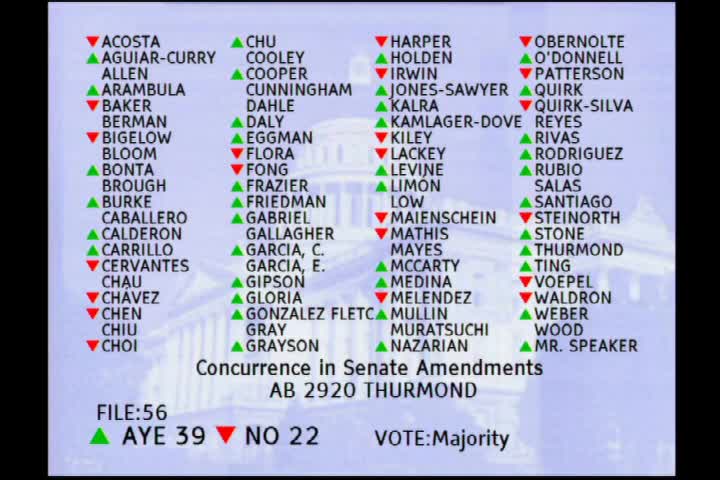 5MIN
Assembly Floor
 1MIN
Assembly Standing Committee on Appropriations
 11MIN
Assembly Standing Committee on Public Safety
 16MIN
Senate Floor
 12MIN
Senate Standing Committee on Appropriations
 19MIN
Senate Standing Committee on Appropriations
Bill Author

Bill Co-Author(s):





































