SB 224: Personal rights: civil liability and enforcement.
- Session Year: 2017-2018
- House: Senate
- Latest Version Date: 2018-09-30
Existing law establishes liability for sexual harassment when the plaintiff proves specified elements, including, among other things, that there is a business, service, or professional relationship between the plaintiff and defendant and there is an inability by the plaintiff to easily terminate the relationship. Existing law states that a relationship may exist between a plaintiff and certain persons, including an attorney, holder of a masters degree in social work, real estate agent, and real estate appraiser.
This bill would include within the elements in a cause of action for sexual harassment when the plaintiff proves, among other things, that the defendant holds himself or herself out as being able to help the plaintiff establish a business, service, or professional relationship with the defendant or a 3rd party. The bill would eliminate the element that the plaintiff prove there is an inability by the plaintiff to easily terminate the relationship. The bill would include an investor, elected official, lobbyist, director, and producer among those listed persons who may be liable to a plaintiff for sexual harassment.
The California Fair Employment and Housing Act protects and safeguards the right and opportunity of all persons to seek, obtain, and hold employment without discrimination, abridgment, or harassment on account of various personal characteristics. Under existing law, the Department of Fair Employment and Housing is responsible for receiving, investigating, conciliating, mediating, and prosecuting complaints alleging violations of specified civil rights.
This bill would also make the department responsible for the enforcement of sexual harassment claims.
The California Fair Employment and Housing Act makes it an unlawful practice under its provisions for a person to deny or to aid, incite, or conspire in the denial of certain civil rights.
This bill would also make it an unlawful practice to deny or aid, incite, or conspire in the denial of rights of persons related to sexual harassment actions.
This bill would incorporate additional changes to Section 12930 of the Government Code proposed by SB 1427 to be operative only if this bill and SB 1427 are enacted and this bill is enacted last.
Existing law establishes liability for sexual harassment when the plaintiff proves specified elements, including, among other things, that there is a business, service, or professional relationship between the plaintiff and defendant and there is an inability by the plaintiff to easily terminate the relationship. Existing law states that a relationship may exist between a plaintiff and certain persons, including an attorney, holder of a masters degree in social work, real estate agent, and real estate appraiser.
This bill would include within the elements in a cause of action for sexual harassment when the plaintiff proves, among other things, that the defendant holds himself or herself out as being able to help the plaintiff establish a business, service, or professional relationship with the defendant or a 3rd party. The bill would eliminate the element that the plaintiff prove there is an inability by the plaintiff to easily terminate the relationship. The bill would include an investor, elected official, lobbyist, director, and producer among those listed persons who may be liable to a plaintiff for sexual harassment.
The California Fair Employment and Housing Act protects and safeguards the right and opportunity of all persons to seek, obtain, and hold employment without discrimination, abridgment, or harassment on account of various personal characteristics. Under existing law, the Department of Fair Employment and Housing is responsible for receiving, investigating, conciliating, mediating, and prosecuting complaints alleging violations of specified civil rights.
This bill would also make the department responsible for the enforcement of sexual harassment claims.
The California Fair Employment and Housing Act makes it an unlawful practice under its provisions for a person to deny or to aid, incite, or conspire in the denial of certain civil rights.
This bill would also make it an unlawful practice to deny or aid, incite, or conspire in the denial of rights of persons related to sexual harassment actions.
Existing law establishes liability for sexual harassment when the plaintiff proves specified elements, including, among other things, that there is a business, service, or professional relationship between the plaintiff and defendant. Existing law states that a relationship may exist between a plaintiff and certain persons, including an attorney, holder of a masters degree in social work, real estate agent, and real estate appraiser.
This bill would include an investor investor, elected official, lobbyist, director, and producer among those listed persons who may be liable to a plaintiff for sexual harassment.
Existing law establishes liability for sexual harassment when the plaintiff proves specified elements, including, among other things, that there is a business, service, or professional relationship between the plaintiff and defendant. Existing law states that a relationship may exist between a plaintiff and certain persons, including an attorney, holder of a masters degree in social work, real estate agent, and real estate appraiser.
This bill would include an investor among those listed persons who may be liable to a plaintiff for sexual harassment.
The California Environmental Quality Act (CEQA) requires a lead agency, as defined, to prepare, or cause to be prepared, and certify the completion of, an environmental impact report on a project that it proposes to carry out or approve that may have a significant effect on the environment or to adopt a negative declaration if it finds that the project will not have that effect. CEQA also requires a lead agency to prepare a mitigated negative declaration for a project that may have a significant effect on the environment if revisions in the project would avoid or mitigate that effect and there is no substantial evidence that the project, as revised, would have a significant effect on the environment. CEQA requires the Office of Planning and Research to prepare and develop guidelines for the implementation of CEQA by public agencies. CEQA requires the office to transmit the proposed guidelines to the Secretary of the Natural Resources Agency and requires the secretary to certify and adopt the proposed guidelines. CEQA requires the office, at least once every 2 years, to review the guidelines and to recommend proposed changes or amendments to the guidelines.This bill would require the office, on or after January 1, 2018, at the time of the next review of the guidelines, to prepare, develop, and transmit to the secretary proposed changes or amendments to determine the baseline physical conditions by which a lead agency determines whether a project has a significant effect on the environment. The bill would require the office, in developing the recommendations to limit the consideration of modifications to the environment at the project site cause by certain actions. The bill would require the secretary to certify and adopt the recommended proposed changes or amendments.The California Environmental Quality Act (CEQA) requires a lead agency, as defined, to prepare, or cause to be prepared, and certify the completion of, an environmental impact report on a project that it proposes to carry out or approve that may have a significant effect on the environment or to adopt a negative declaration if it finds that the project will not have that effect. CEQA also requires a lead agency to prepare a mitigated negative declaration for a project that may have a significant effect on the environment if revisions in the project would avoid or mitigate that effect and there is no substantial evidence that the project, as revised, would have a significant effect on the environment. CEQA requires the Office of Planning and Research to prepare and develop guidelines for the implementation of CEQA by public agencies. CEQA requires the office to transmit the proposed guidelines to the Secretary of the Natural Resources Agency and requires the secretary to certify and adopt the proposed guidelines. CEQA requires the office, at least once every 2 years, to review the guidelines and to recommend proposed changes or amendments to the guidelines.
This bill would prohibit the lead agency, in determining the baseline physical conditions by which a lead agency determines whether a project has a significant effect on the environment, from considering the effects of certain actions on the environment. require the office, on or after January 1, 2018, at the time of the next review of the guidelines, to prepare, develop, and transmit to the secretary proposed changes or amendments to determine the baseline physical conditions by which a lead agency determines whether a project has a significant effect on the environment. The bill would require the office, in developing the recommendations to limit the consideration of modifications to the environment at the project site cause by certain actions. The bill would require the secretary to certify and adopt the recommended proposed changes or amendments.
The California Environmental Quality Act (CEQA) requires a lead agency, as defined, to prepare, or cause to be prepared, and certify the completion of, an environmental impact report on a project that it proposes to carry out or approve that may have a significant effect on the environment or to adopt a negative declaration if it finds that the project will not have that effect. CEQA also requires a lead agency to prepare a mitigated negative declaration for a project that may have a significant effect on the environment if revisions in the project would avoid or mitigate that effect and there is no substantial evidence that the project, as revised, would have a significant effect on the environment.
This bill would prohibit the lead agency, in determining the baseline physical conditions by which a lead agency determines whether a project has a significant effect on the environment, from considering the effects of certain actions on the environment.
(a)A person is liable in a cause of action for sexual harassment under this section when the plaintiff proves all of the following elements:
(1)There is a business, service, or professional relationship between the plaintiff and defendant or the defendant holds himself or herself out as being able to help the plaintiff establish a business, service, or professional relationship with the defendant or a third party. Such a relationship may exist between a plaintiff and a person, including, but not limited to, any of the following persons:
(A)Physician, psychotherapist, or dentist. For purposes of this section, psychotherapist has the same meaning as set forth in paragraph (1) of subdivision (c) of Section 728 of the Business and Professions Code.
(B)Attorney, holder of a masters degree in social work, real estate agent, real estate appraiser, investor, accountant, banker, trust officer, financial planner loan officer, collection service, building contractor, or escrow loan officer.
(C)Executor, trustee, or administrator.
(D)Landlord or property manager.
(E)Teacher.
(F)Elected official.
(G)Lobbyist.
(H)Director or producer.
(I)A relationship that is substantially similar to any of the above.
(2)The defendant has made sexual advances, solicitations, sexual requests, demands for sexual compliance by the plaintiff, or engaged in other verbal, visual, or physical conduct of a sexual nature or of a hostile nature based on gender, that were unwelcome and pervasive or severe.
(3)The plaintiff has suffered or will suffer economic loss or disadvantage or personal injury, including, but not limited to, emotional distress or the violation of a statutory or constitutional right, as a result of the conduct described in paragraph (2).
(b)In an action pursuant to this section, damages shall be awarded as provided by subdivision (b) of Section 52.
(c)Nothing in this section shall be construed to limit application of any other remedies or rights provided under the law.
(d)The definition of sexual harassment and the standards for determining liability set forth in this section shall be limited to determining liability only with regard to a cause of action brought under this section.
SEC. 2.Section 12930 of the Government Code is amended to read:12930.The department shall have the following functions, powers, and duties:
(a)To establish and maintain a principal office and any other offices within the state as are necessary to carry out the purposes of this part.
(b)To meet and function at any place within the state.
(c)To appoint attorneys, investigators, conciliators, mediators, and other employees as it may deem necessary, fix their compensation within the limitations provided by law, and prescribe their duties.
(d)To obtain upon request and utilize the services of all governmental departments and agencies and, in addition, with respect to housing discrimination, of conciliation councils.
(e)To adopt, promulgate, amend, and rescind suitable procedural rules and regulations to carry out the investigation, prosecution, and dispute resolution functions and duties of the department pursuant to this part.
(f)(1)To receive, investigate, conciliate, mediate, and prosecute complaints alleging practices made unlawful pursuant to Chapter 6 (commencing with Section 12940).
(2)To receive, investigate, conciliate, mediate, and prosecute complaints alleging a violation of Section 51, 51.5, 51.7, 51.9, 54, 54.1, or 54.2 of the Civil Code. The remedies and procedures of this part shall be independent of any other remedy or procedure that might apply.
(3)To receive, investigate, conciliate, mediate, and prosecute complaints alleging, and to bring civil actions pursuant to Section 52.5 of the Civil Code for, a violation of Section 236.1 of the Penal Code. Damages awarded in any action brought by the department pursuant to Section 52.5 of the Civil Code shall be awarded to the person harmed by the violation of Section 236.1 of the Penal Code. Costs and attorneys fees awarded in any action brought by the department pursuant to Section 52.5 of the Civil Code shall be awarded to the department. The remedies and procedures of this part shall be independent of any other remedy or procedure that might apply.
(4)To receive, investigate, conciliate, mediate, and prosecute complaints alleging practices made unlawful pursuant to Article 9.5 (commencing with Section 11135) of Chapter 1 of Part 1, except for complaints relating to educational equity brought under Chapter 2 (commencing with Section 200) of Part 1 of Division 1 of Title 1 of the Education Code and investigated pursuant to the procedures set forth in Subchapter 5.1 of Title 5 of the California Code of Regulations, and not otherwise within the jurisdiction of the department.
(A)Nothing in this part prevents the director or the directors authorized representative, in that persons discretion, from making, signing, and filing a complaint pursuant to Section 12960 or 12961 alleging practices made unlawful under Section 11135.
(B)Remedies available to the department in conciliating, mediating, and prosecuting complaints alleging these practices are the same as those available to the department in conciliating, mediating, and prosecuting complaints alleging violations of Article 1 (commencing with Section 12940) of Chapter 6.
(g)In connection with any matter under investigation or in question before the department pursuant to a complaint filed under Section 12960, 12961, or 12980:
(1)To issue subpoenas to require the attendance and testimony of witnesses and the production of books, records, documents, and physical materials.
(2)To administer oaths, examine witnesses under oath and take evidence, and take depositions and affidavits.
(3)To issue written interrogatories.
(4)To request the production for inspection and copying of books, records, documents, and physical materials.
(5)To petition the superior courts to compel the appearance and testimony of witnesses, the production of books, records, documents, and physical materials, and the answering of interrogatories.
(h)To bring civil actions pursuant to Section 12965 or 12981 and to prosecute those civil actions before state and federal trial courts.
(i)To issue those publications and those results of investigations and research as in its judgment will tend to promote goodwill and minimize or eliminate discrimination in employment on the basis enumerated in this part and discrimination in housing because of race, religious creed, color, sex, gender, gender identity, gender expression, marital status, national origin, ancestry, familial status, disability, genetic information, or sexual orientation.
(j)To investigate, approve, certify, decertify, monitor, and enforce nondiscrimination programs proposed by a contractor to be engaged in pursuant to Section 12990.
(k)To render annually to the Governor and to the Legislature a written report of its activities and of its recommendations.
(l)To conduct mediations at any time after a complaint is filed pursuant to Section 12960, 12961, or 12980. The department may end mediation at any time.
(m)The following shall apply with respect to any accusation pending before the former Fair Employment and Housing Commission on or after January 1, 2013:
(1)If an accusation issued under former Section 12965 includes a prayer either for damages for emotional injuries as a component of actual damages, or for administrative fines, or both, or if an accusation is amended for the purpose of adding a prayer either for damages for emotional injuries as a component of actual damages, or for administrative fines, or both, with the consent of the party accused of engaging in unlawful practices, the department may withdraw an accusation and bring a civil action in superior court.
(2)If an accusation was issued under former Section 12981, with the consent of the aggrieved party filing the complaint an aggrieved person on whose behalf a complaint is filed, or the party accused of engaging in unlawful practices, the department may withdraw the accusation and bring a civil action in superior court.
(3)Where removal to court is not feasible, the department shall retain the services of the Office of Administrative Hearings to adjudicate the administrative action pursuant to Sections 11370.3 and 11502.
(n)On any Section 1094.5 Code of Civil Procedure challenge to a decision of the former Fair Employment and Housing Commission pending on or after January 1, 2013, the director or the directors designee shall consult with the Attorney General regarding the defense of that writ petition.
SEC. 2.5.Section 12930 of the Government Code is amended to read:12930.The department shall have the following functions, powers, and duties:
(a)To establish and maintain a principal office and any other offices within the state as are necessary to carry out the purposes of this part.
(b)To meet and function at any place within the state.
(c)To appoint attorneys, investigators, conciliators, mediators, and other employees as it may deem necessary, fix their compensation within the limitations provided by law, and prescribe their duties.
(d)To obtain upon request and utilize the services of all governmental departments and agencies and, in addition, with respect to housing discrimination, of conciliation councils.
(e)To adopt, promulgate, amend, and rescind suitable procedural rules and regulations to carry out the investigation, prosecution, and dispute resolution functions and duties of the department pursuant to this part.
(f)(1)To receive, investigate, conciliate, mediate, and prosecute complaints alleging practices made unlawful pursuant to Chapter 6 (commencing with Section 12940).
(2)To receive, investigate, conciliate, mediate, and prosecute complaints alleging a violation of Section 51, 51.5, 51.7, 51.9, 54, 54.1, or 54.2 of the Civil Code. The remedies and procedures of this part shall be independent of any other remedy or procedure that might apply.
(3)To receive, investigate, conciliate, mediate, and prosecute complaints alleging, and to bring civil actions pursuant to Section 52.5 of the Civil Code for, a violation of Section 236.1 of the Penal Code. Damages awarded in any action brought by the department pursuant to Section 52.5 of the Civil Code shall be awarded to the person harmed by the violation of Section 236.1 of the Penal Code. Costs and attorneys fees awarded in any action brought by the department pursuant to Section 52.5 of the Civil Code shall be awarded to the department. The remedies and procedures of this part shall be independent of any other remedy or procedure that might apply.
(4)To receive, investigate, conciliate, mediate, and prosecute complaints alleging practices made unlawful pursuant to Article 9.5 (commencing with Section 11135) of Chapter 1 of Part 1, except for complaints relating to educational equity brought under Chapter 2 (commencing with Section 200) of Part 1 of Division 1 of Title 1 of the Education Code and investigated pursuant to the procedures set forth in Subchapter 5.1 of Title 5 of the California Code of Regulations, and not otherwise within the jurisdiction of the department.
(A)Nothing in this part prevents the director or the directors authorized representative, in that persons discretion, from making, signing, and filing a complaint pursuant to Section 12960 or 12961 alleging practices made unlawful under Section 11135.
(B)Remedies available to the department in conciliating, mediating, and prosecuting complaints alleging these practices are the same as those available to the department in conciliating, mediating, and prosecuting complaints alleging violations of Article 1 (commencing with Section 12940) of Chapter 6.
(g)In connection with any matter under investigation or in question before the department pursuant to a complaint filed under Section 12960, 12961, or 12980:
(1)To issue subpoenas to require the attendance and testimony of witnesses and the production of books, records, documents, and physical materials.
(2)To administer oaths, examine witnesses under oath and take evidence, and take depositions and affidavits.
(3)To issue written interrogatories.
(4)To request the production for inspection and copying of books, records, documents, and physical materials.
(5)To petition the superior courts to compel the appearance and testimony of witnesses, the production of books, records, documents, and physical materials, and the answering of interrogatories.
(h)To bring civil actions pursuant to Section 12965 or 12981 and to prosecute those civil actions before state and federal trial courts.
(i)To issue those publications and those results of investigations and research as in its judgment will tend to promote goodwill and minimize or eliminate discrimination in employment on the basis enumerated in this part and discrimination in housing because of race, religious creed, color, sex, gender, gender identity, gender expression, marital status, national origin, ancestry, familial status, disability, veteran or military status, genetic information, or sexual orientation.
(j)To investigate, approve, certify, decertify, monitor, and enforce nondiscrimination programs proposed by a contractor to be engaged in pursuant to Section 12990.
(k)To render annually to the Governor and to the Legislature a written report of its activities and of its recommendations.
(l)To conduct mediations at any time after a complaint is filed pursuant to Section 12960, 12961, or 12980. The department may end mediation at any time.
(m)The following shall apply with respect to any accusation pending before the former Fair Employment and Housing Commission on or after January 1, 2013:
(1)If an accusation issued under former Section 12965 includes a prayer either for damages for emotional injuries as a component of actual damages, or for administrative fines, or both, or if an accusation is amended for the purpose of adding a prayer either for damages for emotional injuries as a component of actual damages, or for administrative fines, or both, with the consent of the party accused of engaging in unlawful practices, the department may withdraw an accusation and bring a civil action in superior court.
(2)If an accusation was issued under former Section 12981, with the consent of the aggrieved party filing the complaint an aggrieved person on whose behalf a complaint is filed, or the party accused of engaging in unlawful practices, the department may withdraw the accusation and bring a civil action in superior court.
(3)Where removal to court is not feasible, the department shall retain the services of the Office of Administrative Hearings to adjudicate the administrative action pursuant to Sections 11370.3 and 11502.
(n)On any Section 1094.5 Code of Civil Procedure challenge to a decision of the former Fair Employment and Housing Commission pending on or after January 1, 2013, the director or the directors designee shall consult with the Attorney General regarding the defense of that writ petition.
SEC. 3.Section 12948 of the Government Code is amended to read:12948.It is an unlawful practice under this part for a person to deny or to aid, incite, or conspire in the denial of the rights created by Section 51, 51.5, 51.7, 51.9, 54, 54.1, or 54.2 of the Civil Code.
SEC. 4.Section 2.5 of this bill incorporates amendments to Section 12930 of the Government Code proposed by both this bill and Senate Bill 1427. That section of this bill shall only become operative if (1) both bills are enacted and become effective on or before January 1, 2019, (2) each bill amends Section 12930 of the Government Code, and (3) this bill is enacted after Senate Bill 1427, in which case Section 2 of this bill shall not become operative.
(a)A person is liable in a cause of action for sexual harassment under this section when the plaintiff proves all of the following elements:
(1)There is a business, service, or professional relationship between the plaintiff and defendant or the defendant holds himself or herself out as being able to help the plaintiff establish a business, service, or professional relationship with the defendant or a third party. Such a relationship may exist between a plaintiff and a person, including, but not limited to, any of the following persons:
(A)Physician, psychotherapist, or dentist. For purposes of this section, psychotherapist has the same meaning as set forth in paragraph (1) of subdivision (c) of Section 728 of the Business and Professions Code.
(B)Attorney, holder of a masters degree in social work, real estate agent, real estate appraiser, investor, accountant, banker, trust officer, financial planner loan officer, collection service, building contractor, or escrow loan officer.
(C)Executor, trustee, or administrator.
(D)Landlord or property manager.
(E)Teacher.
(F)Elected official.
(G)Lobbyist.
(H)Director or producer.
(I)A relationship that is substantially similar to any of the above.
(2)The defendant has made sexual advances, solicitations, sexual requests, demands for sexual compliance by the plaintiff, or engaged in other verbal, visual, or physical conduct of a sexual nature or of a hostile nature based on gender, that were unwelcome and pervasive or severe.
(3)The plaintiff has suffered or will suffer economic loss or disadvantage or personal injury, including, but not limited to, emotional distress or the violation of a statutory or constitutional right, as a result of the conduct described in paragraph (2).
(b)In an action pursuant to this section, damages shall be awarded as provided by subdivision (b) of Section 52.
(c)Nothing in this section shall be construed to limit application of any other remedies or rights provided under the law.
(d)The definition of sexual harassment and the standards for determining liability set forth in this section shall be limited to determining liability only with regard to a cause of action brought under this section.
SEC. 2.Section 12930 of the Government Code is amended to read:12930.The department shall have the following functions, powers, and duties:
(a)To establish and maintain a principal office and any other offices within the state as are necessary to carry out the purposes of this part.
(b)To meet and function at any place within the state.
(c)To appoint attorneys, investigators, conciliators, mediators, and other employees as it may deem necessary, fix their compensation within the limitations provided by law, and prescribe their duties.
(d)To obtain upon request and utilize the services of all governmental departments and agencies and, in addition, with respect to housing discrimination, of conciliation councils.
(e)To adopt, promulgate, amend, and rescind suitable procedural rules and regulations to carry out the investigation, prosecution, and dispute resolution functions and duties of the department pursuant to this part.
(f)(1)To receive, investigate, conciliate, mediate, and prosecute complaints alleging practices made unlawful pursuant to Chapter 6 (commencing with Section 12940).
(2)To receive, investigate, conciliate, mediate, and prosecute complaints alleging a violation of Section 51, 51.5, 51.7, 51.9, 54, 54.1, or 54.2 of the Civil Code. The remedies and procedures of this part shall be independent of any other remedy or procedure that might apply.
(3)To receive, investigate, conciliate, mediate, and prosecute complaints alleging, and to bring civil actions pursuant to Section 52.5 of the Civil Code for, a violation of Section 236.1 of the Penal Code. Damages awarded in any action brought by the department pursuant to Section 52.5 of the Civil Code shall be awarded to the person harmed by the violation of Section 236.1 of the Penal Code. Costs and attorneys fees awarded in any action brought by the department pursuant to Section 52.5 of the Civil Code shall be awarded to the department. The remedies and procedures of this part shall be independent of any other remedy or procedure that might apply.
(4)To receive, investigate, conciliate, mediate, and prosecute complaints alleging practices made unlawful pursuant to Article 9.5 (commencing with Section 11135) of Chapter 1 of Part 1, except for complaints relating to educational equity brought under Chapter 2 (commencing with Section 200) of Part 1 of Division 1 of Title 1 of the Education Code and investigated pursuant to the procedures set forth in Subchapter 5.1 of Title 5 of the California Code of Regulations, and not otherwise within the jurisdiction of the department.
(A)Nothing in this part prevents the director or the directors authorized representative, in that persons discretion, from making, signing, and filing a complaint pursuant to Section 12960 or 12961 alleging practices made unlawful under Section 11135.
(B)Remedies available to the department in conciliating, mediating, and prosecuting complaints alleging these practices are the same as those available to the department in conciliating, mediating, and prosecuting complaints alleging violations of Article 1 (commencing with Section 12940) of Chapter 6.
(g)In connection with any matter under investigation or in question before the department pursuant to a complaint filed under Section 12960, 12961, or 12980:
(1)To issue subpoenas to require the attendance and testimony of witnesses and the production of books, records, documents, and physical materials.
(2)To administer oaths, examine witnesses under oath and take evidence, and take depositions and affidavits.
(3)To issue written interrogatories.
(4)To request the production for inspection and copying of books, records, documents, and physical materials.
(5)To petition the superior courts to compel the appearance and testimony of witnesses, the production of books, records, documents, and physical materials, and the answering of interrogatories.
(h)To bring civil actions pursuant to Section 12965 or 12981 and to prosecute those civil actions before state and federal trial courts.
(i)To issue those publications and those results of investigations and research as in its judgment will tend to promote good will goodwill and minimize or eliminate discrimination in employment on the bases basis enumerated in this part and discrimination in housing because of race, religious creed, color, sex, gender, gender identity, gender expression, marital status, national origin, ancestry, familial status, disability, genetic information, or sexual orientation.
(j)To investigate, approve, certify, decertify, monitor, and enforce nondiscrimination programs proposed by a contractor to be engaged in pursuant to Section 12990.
(k)To render annually to the Governor and to the Legislature a written report of its activities and of its recommendations.
(l)To conduct mediations at any time after a complaint is filed pursuant to Section 12960, 12961, or 12980. The department may end mediation at any time.
(m)The following shall apply with respect to any accusation pending before the former Fair Employment and Housing Commission on or after January 1, 2013:
(1)If an accusation issued under former Section 12965 includes a prayer either for damages for emotional injuries as a component of actual damages, or for administrative fines, or both, or if an accusation is amended for the purpose of adding a prayer either for damages for emotional injuries as a component of actual damages, or for administrative fines, or both, with the consent of the party accused of engaging in unlawful practices, the department may withdraw an accusation and bring a civil action in superior court.
(2)If an accusation was issued under former Section 12981, with the consent of the aggrieved party filing the complaint an aggrieved person on whose behalf a complaint is filed, or the party accused of engaging in unlawful practices, the department may withdraw the accusation and bring a civil action in superior court.
(3)Where removal to court is not feasible, the department shall retain the services of the Office of Administrative Hearings to adjudicate the administrative action pursuant to Sections 11370.3 and 11502.
(n)On any Section 1094.5 Code of Civil Procedure challenge to a decision of the former Fair Employment and Housing Commission pending on or after January 1, 2013, the director or the directors designee shall consult with the Attorney General regarding the defense of that writ petition.
SEC. 2.5.Section 12930 of the Government Code is amended to read:12930.The department shall have the following functions, powers, and duties:
(a)To establish and maintain a principal office and any other offices within the state as are necessary to carry out the purposes of this part.
(b)To meet and function at any place within the state.
(c)To appoint attorneys, investigators, conciliators, mediators, and other employees as it may deem necessary, fix their compensation within the limitations provided by law, and prescribe their duties.
(d)To obtain upon request and utilize the services of all governmental departments and agencies and, in addition, with respect to housing discrimination, of conciliation councils.
(e)To adopt, promulgate, amend, and rescind suitable procedural rules and regulations to carry out the investigation, prosecution, and dispute resolution functions and duties of the department pursuant to this part.
(f)(1)To receive, investigate, conciliate, mediate, and prosecute complaints alleging practices made unlawful pursuant to Chapter 6 (commencing with Section 12940).
(2)To receive, investigate, conciliate, mediate, and prosecute complaints alleging a violation of Section 51, 51.5, 51.7, 51.9, 54, 54.1, or 54.2 of the Civil Code. The remedies and procedures of this part shall be independent of any other remedy or procedure that might apply.
(3)To receive, investigate, conciliate, mediate, and prosecute complaints alleging, and to bring civil actions pursuant to Section 52.5 of the Civil Code for, a violation of Section 236.1 of the Penal Code. Damages awarded in any action brought by the department pursuant to Section 52.5 of the Civil Code shall be awarded to the person harmed by the violation of Section 236.1 of the Penal Code. Costs and attorneys fees awarded in any action brought by the department pursuant to Section 52.5 of the Civil Code shall be awarded to the department. The remedies and procedures of this part shall be independent of any other remedy or procedure that might apply.
(4)To receive, investigate, conciliate, mediate, and prosecute complaints alleging practices made unlawful pursuant to Article 9.5 (commencing with Section 11135) of Chapter 1 of Part 1, except for complaints relating to educational equity brought under Chapter 2 (commencing with Section 200) of Part 1 of Division 1 of Title 1 of the Education Code and investigated pursuant to the procedures set forth in Subchapter 5.1 of Title 5 of the California Code of Regulations, and not otherwise within the jurisdiction of the department.
(A)Nothing in this part prevents the director or the directors authorized representative, in that persons discretion, from making, signing, and filing a complaint pursuant to Section 12960 or 12961 alleging practices made unlawful under Section 11135.
(B)Remedies available to the department in conciliating, mediating, and prosecuting complaints alleging these practices are the same as those available to the department in conciliating, mediating, and prosecuting complaints alleging violations of Article 1 (commencing with Section 12940) of Chapter 6.
(g)In connection with any matter under investigation or in question before the department pursuant to a complaint filed under Section 12960, 12961, or 12980:
(1)To issue subpoenas to require the attendance and testimony of witnesses and the production of books, records, documents, and physical materials.
(2)To administer oaths, examine witnesses under oath and take evidence, and take depositions and affidavits.
(3)To issue written interrogatories.
(4)To request the production for inspection and copying of books, records, documents, and physical materials.
(5)To petition the superior courts to compel the appearance and testimony of witnesses, the production of books, records, documents, and physical materials, and the answering of interrogatories.
(h)To bring civil actions pursuant to Section 12965 or 12981 and to prosecute those civil actions before state and federal trial courts.
(i)To issue those publications and those results of investigations and research as in its judgment will tend to promote good will goodwill and minimize or eliminate discrimination in employment on the bases basis enumerated in this part and discrimination in housing because of race, religious creed, color, sex, gender, gender identity, gender expression, marital status, national origin, ancestry, familial status, disability, veteran or military status, genetic information, or sexual orientation.
(j)To investigate, approve, certify, decertify, monitor, and enforce nondiscrimination programs proposed by a contractor to be engaged in pursuant to Section 12990.
(k)To render annually to the Governor and to the Legislature a written report of its activities and of its recommendations.
(l)To conduct mediations at any time after a complaint is filed pursuant to Section 12960, 12961, or 12980. The department may end mediation at any time.
(m)The following shall apply with respect to any accusation pending before the former Fair Employment and Housing Commission on or after January 1, 2013:
(1)If an accusation issued under former Section 12965 includes a prayer either for damages for emotional injuries as a component of actual damages, or for administrative fines, or both, or if an accusation is amended for the purpose of adding a prayer either for damages for emotional injuries as a component of actual damages, or for administrative fines, or both, with the consent of the party accused of engaging in unlawful practices, the department may withdraw an accusation and bring a civil action in superior court.
(2)If an accusation was issued under former Section 12981, with the consent of the aggrieved party filing the complaint an aggrieved person on whose behalf a complaint is filed, or the party accused of engaging in unlawful practices, the department may withdraw the accusation and bring a civil action in superior court.
(3)Where removal to court is not feasible, the department shall retain the services of the Office of Administrative Hearings to adjudicate the administrative action pursuant to Sections 11370.3 and 11502.
(n)On any Section 1094.5 Code of Civil Procedure challenge to a decision of the former Fair Employment and Housing Commission pending on or after January 1, 2013, the director or the directors designee shall consult with the Attorney General regarding the defense of that writ petition.
SEC. 3.Section 12948 of the Government Code is amended to read:12948.It is an unlawful practice under this part for a person to deny or to aid, incite, or conspire in the denial of the rights created by Section 51, 51.5, 51.7, 51.9, 54, 54.1, or 54.2 of the Civil Code.
SEC. 4.Section 2.5 of this bill incorporates amendments to Section 12930 of the Government Code proposed by both this bill and Senate Bill 1427. That section of this bill shall only become operative if (1) both bills are enacted and become effective on or before January 1, 2019, (2) each bill amends Section 12930 of the Government Code, and (3) this bill is enacted after Senate Bill 1427, in which case Section 2 of this bill shall not become operative.
(a)A person is liable in a cause of action for sexual harassment under this section when the plaintiff proves all of the following elements:
(1)There is a business, service, or professional relationship between the plaintiff and defendant. defendant or the defendant holds himself or herself out as being able to help the plaintiff establish a business, service, or professional relationship with the defendant or a third party. Such a relationship may exist between a plaintiff and a person, including, but not limited to, any of the following persons:
(A)Physician, psychotherapist, or dentist. For purposes of this section, psychotherapist has the same meaning as set forth in paragraph (1) of subdivision (c) of Section 728 of the Business and Professions Code.
(B)Attorney, holder of a masters degree in social work, real estate agent, real estate appraiser, investor, accountant, banker, trust officer, financial planner loan officer, collection service, building contractor, or escrow loan officer.
(C)Executor, trustee, or administrator.
(D)Landlord or property manager.
(E)Teacher.
(F)Elected official.
(G)Lobbyist.
(H)Director or producer.
(I)A relationship that is substantially similar to any of the above.
(2)The defendant has made sexual advances, solicitations, sexual requests, demands for sexual compliance by the plaintiff, or engaged in other verbal, visual, or physical conduct of a sexual nature or of a hostile nature based on gender, that were unwelcome and pervasive or severe.
(3)There is an inability by the plaintiff to easily terminate the relationship.(4)(3)The plaintiff has suffered or will suffer economic loss or disadvantage or personal injury, including, but not limited to, emotional distress or the violation of a statutory or constitutional right, as a result of the conduct described in paragraph (2).
(b)In an action pursuant to this section, damages shall be awarded as provided by subdivision (b) of Section 52.
(c)Nothing in this section shall be construed to limit application of any other remedies or rights provided under the law.
(d)The definition of sexual harassment and the standards for determining liability set forth in this section shall be limited to determining liability only with regard to a cause of action brought under this section.
SEC. 2.Section 12930 of the Government Code is amended to read:12930.The department shall have the following functions, powers, and duties:
(a)To establish and maintain a principal office and any other offices within the state as are necessary to carry out the purposes of this part.
(b)To meet and function at any place within the state.
(c)To appoint attorneys, investigators, conciliators, mediators, and other employees as it may deem necessary, fix their compensation within the limitations provided by law, and prescribe their duties.
(d)To obtain upon request and utilize the services of all governmental departments and agencies and, in addition, with respect to housing discrimination, of conciliation councils.
(e)To adopt, promulgate, amend, and rescind suitable procedural rules and regulations to carry out the investigation, prosecution, and dispute resolution functions and duties of the department pursuant to this part.
(f)(1)To receive, investigate, conciliate, mediate, and prosecute complaints alleging practices made unlawful pursuant to Chapter 6 (commencing with Section 12940).
(2)To receive, investigate, conciliate, mediate, and prosecute complaints alleging a violation of Section 51, 51.5, 51.7, 51.9, 54, 54.1, or 54.2 of the Civil Code. The remedies and procedures of this part shall be independent of any other remedy or procedure that might apply.
(3)To receive, investigate, conciliate, mediate, and prosecute complaints alleging, and to bring civil actions pursuant to Section 52.5 of the Civil Code for, a violation of Section 236.1 of the Penal Code. Damages awarded in any action brought by the department pursuant to Section 52.5 of the Civil Code shall be awarded to the person harmed by the violation of Section 236.1 of the Penal Code. Costs and attorneys fees awarded in any action brought by the department pursuant to Section 52.5 of the Civil Code shall be awarded to the department. The remedies and procedures of this part shall be independent of any other remedy or procedure that might apply.
(4)To receive, investigate, conciliate, mediate, and prosecute complaints alleging practices made unlawful pursuant to Article 9.5 (commencing with Section 11135) of Chapter 1 of Part 1, except for complaints relating to educational equity brought under Chapter 2 (commencing with Section 200) of Part 1 of Division 1 of Title 1 of the Education Code and investigated pursuant to the procedures set forth in Subchapter 5.1 of Title 5 of the California Code of Regulations, and not otherwise within the jurisdiction of the department.
(A)Nothing in this part prevents the director or the directors authorized representative, in that persons discretion, from making, signing, and filing a complaint pursuant to Section 12960 or 12961 alleging practices made unlawful under Section 11135.
(B)Remedies available to the department in conciliating, mediating, and prosecuting complaints alleging these practices are the same as those available to the department in conciliating, mediating, and prosecuting complaints alleging violations of Article 1 (commencing with Section 12940) of Chapter 6.
(g)In connection with any matter under investigation or in question before the department pursuant to a complaint filed under Section 12960, 12961, or 12980:
(1)To issue subpoenas to require the attendance and testimony of witnesses and the production of books, records, documents, and physical materials.
(2)To administer oaths, examine witnesses under oath and take evidence, and take depositions and affidavits.
(3)To issue written interrogatories.
(4)To request the production for inspection and copying of books, records, documents, and physical materials.
(5)To petition the superior courts to compel the appearance and testimony of witnesses, the production of books, records, documents, and physical materials, and the answering of interrogatories.
(h)To bring civil actions pursuant to Section 12965 or 12981 and to prosecute those civil actions before state and federal trial courts.
(i)To issue those publications and those results of investigations and research as in its judgment will tend to promote good will and minimize or eliminate discrimination in employment on the bases enumerated in this part and discrimination in housing because of race, religious creed, color, sex, gender, gender identity, gender expression, marital status, national origin, ancestry, familial status, disability, genetic information, or sexual orientation.
(j)To investigate, approve, certify, decertify, monitor, and enforce nondiscrimination programs proposed by a contractor to be engaged in pursuant to Section 12990.
(k)To render annually to the Governor and to the Legislature a written report of its activities and of its recommendations.
(l)To conduct mediations at any time after a complaint is filed pursuant to Section 12960, 12961, or 12980. The department may end mediation at any time.
(m)The following shall apply with respect to any accusation pending before the former Fair Employment and Housing Commission on or after January 1, 2013:
(1)If an accusation issued under former Section 12965 includes a prayer either for damages for emotional injuries as a component of actual damages, or for administrative fines, or both, or if an accusation is amended for the purpose of adding a prayer either for damages for emotional injuries as a component of actual damages, or for administrative fines, or both, with the consent of the party accused of engaging in unlawful practices, the department may withdraw an accusation and bring a civil action in superior court.
(2)If an accusation was issued under former Section 12981, with the consent of the aggrieved party filing the complaint an aggrieved person on whose behalf a complaint is filed, or the party accused of engaging in unlawful practices, the department may withdraw the accusation and bring a civil action in superior court.
(3)Where removal to court is not feasible, the department shall retain the services of the Office of Administrative Hearings to adjudicate the administrative action pursuant to Sections 11370.3 and 11502.
(n)On any Section 1094.5 Code of Civil Procedure challenge to a decision of the former Fair Employment and Housing Commission pending on or after January 1, 2013, the director or the directors designee shall consult with the Attorney General regarding the defense of that writ petition.
SEC. 3.Section 12948 of the Government Code is amended to read:12948.It is an unlawful practice under this part for a person to deny or to aid, incite, or conspire in the denial of the rights created by Section 51, 51.5, 51.7, 51.9, 54, 54.1, or 54.2 of the Civil Code.
(a)A person is liable in a cause of action for sexual harassment under this section when the plaintiff proves all of the following elements:
(1)There is a business, service, or professional relationship between the plaintiff and defendant. Such a relationship may exist between a plaintiff and a person, including, but not limited to, any of the following persons:
(A)Physician, psychotherapist, or dentist. For purposes of this section, psychotherapist has the same meaning as set forth in paragraph (1) of subdivision (c) of Section 728 of the Business and Professions Code.
(B)Attorney, holder of a masters degree in social work, real estate agent, real estate appraiser, investor, accountant, banker, trust officer, financial planner loan officer, collection service, building contractor, or escrow loan officer.
(C)Executor, trustee, or administrator.
(D)Landlord or property manager.
(E)Teacher.
(F)Elected official.
(G)Lobbyist.
(H)Director or producer.
(F)(I)A relationship that is substantially similar to any of the above.
(2)The defendant has made sexual advances, solicitations, sexual requests, demands for sexual compliance by the plaintiff, or engaged in other verbal, visual, or physical conduct of a sexual nature or of a hostile nature based on gender, that were unwelcome and pervasive or severe.
(3)There is an inability by the plaintiff to easily terminate the relationship.
(4)The plaintiff has suffered or will suffer economic loss or disadvantage or personal injury, including, but not limited to, emotional distress or the violation of a statutory or constitutional right, as a result of the conduct described in paragraph (2).
(b)In an action pursuant to this section, damages shall be awarded as provided by subdivision (b) of Section 52.
(c)Nothing in this section shall be construed to limit application of any other remedies or rights provided under the law.
(d)The definition of sexual harassment and the standards for determining liability set forth in this section shall be limited to determining liability only with regard to a cause of action brought under this section.
(a)A person is liable in a cause of action for sexual harassment under this section when the plaintiff proves all of the following elements:
(1)There is a business, service, or professional relationship between the plaintiff and defendant. Such a relationship may exist between a plaintiff and a person, including, but not limited to, any of the following persons:
(A)Physician, psychotherapist, or dentist. For purposes of this section, psychotherapist has the same meaning as set forth in paragraph (1) of subdivision (c) of Section 728 of the Business and Professions Code.
(B)Attorney, holder of a masters degree in social work, real estate agent, real estate appraiser, investor, accountant, banker, trust officer, financial planner loan officer, collection service, building contractor, or escrow loan officer.
(C)Executor, trustee, or administrator.
(D)Landlord or property manager.
(E)Teacher.
(F)A relationship that is substantially similar to any of the above.
(2)The defendant has made sexual advances, solicitations, sexual requests, demands for sexual compliance by the plaintiff, or engaged in other verbal, visual, or physical conduct of a sexual nature or of a hostile nature based on gender, that were unwelcome and pervasive or severe.
(3)There is an inability by the plaintiff to easily terminate the relationship.
(4)The plaintiff has suffered or will suffer economic loss or disadvantage or personal injury, including, but not limited to, emotional distress or the violation of a statutory or constitutional right, as a result of the conduct described in paragraph (2).
(b)In an action pursuant to this section, damages shall be awarded as provided by subdivision (b) of Section 52.
(c)Nothing in this section shall be construed to limit application of any other remedies or rights provided under the law.
(d)The definition of sexual harassment and the standards for determining liability set forth in this section shall be limited to determining liability only with regard to a cause of action brought under this section.
SECTION 1.Section 21083.02 is added to the Public Resources Code, to read:21083.02.(a)On or after January, 1 2018, at the time of the next review of the guidelines prepared and developed to implement this division pursuant to subdivision (f) of Section 21083, the Office of Planning and Research shall prepare, develop, and transmit to the Secretary of the Natural Resources Agency recommended proposed changes or amendments to determine the baseline physical conditions by which a lead agency determines whether a project has a significant effect on the environment. In developing the recommendations, the Office of Planning and Research shall limit the consideration of modifications to the environment at the project site caused by either of the following:(1)Actions undertaken without an environmental review pursuant to paragraph (2) or (4) of subdivision (b) of Section 21080.(2)Actions that are unpermitted or illegal at the time the action was undertaken.(b)Upon receipt and review, the Secretary of the Natural Resources Agency shall certify and adopt the recommended proposed changes or amendments prepared and developed by the Office of Planning and Research pursuant to subdivision (a).(a)On or after January, 1 2018, at the time of the next review of the guidelines prepared and developed to implement this division pursuant to subdivision (f) of Section 21083, the Office of Planning and Research shall prepare, develop, and transmit to the Secretary of the Natural Resources Agency recommended proposed changes or amendments to determine the baseline physical conditions by which a lead agency determines whether a project has a significant effect on the environment. In developing the recommendations, the Office of Planning and Research shall limit the consideration of modifications to the environment at the project site caused by either of the following:
(1)Actions undertaken without an environmental review pursuant to paragraph (2) or (4) of subdivision (b) of Section 21080.
(2)Actions that are unpermitted or illegal at the time the action was undertaken.
(b)Upon receipt and review, the Secretary of the Natural Resources Agency shall certify and adopt the recommended proposed changes or amendments prepared and developed by the Office of Planning and Research pursuant to subdivision (a).
All matter omitted in this version of the bill appears in the bill as introduced in the Senate, February 2, 2017. (JR11)(a)Except as otherwise provided in this division, this division shall apply to discretionary projects proposed to be carried out or approved by public agencies, including, but not limited to, the enactment and amendment of zoning ordinances, the issuance of zoning variances, the issuance of conditional use permits, and the approval of tentative subdivision maps unless the project is exempt from this division.
(b)This division does not apply to any of the following activities:
(1)Ministerial projects proposed to be carried out or approved by public agencies.
(2)Emergency repairs to public service facilities necessary to maintain service.
(3)Projects undertaken, carried out, or approved by a public agency to maintain, repair, restore, demolish, or replace property or facilities damaged or destroyed as a result of a disaster in a disaster-stricken area in which a state of emergency has been proclaimed by the Governor pursuant to Chapter 7 (commencing with Section 8550) of Division 1 of Title 2 of the Government Code.
(4)Specific actions necessary to prevent or mitigate an emergency.
(5)Projects which a public agency rejects or disapproves.
(6)Actions undertaken by a public agency relating to any thermal powerplant site or facility, including the expenditure, obligation, or encumbrance of funds by a public agency for planning, engineering, or design purposes, or for the conditional sale or purchase of equipment, fuel, water (except groundwater), steam, or power for a thermal powerplant, if the powerplant site and related facility will be the subject of an environmental impact report, negative declaration, or other document, prepared pursuant to a regulatory program certified pursuant to Section 21080.5, which will be prepared by the State Energy Resources Conservation and Development Commission, by the Public Utilities Commission, or by the city or county in which the powerplant and related facility would be located if the environmental impact report, negative declaration, or document includes the environmental impact, if any, of the action described in this paragraph.
(7)Activities or approvals necessary to the bidding for, hosting or staging of, and funding or carrying out of, an Olympic games under the authority of the International Olympic Committee, except for the construction of facilities necessary for the Olympic games.
(8)The establishment, modification, structuring, restructuring, or approval of rates, tolls, fares, or other charges by public agencies which the public agency finds are for the purpose of (A) meeting operating expenses, including employee wage rates and fringe benefits, (B) purchasing or leasing supplies, equipment, or materials, (C) meeting financial reserve needs and requirements, (D) obtaining funds for capital projects necessary to maintain service within existing service areas, or (E) obtaining funds necessary to maintain those intracity transfers as are authorized by city charter. The public agency shall incorporate written findings in the record of any proceeding in which an exemption under this paragraph is claimed setting forth with specificity the basis for the claim of exemption.
(9)All classes of projects designated pursuant to Section 21084.
(10)A project for the institution or increase of passenger or commuter services on rail or highway rights-of-way already in use, including modernization of existing stations and parking facilities. For purposes of this paragraph, highway shall have the same meaning as defined in Section 360 of the Vehicle Code.
(11)A project for the institution or increase of passenger or commuter service on high-occupancy vehicle lanes already in use, including the modernization of existing stations and parking facilities.
(12)Facility extensions not to exceed four miles in length which are required for the transfer of passengers from or to exclusive public mass transit guideway or busway public transit services.
(13)A project for the development of a regional transportation improvement program, the state transportation improvement program, or a congestion management program prepared pursuant to Section 65089 of the Government Code.
(14)Any project or portion thereof located in another state which will be subject to environmental impact review pursuant to the National Environmental Policy Act of 1969 (42 U.S.C. Sec. 4321 et seq.) or similar state laws of that state. Any emissions or discharges that would have a significant effect on the environment in this state are subject to this division.
(15)Projects undertaken by a local agency to implement a rule or regulation imposed by a state agency, board, or commission under a certified regulatory program pursuant to Section 21080.5. Any site-specific effect of the project which was not analyzed as a significant effect on the environment in the plan or other written documentation required by Section 21080.5 is subject to this division.
(c)(1)If a lead agency determines that a proposed project, not otherwise exempt from this division, would not have a significant effect on the environment, the lead agency shall adopt a negative declaration to that effect. The negative declaration shall be prepared for the proposed project in either of the following circumstances:
(1)(A)There is no substantial evidence, in light of the whole record before the lead agency, that the project may have a significant effect on the environment.
(2)(B)An initial study identifies potentially significant effects on the environment, but (A) (i) revisions in the project plans or proposals made by, or agreed to by, the applicant before the proposed negative declaration and initial study are released for public review would avoid the effects or mitigate the effects to a point where clearly no significant effect on the environment would occur, and (B) (ii) there is no substantial evidence, in light of the whole record before the lead agency, that the project, as revised, may have a significant effect on the environment.
(2)In determining the baseline physical conditions by which a lead agency determines whether a project has a significant effect on the environment, the lead agency shall not consider modifications to the environment at the project site caused by either of the following:
(A)Action undertaken without an environmental review pursuant to paragraph (2) or (4) of subdivision (b).
(B)Action that is unpermitted or illegal at the time the action was undertaken.
(d)If there is substantial evidence, in light of the whole record before the lead agency, that the project may have a significant effect on the environment, an environmental impact report shall be prepared.
(e)(1)For the purposes of this section and this division, substantial evidence includes fact, a reasonable assumption predicated upon fact, or expert opinion supported by fact.
(2)Substantial evidence is not argument, speculation, unsubstantiated opinion or narrative, evidence that is clearly inaccurate or erroneous, or evidence of social or economic impacts that do not contribute to, or are not caused by, physical impacts on the environment.
(f)As a result of the public review process for a mitigated negative declaration, including administrative decisions and public hearings, the lead agency may conclude that certain mitigation measures identified pursuant to paragraph (2) of subdivision (c) are infeasible or otherwise undesirable. In those circumstances, the lead agency, prior to approving the project, may delete those mitigation measures and substitute for them other mitigation measures that the lead agency finds, after holding a public hearing on the matter, are equivalent or more effective in mitigating significant effects on the environment to a less than significant level and that do not cause any potentially significant effect on the environment. If those new mitigation measures are made conditions of project approval or are otherwise made part of the project approval, the deletion of the former measures and the substitution of the new mitigation measures shall not constitute an action or circumstance requiring recirculation of the mitigated negative declaration.
(g)Nothing in this section shall preclude a project applicant or any other person from challenging, in an administrative or judicial proceeding, the legality of a condition of project approval imposed by the lead agency. If, however, any condition of project approval set aside by either an administrative body or court was necessary to avoid or lessen the likelihood of the occurrence of a significant effect on the environment, the lead agencys approval of the negative declaration and project shall be invalid and a new environmental review process shall be conducted before the project can be reapproved, unless the lead agency substitutes a new condition that the lead agency finds, after holding a public hearing on the matter, is equivalent to, or more effective in, lessening or avoiding significant effects on the environment and that does not cause any potentially significant effect on the environment.
SEC. 2.Section 21100 of the Public Resources Code is amended to read:21100.(a)All lead agencies shall prepare, or cause to be prepared by contract, and certify the completion of, an environmental impact report on any project which they propose to carry out or approve that may have a significant effect on the environment. Whenever feasible, a standard format shall be used for environmental impact reports.
(b)The environmental impact report shall include a detailed statement setting forth all of the following:
(1)All significant effects on the environment of the proposed project.
(2)In a separate section:
(A)Any significant effect on the environment that cannot be avoided if the project is implemented.
(B)Any significant effect on the environment that would be irreversible if the project is implemented.
(3)Mitigation measures proposed to minimize significant effects on the environment, including, but not limited to, measures to reduce the wasteful, inefficient, and unnecessary consumption of energy.
(4)Alternatives to the proposed project.
(5)The growth-inducing impact of the proposed project.
(c)The report shall also contain a statement briefly indicating the reasons for determining that various effects on the environment of a project are not significant and consequently have not been discussed in detail in the environmental impact report.
(d)(1)For purposes of this section, any significant effect on the environment shall be limited to substantial, or potentially substantial, adverse changes in physical conditions which exist within the area as defined in Section 21060.5.
(2)In determining the baseline physical conditions by which a lead agency determines whether a project has a significant effect on the environment, the lead agency shall not consider modifications to the environment at the project site caused by either of the following:
(A)Action undertaken without an environmental review pursuant to paragraph (2) or (4) of subdivision (b) of Section 21080.
(B)Action that is unpermitted or illegal at the time the action was undertaken.
(e)Previously approved land use documents, including, but not limited to, general plans, specific plans, and local coastal plans, may be used in cumulative impact analysis.
SEC. 3.Section 21151 of the Public Resources Code is amended to read:21151.(a)All local agencies shall prepare, or cause to be prepared by contract, and certify the completion of, an environmental impact report on any project that they intend to carry out or approve which may have a significant effect on the environment. When a report is required by Section 65402 of the Government Code, the environmental impact report may be submitted as a part of that report.
(b)(1)For purposes of this section, any significant effect on the environment shall be limited to substantial, or potentially substantial, adverse changes in physical conditions which exist within the area as defined in Section 21060.5.
(2)In determining the baseline physical conditions by which a lead agency determines whether a project has a significant effect on the environment, the lead agency shall not consider modifications to the environment at the project site caused by either of the following:
(A)Action undertaken without an environmental review pursuant to paragraph (2) or (4) of subdivision (b) of Section 21080.
(B)Action that is unpermitted or illegal at the time the action was undertaken.
(c)If a nonelected decisionmaking body of a local lead agency certifies an environmental impact report, approves a negative declaration or mitigated negative declaration, or determines that a project is not subject to this division, that certification, approval, or determination may be appealed to the agencys elected decisionmaking body, if any.
|
Date
|
Status
|
|---|---|
| Sep 30, 2018 | Chaptered by Secretary of State. Chapter 951, Statutes of 2018. |
| Sep 30, 2018 | Approved by the Governor. |
| Sep 6, 2018 | Enrolled and presented to the Governor at 4 p.m. |
| Aug 30, 2018 | Assembly amendments concurred in. (Ayes 39. Noes 0.) Ordered to engrossing and enrolling. |
| Aug 29, 2018 | Ordered to special consent calendar. |
| Aug 28, 2018 | In Senate. Concurrence in Assembly amendments pending. |
| Aug 28, 2018 | Read third time. Passed. Ordered to the Senate. |
| Aug 23, 2018 | Ordered to third reading. |
| Aug 6, 2018 | Read second time. Ordered to third reading. |
| Jul 5, 2018 | Read second time and amended. Ordered to second reading. |
| Jul 3, 2018 | From committee: Do pass as amended. (Ayes 10. Noes 0.) (July 3). |
| Jun 18, 2018 | Referred to Com. on JUD. |
| Jan 23, 2018 | In Assembly. Read first time. Held at Desk. |
| Jan 22, 2018 | Read third time. Passed. (Ayes 38. Noes 0.) Ordered to the Assembly. |
| Jan 11, 2018 | Read second time. Ordered to third reading. |
| Jan 10, 2018 | From committee: Do pass. (Ayes 6. Noes 0.) (January 9). |
| Jan 5, 2018 | Set for hearing January 9. |
| Jan 3, 2018 | Re-referred to Com. on JUD. |
| Jan 3, 2018 | From committee with author's amendments. Read second time and amended. Re-referred to Com. on RLS. |
| Aug 21, 2017 | Withdrawn from committee. |
| Aug 21, 2017 | From committee with author's amendments. Read second time and amended. Re-referred to Com. on APPR. |
| May 25, 2017 | May 25 hearing: Held in committee and under submission. |
| May 19, 2017 | Set for hearing May 25. |
| May 1, 2017 | May 1 hearing: Placed on APPR. suspense file. |
| Apr 21, 2017 | Set for hearing May 1. |
| Apr 20, 2017 | From committee: Do pass and re-refer to Com. on APPR. (Ayes 5. Noes 2. Page 783.) (April 19). Re-referred to Com. on APPR. |
| Apr 5, 2017 | From committee with author's amendments. Read second time and amended. Re-referred to Com. on EQ. |
| Mar 28, 2017 | Set for hearing April 19. |
| Feb 16, 2017 | Referred to Com. on EQ. |
| Feb 3, 2017 | From printer. May be acted upon on or after March 5. |
| Feb 2, 2017 | Introduced. Read first time. To Com. on RLS. for assignment. To print. |
|
Date
|
Description
|
Location
|
Votes
|
|
|---|---|---|---|---|
| Aug 28, 2018 | SB 224 Jackson Senate Third Reading By REYES | Assembly Floor |
Passed |
|
| Jul 3, 2018 | Do pass as amended. | Assembly Standing Committee on Judiciary |
Passed |
|
| Jan 22, 2018 | Senate 3rd Reading SB224 Jackson | Senate Floor |
Passed |
|
| Jan 9, 2018 | Do pass | Senate Standing Committee on Judiciary |
Passed |
|
| May 1, 2017 | Placed on suspense file | Senate Standing Committee on Appropriations |
Passed |
|
| Apr 19, 2017 | Do pass, but first be re-referred to the Committee on [Appropriations] | Senate Standing Committee on Environmental Quality |
Passed |
This list shows positions taken on this bill by organizations on the date displayed, which is linked to the original source.
Positions by individuals are not included.
Office of Senate Floor Analyses (916) 651-1520 Fax: (916) 327-4478 | SB |
UNFINISHED BUSINESS
Bill No: SB 224
:
PRIOR VOTES NOT RELEVANT
SENATE JUDICIARY COMMITTEE: 6-0, 1/9/18
AYES: Jackson, Moorlach, Anderson, Hertzberg, Monning, Wieckowski
NO VOTE RECORDED: Stern
SENATE FLOOR: 38-0, 1/22/18
AYES: Allen, Anderson, Atkins, Bates, Beall, Berryhill, Bradford, Cannella, De León, Dodd, Fuller, Gaines, Galgiani, Glazer, Hernandez, Hertzberg, Hill, Hueso, Jackson, Leyva, McGuire, Mitchell, Monning, Moorlach, Morrell, Newman, Nguyen, Nielsen, Pan, Portantino, Roth, Skinner, Stern, Stone, Vidak, Wieckowski, Wiener, Wilk
NO VOTE RECORDED: Lara, Mendoza
ASSEMBLY FLOOR: 78-0, 8/28/18 - See last page for vote
SUBJECT: Personal rights: civil liability and enforcement
SOURCE: California Employment Lawyers Association
Equal Rights Advocates
DIGEST:
This bill adds investor, elected official, lobbyist, director, and producer to the list of examples of relationships that are covered by Civil Code Section 51.9’s imposition of civil liability for sexual harassment in business, service, or professional contexts. Because the current list of examples is not exclusive, this bill is declaratory of existing law. Nonetheless, it serves to highlight that investors, elected officials, lobbyists, directors, and producers can be subject to liability if they engage in sexual harassment.
Assembly Amendments (1) extend potential liability to those who hold themselves out as being able to help the plaintiff establish a business, service, or professional relationship with the defendant or a third party; (2) authorize the Department of Fair Employment and Housing to receive, investigate, conciliate, mediate, and prosecute complaints alleging a violation related to Civil Code Section 51.9; and (3) add Civil Code Section 51.9 to the list of statutes in the Fair Employment and Housing Act (FEHA) that create rights which, if a person were to deny or to aid, incite, or conspire in the denial of those rights, are an unlawful practice under FEHA.
Existing law:
- Prohibits, at the federal level, employers with 15 or more employees from discriminating against workers on the basis of sex and gender. (43 U.S.C. 2000e et seq.)
- Categorizes sexual harassment as a form of gender discrimination. (Meritor Savings Bank v. Vinson (1986) 477 U.S. 57; Ellison v. Brady (9th Cir. 1991) 924 F.2d 872.)
- Prohibits all employers (except for certain specified religious institutions) from engaging in or knowingly permitting sexual harassment in the workplace. (Gov. Code Sec. 12940(j).)
- Imposes liability for sexual harassment in business, service, and professional relationships, when the plaintiff shows that:
- the defendant has made sexual advances, solicitations, sexual requests, demands for sexual compliance by the plaintiff, or engaged in other verbal, visual, or physical conduct of a sexual nature or of a hostile nature based on gender, that were unwelcome and pervasive or severe;
- the plaintiff could not easily terminate the relationship; and
- the plaintiff has suffered or will suffer economic loss or disadvantage or personal injury as a result of the defendant’s conduct. (Civ. Code Sec. 51.9(a).)
This bill:
1) Adds elected official, lobbyist, investor, and director or producer to the list of specific examples of the types of business, service, or professional relationships that are necessary to bring a cause of action for harassment under Civil Code Section 51.9.
2) Extends the situations when business, service, or professional relationships can exist between the plaintiff and the defendant to include cases in which the defendant holds himself or herself out as being able to help the plaintiff establish a business, service, or professional relationship with the defendant or a third party.
3) Removes the requirement in existing law for a plaintiff, in order to bring a cause of action under Civil Code Section 51.9, to prove that there is an inability by the plaintiff to easily terminate the relationship.
4) Authorizes the Department of Fair Employment and Housing to receive, investigate, conciliate, mediate, and prosecute complaints alleging a violation related to the Civil Code Section 51.9 which provides a cause for action for sexual harassment when there is a business, professional, or service relationship between the plaintiff and the defendant.
5) Adds Civil Code Section 51.9 to the list of statutes in FEHA that create rights which, if a person were to deny or to aid, incite, or conspire in the denial of those rights, are an unlawful practice under FEHA.
6) Includes chaptering language to avoid a potential conflict with SB 1427 (Hill) of the current legislative session.
Background
Throughout 2017, accounts of sexual harassment by well-known and influential figures (mostly men) cascaded across industries, capturing headlines, and dominating policy discussions.
California law already imposes liability for sexual harassment in “business, service or professional” relationships. (Civ. Code Sec. 51.9(a)(1).) The existing law goes on to list examples of such relationships, including: “accountant, banker, trust officer, financial planner, loan officers, collection service...” or “a relationship that is substantially similar to any of the above.” (Id.)
This bill adds “investor, elected official, lobbyist, director, and producer” to the list of examples explicitly mentioned in the law. Since the relationships between investors and entrepreneurs; elected officials and lobbyists; directors and actors; and producers and film-makers, are all quite similar to the examples already listed, it is likely that a court would find sexual harassment within those relationships to be actionable under the existing law. Thus, this bill’s explicit mention of these relationships is almost certainly declaratory of existing law. Nonetheless, the express inclusion of these relationships may serve the purpose of highlighting and providing additional notice to people in these roles that they can be sued for engaging in sexual harassment of those over whom they wield so much power and influence. In this way, the bill may act as a greater deterrent against this type of discriminatory behavior and thereby help to transform the “boys’ club” culture for which the less scrupulous parts of the tech, entertainment, and political industries have become notorious.
Comments
The author writes:
While current protections have proved vitally important for workers experiencing sexual misconduct in the workplace, the unique nature of the investor/entrepreneur relationship has left many entrepreneurs particularly vulnerable to predatory behavior by investors possessing a substantial amount of power and influence over their livelihoods and their ability to bring their talent and intellectual capital to fruition. Furthermore, in many cases, predatory investors create a culture that seeks to punish women corporate leaders and entrepreneurs for not complying with their predatory advances.
For far too long, sexual harassment and abuse has pervaded the professional lives of countless women and diminished opportunities for advancement and economic security. Over several decades, since sexual harassment was first defined in the 1970’s, California law has evolved to provide specific protections against abuse in workplace environments. Recently, the experiences of women in venture capital and technology have highlighted a need to clarify current law to more specifically and effectively respond to exploitation and abuse that occurs within investor/potential investor and entrepreneur relationships.
Problems the bill is intended to address
- Investors
The problem of rampant sexual harassment in the venture capital sector was among the first to capture widespread public attention last year. The phrase “venture capital” generally refers to investments made in the very early stages of a business, when there may be little more to the enterprise than a concept in the founder’s head. Because traditional financing options are often out of reach, aspiring entrepreneurs pitch their business ideas to venture capitalists instead. Venture capital is frequently associated with Silicon Valley and the tech industry.
With control over access to tremendous resources and the fate of the nascent businesses in their hands, venture capitalists wield tremendous power over these entrepreneurs. That power is further magnified by the fact that the actions of one venture capitalist often influence the actions of others. Such influence can happen as informally as a casual conversation at a social encounter or as formally as a complex agreement to take mutually reinforcing stakes in a particular start-up.
In June 2017, the online tech news Web site “The Information” reported on allegations from multiple female entrepreneurs that they faced “unwanted and inappropriate advances from a well-connected Silicon Valley venture capitalist while discussing business.”[1] Later that same month, the New York Times published a piece detailing allegations by more than two dozen other women of sexual harassment endured at the hands of Silicon Valley venture capitalists.[2] Further accounts surfaced over the course of the fall.
- Directors and producers
In the entertainment industry, producers wield enormous power over what films, shows, and plays see the light of day. Together with directors, they also exert tremendous influence over who gets to be a part of the production. A positive relationship with a prominent director or producer can launch a career. A bad moment can ruin it.
In October 2017, a series of actresses and filmmakers began to come forward in the New York Times and New Yorker with public accounts of sexual harassment and assault by one of Hollywood’s most prominent producers.[3] Accounts involving several other producers and directors soon followed.
- Elected officials and lobbyists
As shapers of public policy and keepers of the public purse, elected officials hold great sway over the lives of others. They have particular influence over the staff who serve at their pleasure and the people whose careers depend on having the access to them: lobbyists. In some cases, the opposite holds: some lobbyists have such outsized influence and access to resources with which to influence elections, that they hold power over elected officials.
Accounts of sexual harassment facilitated by these power dynamics around state legislatures and the U.S. Congress also featured prominently in the fall of 2017, though the issue has a long and infamous history. Determined to put a stop to that in California at least, a group of over 140 women working in and around the State Capitol launched the “We Said Enough” campaign in October. Declaring that each had experienced or witnessed incidents of sexual harassment in the course of their work, they announced that they would no longer remain silent on the issue.[4] In the ensuing weeks, specific allegations came out against members of both the California Assembly and the California Senate. Two Members of the Assembly have resigned in the wake of these allegations. Investigations are underway regarding accusations in the Senate.
To (explicitly) include or not to (explicitly) include
This bill was gutted and amended on August 21, 2017, to include “investor” among the examples of relationships that are covered by Civil Code Section 51.9’s prohibition on sexual harassment. Subsequently, accounts of sexual harassment and demands for reforms have arisen in almost every sector of the economy. Some of the most prominent of these allegations have involved the entertainment industry and the Legislature.
All of the relationships implicated are almost certainly covered under existing California law. Sexual harassment of employees (including applicants, volunteers, and interns) and independent contractors is covered by the Fair Employment and Housing Act. (Gov. Code Sec. 12940(j).). Other business, service, and professional relationships are covered separately under Civil Code Section 51.9.
Nonetheless, the same logic that motivated this bill’s author to include “investor” in the August 21, 2017, version of the bill arguably applies to other, substantially similar relationships: referencing the type of relationship explicitly in the statute may serve as a greater deterrent by highlighting the fact that the behavior is unlawful and giving potential harassers additional notice of the liability they could face if they elect to engage in sexual harassment anyway.
On the other hand, naming every possible relationship that is covered by Civil Code Section 51.9 is unnecessary, probably impossible, and might at some point become counter-productive. The examples listed are intended to be just that: examples. An extensive list of examples could eventually lead a court interpreting the statute to conclude erroneously that by spelling out such a long list of examples, the Legislature had some intent to exclude other relationships by omission.
The author has chosen a middle path. The current version of the bill adds a few examples of relationships that have recently proven especially problematic, but does not attempt to insert each and every relationship that Civil Code 51.9 nonetheless covers.
Related/Prior Legislation
AB 693 (Hernández, 2013) would have included “[a] person acting in a supervisory capacity relative to an intern” among the examples of business, service, and professional relationships covered under Civil Code Section 51.9’s imposition of liability for sexual harassment. AB 693 died in the Assembly Committee on the Judiciary.
AB 519 (Aroner, Chapter 964, Statutes of 1999) extended the cause of action under Civil Code Section 51.9 for sexual harassment in business, service, or professional relationships to apply also to verbal, visual, or physical conduct of a sexual nature or hostile nature based on gender. The bill further required the conduct to be pervasive rather than persistent to be actionable and deleted the requirement that the conduct continue after a request by the plaintiff to stop.
SB 195 (Costa, Chapter 150, Statutes of 1996) deleted references in Civil Code Section 51.9 to marriage, family, or child counselor and licensed clinical social worker, and instead referenced a definition of psychotherapist that includes those professionals as well as other healing art practitioners.
SB 612 (Hayden, Chapter 710, Statutes of 1994) added Civil Code Section 51.9, providing an express sexual harassment scheme for non-employment situations nonetheless involving business, service, and professional relationships, including, but not limited to, those of landlord-tenant, physician-patient, lawyer-client, and teacher-student.
FISCAL EFFECT: Appropriation: Fiscal Com.: Yes Local:
Unknown.
California Employment Lawyers Association (co-source)
Equal Rights Advocates (co-source)
California Teamsters Public Affairs Council
Screen Actors Guild - American Federation of Television and Radio Artists
OPPOSITION: (Verified 8/28/18)
None received
ARGUMENTS IN SUPPORT: Equal Rights Advocates writes:
By explicitly naming investors in the illustrative list provided under the statute, this bill helps provide notice to women in tech that they have protection under the law from sexual harassing conduct and it provides notice to investors that there are legal consequences for their behavior.
The time is now to make our sexual harassment laws as robust and strong as possible, not just for individuals in the traditional employment setting, but for those in the broader professional and business settings. These protections are especially important as more and more individuals engage in non-traditional working arrangements.
ASSEMBLY FLOOR: 78-0, 8/28/18
AYES: Acosta, Aguiar-Curry, Travis Allen, Arambula, Baker, Berman, Bigelow, Bloom, Bonta, Brough, Burke, Caballero, Calderon, Carrillo, Cervantes, Chau, Chávez, Chen, Chiu, Choi, Chu, Cooley, Cooper, Cunningham, Daly, Eggman, Flora, Fong, Friedman, Gabriel, Gallagher, Cristina Garcia, Eduardo Garcia, Gipson, Gloria, Gonzalez Fletcher, Gray, Grayson, Harper, Holden, Irwin, Jones-Sawyer, Kalra, Kamlager-Dove, Kiley, Lackey, Levine, Limón, Low, Maienschein, Mathis, Mayes, McCarty, Medina, Melendez, Mullin, Muratsuchi, Nazarian, Obernolte, O'Donnell, Patterson, Quirk, Quirk-Silva, Reyes, Rivas, Rodriguez, Rubio, Salas, Santiago, Steinorth, Mark Stone, Thurmond, Ting, Voepel, Waldron, Weber, Wood, Rendon
NO VOTE RECORDED: Dahle, Frazier
8/28/18 21:31:09
Albergotti, Silicon Valley Women Tell of VC’s Unwanted Advances (June 22, 2017) The Information <https://www.theinformation.com/silicon-valley-women-tell-of-vcs-unwanted-advances> (as of Dec. 24, 2017). ↑
Benner, Women in Tech Speak Frankly on Culture of Harassment (June 30, 2017) The New York Times <https://www.nytimes.com/2017/06/30/technology/women-entrepreneurs-speak-out-sexual-harassment.html> (as of Dec. 24, 2017). ↑
Kantor and Twohey, Harvey Weinstein Paid Off Sexual Harassment Accusers for Decades (Oct. 5, 2017) The New York Times <https://www.nytimes.com/2017/10/05/us/harvey-weinstein-harassment-allegations.html> (as of Jan. 6, 2018). Farrow, From Aggressive Overtures to Sexual Assault: Harvey Weinstein’s Accusers Tell Their Stories (Oct. 23, 2017) The New Yorker <https://www.newyorker.com/news/news-desk/from-aggressive-overtures-to-sexual-assault-harvey-weinsteins-accusers-tell-their-stories> (as of Jan. 6, 2018). ↑
Mason, Female Lawmakers, Staffers and Lobbyists Speak Out on 'Pervasive' Harassment in California's Capitol (Oct. 17, 2017) Los Angeles Times <http://beta.latimes.com/politics/la-pol-ca-women-harassment-capitol-20171017-story.html> (as of Jan. 6, 2018). ↑
SENATE THIRD READING
STR Bill Id:SB 224
Author:(Jackson)
As Amended Ver:August 23, 2018
Majority vote
SENATE VOTE: 38-0
Committee | Votes | Ayes | Noes |
Judiciary | 10-0 | Mark Stone, Cunningham, Chau, Chiu, Holden, Kalra, Kiley, Maienschein, Reyes, Gonzalez Fletcher |
|
SUMMARY: Gives additional examples of the types of business, professional, and service relationships that may give rise to liability under Civil Code Section 51.9 for sexual harassment and facilitates the ability of victims of sexual harassment to bring civil claims for sexual harassment that occurs in the context of such a business, professional, or service relationship. Specifically, this bill:
- Adds elected official, lobbyist, investor, and director or producer to the list of specific examples of the types of business, service, or professional relationships that are necessary to bring a cause of action for harassment under Civil Code Section 51.9.
- Extends the situations when business, service, or professional relationships can exist between the plaintiff and the defendant to include cases in which the defendant holds himself or herself out as being able to help the plaintiff establish a business, service, or professional relationship with the defendant or a third party.
- Removes the requirement in existing law for a plaintiff, in order to bring a cause of action under Civil Code Section 51.9, to prove that there is an inability by the plaintiff to easily terminate the relationship.
- Authorizes the Department of Fair Employment and Housing to receive, investigate, conciliate, mediate, and prosecute complaints alleging a violation related to the Civil Code Section 51.9 which provides a cause for action for sexual harassment when there is a business, professional, or service relationship between the plaintiff and the defendant.
- Adds Civil Code Section 51.9 to the list of statutes in the Fair Employment and Housing Act (FEHA) that create rights which, if a person were to deny or to aid, incite, or conspire in the denial of those rights, are an unlawful practice under FEHA.
- Includes chaptering language to avoid a potential conflict with SB 1427 of the current legislative session.
EXISTING LAW:
- Provides that a person is liable in a cause of action for sexual harassment under this section when the plaintiff proves all the following elements:
- There is a business, service, or professional relationship between the plaintiff and defendant.
- The defendant has made sexual advances, solicitations, sexual requests, demands for sexual compliance by the plaintiff, or engaged in other verbal, visual, or physical conduct of a sexual nature or of a hostile nature based on gender, that were unwelcome and pervasive or severe.
- There is an inability by the plaintiff to easily terminate the relationship.
- The plaintiff has suffered or will suffer economic loss or disadvantage or personal injury, including, but not limited to, emotional distress or the violation of a statutory or constitutional right, as a result of the conduct. (Civil Code Section 51.9. All further statutory references are to the Civil Code, unless otherwise stated.)
- Considers it to be an unlawful employment practice for an employer or other covered entity to fail to take all reasonable steps necessary to prevent discrimination and harassment from occurring. (Government Code Section 12940(k).)
FISCAL EFFECT: Unknown
COMMENTS: This bill makes a number of changes to the law around bringing a civil action for sexual harassment in a professional, business, or service relationship.
Sexual harassment under existing state and federal law. The Legislature has made many efforts over the years to allow individuals who are victims of sexual harassment to vindicate their rights by bringing civil actions against persons or entities who are responsible for sexual harassment. However, the primary statute prohibiting workplace discrimination and harassment against protected classes of persons is Government Code Section 12940, which is part of the Fair Employment and Housing Act (FEHA). State law mirrors the anti-discrimination provisions in federal law, most notably Title VII of the Civil Rights Act of 1964. Title VII prohibits employers from discriminating against employees on the basis of sex, race, color, national origin, and religion. It generally applies to employers with 15 or more employees, including federal, state, and local governments. Under Title VII, sexual harassment is considered a form of discrimination on the basis of sex. (Meritor Savings Bank v. Vinson (1986) 477 U.S. 57; Ellison v. Brady (9th Cir. 1991) 924 F.2d 872.)
According to the author:
Despite decades of legal protections prohibiting workplace harassment and hostile work environments, it is clear just how severe and entrenched sexual harassment remains in our society. In California, existing protections are codified within the Government Code in the Fair Employment and Housing Act and within the Civil Code, most notably the landmark passage of the Unruh Civil Rights Act.
While these protections have proved vitally important for workers experiencing sexual misconduct in the workplace, the unique nature of the investor/entrepreneur relationship, as well as the additional professional relationships outlined in this legislation, has left many women particularly vulnerable to predatory behavior by investors and others possessing a substantial amount of power and influence over their livelihoods and their ability to bring their talent and intellectual capital to fruition.
California must take every step to make it clear that sexual misconduct and abuse is not a fact of professional life for women. SB 224 addresses the unique relationship that exists between investors and entrepreneurs and other nuanced professional relationships by clarifying these relationships within the provisions of the Unruh Civil Rights Act.
Removing the requirement that the plaintiff prove a relationship is not easy to terminate, expanding to prospective business relationships, and updating cross-references. Under current law, a person is not liable for sexual harassment under Section 51.9 if his or her victim can easily end the business, professional, or service relationship. More specifically, current law requires a plaintiff to prove, in order to establish the liability of the defendant for the act of sexual harassment, that "There is an inability by the plaintiff to easily terminate the relationship." (Section 51.9(a)(3).) This is true, regardless of how egregious the unwelcome conduct was or how much economic loss was suffered by the person being harassed. However, even if a business, professional, or service relationship is easy to terminate, there is a strong policy argument to be made that a defendant still be liable for a cause of action for sexual harassment in these situations. The logic of requiring a plaintiff to show that the relationship could not be easily terminated is analogous to blaming the victim, essentially implying that the victim could have easily ended it, so is not entitled to redress for what happened. This puts the responsibility on the victim to endure sexual harassment, despite the fact that ending any business or professional relationship always represents an opportunity cost for the victim. Even in relatively inconsequential business relationships, where there are many alternative vendors available to an individual, it is reasonable to expect that a professional person will not sexually harass anyone with whom they have a business, professional, or service relationship, regardless of how easy or hard it is to end the relationship.
Similarly, this bill also extends Section 51.9 to cover sexual harassment in situations where "the defendant holds himself or herself out as being able to help the plaintiff establish a business, service, or professional relationship with the defendant or a third party." Recent high-profile incidents demonstrate that sexual harassment often occurs when the harasser uses the prospect of future work to initiate unwelcome harassing behavior. As a result, it is worthwhile to clarify Civil Code Section 51.9 to ensure that situations in which a business relationship is being offered, but may not have officially commenced, are still situations in which an individual may be liable for a cause of action for sexual harassment.
Finally, this measure amends two Government Code sections to ensure that violations of Civil Code Section 51.9 are subject to oversight by the Department of Fair Employment and Housing (DFEH). One section, Government Code Section 12930(f)(2), allows those who bring sexual harassment claims to do so through DFEH. Given that the DFEH already has authority to receive, investigate, conciliate, mediate, and prosecute complaints alleging a violation of many other civil rights violations in the workplace, adding Section 51.9, regarding business relationships and sexual harassment, makes sense in order to ensure that victims can seek redress from the courts on their own, or go to DFEH and ask them to investigate, as well. This bill also amends Government Code Section 12948 by adding Section 51.9 to the list of statutes in FEHA that create rights which, if a person were to deny or to aid, incite, or conspire in the denial of those rights, are an unlawful practice under FEHA.
Analysis Prepared by: Sandra Nakagawa / JUD. / (916) 319-2334 FN: 0004617
SENATE THIRD READING
STR Bill Id:SB 224
Author:(Jackson)
As Amended Ver:July 5, 2018
Majority vote
SENATE VOTE: 38-0
Committee | Votes | Ayes | Noes |
Judiciary | 10-0 | Mark Stone, Cunningham, Chau, Chiu, Holden, Kalra, Kiley, Maienschein, Reyes, Gonzalez Fletcher |
|
SUMMARY: Gives additional examples of the types of business, professional, and service relationships that may give rise to liability under Civil Code Section 51.9 for sexual harassment and facilitates the ability of victims of sexual harassment to bring civil claims for sexual harassment that occurs in the context of such a business, professional, or service relationship. Specifically, this bill:
- Adds elected official, lobbyist, investor, and director or producer to the list of specific examples of the types of business, service, or professional relationships that are necessary to bring a cause of action for harassment under Civil Code Section 51.9.
- Extends the situations when business, service, or professional relationships can exist between the plaintiff and the defendant to include cases in which the defendant holds himself or herself out as being able to help the plaintiff establish a business, service, or professional relationship with the defendant or a third party.
- Removes the requirement in existing law for a plaintiff, in order to bring a cause of action under Civil Code Section 51.9, to prove that there is an inability by the plaintiff to easily terminate the relationship.
- Authorizes the Department of Fair Employment and Housing to receive, investigate, conciliate, mediate, and prosecute complaints alleging a violation related to the Civil Code Section 51.9 which provides a cause for action for sexual harassment when there is a business, professional, or service relationship between the plaintiff and the defendant.
- Adds Civil Code Section 51.9 to the list of statutes in the Fair Employment and Housing Act (FEHA) that create rights which, if a person were to deny or to aid, incite, or conspire in the denial of those rights, are an unlawful practice under FEHA.
EXISTING LAW:
- Provides that a person is liable in a cause of action for sexual harassment under this section when the plaintiff proves all the following elements:
- There is a business, service, or professional relationship between the plaintiff and defendant.
- The defendant has made sexual advances, solicitations, sexual requests, demands for sexual compliance by the plaintiff, or engaged in other verbal, visual, or physical conduct of a sexual nature or of a hostile nature based on gender, that were unwelcome and pervasive or severe.
- There is an inability by the plaintiff to easily terminate the relationship.
- The plaintiff has suffered or will suffer economic loss or disadvantage or personal injury, including, but not limited to, emotional distress or the violation of a statutory or constitutional right, as a result of the conduct. (Civil Code Section 51.9. All further statutory references are to the Civil Code, unless otherwise stated.)
- Considers it to be an unlawful employment practice for an employer or other covered entity to fail to take all reasonable steps necessary to prevent discrimination and harassment from occurring. (Government Code Section 12940(k).)
FISCAL EFFECT: Unknown
COMMENTS: This bill makes a number of changes to the law around bringing a civil action for sexual harassment in a professional, business, or service relationship.
Sexual harassment under existing state and federal law. The Legislature has made many efforts over the years to allow individuals who are victims of sexual harassment to vindicate their rights by bringing civil actions against persons or entities who are responsible for sexual harassment. However, the primary statute prohibiting workplace discrimination and harassment against protected classes of persons is Government Code Section 12940, which is part of the Fair Employment and Housing Act (FEHA). State law mirrors the anti-discrimination provisions in federal law, most notably Title VII of the Civil Rights Act of 1964. Title VII prohibits employers from discriminating against employees on the basis of sex, race, color, national origin, and religion. It generally applies to employers with 15 or more employees, including federal, state, and local governments. Under Title VII, sexual harassment is considered a form of discrimination on the basis of sex. (Meritor Savings Bank v. Vinson (1986) 477 U.S. 57; Ellison v. Brady (9th Cir. 1991) 924 F.2d 872.)
According to the author:
Despite decades of legal protections prohibiting workplace harassment and hostile work environments, it is clear just how severe and entrenched sexual harassment remains in our society. In California, existing protections are codified within the Government Code in the Fair Employment and Housing Act and within the Civil Code, most notably the landmark passage of the Unruh Civil Rights Act.
While these protections have proved vitally important for workers experiencing sexual misconduct in the workplace, the unique nature of the investor/entrepreneur relationship, as well as the additional professional relationships outlined in this legislation, has left many women particularly vulnerable to predatory behavior by investors and others possessing a substantial amount of power and influence over their livelihoods and their ability to bring their talent and intellectual capital to fruition.
California must take every step to make it clear that sexual misconduct and abuse is not a fact of professional life for women. SB 224 addresses the unique relationship that exists between investors and entrepreneurs and other nuanced professional relationships by clarifying these relationships within the provisions of the Unruh Civil Rights Act.
Removing the requirement that the plaintiff prove a relationship is not easy to terminate, expanding to prospective business relationships, and updating cross-references. Under current law, a person is not liable for sexual harassment under Section 51.9 if his or her victim can easily end the business, professional, or service relationship. More specifically, current law requires a plaintiff to prove, in order to establish the liability of the defendant for the act of sexual harassment, that "There is an inability by the plaintiff to easily terminate the relationship." (Section 51.9(a)(3).) This is true, regardless of how egregious the unwelcome conduct was or how much economic loss was suffered by the person being harassed. However, even if a business, professional, or service relationship is easy to terminate, there is a strong policy argument to be made that a defendant still be liable for a cause of action for sexual harassment in these situations. The logic of requiring a plaintiff to show that the relationship could not be easily terminated is analogous to blaming the victim, essentially implying that the victim could have easily ended it, so is not entitled to redress for what happened. This puts the responsibility on the victim to endure sexual harassment, despite the fact that ending any business or professional relationship always represents an opportunity cost for the victim. Even in relatively inconsequential business relationships, where there are many alternative vendors available to an individual, it is reasonable to expect that a professional person will not sexually harass anyone with whom they have a business, professional, or service relationship, regardless of how easy or hard it is to end the relationship.
Similarly, this bill also extends Section 51.9 to cover sexual harassment in situations where "the defendant holds himself or herself out as being able to help the plaintiff establish a business, service, or professional relationship with the defendant or a third party." Recent high-profile incidents demonstrate that sexual harassment often occurs when the harasser uses the prospect of future work to initiate unwelcome harassing behavior. As a result, it is worthwhile to clarify Section 51.9 to ensure that situations in which a business relationship is being offered, but may not have officially commenced, are still situations in which an individual may be liable for a cause of action for sexual harassment.
Finally, this measure amends two Government Code sections to ensure that violations of Civil Code Section 51.9 are subject to oversight by the Department of Fair Employment and Housing (DFEH). One section, Government Code Section 12930(f)(2), allows those who bring sexual harassment claims to do so through DFEH. Given that the DFEH already has authority to receive, investigate, conciliate, mediate, and prosecute complaints alleging a violation of many other civil rights violations in the workplace, adding Section 51.9, regarding business relationships and sexual harassment, makes sense in order to ensure that victims can seek redress from the courts on their own, or go to DFEH and ask them to investigate, as well. This bill also amends Government Code Section 12948 by adding Section 51.9 to the list of statutes in FEHA that create rights which, if a person were to deny or to aid, incite, or conspire in the denial of those rights, are an unlawful practice under FEHA.
Analysis Prepared by: Sandra Nakagawa / JUD. / (916) 319-2334 FN: 0003792
Date of Hearing: July 3, 2018
ASSEMBLY COMMITTEE ON JUDICIARY
Mark Stone, Chair
SBPCA Bill Id:SB 224
Author:(Jackson) – As Amended Ver:January 3, 2018
As Proposed to be Amended
SENATE VOTE: 38-0
SUBJECT: PERSONAL RIGHTS: SEXUAL HARASSMENT
KEY ISSUES:
- GIVEN RECENT REVELATIONS OF SEXUAL HARASSMENT ACROSS A NUMBER OF INDUSTRIES, SHould INVESTORS, ELECTED OFFICIALS, LOBBYISTS, DIRECTORS, AND PRODUCERS BE specifically identified in statute as examples of parties WHO MAY BE LIABLE FOR the SEXUAL HARASSMENT of A PLAINTIFF with whom they have a business, professional, or service relationshp?
- Should it no longer be required for a plaintiff to show that a business, professional, or service relationship is not easy to terminate in order to bring a cause of action related to sexual harassment?
- Should an individual be able to bring an action for sexual harassment in a case where the business, professional, or service relationshp is offered, but may not have officially commenced?
SYNOPSIS
Existing law provides that a person may be liable in a civil cause of action for sexual harassment if certain criteria are met, including that there is a business, professional, or service relationship between the plaintiff and the defendant and the relationship is not easy for the plaintiff to terminate. Civil Code Section 51.9, which sets forth this cause of action, currently lists a number of specific business, professional, and service relationships and also includes a catch-all provision that applies to any other “relationship that is substantially similar to any of the above.” This bill makes a number of minor changes to Section 51.9, including adding a number of other professional relationships (elected official, lobbyist, investor, director, and producer) to the statute. Additionally, this bill removes the requirement in current law that an individual who brings a cause of action for sexual harassment would need to demonstrate that the relationship would not be easy to terminate. It also extends individual liability for sexual harassment to cases in which a business, professional, or service relationship has not officially commenced, but has been offered. This measure is co-sponsored by the California Employment Lawyers Association and Equal Rights Advocates. It is also supported by Teamsters, SAG-AFTRA and one individual. The bill has no opposition on file.
SUMMARY: Gives additional examples of the types of business, professional, and service relationships that may give rise to liability under Civil Code Section 51.9 for sexual harassment and facilitates the ability of victims of sexual harassment to bring civil claims for sexual harassment that occurs in the context of such a business, professional, or service relationship. Specifically, this bill:
- Adds elected official, lobbyist, investor, and director or producer to the list of specific examples of the types of business, service, or professional relationships that are necessary to bring a cause of action for harassment under Civil Code Section 51.9.
- Extends the situations when business, service, or professional relationships can exist between the plaintiff and the defendant to include cases in which the defendant holds himself or herself out as being able to help the plaintiff establish a business, service, or professional relationship with the defendant or a third party.
- Removes the requirement in existing law for a plaintiff, in order to bring a cause of action under Civil Code Section 51.9, to prove that there is an inability by the plaintiff to easily terminate the relationship.
- Authorizes the Department of Fair Employment and Housing to receive, investigate, conciliate, mediate, and prosecute complaints alleging a violation related to the Civil Code Section 51.9 which provides a cause for action for sexual harassment when there is a business, professional, or service relationship between the plaintiff and the defendant.
- Adds Section 51.9 of the Civil Code to the list of statutes in FEHA that create rights which, if a person were to deny or to aid, incite, or conspire in the denial of those rights, are an unlawful practice under FEHA.
EXISTING LAW:
- Provides that a person is liable in a cause of action for sexual harassment under this section when the plaintiff proves all the following elements:
- There is a business, service, or professional relationship between the plaintiff and defendant.
- The defendant has made sexual advances, solicitations, sexual requests, demands for sexual compliance by the plaintiff, or engaged in other verbal, visual, or physical conduct of a sexual nature or of a hostile nature based on gender, that were unwelcome and pervasive or severe.
- There is an inability by the plaintiff to easily terminate the relationship.
- The plaintiff has suffered or will suffer economic loss or disadvantage or personal injury, including, but not limited to, emotional distress or the violation of a statutory or constitutional right, as a result of the conduct. (Civil Code Section 51.9. All further statutory references are to the Civil Code, unless otherwise stated.)
- Considers it to be an unlawful employment practice for an employer or other covered entity to fail to take all reasonable steps necessary to prevent discrimination and harassment from occurring. (Government Code Section 12940 (k).)
- Specifies the steps for filing a complaint with the DFEH, including the type of information that must be supplied and the timeframe for filing such a complaint. (Government Code Section 12960.)
- Permits a court to use discretion in awarding reasonable attorney fees and costs to a plaintiff who prevails on a claim for workplace discrimination, harassment, or retaliation, or other violation of FEHA. (Government Code Section 12965 (b).)
- Provides that if, during the course of litigation, an offer made by a defendant is not accepted and the plaintiff fails to obtain a more favorable judgment or award, the plaintiff shall not recover post-offer costs and shall pay the defendant’s post-offer costs. (Code of Civil Procedure Section 998.)
FISCAL EFFECT: As currently in print this bill is keyed non-fiscal.
COMMENTS: This bill makes a number of changes to the law around bringing a civil action for sexual harassment in a professional, business, or service relationship. Specifically, it adds additional specific professional relationships to the statute as examples of the types of professional, business, and service relationships and expands the scope of the situations covered. The measure would also extend the scope of those relationships to cover situations in which a professional, business, or service relationship with the defendant or a third party is held out (e.g., in an offer for work, or a contract) and would eliminate the requirement that a plaintiff must prove that the business, professional, or service relationship is not easy to terminate.
Sexual harassment under existing state and federal law. The Legislature has made many efforts over the years to allow individuals who are victims of sexual harassment to vindicate their rights by bringing civil actions against persons or entities who are responsible for sexual harassment. However, the primary statute prohibiting workplace discrimination and harassment against protected classes of persons is Government Code Section 12940, which is part of the Fair Employment and Housing Act (FEHA). State law mirrors the anti-discrimination provisions in federal law, most notably Title VII of the Civil Rights Act of 1964. Title VII prohibits employers from discriminating against employees on the basis of sex, race, color, national origin, and religion. It generally applies to employers with 15 or more employees, including federal, state, and local governments. Under Title VII, sexual harassment is considered a form of discrimination on the basis of sex. (Meritor Savings Bank v. Vinson (1986) 477 U.S. 57; Ellison v. Brady (9th Cir. 1991) 924 F.2d 872.) Courts have generally identified two types of sexual harassment. "Quid pro quo" harassment usually takes the form of offering or withholding a job benefit in exchange for sexual favors. A second and more common type of sexual harassment creates a "hostile work environment." Generally speaking, "hostile work environment" harassment is much more difficult to prove than "quid pro quo" harassment, but can be every bit as damaging and degrading.
According to the author:
Despite decades of legal protections prohibiting workplace harassment and hostile work environments, it is clear just how severe and entrenched sexual harassment remains in our society. In California, existing protections are codified within the Government Code in the Fair Employment and Housing Act and within the Civil Code, most notably the landmark passage of the Unruh Civil Rights Act.
While these protections have proved vitally important for workers experiencing sexual misconduct in the workplace, the unique nature of the investor/entrepreneur relationship, as well as the additional professional relationships outlined in this legislation, has left many women particularly vulnerable to predatory behavior by investors and others possessing a substantial amount of power and influence over their livelihoods and their ability to bring their talent and intellectual capital to fruition.
California must take every step to make it clear that sexual misconduct and abuse is not a fact of professional life for women. SB 224 addresses the unique relationship that exists between investors and entrepreneurs and other nuanced professional relationships by clarifying these relationships within the provisions of the Unruh Civil Rights Act.
Updating Section 51.9 to reflect greater clarity. Section 51.9 provides that:
A person is liable in a cause of action for sexual harassment under this section when . . . (1) There is a business, service, or professional relationship between the plaintiff and defendant. Such a relationship may exist between a plaintiff and a person, including, but not limited to, any of the following persons:
(A) Physician, psychotherapist, or dentist. For purposes of this section, “psychotherapist” has the same meaning as set forth in paragraph (1) of subdivision (c) of Section 728 of the Business and Professions Code.
(B) Attorney, holder of a master’s degree in social work, real estate agent, real estate appraiser, investor, accountant, banker, trust officer, financial planner loan officer, collection service, building contractor, or escrow loan officer.
(C) Executor, trustee, or administrator.
(D) Landlord or property manager.
(E) Teacher.
(F) A relationship that is substantially similar to any of the above.
Because all of the professional and business relationships that this bill proposes to add to Section 51.9—investor, elected official, lobbyist, and director or producer--are arguably all “substantially similar” to the relationships now listed in statute, they appear to already be covered by existing law. Nevertheless, this bill helpfully further clarifies that investors, lobbyists, elected officials, directors or producers are, in fact, liable for any sexual harassment committed in the context of their business, professional, or service relationships.
Removing the requirement that the plaintiff prove a relationship is not easy to terminate, expanding to prospective business relationships, and updating cross-references. Under current law, a person is not liable for sexual harassment under Section 51.9 if his or her victim can easily end the business, professional, or service relationship. More specifically, current law requires a plaintiff to prove, in order to establish the liability of the defendant for the act of sexual harassment, that “There is an inability by the plaintiff to easily terminate the relationship.” (Section 51.9 (a)(3).) This is true, regardless of how egregious the unwelcome conduct was or how much economic loss was suffered by the person being harassed. However, even if a business, professional, or service relationship is easy to terminate, there is a strong policy argument to be made that a defendant still be liable for a cause of action for sexual harassment in these situations. The logic of requiring a plaintiff to show that the relationship could not be easily terminated is analogous to blaming the victim, essentially implying that the victim could have easily ended it, so is not entitled to redress for what happened. This puts the responsibility on the victim to endure sexual harassment, despite the fact that ending any business or professional relationship always represents an opportunity cost for the victim. Even in relatively inconsequential business relationships, where there are many alternative vendors available to an individual, it is reasonable to expect that a professional person will not sexually harass anyone with whom they have a business, professional, or service relationship, regardless of how easy or hard it is to end the relationship.
Similarly, this bill also extends Section 51.9 to cover sexual harassment in situations where “the defendant holds himself or herself out as being able to help the plaintiff establish a business, service, or professional relationship with the defendant or a third party.” Recent high-profile incidents demonstrate that sexual harassment often occurs when the harasser uses the prospect of future work to initiate unwelcome harassing behavior. As a result, it is worthwhile to clarify Section 51.9 to ensure that situations in which a business relationship is being offered, but may not have officially commenced, are still situations in which an individual may be liable for a cause of action for sexual harassment.
Finally, this measure amends two Government Code sections to ensure that violations of Civil Code Section 51.9 are subject to oversight by the Department of Fair Employment and Housing (DFEH). One section, Government Code Section 12930 (f)(2), allows those who bring sexual harassment claims to do so through DFEH. Given that the DFEH already has authority to receive, investigate, conciliate, mediate, and prosecute complaints alleging a violation of many other civil rights violations in the workplace, adding Section 51.9, regarding business relationships and sexual harassment, makes sense in order to ensure that victims can seek redress from the courts on their own, or go to DFEH and ask them to investigate, as well. The bill also amends Government Code Section 12948 by adding Section 51.9 to the list of statutes in FEHA that create rights which, if a person were to deny or to aid, incite, or conspire in the denial of those rights, are an unlawful practice under FEHA.
Author's Proposed Amendments: The author proposes the following amendments:
- On page 2, line 4, “(1) There is a business, service, or professional relationship between the plaintiff and defendant or the defendant holds himself or herself out as being able to help the plaintiff establish a business, service, or professional relationship with the defendant or a third party.”
- On page 2, line 29, strike out: “(3) There is an inability by the plaintiff to easily terminate the relationship.”
- Add a new section to the bill, amending Government Code Section 12930(f)(2), as follows: “(2) To receive, investigate, conciliate, mediate, and prosecute complaints alleging a violation of Section 51, 51.5, 51.7, 51.9, 54, 54.1, or 54.2 of the Civil Code. The remedies and procedures of this part shall be independent of any other remedy or procedure that might apply.
- Add a new section to the bill, amending Government Code Section 12948, as follows: “It is an unlawful practice under this part for a person to deny or to aid, incite, or conspire in the denial of the rights created by Section 51, 51.5, 51.7, 51.9, 54, 54.1, or 54.2 of the Civil Code.”
Prior Similar Legislation: AB 519 (Aroner, Ch. 964, Stats. 1999) updated several provisions related to Civil Code Section 51.9, including eliminating the requirement that a victim of sexual harassment must first ask the harasser to stop the offensive conduct in order to be entitled to seek legal redress.
REGISTERED SUPPORT / OPPOSITION:
Support
California Employment Lawyers Association (co-sponsor)
Equal Rights Advocates (co-sponsor)
Teamsters, SAG-AFTRA
1 individual
Opposition
None on file
Analysis Prepared by: Sandra Nakagawa / JUD. / (916) 319-2334
Office of Senate Floor Analyses (916) 651-1520 Fax: (916) 327-4478 | SB |
THIRD READING
Bill No: SB 224
:
PRIOR VOTES NOT RELEVANT
SENATE JUDICIARY COMMITTEE: 6-0, 1/9/18
AYES: Jackson, Moorlach, Anderson, Hertzberg, Monning, Wieckowski
NO VOTE RECORDED: Stern
SOURCE: California Employment Lawyers Association
Equal Rights Advocates
DIGEST:
This bill adds investor, elected official, lobbyist, director, and producer to the list of examples of relationships that are covered by Civil Code Section 51.9’s imposition of civil liability for sexual harassment in business, service, or professional contexts. Because the current list of examples is not exclusive, this bill is declaratory of existing law. Nonetheless, it serves to highlight that investors, elected officials, lobbyists, directors, and producers can be subject to liability if they engage in sexual harassment.
Existing law:
- Prohibits, at the federal level, employers with 15 or more employees from discriminating against workers on the basis of sex and gender.
- Categorizes sexual harassment as a form of gender discrimination.
- Prohibits all employers (except for certain specified religious institutions) from engaging in or knowingly permitting sexual harassment in the workplace.
- Imposes liability for sexual harassment in business, service, and professional relationships, when the plaintiff shows that:
- The defendant has made sexual advances, solicitations, sexual requests, demands for sexual compliance by the plaintiff, or engaged in other verbal, visual, or physical conduct of a sexual nature or of a hostile nature based on gender, that were unwelcome and pervasive or severe.
- The plaintiff could not easily terminate the relationship.
- The plaintiff has suffered or will suffer economic loss or disadvantage or personal injury as a result of the defendant’s conduct. (Civ. Code Sec. 51.9(a).)
This bill mentions, explicitly, investor, elected official, lobbyist, director, and producer among the examples of the type of “business, service, or professional” relationships that are covered by state law imposing liability for sexual harassment.
Background
Throughout 2017, accounts of sexual harassment by well-known and influential figures (mostly men) cascaded across industries, capturing headlines, and dominating policy discussions.
California law already imposes liability for sexual harassment in “business, service or professional” relationships. (Civ. Code Sec. 51.9(a)(1).) The existing law goes on to list examples of such relationships, including: “accountant, banker, trust officer, financial planner, loan officers, collection service...” or “a relationship that is substantially similar to any of the above.” (Id.)
This bill adds “investor, elected official, lobbyist, director, and producer” to the list of examples explicitly mentioned in the law. Since the relationships between investors and entrepreneurs; elected officials and lobbyists; directors and actors; and producers and film-makers, are all quite similar to the examples already listed, it is likely that a court would find sexual harassment within those relationships to be actionable under the existing law. Thus, this bill’s explicit mention of these relationships is almost certainly declaratory of existing law. Nonetheless, the express inclusion of these relationships may serve the purpose of highlighting and providing additional notice to people in these roles that they can be sued for engaging in sexual harassment of those over whom they wield so much power and influence. In this way, the bill may act as a greater deterrent against this type of discriminatory behavior and thereby help to transform the “boys’ club” culture for which the less scrupulous parts of the tech, entertainment, and political industries have become notorious.
Comments
The author writes:
While current protections have proved vitally important for workers experiencing sexual misconduct in the workplace, the unique nature of the investor/entrepreneur relationship has left many entrepreneurs particularly vulnerable to predatory behavior by investors possessing a substantial amount of power and influence over their livelihoods and their ability to bring their talent and intellectual capital to fruition. Furthermore, in many cases, predatory investors create a culture that seeks to punish women corporate leaders and entrepreneurs for not complying with their predatory advances.
For far too long, sexual harassment and abuse has pervaded the professional lives of countless women and diminished opportunities for advancement and economic security. Over several decades, since sexual harassment was first defined in the 1970’s, California law has evolved to provide specific protections against abuse in workplace environments. Recently, the experiences of women in venture capital and technology have highlighted a need to clarify current law to more specifically and effectively respond to exploitation and abuse that occurs within investor/potential investor and entrepreneur relationships.
Problems the bill is intended to address
- Investors
The problem of rampant sexual harassment in the venture capital sector was among the first to capture widespread public attention last year. The phrase “venture capital” generally refers to investments made in the very early stages of a business, when there may be little more to the enterprise than a concept in the founder’s head. Because traditional financing options are often out of reach, aspiring entrepreneurs pitch their business ideas to venture capitalists instead. Venture capital is frequently associated with Silicon Valley and the tech industry.
With control over access to tremendous resources and the fate of the nascent businesses in their hands, venture capitalists wield tremendous power over these entrepreneurs. That power is further magnified by the fact that the actions of one venture capitalist often influence the actions of others. Such influence can happen as informally as a casual conversation at a social encounter or as formally as a complex agreement to take mutually reinforcing stakes in a particular start-up.
In June 2017, the online tech news Web site “The Information” reported on allegations from multiple female entrepreneurs that they faced “unwanted and inappropriate advances from a well-connected Silicon Valley venture capitalist while discussing business.”[1] Later that same month, the New York Times published a piece detailing allegations by more than two dozen other women of sexual harassment endured at the hands of Silicon Valley venture capitalists.[2] Further accounts surfaced over the course of the fall.
- Directors and producers
In the entertainment industry, producers wield enormous power over what films, shows, and plays see the light of day. Together with directors, they also exert tremendous influence over who gets to be a part of the production. A positive relationship with a prominent director or producer can launch a career. A bad moment can ruin it.
In October 2017, a series of actresses and filmmakers began to come forward in the New York Times and New Yorker with public accounts of sexual harassment and assault by one of Hollywood’s most prominent producers.[3] Accounts involving several other producers and directors soon followed.
- Elected officials and lobbyists
As shapers of public policy and keepers of the public purse, elected officials hold great sway over the lives of others. They have particular influence over the staff who serve at their pleasure and the people whose careers depend on having the access to them: lobbyists. In some cases, the opposite holds: some lobbyists have such outsized influence and access to resources with which to influence elections, that they hold power over elected officials.
Accounts of sexual harassment facilitated by these power dynamics around state legislatures and the U.S. Congress also featured prominently in the fall of 2017, though the issue has a long and infamous history. Determined to put a stop to that in California at least, a group of over 140 women working in and around the State Capitol launched the “We Said Enough” campaign in October. Declaring that each had experienced or witnessed incidents of sexual harassment in the course of their work, they announced that they would no longer remain silent on the issue.[4] In the ensuing weeks, specific allegations came out against members of both the California Assembly and the California Senate. Two Members of the Assembly have resigned in the wake of these allegations. Investigations are underway regarding accusations in the Senate.
To (explicitly) include or not to (explicitly) include
This bill was gutted and amended on August 21, 2017, to include “investor” among the examples of relationships that are covered by Civil Code Section 51.9’s prohibition on sexual harassment. Subsequently, accounts of sexual harassment and demands for reforms have arisen in almost every sector of the economy. Some of the most prominent of these allegations have involved the entertainment industry and the Legislature.
All of the relationships implicated are almost certainly covered under existing California law. Sexual harassment of employees (including applicants, volunteers, and interns) and independent contractors is covered by the Fair Employment and Housing Act. (Gov. Code Sec. 12940(j).). Other business, service, and professional relationships are covered separately under Civil Code Section 51.9.
Nonetheless, the same logic that motivated this bill’s author to include “investor” in the August 21, 2017, version of the bill arguably applies to other, substantially similar relationships: referencing the type of relationship explicitly in the statute may serve as a greater deterrent by highlighting the fact that the behavior is unlawful and giving potential harassers additional notice of the liability they could face if they elect to engage in sexual harassment anyway.
On the other hand, naming every possible relationship that is covered by Civil Code Section 51.9 is unnecessary, probably impossible, and might at some point become counter-productive. The examples listed are intended to be just that: examples. An extensive list of examples could eventually lead a court interpreting the statute to conclude erroneously that by spelling out such a long list of examples, the Legislature had some intent to exclude other relationships by omission.
The author has chosen a middle path. The current version of the bill adds a few examples of relationships that have recently proven especially problematic, but does not attempt to insert each and every relationship that Civil Code 51.9 nonetheless covers.
Related/Prior Legislation
AB 693 (Hernández, 2013) would have included “[a] person acting in a supervisory capacity relative to an intern” among the examples of business, service, and professional relationships covered under Civil Code Section 51.9’s imposition of liability for sexual harassment. AB 693 died in the Assembly Committee on the Judiciary.
AB 519 (Aroner, Chapter 964, Statutes of 1999) extended the cause of action under Civil Code Section 51.9 for sexual harassment in business, service, or professional relationships to apply also to verbal, visual, or physical conduct of a sexual nature or hostile nature based on gender. The bill further required the conduct to be pervasive rather than persistent to be actionable and deleted the requirement that the conduct continue after a request by the plaintiff to stop.
SB 195 (Costa, Chapter 150, Statutes of 1996) deleted references in Civil Code Section 51.9 to marriage, family, or child counselor and licensed clinical social worker, and instead referenced a definition of psychotherapist that includes those professionals as well as other healing art practitioners.
SB 612 (Hayden, Chapter 710, Statutes of 1994) added Civil Code Section 51.9, providing an express sexual harassment scheme for non-employment situations nonetheless involving business, service, and professional relationships, including, but not limited to, those of landlord-tenant, physician-patient, lawyer-client, and teacher-student.
FISCAL EFFECT: Appropriation: Fiscal Com.: Local:
California Employment Lawyers Association (co-source)
Equal Rights Advocates (co-source)
California Teamsters Public Affairs Council
Screen Actors Guild - American Federation of Television and Radio Artists
OPPOSITION: (Verified 1/10/18)
None received
ARGUMENTS IN SUPPORT: Equal Rights Advocates writes:
By explicitly naming investors in the illustrative list provided under the statute, this bill helps provide notice to women in tech that they have protection under the law from sexual harassing conduct and it provides notice to investors that there are legal consequences for their behavior.
The time is now to make our sexual harassment laws as robust and strong as possible, not just for individuals in the traditional employment setting, but for those in the broader professional and business settings. These protections are especially important as more and more individuals engage in non-traditional working arrangements.
Prepared by: Timothy Griffiths / JUD. / (916) 651-4113
1/11/18 14:35:03
**** END ****
Albergotti, Silicon Valley Women Tell of VC’s Unwanted Advances (June 22, 2017) The Information <https://www.theinformation.com/silicon-valley-women-tell-of-vcs-unwanted-advances> (as of Dec. 24, 2017). ↑
Benner, Women in Tech Speak Frankly on Culture of Harassment (June 30, 2017) The New York Times <https://www.nytimes.com/2017/06/30/technology/women-entrepreneurs-speak-out-sexual-harassment.html> (as of Dec. 24, 2017). ↑
Kantor and Twohey, Harvey Weinstein Paid Off Sexual Harassment Accusers for Decades (Oct. 5, 2017) The New York Times <https://www.nytimes.com/2017/10/05/us/harvey-weinstein-harassment-allegations.html> (as of Jan. 6, 2018). Farrow, From Aggressive Overtures to Sexual Assault: Harvey Weinstein’s Accusers Tell Their Stories (Oct. 23, 2017) The New Yorker <https://www.newyorker.com/news/news-desk/from-aggressive-overtures-to-sexual-assault-harvey-weinsteins-accusers-tell-their-stories> (as of Jan. 6, 2018). ↑
Mason, Female Lawmakers, Staffers and Lobbyists Speak Out on 'Pervasive' Harassment in California's Capitol (Oct. 17, 2017) Los Angeles Times <http://beta.latimes.com/politics/la-pol-ca-women-harassment-capitol-20171017-story.html> (as of Jan. 6, 2018). ↑
Senator Hannah-Beth Jackson, Chair
2017-2018 Regular Session
Bill No: SB 224 (Author:Jackson)
Version: January 3, 2018
Hearing Date: January 9, 2018
Fiscal: No
Urgency: No
Consultant: TSG
SUBJECT
Personal rights: sexual harassment
DESCRIPTION
This bill adds investor, elected official, lobbyist, director, and producer to the list of examples of relationships that are covered by Civil Code Section 51.9’s imposition of civil liability for sexual harassment in business, service, or professional contexts. Because the current list of examples is not exclusive, this bill is declaratory of existing law. Nonetheless, it serves to highlight that investors, elected officials, lobbyists, directors, and producers can be subject to liability if they engage in sexual harassment.
BACKGROUND
Throughout 2017, accounts of sexual harassment by well-known and influential figures (mostly men) cascaded across industries, capturing headlines, and dominating policy discussions.
California law already imposes liability for sexual harassment in “business, service or professional” relationships. (Civ. Code Sec. 51.9(a)(1).) The existing law goes on to list examples of such relationships, including: “accountant, banker, trust officer, financial planner, loan officers, collection service...” or “a relationship that is substantially similar to any of the above.” (Id.)
This bill would add investor, elected official, lobbyist, director, and producer” to the list of examples explicitly mentioned in the law. Since the relationships between investors and entrepreneurs; elected officials and lobbyists; directors and actors; and producers and film-makers, are all quite similar to the examples already listed, it is likely that a court would find sexual harassment within those relationships to be actionable under the existing law. Thus, this bill’s explicit mention of these relationships is almost certainly declaratory of existing law. Nonetheless, the express inclusion of them may serve the purpose of highlighting and providing additional notice to people in these roles that they can be sued for engaging in sexual harassment of those over whom they wield so much power and influence. In this way, the bill may act as a greater deterrent against this type of discriminatory behavior and thereby help to transform the “boys’ club” culture for which the less scrupulous parts of the tech, entertainment, and political industries have become notorious.
CHANGES TO EXISTING LAW
Existing law at the federal level prohibits employers with 15 or more employees from discriminating against workers on the basis of sex and gender. (42 U.S.C. 2000e et seq; Title VII, Civil Rights Act of 1964 (Pub. L. 88-352).)
Existing law categorizes sexual harassment as a form of gender discrimination. (Meritor Savings Bank v. Vinson (1986) 477 U.S. 57.)
Existing law at the state level prohibits all employers (except for certain specified religious institutions) from engaging in or knowingly permitting sexual harassment in the workplace. (Gov. Code Sec. 12940(j).)
Existing law imposes liability for sexual harassment in business, service, and professional relationships, when the plaintiff shows that:
- the defendant has made sexual advances, solicitations, sexual requests, demands for sexual compliance by the plaintiff, or engaged in other verbal, visual, or physical conduct of a sexual nature or of a hostile nature based on gender, that were unwelcome and pervasive or severe;
- the plaintiff could not easily terminate the relationship;
- the plaintiff has suffered or will suffer economic loss or disadvantage or personal injury as a result of the defendant’s conduct. (Civ. Code Sec. 51.9(a).)
This bill would explicitly mention “investor” among the examples of the type of “business, service, or professional” relationships that are covered by state law imposing liability for sexual harassment.
COMMENT
1. Stated need for the bill
According to the author:
While current protections have proved vitally important for workers experiencing sexual misconduct in the workplace, the unique nature of the investor/entrepreneur relationship has left many entrepreneurs particularly vulnerable to predatory behavior by investors possessing a substantial amount of power and influence over their livelihoods and their ability to bring their talent and intellectual capital to fruition. Furthermore, in many cases, predatory investors create a culture that seeks to punish women corporate leaders and entrepreneurs for not complying with their predatory advances.
For far too long, sexual harassment and abuse has pervaded the professional lives of countless women and diminished opportunities for advancement and economic security. Over several decades, since sexual harassment was first defined in the 1970’s, California law has evolved to provide specific protections against abuse in workplace environments. Recently, the experiences of women in venture capital and technology have highlighted a need to clarify current law to more specifically and effectively respond to exploitation and abuse that occurs within investor/potential investor and entrepreneur relationships.
In support, the California Employment Lawyers Association writes:
As we have learned from the many stories that have come to light, sexual harassment does not just occur in traditional employment settings. It pervades the venture capital industry, the Capitol community, in Hollywood, and many other industries where individuals in power abuse their privilege and authority to prey on those who are trying to advance their careers. Too often, there is no accountability for sexual harassment in these non-traditional employment settings, which is what allows the conduct to persist.
In further support, the Screen Actors Guild - American Federation of Television and Radio Artists writes:
In our industry, producers and directors frequently hold overwhelming power over the careers of our members and, where harassment occurs, the pressure can be overwhelming to remain silent and simply suffer through the unlawful conduct. Victims need to be empowered to stand up [sic] the harassment and the industry needs to protect them when they make the very difficult choice to proceed against their harassers.
In further support, Equal Rights Advocates writes:
By explicitly naming investors in the illustrative list provided under the statute, this bill helps provide notice to women in tech that they have protection under the law from sexual harassing conduct and it provides notice to investors that there are legal consequences for their behavior.
The time is now to make our sexual harassment laws as robust and strong as possible, not just for individuals in the traditional employment setting, but for those in the broader professional and business settings. These protections are especially important as more and more individuals engage in non-traditional working arrangements.
2. Problems the bill is intended to address
- Investors
The problem of rampant sexual harassment in the venture capital sector was among the first to capture widespread public attention last year. The phrase “venture capital” generally refers to investments made in the very early stages of a business, when there may be little more to the enterprise than a concept in the founder’s head. Because traditional financing options are often out of reach, aspiring entrepreneurs pitch their business ideas to venture capitalists (sometimes referred to as “VCs”) instead. Venture capital is frequently associated with Silicon Valley and the tech industry.
With control over access to tremendous resources and the fate of the nascent businesses in their hands, venture capitalists wield tremendous power over these entrepreneurs. That power is further magnified by the fact that the actions of one venture capitalist often influence the actions of others. Such influence can happen as informally as a casual conversation at a social encounter or as formally as a complex agreement to take mutually reinforcing stakes in a particular start-up.
In June 2017, the online tech news Web site “The Information” reported on allegations from multiple female entrepreneurs that they faced “unwanted and inappropriate advances from a well-connected Silicon Valley venture capitalist while discussing business.”[1] Later that same month, the New York Times published a piece detailing allegations by more than two dozen other women of sexual harassment endured at the hands of Silicon Valley venture capitalists.[2] Further accounts surfaced over the course of the fall.
- Directors and producers
In the entertainment industry, producers wield enormous power over what films, shows, and plays see the light of day. Together with directors, they also exert tremendous influence over who gets to be a part of the production. A positive relationship with a prominent director or producer can launch a career. A bad moment can ruin it.
In October 2017, a series of actresses and filmmakers began to come forward in the New York Times and New Yorker with public accounts of sexual harassment and assault by one of Hollywood’s most prominent producers.[3] Accounts involving several other producers and directors soon followed.
- Elected officials and lobbyists
As shapers of public policy and keepers of the public purse, elected officials hold great sway over the lives of others. They have particular influence over the staff who serve at their pleasure and the people whose careers depend on having the access to them: lobbyists. In some cases, the opposite holds: some lobbyists have such outsized influence and access to resources with which to influence elections, that they hold power over elected officials.
Accounts of sexual harassment facilitated by these power dynamics around state legislatures and the U.S. Congress also featured prominently in the fall of 2017, though the issue has a long and infamous history. Determined to put a stop to that in California at least, a group of over 140 women working in and around the State Capitol launched the “We Said Enough” campaign in October. Declaring that each had experienced or witnessed incidents of sexual harassment in the course of their work, they announced that they would no longer remain silent on the issue.[4] In the ensuing weeks, specific allegations came out against members of both the California Assembly and the California Senate. Two Members of the Assembly have resigned in the wake of these allegations. Investigations are underway regarding accusations in the Senate.
3. To (explicitly) include or not to (explicitly) include
This bill was gutted and amended on August 21, 2017, to include “investor” among the examples of relationships that are covered by Civil Code Section 51.9’s prohibition on sexual harassment. Subsequently, accounts of sexual harassment and demands for reforms have arisen in almost every sector of the economy. Some of the most prominent of these allegations have involved the entertainment industry and the Legislature.
All of the relationships implicated are almost certainly covered under existing California law. Sexual harassment of employees (including applicants, volunteers, and interns) and independent contractors is covered by the Fair Employment and Housing Act. (Gov. Code Sec. 12940(j).). Other business, service, and professional relationships are covered separately under Civil Code Section 51.9.
Nonetheless, the same logic that motivated this bill’s author to include “investor” in the August 21, 2017, version of the bill arguably applies to other, substantially similar relationships: referencing the type of relationship explicitly in the statute may serve as a greater deterrent by highlighting the fact that the behavior is unlawful and giving potential harassers additional notice of the liability they could face if they elect to engage in sexual harassment anyway.
On the other hand, naming every possible relationship that is covered by Civil Code Section 51.9 is unnecessary, probably impossible, and might at some point become counter-productive. The examples listed are intended to be just that: examples. An extensive list of examples could eventually lead a court interpreting the statute to conclude erroneously that by spelling out such a long list of examples, the Legislature had some intent to exclude other relationships by omission.
The author has chosen a middle path. The current version of the bill adds a few examples of relationships that have recently proven especially problematic, but does not attempt to insert each and every relationship that Civil Code 51.9 nonetheless covers.
4. Absence of retaliation protections
It is noteworthy that Civil Code Section 51.9, which this bill would amend, lacks an anti-retaliation provision. California’s other major statute addressing sexual harassment, the California Fair Employment and Housing Act (FEHA) does contain such a provision: Government Code Section 12940(h). Moreover, that provision is broad. It protects “any person” who “has opposed any practice forbidden” by FEHA, which includes sexual harassment of employees, applicants,
FEHA applies primarily (though not exclusively) to employer-employee relationships. Retaliation is a particular concern in that context, because employees who make complaints or assist in investigations could quickly be put out of their jobs and lose their livelihoods.
Retaliation is still a significant concern, however, when it comes to the business, service, and professional relationships that FEHA does not cover, but Civil Code 51.9 does. An entrepreneur that brought a lawsuit against one investor might easily find herself blacklisted by others, for example. Similarly, a lobbyist who reports sexual harassment by a Member of the Legislature could well find herself ostracized for doing so. As victims have repeatedly pointed out over the past several months, the possibility of retaliation is a significant deterrent to reporting. It may be that the deterrent effect of Civil Code Section 51.9 would be enhanced by the addition of anti-retaliation provisions akin to those available under FEHA.
5. Proposed amendment
The Screen Actors Guild - American Federation of Television and Radio Artists (SAG-AFTRA) submitted a letter in support of this bill, but included a suggested amendment that SAG-AFTRA believes would further improve it. SAG-AFTRA writes:
In the entertainment industry, the individuals who harass actors and other entertainers are often people who credibly hold themselves out as being able to connect the victim to economic opportunities, but are not the actual prospective employer. They are powerful “gatekeepers,” who can make or break careers.
With this in mind, SAG-AFTRA proposes an amendment that would make it “crystal clear” that such “gatekeepers” are also subject to liability if they engage in sexual harassment. The specific proposed amendment is:
Amendment 1
On page 2, in line 5, strike “defendant.” and insert:
defendant, or the defendant holds himself or herself out as being able to help the plaintiff establish a business, service, or professional relationship with the defendant or a third party.
Support: California Teamsters Public Affairs Council; Screen Actors Guild - American Federation of Television and Radio Artists
Opposition: None known
HISTORY
Source: California Employment Lawyers Association; Equal Rights Advocates
Related Pending Legislation: None
Prior Legislation:
AB 693 (Hernández, 2013) would have included “[a] person acting in a supervisory capacity relative to an intern” among the examples of business, service, and professional relationships covered under Civil Code Section 51.9’s imposition of liability for sexual harassment. AB 693 died in the Assembly Committee on the Judiciary.
AB 519 (Aroner, Chapter 964, Statutes of 1999) extended the cause of action under Civil Code Section 51.9 for sexual harassment in business, service, or professional relationships to apply also to verbal, visual, or physical conduct of a sexual nature or hostile nature based on gender. The bill further required the conduct to be pervasive rather than persistent to be actionable and deleted the requirement that the conduct continue after a request by the plaintiff to stop.
SB 195 (Costa, Chapter 150, Statutes of 1996) deleted references in Civil Code Section 51.9 to marriage, family, or child counselor and licensed clinical social worker, and instead referenced a definition of psychotherapist that includes those professionals as well as other healing art practitioners.
SB 612 (Hayden, Chapter 710, Statutes of 1994) added Civil Code Section 51.9, providing an express sexual harassment scheme for non-employment situations nonetheless involving business, service, and professional relationships, including, but not limited to those of landlord-tenant, physician-patient, lawyer-client, and teacher-student.
**************
Albergotti, Silicon Valley Women Tell of VC’s Unwanted Advances (June 22, 2017) The Information <https://www.theinformation.com/silicon-valley-women-tell-of-vcs-unwanted-advances> (as of Dec. 24, 2017). ↑
Benner, Women in Tech Speak Frankly on Culture of Harassment (June 30, 2017) The New York Times <https://www.nytimes.com/2017/06/30/technology/women-entrepreneurs-speak-out-sexual-harassment.html> (as of Dec. 24, 2017). ↑
Kantor and Twohey, Harvey Weinstein Paid Off Sexual Harassment Accusers for Decades (Oct. 5, 2017) The New York Times <https://www.nytimes.com/2017/10/05/us/harvey-weinstein-harassment-allegations.html> (as of Jan. 6, 2018). Farrow, From Aggressive Overtures to Sexual Assault: Harvey Weinstein’s Accusers Tell Their Stories (Oct. 23, 2017) The New Yorker <https://www.newyorker.com/news/news-desk/from-aggressive-overtures-to-sexual-assault-harvey-weinsteins-accusers-tell-their-stories> (as of Jan. 6, 2018). ↑
Mason, Female Lawmakers, Staffers and Lobbyists Speak Out on 'Pervasive' Harassment in California's Capitol (Oct. 17, 2017) Los Angeles Times <http://beta.latimes.com/politics/la-pol-ca-women-harassment-capitol-20171017-story.html> (as of Jan. 6, 2018). ↑
SENATE COMMITTEE ON APPROPRIATIONS
Senator Ricardo Lara, Chair
2017 - 2018 Regular Session
SB 224 (Jackson) - California Environmental Quality Act: baseline conditions
Version: April 5, 2017 | Policy Vote: E.Q. 5 - 2 |
Urgency: No | Mandate: No |
Hearing Date: May 1, 2017 | Consultant: Narisha Bonakdar |
This bill meets the criteria for referral to the Suspense File.
Bill Summary:
- SB 224 requires the Office of Planning and Research (OPR) to prepare and develop proposed changes to the CEQA Guidelines for the purpose of determining the baseline physical conditions by which a lead agency determines whether a project has a significant effect on the environment.
Fiscal Impact:
- Minor cost, likely less than $50,000 (General Fund), to the California Natural Resources Agency for costs associated with conducting hearings on the new guidelines.
- Unknown, likely around $75,000 (General Fund), to the OPR for costs associated with developing the new guidelines.
Background:
The California Environmental Quality Act (CEQA) is a statewide environmental protection policy enacted in 1970. CEQA requires state and local agencies to analyze and publicly disclose the environmental impacts of proposed projects, and requires that all feasible measures to mitigate those impacts are undertaken.
Under CEQA, lead agencies (those responsible for carrying out or approving a proposed discretionary project) must prepare one of the following: (1) a negative declaration (ND) if the Initial Study determines that the project will not have a significant effect on the environment; (2) a mitigated negative declaration (MND) if the Initial Study identifies potentially significant environmental impacts and the project is revised to eliminate or mitigate impacts to less than significant levels; or (3) an environmental impact report (EIR), that identifies and analyzes each significant environmental impact and identifies mitigation measures, if the Initial Study finds that the project will have a significant impact on the environment.
Environmental Setting and Baseline. For an EIR, the “environmental setting” is the physical conditions in the vicinity of a project as they exist at the time the Notice of Preparation (NOP) is published. In the absence of an NOP, such as in the preparation of an initial study, the “environmental setting” is the physical conditions at the time an environmental analysis begins. A project’s environmental setting is the “baseline” for environmental analysis. In order to determine whether a potential impact is significant, the lead agency must compare that impact to a baseline condition. The significance of an impact is measured as the change between the baseline environmental setting and the future condition when the project is realized.
Proposed Law:
This bill:
- Requires OPR to prepare and develop proposed changes to the CEQA Guidelines for the purpose of determining the baseline physical conditions by which a lead agency determines whether a project has a significant effect on the environment.
- Specifies that OPR shall limit the considerations of modifications to the environment at the project site caused by either: (1) actions undertaken without an environmental review, as specified or (2) actions that are unpermitted or illegal at the time the action was undertaken.
Related Legislation:
AB 1404 (Berman, 2017) expands the application of the CEQA categorical exemption for infill development projects within cities to include unincorporated areas as well. This bill is pending hearing in Assembly Appropriations Committee.
Staff Comments:
OPR Costs. The cost to adopt changes to CEQA guidelines can vary; however, staff notes the significant workload that must be undertaken, especially when changes are controversial. This fiscal analysis is based on a recent cost estimate for a similar bill, and considers the following workload demands:
- $30,000 for Senior CEQA Counsel
- $15,000 for OPR Deputy Director
- $5,000 for administrative support
- $25,000 for materials & resources, including for public outreach
-- END --
SENATE COMMITTEE ON ENVIRONMENTAL QUALITY
Senator Wieckowski, Chair
2017 - 2018 Regular
Bill No: SB 224
Author: | Jackson | ||
Version: | 4/5/2017 | Hearing Date: | 4/19/2017 |
Urgency: | No | Fiscal: | Yes |
Consultant: | Joanne Roy | ||
SUBJECT: California Environmental Quality Act: baseline conditions.
ANALYSIS:
Existing law, under the California Environmental Quality Act (CEQA):
- Requires lead agencies with the principal responsibility for carrying out or approving a proposed discretionary project to prepare a negative declaration, mitigated declaration, or environmental impact report (EIR) for this action, unless the project is exempt from CEQA (CEQA includes various statutory exemptions, as well as categorical exemptions in the CEQA Guidelines). (Public Resources Code (PRC) §21000 et seq.).
- In an EIR, requires a lead agency to include a description of the physical environmental conditions in the vicinity of the project, as they exist at the time the notice of preparation (NOP) is published, or if no NOP is published, at the time environmental analysis is commenced, from both a local and regional perspective. This environmental setting will normally constitute the baseline physical conditions by which a lead agency determines whether an impact is significant. (CEQA Guidelines §15125).
- Requires the Governor’s Office of Planning and Research (OPR) to prepare and develop guidelines for public agencies to implement CEQA. (PRC §21083).
This bill:
- Requires OPR to prepare and develop proposed changes to the CEQA Guidelines for the purpose of determining the baseline physical conditions by which a lead agency determines whether a project has a significant effect on the environment.
- Specifies that OPR shall limit the considerations of modifications to the environment at the project site caused by either:
- Actions undertaken without an environmental review, as specified; or,
- Actions that are unpermitted or illegal at the time the action was undertaken.
- Actions undertaken without an environmental review, as specified; or,
Background
- Background on CEQA.
- Overview of CEQA process. CEQA provides a process for evaluating the environmental effects of a project, and includes statutory exemptions, as well as categorical exemptions in the CEQA guidelines. If a project is not exempt from CEQA, an initial study is prepared to determine whether a project may have a significant effect on the environment. If the initial study shows that there would not be a significant effect on the environment, the lead agency must prepare a negative declaration. If the initial study shows that the project may have a significant effect on the environment, the lead agency must prepare an EIR.
Generally, an EIR must accurately describe the proposed project, identify and analyze each significant environmental impact expected to result from the proposed project, identify mitigation measures to reduce those impacts to the extent feasible, and evaluate a range of reasonable alternatives to the proposed project. Prior to approving any project that has received environmental review, an agency must make certain findings. If mitigation measures are required or incorporated into a project, the agency must adopt a reporting or monitoring program to ensure compliance with those measures.
If a mitigation measure would cause one or more significant effects in addition to those that would be caused by the proposed project, the effects of the mitigation measure must be discussed but in less detail than the significant effects of the proposed project. - What is analyzed in an environmental review? Pursuant to CEQA, an environmental review analyzing the significant direct and indirect environmental impacts of a proposed project may include water quality, surface and subsurface hydrology, land use and agricultural resources, transportation and circulation, air quality and greenhouse gas emissions, terrestrial and aquatic biological resources, aesthetics, geology and soils, recreation, public services and utilities such as water supply and wastewater disposal, and cultural resources. The analysis must also evaluate the cumulative impacts of any past, present, and reasonably foreseeable projects/activities within study areas that are applicable to the resources being evaluated. A study area for a proposed project must not be limited to the footprint of the project because many environmental impacts of a development extend beyond the identified project boundary. Also, CEQA stipulates that the environmental impacts must be measured against existing physical conditions within the project area, not future, allowable conditions.
- CEQA provides a hub for multi-disciplinary regulatory process. CEQA assists in moving a project through the multi-disciplinary, regulatory process because responsible agencies may rely on the lead agency’s environmental documentation in acting on the aspect of the project that requires its approval and must prepare its own findings regarding the project. A variety of issues, many of which involve permitting and/or regulatory program requirements, should be coordinated and analyzed together as a whole. CEQA provides a comprehensive analysis of a project’s impacts in those subject areas.
- Overview of CEQA process. CEQA provides a process for evaluating the environmental effects of a project, and includes statutory exemptions, as well as categorical exemptions in the CEQA guidelines. If a project is not exempt from CEQA, an initial study is prepared to determine whether a project may have a significant effect on the environment. If the initial study shows that there would not be a significant effect on the environment, the lead agency must prepare a negative declaration. If the initial study shows that the project may have a significant effect on the environment, the lead agency must prepare an EIR.
- CEQA Guidelines. The CEQA Guidelines (California Code of Regulations Title 14, §15000 et seq.), which have the force of law, explain and interpret the statute for both the public agencies required to administer CEQA and for the public generally. The fundamental purpose of the Guidelines is to make the CEQA process comprehensible to those who administer it, to those who are subject to it, and to those for whose benefit it exists. The Guidelines provide objectives, criteria and procedures for the orderly evaluation of projects and the preparation of EIRs, Negative Declarations (NDs), and Mitigated Negative Declarations (MNDs) by public agencies. Also, interpretation of statutory changes and principles advanced by judicial decisions become incorporated into the Guidelines.
The Governor’s Office of Planning and Research prepares and develops proposed amendments to the Guidelines at least every two years and transmits them to the Secretary of the Natural Resources Agency. The Secretary is responsible for certification and adoption of, and amendments to, the Guidelines. - Environmental Setting and Baseline. For an EIR, the “environmental setting” is the physical conditions in the vicinity of a project as they exist at the time the NOP is published. In the absence of an NOP, such as in the preparation of an initial study, the “environmental setting” is the physical conditions at the time an environmental analysis begins.
A project’s environmental setting is considered the “baseline” for environmental analysis. A sufficient evaluation of a proposed project’s potential impacts on the environment necessitates an adequate baseline. A baseline is both temporal and spatial – when the existing conditions are defined and what the existing activities and uses are at the project site. In order to determine whether a potential impact is significant or not, the lead agency must compare that impact to a baseline condition. The significance of an impact is measured as the change between the baseline environmental setting and the future condition when the project is realized.
Comments
Purpose of Bill. According to the author:
Enacted in 1970, CEQA requires state and local agencies to follow a set protocol for disclosing and evaluating the environmental impacts of proposed projects, and to adopt feasible measures to mitigate those impacts. As the California Supreme Court has recognized, CEQA’s “purpose is to inform the public and its responsible officials of the environmental consequences of their decisions before they are made,” and in so doing CEQA “protects not only the environment but also informed self-government.” (Citizens of Goleta Valley v. Board of Supervisors (1990) 52 Cal.3d 553, 564.)
A crucial part of the CEQA process involves determining the environmental baseline (the existing physical conditions) against which proposed projects are evaluated. Some project applicants have discovered that they can lessen the perceived impact of a proposed project or activity by altering the environment before starting the CEQA process. Altered baselines have undermined the CEQA process in a number of cases, including one in Santa Barbara County where a private landowner constructed a paintball facility, remote-control race car facility, and soccer fields, before initiating the CEQA process. Such pre-project alterations of the environment skew the CEQA process, and CEQA’s goal of informed environmental decisionmaking, by concealing their impacts from analysis. They can also place project applicants who follow the CEQA process at a competitive disadvantage by making these other projects appear to have a more substantial comparative impact on the environment.
This bill will improve the CEQA process by directing lead agencies not to consider unpermitted, illegal, or unanalyzed emergency alterations to the environment at a project site when determining the environmental baseline.
SOURCE:
Environmental Defense Center
Planning and Conservation League
SUPPORT:
Sierra Club California
OPPOSITION:
Auto Care Association
California Apartment Association
California Association of Realtors
California Business Properties Association
California Building Industry Association
California Chamber of Commerce
California Special Districts Association
CAWA
-- END --
Discussed in Hearing
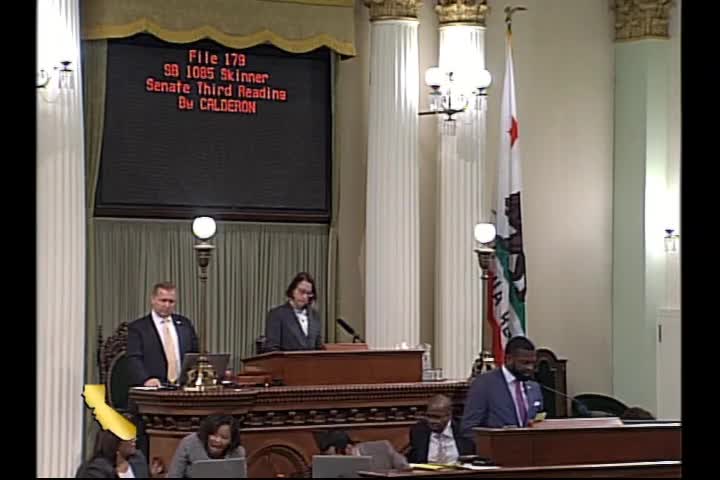 1MIN
Assembly Floor
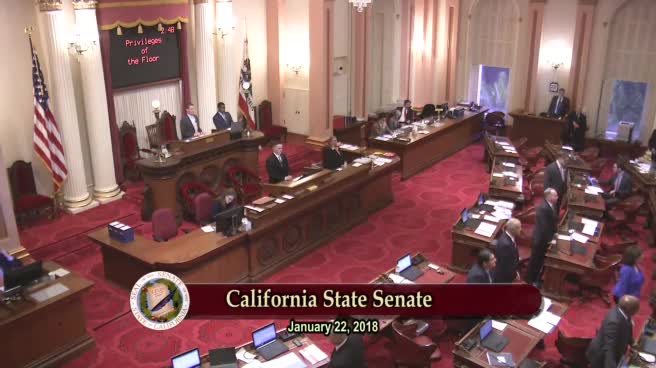 4MIN
Senate Floor
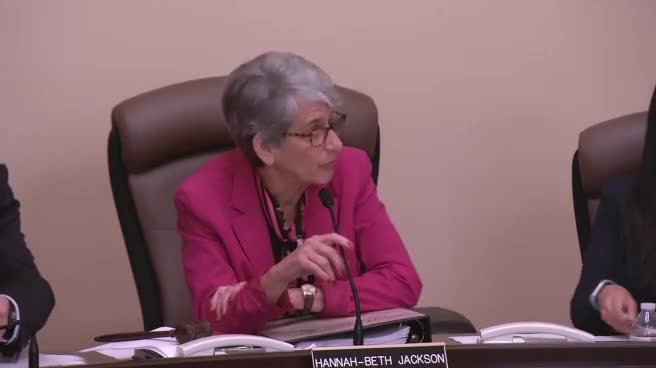 32MIN
Senate Standing Committee on Judiciary
 48MIN
Senate Standing Committee on Appropriations
 9MIN
Senate Standing Committee on Appropriations
 34MIN
Senate Standing Committee on Environmental Quality
Bill Author

Bill Co-Author(s):