AB 1897: Day care centers: birth to first grade license option.
- Session Year: 2015-2016
- House: Assembly
- Latest Version Date: 2016-02-11
Existing law provides for the licensure and regulation of day care centers by the State Department of Social Services. Existing regulations require a separate license to be issued for each component of a combination center, and establishes teacher-child ratio requirements.
This bill would require the department to, in consultation with specified stakeholders, adopt regulations on or before January 1, 2018, to develop and implement a birth to entering first grade license option for day care centers. The bill would require the regulations to include age-appropriate transition times, as specified, a requirement that a single integrated license option list the age groups of children being served at the day care center, and a requirement that all other licensing regulations that apply to a day care center shall also apply to a birth to entering first grade license option. The bill would require, until a day care center has the new integrated license, standards for inspection of a day care center to be based on the current license.
The Legislature finds and declares all of the following:
(a)In the 1970s, California led the nation in the creation of its licensing system for community care facilities, and pioneered recognition of the special needs of infants and toddlers with a license distinct from preschool-age care.
(b)While the standard of care in California statutes remains appropriate, the bifurcation of early care licensing in California into two separate licenses is unnecessary and problematic.
(c)Many states now mandate the standard required in California, but without dual-licensing. California is one of only two states in the country that employ a separate infant-toddler license. Other states employ a single license for early childhood centers, mandating developmentally appropriate standards based on the age of the children served.
(d)Even in California, family day care homes are not subject to the dual license requirement. Only private fee and state and federally funded child day care facilities are subject to the dual license requirement.
(e)It is the intent of the Legislature to create a third facility license option serving children from birth to entering first grade. This additional facility license option shall not replace the current infant license, preschool license, and toddler component option, but instead be in addition to these early care and education facility licensure options.
(f)It is also the intent of the Legislature that all of the following are required under the birth to entering first grade license option:
(1)Children shall be grouped together by their appropriate developmental levels, and appropriate staff-child ratio and group size regulations shall be followed.
(2)Children shall transition from age-appropriate classrooms or program spaces when their developmental level is appropriate for such a move.
(3)A childs chronological age and the entire groups need shall also be considering factors for these moves.
(4)All children shall be supervised appropriately by teachers and aides with appropriate staff qualifications. Toddlers may be grouped with either infants or preschoolers as long as the requirements applicable to the youngest age group in the group are followed.
(5)Emphasis shall be placed on improving the quality of early care and education for children from birth to entering first grade in center-based programs.
(6)Long-term efficiency within the Community Care Licensing Division of the State Department of Social Services shall be promoted through the elimination of duplicate paperwork, toddler component waiver processing, and compliance visits to day care centers.
(7)A single inspection visit and administration of the birth to entering first grade day care center shall be implemented versus multiple inspection visits and administration of a day care center with an infant license or preschool license and a toddler component option. This will increase efficiency and allow a department analyst to more holistically evaluate the birth to entering first grade day care center, which will lead to stronger health and safety practices. The efficiencies gained will reduce cost pressure on the department and allow more providers to operate in California, and thus open more spaces for children and parents waiting for care.
(g)The ability for providers to choose which type of facility license option best meets their specific programmatic contract, business, and community needs will allow for more flexibility in the planning for a successful operation of the center.
SEC. 2.Section 1596.951 is added to the Health and Safety Code, to read:1596.951.(a)The department shall, in consultation with stakeholders through the regulatory process, adopt regulations on or before January 1, 2018, to develop and implement a birth to entering first grade license option for day care centers. Regulations adopted pursuant to this section shall include all of the following:
(1)Age-appropriate transition periods that do all of the following:
(A)Allow children to transition from one age group to another age group up to three months before or three months after their birthday.
(B)Take the needs of the whole age group into consideration in order to move children together.
(C)Consider continuity of care of the children and parents being served.
(D)Consider the needs of the day care center licensees to maximize spaces being used.
(2)A requirement that when a birth to entering first grade license option is being issued to a new or current day care center licensee, the licensee shall list the age groups of children being served at the day care center for the purposes of license inspections, data collection management, and county needs assessments.
(3)A requirement that all other licensing regulations that apply to a day care center shall also apply to a birth to entering first grade license option.
(b)(1)A new applicant for a birth to entering first grade license option may be charged a fee commensurate with the other age specific facility license fee schedules.
(2)Until an existing day care center license has been replaced with a birth to entering first grade license option, a day care center licensee shall maintain a day care center that meets regulatory standards for the age groups of children that are being cared for at the day care center, and standards for inspection of a day care center shall be based on the current license.
(c)Stakeholders consulted in adopting regulations pursuant to this section shall include, but are not limited to, the State Department of Education, California Association for the Education of Young Children, Early Edge California, First 5 California, Children Now, Alliance for Early Success, California Head Start Association, California Child Development Administrators Association, California Child Care Resource and Referral Network, California Child Care Coordinators Association, Infant Development Association, the Western Office of Zero to Three, L.A. Alliance, Professional Association for Childhood Education, Californians for Quality Early Learning, WestEd, American Federation of State, County and Municipal Employees, Title 5 and Head Start-funded center-base child care providers, and private fee -for-service center-based child care providers.
|
Date
|
Status
|
|---|---|
| May 27, 2016 | In committee: Held under submission. |
| Apr 27, 2016 | In committee: Set, first hearing. Referred to APPR. suspense file. |
| Mar 30, 2016 | From committee: Do pass and re-refer to Com. on APPR. (Ayes 6. Noes 0.) (March 29). Re-referred to Com. on APPR. |
| Feb 25, 2016 | Referred to Com. on HUM. S. |
| Feb 12, 2016 | From printer. May be heard in committee March 13. |
| Feb 11, 2016 | Read first time. To print. |
|
Date
|
Description
|
Location
|
Votes
|
|
|---|---|---|---|---|
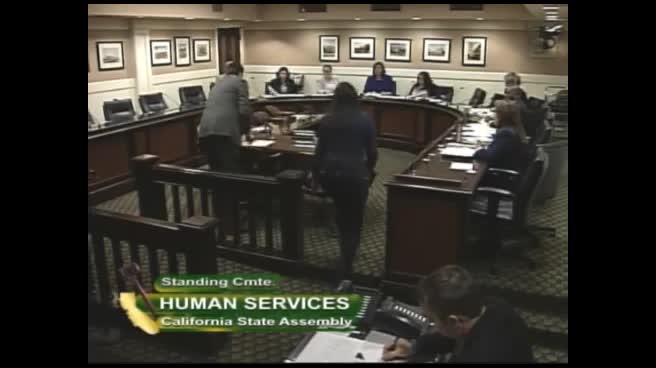
| Mar 29, 2016 | Do pass and be re-referred to the Committee on [Appropriations] | Assembly Standing Committee on Human Services |
Passed |
This list shows positions taken on this bill by organizations on the date displayed, which is linked to the original source.
Positions by individuals are not included.
Date of Hearing: April 27, 2016
ASSEMBLY COMMITTEE ON APPROPRIATIONS
Lorena Gonzalez, Chair
ABPCA Bill Id:AB 1897
Author:(Mullin) – As Introduced Ver:February 11, 2016
Policy Committee: | Human Services | Vote: | 6 - 0 |
|
|
Urgency: No State Mandated Local Program: No Reimbursable: No
SUMMARY:
This bill directs the Department of Social Services (DSS) to create an optional “birth through entering first grade” category of day care licensure. Specifically, this bill:
- Directs DSS, by January 1, 2018, and in consultation with specified stakeholders including the California Department of Education, to adopt regulations to develop and implement a “birth to entering first grade” license option for day care centers. The regulations must include age-appropriate transition periods, as specified, and requirements that a birth to entering first grade licensee list the age groups of children being served, as specified, and that all other licensing regulations that apply to a day care center will apply to a birth to entering first grade license option.
- States that a new applicant for a birth to entering first grade license may be charged a fee commensurate with other age-specific facility license fee schedules.
- Requires a day care center licensee to continue to meet regulatory requirements and inspection standards for the age groups of children receiving care in that center, until an existing day care center license has been replaced with a birth to entering first grade license.
FISCAL EFFECT:
- One-time costs to DSS in the range of $200,000 (GF) to staff and conduct stakeholder meetings and for regulatory and policy development. This may be higher due to the tight timeframe and complex nature of the proposed regulations.
- Unknown, but potentially significant on-going costs to DSS for case management workload to manually convert existing license types to the new birth to entering first grade license option. Additionally, because the new license is optional, DSS will be required to maintain parallel licensing and inspection structures until all existing day care center licenses have been replaced. This will dampen any administrative efficiencies that might be achieved by the bill.
- Unknown, but likely minor costs to DSS to educate and train staff on the new regulations for facility inspection purposes.
- Staff notes that the full extent of the implementation costs will not be known until the new regulations implemented and tested.
COMMENTS:
- Purpose. According to the author, “This bill will allow DSS to create an integrated child care facility license as an additional option that providers can choose when applying for or renewing their facility license. The addition of an integrated birth through entering first grade facility license option will allow child care and preschool providers the ability to implement the best practices around continuity of care when transitioning children, teachers and peers between age specific classrooms. This integrated facility license option will also allow providers with federal contracts to more fully meet continuity of care regulations. Additionally, this bill will allow child care providers the ability to better manage their school year enrollment so that their facility can reach maximum utilization, thus serving more children and families. A single license option will reduce the administrative burden on severely underfunded child care centers and DSS so that they can both focus on providing a safe and healthy environment for California’s children.”
- Background. The Community Care Licensing Division (CCLD) of DSS is responsible for licensing and monitoring the state’s 10,467 day care centers, which, as of June 30, 2015, provided 590,596 child care slots. CCLD is required to conduct unannounced site visits of all licensed child day care facilities and homes. CCLD conducts random inspections of 30% of facilities annually, and each facility must be visited at least once every five years.
Infant centers serve children under two years old, preschool child care centers serve children between the ages of 2 and when they start school, and school-age child care centers serve children who have entered the first grade or are in a child care program exclusively for children in kindergarten and above. A “combination center” is any combination of an infant center, preschool child care center, school-age child care center and child care center for mildly ill children that is owned and operated by one licensee at a common address. In California, separate licenses are currently required for serving infants and for serving preschool-age children. Thus, owner/operators of combination centers serving both populations must get two licenses and undergo separate inspection and compliance processes for each license.
- Prior Legislation. AB 762 (Mullin), Chapter 373, Statutes of 2015, increased the upper age limit for optional toddler programs authorized by DSS from 30 months to three years of age.
Analysis Prepared by: Jennifer Swenson / APPR. / (916) 319-2081
Date of Hearing: March 29, 2016
ASSEMBLY COMMITTEE ON HUMAN SERVICES
Susan Bonilla, Chair
ABPCA Bill Id:AB 1897 (
Author:Mullin) – As Introduced Ver:February 11, 2016
SUBJECT: Day care centers: birth to first grade license option
SUMMARY: Directs the Department of Social Services (DSS) to create an optional “birth through entering first grade” category of day care licensure.
Specifically, this bill:
- Makes certain Legislative findings and declarations pertaining to the early care licensing system in California and its separate treatment of infants and toddlers and preschool-age children.
- Declares the intent of the Legislature to create a third category of licensure for facilities serving children from birth through entering first grade, and states that this additional license option shall not replace currently available licensure options.
- Declares the intent of the Legislature to require the following under the birth-through-entering-first-grade licensing option:
- Grouping children together by appropriate developmental levels and following appropriate staff-child ratios and group-size regulations;
- Transitioning children from age-appropriate settings when their developmental level warrants this move;
- Considering a child’s chronological age and the entire group’s need when making decisions regarding moving a child;
- Ensuring supervision of all children by teachers and aides with appropriate qualifications;
- Grouping toddlers with either infants or preschoolers as long as the requirements applicable to the youngest age group are followed;
- Placing emphasis on improving quality of care and education for children from birth through entering first grade placed in center-based programs;
- Promoting long-term efficiency within the Community Care Licensing Division (CCLD) of DSS through eliminating duplicate paperwork, toddler component waiver processing, and compliance visits to day care centers; and
- Implementing a single inspection visit and administration of the birth to entering first grade day care center in order to increase efficiency and allow for more holistic evaluation of the center.
- Directs DSS, by January 1, 2018, and in consultation with specified stakeholders, to adopt regulations to develop and implement a “birth to entering first grade” license option for day care centers that include age-appropriate transition periods, as specified, and requirements that a birth to entering first grade licensee list the age groups of children being served, as specified, and that all other licensing regulations that apply to a day care center shall apply to a birth to entering first grade license option.
- States that a new applicant for a birth to entering first grade license may be charged a fee commensurate with other age-specific facility license fee schedules.
- Requires a day care center licensee to continue to meet regulatory requirements and inspection standards for the age groups of children receiving care in that center, until an existing day care center license has been replaced with a birth to entering first grade license.
EXISTING LAW:
- Establishes the California Child Day Care Facilities Act, creating a separate licensing category for child day care centers and family day care homes within DSS’s existing licensing structure. (HSC 1596.70 et seq.)
- Defines “day care center” to include infant centers, preschools, extended day care facilities, and school-age child care centers. (HSC 1596.76)
- Requires any person or entity operating, as specified, a child day care facility in California to have a current valid license. (HSC 1596.80)
- Requires DSS to charge an original application fee for the issuance of a license to operate a child day care facility and, thereafter, an annual fee and that these fees be adjusted by facility and capacity. (HSC 1596.803)
- Directs DSS to develop guidelines and procedures for authorizing licensed child day care centers serving preschool-age children and licensed child day care centers serving infants to create a special optional toddler program for children between the ages of 18 months and 3 years of age and further requires this optional toddler program to meet certain requirements, as specified. (HSC 1596.955 and 1596.956)
- Directs DSS, and any local agency with which it contracts for purposes of licensing activities, to conduct an initial site visit and grant or deny an application for license within 30 days of receiving a complete licensing application for a day care center. (HSC 1597.13)
FISCAL EFFECT: Unknown.
COMMENTS:
Licensed child care: The California Child Day Care Facilities Act governs the licensure and operation of child day care centers and family day care homes. This law and the attendant regulations found in Title 22 of the California Code of Regulations establish general health and safety requirements, staff-to-child ratios, and provider training requirements.
The Community Care Licensing Division (CCLD) of DSS is responsible for licensing and monitoring the state’s 10,467 day care centers, which, as of June 30, 2015, provided 590,596 child care slots. CCLD is required to conduct unannounced site visits of all licensed child day care facilities and homes. CCLD conducts random inspections of 30% of facilities annually, and each facility must be visited at least once every five years. Some exceptions triggering more frequent inspections exist, and federal funding requires approximately10% of facilities to be inspected annually. Prior to 2004, annual inspections were required for most facilities; the 2003-04 state budget reduced the required frequency to once every five years. Based on changes adopted in the 2015-16 state budget, starting in January 2017, DSS will increase inspections to once every three years for all facilities. (Beginning in 2018, all facilities except child care will be inspected once every two years, and starting in 2019, adult day care facilities and residential care facilities for the elderly will be inspected annually.)
Infant centers serve children under two years old, preschool child care centers serve children between the ages of 2 and when they start school, and school-age child care centers serve children who have entered the first grade or are in a child care program exclusively for children in kindergarten and above. A “combination center” is any combination of an infant center, preschool child care center, school-age child care center and child care center for mildly ill children that is owned and operated by one licensee at a common address. In California, separate licenses are currently required for serving infants and for serving preschool-age children. Thus, owner/operators of combination centers serving both populations must get two licenses and undergo separate inspection and compliance processes for each license.
Continuity of care and child development: Child care providers and caregivers, when they form continuous attachments with young children through providing regular care, can have positive impacts on the development of those children. Research indicates that infants who form strong attachments with their child care providers exhibit higher likelihood of playing, exploring, and interacting with adults in their child care settings. Conversely, it has been found that when very young children are made to transition from one room to another in a care setting due to pre-determined developmental stages (often based on birthdate), they can experience high levels of distress. Fewer demonstrations of behavior problems while at child care have also been found in young children who experience lower turnover in care providers and longer periods spent with their primary caregiver. Continuity of care for young children can also provide benefits for caregivers and parents, allowing for the continued development of trust between parents and care providers.
Need for this bill: According to the author, “[This bill] will allow [DSS] to create an integrated child care facility license as an additional option that providers can choose when applying for or renewing their facility license. The addition of an integrated birth through entering first grade facility license option will allow child care and preschool providers the ability to implement the best practices around continuity of care when transitioning children, teachers and peers between age specific classrooms. This integrated facility license option will also allow providers with federal contracts to more fully meet continuity of care regulations. Additionally, [this bill] will allow child care providers the ability to better manage their school year enrollment so that their facility can reach maximum utilization, thus serving more children and families. A single license option will reduce the administrative burden on severely underfunded child care centers and [DSS] so that they can both focus on providing a safe and healthy environment for California’s children.”
PRIOR LEGISLATION:
AB 762 (Mullin), Chapter 373, Statutes of 2015, increased the upper age limit for optional toddler programs authorized by DSS from 30 months to three years of age.
REGISTERED SUPPORT / OPPOSITION:
Support
Advancement Project
Board of Supervisors, Contra Costa County
California Alternative Payment Program Association (CAPPA)
California Child Care Resource and Referral Network
California Child Development Administrators Association (CCDAA)
California Head Start Association
Californians for Quality Early Learning (CQEL)
Child Care Alliance of Los Angeles
Child Care Law Center
Child Care Partnership Council of San Mateo County
Child Development Center
Children Now
Community Child Care Council of Sonoma County
Educare California of Silicon Valley
Footsteps Child Care
Go Kids, Inc.
Kidango, Inc.
KidZKount
Local Early Education Planning Council of Santa Clara
Los Angeles County Office of Education (LACOE)
Millbrae Nursery School.
Peninsula Family Service
Plaza de la Raza Child Development Service Inc.
Professional Association for Childhood Education (PCACE)
Resource Connection Early Childhood Programs
Opposition
None on file.
Analysis Prepared by: Daphne Hunt / HUM. S. / (916) 319-2089
Discussed in Hearing
View Older Hearings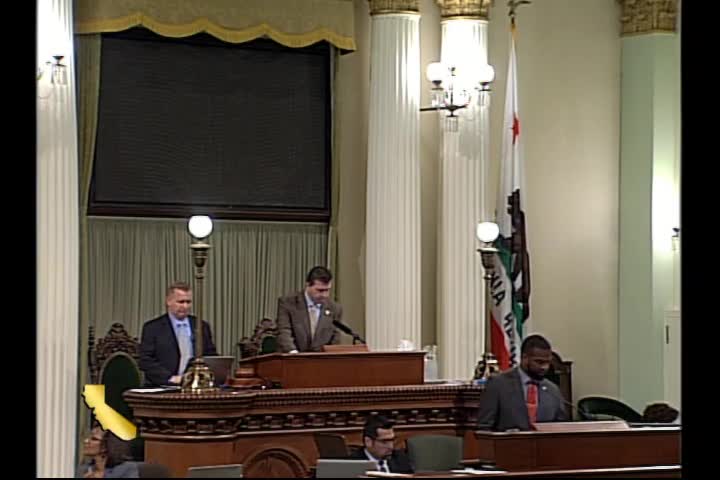
Bill Author