SB 254: Delivery network companies: deliveries of alcoholic beverages.
- Session Year: 2017-2018
- House: Senate
- Latest Version Date: 2018-06-14
The Alcoholic Beverage Control Act, administered by the Department of Alcoholic Beverage Control, regulates the sale and distribution of alcoholic beverages and the granting of licenses for the manufacture, distribution, and sale of alcoholic beverages within the state. Unless otherwise specified, a violation of the act is a misdemeanor.
This bill would prohibit a delivery network company, as defined, from delivering, providing, arranging, or in any way facilitating the delivery of alcoholic beverages unless it has a system, reviewed and approved by the Department of Alcoholic Beverage Control, that meets specified requirements, including that the company can verify that the products are delivered to a person who is 21 years or age or older. The bill would also prohibit a delivery network company from delivering alcoholic beverages to consumers on the grounds of a college or university. The bill would authorize the department may charge an original and annual fee in an amount no greater than the amount required to cover the actual and reasonable costs of administering the review and approval program.This bill would prohibit a certified delivery network, as defined, from delivering alcoholic beverages sold by an off-sale retail licensee to persons within this state without first obtaining a license issued by the department, subject to specified circumstances relating to the delivery of alcoholic beverages. The bill would require the department to issue licenses to certified delivery networks on or before January 1, 2020. The bill would authorize the department to charge an original and annual fee in an amount no greater than the amount required to cover the actual and reasonable costs of administering the review and approval program. The bill would prohibit a noncertified delivery network company from delivering alcoholic beverages without meeting specified requirements, including that the alcoholic beverages are limited to beer and wine.
The bill, by expanding the scope of an existing crime, would impose a state-mandated local program.
The California Constitution requires the state to reimburse local agencies and school districts for certain costs mandated by the state. Statutory provisions establish procedures for making that reimbursement.
This bill would provide that no reimbursement is required by this act for a specified reason.
The Alcoholic Beverage Control Act, administered by the Department of Alcoholic Beverage Control, regulates the sale and distribution of alcoholic beverages and the granting of licenses for the manufacture, distribution, and sale of alcoholic beverages within the state. Unless otherwise specified, a violation of the act is a misdemeanor.
This bill would prohibit a delivery network company, as defined, from delivering delivering, providing, arranging, or in any way facilitating the delivery of alcoholic beverages unless it has a system, reviewed and approved by the Department of Alcoholic Beverage Control, that meets specified requirements, including that the company can verify that the products are delivered to a person who is 21 years or age or older. The bill would also prohibit a delivery network company from delivering alcoholic beverages to consumers on the grounds of a college or university. The bill would authorize the department may charge an original and annual fee in an amount no greater than the amount required to cover the actual and reasonable costs of administering the review and approval program.
The bill, by expanding the scope of an existing crime, would impose a state-mandated local program.
The California Constitution requires the state to reimburse local agencies and school districts for certain costs mandated by the state. Statutory provisions establish procedures for making that reimbursement.
This bill would provide that no reimbursement is required by this act for a specified reason.
The Alcoholic Beverage Control Act, administered by the Department of Alcoholic Beverage Control, regulates the sale and distribution of alcoholic beverages and the granting of licenses for the manufacture, distribution, and sale of alcoholic beverages within the state. Unless otherwise specified, a violation of the act is a misdemeanor.
This bill would prohibit a delivery network company, as defined defined, from delivering tobacco products or alcoholic beverages unless they have it has a system, reviewed and approved by the Department of Alcoholic Beverage Control, that meets specified requirements, including that the company can verify that the products are delivered to a person who is 21 years or age or older. This The bill would also prohibit a delivery network company from delivery tobacco products and delivering alcoholic beverages to consumers on the grounds of a college or university.
This The bill, by expanding the scope of an existing crime, would impose a state-mandated local program.
The California Constitution requires the state to reimburse local agencies and school districts for certain costs mandated by the state. Statutory provisions establish procedures for making that reimbursement.
This bill would provide that no reimbursement is required by this act for a specified reason.
Existing law establishes programs to reduce the availability of tobacco products to persons under 21 years of age through specified enforcement activities. The Alcoholic Beverage Control Act, administered by the Department of Alcoholic Beverage Control, regulates the sale and distribution of alcoholic beverages and the granting of licenses for the manufacture, distribution, and sale of alcoholic beverages within the state. Unless otherwise specified, a violation of the act is a misdemeanor.
This bill would prohibit a delivery network company, as defined from delivering tobacco products or alcoholic beverages unless they have a system, reviewed and approved by the Department of Alcoholic Beverage Control, that meets specified requirements, including that the company can verify that the products are delivered to a person who is 21 years or age or older. This bill would prohibit a delivery network company from delivery tobacco products and alcoholic beverages to consumers on the grounds of a college or university.
This bill, by expanding the scope of an existing crime, would impose a state-mandated local program.
The California Constitution requires the state to reimburse local agencies and school districts for certain costs mandated by the state. Statutory provisions establish procedures for making that reimbursement.
This bill would provide that no reimbursement is required by this act for a specified reason.
Existing law creates the Department of Alcoholic Beverage Control, to which is committed the authority for the administration and enforcement of the Alcoholic Beverage Control Act. Unless otherwise specified, a violation of the act is a misdemeanor.This bill would state the intent of the Legislature to enact legislation relating to alcoholic beverages in California.Existing law creates the Department of Alcoholic Beverage Control, to which is committed the authority for the administration and enforcement of the Alcoholic Beverage Control Act. Unless otherwise specified, a violation of the act is a misdemeanor.
This bill would state the intent of the Legislature to enact legislation relating to alcoholic beverages in California.
(a)A certified delivery network shall not deliver alcoholic beverages sold by an off-sale retail licensee to persons within this state without first obtaining a license issued by the Department of Alcoholic Beverage Control. Delivery of alcohol shall take place only under the following circumstances:
(1)The off-sale retail licensee selects the products offered for sale and delivery on the delivery network companys application or platform, determines the price at which the products will be sold, and has sole discretion to accept or reject any order.
(2)The alcoholic beverages are dispatched for delivery from the premises of the off-sale licensee directly to the recipient.
(3)The person delivering alcoholic beverages shall:
(A)Be at least 21 years of age.
(B)Verify by means of bona fide evidence of majority and identity that the person taking delivery of the alcoholic beverage is at least 21 years of age and refuse delivery to any person not providing such evidence.
(C)Refuse delivery to any person who is obviously intoxicated.
(D)Refuse delivery to any person located on property identified as a college campus.
(4)The off-sale retail licensee has exclusive and continuous control of the proceeds from the sale of alcoholic beverages and shall be identified as the merchant of record on receipts, invoices, and billing statements.
(5)Delivery of the alcoholic beverages occurs in a person-to-person transfer with the recipient taking delivery of the alcoholic beverage.
(6)Delivery of the alcoholic beverages is to a physical address.
(7)Delivery of the alcoholic beverages will take place between 9:00 a.m. and 1:00 a.m.
(8)A certified alcohol delivery network shall be able to charge a price no more than 10 percent higher than the price determined by the off-sale retail license.
(9)A certified alcohol delivery network shall be able to charge a fee for delivery.
(b)In addition to any other penalty or remedy provided by law, a certified delivery network companys failure to maintain or operate a system meeting any requirement of this section shall be cause for revocation or suspension of the license issued pursuant to subdivision (a). The delivery of alcoholic beverages to a person under 21 years of age or who is intoxicated may be enforced in the same form and manner as for persons holding an off-sale retail license. For purposes of this section, the acts or omissions of the person making the delivery shall be imputed to the certified delivery network company,
(c)For purposes of this section, a certified delivery network company means a person who operates an online-enabled application or platform licensed by the Department of Alcoholic Beverage Control that connects consumers with a network of persons for the delivery of alcoholic beverages purchased from an off-sale retail licensee, and the person delivering the alcoholic beverage is not directly compensated and contracted by the retail licensee.
(d)A noncertified delivery network company shall not deliver alcoholic beverages sold by an off-sale retail licensee to persons within this state without meeting the following requirements:
(1)The off-sale retail licensee selects the products offered for sale and delivery on the delivery network companys application or platform, determines the price at which the products will be sold, and has sole discretion to accept or reject any order.
(2)The alcoholic beverages are dispatched for delivery from the premises of the off-sale licensee directly to the recipient.
(3)The person delivering alcoholic beverages shall:
(A)Be at least 21 years of age.
(B)Verify by means of bona fide evidence of majority and identity that the person taking delivery of the alcoholic beverage is at least 21 years of age and refuse delivery to any person not providing such evidence.
(C)Refuse delivery to any person who is obviously intoxicated.
(D)Refuse delivery to any person located on property identified as a college campus.
(4)The off-sale retail licensee has exclusive and continuous control of the proceeds from the sale of alcoholic beverages and shall be identified as the merchant of record on receipts, invoices, and billing statements.
(5)Delivery of the alcoholic beverages occurs in a person-to-person transfer with the recipient taking delivery of the alcoholic beverage.
(6)Delivery of the alcoholic beverages is to a physical address.
(7)Delivery of the alcoholic beverages is limited to beer and wine.
(8)Delivery of the alcoholic beverages will take place between 12:00 p.m. and 9:00 p.m.
(9)The price that the delivery network company may charge shall match the price determined by the off-sale retail licensee and the only fee that may be charged is for delivery.
(10)Any agreement between the delivery network company and the off-sale retail licensee includes a form signed by both the off-sale retail licensee and the delivery network company issued by the department dictating that the off-sale retail licensee takes full liability for any legal violations pursuant to the law.
(e)On or before January 1, 2020, the department shall issue licenses to certified delivery network company pursuant to the requirements of subdivision (a).
(f)Beginning January 1, 2020, a certified delivery network shall submit to the department all of the signed forms described in paragraph (10) of subdivision (d).
(g)The department may charge an original and annual fee in an amount no greater than the amount required to cover the actual and reasonable costs of administering the review and approval program established by this section.
(h)This section shall not apply to a motor carrier or freight forwarder as defined in Section 13102 of Title 49 of the United States Code or an air carrier as defined in Section 40102 of Title 49 of the United States Code.
SEC. 2.No reimbursement is required by this act pursuant to Section 6 of Article XIIIB of the California Constitution because the only costs that may be incurred by a local agency or school district will be incurred because this act creates a new crime or infraction, eliminates a crime or infraction, or changes the penalty for a crime or infraction, within the meaning of Section 17556 of the Government Code, or changes the definition of a crime within the meaning of Section 6 of Article XIIIB of the California Constitution.
SECTION 1.Section 25513 is added to the Business and Professions Code, to read:25513.(a)A delivery network company shall not deliver, provide, arrange, or in any way facilitate the delivery of alcoholic beverages to a consumer unless it meets the following requirements:(1)The company can verify that the individual to which the alcoholic beverages are delivered is 21 years of age or older, the delivery takes place person to person, and the delivery driver is 21 years of age or older.(2)A consumer may suspend, for any length of time, delivery of alcoholic beverages to a specified location that he or she has identified as the consumers primary delivery location.(3)A delivery network company shall not deliver alcoholic beverages to consumers on the grounds of a college or university.(b)(1)On or before January 1, 2020, the department shall develop a process by which it may review and approve a system used by a delivery network company to ensure that it meets the requirements of subdivision (a).(2)Beginning January 1, 2020, a delivery network company shall have a system, reviewed and approved by the department, that meets the requirements of subdivision (a).(3)The department may charge an original and annual fee in an amount no greater than the amount required to cover the actual and reasonable costs of administering the review and approval program established by this section.(c)For purposes of this section, delivery network company means an organization, including, but not limited to, a corporation, limited liability company, partnership, sole proprietor, or any other entity, operating in California that provides, arranges, or in any way facilitates prearranged delivery as an act of enrichment, financial or otherwise, of goods or services using an online-enabled application or platform to connect consumers with goods or service and to have those goods or services delivered directly to the consumer.SEC. 2.No reimbursement is required by this act pursuant to Section 6 of Article XIIIB of the California Constitution because the only costs that may be incurred by a local agency or school district will be incurred because this act creates a new crime or infraction, eliminates a crime or infraction, or changes the penalty for a crime or infraction, within the meaning of Section 17556 of the Government Code, or changes the definition of a crime within the meaning of Section 6 of Article XIIIB of the California Constitution.(a)A delivery network company shall not deliver deliver, provide, arrange, or in any way facilitate the delivery of alcoholic beverages to a consumer unless it has a system, reviewed and approved by the Department of Alcoholic Beverage Control, that meets the following requirements:
(1)The company can verify that the individual to which the alcoholic beverages are delivered is 21 years of age or older, the delivery takes place person to person, and the delivery driver compensated by the company is 21 years of age or older.
(2)A consumer can may suspend, for any length of time, delivery of alcoholic beverages to a specified location that he or she has identified as the consumers primary delivery location.
(b)Notwithstanding subdivision (a), a(3)A delivery network company shall not deliver alcoholic beverages to consumers on the grounds of a college or university.
(b)(1)On or before January 1, 2020, the department shall develop a process by which it may review and approve a system used by a delivery network company to ensure that it meets the requirements of subdivision (a).
(2)Beginning January 1, 2020, a delivery network company shall have a system, reviewed and approved by the department, that meets the requirements of subdivision (a).
(3)The department may charge an original and annual fee in an amount no greater than the amount required to cover the actual and reasonable costs of administering the review and approval program established by this section.
(c)For purposes of this section, delivery network company means an organization, including, but not limited to, a corporation, limited liability company, partnership, sole proprietor, or any other entity, operating in California that provides provides, arranges, or in any way facilitates prearranged delivery as an act of enrichment, financial or otherwise, of goods or services using an online-enabled application or platform to connect consumers with goods or service and to have those goods or services delivered directly to the consumer by an individual compensated by the organization. consumer.
SEC. 2.No reimbursement is required by this act pursuant to Section 6 of Article XIIIB of the California Constitution because the only costs that may be incurred by a local agency or school district will be incurred because this act creates a new crime or infraction, eliminates a crime or infraction, or changes the penalty for a crime or infraction, within the meaning of Section 17556 of the Government Code, or changes the definition of a crime within the meaning of Section 6 of Article XIIIB of the California Constitution.
(a)A delivery network company shall not deliver alcoholic beverages to a consumer unless they have it has a system, reviewed and approved by the Department of Alcoholic Beverage Control, that meets the following requirements:
(1)The company can verify that the individual to which the alcoholic beverages are delivered is 21 years of age or older, the delivery takes place person to person, and the delivery driver compensated by the company is 21 years of age or older.
(2)A consumer can suspend, for any length of time, delivery of alcoholic beverages to a specified location that he or she has identified as the consumers primary delivery location.
(b)Notwithstanding subdivision (a), a delivery network company shall not deliver alcoholic beverages to consumers on the grounds of a college or university.
(c)For purposes of this section, delivery network company means an organization, including, but not limited to, a corporation, limited liability company, partnership, sole proprietor, or any other entity, operating in California that provides prearranged delivery as an act of enrichment, financial or otherwise, of goods or services using an online-enabled application or platform to connect consumers with goods or service and to have those goods or services delivered directly to the consumer by an individual compensated by the organization.
SEC. 3.SEC. 2.No reimbursement is required by this act pursuant to Section 6 of Article XIIIB of the California Constitution because the only costs that may be incurred by a local agency or school district will be incurred because this act creates a new crime or infraction, eliminates a crime or infraction, or changes the penalty for a crime or infraction, within the meaning of Section 17556 of the Government Code, or changes the definition of a crime within the meaning of Section 6 of Article XIIIB of the California Constitution.
For purposes of this chapter:
(a)Delivery network company means an organization, including, but not limited to, a corporation, limited liability company, partnership, sole proprietor, or any other entity, operating in California that provides prearranged delivery as an act of enrichment, financial or otherwise, of goods or services using an online-enabled application or platform to connect consumers with goods or service and to have those goods or services delivered directly to the consumer by an individual compensated by the organization.
(b)Tobacco product means any of the following:
(1)A product containing, made, or derived from tobacco or nicotine that is intended for human consumption, whether smoked, heated, chewed, absorbed, dissolved, inhaled, snorted, sniffed, or ingested by any other means, including, but not limited to, cigarettes, cigars, little cigars, chewing tobacco, pipe tobacco, or snuff.
(2)An electronic device that delivers nicotine or other vaporized liquids to the person inhaling from the device, including, but not limited to, an electronic cigarette, cigar, pipe, or hookah.
(3)Any component, part, or accessory of a tobacco product, whether or not sold separately.
22949.1.(a)A delivery network company shall not deliver tobacco products to a consumer unless they have a system, reviewed and approved by the Department of Alcoholic Beverage Control, that meets the following requirements:
(1)The company can verify that the individual to which the tobacco products are delivered is 21 years of age or older, the delivery takes place person to person, and the delivery driver compensated by the company is 21 years of age or older.
(2)A consumer can suspend, for any length of time, delivery of tobacco products to a specified location that he or she has identified as the consumers primary delivery location.
(b)Notwithstanding subdivision (a), a delivery network company shall not deliver tobacco products to consumers on the grounds of a college or university.
SEC. 2.Section 25513 is added to the Business and Professions Code, to read:25513.(a)A delivery network company shall not deliver alcoholic beverages to a consumer unless they have a system, reviewed and approved by the Department of Alcoholic Beverage Control, that meets the following requirements:
(1)The company can verify that the individual to which the alcoholic beverages are delivered is 21 years of age or older, the delivery takes place person to person, and the delivery driver compensated by the company is 21 years of age or older.
(2)A consumer can suspend, for any length of time, delivery of alcoholic beverages to a specified location that he or she has identified as the consumers primary delivery location.
(b)Notwithstanding subdivision (a), a delivery network company shall not deliver alcoholic beverages to consumers on the grounds of a college or university.
(c)For purposes of this section, delivery network company means an organization, including, but not limited to, a corporation, limited liability company, partnership, sole proprietor, or any other entity, operating in California that provides prearranged delivery as an act of enrichment, financial or otherwise, of goods or services using an online-enabled application or platform to connect consumers with goods or service and to have those goods or services delivered directly to the consumer by an individual compensated by the organization.
SEC. 3.No reimbursement is required by this act pursuant to Section 6 of Article XIIIB of the California Constitution because the only costs that may be incurred by a local agency or school district will be incurred because this act creates a new crime or infraction, eliminates a crime or infraction, or changes the penalty for a crime or infraction, within the meaning of Section 17556 of the Government Code, or changes the definition of a crime within the meaning of Section 6 of Article XIIIB of the California Constitution.
SECTION 1.It is the intent of the Legislature to enact legislation relating to alcoholic beverages in California.It is the intent of the Legislature to enact legislation relating to alcoholic beverages in California.
|
Date
|
Status
|
|---|---|
| Jun 28, 2018 | June 28 set for second hearing canceled at the request of author. |
| Jun 14, 2018 | From committee with author's amendments. Read second time and amended. Re-referred to Com. on G.O. |
| Jul 5, 2017 | July 5 set for first hearing canceled at the request of author. |
| Jun 15, 2017 | Referred to Com. on G.O. |
| Jun 1, 2017 | In Assembly. Read first time. Held at Desk. |
| Jun 1, 2017 | Read third time. Passed. (Ayes 39. Noes 1. Page 1390.) Ordered to the Assembly. |
| May 26, 2017 | Read second time and amended. Ordered to third reading. |
| May 25, 2017 | From committee: Do pass as amended. (Ayes 7. Noes 0. Page 1180.) (May 25). |
| May 19, 2017 | Set for hearing May 25. |
| May 15, 2017 | May 15 hearing: Placed on APPR. suspense file. |
| May 4, 2017 | Set for hearing May 15. |
| May 3, 2017 | May 8 hearing postponed by committee. |
| May 1, 2017 | Set for hearing May 8. |
| Apr 25, 2017 | From committee: Do pass and re-refer to Com. on APPR. (Ayes 13. Noes 0. Page 826.) (April 25). Re-referred to Com. on APPR. |
| Apr 4, 2017 | Set for hearing April 25. |
| Apr 3, 2017 | Withdrawn from committee. |
| Mar 30, 2017 | From committee with author's amendments. Read second time and amended. Re-referred to Com. on B., P. & E.D. |
| Mar 29, 2017 | April 3 hearing postponed by committee. |
| Mar 21, 2017 | Set for hearing April 3. |
| Mar 16, 2017 | Re-referred to Coms. on B., P. & E.D. and G.O. |
| Mar 13, 2017 | From committee with author's amendments. Read second time and amended. Re-referred to Com. on RLS. |
| Feb 16, 2017 | Referred to Com. on RLS. |
| Feb 8, 2017 | From printer. May be acted upon on or after March 10. |
| Feb 7, 2017 | Introduced. To Com. on RLS. for assignment. To print. |
|
Date
|
Description
|
Location
|
Votes
|
|
|---|---|---|---|---|
| Jun 1, 2017 | Senate 3rd Reading SB254 Portantino | Senate Floor |
Passed |
|
| May 25, 2017 | Do pass as amended | Senate Standing Committee on Appropriations |
Passed |
|
| May 15, 2017 | Placed on suspense file | Senate Standing Committee on Appropriations |
Passed |
|
| Apr 25, 2017 | Do pass, but first be re-referred to the Committee on [Appropriations] | Senate Standing Committee on Governmental Organization |
Passed |
This list shows positions taken on this bill by organizations on the date displayed, which is linked to the original source.
Positions by individuals are not included.
Office of Senate Floor Analyses (916) 651-1520 Fax: (916) 327-4478 | SB |
THIRD READING
Bill No: SB 254
:
SENATE GOVERNMENTAL ORG. COMMITTEE: 13-0, 4/25/17
AYES: Glazer, Berryhill, Bradford, Cannella, Dodd, Gaines, Galgiani, Hill, Hueso, Lara, Mendoza, Portantino, Vidak
SENATE APPROPRIATIONS COMMITTEE: 7-0, 5/25/17
AYES: Lara, Bates, Beall, Bradford, Hill, Nielsen, Wiener
DIGEST:
This bill prohibits a delivery network company, as defined, from delivering alcoholic beverages unless it has a system, reviewed and approved by the Department of Alcoholic Beverage Control (ABC) by January 1, 2020, that meets specified requirements, including that the company can verify that the products are delivered to a person who is 21 years of age or older. This bill also prohibits a delivery network company from delivering alcoholic beverages to consumers on the grounds of a college or university.
Existing law:
- Establishes the Department of ABC and grants it exclusive authority to administer the provisions of the ABC Act in accordance with laws enacted by the Legislature. This involves licensing individuals and businesses associated with the manufacture, importation, and sale of alcoholic beverages in this state and the collection of license fees for this purpose.
- Separates the alcoholic beverage industry into three component parts, or tiers, of the manufacturer (including breweries, wineries, and distilleries), wholesaler, and retailer (both on-sale and off-sale). This is referred to as the “tied-house” law or the “three-tier” system. Generally, other than exceptions granted by the Legislature, the holder of one type of license is not permitted to do business as another type of licensee within the “three-tier” system.
- Prohibits, in general, a manufacturer, winegrower, manufacturer's agent, rectifier, distiller, bottler, importer, or wholesaler, or any officer, director or agent of any such person from giving anything of value to on-sale and off-sale retail licensees.
- Prohibits, in general, a manufacturer, winegrower, distiller, bottler, or wholesaler, among other licensees, or agents of these licensees, from paying a retailer for advertising.
- Prohibits, in general, a licensee from giving any premium, gift, or free goods in connection with the sale or distribution of any alcoholic beverage.
- Prohibits the exercising of license privileges or performing any act for which a license is required without holding a license issued pursuant to the ABC Act authorizing such privileges, and a violation of this prohibition is a misdemeanor or a felony, as specified.
- Authorizes, except as otherwise provided, the exercising of license privileges only by the person to whom the license is issued at the premises licensed by the Department of ABC.
- Defines “sell” or “sale” and “to sell” to include any transaction whereby, for any consideration, title to alcoholic beverages is transferred from one person to another, and includes the delivery of alcoholic beverages pursuant to an order placed for the purchase of such beverages and soliciting or receiving an order for such beverages.
- Provides that any person under 21 years of age who purchases any alcoholic beverage, who consumes any alcoholic beverage in any on-sale premises, or who possesses any alcoholic beverage on any street or highway or in any public place or any place open to the public is guilty of a misdemeanor.
- Provides that every person who sells, furnishes, gives, or causes to be sold, furnished, or given away any alcoholic beverage to any person under 21 years of age is guilty of a misdemeanor.
- Prohibits, generally, a licensee that sells or serves alcoholic beverages for consumption on the premises from employing any person under 21 years of age for the purpose of preparing or serving alcoholic beverages.
- Provides that every person who employs or uses the services of any person under the age of 21 years in or on that portion of any premises, during business hours, which are primarily designed and used for the sale and service of alcoholic beverages for consumption on the premises, is guilty of a misdemeanor.
- Specifies that any off-sale licensee who employs or uses the services of any person under the age of 18 years for the sale of alcoholic beverages shall be subject to suspension or revocation of his or her license, except that a person under the age of 18 years may be employed or used for those purposes if that person is under the continuous supervision of a person 21 years of age or older.
This bill:
- Prohibits a delivery network company, as defined, from delivering, providing, arranging, or in any way facilitating the delivery of alcoholic beverages to a consumer unless it meets the following requirements:
- The company can verify that the individual to which the alcoholic beverages are delivered is 21 years of age or older.
- The delivery takes place person to person.
- The delivery driver is 21 years of age or older.
- A consumer may suspend, for any length of time, delivery of alcoholic beverages to a specified location that he or she has identified as the consumer’s primary delivery location.
- Prohibits a delivery network company from delivering alcoholic beverages to consumers on the grounds of a college or university.
- Requires the Department of ABC, on or before January 1, 2020, to develop a process to review and approve a system used by a delivery network company.
- Requires a delivery network company, beginning January 1, 2020, to have a delivery system that has been reviewed and approved by ABC.
- Authorizes the Department of ABC to charge an original and annual fee to cover the actual and reasonable costs of administering the review and approval program.
- Defines “delivery network company” to mean an organization, including, but not limited to, a corporation, limited liability company, partnership, sole proprietor, or any other entity, operating in California that provides, arranges, or in any way facilitates prearranged delivery as an act of enrichment, financial or otherwise, of goods or services using an online-enabled application or platform to connect consumers with goods or service and to have those goods or services delivered directly to the consumer.
Background
Purpose of the bill. According to the author’s office, “SB 254 seeks to give clear statutory authority for these delivery network companies while at the same time establishing basic consumer protections, including that the driver is over the age of 21, the person they are delivering alcohol to is over the age of 21, and that the delivery is made person to person instead of dropping off at a door step.”
Third Party Providers. While there are no laws or regulations specific to Third Party Providers, the Department of ABC issued industry advisories in 2009 and 2011 to assist licensees and unlicensed Third Party Providers in complying with California law. It should be noted that these advisories were issued prior to the prevalence of app-based on-demand alcohol delivery. The advisories were originally issued to provide guidance for licensees seeking to work with non-licensed entities that provided assistance with advertising, customer acquisition, and online tools to facilitate sales and fulfillment of products including alcoholic beverages.
The 2011 advisory defines the term “Third Party Provider” to mean unlicensed entities that are involved with the promotion, marketing, and facilitation of sales of alcoholic beverages by licensees over the Internet. Third Party Providers are involved in one or more of the steps in the transfer of title of an alcoholic beverage from a licensee to a consumer, such as placement of advertising, making recommendations to consumers, directing consumers to licensees, receiving orders and passing them on to licensees, processing payments, and assisting with shipping arrangements.
As previously mentioned, existing law states that only licensees may engage in activities for which a license is required. Therefore, the Department of ABC states that all sales transactions involving Third Party Providers must ultimately be conducted by and under the control of a licensee. This includes decisions concerning the selection of alcoholic beverages to advertise or offer for sale, the pricing of those beverages, and the ultimate acceptance and fulfillment of the sales transaction. Additionally, the Department of ABC made it clear in the advisory guidelines that a licensee working with a Third Party Provider is ultimately responsible for any activities undertaken by the Third Party Provider on the licensee’s behalf.
Lastly, the Department of ABC stated that “although the Department remains concerned that certain activities by Third Party Providers may violate California law, particularly in the areas of sales by a person without a license and the exercise of impermissible control of a licensee by a person without the privilege of that license, the Department believes that licensees and Third Party Providers can form business relationships that facilitate lawful transactions for sales of alcoholic beverages over the Internet.”
Currently, there are several technology companies that deliver or facilitate sales of alcoholic beverages by licensees over the Internet. Business and revenue models vary, but many of these companies are unlicensed Third Party Providers. Some companies serve as an order point and also fulfill the actual delivery to the consumer. Other companies only serve as an online platform to order alcohol and then the actual delivery to the consumer is handled by a licensee or other third party.
Additionally, in some cases, the retail licensee has a business relationship with the company providing the alcohol delivery, and in those instances, the licensee might be held liable for any violations of the law. However, other companies operate as agents of the consumer and do not have a business relationship with the retail licensee.
Amendments taken in the Senate Appropriations Committee expand the definition of “delivery network company” and appear to now include several more Third Party Providers. When this bill was heard in the Senate Governmental Organization Committee the definition of “delivery network company” was specific to those engaged in the delivery. This bill now includes those that “provide, arrange, or in any way facilitate the delivery of alcoholic beverages.”
ABC licensees and retail delivery orders. In addition to Third Party Providers, the scope of this bill, based on the definition of “delivery network company”, appears to also include those licensed under the ABC Act that currently possess delivery privileges.
Existing regulations provide rules for retail delivery of alcoholic beverages. Specifically, California Code of Regulations Section 17 (e) states, “no alcoholic beverage shall leave the premises of an off-sale licensee for delivery to a consumer, except pursuant to an order previously received by such licensee. Such alcoholic beverages shall be accompanied by a delivery order, which order must state the quantity, brand, proof, and price of such alcoholic beverages, and the name and address of the consumer purchaser, and shall have printed or stamped thereon the name and address of such off-sale licensee. A copy of such order shall be kept on file by the off-sale licensee for a period of two years after the date of delivery.”
Related/Prior Legislation
SB 530 (Pan, Chapter 496, Statutes of 2015) imposed specified requirements on pedicabs, as defined by the bill, relating to, among other things, a maximum seating capacity, local authorization to operate, operator qualifications and training, safety equipment, financial responsibility, and passenger alcohol consumption.
AB 1128 (Salas, 2013) would have increased to a felony the penalty for knowingly selling to, purchasing for, furnishing or giving alcohol to a person under 21 who drinks the alcohol and then proximately causes death or bodily injury to himself/herself or another. (Vetoed by Governor Brown)
AB 183 (Ma, Chapter 726, Statutes of 2011) prohibited off-sale licensees from selling alcoholic beverages using a customer-operated checkout stand.
SB 118 (Chesbro, Chapter 157, Statutes of 2005) provided that a licensed winegrower, who obtains a wine direct shipper permit, as described, may sell wine and ship wine directly to a California resident, for personal use, as specified.
SB 1766 (Ortiz, Chapter 686, Statutes of 2002) required that all sales of cigarettes in California be vendor-assisted, face-to-face sales unless the seller receives valid identification, that the purchaser is over 18, the product is shipped to the address provided on the identification, the sales is at least for two cartons, and the seller either provides the State Board of Equalization with all taxes due on the sale or includes with the shipment a notice that the purchaser is responsible for state taxes.
FISCAL EFFECT: Appropriation: Fiscal Com.: Local:
According to the Senate Appropriations Committee, costs are unknown but potentially significant costs to the Department of ABC to develop and implement an approval process for delivery network companies’ verification systems.
Additionally, potential revenue from the application and annual fees to offset the administrative costs incurred in implementing the approval system.
None received
OPPOSITION: (Verified 5/26/17)
Alcohol Justice
Drizly
Instacart
Saucey
TechNet
ARGUMENTS IN OPPOSITION: Alcohol Justice writes, “The restriction in this bill on delivery to college campuses is appreciated, but this bill does not specify how delivery persons will be trained, how age will be verified, and other limits on time of delivery or location. Unless those considerations are addressed by amendments we cannot support the measure.”
Drizly writes, “SB 254 as amended nonetheless treats all platforms and apps the same, and this ‘one-size fits all’ model ignores the real and important distinctions between platforms like Drizly that empower the licensed retailer to deliver alcohol in compliance with existing law, and delivery service platforms and apps that arrange for unlicensed and unregulated ‘personal shoppers’ to make the delivery.”
Instacart states that, “It is unclear how a delivery network company could determine in advance whether a particular address is on university or campus property, including graduate student or family housing. The bill sets forth no processes to identify university-owned housing such that Instacart would not know on the day the law is enacted whether its alcohol deliveries comply with the law.”
TechNet states that, “Our member companies that deliver alcohol and those that may decide to add that to their services in the future applaud and currently meet the author’s goal in ensuring people under the age of 21 aren’t served alcohol, but this bill treats technology companies differently than traditional alcohol deliveries; if the current laws for delivery of alcohol are sufficient, adding further prohibitions and requirements only on technology companies, this bill creates a competitive advantage for traditional deliveries and is unfair and inequitable for technology companies.”
5/27/17 18:03:42
**** END ****
SENATE COMMITTEE ON APPROPRIATIONS
Senator Ricardo Lara, Chair
2017 - 2018 Regular Session
SB 254 (Portantino) - Delivery network companies: deliveries of alcoholic beverages
Version: March 30, 2017 | Policy Vote: G.O. 13 - 0 |
Urgency: No | Mandate: Yes |
Hearing Date: May 25, 2017 | Consultant: Debra Cooper |
*********** ANALYSIS ADDENDUM – SUSPENSE FILE ***********
The following information is revised to reflect amendments
adopted by the committee on May 25, 2017
Bill Summary:
SB 254 would prohibit a delivery network company, as defined, from delivering alcoholic beverages unless it has a system, reviewed and approved by the Department of Alcoholic Beverage Control (ABC) by January 1, 2020, that meets specified requirements, including that the company can verify that the products are delivered to a person who is 21 years of age or older. This bill would also prohibit a delivery network company from delivering alcoholic beverages to consumers on the grounds of a college or university.
Fiscal Impact:
- Unknown but potentially significant costs to ABC to develop and implement an approval process for delivery network companies’ verification systems. (ACBF)
- Potential revenue from application and annual fees to offset the administrative costs incurred in implementing the approval system. (ABCF)
Author Amendments:
Require ABC, by January 1, 2020, to develop a process to review and approve a system used by a delivery network company.
Require a delivery network company, by January 1, 2020, to have a delivery system that has been reviewed and approved by ABC.
Authorize ABC to charge an original and annual fee to cover the actual and reasonable costs of administering the review and approval program.
-- END --
SENATE COMMITTEE ON APPROPRIATIONS
Senator Ricardo Lara, Chair
2017 - 2018 Regular Session
SB 254 (Portantino) - Delivery network companies: deliveries of alcoholic beverages
Version: March 30, 2017 | Policy Vote: G.O. 13 - 0 |
Urgency: No | Mandate: Yes |
Hearing Date: May 15, 2017 | Consultant: Debra Cooper |
This bill meets the criteria for referral to the Suspense File.
Bill Summary:
SB 254 would prohibit a delivery network company, as defined, from delivering alcoholic beverages unless it has a system, reviewed and approved by the Department of Alcoholic Beverage Control (ABC), that meets specified requirements, including that the company can verify that the products are delivered to a person who is 21 years of age or older and would prohibit a delivery network company from delivering alcoholic beverages to consumers on the grounds of a college or university.
Fiscal Impact:
Unknown but potentially significant costs to ABC to develop and implement an approval process for delivery network companies’ verification systems. (ACBF)
Background:
Several technology companies offer app-based, on-demand delivery of beer, wine, and/or spirits. Typically, these companies are unlicensed Third Party Providers that deliver alcoholic beverage products from licensed retailers directly to consumers. In 2009 and 2011, ABC issued industry advisories to assist licensees and unlicensed Third Party Providers in complying with California law (these advisories were issued prior to the prevalence of app-based, on-demand alcohol delivery). In the 2011 advisory, “Third Party Provider” was defined as an unlicensed entity that is involved with the promotion, marketing, and facilitation of sales of alcoholic beverages by licensees over the Internet and is involved in one or more of the steps in the transfer of title of an alcoholic beverage from a licensee to consumers.
Existing law states that only licensees may engage in activities for which a license is required. There are currently no laws or regulations specific to Third Party Providers. However as ABC states that all sales transactions involving Third Party Providers must ultimately be conducted by and under the control of a license, it is possible that certain activities by Third Party Providers violate California law. ABC stated in their advisory that a licensee working with a Third Party provider is ultimately responsible for any activities undertaken by the Third Party Provider on the licensee’s behalf.
Proposed Law:
This bill would:
- Define a “delivery network company”;
- Prohibit a delivery network company from delivering alcoholic beverages to a consumer unless it has a system, reviewed and approved by ABC, that can verify that the individual to which the alcoholic beverages are delivered is 21 years of age or older, the delivery takes place person to person, the delivery driver compensated by the company is 21 years of age or older, and permits a consumer to suspend, for any length of time, delivery of alcoholic beverages to a specified location that he or she has identified as the consumer’s primary delivery location;
- Prohibit a delivery network company from delivering alcoholic beverages to consumers on the grounds of a college or university.
Related Legislation:
SB 530 (Pan, Chapter 496, Statutes of 2015) imposed specific requirements on pedicabs, as defined, relating to, among other things, local authorization to operate, operator qualifications and training, financial responsibility, and passenger alcohol consumption.
AB 1128 (Salas, 2013) would have increased to a felony the penalty for knowingly selling to, purchasing for, furnishing or giving alcohol to a person under 21 years of age who drinks the alcohol and then proximately causes death or bodily injury to himself, herself, or another. This bill was vetoed by Governor Brown.
SB 118 (Chesbro, Chapter 157, Statutes of 2005) provided that a licensed winegrower, who obtains a wine direct shipper permit may sell wine and ship wine directly to a California resident, for personal use, as specified.
Staff Comments:
This bill would require ABC to develop and implement a process to review and approve the systems developed by delivery network companies according to this bill. The bill language does not specify what is expected of ABC during the approval process. For instance, neither qualifications to consider for determining if a delivery network company’s system successfully meets the requirements nor a timeline to complete the approval process are delineated in the bill. Additionally, no fees are associated with a delivery network company’s application for approval nor fines associated with a violation of the provisions of the bill, therefore preventing ABC from recouping any fiscal losses associated with implementing the approval process.
-- END --
SENATE COMMITTEE ON GOVERNMENTAL ORGANIZATION
Senator Steven Glazer
Chair
2017 - 2018 Regular
Bill No: SB Hearing Date: 4/25/2017
Author: | Portantino | ||
Version: | Amended | ||
Urgency: | Fiscal: | ||
Consultant: | |||
SUBJECT:
DIGEST: This bill would prohibit a delivery network company, as defined, from delivering alcoholic beverages unless it has a system, reviewed and approved by the Department of Alcoholic Beverage Control (ABC), that meets specified requirements, including that the company can verify that the products are delivered to a person who is 21 years of age or older.
ANALYSIS:
Existing law:
- Establishes the Department of ABC and grants it exclusive authority to administer the provisions of the ABC Act in accordance with laws enacted by the Legislature. This involves licensing individuals and businesses associated with the manufacture, importation, and sale of alcoholic beverages in this state and the collection of license fees for this purpose.
- Separates the alcoholic beverage industry into three component parts, or tiers, of the manufacturer (including breweries, wineries, and distilleries), wholesaler, and retailer (both on-sale and off-sale). This is referred to as the “tied-house” law or the “three-tier” system. Generally, other than exceptions granted by the Legislature, the holder of one type of license is not permitted to do business as another type of licensee within the “three-tier” system.
- Prohibits, in general, a manufacturer, winegrower, manufacturer's agent, rectifier, distiller, bottler, importer, or wholesaler, or any officer, director or agent of any such person from giving anything of value to on-sale and off-sale retail licensees.
- Prohibits, in general, a manufacturer, winegrower, distiller, bottler, or wholesaler, among other licensees, or agents of these licensees, from paying a retailer for advertising.
- Prohibits, in general, a licensee from giving any premium, gift, or free goods in connection with the sale or distribution of any alcoholic beverage.
- Prohibits the exercising of license privileges or performing any act for which a license is required without holding a license issued pursuant to the ABC Act authorizing such privileges, and a violation of this prohibition is a misdemeanor or a felony, as specified.
- Authorizes, except as otherwise provided, the exercising of license privileges only by the person to whom the license is issued at the premises licensed by the Department of ABC.
- Defines “sell” or “sale” and “to sell” to include any transaction whereby, for any consideration, title to alcoholic beverages is transferred from one person to another, and includes the delivery of alcoholic beverages pursuant to an order placed for the purchase of such beverages and soliciting or receiving an order for such beverages.
- Provides that any person under 21 years of age who purchases any alcoholic beverage, who consumes any alcoholic beverage in any on-sale premises, or who possesses any alcoholic beverage on any street or highway or in any public place or any place open to the public is guilty of a misdemeanor.
- Provides that every person who sells, furnishes, gives, or causes to be sold, furnished, or given away any alcoholic beverage to any person under 21 years of age is guilty of a misdemeanor.
- Prohibits, generally, a licensee that sells or serves alcoholic beverages for consumption on the premises from employing any person under 21 years of age for the purpose of preparing or serving alcoholic beverages.
- Provides that every person who employs or uses the services of any person under the age of 21 years in or on that portion of any premises, during business hours, which are primarily designed and used for the sale and service of alcoholic beverages for consumption on the premises is guilty of a misdemeanor.
- Specifies that any off-sale licensee who employs or uses the services of any person under the age of 18 years for the sale of alcoholic beverages shall be subject to suspension or revocation of his or her license, except that a person under the age of 18 years may be employed or used for those purposes if that person is under the continuous supervision of a person 21 years of age or older.
This bill:
- Prohibits a delivery network company from delivering alcoholic beverages to a consumer unless it has a system, reviewed and approved by the Department of ABC, that meets the following requirements:
- The company can verify that the individual to which the alcoholic beverages are delivered is 21 years of age or older.
- The delivery takes place person to person.
- The delivery driver is 21 years of age or older.
- A consumer can suspend, for any length of time, delivery of alcoholic beverages to a specified location that he or she has identified as the consumer’s primary delivery location.
- Prohibits a delivery network company from delivering alcoholic beverages to consumers on the grounds of a college or university.
- Defines “delivery network company” to mean an organization, including, but not limited to, a corporation, limited liability company, partnership, sole proprietor, or any other entity, operating in California that provides prearranged delivery as an act of enrichment, financial or otherwise, of goods or services using an online-enabled application or platform to connect consumers with goods or service and to have those goods or services delivered directly to the consumer by an individual compensated by the organization.
Background
Purpose of the bill. According to the author’s office, “SB 254 seeks to give clear statutory authority for these delivery network companies while at the same time establishing basic consumer protections, including that the driver is over the age of 21, the person they are delivering alcohol to is over the age of 21, and that the delivery is made person to person instead of dropping off at a door step.”
Third Party Providers. Several technology companies offer app-based on-demand delivery of beer, wine, and/or spirits. Business and revenue models vary, but generally, these companies are unlicensed Third Party Providers that deliver alcoholic beverage products from licensed retailers directly to consumers.
While there are no laws or regulations specific to Third Party Providers, the Department of ABC issued industry advisories in 2009 and 2011 to assist licensees and unlicensed Third Party Providers in complying with California law. It should be noted that these advisories were issued prior to the prevalence of app-based on-demand alcohol delivery. The advisories were originally issued to provide guidance for licensees seeking to work with non-licensed entities that provided assistance with advertising, customer acquisition, and online tools to facilitate sales and fulfillment of products including alcoholic beverages.
The 2011 advisory defines the term “Third Party Provider” to mean unlicensed entities that are involved with the promotion, marketing, and facilitation of sales of alcoholic beverages by licensees over the Internet. Third Party Providers are involved in one or more of the steps in the transfer of title of an alcoholic beverage from a licensee to a consumer, such as placement of advertising, making recommendations to consumers, directing consumers to licensees, receiving orders and passing them on to licensees, processing payments, and assisting with shipping arrangements.
As previously mentioned, existing law states that only licensees may engage in activities for which a license is required. Therefore, the Department of ABC states that all sales transactions involving Third Party Providers must ultimately be conducted by and under the control of a licensee. This includes decisions concerning the selection of alcoholic beverages to advertise or offer for sale, the pricing of those beverages, and the ultimate acceptance and fulfillment of the sales transaction. Additionally, the Department of ABC made it clear in the advisory guidelines that a licensee working with a Third Party Provider is ultimately responsible for any activities undertaken by the Third Party Provider on the licensee’s behalf.
Lastly, the Department of ABC stated that “although the Department remains concerned that certain activities by Third Party Providers may violate California law, particularly in the areas of sales by a person without a license and the exercise of impermissible control of a licensee by a person without the privilege of that license, the Department believes that licensees and Third Party Providers can form business relationships that facilitate lawful transactions for sales of alcoholic beverages over the Internet.”
ABC licensees and retail delivery orders. In addition to Third Party Providers, the scope of the bill, based on the definition of “delivery network company”, would appear to also include those licensed under the ABC Act that currently possess delivery privileges.
Existing regulations provide rules for retail delivery of alcoholic beverages. Specifically, CCR § 17 (e) states, “no alcoholic beverage shall leave the premises of an off-sale licensee for delivery to a consumer, except pursuant to an order previously received by such licensee. Such alcoholic beverages shall be accompanied by a delivery order, which order must state the quantity, brand, proof, and price of such alcoholic beverages, and the name and address of the consumer purchaser, and shall have printed or stamped thereon the name and address of such off-sale licensee. A copy of such order shall be kept on file by the off-sale licensee for a period of two years after the date of delivery.”
Staff comments. This bill requires the Department of ABC to review and approve delivery systems of companies engaged in the delivery of alcoholic beverages. The bill outlines specific requirements for those systems but does not provide the Department of ABC discretionary authority to look at other factors that may be relevant. Additionally, the bill does not specify what would be included in the review or how the Department of ABC would approve the system, nor does the bill specify that a fee could be charged to cover the administrative costs associated with the review and approval process.
Further, the bill does not provide the Department of ABC with any administrative enforcement authority over the delivery network companies. Unless the delivery network companies are exercising privileges of a licensee, these companies would not need to be licensed by the Department of ABC. Therefore, the Department of ABC would have no jurisdiction over a delivery network company’s ability to operate, should the company fail to comply with the approved delivery system. Also, the Department of ABC would have no means of recourse, such as a fine, should a violation occur.
In some cases, the retail licensee has a business relationship with the delivery network company, and in those instances, the licensee might be held liable for any violations of the law. However, some delivery network companies operate as agents of the consumer and do not have a business relationship with the retail licensee. Under those business models, the Department of ABC would not have any administrative enforcement or oversight of the company’s operations.
In addition, it is unclear whether or not the Department would have to facilitate ongoing compliance of the systems. This bill does not require periodic review or approval renewal for the systems of delivery network companies.
Lastly, companies currently offering alcohol delivery service would need approval from the Department of ABC prior to continuing their business operations, as they would be non-compliant under the provisions of the bill.
Prior/Related Legislation
SB 530 (Pan, Chapter 496, Statutes of 2015) imposed specified requirements on pedicabs, as defined by the bill, relating to, among other things, a maximum seating capacity, local authorization to operate, operator qualifications and training, safety equipment, financial responsibility, and passenger alcohol consumption.
AB 1128 (Salas, 2013) would have increased to a felony the penalty for knowingly selling to, purchasing for, furnishing or giving alcohol to a person under 21 who drinks the alcohol and then proximately causes death or bodily injury to himself/herself or another. (Vetoed by Governor Brown)
AB 183 (Ma, Chapter 726, Statutes of 2011) prohibited off-sale licensees from selling alcoholic beverages using a customer-operated checkout stand.
SB 118 (Chesbro, Chapter 157, Statutes of 2005) provided that a licensed winegrower, who obtains a wine direct shipper permit, as described, may sell wine and ship wine directly to a California resident, for personal use, as specified.
SB 1766 (Ortiz, Chapter 686, Statutes of 2002) required that all sales of cigarettes in California be vendor-assisted, face-to-face sales unless the seller receives valid identification, that the purchaser is over 18, the product is shipped to the address provided on the identification, the sales is at least for two cartons, and the seller either provides the State Board of Equalization with all taxes due on the sale or includes with the shipment a notice that the purchaser is responsible for state taxes.
FISCAL EFFECT: Appropriation: No Fiscal Com.: Yes Local: Yes
SUPPORT:
None received
OPPOSITION:
None received
Discussed in Hearing
View Older Hearings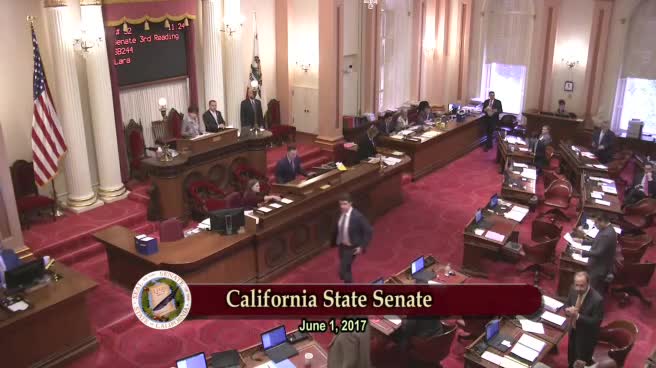

Bill Author

Bill Co-Author(s):