SB 255: California Partnership for Long-Term Care Program.
- Session Year: 2017-2018
- House: Senate
- Latest Version Date: 2017-03-20
Existing law establishes the California Partnership for Long-Term Care Program, which is administered by the State Department of Health Care Services. The purpose of the program is to link private long-term care insurance and health care service plan contracts that cover long-term care with the In-Home Supportive Services program and the Medi-Cal program and to provide Medi-Cal program benefits to certain individuals who have income and resources above the eligibility levels for receipt of medical assistance, but who have purchased certified private long-term care insurance policies. Existing law prescribes specified criteria for certification of a long-term care insurance policy under the program.
Existing law requires a policy, certificate, or rider in which benefits are limited to the provision of all care settings, except nursing facility care, and that is offered under the California Partnership for Long-Term Care Program to be called a home care and community-based services policy, certificate, or rider. A long-term care policy, certificate, or rider that purports to provide benefits of home and community-based services under the California Partnership for Long-Term Care Program is required to provide specified minimum services, including assisted living facility services and residential care facility services. Existing law includes minimum policy definitions of those facilities. Existing law also requires the department to adopt regulations requiring that a long-term care insurance policy or health care service plan contract that includes long-term care services include, among other specified coverage categories, home care and community-based care coverage only.
This bill would require a policy, certificate, or rider as described above to instead be called a home care, community-based services, and residential care facility only policy, certificate, or rider. The bill would delete assisted living facility services from the list of required minimum services to be provided, and also would clarify that those required minimum services include care in a residential care facility, and delete the policy definitions. The bill also would make conforming name changes and various technical nonsubstantive revisions. changes.
This bill would declare that it is to take effect immediately as an urgency statute.
Existing law establishes the California Partnership for Long-Term Care Program, which is administered by the State Department of Health Care Services. The purpose of the program is to link private long-term care insurance and health care service plan contracts that cover long-term care with the In-Home Supportive Services program and the Medi-Cal program and to provide Medi-Cal program benefits to certain individuals who have income and resources above the eligibility levels for receipt of medical assistance, but who have purchased certified private long-term care insurance policies. Existing law prescribes specified criteria for certification of a long-term care insurance policy under the program.
Existing law requires a policy, certificate, or rider in which benefits are limited to the provision of all care settings, except nursing facility care, and that is offered under the California Partnership for Long-Term Care Program to be called a home care and community-based services policy, certificate, or rider. A long-term care policy, certificate, or rider that purports to provide benefits of home and community-based services under the California Partnership for Long-Term Care Program is required to provide specified minimum services, including assisted living facility services and residential care facility services. Existing law includes minimum policy definitions of those facilities. Existing law also requires the department to adopt regulations requiring that a long-term care insurance policy or health care service plan contract that includes long-term care services include, among other specified coverage categories, home care and community-based care coverage only.
This bill would require a policy, certificate, or rider as described above to instead be called a home care, community-based services, and residential care facility only policy, certificate, or rider. The bill would delete assisted living facility services from the list of required minimum services to be provided, and also would delete the policy definitions. The bill also would make conforming name changes and various technical nonsubstantive revisions.
This bill would declare that it is to take effect immediately as an urgency statute.
(a)A Every policy that is intended to be a qualified long-term care insurance contract as provided by Public Law 104-191 shall be identified as such by prominently displaying and printing on page one of the policy form and the outline of coverage and in the application the following words: This contract for long-term care insurance is intended to be a federally qualified long-term care insurance contract and may qualify you for federal and state tax benefits. A Every policy that is not intended to be a qualified long-term care insurance contract as provided by Public Law 104-191 shall be identified as such by prominently displaying and printing on page one of the policy form and the outline of coverage and in the application the following words: This contract for long-term care insurance is not intended to be a federally qualified long-term care insurance contract.
(b)A Any policy or certificate in which benefits are limited to the provision of institutional care shall be called a nursing facility and residential care facility only policy or certificate and the words Nursing Facility and Residential Care Facility Only shall be prominently displayed on page one of the form and the outline of coverage. The commissioner may approve alternative wording if it is more descriptive of the benefits.
(c)A Any policy or certificate in which benefits are limited to the provision of home care services, including community-based services, shall be called a home care only policy or certificate and the words Home Care Only shall be prominently displayed on page one of the form and the outline of coverage. The commissioner may approve alternative wording if it is more descriptive of the benefits.
(d)A Any policy, certificate, or rider in which benefits are limited to the provision of all care settings, except nursing facility care, and that is offered under the California Partnership for Long-Term Care Program established by Section 22000 of the Welfare and Institutions Code shall be called a home care, community-based services, and residential care facility only policy, certificate, or rider and the words Home Care, Community-Based Services and Residential Care Facility Only shall be prominently displayed on the first page of the form and the outline of coverage. The commissioner may approve an alternative version of those words if the alternative version is more descriptive of the benefits provided.
(e)Only those policies or certificates providing benefits for both institutional care and home care may be called comprehensive long-term care insurance.
SEC. 2.Section 10232.81 of the Insurance Code is amended to read:10232.81.A Every long-term care policy, certificate, or rider that purports to provide benefits of home care, community-based services, and residential care facility services under the California Partnership for Long-Term Care Program established by Section 22000 of the Welfare and Institutions Code shall provide at least the following:
(a)Residential care facility services.(a)Care in a residential care facility.
(b)Home health care.
(c)Adult day care.
(d)Personal care.
(e)Homemaker services.
(f)Hospice services.
(g)Respite care.
SEC. 3.Section 22009 of the Welfare and Institutions Code is amended to read:22009.(a)The State Department of Health Care Services shall adopt regulations to implement this division, including, but not limited to, regulations that establish:
(1)The population and age groups that are eligible to participate in the program.
(2)The minimum level of long-term care insurance or long-term care coverage included in health care service plan contracts that must be purchased to meet the requirement of subdivision (b) of Section 22003.
(3)(A)The amount and types of services that a long-term care insurance policy or health care service plan contract that includes long-term care services must cover to meet the requirements of this division. The types of policies or plans shall include nursing and residential care facility coverage only, home care, community-based services, and residential care facility coverage only, and comprehensive coverage.
(B)Policies that provide only home care benefits shall include coverage for electronic or other devices intended to assist in monitoring the health and safety of an insured.
(4)Which coordinating entities are designated and approved to deliver individual assessment and case management services to individuals at home or in a community setting, as required by subdivision (b) of Section 22006.
(b)The State Department of Health Care Services shall also adopt regulations to implement this division, including, but not limited to, regulations that establish:
(1)The disability criteria for eligibility for long-term care benefits as required by subdivision (c) of Section 22006.
(2)The specific eligibility requirements for receipt of the Medi-Cal benefits provided for by the program, and those Medi-Cal benefits for which participants in the program shall be eligible.
(c)The State Department of Social Services shall also adopt regulations to implement this division, including, but not limited to, regulations that establish:
(1)The specific eligibility requirements for in-home supportive services benefits.
(2)Those in-home supportive services benefits for which participants in the program shall be eligible.
(d)The State Department of Health Care Services and the State Department of Social Services shall also jointly adopt regulations that provide for the following:
(1)Continuation of benefits pursuant to Section 22008.5.
(2)The protection of a participants resources pursuant to Section 22004, and the ratio of resources to long-term care benefit payments as described in subdivision (c) of Section 22004.
(e)(1)The departments shall adopt emergency regulations pursuant to Chapter 3.5 (commencing with Section 11340) of Part 1 of Division 3 of Title 2 of the Government Code to implement this division. The adoption of regulations pursuant to this section in order to implement this division shall be deemed to be an emergency and necessary for the immediate preservation of the public peace, health, or safety.
(2)Notwithstanding Chapter 3.5 (commencing with Section 11340) of Part 1 of Division 3 of Title 2 of the Government Code, emergency regulations adopted pursuant to this section shall not be subject to the review and approval of the Office of Administrative Law. The regulations shall become effective immediately upon filing with the Secretary of State. The regulations shall not remain in effect more than 120 days unless the adopting agency complies with all of the provisions of Chapter 3.5 (commencing with Section 11340) as required by subdivision (c) of Section 11346.1 of the Government Code.
SEC. 4.This act is an urgency statute necessary for the immediate preservation of the public peace, health, or safety within the meaning of Article IV of the California Constitution and shall go into immediate effect. The facts constituting the necessity are:
In order to more accurately describe long-term care policies that may be submitted for certification by the California Partnership for Long-Term Care Program in the 2017 calendar year, it is necessary for this act to take effect immediately.
(a)Every A policy that is intended to be a qualified long-term care insurance contract as provided by Public Law 104-191 shall be identified as such by prominently displaying and printing on page one of the policy form and the outline of coverage and in the application the following words: This contract for long-term care insurance is intended to be a federally qualified long-term care insurance contract and may qualify you for federal and state tax benefits. Every A policy that is not intended to be a qualified long-term care insurance contract as provided by Public Law 104-191 shall be identified as such by prominently displaying and printing on page one of the policy form and the outline of coverage and in the application the following words: This contract for long-term care insurance is not intended to be a federally qualified long-term care insurance contract.
(b)Any A policy or certificate in which benefits are limited to the provision of institutional care shall be called a nursing facility and residential care facility only policy or certificate and the words Nursing Facility and Residential Care Facility Only shall be prominently displayed on page one of the form and the outline of coverage. The commissioner may approve alternative wording if it is more descriptive of the benefits.
(c)Any A policy or certificate in which benefits are limited to the provision of home care services, including community-based services, shall be called a home care only policy or certificate and the words Home Care Only shall be prominently displayed on page one of the form and the outline of coverage. The commissioner may approve alternative wording if it is more descriptive of the benefits.
(d)Any A policy, certificate, or rider in which benefits are limited to the provision of all care settings, except nursing facility care, and that is offered under the California Partnership for Long-Term Care Program established by Section 22000 of the Welfare and Institutions Code shall be called a home and community-based services care, community-based services, and residential care facility only policy, certificate, or rider and the words Home and Community-Based Services Only Home Care, Community-Based Services and Residential Care Facility Only shall be prominently displayed on the first page of the form and the outline of coverage. The commissioner may approve an alternative version of those words if the alternative version is more descriptive of the benefits provided.
(e)Only those policies or certificates providing benefits for both institutional care and home care may be called comprehensive long-term care insurance.
SEC. 2.Section 10232.81 of the Insurance Code is amended to read:10232.81.(a)Every A long-term care policy, certificate, or rider that purports to provide benefits of home and community-based services home care, community-based services, and residential care facility services under the California Partnership for Long-Term Care Program established by Section 22000 of the Welfare and Institutions Code shall provide at least the following:
(1)(a)Residential care facility. facility services.
(2)Assisted living facility.(3)(b)Home health care.
(4)(c)Adult day care.
(5)(d)Personal care.
(6)(e)Homemaker services.
(7)(f)Hospice services.
(8)(g)Respite care.
(b)For purposes of this section, policy definitions of the benefits described in subdivision (a) may be no more restrictive than the following:(1)Residential care facility means a facility that is licensed as a residential care facility for the elderly or a residential care facility as defined in the Health and Safety Code. Outside California, an eligible provider is a facility that meets licensure standards applicable to the facility, if any, and is engaged primarily in providing ongoing care and related services sufficient to support needs resulting from impairment in activities of daily living or impairment in cognitive ability and which also provides care and services on a 24-hour basis, has a trained and ready-to-respond employee on duty in the facility at all times to provide care and services, provides three meals per day and accommodates special dietary needs, has agreements to ensure that residents receive the medical care services of a physician or nurse in case of emergency, and has appropriate methods and procedures to provide necessary assistance to residents in the management of prescribed medications.(2)Assisted living facility means a facility licensed as an assisted living facility as defined in the Health and Safety Code. Outside California, an eligible provider is a facility that meets licensure standards applicable to the facility, if any, and is engaged primarily in providing food and shelter and providing personal care services, or in administering medication by a person licensed or otherwise authorized to administer the medication.SEC. 3.Section 22009 of the Welfare and Institutions Code is amended to read:22009.(a)The State Department of Health Care Services shall adopt regulations to implement this division, including, but not limited to, regulations that establish:
(1)The population and age groups that are eligible to participate in the program.
(2)The minimum level of long-term care insurance or long-term care coverage included in health care service plan contracts that must be purchased to meet the requirement of subdivision (b) of Section 22003.
(3)(A)The amount and types of services that a long-term care insurance policy or health care service plan contract that includes long-term care services must cover to meet the requirements of this division. The types of policies or plans shall include nursing and residential care facility coverage only, home care and community-based care home care, community-based services, and residential care facility coverage only, and comprehensive coverage.
(B)Policies that provide only home care benefits shall include coverage for electronic or other devices intended to assist in monitoring the health and safety of an insured.
(4)Which coordinating entities are designated and approved to deliver individual assessment and case management services to individuals at home or in a community setting, as required by subdivision (b) of Section 22006.
(b)The State Department of Health Care Services shall also adopt regulations to implement this division, including, but not limited to, regulations that establish:
(1)The disability criteria for eligibility for long-term care benefits as required by subdivision (c) of Section 22006.
(2)The specific eligibility requirements for receipt of the Medi-Cal benefits provided for by the program, and those Medi-Cal benefits for which participants in the program shall be eligible.
(c)The State Department of Social Services shall also adopt regulations to implement this division, including, but not limited to, regulations that establish:
(1)The specific eligibility requirements for in-home supportive services benefits.
(2)Those in-home supportive services benefits for which participants in the program shall be eligible.
(d)The State Department of Health Care Services and the State Department of Social Services shall also jointly adopt regulations that provide for the following:
(1)Continuation of benefits pursuant to Section 22008.5.
(2)The protection of a participants resources pursuant to Section 22004, and the ratio of resources to long-term care benefit payments as described in subdivision (c) of Section 22004.
(e)(1)The departments shall adopt emergency regulations pursuant to Chapter 3.5 (commencing with Section 11340) of Part 1 of Division 3 of Title 2 of the Government Code to implement this division. The adoption of regulations pursuant to this section in order to implement this division shall be deemed to be an emergency and necessary for the immediate preservation of the public peace, health, or safety.
(2)Notwithstanding Chapter 3.5 (commencing with Section 11340) of Part 1 of Division 3 of Title 2 of the Government Code, emergency regulations adopted pursuant to this section shall not be subject to the review and approval of the Office of Administrative Law. The regulations shall become effective immediately upon filing with the Secretary of State. The regulations shall not remain in effect more than 120 days unless the adopting agency complies with all of the provisions of Chapter 3.5 (commencing with Section 11340) as required by subdivision (c) of Section 11346.1 of the Government Code.
SEC. 4.This act is an urgency statute necessary for the immediate preservation of the public peace, health, or safety within the meaning of Article IV of the California Constitution and shall go into immediate effect. The facts constituting the necessity are:
In order to more accurately describe long-term care policies that may be submitted for certification by the California Partnership for Long-Term Care in the 2017 calendar year, it is necessary for this act to take effect immediately.
|
Date
|
Status
|
|---|---|
| Jun 5, 2017 | Referred to Coms. on INS. and AGING & L.T.C. |
| May 23, 2017 | In Assembly. Read first time. Held at Desk. |
| May 22, 2017 | Read third time. Urgency clause adopted. Passed. (Ayes 37. Noes 0. Page 1148.) Ordered to the Assembly. |
| May 16, 2017 | Read second time. Ordered to consent calendar. |
| May 15, 2017 | From committee: Be ordered to second reading pursuant to Senate Rule 28.8 and ordered to consent calendar. |
| May 4, 2017 | Set for hearing May 15. |
| Apr 27, 2017 | Withdrawn from committee. |
| Apr 27, 2017 | From committee: Do pass and re-refer to Com. on HEALTH with recommendation: To consent calendar. (Ayes 9. Noes 0. Page 1100.) (April 26). Re-referred to Com. on HEALTH. |
| Mar 20, 2017 | From committee with author's amendments. Read second time and amended. Re-referred to Com. on INS. |
| Mar 3, 2017 | Set for hearing April 26. |
| Feb 16, 2017 | Referred to Coms. on INS. and HEALTH. |
| Feb 8, 2017 | From printer. May be acted upon on or after March 10. |
| Feb 7, 2017 | Introduced. To Com. on RLS. for assignment. To print. |
|
Date
|
Description
|
Location
|
Votes
|
|
|---|---|---|---|---|
| May 22, 2017 | Consent Calendar 2nd SB255 Mendoza Urgency Clause | Senate Floor |
Passed |
|
| Apr 26, 2017 | Do pass, but first be re-referred to the Committee on [Health] with the recommendation: To Consent Calendar | Senate Standing Committee on Insurance |
Passed |
|
| Apr 26, 2017 | Do pass, but first be re-referred to the Committee on [Appropriations] with the recommendation: To Consent Calendar | Senate Standing Committee on Insurance |
Passed |
This list shows positions taken on this bill by organizations on the date displayed, which is linked to the original source.
Positions by individuals are not included.
Office of Senate Floor Analyses (916) 651-1520 Fax: (916) 327-4478 | SB |
CONSENT
Bill No: SB 255
:
SENATE INSURANCE COMMITTEE: 9-0, 4/26/17
AYES: Mendoza, Gaines, Berryhill, Glazer, Hernandez, Mitchell, Newman, Portantino, Roth
SENATE APPROPRIATIONS COMMITTEE: Senate Rule 28.8
DIGEST:
This bill clarifies the type of coverage provided in a new form of long-term care insurance (LTCI) offered through the Partnership for Long-Term Care Program (Partnership).
Existing law:
- Provides for the regulation of LTCI by the California Department of Insurance and prescribes various requirements and conditions governing the delivery of individual or group LTCI in the state.
- Establishes the Medi-Cal program, administered by the Department of Health Care Services (DHCS), under which low-income individuals are eligible for long-term care services.
- Establishes the Partnership within DHCS to link private LTCI benefits with the Medi-Cal and In-Home Supportive Services programs.
- Establishes a special category of LTCI that may be offered only through the Partnership called “Home and Community-Based Services Only” policies that cover home care and residential care, but not nursing home care.
This bill:
- Retitles “Home and Community-Based Services Only” policies as “Home Care, Community-Based Services and Residential Care Facility Only” policies.
- Eliminates unnecessary definitions of “residential care facility” and “assisted living facility.”
- Declares that it is necessary for the bill to go into effect immediately so that these policies may be submitted for certification in the 2017 calendar year.
Background
Insurance law recognizes three categories of services covered by an LTCI policy: home care services are provided in the home or in some types of community-based facilities such as an adult day care facility; residential care facility (RCF) services are provided in a 24-hour, nonmedical facility; and nursing home care services are provided in a 24-hour facility that also provides medical care. Generally, a policy that offers nursing home coverage must also cover RCF care.
With one exception, LTCI covers three combinations of these forms of service: home care only, nursing home only, and “comprehensive” (policies that cover both). SB 1384 (Liu, Chapter 487, Statutes of 2016) authorized the sale of a new type of policy, available only through the Partnership, which combines home and RCF care, but excludes nursing home care. These types of policies are called “Home and Community-Based Services Only” policies. This bill changes the name to “Home Care, Community-Based Services and Residential Care Facility Only” to make it clear they cover RCF care. The bill does not revise the actual benefits offered.
SB 255 eliminates an unnecessary definition of “assisted living facility” because those facilities are considered a form of RCF care and it is not necessary to distinguish between assisted living facilities and other forms of RCFs in the Insurance Code. It also eliminates a redundant definition of RCF care (see Insurance Code § 10232.92). This bill does not affect the type, quality, or availability of services covered under these policies.
FISCAL EFFECT: Appropriation: Fiscal Com.: Local:
None received
OPPOSITION: (Verified 5/15/17)
None received
ARGUMENTS IN SUPPORT: According to the author, the Legislature authorized a new form of LTCI last year that may be offered through the Partnership as one way to increase affordable LTCI options for middle-income consumers. The Partnership is housed at the DHCS and certifies special LTCI policies that coordinate with Medi-Cal’s long-term care program. SB 255 builds on last year’s efforts by clarifying the services covered in these new types of policies and eliminating unnecessary and confusing statutory language.
5/17/17 9:46:09
**** END ****
SENATE COMMITTEE ON
Senator Tony Mendoza, Chair
2017 - 2018 Regular
Bill No: Hearing Date: April 26, 2017
Author: | |||
Version: | Amended | ||
Urgency: | Fiscal: | ||
Consultant: | |||
Subject:
SUMMARY
This bill clarifies the type of coverage provided in a new form of long-term care insurance (LTCI) offered through the Partnership for Long-Term Care Program (“Partnership”).
DIGEST
Existing law
- Provides for the regulation of LTCI by the California Department of Insurance (CDI) and prescribes various requirements and conditions governing the delivery of individual or group LTCI in the state.
- Establishes the Medi-Cal program, administered by the Department of Health Care Services (DHCS), under which low-income individuals are eligible for long-term care services.
- Establishes the Partnership within DHCS to link private LTCI benefits with the Medi-Cal and In-Home Supportive Services (IHSS) programs.
- Establishes a special category of LTCI that may be offered only through the Partnership called “Home and Community-Based Services Only” policies that cover home care and residential care, but not nursing home care.
This bill
- Retitles “Home and Community-Based Services Only” policies as “Home Care, Community-Based Services and Residential Care Facility Only” policies.
- Eliminates unnecessary definitions of “residential care facility” and “assisted living facility.”
- Declares that it is necessary for the bill to go into effect immediately so that these policies may be submitted for certification in the 2017 calendar year.
COMMENTS
- Purpose of the bill According to the author, the Legislature authorized a new form of LTCI last year that may be offered through the Partnership as one way to increase affordable LTCI options for middle-income consumers. The Partnership is housed at the DHCS and certifies special LTCI policies that coordinate with Medi-Cal’s long-term care program. SB 255 builds on last year’s efforts by clarifying the services covered in these new types of policies and eliminating unnecessary and confusing statutory language.
- Background Insurance law recognizes three categories of services covered by an LTCI policy:
- Home care services are provided in the home or in some types of community-based facilities such as an adult day care facility.
- Residential care facility (RCF) services are provided in a 24-hour, nonmedical facility.
- Nursing home care services are provided in a 24-hour facility that also provides medical care. Generally, a policy that offers nursing home coverage must also cover RCF care.
With one exception, LTCI covers three combinations of these forms of service: home care only, nursing home only, and “comprehensive” (policies that cover both). Last year, SB 1384 authorized the sale of a new type of policy, available only through the Partnership, which combines home and RCF care, but excludes nursing home care. These types of policies are called “Home and Community-Based Services Only” policies. This bill changes the name to “Home Care, Community-Based Services and Residential Care Facility Only” to make it clear they cover RCF care. The bill does not revise the actual benefits offered.
SB 255 eliminates an unnecessary definition of “assisted living facility” because those facilities are considered a form of RCF care and it is not necessary to distinguish between assisted living facilities and other forms of RCFs in the Insurance Code. It also eliminates a redundant definition of RCF care (see Insurance Code § 10232.92). This bill does not affect the type, quality, or availability of services covered under these policies.
SB 1384 established a task force to consider additional reforms to the Partnership program. It held its first meeting on April 1, 2017. In order to expedite the clarifications provided in this bill, it contains an urgency provision so that insurers may submit these policies for approval and certification with as little possible delay. The author is working with the task force to make sure that the bill is consistent with recommendations issued by the task force.
- Support None received
- Opposition None received
- Prior and Related Legislation SB 1384 (Liu), Chapter 487, Statutes of 2016, revised the certification standards and policy design options for LTCI policies certified by the Partnership and established a task force to consider further reforms.
POSITIONS
Support
None received
Oppose
None received
-- END --
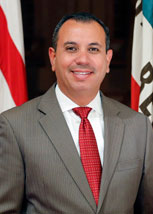
Bill Author
Bill Co-Author(s):