SB 269: Commercial fishing businesses and marine aquaria: landing receipts.
- Session Year: 2017-2018
- House: Senate
- Latest Version Date: 2018-09-20
(1)Existing law regulating commercial fishing imposes, or authorizes the imposition of, various license, permit, and registration fees. Existing law requires specified persons to pay commercial fishing fees, referred to as landing fees, and sets forth requirements for the documentation of those landing fees in the form of a landing receipt, as prescribed. Existing law requires that a person required to be licensed as a marine aquaria receiver make a legible, true, and complete record of the landing receipts on a form and in a manner prescribed by the Department of Fish and Wildlife, and deliver copies of those receipts to the department on or before the first and 16th day of each month, as provided. Existing law requires a person licensed as a commercial fish business who takes his or her own fish to make a legible record in the form of a landing receipt, as specified, at the time the fish are brought ashore, and requires that the original signed copy of the landing receipt be delivered by the licensee to the department on or before the 16th day or the last day of the month in which the fish were landed, whichever date occurs first after landing. Under existing law, a violation of the Fish and Game Code is a crime.
This bill would specify that the original signed copy of the paper landing receipt made under those provisions governing landing receipts for a licensed marine aquaria and a commercial fish business who takes his or her own fish shall be delivered to the department on or before the 16th or last day of the month in which the fish were landed, whichever date occurs first after the landing, as prescribed, and would require that landing receipt records that are completed and submitted electronically be submitted to the department within 3 business days, as defined, of the landing. Because a violation of this requirement expands the definition of a crime, the bill would impose a state-mandated local program.
(2)The California Constitution requires the state to reimburse local agencies and school districts for certain costs mandated by the state. Statutory provisions establish procedures for making that reimbursement.
This bill would provide that no reimbursement is required by this act for a specified reason.
(1)Existing law regulating commercial fishing imposes, or authorizes the imposition of, various license, permit, and registration fees. Existing law requires specified persons to pay commercial fishing fees, referred to as landing fees, and sets forth requirements for the documentation of those landing fees in the form of a landing receipt, as prescribed. Existing law requires that a person required to be licensed as a marine aquaria receiver make a legible, true, and complete record of the landing receipts on a form and in a manner prescribed by the Department of Fish and Wildlife, and deliver copies of those receipts to the department on or before the first and 16th day of each month, as provided. Existing law requires a person licensed as a commercial fish business who takes his or her own fish to make a legible record in the form of a landing receipt, as specified, at the time the fish are brought ashore, and requires that the original signed copy of the landing receipt be delivered by the licensee to the department on or before the 16th day or the last day of the month in which the fish were landed, whichever date occurs first after landing. Under existing law, a violation of the Fish and Game Code is a crime.
This bill would specify that the original signed copy of the paper landing receipt made under those provisions governing landing receipts for a licenced marine aquaria and a commercial fish business who takes his or her own fish shall be delivered to the department on or before the 16th or last day of the month in which the fish were landed, whichever date occurs first after the landing, as prescribed, and would require that landing receipt records that are completed and submitted electronically be submitted to the department within 24 hours 3 business days, as defined, of the landing. Because a violation of this requirement expands the definition of a crime, the bill would impose a state-mandated local program.
(2)The California Constitution requires the state to reimburse local agencies and school districts for certain costs mandated by the state. Statutory provisions establish procedures for making that reimbursement.
This bill would provide that no reimbursement is required by this act for a specified reason.
(1)Existing law regulating commercial fishing imposes, or authorizes the imposition of, various license, permit, and registration fees. Existing law requires specified persons to pay commercial fishing fees, referred to as landing fees, and sets forth requirements for the documentation of those landing fees in the form of a landing receipt, as prescribed. Existing law requires that a person required to be licensed as a marine aquaria receiver make a legible, true, and complete record of the landing receipts on a form and in a manner prescribed by the Department of Fish and Wildlife, and deliver copies of those receipts to the department on or before the first and 16th day of each month, as provided. Existing law requires a person licensed as a commercial fish business who takes his or her own fish to make a legible record in the form of a landing receipt, as specified, at the time the fish are brought ashore, and requires that the original signed copy of the landing receipt be delivered by the licensee to the department on or before the 16th day or the last day of the month in which the fish were landed, whichever date occurs first after landing. Under existing law, a violation of the Fish and Game Code is a crime.
This bill would specify that the original signed copy of the paper landing receipt made under those provisions governing landing receipts for a licenced marine aquaria and a commercial fish business who takes his or her own fish shall be delivered to the department on or before the 16th or last day of the month in which the fish were landed, whichever date occurs first after the landing, as prescribed, and would require that landing receipt records that are completed and submitted electronically be submitted to the department within 24 hours of the landing. Because a violation of this requirement expands the definition of a crime, the bill would impose a state-mandated local program.
(2)The California Constitution requires the state to reimburse local agencies and school districts for certain costs mandated by the state. Statutory provisions establish procedures for making that reimbursement.
This bill would provide that no reimbursement is required by this act for a specified reason.
Existing law, the California Ocean Protection Act, establishes the Ocean Protection Council in state government. The act requires the council to develop and implement a voluntary sustainable seafood promotion program for the state, consisting of specified components relating to marketing assistance and assisting eligible entities in the fishing industry to meet specified internationally accepted standards for sustainable seafood.This bill would require that the program also include a promotion and direct sales enhancement component designed to increase direct sales of sustainable seafood by California fisheries, including the provision of certain information to consumers about sustainable seafood caught in the state.Existing law, the California Ocean Protection Act, establishes the Ocean Protection Council in state government. The act requires the council to develop and implement a voluntary sustainable seafood promotion program for the state, consisting of specified components relating to marketing assistance and assisting eligible entities in the fishing industry to meet specified internationally accepted standards for sustainable seafood.
This bill would require that the program also include a promotion and direct sales enhancement component designed to increase direct sales of sustainable seafood by California fisheries, including the provision of certain information to consumers about sustainable seafood caught in the state.
(a)A person required to be licensed as a marine aquaria receiver shall make a legible, true, and complete record of the landing receipts on a form and in a manner prescribed by the department.
(b)The department may require any information from a person required to be licensed as a marine aquaria receiver it deems necessary to carry out this article.
(c)The landing receipt form shall be completed at the time the organisms are received from the commercial fisherman. A person required to be licensed as a marine aquaria receiver who takes his or her own organisms shall complete a marine aquaria landing receipt form at the time the organisms are brought ashore.
(d)The copies of the aquaria landing receipts shall be delivered to the department, as provided in Section 8046.
SEC. 2.Section 8046 of the Fish and Game Code is amended to read:8046.(a)The original signed copy of the paper landing receipt made under Section 8043 or 8043.1 shall be delivered to the department on or before the 16th or last day of the month in which the fish were landed, whichever date occurs first after the landing. Landing receipt records completed and submitted electronically shall be submitted to the department within three business days of the landing. A copy of the landing receipt shall be delivered to the commercial fisherman at the time of the purchase or receipt of the fish. That copy of the landing receipt shall be retained by the commercial fisherman for a period of four years and shall be available for inspection at any time during that period by the department. A copy of the landing receipt shall be kept by the person licensed pursuant to Article 7 (commencing with Section 8030) who filled out the landing receipt for a period of four years and shall be available for inspection at any time within that period by the department.
(b)On delivery of sardines, anchovies, mackerel, squid, tuna, or bonito intended to be processed or sold as fresh fish, the person licensed pursuant to Article 7 (commencing with Section 8030) who filled out the landing receipt, upon request of the authorized agent described in subdivision (c), shall notify the authorized agent of the unloading and weighing of the fish and shall permit the authorized agent to be present at all times during the weighing of the fish.
(c)A copy of the landing receipt shall be delivered to an agent authorized in writing by the majority of the persons who participated in the taking of the fish, excluding the commercial fisherman receiving the original copy.
(d)For purposes of this section, business day means Monday to Friday, inclusive, excluding days designated as state or federal holidays.
SEC. 3.Section 8047 of the Fish and Game Code is amended to read:8047.(a)(1)A person licensed under Article 7 (commencing with Section 8030) who takes his or her own fish shall make a legible record in the form of the landing receipt as required by Sections 8043 and 8043.1 at the time the fish are brought ashore. The original signed copy of the landing receipt shall be delivered by the licensee to the department, as provided in Section 8046. A copy of the landing receipt shall be retained by the licensee for a period of four years and shall be available for inspection at any time within that period by the department. A copy of the landing receipt shall be delivered to an agent authorized in writing by the majority of the persons who participated in the taking of the fish, excluding the commercial fisherman receiving the original copy.
(2)A person licensed under Section 8033.5 who sells his or her fish to a licensed receiver may use a transportation receipt to transport those fish only to that licensed receiver. The receiver shall complete a landing receipt for those fish. A person who sells his or her fish to the ultimate consumer shall complete a landing receipt pursuant to Sections 8043 and 8043.2. Transportation receipts shall be completed at the time the fish are transferred from the fishing vessel.
(b)Every commercial fisherman who sells fish taken from the waters of this state or brought into this state in fresh condition to persons not licensed to receive fish for commercial purposes pursuant to Article 7 (commencing with Section 8030) shall make a legible record in the form of the landing receipt required by Sections 8043 and 8043.1. Persons subject to Section 8043 shall remit the landing fee imposed by Section 8041. The person taking, purchasing, or receiving the fish, whether or not licensed under Article 7 (commencing with Section 8030), shall sign the landing receipt. The original signed copy of the landing receipt shall be delivered by the commercial fisherman to the department, as provided in Section 8046. A copy of the landing receipt shall be retained by the commercial fisherman for a period of four years and shall be available for inspection at any time within that period by the department. A copy of the landing receipt shall be retained by the person taking, purchasing, or receiving the fish until they are prepared for consumption or otherwise disposed of. A copy of the landing receipt shall be delivered to an agent authorized in writing by the majority of the persons who participated in the taking of the fish, excluding the commercial fisherman receiving the original copy.
(c)(1)Every commercial fisherman or his or her designee, who transports, causes to be transported, or delivers to another person for transportation, any fish, except herring, taken from the waters of this state or brought into this state in fresh condition, shall fill out a transportation receipt according to the instructions and on forms provided by the department at the time the fish are brought ashore.
(2)The original signed copy of the transportation receipt shall be delivered by the commercial fisherman to the department on or before the 16th day or the last day of the month in which the fish were landed, whichever date occurs first after landing. A copy of the transportation receipt shall be retained by the commercial fisherman who filled it out for a period of four years and shall be available for inspection at any time within that period by the department. A copy of the transportation receipt shall be given to and retained by the person transporting the fish until the fish are sold fresh, processed, or otherwise disposed of.
(3)The transportation receipt is required only for transit purposes.
(4)A person transporting fish from the point of first landing under a transportation receipt is not required to be licensed to conduct the activities of a fish receiver as described in Section 8033.
(5)The transportation book receipt shall be issued to an individual fisherman and is not transferable.
(d)The transportation receipt shall contain all of the following information:
(1)The name of each species of fish, pursuant to Section 8045.
(2)The date and time of the receipt.
(3)The accurate weight of the species of fish being transported. Sablefish may be reported in dressed weight, and if so reported, shall have the round weights computed, for purposes of management quotas, by multiplying 1.6 times the reported dressed weight.
(4)The name and identification number of the fisherman. The signature of the fisherman authorizing transportation.
(5)The name of the person transporting the fish.
(6)The name of the fish business, the fish business identification number, and the corresponding landing receipt number issued by the fish business to the commercial fisherman.
(7)The department registration number of the vessel and the name of the vessel.
(8)The department origin block number where the fish were caught.
(9)The port of first landing.
(10)Any other information the department may prescribe.
(e)The numbered transportation receipt forms in each individual transportation receipt book shall be completed sequentially. A voided fish transportation receipt shall have the word VOID plainly and noticeably written on the face of the receipt. A voided fish transportation receipt shall be submitted to the department in the same manner as a completed fish transportation receipt is submitted to the department. A commercial fisherman who is no longer conducting business as a licensed fisherman shall forward all unused transportation receipts and transportation receipt books to the department immediately upon terminating his or her business activity.
SEC. 4.No reimbursement is required by this act pursuant to Section 6 of Article XIIIB of the California Constitution because the only costs that may be incurred by a local agency or school district will be incurred because this act creates a new crime or infraction, eliminates a crime or infraction, or changes the penalty for a crime or infraction, within the meaning of Section 17556 of the Government Code, or changes the definition of a crime within the meaning of Section 6 of Article XIIIB of the California Constitution.
(a)A person required to be licensed as a marine aquaria receiver shall make a legible, true, and complete record of the landing receipts on a form and in a manner prescribed by the department.
(b)The department may require any information from a person required to be licensed as a marine aquaria receiver it deems necessary to carry out this article.
(c)The landing receipt form shall be completed at the time the organisms are received from the commercial fisherman. A person required to be licensed as a marine aquaria receiver who takes his or her own organisms shall complete a marine aquaria landing receipt form at the time the organisms are brought ashore.
(d)The copies of the aquaria landing receipts shall be delivered to the department, as provided in Section 8046.
SEC. 2.Section 8046 of the Fish and Game Code is amended to read:8046.(a)The original signed copy of the paper landing receipt made under Section 8043 or 8043.1 shall be delivered to the department on or before the 16th or last day of the month in which the fish were landed, whichever date occurs first after the landing. Landing receipt records completed and submitted electronically shall be submitted to the department within 24 hours three business days of the landing. A copy of the landing receipt shall be delivered to the commercial fisherman at the time of the purchase or receipt of the fish. That copy of the landing receipt shall be retained by the commercial fisherman for a period of four years and shall be available for inspection at any time during that period by the department. A copy of the landing receipt shall be kept by the person licensed pursuant to Article 7 (commencing with Section 8030) who filled out the landing receipt for a period of four years and shall be available for inspection at any time within that period by the department.
(b)On delivery of sardines, anchovies, mackerel, squid, tuna, or bonito intended to be processed or sold as fresh fish, the person licensed pursuant to Article 7 (commencing with Section 8030) who filled out the landing receipt, upon request of the authorized agent described in subdivision (c), shall notify the authorized agent of the unloading and weighing of the fish and shall permit the authorized agent to be present at all times during the weighing of the fish.
(c)A copy of the landing receipt shall be delivered to an agent authorized in writing by the majority of the persons who participated in the taking of the fish, excluding the commercial fisherman receiving the original copy.
(d)For purposes of this section, business day means Monday to Friday, inclusive, excluding days designated as state or federal holidays.
SEC. 3.Section 8047 of the Fish and Game Code is amended to read:8047.(a)(1)A person licensed under Article 7 (commencing with Section 8030) who takes his or her own fish shall make a legible record in the form of the landing receipt as required by Sections 8043 and 8043.1 at the time the fish are brought ashore. The original signed copy of the landing receipt shall be delivered by the licensee to the department, as provided in Section 8046. A copy of the landing receipt shall be retained by the licensee for a period of four years and shall be available for inspection at any time within that period by the department. A copy of the landing receipt shall be delivered to an agent authorized in writing by the majority of the persons who participated in the taking of the fish, excluding the commercial fisherman receiving the original copy.
(2)A person licensed under Section 8033.5 who sells his or her fish to a licensed receiver may use a transportation receipt to transport those fish only to that licensed receiver. The receiver shall complete a landing receipt for those fish. A person who sells his or her fish to the ultimate consumer shall complete a landing receipt pursuant to Sections 8043 and 8043.2. Transportation receipts shall be completed at the time the fish are transferred from the fishing vessel.
(b)Every commercial fisherman who sells fish taken from the waters of this state or brought into this state in fresh condition to persons not licensed to receive fish for commercial purposes pursuant to Article 7 (commencing with Section 8030) shall make a legible record in the form of the landing receipt required by Sections 8043 and 8043.1. Persons subject to Section 8043 shall remit the landing fee imposed by Section 8041. The person taking, purchasing, or receiving the fish, whether or not licensed under Article 7 (commencing with Section 8030), shall sign the landing receipt. The original signed copy of the landing receipt shall be delivered by the commercial fisherman to the department, as provided in Section 8046. A copy of the landing receipt shall be retained by the commercial fisherman for a period of four years and shall be available for inspection at any time within that period by the department. A copy of the landing receipt shall be retained by the person taking, purchasing, or receiving the fish until they are prepared for consumption or otherwise disposed of. A copy of the landing receipt shall be delivered to an agent authorized in writing by the majority of the persons who participated in the taking of the fish, excluding the commercial fisherman receiving the original copy.
(c)(1)Every commercial fisherman or his or her designee, who transports, causes to be transported, or delivers to another person for transportation, any fish, except herring, taken from the waters of this state or brought into this state in fresh condition, shall fill out a transportation receipt according to the instructions and on forms provided by the department at the time the fish are brought ashore.
(2)The original signed copy of the transportation receipt shall be delivered by the commercial fisherman to the department on or before the 16th day or the last day of the month in which the fish were landed, whichever date occurs first after landing. A copy of the transportation receipt shall be retained by the commercial fisherman who filled it out for a period of four years and shall be available for inspection at any time within that period by the department. A copy of the transportation receipt shall be given to and retained by the person transporting the fish until the fish are sold fresh, processed, or otherwise disposed of.
(3)The transportation receipt is required only for transit purposes.
(4)A person transporting fish from the point of first landing under a transportation receipt is not required to be licensed to conduct the activities of a fish receiver as described in Section 8033.
(5)The transportation book receipt shall be issued to an individual fisherman and is not transferable.
(d)The transportation receipt shall contain all of the following information:
(1)The name of each species of fish, pursuant to Section 8045.
(2)The date and time of the receipt.
(3)The accurate weight of the species of fish being transported. Sablefish may be reported in dressed weight, and if so reported, shall have the round weights computed, for purposes of management quotas, by multiplying 1.6 times the reported dressed weight.
(4)The name and identification number of the fisherman. The signature of the fisherman authorizing transportation.
(5)The name of the person transporting the fish.
(6)The name of the fish business, the fish business identification number, and the corresponding landing receipt number issued by the fish business to the commercial fisherman.
(7)The department registration number of the vessel and the name of the vessel.
(8)The department origin block number where the fish were caught.
(9)The port of first landing.
(10)Any other information the department may prescribe.
(e)The numbered transportation receipt forms in each individual transportation receipt book shall be completed sequentially. A voided fish transportation receipt shall have the word VOID plainly and noticeably written on the face of the receipt. A voided fish transportation receipt shall be submitted to the department in the same manner as a completed fish transportation receipt is submitted to the department. A commercial fisherman who is no longer conducting business as a licensed fisherman shall forward all unused transportation receipts and transportation receipt books to the department immediately upon terminating his or her business activity.
SEC. 4.No reimbursement is required by this act pursuant to Section 6 of Article XIIIB of the California Constitution because the only costs that may be incurred by a local agency or school district will be incurred because this act creates a new crime or infraction, eliminates a crime or infraction, or changes the penalty for a crime or infraction, within the meaning of Section 17556 of the Government Code, or changes the definition of a crime within the meaning of Section 6 of Article XIIIB of the California Constitution.
(a)A person required to be licensed as a marine aquaria receiver shall make a legible, true, and complete record of the landing receipts on a form and in a manner prescribed by the department.
(b)The department may require any information from a person required to be licensed as a marine aquaria receiver it deems necessary to carry out this article.
(c)The landing receipt form shall be completed at the time the organisms are received from the commercial fisherman. A person required to be licensed as a marine aquaria receiver who takes his or her own organisms shall complete a marine aquaria landing receipt form at the time the organisms are brought ashore.
(d)The copies of the aquaria landing receipts shall be delivered to the department on or before the 1st and 16th day of each month asprovided in Section 8046. department, as provided in Section 8046.
SEC. 2.Section 8046 of the Fish and Game Code is amended to read:8046.(a)The original signed copy of the paper landing receipt made under Section 8043 or 8043.1 shall be delivered to the department on or before the 16th or last day of the month in which the fish were landed, whichever date occurs first after the landing. Landing receipt records completed and submitted electronically shall be submitted to the department within 24 hours of the landing. A copy of the landing receipt shall be delivered to the commercial fisherman at the time of the purchase or receipt of the fish. That copy of the landing receipt shall be retained by the commercial fisherman for a period of four years and shall be available for inspection at any time during that period by the department. A copy of the landing receipt shall be kept by the person licensed pursuant to Article 7 (commencing with Section 8030) who filled out the landing receipt for a period of four years and shall be available for inspection at any time within that period by the department.
(b)On delivery of sardines, anchovies, mackerel, squid, tuna, or bonito intended to be processed or sold as fresh fish, the person licensed pursuant to Article 7 (commencing with Section 8030) who filled out the landing receipt, upon request of the authorized agent described in subdivision (c), shall notify the authorized agent of the unloading and weighing of the fish and shall permit the authorized agent to be present at all times during the weighing of the fish.
(c)A copy of the landing receipt shall be delivered to an agent authorized in writing by the majority of the persons who participated in the taking of the fish, excluding the commercial fisherman receiving the original copy.
SEC. 3.Section 8047 of the Fish and Game Code is amended to read:8047.(a)(1)A person licensed under Article 7 (commencing with Section 8030) who takes his or her own fish shall make a legible record in the form of the landing receipt as required by Sections 8043 and 8043.1 at the time the fish are brought ashore. The original signed copy of the landing receipt shall be delivered by the licensee to the department on or before the 16th day or the last day of the month in which the fish were landed, whichever date occurs first after landing. department, as provided in Section 8046. A copy of the landing receipt shall be retained by the licensee for a period of four years and shall be available for inspection at any time within that period by the department. A copy of the landing receipt shall be delivered to an agent authorized in writing by the majority of the persons who participated in the taking of the fish, excluding the commercial fisherman receiving the original copy.
(2)A person licensed under Section 8033.5 who sells his or her fish to a licensed receiver may use a transportation receipt to transport those fish only to that licensed receiver. The receiver shall complete a landing receipt for those fish. A person who sells his or her fish to the ultimate consumer shall complete a landing receipt pursuant to Sections 8043 and 8043.2. Transportation receipts shall be completed at the time the fish are transferred from the fishing vessel.
(b)Every commercial fisherman who sells fish taken from the waters of this state or brought into this state in fresh condition to persons not licensed to receive fish for commercial purposes pursuant to Article 7 (commencing with Section 8030) shall make a legible record in the form of the landing receipt required by Sections 8043 and 8043.1. Persons subject to Section 8043 shall remit the landing fee imposed by Section 8041. The person taking, purchasing, or receiving the fish, whether or not licensed under Article 7 (commencing with Section 8030), shall sign the landing receipt. The original signed copy of the landing receipt shall be delivered by the commercial fisherman to the department on or before the first and 16th day of each month. department, as provided in Section 8046. A copy of the landing receipt shall be retained by the commercial fisherman for a period of four years and shall be available for inspection at any time within that period by the department. A copy of the landing receipt shall be retained by the person taking, purchasing, or receiving the fish until they are prepared for consumption or otherwise disposed of. A copy of the landing receipt shall be delivered to an agent authorized in writing by the majority of the persons who participated in the taking of the fish, excluding the commercial fisherman receiving the original copy.
(c)(1)Every commercial fisherman or his or her designee, who transports, causes to be transported, or delivers to another person for transportation, any fish, except herring, taken from the waters of this state or brought into this state in fresh condition, shall fill out a transportation receipt according to the instructions and on forms provided by the department at the time the fish are brought ashore.
(2)The original signed copy of the transportation receipt shall be delivered by the commercial fisherman to the department on or before the 16th day or the last day of the month in which the fish were landed, whichever date occurs first after landing. A copy of the transportation receipt shall be retained by the commercial fisherman who filled it out for a period of four years and shall be available for inspection at any time within that period by the department. A copy of the transportation receipt shall be given to and retained by the person transporting the fish until the fish are sold fresh, processed, or otherwise disposed of.
(3)The transportation receipt is required only for transit purposes.
(4)A person transporting fish from the point of first landing under a transportation receipt is not required to be licensed to conduct the activities of a fish receiver as described in Section 8033.
(5)The transportation book receipt shall be issued to an individual fisherman and is not transferable.
(d)The transportation receipt shall contain all of the following information:
(1)The name of each species of fish, pursuant to Section 8045.
(2)The date and time of the receipt.
(3)The accurate weight of the species of fish being transported. Sablefish may be reported in dressed weight, and if so reported, shall have the round weights computed, for purposes of management quotas, by multiplying 1.6 times the reported dressed weight.
(4)The name and identification number of the fisherman. The signature of the fisherman authorizing transportation.
(5)The name of the person transporting the fish.
(6)The name of the fish business, the fish business identification number, and the corresponding landing receipt number issued by the fish business to the commercial fisherman.
(7)The department registration number of the vessel and the name of the vessel.
(8)The department origin block number where the fish were caught.
(9)The port of first landing.
(10)Any other information the department may prescribe.
(e)The numbered transportation receipt forms in each individual transportation receipt book shall be completed sequentially. A voided fish transportation receipt shall have the word VOID plainly and noticeably written on the face of the receipt. A voided fish transportation receipt shall be submitted to the department in the same manner as a completed fish transportation receipt is submitted to the department. A commercial fisherman who is no longer conducting business as a licensed fisherman shall forward all unused transportation receipts and transportation receipt books to the department immediately upon terminating his or her business activity.
SEC. 4.No reimbursement is required by this act pursuant to Section 6 of Article XIIIB of the California Constitution because the only costs that may be incurred by a local agency or school district will be incurred because this act creates a new crime or infraction, eliminates a crime or infraction, or changes the penalty for a crime or infraction, within the meaning of Section 17556 of the Government Code, or changes the definition of a crime within the meaning of Section 6 of Article XIIIB of the California Constitution.
SECTION 1.Section 35617 of the Public Resources Code is amended to read:35617.(a)The Ocean Protection Council shall develop and implement a voluntary sustainable seafood promotion program for the state.(b)The program shall consist of all of the following:(1)A protocol to guide entities on how to be independently certified to internationally accepted standards for sustainable seafood. The protocol and any substantive amendments or revisions to the protocol shall be developed in a transparent process and adopted by the council in a public meeting. The council shall identify in a public document that the provisions of subdivision (c) of Section 35550 have been met.(2)(A)A marketing assistance program for seafood caught in California that is independently certified to internationally accepted standards for sustainable seafood. The council shall consult with the Department of Food and Agriculture in implementing this paragraph.(B)Consistent with subparagraph (A), the marketing assistance program shall consist of competitive grants and loans for discrete and limited activities to benefit participants in the fishing industry in California.(3)A competitive grant and loan program, only in years in which funds are appropriated by the Legislature to the California Ocean Protection Trust Fund, for eligible entities, including, but not limited to, fishery groups and associations, for the purpose of assisting California fisheries in qualifying for certification to internationally accepted standards for sustainable seafood. This program may be implemented in coordination with other state and private programs to maximize its effectiveness.(4)The design of a label or labels that may be used exclusively to identify seafood caught in California that is certified to internationally accepted standards as sustainable seafood.(5)A promotion and direct sales enhancement component designed to increase direct sales of sustainable seafood by California fisheries. The program may provide consumers with information about sustainable seafood caught in the state, including, but not limited to, biographical information pertaining to specific fisheries, the date and location of the harvest of sustainable seafood, and photographic or other information that may be useful in fostering improved relationships between consumers and California fisheries.(c)Seafood produced through aquaculture or fish farming shall not be certified as sustainable under this division until nationally or internationally accepted sustainability standards have been developed and implemented.(d)The program, each component of the program, and actions taken by the council to implement the program are based upon voluntary actions initiated by entities pursuant to this section and are not regulations as defined in Section 11342.600 of the Government Code.(a)The Ocean Protection Council shall develop and implement a voluntary sustainable seafood promotion program for the state.
(b)The program shall consist of all of the following:
(1)A protocol to guide entities on how to be independently certified to internationally accepted standards for sustainable seafood. The protocol and any substantive amendments or revisions to the protocol shall be developed in a transparent process and adopted by the council in a public meeting. The council shall identify in a public document that the provisions of subdivision (c) of Section 35550 have been met.
(2)(A)A marketing assistance program for seafood caught in California that is independently certified to internationally accepted standards for sustainable seafood. The council shall consult with the Department of Food and Agriculture in implementing this paragraph.
(B)Consistent with subparagraph (A), the marketing assistance program shall consist of competitive grants and loans for discrete and limited activities to benefit participants in the fishing industry in California.
(3)A competitive grant and loan program, only in years in which funds are appropriated by the Legislature to the California Ocean Protection Trust Fund, for eligible entities, including, but not limited to, fishery groups and associations, for the purpose of assisting California fisheries in qualifying for certification to internationally accepted standards for sustainable seafood. This program may be implemented in coordination with other state and private programs to maximize its effectiveness.
(4)The design of a label or labels that may be used exclusively to identify seafood caught in California that is certified to internationally accepted standards as sustainable seafood.
(5)A promotion and direct sales enhancement component designed to increase direct sales of sustainable seafood by California fisheries. The program may provide consumers with information about sustainable seafood caught in the state, including, but not limited to, biographical information pertaining to specific fisheries, the date and location of the harvest of sustainable seafood, and photographic or other information that may be useful in fostering improved relationships between consumers and California fisheries.
(c)Seafood produced through aquaculture or fish farming shall not be certified as sustainable under this division until nationally or internationally accepted sustainability standards have been developed and implemented.
(d)The program, each component of the program, and actions taken by the council to implement the program are based upon voluntary actions initiated by entities pursuant to this section and are not regulations as defined in Section 11342.600 of the Government Code.
|
Date
|
Status
|
|---|---|
| Sep 20, 2018 | Chaptered by Secretary of State. Chapter 601, Statutes of 2018. |
| Sep 20, 2018 | Approved by the Governor. |
| Aug 30, 2018 | Enrolled and presented to the Governor at 5 p.m. |
| Aug 24, 2018 | Assembly amendments concurred in. (Ayes 39. Noes 0.) Ordered to engrossing and enrolling. |
| Aug 22, 2018 | From committee: That the Assembly amendments be concurred in. (Ayes 6. Noes 0.) |
| Aug 21, 2018 | Set for hearing August 22. |
| Aug 20, 2018 | From committee: Be re-referred to Com. on N.R. & W. pursuant to Senate Rule 29.10(d). (Ayes 5. Noes 0.) Re-referred to Com. on N.R. & W. |
| Aug 20, 2018 | Re-referred to Com. on RLS. pursuant to Senate Rule 29.10(d). |
| Aug 16, 2018 | In Senate. Concurrence in Assembly amendments pending. |
| Aug 16, 2018 | Read third time. Passed. Ordered to the Senate. |
| Aug 9, 2018 | Read second time. Ordered to consent calendar. |
| Aug 8, 2018 | From committee: Do pass. Ordered to consent calendar. (Ayes 17. Noes 0.) (August 8). |
| Aug 6, 2018 | From committee with author's amendments. Read second time and amended. Re-referred to Com. on APPR. |
| Jun 26, 2018 | From committee: Do pass and re-refer to Com. on APPR. (Ayes 14. Noes 0.) (June 26). Re-referred to Com. on APPR. |
| Jun 19, 2018 | From committee with author's amendments. Read second time and amended. Re-referred to Com. on W.,P., & W. |
| Jun 12, 2017 | Referred to Com. on W.,P., & W. |
| Jun 1, 2017 | In Assembly. Read first time. Held at Desk. |
| May 31, 2017 | Read third time. Passed. (Ayes 27. Noes 12. Page 1347.) Ordered to the Assembly. |
| May 26, 2017 | Read second time. Ordered to third reading. |
| May 25, 2017 | From committee: Do pass. (Ayes 5. Noes 2. Page 1180.) (May 25). |
| May 19, 2017 | Set for hearing May 25. |
| Apr 3, 2017 | April 3 hearing: Placed on APPR. suspense file. |
| Mar 24, 2017 | Set for hearing April 3. |
| Mar 14, 2017 | From committee: Do pass and re-refer to Com. on APPR. (Ayes 7. Noes 2. Page 364.) (March 14). Re-referred to Com. on APPR. |
| Feb 18, 2017 | Set for hearing March 14. |
| Feb 16, 2017 | Referred to Com. on N.R. & W. |
| Feb 9, 2017 | From printer. May be acted upon on or after March 11. |
| Feb 8, 2017 | Introduced. Read first time. To Com. on RLS. for assignment. To print. |
|
Date
|
Description
|
Location
|
Votes
|
|
|---|---|---|---|---|
| Aug 24, 2018 | Unfinished Business SB269 McGuire Concurrence | Senate Floor |
Passed |
|
| Aug 22, 2018 | That the Assembly amendments be concurred in | Senate Standing Committee on Natural Resources and Water |
Passed |
|
| Aug 16, 2018 | SB 269 McGuire Consent Calendar Second Day Regular Session | Assembly Floor |
Passed |
|
| Aug 8, 2018 | Do pass. To Consent Calendar. | Assembly Standing Committee on Appropriations |
Passed |
|
| Jun 26, 2018 | Do pass and be re-referred to the Committee on [Appropriations] | Assembly Standing Committee on Water, Parks, and Wildlife |
Passed |
|
| May 31, 2017 | Senate 3rd Reading SB269 McGuire | Senate Floor |
Passed |
|
| May 25, 2017 | Do pass | Senate Standing Committee on Appropriations |
Passed |
|
| Apr 3, 2017 | Placed on suspense file | Senate Standing Committee on Appropriations |
Passed |
|
| Mar 14, 2017 | Do pass, but first be re-referred to the Committee on [Appropriations] | Senate Standing Committee on Natural Resources and Water |
Passed |
This list shows positions taken on this bill by organizations on the date displayed, which is linked to the original source.
Positions by individuals are not included.
Office of Senate Floor Analyses (916) 651-1520 Fax: (916) 327-4478 | SB |
UNFINISHED BUSINESS
Bill No: SB 269
:
PRIOR SENATE VOTES NOT RELEVANT
SENATE NATURAL RES. & WATER COMMITTEE: 6-0, 8/22/18 (Pursuant to Senate Rule 29.10)
AYES: Hertzberg, Allen, Jackson, McGuire, Monning, Vidak
NO VOTE RECORDED: Stone, Hueso, Stern
ASSEMBLY FLOOR: 76-0, 8/16/18 (Consent) - See last page for vote
SUBJECT: Commercial fishing businesses and marine aquaria: landing receipts
DIGEST:
This bill requires that commercial fish landing receipts completed and submitted electronically be submitted to the Department of Fish and Wildlife within three business days of landing.
Assembly Amendments
rewrite the bill in its entirety to its current form.
Existing law:
- Establishes the Department of Fish and Wildlife (department) and the Fish and Game Commission (commission) in the California Natural Resources Agency.
- In general, the department is charged with implementing and enforcing the regulations set by the commission, as well as providing biological data and expertise to inform the commission’s decision making process.
- Regulates commercial fishing imposes, or authorizes the imposition of, various license, permit, and registration fees.
- Requires specified persons to pay commercial fishing fees, referred to as landing fees, and sets forth requirements for the documentation of those landing fees in the form of a landing receipt, as prescribed.
- There are 17 different paper landing receipt forms currently in use in California. Data from the forms must be manually processed by the department.
- Requires that a person required to be licensed as a marine aquaria receiver make a legible, true, and complete record of the landing receipts on a form and in a manner prescribed by the department, and deliver copies of those receipts to the department on or before the first and 16th day of each month, as provided.
- Requires a person licensed as a commercial fish business who takes his or her own fish to make a legible record in the form of a landing receipt, as specified, at the time the fish are brought ashore, and requires that the original signed copy of the landing receipt be delivered by the licensee to the department on or before the 16th day or the last day or the month in which the fish were landed, which date occurs first after landing.
Existing regulation:
- Establishes requirements for “Commercial Fisheries Landing Requirements.” (Title 14, California Code of Regulations, Section 197.) These regulations went into effect in April 2018.
- As of July 1, 2018, fish landing receipts may be provided either electronically or by paper. After a one year transition period, electronic reporting is mandatory as of July 1, 2019. (There is a provision that allows for a temporary waiver of electronic reporting, if needed.)
- The regulations require the use of the existing “E-tix” form. The Pacific States Marine Fisheries Commission developed the E-tix form, and it is used for the electronic reporting of federal sablefish landings since 2017 and for Individual Fishery Quota trawl fisheries landings since 2011. Additionally, the regulations institute certain other data retention, equipment and internet connections requirements, among other provisions.
This bill requires that commercial fish landing receipts completed and submitted electronically be submitted to the department within three business days of landing. A business day is defined as Monday through Friday, inclusive, except for state and federal holidays. There are additional technical and clarifying changes to law, and no reimbursement is required for specified reasons due to the state-mandated program imposed by this bill.
Background
Recently, the commission approved submittal of proposed regulations instituting electronic fish landing receipt reporting for state-managed fisheries. The department cited numerous benefits from transitioning to electronic fish landing receipt reporting from the current paper-based method. These include more timely and accurate fish landing receipt data, ease of record storage, and time and cost savings to the department, among other benefits. Information from the landing receipts is used for resources assessment, monitoring of stocks, and management of fisheries by the department.
The department sought, and the commission approved, more frequent electronic landing ticket submission requirements – within 24 hours – rather than the two times per month required by existing law. However, the Office of Administrative Law (OAL) noted that a statutory change was needed in order to require more frequent landing ticket reporting requirements. The regulations approved by OAL as a result make specific reference to existing law which, as of now, does not distinguish between electronic and paper fish landing receipts.
Comments
Implementation may inform future legislation. The more rapid electronic reporting of data required by this bill is intended to benefit the department and fisheries management in the state. It may be that implementation of electronic reporting may reveal other necessary or useful statutory changes necessary to reaping the full benefit of the switch to electronic landing receipt reporting.
FISCAL EFFECT: Appropriation: Fiscal Com.: Local:
According to the Assembly Appropriations Committee, there are no additional state costs.
California Fisheries and Seafood Institute
California Wetfish Producers Association
The Nature Conservancy
OPPOSITION: (Verified 8/20/18)
None received
ARGUMENTS IN SUPPORT: Writing in support, The Nature Conservancy states that SB 269 “would drastically increase the timeliness and accuracy of fisheries data available to inform scientific research and management decisions in the state of California.
“As the variability of ocean conditions increase due to climate change, fast, accurate, location-specific fishery data are even more vital to effect management. More frequent data reporting requirements under SB 269, in addition to electronic submissions of landing receipts, will ensure that more accurate data is also available to decision-makers to inform critical fisheries management decision-making processes.
“Electronic submissions of landing receipts under SB 269 will ultimately contribute to more fine-scale resource monitoring and more rapidly inform the kind of adaptive management frameworks required to support healthier ocean ecosystems, stable fisheries, and more resilient coastal communities.”
ASSEMBLY FLOOR: 76-0, 8/16/18
AYES: Acosta, Aguiar-Curry, Travis Allen, Arambula, Baker, Berman, Bigelow, Bonta, Brough, Burke, Caballero, Calderon, Carrillo, Cervantes, Chau, Chávez, Chen, Chiu, Choi, Chu, Cooley, Cooper, Cunningham, Dahle, Daly, Eggman, Flora, Fong, Frazier, Friedman, Gabriel, Gallagher, Eduardo Garcia, Gipson, Gloria, Gonzalez Fletcher, Gray, Grayson, Harper, Holden, Irwin, Jones-Sawyer, Kalra, Kamlager-Dove, Kiley, Lackey, Levine, Limón, Maienschein, Mathis, Mayes, Medina, Melendez, Mullin, Muratsuchi, Nazarian, Obernolte, O'Donnell, Patterson, Quirk, Quirk-Silva, Reyes, Rivas, Rodriguez, Rubio, Salas, Santiago, Steinorth, Mark Stone, Thurmond, Ting, Voepel, Waldron, Weber, Wood, Rendon
NO VOTE RECORDED: Bloom, Cristina Garcia, Low, McCarty
8/22/18 14:31:37
**** END ****
SENATE COMMITTEE ON NATURAL RESOURCES AND WATER
Senator Robert Hertzberg, Chair
2017 - 2018 Regular
Bill No: SB Hearing Date: August 22, 2018
Author: | McGuire | ||
Version: | August 6, 2018 | ||
Urgency: | No | Fiscal: | Yes |
Consultant: | Katharine Moore | ||
Subject: Commercial fishing businesses and marine aquaria: landing receipts
BACKGROUND AND EXISTING LAW
- Existing law establishes the Department of Fish and Wildlife (department) and the Fish and Game Commission (commission) in the California Natural Resources Agency.
- In general, the department is charged with implementing and enforcing the regulations set by the commission, as well as providing biological data and expertise to inform the commission’s decision making process.
- Existing law regulating commercial fishing imposes, or authorizes the imposition of, various license, permit, and registration fees.
- Existing law requires specified persons to pay commercial fishing fees, referred to as landing fees, and sets forth requirements for the documentation of those landing fees in the form of a landing receipt, as prescribed.
- There are seventeen different paper landing receipt forms currently in use in California. Data from the forms must be manually processed by the department.
- Existing law requires that a person required to be licensed as a marine aquaria receiver make a legible, true, and complete record of the landing receipts on a form and in a manner prescribed by the department, and deliver copies of those receipts to the department on or before the first and 16th day of each month, as provided.
- Existing law requires a person licensed as a commercial fish business who takes his or her own fish to make a legible record in the form of a landing receipt, as specified, at the time the fish are brought ashore, and requires that the original signed copy of the landing receipt be delivered by the licensee to the department on or before the 16th day or the last day or the month in which the fish were landed, which date occurs first after landing.
- According to the department, information from the landing receipts is used for resources assessment, monitoring of stocks, and management of fisheries.
- The Pacific State Marine Fisheries Commission (PSMFC) is an interstate compact agency that “helps resource agencies and the fishing industry sustainably manage our valuable Pacific Ocean resources in a five-state region. Member states include California, Oregon, Washington, Idaho, and Alaska.” The PSMFC has developed an electronic fish ticket form that is web-based (“E-tix”).
- According to the department, electronic reporting using E-tix has been required for all federal sablefish landings since 2017 and Individual Fishery Quota trawl fisheries landings since 2011.
- Recently, the commission approved submittal of proposed regulations instituting electronic fish landing receipt reporting for state-managed fisheries. The department cited numerous benefits from transitioning to electronic fish landing receipt reporting from the current paper-based method. These include more timely and accurate fish landing receipt data, ease of record storage, and time and cost savings to the department, among other benefits.
- The regulations have been approved in revised form and are found in Title 14, California Code of Regulations, Section 197 “Commercial Fisheries Landing Requirements.” These regulations went into effect in April 2018.
- As of July 1, 2018, fish landing receipts may be provided either electronically or by paper. After a one year transition period, electronic reporting is mandatory as of July 1, 2019. (There is a provision that allows for a temporary waiver of electronic reporting, if needed.)
- The regulations require the use of the existing E-tix form. Additionally, the regulations institute certain other data retention, equipment and internet connections requirements, among other provisions.
- The department sought, and the commission approved, more frequent electronic landing ticket submission requirements – within 24 hours – rather than the two times per month required by existing law. However, the Office of Administrative Law (OAL) noted that a statutory change was needed in order to require more frequent landing ticket reporting requirements. The regulations approved by OAL as a result make specific reference to existing law which, as of now, does not distinguish between electronic and paper fish landing receipts.
- The regulations have been approved in revised form and are found in Title 14, California Code of Regulations, Section 197 “Commercial Fisheries Landing Requirements.” These regulations went into effect in April 2018.
PROPOSED LAW
This bill would:
- Require that landing receipts completed and submitted electronically be submitted to the department within three business days, as defined, of landing.
- A business day is defined as Monday through Friday, inclusive, except for state and federal holidays.
- Make additional clarifying and technical changes to facilitate conversion to electronic landing receipt reporting.
- Requires that no reimbursement is required for specified reasons due to the state- mandated program imposed by this bill. Violations of the Fish and Game Code are a crime.
ARGUMENTS IN SUPPORT
Writing in support, the Nature Conservancy states that SB 269 “would drastically increase the timeliness and accuracy of fisheries data available to inform scientific research and management decisions in the state of California.”
“As the variability of ocean conditions increase due to climate change, fast, accurate, location-specific fishery data are even more vital to effect management. More frequent data reporting requirements under SB 269, in addition to electronic submissions of landing receipts, will ensure that more accurate data is also available to decision-makers to inform critical fisheries management decision-making processes.”
“Electronic submissions of landing receipts under SB 269 will ultimately contribute to more fine-scale resource monitoring and more rapidly inform the kind of adaptive management frameworks required to support healthier ocean ecosystems, stable fisheries, and more resilient coastal communities.”
ARGUMENTS IN OPPOSITION
None received
COMMENTS
Implementation may inform future legislation. The more rapid electronic reporting of data required by this bill is intended to benefit the department and fisheries management in the state. It may be that implementation of electronic reporting may reveal other necessary or useful statutory changes necessary to reaping the full benefit of the switch to electronic landing receipt reporting.
SUPPORT
The Nature Conservancy
OPPOSITION
None Received
-- END --
Date of Hearing: August 8, 2018
ASSEMBLY COMMITTEE ON APPROPRIATIONS
Lorena Gonzalez Fletcher, Chair
SBPCA Bill Id:SB 269
Author:(McGuire) – As Amended Ver:August 6, 2018
Policy Committee: | Water, Parks and Wildlife | Vote: | 14 - 0 |
|
| ||
|
|
Urgency: No State Mandated Local Program: Yes Reimbursable: No
SUMMARY:
This bill authorizes the Department of Fish and Wildlife (DFW) to allow electronic submission of commercial fishing landings and require submission within three business days of the landing. This bill defines a business day as Monday through Friday, excluding state and federal holidays.
FISCAL EFFECT:
No additional state costs.
COMMENTS:
Background and Purpose. A landing is essentially the transfer or offloading of fish from a vessel for the purpose of selling or delivering the fish to a licensed fish receiver. All commercial fish landings are required to be submitted to DFW twice a month, on or before the 16th or the last day of the month.
In April 2017, the Fish and Game Commission (FGC) initiated a regulatory action to modernize submission of commercial fish landings by phasing-out the use of paper landing receipts and transitioning to electronic fish tickets (E-tix) using a federal application, owned and maintained by the Pacific States Marine Fisheries Commission (PSMFC).
In October 2017, the FGC adopted regulations to allow for a 12-month phase-in to the E-Tix system from July 1, 2018, to July 1, 2019. After July 1, 2019, all commercial fish landings will have to be reported through E-Tix.
In March 2018, the Office of Administrative Law (OAL) approved the regulations. In approving the regulations the OAL noted the need to amend the law to require landings to be reported within 24 hours.
This bill is necessary to allow DFW to implement the proposed regulatory changes.
Analysis Prepared by: Jennifer Galehouse / APPR. / (916) 319-2081
Date of Hearing: June 26, 2018
ASSEMBLY COMMITTEE ON WATER, PARKS, AND WILDLIFE
Eduardo Garcia, Chair
SBPCA Bill Id:SB 269
Author:(McGuire) – As Amended Ver:June 19, 2018
SENATE VOTE: 27-12 (not relevant)
SUBJECT: Commercial fishing businesses and marine aquaria: landing receipts
SUMMARY: Allows the Department of Fish and Wildlife (DFW) to implement electronic submission of commercial fishing landings, and require submission within 24 hours of the landing.
EXISTING LAW:
- Requires any person 16 years of age or older engaged in commercial fishing, as specified, to hold a commercial fishing license issued by the DFW. Requires any person who purchases or receives fish for commercial purposes, as specified, to obtain a fish receivers license.
- Allows the Fish and Game Commission (FGC) to determine the forms to be used for commercial fisheries.
- Requires all commercial fish landings to be submitted to the DFW on or before the 16th or last day of the month.
FISCAL EFFECT: Unknown.
COMMENTS: Allows the Department of Fish and Wildlife (DFW) to implement electronic submission of commercial fishing landings, and require submission within 24 hours of the landing.
Background: Commercial Fish Landings. A “landing” is generally characterized as the transfer or offloading of fish from a vessel for the purpose of selling or delivering those fish to a licensed fish receiver. All commercial fish landings are required to be submitted to the DFW twice a month, on or before the 16th or the last day of the month. There are currently seventeen different paper landing receipt forms, many of which have been used for decades to comply with reporting requirements. Electronic fish tickets or E-Tix have been a federal requirement in certain fisheries since 2011. The state of Oregon has adopted E-Tix for all fisheries on a voluntary basis and the state of Washington is working towards an all E-Tix reporting format as well. E-Tix is a federal application, and is owned and maintained by the Pacific States Marine Fisheries Commission (PSMFC).
In April 2017, the FGC initiated a regulatory action to modernize submission of commercial fish landings. The DFW has a goal of phasing out the use of paper landing receipts and transitioning to electronic fish tickets using the PSMFC’s E-Tix application.
Regulations must be adopted in order to transition from paper landing receipts to E-Tix. In the statement of reasons for the regulatory action the FGC said:
“The proposed regulations implement a transition from the current paper-based reporting system to electronic forms via a new electronic reporting system for commercial fisheries landings. Transitioning from paper landing receipts to electronic fish tickets, as the electronic forms are known, is appropriate at this time as advances in computer and Internet technology and the use of electronic devices by many businesses, including the fishing industry, is widespread. It is necessary that the DFW update its processes, including proposing regulations to ensure the benefits of switching from paper landing receipts to electronic fish tickets are realized. Benefits to commercial fishermen, fish receivers and the DFW include:
1. Time savings and reduced costs to the Department by reducing the amount of time and money spent designing, printing, packaging and mailing landing receipts to the fish businesses.
2. Transition of Department data entry staff to other priority tasks associated with landings data as data entry of paper forms is eliminated.
3. Ease of record storage and maintenance of electronic records by the Department.
4. Built-in checks and validations in electronic fish tickets will result in more accurate fisheries data on which the Department and the FGC can base management decisions.
5. Use of electronic fish tickets will result in more timely submission of fisheries data for both management and law enforcement.
6. Electronic fish tickets will provide for ease of information storage, data manipulation for research, production for legal reasons and information sharing with other fishery management agencies and law enforcement.
7. Availability of landing data and reporting tools for fish receivers.
8. Provides consistency with federal regulations for certain fisheries that also require electronic reporting via the same web-based application.”
Need for the Bill. In October 2017, the FGC adopted the regulations as proposed in April 2017. The adopted regulations would have allowed for a 12 month phase-in transition to the E-Tix system from July 1, 2018, to July 1, 2019. After July 1, 2019, all commercial fish landings would have to be reported through E-Tix.
In March 2018, the Office of Administrative Law review approved the regulations. In approving the regulations the Office of Administrative Law flagged the need to amend law in order to require landing being reported within 24 hours.
This bill is necessary to allow the DFW to fully implement the proposed regulatory changes to move to electronic submission of commercial fish landings within 24 hours.
REGISTERED SUPPORT / OPPOSITION:
Support
None on file
Opposition
None on file
Analysis Prepared by: Ryan Ojakian / W., P., & W. / (916) 319-2096
Office of Senate Floor Analyses (916) 651-1520 Fax: (916) 327-4478 | SB |
THIRD READING
Bill No: SB 269
:
SENATE NATURAL RES. & WATER COMMITTEE: 7-2, 3/14/17
AYES: Hertzberg, Allen, Atkins, Hueso, Jackson, Monning, Stern
NOES: Stone, Vidak
SENATE APPROPRIATIONS COMMITTEE: 5-2, 5/25/17
AYES: Lara, Beall, Bradford, Hill, Wiener
NOES: Bates, Nielsen
DIGEST:
This bill amends the voluntary sustainable seafood program of the Ocean Protection Council to include the enhancement of direct sales of sustainable seafood by California fisheries as a component of the program.
Existing law:
- Provides, pursuant to the California Ocean Protection Act (SB 1319, Burton, Chapter 719, Statutes of 2004) for the establishment the Ocean Protection Council, whose primary roles are to develop ocean policy and coordinate activities among various state agencies that implement ocean policy. The Ocean Protection Council is comprised of the Secretary for Natural Resources, the Lieutenant Governor, the Secretary for Environmental Protection, and two members of the public. One member from the California Senate and one from the Assembly are appointed as non-voting members.
- Requires, pursuant to Public Resources Code, Section 35617 (established by AB 1217, Monning, Chapter 279, Statutes of 2009), the Ocean Protection Council to develop and implement a voluntary sustainable seafood promotion program, consisting of: (a) a protocol to guide entities on how to be independently certified to internationally accepted standards for sustainable seafood, (b) a marketing assistance program for seafood caught in California, (c) a competitive grant and loan program in years when the California Legislature appropriates money to the California Ocean Protection Trust Fund, and (d) the design of a label or labels that may be used exclusively to identify seafood caught in California that is certified to internationally accepted standards as sustainable seafood.
This bill amends the Ocean Protection Council’s voluntary sustainable seafood program to include the enhancement of direct sales of sustainable seafood by California fisheries as a component of the program.
Comments
The Ocean Protection Council has identified six California fisheries as candidates for sustainable seafood certification: market squid, Dungeness crab, spiny lobster, sea urchin, spot prawn, and albacore tuna. For 2010, these six species made up approximately 75% of the total economic value for California commercial fisheries.
California seafood is commonly transported internationally for processing prior to sale to consumers. For example, an estimated 80% of market squid are exported for processing prior to being sold worldwide, including back to California. California spiny lobster is a fast-growing fishery in southern California, and 95% of lobsters are exported.
Fisheries in the northeastern United States have developed labeling that highlights the region of both catch and processing for seafood to enhance direct sales and promote local processing. The Gulf of Maine branding standard, established in 2011, is used to signify that a seafood product was harvested or grown and processed in the Gulf of Maine region and meets criteria regarding sustainability and traceability, among other environmental stewardship criteria. Other labeling programs (e.g. Marine Stewardship Council, Alaska Seafood Marketing Institute) incorporate sustainability criteria into their certifications, but not necessarily locality information.
Related/Prior Legislation
AB 226 (Atkins, Chapter 615, Statutes of 2015) created a framework for a “fishermen’s market” as a type of nonpermanent food facility that meets specific requirements. Since that legislation, the Tuna Harbor Dockside Market has become established in San Diego. In its first months, the market averaged 350 customers and 1.1 tons of seafood sold each week, generating about $15,000 in direct sales. Additional markets exist in San Pedro, Ventura, Santa Barbara, and Half Moon Bay.
FISCAL EFFECT: Appropriation: Fiscal Com.: Local:
According to the Senate Appropriations Committee, total costs are estimated to be approximately $150,000 annually (General Fund or Environmental License Plate Fund) to the Ocean Protection Council for staff costs necessary to implement the new program requirement, as well as significant, unknown costs, to contract for the promotion and marketing component.
Pacific Coast Federation of Fisherman’s Associations
Golden Gate Salmon Association
California Fisheries & Seafood Institute
OPPOSITION: (Verified 5/25/17)
None received
ARGUMENTS IN SUPPORT: The author argues “that SB 269 would allow California fisherman to organize, sell, and market their products similar to popular farmer markets that are ubiquitous throughout our state. This measure not only provides support and transparency among the industry, but also provides valuable health information that California consumers want to know when buying fresh and local seafood. Consumers like supporting local fisherman and sustainable seafood options – SB 269 provides the tools for Californians to make informed choices and feel confident about the food they purchase for their families and friends. The fishing industry is already a highly regulated industry – SB 269 would build upon
that regulation and enhance local seafood marketing and traceability, which benefits both industry and the consumer.”
5/27/17 15:52:33
**** END ****
SENATE COMMITTEE ON APPROPRIATIONS
Senator Ricardo Lara, Chair
2017 - 2018 Regular Session
SB 269 (McGuire) - Ocean resources: OPC: sustainable seafood
Version: February 8, 2017 | Policy Vote: N.R. & W. 7 - 2 |
Urgency: No | Mandate: No |
Hearing Date: April 3, 2017 | Consultant: Narisha Bonakdar |
This bill meets the criteria for referral to the Suspense File.
Bill Summary:
SB 269 requires the Ocean Protection Council's (OPC) voluntary sustainable seafood promotion program to also include a component designed to increase direct sales of sustainable seafood by California fisheries.
Fiscal Impact:
- Approximately $150,000 annually (General Fund or Environmental License Plate Fund) to the OPC for staff costs necessary to implement the new program requirement. (See staff comments)
- Significant, unknown costs, to contract for the promotion and marketing component.
Background:
The California Ocean Protection Act established the OPC to develop ocean policy and coordinate activities among various state agencies that implement ocean policy. The OPC is comprised of the Secretary for Natural Resources, the Lieutenant Governor, the Secretary for Environmental Protection, and two members of the public. One member from the California Senate and one from the Assembly are also appointed as non-voting members.
AB 1217 (Monning, 2009) required the OPC to develop and implement a voluntary sustainable seafood promotion program. The intent of AB 1217 is to encourage California fisheries to seek certification in accordance with internationally accepted standards for sustainability, and to promote the purchase and consumption of certified sustainable California seafood. The statute required the Council to: (1) develop a protocol to guide entities on how to be independently certified to internationally accepted standards for sustainable seafood; (2) implement a marketing assistance program for such seafood in cooperation with the Department of Food and Agriculture; (3) develop a competitive grant and loan program to help fisheries become certified as sustainable when funded by the legislature; and (4) design a label or labels that may be used exclusively to identify seafood caught in California.
The OPC has since identified the following six California fisheries as candidates for sustainable seafood certification: market squid, Dungeness crab, spiny lobster, sea urchin, spot prawn, and albacore tuna. In 2010, these six species made up approximately 75% of the total economic value for California commercial fisheries.
Proposed Law:
This bill adds the enhancement of direct sales of sustainable seafood by California fisheries to list of components required in OPC’s voluntary seafood program.
Related Legislation:
AB 226 (Atkins, Chapter 615, Statutes of 2015) created a framework for a “fishermen’s market” as a type of nonpermanent food facility that meets specific requirements.
AB 1217 (Monning, Chapter 279, Statutes of 2009) required the OPC to develop and implement a voluntary seafood promotion program for California fisheries.
Staff Comments:
- According to the OPC, the marketing component would be accomplished through a grant or contract with an outside entity because the OPC does not have marketing expertise. Implementation costs would depend upon the size of the program (i.e. ranging from one or a couple specific fisheries to statewide), but will likely be substantial.
The OPC is funded through the General Fund and the Environmental License Plate Fund (ELPF). As such, funding for implementation of this bill could appropriately come from either of those sources. The ELPF is in structural deficit, making the General Fund a likely funding source. Staff notes that use of ELPF would further exacerbate its deficit.
-- END --
SENATE COMMITTEE ON NATURAL RESOURCES AND WATER
Senator Robert Hertzberg, Chair
2017 - 2018 Regular
Bill No: SB 269 Hearing Date: March 14, 2017
Author: | |||
Version: |
| ||
Urgency: | Fiscal: | ||
Consultant: | |||
Subject: Ocean resources: Ocean Protection Council: sustainable seafood
BACKGROUND AND EXISTING LAW
- The California Ocean Protection Act (SB 1319, 2004, Burton) established the Ocean Protection Council, whose primary roles are to develop ocean policy and coordinate activities among various state agencies that implement ocean policy. The Ocean Protection Council is comprised of the Secretary for Natural Resources, the Lieutenant Governor, the Secretary for Environmental Protection, and two members of the public. One member from the California Senate and one from the Assembly are appointed as non-voting members.
- Pursuant to Public Resources Code, Section 35617 (established by AB 1217, Monning, 2009), the Ocean Protection Council is required to develop and implement a voluntary sustainable seafood promotion program, consisting of: (a) a protocol to guide entities on how to be independently certified to internationally accepted standards for sustainable seafood, (b) a marketing assistance program for seafood caught in California, (c) a competitive grant and loan program in years when the California Legislature appropriates money to the California Ocean Protection Trust Fund, and (d) the design of a label or labels that may be used exclusively to identify seafood caught in California that is certified to internationally accepted standards as sustainable seafood.
PROPOSED LAW
This bill amends the Ocean Protection Council’s voluntary seafood program to include the enhancement of direct sales of sustainable seafood by California fisheries as a component of the program.
ARGUMENTS IN SUPPORT
The author argues “that SB 269 (McGuire) would allow California fisherman to organize, sell, and market their products similar to popular farmer markets that are ubiquitous throughout our state. This measure not only provides support and transparency among the industry, but also provides valuable health information that California consumers want to know when buying fresh and local seafood. Consumers like supporting local fisherman and sustainable seafood options – SB 269 provides the tools for Californians to make informed choices and feel confident about the food they purchase for their families and friends. The fishing industry is already a highly regulated industry – SB 269 would build upon that regulation and enhance local seafood marketing and traceability, which benefits both industry and the consumer.”
ARGUMENTS IN OPPOSITION
None received
COMMENTS
- The Ocean Protection Council has identified six California fisheries as candidates for sustainable seafood certification: market squid, Dungeness crab, spiny lobster, sea urchin, spot prawn, and albacore tuna. For 2010, these six species made up approximately 75% of the total economic value for California commercial fisheries.
- California seafood is commonly transported internationally for processing prior to sale to consumers. For example, an estimated 80% of market squid are exported for processing prior to being sold worldwide, including back to California. California spiny lobster is a fast-growing fishery in southern California, and 95% of lobsters are exported.
- Fisheries in the northeastern United States have developed labeling that highlights the region of both catch and processing for seafood to enhance direct sales and promote local processing. The Gulf of Maine branding standard, established in 2011, is used to signify that a seafood product was harvested or grown and processed in the Gulf of Maine region and meets criteria regarding sustainability and traceability, among other environmental stewardship criteria. Other labeling programs (e.g. Marine Stewardship Council, Alaska Seafood Marketing Institute) incorporate sustainability criteria into their certifications, but not necessarily locality information.
- Recent legislation addressed barriers in California laws and regulations to the direct sale of seafood at fishermen’s markets. AB 226 (Atkins) of 2015 created a framework for a “fishermen’s market” as a type of nonpermanent food facility that meets specific requirements. Since that legislation, the Tuna Harbor Dockside Market has become established in San Diego. In its first months, the market averaged 350 customers and 1.1 tons of seafood sold each week, generating about $15,000 in direct sales. Additional markets exist in San Pedro, Ventura, Santa Barbara, and Half Moon Bay.
SUPPORT
Pacific Coast Federation of Fisherman’s Associations
Golden Gate Salmon Association
California Fisheries & Seafood Institute
OPPOSITION
None Received
-- END --
Discussed in Hearing
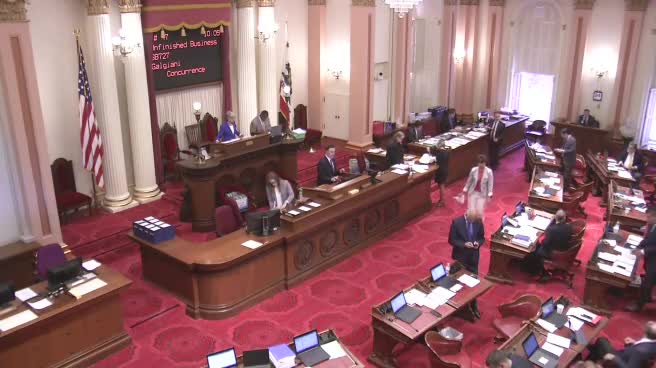 2MIN
Senate Floor
 13MIN
Senate Standing Committee on Natural Resources and Water
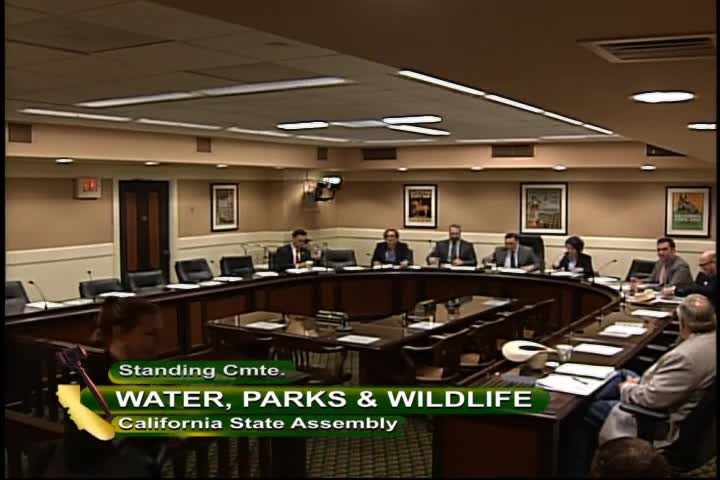 3MIN
Assembly Standing Committee on Water, Parks, and Wildlife
 2MIN
Senate Floor
 48MIN
Senate Standing Committee on Appropriations
 40SEC
Senate Standing Committee on Appropriations
 5MIN
Senate Standing Committee on Natural Resources and Water
Bill Author

Bill Co-Author(s):