SB 27: Professions and vocations: licenses: military service.
- Session Year: 2017-2018
- House: Senate
- Latest Version Date: 2017-04-17
Existing law provides for the licensure and regulation of various professions and vocations by boards within the Department of Consumer Affairs. Existing law authorizes any licensee or registrant whose license expired while he or she was on active duty as a member of the California National Guard or the United States Armed Forces to reinstate his or her license or registration without examination or penalty if certain requirements are met. Existing law also requires the boards to waive the renewal fees, continuing education requirements, and other renewal requirements, if applicable, of any licensee or registrant called to active duty as a member of the United States Armed Forces or the California National Guard, if certain requirements are met. Existing law requires each board to inquire in every application if the individual applying for licensure is serving in, or has previously served in, the military. Existing law requires a board within the Department of Consumer Affairs to expedite, and authorizes a board to assist with, the initial licensure process for an applicant who has served as an active duty member of the United States Armed Forces and was honorably discharged.
This bill would require every board within the Department of Consumer Affairs to grant a fee waiver for the application for and the issuance of an initial license to an applicant who supplies satisfactory evidence, as defined, to the board that the applicant has served as an active duty member of the California National Guard or the United States Armed Forces and was honorably discharged. The bill would require that a veteran be granted only one fee waiver, except as specified.
(a)(1)Notwithstanding any other law, every board within the department shall grant a fee waiver for the application for and issuance of an initial license to an applicant who supplies satisfactory evidence to the board that the applicant has served as an active duty member of the California National Guard or the United States Armed Forces and was honorably discharged.
(2)For purposes of this section, satisfactory evidence means a completed Certificate of Release or Discharge from Active Duty (DD Form 214).
(b)(1)A veteran shall be granted only one fee waiver, except as specified in paragraph (2). After a fee waiver has been issued by any a board within the department, the veteran is no longer eligible for a waiver.
(2)If a board charges a fee for the application for a license and another fee for the issuance of a license, the veteran shall be granted fee waivers for both the application for and issuance of a license.
(3)The fee waiver shall apply only to an application of and a license issued to an individual veteran and not to an application of or a license issued to an individual veteran on behalf of a business or other entity.
(4)A fee waiver shall not be issued for any of the following:
(A)Renewal of a license.
(B)The application for and issuance of an additional license, a certificate, a registration, or a permit associated with the initial license.
(C)The application for an examination.
(a)(1)Notwithstanding any other law, every board within the department shall grant a fee waiver for the application for and issuance of an initial license to an applicant who supplies satisfactory evidence to the board that the applicant has served as an active duty member of the California National Guard or the United States Armed Forces and was honorably discharged.
(2)For purposes of this section, satisfactory evidence means a completed Certificate of Release or Discharge from Active Duty (DD Form 214).
(b)(1)A veteran shall be granted only one fee waiver, except as specified in paragraph (2). After a fee waiver has been issued by any board within the department, the veteran is no longer eligible for a waiver.
(2)If a board charges a fee for the application for a license and another fee for the issuance of a license, the veteran shall be granted fee waivers for both the application for and issuance of a license.
(3)The fee waiver shall apply only to an application of and a license issued to an individual veteran and not to an application of or a license issued to an individual veteran on behalf of a business or other entity.
(4)A fee waiver shall not be issued for any of the following:
(A)Renewal of a license.
(B)The application for and issuance of an additional license, a certificate, a registration, or a permit associated with the initial license.
(C)The application for an examination.
|
Date
|
Status
|
|---|---|
| Feb 1, 2018 | Returned to Secretary of Senate pursuant to Joint Rule 56. |
| May 25, 2017 | May 25 hearing: Held in committee and under submission. |
| May 19, 2017 | Set for hearing May 25. |
| May 15, 2017 | May 15 hearing: Placed on APPR. suspense file. |
| May 4, 2017 | Set for hearing May 15. |
| Apr 26, 2017 | From committee: Do pass and re-refer to Com. on APPR. (Ayes 7. Noes 0. Page 830.) (April 25). Re-referred to Com. on APPR. |
| Apr 17, 2017 | From committee with author's amendments. Read second time and amended. Re-referred to Com. on V.A. |
| Apr 7, 2017 | Set for hearing April 25. |
| Apr 3, 2017 | From committee: Do pass and re-refer to Com. on V.A. (Ayes 9. Noes 0. Page 585.) (April 3). Re-referred to Com. on V.A. |
| Mar 21, 2017 | Set for hearing April 3. |
| Jan 12, 2017 | Referred to Coms. on B., P. & E.D. and V.A. |
| Dec 6, 2016 | From printer. May be acted upon on or after January 5. |
| Dec 5, 2016 | Introduced. Read first time. To Com. on RLS. for assignment. To print. |
|
Date
|
Description
|
Location
|
Votes
|
|
|---|---|---|---|---|
| May 15, 2017 | Placed on suspense file | Senate Standing Committee on Appropriations |
Passed |
|
| Apr 25, 2017 | Do pass, but first be re-referred to the Committee on [Appropriations] | Senate Standing Committee on Veterans Affairs |
Passed |
|
| Apr 3, 2017 | Do pass, but first be re-referred to the Committee on [Veterans Affairs] | Senate Standing Committee on Business, Professions and Economic Development |
Passed |
This list shows positions taken on this bill by organizations on the date displayed, which is linked to the original source.
Positions by individuals are not included.
SENATE COMMITTEE ON
Senator Ricardo Lara, Chair
2017 - 2018 Regular Session
SB 27 (Morrell) - Professions and vocations: licenses: military service
Version: | Policy Vote: |
Urgency: | Mandate: |
Hearing Date: | Consultant: |
This bill meets the criteria for referral to the Suspense File.
Bill Summary:
This bill would require every board within the Department of Consumer Affairs to grant a waiver of the application and the initial licensing fee to an honorably discharged veteran.
Fiscal Impact:
- Department-wide revenue loss of about $2 million to waive applicable fees for honorably discharged veterans (various special funds). Although most boards and bureaus indicate that the loss of revenue and any associated workload would be minor, there are several boards that would incur a substantial revenue loss. See Staff Comments.
- One-time costs of $260,000 to make system changes to the Department’s online licensing and enforcement system (Consumer Affairs Fund).
Background:
Current law provides for the licensure, registration, and regulation of various professions and vocations by the boards, bureaus, committees, programs, and commissions within the Department of Consumer Affairs. The Department currently oversees 39 licensing programs that issue more than two million licenses, registrations, and certifications in nearly 200 professional categories. Each of these entities is responsible for enforcing the minimum qualifications for licensure that are established by statute and regulation. Licensure requirements vary in their specificity and flexibility.
Existing law requires, after July 1, 2016, that a board within the Department expedite, and may assist, the initial licensure process for an applicant who supplies satisfactory evidence to the board that the applicant has served as an active duty member of the Armed Forces of the United States and was honorably discharged.
Existing law authorizes any licensee whose license expired while he or she was on active duty as a member of the California National Guard or the United States Armed Forces to reinstate his or her license without examination or penalty if certain specified requirements are met.
Existing law provides that every board within the Department shall waive the renewal fees, continuing education requirements, and other renewal requirements as determined by the board, if they are applicable, for any licensee or registrant called to active duty as a member of the United States Armed Forces or the California National Guard, if certain requirements are met.
There have been several efforts to examine the impact of state licensing requirements on military personnel (including spouses) and veterans. Generally, these reviews have found that state licensing requirements impose a burden on military personnel and their spouses, in particular because licensing requirements do not always match up well with military training, even if the military personnel are performing professional duties that are substantively similar to those performed by licensed professionals. Also, because military families often move between states, the length of time needed to acquire a professional license in a new state and variations between licensing requirements between states can limit the ability of military personnel and/or their spouses from working in their professional field in a new state.
Proposed Law:
This bill would require every board within the Department of Consumer Affairs to grant a waiver of the application and the initial licensing fee to an honorably discharged veteran.
This bill would restrict veterans to one fee waiver and prohibit a waiver to be issued for the renewal of a license.
Related Legislation:
SB 1155 (Morrell, 2016) was almost identical to this bill. That bill was held on the Assembly Appropriations Committee’s Suspense File.
Staff Comments:
The impact of the fee waiver in this bill varies considerably between the various boards and bureaus within the Department of Consumer Affairs. Boards and bureaus that anticipate a significant loss of revenue include the Bureau of Real Estate ($740,000 per year), the Board of Registered Nursing ($775,000 per year), and the Bureau of Security and Investigative Services ($130,000). It is also important to note that the cost estimates above do not include lost revenue for the Medical Board of California, which does not have an estimate of the revenue loss at this time. Based on the size of the Medical Board’s licensee population and the projected revenue loss from other large boards, the likely revenue loss would be about $200,000 per year.
-- END --
SENATE COMMITTEE ON
Senator Josh Newman, Chair
2017 - 2018 Regular
Bill No: Hearing Date: 4/25/17
Author: | Morrell | ||
Version: | Amended | ||
Urgency: | Fiscal: | ||
Consultant: | |||
Subject:
DESCRIPTION
Summary:
Requires every board under the Department of Consumer Affairs (DCA) to grant a waiver for the application and initial licensing fee to an honorably discharged veteran.
Existing law:
- Provides for the licensure, registration and regulation of various professions and vocations by the boards, bureaus, committees, programs and commission (boards) administered within DCA.
- Specifies that State policy directs persons with the skills, knowledge, and experiences obtained in the armed services should be permitted to apply this learning and contribute to the employment needs of this state at the maximum level of responsibility and skill for which they are qualified, and that to this end, that the rules and regulations of boards shall provide a method of evaluating education, training and experience obtained in the armed services and determine how it may be used to meet the licensure requirements for the particular business, or occupation, or profession regulated. Each board shall consult with the Department of Veterans Affairs and the Military Department before adopting these rules and regulations.
- Authorizes any licensee whose license expired while on active duty as a member of the California National Guard (CNG) or United States Armed Forces to reinstate his or her license without examination or penalty, if certain specified requirements are met.
- Provides that every board within DCA shall waive the renewal fees, continuing education requirements, and other renewal requirements as determined by the board, if they are applicable, for any licensee or registrant called to active duty as a member of the Armed Forces or the CNG, if certain specified requirements are met.
- Requires each board to inquire in every application whether the individual applying for licensure is serving in or has served previously in the military.
- Requires that a board within DCA expedite, and may assist, the initial licensure process for an applicant who supplies satisfactory evidence to the board that the applicant has served as an active duty member of the Armed Forces and was honorably discharged and provides that the board may adopt regulations necessary to implement this requirement.
- Requires a board within DCA to expedite the licensure process for an applicant who is married to, or in a domestic partnership or other legal union with, an active duty member or who is assigned to a duty station within this state under official active duty military orders and holds a current license from another state in the profession or vocation for which he or she seeks a license from the board.
- Requires a board within DCA to issue, after appropriate investigation, temporary licenses for specified professions for an applicant who is married to, or is in a domestic partnership or other legal union with an active duty member or who is assigned to a duty station within this state under official active duty military orders, if specified requirements are met.
- Authorizes the State Bar of California to waive the membership fees of any member who is in good standing with the State Bar at the time the member enters into military service and for the period for which the service member is in military service.
This bill:
- Requires every board within DCA to grant a fee waiver for the application for and the issuance of an initial license to an individual, who supplies satisfactory evidence to the board that the applicant has served as an active duty member of the CNG or Armed Forces and was honorably discharged.
- Provides that “satisfactory evidence” means a completed “Certificate of Release or Discharge from Active Duty” (DD Form 214).
- Provides that a veteran shall be granted only one fee waiver, except if a board charges a fee for the application for a license and another fee for the issuance of a license. In that case, the board shall grant the veteran fee waivers for both the application for and issuance of a license.
- Specifies that, after a fee waiver has been issued by any board under the DCA pursuant to the provisions under this bill, the veteran will no longer be eligible for a waiver.
- Specifies that the fee waiver shall apply only to an application of, and a license issued to, an individual veteran and not to an application of, or a license issued to, an individual veteran on behalf of a business or other entity.
- Specifies that a waiver shall not be issued for: a) renewal of a license; b) the application for and issuance of an additional license, a certificate, a registration, or a permit associated with the initial license; or c) the application for an examination.
BACKGROUND
Occupational Licensing. One out of every five Californians must receive permission from the government to work. For millions of Californians, that means contending with the hurdles of becoming licensed. The DCA currently oversees 39 state licensing programs that issue more than two million licenses, registrations and certifications in nearly 200 professional categories. These licensing boards are charged with regulating specific professions through licensure and enforcement. Each regulatory entity is responsible for enforcing the minimum licensure qualifications established by statute and regulation. Licensure requirements vary in their specificity and flexibility. In many cases, the stated qualifications are specific and provide the regulating entity with little or no discretion over what experience or education can be accepted. Professional and occupational licensure requirements range from completing a form and paying a licensing fee to satisfying significant experiential, educational, and exam requirements.
Little Hoover Commission Study. In October 2016, the Little Hoover Commission published a study on occupational licensing, which focused on whether the state properly balances consumer protection with ensuring that Californians have adequate access to jobs and services. The study reported that certain groups are especially vulnerable to licensing regulations, including veterans. Citing testimony from the federal government, the Commission stated:
The primary occupational licensing problem for separating service members is licensing boards not accepting their military-acquired knowledge, skills and abilities toward credentialing requirements. This common roadblock impacts taxpayers as well as service members, noted Commission witness Laurie Crehan, of the Department of the Defense. Taxpayers foot the bill twice to train service members for the same job: the first time while they’re in the military, then again following discharge to meet licensing requirements.[1]
The Commission also observed that California and other states have enacted legislative efforts to resolve the licensing problems, but noted that “common problems” in these state laws nationwide are:
- Broadly written laws provide too little guidance.
- Veterans may be unaware of their licensing eligibility.
- Legitimate skills gaps may go unaddressed.
- Insufficient partnerships between state, schools and the military.
- Lack of consistent metrics to measure licensure challenges.
Veteran Fee Waivers. Existing law provides veterans with waivers for other state programs:
- Motor Vehicle Registration Fees: Waiver of vehicle registration fees, and free license plate for one passenger motor vehicle, one motorcycle, or one commercial motor vehicle of less than 8,001 pounds unladen weight. Eligibility: Medal of Honor recipients, American ex-prisoners of war (POW) and “disabled veterans,” as specified,
- Fishing and Hunting License Fees: Partial waiver (reduction) of annual fees. Eligibility: Any honorably-discharged veteran with a 50% or greater service-connected disability.
- State Parks and Recreation “Distinguished Veteran” Pass Fees: Waiver of all fees for use of all basic State Park System operated facilities, including camping and day use. Eligibility: Medal of Honor recipients, American ex-POWs and disabled veterans with a 50% or more service-connected disability.
- Business License, Tax and Fees: Waiver on municipal, county, and state business license fees, taxes, and fees for veterans who hawk, peddle, or vend any goods, wares, or merchandise owned by the veteran, except spirituous, malt, vinous, or other intoxicating liquor, including sales from a fixed location. Eligibility: Honorably discharged veterans who engage in sales (not services) activities may be eligible. Eligibility criteria will differ based upon local jurisdiction.
COMMENT
Committee Comments:
- This bill is almost identical to SB 1155 (Morrell, 2016).
- This bill was approved by Senate Business, Professions, and Economic Development by a 9-0 vote. The Committee’s analysis stated that “Florida, Michigan, Texas and Wisconsin have granted licensing fee waivers for the initial issuance of occupational licenses to honorably discharged veterans.” Nevertheless, the Little Hoover Commission’s 2016 study (cited above under this analysis’ Background section) did not include application fees among the recognized barriers to veteran licensing.
Prior/Related Legislation:
SB 1155 (Morrell, 2016) requires, on or after January 1, 2018, every board under DCA to waive initial license fees for veterans. (Held in Assembly Appropriations)
SB 1226 (Correa, Chapter 657, Statutes of 2014) requires DCA boards to expedite licensure of honorably-discharged veterans.
AB 1057 (Medina, Chapter 693, Statutes of 2013) requires DCA boards to renew licenses that expire while an individual is on active duty without penalties or examination.
AB 1588 (Atkins, Chapter 742, Statutes of 2012) requires DCA boards to waive renewal fees for licenses that expire while the practitioner is on active military duty.
AB 2462 (Block, Chapter 404, Statutes of 2012 ) requires the Chancellor of the California Community College to determine which courses should receive credit for prior military experience, using the descriptors and recommendations provided by the American Council on Education.
AB 2783 (Salas, Chapter 214, Statutes of 2010) requires DCA boards to promulgate regulations to evaluate and credit military education, training, and experience if applicable to the profession.
POSITIONS
Sponsor: Author.
Support:
American Council of Engineering Companies, California
American G.I. Forum of California
American Legion-Department of California
AMVETS-Department of California
California Association of County Veterans Service Officers
California Association of Licensed Investigators, Inc.
California Board of Accountancy
California Optometric Association
California State Commanders Veterans Council
Military Officers Association of America, California Council of Chapters
Vietnam Veterans of America-California State Council
Oppose: None on file.
-- END --
Little Hoover Commission, “Jobs for Californians: Strategies to Ease Occupational Licensing Barriers,” Report #234, October 2016, page 31. ↑
SENATE COMMITTEE ON
BUSINESS, PROFESSIONS AND ECONOMIC DEVELOPMENT
Senator Jerry Hill, Chair
2017 - 2018 Regular
Bill No: SB 27 Hearing Date: April 3, 2017
Author: | Morrell | ||
Version: |
| ||
Urgency: | Fiscal: | ||
Consultant: | |||
Subject: Professions and vocations: licenses: military service
SUMMARY:
Requires every board under the Department of Consumer Affairs (Department) to grant a waiver for the application and initial licensing fee to an honorably discharged veteran.
Existing law:
- Provides for the licensure, registration and regulation of various professions and vocations by the boards, bureaus, committees, programs and commission (board(s)) within the Department.
- Specifies that it is the policy of this state that persons with the skills, knowledge, and experiences obtained in the armed services should be permitted to apply this learning and contribute to the employment needs of this state at the maximum level of responsibility and skill for which they are qualified, and that to this end, that the rules and regulations of boards shall provide a method of evaluating education, training and experience obtained in the armed services and determine how it may be used to meet the licensure requirements for the particular business, or occupation, or profession regulated. Each board shall consult with the Department of Veterans Affairs and the Military Department before adopting these rules and regulations. (Business and Professions Code (BPC) § 35)
- Authorizes any licensee whose license expired while he or she was on active duty as a member of the California National Guard of the United States Armed Forces to reinstate his or her license without examination or penalty, if certain specified requirements are met. (BPC § 114)
- Provides that every board within the Department shall waive the renewal fees, continuing education requirements, and other renewal requirements as determined by the board, if they are applicable, for any licensee or registrant called to active duty as a member of the United States Armed Forces or the California National Guard if certain specified requirements are met. (BPC § 114.3)
- Requires each board to inquire in every application if the individual applying for licensure is serving in, or has previously served in, the military. (BPC § 114.5)
- Requires after July 1, 2016, that a board within the Department expedite, and may assist, the initial licensure process for an applicant who supplies satisfactory evidence to the board that the applicant has served as an active duty member of the Armed Forces of the United States and was honorably discharged and provides that the board may adopt regulations necessary to implement this requirement.
(BPC § 115.4) - Requires a board within the Department to expedite the licensure process for an applicant who is married to, or in a domestic partnership or other legal union with an active duty member of the Armed Forces or who is assigned to a duty station within this state under official active duty military orders and holds a current license from another state in the profession or vocation for which her or she seeks a license from the board. (BPC § 115.5)
- Requires a board within the Department to issue, after appropriate investigation, temporary licenses for specified professions for an applicant who is married to, or is in a domestic partnership or other legal union with an active duty member of the Armed Forces or who is assigned to a duty station within this state under official active duty military orders, if specified requirements are met. (BPC § 115.6)
- Authorizes the State Bar of California to waive the membership fees of any member who is good standing with the State Bar at the time the member enters into military service and for the period for which the service member is in military service.
(Military and Veterans Code § 825)
This bill:
- Requires every board within the DCA to grant a fee waiver for the application for and issuance of an initial license to an individual who supplies satisfactory evidence to the board that the applicant has served as an active duty member of the California National Guard or the United States Armed Forces and was honorably discharged.
- Provides that “satisfactory evidence” means a completed “Certificate of Release or Discharge from Active Duty” (DD Form 214).
- Provides that a veteran shall be granted only one fee waiver, except if a board charges a fee for the application for a license and another fee for the issuance of a license. In that case, the board shall grant the veteran fee waivers for both the application for and issuance of a license.
- Specifies that, after a fee waiver has been issued by any board under the DCA pursuant to the provisions under this bill, the veteran will no longer be eligible for a waiver.
- Specifies that the fee waiver shall apply only to an application of, and a license issued to, an individual veteran and not to an application of, or a license issued to, an individual veteran on behalf of a business or other entity.
- Specifies that a waiver shall not be issued for: 1) renewal of a license; 2) the application for and issuance of an additional license, a certificate, a registration, or a permit associated with the initial license; or 3) the application for an examination.
FISCAL EFFECT: Unknown. This measure is keyed “fiscal” by Legislative Counsel.
COMMENTS:
- Purpose. This measure is sponsored by the Author. According to the Author, California statute does not currently waive fees for the application and issuance of a license for honorably discharged veterans. “Existing fees act as barriers of entry to the workforce for the 240,000 to 360,000 veterans who separate from the military each year. Many either already reside in or intent to make California their home, adding to the 1.9 million veterans currently residing on its streets, the most of any state.”
The Author further states that, “Veterans often gain valuable job skills during military service which can be used upon entering the civilian workforce. Eliminating this barrier will bring skilled labor into California, chipping away at the growing issue of veteran homelessness and establishing invaluable higher paying jobs in the state’s economy.”
The Author indicates that his measure is a reintroduction of SB 1155 (Morrell) of the 2015-2016 Session in its final version which was held in the Assembly Appropriations Committee. - Background. The Department currently oversees 39 licensing programs that issue more than two million licenses, registrations and certifications in nearly 200 professional categories. These licensing boards are charged with regulating a particular profession through licensure and enforcement programs. Each of these entities is responsible for enforcing the minimum qualifications for licensure that are established by statute and regulation. Licensure requirements vary in their specificity and flexibility. In many cases, the stated qualifications are specific and provide the regulating entity with little or no discretion over what experience or education can be accepted. Professional and occupational licensure requirements range from completing a form and paying a licensing fee to satisfying significant experience, education and exam requirements.
- Licensing Requirements Create a Financial Burden for Veterans. In 2015, the White House’s Council of Economic Advisors (CEA) in Occupational Licensing: A Framework for Policy Makers pointed out that strict licensing creates barriers to mobility for workers in licensed professions, including military personnel and veterans. The CEA suggests that this is because state licensing schemes impose additional licensing costs on licensed workers for movement between states, but no extra cost for movement within a state.
Further, the burdens could be harder on military applicants and their families, who tend to move much more than the general population. Military applicants may be stationed away from the state where they earned their license (Permanent Change of Station (PCS) move). Veterans may also end up moving to a different state when they are discharged. If the state they move to does not accept their license, the military applicants and their families may have to repeat education and training to meet the state-specific requirements.
There are also several costs associated with licensing. Applicants and licensees typically have to pay to acquire the required education, pay an application processing fee, pay an examination fee, and pay an initial licensee fee. Depending on the profession, some licensees also have to pay renewal fees and continuing education fees. As a result, even if a military applicant, military spouse, or veteran is licensed and meets the educational and experiential requirements, they almost always have to pay duplicative fees.
A May 2015 Department of Veteran Affairs report found that the young veteran (18-24 years old) poverty rate was 11.9 percent and 14.2 percent if they had a disability. In addition, the California Department of Housing and Community Development found, “of California’s extremely low-income veteran renter households, 79 percent have a severe cost burden, spending more than 50 percent of their income on housing.” For those low-income veterans, licensing fees would be another burden they face if they were to apply for an occupational license. Waiving the fee may encourage some of these individuals to either apply for a license or to pursue a professional career requiring licensure.
Another consideration, although not part of this measure, is that families with one or both active duty parents move more often than the average household. While there is usually some notice to the service member about a PCS move, service members are subject to an order to move and generally must do so. Often the service member knows well in advance that he or she will PCS but the destination may not be known until much closer in time to the orders directing the move. Therefore, to the extent that the non-service member spouse holds a license or certification that is not the subject of reciprocity by the destination state, there can be a significant financial impact resulting from the cost of licensing in the destination state and the amount of delay before a license is granted (during which period the license applicant cannot work at the licensed profession). - Other States Granting Licensing Fee Waivers for Veterans. Florida, Michigan, Texas and Wisconsin have granted licensing fee waivers for the initial issuance of occupational licenses to honorably discharged veterans.
- Impact on Boards’ Licensing Revenue. According to the Senate Appropriations Committee analysis dated May 27, 2016 and the Assembly Appropriations analysis dated August 1, 2016 for SB 1155, which was a measure almost identical to this bill, there could be up to $1.1 million revenue lost from various boards’ special funds to waive applicable fees for honorably discharged veterans. The analyses noted that although most boards and bureaus indicate that the loss of revenue and any associated workload stemming from this prior bill would be minor, several special funds’ fiscal issues could be exacerbated.
- Consideration of Military Experience and Education. In 2012, the Department provided a report to the Legislature regarding the licensing programs that have statutes or regulations that allow for the use of military experience and education to meet licensing requirements for the various boards under the Department. Titled, Report to the California State Legislature: Acceptance of Military Experience & Education Towards Licensure, it outlined administrative solutions that the Department’s programs were instituting to assist military applicants with the licensure process. It provided a breakdown of all licensing programs under the Department that allowed for members of the military to apply experience, education, or training towards licensure and those that did not.
In 2015, the Department provided an update to its 2012 report and focused on boards providing acceptance of military experience towards licensure pursuant to BPC § 35, which requires that rules and regulations of boards shall provide for methods of evaluating education, training and experience obtained in the armed services. It was found that none of the licensing programs have regulations based on BPC § 35, but that many of the Department’s programs have either specific or broad authority to review and apply military education, experience, or training towards licensure. For example, the Bureau of Security and Investigative Services (BSIS) worked with over 5,000 military applicants to guide them through the application process in the last two years. The Contractors’ State License Board (CSLB) has also created a formal program to assist former military members with properly applying their education and experience and completing the licensing process.
In October 2016, the Little Hoover Commission (LHC) released a Report entitled, Jobs for Californians: Strategies to Ease Occupational Licensing Barriers, and indicated that separating service members and military spouses are hard hit by occupational licensing regulations. They argued that, “The men and women who service our country, as well as their families, deserve better than to be kept out of occupations for which they qualify. California must focus less on new legislation and more on implementing past legislation.” In particular, the focus of the LHC report was on the problem which veterans have with licensing boards accepting their military-acquired knowledge, skills and abilities toward credentialing and licensing requirements. They indicated that the Department of Defense is taking steps to make it easier for state licensing boards to credit military experience and education to licensing requirements. Also, that the military is working with the American Council of Education to analyze military training to see if it meets the rigor, content and criteria of college credit. “The goal is to prevent separating service members from having to start from scratch. Many need only ‘bridge education’ (also called gap education) to fill in the gap between what they learned in the military and what they need to learn for their license.” - Update on Legislative and Department Efforts to Assist Veterans. Due to the potential hardships of licensing on military applicants, veterans, and their families, the Legislature has passed, and the Department boards have implemented, several policies to ease the burdens on military applicants, spouses, and licensees. For instance, BPC § 115.4 requires boards under the Department to expedite and assist a veterans with the initial licensure process for those who are honorably discharged. BPC § 115.5 requires boards under the Department to expedite licensure for military spouses. BPC § 115.6 requires boards under the Department to issue a 12-month temporary license to military spouses with out-of-state licenses for specified occupations. BPC § 114 exempts licensees from penalties for reinstating a retired license if called to active duty. BPC § 114.3 requires boards under the DCA to waive renewal fees, continuing education requirements, and other requirements for military licensees as long as specified requirements are met. BPC § 114.5 requires boards under the Department to inquire in every application for licensure if the individual applying for licensure is serving in, or has previously served in the military, and if the board authorizes veterans to apply military experience and training toward licensure requirements, that board shall post information on its Internet Web site about the ability of veteran applicants to apply their military experience and training toward licensure. In addition, Education Code § 66025.7 requires the Chancellor of the California Community College to determine which courses should receive credit for prior military experience, using the descriptors and recommendations provided by the American Council on Education.
This bill will now allow for a one-time initial license fee waiver for applicants who are honorably discharged veterans. - Recent Review of Department’s Efforts to Assist Veterans. On February 27, 2017, the Senate Committee on Business, Professions and Economic Development and the Assembly Committee on Business and Professions conducted a joint hearing to review the Department and to discuss issues that were identified by the Committees. One of the issues that was identified is efforts that the Department was making to assist military veterans and spouses in navigating the licensure process and to speed up licensure timelines. The Committees recommended that it would be helpful to receive an update from the Department on additional proactive steps it is taking, beyond assisting entities in the implementation of legislation, to assist military personnel, veterans and military spouses in becoming licensed, and that it would be helpful for the Department to advise the Committees on any gaps between the intent of the laws and outcomes (as recommended in the recent LHC report) and provide recommendations to bridge those gaps. The Committees noted that it would also be helpful to know whether the Department reviews or assesses entities under its jurisdiction on their efforts to inform veterans of their eligibility for expedited licensing, as also recommended in the LHC report.
- Prior Related Legislation. SB 1155 (Morrell) of 2016 is almost identical to this measure. (Status: This measure was held in the Assembly Appropriations Committee.)
SB 1348 (Canella) of 2016 required boards under the Department that authorize veterans to apply military experience and training towards licensure requirements to post information on the board’s website about applying for military experience and training towards licensure requirements. (Status: This measure was held in the Assembly Appropriations Committee.) - Arguments in Support. The American Council of Engineering Companies, California, states that its members support efforts and encourage the adoption of measures to honor and relieve regulatory burdens on Californians who serve our nation in the military.
The California Association of Licensed Investigators, Inc. is also in support of this bill and believes that the provisions of this measure will remove an obstacle for veterans who desire to work in our state and will facilitate their entrance into the civilian workforce by waiving the application and initial license fees that are paid by applicants to obtain occupational license.
According to the California Optometric Association, this bill will help veterans secure jobs in California.
NOTE:
Double-referral to Senate Veterans Affairs Committee, second.
SUPPORT AND OPPOSITION:
Support:
American Council of Engineering Companies, California
American G.I. Forum of California
American Legion-Department of California
AMVETS-Department of California
California Association of County Veterans Service Officers
California Association of Licensed Investigators, Inc.
California Optometric Association
California State Commanders Veterans Council
Military Officers Association of America, California Council of Chapters
Vietnam Veterans of America-California State Council
Veterans of Foreign Wars, California Department
Opposition:
None on file as of March 28, 2017.
-- END --
Discussed in Hearing
 48MIN
Senate Standing Committee on Appropriations
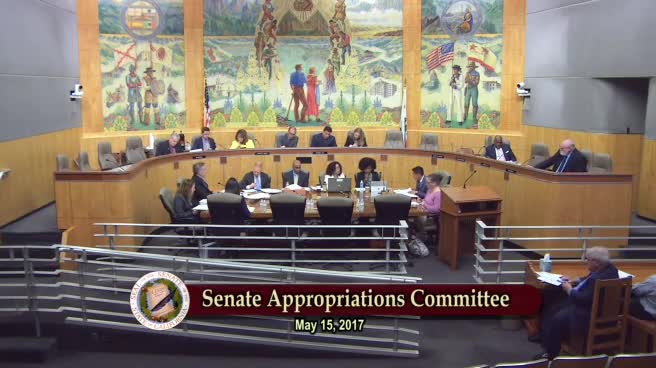 4MIN
Senate Standing Committee on Appropriations
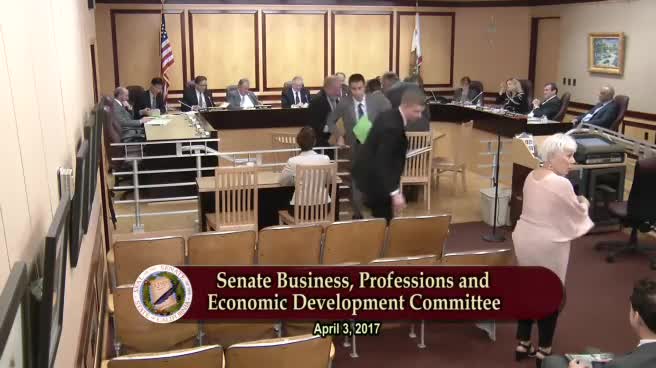 10MIN
Senate Standing Committee on Business, Professions and Economic Development
Bill Author