AB 1171: Construction Manager/General Contractor method: regional transportation agencies: projects on expressways.
- Session Year: 2015-2016
- House: Assembly
- Latest Version Date: 2015-10-01
Existing law generally sets forth the requirements for the solicitation and evaluation of bids and the awarding of contracts by local agencies for public works contracts. Existing law authorizes the Department of Transportation, the Santa Clara County Valley Transportation Authority, and the San Diego Association of Governments to use the Construction Manager/General Contractor project delivery method for transit projects within their respective jurisdictions, subject to certain conditions and requirements.
This bill would authorize regional transportation agencies, as defined, to use the Construction Manager/General Contractor project delivery method, as specified, to design and construct certain expressways that are not on the state highway system if: (1) the expressways are developed in accordance with an expenditure plan approved by voters, (2) there is an evaluation of the traditional design-bid-build method of construction and of the Construction Manager/General Contractor method, and (3) the board of the regional transportation agency adopts the method in a public meeting. The bill would require the regional transportation agency to provide a report, containing specified information, to its governing body upon completion of a project using the Construction Manager/General Contractor method. The bill would require specified information provided to a regional transportation agency to be verified under oath. By expanding the scope of the existing crime of perjury, the bill would impose a state-mandated local program.
The California Constitution requires the state to reimburse local agencies and school districts for certain costs mandated by the state. Statutory provisions establish procedures for making that reimbursement.
This bill would provide that no reimbursement is required by this act for a specified reason.
Existing law generally sets forth the requirements for the solicitation and evaluation of bids and the awarding of contracts by local agencies for public works contracts. Existing law authorizes the Department of Transportation, the Santa Clara County Valley Transportation Authority, and the San Diego Association of Governments to use the Construction Manager/General Contractor project delivery method for transit projects within their respective jurisdictions, subject to certain conditions and requirements.
This bill would authorize regional transportation agencies, as defined, to use the Construction Manager/General Contractor project delivery method, as specified, to design and construct certain expressways that are not on the state highway system if if: (1) the expressways are developed in accordance with an expenditure plan approved by voters as of January 1, 2014. voters, (2) there is an evaluation of the traditional design-bid-build method of construction and of the Construction Manager/General Contractor method, and (3) the board of the regional transportation agency adopts the method in a public meeting. The bill would require the regional transportation agency to provide a report, containing specified information, to its governing body upon completion of a project using the Construction Manager/General Contractor method. The bill would require specified information provided to a regional transportation agency to be verified under oath. By expanding the scope of the existing crime of perjury, the bill would impose a state-mandated local program.
The California Constitution requires the state to reimburse local agencies and school districts for certain costs mandated by the state. Statutory provisions establish procedures for making that reimbursement.
This bill would provide that no reimbursement is required by this act for a specified reason.
Existing law generally sets forth the requirements for the solicitation and evaluation of bids and the awarding of contracts by local agencies for public works contracts. Existing law authorizes the Department of Transportation, the Santa Clara County Valley Transportation Authority, and the San Diego Association of Governments to use the Construction Manager/General Contractor project delivery method for transit projects within their respective jurisdictions, subject to certain conditions and requirements.
This bill would authorize regional transportation agencies, as defined, to use the Construction Manager/General Contractor project delivery method, as specified, to design and construct certain projects on expressways that are not on the state highway system if the projects expressways are developed in accordance with an expenditure plan approved by voters as of January 1, 2014. This bill would require, for any project interfacing with a state highway system, the regional transportation agency and the Department of Transportation to enter into a cooperative agreement, as specified. The bill would require specified information provided to a regional transportation agency to be verified under oath. By expanding the scope of the existing crime of perjury, the bill would impose a state-mandated local program.
The California Constitution requires the state to reimburse local agencies and school districts for certain costs mandated by the state. Statutory provisions establish procedures for making that reimbursement.
This bill would provide that no reimbursement is required by this act for a specified reason.
Existing law generally sets forth the requirements for the solicitation and evaluation of bids and the awarding of contracts by local agencies for public works contracts. Existing law authorizes the Department of Transportation, the Santa Clara County Valley Transportation Authority, and the San Diego Association of Governments to use the Construction Manager/General Contractor project delivery method for transit projects within their respective jurisdictions, subject to certain conditions and requirements.
This bill would authorize regional transportation agencies, as defined, to use the Construction Manager/General Contractor project delivery method, as specified, to design and construct certain projects on expressways that are not on the state highway system if the projects are developed in accordance with an expenditure plan approved by voters as of January 1, 2014. This bill would require, for any project interfacing with a state highway system, the regional transportation agency and the Department of Transportation to enter into a cooperative agreement, as specified. The bill would require specified information provided to a regional transportation agency to be verified under oath. By expanding the scope of an the existing crime, crime of perjury, the bill would impose a state-mandated local program.
The California Constitution requires the state to reimburse local agencies and school districts for certain costs mandated by the state. Statutory provisions establish procedures for making that reimbursement.
This bill would provide that no reimbursement is required by this act for a specified reason.
Existing law generally sets forth the requirements for the solicitation and evaluation of bids and the awarding of contracts by local agencies for public works contracts. Existing law authorizes the Department of Transportation, the Santa Clara County Valley Transportation Authority, and the San Diego Association of Governments to use the Construction Manager/General Contractor project delivery method for transit projects within their respective jurisdictions, subject to certain conditions and requirements.
This bill would authorize regional transportation agencies, as defined, to use the Construction Manager/General Contractor project delivery method, as specified, to design and construct certain projects on expressways that are not on the state highway system if the projects are developed in accordance with an expenditure plan approved by voters as of January 1, 2014. The bill would require specified information provided to a regional transportation agency to be verified under oath. By expanding the scope of an existing crime, the bill would impose a state-mandated local program.
The California Constitution requires the state to reimburse local agencies and school districts for certain costs mandated by the state. Statutory provisions establish procedures for making that reimbursement.
This bill would provide that no reimbursement is required by this act for a specified reason.
(a)This chapter provides for an alternative procurement procedure for certain transportation projects performed by a regional transportation agency.
(b)The Construction Manager/General Contractor method allows the regional transportation agency to engage a construction manager during the design process to provide input on the design. During the design phase, the construction manager provides advice including, but not limited to, scheduling, pricing, and phasing to assist the agency to design a more constructible project.
(c)The Legislature finds and declares that utilizing a Construction Manager/General Contractor method requires a clear understanding of the roles and responsibilities of each participant in the process. The Legislature also finds and declares that cost-effective benefits are achieved by shifting the liability and risk for cost containment and project schedule to the construction manager and by permitting the coherent phasing of projects into discrete contract increments.
6971.For purposes of this chapter, the following definitions apply:
(a)Construction manager means a partnership, corporation, or other legal entity that is able to provide appropriately licensed contracting and engineering services as needed pursuant to a Construction Manager/General Contractor method contract.
(b)Construction Manager/General Contractor method means a project delivery method in which a construction manager is procured to provide preconstruction services during the design phase of the project and construction services during the construction phase of the project. The contract for construction services may be entered into at the same time as the contract for preconstruction services, or at a later time. The execution of the design and the construction of the project may be in sequential phases or concurrent phases.
(c)Preconstruction services means advice during the design phase, including, but not limited to, scheduling, pricing, and phasing to assist the regional transportation agency to design a more constructible project.
(d)Project means the construction of an expressway that is not on the state highway system.
(e)Regional transportation agency means any of the following:
(1)A transportation planning agency described in Section 29532 or 29532.1 of the Government Code.
(2)A county transportation commission established under Section 130050, 130050.1, or 130050.2 of the Public Utilities Code.
(3)Any other local or regional transportation entity that is designated by statute as a regional transportation agency.
(4)A joint exercise of powers authority established pursuant to Chapter 5 (commencing with Section 6500) of Division 7 of Title 1 of the Government Code, with the consent of a transportation planning agency or a county transportation commission for the jurisdiction in which the transportation project will be developed.
(5)A local transportation authority created or designated pursuant to Division 12.5 (commencing with Section 131000) or Division 19 (commencing with Section 180000) of the Public Utilities Code.
(6)The Santa Clara Valley Transportation Authority established pursuant to Part 12 (commencing with Section 100000) of Division 10 of the Public Utilities Code.
6972.(a)A regional transportation agency may utilize the Construction Manager/General Contractor method of procurement to design and construct projects if the projects are developed in accordance with an expenditure plan approved by voters.
(b)A regional transportation agency may enter into a Construction Manager/General Contractor contract pursuant to this chapter after evaluation of the traditional design-bid-build method of construction and of the Construction Manager/General Contractor method and the board of the regional transportation agency affirmatively adopts the procurement strategy in a public meeting.
(c)The entity responsible for the maintenance of the local streets and roads within the jurisdiction of the expressway shall be responsible for the maintenance of the expressway.
6973.Construction Manager/General Contractor method projects authorized pursuant to Section 6972 shall be governed by the same process, procedures, and requirements as set forth in Section 6703, subdivision (a) of Section 6704, and Sections 6705 to 6708, inclusive, except that any reference to department shall mean the regional transportation agency.
6974.(a)Upon completion of a project using the Construction Manager/General Contractor method, the regional transportation agency shall prepare a progress report to its governing body. The progress report shall include, but not be limited to, all of the following information:
(1)A description of the project.
(2)The name of the entity that was awarded the project.
(3)The estimated and actual costs of the project.
(4)The estimated and actual schedule for project completion.
(5)A description of any written protests concerning any aspect of the solicitation, bid, proposal, or award of the project, including, but not limited to, the resolution of the protests.
(6)An assessment of the prequalification process and criteria required by this chapter.
(7)A description of the method used to evaluate the bid or proposal, including the weighting of each factor and an assessment of the impact of this requirement on a project.
(8)A description of any challenges or unexpected problems that arose during the construction of the project and a description of the solutions that were considered and ultimately implemented to address those challenges and problems.
(9)Recommendations to improve the Construction Manager/General Contractor method authorized by this chapter.
(b)The progress report shall be made available on the regional transportation agencys Internet Web site.
SEC. 2.No reimbursement is required by this act pursuant to Section 6 of Article XIIIB of the California Constitution because the only costs that may be incurred by a local agency or school district will be incurred because this act creates a new crime or infraction, eliminates a crime or infraction, or changes the penalty for a crime or infraction, within the meaning of Section 17556 of the Government Code, or changes the definition of a crime within the meaning of Section 6 of Article XIIIB of the California Constitution.
(a)This chapter provides for an alternative procurement procedure for certain transportation projects performed by a regional transportation agency.
(b)The Construction Manager/General Contractor method allows the regional transportation agency to engage a construction manager during the design process to provide input on the design. During the design phase, the construction manager provides advice including, but not limited to, scheduling, pricing, and phasing to assist the agency to design a more constructible project.
(c)The Legislature finds and declares that utilizing a Construction Manager/General Contractor method requires a clear understanding of the roles and responsibilities of each participant in the process. The Legislature also finds and declares that cost-effective benefits are achieved by shifting the liability and risk for cost containment and project schedule to the construction manager and by permitting the coherent phasing of projects into discrete contract increments.
6971.For purposes of this chapter, the following definitions apply:
(a)Construction manager means a partnership, corporation, or other legal entity that is able to provide appropriately licensed contracting and engineering services as needed pursuant to a Construction Manager/General Contractor method contract.
(b)Construction Manager/General Contractor method means a project delivery method in which a construction manager is procured to provide preconstruction services during the design phase of the project and construction services during the construction phase of the project. The contract for construction services may be entered into at the same time as the contract for preconstruction services, or at a later time. The execution of the design and the construction of the project may be in sequential phases or concurrent phases.
(c)Preconstruction services means advice during the design phase, including, but not limited to, scheduling, pricing, and phasing to assist the regional transportation agency to design a more constructible project.
(d)Project means the construction of an expressway that is not on the state highway system.
(e)Regional transportation agency means an entity as designated pursuant to paragraph (4) of subdivision (i) of Section 6820. any of the following:
(1)A transportation planning agency described in Section 29532 or 29532.1 of the Government Code.
(2)A county transportation commission established under Section 130050, 130050.1, or 130050.2 of the Public Utilities Code.
(3)Any other local or regional transportation entity that is designated by statute as a regional transportation agency.
(4)A joint exercise of powers authority established pursuant to Chapter 5 (commencing with Section 6500) of Division 7 of Title 1 of the Government Code, with the consent of a transportation planning agency or a county transportation commission for the jurisdiction in which the transportation project will be developed.
(5)A local transportation authority created or designated pursuant to Division 12.5 (commencing with Section 131000) or Division 19 (commencing with Section 180000) of the Public Utilities Code.
(6)The Santa Clara Valley Transportation Authority established pursuant to Part 12 (commencing with Section 100000) of Division 10 of the Public Utilities Code.
6972.(a)A regional transportation agency may utilize the Construction Manager/General Contractor method of procurement to design and construct projects if the projects are developed in accordance with an expenditure plan approved by voters as of January 1, 2014. voters.
(b)A regional transportation agency may enter into a Construction Manager/General Contractor contract pursuant to this chapter after evaluation of the traditional design-bid-build method of construction and of the Construction Manager/General Contractor method and the board of the regional transportation agency affirmatively adopts the procurement strategy in a public meeting.
(b)
(c)The entity responsible for the maintenance of the local streets and roads within the jurisdiction of the expressway shall be responsible for the maintenance of the expressway.
6973.Construction Manager/General Contractor method projects authorized pursuant to Section 6972 shall be governed by the same process, procedures, and requirements as set forth in Section 6703, subdivision (a) of Section 6704, and Sections 6705 to 6708, inclusive, except that any reference to department shall mean the regional transportation agency.
6974.(a)Upon completion of a project using the Construction Manager/General Contractor method, the regional transportation agency shall prepare a progress report to its governing body. The progress report shall include, but not be limited to, all of the following information:
(1)A description of the project.
(2)The name of the entity that was awarded the project.
(3)The estimated and actual costs of the project.
(4)The estimated and actual schedule for project completion.
(5)A description of any written protests concerning any aspect of the solicitation, bid, proposal, or award of the project, including, but not limited to, the resolution of the protests.
(6)An assessment of the prequalification process and criteria required by this chapter.
(7)A description of the method used to evaluate the bid or proposal, including the weighting of each factor and an assessment of the impact of this requirement on a project.
(8)A description of any challenges or unexpected problems that arose during the construction of the project and a description of the solutions that were considered and ultimately implemented to address those challenges and problems.
(9)Recommendations to improve the Construction Manager/General Contractor method authorized by this chapter.
(b)The progress report shall be made available on the regional transportation agencys Internet Web site.
SEC. 2.No reimbursement is required by this act pursuant to Section 6 of Article XIIIB of the California Constitution because the only costs that may be incurred by a local agency or school district will be incurred because this act creates a new crime or infraction, eliminates a crime or infraction, or changes the penalty for a crime or infraction, within the meaning of Section 17556 of the Government Code, or changes the definition of a crime within the meaning of Section 6 of Article XIIIB of the California Constitution.
(a)This chapter provides for an alternative procurement procedure for certain transportation projects performed by a regional transportation agency.
(b)The Construction Manager/General Contractor method allows the regional transportation agency to engage a construction manager during the design process to provide input on the design. During the design phase, the construction manager provides advice including, but not limited to, scheduling, pricing, and phasing to assist the agency to design a more constructible project.
(c)The Legislature finds and declares that utilizing a Construction Manager/General Contractor method requires a clear understanding of the roles and responsibilities of each participant in the process. The Legislature also finds and declares that cost-effective benefits are achieved by shifting the liability and risk for cost containment and project schedule to the construction manager and by permitting the coherent phasing of projects into discrete contract increments.
6971.For purposes of this chapter, the following definitions apply:
(a)Construction manager means a partnership, corporation, or other legal entity that is able to provide appropriately licensed contracting and engineering services as needed pursuant to a Construction Manager/General Contractor method contract.
(b)Construction Manager/General Contractor method means a project delivery method in which a construction manager is procured to provide preconstruction services during the design phase of the project and construction services during the construction phase of the project. The contract for construction services may be entered into at the same time as the contract for preconstruction services, or at a later time. The execution of the design and the construction of the project may be in sequential phases or concurrent phases.
(c)Interfacing with the state highway system has the same definition as that term is defined in Section 6820.
(d)
(c)Preconstruction services means advice during the design phase, including, but not limited to, scheduling, pricing, and phasing to assist the regional transportation agency to design a more constructible project.
(e)
(d)Project means the construction of an expressway that is not on the state highway system, including work performed within the state highway right-of-way or airspace or upon property and airspace acquired for construction of a state highway. system.
(f)
(e)Regional transportation agency means an entity as designated pursuant to paragraph (4) of subdivision (i) of Section 6820.
6972.(a)A regional transportation agency may utilize the Construction Manager/General Contractor method of procurement to design and construct projects if the projects are developed in accordance with an expenditure plan approved by voters as of January 1, 2014.
(b)The entity responsible for the maintenance of the local streets and roads within the jurisdiction of the expressway shall be responsible for the maintenance of the expressway.
(c)For any project interfacing with the state highway system, both of the following shall apply:
(1)The authorization in subdivision (a) shall not include the authority to perform construction inspection services, which shall be performed by the Department of Transportation consistent with Section 91.2 of the Streets and Highways Code.
(2)The regional transportation authority and the Department of Transportation shall enter into a cooperative agreement reflecting the roles and responsibilities assigned by law. The cooperative agreement shall also include an issue resolution process with a primary objective to ensure the project stays on schedule and issues between parties are resolved in a timely manner.
6973.Construction Manager/General Contractor method projects authorized pursuant to Section 6972 shall be governed by the same process, procedures, and requirements as set forth in Section 6703, subdivision (a) of Section 6704, and Sections 6705 to 6708, inclusive, except that any reference to department shall mean the regional transportation agency.
SEC. 2.No reimbursement is required by this act pursuant to Section 6 of Article XIIIB of the California Constitution because the only costs that may be incurred by a local agency or school district will be incurred because this act creates a new crime or infraction, eliminates a crime or infraction, or changes the penalty for a crime or infraction, within the meaning of Section 17556 of the Government Code, or changes the definition of a crime within the meaning of Section 6 of Article XIIIB of the California Constitution.
(a)This chapter provides for an alternative procurement procedure for certain transportation projects performed by a regional transportation agency.
(b)The Construction Manager/General Contractor method allows the regional transportation agency to engage a construction manager during the design process to provide input on the design. During the design phase, the construction manager provides advice including, but not limited to, scheduling, pricing, and phasing to assist the agency to design a more constructible project.
(c)The Legislature finds and declares that utilizing a Construction Manager/General Contractor method requires a clear understanding of the roles and responsibilities of each participant in the process. The Legislature also finds and declares that cost-effective benefits are achieved by shifting the liability and risk for cost containment and project schedule to the construction manager and by permitting the coherent phasing of projects into discrete contract increments.
6971.For purposes of this chapter, the following definitions apply:
(a)Construction manager means a partnership, corporation, or other legal entity that is able to provide appropriately licensed contracting and engineering services as needed pursuant to a Construction Manager/General Contractor method contract.
(b)Construction Manager/General Contractor method means a project delivery method in which a construction manager is procured to provide preconstruction services during the design phase of the project and construction services during the construction phase of the project. The contract for construction services may be entered into at the same time as the contract for preconstruction services, or at a later time. The execution of the design and the construction of the project may be in sequential phases or concurrent phases.
(c)Interfacing with the state highway system has the same definition as that term is defined in Section 6820.
(c)
(d)Preconstruction services means advice during the design phase, including, but not limited to, scheduling, pricing, and phasing to assist the regional transportation agency to design a more constructible project.
(d)
(e)Project means the construction of a highway, bridge, or tunnel. an expressway that is not on the state highway system, including work performed within the state highway right-of-way or airspace or upon property and airspace acquired for construction of a state highway.
(e)
(f)Regional transportation agency means an entity as designated pursuant to paragraph (4) of subdivision (i) of Section 6820.
6972.(a)A regional transportation agency may utilize the Construction Manager/General Contractor method of procurement to design and construct projects on expressways that are not on the state highway system if the projects are developed in accordance with an expenditure plan approved by voters as of January 1, 2014.
(b)The entity responsible for the maintenance of the local streets and roads within the jurisdiction of the expressway shall be responsible for the maintenance of the expressway.
(c)For any project interfacing with the state highway system, both of the following shall apply:
(1)The authorization in subdivision (a) shall not include the authority to perform construction inspection services, which shall be performed by the Department of Transportation consistent with Section 91.2 of the Streets and Highways Code.
(2)The regional transportation authority and the Department of Transportation shall enter into a cooperative agreement reflecting the roles and responsibilities assigned by law. The cooperative agreement shall also include an issue resolution process with a primary objective to ensure the project stays on schedule and issues between parties are resolved in a timely manner.
6973.Construction Manager/General Contractor method projects authorized pursuant to Section 6972 shall be governed by the same process, procedures, and requirements as set forth in Section 6703, subdivision (a) of Section 6704, and Sections 6705 to 6708, inclusive, except that any reference to department shall mean the regional transportation agency.
6973.(a)Construction Manager/General Contractor method projects shall progress as set forth in subdivision (a) of Section 6703, except that any references to department shall mean the regional transportation agency.
(b)For each request for qualifications (RFQ), the regional transportation agency shall generate a final list of qualified persons or firms that participated in the RFQ prior to entering into negotiations on the contract or contracts to which the RFQ applies.
(c)(1)For each contract included in the RFQ, the regional transportation agency shall enter into separate negotiations for the contract with the highest qualified person or firm on the final list for that contract. However, if the RFQ is for multiple contracts and specifies that all of the multiple contracts will be awarded to a single construction manager, there may be a single negotiation for all of the multiple contracts. The negotiations shall include consideration of compensation and other contract terms that the regional transportation agency determines to be fair and reasonable to the department. In making this decision, the regional transportation agency shall take into account the estimated value, the scope, the complexity, and the nature of the professional services or construction services to be rendered. If the regional transportation agency is not able to negotiate a satisfactory contract with the highest qualified person or firm on the final list, regarding compensation and on other contract terms the regional transportation agency determines to be fair and reasonable, the regional transportation agency shall formally terminate negotiations with that person or firm. The regional transportation agency may undertake negotiations with the next most qualified person or firm on the final list in sequence until an agreement is reached or a determination is made to reject all persons or firms on the final list.
(2)If a contract for construction services is entered into pursuant to this chapter and includes preconstruction services by the construction manager, the regional transportation agency shall enter into a written contract with the construction manager for preconstruction services under which contract the regional transportation agency shall pay the construction manager a fee for preconstruction services in an amount agreed upon by the regional transportation agency and the construction manager. The preconstruction services contract may include fees for services to be performed during the contract period provided, however, the regional transportation agency shall not request or obtain a fixed price or a guaranteed maximum price for the construction contract from the construction manager or enter into a construction contract with the construction manager until after the regional transportation agency has entered into a services contract. A preconstruction services contract shall provide for the subsequent negotiation for construction of all or any discreet phase or phases of the project.
(3)A contract for construction services shall be awarded after the plans have been sufficiently developed and either a fixed price or a guaranteed maximum price has been successfully negotiated. In the event that a fixed price or a guaranteed maximum price is not negotiated, the regional transportation agency shall not award the contract for construction services.
(4)The regional transportation agency is not required to award the construction services contract.
(5)Construction shall not commence on any phase, package, or element until the regional transportation agency and construction manager agree in writing on either a fixed price that the regional transportation agency will pay for the construction to be commenced or a guaranteed maximum price for the construction to be commenced and construction schedule for the project. The construction manager shall perform not less than 30 percent of the work covered by the fixed price or guaranteed maximum price agreement reached. Work that is not performed directly by the construction manager shall be bid to subcontractors pursuant to Section 6705, except that any references to department shall mean the regional transportation agency.
6974.Contracts awarded pursuant to this chapter shall be valid until the project is completed.
SEC. 2.No reimbursement is required by this act pursuant to Section 6 of Article XIIIB of the California Constitution because the only costs that may be incurred by a local agency or school district will be incurred because this act creates a new crime or infraction, eliminates a crime or infraction, or changes the penalty for a crime or infraction, within the meaning of Section 17556 of the Government Code, or changes the definition of a crime within the meaning of Section 6 of Article XIIIB of the California Constitution.
(a)This chapter provides for an alternative procurement procedure for certain transportation projects performed by a regional transportation agency.
(b)The Construction Manager/General Contractor method allows the regional transportation agency to engage a construction manager during the design process to provide input on the design. During the design phase, the construction manager provides advice including, but not limited to, scheduling, pricing, and phasing to assist the agency to design a more constructible project.
(c)The Legislature finds and declares that utilizing a Construction Manager/General Contractor method requires a clear understanding of the roles and responsibilities of each participant in the process. The Legislature also finds and declares that cost-effective benefits are achieved by shifting the liability and risk for cost containment and project schedule to the construction manager and by permitting the coherent phasing of projects into discrete contract increments.
6971.For purposes of this chapter, the following definitions apply:
(a)Construction manager means a partnership, corporation, or other legal entity that is able to provide appropriately licensed contracting and engineering services as needed pursuant to a Construction Manager/General Contractor method contract.
(b)Construction Manager/General Contractor method means a project delivery method in which a construction manager is procured to provide preconstruction services during the design phase of the project and construction services during the construction phase of the project. The contract for construction services may be entered into at the same time as the contract for preconstruction services, or at a later time. The execution of the design and the construction of the project may be in sequential phases or concurrent phases.
(c)Preconstruction services means advice during the design phase, including, but not limited to, scheduling, pricing, and phasing to assist the regional transportation agency to design a more constructible project.
(d)Project means the construction of a highway, bridge, or tunnel.
(e)Regional transportation agency means an entity as designated pursuant to paragraph (4) of subdivision (i) of Section 6820.
6972.(a)A regional transportation agency may utilize the Construction Manager/General Contractor method of procurement to design and construct projects on expressways that are not on the state highway system if the projects are developed in accordance with an expenditure plan approved by voters as of January 1, 2014.
(b)The entity responsible for the maintenance of the local streets and roads within the jurisdiction of the expressway shall be responsible for the maintenance of the expressway.
6973.(a)Construction Manager/General Contractor method projects shall progress as set forth in subdivision (a) of Section 6703, except that any references to department shall mean the regional transportation agency.
(b)For each request for qualifications (RFQ), the regional transportation agency shall generate a final list of qualified persons or firms that participated in the RFQ prior to entering into negotiations on the contract or contracts to which the RFQ applies.
(c)(1)For each contract included in the RFQ, the regional transportation agency shall enter into separate negotiations for the contract with the highest qualified person or firm on the final list for that contract. However, if the RFQ is for multiple contracts and specifies that all of the multiple contracts will be awarded to a single construction manager, there may be a single negotiation for all of the multiple contracts. The negotiations shall include consideration of compensation and other contract terms that the regional transportation agency determines to be fair and reasonable to the department. In making this decision, the regional transportation agency shall take into account the estimated value, the scope, the complexity, and the nature of the professional services or construction services to be rendered. If the regional transportation agency is not able to negotiate a satisfactory contract with the highest qualified person or firm on the final list, regarding compensation and on other contract terms the regional transportation agency determines to be fair and reasonable, the regional transportation agency shall formally terminate negotiations with that person or firm. The regional transportation agency may undertake negotiations with the next most qualified person or firm on the final list in sequence until an agreement is reached or a determination is made to reject all persons or firms on the final list.
(2)If a contract for construction services is entered into pursuant to this chapter and includes preconstruction services by the construction manager, the regional transportation agency shall enter into a written contract with the construction manager for preconstruction services under which contract the regional transportation agency shall pay the construction manager a fee for preconstruction services in an amount agreed upon by the regional transportation agency and the construction manager. The preconstruction services contract may include fees for services to be performed during the contract period provided, however, the regional transportation agency shall not request or obtain a fixed price or a guaranteed maximum price for the construction contract from the construction manager or enter into a construction contract with the construction manager until after the regional transportation agency has entered into a services contract. A preconstruction services contract shall provide for the subsequent negotiation for construction of all or any discreet phase or phases of the project.
(3)A contract for construction services shall be awarded after the plans have been sufficiently developed and either a fixed price or a guaranteed maximum price has been successfully negotiated. In the event that a fixed price or a guaranteed maximum price is not negotiated, the regional transportation agency shall not award the contract for construction services.
(4)The regional transportation agency is not required to award the construction services contract.
(5)Construction shall not commence on any phase, package, or element until the regional transportation agency and construction manager agree in writing on either a fixed price that the regional transportation agency will pay for the construction to be commenced or a guaranteed maximum price for the construction to be commenced and construction schedule for the project. The construction manager shall perform not less than 30 percent of the work covered by the fixed price or guaranteed maximum price agreement reached. Work that is not performed directly by the construction manager shall be bid to subcontractors pursuant to Section 6705, except that any references to department shall mean the regional transportation agency.
6974.Contracts awarded pursuant to this chapter shall be valid until the project is completed.
SEC. 2.No reimbursement is required by this act pursuant to Section 6 of Article XIIIB of the California Constitution because the only costs that may be incurred by a local agency or school district will be incurred because this act creates a new crime or infraction, eliminates a crime or infraction, or changes the penalty for a crime or infraction, within the meaning of Section 17556 of the Government Code, or changes the definition of a crime within the meaning of Section 6 of Article XIIIB of the California Constitution.
|
Date
|
Status
|
|---|---|
| Aug 17, 2015 | Senate amendments concurred in. To Engrossing and Enrolling. (Ayes 79. Noes 0. Page 2462.). |
| Jun 18, 2015 | From committee: Amend, and do pass as amended and re-refer to Com. on APPR. (Ayes 11. Noes 0.) (June 16). |
| Jun 19, 2015 | Read second time and amended. Re-referred to Com. on APPR. |
| Jul 6, 2015 | From committee: Do pass. (Ayes 7. Noes 0.) (July 6). |
| Jul 7, 2015 | Read second time. Ordered to third reading. |
| Jul 13, 2015 | Ordered to special consent calendar. |
| Jul 16, 2015 | In Assembly. Concurrence in Senate amendments pending. May be considered on or after August 14 pursuant to Assembly Rule 77. |
| Jul 16, 2015 | Read third time. Passed. Ordered to the Assembly. |
| Jul 16, 2015 | Read third time. Passed. Ordered to the Assembly. (Ayes 38. Noes 0. Page 1987.). |
| May 28, 2015 | Referred to Com. on T. & H. |
| Aug 17, 2015 | Senate amendments concurred in. To Engrossing and Enrolling. (Ayes 79. Noes 0.). |
| Aug 27, 2015 | Held at Desk. |
| Aug 27, 2015 | Withdrawn from Engrossing and Enrolling. |
| Sep 3, 2015 | Ordered to Engrossing and Enrolling. |
| Sep 16, 2015 | Enrolled and presented to the Governor at 4 p.m. |
| Oct 1, 2015 | Approved by the Governor. |
| Oct 1, 2015 | Chaptered by Secretary of State - Chapter 413, Statutes of 2015. |
| Feb 27, 2015 | Introduced. To print. |
| May 14, 2015 | Read third time. Passed. Ordered to the Senate. (Ayes 78. Noes 0. Page 1450.) |
| May 14, 2015 | Read third time. Passed. Ordered to the Senate. |
| May 14, 2015 | In Senate. Read first time. To Com. on RLS. for assignment. |
| May 7, 2015 | Read second time. Ordered to Consent Calendar. |
| May 6, 2015 | From committee: Do pass. To Consent Calendar. (Ayes 17. Noes 0.) (May 6). |
| Apr 28, 2015 | From committee: Do pass and re-refer to Com. on APPR. (Ayes 16. Noes 0.) (April 27). Re-referred to Com. on APPR. |
| Apr 22, 2015 | Re-referred to Com. on TRANS. |
| Apr 21, 2015 | From committee chair, with author's amendments: Amend, and re-refer to Com. on TRANS. Read second time and amended. |
| Apr 15, 2015 | Re-referred to Com. on TRANS. |
| Apr 14, 2015 | In committee: Set, second hearing. Hearing canceled at the request of author. |
| Apr 14, 2015 | From committee chair, with author's amendments: Amend, and re-refer to Com. on TRANS. Read second time and amended. |
| Mar 26, 2015 | In committee: Set, first hearing. Hearing canceled at the request of author. |
| Mar 23, 2015 | Referred to Com. on TRANS. |
| Mar 2, 2015 | Read first time. |
| Mar 1, 2015 | From printer. May be heard in committee March 31. |
|
Date
|
Description
|
Location
|
Votes
|
|
|---|---|---|---|---|
| Aug 17, 2015 | AB 1171 LINDER Concurrence in Senate Amendments | Assembly Floor |
Passed |
|
| Jul 16, 2015 | Special Consent #5 AB1171 Linder | Senate Floor |
Passed |
|
| Jul 6, 2015 | Do pass | Senate Standing Committee on Appropriations |
Passed |
|
| Jun 16, 2015 | Do pass as amended, but first amend, and re-refer to the Committee on [Appropriations] | Senate Standing Committee on Transportation and Housing |
Passed |
|
| May 14, 2015 | AB 1171 LINDER Consent Calendar Second Day Regular Session | Assembly Floor |
Passed |
|
| May 6, 2015 | Do pass. To Consent Calendar. | Assembly Standing Committee on Appropriations |
Passed |
|
| Apr 27, 2015 | Do pass and be re-referred to the Committee on [Appropriations] | Assembly Standing Committee on Transportation |
Passed |
This list shows positions taken on this bill by organizations on the date displayed, which is linked to the original source.
Positions by individuals are not included.
|
Organization
|
Position
|
Date
|
|---|---|---|
| American Council of Engineering Companies of California | * Support | Jun 16, 2015 |
| American Society of Civil Engineers | * Support | Jul 6, 2015 |
| Associated Builders and Contractors of San Diego | * Support | Jul 6, 2015 |
| Associated General Contractors | ** Support | Aug 17, 2015 |
| Automobile Club of Southern California | ** Support | Aug 17, 2015 |
| California Concrete Contractors Association | * Support | Jul 6, 2015 |
| Capital Southeast Connector Joint Powers Authority | * Support | Jul 6, 2015 |
| Capital Southeast Connector Jpa | ** Support | Aug 17, 2015 |
| Capital SouthEast Connector JPA Board of Directors | ** Support | Apr 27, 2015 |
| El Dorado Hills Chamber of Commerce | ** Support | Aug 17, 2015 |
| Plumbing Heating Cooling Contractors Of California | * Support | Jul 6, 2015 |
| Riverside County Transportation Commission | ** Support | Aug 17, 2015 |
| Sacramento Metropolitan Chamber of Commerce | ** Support | Aug 17, 2015 |
| Santa Clara Valley Transportation Authority | ** Support | Aug 17, 2015 |
| Self-Help Counties Coaltion | * Support | Jun 16, 2015 |
| Western Electrical Contractors Association (Weca-Iec) | * Support | Jul 6, 2015 |
AB 1171
Page 3
CONCURRENCE IN SENATE AMENDMENTS
AB 1171
(Linder)
As Amended June 19, 2015
Majority vote
ASSEMBLY: |
78-0 |
(May 14, 2015) |
SENATE: |
38-0 |
(July 16, 2015) |
Original Committee Reference: TRANS.
SUMMARY: Authorizes regional transportation agencies (RTAs) to use an alternative procurement method referred to as construction manager/general contractor (CMGC) contracts, under limited circumstances.
The Senate amendments:
Define "regional transportation agency."
Require a regional transportation agency to evaluate the CMGC contract method against the traditional design-bid-build contract method prior to proceeding with a CMGC contract.
Require regional transportation agencies to prepare progress reports on CMGC projects.
AS PASSED BY THE ASSEMBLY, this bill:
Authorized a regional transportation agency to use the CMGC project delivery method to design and construct projects on expressways that are not on the state highway system if the projects are developed in accordance with an expenditure plan approved by the voters as of January 1, 2014.
Provided that the entity responsible for maintenance of local streets and roads within the same jurisdiction of the expressway shall be responsible for the maintenance of the expressway.
Set forth provisions governing the process for procuring CMGC services.
FISCAL EFFECT: According to the Senate Appropriations Committee, unknown local expressway project costs or savings (primarily local funds). Since a contract for preconstruction and construction services for CMGC is a negotiated process with the most qualified construction manager, rather than a traditional "lowest responsible bidder" process, it is difficult to determine whether the negotiated price would be lower or higher than project delivery costs through a traditional design-bid-build process. It is expected that use of the CMGC method would minimize change orders, which is currently a significant factor in unexpected cost escalation on transportation projects.
Staff notes that the projects authorized for use of CMGC by this bill would be funded solely with non-state funds in nearly all circumstances, but could involve some state funds in rare circumstances (State Highway Account, bond funds).
COMMENTS: This bill provides limited authority for regional transportation agencies to use CMGC, an emerging project delivery method that potentially combines the best of both design-bid-build and design-build, similar to authority already granted to the Department of Transportation (Caltrans), the Santa Clara County Valley Transportation Authority, the San Mateo County Transit District, and the San Diego Association of Governments. Using CMGC, regional transportation agencies will be able to engage a design and construction management consultant (construction manager) to act as its consultant during the pre-construction phase and as the general contractor during construction. During the design phase, the construction manager acts in an advisory role, providing constructability reviews, value engineering suggestions, construction estimates, and other construction-related recommendations. Later, each agency and the construction manager can agree that the project design has progressed to a sufficient enough point that construction may begin. The two parties then work out mutually agreeable terms and conditions for the construction contract, and, if all goes well, the construction manager becomes the general contractor and construction on the project commences, well before design is entirely complete.
The CMGC process provides continuity and collaboration between the design and construction phases of the project. Construction managers have an incentive to provide input during the design phase that will enhance constructability of the project later because they know that they will have the opportunity to become the general contractor for the project. Furthermore, CMGC promises to save project delivery time, provide earlier cost certainty, transfer risks from the regional transportation agency to the contractor, and ensure project constructability. Additionally, CMGC allows each agency to have greater control of design decisions. It also allows each agency to design the project to compliment the CMGC's strengths and capabilities, thereby avoiding the need to over-design the project to provide maximum competitiveness in a low-bid procurement.
There are potential drawbacks of using CMGC contracts. According to guidance published by the City of Seattle, CMGC contracts carry risks, including:
They are difficult and complex.
The procurement process takes longer and consumes greater project staff time than traditional design-bid-build contracts.
Project teams face steep learning curves.
Successful construction cost negotiations require experienced staff.
Other literature on the use of CMGC contracts is generally consistent with Seattle's guidance regarding concerns for risks associated with CMGC contracts and cautions that CMGC is not appropriate for every project. However, the same literature suggests that, if carefully implemented, CMGC has the potential to significantly improve project delivery.
This bill provides limited authority for regional transportation agencies to use CMGC on expressway projects that are not on the state highway system, similar to authority already granted to Caltrans, Santa Clara County Valley Transportation Authority, the San Mateo County Transit District, and the San Diego Association of Governments to use CMGC for transit projects. These other entities have not yet completed any projects using CMGC so their overall experience with this procurement method is not yet known.
Supporters of this bill suggest that early collaboration and coordination between the designer and the construction contractor should lead to innovations that reduce costs, increase efficiency, or accelerate project delivery, particularly on large and complex projects. One of the projects for which CMGC would be used if this bill is successful is the Capital Southeast Connector project in Sacramento County.
There is no opposition on file.
Analysis Prepared by: Janet Dawson / TRANS. / (916) 319-2093 FN: 0001147
AB 1171
Page 5
|
Office of Senate Floor Analyses (916) 651-1520 Fax: (916) 327-4478 |
THIRD READING
Bill No: AB 1171
Amended: 6/19/15 in Senate
SENATE TRANS. & HOUSING COMMITTEE: 11-0, 6/16/15
AYES: Beall, Cannella, Allen, Bates, Gaines, Galgiani, Leyva, McGuire, Mendoza, Roth, Wieckowski
SENATE APPROPRIATIONS COMMITTEE: 7-0, 7/6/15
AYES: Lara, Bates, Beall, Hill, Leyva, Mendoza, Nielsen
ASSEMBLY FLOOR: 78-0, 5/14/15 (Consent) - See last page for vote
SUBJECT: Construction Manager/General Contractor method: regional transportation agencies: projects on expressways
DIGEST: This bill authorizes all regional transportation agencies to utilize the construction manager/general contractor (CM/GC) procurement method to design and construct projects under certain limited circumstances.
Existing law:
Authorizes the San Diego Association of Governments to utilize other alternative project-delivery methods for transit projects within its jurisdiction, including CM/GC.
Authorizes the California Department of Transportation (Caltrans) to utilize CM/GC on a pilot basis.
Authorizes both Santa Clara Valley Transportation Authority and the San Mateo County Transit District to use CM/GC for transit projects.
This bill:
Authorizes all regional transportation agencies to utilize the CM/GC procurement method to design and construct projects if the projects are developed in accordance with a voter-approved expenditure plan, as long as:
The expenditure plan was approved prior to January 1, 2014.
The project is the construction of an expressway that is not on the state highway system.
Defines CM/GC as a project-delivery method in which a construction manager is procured to provide preconstruction services during the design phase and construction services during the construction phase of the project.
Defines preconstruction services as advice during the design phase of a project in order to assist the regional transportation agency to design a more constructible project.
Requires regional transportation agencies to follow the same process, procedures, and requirements laid out in Caltrans’ CM/GC authorizing statutes.
Requires regional transportation entities to present a report on its experience with this alternative procurement method to its governing board, as well as post the report on its Web site.
Specifies that the entity responsible for the maintenance of the local streets and roads within the jurisdiction of the project is responsible for the maintenance of the project upon completion.
Comments
Purpose. According to the author, this bill will provide an innovative project-delivery method for regional transportation agencies to use on expressway projects contained in local measure expenditure plans. Supporters state that the CM/GC method has been identified by several entities, including the Federal Highway Administration, to be an innovative way to reduce time and cost of project delivery.
Background. Traditionally, state and local entities develop and construct transportation projects with a process known as the design-bid-build (DBB) delivery method. This method requires the public agency to fully design a project and then ask general contractors to bid on the construction contract based on the agency’s design. DBB procurement results in project risks being largely borne by the agency that designs the project, because the agency bears the financial burden if the plans are inadequate or unanticipated construction issues arise.
Unlike traditional DBB procurement, the CM/GC project-delivery method allows an agency to engage a construction manager during the design process to provide assistance to the design team, which can ultimately lead to a more constructible project. When design is nearly complete, the agency and the construction manager negotiate a guaranteed maximum price for the construction of the project based on the defined scope and schedule. If this price is acceptable to both parties, they execute a contract for construction services, and the construction manager becomes the general contractor. Studies suggest CM/GC often leads to less costly or more expediently delivered projects because of the construction manager’s involvement in the design process.
Why pursue alternative project-delivery approaches? For decades, state and local agencies have relied on the DBB procurement method for transportation projects. DBB reduces the risk for the construction contractor because the state or local agency has a completed design, procured right-of-way, and achieved environmental clearance before letting the contract. Agencies using this traditional method generally receive the lowest initial-cost construction contracts for a given project, because contractors are competitively bidding on a relatively risk-free project. Drawbacks to DBB can include longer completion times, constructability challenges unforeseen by the designers, and increasing costs over time due to change orders and claims.
The CM/GC process is meant to provide continuity and collaboration between the design and construction phases of the project. Construction managers have an incentive to provide input during the design phase that will enhance constructability of the project later, because they know that they will have the opportunity to become the general contractor for the project. Furthermore, CM/GC promises to save project delivery time, provide earlier cost certainty, transfer some risks from the public agency to the contractor, and ensure project constructability. Finally, it allows each agency to design the project to complement the general contractor’s strengths and capabilities, thereby providing maximum competitiveness in a low-bid procurement.
FISCAL EFFECT: Appropriation: No Fiscal Com.: Yes Local: Yes
According to the Senate Appropriations Committee, this bill will have unknown local expressway project costs or savings (primarily local funds). Since a contract for preconstruction and construction services for CM/GC is a negotiated process with the most qualified construction manager, rather than a traditional “lowest responsible bidder” process, it is difficult to determine whether the negotiated price would be lower or higher than project delivery costs through a traditional DBB process. It is expected that use of the CM/GC method would minimize change orders, which is currently a significant factor in unexpected cost escalation on transportation projects.
Projects authorized for use of CM/GC by this bill will be funded solely with non-state funds in nearly all circumstances, but could involve some state funds in rare circumstances (State Highway Account, bond funds).
Associated General Contractors
Automobile Club of Southern California
Capital SouthEast Connector JPA
El Dorado Hills Chamber of Commerce
Riverside County Transportation Commission
Sacramento Metropolitan Chamber of Commerce
Santa Clara Valley Transportation Authority
None received
ASSEMBLY FLOOR: 78-0, 5/14/15
AYES: Achadjian, Alejo, Travis Allen, Baker, Bigelow, Bloom, Bonilla, Bonta, Brough, Brown, Burke, Calderon, Campos, Chang, Chau, Chávez, Chiu, Chu, Cooley, Cooper, Dababneh, Dahle, Daly, Dodd, Eggman, Frazier, Beth Gaines, Gallagher, Cristina Garcia, Eduardo Garcia, Gatto, Gipson, Gomez, Gonzalez, Gordon, Gray, Grove, Hadley, Harper, Roger Hernández, Holden, Irwin, Jones, Jones-Sawyer, Kim, Lackey, Levine, Lopez, Low, Maienschein, Mathis, Mayes, McCarty, Melendez, Mullin, Nazarian, Obernolte, O'Donnell, Olsen, Patterson, Perea, Quirk, Rendon, Ridley-Thomas, Rodriguez, Salas, Santiago, Steinorth, Mark Stone, Thurmond, Ting, Wagner, Waldron, Weber, Wilk, Williams, Wood, Atkins
NO VOTE RECORDED: Linder, Medina
Prepared by: Eric Thronson / T. & H. / (916) 651-4121
7/8/15 16:33:16
**** END ****
AB 1171 (Linder) Page 3 of 3
SENATE COMMITTEE ON APPROPRIATIONS
Senator Ricardo Lara, Chair
2015 - 2016 Regular Session
AB 1171 (Linder) - Construction Manager/General Contractor method: regional transportation agencies: projects on expressways
|
|
Version: June 19, 2015 |
Policy Vote: T. & H. 11 - 0 |
Urgency: No |
Mandate: Yes |
Hearing Date: July 6, 2015 |
Consultant: Mark McKenzie |
This bill does not meet the criteria for referral to the Suspense File.
Bill Summary:
AB 1171 would authorize regional transportation agencies to use the Construction Manager/General Contractor (CMGC) procurement method to design and construct expressways not on the state highway system in specified circumstances.
Fiscal Impact:
Unknown local expressway project costs or savings (primarily local funds). Since a contract for preconstruction and construction services for CMGC is a negotiated process with the most qualified construction manager, rather than a traditional “lowest responsible bidder” process, it is difficult to determine whether the negotiated price would be lower or higher than project delivery costs through a traditional design-bid-build process. It is expected that use of the CMGC method would minimize change orders, which is currently a significant factor in unexpected cost escalation on transportation projects.
Staff notes that the projects authorized for use of CMGC by this bill would be funded solely with non-state funds in nearly all circumstances, but could involve some state funds in rare circumstances (State Highway Account, bond funds).
Background:
The traditional project delivery process is the design-bid-build method, whereby complete plans and specifications are prepared prior to the advertising, bidding, and awarding of any construction contracts. The agency awards the contract to the lowest, responsible bidder. Although this method is structured to ensure a project is built for the lowest cost, oftentimes project costs escalate dramatically as change orders are necessary to address unforeseen problems encountered during the construction phase. In addition, the bulk of project risk remains with the sponsoring agency.
Existing law also allows public agencies to use alternative project delivery methods. The most widely used alternative project delivery technique is design-build, which allows both design and construction services to be performed by a single entity before the development of completed plans and specifications. Design-build contracts may be awarded on the basis of “best value” or “lowest responsible bidder,” as specified in existing law. Design-build is structured to shift risk associated with the adequacy of plans to the contractor and expedite project delivery by allowing construction to begin before design is complete.
The Construction Manager/General Contractor (CMGC) project delivery method allows an agency to engage a construction manager during the design process to provide assistance to the design team, including advice regarding scheduling, pricing, phasing, and other input that helps the owner design a more constructible project. The agency selects the construction manager on the basis of qualifications, past experience, or a best-value basis. When design is nearly complete, the agency and the construction manager negotiate a guaranteed maximum price for the construction of the project based on the defined scope and schedule. If this price is acceptable to both parties, a contract is executed for construction services, and the construction manager becomes the general contractor. The benefits of this procurement method is that the public agency does not sacrifice control over the design of the project and during the construction phase the contractor is very familiar with the project design resulting in fewer disputes over design issues.
The Legislature has authorized the Department of Transportation (Caltrans) to use the CMGC method on a pilot basis to construct up to six projects (AB 2498, Gordon, Ch. 752/2012). In addition, the San Diego Association of Governments (SANDAG), the Santa Clara County Valley Transportation Authority (VTA) and the San Mateo County Transit District (SamTrans) have been provided with general authority to use CMGC for public transit projects (SB 1549, Vargas, Ch. 767/2012, and AB 797, Gordon, Ch. 320/2013). Before electing to use the CMGC method, existing law requires SANDAG, VTA, and SamTrans to make a written finding declaring that use of CMGC will reduce costs, expedite completion, or provide features not achievable through the design-bid-build method. In addition, to determine the benefits of CMGC, agency staff must present a report to its governing body on its experience upon completion of a CMGC project and to post the report on its internet web site.
Proposed Law:
AB 1171 would authorize regional transportation agencies, as defined, to utilize the CMCG procurement method to design and construct expressway projects not on the state highway system that are developed in accordance with an expenditure plan approved by voters. Prior to entering into a CMCG contract, the agency must evaluate the traditional design-bid-build and CMCG methods and affirmatively adopt the procurement strategy in a public hearing. The bill requires regional transportation agencies to follow the same process, procedures, and requirements specified in existing law for Caltrans’ use of CMCG, and specifies that the entity responsible for local streets and roads in the jurisdiction of the expressway project is responsible for future maintenance of the expressway. The bill also requires the agency to prepare a progress report for its governing body with specified information regarding the use of CMCG, including outcomes and recommendations, and post the report on its website.
Staff Comments:
Before using the CMGC method, the transportation agency must evaluate both the traditional design-bid-build and CMCG methods and affirmatively adopt the procurement strategy in a public hearing. However, the bill does not require the agency to make a finding that the alternative method would reduce project costs, expedite project delivery, expedite project completion, or provide features not achievable through design-bid-build (the findings that public transit project sponsors must make before using CMCG). The Committee may wish to consider whether the public adoption of the use of CMCG should also include a public finding of the expected comparable benefits over traditional procurement methods.
Regardless of the impact that utilizing CMCG has on overall project costs, the bill is not expected to result in an increased allocation of state funds to regional transportation agencies for local expressway projects.
-- END --
AB 1171 (Linder) Page 5 of 5
SENATE COMMITTEE ON TRANSPORTATION AND HOUSING
Senator Jim Beall, Chair
2015 - 2016 Regular
Bill No: AB 1171 Hearing Date: 6/16/2015
Author: |
Linder |
||
Version: |
4/21/2015 |
||
Urgency: |
No |
Fiscal: |
Yes |
Consultant: |
Eric Thronson |
||
SUBJECT: Construction Manager/General Contractor method: regional transportation agencies: projects on expressways
DIGEST: This bill authorizes all regional transportation agencies to utilize the construction manager/general contractor (CM/GC) procurement method to design and construct projects under certain limited circumstances.
ANALYSIS:
Traditionally, state and local entities develop and construct transportation projects with a process known as the design-bid-build (DBB) delivery method. This method requires the public agency to fully design a project and then ask general contractors to bid on the construction contract based on the agency’s design. DBB procurement results in project risks being largely borne by the agency that designs the project, because the agency bears the financial burden if the plans are inadequate or unanticipated construction issues arise.
Unlike traditional DBB procurement, the CM/GC project-delivery method allows an agency to engage a construction manager during the design process to provide assistance to the design team, which can ultimately lead to a more constructible project. When design is nearly complete, the agency and the construction manager negotiate a guaranteed maximum price for the construction of the project based on the defined scope and schedule. If this price is acceptable to both parties, they execute a contract for construction services, and the construction manager becomes the general contractor. Studies suggest CM/GC often leads to less costly or more expediently delivered projects because of the construction manager’s involvement in the design process.
In 2012, the Legislature passed and the governor signed SB 1549 (Vargas, Chapter 767), which authorized the San Diego Association of Governments (SANDAG) to utilize other alternative project-delivery methods for transit projects within its jurisdiction, including CM/GC. That same year, the Legislature passed and the governor signed AB 2498 (Gordon, Chapter 752), which authorized the California Department of Transportation (Caltrans) to utilize CM/GC on a pilot basis. In 2013, legislation authorized both Santa Clara Valley Transportation Authority (VTA) and the San Mateo County Transit District to use CM/GC for transit projects.
Before electing to use CM/GC, existing law requires that SANDAG, VTA, and San Mateo County make a written finding declaring that the CM/GC project delivery method will either reduce costs, expedite completion, or provide features not achievable through DBB. In addition, to determine the benefits of CM/GC, existing law requires SANDAG, VTA, and San Mateo County staff to present a report to the agency’s governing body on its experience upon completion of a CM/GC project and to post the report on its Internet website.
This bill:
Authorizes all regional transportation agencies to utilize the CM/GC procurement method to design and construct projects if the projects are developed in accordance with a voter-approved expenditure plan, as long as:
The expenditure plan was approved prior to January 1, 2014.
The project is the construction of an expressway that is not on the state highway system.
Defines CM/GC as a project-delivery method in which a construction manager is procured to provide preconstruction services during the design phase and construction services during the construction phase of the project.
Defines preconstruction services as advice during the design phase of a project in order to assist the regional transportation agency to design a more constructible project.
Requires regional transportation agencies to follow the same process, procedures, and requirements laid out in Caltrans’ CM/GC authorizing statutes.
Specifies that the entity responsible for the maintenance of the local streets and roads within the jurisdiction of the project is responsible for the maintenance of the project upon completion.
COMMENTS:
Purpose. According to the author, this bill will provide an innovative project delivery method for regional transportation agencies to use on expressway projects contained in local measure expenditure plans. Supporters state that the CM/GC method has been identified by several entities, including the Federal Highway Administration, to be an innovative way to reduce time and cost of project delivery.
Why pursue alternative project delivery approaches? For decades, state and local agencies have relied on the DBB procurement method for transportation projects. DBB reduces the risk for the construction contractor because the state or local agency has a completed design, procured right-of-way, and achieved environmental clearance before letting the contract. Agencies using this traditional method generally receive the lowest initial-cost construction contracts for a given project, because contractors are competitively bidding on a relatively risk-free project. Drawbacks to DBB can include longer completion times, constructability challenges unforeseen by the designers, and increasing costs over time due to change orders and claims.
The CM/GC process is meant to provide continuity and collaboration between the design and construction phases of the project. Construction managers have an incentive to provide input during the design phase that will enhance constructability of the project later, because they know that they will have the opportunity to become the general contractor for the project. Furthermore, CM/GC promises to save project delivery time, provide earlier cost certainty, transfer some risks from the public agency to the contractor, and ensure project constructability. Finally, it allows each agency to design the project to complement the general contractor’s strengths and capabilities, thereby providing maximum competitiveness in a low-bid procurement.
Pre-selection determination and reporting requirements. While generally successful nationwide, CM/GC has not been utilized much in this state, and therefore it is unclear whether it will lead to better outcomes than traditional DBB. As stated previously, existing law requires SANDAG and others to present an evaluation comparing CM/GC and other project delivery alternatives before choosing to utilize the CM/GC method. In addition, existing law requires each of these regional transportation entities to present a report on its experience with this alternative procurement method to its governing board, as well as post the report on its website. It seems reasonable to require other entities to similarly utilize a pre-selection determination and provide a report on their experiences in order for their boards and the Legislature to evaluate the effectiveness of CM/GC. To that end, the committee may wish to amend the bill to include similar pre-selection determinations and reporting requirements to those in existing law that apply to SANDAG and other’s use of CM/GC.
Related Legislation:
AB 1724 (Frazier, 2014) — would have granted regional transportation agencies broad authority to use CM/GC. This bill was held in the Senate Transportation and Housing Committee.
AB 2498 (Gordon, Chapter 752, Statutes of 2012) — authorized Caltrans to use CM/GC on no more than six projects, at least five of which must have construction costs greater than $10 million.
SB 1549 (Vargas, Chapter 767, Statutes of 2012) — authorized SANDAG to use CMGC contracting on transit projects.
AB 797 (Gordon, Chapter 320, Statutes of 2013) — authorized the VTA and the San Mateo County Transit District to use CMGC contracting on transit projects.
Assembly Votes:
Floor: 78-0
Appr: 17-0
Trans: 16-0
FISCAL EFFECT: Appropriation: No Fiscal Com.: Yes Local: Yes
POSITIONS: (Communicated to the committee before noon on Wednesday,
June 10, 2015.)
SUPPORT:
Associated General Contractors
Capital SouthEast Connector JPA
El Dorado Hills Chamber of Commerce
Riverside County Transportation Commission
Sacramento Metropolitan Chamber of Commerce
OPPOSITION:
None received
-- END --
AB 1171
Page 2
Date of Hearing: May 6, 2015
ASSEMBLY COMMITTEE ON APPROPRIATIONS
Jimmy Gomez, Chair
AB 1171
(Linder) – As Amended April 21, 2015
Policy Committee: |
Transportation |
Vote: |
16 - 0 |
|
|
|
|
|
|
|
|
Urgency: No State Mandated Local Program: Yes Reimbursable: No
SUMMARY:
This bill authorizes regional transportation agencies, for expressway projects not on the state highway system, to use an alternative contracting method, consisting of specified procedures, referred to as construction manager/general contractor (CM/GC), whereby a construction manager is procured to provide preconstruction services during a project's design phase and construction services during the construction phase.
FISCAL EFFECT:
To the extent the use of this alternative method is successful, there should be significant savings on those projects selected by the transportation agencies.
COMMENTS:
Background and Purpose. The traditional public works contracting method is known as design-bid-build, whereby project design is done under contract by an architectural/engineering firm, then upon completion of the design phase, the construction phase is put out to bid and the contract is awarded to the lowest responsible bidder.
In the last 10-15 years, contracting agencies have selectively used an alternative contracting method known as design/build, whereby entities with both design and construction management capabilities compete for a single contract for both project phases, typically for a fixed price. The intent of the design/build alternative is to reduce the contracting agency's risk with regard to project costs and schedule, expedite project completion, and minimize change orders and claims. Design/build has some drawbacks, however, including that the contracting agency relinquishes significant control over the details of project design. In addition, at the point when the design/build entity bids on a project, there are still many unknowns, and thus a degree of risk, which are factored into their bids. Therefore, even though the contracting agency is transferring risk, they are still paying for it in some manner. The use of CM/GC seeks to achieve the best of both worlds, i.e maintaining design control while minimizing overall risk.
Under CM/GC, an agency would engage a design and construction management consultant to act as its consultant during the preconstruction phase and as the general contractor during construction. During the design phase, the construction manager acts in an advisory role, providing constructability reviews, value engineering suggestions, construction estimates, and other construction-related recommendations. Later, the agencies and the construction manager can agree that the project design has progressed to a sufficient enough point that construction may begin. The two parties then work out mutually agreeable terms and conditions for the construction contract, and, if all goes well, the construction manager becomes the general contractor and construction on the project commences, well before design is entirely complete. The CM/CG process is meant to provide continuity and collaboration between the design and construction phases of the project.
According to the Federal Highway Administration, projects best suited for the CM/GC process are those for which the owner needs contractor feedback during the design phase. These projects include complex components that require innovation and are typically located in urban, more congested areas. Other projects that are a good fit entail extensive public involvement or include right-of-way or utility issues that affect the overall schedule. According to guidance published by the City of Seattle, CM/GC contracts carry risks, including:
Difficulty and complexity.
A longer procurement process consuming greater project staff time than traditional contracts.
The project teams face steep learning curves.
Successful construction cost negotiations require experienced staff.
Prior Legislation.
AB 1724 (Frazier) of 2014, which was held in Senate Transportation and Housing Committee, would have granted RTAs broad authority to use CMGC. AB 1724 passed the Assembly but.
AB 797 (Gordon)/Statutes of 2013, authorized the Santa Clara Valley Transportation Authority and the San Mateo County Transit District to use CMGC contracting on transit projects.
SB 1549 (Vargas)/Statutes of 2012, authorized the San Diego Association of Governments to use CMGC contracting on transit projects.
AB 2498 (Gordon)/Statutes of 2012, authorized Caltrans to use CMGC on no more than six projects, at least five of which must have construction costs greater than $10,000,000.
Analysis Prepared by: Chuck Nicol / APPR. / (916) 319-2081
AB 1171
Page 5
Date of Hearing: April 27, 2015
ASSEMBLY COMMITTEE ON TRANSPORTATION
Jim Frazier, Chair
AB 1171
(Linder) – As Amended April 21, 2015
SUBJECT: Construction Manager/General Contractor method: regional transportation agencies: projects on expressways
SUMMARY: Authorizes regional transportation agencies (RTAs) to use an alternative procurement method referred to as construction manager/general contractor (CMGC) contracts, under limited circumstances. Specifically, this bill:
Describes the CMGC procurement method and makes legislative findings and declarations regarding benefits related to risk transfer and project phasing using CMGC.
Defines key terms as follows:
"Construction manager/general contractor method" to mean a project delivery method in which a construction manager is procured to provide preconstruction services during the design phase of the project and construction services during the construction phase of the project. Contracts for preconstruction services and construction services can be, but need not be, entered into at the same time and the design and construction phases of a project may be carried out sequentially or concurrently;
"Preconstruction services" to mean advice given during the design phase of a project related to, for example, scheduling, pricing, and phasing;
"Project" to mean the construction of an expressway that is not on the state highway system; and
"Regional transportation agency" to broadly include, among other entities, regional transportation planning agencies, county transportation commission, joint powers authorities, and local transportation authorities.
Authorizes an RTA to use the CMGC project delivery method to design and construct projects on expressways that are not on the state highway system if the projects are developed in accordance with an expenditure plan approved by the voters as of January 1, 2014.
Provides that the entity responsible for maintenance of local streets and roads within the same jurisdiction of the expressway shall be responsible for the maintenance of the expressway.
Sets forth provisions governing the process for procuring CMGC services.
EXISTING LAW:
Sets forth provisions governing public works contracting. These provisions generally prohibit public agencies from contracting with the same firm for both the design and the construction phases of a project.
Generally requires public works construction contracts to be awarded to the lowest responsible bidder.
Authorizes the California Department of Transportation (Caltrans) to use CMGC on no more than six projects, at least five of which must have construction costs greater than $10,000,000.
Authorizes the Santa Clara County Valley Transportation Authority, the San Mateo County Transit District, and the San Diego Association of Governments to use CMGC for transit projects.
FISCAL EFFECT: Unknown
COMMENTS: For decades, the traditional process for procuring public works projects has been the design-bid-build process. This process relies on: 1) a design entity preparing complete project design specifications and estimates; 2) the project owner putting the complete package out to bid for construction; and 3) awarding the construction contract to the lowest responsible bidder. The design-bid-build process was developed to protect taxpayers from extravagance, corruption, and other improper practices by public officials as well as to secure a fair and reasonable price for public works construction by injecting competition amongst bidders into the process.
Although design-bid-build generally results in the lowest cost construction contract, it is not without its drawbacks, including:
Projects generally take longer to complete because designs must be entirely completed, permits obtained, and right-of-way acquired before the construction contract can be bid and awarded.
Designs prepared for a competitive low-bid procurement are developed to allow for a broad range of construction approaches. As a result, low-bid designs do not always equate to the most efficient designs possible, depending on a particular contractor's strengths or capabilities.
Because the project designer does not have the benefit of consulting with the entity that will ultimately be responsible for construction of the project, there may be significant issues that the designer does not anticipate, particularly constructability issues. This can result in change orders that ultimately drive up the price of the contract.
Low-bid is not always the least expensive option, once change orders and contractor claims are factored into the overall project costs.
In the early 1990s, public works agencies grew frustrated with design-bid-build and began experimenting with more innovative project delivery methods, namely design-build. Design-build is an alternate method for procuring design and construction services that provides for the delivery of public works projects from a single entity. Design-build combines project design, permit, and construction schedules in order to streamline the traditional design-bid-build environment.
Design-build differs from design-bid-build in some key areas, including:
Overall elapsed project delivery times are shorter because construction can begin before final design is complete.
Project costs and schedule risks are more heavily borne by the design-build contractor.
Construction claims and change orders are minimized.
Designs can be developed to take advantage of a particular contractor's strengths and abilities, thereby reducing the need to "over-design" for generic use as in design-bid-build.
Project specifications are typically based on definitive performance criteria (which may or may not be well established by the project owner) rather than established specifications.
Contracts are awarded based on best-value analyses rather than low-bid.
Design-build contracts are not without their drawbacks as well. For example, with a design-build project, the project owner must give up a good deal of control over the details of the project design. Additionally, design-build contractors are typically selected using qualifications-based selection criteria or best value analysis. These approaches are more subjective than a low-bid approach, potentially subjecting the public works owner to greater contract challenges and higher costs.
This bill provides limited authority for RTAs to use CMGC, an emerging project delivery method that potentially combines the best of both design-bid-build and design-build, similar to authority already granted to Caltrans, the Santa Clara County Valley Transportation Authority, the San Mateo County Transit District, and the San Diego Association of Governments. Using CMGC, RTAs will be able to engage a design and construction management consultant (construction manager) to act as its consultant during the pre-construction phase and as the general contractor during construction. During the design phase, the construction manager acts in an advisory role, providing constructability reviews, value engineering suggestions, construction estimates, and other construction-related recommendations. Later, each agency and the construction manager can agree that the project design has progressed to a sufficient enough point that construction may begin. The two parties then work out mutually agreeable terms and conditions for the construction contract, and, if all goes well, the construction manager becomes the general contractor and construction on the project commences, well before design is entirely complete.
The CMGC process provides continuity and collaboration between the design and construction phases of the project. Construction managers have an incentive to provide input during the design phase that will enhance constructability of the project later because they know that they will have the opportunity to become the general contractor for the project. Furthermore, CMGC promises to save project delivery time, provide earlier cost certainty, transfer risks from the RTA to the contractor, and ensure project constructability. Additionally, CMGC allows each agency to have greater control of design decisions. It also allows each agency to design the project to compliment the CMGC's strengths and capabilities, thereby avoiding the need to over-design the project to provide maximum competitiveness in a low-bid procurement.
At one point, the Federal Highway Administration (FHWA) considered CMGC "innovative" and required prior approval before states could use the process on a federal-aid contract; however, that approval is no longer necessary. According to FHWA, projects that are best suited for the CMGC process are those for which the owner needs contractor feedback during the design phase. These projects include complex components that require innovation and are typically located in urban, more congested areas. Other projects that are a good fit for the CMGC process are projects that entail extensive public involvement or include right-of-way or utility issues that affect the overall schedule. Seventeen states authorize the use of CMCG contracts for transportation.
There are potential drawbacks of using CMGC contracts. According to guidance published by the City of Seattle, CMGC contracts carry risks, including:
They are difficult and complex.
The procurement process takes longer and consumes greater project staff time than traditional design-bid-build contracts.
Project teams face steep learning curves.
Successful construction cost negotiations require experienced staff.
Other literature on the use of CMGC contracts is generally consistent with Seattle's guidance regarding concerns for risks associated with CMGC contracts and cautions that CMGC is not appropriate for every project. However, the same literature suggests that, if carefully implemented, CMGC has the potential to significantly improve project delivery.
AB 1171 provides limited authority for RTAs to use CMGC on expressway projects that are not on the state highway system, similar to authority already granted to Caltrans, Santa Clara County Valley Transportation Authority, the San Mateo County Transit District, and the San Diego Association of Governments to use CMGC for transit projects. These other entities have not yet completed any projects using CMGC so their overall experience with this procurement method is not yet known.
Supporters of this bill suggest that early collaboration and coordination between the designer and the construction contractor should lead to innovations that reduce costs, increase efficiency, or accelerate project delivery, particularly on large and complex projects. One of the projects for which CMGC would be used if this bill is successful is the Capital Southeast Connector project in Sacramento County.
Previous legislation: AB 1724 (Frazier) of 2014 would have granted RTAs broad authority to use CMGC. AB 1724 passed the Assembly but was held in Senate Transportation and Housing Committee.
AB 2498 (Gordon), Chapter 752, Statutes of 2012, authorized Caltrans to use CMGC on no more than six projects, at least five of which must have construction costs greater than $10 million.
SB 1549 (Vargas), Chapter 767, Statutes of 2012, authorized the San Diego Association of Governments to use CMGC contracting on transit projects.
AB 797 (Gordon), Chapter 320, Statutes of 2013, authorized the Santa Clara Valley Transportation Authority and the San Mateo County Transit District to use CMGC contracting on transit projects.
REGISTERED SUPPORT / OPPOSITION:
Support
Associated General Contractors
Capital SouthEast Connector JPA Board of Directors
Riverside County Transportation Commission
Sacramento Metropolitan Chamber of Commerce
Opposition
None on file
Analysis Prepared by: Janet Dawson / TRANS. / (916) 319-2093
AB 1171
Page 5
Date of Hearing: April 27, 2015
ASSEMBLY COMMITTEE ON TRANSPORTATION
Jim Frazier, Chair
AB 1171
(Linder) – As Amended April 21, 2015
SUBJECT: Construction Manager/General Contractor method: regional transportation agencies: projects on expressways
SUMMARY: Authorizes regional transportation agencies (RTAs) to use an alternative procurement method referred to as construction manager/general contractor (CMGC) contracts, under limited circumstances. Specifically, this bill:
Describes the CMGC procurement method and makes legislative findings and declarations regarding benefits related to risk transfer and project phasing using CMGC.
Defines key terms as follows:
"Construction manager/general contractor method" to mean a project delivery method in which a construction manager is procured to provide preconstruction services during the design phase of the project and construction services during the construction phase of the project. Contracts for preconstruction services and construction services can be, but need not be, entered into at the same time and the design and construction phases of a project may be carried out sequentially or concurrently;
"Preconstruction services" to mean advice given during the design phase of a project related to, for example, scheduling, pricing, and phasing;
"Project" to mean the construction of an expressway that is not on the state highway system; and
"Regional transportation agency" to broadly include, among other entities, regional transportation planning agencies, county transportation commission, joint powers authorities, and local transportation authorities.
Authorizes an RTA to use the CMGC project delivery method to design and construct projects on expressways that are not on the state highway system if the projects are developed in accordance with an expenditure plan approved by the voters as of January 1, 2014.
Provides that the entity responsible for maintenance of local streets and roads within the same jurisdiction of the expressway shall be responsible for the maintenance of the expressway.
Sets forth provisions governing the process for procuring CMGC services.
EXISTING LAW:
Sets forth provisions governing public works contracting. These provisions generally prohibit public agencies from contracting with the same firm for both the design and the construction phases of a project.
Generally requires public works construction contracts to be awarded to the lowest responsible bidder.
Authorizes the California Department of Transportation (Caltrans) to use CMGC on no more than six projects, at least five of which must have construction costs greater than $10,000,000.
Authorizes the Santa Clara County Valley Transportation Authority, the San Mateo County Transit District, and the San Diego Association of Governments to use CMGC for transit projects.
FISCAL EFFECT: Unknown
COMMENTS: For decades, the traditional process for procuring public works projects has been the design-bid-build process. This process relies on: 1) a design entity preparing complete project design specifications and estimates; 2) the project owner putting the complete package out to bid for construction; and 3) awarding the construction contract to the lowest responsible bidder. The design-bid-build process was developed to protect taxpayers from extravagance, corruption, and other improper practices by public officials as well as to secure a fair and reasonable price for public works construction by injecting competition amongst bidders into the process.
Although design-bid-build generally results in the lowest cost construction contract, it is not without its drawbacks, including:
Projects generally take longer to complete because designs must be entirely completed, permits obtained, and right-of-way acquired before the construction contract can be bid and awarded.
Designs prepared for a competitive low-bid procurement are developed to allow for a broad range of construction approaches. As a result, low-bid designs do not always equate to the most efficient designs possible, depending on a particular contractor's strengths or capabilities.
Because the project designer does not have the benefit of consulting with the entity that will ultimately be responsible for construction of the project, there may be significant issues that the designer does not anticipate, particularly constructability issues. This can result in change orders that ultimately drive up the price of the contract.
Low-bid is not always the least expensive option, once change orders and contractor claims are factored into the overall project costs.
In the early 1990s, public works agencies grew frustrated with design-bid-build and began experimenting with more innovative project delivery methods, namely design-build. Design-build is an alternate method for procuring design and construction services that provides for the delivery of public works projects from a single entity. Design-build combines project design, permit, and construction schedules in order to streamline the traditional design-bid-build environment.
Design-build differs from design-bid-build in some key areas, including:
Overall elapsed project delivery times are shorter because construction can begin before final design is complete.
Project costs and schedule risks are more heavily borne by the design-build contractor.
Construction claims and change orders are minimized.
Designs can be developed to take advantage of a particular contractor's strengths and abilities, thereby reducing the need to "over-design" for generic use as in design-bid-build.
Project specifications are typically based on definitive performance criteria (which may or may not be well established by the project owner) rather than established specifications.
Contracts are awarded based on best-value analyses rather than low-bid.
Design-build contracts are not without their drawbacks as well. For example, with a design-build project, the project owner must give up a good deal of control over the details of the project design. Additionally, design-build contractors are typically selected using qualifications-based selection criteria or best value analysis. These approaches are more subjective than a low-bid approach, potentially subjecting the public works owner to greater contract challenges and higher costs.
This bill provides limited authority for RTAs to use CMGC, an emerging project delivery method that potentially combines the best of both design-bid-build and design-build, similar to authority already granted to Caltrans, the Santa Clara County Valley Transportation Authority, the San Mateo County Transit District, and the San Diego Association of Governments. Using CMGC, RTAs will be able to engage a design and construction management consultant (construction manager) to act as its consultant during the pre-construction phase and as the general contractor during construction. During the design phase, the construction manager acts in an advisory role, providing constructability reviews, value engineering suggestions, construction estimates, and other construction-related recommendations. Later, each agency and the construction manager can agree that the project design has progressed to a sufficient enough point that construction may begin. The two parties then work out mutually agreeable terms and conditions for the construction contract, and, if all goes well, the construction manager becomes the general contractor and construction on the project commences, well before design is entirely complete.
The CMGC process provides continuity and collaboration between the design and construction phases of the project. Construction managers have an incentive to provide input during the design phase that will enhance constructability of the project later because they know that they will have the opportunity to become the general contractor for the project. Furthermore, CMGC promises to save project delivery time, provide earlier cost certainty, transfer risks from the RTA to the contractor, and ensure project constructability. Additionally, CMGC allows each agency to have greater control of design decisions. It also allows each agency to design the project to compliment the CMGC's strengths and capabilities, thereby avoiding the need to over-design the project to provide maximum competitiveness in a low-bid procurement.
At one point, the Federal Highway Administration (FHWA) considered CMGC "innovative" and required prior approval before states could use the process on a federal-aid contract; however, that approval is no longer necessary. According to FHWA, projects that are best suited for the CMGC process are those for which the owner needs contractor feedback during the design phase. These projects include complex components that require innovation and are typically located in urban, more congested areas. Other projects that are a good fit for the CMGC process are projects that entail extensive public involvement or include right-of-way or utility issues that affect the overall schedule. Seventeen states authorize the use of CMCG contracts for transportation.
There are potential drawbacks of using CMGC contracts. According to guidance published by the City of Seattle, CMGC contracts carry risks, including:
They are difficult and complex.
The procurement process takes longer and consumes greater project staff time than traditional design-bid-build contracts.
Project teams face steep learning curves.
Successful construction cost negotiations require experienced staff.
Other literature on the use of CMGC contracts is generally consistent with Seattle's guidance regarding concerns for risks associated with CMGC contracts and cautions that CMGC is not appropriate for every project. However, the same literature suggests that, if carefully implemented, CMGC has the potential to significantly improve project delivery.
AB 1171 provides limited authority for RTAs to use CMGC on expressway projects that are not on the state highway system, similar to authority already granted to Caltrans, Santa Clara County Valley Transportation Authority, the San Mateo County Transit District, and the San Diego Association of Governments to use CMGC for transit projects. These other entities have not yet completed any projects using CMGC so their overall experience with this procurement method is not yet known.
Supporters of this bill suggest that early collaboration and coordination between the designer and the construction contractor should lead to innovations that reduce costs, increase efficiency, or accelerate project delivery, particularly on large and complex projects. One of the projects for which CMGC would be used if this bill is successful is the Capital Southeast Connector project in Sacramento County.
Previous legislation: AB 1724 (Frazier) of 2014 would have granted RTAs broad authority to use CMGC. AB 1724 passed the Assembly but was held in Senate Transportation and Housing Committee.
AB 2498 (Gordon), Chapter 752, Statutes of 2012, authorized Caltrans to use CMGC on no more than six projects, at least five of which must have construction costs greater than $10 million.
SB 1549 (Vargas), Chapter 767, Statutes of 2012, authorized the San Diego Association of Governments to use CMGC contracting on transit projects.
AB 797 (Gordon), Chapter 320, Statutes of 2013, authorized the Santa Clara Valley Transportation Authority and the San Mateo County Transit District to use CMGC contracting on transit projects.
REGISTERED SUPPORT / OPPOSITION:
Support
Associated General Contractors
Capital SouthEast Connector JPA Board of Directors
Riverside County Transportation Commission
Sacramento Metropolitan Chamber of Commerce
Opposition
None on file
Analysis Prepared by: Janet Dawson / TRANS. / (916) 319-2093
Discussed in Hearing
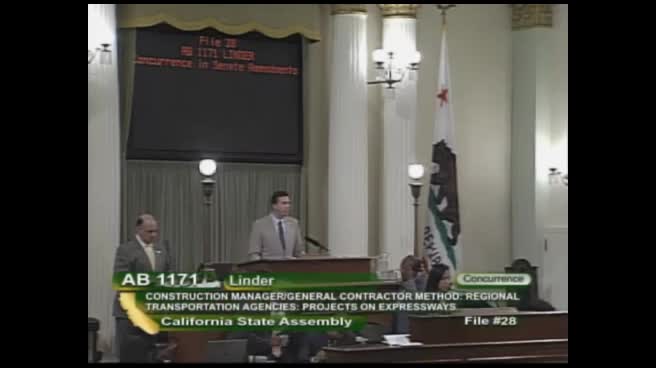 53SEC
Assembly Floor
 3MIN
Senate Standing Committee on Appropriations
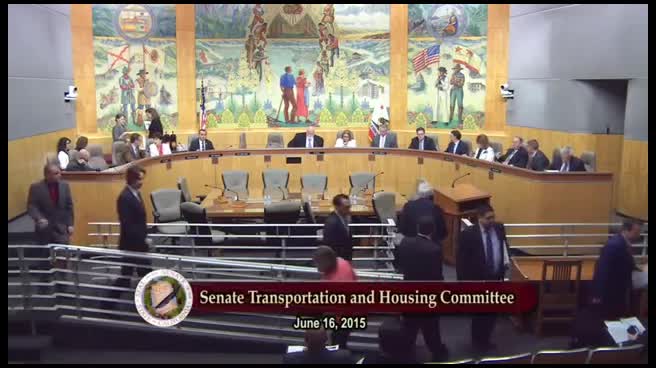 9MIN
Senate Standing Committee on Transportation and Housing
 4MIN
Assembly Standing Committee on Transportation
Bill Author

Bill Co-Author(s):