AB 1399: Income taxes: voluntary contributions: California Domestic Violence Victims Fund.
- Session Year: 2015-2016
- House: Assembly
- Latest Version Date: 2016-09-12
Existing law authorizes an individual to contribute amounts in excess of his or her tax liability for the support of specified funds. Existing law also has administrative provisions applicable to voluntary contributions.
This bill would additionally allow an individual to designate on his or her tax return that a specified amount in excess of his or her tax liability be transferred to the California Domestic Violence Victims Fund, which would be created by this bill. The bill would prohibit a voluntary contribution designation for the California Domestic Violence Victims Fund from being added on the tax return until another voluntary contribution designation is removed or a space is available.
The bill would require moneys in the California Domestic Violence Victims Fund, upon appropriation by the Legislature, to be allocated to the Franchise Tax Board and the Controller for reimbursement of costs and the balance to the Office of Emergency Services (OES) for the distribution of funds to active grant recipients under the Comprehensive Statewide Domestic Violence Program within OES, as provided.
The bill would provide that these provisions would remain in effect only until January 1 of the 5th taxable year following the first appearance of the California Domestic Violence Victims Fund on the tax return, but would further provide for an earlier repeal if the Franchise Tax Board determines that the amount of contributions estimated to be received during a calendar year will not at least equal the minimum contribution amount, as defined, for that calendar year, in which case these provisions would be repealed on December 1 of that year.
Existing law authorizes an individual to contribute amounts in excess of his or her tax liability for the support of specified funds. Existing law also has administrative provisions applicable to voluntary contributions.
This bill would additionally allow an individual to designate on his or her tax return that a specified amount in excess of his or her tax liability be transferred to the California Domestic Violence Victims Fund, which would be created by this bill. The bill would prohibit a voluntary contribution designation for the California Domestic Violence Victims Fund from being added on the tax return until another voluntary contribution designation is removed or a space is available.
The bill would require moneys in the California Domestic Violence Victims Fund, upon appropriation by the Legislature, to be allocated to the Franchise Tax Board and the Controller for reimbursement of costs and the balance to the Office of Emergency Services (OES) for the distribution of funds to active grant recipients under the Comprehensive Statewide Domestic Violence Program within OES, as provided.
The bill would provide that these provisions would remain in effect only until January 1 of the 5th taxable year following the first appearance of the California Domestic Violence Victims Fund on the tax return, but would further provide for an earlier repeal if the Franchise Tax Board determines that the amount of contributions estimated to be received during a calendar year will not at least equal the minimum contribution amount, as defined, for that calendar year, in which case these provisions would be repealed on December 1 of that year.
Existing law authorizes an individual to contribute amounts in excess of his or her tax liability for the support of specified funds. Existing law also has administrative provisions applicable to voluntary contributions.
This bill would additionally allow an individual to designate on his or her tax return that a specified amount in excess of his or her tax liability be transferred to the California Domestic Violence Victims Fund, which would be created by this bill. The bill would prohibit a voluntary contribution designation for the California Domestic Violence Victims Fund from being added on the tax return until another voluntary contribution designation is removed or a space is available.
The bill would require moneys in the California Domestic Violence Victims Fund, upon appropriation by the Legislature, to be allocated to the Franchise Tax Board and the Controller for reimbursement of costs and the balance to the Office of Emergency Services (OES) for the distribution of funds to active grant recipients under the Comprehensive Statewide Domestic Violence Program within OES, as provided.
The bill would provide that these provisions would remain in effect only until January 1 of the 5th taxable year following the first appearance of the California Domestic Violence Victims Fund on the tax return, but would further provide for an earlier repeal if the Franchise Tax Board determines that the amount of contributions estimated to be received during a calendar year will not at least equal the minimum contribution amount, as defined, for that calendar year, in which case these provisions would be repealed on December 1 of that year.
Existing law authorizes an individual to contribute amounts in excess of his or her tax liability for the support of specified funds.
This bill would additionally allow an individual to designate on his or her tax return that a specified amount in excess of his or her tax liability be transferred to the California Domestic Violence Fund, which would be created by this bill. The bill would prohibit a voluntary contribution designation for the California Domestic Violence Fund from being added on the tax return until another voluntary contribution designation is removed or a space is available.
The bill would require moneys in the California Domestic Violence Fund, upon appropriation by the Legislature, to be allocated to the Franchise Tax Board and the Controller for reimbursement of costs and the balance to the Office of Emergency Services (OES) for the distribution of grants funds to existing active grant recipients under the Comprehensive Statewide Domestic Violence Program within OES, as provided.
The bill would provide that these provisions would remain in effect only until January 1 of the 5th taxable year following the first appearance of the California Domestic Violence Fund on the tax return, but would further provide for an earlier repeal if the Franchise Tax Board determines that the amount of contributions estimated to be received during a calendar year will not at least equal the minimum contribution amount, as defined, for that calendar year, in which case these provisions would be repealed on December 1 of that year.
Existing law authorizes an individual to contribute amounts in excess of his or her tax liability for the support of specified funds.
This bill would additionally allow an individual to designate on his or her tax return that a specified amount in excess of his or her tax liability be transferred to the California Domestic Violence Fund, which would be created by this bill. The bill would prohibit a voluntary contribution designation for the California Domestic Violence Fund from being added on the tax return until another voluntary contribution designation is removed or a space is available.
The bill would require moneys in the California Domestic Violence Fund, upon appropriation by the Legislature, to be allocated to the Franchise Tax Board and the Controller for reimbursement of costs, as provided, costs and the balance to the Office of Emergency Services (OES) for the distribution of grants to specified domestic violence programs. existing grant recipients under the Comprehensive Statewide Domestic Violence Program within OES, as provided.
The bill would provide that these provisions would remain in effect only until January 1 of the 5th taxable year following the first appearance of the California Domestic Violence Fund on the tax return, but would further provide for an earlier repeal if the Franchise Tax Board determines that the amount of contributions estimated to be received during a calendar year will not at least equal or exceed the minimum contribution amount, as defined, for that calendar year, in which case these provisions would be repealed on December 1 of that year.
Existing law authorizes an individual to contribute amounts in excess of his or her tax liability for the support of specified funds.
This bill would additionally allow an individual to designate on his or her tax return that a specified amount in excess of his or her tax liability be transferred to the California Domestic Violence Fund, which would be created by this bill. The bill would prohibit a voluntary contribution designation for the California Domestic Violence Fund from being added on the tax return until another voluntary contribution designation is removed or a space is available.
The bill would require moneys in the California Domestic Violence Fund, upon appropriation by the Legislature, to be allocated to the Franchise Tax Board and the Controller for reimbursement of costs, as provided, and the balance to the Office of Emergency Services for the distribution of grants to specified domestic violence programs.
The bill would provide that these provisions would remain in effect only until January 1 of the 5th taxable year following the first appearance of the California Domestic Violence Fund on the tax return, but would further provide for an earlier repeal if the Franchise Tax Board determines that the amount of contributions estimated to be received during a calendar year will not equal or exceed the minimum contribution amount, as defined, for that calendar year, in which case these provisions would be repealed on December 1 of that year.
The Corporation Tax Law allows various credits against the tax imposed by that law. Under existing law, the Office of Emergency Services is responsible for administering the Comprehensive Statewide Domestic Violence Program, which distributes grant awards to domestic violence shelter service providers and provides financial and technical assistance to local domestic violence centers in implementing specified services and requires priority for this assistance to be given to, among others, emergency shelters.
This bill would, for taxable years beginning on or after January 1, 2016, and before January 1, 2021, allow a credit against the tax imposed under that law for 50% of monetary contributions to a domestic violence shelter service provider or emergency shelter, as defined, eligible to receive a grant award or financial and technical assistance pursuant to that program. The bill would provide that the credit would not exceed $200,000 per taxpayer, that the credit would be awarded on a first-come-first-serve basis, and that the credit would have an aggregate cap of $50,000,000 for each calender year. The bill would require the Franchise Tax Board and the Office of Emergency Services to administer the credit, as specified.
This bill would take effect immediately as a tax levy.
The Corporation Tax Law allows various credits against the tax imposed by that law. Under existing law, the Office of Emergency Services is responsible for administering the Comprehensive Statewide Domestic Violence Program, which distributes grant awards to domestic violence shelter service providers and provides financial and technical assistance to local domestic violence centers in implementing specified services and requires priority for this assistance to be given to, among others, emergency shelters.
This bill would, for taxable years beginning on or after January 1, 2016, and before January 1, 2021, allow a credit against the tax imposed under that law for 50% of monetary contributions to a domestic violence shelter service provider or emergency shelter, as defined, eligible to receive a grant award or financial and technical assistance pursuant to that program. The bill would provide that the credit would not exceed $200,000 per taxpayer, that the credit would be awarded on a first-come-first-serve basis, and that the credit would have an aggregate cap of $50,000,000 for each calender year. The bill would require the Franchise Tax Board and the Office of Emergency Services to administer the credit, as specified.
This bill would take effect immediately as a tax levy.
(a)An individual may designate on the tax return that a contribution in excess of the tax liability, if any, be made to the California Domestic Violence Victims Fund established by Section 18712. That designation is to be used as a voluntary contribution on the tax return.
(b)The contributions shall be in full dollar amounts and may be made individually by each signatory on a joint return.
(c)A designation under subdivision (a) shall be made for a taxable year on the original return for that taxable year, and once made shall be irrevocable. If payments and credits reported on the return, together with any other credits associated with the individuals account, do not exceed the individuals liability, the return shall be treated as though no designation has been made. If a designee is not specified, the contribution shall be transferred to the General Fund after reimbursement of the direct actual costs of the Franchise Tax Board for the collection and administration of funds under this article.
(d)If an individual designates a contribution to more than one account or fund listed on the tax return, and the amount available is insufficient to satisfy the total amount designated, the contribution shall be allocated among the designees on a pro rata basis.
(e)The Franchise Tax Board shall revise the form of the return to include a space labeled California Domestic Violence Victims Fund to allow for the designation permitted under subdivision (a). The form shall also include in the instructions information that the contribution may be in the amount of one dollar ($1) or more and that the contribution shall be used to further the services that Californias domestic violence programs provide for victims of domestic violence.
(f)Notwithstanding any other law, a voluntary contribution designation for the California Domestic Violence Victims Fund shall not be added on the tax return until another voluntary contribution designation is removed or space is available.
(g)A deduction shall be allowed under Article 6 (commencing with Section 17201) of Chapter 3 of Part 10 for any contribution made pursuant to subdivision (a).
18712.There is hereby established in the State Treasury the California Domestic Violence Victims Fund to receive contributions made pursuant to Section 18711. The Franchise Tax Board shall notify the Controller of both the amount of money paid by taxpayers in excess of their tax liability and the amount of refund money that taxpayers have designated pursuant to Section 18711 to be transferred to the California Domestic Violence Victims Fund. The Controller shall transfer from the Personal Income Tax Fund to the California Domestic Violence Victims Fund an amount not in excess of the sum of the amounts designated by individuals pursuant to Section 18711 for payment into that fund.
18713.All moneys transferred to the California Domestic Violence Victims Fund, upon appropriation by the Legislature, shall be allocated as follows:
(a)To the Franchise Tax Board and the Controller for reimbursement of all costs incurred by the Franchise Tax Board and the Controller in connection with their duties under this article.
(b)To the Office of Emergency Services for the distribution of funds to domestic violence programs in California that are in active status, as reflected on the Business Search page of the Secretary of States Internet Web site, and are exempt from federal income taxation as an organization described in Section 501(c)(3) of the Internal Revenue Code, and are active grant recipients under the Comprehensive Statewide Domestic Violence Program within the Office of Emergency Services as described in Section 13823.15 of the Penal Code. The Office of Emergency Services shall award the funds and be responsible for overseeing the grant program.
(1)A domestic violence program shall not use grant moneys awarded pursuant to this section for its administrative costs.
(2)The Office of Emergency Services shall not use fund moneys for its administrative costs.
18714.(a)Except as otherwise provided in subdivision (b), this article shall remain in effect only until January 1 of the fifth taxable year following the first appearance of the California Domestic Violence Victims Fund on the personal income tax return, and is repealed as of December 1 of that year.
(b)(1)By September 1 of the second calendar year and each subsequent calendar year that the California Domestic Violence Victims Fund appears on the tax return, the Franchise Tax Board shall do all of the following:
(A)Determine the minimum contribution amount required to be received during the next calendar year for the fund to appear on the tax return for the taxable year that includes that next calendar year.
(B)Provide written notification to the Office of Emergency Services of the amount determined in subparagraph (A).
(C)Determine whether the amount of contributions estimated to be received during the calendar year will equal or exceed the minimum contribution amount determined by the Franchise Tax Board for the calendar year pursuant to subparagraph (A). The Franchise Tax Board shall estimate the amount of contributions to be received by using the actual amounts received and an estimate of the contributions that will be received by the end of that calendar year.
(2)If the Franchise Tax Board determines that the amount of the contributions estimated to be received during a calendar year will not at least equal the minimum contribution amount for the calendar year, this article shall be inoperative with respect to taxable years beginning on or after January 1 of that calendar year and shall be repealed on December 1 of that year.
(3)For purposes of this section, the minimum contribution amount for a calendar year means two hundred fifty thousand dollars ($250,000) for the second calendar year after the first appearance of the California Domestic Violence Victims Fund on the personal income tax return or the minimum contribution amount as adjusted pursuant to subdivision (c).
(c)For each calendar year, beginning with the third calendar year after the first appearance of the California Domestic Violence Victims Fund on the personal income tax return, the Franchise Tax Board shall adjust, on or before September 1 of that calendar year, the minimum contribution amount specified in subdivision (b) as follows:
(1)The minimum contribution amount for the calendar year shall be an amount equal to the product of the minimum contribution amount for the prior calendar year multiplied by the inflation factor adjustment as specified in subparagraph (A) of paragraph (2) of subdivision (h) of Section 17041, rounded off to the nearest dollar.
(2)The inflation factor adjustment used for the calendar year shall be based on the figures for the percentage change in the California Consumer Price Index for all items received on or before August 1 of the calendar year pursuant to paragraph (1) of subdivision (h) of Section 17041.
(a)An individual may designate on the tax return that a contribution in excess of the tax liability, if any, be made to the California Domestic Violence Victims Fund established by Section 18712. That designation is to be used as a voluntary contribution on the tax return.
(b)The contributions shall be in full dollar amounts and may be made individually by each signatory on a joint return.
(c)A designation under subdivision (a) shall be made for a taxable year on the original return for that taxable year, and once made shall be irrevocable. If payments and credits reported on the return, together with any other credits associated with the individuals account, do not exceed the individuals liability, the return shall be treated as though no designation has been made. If a designee is not specified, the contribution shall be transferred to the General Fund after reimbursement of the direct actual costs of the Franchise Tax Board for the collection and administration of funds under this article.
(d)If an individual designates a contribution to more than one account or fund listed on the tax return, and the amount available is insufficient to satisfy the total amount designated, the contribution shall be allocated among the designees on a pro rata basis.
(e)The Franchise Tax Board shall revise the form of the return to include a space labeled California Domestic Violence Victims Fund to allow for the designation permitted under subdivision (a). The form shall also include in the instructions information that the contribution may be in the amount of one dollar ($1) or more and that the contribution shall be used to further the services that Californias domestic violence programs provide for victims of domestic violence.
(f)Notwithstanding any other law, a voluntary contribution designation for the California Domestic Violence Victims Fund shall not be added on the tax return until another voluntary contribution designation is removed or space is available.
(g)A deduction shall be allowed under Article 6 (commencing with Section 17201) of Chapter 3 of Part 10 for any contribution made pursuant to subdivision (a).
18712.There is hereby established in the State Treasury the California Domestic Violence Victims Fund to receive contributions made pursuant to Section 18711. The Franchise Tax Board shall notify the Controller of both the amount of money paid by taxpayers in excess of their tax liability and the amount of refund money that taxpayers have designated pursuant to Section 18711 to be transferred to the California Domestic Violence Victims Fund. The Controller shall transfer from the Personal Income Tax Fund to the California Domestic Violence Victims Fund an amount not in excess of the sum of the amounts designated by individuals pursuant to Section 18711 for payment into that fund.
18713.All moneys transferred to the California Domestic Violence Victims Fund, upon appropriation by the Legislature, shall be allocated as follows:
(a)To the Franchise Tax Board and the Controller for reimbursement of all costs incurred by the Franchise Tax Board and the Controller in connection with their duties under this article.
(b)To the Office of Emergency Services for the distribution of funds to domestic violence programs in California that are in active status, as reflected on the Business Search page of the Secretary of States Internet Web site, and are exempt from federal income taxation as an organization described in Section 501(c)(3) of the Internal Revenue Code, and are active grant recipients under the Comprehensive Statewide Domestic Violence Program within the Office of Emergency Services as described in Section 13823.15 of the Penal Code. The Office of Emergency Services shall award the funds and be responsible for overseeing the grant program.
(1)A domestic violence program shall not use grant moneys awarded pursuant to this section for its administrative costs.
(2)The Office of Emergency Services shall not use fund moneys for its administrative costs.
18714.(a)Except as otherwise provided in subdivision (b), this article shall remain in effect only until January 1 of the fifth taxable year following the first appearance of the California Domestic Violence Victims Fund on the personal income tax return, and is repealed as of December 1 of that year.
(b)(1)By September 1 of the second calendar year and each subsequent calendar year that the California Domestic Violence Victims Fund appears on the tax return, the Franchise Tax Board shall do all of the following:
(A)Determine the minimum contribution amount required to be received during the next calendar year for the fund to appear on the tax return for the taxable year that includes that next calendar year.
(B)Provide written notification to the Office of Emergency Services of the amount determined in subparagraph (A).
(C)Determine whether the amount of contributions estimated to be received during the calendar year will equal or exceed the minimum contribution amount determined by the Franchise Tax Board for the calendar year pursuant to subparagraph (A). The Franchise Tax Board shall estimate the amount of contributions to be received by using the actual amounts received and an estimate of the contributions that will be received by the end of that calendar year.
(2)If the Franchise Tax Board determines that the amount of the contributions estimated to be received during a calendar year will not at least equal the minimum contribution amount for the calendar year, this article shall be inoperative with respect to taxable years beginning on or after January 1 of that calendar year and shall be repealed on December 1 of that year.
(3)For purposes of this section, the minimum contribution amount for a calendar year means two hundred fifty thousand dollars ($250,000) for the second calendar year after the first appearance of the California Domestic Violence Victims Fund on the personal income tax return or the minimum contribution amount as adjusted pursuant to subdivision (c).
(c)For each calendar year, beginning with the third calendar year after the first appearance of the California Domestic Violence Victims Fund on the personal income tax return, the Franchise Tax Board shall adjust, on or before September 1 of that calendar year, the minimum contribution amount specified in subdivision (b) as follows:
(1)The minimum contribution amount for the calendar year shall be an amount equal to the product of the minimum contribution amount for the prior calendar year multiplied by the inflation factor adjustment as specified in subparagraph (A) of paragraph (2) of subdivision (h) of Section 17041, rounded off to the nearest dollar.
(2)The inflation factor adjustment used for the calendar year shall be based on the figures for the percentage change in the California Consumer Price Index for all items received on or before August 1 of the calendar year pursuant to paragraph (1) of subdivision (h) of Section 17041.
(a)An individual may designate on the tax return that a contribution in excess of the tax liability, if any, be made to the California Domestic Violence Victims Fund established by Section 18712. That designation is to be used as a voluntary contribution on the tax return.
(b)The contributions shall be in full dollar amounts and may be made individually by each signatory on a joint return.
(c)A designation under subdivision (a) shall be made for a taxable year on the original return for that taxable year, and once made shall be irrevocable. If payments and credits reported on the return, together with any other credits associated with the individuals account, do not exceed the individuals liability, the return shall be treated as though no designation has been made. If a designee is not specified, the contribution shall be transferred to the General Fund after reimbursement of the direct actual costs of the Franchise Tax Board for the collection and administration of funds under this article.
(d)If an individual designates a contribution to more than one account or fund listed on the tax return, and the amount available is insufficient to satisfy the total amount designated, the contribution shall be allocated among the designees on a pro rata basis.
(e)The Franchise Tax Board shall revise the form of the return to include a space labeled California Domestic Violence Victims Fund to allow for the designation permitted under subdivision (a). The form shall also include in the instructions information that the contribution may be in the amount of one dollar ($1) or more and that the contribution shall be used to further the services that Californias domestic violence programs provide for victims of domestic violence.
(f)Notwithstanding any other law, a voluntary contribution designation for the California Domestic Violence Victims Fund shall not be added on the tax return until another voluntary contribution designation is removed or space is available.
(g)A deduction shall be allowed under Article 6 (commencing with Section 17201) of Chapter 3 of Part 10 for any contribution made pursuant to subdivision (a).
18712.There is hereby established in the State Treasury the California Domestic Violence Victims Fund to receive contributions made pursuant to Section 18711. The Franchise Tax Board shall notify the Controller of both the amount of money paid by taxpayers in excess of their tax liability and the amount of refund money that taxpayers have designated pursuant to Section 18711 to be transferred to the California Domestic Violence Victims Fund. The Controller shall transfer from the Personal Income Tax Fund to the California Domestic Violence Victims Fund an amount not in excess of the sum of the amounts designated by individuals pursuant to Section 18711 for payment into that fund.
18713.All moneys transferred to the California Domestic Violence Victims Fund, upon appropriation by the Legislature, shall be allocated as follows:
(a)To the Franchise Tax Board and the Controller for reimbursement of all costs incurred by the Franchise Tax Board and the Controller in connection with their duties under this article.
(b)To the Office of Emergency Services for the distribution of funds to domestic violence programs in California that are in active status, as reflected on the Business Search page of the Secretary of States Internet Web site, and are exempt from federal income taxation as an organization described in Section 501(c)(3) of the Internal Revenue Code, and are active grant recipients under the Comprehensive Statewide Domestic Violence Program within the Office of Emergency Services as described in Section 13823.15 of the Penal Code. The Office of Emergency Services shall award the funds and be responsible for overseeing the grant program.
(1)A domestic violence program shall not use grant moneys awarded pursuant to this section for its administrative costs.
(2)The Office of Emergency Services shall not use fund moneys for its administrative costs.
18714.(a)Except as otherwise provided in subdivision (b), this article shall remain in effect only until January 1 of the fifth taxable year following the first appearance of the California Domestic Violence Victims Fund on the personal income tax return, and is repealed as of December 1 of that year.
(b)(1)By September 1 of the second calendar year and each subsequent calendar year that the California Domestic Violence Victims Fund appears on the tax return, the Franchise Tax Board shall do all of the following:
(A)Determine the minimum contribution amount required to be received during the next calendar year for the fund to appear on the tax return for the taxable year that includes that next calendar year.
(B)Provide written notification to the Office of Emergency Services of the amount determined in subparagraph (A).
(C)Determine whether the amount of contributions estimated to be received during the calendar year will equal or exceed the minimum contribution amount determined by the Franchise Tax Board for the calendar year pursuant to subparagraph (A). The Franchise Tax Board shall estimate the amount of contributions to be received by using the actual amounts received and an estimate of the contributions that will be received by the end of that calendar year.
(2)If the Franchise Tax Board determines that the amount of the contributions estimated to be received during a calendar year will not at least equal the minimum contribution amount for the calendar year, this article shall be inoperative with respect to taxable years beginning on or after January 1 of that calendar year and shall be repealed on December 1 of that year.
(3)For purposes of this section, the minimum contribution amount for a calendar year means two hundred fifty thousand dollars ($250,000) for the second calendar year after the first appearance of the California Domestic Violence Victims Fund on the personal income tax return or the minimum contribution amount as adjusted pursuant to subdivision (c).
(c)For each calendar year, beginning with the third calendar year after the first appearance of the California Domestic Violence Victims Fund on the personal income tax return, the Franchise Tax Board shall adjust, on or before September 1 of that calendar year, the minimum contribution amount specified in subdivision (b) as follows:
(1)The minimum contribution amount for the calendar year shall be an amount equal to the product of the minimum contribution amount for the prior calendar year multiplied by the inflation factor adjustment as specified in subparagraph (A) of paragraph (2) of subdivision (h) of Section 17041, rounded off to the nearest dollar.
(2)The inflation factor adjustment used for the calendar year shall be based on the figures for the percentage change in the California Consumer Price Index for all items received on or before August 1 of the calendar year pursuant to paragraph (1) of subdivision (h) of Section 17041.
(d)Notwithstanding the repeal of this article, any contribution amounts designated pursuant to this article prior to its repeal shall continue to be transferred and disbursed in accordance with this article as in effect immediately prior to that repeal.
(a)An individual may designate on the tax return that a contribution in excess of the tax liability, if any, be made to the California Domestic Violence Fund established by Section 18712. That designation is to be used as a voluntary contribution on the tax return.
(b)The contributions shall be in full dollar amounts and may be made individually by each signatory on a joint return.
(c)A designation under subdivision (a) shall be made for a taxable year on the original return for that taxable year, and once made shall be irrevocable. If payments and credits reported on the return, together with any other credits associated with the individuals account, do not exceed the individuals liability, the return shall be treated as though no designation has been made. If a designee is not specified, the contribution shall be transferred to the General Fund after reimbursement of the direct actual costs of the Franchise Tax Board for the collection and administration of funds under this article.
(d)If an individual designates a contribution to more than one account or fund listed on the tax return, and the amount available is insufficient to satisfy the total amount designated, the contribution shall be allocated among the designees on a pro rata basis.
(e)The Franchise Tax Board shall revise the form of the return to include a space labeled California Domestic Violence Fund to allow for the designation permitted under subdivision (a). The form shall also include in the instructions information that the contribution may be in the amount of one dollar ($1) or more and that the contribution shall be used to further the services that Californias domestic violence programs provide for victims of domestic violence.
(f)Notwithstanding any other law, a voluntary contribution designation for the California Domestic Violence Fund shall not be added on the tax return until another voluntary contribution designation is removed or space is available.
(g)A deduction shall be allowed under Article 6 (commencing with Section 17201) of Chapter 3 of Part 10 for any contribution made pursuant to subdivision (a).
18712.There is hereby established in the State Treasury the California Domestic Violence Fund to receive contributions made pursuant to Section 18711. The Franchise Tax Board shall notify the Controller of both the amount of money paid by taxpayers in excess of their tax liability and the amount of refund money that taxpayers have designated pursuant to Section 18711 to be transferred to the California Domestic Violence Fund. The Controller shall transfer from the Personal Income Tax Fund to the California Domestic Violence Fund an amount not in excess of the sum of the amounts designated by individuals pursuant to Section 18711 for payment into that fund.
18713.All moneys transferred to the California Domestic Violence Fund, upon appropriation by the Legislature, shall be allocated as follows:
(a)To the Franchise Tax Board and the Controller for reimbursement of all costs incurred by the Franchise Tax Board and the Controller in connection with their duties under this article.
(b)To the Office of Emergency Services for the distribution of grants funds to domestic violence programs in California that are in active status, as reflected on the Business Search page of the Secretary of States Internet Web site, and are exempt from federal income taxation as an organization described in Section 501(c)(3) of the Internal Revenue Code, and are active grant recipients under the Comprehensive Statewide Domestic Violence Program within the Office of Emergency Services as described in Section 13823.15 of the Penal Code. The Office of Emergency Services shall award grants the funds and be responsible for overseeing the grant program.
(1)A domestic violence program shall not use grant moneys awarded pursuant to this section for its administrative costs.
(2)The Office of Emergency Services shall not use fund moneys for its administrative costs.
18714.(a)Except as otherwise provided in subdivision (b), this article shall remain in effect only until January 1 of the fifth taxable year following the first appearance of the California Domestic Violence Fund on the personal income tax return, and is repealed as of December 1 of that year.
(b)(1)By September 1 of the second calendar year and each subsequent calendar year that the California Domestic Violence Fund appears on the tax return, the Franchise Tax Board shall do all of the following:
(A)Determine the minimum contribution amount required to be received during the next calendar year for the fund to appear on the tax return for the taxable year that includes that next calendar year.
(B)Provide written notification to the Office of Emergency Services of the amount determined in subparagraph (A).
(C)Determine whether the amount of contributions estimated to be received during the calendar year will equal or exceed the minimum contribution amount determined by the Franchise Tax Board for the calendar year pursuant to subparagraph (A). The Franchise Tax Board shall estimate the amount of contributions to be received by using the actual amounts received and an estimate of the contributions that will be received by the end of that calendar year.
(2)If the Franchise Tax Board determines that the amount of the contributions estimated to be received during a calendar year will not at least equal the minimum contribution amount for the calendar year, this article shall be inoperative with respect to taxable years beginning on or after January 1 of that calendar year and shall be repealed on December 1 of that year.
(3)For purposes of this section, the minimum contribution amount for a calendar year means two hundred fifty thousand dollars ($250,000) for the second calendar year after the first appearance of the California Domestic Violence Fund on the personal income tax return or the minimum contribution amount as adjusted pursuant to subdivision (c).
(c)For each calendar year, beginning with the third calendar year after the first appearance of the California Domestic Violence Fund on the personal income tax return, the Franchise Tax Board shall adjust, on or before September 1 of that calendar year, the minimum contribution amount specified in subdivision (b) as follows:
(1)The minimum contribution amount for the calendar year shall be an amount equal to the product of the minimum contribution amount for the prior calendar year multiplied by the inflation factor adjustment as specified in subparagraph (A) of paragraph (2) of subdivision (h) of Section 17041, rounded off to the nearest dollar.
(2)The inflation factor adjustment used for the calendar year shall be based on the figures for the percentage change in the California Consumer Price Index for all items received on or before August 1 of the calendar year pursuant to paragraph (1) of subdivision (h) of Section 17041.
(d)Notwithstanding the repeal of this article, any contribution amounts designated pursuant to this article prior to its repeal shall continue to be transferred and disbursed in accordance with this article as in effect immediately prior to that repeal.
(a)An individual may designate on the tax return that a contribution in excess of the tax liability, if any, be made to the California Domestic Violence Fund established by Section 18712. That designation is to be used as a voluntary contribution on the tax return.
(b)The contributions shall be in full dollar amounts and may be made individually by each signatory on a joint return.
(c)A designation under subdivision (a) shall be made for a taxable year on the original return for that taxable year, and once made shall be irrevocable. If payments and credits reported on the return, together with any other credits associated with the individuals account, do not exceed the individuals liability, the return shall be treated as though no designation has been made. If a designee is not specified, the contribution shall be transferred to the General Fund after reimbursement of the direct actual costs of the Franchise Tax Board for the collection and administration of funds under this article.
(d)If an individual designates a contribution to more than one account or fund listed on the tax return, and the amount available is insufficient to satisfy the total amount designated, the contribution shall be allocated among the designees on a pro rata basis.
(e)The Franchise Tax Board shall revise the form of the return to include a space labeled California Domestic Violence Fund to allow for the designation permitted under subdivision (a). The form shall also include in the instructions information that the contribution may be in the amount of one dollar ($1) or more and that the contribution shall be used to further the services that Californias domestic violence programs provide for victims of domestic violence.
(f)Notwithstanding any other law, a voluntary contribution designation for the California Domestic Violence Fund shall not be added on the tax return until another voluntary contribution designation is removed or space is available.
(g)A deduction shall be allowed under Article 6 (commencing with Section 17201) of Chapter 3 of Part 10 for any contribution made pursuant to subdivision (a).
18712.There is hereby established in the State Treasury the California Domestic Violence Fund to receive contributions made pursuant to Section 18711. The Franchise Tax Board shall notify the Controller of both the amount of money paid by taxpayers in excess of their tax liability and the amount of refund money that taxpayers have designated pursuant to Section 18711 to be transferred to the California Domestic Violence Fund. The Controller shall transfer from the Personal Income Tax Fund to the California Domestic Violence Fund an amount not in excess of the sum of the amounts designated by individuals pursuant to Section 18711 for payment into that fund.
18713.All moneys transferred to the California Domestic Violence Fund, upon appropriation by the Legislature, shall be allocated as follows:
(a)To the Franchise Tax Board and the Controller for reimbursement of all costs incurred by the Franchise Tax Board and the Controller in connection with their duties under this article.
(b)To the Office of Emergency Services for the distribution of grants to domestic violence programs in California that are in active status, as reflected on the Business Search page of the Secretary of States Internet Web site, and that are exempt from federal income taxation as an organization described in Section 501(c)(3) of the Internal Revenue Code. Code, and are grant recipients under the Comprehensive Statewide Domestic Violence Program within the Office of Emergency Services as described in Section 13823.15 of the Penal Code. The Office of Emergency Services shall award grants and be responsible for overseeing the grant program.
(1)A domestic violence program shall not use grant moneys awarded pursuant to this section for its administrative costs.
(2)The Office of Emergency Services shall not use fund moneys for its administrative costs.
18714.(a)Except as otherwise provided in subdivision (b), this article shall remain in effect only until January 1 of the fifth taxable year following the first appearance of the California Domestic Violence Fund on the personal income tax return, and is repealed as of December 1 of that year.
(b)(1)By September 1 of the second calendar year and each subsequent calendar year that the California Domestic Violence Fund appears on the tax return, the Franchise Tax Board shall do all of the following:
(A)Determine the minimum contribution amount required to be received during the next calendar year for the fund to appear on the tax return for the taxable year that includes that next calendar year.
(B)Provide written notification to the Office of Emergency Services of the amount determined in subparagraph (A).
(C)Determine whether the amount of contributions estimated to be received during the calendar year will equal or exceed the minimum contribution amount determined by the Franchise Tax Board for the calendar year pursuant to subparagraph (A). The Franchise Tax Board shall estimate the amount of contributions to be received by using the actual amounts received and an estimate of the contributions that will be received by the end of that calendar year.
(2)If the Franchise Tax Board determines that the amount of the contributions estimated to be received during a calendar year will not at least equal the minimum contribution amount for the calendar year, this article shall be inoperative with respect to taxable years beginning on or after January 1 of that calendar year and shall be repealed on December 1 of that year.
(3)For purposes of this section, the minimum contribution amount for a calendar year means two hundred fifty thousand dollars ($250,000) for the second calendar year after the first appearance of the California Domestic Violence Fund on the personal income tax return or the minimum contribution amount as adjusted pursuant to subdivision (c).
(c)For each calendar year, beginning with the third calendar year after the first appearance of the California Domestic Violence Fund on the personal income tax return, the Franchise Tax Board shall adjust, on or before September 1 of that calendar year, the minimum contribution amount specified in subdivision (b) as follows:
(1)The minimum contribution amount for the calendar year shall be an amount equal to the product of the minimum contribution amount for the prior calendar year multiplied by the inflation factor adjustment as specified in subparagraph (A) of paragraph (2) of subdivision (h) of Section 17041, rounded off to the nearest dollar.
(2)The inflation factor adjustment used for the calendar year shall be based on the figures for the percentage change in the California Consumer Price Index for all items received on or before August 1 of the calendar year pursuant to paragraph (1) of subdivision (h) of Section 17041.
(d)Notwithstanding the repeal of this article, any contribution amounts designated pursuant to this article prior to its repeal shall continue to be transferred and disbursed in accordance with this article as in effect immediately prior to that repeal.
(a)An individual may designate on the tax return that a contribution in excess of the tax liability, if any, be made to the California Domestic Violence Fund established by Section 18712. That designation is to be used as a voluntary contribution on the tax return.
(b)The contributions shall be in full dollar amounts and may be made individually by each signatory on a joint return.
(c)A designation under subdivision (a) shall be made for a taxable year on the original return for that taxable year, and once made shall be irrevocable. If payments and credits reported on the return, together with any other credits associated with the individuals account, do not exceed the individuals liability, the return shall be treated as though no designation has been made. If a designee is not specified, the contribution shall be transferred to the General Fund after reimbursement of the direct actual costs of the Franchise Tax Board for the collection and administration of funds under this article.
(d)If an individual designates a contribution to more than one account or fund listed on the tax return, and the amount available is insufficient to satisfy the total amount designated, the contribution shall be allocated among the designees on a pro rata basis.
(e)The Franchise Tax Board shall revise the form of the return to include a space labeled California Domestic Violence Fund to allow for the designation permitted under subdivision (a). The form shall also include in the instructions information that the contribution may be in the amount of one dollar ($1) or more and that the contribution shall be used to further the services that Californias domestic violence programs provide for victims of domestic violence.
(f)Notwithstanding any other law, a voluntary contribution designation for the California Domestic Violence Fund shall not be added on the tax return until another voluntary contribution designation is removed or space is available.
(g)A deduction shall be allowed under Article 6 (commencing with Section 17201) of Chapter 3 of Part 10 for any contribution made pursuant to subdivision (a).
18712.There is hereby established in the State Treasury the California Domestic Violence Fund to receive contributions made pursuant to Section 18711. The Franchise Tax Board shall notify the Controller of both the amount of money paid by taxpayers in excess of their tax liability and the amount of refund money that taxpayers have designated pursuant to Section 18711 to be transferred to the California Domestic Violence Fund. The Controller shall transfer from the Personal Income Tax Fund to the California Domestic Violence Fund an amount not in excess of the sum of the amounts designated by individuals pursuant to Section 18711 for payment into that fund.
18713.All moneys transferred to the California Domestic Violence Fund, upon appropriation by the Legislature, shall be allocated as follows:
(a)To the Franchise Tax Board and the Controller for reimbursement of all costs incurred by the Franchise Tax Board and the Controller in connection with their duties under this article.
(b)To the Office of Emergency Services for the distribution of grants to domestic violence programs in California that are in active status, as reflected on the Business Search page of the Secretary of States Internet Web site, and that are exempt from federal income taxation as an organization described in Section 501(c)(3) of the Internal Revenue Code. The Office of Emergency Services shall award grants and be responsible for overseeing the grant program.
(1)A domestic violence program shall not use grant moneys awarded pursuant to this section for its administrative costs.
(2)The Office of Emergency Services shall not use fund moneys for its administrative costs.
18714.(a)Except as otherwise provided in subdivision (b), this article shall remain in effect only until January 1 of the fifth taxable year following the first appearance of the California Domestic Violence Fund on the personal income tax return, and is repealed as of December 1 of that year.
(b)(1) By September 1 of the second calendar year and each subsequent calendar year that the California Domestic Violence Fund appears on the tax return, the Franchise Tax Board shall do all of the following:
(A)Determine the minimum contribution amount required to be received during the next calendar year for the fund to appear on the tax return for the taxable year that includes that next calendar year.
(B)Provide written notification to the Office of Emergency Services of the amount determined in subparagraph (A).
(C)Determine whether the amount of contributions estimated to be received during the calendar year will equal or exceed the minimum contribution amount determined by the Franchise Tax Board for the calendar year pursuant to subparagraph (A). The Franchise Tax Board shall estimate the amount of contributions to be received by using the actual amounts received and an estimate of the contributions that will be received by the end of that calendar year.
(2)If the Franchise Tax Board determines that the amount of the contributions estimated to be received during a calendar year will not at least equal the minimum contribution amount for the calendar year, this article shall be inoperative with respect to taxable years beginning on or after January 1 of that calendar year and shall be repealed on December 1 of that year.
(3)For purposes of this section, the minimum contribution amount for a calendar year means two hundred fifty thousand dollars ($250,000) for the second calendar year after the first appearance of the California Domestic Violence Fund on the personal income tax return or the minimum contribution amount as adjusted pursuant to subdivision (c).
(c)For each calendar year, beginning with the third calendar year after the first appearance of the California Domestic Violence Fund on the personal income tax return, the Franchise Tax Board shall adjust, on or before September 1 of that calendar year, the minimum contribution amount specified in subdivision (b) as follows:
(1)The minimum contribution amount for the calendar year shall be an amount equal to the product of the minimum contribution amount for the prior calendar year multiplied by the inflation factor adjustment as specified in subparagraph (A) of paragraph (2) of subdivision (h) of Section 17041, rounded off to the nearest dollar.
(2)The inflation factor adjustment used for the calendar year shall be based on the figures for the percentage change in the California Consumer Price Index for all items received on or before August 1 of the calendar year pursuant to paragraph (1) of subdivision (h) of Section 17041.
(d)Notwithstanding the repeal of this article, any contribution amounts designated pursuant to this article prior to its repeal shall continue to be transferred and disbursed in accordance with this article as in effect immediately prior to that repeal.
SECTION 1.Section 23692 is added to the Revenue and Taxation Code, to read:23692.(a)For each taxable year beginning on or after January 1, 2016, and before January 1, 2021, there shall be allowed as a credit against the tax, as defined in Section 23036, an amount equal to 50 percent of a monetary contribution made by a taxpayer to a domestic violence shelter service provider or emergency shelter.
(b)For the purposes of this section, the following definitions shall apply:
(1)Domestic violence shelter service provider shall have the same meaning as in Section 13823.15 of the Penal Code and eligible to receive a grant award pursuant to the program.
(2)Emergency shelter shall have the same meaning as in Section 13823.15 of the Penal Code and eligible for financial or technical assistance pursuant to the program.
(3)Program means the Comprehensive Statewide Domestic Violence Program described in Section 13823.15 of the Penal Code.
(c)The amount of the credit shall not exceed two hundred thousand dollars ($200,000) per taxpayer, per taxable year.
(d)Upon application by the taxpayer to the Franchise Tax Board, the Franchise Tax Board shall certify a contribution meeting the requirements of this section pursuant to paragraph (1) of subdivision (i).
(e)In the case where the credit allowed by this section exceeds the tax, the excess may be carried over to reduce the tax in the following year, and succeeding five years, if necessary, until the credit is exhausted.
(f)This credit shall be in lieu of any other credit or deduction that the taxpayer may otherwise claim pursuant to this part with respect to a contribution described in subdivision (a).
(g)This credit shall be claimed on a timely filed original return.
(h)(1)The aggregate amount of credits allowed under this section shall not exceed fifty million dollars ($50,000,000) for each calendar year.
(2)The allocation of credits shall be on a first-come-first-served basis.
(i)The Franchise Tax Board and the Office of Emergency Services shall administer this credit.
(1)The Franchise Tax Board shall perform all of the following:
(A)Adopt rules and regulations as necessary or appropriate to implement this credit.
(B)Establish application forms and procedures.
(C)Track credits claimed.
(D)Post aggregate totals of the credits claimed on the Internet Web site of the Franchise Tax Board.
(E)Determine when the aggregate total of credits reaches fifty million dollars ($50,000,000) for a calendar year.
(F)Based on the list provided by the Office of Emergency Services pursuant to paragraph (2), certify that a contribution meets the requirements of this section.
(2)The Office of Emergency Services shall annually submit to the Franchise Tax Board a list of those domestic violence shelter service providers and emergency shelters eligible for a grant award or technical and financial assistance pursuant to the Comprehensive Statewide Domestic Violence Program described in Section 13823.15 of the Penal Code.
(j)The Administrative Procedure Act (Chapter 3.5 (commencing with Section 11340) of Part 1 of Division 3 of Title 2 of the Government Code) shall not apply to the rules or regulations adopted pursuant to this section.
(k)This section shall remain in effect only until December 1, 2021, and as of that date is repealed.
SEC. 2.It is the intent of the Legislature to make the findings required by Section 41 of the Revenue and Taxation Code.
SEC. 3.This act provides for a tax levy within the meaning of Article IV of the Constitution and shall go into immediate effect.
(a)For each taxable year beginning on or after January 1, 2016, and before January 1, 2021, there shall be allowed as a credit against the tax, as defined in Section 23036, an amount equal to 50 percent of a monetary contribution made by a taxpayer to a domestic violence shelter service provider or emergency shelter.
(b)For the purposes of this section, the following definitions shall apply:
(1)Domestic violence shelter service provider shall have the same meaning as in Section 13823.15 of the Penal Code and eligible to receive a grant award pursuant to the program.
(2)Emergency shelter shall have the same meaning as in Section 13823.15 of the Penal Code and eligible for financial or technical assistance pursuant to the program.
(3)Program means the Comprehensive Statewide Domestic Violence Program described in Section 13823.15 of the Penal Code.
(c)The amount of the credit shall not exceed two hundred thousand dollars ($200,000) per taxpayer, per taxable year.
(d)Upon application by the taxpayer to the Franchise Tax Board, the Franchise Tax Board shall certify a contribution meeting the requirements of this section pursuant to paragraph (1) of subdivision (i).
(e)In the case where the credit allowed by this section exceeds the tax, the excess may be carried over to reduce the tax in the following year, and succeeding five years, if necessary, until the credit is exhausted.
(f)This credit shall be in lieu of any other credit or deduction that the taxpayer may otherwise claim pursuant to this part with respect to a contribution described in subdivision (a).
(g)This credit shall be claimed on a timely filed original return.
(h)(1)The aggregate amount of credits allowed under this section shall not exceed fifty million dollars ($50,000,000) for each calendar year.
(2)The allocation of credits shall be on a first-come-first-served basis.
(i)The Franchise Tax Board and the Office of Emergency Services shall administer this credit.
(1)The Franchise Tax Board shall perform all of the following:
(A)Adopt rules and regulations as necessary or appropriate to implement this credit.
(B)Establish application forms and procedures.
(C)Track credits claimed.
(D)Post aggregate totals of the credits claimed on the Internet Web site of the Franchise Tax Board.
(E)Determine when the aggregate total of credits reaches fifty million dollars ($50,000,000) for a calendar year.
(F)Based on the list provided by the Office of Emergency Services pursuant to paragraph (2), certify that a contribution meets the requirements of this section.
(2)The Office of Emergency Services shall annually submit to the Franchise Tax Board a list of those domestic violence shelter service providers and emergency shelters eligible for a grant award or technical and financial assistance pursuant to the Comprehensive Statewide Domestic Violence Program described in Section 13823.15 of the Penal Code.
(j)The Administrative Procedure Act (Chapter 3.5 (commencing with Section 11340) of Part 1 of Division 3 of Title 2 of the Government Code) shall not apply to the rules or regulations adopted pursuant to this section.
(k)This section shall remain in effect only until December 1, 2021, and as of that date is repealed.
SEC. 2.It is the intent of the Legislature to make the findings required by Section 41 of the Revenue and Taxation Code.
SEC. 3.This act provides for a tax levy within the meaning of Article IV of the Constitution and shall go into immediate effect.
|
Date
|
Status
|
|---|---|
| Jan 27, 2016 | Read third time. Passed. Ordered to the Senate. (Ayes 78. Noes 0. Page 3510.) |
| Sep 12, 2016 | Chaptered by Secretary of State - Chapter 289, Statutes of 2016. |
| Sep 12, 2016 | Approved by the Governor. |
| Aug 26, 2016 | Enrolled and presented to the Governor at 4:30 p.m. |
| Aug 22, 2016 | Senate amendments concurred in. To Engrossing and Enrolling. (Ayes 79. Noes 0. Page 6026.). |
| Aug 22, 2016 | Senate amendments concurred in. To Engrossing and Enrolling. |
| Aug 16, 2016 | In Assembly. Concurrence in Senate amendments pending. May be considered on or after August 18 pursuant to Assembly Rule 77. |
| Aug 15, 2016 | Read third time. Passed. Ordered to the Assembly. (Ayes 37. Noes 0.). |
| Aug 15, 2016 | Read third time. Passed. Ordered to the Assembly. (Ayes 37. Noes 0. Page 4956.). |
| Aug 15, 2016 | Read third time. Passed. Ordered to the Assembly. |
| Jun 28, 2016 | Read second time. Ordered to third reading. |
| Jun 27, 2016 | From committee: Do pass. (Ayes 6. Noes 0.) (June 27). |
| Jun 9, 2016 | From committee chair, with author's amendments: Amend, and re-refer to committee. Read second time, amended, and re-referred to Com. on APPR. |
| Jun 8, 2016 | From committee: Do pass and re-refer to Com. on APPR. (Ayes 7. Noes 0.) (June 8). Re-referred to Com. on APPR. |
| Feb 10, 2016 | From committee chair, with author's amendments: Amend, and re-refer to committee. Read second time, amended, and re-referred to Com. on GOV. & F. |
| Feb 4, 2016 | Referred to Com. on GOV. & F. |
| Feb 27, 2015 | Introduced. To print. |
| Jan 27, 2016 | In Senate. Read first time. To Com. on RLS. for assignment. |
| Jan 21, 2016 | Read second time. Ordered to Consent Calendar. |
| Jan 21, 2016 | From committee: Do pass. To Consent Calendar. (Ayes 17. Noes 0.) (January 21). |
| Jan 14, 2016 | Re-referred to Com. on APPR. |
| Jan 13, 2016 | Read second time and amended. |
| Jan 12, 2016 | From committee: Amend, and do pass as amended and re-refer to Com. on APPR. (Ayes 8. Noes 0.) (January 11). |
| Jan 4, 2016 | Re-referred to Com. on REV. & TAX. |
| Jan 4, 2016 | From committee chair, with author's amendments: Amend, and re-refer to Com. on REV. & TAX. Read second time and amended. |
| May 18, 2015 | In committee: Set, second hearing. Hearing canceled at the request of author. |
| May 18, 2015 | In committee: Set, first hearing. Hearing canceled at the request of author. |
| Apr 13, 2015 | In committee: Set, first hearing. Referred to REV. & TAX. suspense file. |
| Mar 23, 2015 | Referred to Com. on REV. & TAX. |
| Mar 2, 2015 | Read first time. |
| Mar 1, 2015 | From printer. May be heard in committee March 31. |
|
Date
|
Description
|
Location
|
Votes
|
|
|---|---|---|---|---|
| Aug 22, 2016 | AB 1399 BAKER Concurrence in Senate Amendments | Assembly Floor |
Passed |
|
| Aug 15, 2016 | Assembly 3rd Reading AB1399 Baker By Bates | Senate Floor |
Passed |
|
| Jun 27, 2016 | Do pass | Senate Standing Committee on Appropriations |
Passed |
|
| Jun 8, 2016 | Do pass, but first be re-referred to the Committee on [Appropriations] | Senate Standing Committee on Governance and Finance |
Passed |
|
| Jan 27, 2016 | AB 1399 BAKER Consent Calendar Second Day Regular Session | Assembly Floor |
Passed |
|
| Jan 21, 2016 | Do pass. To Consent Calendar. | Assembly Standing Committee on Appropriations |
Passed |
|
| Jan 11, 2016 | Do pass as amended and be re-referred to the Committee on [Appropriations] | Assembly Standing Committee on Revenue and Taxation |
Passed |
This list shows positions taken on this bill by organizations on the date displayed, which is linked to the original source.
Positions by individuals are not included.
|
Organization
|
Position
|
Date
|
|---|---|---|
| Alliance for Community Transformations | ** Support | Aug 15, 2016 |
| American Federation of State, County, and Municipal Employees | ** Against | Jun 8, 2016 |
| California Communities United Institute | ** Support | Jun 8, 2016 |
| California Department of Finance | ** Against | Aug 15, 2016 |
| California Partnership To End Domestic Violence | ** Support | Aug 15, 2016 |
| California Tax Reform Association | ** Against | Jun 8, 2016 |
| Center for Community Solutions | ** Support | Jun 8, 2016 |
| Center for Community Solutions; Center for Domestic Peace | ** Support | Aug 15, 2016 |
| Center for Domestic Peace | ** Support | Jun 8, 2016 |
| Contra Costa County Board of Supervisors | ** Support | Aug 15, 2016 |
| Contra Costa County, Office of District Attorney | ** Support | Jun 8, 2016 |
| Contra Costa District Attorney's Office | ** Support | Aug 15, 2016 |
| Family Services Supporting Tulare County | ** Support | Jun 8, 2016 |
| Los Angeles Center for Law and Justice | ** Support | Jun 8, 2016 |
| Member of Domestic Violence Services | ** Support | Jun 8, 2016 |
| Monarch Services | ** Support | Jun 8, 2016 |
| Mountain Crisis Services in Mariposa | ** Support | Jun 8, 2016 |
| REV. & TAX. | ** Against | Jun 8, 2016 |
| Safe Alternatives to Violent Environments | ** Support | Aug 15, 2016 |
| Shepherd's Door Domestic Violence Resource Center | ** Support | Jun 8, 2016 |
| Stand! For Families Free of Violence | ** Support | Jun 8, 2016 |
| State Board of Equalization Member Fiona Ma | ** Support | Aug 15, 2016 |
| Wild Iris Family Counseling & Crisis Center | ** Support | Jun 8, 2016 |
| YWCA of Glendale | ** Support | Jun 8, 2016 |
CONCURRENCE IN SENATE AMENDMENTS
CSA1 Bill Id:AB 1399
Author:(Baker)
As Amended Ver:June 9, 2016
Majority vote
ASSEMBLY: | 78-0 | (January 27, 2016) | SENATE: | 37-0 | (August 15, 2016) |
Original Committee Reference: REV. & TAX.
SUMMARY: Authorizes the addition of the California Domestic Violence Victims Fund (Fund) checkoff to the personal income tax (PIT) return upon the removal of another voluntary contribution fund (VCF) from the return, or as soon as space is available.
The Senate amendments:
- Add a coauthor.
- Clarify that the Office of Emergency Services (OES) shall distribute funds to domestic violence programs in California that are active grant recipients under the Comprehensive Statewide Domestic Violence Program.
- Rename the Fund the "California Domestic Violence Victims Fund".
- Delete superfluous provisions.
EXISTING LAW:
- Allows taxpayers to contribute to one or more of 19 VCFs on the 2015 PIT return.
- Provides a specific sunset date for each VCF, except for the California Seniors Special Fund and the State Parks Protection Fund.
- Requires each VCF to meet an annual minimum contribution amount to remain in effect, except for the California Firefighters' Memorial Fund, the California Peace Officer Memorial Foundation Fund, and the California Seniors Special Fund.
AS PASSED BY THE ASSEMBLY, this bill:
- Established the California Domestic Violence Fund in the State Treasury.
- Provided that all money transferred to the Fund, upon appropriation by the Legislature, shall be allocated to the:
- Franchise Tax Board (FTB) and the State Controller for reimbursement of all costs incurred in administering the VCF; and,
- OES for the distribution of grants to domestic violence programs in California that are in active status, as reflected on the Business Search page of the Secretary of State's Internet Web site, that are exempt from federal income taxation as an organization described in Internal Revenue Code Section 501(c)(3), and are grant recipients under the Comprehensive Statewide Domestic Violence Program within the OES.
- Provided that the OES shall award grants and be responsible for overseeing the grant program.
- Provided that domestic violence programs and the OES shall not use grant moneys awarded or funds for administrative costs.
- Provided for the Fund provisions' automatic sunset on January 1 of the fifth taxable year following the Fund's first appearance on the PIT return.
- Required the Fund to meet a minimum contribution threshold of $250,000 indexed for inflation.
FISCAL EFFECT: According to the Senate Appropriations Committee:
- The FTB estimates that, beginning in fiscal year 2017-18, this bill would result in an annual revenue loss of $8,000 (General Fund) for every $250,000 contributed by itemizing taxpayers.
- The OES would incur minor and absorbable costs to administer the program and provide grants.
- The State Controller's Office and the FTB would be reimbursed for related administrative costs.
COMMENTS:
- Author's Statement. The author has provided the following statement in support of this bill:
AB 1399 will increase available resources to victims of domestic violence by providing additional resources through a donations option on California tax returns to the California Domestic Violence [Victims] Fund. Specifically, this bill will allow an individual to designate on the tax return that a contribution in excess of the tax liability be made to the California Domestic Violence [Victims] Fund.
The cause for unmet critical needs are reduced government funding (37%,) cuts from private funding (25%,) lack of staff (23%,) and a reduction in individual donations (13%.) By providing additional opportunities for donations to domestic violence programs, we can better provide a safe haven for families.
- Arguments in Support. According to Safe Alternatives to Violent Environments, "Domestic violence programs rely on a wide range of funding sources to support their programs, including government grants, foundations, corporate donations, and individual donations. Allowing individuals to easily donate to the California Domestic Violence [Victims] Fund through their individual tax filing will encourage Californians to support these essential programs and fund lifesaving services."
- So many causes, so little space. There are countless worthy causes that would benefit from the inclusion of a VCF on the state's income tax returns. At the same time, space on the returns is limited. Thus, it could be argued that the current system for adding VCFs to the form is subjective and essentially rewards organizations and causes that can convince the Legislature to include their fund on the form.
Analysis Prepared by: M. David Ruff & Carlos Anguiano / REV. & TAX. / (916) 319-2098 FN: 0003561
Office of Senate Floor Analyses (916) 651-1520 Fax: (916) 327-4478 | AB |
THIRD READING
Bill No: AB 1399
:
SENATE GOVERNANCE & FIN. COMMITTEE: 7-0, 6/8/16
AYES: Hertzberg, Nguyen, Beall, Hernandez, Lara, Moorlach, Pavley
SENATE APPROPRIATIONS COMMITTEE: 6-0, 6/27/16
AYES: Bates, Beall, Hill, McGuire, Mendoza, Nielsen
NO VOTE RECORDED: Lara
ASSEMBLY FLOOR: 78-0, 1/27/16 (Consent) - See last page for vote
DIGEST: This bill authorizes the addition of the California Domestic Violence Victims Fund check-off to the personal income tax return.
Existing law:
- Allows taxpayers to contribute money to voluntary contribution funds (VCFs) by checking a box on their state income tax returns. California law requires contributions made through so-called “check-offs” to be made from taxpayers’ own resources and not from their tax liability, as is possible on federal tax returns.
- Allows contribution amounts to be claimed as charitable contributions on taxpayers’ tax returns in the subsequent year.
- Requires that each VCF is individually added to the tax return by legislation. With a few exceptions, VCFs remain on the return until they are repealed by a sunset date or fail to generate a minimum contribution amount. In general, the minimum contribution amounts are adjusted annually for inflation. For most VCFs, the minimum contribution amount is $250,000, beginning in the fund’s second year. The following check-offs do not have a minimum contribution requirement:
- California Firefighters’ Memorial Foundation Fund,
- California Peace Officer Memorial Foundation Fund, and
- California Seniors Special Fund.
This bill:
- Adds the California Domestic Violence Victims Fund (Fund), and allows a taxpayer to make a voluntary contribution to the Fund on the state personal income tax return, beginning once an existing check-off for charitable fund contribution has been removed, or as soon as space is available.
- Requires the Fund to meet a minimum contribution threshold of $250,000 in the second calendar year the Fund appears on the tax form, and the amount is indexed yearly for inflation.
- Provides that all money transferred to the Fund, upon appropriation by the Legislature, be allocated as follows:
- To the Franchise Tax Board (FTB) and the State Controller for reimbursement of all costs incurred in administering the VCF.
- To the Office of Emergency Services (OES) for distribution to domestic violence programs in California that are in active status, exempt from federal income taxation as an organization described in Section 501(c)(3) of the Internal Revenue Code, and are active grant recipients under the Comprehensive Statewide Domestic Violence Program within OES.
- Prohibits funds to be used for administrative costs by both the grant recipients and OES.
- Provides that the bill automatically sunsets on January 1 of the fifth taxable year following the Fund's first appearance on the personal income tax form.
Background
When a taxpayer contributes to VCFs, the FTB deposits the total of all contributions, less an administrative fee, into the fund created as part of the VCF’s legislative authorization. For some VCFs, such as the Protect Our Coast and Ocean Fund, taxpayers’ contributions are allocated to a state agency for use in a state administered grant program. Other VCFs’ authorizing statutes direct administrative agencies to allocate donations to a private organization. For example, OES passes VCF funds to the American Red Cross. Other funds require the Controller to send the funds directly to private organizations without passing through an administrative agency, such as the California Fire Foundation. The Controller and administrative agencies may deduct administrations fees from the amount of donations each VCF receives.
There are currently 19 check-offs listed on the tax return form. The tax check-off program typically collects $4-5 million in annual contributions for all VCFs.
FISCAL EFFECT: Appropriation: Fiscal Com.: Local:
According to the Senate Appropriations Committee:
- FTB estimates that, beginning in 2017- 18, this bill would result in an annual revenue loss of $8,000 (General Fund) for every $250,000 contributed by itemizing taxpayers.
- OES would incur minor and absorbable costs to administer the program and provide grants.
- The Controller’s Office and FTB and would be reimbursed for related administrative costs.
Alliance for Community Transformations
California Partnership to End Domestic Violence
Center for Community Solutions; Center for Domestic Peace
Contra Costa County Board of Supervisors
Contra Costa District Attorney’s Office
Safe Alternatives to Violent Environments
State Board of Equalization Member Fiona Ma
OPPOSITION: (Verified 6/28/16)
California Department of Finance
ARGUMENTS IN SUPPORT: According to the author, “On just one day in 2014, 5,784 victims and their children received services at domestic violence programs throughout the state. On that same day 1, 2016 request for services went unmet, of which 55% were for housing, largely due to lack of resources. That means 1,216, individuals, children, and families, could not secure a safe place to stay, or receive vital counseling or resources. Emergency shelter, transitional housing, and nonresidential services could not be provided because of a lack of resources. Of those unmet needs, approximately 49% of programs report that victims return to their abuser, 37% report that victims become homeless, and 16% report that families end up living in their car. The cause for these unmet needs are reduced government funding (37%) cuts from private funding (25%) lack of staff (23%) and a reduction in individual donations (13%.). By providing additional opportunities for donations to domestic violence programs in own communities, we can better provide a safe haven for families.”
ARGUMENTS IN OPPOSITION: Opponent argues that the bill is of limited value and results in a loss to the General Fund. Additionally, it is unclear why special preference should be given to one organization over the countless others that are not on the tax form.
ASSEMBLY FLOOR: 78-0, 1/27/16
AYES: Achadjian, Alejo, Travis Allen, Baker, Bigelow, Bloom, Bonilla, Bonta, Brough, Brown, Burke, Calderon, Campos, Chang, Chau, Chávez, Chiu, Chu, Cooley, Cooper, Dababneh, Dahle, Daly, Dodd, Eggman, Frazier, Beth Gaines, Gallagher, Cristina Garcia, Eduardo Garcia, Gatto, Gipson, Gomez, Gonzalez, Gordon, Gray, Grove, Hadley, Harper, Roger Hernández, Holden, Irwin, Jones, Jones-Sawyer, Kim, Lackey, Levine, Linder, Lopez, Low, Maienschein, Mayes, McCarty, Medina, Melendez, Mullin, Nazarian, Obernolte, O'Donnell, Olsen, Patterson, Quirk, Rendon, Ridley-Thomas, Rodriguez, Salas, Santiago, Steinorth, Mark Stone, Thurmond, Ting, Wagner, Waldron, Weber, Wilk, Williams, Wood, Atkins
NO VOTE RECORDED: Mathis
6/29/16 15:56:04
**** END ****
SENATE COMMITTEE ON APPROPRIATIONS
Senator Ricardo Lara, Chair
2015 - 2016 Regular Session
AB 1399 (Baker) - Income taxes: voluntary contributions: California Domestic Violence Victims Fund
Version: June 9, 2016 | Policy Vote: GOV. & F. 7 - 0 |
Urgency: No | Mandate: No |
Hearing Date: June 27, 2016 | Consultant: Robert Ingenito |
This bill does not meet the criteria for referral to the Suspense File.
Bill Summary:
AB 1399 would authorize the addition of the California Domestic Violence Victims Fund check-off to the personal income tax return.
Fiscal Impact:
- The Franchise Tax Board (FTB) estimates that, beginning in 2017- 18, this bill would result in an annual revenue loss of $8,000 (General Fund) for every $250,000 contributed by itemizing taxpayers.
- The Office of Emergency Services (OES) would incur minor and absorbable costs to administer the program and provide grants.
- The State Controller’s Office (SCO) and FTB and would be reimbursed for related administrative costs.
Background:
Current law allows taxpayers to contribute money to one or more of 19 voluntary contribution funds during the process of filing their state income tax return (tax check-off). These contributions are made from taxpayers' own resources, not from their tax liability, as is the case with federal tax returns. Check-off amounts are deductible as charitable contributions on taxpayers' returns during the subsequent tax year. With some exceptions, each voluntary contribution fund has a sunset date and is required to meet a minimum contribution amount of $250,000, adjusted annually for inflation.
Proposed Law:
This bill would add the California Domestic Violence Victims Fund (Fund), and allow a taxpayer to make a voluntary contribution to the Fund on the state personal income tax return, beginning once an existing check-off for charitable fund contribution has been removed, or as soon as space is available. The bill would require the Fund to meet a minimum contribution threshold of $250,000 in the second calendar year the Fund appears on the tax form, and the amount is indexed yearly for inflation.
Additionally, the bill would provide that all money transferred to the Fund, upon appropriation by the Legislature, be allocated as follows: (1) to FTB and SCO for reimbursement of all costs incurred in administering the Fund, and (2) to OES for distribution to domestic violence programs in California, as specified.
The bill would prohibit funds to be used for administrative costs by both grant recipients and OES. It would automatically sunset on January 1 of the fifth taxable year following the Fund's first appearance on the personal income tax form.
Related Legislation:
SB 1476 (Committee on Governance and Finance) would establish general provisions for voluntary contribution funds. Specifically, the bill would (1) establish a seven-year sunset, (2) require a minimum contribution amount of $250,000 beginning in the fund’s second year, and each year thereafter, requires funds to be continuously appropriated, and (3) require administering agencies to post information online about the use of the funds. SB 1476 is currently awaiting action by the full Assembly.
Staff Comments:
FTB data indicate that in 2012, 89,335 out of 15 million taxpayers contributed a total of $4.8 million via tax check-offs.
-- END --
SENATE COMMITTEE ON GOVERNANCE AND FINANCE
Senator Robert M. Hertzberg, Chair
2015 - 2016 Regular
Bill No: | AB 1399 | Hearing Date: | 6/8/16 |
Author: | Baker | Tax Levy: | No |
Version: | 2/10/16 | Fiscal: | Yes |
Consultant: | Bouaziz | ||
Income taxes: voluntary contributions: California Domestic Violence Fund
Authorizes the addition of the California Domestic Violence Fund (Fund) check-off to the personal income tax return.
Background
Existing state law allows taxpayers to contribute money to voluntary contribution funds (VCFs), by checking a box on their state income tax returns. California law requires contributions made through so-called “check-offs” to be made from taxpayers’ own resources and not from their tax liability, as is possible on federal tax returns. Check-off amounts may be claimed as charitable contributions on taxpayers’ tax returns in the subsequent year.
Each VCF is individually added to the tax return by legislation. With a few exceptions, VCFs remain on the return until they are repealed by a sunset date or fail to generate a minimum contribution amount. In general, the minimum contribution amount is $250,000, beginning in the fund’s second year, and is adjusted yearly for inflation thereafter. The following check-offs do not have a minimum contribution requirement:
- California Firefighters’ Memorial Foundation Fund,
- California Peace Officer Memorial Foundation Fund, and
- California Seniors Special Fund.
When a taxpayer contributes to VCFs, the Franchise Tax Board (FTB) deposits the total of all contributions, less an administrative fee, into the fund created as part of the VCF’s legislative authorization. For some VCFs, such as the Protect Our Coast and Ocean Fund, taxpayers’ contributions are allocated to a state agency for use in a state administered grant program. Other VCFs’ authorizing statutes direct administrative agencies to allocate donations to a private organization. For example, the Office of Emergency Services passes VCF funds to the American Red Cross. Other funds require the State Controller to send the funds directly to private organizations without passing through an administrative agency, such as the California Fire Foundation. The Controller and administrative agencies may deduct administrations fees from the amount of donations each VCF receives.
There are currently 19 check-offs listed on the tax return form. The tax check-off program typically collects $4-5 million in annual contributions for all VCFs.
Proposed Law
Assembly Bill 1399 adds the California Domestic Violence Fund (Fund), and allows a taxpayer to make a voluntary contribution to the Fund on the state personal income tax return, beginning once an existing check-off for charitable fund contribution has been removed, or as soon as space is available. The bill requires the Fund to meet a minimum contribution threshold of $250,000 in the second calendar year the Fund appears on the tax form, and the amount is indexed yearly for inflation.
Additionally, the bill provides that all money transferred to the Fund, upon appropriation by the Legislature, be allocated as follows:
- To FTB and the State Controller for reimbursement of all costs incurred in administering the VCF,
- To the Office of Emergency Services for distribution to domestic violence programs in California that are in active status, exempt from federal income taxation as an organization described in Section 501(c)(3) of the Internal Revenue Code, and are active grant recipients under the Comprehensive Statewide Domestic Violence Program within the Office of Emergency Services.
The bill prohibits funds to be used for administrative costs by both the grant recipients and the Office of Emergency Services. AB 1399 provides that the bill automatically sunsets on January 1 of the fifth taxable year following the Fund's first appearance on the personal income tax form.
State Revenue Impact
FTB estimates annual revenue losses of roughly $8,000 for every $250,000 contributed to the Fund by taxpayers who itemize.
Comments
1. Purpose of the bill. According to the author, “On just one day in 2014, 5,784 victims and their children received services at domestic violence programs throughout the state. On that same day 1, 2016 request for services went unmet, of which 55% were for housing, largely due to lack of resources. That means 1,216, individuals, children, and families, could not secure a safe place to stay, or receive vital counseling or resources. Emergency shelter, transitional housing, and nonresidential services could not be provided because of a lack of resources. Of those unmet needs, approximately 49% of programs report that victims return to their abuser, 37% report that victims become homeless, and 16% report that families end up living in their car. The cause for these unmet needs are reduced government funding (37%) cuts from private funding (25%) lack of staff (23%) and a reduction in individual donations (13%.). By providing additional opportunities for donations to domestic violence programs in own communities, we can better provide a safe haven for families.”
2. Is there a better way? The current tax check-off program generates a relatively small share of statewide contributions to charitable causes. In 2008, Californians donated more than $17 billion to charities. However, less than 1% of Californians use the tax check-off program to make donations to charitable organizations. FTB reports that in 2012, 89,335 out of 15 million taxpayers contributed a total of $4.8 million. In 2014, SB 1207 (Wolk) attempted to address this issue and help grow charitable giving by establishing the California Voluntary Contribution Program to promote charitable giving and collect donations. This would have allowed many more charities to participate in the program, would have screened potential participants before adding them onto the form, and eliminated the need for each organization to go through the Legislative process. Under SB 1207, charities would instead apply to the office of California Volunteers for placement on the income tax form. However, SB 1207 (Wolk) was held on suspense in Assembly Appropriations.
3. Bills, bills, bills. Currently, tax check-offs must be added by the Legislature. In 2008, 11 VCFs appeared on the personal income tax return. Today, the return contains 19. With legislation introduced every year to add new VCFs, there is little reason to expect this number to stop growing. It is estimated that FTB can only handle 8 or 9 more check-offs before FTB has to create a separate tax schedule.
4. Similar Legislation. SB 1476 (Governance and Finance) establishes general provisions for voluntary contribution funds. Specifically, the bill establishes a seven year sunset, requires a minimum contribution amount of $250,000 beginning in the fund’s second year, and each year thereafter, requires funds to be continuously appropriated, and requires administering agencies to post information online about the use of the funds. SB 1476 is set to be heard in the Assembly Committee on Revenue and Taxation on June 13, 2016.
Assembly Actions
Assembly Revenue and Taxation 8-0
Assembly Appropriations 17-0
Assembly Floor 78-0
Support and Opposition
(6/2/16)
Support: Alliance for Community Transformations; California Partnership to End Domestic Violence; Center for Community Solutions; Center for Domestic Peace; Contra Costa County Board of Supervisors; Contra Costa District Attorney’s Office; Fiona Ma, State Board of Equalization Chairwoman; Safe Alternatives to Violent Environments-SAVE.
Opposition: California Department of Finance.
-- END --
Date of Hearing: January 21, 2016
ASSEMBLY COMMITTEE ON APPROPRIATIONS
Jimmy Gomez, Chair
ABPCA Bill Id:AB 1399
Author:(Baker) – As Amended Ver:January 13, 2016
Policy Committee: | Revenue and Taxation | Vote: | 8 - 0 |
|
| ||
|
|
Urgency: No State Mandated Local Program: No Reimbursable: No
SUMMARY:
This bill authorizes the addition of the California Domestic Violence Fund (Fund), and allows a taxpayer to make a voluntary contribution to the Fund on the state personal income tax return, beginning once an existing check-off for charitable fund contribution has been removed.
Funds raised would, upon appropriation by the Legislature, be allocated the Franchise Tax Board and the Controller for reimbursement of all costs and to the Office of Emergency Services (OES) for the distribution of grants to qualifying domestic violence programs in California.
The bill requires the Fund to meet the minimum annual contribution threshold of $250,000, indexed for inflation, and would require the Fund's provisions to automatically sunset on January 1 of the fifth taxable year following the Fund's first appearance on the personal income tax return.
FISCAL EFFECT:
- Minor and absorbable costs to the (OES) to administer the program and the grants.
- Estimated GF revenue decreases of approximately $8,000 in each year the voluntary contribution fund remains on the personal income tax form.
COMMENTS:
- Purpose/Background. The goal of the new fund is to incentivize contributions to support domestic violence programs. Existing law allows taxpayers to contribute money to voluntary contribution funds (VCFs) by checking a box on their state income tax returns. California law requires contributions made through so-called “check-offs” to be made from taxpayers’ own resources and not from their tax liability, as is possible on federal tax returns. Check-off amounts may be claimed as charitable contributions on taxpayers’ tax returns in the subsequent year.
The legislature adds individual VCF’s yearly. With a few exceptions, VCFs remain on the return until they are repealed by a sunset date or fail to generate a minimum contribution amount. In general, the minimum contribution amounts are adjusted annually for inflation. For most VCFs, the minimum contribution amount is $250,000, beginning in the fund’s second year.
Analysis Prepared by: Pedro R. Reyes / APPR. / (916) 319-2081
Date of Hearing: January 11, 2016
ASSEMBLY COMMITTEE ON REVENUE AND TAXATION
Philip Ting, Chair
ABPCA Bill Id:AB 1399 (
Author:Baker) – As Amended Ver:January 4, 2016
SUSPENSE
Majority vote. Fiscal committee.
SUBJECT: Income taxes: voluntary contributions: California Domestic Violence Fund
SUMMARY: Authorizes the addition of the California Domestic Violence Fund (Fund) checkoff to the personal income tax (PIT) return upon the removal of another voluntary contribution fund (VCF) from the return, or as soon as space is available. Specifically, this bill:
- Establishes the Fund in the State Treasury.
- Provides that all money transferred to the Fund, upon appropriation by the Legislature, shall be allocated to the:
- Franchise Tax Board (FTB) and the State Controller for reimbursement of all costs incurred in administering the VCF; and,
- Office of Emergency Services (OES) for the distribution of grants to domestic violence programs in California that are in active status, as reflected on the Business Search of the Secretary of State’s Internet Web site, and that are exempt from federal income taxation as an organization described in the Internal Revenue Code (IRC) Section 501(c)(3).
- Franchise Tax Board (FTB) and the State Controller for reimbursement of all costs incurred in administering the VCF; and,
- Provide that the OES shall award grants and be responsible for overseeing the grant program.
- Provides that a domestic violence program and the OES shall not use grant moneys awarded or funds for administrative purposes and costs.
- Provides for the Fund provisions' automatic sunset on January 1 of the fifth taxable year following the Fund's first appearance on the PIT return.
- Requires the Fund to meet a minimum contribution threshold of $250,000 indexed for inflation.
EXISTING LAW:
- Allows taxpayers to contribute to one or more of 18 VCFs.
- Provides a specific sunset date for each VCF, except for the California Seniors Special Fund and the State Parks Protection Fund.
- Requires each VCF to meet an annual minimum contribution amount to remain in effect, except for the California Firefighters' Memorial Fund, the California Peace Officer Memorial Foundation Fund, and the California Seniors Special Fund.
FISCAL EFFECT: Unknown
COMMENTS:
- The author has provided the following statement in support of this bill:
AB 1399 will increase available resources to victims of domestic violence by providing additional resources through a donations option on California tax returns to the California Domestic Violence Fund. Specifically, this bill will allow an individual to designate on the tax return that a contribution in excess of the tax liability be made to the California Domestic Violence Fund.
The cause for unmet critical needs are reduced government funding (37%,) cuts from private funding (25%,) lack of staff (23%,) and a reduction in individual donations (13%.) By providing additional opportunities for donations to domestic violence programs, we can better provide a safe haven for families.
- Arguments in Support. According to Safe Alternatives to Violent Environments, “Domestic violence programs rely on a wide range of funding sources to support their programs, including government grants, foundations, corporate donations, and individual donations. Allowing individuals to easily donate to the California Domestic Violence Fund through their individual tax filing will encourage Californians to support these essential programs and fund lifesaving services.”
- So many causes, so little space. There are countless worthy causes that would benefit from the inclusion of a VCF on the state's income tax returns. At the same time, space on the returns is limited. Thus, it could be argued that the current system for adding VCFs to the form is subjective and essentially rewards organizations that can convince the Legislature to include their fund on the form.
- VCF policy. This Committee's VCF policy provides that "[a]ll proponents seeking authorization for a new or reauthorized checkoff shall provide information justifying their expectation that the checkoff will meet its minimum contribution requirement." The author’s office has been clear about the need to fund domestic violence shelters but has provided no explanation as to why this fund will generate the required $250,000 minimum contribution requirement.
- Administering the Fund. OES maintains a very large grant program, including a victims services program that provides grants for domestic violence. This bill, however, provides that OES shall distribute grants to domestic violence programs that are in active status as reflected on the Secretary of State’s Internet Web site. It is unclear if the domestic violence programs maintained on the Secretary of State’s Web site would be different than those currently maintained by OES. In order to provide greater guidance and in order to reduce administrative costs, the Committee may wish to amend this bill so that the grants are distributed to domestic violence programs that are part of one of OESs grant programs.
- Funding the Administration of the Fund. This bill allows the FTB and the State Controller’s office to be reimbursed for costs incurred in administering the VCF but does not do the same for OES. Therefore, any additional staff, if needed, will have to come out of the OES’ existing budget. It is believed that cost will be absorbable bit OES has not confirmed this as yet.
REGISTERED SUPPORT / OPPOSITION:
Support
Alliance for Community Transformations
California Partnership to End Domestic Violence
Center for Community Solutions
Center for Domestic Peace
Contra Costa County, Office of District Attorney
Contra Costa County, Board of Supervisors
Safe Alternatives to Violent Environments
Opposition
None on File
Analysis Prepared by: Carlos Anguiano / REV. & TAX. / (916) 319-2098
AB 1399
Page 6
Date of Hearing: April 13, 2015
ASSEMBLY COMMITTEE ON REVENUE AND TAXATION
Philip Ting, Chair
AB 1399
(Baker) – As Introduced February 27, 2015
Majority vote. Fiscal committee. Tax levy.
SUBJECT: Corporation tax law: credits: domestic violence shelters
SUMMARY: Provides a credit under the Corporation Tax (CT) Law in the amount of 50% of the contributions made to a domestic violence shelter service provider or emergency shelter, not to exceed $200,000. Specifically, this bill:
Provides, beginning on or after January 1, 2016, and before January 1, 2021, a credit against the "tax," as defined under the CT Law, in the amount of 50% of contributions made to a domestic violence shelter service provider or emergency shelter.
Provides that the credit shall not exceed $200,000 per taxpayer, per taxable year.
Provides that the credit is in lieu of any other credit or deduction that the taxpayer may otherwise claim for contributions made to a domestic violence shelter service provider or emergency shelter.
Provides that the credit shall be claimed on a timely filed original return.
Requires the Franchise Tax Board (FTB), upon application by the taxpayer, to certify contributions meeting the requirements of this bill.
Provides that if the credit exceeds the taxpayer’s liability, the excess credit amount may be carried over to the following year, and succeeding five years, if necessary until the credit is exhausted.
Provides that the credits shall be awarded on a first-come-first-serve basis, and that the aggregate amount of credit shall not exceed $50 million for each calendar year.
Defines a "domestic violence shelter service provider" as having the same meaning as provided for under the Comprehensive Statewide Domestic Violence Program.
Defines an "emergency shelter" as having the same meaning, and eligible for financial or technical assistance pursuant to the Comprehensive Statewide Domestic Violence Program.
Defines a "program" as having the same meaning under the Comprehensive Statewide Domestic Violence Program.
Provides that the FTB and the Office of Emergency Services (OES) shall administer the credit provided for by this bill.
Provides that the FTB shall perform all of the following:
Adopt rules and regulations as necessary or appropriate to implement this credit.
Establish application forms and procedures.
Track credits claimed.
Post aggregate totals of the credits claimed on the Internet Web site of the FTB.
Determine when the aggregate total of credits reaches $50,000,000 for a calendar year.
Certify that a contribution meets the requirements as set forth in this bill based on the list provided by the OES.
Requires that the OES annually submit to the FTB a list of those domestic violence shelter service providers and emergency shelters eligible for a grant award or technical and financial assistance pursuant to the Comprehensive Statewide Domestic Violence Program.
Provides that the Administrative Procedures Act shall not apply to the rules or regulations adopted pursuant to this section.
Provides that this section shall remain in effect only until December 1, 2021, and as of that date is repealed.
Provides that it is the intent of the Legislature to make the findings required by the Revenue & Tax Code (RTC) Section 41.
Provides that, as a tax levy, this act go into effect immediately.
EXISTING LAW:
Provides various tax credits to encourage socially-beneficial behavior or to provide relief to taxpayers who incur specified expenses. Or to influence behavior, including business practices and decisions. These credits generally are designed to provide incentives for taxpayers to perform various actions or activities that they may not otherwise undertake.
Allows generally for, taxpayers engaged in a trade or business may deduct all expenses considered ordinary and necessary in conducting that trade or business.
Allows corporations that are members of the same unitary combined reporting group to assign “eligible” credits to other members of the group. An “eligible” credit is any credit earned by the taxpayers in a taxable year beginning on or after July 1, 2008, or any credit earned in any taxable year beginning before July 1, 2008, that was eligible to be carried forward to the first taxable year beginning on or after July 1, 2008. The credit assignment is made by an irrevocable election. The assignor and assignee taxpayers must be members of the same combined reporting for the taxable year in which the credit is earned and the taxable year the credit is assigned.
Applies performance measurement standards to any new tax credit under either the Personal Income Tax (PIT) or CT Law if enacted by a bill introduced on or after January 1, 2015. Specifically, existing law requires the all of the following:
Specific goals, purposes, and objectives that the tax credit will achieve:
Detailed performance indicators for the Legislature to use when measuring whether the tax credit meets the goals, purposes, and objectives stated in the bill; and,
Data collection requirements to enable the Legislature to determine whether the tax credit is meeting, failing to meet, or exceeding those specific goals, purposes, and objectives, including a requirement to specify both of the following:
The baseline data, to be collected and remitted in each year the credit is effective, for the Legislature to measure the change in performance indicators; and,
The taxpayers, state agencies, or other entities required to collect and remit data
FISCAL EFFECT: The FTB estimates a revenue loss of $11 million in fiscal year (FY) 2015-16, $38 million in FY 2016-17, and $46 million in 2017-18.
COMMENTS:
Author’s Statement. The Author has provided the following statement in support of this bill:
On just one day in 2013, 5,263 victims and their children received services as domestic violence programs throughout the state. On that same day 872 requests for services went unmet, of which 80% were for housing, largely due to lack of resources. That means 872 individuals, children, and families, could not secure a safe place to stay, or receive vital counseling or resources. Emergency shelter, transitional housing, and nonresidential services could not be provided because of lack of resources. Of those unmet needs, approximately 40% of programs report that victims return to their abuser, 37% report that victims become homeless, and 16% report that families end up living in their car.
AB 1399 will increase available resources to victims of domestic violence by providing that local business and corporations who make charitable contributions to domestic violence programs can receive a 50% tax credit for that donation. The recipients of the contribution must be non-profit domestic violence organizations who are grant recipients under the OES Comprehensive Statewide Domestic Violence Program.
Arguments in Support. YWCA of Glendale states that, “Every day, domestic violence programs . . . struggle to meet the needs of domestic violence survivors, their children and communities with limited financial resources at their disposal. . . . Domestic violence programs rely on a wide range of funding sources to support their programs, including corporate donations. Allowing corporations to claim a tax credit for their donations would help to encourage these businesses to increase donations to the domestic violence programs serving their communities. This bill will benefit domestic violence programs and the businesses that choose to donate.”
Arguments in Opposition. The California Tax Reform Association (CTRA) notes that, “[t]his bill’s proposed way of accomplishing that end is, however, not as meritorious as its laudable aim.” CTRA continues on to say that, “given the magnitude of the contemplated expenditure, a more targeted and more accountable approach would be a bill that appropriates this money from the General Fund to those programs that the bill already identifies as legitimate recipients. Second, the bill would provide that the credit would not exceed $200,000 per corporate taxpayer. However, many corporations have already zeroed out their tax liability. Third, and relatedly, the loss of up to $50 million to the General Fund means that other worthy programs may not be as well funded. Fourth, the exemption from the Administrative Procedures Act for regulations promulgated under the legislation is confounding.
Domestic Violence Shelters (DVS). One in four women will experience domestic violence in their lifetime. (Tjaden, Patricia & Thoennes, Nancy. National Institute of Justice and the Centers of Disease Control and Prevention, Extent, Nature and Consequences of Intimate Partner Violence: Findings from the National Violence Against Women Survey, 2000.) DVSs are essential in supporting victims of domestic violence because they answer incoming calls, provide emergency shelters for women and children, and provide much needed counseling. (Safehorizon. Facts and Stats About Safehorizon. Web. April 1, 2015.) Moreover, according to a recent article in Forbes magazine, “Domestic violence costs $8.3 billion in expenses annually: a combination of higher medical costs ($5.8 billion) and lost productivity ($2.5 billion).” (Robert Pearl. Forbes. Domestic Violence: The Secret Killer That Costs $8.3 Billion Annually. December, 5, 2013. Web. April 1, 2015.)
What is a "tax expenditure"? Existing law provides various credits, deductions, exclusions, and exemptions for particular taxpayer groups. In the late 1960s, United States Treasury officials began arguing that these features of the tax law should be referred to as "expenditures," since they are generally enacted to accomplish some governmental purpose and there is a determinable cost associated with each (in the form of foregone revenues). This bill would enact a new tax expenditure program, in the form of a tax credit for corporations who make contributions to qualified DVS.
How is a tax expenditure different from a direct expenditure? As the Department of Finance notes in its annual Tax Expenditure Report, there are several key differences between tax expenditures and direct expenditures. First, tax expenditures are reviewed less frequently than direct expenditures once they are put in place. Second, there is generally no control over the amount of revenue losses associated with any given tax expenditure. Finally, it should also be noted that, once enacted, it takes a two-thirds vote to rescind an existing tax expenditure absent a sunset date. This bill shall remain in effect until December 1, 2021.
Considerations. A tax credit for 50% of the monetary contributions to a DVS service provider or emergency shelter is relatively high as compared to other credits in existing law. Therefore, it is reasonable to assume that this would indeed incentivize corporations to continue/increase their contributions to DVSs; however, the incentive is only temporary and the increased available funding would also be highly volatile depending on the amount of contributions made throughout the year. This variability could eventually lead to planning complications and potential underfunding for shelters that have over-expanded their services in response to a temporary increase in funding.
Moreover, simply creating a greater incentive for corporations to make donations does not necessarily address the issue regarding the lack of funding; this bill does not consider where funding is needed most or how an increase in funding would be most efficiently utilized. Larger DVS would most likely receive the lion’s share of the increased funding solely due to their notoriety. However, smaller and newer shelters (who may have a greater need for funding) may be entirely neglected and unable to meet their demands. Therefore, regardless of the aggregate increase in funding, if the funding is not distributed efficiently the intended purpose of the author could be met with frustration.
Compliance with Section 41 of the RTC. It is unclear as to whether the requirements under Section 41, have been met to the required extent. First, although the author states that the this bill's effect will be an increase in funding available to DVSs, this bill does not articulate any specific goal, purpose or objective of this bill. Second, although this bill requires the FTB’s to administer this credit, it does not provide for the required performance indicators or data collection necessary to measure the success of the tax credit.
Alternatives: The author states the effect of this bill is to increase the available funding to the DVS. Whereas this tax credit may incentivize corporations to that end, the revenue loss associated with this tax credit may be better justified and the assumed goal of the bill more efficiently achieved through a direct expenditure.
Implementation Considerations: The FTB noted the following:
This bill lacks [the] administrative details necessary to implement the bill and determine its impacts to the department’s systems, forms, and processes. The bill is silent on the following issues:
When and what information would the OES report to the FTB?
Would the first-come, first-served basis of allocating the credit be based on contribution date? Date the application was filed with the FTB?
How and when would a taxpayer request and receive notification of an allocation?
Would a reallocation of any unallocated amount or unused allocated amount for a fiscal year be allowed?
A funding mechanism for the FTB’s start-up and on-going costs to administer the certification and reporting process provisions of this bill. Absence of a funding mechanism could delay implementation or require diversion of resources from existing revenue generating workloads.
REGISTERED SUPPORT / OPPOSITION:
Support
Alliance for Community Transformation
California Partnership to End Domestic Violence
California Communities United Institute
Family Services Supporting Tulare County
Los Angeles Center for Law and Justice
Member of Domestic Violence Services
Monarch Services
Mountain Crisis Services in Mariposa
Safe Alternatives to Violent Environments
Shepherd’s Door Domestic violence Resource Center
STAND! For Families Free of Violence
WEAVE, Inc
Wild Iris Family Counseling & Crisis Center
YWCA of Glendale
41 private individuals
Opposition
American Federation of State, County, and Municipal Employees
California Tax Reform Association
Analysis Prepared by: Carlos Anguiano / REV. & TAX. / (916) 319-2098
Discussed in Hearing
 53SEC
Assembly Floor
 2MIN
Senate Floor
 4MIN
Senate Standing Committee on Appropriations
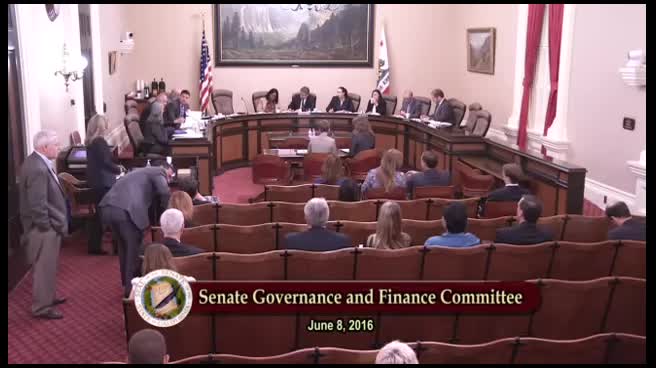 10MIN
Senate Standing Committee on Governance and Finance
Bill Author