AB 1504: Elections: all-mailed ballot elections: pilot project.
- Session Year: 2015-2016
- House: Assembly
- Latest Version Date: 2015-10-10
Until December 31, 2017, existing law, as a pilot program, authorizes elections in San Mateo County and Yolo County, other than statewide primary or general elections, or special elections to fill a vacancy in a state office, the Legislature, or Congress, to be conducted wholly by mail if specified conditions are satisfied. If San Mateo County or Yolo County conducts an all-mailed ballot election, existing law requires the county to report to the Legislature and the Secretary of State, as specified.
This bill would extend this pilot program until January 1, 2018. This bill would also authorize Monterey and Sacramento Counties to conduct all-mailed ballot elections as part of this program, subject to a requirement to provide additional polling places. The bill would also make technical, nonsubstantive changes.
Until December 31, 2017, existing law, as a pilot program, authorizes elections in San Mateo County and Yolo County, other than statewide primary or general elections, or special elections to fill a vacancy in a state office, the Legislature, or Congress, to be conducted wholly by mail if specified conditions are satisfied. If San Mateo County or Yolo County conducts an all-mailed ballot election, existing law requires the county to report to the Legislature and the Secretary of State, as specified.
This bill would extend this pilot program until January 1, 2018, and 2018. This bill would also authorize Monterey and Sacramento Counties to conduct all-mailed ballot elections pursuant to these provisions. as part of this program, subject to a requirement to provide additional polling places. The bill would also make technical, nonsubstantive changes.
Until December 31, 2017, existing law, as a pilot program, authorizes elections in San Mateo County and Yolo County, other than statewide primary or general elections, or special elections to fill a vacancy in a state office, the Legislature, or Congress, to be conducted wholly by mail if specified conditions are satisfied. If San Mateo County or Yolo County conducts an all-mailed ballot election, existing law requires the county to report to the Legislature and the Secretary of State, as specified.
This bill would extend this pilot program until January 1, 2018, and would also authorize Monterey and Sacramento Counties to conduct all-mailed ballot elections pursuant to these provisions. The bill would also make technical, nonsubstantive changes.
Until December 31, 2017, existing law, as a pilot program, authorizes elections in San Mateo County and Yolo County, other than statewide primary or general elections, or special elections to fill a vacancy in a state office, the Legislature, or Congress, to be conducted wholly by mail if specified conditions are satisfied. If San Mateo County or Yolo County conducts an all-mailed ballot election, existing law requires the county to report to the Legislature and the Secretary of State, as specified.
This bill would extend this pilot program until January 1, 2020 2018, and would also authorize Monterey and Sacramento Counties to conduct all-mailed ballot elections pursuant to these provisions. The bill would also make technical, nonsubstantive changes.
Until December 31, 2017, existing law, as a pilot program, authorizes elections in San Mateo County and Yolo County, other than statewide primary or general elections, or special elections to fill a vacancy in a state office, the Legislature, or Congress, to be conducted wholly by mail if specified conditions are satisfied. If San Mateo County or Yolo County conducts an all-mailed ballot election, existing law requires the county to report to the Legislature and the Secretary of State, as specified.
This bill would extend this pilot program until January 1, 2020 and would also authorize Monterey County and Sacramento Counties to conduct all-mailed ballot elections pursuant to these provisions. The bill would also make technical, nonsubstantive changes.
Until December 31, 2017, existing law, as a pilot program, authorizes elections in San Mateo County and Yolo County, other than statewide primary or general elections, or special elections to fill a vacancy in a state office, the Legislature, or Congress, to be conducted wholly by mail if specified conditions are satisfied. If San Mateo County or Yolo County conducts an all-mailed ballot election, existing law requires the county to report to the Legislature and the Secretary of State, as specified.
This bill would also authorize Monterey County to conduct all-mailed ballot elections pursuant to these provisions. The bill would also make technical, nonsubstantive changes.
Existing law requires the Governor to appoint 3 persons to a board of election commissioners for a city upon being satisfied of the truth of the matters set forth in a petition presented to the Governor by the voters of the city that, among other things, the city has failed to elect officers in accordance with its charter and there are no officers to carry on the city government, or the city has failed to call an election of officers. Existing law requires the Governor to issue a commission to the commissioners, and provides that issuance of the commission is conclusive evidence of the regularity of all the proceedings to and including the appointment of the commissioners.
This bill would make a nonsubstantive change to the latter provision.
(a)Notwithstanding Section 4000 or any other law, as a pilot program, elections in San Mateo County, Yolo County, Sacramento County, and Monterey County may be conducted wholly by mail if all of the following conditions are satisfied:
(1)The governing body of the city, county, or district, by resolution, authorizes the all-mailed ballot election and notifies the Secretary of State of its intent to conduct an all-mailed ballot election at least 88 days before the date of the election.
(2)The election does not occur on the same date as a statewide primary or general election or any other election conducted in an overlapping jurisdiction that is not consolidated and conducted wholly by mail pursuant to this section.
(3)The election is not a special election to fill a vacancy in a state office, the Legislature, or Congress.
(4)(A)At least one ballot drop-off location is provided per city or the ballot drop-off locations are fixed in a manner so that the number of residents for each ballot drop-off location does not exceed 100,000 on the 88th day before the day of election, whichever results in more drop-off locations. A ballot drop-off location shall be open during business hours to receive voted ballots beginning 28 days before the date of the election and until 8 p.m. on the day of the election.
(B)(i)For San Mateo County and Yolo County, at least one polling place is provided per city.
(ii)For Monterey County and Sacramento County, at least one polling place is provided for every 50,000 registered voters, with a minimum of one polling place per city, in a manner so that the number of registered voters for each polling place does not exceed 50,000 on the 88th day before the day of election, whichever results in more polling places.
(iii)A polling place provided pursuant to this subparagraph shall allow voters to request a ballot between 7 a.m. and 8 p.m. on the day of the election if they have not received their ballots in the mail or if they need replacement ballots for any other reason.
(C)Upon the request of the city, county, or district, the elections official, at his or her discretion, may provide additional ballot drop-off locations and polling places.
(5)The elections official delivers to each voter all supplies necessary for the use and return of the mail ballot, including an envelope for the return of the voted mail ballot with postage prepaid.
(6)The elections official delivers to each voter, with either the sample ballot sent pursuant to Section 13303 or with the voters ballot, a list of the ballot drop-off locations and polling places provided pursuant to paragraph (4), and also posts that list on the Internet Web site of the county elections office.
(7)The return of voted mail ballots is subject to Section 3017.
(8)(A)The polling places provided under this section are at an accessible location and are equipped with voting units or systems that are accessible to individuals with disabilities and that provide the same opportunity for access and participation, including the ability to vote privately and independently.
(B)A ballot drop-off location provided for under this section shall consist of a locked ballot box located in a secure public building that meets the accessibility requirements for a polling place.
(9)Elections in the county conducted pursuant to this section may be held on no more than three different dates.
(b)(1)If the county conducts an all-mailed ballot election pursuant to this section, on or before December 31, 2017, the county shall report to the Legislature and to the Secretary of State regarding the success of the election, including, but not limited to, any statistics on the cost to conduct the election; the turnout of different populations, including, but not limited to, to the extent possible, the population categories of race, ethnicity, age, gender, disability, permanent vote by mail status, and political party affiliation; the number of ballots not counted and the reasons they were rejected; voter fraud; and, any other problems that become known to the county during the election or canvass.
(2)Whenever possible, using the criteria set forth in paragraph (1), the report of the county shall compare the success of the all-mailed ballot election to similar elections not conducted wholly by mail in the same jurisdiction or comparable jurisdictions.
(3)The report of the county shall be submitted to the Legislature pursuant to Section 9795 of the Government Code within six months after the date of the all-mailed ballot election or before the date of any other all-mailed ballot election subject to this section to be conducted in the county, whichever is sooner.
(c)This section shall remain in effect only until January 1, 2018, and as of that date is repealed, unless a later enacted statute, that is enacted before January 1, 2018, deletes or extends that date.
(a)Notwithstanding Section 4000 or any other law, as a pilot program, elections in San Mateo County, Yolo County, Sacramento County, and Monterey County may be conducted wholly by mail if all of the following conditions are satisfied:
(1)The governing body of the city, county, or district, by resolution, authorizes the all-mailed ballot election and notifies the Secretary of State of its intent to conduct an all-mailed ballot election at least 88 days before the date of the election.
(2)The election does not occur on the same date as a statewide primary or general election or any other election conducted in an overlapping jurisdiction that is not consolidated and conducted wholly by mail pursuant to this section.
(3)The election is not a special election to fill a vacancy in a state office, the Legislature, or Congress.
(4)(A)At least one ballot drop-off location is provided per city or the ballot drop-off locations are fixed in a manner so that the number of residents for each ballot drop-off location does not exceed 100,000 on the 88th day before the day of election, whichever results in more drop-off locations. A ballot drop-off location shall be open during business hours to receive voted ballots beginning 28 days before the date of the election and until 8 p.m. on the day of the election.
(B)
(B)(i)For San Mateo County and Yolo County, at least one polling place is provided per city.
(ii)For Monterey County and Sacramento County, at least one polling place is provided for every 50,000 registered voters, with a minimum of one polling place per city, in a manner so that the number of registered voters for each polling place does not exceed 50,000 on the 88th day before the day of election, whichever results in more polling places.
(iii)At least one polling place is provided per city where A polling place provided pursuant to this subparagraph shall allow voters can to request a ballot between 7 a.m. and 8 p.m. on the day of the election if they have not received their ballots in the mail or if they need replacement ballots for any other reason.
(C)Upon the request of the city, county, or district, the elections official, at his or her discretion, may provide additional ballot drop-off locations and polling places.
(5)The elections official delivers to each voter all supplies necessary for the use and return of the mail ballot, including an envelope for the return of the voted mail ballot with postage prepaid.
(6)The elections official delivers to each voter, with either the sample ballot sent pursuant to Section 13303 or with the voters ballot, a list of the ballot drop-off locations and polling places provided pursuant to paragraph (4), and also posts that list on the Internet Web site of the county elections office.
(7)The return of voted mail ballots is subject to Section 3017.
(8)(A)The polling places provided under this section are at an accessible location and are equipped with voting units or systems that are accessible to individuals with disabilities and that provide the same opportunity for access and participation, including the ability to vote privately and independently.
(B)A ballot drop-off location provided for under this section shall consist of a locked ballot box located in a secure public building that meets the accessibility requirements for a polling place.
(9)Elections in the county conducted pursuant to this section may be held on no more than three different dates.
(b)(1)If the county conducts an all-mailed ballot election pursuant to this section, on or before December 31, 2017, the county shall report to the Legislature and to the Secretary of State regarding the success of the election, including, but not limited to, any statistics on the cost to conduct the election; the turnout of different populations, including, but not limited to, to the extent possible, the population categories of race, ethnicity, age, gender, disability, permanent vote by mail status, and political party affiliation; the number of ballots not counted and the reasons they were rejected; voter fraud; and, any other problems that become known to the county during the election or canvass.
(2)Whenever possible, using the criteria set forth in paragraph (1), the report of the county shall compare the success of the all-mailed ballot election to similar elections not conducted wholly by mail in the same jurisdiction or comparable jurisdictions.
(3)The report of the county shall be submitted to the Legislature pursuant to Section 9795 of the Government Code within six months after the date of the all-mailed ballot election or before the date of any other all-mailed ballot election subject to this section to be conducted in the county, whichever is sooner.
(c)This section shall remain in effect only until January 1, 2018, and as of that date is repealed, unless a later enacted statute, that is enacted before January 1, 2018, deletes or extends that date.
(a)Notwithstanding Section 4000 or any other law, as a pilot program, elections in San Mateo County, Yolo County, Sacramento County, and Monterey County may be conducted wholly by mail if all of the following conditions are satisfied:
(1)The governing body of the city, county, or district, by resolution, authorizes the all-mailed ballot election and notifies the Secretary of State of its intent to conduct an all-mailed ballot election at least 88 days before the date of the election.
(2)The election does not occur on the same date as a statewide primary or general election or any other election conducted in an overlapping jurisdiction that is not consolidated and conducted wholly by mail pursuant to this section.
(3)The election is not a special election to fill a vacancy in a state office, the Legislature, or Congress.
(4)(A)At least one ballot dropoff drop-off location is provided per city or the ballot dropoff drop-off locations are fixed in a manner so that the number of residents for each ballot dropoff drop-off location does not exceed 100,000 on the 88th day before the day of election, whichever results in more dropoff drop-off locations. A ballot dropoff drop-off location shall be open during business hours to receive voted ballots beginning 28 days before the date of the election and until 8 p.m. on the day of the election.
(B)At least one polling place is provided per city where voters can request a ballot between 7 a.m. and 8 p.m. on the day of the election if they have not received their ballots in the mail or if they need replacement ballots for any other reason.
(C)Upon the request of the city, county, or district, the elections official, at his or her discretion, may provide additional ballot dropoff drop-off locations and polling places.
(5)The elections official delivers to each voter all supplies necessary for the use and return of the mail ballot, including an envelope for the return of the voted mail ballot with postage prepaid.
(6)The elections official delivers to each voter, with either the sample ballot sent pursuant to Section 13303 or with the voters ballot, a list of the ballot dropoff drop-off locations and polling places provided pursuant to paragraph (4), and also posts that list on the Internet Web site of the county elections office.
(7)The return of voted mail ballots is subject to Section 3017.
(8)(A)The polling places provided under this section are at an accessible location and are equipped with voting units or systems that are accessible to individuals with disabilities and that provide the same opportunity for access and participation, including the ability to vote privately and independently.
(B)A ballot dropoff drop-off location provided for under this section shall consist of a locked ballot box located in a secure public building that meets the accessibility requirements for a polling place.
(9)Elections in the county conducted pursuant to this section may be held on no more than three different dates.
(b)(1)If the county conducts an all-mailed ballot election pursuant to this section, on or before December 31, 2017, the county shall report to the Legislature and to the Secretary of State regarding the success of the election, including, but not limited to, any statistics on the cost to conduct the election; the turnout of different populations, including, but not limited to, to the extent possible, the population categories of race, ethnicity, age, gender, disability, permanent vote by mail status, and political party affiliation; the number of ballots not counted and the reasons they were rejected; voter fraud; and, any other problems that become known to the county during the election or canvass.
(2)Whenever possible, using the criteria set forth in paragraph (1), the report of the county shall compare the success of the all-mailed ballot election to similar elections not conducted wholly by mail in the same jurisdiction or comparable jurisdictions.
(3)The report of the county shall be submitted to the Legislature pursuant to Section 9795 of the Government Code within six months after the date of the all-mailed ballot election or before the date of any other all-mailed ballot election subject to this section to be conducted in the county, whichever is sooner.
(c)This section shall remain in effect only until January 1, 2018, and as of that date is repealed, unless a later enacted statute, that is enacted before January 1, 2018, deletes or extends that date.
(a)Notwithstanding Section 4000 or any other law, as a pilot program, elections in San Mateo County, Yolo County, Sacramento County, and Monterey County may be conducted wholly by mail if all of the following conditions are satisfied:
(1)The governing body of the city, county, or district, by resolution, authorizes the all-mailed ballot election and notifies the Secretary of State of its intent to conduct an all-mailed ballot election at least 88 days before the date of the election.
(2)The election does not occur on the same date as a statewide primary or general election or any other election conducted in an overlapping jurisdiction that is not consolidated and conducted wholly by mail pursuant to this section.
(3)The election is not a special election to fill a vacancy in a state office, the Legislature, or Congress.
(4)(A)At least one ballot dropoff location is provided per city or the ballot dropoff locations are fixed in a manner so that the number of residents for each ballot dropoff location does not exceed 100,000 on the 88th day before the day of election, whichever results in more dropoff locations. A ballot dropoff location shall be open during business hours to receive voted ballots beginning 28 days before the date of the election and until 8 p.m. on the day of the election.
(B)At least one polling place is provided per city where voters can request a ballot between 7 a.m. and 8 p.m. on the day of the election if they have not received their ballots in the mail or if they need replacement ballots for any other reason.
(C)Upon the request of the city, county, or district, the elections official, at his or her discretion, may provide additional ballot dropoff locations and polling places.
(5)The elections official delivers to each voter all supplies necessary for the use and return of the mail ballot, including an envelope for the return of the voted mail ballot with postage prepaid.
(6)The elections official delivers to each voter, with either the sample ballot sent pursuant to Section 13303 or with the voters ballot, a list of the ballot dropoff locations and polling places provided pursuant to paragraph (4), and also posts that list on the Internet Web site of the county elections office.
(7)The return of voted mail ballots is subject to Section 3017.
(8)(A)The polling places provided under this section are at an accessible location and are equipped with voting units or systems that are accessible to individuals with disabilities and that provide the same opportunity for access and participation, including the ability to vote privately and independently.
(B)A ballot dropoff location provided for under this section shall consist of a locked ballot box located in a secure public building that meets the accessibility requirements for a polling place.
(9)Elections in the county conducted pursuant to this section may be held on no more than three different dates.
(b)(1)If the county conducts an all-mailed ballot election pursuant to this section, on or before December 31, 2019, 2017, the county shall report to the Legislature and to the Secretary of State regarding the success of the election, including, but not limited to, any statistics on the cost to conduct the election; the turnout of different populations, including, but not limited to, to the extent possible, the population categories of race, ethnicity, age, gender, disability, permanent vote by mail status, and political party affiliation; the number of ballots not counted and the reasons they were rejected; voter fraud; and any other problems that become known to the county during the election or canvass.
(2)Whenever possible, using the criteria set forth in paragraph (1), the report of the county shall compare the success of the all-mailed ballot election to similar elections not conducted wholly by mail in the same jurisdiction or comparable jurisdictions.
(3)The report of the county shall be submitted to the Legislature pursuant to Section 9795 of the Government Code within six months after the date of the all-mailed ballot election or before the date of any other all-mailed ballot election subject to this section to be conducted in the county, whichever is sooner.
(c)This section shall remain in effect only until January 1, 2020, 2018, and as of that date is repealed, unless a later enacted statute, that is enacted before January 1, 2020, 2018, deletes or extends that date.
(a)Notwithstanding Section 4000 or any other law, as a pilot program, elections in San Mateo County, Yolo County, Sacramento County, and Monterey County may be conducted wholly by mail if all of the following conditions are satisfied:
(1)The governing body of the city, county, or district, by resolution, authorizes the all-mailed ballot election and notifies the Secretary of State of its intent to conduct an all-mailed ballot election at least 88 days before the date of the election.
(2)The election does not occur on the same date as a statewide primary or general election or any other election conducted in an overlapping jurisdiction that is not consolidated and conducted wholly by mail pursuant to this section.
(3)The election is not a special election to fill a vacancy in a state office, the Legislature, or Congress.
(4)(A)At least one ballot dropoff location is provided per city or the ballot dropoff locations are fixed in a manner so that the number of residents for each ballot dropoff location does not exceed 100,000 on the 88th day before the day of election, whichever results in more dropoff locations. A ballot dropoff location shall be open during business hours to receive voted ballots beginning 28 days before the date of the election and until 8 p.m. on the day of the election.
(B)At least one polling place is provided per city where voters can request a ballot between 7 a.m. and 8 p.m. on the day of the election if they have not received their ballots in the mail or if they need replacement ballots for any other reason.
(C)Upon the request of the city, county, or district, the elections official, at his or her discretion, may provide additional ballot dropoff locations and polling places.
(5)The elections official delivers to each voter all supplies necessary for the use and return of the mail ballot, including an envelope for the return of the voted mail ballot with postage prepaid.
(6)The elections official delivers to each voter, with either the sample ballot sent pursuant to Section 13303 or with the voters ballot, a list of the ballot dropoff locations and polling places provided pursuant to paragraph (4), and also posts that list on the Internet Web site of the county elections office.
(7)The return of voted mail ballots is subject to Section 3017.
(8)(A)The polling places provided under this section are at an accessible location and are equipped with voting units or systems that are accessible to individuals with disabilities and that provide the same opportunity for access and participation, including the ability to vote privately and independently.
(B)A ballot dropoff location provided for under this section shall consist of a locked ballot box located in a secure public building that meets the accessibility requirements for a polling place.
(9)Elections in the county conducted pursuant to this section may be held on no more than three different dates.
(b)(1)If the county conducts an all-mailed ballot election pursuant to this section, on or before December 31, 2017, 2019, the county shall report to the Legislature and to the Secretary of State regarding the success of the election, including, but not limited to, any statistics on the cost to conduct the election; the turnout of different populations, including, but not limited to, to the extent possible, the population categories of race, ethnicity, age, gender, disability, permanent vote by mail status, and political party affiliation; the number of ballots not counted and the reasons they were rejected; voter fraud; and any other problems that become known to the county during the election or canvass.
(2)Whenever possible, using the criteria set forth in paragraph (1), the report of the county shall compare the success of the all-mailed ballot election to similar elections not conducted wholly by mail in the same jurisdiction or comparable jurisdictions.
(3)The report of the county shall be submitted to the Legislature pursuant to Section 9795 of the Government Code within six months after the date of the all-mailed ballot election or before the date of any other all-mailed ballot election subject to this section to be conducted in the county, whichever is sooner.
(c)This section shall remain in effect only until January 1, 2018, 2020, and as of that date is repealed, unless a later enacted statute, that is enacted before January 1, 2018, 2020, deletes or extends that date.
(a)Notwithstanding Section 4000 or any other law, as a pilot program, elections in San Mateo County and Yolo County County, Yolo County, and Monterey County may be conducted wholly by mail if all of the following conditions are satisfied:
(1)The governing body of the city, county, or district, by resolution, authorizes the all-mailed ballot election and notifies the Secretary of State of its intent to conduct an all-mailed ballot election at least 88 days prior to before the date of the election.
(2)The election does not occur on the same date as a statewide primary or general election or any other election conducted in an overlapping jurisdiction that is not consolidated and conducted wholly by mail pursuant to this section.
(3)The election is not a special election to fill a vacancy in a state office, the Legislature, or Congress.
(4)(A)At least one ballot dropoff location is provided per city or the ballot dropoff locations are fixed in a manner so that the number of residents for each ballot dropoff location does not exceed 100,000 on the 88th day prior to before the day of election, whichever results in more dropoff locations. A ballot dropoff location shall be open during business hours to receive voted ballots beginning 28 days before the date of the election and until 8 p.m. on the day of the election.
(B)At least one polling place is provided per city where voters can request a ballot between 7 a.m. and 8 p.m. on the day of the election if they have not received their ballots in the mail or if they need replacement ballots for any other reason.
(C)Upon the request of the city, county, or district, the elections official, at his or her discretion, may provide additional ballot dropoff locations and polling places.
(5)The elections official delivers to each voter all supplies necessary for the use and return of the mail ballot, including an envelope for the return of the voted mail ballot with postage prepaid.
(6)The elections official delivers to each voter, with either the sample ballot sent pursuant to Section 13303 or with the voters ballot, a list of the ballot dropoff locations and polling places provided pursuant to paragraph (4), and also posts that list on the Internet Web site of the county elections office.
(7)The return of voted mail ballots is subject to Section 3017.
(8)(A)The polling places provided under this section are at an accessible location and are equipped with voting units or systems that are accessible to individuals with disabilities and that provide the same opportunity for access and participation, including the ability to vote privately and independently.
(B)A ballot dropoff location provided for under this section shall consist of a locked ballot box located in a secure public building that meets the accessibility requirements for a polling place.
(9)Elections in the county conducted pursuant to this section may be held on no more than three different dates.
(b)(1)If the county conducts an all-mailed ballot election pursuant to this section, on or before December 31, 2017, the county shall report to the Legislature and to the Secretary of State regarding the success of the election, including, but not limited to, any statistics on the cost to conduct the election; the turnout of different populations, including, but not limited to, to the extent possible, the population categories of race, ethnicity, age, gender, disability, permanent vote by mail status, and political party affiliation; the number of ballots that are not counted and the reasons they were rejected; voter fraud; and any other problems that become known to the county during the election or canvass.
(2)Whenever possible, using the criteria set forth in paragraph (1), the report of the county shall compare the success of the all-mailed ballot election to similar elections not conducted wholly by mail in the same jurisdiction or comparable jurisdictions.
(3)The report of the county shall be submitted to the Legislature pursuant to Section 9795 of the Government Code within six months after the date of the all-mailed ballot election or prior to before the date of any other all-mailed ballot election subject to this section to be conducted in the county, whichever is sooner.
(c)This section shall remain in effect only until January 1, 2018, and as of that date is repealed, unless a later enacted statute, that is enacted before January 1, 2018, deletes or extends that date.
SECTION 1.Section 10304 of the Elections Code is amended to read:10304.The Governor shall issue a commission to the commissioners, and the issuance of the commission shall be conclusive evidence of the regularity of all the proceedings to and including the appointment of the commissioners. Within 10 days after their appointment, the commissioners shall take the constitutional oath of office before an officer authorized to administer oaths. The oath shall be indorsed upon the commission, and a copy filed in the office of the Secretary of State. The commission shall organize by the election of a president and secretary from their own members. The commission shall keep minutes of all its proceedings, which minutes shall be signed at the close of each meeting by the president and secretary.
The Governor shall issue a commission to the commissioners, and the issuance of the commission shall be conclusive evidence of the regularity of all the proceedings to and including the appointment of the commissioners. Within 10 days after their appointment, the commissioners shall take the constitutional oath of office before some an officer authorized to administer oaths. The oath shall be indorsed upon the commission, and a copy filed in the office of the Secretary of State. The commission shall organize by the election of a president and secretary from their own members. The commission shall keep minutes of all its proceedings, which minutes shall be signed at the close of each meeting by the president and secretary.
|
Date
|
Status
|
|---|---|
| Sep 9, 2015 | Assembly Rule 77 suspended. (Ayes 52. Noes 28. Page 2990.) |
| Jul 1, 2015 | From committee: Do pass. (Ayes 4. Noes 0.) (June 30). |
| Jul 2, 2015 | Read second time. Ordered to third reading. |
| Sep 2, 2015 | Read third time and amended. Ordered to second reading. |
| Sep 3, 2015 | Read second time. Ordered to third reading. |
| Sep 8, 2015 | In Assembly. Concurrence in Senate amendments pending. May be considered on or after September 10 pursuant to Assembly Rule 77. |
| Sep 8, 2015 | Read third time. Passed. Ordered to the Assembly. |
| Sep 8, 2015 | Read third time. Passed. Ordered to the Assembly. (Ayes 32. Noes 6. Page 2589.). |
| Sep 9, 2015 | Assembly Rule 77 suspended. |
| Jun 18, 2015 | Referred to Com. on E. & C.A. |
| Sep 9, 2015 | Assembly Rule 77 suspended. (Ayes 52. Noes 28.) |
| Sep 9, 2015 | Senate amendments concurred in. To Engrossing and Enrolling. |
| Sep 9, 2015 | Senate amendments concurred in. To Engrossing and Enrolling. (Ayes 52. Noes 24. Page 3024.). |
| Sep 9, 2015 | Senate amendments concurred in. To Engrossing and Enrolling. (Ayes 52. Noes 24.). |
| Sep 18, 2015 | Enrolled and presented to the Governor at 4 p.m. |
| Oct 10, 2015 | Approved by the Governor. |
| Oct 10, 2015 | Chaptered by Secretary of State - Chapter 730, Statutes of 2015. |
| Feb 27, 2015 | Introduced. To print. |
| Jun 3, 2015 | Read third time. Passed. Ordered to the Senate. (Ayes 53. Noes 27. Page 1840.) |
| Jun 3, 2015 | Read third time. Passed. Ordered to the Senate. |
| Jun 3, 2015 | In Senate. Read first time. To Com. on RLS. for assignment. |
| Jun 1, 2015 | Read third time and amended. Ordered to third reading. (Page 1685.) |
| Jun 1, 2015 | Read third time and amended. Ordered to third reading. |
| May 18, 2015 | Read second time. Ordered to third reading. |
| May 14, 2015 | Read second time and amended. Ordered returned to second reading. |
| May 13, 2015 | From committee: Amend, and do pass as amended. (Ayes 4. Noes 3.) (May 13). |
| Apr 21, 2015 | Re-referred to Com. on E. & R. |
| Apr 20, 2015 | From committee chair, with author's amendments: Amend, and re-refer to Com. on E. & R. Read second time and amended. |
| Apr 6, 2015 | Re-referred to Com. on E. & R. |
| Mar 26, 2015 | Referred to Com. on E. & R. |
| Mar 26, 2015 | From committee chair, with author's amendments: Amend, and re-refer to Com. on E. & R. Read second time and amended. |
| Mar 2, 2015 | Read first time. |
| Mar 1, 2015 | From printer. May be heard in committee March 31. |
|
Date
|
Description
|
Location
|
Votes
|
|
|---|---|---|---|---|
| Sep 9, 2015 | AB 1504 ALEJO Concurrence in Senate Amendments | Assembly Floor |
Passed |
|
| Sep 8, 2015 | Assembly 3rd Reading AB1504 Alejo By Cannella | Senate Floor |
Passed |
|
| Jun 30, 2015 | Do pass | Senate Standing Committee on Elections and Constitutional Amendments |
Passed |
|
| Jun 3, 2015 | AB 1504 ALEJO Assembly Third Reading | Assembly Floor |
Passed |
|
| May 13, 2015 | Do pass as amended. | Assembly Standing Committee on Elections and Redistricting |
Passed |
This list shows positions taken on this bill by organizations on the date displayed, which is linked to the original source.
Positions by individuals are not included.
|
Organization
|
Position
|
Date
|
|---|---|---|
| American Civil Liberties Union of California | ** Against | Sep 8, 2015 |
| Asian Americans Advancing Justice Los Angeles | ** Against | Sep 8, 2015 |
| California Association of Clerks and Election Officials | ** Support | Sep 8, 2015 |
| Disability Rights California | ** Against | Sep 8, 2015 |
| Monterey County Board of Supervisors | ** Support | Sep 8, 2015 |
| Monterey County Elections | * Indeterminate | Jun 30, 2015 |
| Sacramento County Board of Supervisors | ** Support | Sep 8, 2015 |
| Urban Counties Caucus | ** Support | Sep 8, 2015 |
AB 1504
Page 2
CONCURRENCE IN SENATE AMENDMENTS
AB 1504
(Alejo)
As Amended September 2, 2015
Majority vote
ASSEMBLY: |
53-27 |
(June 3, 2015) |
SENATE: |
32-6 |
(September 8, 2015) |
Original Committee Reference: E. & R.
SUMMARY: Authorizes Monterey and Sacramento Counties to participate in an ongoing pilot project that allows certain elections to be conducted entirely by mailed ballot. Specifically, this bill allows Monterey and Sacramento Counties to join a pilot program currently underway in San Mateo and Yolo Counties, under which the participating counties are permitted to conduct all-mailed ballot elections on up to three different dates, subject to certain conditions and reporting requirements.
The Senate amendments require Monterey and Sacramento Counties, for any election conducted pursuant to this bill, to have at least one polling place for every 50,000 registered voters with a minimum of one polling place per city, whichever results in more polling places, instead of a requirement to have at least one polling place per city.
EXISTING LAW:
Allows elections held on no more than three different dates in San Mateo and Yolo Counties to be conducted wholly by mail, as part of a pilot project lasting through January 1, 2018, subject to the following conditions:
The governing body of the city, county, or district, by resolution, authorizes the all-mailed ballot election and notifies the Secretary of State (SOS) of its intent to conduct an all-mailed ballot election at least 88 days prior to the date of the election;
The election does not occur on the same date as a statewide primary or general election or any other election conducted in an overlapping jurisdiction that is not consolidated and conducted as an all-mailed ballot election, and is not a special election to fill a vacancy in a state office, the Legislature, or Congress;
At least one ballot dropoff location is provided in each city within the jurisdiction or dropoff locations are fixed so that the number of residents for each dropoff location does not exceed 100,000 on the 88th day prior to the election, whichever results in more dropoff locations. Requires dropoff locations to be open during business hours to receive voted ballots beginning 28 days before the date of the election and until 8 p.m. on the day of the election;
At least one polling place is provided per city where voters can request a ballot between 7 a.m. and 8 p.m. on the day of the election if they need a replacement ballot;
The elections official delivers to each voter all supplies necessary for the use and return of the ballot, including an envelope for the return of the voted ballot with postage prepaid;
The elections official posts on the Web site of the county elections office and delivers to each voter a list of the ballot dropoff locations and polling places provided; and,
The polling places provided are at accessible locations and are equipped with voting units or systems that are accessible to individuals with disabilities.
Requires, if San Mateo or Yolo County conducts an all-mailed ballot election pursuant to the pilot project, that the county report to the Legislature and the SOS regarding the success of the election. Requires the report to include statistics on the cost to conduct the election; the turnout of different populations, including the population categories of race, ethnicity, age, gender, disability, permanent vote by mail status, and political party affiliation, to the extent possible; the number of ballots that were not counted and the reasons why they were rejected; voter fraud; and, any other problems that became known to the county during the election or canvass. Requires the report, when possible, to compare the success of the all-mailed ballot election to similar elections not conducted wholly by mail in the same jurisdiction.
FISCAL EFFECT: None. This bill is keyed non-fiscal by the Legislative Counsel.
COMMENTS: According to the author, "This bill seeks to modestly expand the current pilot program allowing for all mail elections by adding Monterey County and Sacramento County to the list of participating counties… This will allow for additional information to be collected about the impact of all mail elections, particularly in more rural counties where polling places tend to be more spread out and difficult to access and urban counties where voters face different challenges. Currently, only one urban county (San Mateo County) and one rural county (Yolo County) are allow[ed] to participate under the existing pilot program which is scheduled to sunset in 2018."
In 2011, the Legislature approved and the Governor signed AB 413 (Yamada), Chapter 187, Statutes of 2011, which created a pilot program allowing Yolo County to conduct local elections on not more than three dates as all-mailed ballot elections. Last year, the Legislature approved and the Governor signed AB 2028 (Mullin), Chapter 209, Statutes of 2014, which allowed San Mateo County to join Yolo County in participating in the ongoing pilot project.
The Senate amendments require Monterey and Sacramento Counties, if they choose to participate in the ongoing mailed ballot pilot project, to have at least one polling place for every 50,000 registered voters with a minimum of one polling place per city. Elections conducted as part of the pilot project in San Mateo or Yolo Counties would continue to be bound by the requirement to have a minimum of one polling place per city. This bill, as amended in the Senate, is consistent with Assembly actions.
Please see the policy committee analysis for a full discussion of this bill.
Analysis Prepared by: Ethan Jones / E. & R. / (916) 319-2094 FN: 0002050
AB 1504
Page 8
|
Office of Senate Floor Analyses (916) 651-1520 Fax: (916) 327-4478 |
THIRD READING
Bill No: AB 1504
Amended: 9/2/15 in Senate
SENATE ELECTIONS & C.A. COMMITTEE: 4-0, 6/30/15
AYES: Allen, Anderson, Hertzberg, Liu
NO VOTE RECORDED: Hancock
ASSEMBLY FLOOR: 53-27, 6/3/15 - See last page for vote
SUBJECT: Elections: all-mailed ballot elections: pilot project
DIGEST: This bill allows Monterey and Sacramento counties to join a pilot program currently underway in San Mateo and Yolo counties, under which the participating counties are permitted to conduct all-mailed ballot elections on up to three different dates, on or before December 31, 2017, and subject to certain conditions and reporting requirements.
Senate Floor Amendments of 9/2/15 provide at least one polling place in Monterey and Sacramento County be provided for every 50,000 registered voters, with a minimum of one polling place per city, in a manner so that the number of registered voters for each polling place does not exceed 50,000 on the 88th day before the day of the election, whichever results in more polling places. Amendments further clarify that a polling place provided pursuant to this law shall allow voters to request a ballot between 7 a.m. and 8 p.m. on the day of the election if they have not received their ballots in the mail or if they need replacement ballots for any reason.
Existing law:
Allows elections held on no more than three different dates in San Mateo and Yolo counties to be conducted wholly by mail, as part of a pilot project lasting through January 1, 2018, subject to the following conditions:
The governing body of the city, county, or district, by resolution, authorizes the all-mailed ballot election and notifies the Secretary of State (SOS) of its intent to conduct an all-mailed ballot election at least 88 days prior to the date of the election;
The election does not occur on the same date as a statewide primary or general election or any other election conducted in an overlapping jurisdiction that is not consolidated and conducted as an all-mailed ballot election, and is not a special election to fill a vacancy in a state office, the Legislature, or Congress;
At least one ballot dropoff location is provided in each city within the jurisdiction or ballot dropoff locations are fixed in a manner so that the number of residents for each ballot dropoff location does not exceed 100,000 on the 88th day prior to the election, whichever results in more dropoff locations. Requires dropoff locations to be open during business hours to receive voted ballots beginning 28 days before the date of the election and until 8 p.m. on the day of the election;
At least one polling place is provided per city where voters can request a ballot between 7 a.m. and 8 p.m. on the day of the election if they need a replacement ballot;
The elections official delivers to each voter all supplies necessary for the use and return of the mail ballot, including an envelope for the return of the voted mail ballot with postage prepaid;
The elections official posts on the Web site of the county elections office and delivers to each voter, with either the sample ballot or with the voter's ballot, a list of the ballot dropoff locations and polling places provided; and,
The polling places provided are at accessible locations and are equipped with voting units or systems that are accessible to individuals with disabilities.
Requires the county if it conducts an all-mailed ballot election pursuant to the pilot project described above, to report to the Legislature and to the SOS regarding the success of the election. Requires the report to include, but not be limited to, statistics on the cost to conduct the election; the turnout of different populations, including, but not limited to, the population categories of race, ethnicity, age, gender, disability, permanent vote by mail (VBM) status, and political party affiliation, to the extent possible; the number of ballots that were not counted and the reasons why they were rejected; voter fraud; and, any other problems that became known to the county during the election or canvass.
Requires the report, whenever possible, to compare the success of the all-mailed ballot election to similar elections not conducted wholly by mail in the same jurisdiction or comparable jurisdictions. Requires the report to be submitted to the Legislature within six months after the date of an all-mailed ballot election or prior to the date of any other all-mailed ballot election conducted pursuant to the pilot project, whichever is sooner.
Permits an election to be conducted wholly by mail if the governing body authorizes the use of mailed ballots for the election, the election occurs on an established mailed ballot election date, and the election is one of the following:
An election in which no more than 1,000 registered voters are eligible to participate;
An election in a city, county, or district with 5,000 or fewer registered voters that is restricted to the imposition of special taxes, expenditure limitation overrides, or both;
An election on the issuance of a general obligation water bond;
An election in one of four specifically enumerated water districts; or,
An election or assessment ballot proceeding required or authorized by the state constitution under Proposition 218.
Authorizes a city with a population of 100,000 or less or a school district to conduct any special election held to fill a vacancy as an all-mailed ballot election.
Authorizes a special district to conduct any election as an all-mailed ballot election on any date other than an established election date.
This bill:
Allows Monterey and Sacramento counties to join a pilot program currently underway in San Mateo and Yolo counties, under which the participating counties are permitted to conduct all-mailed ballot elections on up to three different dates, on or before December 31, 2017, and subject to certain conditions and reporting requirements.
Makes corresponding and technical changes.
Background
Prior All-Mailed Ballot Election Pilot Project in Monterey County: AB 319 (Salinas, Chapter 385, Statutes of 2001) allowed Monterey County to conduct any election within the county as an all-mailed ballot election, provided that the election did not contain a state or federal office. AB 319 specified that it was to serve as a pilot project for mailed ballot elections, and required Monterey County to report to the Legislature and the SOS regarding the success of the election, including, but not limited to, any statistics on the increase of voter fraud. The pilot project ended on December 31, 2005. AB 591 (Salinas, 2005) sought to extend the pilot project until December 31, 2008, but that bill failed after never being heard in the Senate Elections, Reapportionment, and Constitutional Amendments Committee.
Unfortunately, the report filed by Monterey County as part of the pilot project was cursory, and less than one page long, and therefore lacked information necessary to evaluate the pilot project. Although the report concluded that the mailed ballot elections conducted under the pilot project had increased turnout, decreased costs, and did not result in voter fraud, the report lacked the detail necessary to assess these claims. Furthermore, the report failed to disclose an incident in which approximately 200 registered voters in the Castroville area of the County did not receive a ballot until after election day for one of the elections held under the pilot project.
San Mateo and Yolo County Pilot Project: In 2011, the Legislature approved and the Governor signed AB 413 (Yamada, Chapter 187, Statutes of 2011), which created a pilot program allowing Yolo County to conduct local elections on not more than three dates as all-mailed ballot elections. AB 413 was intended to serve as a pilot project to evaluate the desirability of further expanding the circumstances under which elections are permitted to be conducted as all-mailed ballot elections. Yolo County conducted all-mailed ballot elections in March 2013 in the City of Davis and the Washington Unified School District as permitted by AB 413, and submitted its report on those elections in December 2013.
The report prepared in connection with the first two elections conducted in Yolo County under the pilot project found that turnout at the all-mailed ballot elections conducted as part of the pilot project was not significantly different than similar polling place elections held in the two jurisdictions in prior years. The study also found that turnout rates broken down by age, ethnic background, party preference, and permanent VBM status was consistent and similar between the polling place and the all-mailed ballot elections. The study found that data provided on the cost to conduct all-mailed ballot elections was inconclusive in determining whether there are significant savings to moving to all-mailed ballot elections. However, the study also cautioned that Davis - one of the jurisdictions in which the pilot was conducted - "is a relatively affluent, homogenous community with a higher level of educational achievement than most other areas of the state" and so the results "are not necessarily applicable to other, dissimilar communities." The report also noted that the effects of all-mailed ballot elections on turnout would not necessarily be similar in general elections. Yolo County is permitted to conduct local elections as all-mailed ballot elections on two additional dates before the conclusion of the pilot project.
Comments
Purpose of the bill. According to the author, this bill seeks to modestly expand the current pilot program allowing for all mail elections by adding Monterey County and Sacramento County to the list of participating counties. This will allow for additional information to be collected about the impact of all mail elections, particularly in more rural counties where polling places tend to be more spread out and difficult to access and urban counties where voters face different challenges. Currently, only one urban county (San Mateo County) and one rural county (Yolo County) are allow[ed] to participate under the existing pilot program which is scheduled to sunset in 2018.
In recent years, the percentage of California voters who cast mail-in ballots has increased dramatically, and it is especially significant in special elections. In recent elections, more than 80% of voters cast their ballots by mail in some cases. Given the record low 18.3% voter turnout in the recent 2014 statewide primary election, the lowest since 1946, California is facing a democracy crisis when it comes to the civic participation of its voters and all mail elections offer an opportunity to turn that around.
University of California San Diego research indicates that when special elections are conducted by mail, turnout levels increase by close to eight percentage points in California. An increase of this magnitude could mean nearly doubling turnout rates in some jurisdictions. In addition, the policy has the potential to save taxpayer dollars because mail-ballot elections typically cost significantly less than traditional polling place elections which includes staffing expenses.
In the early 1990s, California embarked on an all-mail special election pilot project. That particular project was conducted in Stanislaus County, and the results indicated increase in turnout from 7% below the statewide average to 7% above. In addition, the county spent half as much money administering the election as it did during traditional polling place elections. However, the pilot was not extended, nor was the policy adopted statewide.
Nearly two decades later, in 2011, the Legislature authorized another pilot project in a rural county, again with the intention of examining the turnout effects of VBM elections. The project only applied to one rural county, and the number of mail-in elections dates is capped at three. Prior elections were conducted on one out of the three total permissible election dates, and a subsequent election report demonstrated no significant increase or decrease in turnout, including when turnout levels were broken down by ethnicity. The report did, however, indicate a total cost-savings of about 43%. In the end, it called for more data on all-mail elections in California. In addition, more data is also needed to gauge the impact of SB 29 (Correa, Chapter 618, Statutes of 2014) which allows VBM ballots to be accepted and counted even if they arrive at a county election headquarters up to three days after Election Day.
Last year, the Legislature added San Mateo County to the pilot program, but the program should be expanded even more to gather more data. In doing so, more counties should be included to add to the data collected from the rural and urban counties of Yolo and San Mateo that are already part of the program. Monterey County and Sacramento County are great candidates as rural and urban counties, respectively. Monterey County even had temporary authorization to conduct all-mail elections for a two-year period from 2002 to 2003, so there is already experience and infrastructure for all-mail elections. By adding Monterey County and Sacramento County to the current pilot, AB 1504 proposes a minor expansion of the program.
All Mailed Ballot Election Pilot Project…Take Three…. Last year, the Legislature approved and the Governor signed AB 2028 (Mullin, Chapter 209, Statutes of 2014), which allowed San Mateo County to join Yolo County in participating in the ongoing pilot project. Part of the author's rationale for introducing AB 2028 was to expand the pilot program to gather more data, and to get information from an urban county "to contrast the rural county [Yolo] that is already part of the program." San Mateo County has not yet conducted an election as part of the all-mailed ballot pilot program that was expanded by AB 2028. (San Mateo County conducted an all-mailed ballot election on May 5, 2015, for a parcel tax measure in the San Carlos School District, but that election was conducted as an all-mailed ballot election pursuant to other provisions of existing law, and not as part of the pilot project authorized by AB 2028.)
FISCAL EFFECT: Appropriation: No Fiscal Com.: No Local: No
California Association of Clerks and Election Officials
Monterey County Board of Supervisors
Sacramento County Board of Supervisors
Urban Counties Caucus
American Civil Liberties Union of California
Asian Americans Advancing Justice Los Angeles
Disability Rights California
ARGUMENTS IN SUPPORT: According to the Sacramento County Board of Supervisors, voter turnout for special elections is incredibly low with fewer than 10% of voters turning out in some instances. Additionally, more than 50% of California voters are now voting by mail in statewide general elections, and the numbers are more dramatic in special elections. In recent special elections some saw more than 80% of voters cast their ballot by mail. Finally, authorizing Sacramento County to conduct all-mail ballot elections, as specified, could mean not only an increase in voter participation but also a significant cost savings to the taxpayers. A Yolo County study found a cost savings of as much as 43% under the all-mail format in 2013.
Including Sacramento County in the pilot program would broaden the statewide analysis of the impact of conducting all-mailed ballot elections by adding a large urban county.
ARGUMENTS IN OPPOSITION: The American Civil Liberties Union, Asian Americans Advancing Justice Los Angeles, and Disability Rights California believe the potential to disenfranchise voters with disabilities and those with limited-English proficiency outweighs the potential gains.
In-person voting is how California provides much-needed services to certain voters. Many voters with disabilities rely on in-person voting because they can use an accessible voting machine to cast a ballot. Voters who are blind or who have a manual dexterity disability may rely on voting machines to cast a vote because paper ballots available by mail are inaccessible. Similarly, voters with limited-English proficiency, who account for 11% of eligible voters in Monterey County and 8% in Sacramento County, often use in-person voting because they can receive assistance from bilingual poll workers on Election Day and have the opportunity to view a facsimile ballot in the language of their choice.
ASSEMBLY FLOOR: 53-27, 6/3/15
AYES: Alejo, Bloom, Bonilla, Bonta, Brown, Burke, Calderon, Campos, Chau, Chiu, Chu, Cooley, Cooper, Dababneh, Daly, Dodd, Eggman, Frazier, Cristina Garcia, Eduardo Garcia, Gipson, Gomez, Gonzalez, Gordon, Gray, Hadley, Roger Hernández, Holden, Irwin, Jones-Sawyer, Levine, Lopez, Low, McCarty, Medina, Mullin, Nazarian, Obernolte, O'Donnell, Olsen, Perea, Quirk, Rendon, Ridley-Thomas, Rodriguez, Santiago, Mark Stone, Thurmond, Ting, Weber, Williams, Wood, Atkins
NOES: Achadjian, Travis Allen, Baker, Bigelow, Brough, Chang, Chávez, Dahle, Beth Gaines, Gallagher, Gatto, Grove, Harper, Jones, Kim, Lackey, Linder, Maienschein, Mathis, Mayes, Melendez, Patterson, Salas, Steinorth, Wagner, Waldron, Wilk
Prepared by: Frances Tibon Estoista / E. & C.A. / (916) 651-4106
9/3/15 18:31:35
AB 1504
Page 8
|
Office of Senate Floor Analyses (916) 651-1520 Fax: (916) 327-4478 |
THIRD READING
Bill No: AB 1504
Amended: 6/1/15 in Assembly
SENATE ELECTIONS & C.A. COMMITTEE: 4-0, 6/30/15
AYES: Allen, Anderson, Hertzberg, Liu
NO VOTE RECORDED: Hancock
ASSEMBLY FLOOR: 53-27, 6/3/15 - See last page for vote
SUBJECT: Elections: all-mailed ballot elections: pilot project
DIGEST: This bill allows Monterey and Sacramento counties to join a pilot program currently underway in San Mateo and Yolo counties, under which the participating counties are permitted to conduct all-mailed ballot elections on up to three different dates, on or before December 31, 2017, and subject to certain conditions and reporting requirements.
Existing law:
1) Allows elections held on no more than three different dates in San Mateo and Yolo counties to be conducted wholly by mail, as part of a pilot project lasting through January 1, 2018, subject to the following conditions:
a) The governing body of the city, county, or district, by resolution, authorizes the all-mailed ballot election and notifies the Secretary of State (SOS) of its intent to conduct an all-mailed ballot election at least 88 days prior to the date of the election;
b) The election does not occur on the same date as a statewide primary or general election or any other election conducted in an overlapping jurisdiction that is not consolidated and conducted as an all-mailed ballot election, and is not a special election to fill a vacancy in a state office, the Legislature, or Congress;
c) At least one ballot dropoff location is provided in each city within the jurisdiction or ballot dropoff locations are fixed in a manner so that the number of residents for each ballot dropoff location does not exceed 100,000 on the 88th day prior to the election, whichever results in more dropoff locations. Requires dropoff locations to be open during business hours to receive voted ballots beginning 28 days before the date of the election and until 8 p.m. on the day of the election;
d) At least one polling place is provided per city where voters can request a ballot between 7 a.m. and 8 p.m. on the day of the election if they need a replacement ballot;
e) The elections official delivers to each voter all supplies necessary for the use and return of the mail ballot, including an envelope for the return of the voted mail ballot with postage prepaid;
f) The elections official posts on the Web site of the county elections office and delivers to each voter, with either the sample ballot or with the voter's ballot, a list of the ballot dropoff locations and polling places provided; and,
g) The polling places provided are at accessible locations and are equipped with voting units or systems that are accessible to individuals with disabilities.
2) Requires the county if it conducts an all-mailed ballot election
pursuant to the pilot project described above, to report to the
Legislature and to the SOS regarding the success of the election.
Requires the report to include, but not be limited to, statistics on
the cost to conduct the election; the turnout of different
populations, including, but not limited to, the population categories
of race, ethnicity, age, gender, disability, permanent vote by mail
(VBM) status, and political party affiliation, to the extent
possible; the number of ballots that were not counted and the reasons
why they were rejected; voter fraud; and, any other problems that
became known to the county during the election or canvass.
Requires
the report, whenever possible, to compare the success of the
all-mailed ballot election to similar elections not conducted wholly
by mail in the same jurisdiction or comparable jurisdictions.
Requires the report to be submitted to the Legislature within six
months after the date of an all-mailed ballot election or prior to
the date of any other all-mailed ballot election conducted pursuant
to the pilot project, whichever is sooner.
3) Permits an election to be conducted wholly by mail if the governing body authorizes the use of mailed ballots for the election, the election occurs on an established mailed ballot election date, and the election is one of the following:
a) An election in which no more than 1,000 registered voters are eligible to participate;
b) An election in a city, county, or district with 5,000 or fewer registered voters that is restricted to the imposition of special taxes, expenditure limitation overrides, or both;
c) An election on the issuance of a general obligation water bond;
d) An election in one of four specifically enumerated water districts; or,
e) An election or assessment ballot proceeding required or authorized by the state constitution under Proposition 218.
4) Authorizes a city with a population of 100,000 or less or a school district to conduct any special election held to fill a vacancy as an all-mailed ballot election.
5) Authorizes a special district to conduct any election as an all-mailed ballot election on any date other than an established election date.
This bill:
Allows Monterey and Sacramento counties to join a pilot program currently underway in San Mateo and Yolo counties, under which the participating counties are permitted to conduct all-mailed ballot elections on up to three different dates, on or before December 31, 2017, and subject to certain conditions and reporting requirements.
Makes corresponding and technical changes.
Background
Prior All-Mailed Ballot Election Pilot Project in Monterey County: AB 319 (Salinas, Chapter 385, Statutes of 2001) allowed Monterey County to conduct any election within the county as an all-mailed ballot election, provided that the election did not contain a state or federal office. AB 319 specified that it was to serve as a pilot project for mailed ballot elections, and required Monterey County to report to the Legislature and the SOS regarding the success of the election, including, but not limited to, any statistics on the increase of voter fraud. The pilot project ended on December 31, 2005. AB 591 (Salinas, 2005) sought to extend the pilot project until December 31, 2008, but that bill failed after never being heard in the Senate Elections, Reapportionment, and Constitutional Amendments Committee.
Unfortunately, the report filed by Monterey County as part of the pilot project was cursory, and less than one page long, and therefore lacked information necessary to evaluate the pilot project. Although the report concluded that the mailed ballot elections conducted under the pilot project had increased turnout, decreased costs, and did not result in voter fraud, the report lacked the detail necessary to assess these claims. Furthermore, the report failed to disclose an incident in which approximately 200 registered voters in the Castroville area of the County did not receive a ballot until after election day for one of the elections held under the pilot project.
San Mateo and Yolo County Pilot Project: In 2011, the Legislature approved and the Governor signed AB 413 (Yamada, Chapter 187, Statutes of 2011), which created a pilot program allowing Yolo County to conduct local elections on not more than three dates as all-mailed ballot elections. AB 413 was intended to serve as a pilot project to evaluate the desirability of further expanding the circumstances under which elections are permitted to be conducted as all-mailed ballot elections. Yolo County conducted all-mailed ballot elections in March 2013 in the City of Davis and the Washington Unified School District as permitted by AB 413, and submitted its report on those elections in December 2013.
The report prepared in connection with the first two elections conducted in Yolo County under the pilot project found that turnout at the all-mailed ballot elections conducted as part of the pilot project was not significantly different than similar polling place elections held in the two jurisdictions in prior years. The study also found that turnout rates broken down by age, ethnic background, party preference, and permanent VBM status was consistent and similar between the polling place and the all-mailed ballot elections. The study found that data provided on the cost to conduct all-mailed ballot elections was inconclusive in determining whether there are significant savings to moving to all-mailed ballot elections. However, the study also cautioned that Davis - one of the jurisdictions in which the pilot was conducted - "is a relatively affluent, homogenous community with a higher level of educational achievement than most other areas of the state" and so the results "are not necessarily applicable to other, dissimilar communities." The report also noted that the effects of all-mailed ballot elections on turnout would not necessarily be similar in general elections. Yolo County is permitted to conduct local elections as all-mailed ballot elections on two additional dates before the conclusion of the pilot project.
Comments
Purpose of the bill. According to the author, this bill seeks to modestly expand the current pilot program allowing for all mail elections by adding Monterey County and Sacramento County to the list of participating counties. This will allow for additional information to be collected about the impact of all mail elections, particularly in more rural counties where polling places tend to be more spread out and difficult to access and urban counties where voters face different challenges. Currently, only one urban county (San Mateo County) and one rural county (Yolo County) are allow[ed] to participate under the existing pilot program which is scheduled to sunset in 2018.
In recent years, the percentage of California voters who cast mail-in ballots has increased dramatically, and it is especially significant in special elections. In recent elections, more than 80% of voters cast their ballots by mail in some cases. Given the record low 18.3% voter turnout in the recent 2014 statewide primary election, the lowest since 1946, California is facing a democracy crisis when it comes to the civic participation of its voters and all mail elections offer an opportunity to turn that around.
University of California San Diego research indicates that when special elections are conducted by mail, turnout levels increase by close to eight percentage points in California. An increase of this magnitude could mean nearly doubling turnout rates in some jurisdictions. In addition, the policy has the potential to save taxpayer dollars because mail-ballot elections typically cost significantly less than traditional polling place elections which includes staffing expenses.
In the early 1990s, California embarked on an all-mail special election pilot project. That particular project was conducted in Stanislaus County, and the results indicated increase in turnout from 7% below the statewide average to 7% above. In addition, the county spent half as much money administering the election as it did during traditional polling place elections. However, the pilot was not extended, nor was the policy adopted statewide.
Nearly two decades later, in 2011, the Legislature authorized another pilot project in a rural county, again with the intention of examining the turnout effects of VBM elections. The project only applied to one rural county, and the number of mail-in elections dates is capped at three. Prior elections were conducted on one out of the three total permissible election dates, and a subsequent election report demonstrated no significant increase or decrease in turnout, including when turnout levels were broken down by ethnicity. The report did, however, indicate a total cost-savings of about 43%. In the end, it called for more data on all-mail elections in California. In addition, more data is also needed to gauge the impact of SB 29 (Correa, Chapter 618, Statutes of 2014) which allows VBM ballots to be accepted and counted even if they arrive at a county election headquarters up to three days after Election Day.
Last year, the Legislature added San Mateo County to the pilot program, but the program should be expanded even more to gather more data. In doing so, more counties should be included to add to the data collected from the rural and urban counties of Yolo and San Mateo that are already part of the program. Monterey County and Sacramento County are great candidates as rural and urban counties, respectively. Monterey County even had temporary authorization to conduct all-mail elections for a two-year period from 2002 to 2003, so there is already experience and infrastructure for all-mail elections. By adding Monterey County and Sacramento County to the current pilot, AB 1504 proposes a minor expansion of the program.
All Mailed Ballot Election Pilot Project…Take Three…. Last year, the Legislature approved and the Governor signed AB 2028 (Mullin, Chapter 209, Statutes of 2014), which allowed San Mateo County to join Yolo County in participating in the ongoing pilot project. Part of the author's rationale for introducing AB 2028 was to expand the pilot program to gather more data, and to get information from an urban county "to contrast the rural county [Yolo] that is already part of the program." San Mateo County has not yet conducted an election as part of the all-mailed ballot pilot program that was expanded by AB 2028. (San Mateo County conducted an all-mailed ballot election on May 5, 2015, for a parcel tax measure in the San Carlos School District, but that election was conducted as an all-mailed ballot election pursuant to other provisions of existing law, and not as part of the pilot project authorized by AB 2028.)
FISCAL EFFECT: Appropriation: No Fiscal Com.: No Local: No
California Association of Clerks and Election Officials
Monterey County Board of Supervisors
Sacramento County Board of Supervisors
Urban Counties Caucus
American Civil Liberties Union of California
Asian Americans Advancing Justice Los Angeles
Disability Rights California
ARGUMENTS IN SUPPORT: According to the Sacramento County Board of Supervisors, voter turnout for special elections is incredibly low with fewer than 10% of voters turning out in some instances. Additionally, more than 50% of California voters are now voting by mail in statewide general elections, and the numbers are more dramatic in special elections. In recent special elections some saw more than 80% of voters cast their ballot by mail. Finally, authorizing Sacramento County to conduct all-mail ballot elections, as specified, could mean not only an increase in voter participation but also a significant cost savings to the taxpayers. A Yolo County study found a cost savings of as much as 43% under the all-mail format in 2013.
Including Sacramento County in the pilot program would broaden the statewide analysis of the impact of conducting all-mailed ballot elections by adding a large urban county.
ARGUMENTS IN OPPOSITION: The American Civil Liberties Union, Asian Americans Advancing Justice Los Angeles, and Disability Rights California believe the potential to disenfranchise voters with disabilities and those with limited-English proficiency outweighs the potential gains.
In-person voting is how California provides much-needed services to certain voters. Many voters with disabilities rely on in-person voting because they can use an accessible voting machine to cast a ballot. Voters who are blind or who have a manual dexterity disability may rely on voting machines to cast a vote because paper ballots available by mail are inaccessible. Similarly, voters with limited-English proficiency, who account for 11% of eligible voters in Monterey County and 8% in Sacramento County, often use in-person voting because they can receive assistance from bilingual poll workers on Election Day and have the opportunity to view a facsimile ballot in the language of their choice.
ASSEMBLY FLOOR: 53-27, 6/3/15
AYES: Alejo, Bloom, Bonilla, Bonta, Brown, Burke, Calderon, Campos, Chau, Chiu, Chu, Cooley, Cooper, Dababneh, Daly, Dodd, Eggman, Frazier, Cristina Garcia, Eduardo Garcia, Gipson, Gomez, Gonzalez, Gordon, Gray, Hadley, Roger Hernández, Holden, Irwin, Jones-Sawyer, Levine, Lopez, Low, McCarty, Medina, Mullin, Nazarian, Obernolte, O'Donnell, Olsen, Perea, Quirk, Rendon, Ridley-Thomas, Rodriguez, Santiago, Mark Stone, Thurmond, Ting, Weber, Williams, Wood, Atkins
NOES: Achadjian, Travis Allen, Baker, Bigelow, Brough, Chang, Chávez, Dahle, Beth Gaines, Gallagher, Gatto, Grove, Harper, Jones, Kim, Lackey, Linder, Maienschein, Mathis, Mayes, Melendez, Patterson, Salas, Steinorth, Wagner, Waldron, Wilk
Prepared by: Frances Tibon Estoista / E. & C.A. / (916) 651-4106
7/2/15 14:12:00
AB 1504 (Alejo) Page 6 of 6
SENATE COMMITTEE ON
ELECTIONS AND CONSTITUTIONAL AMENDMENTS
Senator Ben Allen, Chair
2015 - 2016 Regular
Bill No: AB 1504 Hearing Date: 6/30/15
Author: |
Alejo |
||
Version: |
6/1/15 |
||
Urgency: |
No |
Fiscal: |
No |
Consultant: |
Frances Tibon Estoista |
||
Subject: Elections: all-mailed ballot elections: pilot project
DIGEST
Elections: all-mailed ballot elections: pilot project.
ANALYSIS
Existing law:
1) Allows elections held on no more than three different dates in San Mateo and Yolo counties to be conducted wholly by mail, as part of a pilot project lasting through January 1, 2018, subject to the following conditions:
a) The governing body of the city, county, or district, by resolution, authorizes the all-mailed ballot election and notifies the Secretary of State (SOS) of its intent to conduct an all-mailed ballot election at least 88 days prior to the date of the election;
b) The election does not occur on the same date as a statewide primary or general election or any other election conducted in an overlapping jurisdiction that is not consolidated and conducted as an all-mailed ballot election, and is not a special election to fill a vacancy in a state office, the Legislature, or Congress;
c) At least one ballot dropoff location is provided in each city within the jurisdiction or ballot dropoff locations are fixed in a manner so that the number of residents for each ballot dropoff location does not exceed 100,000 on the 88th day prior to the election, whichever results in more dropoff locations. Requires dropoff locations to be open during business hours to receive voted ballots beginning 28 days before the date of the election and until 8 p.m. on the day of the election;
d) At least one polling place is provided per city where voters can request a ballot between 7 a.m. and 8 p.m. on the day of the election if they need a replacement ballot;
e) The elections official delivers to each voter all supplies necessary for the use and return of the mail ballot, including an envelope for the return of the voted mail ballot with postage prepaid;
f) The elections official posts on the Web site of the county elections office and delivers to each voter, with either the sample ballot or with the voter's ballot, a list of the ballot dropoff locations and polling places provided; and,
g) The polling places provided are at accessible locations and are equipped with voting units or systems that are accessible to individuals with disabilities.
2) Requires the county if it conducts an all-mailed ballot election
pursuant to the pilot project described above, to report to the
Legislature and to the SOS regarding the success of the election.
Requires the report to include, but not be limited to, statistics on
the cost to conduct the election; the turnout of different
populations, including, but not limited to, the population categories
of race, ethnicity, age, gender, disability, permanent vote by mail
(VBM) status, and political party affiliation, to the extent
possible; the number of ballots that were not counted and the reasons
why they were rejected; voter fraud; and, any other problems that
became known to the county during the election or canvass.
Requires
the report, whenever possible, to compare the success of the
all-mailed ballot election to similar elections not conducted wholly
by mail in the same jurisdiction or comparable jurisdictions.
Requires the report to be submitted to the Legislature within six
months after the date of an all-mailed ballot election or prior to
the date of any other all-mailed ballot election conducted pursuant
to the pilot project, whichever is sooner.
3) Permits an election to be conducted wholly by mail if the governing body authorizes the use of mailed ballots for the election, the election occurs on an established mailed ballot election date, and the election is one of the following:
a) An election in which no more than 1,000 registered voters are eligible to participate;
b) An election in a city, county, or district with 5,000 or fewer registered voters that is restricted to the imposition of special taxes, expenditure limitation overrides, or both;
c) An election on the issuance of a general obligation water bond;
d) An election in one of four specifically enumerated water districts; or,
e) An election or assessment ballot proceeding required or authorized by the state constitution under Proposition 218.
4) Authorizes a city with a population of 100,000 or less or a school district to conduct any special election held to fill a vacancy as an all-mailed ballot election.
5) Authorizes a special district to conduct any election as an all-mailed ballot election on any date other than an established election date.
This bill:
Allows Monterey and Sacramento counties to join a pilot program currently underway in San Mateo and Yolo counties, under which the participating counties are permitted to conduct all-mailed ballot elections on up to three different dates, on or before December 31, 2017 and subject to certain conditions and reporting requirements.
Makes corresponding and technical changes.
BACKGROUND
Prior All-Mailed Ballot Election Pilot Project in Monterey County: AB 319 (Salinas, Chapter 385, Statutes of 2001), allowed Monterey County to conduct any election within the county as an all-mailed ballot election, provided that the election did not contain a state or federal office. AB 319 specified that it was to serve as a pilot project for mailed ballot elections, and required Monterey County to report to the Legislature and the SOS regarding the success of the election, including, but not limited to, any statistics on the increase of voter fraud. The pilot project ended on December 31, 2005. AB 591 (Salinas of 2005) sought to extend the pilot project until December 31, 2008, but that bill failed after never being heard in the Senate Elections, Reapportionment, and Constitutional Amendments Committee.
Unfortunately, the report filed by Monterey County as part of the pilot project was cursory, and less than one page long, and therefore lacked information necessary to evaluate the pilot project. Although the report concluded that the mailed ballot elections conducted under the pilot project had increased turnout, decreased costs, and did not result in voter fraud, the report lacked the detail necessary to assess these claims. Furthermore, the report failed to disclose an incident in which approximately 200 registered voters in the Castroville area of the County did not receive a ballot until after election day for one of the elections held under the pilot project.
San Mateo and Yolo County Pilot Project: In 2011, the Legislature approved and the Governor signed AB 413 (Yamada, Chapter 187, Statutes of 2011), which created a pilot program allowing Yolo County to conduct local elections on not more than three dates as all-mailed ballot elections. AB 413 was intended to serve as a pilot project to evaluate the desirability of further expanding the circumstances under which elections are permitted to be conducted as all-mailed ballot elections. Yolo County conducted all-mailed ballot elections in March, 2013 in the City of Davis and the Washington Unified School District as permitted by AB 413, and submitted its report on those elections in December 2013.
The report prepared in connection with the first two elections conducted in Yolo County under the pilot project found that turnout at the all-mailed ballot elections conducted as part of the pilot project was not significantly different than similar polling place elections held in the two jurisdictions in prior years. The study also found that turnout rates broken down by age, ethnic background, party preference, and permanent VBM status was consistent and similar between the polling place and the all-mailed ballot elections. The study found that data provided on the cost to conduct all-mailed ballot elections was inconclusive in determining whether there are significant savings to moving to all-mailed ballot elections. However, the study also cautioned that Davis - one of the jurisdictions in which the pilot was conducted - "is a relatively affluent, homogenous community with a higher level of educational achievement than most other areas of the state" and so the results "are not necessarily applicable to other, dissimilar communities." The report also noted that the effects of all-mailed ballot elections on turnout would not necessarily be similar in general elections. Yolo County is permitted to conduct local elections as all-mailed ballot elections on two additional dates before the conclusion of the pilot project.
COMMENTS
According to the author, this bill seeks to modestly expand the current pilot program allowing for all mail elections by adding Monterey County and Sacramento County to the list of participating counties. This will allow for additional information to be collected about the impact of all mail elections, particularly in more rural counties where polling places tend to be more spread out and difficult to access and urban counties where voters face different challenges. Currently, only one urban county (San Mateo County) and one rural county (Yolo County) are allow[ed] to participate under the existing pilot program which is scheduled to sunset in 2018.
In recent years, the percentage of California voters who cast mail-in ballots has increased dramatically, and it is especially significant in special elections. In recent elections, more than 80% of voters cast their ballots by mail in some cases. Given the record low 18.3% voter turnout in the recent 2014 statewide primary election, the lowest since 1946, California is facing a democracy crisis when it comes to the civic participation of its voters and all mail elections offer an opportunity to turn that around.
University of California San Diego research indicates that when special elections are conducted by mail, turnout levels increase by close to eight percentage points in California. An increase of this magnitude could mean nearly doubling turnout rates in some jurisdictions. In addition, the policy has the potential to save taxpayer dollars because mail-ballot elections typically cost significantly less than traditional polling place elections which includes staffing expenses.
In the early 1990s, California embarked on an all-mail special election pilot project. That particular project was conducted in Stanislaus County, and the results indicated increase in turnout from 7% below the statewide average to 7% above. In addition, the county spent half as much money administering the election as it did during traditional polling place elections. However, the pilot was not extended, nor was the policy adopted statewide.
Nearly two decades later, in 2011, the Legislature authorized another pilot project in a rural county, again with the intention of examining the turnout effects of vote-by-mail elections. The project only applied to one rural county, and the number of mail-in elections dates is capped at three. Prior elections were conducted on one out of the three total permissible election dates, and a subsequent election report demonstrated no significant increase or decrease in turnout, including when turnout levels were broken down by ethnicity. The report did, however, indicate a total cost-savings of about 43%. In the end, it called for more data on all-mail elections in California. In addition, more data is also needed to gauge the impact of SB 29 (Correa) which allows VBM ballots to be accepted and counted even if they arrive at a county election headquarters up to three days after Election Day.
Last year the Legislature added San Mateo County to the pilot program, but the program should be expanded even more to gather more data. In doing so, more counties should be included to add to the data collected from the rural and urban counties of Yolo and San Mateo that are already part of the program. Monterey County and Sacramento County are great candidates as rural and urban counties, respectively. Monterey County even had temporary authorization to conduct all-mail elections for a two-year period from 2002 to 2003, so there is already experience and infrastructure for all-mail elections. By adding Monterey County and Sacramento County to the current pilot, AB 1504 proposes a minor expansion of the program.
All Mailed Ballot Election Pilot Project…Take Three…. Last year, the Legislature approved and the Governor signed AB 2028 (Mullin, Chapter 209, Statutes of 2014), which allowed San Mateo County to join Yolo County in participating in the ongoing pilot project. Part of the author's rationale for introducing AB 2028 was to expand the pilot program to gather more data, and to get information from an urban county "to contrast the rural county [Yolo] that is already part of the program." San Mateo County has not yet conducted an election as part of the all-mailed ballot pilot program that was expanded by AB 2028. (San Mateo County conducted an all-mailed ballot election on May 5, 2015, for a parcel tax measure in the San Carlos School District, but that election was conducted as an all-mailed ballot election pursuant to other provisions of existing law, and not as part of the pilot project authorized by AB 2028.)
RELATED/PRIOR LEGISLATION
SB 450 (Allen), would permit counties to mail a VBM ballot to each voter for any election and establish VBM dropoff locations and “vote centers” in lieu of traditional polling places, as specified. SB 450 is current in Assembly Elections and Redistricting Committee.
AB 547 (Gonzalez), which is scheduled to be heard in this committee next month, expands a previously authorized mailed ballot election pilot project in San Diego County to allow certain local elections held in San Diego County to be conducted pursuant to the provisions of that project.
AB 2028 (Mullin, Chapter 209, Statutes of 2014), allowed San Mateo County to join Yolo County in participating in an ongoing pilot project created by AB 413.
AB 1873 (Gonzalez and Mullin, Chapter 598, Statutes of 2014), allows special elections in San Diego County to fill vacancies in the Legislature and Congress, to be conducted by mailed ballot until 2020, subject to certain conditions.
AB 413 (Yamada, Chapter 187, Statutes of 2011), created a pilot program allowing Yolo County to conduct local elections on not more than three dates as all-mailed ballot elections and sunsets on January 1, 2018.
SB 304 (Kehoe of 2011) would have authorized elections in San Diego County to be conducted wholly by mail until January 1, 2016, if specified conditions were satisfied. SB 304 was never heard in committee.
SB 1102 (Liu of 2010) would have permitted a special primary or run-off election to fill a legislative or congressional vacancy to be conducted wholly by mail provided that the board of supervisors of each county within the affected jurisdiction authorized the all-mail ballot election. SB 1102 was never brought up for vote on the Senate Floor.
AB 1681 (Yamada of 2010) was similar to AB 413. AB 1681 was vetoed by Governor Schwarzenegger, who expressed concern that "with limited options to vote in-person citizens - especially poor, elderly, and disabled voters - would not have sufficient opportunity to vote."
AB 1228 (Yamada of 2009) was similar to AB 1681, except that AB 1228 would have allowed both Yolo and Santa Clara Counties to participate in the all-mail ballot pilot project. AB 1228 was vetoed by Governor Schwarzenegger for the same reasons stated in his veto message of AB 1681 above.
PRIOR ACTION
Assembly Floor: |
53 - 27 |
Assembly Elections and Redistricting Committee: |
4 - 3 |
POSITIONS
Sponsor: Author
Support: California Association of Clerks and Election Officials
Monterey County Board of Supervisors
Sacramento County Board of Supervisors
Urban Counties Caucus
Oppose: None received
-- END --
AB 1504
Page 2
ASSEMBLY THIRD READING
AB 1504
(Alejo)
As Amended June 1, 2015
Majority vote
Committee |
Votes |
Ayes |
Noes |
Elections |
4-3 |
Ridley-Thomas, Gordon, Mullin, Perea |
Grove, Travis Allen, Gatto |
SUMMARY: Authorizes Monterey and Sacramento Counties to participate in an ongoing pilot project that allows certain elections to be conducted entirely by mailed ballot. Specifically, this bill allows Monterey and Sacramento Counties to join a pilot program currently underway in San Mateo and Yolo Counties, under which the participating counties are permitted to conduct all-mailed ballot elections on up to three different dates, subject to certain conditions and reporting requirements.
EXISTING LAW:
Allows elections held on no more than three different dates in San Mateo and Yolo Counties to be conducted wholly by mail, as part of a pilot project lasting through January 1, 2018, subject to the following conditions:
The governing body of the city, county, or district, by resolution, authorizes the all-mailed ballot election and notifies the Secretary of State (SOS) of its intent to conduct an all-mailed ballot election at least 88 days prior to the date of the election;
The election does not occur on the same date as a statewide primary or general election or any other election conducted in an overlapping jurisdiction that is not consolidated and conducted as an all-mailed ballot election, and is not a special election to fill a vacancy in a state office, the Legislature, or Congress;
At least one ballot drop-off location is provided in each city within the jurisdiction or drop-off locations are fixed so that the number of residents for each drop-off location does not exceed 100,000 on the 88th day prior to the election, whichever results in more drop-off locations. Requires drop-off locations to be open during business hours to receive voted ballots beginning 28 days before the date of the election and until 8 p.m. on the day of the election;
At least one polling place is provided per city where voters can request a ballot between 7 a.m. and 8 p.m. on the day of the election if they need a replacement ballot;
The elections official delivers to each voter all supplies necessary for the use and return of the ballot, including an envelope for the return of the voted ballot with postage prepaid;
The elections official posts on the Web site of the county elections office and delivers to each voter a list of the ballot drop-off locations and polling places provided; and,
The polling places provided are at accessible locations and are equipped with voting units or systems that are accessible to individuals with disabilities.
Requires, if San Mateo or Yolo County conducts an all-mailed ballot election pursuant to the pilot project, that the county report to the Legislature and the SOS regarding the success of the election. Requires the report to include statistics on the cost to conduct the election; the turnout of different populations, including the population categories of race, ethnicity, age, gender, disability, permanent vote by mail (VBM) status, and political party affiliation, to the extent possible; the number of ballots that were not counted and the reasons why they were rejected; voter fraud; and, any other problems that became known to the county during the election or canvass. Requires the report, when possible, to compare the success of the all-mailed ballot election to similar elections not conducted wholly by mail in the same jurisdiction.
FISCAL EFFECT: None. This bill is keyed non-fiscal by the Legislative Counsel.
COMMENTS: According to the author, "This bill seeks to modestly expand the current pilot program allowing for all mail elections by adding Monterey County and Sacramento County to the list of participating counties… This will allow for additional information to be collected about the impact of all mail elections, particularly in more rural counties where polling places tend to be more spread out and difficult to access and urban counties where voters face different challenges. Currently, only one urban county (San Mateo County) and one rural county (Yolo County) are allow[ed] to participate under the existing pilot program which is scheduled to sunset in 2018."
Under state law, any voter can request a VBM ballot for any election, and any voter can become a permanent VBM voter. Permanent VBM voters automatically receive a ballot in the mail for every election, without the need to re-apply for a VBM ballot. As such, any voter who prefers to receive a ballot by mail has the ability to do so under existing law.
In 2011, the Legislature approved and the Governor signed AB 413 (Yamada), Chapter 187, Statutes of 2011, which created a pilot program allowing Yolo County to conduct local elections on not more than three dates as all-mailed ballot elections. AB 413 was intended to serve as a pilot project to evaluate the desirability of expanding the circumstances under which elections are permitted to be conducted as all-mailed ballot elections. Yolo County conducted two all-mailed ballot elections in March 2013 as permitted by AB 413, and submitted its report on those elections in December 2013.
Last year, the Legislature approved and the Governor signed AB 2028 (Mullin), Chapter 209, Statutes of 2014, which allowed San Mateo County to join Yolo County in participating in the ongoing pilot project. Part of the author's rationale for introducing AB 2028 was to expand the pilot program to gather more data, and to get information from an urban county "to contrast the rural county [Yolo] that is already part of the program." San Mateo County has not yet conducted an election as part of the all-mailed ballot pilot program that was expanded by AB 2028.
Please see the policy committee analysis for a full discussion of this bill.
Analysis Prepared by: Ethan Jones / E. & R. / (916) 319-2094 FN: 0000859
AB 1504
Page 2
ASSEMBLY THIRD READING
AB 1504
(Alejo)
As Amended May 14, 2015
Majority vote
Committee |
Votes |
Ayes |
Noes |
Elections |
4-3 |
Ridley-Thomas, Gordon, Mullin, Perea |
Grove, Travis Allen, Gatto |
SUMMARY: Authorizes Monterey and Sacramento counties to participate in an ongoing pilot project that allows certain elections to be conducted entirely by mailed ballot. Specifically, this bill allows Monterey and Sacramento counties to join a pilot program currently underway in San Mateo and Yolo counties, under which the participating counties are permitted to conduct all-mailed ballot elections on up to three different dates, subject to certain conditions and reporting requirements.
EXISTING LAW:
Allows elections held on no more than three different dates in San Mateo and Yolo Counties to be conducted wholly by mail, as part of a pilot project lasting through January 1, 2018, subject to the following conditions:
The governing body of the city, county, or district, by resolution, authorizes the all-mailed ballot election and notifies the Secretary of State (SOS) of its intent to conduct an all-mailed ballot election at least 88 days prior to the date of the election;
The election does not occur on the same date as a statewide primary or general election or any other election conducted in an overlapping jurisdiction that is not consolidated and conducted as an all-mailed ballot election, and is not a special election to fill a vacancy in a state office, the Legislature, or Congress;
At least one ballot drop-off location is provided in each city within the jurisdiction or drop-off locations are fixed so that the number of residents for each drop-off location does not exceed 100,000 on the 88th day prior to the election, whichever results in more drop-off locations. Requires drop-off locations to be open during business hours to receive voted ballots beginning 28 days before the date of the election and until 8 p.m. on the day of the election;
At least one polling place is provided per city where voters can request a ballot between 7 a.m. and 8 p.m. on the day of the election if they need a replacement ballot;
The elections official delivers to each voter all supplies necessary for the use and return of the ballot, including an envelope for the return of the voted ballot with postage prepaid;
The elections official posts on the Web site of the county elections office and delivers to each voter a list of the ballot drop-off locations and polling places provided; and,
The polling places provided are at accessible locations and are equipped with voting units or systems that are accessible to individuals with disabilities.
Requires, if San Mateo or Yolo County conducts an all-mailed ballot election pursuant to the pilot project, that the county report to the Legislature and the SOS regarding the success of the election. Requires the report to include statistics on the cost to conduct the election; the turnout of different populations, including the population categories of race, ethnicity, age, gender, disability, permanent vote by mail (VBM) status, and political party affiliation, to the extent possible; the number of ballots that were not counted and the reasons why they were rejected; voter fraud; and, any other problems that became known to the county during the election or canvass. Requires the report, when possible, to compare the success of the all-mailed ballot election to similar elections not conducted wholly by mail in the same jurisdiction.
FISCAL EFFECT: None. This bill is keyed non-fiscal by the Legislative Counsel.
COMMENTS: According to the author, "This bill seeks to modestly expand the current pilot program allowing for all mail elections by adding Monterey County and Sacramento County to the list of participating counties… This will allow for additional information to be collected about the impact of all mail elections, particularly in more rural counties where polling places tend to be more spread out and difficult to access and urban counties where voters face different challenges. Currently, only one urban county (San Mateo County) and one rural county (Yolo County) are allow[ed] to participate under the existing pilot program which is scheduled to sunset in 2018."
Under state law, any voter can request a VBM ballot for any election, and any voter can become a permanent VBM voter. Permanent VBM voters automatically receive a ballot in the mail for every election, without the need to re-apply for a VBM ballot. As such, any voter who prefers to receive a ballot by mail has the ability to do so under existing law.
In 2011, the Legislature approved and the Governor signed AB 413 (Yamada), Chapter 187, Statutes of 2011, which created a pilot program allowing Yolo County to conduct local elections on not more than three dates as all-mailed ballot elections. AB 413 was intended to serve as a pilot project to evaluate the desirability of expanding the circumstances under which elections are permitted to be conducted as all-mailed ballot elections. Yolo County conducted two all-mailed ballot elections in March 2013 as permitted by AB 413, and submitted its report on those elections in December 2013.
Last year, the Legislature approved and the Governor signed AB 2028 (Mullin), Chapter 209, Statutes of 2014, which allowed San Mateo County to join Yolo County in participating in the ongoing pilot project. Part of the author's rationale for introducing AB 2028 was to expand the pilot program to gather more data, and to get information from an urban county "to contrast the rural county [Yolo] that is already part of the program." San Mateo County has not yet conducted an election as part of the all-mailed ballot pilot program that was expanded by AB 2028.
Please see the policy committee analysis for a full discussion of this bill.
Analysis Prepared by: Ethan Jones / E. & R. / (916) 319-2094 FN: 0000405
AB 1504
Page 7
Date of Hearing: May 13, 2015
ASSEMBLY COMMITTEE ON ELECTIONS AND REDISTRICTING
Sebastian Ridley-Thomas, Chair
AB 1504 (
Alejo) – As Amended April 20, 2015
SUBJECT: Elections: all-mailed ballot elections: pilot project.
SUMMARY: Authorizes Monterey and Sacramento counties to participate in an ongoing pilot project that allows certain elections to be conducted entirely by mailed ballot, and extends that pilot project by two years. Specifically, this bill:
Allows Monterey and Sacramento counties to join a pilot program currently underway in San Mateo and Yolo counties, under which the participating counties are permitted to conduct all-mailed ballot elections on up to three different dates, subject to certain conditions and reporting requirements.
Extends the end of the pilot project from January 1, 2018 to January 1, 2020.
Makes corresponding and technical changes.
EXISTING LAW:
Allows elections held on no more than three different dates in San Mateo and Yolo counties to be conducted wholly by mail, as part of a pilot project lasting through January 1, 2018, subject to the following conditions:
The governing body of the city, county, or district, by resolution, authorizes the all-mailed ballot election and notifies the Secretary of State (SOS) of its intent to conduct an all-mailed ballot election at least 88 days prior to the date of the election;
The election does not occur on the same date as a statewide primary or general election or any other election conducted in an overlapping jurisdiction that is not consolidated and conducted as an all-mailed ballot election, and is not a special election to fill a vacancy in a state office, the Legislature, or Congress;
At least one ballot dropoff location is provided in each city within the jurisdiction or ballot dropoff locations are fixed in a manner so that the number of residents for each ballot dropoff location does not exceed 100,000 on the 88th day prior to the election, whichever results in more dropoff locations. Requires dropoff locations to be open during business hours to receive voted ballots beginning 28 days before the date of the election and until 8 p.m. on the day of the election;
At least one polling place is provided per city where voters can request a ballot between 7 a.m. and 8 p.m. on the day of the election if they need a replacement ballot;
The elections official delivers to each voter all supplies necessary for the use and return of the mail ballot, including an envelope for the return of the voted mail ballot with postage prepaid;
The elections official posts on the Web site of the county elections office and delivers to each voter, with either the sample ballot or with the voter's ballot, a list of the ballot dropoff locations and polling places provided; and,
The polling places provided are at accessible locations and are equipped with voting units or systems that are accessible to individuals with disabilities.
Requires, if San Mateo or Yolo County conducts an all-mailed ballot election pursuant to the pilot project described above, that the county report to the Legislature and to the SOS regarding the success of the election. Requires the report to include, but not be limited to, statistics on the cost to conduct the election; the turnout of different populations, including, but not limited to, the population categories of race, ethnicity, age, gender, disability, permanent vote by mail (VBM) status, and political party affiliation, to the extent possible; the number of ballots that were not counted and the reasons why they were rejected; voter fraud; and, any other problems that became known to the county during the election or canvass. Requires the report, whenever possible, to compare the success of the all-mailed ballot election to similar elections not conducted wholly by mail in the same jurisdiction. Requires the report to be submitted to the Legislature within six months after the date of an all-mailed ballot election or prior to the date of any other all-mailed ballot election conducted pursuant to the pilot project, whichever is sooner.
Permits an election to be conducted wholly by mail if the governing body authorizes the use of mailed ballots for the election, the election occurs on an established mailed ballot election date, and the election is one of the following:
An election in which no more than 1,000 registered voters are eligible to participate;
An election in a city, county, or district with 5,000 or fewer registered voters that is restricted to the imposition of special taxes, expenditure limitation overrides, or both;
An election on the issuance of a general obligation water bond;
An election in one of four specifically enumerated water districts; or,
An election or assessment ballot proceeding required or authorized by the state constitution under Proposition 218.
Authorizes a city with a population of 100,000 or less or a school district to conduct any special election held to fill a vacancy as an all-mailed ballot election.
Authorizes a district to conduct any election as an all-mailed ballot election on any date other than an established election date.
FISCAL EFFECT: None. This bill is keyed non-fiscal by the Legislative Counsel.
COMMENTS:
Purpose of the Bill: According to the author:
This bill seeks to modestly expand the current pilot program allowing for all mail elections by adding Monterey County and Sacramento County to the list of participating counties and extending the sunset by 2 years. This will allow for additional information to be collected about the impact of all mail elections, particularly in more rural counties where polling places tend to be more spread out and difficult to access and urban counties where voters face different challenges. Currently, only one urban county (San Mateo County) and one rural county (Yolo County) are allow[ed] to participate under the existing pilot program which is scheduled to sunset in 2018.
In recent years, the percentage of California voters who cast mail-in ballots has increased dramatically, and it is especially significant in special elections. In recent elections, more than 80% of voters cast their ballots by mail in some cases. Given the record low 18.3% voter turnout in that recent 2014 statewide primary election, the lowest since 1946, California is facing a democracy crisis when it comes to the civic participation of [its] voters and all mail elections offer an opportunity to turn that around.
University of California San Diego research indicates that when special elections are conducted by mail, turnout levels increase by close to eight percentage points in California. An increase of this magnitude could mean nearly doubling turnout rates in some jurisdictions. In addition, the policy has the potential to save taxpayer dollars because mail-ballot elections typically cost significantly less than traditional polling place elections which includes staffing expenses.
In the early 1990s, California embarked on an all-mail special election pilot project. That particular project was conducted in Stanislaus County, and the results indicated increase in turnout from 7% below the statewide average to 7% above. In addition, the county spent half as much money administering the election as it did during traditional polling place elections. However, the pilot was not extended, nor was the policy adopted statewide.
Nearly two decades later, in 2011, the Legislature authorized another pilot project in a rural county, again with the intention of examining the turnout effects of vote-by-mail elections. The project only applied to one rural county, and the number of mail-in elections dates is capped at three. Prior elections were conducted on one out of the three total permissible election dates, and a subsequent election report demonstrated no significant increase or decrease in turnout, including when turnout levels were broken down by ethnicity. The report did, however, indicate a total cost-savings of about 43%. In the end, it called for more data on all-mail elections in California. In addition, more data is also needed to gauge the impact of SB 29 (Correa) which allows [VBM] ballots to be accepted and counted even if they arrive at a county election headquarters up to three days after Election Day.
Last year the Legislature added San Mateo County to the pilot program, but the program should be expanded even more to gather more data. In doing so, more counties should be included to add to the data collected from the rural and urban counties of Yolo and San Mateo that are already part of the program. Monterey County and Sacramento County are great candidates as rural and urban counties, respectively. Monterey County even had temporary authorization conduct all-mail elections for a two-year period from 2002 to 2003, so there is already experience and infrastructure for all-mail elections. By adding Monterey County and Sacramento County to the current pilot, AB 1504 proposes a minor expansion of the program.
Vote By Mail and Permanent Vote By Mail Voting: Under state law, any voter can request a VBM ballot for any election, and any voter can become a permanent VBM voter. Permanent VBM voters automatically receive a ballot in the mail for every election, without the need to re-apply for a VBM ballot. As such, any voter who prefers to receive a ballot by mail has the ability to do so under existing law.
Among the arguments that supporters of all-mailed ballot elections frequently make in support of such elections is that all-mailed ballot elections are more convenient for voters. However, it is not clear whether this is the case. Any voter who finds it more convenient to vote by mail has the option to do so under existing law, and voters who want to vote by mail at every election can sign up for permanent VBM status. Some voters, due to physical disability or language issues, may prefer to vote at the polls in order to take advantage of access or help provided by electronic voting machines or bilingual poll workers.
Prior All-Mailed Ballot Election Pilot Project in Monterey County: AB 319 (Salinas), Chapter 385, Statutes of 2001, allowed Monterey County to conduct any election within the county as an all-mailed ballot election, provided that the election did not contain a state or federal office. AB 319 specified that it was to serve as a pilot project for mailed ballot elections, and required Monterey County to report to the Legislature and the SOS regarding the success of the election, including, but not limited to, any statistics on the increase of voter fraud. The pilot project ended on December 31, 2005. AB 591 (Salinas) of 2005 sought to extend the pilot project until December 31, 2008, but that bill failed after never being heard in the Senate Elections, Reapportionment, and Constitutional Amendments Committee.
Unfortunately, the report filed by Monterey County as part of the pilot project was cursory, and less than one page long, and therefore lacked information necessary to evaluate the pilot project. Although the report concluded that the mailed ballot elections conducted under the pilot project had increased turnout, decreased costs, and did not result in voter fraud, the report lacked the detail necessary to assess these claims. Furthermore, the report failed to disclose an incident in which approximately 200 registered voters in the Castroville area of the County did not receive a ballot until after election day for one of the elections held under the pilot project.
Given that Monterey County already participated in a pilot project for all-mailed ballot elections, and given the less-than-thorough report that was provided to the Legislature at the conclusion of that pilot project, the committee may wish to consider whether Monterey County is a suitable jurisdiction for conducting further study on the issue of all-mailed ballot elections.
San Mateo and Yolo County Pilot Project: In 2011, the Legislature approved and the Governor signed AB 413 (Yamada), Chapter 187, Statutes of 2011, which created a pilot program allowing Yolo County to conduct local elections on not more than three dates as all-mailed ballot elections. AB 413 was intended to serve as a pilot project to evaluate the desirability of further expanding the circumstances under which elections are permitted to be conducted as all-mailed ballot elections. Yolo County conducted all-mailed ballot elections in March 2013 in the City of Davis and the Washington Unified School District as permitted by AB 413, and submitted its report on those elections in December 2013.
The report prepared in connection with the first two elections conducted in Yolo County under the pilot project found that turnout at the all-mailed ballot elections conducted as part of the pilot project was not significantly different than similar polling place elections held in the two jurisdictions in prior years. The study also found that turnout rates broken down by age, ethnic background, party preference, and permanent VBM status was consistent and similar between the polling place and the all-mailed ballot elections. The study found that data provided on the cost to conduct all-mailed ballot elections was inconclusive in determining whether there are significant savings to moving to all-mailed ballot elections. However, the study also cautioned that Davis—one of the jurisdictions in which the pilot was conducted—"is a relatively affluent, homogenous community with a higher level of educational achievement than most other areas of the state" and so the results "are not necessarily applicable to other, dissimilar communities." The report also noted that the effects of all-mailed ballot elections on turnout would not necessarily be similar in general elections. Yolo County is permitted to conduct local elections as all-mailed ballot elections on two additional dates before the conclusion of the pilot project.
Last year, the Legislature approved and the Governor signed AB 2028 (Mullin), Chapter 209, Statutes of 2014, which allowed San Mateo County to join Yolo County in participating in the ongoing pilot project. Part of the author's rationale for introducing AB 2028 was to expand the pilot program to gather more data, and to get information from an urban county "to contrast the rural county [Yolo] that is already part of the program." San Mateo County has not yet conducted an election as part of the all-mailed ballot pilot program that was expanded by AB 2028. (San Mateo County conducted an all-mailed ballot election on May 5, 2015, for a parcel tax measure in the San Carlos School District, but that election was conducted as an all-mailed ballot election pursuant to other provisions of existing law, and not as part of the pilot project authorized by AB 2028.)
Given the fact that the all-mail ballot election pilot project was only recently expanded to include an additional county, and given the fact that only one set of elections have been held under the pilot project, the committee may wish to consider whether it is warranted to further expand the all-mail ballot election pilot program and to extend the end of that pilot program before receiving additional information from those jurisdictions that already are permitted to participate in the pilot project.
Arguments in Support: In support of this bill, the Urban Counties Caucus writes:
Under existing law, the counties of San Mateo and Yolo are allowed to
conduct certain special elections to fill a vacancy by mail. AB 1504
would allow Monterey and Sacramento counties to be included in this
pilot project.
In recent years, counties have conducted numerous special elections to fill a vacancy in Congress, State Senate, and Assembly which is very costly and results in low voter turnout. In 2013, counties conducted eight special elections due to a vacancy in the State Assembly and State Senate. In Los Angeles County alone the cost to conduct special elections in 2013 was approximately $6.2 million. These elections require counties to have polling places and staff throughout the county open for 12 hours, when often only a few voters show up to the polls. In California, the permanent absentee rolls continue to grow and many voters choose to vote by mail.
This bill would expand the pilot project to Monterey and
Sacramento counties, which would provide more data and information to
the Legislature regarding this proposed change in election
procedures. Conducting elections by all-mail ballot would provide a
significant cost savings as well as be more convenient for voters.
Related Legislation: AB 547 (Gonzalez), which is also being heard in this committee today, expands a previously authorized mailed ballot election pilot project in San Diego County to allow certain local elections held in San Diego County to be conducted pursuant to the provisions of that project, among other provisions.
Previous Legislation: AB 1873 (Gonzalez and Mullin), Chapter 598, Statutes of 2014, allows special elections in San Diego County to fill vacancies in the Legislature and Congress, to be conducted by mailed ballot until 2020, subject to certain conditions.
SB 304 (Kehoe) of 2011 would have authorized elections in San Diego County to be conducted wholly by mail until January 1, 2016, if specified conditions were satisfied. SB 304 was never heard in committee.
SB 1102 (Liu) of 2010 would have permitted a special primary or run-off election to fill a legislative or congressional vacancy to be conducted wholly by mail provided that the board of supervisors of each county within the affected jurisdiction authorized the all-mail ballot election. SB 1102 was never brought up for vote on the Senate Floor.
AB 1681 (Yamada) of 2010 was similar to AB 413. AB 1681 was vetoed by Governor Schwarzenegger, who expressed concern that "with limited options to vote in-person citizens—especially poor, elderly, and disabled voters—would not have sufficient opportunity to vote."
AB 1228 (Yamada) of 2009 was similar to AB 1681, except that AB 1228 would have allowed both Yolo and Santa Clara Counties to participate in the all-mail ballot pilot project. AB 1228 was vetoed by Governor Schwarzenegger for the same reasons stated in his veto message of AB 1681 above.
REGISTERED SUPPORT / OPPOSITION:
Support
Sacramento County Board of Supervisors
Urban Counties Caucus
Opposition
None on file.
Analysis Prepared by: Ethan Jones / E. & R. / (916) 319-2094
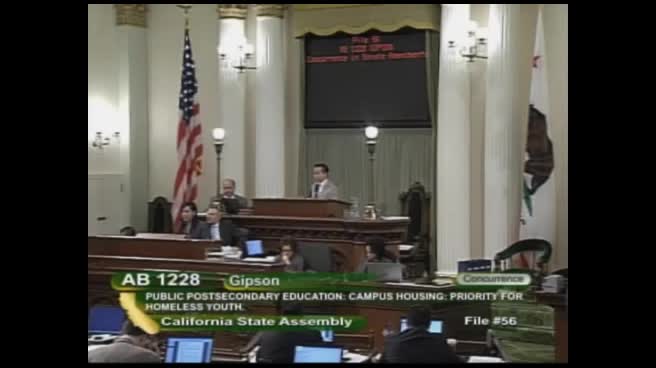
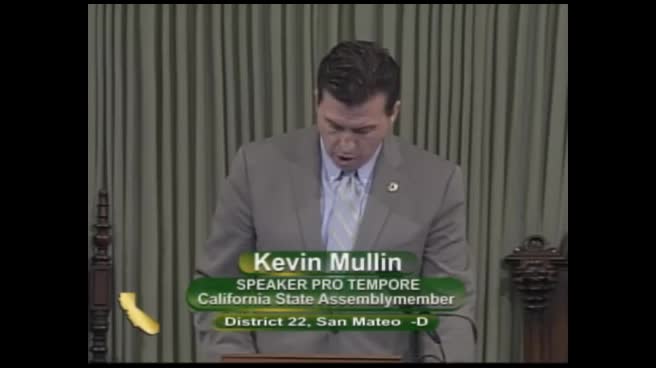
Bill Author