AB 1984: Foster youth: enrichment activities.
- Session Year: 2015-2016
- House: Assembly
- Latest Version Date: 2016-04-20
Existing law provides that it is the policy of the state that all minors and nonminors in foster care have specified rights, including, among others, the right to attend school and participate in extracurricular, cultural, and personal enrichment activities, consistent with the childs age and developmental level, with minimal disruptions to school attendance and educational stability.
This bill would require the State Department of Social Services, on or before March 1, 2017, to convene a workgroup and would require the workgroup to develop an implementation plan for the California Foster Youth Enrichment Grant Program. The bill would require the department, on or before January 1, 2018, upon appropriation by the Legislature and in consideration of the implementation plan, to establish that program in order to provide grants of $500 or less to qualified foster youth to enable the foster youth to participate in activities that enhance the foster youths skills, abilities, self-esteem, or overall well-being. The bill would specify eligibility criteria for receipt of a grant and the authorized uses of a grant. The bill would require a recipient, within 6 months after receipt of a grant, to submit documentation that describes how the grant was used and the actual cost, supported by copies of receipts, of the program, product, or service, and directly related costs, purchased with the grant. The bill would require the department, on or before January 1, 2021, to submit a report to the Legislature containing the addresses, among other things, data on the number of applications received and the number of grants awarded. The bill would repeal these provisions on January 1, 2022.
Existing law provides that it is the policy of the state that all minors and nonminors in foster care have specified rights, including, among others, the right to attend school and participate in extracurricular, cultural, and personal enrichment activities, consistent with the childs age and developmental level, with minimal disruptions to school attendance and educational stability.
This bill would require the State Department of Social Services, on or before May 1, 2017, and after consultation with a workgroup composed of individuals and groups that represent the interests of foster youth, to submit a report to the Joint Legislative Budget Committee that outlines a program to provide grants to foster youth to enable the foster youth to participate in enrichment activities. The bill would require the report to address, among other things, the criteria and review process for youth to submit applications for grants for enrichment activities. The bill would require the department, on or before July 1, 2017, an upon appropriation by the Legislature, to implement the program outlined in the report. on or before March 1, 2017, to convene a workgroup and would require the workgroup to develop an implementation plan for the California Foster Youth Enrichment Grant Program. The bill would require the department, on or before January 1, 2018, upon appropriation by the Legislature and in consideration of the implementation plan, to establish that program in order to provide grants of $500 or less to qualified foster youth to enable the foster youth to participate in activities that enhance the foster youths skills, abilities, self-esteem, or overall well-being. The bill would specify eligibility criteria for receipt of a grant and the authorized uses of a grant. The bill would require a recipient, within 6 months after receipt of a grant, to submit documentation that describes how the grant was used and the actual cost, supported by copies of receipts, of the program, product, or service, and directly related costs, purchased with the grant. The bill would require the department, on or before January 1, 2021, to submit a report to the Legislature the addresses, among other things, data on the number of applications received and the number of grants awarded. The bill would repeal these provisions on January 1, 2022.
Existing law provides that it is the policy of the state that all minors and nonminors in foster care have specified rights, including, among others, the right to attend school and participate in extracurricular, cultural, and personal enrichment activities, consistent with the childs age and developmental level, with minimal disruptions to school attendance and educational stability.
This bill would require the State Department of Social Services, on or before May 1, 2017, and after consultation with a workgroup composed of individuals and groups that represent the interests of foster youth, to submit a report to the Joint Legislative Budget Committee that outlines a program to provide grants to foster youth to enable the foster youth to participate in enrichment activities. The bill would require the report to address, among other things, the criteria and review process for youth to submit applications for grants for enrichment activities. The bill would require the department, on or before July 1, 2017, an upon appropriation by the Legislature, to implement the program outlined in the report.
The Legislature finds and declares all of the following:
(a)California foster youth face many challenges. Approximately three-fourths of youth in foster care have spent two or more years in the system between birth and 12th grade. While in foster care, about 70 percent of youth had three or more placements. Less than half of all foster youth complete high school.
(b)Although the state has seen a reduction in the number of children in foster care and a decreased reliance on group homes, it continues to struggle to find stable, fulfilling families for children.
(c)Participating in enrichment activities, including, but not limited to, sports leagues, camps, college preparation courses, arts, music, and formative social experiences, can greatly contribute to a foster youths sense of normalcy and increase the likelihood of a successful transition to adulthood.
SECTION 1.SEC. 2.Section 16007 is added to the Welfare and Institutions Code, to read:16007.(a)(1)The Legislature finds and declares all of the following:
(A)California foster youth face many challenges. Approximately three-fourths of youth in foster care have spent two or more years in the system between birth and 12th grade. While in foster care, about 70 percent of youth had three or more placements. Less than half of all foster youth complete high school.
(B)Although the state has seen a reduction in the number of children in foster care and a decreased reliance on group homes, it continues to struggle to find stable, fulfilling families for children.
(C)Participating in enrichment activities, including, but not limited to, sports leagues, camps, college preparation courses, arts, music, and formative social experiences, can greatly contribute to a foster youths sense of normalcy and increase the likelihood of a successful transition to adulthood.
(2)
16007.(a)The purpose of this section is to establish the California Foster Youth Enrichment Grant Program, which will provide grants to foster youth to participate in activities that enhance their skills, abilities, self-esteem, or overall well-being.
(b)On or before March 1, 2017, the State Department of Social Services shall convene a workgroup composed of individuals and groups that represent the interests of foster youth. The workgroup shall develop an implementation plan to maximize the California Foster Youth Enrichment Grant Programs impact.
(c)On or before January 1, 2018, upon appropriation by the Legislature and in consideration of the plan developed pursuant to subdivision (b), the State Department of Social Services shall establish the California Foster Youth Enrichment Grant Program to provide grants to qualified foster youth to enable the foster youth to participate in activities that enhance the foster youths skills, abilities, self-esteem, or overall well-being.
(d)Grant applicants shall meet all of the following criteria immediately prior to approval of a grant:
(1)Be a California foster youth between six years of age and 17 years of age, inclusive, or a California nonminor dependent.
(2)Be placed in a foster family home, certified family home, or group home.
(3)Be enrolled in a California school.
(d)A grant shall be awarded to a foster youth who meets all of the following eligibility criteria:
(1)Is in foster care under the placement and care responsibility of a county welfare department, county probation department, Indian tribe, consortium of tribes, or tribal organization that has entered into an agreement pursuant to Section 10553.1.
(2)Is 6 years of age to 21 years of age, inclusive.
(3)Is enrolled in an elementary, middle, or high school, or an equivalent educational program, or in a postsecondary educational institution in California.
(e)(1) Grants
(e)Grants awarded under this section for activities that contribute to the enhancement of an individual foster youths skills, abilities, self-esteem, or overall well-being shall be five hundred dollars ($500) or less and less. Grants shall be used to fund a program, service, or product, and any directly related costs, that provide any of the following to a foster youth:
(A)
(1)Skill development, including, but not limited to, lessons in music, dance, or drama, and the rental or purchase of equipment needed to further skill development.
(B)
(2)Academic or school-related assistance, including, but not limited to, school trips, college campus visits, Advanced Placement or International Baccalaureate exam fees, test preparation courses or materials, and books.
(C)
(3)Recreational or social participation, including, but not limited to, summer camp attendance, sports league participation, school-sponsored formal dance attendance, and participation in school graduation activities.
(2)Grants shall not be awarded to fund any activity that does not directly contribute to the enhancement of an individual foster youths skills, abilities, self-esteem, or overall well-being, including, but not limited to, either of the following:
(A)Child care expenses for the foster youth or his or her child.
(B)A vacation with the foster youths foster family.
(f)Applications for grants under this section shall be on forms developed by the department, and shall include, at a minimum, all of the following:
(1)Evidence that the applicant meets the eligibility criteria specified in subdivision (d).
(2)A description of the need for and proposed use of the grant, the anticipated cost of the program, product, or service, and directly related costs, and the projected benefit to the foster youth.
(3)Any other information that the department determines is necessary to further the intent of this section.
(g)Within six months after a grant is awarded, the recipient shall submit documentation, on forms developed by the department, that describes how the grant was used and the actual cost, supported by copies of receipts, of the program, product, or service, and directly related costs, purchased with the grant. A foster youth shall not be eligible for a subsequent grant until this documentation is received.
(h)(1)On or before January 1, 2021, the department shall submit a report to the Legislature that addresses, at a minimum, all of the following:
(A)Data on the number of applications received, aggregated by year.
(B)Data on the number of grants awarded, aggregated by year.
(C)Data on the programs, products, or services, and directly related costs, the grants were used to fund, aggregated by year.
(D)A description of the documentation a recipient is required to submit pursuant to subdivision (g).
(E)Data on the number of recipients who provided the documentation required pursuant to subdivision (g) and who did not provide the documentation required by subdivision (g), aggregated by year.
(2)The report required pursuant to paragraph (1) shall be submitted in compliance with Section 9795 of the Government Code.
(i)It is the intent of the Legislature that the department explore the feasibility of transitioning the program to private funding and control.
(j)This section shall remain in effect only until January 1, 2022, and as of that date is repealed, unless a later enacted statute, that is enacted before January 1, 2022, deletes or extends that date.
(a)(1)The Legislature finds and declares all of the following:
(A)California foster youth face many challenges. Approximately three-fourths of youth in foster care have spent two or more years in the system between birth and 12th grade. While in foster care, about 70 percent of youth had three or more placements. Less than half of all foster youth complete high school.
(B)Although the state has seen a reduction in the number of children in foster care and a decreased reliance on group homes, it continues to struggle to find stable, fulfilling families for children.
(C)Participating in enrichment activities, including, but not limited to, sports leagues, camps, college preparation courses, arts, music, and formative social experiences, can greatly contribute to a foster youths sense of normalcy and increase the likelihood of a successful transition to adulthood.
(2)The purpose of this section is to create a program to establish the California Foster Youth Enrichment Grant Program, which will provide grants to foster youth to participate in enrichment activities and provide for the programs transition from public funding and control to private funding and control. activities that enhance their skills, abilities, self-esteem, or overall well-being.
(b)On or before February March 1, 2017, the State Department of Social Services shall convene a workgroup composed of individuals and groups that represent the interests of foster youth. The workgroup shall develop an implementation plan to maximize the California Foster Youth Enrichment Grant Programs impact.
(c)On or before May 1, 2017, the State Department of Social Services, after consultation with the workgroup established pursuant to subdivision (b), shall submit a report to the Joint Legislative Budget Committee that outlines a program to provide grants to foster youth to enable the foster youth to participate in enrichment activities. The report shall address, at a minimum, all of the following:
(1)The nonprofit organization that will receive the funds appropriated for the program and serve as administrator of the program.
(2)The criteria and review process for youth to submit applications for grants for enrichment activities, including a list of preapproved categories of enrichment activities.
(3)The maximum amount of the grant.
(4)The means by which grants will be disbursed.
(5)A plan to transition the program from public funding to private funding and control.
(d)On or before July 1, 2017, upon an appropriation by the Legislature, the State Department of Social Services shall implement the program, as outlined in the report.
(c)On or before January 1, 2018, upon appropriation by the Legislature and in consideration of the plan developed pursuant to subdivision (b), the State Department of Social Services shall establish the California Foster Youth Enrichment Grant Program to provide grants to qualified foster youth to enable the foster youth to participate in activities that enhance the foster youths skills, abilities, self-esteem, or overall well-being.
(d)Grant applicants shall meet all of the following criteria immediately prior to approval of a grant:
(1)Be a California foster youth between six years of age and 17 years of age, inclusive, or a California nonminor dependent.
(2)Be placed in a foster family home, certified family home, or group home.
(3)Be enrolled in a California school.
(e)(1)Grants awarded under this section shall be five hundred dollars ($500) or less and shall be used to fund a program, service, or product, and any directly related costs, that provide any of the following to a foster youth:
(A)Skill development, including, but not limited to, lessons in music, dance, or drama, and the rental or purchase of equipment needed to further skill development.
(B)Academic or school-related assistance, including, but not limited to, school trips, college campus visits, Advanced Placement or International Baccalaureate exam fees, test preparation courses or materials, and books.
(C)Recreational or social participation, including, but not limited to, summer camp attendance, sports league participation, school-sponsored formal dance attendance, and participation in school graduation activities.
(2)Grants shall not be awarded to fund any activity that does not directly contribute to the enhancement of an individual foster youths skills, abilities, self-esteem, or overall well-being, including, but not limited to, either of the following:
(A)Child care expenses for the foster youth or his or her child.
(B)A vacation with the foster youths foster family.
(f)Applications for grants under this section shall be on forms developed by the department, and shall include, at a minimum, all of the following:
(1)Evidence that the applicant meets the eligibility criteria specified in subdivision (d).
(2)A description of the need for and proposed use of the grant, the anticipated cost of the program, product, or service, and directly related costs, and the projected benefit to the foster youth.
(3)Any other information that the department determines is necessary to further the intent of this section.
(g)Within six months after a grant is awarded, the recipient shall submit documentation, on forms developed by the department, that describes how the grant was used and the actual cost, supported by copies of receipts, of the program, product, or service, and directly related costs, purchased with the grant. A foster youth shall not be eligible for a subsequent grant until this documentation is received.
(h)(1)On or before January 1, 2021, the department shall submit a report to the Legislature that addresses, at a minimum, all of the following:
(A)Data on the number of applications received, aggregated by year.
(B)Data on the number of grants awarded, aggregated by year.
(C)Data on the programs, products, or services, and directly related costs, the grants were used to fund, aggregated by year.
(D)A description of the documentation a recipient is required to submit pursuant to subdivision (g).
(E)Data on the number of recipients who provided the documentation required pursuant to subdivision (g) and who did not provide the documentation required by subdivision (g), aggregated by year.
(2)The report required pursuant to paragraph (1) shall be submitted in compliance with Section 9795 of the Government Code.
(i)It is the intent of the Legislature that the department explore the feasibility of transitioning the program to private funding and control.
(j)This section shall remain in effect only until January 1, 2022, and as of that date is repealed, unless a later enacted statute, that is enacted before January 1, 2022, deletes or extends that date.
(a)(1)The Legislature finds and declares all of the following:
(A)California foster youth face many challenges. Approximately three-fourths of youth in foster care have spent two or more years in the system between birth and 12th grade. While in foster care, about 70 percent of youth had three or more placements. Less than half of foster youth complete high school.
(B)Although the state has seen a reduction in the number of children in foster care and a decreased reliance on group homes, it continues to struggle to find stable, fulfilling families for children.
(C)Participating in enrichment activities, including, but not limited to, sports leagues, camps, college preparation courses, arts, music, and formative social experiences, can greatly contribute to a foster youths sense of normalcy and increase the likelihood of a successful transition to adulthood.
(2)The purpose of this section is to create a program to provide grants to foster youth to participate in enrichment activities and provide for the programs transition from public funding and control to private funding and control.
(b)On or before February 1, 2017, the State Department of Social Services shall convene a workgroup composed of individuals and groups that represent the interests of foster youth.
(c)On or before May 1, 2017, the State Department of Social Services, after consultation with the workgroup established pursuant to subdivision (b), shall submit a report to the Joint Legislative Budget Committee that outlines a program to provide grants to foster youth to enable the foster youth to participate in enrichment activities. The report shall address, at a minimum, all of the following:
(1)The nonprofit organization that will receive the funds appropriated for the program and serve as administrator of the program.
(2)The criteria and review process for youth to submit applications for grants for enrichment activities, including a list of preapproved categories of enrichment activities.
(3)The maximum amount of the grant.
(4)The means by which grants will be disbursed.
(5)A plan to transition the program from public funding to private funding and control.
(d)On or before July 1, 2017, upon an appropriation by the Legislature, the State Department of Social Services shall implement the program, as outlined in the report.
|
Date
|
Status
|
|---|---|
| Feb 16, 2016 | Read first time. To print. |
| Feb 17, 2016 | From printer. May be heard in committee March 18. |
| Feb 25, 2016 | Referred to Com. on HUM. S. |
| Mar 29, 2016 | In committee: Hearing postponed by committee. |
| Mar 31, 2016 | From committee chair, with author's amendments: Amend, and re-refer to Com. on HUM. S. Read second time and amended. |
| Apr 4, 2016 | Re-referred to Com. on HUM. S. |
| Apr 19, 2016 | From committee: Amend, and do pass as amended and re-refer to Com. on APPR. (Ayes 7. Noes 0.) (April 12). |
| Apr 20, 2016 | Read second time and amended. |
| Apr 21, 2016 | Re-referred to Com. on APPR. |
| May 11, 2016 | In committee: Set, first hearing. Referred to APPR. suspense file. |
| May 27, 2016 | In committee: Held under submission. |
|
Date
|
Description
|
Location
|
Votes
|
|
|---|---|---|---|---|
| Apr 12, 2016 | Do pass as amended and be re-referred to the Committee on [Appropriations] | Assembly Standing Committee on Human Services |
Passed |
This list shows positions taken on this bill by organizations on the date displayed, which is linked to the original source.
Positions by individuals are not included.
|
Organization
|
Position
|
Date
|
|---|---|---|
| AdvoKids | ** Support | Apr 12, 2016 |
| California Alliance Of Child And Family Services | ** Support | Apr 12, 2016 |
| California Youth Connection | * Support | Apr 12, 2016 |
| California Youth Connection - co-sponsor | * Support | Apr 12, 2016 |
| Families Now | ** Support | Apr 12, 2016 |
| National Center for Youth Law | ** Support | Apr 12, 2016 |
| Youth Law Center | * Support | Apr 12, 2016 |
| Youth Law Center - sponsor | * Support | Apr 12, 2016 |
Date of Hearing: May 11, 2016
ASSEMBLY COMMITTEE ON APPROPRIATIONS
Lorena Gonzalez, Chair
ABPCA Bill Id:AB 1984
Author:(Linder) – As Amended Ver:April 20, 2016
Policy Committee: | Human Services | Vote: | 7 - 0 |
Urgency: No State Mandated Local Program: No Reimbursable: No
SUMMARY: This bill creates, until January 1, 2022, the California Foster Youth Enrichment Grant Program to provide grants to foster youth to participate in activities that enhance their skills, abilities, self-esteem, or overall well-being. Specifically, this bill:
- Requires the Department of Social Services (DSS), by March 1, 2017, to convene a workgroup to develop an implementation plan to maximize the grant program’s impact and further specifies that the workgroup shall be composed of members that represent the interests of foster youth.
- Requires DSS, by January 1, 2018, and upon appropriation by the Legislature, to establish the California Foster Youth Enrichment Grant Program, as specified.
- Requires grants awarded to be no more than $500 and to fund a program, service, product, or any directly related costs that provide: skill development; academic or school-related assistance; or recreational or social participation to a foster youth.
- Requires DSS to develop a grant application form and other associated forms for the purpose of data collection.
- Requires DSS, by January 1, 2021, to submit a report to the Legislature containing specified data and information on the grant program and contains a sunset date of January 1, 2022.
FISCAL EFFECT:
- Total cost of $7.6 million ($2.3 million GF) in FY 2017-18 and $15.3 million ($10.1 GF) in FY 2018-19 and ongoing until the program sunsets on January 1 2022. This assumes 30,500 qualified youth take advantage of the maximum grant amount of $500.
- Minor and absorbable costs to DSS to convene a working group and develop an implementation plan.
- Unknown costs, likely minor, to DSS to compile and submit a report to the Legislature by January 1, 2021.
COMMENTS:
- Purpose. According to the author, “California has been a trailblazer in aligning policy with the needs of youth through efforts over a decade ago to establish a prudent parent standard and provisions in the foster care bill of rights supporting and promoting involvement in extracurricular and enrichment activities. However, without financial resources, youth are unable to take advantage of the intent of the law and have access to these activities that are so important for their health and development. By creating a California Foster Youth Enrichment Grant Program, this bill acts on the growing body of research that demonstrates the positive impact that
- “Normalcy” for Foster Youth. A core principle behind “normalcy” is recognizing the right of foster children to engage in extracurricular and social activities on a regular basis. California recognized the need to support the right of foster children to engage in a range of activities, and to call for a prudent parent standard with the adoption of AB 408 (Steinberg), Chapter 813, Statutes of 2003, which stated that, “every child adjudged a dependent child of the juvenile court shall be entitled to participate in age-appropriate extracurricular, enrichment, and social activities,” and that, “caregivers shall use a prudent parent standard in determining whether to give permission for a child residing in foster care to participate in extracurricular, enrichment, and social activities.”
Additionally, the Foster Youth Bill of Rights, adopted in 2001 and amended and enhanced over time to include 27 distinct rights, establishes the right of a foster youth to, “attend school and participate in extracurricular, cultural, and personal enrichment activities, consistent with the child’s age and developmental level, with minimal disruptions to school attendance and educational stability.”
As of January 1, 2016, there were 62,148 children in California’s child welfare system; 32,590 were between the ages of 6 and 17, and 7,622 were nonminor dependents (i.e., between the ages of 18 and 21).
- Related Legislation. AB 1067 (Gipson), 2016, would require DSS to convene a working group to develop standardized information about the rights of all minors and nonminors in foster care. This bill is pending hearing in the Senate Committee on Human Services.
- Prior Legislation.
- SB 794 (Senate Committee on Human Services), Chapter 425, Statutes of 2015, adopted a number of changes to bring the state into compliance with the federal Preventing Sex Trafficking, and Strengthening Families Act (Public Law 113-183), and included, among other things, language to conform with federal law regarding reasonable and prudent parent standards.
- AB 408 (Steinberg), Chapter 813, Statutes of 2003, made changes in dependency law to help achieve permanency for older foster youth, including providing that caregivers shall use a "prudent parent" standard in determining whether to give permission for a child residing in foster care to participate in age-appropriate extracurricular, enrichment, and social activities.
- AB 899 (Liu), Chapter 683, Statutes of 2001, adopted California’s Foster Youth Bill of Rights.
Analysis Prepared by: Jennifer Swenson / APPR. / (916) 319-2081
Date of Hearing: April 12, 2016
ASSEMBLY COMMITTEE ON HUMAN SERVICES
Susan Bonilla, Chair
ABPCA Bill Id:AB 1984 (
Author:Linder) – As Amended Ver:March 31, 2016
SUBJECT: Foster youth: enrichment activities
SUMMARY: Establishes the California Foster Youth Enrichment Grant Program.
Specifically, this bill:
- Creates the California Foster Youth Enrichment Grant Program to provide grants to foster youth to participate in activities that enhance their skills, abilities, self-esteem, or overall well-being.
- Requires the Department of Social Services (DSS), by March 1, 2017, to convene a workgroup to develop an implementation plan to maximize the grant program’s impact and further specifies that the workgroup shall be composed of members that represent the interests of foster youth.
- Requires DSS, by January 1, 2018, and upon appropriation by the Legislature, to establish the California Foster Youth Enrichment Grant Program, as specified.
- Requires grant applicants to be all of the following immediately prior to approval of a grant:
- A California foster youth between the ages of 6 and 17, or a nonminor dependent;
- Placed in a foster family home, certified family home, or group home; and
- Enrolled in a California school.
- Requires grants awarded to be no more than $500 and to fund a program, service, or product, and any directly related costs, that provide any of the following to a foster youth, as specified:
- Skill development;
- Academic or school-related assistance; or
- Recreational or social participation.
- Prohibits grants from being awarded that do not directly contribute to enhancing a foster youth’s skills, abilities, self-esteem or overall well-being and further specifies that this prohibition applies to child care expenses for the foster youth or his or her child, and a vacation with the foster youth’s foster family.
- Requires DSS to develop a grant application form that contains specified information including, but not limited to, evidence of eligibility and the need for, use of, anticipated cost of and projected benefit to the youth of the program, product or service.
- Requires DSS to develop a form on which the recipient shall submit, within six months of the grant being awarded, specified documentation regarding the use of the grant and further prohibits a recipient from being eligible for a subsequent grant until this documentation is received.
- Requires DSS, by January 1, 2021, to submit a report to the Legislature containing specified data and information on the grant program.
- States Legislative intent that DSS explore the feasibility of transitioning the program to private funding and control.
- Sunsets the provisions of this bill as of January 1, 2022.
EXISTING LAW:
- Permits the juvenile court to adjudge a child a dependent of the court for specified reasons, including, but not limited to, if a child has suffered or is at substantial risk of suffering serious physical harm, emotional damage, or sexual abuse, as specified. (WIC 300)
- States that the purpose of foster care law is to provide maximum safety and protection for children who are currently being physically, sexually, or emotionally abused, neglected, or exploited, and to ensure the safety, protection, and physical and emotional well-being of children who are at risk of harm. (WIC 300.2)
- Declares the intent of the Legislature to, whenever possible, preserve and strengthen a child’s family ties and, when a child must be removed from the physical custody of his or her parents, to give preferential consideration to placement with relatives. States the intent of the Legislature to reaffirm its commitment to children who are in out-of-home placement to live in the least restrictive family setting and as close to the child’s family as possible, as specified. Further states the intent of the Legislature that all children live with a committed, permanent, nurturing family and states that services and supports should be tailored to meet the specific needs of the individual child and family being served, as specified. (WIC 16000)
- Requires out-of-home placement of a child in foster care to be based upon selection of a safe setting that is the least restrictive family setting that promotes normal childhood experiences and the most appropriate setting that meets the child’s individual needs, as specified. Further requires the selection of placement to consider, in order of priority, placement with: relatives, nonrelated extended family members, and tribal members; foster family homes, resource families, and nontreatment certified homes of foster family agencies; followed by treatment and intensive treatment certified homes of foster family agencies or multidimensional treatment foster care homes or therapeutic foster care homes; group care placements in the order of short-term residential treatment centers, group homes, community treatment facilities, and out-of-state residential treatment, as specified. (WIC 16501.1(d)(1))
- Enumerates rights of minors and nonminors in foster care, including but not limited to the right to: live in a safe, healthy, and comfortable home where he or she is treated with respect; be free from physical, sexual, emotional, or other abuse, or corporal punishment; receive adequate and healthy food, adequate clothing, and, for youth in group homes, an allowance; receive medical, dental, vision, and mental health services; be involved in the development of his or her own case plan and plan for permanent placement; and review his or her own case plan and plan for permanent placement, if he or she is 12 years of age or older and in a permanent placement, and receive information about his or her out-of-home placement and case plan, including being told of changes to the plan. (WIC 16001.9)
- Defines “nonminor dependent” as a current or former foster youth who is between 18 and 21 years old, in foster care under the responsibility of the county welfare department, county probation department, or Indian Tribe, and participating in a transitional independent living plan, as specified. (WIC 11400 (v))
- Defines “reasonable and prudent parent” or “reasonable and prudent parent standard” to mean the standard characterized by careful and sensible parental decisions that maintain the health, safety, and best interests of a child while simulataneously encouraging emotional and developmental growth. Further requires a caregiver to use this standard when determining whether to permit a child in foster care to participate in age or developmentally appropriate extracurricular, enrichment, cultural, or social activities, as specified. (WIC 362.05 (c)(1))
- Requires every child adjudged a dependent of the juvenile court to be entitled to participate in age-appropriate extracurricular, enrichment, and social activities and further prohibits state or local regulation or policy from preventing or creating barriers to participation in those activities, as specified. (WIC 362.05)
FISCAL EFFECT: Unknown.
COMMENTS:
Child Welfare Services: The purpose of California's Child Welfare Services (CWS) system is to protect children from abuse and neglect and provide for their health and safety. When children are identified as being at risk of abuse, neglect or abandonment, county juvenile courts hold legal jurisdiction and children are served by the CWS system through the appointment of a social worker. Through this system, there are multiple opportunities for the custody of the child, or his or her placement outside of the home, to be evaluated, reviewed and determined by the judicial system, in consultation with the child's social worker, to help provide the best possible services to the child. The CWS system seeks to help children who have been removed from their homes reunify with their parents or guardians, whenever appropriate, or unite them with other individuals they consider to be family.
As of January 1, 2016, there were 62,148 children in California’s child welfare system; 32,590 of these children were between the ages of 6 and 17, and 7,622 were nonminor dependents (i.e., between the ages of 18 and 21).
“Normalcy” for foster youth: Recent federal legislation from 2014 – the Preventing Sex Trafficking and Strengthening Families Act (P.L. 113-183) – adopted a number of changes that, among other things, sought to assist in creating “normalcy” for youth in foster care. Many states including California, followed suit with conforming state legislation (in California, this was SB 794 [Senate Committee on Human Services], Chapter 425, Statutes of 2015).
A core principle behind “normalcy” is recognizing the right of foster children to engage in extracurricular and social activities on a regular basis. One tool for removing barriers to such engagement is the adoption and use of a “reasonable and prudent parent standard” – this standard, while maintaining the expectation that caregivers always seek to ensure a foster youth’s safety, also calls on caregivers to allow foster youth to engage in the same range of activities that other parents allow for their children. California has recognized the need to support the right of foster children to engage in a range of activities, and to call for a prudent parent standard, for some time; AB 408 (Steinberg), Chapter 813, Statutes of 2003, adopted language stating that, “every child adjudged a dependent child of the juvenile court shall be entitled to participate in age-appropriate extracurricular, enrichment, and social activities,” and that, “caregivers shall use a prudent parent standard in determining whether to give permission for a child residing in foster care to participate in extracurricular, enrichment, and social activities.” State legislation adopted in 2015 to conform with the federal Preventing Sex Trafficking and Strengthening Families Act further defined California’s reasonable and prudent parent standard to mean the standard characterized by careful and sensible parental decisions that maintain the health, safety, and best interests of a child while simultaneously encouraging emotional and developmental growth. This refinement of the reasonable and prudent parent standard calls on a caregiver to use this standard when determining whether to permit a child in foster care to participate in age or developmentally appropriate extracurricular, enrichment, cultural, or social activities, as specified.
Additionally, the Foster Youth Bill of Rights, adopted in 2001 and amended and enhanced over time to include 27 distinct rights, establishes the right of a foster youth to, “attend school and participate in extracurricular, cultural, and personal enrichment activities, consistent with the child’s age and developmental level, with minimal disruptions to school attendance and educational stability.”
Need for this bill: According to the author, “California has been a trailblazer in aligning policy with the needs of youth through efforts over a decade ago to establish a prudent parent standard and provisions in the foster care bill of rights supporting and promoting involvement in extracurricular and enrichment activities. However, without financial resources, youth are unable to take advantage of the intent of the law and have access to these activities that are so important for their health and development. By creating a California Foster Youth Enrichment Grant Program, [this bill] acts on the growing body of research that demonstrates the positive impact that extracurricular enrichment activities such as sports participation and art and music lessons can play in a young person’s academic performance and well-being. Not only have enrichment programs been proven to positively impact a young person’s attendance, motivation, academic achievement, self-esteem and behavior, but they are also an essential ingredient for high school students to build a robust and well-rounded college application in order to be competitive so they can eventually advance into higher education.”
Staff comments: Facilitating the engagement of foster youth in extracurricular and other educationally and socially beneficial activities is an important goal. However, this bill’s approach to supporting foster youth participation in such activities is laden with numerous administrative components and requirements that may have the effect of diverting a significant portion of funds away from supporting the activities and foster youth themselves.
For example, this bill requires the following of DSS (and perhaps of other entities, depending on the implementation plan to be developed): convene a workgroup to develop an implementation plan; establish the California Foster Youth Enrichment Grant Program in consideration of that plan; develop detailed application forms; assess grant applications and award grants in a manner that considers numerous specific criteria related to both the foster youth and the proposed activities to be funded; develop forms to be submitted by grant recipients six months after receipt of the grant; review documentation submitted by the grantee six months after receiving the grant; compile detailed data on the program, to be submitted in a report to the Legislature by January 1, 2021; and explore the feasibility of transitioning the program to private funding and control, per Legislative intent. Additionally, the administrative expectations placed on the youth and their families to complete lengthy applications and submit substantial follow-up documentation may prove burdensome and even prohibitive.
While a grant of up to $500 may encourage and enable a foster youth to participate in beneficial activities, the numerous requirements established by this bill for both the administering entity(s), and for foster youth and families, raises the question of whether this is the most efficacious and cost-effective way to support the growth and development of California children in the child welfare services system. Should this bill move forward, the author may wish to consider how to achieve a more streamlined and efficient process in order to minimize administrative costs and maximize benefits for children and youth in need.
Additionally, this bill prohibits two activities from being paid for by the grant that are arguably important to enhancing a foster youth’s skills, abilities, self-esteem or overall well-being: family vacations and child care for parenting foster youth.
Participating in family outings and vacations can contribute significantly to a sense of belonging and inclusion for foster youth, and examples of formal recognition and encouragement of such participation are not hard to find. For example, in its “Resource Family Handbook” from 2015, the New Jersey Department of Children and Families states that, “Taking children on family vacation and trips is strongly encouraged. It helps the children know that they are a true part of your family and enhances the bonding process.” And a June 2013 letter from members of the U.S. House Ways and Means Subcommittee on Human Resources to state child welfare administrators stated the following:
“As the Chairman, Ranking Member, and members of the U.S. House Ways and Means Subcommittee on Human Resources, which has jurisdiction over the nation’s foster care and related child welfare programs, we are writing to encourage your increased attention to helping children in foster care live more normal lives. Every day, children in foster care across the country face unnecessary barriers that limit their opportunities to succeed. However, we hope that by working together we can remove these barriers and improve the lives of thousands of foster youth across the country.
A hearing our subcommittee held on May 9, 2013 spotlighted this issue, along with recent state efforts to promote normalcy for children in foster care…The hearing highlighted an amazing array of what David Wilkins, the Secretary of Florida Department of Children and Families, said only he called ‘bizarre’ restrictions on children in foster care. The restrictions on young people in foster care detailed various witnesses’ testimony included…taking part in a family vacation…”
Additionally, parenting foster youth may face barriers to participating in enrichment activities if they are unable to afford child care, and these are youth who may particularly benefit from such participation. Teen pregnancy and parenthood have been found to be correlated with a number of social and economic consequences. Teen mothers are less likely to finish high school, more likely to live in poverty, and can face poorer health conditions than slightly older mothers. The children of teenage parents are then also more likely to live in poverty. They are also more likely to come into contact with the child welfare system. Importantly, teen pregnancy may not distinctly cause each of these outcomes, but instead leads to compounding and interrelated impacts, with diminished educational attainment contributing to decreased earnings and higher poverty levels, and other negative outcomes stemming from living in poverty.
Suggested amendments: For the reasons stated above regarding family vacations and child care for parenting youth, committee staff recommends the following amendments:
- Starting on line 4 of page 4, make the following amendments:
4
(e) (1) Grants awarded under this section shall be for activities that contribute to the enhancement of an individual foster youth’s skills, abilities, self-esteem, or overall well-being, and be five hundred
5
dollars ($500) or less. Grants and shall be used to fund a program, service,
6
or product, and any directly related costs, that provide any of the
7
following to a foster youth:
- Strikes lines 19 through 24 on page 4.
Additionally, in order to ensure that youth placed in a variety of settings, including newly-established placements resulting from Continuum of Care Reform efforts, are eligible for grants, and to make eligibility language clearer, committee staff recommends the following amendments:
- Strike lines 37 through 40 on page 3, and lines 1 through 3 on page 4.
- ) Insert the following after line 36 on page 3:
(d) Grants will be awarded to a foster youth who meets the following eligibility criteria:
(1) is in foster care under the placement and care responsibility of the county welfare department, county probation department, Indian tribe, consortium of tribes, or tribal organization that entered into an agreement pursuant to Section 10553.1.
(2) has attained the age of six but has not attained the age of twenty-two
(3) is enrolled in a primary, middle, or secondary education program, a program leading to an equivalent credential, or a post-secondary education program in California.
Also, to make a technical amendment to remove Legislative findings and declarations from State Code, committee staff recommends the following amendments:
- Insert the following before line 1 on page 2:
The Legislature finds and declares all of the following:
(1) California foster youth face many challenges. Approximately three-fourths of youth in foster care have spent two or more years in the system between birth and 12th grade. While in foster care, about 70 percent of youth had three or more placements. Less than half of all foster youth complete high school.
(2) Although the state has seen a reduction in the number of children in foster care and a decreased reliance on group homes, it continues to struggle to find stable, fulfilling families for children.
(3) Participating in enrichment activities, including, but not limited to, sports leagues, camps, college preparation courses, arts, music, and formative social experiences, can greatly contribute to a foster youth’s sense of normalcy and increase the likelihood of a successful transition to adulthood.
- Make the following amendments starting on line 3 of page 2 of the bill:
SECTION 1. Section 16007 is added to the Welfare and
2
Institutions Code, to read:
3
16007. (a) (1) The Legislature finds and declares all of the
4
following:
5
(A) California foster youth face many challenges. Approximately
6
three-fourths of youth in foster care have spent two or more years
7
in the system between birth and 12th grade. While in foster care,
8
about 70 percent of youth had three or more placements. Less than
9
half of all foster youth complete high school.
10
(B) Although the state has seen a reduction in the number of
11
children in foster care and a decreased reliance on group homes,
12
it continues to struggle to find stable, fulfilling families for
13
children.
14
(C) Participating in enrichment activities, including, but not
15
limited to, sports leagues, camps, college preparation courses, arts,
16
music, and formative social experiences, can greatly contribute to
17
a foster youth’s sense of normalcy and increase the likelihood of
18
a successful transition to adulthood.
19
(2) The purpose of this section is to create a program to establish
20
the California Foster Youth Enrichment Grant Program, which
P3 1
will provide grants to foster youth to participate in enrichment
2
activities and provide for the program’s transition from public
3
funding and control to private funding and control. activities that
4
enhance their skills, abilities, self-esteem, or overall well-being.
PRIOR AND RELATED LEGISLATION:
AB 1067 (Gipson), 2016, would require DSS to convene a working group to develop standardized information about the rights of all minors and nonminors in foster care. This bill is currently referred to the Senate Committee on Human Services.
SB 794 (Senate Committee on Human Services), Chapter 425, Statutes of 2015, adopted a number of changes to bring the state into compliance with the federal Preventing Sex Trafficking, and Strengthening Families Act (Public Law 113-183), and included, among other things, language to conform with federal law regarding reasonable and prudent parent standards.
AB 408 (Steinberg), Chapter 813, Statutes of 2003, made changes in dependency law to help achieve permanency for older foster youth, including providing that caregivers shall use a "prudent parent" standard in determining whether to give permission for a child residing in foster care to participate in age-appropriate extracurricular, enrichment, and social activities.
AB 899 (Liu), Chapter 683, Statutes of 2001, adopted California’s Foster Youth Bill of Rights.
REGISTERED SUPPORT / OPPOSITION:
Support
Advokids
California Alliance of Child and Family Services
California Youth Connection (CYC) – co-sponsor
Families Now
John Burton Foundation
National Center for Youth Law
Youth Law Center – sponsor
Opposition
None on file.
Analysis Prepared by: Daphne Hunt / HUM. S. / (916) 319-2089
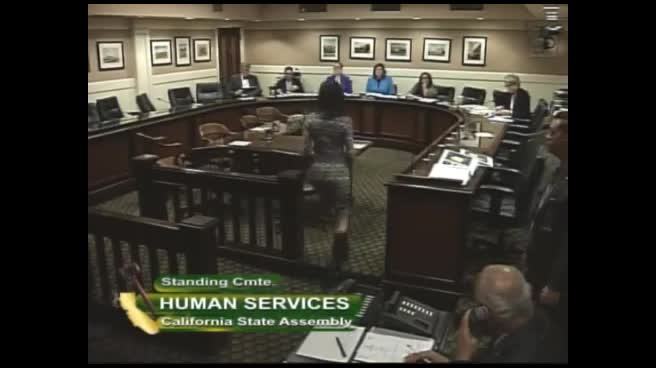
Discussed in Hearing
 8MIN
Assembly Standing Committee on Human Services
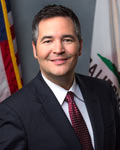
Bill Author
Bill Co-Author(s):