AB 2143: County recorder: electronic recording.
- Session Year: 2015-2016
- House: Assembly
- Latest Version Date: 2016-09-16
Existing law requires the county recorder in each county to complete a yearly statistical report on a specified form of documents recorded and filed.
This bill would require the report to also include information regarding electronically submitted documents, and would require documents to be counted and reported in the same manner without regard to method of transmission.
The Electronic Recording Delivery Act of 2004 authorizes a county recorder, upon approval by resolution of the board of supervisors and system certification by the Attorney General, to establish an electronic recording delivery system for the delivery for recording of specified digitized electronic records, subject to specified conditions. The act authorizes a county recorder to enter into a contract with specified entities for the delivery for recording, and return to the party requesting recording, a digitized electronic record that is an instrument affecting a right, title, or interest in real property.
This bill, until January 1, 2027, would authorize a county recorder to also enter into a contract with an authorized submitter for the delivery for recording, and return to the party requesting recording, of a digital or digitized electronic record that is an instrument to be recorded consistent with a specified provision. The bill, until January 1, 2027, would require an authorized submitter, as specified, and any agent submitting documents on behalf of an authorized submitter, to provide proof of financial responsibility in the form of general liability coverage, as provided.
Existing law requires the Attorney General, in consultation with interested parties, to adopt regulations for the review, approval, and oversight of electronic recording delivery systems. Existing law authorizes the regulations to include specified requirements and procedures.
This bill, until January 1, 2027, would additionally authorize the regulations to include requirements for general liability coverage as described above.
Existing law requires the county recorder in each county to complete a yearly statistical report on a specified form of documents recorded and filed.
This bill would require the report to also include information regarding electronically submitted documents, and would require documents to be counted and reported in the same manner without regard to method of transmission.
The Electronic Recording Delivery Act of 2004 authorizes a county recorder, upon approval by resolution of the board of supervisors and system certification by the Attorney General, to establish an electronic recording delivery system for the delivery for recording of specified digitized electronic records, subject to specified conditions. The act authorizes a county recorder to enter into a contract with specified entities for the delivery for recording, and return to the party requesting recording recording, a digitized electronic record that is an instrument affecting a right, title, or interest in real property.
This bill, until January 1, 2027, would authorize a county recorder to also enter into a contract with an authorized submitter for the delivery for recording, and return to the party requesting recording, of a digital or digitized electronic record that is an instrument to be recorded consistent with a specified provision. The bill, until January 1, 2027, would require an authorized submitter, as specified, and any agent submitting documents on behalf of an authorized submitter, to provide proof of financial responsibility in the form of general liability coverage, as provided.
Existing law requires the Attorney General, in consultation with interested parties, to adopt regulations for the review, approval, and oversight of electronic recording delivery systems. Existing law authorizes the regulations to include specified requirements and procedures.
This bill, until January 1, 2027, would additionally authorize the regulations to include requirements for general liability coverage as described above.
The Electronic Recording Delivery Act of 2004 authorizes a county recorder, upon approval by resolution of the board of supervisors and system certification by the Attorney General, to establish an electronic recording delivery system for the delivery for recording of specified digitized electronic records, subject to specified conditions. The act authorizes a county recorder to enter into a contract with specified entities for the delivery for recording, and return to the party requesting recording a digitized electronic record that is an instrument affecting a right, title, or interest in real property. The act also authorizes a county recorder to contract with the specified entities or their authorized agents to be an authorized submitter of a digital or digitized electronic record that is an instrument of reconveyance, substitution of trustee, or assignment of deed of trust.
The bill
This bill, until January 1, 2027, would authorize a county recorder to also enter into a contract with an authorized submitter for the delivery for recording, and return to the party requesting recording, of a digital or digitized electronic record that is an instrument to be recorded consistent with a specified provision, or for the submission of a digital or digitized electronic record. provision. The bill bill, until January 1, 2027, would require an authorized submitter, as specified, and any agent submitting documents on behalf of an authorized submitter, to provide proof of financial responsibility in the form of general liability coverage, as provided.
Existing law requires the Attorney General, in consultation with interested parties, to adopt regulations for the review, approval, and oversight of electronic recording delivery systems. Existing law authorizes the regulations to include specified requirements and procedures.
This bill bill, until January 1, 2027, would additionally authorize the regulations to include requirements for general liability coverage as described above.
The Electronic Recording Delivery Act of 2004 authorizes a county recorder, upon approval by resolution of the board of supervisors and system certification by the Attorney General, to establish an electronic recording delivery system for the delivery for recording of specified digitized electronic records, subject to specified conditions. The act authorizes a county recorder to enter into a contract with specified entities for the delivery for recording, and return to the party requesting recording a digitized electronic record that is an instrument affecting a right, title, or interest in real property. The act also authorizes a county recorder to contract with the specified entities or their authorized agents to be an authorized submitter of a digital or digitized electronic record that is an instrument of reconveyance, substitution of trustee, or assignment of deed of trust.
The bill would authorize a county recorder to also enter into a contract with an authorized submitter for the delivery for recording, and return to the party requesting recording, of a digital or digitized electronic record that is an instrument to be recorded consistent with a specified provision, or for the submission of a digital or digitized electronic record. The bill would require an authorized submitter, as specified, and any agent submitting documents on behalf of an authorized submitter, to provide proof of financial responsibility in the form of general liability coverage, as provided.
Existing law requires the Attorney General, in consultation with interested parties, to adopt regulations for the review, approval, and oversight of electronic recording delivery systems. Existing law authorizes the regulations to include specified requirements and procedures.
This bill would additionally authorize the regulations to include requirements for general liability coverage as described above.
(a)The county recorder in each county shall complete a yearly statistical report of documents, including electronically transmitted documents, recorded and filed on the form described in subdivision (b). The report shall be submitted to the office of the Insurance Commissioner. Documents shall be counted and reported in the same manner without regard to method of transmission. The county recorder may either charge for copies of this report or may disburse the report without fee for public information. Certified and noncertified copies of any records issued by the county recorder shall not be included in this report.
(b)The standard statistical report form shall be substantially as follows:
Documents Recorded and Filed | |
Year | |
Deeds | |
Deeds of Trust and Mortgages | |
Reconveyances | |
Trustees Deeds | |
Total number of documents recorded and filed | |
(a)This article shall be known and may be cited as the Electronic Recording Delivery Act of 2004.
(b)For the purposes of this article, the following definitions shall apply:
(1)Authorized submitter means a party that has entered into a contract with a county recorder pursuant to Section 27391 and is not disqualified pursuant to Section 27395.
(2)Computer security auditor means computer security personnel hired to perform an independent audit of the electronic recording delivery system. The computer security auditor shall be independent of the county recorder and the authorized submitter and shall not be the same contractor hired to establish or participate in a countys electronic recording delivery system or in the authorized submitters portion of that system.
(3)Digital electronic record means a record containing information that is created, generated, sent, communicated, received, or stored by electronic means, but not created in original paper form.
(4)Digitized electronic record means a scanned image of the original paper document.
(5)Electronic recording delivery system means a system to deliver for recording, and to return to the party requesting recording, digitized or digital electronic records.
(6)Security testing means an independent security audit by a computer security auditor, including, but not limited to, attempts to penetrate an electronic recording delivery system for the purpose of testing the security of that system.
(7)Source code means a program or set of programs, readable and maintainable by humans, translated or interpreted into a form that the electronic recording delivery system can execute.
(8)System certification means the issuance of a confirmation letter regarding a countys electronic recording delivery system by the Attorney General.
SEC. 3.Section 27391 of the Government Code is amended to read:27391.(a)Upon approval by resolution of the board of supervisors and system certification by the Attorney General, a county recorder may establish an electronic recording delivery system.
(b)Upon system certification, a county recorder may enter into a contract with a title insurer as defined in Section 12340.4 of the Insurance Code, underwritten title company as defined in Section 12340.5 of the Insurance Code, institutional lender as defined in paragraph (1), (2), or (4) of subdivision (j) of Section 50003 of the Financial Code, or an entity of local, state, or federal government for the delivery for recording, and return to the party requesting recording, of a digital or digitized electronic record that is an instrument to be recorded consistent with subdivision (a) of Section 27201. The contract may provide for the delivery of documents by an agent. However, the agent shall not be a vendor of electronic recording delivery systems.
(c)(1)A county recorder may enter into a contract with an authorized submitter not authorized pursuant to subdivision (b) for the delivery for recording, and return to the party requesting recording, of a digital or digitized electronic record that is an instrument to be recorded consistent with subdivision (a) of Section 27201. The contract may provide for the delivery of documents by an agent. However, the agent shall not be a vendor of electronic recording delivery systems.
(2)An authorized submitter authorized pursuant to this subdivision and any agent submitting documents on behalf of an authorized submitter pursuant to this subdivision shall provide proof of financial responsibility by providing a certificate of insurance evidencing an amount of general liability coverage reasonably adequate to protect against liability and cover potential losses. The amount of general liability coverage required by this paragraph shall be set through rule or regulation by the Attorney General in consultation with interested parties.
(d)A county recorder may refuse to enter into a contract with any party or may terminate or suspend access to a system for any good faith reason, including, but not limited to, a determination by the county recorder that termination or suspension is necessary to protect the public interest, to protect the integrity of public records, or to protect homeowners from financial harm, or if the volume or quality of instruments submitted by the requester is not sufficient to warrant electronic recordation. A county recorder may also terminate or suspend access to a system if a party commits a substantive breach of the contract, the requirements of this article, or the regulations adopted pursuant to this article.
(e)Notwithstanding Section 27321, a county recorder may require a party electronically submitting records to mail a copy of the recorded electronic document to the address specified in the instructions for mailing upon completion of recording.
(f)When a signature is required to be accompanied by a notarys seal or stamp, that requirement is satisfied if the electronic signature of the notary contains all of the following:
(1)The name of the notary.
(2)The words Notary Public.
(3)The name of the county where the bond and oath of office of the notary are filed.
(4)The sequential identification number assigned to the notary, if any.
(5)The sequential identification number assigned to the manufacturer or vendor of the notarys physical or electronic seal, if any.
(g)This section shall remain in effect only until January 1, 2027, and as of that date is repealed.
SEC. 4.Section 27391 is added to the Government Code, to read:27391.(a)Upon approval by resolution of the board of supervisors and system certification by the Attorney General, a county recorder may establish an electronic recording delivery system.
(b)Upon system certification, a county recorder may enter into a contract with a title insurer as defined in Section 12340.4 of the Insurance Code, underwritten title company as defined in Section 12340.5 of the Insurance Code, institutional lender as defined in paragraph (1), (2), or (4) of subdivision (j) of Section 50003 of the Financial Code, or an entity of local, state, or federal government for the delivery for recording, and return to the party requesting recording, of a digitized electronic record that is an instrument affecting a right, title, or interest in real property. The contract may provide for the delivery of documents by an agent. However, the agent shall not be a vendor of electronic recording delivery systems.
(c)A county recorder may refuse to enter into a contract with any party or may terminate or suspend access to a system for any good faith reason, including, but not limited to, a determination by the county recorder that termination or suspension is necessary to protect the public interest, to protect the integrity of public records, or to protect homeowners from financial harm, or if the volume or quality of instruments submitted by the requester is not sufficient to warrant electronic recordation. A county recorder may also terminate or suspend access to a system if a party commits a substantive breach of the contract, the requirements of this article, or the regulations adopted pursuant to this article.
(d)Notwithstanding Section 27321, a county recorder may require a party electronically submitting records to mail a copy of the recorded electronic document to the address specified in the instructions for mailing upon completion of recording.
(e)When a signature is required to be accompanied by a notarys seal or stamp, that requirement is satisfied if the electronic signature of the notary contains all of the following:
(1)The name of the notary.
(2)The words Notary Public.
(3)The name of the county where the bond and oath of office of the notary are filed.
(4)The sequential identification number assigned to the notary, if any.
(5)The sequential identification number assigned to the manufacturer or vendor of the notarys physical or electronic seal, if any.
(f)This section shall become operative on January 1, 2027.
SEC. 5.Section 27393 of the Government Code is amended to read:27393.(a)The Attorney General shall, in consultation with interested parties, adopt regulations for the review, approval, and oversight of electronic recording delivery systems. Regulations shall be adopted pursuant to the Administrative Procedure Act (Chapter 3.5 (commencing with Section 11340) of Part 1 of Division 3). The regulations shall comply with Section 12168.7.
(b)The regulations adopted pursuant to subdivision (a) may include, but need not be limited to, all of the following:
(1)Establishment of baseline technological and procedural specifications for electronic recording delivery systems.
(2)Requirements for security, capacity, reliability, and uniformity.
(3)Requirements as to the nature and frequency of computer security audits.
(4)A statement of a detailed and uniform definition of the term source code consistent with paragraph (7) of subdivision (b) of Section 27390, and as used in this article, and applicable to each countys electronic recording delivery system.
(5)Requirements for placement of a copy of the operating system, source code, compilers, and all related software associated with each countys electronic recording delivery system in an approved escrow facility prior to that systems first use.
(6)Requirements to ensure that substantive modifications to an operating system, compilers, related software, or source code are approved by the Attorney General.
(7)Procedures for initial certification of vendors offering software and other services to counties for electronic recording delivery systems.
(8)Requirements for system certification and for oversight of approved systems.
(9)Requirements for general liability coverage required by subdivision (c) of Section 27391.
(10)Requirements for fingerprinting and criminal records checks required by Section 27395, including a list of employment positions or classifications subject to criminal records checks under subdivision (f) of that section.
(11)Requirements for uniform index information that shall be included in every digitized or digital electronic record.
(12)Requirements for protecting proprietary information accessed pursuant to subdivision (e) of Section 27394 from public disclosure.
(13)Requirements for certification under Section 27397.5.
(c)The Attorney General may promulgate any other regulations necessary to fulfill his or her obligations under this article.
(d)An electronic recording delivery system shall be subject to local inspection and review by the Attorney General. The Attorney General shall furnish a statement of any relevant findings associated with a local inspection of an electronic recording delivery system, to the county recorder and the district attorney of the affected county, and to all technology vendors associated with that system.
(e)This section shall remain in effect only until January 1, 2027, and as of that date is repealed.
SEC. 6.Section 27393 is added to the Government Code, to read:27393.(a)The Attorney General shall, in consultation with interested parties, adopt regulations for the review, approval, and oversight of electronic recording delivery systems. Regulations shall be adopted pursuant to the Administrative Procedure Act (Chapter 3.5 (commencing with Section 11340) of Part 1 of Division 3). The regulations shall comply with Section 12168.7.
(b)The regulations adopted pursuant to subdivision (a) may include, but need not be limited to, all of the following:
(1)Establishment of baseline technological and procedural specifications for electronic recording delivery systems.
(2)Requirements for security, capacity, reliability, and uniformity.
(3)Requirements as to the nature and frequency of computer security audits.
(4)A statement of a detailed and uniform definition of the term source code consistent with paragraph (7) of subdivision (b) of Section 27390, and as used in this article, and applicable to each countys electronic recording delivery system.
(5)Requirements for placement of a copy of the operating system, source code, compilers, and all related software associated with each countys electronic recording delivery system in an approved escrow facility prior to that systems first use.
(6)Requirements to ensure that substantive modifications to an operating system, compilers, related software, or source code are approved by the Attorney General.
(7)Procedures for initial certification of vendors offering software and other services to counties for electronic recording delivery systems.
(8)Requirements for system certification and for oversight of approved systems.
(9)Requirements for fingerprinting and criminal records checks required by Section 27395, including a list of employment positions or classifications subject to criminal records checks under subdivision (f) of that section.
(10)Requirements for uniform index information that shall be included in every digitized or digital electronic record.
(11)Requirements for protecting proprietary information accessed pursuant to subdivision (e) of Section 27394 from public disclosure.
(12)Requirements for certification under Section 27397.5.
(c)The Attorney General may promulgate any other regulations necessary to fulfill his or her obligations under this article.
(d)An electronic recording delivery system shall be subject to local inspection and review by the Attorney General. The Attorney General shall furnish a statement of any relevant findings associated with a local inspection of an electronic recording delivery system, to the county recorder and the district attorney of the affected county, and to all technology vendors associated with that system.
(e)This section shall become operative on January 1, 2027.
(a)The county recorder in each county shall complete a yearly statistical report of documents, including electronically transmitted documents, recorded and filed on the form described in subdivision (b). The report shall be submitted to the office of the Insurance Commissioner. Documents shall be counted and reported in the same manner without regard to method of transmission. The county recorder may either charge for copies of this report or may disburse the report without fee for public information. Certified and noncertified copies of any records issued by the county recorder shall not be included in this report.
(b)The standard statistical report form shall be substantially as follows:
Documents Recorded and Filed | |
Year | |
Deeds | |
Deeds of Trust and Mortgages | |
Reconveyances | |
Trustees Deeds | |
Total number of documents recorded and filed | |
(a)This article shall be known and may be cited as the Electronic Recording Delivery Act of 2004.
(b)For the purposes of this article, the following definitions shall apply:
(1)Authorized submitter means a party that has entered into a contract with a county recorder pursuant to Section 27391 and is not disqualified pursuant to Section 27395.
(2)Computer security auditor means computer security personnel hired to perform an independent audit of the electronic recording delivery system. The computer security auditor shall be independent of the county recorder and the authorized submitter and shall not be the same contractor hired to establish or participate in a countys electronic recording delivery system or in the authorized submitters portion of that system.
(3)Digital electronic record means a record containing information that is created, generated, sent, communicated, received, or stored by electronic means, but not created in original paper form.
(4)Digitized electronic record means a scanned image of the original paper document.
(5)Electronic recording delivery system means a system to deliver for recording, and to return to the party requesting recording, digitized or digital electronic records.
(6)Security testing means an independent security audit by a computer security auditor, including, but not limited to, attempts to penetrate an electronic recording delivery system for the purpose of testing the security of that system.
(7)Source code means a program or set of programs, readable and maintainable by humans, translated or interpreted into a form that the electronic recording delivery system can execute.
(8)System certification means the issuance of a confirmation letter regarding a countys electronic recording delivery system by the Attorney General.
SEC. 3.Section 27391 of the Government Code is amended to read:27391.(a)Upon approval by resolution of the board of supervisors and system certification by the Attorney General, a county recorder may establish an electronic recording delivery system.
(b)Upon system certification, a county recorder may enter into a contract with a title insurer as defined in Section 12340.4 of the Insurance Code, underwritten title company as defined in Section 12340.5 of the Insurance Code, institutional lender as defined in paragraph (1), (2), or (4) of subdivision (j) of Section 50003 of the Financial Code, or an entity of local, state, or federal government for the delivery for recording, and return to the party requesting recording, of a digital or digitized electronic record that is an instrument to be recorded consistent with subdivision (a) of Section 27201. The contract may provide for the delivery of documents by an agent. However, the agent shall not be a vendor of electronic recording delivery systems.
(c)(1)A county recorder may enter into a contract with an authorized submitter not authorized pursuant to subdivision (b) for the delivery for recording, and return to the party requesting recording, of a digital or digitized electronic record that is an instrument to be recorded consistent with subdivision (a) of Section 27201. The contract may provide for the delivery of documents by an agent. However, the agent shall not be a vendor of electronic recording delivery systems.
(2)An authorized submitter authorized pursuant to this subdivision and any agent submitting documents on behalf of an authorized submitter pursuant to this subdivision shall provide proof of financial responsibility by providing a certificate of insurance evidencing an amount of general liability coverage of at least one million dollars ($1,000,000). reasonably adequate to protect against liability and cover potential losses. The amount of general liability coverage required by this paragraph shall be set through rule or regulation by the Attorney General in consultation with interested parties.
(d)A county recorder may refuse to enter into a contract with any party or may terminate or suspend access to a system for any good faith reason, including, but not limited to, a determination by the county recorder that termination or suspension is necessary to protect the public interest, to protect the integrity of public records, or to protect homeowners from financial harm, or if the volume or quality of instruments submitted by the requester is not sufficient to warrant electronic recordation. A county recorder may also terminate or suspend access to a system if a party commits a substantive breach of the contract, the requirements of this article, or the regulations adopted pursuant to this article.
(e)Notwithstanding Section 27321, a county recorder may require a party electronically submitting records to mail a copy of the recorded electronic document to the address specified in the instructions for mailing upon completion of recording.
(f)When a signature is required to be accompanied by a notarys seal or stamp, that requirement is satisfied if the electronic signature of the notary contains all of the following:
(1)The name of the notary.
(2)The words Notary Public.
(3)The name of the county where the bond and oath of office of the notary are filed.
(4)The sequential identification number assigned to the notary, if any.
(5)The sequential identification number assigned to the manufacturer or vendor of the notarys physical or electronic seal, if any.
(g)This section shall remain in effect only until January 1, 2027, and as of that date is repealed.
SEC. 4.Section 27391 is added to the Government Code, to read:27391.(a)Upon approval by resolution of the board of supervisors and system certification by the Attorney General, a county recorder may establish an electronic recording delivery system.
(b)Upon system certification, a county recorder may enter into a contract with a title insurer as defined in Section 12340.4 of the Insurance Code, underwritten title company as defined in Section 12340.5 of the Insurance Code, institutional lender as defined in paragraph (1), (2), or (4) of subdivision (j) of Section 50003 of the Financial Code, or an entity of local, state, or federal government for the delivery for recording, and return to the party requesting recording, of a digitized electronic record that is an instrument affecting a right, title, or interest in real property. The contract may provide for the delivery of documents by an agent. However, the agent shall not be a vendor of electronic recording delivery systems.
(c)A county recorder may refuse to enter into a contract with any party or may terminate or suspend access to a system for any good faith reason, including, but not limited to, a determination by the county recorder that termination or suspension is necessary to protect the public interest, to protect the integrity of public records, or to protect homeowners from financial harm, or if the volume or quality of instruments submitted by the requester is not sufficient to warrant electronic recordation. A county recorder may also terminate or suspend access to a system if a party commits a substantive breach of the contract, the requirements of this article, or the regulations adopted pursuant to this article.
(d)Notwithstanding Section 27321, a county recorder may require a party electronically submitting records to mail a copy of the recorded electronic document to the address specified in the instructions for mailing upon completion of recording.
(e)When a signature is required to be accompanied by a notarys seal or stamp, that requirement is satisfied if the electronic signature of the notary contains all of the following:
(1)The name of the notary.
(2)The words Notary Public.
(3)The name of the county where the bond and oath of office of the notary are filed.
(4)The sequential identification number assigned to the notary, if any.
(5)The sequential identification number assigned to the manufacturer or vendor of the notarys physical or electronic seal, if any.
(f)This section shall become operative on January 1, 2027.
SEC. 5.Section 27393 of the Government Code is amended to read:27393.(a)The Attorney General shall, in consultation with interested parties, adopt regulations for the review, approval, and oversight of electronic recording delivery systems. Regulations shall be adopted pursuant to the Administrative Procedure Act (Chapter 3.5 (commencing with Section 11340) of Part 1 of Division 3). The regulations shall comply with Section 12168.7.
(b)The regulations adopted pursuant to subdivision (a) may include, but need not be limited to, all of the following:
(1)Establishment of baseline technological and procedural specifications for electronic recording delivery systems.
(2)Requirements for security, capacity, reliability, and uniformity.
(3)Requirements as to the nature and frequency of computer security audits.
(4)A statement of a detailed and uniform definition of the term source code consistent with paragraph (7) of subdivision (b) of Section 27390, and as used in this article, and applicable to each countys electronic recording delivery system.
(5)Requirements for placement of a copy of the operating system, source code, compilers, and all related software associated with each countys electronic recording delivery system in an approved escrow facility prior to that systems first use.
(6)Requirements to ensure that substantive modifications to an operating system, compilers, related software, or source code are approved by the Attorney General.
(7)Procedures for initial certification of vendors offering software and other services to counties for electronic recording delivery systems.
(8)Requirements for system certification and for oversight of approved systems.
(9)Requirements for general liability coverage required by subdivision (c) of Section 27391.
(10)Requirements for fingerprinting and criminal records checks required by Section 27395, including a list of employment positions or classifications subject to criminal records checks under subdivision (f) of that section.
(11)Requirements for uniform index information that shall be included in every digitized or digital electronic record.
(12)Requirements for protecting proprietary information accessed pursuant to subdivision (e) of Section 27394 from public disclosure.
(13)Requirements for certification under Section 27397.5.
(c)The Attorney General may promulgate any other regulations necessary to fulfill his or her obligations under this article.
(d)An electronic recording delivery system shall be subject to local inspection and review by the Attorney General. The Attorney General shall furnish a statement of any relevant findings associated with a local inspection of an electronic recording delivery system, to the county recorder and the district attorney of the affected county, and to all technology vendors associated with that system.
(e)This section shall remain in effect only until January 1, 2027, and as of that date is repealed.
SEC. 6.Section 27393 is added to the Government Code, to read:27393.(a)The Attorney General shall, in consultation with interested parties, adopt regulations for the review, approval, and oversight of electronic recording delivery systems. Regulations shall be adopted pursuant to the Administrative Procedure Act (Chapter 3.5 (commencing with Section 11340) of Part 1 of Division 3). The regulations shall comply with Section 12168.7.
(b)The regulations adopted pursuant to subdivision (a) may include, but need not be limited to, all of the following:
(1)Establishment of baseline technological and procedural specifications for electronic recording delivery systems.
(2)Requirements for security, capacity, reliability, and uniformity.
(3)Requirements as to the nature and frequency of computer security audits.
(4)A statement of a detailed and uniform definition of the term source code consistent with paragraph (7) of subdivision (b) of Section 27390, and as used in this article, and applicable to each countys electronic recording delivery system.
(5)Requirements for placement of a copy of the operating system, source code, compilers, and all related software associated with each countys electronic recording delivery system in an approved escrow facility prior to that systems first use.
(6)Requirements to ensure that substantive modifications to an operating system, compilers, related software, or source code are approved by the Attorney General.
(7)Procedures for initial certification of vendors offering software and other services to counties for electronic recording delivery systems.
(8)Requirements for system certification and for oversight of approved systems.
(9)Requirements for fingerprinting and criminal records checks required by Section 27395, including a list of employment positions or classifications subject to criminal records checks under subdivision (f) of that section.
(10)Requirements for uniform index information that shall be included in every digitized or digital electronic record.
(11)Requirements for protecting proprietary information accessed pursuant to subdivision (e) of Section 27394 from public disclosure.
(12)Requirements for certification under Section 27397.5.
(c)The Attorney General may promulgate any other regulations necessary to fulfill his or her obligations under this article.
(d)An electronic recording delivery system shall be subject to local inspection and review by the Attorney General. The Attorney General shall furnish a statement of any relevant findings associated with a local inspection of an electronic recording delivery system, to the county recorder and the district attorney of the affected county, and to all technology vendors associated with that system.
(e)This section shall become operative on January 1, 2027.
(a)The county recorder in each county shall complete a yearly statistical report of documents documents, including electronically transmitted documents, recorded and filed on the form herein described. Such a described in subdivision (b). The report shall be submitted to the office of the Insurance Commissioner. Documents shall be counted and reported in the same manner without regard to method of transmission. The county recorder may either charge for copies of this report or may disburse the report without fee for public information. Certified and noncertified copies of any records issued by the county recorder shall not be included in this report.
The
(b)The standard statistical report form shall be substantially as follows:
Documents Recorded and Filed | |
Year | |
Deeds | |
Deeds of Trust and Mortgages | |
Reconveyances | |
Trustees Deeds | |
Total number of documents recorded and filed | |
(a)This article shall be known and may be cited as the Electronic Recording Delivery Act of 2004.
(b)For the purposes of this article, the following definitions shall apply:
(1)Authorized submitter means a party that has entered into a contract with a county recorder pursuant to Section 27391 and is not disqualified pursuant to Section 27395.
(2)Computer security auditor means computer security personnel hired to perform an independent audit of the electronic recording delivery system. The computer security auditor shall be independent of the county recorder and the authorized submitter and shall not be the same contractor hired to establish or participate in a countys electronic recording delivery system or in the authorized submitters portion of that system.
(3)Digital electronic record means a record containing information that is created, generated, sent, communicated, received, or stored by electronic means, but not created in original paper form.
(4)Digitized electronic record means a scanned image of the original paper document.
(5)Electronic recording delivery system means a system to deliver for recording, and to return to the party requesting recording, digitized or digital electronic records.
(6)Security testing means an independent security audit by a computer security auditor, including, but not limited to, attempts to penetrate an electronic recording delivery system for the purpose of testing the security of that system.
(7)Source code means a program or set of programs, readable and maintainable by humans, translated or interpreted into a form that the electronic recording delivery system can execute.
(8)System certification means the issuance of a confirmation letter regarding a countys electronic recording delivery system by the Attorney General.
SEC. 2.SEC. 3.Section 27391 of the Government Code is amended to read:27391.(a)Upon approval by resolution of the board of supervisors and system certification by the Attorney General, a county recorder may establish an electronic recording delivery system.
(b)Upon system certification, a county recorder may enter into a contract with a title insurer as defined in Section 12340.4 of the Insurance Code, underwritten title company as defined in Section 12340.5 of the Insurance Code, institutional lender as defined in paragraph (1), (2), or (4) of subdivision (j) of Section 50003 of the Financial Code, or an entity of local, state, or federal government for the delivery for recording, and return to the party requesting recording, of a digital or digitized electronic record that is an instrument to be recorded consistent with subdivision (a) of Section 27201. The contract may provide for the delivery of documents by an agent. However, the agent shall not be a vendor of electronic recording delivery systems.
(c)(1)A county recorder may enter into a contract with an authorized submitter not authorized pursuant to subdivision (b) for the delivery for recording, and return to the party requesting recording, of a digital or digitized electronic record that is an instrument to be recorded consistent with subdivision (a) of Section 27201. The contract may provide for the delivery of documents by an agent. However, the agent shall not be a vendor of electronic recording delivery systems.
(2)An authorized submitter authorized pursuant to this subdivision and any agent submitting documents on behalf of an authorized submitter pursuant to this subdivision shall provide proof of financial responsibility by providing a certificate of insurance evidencing an amount of general liability coverage of at least one million dollars ($1,000,000).
(d)A county recorder may refuse to enter into a contract with any party or may terminate or suspend access to a system for any good faith reason, including, but not limited to, a determination by the county recorder that termination or suspension is necessary to protect the public interest, to protect the integrity of public records, or to protect homeowners from financial harm, or if the volume or quality of instruments submitted by the requester is not sufficient to warrant electronic recordation. A county recorder may also terminate or suspend access to a system if a party commits a substantive breach of the contract, the requirements of this article, or the regulations adopted pursuant to this article.
(e)Notwithstanding Section 27321, a county recorder may require a party electronically submitting records to mail a copy of the recorded electronic document to the address specified in the instructions for mailing upon completion of recording.
(f)When a signature is required to be accompanied by a notarys seal or stamp, that requirement is satisfied if the electronic signature of the notary contains all of the following:
(1)The name of the notary.
(2)The words Notary Public.
(3)The name of the county where the bond and oath of office of the notary are filed.
(4)The sequential identification number assigned to the notary, if any.
(5)The sequential identification number assigned to the manufacturer or vendor of the notarys physical or electronic seal, if any.
(g)This section shall remain in effect only until January 1, 2027, and as of that date is repealed.
SEC. 3.SEC. 4.Section 27391 is added to the Government Code, to read:27391.(a)Upon approval by resolution of the board of supervisors and system certification by the Attorney General, a county recorder may establish an electronic recording delivery system.
(b)Upon system certification, a county recorder may enter into a contract with a title insurer as defined in Section 12340.4 of the Insurance Code, underwritten title company as defined in Section 12340.5 of the Insurance Code Code, institutional lender, lender as defined in paragraph (1), (2), or (4) of subdivision (j) of Section 50003 of the Financial Code, or an entity of local, state, or federal government for the delivery for recording, and return to the party requesting recording, of a digitized electronic record that is an instrument affecting a right, title, or interest in real property. The contract may provide for the delivery of documents by an agent. However, the agent shall not be a vendor of electronic recording delivery systems.
(c)A county recorder may refuse to enter into a contract with any party or may terminate or suspend access to a system for any good faith reason, including, but not limited to, a determination by the county recorder that termination or suspension is necessary to protect the public interest, to protect the integrity of public records, or to protect homeowners from financial harm, or if the volume or quality of instruments submitted by the requester is not sufficient to warrant electronic recordation. A county recorder may also terminate or suspend access to a system if a party commits a substantive breach of the contract, the requirements of this article, or the regulations adopted pursuant to this article.
(d)Notwithstanding Section 27321, a county recorder may require a party electronically submitting records to mail a copy of the recorded electronic document to the address specified in the instructions for mailing upon completion of recording.
(e)When a signature is required to be accompanied by a notarys seal or stamp, that requirement is satisfied if the electronic signature of the notary contains all of the following:
(1)The name of the notary.
(2)The words Notary Public.
(3)The name of the county where the bond and oath of office of the notary are filed.
(4)The sequential identification number assigned to the notary, if any.
(5)The sequential identification number assigned to the manufacturer or vendor of the notarys physical or electronic seal, if any.
(f)The This section shall become operative on January 1, 2027.
SEC. 4.SEC. 5.Section 27393 of the Government Code is amended to read:27393.(a)The Attorney General shall, in consultation with interested parties, adopt regulations for the review, approval, and oversight of electronic recording delivery systems. Regulations shall be adopted pursuant to the Administrative Procedure Act (Chapter 3.5 (commencing with Section 11340) of Part 1 of Division 3). The regulations shall comply with Section 12168.7.
(b)The regulations adopted pursuant to subdivision (a) may include, but need not be limited to, all of the following:
(1)Establishment of baseline technological and procedural specifications for electronic recording delivery systems.
(2)Requirements for security, capacity, reliability, and uniformity.
(3)Requirements as to the nature and frequency of computer security audits.
(4)A statement of a detailed and uniform definition of the term source code consistent with paragraph (7) of subdivision (b) of Section 27390, and as used in this article, and applicable to each countys electronic recording delivery system.
(5)Requirements for placement of a copy of the operating system, source code, compilers, and all related software associated with each countys electronic recording delivery system in an approved escrow facility prior to that systems first use.
(6)Requirements to ensure that substantive modifications to an operating system, compilers, related software, or source code are approved by the Attorney General.
(7)Procedures for initial certification of vendors offering software and other services to counties for electronic recording delivery systems.
(8)Requirements for system certification and for oversight of approved systems.
(9)Requirements for general liability coverage required by subdivision (c) of Section 27391.
(10)Requirements for fingerprinting and criminal records checks required by Section 27395, including a list of employment positions or classifications subject to criminal records checks under subdivision (f) of that section.
(11)Requirements for uniform index information that shall be included in every digitized or digital electronic record.
(12)Requirements for protecting proprietary information accessed pursuant to subdivision (e) of Section 27394 from public disclosure.
(13)Requirements for certification under Section 27397.5.
(c)The Attorney General may promulgate any other regulations necessary to fulfill his or her obligations under this article.
(d)An electronic recording delivery system shall be subject to local inspection and review by the Attorney General. The Attorney General shall furnish a statement of any relevant findings associated with a local inspection of an electronic recording delivery system, to the county recorder and the district attorney of the affected county, and to all technology vendors associated with that system.
(e)This section shall remain in effect only until January 1, 2027, and as of that date is repealed.
SEC. 5.SEC. 6.Section 27393 is added to the Government Code, to read:27393.(a)The Attorney General shall, in consultation with interested parties, adopt regulations for the review, approval, and oversight of electronic recording delivery systems. Regulations shall be adopted pursuant to the Administrative Procedure Act (Chapter 3.5 (commencing with Section 11340) of Part 1 of Division 3). The regulations shall comply with Section 12168.7.
(b)The regulations adopted pursuant to subdivision (a) may include, but need not be limited to, all of the following:
(1)Establishment of baseline technological and procedural specifications for electronic recording delivery systems.
(2)Requirements for security, capacity, reliability, and uniformity.
(3)Requirements as to the nature and frequency of computer security audits.
(4)A statement of a detailed and uniform definition of the term source code consistent with paragraph (7) of subdivision (b) of Section 27390, and as used in this article, and applicable to each countys electronic recording delivery system.
(5)Requirements for placement of a copy of the operating system, source code, compilers, and all related software associated with each countys electronic recording delivery system in an approved escrow facility prior to that systems first use.
(6)Requirements to ensure that substantive modifications to an operating system, compilers, related software, or source code are approved by the Attorney General.
(7)Procedures for initial certification of vendors offering software and other services to counties for electronic recording delivery systems.
(8)Requirements for system certification and for oversight of approved systems.
(9)Requirements for fingerprinting and criminal records checks required by Section 27395, including a list of employment positions or classifications subject to criminal records checks under subdivision (f) of that section.
(10)Requirements for uniform index information that shall be included in every digitized or digital electronic record.
(11)Requirements for protecting proprietary information accessed pursuant to subdivision (e) of Section 27394 from public disclosure.
(12)Requirements for certification under Section 27397.5.
(c)The Attorney General may promulgate any other regulations necessary to fulfill his or her obligations under this article.
(d)An electronic recording delivery system shall be subject to local inspection and review by the Attorney General. The Attorney General shall furnish a statement of any relevant findings associated with a local inspection of an electronic recording delivery system, to the county recorder and the district attorney of the affected county, and to all technology vendors associated with that system.
(e)This section shall become operative on January 1, 2027.
(a)This article shall be known and may be cited as the Electronic Recording Delivery Act of 2004.
(b)For the purposes of this article, the following definitions shall apply:
(1)Authorized submitter means a party that has entered into a contract with a county recorder pursuant to subdivision (b) of Section 27391 and is not disqualified pursuant to Section 27395.
(2)Computer security auditor means computer security personnel hired to perform an independent audit of the electronic recording delivery system. The computer security auditor shall be independent of the county recorder and the authorized submitter and shall not be the same contractor hired to establish or participate in a countys electronic recording delivery system or in the authorized submitters portion of that system.
(3)Digital electronic record means a record containing information that is created, generated, sent, communicated, received, or stored by electronic means, but not created in original paper form.
(4)Digitized electronic record means a scanned image of the original paper document.
(5)Electronic recording delivery system means a system to deliver for recording, and to return to the party requesting recording, digitized or digital electronic records.
(6)Security testing means an independent security audit by a computer security auditor, including, but not limited to, attempts to penetrate an electronic recording delivery system for the purpose of testing the security of that system.
(7)Source code means a program or set of programs, readable and maintainable by humans, translated or interpreted into a form that the electronic recording delivery system can execute.
(8)System certification means the issuance of a confirmation letter regarding a countys electronic recording delivery system by the Attorney General.
SECTION 1.SEC. 2.Section 27391 of the Government Code is amended to read:27391.(a)Upon approval by resolution of the board of supervisors and system certification by the Attorney General, a county recorder may establish an electronic recording delivery system.
(b)Upon system certification, a county recorder may enter into a contract with a title insurer, insurer as defined in Section 12340.4 of the Insurance Code, underwritten title company, company as defined in Section 12340.5 of the Insurance Code, institutional lender, lender as defined in paragraph (1), (2), or (4) of subdivision (j) of Section 50003 of the Financial Code, or an entity of local, state, or federal government for the delivery for recording, and return to the party requesting recording, of a digital or digitized electronic record that is an instrument to be recorded consistent with subdivision (a) of Section 27201. The contract may provide for the delivery of documents by an agent. However, the agent shall not be a vendor of electronic recording delivery systems.
(c)(1)A county recorder may enter into a contract with an authorized submitter not authorized pursuant to subdivision (b) for the delivery for recording, and return to the party requesting recording, of a digital or digitized electronic record that is an instrument to be recorded consistent with subdivision (a) of Section 27201. The contract may provide for the delivery of documents by an agent. However, the agent shall not be a vendor of electronic recording delivery systems.
(2)An authorized submitter authorized pursuant to this subdivision and any agent submitting documents on behalf of an authorized submitter pursuant to this subdivision shall provide proof of financial responsibility by providing a certificate of insurance evidencing an amount of general liability coverage of at least one million dollars ($1,000,000).
(d)A county recorder may refuse to enter into a contract with any party or may terminate or suspend access to a system for any good faith reason, including, but not limited to, a determination by the county recorder that termination or suspension is necessary to protect the public interest, to protect the integrity of public records, or to protect homeowners from financial harm, or if the volume or quality of instruments submitted by the requester is not sufficient to warrant electronic recordation. A county recorder may also terminate or suspend access to a system if a party commits a substantive breach of the contract, the requirements of this article, or the regulations adopted pursuant to this article.
(e)Notwithstanding Section 27321, a county recorder may require a party electronically submitting records to mail a copy of the recorded electronic document to the address specified in the instructions for mailing upon completion of recording.
(f)When a signature is required to be accompanied by a notarys seal or stamp, that requirement is satisfied if the electronic signature of the notary contains all of the following:
(1)The name of the notary.
(2)The words Notary Public.
(3)The name of the county where the bond and oath of office of the notary are filed.
(4)The sequential identification number assigned to the notary, if any.
(5)The sequential identification number assigned to the manufacturer or vendor of the notarys physical or electronic seal, if any.
(g)This section shall remain in effect only until January 1, 2027, and as of that date is repealed.
SEC. 3.Section 27391 is added to the Government Code, to read:27391.(a)Upon approval by resolution of the board of supervisors and system certification by the Attorney General, a county recorder may establish an electronic recording delivery system.
(b)Upon system certification, a county recorder may enter into a contract with a title insurer as defined in Section 12340.4 of the Insurance Code, underwritten title company as defined in Section 12340.5 of the Insurance Code institutional lender, as defined in paragraph (1), (2), or (4) of subdivision (j) of Section 50003 of the Financial Code, or an entity of local, state, or federal government for the delivery for recording, and return to the party requesting recording, of a digitized electronic record that is an instrument affecting a right, title, or interest in real property. The contract may provide for the delivery of documents by an agent. However, the agent shall not be a vendor of electronic recording delivery systems.
(c)A county recorder may refuse to enter into a contract with any party or may terminate or suspend access to a system for any good faith reason, including, but not limited to, a determination by the county recorder that termination or suspension is necessary to protect the public interest, to protect the integrity of public records, or to protect homeowners from financial harm, or if the volume or quality of instruments submitted by the requester is not sufficient to warrant electronic recordation. A county recorder may also terminate or suspend access to a system if a party commits a substantive breach of the contract, the requirements of this article, or the regulations adopted pursuant to this article.
(d)Notwithstanding Section 27321, a county recorder may require a party electronically submitting records to mail a copy of the recorded electronic document to the address specified in the instructions for mailing upon completion of recording.
(e)When a signature is required to be accompanied by a notarys seal or stamp, that requirement is satisfied if the electronic signature of the notary contains all of the following:
(1)The name of the notary.
(2)The words Notary Public.
(3)The name of the county where the bond and oath of office of the notary are filed.
(4)The sequential identification number assigned to the notary, if any.
(5)The sequential identification number assigned to the manufacturer or vendor of the notarys physical or electronic seal, if any.
(f)The section shall become operative on January 1, 2027.
SEC. 2.SEC. 4.Section 27393 of the Government Code is amended to read:27393.(a)The Attorney General shall, in consultation with interested parties, adopt regulations for the review, approval, and oversight of electronic recording delivery systems. Regulations shall be adopted pursuant to the Administrative Procedure Act (Chapter 3.5 (commencing with Section 11340) of Part 1 of Division 3). The regulations shall comply with Section 12168.7.
(b)The regulations adopted pursuant to subdivision (a) may include, but need not be limited to, all of the following:
(1)Establishment of baseline technological and procedural specifications for electronic recording delivery systems.
(2)Requirements for security, capacity, reliability, and uniformity.
(3)Requirements as to the nature and frequency of computer security audits.
(4)A statement of a detailed and uniform definition of the term source code consistent with paragraph (7) of subdivision (b) of Section 27390, and as used in this article, and applicable to each countys electronic recording delivery system.
(5)Requirements for placement of a copy of the operating system, source code, compilers, and all related software associated with each countys electronic recording delivery system in an approved escrow facility prior to that systems first use.
(6)Requirements to ensure that substantive modifications to an operating system, compilers, related software, or source code are approved by the Attorney General.
(7)Procedures for initial certification of vendors offering software and other services to counties for electronic recording delivery systems.
(8)Requirements for system certification and for oversight of approved systems.
(9)Requirements for general liability coverage required by subdivision (c) of Section 27391.
(10)Requirements for fingerprinting and criminal records checks required by Section 27395, including a list of employment positions or classifications subject to criminal records checks under subdivision (f) of that section.
(11)Requirements for uniform index information that shall be included in every digitized or digital electronic record.
(12)Requirements for protecting proprietary information accessed pursuant to subdivision (e) of Section 27394 from public disclosure.
(13)Requirements for certification under Section 27397.5.
(c)The Attorney General may promulgate any other regulations necessary to fulfill his or her obligations under this article.
(d)An electronic recording delivery system shall be subject to local inspection and review by the Attorney General. The Attorney General shall furnish a statement of any relevant findings associated with a local inspection of an electronic recording delivery system, to the county recorder and the district attorney of the affected county, and to all technology vendors associated with that system.
(e)This section shall remain in effect only until January 1, 2027, and as of that date is repealed.
SEC. 5.Section 27393 is added to the Government Code, to read:27393.(a)The Attorney General shall, in consultation with interested parties, adopt regulations for the review, approval, and oversight of electronic recording delivery systems. Regulations shall be adopted pursuant to the Administrative Procedure Act (Chapter 3.5 (commencing with Section 11340) of Part 1 of Division 3). The regulations shall comply with Section 12168.7.
(b)The regulations adopted pursuant to subdivision (a) may include, but need not be limited to, all of the following:
(1)Establishment of baseline technological and procedural specifications for electronic recording delivery systems.
(2)Requirements for security, capacity, reliability, and uniformity.
(3)Requirements as to the nature and frequency of computer security audits.
(4)A statement of a detailed and uniform definition of the term source code consistent with paragraph (7) of subdivision (b) of Section 27390, and as used in this article, and applicable to each countys electronic recording delivery system.
(5)Requirements for placement of a copy of the operating system, source code, compilers, and all related software associated with each countys electronic recording delivery system in an approved escrow facility prior to that systems first use.
(6)Requirements to ensure that substantive modifications to an operating system, compilers, related software, or source code are approved by the Attorney General.
(7)Procedures for initial certification of vendors offering software and other services to counties for electronic recording delivery systems.
(8)Requirements for system certification and for oversight of approved systems.
(9)Requirements for fingerprinting and criminal records checks required by Section 27395, including a list of employment positions or classifications subject to criminal records checks under subdivision (f) of that section.
(10)Requirements for uniform index information that shall be included in every digitized or digital electronic record.
(11)Requirements for protecting proprietary information accessed pursuant to subdivision (e) of Section 27394 from public disclosure.
(12)Requirements for certification under Section 27397.5.
(c)The Attorney General may promulgate any other regulations necessary to fulfill his or her obligations under this article.
(d)An electronic recording delivery system shall be subject to local inspection and review by the Attorney General. The Attorney General shall furnish a statement of any relevant findings associated with a local inspection of an electronic recording delivery system, to the county recorder and the district attorney of the affected county, and to all technology vendors associated with that system.
(e)This section shall become operative on January 1, 2027.
SEC. 3.Section 27397.5 of the Government Code is amended to read:27397.5.(a)A county recorder may include in the countys electronic recording delivery system a secure method for accepting for recording a digital or digitized electronic record.
(b)A county recorder may contract with an authorized submitter or their authorized agents, to be an authorized submitter of the documents specified in subdivision (a).
(c)With respect to the electronic submission of the records described in subdivision (a), the requirements that an authorized submitter be subject to a security audit under Section 27394 and a criminal records check under Section 27395 shall not apply where the certification requirements of subdivision (d) have been met.
(d)(1)In order for subdivision (c) to apply, the county recorder and the Attorney General shall certify that the method of submission allowed under the system will not permit an authorized submitter or its employees and agents, or any third party, to modify, manipulate, insert, or delete information in the public record, maintained by the county recorder, or information in electronic records submitted pursuant to subdivision (b) of Section 27391.
(2)Certification under this section may be withdrawn by either the county recorder or the Attorney General at any time either determines that the requirements of this subdivision are not met.
(e)For purposes of this section, an agent of an authorized submitter shall not include a vendor of electronic recording delivery systems.
(a)Upon approval by resolution of the board of supervisors and system certification by the Attorney General, a county recorder may establish an electronic recording delivery system.
(b)Upon system certification, a county recorder may enter into a contract with a title insurer, as defined in Section 12340.4 of the Insurance Code, underwritten title company, as defined in Section 12340.5 of the Insurance Code, institutional lender, as defined in paragraph (1), (2), or (4) of subdivision (j) of Section 50003 of the Financial Code, or an entity of local, state, or federal government for the delivery for recording, and return to the party requesting recording, of a digital or digitized electronic record that is an instrument affecting a right, title, or interest in real property. to be recorded consistent with subdivision (a) of Section 27201. The contract may provide for the delivery of documents by an agent. However, the agent shall not be a vendor of electronic recording delivery systems.
(c)(1)A county recorder may enter into a contract with an authorized submitter not authorized pursuant to subdivision (b) for the delivery for recording, and return to the party requesting recording, of a digital or digitized electronic record that is an instrument to be recorded consistent with subdivision (a) of Section 27201. The contract may provide for the delivery of documents by an agent. However, the agent shall not be a vendor of electronic recording delivery systems.
(2)An authorized submitter authorized pursuant to this subdivision and any agent submitting documents on behalf of an authorized submitter pursuant to this subdivision shall provide proof of financial responsibility by providing a certificate of insurance evidencing an amount of general liability coverage of at least one million dollars ($1,000,000).
(c)
(d)A county recorder may refuse to enter into a contract with any party or may terminate or suspend access to a system for any good faith reason, including, but not limited to, a determination by the county recorder that termination or suspension is necessary to protect the public interest, to protect the integrity of public records, or to protect homeowners from financial harm, or if the volume or quality of instruments submitted by the requester is not sufficient to warrant electronic recordation. A county recorder may also terminate or suspend access to a system if a party commits a substantive breach of the contract, the requirements of this article, or the regulations adopted pursuant to this article.
(d)
(e)Notwithstanding Section 27321, a county recorder may require a party electronically submitting records to mail a copy of the recorded electronic document to the address specified in the instructions for mailing upon completion of recording.
(e)
(f)When a signature is required to be accompanied by a notarys seal or stamp, that requirement is satisfied if the electronic signature of the notary contains all of the following:
(1)The name of the notary.
(2)The words Notary Public.
(3)The name of the county where the bond and oath of office of the notary are filed.
(4)The sequential identification number assigned to the notary, if any.
(5)The sequential identification number assigned to the manufacturer or vendor of the notarys physical or electronic seal, if any.
SEC. 2.Section 27393 of the Government Code is amended to read:27393.(a)The Attorney General shall, in consultation with interested parties, adopt regulations for the review, approval, and oversight of electronic recording delivery systems. Regulations shall be adopted pursuant to the Administrative Procedure Act (Chapter 3.5 (commencing with Section 11340) of Part 1 of Division 3). The regulations shall comply with Section 12168.7.
(b)The regulations adopted pursuant to subdivision (a) may include, but need not be limited to, all of the following:
(1)Establishment of baseline technological and procedural specifications for electronic recording delivery systems.
(2)Requirements for security, capacity, reliability, and uniformity.
(3)Requirements as to the nature and frequency of computer security audits.
(4)A statement of a detailed and uniform definition of the term source code consistent with paragraph (7) of subdivision (b) of Section 27390, and as used in this article, and applicable to each countys electronic recording delivery system.
(5)Requirements for placement of a copy of the operating system, source code, compilers, and all related software associated with each countys electronic recording delivery system in an approved escrow facility prior to that systems first use.
(6)Requirements to ensure that substantive modifications to an operating system, compilers, related software, or source code are approved by the Attorney General.
(7)Procedures for initial certification of vendors offering software and other services to counties for electronic recording delivery systems.
(8)Requirements for system certification and for oversight of approved systems.
(9)Requirements for general liability coverage required by subdivision (c) of Section 27391.
(9)
(10)Requirements for fingerprinting and criminal records checks required by Section 27395, including a list of employment positions or classifications subject to criminal records checks under subdivision (f) of that section.
(10)
(11)Requirements for uniform index information that shall be included in every digitized or digital electronic record.
(11)
(12)Requirements for protecting proprietary information accessed pursuant to subdivision (e) of Section 27394 from public disclosure.
(12)
(13)Requirements for certification under Section 27397.5.
(c)The Attorney General may promulgate any other regulations necessary to fulfill his or her obligations under this article.
(d)An electronic recording delivery system shall be subject to local inspection and review by the Attorney General. The Attorney General shall furnish a statement of any relevant findings associated with a local inspection of an electronic recording delivery system, to the county recorder and the district attorney of the affected county, and to all technology vendors associated with that system.
SEC. 3.Section 27397.5 of the Government Code is amended to read:27397.5.(a)A county recorder may include in the countys electronic recording delivery system a secure method for accepting for recording a digital or digitized electronic record that is an instrument of reconveyance, substitution of trustee, or assignment of deed of trust. record.
(b)A county recorder may contract with a title insurer, as defined in Section 12340.4 of the Insurance Code, underwritten title company, as defined in Section 12340.5 of the Insurance Code, an entity of state, local, or federal government, or an institutional lender, as defined in Section 50003 of the Financial Code, an authorized submitter or their authorized agents, to be an authorized submitter of the documents specified in subdivision (a).
(c)With respect to the electronic submission of the records described in subdivision (a), the requirements that an authorized submitter be subject to a security audit under Section 27394 and a criminal records check under Section 27395 shall not apply where the certification requirements of subdivision (d) have been met.
(d)(1)In order for subdivision (c) to apply, the county recorder and the Attorney General shall certify that the method of submission allowed under the system will not permit an authorized submitter or its employees and agents, or any third party, to modify, manipulate, insert, or delete information in the public record, maintained by the county recorder, or information in electronic records submitted pursuant to subdivision (b) of Section 27391.
(2)Certification under this section may be withdrawn by either the county recorder or the Attorney General at any time either determines that the requirements of this subdivision are not met.
(e)For purposes of this section, an agent of an authorized submitter shall not include a vendor of electronic recording delivery systems.
|
Date
|
Status
|
|---|---|
| Jun 6, 2016 | From committee chair, with author's amendments: Amend, and re-refer to committee. Read second time, amended, and re-referred to Com. on GOV. & F. |
| Sep 16, 2016 | Chaptered by Secretary of State - Chapter 380, Statutes of 2016. |
| Sep 16, 2016 | Approved by the Governor. |
| Aug 26, 2016 | Enrolled and presented to the Governor at 4:30 p.m. |
| Aug 22, 2016 | Senate amendments concurred in. To Engrossing and Enrolling. (Ayes 78. Noes 0. Page 6035.). |
| Aug 22, 2016 | Senate amendments concurred in. To Engrossing and Enrolling. |
| Aug 16, 2016 | In Assembly. Concurrence in Senate amendments pending. May be considered on or after August 18 pursuant to Assembly Rule 77. |
| Aug 15, 2016 | Read third time. Passed. Ordered to the Assembly. (Ayes 38. Noes 0.). |
| Aug 15, 2016 | Read third time. Passed. Ordered to the Assembly. (Ayes 38. Noes 0. Page 4962.). |
| Aug 15, 2016 | Read third time. Passed. Ordered to the Assembly. |
| Aug 2, 2016 | Read second time. Ordered to third reading. |
| Aug 1, 2016 | From committee: Be placed on second reading file pursuant to Senate Rule 28.8. |
| Jun 28, 2016 | Read second time and amended. Re-referred to Com. on APPR. |
| Jun 27, 2016 | From committee: Amend, and do pass as amended and re-refer to Com. on APPR. (Ayes 7. Noes 0.) (June 21). |
| Jun 15, 2016 | From committee: Do pass and re-refer to Com. on JUD. with recommendation: To Consent Calendar. (Ayes 7. Noes 0.) (June 15). Re-referred to Com. on JUD. |
| Feb 17, 2016 | Read first time. To print. |
| Jun 2, 2016 | Referred to Coms. on GOV. & F. and JUD. |
| May 23, 2016 | Read third time. Passed. Ordered to the Senate. (Ayes 77. Noes 0.) |
| May 23, 2016 | Read third time. Passed. Ordered to the Senate. (Ayes 77. Noes 0. Page 4900.) |
| May 23, 2016 | Read third time. Passed. Ordered to the Senate. |
| May 23, 2016 | In Senate. Read first time. To Com. on RLS. for assignment. |
| May 19, 2016 | Read second time. Ordered to third reading. |
| May 18, 2016 | From committee: Do pass. (Ayes 20. Noes 0.) (May 18). |
| Apr 27, 2016 | In committee: Hearing postponed by committee. |
| Apr 13, 2016 | Re-referred to Com. on APPR. |
| Apr 12, 2016 | Read second time and amended. |
| Apr 11, 2016 | From committee: Amend, and do pass as amended and re-refer to Com. on APPR. (Ayes 9. Noes 0.) (April 6). |
| Feb 29, 2016 | Referred to Com. on L. GOV. |
| Feb 18, 2016 | From printer. May be heard in committee March 19. |
|
Date
|
Description
|
Location
|
Votes
|
|
|---|---|---|---|---|
| Aug 22, 2016 | AB 2143 IRWIN Concurrence in Senate Amendments | Assembly Floor |
Passed |
|
| Aug 15, 2016 | Assembly 3rd Reading AB2143 Irwin By Leno | Senate Floor |
Passed |
|
| Jun 21, 2016 | Do pass as amended, but first amend, and re-refer to the Committee on [Appropriations] | Senate Standing Committee on Judiciary |
Passed |
|
| Jun 15, 2016 | Do pass, but first be re-referred to the Committee on [Judiciary] with the recommendation: To Consent Calendar | Senate Standing Committee on Governance and Finance |
Passed |
|
| May 23, 2016 | AB 2143 IRWIN Assembly Third Reading | Assembly Floor |
Passed |
|
| May 18, 2016 | Do pass. | Assembly Standing Committee on Appropriations |
Passed |
|
| Apr 6, 2016 | Do pass as amended and be re-referred to the Committee on [Appropriations] | Assembly Standing Committee on Local Government |
Passed |
This list shows positions taken on this bill by organizations on the date displayed, which is linked to the original source.
Positions by individuals are not included.
|
Organization
|
Position
|
Date
|
|---|---|---|
| American Academy of Pediatrics | * Support | Jun 27, 2018 |
| Association of California Healthcare Districts | * Support | Jun 27, 2018 |
| California Academy of Child and Adolescent Psychiatry | * Support | Jun 27, 2018 |
| California Association Of Realtors | ** Support | Aug 15, 2016 |
| California Chapter of American College of Emergency Physicians | * Support | Jun 27, 2018 |
| California District Attorneys Association | * Indeterminate | May 18, 2016 |
| California Mortgage Association | ** Support | Aug 15, 2016 |
| California Psychiatric Association | * Support | Jun 27, 2018 |
| California State Association Of Counties | ** Support | Aug 15, 2016 |
| County Behavioral Health Directors Association | * Support | Jun 27, 2018 |
| County Recorders Association Of California | * Support | May 18, 2016 |
| Sandberg Institute | * Support | Jun 27, 2018 |
| Southwest California Legislative Council | ** Support | Aug 15, 2016 |
CONCURRENCE IN SENATE AMENDMENTS
CSA1 Bill Id:AB 2143
Author:(Irwin)
As Amended Ver:June 28, 2016
Majority vote
ASSEMBLY: | 77-0 | (May 23, 2016) | SENATE: | 38-0 | (August 15, 2016) |
Original Committee Reference: L. GOV.
SUMMARY: Allows additional persons and entities to deliver electronic records to county recorders for recording and expands the types of electronic records that may be delivered to a county recorder for recording.
The Senate amendments:
- Change the evidence of liability coverage required by this bill from $1 million to an amount that is reasonably adequate to protect against liability and cover potential losses, and require this amount to be set through rule or regulation by the Attorney General (AG) in consultation with interested parties.
- Require annual statistical reports, which county recorders must submit to the Insurance Commissioner pursuant to existing law, to include electronically submitted documents, and require documents for the purposes of these reports to be counted and reported in the same manner without regard to their method of transmission.
EXISTING LAW:
- Authorizes, pursuant to the Electronic Recording Delivery Act of 2004 (ERDA), a county recorder to establish an Electronic Recording Delivery System (ERDS) upon approval by the county board of supervisors (Board) and certification by the AG.
- Allows county recorders to contract with the following entities to accept the following types of documents through their ERDS: Title insurers, underwritten title companies, institutional lenders, or any entity of local, state or federal government may submit a digitized electronic record that is an instrument affecting a right, title, or interest in real property. These submitters must complete security clearance measures, including a computer security audit and a criminal records check.
FISCAL EFFECT: According to the Senate Appropriations Committee, pursuant to Senate Rule 28.8, negligible state costs.
COMMENTS:
- Bill Summary. This bill expands the ERDA to allow a greater range of people and institutions to submit electronic records to county recorders. It expands provisions that allow only title insurers, underwritten title companies, institutional lenders, or any entity of local, state or federal government to submit electronic documents. The bill also allows any person or entity that provides a certificate of insurance evidencing an amount of general liability coverage reasonably adequate to protect against liability and cover potential losses to submit electronic records. The amount of this liability coverage must be set through rule or regulation by the AG in consultation with interested parties.
The bill also expands the types of records that can be submitted, to include digital records. (A digital record is a record that was not created in paper form, but contains information that is created, generated, sent, communicated, received, or stored by purely electronic means.) ERDA is currently limited to digitized records (a scanned image of the original paper document), except in very limited instances.
This bill also requires annual statistical reports, which county recorders must submit to the Insurance Commissioner pursuant to existing law, to include electronically submitted documents, and requires documents for the purposes of these reports to be counted and reported in the same manner without regard to their method of transmission.
This bill contains a sunset date of January 1, 2027. This bill is sponsored by the County Recorders Association of California.
- Author's Statement. According to the author, "Current law allows specified title organizations and financial institutions to electronically record certain legal documents with county recorders provided that they register with the Department of Justice and meet minimum liability requirements. AB 2143 will expand electronic recording to all entities that register with the Department of Justice and hold minimum liability insurance. Since 2004, electronic recording has proven to be safe, efficient, and cost effective for both private enterprise and government entities. It's time to expand this to all entities and bring California into the 21st century."
- Background. AB 578 (Leno), Chapter 621, Statutes of 2004, established ERDA and created a statewide system for county recorders to record electronic records of real property instruments. AB 578 required the AG to adopt regulations for certification and oversight of ERDS and associated software and other services. AB 578 followed several years of legislative action regarding electronic recording.
In order to establish an ERDS, a county recorder must be authorized by resolution of the county Board and must obtain system certification from the ERDS Program, which is administered by the AG. A county's ERDS must meet specified security standards and all persons with a secure access role are required to undergo fingerprint criminal history checks.
Both the AG and the County Recorders Association of California, sponsor of this measure, attest that there have been no instances of fraud connected with the use of ERDS since it became operational. To date, the AG has certified ERDS for 24 counties. The County Recorders Association of California is seeking to allow a number of high-volume submitters, such as attorneys and companies that presently submit numerous real estate documents in paper form, to electronically submit records to recorders. They state that the bill is not intended to allow individuals to submit single documents electronically. The safeguards in existing law, as well as the liability insurance requirement in this bill, appear to be sufficient provisions to achieve this intent.
- Arguments in Support. The County Recorders Association of California, sponsor of this bill, writes, "The 2004 Electronic Recording Delivery Act (ERDA) authorized specified entities to electronically record documents. Millions of documents have been recorded by means of an electronic recording delivery system since the enactment of ERDA. In California there are no known instances of fraud perpetrated by use of electronic recording delivery systems. County Recorders and authorized submitters have experienced positive results from the ERDA. …The process of recording digital and digitized documents…is expedited and more efficient compared to paper documents."
- Arguments in Opposition. None on file.
Analysis Prepared by: Angela Mapp / L. GOV. / (916) 319-3958 FN: 0003839
Office of Senate Floor Analyses (916) 651-1520 Fax: (916) 327-4478 | AB |
THIRD READING
Bill No: AB 2143
:
SENATE GOVERNANCE & FIN. COMMITTEE: 7-0, 6/15/16
AYES: Hertzberg, Nguyen, Beall, Hernandez, Lara, Moorlach, Pavley
SENATE JUDICIARY COMMITTEE: 7-0, 6/21/16
AYES: Jackson, Moorlach, Anderson, Hertzberg, Leno, Monning, Wieckowski
SENATE APPROPRIATIONS COMMITTEE: Senate Rule 28.8
ASSEMBLY FLOOR: 77-0, 5/23/16 - See last page for vote
DIGEST: This bill expands, until January 1, 2027, the scope of the state law that allows for the digitized electronic delivery, recording, and return of some types of recordable instruments.
Existing law:
- Allows a county recorder to accept for recording, in lieu of a written paper, digitized images, digital images, or both, of a recordable instrument, subject to specified conditions.
- Authorizes, pursuant to the Electronic Recording Delivery Act (ERDA), the digitized electronic delivery, recording, and return of specified types of instruments submitted by title insurers, underwritten title companies, institutional lenders, and government entities through an electronic record delivery system (ERDS) upon approval by the county board of supervisors and certification by the Attorney General.
This bill:
- Allows a county recorder to accept for recording a “digital” electronic record, which means a record containing information that is created, generated, sent, communicated, received, or stored by electronic means, but not created in original paper form.
- Allows a county recorder to accept, through an ERDS, records that are submitted by an authorized submitter other than a title insurer, underwritten title company, institutional lender, or an entity of local, state, or federal government.
- Requires that the authorized submitter and any agent submitting documents on behalf of the authorized submitter must provide proof of financial responsibility by providing a certificate of insurance evidencing an amount of general liability coverage reasonably adequate to protect against liability and cover potential losses.
- Requires the Attorney General to adopt regulations governing the requirements for general liability coverage, including adopting a rule or regulation setting the amount of required liability coverage.
- Clarifies that yearly statistical reports submitted by county recorders to the Office of the Insurance Commissioner must include electronically transmitted documents and requires county recorders to count and report documents in the same manner without regard to method of transmission.
- Clarifies that language in existing law referring to “an instrument affecting a right, title, or interest in real property” means an instrument that is authorized or required to be recorded pursuant to a specified statute.
- Makes additional technical and conforming changes to state law.
- Directs that the changes it makes to current law will remain in effect only until January 1, 2027, and as of that date are repealed.
Background
County recorders accept, officially record, and return copies of legal documents, notices, or papers. Among the papers that they record are "instruments," which are written papers signed and delivered by one person to another that transfer the title to or create a lien on property, or give a right to a debt or duty.
A recorder of any county may, in lieu of a written paper, accept for recording digitized images, digital images, or both, of a recordable instrument, subject to specified conditions (AB 3264, Frazee, Chapter 400 of the Statutes of 1988). The ERDA (AB 578, Leno, Chapter 621, Statutes of 2004) authorizes the digitized electronic delivery, recording, and return of specified types of instruments submitted by title insurers, underwritten title companies, institutional lenders, and government entities through an ERDS upon approval by the county board of supervisors and certification by the Attorney General. The Act requires the State Attorney General, in consultation with interested parties, to adopt regulations for the review, approval, and oversight of ERDSs.
County recorders want the Legislature to expand state law to allow additional types of instruments to be recorded though an ERDS and additional types of entities to submit instruments through an ERDS.
Comments
Purpose of the bill. The process of recording digital and digitized documents submitted through the electronic delivery systems is faster and more efficient than the recording process for paper documents. The 2004 ERDA authorized specified entities to electronically record documents. Millions of documents have been recorded by means of an ERDS since the enactment of ERDA. In California, there are no known instances of fraud perpetrated by use of ERDSs. By expanding both the types of entities that state law authorizes to electronically record documents and the types of electronic documents that can be recorded, this bill will allow all of the parties in the recording process to save even more time and money through the use of ERDSs.
FISCAL EFFECT: Appropriation: Fiscal Com.: Local:
California Association of Realtors
California Mortgage Association
California State Association of Counties
County Recorders’ Association of California
Southwest California Legislative Council
None received
ASSEMBLY FLOOR: 77-0, 5/23/16
AYES: Achadjian, Alejo, Travis Allen, Atkins, Baker, Bigelow, Bloom, Bonilla, Bonta, Brough, Brown, Burke, Calderon, Campos, Chang, Chau, Chávez, Chiu, Chu, Cooley, Cooper, Dababneh, Dahle, Daly, Dodd, Frazier, Beth Gaines, Gallagher, Cristina Garcia, Eduardo Garcia, Gatto, Gipson, Gomez, Gonzalez, Gordon, Gray, Grove, Hadley, Harper, Roger Hernández, Holden, Irwin, Jones, Jones-Sawyer, Kim, Lackey, Levine, Linder, Lopez, Low, Maienschein, Mathis, Mayes, McCarty, Medina, Melendez, Mullin, Nazarian, Obernolte, O'Donnell, Olsen, Quirk, Ridley-Thomas, Rodriguez, Salas, Santiago, Steinorth, Mark Stone, Thurmond, Ting, Wagner, Waldron, Weber, Wilk, Williams, Wood, Rendon
NO VOTE RECORDED: Arambula, Eggman, Patterson
8/3/16 18:56:58
**** END ****
Senator Hannah-Beth Jackson, Chair
2015-2016 Regular Session
Bill No: AB 2143 (Author:Irwin)
Version: June 6, 2016
Hearing Date: June 21, 2016
Fiscal: Yes
Urgency: No
Consultant: TH
SUBJECT
County Recorder: Electronic Recording
DESCRIPTION
Upon approval by resolution of the board of supervisors and system certification by the Attorney General, existing law authorizes a county recorder to enter into a contract with a title insurer, underwritten title company, institutional lender, or an entity of a local, state, or the federal government for the delivery for recording, and return to the party requesting recording, of a digitized electronic record affecting a right title or interest in real property.
This bill, until January 1, 2027, would authorize a county recorder to enter into a contract with additional third parties for such functions, provided the third party provides proof of financial responsibility evidencing an amount of general liability coverage of at least $1,000,000.
BACKGROUND
In July 1999, the Attorney General’s Task Force on Electronic Recordation presented its recommendations pursuant to AB 1906 (Brewer, Ch. 463, Stats. 1998), which, among other things, required the Attorney General to appoint a task force to meet on a regular basis to address technical, legal, security, and economic issues associated with electronic recordation, recommend which persons and entities should be authorized to digitize and record documents electronically, and prepare and submit recommendations to the Governor and the Legislature. The task force found that while electronic recording of real property documents could save local agencies and businesses significant time and money, it warned that the use of these new technologies also “exposes the most sensitive of public records to the possibility of corruption, damage, or destruction. AB 1906 approved electronic recordation pilot projects in Orange and San Bernardino Counties, and while San Bernardino County’s pilot project was slow to get off the ground, Orange County quickly instituted an electronic recording system that utilized dedicated transmission lines between specified escrow/title companies and the county recorder’s office. These dedicated lines ensured both the security of document transmission and the identity of the transmitter. According to task force reports evaluating the pilot, Orange County’s program decreased the costs of doing business, decreased document processing times, and expedited public access to records.
Following the initial pilot program, several bills were introduced to allow specific county recorders to join the program or establish new ones. When AB 1732 (Torlakson, 2000) was heard in this Committee, the bill provided for the regulation of document transmission systems and private sector participant contracts by the Attorney General. That bill died on the Senate inactive file. AB 2614 (Oller, 2000) would have allowed the Placer County recorder to establish a system for electronic recording that has been reviewed and approved by the Attorney General, and would have authorized the Attorney General to suspend use of the system upon a finding that fraudulent activity had occurred as a result of a system defect in the electronic recording of documents. AB 2614 was vetoed by Governor Davis, citing unbudgeted costs to the Attorney General’s office, and raising a concern about security and integrity of records accepted for recordation. SB 407 (Sher, 2001) would have established pilot projects in 12 counties for electronic recording using a system reviewed and approved by the Attorney General and requiring the counties to select a security consultant from a list of computer security experts prepared by the Attorney General. That bill was held in this Committee.
AB 578 (Leno, Ch. 621, Stats. 2004) made elements of the pilot program permanent by enacting the Electronic Recording Delivery Act of 2004. That bill established a statewide system to record digital electronic records of real property instruments, and required the Attorney General to adopt regulations for certification and oversight of electronic delivery systems, associated software, and related services. The bill authorized counties to pay for costs associated with regulation and oversight, and to collect a $1 fee from every recording of an instrument in the county to pay for costs associated with the system. The bill also authorized a county recorder, upon approval by the board of supervisors and certification of the system by the Attorney General to establish an electronic recording delivery system. AB 578 limited the parties with which a county recorder could contract to title insurers, underwritten title companies, institutional lenders, and entities of a local, state, or the federal government. The following year, AB 1738 (Cmte. on Local Gov., Ch. 520, Stats. 2005) required the Attorney General to conduct federal background checks for those who access an electronic recording delivery system.
This bill would, subject to a 10-year sunset, authorize county recorders to enter into contracts with additional third parties for the delivery and return of digitized electronic records and instruments affecting rights, titles, or interests in real property, provided these third parties obtain general liability coverage of at least $1,000,000.
CHANGES TO EXISTING LAW
Existing law, the Electronic Recording Delivery Act of 2004, authorizes a county recorder to establish an electronic recording delivery system upon approval by resolution of the board of supervisors and system certification by the Attorney General. (Gov. Code Sec. 27391(a).)
Existing law provides, upon system certification, a county recorder may enter into a contract with a title insurer, an underwritten title company, an institutional lender, or an entity of local, state, or federal government for the delivery for recording, and return to the party requesting recording, of a digitized electronic record that is an instrument affecting a right, title, or interest in real property. Existing law specifies that the contract may provide for the delivery of documents by an agent, but that the agent shall not be a vendor of electronic recording delivery systems. (Gov. Code Sec. 27391(b).)
Existing law provides that no electronic recording delivery system may become operational without system certification by the Attorney General. This certification shall affirm that the proposed county system conforms to all legal requirements, that security testing has confirmed that the system is secure and that the proposed operating procedures are sufficient to assure the continuing security and lawful operation of that system. Existing law provides that the Attorney General shall approve software and other services for electronic recording delivery systems. (Gov. Code Sec. 27392.)
Existing law requires the Attorney General to adopt regulations for the review, approval, and oversight of electronic recording delivery systems. These regulations are to include, among other things, the following elements:
- establishment of baseline technological and procedural specifications for electronic recording delivery systems;
- requirements for security, capacity, reliability, and uniformity;
- requirements as to the nature and frequency of computer security audits;
- requirements to place of a copy of the operating system, source code, compilers, and all related software associated with each county’s electronic recording delivery system in an approved escrow facility prior to that system’s first use;
- requirements to ensure that substantive modifications to an operating system, compilers, related software, or source code are approved by the Attorney General;
- procedures for initial certification of vendors offering software and other services to counties for electronic recording delivery systems;
- requirements for system certification and for oversight of approved systems; and
- requirements for fingerprinting and criminal records checks. (Gov. Code Sec. 27393.)
Existing law states that to be eligible to establish an electronic recording delivery system, a county recorder shall contract with, and obtain a report from, a computer security auditor selected from a list of computer security auditors approved by the Attorney General. Existing law specifies that electronic recording delivery systems shall be audited at least once during the first year of operation and periodically thereafter, and that audits shall include:
- examinations of the safety and security of the system, including the vulnerability of the electronic recording delivery system to fraud or penetration;
- results of testing of the system’s protections against fraud or intrusion, including security testing and penetration studies; and
- recommendations for any additional precautions needed to ensure that the system is secure. (Gov. Code Sec. 27394.)
Existing law specifies that no person shall be a computer security auditor or be granted secure access to an electronic recording delivery system if he or she has been convicted of a felony, has been convicted of a misdemeanor related to theft, fraud, or a crime of moral turpitude, or if he or she has pending criminal charges for any of these crimes. (Gov. Code Sec. 27395.)
This bill would, until January 1, 2027, authorize a county recorder to enter into a contract with an authorized submitter not otherwise authorized for the delivery for recording, and return to the party requesting recording, of an electronic record that is an instrument to be recorded.
This bill would specify that an authorized submitter and any agent submitting documents on behalf of an authorized submitter shall provide proof of financial responsibility by providing a certificate of insurance evidencing an amount of general liability coverage of at least $1,000,000.
This bill would expand the scope of documents that may be delivered via an electronic recording delivery system to include “digital” electronic records.
COMMENT
- Stated need for the bill
The author writes:
Often recording paper documents in person through the county recorder is a time-consuming and costly process, especially for entities that submit a high volume of documents. Electronic recording has proven to be an efficient, safer, and cost-effective method of recording documents. Current law allows specified title organizations and financial institutions to electronically record certain legal documents with county recorders provided that they register with the Department of Justice and meet minimum liability requirements.
This bill seeks to expand the types of documents that can be recorded electronically and those who may record them provided certain security measures are in place. It allows a county recorder to enter into a contract with an authorized submitter who is not already mentioned in existing law (title insurers, institutional lenders, government entities) to record digitized and digital records if they have proof of insurance for one million dollars in general liability coverage. The [Attorney General] must also adopt regulations governing the requirements for this insurance and a county recorder may still refuse to enter into contract with any party for any good faith reason. Recent amendments have set a sunset date of January 1, 2027, to allow for legislative review of the increased size of the system.
AB 2143 will expand electronic recording to all submitters that register with the Department of Justice and hold minimum liability insurance. Allowing more entities to record documents electronically will save costs for all parties involved, allow documents to be recorded more quickly, and help bring the infrastructure of local government into the 21st century.
- Security of electronic recording systems
Existing law imposes fairly rigorous security standards, implemented through regulations promulgated by the Department of Justice, to ensure the security and reliability of electronic recording delivery systems. These regulations not only require baseline security procedures and testing of the computerized delivery systems, but also require periodic system audits and restrict who can have access to these systems. As presently implemented, participation in the electronic recording delivery system is limited by statute to title insurers, underwritten title companies, institutional lenders, and entities of a local, state, or the federal government, and only “digitized” records may be delivered across a system. This bill would authorize additional third parties to enter into contracts with county recorders for the delivery for recording, and return, of electronic records affecting interests in real property, provided those parties obtain a certificate of insurance evidencing an amount of general liability coverage of at least $1,000,000. This bill would also expand the scope of documents that may be delivered via an electronic recording delivery system to include “digital” electronic records.
The security implications of the two changes proposed by this bill deserve some consideration. First, expanding the scope of participating entities to third parties other than those currently authorized, could, without more, undermine the integrity of a county’s electronic recording delivery systems. However, in context, it is clear that this bill would subject these additional third parties to the same oversight and system certification standards that are required of existing participants. Additionally, this bill would require these additional third parties to demonstrate financial responsibility in the amount of $1 million dollars to cover potential legal liabilities. Given the cost of real property in California, liability from a systematic defect in an electronic recording delivery system that impacts multiple parties could, rather quickly, exceed this amount. Although stakeholders in support of this bill report that these systems have not suffered significant security breaches of the type seen with other computerized record systems, the Committee might, nonetheless, wish to consider whether this required amount of financial responsibility is sufficiently high to cover potential losses.
Second, expanding the scope of records transmitted across these systems to include “digital” records could introduce new reliability concerns that warrant further consideration. Under existing law, only “digitized” records – such as computer scanned copies of paper forms – may be transmitted via an electronic recording delivery system. Depending on the security standards built into a particular system, digital records – those which are completely computer generated – may not have the same level of reliability. The Committee may wish to consider directing the Attorney General to investigate whether expanding the types of records transmitted across these systems warrants any changes to the security regulations governing this program.
Support: California Association of Realtors; California Mortgage Association; California State Association of Counties
Opposition: None Known
HISTORY
Source: County Recorders Association of California
Related Pending Legislation: None Known
Prior Legislation:
AB 1738 (Cmte. Local Gov., Ch. 520, Stats. 2005) See Background.
AB 578 (Leno, Ch. 621, Stats. 2004) See Background.
SB 407 (Sher, 2001) See Background.
AB 2614 (Oller, 2000) See Background.
AB 1732 (Torlakson, 2000) See Background.
AB 1906 (Brewer, Ch. 463, Stats. 1998) See Background.
Prior Vote:
Assembly Floor (Ayes 77, Noes 0)
Assembly Appropriations Committee (Ayes 20, Noes 0)
Assembly Local Government Committee (Ayes 9, Noes 0)
**************
SENATE COMMITTEE ON GOVERNANCE AND FINANCE
Senator Robert M. Hertzberg, Chair
2015 - 2016 Regular
Bill No: | AB 2143 | Hearing Date: | 6/15/16 |
Author: | Irwin | Tax Levy: | No |
Version: | 6/6/16 | Fiscal: | Yes |
Consultant: | Weinberger | ||
County recorder: electronic recording
Expands, until January 1, 2027, the scope of the state law that allows for the digitized electronic delivery, recording, and return of some types of recordable instruments.
Background
County recorders accept, officially record, and return copies of legal documents, notices, or papers. Among the papers that they record are "instruments," which are written papers signed and delivered by one person to another that transfer the title to or create a lien on property, or give a right to a debt or duty.
A recorder of any county may, in lieu of a written paper, accept for recording digitized images, digital images, or both, of a recordable instrument, subject to specified conditions (AB 3264, Frazee, 1988). The Electronic Recording Delivery Act (AB 578, Leno, 2004) authorizes the digitized electronic delivery, recording, and return of specified types of instruments submitted by title insurers, underwritten title companies, institutional lenders, and government entities through an electronic record delivery system (ERDS) upon approval by the county board of supervisors and certification by the Attorney General. The Act requires the State Attorney General, in consultation with interested parties, to adopt regulations for the review, approval, and oversight of electronic recording delivery systems.
County recorders want the Legislature to expand state law to allow additional types of instruments to be recorded though an ERDS and additional types of entities to submit instruments through an ERDS.
Proposed Law
State law allows a county recorder to enter into a contract with a title insurer, underwritten title company, institutional lender, or an entity of local, state, or federal government for the delivery for recording, and return to the party requesting recording, of a digitized electronic record that is an instrument affecting a right, title, or interest in real property. The contract may provide for the delivery of documents by an agent. However, the agent must not be a vendor of electronic recording delivery systems.
State law allows a county recorder to accept for recording a “digitized” electronic record, which means a scanned image of the original paper document. Assembly Bill 2143 additionally allows a recorder to accept for recording a “digital” electronic record, which means a record containing information that is created, generated, sent, communicated, received, or stored by electronic means, but not created in original paper form.
State law allows a recorder to accept, through an ERDS, records that are submitted by a title insurer, underwritten title company, institutional lender, or an entity of local, state, or federal government. Assembly Bill 2143 additionally allows a recorder to accept, through an ERDS, records that are submitted by an authorized submitter other than a title insurer, underwritten title company, institutional lender, or an entity of local, state, or federal government. The authorized submitter and any agent submitting documents on behalf of the authorized submitter must provide proof of financial responsibility by providing a certificate of insurance evidencing an amount of general liability coverage of at least one million dollars ($1,000,000). Assembly Bill 2143 requires the Attorney General (AG) to adopt regulations governing the requirements for general liability coverage.
State law requires county recorders to submit, to the office of the Insurance Commissioner, annual statistical reports on the number of deeds, deeds of trusts and mortgages, reconveyances, and trustee’s deeds that are recorded and filed. Assembly Bill 2143 clarifies that these yearly statistical reports must include electronically transmitted documents and requires county recorders to count and report documents in the same manner without regard to method of transmission.
Assembly Bill 2143 clarifies that language in existing law referring to “an instrument affecting a right, title, or interest in real property” means an instrument that is authorized or required to be recorded pursuant to a specified statute.
Assembly Bill 2143 makes additional technical and conforming changes to state law.
Assembly Bill 2143 directs that the changes it makes to current law will remain in effect only until January 1, 2027, and as of that date are repealed.
State Revenue Impact
No estimate.
Comments
1. Purpose of the bill. The process of recording digital and digitized documents submitted through the electronic delivery systems is faster and more efficient than the recording process for paper documents. The 2004 Electronic Recording Delivery Act (ERDA) authorized specified entities to electronically record documents. Millions of documents have been recorded by means of an electronic recording delivery system since the enactment of ERDA. In California there are no known instances of fraud perpetrated by use of electronic recording delivery systems. By expanding both the types of entities that state law authorizes to electronically record documents and the types of electronic documents that can be recorded, AB 2143 will allow all of the parties in the recording process to save even more time and money through the use of electronic recording delivery systems.
2. Double-referred. The Senate Rules Committee has ordered a double-referral of AB 2143 -- first to the Senate Governance & Finance Committee, which has jurisdiction over bills relating to county recorders, and then to the Senate Judiciary Committee, which has jurisdiction over bills relating to real property ownership.
Assembly Actions
Assembly Local Government Committee: 9-0
Assembly Appropriations Committee: 20-0
Assembly Floor: 77-0
Support and Opposition
(6/9/16)
Support: County Recorders’ Association of California; California State Association of Counties; California Mortgage Association.
Opposition: Unknown.
-- END --
ASSEMBLY THIRD READING
ATR Bill Id:AB 2143
Author:(Irwin)
As Amended Ver:April 12, 2016
Majority vote
Committee | Votes | Ayes | Noes |
Local Government | 9-0 | Eggman, Waldron, Mullin, Bonilla, Chiu, Cooley, Beth Gaines, Gordon, Linder | |
Appropriations | 20-0 | Gonzalez, Bigelow, Bloom, Bonilla, Bonta, Calderon, Patterson, Daly, Eggman, Gallagher, Eduardo Garcia, Roger Hernández, Holden, Jones, Obernolte, Quirk, Santiago, Wagner, Weber, Wood |
SUMMARY: Allows additional persons and entities to deliver electronic records to county recorders for recording and expands the types of electronic records that may be delivered to a county recorder for recording. Specifically, this bill:
- Repeals, until January 1, 2027, current law that limits the types of documents that can be submitted electronically for recording, pursuant to a contract between a county recorder and a title insurer, underwritten title company, institutional lender, or an entity of local, state or federal government, to the following: a digitized electronic record that is an instrument affecting a right, title, or interest in real property.
- Allows, until January 1, 2027, any digital or digitized electronic record that is required to be recorded by a county recorder, as specified, to be submitted electronically for recording, pursuant to a contract between a county recorder and a title insurer, underwritten title company, institutional lender, or an entity of local, state or federal government.
- Allows, until January 1, 2027, a county recorder to enter into a contract with an authorized submitter not authorized pursuant to 2) above, for the delivery for recording, and return to the party requesting recording, of a digital or digitized electronic record that is required to be recorded by a county recorder.
- Allows a contract between a county recorder and an authorized submitter described in 3) above, to provide for the delivery of documents by an agent, and prohibits an agent from being a vendor of electronic recording delivery systems.
- Requires an authorized submitter described in 3) above, and any agent submitting documents on behalf of an authorized submitter to provide proof of financial responsibility by providing a certificate of insurance evidencing an amount of general liability coverage of at least $1 million.
- Requires the Attorney General (AG) to adopt regulations governing the requirements for general liability coverage required by 5) above.
- Makes conforming changes.
EXISTING LAW:
- Authorizes, pursuant to the Electronic Recording Delivery Act of 2004 (ERDA), a county recorder to establish an Electronic Recording Delivery System (ERDS) upon approval by the county board of supervisors (Board) and certification by the AG.
- Allows county recorders to contract with the following entities to accept the following types of documents through their ERDS: Title insurers, underwritten title companies, institutional lenders, or any entity of local, state or federal government may submit a digitized electronic record that is an instrument affecting a right, title, or interest in real property. These submitters must complete security clearance measures, including a computer security audit and a criminal records check.
FISCAL EFFECT: According to the Assembly Appropriations Committee:
- Unknown costs to the California Department of Insurance, but likely less than $150,000, to address inconsistencies in terminology being introduced by this bill. (See Comment #3 in the Assembly Appropriations Committee analysis.)
- Minor and absorbable costs to the Department of Justice to update regulations.
- Potential cost savings for counties from increased e-recordings. County Recorders assert that e-recordings are more cost effective than traditional paper recordings. This bill will expand the potential use of e-recordings by counties that already use it, as well as encourage counties that do not currently allow e-recording to make the transition.
COMMENTS:
- Bill Summary. This bill expands the ERDA to allow a greater range of people and institutions to submit electronic records to county recorders. It expands provisions that allow only title insurers, underwritten title companies, institutional lenders, or any entity of local, state or federal government to submit electronic documents to also allow any person or entity that provides a certificate of insurance evidencing an amount of general liability coverage of at least $1 million to submit electronic records. The bill also expands the types of records that can be submitted, to include digital records. (A digital record is a record that was not created in paper form, but contains information that is created, generated, sent, communicated, received, or stored by purely electronic means.) ERDA is currently limited to digitized records (a scanned image of the original paper document), except in very limited instances. This bill contains a sunset date of January 1, 2027. This bill is sponsored by the County Recorders Association of California.
- Author's Statement. According to the author, "Current law allows specified title organizations and financial institutions to electronically record certain legal documents with county recorders provided that they register with the Department of Justice and meet minimum liability requirements. AB 2143 will expand electronic recording to all entities that register with the Department of Justice and hold minimum liability insurance. Since 2004, electronic recording has proven to be safe, efficient, and cost effective for both private enterprise and government entities. It's time to expand this to all entities and bring California into the 21st century."
- Background. AB 578 (Leno), Chapter 621, Statutes of 2004, established ERDA and created a statewide system for county recorders to record electronic records of real property instruments. AB 578 required the AG to adopt regulations for certification and oversight of ERDS and associated software and other services. AB 578 followed several years of legislative action regarding electronic recording.
In order to establish an ERDS, a county recorder must be authorized by resolution of the county Board and must obtain system certification from the ERDS Program, which is administered by the AG. A county's ERDS must meet specified security standards and all persons with a secure access role are required to undergo fingerprint criminal history checks.
Both the AG and the County Recorders Association of California, sponsor of this measure, attest that there have been no instances of fraud connected with the use of ERDS since it became operational. To date, the AG has certified ERDS for 24 counties. The County Recorders Association of California is seeking to allow a number of high-volume submitters, such as attorneys and companies that presently submit numerous real estate documents in paper form, to electronically submit records to recorders. They state that the bill is not intended to allow individuals to submit single documents electronically. The safeguards in existing law, as well as the liability insurance requirement in this bill, appear to be sufficient provisions to achieve this intent.
- Arguments in Support. The County Recorders Association of California, sponsor of this bill, writes, "The 2004 Electronic Recording Delivery Act (ERDA) authorized specified entities to electronically record documents. Millions of documents have been recorded by means of an electronic recording delivery system since the enactment of ERDA. In California there are no known instances of fraud perpetrated by use of electronic recording delivery systems. County Recorders and authorized submitters have experienced positive results from the ERDA. …The process of recording digital and digitized documents…is expedited and more efficient compared to paper documents."
- Arguments in Opposition. None on file.
Analysis Prepared by: Angela Mapp / L. GOV. / (916) 319-3958 FN: 0003034
Date of Hearing: May 18, 2016
ASSEMBLY COMMITTEE ON APPROPRIATIONS
Lorena Gonzalez, Chair
ABPCA Bill Id:AB 2143
Author:(Irwin) – As Amended Ver:April 12, 2016
Policy Committee: | Local Government | Vote: | 9 - 0 |
Urgency: No State Mandated Local Program: No Reimbursable: No
SUMMARY:
This bill, until January 1, 2027, allows additional persons and entities to deliver electronic records to county recorders for recording, and expands the types of electronic records that may be delivered to a county recorder for recording.
FISCAL EFFECT:
- Unknown costs to the California Department of Insurance (CDI), but likely less than $150,000, to address inconsistencies in terminology being introduced by this bill. (See Comment #3 below.)
- Minor and absorbable costs to the Department of Justice (DOJ) to update regulations.
- Potential cost savings for counties from increased e-recordings. County Recorders assert that e-recordings are more cost effective than traditional paper recordings. This bill will expand the potential use of e-recordings by counties that already use it, as well as encourage counties that do not currently allow e-recording to make the transition.
COMMENTS:
- Purpose. According to the author, "Current law allows specified title organizations and financial institutions to electronically record certain legal documents with county recorders provided that they register with the DOJ and meet minimum liability requirements. AB 2143 will expand electronic recording to all entities that register with the DOJ and hold minimum liability insurance. Since 2004, electronic recording has proven to be safe, efficient, and cost effective for both private enterprise and government entities. It’s time to expand this to all entities and bring California into the 21st century."
- Background. Generally, county recorders are responsible for examining and recording all documents that deal with establishing ownership of land in counties. This includes the recording of title documents, notes, and home loan payoffs by homeowners, title companies, mortgage companies and government agencies involved in real estate transactions.
AB 578 (Leno), Chapter 621, Statutes of 2004, established the Electronic Recording Delivery Act of 2004 (ERDA) and created a statewide system for county recorders to record electronic records of real property instruments. AB 578 required the State Attorney General (AG) to adopt regulations for certification and oversight of electronic recording delivery system (ERDS) and associated software and other services.
In order to establish an ERDS, a county recorder must be authorized by resolution of the county board and must obtain system certification from the ERDS Program, which is administered by the AG. A county’s ERDS must meet specified security standards and all persons with a secure access role are required to undergo fingerprint criminal history checks. To date, the AG has certified ERDS for 24 counties. Both the AG and the County Recorders Association of California attest that there have been no instances of fraud connected with the use of ERDS since it became operational.
- CDI Suggested Amendment. CDI annually surveys the county recorders to ascertain the number of documents recorded. This information is tabulated and used by the CDI to determine a underwritten title company’s (UTC’s) net worth; to determine UTC renewal of license fees; and, as of July 1, 2016, to determine the financial responsibility for UTCs which are licensed to perform as enacted effective July 1, 2016.
AB 2143 provides for the electronic delivery of “records,” not documents. Since the language of the bill doesn’t match that of the Insurance Code, which requires a county recorder document count, there is a question presented as to how electronic delivery of records may impact the count of recorded documents. It helps to answer the question of whether a record is the same as a document, and also if electronic records as proposed to be submitted under the bill be included in the document count. CDI has proposed a clarifying amendment to address this issue, and it will remove the fiscal impact to CDI.
- Prior Legislation.
- AB 1738 (Committee on Local Government), Chapter 520, Statutes of 2005, required a federal background check to be conducted before any person could be authorized secure access to an ERDS.
- AB 578 (Leno), Chapter 621, Statutes of 2004, established ERDA and created a statewide system for county recorders to record electronic records of real property instruments.
- AB 3296 (Brewer), Chapter 842, Statutes of 1996, allowed Orange County and San Bernardino County to accept digitized property records from title companies under specified conditions, until January 1, 1999.
- AB 1906 (Brewer), Chapter 463, Statutes of 1998, extended the pilot program allowing Orange County and San Bernardino County to accept digitized property records from title companies, and required the AG to appoint a task force to address technical, legal, security, and economic issues associated with electronic recordation.
Analysis Prepared by: Jennifer Swenson / APPR. / (916) 319-2081
Date of Hearing: April 6, 2016
ASSEMBLY COMMITTEE ON LOCAL GOVERNMENT
Susan Talamantes Eggman, Chair
ABPCA Bill Id:AB 2143 (
Author:Irwin) – As Introduced Ver:February 17, 2016
SUBJECT: County recorder: electronic recording.
SUMMARY: Allows additional persons and entities to deliver electronic records to county recorders for recording and expands the types of electronic records that may be delivered to a county recorder for recording. Specifically, this bill:
- Deletes current law that limits the types of documents that can be submitted electronically for recording, pursuant to a contract between a county recorder and a title insurer, underwritten title company, institutional lender, or an entity of local, state or federal government, to the following: a digitized electronic record that is an instrument affecting a right, title, or interest in real property.
- Allows any digital or digitized electronic record that is required to be recorded by a county recorder, as specified, to be submitted electronically for recording, pursuant to a contract between a county recorder and a title insurer, underwritten title company, institutional lender, or an entity of local, state or federal government.
- Allows a county recorder to enter into a contract with an authorized submitter not authorized pursuant to 2), above, for the delivery for recording, and return to the party requesting recording, of a digital or digitized electronic record that is required to be recorded by a county recorder.
- Allows a contract between a county recorder and an authorized submitter described in 3), above, to provide for the delivery of documents by an agent, and prohibits an agent from being a vendor of electronic recording delivery systems.
- Requires an authorized submitter described in 3), above, and any agent submitting documents on behalf of an authorized submitter to provide proof of financial responsibility by providing a certificate of insurance evidencing an amount of general liability coverage of at least $1 million.
- Requires the Attorney General (AG) to adopt regulations governing the requirements for general liability coverage required by 5), above.
- Amends provisions that allow a county recorder to include in the county’s electronic recording delivery system (ERDS) a secure method for accepting for recording a digital or digitized electronic record that is an instrument of reconveyance, substitution of trustee, or assignment of deed of trust from specified submitters who can forgo a security audit and a criminal records check if the county recorder and the AG certify certain security measures for these submissions.
EXISTING LAW:
- Authorizes, pursuant to the Electronic Recording Delivery Act of 2004 (ERDA), a county recorder to establish an ERDS upon approval by the county board of supervisors (Board) and certification by the AG.
- Allows county recorders to contract with the following entities to accept the following types of documents through their ERDS:
- Title insurers, underwritten title companies, institutional lenders, or any entity of local, state or federal government may submit a digitized electronic record that is an instrument affecting a right, title, or interest in real property. These submitters must complete security clearance measures, including a computer security audit and a criminal records check; and,
- Title insurers, underwritten title companies, institutional lenders, or any entity of local, state or federal government may submit a digital or digitized electronic record that is an instrument of reconveyance, a substitution of trustee, or an assignment of deed of trust. These submitters can forgo the computer security audit and criminal records check if the county recorder and the AG certify that the method of submission will not permit a submitter or its employees and agents, or any third party, to modify, manipulate, insert, or delete information in the public record, maintained by the county recorder, or information in electronic records submitted pursuant to a), above.
- Allows a county recorder to refuse to enter into a contract with any party or to terminate or suspend access to a system for any good faith reason including, but not limited to, a determination by the county recorder that termination or suspension is necessary to protect the public interest, to protect the integrity of public records, or to protect homeowners from financial harm, or if the volume or quality of instruments submitted by the requester is not sufficient to warrant electronic recordation.
- Allows a county recorder to also terminate or suspend access to a system if a party commits a substantive breach of the contract, the requirements of ERDA, or the regulations adopted by the AG pursuant to ERDA.
- Prohibits any ERDS from becoming operational without system certification by the AG and outlines the requirements for certification including, but not limited to, security testing and operating procedures to ensure security and lawful use of the county ERDS. The AG may withdraw certification for good cause.
- Requires the AG, in consultation with interested parties, to adopt regulations for the review, approval, and oversight of ERDS. These regulations include such items as: technological specifications; requirements for security, capacity, reliability, and uniformity; requirements as to the nature and frequency of computer security audits; procedures for the initial certification of vendors offering software and other services to counties for ERDS; requirements for system certification and oversight; requirements for fingerprinting and criminal record checks on those who have access to the ERDS; and, other items.
- Requires an ERDS to be subject to local inspection and review by the AG, as specified, and requires specified computer security audits, reports, and monitoring of a county's ERDS.
- Requires that if a county recorder, a computer security auditor, the county's district attorney (DA), or the AG reasonably believes that an ERDS is vulnerable to fraud or intrusion, the county recorder, the county board, the DA, and the AG must be notified immediately.
- Requires a county recorder to immediately take the necessary steps to guard against any compromise of the ERDS, including, if necessary, the suspension of an authorized submitter or of the ERDS.
- Prohibits a person from being a computer security auditor or from being granted secure access to an ERDS if he or she has been convicted of a felony, has been convicted of a misdemeanor related to theft, fraud, or a crime of moral turpitude, or if he or she has a pending criminal charge for any of these crimes.
- Requires any person who has secure access to an ERDS to undergo state and federal criminal background checks.
- Authorizes the AG to request subsequent arrest notification service for all computer security auditors and individuals with secure access to the ERDS.
- Requires the AG to monitor the security of ERDS statewide, in close cooperation with county recorders and public prosecutors.
- Authorizes the AG to suspend any system in the event of an emergency involving multiple fraudulent transactions linked to one county's system, and to bring a court action seeking injunctive relief, restitution, rescission, or other equitable relief.
- Requires the AG to conduct an evaluation of ERDS and report to the Legislature by June 30, 2009.
- Defines a "digital electronic record" as a record containing information that is created, generated, sent, communicated, received, or stored by purely electronic means, but not created in paper form.
- Defines a "digitized electronic record" as a scanned image of the original paper document.
- Defines an "authorized submitter" as a person who has entered into a contract with a county recorder pursuant to 2) a), above, and is not disqualified pursuant to ERDA's security clearance requirements, as specified.
FISCAL EFFECT: This bill is keyed fiscal.
COMMENTS:
- Bill Summary. This bill expands the ERDA to allow a greater number of people and institutions to submit electronic records to county recorders under the provisions of the ERDA. It deletes provisions that allow only title insurers, underwritten title companies, institutional lenders, or any entity of local, state or federal government to submit electronic documents and allows any person or entity that provides a certificate of insurance evidencing an amount of general liability coverage of at least $1 million to submit electronic records. The bill also expands the types of records that can be submitted, to include digital records. (A digital record is a record that was not created in paper form, but contains information that is created, generated, sent, communicated, received, or stored by purely electronic means.) ERDA is currently limited to digitized records (a scanned image of the original paper document), except in very limited instances. This bill is sponsored by the County Recorders Association of California.
- Author's Statement. According to the author, "Current law allows specified title organizations and financial institutions to electronically record certain legal documents with county recorders provided that they register with the Department of Justice and meet minimum liability requirements. AB 2143 will expand electronic recording to all entities that register with the Department of Justice and hold minimum liability insurance. Since 2004, electronic recording has proven to be safe, efficient, and cost effective for both private enterprise and government entities. It’s time to expand this to all entities and bring California into the 21st century."
- Background. County recorders are responsible generally for examining and recording all documents that deal with establishing ownership of land in counties. This includes the recording of title documents, notes, and home loan payoffs by homeowners, title companies, mortgage companies and government agencies involved in real estate transactions. The recording process traditionally has involved the transmission of original paper documents.
AB 578 (Leno), Chapter 621, Statutes of 2004, established ERDA and created a statewide system for county recorders to record electronic records of real property instruments.
AB 578 required the AG to adopt regulations for certification and oversight of ERDS and associated software and other services. AB 578 followed several years of legislative action regarding electronic recording.
Pursuant to the requirements of AB 1906 (Brewer), Chapter 463, Statutes of 1998, the AG's Task Force on Electronic Recordation (Task Force) presented its recommendations in July 1999. The Task Force found that by transmitting digital images of documents over telecommunication lines, rather than delivering them in person to county offices, business representatives could save local agencies and themselves time and money. However, the Task Force warned, "the use of these new technologies, while providing opportunities for substantial improvement of service," also exposes the most sensitive of public records to the possibility of "corruption, damage, or destruction." In addition, pilot projects in Orange and San Bernardino counties were approved by the Legislature in 1996 and 1998.
In order to establish an ERDS, a county recorder must be authorized by resolution of the county board and must obtain system certification from the ERDS Program, which is administered by the AG. A county’s ERDS must meet specified security standards and all persons with a secure access role are required to undergo fingerprint criminal history checks (with one exception, which will be discussed below).
Among its many provisions, ERDA required the AG to conduct an evaluation of ERDS and report to the Legislature by June 30, 2009. Due to the lengthy regulatory process, the report was completed before any ERDS were certified. The report focused largely on the activities of the AG in complying with the requirements of ERDA as they pertained to the development of regulations and program procedures. However, the report also included information from the experiences of Orange County and San Bernardino County. Both counties reported significant cost savings and potential improvements in security and real estate fraud prevention due to the security protections built into their electronic recording systems.
Both the AG and the County Recorders Association of California, sponsor of this measure, attest that there have been no instances of fraud connected with the use of ERDS since it became operational. To date, the AG has certified ERDS for 24 counties.
The County Recorders Association of California are seeking to allow a number of high-volume submitters, such as attorneys and companies that submit numerous real estate documents in paper form today, to electronically submit records to recorders. They state that the bill is not intended to allow individuals to submit single documents electronically. The safeguards in existing law, as well as the liability insurance requirement in this bill, appear to be sufficient provisions to achieve this intent.
- Suggested Amendments. The Committee may wish to consider the following amendments:
- Clarify Intent by Striking Section 3. Section 3 of the bill amends a code section that allows certain submitters who are submitting only an instrument of reconveyance, substitution of trustee, or assignment of deed of trust to avoid a security audit and a criminal records check if the county recorder and the AG certify certain security measures for these submissions. This code section was put into place because both the submitters and the documents being submitted were considered to be very low-risk for fraud. The amendments to this code section appear to have been a drafting error, and do not reflect the intent of the bill. The Committee may wish to strike Section 3 of the bill.
- Sunset Date. This bill represents a substantial increase in the types of documents that can be submitted electronically for recording, as well as the people and entities that may do so. The 2009 report from the AG was not able to adequately evaluate the program or propose any suggestions for legislation (which was intended to include recommendations for expanding ERDA). The Committee may wish to add a sunset date of January 1, 2027, to this bill in order to guarantee legislative review of the bill's expanded authorizations.
- Technical Amendment. ERDA contains a definition of "authorized submitter" that does not encompass the additional submitters that this bill would authorize. The Committee may wish to make technical amendments to ensure an accurate cross-reference.
- Previous Legislation. AB 1738 (Committee on Local Government), Chapter 520, Statutes of 2005, required a federal background check to be conducted before any person could be authorized secure access to an ERDS.
AB 578 (Leno), Chapter 621, Statutes of 2004, established ERDA and created a statewide system for county recorders to record electronic records of real property instruments.
AB 1906 (Brewer), Chapter 463, Statutes of 1998, extended the pilot program allowing Orange County and San Bernardino County to accept digitized property records from title companies, and required the AG to appoint a task force to address technical, legal, security, and economic issues associated with electronic recordation.
AB 3296 (Brewer), Chapter 842, Statutes of 1996, allowed Orange County and San Bernardino County to accept digitized property records from title companies under specified conditions, until January 1, 1999.
- Arguments in Support. The County Recorders Association of California, sponsor of this bill, writes, "The 2004 Electronic Recording Delivery Act (ERDA) authorized specified entities to electronically record documents. Millions of documents have been recorded by means of an electronic recording delivery system since the enactment of ERDA. In California there are no known instances of fraud perpetrated by use of electronic recording delivery systems. County Recorders and authorized submitters have experienced positive results from the ERDA…The process of recording digital and digitized documents…is expedited and more efficient compared to paper documents."
- Arguments in Opposition. None on file.
REGISTERED SUPPORT / OPPOSITION:
Support
County Recorders Association of California [SPONSOR]
California Association of Realtors
California State Association of Counties
Opposition
None on file
Analysis Prepared by: Angela Mapp / L. GOV. / (916) 319-3958
Discussed in Hearing
 6MIN
Senate Standing Committee on Health
 43SEC
Assembly Floor
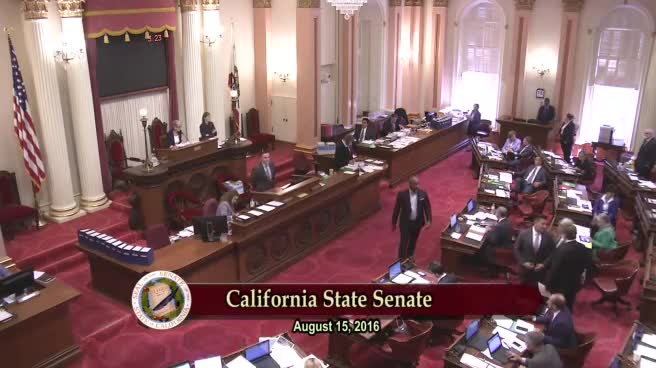 2MIN
Senate Floor
 11MIN
Senate Standing Committee on Judiciary
 1MIN
Assembly Floor
 1MIN
Assembly Standing Committee on Appropriations
Bill Author

Bill Co-Author(s):