AB 2159: Evidence: immigration status.
- Session Year: 2015-2016
- House: Assembly
- Latest Version Date: 2016-08-17
Existing law provides that all relevant evidence is admissible in an action before the court, including evidence relevant to the credibility of a witness or hearsay declarant, subject to specified exceptions.
This bill would provide that, in civil actions for personal injury or wrongful death, evidence of a persons immigration status is not admissible and discovery of a persons immigration status is not permitted. The bill would also provide that these restrictions do not affect the standards of relevance, admissibility, or discovery under other specified provisions of law.
Existing law provides that all relevant evidence is admissible in an action before the court, including evidence relevant to the credibility of a witness or hearsay declarant, subject to specified exceptions.
This bill would provide that, in civil actions for personal injury or wrongful death, evidence of a persons immigration status is not admissible and discovery of a persons immigration status is not permitted. The bill would also express the intent of the Legislature provide that these restrictions do not affect the rights or obligations of a person standards of relevance, admissibility, or discovery under other specified provisions of law.
Existing law provides that all relevant evidence is admissible in an action before the court, including evidence relevant to the credibility of a witness or hearsay declarant, subject to specified exceptions.
This bill would provide that, in civil actions for personal injury or wrongful death, evidence of a persons immigration status is not admissible and discovery of a persons immigration status is not permitted. The bill would also express the intent of the Legislature that these restrictions do not affect the rights or obligations of a person under other specified provisions of law.
(a)In a civil action for personal injury or wrongful death, evidence of a persons immigration status shall not be admitted into evidence, nor shall discovery into a persons immigration status be permitted.
(b)This section does not affect the standards of relevance, admissibility, or discovery prescribed by Section 3339 of the Civil Code, Section 7285 of the Government Code, Section 24000 of the Health and Safety Code, and Section 1171.5 of the Labor Code.
The Legislature finds and declares that Section 351.2 of the Evidence Code does not affect the rights or obligations of a person under Section 3339 of the Civil Code, Section 7285 of the Government Code, Section 24000 of the Health and Safety Code, or Section 1171.5 of the Labor Code.
SEC. 2.SECTION 1.Section 351.2 is added to the Evidence Code, to read:351.2.In (a)In a civil action for personal injury or wrongful death, evidence of a persons immigration status shall not be admitted into evidence, nor shall discovery into a persons immigration status be permitted.
(b)This section does not affect the standards of relevance, admissibility, or discovery prescribed by Section 3339 of the Civil Code, Section 7285 of the Government Code, Section 24000 of the Health and Safety Code, and Section 1171.5 of the Labor Code.
The Legislature finds and declares that Section 351.2 of the Evidence Code does not affect the rights or obligations of a person under Section 3339 of the Civil Code, Section 7285 of the Government Code, Section 24000 of the Health and Safety Code, or Section 1171.5 of the Labor Code.
SEC. 2.Section 351.2 is added to the Evidence Code, to read:351.2.In a civil action for personal injury or wrongful death, evidence of a persons immigration status shall not be admitted into evidence, nor shall discovery into a persons immigration status be permitted.
|
Date
|
Status
|
|---|---|
| Apr 28, 2016 | Referred to Com. on JUD. |
| Aug 17, 2016 | Chaptered by Secretary of State - Chapter 132, Statutes of 2016. |
| Aug 17, 2016 | Approved by the Governor. |
| Aug 5, 2016 | Enrolled and presented to the Governor at 2:30 p.m. |
| Aug 2, 2016 | In Assembly. Ordered to Engrossing and Enrolling. |
| Aug 1, 2016 | Read third time. Passed. Ordered to the Assembly. (Ayes 28. Noes 11. Page 4726.). |
| Aug 1, 2016 | Read third time. Passed. Ordered to the Assembly. |
| Jun 16, 2016 | Read second time. Ordered to third reading. |
| Jun 15, 2016 | From committee: Do pass. (Ayes 5. Noes 2.) (June 14). |
| Feb 17, 2016 | Read first time. To print. |
| Apr 7, 2016 | Read third time. Passed. Ordered to the Senate. (Ayes 53. Noes 20. Page 4229.) |
| Apr 7, 2016 | Read third time. Passed. Ordered to the Senate. |
| Apr 7, 2016 | In Senate. Read first time. To Com. on RLS. for assignment. |
| Apr 4, 2016 | Read second time. Ordered to third reading. |
| Mar 31, 2016 | Read second time and amended. Ordered returned to second reading. |
| Mar 30, 2016 | From committee: Amend, and do pass as amended. (Ayes 8. Noes 1.) (March 29). |
| Feb 29, 2016 | Referred to Com. on JUD. |
| Feb 18, 2016 | From printer. May be heard in committee March 19. |
|
Date
|
Description
|
Location
|
Votes
|
|
|---|---|---|---|---|
| Aug 1, 2016 | Assembly 3rd Reading AB2159 Gonzalez By Hall | Senate Floor |
Passed |
|
| Jun 14, 2016 | Do pass | Senate Standing Committee on Judiciary |
Passed |
|
| Apr 7, 2016 | AB 2159 GONZALEZ Assembly Third Reading | Assembly Floor |
Passed |
|
| Mar 29, 2016 | Do pass as amended. | Assembly Standing Committee on Judiciary |
Passed |
This list shows positions taken on this bill by organizations on the date displayed, which is linked to the original source.
Positions by individuals are not included.
|
Organization
|
Position
|
Date
|
|---|---|---|
| Asian Americans Advancing Justice- California | ** Support | Aug 1, 2016 |
| California Catholic Conference | ** Support | Aug 1, 2016 |
| California Conference Board Of The Amalgamated Transit Union | ** Support | Aug 1, 2016 |
| California Conference Of Machinists | ** Support | Aug 1, 2016 |
| California Immigrant Policy Center | ** Support | Aug 1, 2016 |
| California Teamsters Public Affairs Council | ** Support | Aug 1, 2016 |
| City of Los Angeles Mayor, Eric Garcetti | ** Support | Aug 1, 2016 |
| Coalition for Humane Immigrant Rights of Los Angeles | ** Support | Aug 1, 2016 |
| Congress of California Seniors | ** Support | Aug 1, 2016 |
| Consumer Attorneys Of California | ** Support | Aug 1, 2016 |
| Consumer Federation Of California | ** Support | Aug 1, 2016 |
| Equality California | ** Support | Aug 1, 2016 |
| Immigrant Legal Resource Center | ** Support | Aug 1, 2016 |
| International Longshore and Warehouse Union | ** Support | Aug 1, 2016 |
| Mexican American Bar Association of Los Angeles County | ** Support | Aug 1, 2016 |
| Mexican American Legal Defense and Educational Fund | ** Support | Aug 1, 2016 |
| National Association Of Social Workers, California Chapter | ** Support | Aug 1, 2016 |
| Our Family Coalition | ** Support | Aug 1, 2016 |
| PolicyLink | ** Support | Aug 1, 2016 |
| Professional & Technical Engineers, IFPTE Local 21, AFL-CIO | ** Support | Aug 1, 2016 |
| Unite Here Local 30 | ** Support | Aug 1, 2016 |
| UNITE-HERE, AFL-CIO | ** Support | Aug 1, 2016 |
| Utilities Workers Union of America, Local 132, AFL-CIO | ** Support | Aug 1, 2016 |
Office of Senate Floor Analyses (916) 651-1520 Fax: (916) 327-4478 | AB |
THIRD READING
Bill No: AB 2159
:
SENATE JUDICIARY COMMITTEE: 5-2, 6/14/16
AYES: Jackson, Hertzberg, Leno, Monning, Wieckowski
NOES: Moorlach, Anderson
ASSEMBLY FLOOR: 53-20, 4/7/16 - See last page for vote
SOURCE: Consumer Attorneys of California
Mexican American Legal Defense and Educational Fund
DIGEST: This bill provides that in a civil action for personal injury or wrongful death, evidence of a person’s immigration status shall not be admitted into evidence, nor shall discovery into a person’s immigration status be permitted, except as specified. This bill provides that it does not affect the standards of relevance, admissibility, or discovery under existing law, which recognize that such inquiries can be allowed where the person seeking to make the inquiry has shown by clear and convincing evidence that the inquiry is necessary in order to comply with federal immigration law.
Existing law:
- Provides that, except as otherwise provided by statute, all relevant evidence is admissible. Existing law, however, authorizes a court, in its discretion, to exclude evidence if its probative value is substantially outweighed by the probability that its admission will (a) necessitate undue consumption of time, or (b) create substantial danger of undue prejudice, of confusing the issues, or of misleading the jury.
- Provides that the Legislature finds and declares the following:
- All protections, rights, and remedies available under state law, except any reinstatement remedy prohibited by federal law, are available to all individuals regardless of immigration status who have applied for employment, or who are or who have been employed, in this state.
- For purposes of enforcing state labor, employment, civil rights, and employee housing laws, a person’s immigration status is irrelevant to the issue of liability, and in proceedings or discovery undertaken to enforce those state laws no inquiry shall be permitted into a person’s immigration status except where the person seeking to make this inquiry has shown by clear and convincing evidence that this inquiry is necessary in order to comply with federal immigration law.
- These provisions are declaratory of existing law.
- The provisions are severable. If any provision of the above provisions or their application is held invalid, that invalidity is prohibited from affecting other provisions or applications that can be given effect without the invalid provision or application. (Civ. Code Sec. 3339; see also similar provisions at Gov. Code Sec. 7285, Health & Saf. Code Sec. 24000, Lab. Code Sec. 1171.5.)
- Provides that the immigration status of a minor child seeking recovery under any applicable law is irrelevant to the issues of liability or remedy, except for employment-related prospective injunctive relief that would directly violate federal law. Existing law further prohibits discovery or other inquiry in a civil action or proceeding relating to a minor child’s immigration status except where the minor child’s claims place the minor child’s immigration status directly in contention or the person seeking to make this inquiry has shown by clear and convincing evidence that the inquiry is necessary in order to comply with federal immigration law.
- Provides in Rodriguez v. Kline (1986) 186 Cal.App.3d 1146, 1148-1149 that an individual injured in the United States who is subject to deportation is not entitled to be compensated based upon his or her projected earning capacity in the U.S., but rather may only recover future lost wages based on projected earning capacity in the country of his or her lawful citizenship.
This bill:
- Adds to the Evidence Code that in a civil action for personal injury or wrongful death, evidence of a person’s immigration status shall not be admitted into evidence, nor shall discovery into a person’s immigration status be permitted.
- Provides that this added prohibition against the admissibility of, or discovery into, a person’s immigration status does not affect the standards of relevance, admissibility, or discovery prescribed by the Civil, Government, Health and Safety, and Labor Codes, above, as specified.
Background
In 2002, the United States Supreme Court, in Hoffman Plastic Compounds Inc. v. NLRB (2002) 535 U.S. 137, held that the National Labor Relations Board (NLRB) is precluded from awarding backpay to undocumented workers because an award to these specific workers would be beyond the bounds of NLRB’s remedial discretion and run counter to the federal Immigration Reform and Control Act of 1986 (IRCA). Even though the workers might be victims of unfair labor practices, the workers were never legally authorized to work in the United States, and as a result, the Court held that awarding backpay to undocumented immigrants would “unduly trench upon explicit statutory prohibitions critical to federal immigration policy,” as expressed in IRCA and “would encourage the successful evasion of apprehension by immigration authorities, condone prior violations of the immigration laws, and encourage future violations.” (Id. at 151, noting at 152 that NLRB’s “lack of authority to award backpay does not mean that the employer gets off scot-free. The Board here has already imposed other significant sanctions against Hoffman – sanctions Hoffman does not challenge.”)
In response to Hoffman, this Legislature enacted an urgency measure, SB 1818 (Romero, Chapter 1071, Statutes of 2002) to limit the potential effects of that decision on this state’s labor and civil rights laws. The bill codified substantially similar legislative findings and declarations throughout the Civil Code, the Government Code, the Labor Code, and the Health and Safety Code relative to enforcement actions relating to the rights of immigrants. For example, the following findings and declarations were codified in Section 3339 of the Civil Code: (1) all protections, rights, and remedies available under state law, except any reinstatement remedy prohibited by federal law, are available to all individuals, regardless of immigration status, who have applied for employment, or who are or who have been employed, in this state; (2) for purposes of enforcing state labor, employment, civil rights, and employee housing laws, a person’s immigration status is irrelevant to the issue of liability and no inquiry shall be permitted into a person’s immigration status except when necessary to comply with federal immigration law; and (3) the bill’s provisions are declaratory of existing law.
Additionally, last year, AB 560 (Gomez, Chapter 151, Statutes of 2015) codified that the immigration status of children is irrelevant to issues of liability or remedy and is generally inadmissible for purposes of discovery, except as specified. The bill exempted employment-related prospective injunctive relief that would directly violate federal law and also allowed for discovery where the minor child’s claims place the minor child’s immigration status directly in contention or the person seeking to make this inquiry has shown by clear and convincing evidence that the inquiry is necessary in order to comply with federal immigration law. (See Civ. Code Sec. 3339.5.)
This bill, co-sponsored by the Consumer Attorneys of California and the Mexican American Legal Defense and Educational Fund, seeks to now generally provide that evidence of a person’s immigration status shall not be admitted into evidence, nor shall discovery into a person’s immigration status be permitted, in a civil action for personal injury or wrongful death.
Comments
As stated by the author:
Under Rodriguez v Kline (1986) 186 Cal.App.3d 1147, Californians are at a disadvantage because their immigration status is used against them during the process of determining payment of damages solely related to future income loss. Moreover, the precedent set by the case is being unjustly applied to cases involving the recovery of future medical costs.
The California Legislature has clearly indicated the importance of protecting the rights of undocumented people not only in the employment setting, but in all other respects. The state’s Labor Code, Civil Code, and Government Codes all include language expressing protections to all individuals regardless of immigration status.
However, greater protections are needed for individuals seeking recovery of fair compensation for their injuries through our civil justice system. Assembly Bill 2159 will ensure an injured person in [California] receives fair and just compensation for future income loss and future medical cost regardless of their immigration status.
Co-sponsor, Consumer Attorneys of California adds that “[o]ver the past 20 years, this Legislature has granted undocumented Californians the right to obtain drivers licenses, qualify for in-state tuition, and obtain law and other professional licenses. They are also expressly protected by California’s labor laws. Further, it is longstanding law that an undocumented worker can receive workers’ compensation without any inquiry into immigration status. Despite these advances, many undocumented individuals face efforts to limit their ability to recover money to support their families and seek adequate medical care when they are injured and unable to work. [ . . . ] This bill would simply state that immigration status is also irrelevant for adults pursuing a personal injury or wrongful death action. [ . . . ]
FISCAL EFFECT: Appropriation: Fiscal Com.: Local:
Consumer Attorneys of California (co-source)
Mexican American Legal Defense and Educational Fund (co-source)
American Civil Liberties Union
Asian Americans Advancing Justice- California
California Catholic Conference
California Conference Board of the Amalgamated Transit Union
California Conference of Machinists
California Immigrant Policy Center
California Teamsters Public Affairs Council
City of Los Angeles Mayor, Eric Garcetti
Coalition for Humane Immigrant Rights of Los Angeles
Congress of California Seniors
Consumer Federation of California
Engineer & Scientists of California, Local 20, IFPTE Local 20, AFL-CIO
Equality California
International Longshore and Warehouse Union
Immigrant Legal Resource Center
Mexican American Bar Association of Los Angeles County
National Association of Social Workers, California Chapter
Our Family Coalition
PolicyLink
Professional & Technical Engineers, IFPTE Local 21, AFL-CIO
UNITE-HERE, AFL-CIO
Southern California Chapter of the American Immigration Lawyers Association
UNITE HERE Local 30
Utilities Workers Union of America, Local 132, AFL-CIO
OPPOSITION: (Verified 6/17/16)
None received
ARGUMENTS IN SUPPORT: In support of the bill, PolicyLink writes that:
While state lawmakers have approved many protections for undocumented immigrants, those protections are substantially undermined by one nearly 30-year-old case, Rodriguez v. Kline, 186 Cal.App.3d 1147 (1986). [ . . . ]
Besides reducing recovery for lost future earnings, evidence regarding a plaintiff’s immigration status can cause other harms. Recently, Rodriguez has been used in some lawsuits to lower the projected cost of an injured immigrant’s future medical care, thereby decreasing the amount of compensation plaintiffs in those cases could receive for future medical expenses. Perhaps more alarmingly, calling a person’s immigration status into question may prevent recovery altogether. Once an individual’s legal status as an immigrant is raised, he or she is faced with a difficult choice: either forego recovery or continue with the case and risk deportation. Unsurprisingly, many may choose the former.
An undocumented plaintiff should not be forced to abandon a legitimate civil action or receive less compensation due to his or her immigration status. This sends a message that our courts attach less value to the pain and suffering of undocumented Californians, even though they contribute greatly to the economic and cultural fabric of the state and, thus, deserve equal and fair treatment in the courts.
ASSEMBLY FLOOR: 53-20, 4/7/16
AYES: Alejo, Atkins, Baker, Bloom, Bonilla, Bonta, Brown, Burke, Calderon, Chau, Chiu, Chu, Cooley, Cooper, Dababneh, Daly, Dodd, Eggman, Frazier, Cristina Garcia, Eduardo Garcia, Gatto, Gipson, Gomez, Gonzalez, Gordon, Gray, Roger Hernández, Holden, Irwin, Jones-Sawyer, Linder, Lopez, Low, Maienschein, McCarty, Medina, Mullin, Nazarian, O'Donnell, Olsen, Quirk, Ridley-Thomas, Rodriguez, Salas, Santiago, Mark Stone, Thurmond, Ting, Weber, Williams, Wood, Rendon
NOES: Achadjian, Travis Allen, Bigelow, Brough, Dahle, Beth Gaines, Grove, Harper, Jones, Kim, Lackey, Mathis, Mayes, Melendez, Obernolte, Patterson, Steinorth, Wagner, Waldron, Wilk
NO VOTE RECORDED: Campos, Chang, Chávez, Gallagher, Hadley, Levine
6/17/16 15:03:46
**** END ****
Senator Hannah-Beth Jackson, Chair
2015-2016 Regular Session
Bill No: AB 2159 (Author:Gonzalez and Bonta)
Version: March 31, 2016
Hearing Date: June 14, 2016
Fiscal: No
Urgency: No
Consultant: RD
SUBJECT
Evidence: immigration status
DESCRIPTION
This bill would provide that in a civil action for personal injury or wrongful death, evidence of a person’s immigration status shall not be admitted into evidence, nor shall discovery into a person’s immigration status be permitted, except as specified. This bill would provide that it does not affect the standards of relevance, admissibility, or discovery under existing law, which recognize that such inquiries can be allowed where the person seeking to make the inquiry has shown by clear and convincing evidence that the inquiry is necessary in order to comply with federal immigration law.
BACKGROUND
In 2002, the United States Supreme Court, in Hoffman Plastic Compounds Inc. v. NLRB (2002) 535 U.S. 137, held that the National Labor Relations Board (NLRB) is precluded from awarding backpay to undocumented workers because an award to these specific workers would be beyond the bounds of NLRB’s remedial discretion and run counter to the federal Immigration Reform and Control Act of 1986 (IRCA). Even though the workers might be victims of unfair labor practices, the workers were never legally authorized to work in the United States, and as a result, the Court held that awarding backpay to undocumented immigrants would “unduly trench upon explicit statutory prohibitions critical to federal immigration policy,” as expressed in IRCA and “would encourage the successful evasion of apprehension by immigration authorities, condone prior violations of the immigration laws, and encourage future violations.” (Id. at 151, noting at 152 that NLRB’s “lack of authority to award backpay does not mean that the employer gets off scot-free. The Board here has already imposed other significant sanctions against Hoffman – sanctions Hoffman does not challenge.”)
In response to Hoffman, this Legislature enacted an urgency measure, SB 1818 (Romero, Ch. 1071, Stats. 2002) to limit the potential effects of that decision on this state’s labor and civil rights laws. The bill codified substantially similar legislative findings and declarations throughout the Civil Code, the Government Code, the Labor Code, and the Health and Safety Code relative to enforcement actions relating to the rights of immigrants. For example, the following findings and declarations were codified in Section 3339 of the Civil Code: (1) all protections, rights, and remedies available under state law, except any reinstatement remedy prohibited by federal law, are available to all individuals, regardless of immigration status, who have applied for employment, or who are or who have been employed, in this state; (2) for purposes of enforcing state labor, employment, civil rights, and employee housing laws, a person’s immigration status is irrelevant to the issue of liability and no inquiry shall be permitted into a person’s immigration status except when necessary to comply with federal immigration law; and (3) the bill’s provisions are declaratory of existing law.
Additionally, last year, AB 560 (Gomez, Ch. 151, Stats. 2015) codified that the immigration status of children is irrelevant to issues of liability or remedy and is generally inadmissible for purposes of discovery, except as specified. The bill exempted employment-related prospective injunctive relief that would directly violate federal law and also allowed for discovery where the minor child’s claims place the minor child’s immigration status directly in contention or the person seeking to make this inquiry has shown by clear and convincing evidence that the inquiry is necessary in order to comply with federal immigration law. (See Civ. Code Sec. 3339.5.)
This bill, co-sponsored by the Consumer Attorneys of California and the Mexican American Legal Defense and Educational Fund, would now generally provide that evidence of a person’s immigration status shall not be admitted into evidence, nor shall discovery into a person’s immigration status be permitted, in a civil action for personal injury or wrongful death.
CHANGES TO EXISTING LAW
Existing law provides that, except as otherwise provided by statute, all relevant evidence is admissible. (Evid. Code Sec. 351.) Existing law, however, authorizes a court, in its discretion, to exclude evidence if its probative value is substantially outweighed by the probability that its admission will (a) necessitate undue consumption of time, or (b) create substantial danger of undue prejudice, of confusing the issues, or of misleading the jury. (Evid. Code Sec. 352.)
Existing law provides that the Legislature finds and declares the following:
- All protections, rights, and remedies available under state law, except any reinstatement remedy prohibited by federal law, are available to all individuals regardless of immigration status who have applied for employment, or who are or who have been employed, in this state.
- For purposes of enforcing state labor, employment, civil rights, and employee housing laws, a person’s immigration status is irrelevant to the issue of liability, and in proceedings or discovery undertaken to enforce those state laws no inquiry shall be permitted into a person’s immigration status except where the person seeking to make this inquiry has shown by clear and convincing evidence that this inquiry is necessary in order to comply with federal immigration law.
- These provisions are declaratory of existing law.
- The provisions are severable. If any provision of the above provisions or their application is held invalid, that invalidity is prohibited from affecting other provisions or applications that can be given effect without the invalid provision or application. (Civ. Code Sec. 3339; see also similar provisions at Gov. Code Sec. 7285, Health & Saf. Code Sec. 24000, Lab. Code Sec. 1171.5.)
Existing law provides that the immigration status of a minor child seeking recovery under any applicable law is irrelevant to the issues of liability or remedy, except for employment-related prospective injunctive relief that would directly violate federal law. Existing law further prohibits discovery or other inquiry in a civil action or proceeding relating to a minor child’s immigration status except where the minor child’s claims place the minor child’s immigration status directly in contention or the person seeking to make this inquiry has shown by clear and convincing evidence that the inquiry is necessary in order to comply with federal immigration law. (Civ. Code 3339.5.)
Existing case law provides that an individual injured in the United States who is subject to deportation is not entitled to be compensated based upon his or her projected earning capacity in the U.S., but rather may only recover future lost wages based on projected earning capacity in the country of his or her lawful citizenship. (Rodriguez v. Kline (1986) 186 Cal.App.3d 1146, 1148-1149.)
This bill would add to the Evidence Code that in a civil action for personal injury or wrongful death, evidence of a person’s immigration status shall not be admitted into evidence, nor shall discovery into a person’s immigration status be permitted.
This bill would provide that this added prohibition against the admissibility of, or discovery into, a person’s immigration status does not affect the standards of relevance, admissibility, or discovery prescribed by the Civil, Government, Health and Safety, and Labor Codes, above, as specified.
COMMENT
1. Stated need for the bill
According to the author,
Under Rodriguez v Kline (1986) 186 Cal.App.3d 1147, Californians are at a disadvantage because their immigration status is used against them during the process of determining payment of damages solely related to future income loss. Moreover, the precedent set by the case is being unjustly applied to cases involving the recovery of future medical costs.
The California Legislature has clearly indicated the importance of protecting the rights of undocumented people not only in the employment setting, but in all other respects. The state’s Labor Code, Civil Code, and Government Codes all include language expressing protections to all individuals regardless of immigration status.
However, greater protections are needed for individuals seeking recovery of fair compensation for their injuries through our civil justice system. Assembly Bill 2159 will ensure an injured person in [California] receives fair and just compensation for future income loss and future medical cost regardless of their immigration status.
Co-sponsor, Consumer Attorneys of California adds that “[o]ver the past 20 years, this Legislature has granted undocumented Californians the right to obtain drivers licenses, qualify for in-state tuition, and obtain law and other professional licenses. They are also expressly protected by California’s labor laws. Further, it is longstanding law that an undocumented worker can receive workers’ compensation without any inquiry into immigration status. Despite these advances, many undocumented individuals face efforts to limit their ability to recover money to support their families and seek adequate medical care when they are injured and unable to work. [ . . . ] This bill would simply state that immigration status is also irrelevant for adults pursuing a personal injury or wrongful death action. [ . . . ]
In support of the bill, PolicyLink writes that:
While state lawmakers have approved many protections for undocumented immigrants, those protections are substantially undermined by one nearly 30-year-old case, Rodriguez v. Kline, 186 Cal.App.3d 1147 (1986). [ . . . ]
Besides reducing recovery for lost future earnings, evidence regarding a plaintiff’s immigration status can cause other harms. Recently, Rodriguez has been used in some lawsuits to lower the projected cost of an injured immigrant’s future medical care, thereby decreasing the amount of compensation plaintiffs in those cases could receive for future medical expenses. Perhaps more alarmingly, calling a person’s immigration status into question may prevent recovery altogether. Once an individual’s legal status as an immigrant is raised, he or she is faced with a difficult choice: either forego recovery or continue with the case and risk deportation. Unsurprisingly, many may choose the former.
An undocumented plaintiff should not be forced to abandon a legitimate civil action or receive less compensation due to his or her immigration status. This sends a message that our courts attach less value to the pain and suffering of undocumented Californians, even though they contribute greatly to the economic and cultural fabric of the state and, thus, deserve equal and fair treatment in the courts.
2. Existing law on admissibility of immigration status
Generally, as a matter of law, the immigration status of a personal injury plaintiff is inadmissible as evidence for most purposes. On the other hand, when the plaintiff raises certain issues, immigration status may become relevant and thereby admissible. Accordingly, the courts have recognized an exception to this rule of inadmissibility where the plaintiff seeks future earnings damages, because those future earnings are dependent upon whether or not the individual would likely be subject to deportation under federal law. The rule was first articulated by a California Court of Appeal in Rodriguez v. Kline (1986) 186 Cal.App.3d 1145, a case where an appeal was taken from a personal injury award of $99,000 arising out of a traffic accident and the court was asked to decide whether an undocumented individual is entitled to be compensated for his personal injuries based upon his projected earning capacity in (1) the United States, or (2) the country of his lawful citizenship.
The court began by noting that the plaintiff in that case (the respondent) candidly admitted he was undocumented, writing that “[a]s a consequence, respondent’s status unquestionably bore upon the amount of his anticipated future earnings. That is to say, if respondent were to return, voluntarily or involuntarily [pursuant to federal law making such an individual subject to deportation], to Mexico, the income he could expect to receive there would be markedly less than a figure derived from his earnings during his sojourn here. To date the California courts that have considered this proposition at all have recognized its soundness.” (Id. at 1148.) Even still, the Court recognized the potential prejudice that such evidence could pose to the plaintiff, writing that this could be remedied “by treating any question regarding a plaintiff’s citizenship or lawful place of residence as one of law, to be decided exclusively by the trial court outside the presence of the jury. Resolution of this question is, of course, prerequisite to any ruling upon the admissibility of evidence regarding future earnings.” (Id.) As held in Rodriguez:
[W]henever a plaintiff whose citizenship is challenged seeks to recover for loss of future earnings, his status in this country shall be decided by the trial court as a preliminary question of law. (See Evid. Code, [Sec.] 310.) At the hearing conducted thereon, the defendant will have the initial burden of producing proof that the plaintiff is an alien who is subject to deportation. If this effort is successful, then the burden will shift to the plaintiff to demonstrate to the court’s satisfaction that he has taken steps which will correct his deportable condition. A contrary rule, of course, would allow someone who is not lawfully available for future work in the United States to receive compensation to which he is not entitled.
If the court’s decision following this hearing is in the plaintiff’s favor, then all evidence relating to his alienage shall be excluded and his projected earning capacity may be computed upon the basis of his past and projected future income in the United States. Should the defendant prevail, then evidence of the plaintiff's future earnings must be limited to those he could anticipate receiving in his country of lawful citizenship. Of course, in such an instance since the plaintiff’s status ordinarily would not be relevant to a determination of liability, he would be entitled to a limiting instruction to that effect. (Id. at 1149, citing Alonso v. State of California (1975) 50 Cal.App.3d 242.)
More recently, in Hernandez v. Paicius (2003) 109 Cal.App.4th 452 (disapproved on another ground in People v. Freeman (2010) 47 Cal.4th 993, 1007), a California Court of Appeal, relying in part upon the public policy reflected in the Civil Code, Government Code and Labor Code regarding the irrelevance of immigration status in the enforcement of state labor, employment, civil rights, and employee housing rights, held:
[The trial] court absolutely should have granted plaintiff’s motion to exclude reference to his residency status. Only relevant evidence is admissible. (Evid. Code [Sec.] 350.) The court lacks discretion to admit irrelevant evidence. [Citations and footnote omitted.] The evidence was irrelevant to the issue of liability under Rodriguez v. Kline . . . a decision plaintiff cited to the court below. Plaintiff was not claiming loss of future earnings. Thus, his potential for making money did not matter. In fact, plaintiff was not claiming loss of any earnings, past or future. [Footnote omitted, emphasis in original.] Not only was the evidence entirely irrelevant; it was, as the court illustrated only too early in its comments, highly inflammatory. As the Rodriguez court observed, ‘(E)vidence relating to citizenship and liability to deportation almost surely would be prejudicial to the party whose status was in question.’ (Rodriguez, at p. 1148).” (Id. at 460.)
3. Post-Rodriguez use of immigration status
While it appears that courts can disallow the introduction of a person’s immigration status under existing rules of evidence and in specific cases governed under statutes enacted by SB 1818 (Romero, Ch. 1071, Stats. 2002) in the Civil, Government, Labor and Health and Safety Codes, the use of a person’s immigration status continues to be an issue in civil actions, whereby defendant’s allegedly inquire into and use a person’s undocumented status as a method to limit a victim’s recovery, including future medical care damages. As such, this bill seeks to expressly limit the use of a person’s immigration status to reduce the recovery of damages and to prejudice the finder of fact against an injured party in personal injury and wrongful death cases.
The author argues that not only is the nearly 30-year old holding of the 1986 Rodriguez case “not up to today’s standards in regards to extensive protections for undocumented immigrants,” but that in recent years, third party defendants have “mounted new efforts to extend the holding in Rodriquez to similarly limit the recovery of future medical care damages.” The Mexican American Legal Defense and Educational Fund (MALDEF), co-sponsor of this bill, adds “Rodriguez allows damages to be reduced to what the individual would have earned in his native country despite the fact that the individual lives in California. Many of these injured people were brought to California as children, have paid state and federal taxes for decades, and have never been subject to deportation.” Moreover, they argue, defendants use Rodriguez selectively to attack and undermine damage claims by people whose countries of origin are primarily in Asia and Latin America, where the value of damages, such as future income loss, is lower in those foreign nations compared to the United States.
Co-sponsor Consumer Attorneys of California (CAOC) provides a specific example of the impact of the Rodriguez decision, wherein “a 29-year-old father of two was catastrophically injured when his Nissan vehicle suddenly accelerated and crashed into a big rig truck. He was rendered a quadriplegic as a result and brought an action against Nissan to recover for his lost wages and future medical costs since he was unable to continue his work in construction and could not afford to cover his extensive medical costs. Due to his Spanish surname, the Defendant decided to investigate into his immigration status. When the Defendant discovered he was indeed undocumented, they argued that his future recovery should be reduced to what his wages and medical costs would have been if he was injured in Mexico, in pesos. That could mean a substantial reduction in his recovery, even though he was living and would continue to live in the U.S.” [Emphasis in original.] The sponsors provide several other examples of how a person’s immigration status has been used to limit recovery of damages in California, despite the public policies reflected in the AB 1818 statutes, largely prohibiting the use of immigration status for similar purposes:
- Three years after he came to the U.S. from Mexico, Javier, in his early 30s, was struck by a big rig while walking his bicycle across a Southern California intersection. He suffered a brain injury and is unable to continue his $10 an hour work as a private construction laborer. His future medical expenses are estimated to be more than $3 million. If he were compensated based on what his medical care would cost there, he would not be able to pay for medical necessities in the U.S.
- Veronica, a food seller in her early 60s, suffered significant orthopedic and head injuries when she was struck by a vehicle while walking. Because she is undocumented, she decided to waive her loss of earnings claim due to Rodriguez, in fear that her status would be disclosed and she would be deported and separated from her family.
By enacting this bill, the author seeks to “ensure fair and just compensation for every Californian, regardless of his/her immigration status,” while at the same time “preserv[ing] the integrity of the recovery process for an individual seeking compensation for future income loss or future medical costs.” The Consumer Federation of California similarly writes in support, describing that:
Once immigration status is raised, a person, injured through no fault of their own, is faced with either forgoing recovery for his injuries, or continuing with his case in fear of deportation. Immigration status is strategically applied only when the undocumented person is from a country whose wages are lower than the U.S. For example, the defense will raise immigration status in a case brought by an immigrant from Mexico, arguing that she should receive only what she would earn in her same profession if she still lived in Mexico, not U.S. wages. However, the defense will not argue that immigration status is relevant when the injured person is from Sweden because her wages would be greater there. This allows defendants to undercut the value of an injured immigrant’s future medical care, even though that future medical care will be in the U.S., not their country of origin.
An injured individual should not have his or her recovery limited because of immigration status, or ever be required to have their immigration status discussed or debated in court. This sends the wrong message to an intentional or unintentional tortfeasor that some human lives are worth less than others. [Emphasis in original.]
Arguably, allowing the introduction of a victim’s immigration status specifically to limit the damages owed to a victim creates a de facto immunity for tortfeasors, whereby a victim is denied redress for his or her injuries, not because of any failure to prove an element of tort liability (e.g. duty, breach, causation, damages), but, rather, by operation of a law that effectively shields the tortfeasor from damages that he or she would otherwise be legally obligated to pay out under any other circumstances. Furthermore, staff notes that in the 30 years since the passing of Rodriguez, California has taken significant steps toward the inclusion and integration of undocumented individuals, such as by passing legislation allowing the State Bar to admit an applicant who is undocumented as an attorney at law upon certification by the State Bar examining committee that the applicant has fulfilled the requirements for admission to practice law. (See AB 1024 (Gonzalez, Ch. 573, Stats. 2013).) Other legislation, such as SB 1159 (Lara, Ch. 752, Stats. 2014) have also prohibited licensing boards from denying licensure to an applicant based on his or her citizenship or immigration status. Thus, allowing immigration status to reduce future damages appears to be contrary to such public policy efforts to remove barriers for undocumented immigrants to improve their quality of life and to contribute to California’s economy.
4. Bill limits discovery and admissibility of immigration status in personal injury or wrongful death cases
As noted above, existing law codifies various legislative findings in the Civil, Labor, Government, and Health and Safety Codes, that are intended to protect immigrants from the very issues central to this bill. (See Comment 3, above.) In the Civil Code, for example, existing law states that for purposes of enforcing state labor, employment, civil rights, and employee housing laws, a person’s immigration status is irrelevant to the issue of liability, and that in proceedings or discovery undertaken to enforce those state laws, no inquiry shall be permitted into a person’s immigration status except where the person seeking to make this inquiry has shown by clear and convincing evidence that this inquiry is necessary in order to comply with federal immigration law. (See Civ. Code Sec. 3339(b).) Additionally, as a result of legislation approved last year (AB 560 (Gomez, Ch. 151, Stats. 2015)), California law also expressly provides for similar prohibitions against the use of a child’s immigration status in most cases. Specifically, Section 3339.5 of the Civil Code provides that the immigration status of a minor child seeking recovery under any applicable law is irrelevant to the issues of liability or remedy, except for employment-related prospective injunctive relief that would directly violate federal law; and further prohibits discovery or other inquiry in a civil action or proceeding relating to a minor child’s immigration status unless the minor child’s claims place the minor child’s immigration status directly in contention, or the person seeking to make this inquiry has shown by clear and convincing evidence that the inquiry is necessary in order to comply with federal immigration law.
CAOC writes that while existing law specifies a number of situations where immigration status is not to be considered, “it does not specifically address protections for wrongful death or personal injury matters. AB 2159 seeks to end the legal argument that immigration status is relevant to determine the recovery an injured undocumented person should receive in California. No individual should have to face having immigration status raised in discovery for the sole purpose of intimidating or undervaluing his or her claims for future income loss. However, under current case law, this is happening frequently because defendants are permitted to inquire into a person’s immigration status when an undocumented individual, injured by no fault of his own, brings a wrongful death or personal injury action to recover for his injuries. The undocumented person’s claim is devalued solely because of his immigration status, contrary to the long standing policy of this state.”
Accordingly, this bill would now expressly render a person’s immigration status generally inadmissible and undiscoverable in any civil action for personal injury or wrongful death. At the same time, however, this bill would expressly provide that it does not affect the standards of relevance, admissibility, or discovery under some of the existing laws referenced above, which recognize that such inquiries can be made where the person seeking to make the inquiry has shown by clear and convincing evidence that the inquiry is necessary in order to comply with federal immigration law. Stated another way, while the bill would render a person’s immigration status generally inadmissible and not subject to discovery in a personal injury or wrongful death case, it would seemingly still allow discovery or other inquiry in a civil action or proceeding relating to a person’s immigration status where the person seeking to make this inquiry has shown by clear and convincing evidence that the inquiry is necessary in order to comply with federal immigration law. In doing so, this bill would appear to be consistent with the public policy expressed in the statutes referenced above and the general rule, discussed in Comment 2, above, against the admissibility of immigration status evidence, while also avoiding having any effect on the relief available to a plaintiff in the employment law context that would directly violate federal law. (Indeed, the sponsors write that this bill does not apply in the employment law context.)
The sponsors, as well as many of the civil rights and immigration groups writing in support of this bill, argue that “[a]n undocumented injured individual should not have his or her recovery limited because of immigration status or ever be required to have his or her status discussed or debated in court. This sends the wrong message to an intentional or unintentional tortfeasor that some lives are worth less than others. All immigrants contribute greatly to the economic and cultural fabric of the Golden State and it is unconscionable to allow for some lives to be worth less than others.”
Support: American Civil Liberties Union; Asian Americans Advancing Justice- California; California Catholic Conference; California Conference Board of the Amalgamated Transit Union; California Conference of Machinists; California Immigrant Policy Center; California Teamsters Public Affairs Council; City of Los Angeles Mayor, Eric Garcetti; Coalition for Humane Immigrant Rights of Los Angeles; Congress of California Seniors; Consumer Federation of California; Engineer & Scientists of CA, Local 20, IFPTE Local 20; AFL-CIO; Equality California; International Longshore and Warehouse Union; Mexican American Bar Association of Los Angeles County; National Association of Social Workers, California Chapter; Our Family Coalition; PolicyLink; Professional & Technical Engineers, IFPTE Local 21, AFL-CIO; UNITE-HERE, AFL-CIO; Southern California Chapter of the American Immigration Lawyers Association; UNITE HERE Local 30; Utilities Workers Union of America, Local 132, AFL-CIO
Opposition: None Known
HISTORY
Source: Consumer Attorneys of California; Mexican American Legal Defense and Educational Fund
Related Pending Legislation: None Known
Prior Legislation:
AB 560 (Gomez, Ch. 151, Stats. 2015) See Background. This bill further stated that its provisions are declaratory of existing law and are not intended to imply that adults are not likewise protected by existing law in the same circumstances.
SB 1818 (Romero, Ch. 1071, Stats. 2002) See Background.
Prior Vote:
Assembly Floor (Ayes 53, Noes 20)
Assembly Judiciary Committee (Ayes 8, Noes 1)
**************
ASSEMBLY THIRD READING
ATR Bill Id:AB 2159
Author:(Gonzalez and Bonta)
As Amended Ver:March 31, 2016
Majority vote
Committee | Votes | Ayes | Noes |
Judiciary | 8-1 | Mark Stone, Alejo, Chau, Chiu, Cristina Garcia, Holden, Maienschein, Ting | Gallagher |
SUMMARY: Prohibits a person's immigration status from being admitted into evidence or being subject to discovery in certain civil cases. Specifically, this bill:
- Provides that in a civil action for personal injury or wrongful death, evidence of a person's immigration status shall not be admitted into evidence, nor shall discovery into a person's immigration status be permitted.
- Clarifies that the above provision does not affect the relevance, admissibility, and discoverability standards under other laws that contain protections for people based on immigration status, namely Civil Code Section 3339, Government Code Section 7285, Health and Safety Code Section 24000, and Labor Code Section 1171.5.
EXISTING LAW:
- Prohibits discovery or other inquiry in a civil action or proceeding relating to a minor child's immigration status except where the minor child's claims place the minor child's immigration status directly in contention or the person seeking to make this inquiry has shown by clear and convincing evidence that the inquiry is necessary in order to comply with federal immigration law. (Civil Code 3339.5(b).)
- Pursuant to case law, provides that an undocumented worker injured in the United States is not entitled to be compensated based upon his or her projected earning capacity in the United States, but rather may recover future lost wages based on projected earning capacity in the country of his or her lawful citizenship. (Rodriguez v. Kline (1986) 186 Cal.App.3d 1146.)
FISCAL EFFECT: None
COMMENTS: In order to ensure that injured persons are fairly compensated for their injuries and medical costs regardless of their immigration status, this bill seeks to prohibit discovery of a person's immigration status in a civil action for personal injury or wrongful death case, and further provides that evidence of a person's immigration status is inadmissible in such cases. This important change increases consistency with other laws that recognize that immigration status is not relevant to issues of liability and closes off one controversial exception to that general rule created by a single Court of Appeal decision from 1986. According to proponents, "AB 2159 seeks to end the legal argument that immigration status is relevant to determine the recovery an injured undocumented person should receive in California. No individual should have to face having immigration status raised in discovery for the sole purpose of intimidating or undervaluing his or her claims for future loss."
Existing state law generally establishes that a person's immigration status is irrelevant to issues of civil liability, with few exceptions. For example, Civil Code Section 3339 establishes that for purposes of enforcing state labor, employment, civil rights, and employee housing laws, a person's immigration status is irrelevant to the issue of liability. Furthermore, in proceedings or discovery undertaken to enforce this broad range of state laws, Section 3339 permits no inquiry into a person's immigration status, except where the inquiry has been shown by clear and convincing evidence to be necessary in order to comply with federal immigration law.
According to proponents of this bill, the laws recently enacted by the Legislature to protect all Californians regardless of their immigration status are "substantially undermined" by a single Court of Appeal decision from three decades ago. In that case, Rodriguez v. Kline (1986) 186 Cal.App.3d 1147, the court held that an undocumented worker injured in the United States is not entitled to be compensated based upon his or her projected earning capacity in the United States, but rather may recover future lost wages based on projected earning capacity in the worker's country of lawful citizenship. The court explained: "When an individual enters this country in violation of our immigration laws ... he is subject to deportation. As a consequence, [Plaintiff's] status unquestionably bore upon the amount of his anticipated future earnings. That is to say, if [Plaintiff] were to return, voluntarily or involuntarily to Mexico, the income he could expect to receive there would be markedly less than a figure derived from his earnings during his sojourn here." (Id. at 1148.)
This bill seeks to address the impact that the Rodriguez v. Kline decision has had upon injured undocumented persons. According to proponents, the Rodriguez decision unfairly allows defendants to inquire about the plaintiff's immigration status when that undocumented person, injured through no fault of their own, brings a personal injury action to recover for injuries (or the family brings a wrongful death suit if the person was killed). Proponents contend it is inequitable and contrary to longstanding policy in California that an undocumented person's claim is devalued solely because of immigration status—a result directly attributable to Rodriguez. Proponents also argue that the bill is needed to combat the inequity that arises from the observation that inquiry into immigration status is strategically applied by defendants only when the undocumented person is from a country whose wages are lower than the U.S. They contend that the defense never argues that immigration status is relevant when the injured party is from a country like Sweden, where calculation of the injured party's expected wages would be greater than in this country.
Practitioners in the field report that defendants in injury cases use Rodriguez to leverage the fear of deportation against undocumented plaintiffs in order to reduce or even eliminate claims for future lost income and, increasingly, to limit future medical damages to what the injured person would expect to pay for medical care in the plaintiff's country of origin, rather than in the U.S. where he or she lives but where medical costs are typically much higher. Proponents provided the Judiciary Committee with the accounts of several actual examples of injured California residents where, because of their immigration status, the inequitable impact of Rodriguez is quite stark. For example:
A 29-year old father of two was catastrophically injured when his Nissan vehicle suddenly accelerated and crashed into a big rig truck. He was rendered a quadriplegic as a result and brought an action against Nissan to recover for his lost wages and future medical costs since he was unable to continue his work in construction and could not afford to cover his extensive medical costs. Due to his Spanish surname, the Defendant decided to investigate into his immigration status. When the Defendant discovered he was indeed undocumented, they argued that his future recovery should be reduced to what his wages and medical costs would have been if he was injured in Mexico, in pesos. That could mean a substantial reduction in his recovery, even though he was living and would continue to live in the U.S.
In order to eliminate these inequities attributable to Rodriguez and to ensure that injured persons are fairly compensated for their injuries and medical costs regardless of their immigration status, this bill prohibits discovery of a person's immigration status in a civil action for personal injury or wrongful death case, and further provides that evidence of a person's immigration status (because it is considered irrelevant to liability) shall not be admitted into evidence.
This bill is expressly limited to personal injury and wrongful death cases, and does not apply in employment law cases. Recent amendments clarify that the bill does not affect the standards of relevance, admissibility, or discovery under specified sections of state law, in order to ensure that the bill does not impact the analysis of federal preemption law in the employment context.
Finally, it should be noted that this bill would not allow either party in a personal injury or wrongful death case to use immigration status as a tool of unfair advantage. Under this bill, neither the plaintiff nor the defendant would be able to argue for more or less compensation than would be expected in this country, because immigration status would be irrelevant and inadmissible, and not subject to discovery by either party.
Analysis Prepared by: Anthony Lew / JUD. / (916) 319-2334 FN: 0002681
Date of Hearing: March 29, 2016
ASSEMBLY COMMITTEE ON JUDICIARY
Mark Stone, Chair
ABPCA Bill Id:AB 2159
Author:(Gonzalez) – As Introduced Ver:February 17, 2016
As Proposed to be Amended
SUBJECT: EVIDENCE: IMMIGRATION STATUS
KEY ISSUE: IN ORDER TO ENSURE THAT AN INJURED PERSON IS FAIRLY COMPENSATED FOR FUTURE LOST INCOME AND MEDICAL COSTS, REGARDLESS OF HIS OR HER IMMIGRATION STATUS, shoulD THE RULES OF EVIDENCE BE CHANGED TO forbid discovery INTO a person's immigration status AND PROHIBIT the admission of evidence about a person's immigration status IN A CIVIL ACTION FOR PERSONAL INJURY OR WRONGFUL DEATH?
SYNOPSIS
In recent years, the Legislature has taken steps to ensure that, for purposes of enforcing state labor, employment, civil rights, and employee housing laws, a person’s immigration status is irrelevant to the issue of liability. California labor laws, civil rights laws, and worker's compensation laws, among others, currently work to protect undocumented residents in this state without regard to their immigration status. According to the author, however, undocumented plaintiffs in injury cases are being unfairly prevented from recovering full compensation for their injuries because their immigration status is discoverable and used against them in court. This can be directly attributed to a 1986 Court of Appeal decision, Rodriguez v. Kline (1986) 186 Cal.App.3d 1147, in which the court held that an undocumented worker injured in the U.S. is not entitled to be compensated based upon his or her projected earning capacity in the U.S., but rather may recover future lost wages based on projected earning capacity in the worker's country of lawful citizenship. Proponents report that defendants in personal injury and wrongful death cases rely on the Rodriguez decision to leverage fear of deportation against undocumented plaintiffs in order to reduce or even eliminate claims for future lost income and, increasingly, to limit future medical damages to what the injured person would expect to pay for medical care in his or her country of origin, rather than in the U.S. where the person lives but where medical costs are typically much higher.
To address the inequities caused by the Rodriguez case and to ensure that injured persons are fairly compensated for their injuries and medical costs, regardless of their immigration status, this bill seeks to prohibit discovery of a person’s immigration status in a civil action for personal injury or wrongful death case, and further provides that evidence of a person’s immigration status - because it is considered irrelevant to liability - shall not be admitted into evidence. Proposed author's amendments further clarify that the bill applies only in wrongful death and personal injury cases, and is not intended to apply in the employment law context or impact the analysis of federal preemption law in that area. The bill is co-sponsored by the Consumer Attorneys and the Mexican-American Legal Defense and Educational Fund, and supported by a broad coalition of civil rights groups, organized labor, and immigrant advocates. Although one might anticipate that defense lawyers would have concerns with the bill's broad prohibition on admissibility and discoverability of immigration status in injury cases, at the time of this analysis there is no known opposition to this bill.
SUMMARY: Prohibits a person's immigration status from being admitted into evidence or being subject to discovery in certain civil cases. Specifically, this bill:
- Provides that in a civil action for personal injury or wrongful death, evidence of a person’s immigration status shall not be admitted into evidence, nor shall discovery into a person’s immigration status be permitted.
- Clarifies that the above provision does not affect the relevance, admissibility, and discoverability standards under other laws that contain protections for people based on immigration status, namely Civil Code Section 3339, Government Code Section 7285, Health and Safety Code Section 24000, and Labor Code Section 1171.5.
EXISTING LAW:
- Provides that all protections, rights, and remedies available under state law, except any reinstatement remedy prohibited by federal law, are available to all individuals regardless of immigration status who have applied for employment, or who are or who have been employed, in this state. (Civil Code Section 3339 (a); Labor Code Section 1171.5 (a); Government Code Section 7285 (a); Health & Safety Code Section 24000 (a).)
- Provides that for purposes of enforcing state labor, employment, civil rights, and employee housing laws, a person’s immigration status is irrelevant to the issue of liability, and in proceedings or discovery undertaken to enforce those state laws no inquiry shall be permitted into a person’s immigration status except where the person seeking to make this inquiry has shown by clear and convincing evidence that this inquiry is necessary in order to comply with federal immigration law. (Civil Code Section 3339 (b); Government Code Section 7285 (b).)
- Provides that for purposes of enforcing state labor and employment laws, a person’s immigration status is irrelevant to the issue of liability, and in proceedings or discovery undertaken to enforce those state laws no inquiry shall be permitted into a person’s immigration status except where the person seeking to make this inquiry has shown by clear and convincing evidence that the inquiry is necessary in order to comply with federal immigration law. (Labor Code Section 1171.5 (b); Health & Safety Code Section 24000 (b).)
- Provides that the immigration status of a minor child seeking recovery under any applicable law is irrelevant to the issues of liability or remedy, except for employment-related prospective injunctive relief that would directly violate federal law. (Civil Code 3339.5 (a).)
- Prohibits discovery or other inquiry in a civil action or proceeding relating to a minor child’s immigration status except where the minor child’s claims place the minor child’s immigration status directly in contention or the person seeking to make this inquiry has shown by clear and convincing evidence that the inquiry is necessary in order to comply with federal immigration law. (Civil Code 3339.5 (b).)
- Pursuant to case law, provides that an undocumented worker injured in the United States is not entitled to be compensated based upon his or her projected earning capacity in the United States, but rather may recover future lost wages based on projected earning capacity in the country of his or her lawful citizenship. (Rodriguez v. Kline (1986) 186 Cal.App.3d 1146.)
FISCAL EFFECT: As currently in print this bill is keyed non-fiscal.
COMMENTS: In order to ensure that injured persons are fairly compensated for their injuries and medical costs regardless of their immigration status, this bill seeks to prohibit discovery of a person’s immigration status in a civil action for personal injury or wrongful death case, and further provides that evidence of a person’s immigration status is inadmissible in such cases. This important change increases consistency with other laws that recognize that immigration status is not relevant to issues of liability and closes off one controversial exception to that general rule created by a single Court of Appeal decision from 1986. According to the author:
The California Legislature has clearly indicated the importance of protecting the rights of undocumented people not only in the employment setting, but in many other respects. The Labor Code, Civil Code, and Government Codes all include language expressing protections for all individuals regardless of immigration status. However, under Rodriguez v. Kline (1986) 186 Cal.App.3d 1147, some Californians are at a disadvantage because their immigration status is used against them during the process of determining damages related to future income loss . . . (and) is being unjustly applied to cases involving recovery of future medical costs.
Greater protections are therefore needed for individuals seeking recovery of fair compensation for their injuries through our civil justice system. AB 2159 will ensure an injured person in California receives fair and just compensation for future income loss and future medical costs, regardless of immigration status.
The co-sponsors of the bill, Consumer Attorneys of California (CAOC) and the Mexican American Legal Defense and Educational Fund (MALDEF), further state:
AB 2159 seeks to end the legal argument that immigration status is relevant to determine the recovery an injured undocumented person should receive in California. No individual should have to face having immigration status raised in discovery for the sole purpose of intimidating or undervaluing his or her claims for future loss.
Background on immigration status with respect to liability issues under existing law. Existing state law generally establishes that a person's immigration status is irrelevant to issues of civil liability, with few exceptions. For example, Civil Code Section 3339 establishes that for purposes of enforcing state labor, employment, civil rights, and employee housing laws, a person’s immigration status is irrelevant to the issue of liability. Furthermore, in proceedings or discovery undertaken to enforce this broad range of state laws, Section 3339 permits no inquiry into a person’s immigration status, except where the inquiry has been shown by clear and convincing evidence to be necessary in order to comply with federal immigration law. As enacted by SB 1818 (2002), these provisions are also mirrored elsewhere in the Government, Health and Safety, and Labor Codes. In addition, Civil Code Section 3339.5, enacted by AB 560 (2015), provides that a child's immigration statue is irrelevant to issues of liability or remedy and prohibits discovery or inquiry of the child's immigration status in a civil action or proceeding, with specified exceptions allowed to ensure compliance with federal law. As state laws have continued to evolve in this area, some courts have furthered this public policy by holding that immigration status is irrelevant to liability issues. (See, e.g., Hernández v. Paicius (2003) 109 Cal.App.4th 452, 460, holding that, in a medical malpractice action, trial court erred in not granting plaintiff's motion to exclude reference to his immigration status because evidence of such status was entirely irrelevant to liability, particularly where plaintiff was not claiming loss of future earnings.)
Rodriguez v. Kline: a notable and controversial exception to the inadmissibility rule. According to proponents of this bill, recent laws enacted by the Legislature to protect all Californians regardless of their immigration status are "substantially undermined" by a single Court of Appeal decision from three decades ago. In that case, Rodriguez v. Kline (1986) 186 Cal.App.3d 1147, the court held that an undocumented worker injured in the United States is not entitled to be compensated based upon his or her projected earning capacity in the United States, but rather may recover future lost wages based on projected earning capacity in the worker's country of lawful citizenship. The court explained:
When an individual enters this country in violation of our immigration laws . . . he is subject to deportation. As a consequence, [Plaintiff's] status unquestionably bore upon the amount of his anticipated future earnings. That is to say, if [Plaintiff] were to return, voluntarily or involuntarily to Mexico, the income he could expect to receive there would be markedly less than a figure derived from his earnings during his sojourn here. To date the California courts that have considered this proposition at all have recognized its soundness.” (Id. at 1148.)
Recognizing even then that evidence of the plaintiff's immigration status could potentially be quite prejudicial to the plaintiff, the court devised a burden-shifting solution to try to balance competing concerns. The court wrote:
[W]henever a plaintiff whose citizenship is challenged seeks to recover for loss of future earnings, his status in this country shall be decided by the trial court as a preliminary question of law. (See Evid. Code, Sec.310.) At the hearing conducted thereon, the defendant will have the initial burden of producing proof that the plaintiff is an alien who is subject to deportation. If this effort is successful, then the burden will shift to the plaintiff to demonstrate to the court’s satisfaction that he has taken steps which will correct his deportable condition. A contrary rule, of course, would allow someone who is not lawfully available for future work in the United States to receive compensation to which he is not entitled. [Emphasis added] (Id. at 1149, citing Alonso v. State of California (1975) 50 Cal.App.3d 242.)
The court did not, however, explain how the plaintiff may "demonstrate to the court's satisfaction" that he has taken steps to "correct his deportable condition." However, short of obtaining citizenship or some other change in immigration status that makes the plaintiff no longer subject to deportation, it stands to reason that most plaintiffs will fail to meet this burden under this test. In such cases where the defendant prevails, the court held that "evidence of the plaintiff's future earnings must be limited to those he could anticipate receiving in his country of lawful citizenship." (Id. at 1149.)
This bill seeks to address the unfair impact that the Rodriguez vs. Kline decision has had upon injured undocumented persons. According to proponents, the Rodriguez decision unfairly allows defendants to inquire about the plaintiff's immigration status when that undocumented person, injured through no fault of their own, brings a personal injury action to recover for injuries (or the family brings a wrongful death suit if the person was killed.) Proponents contend it is inequitable and contrary to longstanding policy in California that an undocumented person's claim is devalued solely because of immigration status—a result directly attributable to Rodriguez.
Practitioners in the field report that defendants in injury cases use Rodriguez to leverage the fear of deportation against undocumented plaintiffs in order to reduce or even eliminate claims for future lost income and, increasingly, to limit future medical damages to what the injured person would expect to pay for medical care in the plaintiff's country of origin, rather than in the U.S. where he or she lives but where medical costs are typically much higher. According to a recent article:
As an example in real world dollars with respect to future loss of income, assume that an undocumented worker earns $10 per hour (minimum wage in California as of Jan. 1, 2016) in a fulltime manual labor job. Conversely, that same manual labor job in Mexico currently pays $4.19 per day. That is a difference of $75.81 per day, $379 per week, or $1,630 a month. On an annual basis, that’s $19,708. If you are representing an undocumented worker who has suffered a catastrophic injury and will never be able to return to work, this means a $200,000 difference in 10 years.
Our firm is currently handling a number of cases in which defendants have invoked Rodriguez to limit future economic damages. What we must appreciate (from a practitioner’s standpoint) is the level of fear engendered in our undocumented clients. Every time this issue arises, the undocumented client immediately wants to avoid deportation, even if it means including waiving all claims for future economic damages. (Bale, "Preserving Future Economic Damages for Undocumented Plaintiffs in Light of Rodriguez v. Kline." The Litigator, Vol 10, No.1 (Spring 2016).)
CAOC has provided the Committee with the accounts of several actual examples of injured California residents where, because of their immigration status, the inequitable impact of Rodriguez is quite stark. For example, CAOC writes:
A 29-year old father of two was catastrophically injured when his Nissan vehicle suddenly accelerated and crashed into a big rig truck. He was rendered a quadriplegic as a result and brought an action against Nissan to recover for his lost wages and future medical costs since he was unable to continue his work in construction and could not afford to cover his extensive medical costs. Due to his Spanish surname, the Defendant decided to investigate into his immigration status. When the Defendant discovered he was indeed undocumented, they argued that his future recovery should be reduced to what his wages and medical costs would have been if he was injured in Mexico, in pesos. That could mean a substantial reduction in his recovery, even though he was living and would continue to live in the U.S.
Veronica, a food seller in her early 60s, suffered significant orthopedic and head injuries when she was struck by a vehicle while walking. Because she is undocumented, she decided to waive her loss of earnings claim due to Rodriguez in fear that her status would be disclosed and she would be deported and separated from her family.
In order to eliminate these inequities attributable to Rodriguez and to ensure that injured persons are fairly compensated for their injuries and medical costs regardless of their immigration status, this bill prohibits discovery of a person’s immigration status in a civil action for personal injury or wrongful death case, and further provides that evidence of a person’s immigration status (because it is considered irrelevant to liability) shall not be admitted into evidence.
This bill is limited to personal injury and wrongful death cases, and does not apply in employment law cases. On its face and according to the author, the bill's provisions on discovery and admissibility of immigration status apply only in personal injury and wrongful death cases, and not in employment law cases or cases of any other kind.
In Salas v. Sierra Chemical Co. (2014) 59 Cal.4th 407, the California Supreme Court considered whether federal law preempted SB 1818 (Ch. 1071, Stats. 2002) which, among other things, prohibited discovery into the immigration status of employees who have sued their employers for violations of labor and employment laws unless the employer can show by clear and convincing evidence that the discovery is necessary to comply with federal immigration law. The Court held that federal law only limits SB 1818 in one very limited way—namely that an employee whose unauthorized status is discovered by the employer only after being fired or not rehired may not recover lost pay for the period after the discovery, because under federal law, an employer may not knowingly continue to employ an undocumented immigrant. In every other respect, the Court affirmed that all rights, remedies and protections against discovery of immigration status are available to California workers under SB 1818.
As currently in print, the bill specifically finds and declares that it "does not affect the rights or obligations of a person" under Civil Code Section 3339 and various other sections of law, discussed previously, enacted by SB 1818. In order to better ensure that the bill does not impact the analysis of federal preemption law in the employment context, as decided in Salas, the author proposes to make the following technical and clarifying amendments:
On page 1, delete lines 1 to 5.
On page 2, line 1 delete “SEC. 2” and replace with “SECTION 1”
On page 2, line 5, after the period, insert “This section shall not affect the relevance, admissibility and discoverability standards under Section 3339 of the Civil Code, Section 7285 of the Government Code, Section 24000 of the Health and Safety Code, or Section 1171.5 of the Labor Code.”
ARGUMENTS IN SUPPORT: The bill is supported by a coalition of civil rights groups, organized labor, and immigrant advocates. Proponents contend that the bill is needed to combat the inequity that arises from the observation that inquiry into immigration status is strategically applied only when the undocumented person is from a country whose wages are lower than the U.S. For example, Equality California states:
[The] defense will raise immigration status in a case brought by an immigrant from Mexico, arguing that she should receive only what she would earn in her same profession if she still lived in Mexico and the wage rate should be based on wages in Mexico, not U.S. wages. However, the defense will not argue that immigration status is relevant when the injured party is from Sweden because her wages would be greater there. . . This sends the wrong message to an intentional or unintentional tortfeasor that some lives are worth less than others. All immigrants contribute greatly to the economic and cultural fabric of California and it is unconscionable to allow for some lives to be worth less than others."
The Committee notes that under this bill, neither a party in a personal injury or wrongful death case would be able to use immigration status as a tool of unfair advantage. Under this bill, neither the plaintiff nor the defendant would be to argue for more or less compensation than would be expected in this country, because immigration status would be irrelevant and inadmissible, and not subject to discovery by either party.
REGISTERED SUPPORT / OPPOSITION:
Support
Consumer Attorneys of California (co-sponsor)
Mexican-American Legal Defense and Educational Fund (MALDEF) (co-sponsor)
American Civil Liberties Union (ACLU)
Asian Americans Advancing Justice
California Catholic Conference
California Conference Board of the Amalgamated Transit Union
California Conference of Machinists
California Immigrant Policy Center
CHIRLA
Consumer Federation of CA
Engineer & Scientists of CA, Local 20, IFPTE Local 20, AFL-CIO
Equality California
Immigrant Legal Resource Center
International Longshore and Warehouse Union
Our Family Coalition
Policy Link
Professional & Technical Engineers, IFPTE Local 21, AFL-CIO
Teamsters
UNITE HERE, AFL-CIO
Opposition
None on file
Analysis Prepared by: Anthony Lew / JUD. / (916) 319-2334
Discussed in Hearing
View Older Hearings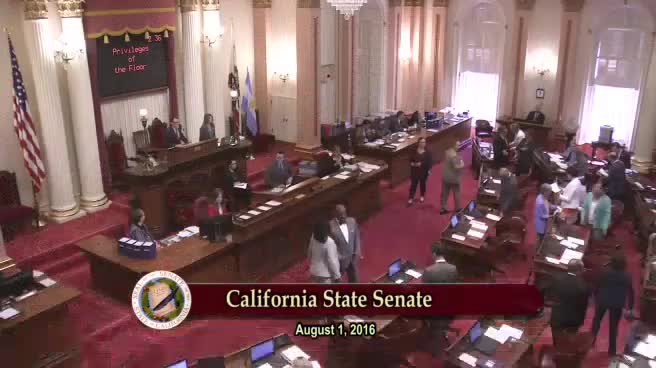
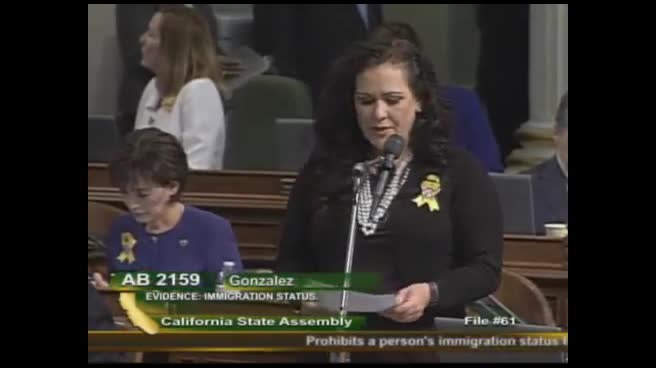


Bill Co-Author(s):
