AB 237: Local governments: parcel taxes: notice.
- Session Year: 2015-2016
- House: Assembly
- Latest Version Date: 2015-04-20
Existing law authorizes cities, counties, and special districts to impose a parcel tax or property-related fee for specified purposes.
This bill would require, before the adoption of any new parcel tax, the legislative body of a local agency, as defined, to provide notice of the vote to enact the proposed parcel tax to the owner of each parcel affected by the tax within one week of the local agency voting to place the proposed parcel tax on the ballot. This bill would require the notice to include specified information and to be provided to the property owner in a specified manner. This bill would provide that the local agency may recover the reasonable costs of the notice from the proceeds of the parcel tax. By imposing new duties upon local county officials, this bill would impose a state-mandated local program.
The California Constitution requires the state to reimburse local agencies and school districts for certain costs mandated by the state. Statutory provisions establish procedures for making that reimbursement.
This bill would provide that with regard to certain mandates no reimbursement is required by this act for a specified reason.
With regard to any other mandates, this bill would provide that, if the Commission on State Mandates determines that the bill contains costs so mandated by the state, reimbursement for those costs shall be made pursuant to the statutory provisions noted above.
Existing law authorizes cities, counties, and special districts to impose a parcel tax or property-related fee for specified purposes.
This bill would require, before the adoption of any new parcel tax, the legislative body of a local agency, as defined, to provide at least 90 days notice of the vote to enact the proposed parcel tax to the owner of each parcel affected by the tax within one week of the local agency voting to place the proposed parcel tax on the ballot. This bill would require the notice to include specified information and to be provided to the property owner in a specified manner. This bill would provide that the local agency may recover the reasonable costs of the notice from the proceeds of the parcel tax.
Existing law authorizes cities, counties, and special districts to impose a parcel tax or property-related fee for specified purposes.
This bill would require, before the adoption of any new parcel tax, the legislative body of a local agency, as defined, to provide at least 90 days notice of the vote to enact the proposed parcel tax to the owner of each parcel affected by the tax. This bill would require the notice to include specified information and to be provided to the property owner in a specified manner. This bill would provide that the local agency may recover the reasonable costs of the notice from the proceeds of the parcel tax.
(a)Before the adoption of any new parcel tax, the legislative body of a local agency shall provide notice of the vote to enact the proposed parcel tax to the owner of each parcel affected by the tax within one week following the local agencys vote to place the proposed parcel tax on the ballot.
(b)For purposes of this section:
(1)Local agency means any city, county, school district, or special district authorized to impose a parcel tax.
(2)Parcel tax means a tax levied by a local agency upon any parcel of property identified using the assessors parcel number system, or upon any person as an incident of property ownership pursuant to Section 4 of Article XIIIA of the California Constitution, that is collected via the annual property tax bill.
(c)The notice shall include, but is not limited to, the following information:
(1)The amount or rate of the proposed parcel tax in sufficient detail to allow each property owner to calculate the amount of the tax to be levied against the owners property.
(2)The method and frequency for collecting the proposed parcel tax, as well as the duration of time during which the parcel tax will be imposed.
(3)The date on which the proposed parcel tax will be voted upon.
(4)The telephone number and address of an individual, office, or organization that interested persons may contact to receive additional information about the proposed parcel tax.
(d)(1)The notice shall be accomplished through a mailing, postage prepaid, in the United States mail and shall be deemed given when so deposited.
(2)The envelope or the cover of the mailing shall include the name of the local agency and the return address of the sender. The notice shall be in at least 10-point type. The notice shall be mailed to all property owners, proposed to be subject to the new parcel tax, by a mailing by name to those persons whose names and addresses appear on the last equalized county assessment roll or the State Board of Equalization assessment roll, as applicable.
(e)The local agency may recover the reasonable costs of the notice required by this section from the proceeds of the parcel tax. The costs recovered for these purposes, whether recovered pursuant to this subdivision or any other provision of law, shall not exceed the reasonable costs of preparing and mailing the notice.
SEC. 2.No reimbursement is required by this act pursuant to Section 6 of Article XIIIB of the California Constitution for certain costs that may be incurred by a local agency because, in that regard, this act provides for reimbursement to a local agency in the form of additional revenues from the proceeds of a parcel tax that are sufficient in amount to fund the new duties established by this act, within the meaning of Section 17556 of the Government Code.
However, if a parcel tax is not approved by the voters, and if the Commission on State Mandates determines that this act contains costs mandated by the state, reimbursement to local agencies and school districts for those costs shall be made pursuant to Part 7 (commencing with Section 17500) of Division 4 of Title 2 of the Government Code.
(a)Before the adoption of any new parcel tax, the legislative body of a local agency shall provide at least 90 days notice of the vote to enact the proposed parcel tax to the owner of each parcel affected by the tax within one week following the local agencys vote to place the proposed parcel tax on the ballot.
(b)For purposes of this section:
(1)Local agency means any city, county, school district, or special district authorized to impose a parcel tax.
(2)Parcel tax means a special tax imposed upon a parcel of real property at a rate that is determined without regard to that propertys value. tax levied by a local agency upon any parcel of property identified using the assessors parcel number system, or upon any person as an incident of property ownership pursuant to Section 4 of Article XIIIA of the California Constitution, that is collected via the annual property tax bill.
(c)The notice shall include, but is not limited to, the following information:
(1)The amount or rate of the proposed parcel tax. In the case of a proposed parcel tax that may vary by parcel, the proposed method of determining the amount of the parcel tax in sufficient detail to allow each property owner to calculate the amount of the tax to be levied against the owners property.
(2)The method and frequency for collecting the proposed parcel tax, as well as the duration of time during which the parcel tax will be imposed.
(3)The date on which the proposed parcel tax will be voted upon.
(4)The telephone number and address of an individual, office, or organization that interested persons may contact to receive additional information about the proposed parcel tax.
(d)(1)The notice shall be accomplished through a mailing, postage prepaid, in the United States mail and shall be deemed given when so deposited.
(2)The envelope or the cover of the mailing shall include the name of the local agency and the return address of the sender. The notice shall be in at least 10-point type. The notice shall be mailed to all property owners, proposed to be subject to the new parcel tax, by a mailing by name to those persons whose names and address addresses appear on the last equalized county assessment roll or the State Board of Equalization assessment roll, as applicable.
(e)The local agency may recover the reasonable costs of the notice required by this section from the proceeds of the parcel tax. The costs recovered for these purposes, whether recovered pursuant to this subdivision or any other provision of law, shall not exceed the reasonable costs of preparing and mailing the notice.
(a)Before the adoption of any new parcel tax, the legislative body of a local agency shall provide at least 90 days notice of the vote to enact the proposed parcel tax to the owner of each parcel affected by the tax.
(b)For purposes of this section:
(1)Local agency means any city, county, or special district authorized to impose a parcel tax.
(2)Parcel tax means a special tax imposed upon a parcel of real property at a rate that is determined without regard to that propertys value.
(c)The notice shall include, but is not limited to, the following information:
(1)The amount or rate of the proposed parcel tax. In the case of a proposed parcel tax that may vary by parcel, the proposed method of determining the amount of the parcel tax in sufficient detail to allow each property owner to calculate the amount of the tax to be levied against the owners property.
(2)The method and frequency for collecting the proposed parcel tax, as well as the duration of time during which the parcel tax will be imposed.
(3)The date on which the proposed parcel tax will be voted upon.
(4)The telephone number and address of an individual, office, or organization that interested persons may contact to receive additional information about the proposed parcel tax.
(d)(1)The notice shall be accomplished through a mailing, postage prepaid, in the United States mail and shall be deemed given when so deposited.
(2)The envelope or the cover of the mailing shall include the name of the local agency and the return address of the sender. The notice shall be in at least 10-point type. The notice shall be mailed to all property owners, proposed to be subject to the new parcel tax, by a mailing by name to those persons whose names and address appear on the last equalized county assessment roll or the State Board of Equalization assessment roll, as applicable.
(e)The local agency may recover the reasonable costs of the notice required by this section from the proceeds of the parcel tax. The costs recovered for these purposes, whether recovered pursuant to this subdivision or any other provision of law, shall not exceed the reasonable costs of preparing and mailing the notice.
|
Date
|
Status
|
|---|---|
| Feb 5, 2015 | Read first time. To print. |
| Feb 6, 2015 | From printer. May be heard in committee March 8. |
| Feb 17, 2015 | Referred to Com. on L. GOV. |
| Apr 6, 2015 | From committee chair, with author's amendments: Amend, and re-refer to Com. on L. GOV. Read second time and amended. |
| Apr 7, 2015 | Re-referred to Com. on L. GOV. |
| Apr 16, 2015 | From committee: Amend, and do pass as amended and re-refer to Com. on ED. (Ayes 8. Noes 0.) (April 15). |
| Apr 20, 2015 | Read second time and amended. |
| Apr 21, 2015 | Re-referred to Com. on ED. |
| May 4, 2015 | Re-referred to Com. on APPR. pursuant to Assembly Rule 96. |
| May 20, 2015 | In committee: Set, first hearing. Referred to suspense file. |
| May 20, 2015 | In committee: Set, first hearing. Referred to APPR. suspense file. |
| May 28, 2015 | In committee: Held under submission. |
| Jan 31, 2016 | Died pursuant to Article IV, Sec. 10(c) of the Constitution. |
| Feb 1, 2016 | From committee: Filed with the Chief Clerk pursuant to Joint Rule 56. |
|
Date
|
Description
|
Location
|
Votes
|
|
|---|---|---|---|---|
| Apr 15, 2015 | Do pass as amended and be re-referred to the Committee on [Education] | Assembly Standing Committee on Local Government |
Passed |
This list shows positions taken on this bill by organizations on the date displayed, which is linked to the original source.
Positions by individuals are not included.
|
Organization
|
Position
|
Date
|
|---|---|---|
| California Apartment Association | * Support | Apr 15, 2015 |
| California Asian Chamber of Commerce | * Support | Jun 26, 2018 |
| California Asian Pacific Islander Chamber of Commerce | * Support | Jun 20, 2018 |
| California Association of Realtors [SPONSOR] | ** Support | Apr 15, 2015 |
| California Farm Bureau Federation California Taxpayers Association | ** Support | Apr 15, 2015 |
| California Financial Services Association | * Against | Jun 26, 2018 |
| California Low-Income Consumer Coalition | * Against | Jun 26, 2018 |
| California Special Districts Association | * Against | Apr 15, 2015 |
| Center For Responsible Lending | * Against | Jun 26, 2018 |
| City of South Bay | * Support | Jun 26, 2018 |
| Consumer Credit Industry Association | * Against | Jun 20, 2018 |
| Consumers Union | * Against | Jun 26, 2018 |
| Dolex | * Support | Jun 26, 2018 |
| Dolex | * Support | Jun 20, 2018 |
| Dolex | * Support | Jun 26, 2018 |
| Former Legislator | * Support | Jun 26, 2018 |
| Green Lightning Institute | * Against | Jun 26, 2018 |
| In Seek Inc | * Support | Jun 26, 2018 |
| In Seek Inc | * Indeterminate | Jun 26, 2018 |
| L. GOV. | ** Against | Apr 15, 2015 |
| Latin Business Association | * Against | Jun 26, 2018 |
| Lendmark Financial Services | * Against | Jun 26, 2018 |
| Mexico City | * Support | Jun 26, 2018 |
| Opportune | * Against | Jun 26, 2018 |
| Opportune | * Against | Jun 20, 2018 |
| San Diego County Apartment Association | ** Support | Apr 15, 2015 |
| Silicon Valley Leadership Group | * Support | Jun 26, 2018 |
| The Greenling Institute | * Against | Jun 20, 2018 |
| United Farm Workers | * Support | Jun 20, 2018 |
AB 237
Page 2
Date of Hearing: May 20, 2015
ASSEMBLY COMMITTEE ON APPROPRIATIONS
Jimmy Gomez, Chair
AB 237
(Daly) – As Amended April 20, 2015
Policy Committee: |
Local Government |
Vote: |
8 - 0 |
|
|
|
|
|
|
|
|
Urgency: No State Mandated Local Program: Yes Reimbursable: Yes
SUMMARY: This bill requires a local agency, within one week following a legislative body's vote to place a proposed parcel tax on the ballot, to provide specified notice to all property owners affected by the tax. Specifically, this bill:
Defines "local agency" to mean a city, county, special district, or school district authorized to impose a parcel tax.
Requires the notice to include the amount or rate of the proposed parcel tax, the method and frequency for collecting the proposed parcel tax, the duration of time the parcel tax will be imposed, the date that the proposed parcel tax will be voted on, and the telephone number and address that interested persons may contact to receive additional information about the proposed parcel tax.
Requires the notice to be mailed, for all properties proposed to be subject to the new parcel tax, to those persons whose names and addresses appear on the last equalized county assessment roll or the State Board of Equalization assessment roll.
Authorizes the local agency to recover the reasonable costs of the notice from the proceeds
of the parcel tax, but prohibits the recovered costs from exceeding the reasonable costs of preparing and mailing the notice.
FISCAL EFFECT:
If the parcel tax is not approved by the voters, potentially reimbursable mandate costs, potentially in the low millions of dollars (GF) annually, for preparing and mailing the notices.
If the measure is approved, the bill allows a local agency to recover reasonable costs of the notice requirement from the proceeds of the parcel tax.
Note: Local costs will vary by jurisdiction depending on the number of property owners affected. Assuming $2 per-property owner cost of printing, postage and staff time, a jurisdiction with 100,000 property owners would incur $200,000 in costs for the notification per ballot measure. Between 2002 and November 2013, 45% of the 396 measures placed on the ballot were approved (178 passed, 218 failed).
COMMENTS:
Purpose. According to the author, "Currently, despite the fact that non-resident property owners pay parcel taxes approved at the local level, they typically do not receive notice of a pending vote, nor are they entitled to vote on whether any proposed parcel tax should be adopted. It’s the voters of the local jurisdiction who determine whether a proposed parcel tax be imposed on property owners. If a property owner is also a resident of the local jurisdiction, they will be informed of a pending parcel tax vote when they receive their ballot pamphlet. However, if a property owner resides elsewhere, they will not be notified that a vote on a proposed parcel tax is looming."
This bill seeks to ensure that all property owners are notified of a pending parcel tax vote, whether or not they are entitled to vote on the measure.
Background. A parcel tax is a particular type of special tax that is based on either a flat per-parcel rate or a rate that varies depending upon use, size, and/or number of units on each parcel. The California Constitution allows cities, counties, and special districts to impose special taxes by a two-thirds vote of the qualified electors in that jurisdiction.
To place a parcel tax measure on the ballot, a local agency must adopt a resolution stating the type of tax and rate to be levied, the method of collection, and the date of the election. In addition, local agencies must issue a statement indicating the specific purpose of the tax, create an account in which to deposit proceeds, and issue an annual report that includes the amount of funds collected and expended, and the project status of any project required or authorized by the tax measure.
A parcel tax measure levied by a local agency requires approval by two-thirds of the qualified electors. The Court has interpreted the phrase "qualified electors of such district" to mean the registered voters voting in the election concerning the proposed tax. Non-resident property owners who are not registered voters within the district's boundaries do not vote on the proposed parcel tax. Voters who do not own real property, but are registered within the district's boundaries, like renters or tenants, are able to vote on a parcel tax. However, they are not included in the notification requirement proposed by this bill.
Prior Legislation.
AB 2109 (Daly), Chapter 781, Statutes of 2014, required the State Controller to report annually on the imposition of each locally assessed parcel tax, and required each county, city, and special district to provide any information required by the Controller in order to complete the report.
AB 892 (Daly) of 2013, would have required the Board of Equalization to report annually to the Governor on the imposition of each locally assessed parcel tax. This bill was held on this Committee's Suspense File.
Analysis Prepared by: Jennifer Swenson / APPR. / (916) 319-2081
AB 237
Page 5
Date of Hearing: April 15, 2015
ASSEMBLY COMMITTEE ON LOCAL GOVERNMENT
Maienschein, Chair
AB 237
(Daly) – As Amended April 6, 2015
SUBJECT:
Local governments: parcel taxes: notice.
SUMMARY:
Requires local agencies to provide specified notification to property owners before the adoption of any new parcel tax. Specifically, this bill:
Requires a local agency, within one week following a legislative body's vote to place a proposed parcel tax on the ballot, to provide specified notice to all property owners affected by the tax.
Defines the following terms:
"Local agency" to mean "a city, county, special district, or school district authorized to impose a parcel tax;" and,
"Parcel tax" to mean "a tax levied by a local agency upon any parcel of property identified using the assessor's parcel number system or upon any person as an incident
of property ownership pursuant to the California Constitution (Section 4 of Article XII A) that is collected via the annual property tax bill."
Requires the notice to include, but is not limited to, the following information:
The amount or rate of the proposed parcel tax in sufficient detail to allow each property owner to calculate the amount of the tax to be levied against the owner's property;
The method and frequency for collecting the proposed parcel tax, and the duration of time the parcel tax will be imposed;
The date that the proposed parcel tax will be voted on; and,
The telephone number and address of an individual, office, or organization that interested persons may contact to receive additional information about the proposed parcel tax.
Requires the notice to be mailed to all property owners, proposed to be subject to the new parcel tax, to those persons whose names and addresses appear on the last equalized county assessment roll or the State Board of Equalization assessment roll.
Requires the notice to be accomplished through mailing, postage prepaid in the United States mail and to be deemed given when deposited.
Requires the envelope or cover of the mail to include the name of the local agency and the return address of the sender. Requires the notice to be in at least 10-point type.
Authorizes the local agency to recover the reasonable costs of the notice from the proceeds
of the parcel tax.
Prohibits the recovered costs from exceeding the reasonable costs of preparing and mailing the notice.
EXISTING LAW:
Authorizes cities, counties, and special districts to impose a special tax for specified purposes with the approval of two-thirds of the voters.
Authorizes school districts to impose qualified special taxes, in accordance with specified procedures, including the approval of two-thirds of the voters in the district.
Authorizes a parcel tax to fund a variety of local government services subject to approval
of two-thirds of the voters.
Restricts parcel tax revenue to only fund the specified purpose and services that voters approved.
FISCAL EFFECT:
None
COMMENTS:
Parcel Taxes. California Constitution Article XIII, Section A allows cities, counties, and special districts, by a two-thirds vote of the qualified electors in that jurisdiction, to impose special taxes, except ad valorem taxes on real property or a transaction tax or sales tax on the sale of real property within that city, county or special district. A parcel tax is a particular type of excise tax that is based on either a flat per-parcel rate or a rate that varies depending upon use, size, and/or number of units on each parcel. Proposition 13 (1978) contained a 1% limit on ad valorem property tax; therefore, a parcel tax based upon the value of property would constitute a violation of Proposition 13. The California Constitution specifies that only two types of taxes may be imposed upon a parcel of property: first, an ad valorem property tax imposed pursuant to Article VIII and Article XIIIA, and second, a special tax receiving two-thirds voter approval pursuant to Section 4 of Article XIIIA. A parcel tax must be adopted as a special tax that is not based on the property's value.
To place a parcel tax measure on the ballot a local agency must adopt a resolution, which includes the type of tax and rate to be levied, the method of collection, and the date of the election. To adopt an ordinance, local agencies must comply with the Ralph M. Brown Act, which includes public notification and hearing requirements. For example, a local agency must post an agenda at least 72 hours prior to its meeting. Additionally, current law requires cities and counties to publish specific information 15 days after passing an ordinance. Special taxes, such as parcel taxes, are subject to additional accountability [SB 165 (Alarcón), Chapter 535, Statutes of 2000]. Current law requires local agencies to: (1) issue a statement indicating the specific purpose of the tax and a requirement that the proceeds be used only for that purpose; (2) create an account in which to deposit proceeds; and, (3) issue an annual report that includes the amount of funds collected and expended, along with the status of any project required or authorized by the tax measure.
After the local agency has voted to place a parcel tax measure on the ballot, the election must be held on "established election dates," which means in March, April, or November of an even-numbered year, or March, June, or November in an odd-numbered year. A parcel tax measure levied by a local agency requires approval by two-thirds of the qualified electors. The Court has interpreted the phrase "qualified electors of such district" to mean the registered voters voting in the election concerning the proposed tax. [Neilson v. City of California City (2005) 133 Cal. App.4th 1296, 1312.] Non-resident property owners that are not registered voters are not included among the voters voting on a proposed parcel tax. On the other hand, voters who do not own real property, but are registered within the district's boundaries, like renters or tenants, are able to vote on a parcel tax even though they may not be paying the tax except as passed through in rent.
Bill Summary. Under this bill, within one week following a local agency's vote to place a proposed parcel tax on the ballot, that city, county, special district, or school district would be required to provide specified notification to each affected parcel owner. This bill also requires specific information about the parcel tax to be included in the notice. This bill authorizes the local agency to recover reasonable costs of the notice from the proceeds of the parcel tax should it be enacted by the voters.
This bill is sponsored by the California Association of Realtors.
Author's Statement. According to the author, "Currently, despite the fact that non-resident property owners pay parcel taxes approved at the local level, they typically do not receive notice of a pending vote, nor are they entitled to vote on whether any proposed parcel tax should be adopted. It’s the voters of the local jurisdiction who determine whether a proposed parcel tax be imposed on property owners. If a property owner is also a resident of the local jurisdiction, they will be informed of a pending parcel tax vote when they receive their ballot pamphlet. However, if a property owner resides elsewhere, they will not be notified that a vote on a proposed parcel tax is looming."
Previous Legislation. The author has introduced several parcel tax measures. AB 892 (Daly) of 2013, which was held on suspense in the Assembly Appropriations Committee, would have required the Board of Equalization to report annually to the Governor on the imposition of each locally assessed parcel tax. Most recently, AB 2109 (Daly), Chapter 781, Statutes of 2014, required the State Controller to report annually on the imposition of each locally assessed parcel tax, and required each county, city, and special district to provide any information required by the Controller in order to complete the report.
Policy Considerations. The Committee may wish to consider the following:
Cost. This bill allows local agencies to recover the costs of providing the notice from the proceeds of the parcel tax, assuming the tax measure is approved by voters. This bill is silent on reimbursement to local agencies should the measure fail passage. According to the Special Districts Association, "It is often the special districts with the most financial needs that vote to place a parcel tax on the ballot in order to raise the funds necessary to provide their local services. This bill would place a new mandate on local service providers when they can least afford it, with no guarantee that the parcel tax will pass." Over half of the proposed parcel taxes placed on the ballot by cities, counties, and special districts since 2001 have been for public safety or medical services, including law enforcement, gang suppression, fire suppression and prevention, emergency medical and hospital services, equipment and facilities.
Favoring Property Owners. This bill only requires specified notification to be sent to the owner of each parcel affected by the tax. Opposition argues that this bill treats qualified voters who are property owners more favorably by providing them with an informational notice beyond what non-property owner voters would receive; therefore, the Committee may wish to consider if tenants and property owners voting on a parcel tax measure should be afforded the same notification and information.
Existing Public Information. Current law requires the local agency to go through several public steps before and after they place a parcel tax on the ballot. The public, including non-resident property owners, have access to all of this information. Opposition argues that requiring additional notice to be given to property owners is redundant and expensive.
Timeframe for Notification. This bill requires a local agency to provide specified notification to parcel owners within one week following the local agency's vote to place the proposed parcel tax on the ballot. According to the California Special Districts Association, "Providing local agencies only one week to gather the necessary information from their county, process it, and mail the notices to all property owners is an unreasonable timeframe."
Other Parcel Tax Bills. Parcel taxes require a two-thirds vote of registered voters for passage. There have been several legislative attempts to lower the two-thirds voter threshold to 55% for counties, cities, special districts, and school districts. The Committee may wish to consider if this bill goes against the trend of attempting to make it easier for local agencies to impose a parcel tax. Since this type of tax already requires such a high voter threshold, the Committee may wish to consider if the additional requirements in this bill will provide yet another barrier for cash strapped local agencies to provide necessary services, and discourage local agencies from using parcel taxes as a viable financing tool.
Committee Amendment. An Overview of Local Revenue Measures in California by Michael Coleman, author of the online California Local Government Finance Almanac (CaliforniaCityFinance.com), tracks data on county, city, and special district parcel tax measures. Only 45% of the 396 measures placed on the ballot from 2002 through November, 2013 were approved. Given this passage rate, the Committee may wish to ask the author to accept an amendment that will provide reimbursement to a local agency for the costs associated with the notification required in this bill, if a parcel tax is not passed by the voters. This amendment would address the financial barriers this bill creates for local agencies to place a parcel tax measure on the ballot, but will maintain the intent of the bill to provide notification to non-resident landowners.
Arguments in Support. The California Association of Realtors argues, "Property owners may want to mount a campaign in opposition to the proposed parcel tax, but not receiving timely notice of a proposed tax precludes any such action on their part."
Arguments in Opposition. The California Special Districts Association argues that this bill "would impose significant additional burdens and expense on local agencies contemplating a parcel tax, while providing very limited additional benefit to their constituents."
Double-Referral. This bill is double-referred to the Education Committee.
REGISTERED SUPPORT / OPPOSITION:
Support
California Association of Realtors [SPONSOR]
California Apartment Association
California Farm Bureau Federation
California Taxpayers Association
San Diego County Apartment Association
Opposition
California Special Districts Association
Analysis Prepared by:
Misa Lennox /L. GOV./(916) 319-3958
Discussed in Hearing
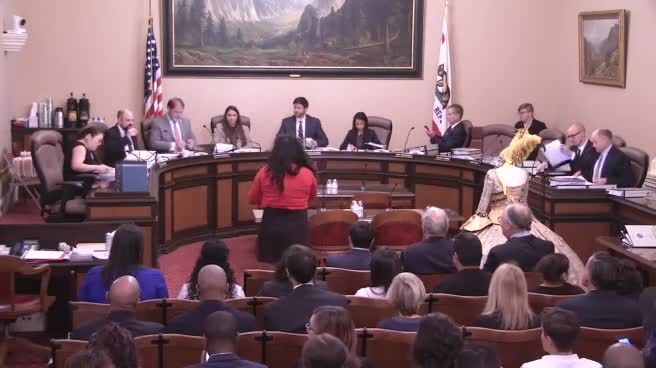 32MIN
Senate Standing Committee on Judiciary
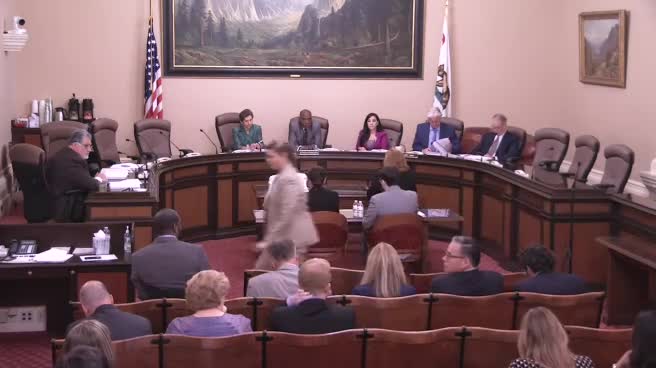 39MIN
Senate Standing Committee on Banking and Financial Institutions
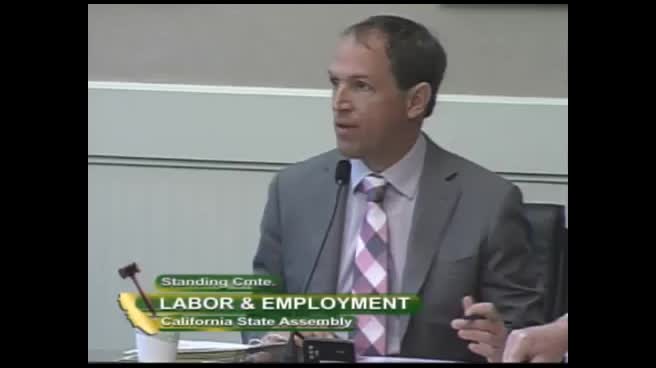 8MIN
Assembly Standing Committee on Local Government
Bill Author

Bill Co-Author(s):