AB 2765: Proposition 47: sentence reduction.
- Session Year: 2015-2016
- House: Assembly
- Latest Version Date: 2016-09-28
Existing law, the Safe Neighborhoods and Schools Act, enacted by Proposition 47, as approved by the voters at the November 4, 2014, statewide general election, reduced the penalties for various crimes. Under the provisions of the act, a person currently convicted of a felony or felonies who would have been guilty of a misdemeanor under the act if the act had been in effect at the time of the conviction may petition or apply to have the sentence reduced in accordance with the act. That act requires that this petition or application be filed before November 4, 2017, or at a later date upon a showing of good cause.
Proposition 47 authorizes its provisions to be amended by a statute that is consistent with and furthers its intent and that is passed by a 2/3 vote of each house of the Legislature and is signed by the Governor. Proposition 47 also provides that the Legislature may, by majority vote, amend, add, or repeal provisions to further reduce the penalties for offenses it addresses.
This bill would instead authorize a person to petition or apply for a reduction of sentence before November 4, 2022, or at a later date upon a showing of good cause. Because the bill would extend the period of time in which a person could file a petition or application without a showing of good cause, the bill would amend the act and would require a 2/3 vote of the Legislature.
Existing law, the Safe Neighborhoods and Schools Act, enacted by Proposition 47, as approved by the voters at the November 4, 2014, statewide general election, reduced the penalties for various crimes. Under the provisions of the act, a person currently convicted of a felony or felonies who would have been guilty of a misdemeanor under the act if the act had been in effect at the time of the conviction may petition or apply to have the sentence reduced in accordance with the act. That act requires that this petition or application be filed before November 4, 2017. 2017, or at a later date upon a showing of good cause.
Proposition 47 provides that authorizes its provisions may to be amended by a statute that is consistent with and furthers its intent and that is passed by a 2/3 vote of each house of the Legislature and is signed by the Governor. Proposition 47 also provides that the Legislature may, by majority vote, amend, add, or repeal provisions to further reduce the penalties for offenses it addresses.
Because the
This bill would remove the time limitation for petitioning or applying instead authorize a person to petition or apply for a reduction of sentence, sentence before November 4, 2022, or at a later date upon a showing of good cause. Because the bill would extend the period of time in which a person could file a petition or application without a showing of good cause, the bill would amend the act and would require a 2/3 vote of the Legislature.
Existing law, the Safe Neighborhoods and Schools Act, enacted by Proposition 47, as approved by the voters at the November 4, 2014, statewide general election, reduced the penalties for various crimes. Under the provisions of the act, a person currently convicted of a felony or felonies who would have been guilty of a misdemeanor under the act if the act had been in effect at the time of the conviction may petition or apply to have the sentence reduced in accordance with the act. That act requires that this petition or application be filed before November 4, 2017.
Proposition 47 provides that its provisions may be amended by a statute that is consistent with and furthers its intent and that is passed by a 2/3 vote of each house of the Legislature and is signed by the Governor. Proposition 47 also provides that the Legislature may, by majority vote, amend, add, or repeal provisions to further reduce the penalties for offenses it addresses.
Because the bill would remove the time limitation for petitioning or applying for a reduction of sentence, the bill would amend the act and would require a 2/3 vote of the Legislature.
(a)A person who, on November 5, 2014, was serving a sentence for a conviction, whether by trial or plea, of a felony or felonies who would have been guilty of a misdemeanor under the act that added this section (this act) had this act been in effect at the time of the offense may petition for a recall of sentence before the trial court that entered the judgment of conviction in his or her case to request resentencing in accordance with Sections 11350, 11357, or 11377 of the Health and Safety Code, or Section 459.5, 473, 476a, 490.2, 496, or 666 of the Penal Code, as those sections have been amended or added by this act.
(b)Upon receiving a petition under subdivision (a), the court shall determine whether the petitioner satisfies the criteria in subdivision (a). If the petitioner satisfies the criteria in subdivision (a), the petitioners felony sentence shall be recalled and the petitioner resentenced to a misdemeanor pursuant to Sections 11350, 11357, or 11377 of the Health and Safety Code, or Section 459.5, 473, 476a, 490.2, 496, or 666 of the Penal Code, as those sections have been amended or added by this act, unless the court, in its discretion, determines that resentencing the petitioner would pose an unreasonable risk of danger to public safety. In exercising its discretion, the court may consider all of the following:
(1)The petitioners criminal conviction history, including the type of crimes committed, the extent of injury to victims, the length of prior prison commitments, and the remoteness of the crimes.
(2)The petitioners disciplinary record and record of rehabilitation while incarcerated.
(3)Any other evidence the court, within its discretion, determines to be relevant in deciding whether a new sentence would result in an unreasonable risk of danger to public safety.
(c)As used throughout this Code, unreasonable risk of danger to public safety means an unreasonable risk that the petitioner will commit a new violent felony within the meaning of clause (iv) of subparagraph (C) of paragraph (2) of subdivision (e) of Section 667.
(d)A person who is resentenced pursuant to subdivision (b) shall be given credit for time served and shall be subject to parole for one year following completion of his or her sentence, unless the court, in its discretion, as part of its resentencing order, releases the person from parole. Such person is subject to Section 3000.08 parole supervision by the Department of Corrections and Rehabilitation and the jurisdiction of the court in the county in which the parolee is released or resides, or in which an alleged violation of supervision has occurred, for the purpose of hearing petitions to revoke parole and impose a term of custody.
(e)Under no circumstances may resentencing under this section result in the imposition of a term longer than the original sentence.
(f)A person who has completed his or her sentence for a conviction, whether by trial or plea, of a felony or felonies who would have been guilty of a misdemeanor under this act had this act been in effect at the time of the offense, may file an application before the trial court that entered the judgment of conviction in his or her case to have the felony conviction or convictions designated as misdemeanors.
(g)If the application satisfies the criteria in subdivision (f ), the court shall designate the felony offense or offenses as a misdemeanor.
(h)Unless requested by the applicant, no hearing is necessary to grant or deny an application filed under subsection (f ).
(i)The provisions of this section shall not apply to persons who have one or more prior convictions for an offense specified in clause (iv) of subparagraph (C) of paragraph (2) of subdivision (e) of Section 667 or for an offense requiring registration pursuant to subdivision (c) of Section 290.
(j)Any petition or application under this section shall be filed on or before November 4, 2022, or at a later date upon showing of good cause.
(k)Any felony conviction that is recalled and resentenced under subdivision (b) or designated as a misdemeanor under subdivision (g) shall be considered a misdemeanor for all purposes, except that such resentencing shall not permit that person to own, possess, or have in his or her custody or control any firearm or prevent his or her conviction under Chapter 2 (commencing with Section 29800) of Division 9 of Title 4 of Part 6.
(l)If the court that originally sentenced the petitioner is not available, the presiding judge shall designate another judge to rule on the petition or application.
(m)Nothing in this section is intended to diminish or abrogate any rights or remedies otherwise available to the petitioner or applicant.
(n)Nothing in this and related sections is intended to diminish or abrogate the finality of judgments in any case not falling within the purview of this act.
(o)A resentencing hearing ordered under this act shall constitute a postconviction release proceeding under paragraph (7) of subdivision (b) of Section 28 of Article I of the California Constitution (Marsys Law).
(a)A person currently who, on November 5, 2014, was serving a sentence for a conviction, whether by trial or plea, of a felony or felonies who would have been guilty of a misdemeanor under the act that added this section (this act) had this act been in effect at the time of the offense may petition for a recall of sentence before the trial court that entered the judgment of conviction in his or her case to request resentencing in accordance with Sections 11350, 11357, or 11377 of the Health and Safety Code, or Section 459.5, 473, 476a, 490.2, 496, or 666 of the Penal Code, as those sections have been amended or added by this act.
(b)Upon receiving a petition under subdivision (a), the court shall determine whether the petitioner satisfies the criteria in subdivision (a). If the petitioner satisfies the criteria in subdivision (a), the petitioners felony sentence shall be recalled and the petitioner resentenced to a misdemeanor pursuant to Sections 11350, 11357, or 11377 of the Health and Safety Code, or Section 459.5, 473, 476a, 490.2, 496, or 666 of the Penal Code, as those sections have been amended or added by this act, unless the court, in its discretion, determines that resentencing the petitioner would pose an unreasonable risk of danger to public safety. In exercising its discretion, the court may consider all of the following:
(1)The petitioners criminal conviction history, including the type of crimes committed, the extent of injury to victims, the length of prior prison commitments, and the remoteness of the crimes.
(2)The petitioners disciplinary record and record of rehabilitation while incarcerated.
(3)Any other evidence the court, within its discretion, determines to be relevant in deciding whether a new sentence would result in an unreasonable risk of danger to public safety.
(c)As used throughout this Code, unreasonable risk of danger to public safety means an unreasonable risk that the petitioner will commit a new violent felony within the meaning of clause (iv) of subparagraph (C) of paragraph (2) of subdivision (e) of Section 667.
(d)A person who is resentenced pursuant to subdivision (b) shall be given credit for time served and shall be subject to parole for one year following completion of his or her sentence, unless the court, in its discretion, as part of its resentencing order, releases the person from parole. Such person is subject to Section 3000.08 parole supervision by the Department of Corrections and Rehabilitation and the jurisdiction of the court in the county in which the parolee is released or resides, or in which an alleged violation of supervision has occurred, for the purpose of hearing petitions to revoke parole and impose a term of custody.
(e)Under no circumstances may resentencing under this section result in the imposition of a term longer than the original sentence.
(f)A person who has completed his or her sentence for a conviction, whether by trial or plea, of a felony or felonies who would have been guilty of a misdemeanor under this act had this act been in effect at the time of the offense, may file an application before the trial court that entered the judgment of conviction in his or her case to have the felony conviction or convictions designated as misdemeanors.
(g)If the application satisfies the criteria in subdivision (f ), the court shall designate the felony offense or offenses as a misdemeanor.
(h)Unless requested by the applicant, no hearing is necessary to grant or deny an application filed under subsection (f ).
(i)The provisions of this section shall not apply to persons who have one or more prior convictions for an offense specified in clause (iv) of subparagraph (C) of paragraph (2) of subdivision (e) of Section 667 or for an offense requiring registration pursuant to subdivision (c) of Section 290.
(j)Any petition or application under this section shall be filed on or before November 4, 2022, or at a later date upon showing of good cause.
(j)
(k)Any felony conviction that is recalled and resentenced under subdivision (b) or designated as a misdemeanor under subdivision (g) shall be considered a misdemeanor for all purposes, except that such resentencing shall not permit that person to own, possess, or have in his or her custody or control any firearm or prevent his or her conviction under Chapter 2 (commencing with Section 29800) of Division 9 of Title 4 of Part 6.
(k)
(l)If the court that originally sentenced the petitioner is not available, the presiding judge shall designate another judge to rule on the petition or application.
(l)
(m)Nothing in this section is intended to diminish or abrogate any rights or remedies otherwise available to the petitioner or applicant.
(m)
(n)Nothing in this and related sections is intended to diminish or abrogate the finality of judgments in any case not falling within the purview of this act.
(n)
(o)A resentencing hearing ordered under this act shall constitute a postconviction release proceeding under paragraph (7) of subdivision (b) of Section 28 of Article I of the California Constitution (Marsys Law).
(a)A person currently serving a sentence for a conviction, whether by trial or plea, of a felony or felonies who would have been guilty of a misdemeanor under the act that added this section (this act) had this act been in effect at the time of the offense may petition for a recall of sentence before the trial court that entered the judgment of conviction in his or her case to request resentencing in accordance with Sections 11350, 11357, or 11377 of the Health and Safety Code, or Section 459.5, 473, 476a, 490.2, 496, or 666 of the Penal Code, as those sections have been amended or added by this act.
(b)Upon receiving a petition under subdivision (a), the court shall determine whether the petitioner satisfies the criteria in subdivision (a). If the petitioner satisfies the criteria in subdivision (a), the petitioners felony sentence shall be recalled and the petitioner resentenced to a misdemeanor pursuant to Sections 11350, 11357, or 11377 of the Health and Safety Code, or Section 459.5, 473, 476a, 490.2, 496, or 666 of the Penal Code, as those sections have been amended or added by this act, unless the court, in its discretion, determines that resentencing the petitioner would pose an unreasonable risk of danger to public safety. In exercising its discretion, the court may consider all of the following:
(1)The petitioners criminal conviction history, including the type of crimes committed, the extent of injury to victims, the length of prior prison commitments, and the remoteness of the crimes.
(2)The petitioners disciplinary record and record of rehabilitation while incarcerated.
(3)Any other evidence the court, within its discretion, determines to be relevant in deciding whether a new sentence would result in an unreasonable risk of danger to public safety.
(c)As used throughout this Code, unreasonable risk of danger to public safety means an unreasonable risk that the petitioner will commit a new violent felony within the meaning of clause (iv) of subparagraph (C) of paragraph (2) of subdivision (e) of Section 667.
(d)A person who is resentenced pursuant to subdivision (b) shall be given credit for time served and shall be subject to parole for one year following completion of his or her sentence, unless the court, in its discretion, as part of its resentencing order, releases the person from parole. Such person is subject to Section 3000.08 parole supervision by the Department of Corrections and Rehabilitation and the jurisdiction of the court in the county in which the parolee is released or resides, or in which an alleged violation of supervision has occurred, for the purpose of hearing petitions to revoke parole and impose a term of custody.
(e)Under no circumstances may resentencing under this section result in the imposition of a term longer than the original sentence.
(f)A person who has completed his or her sentence for a conviction, whether by trial or plea, of a felony or felonies who would have been guilty of a misdemeanor under this act had this act been in effect at the time of the offense, may file an application before the trial court that entered the judgment of conviction in his or her case to have the felony conviction or convictions designated as misdemeanors.
(g)If the application satisfies the criteria in subdivision (f ), the court shall designate the felony offense or offenses as a misdemeanor.
(h)Unless requested by the applicant, no hearing is necessary to grant or deny an application filed under subsection (f ).
(i)The provisions of this section shall not apply to persons who have one or more prior convictions for an offense specified in clause (iv) of subparagraph (C) of paragraph (2) of subdivision (e) of Section 667 or for an offense requiring registration pursuant to subdivision (c) of Section 290.
(j)Any petition or application under this section shall be filed within three years after the effective date of the act that added this section or at a later date upon a showing of good cause.
(k)
(j)Any felony conviction that is recalled and resentenced under subdivision (b) or designated as a misdemeanor under subdivision (g) shall be considered a misdemeanor for all purposes, except that such resentencing shall not permit that person to own, possess, or have in his or her custody or control any firearm or prevent his or her conviction under Chapter 2 (commencing with Section 29800) of Division 9 of Title 4 of Part 6.
(l)
(k)If the court that originally sentenced the petitioner is not available, the presiding judge shall designate another judge to rule on the petition or application.
(m)
(l)Nothing in this section is intended to diminish or abrogate any rights or remedies otherwise available to the petitioner or applicant.
(n)
(m)Nothing in this and related sections is intended to diminish or abrogate the finality of judgments in any case not falling within the purview of this act.
(o)
(n)A resentencing hearing ordered under this act shall constitute a postconviction release proceeding under paragraph (7) of subdivision (b) of Section 28 of Article I of the California Constitution (Marsys Law).
|
Date
|
Status
|
|---|---|
| May 31, 2016 | Read third time. Passed. Ordered to the Senate. (Ayes 58. Noes 19.) |
| Sep 2, 2016 | Enrolled and presented to the Governor at 12 p.m. |
| Aug 26, 2016 | In Assembly. Ordered to Engrossing and Enrolling. |
| Aug 24, 2016 | Read third time. Passed. Ordered to the Assembly. (Ayes 30. Noes 9. Page 5339.). |
| Aug 24, 2016 | Read third time. Passed. Ordered to the Assembly. |
| Aug 15, 2016 | Read second time. Ordered to third reading. |
| Aug 11, 2016 | From committee: Do pass. (Ayes 5. Noes 1.) (August 11). |
| Aug 1, 2016 | In committee: Referred to APPR. suspense file. |
| Jun 29, 2016 | From committee: Do pass and re-refer to Com. on APPR. (Ayes 7. Noes 0.) (June 28). Re-referred to Com. on APPR. |
| Jun 9, 2016 | Referred to Com. on PUB. S. |
| Jun 1, 2016 | In Senate. Read first time. To Com. on RLS. for assignment. |
| Feb 19, 2016 | Introduced. To print. |
| May 31, 2016 | Read third time. Passed. Ordered to the Senate. (Ayes 58. Noes 19. Page 5050.) |
| May 31, 2016 | Read third time. Passed. Ordered to the Senate. |
| May 19, 2016 | Read third time and amended. Ordered to third reading. (Page 4852.) |
| May 19, 2016 | Read third time and amended. Ordered to third reading. |
| May 5, 2016 | Read second time. Ordered to third reading. |
| May 4, 2016 | From committee: Do pass. (Ayes 14. Noes 6.) (May 4). |
| Apr 20, 2016 | From committee: Do pass and re-refer to Com. on APPR. (Ayes 5. Noes 2.) (April 19). Re-referred to Com. on APPR. |
| Mar 10, 2016 | Referred to Com. on PUB. S. |
| Feb 22, 2016 | Read first time. |
| Feb 21, 2016 | From printer. May be heard in committee March 22. |
|
Date
|
Description
|
Location
|
Votes
|
|
|---|---|---|---|---|
| Aug 24, 2016 | Assembly 3rd Reading AB2765 Weber By Mitchell | Senate Floor |
Passed |
|
| Aug 11, 2016 | Do pass | Senate Standing Committee on Appropriations |
Passed |
|
| Aug 1, 2016 | Placed on suspense file | Senate Standing Committee on Appropriations |
Passed |
|
| Jun 28, 2016 | Do pass, but first be re-referred to the Committee on [Appropriations] | Senate Standing Committee on Public Safety |
Passed |
|
| May 31, 2016 | AB 2765 WEBER Assembly Third Reading | Assembly Floor |
Passed |
|
| May 4, 2016 | Do pass. | Assembly Standing Committee on Appropriations |
Passed |
|
| Apr 19, 2016 | Do pass and be re-referred to the Committee on [Appropriations] | Assembly Standing Committee on Public Safety |
Passed |
This list shows positions taken on this bill by organizations on the date displayed, which is linked to the original source.
Positions by individuals are not included.
|
Organization
|
Position
|
Date
|
|---|---|---|
| ACLU of California | * Support | Jun 28, 2016 |
| Alameda County Board of Supervisors | ** Support | Aug 24, 2016 |
| Alameda County District Attorney | ** Support | Aug 24, 2016 |
| Board of Supervisors Santa Cruz County | * Support | Jun 28, 2016 |
| California Attorneys For Criminal Justice | ** Support | Aug 24, 2016 |
| California Calls | ** Support | Aug 24, 2016 |
| California Catholic Conference | ** Support | Aug 24, 2016 |
| California Council Of Community Behavioral Health Agencies | ** Support | Aug 24, 2016 |
| California Police Chiefs Association | ** Support | Aug 24, 2016 |
| California Public Defenders Association | ** Support | Aug 24, 2016 |
| California State Association Of Counties | ** Support | Aug 24, 2016 |
| Californians for Safety and Justice | ** Support | Aug 24, 2016 |
| Center on Juvenile and Criminal Justice | ** Support | Aug 24, 2016 |
| Community Coalition | ** Support | Aug 24, 2016 |
| Conference of California Bar Associations | ** Support | Aug 24, 2016 |
| County Of Los Angeles | * Support | Jun 28, 2016 |
| Judicial Council of California | ** Support | Aug 24, 2016 |
| Legal Services for Prisoners with Children | ** Support | Aug 24, 2016 |
| Los Angeles Area Chamber Of Commerce | ** Support | Aug 24, 2016 |
| Los Angeles County Board of Supervisors | ** Support | Aug 24, 2016 |
| Los Angeles County District Attorney | ** Support | Aug 24, 2016 |
| Mental Health America in California | ** Support | Aug 24, 2016 |
| National Association of Social Workers | ** Support | Aug 24, 2016 |
| San Diego County | ** Support | Aug 24, 2016 |
| San Diego County Board of Supervisors | ** Support | Aug 24, 2016 |
| San Diego County District Attorney | ** Support | Aug 24, 2016 |
| San Diego District Attorney | * Support | Jun 28, 2016 |
| Santa Clara County Board of Supervisors | ** Support | Aug 24, 2016 |
| Santa Cruz County Board of Supervisors | ** Support | Aug 24, 2016 |
| Urban Counties of California | ** Support | Aug 24, 2016 |
Office of Senate Floor Analyses (916) 651-1520 Fax: (916) 327-4478 | AB |
THIRD READING
Bill No: AB 2765
:
SENATE PUBLIC SAFETY COMMITTEE: 7-0, 6/28/16
AYES: Hancock, Anderson, Glazer, Leno, Liu, Monning, Stone
SENATE APPROPRIATIONS COMMITTEE: 5-1, 8/11/16
AYES: Lara, Beall, Hill, McGuire, Mendoza
NOES: Nielsen
NO VOTE RECORDED: Bates
ASSEMBLY FLOOR: 58-19, 5/31/16 - See last page for vote
SOURCE: Californians for Safety and Justice
Conference of California Bar Associations
Los Angeles County Board of Supervisors
San Diego County District Attorney
DIGEST: This bill eliminates the deadline to file petitions for relief for persons seeking reductions of prior felony convictions to misdemeanors under Proposition 47 and authorizes the filing of a petition until November 4, 2022, or later upon a showing of good cause.
Existing law:
- States that a person currently serving a sentence for conviction of a felony, who would have been guilty of a misdemeanor had Proposition 47 been effect at the time of the offense may petition for a recall of sentence before the trial court that entered the conviction in his or her case to request resentencing, as specified. (Pen. Code, § 1170.18, subd. (a).)
- Provides that upon receiving the petition for recall and resentencing, the court shall determine whether the petitioner meets specified criteria. If the petitioner satisfies the criteria, the petitioner's felony sentence shall be recalled and the petitioner resentenced to a misdemeanor. Requires the court to deny resentencing if the petitioner has a prior disqualifying conviction, is required to register as a sex offender under section, or if the court, in its discretion, determines that resentencing the petitioner would pose an unreasonable risk of danger to public safety. (Pen. Code, § 1170.18, subd. (b).)
- Authorizes a court to deny a petition for a recall of sentence, if the court in the exercise of its discretion, determines that resentencing the petitioner would pose an unreasonable risk of danger to the public safety. In exercising its discretion, the court may consider all of the following:
- The petitioner’s criminal conviction history, including the type of crimes committed, the extent of injury to victims, the length of prior prison commitments, and the remoteness of the crimes;
- The petitioner’s disciplinary record and record of rehabilitation while incarcerated; and,
- Any other evidence the court, within its discretion, determines to be relevant in deciding whether a new sentence would result in an unreasonable risk of danger to public safety.(Pen Code, § 1170.18, subd. (b)(1)-(3).)
- The petitioner’s criminal conviction history, including the type of crimes committed, the extent of injury to victims, the length of prior prison commitments, and the remoteness of the crimes;
- Defines "unreasonable risk of danger to the public safety" to mean an unreasonable risk the petitioner will commit a new "violent" felony, as specified. (Pen. Code, § 1170.18, subd. (b).)
- Provides that a person that is currently serving a sentence for conviction of a felony and who is resentenced shall be given credit for time served and shall be subject to parole for one year following completion of his or her sentence, unless the court, in its discretion, as part of the resentencing order, releases the person from parole.
- Allows a person who has completed his or her sentence for a conviction of a felony who would have been guilty of a misdemeanor under the provisions of Proposition 47 if it would have in effect at the time of the offense, to apply to have the felony conviction designated as a misdemeanor. (Pen. Code, § 1170.18, subd. (f).)
- States that any petition filed for recall and resentencing shall be filed within three years after the effective date of Proposition 47, or at later date upon a showing of good cause. (Pen. Code, § 1170.18, subd. (j).)
- Provides that any felony conviction that is recalled and resentenced or designated as a misdemeanor shall be considered a misdemeanor for all purposes, except for the right to own or possess firearms. (Pen. Code, § 1170.18, subd. (k).)
- Provides that when the trial court reduces an offense from a felony to a misdemeanor, it is "a misdemeanor for all purposes." (Pen. Code, § 17, subd. (b).)
This bill removes the three year time limitation in which a person currently convicted of a felony, who would have been convicted of a misdemeanor if Proposition 47 were in effect, may petition the court to have the sentenced reduced in accordance with the Act. The bill sets the deadline at November 4, 2022 and authorizes later filing upon a showing of good cause.
Background
According to the author:
California voters passed the Safe Neighborhoods and Schools Act of 2014, otherwise known as Proposition 47 by over 60% on November 4, 2014. Proposition 47 reduced the criminal penalties for five non-violent, low-level property offenses and minor drug possession from felonies to misdemeanors. One provision of the measure allowed an individual who was either currently serving or who had completed his or her sentence for a Prop 47 offense and was not otherwise excluded on account of having other, violent offenses on their record, to have their sentence or record reduced to a misdemeanor. This provision called for this relief to sunset three years from the date the measure passed, on November 4, 2017.
Some have estimated that nearly one million Californians are eligible for some type of Prop 47 relief. A felony record, even for a very old offense, serves as a barrier to self-sufficiency for the formerly incarcerated. People are routinely denied employment, housing and other rights because of their felon status. For non-violent offenders, the inability to obtain self-sufficiency contributes to higher rates of recidivism, incarceration and poverty in our communities.
Law enforcement officials and courts that are working diligently to comply with the law have been inundated with petitions from individuals seeking relief. The influx of petitions has forced many agency offices scrambling to comply with the voter mandate while fulfilling other regularly assigned tasks. The imposition of the three-year deadline for filing has created a sense of urgency among eligible petitioners that can be reduced by removing the existing time limit.
In passing Proposition 47, voters called for change. To deny an eligible individual a form of relief that could help make them a contributing and self-sufficient member of our community while simultaneously imposing immense pressure on law enforcement to work within the parameters of the law would create inequitable results for many. The proper solution for all involved is to remove the time limit and ensure that law enforcement agencies and petitioners alike have adequate time to complete the process of record changing envisioned by Prop 47.
Proposition 47 of the 2014 General Election – the Safe Neighborhoods and Schools Act - reclassified drug possession felonies and alternate felony-misdemeanors (wobblers) as misdemeanors, except for defendants with specified disqualifying circumstances and criminal records. Proposition 47 extended changes to the classification of grand theft, as determined by the value of the property taken in the theft and made related changes to other property crimes.
Proposition 47 also authorized defendants who were serving sentences for felonies that were now misdemeanors under the proposition could petition for resentencing, with prohibitions on relief that apply to persons with specified prior sex crimes for which registration is required and especially egregious serious felonies. Persons who had completed a sentence for such an offense were authorized to petition to reduce the convictions to misdemeanors. Proposition 47 required persons seeking relief to file a petition within three years of the effective date of the initiative. The deadline is November 5, 2017.
The Legislative Analyst’s ballot summary explained this portion of the initiative:
This measure allows offenders currently serving felony sentences for the above crimes to apply to have their felony sentences reduced to misdemeanor sentences. In addition, certain offenders who have already completed a sentence for a felony that the measure changes could apply to the court to have their felony conviction changed to a misdemeanor. However, no offender who has committed a specified severe crime could be resentenced or have their conviction changed. In addition, the measure states that a court is not required to resentence an offender currently serving a felony sentence if the court finds it likely that the offender will commit a specified severe crime. Offenders who are resentenced would be required to be on state parole for one year, unless the judge chooses to remove that requirement.
The San Diego County District Attorney explains the problems created for prosecutors, defense attorneys and courts by the pending deadline for filing petitions for relief under Proposition 47:
Proposition 47 requires defendants to file a "petition to recall" their felony sentences by November 5, 2017. This seemingly arbitrary deadline now gives eligible defendants a slim window to file for relief. Apparently the proposition drafters simply underestimated the number of defendants who may be eligible to file for relief. AB 2765 will alleviate the problems created by the current deadline.
FISCAL EFFECT: Appropriation: Fiscal Com.: Local:
According to the Senate Appropriations Committee:
- Trial court workload: Potentially significant cost savings (General Fund*) to the courts in FY 2017-18 due to fewer petitions being filed than otherwise would have occurred under the impending filing deadline in November 2017, followed by a temporary increase in court workload (General Fund*) in FY 2018-19 through November 4, 2022, to review additional petitions for relief. While the extension is likely to temper the surge of petitions that otherwise would have been filed in advance of the November 2017 deadline, this bill is likely to result in a net increase in court workload to review additional petitions during the five-year extension that would not have been filed by the current deadline given the substantial number of cases outstanding (in LA County alone, it is estimated that up to 800,000 qualifying cases may exist for which petitions have not yet been filed). To the extent the extension serves to reduce the number of good cause hearings that otherwise would have been prompted after the existing filing deadline, would serve to offset in whole or in part the additional court workload generated by new filings during the extension period.
- State parole: Potential increase in CDCR parole supervision costs (General Fund) to the extent additional persons petition for resentencing and are subject to one year of parole. While a court may release a resentenced defendant from the imposition of parole, it is not required. CDCR has determined that the majority of prison inmates and parolees eligible for resentencing have already petitioned or will file prior to the existing deadline, however, persons convicted of a felony currently under county-level supervision, either PRCS or traditional probation, may still have petitions outstanding. Thus, CDCR may experience an increase in the number of people committed to parole supervision, however, the amount of that increase is unknown. For every 10 additional petitioners subject to parole supervision, costs are estimated at $150,000 per year, based on the average supervision cost per parolee under Proposition 47 to date.
- Local agencies: Potential future cost savings in averted local supervision costs (Local Funds) resulting from a potential increase in the number of resentencing petitions filed through the extension period, resulting in a greater number of persons serving less time under county supervision. Additionally, significant near-term workload relief for district attorneys and public defenders working under the impending filing deadline.
*Trial Court Trust Fund
Californians for Safety and Justice (co-source)
Conference of California Bar Associations (co-source)
Los Angeles County Board of Supervisors (co-source)
San Diego County District Attorney (co-source)
Alameda County Board of Supervisors
Alameda County District Attorney
American Civil Liberties Union
California Attorneys for Criminal Justice
California Calls
California Council of Community Behavioral Health Agencies
California Catholic Conference
California Public Defenders Association
California Police Chiefs Association
California State Association of Counties
Center on Juvenile and Criminal Justice
Community Coalition
Judicial Council of California
Legal Services for Prisoners with Children
Los Angeles Area Chamber of Commerce
Los Angeles County District Attorney
Mental Health America in California
National Association of Social Workers
San Diego County Board of Supervisors
San Diego County
Santa Clara County Board of Supervisors
Santa Cruz County Board of Supervisors
Urban Counties of California
OPPOSITION: (Verified 8/11/16)
None received
ASSEMBLY FLOOR: 58-19, 5/31/16
AYES: Alejo, Arambula, Atkins, Bloom, Bonilla, Bonta, Brown, Burke, Calderon, Campos, Chau, Chávez, Chiu, Chu, Cooley, Dababneh, Daly, Dodd, Eggman, Frazier, Cristina Garcia, Eduardo Garcia, Gipson, Gomez, Gonzalez, Gordon, Gray, Grove, Hadley, Roger Hernández, Holden, Irwin, Jones, Jones-Sawyer, Lackey, Levine, Lopez, Low, Mathis, McCarty, Medina, Mullin, Nazarian, O'Donnell, Olsen, Quirk, Ridley-Thomas, Rodriguez, Salas, Santiago, Mark Stone, Thurmond, Ting, Weber, Wilk, Williams, Wood, Rendon
NOES: Achadjian, Travis Allen, Baker, Bigelow, Brough, Chang, Dahle, Beth Gaines, Gallagher, Gatto, Harper, Linder, Maienschein, Melendez, Obernolte, Patterson, Steinorth, Wagner, Waldron
NO VOTE RECORDED: Cooper, Kim, Mayes
8/22/16 9:21:25
SENATE COMMITTEE ON APPROPRIATIONS
Senator Ricardo Lara, Chair
2015 - 2016 Regular Session
AB 2765 (Weber) - Proposition 47: sentence reduction
Version: May 19, 2016 | Policy Vote: PUB. S. 7 - 0 |
Urgency: No | Mandate: No |
Hearing Date: August 1, 2016 | Consultant: Jolie Onodera |
This bill meets the criteria for referral to the Suspense File.
Bill Summary:
AB 2765 would provide a five-year extension, to November 4, 2022, for a person convicted of a felony that would have been a misdemeanor under Proposition 47, to petition the court for relief, as specified.
Fiscal Impact:
- Trial court workload: Potentially significant cost savings (General Fund*) to the courts in FY 2017-18 due to fewer petitions being filed than otherwise would have occurred under the impending filing deadline in November 2017, followed by a temporary increase in court workload (General Fund*) in FY 2018-19 through November 4, 2022, to review additional petitions for relief. While the extension is likely to temper the surge of petitions that otherwise would have been filed in advance of the November 2017 deadline, this bill is likely to result in a net increase in court workload to review additional petitions during the five-year extension that would not have been filed by the current deadline given the substantial number of cases outstanding (in LA County alone, it is estimated that up to 800,000 qualifying cases may exist for which petitions have not yet been filed). To the extent the extension serves to reduce the number of good cause hearings that otherwise would have been prompted after the existing filing deadline, would serve to offset in whole or in part the additional court workload generated by new filings during the extension period.
- State parole: Potential increase in CDCR parole supervision costs (General Fund) to the extent additional persons petition for resentencing and are subject to one year of parole. While a court may release a resentenced defendant from the imposition of parole, it is not required. CDCR has determined that the majority of prison inmates and parolees eligible for resentencing have already petitioned or will file prior to the existing deadline, however, persons convicted of a felony currently under county-level supervision, either PRCS or traditional probation, may still have petitions outstanding. Thus, CDCR may experience an increase in the number of people committed to parole supervision, however, the amount of that increase is unknown. For every 10 additional petitioners subject to parole supervision, costs are estimated at $150,000 per year, based on the average supervision cost per parolee under Proposition 47 to date.
- Local agencies: Potential future cost savings in averted local supervision costs (Local Funds) resulting from a potential increase in the number of resentencing petitions filed through the extension period, resulting in a greater number of persons serving less time under county supervision. Additionally, significant near-term workload relief for district attorneys and public defenders working under the impending filing deadline.
*Trial Court Trust Fund
Background:
Proposition 47, which was approved by voters in November 2014, made significant changes to the state’s criminal justice system, including reducing the penalties for certain non-violent, non-serious drug and property crimes from felonies or alternate felony-misdemeanors (wobblers) to misdemeanors, and requiring that the resulting state savings be deposited into a new special fund to be spent on mental health and substance use services, truancy and dropout prevention, and victim services.
Proposition 47 also authorized defendants serving sentences for felonies that would have been misdemeanors under Proposition 47 had it been in effect at the time of the offenses to petition for a recall of sentence before the trial court that entered the judgment of conviction in his or her case to request resentencing. (Penal Code § 1170.18 (a).)
Additionally, a person who has completed his or her sentence for a conviction of a felony who would have been guilty of a misdemeanor under Proposition 47 had it been in effect at the time of the offense, may file an application before the trial court that entered the judgment of conviction in his or her case to have the felony conviction designated as a misdemeanor. Unless requested by the applicant, no hearing is necessary to grant or deny an application. (Penal Code § 1170.18 (f), (h).)
Existing law provides that any petition or application under this section shall be filed within three years after the effective date of the act that added this section or at a later date upon a showing of good cause. (Penal Code § 1170.18 (j).)
Under existing law, a person who is resentenced shall be given credit for time served and shall be subject to parole for one year following completion of his or her sentence, unless the court, in its discretion, as part of its resentencing order, releases the person from parole. Such person is subject to Section 3000.08 parole supervision by the CDCR and the jurisdiction of the court in the county in which the parolee is released or resides, or in which an alleged violation of supervision has occurred, for the purpose of hearing petitions to revoke parole and impose a term of custody. (Penal Code § 1170.18 (d).)
Proposed Law:
This bill would provide an extension to November 4, 2022, for a person to file a petition or application for relief with the court, or at a later date upon showing of good cause.
Related Legislation:
SB 826 (Committee on Budget and Fiscal Review) Chapter 23/2016 includes $21.4 million (General Fund) to address increased trial court workload associated with voter approval of Proposition 47. This second year of funding is $13.8 million more than originally estimated for 2016–17.
Proposition 47, 2014 November General Election, requires misdemeanor rather than felony sentencing for certain property and drug crimes and permits inmates previously sentenced for these reclassified crimes to petition the court for resentencing.
Staff Comments:
By extending the time period within which defendants impacted by the provisions of Proposition 47 may petition the court for resentencing or reclassification, this bill is likely to result in a net increase in petitions for relief submitted to the courts. While extending the deadline will likely result in a reduction in court workload in 2017-18 from the level that would have been experienced under the impending November 2017 filing deadline, the courts could experience a temporary workload increase in each year 2018-19 through November 4, 2022, inclusive, to review filings that otherwise would have been filed prior to the November 2017 deadline or that may not have been filed at all for (1) reclassifying the convictions of such offenders who have already completed their sentences, and, (2) resentencing offenders who were serving sentences for crimes reduced from felonies to misdemeanors under the measure.
According to the Proposition 47 Data Summary Report (Judicial Council, Criminal Justice Services), from November 2014 through March 2016 (17 months), nearly 236,000 petitions for resentencing and reclassification had been filed based on data reported by the counties. The potential net increase in the number of filings statewide, while finite, is unknown, but estimated to be substantial. Based on information received from the counties, in Los Angeles County alone, up to 800,000 qualifying cases may exist, and in San Diego County, up to 200,000 qualifying cases may exist, that have yet to file a petition.
To the extent the extension serves to reduce the number of good cause hearings that otherwise would have been prompted after the existing filing deadline would serve to potentially offset in whole or in part the additional court workload generated by new filings during the extension period. The number of hearings averted, and the timing of those hearings, however, cannot be known with certainty.
Existing law requires a person who is resentenced to be given credit for time served and subject to parole for one year following completion of his or her sentence, unless the court, in its discretion, as part of its resentencing order, releases the person from parole. The CDCR has determined that the majority of prison inmates and parolees eligible for resentencing have already petitioned or will file a petition prior to the existing deadline, however, persons convicted of a felony currently under county-level supervision, either post release community supervision (PRCS) or traditional probation, may still have petitions outstanding. As a result, the CDCR may experience an increase in the number of people committed to parole supervision, however, the amount of that increase is unknown. For every 10 additional petitioners subject to parole supervision, costs are estimated at $150,000 per year, based on the average supervision cost per parolee under Proposition 47 to date.
At the local level, in conjunction with the potential impact to CDCR parole noted above, local agencies could experience cost savings in averted supervision costs under PRCS and probation for persons filing petitions for resentencing during the extension period, resulting in a greater number of persons serving less time under local agency supervision. Additionally, district attorneys and public defenders would experience significant near-term workload relief provided by the five-year filing extension.
-- END --
SENATE COMMITTEE ON PUBLIC SAFETY
Senator Loni Hancock, Chair
2015 - 2016 Regular
Bill No: AB 2765 Hearing Date: June 28, 2016
Author: | Weber | ||
Version: | May 19, 2016 | ||
Urgency: | No | Fiscal: | Yes |
Consultant: | JM | ||
Subject: Proposition 47: Sentence Reduction
HISTORY
Source: Californians for Safety and Justice; Conference of California Bar Associations; Los Angeles County Board of Supervisors; San Diego County District Attorney
Prior Legislation: Proposition 47, 2014 November General Election
Support: Alameda County Board of Supervisors; Alameda County District Attorney; American Civil Liberties Union; California Attorneys for Criminal Justice; California Calls; California Council of Community Behavioral Health Agencies; California Catholic Conference; California Public Defenders Association; California Police Chiefs Association; California State Association of Counties; Center on Juvenile and Criminal Justice; Community Coalition; Judicial Council of California; Legal Services for Prisoners with Children; Los Angeles Area Chamber of Commerce; Los Angeles County District Attorney; Mental Health America in California; National Association of Social Workers; San Diego County Board of Supervisors; County of San Diego; Santa Clara County Board of Supervisors; Santa Cruz County Board of Supervisors; Urban Counties of California
Opposition: None known
Assembly Floor Vote: 58 - 19
PURPOSE
The purpose of this bill is to eliminate the deadline to file petitions for relief for persons seeking reductions of prior felony convictions to misdemeanors under Proposition 47.
Existing law states that a person currently serving a sentence for conviction of a felony, who would have been guilty of a misdemeanor had Proposition 47 been effect at the time of the offense may petition for a recall of sentence before the trial court that entered the conviction in his or her case to request resentencing, as specified. (Pen. Code, § 1170.18, subd. (a).)
Existing law provides that upon receiving the petition for recall and resentencing, the court shall determine whether the petitioner meets specified criteria. If the petitioner satisfies the criteria, the petitioner's felony sentence shall be recalled and the petitioner resentenced to a misdemeanor. Requires the court to deny resentencing if the petitioner has a prior disqualifying conviction, is required to register as a sex offender under section, or if the court, in its discretion, determines that resentencing the petitioner would pose an unreasonable risk of danger to public safety. (Pen. Code, § 1170.18, subd. (b).)
Existing law authorizes a court to deny a petition for a recall of sentence, if the court in the exercise of its discretion, determines that resentencing the petitioner would pose an unreasonable risk of danger to the public safety. In exercising its discretion, the court may consider all of the following:
- The petitioner’s criminal conviction history, including the type of crimes committed, the extent of injury to victims, the length of prior prison commitments, and the remoteness of the crimes;
- The petitioner’s disciplinary record and record of rehabilitation while incarcerated; and,
- Any other evidence the court, within its discretion, determines to be relevant in deciding whether a new sentence would result in an unreasonable risk of danger to public safety.(Pen Code, § 1170.18, subd. (b)(1)-(3).)
- The petitioner’s criminal conviction history, including the type of crimes committed, the extent of injury to victims, the length of prior prison commitments, and the remoteness of the crimes;
Existing law defines "unreasonable risk of danger to the public safety" to mean an unreasonable risk the petitioner will commit a new "violent" felony, as specified. (Pen. Code, § 1170.18, subd. (b).)
Existing law provides that a person that is currently serving a sentence for conviction of a felony and who is resentenced shall be given credit for time served and shall be subject to parole for one year following completion of his or her sentence, unless the court, in its discretion, as part of the resentencing order, releases the person from parole.
Existing law allows a person who has completed his or her sentence for a conviction of a felony who would have been guilty of a misdemeanor under the provisions of Proposition 47 if it would have in effect at the time of the offense, to apply to have the felony conviction designated as a misdemeanor. (Pen. Code, § 1170.18, subd. (f).)
Existing law states that any petition filed for recall and resentencing shall be filed within three years after the effective date of Proposition 47, or at later date upon a showing of good cause. (Pen. Code, § 1170.18, subd. (j).)
Existing law provides that any felony conviction that is recalled and resentenced or designated as a misdemeanor shall be considered a misdemeanor for all purposes, except for the right to own or possess firearms. (Pen. Code, § 1170.18, subd. (k).)
Existing law provides that when the trial court reduces an offense from a felony to a misdemeanor, it is "a misdemeanor for all purposes." (Pen. Code, § 17, subd. (b).)
This bill removes the three year time limitation in which a person currently convicted of a felony, who would have been convicted of a misdemeanor if Proposition 47 were in effect, may petition the court to have the sentenced reduced in accordance with the Act.
RECEIVERSHIP/OVERCROWDING CRISIS AGGRAVATION
For the past several years this Committee has scrutinized legislation referred to its jurisdiction for any potential impact on prison overcrowding. Mindful of the United States Supreme Court ruling and federal court orders relating to the state’s ability to provide a constitutional level of
health care to its inmate population and the related issue of prison overcrowding, this Committee has applied its “ROCA” policy as a content-neutral, provisional measure necessary to ensure that the Legislature does not erode progress in reducing prison overcrowding.
On February 10, 2014, the federal court ordered California to reduce its in-state adult institution population to 137.5% of design capacity by February 28, 2016, as follows:
- 143% of design bed capacity by June 30, 2014;
- 141.5% of design bed capacity by February 28, 2015; and,
- 137.5% of design bed capacity by February 28, 2016.
In December of 2015 the administration reported that as “of December 9, 2015, 112,510 inmates were housed in the State’s 34 adult institutions, which amounts to 136.0% of design bed capacity, and 5,264 inmates were housed in out-of-state facilities. The current population is 1,212 inmates below the final court-ordered population benchmark of 137.5% of design bed capacity, and has been under that benchmark since February 2015.” (Defendants’ December 2015 Status Report in Response to February 10, 2014 Order, 2:90-cv-00520 KJM DAD PC, 3-Judge Court, Coleman v. Brown, Plata v. Brown (fn. omitted).) One year ago, 115,826 inmates were housed in the State’s 34 adult institutions, which amounted to 140.0% of design bed capacity, and 8,864 inmates were housed in out-of-state facilities. (Defendants’ December 2014 Status Report in Response to February 10, 2014 Order, 2:90-cv-00520 KJM DAD PC, 3-Judge Court, Coleman v. Brown, Plata v. Brown (fn. omitted).)
While significant gains have been made in reducing the prison population, the state must stabilize these advances and demonstrate to the federal court that California has in place the “durable solution” to prison overcrowding “consistently demanded” by the court. (Opinion Re: Order Granting in Part and Denying in Part Defendants’ Request For Extension of December 31, 2013 Deadline, NO. 2:90-cv-0520 LKK DAD (PC), 3-Judge Court, Coleman v. Brown, Plata v. Brown (2-10-14). The Committee’s consideration of bills that may impact the prison population therefore will be informed by the following questions:
- Whether a proposal erodes a measure which has contributed to reducing the prison population;
- Whether a proposal addresses a major area of public safety or criminal activity for which there is no other reasonable, appropriate remedy;
- Whether a proposal addresses a crime which is directly dangerous to the physical safety of others for which there is no other reasonably appropriate sanction;
- Whether a proposal corrects a constitutional problem or legislative drafting error; and
- Whether a proposal proposes penalties which are proportionate, and cannot be achieved through any other reasonably appropriate remedy.
COMMENTS
Need for This Bill
According to the author:
California voters passed the Safe Neighborhoods and Schools Act of 2014, otherwise known as Proposition 47 by over 60% on November 4, 2014. Proposition 47 reduced the criminal penalties for five non-violent, low-level property offenses and minor drug possession from felonies to misdemeanors. One provision of the measure allowed an individual who was either currently serving or who had completed his or her sentence for a Prop 47 offense and was not otherwise excluded on account of having other, violent offenses on their record, to have their sentence or record reduced to a misdemeanor. This provision called for this relief to sunset three years from the date the measure passed, on November 4, 2017.
Some have estimated that nearly one million Californians are eligible for some type of Prop 47 relief. A felony record, even for a very old offense, serves as a barrier to self-sufficiency for the formerly incarcerated. People are routinely denied employment, housing and other rights because of their felon status. For non-violent offenders, the inability to obtain self-sufficiency contributes to higher rates of recidivism, incarceration and poverty in our communities.
Law enforcement officials and courts that are working diligently to comply with the law have been inundated with petitions from individuals seeking relief. The influx of petitions has forced many agency offices scrambling to comply with the voter mandate while fulfilling other regularly assigned tasks. The imposition of the three-year deadline for filing has created a sense of urgency among eligible petitioners that can be reduced by removing the existing time limit.
In passing Proposition 47, voters called for change. To deny an eligible individual a form of relief that could help make them a contributing and self-sufficient member of our community while simultaneously imposing immense pressure on law enforcement to work within the parameters of the law would create inequitable results for many. The proper solution for all involved is to remove the time limit and ensure that law enforcement agencies and petitioners alike have adequate time to complete the process of record changing envisioned by Prop 47.
2. Proposition 47 and Reclassification of Prior Felony Convictions for Offenses Defined as Misdemeanors under the Initiative
Proposition 47 of the 2014 General Election – the Safe Neighborhoods and Schools Act - reclassified drug possession felonies and alternate felony-misdemeanors (wobblers) as misdemeanors, except for defendants with specified disqualifying circumstances and criminal records. The proposition extended changes to the classification of grand theft, as determined by the value of the property taken in the theft and made related changes to other property crimes.
Proposition 47 also authorized defendants who were serving sentences for felonies that were now misdemeanors under the proposition could petition for resentencing, with prohibitions on relief that apply to persons with specified prior sex crimes for which registration is required and especially egregious serious felonies. Persons who had completed a sentence for such an offense were authorized to petition to reduce the convictions to misdemeanors. The initiative required persons seeking relief to file a petition within three years of the effective date of the initiative. The deadline is November 5, 2017.
The Legislative Analyst’s ballot summary explained this portion of the initiative:
This measure allows offenders currently serving felony sentences for the above crimes to apply to have their felony sentences reduced to misdemeanor sentences. In addition, certain offenders who have already completed a sentence for a felony that the measure changes could apply to the court to have their felony conviction changed to a misdemeanor. However, no offender who has committed a specified severe crime could be resentenced or have their conviction changed. In addition, the measure states that a court is not required to resentence an offender currently serving a felony sentence if the court finds it likely that the offender will commit a specified severe crime. Offenders who are resentenced would be required to be on state parole for one year, unless the judge chooses to remove that requirement.
3. Additional Background from the San Diego County District Attorney – Time Limit for Filing for Relief under Proposition 47
The San Diego County District Attorney explains the problems created for prosecutors, defense attorneys and courts by the pending deadline for filing petitions for relief under Proposition 47:
Proposition 47 requires defendants to file a "petition to recall" their felony sentences by November 5, 2017. This seemingly arbitrary deadline now gives eligible defendants a slim window to file for relief. Apparently the proposition drafters simply underestimated the number of defendants who may be eligible to file for relief. AB 2765 will alleviate the problems created by the current deadline
.
Our office has worked with the San Diego County Office of the Public Defender to process as many petitions as possible. To date, we have processed over 25,000 Prop 47 petitions. However, we believe there is the potential for up to 150,000 more requests to be filed before the November 5, 2017 deadline. This deadline will create an unnecessary burden on eligible defendants to meet that deadline, and a needless "tsunami" of paperwork for prosecutors, public defenders and the court.
-- END –
ASSEMBLY THIRD READING
ATR Bill Id:AB 2765
Author:(Weber)
As Amended Ver:May 19, 2016
2/3 vote
Committee | Votes | Ayes | Noes |
Public Safety | 5-2 | Jones-Sawyer, Lopez, Low, Quirk, Santiago | Melendez, Lackey |
Appropriations | 14-6 | Gonzalez, Bloom, Bonilla, Bonta, Calderon, Daly, Eggman, Eduardo Garcia, McCarty, Holden, Quirk, Santiago, Weber, Wood | Bigelow, Chang, Gallagher, Jones, Obernolte, Wagner |
SUMMARY: Extends, for an additional five years, the time limitation in which a person currently convicted of a felony, who would have been convicted of a misdemeanor if Proposition 47 were in effect, may petition the court to have the sentenced reduced in accordance with the Act.
EXISTING LAW:
- States that a person currently serving a sentence for conviction of a felony, who would have been guilty of a misdemeanor had Proposition 47 been effect at the time of the offense may petition for a recall of sentence before the trial court that entered the conviction in his or her case to request resentencing, as specified.
- Provides that upon receiving the petition for recall and resentencing, the court shall determine whether the petitioner meets specified criteria. If the petitioner satisfies the criteria, the petitioner's felony sentence shall be recalled and the petitioner resentenced to a misdemeanor. Requires the court to deny resentencing if the petitioner has a prior disqualifying conviction, is required to register as a sex offender under section, or if the court, in its discretion, determines that resentencing the petitioner would pose an unreasonable risk of danger to public safety.
- Authorizes a court to deny a petition for a recall of sentence, if the court in the exercise of its discretion, determines that resentencing the petitioner would pose an unreasonable risk of danger to the public safety. In exercising its discretion, the court may consider all of the following:
- The petitioner's criminal conviction history, including the type of crimes committed, the extent of injury to victims, the length of prior prison commitments, and the remoteness of the crimes;
- The petitioner's disciplinary record and record of rehabilitation while incarcerated; and,
- Any other evidence the court, within its discretion, determines to be relevant in deciding whether a new sentence would result in an unreasonable risk of danger to public safety.
- Defines "unreasonable risk of danger to the public safety" to mean an unreasonable risk the petitioner will commit a new "violent" felony, as specified.
- Provides that a person that is currently serving a sentence for conviction of a felony and who is resentenced shall be given credit for time served and shall be subject to parole for one year following completion of his or her sentence, unless the court, in its discretion, as part of the resentencing order, releases the person from parole.
- Allows a person who has completed his or her sentence for a conviction of a felony who would have been guilty of a misdemeanor under the provisions of Proposition 47 if it would have in effect at the time of the offense, to apply to have the felony conviction designated as a misdemeanor.
- States that any petition filed for recall and resentencing shall be filed within three years after the effective date of Proposition 47, or at later date upon a showing of good cause.
- Provides that any felony conviction that is recalled and resentenced or designated as a misdemeanor shall be considered a misdemeanor for all purposes, except for the right to own or possess firearms.
- Provides that when the trial court reduces an offense from a felony to a misdemeanor, it is "a misdemeanor for all purposes."
FISCAL EFFECT: According to the Assembly Appropriations Committee, potential cost to the courts after November 2017 for petitions filed past the current deadline, which will be offset by savings if the elimination of the deadline reduces last minute petitions in fiscal year 2017-18.
COMMENTS: According to the author, "California voters passed the Safe Neighborhoods and Schools Act of 2014, otherwise known as Proposition 47 by over 60% on November 4, 2014. Proposition 47 reduced the criminal penalties for five non-violent, low-level property offenses and minor drug possession from felonies to misdemeanors. One provision of the measure allowed an individual who was either currently serving or who had completed his or her sentence for a Prop 47 offense and was not otherwise excluded on account of having other, violent offenses on their record, to have their sentence or record reduced to a misdemeanor. This provision called for this relief to sunset three years from the date the measure passed, on November 4, 2017.
"Some have estimated that nearly one million Californians are eligible for some type of Prop 47 relief. A felony record, even for a very old offense, serves as a barrier to self-sufficiency for the formerly incarcerated. People are routinely denied employment, housing and other rights because of their felon status. For non-violent offenders, the inability to obtain self-sufficiency contributes to higher rates of recidivism, incarceration and poverty in our communities.
"Law enforcement officials and courts that are working diligently to comply with the law have been inundated with petitions from individuals seeking relief. The influx of petitions has forced many agency offices scrambling to comply with the voter mandate while fulfilling other regularly assigned tasks. The imposition of the three-year deadline for filing has created a sense of urgency among eligible petitioners that can be reduced by removing the existing time limit.
"In passing Proposition 47, voters called for change. To deny an eligible individual a form of relief that could help make them a contributing and self-sufficient member of our community while simultaneously imposing immense pressure on law enforcement to work within the parameters of the law would create inequitable results for many. The proper solution for all involved is to remove the time limit and ensure that law enforcement agencies and petitioners alike have adequate time to complete the process of record changing envisioned by Prop 47."
Analysis Prepared by: Gregory Pagan / PUB. S. / (916) 319-3744 FN: 0002987
ASSEMBLY THIRD READING
ATR Bill Id:AB 2765
Author:(Weber)
As Introduced Ver:February 19, 2016
2/3 vote
Committee | Votes | Ayes | Noes |
Public Safety | 5-2 | Jones-Sawyer, Lopez, Low, Quirk, Santiago | Melendez, Lackey |
Appropriations | 14-6 | Gonzalez, Bloom, Bonilla, Bonta, Calderon, Daly, Eggman, Eduardo Garcia, McCarty, Holden, Quirk, Santiago, Weber, Wood | Bigelow, Chang, Gallagher, Jones, Obernolte, Wagner |
SUMMARY:
Removes the three year time limitation in which a person currently convicted of a felony, who would have been convicted of a misdemeanor if Proposition 47 were in effect, may petition the court to have the sentenced reduced in accordance with the Act.
EXISTING LAW:
- States that a person currently serving a sentence for conviction of a felony, who would have been guilty of a misdemeanor had Proposition 47 been effect at the time of the offense may petition for a recall of sentence before the trial court that entered the conviction in his or her case to request resentencing, as specified.
- Provides that upon receiving the petition for recall and resentencing, the court shall determine whether the petitioner meets specified criteria. If the petitioner satisfies the criteria, the petitioner's felony sentence shall be recalled and the petitioner resentenced to a misdemeanor. Requires the court to deny resentencing if the petitioner has a prior disqualifying conviction, is required to register as a sex offender under section, or if the court, in its discretion, determines that resentencing the petitioner would pose an unreasonable risk of danger to public safety.
- Authorizes a court to deny a petition for a recall of sentence, if the court in the exercise of its discretion, determines that resentencing the petitioner would pose an unreasonable risk of danger to the public safety. In exercising its discretion, the court may consider all of the following:
- The petitioner's criminal conviction history, including the type of crimes committed, the extent of injury to victims, the length of prior prison commitments, and the remoteness of the crimes;
- The petitioner's disciplinary record and record of rehabilitation while incarcerated; and,
- Any other evidence the court, within its discretion, determines to be relevant in deciding whether a new sentence would result in an unreasonable risk of danger to public safety.
- Defines "unreasonable risk of danger to the public safety" to mean an unreasonable risk the petitioner will commit a new "violent" felony, as specified.
- Provides that a person that is currently serving a sentence for conviction of a felony and who is resentenced shall be given credit for time served and shall be subject to parole for one year following completion of his or her sentence, unless the court, in its discretion, as part of the resentencing order, releases the person from parole.
- Allows a person who has completed his or her sentence for a conviction of a felony who would have been guilty of a misdemeanor under the provisions of Proposition 47 if it would have in effect at the time of the offense, to apply to have the felony conviction designated as a misdemeanor.
- States that any petition filed for recall and resentencing shall be filed within three years after the effective date of Proposition 47, or at later date upon a showing of good cause.
- Provides that any felony conviction that is recalled and resentenced or designated as a misdemeanor shall be considered a misdemeanor for all purposes, except for the right to own or possess firearms.
- Provides that when the trial court reduces an offense from a felony to a misdemeanor, it is "a misdemeanor for all purposes."
FISCAL EFFECT:
According to the Assembly Appropriations Committee, potential cost to the courts after November 2017 for petitions filed past the current deadline, which will be offset by savings if the elimination of the deadline reduces last minute petitions in fiscal year 2017-18.
COMMENTS:
According to the author, "California voters passed the Safe Neighborhoods and Schools Act of 2014, otherwise known as Proposition 47 by over 60% on November 4, 2014. Proposition 47 reduced the criminal penalties for five non-violent, low-level property offenses and minor drug possession from felonies to misdemeanors. One provision of the measure allowed an individual who was either currently serving or who had completed his or her sentence for a Prop 47 offense and was not otherwise excluded on account of having other, violent offenses on their record, to have their sentence or record reduced to a misdemeanor. This provision called for this relief to sunset three years from the date the measure passed, on November 4, 2017.
"Some have estimated that nearly one million Californians are eligible for some type of Prop 47 relief. A felony record, even for a very old offense, serves as a barrier to self-sufficiency for the formerly incarcerated. People are routinely denied employment, housing and other rights because of their felon status. For non-violent offenders, the inability to obtain self-sufficiency contributes to higher rates of recidivism, incarceration and poverty in our communities.
"Law enforcement officials and courts that are working diligently to comply with the law have been inundated with petitions from individuals seeking relief. The influx of petitions has forced many agency offices scrambling to comply with the voter mandate while fulfilling other regularly assigned tasks. The imposition of the three-year deadline for filing has created a sense of urgency among eligible petitioners that can be reduced by removing the existing time limit.
"In passing Proposition 47, voters called for change. To deny an eligible individual a form of relief that could help make them a contributing and self-sufficient member of our community while simultaneously imposing immense pressure on law enforcement to work within the parameters of the law would create inequitable results for many. The proper solution for all involved is to remove the time limit and ensure that law enforcement agencies and petitioners alike have adequate time to complete the process of record changing envisioned by Prop 47."
Analysis Prepared by: Gregory Pagan / PUB. S. / (916) 319-3744 FN: 0002885
Date of Hearing: May 4, 2016
ASSEMBLY COMMITTEE ON APPROPRIATIONS
Lorena Gonzalez, Chair
ABPCA Bill Id:AB 2765
Author:(Weber) – As Introduced Ver:February 19, 2016
Policy Committee: | Public Safety | Vote: | 5 - 2 |
Urgency: No State Mandated Local Program: No Reimbursable: No
SUMMARY:
This bill removes the three-year time limitation in which a person currently convicted of a felony, who would have been convicted of a misdemeanor if Proposition 47 were in effect, may petition the court to have the sentenced reduced in accordance with the Act.
FISCAL EFFECT:
Potential cost to the courts after November 2017 for petitions filed past the current deadline, which will be offset by savings if the elimination of the deadline reduces last minute petitions in fiscal year 2017-18.
COMMENTS:
- Background. Current law states that a person currently serving a sentence for conviction of a felony, who would have been guilty of a misdemeanor had Proposition 47 been effect at the time of the offense may petition for a recall of sentence before the trial court that entered the conviction in his or her case to request resentencing, as specified. Current law also allows a person who has completed his or her sentence for a conviction of a felony who would have been guilty of a misdemeanor under the provisions of Proposition 47 if it would have in effect at the time of the offense, to apply to have the felony conviction designated as a misdemeanor. However, any petition filed for resentencing or recall must be filed within three years after the effective date of Proposition 47 (November 4, 2017), or at later date upon a showing of good cause.
- Purpose. According to the author, "Some have estimated that nearly one million Californians are eligible for some type of Prop 47 relief. A felony record, even for a very old offense, serves as a barrier to self-sufficiency for the formerly incarcerated. People are routinely denied employment, housing and other rights because of their felon status. For non-violent offenders, the inability to obtain self-sufficiency contributes to higher rates of recidivism, incarceration and poverty in our communities.
"Law enforcement officials and courts that are working diligently to comply with the law have been inundated with petitions from individuals seeking relief. The influx of petitions has left many agency offices scrambling to comply with the voter mandate while fulfilling other regularly assigned tasks. The imposition of the three-year deadline for filing has created a sense of urgency among eligible petitioners that can be reduced by removing the existing time limit.
This bill eliminates the three year deadline to file the required petition.
- Support: According to the Office of the San Diego County District Attorney, "AB 2765 is a practical, legislative proposal that will correct an unintended consequence of specific language approved by California voters. This minor legislative change certainly aligns with the intent of the proposition, and therefore is in furtherance of the public’s will.
Analysis Prepared by: Pedro Reyes / APPR. / (916) 319-2081
Date of Hearing:
Chief Counsel: Gregory Pagan
ASSEMBLY COMMITTEE ON PUBLIC SAFETY
Reginald Byron Jones-Sawyer, Sr., Chair
ABPCA Bill Id:AB 2765
Author:(Weber) – As Introduced Ver:February 19, 2016
SUMMARY:
Removes the three year time limitation in which a person currently convicted of a felony, who would have been convicted of a misdemeanor if Proposition 47 were in effect, may petition the court to have the sentenced reduced in accordance with the Act.
EXISTING LAW:
- States that a person currently serving a sentence for conviction of a felony, who would have been guilty of a misdemeanor had Proposition 47 been effect at the time of the offense may petition for a recall of sentence before the trial court that entered the conviction in his or her case to request resentencing, as specified. (Pen. Code, § 1170.18, subd. (a).)
- Provides that upon receiving the petition for recall and resentencing, the court shall determine whether the petitioner meets specified criteria. If the petitioner satisfies the criteria, the petitioner's felony sentence shall be recalled and the petitioner resentenced to a misdemeanor. Requires the court to deny resentencing if the petitioner has a prior disqualifying conviction, is required to register as a sex offender under section, or if the court, in its discretion, determines that resentencing the petitioner would pose an unreasonable risk of danger to public safety. (Pen. Code, § 1170.18, subd. (b).)
- Authorizes a court to deny a petition for a recall of sentence, if the court in the exercise of its discretion, determines that resentencing the petitioner would pose an unreasonable risk of danger to the public safety. In exercising its discretion, the court may consider all of the following:
- The petitioner’s criminal conviction history, including the type of crimes committed, the extent of injury to victims, the length of prior prison commitments, and the remoteness of the crimes;
- The petitioner’s disciplinary record and record of rehabilitation while incarcerated; and,
- Any other evidence the court, within its discretion, determines to be relevant in deciding whether a new sentence would result in an unreasonable risk of danger to public safety.(Pen Code, § 1170.18, subd. (b)(1)-(3).)
- The petitioner’s criminal conviction history, including the type of crimes committed, the extent of injury to victims, the length of prior prison commitments, and the remoteness of the crimes;
- Defines "unreasonable risk of danger to the public safety" to mean an unreasonable risk the petitioner will commit a new "violent" felony, as specified. (Pen. Code, § 1170.18, subd. (b).)
- Provides that a person that is currently serving a sentence for conviction of a felony and who is resentenced shall be given credit for time served and shall be subject to parole for one year following completion of his or her sentence, unless the court, in its discretion, as part of the resentencing order, releases the person from parole.
- Allows a person who has completed his or her sentence for a conviction of a felony who would have been guilty of a misdemeanor under the provisions of Proposition 47 if it would have in effect at the time of the offense, to apply to have the felony conviction designated as a misdemeanor. (Pen. Code, § 1170.18, subd. (f).)
- States that any petition filed for recall and resentencing shall be filed within three years after the effective date of Proposition 47, or at later date upon a showing of good cause. (Pen. Code, § 1170.18, subd. (j).)
- Provides that any felony conviction that is recalled and resentenced or designated as a misdemeanor shall be considered a misdemeanor for all purposes, except for the right to own or possess firearms. (Pen. Code, § 1170.18, subd. (k).)
- Provides that when the trial court reduces an offense from a felony to a misdemeanor, it is "a misdemeanor for all purposes." (Pen. Code, § 17, subd. (b).)
FISCAL EFFECT:
Unknown
COMMENTS:
- Author's Statement: According to the author, "California voters passed the Safe Neighborhoods and Schools Act of 2014, otherwise known as Proposition 47 by over 60% on November 4, 2014. Proposition 47 reduced the criminal penalties for five non-violent, low-level property offenses and minor drug possession from felonies to misdemeanors. One provision of the measure allowed an individual who was either currently serving or who had completed his or her sentence for a Prop 47 offense and was not otherwise excluded on account of having other, violent offenses on their record, to have their sentence or record reduced to a misdemeanor. This provision called for this relief to sunset three years from the date the measure passed, on November 4, 2017.
"Some have estimated that nearly one million Californians are eligible for some type of Prop 47 relief. A felony record, even for a very old offense, serves as a barrier to self-sufficiency for the formerly incarcerated. People are routinely denied employment, housing and other rights because of their felon status. For non-violent offenders, the inability to obtain self-sufficiency contributes to higher rates of recidivism, incarceration and poverty in our communities.
"Law enforcement officials and courts that are working diligently to comply with the law have been inundated with petitions from individuals seeking relief. The influx of petitions has forced many agency offices scrambling to comply with the voter mandate while fulfilling other regularly assigned tasks. The imposition of the three-year deadline for filing has created a sense of urgency among eligible petitioners that can be reduced by removing the existing time limit.
"In passing Proposition 47, voters called for change. To deny an eligible individual a form of relief that could help make them a contributing and self-sufficient member of our community while simultaneously imposing immense pressure on law enforcement to work within the parameters of the law would create inequitable results for many. The proper solution for all involved is to remove the time limit and ensure that law enforcement agencies and petitioners alike have adequate time to complete the process of record changing envisioned by Prop 47.
- Argument in Support: According to the Office of the San Diego County District Attorney, "Proposition 47, approved by voters in 2014, require defendants to file a "petition to recall" their felony sentences by November 5, 2017. This seemingly arbitrary deadline now gives eligible defendants a slim window to file for relief. Apparently the proposition drafters simply underestimated the number of defendants who may be eligible to file for relief.
Now that we have a clearer picture of how many people this deadline may affect, we believe the deadline undermines the intent of the proposition. AB 2765 will alleviate this burden.
Our office has done an outstanding job of working with the San Diego County Office of the
Public Defender to process as many petitions as we possible could since Prop 4 7 went into effect two years ago. To date, we have processed over 25,000 Prop 47 petitions. However, we believe there is the potential for up to 150,000 more requests to come in before the November 5, 2017 deadline. This deadline will create an unnecessary burden on eligible defendants to meet that deadline, and a needless "tsunami" of paperwork for prosecutors, public defenders and the court.
AB 2677 is a practical, legislative proposal that will correct an unintended consequence of specific language approved by California voters. This minor legislative change certainly aligns with the intent of the proposition, and therefore is in furtherance of the public’s will. In this regard, we respectfully urge your AYE VOTE on AB 2765.”
REGISTERED SUPPORT / OPPOSITION:
Support
Californians for Safety and Justice (Co-sponsor)
Conference of California Bar Associations (Co-sponsor)
Office of the San Diego County District Attorney (Co-sponsor)
Los Angeles County Board of Supervisors (Co-sponsor)
California Attorneys for Criminal Justice
California Calls
California Police Chiefs Association
California Public Defenders Association
Community Coalition
Santa Cruz County Board of Supervisors
Urban Counties of California
Opposition
None
Analysis Prepared by:
Gregory Pagan / PUB. S. / (916) 319-3744
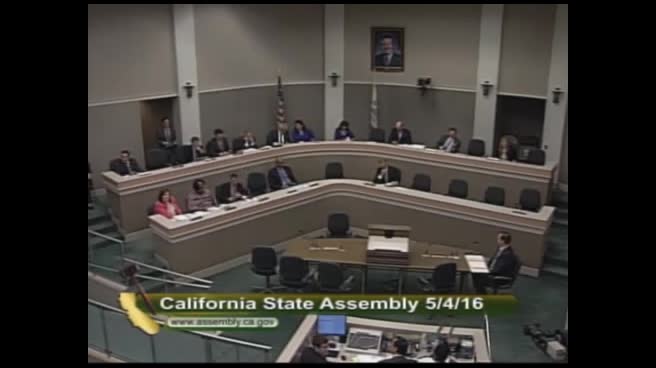
Bill Author


