AB 2888: Sex crimes: mandatory prison sentence.
- Session Year: 2015-2016
- House: Assembly
- Latest Version Date: 2016-09-30
Existing law prohibits a court from granting probation or suspending the execution or imposition of a sentence if a person is convicted of violating specified provisions of law, including rape by force, pandering, aggravated sexual assault of a child, and others.
This bill would prohibit a court from granting probation or suspending the execution or imposition of a sentence if a person is convicted of rape, sodomy, penetration with a foreign object, or oral copulation if the victim was either unconscious or incapable of giving consent due to intoxication.
Existing law defines probation to mean the suspension of the imposition or execution of a sentence and the order of conditional and revocable release in the community under the supervision of a probation officer. Existing law authorizes a court to grant probation for some, but not all, felony convictions, as enumerated.
This bill would prohibit a court from granting probation to a defendant who is convicted of committing specified acts of rape, sodomy, oral copulation, or sexual penetration upon the victim who was prevented from resisting by any intoxicating or anesthetic substance, or any controlled substance, or was unconscious, as specified under those provisions.
Existing law requires the Secretary of Food and Agriculture to expend up to $100,000 in any fiscal year for an exhibit or exhibits at a state-supported fair that demonstrates the process of production and use of food and fiber and to annually provide for a conference of fair judges to aid the Department of Food and Agriculture in prescribing regulations for the judging of exhibits and for the premiums paid for all classes, sections, and types of exhibits, and authorizes the secretary to expend up to $15,000 in any fiscal year for these purposes.
This bill would instead authorize rather than require the secretary to perform the above-specified functions.
(a)Notwithstanding any other law, probation shall not be granted to, nor shall the execution or imposition of sentence be suspended for, a person who is convicted of violating paragraph (2), (3), (4), or (6) of subdivision (a) of Section 261, Section 264.1, 266h, 266i, 266j, or 269, paragraph (2) or (3) of subdivision (c), or subdivision (d), (f), or (i) of Section 286, paragraph (2) or (3) of subdivision (c), or subdivision (d), (f), or (i) of Section 288a, Section 288.7, subdivision (a), (d), or (e) of Section 289, or subdivision (b) of Section 311.4.
(b)(1)Except in unusual cases where the interests of justice would best be served if the person is granted probation, probation shall not be granted to a person who is convicted of violating paragraph (7) of subdivision (a) of Section 261, subdivision (k) of Section 286, subdivision (k) of Section 288a, subdivision (g) of Section 289, or Section 220 for assault with intent to commit a specified sexual offense.
(2)If probation is granted, the court shall specify on the record and shall enter on the minutes the circumstances indicating that the interests of justice would best be served by the disposition.
(a)Notwithstanding any other law, probation shall not be granted to, nor shall the execution or imposition of sentence be suspended for, a person who is convicted of violating paragraph (2), (3), (4), or (6) of subdivision (a) of Section 261, Section 264.1, 266h, 266i, 266j, or 269, paragraph (2) or (3) of subdivision (c), or subdivision (d), (f), or (i) of Section 286, paragraph (2) or (3) of subdivision (c), or subdivision (d), (f), or (i) of Section 288a, Section 288.7, subdivision (a), (e), or (f) (d), or (e) of Section 289, or subdivision (b) of Section 311.4.
(b)(1)Except in unusual cases where the interests of justice would best be served if the person is granted probation, probation shall not be granted to a person who is convicted of violating paragraph (7) of subdivision (a) of Section 261, subdivision (k) of Section 286, subdivision (k) of Section 288a, subdivision (g) of Section 289, or Section 220 for assault with intent to commit a specified sexual offense.
(2)If probation is granted, the court shall specify on the record and shall enter on the minutes the circumstances indicating that the interests of justice would best be served by the disposition.
(a)Notwithstanding any other provision of law, probation shall not be granted to, nor shall the execution or imposition of sentence be suspended for, any a person who is convicted of violating paragraph (2) (2), (3), (4), or (6) of subdivision (a) of Section 261, Section 264.1, 266h, 266i, 266j, or 269, paragraph (2) or (3) of subdivision (c), or subdivision (d), (f), or (i) of Section 286, paragraph (2) or (3) of subdivision (c), or subdivision (d), (f), or (i) of Section 288a, Section 288.7, subdivision (a) (a), (e), or (f) of Section 289, or subdivision (b) of Section 311.4.
(b)(1)Except in unusual cases where the interests of justice would best be served if the person is granted probation, probation shall not be granted to any a person who is convicted of violating paragraph (7) of subdivision (a) of Section 261, subdivision (k) of Section 286, subdivision (k) of Section 288a, subdivision (g) of Section 289, or Section 220 for assault with intent to commit a specified sexual offense.
(2)When If probation is granted, the court shall specify on the record and shall enter on the minutes the circumstances indicating that the interests of justice would best be served by the disposition.
SECTION 1.Section 1203 of the Penal Code is amended to read:1203.(a)As used in this code, probation means the suspension of the imposition or execution of a sentence and the order of conditional and revocable release in the community under the supervision of a probation officer. As used in this code, conditional sentence means the suspension of the imposition or execution of a sentence and the order of revocable release in the community subject to conditions established by the court without the supervision of a probation officer. It is the intent of the Legislature that both conditional sentence and probation are authorized whenever probation is authorized in any code as a sentencing option for infractions or misdemeanors.
(b)(1)Except as provided in subdivision (j), if a person is convicted of a felony and is eligible for probation, before judgment is pronounced, the court shall immediately refer the matter to a probation officer to investigate and report to the court, at a specified time, upon the circumstances surrounding the crime and the prior history and record of the person, which may be considered either in aggravation or mitigation of the punishment.
(2)(A)The probation officer shall immediately investigate and make a written report to the court of his or her findings and recommendations, including his or her recommendations as to the granting or denying of probation and the conditions of probation, if granted.
(B)Pursuant to Section 828 of the Welfare and Institutions Code, the probation officer shall include in his or her report any information gathered by a law enforcement agency relating to the taking of the defendant into custody as a minor, which shall be considered for purposes of determining whether adjudications of commissions of crimes as a juvenile warrant a finding that there are circumstances in aggravation pursuant to Section 1170 or to deny probation.
(C)If the person was convicted of an offense that requires him or her to register as a sex offender pursuant to Sections 290 to 290.023, inclusive, or if the probation report recommends that registration be ordered at sentencing pursuant to Section 290.006, the probation officers report shall include the results of the State-Authorized Risk Assessment Tool for Sex Offenders (SARATSO) administered pursuant to Sections 290.04 to 290.06, inclusive, if applicable.
(D)The probation officer may also include in the report his or her recommendation of both of the following:
(i)The amount the defendant should be required to pay as a restitution fine pursuant to subdivision (b) of Section 1202.4.
(ii)Whether the court shall require, as a condition of probation, restitution to the victim or to the Restitution Fund and the amount thereof.
(E)The report shall be made available to the court and the prosecuting and defense attorneys at least five days, or upon request of the defendant or prosecuting attorney nine days, prior to the time fixed by the court for the hearing and determination of the report, and shall be filed with the clerk of the court as a record in the case at the time of the hearing. The time within which the report shall be made available and filed may be waived by written stipulation of the prosecuting and defense attorneys that is filed with the court or an oral stipulation in open court that is made and entered upon the minutes of the court.
(3)At a time fixed by the court, the court shall hear and determine the application, if one has been made, or, in any case, the suitability of probation in the particular case. At the hearing, the court shall consider any report of the probation officer, including the results of the SARATSO, if applicable, and shall make a statement that it has considered the report, which shall be filed with the clerk of the court as a record in the case. If the court determines that there are circumstances in mitigation of the punishment prescribed by law or that the ends of justice would be served by granting probation to the person, it may place the person on probation. If probation is denied, the clerk of the court shall immediately send a copy of the report to the Department of Corrections and Rehabilitation at the prison or other institution to which the person is delivered.
(4)The preparation of the report or the consideration of the report by the court may be waived only by a written stipulation of the prosecuting and defense attorneys that is filed with the court or an oral stipulation in open court that is made and entered upon the minutes of the court, except that a waiver shall not be allowed unless the court consents thereto. However, if the defendant is ultimately sentenced and committed to the state prison, a probation report shall be completed pursuant to Section 1203c.
(c)If a defendant is not represented by an attorney, the court shall order the probation officer who makes the probation report to discuss its contents with the defendant.
(d)If a person is convicted of a misdemeanor, the court may either refer the matter to the probation officer for an investigation and a report or summarily pronounce a conditional sentence. If the person was convicted of an offense that requires him or her to register as a sex offender pursuant to Sections 290 to 290.023, inclusive, or if the probation officer recommends that the court, at sentencing, order the offender to register as a sex offender pursuant to Section 290.006, the court shall refer the matter to the probation officer for the purpose of obtaining a report on the results of the State-Authorized Risk Assessment Tool for Sex Offenders administered pursuant to Sections 290.04 to 290.06, inclusive, if applicable, which the court shall consider. If the case is not referred to the probation officer, in sentencing the person, the court may consider any information concerning the person that could have been included in a probation report. The court shall inform the person of the information to be considered and permit him or her to answer or controvert the information. For this purpose, upon the request of the person, the court shall grant a continuance before the judgment is pronounced.
(e)Except in unusual cases where the interests of justice would best be served if the person is granted probation, probation shall not be granted to any of the following persons:
(1)Unless the person had a lawful right to carry a deadly weapon, other than a firearm, at the time of the perpetration of the crime or his or her arrest, any person who has been convicted of arson, robbery, carjacking, burglary, burglary with explosives, rape with force or violence, torture, aggravated mayhem, murder, attempt to commit murder, trainwrecking, kidnapping, escape from the state prison, or a conspiracy to commit one or more of those crimes and who was armed with the weapon at either of those times.
(2)Any person who used, or attempted to use, a deadly weapon upon a human being in connection with the perpetration of the crime of which he or she has been convicted.
(3)Any person who willfully inflicted great bodily injury or torture in the perpetration of the crime of which he or she has been convicted.
(4)Any person who has been previously convicted twice in this state of a felony or in any other place of a public offense which, if committed in this state, would have been punishable as a felony.
(5)Unless the person has never been previously convicted once in this state of a felony or in any other place of a public offense which, if committed in this state, would have been punishable as a felony, any person who has been convicted of burglary with explosives, rape with force or violence, torture, aggravated mayhem, murder, attempt to commit murder, trainwrecking, extortion, kidnapping, escape from the state prison, a violation of Section 286, 288, 288a, or 288.5, or a conspiracy to commit one or more of those crimes.
(6)Any person who has been previously convicted once in this state of a felony or in any other place of a public offense which, if committed in this state, would have been punishable as a felony, if he or she committed any of the following acts:
(A)Unless the person had a lawful right to carry a deadly weapon at the time of the perpetration of the previous crime or his or her arrest for the previous crime, he or she was armed with a weapon at either of those times.
(B)The person used, or attempted to use, a deadly weapon upon a human being in connection with the perpetration of the previous crime.
(C)The person willfully inflicted great bodily injury or torture in the perpetration of the previous crime.
(7)Any public official or peace officer of this state or any city, county, or other political subdivision who, in the discharge of the duties of his or her public office or employment, accepted or gave or offered to accept or give any bribe, embezzled public money, or was guilty of extortion.
(8)Any person who knowingly furnishes or gives away phencyclidine.
(9)Any person who intentionally inflicted great bodily injury in the commission of arson under subdivision (a) of Section 451 or who intentionally set fire to, burned, or caused the burning of, an inhabited structure or inhabited property in violation of subdivision (b) of Section 451.
(10)Any person who, in the commission of a felony, inflicts great bodily injury or causes the death of a human being by the discharge of a firearm from or at an occupied motor vehicle proceeding on a public street or highway.
(11)Any person who possesses a short-barreled rifle or a short-barreled shotgun under Section 33215, a machinegun under Section 32625, or a silencer under Section 33410.
(12)Any person who is convicted of violating Section 8101 of the Welfare and Institutions Code.
(13)Any person who is described in subdivision (b) or (c) of Section 27590.
(14)Any person who is convicted of violating paragraph (3) or (4) of subdivision (a) of Section 261, paragraph (2) or (3) of subdivision (a) of Section 262, subdivision (f) or (i) of Section 286, subdivision (f) or (i) of Section 288a, or subdivision (d) or (e) of Section 289.
(f)When probation is granted in a case which comes within subdivision (e), the court shall specify on the record and shall enter on the minutes the circumstances indicating that the interests of justice would best be served by that disposition.
(g)If a person is not eligible for probation, the judge shall refer the matter to the probation officer for an investigation of the facts relevant to determination of the amount of a restitution fine pursuant to subdivision (b) of Section 1202.4 in all cases where the determination is applicable. The judge, in his or her discretion, may direct the probation officer to investigate all facts relevant to the sentencing of the person. Upon that referral, the probation officer shall immediately investigate the circumstances surrounding the crime and the prior record and history of the person and make a written report to the court of his or her findings. The findings shall include a recommendation of the amount of the restitution fine as provided in subdivision (b) of Section 1202.4.
(h)If a defendant is convicted of a felony and a probation report is prepared pursuant to subdivision (b) or (g), the probation officer may obtain and include in the report a statement of the comments of the victim concerning the offense. The court may direct the probation officer not to obtain a statement if the victim has in fact testified at any of the court proceedings concerning the offense.
(i)A probationer shall not be released to enter another state unless his or her case has been referred to the Administrator of the Interstate Probation and Parole Compacts, pursuant to the Uniform Act for Out-of-State Probationer or Parolee Supervision (Article 3 (commencing with Section 11175) of Chapter 2 of Title 1 of Part 4) and the probationer has reimbursed the county that has jurisdiction over his or her probation case the reasonable costs of processing his or her request for interstate compact supervision. The amount and method of reimbursement shall be in accordance with Section 1203.1b.
(j)In any court where a county financial evaluation officer is available, in addition to referring the matter to the probation officer, the court may order the defendant to appear before the county financial evaluation officer for a financial evaluation of the defendants ability to pay restitution, in which case the county financial evaluation officer shall report his or her findings regarding restitution and other court-related costs to the probation officer on the question of the defendants ability to pay those costs.
Any order made pursuant to this subdivision may be enforced as a violation of the terms and conditions of probation upon willful failure to pay and at the discretion of the court, may be enforced in the same manner as a judgment in a civil action, if any balance remains unpaid at the end of the defendants probationary period.
(k)Probation shall not be granted to, nor shall the execution of, or imposition of sentence be suspended for, any person who is convicted of a violent felony, as defined in subdivision (c) of Section 667.5, or a serious felony, as defined in subdivision (c) of Section 1192.7, and who was on probation for a felony offense at the time of the commission of the new felony offense.
(a)As used in this code, probation means the suspension of the imposition or execution of a sentence and the order of conditional and revocable release in the community under the supervision of a probation officer. As used in this code, conditional sentence means the suspension of the imposition or execution of a sentence and the order of revocable release in the community subject to conditions established by the court without the supervision of a probation officer. It is the intent of the Legislature that both conditional sentence and probation are authorized whenever probation is authorized in any code as a sentencing option for infractions or misdemeanors.
(b)(1)Except as provided in subdivision (j), if a person is convicted of a felony and is eligible for probation, before judgment is pronounced, the court shall immediately refer the matter to a probation officer to investigate and report to the court, at a specified time, upon the circumstances surrounding the crime and the prior history and record of the person, which may be considered either in aggravation or mitigation of the punishment.
(2)(A)The probation officer shall immediately investigate and make a written report to the court of his or her findings and recommendations, including his or her recommendations as to the granting or denying of probation and the conditions of probation, if granted.
(B)Pursuant to Section 828 of the Welfare and Institutions Code, the probation officer shall include in his or her report any information gathered by a law enforcement agency relating to the taking of the defendant into custody as a minor, which shall be considered for purposes of determining whether adjudications of commissions of crimes as a juvenile warrant a finding that there are circumstances in aggravation pursuant to Section 1170 or to deny probation.
(C)If the person was convicted of an offense that requires him or her to register as a sex offender pursuant to Sections 290 to 290.023, inclusive, or if the probation report recommends that registration be ordered at sentencing pursuant to Section 290.006, the probation officers report shall include the results of the State-Authorized Risk Assessment Tool for Sex Offenders (SARATSO) administered pursuant to Sections 290.04 to 290.06, inclusive, if applicable.
(D)The probation officer may also include in the report his or her recommendation of both of the following:
(i)The amount the defendant should be required to pay as a restitution fine pursuant to subdivision (b) of Section 1202.4.
(ii)Whether the court shall require, as a condition of probation, restitution to the victim or to the Restitution Fund and the amount thereof.
(E)The report shall be made available to the court and the prosecuting and defense attorneys at least five days, or upon request of the defendant or prosecuting attorney nine days, prior to the time fixed by the court for the hearing and determination of the report, and shall be filed with the clerk of the court as a record in the case at the time of the hearing. The time within which the report shall be made available and filed may be waived by written stipulation of the prosecuting and defense attorneys that is filed with the court or an oral stipulation in open court that is made and entered upon the minutes of the court.
(3)At a time fixed by the court, the court shall hear and determine the application, if one has been made, or, in any case, the suitability of probation in the particular case. At the hearing, the court shall consider any report of the probation officer, including the results of the SARATSO, if applicable, and shall make a statement that it has considered the report, which shall be filed with the clerk of the court as a record in the case. If the court determines that there are circumstances in mitigation of the punishment prescribed by law or that the ends of justice would be served by granting probation to the person, it may place the person on probation. If probation is denied, the clerk of the court shall immediately send a copy of the report to the Department of Corrections and Rehabilitation at the prison or other institution to which the person is delivered.
(4)The preparation of the report or the consideration of the report by the court may be waived only by a written stipulation of the prosecuting and defense attorneys that is filed with the court or an oral stipulation in open court that is made and entered upon the minutes of the court, except that a waiver shall not be allowed unless the court consents thereto. However, if the defendant is ultimately sentenced and committed to the state prison, a probation report shall be completed pursuant to Section 1203c.
(c)If a defendant is not represented by an attorney, the court shall order the probation officer who makes the probation report to discuss its contents with the defendant.
(d)If a person is convicted of a misdemeanor, the court may either refer the matter to the probation officer for an investigation and a report or summarily pronounce a conditional sentence. If the person was convicted of an offense that requires him or her to register as a sex offender pursuant to Sections 290 to 290.023, inclusive, or if the probation officer recommends that the court, at sentencing, order the offender to register as a sex offender pursuant to Section 290.006, the court shall refer the matter to the probation officer for the purpose of obtaining a report on the results of the State-Authorized Risk Assessment Tool for Sex Offenders administered pursuant to Sections 290.04 to 290.06, inclusive, if applicable, which the court shall consider. If the case is not referred to the probation officer, in sentencing the person, the court may consider any information concerning the person that could have been included in a probation report. The court shall inform the person of the information to be considered and permit him or her to answer or controvert the information. For this purpose, upon the request of the person, the court shall grant a continuance before the judgment is pronounced.
(e)Except in unusual cases where the interests of justice would best be served if the person is granted probation, probation shall not be granted to any of the following persons:
(1)Unless the person had a lawful right to carry a deadly weapon, other than a firearm, at the time of the perpetration of the crime or his or her arrest, any person who has been convicted of arson, robbery, carjacking, burglary, burglary with explosives, rape with force or violence, torture, aggravated mayhem, murder, attempt to commit murder, trainwrecking, kidnapping, escape from the state prison, or a conspiracy to commit one or more of those crimes and who was armed with the weapon at either of those times.
(2)Any person who used, or attempted to use, a deadly weapon upon a human being in connection with the perpetration of the crime of which he or she has been convicted.
(3)Any person who willfully inflicted great bodily injury or torture in the perpetration of the crime of which he or she has been convicted.
(4)Any person who has been previously convicted twice in this state of a felony or in any other place of a public offense which, if committed in this state, would have been punishable as a felony.
(5)Unless the person has never been previously convicted once in this state of a felony or in any other place of a public offense which, if committed in this state, would have been punishable as a felony, any person who has been convicted of burglary with explosives, rape with force or violence, torture, aggravated mayhem, murder, attempt to commit murder, trainwrecking, extortion, kidnapping, escape from the state prison, a violation of Section 286, 288, 288a, or 288.5, or a conspiracy to commit one or more of those crimes.
(6)Any person who has been previously convicted once in this state of a felony or in any other place of a public offense which, if committed in this state, would have been punishable as a felony, if he or she committed any of the following acts:
(A)Unless the person had a lawful right to carry a deadly weapon at the time of the perpetration of the previous crime or his or her arrest for the previous crime, he or she was armed with a weapon at either of those times.
(B)The person used, or attempted to use, a deadly weapon upon a human being in connection with the perpetration of the previous crime.
(C)The person willfully inflicted great bodily injury or torture in the perpetration of the previous crime.
(7)Any public official or peace officer of this state or any city, county, or other political subdivision who, in the discharge of the duties of his or her public office or employment, accepted or gave or offered to accept or give any bribe, embezzled public money, or was guilty of extortion.
(8)Any person who knowingly furnishes or gives away phencyclidine.
(9)Any person who intentionally inflicted great bodily injury in the commission of arson under subdivision (a) of Section 451 or who intentionally set fire to, burned, or caused the burning of, an inhabited structure or inhabited property in violation of subdivision (b) of Section 451.
(10)Any person who, in the commission of a felony, inflicts great bodily injury or causes the death of a human being by the discharge of a firearm from or at an occupied motor vehicle proceeding on a public street or highway.
(11)Any person who possesses a short-barreled rifle or a short-barreled shotgun under Section 33215, a machinegun under Section 32625, or a silencer under Section 33410.
(12)Any person who is convicted of violating Section 8101 of the Welfare and Institutions Code.
(13)Any person who is described in subdivision (b) or (c) of Section 27590.
(14)Any person who is convicted of violating paragraph (3) or (4) of subdivision (a) of Section 261, paragraph (2) or (3) of subdivision (a) of Section 262, subdivision (f) or (i) of Section 286, subdivision (f) or (i) of Section 288a, or subdivision (d) or (e) of Section 289.
(f)When probation is granted in a case which comes within subdivision (e), the court shall specify on the record and shall enter on the minutes the circumstances indicating that the interests of justice would best be served by that disposition.
(g)If a person is not eligible for probation, the judge shall refer the matter to the probation officer for an investigation of the facts relevant to determination of the amount of a restitution fine pursuant to subdivision (b) of Section 1202.4 in all cases where the determination is applicable. The judge, in his or her discretion, may direct the probation officer to investigate all facts relevant to the sentencing of the person. Upon that referral, the probation officer shall immediately investigate the circumstances surrounding the crime and the prior record and history of the person and make a written report to the court of his or her findings. The findings shall include a recommendation of the amount of the restitution fine as provided in subdivision (b) of Section 1202.4.
(h)If a defendant is convicted of a felony and a probation report is prepared pursuant to subdivision (b) or (g), the probation officer may obtain and include in the report a statement of the comments of the victim concerning the offense. The court may direct the probation officer not to obtain a statement if the victim has in fact testified at any of the court proceedings concerning the offense.
(i)A probationer shall not be released to enter another state unless his or her case has been referred to the Administrator of the Interstate Probation and Parole Compacts, pursuant to the Uniform Act for Out-of-State Probationer or Parolee Supervision (Article 3 (commencing with Section 11175) of Chapter 2 of Title 1 of Part 4) and the probationer has reimbursed the county that has jurisdiction over his or her probation case the reasonable costs of processing his or her request for interstate compact supervision. The amount and method of reimbursement shall be in accordance with Section 1203.1b.
(j)In any court where a county financial evaluation officer is available, in addition to referring the matter to the probation officer, the court may order the defendant to appear before the county financial evaluation officer for a financial evaluation of the defendants ability to pay restitution, in which case the county financial evaluation officer shall report his or her findings regarding restitution and other court-related costs to the probation officer on the question of the defendants ability to pay those costs.
Any order made pursuant to this subdivision may be enforced as a violation of the terms and conditions of probation upon willful failure to pay and at the discretion of the court, may be enforced in the same manner as a judgment in a civil action, if any balance remains unpaid at the end of the defendants probationary period.
(k)Probation shall not be granted to, nor shall the execution of, or imposition of sentence be suspended for, any person who is convicted of a violent felony, as defined in subdivision (c) of Section 667.5, or a serious felony, as defined in subdivision (c) of Section 1192.7, and who was on probation for a felony offense at the time of the commission of the new felony offense.
SECTION 1.Section 4401.5 of the Food and Agricultural Code is amended to read:4401.5.(a)The secretary may expend an amount not to exceed a total of one hundred thousand dollars ($100,000) in any fiscal year for any exhibit or exhibits located on any state-supported fair demonstrating, in a creative and innovative manner, the process of production and use of food and fiber from the producer to the consumer in this state.
(b)The secretary may annually provide for a conference of fair judges to aid the department in prescribing regulations adopted pursuant to Section 4501. The secretary may expend up to fifteen thousand dollars ($15,000) in any fiscal year for these purposes.
(a)The director shall secretary may expend an amount not to exceed a total of one hundred thousand dollars ($100,000) in any fiscal year for any exhibit or exhibits located on any state-supported fair demonstrating, in a creative and innovative manner, the process of production and use of food and fiber from the producer to the consumer in this state.
(b)The director shall secretary may annually provide for a conference of fair judges to aid the department in prescribing regulations adopted pursuant to Section 4501. The director secretary may expend up to fifteen thousand dollars ($15,000) in any fiscal year for such these purposes.
|
Date
|
Status
|
|---|---|
| Jun 21, 2016 | Re-referred to Com. on PUB. S. |
| Sep 7, 2016 | Enrolled and presented to the Governor at 3 p.m. |
| Aug 29, 2016 | Senate amendments concurred in. To Engrossing and Enrolling. (Ayes 77. Noes 1. Page 6336.). |
| Aug 29, 2016 | Senate amendments concurred in. To Engrossing and Enrolling. |
| Aug 23, 2016 | From committee: That the Senate amendments be concurred in. (Ayes 5. Noes 0.) (August 23). |
| Aug 18, 2016 | Re-referred to Com. on PUB. S. pursuant to Assembly Rule 77.2. |
| Aug 16, 2016 | Read third time. Passed. Ordered to the Assembly. (Ayes 34. Noes 0.). |
| Aug 16, 2016 | Read third time. Passed. Ordered to the Assembly. (Ayes 34. Noes 0. Page 5026.). |
| Aug 16, 2016 | Read third time. Passed. Ordered to the Assembly. |
| Aug 16, 2016 | In Assembly. Concurrence in Senate amendments pending. May be considered on or after August 18 pursuant to Assembly Rule 77. |
| Aug 15, 2016 | Read second time. Ordered to third reading. |
| Aug 11, 2016 | From committee: Do pass. (Ayes 7. Noes 0.) (August 11). |
| Aug 8, 2016 | Referred to APPR. suspense file. |
| Aug 2, 2016 | Read second time and amended. Re-referred to Com. on APPR. |
| Aug 1, 2016 | From committee: Amend, and do pass as amended and re-refer to Com. on APPR. (Ayes 6. Noes 0.) (June 28). |
| Feb 29, 2016 | Read first time. To print. |
| Jun 21, 2016 | From committee chair, with author's amendments: Amend, and re-refer to committee. Read second time, amended, and re-referred to Com. on PUB. S. |
| Jun 20, 2016 | Withdrawn from committee. |
| Jun 20, 2016 | Re-referred to Com. on RLS. |
| Jun 16, 2016 | In committee: Set, first hearing. Hearing canceled at the request of author. |
| Jun 16, 2016 | From committee chair, with author's amendments: Amend, and re-refer to committee. Read second time, amended, and re-referred to Com. on AGRI. |
| May 12, 2016 | Referred to Com. on AGRI. |
| May 5, 2016 | Read third time. Passed. Ordered to the Senate. (Ayes 79. Noes 0. Page 4688.) |
| May 5, 2016 | Read third time. Passed. Ordered to the Senate. |
| May 5, 2016 | In Senate. Read first time. To Com. on RLS. for assignment. |
| Apr 28, 2016 | Read second time. Ordered to Consent Calendar. |
| Apr 27, 2016 | From committee: Do pass. To Consent Calendar. (Ayes 19. Noes 0.) (April 27). |
| Apr 13, 2016 | From committee: Do pass and re-refer to Com. on APPR. with recommendation: To Consent Calendar. (Ayes 10. Noes 0.) (April 13). Re-referred to Com. on APPR. |
| Mar 28, 2016 | Referred to Com. on AGRI. |
| Mar 1, 2016 | From printer. May be heard in committee March 31. |
|
Date
|
Description
|
Location
|
Votes
|
|
|---|---|---|---|---|
| Aug 29, 2016 | AB 2888 LOW Concurrence in Senate Amendments | Assembly Floor |
Passed |
|
| Aug 23, 2016 | With recommendation: That Senate amendments be concurred in. | Assembly Standing Committee on Public Safety |
Passed |
|
| Aug 16, 2016 | Assembly 3rd Reading AB2888 Low By Beall | Senate Floor |
Passed |
|
| Aug 11, 2016 | Do pass | Senate Standing Committee on Appropriations |
Passed |
|
| Aug 8, 2016 | Placed on suspense file | Senate Standing Committee on Appropriations |
Passed |
|
| Jun 28, 2016 | Do pass as amended, but first amend, and re-refer to the Committee on [Appropriations] | Senate Standing Committee on Public Safety |
Passed |
|
| May 5, 2016 | AB 2888 AGRI. Consent Calendar Second Day Regular Session | Assembly Floor |
Passed |
|
| Apr 27, 2016 | Do pass. To Consent Calendar. | Assembly Standing Committee on Appropriations |
Passed |
|
| Apr 13, 2016 | Do pass and be re-referred to the Committee on [Appropriations] with recommendation: To Consent Calendar | Assembly Standing Committee on Agriculture |
Passed |
This list shows positions taken on this bill by organizations on the date displayed, which is linked to the original source.
Positions by individuals are not included.
|
Organization
|
Position
|
Date
|
|---|---|---|
| Alameda County District Attorney's Office | * Support | Jun 28, 2016 |
| Association For Los Angeles Deputy Sheriffs | * Support | Aug 23, 2016 |
| Association of Deputy District Attorneys | * Support | Jun 28, 2016 |
| Association Of Orange County Deputy Sheriffs | ** Support | Aug 16, 2016 |
| California District Attorneys Association | * Support | Aug 23, 2016 |
| California Police Chiefs Association | * Support | Aug 23, 2016 |
| California Public Defender Association | * Against | Aug 23, 2016 |
| California State Sheriffs' Association | * Support | Aug 23, 2016 |
| California Statewide Law Enforcement Association | ** Support | Aug 16, 2016 |
| Crime Victims United Of California | ** Support | Aug 16, 2016 |
| Fraternal Order of Police | ** Support | Aug 16, 2016 |
| Long Beach Police Officers Association | ** Support | Aug 16, 2016 |
| Los Angeles County District Attorney'S Office | * Support | Aug 23, 2016 |
| Sacramento County Deputy Sheriffs' Association | ** Support | Aug 16, 2016 |
| Santa Clara County District Attorney | ** Support | Aug 16, 2016 |
| Western Fairs Association | ** Support | Jun 28, 2016 |
CONCURRENCE IN SENATE AMENDMENTS
CSA2 Bill Id:AB 2888
Author:(Low and Dodd)
As Amended Ver:August 2, 2016
Majority vote
ASSEMBLY: |
| (May 5, 2016) | SENATE: | 34-0 | (August 16, 2016) |
(vote note relevant)
COMMITTEE VOTE: | 5-0 | (August 23, 2016) | RECOMMENDATION: | concur |
(Pub. S.)
Original Committee Reference: AGRI. .
SUMMARY: Prohibits judges from granting probation when one of the following felony offenses is committed:
- Rape, sodomy, forced oral copulation, or sexual penetration by a foreign object when the perpetrator uses an intoxicating or anesthetic substance.
- Rape, sodomy, or forced oral copulation when the victim is unconscious.
- Sexual penetration by a foreign object when the victim submits under the belief that the person committing the act or causing the act to be committed is someone known to the victim other than the accused, and this belief is induced by any artifice, pretense, or concealment practiced by the accused.
The Senate amendments delete the Assembly version of this bill, and instead provide that the following additional crimes would be ineligible for probation:
- Forcible sexual intercourse where the victim is prevented from resisting by any intoxicating or anesthetic substance, or any controlled substance, and this condition was known, or reasonably should have been known by the accused;
- Forcible sexual intercourse where the victim is at the time unconscious of the nature of the act, and this is known to the accused;
- Sodomy where the victim is at the time unconscious of the nature of the act and this is known to the person committing the act;
- Sodomy where the victim is prevented from resisting by an intoxicating or anesthetic substance, or any controlled substance, and this condition was known, or reasonably should have been known by the accused;
- Oral copulation where the victim is at the time unconscious of the nature of the act and this is known to the person committing the act;
- Oral copulation where the victim is prevented from resisting by any intoxicating or anesthetic substance, or any controlled substance, and this condition was known, or reasonably should have been known by the accused;
- Foreign object sexual penetration when the victim is prevented from resisting by any intoxicating or anesthetic substance, or any controlled substance, and this condition was known, or reasonably should have been known by the accused;
- Foreign object sexual penetration when the victim submits under the belief that the person committing the act or causing the act to be committed is someone known to the victim other than the accused, and this belief is induced by any artifice, pretense, or concealment practiced by the accused.
EXISTING LAW:
- Provides that probation shall not be granted to, nor shall the execution or imposition of sentence be suspended for, any person who is convicted of violating the following crimes:
- Forcible sexual intercourse;
- In concert sexual assault;
- Pimping and pandering;
- Procuring or obtaining a minor under the age of 16 for lewd and lascivious act;
- Aggravated sexual assault of a child under 14;
- Forcible or in concert sodomy;
- Forcible or in concert oral copulation;
- Sexual intercourse or sodomy of a child 10 or younger;
- Forcible foreign object sexual penetration; or
- Making child pornography.
- Provides that "(e)xcept in unusual cases where the interests of justice would best be served if the person is granted probation, probation shall not be granted to any person who is convicted of" the following crimes:
- Rape by threat of use of public official authority;
- Sodomy by threat of use of public official authority;
- Oral copulation by threat of use of public official authority; subdivision Foreign object sexual penetration by threat of use of public official authority; or Assault with intent to commit a specified sexual offender.
- Provides that when probation is granted under specified circumstances, "the court shall specify on the record and shall enter on the minutes the circumstances indicating that the interests of justice would best be served by the disposition."
AS PASSED BY THE ASSEMBLY, this bill made permissive the requirement that:
- The California Department of Food and Agriculture (CDFA) expend up to $100,000 in any fiscal year for exhibits at a state-supported fair that shows the process of production and use of agricultural products in the state; and
- CDFA arrange for a conference of fair judges to help CDFA make regulations for the judging of exhibits.
FISCAL EFFECT: According to the Senate Appropriations Committee:
- State prisons: Potentially significant ongoing increase in state incarceration costs (General Fund) for new commitments to state prison that otherwise may have been granted probation or suspension of imposition of a felony sentence. California Department of Corrections and Rehabilitation (CDCR) data indicates nearly 100 new commitments to state prison in 2015 under the specified provisions of this measure. However, the number of individuals granted probation in lieu of a prison sentence for these offenses that may be impacted by this bill is unknown. For context, for every 5% increase in annual commitments to state prison under the specified provisions of law, annual state incarceration costs would increase by $145,000 in the first year, cumulatively increasing for overlapping sentences.
- State parole: Potential increase in future parole supervision costs for persons released from state prison for a rape conviction pursuant to Penal Code (PC) Section 261(a)(3) or PC Section 261(a)(4). All categories of rape under existing law are considered "serious felonies" pursuant to PC Section 1192.7(c), and therefore, subject to parole supervision upon release from state prison.
- County supervision: Unquantifiable net local agency supervision costs (Local Funds) consisting of potential cost savings for persons released onto state parole for rape convictions in lieu of probation, offset by increased costs for postrelease community supervision (PRCS) for persons that otherwise would have been granted probation.
COMMENTS: According to the author, "not all forms of sexual assault involving penetration are included in the list of offenses that would trigger a mandatory denial of probation. Current law clarifies that a defendant's use of force triggers a mandatory prison sentence. However, when a victim is unconscious or severely intoxicated, the victim is unable to resist, and the perpetrator does not have to use force. This distinction between assault accomplished through force or predatory behavior provides courts the discretion to sentence perpetrators of sexual assault against intoxicated and unconscious victims to probation, which may include little or no jail time.
"Under this interpretation of the law, a perpetrator at a college party who chooses to forcibly rape a conscious victim will go to prison. However, a different perpetrator at the same party who chooses to watch and wait for a victim to pass out from intoxication before sexually assaulting her may get probation. Whether penetration is accomplished through physical aggression [force] or predatory behavior is a distinction without a difference. Both perpetrators seek prey that are vulnerable; disadvantaged by his/her capacity to resist. Both perpetrators represent a danger to the community. Additionally, the aftermath suffered by an unconscious victim or a victim incapable of giving consent due to intoxication is not ameliorated by the absence of memory. Indeed, the fear and terror that accompanies the absence of memory of a known sexual assault should not be viewed as less serious than the fear and terror that a victim experiences during a recalled forcible sexual assault.
"AB 2888 would amend Penal Code Section 1203.065 to include to the list of offenses that are ineligible for probation, all sexual assaults felonies perpetrated against intoxicated and unconscious victims."
Analysis Prepared by: Gabriel Caswell / PUB. S. / (916) 319-3744 FN: 0004836
CONCURRENCE IN SENATE AMENDMENTS
CSA1 Bill Id:AB 2888
Author:(Low and Dodd)
As Amended Ver:August 2, 2016
Majority vote
ASSEMBLY: |
| (May 5, 2016) | SENATE: | 34-0 | (August 16, 2016) |
(vote not relevant)
Original Committee Reference: AGRI
SUMMARY: Prohibits judges from granting probation when one of the following felony offenses is committed:
- Rape, sodomy, forced oral copulation, or sexual penetration by a foreign object when the perpetrator uses an intoxicating or anesthetic substance.
- Rape, sodomy, or forced oral copulation when the victim is unconscious.
- Sexual penetration by a foreign object when the victim submits under the belief that the person committing the act or causing the act to be committed is someone known to the victim other than the accused, and this belief is induced by any artifice, pretense, or concealment practiced by the accused.
The Senate amendments delete the Assembly version of this bill, and instead provide that the following additional crimes would be ineligible for probation:
- Forcible sexual intercourse where the victim is prevented from resisting by any intoxicating or anesthetic substance, or any controlled substance, and this condition was known, or reasonably should have been known by the accused;
- Forcible sexual intercourse where the victim is at the time unconscious of the nature of the act, and this is known to the accused;
- Sodomy where the victim is at the time unconscious of the nature of the act and this is known to the person committing the act;
- Sodomy where the victim is prevented from resisting by an intoxicating or anesthetic substance, or any controlled substance, and this condition was known, or reasonably should have been known by the accused;
- Oral copulation where the victim is at the time unconscious of the nature of the act and this is known to the person committing the act;
- Oral copulation where the victim is prevented from resisting by any intoxicating or anesthetic substance, or any controlled substance, and this condition was known, or reasonably should have been known by the accused;
- Foreign object sexual penetration when the victim is prevented from resisting by any intoxicating or anesthetic substance, or any controlled substance, and this condition was known, or reasonably should have been known by the accused;
- Foreign object sexual penetration when the victim submits under the belief that the person committing the act or causing the act to be committed is someone known to the victim other than the accused, and this belief is induced by any artifice, pretense, or concealment practiced by the accused.
EXISTING LAW:
- Provides that probation shall not be granted to, nor shall the execution or imposition of sentence be suspended for, any person who is convicted of violating the following crimes:
- Forcible sexual intercourse;
- In concert sexual assault;
- Pimping and pandering;
- Procuring or obtaining a minor under the age of 16 for lewd and lascivious act;
- Aggravated sexual assault of a child under 14;
- Forcible or in concert sodomy;
- Forcible or in concert oral copulation;
- Sexual intercourse or sodomy of a child 10 or younger;
- Forcible foreign object sexual penetration; or
- Making child pornography.
- Provides that "(e)xcept in unusual cases where the interests of justice would best be served if the person is granted probation, probation shall not be granted to any person who is convicted of" the following crimes:
- Rape by threat of use of public official authority;
- Sodomy by threat of use of public official authority;
- Oral copulation by threat of use of public official authority; subdivision Foreign object sexual penetration by threat of use of public official authority; or Assault with intent to commit a specified sexual offender.
- Provides that when probation is granted under specified circumstances, "the court shall specify on the record and shall enter on the minutes the circumstances indicating that the interests of justice would best be served by the disposition."
AS PASSED BY THE ASSEMBLY, this bill made permissive the requirement that:
- The California Department of Food and Agriculture (CDFA) expend up to $100,000 in any fiscal year for exhibits at a state-supported fair that shows the process of production and use of agricultural products in the state; and
- CDFA arrange for a conference of fair judges to help CDFA make regulations for the judging of exhibits.
FISCAL EFFECT: According to the Senate Appropriations Committee:
- State prisons: Potentially significant ongoing increase in state incarceration costs (General Fund) for new commitments to state prison that otherwise may have been granted probation or suspension of imposition of a felony sentence. CDCR data indicates nearly 100 new commitments to state prison in 2015 under the specified provisions of this measure. However, the number of individuals granted probation in lieu of a prison sentence for these offenses that may be impacted by this bill is unknown. For context, for every 5% increase in annual commitments to state prison under the specified provisions of law, annual state incarceration costs would increase by $145,000 in the first year, cumulatively increasing for overlapping sentences.
- State parole: Potential increase in future parole supervision costs for persons released from state prison for a rape conviction pursuant to PC Section 261(a)(3) or PC Section 261(a)(4). All categories of rape under existing law are considered "serious felonies" pursuant to PC Section 1192.7(c), and therefore, subject to parole supervision upon release from state prison.
- County supervision: Unquantifiable net local agency supervision costs (Local Funds) consisting of potential cost savings for persons released onto state parole for rape convictions in lieu of probation, offset by increased costs for postrelease community supervision (PRCS) for persons that otherwise would have been granted probation.
COMMENTS: According to the author, "not all forms of sexual assault involving penetration are included in the list of offenses that would trigger a mandatory denial of probation. Current law clarifies that a defendant's use of force triggers a mandatory prison sentence. However, when a victim is unconscious or severely intoxicated, the victim is unable to resist, and the perpetrator does not have to use force. This distinction between assault accomplished through force or predatory behavior provides courts the discretion to sentence perpetrators of sexual assault against intoxicated and unconscious victims to probation, which may include little or no jail time.
"Under this interpretation of the law, a perpetrator at a college party who chooses to forcibly rape a conscious victim will go to prison. However, a different perpetrator at the same party who chooses to watch and wait for a victim to pass out from intoxication before sexually assaulting her may get probation. Whether penetration is accomplished through physical aggression [force] or predatory behavior is a distinction without a difference. Both perpetrators seek prey that are vulnerable; disadvantaged by his/her capacity to resist. Both perpetrators represent a danger to the community. Additionally, the aftermath suffered by an unconscious victim or a victim incapable of giving consent due to intoxication is not ameliorated by the absence of memory. Indeed, the fear and terror that accompanies the absence of memory of a known sexual assault should not be viewed as less serious than the fear and terror that a victim experiences during a recalled forcible sexual assault.
"AB 2888 would amend Penal Code Section 1203.065 to include to the list of offenses that are ineligible for probation, all sexual assaults felonies perpetrated against intoxicated and unconscious victims."
This bill was substantially amended in the Senate and the Assembly-approved version provisions of this bill were deleted. This bill, as amended in the Senate and is inconsistent with Assembly actions and the provisions of this bill, have not been heard in an Assembly policy committee.
Analysis Prepared by: Gabriel Caswell / PUB. S. / (916) 319-3744 FN: 0004183
Office of Senate Floor Analyses (916) 651-1520 Fax: (916) 327-4478 | AB |
THIRD READING
Bill No: AB 2888
:
SENATE PUBLIC SAFETY COMMITTEE: 6-0, 6/28/16
AYES: Hancock, Anderson, Glazer, Leno, Monning, Stone
NO VOTE RECORDED: Liu
SENATE APPROPRIATIONS COMMITTEE: 7-0, 8/11/16
AYES: Lara, Bates, Beall, Hill, McGuire, Mendoza, Nielsen
ASSEMBLY FLOOR: Not relevant
SOURCE: Santa Clara County District Attorney
DIGEST: This bill prohibits a court from granting probation or suspending the execution or imposition of a sentence if a person is convicted of rape, sodomy, penetration with a foreign object, or oral copulation if the victim was either unconscious or incapable of giving consent due to intoxication.
Existing law:
- Provides that probation shall not be granted to, nor shall the execution or imposition of sentence be suspended for, any person who is convicted of violating specified sex crimes. (Penal Code § 1203.065(a).)
- Provides that except in unusual cases where the interests of justice would best be served if the person is granted probation, probation shall not be granted to any person who is convicted of certain sex crimes. (Penal Code § 1203.056(b)(1).)
- Provides that when probation is granted under this subdivision, “the court shall specify on the record and shall enter on the minutes the circumstances indicating that the interests of justice would best be served by the disposition.” (Penal Code § 1203.065(b)(2).
This bill provides that the following additional crimes would be ineligible for probation under subdivision (a) of Penal Code Section 1203.065, cited above:
- Forcible sexual intercourse where the victim is prevented from resisting by any intoxicating or anesthetic substance, or any controlled substance, and this condition was known, or reasonably should have been known by the accused (PC § 261 (a)(3));
- Forcible sexual intercourse where the victim is at the time unconscious of the nature of the act, and this is known to the accused (PC § 261 (a)(4));
- Sodomy where the victim is at the time unconscious of the nature of the act and this is known to the person committing the act (PC § 286 (f));
- Sodomy where the victim is prevented from resisting by an intoxicating or anesthetic substance, or any controlled substance, and this condition was known, or reasonably should have been known by the accused (PC § 286 (i));
- Oral copulation where the victim is at the time unconscious of the nature of the act and this is known to the person committing the act (PC § 288a (f));
- Oral copulation where the victim is prevented from resisting by any intoxicating or anesthetic substance, or any controlled substance, and this condition was known, or reasonably should have been known by the accused (PC § 288a (i));
- Foreign object sexual penetration when the victim submits under the belief that the person committing the act or causing the act to be committed is someone known to the victim other than the accused, and this belief is induced by any artifice, pretense, or concealment practiced by the accused (PC § 289 (d)); and
- Foreign object sexual penetration when the victim is prevented from resisting by any intoxicating or anesthetic substance, or any controlled substance, and this condition was known, or reasonably should have been known by the accused (PC § 289 (e)).
Background
Current law generally authorizes judges to suspend imposition of a felony sentence and impose terms and conditions of probation. If any of those terms or conditions is violated, probation is revoked and the defendant is committed to prison. There are several crimes, particularly sex crimes, for which probation is prohibited, or for which probation is granted only if the court makes certain findings. As explained above, this bill prohibits probation as a matter of law for certain sex offenses.
FISCAL EFFECT: Appropriation: Fiscal Com.: Local:
According to the Senate Appropriations Committee:
- State prisons: Potentially significant ongoing increase in state incarceration costs (General Fund) for new commitments to state prison that otherwise may have been granted probation or suspension of imposition of a felony sentence. California Department of Corrections and Rehabilitation data indicates nearly 100 new commitments to state prison in 2015 under the specified provisions of this bill. However, the number of individuals granted probation in lieu of a prison sentence for these offenses that may be impacted by this bill is unknown. For context, for every five percent increase in annual commitments to state prison under the specified provisions of law, annual state incarceration costs would increase by $145,000 in the first year, cumulatively increasing for overlapping sentences.
- State parole: Potential increase in future parole supervision costs for persons released from state prison for a rape conviction pursuant to PC § 261(a)(3) or PC § 261(a)(4). All categories of rape under existing law are considered “serious felonies” pursuant to PC § 1192.7(c), and therefore, subject to parole supervision upon release from state prison.
- County supervision: Unquantifiable net local agency supervision costs (Local Funds) consisting of potential cost savings for persons released onto state parole for rape convictions in lieu of probation, offset by increased costs for postrelease community supervision for persons that otherwise would have been granted probation.
Santa Clara County District Attorney (source)
Association of Orange County Deputy Sheriffs
California Police Chiefs Association
California State Sheriffs’ Association
California Statewide Law Enforcement Association
Crime Victims United of California
Fraternal Order of Police
Long Beach Police Officers Association
Sacramento County Deputy Sheriffs’ Association
OPPOSITION: (Verified 8/11/16)
American Civil Liberties Union
California Public Defenders Association
8/15/16 20:22:36
**** END ****
SENATE COMMITTEE ON
Senator Ricardo Lara, Chair
2015 - 2016 Regular Session
AB 2888 (Low) - Sex crimes: mandatory prison sentence
Version: | Policy Vote: |
Urgency: | Mandate: |
Hearing Date: | Consultant: |
This bill meets the criteria for referral to the Suspense File.
Bill Summary:
AB 2888 would prohibit a court from granting probation or suspending the execution or imposition of a sentence if a person is convicted of rape, sodomy, penetration with a foreign object, or oral copulation if the victim was either unconscious or incapable of giving consent due to intoxication.
Fiscal Impact:
- State prisons: Potentially significant ongoing increase in state incarceration costs (General Fund) for new commitments to state prison that otherwise may have been granted probation or suspension of imposition of a felony sentence. CDCR data indicates nearly 100 new commitments to state prison in 2015 under the specified provisions of this measure. However, the number of individuals granted probation in lieu of a prison sentence for these offenses that may be impacted by this bill is unknown. For context, for every five percent increase in annual commitments to state prison under the specified provisions of law, annual state incarceration costs would increase by $145,000 in the first year, cumulatively increasing for overlapping sentences.
- State parole: Potential increase in future parole supervision costs for persons released from state prison for a rape conviction pursuant to PC § 261(a)(3) or PC § 261(a)(4). All categories of rape under existing law are considered “serious felonies” pursuant to PC § 1192.7(c), and therefore, subject to parole supervision upon release from state prison.
- County supervision: Unquantifiable net local agency supervision costs (Local Funds) consisting of potential cost savings for persons released onto state parole for rape convictions in lieu of probation, offset by increased costs for postrelease community supervision (PRCS) for persons that otherwise would have been granted probation.
Background:
Existing law prohibits a court from granting probation or suspending the execution or imposition of a sentence if a person is convicted of any of the following offenses:
- Forcible sexual intercourse (Penal Code (PC) § 261(a)(2), (a)(6).);
- In concert sexual assault (PC § 264.1.);
- Pimping and pandering (PC §§ 266h, 266i.);
- Procuring or obtaining a minor under the age of 16 for a lewd and lascivious act (PC § 266j);
- Aggravated sexual assault of a child under 14 (PC § 269.);
- Forcible or in concert sodomy (PC § 286 (c)(2), (c)(3), (d).);
- Forcible or in concert oral copulation (PC § 288a(c)(2),(c)(3), (d).);
- Sexual intercourse or sodomy of a child 10 or younger (PC § 288.7.);
- Forcible foreign object sexual penetration (PC § 289(a).); or
- Making child pornography (PC § 311.4 (b).).
(PC § 1203.065 (a).)
Existing law provides that except in unusual cases where the interests of justice would best be served if the person is granted probation, probation shall not be granted to any person who is convicted of the following offenses:
- Rape by threat of use of public official authority (PC § 261 (a)(7).);
- Sodomy by threat of use of public official authority (PC § 286 (k).);
- Oral copulation by threat of use of public official authority (PC § 288a (k).);
- Foreign object sexual penetration by threat of use of public official authority (PC § 289 (g).); or
- Assault with intent to commit a specified sexual offense (PC § 220.).
(PC § 1203.065 (b)(1).)
Under existing law, if probation is granted under the aforementioned unusual cases, the court is required to specify on the record and enter on the minutes the circumstances indicating that the interests of justice would best be served by the disposition. (PC § 1203.065 (b)(2).)
This bill appears to have been prompted in response to the recent case involving a Stanford University student convicted on three felony counts of sexual assault of an intoxicated and unconscious woman. In this case, the defendant was sentenced to six months in county jail and three years’ probation. This bill seeks to remove judicial discretion and prohibit the granting of probation or suspending execution of a sentence for felony convictions for specified sexual offenses.
Proposed Law:
This bill would prohibit the court from granting probation or suspending the execution or imposition of a sentence if a person is convicted of any of the following sex offenses:
- Forcible sexual intercourse where the victim is prevented from resisting by any intoxicating or anesthetic substance, or any controlled substance, and this condition was known, or reasonably should have been known by the accused (PC § 261 (a)(3).);
- Forcible sexual intercourse where the victim is at the time unconscious of the nature of the act, and this is known to the accused (PC § 261 (a)(4).);
- Sodomy where the victim is at the time unconscious of the nature of the act and this is known to the person committing the act (PC § 286 (f).);
- Sodomy where the victim is prevented from resisting by an intoxicating or anesthetic substance, or any controlled substance, and this condition was known, or reasonably should have been known by the accused (PC § 286 (i).);
- Oral copulation where the victim is at the time unconscious of the nature of the act and this is known to the person committing the act (PC § 288a (f).);
- Oral copulation where the victim is prevented from resisting by any intoxicating or anesthetic substance, or any controlled substance, and this condition was known, or reasonably should have been known by the accused (PC § 288a (i).);
- Foreign object sexual penetration when the victim submits under the belief that the person committing the act or causing the act to be committed is someone known to the victim other than the accused, and this belief is induced by any artifice, pretense, or concealment practiced by the accused (PC § 289 (d).);
- Foreign object sexual penetration when the victim is prevented from resisting by any intoxicating or anesthetic substance, or any controlled substance, and this condition was known, or reasonably should have been known by the accused (PC § 289 (e).).
Related Legislation:
AB 701 (C. Garcia) 2016 would legislatively declare that all forms of nonconsensual sexual assault may be considered rape for purposes of the gravity of the offense and the support of survivors. This bill is pending a vote on the Senate Floor.
Staff Comments:
By prohibiting a court from granting probation or suspending the execution or imposition of a sentence, this bill could result in significant ongoing costs for new commitments to state prison, as well as increased state parole supervision costs for specified cases.
Data from the CDCR indicates nearly 100 new commitments to state prison in 2015 for the offenses specified in this measure. Based on historical prison releases for these specified sex offenses, the average length of stay in state prison is slightly greater than 30 months. Although the number of new commitments entering state prison each year for the specified offenses is known, the annual number of defendants convicted of the specified sex offenses who have been granted probation or suspension of the execution of their sentences is unknown. As a result, the number of potential new commitments to state prison is also unknown. To the extent the number of commitments to state prison increases by five percent, or five defendants per year, annual costs could increase by $145,000 in the first year, cumulatively increasing each year for overlapping sentences.
-- END --
SENATE COMMITTEE ON PUBLIC SAFETY
Senator Loni Hancock, Chair
2015 - 2016 Regular
Bill No: AB 2888 Hearing Date: June 28, 2016
Author: | Low, Dodd | ||
Version: | June 21, 2016 | ||
Urgency: | No | Fiscal: | Yes |
Consultant: | AA | ||
Subject: Sex Crimes: Mandatory Prison Sentence
HISTORY
Source: Santa Clara County District Attorney
Prior Legislation: None
Support: Crime Victims United of California
Opposition: American Civil Liberties Union; California Public Defenders Association
Assembly Floor Vote: Not Applicable
PURPOSE
The purpose of this bill is to prohibit probation in certain felony sex crimes.
Current law provides that probation shall not be granted to, nor shall the execution or imposition of sentence be suspended for, any person who is convicted of violating the following crimes:
- Forcible sexual intercourse (Penal Code § 261(a)(2) or (6);
- In concert sexual assault (Penal Code § 264.1);
- Pimping and pandering (Penal Code §§ 266h and 266i);
- Procuring or obtaining a minor under the age of 16 for lewd and lascivious act (Penal Code § 266j)
- Aggravated sexual assault of a child under 14 (Penal Code § 269)
- Forcible or in concert sodomy( Penal Code § 286(c)(2), (3) or (d));
- Forcible or in concert oral copulation (Penal Code § 288a(c)(2),(3) or (d));
- Sexual intercourse or sodomy of a child 10 or younger (Penal Code § 288.7);
- Forcible foreign object sexual penetration (Penal Code § 289(a)); or
- Making child pornography (Penal Code § 311.4 (b)).
(Penal Code § 1203.065(a).)
Current law provides that “(e)xcept in unusual cases where the interests of justice would best be served if the person is granted probation, probation shall not be granted to any person who is convicted of” the following crimes:
- Rape by threat of use of public official authority (Penal Code § 261 (a)(7));
- Sodomy by threat of use of public official authority (Penal Code § 286(k));
- Oral copulation by threat of use of public official authority (Penal Code § 28a(k)); subdivision Foreign object sexual penetration by threat of use of public official authority (Penal Code § 289(g)); or
- Assault with intent to commit a specified sexual offender (Penal Code § 220).
(Penal Code § 1203.056(b)(1).)
Current law provides that when probation is granted under this subdivision, “the court shall specify on the record and shall enter on the minutes the circumstances indicating that the interests of justice would best be served by the disposition.) (Penal Code § 1203.065(b)(2).
This bill would provide that the following additional crimes would be ineligible for probation under subdivision (a) of Penal Code section 1203.065, cited above:
- Forcible sexual intercourse where the victim is prevented from resisting by any intoxicating or anesthetic substance, or any controlled substance, and this condition was known, or reasonably should have been known by the accused (Penal Code § 261(a)(3));
- Forcible sexual intercourse where the victim is at the time unconscious of the nature of the act, and this is known to the accused (Penal Code § 261(a)(3));
- Sodomy where the victim is at the time unconscious of the nature of the act and this is known to the person committing the act (Penal Code § 286(f));
- Sodomy where the victim is prevented from resisting by an intoxicating or anesthetic substance, or any controlled substance, and this condition was known, or reasonably should have been known by the accused (Penal Code § 286(i));
- Oral copulation where the victim is at the time unconscious of the nature of the act and this is known to the person committing the act (Penal Code § 288a(f));
- Oral copulation where the victim is prevented from resisting by any intoxicating or anesthetic substance, or any controlled substance, and this condition was known, or reasonably should have been known by the accused (Penal Code § 288a(i));
- Foreign object sexual penetration when the victim is prevented from resisting by any intoxicating or anesthetic substance, or any controlled substance, and this condition was known, or reasonably should have been known by the accused (Penal Code § 289(e)); or
- Foreign object sexual penetration when the victim submits under the belief that the person committing the act or causing the act to be committed is someone known to the victim other than the accused, and this belief is induced by any artifice, pretense, or concealment practiced by the accused (Penal Code § 289(f).)
This bill would make additional technical revisions to this section, as specified.
RECEIVERSHIP/OVERCROWDING CRISIS AGGRAVATION
For the past several years this Committee has scrutinized legislation referred to its jurisdiction for any potential impact on prison overcrowding. Mindful of the United States Supreme Court ruling and federal court orders relating to the state’s ability to provide a constitutional level of health care to its inmate population and the related issue of prison overcrowding, this Committee has applied its “ROCA” policy as a content-neutral, provisional measure necessary to ensure that the Legislature does not erode progress in reducing prison overcrowding.
On February 10, 2014, the federal court ordered California to reduce its in-state adult institution population to 137.5% of design capacity by February 28, 2016, as follows:
- 143% of design bed capacity by June 30, 2014;
- 141.5% of design bed capacity by February 28, 2015; and,
- 137.5% of design bed capacity by February 28, 2016.
In December of 2015 the administration reported that as “of December 9, 2015, 112,510 inmates were housed in the State’s 34 adult institutions, which amounts to 136.0% of design bed capacity, and 5,264 inmates were housed in out-of-state facilities. The current population is 1,212 inmates below the final court-ordered population benchmark of 137.5% of design bed capacity, and has been under that benchmark since February 2015.” (Defendants’ December 2015 Status Report in Response to February 10, 2014 Order, 2:90-cv-00520 KJM DAD PC, 3-Judge Court, Coleman v. Brown, Plata v. Brown (fn. omitted).) One year ago, 115,826 inmates were housed in the State’s 34 adult institutions, which amounted to 140.0% of design bed capacity, and 8,864 inmates were housed in out-of-state facilities. (Defendants’ December 2014 Status Report in Response to February 10, 2014 Order, 2:90-cv-00520 KJM DAD PC, 3-Judge Court, Coleman v. Brown, Plata v. Brown (fn. omitted).)
While significant gains have been made in reducing the prison population, the state must stabilize these advances and demonstrate to the federal court that California has in place the “durable solution” to prison overcrowding “consistently demanded” by the court. (Opinion Re: Order Granting in Part and Denying in Part Defendants’ Request For Extension of December 31, 2013 Deadline, NO. 2:90-cv-0520 LKK DAD (PC), 3-Judge Court, Coleman v. Brown, Plata v. Brown (2-10-14). The Committee’s consideration of bills that may impact the prison population therefore will be informed by the following questions:
- Whether a proposal erodes a measure which has contributed to reducing the prison population;
- Whether a proposal addresses a major area of public safety or criminal activity for which there is no other reasonable, appropriate remedy;
- Whether a proposal addresses a crime which is directly dangerous to the physical safety of others for which there is no other reasonably appropriate sanction;
- Whether a proposal corrects a constitutional problem or legislative drafting error; and
- Whether a proposal proposes penalties which are proportionate, and cannot be achieved through any other reasonably appropriate remedy.
COMMENTS
- Stated Need for This Bill
The author states:
In March 2015, a Stanford University student was convicted on 3 felony counts of sexual assault of an intoxicated and unconscious woman. Despite the fact that the defendant was eligible for a sentence of up to 14 years in prison, the trial judge sentenced the defendant to 6 months in jail and 3 years’ probation. The sentence has been justifiably criticized by many as unethically lenient, given the horrific nature of the crime. However, while the judge’s decision has been viewed as morally wrong and inappropriate, such a decision was within the judge’s legal discretion, and therefore complied with the rules of court.
Each year, nearly 300,000 people are sexually assaulted in the United States. Unfortunately, many of these assaults involve individuals who are under the influence of alcohol or other substances. Women in college are 3 times more likely to experience sexual violence than women not enrolled, and at least 50% of sexual assaults involve alcohol intoxication. Studies have shown more than 55% of those assaulted consumed alcohol at the time of the assault, and more than 75% of those perpetrating the assault also consumed alcohol.
The majority of felony sexual assault crimes fall into two sentencing categories: “Presumptive Ineligibility of Probation” [PIP] or “Mandatory Denial of Probation” [MDP]. If a crime triggers a PIP situation, the court may grant probation if it finds and notes on the record an unusual circumstance, out of those listed under Judicial Rule 4.413.
However, not all forms of sexual assault involving penetration are included in the list of offenses that would trigger a mandatory denial of probation. Current law clarifies that a defendant’s use of force triggers a mandatory prison sentence. However, when a victim is unconscious or severely intoxicated, the victim is unable to resist, and the perpetrator does not have to use force. This distinction between assault accomplished through force or predatory behavior provides courts the discretion to sentence perpetrators of sexual assault against intoxicated and unconscious victims to probation, which may include little or no jail time.
Under this interpretation of the law, a perpetrator at a college party who chooses to forcibly rape a conscious victim will go to prison. However, a different perpetrator at the same party who chooses to watch and wait for a victim to pass out from intoxication before sexually assaulting her may get probation. Whether penetration is accomplished through physical aggression [force] or predatory behavior is a distinction without a difference. Both perpetrators seek prey that are vulnerable; disadvantaged by his/her capacity to resist. Both perpetrators represent a danger to the community. Additionally, the aftermath suffered by an unconscious victim or a victim incapable of giving consent due to intoxication is not ameliorated by the absence of memory. Indeed, the fear and terror that accompanies the absence of memory of a known sexual assault should not be viewed as less serious than the fear and terror that a victim experiences during a recalled forcible sexual assault.
AB 2888 would amend Penal Code § 1203.065 to include to the list of offenses that are ineligible for probation, all sexual assaults felonies perpetrated against intoxicated and unconscious victims.
2. Recent Gut and Amend
Until June 16th and as passed out of the Assembly, this bill pertained to the Department of Food and Agriculture, concerning the expenditure of $100,000 “for any exhibit or exhibits located on any state-supported fair demonstrating, in a creative and innovative manner, the process of production and use of food and fiber from the producer to the consumer in this state,” and the annual provision of a “conference of fair judges” to help the department with regulations, as specified.
On June 16th, the bill was amended to the general subject matter of the bill now before the Committee.
The bill before the Committee was amended on June 21st.
3. What This Bill Would Do; Policy Considerations
As explained in detail above, this bill would prohibit probation for certain sex offenses. Under current law, the crimes affected by this bill are prison felonies. Current law generally authorizes judges to suspend imposition of a felony sentence and impose terms and conditions of probation. If any of those terms or conditions is violated, probation is revoked and the defendant is committed to prison. There are several crimes, particularly sex crimes, for which probation is prohibited, or for which probation is granted only if the court makes certain findings. These provisions are not set forth in one section, although one of them is the section this bill would amend.
Members and the authors may wish to discuss whether prohibiting probation as a matter of law in crimes targeted by this bill – where, for example, a victim may not have witnessed the crime because they were unconscious – could make it more difficult for prosecutors to obtain convictions in cases that might be difficult to prevail in at trial. In other words, members may wish to consider whether a statutory prohibition could result in justice not being done in some cases – for example, charges having to be dropped in order to be able to reach a plea, or a defendant being acquitted at trial.
WOULD THIS BILL LIMIT THE ABILITY OF PROSECUTORS TO NEGOTIATE PLEAS IN DIFFICULT CASES?
WOULD THIS BILL RESULT IN PLEAS THAT DO NOT FULLY REFLECT WHAT HAPPENED TO A VICTIM?
WOULD THIS BILL PROMOTE THE INTERESTS OF JUSTICE?
Members also may wish to discuss whether there would be no conceivable set of facts and circumstances where in a felony conviction for the crimes targeted by this bill the suspension of the execution of judgment and the imposition of terms and conditions of probation could be appropriate.
IS THERE NO CONCEIVABLE SET OF FACTS AND CIRCUMSTANCES WHERE JUDICIAL DISCRETION IN THESE CASES WOULD BE APPROPRIATE?
As noted above, current law provides what is essentially a presumption against the granting of probation in certain cases unless the court makes certain findings. That mechanism is in subdivision (b) of the section this bill would amend. Members may wish to consider whether this approach, notwithstanding the application of this subdivision in any particular case, would better address the broader concerns of policymakers without risking the inadvertent consequences described above.
SHOULD THIS BILL BE AMENDED TO PROVIDE THAT THESE CRIMES CAN ONLY BE GRANTED PROBATION IN “UNUSUAL CASES WHERE THE INTERESTS OF JUSTICE WOULD BE BEST SERVED IF THE PERSON IS GRANTED PROBATION”?
4. Drafting Error?
As noted by the author, in the Stanford swimmer case the defendant was convicted of three felonies: assault with intent to commit a felony, foreign object rape (victim intoxicated) and foreign object rape (victim unconscious).
This bill adds several crimes to the list of offenses for which probation is prohibited. It does not add the crime of foreign object rape where the victim is unconscious (Penal Code § 289(d).) It is assumed that this is a drafting error the authors would intend to correct in Committee.
5. Support
The Crime Victims United of California supports this bill, stating in part:
CVUC was dismayed earlier this year when a Stanford University student was convicted on three felony counts of sexual assault of an intoxicated and unconscious woman, but only sentenced to six months in jail and probation for three years. This deplorable act was eligible – and deserving – of a sentence of up to 14 years in prison; however, the trial judge ultimately imposed the less onerous sentence.
While the sentence was indeed within the legal discretion of the judge, CVUC strongly believes it was an unethical blow to justice for the victim. In California each year we stand in support of victims of sexual assault and vow to eliminate such activity through occasions like Denim Day. If we intend to hold true, we must hold these offenders accountable with sentences that match the severity of the crime and help bring a sense of true justice to victims.
6. Opposition
The American Civil Liberties Union opposes this bill, stating in part:
AB 2888 appears to be a hastily-drafted response to the Stanford rape case. Public outrage over the sentence imposed in a single case should not result in the Legislature rushing to reduce courts’ discretion across the board. The impact of limiting judicial discretion in this fashion will fall primarily on minorities and the economically disadvantaged, who are much more likely to be charged with crimes than the type of defendant involved in the Stanford case.
-- END –
Date of Hearing: April 27, 2016
ASSEMBLY COMMITTEE ON APPROPRIATIONS
Lorena Gonzalez, Chair
ABPCA Bill Id:AB 2888
Author:(Committee on Agriculture) – As Introduced Ver:February 29, 2016
Policy Committee: | Agriculture | Vote: | 10 - 0 |
|
|
Urgency: No State Mandated Local Program: No Reimbursable: No
SUMMARY:
This bill makes permissive the requirement that:
- The California Department of Food and Agriculture (CDFA) expend up to $100,000 in any fiscal year for exhibits at a state-supported fair that shows the process of production and use of agricultural products in the state; and
- CDFA arrange for a conference of fair judges to help CDFA make regulations for the judging of exhibits.
FISCAL EFFECT:
No additional state costs because this bill permits CDFA to fund programs that are already not being funded.
COMMENTS:
Purpose and background. According to the author, AB 2888 will alleviate concerns on unfulfilled statutory mandates. Existing law requires CDFA to expend up on $100,000 in any fiscal year for fair exhibits that demonstrate the production and use of food and fiber from producer to consumer in California. However, CDFA has not spent any money for these purposes since 2011-12 as a result of staff reductions and the elimination of GF support for CDFA’s Fairs and Expositions Branch in 2011.
Analysis Prepared by: Luke Reidenbach / APPR. / (916) 319-2081
Date of Hearing: April 13, 2016
ASSEMBLY COMMITTEE ON AGRICULTURE
Bill Dodd, Chair
ABPCA Bill Id:AB 2888 (
Author:Committee on Agriculture) – As Introduced Ver:February 29, 2016
SUBJECT: State-supported fairs: food and fiber exhibits.
SUMMARY: This bill will make permissive requirements that the California Department of Food and Agriculture (CDFA) expend up to $100,000 in any fiscal year for exhibits at a state-supported fair that shows the process of production and use of agricultural products in the state and annually arrange for a conference of fair judges to help CDFA make regulations for the judging of exhibits.
EXISTING LAW:
- Requires CDFA to expend up to $100,000 in any fiscal year for exhibits at a state-supported fair that demonstrate the process of production and use of food and fiber from the producer to the consumer in the state.
- Requires CDFA to annually provide for a conference of fair judges to aid CDFA in prescribing regulations for the judging of exhibits and for the premiums paid for all classes, sections, and types of exhibits, and authorizes the Secretary of CDFA to expend up to $15,000 in any fiscal year for these purposes.
FISCAL EFFECT: Unknown.
COMMENTS: CDFA’s Fairs and Expositions Branch, charged with the oversight of the network of California fairs, has had drastic reductions in funding and staff since the elimination of General Fund (GF) support in 2011. As GF contributions to California fairs were eliminated, CDFA has not expended funds on food and fiber related exhibits or an annual conference for fair judges since fiscal year 2011-2012. Provisions of the Food and Agriculture Code still reflect that CDFA shall expend these funds for the specified purposes. AB 2888 would make these payments permissive and contingent on new funding alleviating concerns of unfulfilled statutory mandates.
RELATED LEGISLATION:
AB 315 (Bigelow), Chapter 512, Statutes of 2015, would have repealed several requirements for fairs including: an annual report to CDFA related to free pass admissions by fairs; CDFA expenditures on exhibits, as specified; and, an annual conference related to judging exhibits. This bill was passed out of the Assembly on a 77-0 vote, but was substantially amended in the Senate and was removed from the Agriculture Committee's jurisdiction.
AB 2490 (Eggman), Chapter 342, Statutes of 2014, modified District Agricultural Association's (DAAs) requirements for activities needing prior approval by CDFA and/or the Department of General Services; recast language expanding duties; and, made technical conforming changes.
AB 1647 (Bigelow) of 2014 would have repealed several requirements for fairs including: an annual report to CDFA related to free pass admissions by fairs; CDFA expenditures on exhibits, as specified; and, an annual conference related to judging exhibits. This bill was passed out of the Assembly on a 78-0 vote, but was substantially amended in the Senate and was removed from the Agriculture Committee's jurisdiction.
SB 741 (Cannella) of 2013 would have made several substantive and clarifying changes to current law related to the operation, oversight, and funding of the network of California fairs, and contained an urgency clause. This bill was held in the Assembly Appropriations Committee.
AB 2345 (Ma) of 2012 would have established the California Fair Network Commission as a nonprofit mutual-benefit corporation to assess fees for services, managed funds, and provided administration and oversight of California’s fairs. This bill was held in the Assembly Appropriations Committee.
SB 1085 (Runner), Chapter 320, Statutes of 2010, allows the 50th DAA, with the consent of the Secretary of CDFA, to enter into a joint powers agreement with a nonprofit organization to operate, maintain, and improve the 50th DAA.
REGISTERED SUPPORT / OPPOSITION:
Support
Western Fairs Association
Opposition
None of file.
Analysis Prepared by: Victor Francovich / AGRI. / (916) 319-2084
Discussed in Hearing
 4MIN
Assembly Floor
 13MIN
Assembly Standing Committee on Public Safety
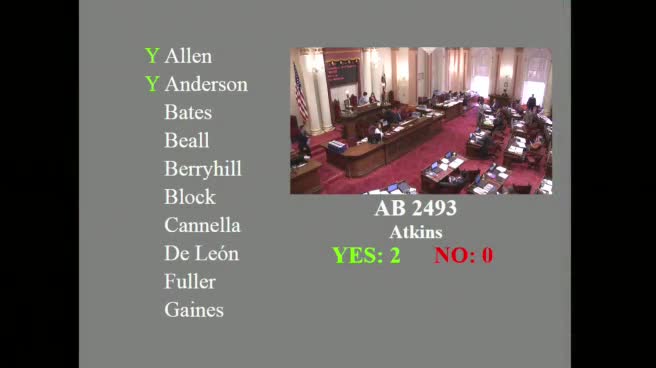 2MIN
Senate Floor
 24MIN







